Flashback : Dallas

A Miscellany: History, Ads, Pop Culture

Category: Streetcars

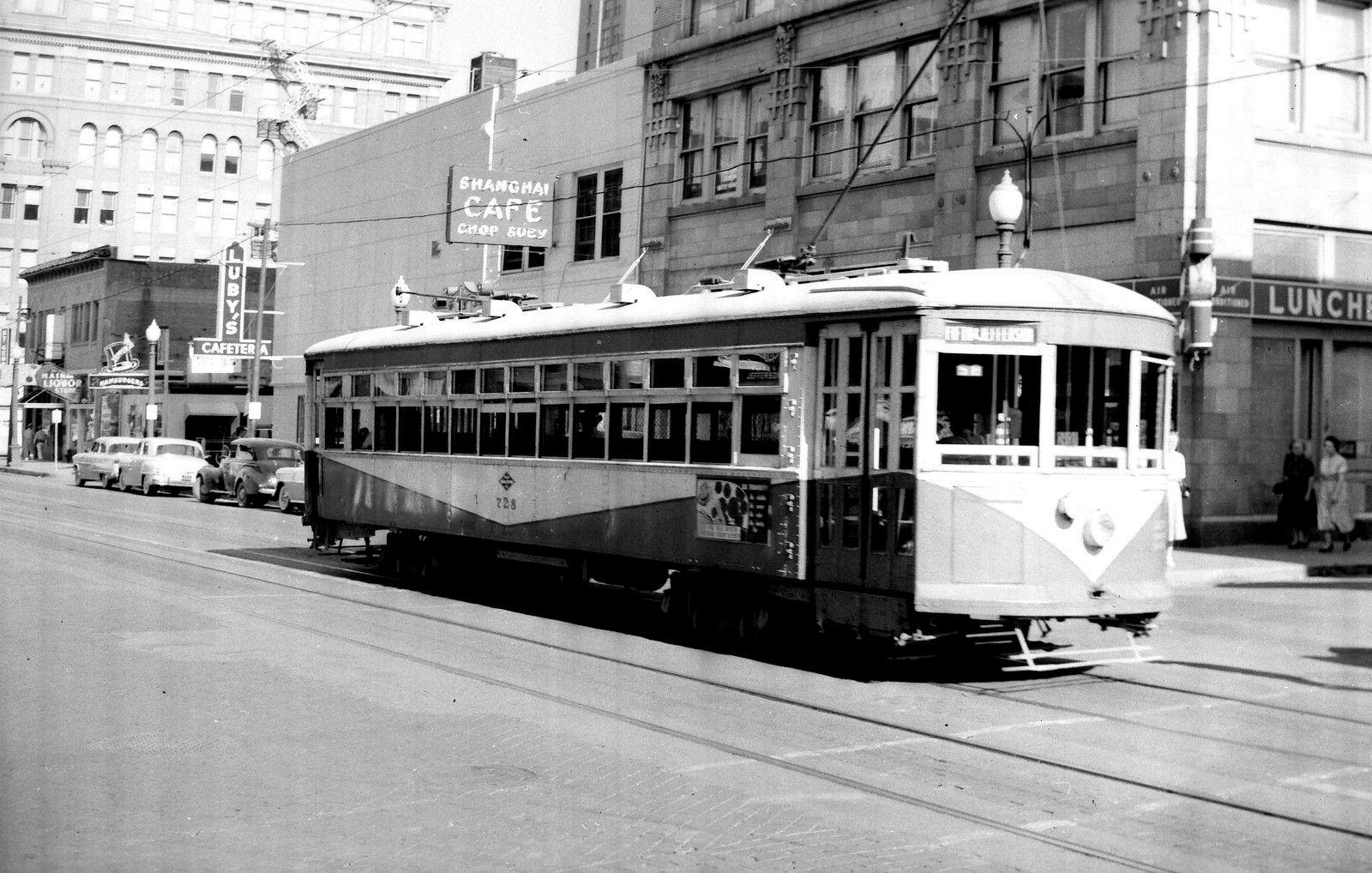
Streetcar #728, Main Street — 1954

streetcar_1000-block-main_090254_ebay1000 block of Main Street, Sept. 2, 1954

By Paula Bosse

Oh, streetcars. In the photo above, we see car #728 heading east on Main Street on September 2, 1954, having come from, I believe, Oak Cliff (the placard reads “Jefferson”). This photo shows Main Street looking east from, I think, Poydras.

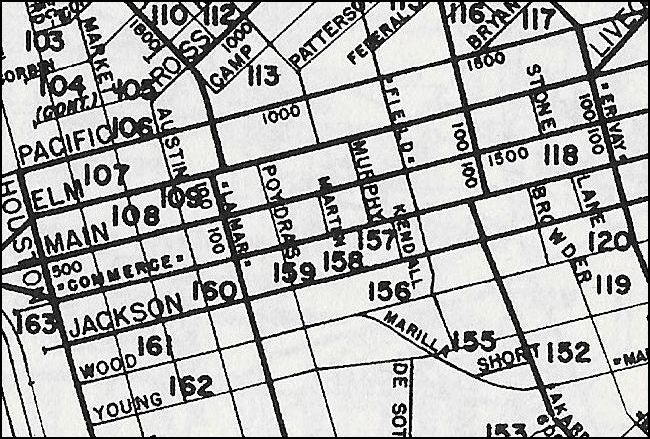
The Shanghai Cafe was at 1004 Main, Luby’s Cafeteria (the second one in Dallas) was at 1006 Main, the Topper restaurant was at 1012 Main, the Main & Martin Liquor Store was at 1016 Main (at Martin Street), and the St. George Hotel was at 1018 Main, all of which can be seen in this photo.

main-st_mapsco-1952-det1952 Mapsco

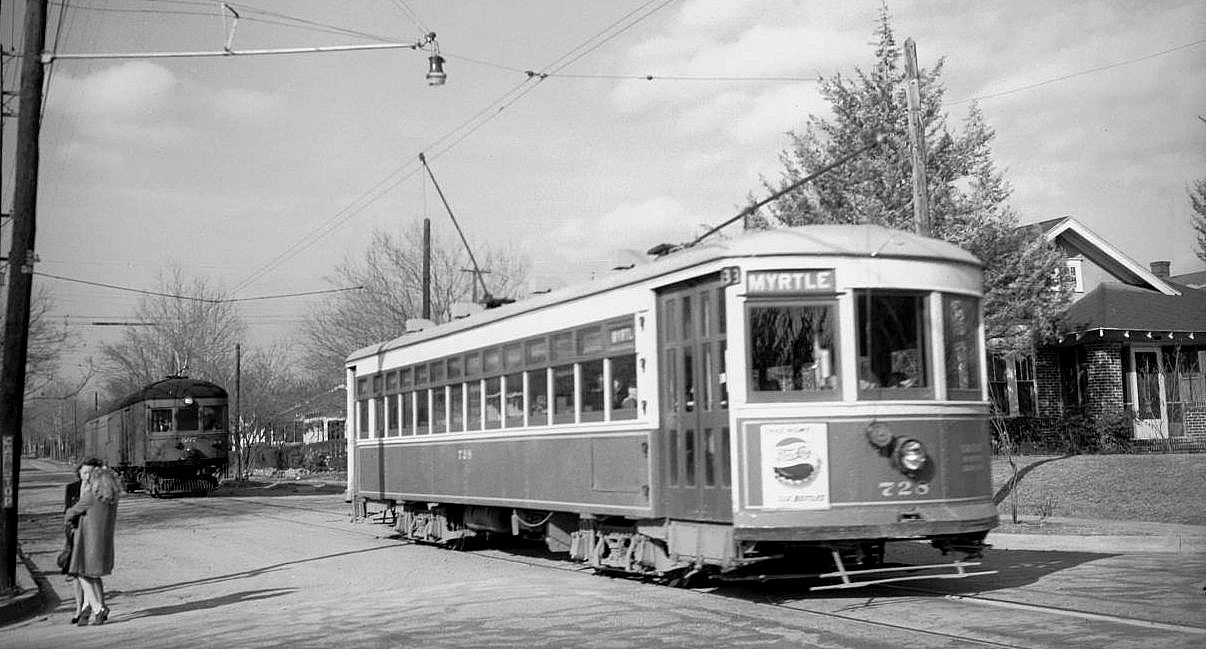
Car 728 wasn’t always “Jefferson,” whiling away its days crossing back and forth across the Trinity. Back in 1945 it was “Myrtle” and was spending a large part of its time in South Dallas.

myrtle_728_1945_denver-pub-lib

I’m not sure where Myrtle/Jefferson ended up, but, sadly, the Golden Age of streetcars ended in Dallas in 1956.

***

Sources & Notes

Top photo from an old eBay listing.

Bottom photo by Robert W. Richardson; from the Western History/Genealogy Dept., Denver Public Library.

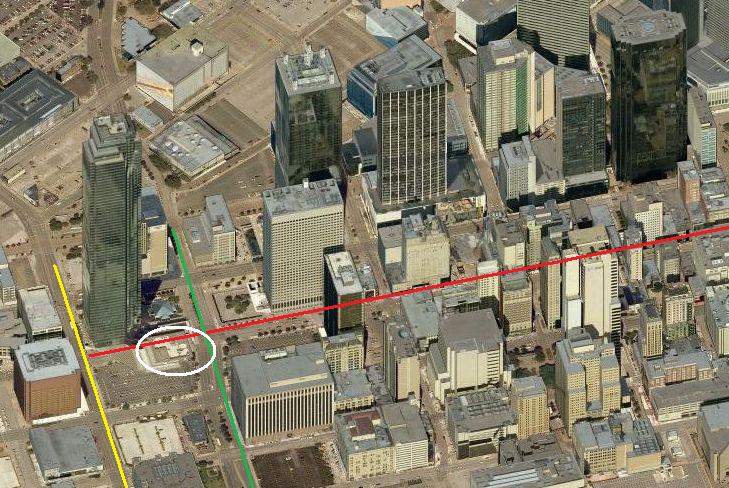
Today, the block seen in the top photo looks completely different. Across the street is where the Bank of America Plaza is now. In the map below, the red line is Main, the yellow is Lamar, and the green is Griffin. The 1000 block of Main Street is circled in white. (Click for larger image.)

1000-block-main_bingBing Maps

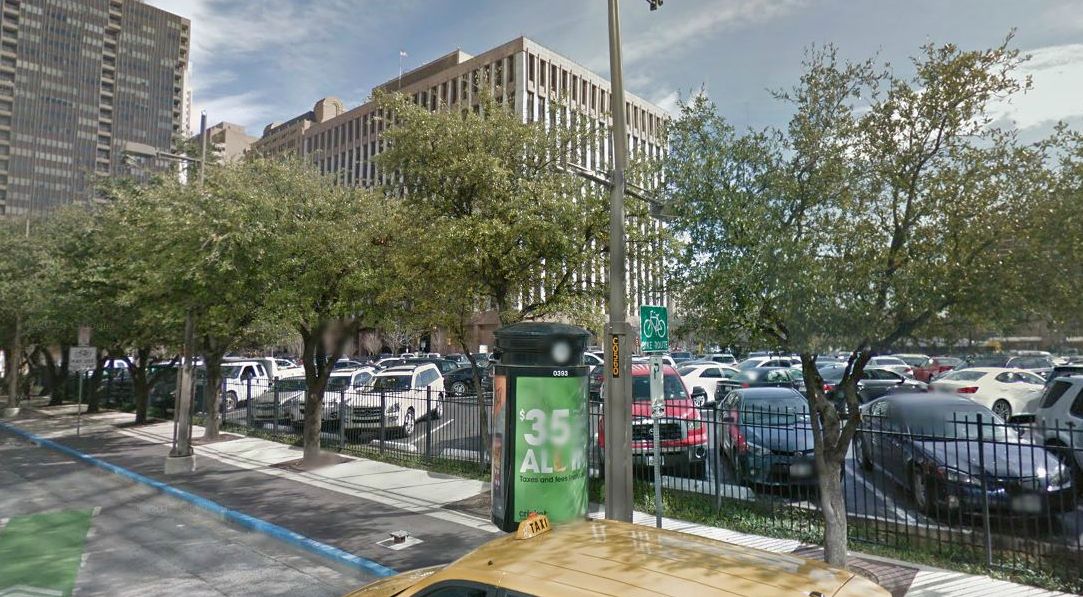
So what’s there now? A parking lot!

1000-block-main_googleGoogle Street View

To read “The Last Day the Streetcars Ran in Oak Cliff” by Ron Cawthon, click here.

*

Copyright © 2015 Paula Bosse. All Rights Reserved.

Refusing to Give Up One’s Seat Might Set Off a Melee — 1919

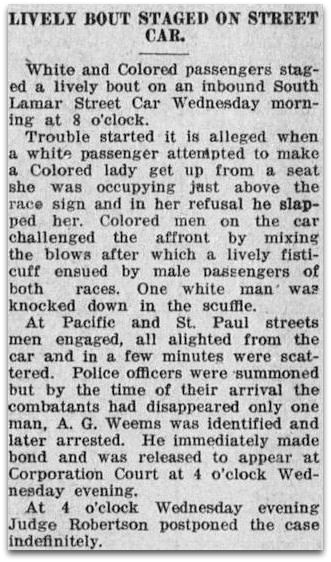
streetcar-fight_dal-express_100419The Dallas Express, Oct. 4, 1919

by Paula Bosse

On this, the anniversary of Civil Rights icon Rosa Parks‘ act of defiance in refusing to give up her seat on a bus to a white passenger in Alabama in 1955, it’s interesting to note a couple of accounts of similar incidents in Dallas, but 36 years earlier. And more violent.

The article above — which appeared in The Dallas Express, a weekly newspaper printed by and for Dallas’ black community — describes a melee (or “riot” as The Dallas Morning News called it) that occurred when an unnamed black woman refused to give up her seat (which was in the part of the streetcar reserved for white passengers) when a white man demanded that she move. When she steadfastly refused, he slapped her (!), and that set off a wild fight between black and white male passengers … on a moving streetcar! When the car stopped, everyone spilled out into the street and scattered. Only one person was arrested, Mr. A. G. Weems, a black businessman and former school teacher who was active in the black community and later represented African-American interests and residents as a member of the Negro Chamber of Commerce.

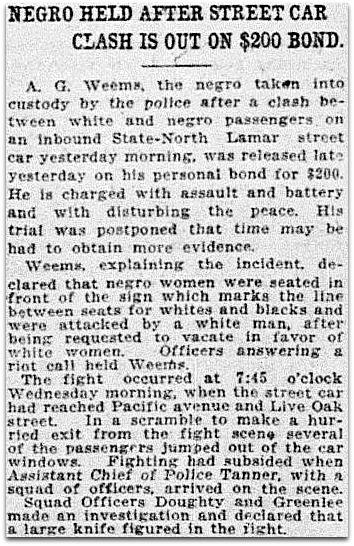
The Dallas Morning News also carried a report of the incident:

streetcar-fight_dmn_092519Dallas Morning News, Sept. 25, 1919

It sounds as if Weems could have gotten away, had he wanted, but perhaps he was making a statement.

In the previous months of 1919, there were several similar incidents reported in the pages of The Dallas Express. Sometimes altercations were a result of black passengers sitting in “whites-only” sections of streetcars, but sometimes trouble arose when the white section was full, and white passengers sat in the seats designated for black passengers:

streetcar-fight_dal-express_071219Dallas Express, July 12, 1919 (click for larger image)

There was also an incident that had occurred in February of that year in Birmingham, Alabama in which a white conductor was shot (and presumably killed) after he threatened to slap a black woman in a dispute over the fare. A black vigilante had appeared out of nowhere, shot the man, and disappeared into the night.

The antagonism, disgust, and violence caused by this “peculiar law of the Southland” continued until 1956 when the Supreme Court finally banned segregation on public transportation.

*

Copyright © 2014 Paula Bosse. All Rights Reserved.

Crossing the Trinity River Viaduct — 1946

streetcar-crossing-trinity_1946-denverpublibStreetcar on the Trinity River Viaduct (click for larger image)

by Paula Bosse

A few days ago I posted a photograph of a streetcar pulling into Oak Cliff, having just crossed the Trinity River Viaduct (link below). In this photo, we see what streetcars of the period looked like actually crossing the viaduct.

***

Photo by Robert F. Richardson, taken on June 5, 1946. From the Western History/Genealogy Dept., Denver Public Library, viewable here.

Photos of these double-ended streetcars taken from a distance present a bit of a Pushmi-Pullyu problem in determining which direction they’re heading, but if you enlarge the photo at the Denver Public Library link just above, you can see the silhouette of the operator at the eastbound end of the car, driving the car toward Dallas. UPDATE: I’m wrong! The car is moving toward O.C., not Dallas! That motorman silhouette is a figment of my imagination! See the comments below for tips on how an amateur like myself who’s never actually seen a streetcar can tell which direction one is moving. (Thanks, Bob and Bob for the correction!)

Streetcars ran back and forth across the Trinity River on a special trestle just south of the Oak Cliff Viaduct/Houston Street Viaduct. It had been in use since 1887 (through various renovations) and was demolished in the early 1970s to build the present-day Jefferson Street Viaduct. The streetcar shown is from the Dallas Railway & Terminal Co. fleet.

My previous post mentioned above, “Waiting for a Streetcar on a Sunny Winter Day in Oak Cliff — 1946,” contains a fantastic photo taken by the same photographer, four months earlier, showing people waiting for the approaching streetcar just after it’s crossed the river; that photo can be seen here.

*

Copyright © 2014 Paula Bosse. All Rights Reserved.

Waiting For a Streetcar on a Sunny Winter Day in Oak Cliff — 1946

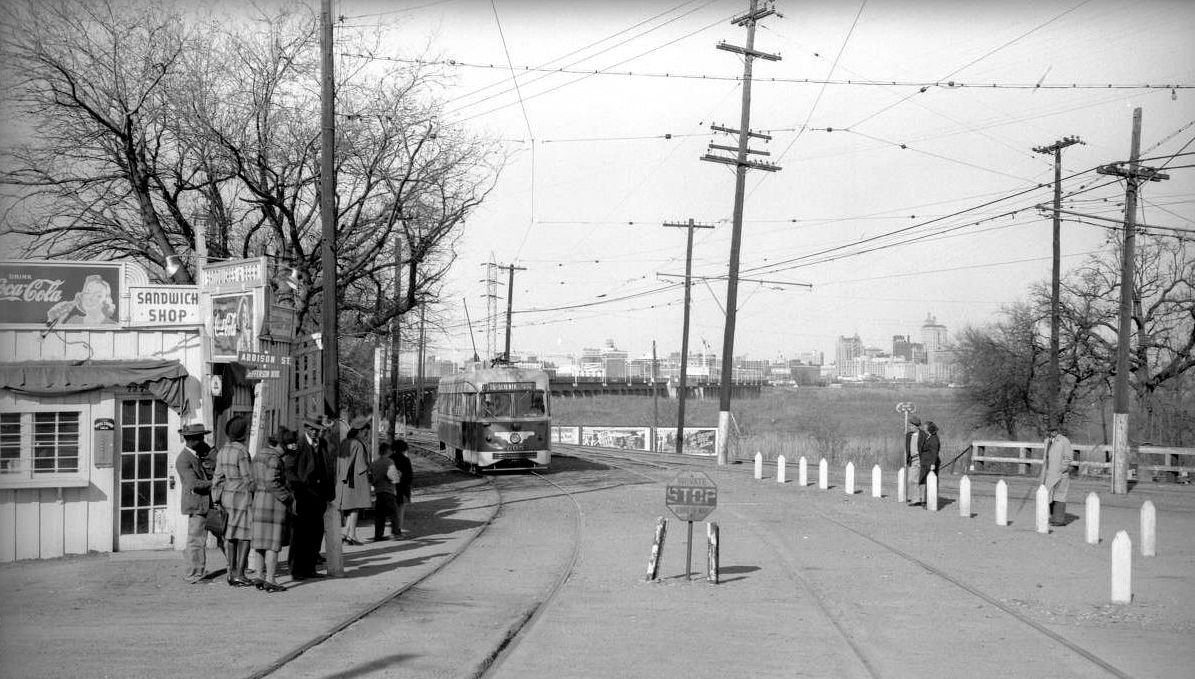
jefferson-addison_denver-pub-lib_1946Addison St. & Jefferson Blvd. in Oak Cliff — Feb., 1946 (click for larger image)

by Paula Bosse

I love streetcars, photos from the 1940s, fashions of the ’40s, and views of the Dallas skyline. And here are all of these things, in one great, GREAT photograph. We see people waiting for the streetcar on a sunny Saturday in February, 1946 — in Oak Cliff, at E. Jefferson Blvd. and Addison St. The people at the left (outside Helen’s Sandwich Shop) are about to catch the car that has just crossed the Trinity River and head into Oak Cliff; the people on the right are waiting to go to Dallas. The Oak Farms Dairy is just out of frame at the top left, and Burnett Field is just out of frame at the bottom right. The Dallas skyline looms across the Trinity.

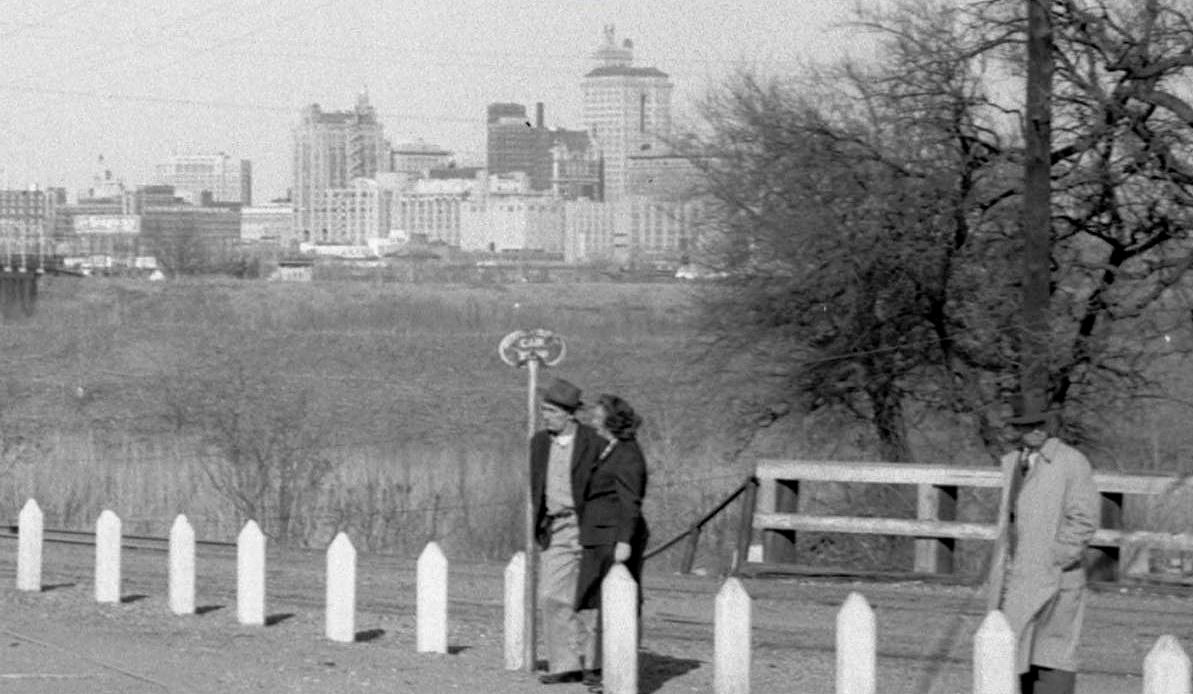
Below, I’ve zoomed-in a bit and cropped this fantastic photograph into two images to show, a bit more intimately, details of an ordinary moment in an ordinary day of ordinary people. What once was such a commonplace scene — people waiting for a streetcar or interurban — now seems completely out of the ordinary and quaintly nostalgic. (Nostalgic on its surface, anyway — not shown is the interior of the car which had specific black-only and white-only seating areas for passengers.) (As always, click for larger images.)

jefferson-addison-det1

jefferson-addison-det2

***

Photo by Robert W. Richardson, taken on February 2, 1946. From the Western History/Genealogy Dept., Denver Public Library, viewable here. More on rail enthusiast, writer, photographer, and preservationist Bob Richardson, here.

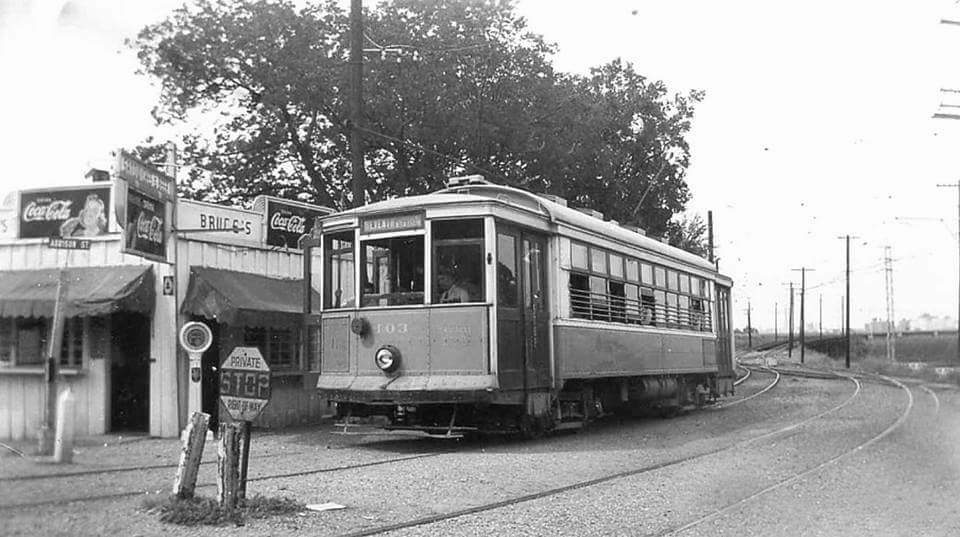
The same stop can be seen in this undated photo (source and photographer unknown):

oak-cliff-streetcar-stop_addison-jefferson

Streetcars ran back and forth across the Trinity River on a special trestle just south of the Oak Cliff Viaduct/Houston Street Viaduct. It had been in use since 1887 (through various renovations) and was demolished in the early 1970s to build the present-day Jefferson Street Viaduct.

To see a photo by the same photographer showing a streetcar actually on the trestle over the Trinity, see the post “Crossing the Trinity River Viaduct — 1946,” here.

Streetcar enthusiasts are incredibly, well, enthusiastic, and they keep precise track of where cars operated over their life spans. The car from the photo — Dallas Railway & Terminal Co. car #605 — was a PCC streetcar, built by the Pullman-Standard company in 1945; it was sold to the MTA in 1958 and was in operation in Boston for many years. See cool photos of the very same streetcar in operation over the years in both Dallas and Boston, here (scroll down to “605”). To see what the retired car looked like in 2002 — a bit worse for wear — click here.

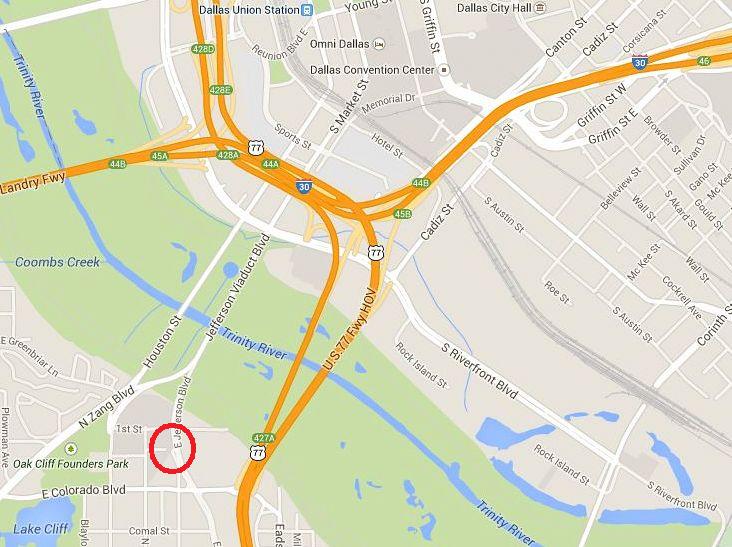
A distinctly less-wonderful view from roughly the same location, seen today, is here.

map_jefferson-addison_googleGoogle

Click pictures for larger images.

*

 Copyright © 2014 Paula Bosse. All Rights Reserved.

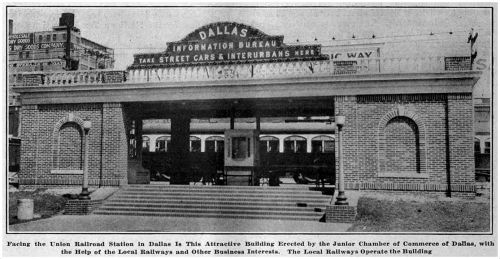
Ferris Plaza Waiting Station — 1925-1950

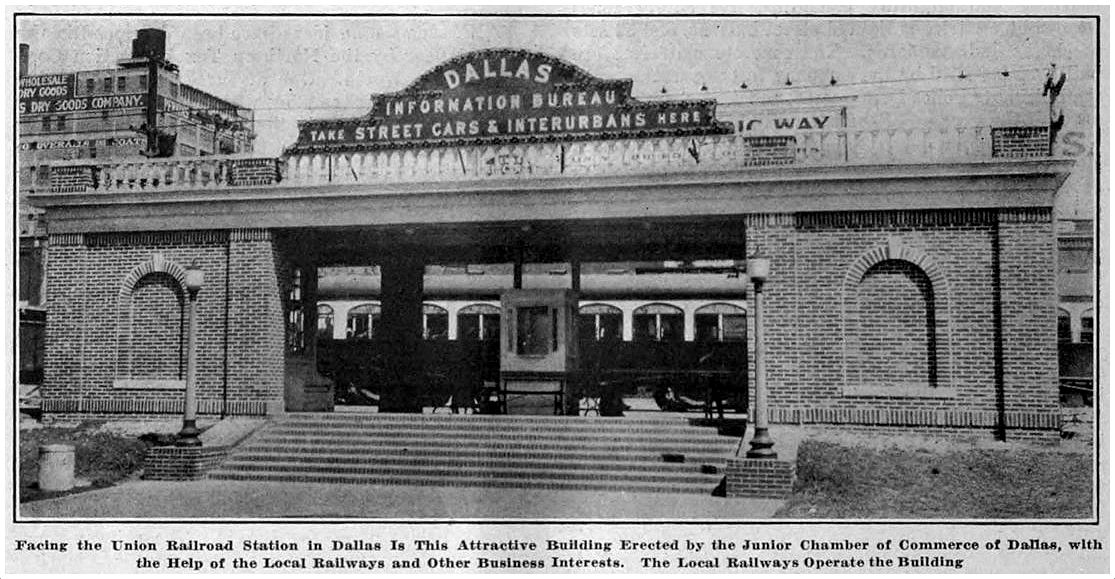
railway-info-bldg_1926From The Electric Railway Journal, 1926

by Paula Bosse

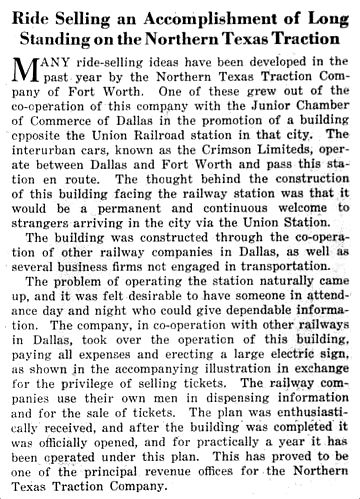
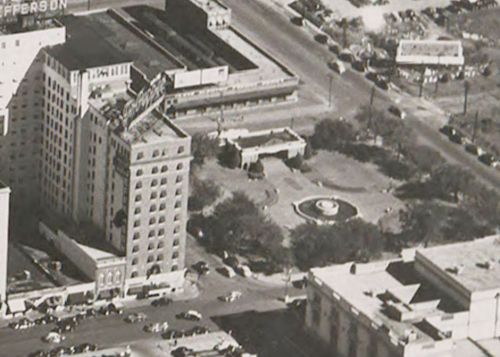
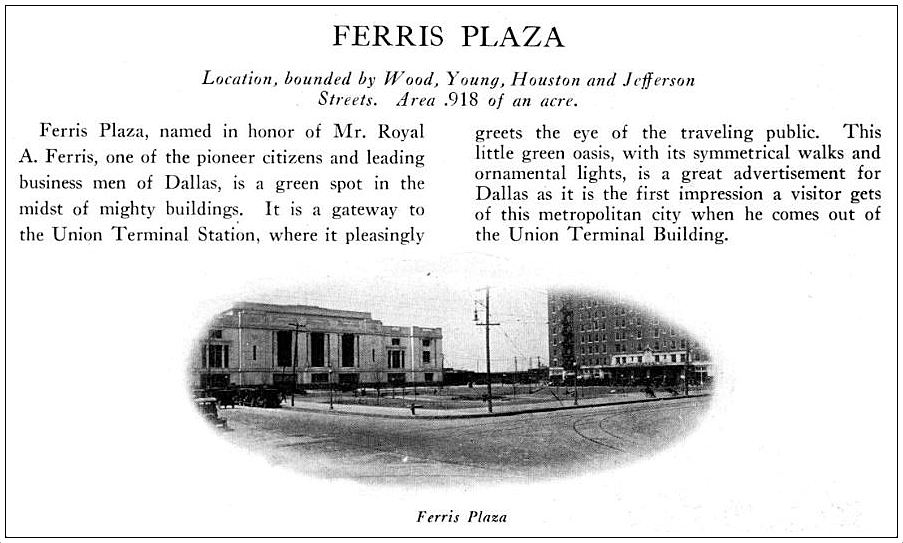
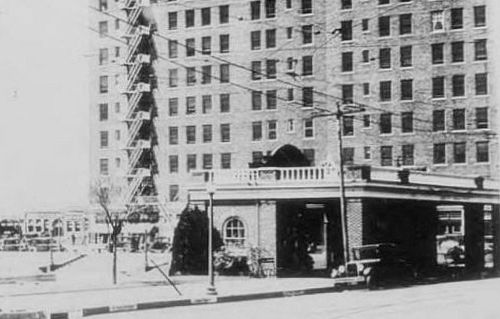
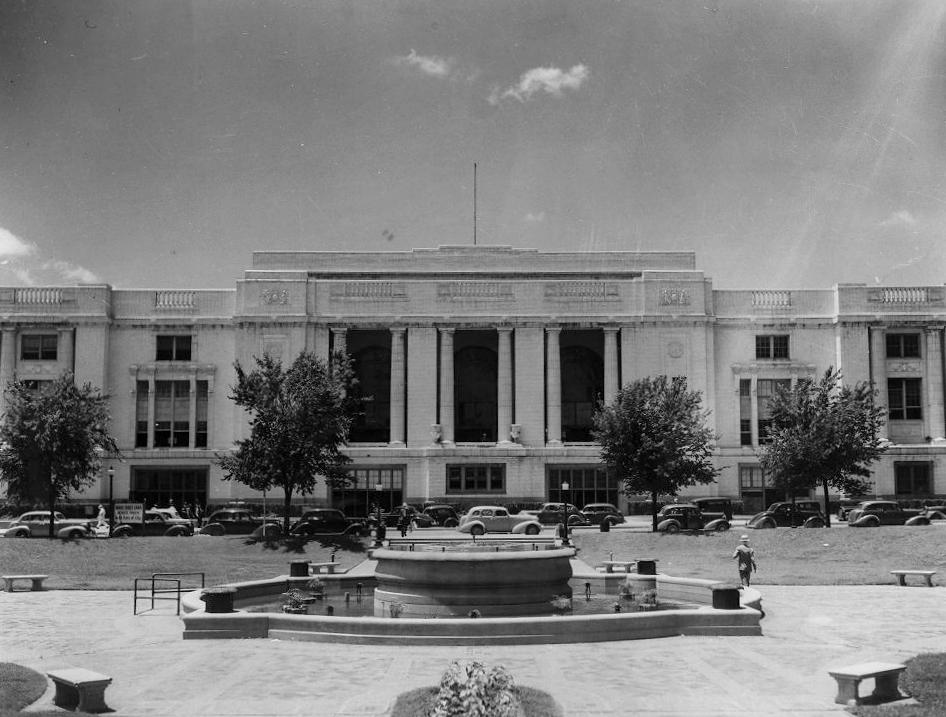
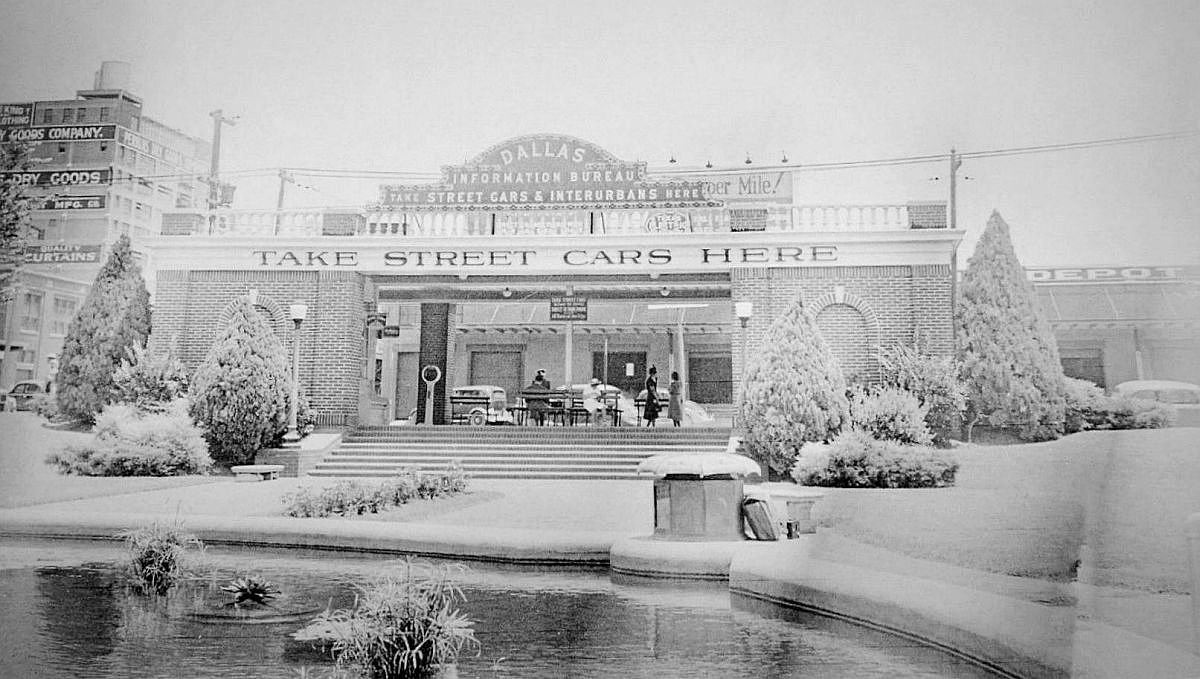
I came across the odd image above whilst digitally thumbing through a 1926 issue of The Electric Railway Journal (as one does…) and wondered what it was. It was definitely something I’d never seen downtown. Turns out it was a combination information bureau, covered stop in which to buy tickets for and await the arrival of interurbans and streetcars, a place to purchase a snack, and a location of public toilets (or, more euphemistically, “comfort stations”). It was located at the eastern edge of Ferris Park along Jefferson Street (which is now Record Street), with the view above facing Union Station. It was intended to be a helpful, welcoming place where visitors who had just arrived by train could obtain information about the city, and it was also a pleasant place to wait for the mass transit cars to spirit them away to points beyond. With the lovely Ferris Plaza (designed by George Dahl in 1925) between it and the front of the Union Terminal, this was considered The Gateway to the City long before Dealey’s Triple Underpass was constructed. (Click photos and articles to see larger images.)
ferris-plaza_park-and-playground-system_pubn_1921-23_portal

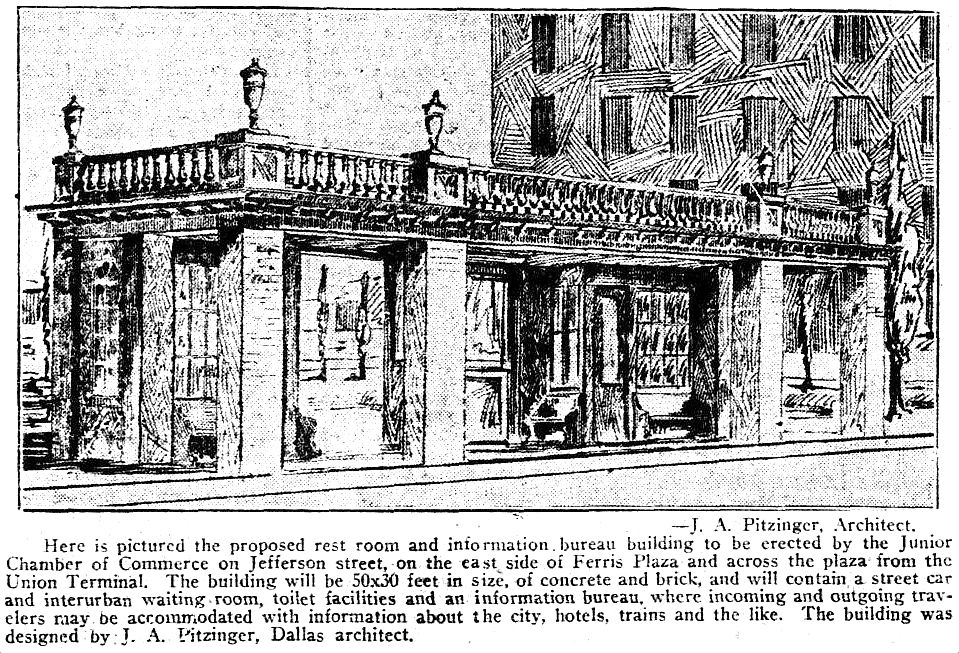
The “waiting station” was the brainchild of the Dallas Junior Chamber of Commerce which proposed the idea to the City of Dallas and, as it was to be built at the edge of a city park, the Park Board. The small (50 x 30) brick building — designed by Dallas architect J. A. Pitzinger — would cost $5,000 and would be paid for by funding from local businesses, including various transportation concerns (namely, the Northern Texas Traction Company). The “traction” companies would staff the information booth and sell tickets. The plans were accepted and permission was granted. Construction began in July, 1925, and the building was opened for waiting by October.

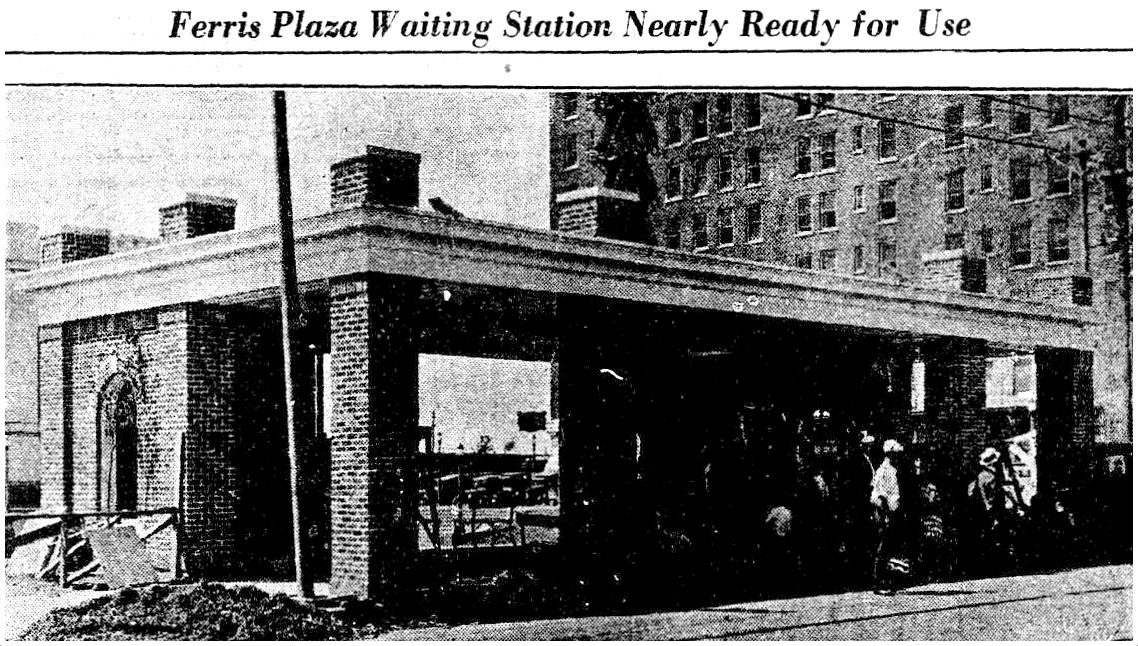
This improvement is the most recent of a number which have made of Ferris Plaza a beauty spot at the gateway of the city. Designed for a sunken garden, fringed with trees, the plaza is now adorned with a great fountain, illuminated with colored lighting at night, the gift of Royal A. Ferris. The new waiting station is in harmony with the general scheme of the plaza development, and combines beauty with utility. (Dallas Morning News, Sept. 20, 1925)

The little waiting station proved to be quite popular, and by the end of its first year the Northern Texas Traction Company (who operated interurban service between Dallas and Fort Worth) was very pleased, as interurban ticket sales at the station had become a solid source of company revenue. The Ferris Plaza station lasted a rather surprising 25 years. It was torn down in 1950, mainly because the interurbans had been taken out of service and there was no longer a need for it. Also, the park department was eager to get their park back and make it more “symmetrical.”

People would just have to wait somewhere else.

*
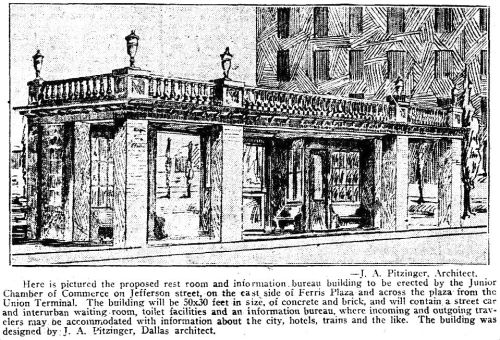
ferris-plaza-info-bureau_rendering_pitzinger_dmn_031625Architectural rendering by J. A. Pitzinger (DMN, March 16, 1925)
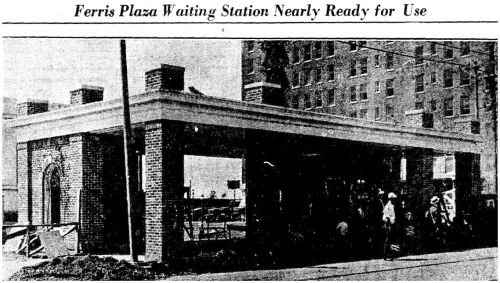
ferris-plaza-waiting-stn_dmn_092025Nearing completion (DMN, Sept. 20, 1925)
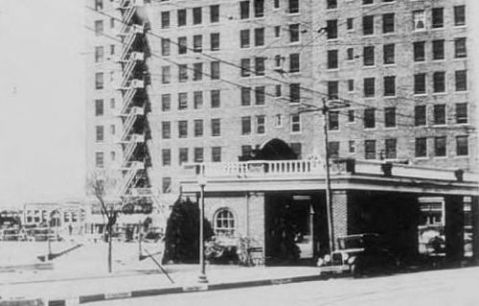
waiting-station_jefferson-hotel_degolyer-lib_SMU_croppedDeGolyer Library, SMU (cropped)

railway-info-bldg_1926_text_smThe Electric Railway Journal (Nov. 6, 1926)
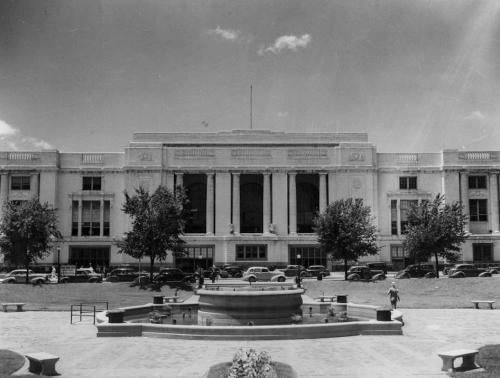
ferris-plaza_union-station_dpl_1936Union Station, 1936 — view from the “waiting station” (Dallas Public Library)
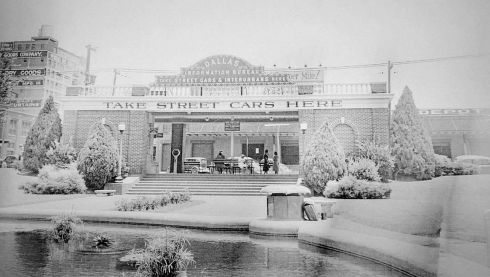
waiting-station_ebay

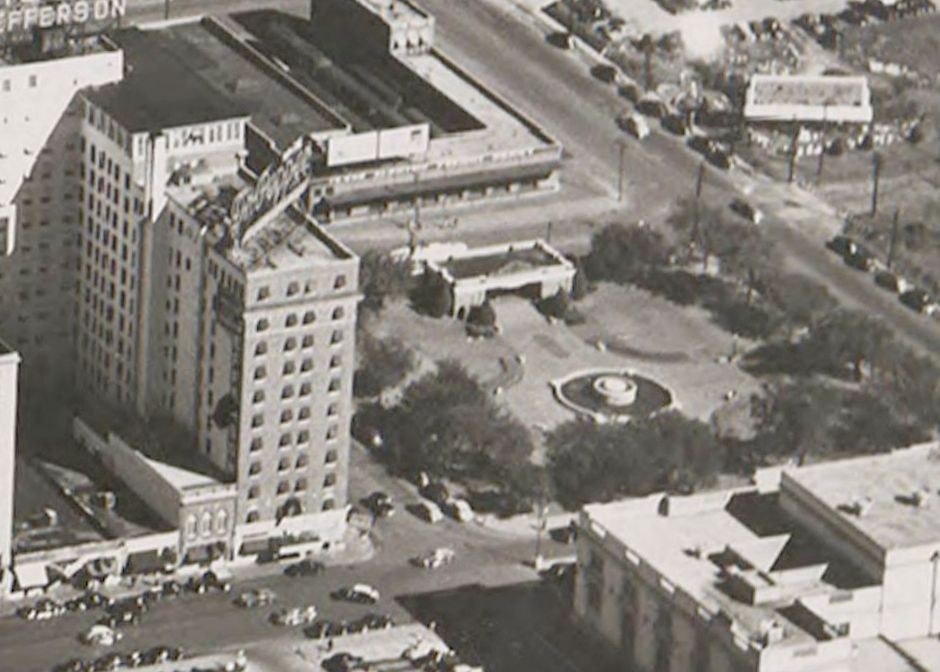
ferris-plaza_aerial_smu_c1949-det1949 aerial view, showing “waiting station” just above plaza’s circular fountain

***

Sources & Notes

Top photo from The Electric Railway Journal, Nov. 6, 1926.

Very early photo and description of Ferris Plaza is from Park and Playground System: Report of the Park Board of the City of Dallas, 1921-1923, via the Portal to Texas History, here.

Cropped image showing the waiting station with the Jefferson Hotel in the background is from the DeGolyer Library, SMU — more info is here.

Photograph of Union Station from the Texas/Dallas History and Archives Division of the Dallas Public Library.

Aerial photo showing Ferris Plaza is from a larger view of downtown by Lloyd M. Long (the original of which is in the Edwin J. Foscue Map Library collection of the Central University Libraries, Southern Methodist University, and which can be viewed here).

To read about the Ferris Park restoration project, see here.

For a few interesting and weird tidbits about the block that eventually became Ferris Plaza (including the fact that it was thought to be haunted and that it was once the site of a brothel), check out this page on Jim Wheat’s fantastic site.

*

Copyright © 2014 Paula Bosse. All Rights Reserved.

Panoramic View of the Entrance to the State Fair of Texas — 1908

state-fair_clogenson_1908_LOC“Texas State Fair, Main Entrance” by Clogenson, 1908 (click for larger image)

by Paula Bosse

Today is opening day of the State Fair of Texas. Always an anticipated annual event, this is what the crowded entrance to Fair Park looked like over a century ago — still pretty recognizable, especially the firehouse at the top left. Below is a detail of the first third or so of this amazing panoramic photo. For a gigantic image of the top photo, click here (and then keep clicking until it’s gotten as big as it’s going to get — and don’t forget to use that horizontal scroll bar!).

Below is the detail I’ve cropped from the larger photo, showing the Parry Avenue portion, with the still-standing firehouse at the top left.

Have fun at the fair, y’all!

state-fair_1908-detDetail showing Parry Avenue, looking north (click for larger image)

***

Sources & Notes

Original image titled “Texas State Fair, Main Entrance” by Clogenson, 1908, from the Library of Congress. Photo and details can be viewed at the LOC website here.

In case you missed the link above — and because it’s so fantastic and filled with such incredible detail — you really must see the really big image of that really big panoramic photo, HERE.

For other Flashback Dallas posts on the State Fair of Texas, click here.

For Flashback Dallas posts on the Texas Centennial, click here.

*

Copyright © 2014 Paula Bosse. All Rights Reserved.
Oak Cliff Trolley — 1895

trolley_oak-cliff_stark_1895_hpl“Dallas from Oak Cliff” by Henry Stark, 1895/96 (click for larger image)

by Paula Bosse

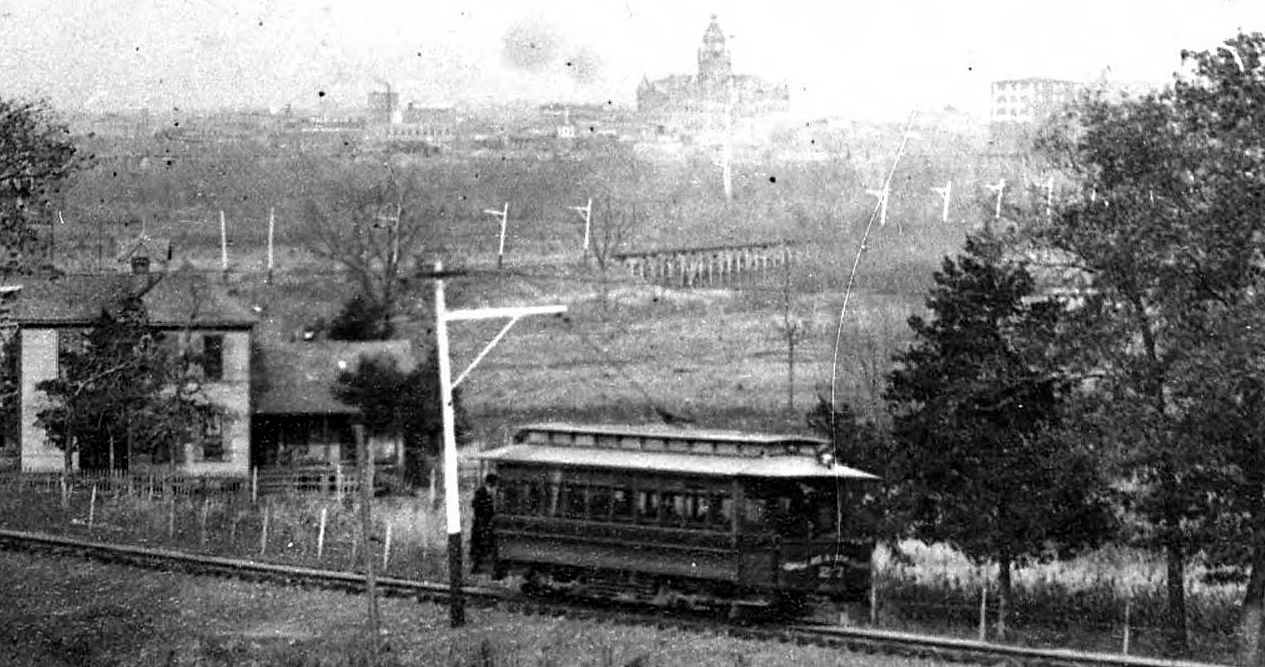
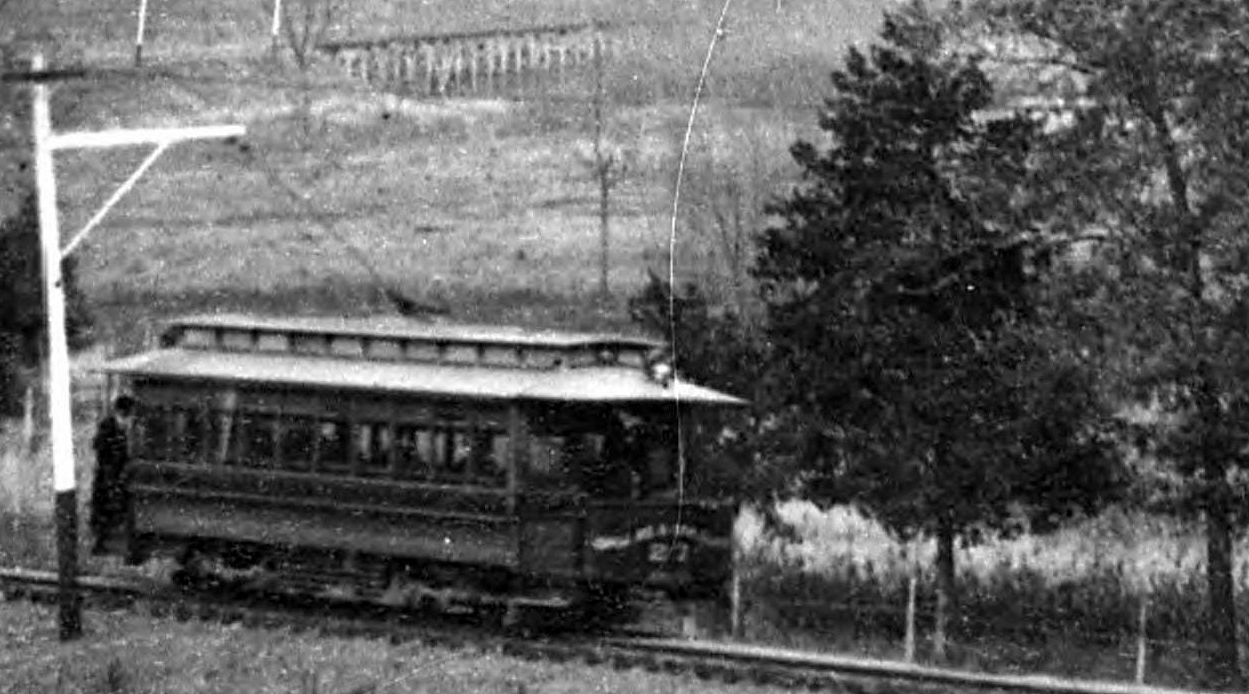
As present-day trolley service to Oak Cliff has been in the news in recent months, here’s a pastoral view of a little trolley chugging through the wilds of Oak Cliff in 1895. In the background, across the river, the still-fairly-new courthouse looms like a mirage. Below are a few details, magnified. (All images are much larger when clicked.) Enjoy!

trolley_oak-cliff_det1

trolley_oak-cliff_det2

trolley_oak-cliff_det3

trolley_oak-cliff_det4

***

Photo (labeled by the Houston Public Library as “Trolley moving through the woods”) is by Henry Stark, taken on a visit to Dallas in the winter of 1895/96; from the collection of the Houston Public Library — it can be viewed here.

For more on Henry Stark, see the previous post “Henry Stark’s ‘Bird’s Eye View of Dallas,'” here.

Other photos which I’ve “Zoomed In On the Details” can be seen here.

CLICK PHOTOS — REAL BIG.

*

Copyright © 2014 Paula Bosse. All Rights Reserved.

Interurban vs. Streetcar

interurban-vs-streetcarOh dear…

by Paula Bosse

I’m not sure what’s happened here, but it looks like the interurban has emerged victorious.

***

Sources & Notes

I don’t know the original source of this photo, but I came across it on the Northern Texas Traction History Group on Facebook. The electric-powered interurban car is the big red one on the left; the puny (but cute) electric-powered green streetcar is on the right. The view here is looking north on Record, from just south of Young Street, inside what would one day be called “Communications Center”: the Dallas Morning News Building is on the left, and the not-yet-built WFAA studios will later be to the immediate right (east). The long-gone Hotel Jefferson is north of Ferris Park (the hotel was catty-corner from Union Station, across Houston Street). In the distance you can see the tippy-top of the Old Red Courthouse, just above the green streetcar. Also, those now-gone smokestacks that were such a fixture on the skyline are straight ahead.

*

Copyright © 2014 Paula Bosse. All Rights Reserved.

“There Are Eight Million Stories in the Naked City…” — ca. 1920

1-ervay

by Paula Bosse

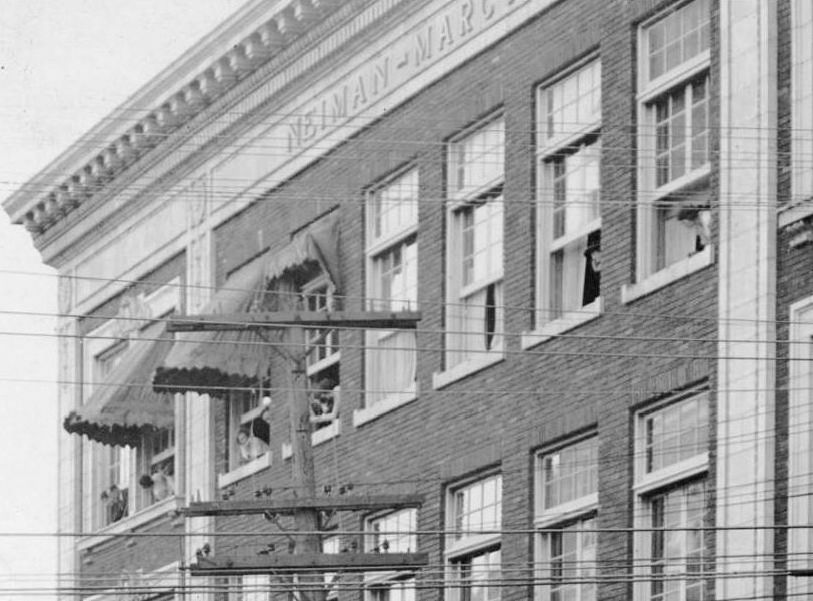
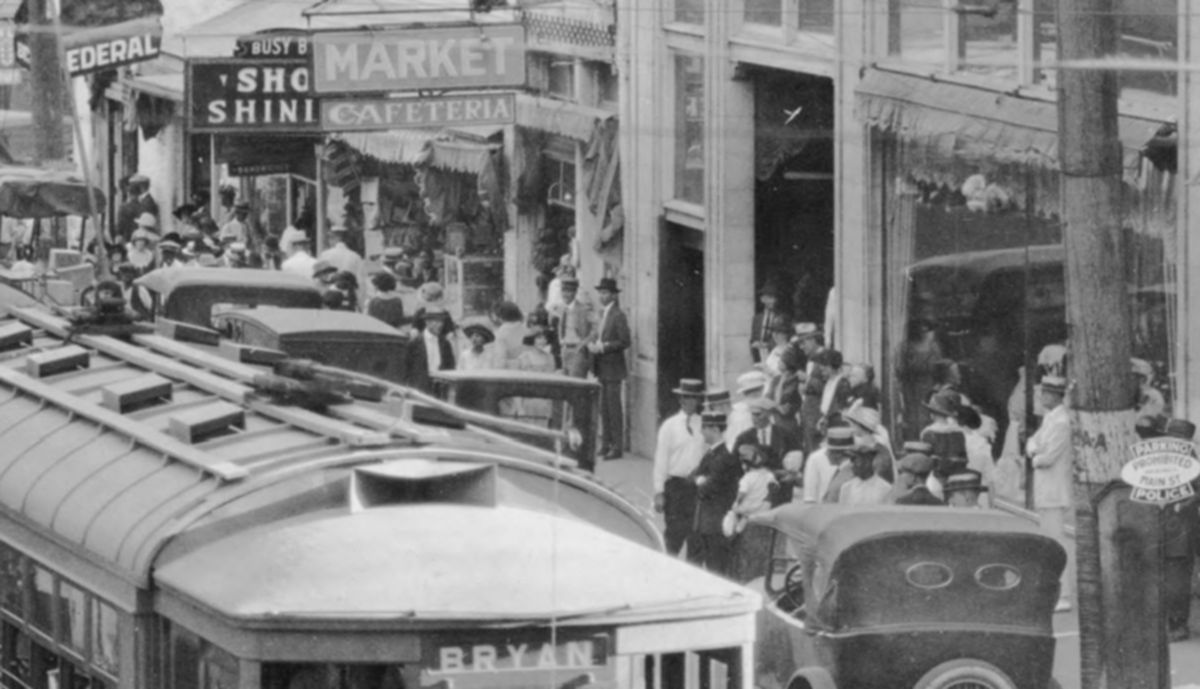
The photograph above, by George A. McAfee, shows Ervay Street, looking south from Main, in about 1920. Neiman’s is on the right. I’m not sure what the occasion was (I see special-event bunting….), but the two things that jump out right away are the number of people on the sidewalks and the amount of  congestion on the streets. In addition to private automobiles (driven by “automobilists” or “autoists,” as the papers of the day referred to them), the street is also packed with cars standing in the taxi rank (cab stand) at the left, and a long line of hulking streetcars. This busy intersection is jammed to capacity.

The city of Dallas was desperately trying to relieve its traffic problems around this time, and there were numerous articles in the papers addressing the concerns of how to manage the congestion of streets not originally designed to handle motor vehicle traffic. Dallas and Fort Worth were working on similar plans of re-routing traffic patterns and instituting something called “skip stop” wherein streetcars would stop every other block rather than every block. Streetcars, in fact, though convenient and necessary, seemed to cause the most headaches as far as backing up and slowing down traffic, as they were constantly stopping to take on and let off passengers. There was something called a “safety zone” that was being tried at the time. I’m not sure I completely understand it, but it allowed cars to pass streetcars in certain areas while they were stopped.

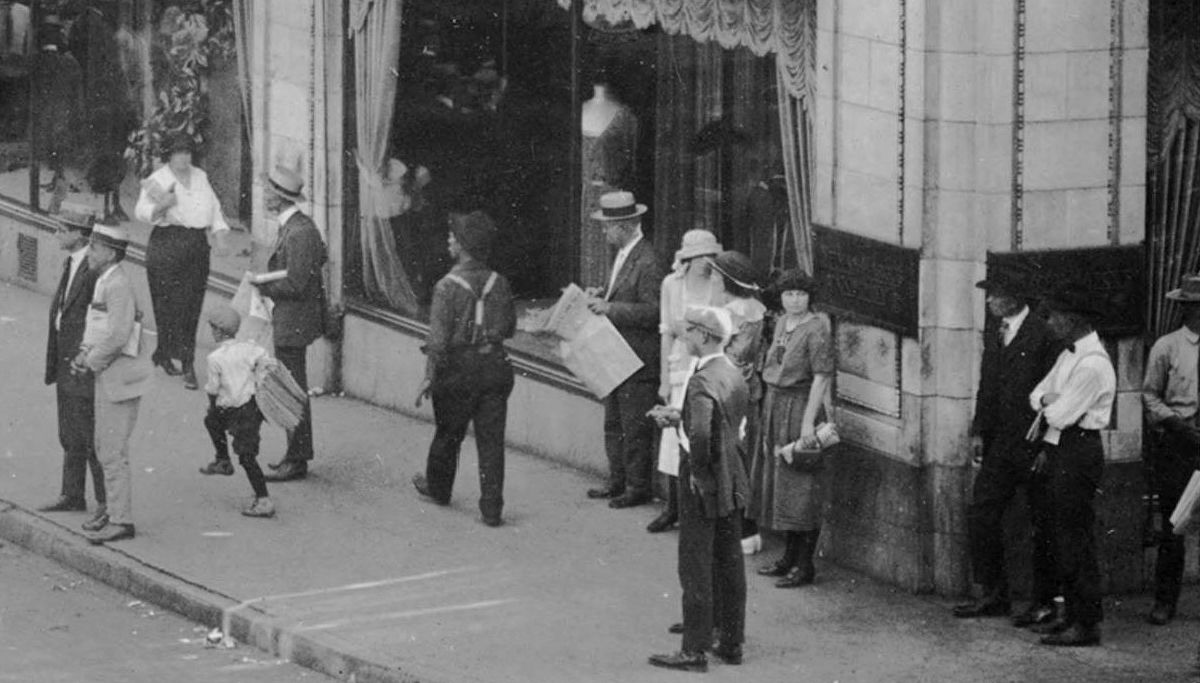
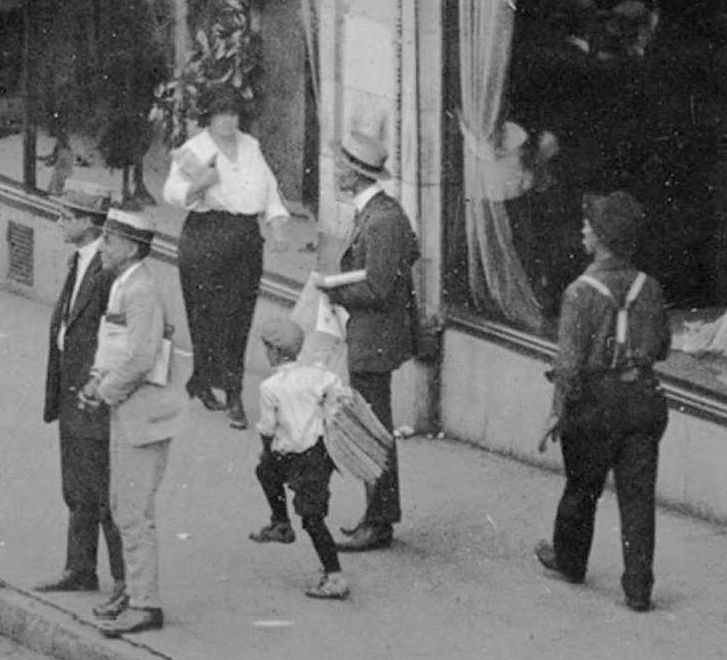
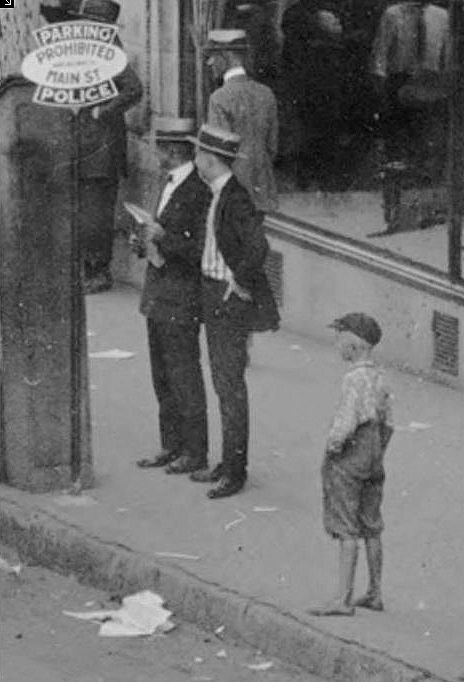
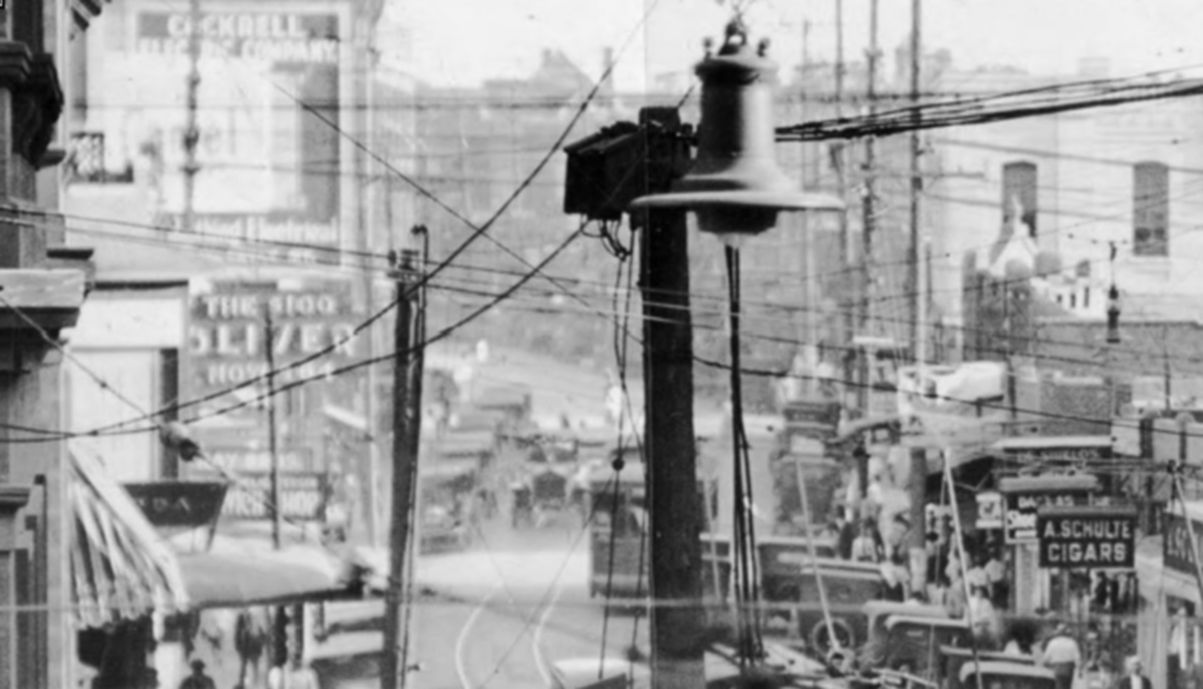
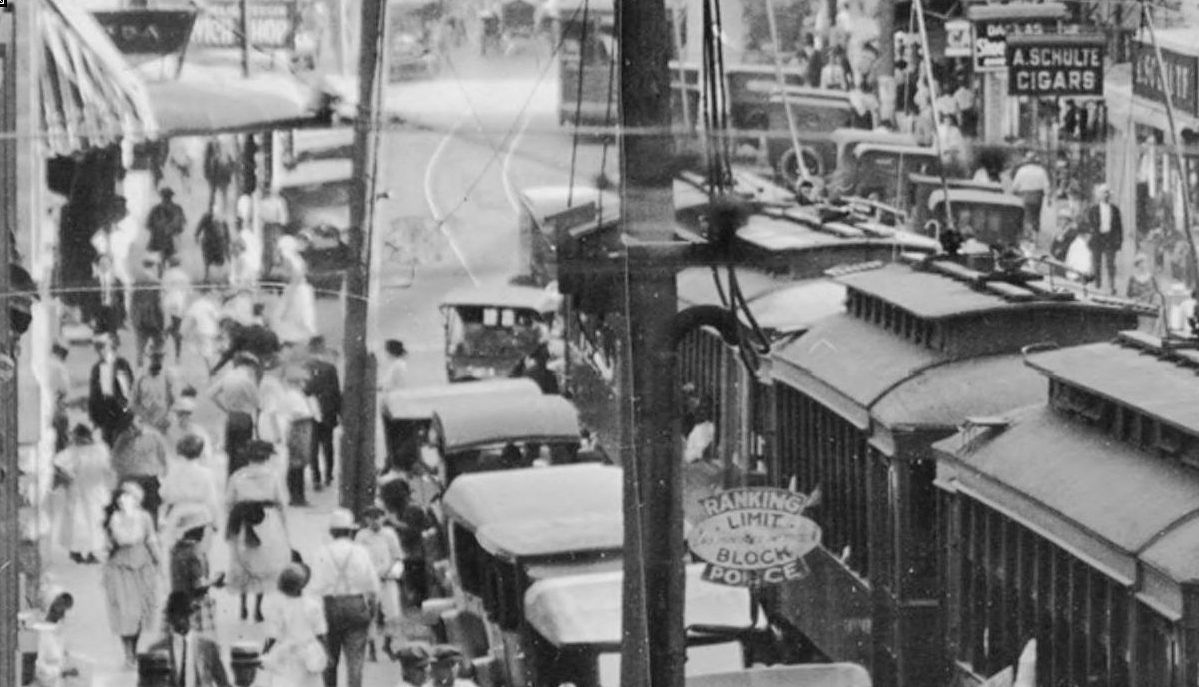
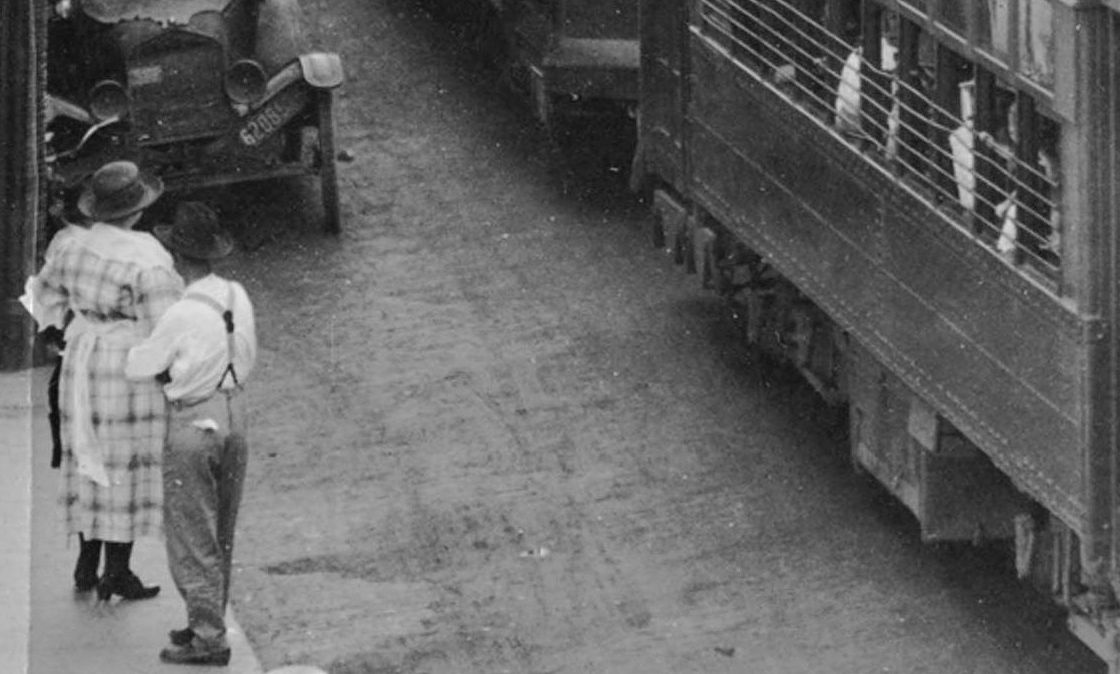
That traffic is crazy. But, to be perfectly honest, it’s far less interesting than all that human activity — hundreds of people just going about their daily business. It’s always fun to zoom in on these photos, and, below, I’ve broken the original photograph into several little vignettes. I love the people hanging out the Neiman-Marcus windows. And all those newsboys! Not quite as charming was all that overhead clutter of power lines and telephone lines; combined with the street traffic, it makes for a very claustrophobic — if vibrant — downtown street scene. (Click photos for larger images.)

2-ervay

3-ervay

4-ervay

5-ervayMy favorite “hidden” image in the larger photograph. The only moment of calm.

6-ervayI love this. The woman in front of the Neiman-Marcus plaque looking off into the distance, the display in the store window, the newsboy running down the street, the man in suspenders, the women’s fashions, and all those hats!

7-ervay

8-ervayA barefoot boy and litter everywhere.

9-ervay

10-ervay

11-ervayThe congestion is pretty bad above the streets, too.

12-ervay

13-ervayCabbies, newsboys, and working stiffs.

14-ervay

15-ervayI swear there was only one streetcar driver in Dallas, and he looked like this! Those motormen had a definite “look.”

***

Sources & Notes

Original photograph attributed to George A. McAfee, from the DeGolyer Library, Central University Libraries, Southern Methodist University, accessible here.

For other photos I’ve zoomed in on the details, see here.

*

Copyright © 2014 Paula Bosse. All Rights Reserved.

A Painterly View of Commerce Street

commerce-st_postcard

by Paula Bosse

I could be WAY off, but this MIGHT be approximately Commerce and Poydras, looking … east? For present-day reference, it’s about where the McDonald’s is on Commerce. Possibly. Click it to make it larger. Misinformation is likely.

*

Copyright © 2014 Paula Bosse. All Rights Reserved.