Flashback : Dallas

A Miscellany: History, Ads, Pop Culture

Category: Vault

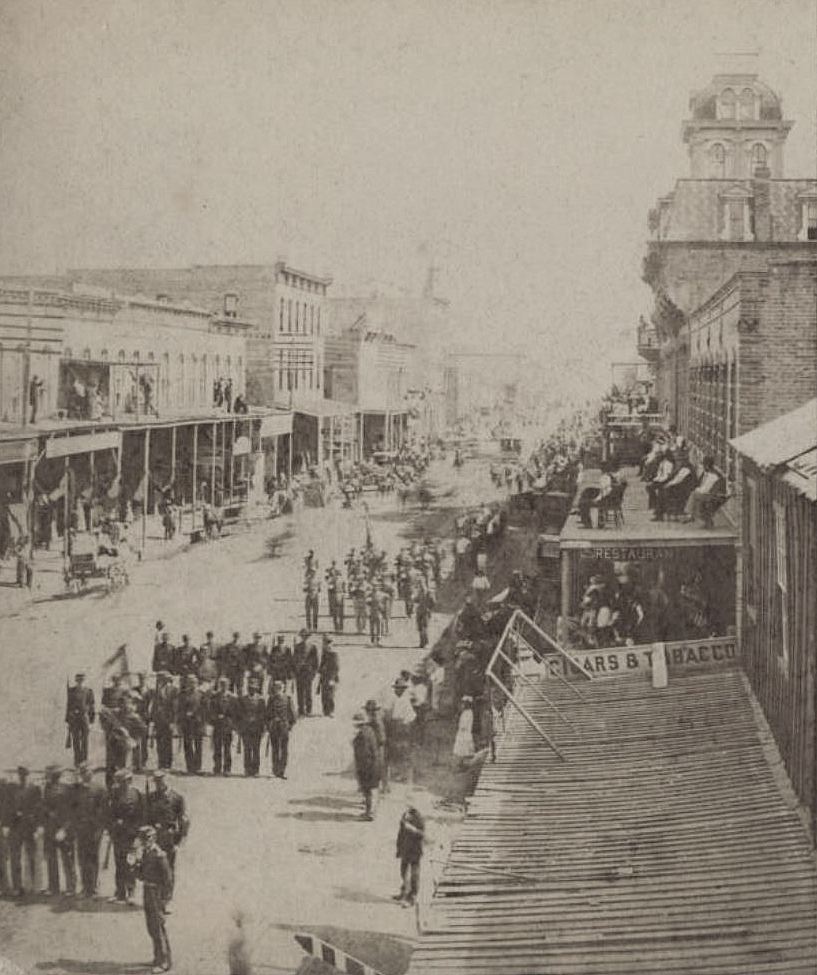
4th of July Parade — Sweating in Formation

july-4_degolyerI’m parched just looking at this…

by Paula Bosse

Fourth of July parade in Dallas, 1870s or 1880s. Bet it was hot in those uniforms.

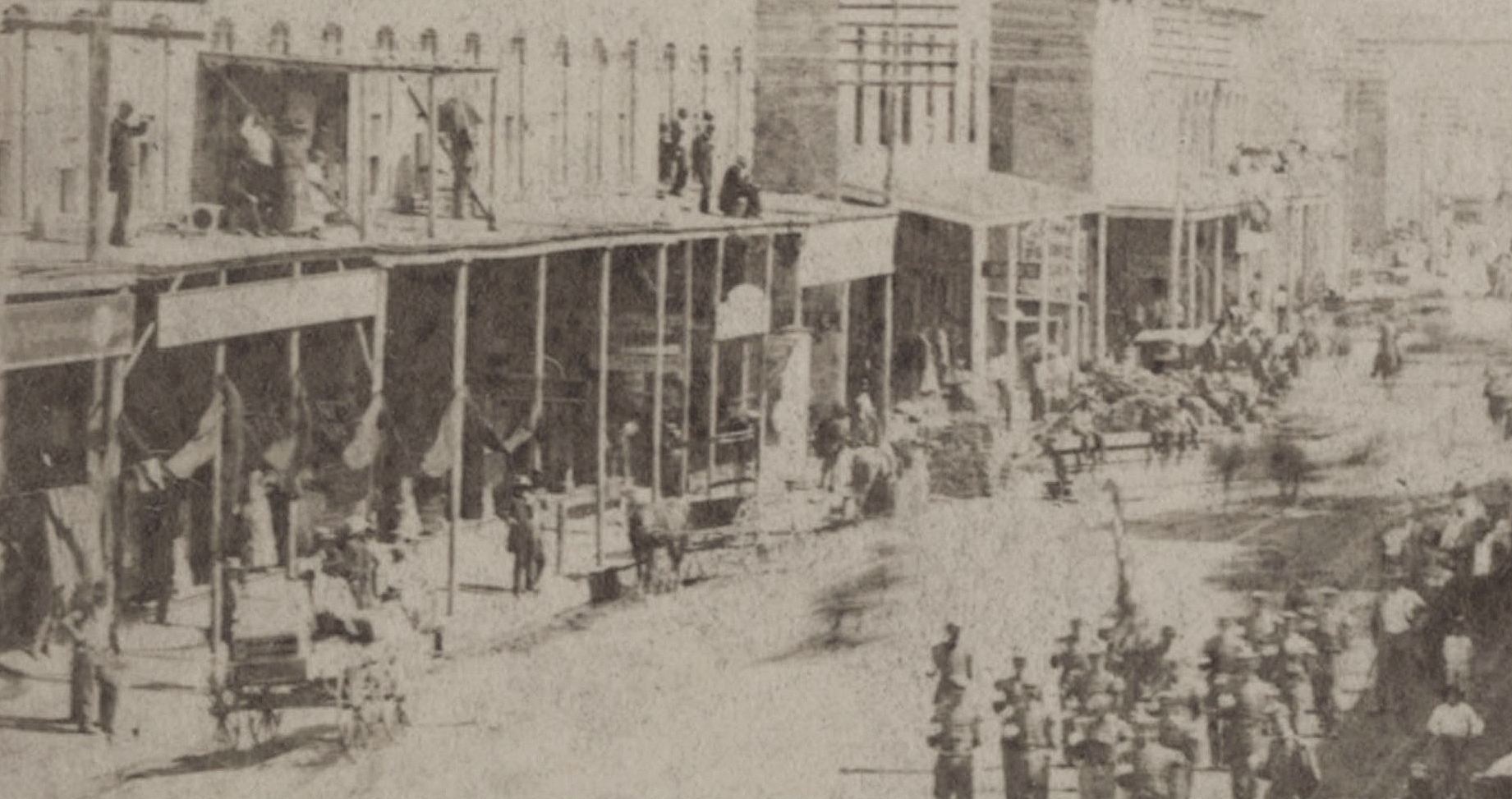
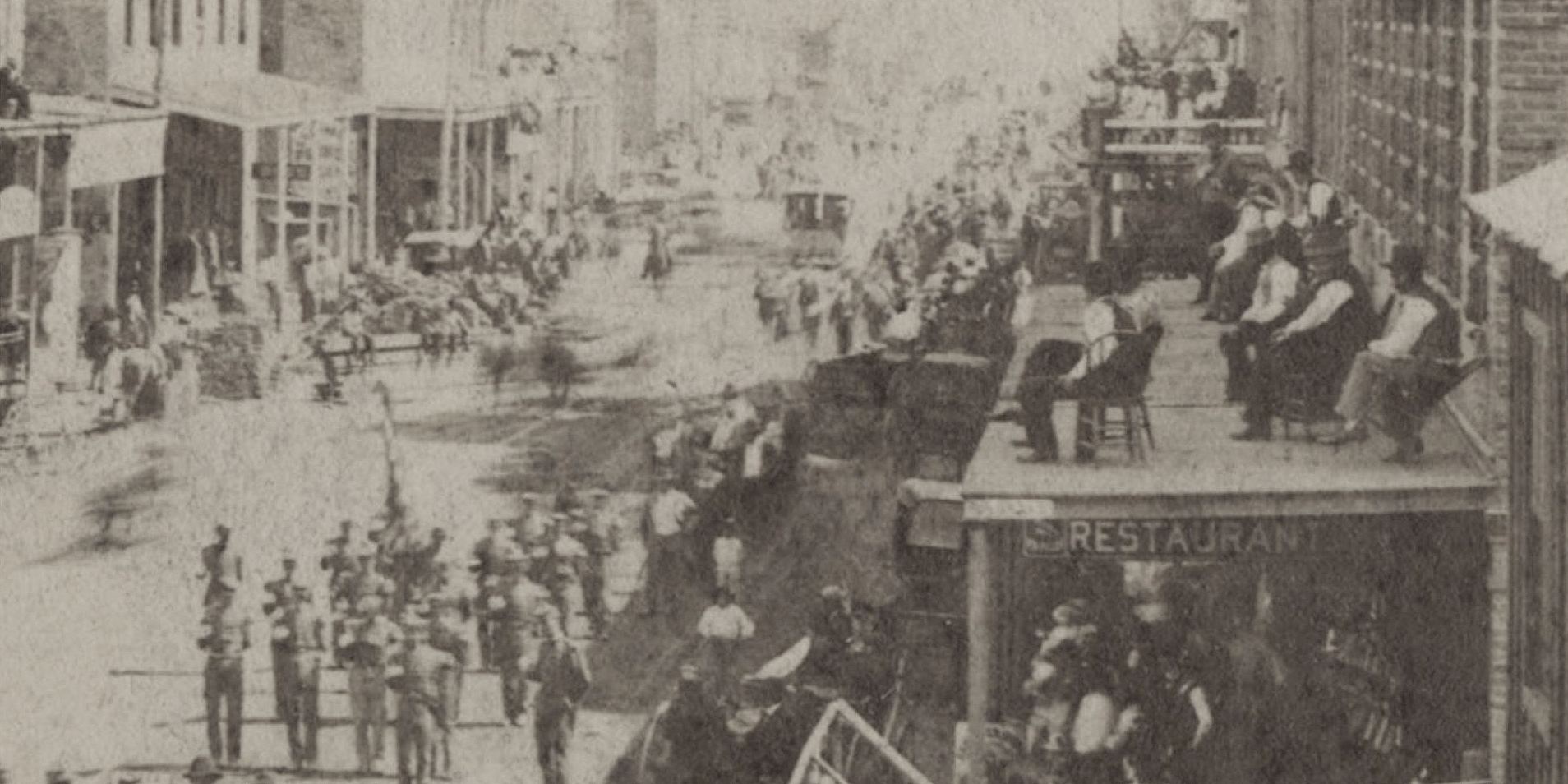
Picture quality leaves a bit to be desired, but here are a few details (click for larger images).

july-4_degolyer_a

july-4_degolyer_b

july-4_degolyer_c

***

Sources & Notes

Stereograph photo by Alfred Freeman, from the Lawrence T. Jones III Collection, DeGolyer Library, SMU Libraries, Southern Methodist University; the uncropped original can be seen here.

*

Copyright © 2014 Paula Bosse. All Rights Reserved.

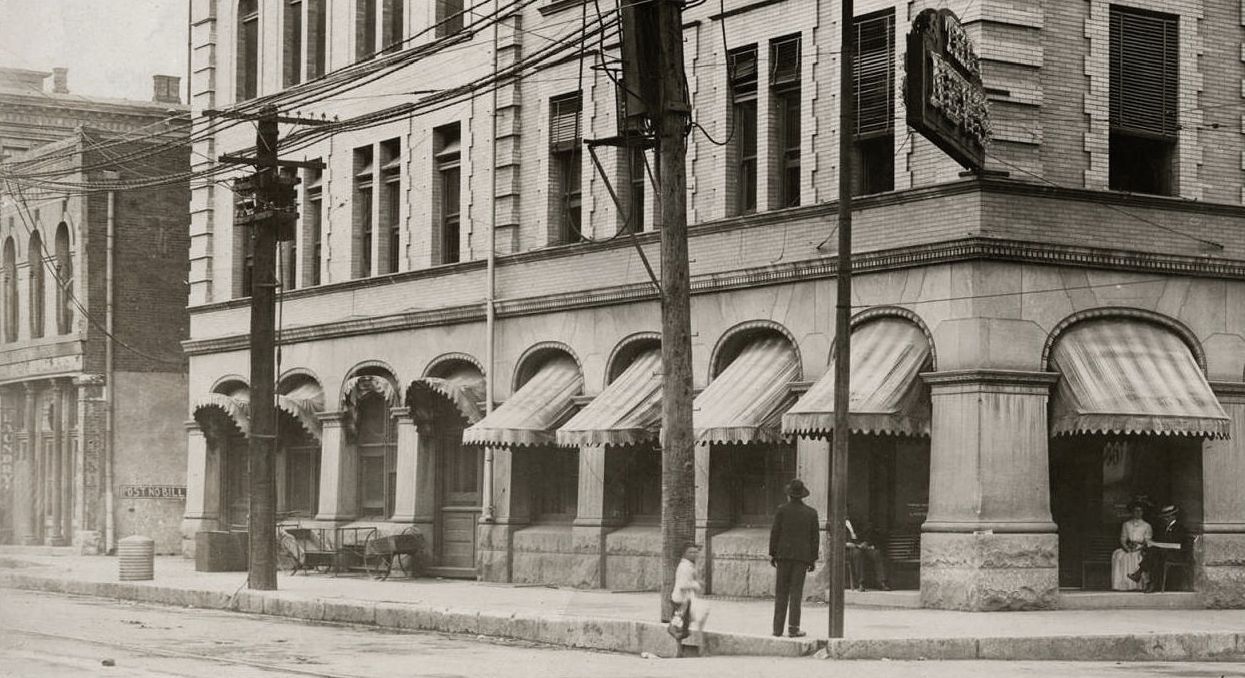
Loitering In Front of The Dallas Morning News Building — ca. 1900

dmn-bldg_c1900_degolyer_smuCommerce & Lamar

by Paula Bosse

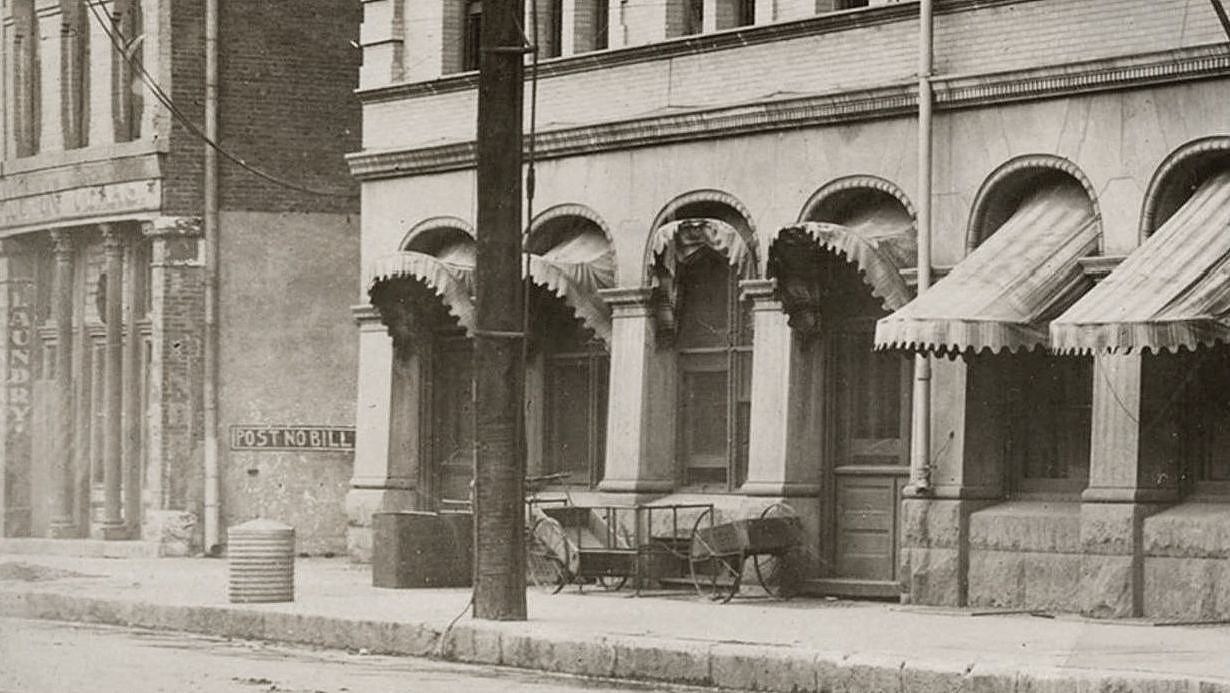
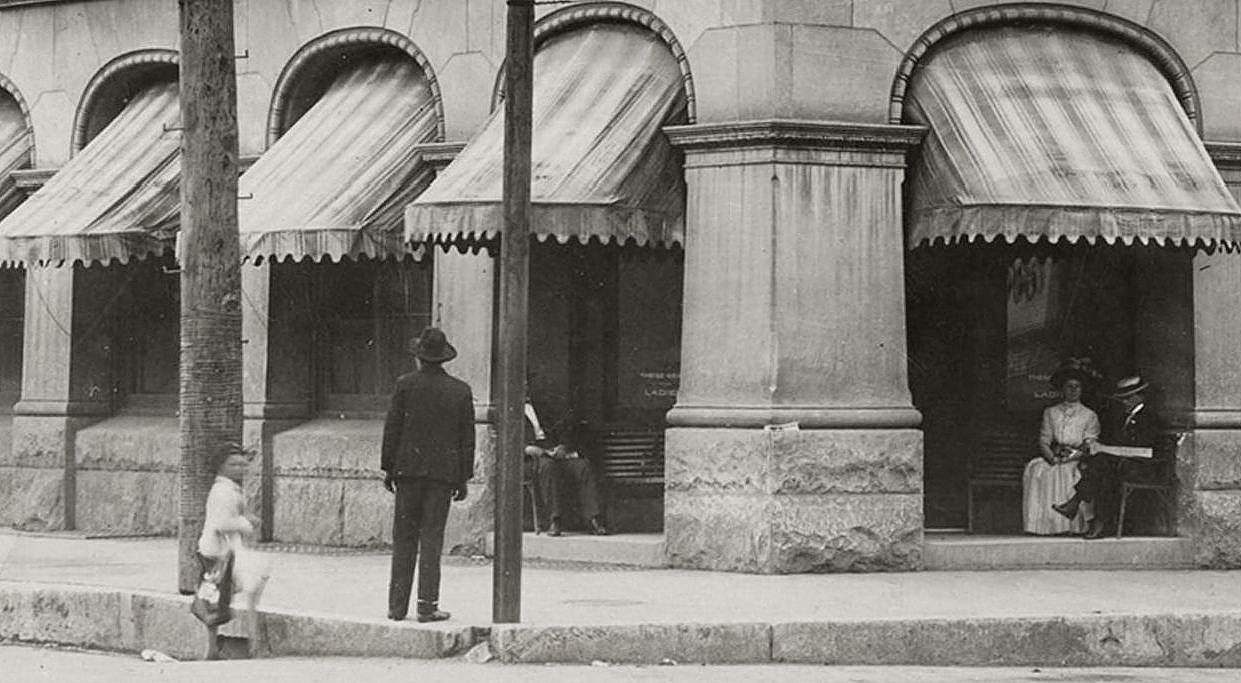
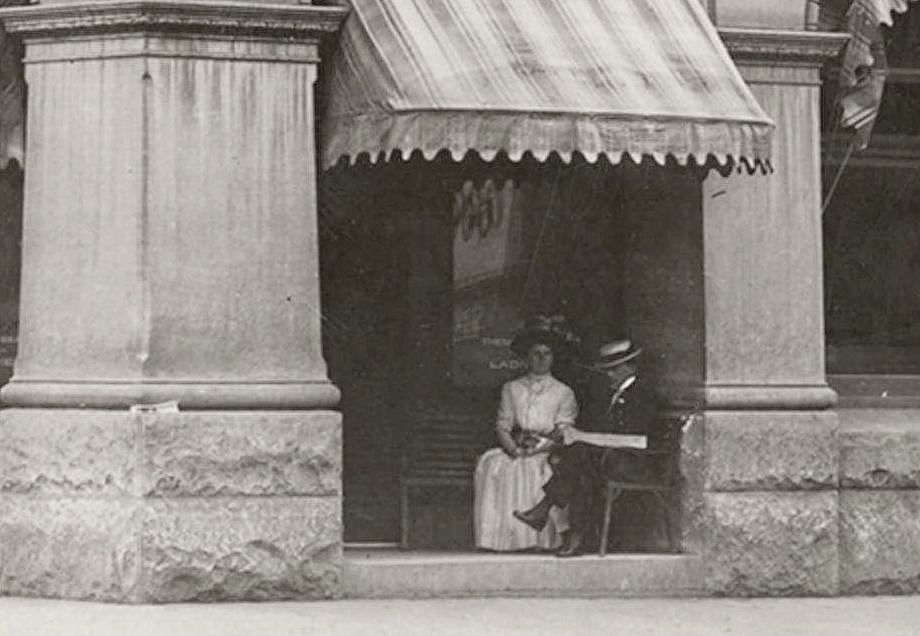
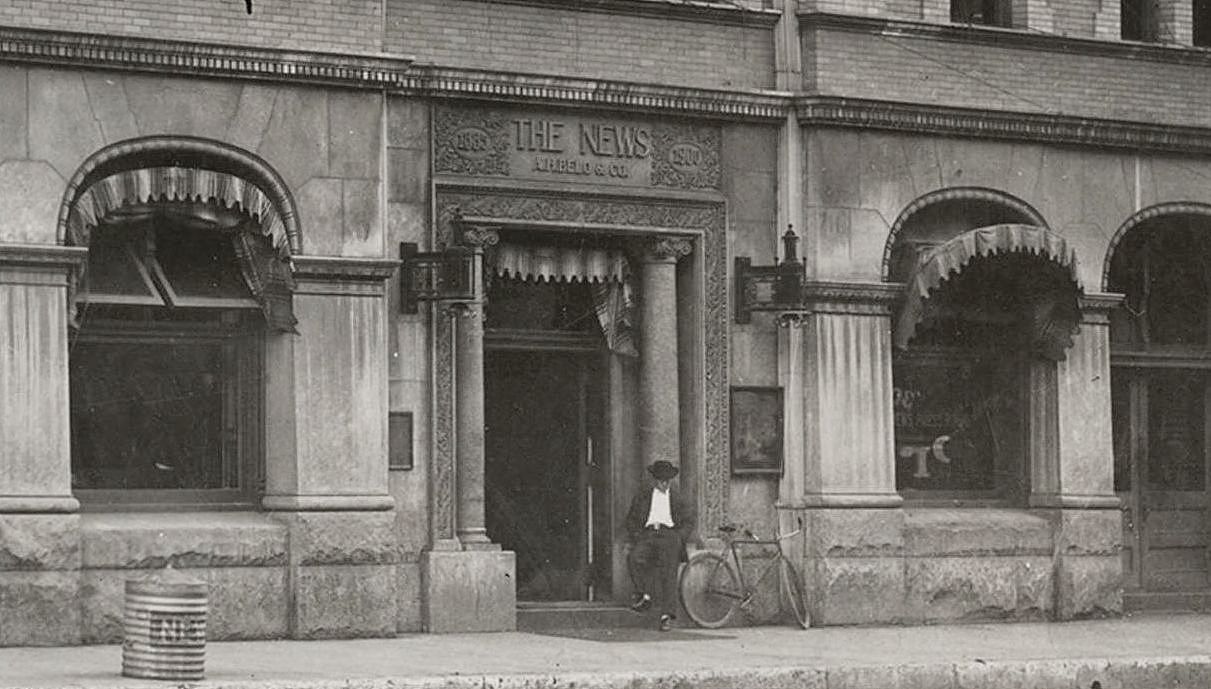
Here is another great photo from the DeGolyer Library at SMU, this one showing the then-new Dallas Morning News building anchoring the northwest corner of Commerce and Lamar. For me, it’s another case of the individual quiet vignettes that comprise the photograph being more interesting than the larger picture taken as a whole. (All pictures are much larger when clicked.)

dmn-bldg_c1900_degolyer-1

dmn-bldg_c1900_degolyer-2

dmn-bldg_c1900_degolyer-3

dmn-bldg_c1900_degolyer-4

dmn-bldg_c1900_degolyer-5

***

Sources & Notes

Photograph from the Belo Records collection at the DeGolyer Library, Central University Libraries, Southern Methodist University, seen here.

For another view of the same building, see these posts:

  • “The Dallas Morning News Building, Inside and Out — ca. 1900,” here
  • “Lively Street Life Outside the Dallas Morning News Building — 1900,” here

For other photographs I’ve zoomed in on, see here.

*

Copyright © 2014 Paula Bosse. All Rights Reserved.

The Trinity River at the City’s Doorstep

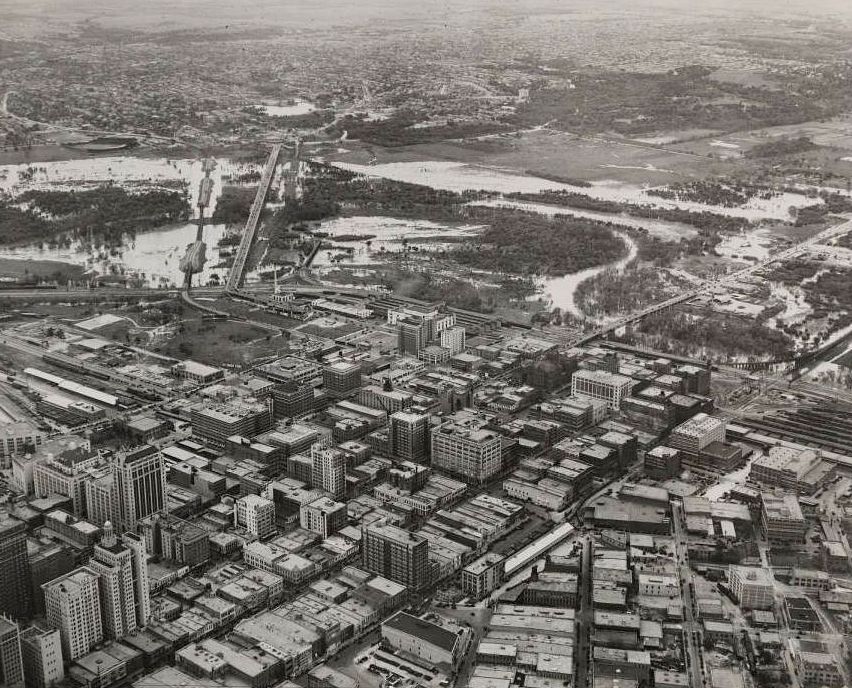
downtown_trinity_ca1920s_smu_foscueWhat? You didn’t know the Trinity River was straightened?

by Paula Bosse

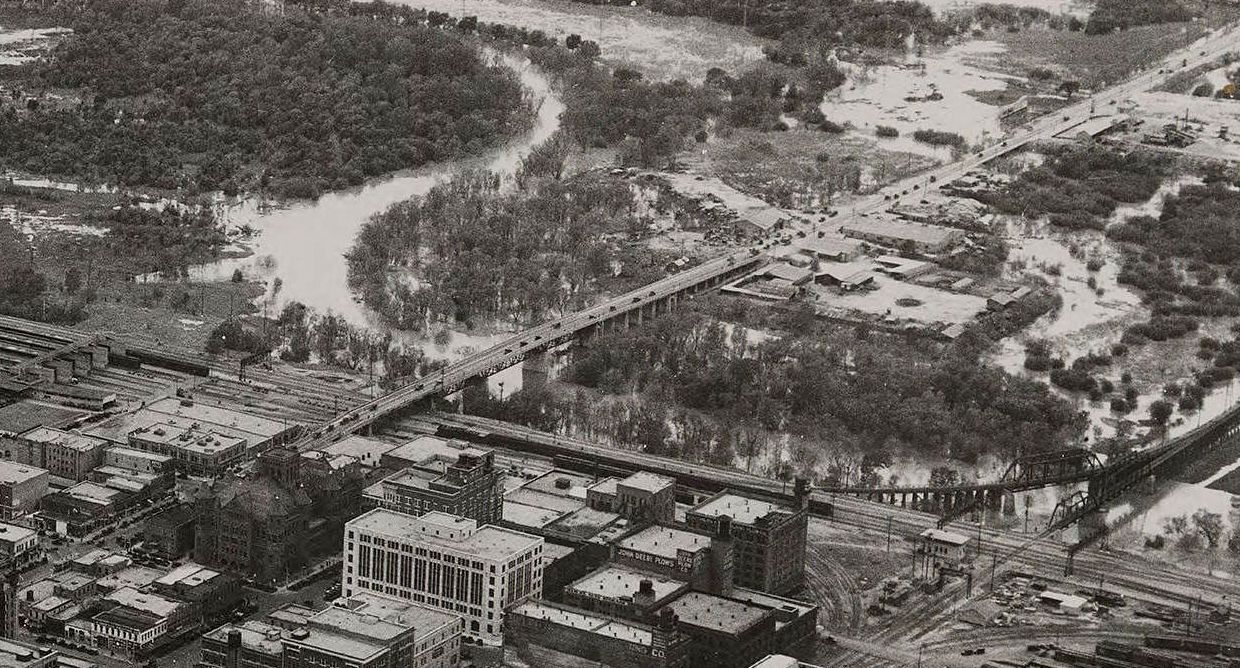
Back before Dallas decided to straighten out the Trinity River and move it a mile or two to the west (in an attempt to prevent future flooding), the river ran only about a block from the Old Red Courthouse. It’s so strange looking at this picture and seeing a river in a place where we’ve never seen it. It’s a shame they moved it (who knew you could “move a river”?), but flooding was a major issue, and, in fact, it looks like there was flooding the day this photo was taken. Below, you can see a magnified view — it looks so different from what we’re used to that it takes a second to get your bearings. Imagine how different Dallas would feel today if the Trinity had been allowed to run its natural course.

downtown_trinity_ca1920s_smu_foscue-det

***

Sources & Notes

Photograph by Lloyd M. Long, from the Edwin J. Foscue Map Library, Central University Libraries, Southern Methodist University; it can be seen here (with many of the buildings labeled) and here (without the labeling).

SMU has the photo dated “ca. 1930s or 1940s,” but I think it may be from the late ’20s. I’ve seen non-specific dates of the river’s realignment from the 1920s to the 1930s, but a couple of landmarks in the photo above place it sometime between 1925 (the year the Santa Fe buildings were constructed) and 1933 (the year the Hippodrome Theater — seen here, on Pacific — became the Joy Theater).

UPDATE: The river was straightened in 1928. See fascinating information about the when, where, why, and how of the Trinity River realignment, below in the comments — it was a true feat of modern engineering.

A few Trinity River-related links: the Trinity Commons Foundation site is here; the Trinity River Corridor Project site is here; and an interesting look at plans and proposals for the future of Dallas and the Trinity River can be read on the American Institute of Architects (Dallas) site here.

*

Copyright © 2014 Paula Bosse. All Rights Reserved.

Keep Oak Cliff Kinky — 1923

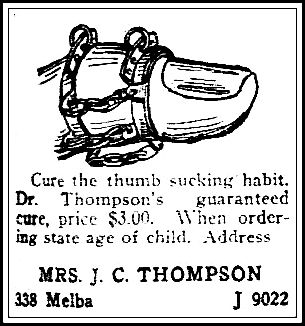
thumb-sucking_dmn_111823

by Paula Bosse

I’m not sure what more I can offer, except to say that in today’s money — with inflation taken into account — that little $3 bondage device for a child’s thumb would run you a cool 40 bucks in 2014. (Updated: in 2024, make that $55!)

I picture Mrs. J. C. Thompson assembling the inventory herself, at the kitchen table in her little frame house on Melba Street in Oak Cliff, the Victrola playing in the other room, having a chirpy one-sided conversation with the imaginary “Dr. Thompson.” I wonder if she sold any?

To quote the Messrs. Python: “Guaranteed to break the ice at parties!”

***

Sources & Notes

Ad from The Dallas Morning News, Nov. 18, 1923. I’m not sure there was a follow-up.

Whither Mrs. J. C. Thompson, OC entrepreneur?

*

Copyright © 2014 Paula Bosse. All Rights Reserved.

Dallas Medical College: 1900-1904

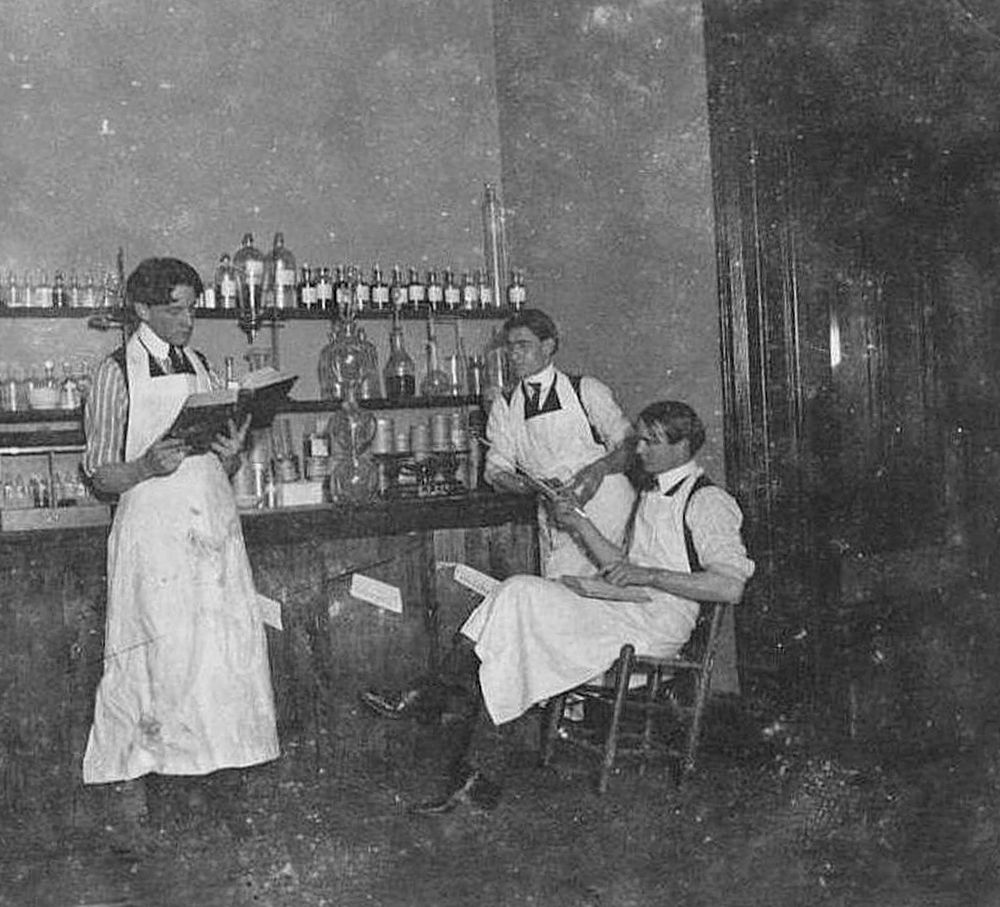
dallas-med-college_1903_utswPhotos from the UT Southwestern Library (click for larger image)

by Paula Bosse

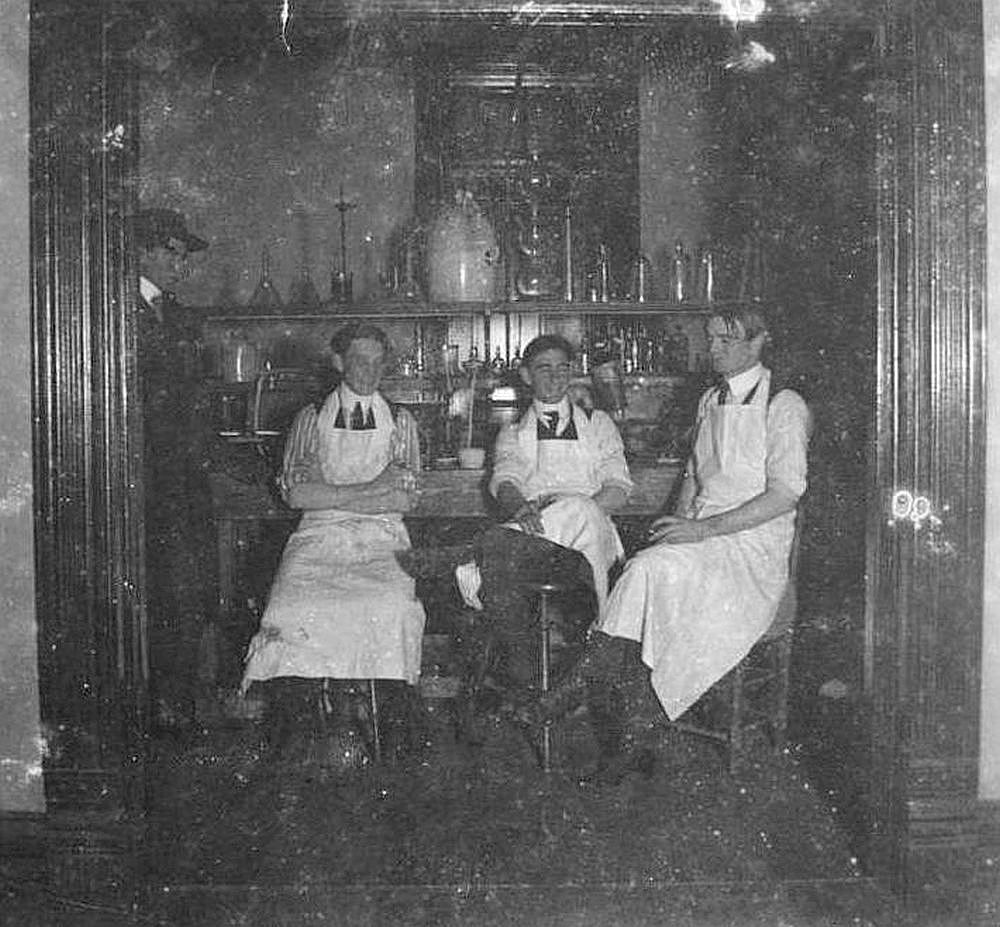
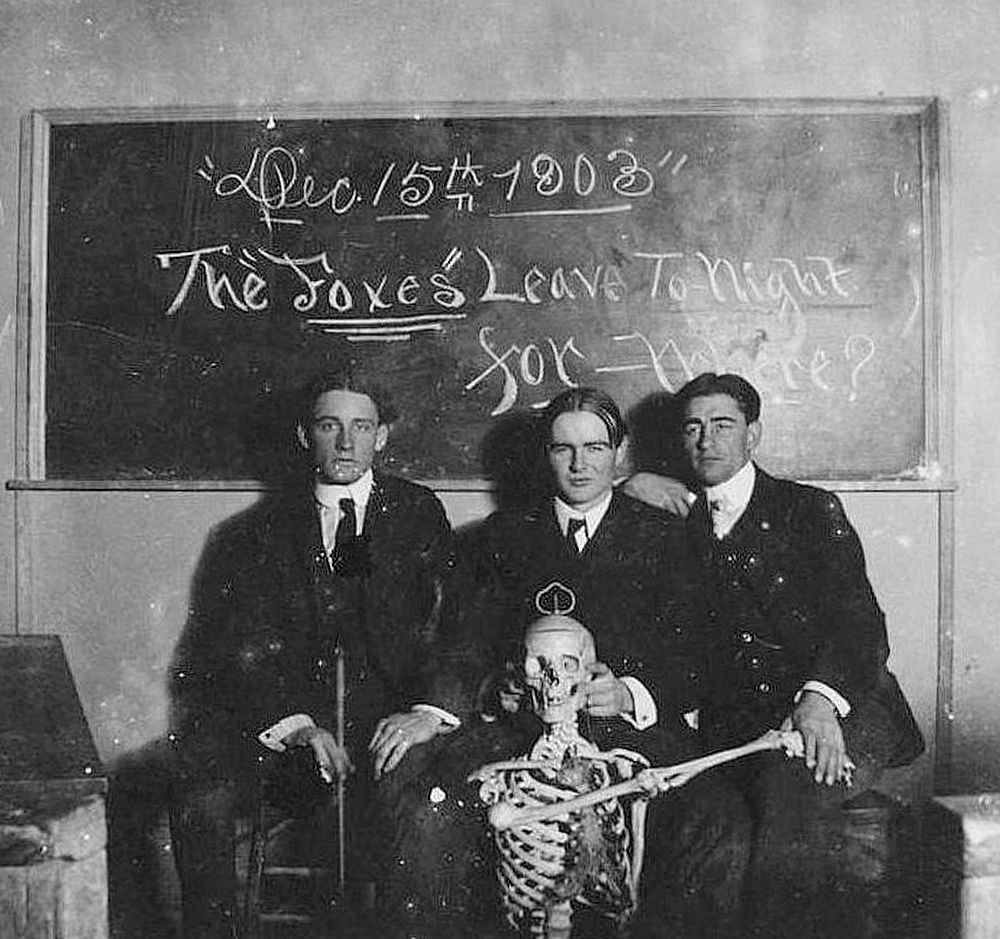
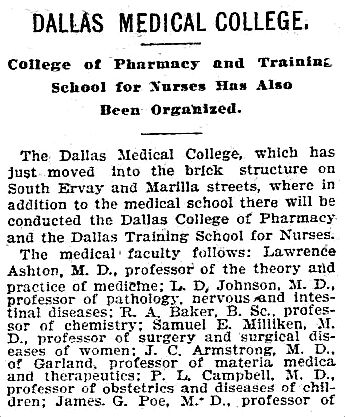
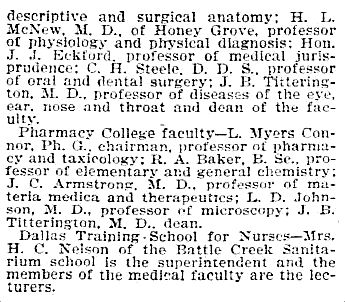
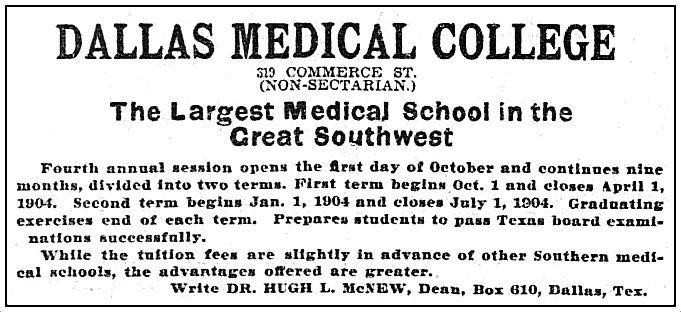
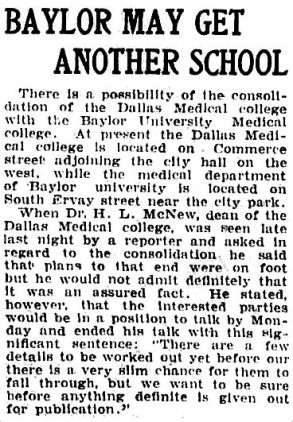
Between 1900 and 1910, Dallas had ELEVEN medical schools, some of dubious distinction. One of the earliest and most successful was Dallas Medical College, an offshoot of Trinity University which was eventually merged with Baylor College of Medicine. It was located on Commerce St. near Akard, neighbors with a fire station and the City Hall (the Adolphus Hotel now occupies this site). Here are several photos from the Dallas Medical College archives, showing three typical medical students engaging in typical medical school hijinks.

dallas-med-college_1903a_utsw

dallas-med-college_1903b_utsw

dallas-med-college_1903c_utsw

dallas-med-college_1903d_utsw

dallas-medical-college_dmn_020301adallas-medical-college_dmn_020301b Dallas Morning News, Feb. 3, 1901

dallas-medical-college_dmn_020301-sketchThe school’s first location on S. Ervay & Marilla (DMN, Feb. 3, 1901)

dallas-medical-college_dmn_092703DMN, Sept. 27, 1903

dallas-med-coll_southern-merc_111004Southern Mercury, Nov. 10, 1904

The official announcement of the merging, with details on how the two schools would function for the rest of the school year can be read here.

***

Sources & Notes

Photographs from the UT Southwestern Library, here and here.

More on early medical schools in Texas, with several paragraphs on Dallas, can be found in “Training the Healers” by Vernie A. Stembridge, M.D., an article from the May, 1999 issue of Heritage magazine (a publication of the Texas Historical Foundation) which can be read here.

*

Copyright © 2014 Paula Bosse. All Rights Reserved.


Ads for Slaves Lost, Found, and For Sale in the Pages of The Dallas Herald

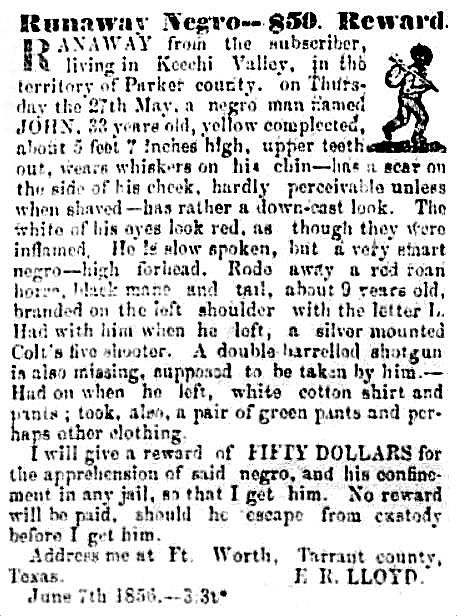
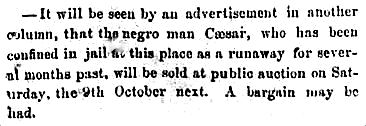
runaway_negro_dallas-herald-1856Dallas Herald, June 7, 1856

by Paula Bosse

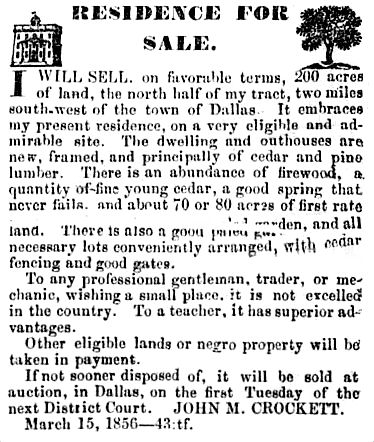
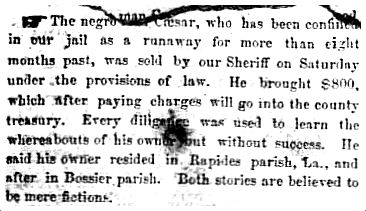
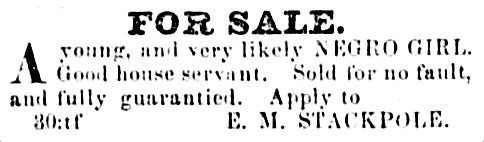
When one is browsing through Texas newspapers from the 1850s and 1860s, one shouldn’t be surprised to see things like this. But that doesn’t make them any less shocking. Black men and women were not regarded as people, but as property — in all of these “ads” you could easily substitute “horse” for “negro.” I think I always wanted to believe that slavery wasn’t much of an issue in Dallas — but it was. The name of one man, E. M. Stackpole, a successful shopkeeper, kept coming up a lot in these advertisements. In addition to the general merchandise of his store, he seemed to do a pretty brisk trade in buying, selling, hiring (more like leasing from other slave-owners), and hiring out slaves. One of his ads is below. (By the way, the word “likely” was a common adjective for slaves; it meant, basically, “worthy of purchase.”)

trade_for_negro_dallas-herald_1856March 15, 1856

negro-auction_dallas-herald_091558Sept. 15, 1858

negro-auction_dallas-herald_102058Oct. 20, 1858

negro_for_sale_dallas-herald_18611861

***

Sources & Notes

All advertisements from The Dallas Herald, via UNT’s Portal to Texas History site.

My lack of knowledge about slavery in Texas is appalling. The Wikipedia entry provides a good overview; read it here.

*

Copyright © 2014 Paula Bosse. All Rights Reserved.

Dallas in 1879 — Not a Good Time to Be Mayor

main-jefferson_1879_greeneA view from the courthouse, looking north (click for larger image)

by Paula Bosse

Above, a view of Dallas in 1879, looking north from the courthouse (one of many in the city’s past that eventually burned down); the intersection in the right foreground is Main and Jefferson (now Record Street).

This is such a cool photo that, on a whim, I checked to see what exciting things might have happened in Dallas in 1879. I found that the city’s voters had just elected a new mayor, James M. Thurmond, who had run on an “independent reform and morality ticket.” Yawn. On the surface, that hardly seemed very interesting — a  historical fact, yes, but not all that exciting. But, wait, there’s more to the story.

Thurmond’s post-election honeymoon was short-lived because, even though he had won a second (one-year) term, he had made some serious enemies in his first term. He was removed from office in 1880 by the city council in a lack-of-confidence vote, the result of a nasty trial and probably slanderous accusations by lawyer Robert E. Cowart.

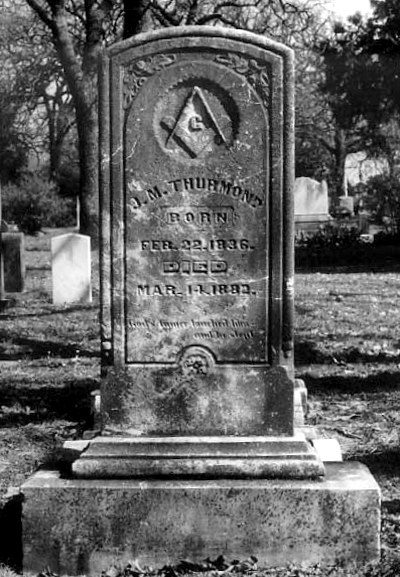
The feud between Thurmond and Cowart grew more and more bitter as time passed, and on March 14, 1882 — moments after the two men had exchanged angry words in Judge Thurmond’s courtroom — Cowart shot and killed Thurmond. Witnesses described the shooting as an act of self-defense. They said that Cowart shot when the judge reached for his pistol. (For an incredibly gruesome account of this incident, the contemporary newspaper report is linked below.)

The photograph above was taken from the courthouse where this shooting took place. When the photograph was taken in 1879, the animosity between the new mayor and an unhappy lawyer had already begun to percolate. I suppose men with “Esq.” after their names in the 1880s were predisposed to shoot-outs indoors in well-appointed courtrooms rather than out in the dusty streets at high noon. It’s classier.

thurmond_headstone_greenwood-cemetery_findagraveGreenwood Cemetery, Dallas (photo: David N. Lotz)

***

Top photo is from Dallas, The Deciding Years — A Historical Portrait by A. C. Greene. (Austin: The Encino Press for Sanger-Harris, 1973); photo is from the collection of the Dallas Public Library.

Photo of J. M. Thurmond’s headstone in Greenwood Cemetery is from Find A Grave, here. Cowart — who died in 1924 — is buried in a nearby plot in the same cemetery. (Incidentally, Cowart’s claim to fame — other than shooting a judge in his own courtroom — appears to be that he was the person who inadvertently came up with Fort Worth’s nickname, “Panther City” when he wrote a tongue-in-cheek newspaper article about Fort Worth in 1875. Read a great history of this amusing kerfuffle in Hometown by Handlebar’s post, here — scroll to the second story.)

For an interesting contemporary report of the shooting — including gruesome eyewitness accounts — check out the article from the March 15, 1882 edition of The Dallas Herald (under the headline “The Deadly Pistol”), here, via the Portal to Texas History.

A short background on the Thurmond-Cowart feud, from the WPA Dallas Guide and History (which includes the verdicts of Cowart’s two trials for murder), can be read here.

Click top photograph for HUGE image.

*

Copyright © 2014 Paula Bosse. All Rights Reserved.

Junius Heights … Adjacent!

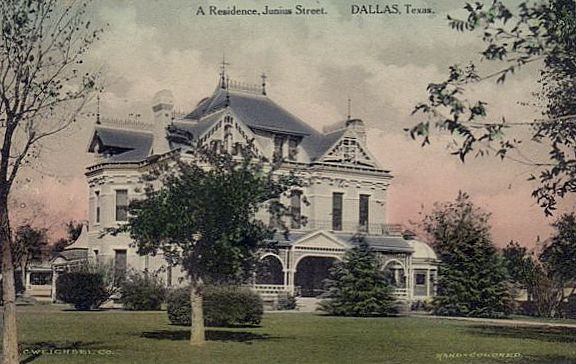
junius-stNot actually Junius Heights, but nearby! (see explanation below)

by Paula Bosse

One of the most popular neighborhoods in Old East Dallas is Junius Heights, which I’m a little surprised to learn is the largest historic district in Dallas. It came into being when streetcar service was extended into the eastern boondocks of the city, opening up tantalizing possibilities of new development. According to Preservation Dallas, when lots went on sale in the neighborhood-to-be in September of 1906, there was a buying frenzy:

“Prospective buyers were encouraged to take the streetcar to a newly platted neighborhood of the same name that afternoon to view the lots. Because it was Sunday, no lots were sold that day. But interested buyers remained in the neighborhood until midnight, when a pistol was fired to indicate the start of the sale. Within an hour, two hundred lots in Junius Heights had been sold and by Wednesday, every lot in the neighborhood had been sold.”

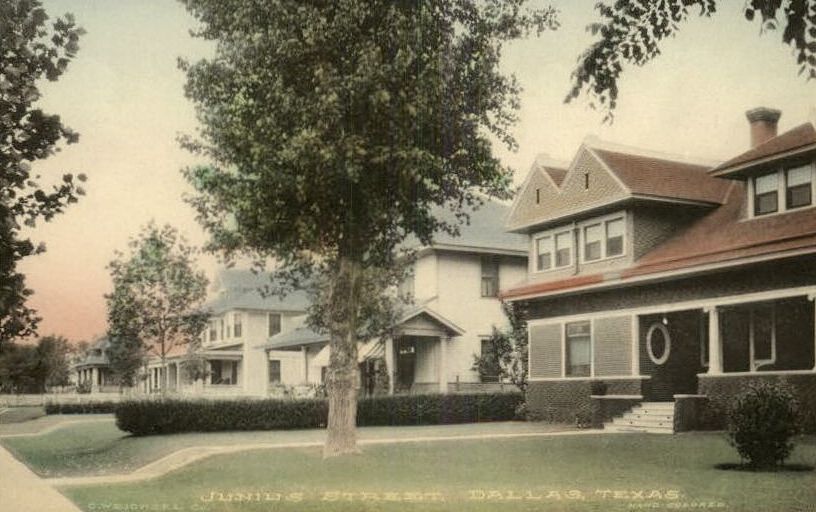
junius-housesUm, apparently not Junius Heights either….

And East Dallas has never looked back.

*

UPDATE: Having determined where the houses in these postcards were actually located — on Junius between Peak & Carroll — I now see this ISN’T Junius Heights! It’s a few blocks west of the Henderson Avenue boundary. So, not Junius Heights, but Junius Heights-adjacent!

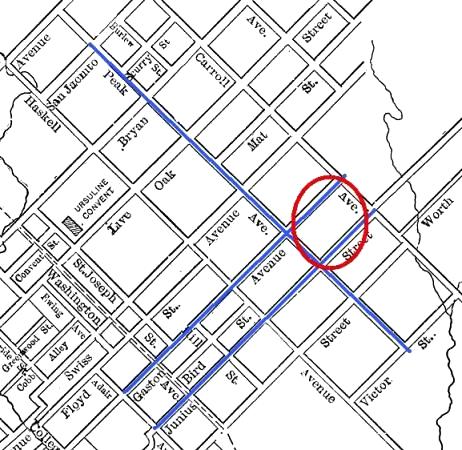
The postcard at top shows the Thomas Field house (built in 1884 and sold to John B. Wilson — of Wilson Building fame — in 1894); it was situated in a full city block bounded by Junius, Carroll, Gaston, and Peak. Before addresses changed throughout the city in 1911, the residence seems to have had no official address; in 1911 it was assigned the address of 4305 Junius. According to William L. McDonald’s book Dallas Rediscovered, the house was demolished in 1922 in order to subdivide and redevelop the property, Below is a map of the area from about 1898, showing the general location of the property.

field_wilson_house_ca-1898-map

The second postcard reproduces a photo seen in a real estate ad from 1906 which shows “portions of Junius Street between Peak and Carroll” — so, in the same block as the Field/Wilson house. Just not actually in Junius Heights!

junius-st_betw-peak-carroll_dmn_090206Dallas Morning News, Sept. 2, 1906 (click for larger image)

***

Quote is from a history of the Junius Heights neighborhood on the Preservation Dallas site, here.

Wikipedia entry is here.

Click pictures for larger images.

*

Copyright © 2014 Paula Bosse. All Rights Reserved.

“I’ve Got the Dallas Blues and the Main Street Heart Disease”

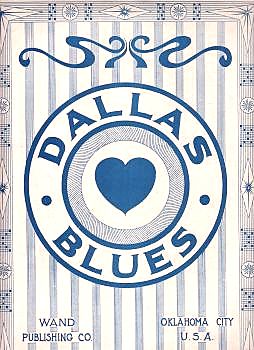
dallas-blues-sheet-music

by Paula Bosse

“Dallas Blues” is an important milestone in the history of blues music. I gather this may be debatable, but it is cited as being the first “true blues song” ever published (at least by sources on Wikipedia). Written sometime before 1909 by Hart A. Wand, a white musician in Oklahoma, “Dallas Blues” was published as an instrumental in 1912; in 1918, lyrics were added by Lloyd Garrett.

I have to admit, when I read the opening lyrics, I assumed it was your typical Dallas-inspired ditty about how Dallas is a cold and heartless city that will chew you up and spit you out:

When your money’s gone, friends have turned you down,
And you wander ’round just like a houn’ (a lonesome houn’),
Then you stop to say, ‘Let me go away
From this old town (this awful town).’

But then the next lines are:

There’s a place I know folks won’t pass me by,
Dallas, Texas, that’s the town I cry! (Oh hear me cry!)
And I’m going back, going back to stay
There till I die (until I die).

Ha! That was unexpected.

Below are a few versions of “Dallas Blues” — fast and slow, some with vocals, and one hot instrumental. Enjoy. I hope those juicy peaches are still hanging on your trees!

**

Ted Lewis’ version from 1931, with Fats Waller’s first vocal appearance on record and Benny Goodman on clarinet. Most of the lyrics have been left out, but this is great

*

Louis Armstrong’s recording, from 1929:

*

George Lewis’ slowed-down version:

*

And, lastly, Isham Jones’ instrumental version — this one is hopping!

***

Sources & Notes

Sheet music from an Art & Seek story on Texas Blues (with sound clips) by Jerome Weeks, here.

Wikipedia entry on the song, here.

Complete lyrics to the song, here.

I’ve got the Dallas Blues and the Main Street heart disease
(It’s buzzin’ ’round),
Buzzin’ ’round my head like a swarm of little honey bees
(Of honey bees).

Interested in Dallas-related blues songs? Check out my previous post “Deep Ellum / Deep Elm / Deep Elem Blues,” here.

*

Copyright © 2014 Paula Bosse. All Rights Reserved.

The Ladies’ Reading Circle: An Influential Women’s Club Organized by Black Teachers in 1892

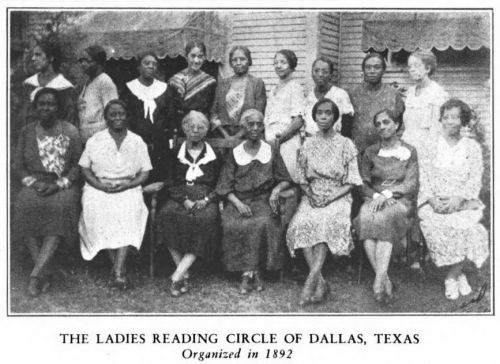
ladies-reading-circle_negro-leg-brewer_1935The Ladies (click for larger image)

by Paula Bosse

When one thinks of “ladies’ clubs” of the past, one probably tends to think of groups of largely well-to-do women in fashionable dresses, gloves, and smart hats who gathered for quaint meetings in one another’s homes to discuss vaguely literary or cultural topics, sip tea, chit-chat, and gossip. Often they would plan projects and events which would aid pet community or charitable causes. There were clubs of varying degrees of serious-mindedness, but, for the most part, club meetings were mostly an excuse for women to socialize. 100 years ago, these women rarely worked outside the home, and these groups offered an important social and cultural outlet for well-educated women of means. White women. Women of color were not part of that particular club world. They had to create clubs for themselves. And they did.

In 1892, eight African-American teachers in Dallas organized their own club, the Ladies’ Reading Circle, and while it, too, was an important social outlet for the women, the focus of the group tended to be more serious, with reading lists comprised primarily of political, historical, and critical texts.

The members of the Ladies’ Reading Circle (a group that lasted at least until the 1950s) were, for the most part, middle-class black women who set an agenda for the club of education, self-improvement, and social responsibility. Like most women’s clubs of the time, each meeting of the LRC was held in a different member’s home and usually ended with a “dainty” luncheon and light musical fare, courtesy of the Victrola or player piano; but what set the LRC apart from most of the other women’s clubs of the day was the choice of reading material — from books on world history and international politics, to texts on current affairs and social criticism. (Several surprising examples appear below.)

Not only did the women gather weekly to discuss current and cultural affairs, they also worked to improve their community by tackling important social issues and by inspiring and encouraging young women (and men) who looked to them as civic leaders. Noted black historian J. Mason Brewer dedicated his 1935 book Negro Legislators of Texas to the women of the Ladies’ Reading Circle. The photograph above is from Brewer’s book, as is the following dedication:

lrc_negro-leg-brewer_1935-dedication

Included were the names of the members, several of whom had organized the club in 1892:

lrc_members_brewer

One of the LRC’s concerns was establishing a home which, like the white community’s YWCA, offered housing and career training for young women. The charming frame house the club bought for this purpose in 1938 (and which is described in the Jan. 10, 1952 News article “Ladies Reading Circle Seeks $7,500 for Expanding Home”) still stands at 2616 Hibernia in the State-Thomas area

lrc-home_2616-hibernia_google2616 Hibernia (Google Street view, 2014)

But the group was organized primarily as a “reading circle,” and the minutes of three randomly chosen meetings show the sort of topics they were interested in exploring. The following three articles are from the post-WWI-era, and all appeared in The Dallas Express, a newspaper for the city’s black community.

lrc_dallas-express_040320April 3, 1920

lrc_dallas-express_041020April 10, 1920

lrc_dallas-express_102023October 20, 1923

My favorite juxtaposition of content on the pages of The Dallas Express was the article below which reported on a white politician’s promise that he would fight to keep “illiterate Negro women” from voting — just a column or two away was one of those eye-popping summaries of the latest meeting of the Ladies’ Reading Circle. My guess is that the black educators who comprised the Ladies’ Reading Circle were probably far more knowledgeable about world events than he was.

negro-womans-suffrage_dallas-express_052220May 22, 1920

In reading the limited amount of information I could find on the LRC, I repeatedly came across the name of one of the earliest members, Callie Hicks (she is in the 1935 photo at the top, seated, second from the right). She was a dedicated teacher as well as a respected civic leader who worked for several causes and was an executive of the Dallas branch of the NAACP. A Dallas News article about Miss Hicks appeared in Feb., 1950 when she was named “Woman of the Year” by one of the largest African American women’s organizations in Dallas County (“Honor Caps 40 Years of Helpful Teaching,” DMN, Feb. 10, 1950). Miss Hicks died in May, 1965.
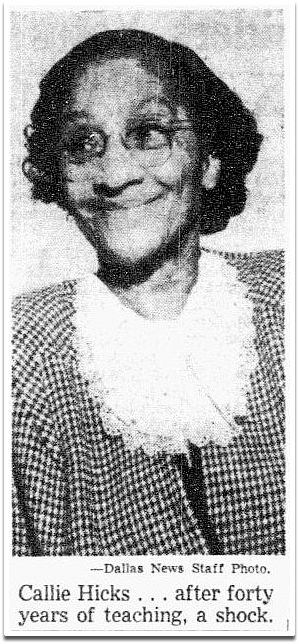
callie-hicks_dmn-021950-photo1950

It’s a shame that the Ladies’ Reading Circle is not better known in Dallas today. I have to admit that I had never heard of the group until I stumbled across that 1935 club photo. Their tireless work to improve the intellectual lives of themselves and others no doubt influenced the generations that followed.

***

Sources & Notes

Top photograph, dedication, and member list, from Negro Legislators of Texas and Their Descendants; A History of the Negro in Texas Politics from Reconstruction to Disenfranchisement by J. Mason Brewer (Dallas: Mathis Publishing Co., 1935).

Minutes from the Ladies’ Reading Circle meetings all printed in The Dallas Express.

Relevant material on the LRC and other historic African-American women’s clubs can be read in Women and the Creation of Urban Life, Dallas, Texas, 1843-1920 by Elizabeth York Enstam (College Station: Texas A & M University Press, 1998), here.

The Handbook of Texas entry for one of the founding members of the Ladies’ Reading Circle, Julia Caldwell Frazier, can be found here.

*

Copyright © 2014 Paula Bosse. All Rights Reserved