Flashback : Dallas

A Miscellany: History, Ads, Pop Culture

4th of July Parade — Sweating in Formation

july-4_degolyerI’m parched just looking at this…

by Paula Bosse

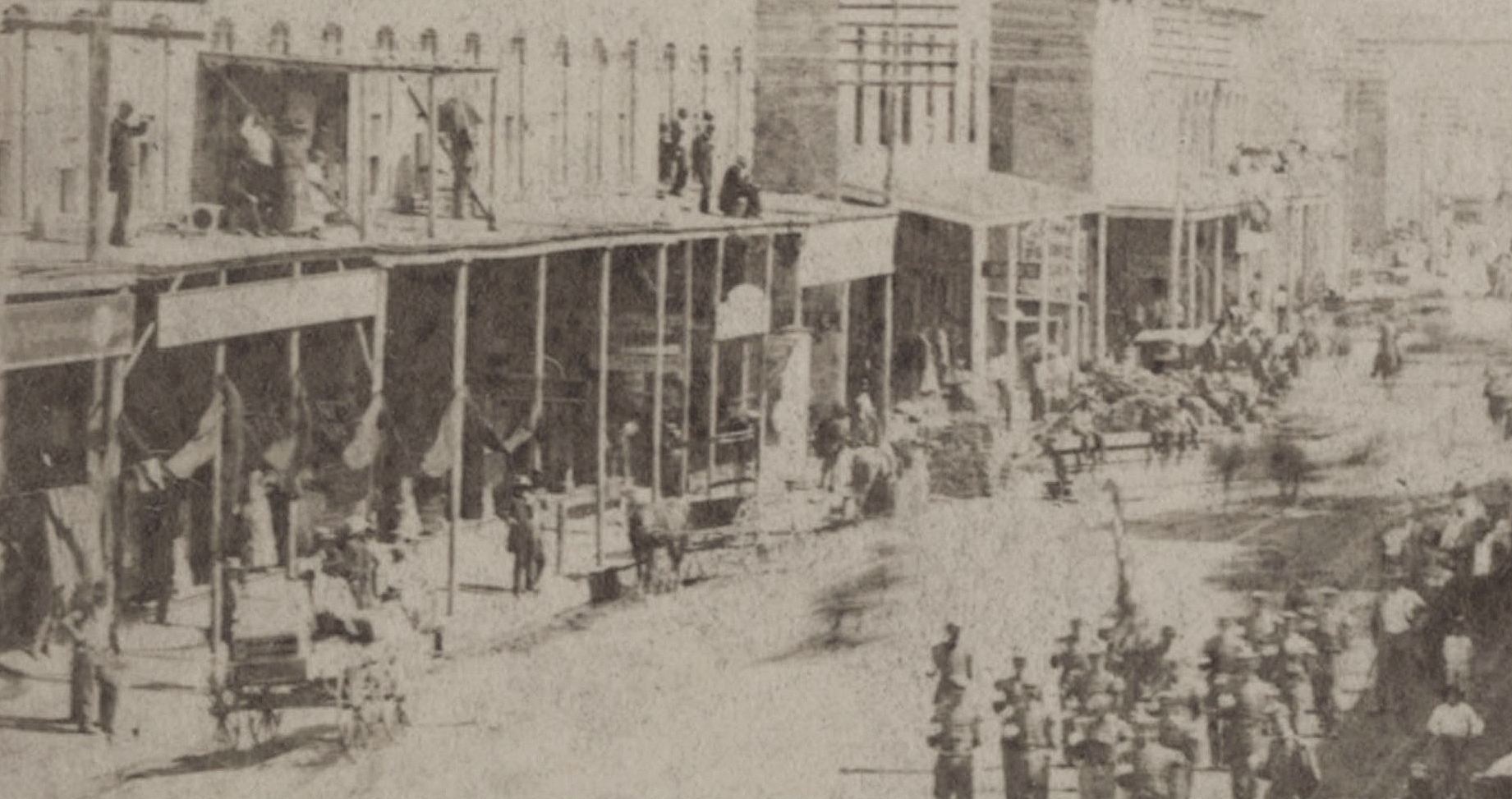
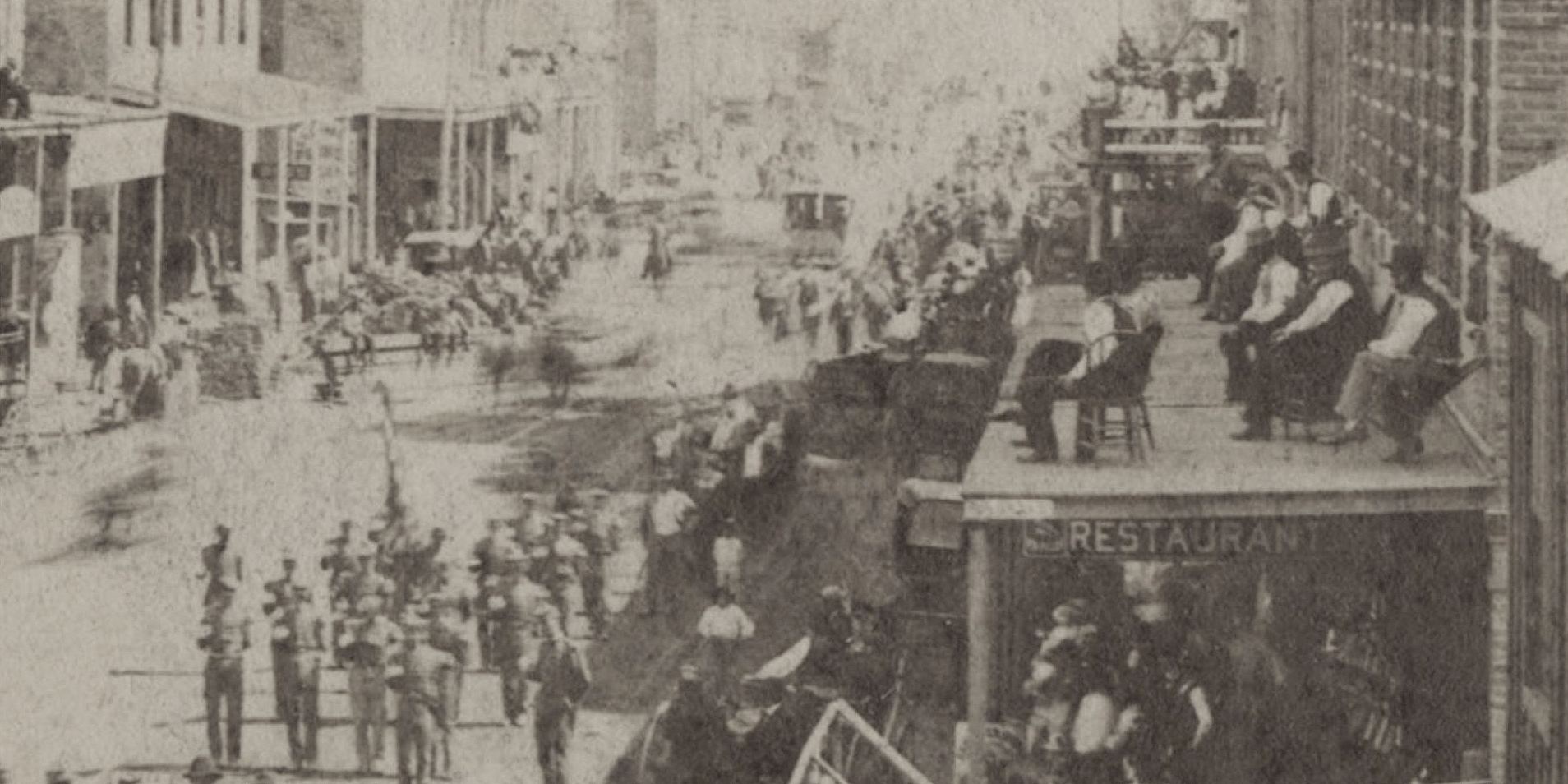
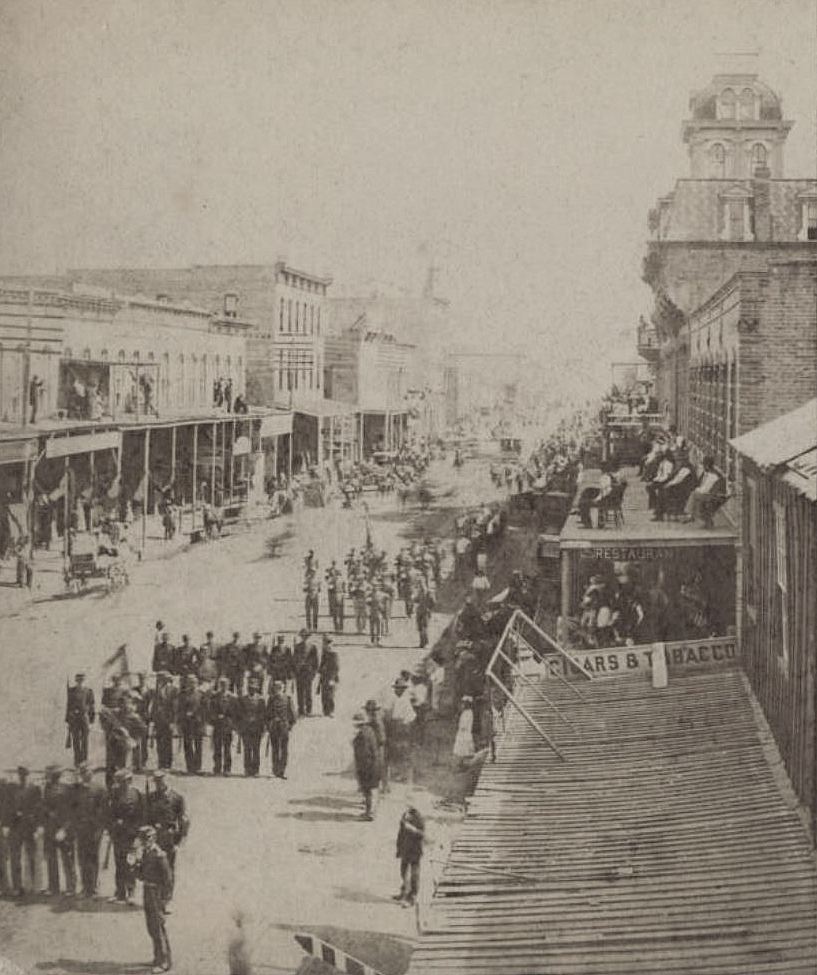
Fourth of July parade in Dallas, 1870s or 1880s. Bet it was hot in those uniforms.

Picture quality leaves a bit to be desired, but here are a few details (click for larger images).

july-4_degolyer_a

july-4_degolyer_b

july-4_degolyer_c

***

Sources & Notes

Stereograph photo by Alfred Freeman, from the Lawrence T. Jones III Collection, DeGolyer Library, SMU Libraries, Southern Methodist University; the uncropped original can be seen here.

*

Copyright © 2014 Paula Bosse. All Rights Reserved.

Summers and Lagoons — 1940s

dmfa_color

by Paula Bosse

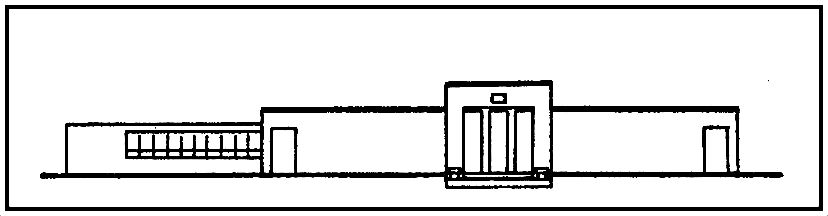
The old Dallas Museum of Fine Arts at Fair Park. Just across the lagoon.

And a streamlined rendering which could be found on DMFA letterhead and publications for many years:

dmfa_logo_1944

*

Copyright © 2014 Paula Bosse. All Rights Reserved.

Loitering In Front of The Dallas Morning News Building — ca. 1900

dmn-bldg_c1900_degolyer_smuCommerce & Lamar

by Paula Bosse

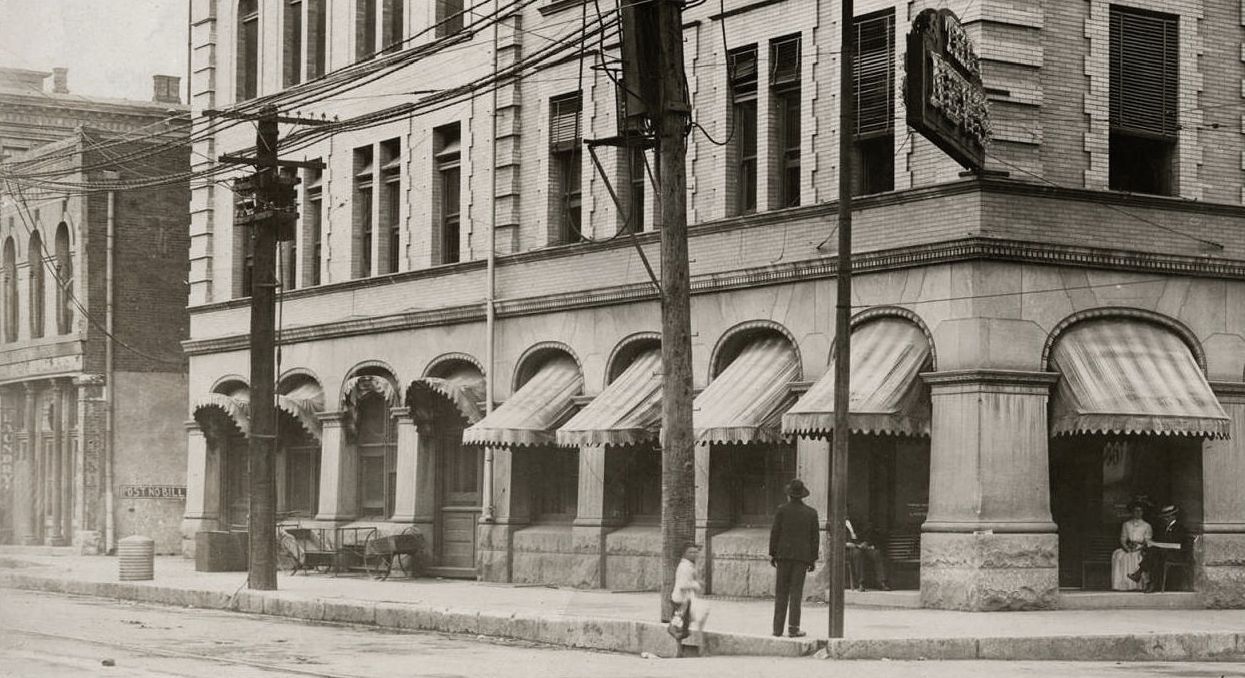
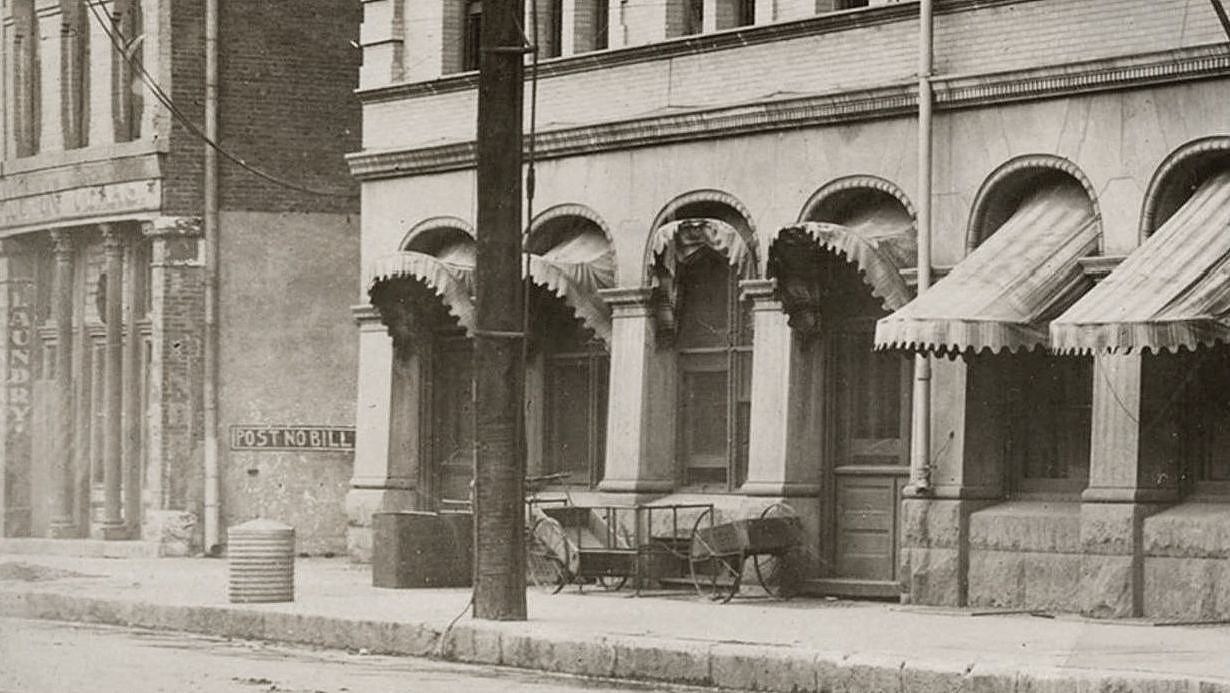
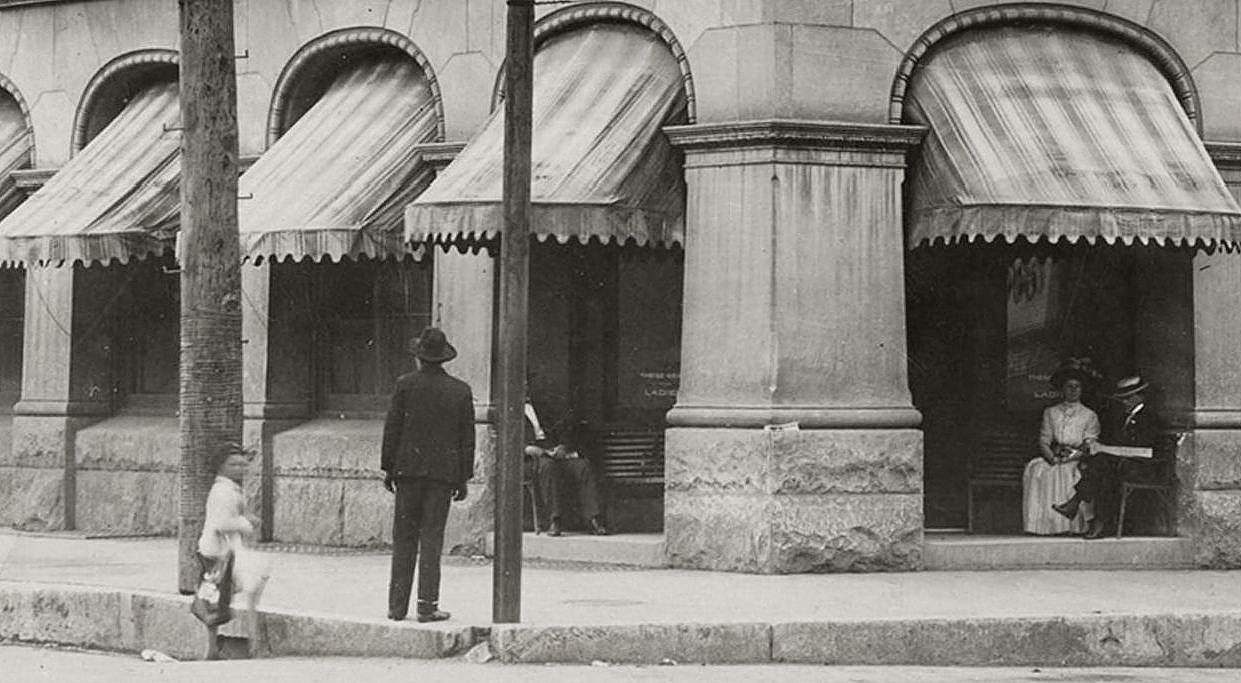
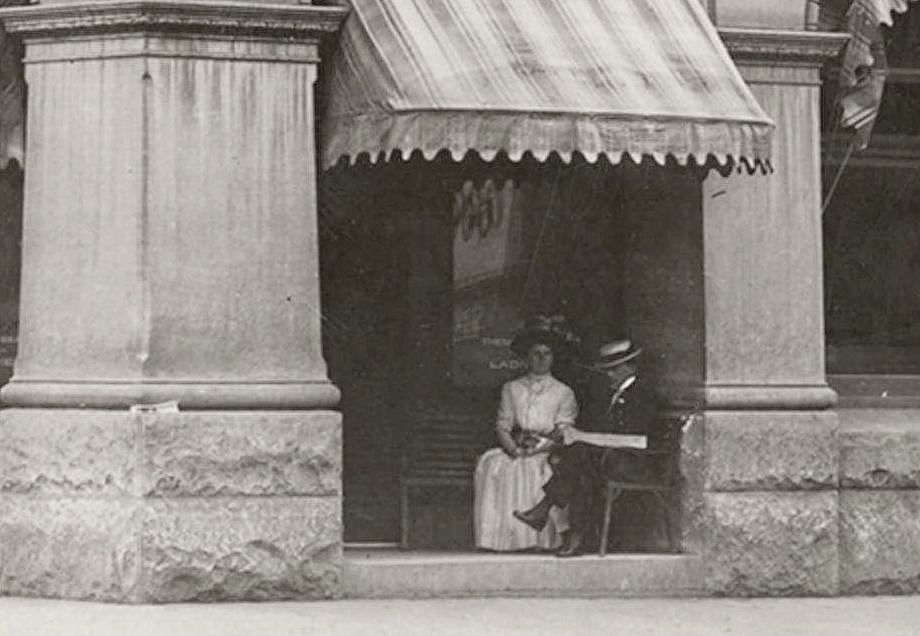
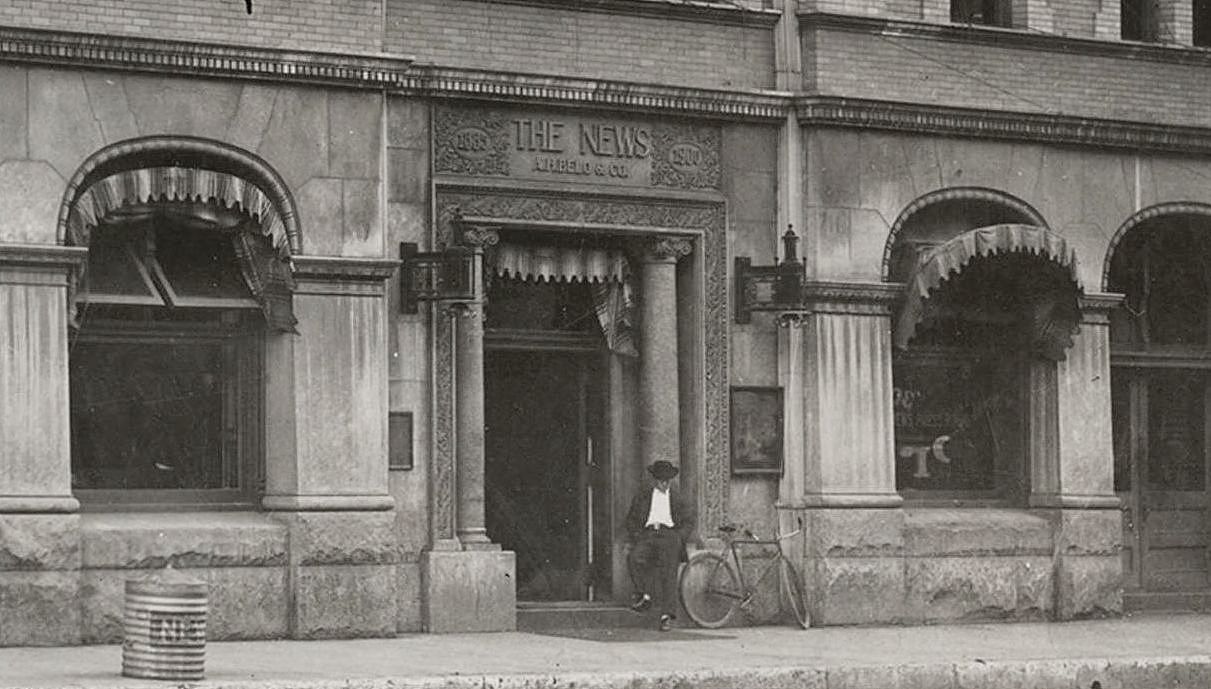
Here is another great photo from the DeGolyer Library at SMU, this one showing the then-new Dallas Morning News building anchoring the northwest corner of Commerce and Lamar. For me, it’s another case of the individual quiet vignettes that comprise the photograph being more interesting than the larger picture taken as a whole. (All pictures are much larger when clicked.)

dmn-bldg_c1900_degolyer-1

dmn-bldg_c1900_degolyer-2

dmn-bldg_c1900_degolyer-3

dmn-bldg_c1900_degolyer-4

dmn-bldg_c1900_degolyer-5

***

Sources & Notes

Photograph from the Belo Records collection at the DeGolyer Library, Central University Libraries, Southern Methodist University, seen here.

For another view of the same building, see these posts:

  • “The Dallas Morning News Building, Inside and Out — ca. 1900,” here
  • “Lively Street Life Outside the Dallas Morning News Building — 1900,” here

For other photographs I’ve zoomed in on, see here.

*

Copyright © 2014 Paula Bosse. All Rights Reserved.

Michael G. Owen, Jr. — Dallas Sculptor of Lead Belly

leadbelly_three-views_paul-l_yelp

by Paula Bosse

Above, three views of “Leadbelly,” the sculpted head of the blues legend, by Michael G. Owen, Jr., 1943.

Michael Owen (profiled here previously as the 15-year-old soap-sculptor who made headlines at the 1930 State Fair of Texas), was the youngest member of the group of artists loosely affiliated with the Dallas Nine group who were making a name for themselves in the 1930s and ’40s. He studied life drawing as a student of Olin Travis and painting as a student of Jerry Bywaters, but he was most proficient as a sculptor. He is best known for his award-winning 1943 bust of bluesman Lead Belly, a piece in the permanent collection of the Dallas Museum of Art (which can be seen in a 1951 DMFA catalog here).

In a 1950 letter to the (then-) Dallas Museum of Fine Arts, Owen recounted how Lead Belly sat for him in New York and sang “Goodnight Irene” as Owen worked on a clay model. Owen was living in Greenbelt, Maryland at the time, and Louisiana-born Lead Belly was living in New York City, but I’d like to think that the two men reminisced about their formative days in Dallas where Owen was a much-talked-about young artist and Lead Belly performed on the streets of Deep Ellum with Blind Lemon Jefferson.

I noticed in the newspaper article that the stone was called black Belgian marble. Actually it isn’t so exotic. It was quarried not far from Charlottesville, Virginia, and is called Black Serpentine. It was the first time I have ever heard of the stuff being black. If you’ll notice it seems quite a bit more crystalline than marble.

The way I happened to do the head went like this. A young fellow I had known in Dallas by the name of Ralph Knight had gone to New York a year or so after I went to Washington. He was interested in folk music and became acquainted with Leadbelly. It was at Ralph’s instigation that I did the head — he got me the stone, sent pictures (I first roughed out the head in clay at home in Greenbelt) and then arranged the sitting at his apartment in New York. Leadbelly sat for me one afternoon and I finished the clay model at that time. From that I worked out the stone cutting, only being able to work on it in my spare time. All in all it was about a full month’s work, I guess. During the time he was “sitting” for me (playing his guitar and singing) he played “Goodnight Irene,” but at that time the folk music devotees did not consider the tune “true folk music.” Still it pleased me when it became a popular song. It’s too bad Leadbelly couldn’t have lived to see himself gain such popularity. (Mike Owen in 1950, from a letter excerpted in the book Lone Star Regionalism, The Dallas Nine and Their Circle)

Sadly, Mike Owen’s career stalled soon after this 1940s artistic high point. He eventually settled in Oregon, where he was sidelined by multiple sclerosis. He died in 1976 at the age of 60.

owen-michael_1930s
Mike Owen in his early 20s

I’m not sure how often the piece is displayed at the Dallas Museum of Art, but it’s a wonderful work of art. When I saw it a couple of years ago, I just stood and stared at it for ages. It’s really fantastic. And it’s fitting that it resides here in Dallas where Michael Owen was once a part of a group of Texas artists whose influence continues to be felt today.

It also seems fitting to throw in this classic from Mr. Ledbetter, who, like Mike Owen, spent time honing his craft in Dallas:

lead-belly-wikipedia

***

Sources & Notes

“Leadbelly” sculpture by Michael G. Owen, Jr. is in the collection of the Dallas Museum of Art.

Photo of the artwork is by Paul L. as posted on Yelp.

Photo of Lead Belly from Wikipedia.

Quote from Mike Owen’s letter to the DMFA (April 11, 1950) can be found in the superb book Lone Star Regionalism, The Dallas Nine and Their Circle, 1928-1945 by Rick Stewart (Austin: Texas Monthly Press, Dallas Museum of Art, 1985) — the best book on Dallas art of this period.

Read the Handbook of Texas entry about Huddie Ledbetter (aka Lead Belly/Leadbelly) here.

Other Flashback Dallas posts on Owen:

  • Young Mr. Owen’s star-turn as the teenager who carved the WFAA transmitter plant from 8,400 pounds of Ivory Soap is here.
  • Owen’s monument to SMU Mustangs’ mascot Peruna, commissioned in 1937, is here.

UPDATE: Read about a recently discovered large painting by Owen up for auction in Dallas in 2019 here.

*

Copyright © 2014 Paula Bosse. All Rights Reserved.


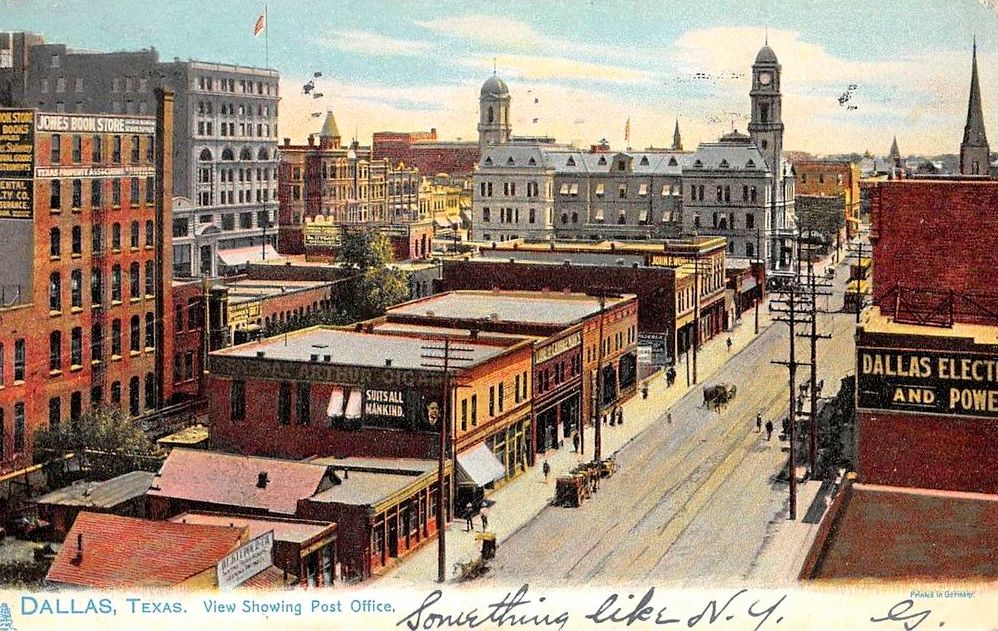
“Something Like N.Y.” — ca. 1904

dallas-something-like-NY

by Paula Bosse

Eat your heart out, NYC!

***

Sources & Notes

Postcard from “the internet.”

*

Copyright © 2014 Paula Bosse. All Rights Reserved.

The Dallas Athletics, Dallas’ First Soccer Team — 1908

soccer_dallas-athletics_dmn_122508-PHOTOThe Dallas Athletics, 1908

by Paula Bosse

Soccer — which the local newspapers insisted on calling “soccer football” — was introduced to Dallas as a local organized sport in 1908. The first appearance I can find discussing soccer in Dallas is this article, from the October 18, 1908 issue of The Dallas Morning News:

soccer_dmn_101808(Dallas Morning News, Oct. 18, 1908)

In 1908, Ernest Oates was a 32-year-old Yorkshireman from the north of England who had been in Dallas only a couple of years when, missing the football matches of his youth, he decided to organize a “soccer” team in Dallas. The sport was virtually unknown in Texas, but because Oates undoubtedly knew everyone in the city who had made their way to the United States from England, Scotland, Ireland, and Wales, he had no trouble organizing a team of experienced players. (Oates also helped introduce Dallas to cricket in 1933.)

After reports that the team had begun practicing at the Lake Cliff ballpark, there was news that another team was being formed in Dallas, this one to be coached by an apparently well-known American coach from St. Louis named William “King” Finnegan. This team seems to have had a harder time getting up and running (probably because Oates had snapped up all the good players). Even though they announced that they would be using Gaston Park as their home turf and practice would begin right away, it actually took them months to get a functioning team together.

Also at this time were vague rumblings of a Scotsman in Fort Worth — Duncan J. Livingston(e) — wanting to get a team going in Cowtown, but he was even slower in getting things organized than Finnegan was (Fort Worth wouldn’t have an official team until late 1909). Meanwhile, The Fort Worth Star-Telegram — whether out of jealousy or spite — couldn’t resist tossing sarcastic soccer-related zingers at Dallas’ attempts to popularize the esoteric sport:

soccer_fwst_111708_SARCASM(Fort Worth Star-Telegram, Nov. 17, 1908)

That bon mot was just a warm-up, though, to this offering, which dredged up (as it were) the recent devastating Trinity River flood:

soccer_fwst_112008(FWST, Nov. 20, 1908)

For a while it was looking as if Oates’ “eleven” would have no one to play with. But, unexpectedly, a team appeared —  one fielded by The Dallas Morning News, a team that only a few weeks earlier had been the newspaper’s baseball team! The men on the team had never played soccer, but, as a DMN report had it, “they were game.”

(The timing of the sudden appearance of this team seems a little odd. The Morning News had run several articles about the proposed Finnegan team having actually been organized and in possession of a full roster, but then … nothing more was heard of them. You can’t have a competitive spectator sport with only one side. Cue the WTF entrance of the deus ex machina soccer team full of baseball players.)

So there were really only two teams that played all of the soccer matches in that very short inaugural soccer season: the Dallas Athletics, led by Ernest Oates, and the Newspaper Association team, led by A. McKinnon.

The newspapers tried valiantly to drum up excitement among local sports fans, and they ran lengthy explanations of the game’s rules in an attempt to educated their readers, but I’m not sure how successful they were at either attempt. Tellingly, attendance figures were never reported (except to say that British matches in the UK had no problem attracting crowds of 100,000 fans). The two teams played several games, and the Athletics usually won.

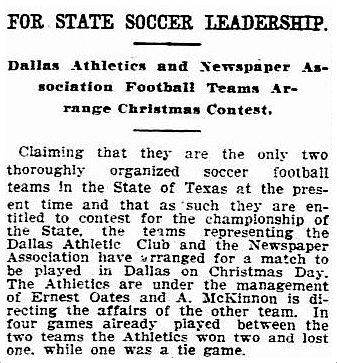
After only four games, the two teams announced that they would have a “state championship” match on Christmas Day. They claimed that they were “the only two thoroughly organized soccer football teams in the state of Texas” — who else would they play in a fight for the championship?
soccer_dmn_121208-state-champ(DMN, Dec. 12, 1908)

So they did. As expected, the Dallas Athletics won, 3-0. The “rugby football” team (which was also known as the Dallas Athletics) won their Christmas Day game as well, a fact that might help explain the cartoon below.

soccer_dmn_122708_CARTOON-KNOTT(DMN, Dec. 27, 1908 — cartoon by Knott)

“King” Finnegan (who, incidentally, had acted as referee for the championship game), disputed the whole “champion” thing, saying that his team, the Dallas Soccers, deserved a chance at the title (even though they had, thus far, played exactly zero games). The Athletics shrugged their shoulders and agreed to the challenge, and on New Year’s Day they trounced the Soccers, 6-0.

And so ended the first soccer season in Dallas. Fort Worth did eventually join the fray the next season, but it wasn’t pretty — they were badly beaten in their first few meetings with the mighty Dallas Athletics. Sorry ’bout that, Fort Worth. Don’t mess with Ernest Oates.

Here’s another photograph of Mr. Oates (front row, center) and the rest of his team. It’s been 106 years since soccer aficionados first started swearing that their sport will catch on in Dallas. And catch on big. And now you know when and where all that talk started: in 1908 with Ernest Oates and his Dallas Athletics.

dallas-athletics_dmn_120509-PHOTOThe Dallas Athletics, 1909

***

Sources & Notes

1908 team photo by Clogenson, from The Dallas Morning News, Dec. 25, 1908; 1909 team photo from the DMN, Dec. 5, 1909.

I’ve compiled a PDF containing most of the first few months’ news coverage of this whole new-fangled “soccer football” sport as it appeared in the pages of The Dallas Morning News and The Fort Worth Star-Telegram. I’m not much of a sports fan, but I actually found it very interesting to read chronological, contemporaneous reports of a new sport working its way into the city’s consciousness. I’ve left out the articles that explained AT LENGTH the rules of the game because my eyes (and soul) started glazing over. But the rest of it is here. My favorite headline is from an article about a mismatched game between Dallas and Fort Worth with the Fort Worth headline reading “Visitors Had More Experienced Men and Were in Better Condition” — yep, that’ll do it. There are a bunch of articles, stretching over a bunch of pages, but you might find them entertaining. The PDF can be found here.

**

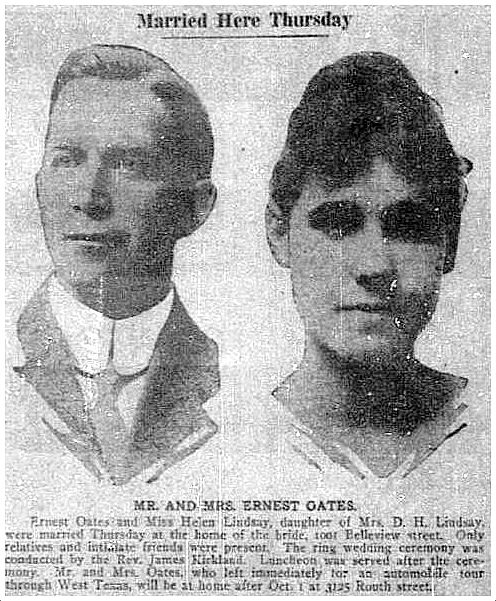
A photo of Ernest Oates (1875-1945) and his new (first) wife, the former Helen Lindsay in a wedding announcement (click for larger image).

soccer_dmn_092317-oatesDMN, Sept. 23, 1917

oates-ernest_ca-1930
Ernest Oates, 1930s

Oates was a stonemason and owned the Oates Stone Co. on Routh Street (at the MKT railroad). Below is an ad from 1922.

ad-oates-stone-work_1922-directory1922 Dallas directory

*

Copyright © 2014 Paula Bosse. All Rights Reserved.

Reading, Writing, Beekeeping — 1905

by Paula Bosse

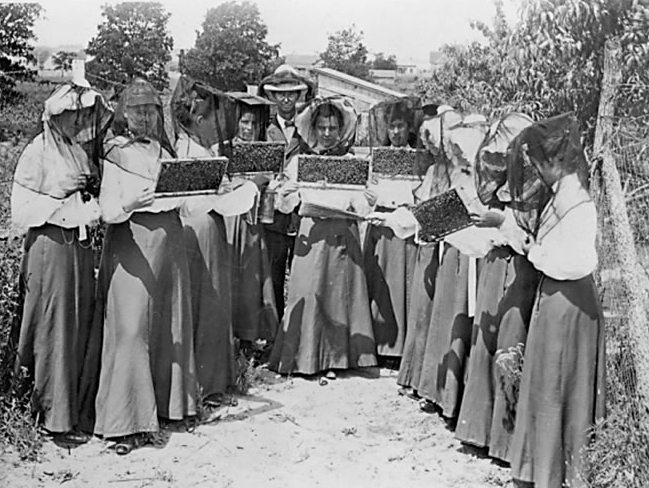
Beekeeping class at the College of Industrial Arts (later Texas Woman’s University) in Denton, around 1905. Pop quiz!

***

Sources & Notes

Photo from The Woman’s Collection of Texas Woman’s University.

Beekeeping was a popular “hobby” for women at the turn of the century, but for a look at larger-scale Texas honey production at this time, check out the article “The Bee Industry of Texas” from the 1904 edition of the Texas Almanac here.

For information on present-day North Texas beekeeping, the website of the Dallas-based Texas Honeybee Guild is here.

*

Copyright © 2014 Paula Bosse. All Rights Reserved.
Stevens Park Estates: “The Ideal Place for Your Home” — 1930

oak-cliff_stevens-park_dmn_092830
You deserve “maximum enjoyment”

by Paula Bosse

Do you dream of a home of your own? Then go and see the beautiful scenic Stevens Park Estates. “The Ideal Place for Your Home.” There you will find the ideal place for your “dream home.” A beautiful 146-acre park — 18 holes of golf — modern fan-shaped lots — broad sweeping boulevards — in fact, everything to make you realize the maximum enjoyment out of your home.

***

Sources & Notes

Ad from 1930.

History of Oak Cliff’s Stevens Park Estates can be found here and here.

*

Copyright © 2014 Paula Bosse. All Rights Reserved.

The Trinity River at the City’s Doorstep

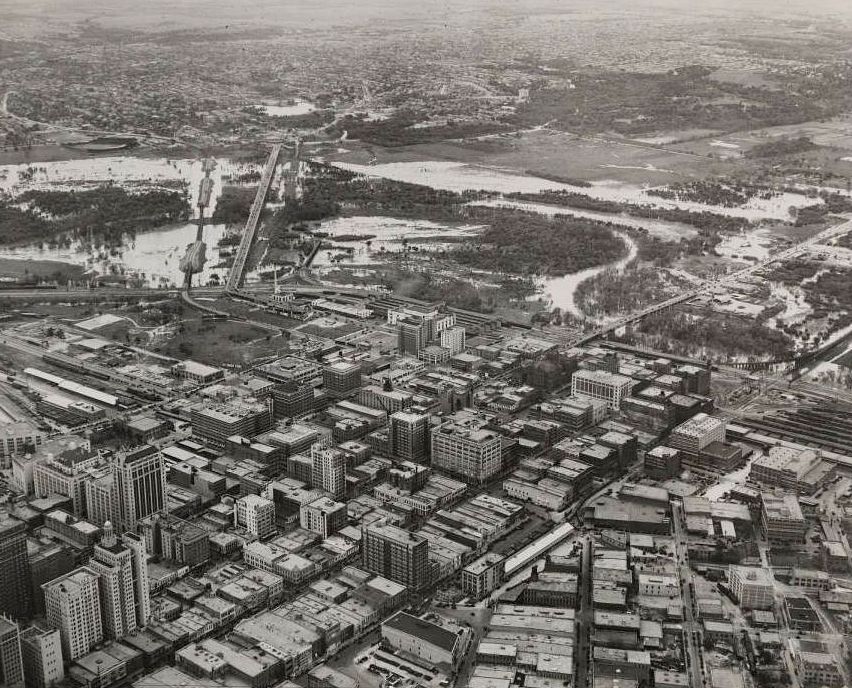
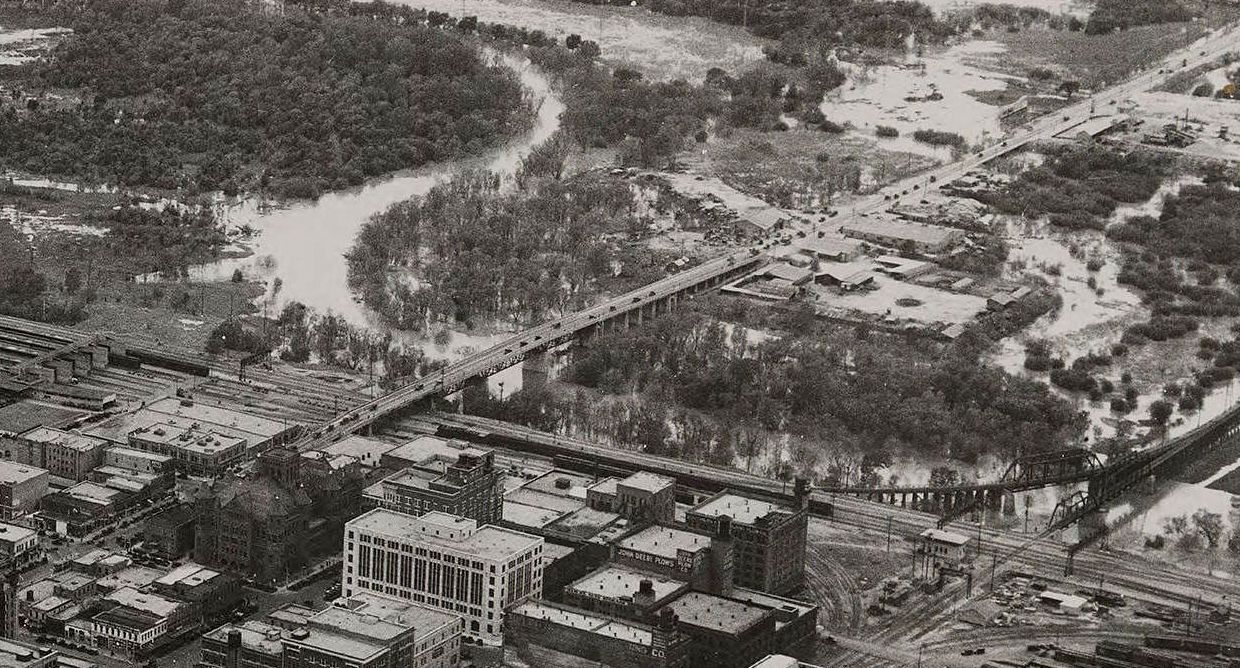
downtown_trinity_ca1920s_smu_foscueWhat? You didn’t know the Trinity River was straightened?

by Paula Bosse

Back before Dallas decided to straighten out the Trinity River and move it a mile or two to the west (in an attempt to prevent future flooding), the river ran only about a block from the Old Red Courthouse. It’s so strange looking at this picture and seeing a river in a place where we’ve never seen it. It’s a shame they moved it (who knew you could “move a river”?), but flooding was a major issue, and, in fact, it looks like there was flooding the day this photo was taken. Below, you can see a magnified view — it looks so different from what we’re used to that it takes a second to get your bearings. Imagine how different Dallas would feel today if the Trinity had been allowed to run its natural course.

downtown_trinity_ca1920s_smu_foscue-det

***

Sources & Notes

Photograph by Lloyd M. Long, from the Edwin J. Foscue Map Library, Central University Libraries, Southern Methodist University; it can be seen here (with many of the buildings labeled) and here (without the labeling).

SMU has the photo dated “ca. 1930s or 1940s,” but I think it may be from the late ’20s. I’ve seen non-specific dates of the river’s realignment from the 1920s to the 1930s, but a couple of landmarks in the photo above place it sometime between 1925 (the year the Santa Fe buildings were constructed) and 1933 (the year the Hippodrome Theater — seen here, on Pacific — became the Joy Theater).

UPDATE: The river was straightened in 1928. See fascinating information about the when, where, why, and how of the Trinity River realignment, below in the comments — it was a true feat of modern engineering.

A few Trinity River-related links: the Trinity Commons Foundation site is here; the Trinity River Corridor Project site is here; and an interesting look at plans and proposals for the future of Dallas and the Trinity River can be read on the American Institute of Architects (Dallas) site here.

*

Copyright © 2014 Paula Bosse. All Rights Reserved.

Newspaper Subscriptions by the Bushel

dallas-herald_wheat_112664Dallas Herald, Nov. 26, 1864

by Paula Bosse

No Confederate money, please.

WHEAT
Will be taken in payment for
Subscription to the Dallas Herald, at the rate
of Two bushels for six months, delivered at this office,
or any mill in this vicinity.

dallas-herald_wheat_020965Dallas Herald, Feb. 9, 1865

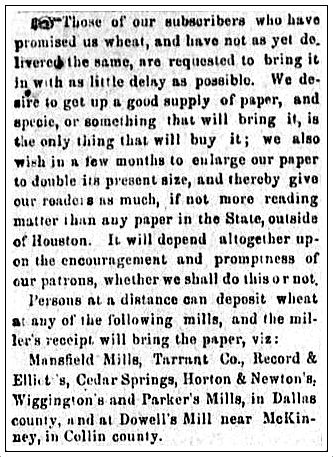
Those of our subscribers who have promised us wheat, and have not as yet delivered the same, are requested to bring it in with as little delay as possible. We desire to get up a good supply of paper, and specie, or something that will bring it, is the only thing that will buy it; we also wish in a few months to enlarge our paper to double its present size, and thereby give our readers as much, if not more reading matter than any paper in the State, outside of Houston. It will depend altogether upon the encouragement and promptness of our patrons, whether we shall do this or not.

Persons at a distance can deposit wheat at any of the following mills, and the miller’s receipt will bring the paper, viz:

Mansfield Mills, Tarrant Co., Record & Elliott’s, Cedar Springs, Horton & Newton’s, Wiggington’s [sic] and Parker’s Mills in Dallas county, and at Dowell’s Mill near McKinney, in Collin county.

(Note: the Civil War-era Dallas Herald was two pages: front and back of a single sheet.)

dallas-herald_wheat_subscription_050465Dallas Herald, May 4, 1865

Wheat will be taken in payment for Subscription to the Dallas Herald, at the rate of Two bushels for six months, delivered at this office, or at any of the following mills, and the miller’s receipt to, viz:

Mansfield Mills, Tarrant County; Record & Elliott, Cedar Springs, Horton & Newton’s, Wigginton’s and Parker’s Mills, in Dallas county, and Dowell’s Mill, near McKinney, Collin county.

***

All of the above from the Dallas Herald collection via UNT’s Portal to Texas History site,

Wikipedia entry on Confederate money here; entry on commodity money here.

*

Copyright © 2014 Paula Bosse. All Rights Reserved.