Flashback : Dallas

A Miscellany: History, Ads, Pop Culture

Courthouse in the Mist/Smoke/Murk — 1901

old-red_dallas-courthouse_1901_degolyerThe ethereal Old Red Courthouse…

by Paula Bosse

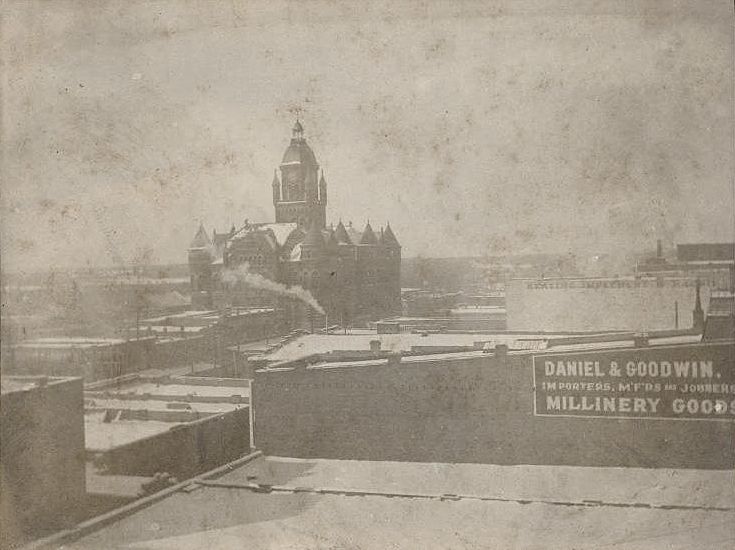
I love this photo of the Old Red Courthouse from 1901. (I guess in 1901 it would have been the New Red Courthouse….) The dreamy quality is probably due less to a romantic mists of Avalon effect (which, incidentally, I’ve seen from the Glastonbury tor, and it’s beautiful!) and maybe due more to just a lot of soot and smoke. …Or something altogether more prosaic, like a damaged photograph or plate. Here’s the courthouse a little closer:

old-red_dallas-courthouse_1901_degolyer_det

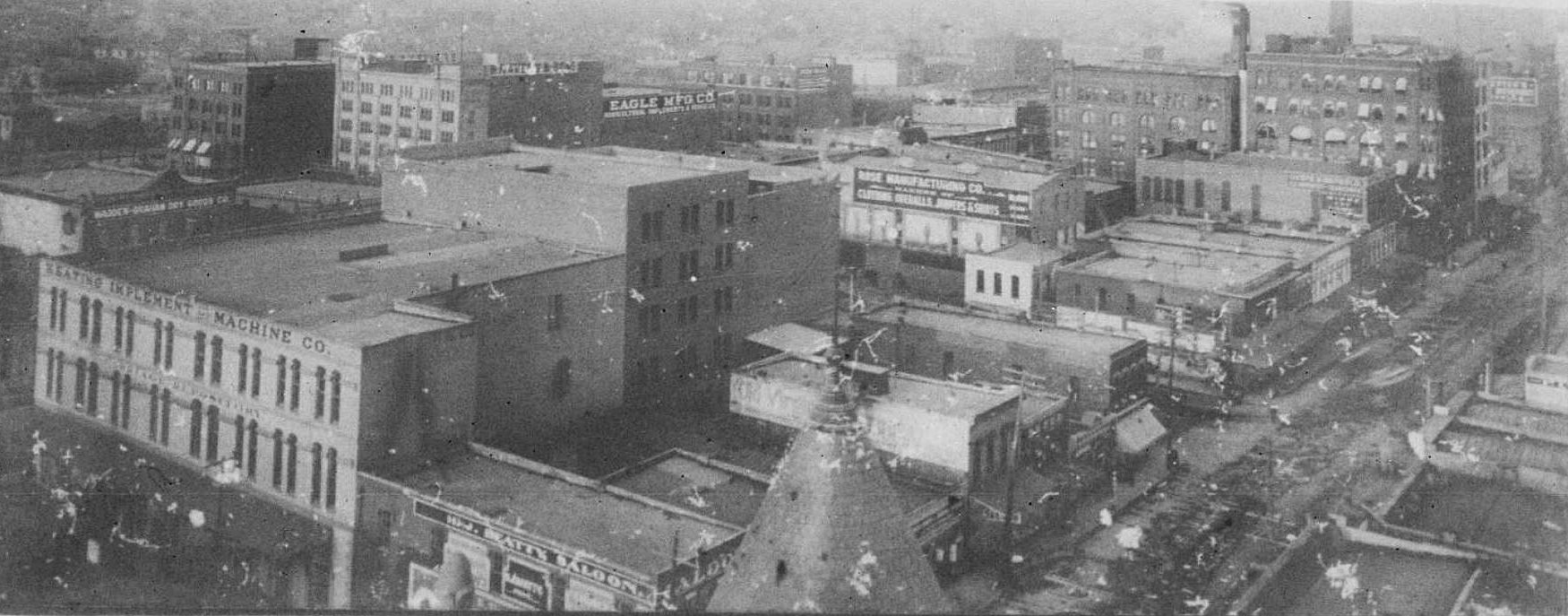
In the image at the top of the page, you can see some of the words for the “Keating Implement & Machine Co.” painted on the white building, seen just above the “Daniel & Goodwin” building on the right side of the photograph. The photo below shows the view from the courthouse, taken about 1900. In the bottom left corner, you can see the Keating building. The reverse view isn’t soft and mysterious (or even all that interesting), but I like that Old Red gets in a tiny Hitchcock-like cameo in the center foreground.

old-red_northeaset-from-courthouse_1900_degolyer_SMU

***

Sources & Notes

Top photo — titled “[Dallas Courthouse]” — is from the George A. McAfee Photographs collection, DeGolyer Library, SMU Libraries; more information on this photo can be found here.

The view from the courthouse — titled “Looking northeast from Courthouse circa 1900” — is from the Collection of Dallas Morning News negatives and copy photographs, DeGolyer Library, SMU Libraries; more information on this photo can be found here.

Please consider supporting me on Patreon, where I post exclusive content several times a week.

old-red_dallas-courthouse_1901_degolyer_sm

*

Copyright © 2023 Paula Bosse. All Rights Reserved.

St. Mark’s From the Air

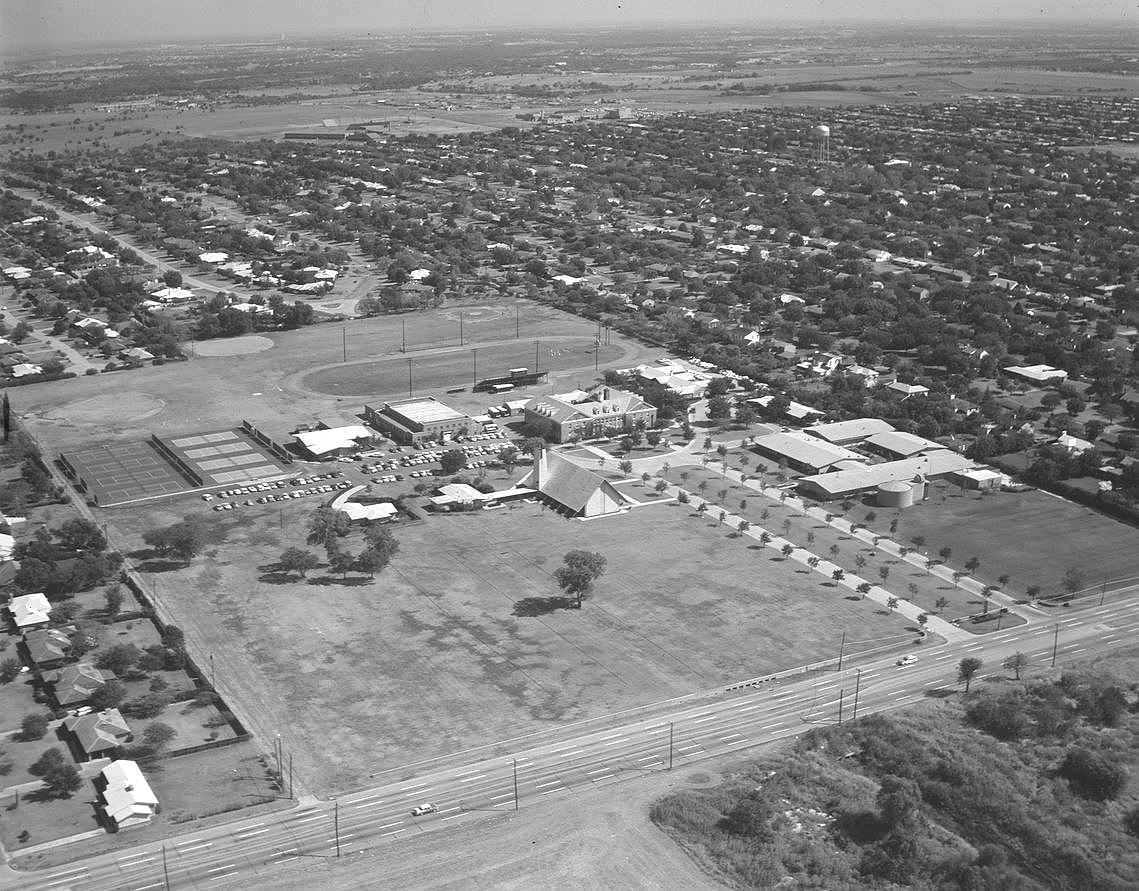
st-marks_preston-royal-to-the-west_squire-haskins_UTAGo west, young man…

by Paula Bosse

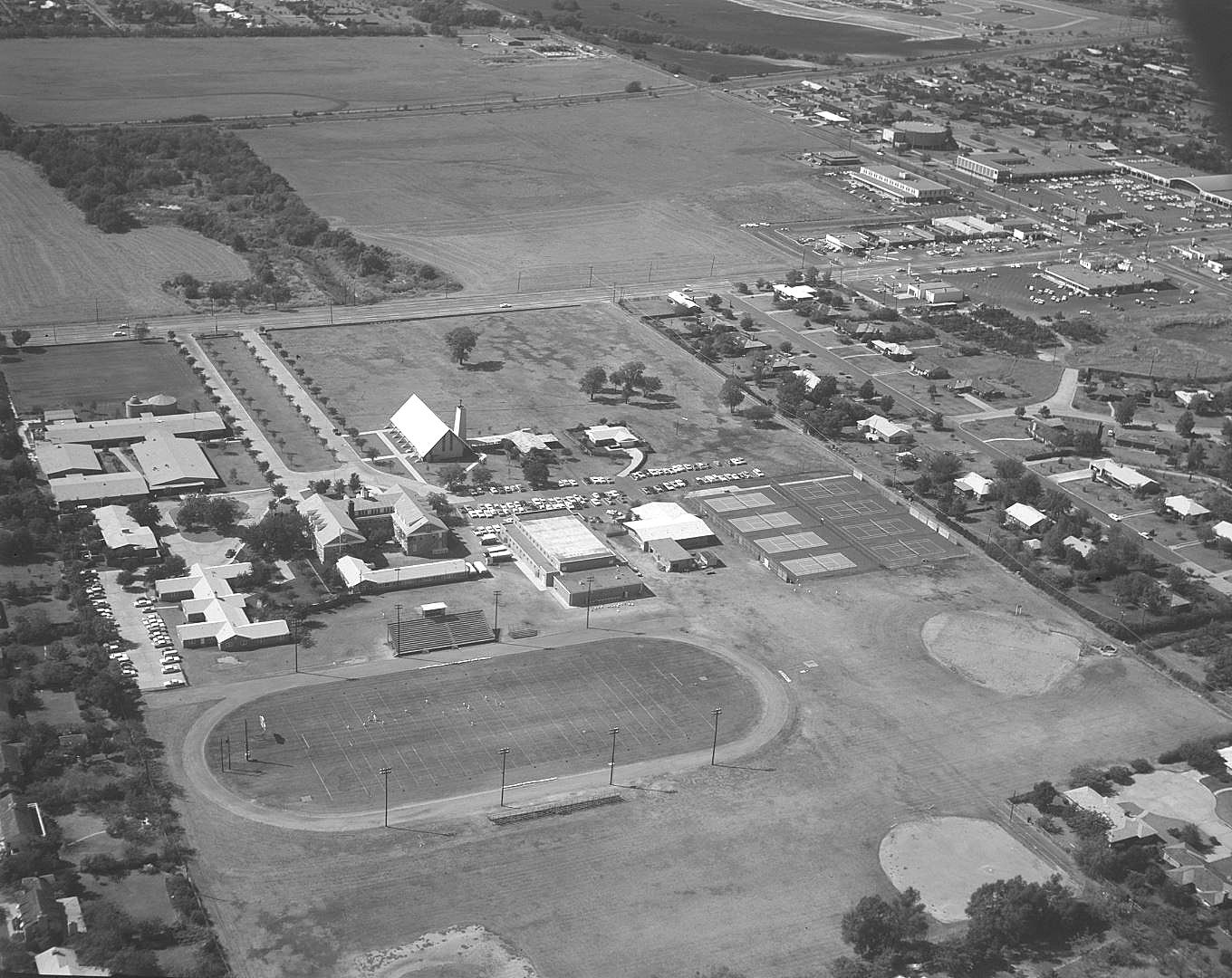
The photo above shows an aerial view of the St. Mark’s campus, with a view to the northwest. So. Much. Space. The horizontal road in the top third of the photo is Preston Road. In the top right corner, at 5923 Royal Lane, is the round St. Luke’s Episcopal Church, which was built in 1959. (I have learned only tonight that the architect of that church — and many other buildings around Dallas — was designed by architect William H. Hidell Jr., who studied with George Dahl. Hidell grew up in the same house I grew up in — several decades earlier. Small world.) Across the street from the round church is the Preston Royal fire station, built in 1958, and recently destroyed by a tornado (and which I wrote about here). This photo is undated, but it was obviously taken sometime after 1959. That amount of empty land is surprising. (If you really want to freak out about miles of nothing in North Dallas, check out this unbelievable photo of Preston and Valley View in 1958, pre-LBJ).

And here are two other St. Mark’s-centric photos from the same flight — all taken by Squire Haskins (see links below for very large images on the UTA website). Below, a view to the northeast:

st-marks-aerial_to-northeast_squire-haskins_UTA

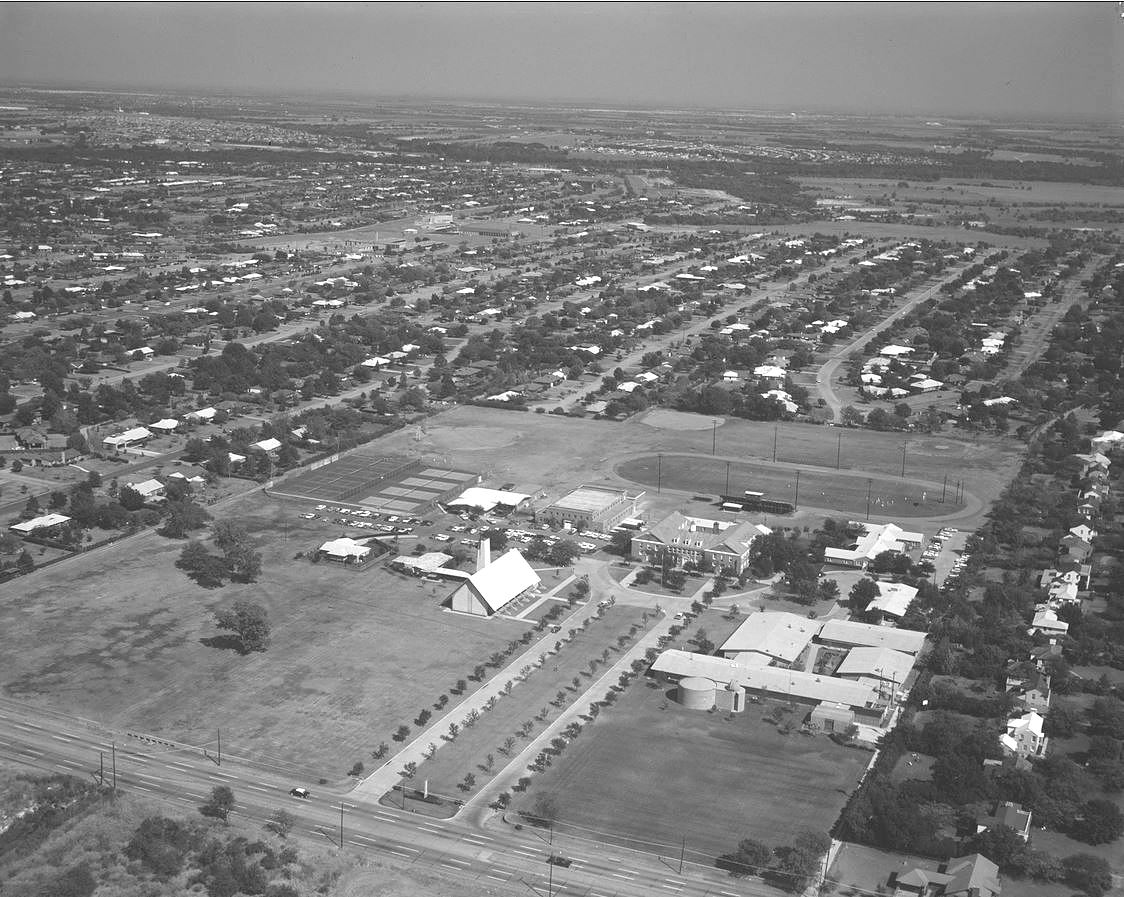
And a view to the southeast:

st-marks-aerial_to-southeast_squire-haskins_UTA

***

Sources & Notes

These three aerial photos are by Squire Haskins, from the Squire Haskins Photography Inc. Collection, University of Texas at Arlington Libraries. Read more information about these individual photos: the first one is here (view to the northwest); the second is here (view to the northeast); and the third is here (view to the southeast). Click the pictures on the UTA site to see really, really big images.

Please consider supporting the work I do at Flashback Dallas by funding me on Patreon, where I post exclusive content.

st-marks_preston-royal-to-the-west_squire-haskins_UTA_sm

*

Copyright © 2023 Paula Bosse. All Rights Reserved.

Muhammad Ali Visits Graham’s Barber Shop — ca. 1967

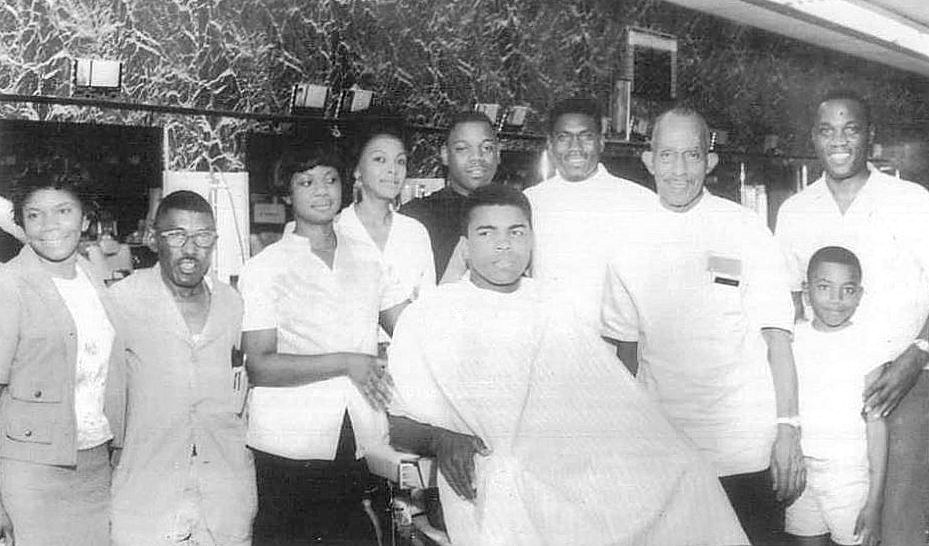
ali-muhammad_grahams-barber-shop_lincoln-high-school-yrbk_1967_photoMuhammad Ali in a Dallas barber chair

by Paula Bosse

I often just browse through the ads of old Dallas high school yearbooks on Ancestry.com. The other day, I saw the photo above and stopped and said to myself, “Is that Muhammad Ali?” I then looked at the text and, yes, that was, in fact, Muhammad Ali. Sitting in a barber chair in Dallas, Texas. What was the story behind that?

In my less-than-extensive research, I found three instances of Ali being in Dallas in or before 1967 (the year of this Lincoln High School yearbook ad). The first was in November 1960, just one month after the 18-year-old Olympic champion had won his first professional fight. He was tagging along with Archie Moore (who was acting as something of a mentor) when Moore came to Dallas to fight local boxer Willie Morris. (Morris had lost to the then Cassius Clay in the Olympic trials, and, in a somewhat bitter interview with The Dallas Morning News said this about the young upstart: “He’s not near as good as all this talk about him.”)

The photo of Ali in the barber chair isn’t from this 1960 visit, but he was specifically mentioned in a Dallas Times Herald article as being in the crowd of a Nov. 1960 event I wrote about a few years ago. There’s film footage of this, and I’ve scanned the crowds, hoping to find him, with no luck. But if you want to look to see if you can find him, that footage is linked in the Flashback Dallas post “Newly Discovered Footage of Jack Ruby — 1960.”

It’s more likely that the barbershop photo was taken in March 1967 when Ali, a Muslim, made two appearances in Dallas: the first was to “preach” at a local mosque, and the second (two days later) was to speak to students at Bishop College.

The mosque appearance was on Easter Sunday — March 26, 1967 — at Muhammad’s Mosque of Islam, described by Dallas Morning News sportswriter Bob St. John as being housed in “an old, pinkish building which used to belong to an insurance company and heretofore rested in reasonable obscurity on the corner across from Booker T. Washington High School.”

St. John continued: “On Sunday afternoon, it was no longer obscure. The old building rocked from its foundation as people filled it and lined the sidewalk outside and even poured into the streets, some coming to see Cassius Clay and others Muhammad Ali….”

The article mentions that Ali was living in Houston at the time, so it’s certainly possible he visited Dallas more often, but he was so famous at this time that it seems likely that the mere hint of his charismatic presence in town would have shown up in the papers. As it was, a visit by him to a Dallas barbershop was memorialized in this ad, which someone like me can now write about in a vaguely historical way (on a day which just happens to be Easter Sunday, the anniversary of Muhammad Ali’s 1967 Islamic sermon delivered across from Booker T. Washington High School).

**

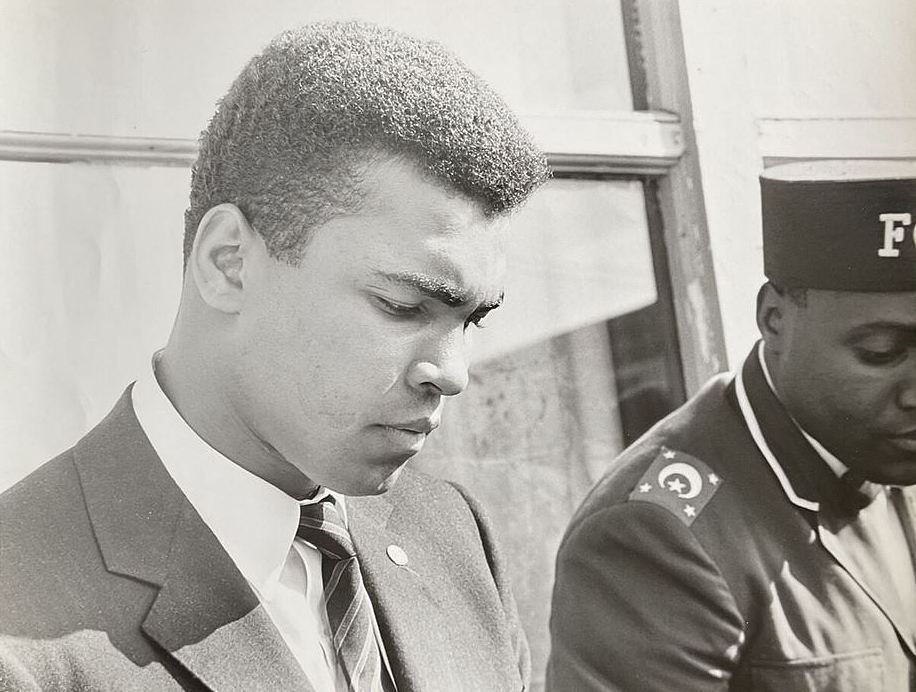
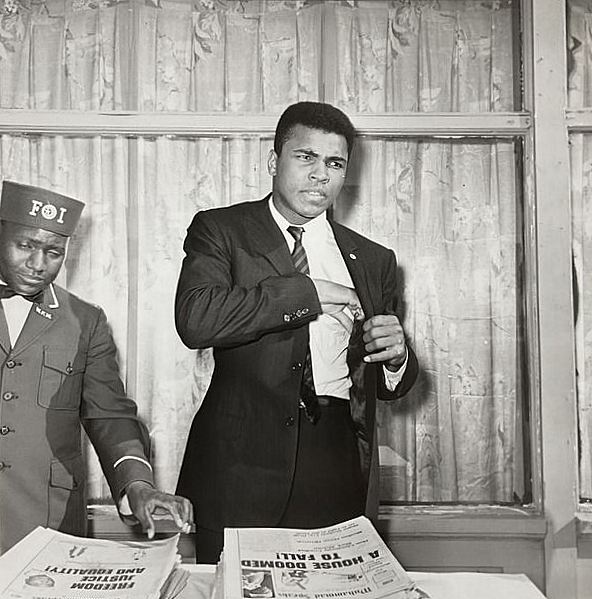
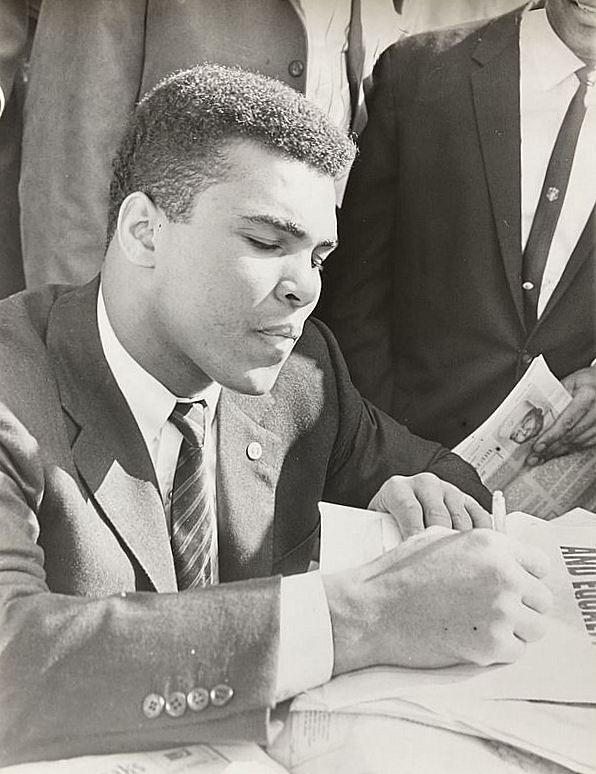
UPDATE: I was very excited to see the three photos below pop up recently on eBay — they show Ali at his mosque appearance (all three were taken on March 26, 1967 by Bob W. Smith, a Dallas news photographer). Ali is seen signing copies of a 20-cent Muslim paper called “Muhammad Speaks.” (A quote from Ali about why he was autographing these newspapers, from Bob St. John’s article: “A fish goes for bait. Then it’s hooked. I’m bait. Many would not buy if I didn’t autograph them. But once they’re bought… they’ll be sittin’ around some evening and pick up the paper. They’ll start reading. First thing you know, they’re hooked.”)

muhammad-ali_dallas_march-1967_a

muhammad-ali_dallas_march-1967_ebay_b

muhammad-ali_dallas_march-1967_ebay_c

**

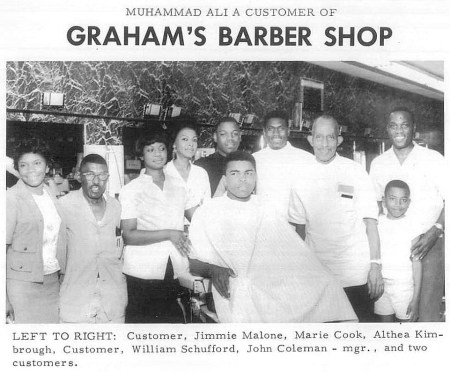
But back to the barbershop and Johnny Graham and a closer look at the two photos from the ad that originally caught my eye.

ali-muhammad_grahams-barber-shop_lincoln-high-school-yrbk_1967

“Muhammad Ali a Customer of Graham’s Barber Shop.” Ali is shown with an unidentified Graham’s customer, Jimmie Malone, Marie Cook, Althea Kimbrough, a customer, barber William Schufford, manager John Coleman, and two other customers.

*

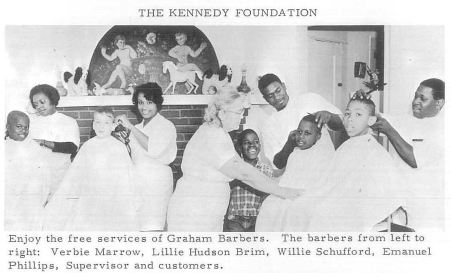
ali-muhammad_grahams-barber-shop_lincoln-high-school-yrbk_1967_ford

The photo above also appeared in the ad, showcasing Graham’s community service and his work with the Kennedy Foundation. “Enjoy the free services of Graham Barbers. The barbers from left to right: Verbie Marrow, Lillie Hudson Brim, Willie Schufford, Emanuel Phillips, Supervisor, and customers.”

*

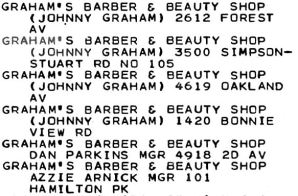
Johnny Graham was one of the most successful Black businessmen in Dallas at the time and was known for his philanthropic generosity. By the end of 1967, he owned eight barber shops and employed 135 barbers. Six of his shops are listed in the 1967 directory:

grahams-barber-shop_19671967 Dallas directory

***

Sources & Notes

Barbershop photos are from an ad in the 1967 Lincoln High School yearbook.

Photos of Muhammad Ali at Muhammad’s Mosque of Islam in Dallas were taken by news photographer Bob W. Smith on March 26, 1967, found on eBay.

The Dallas Morning News articles about Muhammad Ali in Dallas — and one about Johnny Graham:

  • “Morris Prefers Bout with Clay” (DMN, Nov. 26, 1960)
  • “Clay Makes Dallas Stop” by Bob St. John (DMN, Mar. 27, 1967)
  • “Clay Pleases Crowd With Speaking Form” by David Morgan (DMN, Mar. 29, 1967)
  • “Johnny Graham Offers Example” by Julia Scott Reed (DMN, Dec. 28, 1967)

Please consider supporting the work I do at Flashback Dallas by funding me on Patreon.

ali-muhammad_grahams-barber-shop_lincoln-high-school-yrbk_1967_photo_sm

*

Copyright © 2023 Paula Bosse. All Rights Reserved.

Asking For Your Support…

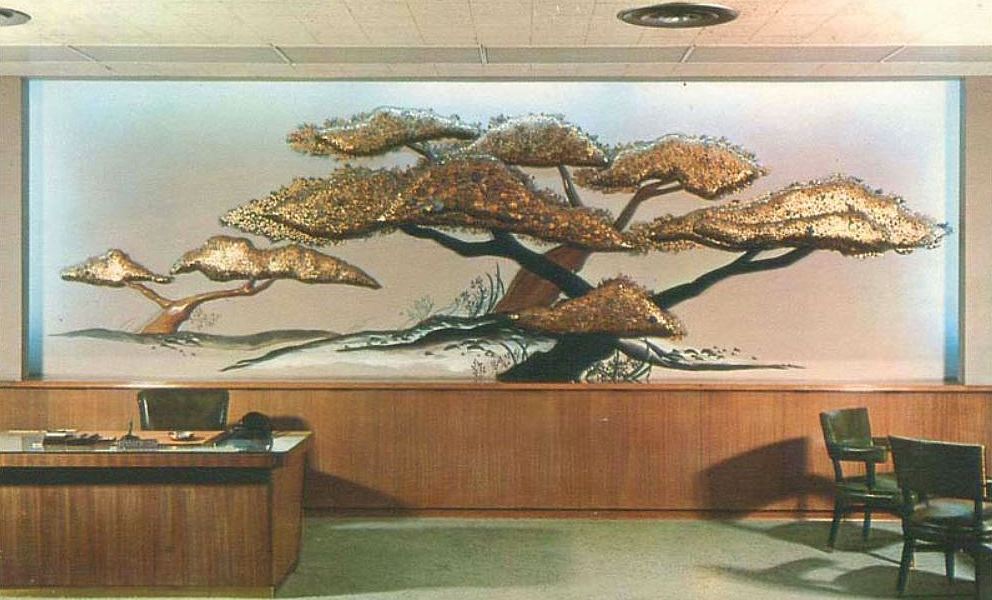
money-tree_first-national-bank_postcard_frontLo, the “Money Tree” at First National Bank

by Paula Bosse

Hello! I’m writing a different sort of post today, one in which I am asking for your financial support, which should be an empowering career move but which is actually a little intimidating. 

I created Flashback Dallas in February 2014 and have recently embarked on Year Ten (!). I’ve written over 1,300 posts, which amazes me. Along the way, I had hoped someone would “discover” me and offer me a Dallas-history-related job with a salary which I could live on, but that hasn’t panned out so far. I still hold out hope, but “Dallas-history-related jobs” are few and far between. There have been a few fantasies of a Dallas-history-loving person with loads of cash emerging from the ether, wallet in hand, wanting nothing more than to fund the writing of this blog and handing over wads of cash. But that hasn’t happened either. (If you are an employer or a wealthy investor with wads of cash, you know where to find me!)

I’ve plugged away on this blog for more than 9 years, and I’ve loved it all. Loved it. My first passion is writing, and I feel pretty lucky that I’ve been able to combine that with learning about the history of my hometown! It’s been both fun and gratifying. But I’ve made no money doing this. No advertising, no sponsorships, no “partnerships.” The amount of time I’ve put into this blog is pretty staggering — and, again, I’ve loved it, but I’d really like to be able to make some money for my efforts. 

For years, people have suggested I start a Patreon page. And now I have. (Click the logo below to check out my Patreon page.)

patreon_logo

Patreon is a “membership platform” which offers a way for people like me to have subscribers who pay a monthly contribution to support an ongoing project, sometimes offering special incentives to followers. The way I have set up my Patreon account is to offer the same content to whomever chooses to support me. Things may change in the future, but for now, if you pledge $5, $10, or $15 a month, you’ll have access to “exclusive” content which will not be crossposted here. These will usually be short posts — photos, ads, clippings, etc. — which might later become a longer post here on the blog, but a lot of it will be things that don’t fit anywhere else or are about subjects I simply don’t have time to write a full blog post about. As I become more comfortable with the site, I may try other types of “content.” I will most certainly be posting WAY more frequently there.

I am also on Patreon as a patron, supporting a person whose work I really enjoy, and I’ve found the platform very easy to use. There are no strings attached. You can change the amount of your pledge — up or down — very easily. And you can also CANCEL at any time. (You won’t hurt my feelings!) Your credit card will be charged monthly on the same day of the month that you initially subscribe. Patreon has been around for 10 years, so, as the kids say, it’s legit.

There will be occasional “public” posts on the site, and you are welcome to pop over there at any time to see what’s there. You can check the page out HERE. (I hope not to spam people incessantly with this, but — fair warning — this Patreon-mentioning will be popping up from time to time.)

I hope to use some of these proceeds to eventually upgrade this blog. It’s a long story, but I am not unaware of the failings of my present website. I need to do a major, scary migration. For several years I’ve been a caregiver dealing with health issues of elderly relatives, and it’s definitely held me back on things I’ve wanted to do with this site and with my writing. 

So — if you’re still reading! — I am asking in a no-pressure way that you consider supporting me monetarily if you are a fan of my work and appreciate the time and effort it takes to create it. If you are unable to or just don’t feel like it, no problem. I am so happy to have all of you reading. It’s been so much fun doing this — and, in the process, getting to know many of you. As I said above, I have no plans to stop Flashback Dallas anytime soon — things here should continue as usual. Thank you so much for reading!

–Paula

patreon_flashback-dallas_photo_250

***

Sources & Notes

Image at the top is a 20-foot bas-relief mural by Alma Shon, the “Money Tree,” which was located on the second floor of the First National Bank building. It was made from 7,819 coins and carved walnut wood. Read the complete description here.

And… in case you missed it, that Patreon page is here.

money-tree_first-national-bank_postcard_front_sm

*

Copyright © 2023 Paula Bosse. All Rights Reserved.

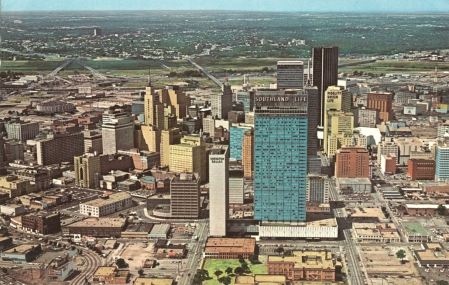
Southland Center Observation Deck — 1967

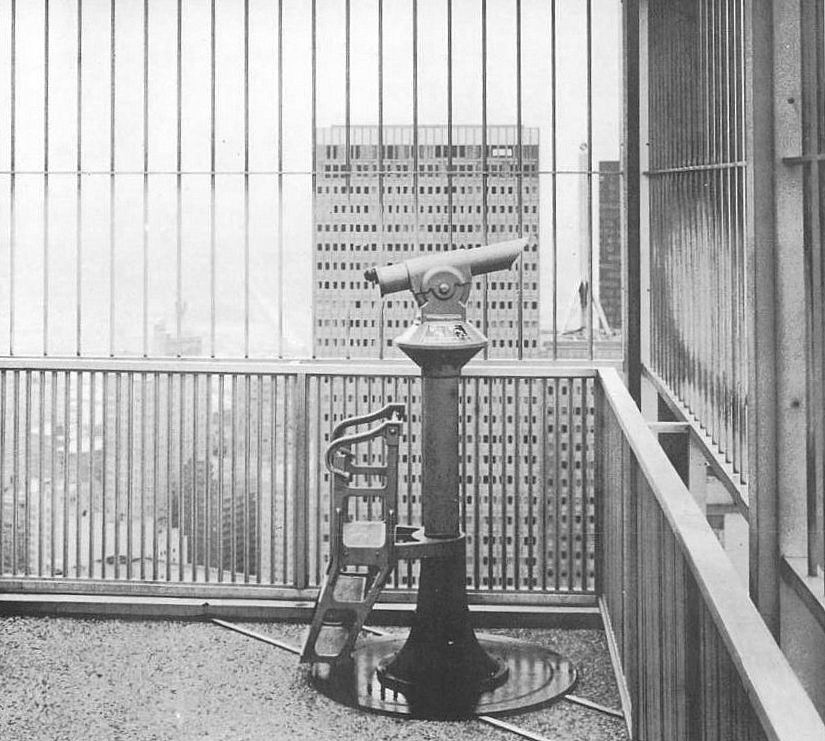
southland-life_observation-deck_HPHS_1967-yrbk_photo550 feet above street level…

by Paula Bosse

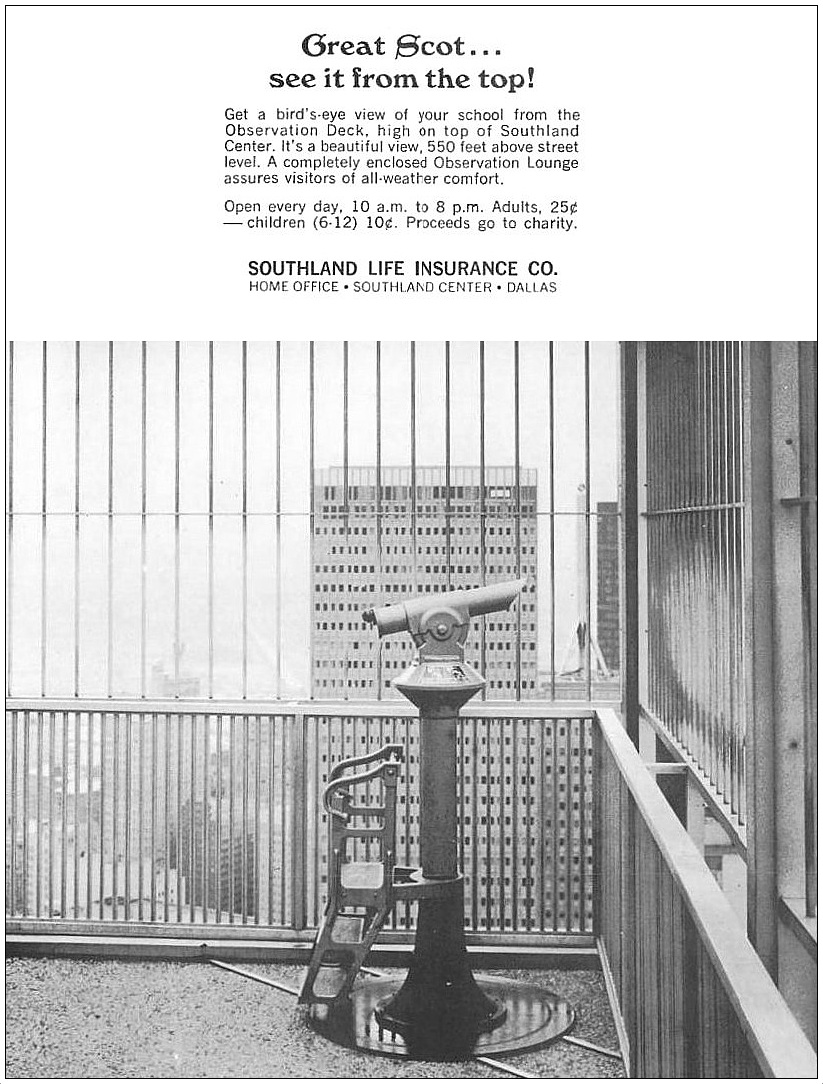
I never experienced the observation deck atop the Southland Life Insurance Building (or any of the observation decks sprinkled throughout downtown — other than Reunion Tower, I guess), but I see a lot of people mention it in fond childhood memories. Here it is in an ad from the 1967 Highland Park High School yearbook.

*

GREAT SCOT… SEE IT FROM THE TOP!

Get a bird’s-eye view of your school from the Observation Deck, high on top of Southland Center. It’s a beautiful view, 550 feet above street level. A completely enclosed Observation Lounge assures visitors of all-weather comfort.

Come every day, 10:00 a.m. to 8:00 p.m. Adults, 25¢ — children (6-12) 10¢. Proceeds go to charity.

Southland Life Insurance Co.
Home Office  •  Southland Center  •  Dallas

southland-life_observation-deck_HPHS-yrbk_1967

*

The observation deck and “lounge” was opened to the public on the 41st floor of the Southland Life Building on Oct. 31, 1956 (the top floor — the 42nd — had a private heliport). I can’t find when it finally closed, but it was open until at least the 1980s.

A search around the internet turned up an interesting bit of footage of the observation deck in 1962 — from a cameo appearance in the TV show “Route 66” (there were a couple of episodes shot in Dallas — I haven’t seen this entire episode, but the clip below has a few cool locations). The pertinent footage begins at the 4:43 mark and lasts for about 2 minutes (if, like me, any hint of fictional animal danger is a problem, you might want to stop around the 5:00 mark). (A couple of cast connections to our fair city: David Wayne, the actor featured in this episode, would later return to Big D as Digger Barnes in “Dallas,” and Dallas actress K Callan — seen in a scene at Love Field at 4:10 — was both a student and a teacher at Our Lady of Good Counsel in Oak Cliff.) From this clip, it looks like there might have been several of the telescopes around the perimeter of the building. (I’d love to see this in color — to see those shimmering blue glass tiles up close.) (This full episode — one of three filmed in Dallas — can be watched on YouTube, here. You’ll see Love Field, the Marriott Motor Hotel, the Southland observation deck, the SMU campus, the Trade Mart, a Wyatt’s cafeteria and grocery store (6126 Luther Lane, in Preston Center), Sheriff Bill Decker’s actual office, and a drive-in movie theater.)

*

Is there an observation deck there these days?

skyline-looking-west_southland-center_1970_portal

***

Sources & Notes

Top photo/ad is from the 1966 Highland Park High School yearbook. 

Check out these related Southland Center posts:

southland-life_observation-deck_HPHS_1967-yrbk_photo_sm

*

Copyright © 2023 Paula Bosse. All Rights Reserved.

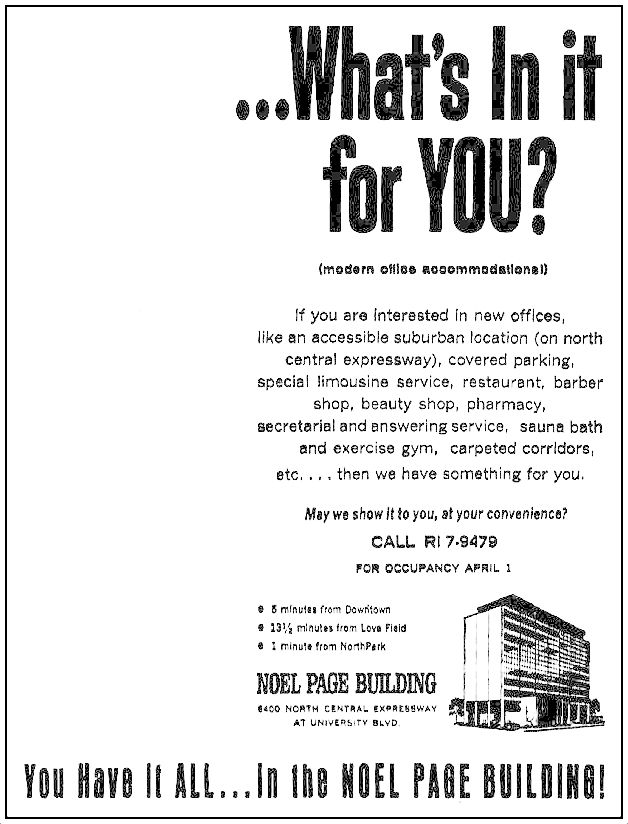
The Noel Page Building — 1966

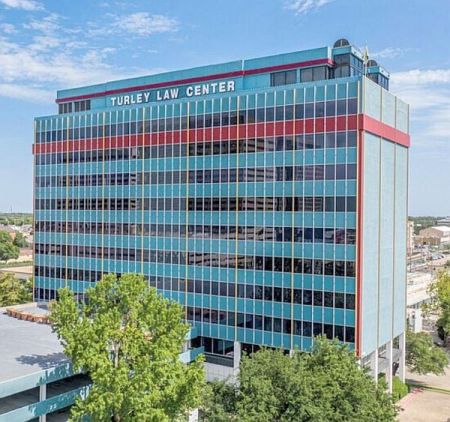
noel-page-bldg_turley-law-center_cityfeet-dot-com_cropped
Fast-forward 50-something years…

by Paula Bosse

The Noel Page Building opened in 1966 at 6400 N. Central Expressway, between Yale and University — see it on Google Street View here. For many years it has been the home of the Turley Law Center (its address is now 6440 Central). It was designed by Thomas E. Stanley, who designed a ton of buildings, including the not dissimilar 211 North Ervay (the blue-and-white building you’ll probably recognize on Google Street View here).

The developer/owner — a Dallas orthodontist named Noel J. Tomlin Jr. (1916-2003) — envisioned this office building as something of an answered prayer for businesspeople who didn’t enjoy the hassle of commuting to workplaces downtown (or, as he said in a 1965 Dallas Morning News interview, [a place] where parking is no problem and the business livin’ is easy”). 

Tomlin acquired the property in 1961, at a time when there were very, very few office buildings that far from downtown (and before NorthPark had even been built), but, presciently, he felt it would be a good location for what was described at the time as an office “tower.” He also hoped to get in on the overflow waiting-list action of prospective business tenants who had been turned away from the very successful nearby Meadows Building (which is generally considered to be the first substantial office building built beyond the Central Business District). It took Tomlin five years to finally build his “tower,” but he did it. Big-money commercial real estate was starting to heat up above Mockingbird!

noel-page-bldg_feb-1966Feb. 1966

The physical properties of the planned building were described in two Dallas Morning News articles, printed four years apart (the architectural renderings which accompanied the articles showed slightly different designs).

From July 1961 (a 10-story building):

Exterior walls will be made of pre-cast concrete on the east and west, and the north and south walls will be of glass, aluminum, porcelain enamel, and mosaic tile. Three elevators will be included in the structure. There will be three parking levels — two underground and one above-ground ramp at the rear of the building.

From April 1965 (an 11-story building, with just under 10,000 square feet of rentable space per floor, with the cost of the land and construction estimated “in excess of $2.5 million” — about $25 million in 2023 dollars): 

End walls will be of white marblecrete. A curtain wall system utilizing clear vision glass and white spandrel glass with anodized aluminum vertical mullions will complete the tower. The first and second floors will be recessed, forming a colonnade emphasized by white marble columns.

The name of the building? “Noel” was Tomlin’s first name, and “Page” was his wife’s maiden name.

For some reason, I thought this building was built much more recently. Were those red stripes added during a renovation? I’ve never thought that much about this building — it’s always just been there — but I stumbled across the above ad today while looking for something else and immediately recognized it in the ad. And now I find it really interesting! Especially when comparing this somewhat modest “tower” with the 211 N. Ervay building. So… happy accident!

***

Sources & Notes

Top photo is a (cropped) image from a commercial real estate listing, here. More photos can be found there.

Read more in the Dallas Morning News archives:

  • “Dallas Developer Plans 10-Story Office Tower” (DMN, July 9, 1961)
  • “Away-From-Town Office Building Slated for Start” by Jim Stephenson (DMN, Apr. 11, 1965)

noel-page-bldg_turley-law-center_cityfeet-dot-com_cropped_sm

*

Copyright © 2023 Paula Bosse. All Rights Reserved.

From the Vault: All You Could Possibly Need, On the Eagle Ford Road

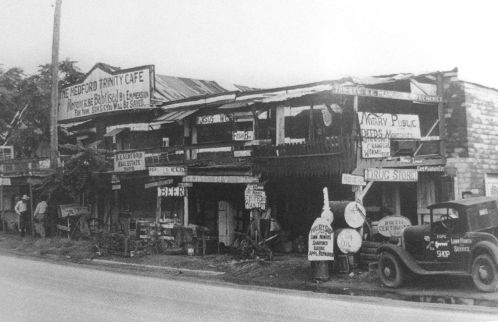
medford_trinity-cafe_west-dallas_FB_dallas-historyFeast your eyes…

by Paula Bosse

I’ve been dealing with a bunch of family issues recently, but I hope to be back to posting regularly soon. In the meantime, here’s a favorite photo, from the 2018 Flashback Dallas post “The Eccentric Medford Compound on the Old Eagle Ford Road: 1945-1950.” R. E. Medford — the man who… um… assembled the buildings seen above — was the patriarch of a prodigiously violent West Dallas family. Check it out.

medford_trinity-cafe_west-dallas_FB_dallas-history_sm

*

Copyright © 2023 Paula Bosse. All Rights Reserved.

Uncle Scooter Reads the Funnies: 1940-41

radio_uncle-scooter_wfaa-wbap-kgko-combined-family-album_1941Little Man and Uncle Scooter…

by Paula Bosse

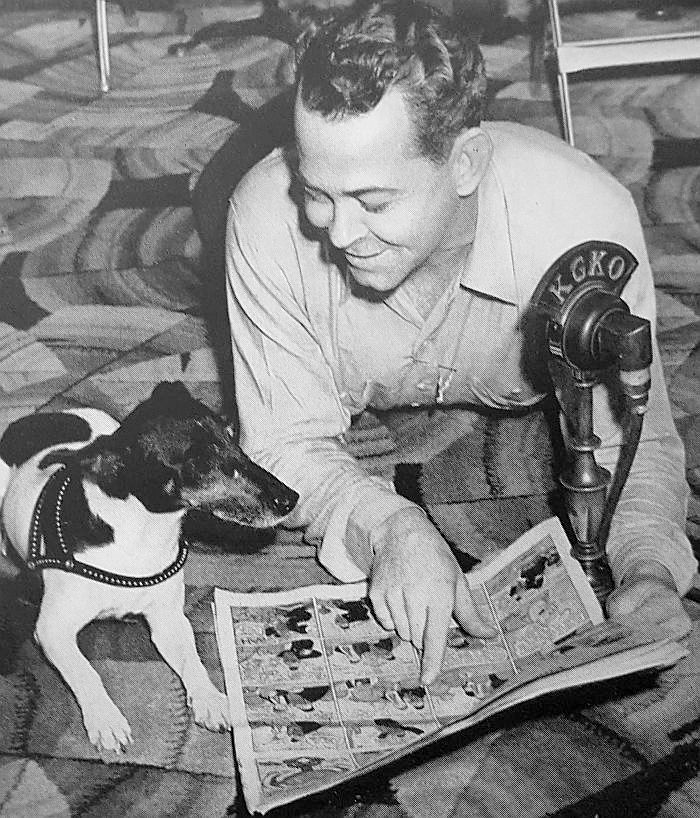
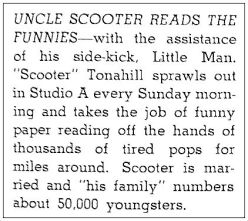
Several years ago, I was flipping through a promotional booklet for radio stations WFAA, WBAP, and KGKO, and I came across the photo above. I think about this photo a lot. It shows radio personality “Uncle Scooter” lying on the floor next to a KGKO microphone, reading the comics over the air to a vast audience of children and pointing out something pertinent to his trusty companion, a fox terrier named Little Man. I love this photograph. It makes me smile every time I see it. Wouldn’t it be great if this was how he actually conducted his broadcasts — on the floor with his doggie next to him? Here’s the caption:

uncle-scooter_dog_wfaa-wbap-kgko-combined-family-album_1941_caption

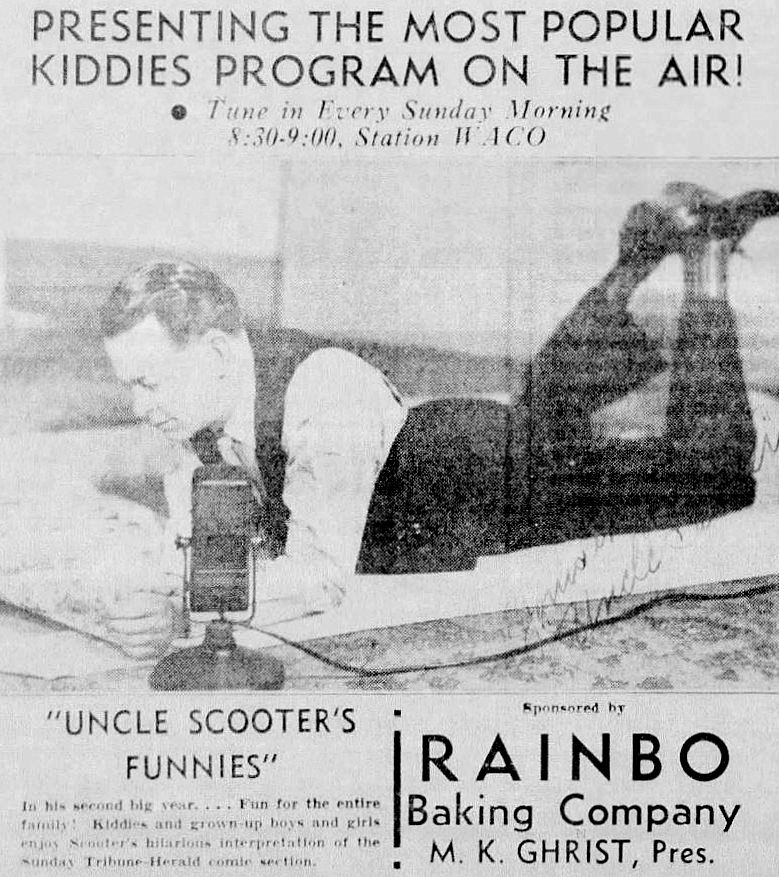
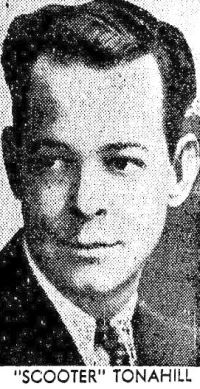
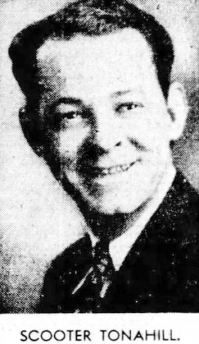
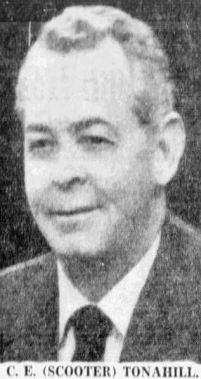
Clarence E. Tonahill (1904-1954) — known to everyone as “Scooter” — appears to have begun his radio career in Waco at the appropriately named station WACO. He then worked at KGKB in Tyler, then returned for a few years to WACO, and then to KTSA in San Antonio. Like most people in broadcasting in those days, he did a little bit of everything: he was an announcer, a newsreader, a sportscaster, and an entertainer. One of his most popular shows was just him reading the Sunday comics over the air for children. Below, a WACO ad from 1937 showing Uncle Scooter, again, lying on the studio floor (no dog, though).

uncle-scooter_waco-tribune-herald_010337Waco Tribune-Herald, Jan. 3, 1937

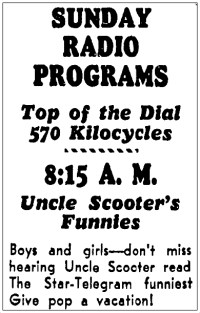
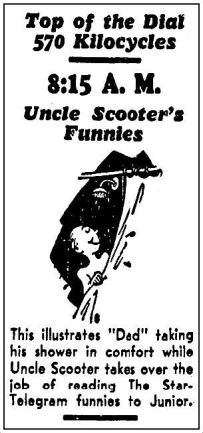
Around September 1939, he moved to Fort Worth to begin a busy stint at KGKO, a DFW station co-owned by The Dallas Morning News and The Fort Worth Star-Telegram (this was part of the very unusual WFAA-WBAP radio broadcasting partnership). He started as an “announcer” (which might well have included cleaning up the studio!), but he quickly graduated to doing a lot of sports-announcing and color commentary (football and boxing), man-on-the-street interviews, and personal appearances. He also hosted several shows, including a weekday morning show called “Sunrise Frolic.” But Sundays… Sunday mornings were set aside for his funnies-reading.

1940_radio_uncle-scooter_FWST_090840Fort Worth Star-Telegram, Sept. 1940

1940_radio_uncle-scooter_FWST_091540FWST, Sept. 1940

1941_radio_uncle-scooter_FWST_031641FWST, March 1941

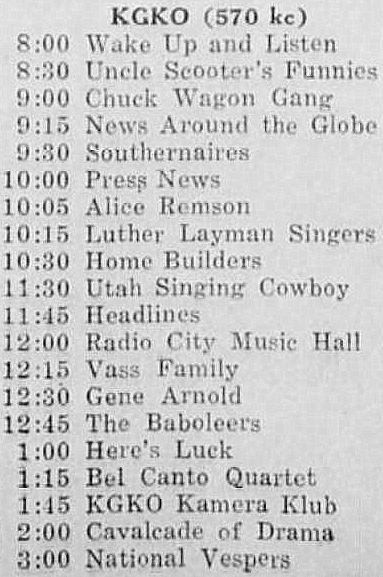
The Sunday lineup on KGKO, before and after the funnies:

1940_radio_uncle-scooter_bryan-tx-eagle_121440Bryan Eagle, Dec. 1940

I see listings for the show in 1940 and 1941 — and then, briefly, in 1947. His obituary says that Tonahill retired from his career as a broadcasting personality in 1946 and opened his own business in Fort Worth, Scooter’s Radio Supply (a supplier of broadcasting equipment to stations around the country).

He must have been a bright, friendly voice on the radio. I’d love to know the role Little Man played (Little Man was Scooter’s real-life pet and was described in a magazine profile as Scooter’s “favorite hobby”). I have fond (if somewhat vague) memories from my childhood of Bill Kelley reading the comics on The Children’s Hour on Channel 5 — but I can say without hesitation that things on The Children’s Hour would have been a whole lot more interesting if he’d just had a cute little dog with him!

1940_scooter-tonahill_FWST_042040_kgko-ad_det_photo1940_scooter-tonahill_FWST_100940_kgko-ad_det_photo1940

1954_tonahill-clarence-e_FWST_072654_obit_photo1954

kgko_19391939

***

Sources & Notes

Top photo from “WFAA, WBAP, KGKO Combined Family Album” (Dallas-Fort Worth, 1941).

radio_uncle-scooter_wfaa-wbap-kgko-combined-family-album_1941_sm

*

Copyright © 2023 Paula Bosse. All Rights Reserved.

Dallas: “Outstanding Educational Center” — ca. 1943

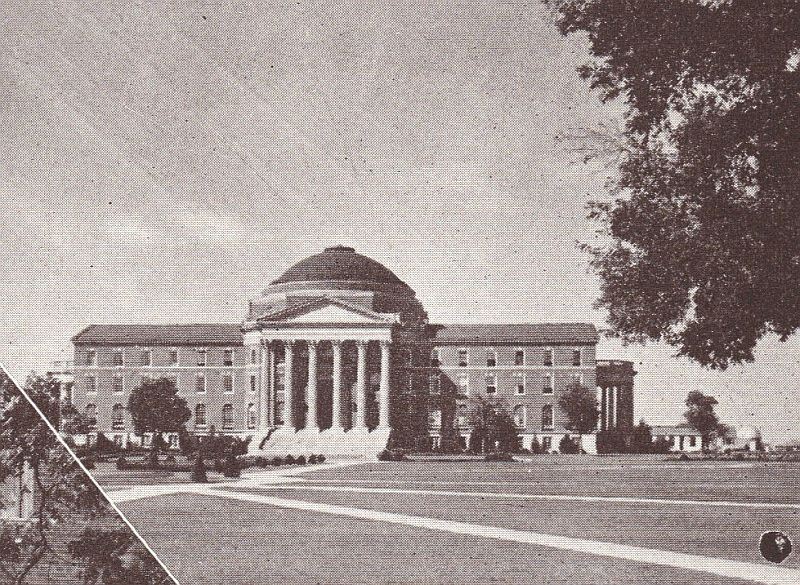
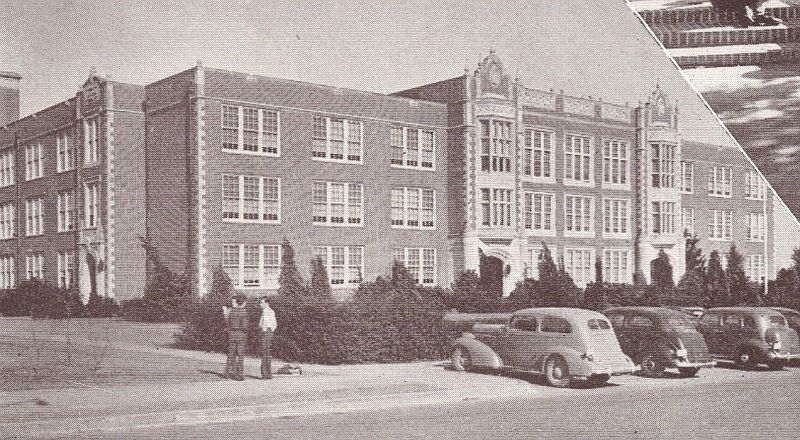
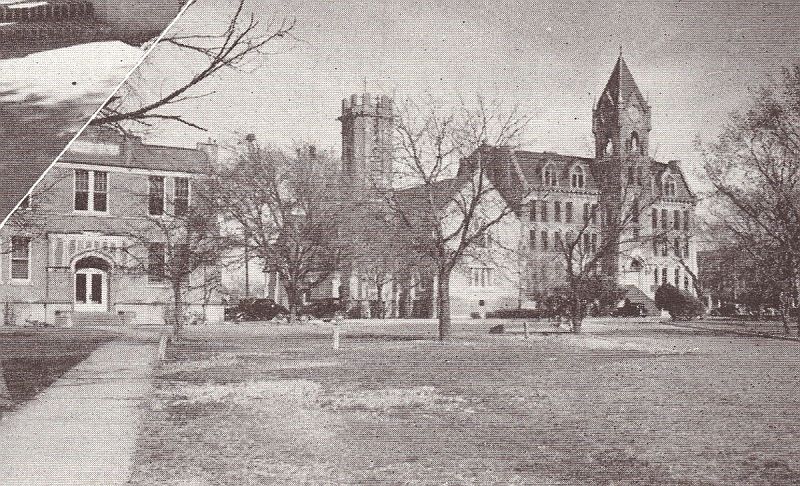
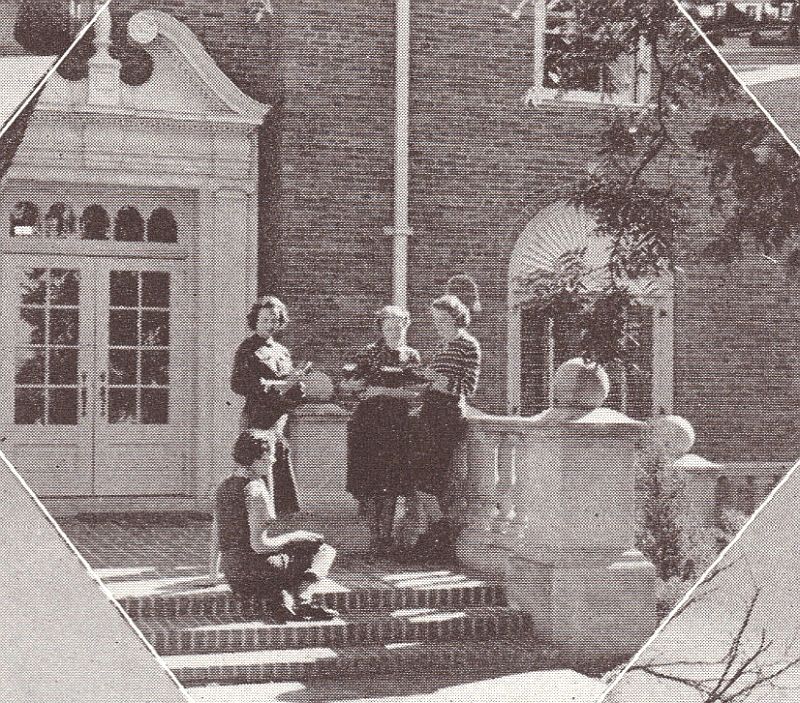
education_so-this-is-dallas_lone-star-annex_ca-1943_photosFive education hotspots…

by Paula Bosse

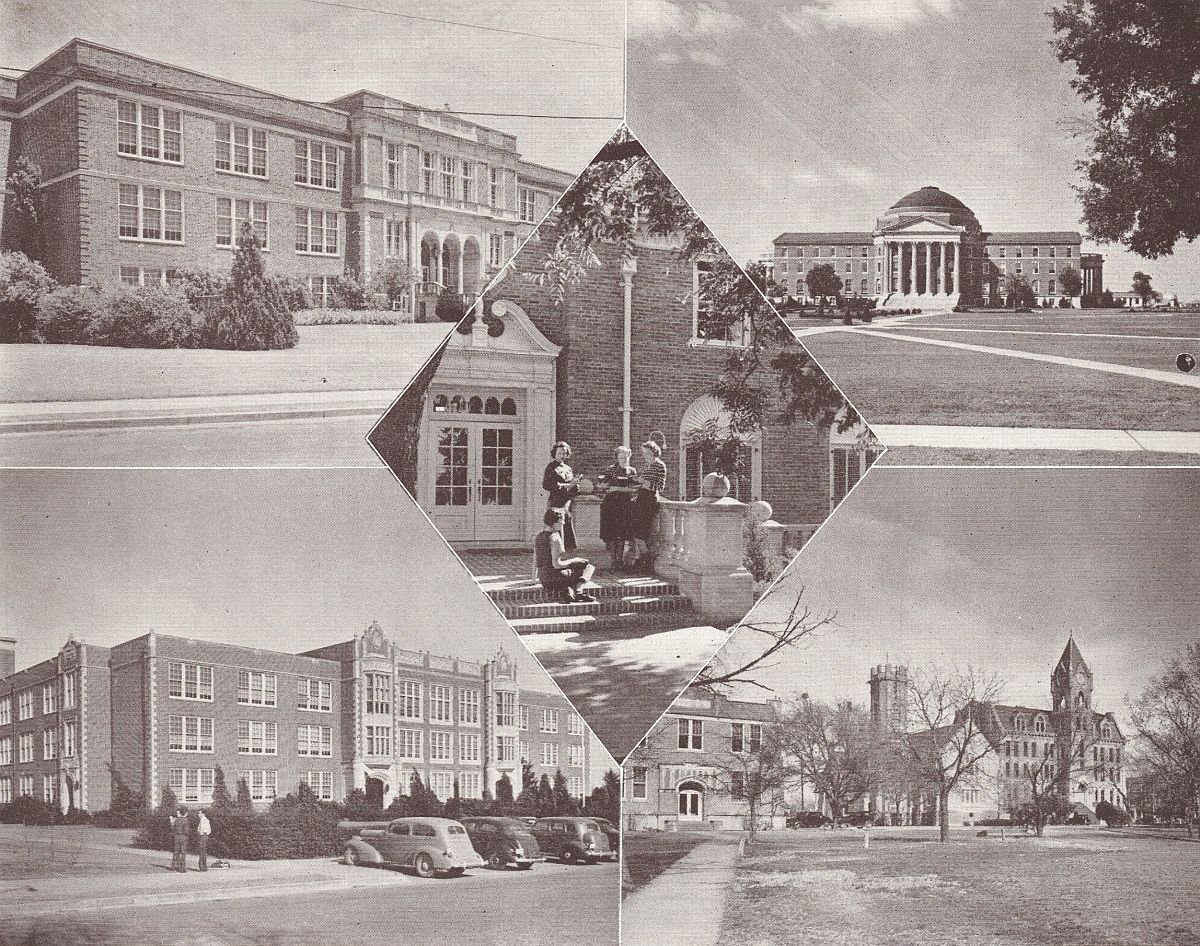
From So This Is Dallas, a publication meant to lure new residents to the city by touting key aspects of what makes it worth your while to pack your bags and relocate NOW. This is the page that focused on education.

Dallas… Outstanding Educational Center

Early in its history, Dallas set a high standard for its schools, and so well has it maintained those standards, that it stands high among cities of the nation in the educational advantages it offers to the children of its people and to those of the surrounding states.

From kindergartens for tiny tots to great universities and colleges for those seeking the higher degrees of learning, Dallas can furnish any specialized or general training that the young citizen may require.

There are 62 elementary schools, 8 senior high schools, and 4 junior high schools in the public school system of Dallas and the surrounding residential cities. Several new junior high schools are planned, and new elementary schools are organized as rapidly as they are needed.

The public schools also offer evening classes for the training of adults, and vocational training for adults or those of school age who prefer the specialized fields.

In the field of higher learning, there is Southern Methodist University, the medical and dental schools of Baylor University, Miss Hockaday’s School for Girls, and the Terrill School for Boys. Several well-rated business schools offer training in business administration, and there are dozens of recognized schools of music, art, the dance, drama, trades, and professions. Only a few miles to the west, at Arlington, is the state’s great school, the North Texas Agricultural College.

*

North Dallas High School:

education_so-this-is-dallas_ca-1943_lone-star-annex_photos_NDHS

Southern Methodist University:

education_so-this-is-dallas_ca-1943_lone-star-annex_photos_SMU

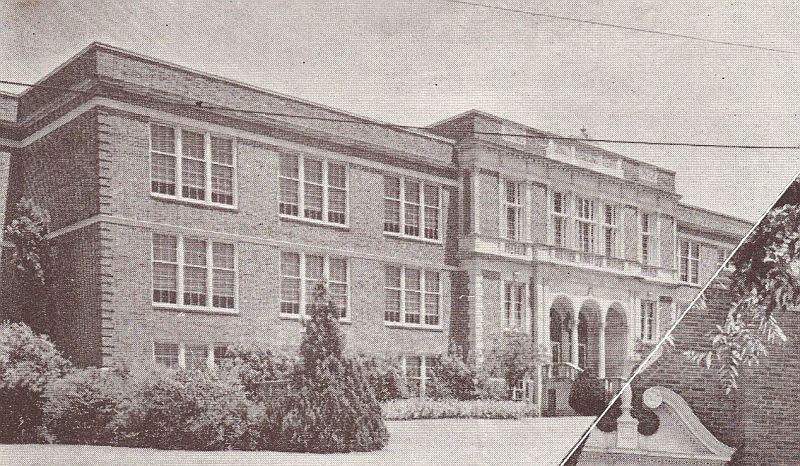
Woodrow Wilson High School:

education_so-this-is-dallas_ca-1943_lone-star-annex_photos_WWHS

The Terrill School for Boys:

education_so-this-is-dallas_ca-1943_lone-star-annex_photos_terrill-school

Miss Hockaday’s School for Girls:

education_so-this-is-dallas_ca-1943_lone-star-annex_photos_hockaday

**

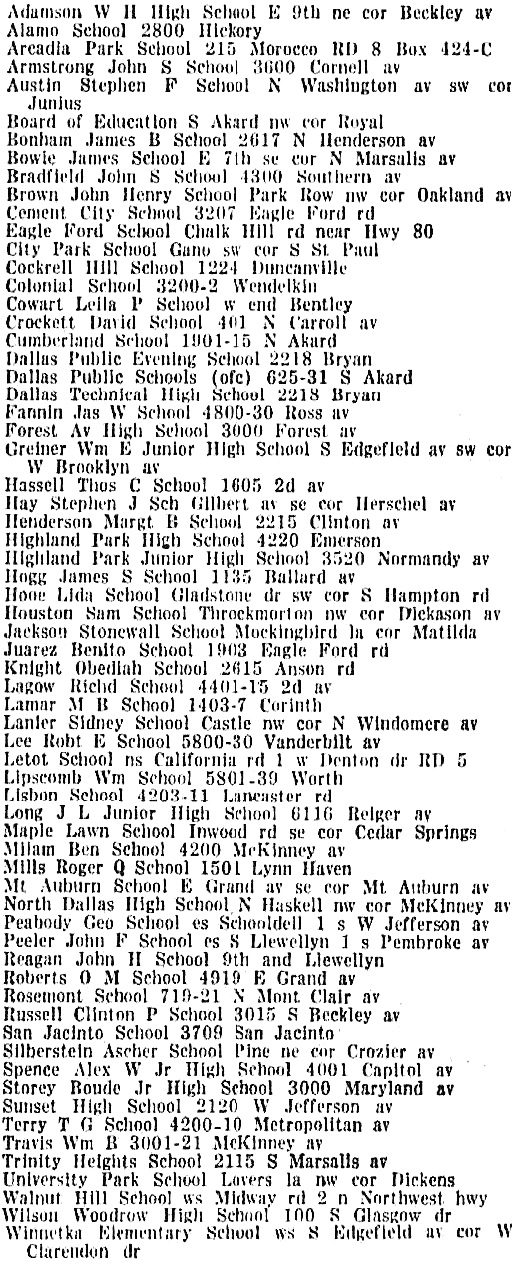
Why not post lists of schools from the 1943 Dallas directory? First, Dallas Public Schools (White):

schools_1943-directory_white

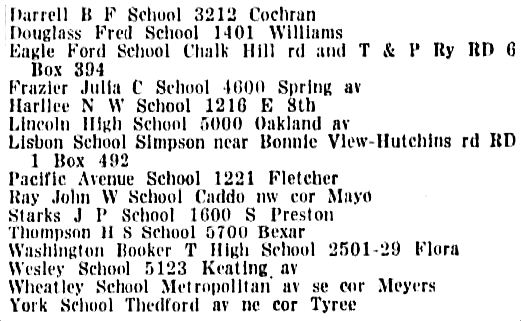
Dallas Public Schools (Black):

schools_1943-directory_black

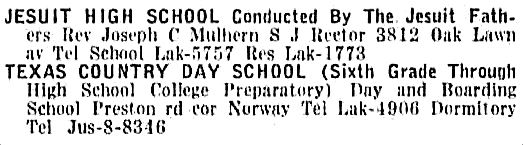
Dallas Private Schools:

schools_1943-directory_private

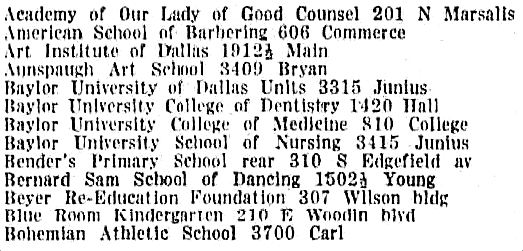
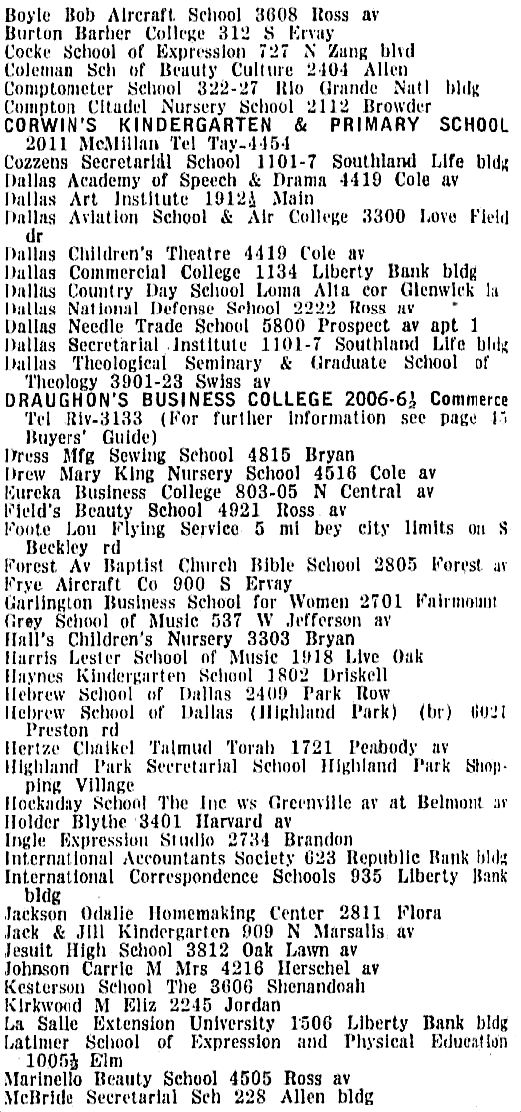
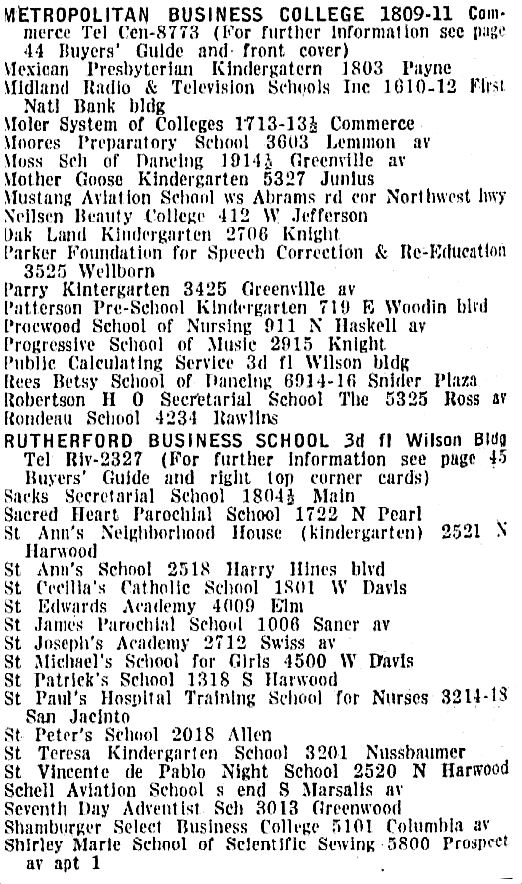
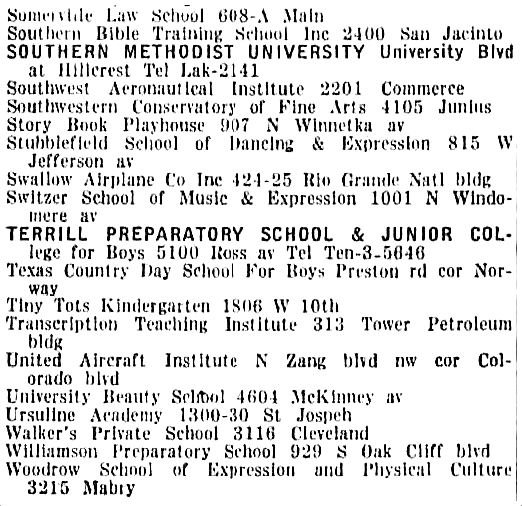
Dallas Schools, Colleges, Academies, and Odd Stuff:

schools_1943-directory_colleges_prep_1

schools_1943-directory_colleges_prep_2

schools_1943-directory_colleges_prep_3

schools_1943-directory_colleges_prep_4

And a lot of business schools….

***

Sources & Notes

Photos and text from So This Is Dallas, published around 1943 by The Welcome Wagon, with photos by Parker-Griffith; courtesy of the Lone Star Library Annex Facebook page.

See other Flashback Dallas posts using bits from this booster publication (circa 1943 and 1946) here.

education_so-this-is-dallas_lone-star-annex_ca-1943_photos_sm

*

Copyright © 2023 Paula Bosse. All Rights Reserved.

Black Women’s Equestrian Company K (American Woodmen) — 1920s

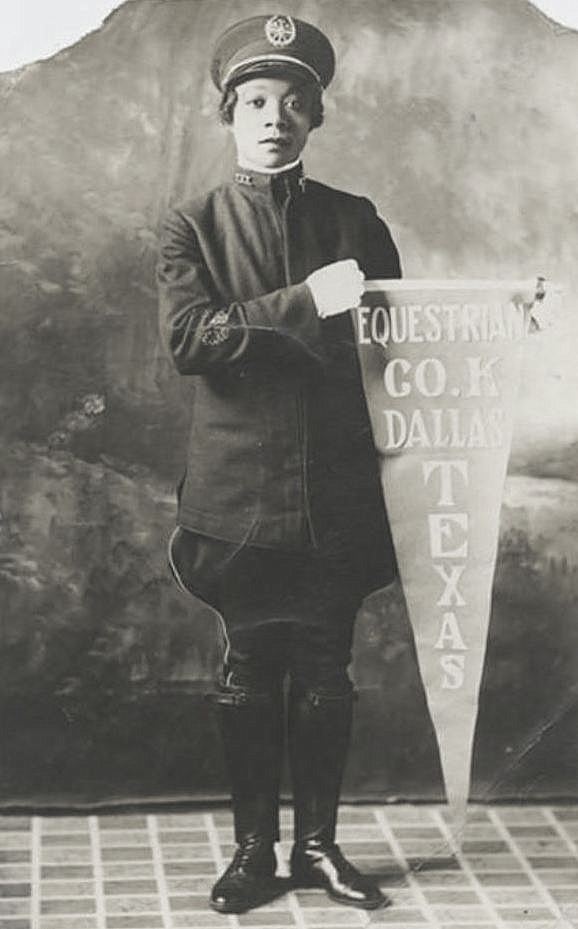
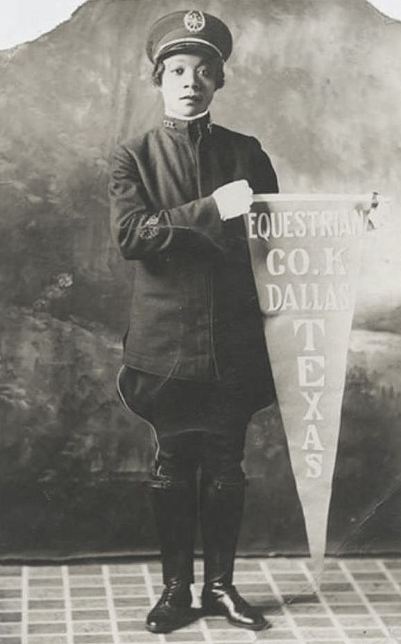
black-womens-equestrian-contingent_cook-coll_degolyer-lib_SMUGeorge W. Cook Collection, DeGolyer Library, SMU

by Paula Bosse

Above, a photograph of an African American woman holding a pennant which reads “Co. K — Dallas, Texas.” Company K was a women’s equestrian unit of Dallas Camp No. 86, consisting of at least 30 members — it was one of the various “uniformed ranks” of the American Woodmen, a Black fraternal organization. These groups competed in drills and marched in parades, and, from what I gather, they were meant to be seen as something of a symbol of strength, purpose, and resolve. Company K won many drilling contests and was active, from what I can tell, from at least 1922 to at least 1930.

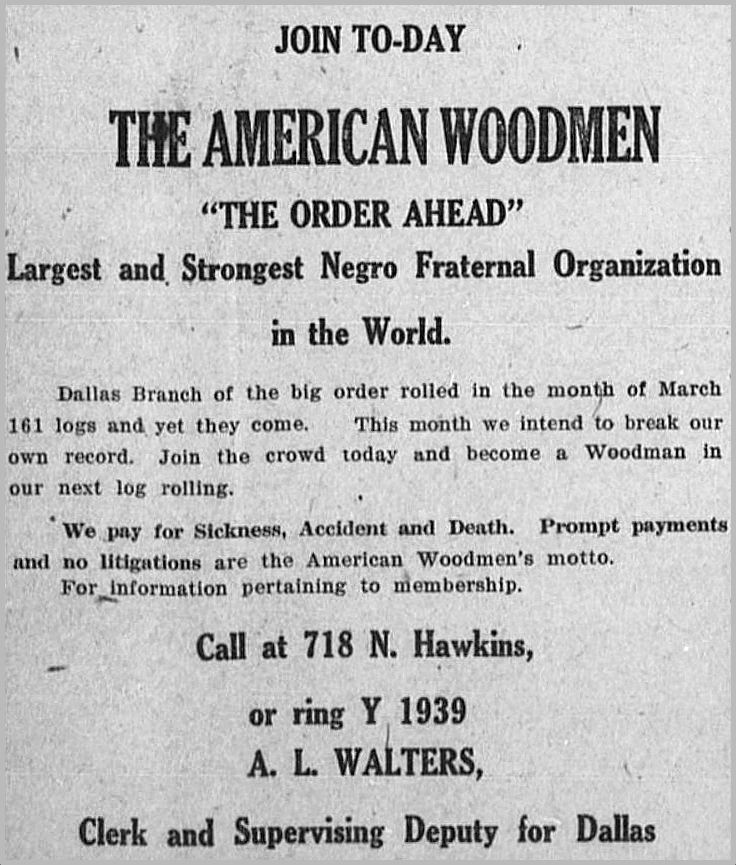
The American Woodmen (not to be confused with the Woodmen of the World, an exclusively white organization) was a national fraternal benefit association which provided loans and insurance coverage to members. It was open to Black men and women. During the 1920s, the Woodmen offices were located at 714 N. Hawkins, at Central (the address was originally 718 N. Hawkins, as seen in the ad below). Members could join various extracurricular “uniform ranks” if they so chose.
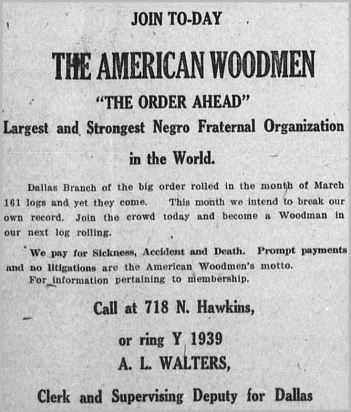
american-woodmen_dallas-express_041720Dallas Express, Apr. 17, 1920

The American Woodmen Uniform Ranks were overseen by the national “Commander,” Maj. Gen. John L. Jones (many fraternal organizations borrowed liberally from the military, as seen in their fondness for uniforms, “officer” ranks, precision drilling, etc.). While in Dallas for the Woodmen’s District Encampment in August 1922, Jones told a reporter:

“The American Woodmen in establishing their uniform rank department intended to instill in those who joined it a higher appreciation for the value of the Negro soldier and hero. No other fraternity has thus established that branch of their organization.” (Dallas Express, Aug. 12, 1922)

When uniformed members of these various divisions drilled and paraded — hundreds at a time — it was an impressive, powerful sight. It was good PR, not only for the group selling insurance, but also for Black Americans who rarely had the opportunity to participate in this type of uniformed display of earnest, pillar-of-the-community solidarity. (See a typical group of the “Uniform Ranks” — which also included marching bands and nurses — in a 1924 photo showing the Louisville, Kentucky Camp, here.)

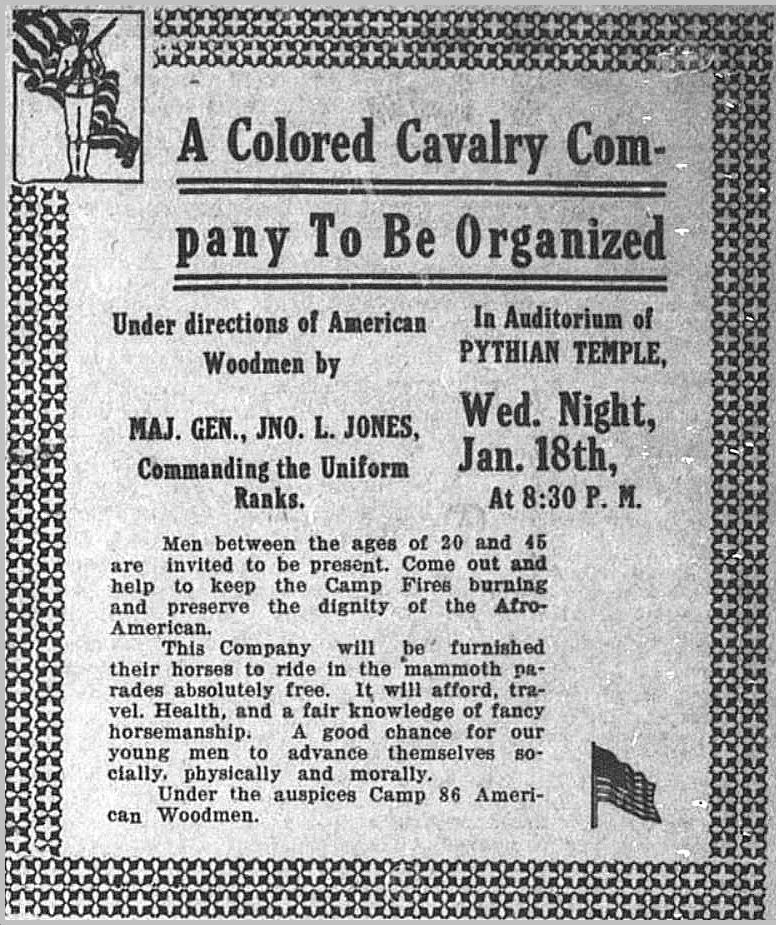
But back to Company K. I haven’t found any photos of them with horses, but I assume they really did ride horses. Below is an ad from January 1922, recruiting men for a Woodmen “cavalry.” I assume there was a similar version of this ad seeking female recruits.
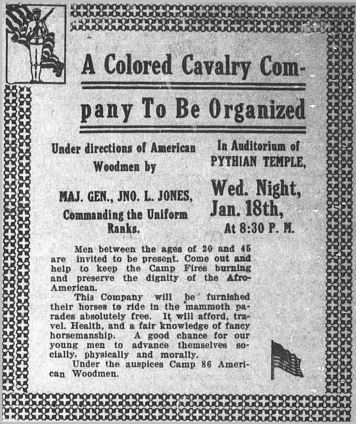
woodmen_american-woodmen_cavalry_dallas-express_011422Dallas Express, Jan. 14, 1922

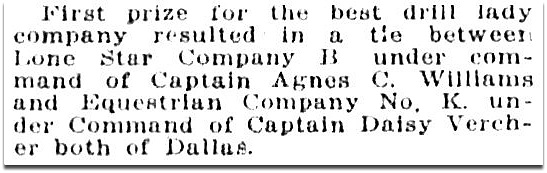
In an early competition at an “encampment” (a meeting of various American Woodmen companies, or “camps”), Company K tied for first place with another Dallas unit, Lone Star Company B. (Read coverage of this huge days-long encampment in the pages of the Black newspaper, The Dallas Express, hereThe Dallas Morning News did not mention the event.) The Dallas Encampment was at Riverside Park, a large open space where visitors set up military-style barracks/tents and competed in various military-like precision drills over the course of a few days. Riverside Park was the former Negro Play Park, at what is now Sabine and Denley in Oak Cliff, near the Trinity (it is now, I believe, Eloise Lundy Park). Not only was Riverside Park the site for several encampments and a place where Black families picnicked and gathered for special occasions, it was also the home of Negro League baseball games (these games were so popular among both Black and white Dallasites that a special section for white fans had to be installed during the Jim Crow era, when racial segregation was enforced by law). But back to Company K.
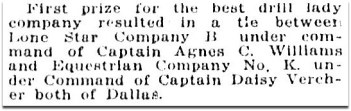
equestrian-co-k_dallas-express_081922_portal_detDallas Express, Aug. 19, 1922

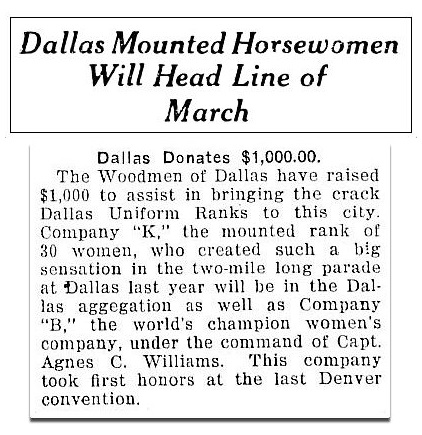
The parade mentioned in the article below is described in the Express article “Woodmen Stage Big Parade” (Aug. 19, 1922). It sounds like it was a pretty big deal.
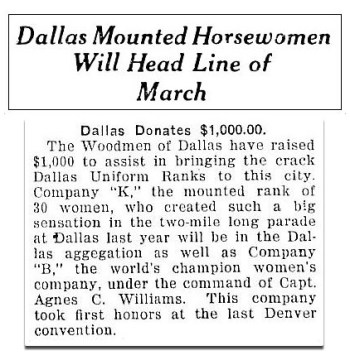
equestrian-co-k_black-dispatch_OKC_031523_headline_excerptBlack Dispatch (Oklahoma City, OK), Mar. 15, 1923

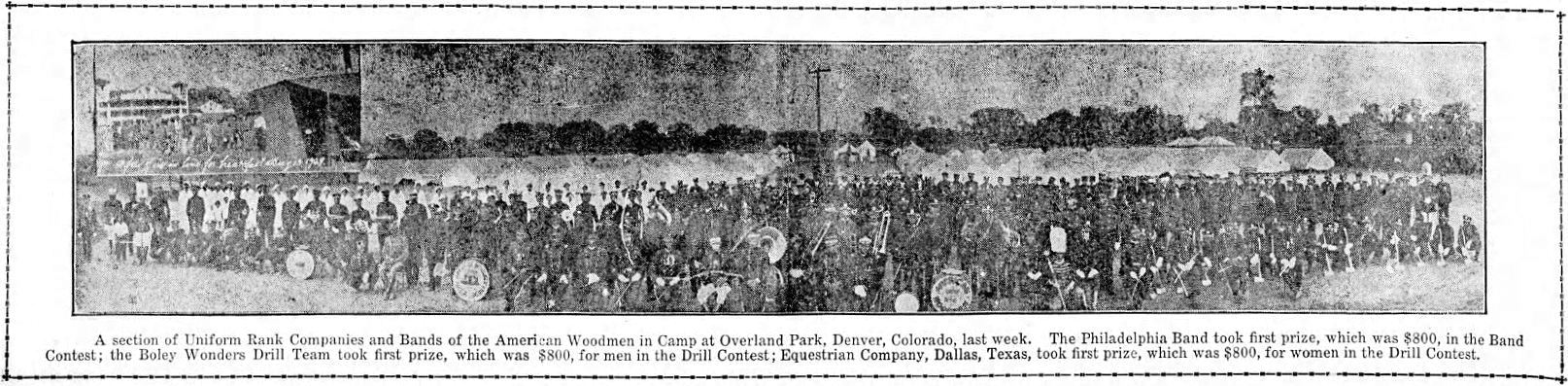
The incredibly low-resolution photo below was taken at the 1929 Encampment in Denver — it shows the scale of an encampment, with tents visible behind the posed participants. The caption says that Dallas’ Equestrian Co. K won the first prize for women in the drill contest — the prize (which, amazingly, was the same as the first prize for men) was $800, which, in today’s inflation-adjusted money would be about $15,000! 
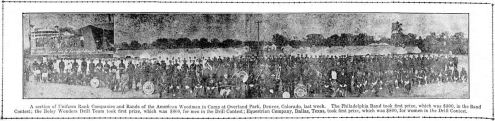
equestrian-co-k_black-dispatch_OKC_090529_photoBlack Dispatch (OKC), Sept. 5, 1929

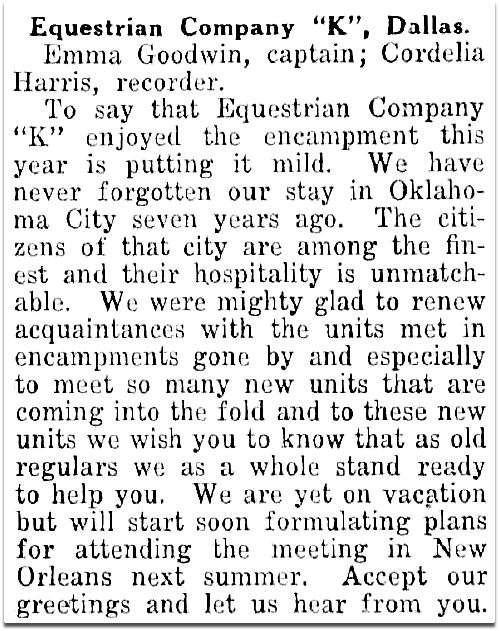
In an excerpt from a chatty overview of the women’s drilling groups, Company K spokeswomen say how happy they are to be back in Oklahoma City.
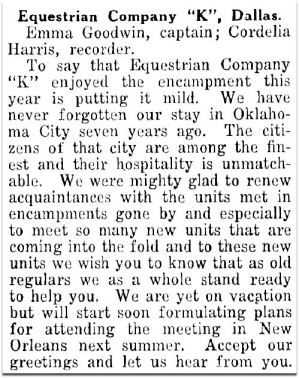
black-dispatch_OKC_071030_detBlack Dispatch (Oklahoma City), July 10, 1930

Most fraternal organizations are, as the name would imply, men-only. Yeah, they may have their female “auxiliary” organizations to give the women something to do, but the American Woodmen (Woodpeople?) included women in important roles. And it certainly paid off — the women of Equestrian Company K regularly won competitions and regularly brought the bacon home. 

*

100% of what is contained in this post is information I didn’t know until I set out to discover what “Equestrian Co. K, Dallas, Texas” referred to. As always, it’s exciting to learn about something I had never known about.

***

Sources & Notes

Top photo — “[Member of African American Women’s Equestrian Contingent, Company K, of Dallas, Texas]” — is from the George W. Cook Dallas/Texas Image Collection, DeGolyer Library, Southern Methodist University; more information on this photo can be found on the SMU Libraries site, here.

There is very little information on the internet about these American Woodmen women’s companies, so I’ve collected the article “Echoes from the Forest — Uniform Rank Department, American Woodmen” (The Black Dispatch, Oklahoma City, July 10, 1930), which lists female personnel for several Dallas companies, including the equestrian company, drill companies, a hospital company, and a nurse company — read the PDF here.

Read about the American Woodmen Benevolent Society (not to be confused with the (white) Woodmen of the World organization) in two very informative and interesting blog posts, here and here.

Read about Black soldiers during World War I in the sort-of related Flashback Dallas post “Black Troops from Dallas, Off to the Great War,” here.

black-womens-equestrian-contingent_cook-coll_degolyer-lib_SMU_sm

*

Copyright © 2023 Paula Bosse. All Rights Reserved.