Flashback : Dallas

A Miscellany: History, Ads, Pop Culture

From the Vault: Panoramic View of the Entrance to the State Fair of Texas — 1908

state-fair_clogenson_1908_LOC

by Paula Bosse

Frequently I post links to previous Flashback Dallas posts on Facebook, Twitter, and Instagram — usually on days when I’m unable to post anything new, due to lack of time, computer issues, or just general malaise. I might experiment with posting those links here.

Today, for instance, is the first day of the 2015 State Fair of Texas. Last year I posted a very, very cool panoramic photograph (taken by the always dependable Henry Clogenson) showing the crowded entrance to the 1908 fair. To read the post and to view a very large image of the above photo, check out last year’s very popular post here.

*

Copyright © 2015 Paula Bosse. All Rights Reserved.


Texas Texas Texas Texas Texas Texas Texas — 1930

woodrow_texas-endpaper_1930-yrbk

by Paula Bosse

Cool endpaper from the 1930 Woodrow Wilson High School yearbook.

I really like this, for a variety of reasons:

  • I have a book background, and I love unusual decorative endpapers and bookplates.
  • I love Texas kitsch (which I’m going to say this is, even if that wasn’t the original intent).
  • I’m a Woodrow alum.

Thank you, anonymous budding (or professional!) typographer!

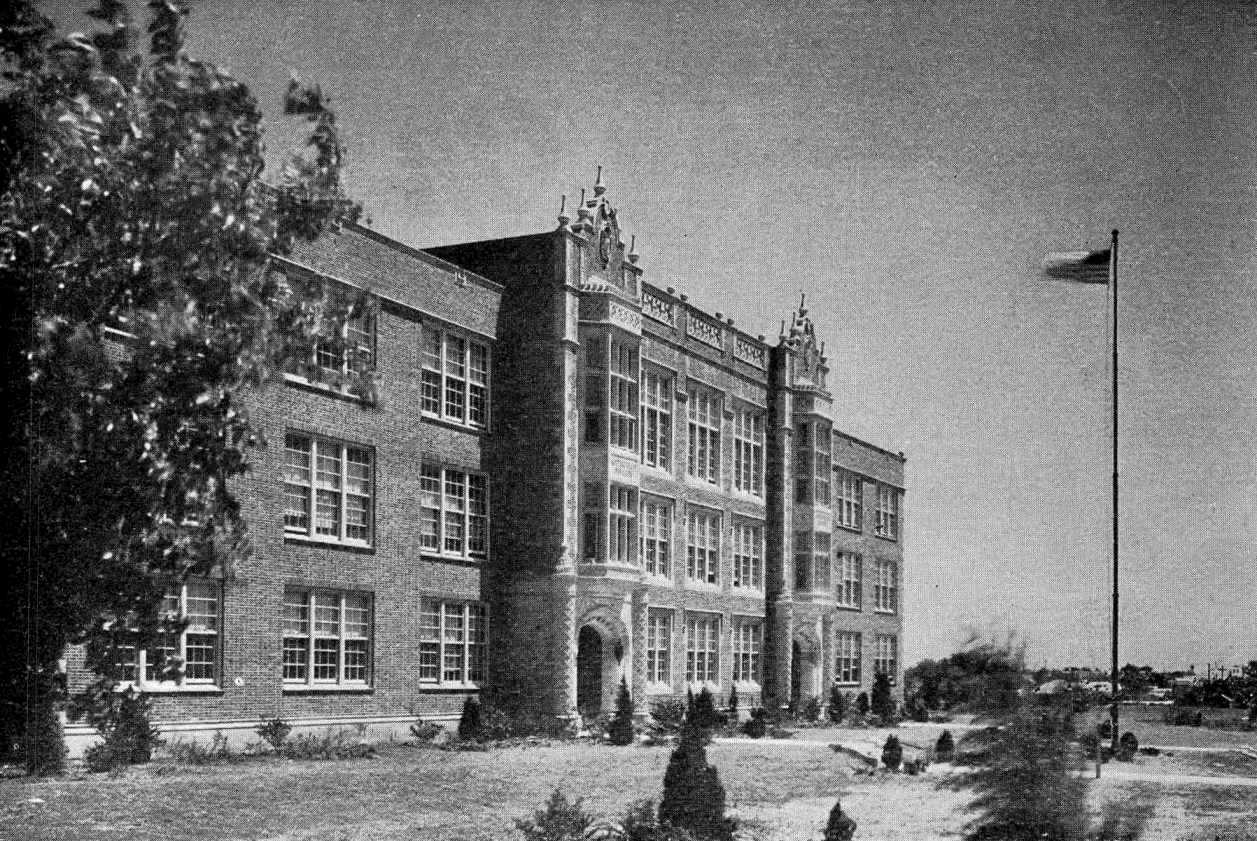
While we’re at it, here’s the rather oddly and unattractively landscaped school in 1930. (All those “Texases” and no Texas flag?!)

woodrow_1930-yrbk

***

Sources & Notes

Both images from the 1930 Woodrow Wilson High School yearbook, The Crusader.

*

Copyright © 2015 Paula Bosse. All Rights Reserved.

Old Parkland — 1950

parkland_aerial_1950_utsw_smThe *OLD* Old Parkland… (click for larger image)

by Paula Bosse

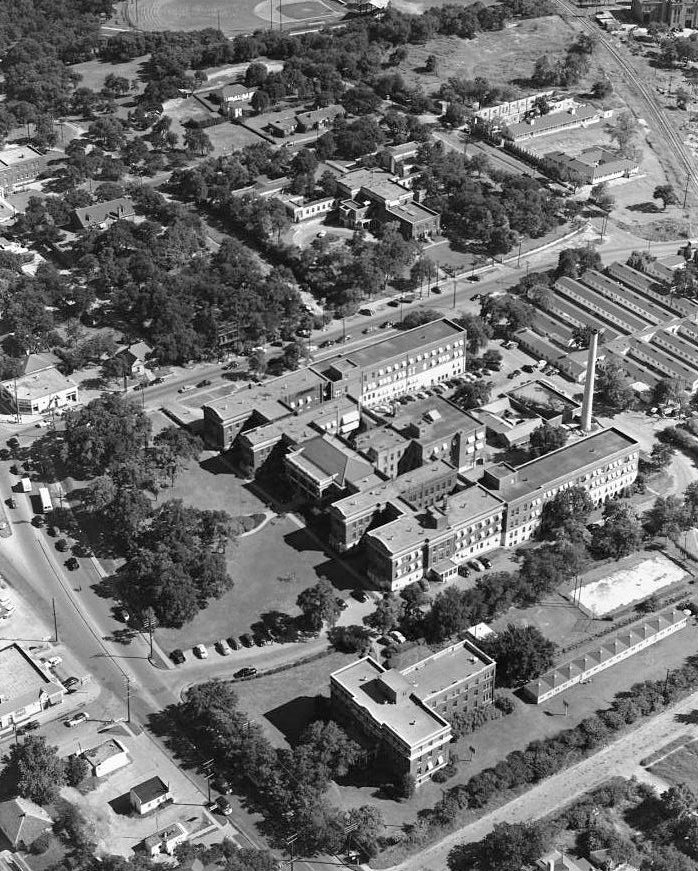
Fantastic aerial view of Parkland Hospital, looking south toward Reverchon Park (you can see the baseball diamond at the very top, just west of the old Turtle Creek pump station — now the Sammons Center — in the upper right corner). Maple is running north and south at the left of the photograph, Oak Lawn, east and west, just above the center.

Here’s the same view today.

maple-oak-lawn_google-earthGoogle Earth

***

Sources & Notes

Photograph titled “Aerial view of Parkland Hospital on Maple with Southwestern Medical School adjacent,” is from the UT Arlington Special Collections Library, hosted on the UT Southwestern Archives Collection site, here. You can zoom in and see incredible magnified details here.

The photo was taken August 15, 1950, by an unknown photographer. It looks a lot like a photo by Squire Haskins, taken a couple of blocks south — see it in the previous Flashback Dallas post “Reverchon Park Flyover,” here.

*

Copyright © 2015 Paula Bosse. All Rights Reserved.


Cadillac + Neiman-Marcus = “Practical” — 1956

ad-cadillac_neiman-marcus_1956Gowns and storefront by N-M, bumpers by Cadillac

by Paula Bosse

One need not be “prominent” to own a Cadillac or to shop at Neiman’s (… but it certainly helps).

***

Sources & Notes

Thanks to reader Kevin Smith for sending this to me!

Click ad to read text and to see those N-M gowns practically life-size.

*

Copyright © 2015 Paula Bosse. All Rights Reserved.

“The Only Motel Located In the Park Cities” — 1964

university-house-hotel_smu-rotunda_1965-detA palm tree, a palm tree, my kingdom for a palm tree… (click for large image)

by Paula Bosse

Behold, an architect’s rendering of University Park’s first motel (… motel?!). With palm trees! (The architects — Barron, Heinberg and Brocato  — were from Alexandria, Louisiana, where they might actually have palm trees. Perhaps they assumed they grew in Dallas. Or could be imported. Or just looked nice as a whimsical garnish.) Palm trees or not, look at that great mid-century design!

Plans for the University House Motel were announced in December, 1963 — it was to be built on Hillcrest at Binkley, right across the street from SMU by Edward T. Dicker, the man who built 3525 Turtle Creek. (Interestingly, according to a press release printed in The Dallas Morning News on Dec. 8, 1963, real estate transactions for the property involved a land lease from Shell Oil Co.) With 60 suites, it was the perfect location for hotel lodgings for parents visiting their children in college.

This was to be both a major commercial addition to University Park as well as something of an architectural departure. The closest hotel/motel alternative (according to the ad below, anyway) was farther away than might have been convenient for visiting families — the (also super-cool-looking) Holiday Inn was all the way down Central, just past Fitzhugh.

ad-holiday-inn_central-expwy_smu-rotunda_1965
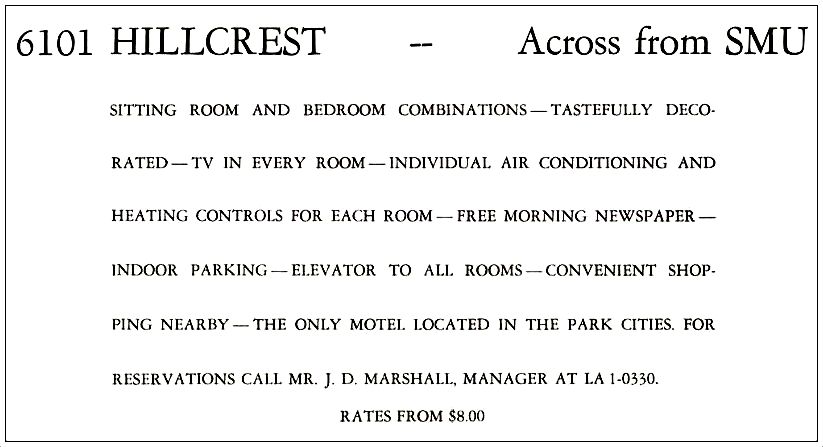
If I were a visiting parent, I’d probably choose the University House option because of its unbelievably close proximity to the campus. And if I saw the ad below, I’d definitely book a room — pronto!

university-house-hotel_smu-rotunda_1965(click to read text)

When construction was complete and the motel opened for business, the sans-palm-tree reality of the building had to have been a bit of a disappointment to anyone who had salivated over that sleek Mid-Century Modern drawing (even though I’m sure the interior decor was much nicer than most motels). Maybe it’s just me. It sort of looks like the drawing. …Sort of….

university-house_smu-rotunda_1965

The University House hung on for several years, then changed ownership and names several times. It is now the site of the much-expanded and certainly much-swankified Hotel Lumen. Interestingly, the skeleton of the original building is still in there somewhere. As Alan Peppard wrote in the Dallas Morning News on Oct. 16, 2006 soon after Hotel Lumen opened, “The old hotel was gutted back to nothing but the concrete frame and rebuilt as a hip University Park hotel.” (To see what things look like now, click here — the renovated original building is on the left, the expansion is on the right.)

In the 21st century, Hotel Lumen is exactly the kind of hotel that comfortably-well-off-but-still-tastefully-hip SMU parents want to stay in when they arrive in town to visit the progeny. All that’s missing are a few palm trees….

***

The University House Motel ad appeared in the 1965 Southern Methodist University Rotunda yearbook. That same yearbook also contained the Holiday Inn ad and the photograph of the University House Motel. (The photo appeared over the yearbook’s cheeky “Why be discreet?” caption and was featured in the previous Flashback Dallas post, “The SMU ‘Drag’ — 1965,” here.)

The 1965 ad has the nightly rate at the University House Motel at $8 — about $60 in today’s money, adjusted for inflation. Not bad for parents who could afford to send their children to SMU and who weren’t staying downtown at the Adolphus, the Baker, or the Hilton.

Photos of Hotel Lumen — inside and out — can be found on their website, here.

Click pictures for larger images.

*

Copyright © 2015 Paula Bosse. All Rights Reserved.


The SMU “Drag” — 1965

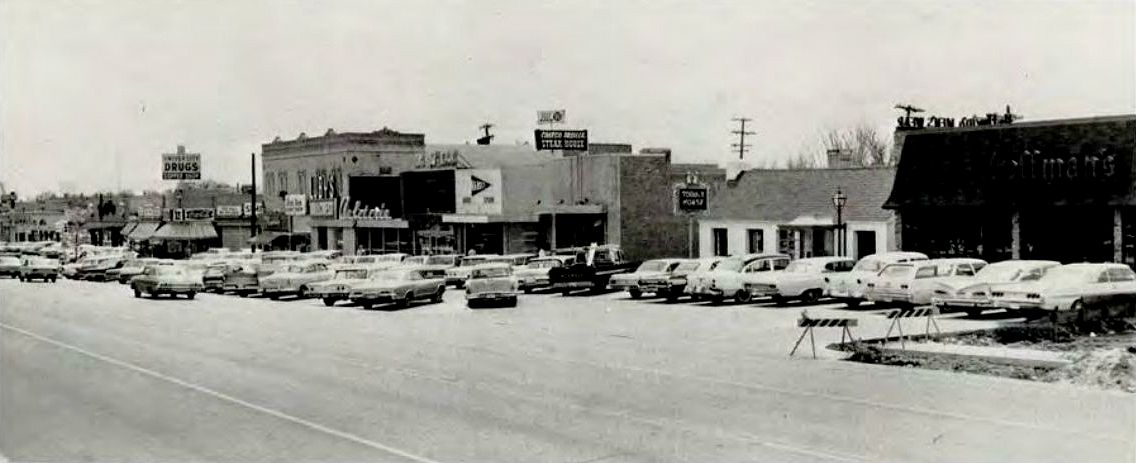
drag3_smu-rotunda_1965Hillcrest, looking south, just north of McFarlin (click for larger image)

by Paula Bosse

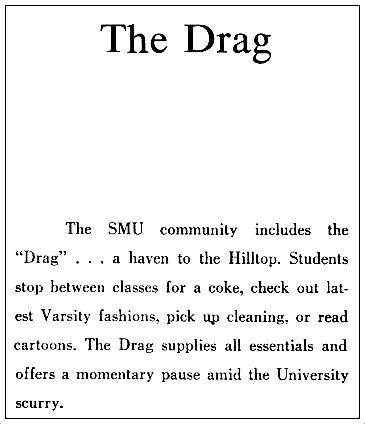
Hillcrest, north of Mockingbird, up to Snider Plaza, and maybe all the way up to Lovers Lane. The Drag. Might as well be an unofficial SMU annex. Over the past several decades, some students may have spent more time in the businesses across the street from the western edge of the campus than they did in some of their classes. The look of the area has changed quite a bit recently, but views from the 1965 SMU yearbook are not drastically different from what it looked like up until just a few years ago — and in some stretches, some of the same buildings seen in these photos still stand. Unless something has gone terribly wrong, businesses along the SMU drag that cater primarily to an ever-replenishing SMU student body should never have a lack of customers.

The yearbook caption for the photo above: “Give me your tired, your poor … just give me your money.” (See this view from recent months, with traffic cones, here.)

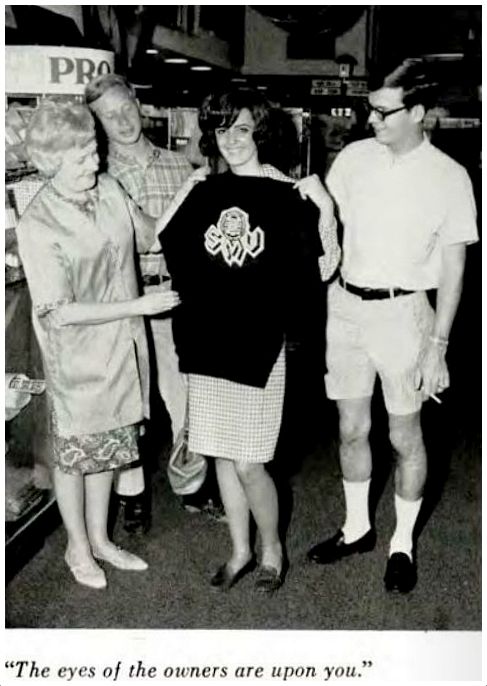
Below, a few more photos from the 1965 Rotunda tribute to The Drag.

drag_smu-rotunda_1965*

Looking north.

drag1_smu-rotunda_1965*

At Binkley, current site of Hotel Lumen.

drag4_smu-rotunda_1965-university-house*

Smoking welcomed. Preppy look, circa 1965.

drag2_smu-rotunda_1965

***

All photos from the 1965 Southern Methodist University Rotunda yearbook.

To take a look at a map of the SMU campus from 1964, click here (DeGolyer Library collection, Southern Methodist University).

Click pictures for larger images.

*

Copyright © 2015 Paula Bosse. All Rights Reserved.

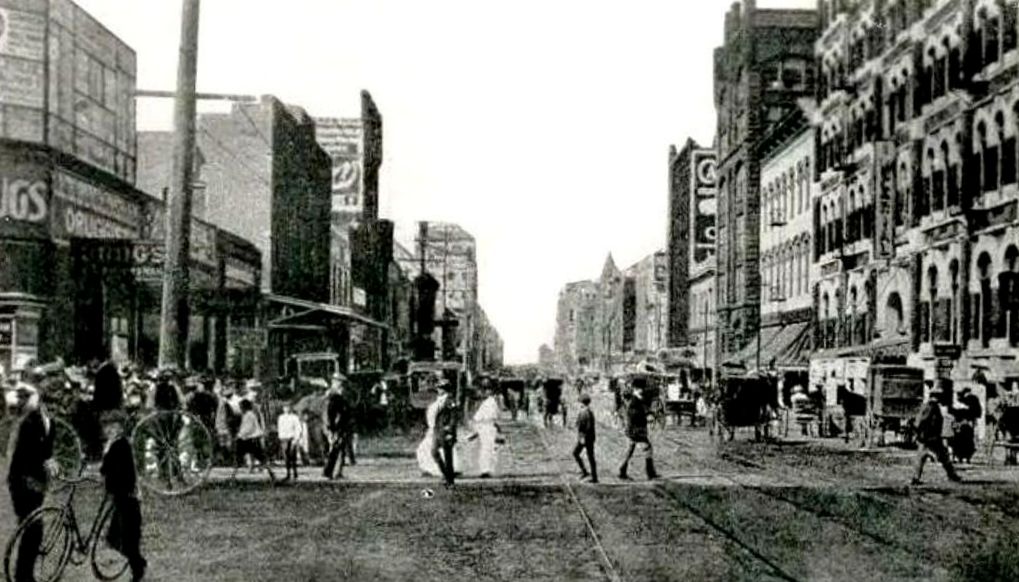
Crossing Main Street

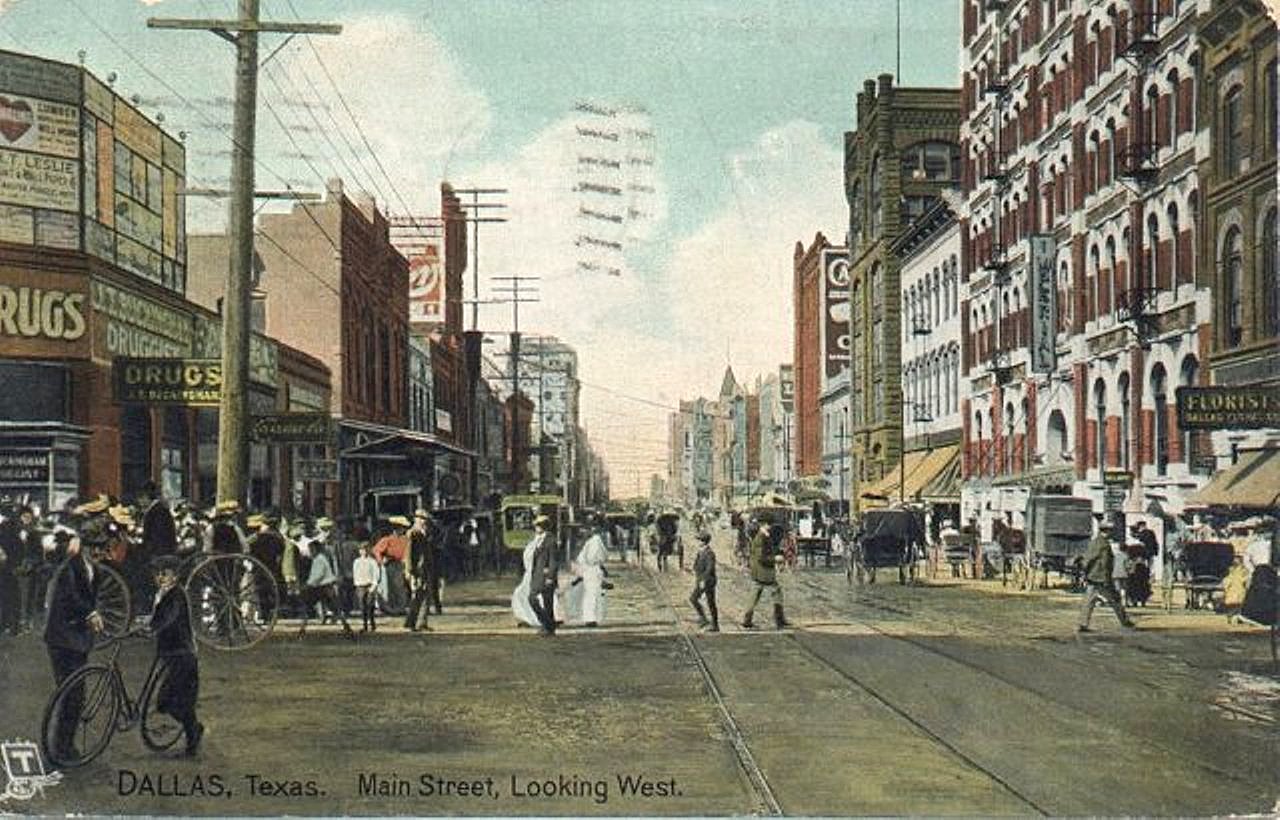
main-looking-east_watermelon-kidLife in the Big City…

by Paula Bosse

Turn-of-the-century traffic: buggies, bicycles, wagons, and people.

I first came across the image below in — of all places — a 1931 SMU yearbook and backtracked to finding the “color” postcard, above. The very grainy image (below) may just have been a black and white photo of this postcard rather than the original photograph, but it’s interesting to see them together. The yearbook identifies this as being Main and Akard, looking west on Main; it also dates it about 1906, but I think it’s earlier than that — there probably would have been evidence of automobiles on Main Street by then. Whenever it was, it seems like a pleasantly nostalgic frozen-in-time moment.

main-west-from-akard_smu-rotunda-1931***

Postcard at top from the Watermelon Kid’s great site, here.

Weird, blurry black and white image from the 1931 Southern Methodist University Rotunda yearbook.

Click pictures for larger images.

*

Copyright © 2015 Paula Bosse. All Rights Reserved.

Dealey Plaza, From Above — 1960s

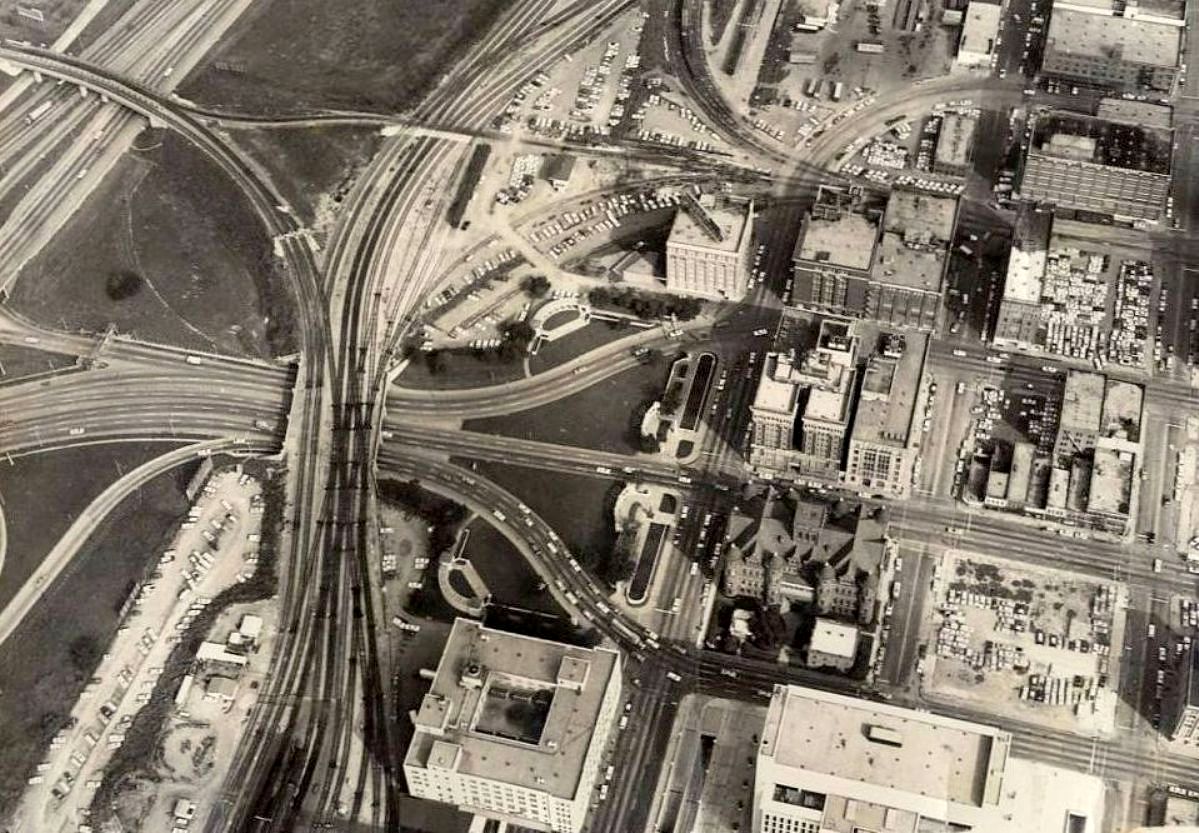
dealey-plaza-aerial_c1966_baylorPhoto by David Lifton (Baylor University)

by Paula Bosse

Photo showing a mid-to-late-’60s Dealey Plaza and downtown Dallas, with the block just east of the Old Red Courthouse cleared for the eventual construction of the John F. Kennedy Memorial.

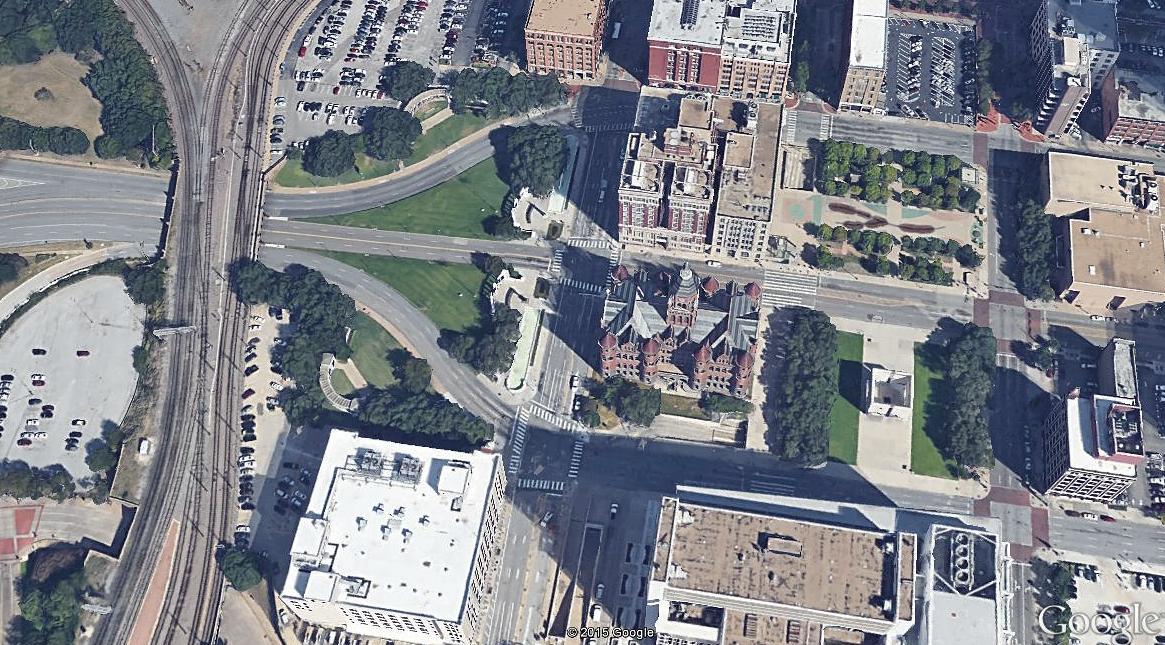
And today

dealey-plaza_google-earthGoogle Earth

***

Photo is by David Lifton, from the collection of Penn Jones, W. R. Poage Legislative Library, Baylor University, Waco, TX; it is accessible here. Lifton is an assassinationologist best known for his 1981 book Best Evidence: Disguise and Deception in the Assassination of John F. Kennedy.

Click pictures for larger images.

*

Copyright © 2015 Paula Bosse. All Rights Reserved.

The Idle Wild Social Club: Life Magazine Presents Black Debutantes — 1937

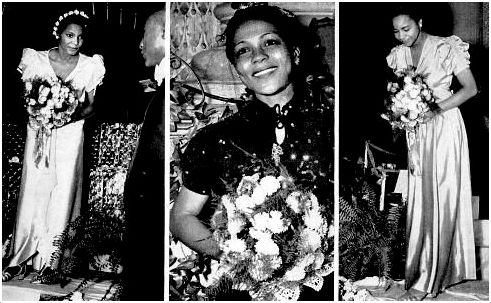
debs_life_120637-detThree of 1937’s debs (click for larger image and caption)

by Paula Bosse

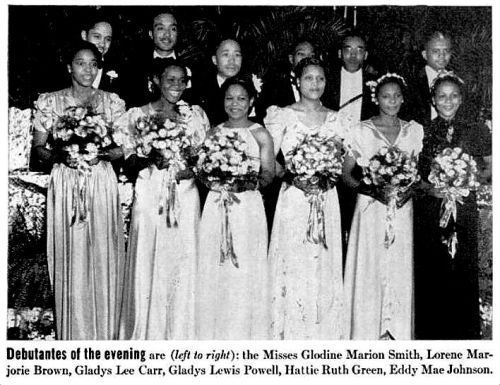
In December of 1937, something appeared in a national mainstream magazine that had probably never appeared before: photographs of a society ball celebrating African-American debutantes. In the December 6, 1937 issue of Life magazine — in the recurring “Life Goes To a Party” pictorial feature — four pages were devoted to coverage of the annual Idle Wild Social Club ball (later Idlewild Social Club, and later Cotillion Idlewild Club — none of which is to be confused with Dallas’ 130-plus-year-old super-exclusive, white Idlewild Club). The letters this unusual pictorial elicited were either congratulatory or, dismayingly, shocked and irate. Although today these photos are nothing unusual, in 1937, to see African-Americans depicted in a magazine such as Life as just normal, everyday Americans, was exceedingly uncommon. To see photos of black high-society must have made people’s heads explode. So kudos to Life for running the only slightly patronizing story and for publishing some wonderful photographs.
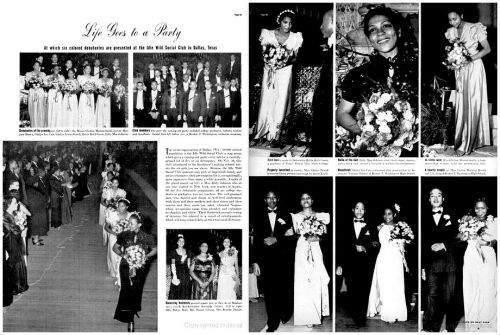
life_debs_120637_aLife magazine, Dec. 6, 1937

*

The Idle Wild Social Club was started in Dallas around 1918 by a group of socially well-placed black men — perhaps as a response to the white Idlewild Club. By the early 1920s they, like the white club, were presenting the cream of the crop of their young women to society in debutante balls. The ball covered by Life took place on November 18, 1937. The women making their debuts were:

  • Eddy Mae Johnson
  • Glodine Marion Smith
  • Lorene Marjorie Brown
  • Gladys Lee Carr
  • Gladys Lewis Powell
  • Hattie Ruth Green

life_debs_120637The debs and their escorts (Life, Dec. 6, 1927)
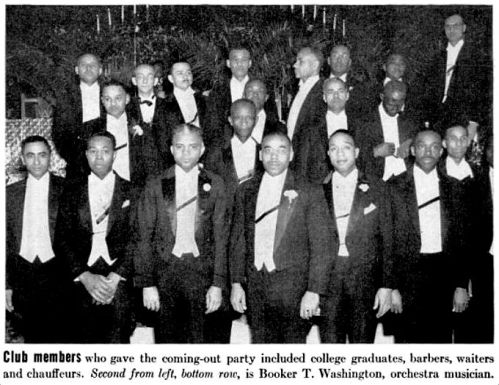
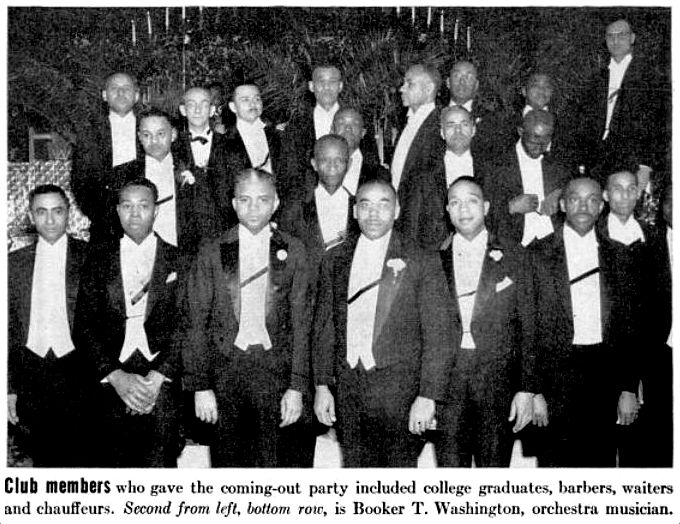
life_debs_120637-club-membersClub members (Life, Dec. 6, 1927)

life_debs_120637-crowd“Social chitchatterers” (Life, Dec. 6, 1927)
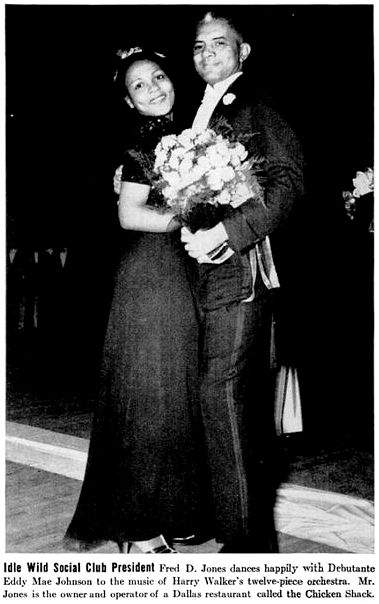
life_debs_120637-couple(Life, Dec. 6, 1927)

Read the article and see additional photos featured in this pictorial here.

There was an outcry in response to the article, and some of it was shockingly ugly — read the letters to the editor about the “Negro Ball” that Life published in the next issue, here (use the magnification tool at the top of the page to increase the size of the text).

Here is the more progressive response, from the Jan. 1938 issue of the NAACP’s magazine, The Crisis:

the-crisis-mag_jan-1938

Progress moves at a snail’s pace, but if coverage of a debutante ball can help to move things forward even a step or two … great!

***

All photos from Life magazine, Dec. 6, 1937; the scanned article (and, in fact, the entire scanned issue) is here.

The January, 1938 issue of The Crisis is available online; the page featuring the editorial is here. (This issue also has an interesting article, “Free Negroes In Old Texas” by J. H. Harmon, Jr., here.) The Crisis Wikipedia page is here.

To read coverage of earlier Idle Wild Social Club balls — published in the black-owned Dallas Express — see this from 1922, and this from 1923.

The African-American debutante ball has been called Cotillion Idlewild for many years now; information on their 2014 ball is here. (Again, this is not to be confused with the (white) Idlewild Club, which has been throwing heart-stoppingly elaborate balls in Dallas since the 1880s.)

Apparently there is a history of the club out there — Idle Wild Social Club History (1940) — and, according to WorldCat, appears to be available at nearby libraries.

Personally, I don’t really “get” debutante balls, but growing up in Dallas, I know that they’ve always been big, big, BIG deals. A. C. Greene’s snarky article “Social Climber’s Handbook” (D Magazine, October, 1976), is both amusing and informative; read it here.

*

Copyright © 2015 Paula Bosse. All Rights Reserved.


“Dallas … Undisputed Medical Center” — 1946

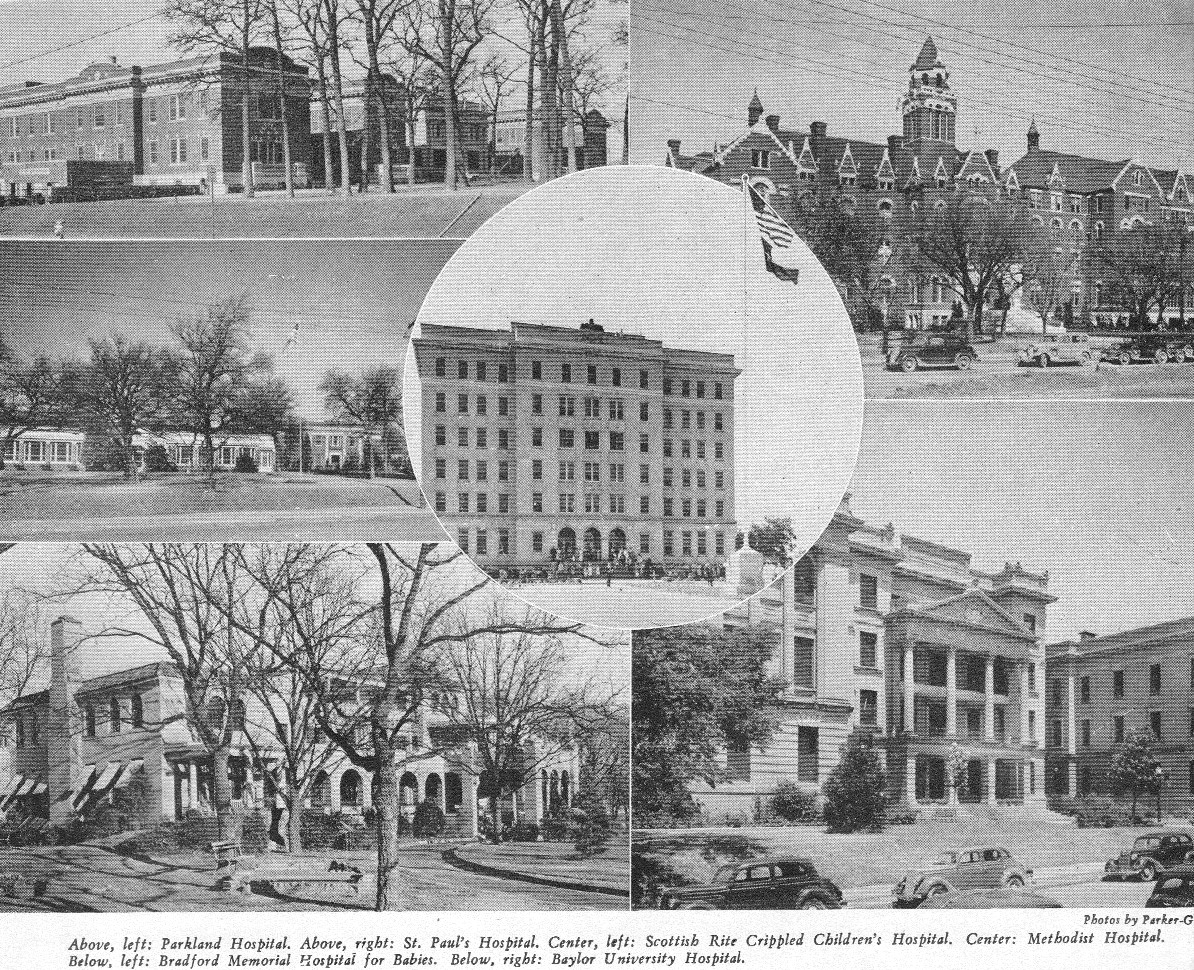
medical-centers_so-this-is-dallas_ca-1946_smSix of the city’s top facilities (click picture for larger image and caption)

by Paula Bosse

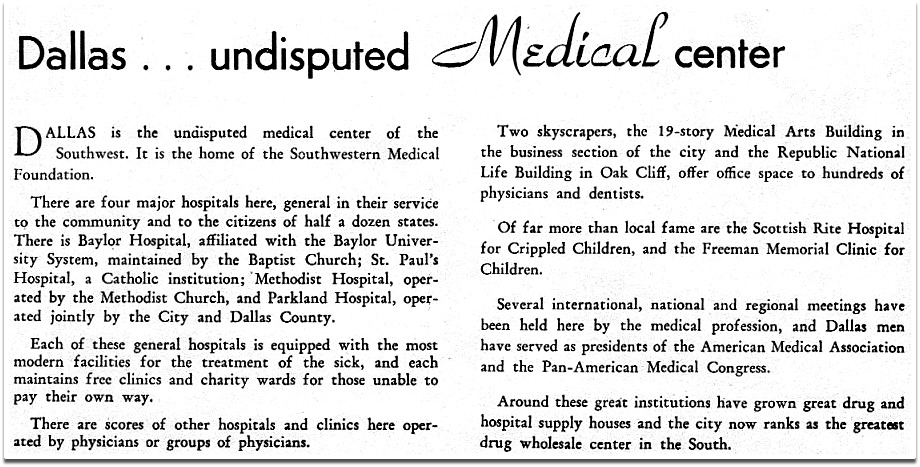
The photos above and the text just below are from a publication from about 1946 which was prepared for potential newcomers to the city in order to encourage them to move their businesses and/or residences to Dallas. This page focuses on the city’s superior medical centers, including Parkland Hospital, St. Paul’s Hospital, Scottish Rite Crippled Children’s Hospital, Methodist Hospital, Bradford Memorial Hospital for Babies, and Baylor University Hospital.

medical-centers_so-this-is-dallas_ca-1946-text

Locations of these and other “Hospitals and Dispensaries” can be found in this clipping from the 1946 Dallas city directory:

hospitals_1946-directory

***

Sources & Notes

Photo collage and text from “So This Is Dallas,” edited by Mrs. E. F. Anderson (Dallas: The Welcome Wagon, ca. 1946); photographs by Parker-Griffith.

Hospital listings from the 1945-46 Worley’s Greater Dallas (Texas) City Directory.

*

Copyright © 2015 Paula Bosse. All Rights Reserved.