Flashback : Dallas

A Miscellany: History, Ads, Pop Culture

Tag: Dallas TX

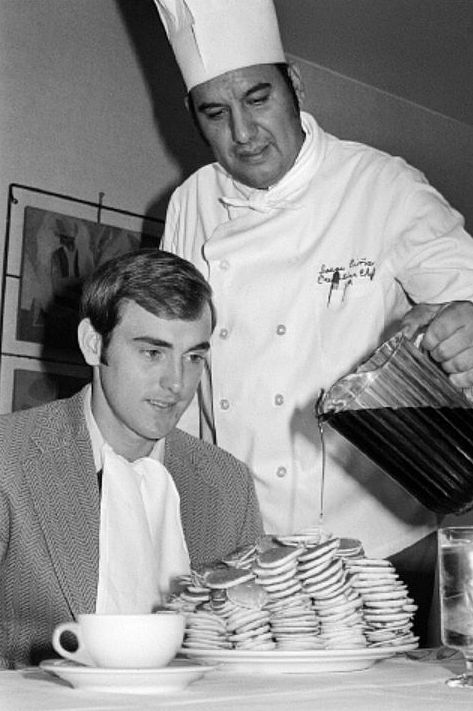
Nolan Ryan’s Celebratory Pancake Breakfast — 1972

nolan-ryan© Bettmann/CORBIS

by Paula Bosse

In 1972, future baseball hall-of-famer and Texas Rangers legend Nolan Ryan (then a California Angel) was photographed in Dallas as he sat mesmerized by a platter of 302 silver-dollar pancakes and an iced-tea-sized pitcher of syrup. The celebratory breakfast was served to him at the Sheraton Dallas the morning after he became only the sixth pitcher in major league history to strike out more than 300 batters in a season. (His opponents the previous night — September 25, 1972 — had been the Rangers, the team he would one day play for and preside over as president and CEO.)

The UPI Telephoto wire photo ran on Sept. 27, 1972 above the following caption:

302 PANCAKES — Ever wonder what 302 strikeouts in a season will get you? If you’re a batter, you may lose your job, but if you’re a pitcher like Nolan Ryan, left, of the California Angels, [you] will at least get 302 silver dollar pancakes. This was the breakfast that awaited Ryan Tuesday after his 3-hit, 12-strikeout win over the Texas Rangers Monday. The executive chef at the Sheraton Dallas [Isaac Pina] produced the breakfast for the Alvin native, a former New York Met, who is the sixth pitcher in major league history to strike out more than 300 batters in one season.

Twelve strike-outs!

ryan_FWST_092672Fort Worth Star-Telegram, Sept. 26, 1972

Judging by the expression on his face at the next day’s breakfast table, it’s pretty obvious the 25-year old Nolan Ryan enjoyed his triumph.

***

Sources & Notes

Photo ©Bettmann/CORBIS. The photo is also seen on this page, from The Guardian, which shows a collection of really great historic baseball photos — a bit of a surprise, coming from a British newspaper!

The photo was published in newspapers around the country; the quoted wire copy appeared in the Sept. 27, 1972 edition of The Waxahachie Daily Light.

To read a passage from the book Nolan Ryan’s Pitcher’s Bible in which he writes about the importance of his high-carb breakfasts (Day One: Pancakes…), see here.

The Wikipedia entry on Nolan Ryan is here; his stats are here.

*

Copyright © 2015 Paula Bosse. All Rights Reserved.


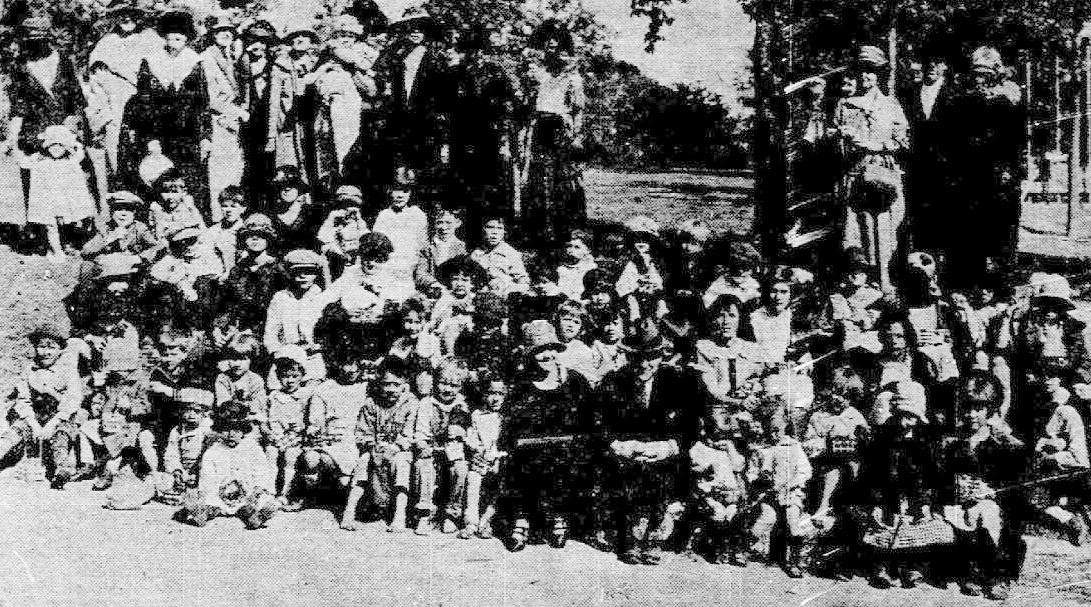
Easter Egg Hunt at City Park — 1924

Hunters and their patrons, 1924…

by Paula Bosse

Happy Easter! Here’s what was going on at about this time, 91 years ago.

*

Osteopathic Clinic Fetes Children With Easter Egg Hunt

The church committee of the free osteopathic clinic at the First Unitarian Church, Ervay and St. Louis streets, entertained seventy-five children of the clinic at an Easter egg hunt in City Park Friday afternoon. Real Easter eggs were hidden by the ladies of the committee about the park, and where the close-cropped grass did not provide good hiding places about the tree trunks, nests were made in the sand.

After the youngsters had been released to hunt, they pursued the quest vigorously, to the accompaniment of shrill cries of delight, until all the eggs were found, the members of the committee distributed Easter baskets filled with candy eggs for the children to eat. Later they were taken to the church, where refreshments were served.

***

Sources & Notes

Photo and caption from The Dallas Morning News, April 19, 1924.

*

Copyright © 2015 Paula Bosse. All Rights Reserved.

Dallas’ Kosher Delis — 1921

fram_passover_jewish-monitor_040821

by Paula Bosse

Dallas once had a lot of mom-and-pop Jewish delicatessens and markets. Would that that were true today….

Here are a few ads from the pages of the Fort Worth-based Jewish Monitor (the “Leading Jewish Journal of the Great Southwest”) from April, 1921, published in the lead-up to Passover.

chicago-deli_jewish-monitor_040821

sterns-deli_jewish-monitor_040821

star-deli_jewish-monitor_040121

goldin-meat-mkt_jewish-monitor_040821

***

All ads from The Jewish Monitor, April 8, 1921 (except for the Star Kosher Delicatessen ad, which was from the April 1, 1921 edition). The April 8 edition of the paper can be viewed in its entirety at the Portal to Texas History site, here.

As this is Passover, my previous related post, “The Margules Family’s Passover Seder,” can be read here.

*

Copyright © 2015 Paula Bosse. All Rights Reserved.


Happy 1st Day of April!

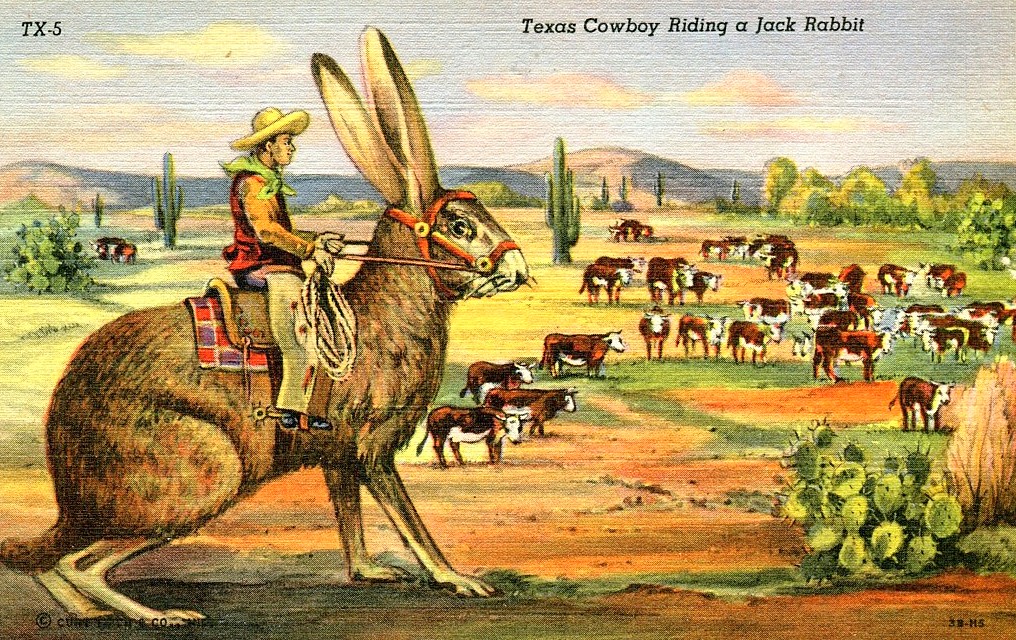
tx-jackrabbitPerspective’s a bit off — those cattle would have been MUCH larger

by Paula Bosse

Everything’s bigger in Texas — including our jackrabbits, which are justifiably legendary. Below, a photo of a (concerned-looking) child posed atop one of the more docile breeds. We’re just not growing them that big anymore. Shame.

jackrabbitApparently somewhere in Dallas…

***

Sources & Notes

Top image found here (where other historical images of cowboys riding giant jackrabbits can be seen).

Bottom photo (possibly a postcard) was on eBay a while back. Location was identified as Dallas.

For a previous Flashback Dallas post celebrating the 1st Day of April, see “U.S. Revenue Cutter ‘Carrie Nation’ Successfully Navigates the Trinity In Valiant Effort to Keep Dallas Dry! — 1931” here.

*

Copyright © 2015 Paula Bosse. All Rights Reserved.

Teenagers, Hot-Rods — 1960s

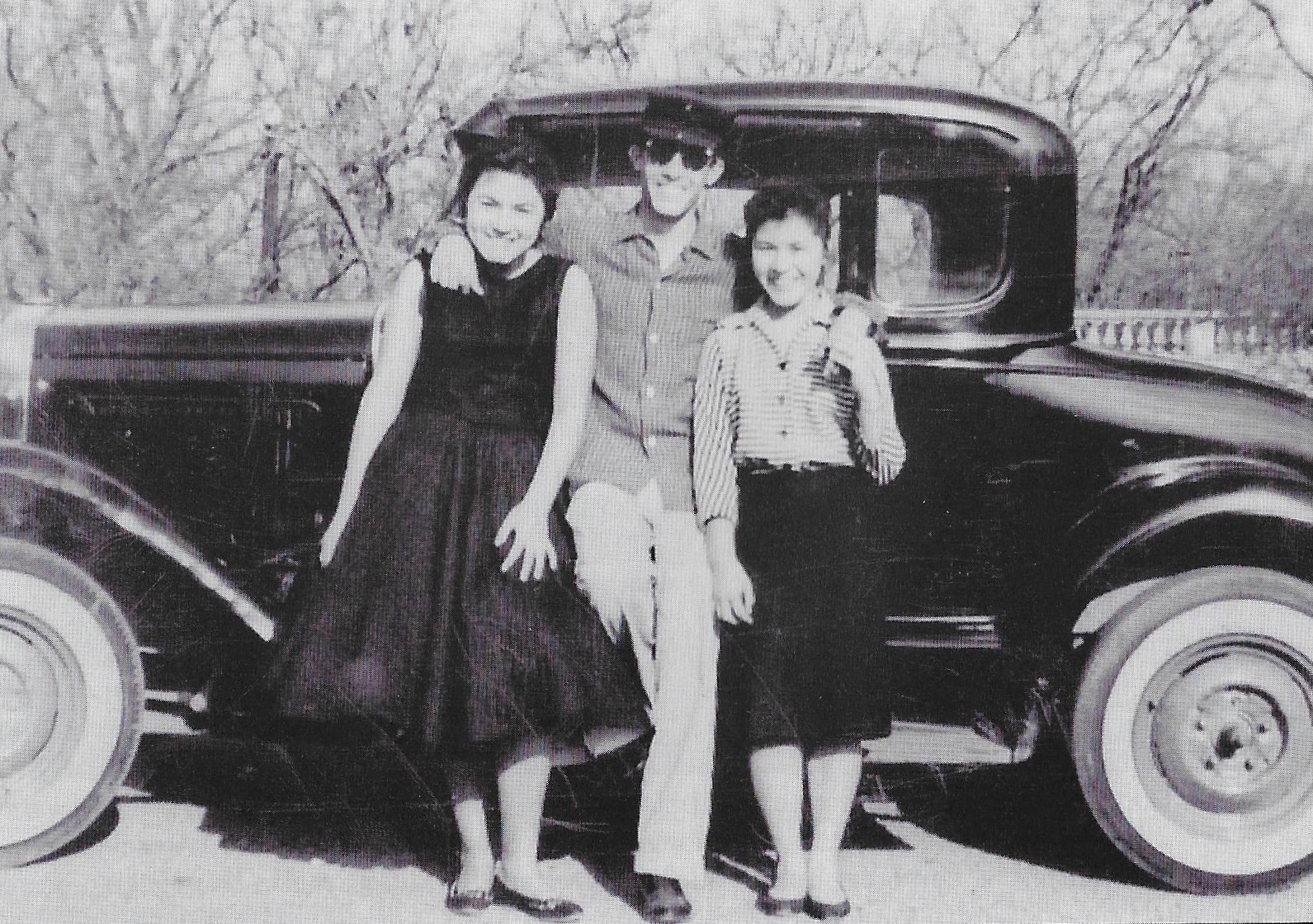
little-mexico_hot-rod_villasana A cool cat and his kittens… (via DMAHL)

by Paula Bosse

Teenagers and hot-rods, man. These kids are cool.

***

Sources & Notes

Photo from the book Dallas’s Little Mexico by Sol Villasana (Charleston, SC: Arcadia Publishing, 2011); photo is credited to Dallas Mexican American Historical League (DMAHL). Caption reads: “These Little Mexico teenagers show off their hot-rod in this 1960s picture. Shown are, from left to right, ? Santos, Rudy Trevino, and Maria Rodriguez.”

*

Copyright © 2015 Paula Bosse. All Rights Reserved.

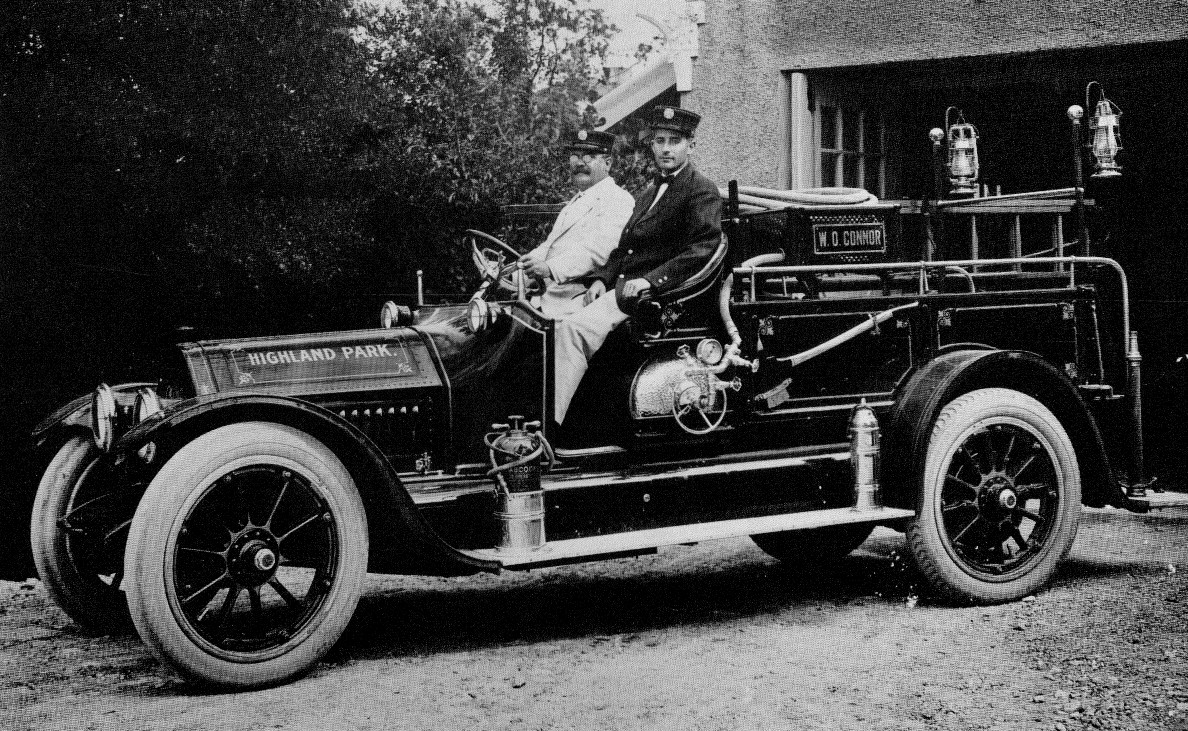
Highland Park’s Snazzy New Fire Engine — 1914

hp_fire-truck_1914Chief McGoldrick behind the wheel of HP’s new fire engine…

by Paula Bosse

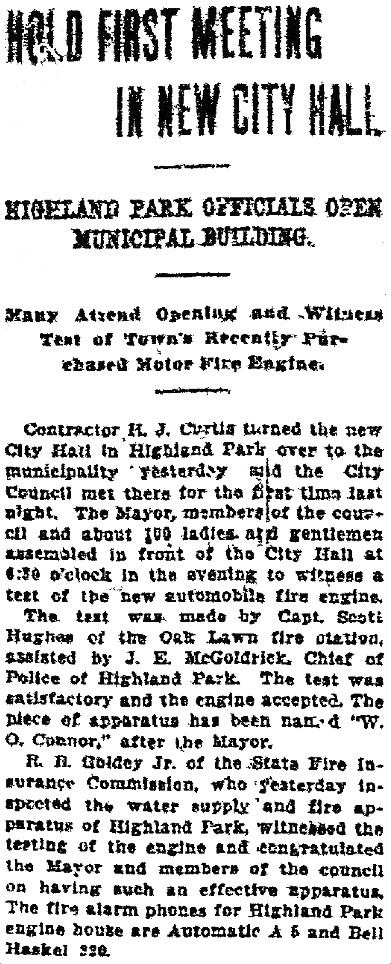
Above, Ed McGoldrick — who was both police chief and fire chief for Highland Park — sits behind the wheel of HP’s new fire engine. It even had a  name — “W. O. O’Connor,” after the mayor. Seated next to Chief McGoldrick is most likely Capt. Scott Hughes of the Oak Lawn fire station. The engine was tested, deemed satisfactory, and accepted into service on June 4, 1914 on the day the new Highland Park City Hall was officially opened. (Click article below to see larger image.)

hp_fire-engine_dmn_060514Dallas Morning News, June 5, 1914

J. E. McGoldrick was apparently something of a peace officer renaissance man. He was an officer on the Dallas Police force from about 1902 to 1912, and then became head police and fire honcho in Highland Park from 1912 to 1917 (where he was also the Street Superintendent). At the same time he was serving as HP Chief Peace Officer, he was also appointed to head the Game Commission of Dallas County. In 1917, he resigned his position in HP to accept a job at SMU where he “would have charge of buildings and grounds” (DMN, June 6, 1917). In 1924, he was appointed Chief Peace Officer of University Park.

That SMU move seems like a bit of a weird detour for a career policeman, but even weirder is the following sentence, which appeared in the blurb about his University Park appointment:

[McGoldrick served as the chief peace officer of Highland Park] until 1917 and then undertook confidential duties for the United States Government. During the past two years he has been connected with Sanger Bros. (DMN, Oct. 5, 1924)

James E. McGoldrick died in October 1927 when he suffered a heart attack while eating his lunch in a drugstore at Main and Lamar. He was 54. His obituary mentioned that he had been “connected with a meat market” in his post-public-service life.

But back to the photo. It’s great. There’s nothing quite like the smell of a new fire engine. And Chief McGoldrick looks very proud.

***

Sources & Notes

Photo from a postcard issued as part of the Park Cities Bank “Heritage Series” in the 1970s; the credit line on the postcard reads “Donated by the Town of Highland Park.” Thanks to the Lone Star Library Annex Facebook group for use of the image.

Newspaper clipping as noted.

*

Copyright © 2015 Paula Bosse. All Rights Reserved.

Dr Pepper Ad: “I’ll Have Another Myself” — 1929

dr-pepper_dmn_052729

by Paula Bosse

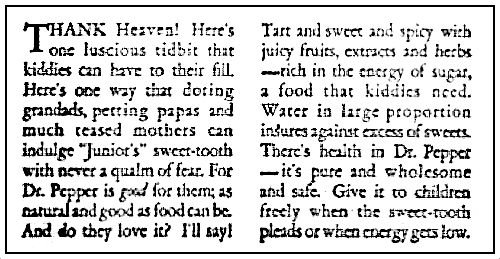
Drink up, kids — Gramps is buying! “It’s pure and wholesome and safe.”

ad-dr-pepper_dmn_052729-text

And the tag line: “It’s A Good Habit To Get — It’s One That Won’t Get You.”

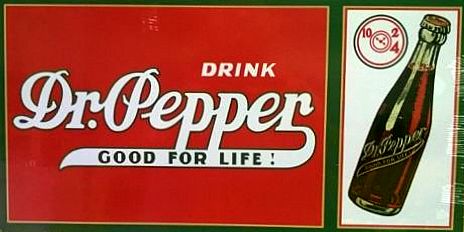
dp-sign

***

Ad from 1929.

Reproduction of period sign found on eBay.

*

Copyright © 2015 Paula Bosse. All Rights Reserved.


City Park Construction Work — 1941

city-park-construction_1941_david-roberts-photo“City Park, 1941” / Collection of David Roberts

by Paula Bosse

This great family photo was sent in by reader David Roberts. It shows his grandfather, David Crockett (D.C.) McKay working on a construction crew. The reverse of the photo reads “City Park, 1941.” David has identified his grandfather as the man standing on the makeshift wooden bridge, just to the right of the cement mixer. I love this photograph!

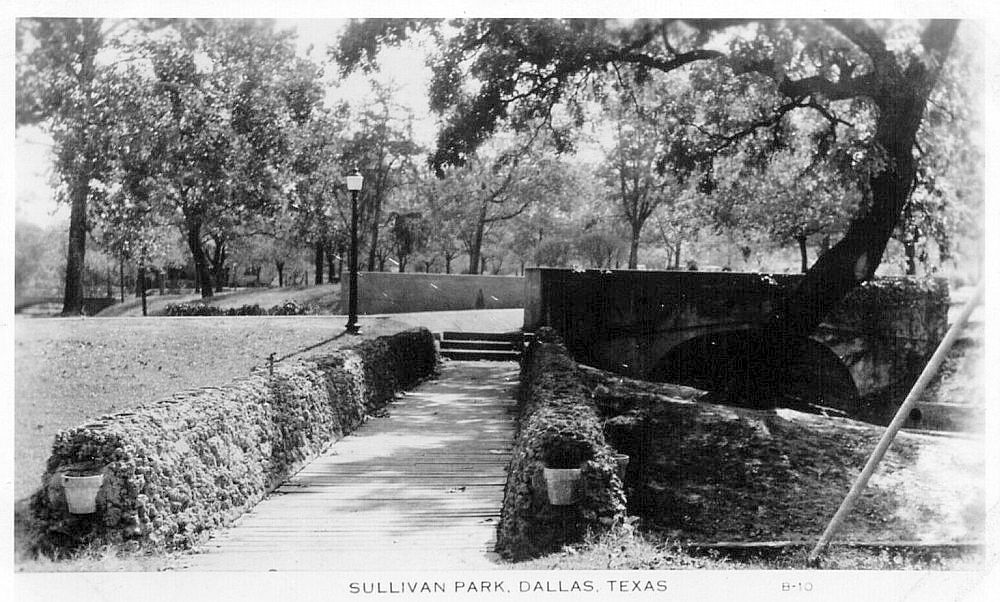
City Park (now “Old” City Park), was Dallas’ first park, acquired in 1876. It became a popular (and beautiful) recreation area, and the adjacent Browder Springs was home to the city’s first waterworks. In 1936, City Park was briefly re-named “Sullivan Park” in honor of Dan F. Sullivan, the city’s first highly accomplished Water Commissioner. But it was officially UN-re-named (or RE-re-named) and went back to being “City Park” again in May 1941, because after 60 years of being known as City Park, the “Sullivan” thing just never caught on, and the two names were causing confusion. So the name was changed back.

So what construction was going on around City Park at the time this photo was taken? In 1941, there were major improvements going on throughout the city’s park system, and City Park was one of the beneficiaries of an $800,000 city-wide improvements package. ALSO happening in 1941 was some Mill Creek storm sewer work — Mill Creek ran through the park and there had been ongoing work to its sewers since the ’30s. In January 1941, The Dallas Morning News reported that a large construction contract was pending on a Mill Creek storm sewer “from Browder to Beaumont” — this may have been a bit beyond the actual park, though. I mention this only because the photo above appears to show construction of a large sewer in the City Park area.

On April 16, 1941 a short article ran in The Dallas Morning News about a fatal accident at a City Park construction site, perhaps the same site that DC McKay was working on — a construction worker named Henry Pilgrim was crushed when a bridge collapsed on him: “The accident was blamed on the weakened condition of the bridge due to rains and the weight of the workmen on it.”

Construction work is hard, sweaty, and dangerous. Mr. Roberts says his grandfather worked for the J. W. Slaughter Construction company, often on concrete culvert and drain projects.

“Some of my earliest memories of visiting his house in the evenings (early ’60s) was that you had to be quiet during the weather, because that forecast was how he knew if he had to work the next day.”

Mr. McKay, who was born in 1903, would have been in his 60s then! But hard construction work must have agreed with him, because DC McKay lived until the ripe age of 84.

Thank you so much for sharing your photo, David! It’s great to see Dallas infrastructure in the making!

sullivan-park_ebay

***

Sources & Notes

Photograph from the personal collection of David Roberts, used with permission.

Sullivan Park postcard found on eBay.

A photo of D. C. McKay (1903-1987) and his wife, Opal McKay, is here.

Two pertinent articles from the Handbook of Texas: the history of Old City Park is here; the history of Browder Springs is here.

*

Copyright © 2015 Paula Bosse. All Rights Reserved.

Lively Street Life Outside the Dallas Morning News Building — ca. 1900

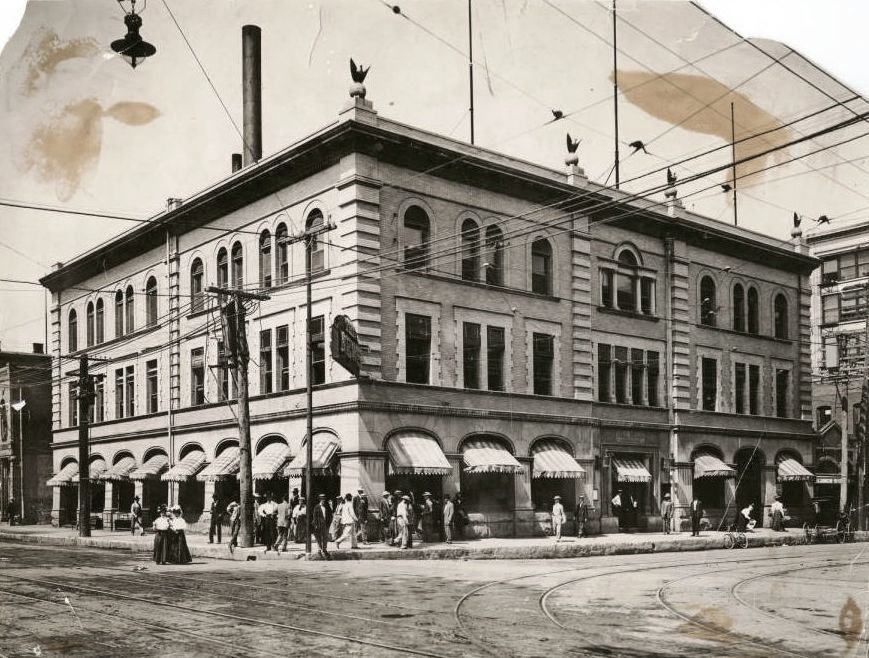
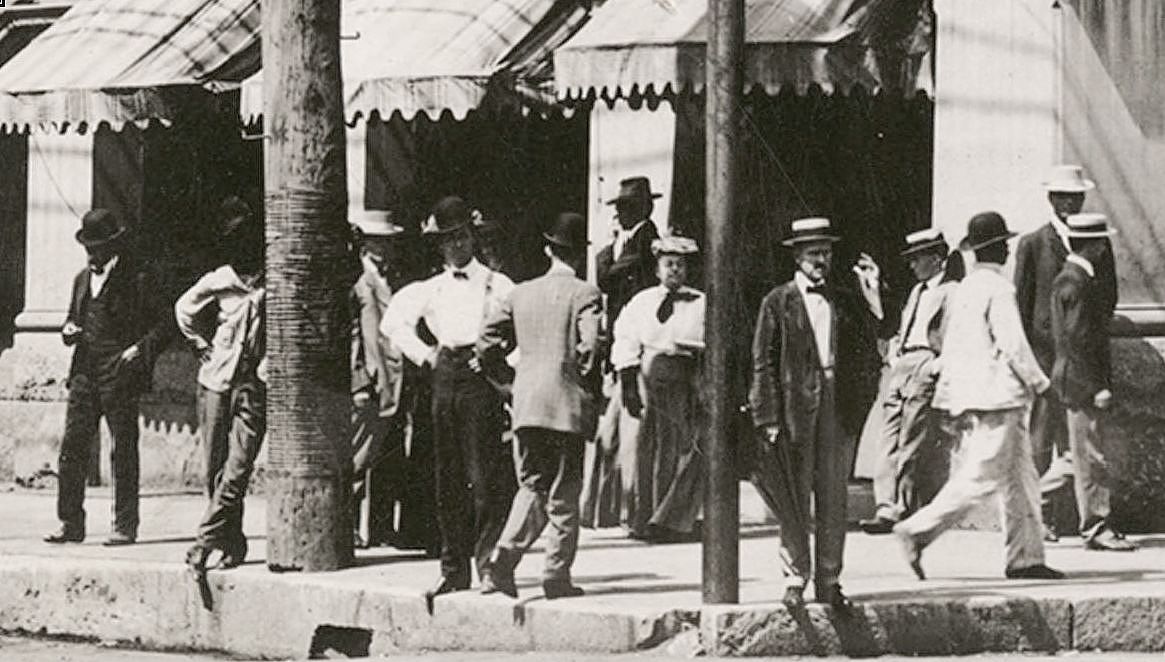
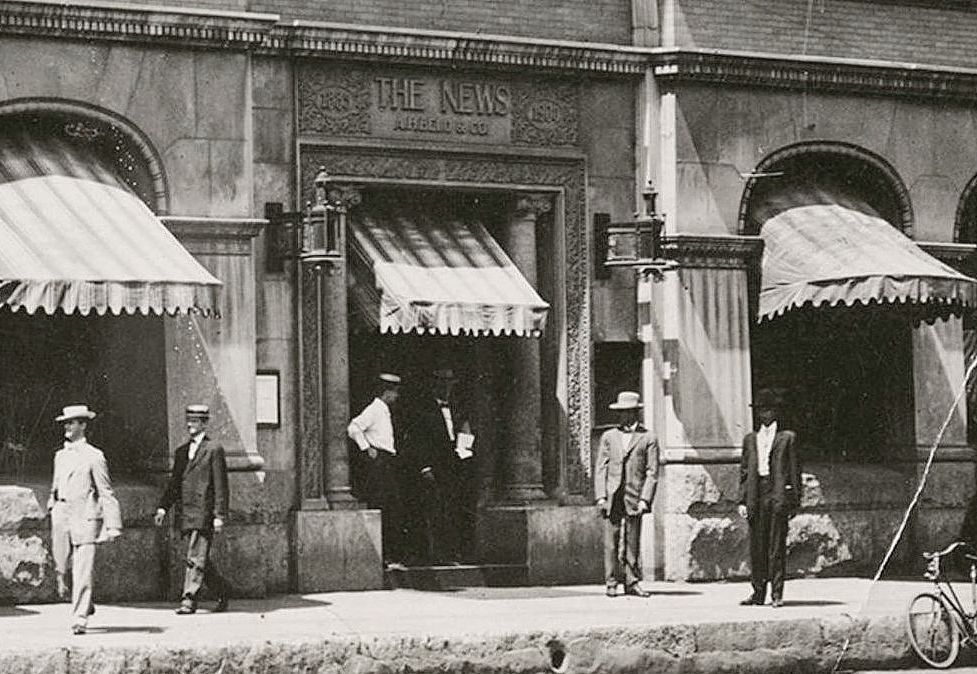
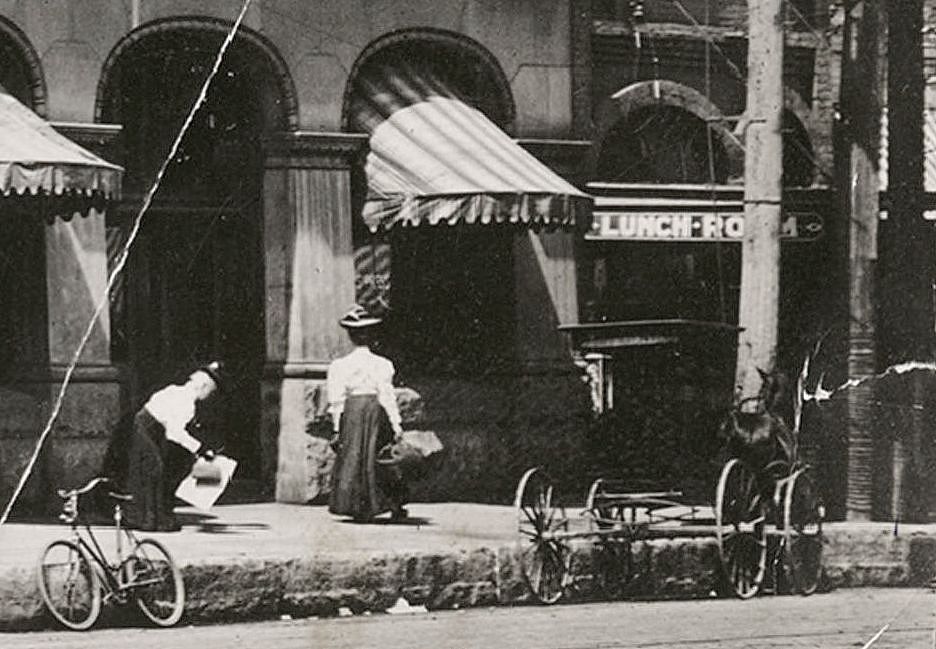
dmn-bldg-c1900-degolyer_smuCommerce & Lamar (click for larger image) (DeGolyer Library, SMU)

by Paula Bosse

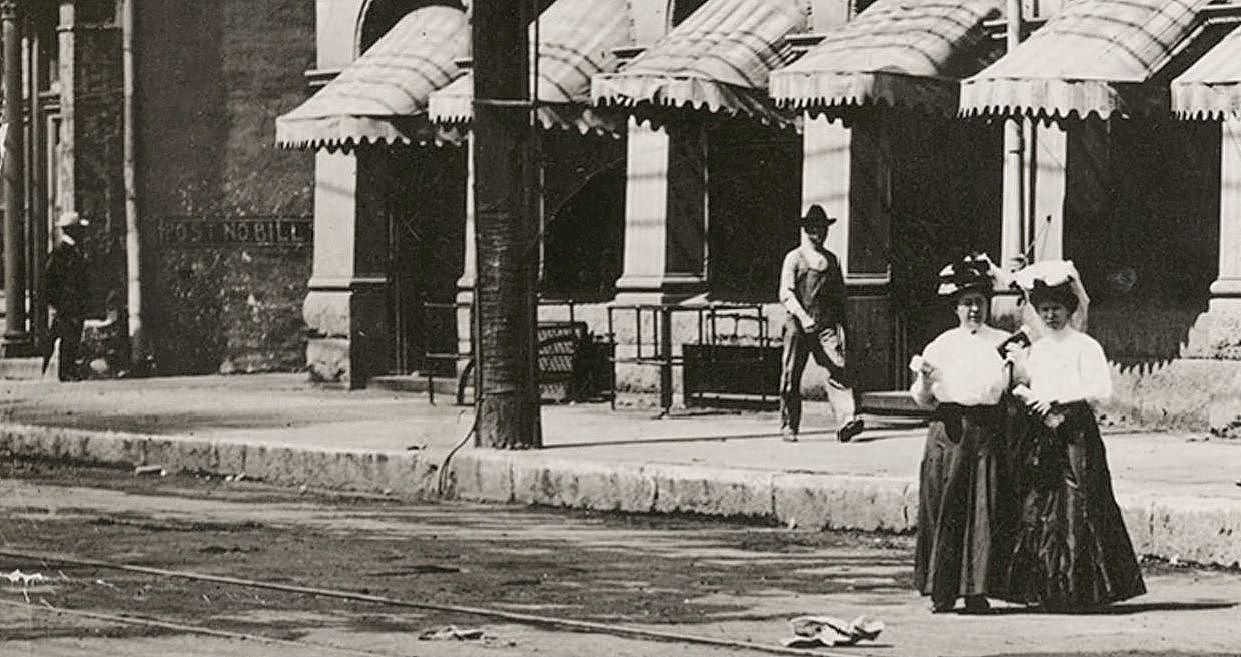
A photo showing the bustling streets surrounding the newly-expanded Dallas Morning News building, back when it was located at Commerce and Lamar streets. Below, a closer look at turn-of-the-century pedestrian traffic. Click pictures for larger images.

*

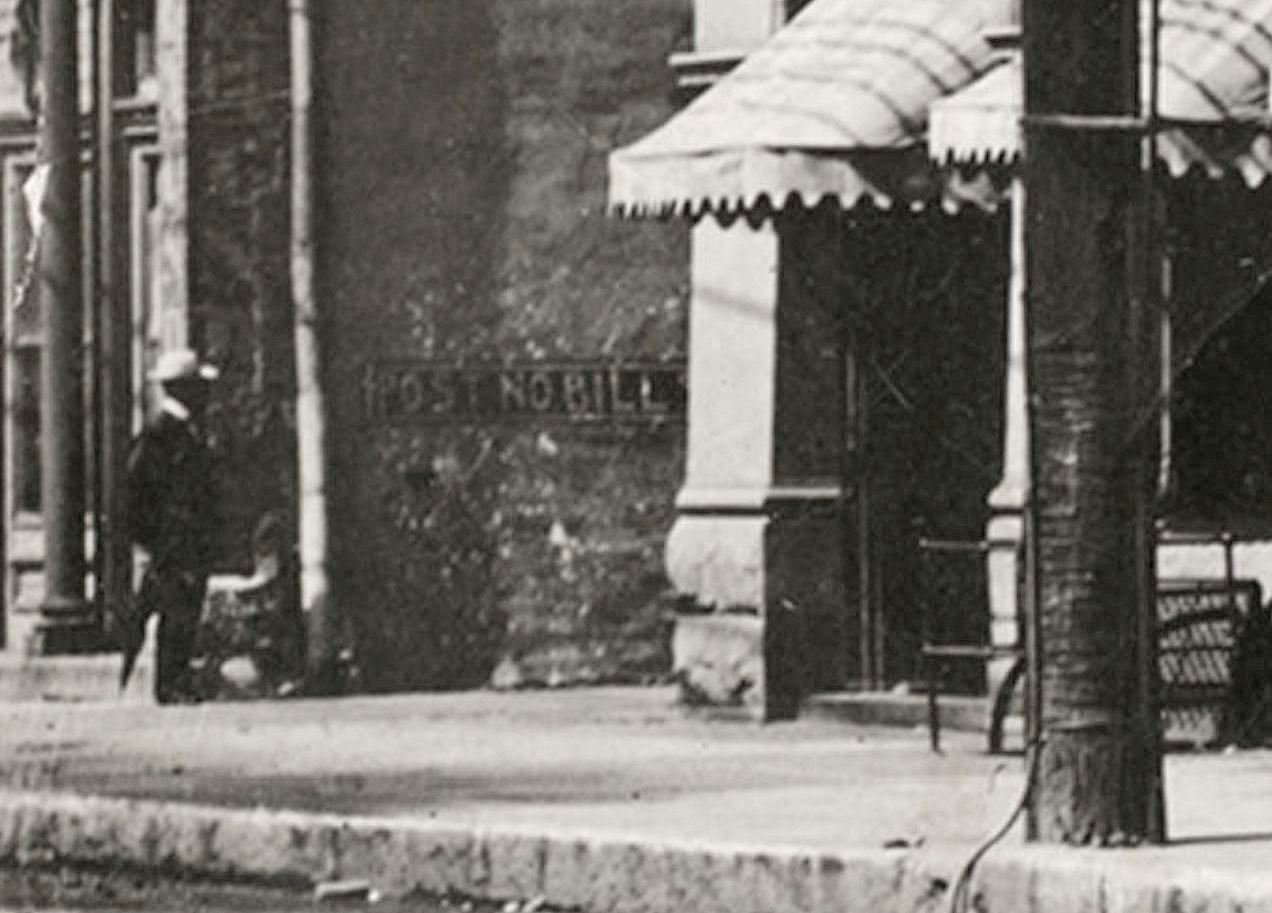
dmn-bldg-det1I love the man on the far left … contemplating posting a few illicit bills?

dmn-bldg-det5

dmn-bldg-det2Those curbs!

dmn-bldg-det3Journos.

dmn-bldg-det4A woman either stooped by age or bending over to pick something up, a woman with a carpet bag, and a high-off-the-ground buggy which illustrates one reason those curbs needed to be so high.

***

Photo titled “The Dallas Morning News building, Commerce & Lamar” from the Belo Records 1842-2007 collection, DeGolyer Library, Central University Libraries, Southern Methodist University; it can be viewed here.

Other views of the building from 1900 can be seen in these posts:

  • “Loitering In Front of The Dallas Morning News Building — ca. 1900, here
  • “The Dallas Morning News Building, Inside and Out — ca. 1900,” here

More posts where I’ve zoomed in on historic Dallas photos can be found here.

Click pictures for larger images.

*

Copyright © 2015 Paula Bosse. All Rights Reserved.

2222 Ross Avenue: From Packard Dealership to “War School” to Landmark Skyscraper

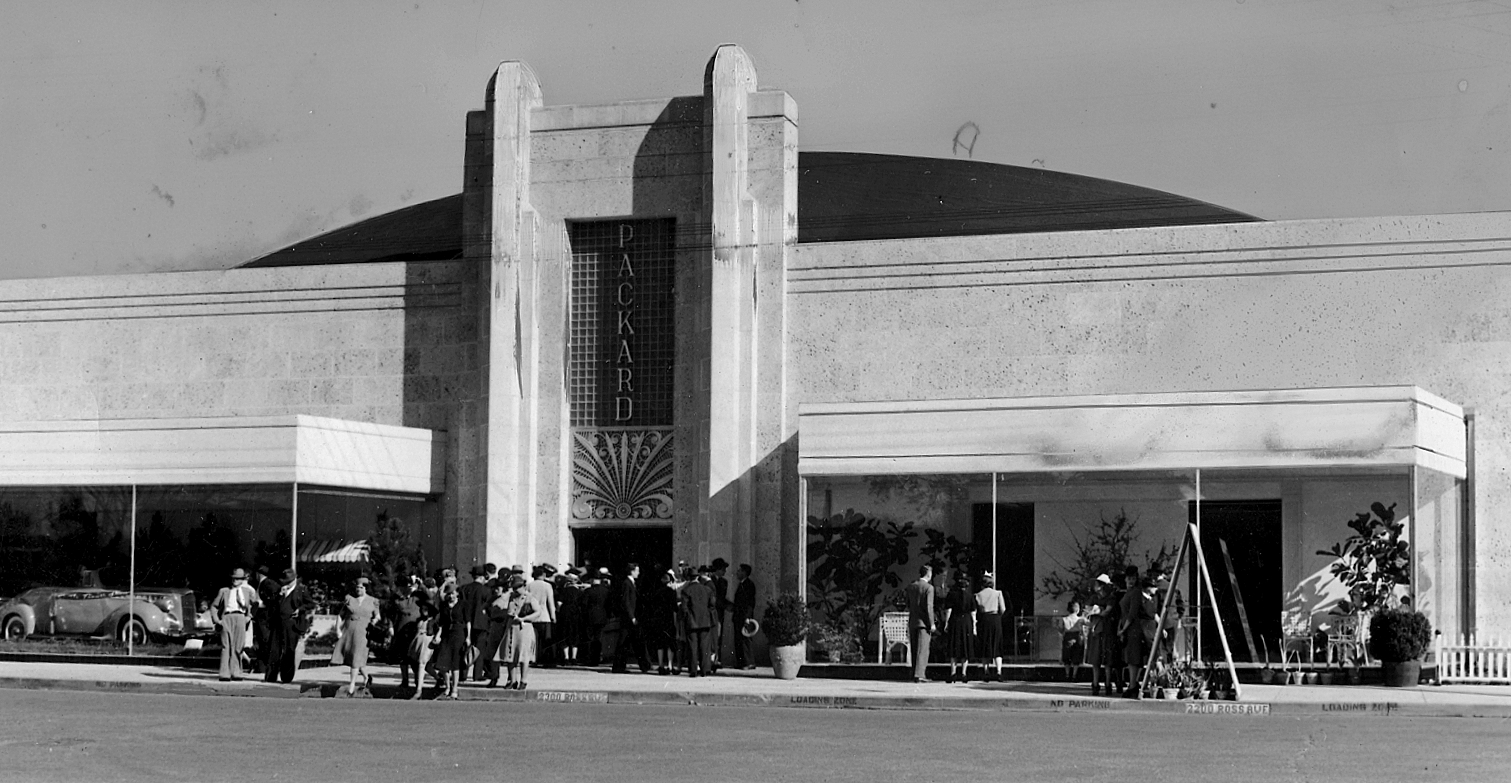
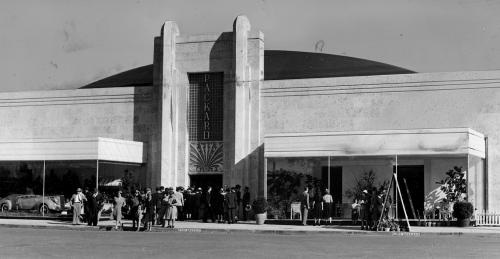
packard-dealership_2222-ross_detroit-pub-lib_1940Packard automobile showplace, 1940

by Paula Bosse

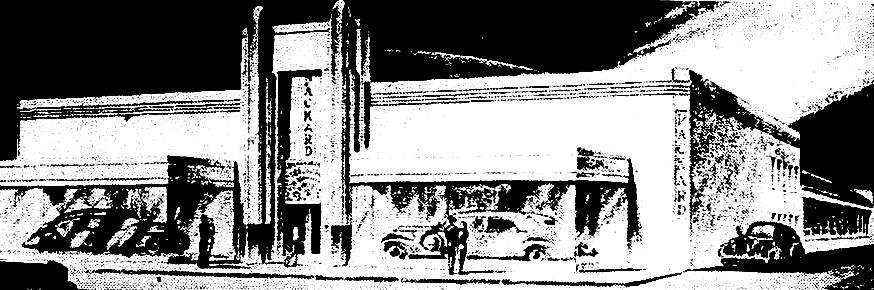
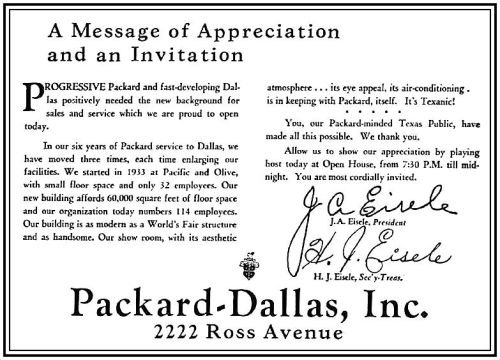
In late summer of 1939, a new 60,000-square-foot. $250,000 home for Packard-Dallas, Inc. featuring a “luxurious showroom” was announced. The first Packard automobile dealership had opened in 1933 at Pacific and Olive, and in the intervening six years, their growth had been tremendous, necessitating several moves and expansions.
packard_ross_rendering_1939

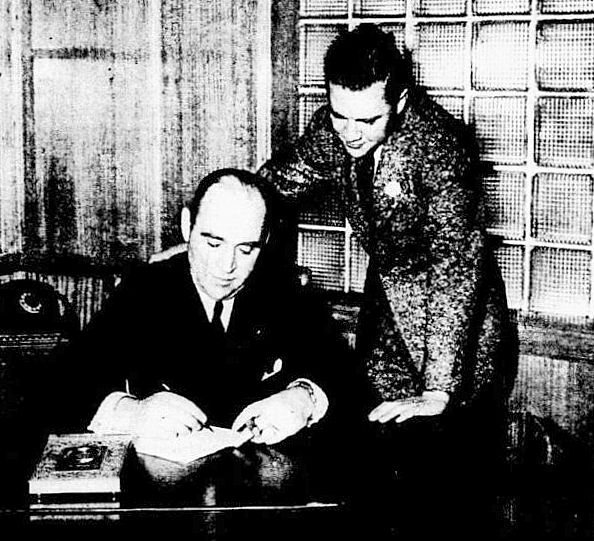
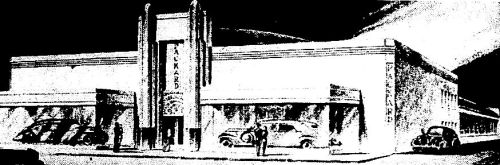
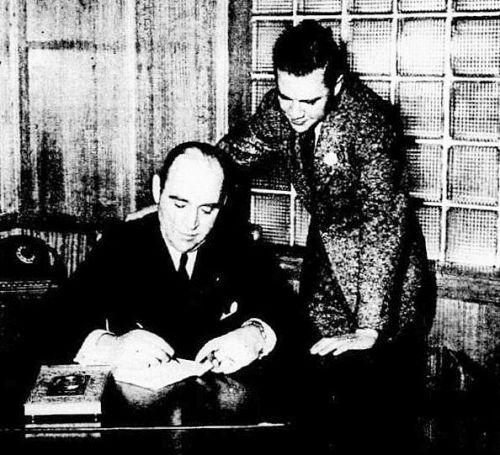
The attractive art deco building, faced with Cordova limestone and decorated with glass bricks, cast aluminum letters, and neon, was designed by J. A. Pitzinger and Roy E. Lane Associates, and was constructed at 2222 Ross Avenue in a mere three months. The large building was right across the street from the Cathedral of the Sacred Heart, in the block bounded by Ross, Crockett, San Jacinto, and N. Pearl. The president of Packard-Dallas was J. A. Eisele and the secretary-treasurer was his son, Horace. The grand opening on Dec. 16, 1939 was a big enough deal that the home-office Detroit honchos flew in, and there was even a 15-minute radio program devoted to it on KRLD.

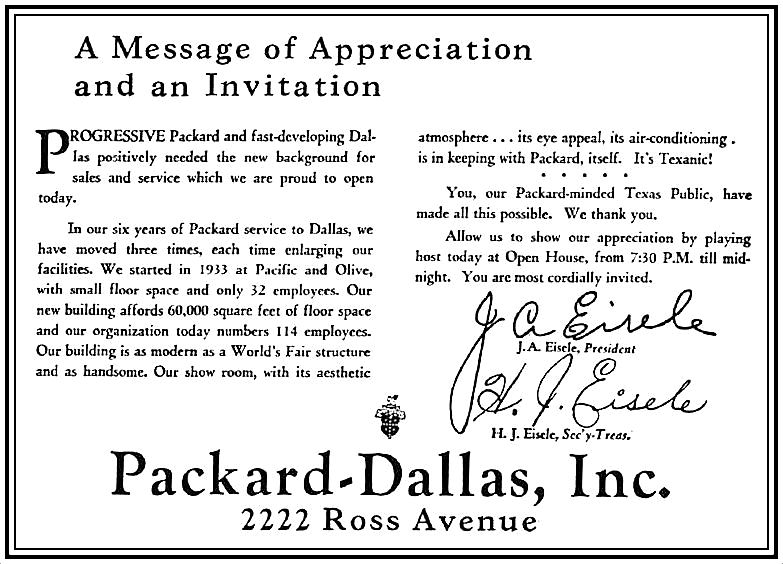
Under the headline “Growing With Dallas,” the opening-day ad featured a photograph of Joe and Horace Eisele and “A Message of Appreciation and an Invitation”:
packard_dmn_121639_ad1

packard_dmn_121639_ad2Ad, Dec. 16, 1939 (click for larger image)

“It’s Texanic!”

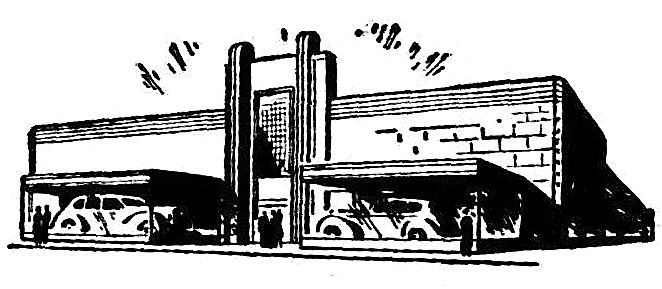
And another ad featured this nifty little line drawing of the cool building:
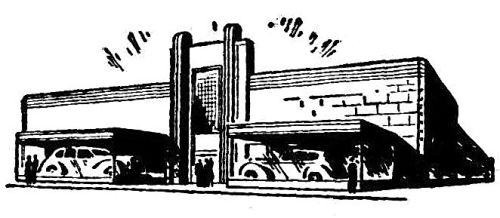
packard_dmn_121639-drawing-detDec. 16, 1939 (ad detail)

One of the stories about the opening of Dallas’ new auto showroom palace boasted that this big, beautiful, brash building was here to stay — Packard-Dallas had a 15-year lease on the place. …Which is why it was surprising to read that the building was sold less than two years later.

The U.S. was on the inevitable brink of involvement in the European war, and the National Defense School had begun operation in Dallas in July 1940. After a year of classes in which young men were taught “to do the technical and mechanical work necessary to warfare” (DMN, March 20, 1941), classrooms at the Technical high school and at Fair Park were bursting at the seams, and a larger facility was necessary. The Dallas Board of Education (which oversaw the program, often called “the War School”), was given the go-ahead to purchase the building (and, presumably, the property) for $125,000 in August 1941.

I’m not sure why J. A. Eisele sold the building (his name was listed as owner, rather than the Packard Company) — it wasn’t even two years old, and he got only half of what it cost to build. Patriotism? His son Horace had been drafted in April, so … maybe. Eisele seems to have left the auto sales business, which he had been in for decades, and had moved out of Texas by 1945.

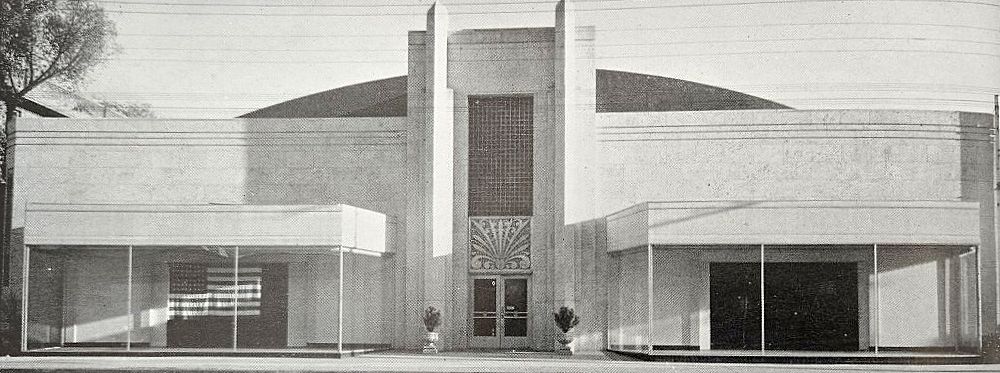
After the U.S. officially entered the war and it became obvious that “defense schools” around the country would have to admit women in order to maintain manufacturing quotas, women began to work beside men at the Ross Avenue school in January 1942.

Eighty women Saturday pulled their fingers against the triggers of aircraft rivet guns as the Dallas National Defense School, 2222 Ross Avenue, started the state’s first major training course designed to place women side by side with men in Texas war materials plants. (DMN, Jan. 4, 1942)
packard_ross-avenue_war-school_young-america-in-dallas_1942_DPL
1942

This “War School” was a training school for war-time jobs at places like North American Aviation.
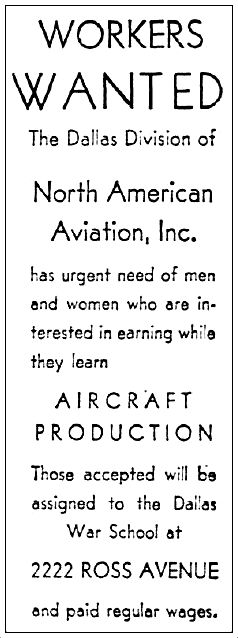
defense-school_dmn_090643Sept. 1943

Thousands of men and women trained at the Ross Avenue facility until the war ended in 1945. The school continued, but no longer as a Defense School — it became Dallas Vocational School, and its first students were veterans.

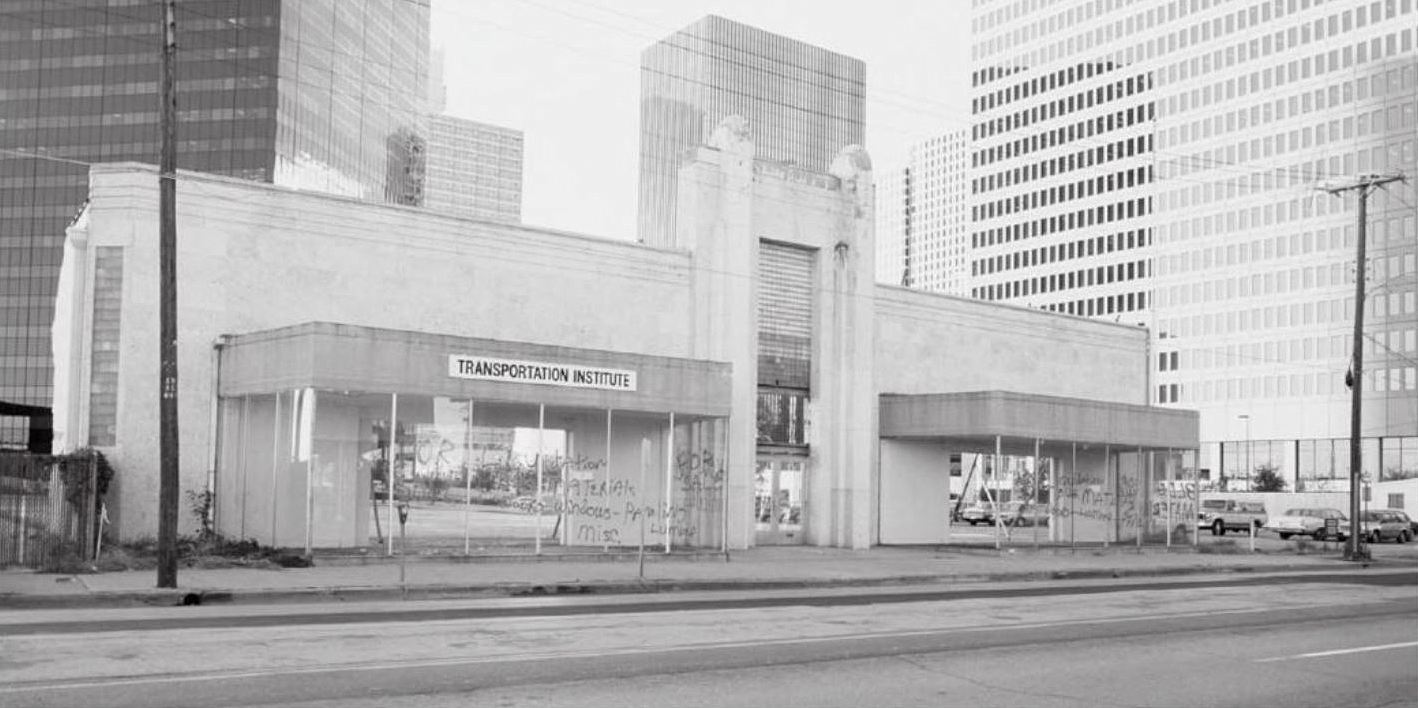
In 1976, the school was designated as one of the Dallas Independent School District’s magnet schools — it became the Transportation Institute, where “students interested in owning their own dealership, becoming a technician-mechanic or an auto body specialist will receive on the spot training in a laboratory consisting of a new car showroom, a modernly equipped repair center and a complete auto rebuilding facility” (DMN, Aug. 22, 1976). Back to its roots! And it only took 37 years.

The school continued for a while but, inevitably, the property became more and more attractive to developers. In 1981, as the developers were circling, a City Landmark Designation Eligibility List was issued. It contained buildings which had “particular architectural, historical, cultural and/or other significance to the City of Dallas,” and, if approved, were eligible to receive historic landmark designation. I’m guessing 2222 Ross Avenue didn’t make the cut, because Trammell Crow bought the building in 1983 and tore it down the next year.
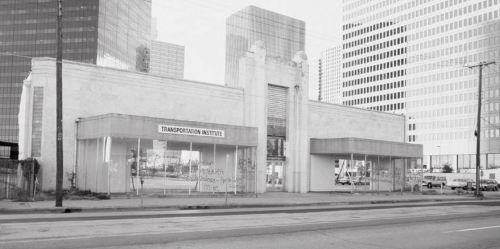
transportation-institute_lost-dallas_dotyvia Lost Dallas by Mark Doty

But … Crow sold the facade to real estate developer and investor Lou Reese, who said that he would reassemble the limestone facade and incorporate it into a restaurant he planned to build in Deep Ellum. That was an interesting plan. (Incidentally, in the same city council meeting in which the demolition/disassembling of the building’s facade was discussed, the council also considered “a request for more than $7 million in federal funds for a project to renovate the Adams Hat Co building into apartments” (DMN, Aug. 8, 1984). …Lou Reese owned the Adams Hat building. What a coincidence!)

The city council’s decision?

The council authorized developer Trammell Crow to disassemble the art deco facade of the former Transportation Institute Magnet High School on the condition that the facade be reconstructed in Deep Ellum…. The company [has] demolished all but the building’s limestone facade, which was determined to be eligible for designation as an historic landmark. (DMN, Aug. 9, 1984)

So? Where’s that facade? There was no mention of it for three years, until an article in the Morning News about another developer who had big plans for a major Deep Ellum complex called “Near Ellum,” which would be bounded by Commerce, Crowdus, Taylor, and Henry streets.

Highlighting Near Ellum will be a 40-foot art deco facade, formerly on the front of the Transportation Institute on Ross Avenue, in the main parking plaza. The plaza will also include an outdoor stage for concerts and special events. (“Developer Plans Deep Ellum Project,” DMN, June 25, 1987)

Aaaaaaaaaaaaaaaand … that never happened. I wonder if that 76-year-old disassembled limestone facade is still crated up somewhere around town. Somehow I doubt it.

So, 2222 Ross Avenue. What’s there now? None other than the 55-story skyscraper, Chase Tower, also known as “The Keyhole Building.”

You could get a lotta Packards in there.

***

Sources & Notes

Top photo from the Detroit Public Library’s Packard Collection in the National Automotive History Collection, viewable here; I’ve straightened and cropped it. The reverse has this notation: “Packard Motor Car Co., branches/dealerships/agencies, 2300 [sic] Ross Avenue Dallas, Texas, exterior, show windows left to right; 1940 Packard 110 or 120, eighteenth series, model 1800 or 1801, 6/8-cylinder, 100-120-horsepower, 122/127-inch wheelbase, convertible coupe (body type #1389/1399), special furniture display.”

1942 photo of the building is from a publication called “Young America in Dallas,” Dallas History and Archives, Dallas Public Library.

The developer who apparently came into possession of the facade after Lou Reese was Ed Sherrill. Perhaps someone associated with the Near Ellum project might know what became of the “saved” facade.

Chase Tower info on Wikipedia here; photo of it here. Imagine a teeny-tiny car dealership at its base.

Packard automobiles? Some of them were pretty cool. Check ’em out here.

A lengthy article on the notorious developer Lou Reese — “Hide and Seek” by Thomas Korosec (Dallas Observer, June 8, 2000) — is here.

*

Copyright © 2015 Paula Bosse. All Rights Reserved.