Flashback : Dallas

A Miscellany: History, Ads, Pop Culture

Tag: Dallas TX

The Periphery of the Texas State Fair Never Looked Better

state-fair_postcard_carrie-ednaApproaching the Fair Grounds…

by Paula Bosse

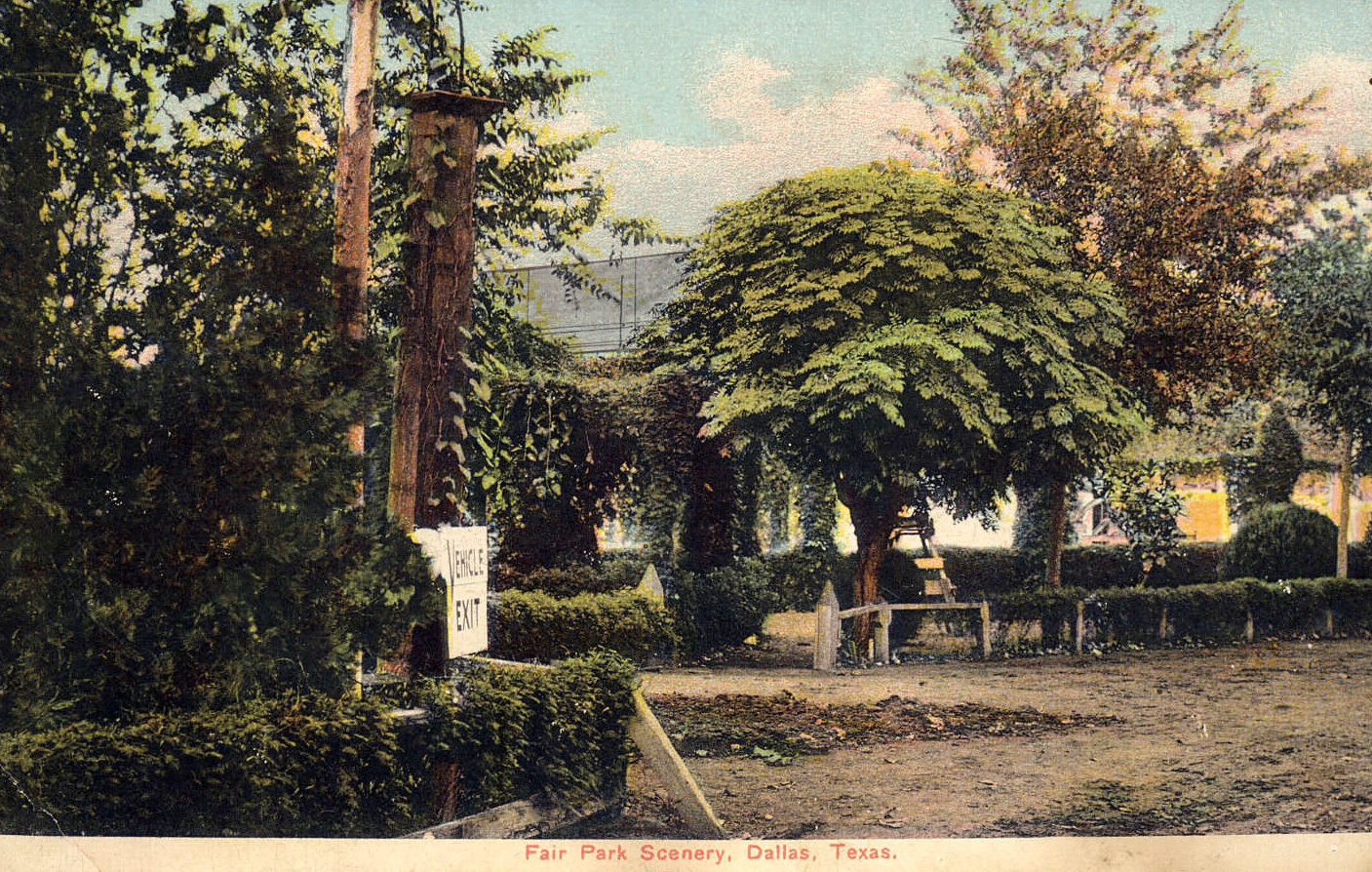
A couple of pretty, but unusual views of the fairgrounds, turn-of-the-century-ish. The message on the postcard at the top: “Carrie the fair was real good this year better than it has been for years. Edna”

And then there’s this view, “Fair Park Scenery.” Same period as the top one? Later? It shows the “Vehicle Exit.” “Vehicles” meaning buggies and wagons?

state-fair-grounds_postcard_vehicle-exitLeaving the Fair Grounds… 

I think the top postcard shows the entrance — I have another view of the entrance that looks like this, from around 1900 (see it here). And the bottom card? “Scenery” near the Vehicle Exit. So … a parking lot? Or a road leading to the exit? Whatever it is, it’s not really all that “scenic.” Both postcards are fairly odd choices for picture postcards of the Texas State Fair, as neither one shows anything of the actual fair! But if people had fond memories of driving into or out of the State Fair, these were the postcards to buy!

***

Sources & Notes

Postcards from eBay. The second one is a photo by Clogenson.

Top postcard’s 2-cent stamp was issued in Nov. 1903, per Wikipedia.

*

Copyright © 2015 Paula Bosse. All Rights Reserved.

MORE Random Still-Standing Buildings Featured in Ads From 1929

ad-southern-fountain-fixture_directory_1929-detSoda fountains came from here…

by Paula Bosse

A few more photos of buildings that are still standing, from the ad-pages of the 1929 city directory.

First up is the Southern Fountain & Fixture Mfg. Co. at 1900 Cedar Springs.

ad-southern-fountain-fixture_directory_1929

The Southern Fountain & Fixture plant was built in 1925 at the corner of Cedar Springs and N. Akard. They manufactured and sold soda fountains, showcases, and fixtures.

A major new residential high-rise is going up in the 1900 block of Cedar Springs (or has gone up — it’s been a while since I’ve been over there), but I think it’s going up at the other end of the block. (But somehow its address is 1900 Cedar Springs….) So, I’m not absolutely sure this building IS still there. Here’s a 2014 image from Google Street View. It’s a cool building — hope you’re still there, cool building!

southern-fountain-fixture-now_googleGoogle Street View

*

Next, the Loudermilk-Sparkman Funeral Home at 2115 Ross Avenue.

ad-loudermilk-sparkman_belo_directory_1929(click for larger image of house)

The “home-like” Loudermilk-Sparkman funeral home moved into the former home of Col. A. H. Belo in June 1926 and settled in for a 50-year lease. (An article titled “Morticians In New Quarters” appeared on June 27, 1926 in The Dallas Morning News, complete with descriptions of interior decoration and architectural details.)

That place was a funeral home for 50 years — longer than it’s been anything else. That’s a lot of dearly departeds. (Clyde Barrow is probably the most famous cadaver to be wheeled through its portals.) In the ’70s, the granddaughter of Col. A. H. Belo sold the house — which was built in 1899/1900 — to the Dallas Bar Association, and today it is a swanky place to get married or eat canapés. And, thankfully, it’s still beautiful.

belo-today_googleGoogle Street View

*

 The Evangelical Theological College, 3909 Swiss Avenue, in Old East Dallas.

ad-evangelical-theological-college_directory_1929sm(click for larger image)

This “denominationally unrelated” seminary — where tuition and rooms were free, and board was at cost — was built in 1927 for $65,000. When the three-story-plus-basement building was finished, the college was in its fourth year, having moved from its previous location in The Cedars. “The college now has forty-five students representing fifteen states of the United States, three Canadian provinces and Ireland…. The faculty is composed of thirteen men…” (DMN, Dec. 25, 1927).

ad-evangelical-theological-college_directory_1929-det

The college has grown by leaps and bounds and is now the Dallas Theological Seminary, and the original building is still there.

dallas-theological-seminary_now_googleGoogle Street View

*

Lastly, the Melrose Court Apartments and Hotel, 3015 Oak Lawn.

ad-melrose_directory_1929

The Melrose, designed by architect C. D. Hill, was built in 1924, and as it was about to throw open the doors of its bachelor apartments to eager Dallas bachelors (and whomever), it advertised itself thusly: “Of palatial splendor, rivaling in dimensions the best appointed apartment hotel buildings of this modern day, it is equal to the best of any of America’s cities of a million.” (DMN, Aug. 31, 1924) Well, of course it is!

ad-melrose_directory_1929-det

It’s been a landmark in Oak Lawn for over 90 years. I know it’s officially now the Warwick Melrose Hotel, but I’ve never heard anyone call it anything but The Melrose.

melrose-today

***

Sources & Notes

All ads from the 1929 city directory.

My previous post “Random Still-Standing Buildings Featured in Ads From 1927” is here.

*

Copyright © 2015 Paula Bosse. All Rights Reserved.

An Incredible View From Republic Tower 2 — 1968

republic2_parrish_1_1968
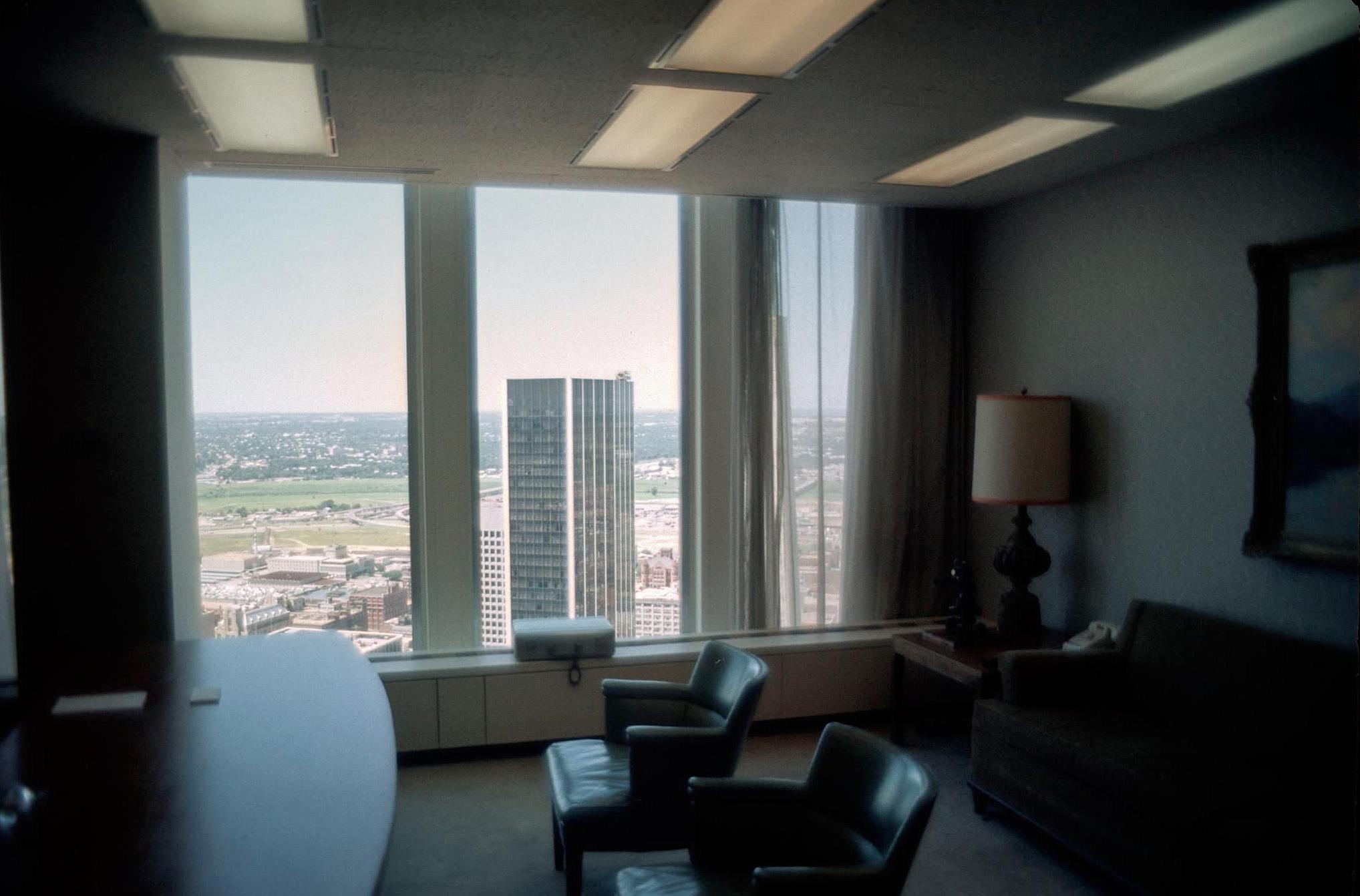
Photo by Bill Parrish, 1968, used with permission (click for larger image)

by Paula Bosse

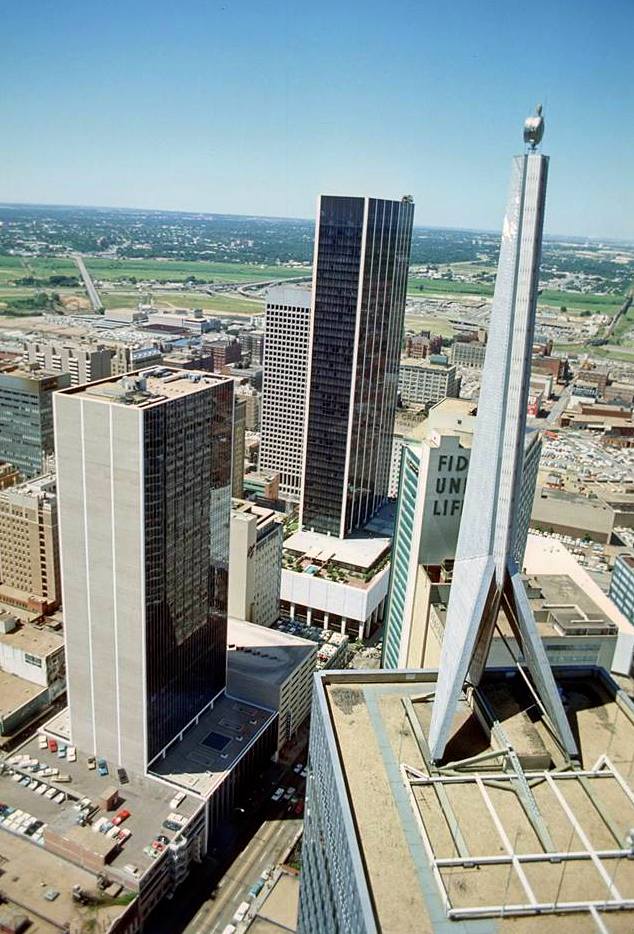
On August 15, 1968, teenager Bill Parrish — a former Dallasite who was back in town on a visit — was surprised to see that a new building has sprung up since he’d left: the 50-story Republic Tower 2 (built in 1964), the much-taller sister-building to one of Dallas’ most famous skyscrapers, the 36-story rocket-topped Republic National Bank Building. He wondered if he could get to the top of the building to take some photos. Bill remembers the day clearly:

“I lived in Dallas until I was 9 years old, at which time we moved to Palo Alto, Califorinia. I spent the summer of 1968 at Texas A&M in an engineering program for high-ability science students. My parents picked me up in College Station and we came back via Dallas. I was a ‘tourist who used to live there’ and wanted some shots to remember the city by — even as a teenager. I had a fairly good camera, and I knew how to take pictures, having done photojournalism in high school. Also, I remembered how much fun I had living in Dallas, so maybe I was looking at the city a little differently.

“We stopped in Dallas for a few days on the way back, and we spent one day downtown visiting old haunts. My dad and I were in our suits, and we went to the new (to us) Republic Tower 2 and rode the elevator to the top and asked around if we could take some shots out of some windows. Some very nice folks allowed us to use an office that was currently not being used. A number of shots were made from the same office. I think we were in and out in about 5 minutes — I remember the folks up there were very nice to us … considering we just ‘dropped in.’

“I just wish I had shot like 3 rolls of film — like inside the Mercantile lobby, inside Titche’s, and inside Neiman’s. I would have shot stuff at Walnut Hill Village, Marsh Hill Village, in the terminal at Love Field, at my old school, peoples’ houses I remembered, restaurants, etc. if I had known they would be of value in 50 or so years.

“I guess the takeaway is that today if something catches your eye, shoot it (with your phone even), and archive it so it can be found later… and don’t throw away old pictures! You may not be able to keep everything, but be careful about what might be of value to someone.”

*

Below are some of Bill’s really, really wonderful photos taken on that summer day in 1968 from a top floor of the tallest building in Dallas. (Many of these are HUGE. Click to enlarge.)

republic2_parrish_2_1968

republic2_parrish_5_1968

republic2_parrish_4_1968

republic2_parrish_3_1968

republic2_parrish_6_1968The office Bill shot from; his aluminum camera case is on the windowsill.

republic2_parrish_7_1968The original be-rocketed Republic National Bank Building on the left, the taller Republic Tower 2 in the middle.

***

Sources & Notes

All photos in this post by Bill Parrish, used with his permission. They first appeared in the Retro Dallas Facebook group.

During this short trip to Dallas, Bill’s family also shot some home movie footage, which can be seen here.

Below, a Google map showing the Bill’s general view of the photos looking over Pegasus to Oak Cliff:

map-view-from-republic2

Some photos by a different photographer, taken from the top of the Republic Center Tower II (its official name) in 2007, can be seen here. A couple of the photos show the exact same shots Bill took. A lot can happen in 40 years!

The Wikipedia page for Republic Center is here; the official Republic Center site is here (worth checking out if only to see the BEAUTIFUL shot of the two buildings, including the re-lit “rocket” tower).

My previous post, “The Republic National Bank Building: Miles of Aluminum, Gold Leaf, and a Rocket,” is here.

All of Bill Parrish’s photos are very large. Click to see some of them much, much larger!

Thank you so much, Bill, for sharing these fantastic pictures. The photo at the top is now one of my favorite-EVER shots of the Dallas skyline!

*

Copyright © 2015 Paula Bosse. All Rights Reserved.


Triple Underpass — 1950s

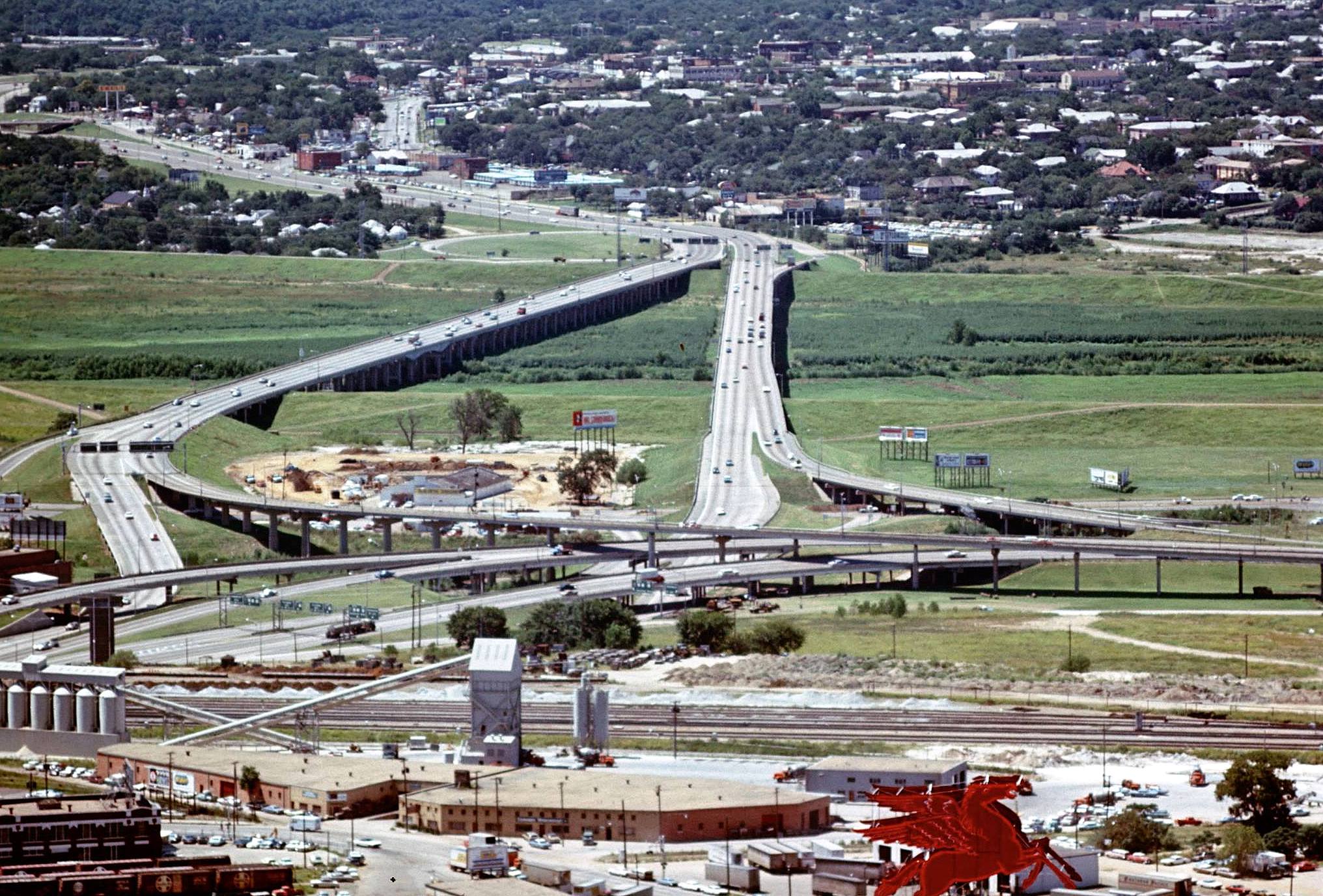
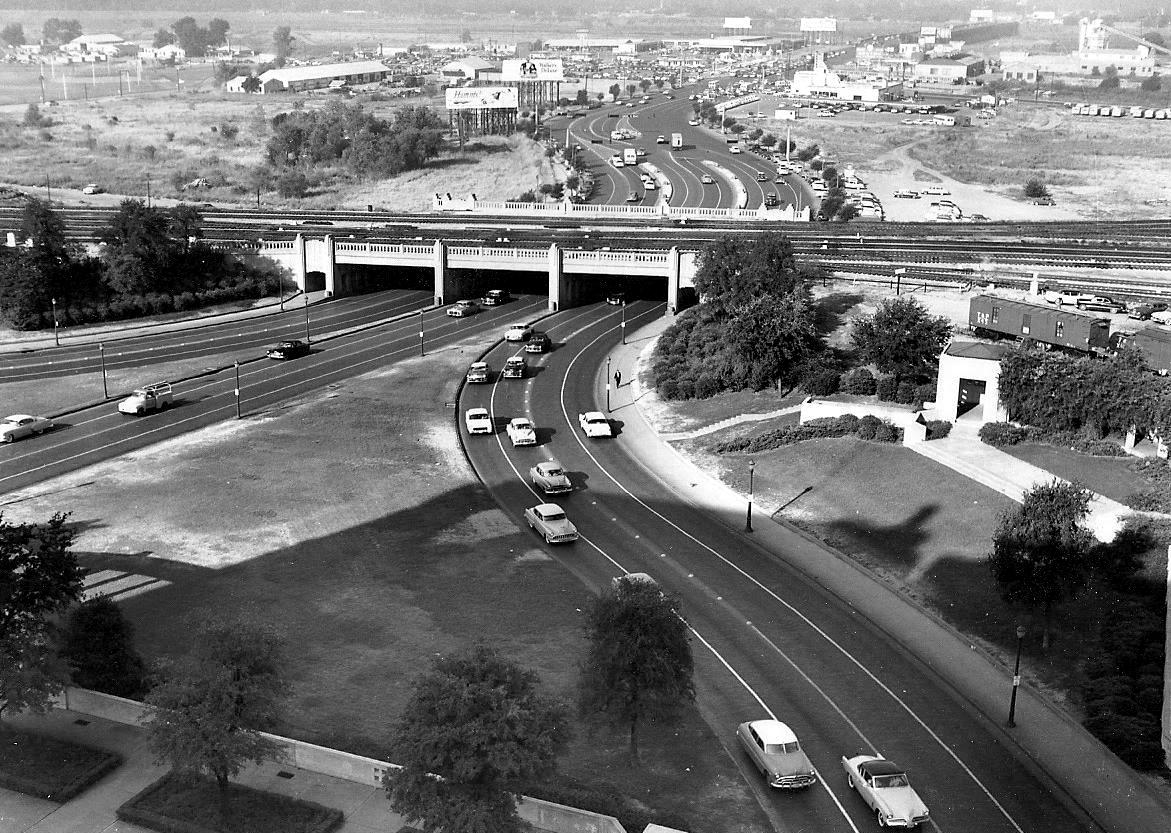
triple-underpass_1950sComing and going…

by Paula Bosse

A view toward Oak Cliff, back before the words “triple underpass” began to be capitalized.

I LOVE this photo.

Check out this same view from about 1936 here.

***

Sources & Notes

Photo found here (along with other JFK-related photos of Dealey Plaza).

*

Copyright © 2015 Paula Bosse. All Rights Reserved.

Lakewood’s “Modernistic” Skillern’s Drug Store — 1934

skillerns-lakewood_architects-rendering_1934
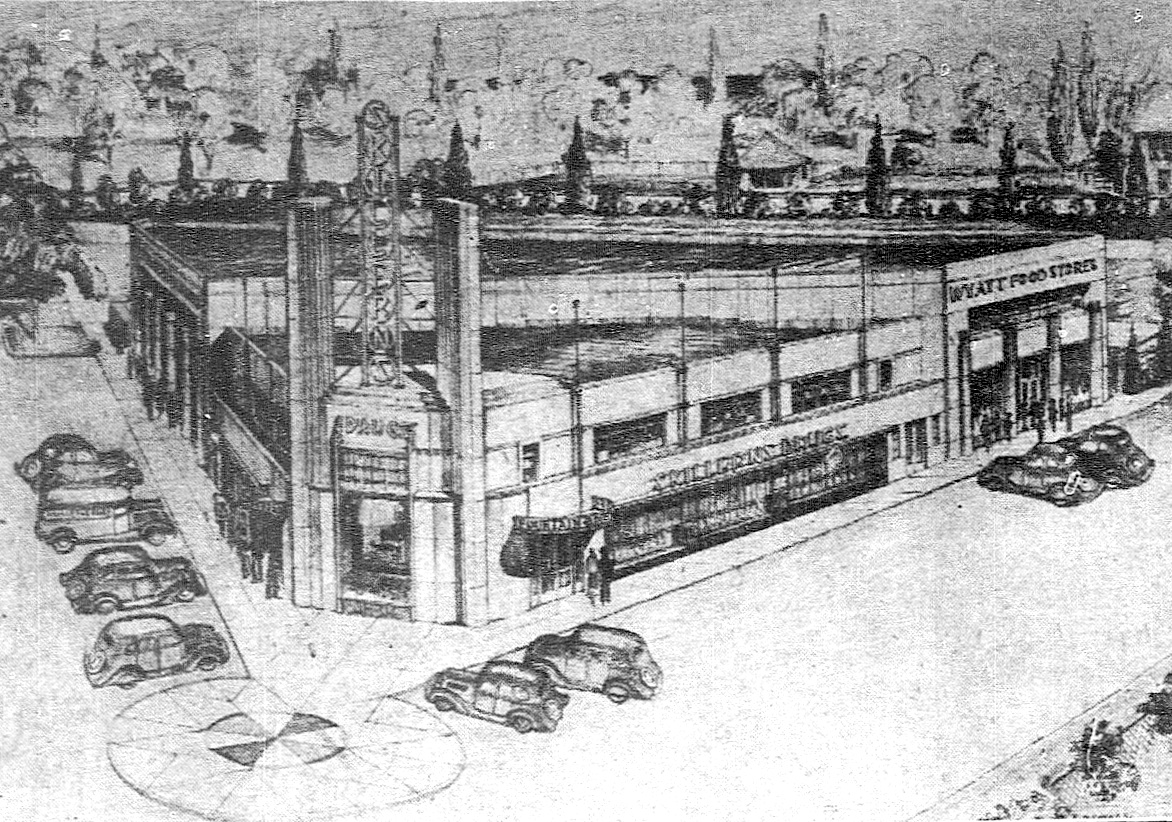
Architect’s drawing, 1934 — Abrams & Gaston…

by Paula Bosse

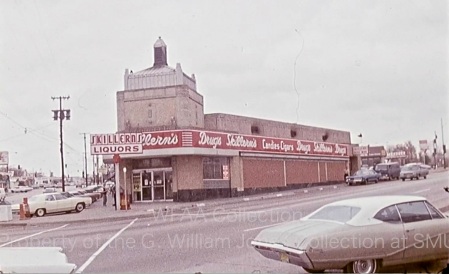
The drawing above was architect J. N. McCammon’s design for a new 14,000-square-foot concrete-and-stucco building of a new Lakewood development, at Abrams and Gaston (a stone’s throw from land now occupied by the parking lot of the Lakewood Whole Foods). It was to be built by Rae Skillern, whose Skillern’s drug store would anchor the development, with a Wyatt Food Store also occupying a large chunk of the property. The “retail village” was to be modeled (…somewhat) after the much-lauded Highland Park Village shopping center, and its design was described in articles as being “modernistic.”

Construction was to begin in early 1934 and be completed in 90 days, but things hit a bit of a roadblock when Lakewood residents objected to a shopping area in their “high-class” residential neighborhood (charming though Skillern’s design might have been…). A zoning classification change from “local retail” to “residential” was sought by concerned Lakewood inhabitants, but the City Plan Commission nixed this and gave the builders the go-ahead.

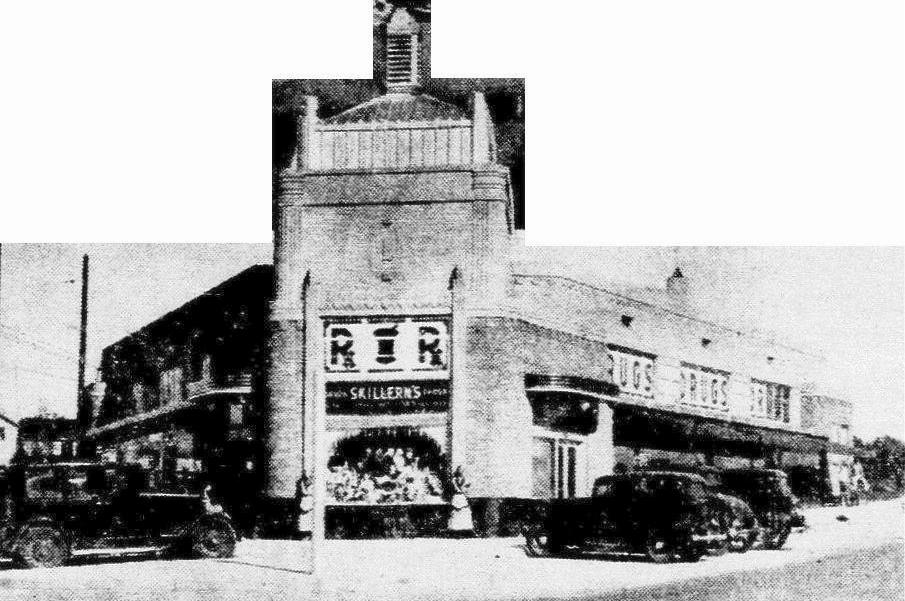
Skillern’s No. 4 opened in December of 1934 at 6401 Gaston and humbly hailed its newest emporium as “America’s most beautiful drug store.” It was, by far, the largest in the local company’s quickly expanding chain, and it featured a large, varied inventory, beautiful fixtures and innovative merchandising, a large soda fountain (with curb service), a “perfume bar,” and an open view into the “prescription department” where customers could watch the pharmacists doling out their medications.

The small shopping area quickly became a popular shopping destination (along with the larger Lakewood Shopping Center across Gaston), and the big, new Skillern’s — which sat at the point of the triangular-shaped “village” — was its focal point.

lakewood-skillerns_1930s
Dec., 1934

Skillern’s left its cool building sometime around 1971, after a fire caused heavy damages in November, 1970. It moved across the street, into the equally cool old Gaston Avenue Pharmacy (known familiarly as Doc Harrell’s drug store, the place with the iconic conical roof), not long after Harrell’s death in 1969. The Lakewood outpost of the Mickey Finn’s chain of pool halls opened in the old Skillern’s space in February, 1972. In 1978 the property was condemned by the city to make way for the weird Abrams Bypass, which cut through that northeast corner of the Gaston-Abrams intersection; several buildings in the immediate vicinity deemed to be in the way of progress were demolished, including Rae Skillern’s “modernistic” drug store, a Lakewood landmark for over 40 years. Pity.

Below, a screenshot of footage from WFAA-Channel 8 News, in late November 1970. A last hurrah.

skillerns_lakewood_nov-29-1970

 ***

Sources & Notes

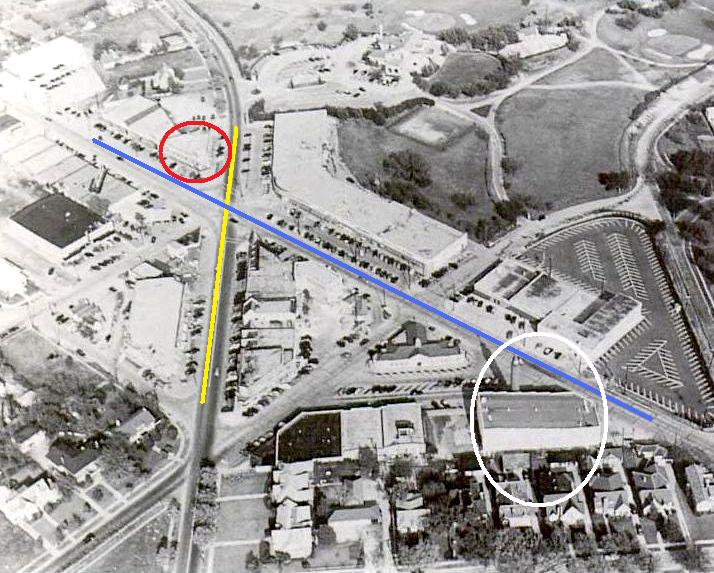
Skillern’s was located on the northeast corner of Gaston and Abrams at the tip of a triangular-shaped piece of land. The drawing at the top shows Abrams running vertically (to its west), and Gaston running horizontally (to its south). It would have faced the old Dixie House space. The Abrams Bypass skewed everything, but it was about where the little triangular “park” is now — between Abrams Parkway and Abrams Road, just west of the Whole Foods parking lot. (UPDATE: I now know that that greenspace has a name: Harrell Park!) Below is an aerial photo of what this part of Lakewood used to look like. Gaston is in yellow, Abrams is in blue, the Skillern’s building is circled in red, and the Lakewood Theater (for reference, because this all looks pretty freaky to us today and it’s hard to get one’s bearings) is circled in white. Looking northeasterly.

lakewood_aerial_marked

To see a larger image of this aerial photo — without the markings — click here. (Photo from the book The Dallas Public Library, A Century of Service by Michael V. Hazel, presumably from the collection of the Dallas Public Library.)

An interesting account of the how the bizarro Abrams Bypass happened can be found in the D Magazine article “Why Lakewood Doesn’t Trust Itself” by Charles Matthews (Oct., 1978), here. A Dallas Morning News article on the same topic — “Lakewood Plan May Benefit Bank” by Henry Tatum (March 12, 1978) — can be found in the Dallas Morning News archives.

*

Copyright © 2015 Paula Bosse. All Rights Reserved.

The Allen Street Taxi Company

allen-st-taxi-co_cook-degolyerAllen St. Taxi Co. / George W. Cook Collection, SMU

by Paula Bosse

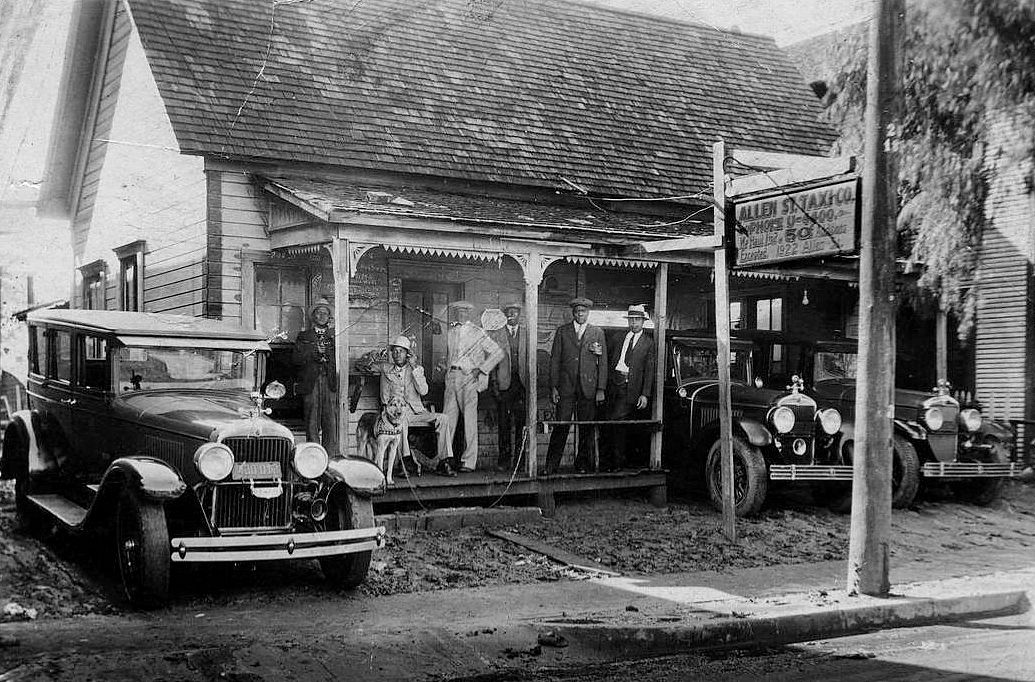
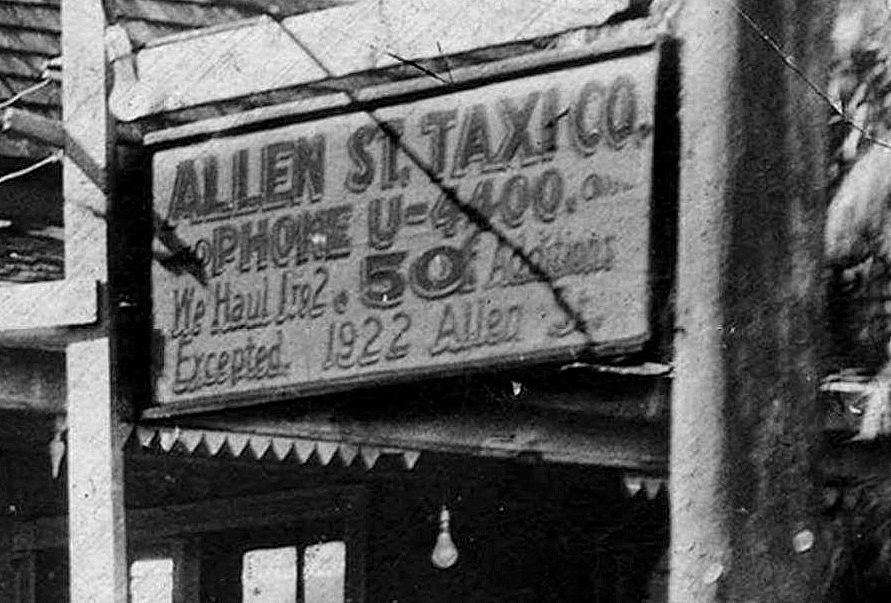
This has to be one of my favorite “unknown Dallas” photographs that I’ve come across. It shows the Allen St. Taxi Co. — in the State-Thomas area — at 1922 Allen Street (now pretty much vacant land under the Woodall Rodgers freeway). My ability to date cars is not good, but from city directory information, it seems that this photo might date from somewhere between the mid-1920s to around 1930. The owners/proprietors of the company were listed as John Leonard and Andrew Short in the 1929 telephone book. I wonder if they are in this fantastic photo? Let’s look a little more closely at some of the details. (All pictures larger when clicked.)

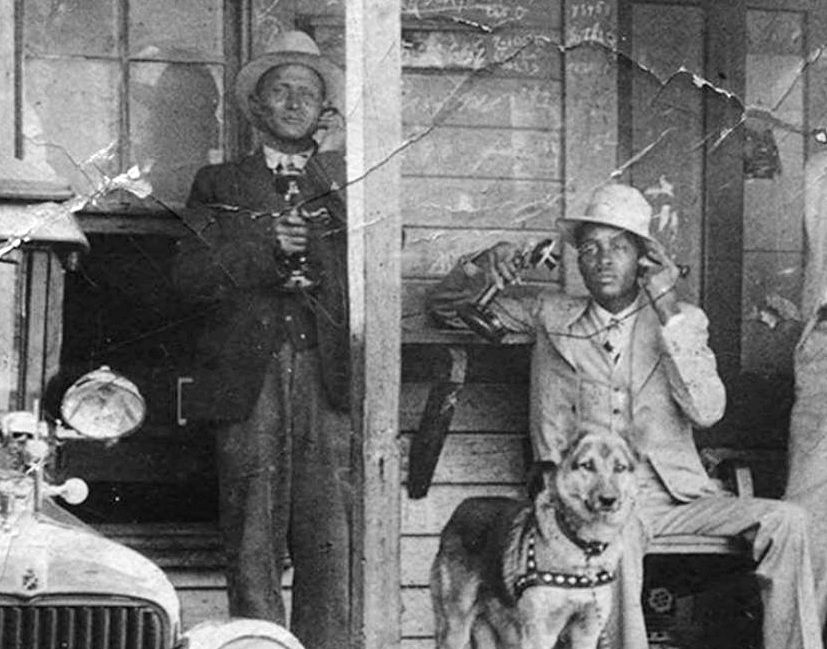
allen-st-taxi-co_cook-degolyer_det2Those phones!

allen-st-taxi-co_cook-degolyer-det4I love these guys. All business.

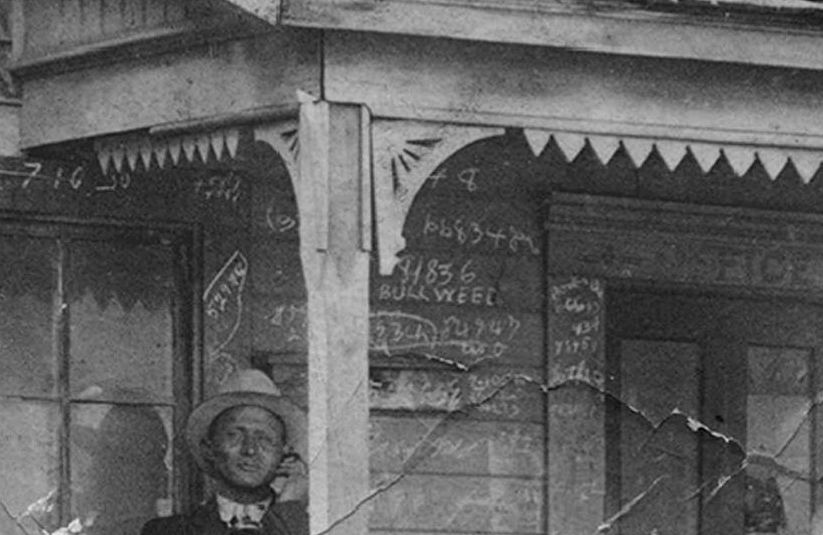
allen-st-taxi-co_cook-degolyer_det5“Bullweed.” What is all this writing? I love the guy’s face looking out of the window.

allen-st-taxi-co_cook-degolyer_det1“Dallas.” Car-people know exactly what make and model this vehicle is. …I am not one of these people.

allen-st-taxi-co_cook-degolyer_det3

***

Sources & Notes

Top photo, titled “Allen Street Taxi Co.,” is from the George W. Cook Dallas/Texas Image Collection, DeGolyer Library, Central University Libraries, Southern Methodist University; it can be viewed here.

The first “official” listing of the Allen St. Taxi Co. was in the 1929 city directory. The address at that time (which usually reflected information supplied the previous year) was 1907 Allen St. It didn’t appear again in the directory until 1932 when it was listed at 2816 Juliette St. In 1933 and 1934 it was listed at 2114 Hall St. In 1936 and 1937 it had moved to 2217 Hugo. And in 1938, the taxi part of the business seems to have fallen by the wayside, and it became Allen St. Transfer.

In 1925 there were only three official cab companies listed in the city directory. But the rough-and-tumble world of taxi cab service in the unregulated ’20s and ’30s was pretty intense. There were a lot of unlicensed jitneys rolling around town, especially, one would assume, in the segregated black neighborhoods of the city unlikely to be served by white-owned companies. My guess is that this might have been how the Allen St. Taxi Co. began.

For more on the go-go-go competitive world of taxi service at this time, see my previous post, “Washington Taxi Company: ‘Call George!'” here.

*

Copyright © 2015 Paula Bosse. All Rights Reserved.

The Interurban Parlor Car: Perusing the News in Comfy Chairs

interurban-interior_tx-historian_jan81(Click for larger image)

by Paula Bosse

The height of comfort!

You know this photo was taken for promotional purposes, because none of the men has a reeking cigar clenched between his teeth.

***

Texas Electric Railway Interurban ad reprinted in Texas Historian, Jan. 1981.

Interurbans were great. I wish we still had them. Read about what they were, here.

*

Copyright © 2015 Paula Bosse. All Rights Reserved.

Not Dead Yet at McKinney & Routh

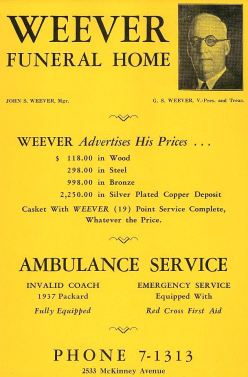
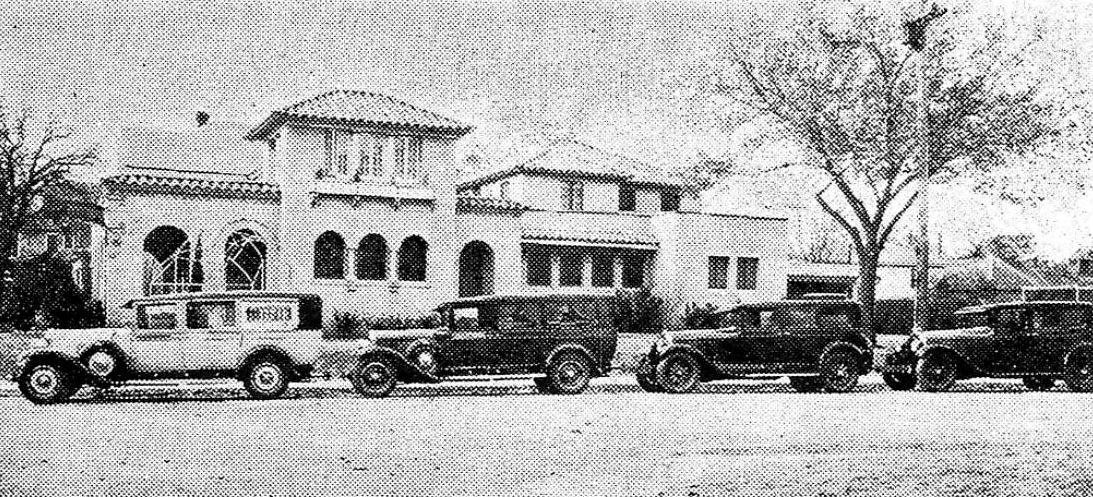
ad-funeral-home_mckinney-routh_directory-1929-detA fleet of Cadillacs in front of 2533 McKinney Ave.

by Paula Bosse

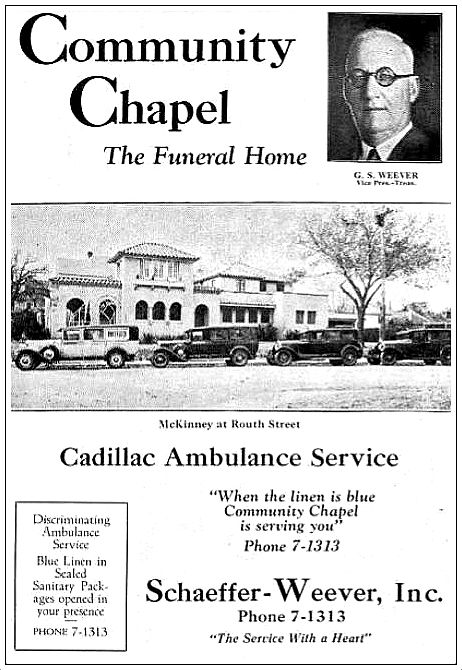
The photo above shows a truly beautiful, Spanish-style building that was built in 1927 at the northwest corner of McKinney Avenue and Routh Street. The view shows the Routh Street side. The person who took this photograph would have been standing across the street on the property of the dearly-departed McKinney Avenue Baptist Church (most recently transformed into the Hard Rock Cafe). You might be surprised to learn that the building in this photo still stands, and it’s mostly recognizable almost 90 years later.

The Community Chapel Funeral Home (yes, a funeral home!) was designed by noted architect Clarence C. Bulger (whose father, C. W. Bulger, designed, among other things, the Praetorian Building downtown AND the just-mentioned McKinney Avenue Baptist Church which was right across the street).
ad-funeral-home_mckinney-routh_directory-1929City directory, 1929

In addition to the funeral home portion (reception area, business office, show rooms, “operating room” (!), chapel with seating for 100, and the euphemistically named “slumber room”), the building also contained a residence for the chief mortician and his embalmer wife, an apartment for the ambulance/hearse drivers, and a “pavilion for recreation of employees.” The building and its beautifully-appointed interior cost in excess of $100,000 (which the Inflation Calculator estimates is the equivalent of more than $13 million today!).

Also, an “oxygen plant” was somewhere on the grounds. I’ve never heard of an oxygen plant, but they seem to be a mortuary thing. Let’s hope recently-bereaved smokers were kept at a safe distance from all that highly flammable oxygen, because the company had a bunch of promotional matchbooks printed up, and I can only imagine they were readily available in tastefully-arranged candy dishes of every room of the establishment. And in those days, one didn’t necessarily step outside to smoke one’s anxiety away.

weever-funeral-home_fkickr1

weever-funeral-home_fkickr2

weever-funeral-home_1937-city-directory_ad1937 Dallas directory

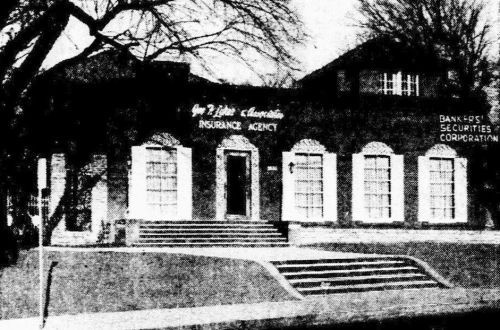
The funeral home at 2533 McKinney Avenue lasted almost thirty years. Sometime in the mid-’50s it was renovated into office and retail space (classified ads mentioned 2-, 3-, and 4-office suites). That lovely interior must have been hacked up pretty bad. An early tenant was the Bankers Securities Corporation, shown below in a newspaper ad from 1956 (someone made some poor choices on that renovation of the exterior). (This view shows an entrance from McKinney rather than Routh.)
bankers-securities_dmn_012256-photoAd detail, Jan., 1956

For the next 40-odd years, 2533 McKinney Avenue was home to a variety of insurance agents, a fur salon, several companies that advertised in the classifieds for vague “salesmen” positions (one company did specify that it was looking for encyclopedia salesmen in 1963), art galleries, architect/design businesses, offices of “El Sol de Texas” (“the only Spanish-language newspaper in North Texas”), and antique shops.

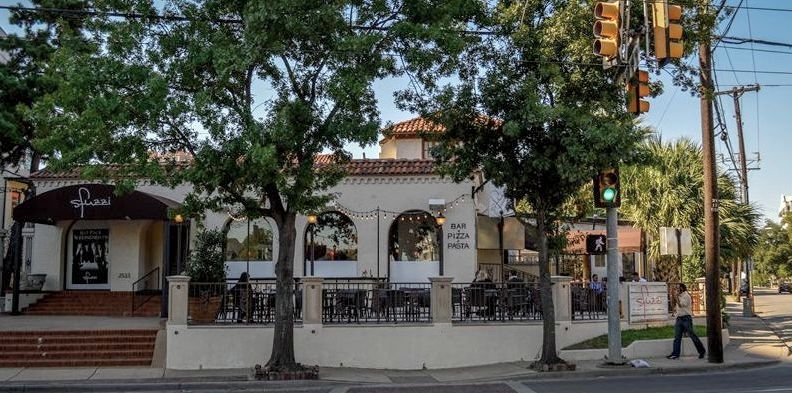
It all turned around, though, when the long-suffering building was re-renovated and became a restaurant space. Since at least 1999 when Uptown began to explode, it’s been home to bistros, cafes, and upscale eateries. The photos below show some of the restaurants that have set up shop there, and if you know what you’re looking at, the place really does look very similar to C. C. Bulger’s design from almost 90 years ago.

*
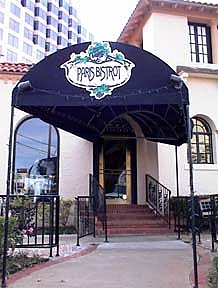
paris-bistrot_2001Le Paris Bistrot opened in 1999. The owner changed the name to Figaro Cafe in 2004 when the U.S. was going through an anti-French phase.
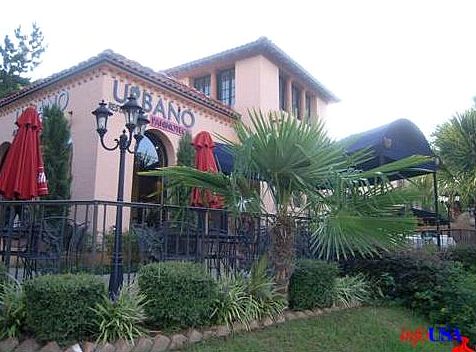
urbano_city-dataUrbano Paninoteca opened in 2007. Something called Split Peas Soup Cafe opened in 2009.

sfuzzi_scrumpliciousfood_sm

sfuzzi_yelpThen Sfuzzi opened with a big splash in 2010. (It had been a McKinney Avenue staple in the 1980s and ’90s, closed, and came back in 2010.) The first photo shows the Routh Street entrance, the second photo shows the McKinney entrance.
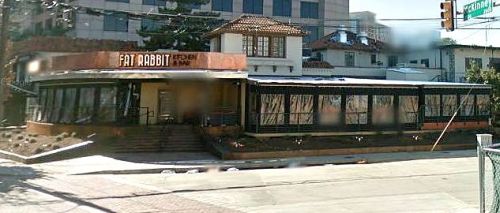
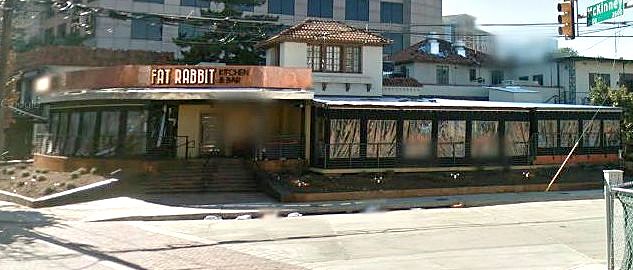
fat-rabbit_googleAnd now it’s the Fat Rabbit, which opened earlier this year. Let’s hope they get some landscaping in there STAT! (UPDATE: Fat Rabbit is now an ex-rabbit, and after spending some time of his own in the “slumber room,” he has joined the choir invisible. Next!)

And let’s hope that those tiled roofs and stuccoed walls remain a distinctive part of its future. I love the fact that it still looks a lot like it once did. And I actually like the fact that restaurants have been operating out of an old funeral home for over 15 years. Restaurateurs might be hesitant to publicize the building’s past (although I’m pretty sure most of them have been completely unaware of what the place used to be), but modern-day Harolds and Maudes might be giddy at the prospect of an unusual dining option and move this place right to the top of their date-night list. 

***

Sources & Notes

Top photo is a detail of the ad that appeared in the 1929 Dallas city directory. It shows four Cadillacs — a hearse, 5- and 7- passenger sedans, and an ambulance (“purchased from the Prather Cadillac Company”).

Matchbook artwork from Flickr, here.

The first Sfuzzi photo is from the food blog Scrumplicious Food, here. A GIGANTIC version of the photo can be seen here — you can look at all the details. Second photo of Sfuzzi from Yelp.

Fat Rabbit image from Google street view.

Sources of all other clippings and photos as noted.

Some images larger when clicked.

*

Copyright © 2015 Paula Bosse. All Rights Reserved.

The Dallas Skyline from the Maple Terrace Penthouse — 1952

feldman_terrace_huntington-detView from the penthouse (Huntington Library)

by Paula Bosse

The best view of the Dallas skyline that no longer exists may very well have been the view from atop the Maple Terrace Apartments, located on Maple Avenue, right across Wolf Street from the Stoneleigh Hotel. The photo above was taken in 1952, when there was a straight-shot view of downtown, with no hulking buildings to spoil the vista. This view — completely unobstructed except for the Stoneleigh (out of frame, at left) — must have been spectacular at night. (Although, as can be seen at the far right, the industrial area that surrounded the iconic DP&L smokestacks was also part of the view. Also not included in realtor brochures would have been the fact that the luxury apartment building overlooked the adjacent Little Mexico neighborhood, often described as a “slum area” — the huge economic disparity between the neighboring haves and have-nots would have been starkly apparent to any gimlet-sipping rooftop visitor. And then there was the not-so-distant meat-packing plant…. But I digress.)

The beautiful Maple Terrace Apartments — designed by architect Alfred Bossom (who also designed the Magnolia Building) — was built in 1924-25 and opened with great fanfare as the city’s first luxury apartments.

maple-terrace_postcard

An early tenant was Morris Feldman, a Polish immigrant whose family owned the successful Parisian Fur Co. (later Parisian-Peyton). Morris’ son, the incredibly wealthy oilman and art collector, D. D. Feldman, must have been quite taken with his parents’ home there, because in the late ’40s or early ’50s, he transformed the entire seventh floor — which had previously contained 20 “hotel-type” units — into his personal penthouse. The patio terrace with the to-die-for view was the cherry on the sundae.

feldman_terrace_huntington

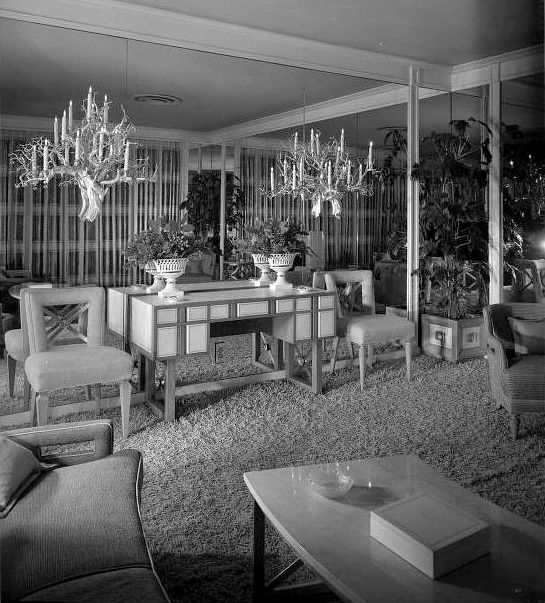
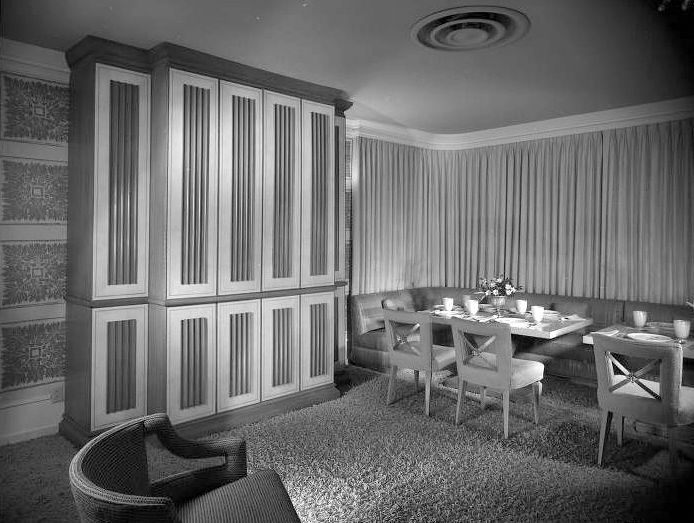
Countless cocktail parties, dinner parties, and fashionable teas were held in the Feldmans’ penthouse. The interior design — the work of Tom Douglas, of Los Angeles — was, apparently, much admired. The decor consisted of a mixture of typically cool Mid-Century Modern pieces as well as a few touches that, from a 21st-century vantage point, look a little … tacky. Somewhere in all of the acreage of furnishings was a fireplace, a white leather-covered piano (!), “a cocoa-striped sofa with pale blue frame,” murals, white brick wallpaper, and several pieces of furniture and cabinetry with a “driftwood finish.” And lots of lacquer. And mirrors, mirrors, mirrors. These “timeless furnishings in beige, marigold, white leather and ash” (DMN, Nov. 19, 1960) are dated relics of another era, but, at the time, they were splashed across the pages of magazines such as Architectural Digest.

feldman_entryway_huntington-lib

feldman_living-rm_huntington-lib

feldman_dining-rm_huntington-lib

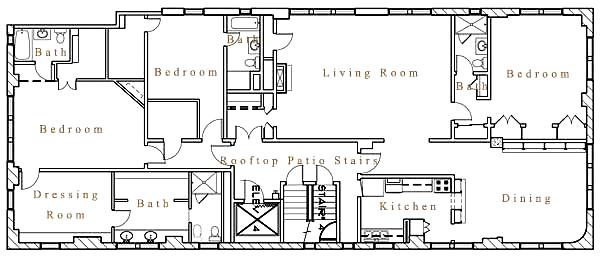
As far as I know, the seventh floor of the Maple Terrace is still a single space. A 1978 real estate ad touted its “recently redecorated” 3,000 sq. ft. amenities:

maple-terrace-penthouse_dmn_032278

Below, the present-day penthouse floor plan from the Maple Terrace’s website:

maple-terrace_penthouse-floorplan-today

And, look, here’s a photo of what that entryway looks like now, (without the mural):

maple-terrace_hallway-today

I’m sure the rooftop terrace is still as beautiful as ever, but, sadly, it will never again boast of that once-incredible view:

maple-terrace-view-today

***

Sources & Notes

Top photo (and all black and white photos from this series) by Maynard L. Parker, for Architectural Digest; from the Maynard L. Parker Collection at the Huntington Library, accessible here. The top photo is a detail, which has been cropped and reversed; the original photo is shown in reverse on the Huntington site (along with some early image “editing” on the outline of the Stoneleigh), which is a bit freaky when you know that what you’re looking at is backwards!

Color photos and floor plan from the website of the Maple Terrace Apartments, here. Biographical info on the architect, Sir Alfred Bossom, is here. Fabulous photos of the building from AIA Dallas, is here; and a wonderful piece on the mystique of living in the famed Maple Terrace from D Magazine, is here.

An intense and thorough description of the Feldmans’ penthouse decor is in the article “Feldman Apartment: Timeless Decorating” by Jeanne Barnes (Dallas Morning News, Nov. 19, 1960).

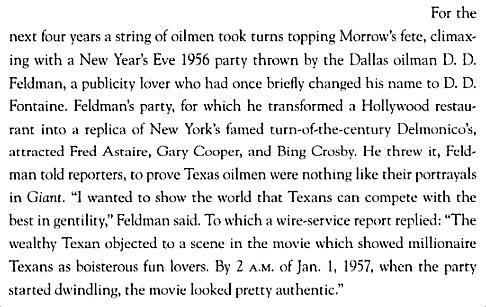
In addition to his oil holdings, D. D. Feldman was an important collector and patron of Texas art. In reading about Mr. Feldman, my favorite tidbit is this, from the book The Big Rich: The Rise and Fall of the Greatest Texas Oil Fortunes by Bryan Burrough (Penguin, 2009):

feldman_big-rich_quote

*

Copyright © 2015 Paula Bosse. All Rights Reserved.

Winter Scene: The Belo Mansion & The Cathedral of the Sacred Heart — ca. 1902

cathedral_snow_flickr-colteraSnow on Ross Avenue…

by Paula Bosse

A beautiful dusting of snow in one of the tonier areas of the city, captured by a postcard photographer in the early years of the 20th century — back when the snowy slush along Ross Avenue would have been caused by horses and the buggies they pulled behind them.

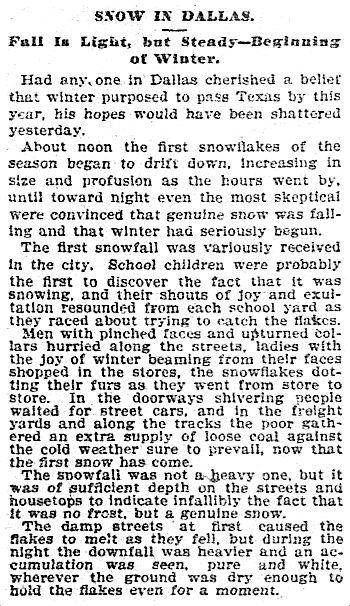
The date of this postcard is unknown, but at the end of 1902 (the same year the construction of the cathedral was completed) it snowed in Dallas — a “weather event” then (as now) so out of the ordinary that it resulted in these rapturous few paragraphs from the December 4, 1902 edition of The Dallas Morning News:

snow_dmn_120402DMN, Dec. 4, 1902

***

Sources & Notes

Postcard from Flickr, here.

The Belo Mansion was built in about 1890; more info here.

Construction of the Cathedral of the Sacred Heart (now the Cathedral Santuario de Guadalupe) was completed in 1902. Except for the bell tower, which, though part of the architect Nicholas J. Clayton’s original design, was not completed until 2005. More on this “sympathetic addition” from Architexas, here.

While most of the buildings and houses that once stood along ritzy Ross Avenue are long gone, both the Cathedral and the Belo Mansion still stand as Ross Avenue landmarks.

Below, the same view today (sans snow), via Google Street View (click for larger image). I really wish that iron fence was still there.
belo-cathedral_google

*

Copyright © 2015 Paula Bosse. All Rights Reserved.