Flashback : Dallas

A Miscellany: History, Ads, Pop Culture

Tag: Dallas TX

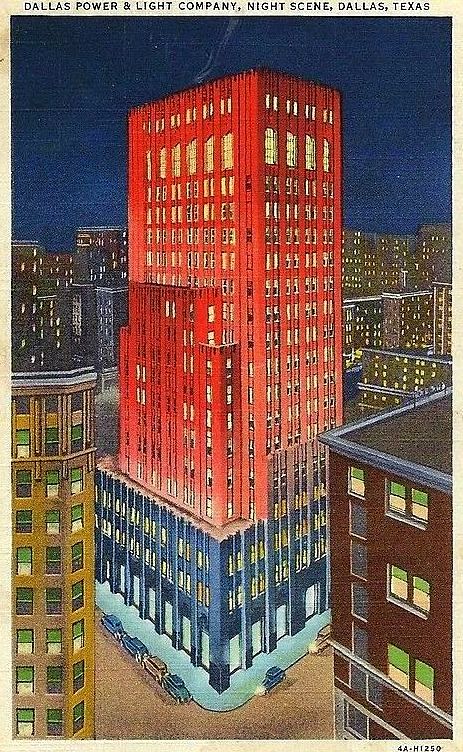
Dallas Power & Light Building, Night and Day

by Paula Bosse

Such an incredible building, designed by architects Lang & Witchell in the zig-zag moderne/Art Deco style and built in 1931 to house the corporate offices of the Dallas Power & Light company. I wondered from that night scene whether the building was illuminated at night, and it was. From the city’s application to the National Register of Historic Places: “The building was spotlighted with revolving colors at night, emphasizing it as a downtown landmark; this was discontinued during the energy crisis in 1975.” Argh!

This is a building that is beautiful by night and beautiful by day.

***

Sources & Notes

A detailed description of the architectural elements of the DP&L building is in a PDF containing the city’s application of several buildings to be considered for the National Register of Historic Places. The section on the DP&L building begins at page 68 and can be found here.

A photo of one of the portrait busts on the facade of the building is a nod to Thomas A. Edison, King of Electricity, and it can be seen here in an almost Hitchcockian cameo.

*

Copyright © 2014 Paula Bosse. All Rights Reserved.

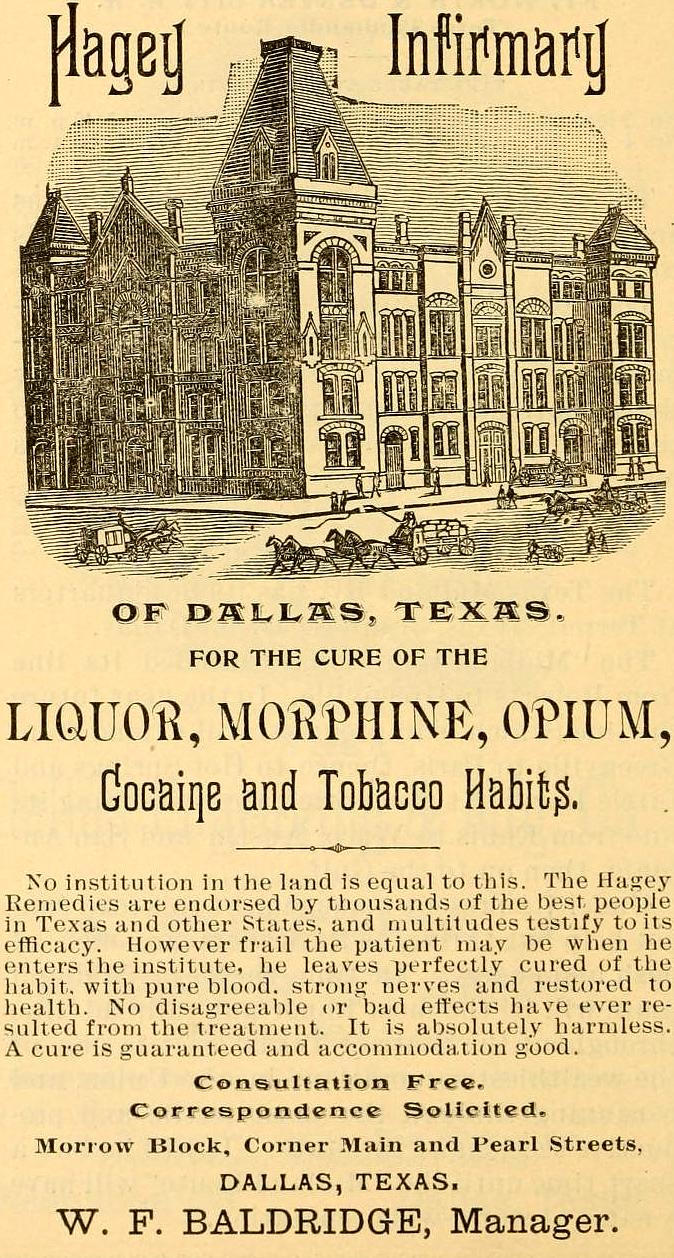
Hagey Infirmary, No Patient Too Frail — 1894

“A cure is guaranteed…” (click for larger image)

by Paula Bosse

Hagey Infirmary
of Dallas, Texas.

For the cure of the

LIQUOR, MORPHINE, OPIUM,
Cocaine and Tobacco Habits.

No institution in the land is equal to this. The Hagey Remedies are endorsed by thousands of the best people in Texas and other States, and multitudes testify to its efficacy. However frail the patient may be when he enters the institute, he leaves perfectly cured of the habit, with pure blood, strong nerves and restored to health. No disagreeable or bad effects have ever resulted from the treatment. It is absolutely harmless. A cure is guaranteed and accommodation good.

Consultation Free.

Correspondence Solicited.

Morrow Block, Corner Main and Pearl Streets,
Dallas, Texas.
W. F. BALDRIDGE, Manager.

***

From the Souvenir Guide of Dallas (Dallas: D. M. Anderson Directory Co., 1894).

The Hagey Infirmary was at 516 Main (now the 2100 block of Main, at Pearl), from about 1893 to 1894 (possibly 1895).

*

Copyright © 2014 Paula Bosse. All Rights Reserved.

L. Craddock & Co. — Pioneer Whiskey Purveyors

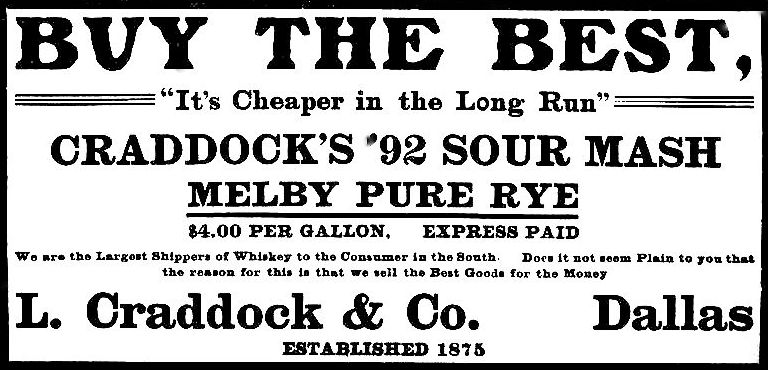
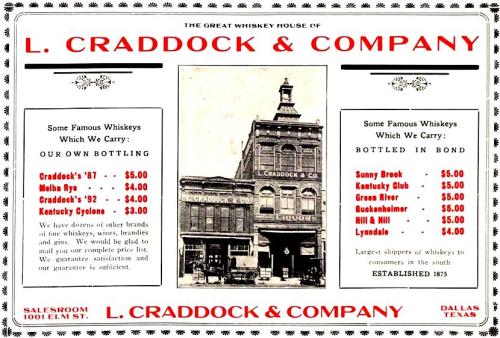
L. Craddock ad, 1912

by Paula Bosse

L. Craddock, an Alabama native born in 1847, arrived in Dallas in 1875 and opened a liquor business at Main and Austin streets in a building built by the Odd Fellows. It was a success, becoming one of the largest such businesses in a young, thirsty city.

Feeling a flush of civic pride, Mr. Craddock branched out beyond the retail world of alcohol sales, and in the late 1870s he opened the city’s second theatrical “opera house,” conveniently housed on the second floor of his liquor emporium, above his saloon and retail business. The theater was immensely popular and hosted the important performers and lecturers of the day, until the much larger Dallas Opera House arrived on the scene and siphoned off Craddock’s audiences. He closed the second-floor theater in the mid-1880s (a space which, presumably, continued to be used as an IOOF meeting hall) but kept the business on the ground floor.
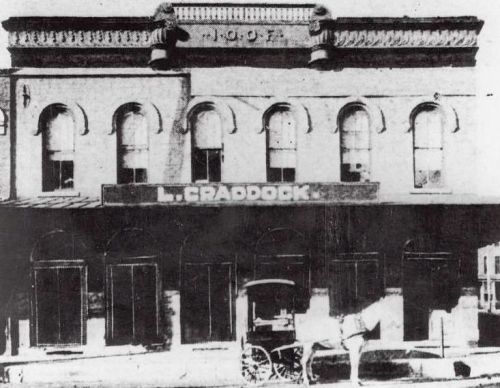
The first location, at Main & Austin, with theater on second floor (1880s)The first location, at Main & Austin, with theater on second floor (1880s)

In 1887 Craddock decided to change careers. He sold his company to Messrs. Swope and Mangold (more on them later) and retired from the liquor trade — if only temporarily. I’m not sure what prompted this somewhat unexpected decision (I’d like to think there was some juicy, illicit reason), but, for whatever reason, he decided to give real estate a whirl. Craddock was certainly a savvy wheeler-dealer and he probably did well buying and selling properties in booming Dallas, but (again, for whatever reason) he seems to have tired of real estate, and, by at least 1894 (if not sooner), he had returned to the whiskey trade and had built up an even more massive wholesale liquor business than before.
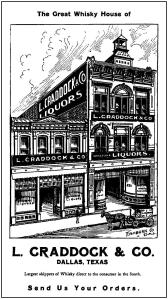
ad_craddock-liquors-19061907 (click for much larger image)

He had a new, larger building, this time on Elm, between N. Lamar and Griffin. In the company’s incessant barrage of advertising, he touted the company’s unequaled, unstoppable success as purveyors of the finest alcohol available. One ad even took on something of a hectoring, lecturing tone as it admonished the reader with this snappy tagline:

“We are the Largest Shippers of Whiskey to the Consumer in the South. Does it not seem Plain to you that the reason for this is that we sell the Best Goods for the Money.”
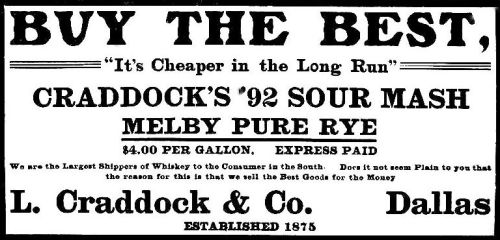
1906

Arrogant or just supremely confident, Craddock was rolling in the dough for many, many years. Until … disaster struck. Prohibition. With the inevitable apocalypse about to hit the alcoholic beverage industry, L. Craddock threw in the towel and retired. For good this time. I’m sure many a faithful L. Craddock & Co. customer stocked up on as much as they could hoard in the final weeks of the prices-way-WAY-higher-than-normal going-out-of-business sale.

Craddock retired to Colorado, but in 1922, he returned to present to the city a valuable ten-acre tract of land in the old Cedar Springs area — land he asked be used as a park. Craddock Park remains a part of the Dallas Parks system today.
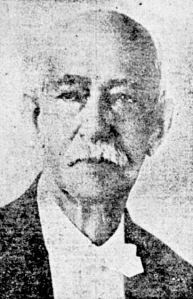
craddock_dmn_120322Dallas Morning News, Dec. 3, 1922

It’s interesting to note that in every article about Mr. Craddock that appeared during and after Prohibition — such as the articles reporting his generous gift to the city — there was never any mention of what kind of business he had been in or how he had made his great fortune. Even in his obituary. He was always vaguely described as a “pioneer businessman.”

Speaking of his obituary (which, by the way, was the place I actually saw his first name finally revealed — it was Lemuel), L. Craddock — Dallas’ great retailer of beer, wine, and spirits — died on December 2, 1933. Three days before the repeal of Prohibition. THREE DAYS. O, cruel fate.

**

ADDED: Interesting tidbit about a legal matter brought by Federal prosecutors. In 1914, Craddock was found guilty of “illicit liquor dealing” — shipping barrels of whiskey (labeled “floor sweep”) into the former Indian Territory of Oklahoma. Craddock wrote a check for the fine of $5,000 right there in the courtroom. The three men who actually did the deed were sentenced to a year and a day at Leavenworth. (I’m never sure how much faith to put in the Inflation Calculator, but according to said calculator, $5,000 in today’s money would be approaching $115,000. I think ol’ Lemuel was doing all right, money-wise. I’m guessing this “floor sweep” thing was not an isolated incident.)
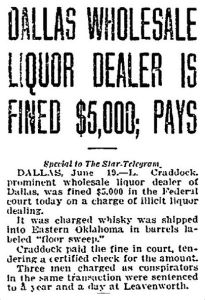
craddock_FWST_061914Fort Worth Star-Telegram, June 19, 1914

***

Sources & Notes

Top L. Craddock & Co. ad from 1912.

Photograph of first location, with theater, from Historic Dallas Theaters by Troy Sherrod (Charleston: Arcadia Publishing, 2014).

Ad featuring rendering of second Craddock location at Elm & Poydras, signed Fishburn Co. Dallas, from 1906.

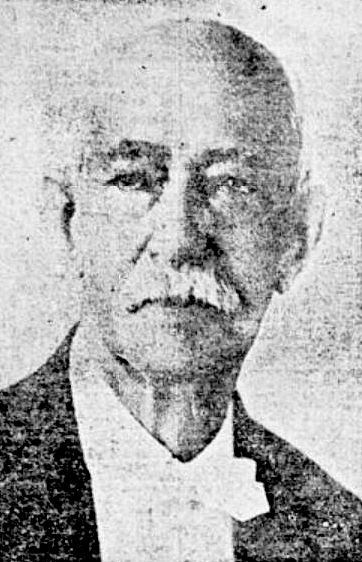
Photograph of L. Craddock from a Dallas Morning News interview in which he reminisces about the Craddock Opera House, published December 3, 1925. It’s an informative interview about early Dallas (like REALLY early Dallas) — the article can be read here.

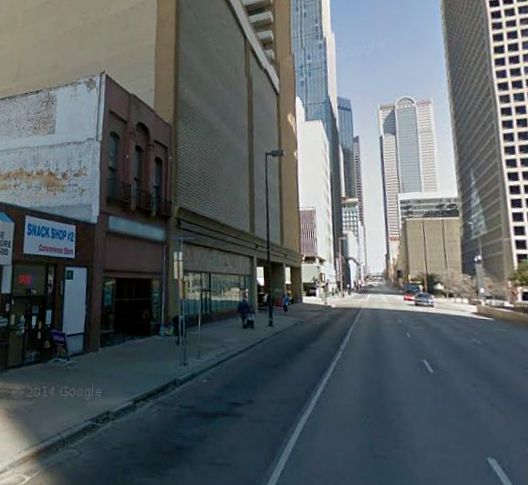
Update: I’ve wondered if this building downtown is the Craddock building, cut down and uglified. The current address is 911 Elm (I assume that the addresses for that stretch of Elm changed when the cross-street configuration changed). The Dallas Central Appraisal District gives the construction date of that building as 1937, but the DCAD dates are frequently not accurate. I don’t know. It’s very similar (missing the third floor…) and in about the exact same spot. Looks like it to me. That poor 100-plus-year-old building needs some loving attention. Here is a Google street view from early 2014:
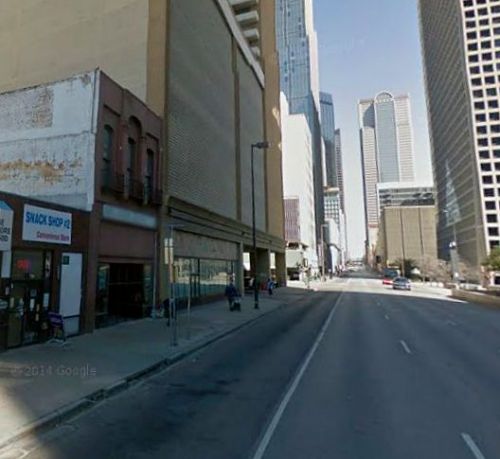
craddock_google_feb-2014

Most images in this post are larger when clicked.

*

Copyright © 2014 Paula Bosse. All Rights Reserved.

Gus Roos Men’s Clothing — 1951

Elm and Akard and familiar skyline…

by Paula Bosse

One of the top men’s clothiers, right there at Roos Corner. (Pegasus!)

*

Copyright © 2014 Paula Bosse. All Rights Reserved.
Jerry Scoggins, From WFAA Staff Musician to Pop Culture Icon

jerry-scoggins_wfaa-1941
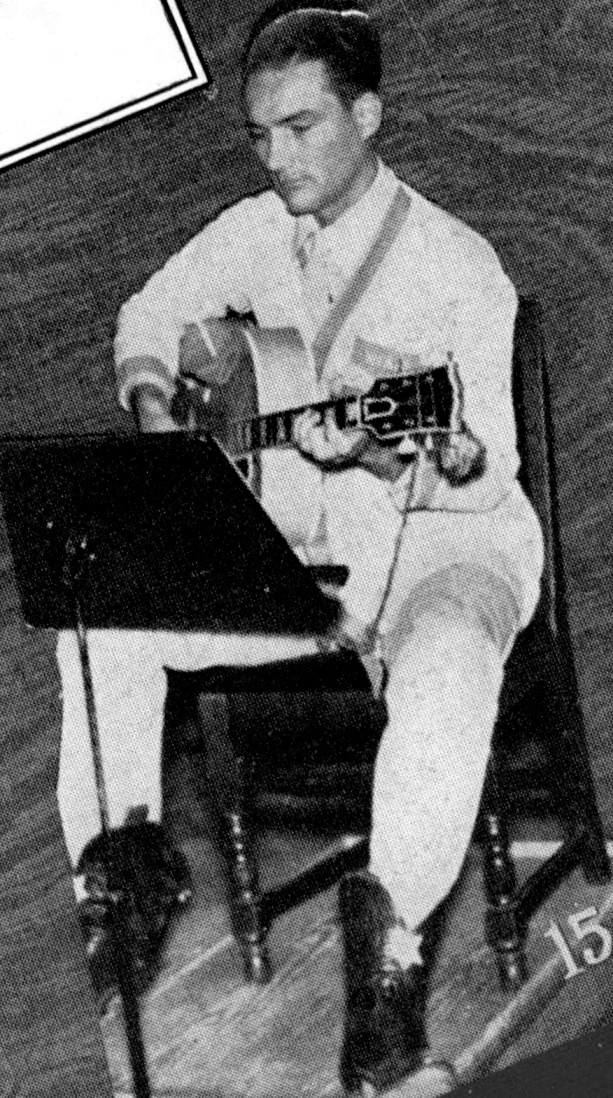
Jerry Scoggins in the WFAA studios, 1941

by Paula Bosse

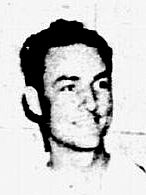
You know Jerry Scoggins. You DO. You can sing along with his most famous recording. But you might not know his name — even if you do know it, you’re not sure why you know it. And you’ve almost certainly never seen a picture of him. But there he is in the photo above, in 1941, at the studios of WFAA radio where he was a staff musician and occasional on-air personality. The caption reads: “Guitarist Jerry Scoggins arrives for a rehearsal in shiny cowboy boots.”

During his time at WFAA (he was there almost a decade — he started when the station still had studios in the Baker Hotel), Jerry was in countless bands — in fact, he often had several going at the same time. Some of his bands were: The Bumblebees, the Tune Tumblers (with a then-unknown Dale Evans as the group’s “girl singer”), Three Cats & a Canary, The Baboleers, and The Cowhands.

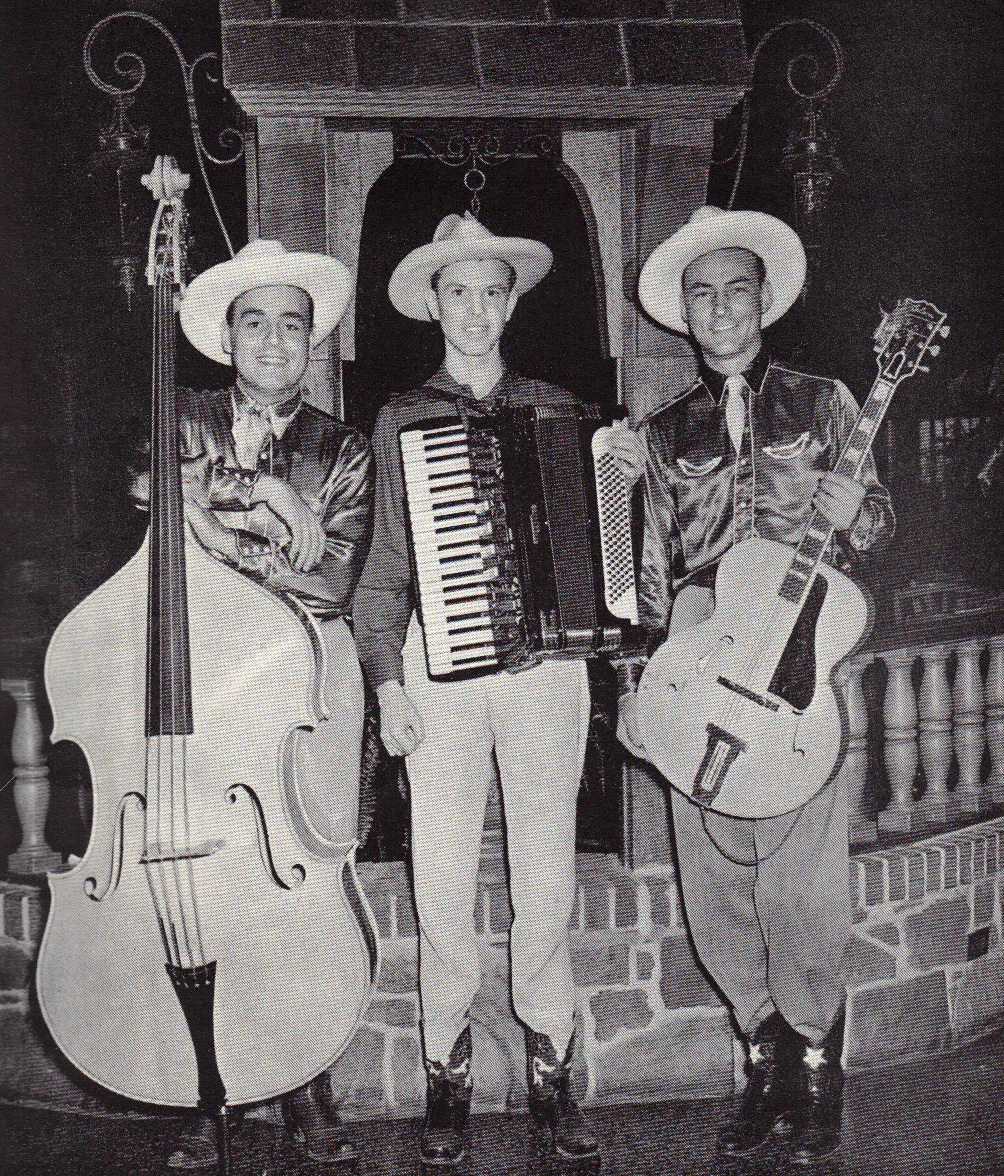
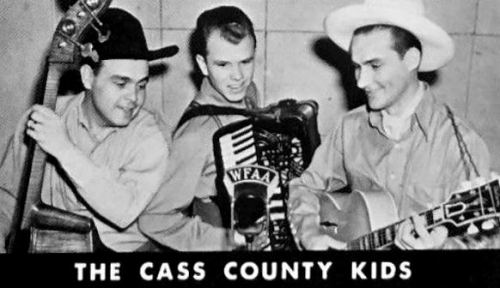
His main group, though, was the Cass County Kids, a popular trio that performed western music and who claimed to have a repertoire of over 500 songs (!).

cass-co_kids_wfaa1_1941_caption

In 1945, after years of working as mostly anonymous radio musicians, the Kids finally hit the big time. Gene Autry asked them to join him, and they left Dallas for Hollywood, changing their name in the process — at Autry’s request — to the (slightly) more age-appropriate Cass County Boys. They appeared in movies, on television, and on record with Autry for several years, and from all accounts, the Cass County Boys had a long and happy career.

cass-county-kids_wfaa-postcard_det_ebay

By 1962, Jerry was still in California, but at that point he was working as a stockbroker, singing only on weekends. I’m not exactly sure how it happened, but — seemingly out of the blue — he was asked by TV producers to sing the theme song for a new CBS television show called The Beverly Hillbillies. Backed by the great Flatt & Scruggs, Jerry sang “The Ballad of Jed Clampett,” and his voice became known to millions of people, overnight. And here it is more than fifty years later, and I bet you know all the words to the song. It has become a permanent fixture in American pop culture.

And that’s why you know Jerry Scoggins.


*

jerry-scoggins_bevhill_end-credits

*

ADDED, Sept. 2023: A reader just sent me this clip showing Scoggins (with Earl Scruggs, Roy Clark, and others) performing the song in 1993 as Buddy Ebsen dances along. This is so great!!

scoggins-jerry_1993_youtubeJerry Scoggins, 1993 (from YouTube video)

*

And here’s Jerry with the Cass County Boys, singing a novelty song called “Which Way’d They Go?” (Jerry’s the good-looking one on the right):

***

Sources & Notes

The top photo of Jerry Scoggins and the large photo of the Cass County Kids are from the WFAA-KGKO-WBAP Combined Family Album (Dallas, 1941). The small photo of the Cass County Kids is from eBay.

Jerry Scoggins was born in 1911 in Mount Pleasant, Texas (in Titus County, right next door to Cass County). He died in 2004 at the age of 93. His obituary in the Los Angeles Times is here. More on Jerry from Wikipedia, here.

A nice overview of the Cass County Kids/Boys is here.

*

Copyright © 2014 Paula Bosse. All Rights Reserved.

“Dallas Motor Cycle Cops” — 1910

dallas-police_motorcycles_1910_bReady and on the job…

by Paula Bosse

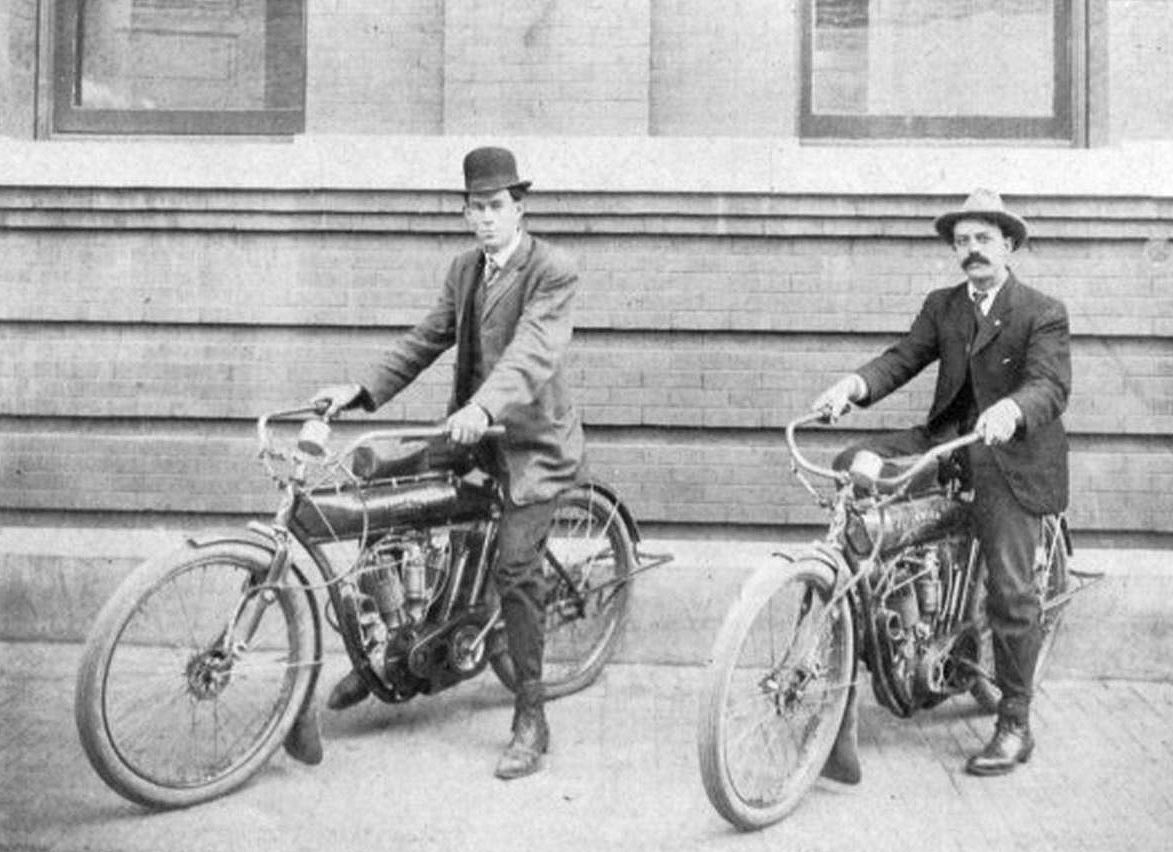
These photos of the Dallas Police Department’s “Motor Cycle Cops” appeared in a police publication from 1910.  We see them astride their machines, — one in a bowler hat — waiting for their call. Above, the “cops” are identified as B. G. Ford and A. W. Schulz; below, T. R. McSwain and S. R. Dean.

dallas-police_motorcycles_1910_a

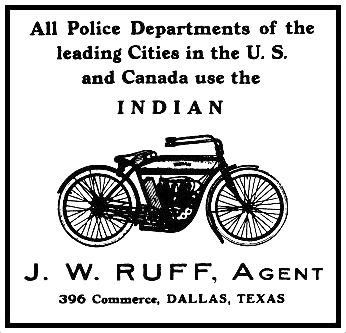
I can’t vouch for the models of the bikes, but this ad for Indian Motorcycles appeared just pages away.

ad-indian-motorcycles_1910

***

Sources & Notes

From a book with almost no publication info; it is presented simply as Dallas Police Department (Dallas, 1910). It’s got great photos and can be found on the Portal to Texas History site, here.

By 1951, the DPD’s allegiance had shifted to Harley-Davidson, as can be seen in the post “The Dallas Police Department & Their Fleet of Harleys — 1951.”

*

Copyright © 2014 Paula Bosse. All Rights Reserved.
Red Bryan’s Smokehouse — BBQ, Oak Cliff-Style

red-bryans-smokehouse_bbq_postcard_ebay_ca-1950

by Paula Bosse

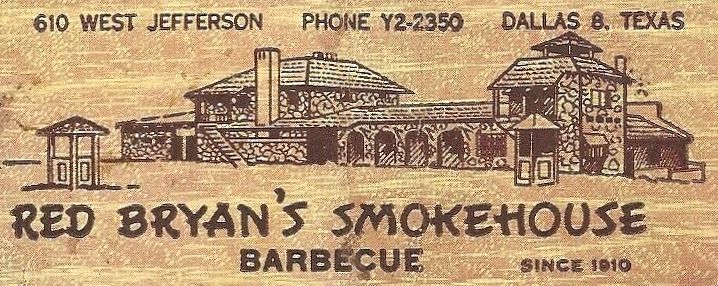
Everybody in Dallas knows about Sonny Bryan, and some remember Red Bryan, but I didn’t know there was another Bryan forebear, who started the family barbecue dynasty: Elias Bryan. Elias and his wife, Sadie, arrived in Oak Cliff from Cincinnati in 1910 and opened a barbecue stand. Elias begat Red, and Red begat Sonny. And there was much trans-generational smoking of meat. The Bryans have been a BBQ fixture in Dallas for over 100 years.

Fun facts about William Jennings “Red” Bryan:

  • Red studied botany at SMU, which might explain his initial career as a florist until he was inevitably pulled back into the family business. He opened his first place in the early 1930s in a retired Interurban car, known affectionately as “The Tin Shack.”
  • In the late ’40s, now well established and wanting swankier digs, he commissioned the respected architect Charles Dilbeck to design the new restaurant. (Dilbeck designed some of the most beautiful homes in Dallas, several of which are in Lakewood, but this was probably his first — and only — barbecue joint.)

And the rest is, as they say, barbecue — and Oak Cliff — history.

*

red_bryan_bbq_dth_0205561

*

Red, 1951

*

red-bryans-bbq_matchbook_ebay

***

Sources & Notes

Postcard (circa 1950) at top from eBay. This is printed on the back:


red-bryans-smokehouse_bbq_postcard_caption_ebay

Ad from 1956.

Much more on Red Bryan’s Smokehouse, with lots of photos of its construction, can be found in the Oak Cliff Advocate article “The King of Oak Cliff Barbecue” by Gayla Brooks, here.

Even more cool stuff, including early photos of the family business, can be found in the Texas Monthly article “Bryan Family Artifacts and Mementos” by Daniel Vaughn, here.

Sonny Bryan’s website is here.

*

Copyright © 2014 Paula Bosse. All Rights Reserved.

Shoveling Apples at the Farmers Market — 1958

An apple a day… (click for larger image)

by Paula Bosse

Cleaning the streets around the Farmers Market.

All in a day’s work for the City of Dallas Public Works Department.

***

Photo taken July 23, 1958. From the Dallas Farmers Market – Henry Forschmidt Collection 1938-1986, Dallas Municipal Archives, via the Portal to Texas History; more info on this photo is here.

Click picture for larger image.

*

Copyright © 2014 Paula Bosse. All Rights Reserved.

From Deep in the Heart of Texas, I Give You Love Field — 1919

Love is in the air

by Paula Bosse

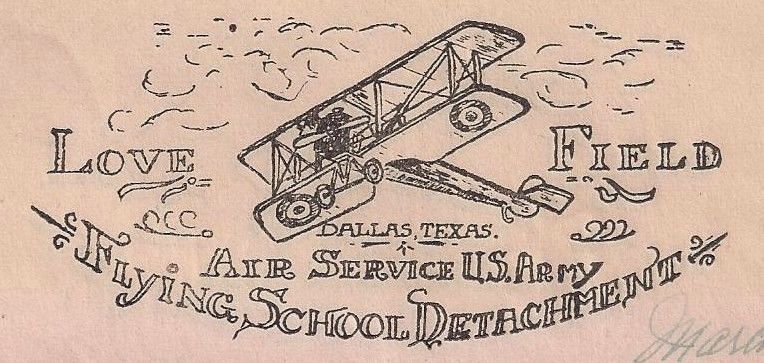
It’s Valentine’s Day — a perfect time to turn to Love Field (…which, like “Lovers Lane,” must sound a little cutesy to outsiders). The above image shows the letterhead of the U.S. Army Air Service Flying School Detachment, a consolidation of World War I squadrons based at Love Field from November 1918 to November 1919.

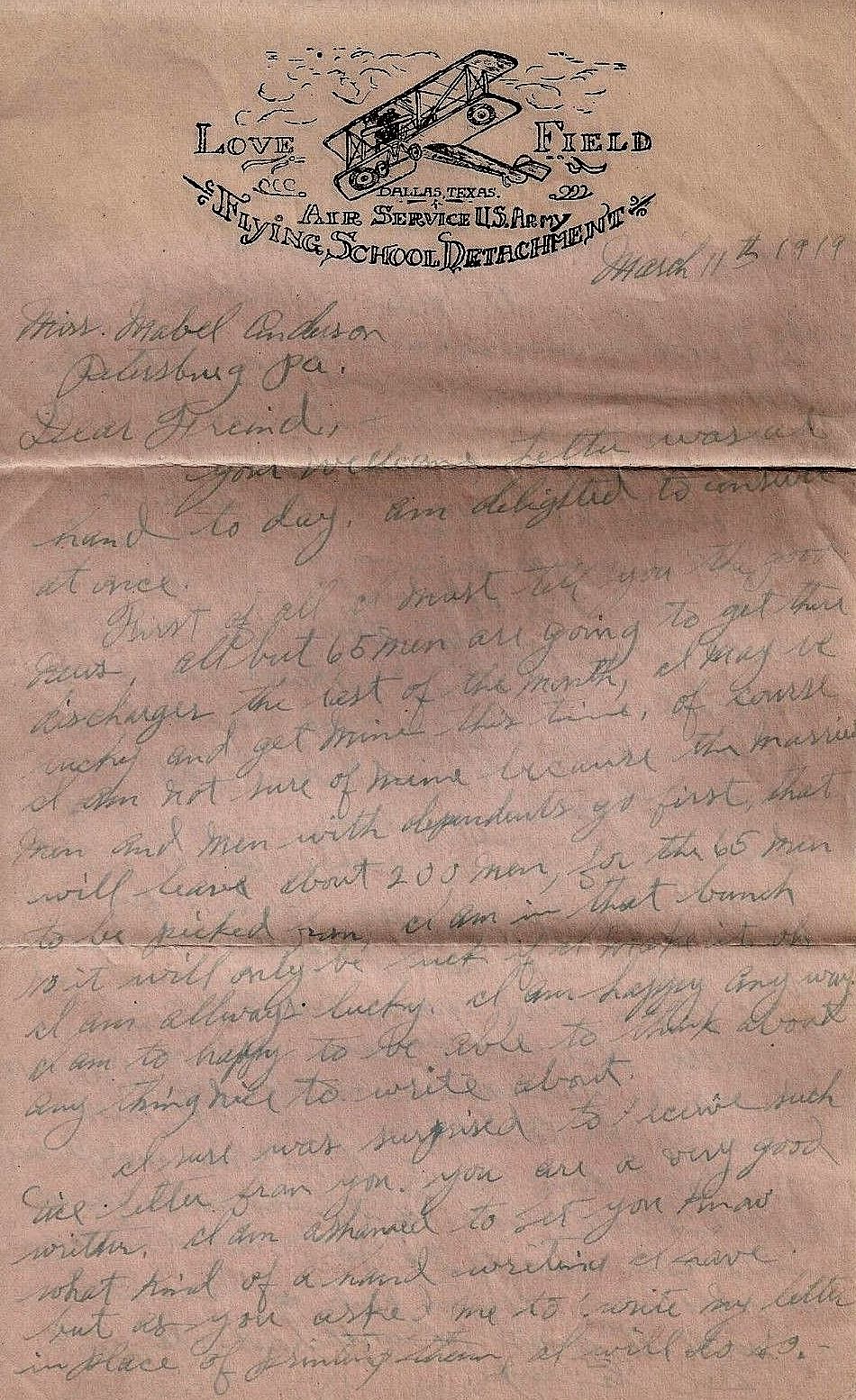
One of the young pilots stationed there wrote a four-page letter on this stationery. The letter, dated March 11, 1919, was addressed to Miss Mabel Anderson in Petersburg, Pennsylvania. They seem to have begun a sort of pen-pal correspondence, and he is certainly very happy to have received a letter from her. (“Your wellcome [sic] letter was at hand today. Am delighted to answer at once.”) He asks if she would send him a photograph and tells her he’d like to meet her. He says that he is hopeful that, the war finally over, he will be discharged at the end of the month — he thinks he will be because, “I am allways [sic] lucky.”

This is an item for sale on eBay, and only the first page is scanned, so the identity of the author of the letter will remain unknown to those of us merely browsing an auction listing, interested but unwilling to cough up the cash to buy it and read any further. I wonder what happened? If he wanted to meet her, then perhaps he, too, was from Pennsylvania — they might have met when he arrived back home. He certainly sounds excited and hopeful and flirtatious, and he should, because not only was he “allways lucky,” but the long war had finally ended and he was headed home with his whole life ahead of him. Where’s Paul Harvey to tell us the rest of the story?

Happy Valentine’s Day!

***

This four-page letter on Love Field letterhead was recently up for auction on eBay, with the following description: “Letter from airman to a young girl asking for her picture and wanting to meet her. Very early US Army Air Service stationery from Love Field in Dallas Texas. Just after the end of WWI. Scarce Item.”

Here is the first page, with a transcription (spelling corrected) below (click to see a larger image).

love-field_letter_1919

Miss Mabel Anderson
Petersburg, Pa.

Dear friend,

Your welcome letter was at hand today. Am delighted to answer at once.

First of all I must tell you the good news. All but 65 men are going to get their discharges the last of the month. I may be lucky and get mine this time. Of course I am not sure of mine because the married men and men with dependents go first. That will leave about 200 men, for the 65 men to be picked from. I am in that bunch, so it will only be luck if I make it ok. I am always lucky. I am happy anyway. I am too happy to be able to think about anything nice to write about.

I sure was surprised to receive such a nice letter from you. You are a very good writer. I am ashamed to let you know what kind of a handwriting I have, but as you asked me to write my letter in place of printing [it], I will do so.

*

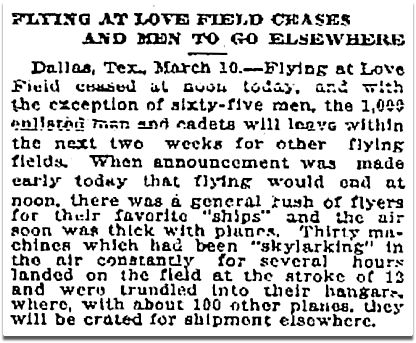
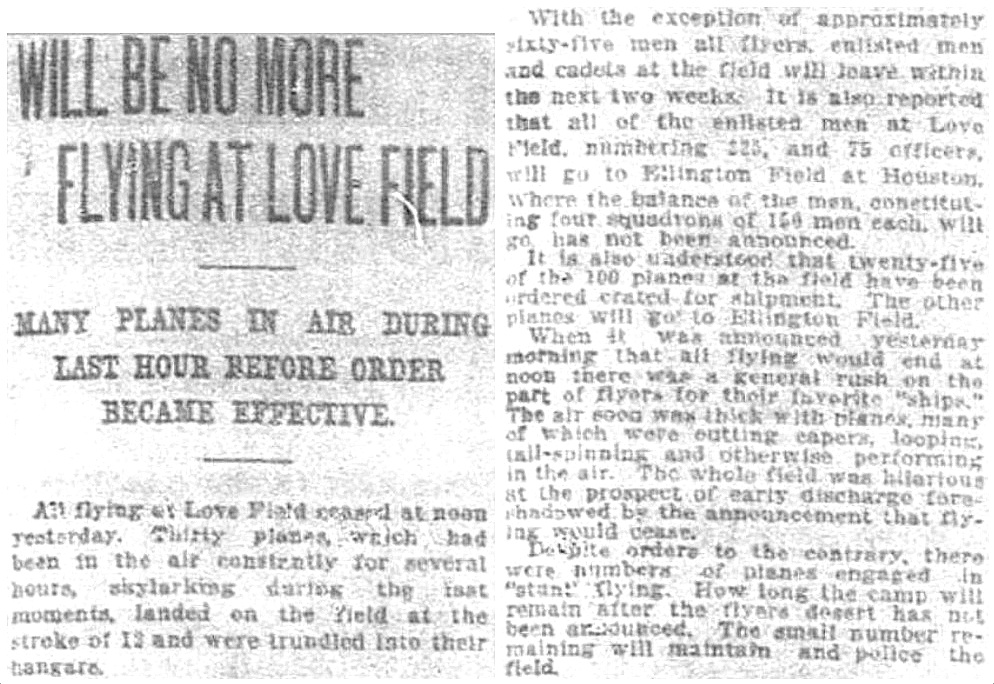
Here are two stories about how the airmen stationed at Love Field responded to the announcement that all flying would cease at noon on March 10, 1919 before demobilization began. It sounds like something from a movie: a sky full of something like 30 airplanes looping and “skylarking,” their pilots celebrating their fast-approaching military discharge by flying their favorite “machines” for the last time.

love-field_galveston-news_031119Galveston News, March 11, 1919

love-field_dmn_031119Dallas Morning News, March 11, 1919 (click for larger image)

*

Copyright © 2014 Paula Bosse. All Rights Reserved.

Where to Put That JFK Memorial? — 1964

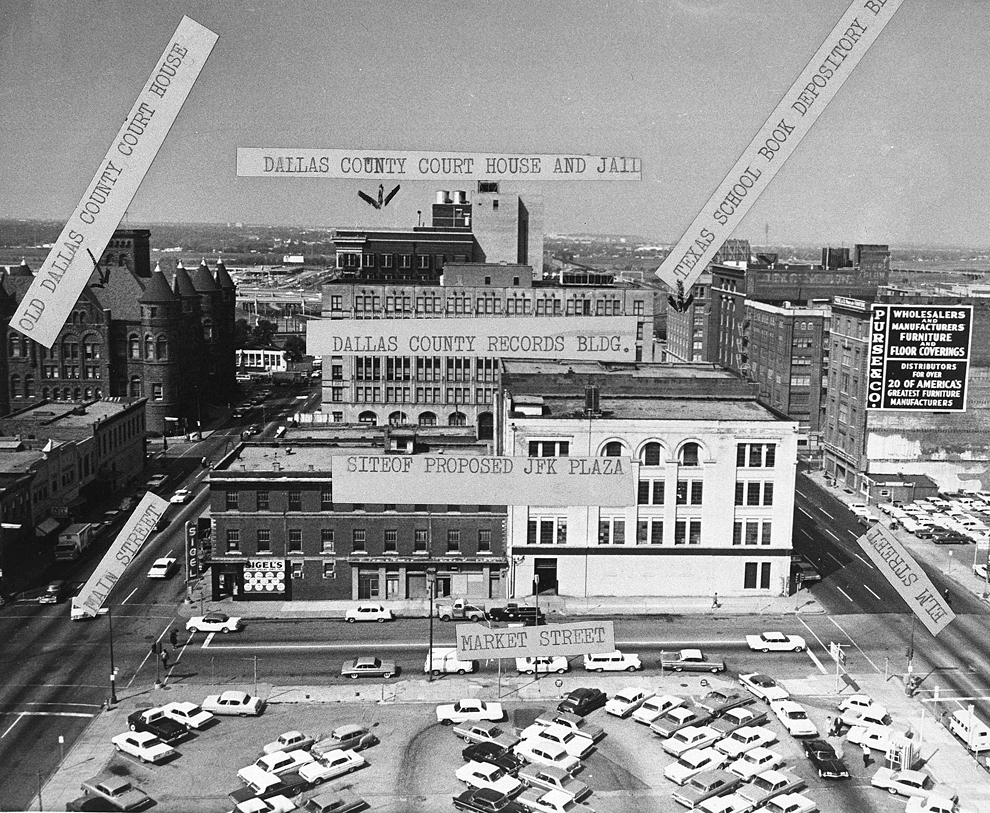
Looking west, 1964 (AP photo)

by Paula Bosse

I’m not really into the whole assassination thing, which may explain why I’ve never seen this 1964 Associated Press photo (with or without the labels). Despite the connections to “that dark day,” I think this is a really interesting view of the city, from an unusual vantage point.

Here’s another similar photo, from April 1964 — this one from United Press International. UPI’s caption:

DALLAS: Site of Memorial Park. The area outlined in white is the block where the John F. Kennedy Plaza will be created as a memorial to the late president. The outline traces buildings now on the site which will be removed on completion of the new county courthouse.

jfk-memorial_proposed_apr-1964_UPI_ebayApril 1964 (UPI Telephoto)

The original location for the memorial was in the block immediately to the east of the Records Building, not the Old Red Courthouse, where it eventually was placed. I’m not sure why the location changed, but by the time architect Philip Johnson, designer of the memorial, was on board, the site had moved one block south.

*

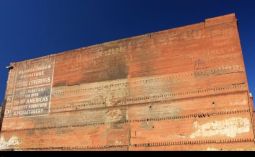
The Purse & Co. sign seen at the right side of the top photo is still visible today — it’s probably the largest and most familiar ghost sign downtown. Here’s a picture that was linked to Google maps. (I think I prefer it as a ghost sign.)

***

Sources & Notes

Top photo by Ferd Kaufman for the Associated Press, 1964.

Bottom UPI Telephoto found on eBay.

*

Copyright © 2014 Paula Bosse. All Rights Reserved.