A couple of facts about me: I guess I’m what you’d call a “power user” of the Dallas Public Library’s NewsBank newspaper database, accessing the archives of the Dallas Morning News and Fort Worth Star-Telegram pretty much daily; I’m also fairly resistant to change (i.e. kind of lazy).
So when I encountered the redesign of the entire NewsBank database yesterday, I was less than ecstatic that I’d have to stop what I was doing and figure out where everything had been moved to. I know I’ll get used to it quickly (I already have), but, what a pain. I’m not sure why some of the changes were made, but, whatever. I actually discovered a few new things which are either brand new or were hidden in what is, let’s face it, a site with a lot of stuff going on. (There are only so many hours in the day….)
For any of you who might log on to the Dallas Public Library site and click over to the DMN archive and wonder what the heck happened, my step-by-step tips might be helpful. They might also be tedious, repetitive, and vague. But at least it’s up-to-date! Until they change it again!
Click on the link above if you need any help. (Remember: filtering is your friend!)
And, again, many thanks to the Dallas Public Library and The Dallas Morning News (and The Fort Worth Star-Telegram) (and NewsBank) for providing such a valuable resource!
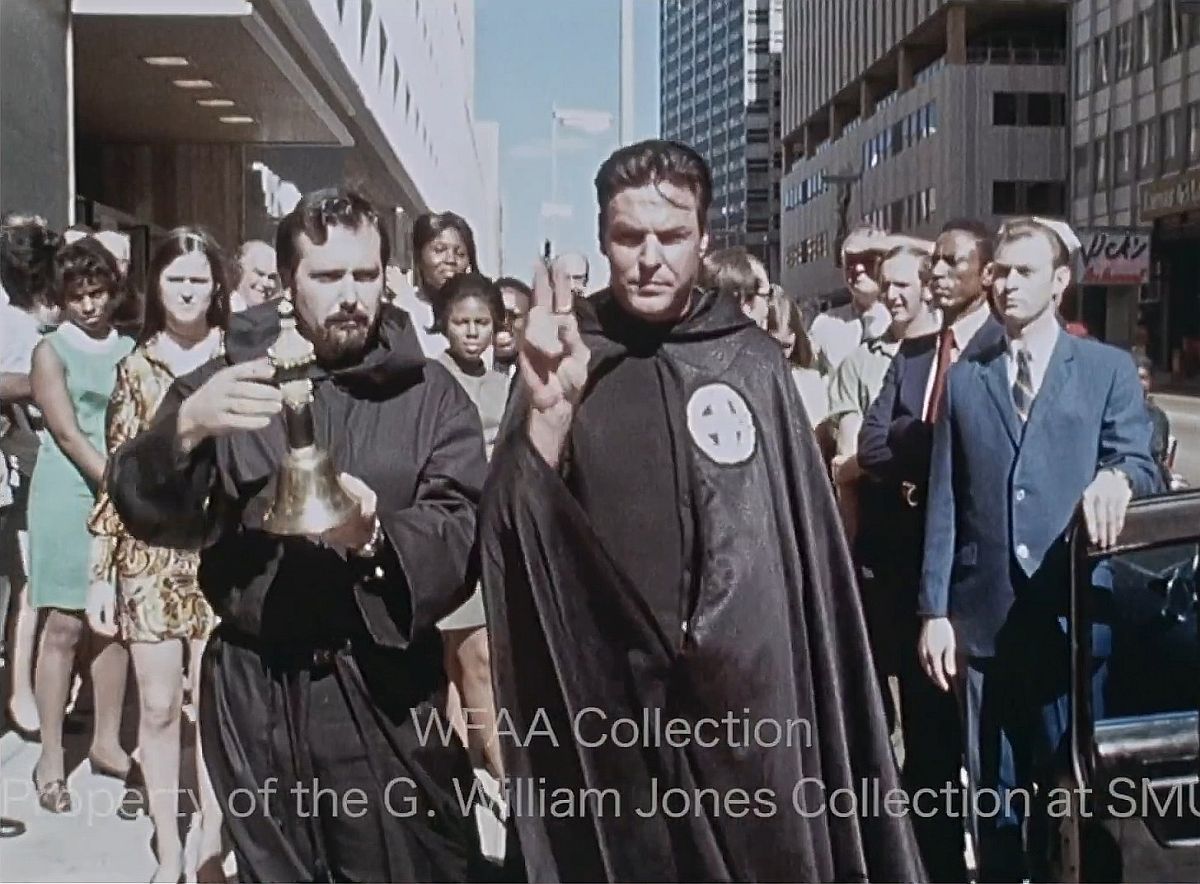
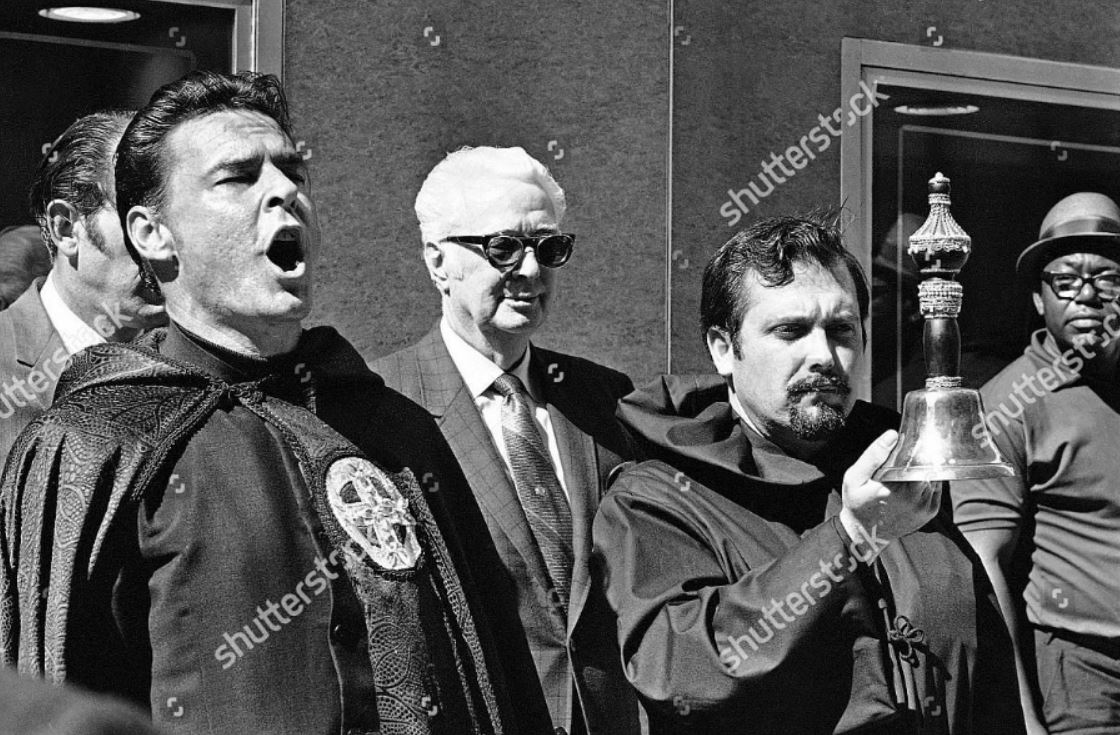
On Sept. 4, 1970, at the corner of Commerce and Ervay, a “white-magic warlock” named Gene de Jean conducted a ceremony to lift a heinous curse placed on Dallas in 1963 by a somewhat vague “malevolent black-magic coven” — this curse, which, uncoincidentally, preceded the JFK assassination, had apparently hung over the city for 7 long years. Fortunately, the media had been alerted, and we have film footage of the historic occasion in which a mysterious warlock lifted a nasty curse which no one in Dallas knew had been cast in the first place.
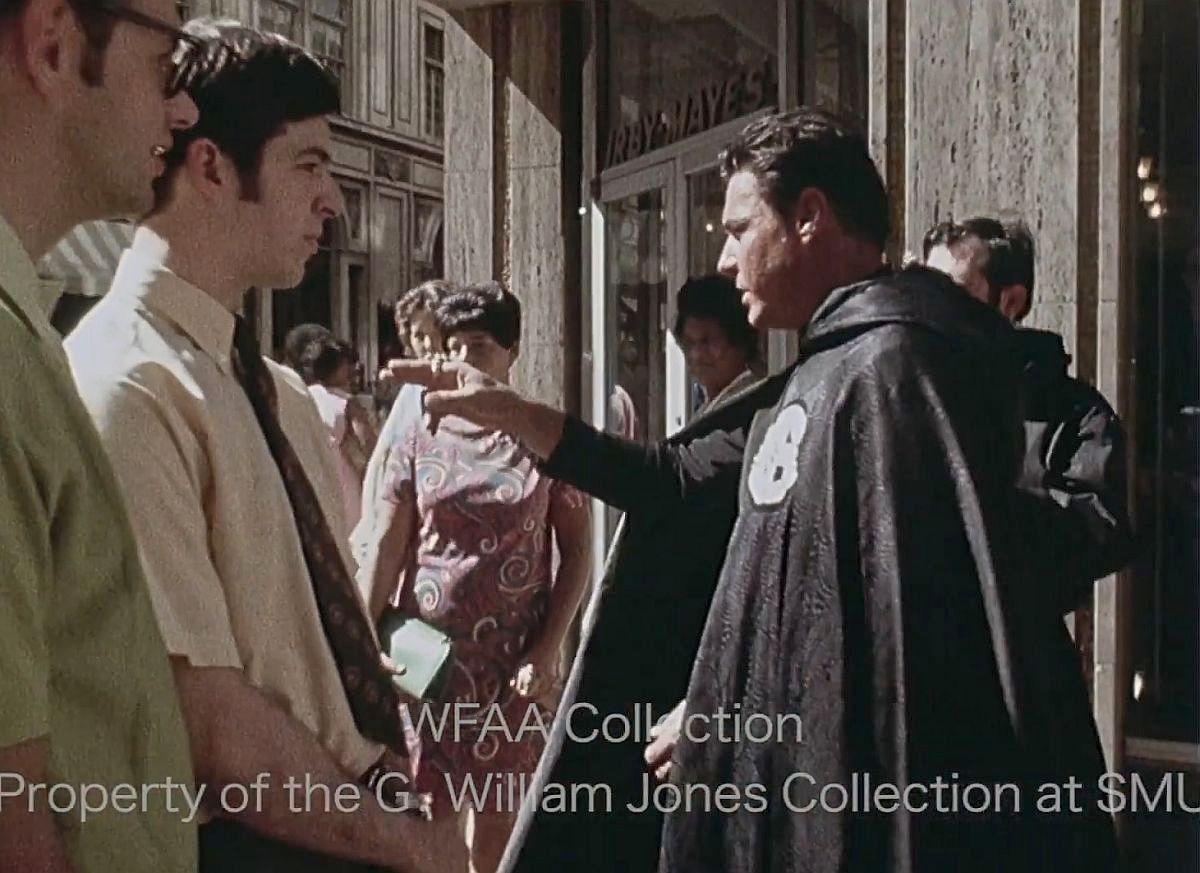
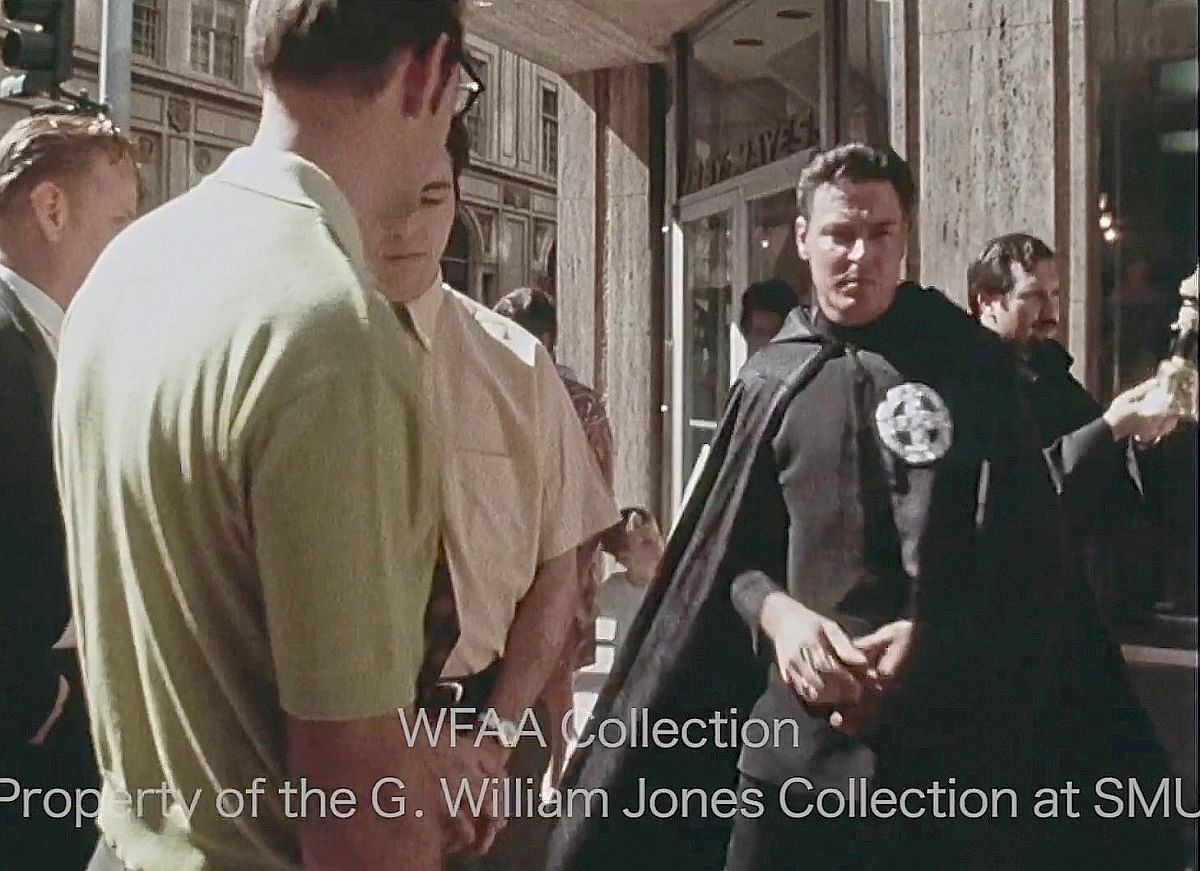
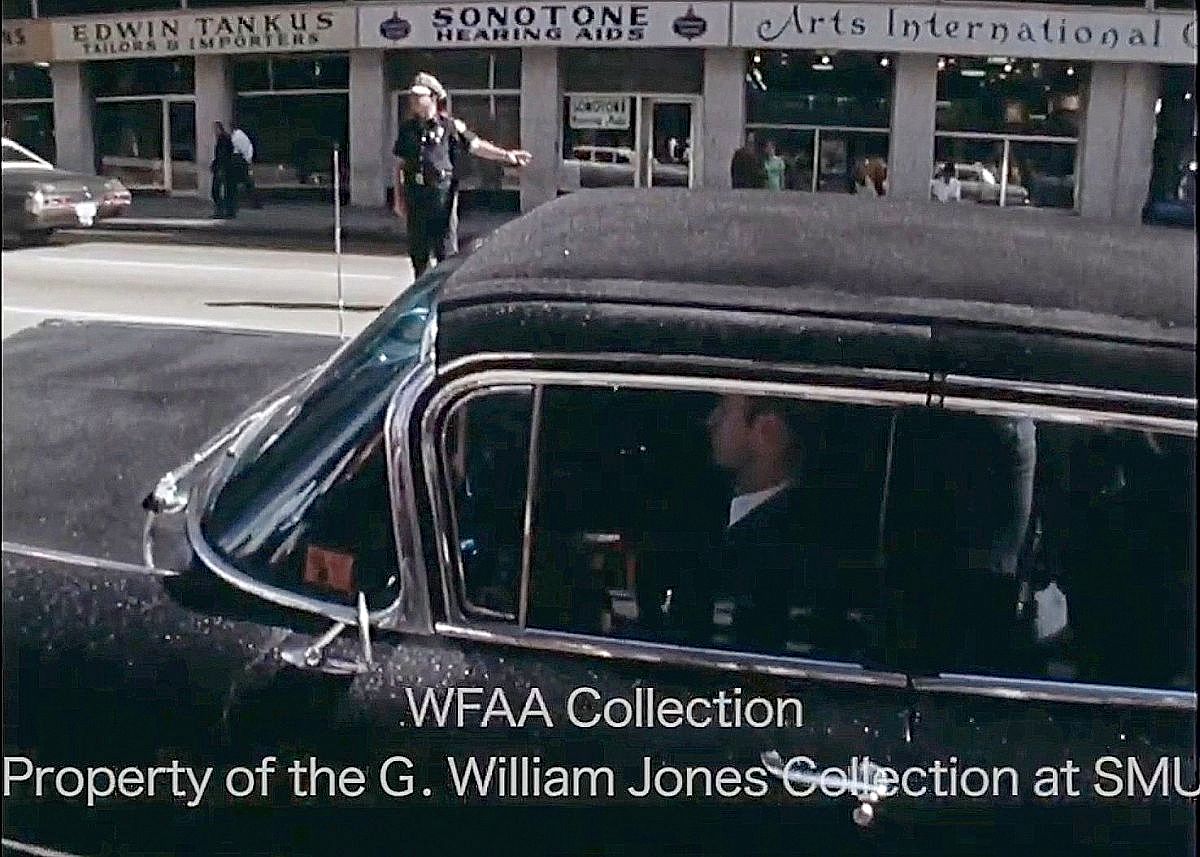
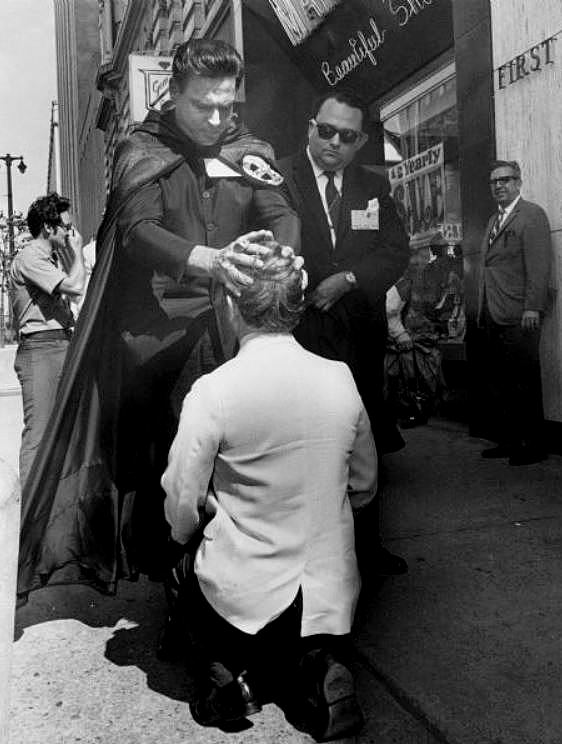
Do-gooding warlock Gene de Jean arrived in a “velvetized Cadillac” (a Cadillac COVERED IN BLACK VELVET!) with a be-robed bell-ringing acolyte, and, with Neiman-Marcus in the background, he uttered a few incantations and proclaimed the curse lifted. He also “blessed” a few random people in the crowd for good measure before walking back to the waiting velvetized warlock-mobile, his job done. In his wake there was much rejoicing and/or confused looks exchanged on Commerce Street. Thank you Mr. de Jean!
*
In something of a kill-joy article, the Associated Press revealed that “Gene de Jean” was a warlock stage-name. In non-warlock life he was Gene McIntosh, mild-mannered Houston psychologist. When pressed by the reporter, Gene said that it was “pure coincidence” that the Texas Association of Magicians was wrapping up its 25th annual convention 2 blocks away at the Statler Hilton (which can be seen in the background of the footage). So, yes, Gene McIntosh and Lee Thompson (the bell-ringing “acolyte”) were well-known Houston magicians/illusionists in town for a magicians’ convention. And — why not? — a friendly curse-lifting.
**
Here’s the footage — at the 12:19 mark — captured by a WFAA-Channel 8 News cameraman for posterity.
*
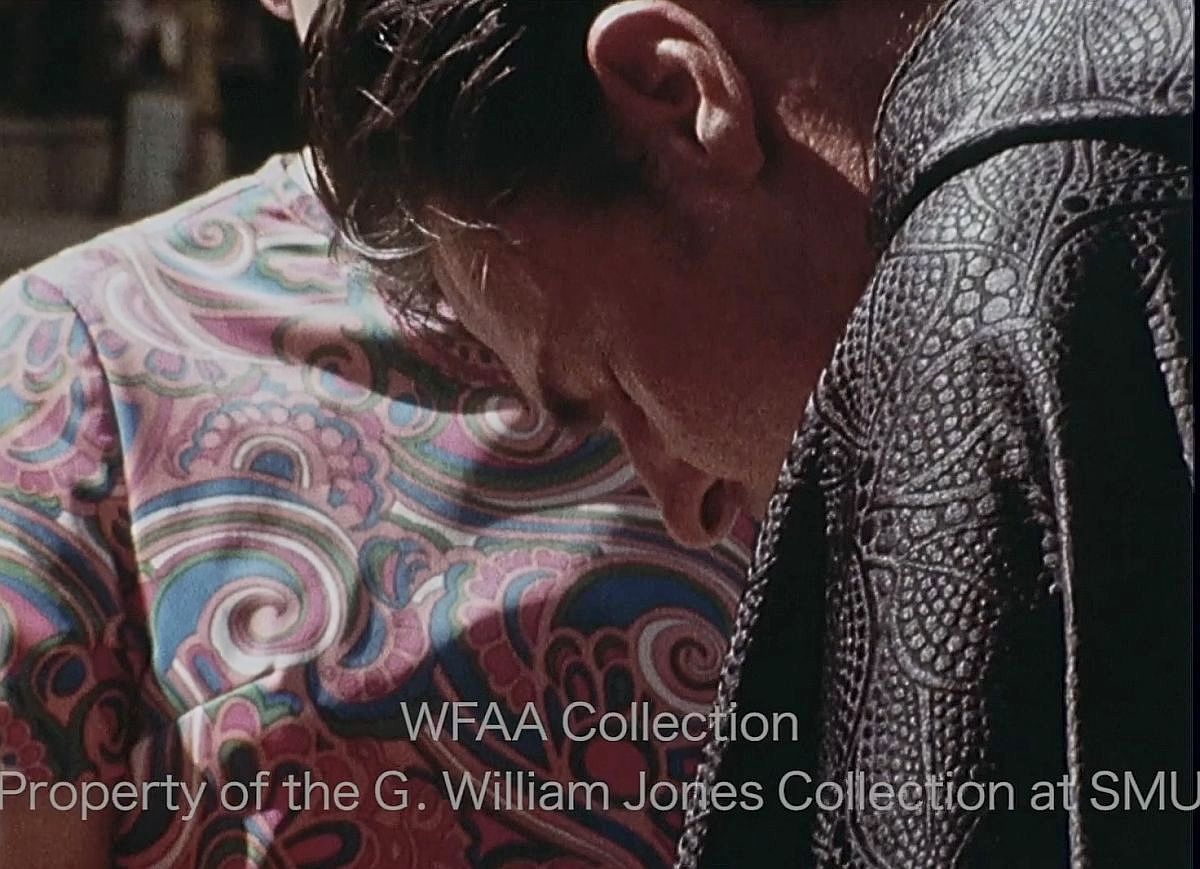
And a few screenshots of the warlock in action.
Associated Press photo by Ferd Kaufman
Seriously — how do you cover a car with velvet?
Voilà! Curse lifted!
**
Doing a little research, I have to say, when I came across the photo below, I felt a twinge of betrayal. Or at least disappointment. It shows Gene de Jean on the streets of Milwaukee (Milwaukee?!!) in June, 1970. The guy in the sunglasses is also seen with him in Dallas. The caption of this photo: “A self-described warlock (male witch) in black flowing cape bestowed a blessing right here in Old Milwaukee Tuesday. Gene De Jean blessed the city and a number of passersby at N. 3rd St. and W. Wisconsin Ave. He was in town for a magician’s convention.” Was it all just a schtick, Gene? And I thought we had something special.
Video and screenshots are from the WFAA NewsFilm Collection, G. William Jones Film Collection, Hamon Arts Library, Southern Methodist University; the footage is from Sept. 4, 1970 and can be found on YouTube here (clip begins as the 12:19 mark).
When I posted a version of this on my Facebook page a few weeks ago, David B. commented with a couple of informative links about Gene McIntosh (who died in 2006): this overview of his career as a magician, and this tale of a stunt he performed while driving from Houston to Dallas in 1959, blindfolded the whole way. RIP, Gene.
It’s time again to insert recently-found stuff into old posts.
The first one, above, is great: it shows the facade which covered the exterior of Neiman-Marcus during the French Fortnight of 1957 — the very first Neiman’s “Fortnight” celebration. I had used a black-and-white version of this photo in the post “Neiman-Marcus Brings France to Big D — 1957,” but I’ve replaced it with this wonderful original color version. (Source: Stanley Marcus Papers, DeGolyer Library, Southern Methodist University — more info on this photo can be found here)
*
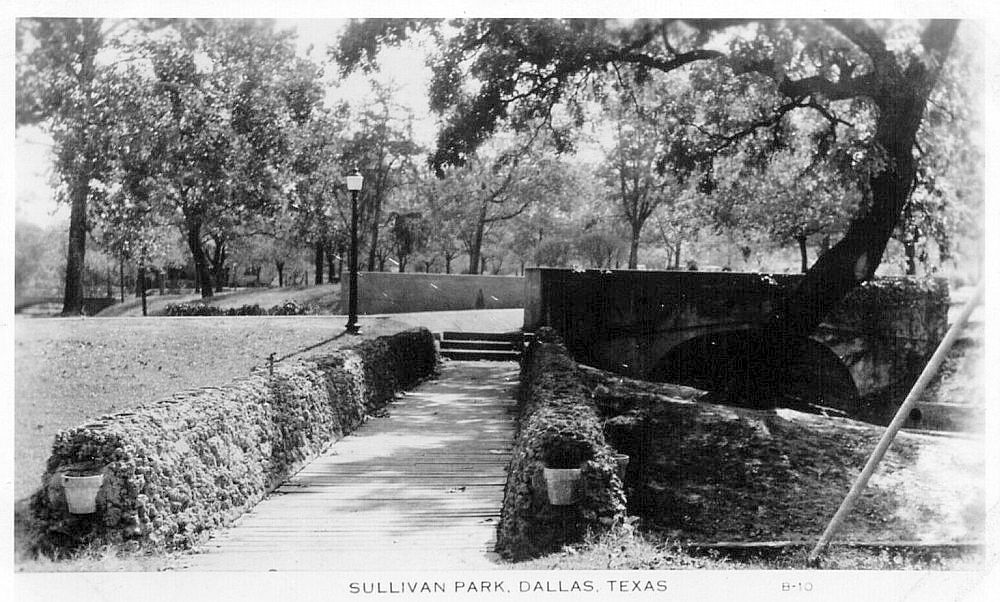
The next image comes from a postcard showing a path and a footbridge in Sullivan Park — it has been added to “City Park Construction Work — 1941.” The reason it’s been added there is because it’s the only post which mentions “Sullivan Park,” the blink-and-it-and-you’ll-miss-it period when City Park changed its name (it changed back to “City Park” in 1941 after only about 5 years) — the main photo of that post shows construction work in (let’s call it) Sullivan Park. I’m pretty sure this is the bridge I wrote about in the post“Iola Bridge.” (Source: eBay)
*
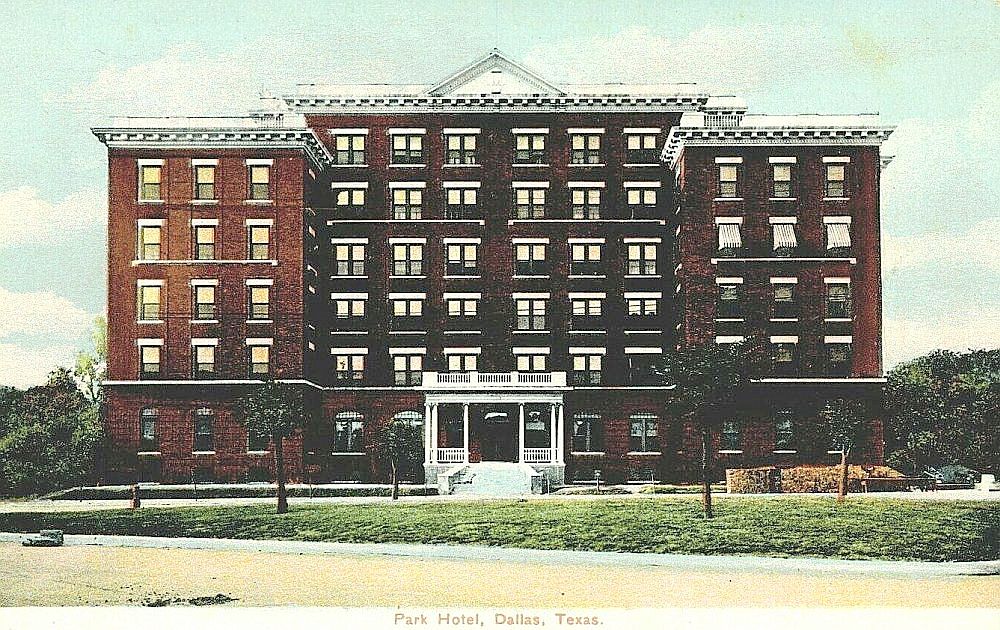
And since we’re in the neighborhood — in fact right next door — here are a couple of images I’ve come across showing what most of us probably knew as the Ambassador Hotel (RIP). Below are postcards from its second incarnation as the Park Hotel, and a “now-you-see-it-now-you-don’t” view of S. Ervay, before and after the 2019 fire that destroyed the 115-year-old building. They’ve been added to the post “The Majestic Hotel/The Park Hotel/The Ambassador Hotel: R.I.P. — 1904-2019.” (Sources: the postcards are from eBay, and the 2018 and 2021 images are from Google Street View)
2018
2021
*
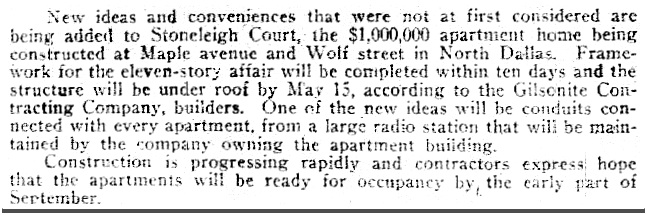
And speaking of hotels, here’s a grainy Dallas Morning News photo of the Stoneleigh under construction in 1923 with a caption offering some tidbits about the swanky new “eleven-story affair” — they’ve been added to “The Stoneleigh Court Apartment Hotel — 1923/1924.” (Source: Dallas Morning News, April 22, 1923)
*
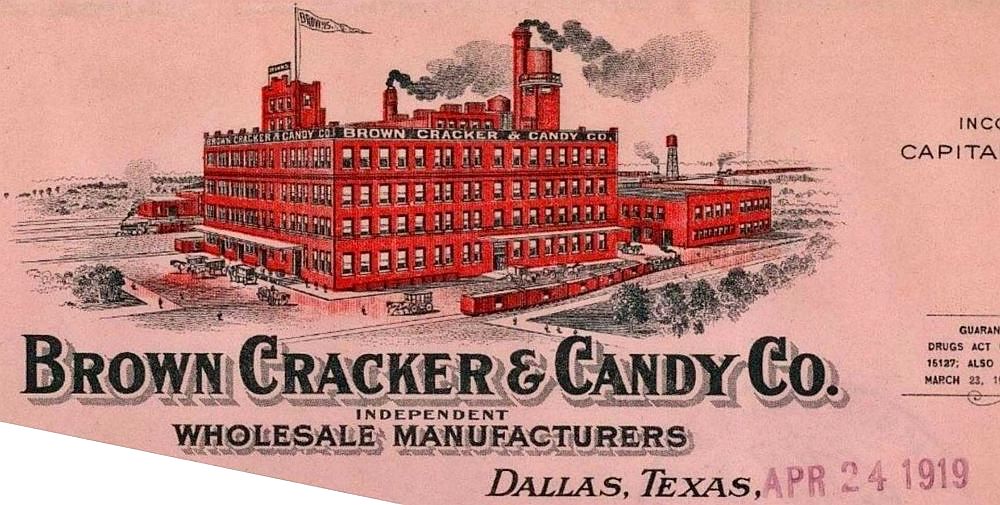
I really enjoyed writing about the Brown Cracker Co. which occupied an imposing building in the West End. I’ve added the picture below to the post “Brown Cracker Co. Cracker Wrappers.” (Source: eBay)
*
Here’s a very thin image of a railroad spike commemorating the opening of the new Santa Fe passenger line to Chicago in 1955 — it has been squeezed almost imperceptibly into the already-jam-packed post “White Rock Station.“ (Source: a nice man in Oklahoma named Joe)
*
I’ve added the two postcards below to the post “Beautiful Lake Cliff — ca. 1906” — the first one replaced an inferior example I had used previously, and the other was a new addition. (Source: eBay)
*
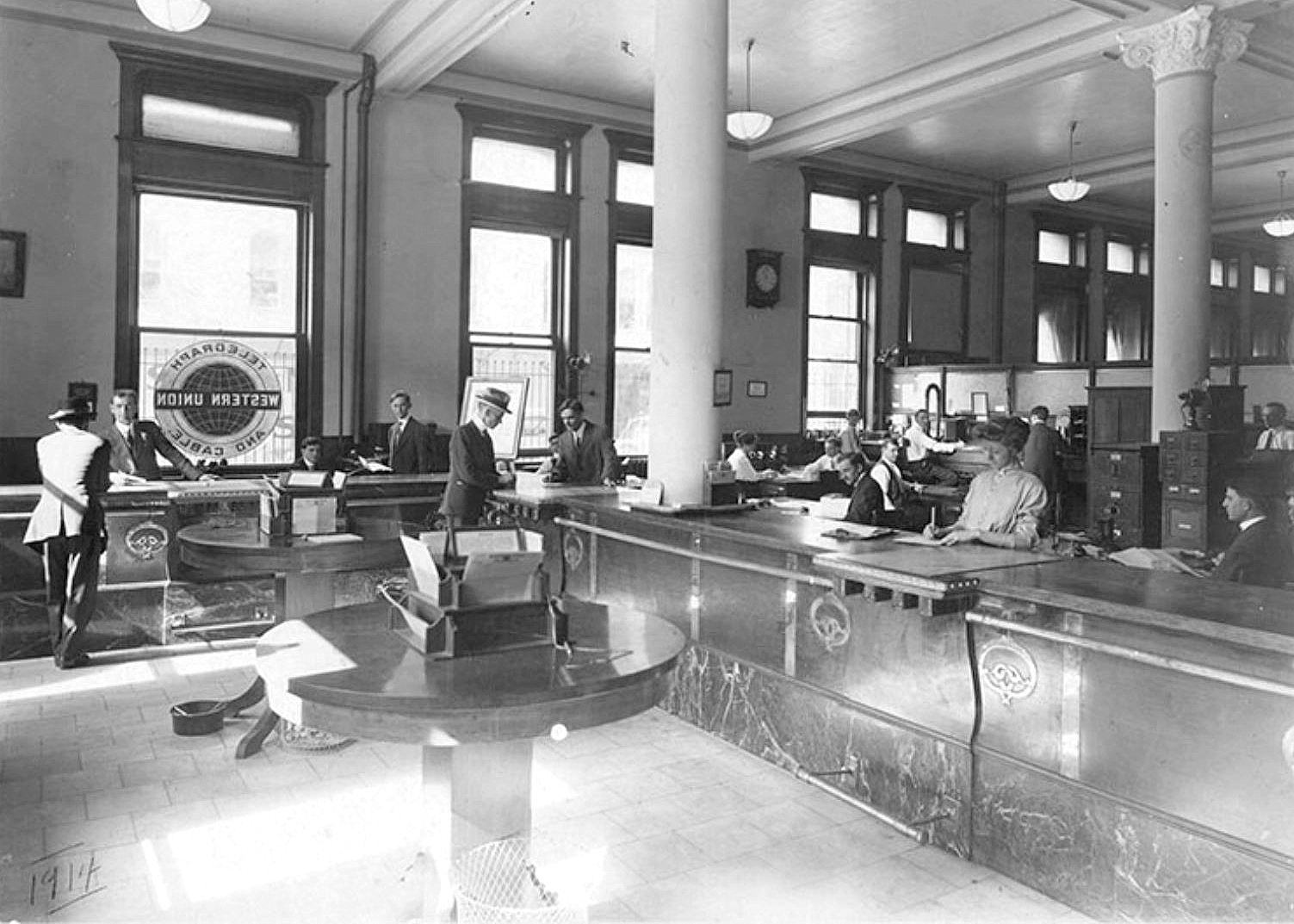
This 1914 photo of the Wells Fargo office on Main Street has been added to “Start Your Brilliant Career at Dallas Telegraph College — c. 1900.” (Source: Dallas Public Library, Van Orden Western Union Telegraph collection, DPL Dallas History and Archives Division, Call Number PA2007-2/2)
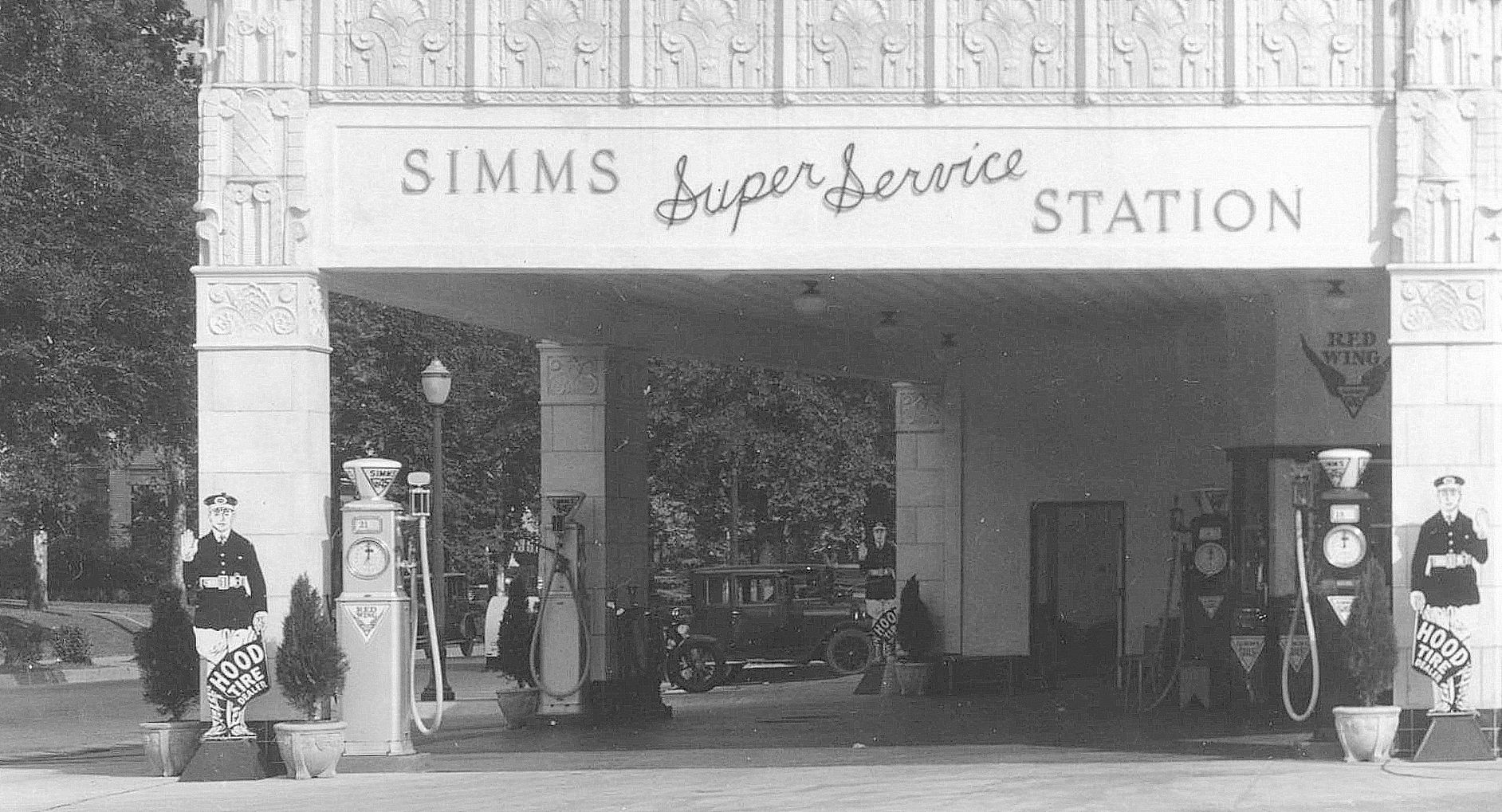
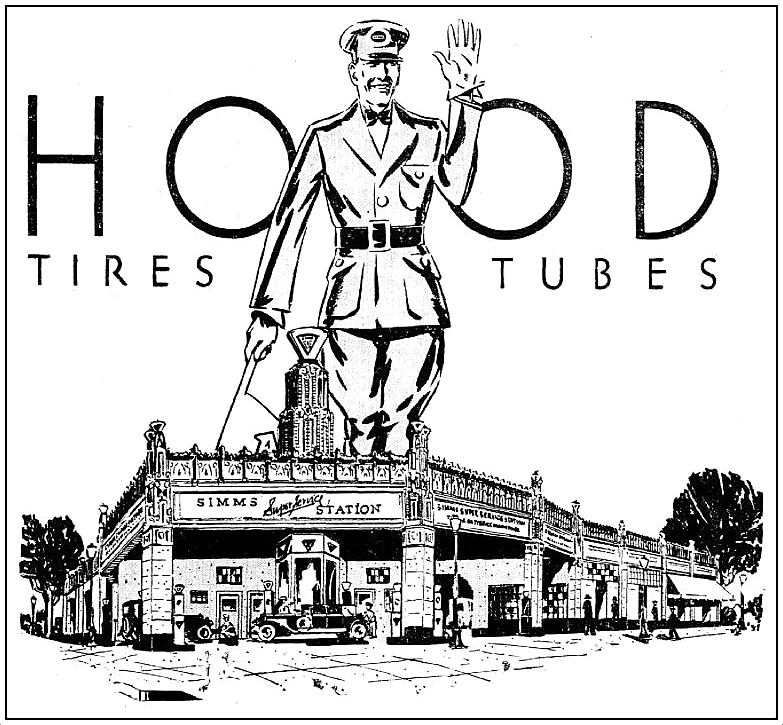
If you call yourself a “Super Service Station,” you’d better be pretty super. And the one in the photo above is pretty super. It opened in 1930 at the intersection of Cedar Springs and Maple (on the northernmost tip of the land now occupied by the Crescent).
Construction of the station and attached retail spaces was announced in 1929 by the Dallas-based Simms Oil Company (headquartered in the Magnolia Building, with a refinery on Eagle Ford Road in West Dallas) — it was reported that the impressive building would cost about $40,000 (about $615,000 in today’s money). It would be the 34th Simms service station in the city but it would be the first SUPER service station. Its grand opening at the end of April, 1930 was a big event, broadcast over KRLD radio, with singers, music, and flowers for the ladies. No business was conducted during the grand opening — it was strictly an open house, offering prospective customers the opportunity to walk among the gas pumps and admire what the company called “the last word in service station art.”
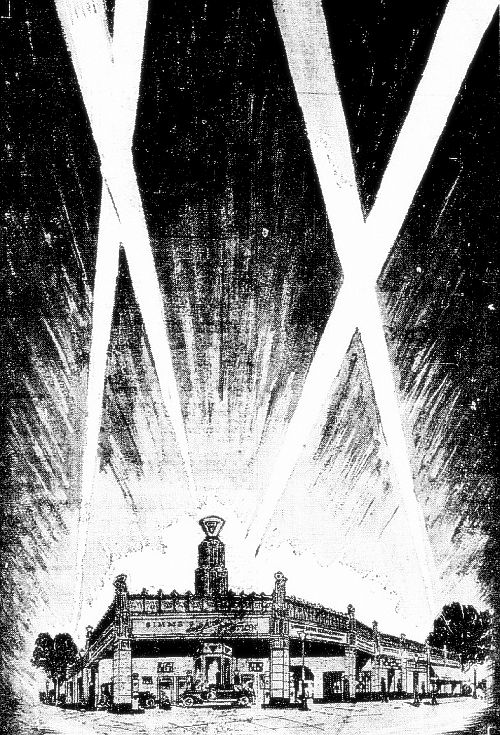
Detail from grand opening ad, April, 1930
The filling station will be equipped with ten electrically operated gasoline pumps. Every kind of automobile repairs and battery and tire vulcanizing service will be offered. (Dallas Morning News, Oct. 20, 1929)
The building is of terra cotta in modernistic design with the well-known Simms color scheme of blue, white and red used. […] On top of the structure is a beacon bearing the Simms triangle. It will revolve with flood lights playing on it all the while. (DMN, April 27, 1930)
I never think of businesses of that period being open 24 hours a day, but this one was. Super!
**
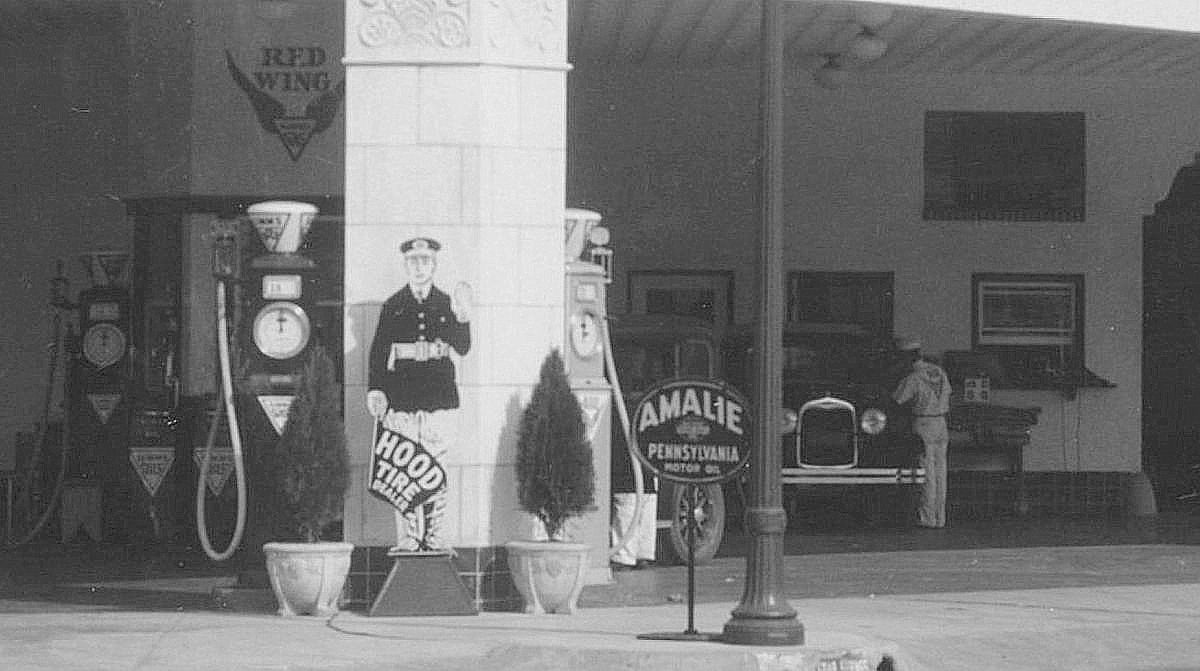
Here are a few zoomed-in close-ups of the top photo, which shows the Cedar Springs side of the building. (Click pictures to see larger images.)
At the left of this detail you can see a glimpse of Maple Avenue, which, at the time, was still lined with large, expensive homes.
*
In the shadows, a man who no doubt has prodigious vulcanizing skills.
*
In addition to housing a gas station, the building had 6 retail spaces — 3 on Maple and 3 on Cedar Springs. One of the businesses seen here places the date of this photo at 1930, when The Radio Shop was located at 2304 Cedar Springs (the next year it appears to have moved around to the Maple side of the building). Next to it is the Fishburn Oriental Cleaners at 2308 Cedar Springs. (The official address of the Simms station was 2623 Maple, but it was usually just listed as being at the southeast corner of Maple and Cedar Springs — after Simms, the building’s address was 2312 Cedar Springs.)
*
Here’s a close-up of the company truck and an easy-to-remember number when you needed to call for help with a broken-down vehicle.
And here it is in an ad. That motorcycle is cool. For some reason I really want that sidecar to be filled with sloshing gasoline.
Ad detail, Aug. 26, 1930
*
And here’s the revolving rooftop beacon. (What looks like a spray of water is just damage to the surface of the photograph.) (…But a fountain on top of a gas station would be pretty amazing.)
*
You know you’ve got a cool building if you can include an instantly recognizable line drawing of it in your ads.
Ad detail, June 3, 1930
*
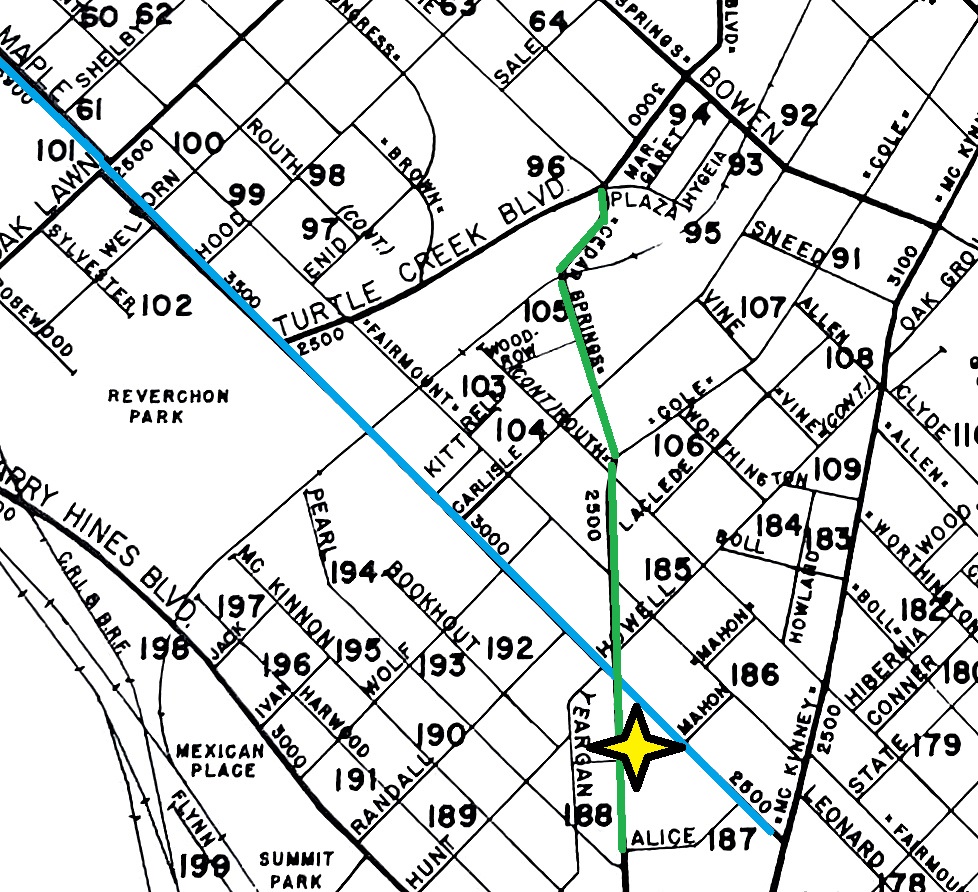
I think the company might have disappeared before the 1930s ended. Because this is the only “old” “modern” map I’ve got, here’s where the Simms gas station had been located, courtesy of a 1952 Mapsco.
Mapsco, 1952
*
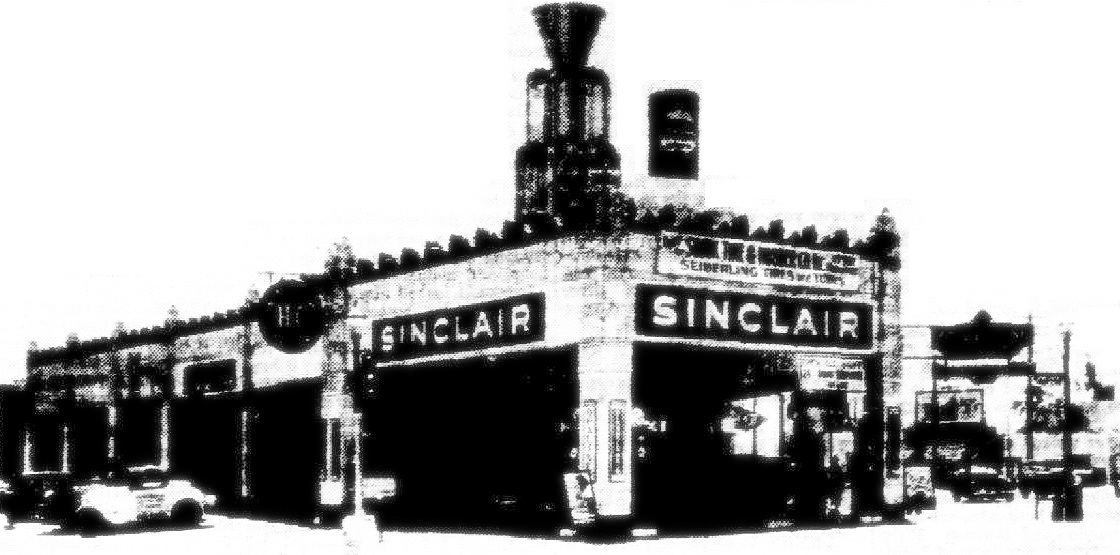
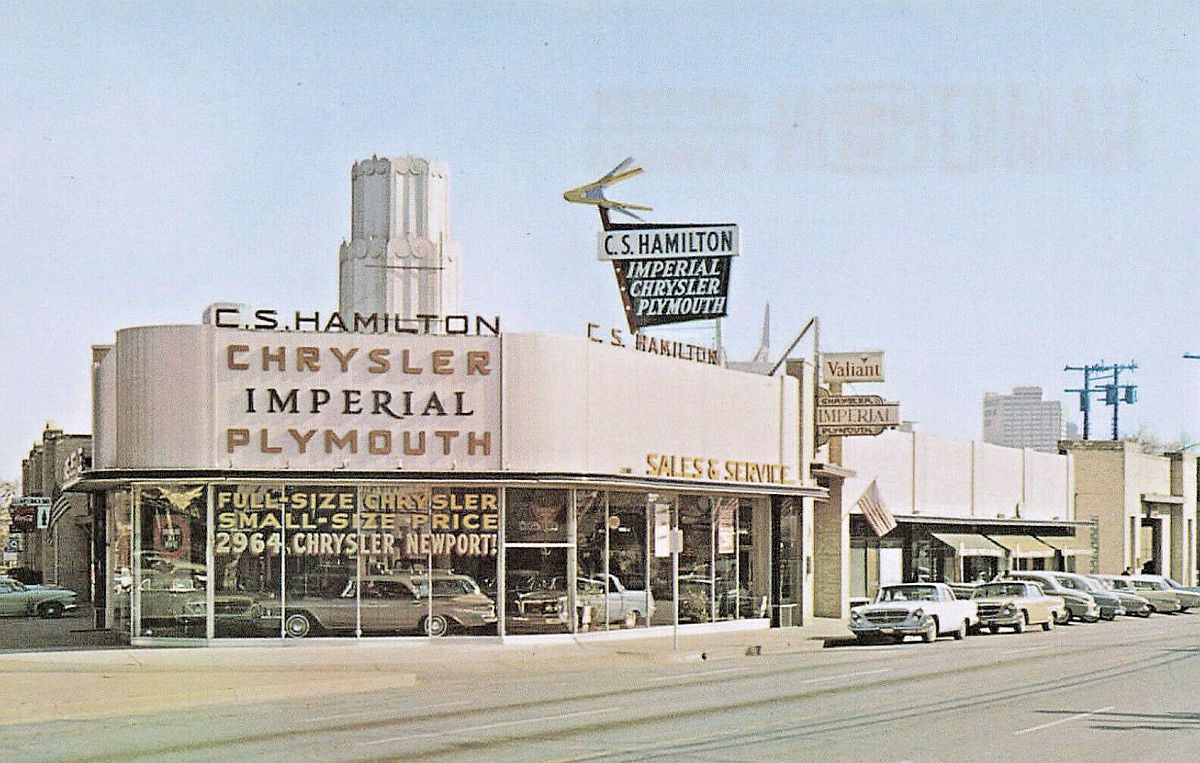
Here are a couple of later photos of the building, post-Simms. The first one is from a grainy Shook Tires ad from 1938. The color postcard is from the 1960s when it was the C. S. Hamilton Chrysler dealership. The beacon is still there but, surely, it was no longer beaconing (unlike the Republic Bank “rocket” seen in the background, which was beaconing big-time). (See below in the comments for a 1940s photo of the building.)
Shook Tires, 1938
C. S. Hamilton Chrysler, ca. 1962
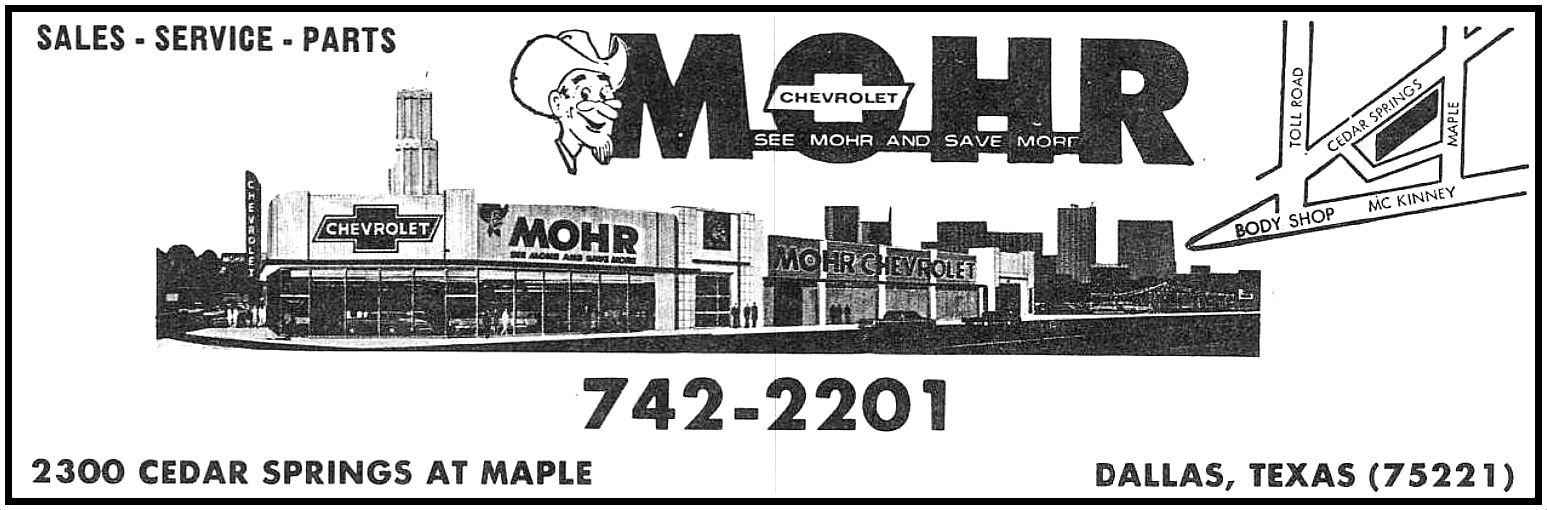
Mohr Chevrolet moved in around 1968.
1975 Dallas directory
***
Sources & Notes
Photo — titled “Simms Oil Station (Dallas, Tex.): exterior view of front entrance, corner perspective” — is from the Atlantic Terra Cotta Company Architectural records and photographs, 1914-1941, Architectural Terra Cotta, Alexander Architectural Archives, University of Texas Libraries, The University of Texas at Austin; more info can be found here.
If you’ve noticed I’ve been posting very, very little over the past few weeks, it’s because I’ve been dealing with medical issues of a family member, and it’s pretty much taken over my life at this point. I hope to get back to regular posting soon.
Here is a Dallas Chamber of Commerce ad from 1929 which pretty much tells you all you need to know about how the city of Dallas sees itself in the grand scheme of things. See another very booster-y ad from the same period in the Flashback Dallas post from 2015, “‘A City Built On the Solid Rock of Service’ — 1927.”
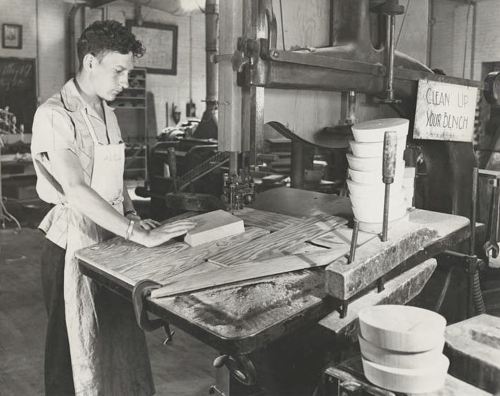
Take a look back at some of the incredible vocational opportunities once offered to Dallas high school students in the 2018 Flashback Dallas post “Crozier Technical High School — ca. 1946.” Enjoy all the great photos (one of which shows a girl in a sculpture class who looks so much like me that it kind of freaks me out every time I see it). (Incidentally, the “me” of 1946 would have had a huge crush on the woodworking guy of 1946. We could have made beautiful sculptures and/or pergolas together.)
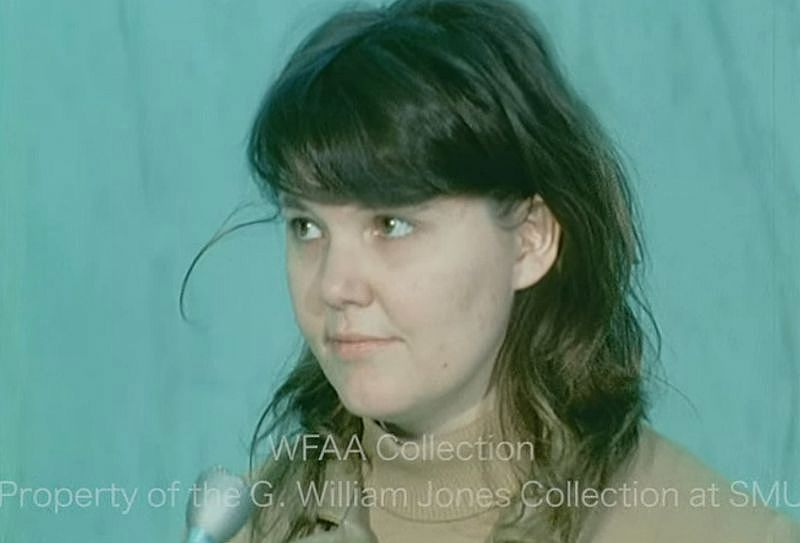
Linda Coffee, 27 years old, on her way to the Supreme Court to make history
by Paula Bosse
UPDATE 5/4/22: See a brand-new video interview with Linda Coffee — recorded yesterday in Lakewood — in which she responds to the leaked Supreme Court draft, here. Also, the companion Dallas Morning News article (paywall) is here.
**
The most important woman in the abortion rights fight is someone you’ve never heard of: LINDA COFFEE, the Dallas attorney who took the local case of Roe v. Wade from Dallas all the way to the U.S. Supreme Court in a successful battle to have the ban on abortion in Texas declared unconstitutional. She began the case when she was only 26 years old and less than two years out of UT Law School.
Coffee was the driving force of this landmark legal case from the very beginning but preferred to leave the limelight to her co-counsel, Sarah Weddington, who joined the team a short time after the case was underway. (Weddington, an Austin lawyer, was *also* only in her 20s!)
The image above is a screenshot of a 1970 television interview with Coffee in news footage from the WFAA archive, a treasure trove of historical film clips housed at SMU as part of the Hamon Arts Library’s G. William Jones Film & Video Collection (the WFAA archive is viewable on YouTube here, with additions being made all the time).
This rare, recently unearthed Channel 8 interview from June, 1970 has Coffee discussing the ramifications of her first win in the long legal journey which would ultimately end in victory in the U.S. Supreme Court. It is almost certainly her first TV interview. (Read the notes of the YouTube clip for the full description.)
*
My mother was involved in all sorts of women’s political groups in Dallas in the 1970s (and beyond). Meetings of various progressive political organizations and committees were often held at the First Unitarian Church on Preston Road in University Park (yes, University Park was an unlikely hotbed of activism!), and my mother knew Linda Coffee through these women’s groups. I had heard Linda’s name over the years but didn’t really know much about her until I came across this short Channel 8 interview. I’ve been working in these archives for SMU and wasn’t able to identify this unidentified woman but felt sure my mother would know who she was. I was talking to my mother on the phone trying to describe her: “I’m not sure who she is. She appears to be a lawyer, but she just looks too young and too… disheveled to be a lawyer. A little scroungy.”“Oh!” my mother said instantly, “Linda Coffee.” And she was right! She hadn’t even seen the footage.
I immediately loved Linda from my introduction to her in this footage. She’s earnest, confident, smart, pixie-ish, and she looks a little like a “real-person” version of Linda Ronstadt. I wonder if she ever imagined she would be responsible for one of the most famous legal cases of the 20th century?
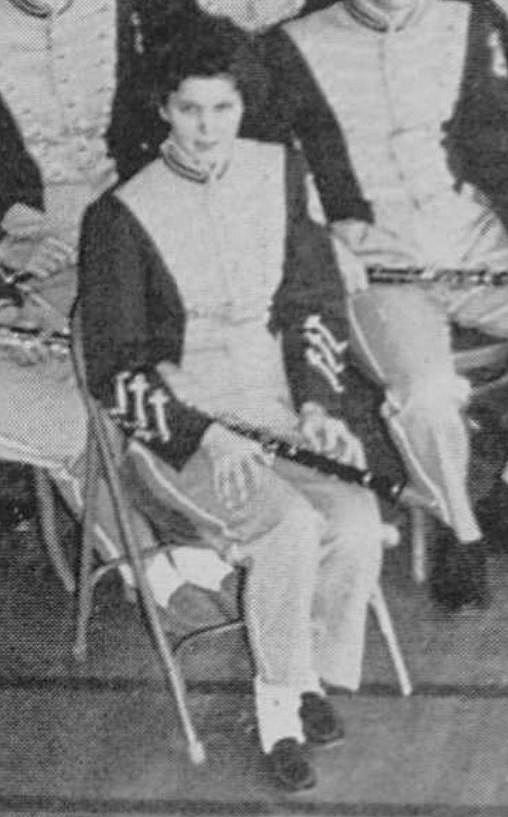
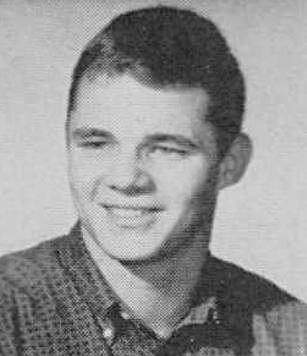
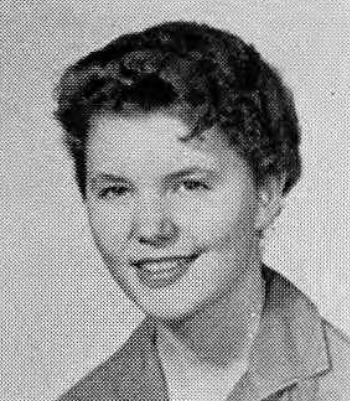
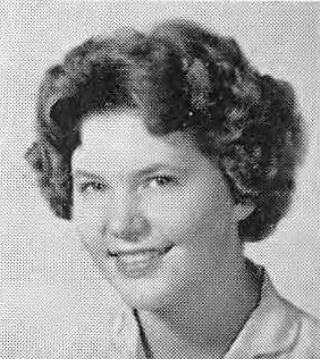
I decided to look into her background in Dallas, and I was pretty surprised to see that she grew up one street over from where I grew up (she lived in the 5700 block of Anita) and went to my East Dallas alma mater, Woodrow Wilson High School (she and musician Steve Miller were there at the same time, Class of 1961 — she was in the band, he was on the football team — wonder if they ever met?).
Linda Coffee, Woodrow band, 1961
Steve Miller, senior photo, 1961
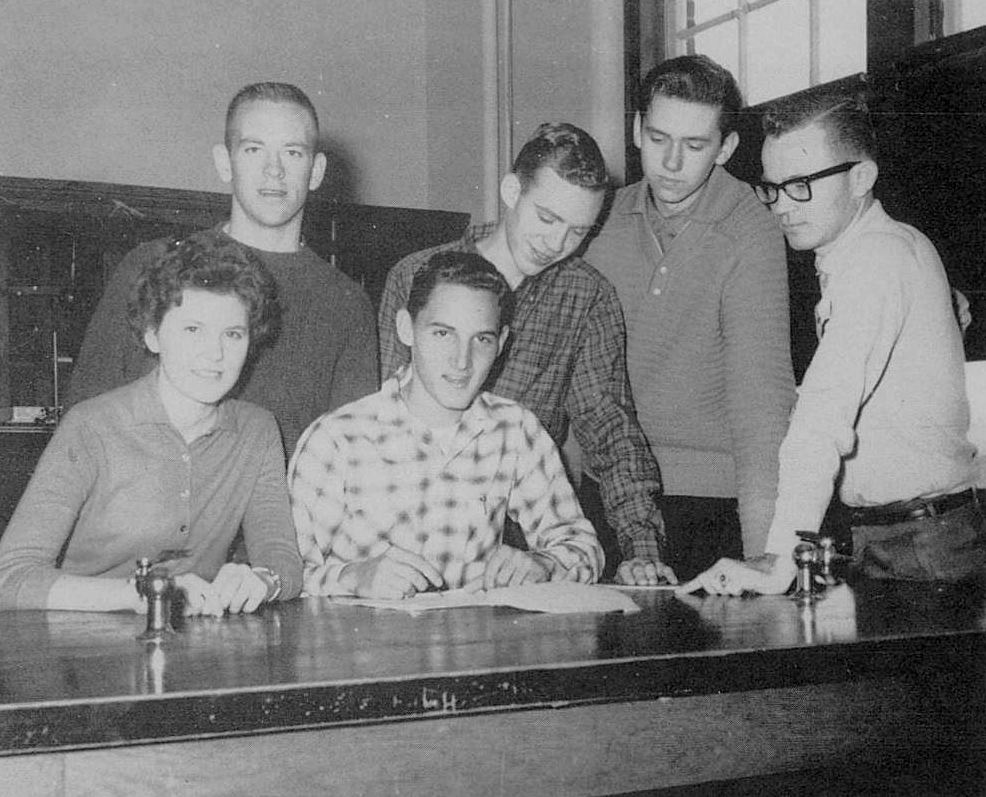
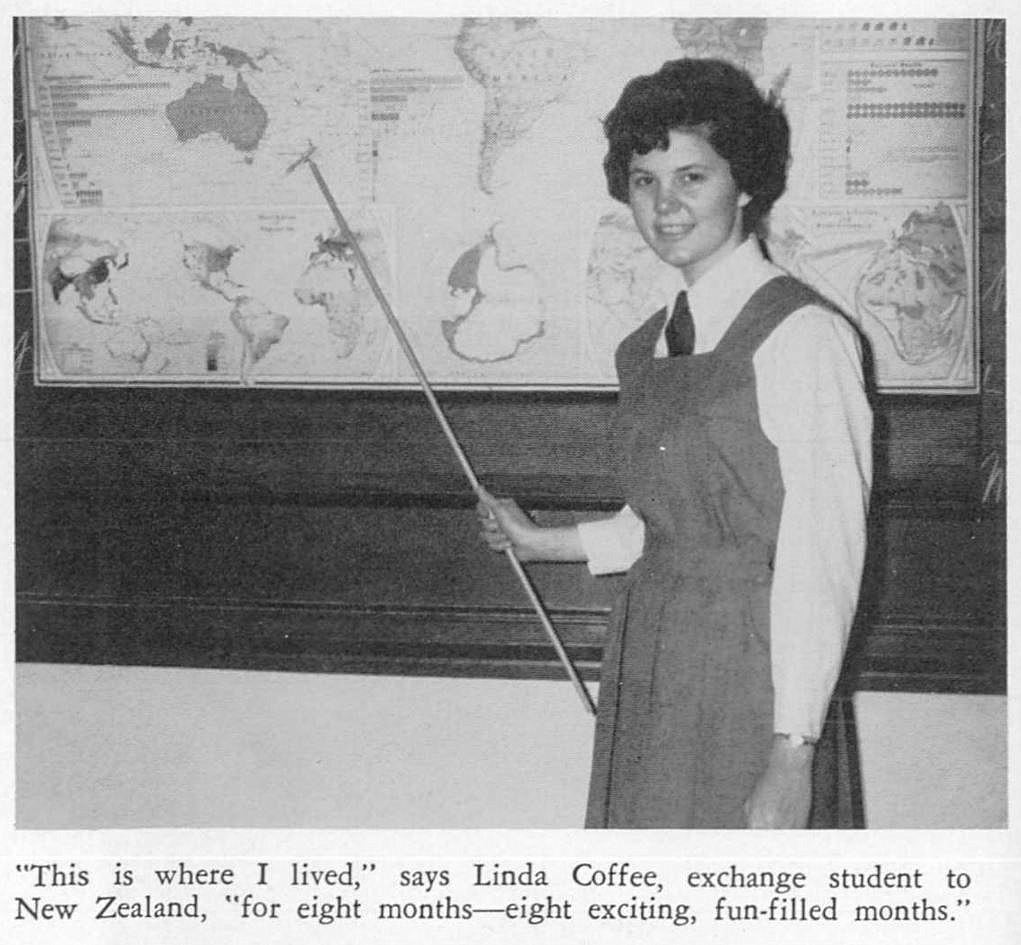
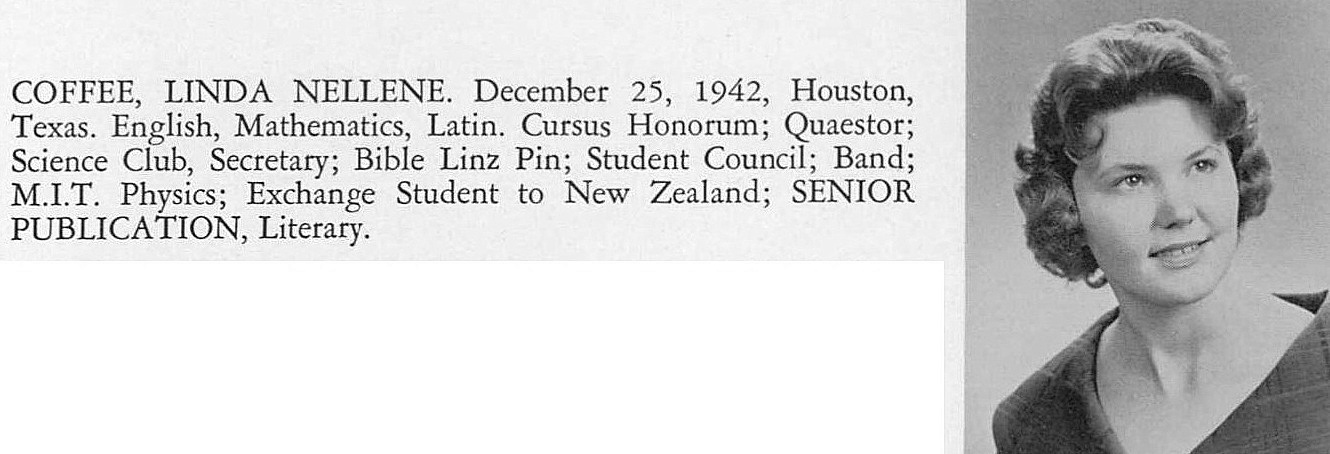
While we’re at it, here a few more photos of Linda Coffee in high school.
Linda Coffee, Woodrow sophomore, 1959
Linda Coffee, Woodrow junior, 1960
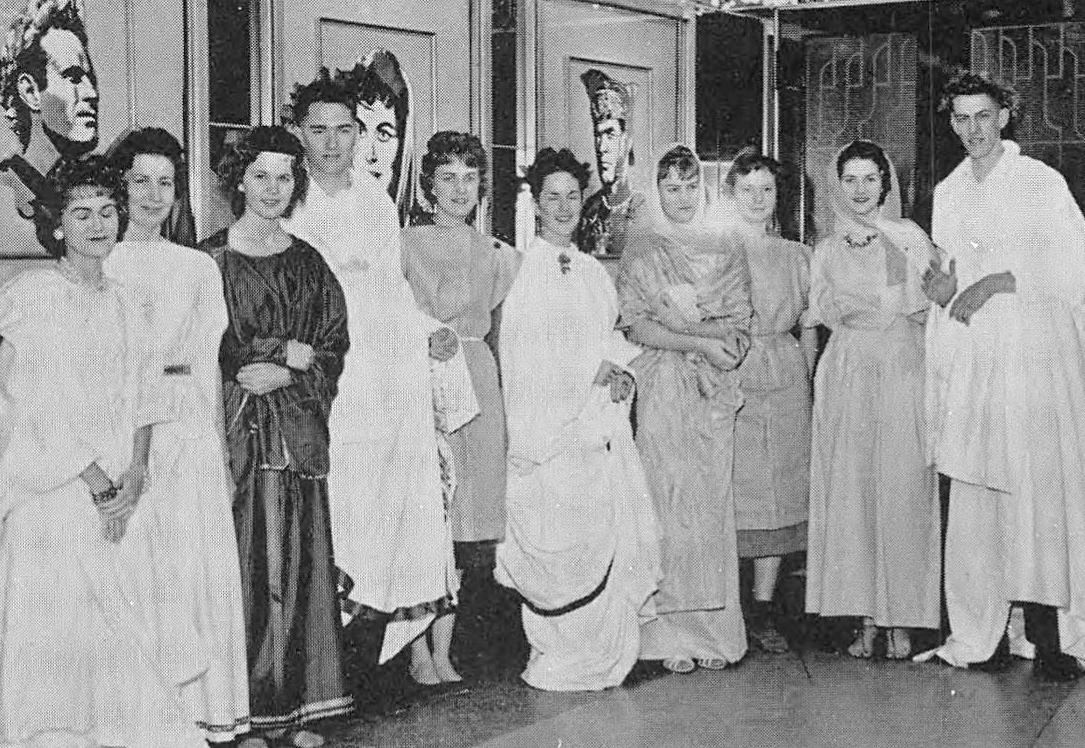
Linda (dark robe) with the Latin club, attending “Ben Hur” screening downtown, 1960
Linda and other officers of the Woodrow Science Club, 1961
Linda pointing to New Zealand, 1961
Linda Coffee, Woodrow Wilson High School, senior photo, 1961
She apparently excelled at everything and had a wide range of interests.
After graduating from Woodrow, she went to RIce University where she majored in German, then went on to law school at the University of Texas where she passed the Texas bar exam with the second highest score in the class. After becoming a lawyer, she was a law clerk in Dallas for District Judge Sarah T. Hughes (she and another female clerk were profiled in a 1968 Dallas Morning News article which carried the unfortunate headline, “The Law Clerks Are Girls”). It wasn’t long after this that she began working on a case to challenge the constitutionality of a vague Texas law which banned abortions. In January, 1973, Linda Coffee and co-counsel Sarah Weddington won their case in the U.S. Supreme Court. Linda had just turned 30.
I would highly recommend (and I mean HIGHLY RECOMMEND) the Vanity Fair profile of Linda Coffee written by Joshua Prager titled “Roe v. Wade’s Secret Heroine Tells Her Story.” Reading this when I knew virtually nothing about Linda made me want to know more about her and made me want to share her story with as many people as possible. How is it that this lawyer who has had such a massively important impact on modern life (especially women’s lives) isn’t a household name? Prager’s article tells you why. Joshua Prager has expanded this article to a full book concerning the Roe case which will be published in a couple of weeks: The Family Roe, An American Story.With the current news of the newly implemented controversial legislation by the State of Texas, this book could not possibly be more timely.
*
Thank you, Linda. Thank you, Sarah.
**
UPDATE, Dec. 16, 2021: Watch the interview with Linda Coffee by The Dallas Morning News, conducted on Dec. 9, 2021 at Linda’s home in Mineola. Read the companion DMN article here (article may require a subscription to view).
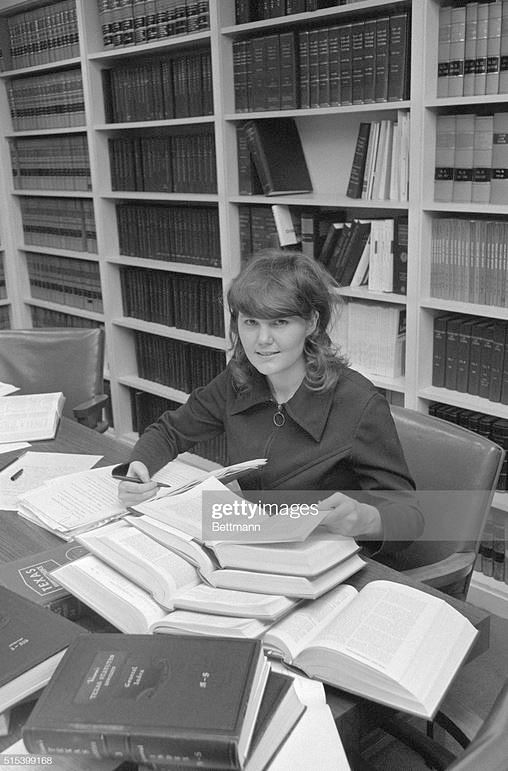
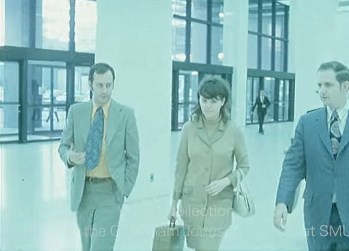
Update, June 25, 2022: Another short snippet (silent) of Linda Coffee has popped up in the WFAA archives. She is seen walking through the Dallas County Courthouse on Jan. 20, 1972, talking to WFAA reporter Phil Reynolds (she was working as an attorney on a case unrelated to Roe v. Wade). A screenshot is below — the pertinent footage begins at 21:21 here.
Jan. 20, 1972
***
Sources & Notes
Top image is a screenshot of a June, 1970 interview of Linda Coffee conducted by Channel 8 reporter Phil Reynolds; this interview can be seen on YouTube here (from the WFAA archive, G. William Jones Film & Video Collection, Hamon Arts Library, Southern Methodist University). Bottom image is from a WFAA clip from December, 1971 here.
All high school-era photos of Linda Coffee are from various editions of The Crusader, the yearbook of Woodrow Wilson High School.
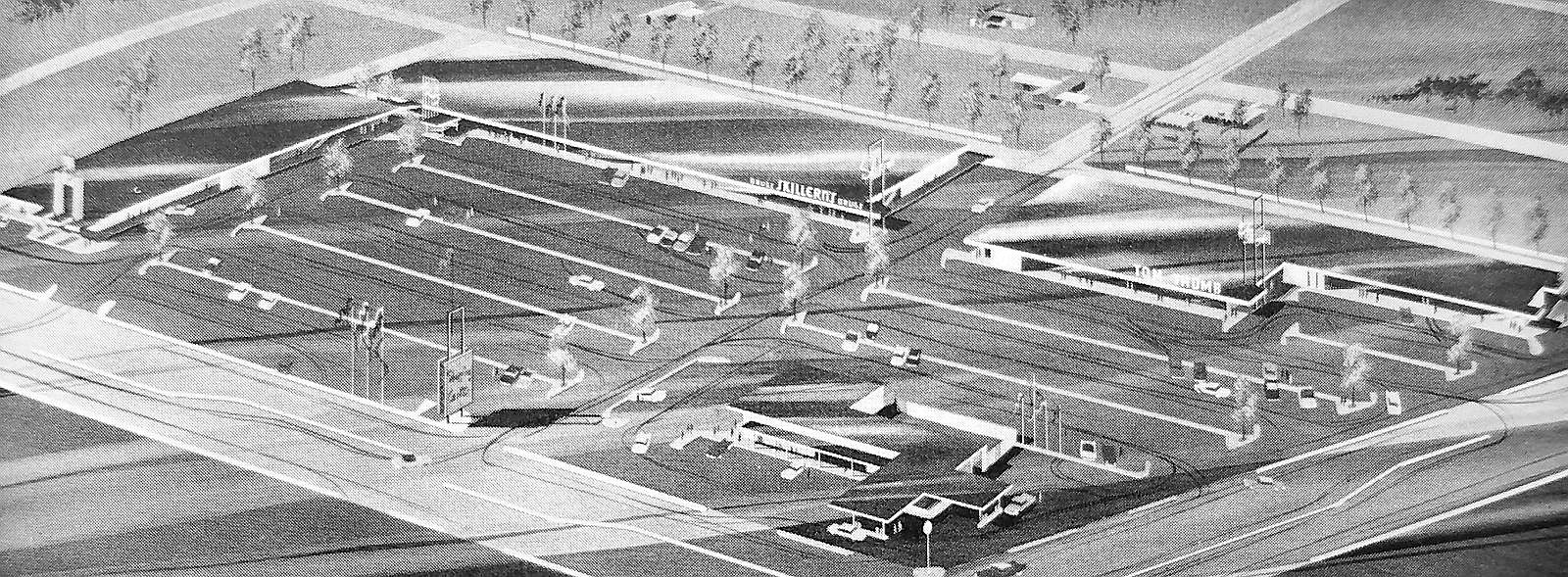
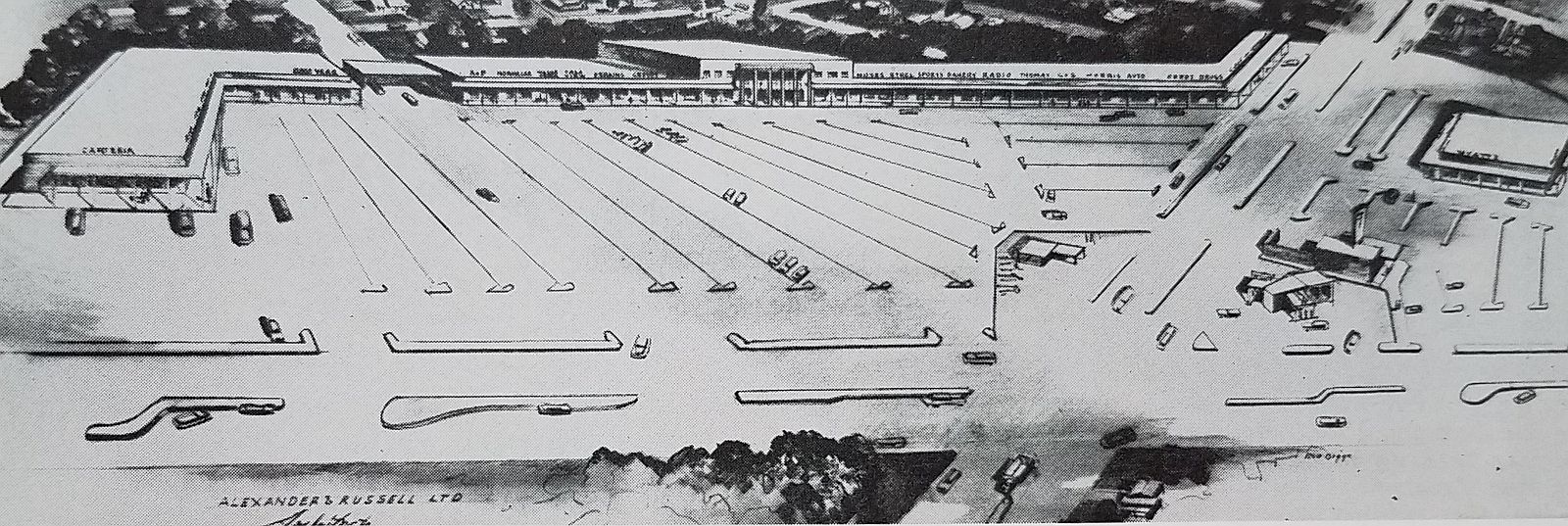
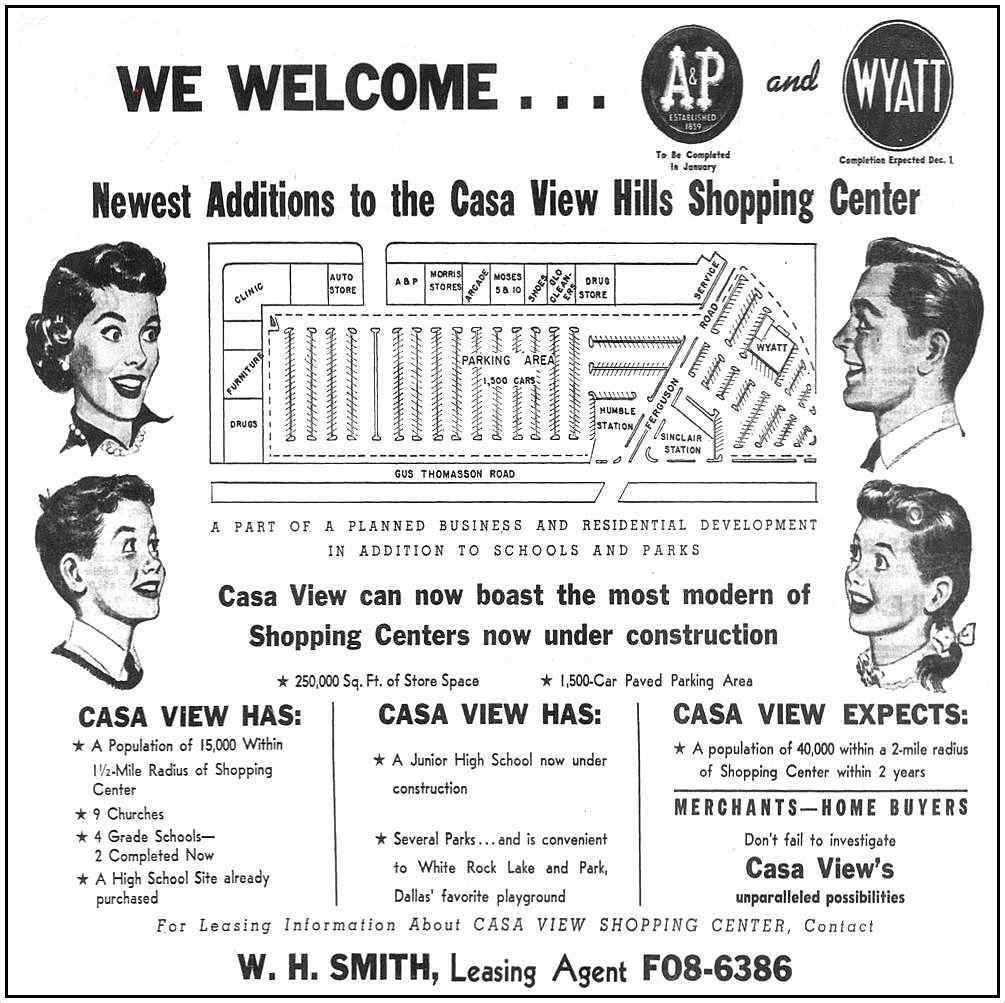
I wrote about the rather confusing history of the shopping center in Casa View at Gus Thomasson and Ferguson in the post “Shopping at Sears in Casa View” — so this is something of a companion, showing architectural drawings (mostly parking spaces, but, still…). The original shopping center was called, somewhat whimsically, Casa View Hills, which opened in 1953 (the drawing seen below). In 1955, the center was bought by new owners who changed the name to Casa View Village and immediately began the second phase of construction (seen above), which expanded the center across Gus Thomasson (…I think).
Built as Casa View Hills (1953), w/ new 2-story addition (1955)
Caption of the drawing immediately above:
INSURANCE COMPANY BUYS SHOPPING CENTER The $2,500,000 Casa View Hills Shopping Center has been acquired by the Lone Star Life Insurance Company for its home office property and general headquarters. The center, located on Gus Thomasson and Ferguson Roads in the northeast section of Dallas, is virtually completed except for final finishing on the two-story office building which will house the insurance company. W. H. Smith, president of the company, said the property was purchased from Clark and Smith, General Contractors. [Alexander and Russell, architects.] (“Dallas” magazine, March, 1955)
Oct. 4, 1953
The caption for the very top image, showing the planned expansion:
CONSTRUCTION OF NEW CENTER STARTS JUNE 1 Construction of Casa View Village, a new shopping center at the intersection of Gus Thomasson and Ferguson Roads east of White Rock Lake, is scheduled to begin June 1, it has been announced by Avery Mays, Dallas real estate developer. Valued at $1,500,000, the 9-acre tract includes a 100,000 square foot building area which will include a Tom Thumb Super Market, Skillerns Drug Store and other stores and offices. Harwood K. Smith and Joseph M. Mills are the architects; Phillips, Proctor and Bowers, the land planners; and H. W. Meador Company, the leasing agent. (“Dallas” magazine, April, 1955)
***
Sources & Notes
Architectural drawings and quoted text from Dallas magazine, March, 1955 and April, 1955.

 Dallas News HQ, 1890s

















 Jan. 20, 1972

 Flashback : Dallas