Flashback : Dallas

A Miscellany: History, Ads, Pop Culture

Tag: Dallas TX

Fred Caropresi’s Mid-Century-Modern Illustrations for SMU’s 1951 Yearbook

smu_1951-yrbk_people-places_caropresiLife on the SMU quad, 1951… (click to see larger image)

by Paula Bosse

I’m not sure why I happened across the artwork of Fred Caropresi (1921-1985), but I must have been looking for something in the 1951 SMU yearbook, The Rotunda — Caropresi’s work is all over it! Caropresi (or as he was known to fellow students, “Freddy”) had attended SMU in the 1940s, before and after World War II. His degree was in mechanical engineering, but after the war, he returned to study art as a grad student and eventually opened his own advertising firm in Pittsburgh, Pennsylvania.

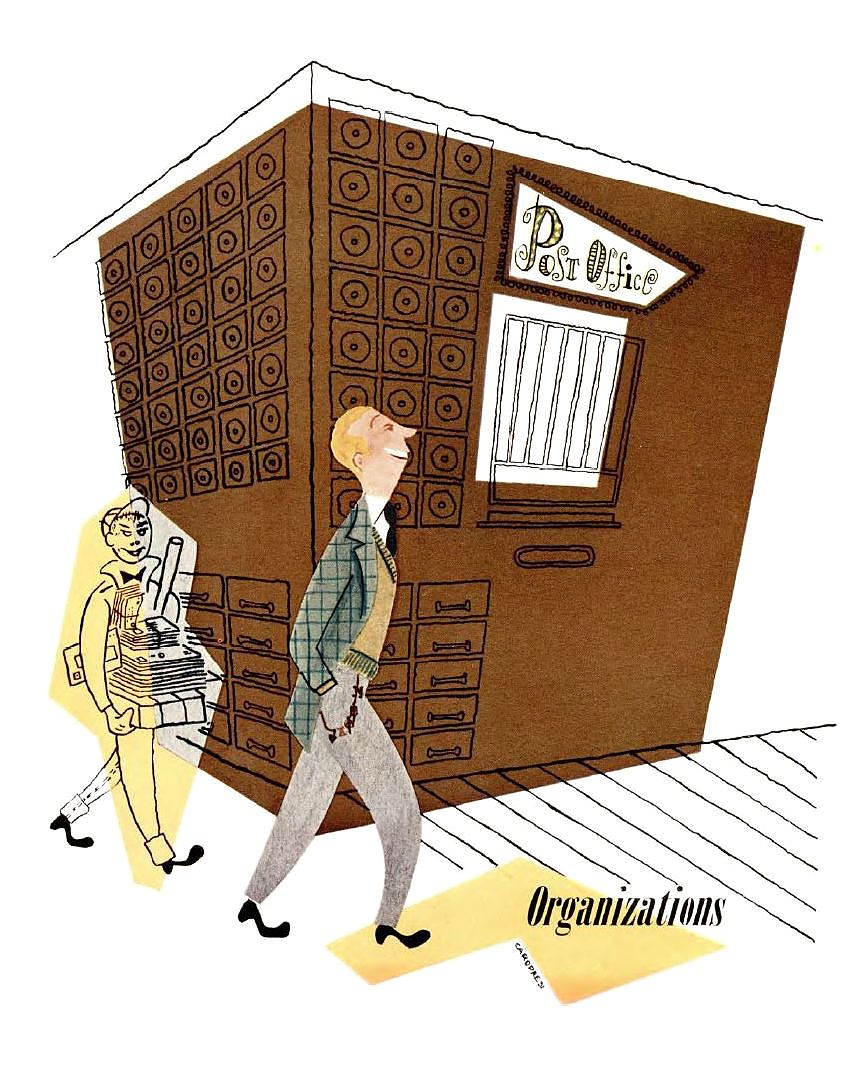
Below are some examples of his work from the 1951 SMU annual — his drawings are reminiscent of the silkscreen process with their off-kilter, off-register areas of flat vibrant color. This type of 1950s “mid-century modern” commercial art is definitely one of my personal favorites. 

Here they are (click pictures to see larger images).

Peppy Mustangs:
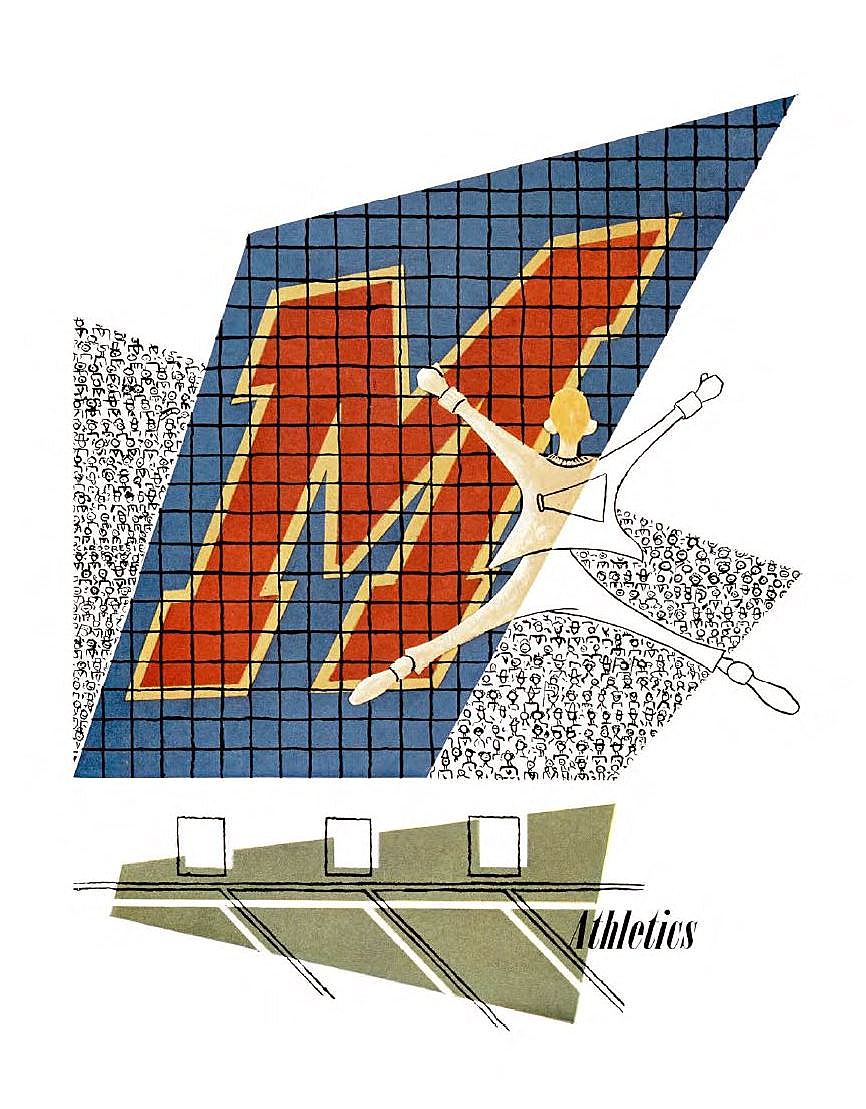
smu_1951-yrbk_athletics_caropresi

The packed “Hi-Park SMU” streetcar (which ran along Hillcrest  — see a photo here):
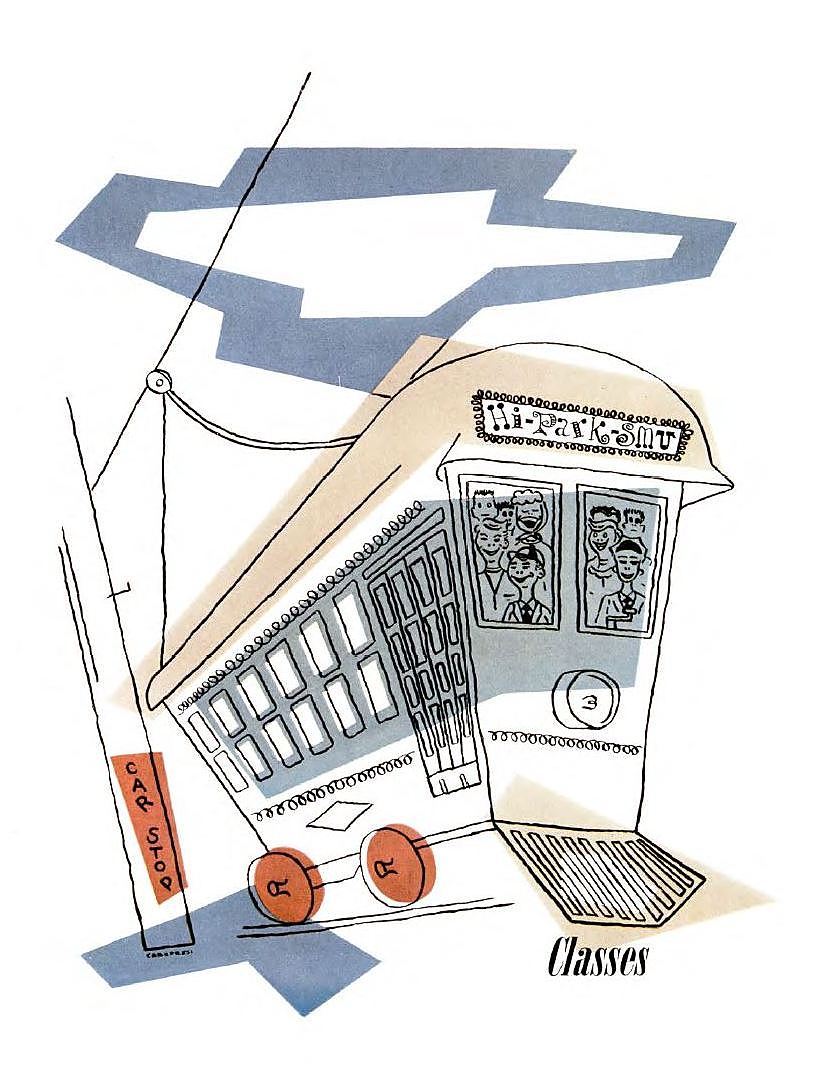
smu_1951-yrbk_classes_caropresi

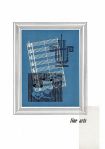
Bulletin board — pipes and the Arden Club:

smu_1951-yrbk_activities_caropresi

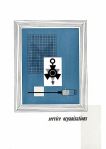
Post office (this is great — I’d love to see a photo of the real thing:
smu_1951-yrbk_organizations_caropresi

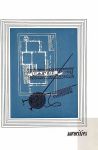
Relaxing with a drink and TV:

smu_1951-yrbk_personalities_caropresi

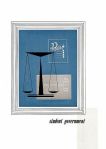
Cokes al fresco and another college boy smoking a pipe:

smu_1951-yrbk_pictorial_caropresi

The drawings below — also from the 1951 Rotunda — show a completely different style. The first one (“Beauties”) is fantastic. (Click a thumbnail image to open a slideshow.)

Like I said, Caropresi’s work was ALL OVER the 1951 Rotunda!

varsity-fight-song_smu-yrbk_1951

*

New York native Frederick V. Caropresi (1921-1985) grew up in the Bronx with his parents (his father, a pharmacist, had immigrated from Italy), his grandmother, and his older brother Gregory. For some reason both Fred and Greg decided to attend SMU in Dallas. Fred originally studied mechanical engineering, receiving his degree in 1944. He returned to Dallas after his service in the navy during World War II, and took post-graduate art courses. He was busy around Dallas as a both a fine artist (his first one-man show was in 1952) and as a very busy commercial artist, working in local theater, industrial design, and advertising. He was an active president of the Dallas Print Society in the early 1950s, at the same time he was designing college yearbooks. He left Dallas in the 1950s and settled in a suburb of Pittsburgh where he established his own advertising agency. I hope he continued his own art, because I’m a fan.
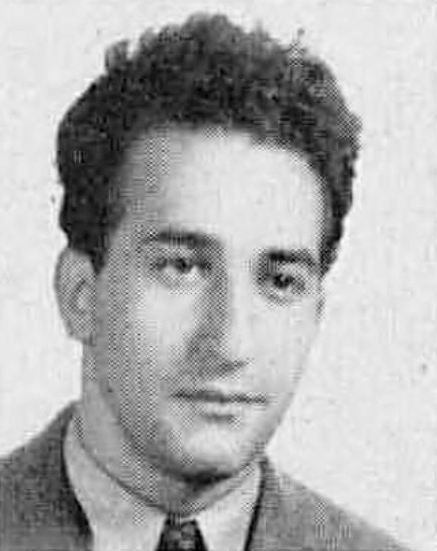
caropresi_fred_smu-1942Fred Caropresi, 1942, SMU yearbook photo

He is represented in the collection of the Dallas Museum of Art with this silkscreen/serigraph, a view of Reims Cathedral from about 1948.

caropresi-frederick_reims-cathedral_DMA_1948
Dallas Museum of Art

Fred Caropresi died in in 1985 in North Hills, Pennsylvania.

caropresi_news-record_north-hills-pennsylvania_040285_OBIT
North Hills (PA) News Record, April 2, 1985

Thank you, Fred.
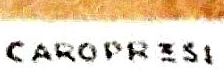
caropresi-sig_1951

***

Sources & Notes

All artwork by Frederick V. Caropresi from the 1951 edition of SMU’s yearbook, The Rotunda, is from the Southern Methodist University Yearbooks collection, DeGolyer Library, Central University Libraries, SMU; all editions are fully downloadable in PDFs, here.
caropresi_1951-rotunda

The silkscreen print “Reims Cathedral” (23/30, signed “F. V. Caropresi”) is from the collection of the Dallas Museum of Art; a Dallas Art Association purchase, it was accessioned in 1948.

All images are larger when clicked.

*

Copyright © 2018 Paula Bosse. All Rights Reserved.
 

“A Glimpse of Dallas” — ca. 1909

postcard_charles-e-arnoldCommerce Street, looking west from St. Paul…

by Paula Bosse

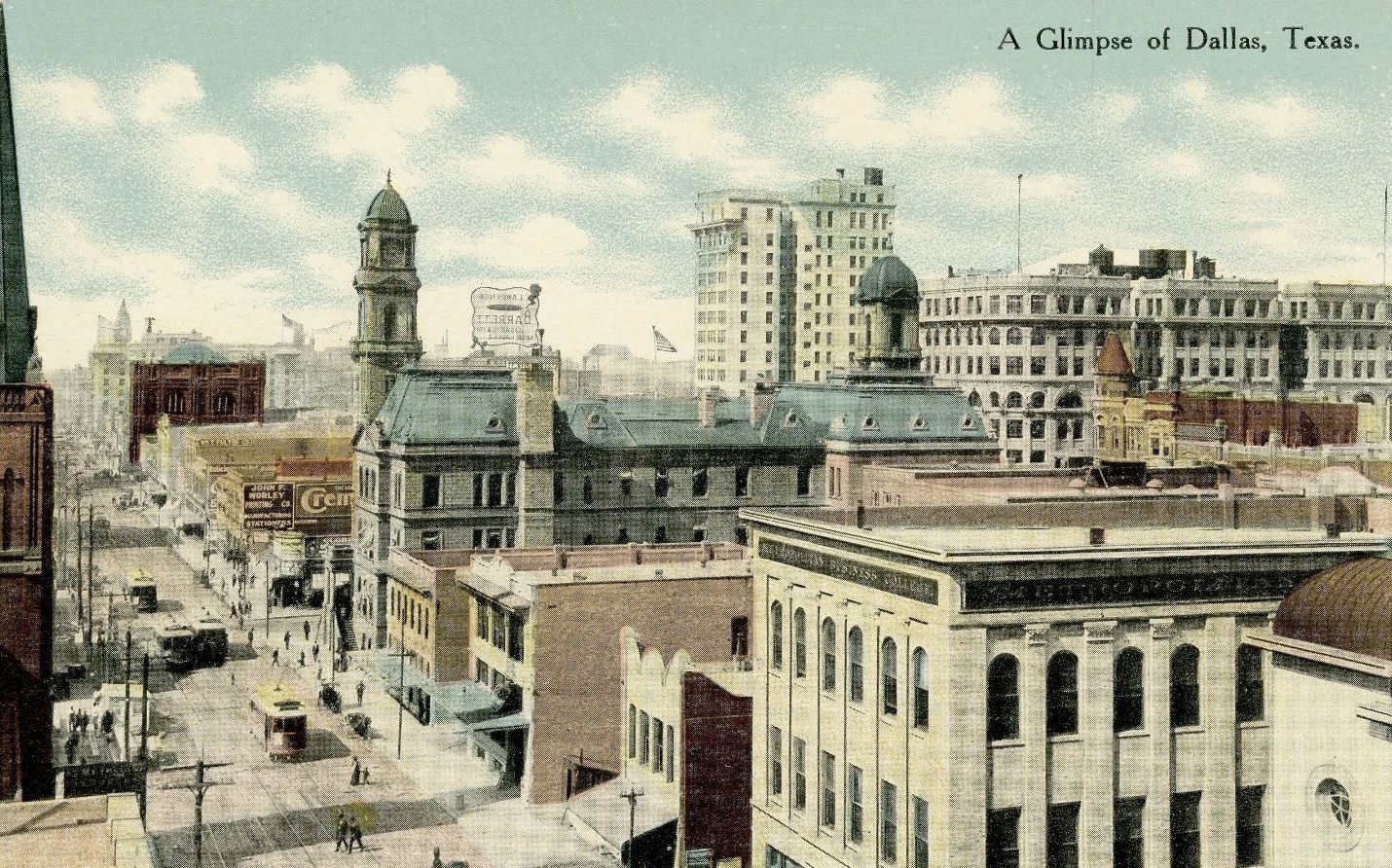
This very attractive postcard shows a growing downtown Dallas, looking west from Commerce and St. Paul, photographed by Charles E. Arnold from the YMCA building (which once sat in the block now occupied by the Statler). The Wilson Building can be seen at the top right, the Praetorian Building (then the tallest building in the city) is to its left, and the Post Office and Federal Building is in the center. The photo was probably taken in 1909 or 1910 (the Praetorian was completed in 1908 and the Adolphus Hotel (not seen in this postcard) was under construction in 1911.

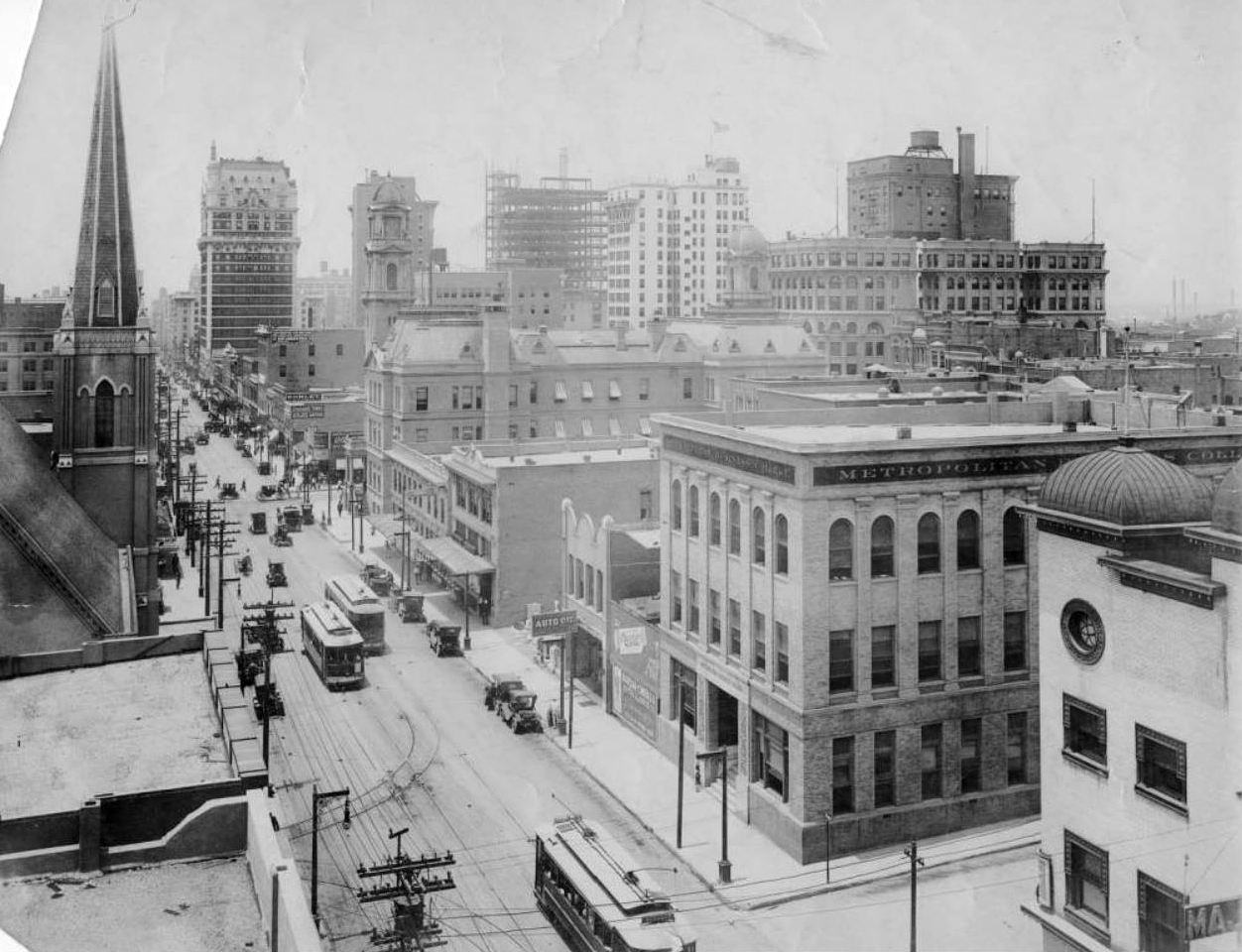
The photo below, taken by Jno. J. Johnson from the exact same vantage point, shows the many changes to the skyline which happened over a very short span of time. The photo below is from about 1913.

new-skyline_c1912_degolyer_smuvia DeGolyer Library, SMU

I zoomed in on this photo in a previous post, “Horses, Carriages, Horseless Carriages: Commerce Street — 1913,” here.

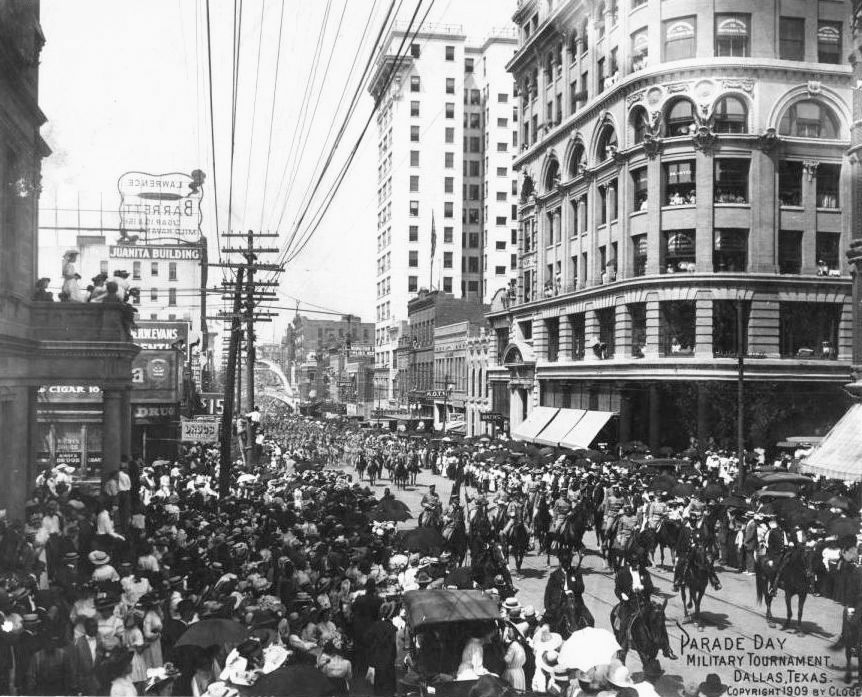
The large “Barrett Cigar” sign seen in the top postcard image is also visible in a 1909 photo by Clogenson, below — it can be seen at the left, atop the Juanita Building on Main Street, opposite the Praetorian.

parade-day_1909_clogenson_degolyervia DeGolyer Library, SMU

I zoomed in on this photo in the post “Parade Day — 1909,” here.

This was the beginning of staggering growth for Dallas, and new skyscrapers seemed to be going up every month.

***

Sources & Notes

I came across the postcard image a couple of years ago — I noted that the photographer was C. E. Arnold, but I did not note the source.

The two photos are from the DeGolyer Library, Central University Libraries, Southern Methodist University; further information on each photo can be found at the links posted immediately below the images.

All images are larger when clicked.

*

Copyright © 2018 Paula Bosse. All Rights Reserved.
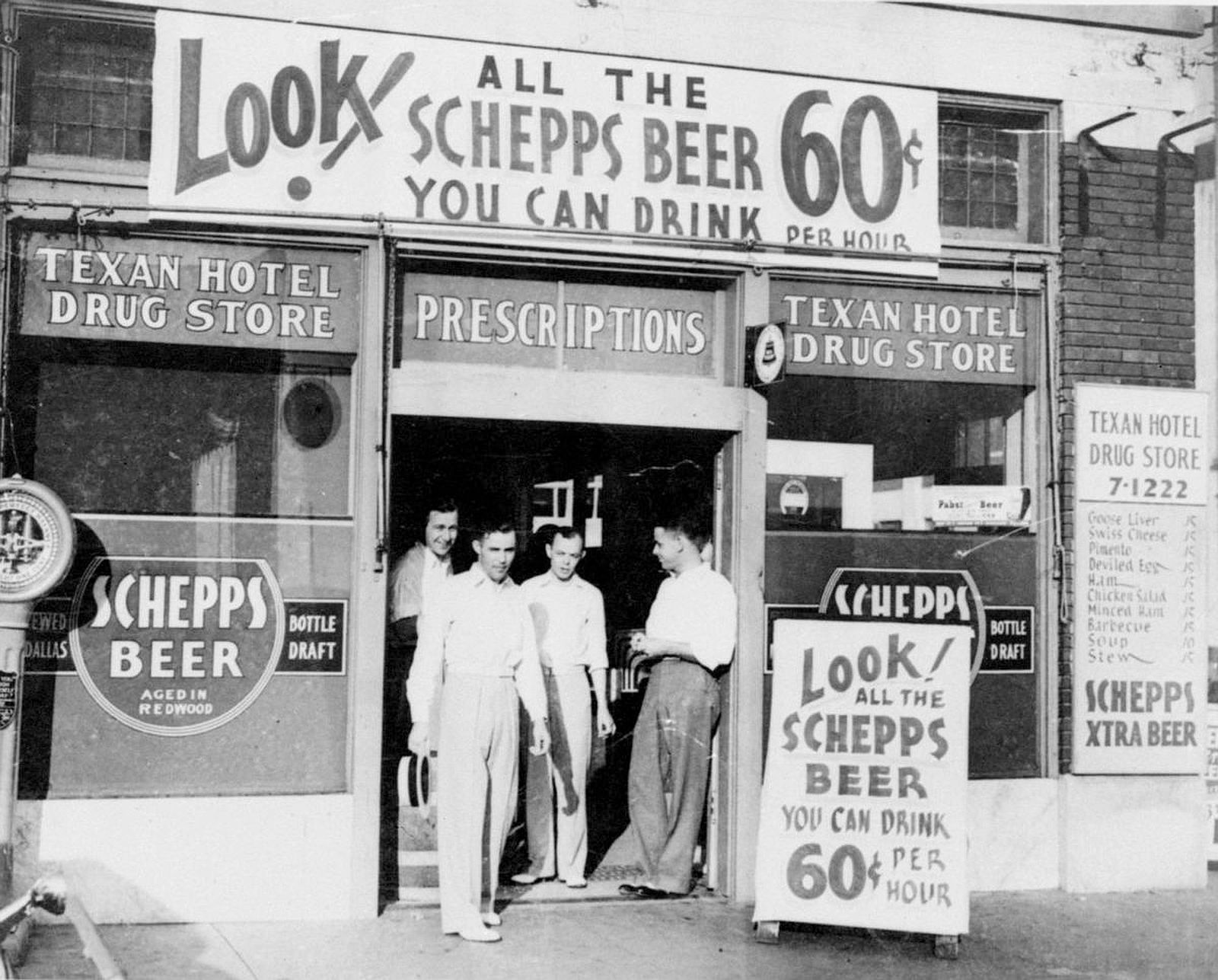
“All the Beer You Can Drink In an Hour For 60 Cents” — 1935

beer_60-cents_AP_1935LOOK!

by Paula Bosse

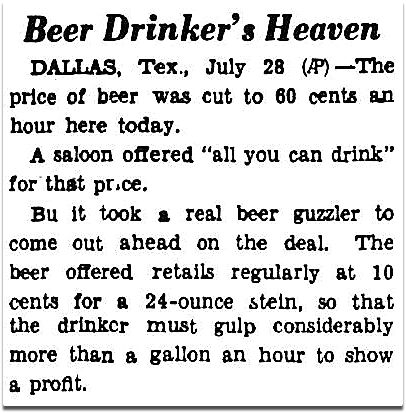
Summertime in Big D. It’s hot. REAL hot. For some, the only way to properly slake that nagging thirst is with a tall frosty mug of beer. In the summer of 1935, the management of the Texan Hotel Drug Store (at the northeast corner of S. Houston and Jackson streets) decided to offer a headline-grabbing promotion: “ALL THE SCHEPPS BEER YOU CAN DRINK: 60¢ PER HOUR!” (60¢ in 1935 would be the equivalent of about $11.00 today.) Sounds like a bargain, right? Maybe. Depends on your constitution — it meant that you would have to consume over a gallon of beer in one hour to save any money. (Not a problem for some, I realize.)

This made national news — there’s even newsreel footage. The photo above is from an AP wire story, accompanied by this caption: “A Dallas beer parlor offered ‘all the beer you can drink’ for 60 cents an hour. There were plenty of takers, but the proprietor said none had beaten him. The drinker would have to consume more than nine pints an hour to show a profit.”

beer_scranton-PA-repubican_072935
Scranton (PA) Republican, July 29, 1935

Speaking of newsreel footage, you can watch it here. As you can see, there certainly were a lot of very enthusiastic Dallas beer-drinkers doing their very best to surpass that gallon hurdle in order to feel they’d spent their money (and their hour) wisely.

Ah, back when you could guzzle beer in a drugstore. (Several drugstores that same year — including this one — were routinely getting busted for selling illicit whiskey.)

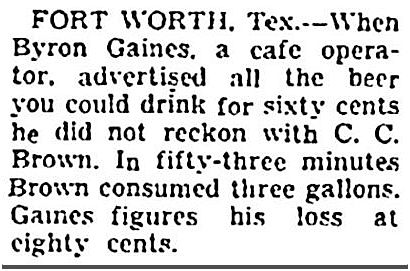
The promotion appears to have been a hit, both publicity-wise and beer-sales-wise. The Dallas proprietor said no drinker had managed to come out ahead, but in Fort Worth, men appear to be made of stronger stuff. Cafe operator Byron Gaines hadn’t anticipated Chauncey C. Brown, a hops-loving patron described as “heavy-set” and “amiable.”

beer_FW_olean-NY-times-herald_081235Olean (NY) Times Herald, Aug. 12, 1935

According to United Press reports (this made national news, too), Brown took 58 minutes (rather than 53), but that “seven minutes of that time was spent in playing a slot machine.” It’s good to have hobbies.

***

Sources & Notes

AP photo, taken in July 1935, from the Press of Atlantic City site, here

Newsreel footage is from Critical Past (and can be purchased), here.

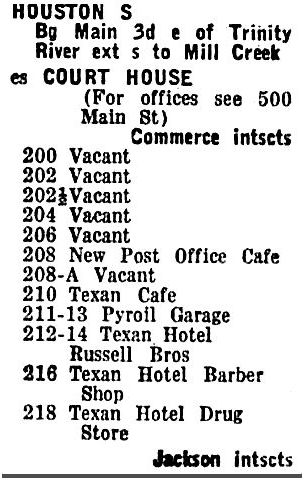
The Texan Hotel Drug Store was located at 218 S. Houston St. (northeast corner of Houston and Jackson) — see what the corner looks like today, here.

texan-hotel_south-houston_1936-directory
1936 Dallas directory

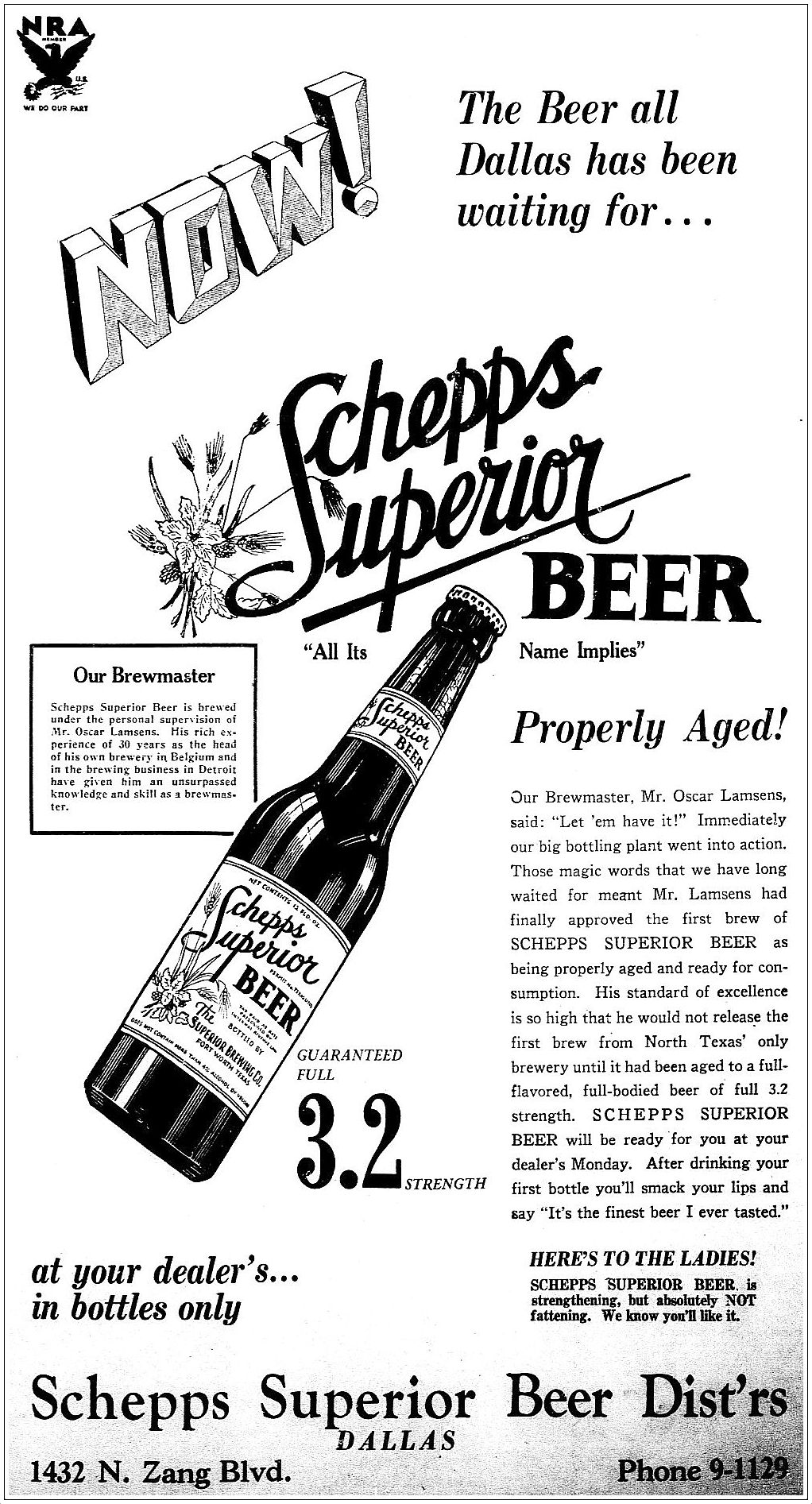
And … Schepps Beer? I was familiar with Schepps dairies, but not a Schepps brewery. But, yes, the same Schepps family produced highly guzzleable beer. The Schepps Brewing Co. launched in 1933 and lasted into the early ’40s; their downtown brewery was located on Young Street, about where the current City Hall/Convention Center now stand. (Schepps Beer was founded by brothers Julius Schepps and George Schepps, sons of pioneer Dallas baker Joe Schepps, whose Schepps Bakery was a highly profitable business. Joe’s brother Nathan Schepps joined his brother in Dallas about 1912 and started his Schepps Dairy by following his brother’s bakery wagons with his dairy wagon and selling his products to his brother’s customers. So even though it’s not a DIRECT family link, it’s pretty close: Julius and George Schepps were the  nephews of the founder of the very long-lived Schepps Dairy. ALSO, their sister, Rebecca Schepps, married Carl Metzger, son of another Dallas dairy titan, Jake Metzger. So the beer guys had close ties to two of the largest local dairies.)

Read a very entertaining interview with George Schepps in the September 1981 D Magazine article “Uncle George” by Connie Durham, here (scroll down for his memories of Schepps Beer).

Scheppps Xtra Light Lager (“light” meaning a light lager, not a beer low in calories) made a brief return to Dallas shelves in 1978 when the Julius Schepps Wholesale Liquor Co. brought it back; it was brewed at the Spoetzl Brewery in Shiner and was sold in “shortnex” bottles (stubby non-longnecks). More can be found in the Dallas Morning News article “Dallas Firm Bottles Touch of Nostalgia” by Dennis Fulton (DMN, July 9, 1978).

(Click pictures and articles to see larger images.)

schepps-beer_nov-1933Nov. 1933

schepps-beer_aug-1934Aug. 1934

schepps-beer-bottle-cap

*

Copyright © 2018 Paula Bosse. All Rights Reserved.
NAACP Southwest Conference in Dallas — 1950

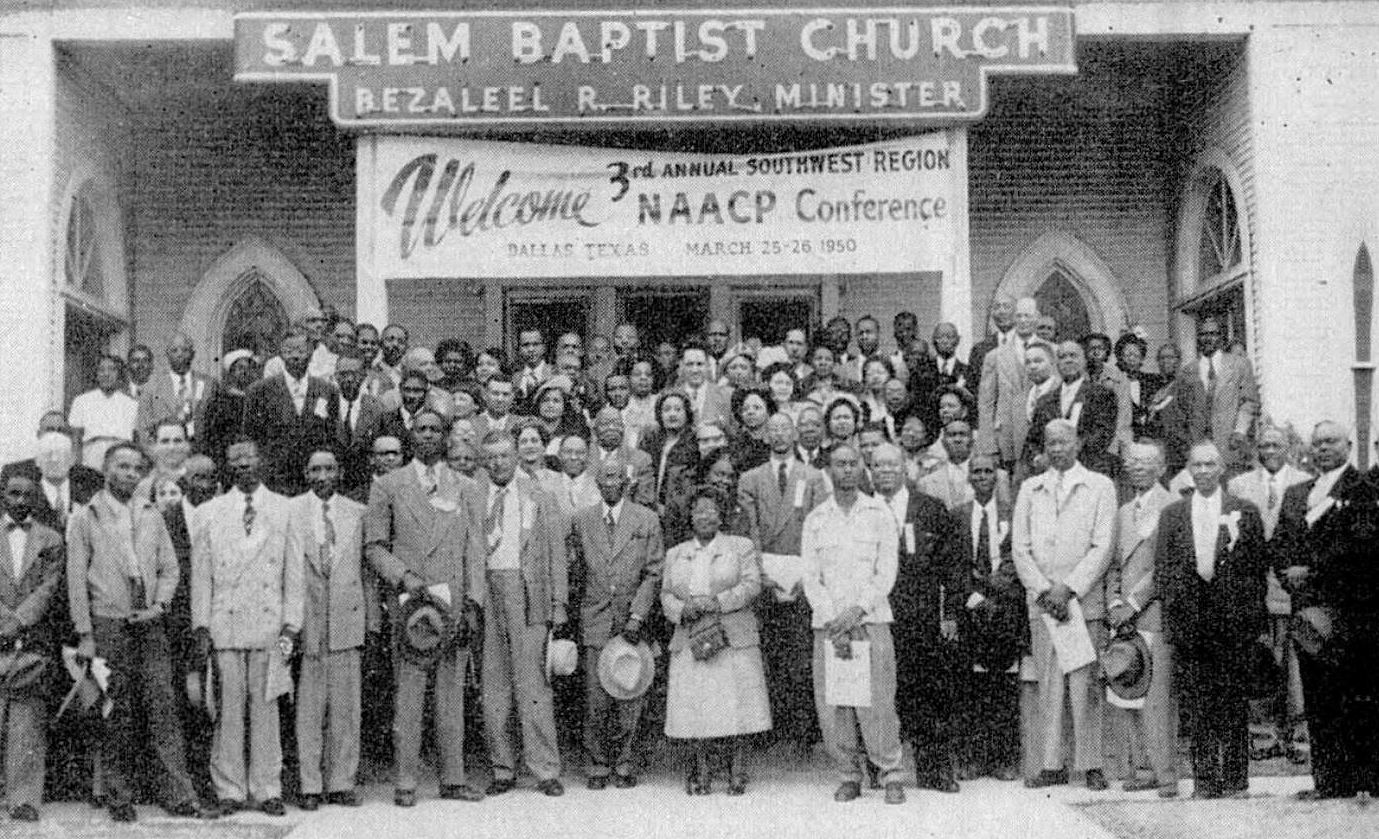
NAACP-conference_the-crisi_june-1950Top delegates of the NAACP regional conference in Dallas, 1950

by Paula Bosse

The third annual NAACP Southwest Region Conference was held in Dallas, March 24-26, 1950. Above we see the top delegates (out of about 200 attendees), standing in front of the Salem Baptist Church, then located at 710 Bourbon in South Dallas. One of their main objectives was to increase NAACP membership in order to more effectively tackle issues of civil rights and social injustice.

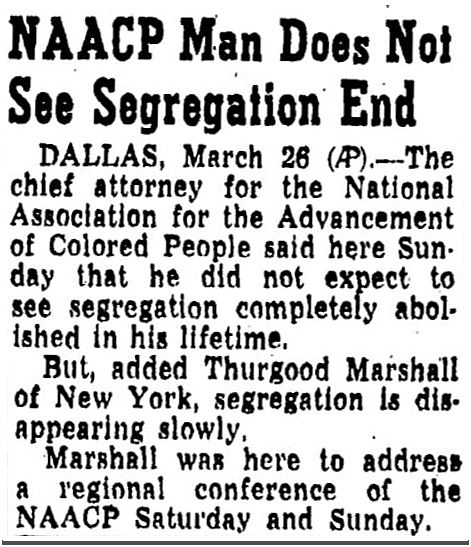
The conference’s main speaker was special counsel to the NAACP, Thurgood Marshall. During the conference, he stated that, although there was slow and steady progress being made by African-Americans in American society, he did not expect to see racial segregation abolished in his lifetime. 17 years after this statement, Thurgood Marshall was appointed by President Lyndon Johnson to serve as a justice on the United States Supreme Court.

NAACP_thurgood-marshall_FWST_032750Fort Worth Star-Telegram, March 27, 1950

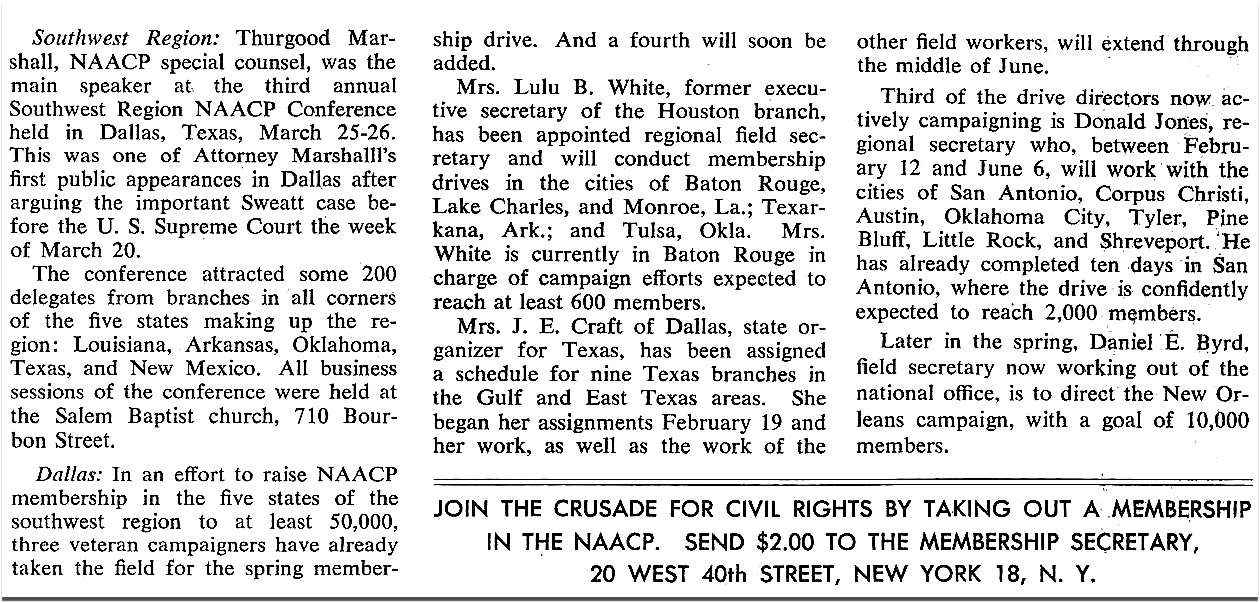
Below, the review of the conference that appeared in the April, 1950 issue of the NAACP magazine, The Crisis (click to see larger image).

NAACP-SW-conference_the-crisi_april-1950The Crisis, April, 1950

***

Sources & Notes

Top photo from the June, 1950 issue of The Crisis, the magazine published by the NAACP. Many decades’ worth of scanned issues of the magazine are viewable via Google Books, here.

The Salem Baptist Church was, at the time of the photo above, located at 710 Bourbon in South Dallas. According to the church’s website, the church moved from that location in the early 1960s when the site was one of many purchased by the Texas Highway Department to be demolished for highway construction.

Click photo and news clippings for larger images.

*

Copyright © 2018 Paula Bosse. All Rights Reserved.
From the Vault: Low-Voltage Weight Loss on Main Street — 1921

ergotherapy_jewish-monitor_090921_det

by Paula Bosse

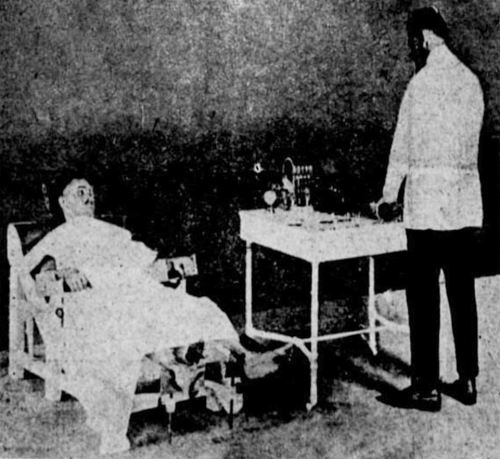
Dallas has always been image-conscious. I loved discovering this odd “electrically-provoked” weight-loss system which was being, um … executed in a Main Street basement a stone’s throw from Neiman’s. Read the Flashback Dallas post from 2016 — “Zap Those Extra Pounds Away in Mrs. Rodgers’ Electric Chair — 1921” — here.


*

Copyright © 2018 Paula Bosse. All Rights Reserved.
From the Vault: The Roseland Theater — 1916

roseland_terrill-yrbk_1916Grainy photo taken by a teenager in 1916…

by Paula Bosse

Check out the 2015 Flashback Dallas post about a short-lived, little-remembered silent-movie theater on Main Street (which was housed in a building which was demolished soon after this post was written) in “Roseland — 1916,” here.


*

Copyright © 2018 Paula Bosse. All Rights Reserved.
The Cabana Motor Hotel of Dallas

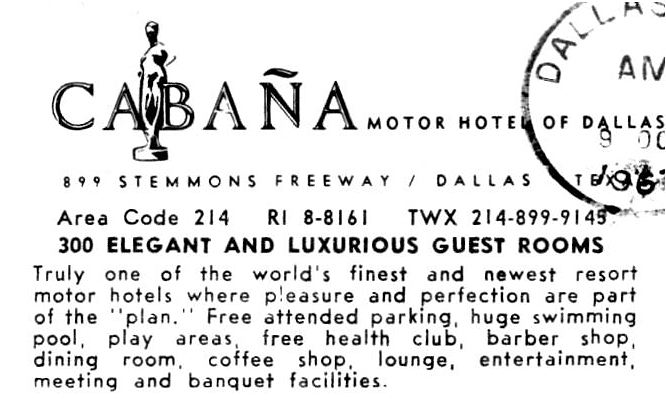
cabana-motor-hotel_portal_postmarked-1967“Elegant and luxurious…”

by Paula Bosse

The Cabaña Motor Hotel is remembered mostly for being where the Beatles stayed when they came to Dallas in 1964 and for being a hotel with high hopes but which fizzled out fairly quickly. …But mostly for being where the Beatles stayed. When the Cabaña opened in January, 1963 on Stemmons Freeway, it was a big deal. It was swanky and even had a very show-bizzy lounge. Celebrities stayed there. The Beatles stayed there.

cabana-motor-hotel_portal_info

The Dallas Cabaña was actually the third in a proposed chain of hotels, following locations in Atlanta and Palo Alto. It even had some Hollywood star-power attached to it: Doris Day’s then-husband Marty Melcher was an investor in the company (turned out it was Doris’ money, and she wasn’t thrilled that he was investing so much of her money in this chain of hotels).

It was fab for a while — but the high point really was John, Paul, George, and Ringo. Before the ’60s had ended, the place was shuttered and mired in litigation. Melcher had died and left Doris $500,000 in debt. Ownership changed hands several times over the years, and each time, more and more of its original hep luster was lost. The building has never really recovered. For a few years it was a rather bizarre site for a minimum-security jail! In recent months it was announced that it has been acquired by the company that has recently renovated the long-moribund Statler Hilton — so there’s hope! It needs a lot of work, but it might actually turn out to be cool again.

cabana_construction_william-langley_nd_DPLUnder construction, by William Langley, via Dallas Public Library

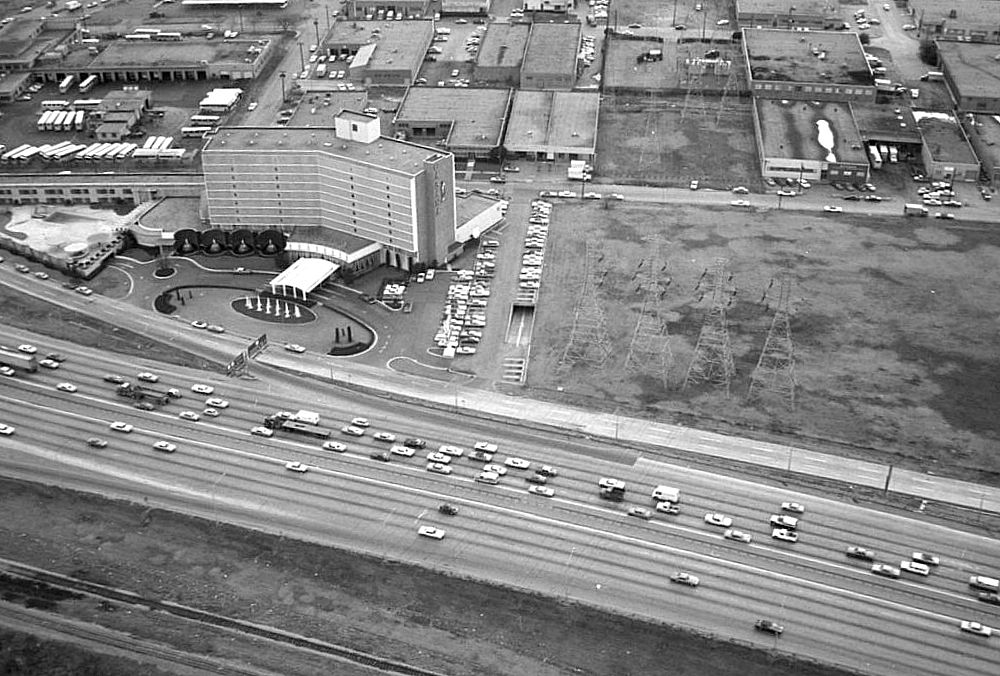
cabana-motel_aerial_squire-haskins_UTA_croppedFrom the air, by Squire Haskins, via UTA

cabana-motel_squire-haskins_UTAFrom the ground, by Squire Haskins, via UTA

***

Sources & Notes

The postcard at the top is from the Texas History Collection, provided by Dallas Heritage Village to the Portal to Texas History, where I found it, hereI have to admit that I’ve never really been a fan of this building until I saw this postcard. It’s like a Dallas version of a subdued Vegas hotel.

Bottom two photos are from the Squire Haskins Collection, University of Texas at Arlington Libraries Special Collections — the aerial image has been cropped; more info on these photos can be found here and here.

For more history of the Cabaña (…whenever I hear reporters in historic footage pronouncing the “n” in “cabana” with that tilde, it’s a bit jarring…), read the informative article “Lost + Found: Cabana Motor Hotel” by Preservation Dallas Executive Director David Preziosi on the AIA Dallas website, here. It’s got some great photos.

*

Copyright © 2018 Paula Bosse. All Rights Reserved.
The United States Coffee & Tea Co. — 1911

us-coffee-tea_1911_ad_photoCoffee, coffee, everywhere, at Elm & Akard… (click for larger image)

by Paula Bosse

Above, a photo from a 1911 ad for the United States Coffee and Tea Company, importers and roasters. The text of the ad:

The above photograph shows a recent importation of the finest green coffees grown. Weight 40.000 pounds — just forty days supply.

A tril will convince you that our fresh Coffees are superior — Five delivery wagons covering the entire city each day insures prompt service.

UNITED STATES COFFEE AND TEA COMPANY

Corner Elm and Akard Streets   –   Phone Main 703

The company seems to have been founded about 1908 by George W. Wilson and a very young Henry Seeligson. (Click article to see a larger image.)

us-coffee-tea_greater-dallas-illus-1908
Greater Dallas Illustrated, 1908

According to a 1912 ad (which rather breathlessly promised: “WE ROAST COFFEE EVERY MINUTE OF THE DAY”), the company was the “largest retail dealers in Coffee, Tea, Spices and Butter in the Southwest.”

us_coffe-tea_may-1912
1912

The photo at the top shows their building at the northeast corner of Elm and Akard; a few years later they moved down Elm to the northwest corner of Elm and Ervay, just a couple of doors east of the Palace Theater (you can see part of their building behind a photo of the Wilson Building here) — this location was once threatened by a fire which broke out in the bakery owned by Frank A. Carreud:

us-coffee-tea_dmn_070322_fire
Dallas Morning News, July 3, 1922

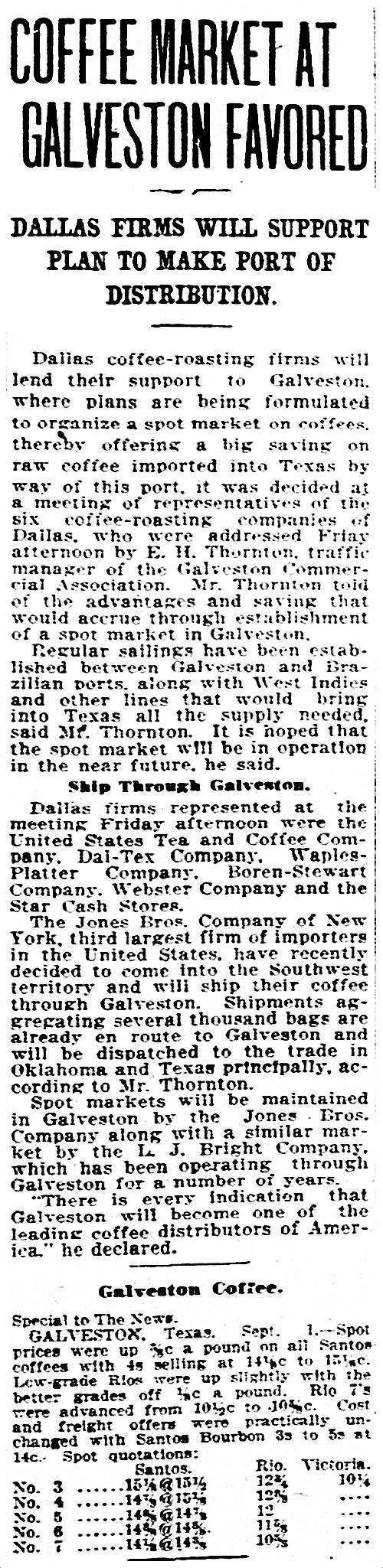
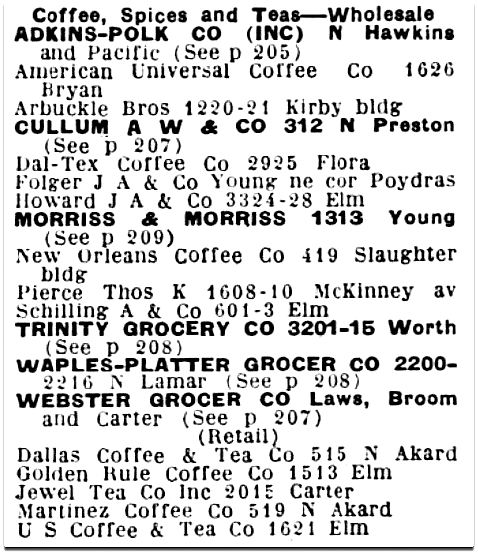
There was a surprising amount of coffee-roasting going on in Dallas in the early decades of the twentieth century. In 1922 the big boys were trying to organize a coffee spot market in Galveston, port to Brazilian coffee and West Indies spices.

us-coffee-tea_dmn_090222
DMN, Sept. 2, 1922

coffee-merchants_1922-directory
1922 Dallas directory

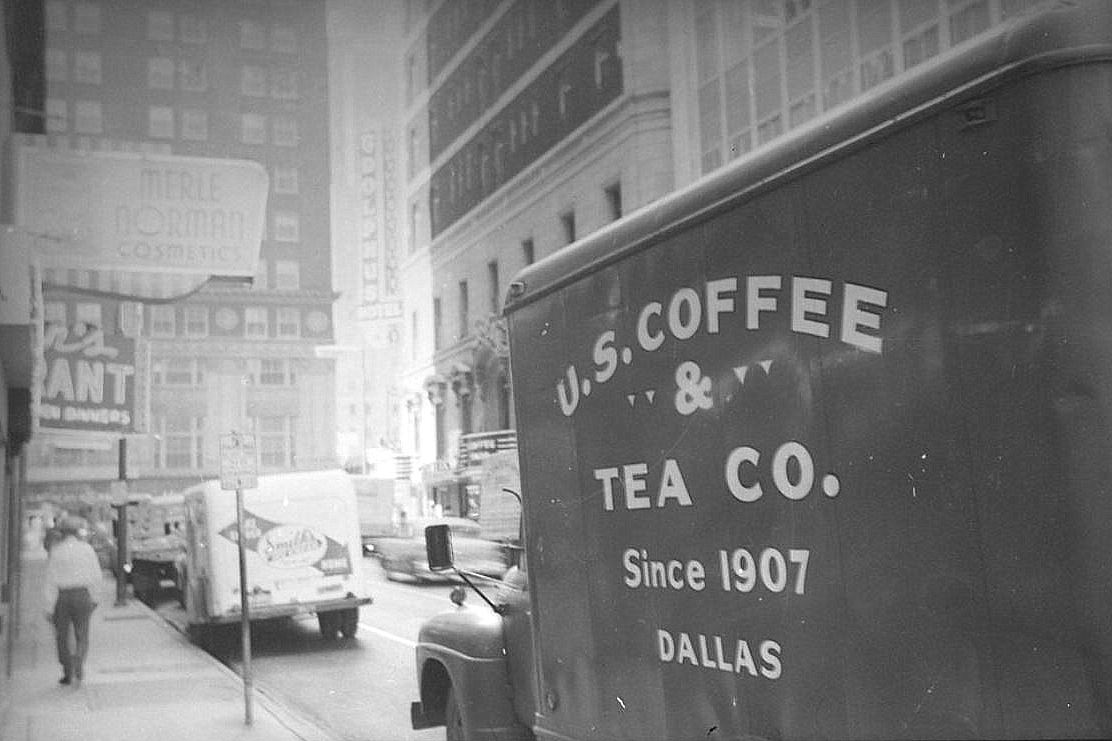
The company was bought by H. L. Hunt’s HLH Parade Co. in 1961; Hunt sold it to the Texas Wholesale Grocery Corp. in 1963 when it appears to have ceased operations under the U. S. Coffee and Tea name. Here’s a photo of a company van sometime before then:

u-s-coffee_city-of-dallas-historic-preservation_flickr

And now I have an intense desire for a cup of coffee.

***

Sources & Notes

Top photo from an ad which appeared in a Terrell School yearbook.

Bottom photo from the City of Dallas Historic Preservation Flickr collection, here — the undated photo was taken by the city’s staff photographer.

Sources of other images/clippings as noted.

*

Copyright © 2018 Paula Bosse. All Rights Reserved.
The Adolphus By Moonlight

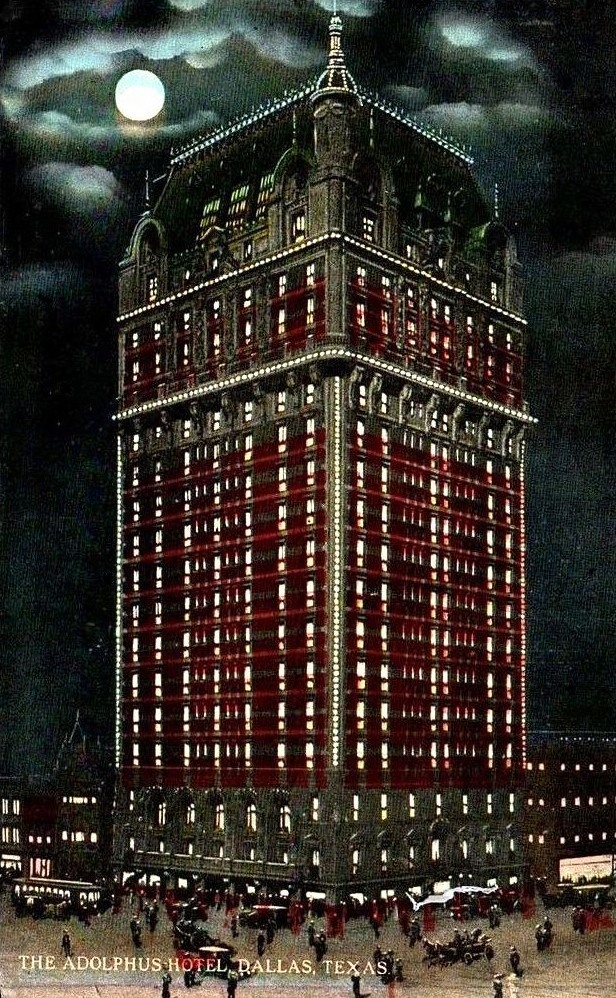
adolphus_night_postcard_postmarked-1914Nighttime in Big D… (click for larger image)

by Paula Bosse

When the beautiful Adolphus Hotel opened in 1912, it was the tallest building in Dallas — in other words, it was the building nearest to the moon.

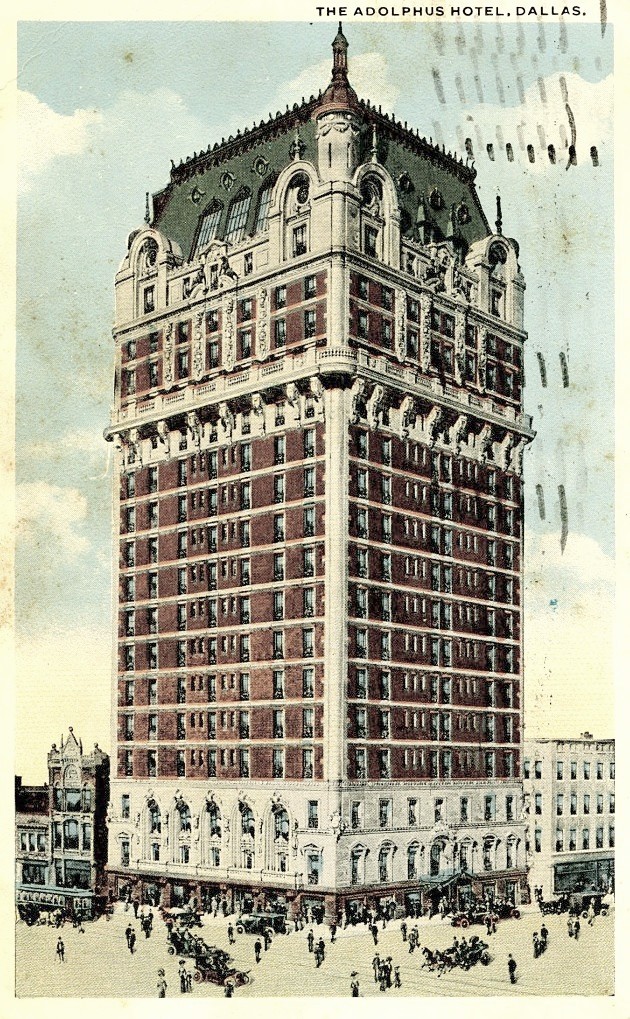
Remarkably, it, the people, and the horses, looked just the same in the daylight!

adolphus_1910s_postcard
Daytime in Big D…

“Postcard magic” is magic, indeed. It’s all about judicious addition and subtraction.

***

Sources & Notes

Both postcards were found lounging in forgotten corners of the internet. The cards were issued before 1914. Both are larger when clicked

*

Copyright © 2018 Paula Bosse. All Rights Reserved.

The Bird’s-Eye View of Dallas by Herman Brosius — 1872

brosius_1872-detDetail of H. Brosius’ view of Dallas, 1872… (click for larger image)

by Paula Bosse

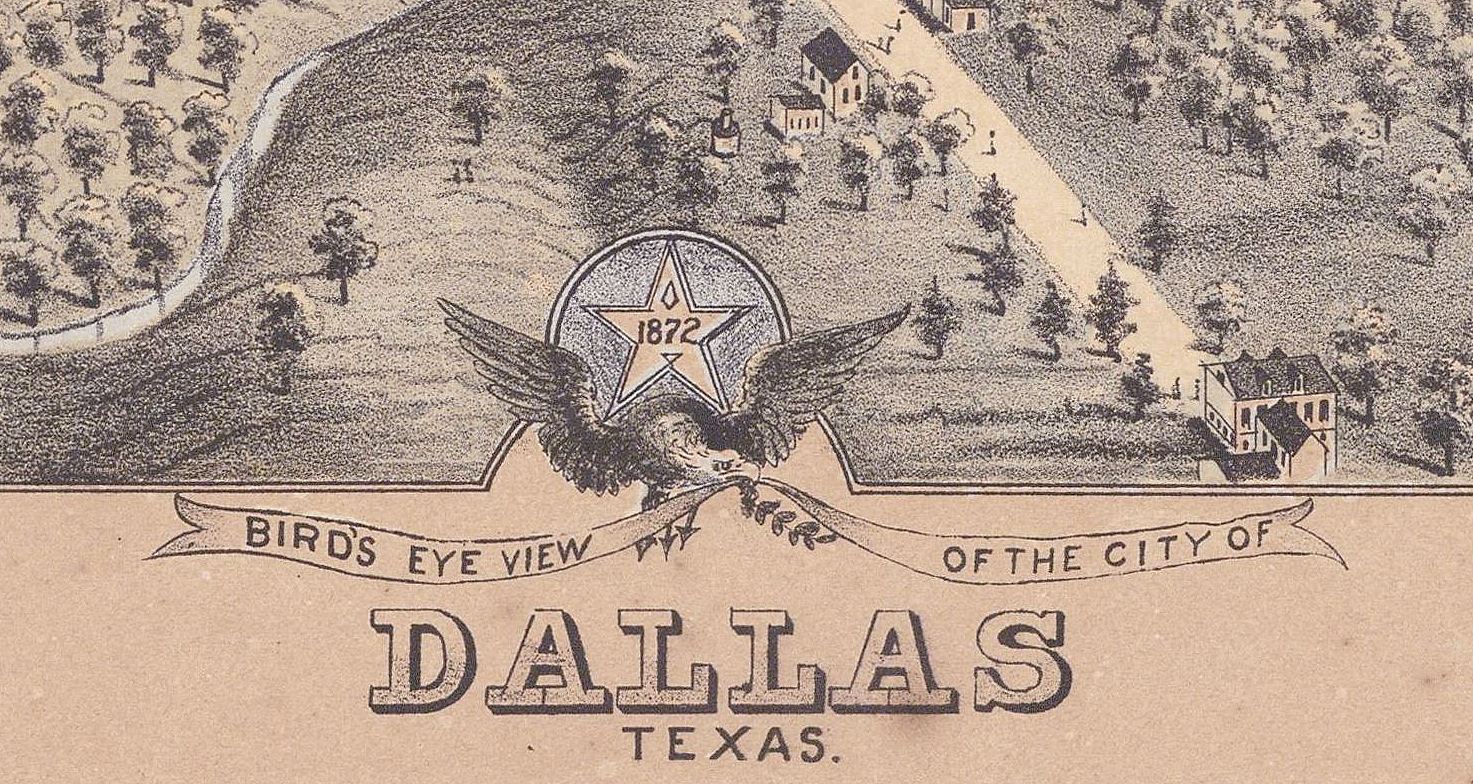
This lithographed map, drawn by Herman Brosius (1851-1917), shows a bird’s-eye view of Dallas in 1872, when it was teetering on the brink of the explosive growth which came with the arrival of the railroads, and it is one of my favorite maps of the city. Every little detail (including the one above, showing Mrs. Cockrell’s famed Commerce Street toll bridge spanning the Trinity), is cool. I’ve referred to this map when reading about events of this period, and it helps to get an idea of the logistics of the city. (Wikimedia Commons has a really, really large image of this map (7,674 × 5,590 pixels, 11.85 MB!) which can be viewed (and downloaded) here; the file was scanned from a lithograph belonging to The Dallas Historical Society.)

brosius_wikimedia-commons_1872_sm
The full view

The drawing was, apparently, pretty accurate (if somewhat idealized). According to a short editorial comment in the Dec. 28, 1872 edition of The Dallas Herald:

[The view by Mr. Brosius] shows every house in the corporation limits, together with every street, so accurately drawn that any one acquainted at all with the city can recognize any building.

Which is pretty amazing. Milwaukee native Brosius (who was only 21 years old when this map was drawn) specialized in these views; after completing one, he (or an agent) would canvass a city seeking “subscribers” in order to gather enough money to print an edition of high-quality lithographs. (An article in a Wisconsin newspaper in 1882 stated that the subscribers for the Eau Claire, Wisconsin view paid $2.50 each, about $60.00 in today’s money.) The Herald editorial exhorted Dallasites to subscribe — not only was Brosius’ work aesthetically pleasing, but “[t]he ‘view’ will be one of the best advertisements that our city could send abroad to induce persons to locate among us.”

The subscribers came through, and I’m pretty sure that most who have pored over this map — as I certainly have — have been delighted and enthralled.

**

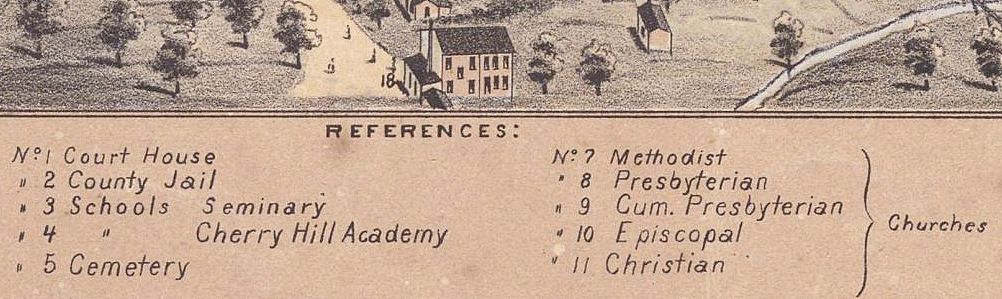
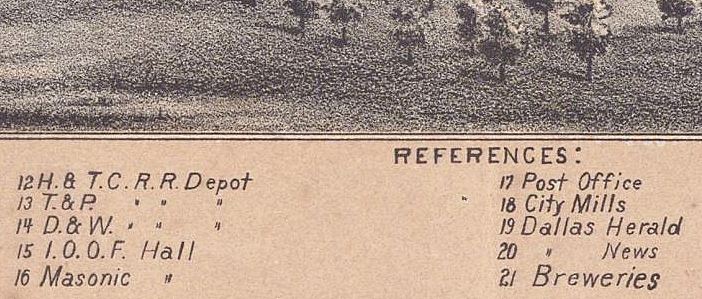
There are helpful references at the bottom of the map which identify buildings.

brosius_1872_references_det

brosius_1872_references-2_det

*

brosius_1872-map_title_det

brosius_1872-map_sig_det

brosius_dallas-herald_122872
Dallas Herald, Dec. 28, 1872 (click to see larger image)

***

Sources & Notes

“A Bird’s Eye View of the City of Dallas, Texas” (1872) by H. Brosius has been scanned at a very high resolution and is free to view and download at Wikimedia Commons, here (click on the map to see a much larger image). This historic bird’s-eye view is from the collection of The Dallas Historical Society.

The “Bird’s-Eye View of Dallas” article is from The Dallas Herald, Dec. 28, 1872. Read the article as it appeared on the page of the scanned newspaper at UNT’s Portal to Texas History website, here.

Read about Herman Brosius — with more information about his view of Dallas —  in an Amon Carter Museum article, here; the museum has a fantastic full site devoted to “Texas Bird’s-Eye Views” — with views of 60 Texas cities (SIXTY!!) — here (click “Browse” at the top of the page).

All images are larger when clicked.

*

Copyright © 2018 Paula Bosse. All Rights Reserved.