Flashback : Dallas

A Miscellany: History, Ads, Pop Culture

Tag: Dallas TX

Shopping at Sears in Casa View

sears_casa-view_ext_squire-haskins_utaAppliance central… (click for larger image)

by Paula Bosse

I’m not in the Casa View area very often, but I was driving through last week and noted that a lot of the elements of the shopping center looked as if they were original to the buildings — specifically the little metal doo-dads along the top of the canopies over the sidewalks. I came across the photo above tonight and was happy to see those little doo-dads back when they were relatively new. The shopping center is a little confusing to me, but I think this is what that building pictured above looks like these days. (Why, why, WHY did someone think this “remodel” of the buildings was a good idea! Slapping on a new facade and removing the decorative metal doo-dads was an unfortunate decision.)

The Sears store pictured above is actually the second Sears in Casa View. The first store opened in October, 1956  at 2211 Gus Thomasson (here’s what the location of the first store looks like now — metalwork still there but that cool brick exterior has been painted over). It was Dallas’ fifth Sears store and opened in the still-under-development Casa View neighborhood. It wasn’t a full department store — its merchandise was limited mostly to appliances and automotive products. It was also a place to pick up catalog orders. (Click photos and ads to see larger images.)

ad-sears_casa-view_dmn_102556
Oct. 25, 1956

Apparently the store was so successful that in March, 1964, a brand new Sears opened up in a five-times-larger location (2310 Gus Thomasson) across the street — the photo at the top of this post was probably taken when it was in its first months.

sears_new-location_casa-view_dmn_031264-detMarch 12, 1964

Its interior — seen below in all its pristine, blinding whiteness — is fantastic. (Is that woman in the apron serving cookies she’s just baked?)
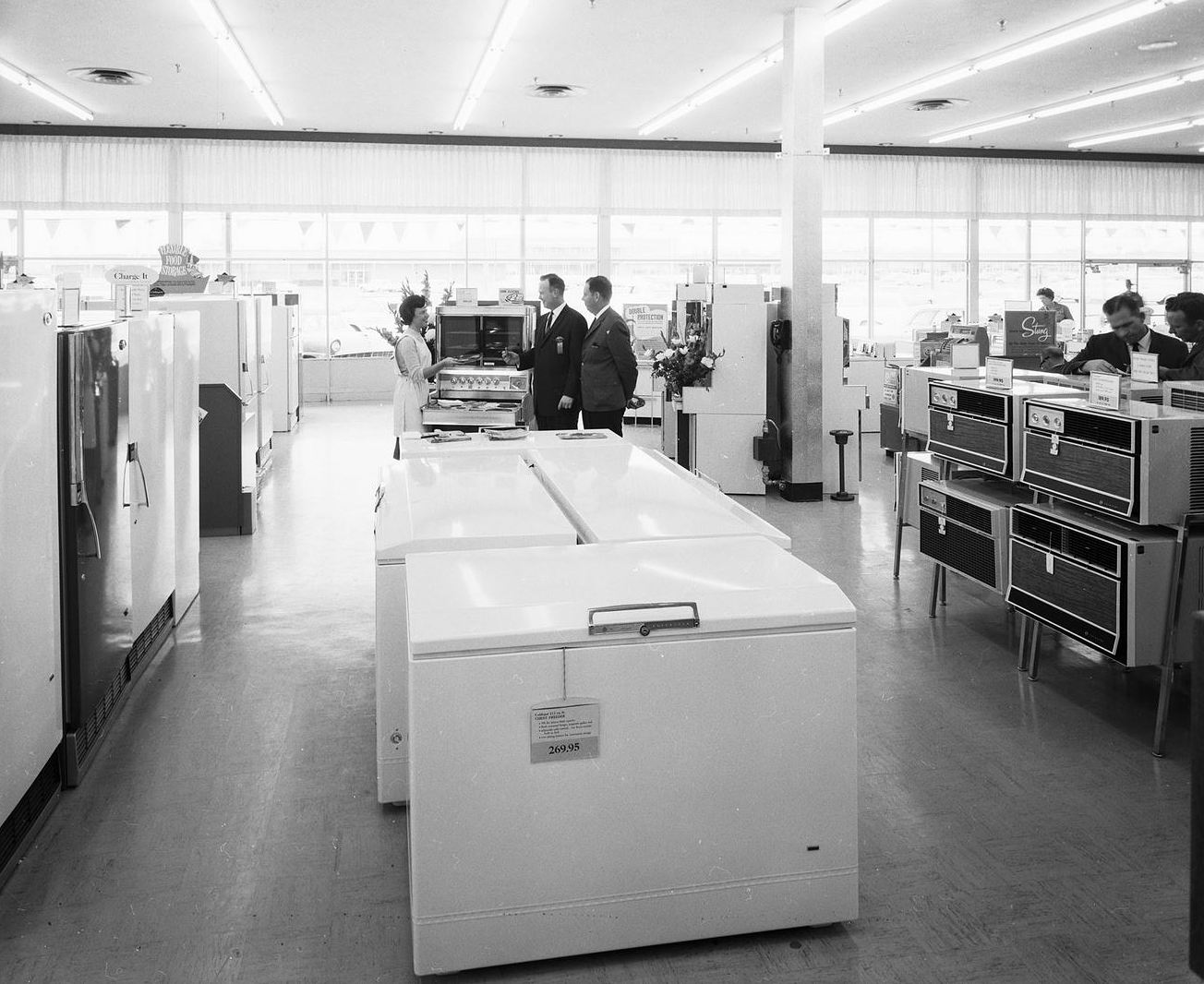
sears_casa-view_int_squire-haskins_uta

*

The reason I was confused by the shopping area is that it was built in phases. The first part was built in 1953 and was originally known as Casa View Hills Shopping Center. (Click the ad below to see a larger image.)
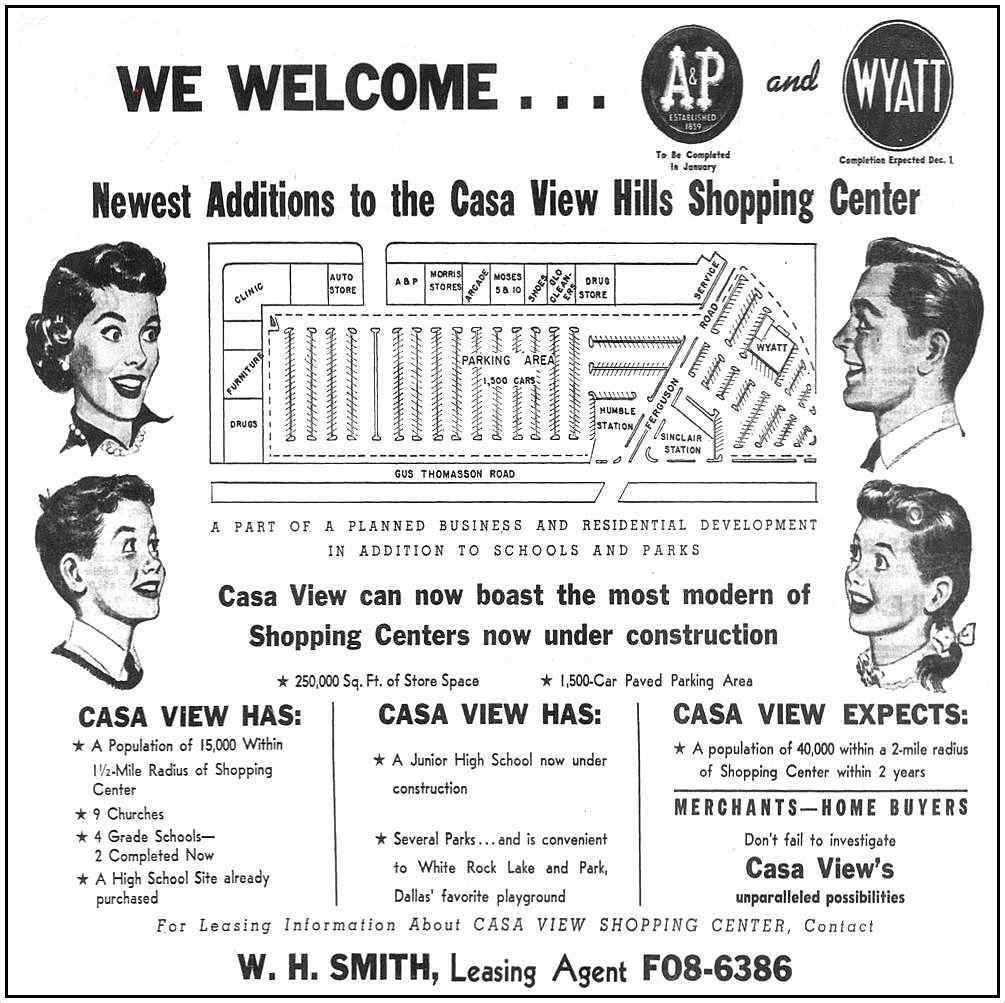
casa-view-shopping-center_dmn_100453
Oct. 4, 1953

But then the ownership changed hands in early 1955, and it was renamed Casa View *Village* and reopened in April under the new name.

In the meantime (I might have this chronology a bit out of whack), Casa View Center had been built in 1954, diagonally across the street. And then in 1955, construction began on an expanded Casa View Village. (This might have been its second expansion. Casa View was hopping in the mid-’50s!) And Sears had had stores in both Casa View Village and Casa View Center. It’s all kinda confusing.

The Casa View Shopping Center (I don’t know what its official name is these days, but I’m going with this) is looking a little ragged these days, but it still has a quirky charm, and I’m happy to see it still chugging along after 60 years.

***

Sources & Notes

Photos by Squire Haskins from the Squire Haskins Photography, Inc. Collection, UTA Libraries Special Collections. More info on the top photo showing the exterior of the Sears building can be found here; more info on the interior photo is here. (Click on the thumbnails on the UTA pages to see very large images.)

The Casa View Wikipedia page is here.

D Magazine has a “Dallas Neighborhood Guide” to Casa View here.

Dallas Morning News articles:

  • “Name Changed” (from Casa View Hills Shopping Center to Casa View Village) (DMN, March 13, 1955)
  • “Avery Mays Announces New Shopping Center” (expanded Casa View Village, with aerial photo) (DMN, Nov. 10, 1955)
  • “New Sears Opening in Casa View” (DMN, Oct. 11, 1956)

Other businesses once located in these shopping centers can be found in the post “Bryan Adams High School: Yearbook Ads from 1961 and 1962,” here.

Photos and clippings are larger when clicked.

*

Copyright © 2017 Paula Bosse. All Rights Reserved.
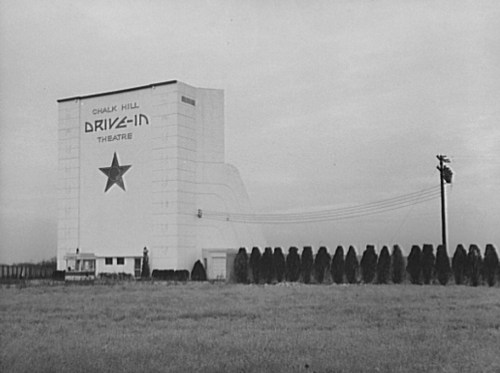
 

From the Vault: The Northwest Hi-Way and Chalk Hill Drive-Ins — 1941

chalk-hill-drive-in_1942_LOCThe Chalk Hill Drive-In opened on July 4, 1941

by Paula Bosse

Read about a crazy new thing called “drive-ins” which were popping up in far North Dallas and Oak Cliff in the summer of ’41 in the post “Dallas’ First Two Drive-In Theaters — 1941,” here.

*

Copyright © 2017 Paula Bosse. All Rights Reserved.
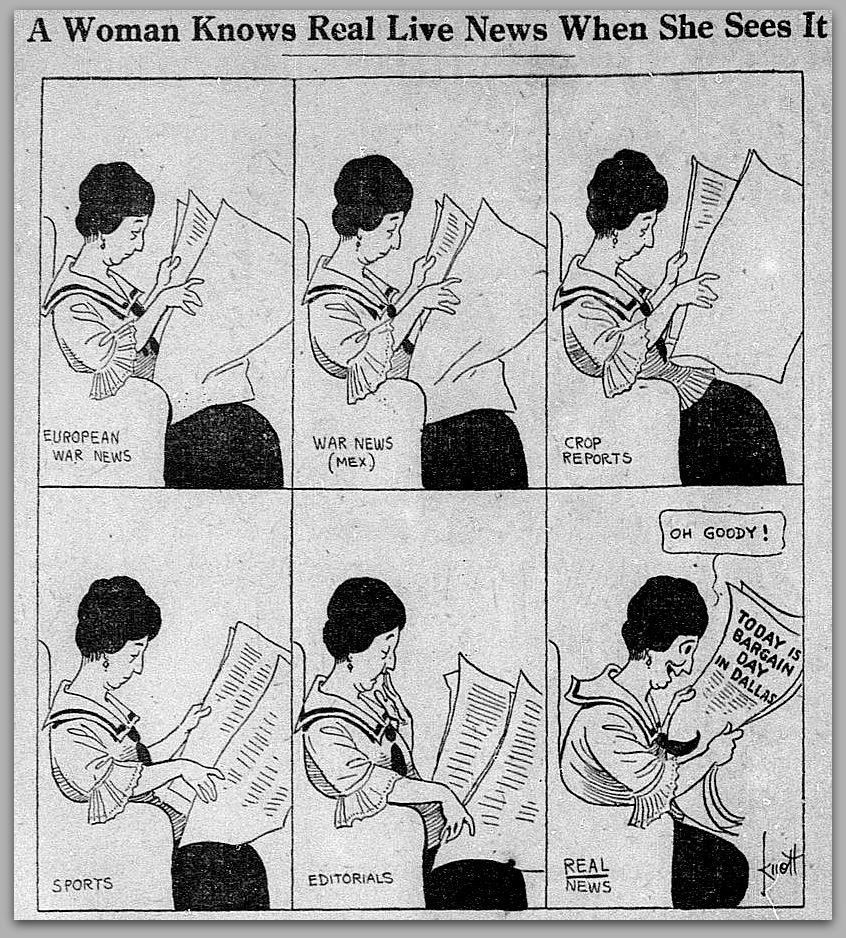
“A Woman Knows Real Live News When She Sees It” — 1915

womens-news_dmn_070815_knott-cartoon“Oh goody!” (click for larger image)

by Paula Bosse

This editorial cartoonist’s take on what was really important to Dallas women is one that probably caused some Dallasites to chuckle and some to fume. The date of this Dallas Morning News cartoon was July 8, 1915. In 1915 women had no constitutional right to vote in the United States and were barred from voting in local, state, and national elections. The Nineteenth Amendment to the U. S. Constitution (which gave women the right to vote) was ratified in Texas in June, 1919.

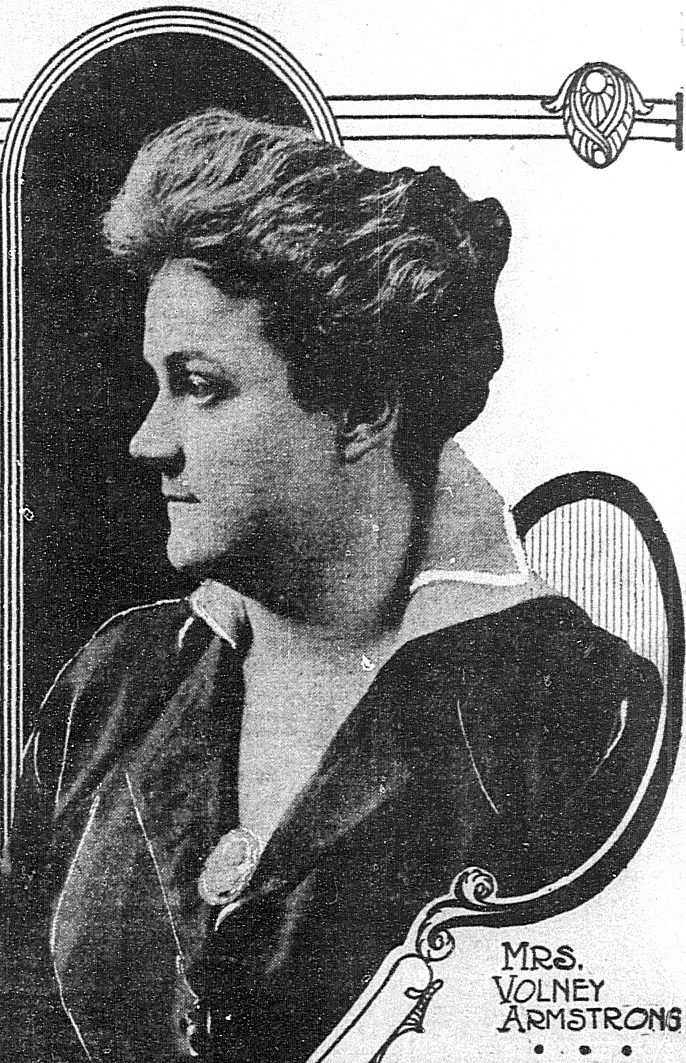
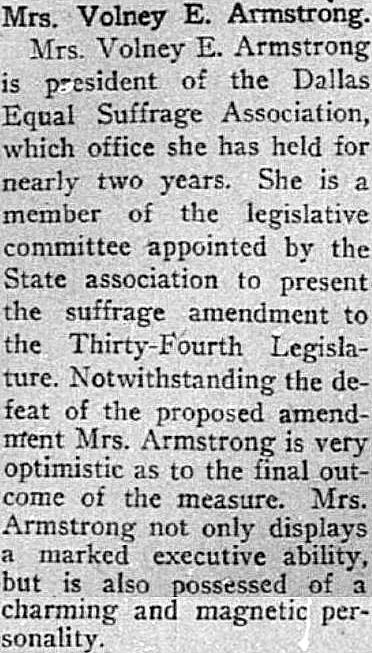
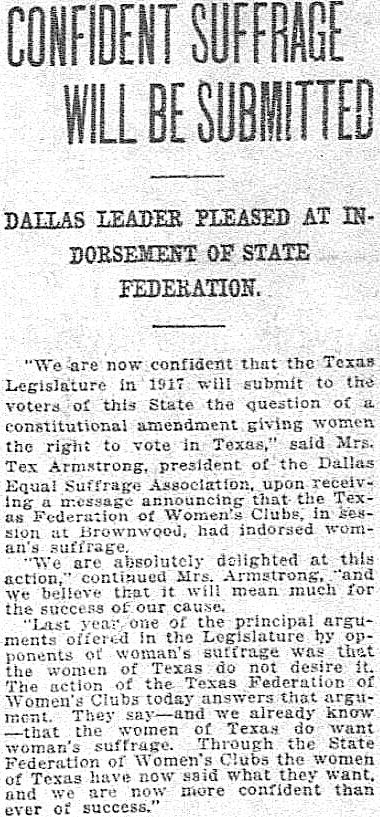
The woman’s suffrage movement in Dallas had been active since at least the 1890s, but it really began to catch fire in the early ‘teens when the Dallas Equal Suffrage Association (DESA) was formed in 1913. The second president of this organization (who was one of the state’s leading suffragists when this cartoon appeared) was Texas Erwin Armstrong (Mrs. Volney E. Armstrong). (Yes, her first name was “Texas” — her friends called her “Tex.”)

I have to admit, I was not aware of Mrs. Armstrong until today, but she was one of many laudable women who helped forge the way for those of us who followed. I like this quote of hers from 1918, commenting on the support (or lack thereof) of politicians during the slow but sure path to ratification:

“Any Democrat who failed to vote for this measure is a man without a party and soon will be a man without a country.” (DMN, Jan. 12, 1918)

tex-armstrong_dmn_031515_suffrage_photo

tex-armstrong_dmn_031515_suffrage
Dallas Morning News, March 15, 1915 (photo and profile)

**

More suffrage news from Dallas (click articles to see larger images).

suffrage_dmn_111115
DMN, Nov. 11, 1915

suffrage_dmn_030818
DMN, March 8, 1918

***

Sources & Notes

Dallas Morning News editorial cartoon “A Woman Knows Real Live News When She Sees It” (by staff cartoonist John Knott) appeared in the July 8, 1915 edition of the paper.

For more on the history of Dallas women and women’s causes, check out the book Women and the Creation of Urban Life: Dallas, Texas, 1843-1920 by Elizabeth York Enstam (College Station: Texas A & M University Press, 1998); a large portion of the chapter “Suffragists and the City” can be read here.

The history of the women’s suffrage movement in Texas can be found at the Handbook of Texas site, here.

The obituary of Mrs. Texas Erwin Armstrong (1878-1960) can be found in the archives of The Dallas Morning News: “Campaigner For Women’s Suffrage Dies” (DMN, March 7, 1960).

Click clippings and pictures to see larger images.

*

Copyright © 2017 Paula Bosse. All Rights Reserved.
 

The Stage Door Restaurant: Elm Street’s “Home of Lox and Bagels” — 1965-1968

stage-door_youtube_1966A Reuben sandwich sings to me, like a siren to a sailor…

by Paula Bosse

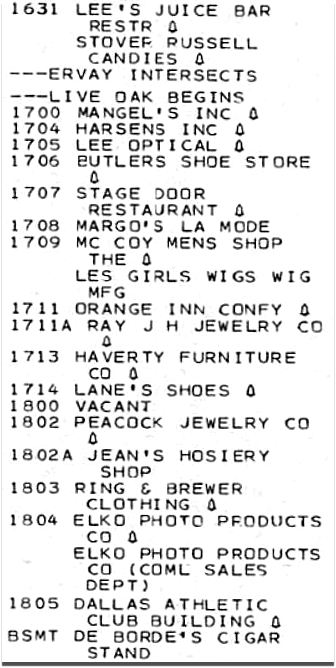
Why does Dallas have so few delis? Here’s one that seemed to be pretty popular in the 1960s: the Stage Door Restaurant and Delicatessen (and bakery), located at 1707 Elm, between the Palace Theater and the Dallas Athletic Club. It opened in June 1965 and lasted until the end of 1968 (when it was replaced by a restaurant called King Beef). I doubt there was any connection with the famous Stage Deli in New York, but manager Milton Stackel certainly had kosher cred of his own, having worked for twenty years at Grossinger’s, the legendary Jewish resort in the Catskill Mountains. I’m not sure how he found himself operating an eatery in downtown Dallas, Texas, but I’m glad he was here.

To any Milton Stackel-like entrepreneurs out there reading this:

DALLAS NEEDS DELIS!!


Authentic Jewish delicatessens!

Please!

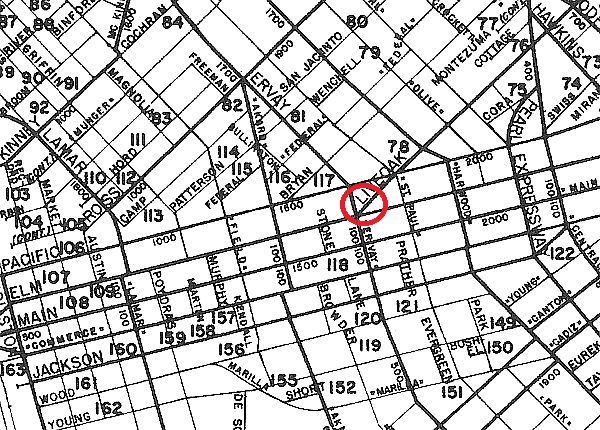
The apparently quite popular eatery was located at/near the old five-point Elm-Ervay-Live Oak intersection (seen here a dozen years earlier — the Stage Door would later be between Lee Optical and Haverty’s). There were two dining areas, one of which was The Playbill Dining Room which served an “international-type cuisine in a Gay Nineties atmosphere.” There was also a thriving take-out deli and the nearby bakery. And now? Come on, Dallas restaurateurs! Get to work!

*

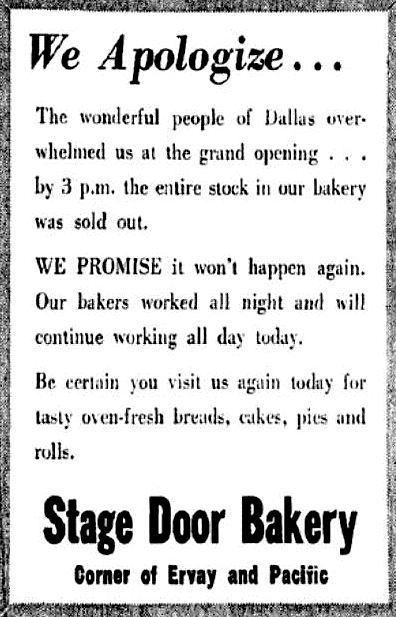
stage-door-bakery_dmn_060465
June 1965

stage-door-restaurant_texas-jewish-post_122365_portal
Texas Jewish Post, Dec. 23, 1965

This ad shows the bakery entrance next door.

stage-door-bakery_dmn_112465
Nov. 1965

stage-door_dmn_112564

stage-door-restaurant_texas-jewish-post_122365_portal-det
Texas Jewish Post ad detail, Dec. 23, 1965

stage-door_1707-elm_1952-mapsco
1952 Mapsco

stage-door_1966-directory
1966 Dallas directory

1700-block-elm_1966-directory
Elm Street, 1966 Dallas directory

***

Sources & Notes

Top image is a screengrab from a YouTube video, here, containing footage shot downtown by Lawrence W. Haas on Memorial Day, 1966.

Read more about the opening of the new business (and see a photo of the interior) in the Dallas Morning News article “Stage Door Restaurant Makes Debut in Dallas” (DMN, June 3, 1965).

*

Copyright © 2017 Paula Bosse. All Rights Reserved.
The White Rock Lake District: “Where Life Is Worth Living!” — 1926

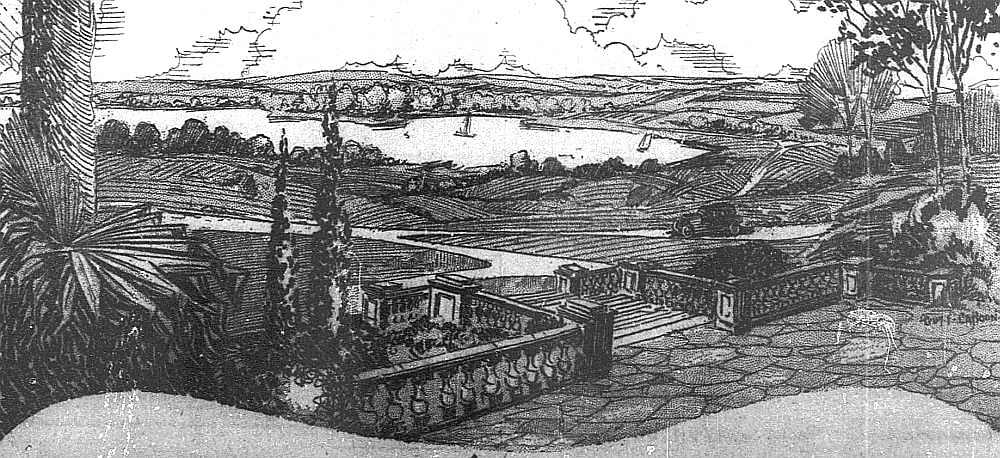
white-rock-lake-district_dmn_050226_detThe idyllic view from an East Dallas villa…. (click for larger image)

by Paula Bosse

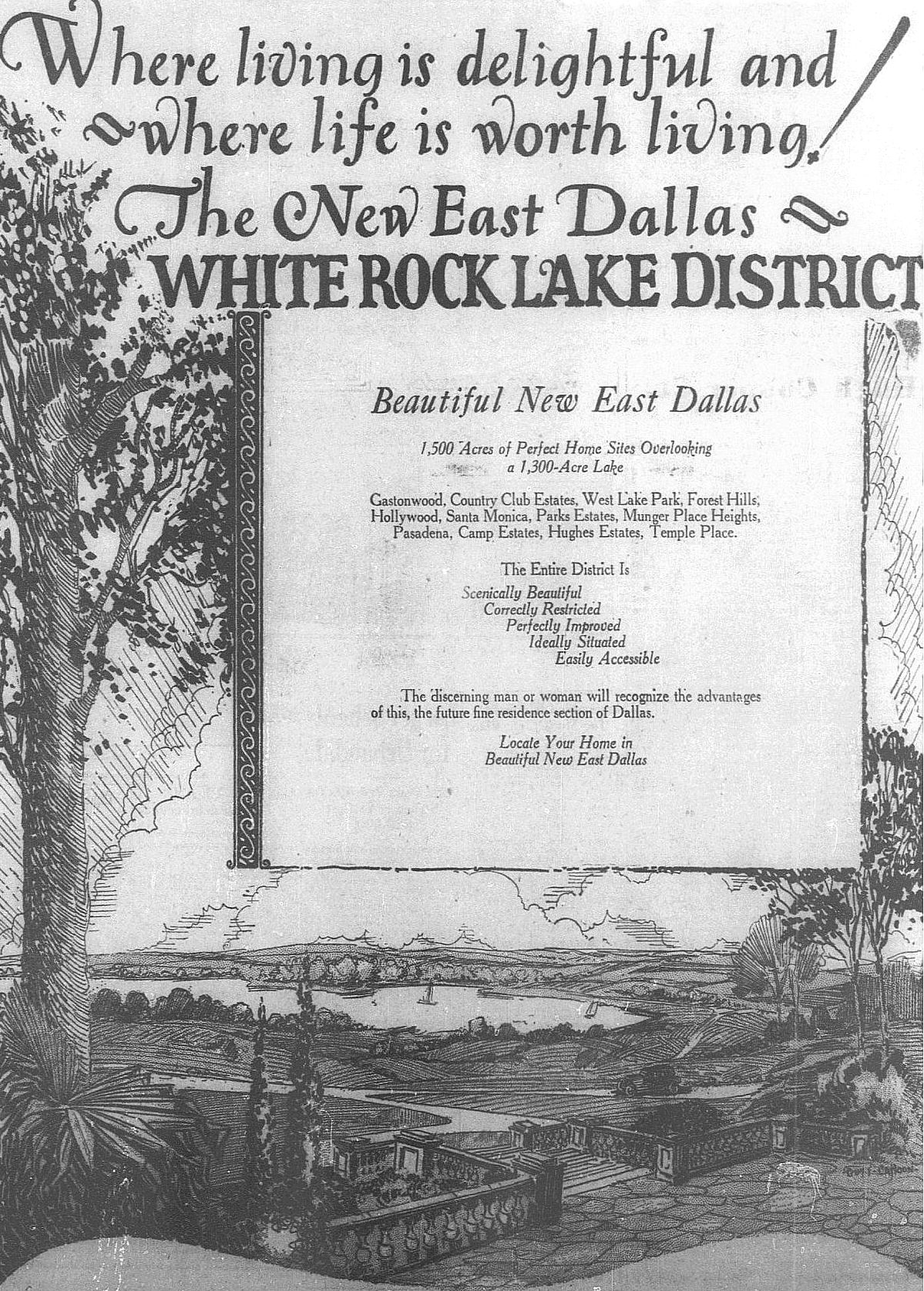
In 1926, East Dallas was in a frenzy of development. There were so many new neighborhoods: Gastonwood, Country Club Estates, West Lake Park, Forest Hills, Hollywood, Santa Monica, Parks Estates, Munger Place Heights, Pasadena, Camp Estates, Hughes Estates, Temple Place.

*

The New East Dallas
WHITE ROCK LAKE DISTRICT
Where living is delightful and where life is worth living!

white-rock-lake-district_dmn_050226

***

Sources & Notes

Ad from May, 1926. The detail — which shows a heart-stoppingly lovely vision of what might or might not have been a view from a home in the “White Rock Lake District” — is a Dallas I’ve never seen, but it’s one I’ll dream of.

To read a very informative article (or, I think it’s probably more of an “advertorial” written by a real estate company with land holdings in East Dallas), rifle through the Dallas Morning News archives until you find the article/advertisement titled “East Dallas Section Has Fast Growth” (DMN, May 2, 1926). As I said, it’s quite informative — with detailed info on the micro neighborhoods of East Dallas, many of which I’d never heard of.

*

Copyright © 2017 Paula Bosse. All Rights Reserved.
When the Circus Came to Town — 1886

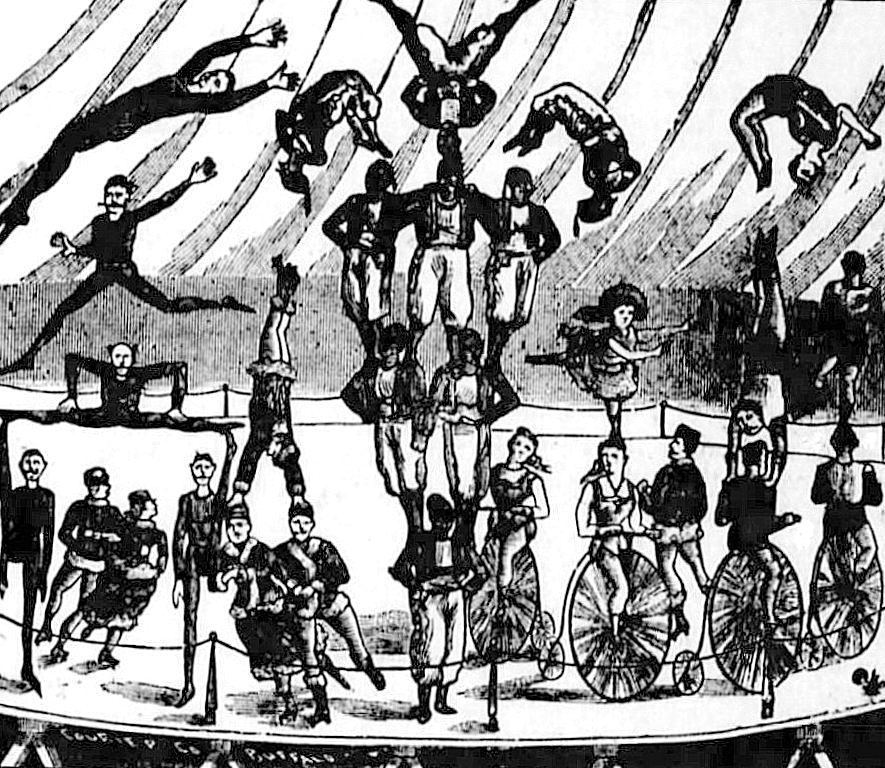
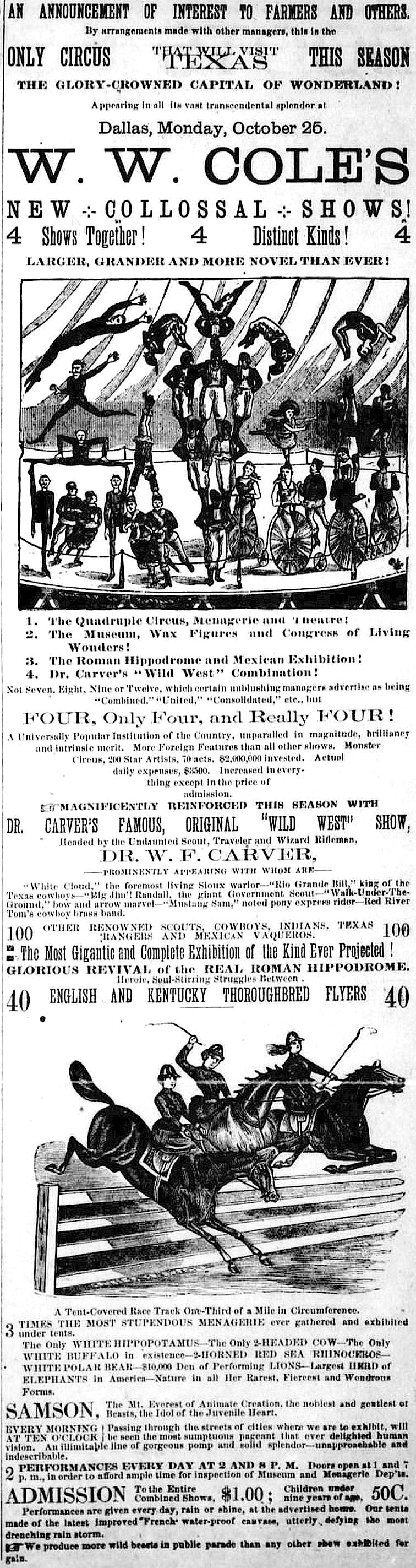
cole-circus_dallas-herald_101586-detI’m exhausted just looking at this…. (click for larger image)

by Paula Bosse

W. W. Cole brought his unbelievably jam-packed circus to Dallas at the end of October, 1886. That would have been big news all on its own, but also going on at the exact same time were two fairs. TWO! (This was when Dallas had competing state fairs battling each other across town.) I’m not sure how people handled all that entertainment. Circus attendance alone was reported at more than 16,000 for the Dallas engagement. That’s a lot.

One thing the Cole organization knew about was the power of adjectives. I can’t even begin to take apart this ad, so run your eyeballs over the intense, pop-eyed text and imagine what frontier Dallasites thought. Sit back and enjoy the “vast transcendental splendor” that was W. W. Cole’s extravaganza. (Click to see a larger image.)

ad_cole-circus_dallas-herald_101586Dallas Herald, Oct. 15, 1886

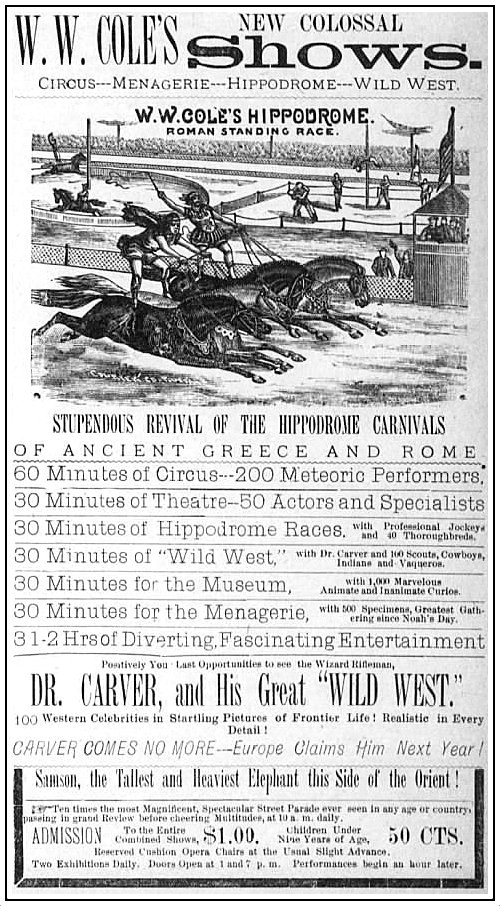
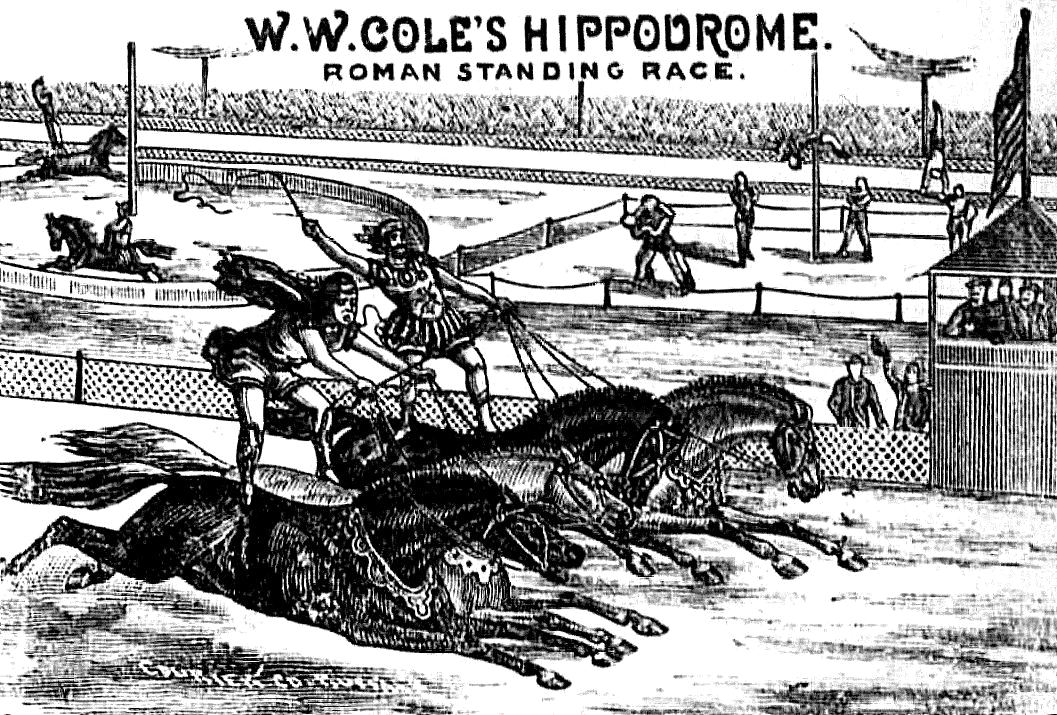
The circus appeared in Austin a few days later. This ad is also great.

cole-circus_austin-weekly-statesman_101486
Austin Weekly Statesman, Oct. 14, 1886

coles-circus_dmn_102486
Dallas Morning News, Oct. 24, 1886

circus_fairs_dallas-herald_102586
Dallas Herald, Oct. 25, 1886

The review:

coles-circus_dmn_102686
DMN, Oct. 26, 1886

Not everyone was impressed:

circus_dallas-herald_102686
Dallas Herald, Oct. 26, 1886

And then there was this weird little story. (I think the ending was tacked on by the writer as a joke. …I think.)

circus_somnambulist_dallas-herald_102686
Dallas Herald, Oct. 26, 1886

After all that excitement, it was probably a relief when the circus left town!

coles-circus-in-austin_dmn_110186DMN, Nov. 1, 1886

cole-circus_austin-weekly-statesman_101486_det

***

Sources & Notes

W. W. Cole’s Circus lasted forever — up until, apparently, last year! More here.

I’m never sure how much weight to give to the estimates of the Inflation Calculator, but when you plug the numbers into it, a dollar ticket for adults and a fifty-cent ticket for children would today equal somewhere in the neighborhood of twenty-five and thirteen bucks, respectively. That can’t be right, can it? You can’t argue that there was a lot going on in those French waterproof tents, but I can’t imagine people forking over that much when penny-candy was considered extravagant! But apparently 16,000 people happily forked! (W. W. Cole died a very, very, very wealthy man: when he shuffled off his moral coil in 1915, he left an estate of more than five million dollars — or, per the Inflation Calculator, more than 120 million dollars in today’s money.)

Click clippings to see larger images.

*

Copyright © 2017 Paula Bosse. All Rights Reserved.


“Howdy from Dallas, Texas” … and An Announcement About Bookmarked Files

howdy-from-dallas_postcard

by Paula Bosse

“Howdy,” from the home of the Republic Bank Building, SMU, North Central Expressway, the Statler Hilton, the Majestic Theatre, and the Cotton Bowl.

Also, “howdy” from me, along with a notice that I have begun the long, arduous task of migrating files from one big cloud to another big cloud. This will be a problem only for those who might have bookmarked PDFs or some of the photos or files I’ve linked to. This won’t change URLs for individual posts, because if that were the case, I’d be sobbing uncontrollably in a padded cell, trussed up in a straitjacket, unable to do necessary things like TYPE. So … it could be worse.

This will probably affect very, very, very few of you — I, on the other hand, will be absorbed in this tedium for quite a while, rushing against a deadline.

Please don’t hesitate to bring broken links, etc., to  my attention. And if you’ve lost something formerly bookmarked, let me know, and I’ll help you find out where it’s living these days.

*

Copyright © 2017 Paula Bosse. All Rights Reserved.

“Classified System” Parking Stations — 1930s

classified-system_colteraIs that a ship? And an iceberg? (click for larger image)

by Paula Bosse

Here’s a cool little ad for what was basically a parking garage that also sold gas and tires (and which seems to have had a ship on top of its building … a building which might be shaped like … an iceberg?). This snazzy-looking garage was at 501 N. Akard (at Patterson) — it was one of several “Classified System” garages that dotted downtown from the early 1930s until at least the early ’70s. The Akard location was station No. 1.

Below, an ad from 1935 informing patrons that they could drive in, have tires installed, and pay for them sometime in the future — for as little as 50 cents a week (which would come out to about $35 a month in today’s money). “YOU DON’T NEED CASH.” (Click ad to see a larger image.)

classified-parking_dmn_061535
1935 ad

classified-parking_dmn_061535_det

I love the kooky design of the building, but that ship is just … odd. I like it, I just don’t get it. Maybe that’s the “classified” part.

***

Sources & Notes

Color image is a matchbook cover found on Flickr, here.

*

Copyright © 2017 Paula Bosse. All Rights Reserved.
 

Wynnewood

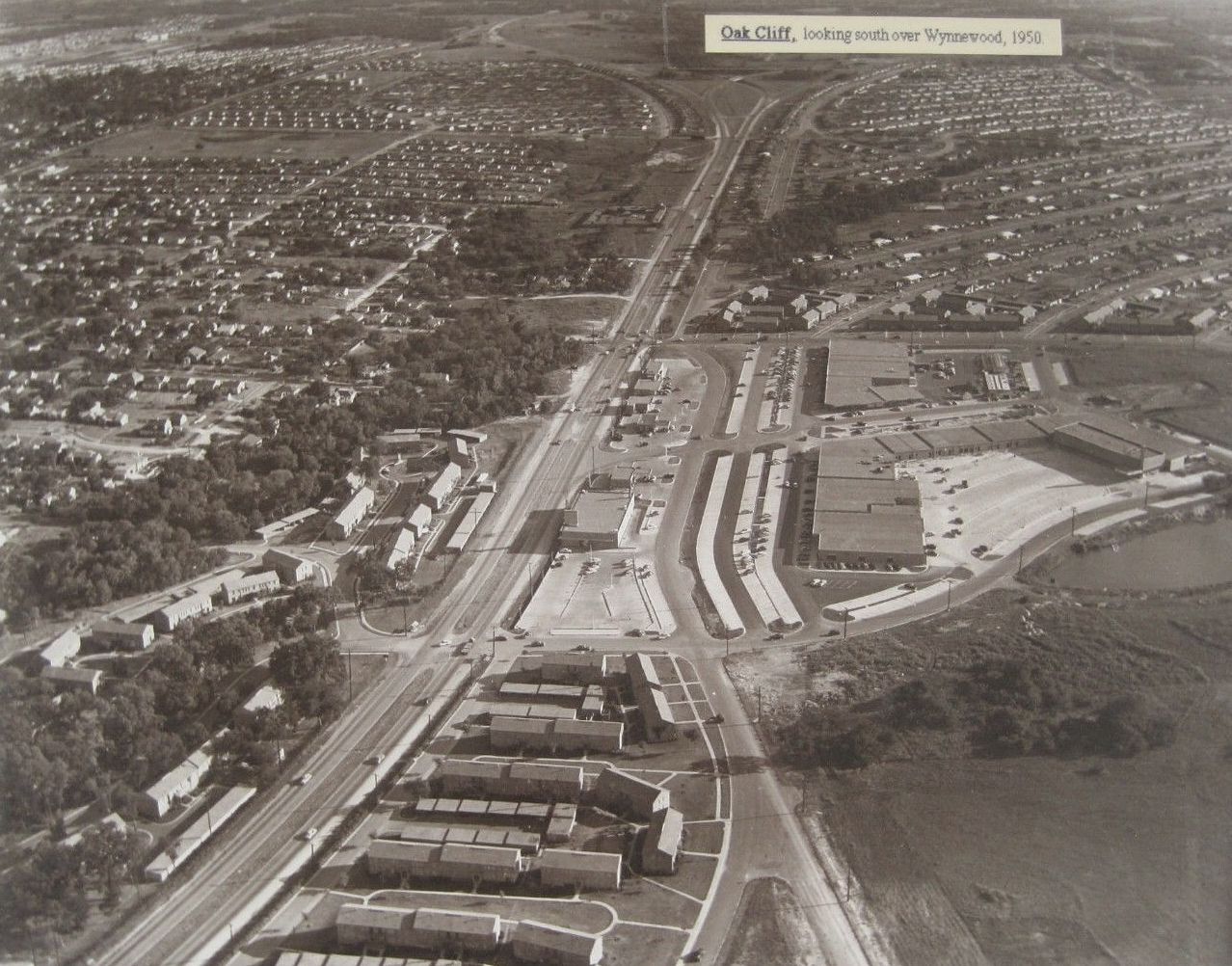
oak-cliff_wynnewood_looking-south_1950_ebayS. Zang and a brand-new Wynnewood…

by Paula Bosse

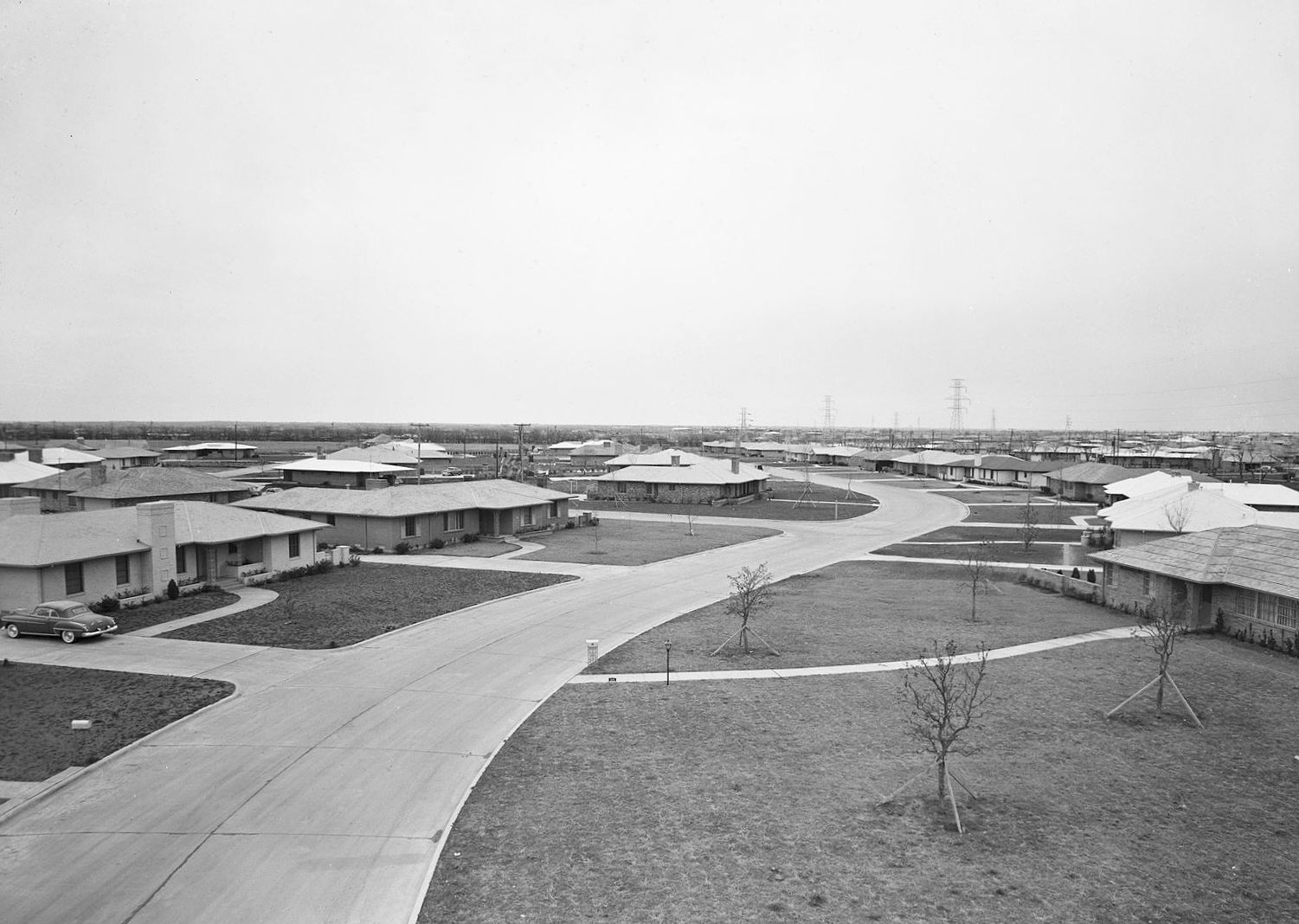
Enjoy these photos of the early days of Oak Cliff’s Wynnewood development. (And for an in-depth history of this 820-acre planned community, see Ron Emrich’s Legacies article “Wynnewood: ‘A Tonic to the Shelter-Hungry Nation,'” here.)

Above, looking south down Zang Blvd. in 1950 — see the same view 60-some-odd years later via Google, here (the “current” satellite view is pretty out-of-date, but you get the idea).

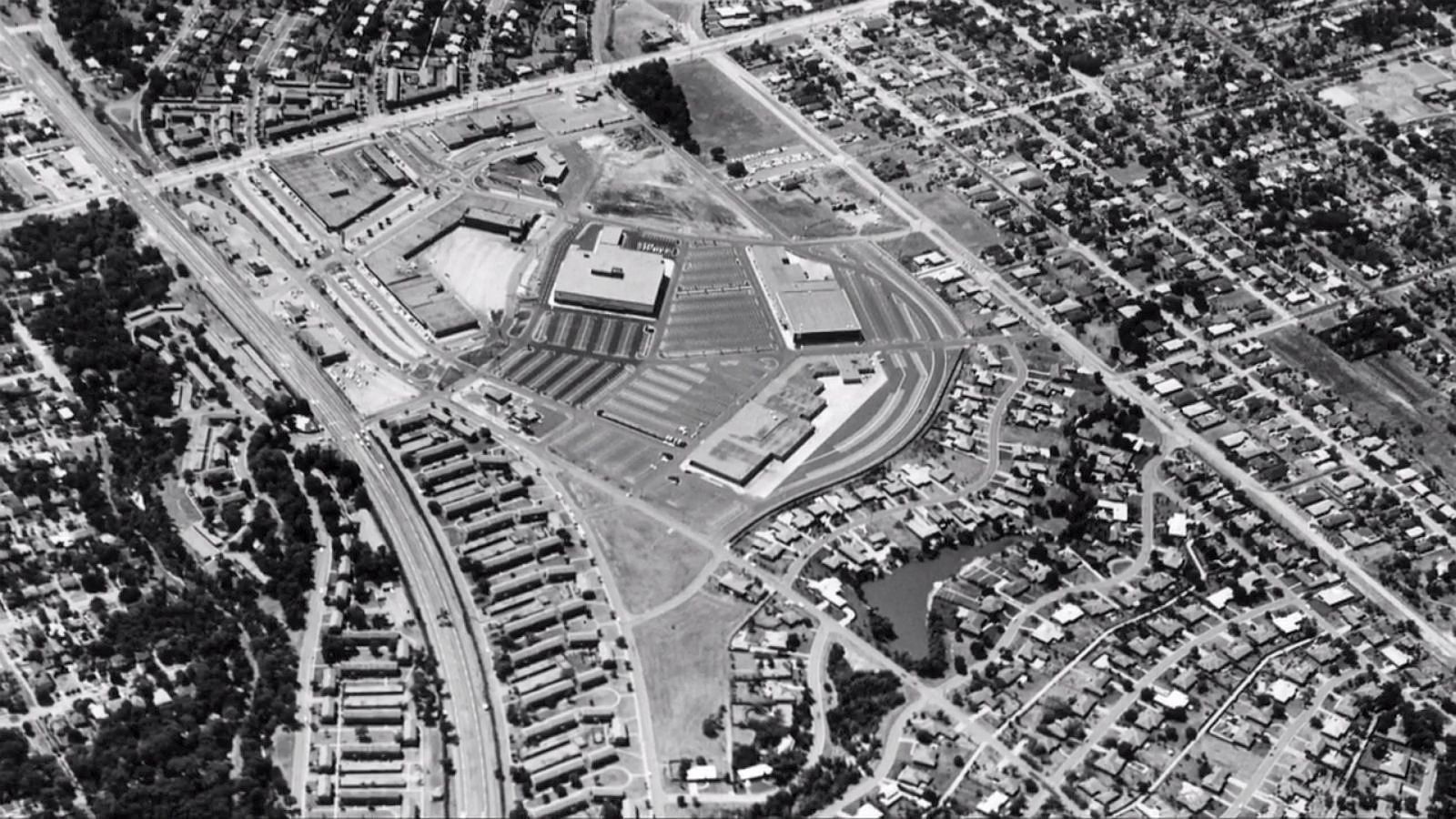
Below, Wynnewood — 1961.

wynnewood_film_screenshot_1961

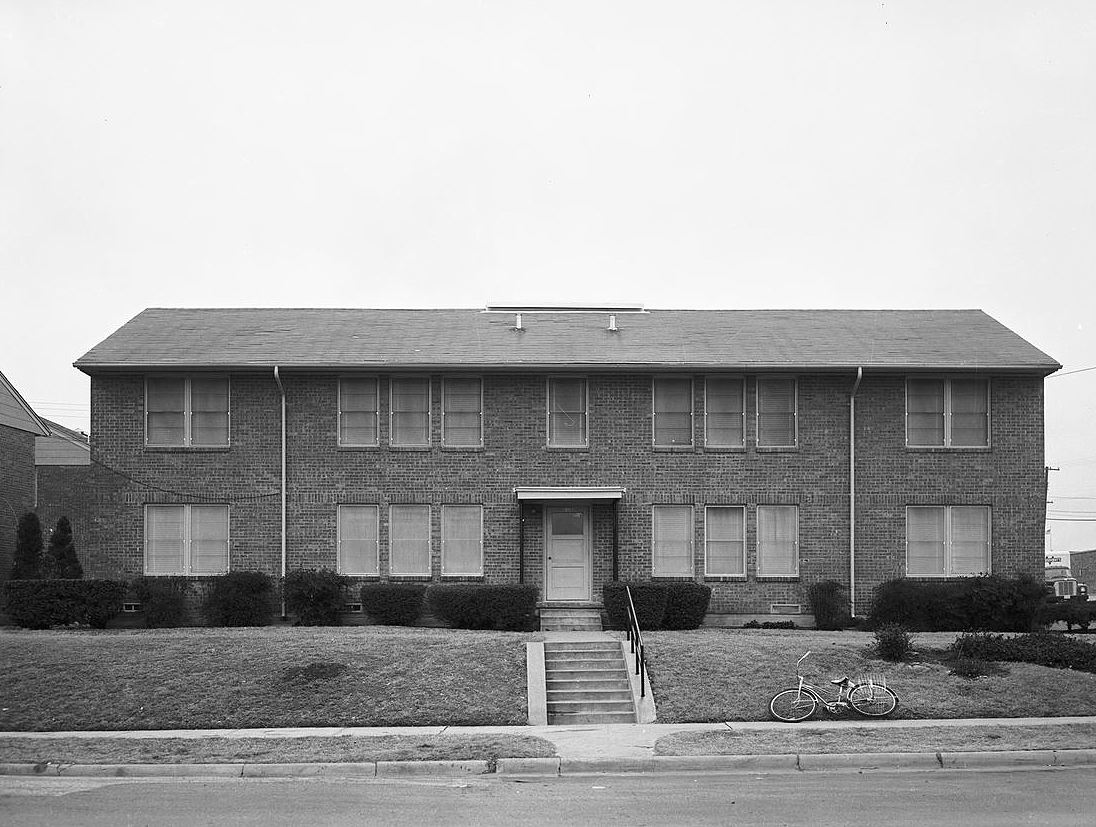
The Wynnewood Garden Apartments — 1954, the year “Father Knows Best” debuted:

wynnewood_apartments_squire-haskins_uta

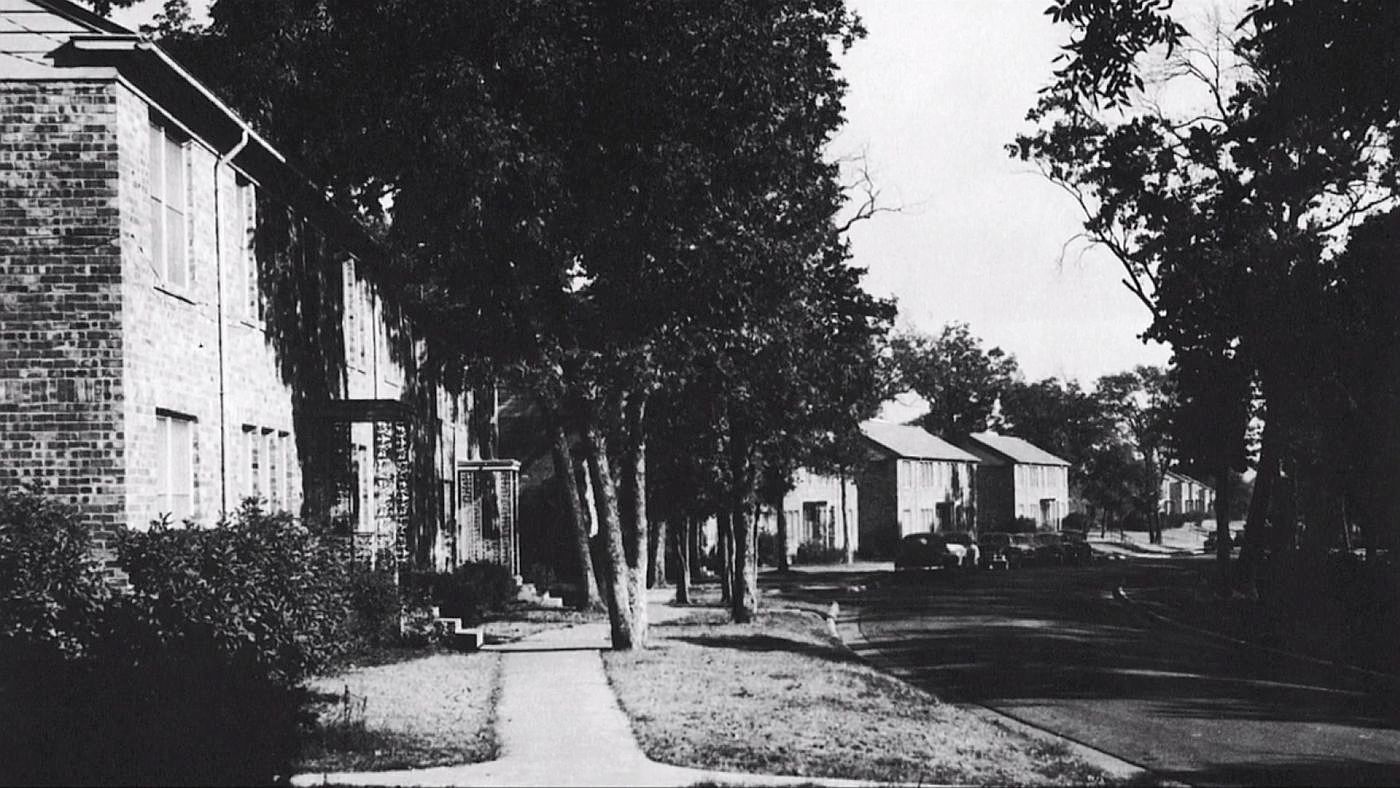
Wynnewood Garden Apartments:

wynnewood_film_screenshot_garden-apartments_1958_dpl

Birds-eye view of a neighborhood in Oak Cliff that is probably Wynnewood — 1954:

wynnewood_residential_squire-haskins_uta_030454

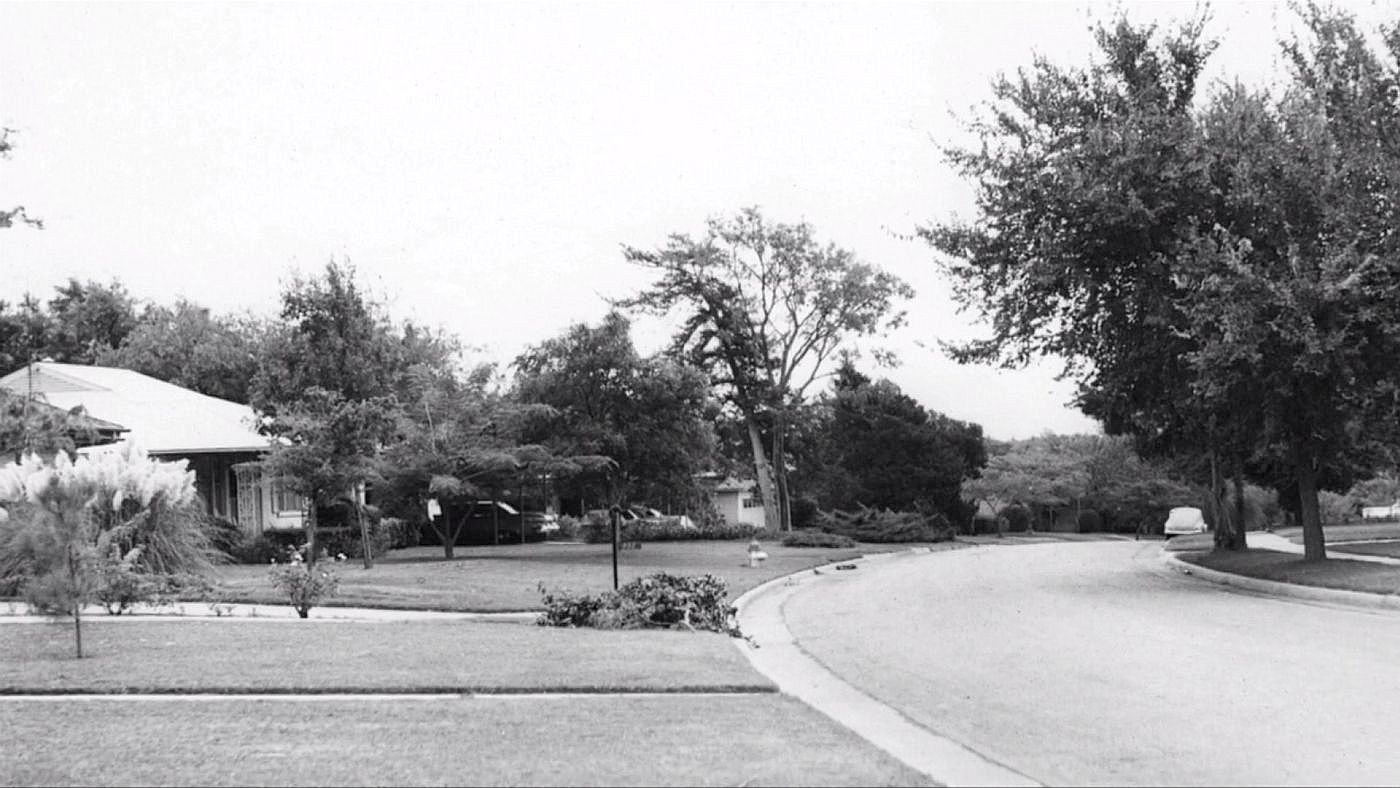
Wynnewood North, residential street — 1961:

wynnewood_film_screenshot_street_1961

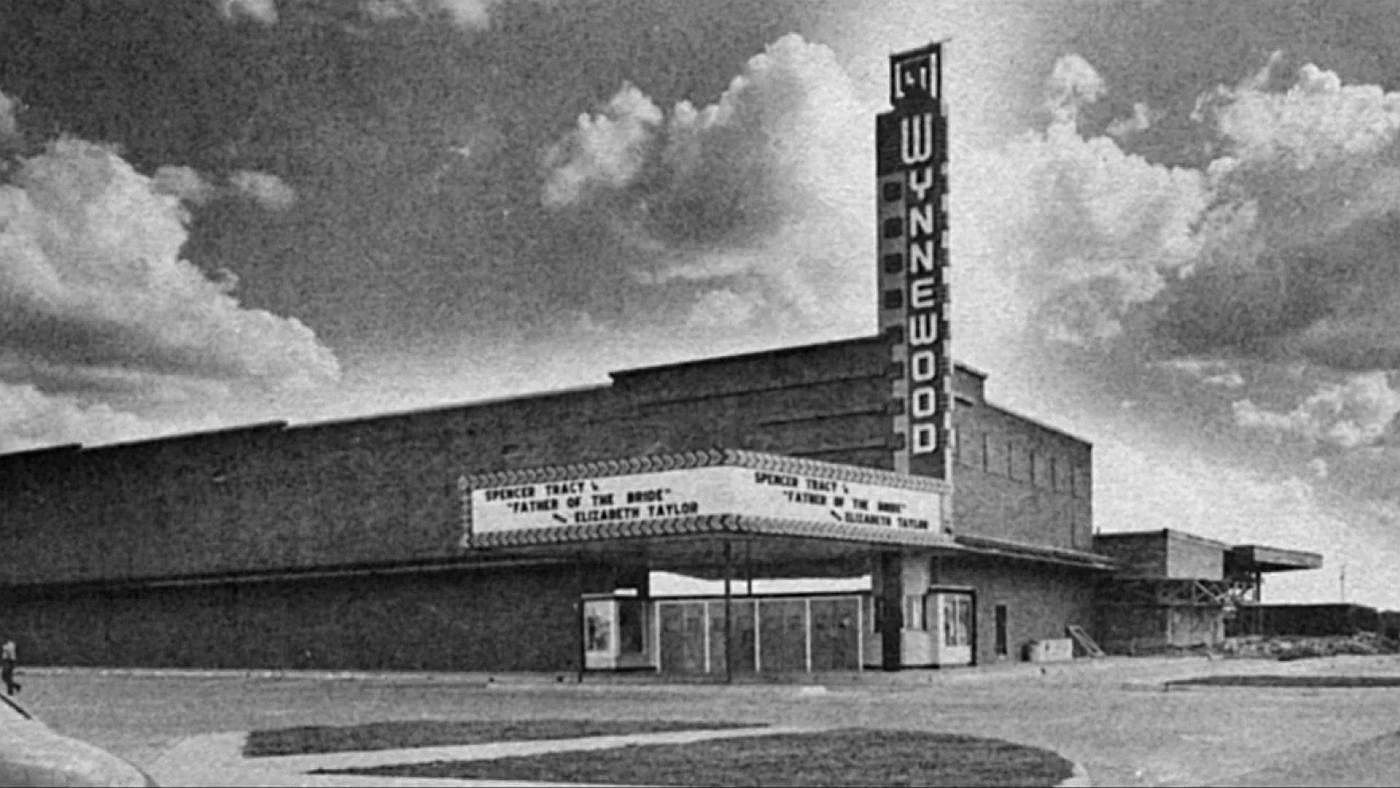
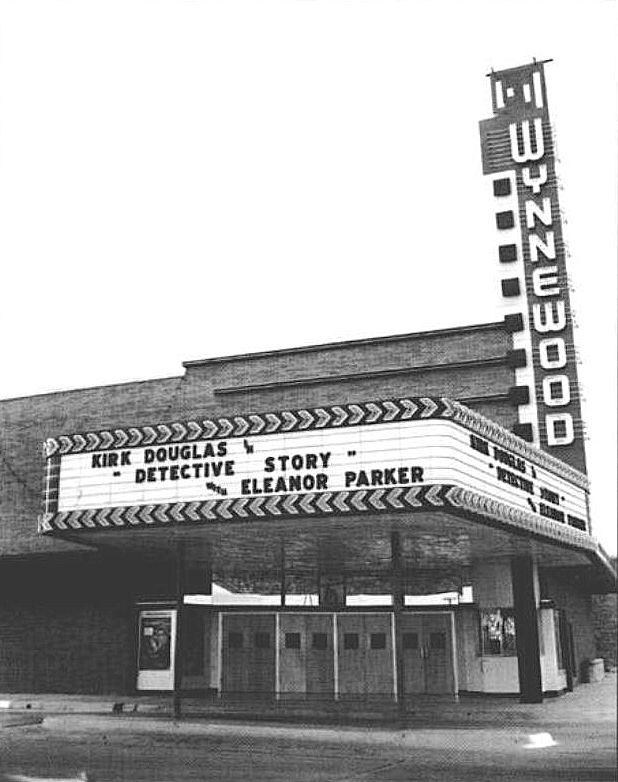
The Wynnewood Theater — 1950:

wynnewood_film_screenshot_theater

The Wynnewood Theater — 1951:

theater_wynnewood_legacies-2002

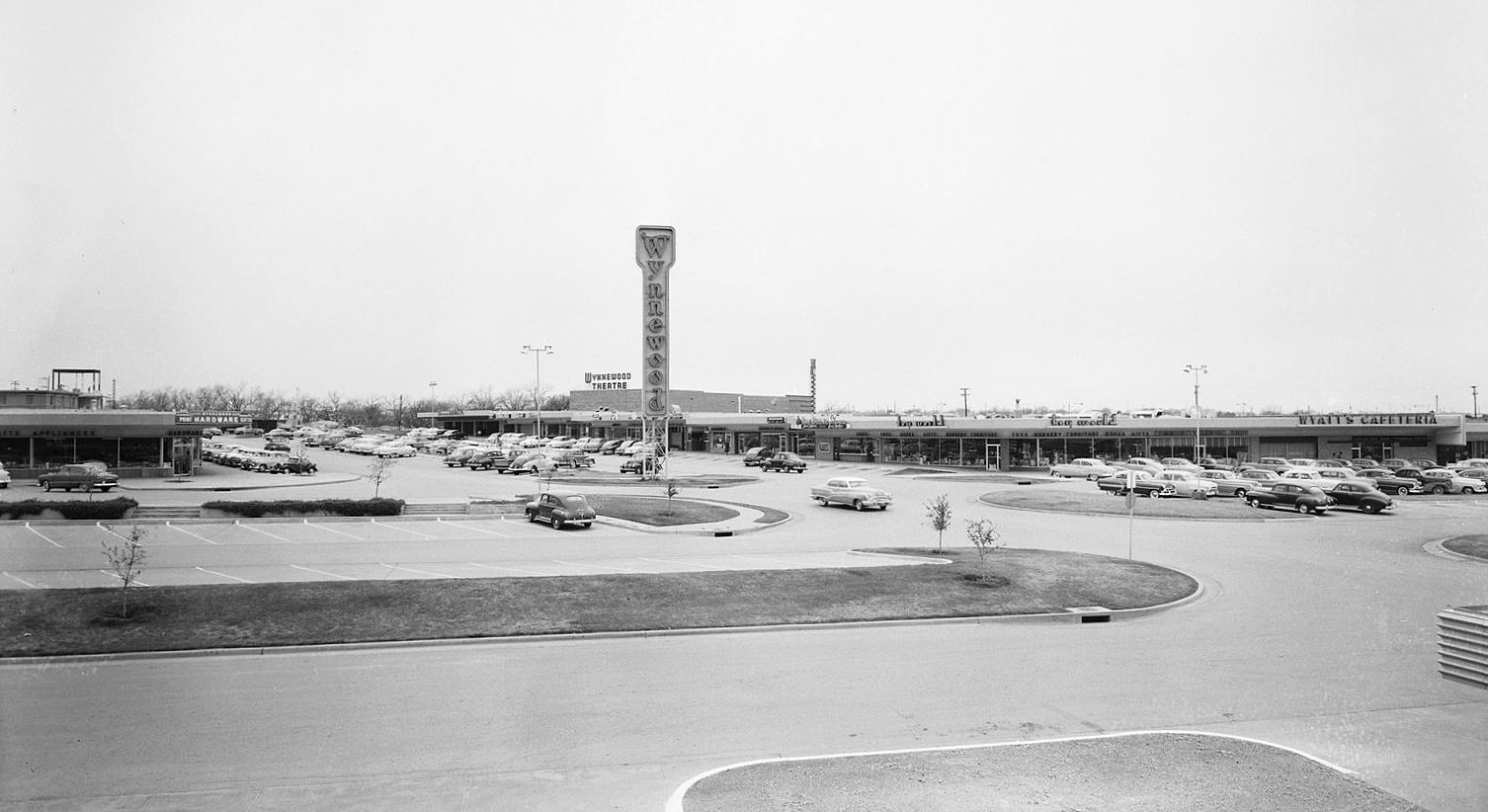
Wynnewood Shopping Village — 1954:

wynnewood-shopping_village_squire-haskins_uta_030454

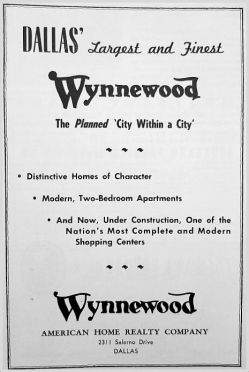
1949 ad for the “Planned ‘City within a City'”:

wynnewood_dallas-mag_feb-1949

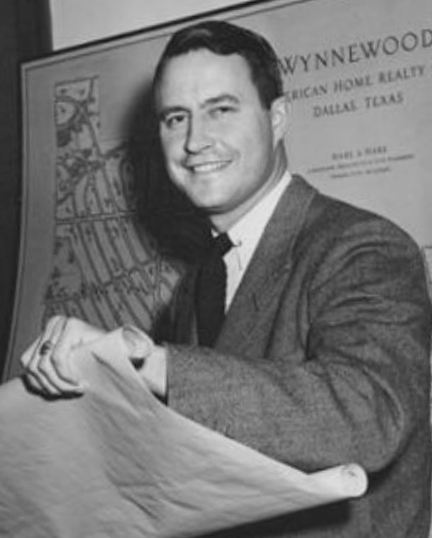
The “Wynne” behind “Wynnewood” (and the man who, a few years later, brought us Six Flags Over Texas) — Angus Wynne, Jr., 1946:

angus-wynne_pinterest

**

Watch a great little 22-minute film from 2013 on the development, rise, fall, and rebirth of Wynnewood North, “Neighborhood Stories: Wynnewood North,” here, produced by the Building Community Workshop (make sure to watch the video in full screen). There is an impressive companion booklet with more photos, here, which you can browse through page by page (hover over the cover and click on the “full screen” icon).

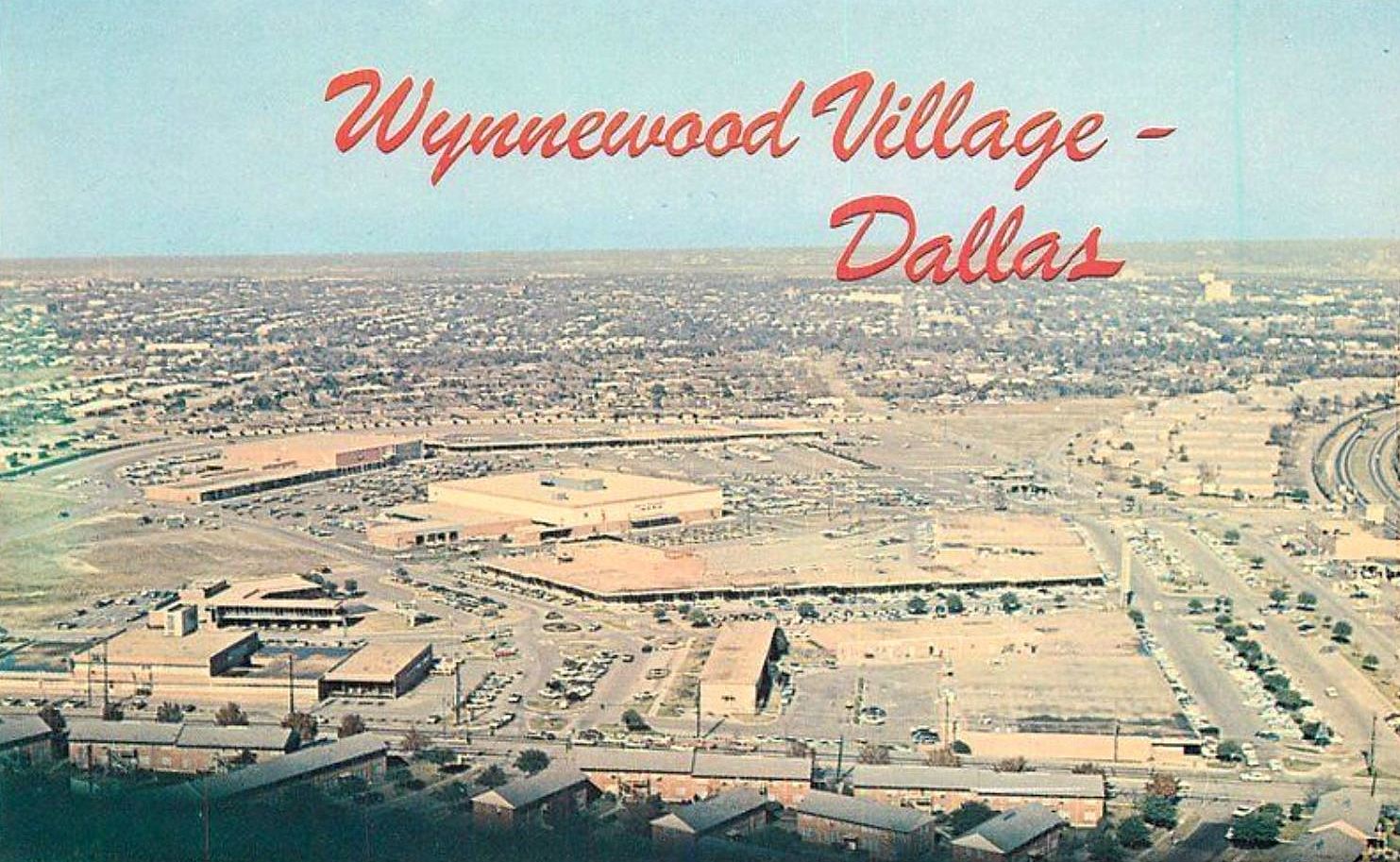
wynnewood-village_postcard_birdseye

***

Sources & Notes

Top photo from eBay. The only description was the one taped to the photo: “Oak Cliff, looking south over Wynnewood, 1950.”

1961 aerial shot from the short film linked above, “Neighborhood Stories: Wynnewood North”; photo provided by resident Janice Coffee.

Wynnewood apartment buildings: with bike, taken by Squire Haskins on March 4, 1954, from the Squire Haskins Collection, UTA — more info here (click thumbnail on that page to see huge image). Second photo of Garden Apartments is a screenshot from the “Wynnewood North” film; Dallas Public Library photo.

“Birds-eye view” of neighborhood taken by Squire Haskins on March 4, 1954 (described as “possibly Wynnewood” by UTA) — more info from UTA here (click that thumbnail for BIG image). More Wynnewood photos from UTA here.

Photo of 1961 residential street from the “Wynnewood North” film, provided by Janice Coffee.

1950 photo of Wynnewood Theater is also from “Wynnewood North” film (Hayes Collection photo, Dallas Public Library).

1951 photo of theater from the article “Wynnewood: ‘A Tonic to the Shelter-Hungry Nation'” by Ron Emrich (Legacies, Fall 2002) — GREAT history — read it here.

1949 ad from Dallas, a publication of the Dallas Chamber of Commerce, February 1949.

Angus Wynne, Jr. photo from Pinterest.

Need more Wynnewoodiana?

  • More photos from the Dallas Public Library, here.
  • More about Wynnewood from Wikipedia, here.
  • Even more from this Oak Cliff Advocate article by Gayla Brooks, here (this is an instance where I would encourage people to read the comments!).

*

Copyright © 2017 Paula Bosse. All Rights Reserved.

Let the McClure Electric Co. Solve Your “Current Problems” — 1952

mcclure-electric-company_flickr_colteraThe lightning bolt on the sign is a nice touch…

by Paula Bosse

This is one of those idealized postcards from the ’40s and ’50s in which everything looks more pristine and perfect than was ever possible in real life. I love the postcard-version of this building, located at 2633 Swiss Avenue. And, glory be, it’s still standing — it just doesn’t look anywhere near as nice as it does in this postcard. (Why must people paint brick buildings? It looked so much better in 1952 when it was brand new. Today it looks like this.)
The McClure Electric Co. — which started life as the Emerson-McClure Electric Co. in 1922 — moved into their swanky new digs at Swiss and Cantegral in early 1952 and remained in business there until at least 1966. In the early ’70s, the building was home to Jim Dandy Fast Foods/Jim Dandy Fried Chicken for several years. Later, it appears that it might have been split up into office space. Currently it seems to be a fruit and vegetable produce company.

And that poor building has lost all its character.

*

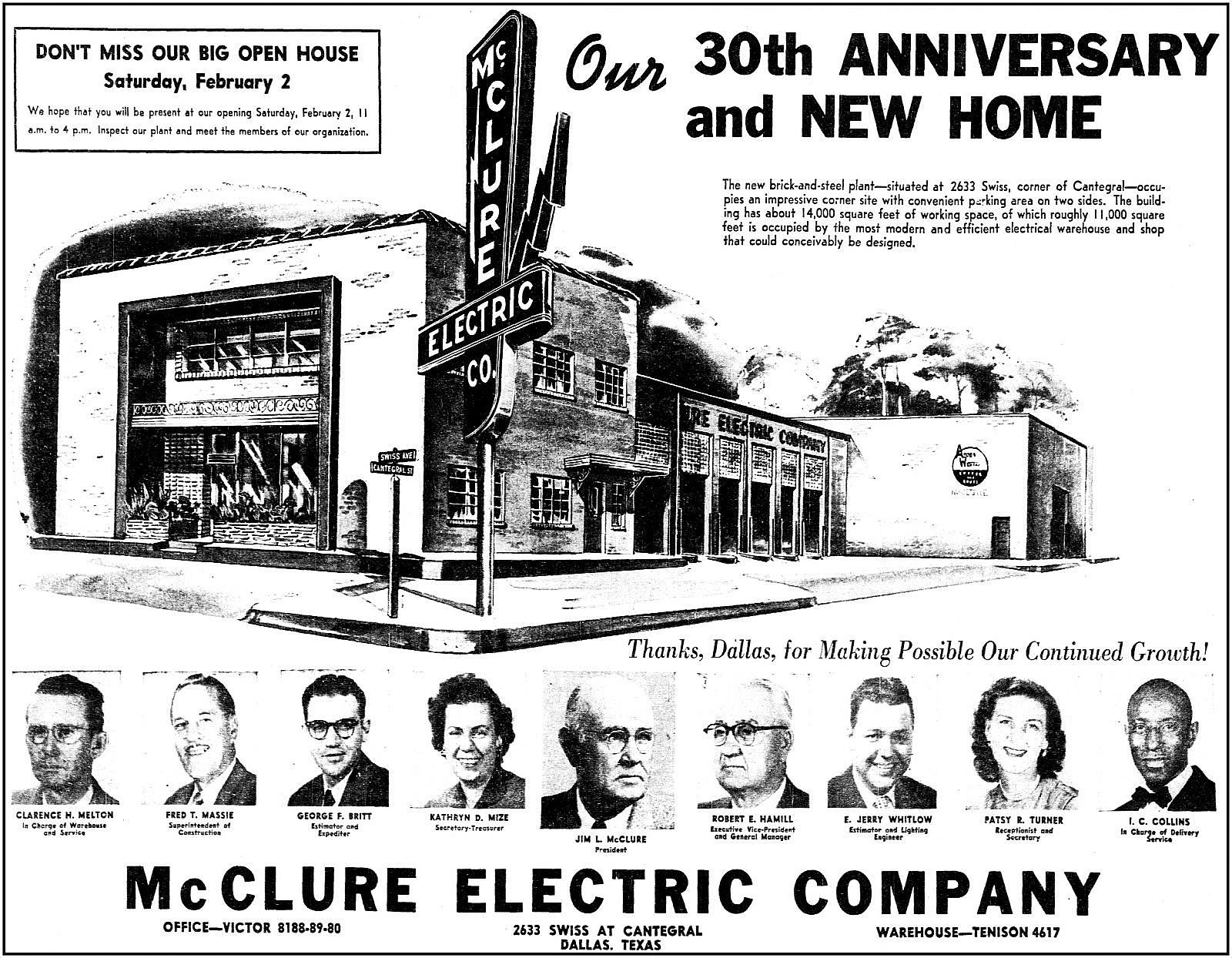
mcclure-ad_dmn_0201521952 ad

swiss-cantegral_1952-mapsco
Swiss & Cantegral, 1952 Mapsco

***

Sources & Notes

Postcard found on Flickr.

More on the McClure company’s grand opening at this Swiss Avenue location can be found in the Dallas Morning News article “McClure Electric Company at Home in Modern Plant” (DMN, Feb. 1, 1952).

*

Copyright © 2017 Paula Bosse. All Rights Reserved.