Flashback : Dallas

A Miscellany: History, Ads, Pop Culture

Tag: Dallas TX

The Higginbotham-Pearlstone Building

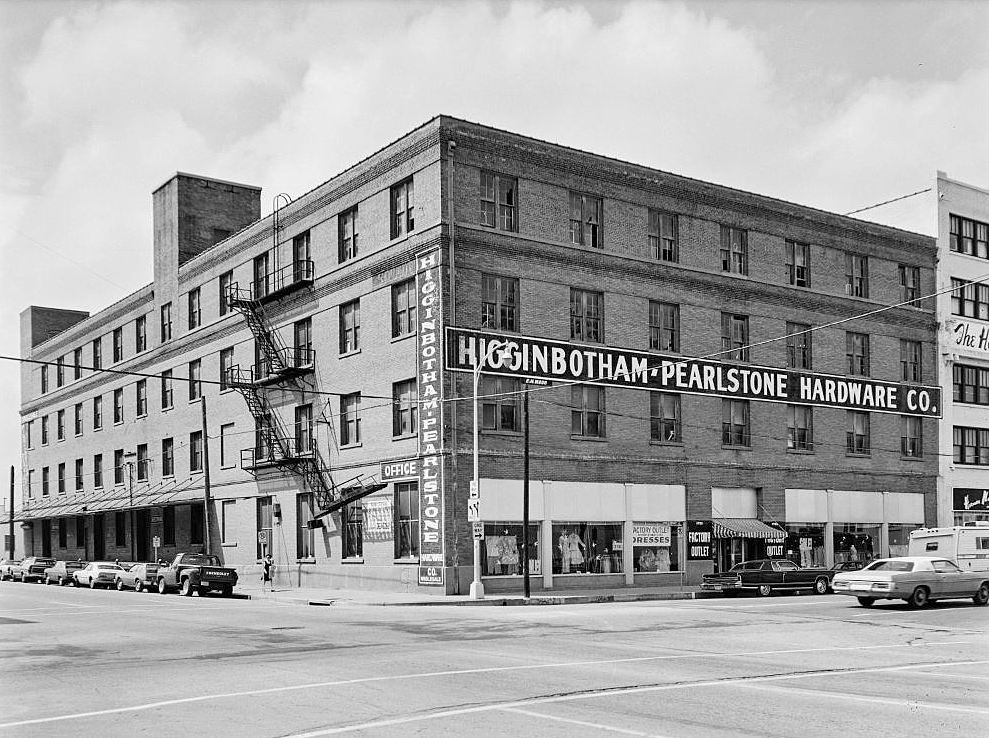
higginbotham-pearlstone_1978_portalHigginbotham-Pearlstone Building, 1978

by Paula Bosse

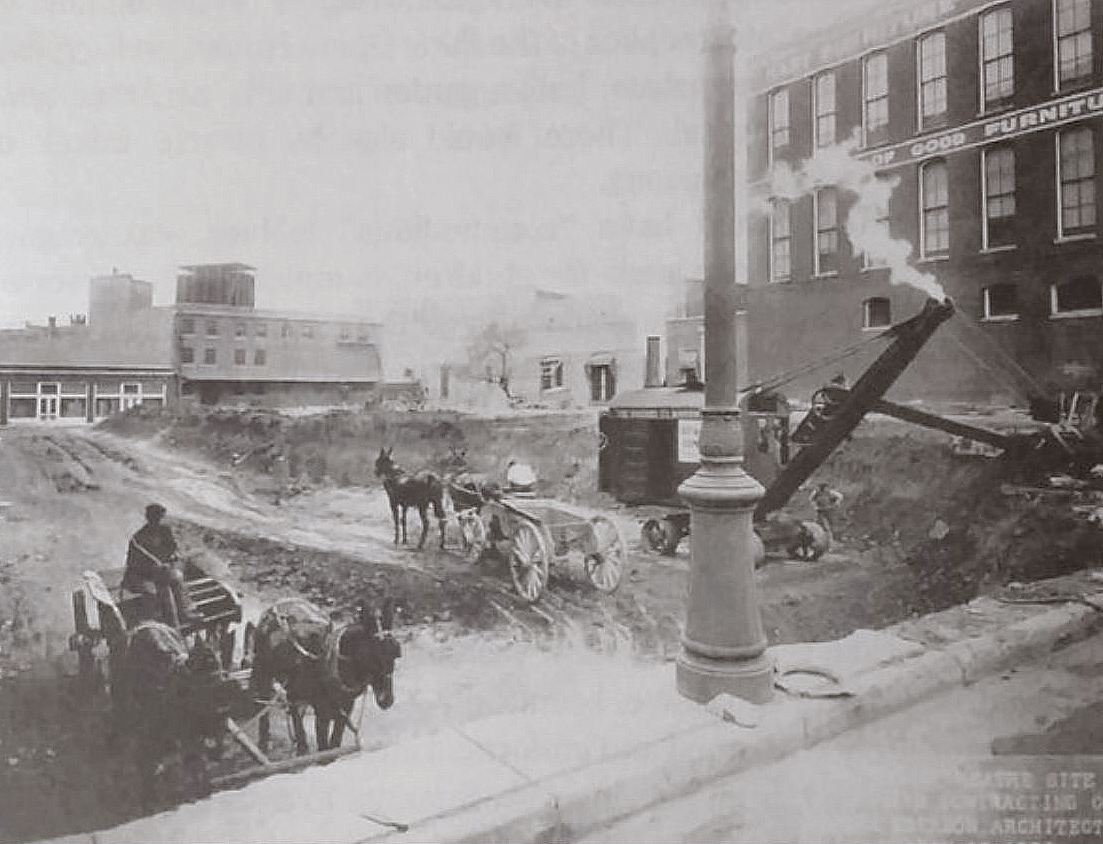
In a previous post, “The South End ‘Reservation’ Red-Light District — ca. 1907” (which, amazingly, has generated so much traffic, that, in one month, it has gotten almost 4 times as many views as the most popular post of last year got all YEAR…), I mentioned that the reason I stumbled across the main photo from that post was because I was searching for a photo of the Hobson Electric Co. in the West End (the photo was originally described as showing the West End, but it actually showed the other side of downtown). So why was I looking for something which, let’s be honest, doesn’t sound all that exciting? The Hobson Electric Co.? Because an anonymous reader asked recently in comments of a post from 2019 — “Caterpillars On the Job at Ross and Market — 1922” — what businesses had been in the building at 1701 N. Market in the West End, known as the Higginbotham-Pearlstone Building. And here, anonymous question-asker, is what I found.

But before any building at all was there, what was there? (See the “Sources & Notes” section at the bottom of the page to see this location on six Sanborn maps from 1885 to 1921.) Before any building sat on the northwest corner of N. Market and Ross Avenue (originally Carondelet), it was a wagon yard/camp yard — a place where people coming to the city could stable their horses and stay the night. As seen on the 1899 Sanborn map, it was near the MKT freight and passenger depots. By 1905, that block was the site of a lumber yard.

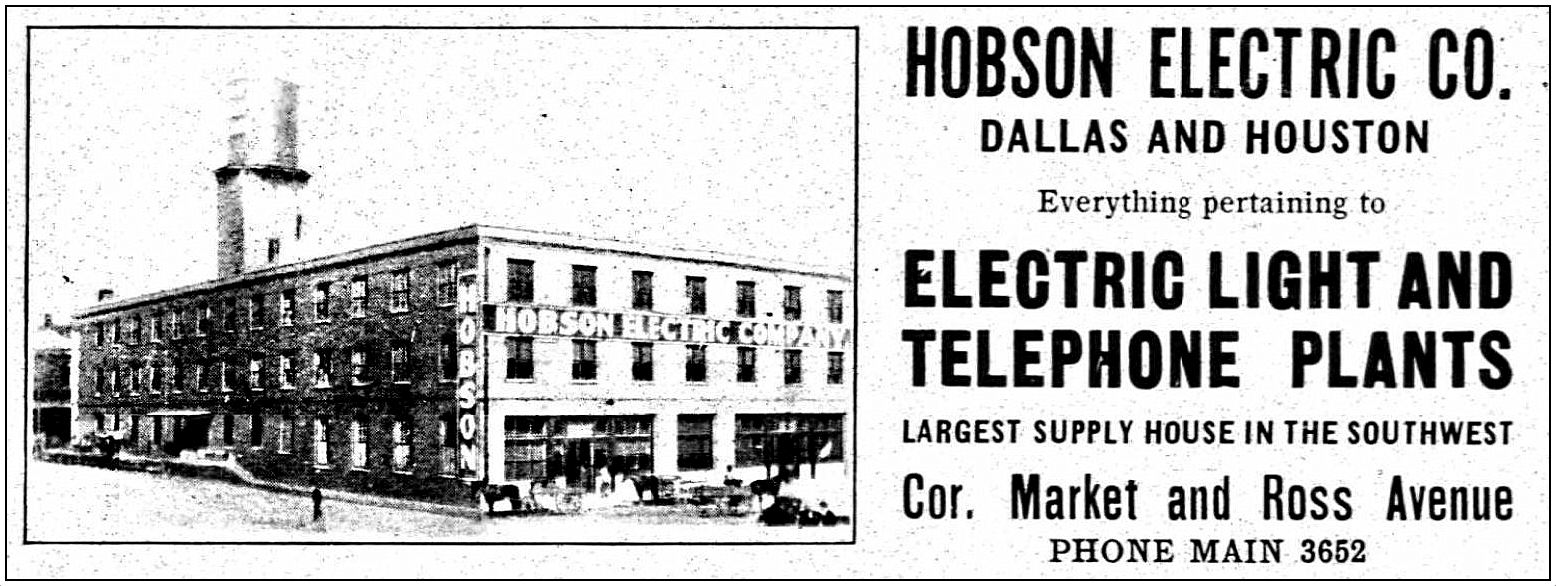
In 1910, the Hobson Electric Co. (“for everything pertaining to electric light and telephone plants, largest supply house in the Southwest”) opened their new building at the northwest corner of Market and Ross (they were formerly in what is now the 700 block of Commerce). The new building was described thusly:

The above new building of the Hobson Electric Company, located near Market street and Ross avenue, Dallas, is an example of modern construction which secures a low insurance rate. The front is 100 feet, depth 200 feet. There are three stories with a total floor space of 60,000 square feet. The foundation is of concrete, the walls of light colored brick 18 inches thick; the interior is of mill construction of unusually heavy and special type, the floorboards being five inches in thickness. The general construction is of the best available at this date. The building is heated by the hot water system, electrically lighted and equipped with the automatic sprinkler system for fire protection. (Dallas Morning News, April 16, 1910)

hobson-electric_1911-directory1911 city directory

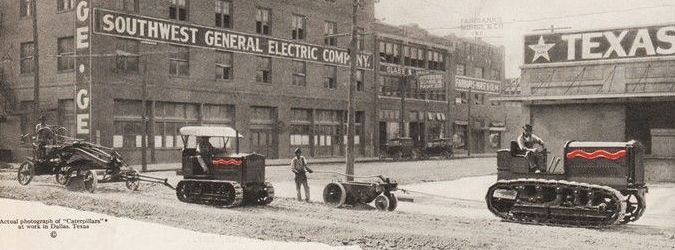
In January 1913, Charles W. Hobson changed the name of his company to the Southwest General Electric Co., (Hobson was the Southwest manager of General Electric/G.E.), as can be seen in this photo of the building from 1922:

caterpillar-ad_1922_photoDetail of a 1922 ad for Caterpillar tractors

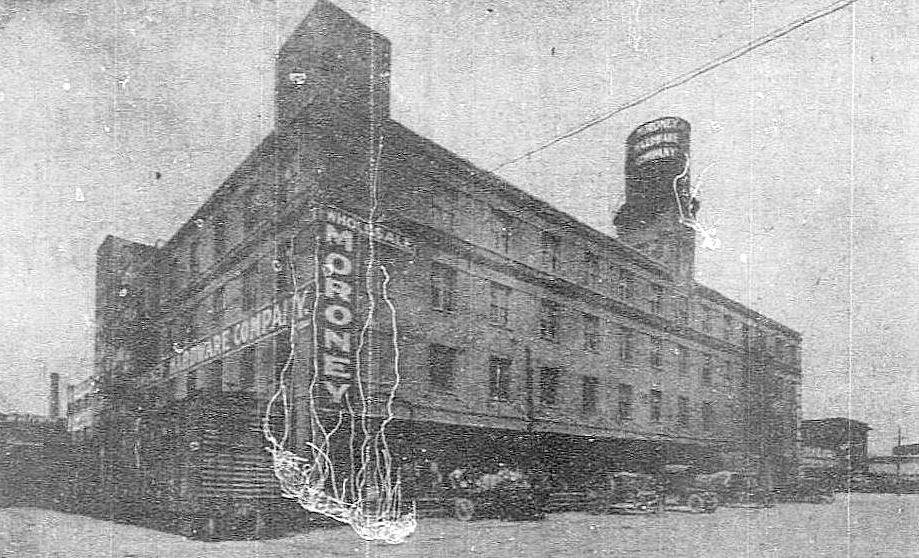
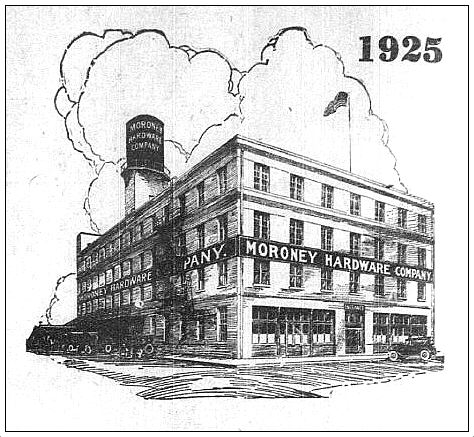
In October 1923, the Moroney Hardware Co. (est. 1875) moved in. “You will find everything here that a modern, progressive wholesale hardware house should carry. Shipping everywhere in the large Dallas trade territory” (ad, Sept. 23, 1923).

moroney-hardware_1701-n-market-at-ross_DMN_101423_photoDMN, Oct. 14, 1923

moroney-hardware_1701-n-market-at-ross_DMN_112325DMN, Nov. 23, 1925

moroney_ad_112325_det50th anniversary ad detail, Nov. 23, 1925

In February 1926, the Moroney company (having just celebrated its 50th anniversary) announced the sale of the pioneering Dallas business (as well as its building) to R. W. Higginbotham and Hyman Pearlstone — the new wholesale company would be called the Higginbotham-Pearlstone Hardware Co.

higginbotham-pearlstone_hardware-catalog_1954_ebayca. 1954

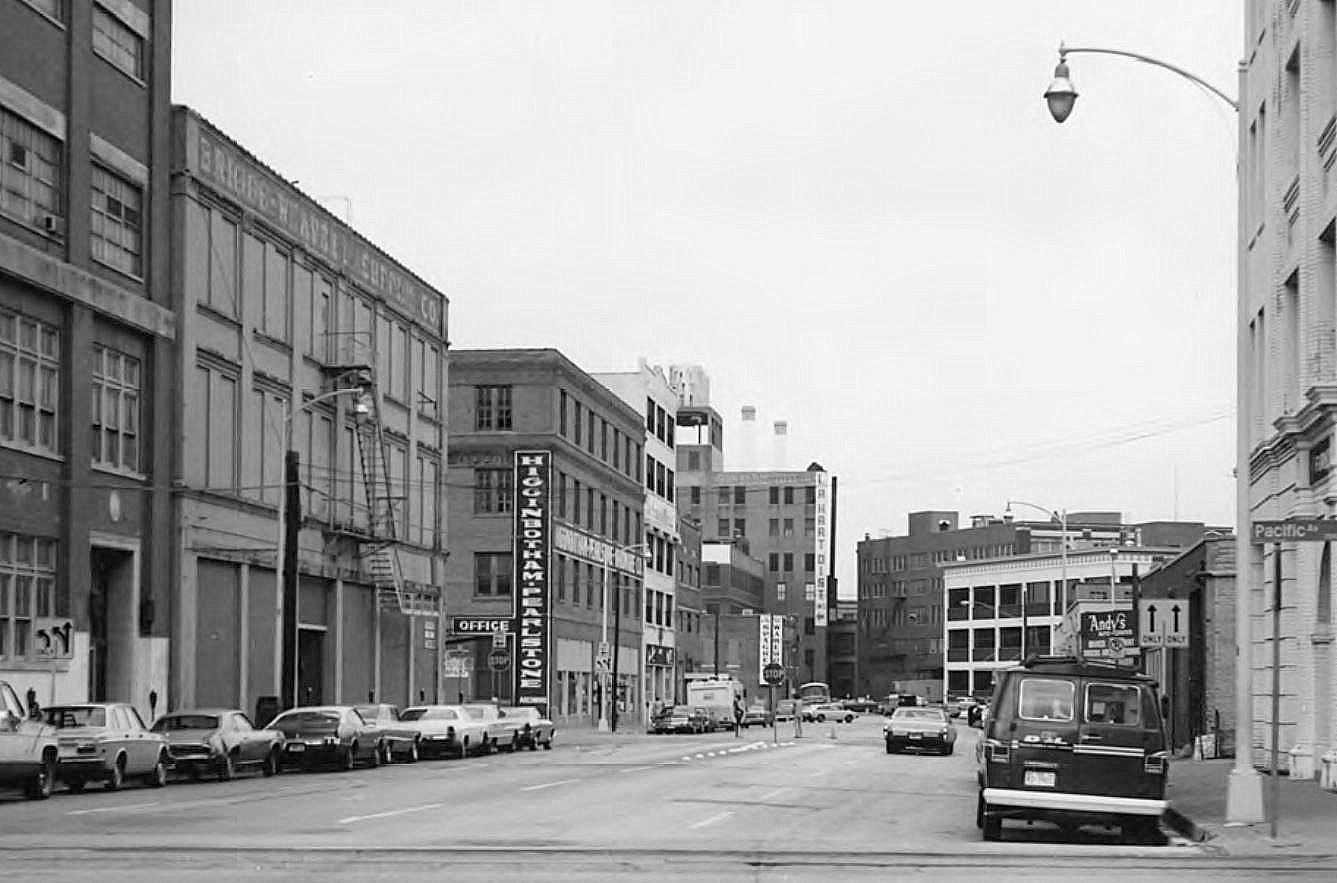
Higginbotham-Pearlstone lasted until about 1977, when they vacated the building (but their name remained on it). The photo at the top of this post shows the building in 1978, as does the photo below — at that time, it (or part of it) became home to a factory-outlet clothing store. Below, a slightly different view, looking north on Market from Pacific.

higginbotham-pearlstone_tx-hist-comm_danny-hardy_mar-1978_det_n-on-market-from-pacific1978

It continues to be an important landmark in the Historic West End, and it still looks great — see the building on Google Street View, here.

***

Sources & Notes

The top photo, from 1978, is from the collection of the Texas Historical Commission, via the Portal to Texas History.

The 1954 Higginbotham-Pearlstone photo is from eBay.

The second photo (which I have cropped slightly), from 1978, is also from the Texas Historical Commission — it was taken in March 1978 by Danny Hardy. It is part of a nomination form for “National Register of Historic Places” designation — the whole 90-page application can be viewed as a PDF, here (this photo is on p. 50). There are lots of great photos of West End buildings from 1978 in this!

Other sources as noted.

See Sanborn maps which include this block (northwest corner of N. Market and Carondolet) in 1885, 1888, 1892, 1899, 1905, and — the “modern” block which, finally, is home to our building — in 1921.

higginbotham-pearlstone_1978_portal_sm

*

Copyright © 2024 Paula Bosse. All Rights Reserved.

A Few Photo Additions to Past Posts — #22

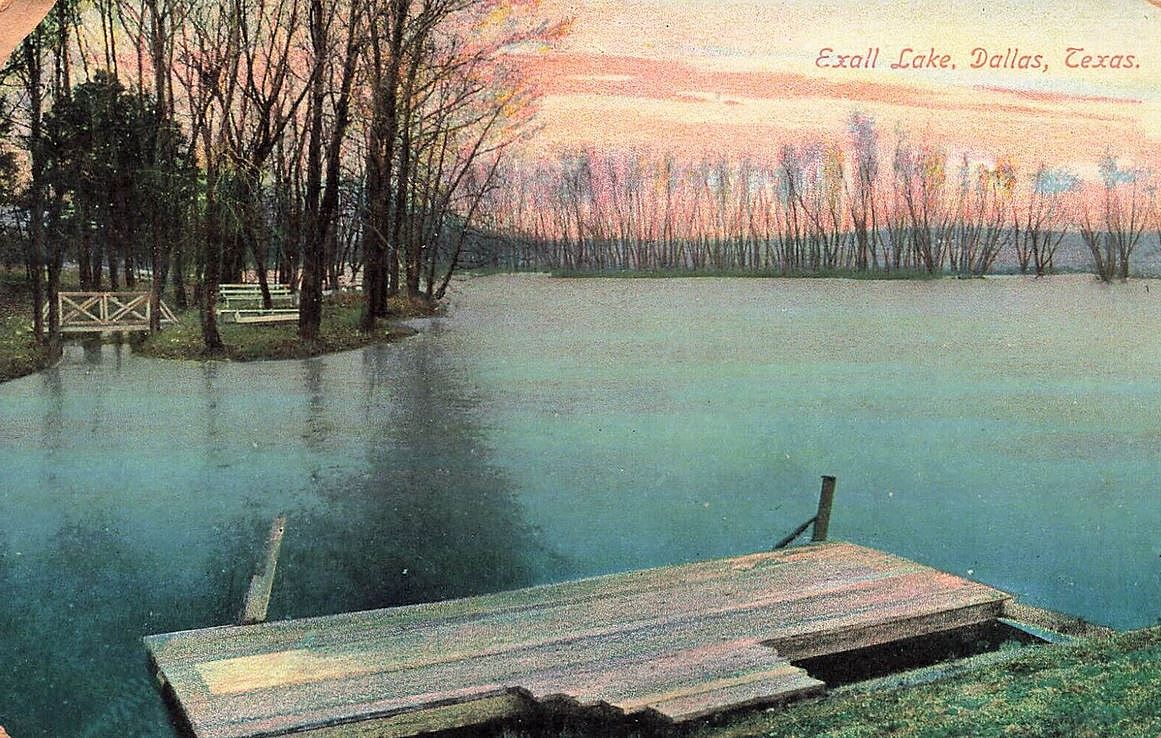
exall-lake_postcard_ebayHighland Park of yesteryear…

by Paula Bosse

Periodically, I add photos or postcards or ads that I’ve recently come across to old Flashback Dallas posts. And I’m doing that again here.

*

I’m adding the very pretty postcard of Exall Lake (above) to the 2016 post “Lakeside Drive, Highland Park.” (Source: eBay)

*

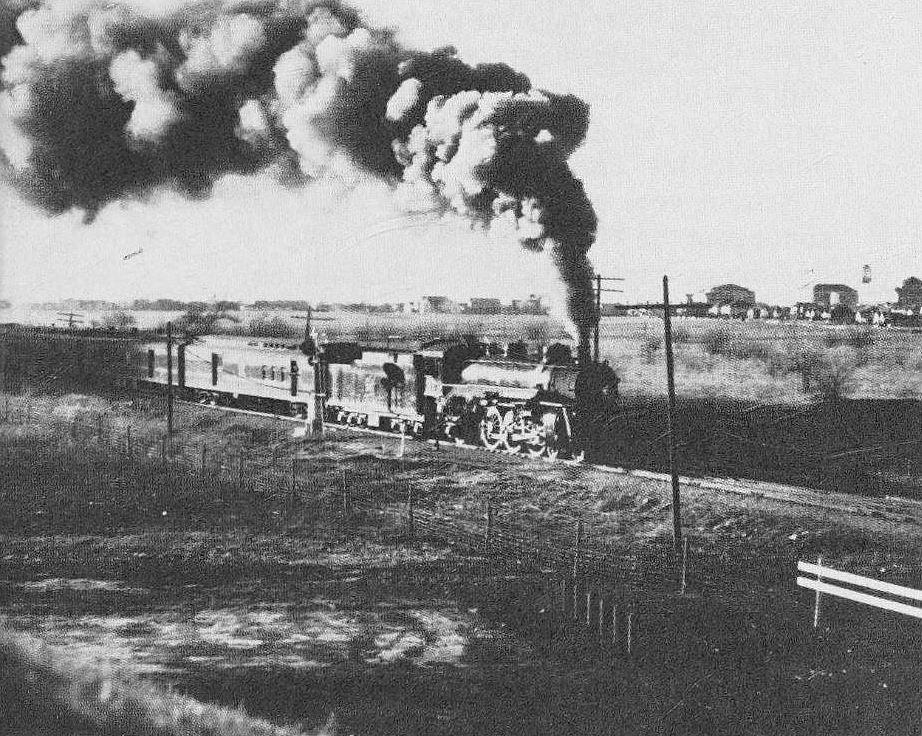
This early-’40s shot of an MKT train rolling through the Upper Greenville area, with SMU seen in the background and a couple of helpful maps have been added to the 2014 post “Katy Comin’ ‘Round the Bend — 1908.” (Source: DeGolyer Library, SMU — as printed in The Park Cities: A Walker’s Guide and History by Diane Galloway and Kathy Matthews)

smu_katy-train_park-cities-walkers-gd_diane-galloway_photo

*

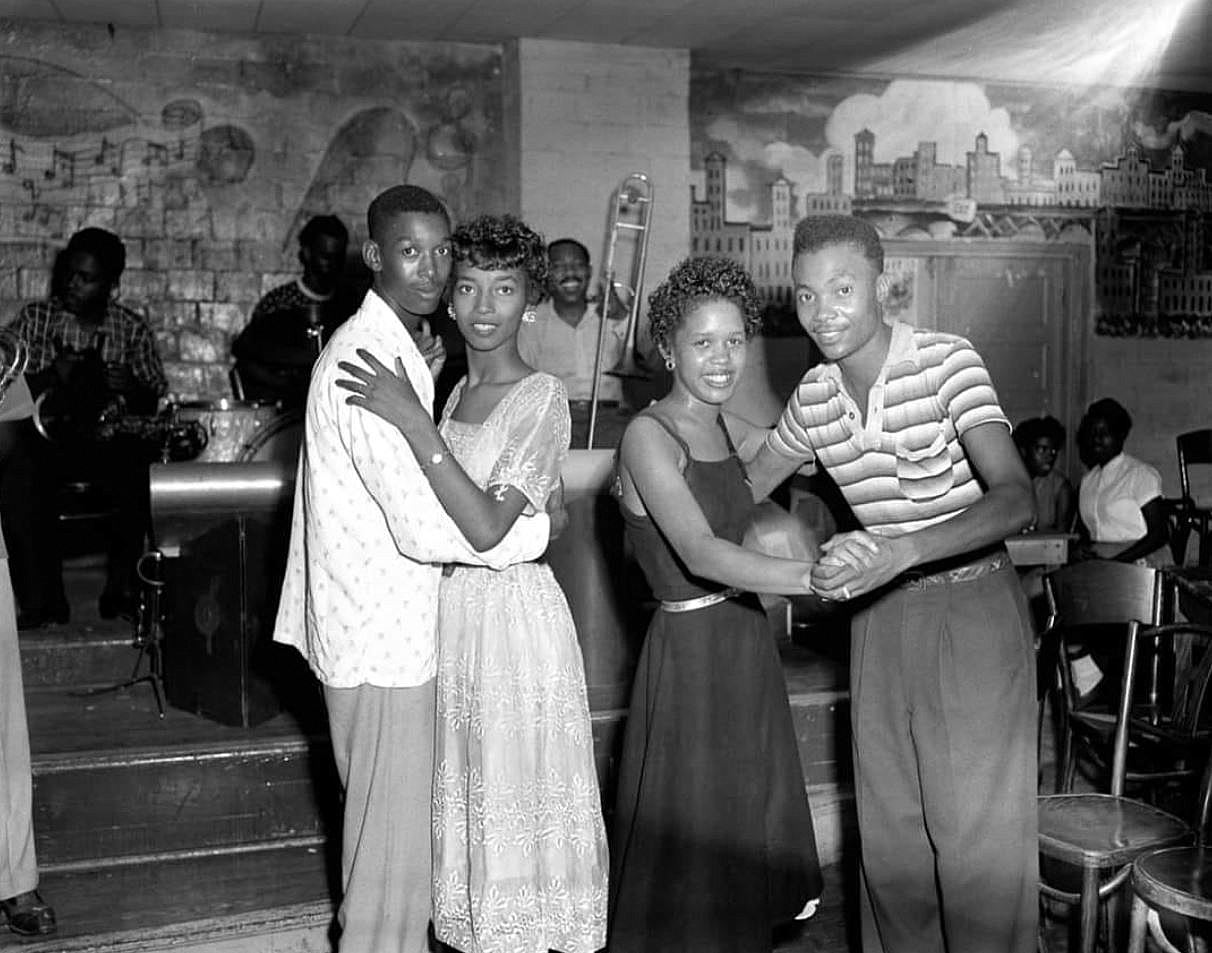
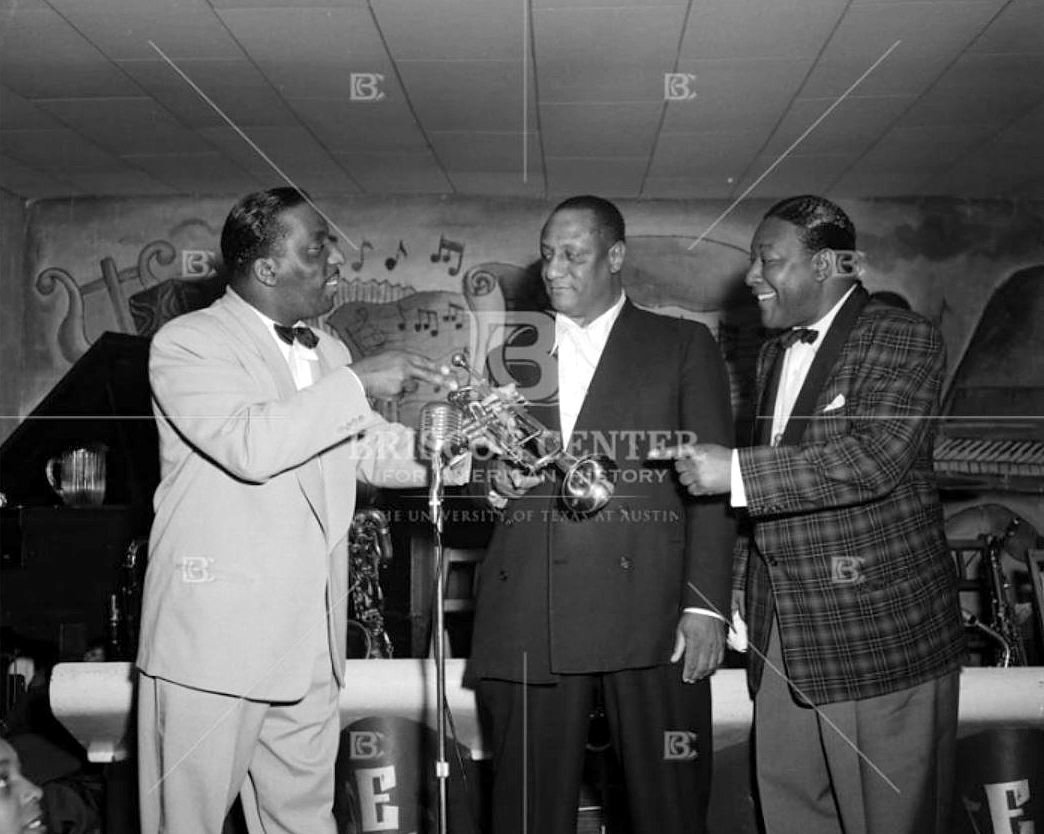
These two great photos by R. C. Hickman have been added to the 2017 post about one of the top Black clubs in Dallas (which had several names…): “1710 Hall: The Rose Room/The Empire Room/The Ascot Room — 1942-1975” These two photos show teen dancers (in 1956) and entertainers (in 1951, pardon the watermark)) at the Empire Room. (Source: R. C. Hickman Photographic Archive, Briscoe Center, University of Texas Libraries)

empire-room_teenage-dance_hickman_080656

empire-room_l-g-mccutcheon_hickman_042351_briscoe-center_watermark

*

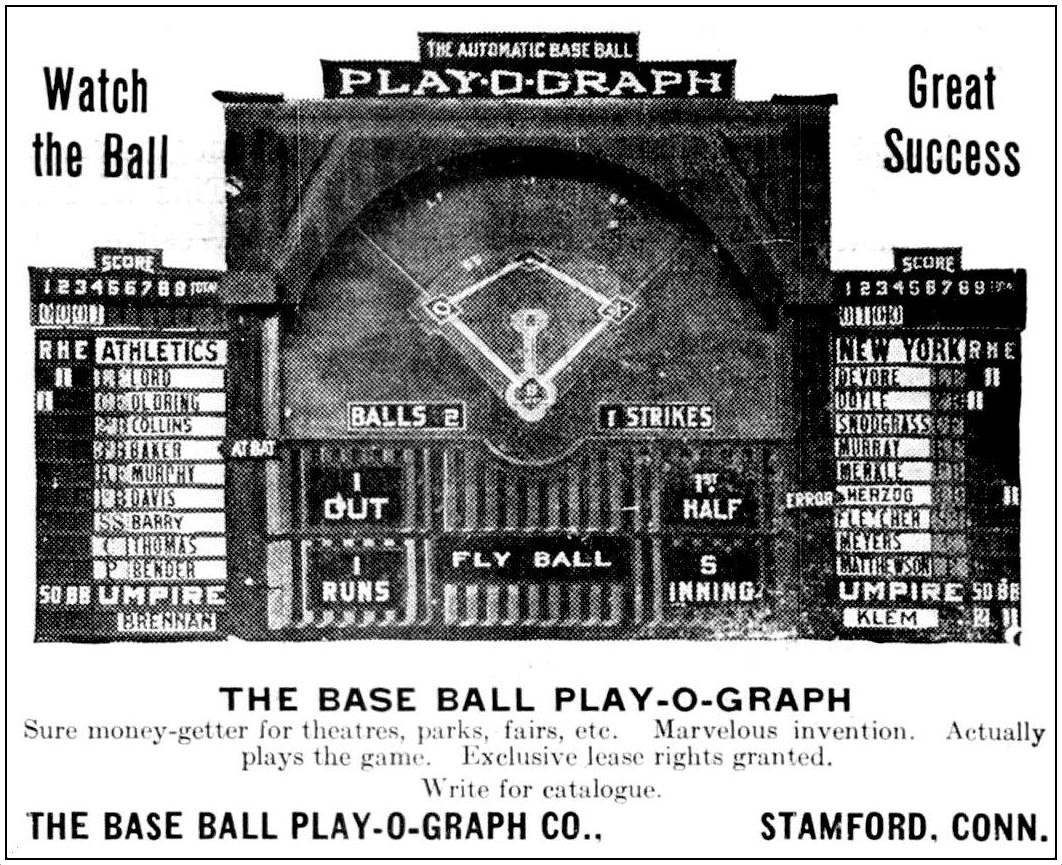
I always say I’m not a sports person, but whenever I’ve written about sports, I’ve enjoyed it. But it’s got to have an “angle” — like 2014’s “Simulcasting the World Series in Dallas in the Days Before Radio, Via Telegraph,” which I still think is weird/cool. I’ve added an ad from 1913 featuring the Baseball Play-o-Graph. (Source: Billboard magazine, Mar. 22, 1913)

baseball-simulation_play-o-graph_billboard_032213

*

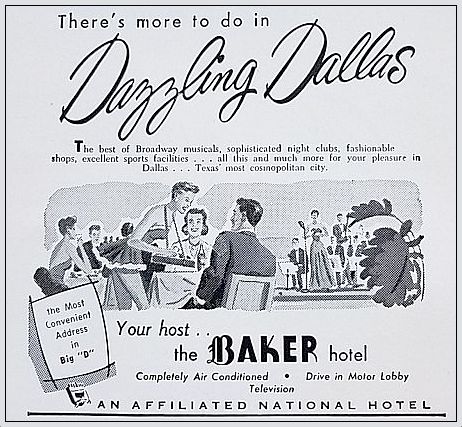
Dallas once had tons of swellegant downtown nightclubs, including the Mural Room at the Baker Hotel. Below a 1956 ad geared to the tourist, promoting the Baker, in the age of the cigarette girl. It’s been added to “The Baker Hotel,” from 2017. (Source: This Month in Dallas, Dec. 1956)

baker-hotel_cigarette-girl_this-week-in-dallas_dec-1956

*

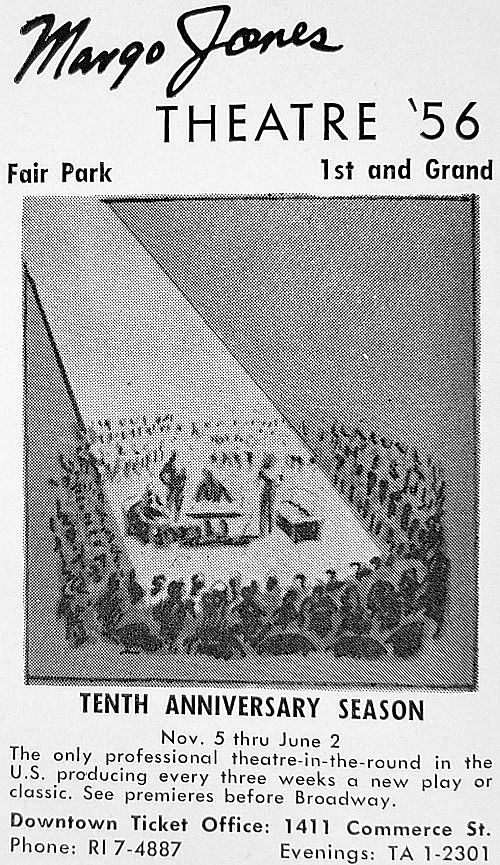
Margo Jones was a force to be reckoned with. This 1956 ad for Theatre ’56 (which continued after her untimely death in 1955) has been added to 2022’s “New Wheels for Margo Jones — 1955.” (Source: This Week in Dallas, Dec. 1956)

jones-margo_theatre-56_this-month-in-dallas_dec-1956_ad

*

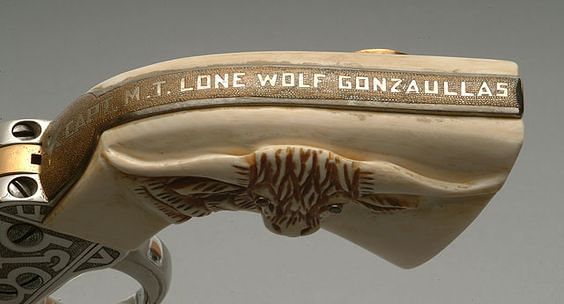
My father was a big fan of the Old West (and the modern Old West), and he mentioned famed Texas Ranger “Lone Wolf” Gonzaullas frequently. I’ve added this photo of one of his custom pistol grips to the 2020 post “Lone Wolf Gonzaullas: Texas Ranger, Dallas Resident.”

gonazaullas_pistol-grip

*

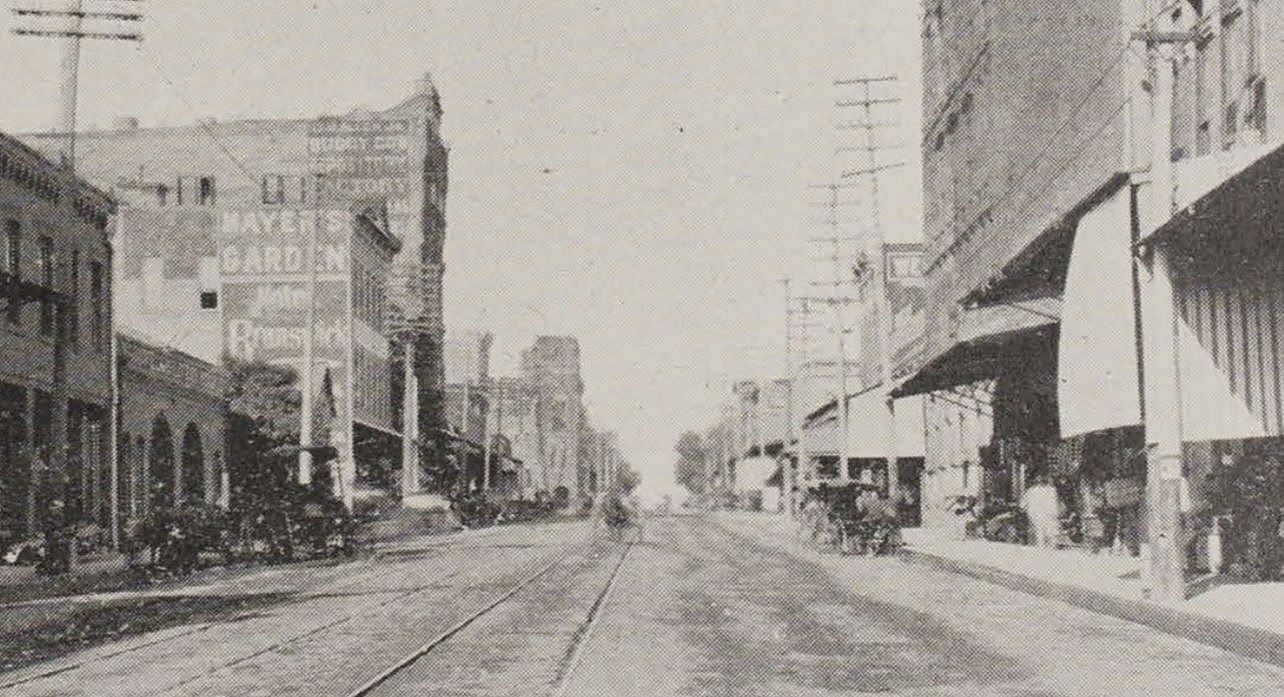
This photo of Elm Street looking east from about Akard, circa 1894, shows Mayer’s beer garden at the left. It has been added to 2022’s “S. Mayer’s Summer Garden, Est. 1881.” (Source: detail of a photo by Clifton Church, from his book Dallas, Texas Through a Camera, DeGolyer Library, SMU)

mayers-garden_clifton-church_1894_degolyer-library_SMU_det

*

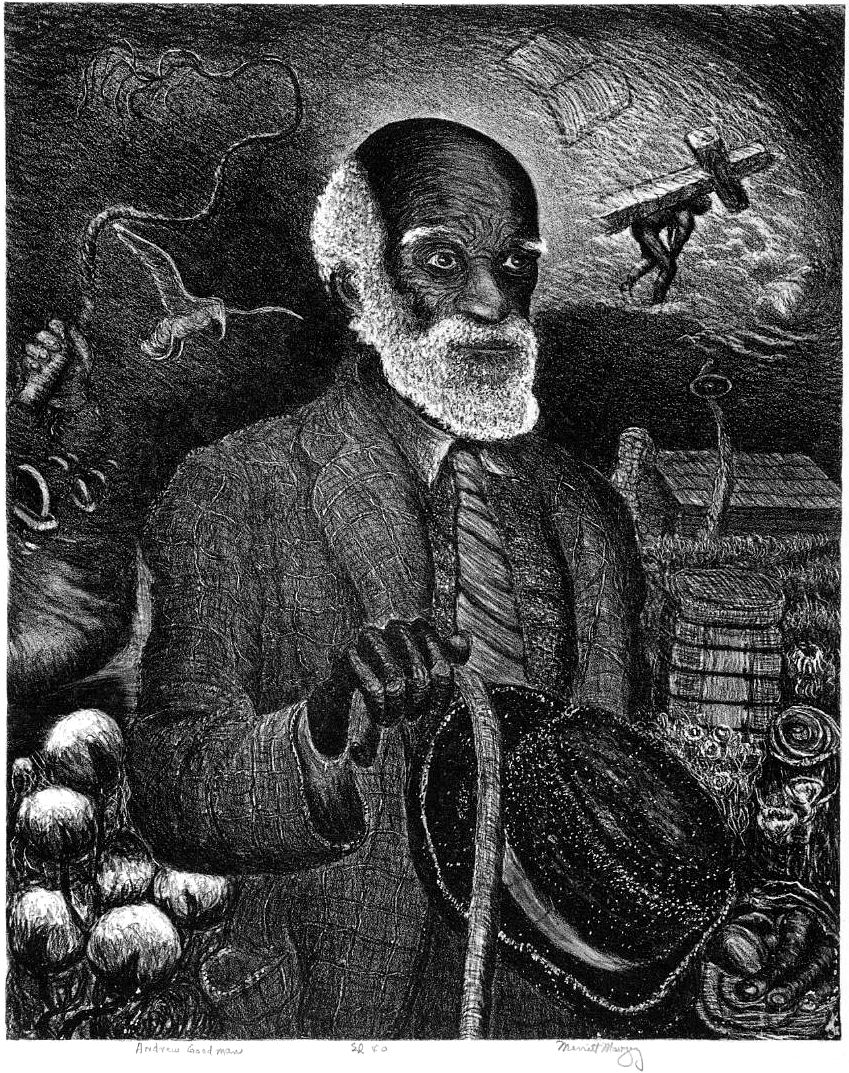
A portrait of Andrew Goodman, a man who was born into slavery, has been added to the 2023 post “Ex-Slaves in Dallas — 1937.” The lithograph is by Merritt Mauzey, a Texas artist who studied art and etching in Dallas. (Source: Smithsonian American Art Museum)

mauzey-merritt_andrew-goodman_portrait_smithsonian-art-museum_1946

*

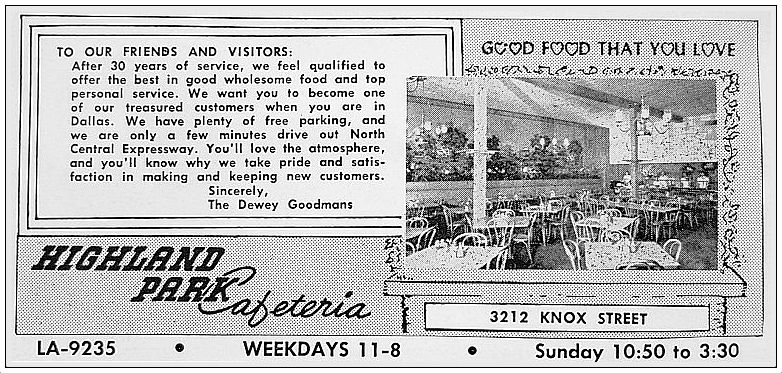
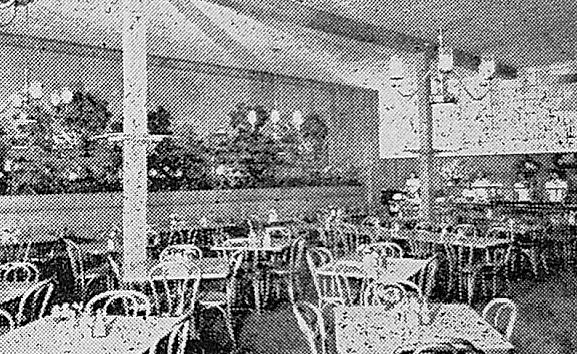
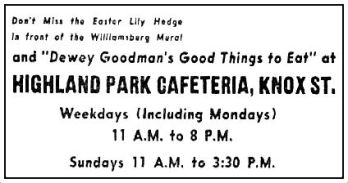
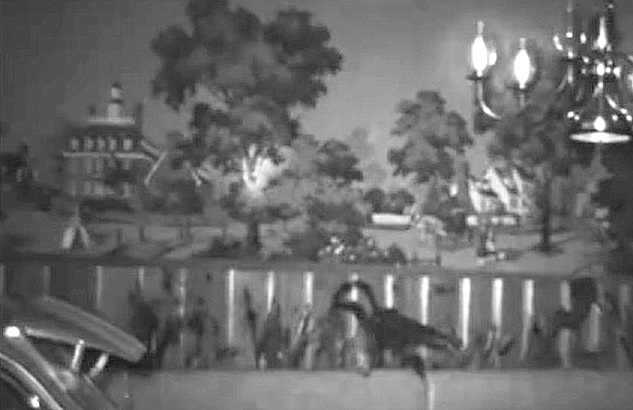
I love ads that have photos of the businesses in them. …Unless the image quality is pretty dire. Like this one. Which I’m including here anyway. The 1956 ad for the Highland Park Cafeteria shows the interior — which I somehow managed to never see personally. But this photo (which in its original form is quite small and difficult to make larger) isn’t great, but, as things often go, I really wanted to know what that was that looked like a mural. I eventually found another ad (the one below from 1950), which referenced a “Williamsburg mural,” and, after asking about this on the Flashback Dallas Facebook page, a comment led to the screenshot from unknown news footage from 1953. I tried to sharpen the image but didn’t have much luck — except that I could tell that it does, in fact, appear to show a mural of Colonial Williamsburg, above a long planter (where, as the ad below says, an “Easter lily hedge” would have been). I have no idea why that was in the HPC, but I’d love to know. This tiny tidbit of information gleaned from a 68-year-old ad is of very little importance, as these things go — except that it took me so long to figure out! Anyway, these have all been added to last year’s “Highland Park Cafeteria and the Knox Street Business District.” (Sources: ad with photo from This Month in Dallas, Dec. 1956; ad without photo from April 1950; screenshot from unknown news footage, 1953)

hp-cafeteria_ad_this-month-in-dallas_dec-1956_full

hp-cafeteria_ad_this-month-in-dallas_dec-1956_photo

hp-cafeteria_williamsburg-mural_040750

hp-cafeteria_1953_mural_screenshot_det

*

Lastly, a short Channel 8 News clip from Oct. 1973, which has an interview with Carl Anderson, a lifelong monarch butterfly enthusiast, talking about his favorite subject. In the video he is shown walking through Lake Cliff Park (the reporter mistakenly calls it Tenison Park). In the background you can see the late, lamented Polar Bear Ice Cream “igloo” on Zang Blvd. I am adding the video to one of my all-time favorite posts, “University Park’s Monarch Butterfly Wrangler.” I always think of Carl and his love of butterflies when monarchs pass through Dallas. (Source: WFAA-Channel 8 News clip, WFAA Collection, G. William Jones Film and Video Collection, Hamon Arts Library, SMU)

**

Until next time!

exall-lake_postcard_ebay_sm

*

Copyright © 2024 Paula Bosse. All Rights Reserved.

The Three Witches of Stemmons Tower

stemmons_three-witches_hooded-figures_pedro-coronelConvening…

by Paula Bosse

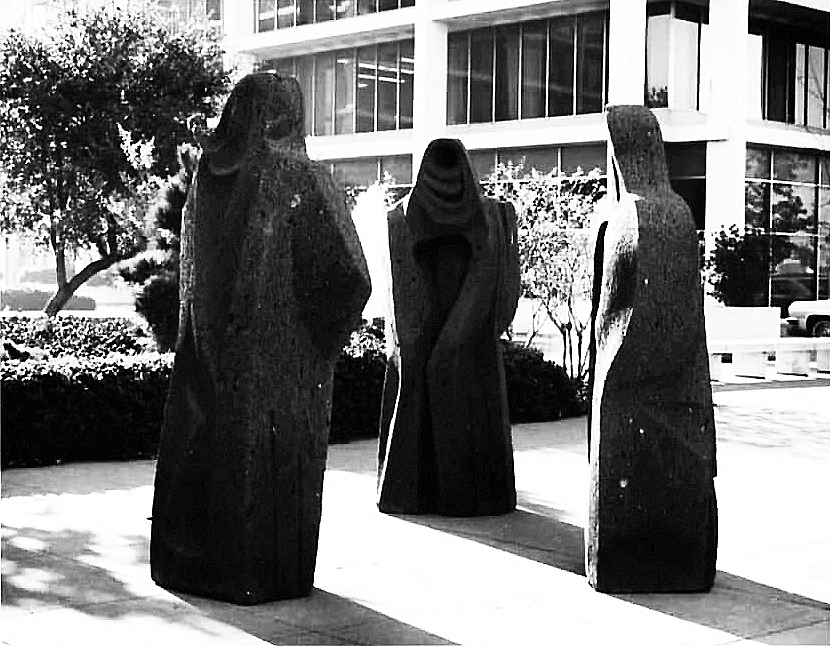
I have to admit, I had never heard of “the Stemmons witches” until a few years ago. They seem to have made quite the impression on teenagers of the ’60s and ’70s (and ’80s?), who would frequently take uninitiated fellow teens to visit the mysterious/sinister cloaked figures, after having told them elaborate scary stories about the figures that stood solemnly and forebodingly on the grounds of the 4-building Stemmons Towers complex.

I gather they could be seen from the freeway, and I can understand how they’d look pretty creepy, especially at night, from a distance (and up close). What a perfect teenage ritual for kids with cars: wait until dark, then take your friends to the Towers, pumping them full of spooky urban legends on the drive over, then watch their faces as you introduce them to witches 1-3. If there were night watchmen on overnight duty at Stemmons Towers, they must have had their hands full.

The reminiscences I’ve read all say the three figures disappeared at some point (late ’80s or early ’90s?) — and no one seems to know what happened to them. Do YOU know what happened to them? Where are they today?

*

The three figures are by artist Pedro Coronel, a Mexican sculptor and painter aligned with Rufino Tamayo — he was influenced by Diego Rivera and worked with Constantine Brancusi. He often used onyx and sandstone (from the photo, it looks like the “witches” were made of a black stone). The name of this work was “Hooded Figures.” From The Dallas Morning News:

These strange figures are permanent sidewalk superintendents at the new Stemmons Tower North, fourth and final building being erected in the complex on Stemmons Freeway. The three stone “Hooded Figures,” by sculptor Pedro Coronel, are among several works on the Towers’ landscaped plaza. (DMN, July 31, 1966)

(“Stemmons witches” has a much better ring to it than “sidewalk superintendents.”)

Read memories of teenage visits to these “witches” on the Dallas Historical Society “Phorum,” here.

Where have these “Figuras Encapuchadas” scurried off to?

***

Sources & Notes

Thank you SO MUCH to Fred Goodwin, who sent me this photo. He says he came across it years ago somewhere on the internet and does not know the original source. Thank you, Fred!

I’ve seen only one other photo of this work by Coronel — it accompanies the caption quoted above, in The Dallas Morning News (July 31, 1966, p. 1C). Sadly, it’s not a good scan.

A story by Steve Brown appeared in the DMN on Dec. 14, 2023, reporting that the four towers are to be converted to a residential community (“Dallas’ Landmark Stemmons Towers Sell for Conversion to Apartments”). Um, okay.

See a cool night-time photo of Stemmons Tower #1 in the 2018 Flashback Dallas post “Stemmons Tower, Downtown Skyline — 1963.”

stemmons_three-witches_hooded-figures_pedro-coronel_sm

*

Copyright © 2024 Paula Bosse. All Rights Reserved.

The South End “Reservation” Red-Light District — ca. 1907

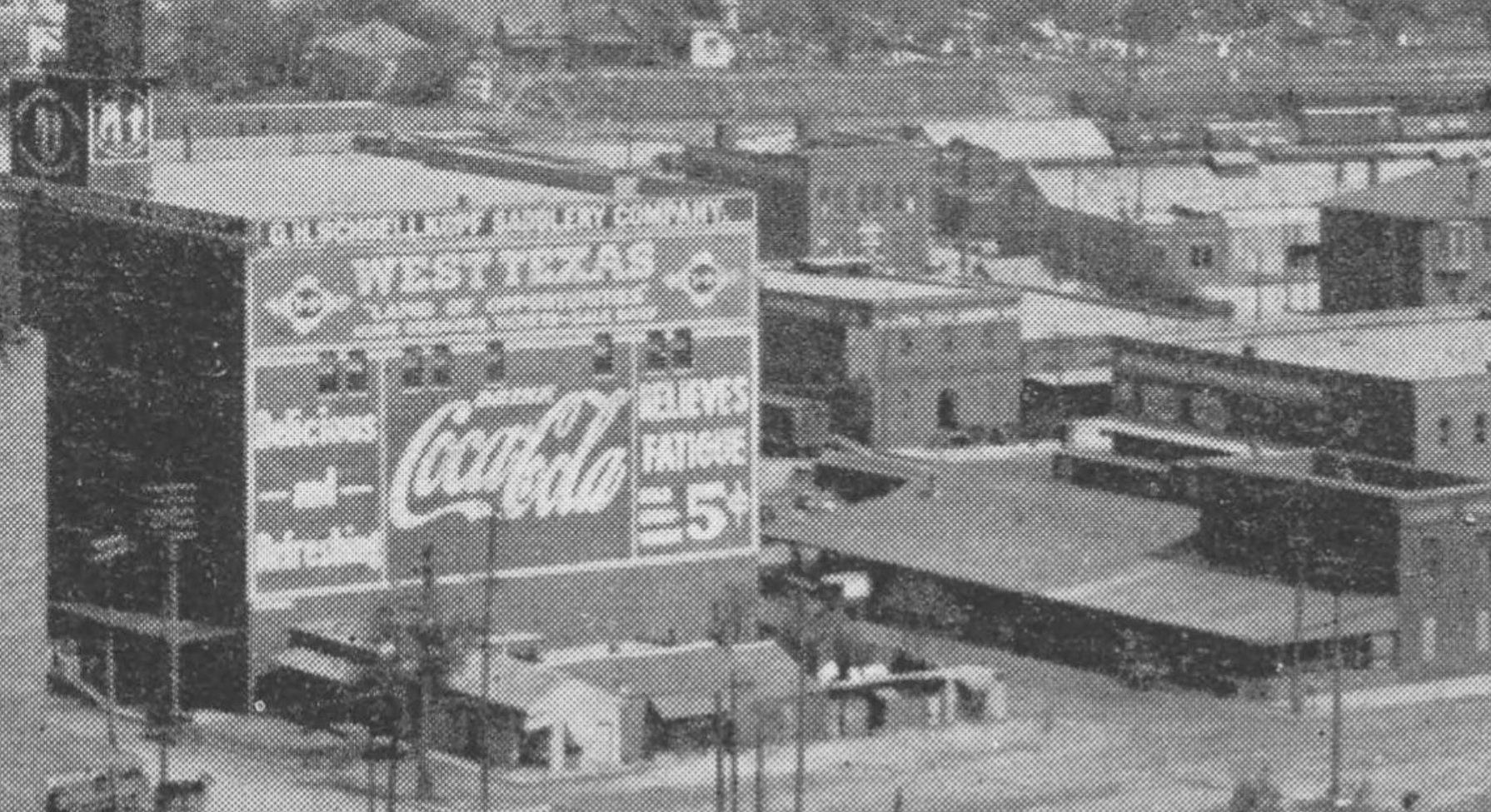
south-end_hobson-electric_southeast-from-courthouse_ca-1907_cook-collection_degolyer_SMUThere’s a lot going on here that you can’t see… (DeGolyer Library, SMU)

by Paula Bosse

I am reminded how much fun it is to just dive into something with no idea where you’re heading and end up learning interesting things you might have been unaware of had you not wondered, “What am I looking at?”

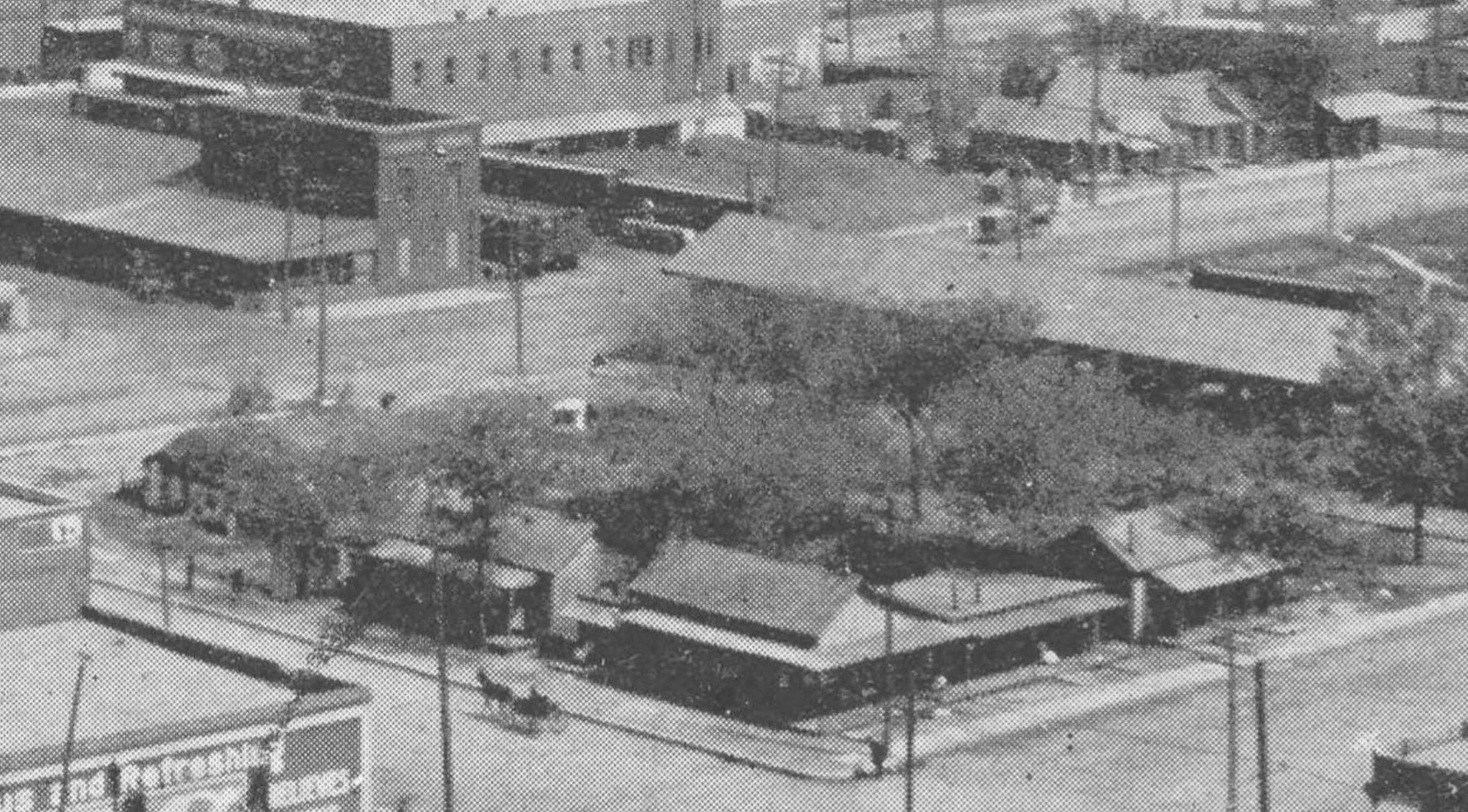
Yesterday I was working on a future post that involves the Hobson Electric Co., and I was looking for photos. The one above popped up in one of my favorite collections of historical Dallas photos, the George W. Cook Collection at SMU’s DeGolyer Library. I was looking for a post-1910 West End photo — this photo is identified as just that [the title has now been updated by the SMU Libraries], but the presence of the Schoellkopf Saddlery Co. building (center left, with the Coca-Cola ad on it) puts this location on the other side of the central business district — Schoellkopf was at S. Lamar and Jackson. Even knowing that, this scene didn’t look familiar at all.

I checked a 1907 city directory to find out the address of the Hobson Electric Co. before it moved to the West End in 1910 — it was located at 172-74 Commerce Street (in what is now the 700 block), between S. Market and S. Austin. The view here is to the southeast, probably taken from the courthouse.

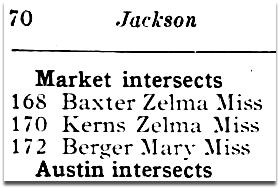
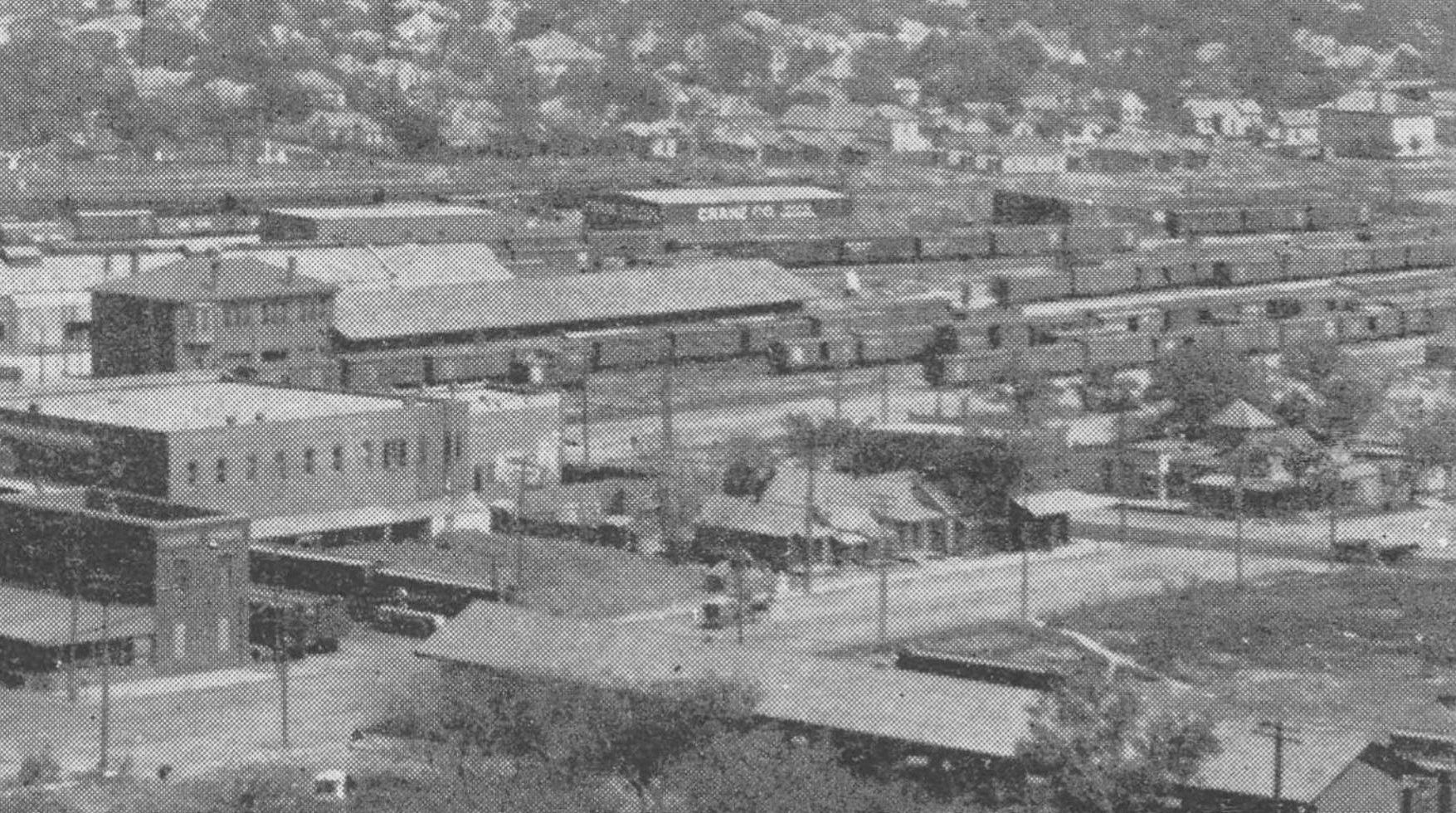
I don’t think I’ve seen this particular view before — it shows hardly any of the downtown area but shows instead the area to the south. I was really intrigued by the block of houses facing Jackson (between Market and Austin) — the block the horse-and-buggy is moving past, at the center right. The trees. The low buildings. That block really stood out. It was kind of quaint. Did people live there? While I had the 1907 directory open, I checked to see who the occupants were. (I just picked 1907 because the Hobson Co. changed its name from “Duncan-Hobson” around 1906, and it had moved away from Commerce by mid 1910.) Here were the occupants of those houses in 1907:

jackson-between-market-and-austin_1907-directory1907 Dallas directory

That seemed odd. Three single women occupying three separate houses, all next door to one other. There weren’t a lot of single women living in houses alone in 1907. Hmm. I checked all the directories between 1905 and 1910 to see who was living in that block. Every year, each of those houses showed a new occupant, and, with one exception, all were single woman (the exception was a man who owned a saloon across the street and who had faced charges at one point for “keeping a disorderly house”). …Okay. I got the picture.

I checked the Sanborn map from 1905 for this block and saw something I’d never seen before: the designation of a building with the letters “F.B.” What did that mean? Turns out, it means “Female Boarding House.” Or, less euphemistically… a brothel. Look at the map here (more maps are linked at the bottom of this post) to see the frankly ASTRONOMICAL number of “F.B.” buildings in this one small area. (There weren’t as many saloons — designated with “Sal.” — as I expected, but I’m pretty sure a lot of saloons in this area were operating illegally.)

You might have noticed that all of those F.B.s are south of Jackson. Not one of them is north of Jackson. This area — the southwestern part of downtown — was referred to at the time as the “South End” or “The Reservation” (some called this general area “Boggy Bayou,” but I think that was technically farther south). Its boundaries were, basically, S. Jefferson Street (now Record Street) on the west, Jackson on the north, S. Lamar(-ish) on the east, and beyond Young Street on the south. If you wanted to avail yourself of illicit things and engage in naughty behavior, this was the place for you: Ground Zero for a sort of wide-open, lawless Wild West. There were other red-light districts in Dallas (most notably “Frogtown,” which was north of downtown in the general area formerly known as Little Mexico) (does anyone still call this now-over-developed area “Little Mexico”?), but if you wanted the primo experience of one-stop-shopping for drinking, gambling, drugging, and “consorting with fallen women,” you were probably familiar with the South End, where all of these activities were tolerated and, for the most part, ignored by the police (they might mosey by if there were an especially egregious shooting or stabbing or robbery). In fact, this vice-filled area had been created by a helpful city ordinance in the 1890s. So, enjoy!

Prostitutes were allowed to ply their trade in this specified chunk of blocks because the city fathers felt that it would be best to keep all that sort of thing in one somewhat controllable area, away from the more reputable neighborhoods. But once a prostitute stepped outside the Reservation to sell something she shouldn’t have been selling… laws suddenly applied, and she’d be thrown in jail and/or fined. Do not step north of Jackson, Zelma!

So, at one time, Dallas had legal brothels. Depending on whose account you read, these houses of ill repute ranged from godawful “White Slavery” operations and bubbling cauldrons of sin and sleaze to, as Ted Dealey remembers in his book Diaper Days of Dallas (p. 74), “ultra-fashionable houses of prostitution” which attracted Big D’s moneyed movers and shakers. Something for everyone.

Eventually, people started to get really bent out of shape about this, and there was a big push to get these houses shut down — or at least moved out of the area. The Chief of Police reported to the City Council in 1906 that, among the many Reservation-related problems, the area was getting cramped because the railroads were buying up real estate in the area and kicking people out. The city-sanctioned no-man’s land was getting too small, so city officials needed to find a bigger place to move the red-light district to. The Chief thought that North Dallas (i.e. Frogtown) was “the most logical place” — except that residents of nearby swanky neighborhoods there were not at all keen on this. But that idea seemed to stick. It took several years to actually happen, but a relocation of sorts occurred, and the South End brothel-hotspot was pretty much scrubbed of all offending “disorderly houses” by 1910. (Frogtown bit the dust around 1913, after those unhappy well-to-do North Dallas neighbors complained bitterly, loudly, and effectively.)

So, anyway, I never expected to find such an exciting photograph! I wonder if the photographer took this photo as a way of documenting the very controversial, in-the-news, not-long-for-this-world Reservation, or whether it was just a nice scenic view. I have to think it was the former, because the Reservation was well-known to everyone, near and far, and this shot would have been an unusual vista to, say, reproduce for postcards (or at least postcards sold to the general public!). Whatever the case, I’ve never seen this view, and it’s really great — and it comes with an interesting slice of Dallas history. I had heard of the Frogtown reservation to the north, but I’d never heard of the South End reservation. And now I have. And here’s a photo of it!

Let’s bring back the neighborhood designation of “South End.” It was good enough for 1900, it’s good enough for today.

*

Here are a few zoomed-in details of the photo. Unless I’m imagining things, I think I can see women sitting on their porches, advertising their wares, as was the custom. (All images are larger when clicked.)

south-end_cook-collection_degolyer_SMU_det-1

*

south-end_cook-collection_degolyer_SMU_det-2

*

south-end_cook-collection_degolyer_SMU_det-3

*

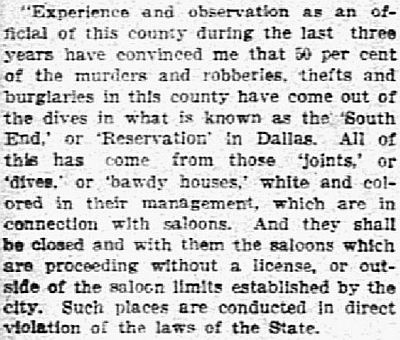
Below is an excerpt from a blistering directive to city lawmakers by W. W. Nelms, Judge of the Criminal District Court (from an article with the endless headline “Calls For Action; Judge Nelms Charges Police Chief, Sheriff and Grand Jurors; Warfare on Crime; Says Lawbreakers Shall Not Construe Statutes of State to Suit Themselves; Stop Murder and Robbery; Declares Harboring Places for Thugs, Thieves and the Like Must Be Destroyed,” Dallas Morning News, Oct. 15, 1907).

reservation_judge-w-w-nelms_DMN_101507DMN, Oct. 15, 1907

*

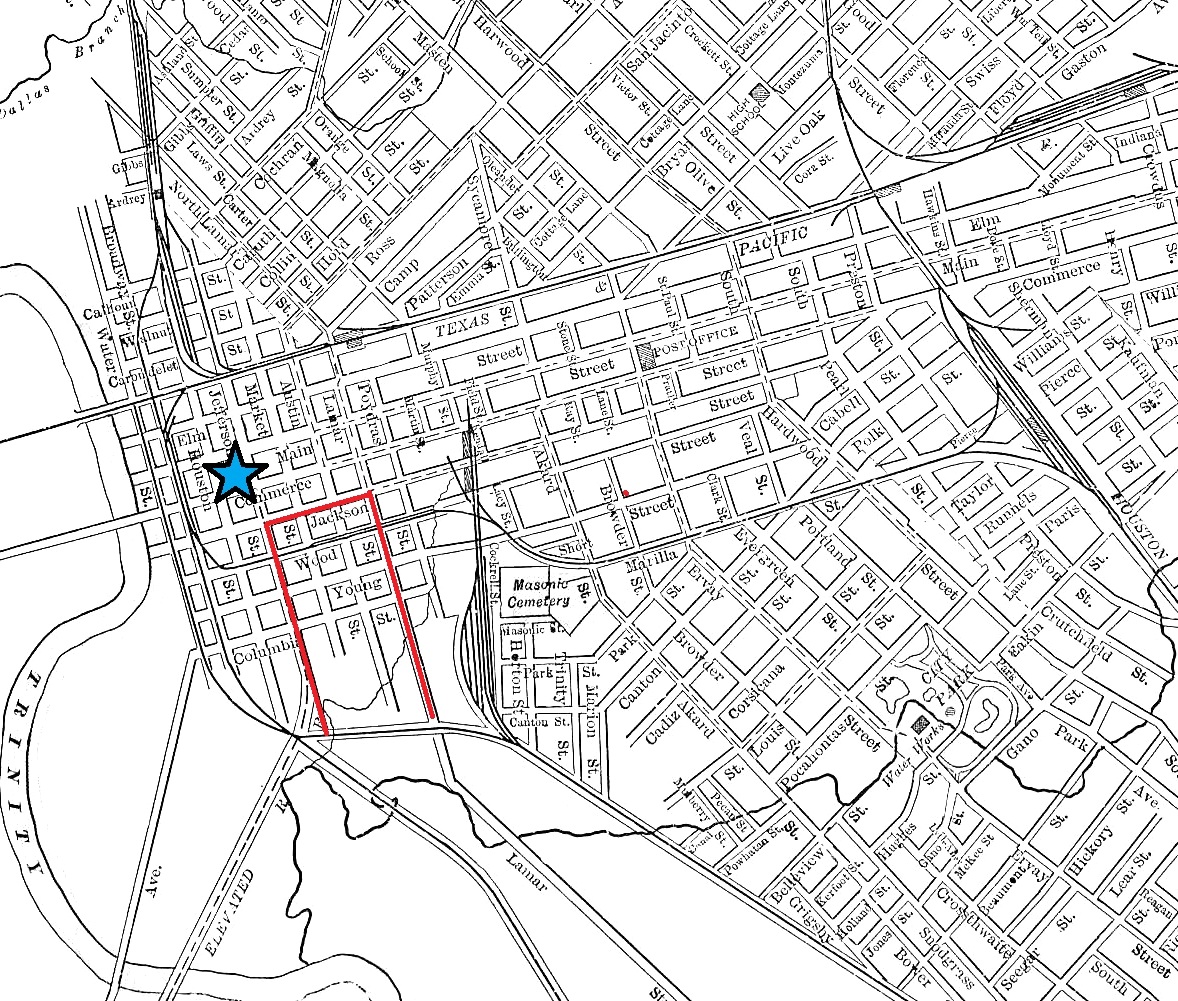
Below, the general area of the South End Reservation around 1907 (this map is from about 1898). The blue star is the Old Red Courthouse; the Reservation is bordered in red. In 1893, the original area was loosely designated as the area bounded by Jackson Street, Mill Creek, the Trinity River, and the Santa Fe railroad tracks, in which “women of doubtful character […] were not to be molested by police” (from “Passing of Reservation,” DMN, Dec. 11, 1904). As noted above, the area shrank over time, and the red lines show the general Reservation area about 1907, the time of the photo at the top.

south-end_reservation_1898-map_portalDallas map, ca. 1898 (det), via Portal to Texas History

***

Sources & Notes

Top photo — “[Jackson Street, Looking Southeast from the Courthouse, Including a Partial View of the South End ‘Reservation’]” (previously incorrectly titled “[Dallas West End District with View of Railroad Yards]”) — is from the George W. Cook Dallas/Texas Collection, DeGolyer Library, SMU Libraries and can be accessed here. (I appreciate SMU for responding to my request to re-title and re-date this photograph — it’s always worth notifying archival collections with corrections!) (And, as always, I WELCOME corrections. I make mistakes all the time!)

The 1905 Sanborn map I linked to above (Sheet 104) is here and seems to be the epicenter of the booming brothel trade; more evidence of this can be seen just south of that in Sheet 102; and it continues just east of that in Sheet 105 (it’s interesting to note the specially designated “Negro F.B.” bawdy houses). (Sanborn maps do not open well on cell phones — or at least on my cell phone. You may have to access these from a desktop to see the full maps. …It’s worth it.)

Read more about this whole “Reservation” thing in the lengthy and informative article “Not in My Backyard: ‘Legalizing’ Prostitution in Dallas from 1910-1913” by Gwinnetta Malone Crowell (Legacies, Fall 2010).

Also, there’s a good section on this (“Fallen Women”) in the essential book Big D by Darwin Payne (pp. 48-56 in the revised edition).

If you enjoy these posts, perhaps you would be interested in supporting me on Patreon for as little as $5 a month — in return, you have access to (mostly!) exclusive daily Dallas history posts. More info is here.

south-end_hobson-electric_southeast-from-courthouse_ca-1907_cook-collection_degolyer_SMU_sm

*

Copyright © 2024 Paula Bosse. All Rights Reserved.

Dr. Rosser’s Gaston Avenue Residence — 1912

rosser-house_gaston-and-hill_xmas-1912_ebayThe Rosser residence, Christmas 1912

by Paula Bosse

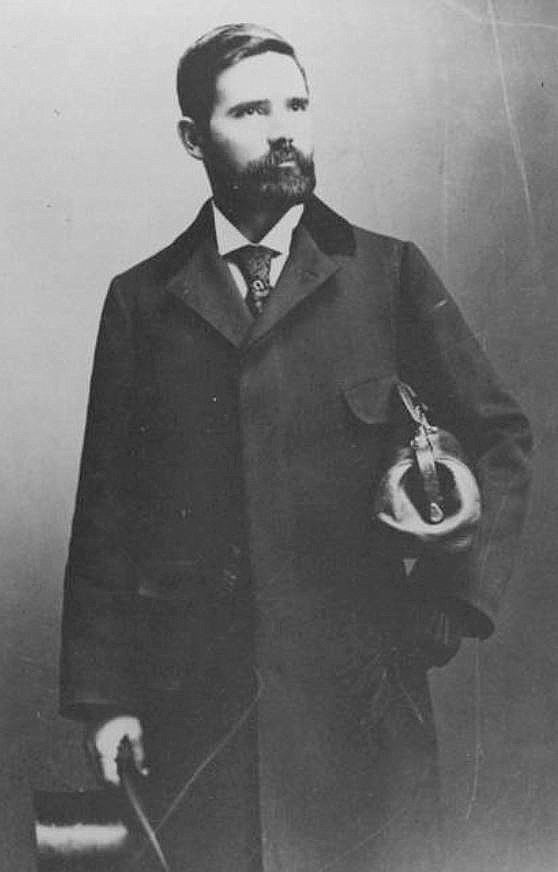
At the turn of the century, Dr. Charles M. Rosser (1861-1945), a surgeon and educator, was one of Dallas’ most prominent doctors. When he died in 1945, he was described in obituaries as “the father of Baylor University School of Medicine.” In 1900, he led a committee to work toward establishing a much-needed medical school in Dallas. When the University of Dallas Medical School opened the following year, Rosser became its dean. It later merged with another medical college and was eventually acquired by Baylor University in 1903.

rosser-dr-charles-m_ca-1910_UTSW-digital-archivesDr. Rosser, about 1910

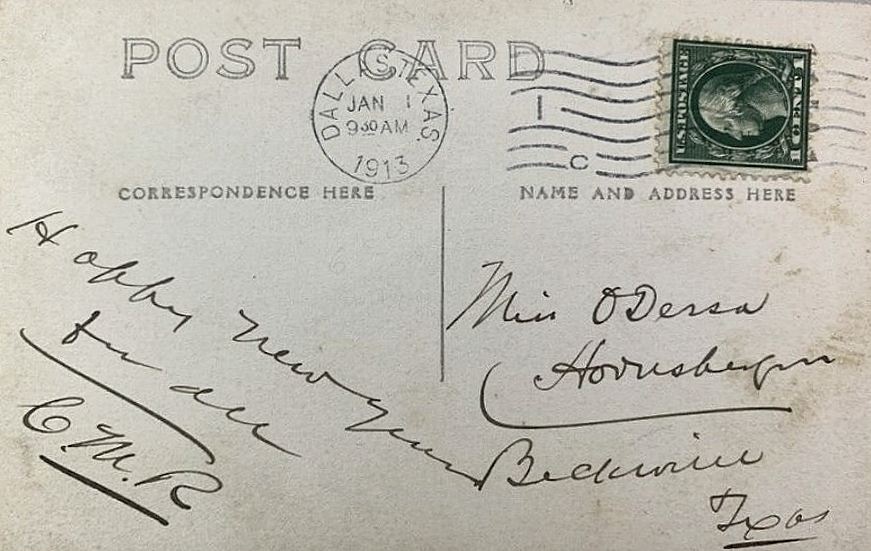
So what about the photo of the house above? This was a “real photo postcard” (RPPC) sent by Dr. Rosser on New Year’s Day, 1913. The message on the back was: “Happy New Year for all, CMR.” The very recent photo had been taken on the occasion of a Christmas party at the Rosser residence in 1912.

rosser-house_gaston-and-hall_xmas-1912_reverse_CMR_ebay

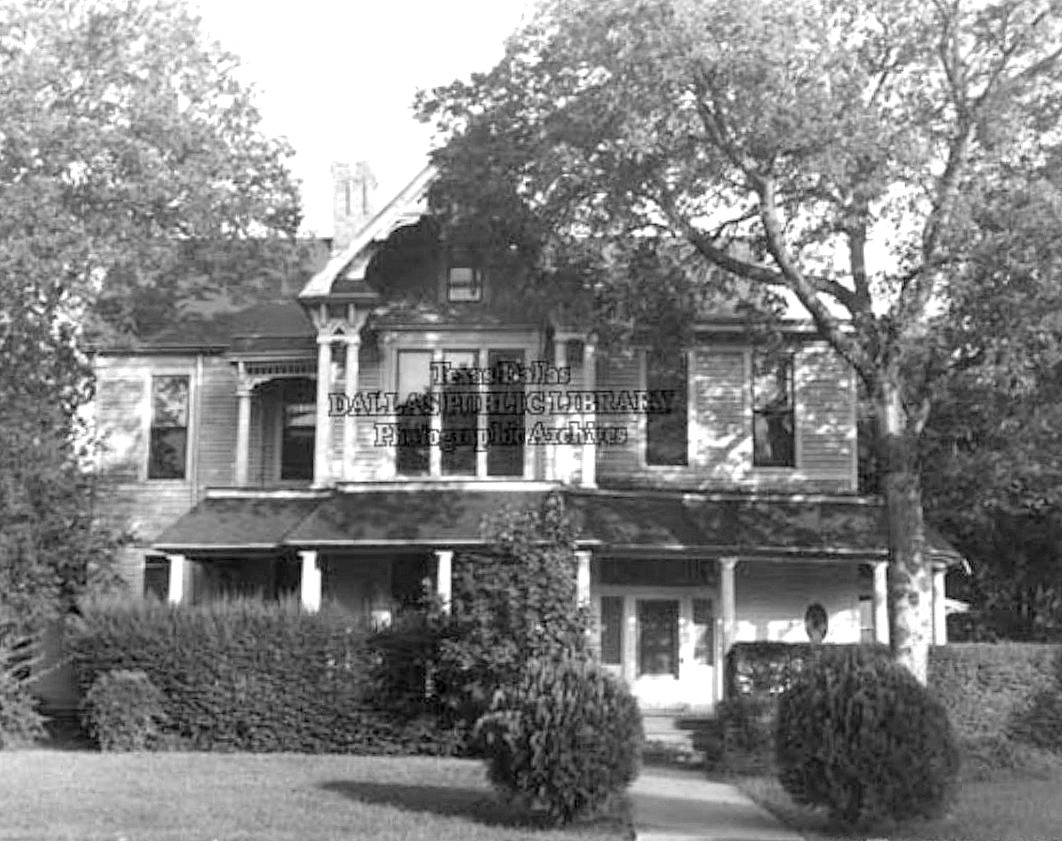
The photo on the front showed the Rosser home at 4002 Gaston, at the southeast corner of Gaston and Hill (the corner looks like this now). (At the other end of the block was the Gaston Avenue Baptist Church.)

After Dr. Rosser’s death, the house was torn down. Here it is in 1946:

rosser-house_DPL_1946Dallas Public Library (PA83-41/1946-2-21.1)

*

Other than the fact that this house once stood at Gaston & Hill (hard to believe these days), the most notable thing about this New Year’s Day greeting is the person the card is addressed to: Miss Odessa Harnesberger of Beckville, Texas (Panola County).

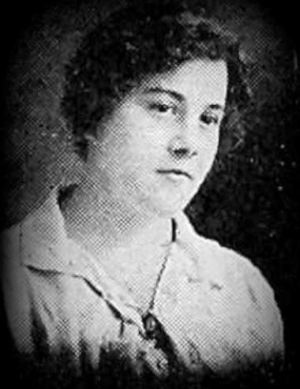
On Oct. 24, 1910, a large crowd attending the State Fair of Texas had gathered at the Fair Park racetrack to watch an exhibition race of a Packard race car called the “Gray Wolf” and a motorcycle. Unfortunately, the car and the motorcycle collided and careened into the crowd, injuring 8 people (one man died from his injuries). Among those sent to the hospital were three members of the Harnesberger family: Dr. R. G. Harnesberger and two of his daughters, Odessa and Norma. Odessa was 13. Her face and left thigh were lacerated, and her left thigh was broken. A week after the accident, she was reported to be recovering well at Baylor but was expected to be there another 5-6 weeks before she could be moved home. The Harnesberger family appears to have made full recoveries. Odessa eventually became a teacher in Dallas and lived to the age of 87.

And when she was 15, she received wishes for a happy 1913 from the doctor who probably treated her after her terrible accident, and, in fact, had a prominent role in founding the hospital in which she recuperated.

harnesberger-odessa_north-tx-state-normal-college_1917Odessa Harnesberger, North Texas State Normal College, 1917

harnesberger_mckinney-courier-gazette_102410McKinney Courier-Gazette, Oct. 24, 1910

***

Sources & Notes

Real photo postcard from Dr. Rosser found on eBay in 2019.

More on the early history of Baylor Hospital (and Dallas hospitals in general) can be found at the National Institute of Health here.

And Happy New Year!

rosser-house_gaston-and-hill_xmas-1912_ebay_sm

*

Copyright © 2024 Paula Bosse. All Rights Reserved.

Year-End List: Most Popular Posts of 2023

highland-park-cafeteria_pinterestAll hail the Highland Park Cafeteria…

by Paula Bosse

2023 is over! Years end, people put things in lists. Like this! These are the most popular posts of the past year, as determined by page views, clicks, likes, shares, and comments. There are a couple of surprises, and fully half of the top 10 are food/drink-related. As always, thank you for spending some of your time stopping by Flashback Dallas, and I wish everyone a Happy 2024!

*

These are the most-read (or at least most looked-at!) Flashback Dallas posts of 2023, starting with the most popular. To see each full post, click on the title; to see larger images of the thumbnails, click on the picture.

**

highland-park-cafeteria_pinterest

1.  “HIGHLAND PARK CAFETERIA AND THE KNOX STREET BUSINESS DISTRICT”  (August)

I know people loved the Highland Park Cafeteria, but I was pretty surprised by the sheer number of hits this post got and continues to get. There’s not much to it, really — a photo and a map. It’s hard to believe the HPC powers-that-be could just let a place as popular as this close down. Perhaps it will rise again one day.

*

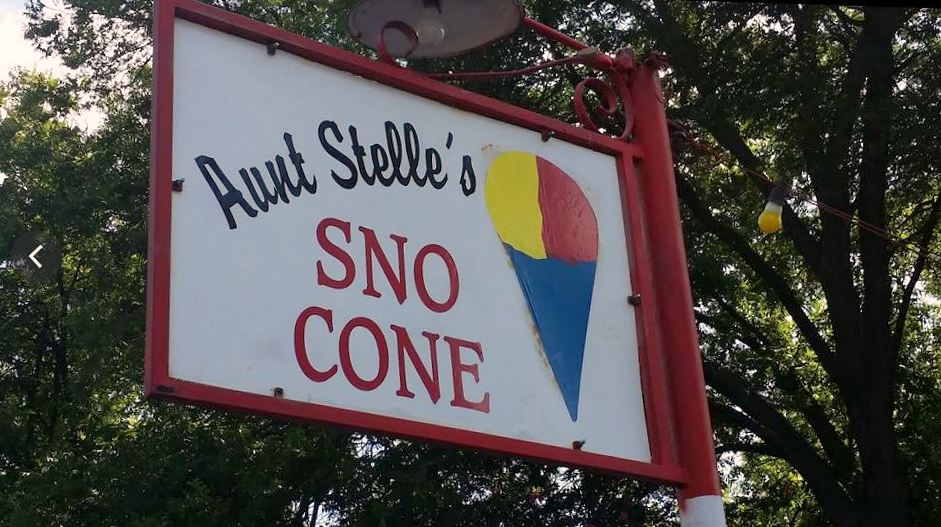
aunt-stelles_sign_google2.  “AUNT STELLE’S SNO CONE”  (September)

I knew this would be a popular post, even though I had never heard of Aunt Stelle or her sno cones. I became aware of this Oak Cliff institution only after having seen several ads for it in Sunset High School yearbooks. I enjoyed reading people’s memories of the place on the Flashback Dallas Facebook page (where it received an unbelievable number of likes, comments, and shares). Oak Cliff people are pretty hardcore.

*

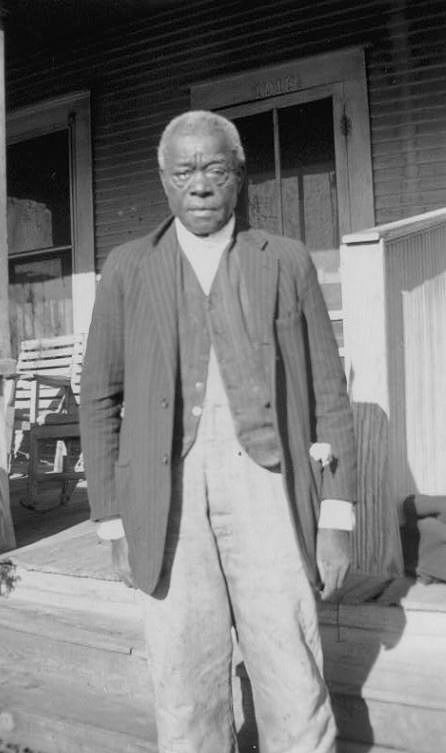
ex-slave_william-moore_det3.  “EX-SLAVES IN DALLAS — 1937”  (June)

This is perhaps the biggest surprise on this list. The photographs and oral histories of Dallas residents who had lived some of their lives as enslaved people (not necessarily in Texas) was part of a WPA project. When I grew up, it never entered my mind that there had been slaves in Dallas — either people living as slaves in Dallas during the time of slavery, or people who had been slaves living in Dallas up through the 1940s and 1950s. One of the most sobering posts I’ve ever written is a collection of ads about slaves in Dallas from the 1850s and 1860s — it’s linked at the bottom of this post.

*

dr-pepper-manual_bottling-plant_int_crop

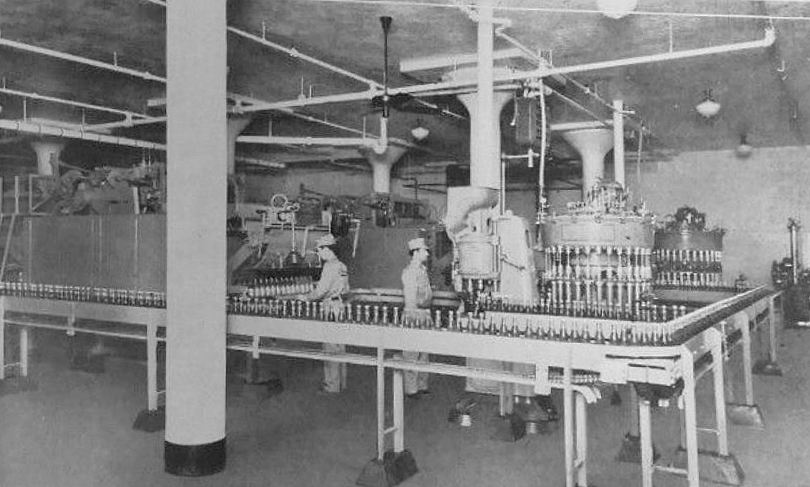
4.  “DR PEPPER BOTTLING PLANT, SECOND AVE. & HICKORY — ca. 1938”  (August)

Before it relocated to its beautiful Art Deco headquarters on Mockingbird, Dr Pepper’s HQ was in a building that is still standing between Fair Park and Deep Ellum. See photos of what it looked like inside.

*

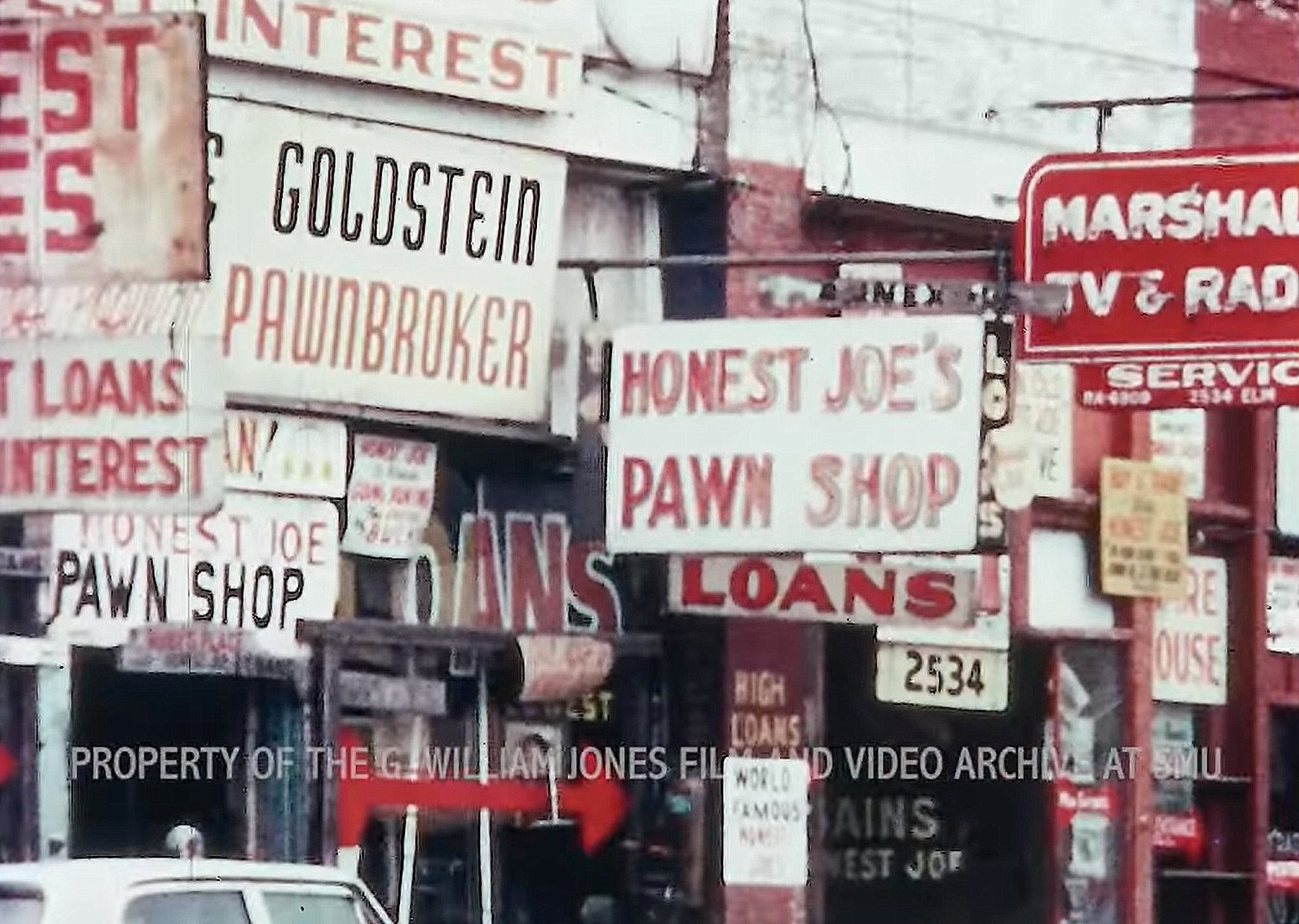
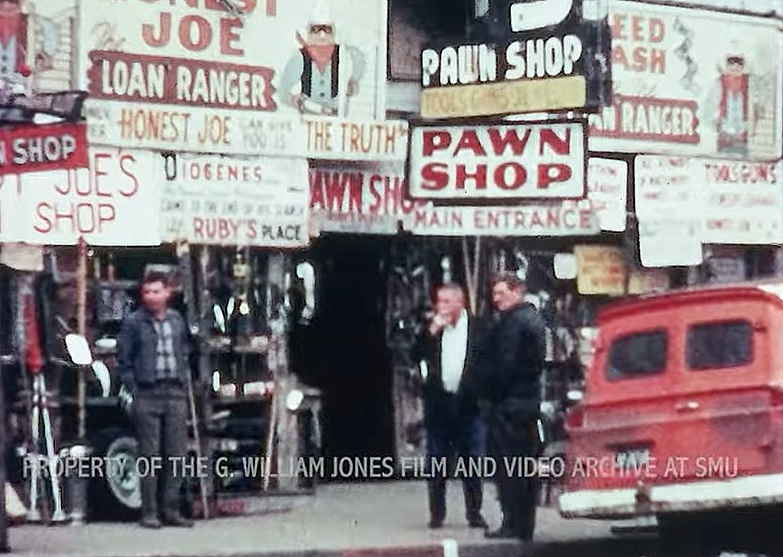
honest-joes-pawn-shop_deep-ellum_perkins-school-recruitment-film_1969_jones-film_SMU_5.135.  “GRITTY DALLAS — 1969”  (July)

Thank you, SMU theology students for making this odd little documentary featuring footage of parts of the city not often captured on film. I hope SMU has a cleaner, sharper copy of this film somewhere. It’s worth a watch (but keep that finger at the ready on the fast-forward button during the slower bits!).

*

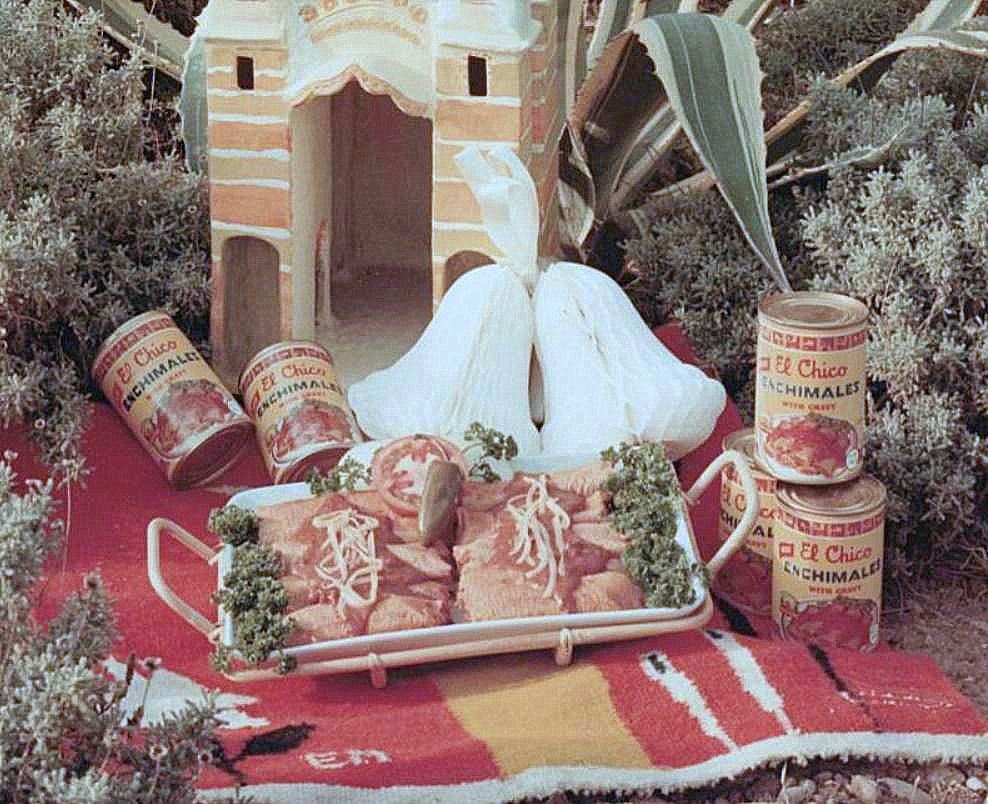
enchimales_canned_introduced-1968_portal_det6.  “EL CHICO FOODS / CUELLAR FOODS”  (February)

Dallas loves its Tex-Mex. I had no idea the Cuellars had expanded so far into retail food manufacturing. My greatest discovery while researching this was that canned tortillas ever existed. They did. Think how much better we have things now, at least in matters tortilla-related.

*

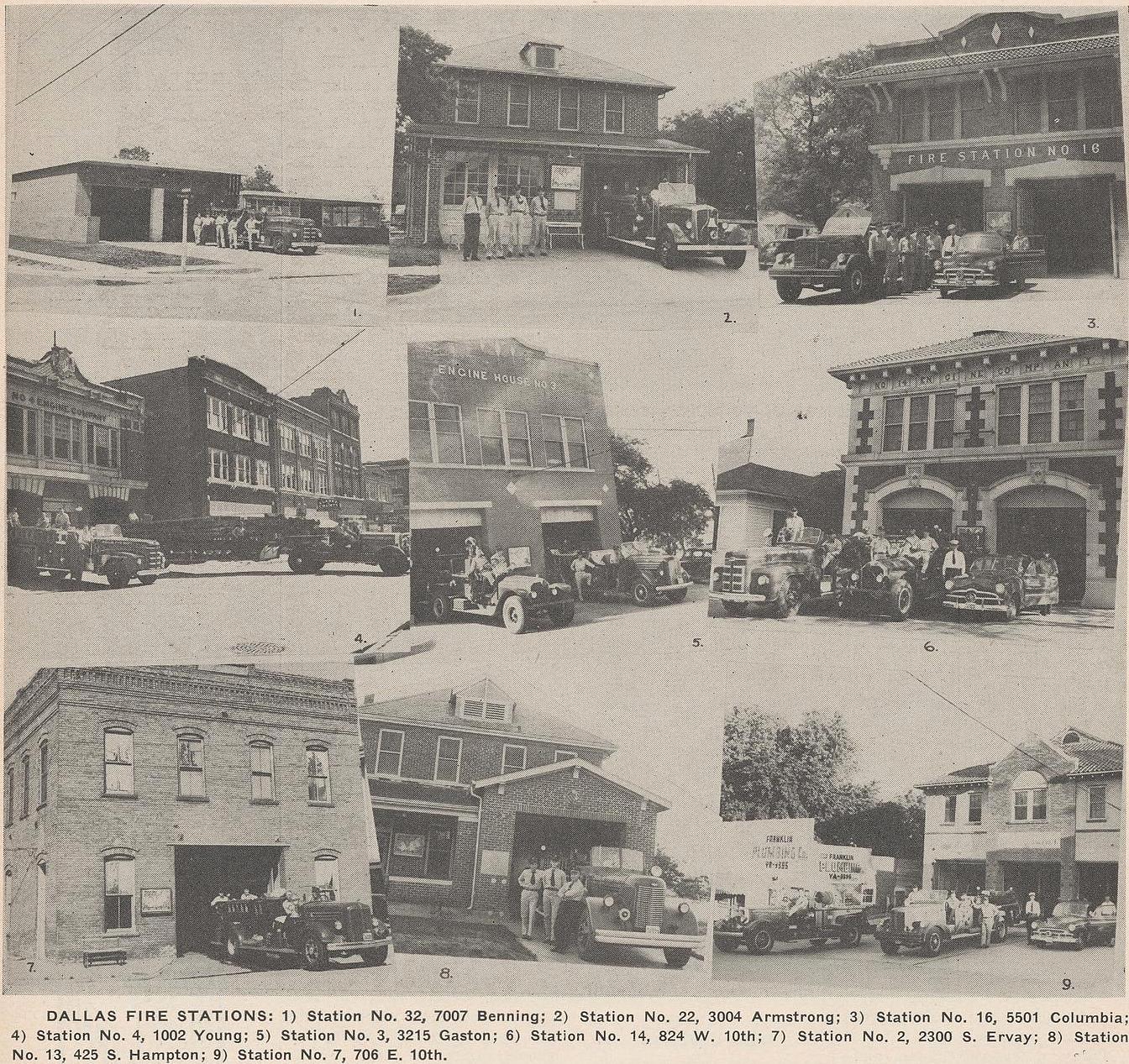
dallas-fire-stations_texas-fireman_june-1951_portal_1_cropped7.  “DALLAS FIRE STATIONS — 1951”  (May)

I loved this. So many photos! And several of these buildings are still standing. If there’s one thing Dallas loves as much as Oak Cliff and Tex-Mex, it’s firehouses.

*

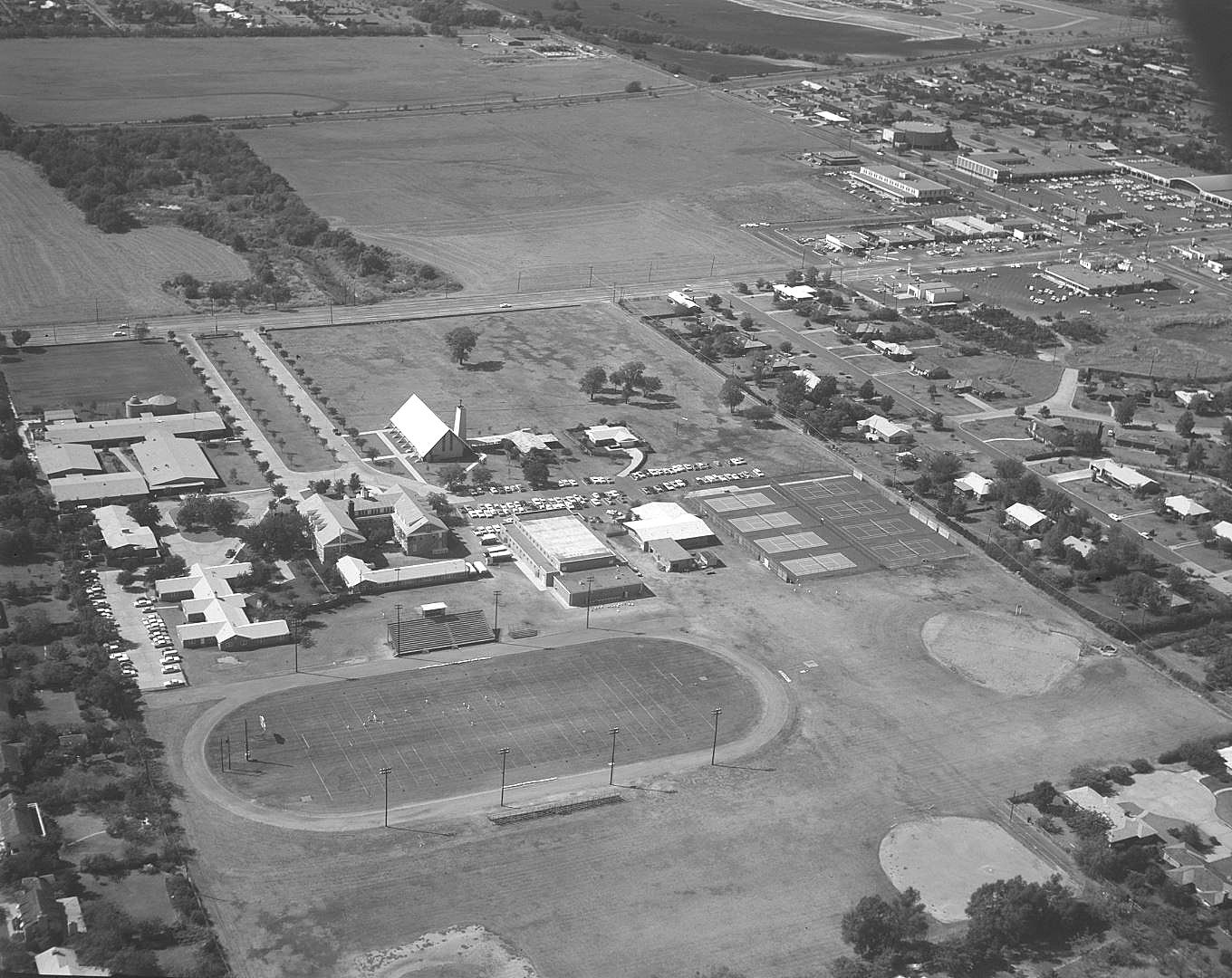
st-marks_preston-royal-to-the-west_squire-haskins_UTA8.  “ST. MARK’S FROM THE AIR”  (April)

I love aerial photos of Dallas before choking sprawl clogged up everything. When these photos were taken in the early 1960s, there was still a lot of open land in areas that are now completely developed.

*

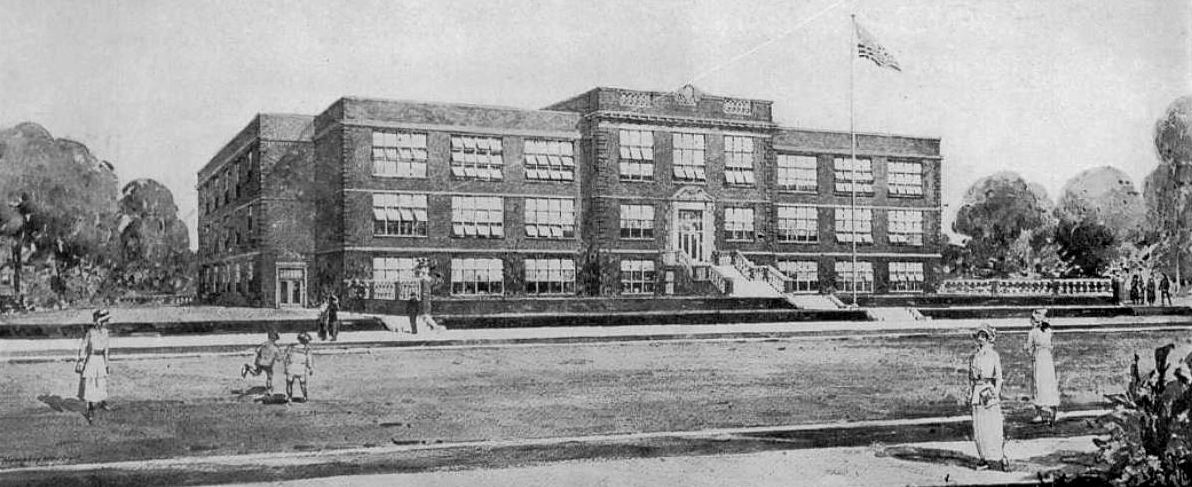
oak-cliff-high-school_1916_school_new9.  “OAK CLIFF SCHOOLS — 1916”  (December)

Oak Cliff, back again. A lot of the schools seen in this post are still around. For a lot of places, it’s not a big deal when buildings cross the century mark. But it is for Dallas. Dallas likes new, new, new! I always appreciate buildings that have somehow survived and feel like I should give them a little pep talk to encourage them to keep on keeping on.

*

cuellar-recipe-bk_ebay_det10.  “TEX-MEX IN A CAN (WITH BONUS CHILI-BURGER RECIPE) — 1953/1954”  (February)

You must read the excerpts from this recipe booklet which was prepared to teach customers not familiar with Tex-Mex what various dishes were. Mexican food was not as widely available in the 1950s as it is now. Adventurous people in non-Southwestern states buying a can of refried beans might have had no idea what to do with it (imagine seeing your first can of refried beans in, say, Minnesota). The recipe for the Chili Burger (tantalizingly, no beef patties are involved…) is worth the price of admission. I’m so glad this one squeaked into the year’s Top 10.

**

UNSTOPPABLE: The most popular Flashback Dallas post ever is “BONNIE PARKER: ‘BURIED IN AN ICE-BLUE NEGLIGEE’ — 1934” (from April 2016). It’s actually the most popular post of 2023, but the Year-End Top 10 is for new posts only. Otherwise, just assume this will be the most popular post of every year.

*

HONORABLE MENTION: A post I wrote back in 2018 had a sudden huge surge in hits this year: “‘DR. DANTE’ DODGES BULLETS IN DALLAS — 1970,” about a stage hypnotist who was also a conman and an ex-husband of Lana Turner. While in Dallas for a show, he claimed to have been shot at by Frank Sinatra’s “people.” This is one of my all-time favorite posts, but I couldn’t figure out why there was suddenly so much interest in it, seemingly out of nowhere. It wasn’t until a person commented and said she had found my post after listening to a new true-crime podcast, “Chameleon: Gallery of Lies, Dr. Dante.” There’s been a short documentary about Dante, but there really needs to be a full-length bio-pic. I’m sure someone’s working on it. (This post also ranked higher than any in the 2023 Top 10, but being almost 6 years old, it is out of the running for 2023 glory.)

**

And, with that, the final post of 2023 can be laid to rest (in an ice-blue negligee). Thanks to everyone who stops by! Let’s all have a happy 2024!

***

Sources & Notes

See all three 2023 Year-End “best of” lists here.

See all Flashback Dallas Year-End lists — past and present — here.

If you would like to support me on Patreon, please check out my page here. I post exclusive short Dallas history posts there every day.

highland-park-cafeteria_pinterest_sm

*

Copyright © 2023 Paula Bosse. All Rights Reserved.

Year-End List: My Favorite Posts of 2023

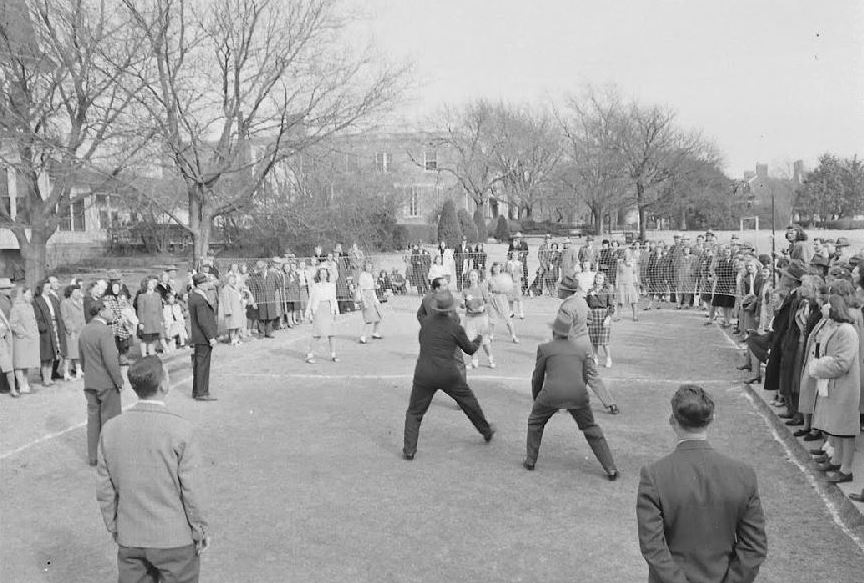
hockaday_dads-day_life-mag_cornell-capa_1947_gameVolleyball in suits and fedoras…

by Paula Bosse

2023 is finally pulling to a close. Personally, I’m happy to see it fade into the distance. 2023 is kind of a blur, filled with “challenges” (those “challenges” seem to increase every year!). But we’ve made it through. One of the highlights of this past year is creating a Patreon page. I appreciate the patrons who support me there — it’s been 9 months now, and I’m amazed that I’ve gotten into the habit of posting something there every day. The financial help has been something of a lifesaver! Thank you, patrons!

And thank you to everyone who reads posts here. I love reading about, writing about, and researching Dallas history. It’s hard to believe, but I will have been doing this for TEN SOLID YEARS come February. When I last checked, there were something like 1,400 posts here. That might be too many! I’ve loved every minute of it, and I look forward to 2024 and embarking on Year Eleven.

Below are some of my personal favorite posts of 2023. The first one is probably my favorite, and the rest are in chronological order. Click titles to see the original post.

**

1.  “DAD’S DAY AT HOCKADAY — 1947”  (June)

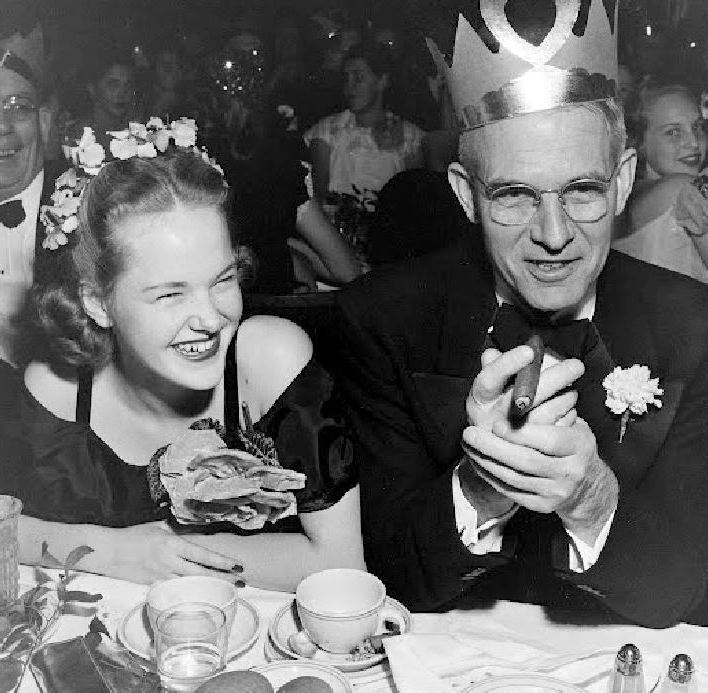
Whenever I imagine living in another era, I seem to gravitate to the post-war 1940s. Always. And the photographs in this post really fan the flames of pure escapist, rose-colored-glasses nostalgia for a time I never lived in. The photos (by Cornell Capa) are from a LIFE magazine article about a day in which fathers spent time with their daughters at the Hockaday campus and escorted them to a fancy dinner that night at the Baker Hotel. I love all of the photos, including the wonderful ones above (on the Lower Greenville campus) and below (at the Baker Hotel).

hockaday_dads-day_life-mag_cornell-capa_1947_baker-hotel

*

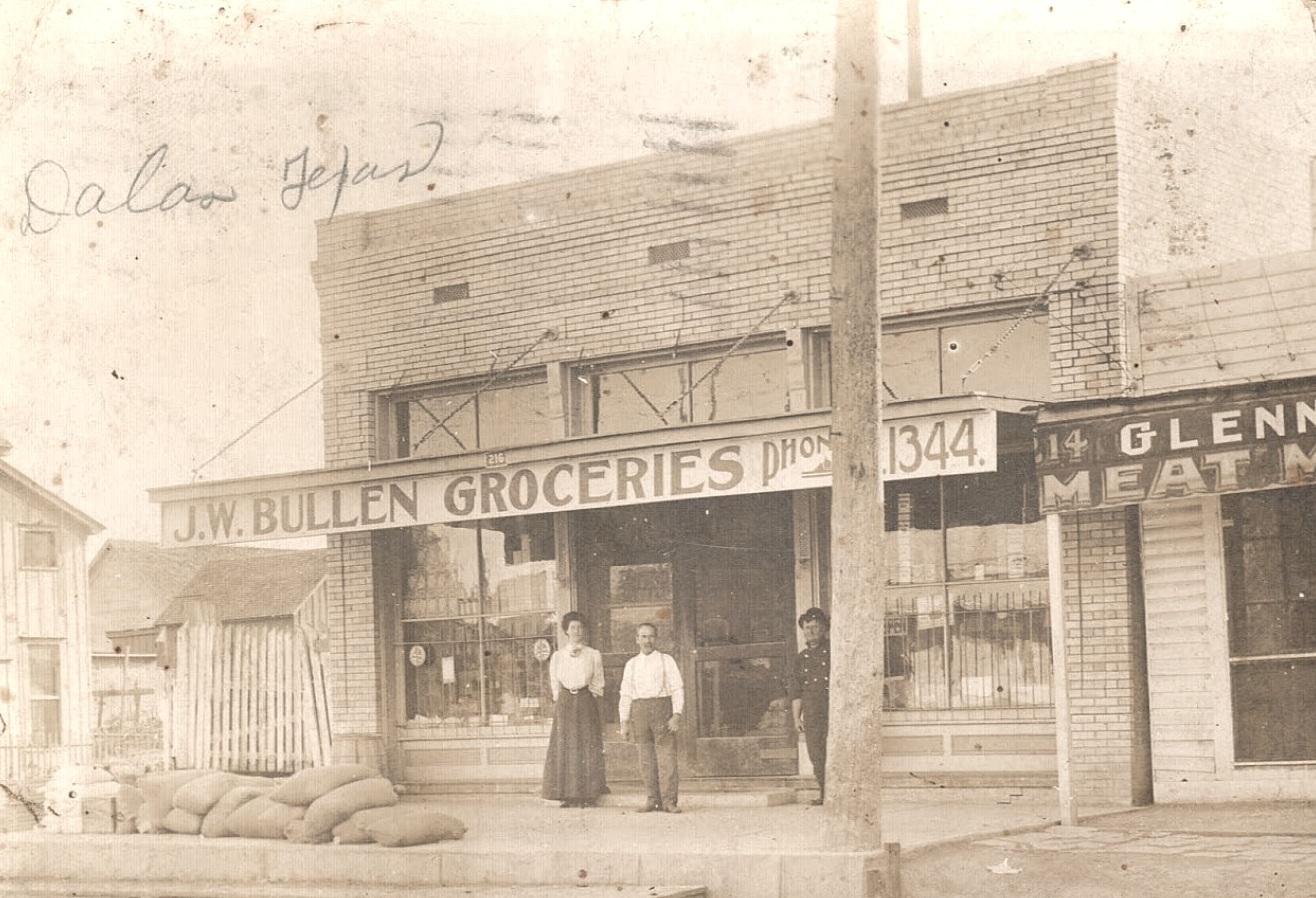
2.  “THE BULLEN STORE, EXPOSITION AVENUE — 1896-1936”  (January)

I really enjoyed looking into the history of this little (still-standing) building in Exposition Park, a too-often overlooked part of town.

bullen-store_exposition-avenue_ca-1905

*

3.  “EL CHICO FOODS/CUELLAR FOODS”  and  “TEX-MEX IN A CAN (WITH BONUS CHILI-BURGER RECIPE) — 1953/1954”  (both posts from February)

I wrote these two posts at the same time. I knew about the El Chico frozen dinners of my childhood, but I never knew about the line of canned foods — and I certainly never knew about canned tortillas! This was a lot of fun to write. (And if you are an enterprising state-fair-food-developer, I highly encourage you to “borrow” the excellently weird “Chili Burger” (no burger patty involved!), the recipe of which is in the second post above.

enchimales_canned_introduced-1968_portal_det

*

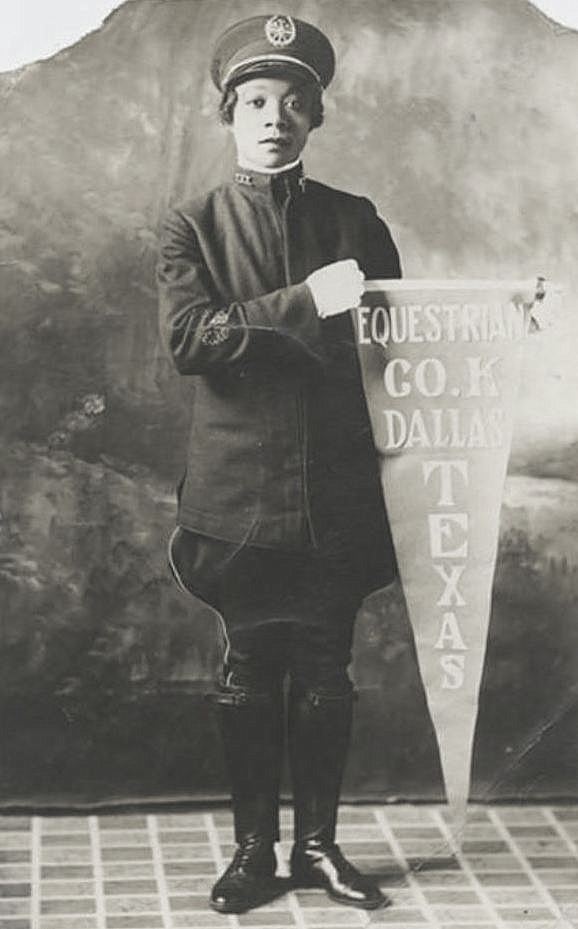
4.  “BLACK WOMEN’S EQUESTRIAN COMPANY K (AMERICAN WOODMEN) — 1920s”  (March)

A lot of what I write about is spurred by seeing a photo and wondering what it is I’m looking at. Like this one. Almost everything I wrote about in this post was new information to me. It was really interesting to write.

black-womens-equestrian-contingent_cook-coll_degolyer-lib_SMU

*

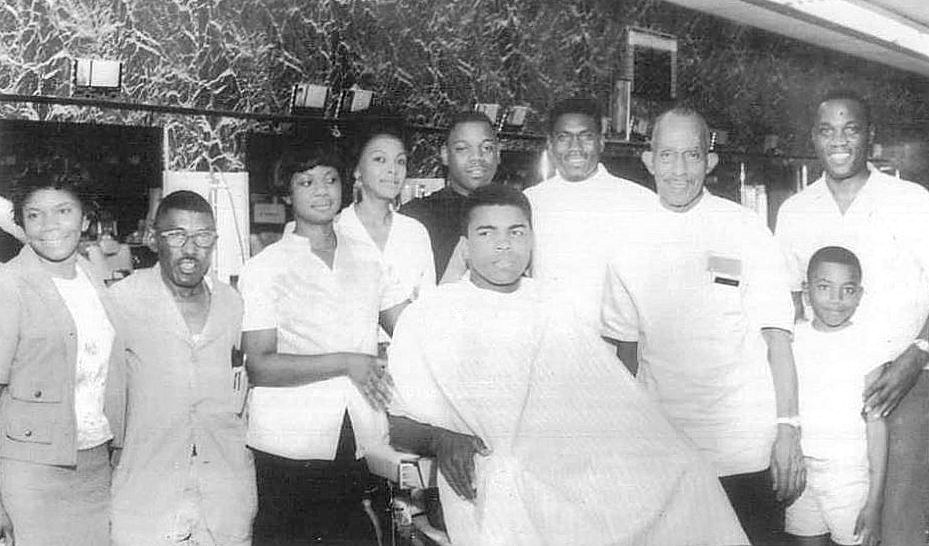
5.  “MUHAMMAD ALI VISITS GRAHAM’S BARBER SHOP — ca. 1967”  (April)

While browsing through a 1967 Lincoln High School yearbook, I was surprised to stumble across an ad featuring a photo of Muhammad Ali sitting in a barber chair (below). It was so unexpected. I loved it! I looked into why he might have been in town and found an interesting story about an appearance he made at a mosque near Booker T. Washington High School on Easter Sunday (I later — somewhat serendipitously — came across photos of that appearance and included them in the post). So, basically, what I’m saying here is: always take the time to flip through the advertising pages in old high school yearbooks — there’s a lot of good stuff hiding there.

ali-muhammad_grahams-barber-shop_lincoln-high-school-yrbk_1967_photo

*

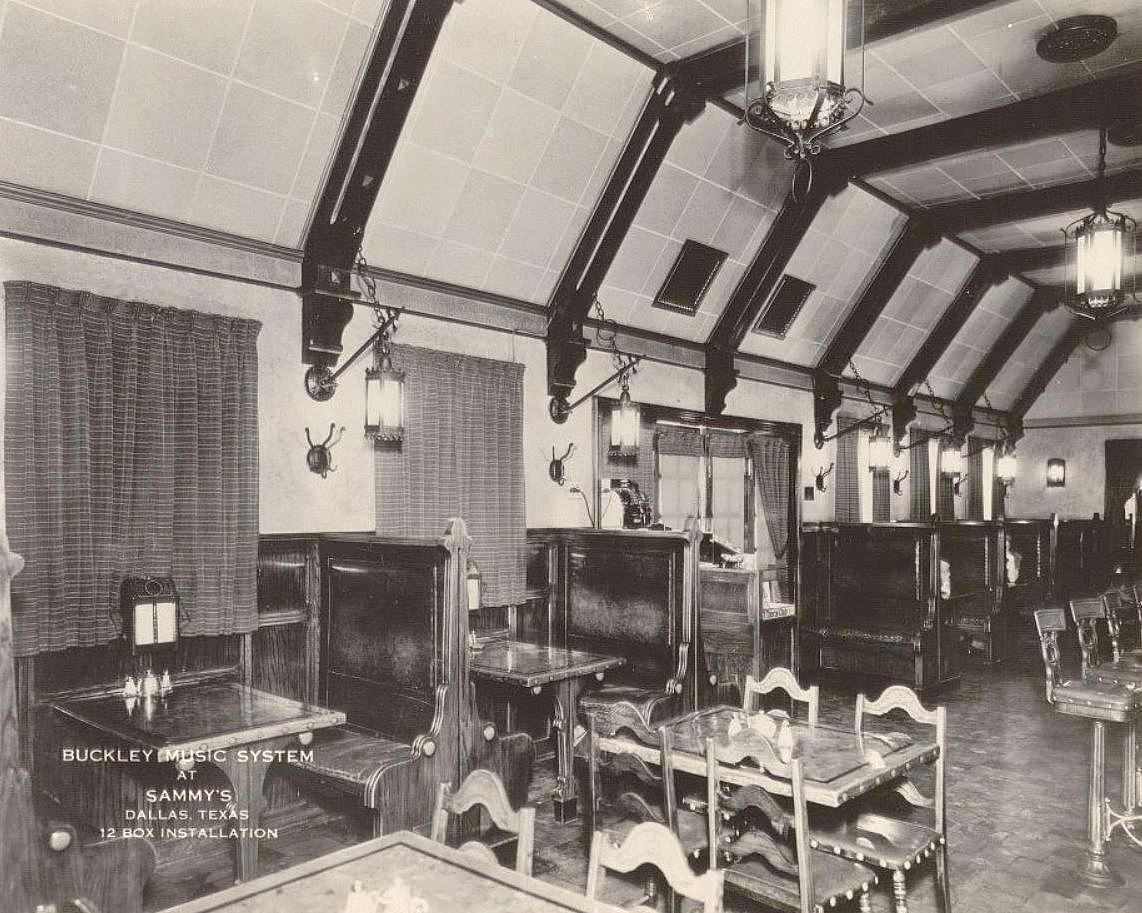
6.  “TABLETOP JUKEBOXES — 1940”  (May)

I don’t even know how I came across these photos, but this was a topic I ended up learning about because I needed to pad out the post with more than just photos!

sammys_greenville-ave_juke-boxes_hagley-museum_1940

*

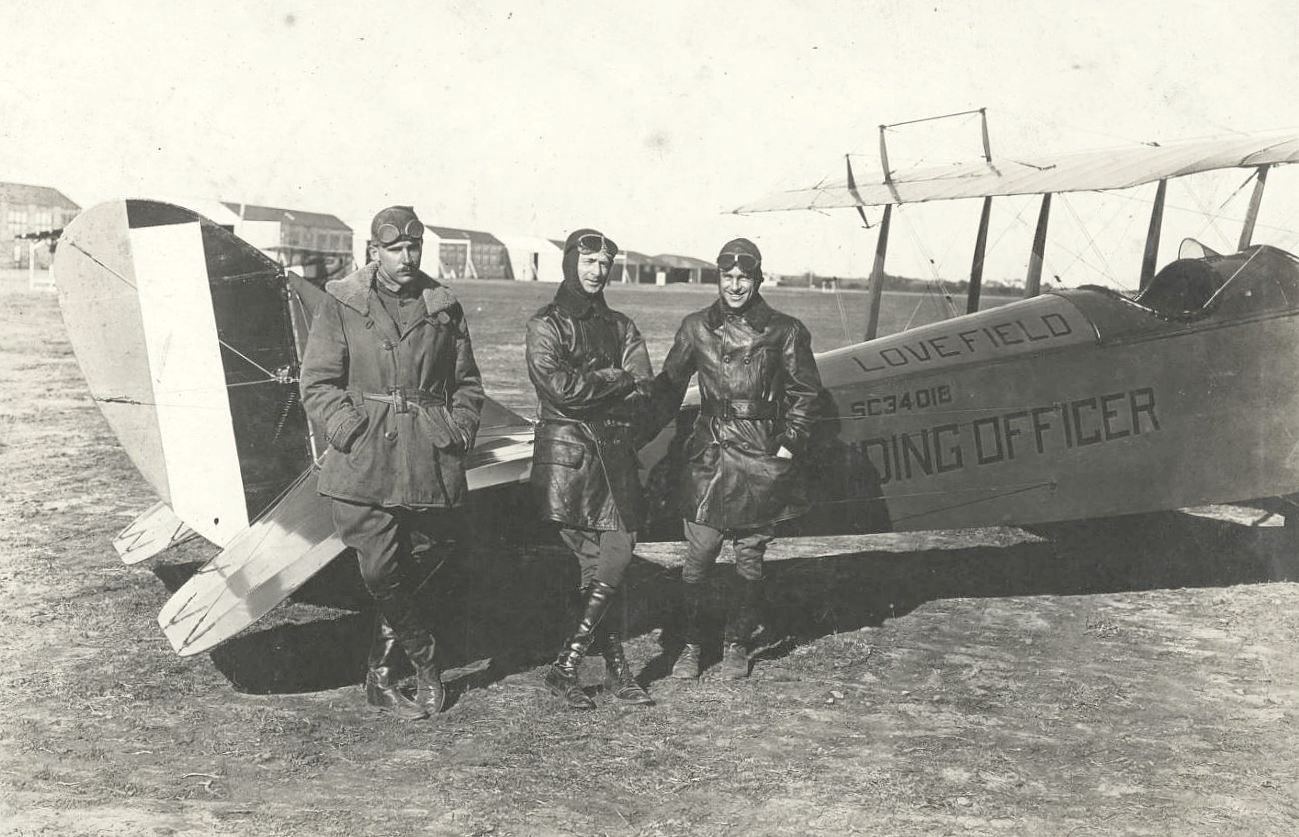
7.  “LOVE FIELD AVIATION CAMP, WORLD WAR I”  (May)

I’m a sucker for photos of World War I-era Love Field. There are some great ones in this post.

WWI_love-field_pilots_nov-1918_degolyer-library_SMU

*

8.  “GRITTY DALLAS — 1969”  (July)

Who would expect to find cool footage of the “grittier” areas of Dallas in a film produced by students attending SMU’s Perkins School of Theology? I leave no stone unturned! I’m glad those theology students made this film, because it’s full of shots of Dallas you just don’t see on postcards.

honest-joes-pawn-shop_deep-ellum_perkins-school-recruitment-film_1969_jones-film_SMU_17.41

*

9.  “DR PEPPER BOTTLING PLANT, SECOND AVE. & HICKORY — ca. 1938”  (August)

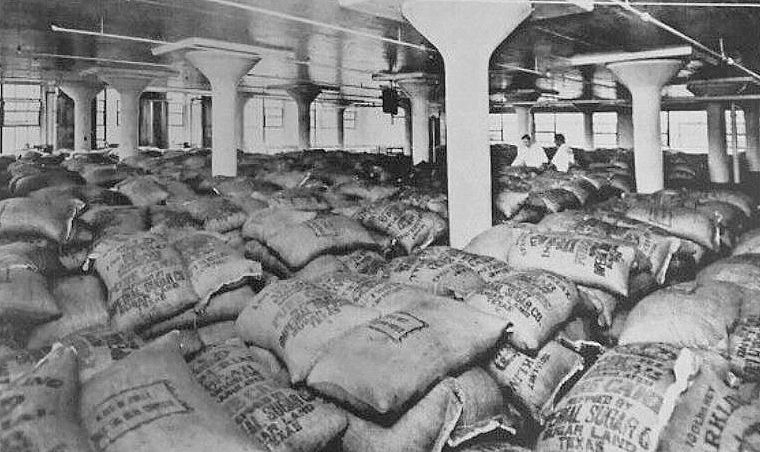
Lots of photos from inside the DP bottling plant before it moved to the better-known location on Mockingbird. My favorite photo was the “sugar storage” room.

dr-pepper-manual_sugar-storage_crop

*

10.  “SOME-CONTEXT CHANNEL 8 SCREENSHOTS: 1971”  (December)

I just wrote this a couple of days ago, but there are so many things in here that really make me laugh that I’m adding it to the “best of” list. 2023 (or even 1971) wasn’t a total loss! Below, Roger Staubach hard at work, training the low-tech way.

staubach-string_WFAA_may-1971

**

Those are my Top 10 personal favorite posts for 2023. Coming next… the most popular (clicked, linked, shared, etc.) posts of the year. Stay tuned….

***

Sources & Notes

See all three 2023 Year-End “best of” lists (as they’re posted) here.

See all Flashback Dallas Year-End lists — past and present — here.

hockaday_dads-day_life-mag_cornell-capa_1947_game_sm

*

Copyright © 2023 Paula Bosse. All Rights Reserved.

Year-End List: My Favorite Images Posted in 2023

fair-park_fountain_luminous_night_postcard_ebay_postmarked-1913And the winner is…

by Paula Bosse

Another year is coming to an end. Time for a list! I’ve looked back through this year’s posts and have picked my favorite images — photos, postcards, artwork, etc. They’re in no order, except for the one at the top, which is my tip-top fave of ’23. To see the posts these images originally appeared in, click the titles; image sources will be at the end of each post, under “Sources & Notes.” (All images are larger when clicked.)

**

I love the postcard above. LOVE it. The night scene, which shows a “luminous fountain” in Fair Park, is from about 1912. It appeared in the post “Fair Park at Night — ca. 1912.”

*

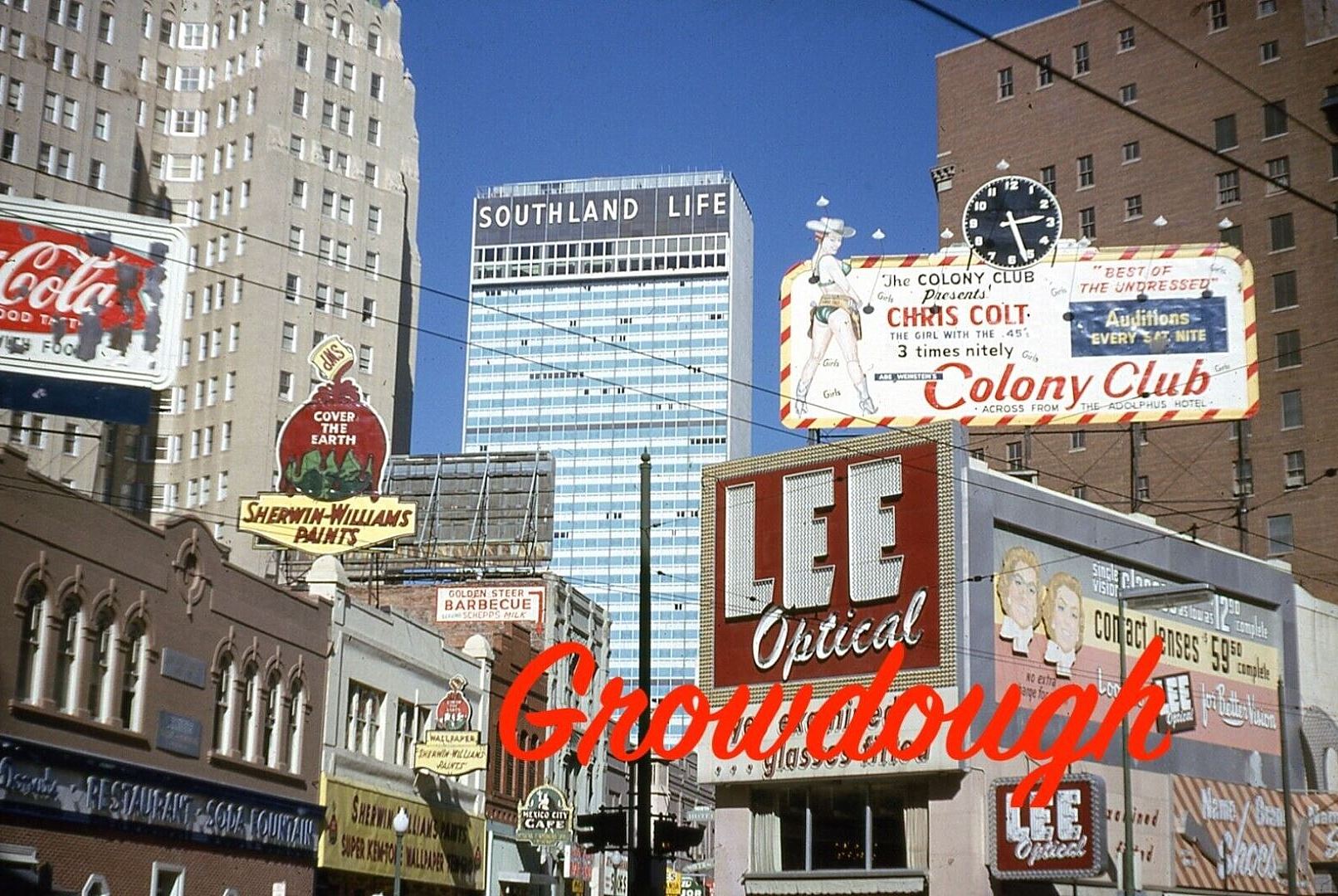
Below, a close runner-up is this fantastic color photo of the Elm-Ervay-Live Oak intersection, made exponentially better because of the presence of the completely unexpected billboard for the Colony Club, featuring stripper Chris Colt, “the girl with the 45s.” I try to avoid posting photos with watermarks — and this one has a big one! — but this is just such a great period snapshot of staid-and-conservative, edgy-and-naughty Dallas. From the post “Colony Club Billboard in Beautiful Kodachrome — Early 1960s.” (Somebody bought this color slide on eBay right after I posted this — I hope it was a Flashback Dallas reader!)

kodachrome_elm-ervay-live-oak_chris-colt_colony-club-billboard_ebay_WATERMARK

*

One of the truly beautiful, instantly recognizable buildings in Dallas is the Mercantile. This Squire Haskins photo (which I’ve cropped) (sorry, Squire…) is pretty stunning. From the post “The Mercantile Bank Building — 1951.”

mercantile_squire-haskins_dec-1951_UTA

*

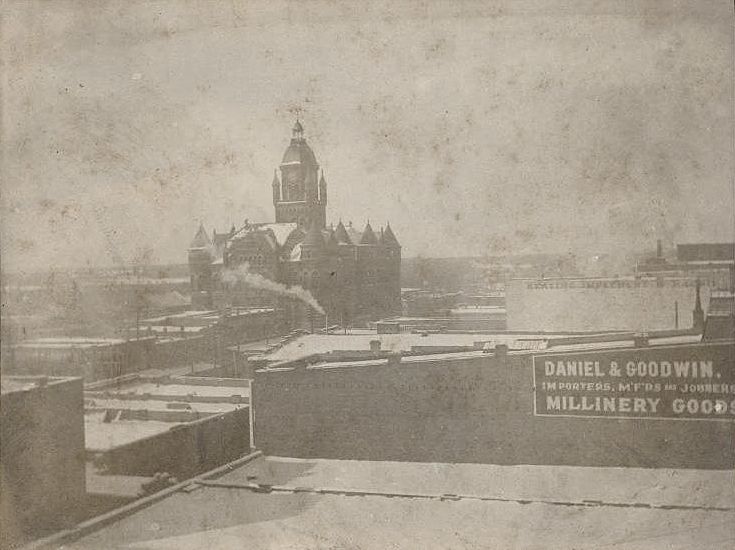
Another landmark, the Old Red Courthouse, is seen in this photo when it was still the “New” Red Courthouse. This is very dreamlike. From the post “Courthouse in the Mist/Smoke/Murk — 1901.”

old-red_dallas-courthouse_1901_degolyer

*

Moving to Lower Greenville, this is the best aerial photo I’ve found showing the old Hockaday campus at Belmont and Greenville. Squire Haskins, the photographer, should be more well-known than he is. (There are more of his photos in this list than I realized! Thank you, UTA, for the incredible collection of his photos!) This was from the catch-all post “A Few Photo Additions to Past Posts — #21.”

hockaday_aerial_squire-haskins_022750_UTA

*

While we’re on Squire Haskins’ aerials, I was pretty excited to stumble across this early-1960s view of North Dallas around the St. Mark’s campus (it shows the wide-open land west of Preston Road at Royal Lane). From the post “St. Mark’s From the Air.”

st-marks_preston-royal-to-the-west_squire-haskins_UTA

*

This early photo of Dallas Hall at SMU is great. From the post “Dallas Hall, The Early Days.”

SMU_dallas-hall_the-campus-mag_ca-1914_cover

*

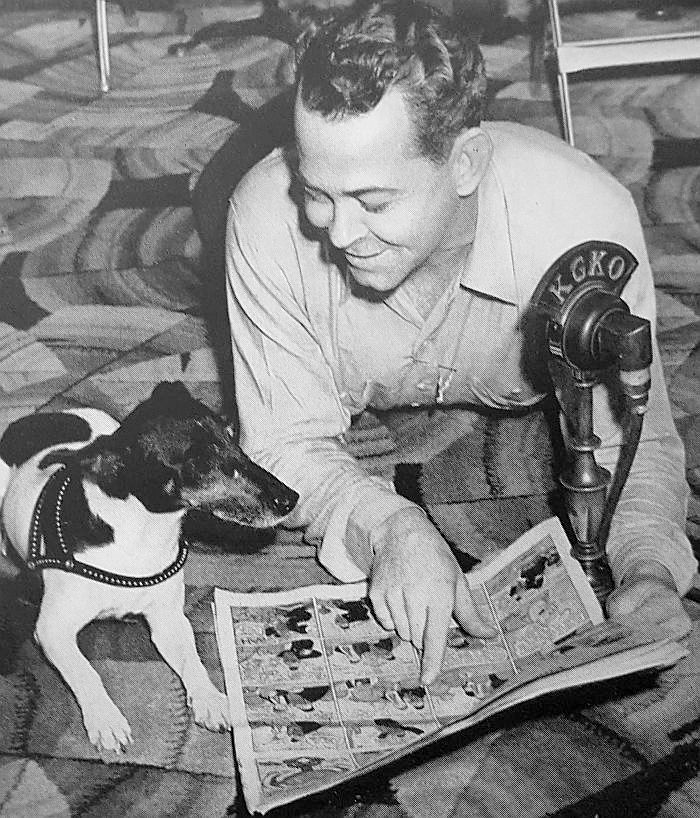
I saw this photo in a WFAA/WBAP/KGKO booklet 10 or 15 years, and I’ve loved it ever since. Every time I see it, it makes me smile. I think I love it even more now than the first time I saw it. I finally used it in a post this year, in “Uncle Scooter Reads the Funnies: 1940-41.”

radio_uncle-scooter_wfaa-wbap-kgko-combined-family-album_1941

*

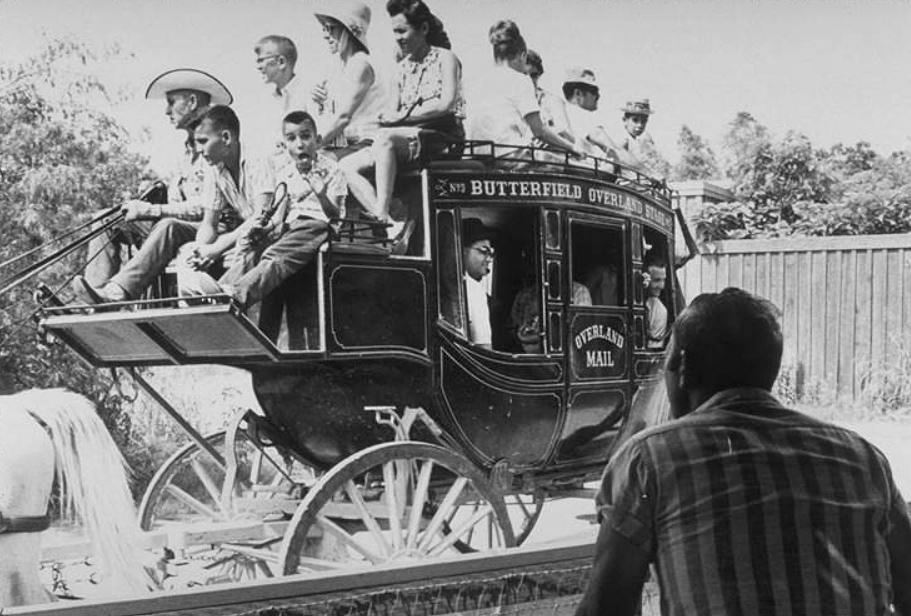
Okay. How did anyone think a stagecoach ride at Six Flags was a good idea? (Not that I wouldn’t have wanted to ride it myself….) From the post “The Stagecoach Ride at Six Flags: 1961-1967” (you can probably guess the reason it was discontinued).

six-flags_stagecoach_fort-worth-magazine

*

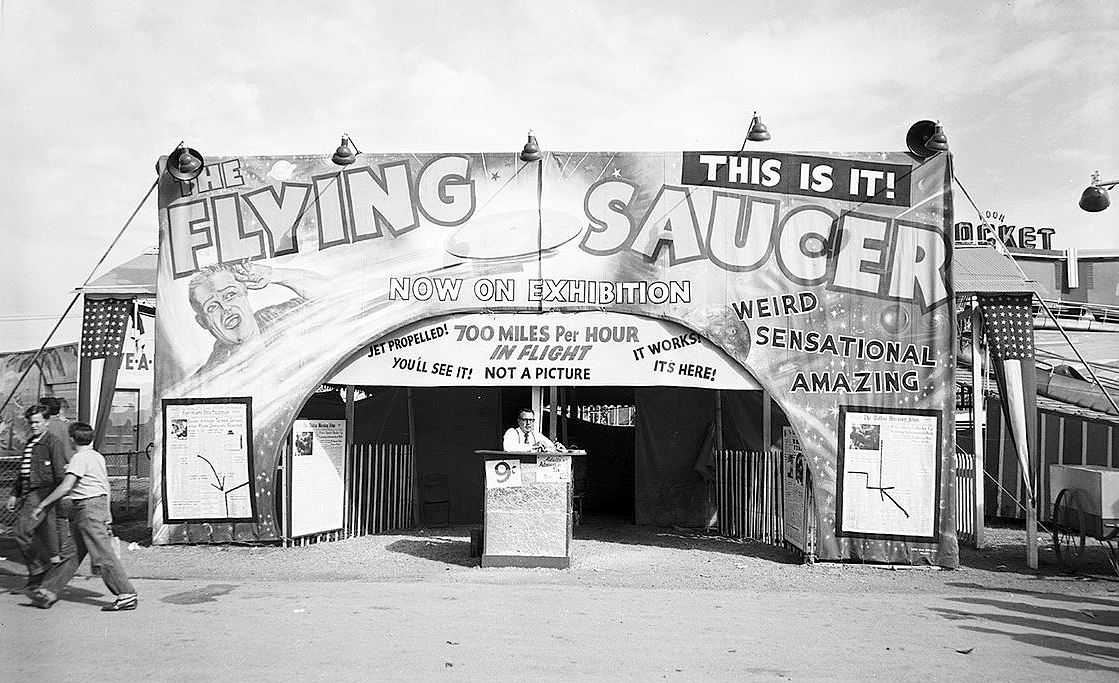
Who doesn’t love a good carnival sideshow banner? Perhaps the apex of advertising. 73 years later, I kinda want to see what was inside that State Fair midway tent. From the post “The ‘Shadow’ Flashback.”

patreon_sfot_flying-saucer_squire-haskins_UTA_oct-21-1950

*

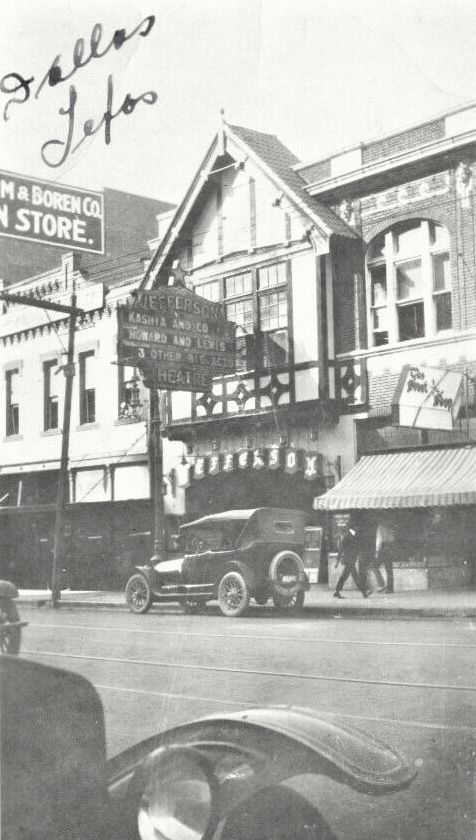
This one isn’t a great photograph, per se, but it shows something I’ve never seen: the Jefferson Theater (1517 Elm, between Akard & Stone) with this odd (temporary?) facade. From the post “A Few Photo Additions to Past Posts — #19.”

theater_jefferson-theater_RPPC_ebay

*

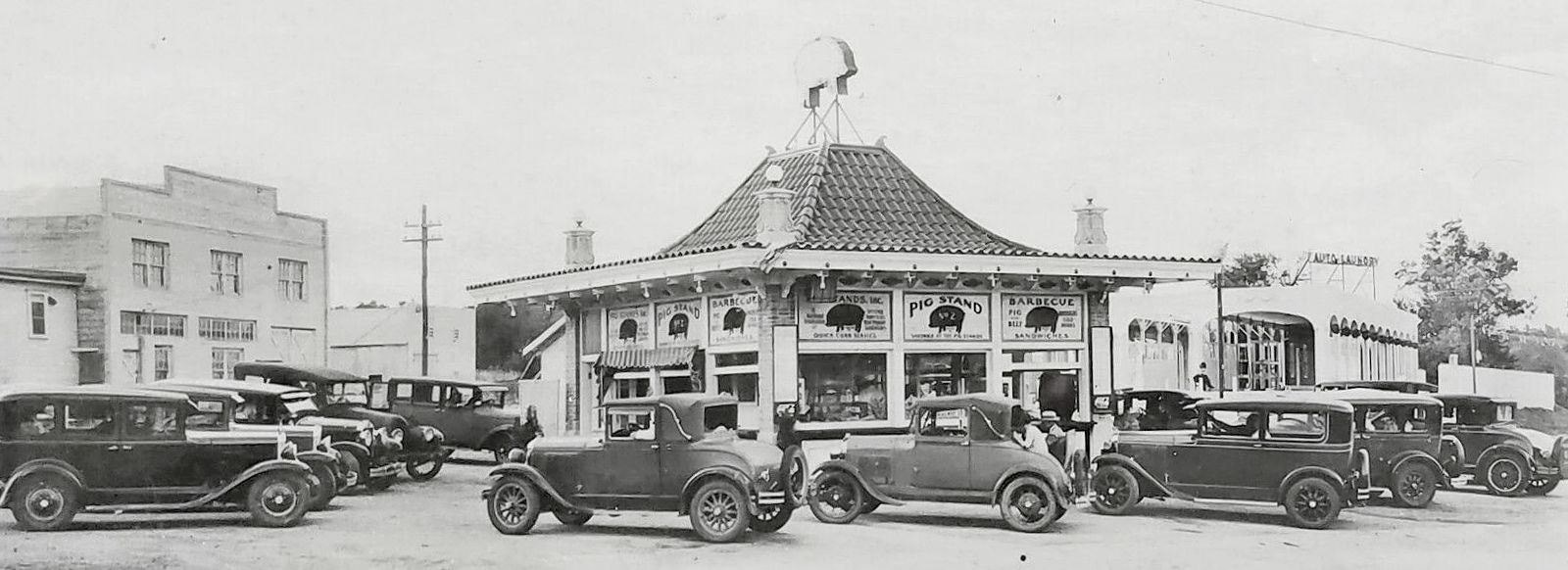
Feast your eyes on “Pig Stand No. 2, Oak Cliff” — 1301 N. Zang, taken about 1928. This might be the first people-in-a-rumble-seat photo I’ve ever posted!

pig-stand-no-2_dallas_ebay

*

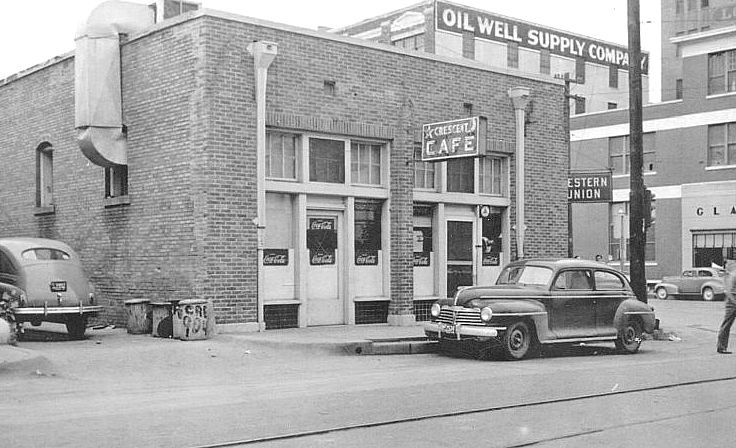
I can’t tell you exactly why I love this photo of a cafe at McKinney & Lamar so much. But I do. From the post “Crescent Cafe: Warehouse District — 1944-1952.”

crescent-cafe_mckinney-and-lamar_ebay

*

One of my favorite photos of a restaurant interior is this one: the Copper Cow, at 1519 Commerce, from about 1960. Wow. From the post “The ‘Other’ Flashback Dallas….”

patreon_copper-cow_UTA_int_squire-haskins

*

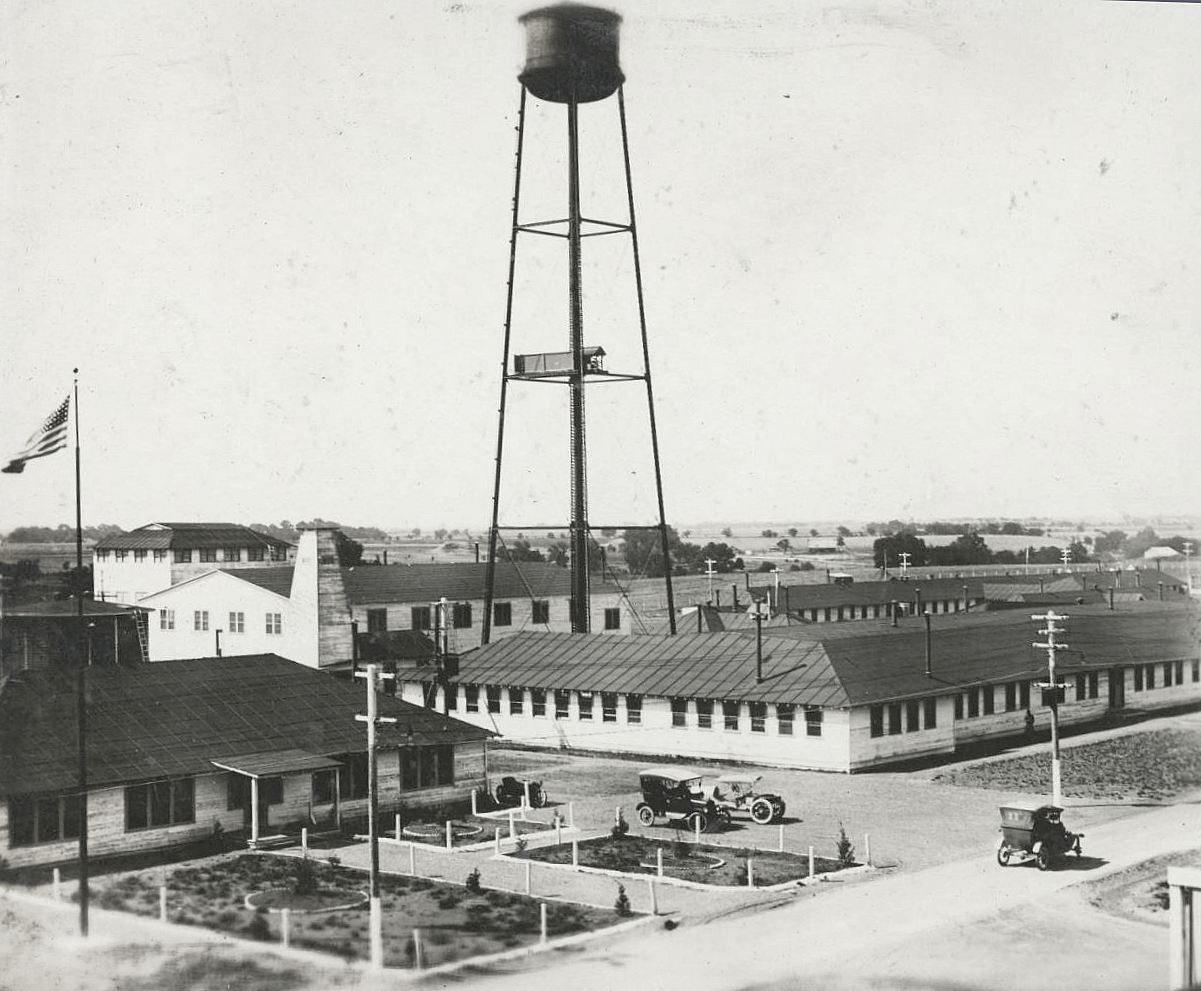
This photo of the training camp at Love Field is great — and so are the others in the post “Love Field Aviation Camp, World War I.”

WWI_love-field_water-tower_ca-1918_degolyer-library_SMU

*

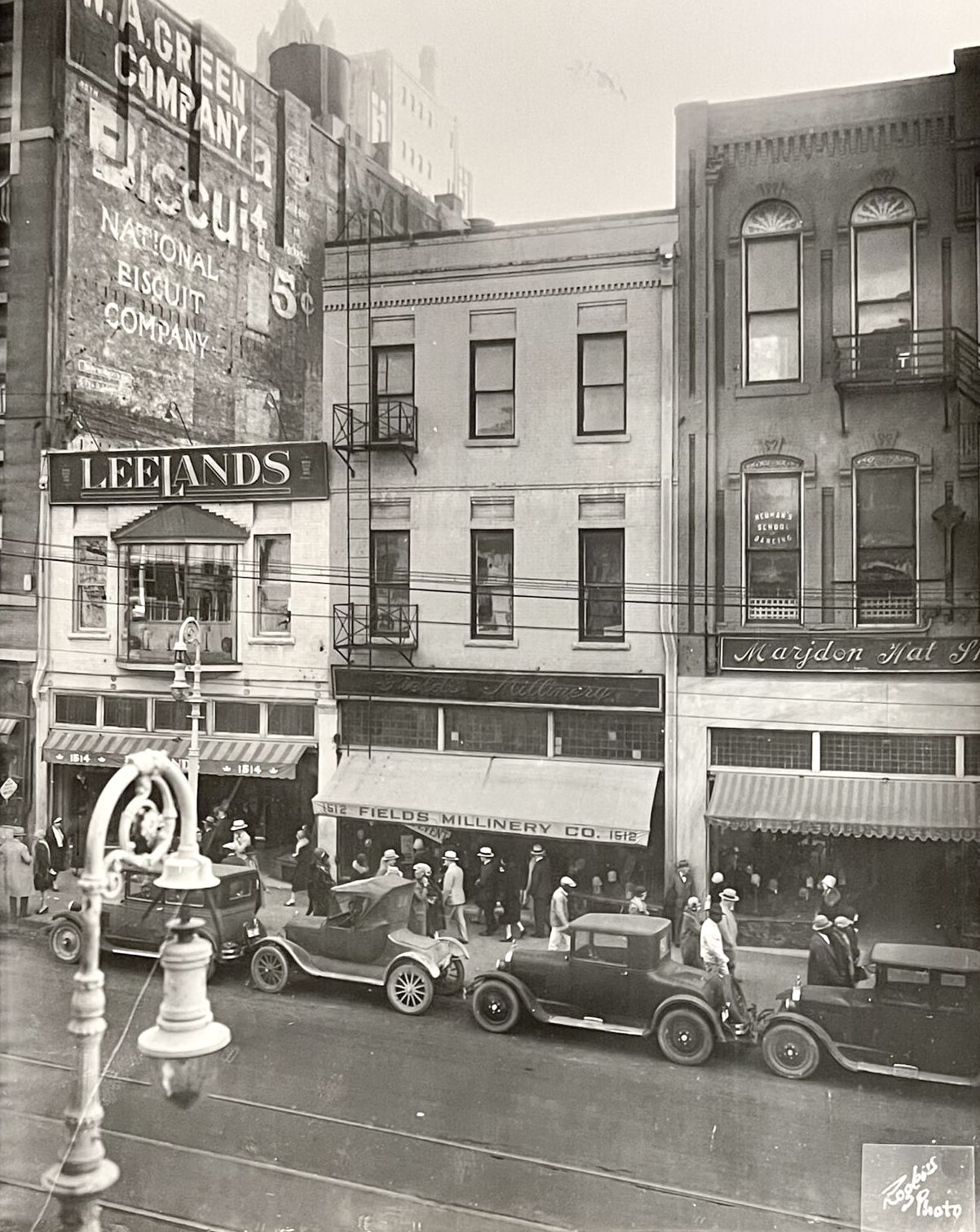
I could look at old photos of downtown Dallas all day long. And I have. This one, by Frank Rogers (another ace local photographer that every self-respecting student of Dallas history should know!) shows a lively street scene in the “1500 Block of Elm — 1920s” (click the link to see a second photo by Rogers which shows the next part of the block).

fields-millinery_1512-elm_frank-rogers-ebay

*

This photo of the Majestic Theatre under construction is wonderful. From the post “Flashback Dallas Side Hustle.”

patreon_majestic-theater_construction_street-of-dreams-bk

*

I haven’t posted a lot of advertisements this year, which is a shame, because I love ads, especially those that feature historic photos you might not find anyplace else. Like this one. It is an ad for a paving material company, but it features a photo I’ve never seen showing St. Mary’s College in East Dallas at Garrett & Ross. From the ad-packed post “Ads, Ads, Ads, Ads, and a Few More Ads — 1916.”

street-construction_vibrolithic-pavement_SFOT-booklet_1916_SMU_st-marys

*

I love finding a photo of a somewhat non-descript building and diving in to learn about its history. It’s even better when you find that the really-old-for-Dallas building is still standing. Like this one, which is made even more interesting because it’s in Exposition Park, an area I’m fascinated with, partly because it has been overshadowed by its sexier neighbors, Deep Ellum and Fair Park. So… great photo. Check the post “The Bullen Store, Exposition Avenue — 1896-1936” to see what this building looks like now (I haven’t been to Expo Park recently — I hope it’s still there!).

bullen-store_exposition-avenue_ca-1905

*

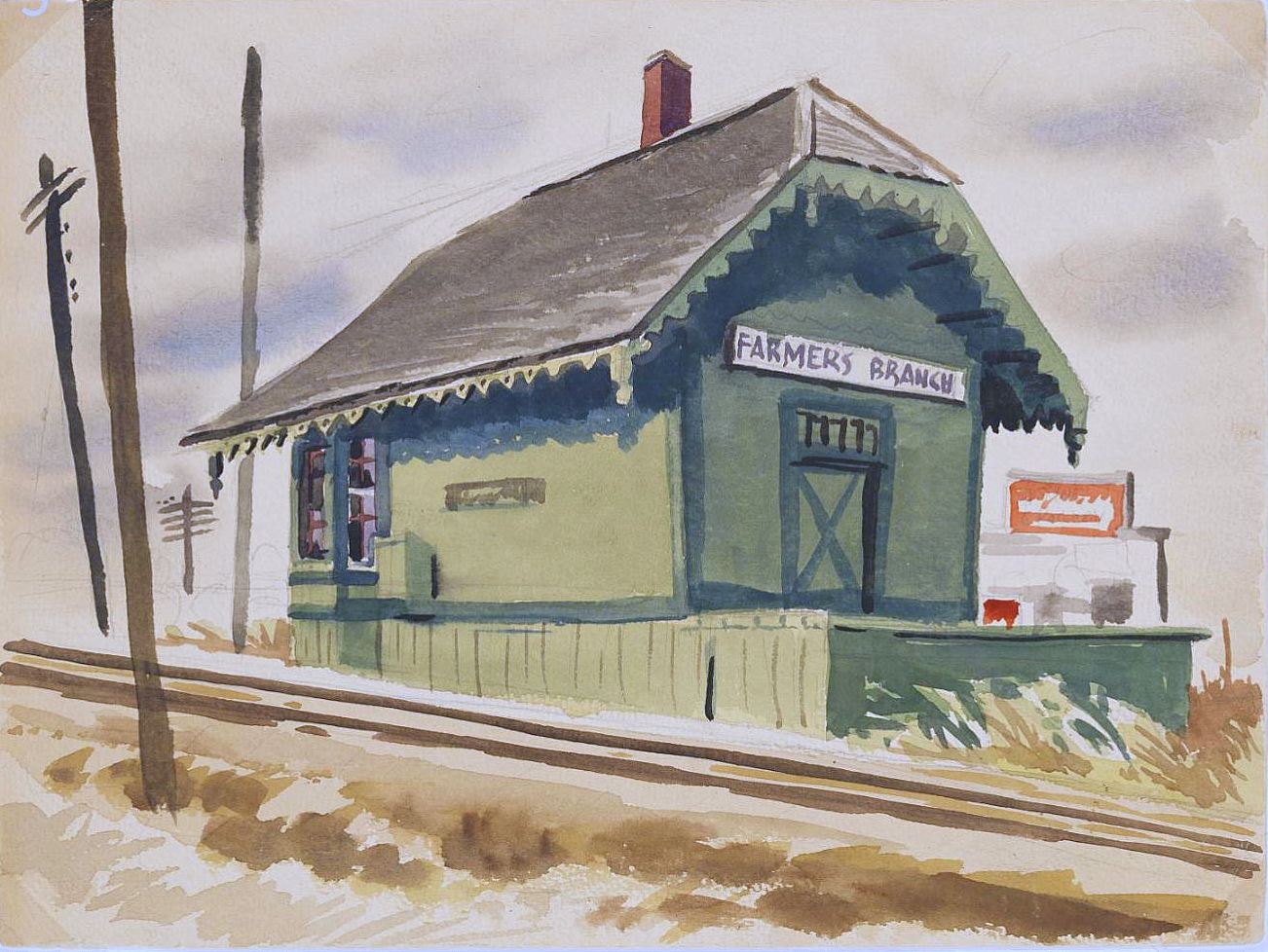
And, finally, last but not least, art! I have posted so little art this year. I need to rectify that in 2024. I suppose art is my real passion, and Dallas has produced some wonderful artists. One of the best-known Dallas artists is Jerry Bywaters. I found this undated Bywaters watercolor while I was looking for something unrelated. It shows the old Farmers Branch depot. I love this. From “Jerry Bywaters: A Quick Trip to Farmers Branch.”

bywaters-jerry_untitled_farmers-branch-depot_bywaters-collection_smu_nd

**

And there they are, my top 20 favorite images of 2023!

Coming soon: my personal favorite posts and the most popular posts of the year. Check back!

***

Sources & Notes

See all three 2023 Year-End “best of” lists (as they’re posted) here.

See all Flashback Dallas “Year-End” lists — past and present — here.

fair-park_fountain_luminous_night_postcard_ebay_postmarked-1913_sm

*

Copyright © 2023 Paula Bosse. All Rights Reserved.

Some-Context Channel 8 Screenshots: 1971

lady mailman june 1971 WFAAWFAA Collection/Jones Film Collection/SMU

by Paula Bosse

I have been working as part of a 3-person team (led by Jeremy Spracklen and Scott Martin) on the WFAA archive of news film, housed in the G. William Jones Film and Video Collection at the Hamon Arts Library at SMU. I have been working on 1970 and 1971, going through daily footage shot for Channel 8 News. I get a bit bogged down by all the sports and car crashes, but at this point, I am so all-consumed by these two specific years that I feel I would do well on Jeopardy if the categories were things like “Minor League DFW Hockey Teams of the Early ’70s,” “Internecine Squabbles of the Dallas City Council, the Dallas School Board, and the Dallas County Commissioners Court,” and “So What’s the Deal with the Sharpstown Scandal?” My 2023 has been spent immersed in 1971, where the chaos of the implementation of court-ordered school busing, the huge securities fraud scandal that involved some very powerful Texas politicians (Sharpstown), and the battle between Craig Morton and Roger Staubach to become the Cowboys’ #1 quarterback were some of the stories that dominated the headlines. And, lordy, there were some pretty exotic hairstyles, fashions, and interior design trends hammering away relentlessly throughout this post-hippie (it might really still have been current-hippie), pre-disco period.

Here are a few of my favorite moments from this 1971 DFW-centric news footage from the WFAA archives. Links to the pertinent clips on YouTube are included at the end of the descriptions. These clips are rarely the full reports that would have been seen on the nightly news — they are often just silent footage or B-roll, without any identification of people or clues as to where they were filmed or even why they were newsworthy. It’s (mostly) a lot of fun to dig through and watch the unfolding of history from more than 50 years in the future.

**

Above, from JUNE 1971

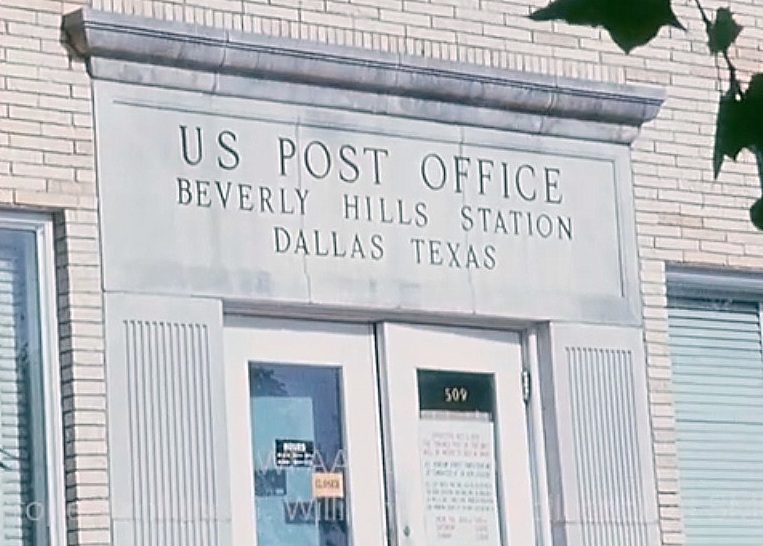
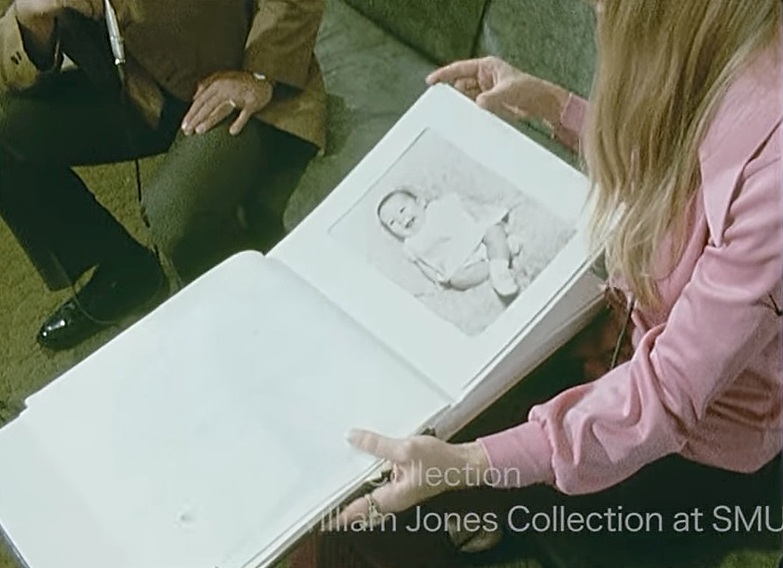
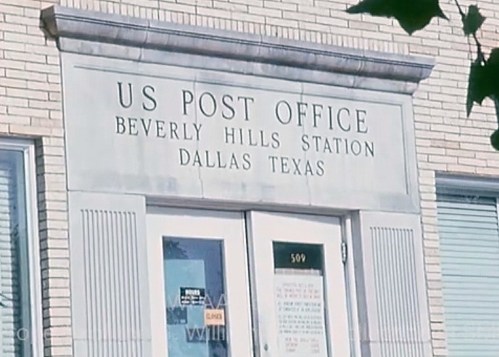
One of my favorite human-interest stories from the past year (meaning 1971!) was the profile of one of the few “lady mailmen” in Dallas at the time. She’s utterly, utterly charming, has a supportive and interesting husband and family, and loves her job. The Channel 8 cameraman shows her as she sorts her mail in the Beverly Hills Station post office in Oak Cliff and follows her as she walks along her route on West Davis. The only problem with this 7 minutes of interesting footage is that the woman is never identified. I dove in, really wanting to identify her. I thought I had cracked the mystery of her identity, only to find myself at a dead end again. If only her children could see this wonderful profile of their mother. If you know who this woman is, please let me know, and we’ll add her name to the YouTube description and try to track down any family members. I would LOVE her children to be able to see this.

The “lady mailman” is interviewed here (this first bit is in three short segments, totaling 4 minutes); a later clip shows her on her route, here (about 3 minutes). The old post office building still stands at 509 N. Barnett.
lady mailman june 1971 WFAA_beverly hills post office

*

JANUARY 1971

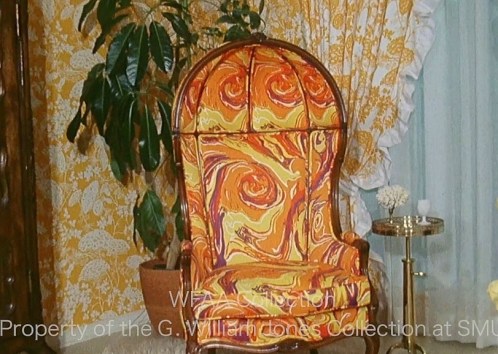
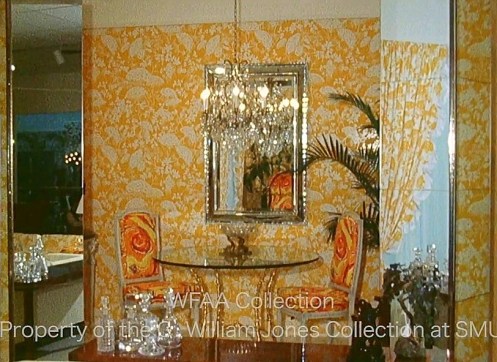
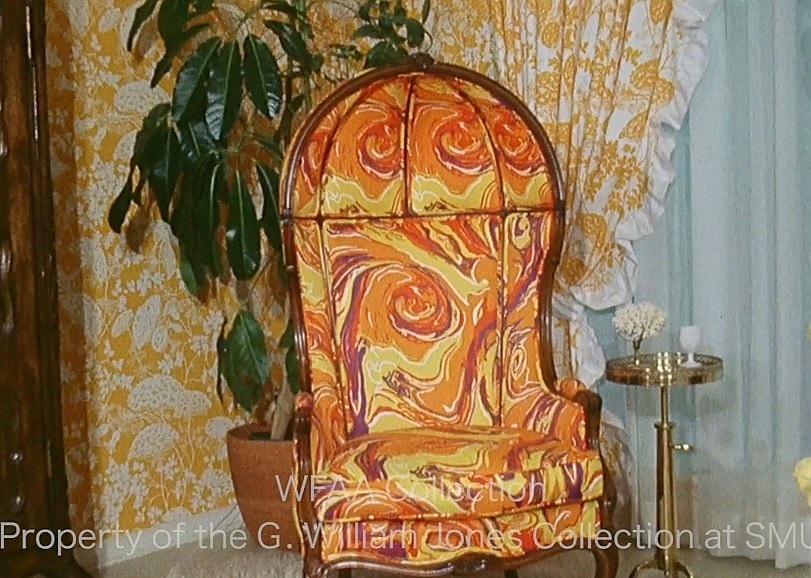
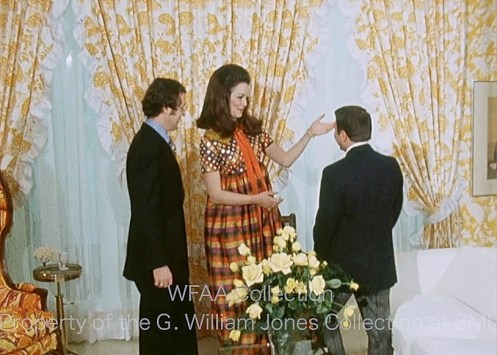
So, yeah, fashion and interior design trends were pretty… in-your-face in 1971. In the three screenshots below, you’ll see some retina-abusing images of with-it decor. The first features the always beautiful Phyllis George, the Denton native who was in the midst of her Miss America reign. In this clip, she has come back home to DFW for an appearance at an event in which a room designed with her in mind is unveiled (by decorators C. John Megna and William Farrington). She is wearing a dress designed by Carlo Bitetto specifically for her to wear IN THAT ROOM (!). You don’t often see sparkles and plaid cheek-by-jowl.

The clip with the super-color-saturated room and its battling patterns is here.
phyllis-george-room_jan-1971_c

phyllis-george-room_jan-1971_b

phyllis-george-room_jan-1971_a

*

FEBRUARY 25, 1971

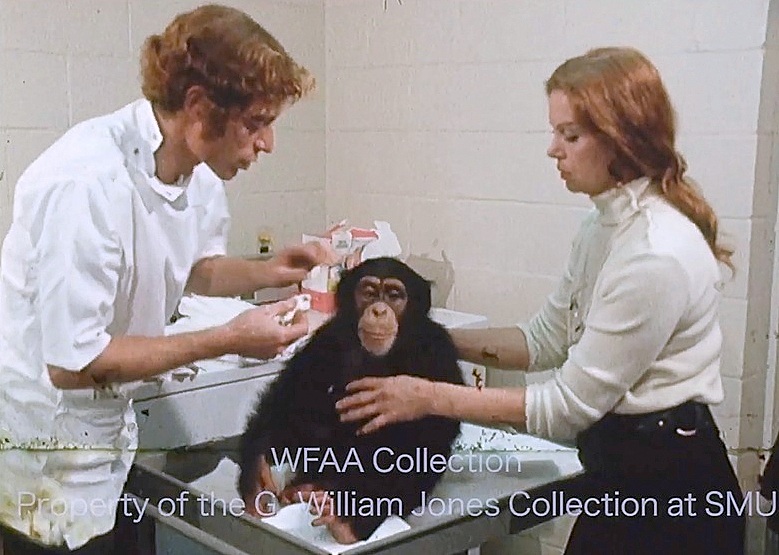
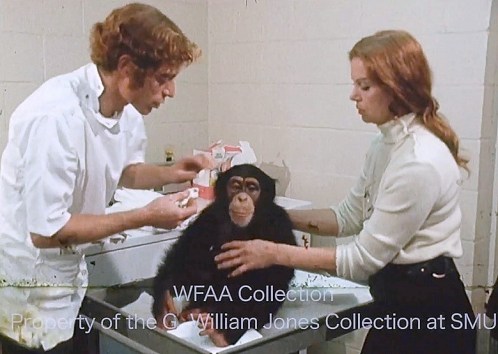
Before Lion Country Safari, Mesquite had World of Animals, a drive-thru safari park. World of Animals had a wild-animal veterinarian who visited regularly from California: Dr. Martin Dinnes. Below, Dinnes is seen providing dental care to popular attraction Harold the Chimp. This is not really something I expected to see, but there you are. (Dinnes was later engaged to actress and wildlife preservation activist Tippi Hedren for several years.)

The clips of Dinnes being interviewed and preparing Harold for a tooth extraction (and I grimaced a bit, because the camera keeps rolling during the procedure, so be warned!) are here and here. (The last clip has a shot of Harold’s hand, which, understandably, appears to be gripping the chair.) That is one well-behaved, chill chimp!
dinnes-martin_harold-chimp_022571_WFAA

*

MAY 18, 1971

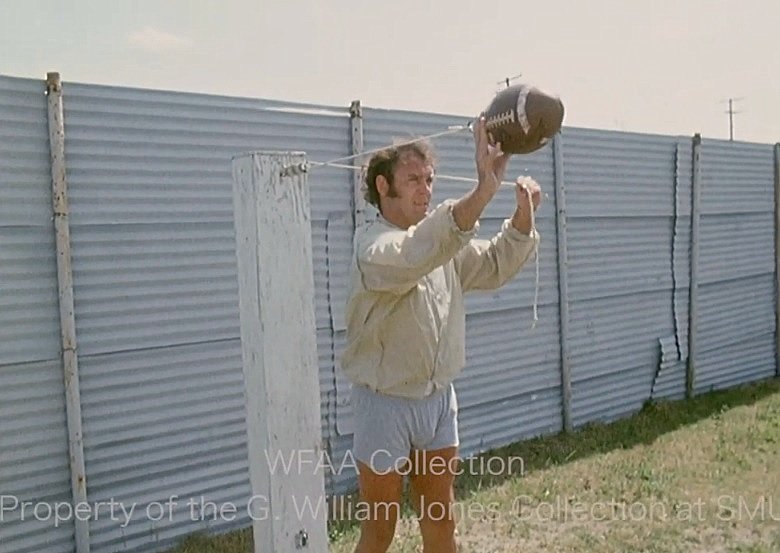
In 1971, there was an ongoing battle between old quarterback Craig Morton and NKOTB Roger Staubach over who would be named the team’s official starting QB. Coach Tom Landry worked for months with a two-quarterback system, alternating them from game to game — he was fine with this, but everyone else hated it. Below are screenshots of Morton and Staubach at the Cowboys practice field. I know virtually nothing about sports training, but this, um, extremely low-tech gadget struck me as weird. And funny. I mean, okay, it was 1971, but surely there was something more technologically advanced than this? It’s a football on a string, tied to a post. And maybe there’s a spring or something in there. This must have been effective. Rog looks like he’s straining. I don’t know. But I love it.

See Craig in an interview with Verne Lundquist from May 18, 1971 about his elbow and shoulder injuries here, and then using the football-on-a-string thing (and then training with Staubach) here; and see Roger interviewed on the same day about really, really wanting to be the starting QB here, and then he hits the string thing here before working out with Morton in what must have been a fairly tense period of both of their careers.
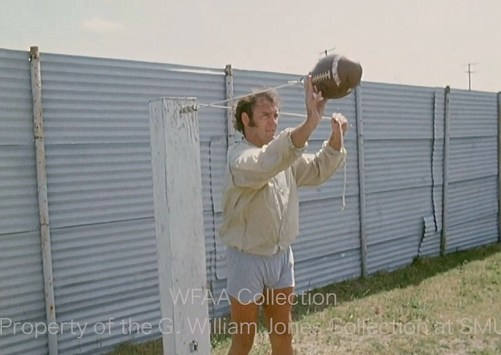
morton-string_WFAA_may-18-1971

staubach-string_WFAA_may-1971

*

JUNE 1971

Medical examiners used to be on the news a lot. One who popped up frequently was Tarrant County M.E. Dr. Feliks Gwozdz. I was amused more than I should have been when I saw the skull-and-crossbones coffee mug on his desk. I hope it said “World’s Greatest Coroner!” on the back.

The silent footage of Dr. Gwozdz at his desk is here.

skull-crossbones_feliks-gwozdz_june-1971

*

JULY 14, 1971

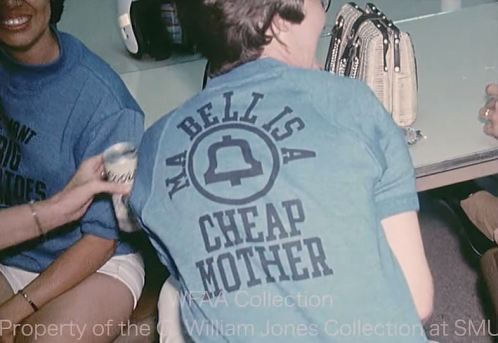
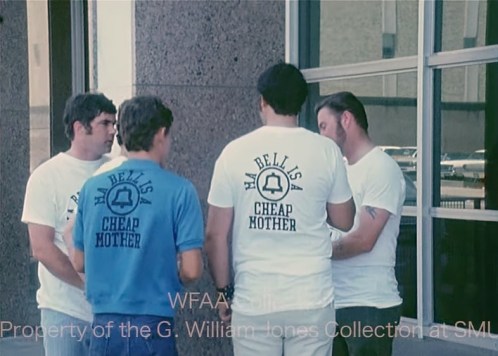
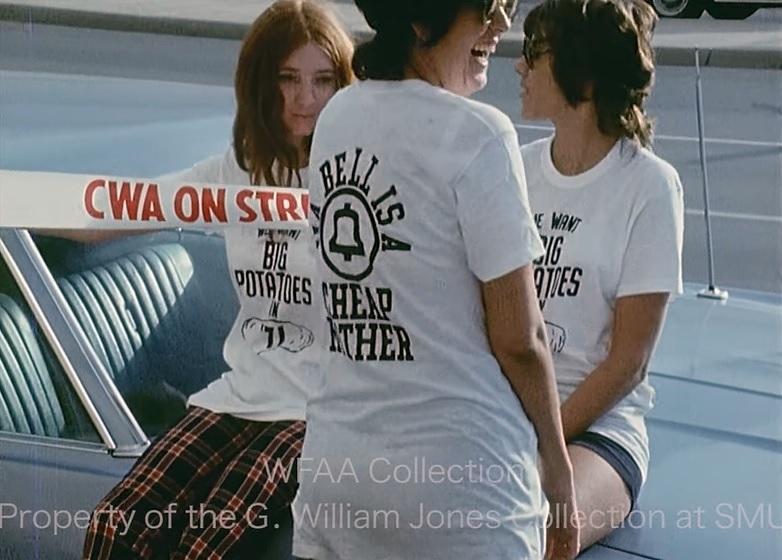
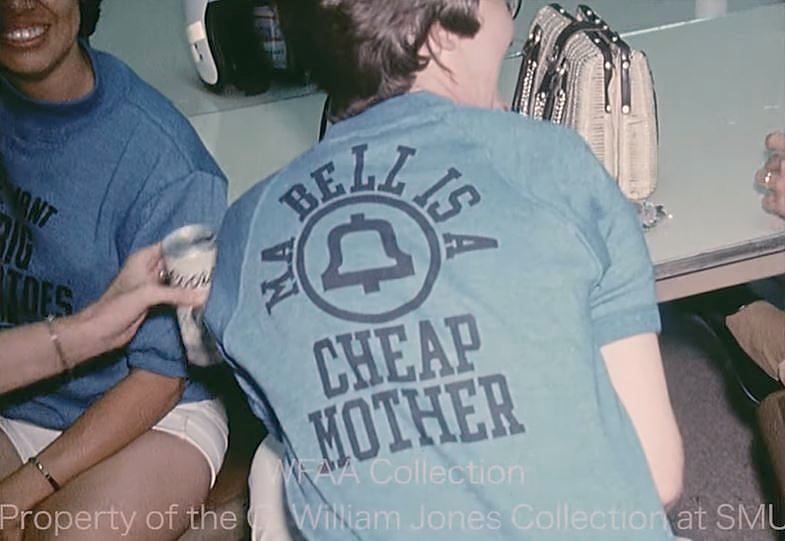
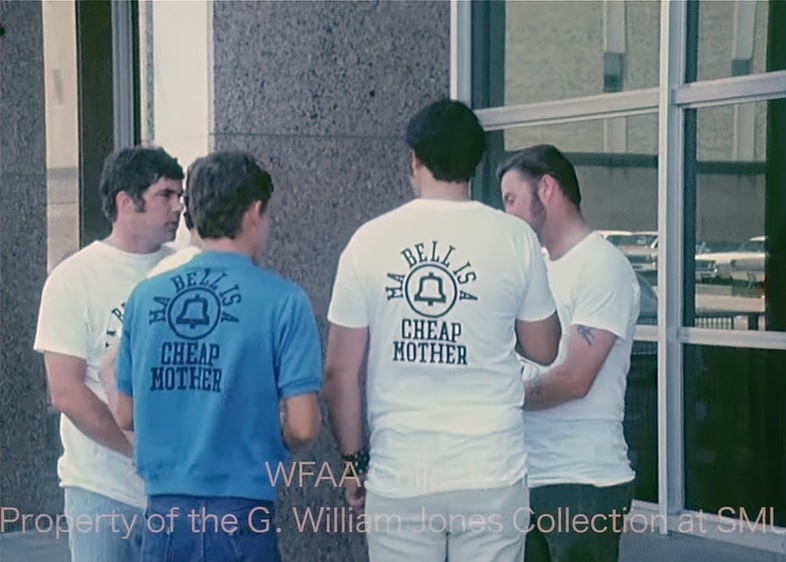
Back in 1971 there was what seemed like the threat of a union strike every 10 minutes. I enjoyed the footage of a bunch of Southwestern Bell employees who look like they were probably a lot of fun to hang out with. Their t-shirts read “Ma Bell Is a Cheap Mother,” which is just great.

Strike footage is here (about 2½ minutes) and here.

SWB-strike_july-14-1971_big potatoes

SWB-strike_july-14-1971_ma bell is a cheap mother

SWB-strike_july-14-1971_WFAA

*

JULY 1971

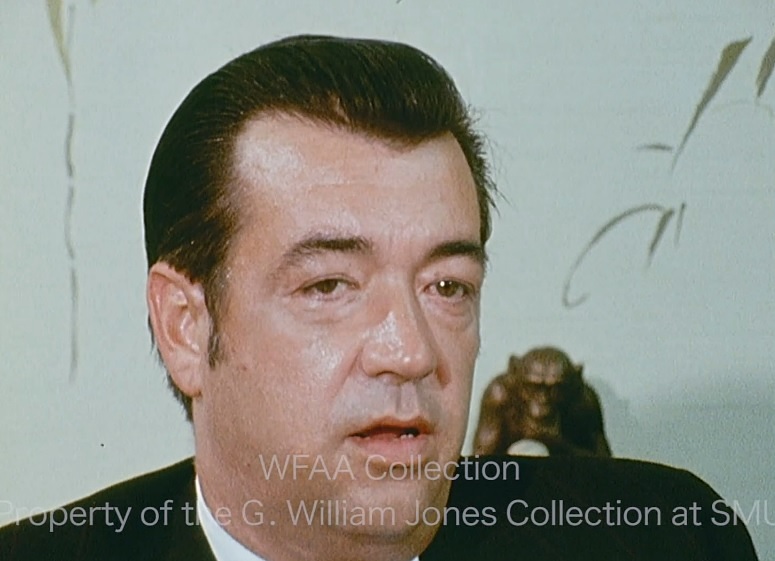
One of the top stories of 1971 was the endless furor set off by court-mandated school busing in attempts to desegregate schools. It was a mess. The man seen below is attorney Bill Brice, a leader of one of the many anti-busing groups. …Surely the cameraman noticed the monkey.

Man with monkey can be seen here.

anti-busing_bill-brice_monkey_WFAA_july-8-9-1971

*

AUGUST 29, 1971

When the Dallas School Board and Supt. Nolan Estes weren’t pulling their hair out over desegregation, they tackled other issues. One of which was so overshadowed by anti-busing demonstrations that it barely got any play, but I find it really interesting. It concerned Crozier Tech High School downtown. At the end of the 1970-71 school year, the landmark school was closed, and there was lots of discussion on what the DISD should do with the building/land, which they owned (2218 Bryan). This press conference was supposed to be about Estes’ vision of a 40-story school-office complex, which he suggested be built on the land — the first 10 floors would be for school use, and the top 30 floors would be leased to businesses as office space, with leases, theoretically, paying for construction and maintenance of the building. The building was never built (and thankfully, old Tech still stands). School board president John Plath Green and Supt. Estes sit in front of an architectural drawing of the envisioned DISD skyscraper. Too bad no one wanted to talk about it.

Footage from the press conference where reporters only want to ask about busing, is here.
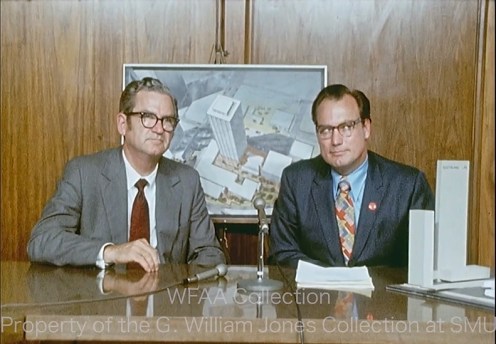
super-school_DISD_crozier-tech_DMN_082971_WFAA_SMU

*

SEPTEMBER 23, 1971

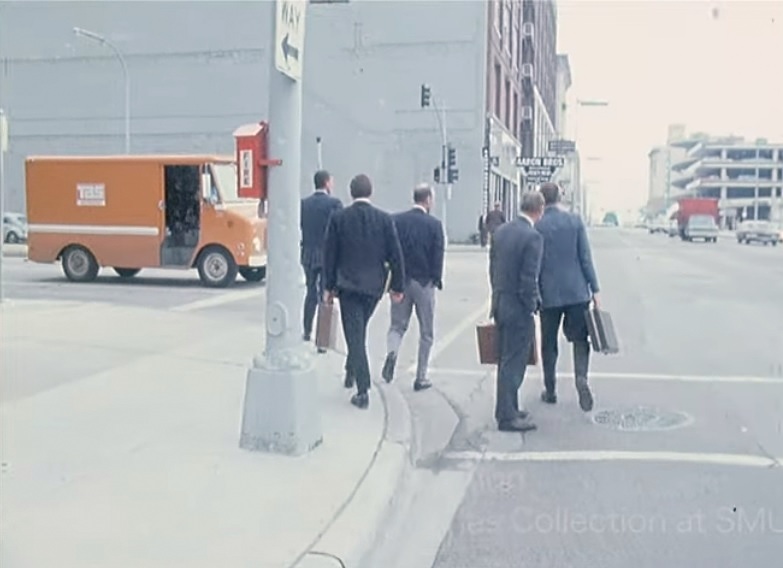
The Sharpstown Scandal was a bigger story than busing, but, even though political scandals are juicy, it just didn’t get everyday people mobilizing, marching in the streets, and shouting each other down in public forums the way busing did. But it was a massive story, and several political careers bit the dust because of it. The sprawling and confusing securities-fraud scandal mostly involved drab politicians and business executives. But one part of it involved, bizarrely, six celebrated — if not beloved — NASA astronauts and an insurance company pension fund.

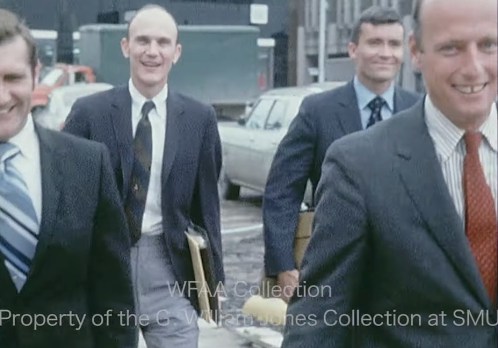
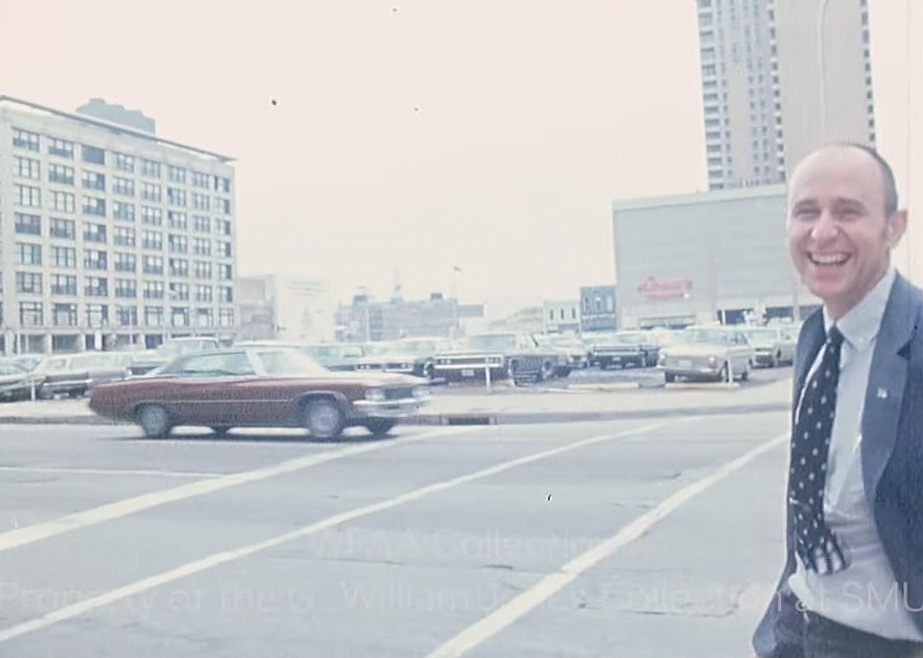
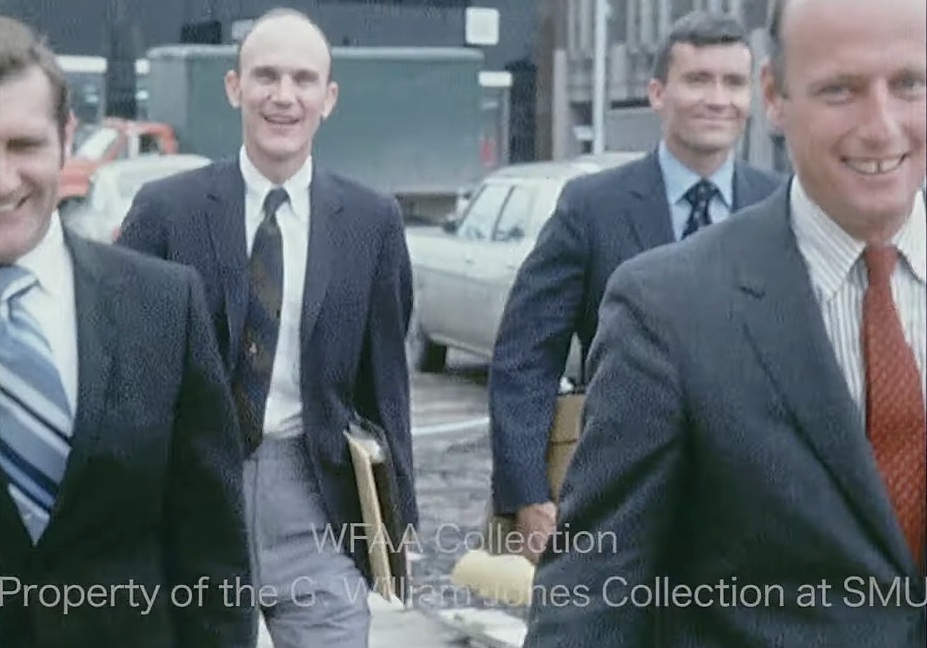
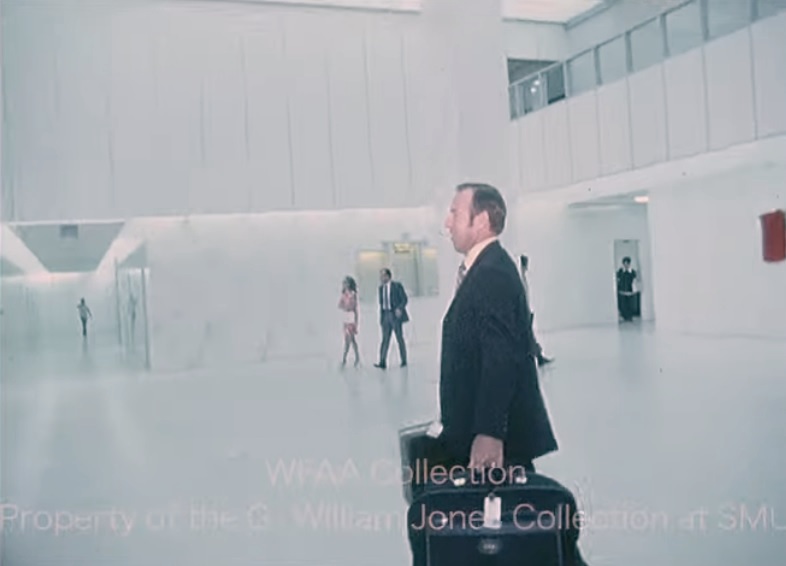
In this Channel 8 footage, you can see something you don’t see every day: five NASA astronauts walking together down the street (a sixth one was nearby, on his own). James Lovell, Pete Conrad, Fred Haise, Ken Mattingly, Richard Gordon, and Alan Bean were in Dallas on Sept. 23, 1971 to testify as witnesses before a federal grand jury that was investigating the activities surrounding the Sharpstown Scandal. These are screenshots of the five (minus Lovell), carrying briefcases through grubby downtown Dallas, and of Lovell on his own, exiting the Federal Court House. When I first watched this footage, it just seemed really odd: five internationally (galactically!) famous astronauts — heroes! — walking together down the street, without any kind of security or entourage. If you were a NASA freak (and there were a lot back then, at the height of the Apollo-Gemini programs) and you just happened to have walked past this group, your head would have exploded.

See Lovell exiting the sterile- and dystopian-looking courthouse on his own (that woman he holds the door open for has no idea who he is), and the others walking somewhat playfully down the street here (I love this footage!); a confusing wrap-up of the day’s events is here.
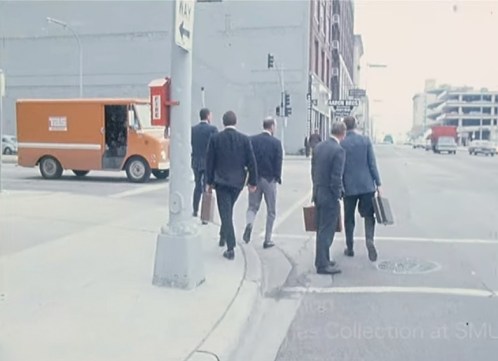
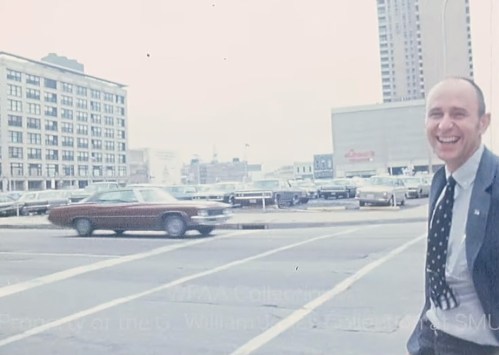
astronauts_WFAA_SMU_sept-23-1971

astronauts_WFAA_SMU_sept-23-1971_1

astronauts_WFAA_SMU_sept-23-1971_2

astronauts_WFAA_SMU_sept-23-1971_c

*

OCTOBER 14, 1971

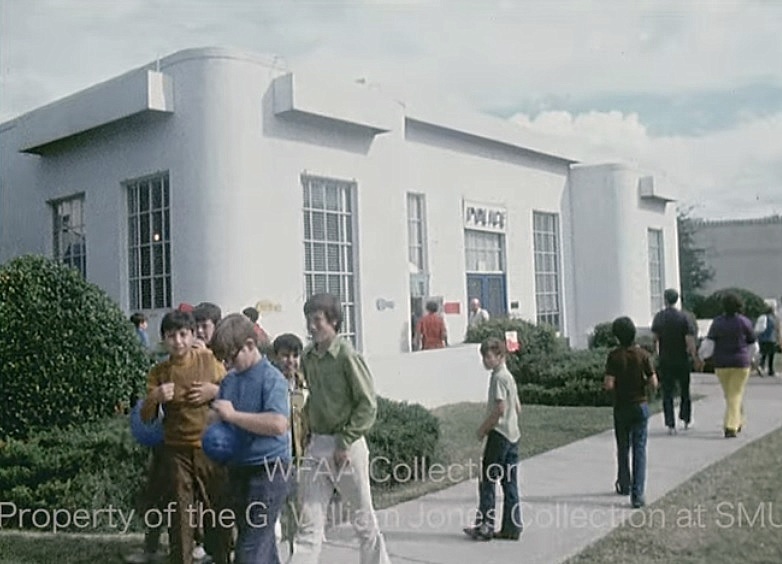
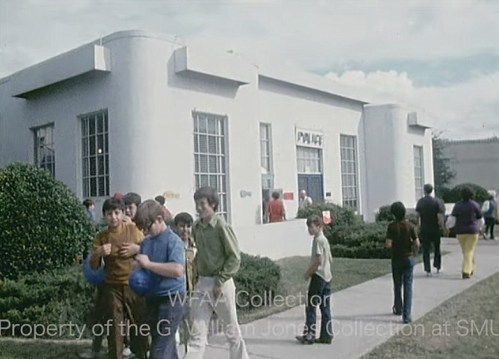
In footage from the State Fair of Texas, I was really taken by this building, which I swore I had never seen. It was the home of the “lost children” center during the fair, in the Dallas police HQ in Fair Park. It looks different to me now, but it’s still there, near the Aquarium. It looked better in 1971!

Lots of footage of crying children and harried parents, here and here.
fair-park_sfot_lost-kids_101471_WFAA_SMU

*

OCTOBER 1971

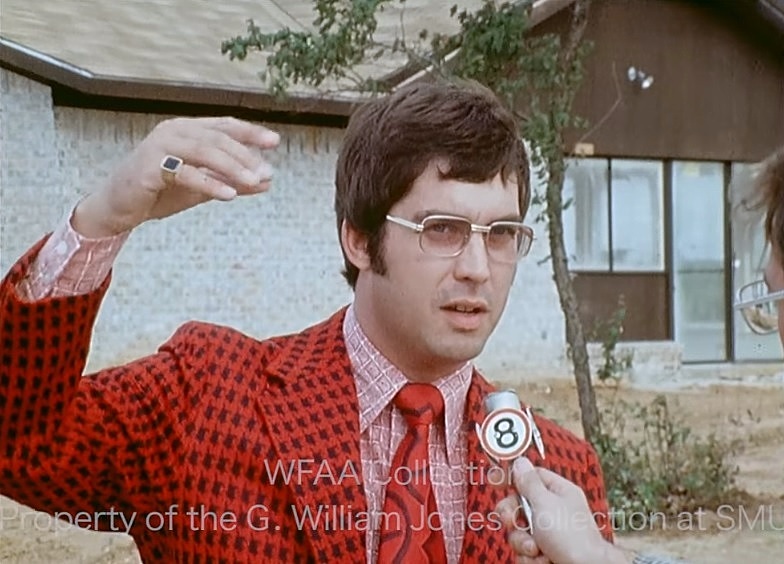
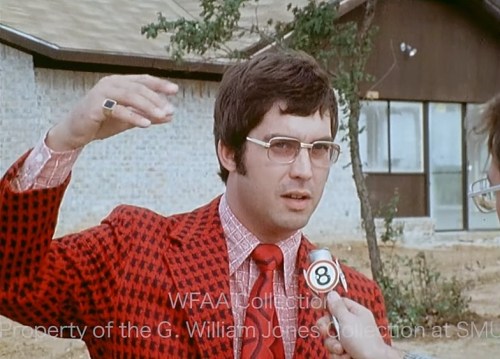
This young dandy is named John Ott (I’m not 100% sure about the spelling). He was a real estate developer in Euless. He couldn’t have been more on top of the 1971 fashion wave. Represent, Euless!

It’s a story about replanting trees (with, admittedly, interesting footage of trees being uprooted and replanted). Here and here.
developer_john-ott_euless_oct-29-30-1971_WFAA_SMU

*

OCTOBER 31, 1971

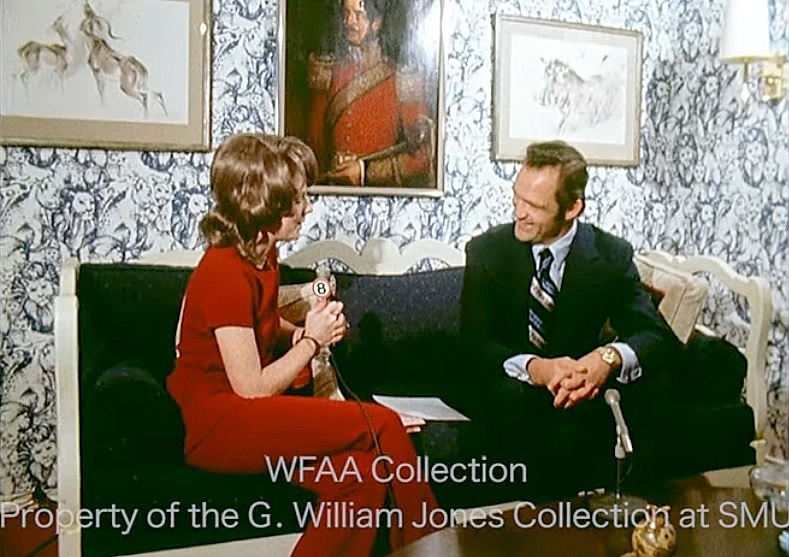
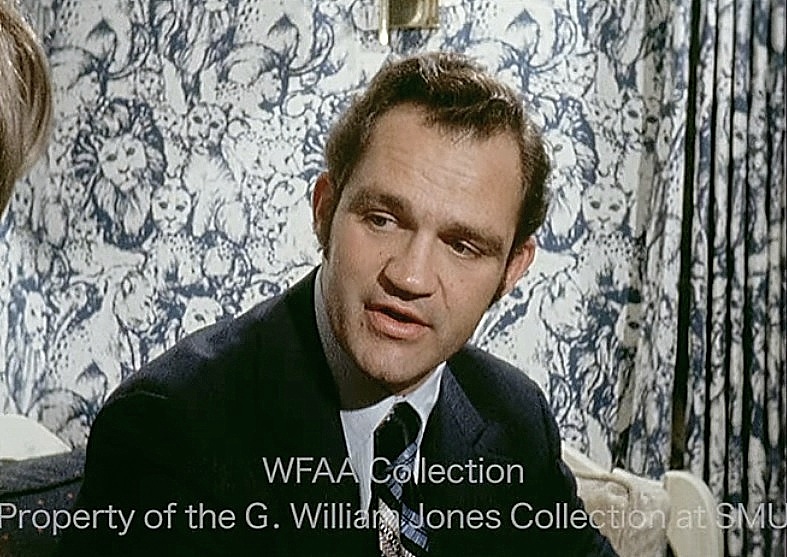
In the screenshots below, Channel 8 reporter Judi Hanna (who had recently debuted an unfortunate hairdo) interviews Dallas City Councilman Garry Weber about City Council things. I don’t know where this was filmed, but I only hope it wasn’t his home. It’s hard to focus on what anyone is saying, because of the tidal wave of stuff coming at you. (Ironically, he was being interviewed about sponsoring a change to the city charter in order to crack down on the “visual pollution” of unenforced sign ordinances.) I was so overwhelmed by this vista, that I somehow assumed I was seeing cupid-studded wallpaper. But no. Check out the second screenshot, which also includes a peek at the room’s drapes. I can’t tell where the wallpaper ends and the drapes begin.

Appropriately shown on Halloween night, clips from this report are here (followed by footage of signs-galore along Lemmon Avenue) and here.

weber-garry_WFAA_SMU_oct-31-1971_wide

weber-garry_WFAA_SMU_oct-31-1971_drapes

*

OCTOBER 1971

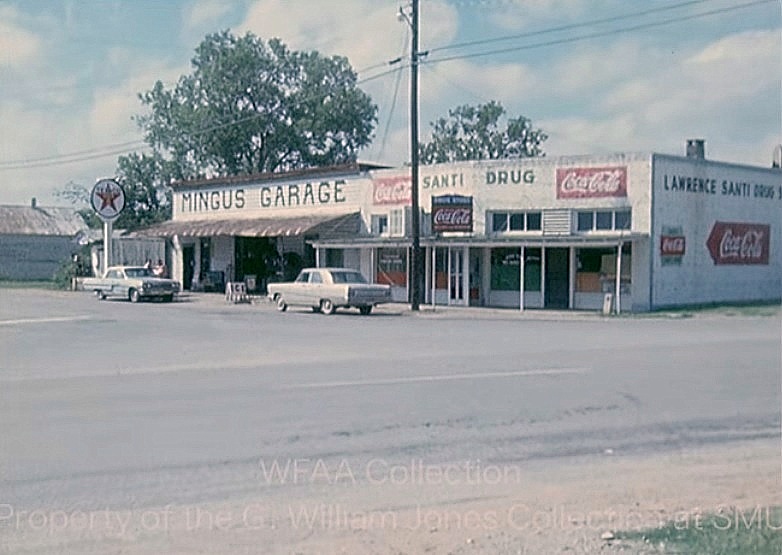
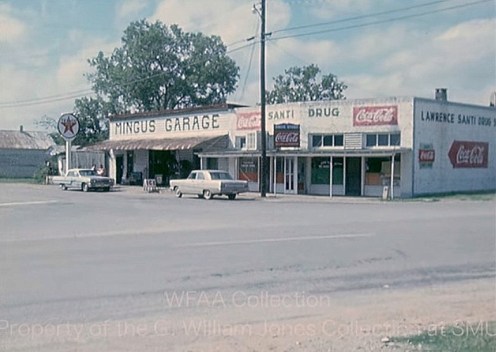
Lastly, a shot of Mingus, Texas, a small West Texas town near Thurber. I just love this image. I think I found the location — here’s what it looks like now.

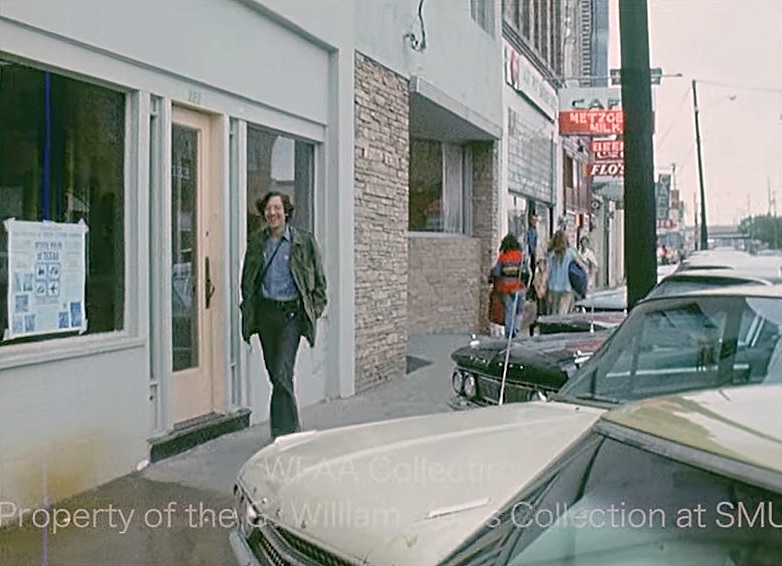
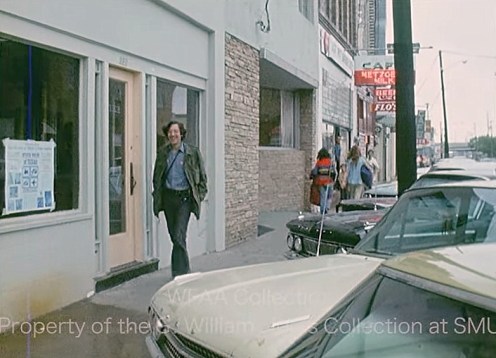
Why was the tiny town of MIngus being featured on a Dallas news report? The Greater Mingus-Thurber Metropolitan Area was in the news because it was the location of a commune of the controversial Children of God (i.e. “cult”). Actually, the “Children” were in the process of being evicted by the landowner, who, interestingly, was a TV preacher in Los Angeles (I guess even TV evangelists have a breaking point). Members of this group splintered, and a few moved to Big D for a while, where they continued to be newsworthy until they moved elsewhere.

The shot of Mingus is from one of the many clips contained in this Oct. 7 package, here (it is specifically at the 1:08 mark). Below that is a shot from a week later, after some of the self-described “Jesus Freaks” had landed in Dallas — a group member is seen walking through Exposition Park to their new HQ, at 639½ Exposition — it and other CoG footage from Oct. 14, 1971 is here (this specific shot is seen at the 17:18 mark). (If you are considering a documentary on the Children of God, there’s lots of footage for you in the WFAA archives at SMU.)
mingus_WFAA_SMU_100771

children-of-god_expo-park_WFAA_SMU_oct-14-1971

*

AUGUST 1971

This is a bonus.

As I worked my way through 1971, there was one truly amazing story. It involved the kidnapping of a toddler in Fort Worth. On Aug. 25, 1971, 21-month-old Melissa Suzanne Highsmith disappeared. Her 22-year-old mother, Alta, had hired a new babysitter, who was supposed to watch her for the day while Alta was at work. The babysitter picked Melissa up in the morning as planned, but she never returned the child. The babysitter and Melissa disappeared without a trace. There were no leads in the case for years. …And YEARS.

In 2022, the Highsmith family learned of an online DNA match, which would indicate they had found Melissa. Eventually, it was determined that a 50-something-year-old woman named “Melanie” was actually the long-missing Melissa. The woman who kidnapped her raised her as her own daughter, and Melissa never suspected she wasn’t the woman’s child (although she says she never felt really “connected” to her).

Melissa (she now uses “Melissa” again) was reunited with her family at the end of 2022. One report I read said that she grew up only 10 minutes from the Fort Worth apartment her mother lived in. Despite the Highsmith family’s 51 years of loss, grief, worry, and suffering, there has ultimately been a happy ending!

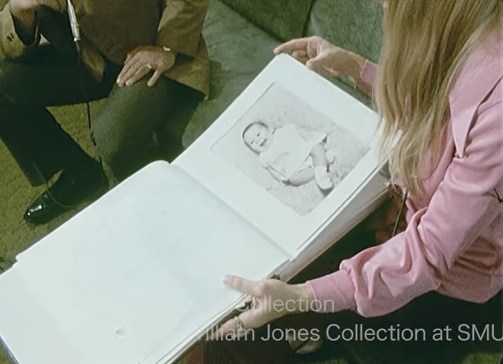
In the screenshot below from an Aug. 26, 1971 Channel 8 story, Alta Highsmith shows a photo of her missing daughter to the camera. The report is here.
kidnapping_highsmith_WFAA_SMU_aug-26-1971

**

If you managed to get all the way through this, you deserve an award! This might be the longest thing I’ve written all year! I’m more than ready for my 1971 Jeopardy challenge (Dallas edition)!

***

Sources & Notes

All screenshots are from news film in the WFAA Collection, held by the G. William Jones Film & Video Collection, Hamon Arts Library, SMU. Clips are posted regularly from this Channel 8 collection on YouTube, here.

My previous collection of WFAA screenshots can be found in the post “No-Context Channel 8 Screenshots: 1970-1971.”

lady mailman june 1971 WFAA_sm

*

Copyright © 2023 Paula Bosse. All Rights Reserved.

Season’s Greetings from Dallas’ Most Stylish Banks

ad-xmas_mercantile_dallas-mag_dec-1956

by Paula Bosse

Wishing you the happiest of holiday wishes!

–Paula

ad-xmas_republic-natl-bank_dallas-mag_dec-1955

***

Sources & Notes

Both ads are from Dallas magazine, a publication of the Dallas Chamber of Commerce; the Mercantile National Bank ad appeared in the December 1956 issue, and the Republic National Bank of Dallas ad appeared in the December 1955 issue.

Many, many more Christmas posts from Flashback Dallas can be found here.

ad-xmas_mercantile_dallas-mag_dec-1956_det_sm

*

Copyright © 2023 Paula Bosse. All Rights Reserved.