Flashback : Dallas

A Miscellany: History, Ads, Pop Culture

Tag: Historic Dallas

From the Vault: Cowboy Boots, Y’all!


olsen-stelzer-box_smallThe pride of Henrietta….

by Paula Bosse

I was pretty excited when I came across this box recently — my aunt had been using it to store Christmas decorations in. Don’t know what happened to the boots. I love vintage cowboy boots, and Olsen-Stelzer is something of a legend in  Texas boot companies (and still going strong!). My mother’s side of the family has roots in the Henrietta area, so I’m sure my aunt bought a pair of boots 60-some-odd years ago while visiting relatives. Read more about this company (and see some cool ads) (…there IS a Dallas connection…) in my post from 2014, “Olsen-Stelzer Boot Saleslady — 1939,” here.

*

Copyright © 2016 Paula Bosse. All Rights Reserved.

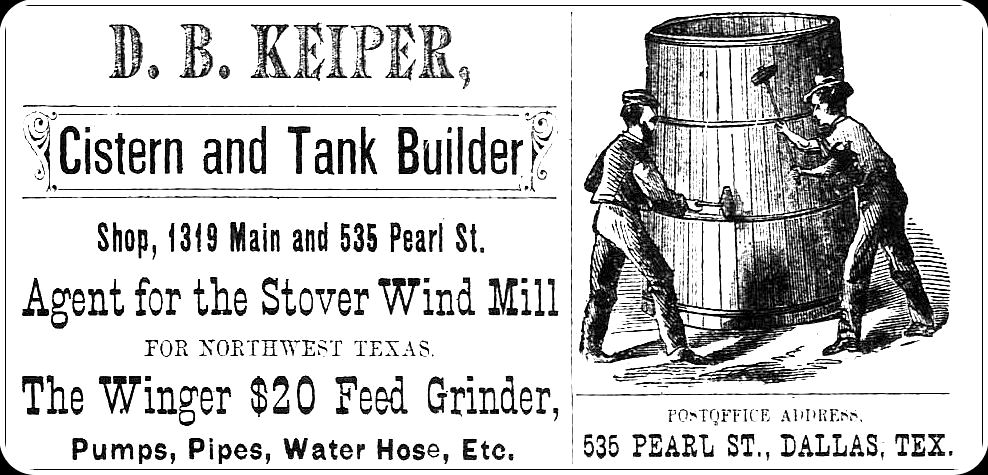
D. B. Keiper, Cistern and Tank Builder

ad-keiper_cisterns_directory_1884Ad from the 1884 Dallas directory

by Paula Bosse

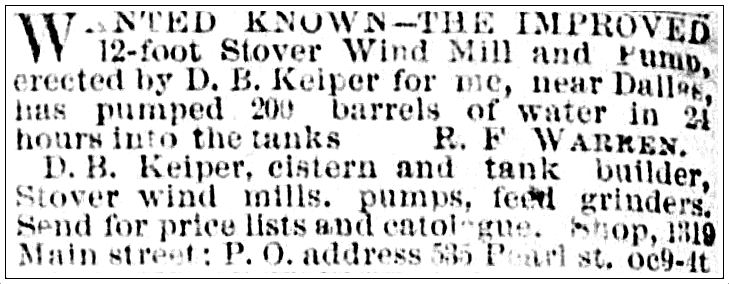
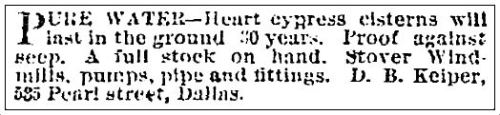
For all your cistern and tank needs, D. B. Keiper’s your man.

keiper_dallas-herald_061881Dallas Herald, June 18, 1881

keiper_dallas-herald_101384Dallas Herald, Oct. 13, 1884

keiper_dallas-herald_120484Dallas Herald, Dec. 4, 1884

keiper_dmn_091586Dallas Morning News, Sept. 15, 1886

keiper_dmn_093088DMN, Sept. 30, 1888

keiper_dmn-121391DMN, Dec. 13, 1891

***

Top ad from the 1884 Dallas directory.

I didn’t find out much about the Pennsylvania-born David Butz Keiper (1827-1895), except that he bought a lot of lumber, sold a lot of cisterns and tanks, and took out a huge number of newspaper ads over the years.

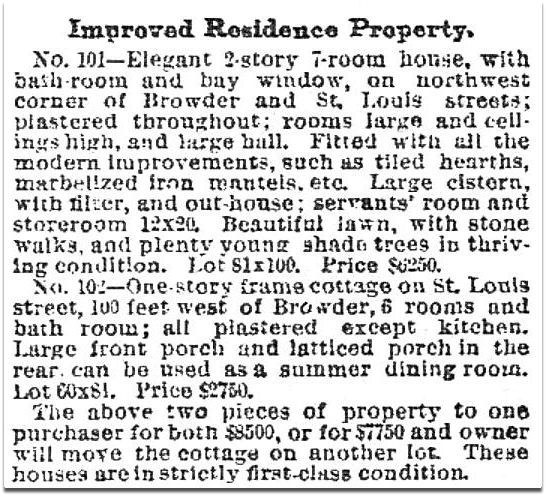
One wonders if he might have built and installed the underground cistern of the Rosenfield house I wrote about in “The Blue House of Browder,” which was built around 1885 — this “for sale” ad appeared in 1887, when Keiper seemed to be Dallas’ king of cisterns:

1887_browder_dmn_050887-FOR-SALEDMN, May 8, 1887

Keiper specialized in underground wooden cisterns (made from cypress lumber) to hold collected rainwater, but there were many different types of cisterns in use around Texas in the nineteenth century. Mark H. Denton wrote an interesting article, “Cisterns in Texas,” for Current Archeology in Texas (April 2011), with illustrations but with little on wooden cisterns; read Denton’s article here (scroll to bottom of p. 4 of the PDF).

Image too small? Click it!

*

Copyright © 2016 Paula Bosse. All Rights Reserved.

The Blue House on Browder

blue-house_homewardboundinc_2000
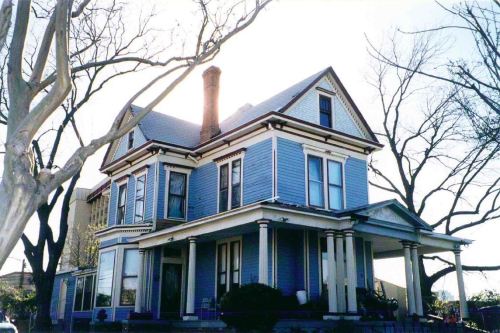
The Rosenfield house, in about 2000 (photo courtesy Homeward Bound, Inc.)

by Paula Bosse

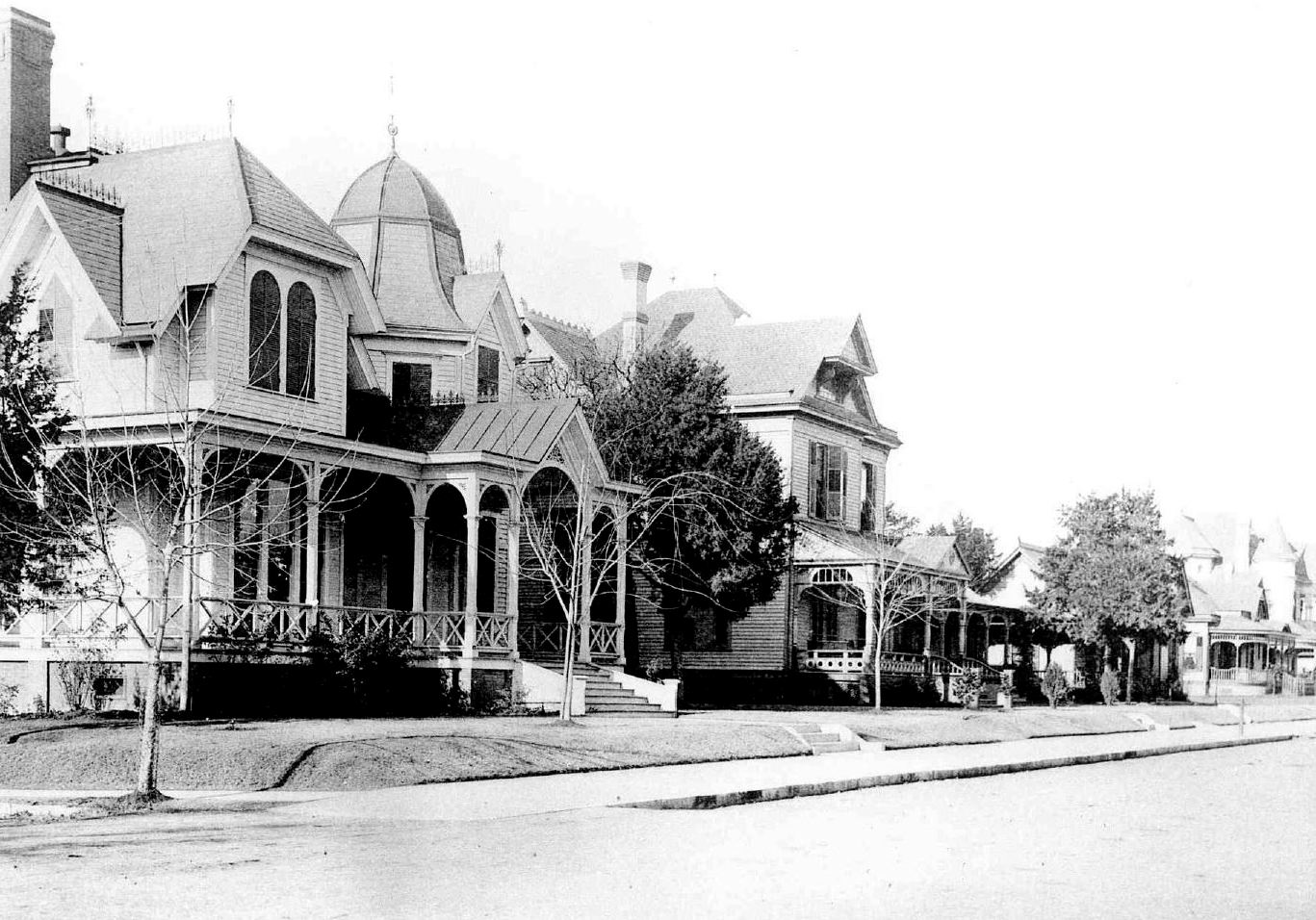
Perhaps you’ve been following the recent brouhaha over the plans to demolish one of the last remaining 19th-century residences in the Cedars area, south of downtown — Robert Wilonsky of The Dallas Morning News has been covering the story here and here and here. The house is in terrible disrepair, but it has the beautiful details of the period, and it’s obvious that it was once a lovely house in a well-to-do neighborhood. Preservation Dallas posted this in-better-days photo on their Facebook page:
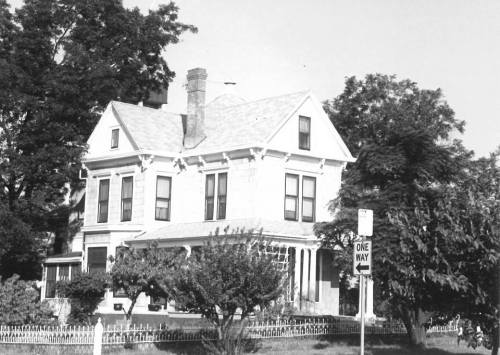
browder-house_preservation-dallas-FB-page

I thought I’d see what I could find about the history of the house — mainly I wanted to see if I could find who built it and when.

The house currently has the address 1423 Griffin, but before highways were built and streets were moved around, its address was 1015 Browder. Dallas changed almost every address in 1911, so I checked Jim Wheat’s very helpful scan of that year’s directory which tells us both the new and the old addresses of houses and businesses and also shows what cross-streets those addresses are between.
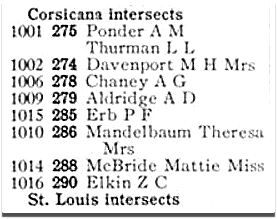
browder-house_1911-directory1911 directory, Browder Street

The original address of the Blue House was 285 Browder Street, between Corsicana and St. Louis. In 1911, P. F. Erb was living there.

Next, I checked the Sanborn maps. The earliest Sanborn map I could find which actually showed this part of Browder was the one from 1892. Here’s a detail showing the two-story frame house on the northwest corer of Browder and St. Louis, with Browder running horizontally along the top. The address is 285 Browder. (The house next to it is 169 St. Louis — more on that house later.)
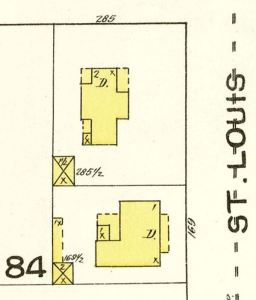
sanborn_1892_285-browder_nw-corner-st-louis_sanborn-1892_sheet-21

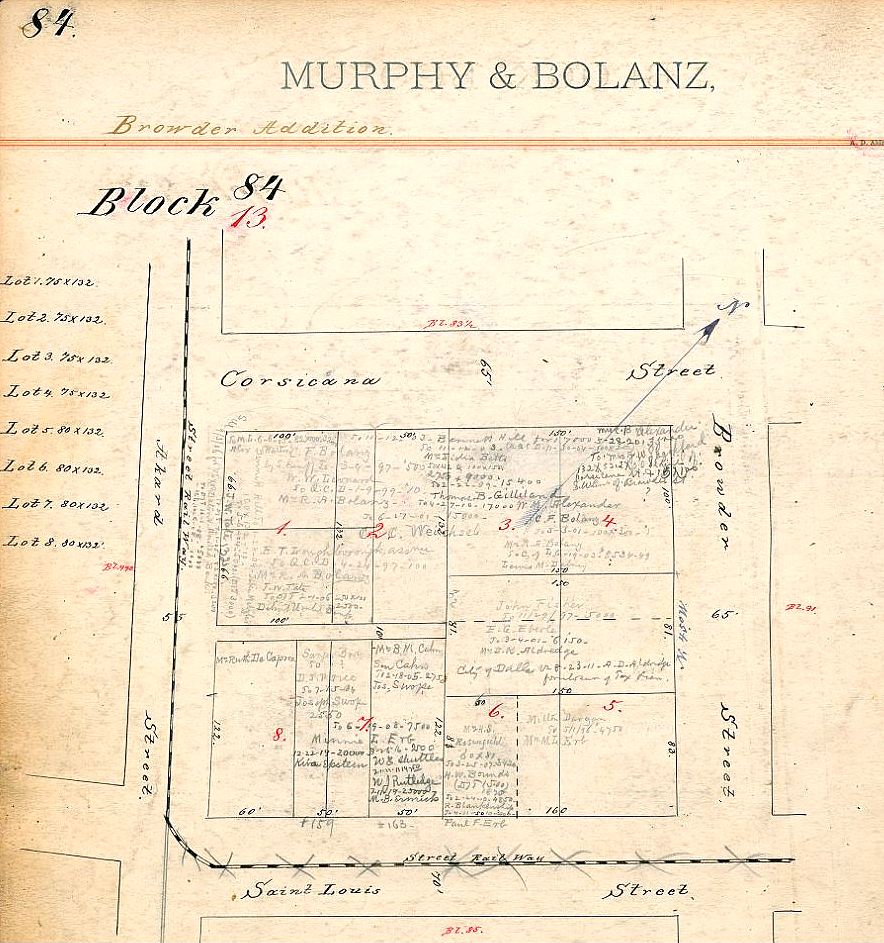
When you look at the full-page map this detail comes from (here), you’ll see larger numbers in the middle of the blocks. The block I’m interested in is block 84. Then I hopped over to the Murphy & Bolanz block book to see what I could find there. (I haven’t actually used this block book much, mostly because my old computer would not work with the plug-in required to view the pages, and it takes a while to figure out what you’re looking at.) When I clicked on “Block 84” in the index, I found this (click for larger image):
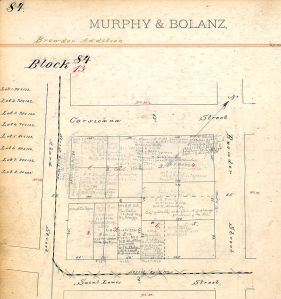
murphy-bolanz_block-13_block-84

Here’s the detail of the pertinent block:
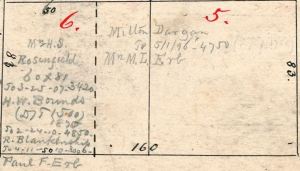
murphy-bolanz_det

The names and other assorted scrawls indicate title change (I think). This page was very helpful, because it told me that this block was originally part of Browder/Browder’s Addition, and it was originally classified as Block 13. The lot in question is Lot 5 (and probably Lot 6, because Erb’s name shows up under both. So now I had terms to search on.

And then it was just a tedious slog through the Dallas Herald archives (not to be confused with the Dallas Times Herald archives), the Dallas Morning News archives, and old city directories. Here’s what I found.

First mention of this particular parcel of land was in The Galveston News on March 24, 1883. P. S. Browder, a Browder family executor, transferred a lot of property — including the two lots I was interested in — to Mr. & Mrs. Nathan Godbold as part of a quitclaim deed (I’m probably not using the correct terminology here…). For one dollar.
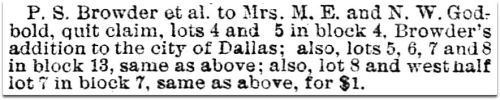
1883-march_browder_galveston-news_032483_QUIT-CLAIMGalveston News, Mar. 24, 1883

A few inches of print over, the record shows that Godbold immediately sold Lots 5 and 6 to Dallas real estate czar Charles Bolanz (misspelled below). For $1,000.

1883-march_browder_galveston-news_032483_to-bolanzGalveston News, Mar. 24, 1883

A few months later, in July, it was reported that Bolanz had sold the adjoining two lots to T. S. Holden, a young man who worked as a salesman for a wholesale grocery firm but seemed to be engaged in land speculation on the side. (It’s a little odd that Bolanz sold it so quickly for a $200 loss, but I’m sure there was probably more to the story.)

1883-july_browder_galveston-news_070283_HOLDENGalveston News, July 2, 1883

At some point, these two lots were sold to Max Rosenfield, another young man who was buying up land in the hopes that its value would increase. From Dallas Rediscovered by William L. McDonald:

“The year 1884 also saw the opening of a new housing subdivision by two Jewish real estate speculators, Gerson Meyer and Max Rosenfield. Their development, bounded by Akard, Corsicana, Browder, and St. Louis streets, was sold primarily to Jewish families who had begun to arrive as early as 1872 as part of the ‘Corsicana crowd’ — the terminal merchants who followed the construction of the H&TC.”

[I couldn’t find anything else about this block being a “sub-division,” but there definitely was a “Rosenfield & Meyer’s Addition” in East Dallas as early as 1886 — see the bottom of this post for more information on Gerson Meyer and the Murphy & Bolanz map of their East Dallas addition.]

In the 1886 city directory, Max Rosenfield is listed as residing at 1118 Browder, which may well have been an address that lasted for a very, very short time — Browder is a very short street, and I wonder if Rosenfield was renumbering addresses in his new development. It does appear to be Lot 5 of the block he and Meyer were developing, though. (Henrietta Rosenfield, widow of Jonas Rosenfield, was Max’s mother, and she lived with or near Max for several years.)

1886_rosenfield_1886-directory_1118-browder1886 Dallas directory

In early 1887, a For Sale ad appeared in the Herald — real estate agents Ducker  & Dudleigh were offering what appears to be Lots 5 and 6. By this time, houses had been built on both lots. (The  numbers 101 and 102 are confusing here, but the property being offered is the lot at the northwest corner of Browder and St. Louis and the lot adjoining it.) The price for the two-story house on Lot 5 was $6,250, which the Inflation Calculator adjusts to being about $166,000 in today’s money, taking into account inflation (but not taking into account Dallas’ outrageous real estate prices!).
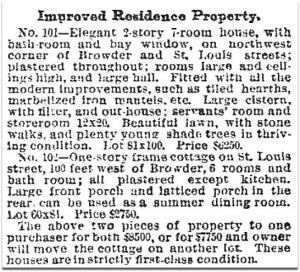
1887_browder_dmn_050887-FOR-SALEDMN, May 8, 1887 (click for larger image)

It doesn’t look like either property sold, because a few months later, the 1888 directory showed Max still living in the Lot 5 house facing Browder and mother Henrietta living in the Lot 6 house at 169 St. Louis.

1888_rosenfield_1888-directory1888 Dallas directory

Rosenfield placed a For Rent ad in the paper in Feb. of 1889, offering his corner house on Browder.
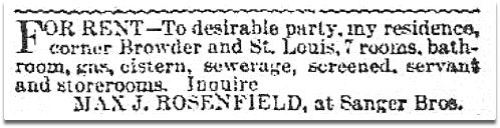
1889_rosenfield_dmn_021389DMN, Feb. 13, 1889

This appears to have been when businessman Milton Dargan moved in. He is listed as moving into the house at about this time in the addenda section of late changes for the 1889 directory (directories were usually compiled in the year before they were actually published).

1889_dargan_1889-addenda-listing1889 Dallas directory

In that same directory, Rosenfield had moved in with his mother in the adjoining property.

1889_rosenfield_1889-directory1889 Dallas directory

At some point Dargan bought the corner house. Henrietta continued to live in the St. Louis-facing house until about 1892, when she moved in with Max at his new home on Akard.

And, finally, the “285” address shows up in a directory, in 1891.

1891_dargan_1891-directory1891 Dallas directory

Paul F. Erb bought the Browder house from Dargan in 1896 (he also bought the adjoining Lot 6 house facing St. Louis in 1910).

1897_erb_1897-directory1897 Dallas directory

And we’re back to Paul Erb, seen in the 1911 directory listing old and new addresses at 1015/285 Browder.

browder-house_1911-directory1911 Dallas directory

Yay!

**

That was a long way to go to establish a chain of ownership. (I’m sure it would have been faster and easier to have consulted city records.)

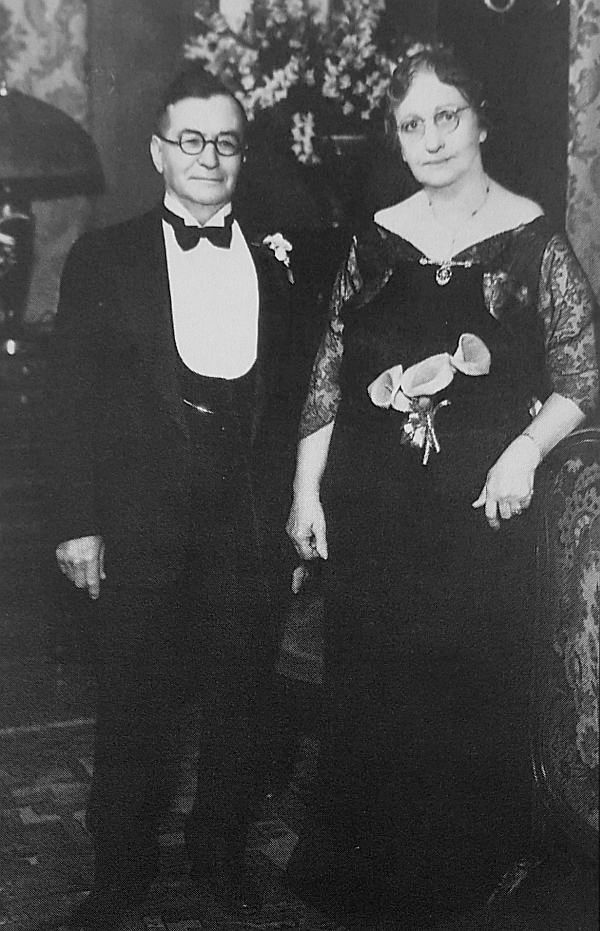
So. Without access to building permits, it looks as if Max Rosenfield (who, by the way, was the father of John Rosenfield — born Max John Rosenfield, Jr. — legendary arts critic for The Dallas Morning News) was the person who built the 130-year-old house now going through the process of probably being torn down soon. It appears to have been built in 1884 or 1885. In a 1935 Dallas Morning News article celebrating the 50th wedding anniversary of Mr. and Mrs. Max Rosenfield, the house is mentioned: “…their first home, a house built by Mr. Rosenfield and still standing on the northwest corner of Browder and St. Louis streets…” (see the article “Mr. and Mrs. M. J. Rosenfield To Observe 50th Anniversary,” DMN, Jan. 6, 1935).

Below is a photo of Max Rosenfield and his new bride, Jenny, probably taken the same year the house was built, 1885-ish, when Max was 26 years old.
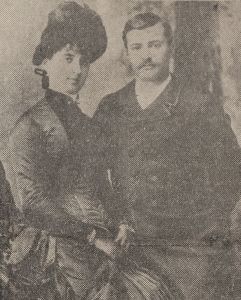
rosenfields_ca-1885_ancestry

Thank you for building such a pretty  house, Mr. Rosenfield. Maybe some magnanimous person with deep pockets can have it moved to a new location and restore it to its former loveliness.
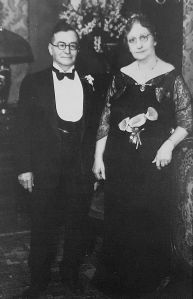
rosenfield-max_1935Mr. and Mrs. M. J. Rosenfield, on their 50th anniversary

**

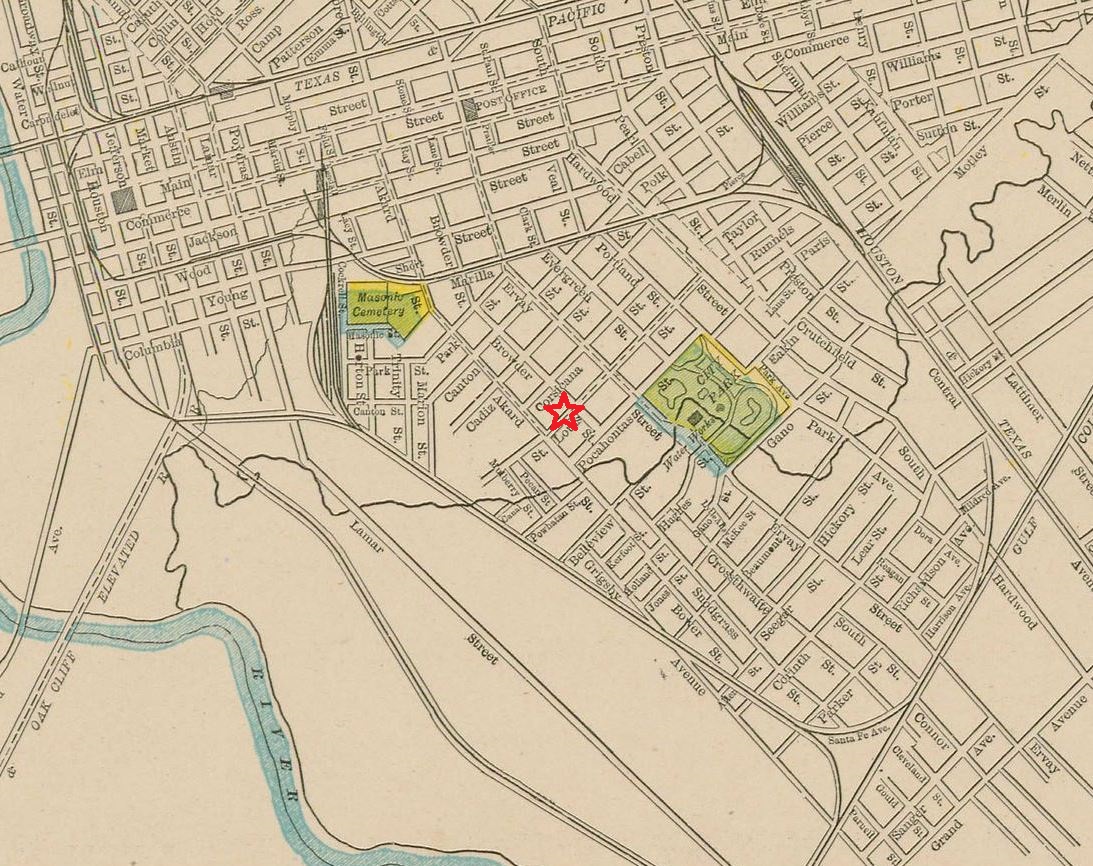
Here’s a detail of an 1893 map of the area, with the house in question marked.
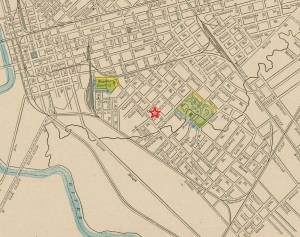
browder-house_1893-map

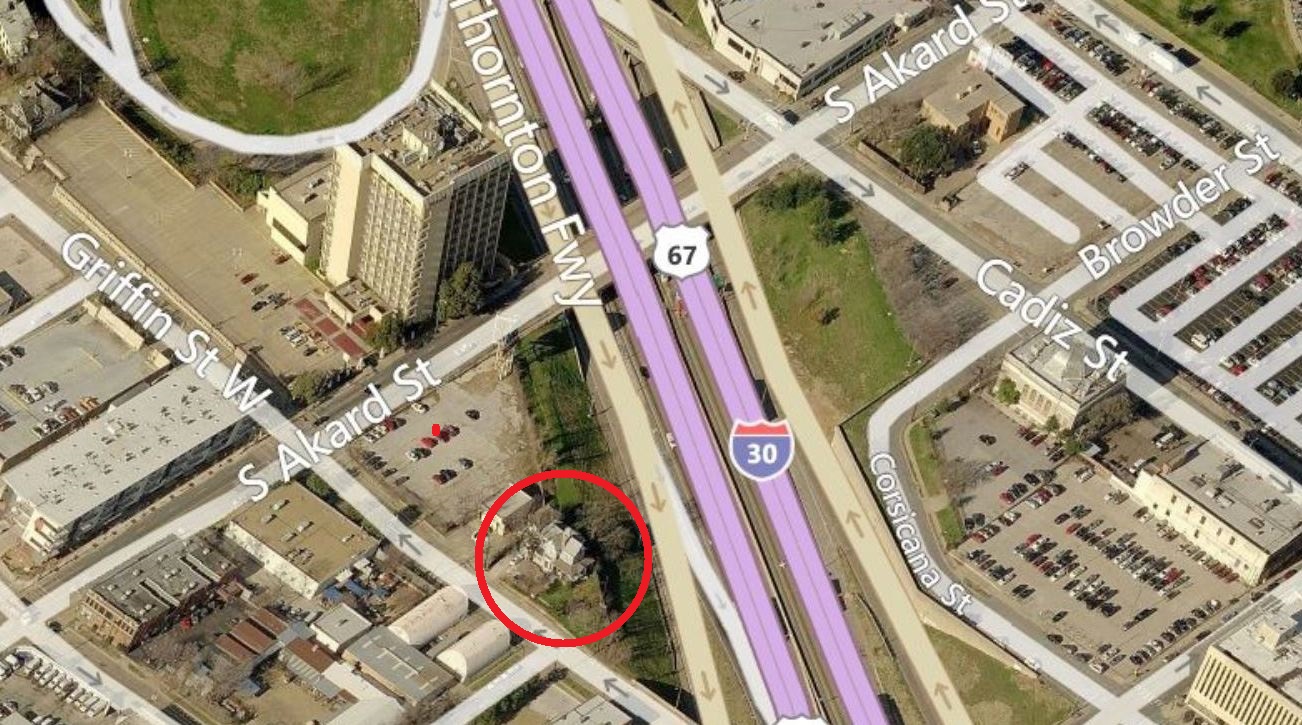
And here’s the lonely little house in its present hemmed-in location.
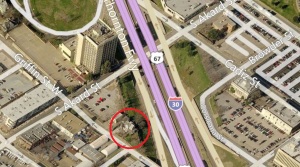
browder-house_bingBing Maps

***

Sources & Notes

Top photo, taken around 2000, from Homeward Bound, Inc., used with permission. Homeward Bound, Inc. took over the house in 1986 (and owned it until October, 2015) for use as Trinity Recovery Center, a substance abuse treatment center. The organization tried hard to save the house, but, according to Homeward Bound, Inc. Executive Director Douglas Denton, when they approached Dallas’ Landmark Commission in the 1990s, “they were not interested in the building.” Thanks to Mr. Denton for allowing me to use this photo, which shows the beauty of the old house better than any other photo of it that I’ve seen. He points to the photo below as an example of what this Cedars neighborhood once looked like. The caption for the photo in McDonald’s Dallas Rediscovered (p. 125): “Looking north toward downtown along Browder Street near the corner of Cadiz, 1895. These homes, built in the early 1890s, began to be razed in the late 1930s and early 1940s for parking space in the expanding business district.” (Photo: Dallas Public Libary)
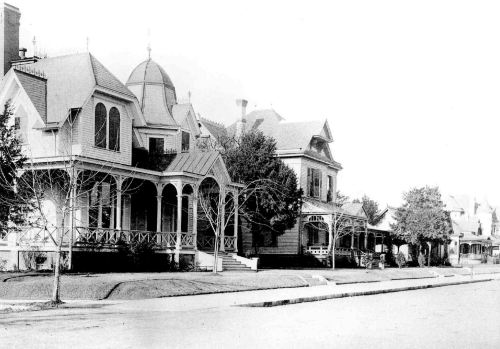
browder-near-cadiz_ca1895

This would have been about two blocks from the Rosenfield house. Imagine what that neighborhood once looked like!

Watch a news report on the outcry over the possible demolition of this house on the WFAA website, here.

The Dallas Morning News article on the 50th wedding anniversary of Mr. and Mrs. Max Rosenfield in which it is mentioned that Max built the house (“…their first home, a house built by Mr. Rosenfield and still standing on the northwest corner of Browder and St. Louis streets…”) is “Mr. and Mrs. M. J. Rosenfield To Observe 50th Anniversary” (DMN, Jan. 6, 1935).

Photo of the Rosenfields as a newly married couple found on Ancestry.com.

50th anniversary photo of Mr. and Mrs. Rosenfield is from the book John Rosenfield’s Dallas by Ronald L. Davis (Dallas: Three Forks Press, 2002).

All other sources as cited.

Max J. Rosenfield died in 1935 at the age of 76. His very interesting obituary (probably written by his son, John Rosenfield, amusements editor of The Dallas Morning News), can be found in the Dec. 2, 1935 edition of The News: “M. J. Rosenfield, Business Leader Many Years, Dies.”

It’s worth trying to figure out how to use the Murphy & Bolanz block books, courtesy of the Texas/Dallas History and Archives Division of the Dallas Public Library. Background on these very useful books can be found here.

If I’ve made any mistakes or have drawn any incorrect assumptions, please let me know!
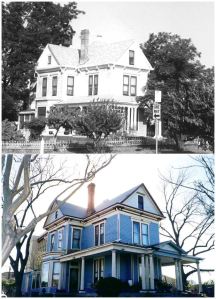
browder-house_then-now

*

UPDATE: Max Rosenfield developed a real estate partnership with Gerson Meyer, both of whom worked for Sanger Bros. department store. They bought and sold real estate (often to fellow Sanger’s employees), apparently as a lucrative side-business (Rosenfield even conducted his real estate transactions from his Sanger Bros. office). They apparently had acquired enough land by 1886 to have their own “addition” — “Rosenfield and Meyer’s Addition” in East Dallas. The earliest mention I found of it was this ad from May, 1886.

rosenfield-and-meyer-addition_dmn_052786DMN, May 27, 1886

Their addition was in East Dallas. Below, the map from the Murphy & Bolanz block book (click for larger image):
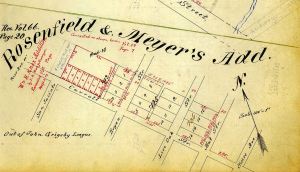
rosenfield-and-meyers-addition_murphy-bolanz

Gerson Meyer (a Jewish German immigrant, just a couple of years older than Rosenfield), moved to St. Paul, Minnesota in 1897 and continued working for several years in men’s clothing.

If something looks too small, click it!

*

Copyright © 2016 Paula Bosse. All Rights Reserved.


Ramon Adams: Violinist, Candy Manufacturer, Old West Expert

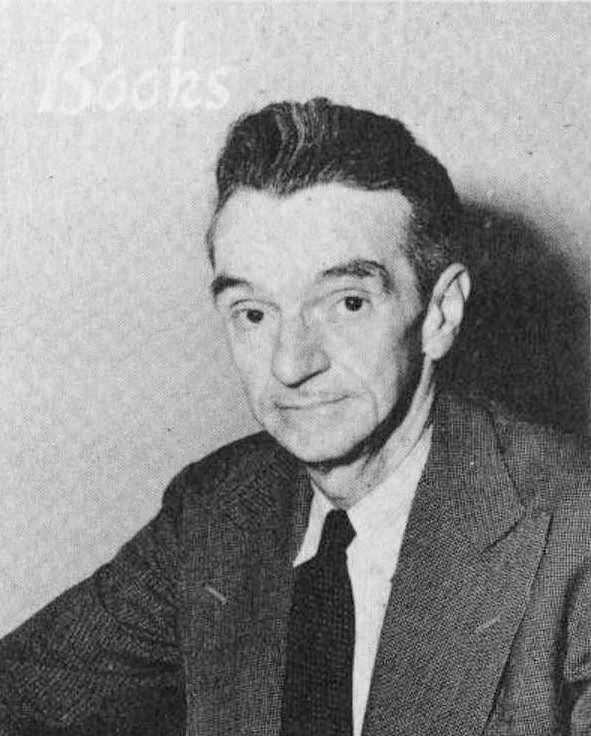
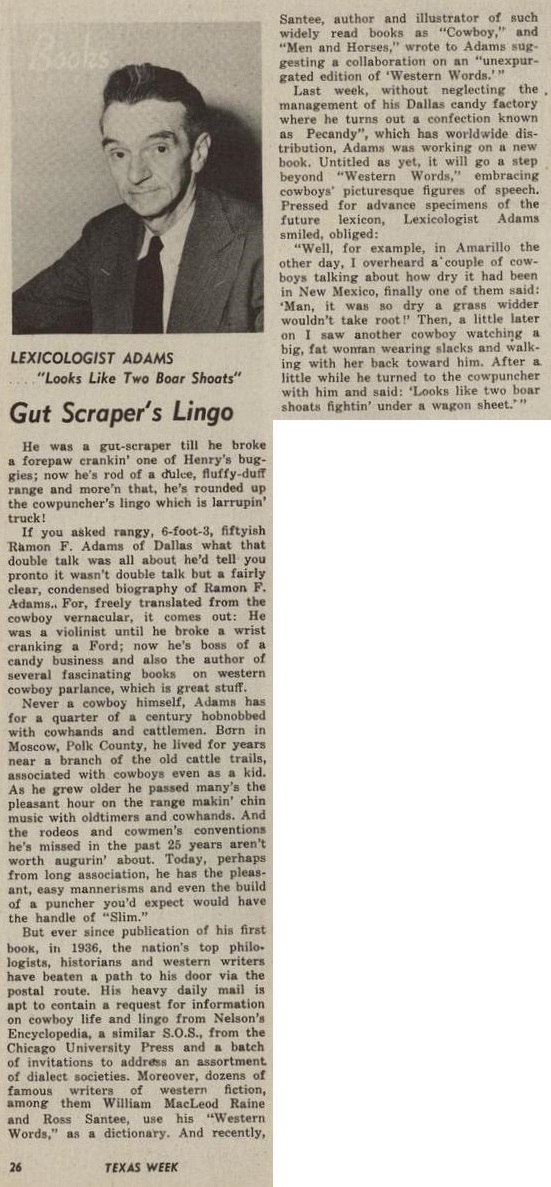
adams-ramon_texas-week-mag_090746_portal-photo_bwRamon F. Adams, 1946

by Paula Bosse

I’ve spent a fair amount of my adult life cataloging Texana books and ending descriptions with the bibliographic citations “Adams, HERD” or “Adams, SIX-GUNS.”* “Adams” was Ramon F. Adams, a respected and prolific writer and bibliographer specializing in the Old West and cowboy life. If you collect books on Texas and The West — or on cowboys and the cattle industry — you have Ramon Adams’ books on your shelves. And he lived in Dallas.

Ramon Adams was born in Moscow, Texas in 1889, near Houston, but left there as a young man to study and teach music. He was a professional violinist who played not only an occasional symphony gig, but after his years of teaching, he made a steady living playing in movie theater orchestras, accompanying silent films. While playing in the orchestra at the Rialto in Fort Worth, he even wore white tie and tails. When the Rialto musicians went on strike in 1923, he and his wife, Allie, moved to Dallas, and he played in the orchestras up and down theater row until the fateful day when he was cranking a stalled Model T Ford in an attempt to start it and broke his wrist. It never healed properly, and his days as a professional violinist came to an abrupt end.

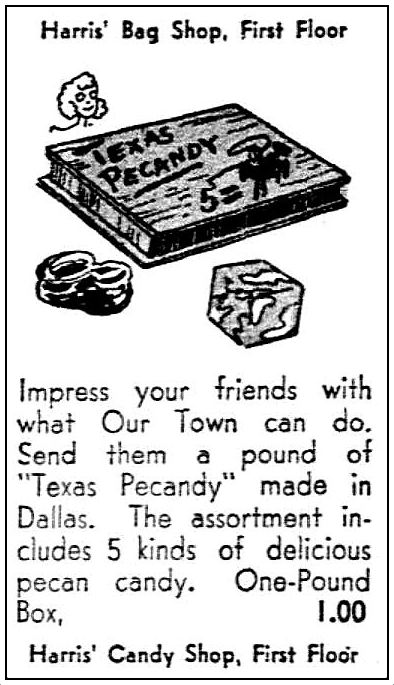
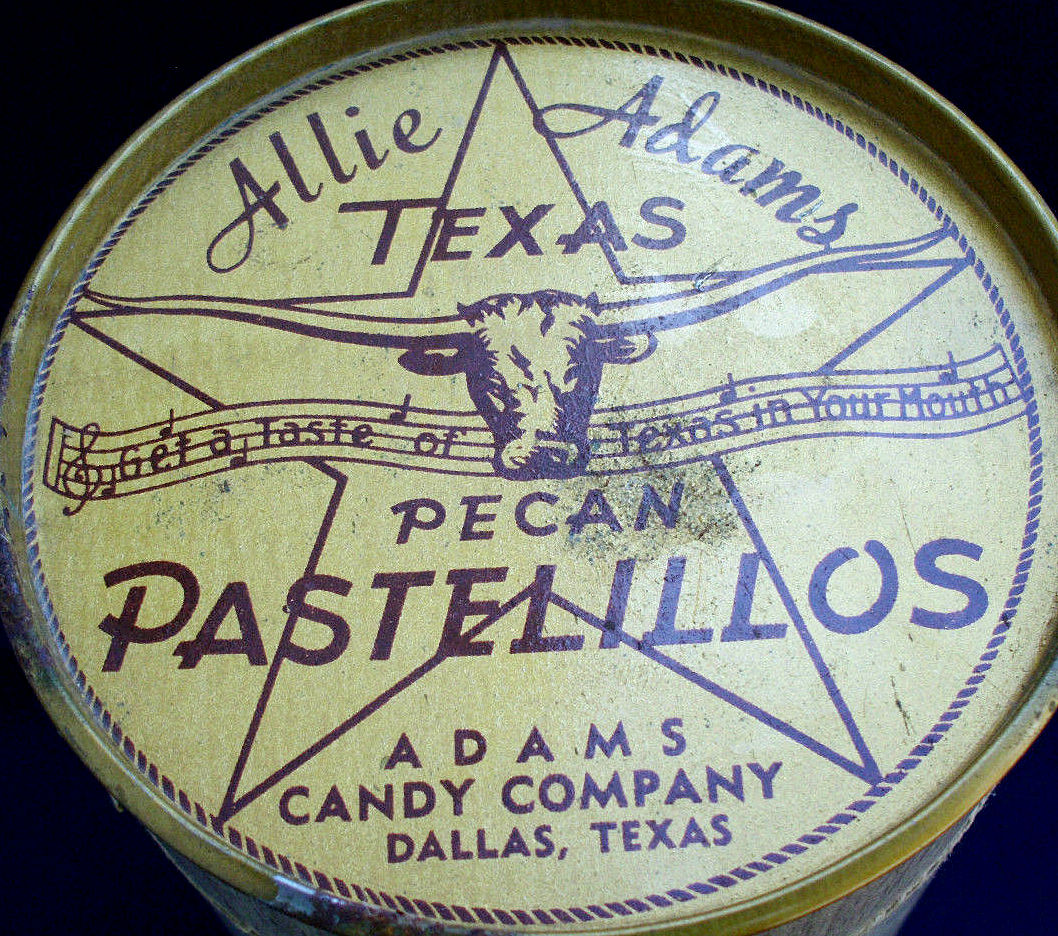
I never knew about his first career as a musician, and I never knew about his second career as a candy merchant! The Candy Years began when he and his wife bought a little candy store on Elm Street between the Melba and the Majestic, and it did such good business that, a few years later, he went into manufacturing and wholesaling candy. The Adams Candy Co. began its successful life in the 1930s, known for its widely available candies such as “Texas Pecandy” and for its “Burnt Offering” (“burnt almonds in chewy caramel and rich chocolate”), which was made specially for Neiman-Marcus.

pecandy_dmn_090940Sept. 1940

The runaway success of his candy business meant that when the Adamses sold the business in the mid-’50s (making, one assumes, a hefty profit) Ramon was able to devote his full attention to researching and writing about cowboy life and culture. He had been writing all along, in his spare time, but only in short bursts, usually at night, at the kitchen table. He had written several very long pieces for The Dallas Morning News in 1927 and 1928, but his first book, Cowboy Lingo, wasn’t published until 1936 — when he was 46 years old. And then the floodgates opened. When he died in 1976, his obituary noted that he had written 24 books — in addition to numerous articles for magazines and journals. He was the expert other experts consulted. And he lived in Dallas. And he made “Pecandy.”

**

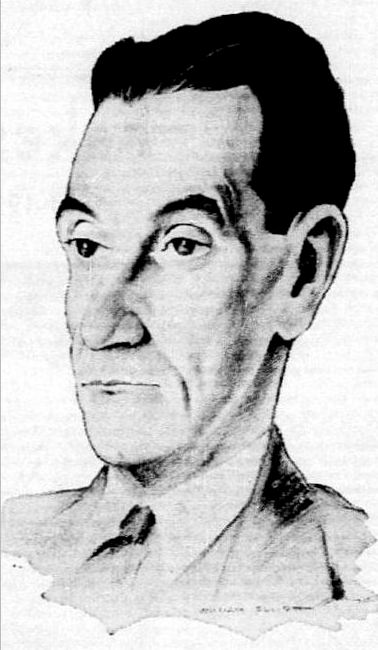
I love this 1936 caricature of Adams. (He looks an awful lot like Dr. Smith of Lost In Space here….)

adams-ramon_caricature_1936

A pleasant little article on Adams, no doubt written by one of his many journalist friends, from 1946 (click for larger image):

adams-ramon_texas-week-mag_090746_portalTexas Week magazine, Sept. 7, 1946

And…

ad-adams-candy-co“Get a taste of Texas in your mouth!”

***

Sources & Notes

The Handbook of Texas entry on Ramon F. Adams is here.

A more comprehensive Biographical Note is on the page devoted to the Ramon Adams Collection, Texas/Dallas History & Archives, Dallas Public Library, here.

* “Adams, HERD” and “Adams, SIX-GUNS” is short-hand used by catalogers of books on Western Americana when noting that the book being cataloged is referenced in Ramon F. Adams’ book The Rampaging Herd: A Bibliography of Books and Pamphlets on Men and Events in the Cattle Industry (Norman: Univ. Oklahoma, 1959) or his book Six-Guns and Saddle Leather, A Bibliography of Books and Pamphlets on Western Outlaws and Gunmen (Norman: Univ. of Oklahoma, 1954).

*

Copyright © 2016 Paula Bosse. All Rights Reserved.

From the Vault: E in Big D

elvis_big-d-jamboree-ad_dmn_090355September, 1955

by Paula Bosse

Hey! It’s Elvis’ birthday again! Check out this post from last year with some Big D Jamboree-related tidbits.

*

Copyright © 2016 Paula Bosse. All Rights Reserved.


The First Woman to Swim the Channel Helped Search the Trinity for Drowned Victims — 1927

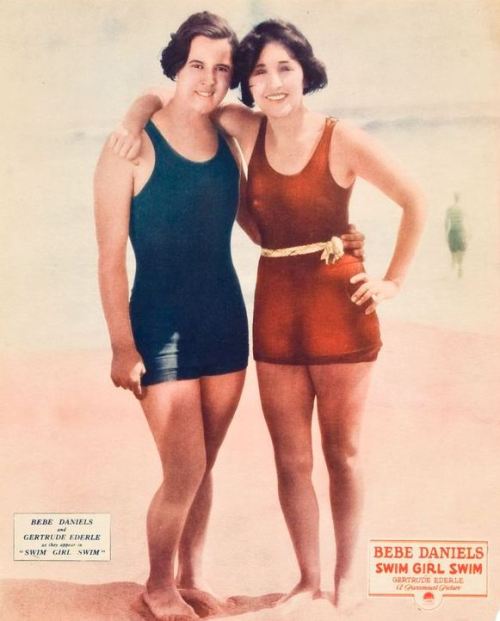
swim-girl-swim_haGertrude Ederle (l) with co-star, Dallas native Bebe Daniels / via HA.com
by Paula Bosse

In 1926, Gertrude Ederle, a 19-year-old American, became the first woman to swim the English Channel — her time of 14 hours and 39 minutes was the fastest time ever. She became an instant international celebrity. When she returned to New York, she was given the very first ticker-tape parade, and over two million people turned out to see her.

After this momentous achievement, Ederle turned for a while to entertainment. She made a cameo appearance in a (now lost) silent film called Swim, Girl, Swim (which, incidentally, starred two Dallas natives, Bebe Daniels and James Hall), and she also toured for a while with a vaudeville company.

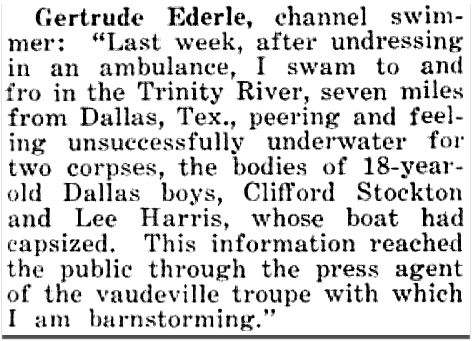
It was during one of these tours in April, 1927 that she arrived in Dallas, just as torrential rains began to fall. There was severe flooding along the West Fork of the Trinity, especially in the area of Record Crossing. The boat in which two young men were riding had capsized and they had been caught in the undertow and drowned. There had  been an unsuccessful search for their bodies, and I’m not sure who came up with the idea of contacting Miss Ederle, but someone did. Why NOT call in the world’s most famous swimmer to see if she could lend a hand while authorities dragged the river? Miss Ederle did, in fact, join in the underwater search, but the bodies were not found. I bet she never forgot that Dallas stop!

The news was reported in Time magazine:

trinity_bodies_time-mag_041827Time, April 18, 1927

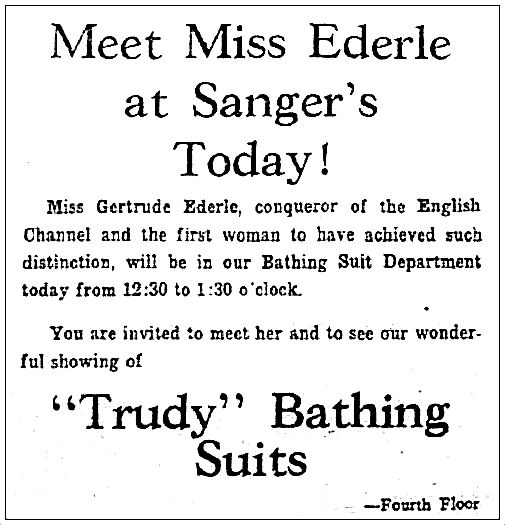
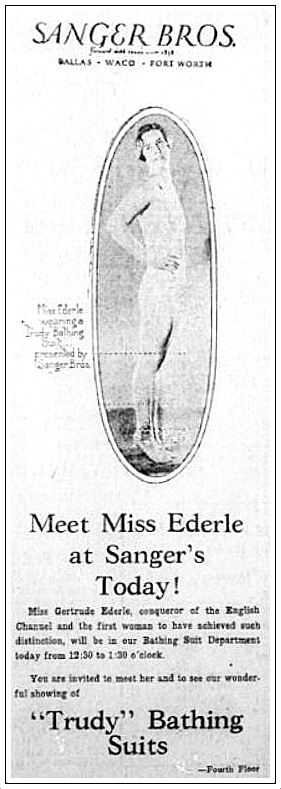
While in town, Trudy also squeezed in a personal appearance at Sanger Bros., hawking what looks to be her own line of swimsuits.

ederle_sangers_dmn_041427-det

ederle_sangers_dmn_041427Apr. 14, 1927

***

Sources & Notes

More on the Trinity River search can be found in The Dallas Morning News article “River Claims Two Victims; Gertrude Ederle Makes Vain Attempt to Recover Bodies” (DMN, April 5, 1927).

Newsreel footage of Gertrude Ederle can be seen here.

Photos of Ederle in action are here.

Ederle’s Wikipedia entry is here.

*

Copyright © 2016 Paula Bosse. All Rights Reserved.


The Forney Car

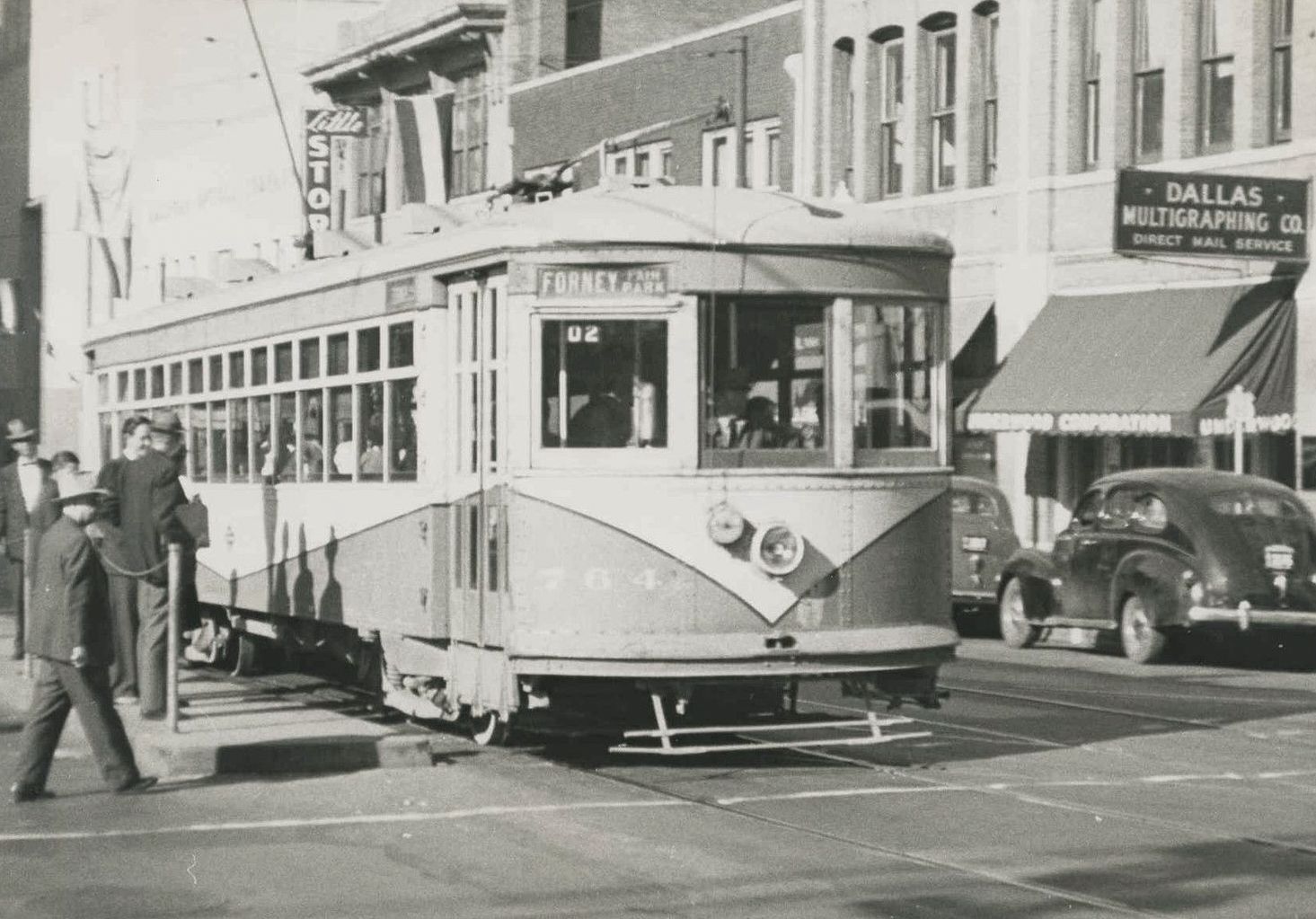
forney-fair-park-car_ebayEastbound on Commerce (click for larger image)

by Paula Bosse

I’m a sucker for streetcars. Here’s car 764 heading east on Commerce, between Prather and S. St. Paul.

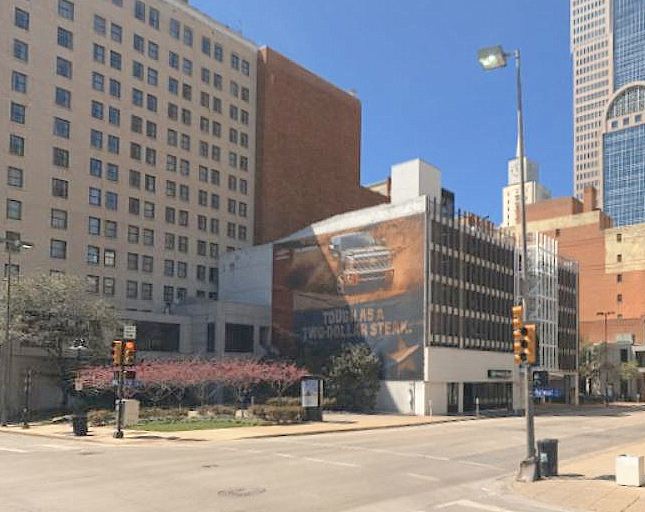
forney-car_1800-block-commerce_googleGoogle Maps

***

Photo from eBay.

The Underwood Corporation was at 1805-7 Commerce, and Dallas Multigraphics was at 1807 1/2 Commerce — they both moved to this location sometime between 1936 and 1943. This stretch of Commerce was once jam-packed with typewriter companies.

Forney Avenue ran along the northeastern side of Fair Park, about where Haskell does today, starting at Parry — if one continued along it past the city limits, one would reach the town of Forney. In 1922 Interurban track was laid between Dallas and Terrell, with the train entering Dallas along Forney Avenue, terminating at Union Station. The Forney streetcar and the Interurban traveled over the same tracks.

terrell-forney-ave_dmn_061621Dallas Morning News, June 16, 1921

forney-ave_1919-mapDetail of a map from 1919

For more on the Dallas-Forney-Terrell Interurban, check out the 1925 publication “Making Neighbors of the People of Dallas and Kaufman Counties and the Towns of Terrell, Forney, Mesquite and Dallas by the Opening of the Texas Interurban Railway” — the 16-page pamphlet has been scanned by the fine folks at UNT’s Portal to Texas History, and it can be accessed here.

Images larger when clicked.

*

Copyright © 2016 Paula Bosse. All Rights Reserved.

Elm & N. Harwood — ca. 1960

elm-harwood_ca-1960_dmn-tumblrIt’s 4:50 — where’s all the traffic? (click for larger image)

by Paula Bosse

A nice shot of the 1900 block of Elm Street, looking vastly more interesting in 1960 than it does now.

elm-harwood_bingBing StreetSide

***

Sources & Notes

Top photo by Hank Tenny.

Google Street View of this corner is here.

*

Copyright © 2016 Paula Bosse. All Rights Reserved.


“The Pause That Refreshes at the Texas Centennial” — 1936

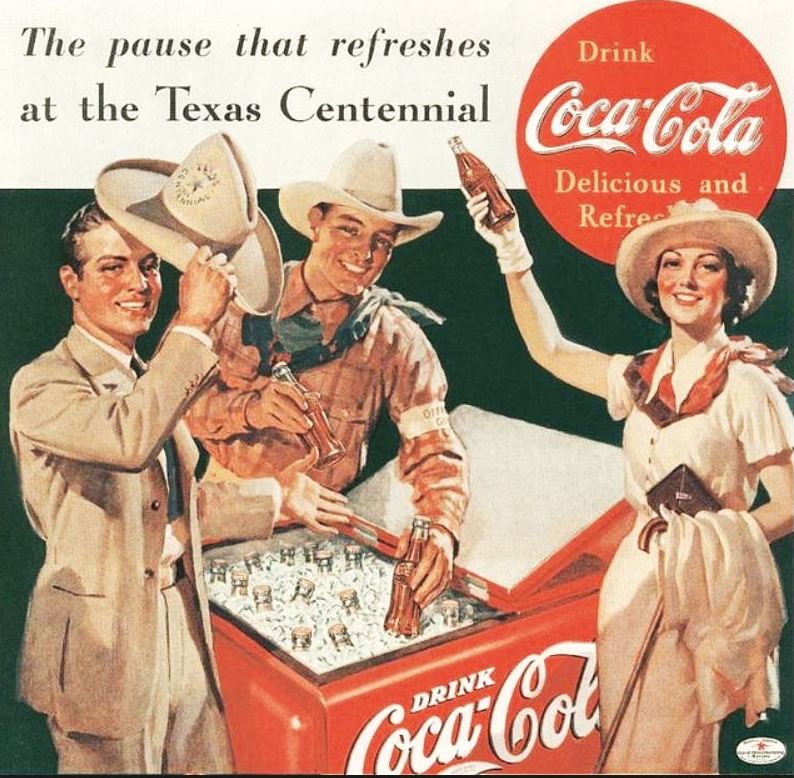
tx-centennial_coke-ad_pinterestBelly on up to the Coke cooler, pardner… (click for larger image)

by Paula Bosse

What do Stetson-wearing Texans enjoy drinking more than sarsaparilla? Coca-Cola, of course!

This ad led me to discover that the Coca-Cola Bottling Company of Dallas set up a working mini bottling plant in Fair Park during the Texas Centennial, costing a cool $60,000 and taking up 4,100 square feet of the Varied Industries Building. 100 bottles a minute were produced, destined for thirsty customers who bought the five-cent drinks there at the plant or at concession stands around the park. A photo accompanying a Dallas Morning News blurb about the mini bottling plant — which will be marked by a thirty-foot electric tower brought from the Century of Progress…” (DMN, Feb. 6, 1936), looked like the stunning Century of Progress photo seen here.

tx-centennial_coca-cola_ebay_1936

***

Top ad found on Pinterest; full ad found on eBay.

The “Varied Industries Building” apparently burned down in 1942 and was replaced in 1947 by the Automobile Building.

*

Copyright © 2016 Paula Bosse. All Rights Reserved.

Muriel Windham — An Oak Cliff Teenager’s 1940s Diary

muriel_colorMuriel, via Muriel Windham’s Diary

by Paula Bosse

About this time last year, Robert Wilonsky of The Dallas Morning News wrote an interesting article about a black-out imposed by the city of Dallas in January, 1942, just a few weeks after the attack on Pearl Harbor. In the middle of it, he linked to a diary entry written by a 14-year-old describing the event. For me, the most interesting thing about Wilonsky’s piece was the fact that someone had transcribed diary entries of a teenage girl growing up in Dallas in the 1940s. So I read the whole thing. And I loved it.

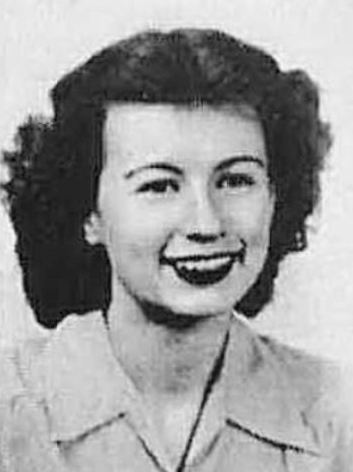
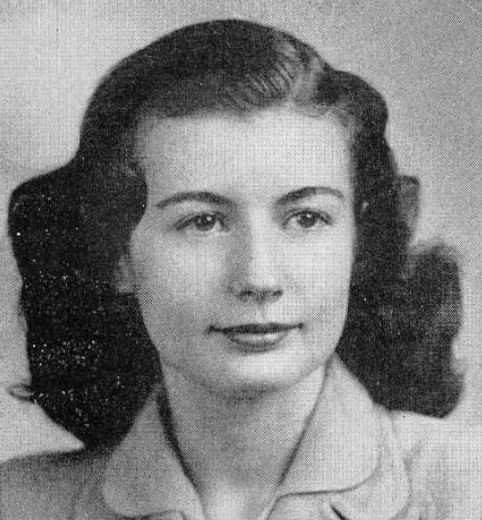
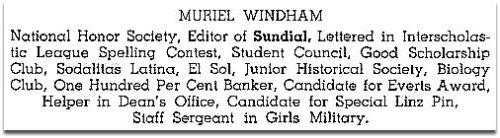
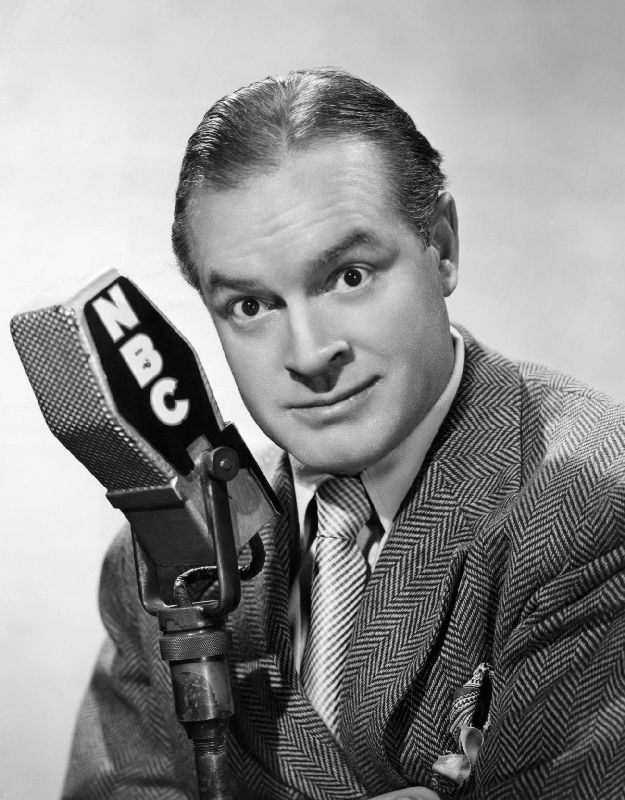
The teenager in question is Muriel Windham (1926-2005) who grew up in Oak Cliff and attended Peeler Elementary, Greiner Jr. High, and Sunset High School. She was a top student who was involved in lots of extracurricular activities, but her greatest joy was going to the movies and listening to comedians on the radio. She was absolutely obsessed — OBSESSED! — with Bob Hope. She attended SMU where she ultimately received a Master in English Literature degree and Master in Library Science degrees; she was head of the children’s department of the Dallas Public Library (as Muriel Brown) for many years and was a specialist in children’s literature. Somewhere in there she married G. W. Brown II and had three children.

But back to the diary. After her death in 2005, Muriel’s son David began transcribing his mother’s teenage diary — exactly as written, complete with misspellings and grammatical errors. It begins on January 1, 1940 (six weeks after she had turned 13) and ends in the summer of 1942. David Brown says he has years and years worth of her diaries — I hope he gets  back to transcribing them one day, because what’s on his blog now is utterly charming.

The diary is exactly like every other teenage girl’s diary. If you’re not of the female persuasion, you might not be able to handle the deep, deep plunge into teenybopperdom. It reads just like MY diary from when I was 13, except that my obsession wasn’t Bob Hope but a TV star from a 1970s TV show that might prove highly embarrassing were it to be revealed. If you have a low threshold for incessant mentions of Bob Hope by a moony adolescent or are not at all interested in entertainment of the early 1940s, this may not be for you. As I said, I loved it. I wish there were more Dallas-specific entries, because when those pop up, it’s pretty cool.

An introduction to the diary is here. The blog is written in reverse order — and it really should be read chronologically, so I suggest starting here at the very bottom and reading up the page; when it’s time for the next page, scroll down to the bottom and click  “Next Entries.” (You’ll get used to it.) There are 8 pages, and each entry is very short. It’s the perfect sort of thing to read when you stay in on a cold weekend. …But I’m not going to sugar-coat it: there is a LOT of Bob Hope to slog through! You’ve been warned!

**

muriel-windham_sunset-high-school_1943Muriel, 1943

muriel-windham_sunset-high-school_1944Muriel, 1944 — editor of the Sunset yearbook

muriel-windham_sunset-high-school_1944-clubsSenior, over-achiever — 1944 yearbook

***

Sources & Notes

Black and white photos are from the Sunset High School yearbook, the Sundial.

Muriel Windham Brown’s obituary can be read here.

Muriel does actually get to meet Bob Hope once or twice, but the diary entries stopped before a pretty incredible meeting on April 22, 1943 at a benefit to sell war bonds at the Dallas Country Club. There was even a short article in The Dallas Morning News which chronicled what must have been the biggest moment in her 16 years: “Hope Thrills Girl As He Sells Bonds” (DMN, April 23, 1943). A couple of sentences from the article:

In the hustle and bustle of his bond sale at Dallas Country Club Wednesday afternoon a pretty, young girl shyly stepped up to Hope and caused him to sink to his knees in a swoon as she whispered she would pay $10,000 for his autograph. […] Hope treated her beautifully. He sat her down on the platform, left the mike occasionally to dash over, feel her pulse, stroke her brow and leave a light kiss on her forehead. (DMN, April 23, 1943)

I can’t even imagine how stunned Muriel must have been! (Her father worked as an executive, mostly in insurance and banking, and I have a feeling that the $10,000 check came from his employer, not his own bank account.)

Muriel’s family lived at 817 Brooks. No movie theater was all that far away by streetcar.

muriel_817-brooksGoogle Maps

A few more photos as she made her way through Sunset and SMU are here.

And, well, I kind of feel I have to….

bob-hope

*

Copyright © 2016 Paula Bosse. All Rights Reserved.