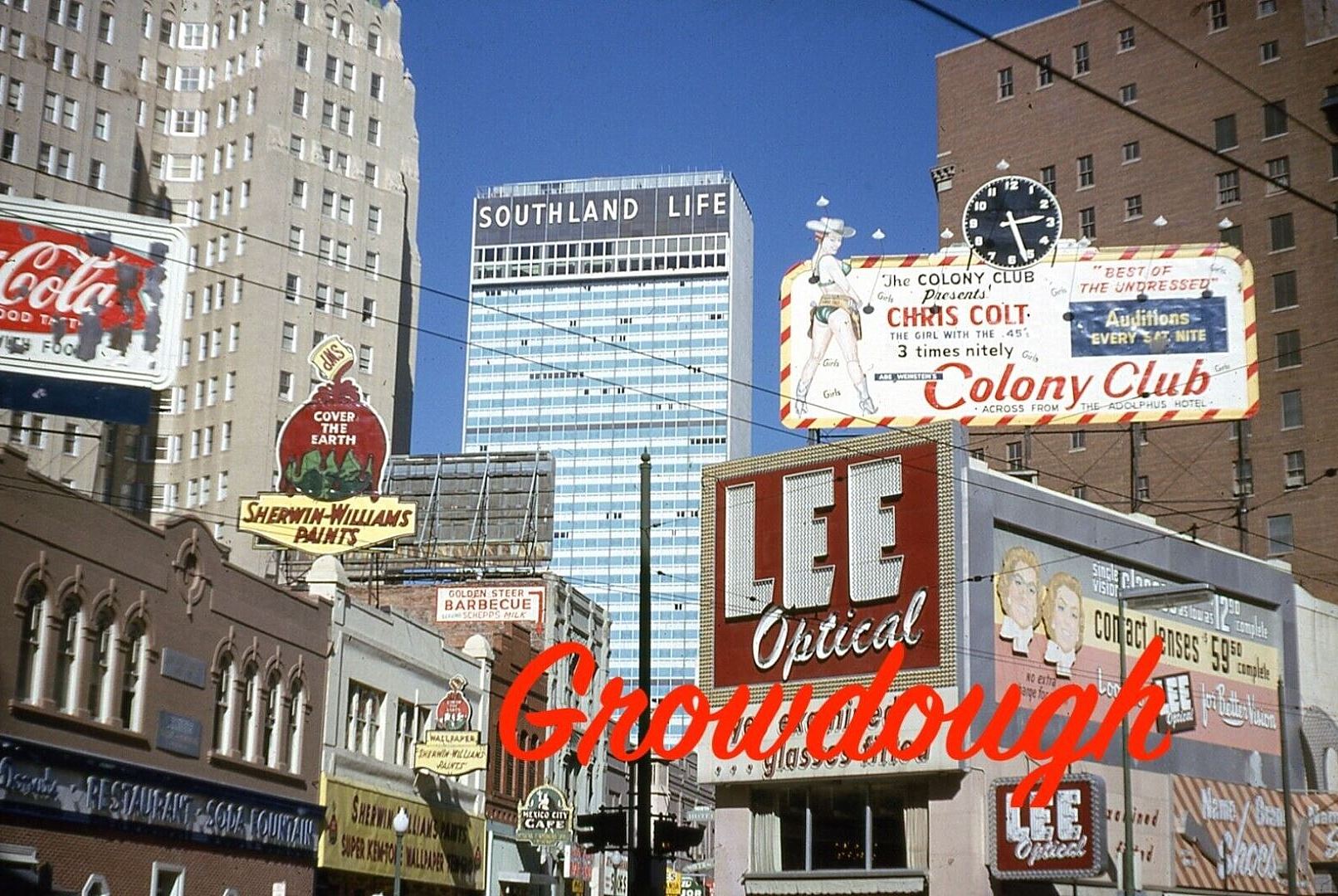
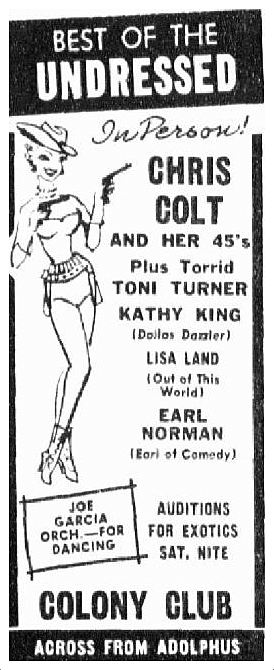
If only for the great, great, great Colony Club (“the best of the undressed”) billboard featuring Chris Colt (“the girl with the 45s”).
See this same view of the (one-time) intersection of Elm, Ervay, and Live Oak here and here. (The dazzling animated neon Coca-Cola sign was once where Chris Colt is showing off her 45s.)
I almost never post images with watermarks, but this photo is pretty spectacular. Look around the watermark!
I don’t know the seller of this color slide. I have no affiliation with the person. I get no cut in any sale. But I want someone reading this to BUY IT! Let’s keep this with someone who loves Dallas history! (And if you DO buy it and would like to send me a digital copy… well, I wouldn’t say no!) See this slide currently on eBay HERE. (HURRY!)
To see a naughty photo of Chris Colt, you can click on an antique collectors’ website here.
Colony Club ad, Nov. 22, 1962
And below is a photo of Colony Club owner Abe Weinstein in his younger years counting his moolah.
photo: Dallas Jewish Historical Society
***
Sources & Notes
Top image is from a color slide in a current eBay listing here. (Seller’s title: “Original Slide Dallas St Scene Colony Club Coca Cola Billboards Southland Life.”) There is no date, but Golden Steer Barbecue opened at 1713 Live Oak sometime in 1961.
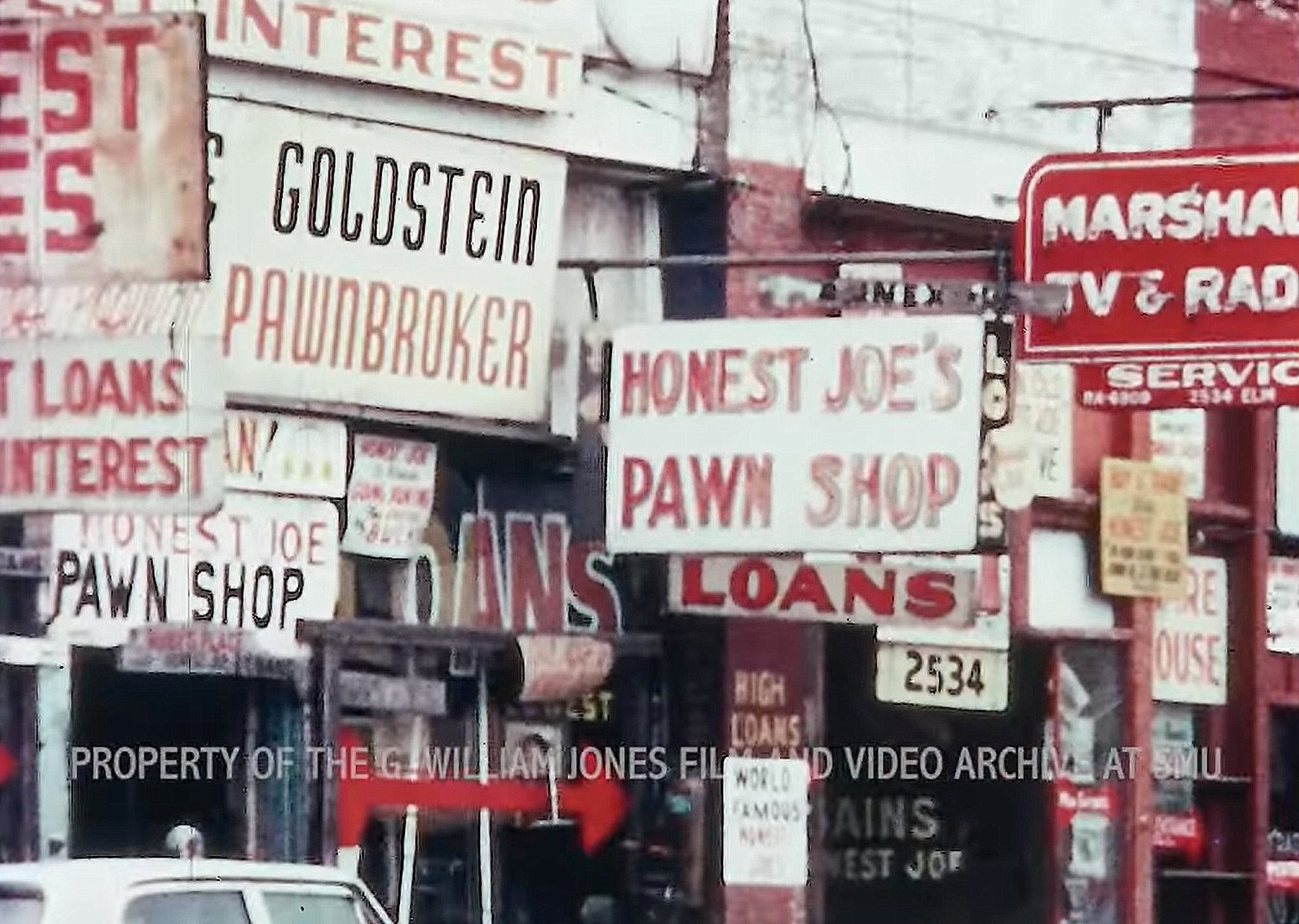
Here are a few things I found when I clicked on something I normally wouldn’t have, but I’m glad I did. These are screenshots from a 20-minute film made in 1969 by SMU’s Perkins School of Theology. (I certainly hope SMU has the original somewhere — or at least a crisper copy — because the quality of this 54-year-old film is, as you can see in these screenshots, pretty low-resolution.) The title of this offering on YouTube is the supremely un-sexy “Perkins School of Theology (SMU) Orientation and Recruiting Film — 1969.”Which is all well and good, but, let’s face it, how many of us would click on that? I wouldn’t! But it was the thumbnail that drew me in — a shot of the Colony Club, the famous burlesque club on Commerce Street. What did that have to do with theology school? I clicked and started fast-forwarding until I found the Colony Club — and it paid off, because I found a bunch of cool shots of places that, for the most part, don’t exist anymore.
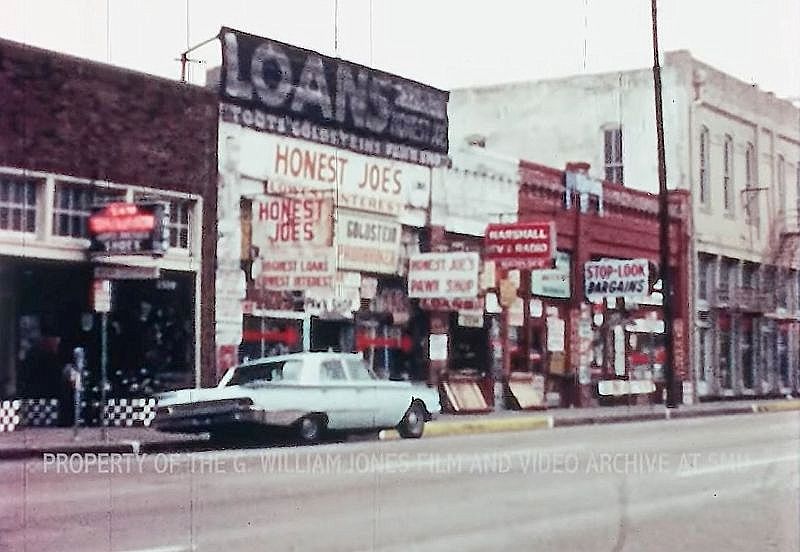
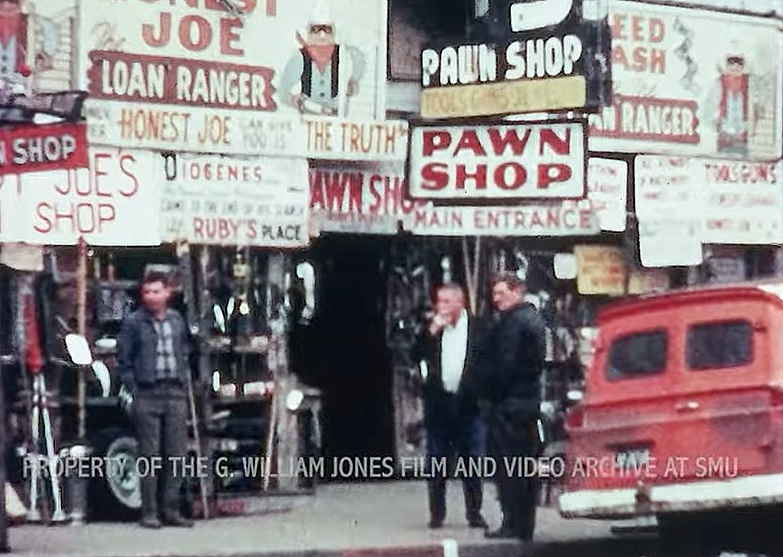
The image above shows one of dozens of pawn shops in Deep Ellum, Honest Joe’s Pawn Shop, owned by Joe Goldstein. (Various Goldstein family members ran a dizzying number of pawn shops in Deep Ellum. I mean a LOT.) In 1969, Honest Joe’s and its adjacent office and warehouse spread from 2516 Elm to 2526 Elm — most of these buildings still stand (see them today, here), but others were torn down to make way for the highway-palooza. (Two more photos of Honest Joe’s are at the end of this post.)
*
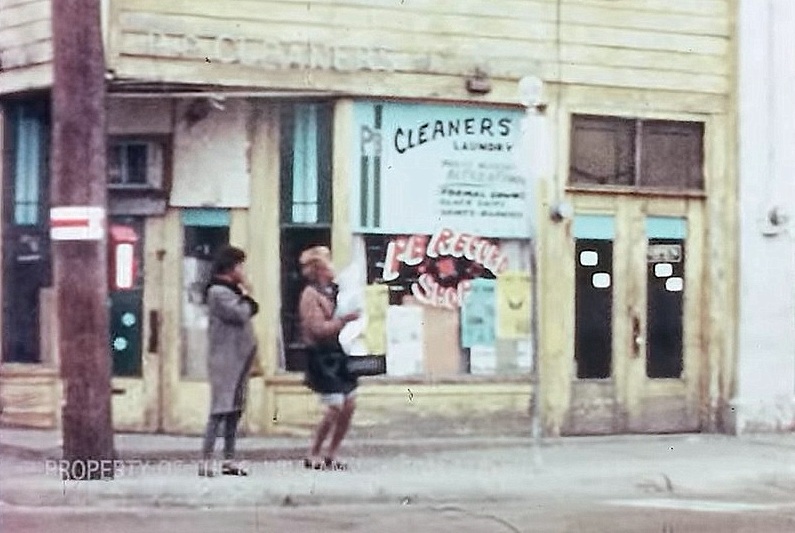
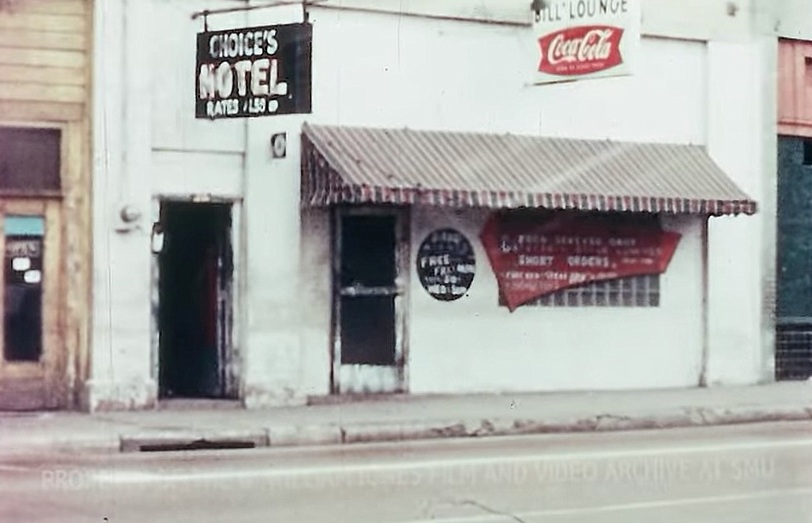
The two shots below were in the same block — keep panning right from the P B Cleaners (2700 S. Ervay, at Grand Avenue — now Al Lipscomb Way), and you’ll see Choice’s Hotel and Bill’s Lounge next door. What’s there now? Nothing.
*
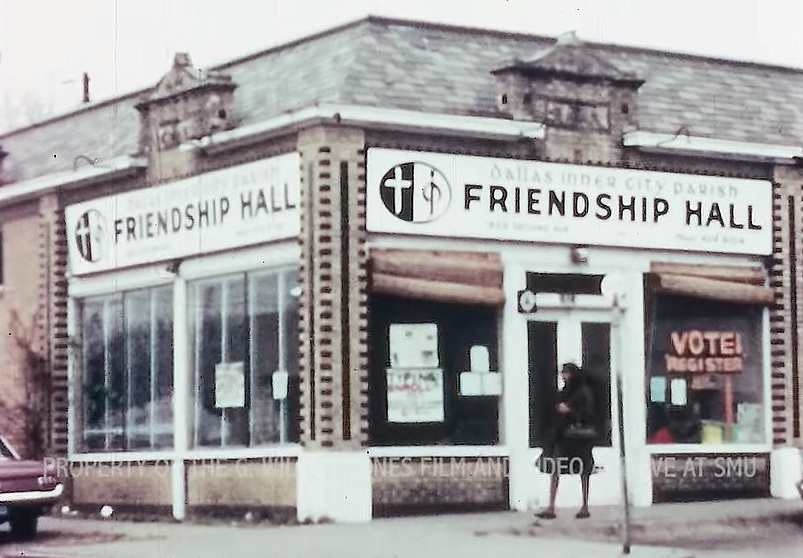
This is Friendship Hall (Dallas Inner City Parish), at 1823 Second Avenue. It was one of many businesses and homes condemned by the city and torn down to expand Fair Park and build new parking lots. See where this used to be, here.
*
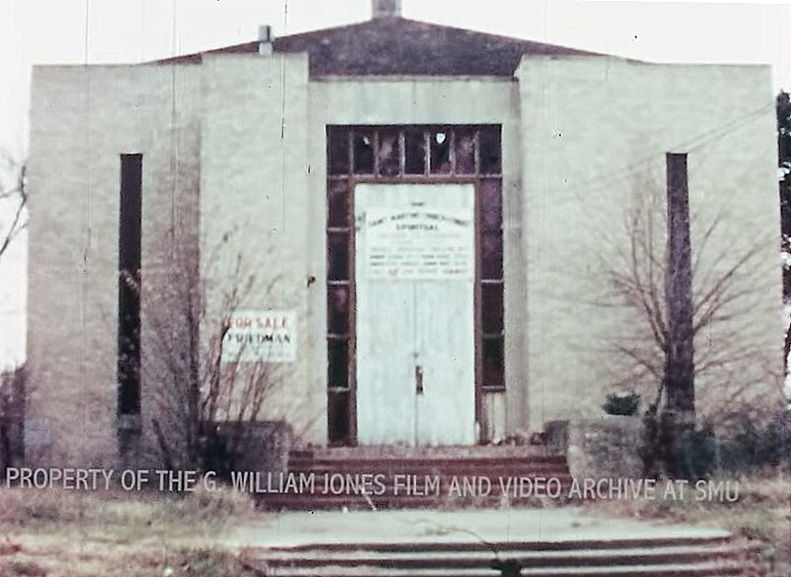
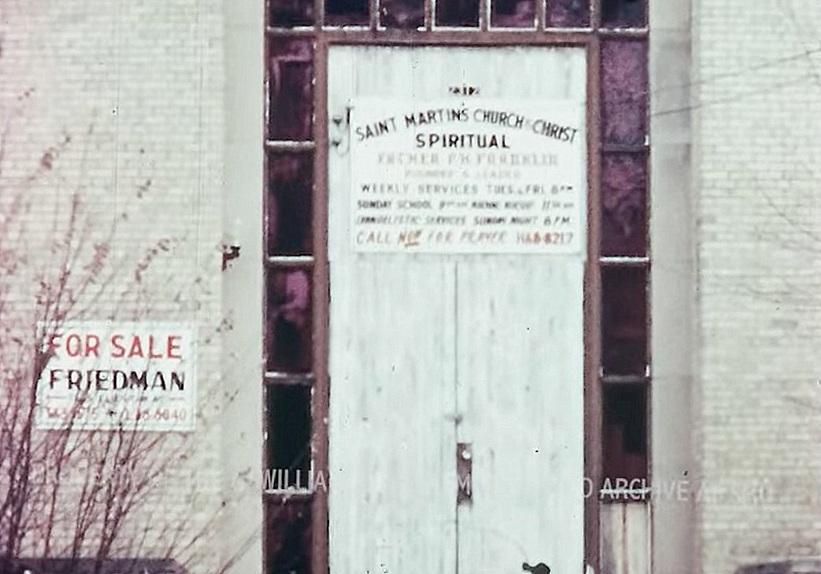
St. Martin’s Spiritual Church of Christ, 2828 Carpenter. This is such an unusual-looking building. It’s gone, but there’s a new church in its place, here.
*
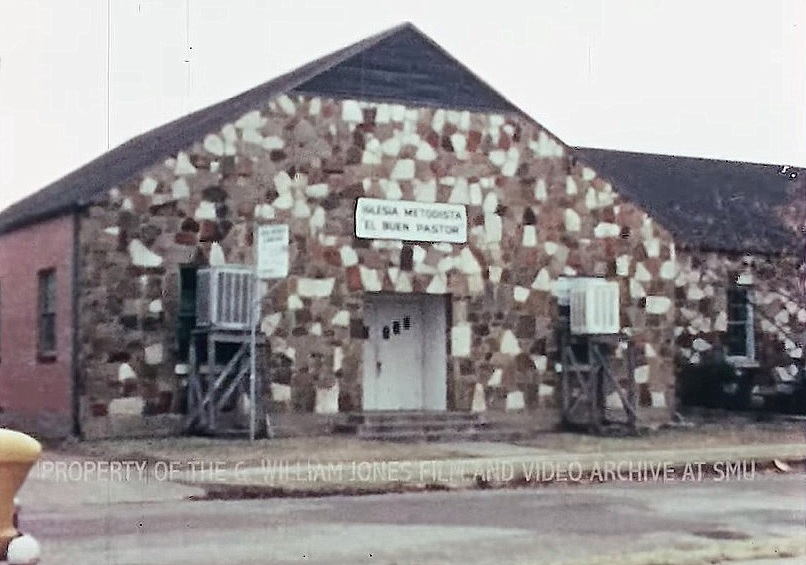
Iglesia Metodista, 1800 Park Avenue (at Beaumont), not too far from Old City Park. Wow, this area (a couple of blocks’ worth, anyway) has been developed way beyond what I would have guessed. The church once stood, I think, in this grassy area.
*
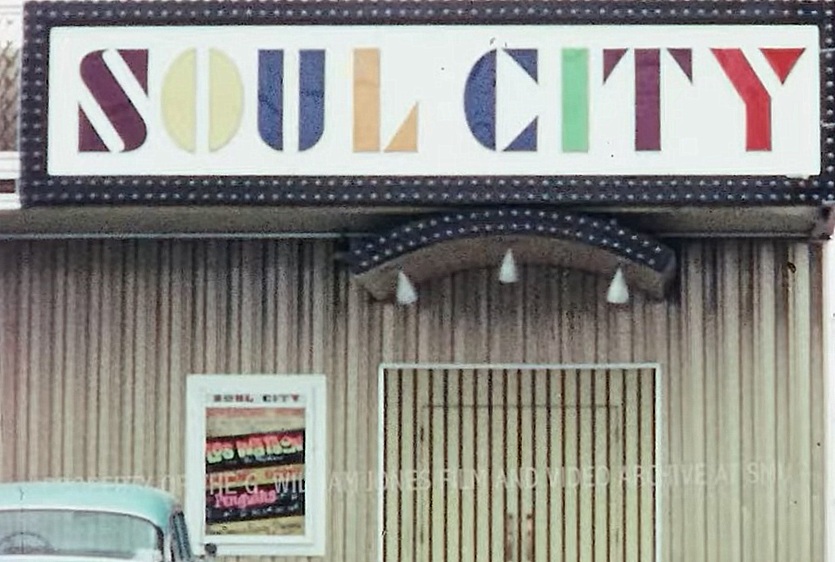
Soul City, 4714 Greenville Avenue, near University Blvd. (you might know it from its recent incarnation as a Vespa dealership). This wasn’t in a “gritty” neighborhood, but it was close to the filmmakers’ home, the SMU campus, and, surely, there were reprobates cavorting inside who could have benefited from a good Methodist sermon. From what I gather, this was a cool place for cool people to see cool bands. The building still stands, here. I don’t think it’s occupied at the moment.
*
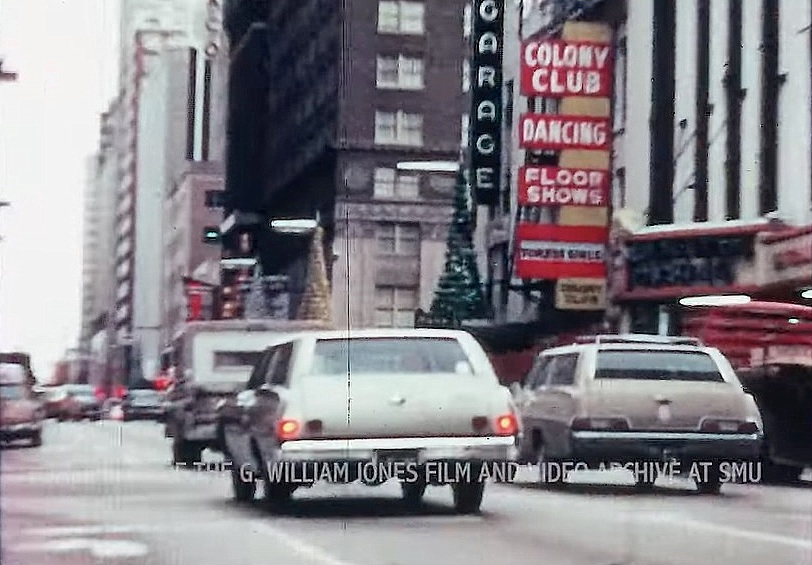
Speaking of reprobates, their Big D mecca for many years was Commerce and Akard, home to all sorts of places you probably wouldn’t book for a Mother’s Day brunch. Clogging up this area at various times were strip joints and dive bars, including the Colony Club, the Theatre Lounge, and the Carousel Club. The Colony Club was at 1322½ Commerce.That whole block (and the one just beyond it — across Akard — home to the Baker Hotel) went bye-bye a long time ago.
*
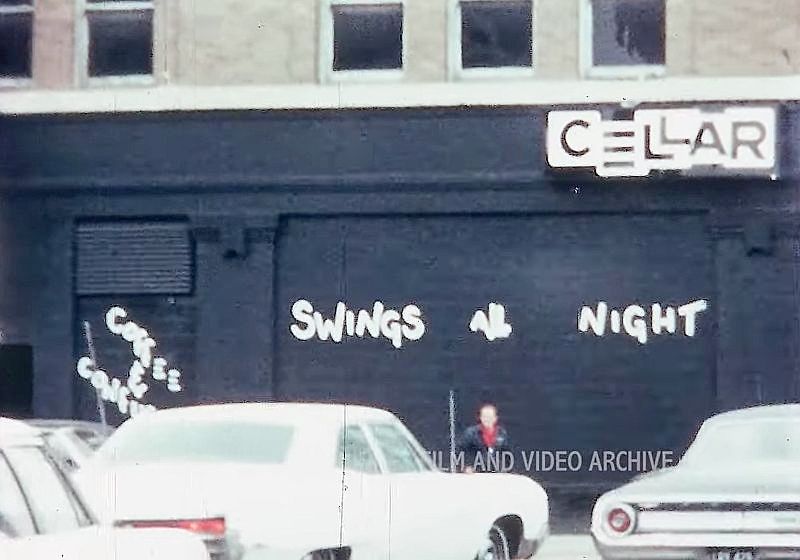
And, like Soul City, the legendary Cellar was cool, but I’ll bet there were more illicit substances in this downtown “coffeehouse” than in the Greenville Ave. club. “Swings all night.” It stood at 2125 Commerce (at what is now Cesar Chavez). This building appears to be gone.
*
More shots of Honest Joe’s Pawn Shop, which took up a good chunk of the 2500 block of Elm. See what this view looks like today, here (I warn you: do not rotate 180 degrees). I assume the tall white building bit the dust for highway construction. I would have loved to have wandered around that place and chatted with Joe. I bet that guy saw some stuff. Deep Ellum has lost most of its grittiness. It used to be so cool. Thank you, seminary students from 1969, for preserving this for future generations, ’cause in a few years, the place won’t be recognizable.
***
Sources & Notes
All images are screenshots from the film “Perkins School of Theology (SMU) Orientation And Recruiting Film – 1969” — see it on YouTube here. It’s odd. It is from the keeps-on-giving G. William Jones Film and Video Archive, Hamon Arts Library, Southern Methodist University.
If you like this kind of thing, perhaps you will consider supporting me on Patreon. I post something there every day. More info is here.
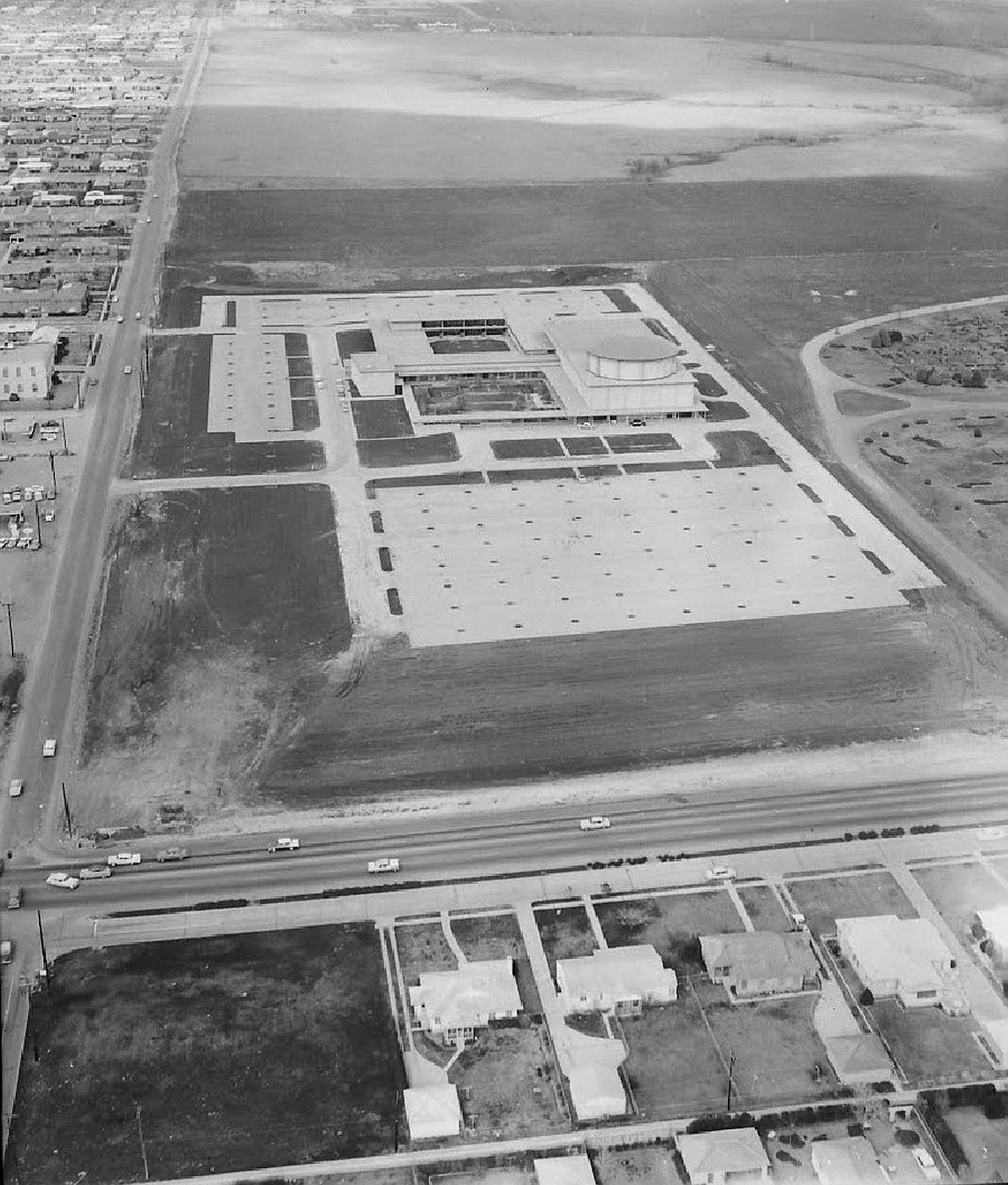
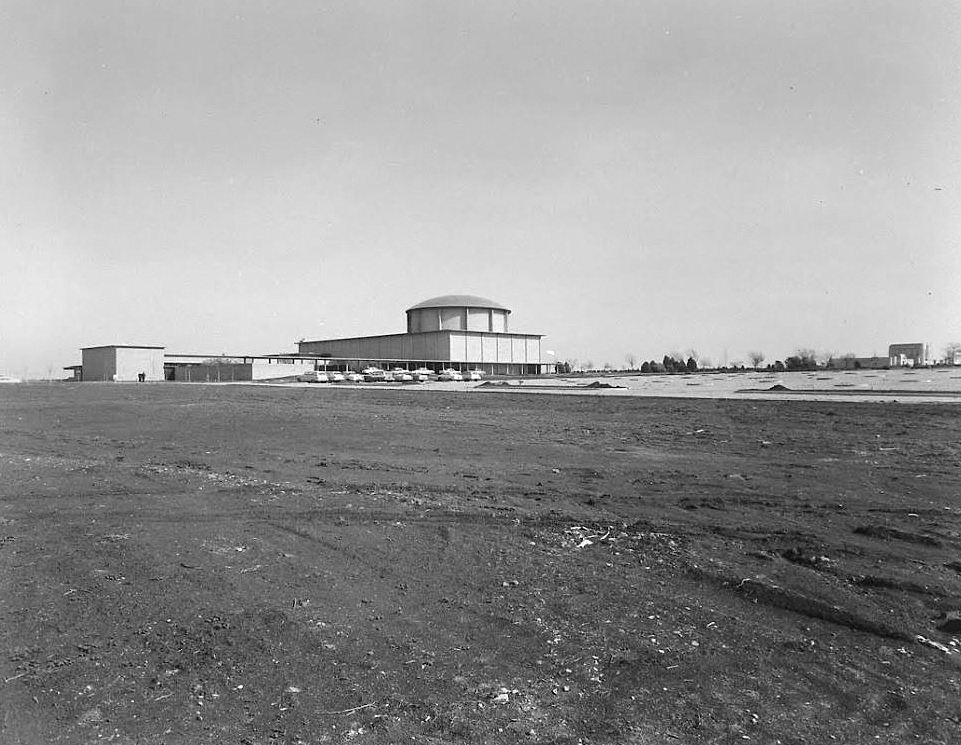
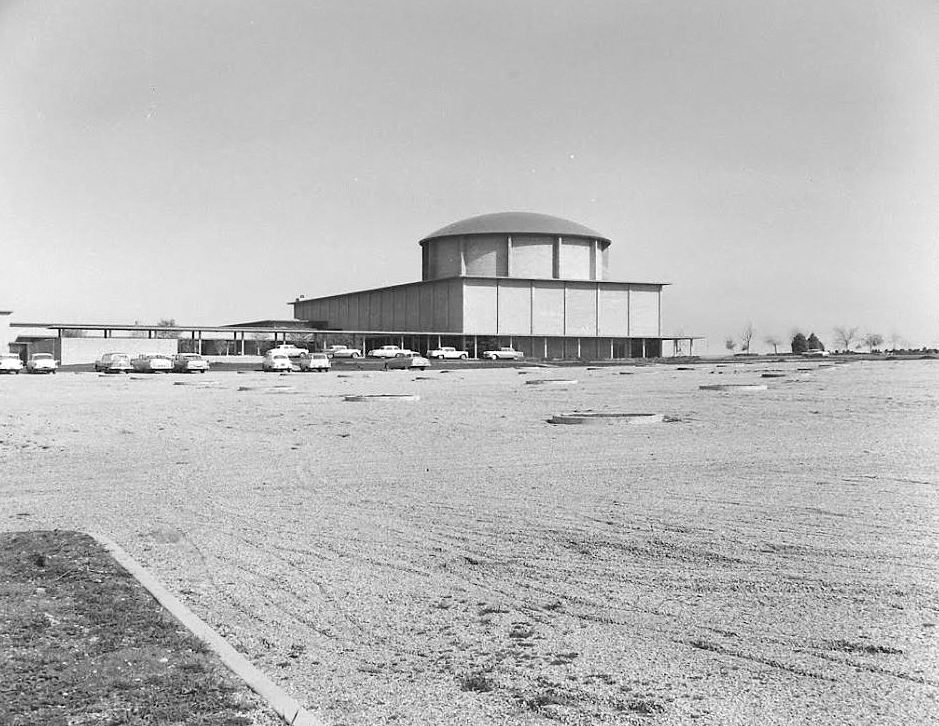
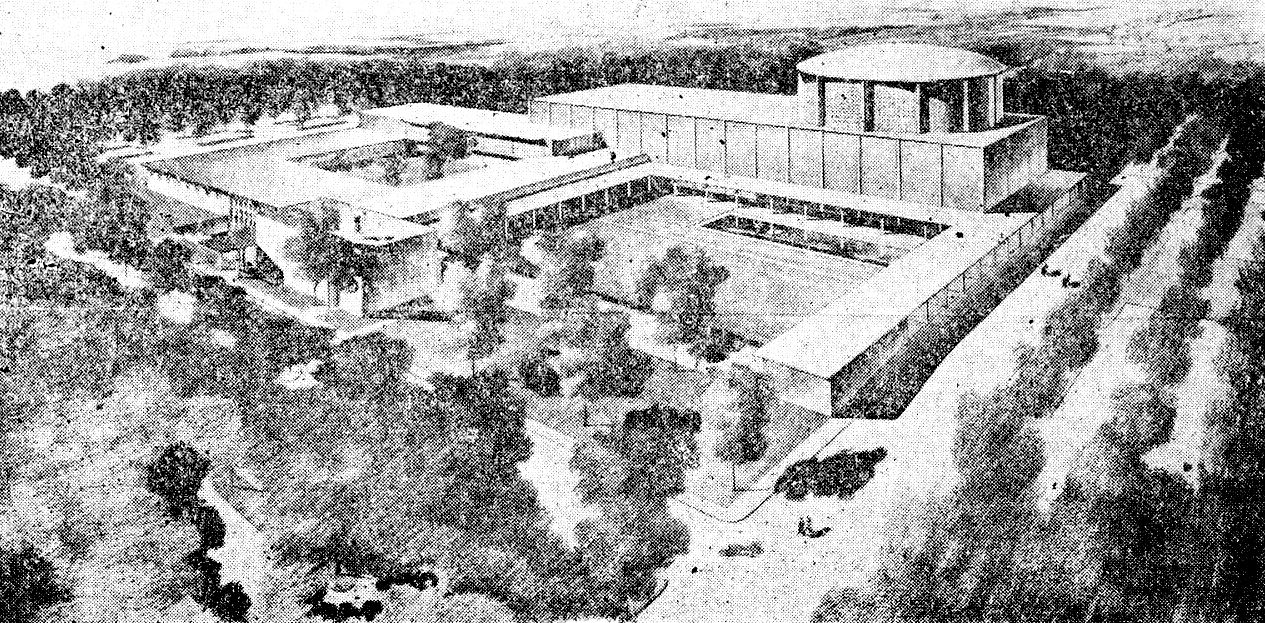
Above, the new, not-yet-landscaped Temple Emanu-El in 1957, at the northeast corner of Hillcrest and Northwest Highway; this aerial view is looking north from Northwest Highway. (The view today, via Google Earth, is here.)
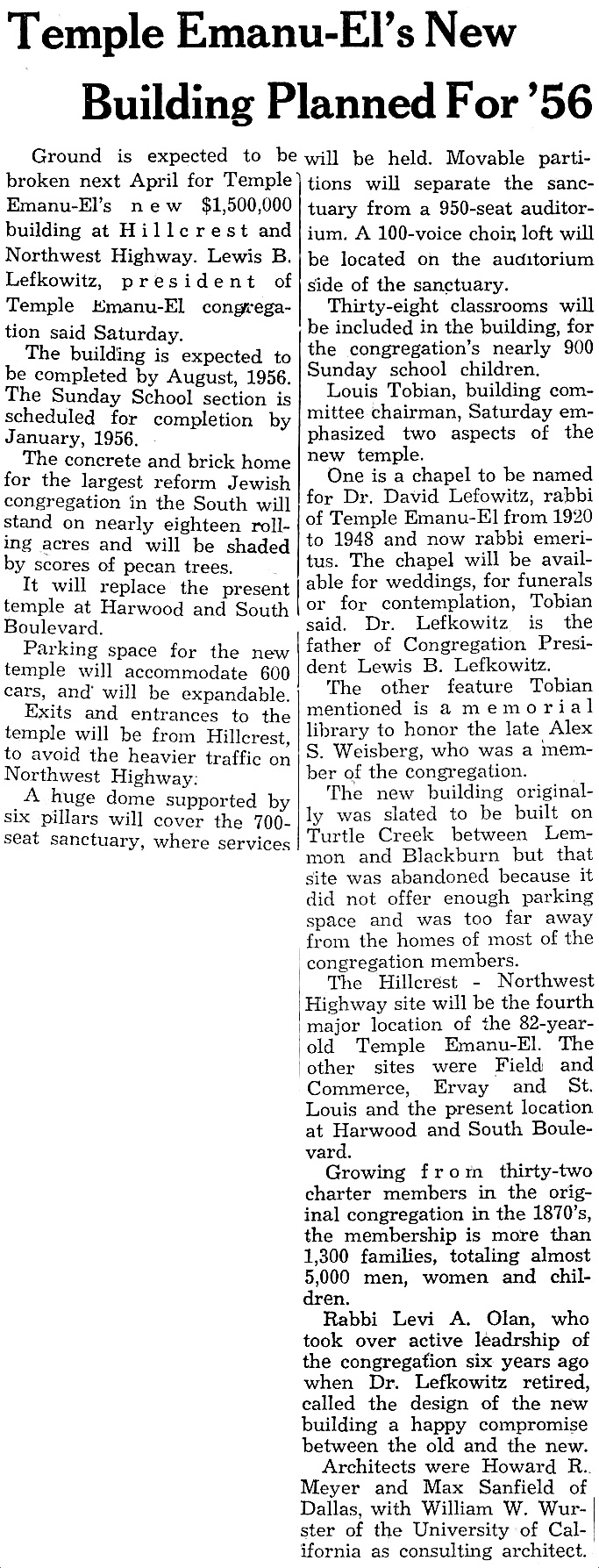
In 1952 Temple Emanu-El’s congregation purchased eighteen rolling acres of Caruth farmland from Earle Clark Caruth, at what was then described as “the northern limits of Dallas.” This was after a lengthy period of consideration by leaders of the congregation over whether they should accept the gift of developer and artist Sylvan T. Baer of eleven “wooded and rolling” acres in Oak Lawn along Turtle Creek which he had offered as the site of a new temple. Even though Baer’s attractive site was more centrally located than their long-time South Dallas location (a definite bonus, as the congregation wished to move closer to the North Dallas area where most of their members now lived), the Turtle Creek site was ultimately deemed to be too small, too far from the North Dallas area they preferred, and too restrictive as far as the ability to finance construction. (Though rejected as a religious site, Baer’s very pretty land eventually became the home of the Dallas Theater Center.)
Temple Emanu-El — home to the largest reform Jewish congregation in the South — hired Dallas architects Howard R. Meyer and Max M. Sandfield to design their new home (with William W. Wurster of the University of California serving as consultant); the project was announced in 1954, and dedication ceremonies of the finished building(s) took place in February, 1957, probably around the time the photos below and above were taken.
Feb. 2, 1957
*
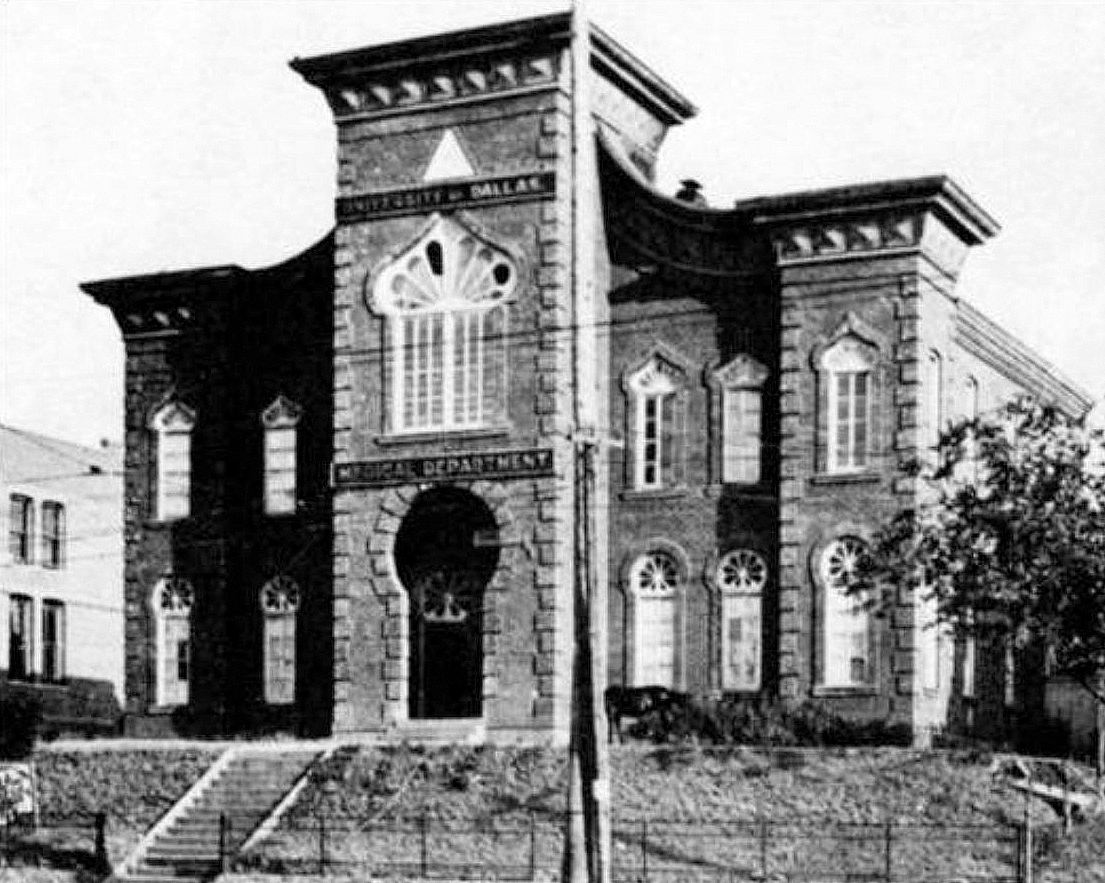
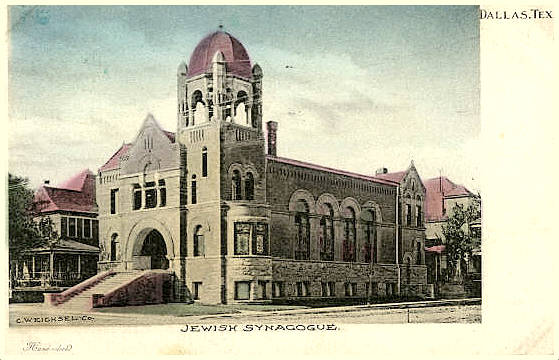
Below, the first Temple Emanu-El, built in 1876 at Commerce and Field, designed by architect Carl G. DeGrote. It was dedicated May 28, 1876 (read the extensive coverage of the ceremonies as printed in the Dallas Heraldhere — click “zoom” to read). After a move to their next location, the old temple became the University of Dallas Medical Department in 1900; it was demolished around 1906.
The second site was at the corner of S. Ervay and St. Louis, in The Cedars, built around 1898, designed by architects J. Reilly Gordon, H. A. Overbeck, and Roy Overbeck. Following another move in the ‘teens, the building was converted into a Unitarian Church; it was demolished in 1961 to make room for R. L. Thornton Freeway.
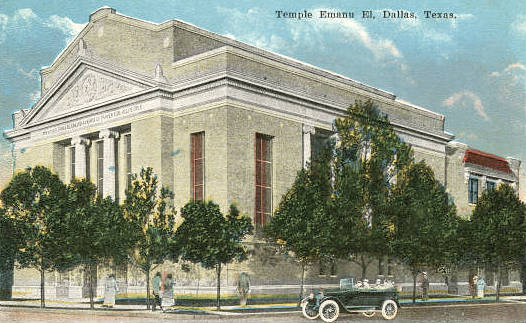
The congregation moved into its third location about 1917: a new Hubbell & Greene-designed building at South Boulevard and S. Harwood, where they remained until the move to the new Hillcrest location. This building was demolished in 1972.
The congregation officially moved to their fourth (and current) location, in North Dallas, at the beginning of 1957, led by Rabbi Levi A. Olan.
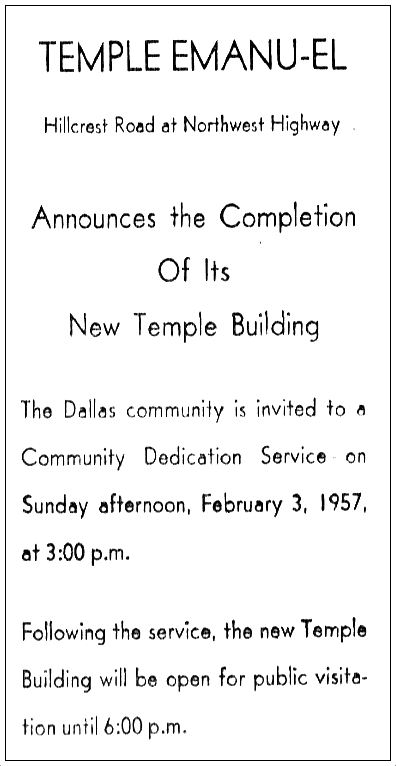
Drawing and article announcing the new Temple Emanu-El are from the Texas Jewish Post (Sept. 30, 1954), here. (UNT’s Portal to Texas History has fully-scanned issues of the DFW-centric Texas Jewish Post — 1950-2011 — accessible here. All issues are searchable, and all have articles, photos, and ads — it is a fantastic resource.)
Read a description of the just-completed first Dallas synagogue from the Dallas Herald (May 28, 1876), here (column 4); read the surprisingly lengthy coverage of the official opening ceremonies, which includes a history of the events which led to the building’s construction, in the May 30, 1876 Herald, here (columns 1-4). (To read the articles, click the “zoom” tab above the scanned page.)
Read the Temple Emanu-El entry in the Handbook of Texas here.
The history page of the Temple Emanu–El website is here.
Head to the Dallas Morning News archives to read about the art and architecture of Temple Emanu-El in the article “A Temple of Art, Architecture — The Forms Merge In Well-Designed Emanu-El” by architecture critic David Dillon (DMN, Dec. 24, 1984).
A comprehensive history of Temple Emanu-El and Jewish life in Dallas (well-illustrated with photographs) can be found in the book A Light in the Prairie, Temple Emanu-El of Dallas, 1872-1997 by Gerry Cristol (Fort Worth: TCU Press, 1998).
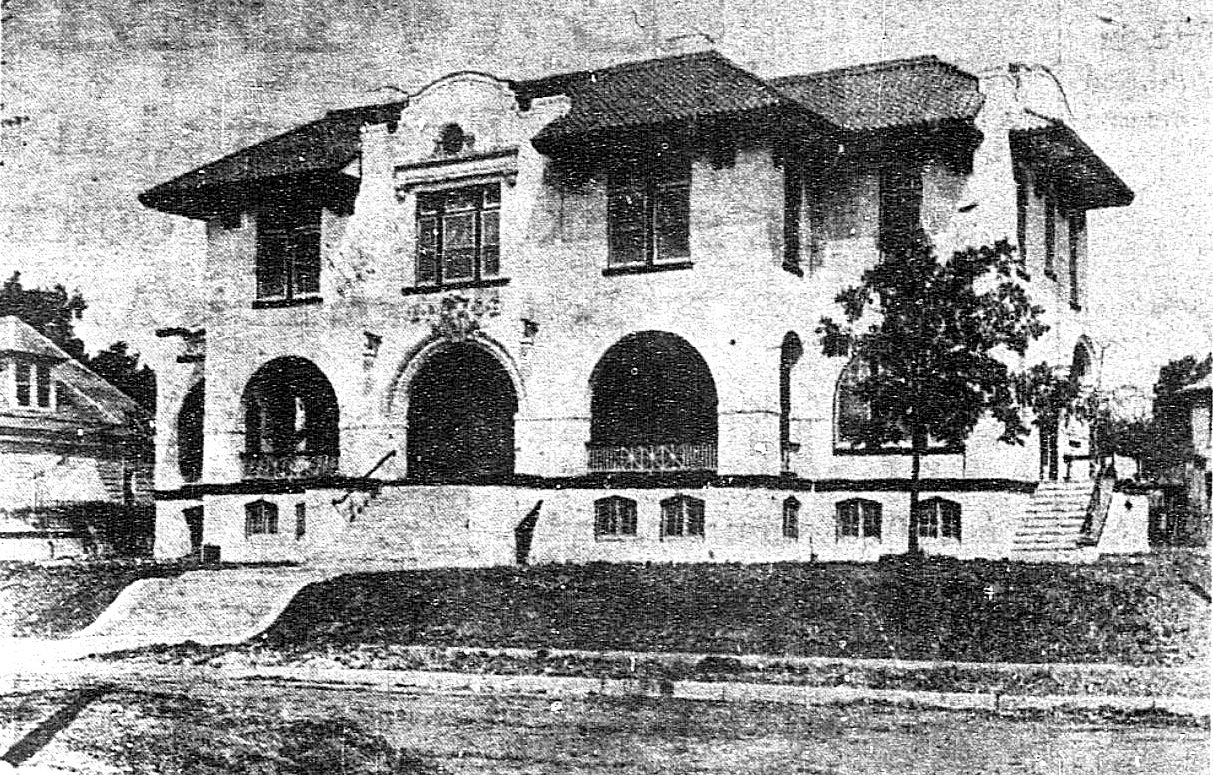
1817 Pocahontas Street, 1914 (click for larger image)
by Paula Bosse
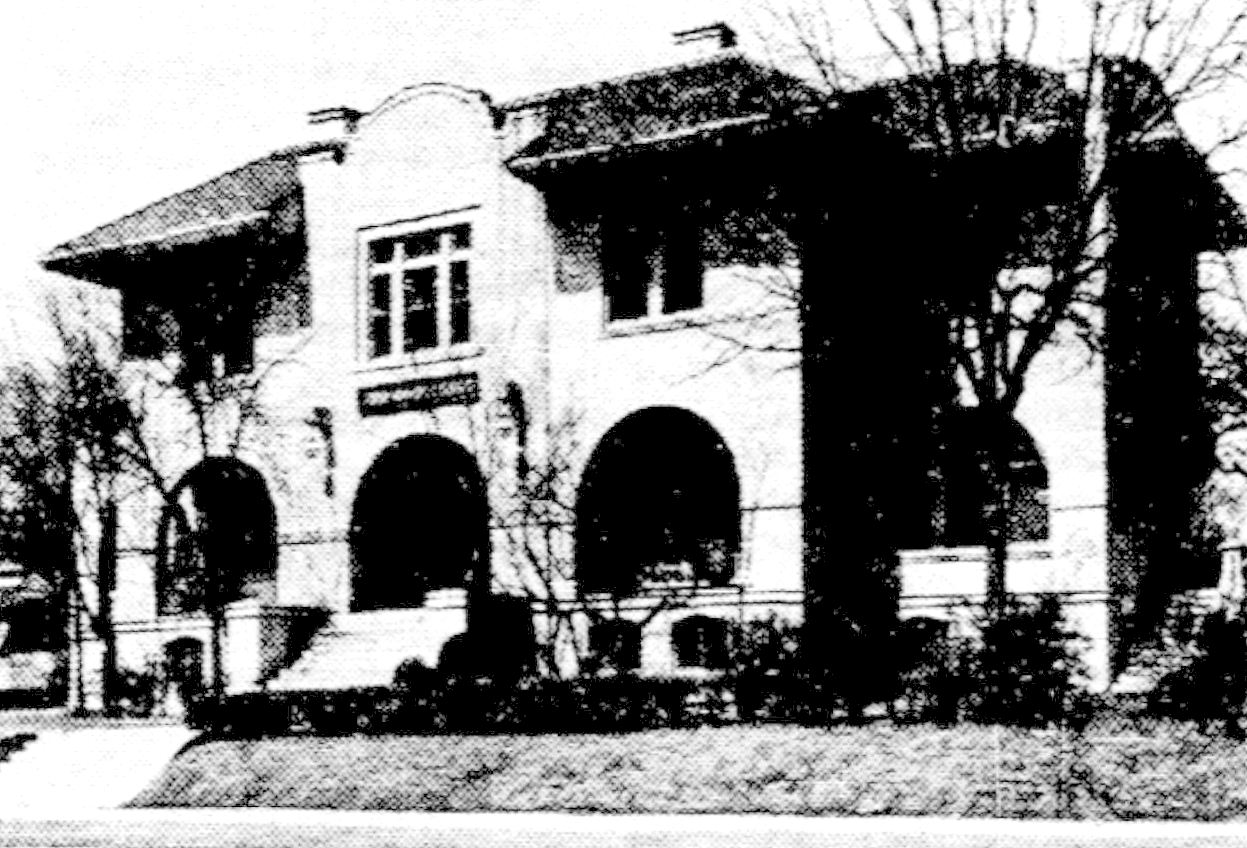
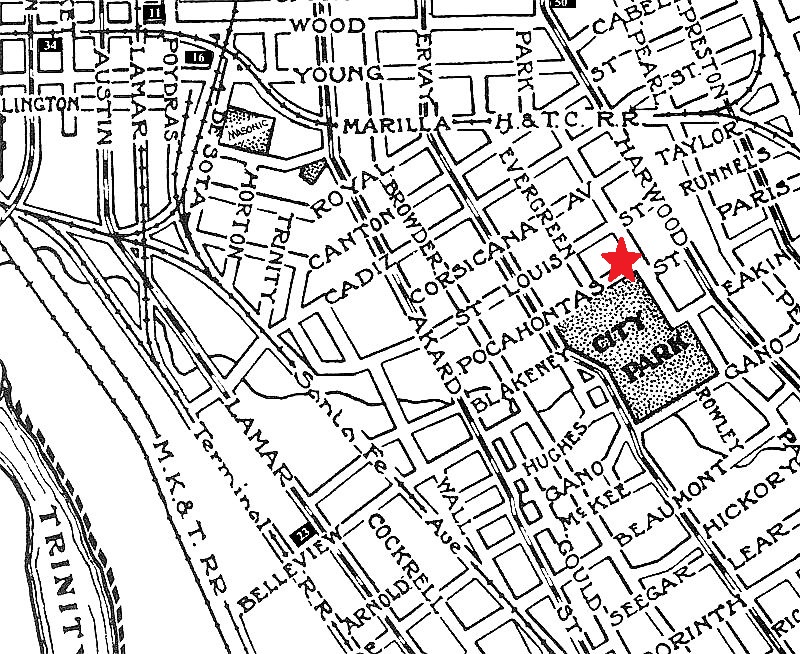
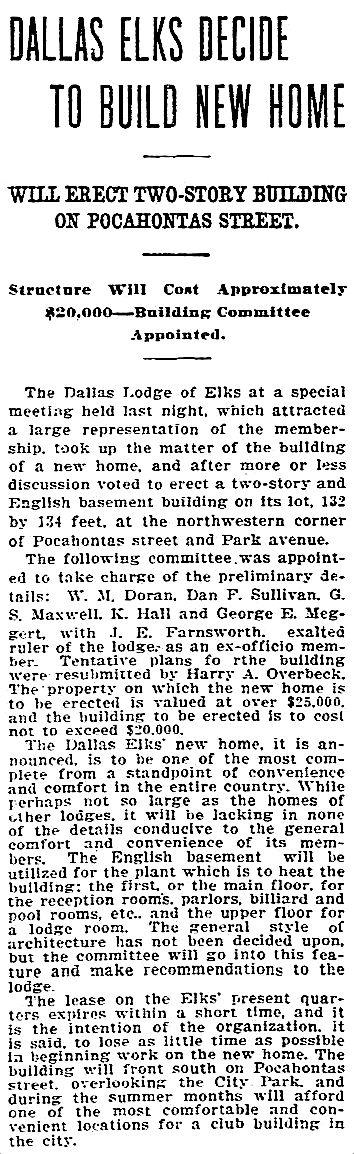
The postcard image above shows the lovely Dallas Elks Lodge No. 71 which once stood at 1817 Pocahontas, at the northwest corner of Pocahontas Street and Park Avenue in the Cedars area, just south of downtown — it had a spectacular view of City Park, which it faced. Designed by architect H. A. Overbeck (the man behind the still-standing Dallas County Jailand Criminal Courts Building and the long-gone St. Paul’s Sanitarium), the lodge was built in 1914; the land and the construction of the lodge cost $45,000. Surprisingly, this lodge served the Elks for only six years — they returned downtown, where they took over and renovated the old YWCA building on Commerce Street.
The building on Pocahontas became another clubhouse when it was purchased in 1920 by a group of Jewish businessmen who opened the exclusive Progress Club/Parkview Club (read about the building’s acquisition in a May 14, 1920 article in The Jewish Monitor, here); in 1922 the 65 members of the Parkview Club presented the clubhouse to the Young Men’s Hebrew Association (YMHA). In 1927, use of the building had expanded, and it became the Dallas Jewish Community Center and the headquarters of the Jewish Welfare Federation — in fact, this was the home for these organizations for more than thirty years, until 1958 when the move was made to the new Julius Schepps Community Center in North Dallas. The building ultimately fell victim to the construction of R. L. Thornton Freeway and was demolished in the early 1960s.
But back to the Elks. The Benevolent and Protective Order of Elks was a social club/fraternal order founded in New York in 1868. Dallas Lodge No. 71 was chartered on January 28, 1888 — it was the first Elks Lodge in Texas and one of the oldest clubs in Dallas. And, after 130 years, it’s still around, now located in Lake Highlands. There aren’t a lot of things that have lasted that long in this city!
*
Below, the Overbeck rendering of the Elks’ new home (click for larger image)
Dallas Morning News, Dec. 2, 1913
*
A week before its official dedication on Sept. 7, 1914:
DMN, Aug. 30, 1914
*
Colorized and made into an attractive postcard:
*
In the 1930s, when it was the Jewish Community Center:
*
Where it was:
1912-ish map detail
Also, see it on the 1921 Sanborn map (as “B.P.O.E. Home”) here.
**
The announcement of plans for the construction of the Pocahontas Street lodge:
DMN, Nov. 23, 1913
And its dedication, on Sept. 7, 1914:
DMN, Sept. 8, 1914
***
Sources & Notes
Source of postcards unknown. Other images and clippings as noted.
The 1888 report of the first meeting of the Dallas Elks Lodge No. 71 can be read in the Dallas Morning News article “Order of Elks in Dallas; A Lodge Instituted Here Yesterday” (DMN, Jan. 29, 1888), here.
A history of the various Elks’ locations in Dallas between the 1880s and the 1920s can be found in the article “Elks Plan To Have Modern Club Home” (DMN, July 30, 1922), here.
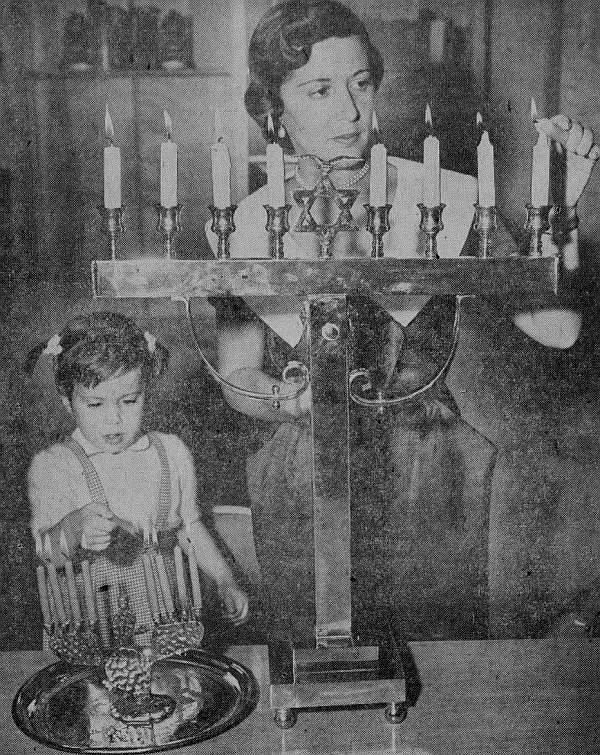
Above, a photo of Gilla Silverman and her mother, Devora Halaban Silverman, wife of Rabbi Hillel Silverman, lighting menorahs during Hanukkah, 1954.
Happy Hanukkah!
***
Sources & Notes
Photo from the Dallas-Fort Worth Texas Jewish Post, Dec. 23, 1954. The entire 52-page issue of this special “Chanukah Issue” has been scanned and may be viewed at UNT’s Portal to Texas History site, here. (Click “zoom” to enlarge the pages, click arrows at right and left to move through the issue.)
Rabbi Hillel Silverman arrived in Dallas as the new rabbi at Congregation Shearith Israel in 1954 and was a popular and influential member of Dallas’ Jewish community for the decade or so he served here. He may be best known beyond Dallas as “Jack Ruby’s rabbi.”
Read about a 2009 return to the city by Rabbi Silverman in the Texas Jewish Post article by Dave Sorter, “A Golden Opportunity to Reunite” (Oct. 8, 2009), here.
The Texas Jewish Post article introducing Rabbi Silverman to its readership — “Dr. H. E. Silverman Appointed to Head Israel Pulpit” (July 8, 1954) — can found here.
An article focusing on the Ruby family and Dallas (Rabbi Silverman is interviewed) can be found in “Remembering JFK” by Steve North (Jewish Telegraphic Agency, via the Texas Jewish Post, Nov. 21, 2013), here.
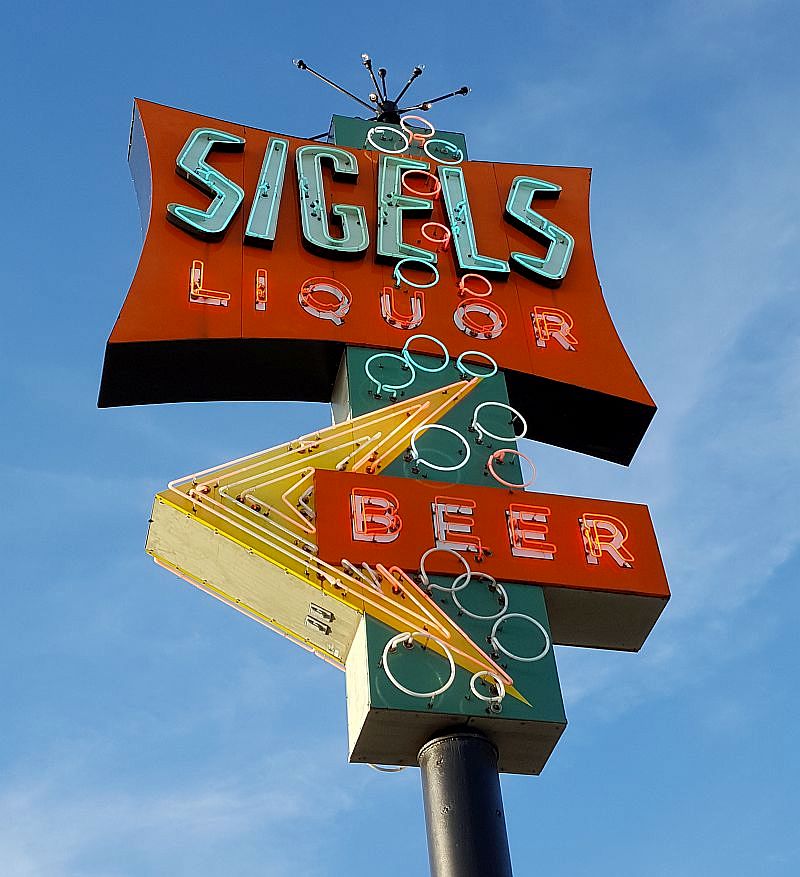
One of Dallas’ favorite neon signs… (photo: Paula Bosse)
by Paula Bosse
I stopped by Sigel’s liquor store the other day (as one does…) and saw this legendary Sigel’s sign, recently installed in its new home in the parking lot of the Sigel’s store on Greenville Avenue, between Lovers Lane and Southwestern Boulevard, across from the Old Town Shopping Center. I love this neon sign. (See a very large image of it here.)
The sign’s design can be traced back to Dallas artist Marvin M. Sigel (whose great-uncle Harry Sigel founded the business in 1905) — this Fabulous Fifties design was created around 1953 specifically for the then-new store at 5636 Lemmon Avenue (at Inwood). When that store closed in 2009, the sign was refurbished and moved up to the company’s Addison location until that store fell victim to the company’s bankruptcy and was closed. Here’s a video of the fabulous sign when it was in Addison, with close-ups of its flashing neon and dancing bubbles:
*
Marvin Meyer Sigel was born in Poland in 1932 and settled in Dallas in 1937 with his immigrant parents, both of whom had been doctors in Poland (his mother a dentist, his father an M.D.), although only his father continued to practice medicine in the United States. He lived in the vibrant Jewish enclave of South Dallas and went to Forest Avenue High School where he seems to have been a popular kid, interested in art, drumming, and ROTC. Below, a photo from the 1949 yearbook with the caption “Marvin ‘Hot Drums’ Sigel plays with the Swing Band.”
His Forest Avenue High School senior photo, from 1949:
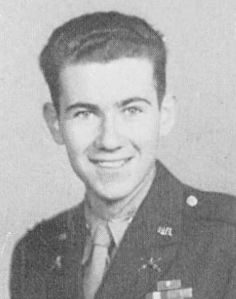
And his 1953 senior photo from the University of Texas:
After studying art at both SMU (under Ed Bearden and DeForrest Judd) and the University of Texas and receiving his B.F.A. from UT in 1953, Sigel served a stint in the Eighth Army in Korea. Back in Dallas, he was remarkably active in the local art community — for decades — as both a fine artist and as an art instructor. He also worked for a while at Peter Wolf Associates, in advertising (on projects for companies like Braniff), and he even did a lot of the tedious paste-up work for Sigel’s ads (back when every picture of a bottle of wine or spirits had to be cut out individually and pasted into one of those huge ads!). But his passion was art, and at the same time he had those regular-paycheck gigs, he also managed to maintain a furious pace of painting new pieces to exhibit at a dizzying number of art shows. Below is an example of one of his watercolors, from 1957 (which was recently offered at auction by David Dike Fine Art). The title? “Cocktail Abstraction” — appropriate subject matter for a member of the Sigel family!
“Cocktail Abstraction” by Marvin Sigel (1957)
When the Sigel’s Liquor store No. 7 opened at Lemmon & Inwood, it was suggested by family members that, hey, we have an artist in the family, let’s get Marvin to design a sign for us. According to Marvin, his cousin Sidney Sigel, who ran the company, probably just wanted a “rectangular sign with block letters,” but other family members wanted something newer and more exciting — something modern that would jump out of a sea of boring rectangular signs with block letters and draw attention. And it certainly did just that. If, as reports have it, that dazzling neon sign was designed in 1953, Marvin Sigel was only 21 years old!
When news broke 56 years later, in 2009, that the Lemmon & Inwood store was closing, there was a concerned uproar from the public about what would happen to the sign. Mr. Sigel was a bit taken aback by how much the people of Dallas had grown to love that sign and considered it a city landmark. Marvin Sigel, then 77 years old, said in a 2009 Dallas Morning News interview, “It was clever, but I figured it would be replaced by something more clever in a half-dozen years.”
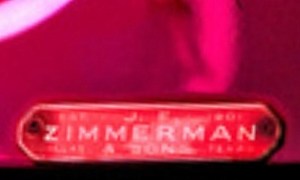
The sign was built by the venerable Dallas firm of J. F. Zimmerman & Sons (est. 1901) who for generations had installed decorative neon elements all around town and had built innumerable lighted signs for companies big and small — their work could be seen on the Mercantile Building’s wonderful tower, on the exterior of the downtown Titche’s store on Main Street, and in the instantly recognizable signs for places as varied as the Cotton Bowl, Big Town, and, presumably, various other Sigel’s stores around the city.
The sign which was moved from Store No. 7 at Lemmon & Inwood to Addison had on its pole a small plaque (seen here) which said:
This Non-Conforming Sign designed by Marvin Sigel was built in the early 1950s. It was moved from Dallas, TX at Lemmon Ave. & Inwood. After being granted a variance it was refurbished to Code and installed here in June of 2009. Sign refurbished and installed by Starlite Sign of Denton, TX.
Interestingly, the plaque on the new location of the sign has a slightly different text:
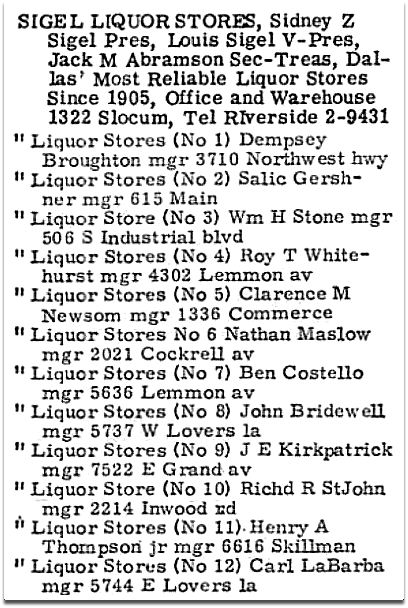
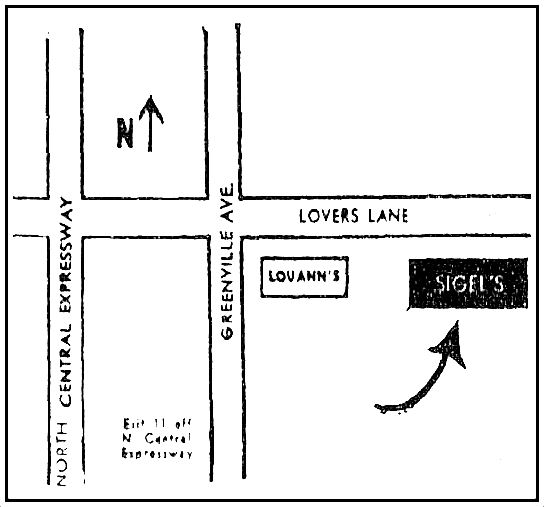
It appears that this is a different Sigel’s sign. In 1965, there were two Sigel’s stores on Lovers Lane: Store No. 8 was along the Miracle Mile on West Lovers Lane, near what is now the Dallas North Tollway, and Store No. 12 was on East Lovers Lane at Greenville (then near Louanns nightclub).
1965 Dallas directory
In an April 22, 2009 Dallas Morning News article by Jeffrey Weiss (“The Story Behind That Sigel’s Sign”), is this quote from Mr. Sigel’s son, David S. Z. Sigel, about the original sign at Lemmon & Inwood, with mention of another similar sign: “He created the designs for this sign, as well as a similar but smaller sign which stood outside the Lovers Lane store (where Central Market now stands) for many years.” Here’s a map from a November, 1964 grand opening ad for the new store at 5744 E. Lovers Lane:
Detail from a grand opening ad, Nov. 6, 1964
So is the sign currently standing in the parking lot of the Sigel’s Fine Wines & Great Spirits at 5757 Greenville Avenue the sign which originally stood only a short four-tenths of a mile away? I hope so! And if it is, welcome back to the neighborhood, cool sign!
Whichever sign this is, it is one of the greatest neon designs Dallas has ever had, and I’m so happy it’s survived for over a half-century, through phenomenal city growth, physical displacement, and even company bankruptcy.
Thanks, Marvin, for designing this wonderful sign! And thanks, Starlite Sign of Denton, for the beautiful refurbishing!
***
Sources & Notes *
Top photo and photo of blue plaque taken by me on July 27, 2017 at the Sigel’s store at 5757 Greenville Avenue.
YouTube video by Andrew F. Wood, shot in Addison in 2013.
Sources for other images as noted.
The Zimmerman & Sons nameplate can be seen on the original Lemmon & Inwood sign here (click to enlarge), posted on Flickr by Tim Anderson (a detail of his photo can be seen below) (there is another Zimmerman nameplate posted in the comments on that Flickr page); what appears to be a Zimmerman plate is on the side of the sign at the Greenville Avenue location facing the store’s entrance, not on the side seen in my photo at the top.
Please check out the Dallas Morning News article in theDMN archives titled “Sigel’s Sign Designer Surprised by Its Fame — Project for Family’s Liquor Store Wasn’t a Hit with Boss, He Recalls” by Jeffrey Weiss (April 28, 2009) in which Marvin Sigel discusses his famous sign.
Also, check out these related (online) DMN articles:
“Sigel’s Beverages, A 111-Year-Old Dallas Chain, Filed for Bankruptcy; Wants to Close 5 Stores” by Maria Halkias (Oct. 21, 2016), here
“Sigel’s Iconic Neon Sign Returning to Dallas After Years Wasting Away in Addison” by Robert Wilonsky (March 27, 2017), here
If anyone can verify that this sign is, in fact, the sign from Store No. 12 (Lovers & Greenville), please let me know!
UPDATE: Marvin Sigel died on Feb. 23, 2019 at the age of 87 (his obituary is on the Dallas Morning News website, here). After I wrote this post, Marvin’s son, David, contacted me to let me know his father had seen this and was delighted to know that people still appreciated his work. This was one of the most popular posts of the year. People absolutely still love your sign, Marvin! RIP.
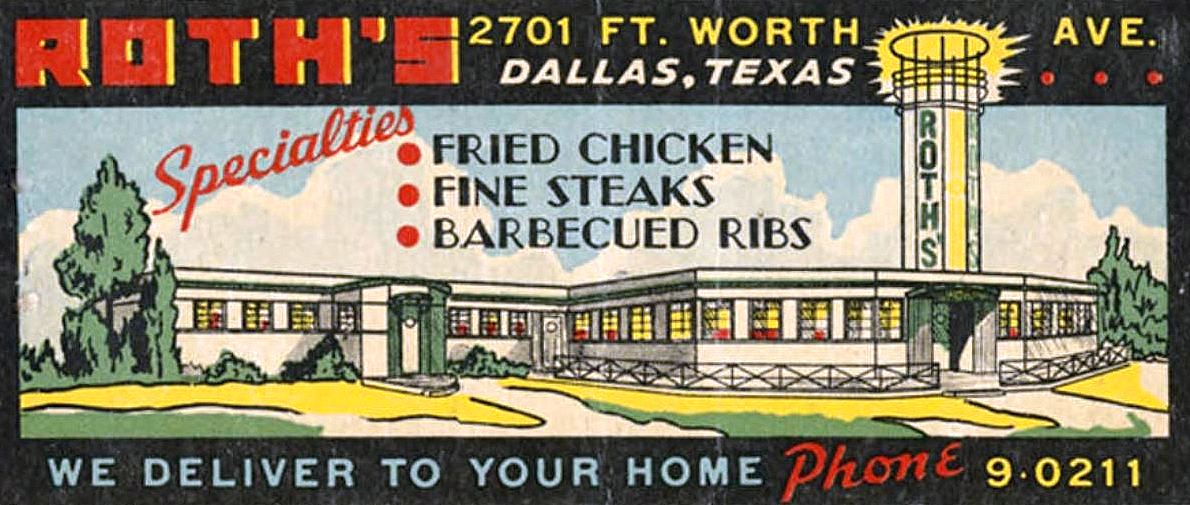
When I see a building like this, I always hope I can find a photo of it somewhere, but all I’ve been able to come up with is this energetic rendering from a 1940s matchbook cover. Roth’s (which was advertised variously as Roth’s Cafe, Roth’s Restaurant, and Roth’s Drive-In) was in Oak Cliff, on Fort Worth Avenue. It opened in about 1940 or ’41 and operated a surprisingly long time — until about 1967. When Roth’s opened, its address was 2701 Fort Worth Avenue, but around 1952 or ’53 the address became 2601. (I think the numbering might have changed rather than the business moving to a new location a block down the street.)
During World War II, Mustang Village — a large housing development originally built for wartime workers (and, later, for returning veterans and their families) — sprang up across Fort Worth Avenue from the restaurant. It was intended to be temporary housing only, but because Dallas suffered such a severe post-war housing shortage, Mustang Village (as well as its sister Oak Cliff “villages” La Reunion and Texan Courts) ended up being occupied into the ’50s. Suddenly there were a lot more people in that part of town, living, working, and, presumably, visiting restaurants.
As the 1960s dawned, Mustang Village was just a memory, and Roth’s new across-the-street neighbor was the enormous, brand new, headline-grabbing Bronco Bowl, which opened to much fanfare in September 1961. I don’t know whether such close proximity to that huge self-contained entertainment complex hurt or helped Roth’s business, but it certainly must have increased traffic along Fort Worth Avenue.
Roth’s continued operations until it closed in 1967, perhaps not so coincidentally, the same year that Oak Cliff’s beloved Sivils closed. Ernest Roth, like J. D. Sivils, most likely threw in the towel when a series of “wet” vs. “dry” votes in Oak Cliff continued to go against frustrated restaurant owners who insisted that their inability to sell beer and wine not only damaged their own businesses but also adversely affected the Oak Cliff economy. The last straw for Sivils and Roth may have been the unsuccessful petition drive in 1966/1967 to force a “beer election” (read about it here in a Morning News article from Aug. 17, 1966).
As far as that super-cool building seen at the top — I don’t know how long it remained standing, but when Roth’s closed, a mobile home dealer set up shop at 2601 Fort Worth Avenue, and mobile homes need a lot of parking space….
The building on the matchbook cover above is, unfortunately, long gone (as is the much-missed Bronco Bowl); the area today is occupied by asphalt, bland strip malls, and soulless corporate “architecture” (see what 2701 Fort Worth Avenue looks like today, here).
*
The man behind Roth’s was Ernest W. Roth, a Hungarian immigrant who had worked for many years as maître-d’ at the Adolphus Hotel’s tony Century Room. He decided to go out on his own, and around 1940, he and his business partner Joseph Weintraub (who was also his brother-in-law) opened the Oak Cliff restaurant which boasted two dining rooms (with a seating capacity of 350, suitable for parties and banquets), fine steaks, and, on the weekends, a live band and dancing. Ernest’s wife, Martha, and their son Milton were also part of the family business. When the restaurant opened, there wasn’t much more out there on the “Fort Worth cut-off,” but the place must have been doing something right, because Roth’s lasted for at least 27 years — an eternity in the restaurant business. It seems to have remained a popular Oak Cliff dining destination until it closed around 1967.
*
The real story, though, is the Roth family, especially Ernest’s mother, Johanna Roth, and even more especially, his older sister, Bertha Weintraub.
Johanna Rose Roth was born in 1863 in Budapest, where her father served as a member of the King’s Guard for Emperor Franz Josef. She and her husband and young children came to the United States about 1906 and, by 1913, eventually made their way to San Antonio. In the ’40s and ’50s she traveled by airplane back and forth between San Antonio and Dallas, visiting her five children and their families — she was known to the airlines as one of their most frequent customers (and one of their oldest). She died in Dallas in 1956 at the age of 92.
Johanna’s daughter Bertha Roth Weintraub had a very interesting life. She too was born in Hungary — in 1890. After her husband Joe’s death in the mid ’40s, a regular at her brother’s restaurant, Abe Weinstein — big-time entertainment promoter and burlesque club empresario — offered Bertha a job as cashier at the Colony Club, his “classy” burlesque nightclub located across from the Adolphus. She accepted and, amazingly, worked there for 28 years, retiring only when the club closed in 1972 — when she was 82 years old! It sounds like she led a full life, which took her from Budapest to New York to San Francisco to San Antonio to Austin and to Dallas; she bluffed her way into a job as a dress designer, ran a boarding house in a house once owned by former Texas governor James Hogg, hobnobbed with Zsa Zsa Gabor and Liberace, was a friend of Candy Barr, and, as a child, was consoled by the queen of Hungary. She died in Dallas in 1997, a week and a half before her 107th birthday. (The story Larry Powell wrote about her in The Dallas Morning News — “Aunt Bertha’s Book Filled With 97 Years of Memories” (DMN, Nov. 17, 1987) — is very entertaining and well worth tracking down in the News archives.)
Bertha Roth Weintraub
I feel certain that the extended Roth family found themselves entertained by quite a few unexpected stories around holiday dinner tables!
***
Sources & Notes
Matchbook cover (top image) is from the George W. Cook Dallas/Texas Image Collection, DeGolyer Library, Central University Libraries, Southern Methodist University; more info is here.
Photo of Bertha Weintraub is from The Texas Jewish Post (Feb. 15, 1990), via the Portal to Texas History, here.
A Reuben sandwich sings to me, like a siren to a sailor…
by Paula Bosse
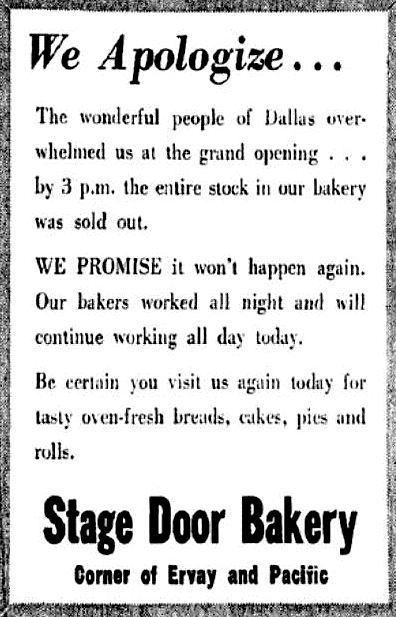
Why does Dallas have so few delis? Here’s one that seemed to be pretty popular in the 1960s: the Stage Door Restaurant and Delicatessen (and bakery), located at 1707 Elm, between the Palace Theater and the Dallas Athletic Club. It opened in June 1965 and lasted until the end of 1968 (when it was replaced by a restaurant called King Beef). I doubt there was any connection with the famous Stage Deli in New York, but manager Milton Stackel certainly had kosher cred of his own, having worked for twenty years at Grossinger’s, the legendary Jewish resort in the Catskill Mountains. I’m not sure how he found himself operating an eatery in downtown Dallas, Texas, but I’m glad he was here.
To any Milton Stackel-like entrepreneurs out there reading this:
DALLAS NEEDS DELIS!!
Authentic Jewish delicatessens!
Please!
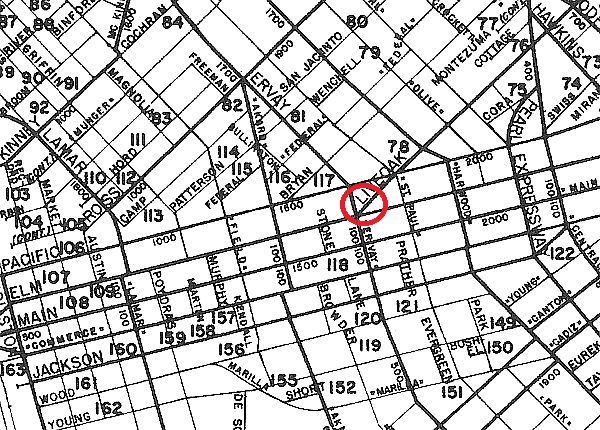
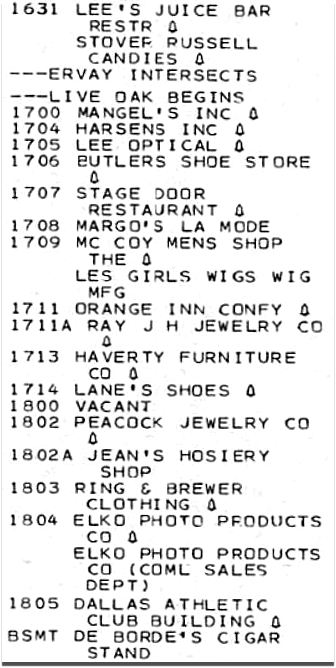
The apparently quite popular eatery was located at/near the old five-point Elm-Ervay-Live Oak intersection (seen here a dozen years earlier — the Stage Door would later be between Lee Optical and Haverty’s). There were two dining areas, one of which was The Playbill Dining Room which served an “international-type cuisine in a Gay Nineties atmosphere.” There was also a thriving take-out deli and the nearby bakery. And now? Come on, Dallas restaurateurs! Get to work!
Top image is a screengrab from a YouTube video, here, containing footage shot downtown by Lawrence W. Haas on Memorial Day, 1966.
Read more about the opening of the new business (and see a photo of the interior) in the Dallas Morning News article “Stage Door Restaurant Makes Debut in Dallas” (DMN, June 3, 1965).
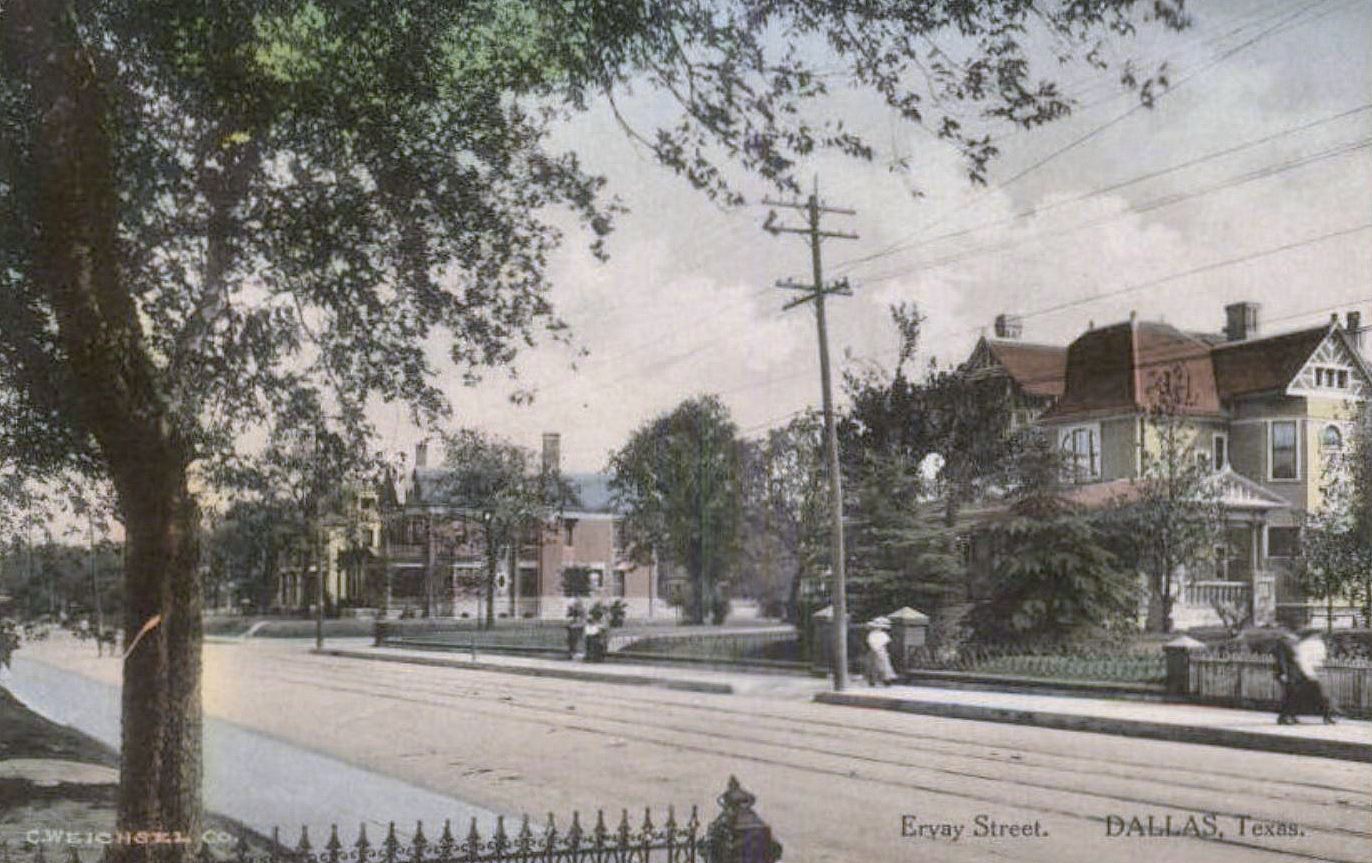
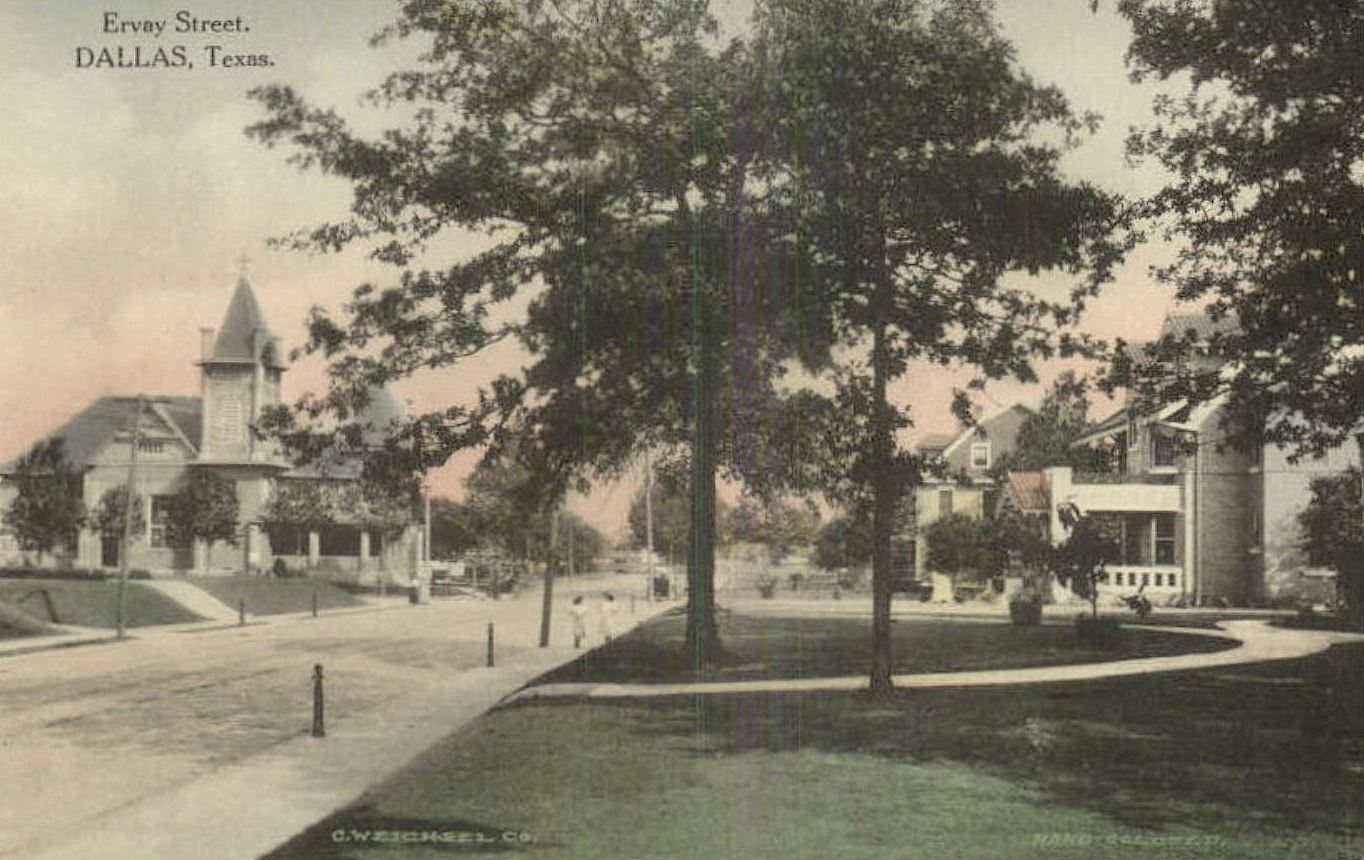
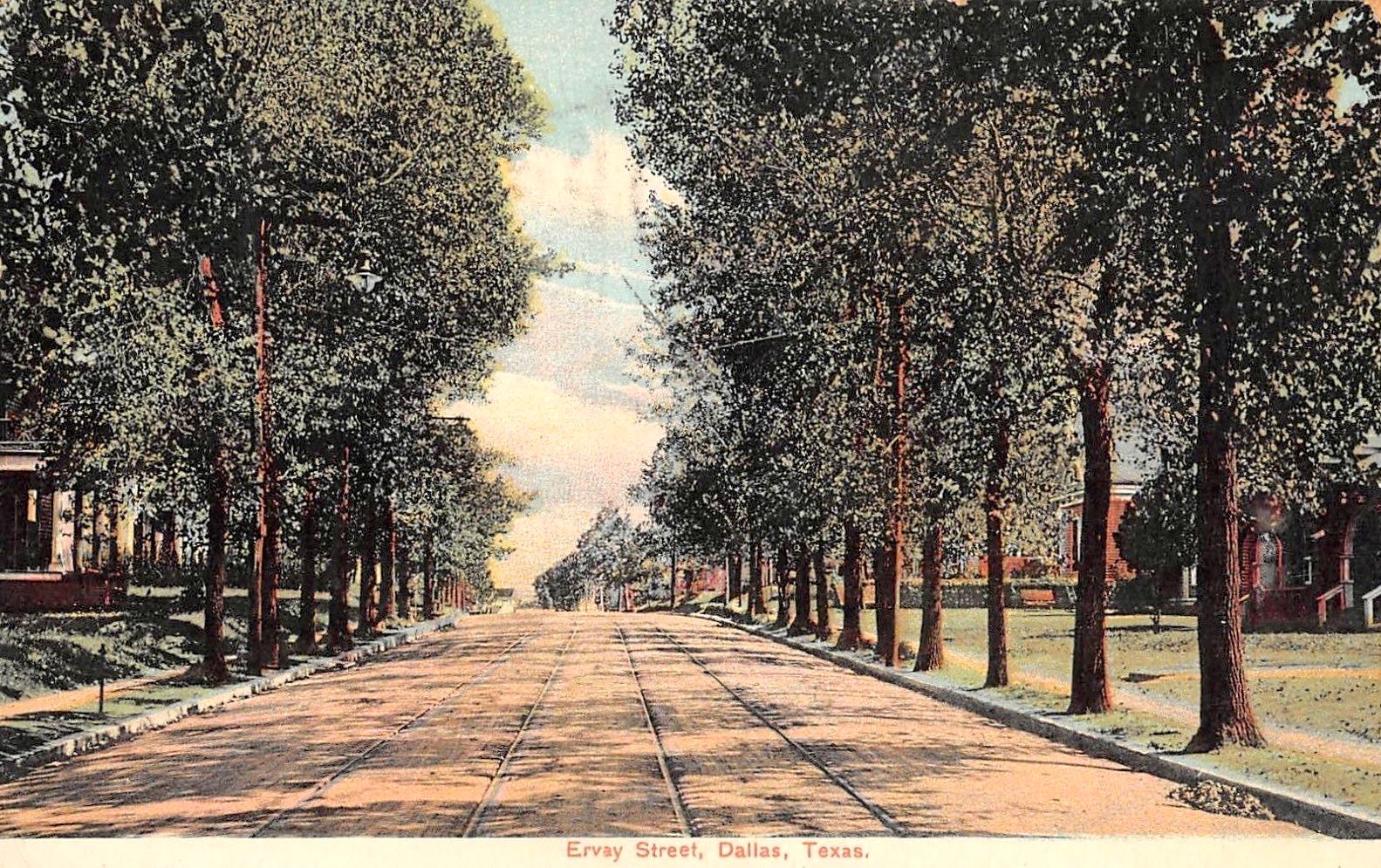
Today, a few hand-colored postcards from around 1910 showing the lovely houses that used to line Ervay Street in South Dallas. Hard as it is to believe today, the stretch of South Ervay from just outside the central business district down to its end at Forest Avenue (now Martin Luther King, Jr. Blvd.), was once a very nice area where many of the city’s most fashionable and well-to-do Jewish families (and, later, African American families) lived. The intervening century has not been kind to South Dallas. I’m not sure of the location in the postcard above, but it certainly looks like a very pleasant neighborhood — one that no longer exists in this mostly blighted area.
*
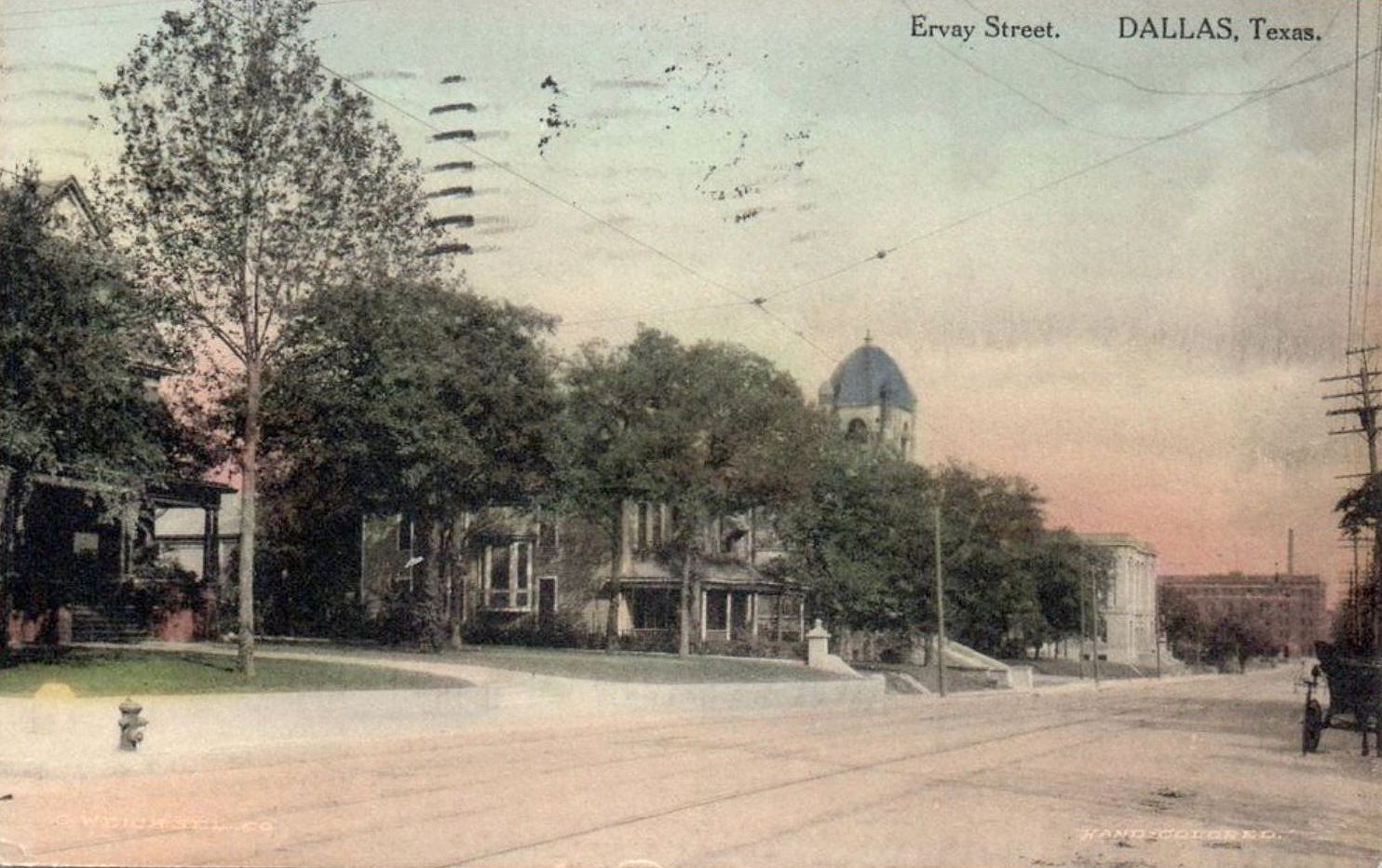
Below, S. Ervay looking south. The rounded top of Temple Emanu-El can be seen at the left. The light-colored building in the next block was the Columbian Club. The hotel most recently known as the Ambassador (which burned down three years after I originally wrote this post) is set back on a curve of the street and is hidden by the Columbian Club. The red building is the Hughes candy plant (still standing). A Google Street View of this area today can be seen here.
*
Below, we see a view still looking south, but now much farther down Ervay, almost to Forest Avenue (now MLK). The church on the left is the James Flanders-designed Ervay Street Methodist Episcopal Church (South), built in 1908 at the corner of corner of Ervay and South Boulevard — it’s interesting that a Methodist church was located in the center of Dallas’ largest Jewish residential neighborhood. (More on the church from a Dallas Morning News article from July 1, 1908, here. See this area on a 1922 Sanborn map here.)
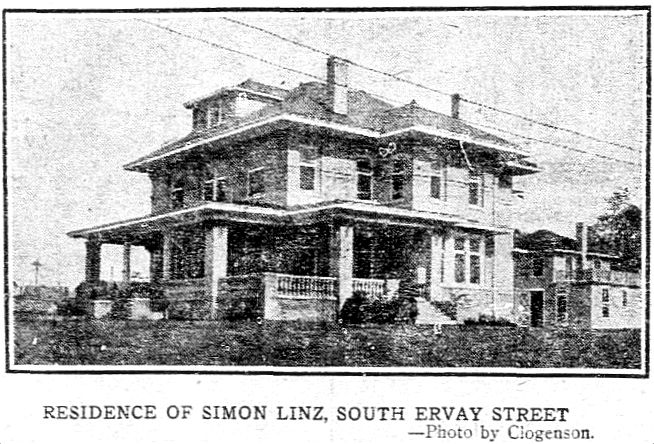
Not seen in the view above is one house worth mentioning. The house — just out of frame at the left, with the steps leading up to it, was the home of Simon Linz, of Linz Jewelers fame. Here is what the Linz house looked like in 1908:
Dallas Morning News, Jan. 1, 1908
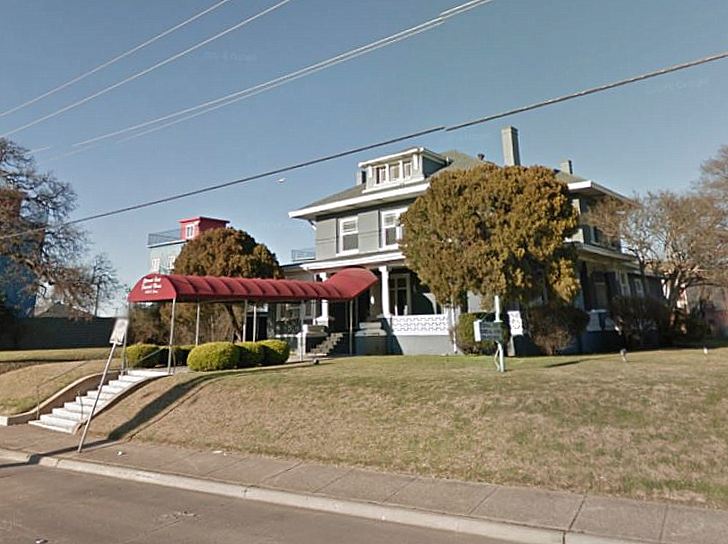
Remarkably, this house is still standing. It is currently a funeral home at 2830 S. Ervay. The present-day image below, showing the pretty house and the neatly landscaped yard, is a little deceptive; see what the Google Street View looks like just south — where the Flanders church once stood — here. (If you’re up to it, reverse the Google view and move back toward town.)
Google Street View
Hold on, little house!
This was once such a beautiful part of Dallas….
**
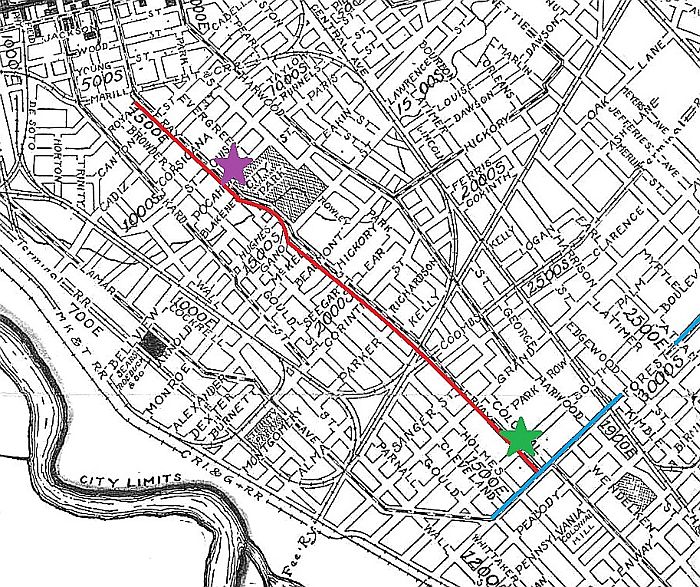
Below, a detail of a 1919 map showing S. Ervay down to Forest. The purple star shows the location of Temple Emanu-El and the Columbian Club. The green star shows the location of the Linz house and the Ervay St. Methodist Episcopal church. (Click for larger image.)
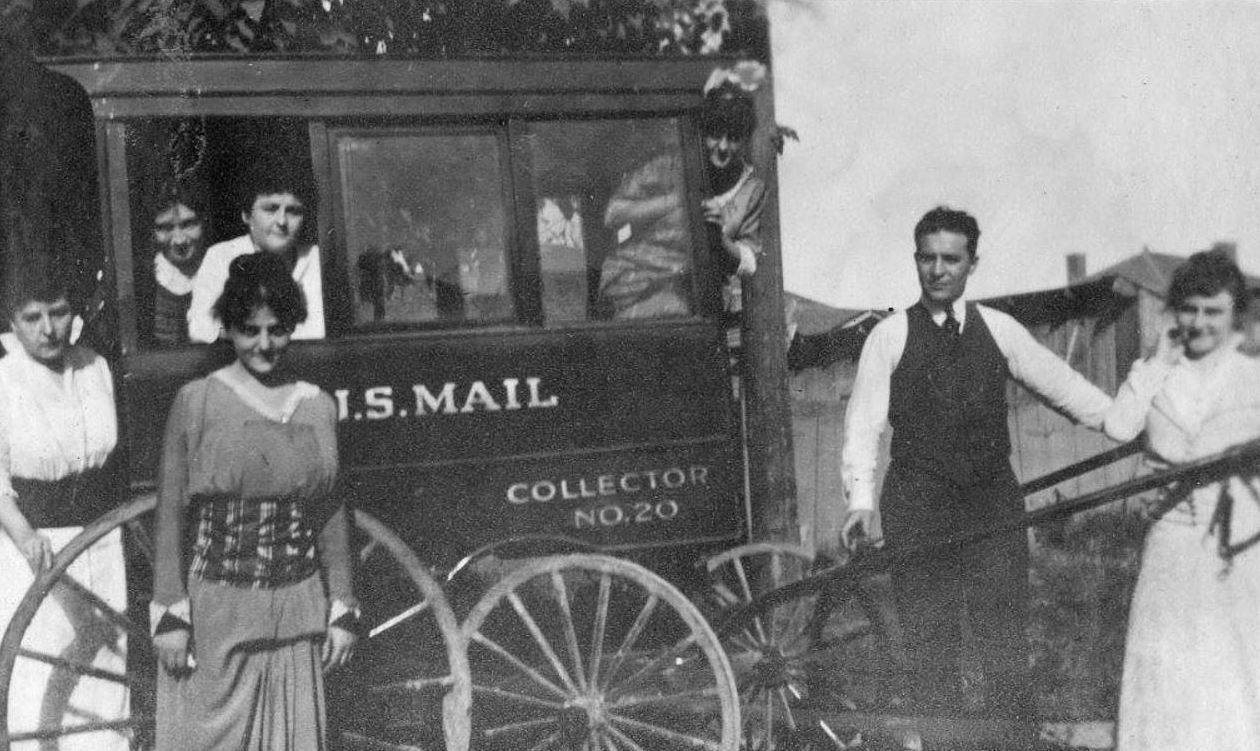
My mailman-hating duck postof yesterday reminded me of this photo I’ve had tucked away in a digital file for months but have never used because I have no information about it. It shows several people — possibly a family? — gathered in and around a U.S. Mail wagon — “Collector No. 20.” The horse team is probably close by. As this photograph was found on the Dallas Jewish Historical Society website, one must presume that the people seen here are Jewish. Why they’re posing with an unhitched mail wagon is unknown, but it’s a cool photo.
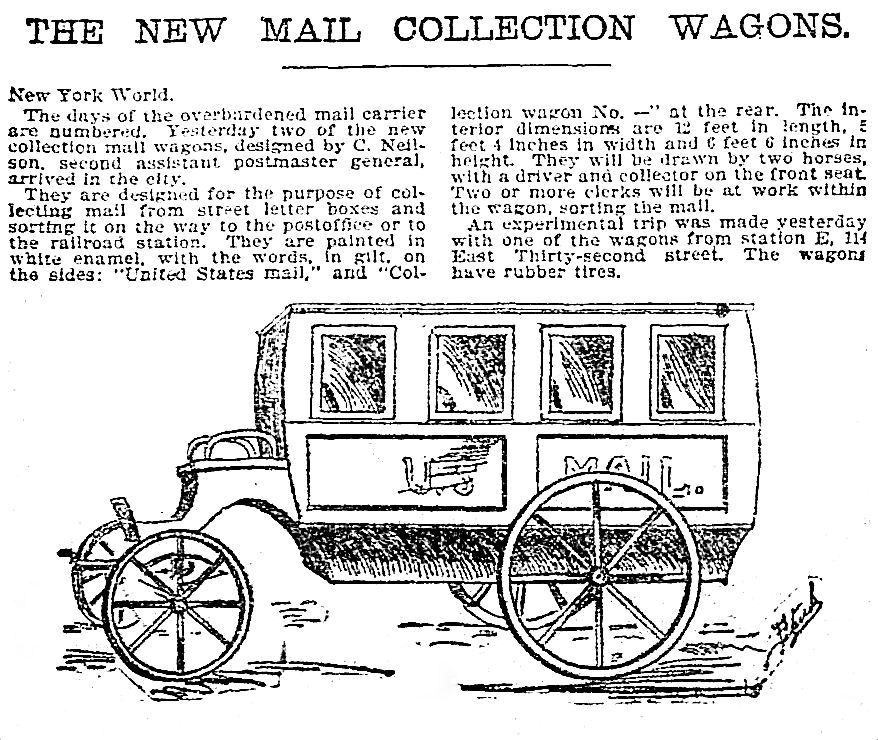
I read a bit about these wagons, which were used to collect mail from boxes around the area and from train depots. The larger ones had a driver for the team of horses, a collector, and two clerks in the back who sorted mail as they headed back to the main post office. (Click for larger image.)
Dallas Morning News, Oct. 2, 1896
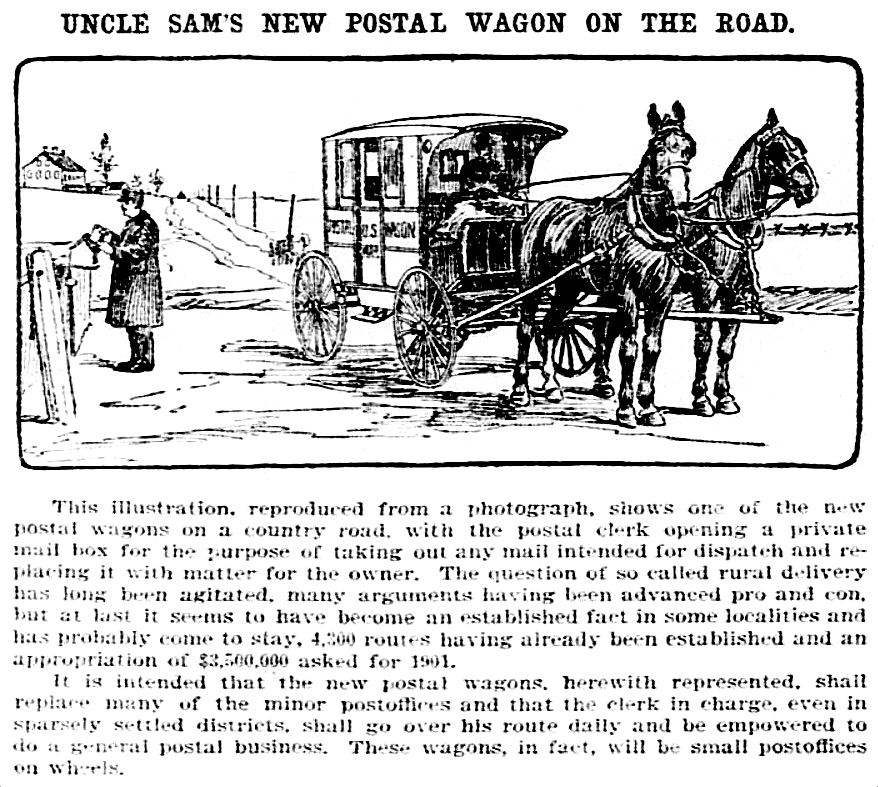
Rural mail delivery began in Dallas in 1901, and wagons like this were eventually used to reach far-flung areas beyond the city. Some of them were set up to be mini mobile post offices, out of which the mail carrier could sell things like stamps and money orders while they were on their appointed rounds of delivering and collecting mail (these mobile post offices actually caused several rural post offices to close).
Fort Worth Star-Telegram, March 23, 1901
There were two main problems with these horse-drawn wagons which showed up time and time again in newspaper reports:
They were constantly involved in collisions, mostly with electric streetcars slamming into them. I’m not sure why this happened so much — perhaps the trolleys were too fast and too quiet — but it was a constant problem.
Also, these wagons, stuffed with letters and packages (and whatever goodies might have been contained therein), were often hijacked at gunpoint or stolen when left unattended. Kind of a holdover from frontier days of holding up stagecoaches.
The life of a turn-of-the-century mailman was fraught with danger.
***
Sources & Notes
Top photo from the Dallas Jewish Historical Society; I’d love to know some — any! — information about who these people were and why they were posing with a mail wagon.
Read the 1925 memories of mail carrier James H. Jackson, who began his career with the Dallas post office in 1884, in the Dallas Morning News article “Dallas Postoffice Grew As City Grew” by W. S. Adair (DMN, Feb. 1, 1925).
Another Dallas-mailman-related story I found interesting can be found in my post “Jim Conner, Not-So-Mild-Mannered RFD Mail Carrier,” here.

 Downtown Dallas has it all…
 Colony Club ad, Nov. 22, 1962
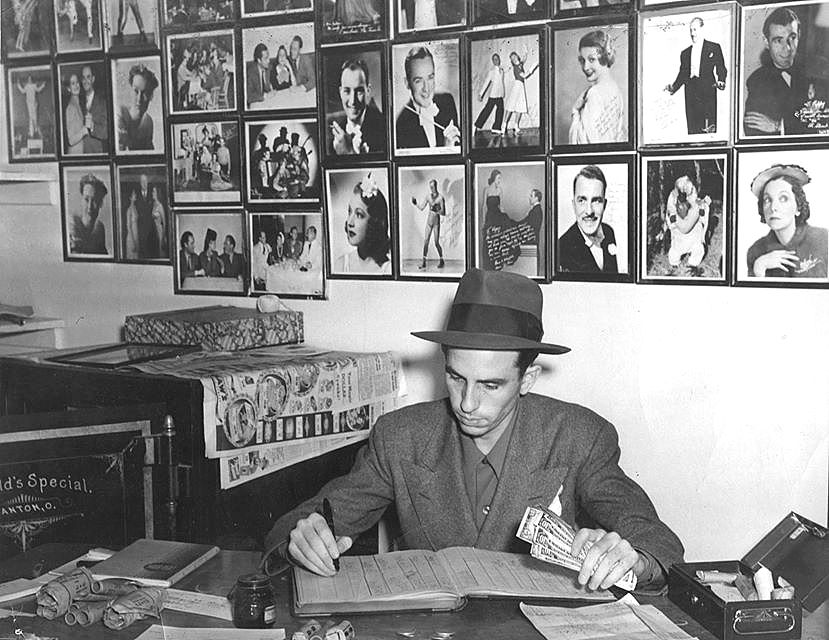 photo: Dallas Jewish Historical Society

















 Flashback : Dallas