Flashback : Dallas

A Miscellany: History, Ads, Pop Culture

Category: Manufacturing

McKinney & Haskell, Circle “T” Frozen Foods, and VWs in Dallas

mckinney-and-haskell_NDHS_ebayFender-bender in front of NDHS… (click for larger image)

by Paula Bosse

Odd stuff shows up on eBay. This photo shows a damaged Circle T Brand frozen-food Volkswagen delivery van at the intersection of McKinney Avenue and North Haskell (with North Dallas High School making a partial cameo in the background). The view today? See it here.

Circle T was one of the many brainchilds of the Southland Corp.’s Thompson family: it manufactured and distributed frozen foods (initially meats and Mexican food) which were sold in the company’s 7-Eleven stores. The company began in 1954 and was located just a couple of blocks from this photo, at Haskell and Central. (In 1954 they announced one of their first specialty products: frozen queso. I’ve never even considered that frozen queso would exist, but 60-some-odd years ago it was flying off shelves at the neighborhood 7-Eleven.)

The Southland Corp. sold off Circle T in 1966.

Below, an ad for Circle T’s frozen steaks, from 1954 (click ad to see larger image).

cicle-t_FWST_062054June, 1954

circle-t-logo_1954

And because I’m nothing if not pedantic, here’s an ad for VW trucks and vans, from 1961 (which appears to be the date on the van’s license plate in the photo):

volkswagen_ad_fen-1961Feb., 1961

And speaking of Volkswagens, the first Dallas car dealer to import Volkswagens appears to be Clarence Talley — the first ads are from 1954. While I was searching for the link to the eBay listing of the above photo (which I could not find…), I serendipitously stumbled across this 1950s photo of Clarence Talley on N. Pearl, with appearances by the Medical Arts Building and the Republic Bank Building. Thank you, eBay.

talley-volkswagen_ebay

***

Sources & Notes

Photos from eBay: could not find the link to the first one, but the second one sold a couple of months ago, and the archived listing is here.

*

Copyright © 2018 Paula Bosse. All Rights Reserved.

The United States Coffee & Tea Co. — 1911

us-coffee-tea_1911_ad_photoCoffee, coffee, everywhere, at Elm & Akard… (click for larger image)

by Paula Bosse

Above, a photo from a 1911 ad for the United States Coffee and Tea Company, importers and roasters. The text of the ad:

The above photograph shows a recent importation of the finest green coffees grown. Weight 40.000 pounds — just forty days supply.

A tril will convince you that our fresh Coffees are superior — Five delivery wagons covering the entire city each day insures prompt service.

UNITED STATES COFFEE AND TEA COMPANY

Corner Elm and Akard Streets   –   Phone Main 703

The company seems to have been founded about 1908 by George W. Wilson and a very young Henry Seeligson. (Click article to see a larger image.)

us-coffee-tea_greater-dallas-illus-1908
Greater Dallas Illustrated, 1908

According to a 1912 ad (which rather breathlessly promised: “WE ROAST COFFEE EVERY MINUTE OF THE DAY”), the company was the “largest retail dealers in Coffee, Tea, Spices and Butter in the Southwest.”

us_coffe-tea_may-1912
1912

The photo at the top shows their building at the northeast corner of Elm and Akard; a few years later they moved down Elm to the northwest corner of Elm and Ervay, just a couple of doors east of the Palace Theater (you can see part of their building behind a photo of the Wilson Building here) — this location was once threatened by a fire which broke out in the bakery owned by Frank A. Carreud:

us-coffee-tea_dmn_070322_fire
Dallas Morning News, July 3, 1922

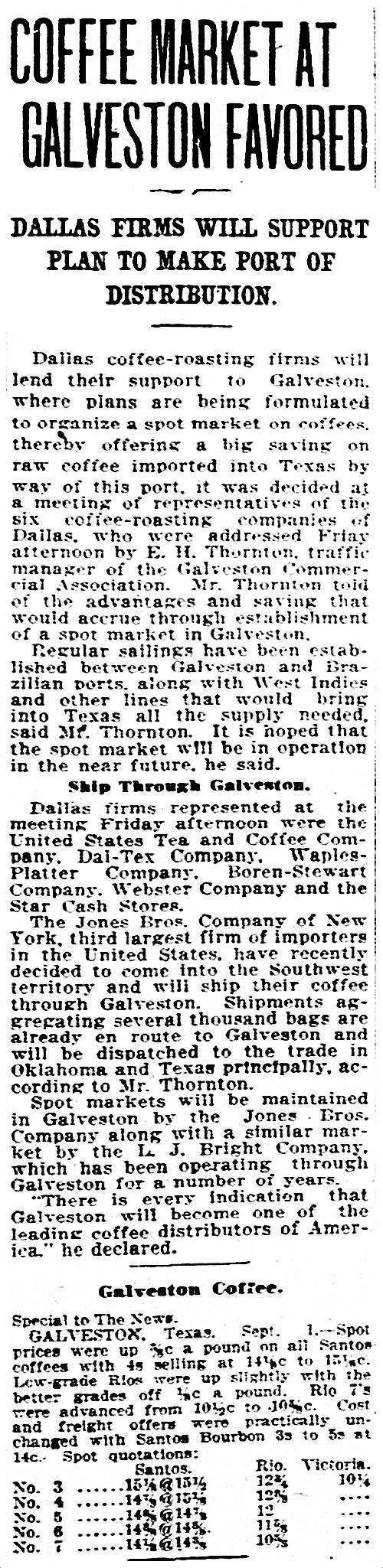
There was a surprising amount of coffee-roasting going on in Dallas in the early decades of the twentieth century. In 1922 the big boys were trying to organize a coffee spot market in Galveston, port to Brazilian coffee and West Indies spices.

us-coffee-tea_dmn_090222
DMN, Sept. 2, 1922

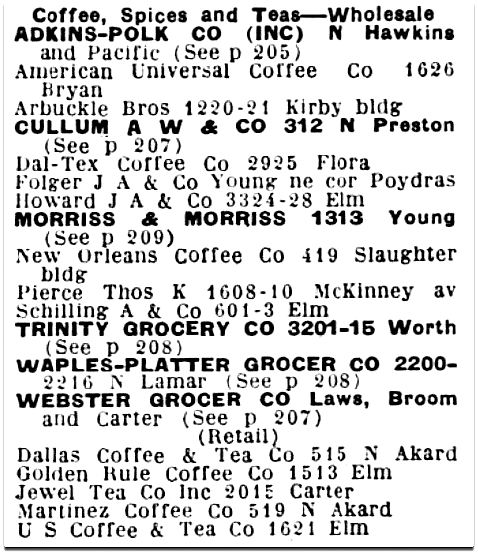
coffee-merchants_1922-directory
1922 Dallas directory

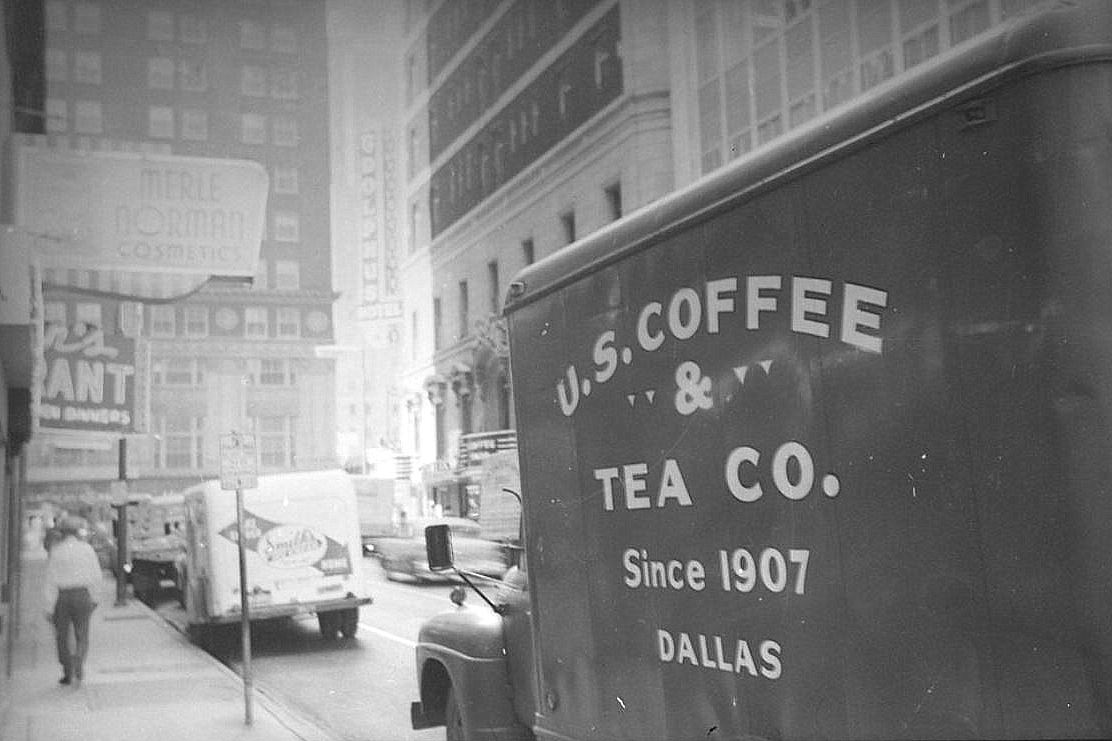
The company was bought by H. L. Hunt’s HLH Parade Co. in 1961; Hunt sold it to the Texas Wholesale Grocery Corp. in 1963 when it appears to have ceased operations under the U. S. Coffee and Tea name. Here’s a photo of a company van sometime before then:

u-s-coffee_city-of-dallas-historic-preservation_flickr

And now I have an intense desire for a cup of coffee.

***

Sources & Notes

Top photo from an ad which appeared in a Terrell School yearbook.

Bottom photo from the City of Dallas Historic Preservation Flickr collection, here — the undated photo was taken by the city’s staff photographer.

Sources of other images/clippings as noted.

*

Copyright © 2018 Paula Bosse. All Rights Reserved.

The Texas Instruments Semiconductor Crystal Christmas Tree

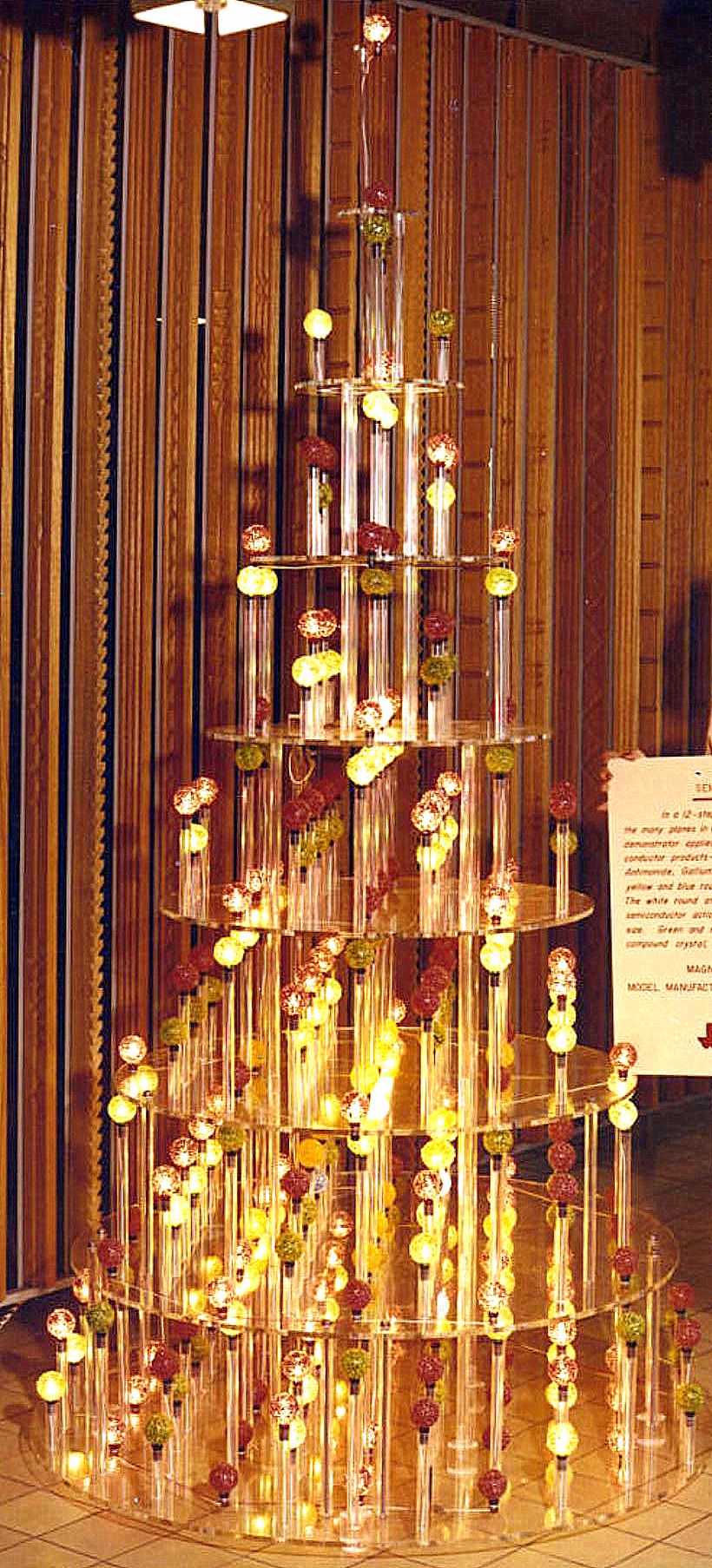
xmas-tree_texas-instruments-records_degolyer-lib_smu_ca-1959-smThe semiconductor tree… (click to see a larger image)

by Paula Bosse

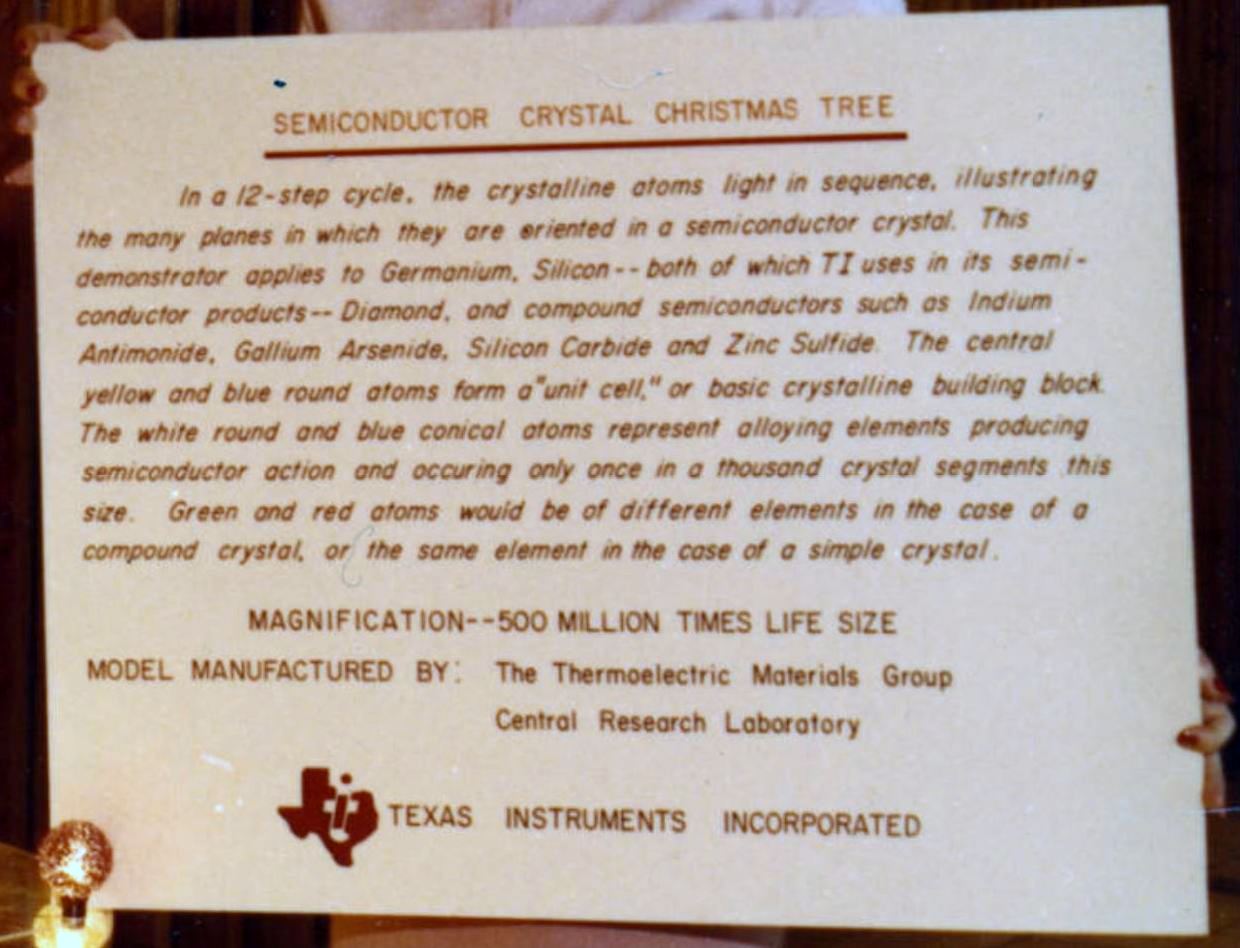
Here’s something you don’t see every day: a Christmas tree made from models of semiconductor crystals. I can’t even begin to understand this, so I’ll hand it over to the “explanation” seen on the card in the photo and pretend to nod knowingly. (Click picture to see larger image; transcription is below.)

xmas-tree_texas-instruments-records_degolyer-lib_smu_ca-1959_descr

SEMICONDUCTOR CRYSTAL CHRISTMAS TREE

In a 12-step cycle, the crystalline atoms light in sequence, illustrating the many planes in which they are oriented in a semiconductor crystal.

This demonstrator applies to Germanium, Silicon – both of which TI uses in its semiconductor products – Diamond, and compound semiconductors such as Indium Antimonide, Gallium Arsenide, Silicon Carbide and Zinc Sulfide.

The central yellow and blue round atoms form a “unit cell,” or basic crystalline building block.

The white round and blue conical atoms represent alloying elements producing semiconductor action and occurring only once in a thousand crystal segments this size.

Green and red atoms would be of different elements in the case of a compound crystal, or the same element in the case of a simple crystal.

MAGNIFICATION – 500 MILLION TIMES LIFE SIZE

Model manufactured by: The Thermoelectric Materials Group, Central Research Laboratory

TEXAS INSTRUMENTS INCORPORATED

*

So … yeah. Merry Christmas from the fine folks at TI’s Thermoelectric Materials Group!

***

Sources & Notes

This circa-1959 photo — titled “Semiconductor Christmas Tree” — is from the RG-06 Semiconductor Group, Texas Instruments records, DeGolyer Library, Central University Libraries, Southern Methodist University; more info on this photo can be found on the SMU site, here.

Speaking of germanium (…there’s a phrase I’ve never used before…), SMU also has another TI photo showing a close-up of “a germanium crystal being pulled (grown) out of a crucible of molten germanium material” here. In fact, SMU’s DeGolyer Library has a whole slew of material in their Texas Instruments records — browse through the collection here.

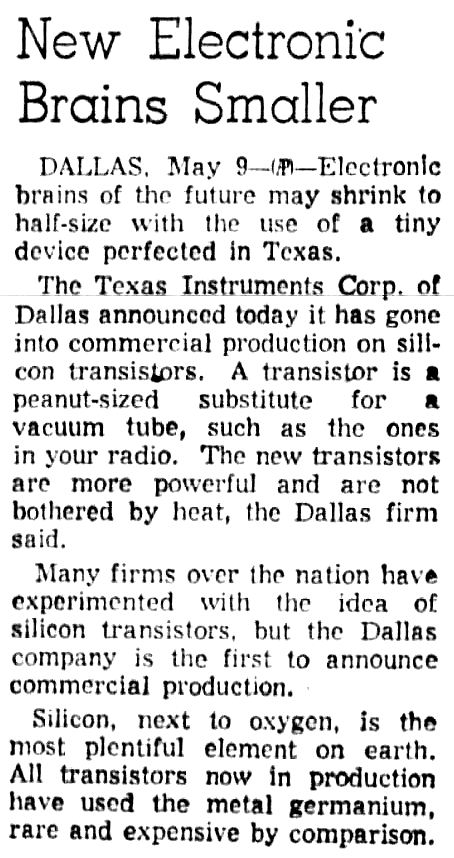
Semiconductors, single-crystal germanium, silicon, and transistors … the world owes Dallas’ Texas Instruments a huge “thank you” for their cannot-be-overstated contribution to the development of the technology that, dare I say, changed life on earth.

texas-instruments_AP_051054AP wire story, May 10, 1954 (click for larger image)

One of the inventors of “single-crystal germanium” was Dr. Gordon K. Teal (1907-2003), a Dallas native whom Texas Instruments snapped up from his previous employer, Bell Laboratories. Read more about Dr. Teal’s remarkable career in an Engineering and Technology History Wiki, here, and in a portrait (literal and figurative) from Baylor University (his alma mater), here.

More about the importance and applications of “single-crystal germanium” in the new Transistor Age can be found in an interview with Dr. Teal in the Dallas Morning News article “Mighty Transistor: Dr. Gordon Teal ‘Grows’ A Gadget” by Robert Miller (DMN, Feb. 8, 1953).

*

Copyright © 2017 Paula Bosse. All Rights Reserved.


Halloween Party? Don’t Forget the Dr Pepper! — 1947

dr-pepper_halloween_1947_flickr“‘Twill add zest to your buffet foods…”

by Paula Bosse

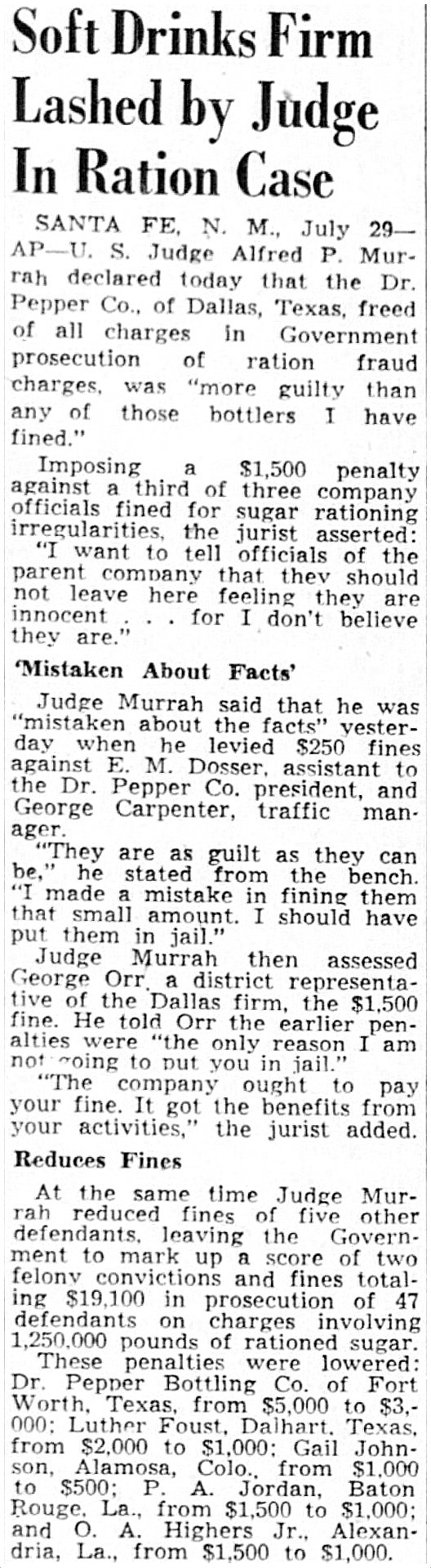
(While searching for a Halloween advertisement, I unexpectedly came across reports of a federal grand jury case brought against Dallas-based Dr Pepper for violating strict wartime sugar-rationing. Scroll down to read about the legal case.)

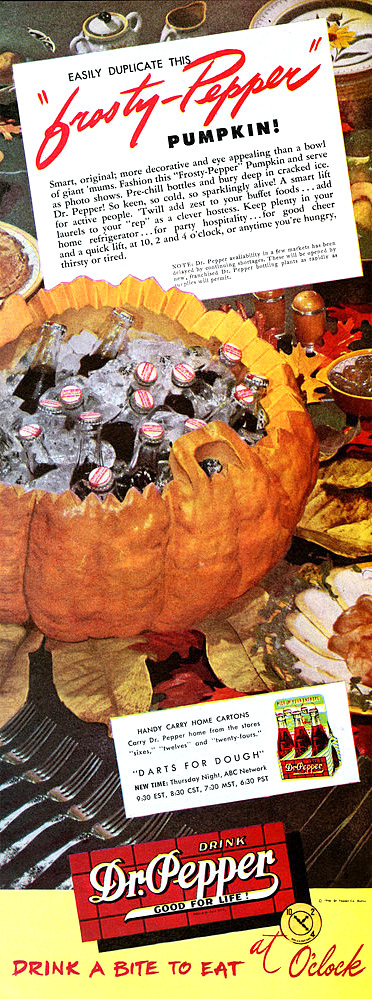
Happy Halloween! Might I propose an eye-catching party suggestion? The “Frosty-Pepper Pumpkin”! Hollow out a pumpkin, fill it with cracked ice, and load it up with bottles of Dr Pepper. Voilà!

The text of the ad, from the fall of 1947:

EASILY DUPLICATE THIS “frosty-Pepper” PUMPKIN!

Smart, original; more decorative and eye appealing than a bowl of giant ‘mums. Fashion this “Frosty-Pepper” Pumpkin and serve as photo shows. Pre-chill bottles and bury deep in cracked ice. Dr. Pepper! So keen, so cold, so sparklingly alive! A smart lift for active people. ‘Twill add zest to your buffet foods … add laurels to your “rep” as a clever hostess. Keep plenty in your home refrigerator … for party hospitality … for good cheer and a quick lift, at 10, 2 and 4 o’clock, or anytime you’re hungry, thirsty or tired. 

NOTE: Dr Pepper availability in a few markets has been delayed by continuing shortages. These will be opened by new, franchised Dr. Pepper bottling plants as rapidly as supplies will permit.

HANDY CARRY HOME CARTONS
Carry Dr Pepper home from the stores 
“sixes,” “twelves” and “twenty-fours.”
 
“DARTS FOR DOUGH”
NEW TIME: Thursday Night, ABC Network
9:30 EST, 8:30 CST, 7:30 MST, 6:30 PST

Drink Dr. Pepper
GOOD FOR LIFE!

DRINK A BITE TO EAT at 10, 2 and 4 o’clock

***

Sources & Notes

Ad found on Flickr, here.

“Darts for Dough”? I had to look that up. It was a radio game show involving quizzes and dart-throwing, created by Orval Anderson and Bert Mitchell at WFAA radio. It debuted in the summer of 1943 as a strictly local program, but it’s popularity was such that it moved to Hollywood in August, 1944 and — still run by the WFAA creators — it began to be broadcast “coast to coast” for several years, moving to television by 1950. It was originally developed in Dallas as a sponsorship vehicle for Dallas-based Dr Pepper and was frequently advertised as “Darts for Dough — The Dr Pepper Show.”

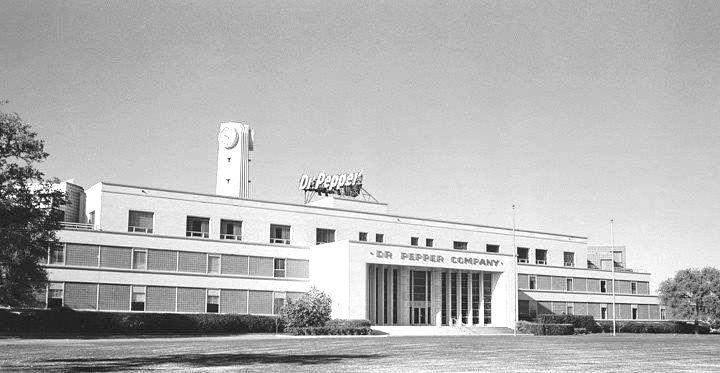
1947 was a big year for Dr Pepper — that was the year their beautiful (and sorely missed) plant opened at Mockingbird and Greenville.

dr-pepper-plant_pinterest

1947 was also a noteworthy year for the company, because of a large federal grand jury indictment which charged several corporations and individuals — including Dr Pepper and some of its bottlers and employees — with sugar-rationing violations (these “irregularities” appear to have begun in the last months of World War II, when wartime food rationing was still serious business). Black-market sugar! A district representative of Dr Pepper was assessed a small fine, but charges of conspiring to violate sugar-rationing regulations which were brought against the DP parent-company were ultimately dismissed, a ruling which angered Federal Judge Alfred P. Murrah, who seems to have been extremely unhappy about the dismissals, as can be read in his blistering statement below.

dr-pepper_sugar-rationing-case_waco-news-tribune_073047
AP story, via Waco News-Tribune, July 30, 1947

Two of the individuals charged in the case — New Mexico residents — received prison sentences in what was described as “the largest black market sugar operation on record,” involving over a million pounds of sugar.

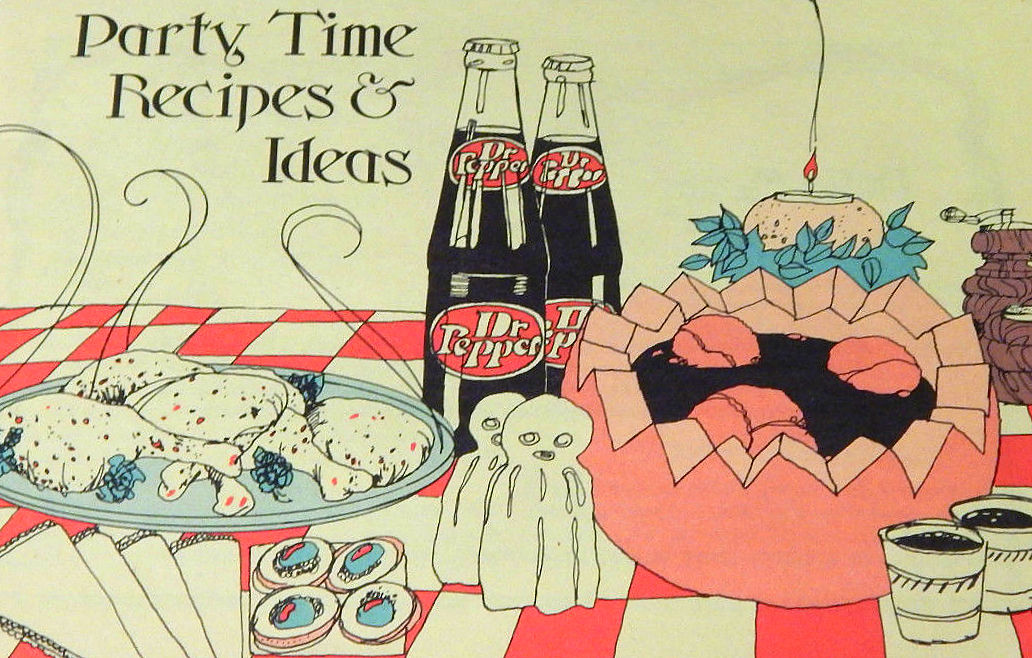
This “Happy Halloween!” post took a bit of an unexpected dark detour. Let’s cleanse our palate with something happier: another party idea with Dr Pepper and a hollowed-out pumpkin (found on eBay).

halloween_dr-pepper_booklet_ebay

More Halloween posts from Flashback Dallas can be found here.

*

Copyright © 2017 Paula Bosse. All Rights Reserved.


The Buell Planing Mill — 1901

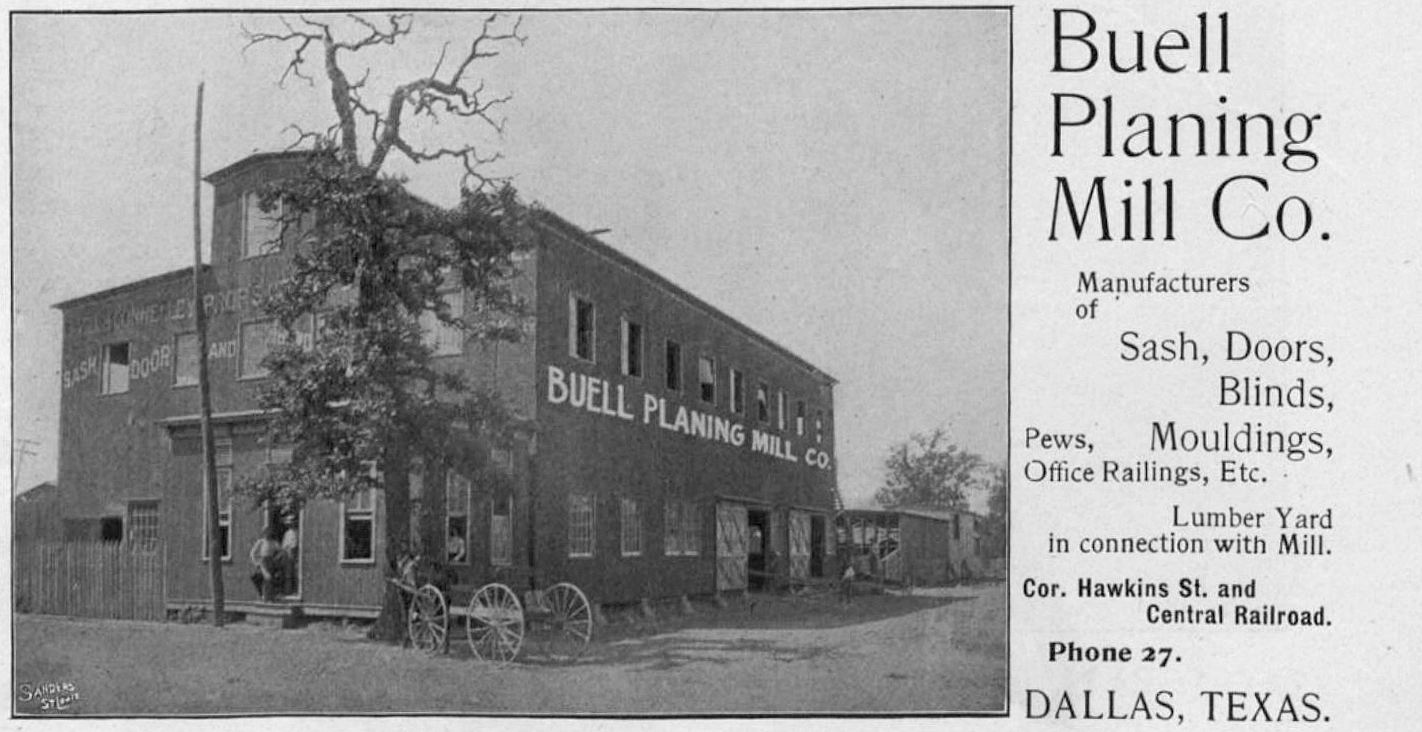
buell-planing-mill_dallas-fire-dept-annual_1901_portalPews a specialty…

by Paula Bosse

The Buell Planing Mill — originally the Buell & Connelly Planing Mill — was established in 1886 by F. T. Buell, a Canadian who came to Dallas as a teenager in 1877. The factory (seen above in an ad from 1901) was built in 1890 just west of the H&TC Railway tracks, at the southwest corner of Hawkins and Montezuma (a street which no longer exists but which ran between Bryan and Live Oak). The mill can also be seen in this ad from 1896:

buell_dallas-directory_18961896 Dallas city directory

The wood frame building burned down in a massive fire in November 1910, and a larger (concrete) factory was built on the same site (an approximate view of the mill’s location as seen today — just to the east of and slightly behind Crozier Tech — can be seen here). The company later became the Buell Lumber & Manufacturing Company in 1918, moved a few times (it left its Hawkins and Montezuma location for Hawkins and Swiss in the late 1940s), eventually became Buell & Co., and was still in business at least into the 1980s.

buell_buell-planing-lumber
Franklin Thomas Buell (1859-1938)

***

Sources & Notes

Ad from the Dallas Fire Department Annual, 1901, from the collection of the Dallas Firefighters Museum; it can be viewed on UNT’s Portal to Texas History site here.

To get an idea of what the surrounding neighborhood looked around the time that photo was taken, see the 1899 Sanborn map here; the 1921 Sanborn map shows the larger post-fire operation, here. Note the neighboring “Central High School”/Bryan Street High School (known more familiarly as Crozier Tech High School); over the years, thousands of high school students walked past (or might even have lived across from) this mill and lumber yard.

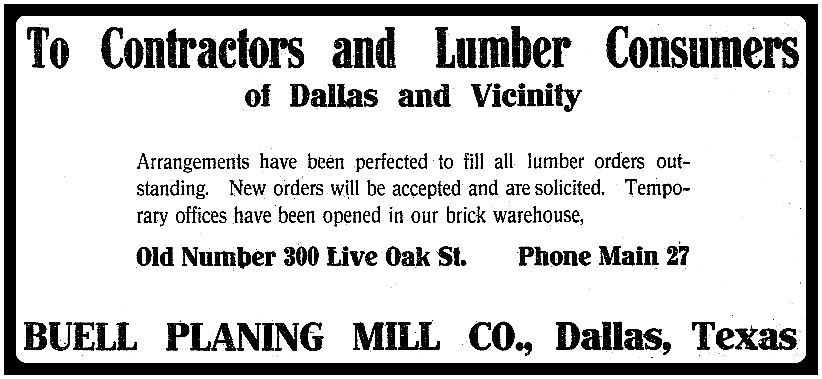
Read about the massive fire of Nov. 30, 1910 that destroyed many of the businesses and houses that surrounded the Buell mill in the Dallas Morning News account “East Dallas Fire Damage $75,000; Near Conflagration at Live Oak and Central Destroys Parts of Four Blocks” (DMN, Dec. 1, 1910) here. The Buell mill was deemed a “total loss” with damages amounting to more than $20,000 (equivalent to over half a million dollars in today’s money). Ads from several of the businesses affected were placed on the page this story appeared on. Below, the Buell ad.

buell-planing-mill_fire_dmn_120110

*

Copyright © 2017 Paula Bosse. All Rights Reserved.

“Serving the Southwest From Dallas” — 1928

industrial-dallas-inc_nations-business-mag_060528_illusAll roads lead to Dallas…

by Paula Bosse

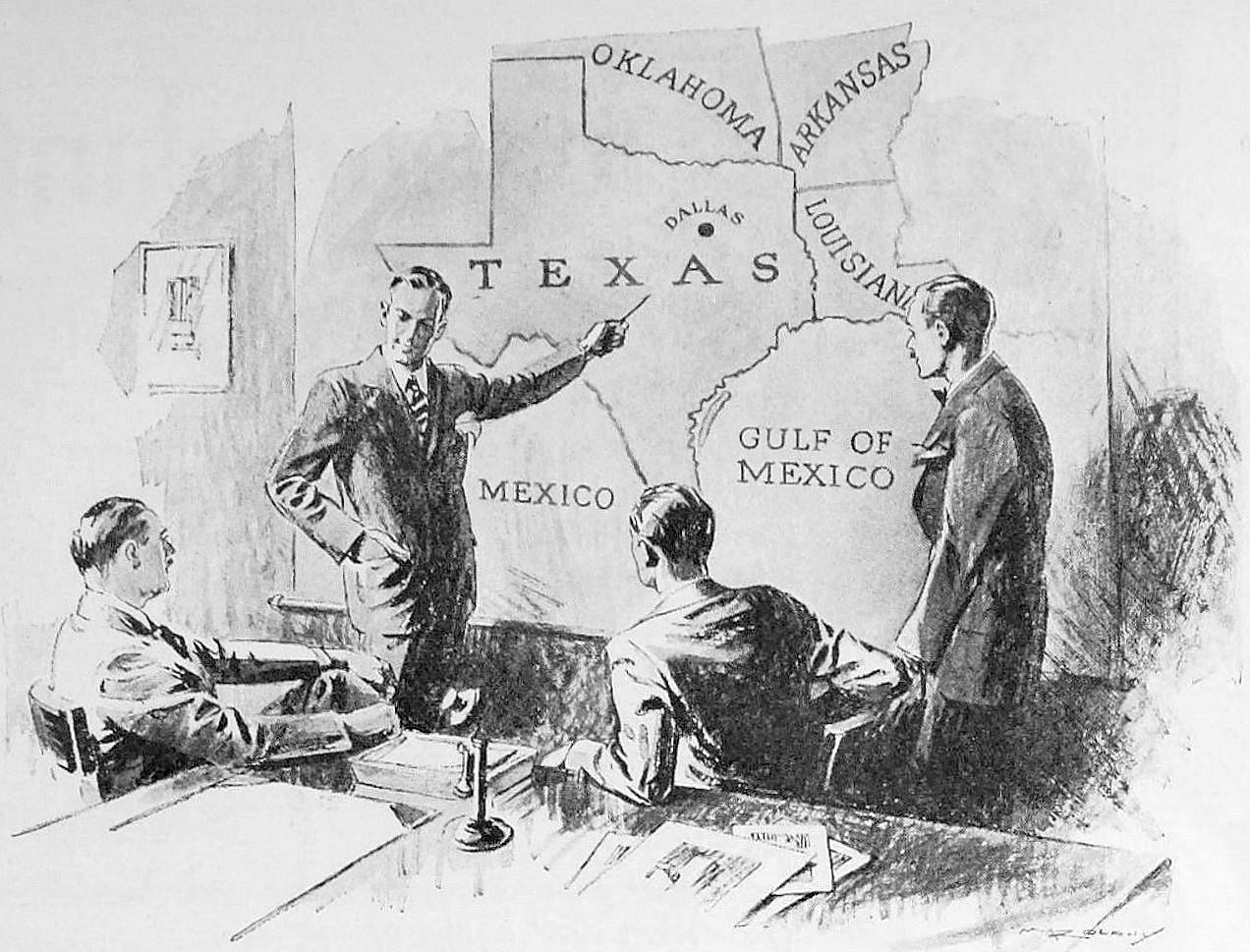
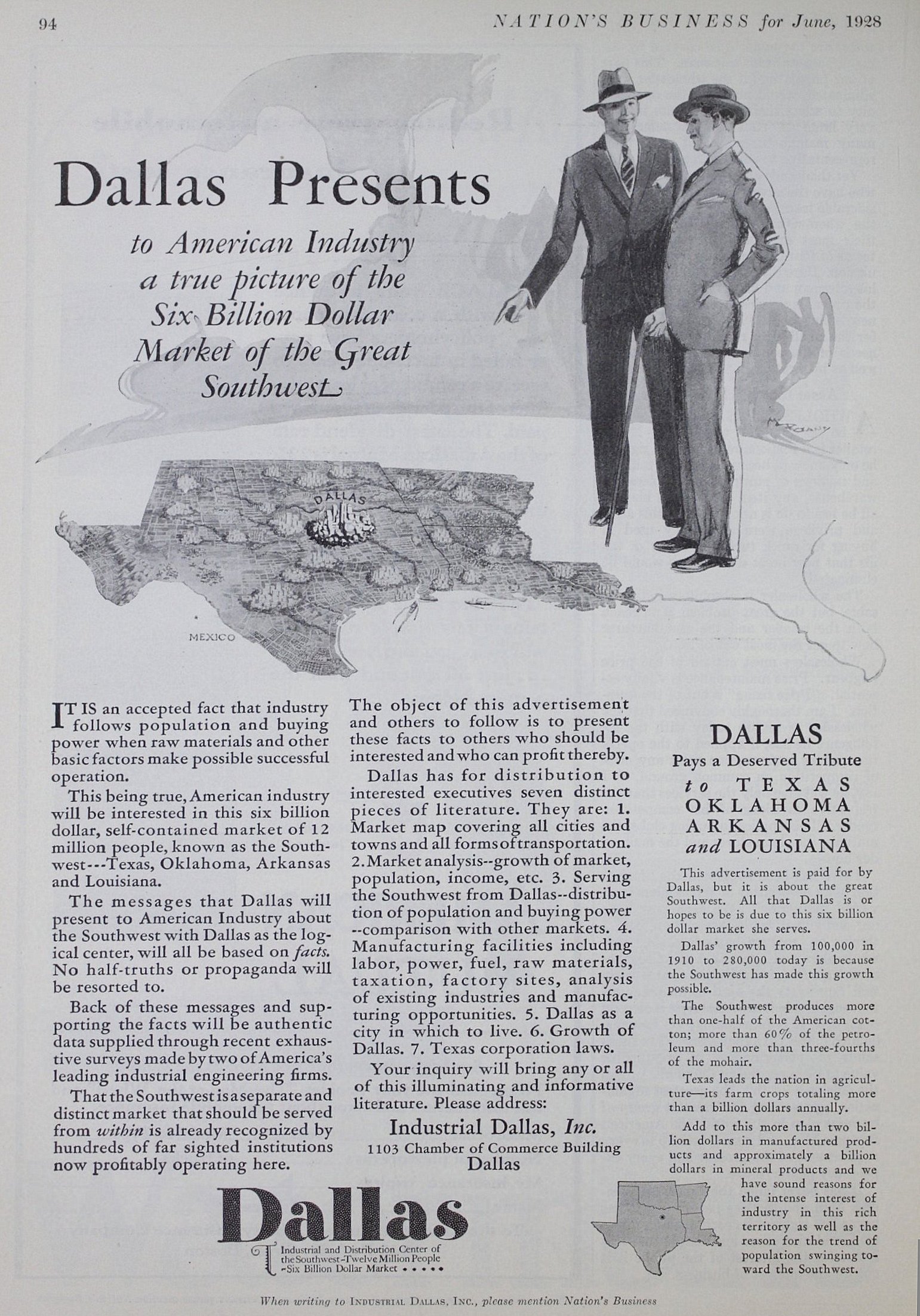
Industrial Dallas, Inc. was a nonprofit corporation formed by directors of the Dallas Chamber of Commerce to boost national awareness of Dallas’ favorable business climate and its role as a major hub of business and manufacturing in Texas and in the neighboring states Oklahoma, Arkansas, and Louisiana. The idea was to promote Dallas in a series of advertisements placed in national business-oriented magazines; the three-year campaign (1928-1931) had a budget of $500,000 (the equivalent of $7,000,000 in today’s money) and was led by banker and Dallas booster (and future mayor) R. L. Thornton. Despite the fact that this campaign coincided with the first years of the Great Depression, Industrial Dallas, Inc. was considered a success: it attracted hundreds of new companies to Dallas and firmly established the city’s national reputation as an important commercial center and as a dynamic young city offering limitless business opportunities.

industrial-dallas-inc_nations-business_060528

*

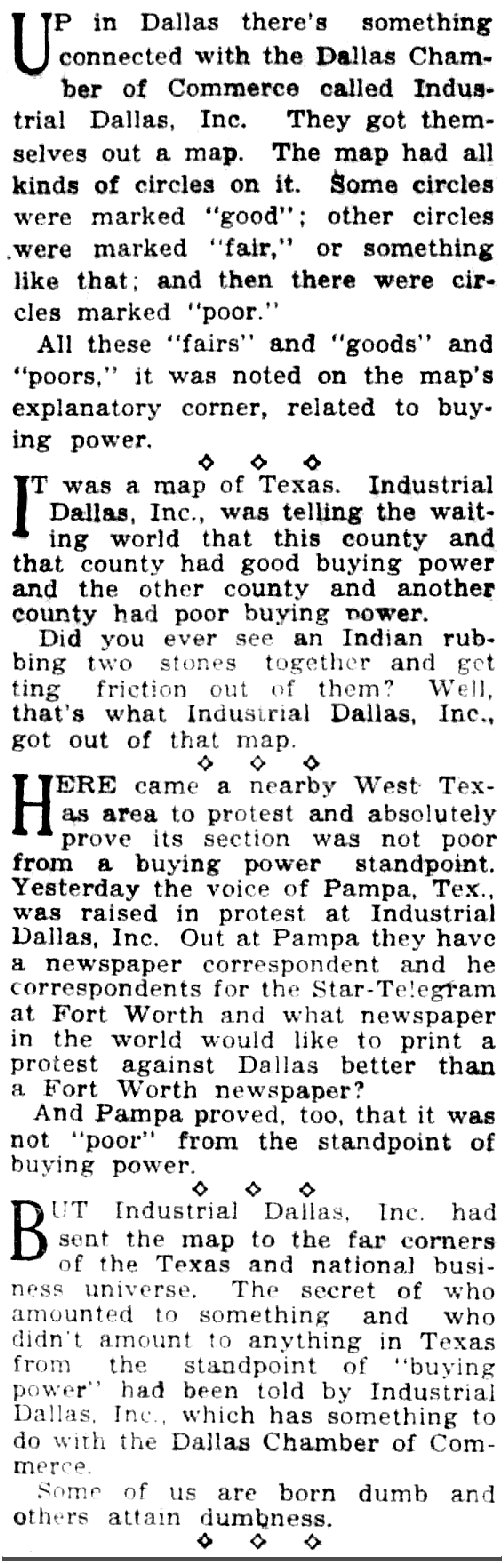
Not everyone was smitten with these Dallas ads, however. Texans who did business beyond the “acceptable” concentric circles of the Dallas, Inc. map were annoyed, as can be seen in this amusing piece by a writer for the Waco newspaper (click to see larger image).

industrial-dallas-inc_waco-news-tribune_121328
Waco News-Tribune, Dec. 12, 1928

The map:

industrial-dallas-traffic-world_092129_ebay_det

***

Sources & Notes

Two Industrial Dallas, Inc. ads appeared it the June 5, 1928 issue of the magazine Nation’s Business (the top illustration is a detail, the second is a full-page advertisement).

The ads were intended to run only three years — until spring of 1931 — but they continued to run until at least the very beginning of 1932. In 1959, Industrial Dallas, Inc. was resurrected for another publicity blitz (led by Dallas Power & Light president C. A. Tatum, Jr.), and ads again appeared in national publications for three years. One of this later series of ads can be seen here.

An interesting little sidebar about this campaign was that it was expressly credited with attracting the Firestone Tire and Rubber Co. to build a new “Master Super Service Station” at the northwest corner of Ross and Harwood in 1929 as part of the company’s multi-million-dollar national expansion program. The company purchased what was then the home of the Knights of Columbus, but it had been known since its construction around 1900 as the grand Conway residence, a palatial house designed by architect H. A. Overbeck for prominent lumber dealer J. C. Conway (it was the childhood home of his daughter Gordon Conway, a noted fashion illustrator). It was reported that after the Firestone Co. purchased the property, Harvey Firestone, Jr. had two carved mahogany mantels removed from the house and shipped to the home he was building “in the North.” It’s sad that such a lovely home (seen here) — not even 30 years old! — would be torn down to build a service station. But time and tide wait for no man. Especially in Dallas.

Images larger when clicked.

*

Copyright © 2017 Paula Bosse. All Rights Reserved.


Wilson & Co., Their Clydesdales, and the Dallas Jaycees’ Safety Committee — 1951

wilson-and-co_clydesdales_ebay_1951Giant horses at the ready… (click for larger image)

by Paula Bosse

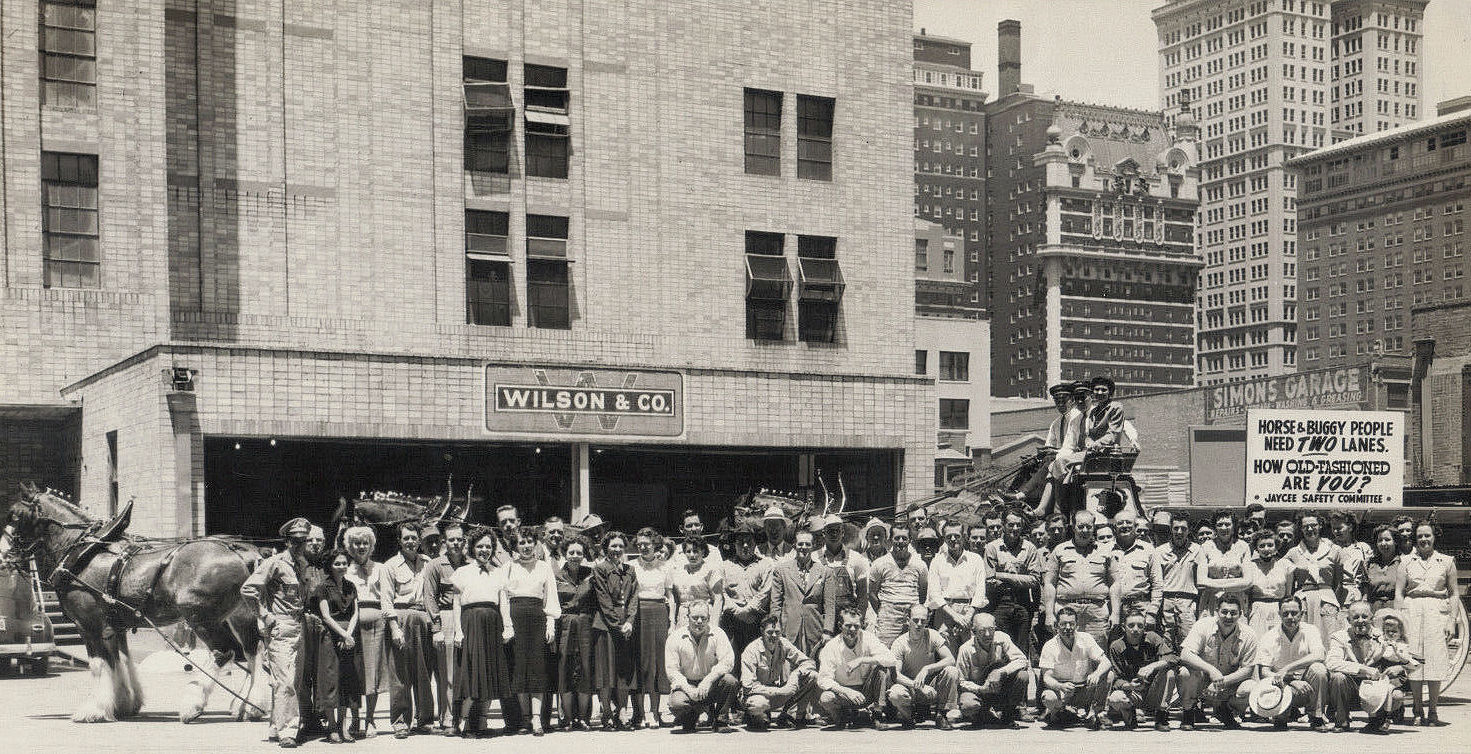
I came across this undated photo a couple of years ago on eBay, and it took a little bit of digging to come up with just what was going on here.

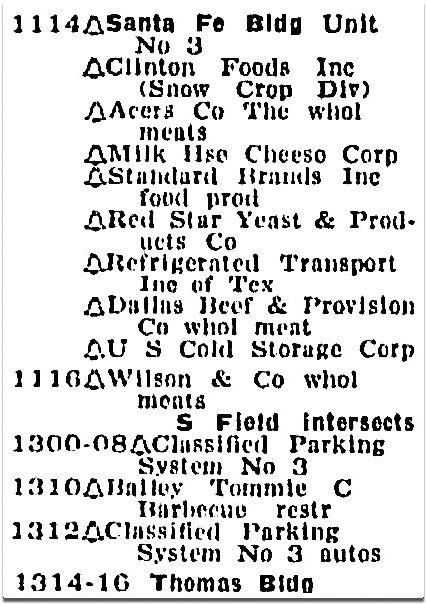
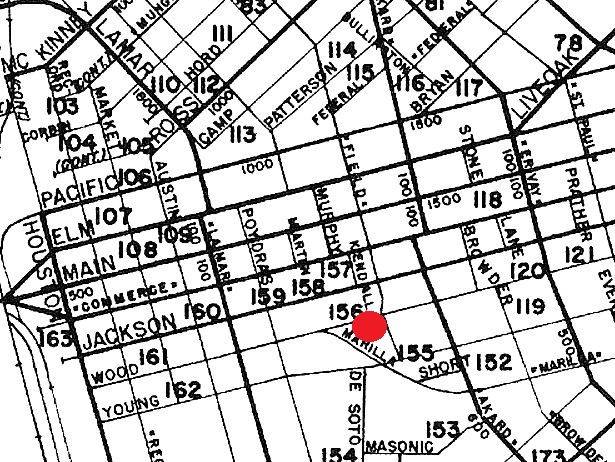
The Wilson & Co. meat packing and processing business began in Chicago in 1916 and quickly became one of the nation’s largest meatpackers, right up there with Armour and Swift. It expanded across the country, and one of its plants was in Dallas — in Unit 3 of the Santa Fe complex of buildings, located on Wood Street, between Field and what is now Griffin. (This building was later known as the Ingram Freezer Building and was demolished in 1988.) The Wilson company was acquired by Dallas-based LTV in 1967, and was later “spun off” from LTV in 1981

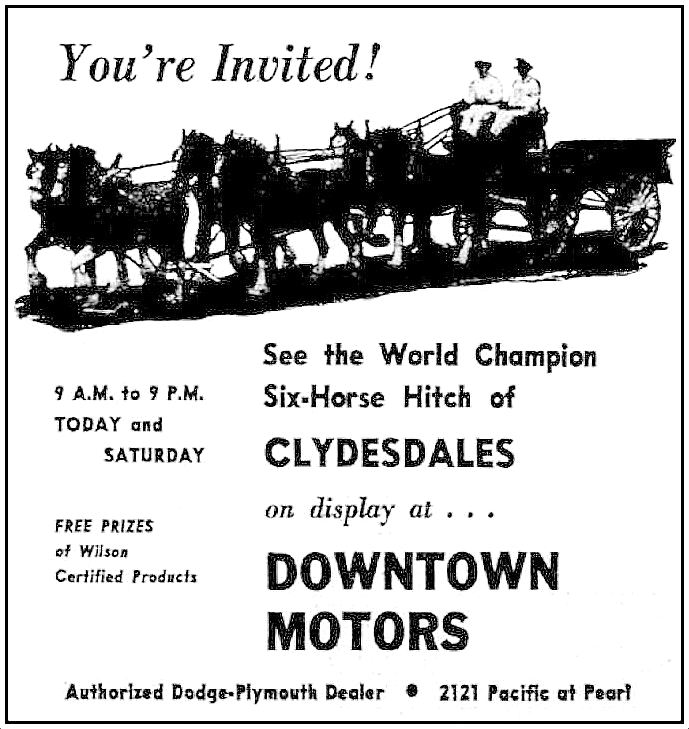
The Wilson company had owned a prize-winning “six-horse hitch” of Clydesdale horses since 1917, and they were sent around the country to promote the company and its line of processed meats. Not only were the horses prize-winners at livestock shows, they were also incredibly popular with the public. (They had made a huge splash at the Chicago World’s Fair in 1933, and it seems Budweiser took note of the promotional possibilities of the impressive animals, as the Anheuser-Busch Co. ended up buying the original team from Wilson that same year. So there were at least two competing Clydesdale teams clomping along the downtown streets of America, through at least the late ’60s.)

The photo above was taken when Wilson & Co.’s horse celebs visited Dallas in May, 1951. During their time in Big D they paraded through downtown at noontime and entertained workers on lunch breaks; at night they bunked in temporary stables in the service department of a Pacific Avenue car dealership. The photo at the top shows a public service event in which the Dallas Junior Chamber of Commerce promoted traffic safety in conjunction with the visiting horses. In the photo, the Wilson company employees (who have somehow managed to block the view of several thousand pounds of horseflesh and the huge 1890s wagon behind them) look happy during their little photo-op break from work. And in the background, we see the Adolphus Hotel (…built by the man behind Budweiser beer…), the Magnolia Building, and the Baker Hotel.

All this kind of makes me want a ham sandwich and a bottle of beer…. 

wilson_clydesdales_amazon
via Amazon

wilson-clydesdales_dmn_051151
May, 1951

wilson_1953-directory
Wood Street, Dallas city directory, 1953

wilson-and-co_1952-mapsco
1952 Mapsco

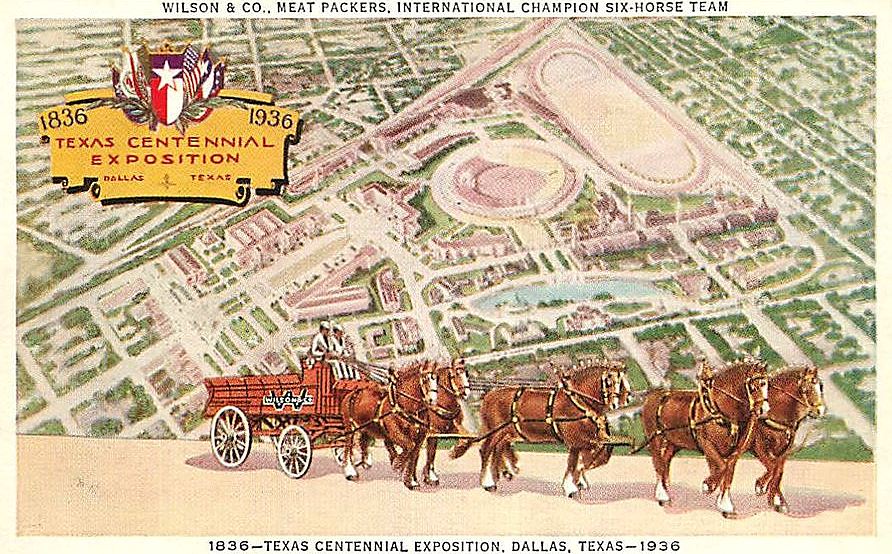
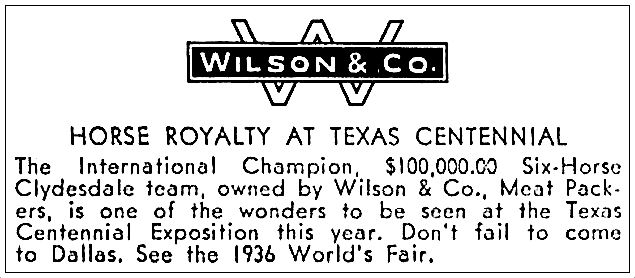
Below, a postcard advertising the appearance of the Wilson “Champion Six-Horse Team” at the 1936 Texas Centennial:

wilson-co_clydesdales_1936_ebay

wilson-co_clydesdales_1936_ebay_back

***

Sources & Notes

Photo found on eBay in 2014; on the back is the stamp of photographer Denny Hayes.

Texas Centennial postcard from eBay.

See an unimpeded view of the famous six-horse team of Clydesdales (each of which weighed, on average, two thousand pounds) in a 1954 Cedar Rapids Gazette photo, here.

A couple of interesting tidbits about the Wilson company and about the horses:

  1. Thomas E. Wilson, the founder of the meatpacking company also founded Wilson Sporting Goods
  2. As a celebratory nod to the end of Prohibition, the famed Budweiser Clydesdales were purchased from Wilson in 1933 — this was Wilson’s original team from 1917. (Clydesdale horses generally live for 20-25 years.)

Pictures and clippings are larger when clicked.

*

Copyright © 2016 Paula Bosse. All Rights Reserved.

The Mitchell Building: Home to Cotton Gins, Rockets, Frozen Beverages, A/C Units, Slackers, Squatters, Hipsters, and Urban Loft-Dwellers

mitchell-bldg_oct-1988_appl-natl-register-hist-placesIn 1988, the building had seen better days… (click for larger image)

by Paula Bosse

In 1928, the John E. Mitchell Company (discussed previously here, here, and here) arrived in Dallas from St. Louis and built their J. A. Pitzinger-designed 2-story factory at 3800 Commerce Street (a wing was added the next year, and a third story was added the year after that). It produced cotton gins and farm implements. As strange as it seems today, Dallas was once the largest producer of cotton gin machinery in the United States. The Mitchell Company was located in a mostly industrial area very close to several other cotton gin manufacturers (such as the nearby  Continental Gin Company and Murray Company). At the height of their production, these Dallas factories were  responsible for half of the world’s cotton gins.

When World War II hit, the company became an important defense contractor and produced munitions for the U.S. Navy and U.S. Army, making things such as “anti-submarine projectiles,” anti-aircraft shells, rocket nozzles, and “adapters for incendiary bomb clusters.”

After the war, the Mitchell Company continued to manufacture agricultural implements but diversified by turning out other types of machinery, like automobile air conditioners and and cleaning systems. As the 1960s dawned, they developed the machine that made ICEE frozen slushy drinks (forever immortalized by 7-Eleven as The Slurpee).

After the death of company president John E. Mitchell, Jr. in 1972, the business began a slow slide downward. The company appears to have gone out of business in the early 1980s. In the fall of 1982, the company’s equipment was sold at public auction, and, in 1984, the building became the temporary home of the Junior Black Academy of Arts and Letters.

In the 1980s, Deep Ellum and Exposition Park began to explode with new bars, clubs, and galleries. If it was cool, it was in Deep Ellum and Expo Park; if it was in Deep Ellum and Expo Park, it was cool. Artists and musicians began to move into many of the neighborhood’s old warehouses. These usually run-down buildings — in which bohemian types lived (not always legally) and used as studio spaces — were huge and (in the beginning) cheap. The Mitchell Building became something of a ground zero for wild parties and was described in a fantastic 1995 newspaper article by Shermakaye Bass (linked below) as both a “flophouse” and “an artists commune and downtown slacker den.” The building was closed and boarded up by its owners in early 1995 in order to avoid code-violation citations, but by 1999 the building had been purchased, cleaned up, modernized, and converted into 79 loft apartments. Today, the Mitchell Lofts have been a part of the Expo Park scene for almost 20 years.

*

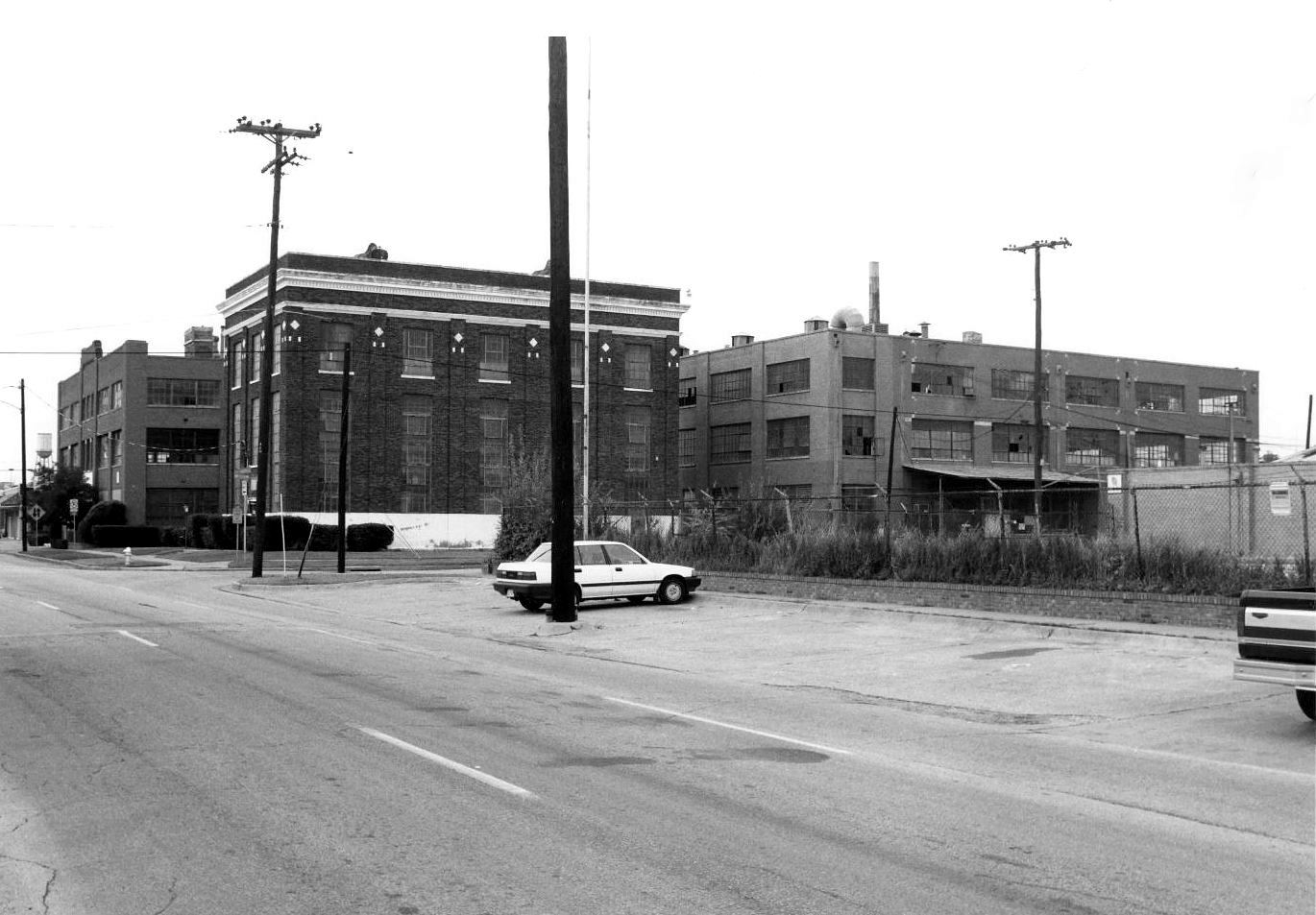
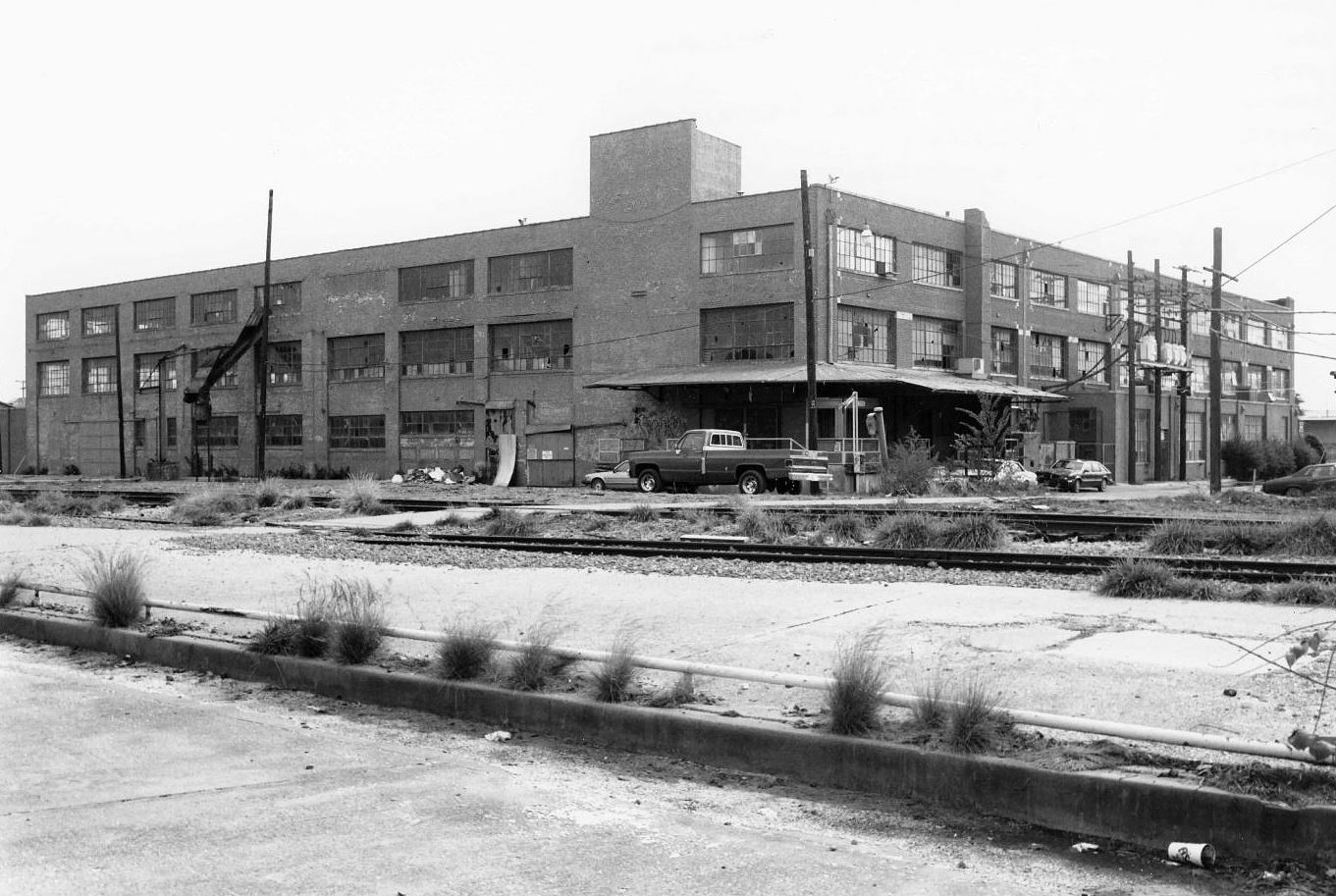
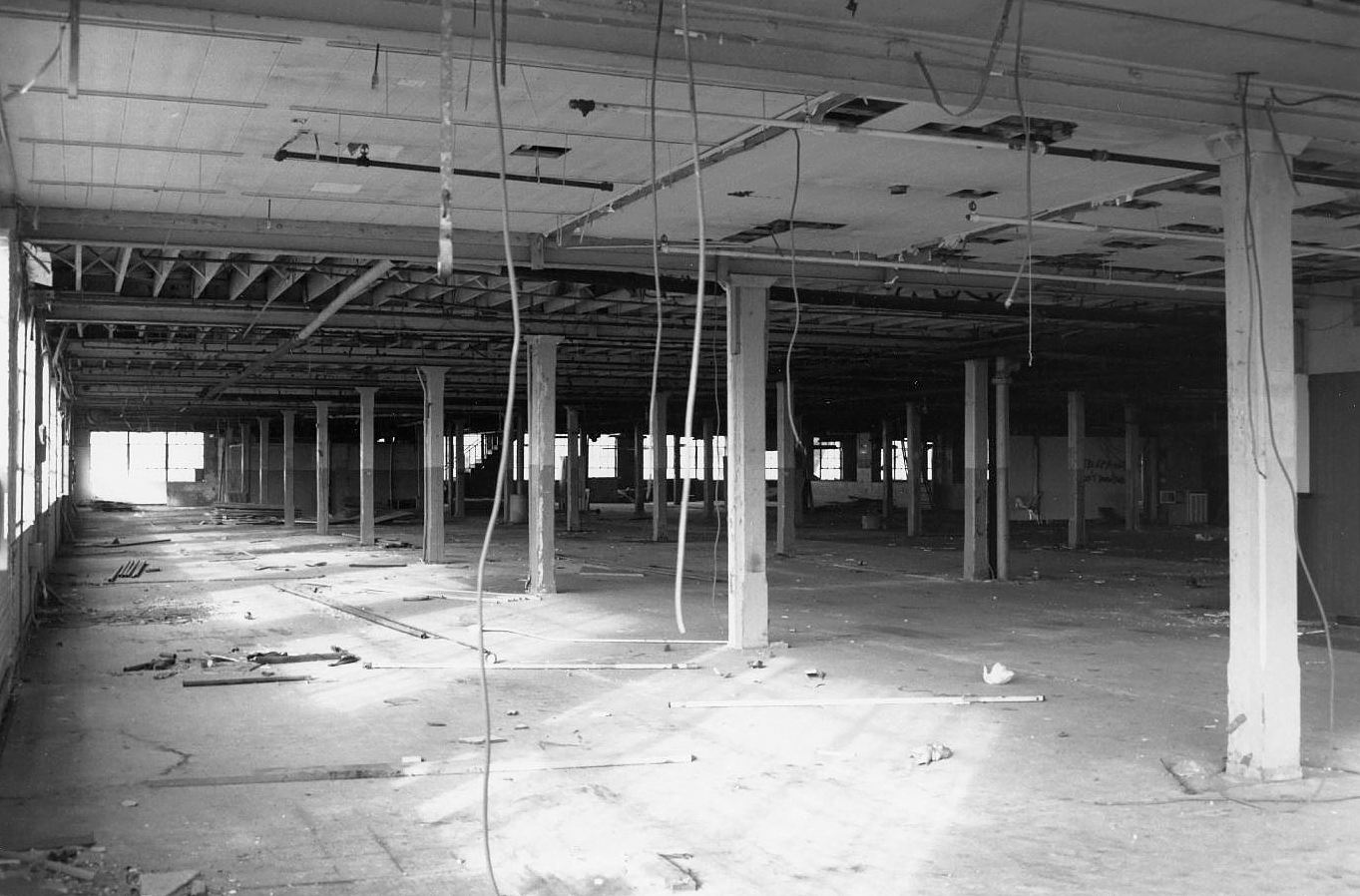
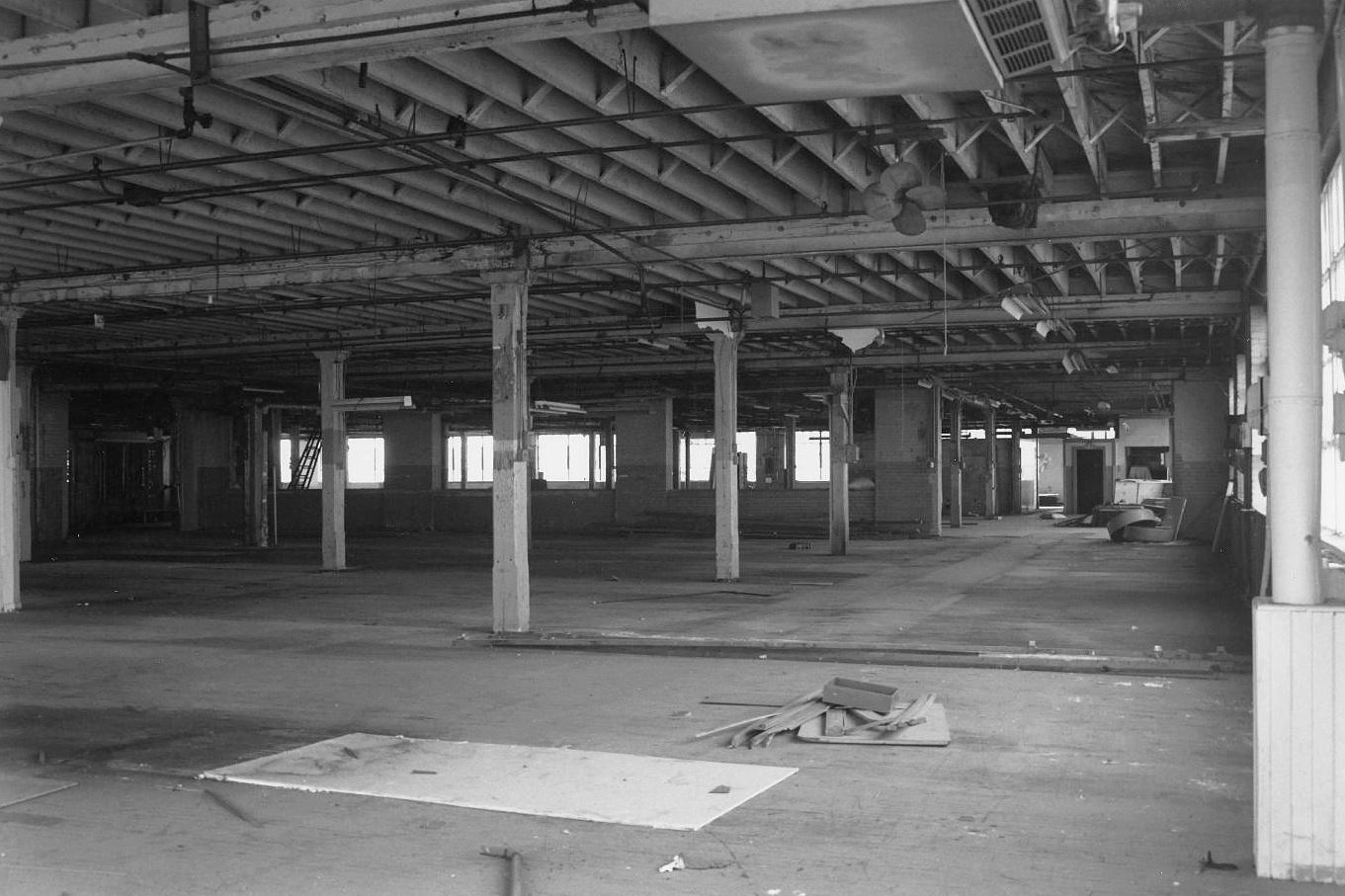
In 1991, the Mitchell Building was listed on the National Register of Historic Places. The photographs below (and the one at the top) were included in the application form. They were taken by Daniel Hardy of Hardy-Heck-Moore in October, 1988. Things weren’t looking great for the building in 1988. It must have been quite an undertaking to convert this large L-shaped building (which had certainly seen better days) into hip, sleek lofts.

Below, looking northwest on Commerce. The Mitchell Building is in an L-shape — the smaller building in the foreground is an old Dallas Power and Light substation, built around 1925. (Click photos to see larger images.)

mitchell-bldg_oct-1988_2

*

The back, from the old T&P/Missouri-Pacific railroad tracks.

mitchell-bldg_oct-1988_3

*

And two interior views of the second floor.

mitchell-bldg_oct-1988_4

mitchell-bldg_oct-1988_5

*

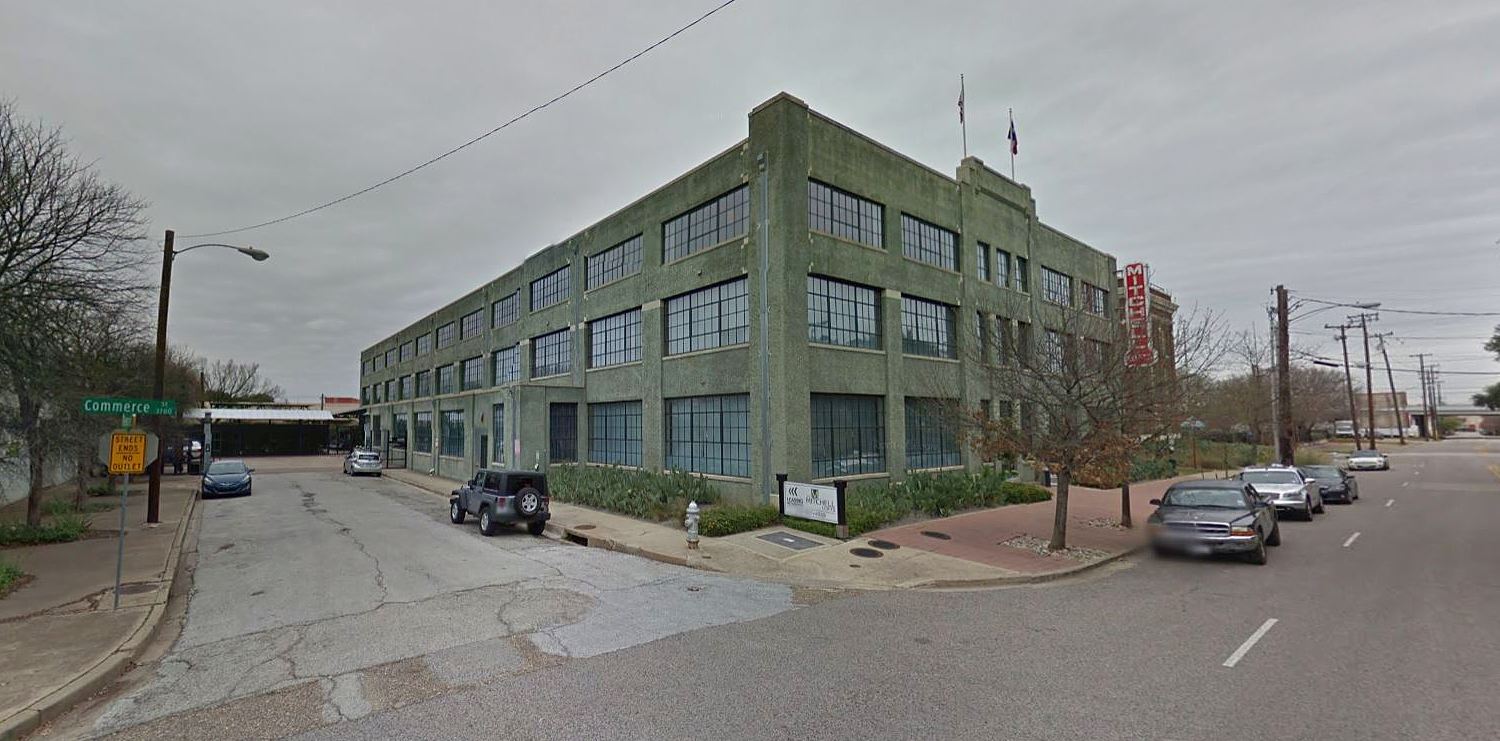
Here’s what the exterior looks like today, spiffified. (Explore it on Google Street view here.)

mitchell-lofts_google_jan-2016Google Street View (Jan. 2016)

mitchell-building_google
Google Maps

**

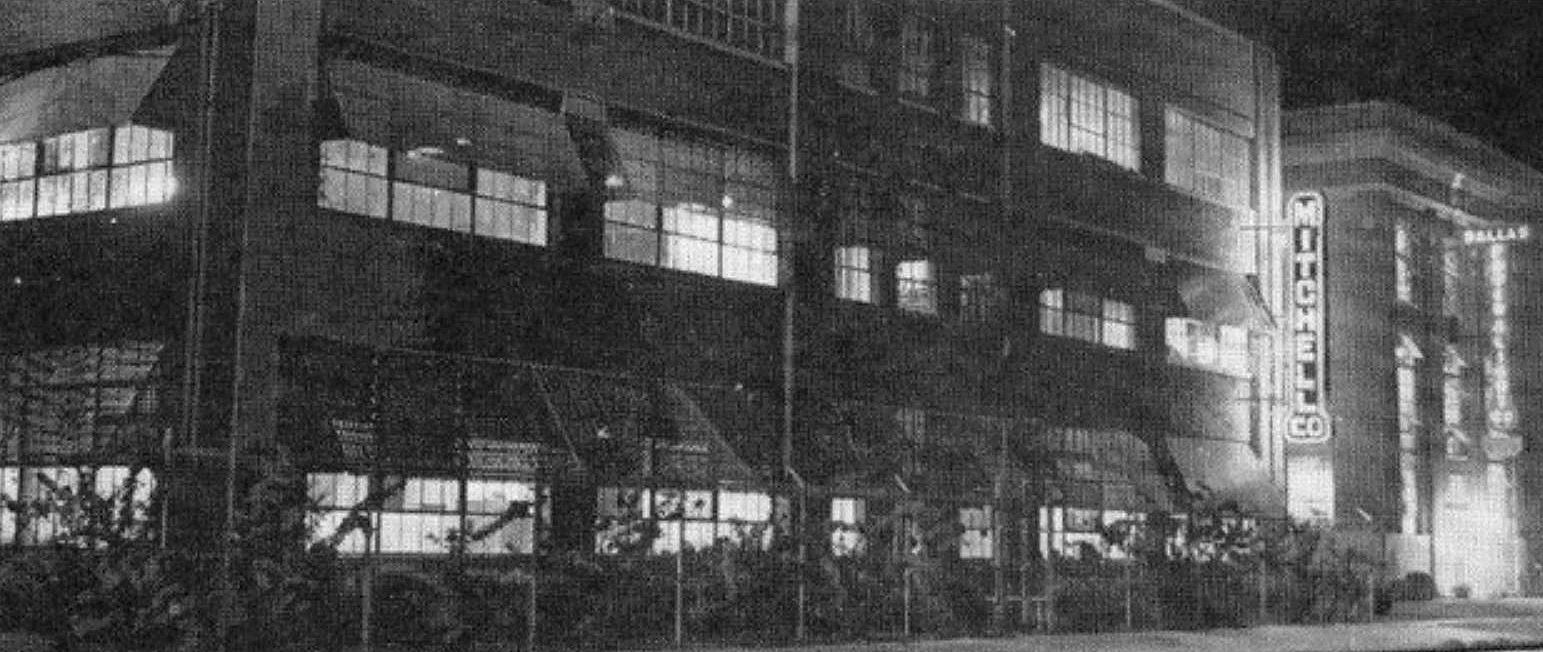
mitchell_sign_war-bk
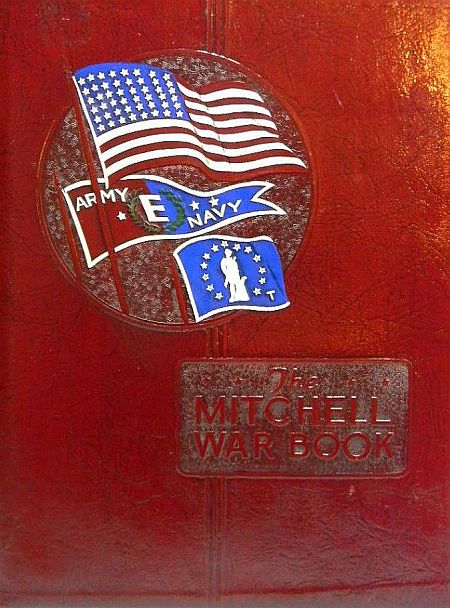
Mitchell War Book, ca. 1945

mitchell-building_flickr_colteraFlickr

***

Sources & Notes

Photos are from the application to the National Register of Historic Places; in addition to the photos, there is a thorough history of both the building and the John E. Mitchell Company, written by David Moore of Hardy-Heck-Moore. The 28-page form can be found in a PDF, here. (3/14/17 UPDATE: The link no longer works for me, and I am unable to find the document. Here’s the full URL: ftp://ftp.dallascityhall.com/Historic/National%20Register/John_E_Mitchell_Plant.pdf.)

More info on the Mitchell Company and its building through the years can be found in the following Dallas Morning News articles:

  • “Dallas Gets Gin Factory” (DMN, March 17, 1928) — the announcement that a permit has been granted for the construction of a two-story brick factory and warehouse
  • “John E. Mitchell Exemplifies Faith as Secret to Success,” by Helen Bullock (DMN, July 17, 1949) — an entertaining profile of John E. Mitchell, Jr.
  • “Demise of a Dream Factory — Deep Ellum’s Historic Mitchell Building Leaves a Legacy of Artistic and Industrial Vision,” by Shermakaye Bass (DMN, Feb. 5, 1995) — for those who grew up when Deep Ellum was experiencing its (first) renaissance, the article is a great snapshot of what things were like in Deep Ellum and Exposition Park back in the ’80s and early ’90s

See what the Mitchell Lofts look like now in this Candy’s Dirt article from 2014; more photos are here. Pretty hard to believe people used to manufacture things like cotton gins and anti-aircraft missiles there.

The Mitchell Lofts website is here.

Click pictures and clipping to see larger images.

*

Copyright © 2016 Paula Bosse. All Rights Reserved.


The John E. Mitchell Company’s WWII Munitions Work (Part 3)

mitchell-war-book_ebay
The Mitchell War Book

by Paula Bosse

My previous two posts have been on the John E. Mitchell Company’s period as a full-time contract manufacturer of munitions and materiel for the Navy and Army. I had planned for my third Mitchell post to be about the building itself, but I just happened across this book — The Mitchell War Book — and I thought I would go ahead and slip this in now. I’ll write about the building next.

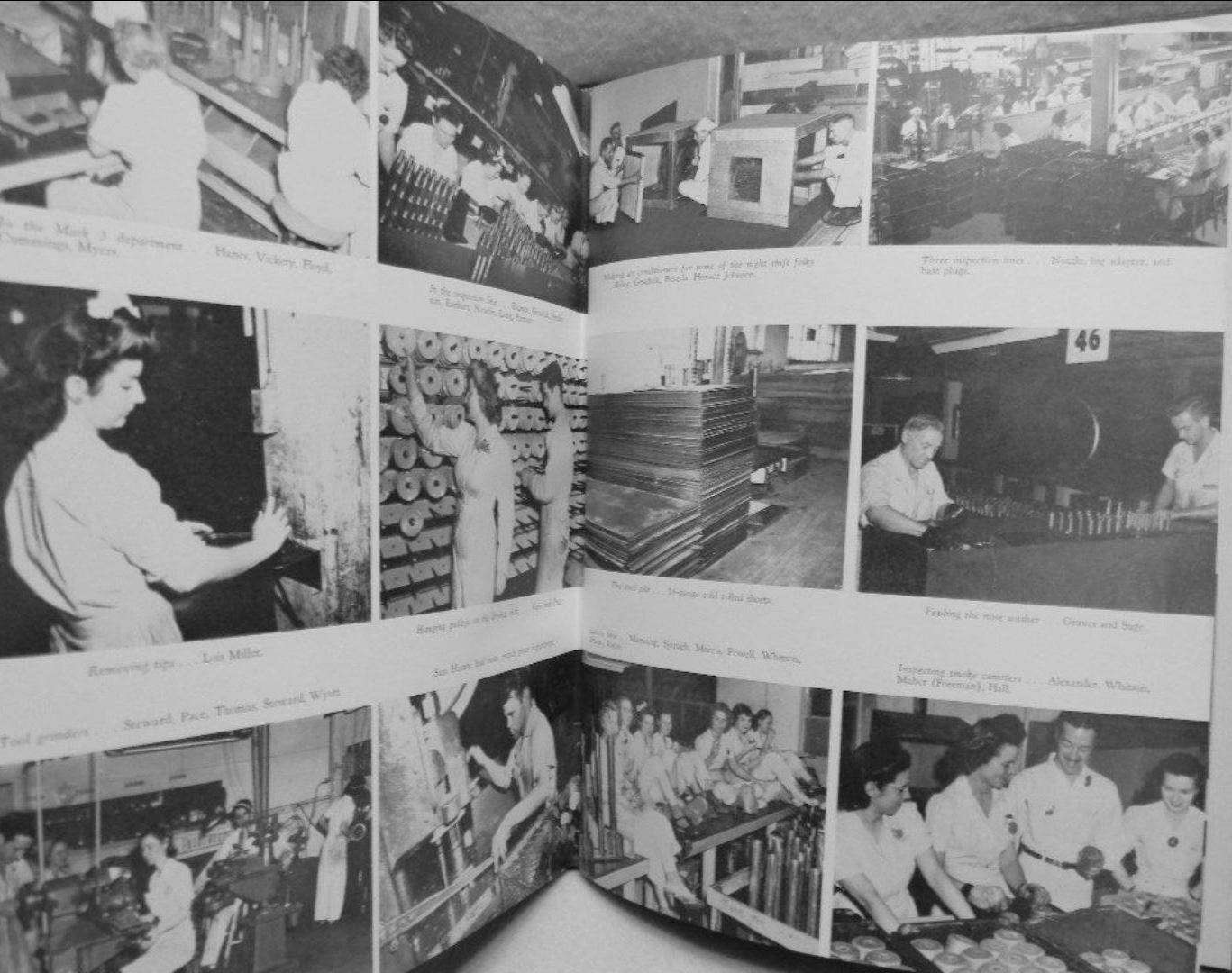
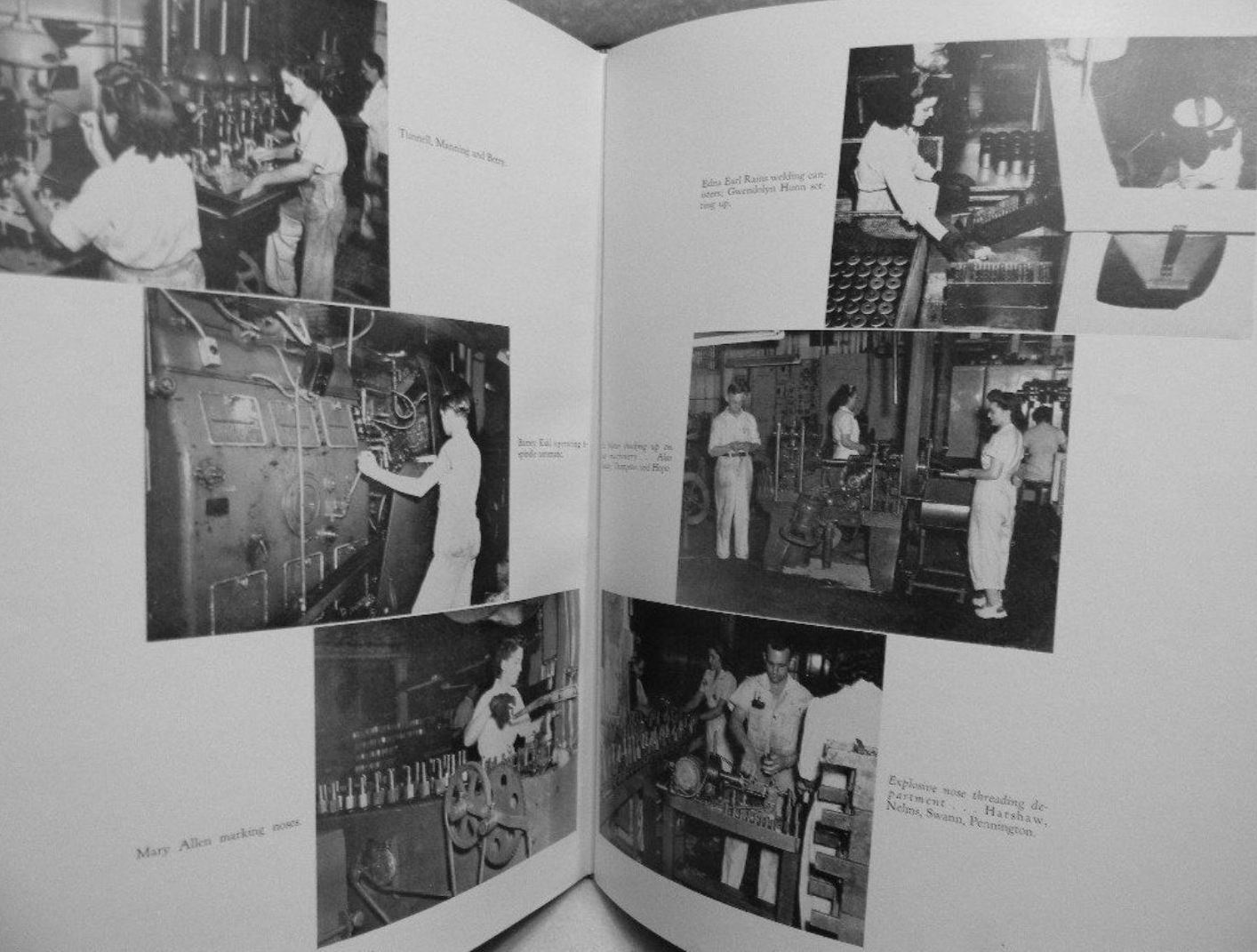
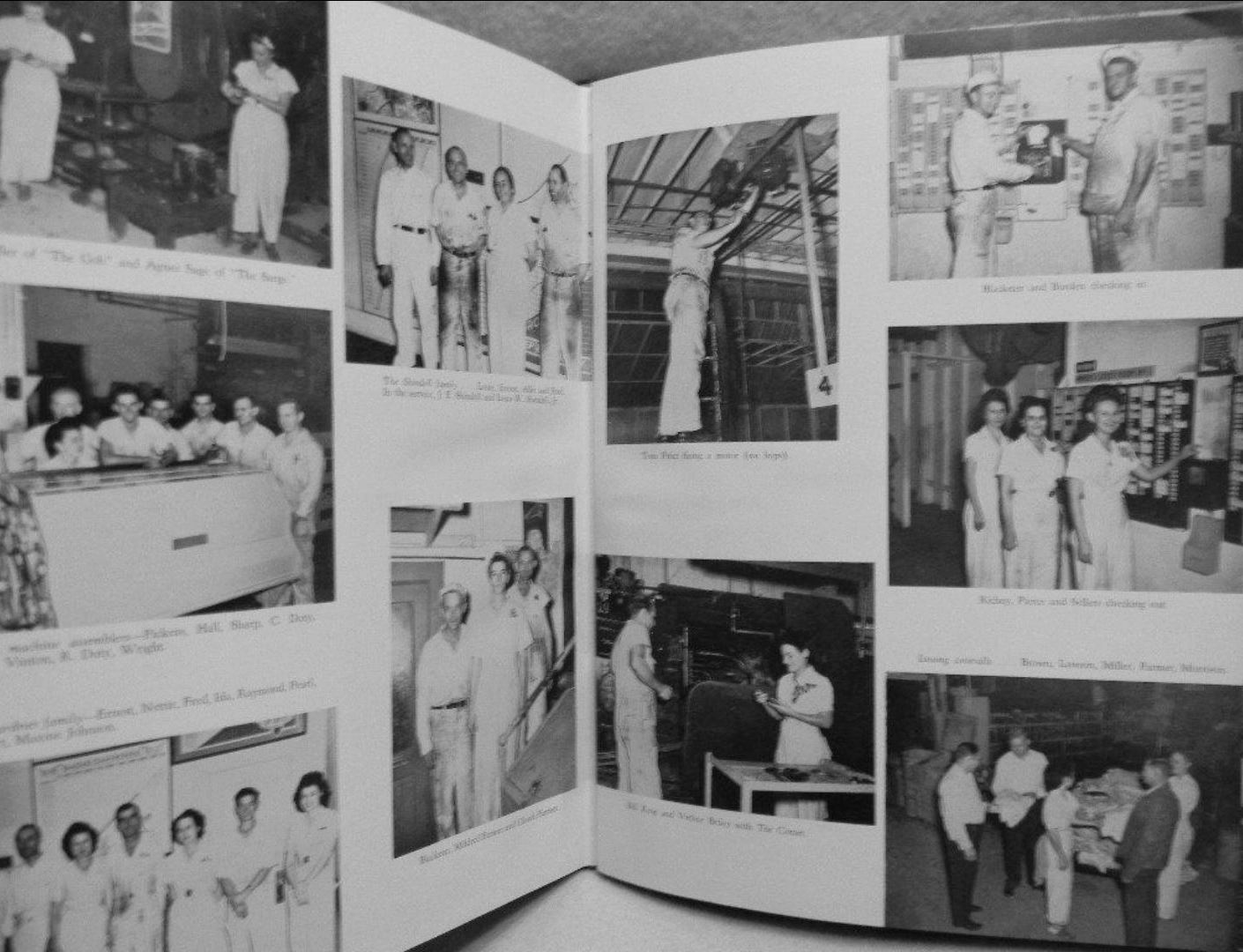
The book appears to be similar to a high school yearbook, with tons of photographs of Mitchell personnel at work on the factory floor and hanging out with their fellow war-workers in lighter off-duty moments. I’ve never seen this book (though I’d love to!), but it appears to be packed with pages and pages of photos.

Hundreds (if not thousands) of Dallasites worked in this factory while the Mitchell Company owned it — who knows? A relative of yours might be in here if he or she worked in it during the war. Below are photographs from a current eBay listing (click photos for larger images):

war-bk_1

war-bk_2

war-bk_3

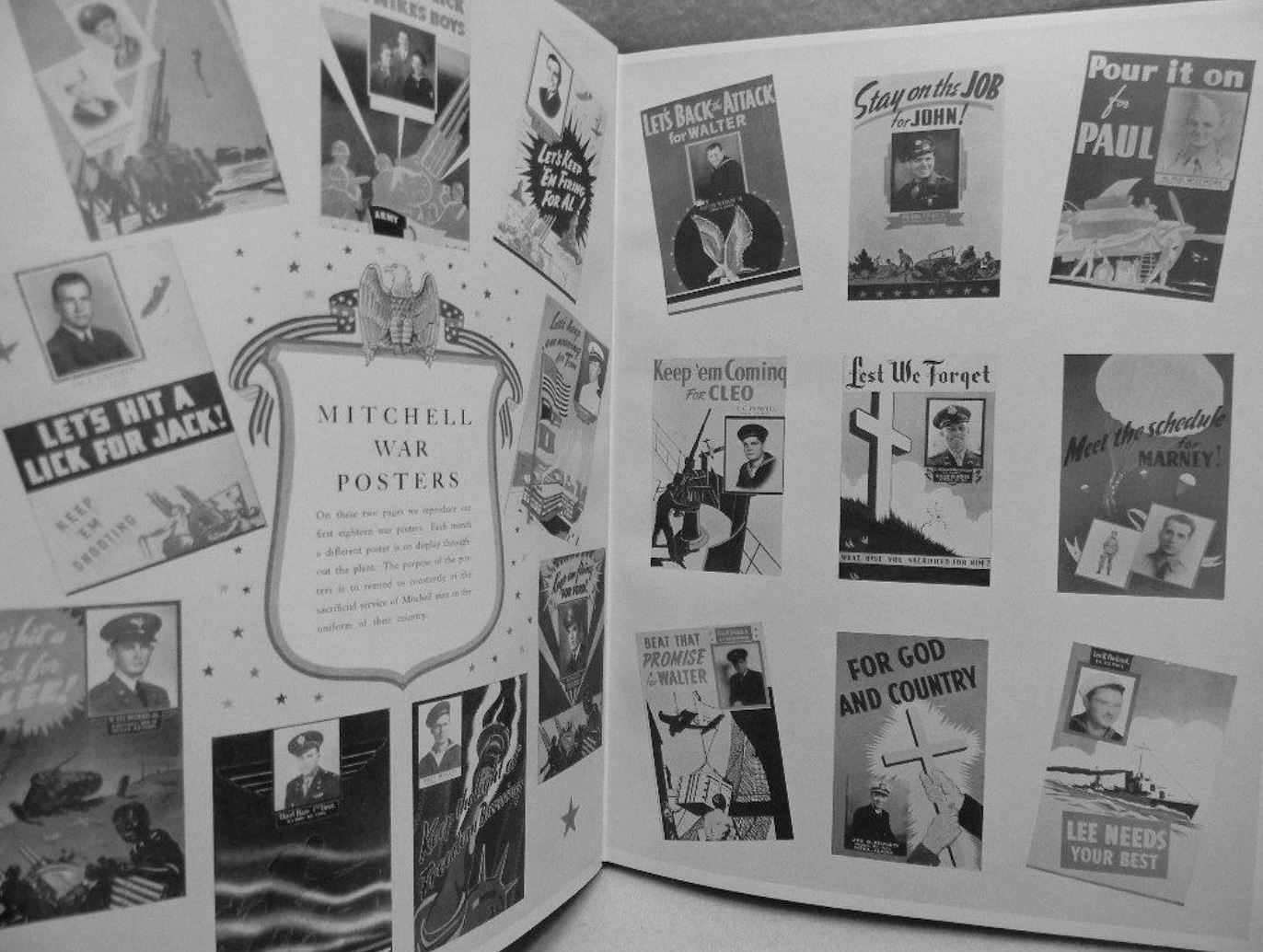
war-posters_war-bk_ebay

The posters above are interesting. When I posted a card the other day describing what this was all about (see it here), I didn’t fully understand. The company made these posters as reminders to the workers who they were working for: their fellow employees who were serving overseas.

war-bk_4

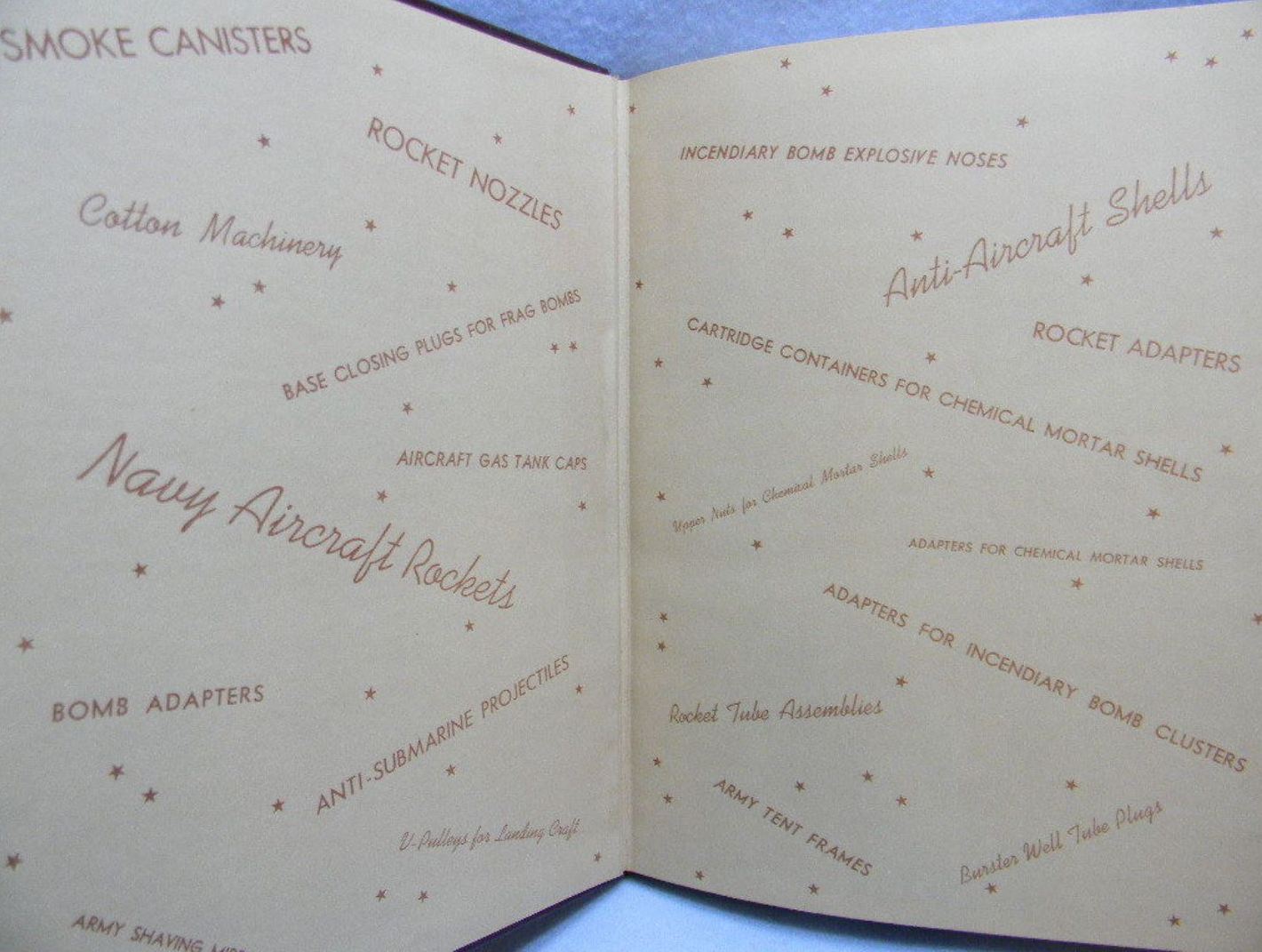
Above, the book’s endpapers show the various items the Mitchell Company was manufacturing for the U.S. Navy and U.S. Army.

war-bk_5

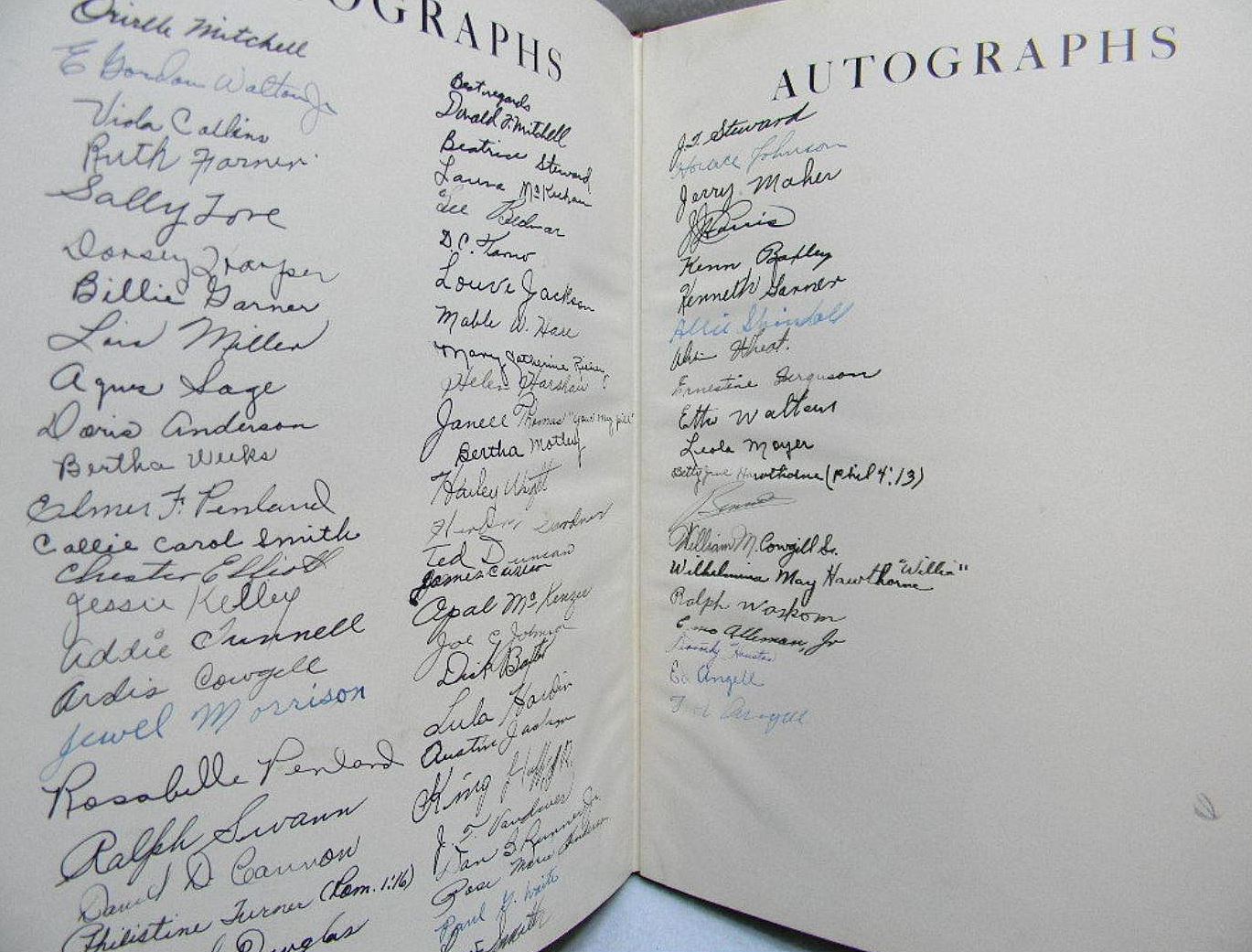
A few “autographs” of the John E. Mitchell Company’s wartime workers. Anyone you recognize?

***

Sources & Notes

As mentioned above, these photographs are from a current eBay listing, here.

Seems this book is pretty hard to find. I see only one other copy for sale — at about the same price — from a bookseller in Austin, here.

If you’re unwilling to fork over a fistful of cash but still want to look through the book, then hie yourself to the downtown Dallas Public Library to browse through the 127 pages of their only (non-circulating) copy; bibliographic details on the book from the DPL site, here (or if you don’t have a DPL account, here).

The two previous Flashback Dallas posts on the John E. Mitchell Company’s time as a munitions factory can be found here and here.

*

Copyright © 2016 Paula Bosse. All Rights Reserved.


The John E. Mitchell Company’s WWII Munitions Work (Part 2)

mitchell_17

by Paula Bosse

This is the second part of a post containing a series of postcards issued by the John E. Mitchell Company, which, before World War II was primarily a manufacturer of cotton and agricultural implements. It was located at 3800 Commerce in Exposition Park, a few blocks from Fair Park. During the war, the company ceased producing agricultural machinery and began producing munitions and materiel for the Navy and Army. (Part 1 can be found here.) The cards in a landscape format are larger when clicked.

*

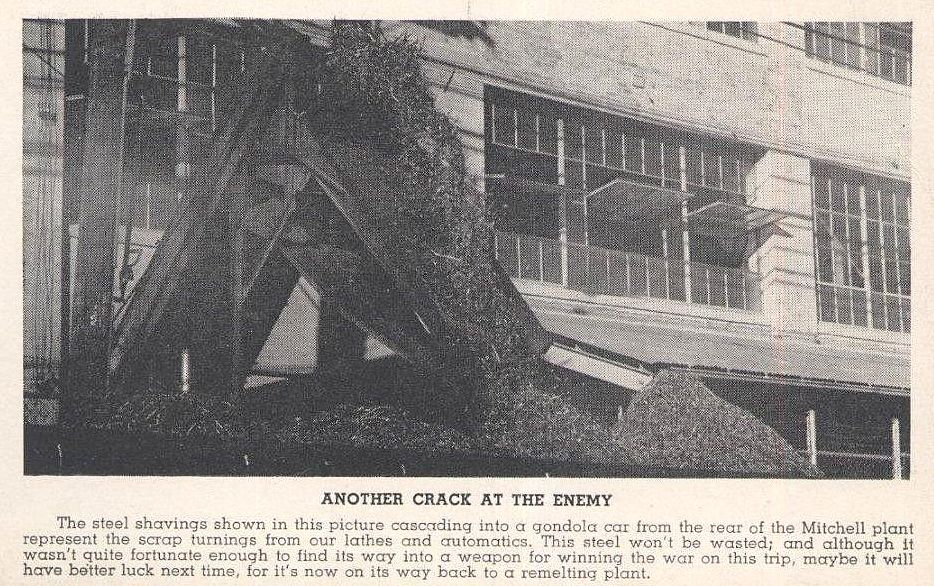
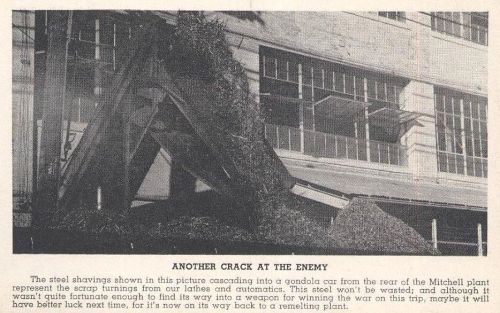
The card at the top shows the back of the (still-standing) building, behind which ran railroad tracks of the Missouri-Pacific railway. The card’s text:

ANOTHER CRACK AT THE ENEMY

The steel shavings shown in this picture cascading into a gondola car from the rear of the Mitchell plant represent the scrapped turnings from our lathes and automatics. This steel won’t be wasted; and although it wasn’t quite fortunate enough to find its way into a weapon for winning the war on this trip, maybe it will have better luck next time, for it’s now on its way back to a remelting plant.

*

mitchell_11

RECORD BREAKERS

This card will introduce you to Mr. and Mrs. Lewis J. Smith, the John E. Mitchell Company’s star tapping machine operators, shown here tapping base closing plugs for parafrag bombs.

It wasn’t so long ago that the Smiths’ sons, Dudley and Raleigh Smith, held the company production record on this machine. Then Dudley joined the Army and Raleigh joined the Navy. Mr. and Mrs. Smith decided the record should be kept in the family. So far it has.

*
mitchell_12

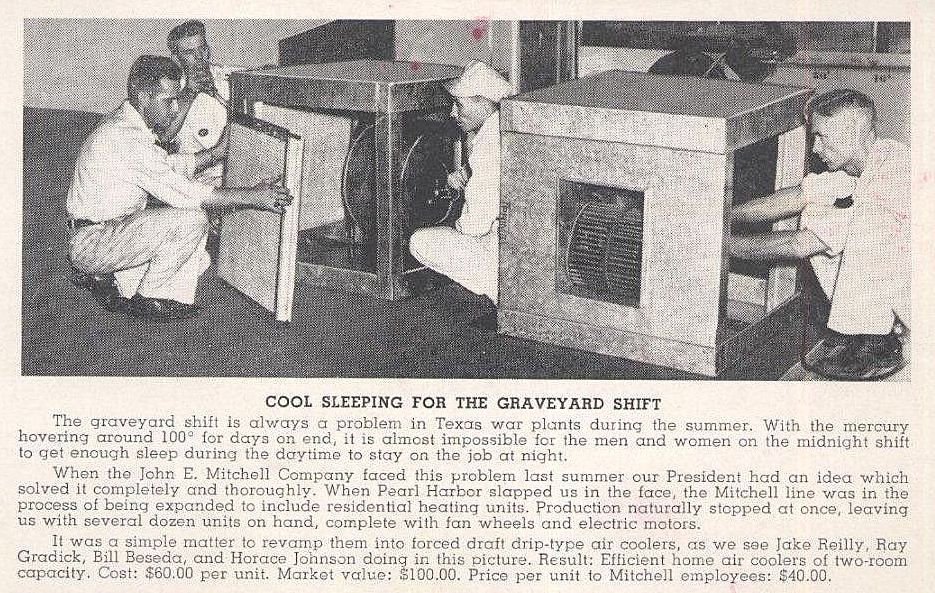
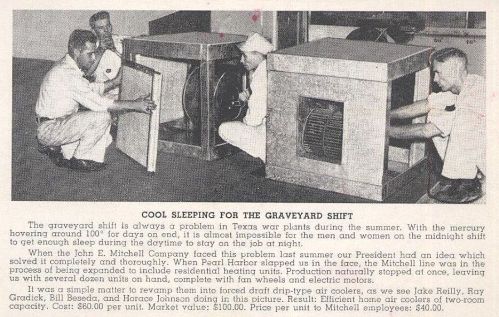
This is one of the most interesting cards in this collection. After the war, the Mitchell Company began to manufacture a wide variety of things, including heaters and air conditioners for cars. This problem of graveyard shift workers being unable to sleep during the summer months because of the oppressive heat must have been a big problem during the war, when factories such as this had to be running 24 hours a day. This was a brilliant solution.

COOL SLEEPING FOR THE GRAVEYARD SHIFT

The graveyard shift is always a problem in Texas war plants during the summer. With the mercury hovering around 100° for days on end, it is almost impossible for the men and women on the midnight shift to get enough sleep during the daytime to stay on the job at night.

When the John E Mitchell Company faced this problem last summer our President had an idea which solved it completely and thoroughly. When Pearl Harbor slapped us in the face, the Mitchell line was in the process of being expanded to include residential heating units. Production naturally stopped at once, leaving us with several dozen units on hand, complete with fan wheels and electric motors.

It was a simple matter to revamp them into forced draft drip-type air coolers, as we see Jake Reilly, Ray Gradick, Bill Beseda, and Horace Johnson doing in this picture. Result: Efficient home air coolers of two-room capacity. Cost: $60.00 per unit. Market value: $100.00. Price per unit to Mitchell employees: $40.00.

*

mitchell_13

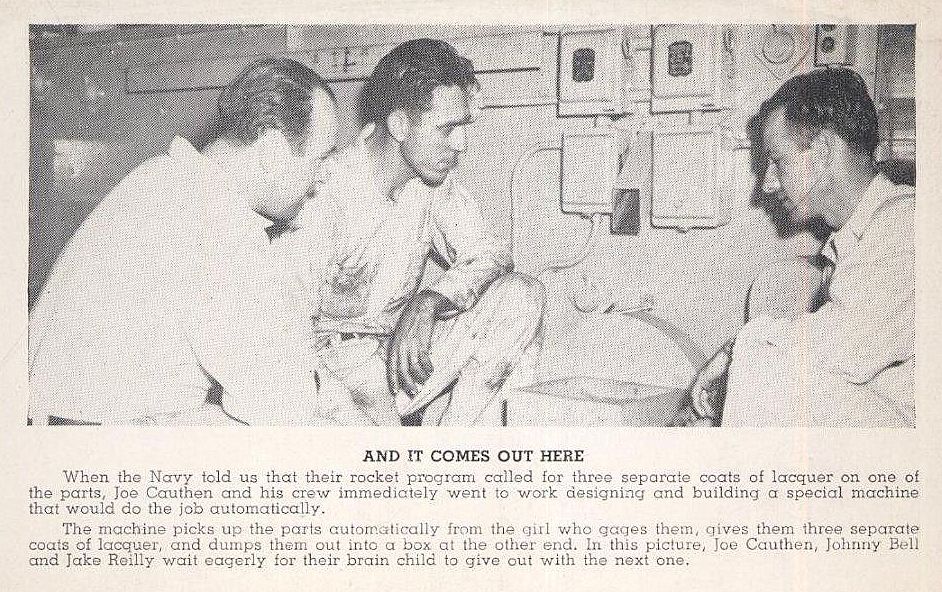
AND IT COMES OUT HERE

When the Navy told us that their rocket program called for three separate coats of lacquer on one of the parts, Joe Cauthen and his crew immediately went to work designing and building a special machine that would do the job automatically.

The machine picks up the parts automatically from the girl who gages them, gives them three separate coats of lacquer, and dumps them out into a box at the other end. In this picture, Joe Cauthen, Johnny Bell and Jake Reilly wait eagerly for their brain child to give out with the next one.

*
mitchell_14

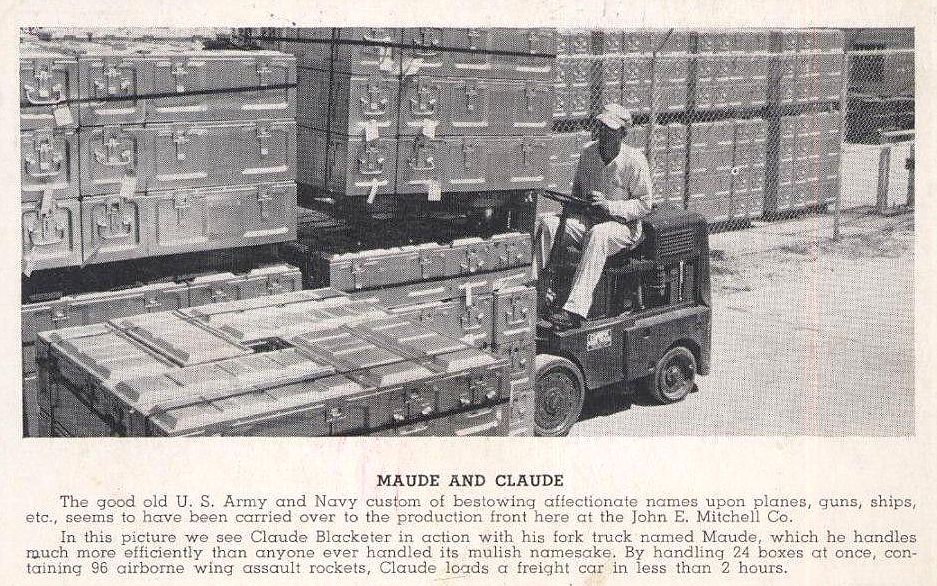
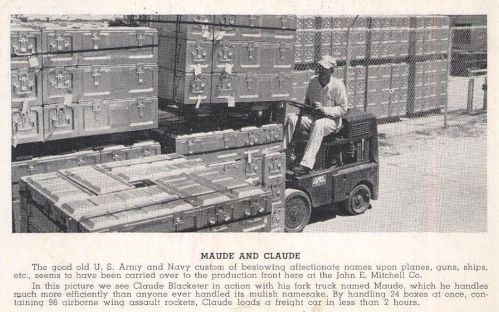
MAUDE AND CLAUDE

The good old U. S. Army and Navy custom of bestowing affectionate names upon planes, guns, ships, etc., seems to have been carried over to the production front here at the John E. Mitchell Co.

In this picture we see Claude Blacketer in action with his fork truck named Maude, which he handles much more efficiently than anyone else ever handled its mulish namesake. By handling 24 boxes at once, containing 96 airborne wing assault rockets, Claude loads a freight car in less than 2 hours.

*
mitchell_15

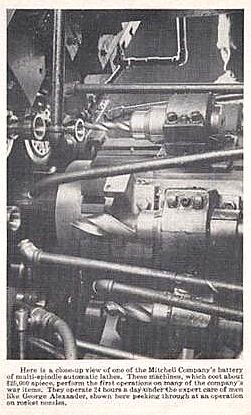
Here is a close-up view of one of the Mitchell Company’s battery of multi-spindle automatic lathes. These machines, which cost about $25,000 apiece, perform the first operations on many of the company’s war items. They operate 24 hours a day under the expert care of men like George Alexander, shown here peeking through at an operation on rocket nozzles.

*

mitchell_16

PRESSURE BOY

Here’s one of the many presses with which the Mitchell factory is equipped, each operatable with a series of interchangeable blanking, stamping, forming, and drawing dies. This particular press has a capacity of 300 tons and forms the end frame for a Mitchell cotton machine in one lick.

*
mitchell_19

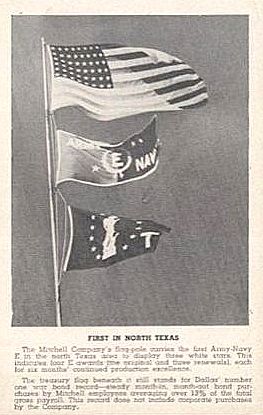
FIRST IN NORTH TEXAS

The Mitchell Company’s flag-pole carries the first Army-Navy E in the north Texas area to display three white stars. This indicates four E awards (the original and three renewals), each for six months’ continued production excellence.

The treasury flag beneath it still stands for Dallas’ number one war bond record – steady month-in, month-out bond purchases by Mitchell employees averaging over 13% of the total gross payroll. This record does not include corporate purchases by the Company.

***

Sources & Notes

Postcards found on eBay. Many of these are currently for sale, here.

Part 1, containing more of these postcards, is here.

Coming next: a look at the building built by the Mitchell Company in 1928, which is still standing in Expo Park, now repurposed as residential loft space.
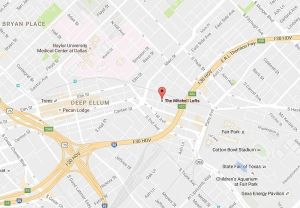
mitchell-building_google
Google Maps (click for larger image)

*

Copyright © 2016 Paula Bosse. All Rights Reserved.