Flashback : Dallas

A Miscellany: History, Ads, Pop Culture

Category: Downtown

Dallas’ “Courthouse Complex”

courthouse-complex_tinkle_key-to-dallas_1965-drawingEarly-’60s vision of the “courthouse complex”

by Paula Bosse

Let’s all be thankful that the Old Red Courthouse is still with us, because there was serious talk in the ’50s and ’60s of razing it to make way for a more modern downtown and a more efficient use of space. Lon Tinkle wrote the following in the mid-’60s:

courthouse-complex_tinkle_key-to-dallas_1965Excerpt from Lon Tinkle’s “The Key to Dallas” (1965)

Tinkle’s next paragraph: “It is not that Dallas doesn’t care. It does. But it has to grow into this experience of great cities, and it will.”

*

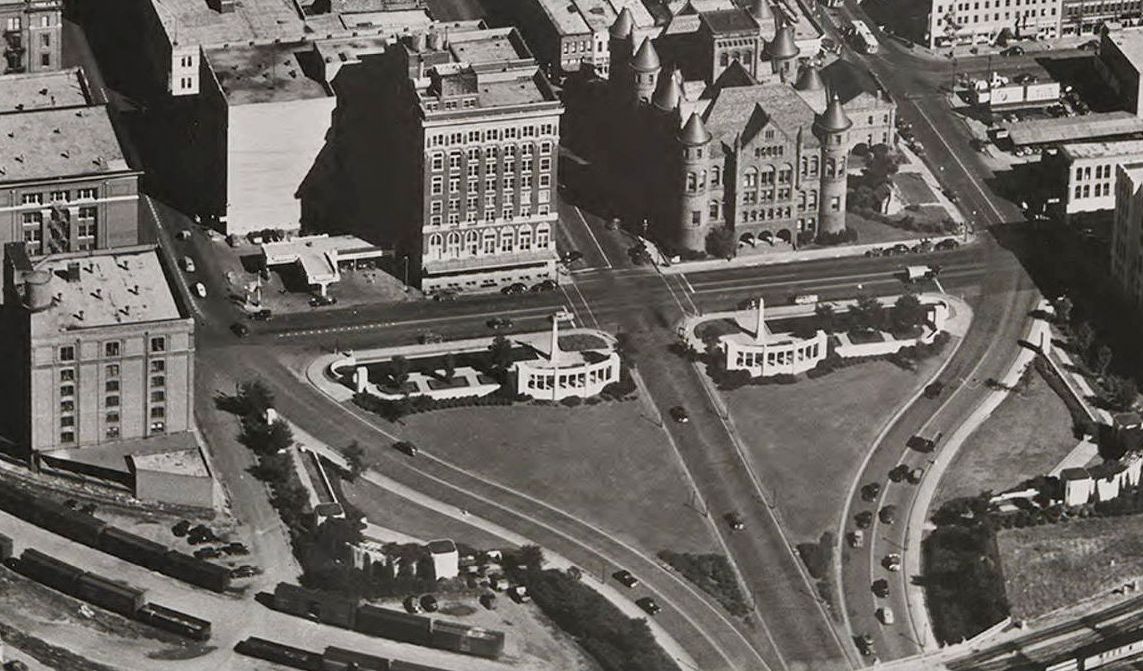
Here’s what the eastern boundary of the “courthouse complex” looked like in 1964. (Incidentally, the first Kennedy memorial site was chosen in April, 1964, and it was to be in the block immediately to the east of the Records Building, the one seen in the center of this photo. Sometime in the next few months, the location was changed to the block immediately east of the Old Red Courthouse.)
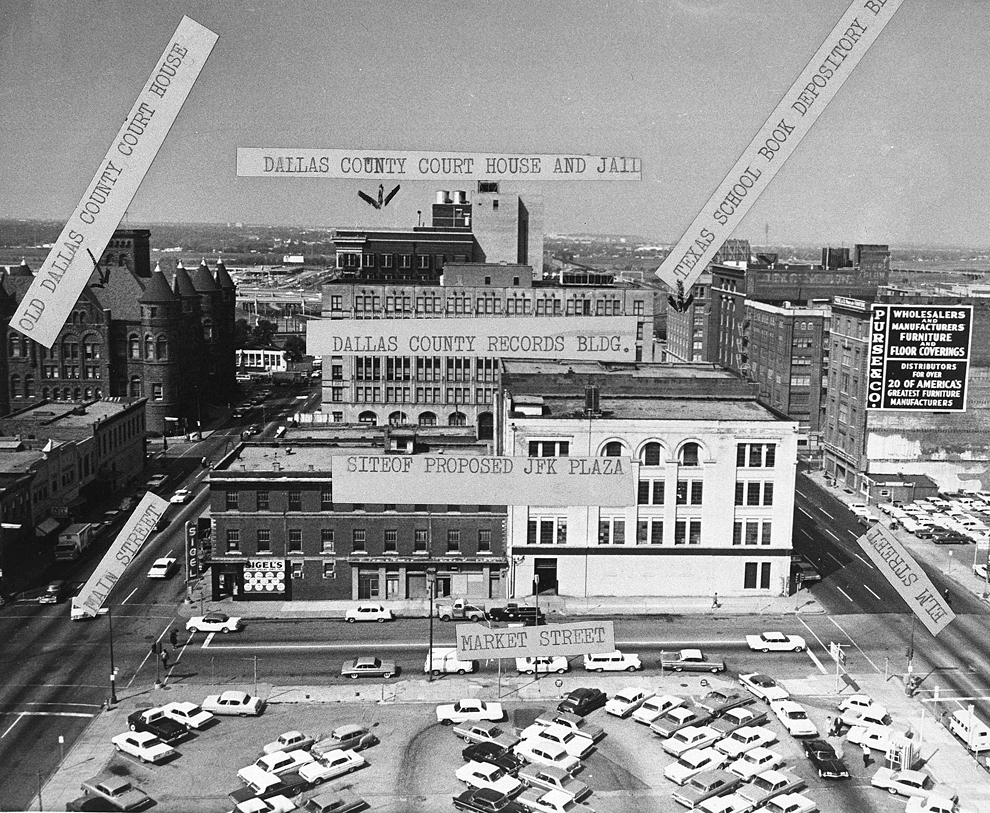
Ferd Kaufman, AP

Here’s what the southern boundary looked like when construction of the new Dallas County Courthouse began in the spring of 1963:
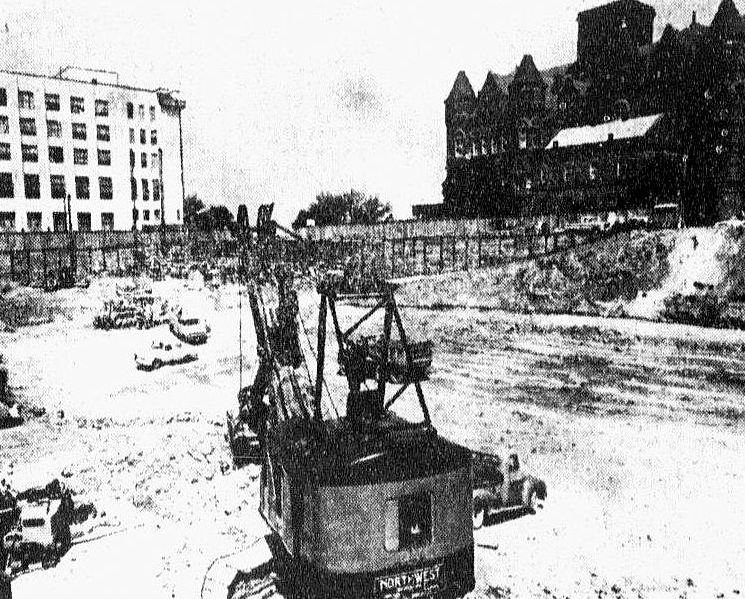
courthouse-construction_early-1963

And here’s the “complex” today.

courthouse-complex_google

Old Red isn’t going anywhere!

**

UPDATE: After posting this on the Flashback Dallas Facebook page, a person commented about having worked across the street during the new courthouse’s construction.

On the night of June 19, 1964, a massive fire broke out on the upper floors of the new courts building, which was then under construction. There were 130 firefighters and more than 30 pieces of equipment on the scene according to newspaper accounts. The commenter wrote the following, in clipped sentences, telegram-style:

“I started to work 1963 at Terminal Annex. The Court House under construction, razed by fire shortly thereafter, heat from fire made us work away from windows. There was no thought of leaving building as mail had to make connections to railroads.”

First thing: Wow. The postal creed in action. Wonder if the workers got hazard pay? Or at least a W.C. Fields “hearty handclasp.”

Secondly: I had never seen the phrase “razed by fire” before. It’s not really accurate here, because only the upper floors were destroyed, but the cinematic quality of the phrase is pretty cool. I’ll have to file the phrase away to be used as the title for my memoirs, even if it doesn’t really apply to anything I’ve ever done or experienced. Can’t sacrifice a good title.

Thirdly: I continue to realize just how exceedingly dull my life is.

***

Sources &  Notes

Top image and text is from Lon Tinkle’s wonderful The Key to Dallas (Philadelphia/New York: J. B. Lippincott Co., 1965), an extremely informative book for young people. The drawing is by Dallas artist Bud Biggs (his signature is seen in the reproduction of this drawing in the Aug. 1961 issue of Dallas magazine).

Labeled image of the area in question, looking west, is an Associated Press photo by Ferd Kaufman, taken in 1964. I used this previously in the post “Where To Put That Kennedy Memorial? — 1964.”

Aerial view is a current one, from Google Maps.

*

Copyright © 2015 Paula Bosse. All Rights Reserved.
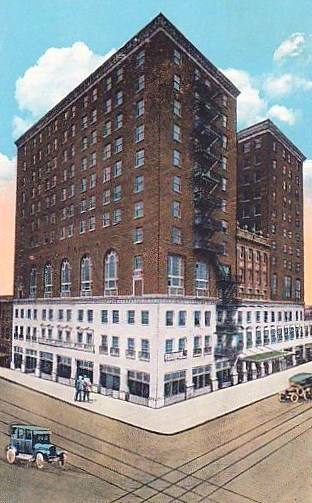
The Dallas Athletic Club Building, 1925-1981

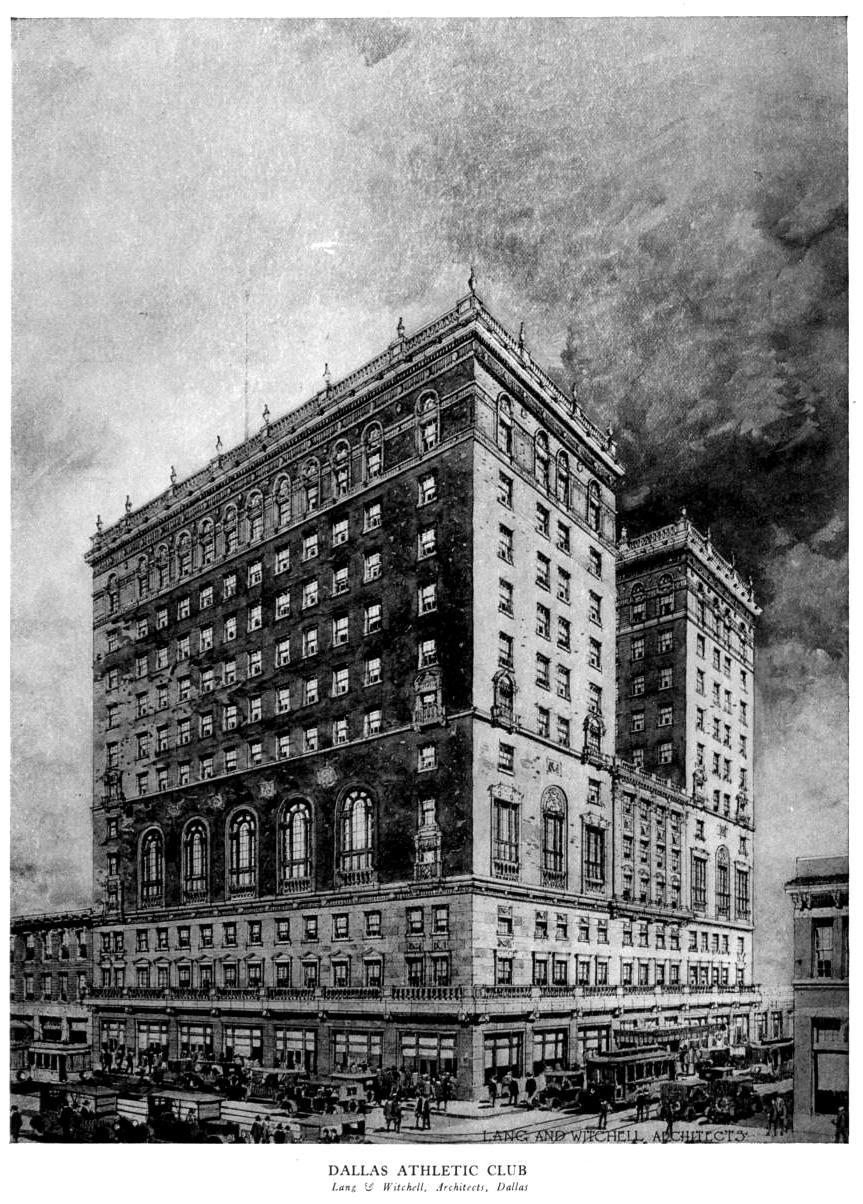
dallas-athletic-clubThe Dallas Athletic Club, 1920s

by Paula Bosse

Dallas’s premier architects Lang & Witchell designed the Dallas Athletic Club building. It was built between 1923 and 1925 on a triangular piece of land located at St. Paul, Elm, and Live Oak, its entrance facing St. Paul. It was one of the city’s top private clubs, catering to Dallas’ businessmen. Aside from sports and recreational facilities — swimming pools (for men and women), gymnasiums, games courts, billiard rooms, etc. — the club also offered meeting rooms, a dining room, a ballroom, and lounges. It also offered use of hotel-like “rooms” to members and their guests. (If it was anything like old movies from this period, I assume it was a handy place to stay if a DAC member was in the doghouse with his wife — or in the midst of divorce proceedings. “If the VP from the home-office calls, Miss Klondike, I can be reached at my room at the club.”) The building also housed a variety of non-DAC-related businesses and offices — my great aunt had a hat shop there in the late 1930s and early 1940s.

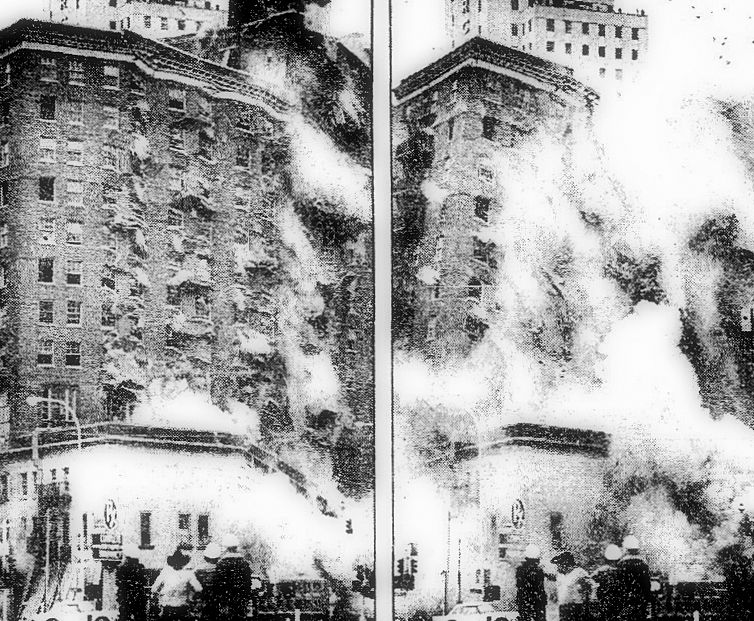
The Athletic Club was a major social and recreational spot for years and was something of a landmark in the east end of downtown. In the 1950s the membership opened a country club and golf course near Mesquite but kept the downtown facility open as well. But with suburbia’s surge and downtown’s decline, it was only a matter of time until the club closed the downtown facility. The DAC finally sold the building in 1978, and it was demolished in 1981 to make way for the 50-story 1700 Pacific tower. It had a good run.

*

Before construction began, an artesian well was dug on the property.

dac_artesian-well_dmn_031722DMN, March 17, 1922
When it was finished five months later, “water sufficient to produce 300,000 gallons of water every twenty-four hours was reached” (Dallas Morning News, Aug. 20, 1922).

*

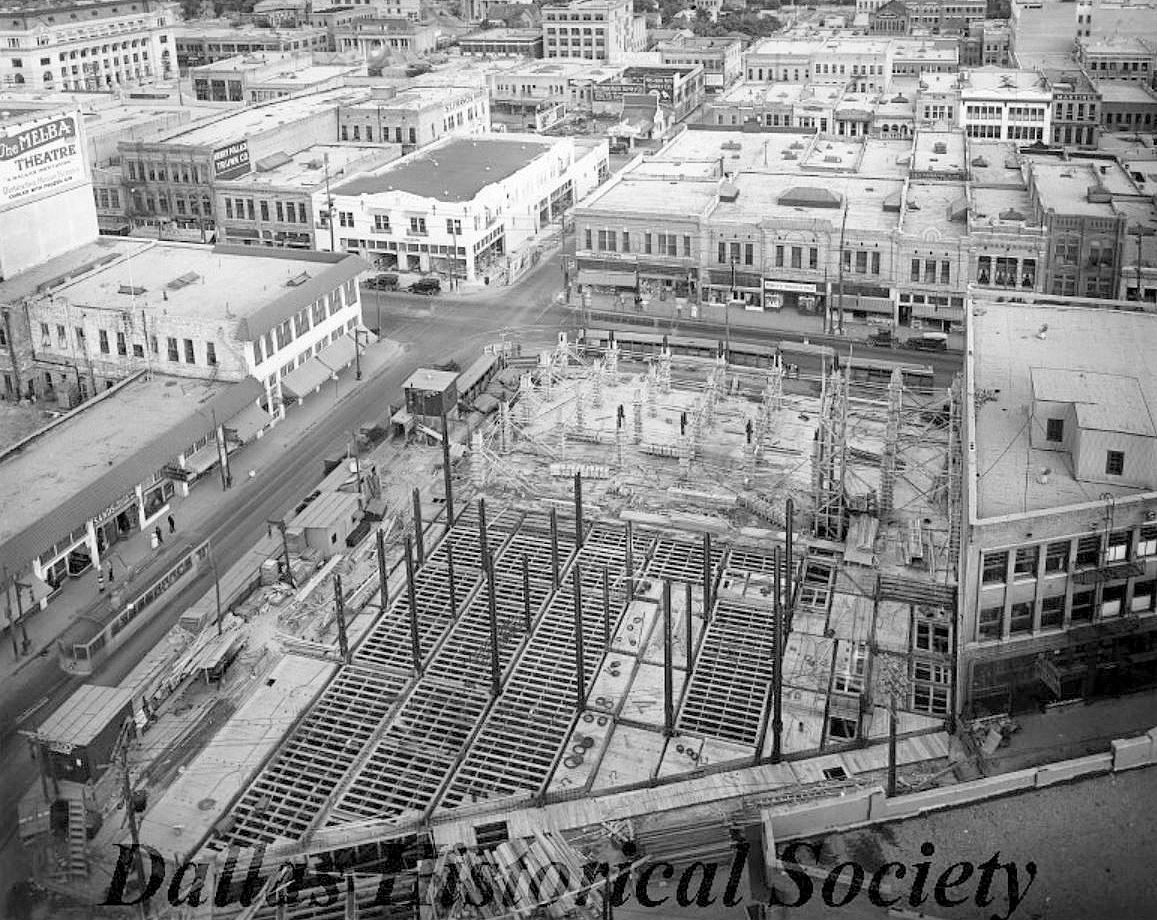
Photo by Charles Erwin Arnold showing construction in progress:

dallas-athletic-club_construction_DHSvia Dallas Historical Society

*

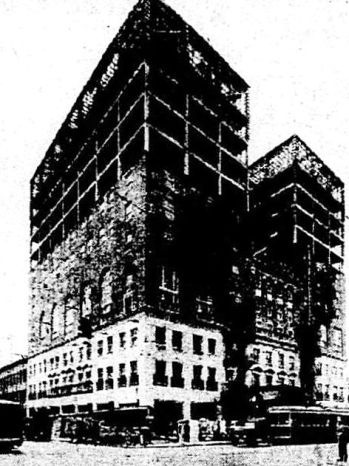
dac_construction_dmn_112523

The progress made to date on the new home of the Dallas Athletic Club Building, which is under construction. […] The picture was snapped from an upper floor of the Medical Arts Building. […] The facing for the three lower floors is of gray Bedford stone. The exterior walls for the upper floors will be of dark red brick. The large openings extending from the fourth to sixth floors will contain the massive windows over the men’s swimming pool. The men’s gymnasium will be on the south side of the fourth floor. When completed, the building will cost approximately $2,000,000, and it will be the most modern athletic club in the United State, according to club officials. (DMN, Nov. 25, 1923)

*

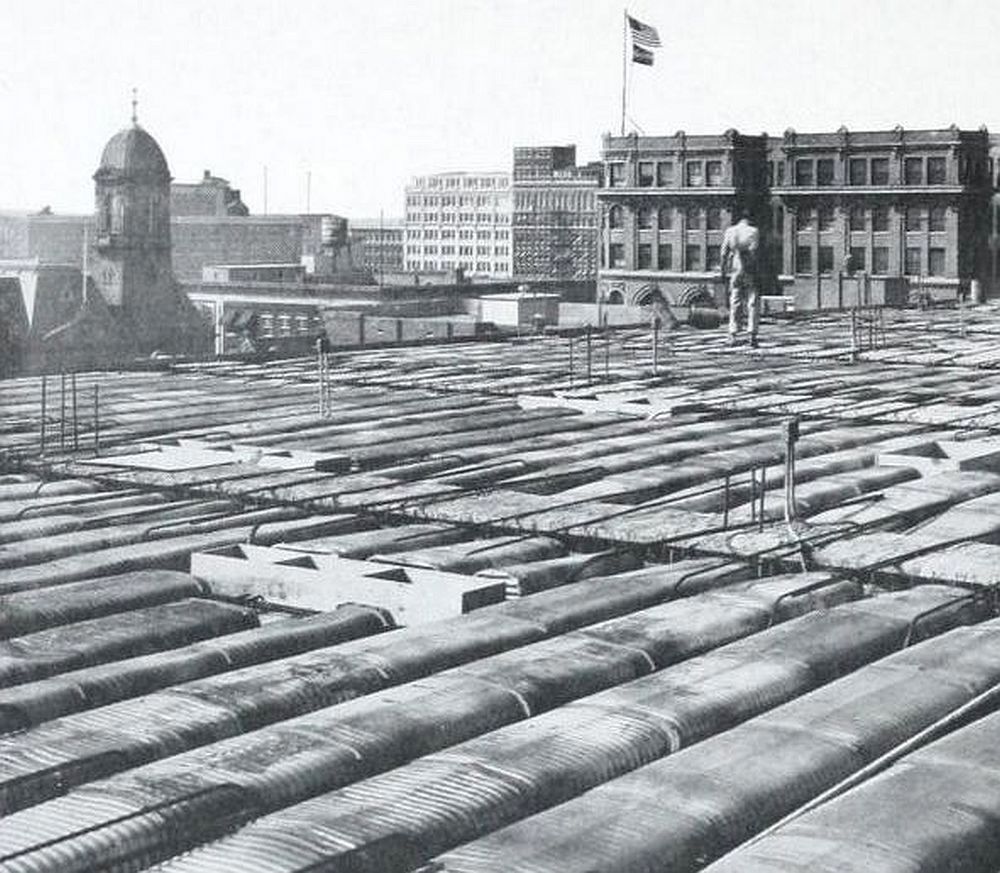
dac_berloy-ad_1924_cropAd for “Berloy Floor Cores” from 1924. Great photo!

*

dac_construction_dmn_111624

Work is nearing completion on the concrete framing for the five upper floors of the thirteen-story Dallas Athletic Club building at Elm and St. Paul street, and bricklaying will be started probably this week. The five upper floors will be used for office purposes, with the club quarters on the eight lower floors, except for some storerooms facing the two streets. (DMN, Nov. 16, 1924)

*

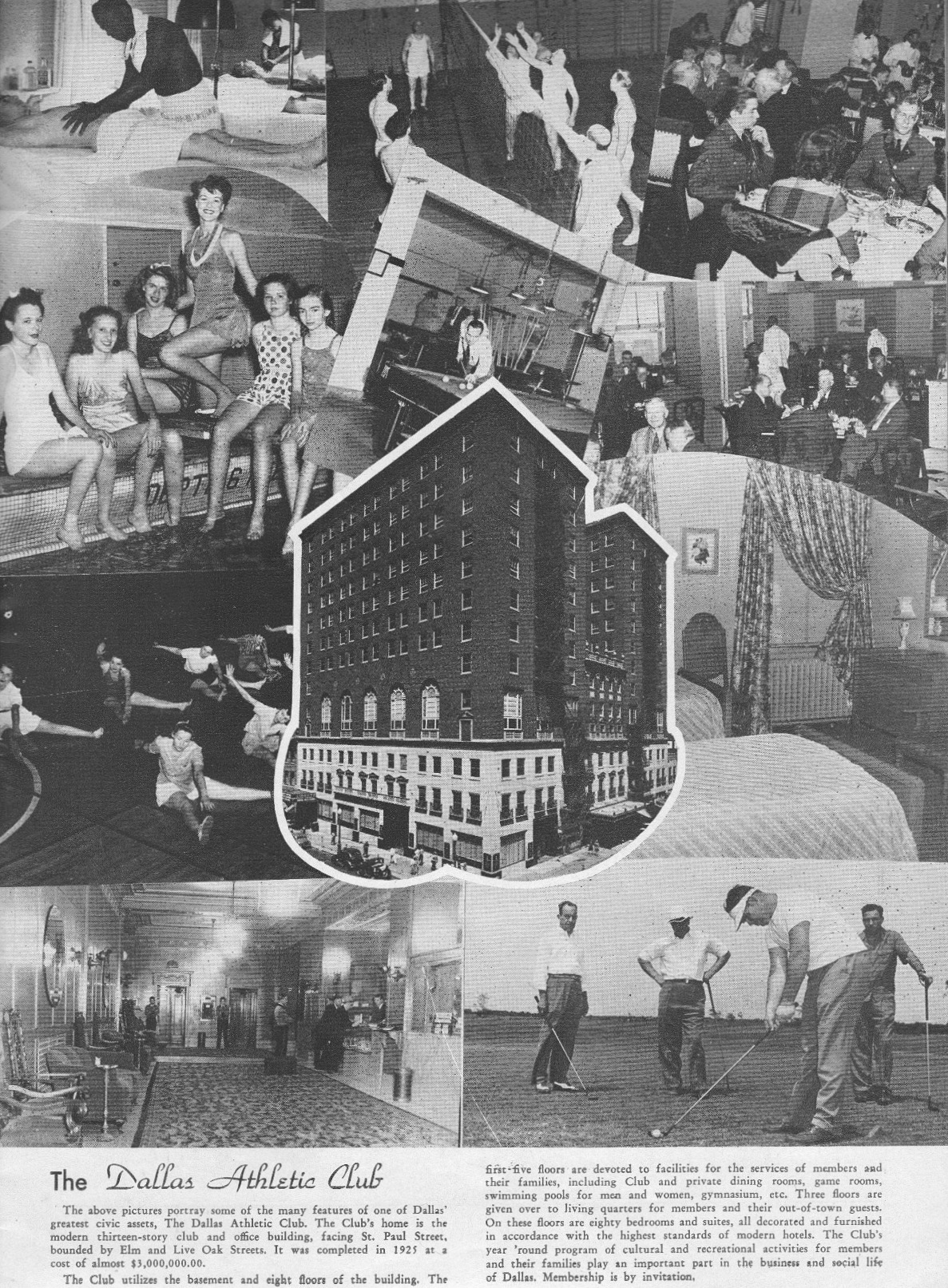
dallas-athletic-club_so-this-is-dallas_c1946_sm1946-ish (click for much larger image)

The above pictures portray some of the many features of one of Dallas’ greatest civic assets, the Dallas Athletic Club. The club’s home is the modern thirteen-story club and office building, facing St. Paul Street, bounded by Elm and Live Oak streets. It was completed in 1925 at a cost of almost $3,000,000.

The Club utilizes the basement and eight floors of the building. The first five floors are devoted to facilities for the services of members and their families, including clubs and private dining rooms, game rooms, swimming pools for men and women, gymnasium, etc. Three floors are given over to living quarters for members and their out-of-town guests. On these floors are eighty bedrooms and suites, all decorated and furnished in accordance with the highest standards of modern hotels. The Club’s year ’round program of cultural and recreational activities for members and their families play an important part in the business and social life of Dallas. Membership is by invitation.  (“So This Is Dallas,” a guide for newcomers to the city, circa 1946)

*

dac_smu_1938-crop

Aerial view from 1938, looking east; the DAC is in the center, with Elm Street to the right. (SMU)

*

dallas-athletic-club_matchbook_cook-collection_degolyer_smu_a     dallas-athletic-club_matchbook_cook-collection_degolyer_smu_b
1950s matchbook, via SMU

*

In March, 1981 it was announced that the building would be imploded.

The former Dallas Athletic Club building, which for 53 years served as a health club and meeting place for Dallas businessmen, will be imploded. […] A 50-story office building will be constructed on the site. The 57-year-old building has been empty since the club moved from the building in 1978. (Dallas Morning News, March 22, 1981)

And on March 22, 1981…

dallas-athletic-club_demo_dmn_032381a

dallas-athletic-club_demo_dmn_032381bDMN, March 23, 1981

The end of an era.

But let’s remember happier times for the Dallas Athletic Club building and gaze at this idealized version from Lang & Witchell’s original drawing (circa 1922).

dallas-athletic-club_drawing_arch-yrbk_1922

***

Sources & Notes

Bird’s-eye view of the construction site is by Charles Erwin Arnold and is from the Arnold Photographic Collection, Dallas Historical Society; its ID number is A.68.28.17.

Aerial view is a detail from a photograph taken by Lloyd M. Long in 1938; it is from the Edwin J. Foscue Map Library, Southern Methodist University. The full photo can be seen here; the same photo, with buildings labeled, is here.

Lang & Witchell drawing from The Yearbook of the Dallas Architectural Club, 1922.

Dallas Morning News clippings and photos are as noted.

Live Oak used to cut through the block bounded by St. Paul, Elm, Ervay, and Pacific. To get an idea of where the building was, here is a 1962 map of the area (the full map can be seen here).

map_1962

The Dallas Athletic Club is still around. Their website is here.

*

Copyright © 2015 Paula Bosse. All Rights Reserved.

Old Red Goes Hollywood (sort of…) — 1964

buchanan_trial-oswald_1964Old Red’s star turn in The Trial of Lee Harvey Oswald (click for larger image)

by Paula Bosse

An interesting (if a bit fuzzy) screenshot of the Old Red Courthouse from one of Larry Buchanan’s Dallas-made films, “The Trial of Lee Harvey Oswald” (1964), about what might have happened had LHO lived to face trial. As with most of Buchanan’s extremely low-budget films, it drags and has clunky acting (…I have to admit that I didn’t watch the whole thing), but it’s interesting to fast-forward through to see the bits shot out on the streets of downtown. I really like this view of the courthouse. It seems familiar and unfamiliar at the same time.

***

Yes, you can watch the whole film on YouTube — free! Mosey on over here. The movie’s tagline: “Not a Newsreel … A Full-Length Motion Picture Filmed Secretly in Dallas.” Uh-huh. And as far as the movie having been “suppressed” (as is mentioned at the  beginning of the film) … well, let’s just say Larry worked in advertising for many years and knew a thing or two about marketing.

For other posts I’ve written about Larry Buchanan (I kind of feel I know him now — he would have been a lot of fun to shoot a movie with!), click here.

*

Copyright © 2014 Paula Bosse. All Rights Reserved.

Interurbans: Freight Movers?

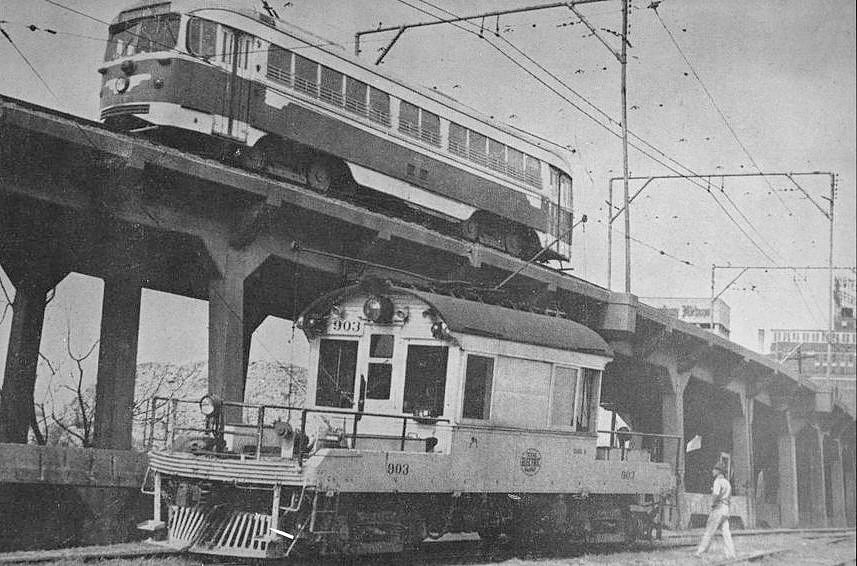
People-mover, above; freight-mover, below…

by Paula Bosse

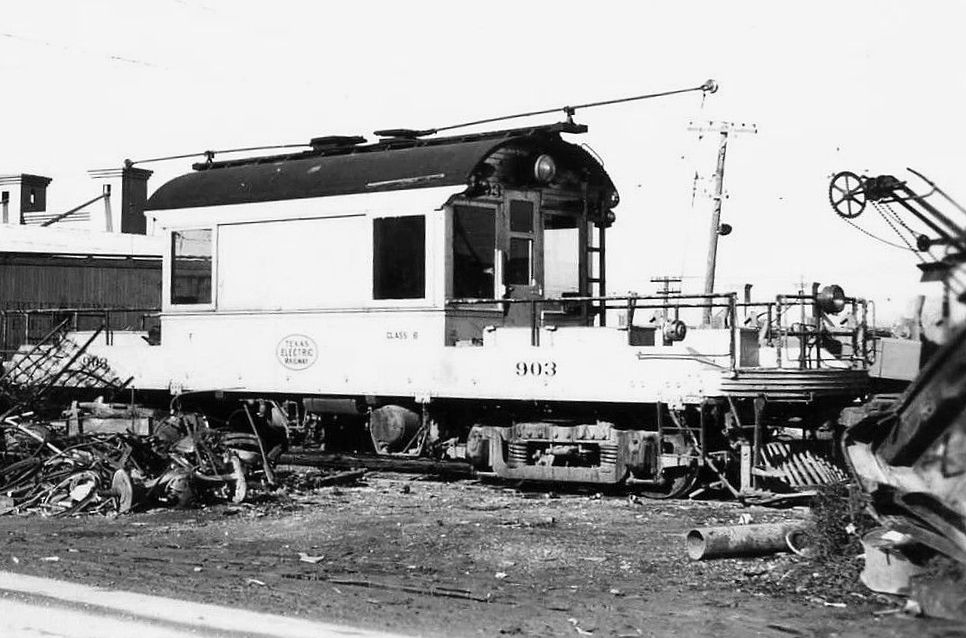
When I saw this photo, I had no idea what I was looking at — what was that odd-looking thing in the foreground? A couple of rail enthusiasts informed me that it was an interurban freight engine on rail tracks beneath the old elevated interurban/streetcar trestle that spanned the Trinity. This is the Dallas side, with the Dallas Morning News building and the Hotel Jefferson in the background, to the north. (You can see the tracks running right next to the DMN in a photo in a previous post, here.) According to one of the experts:

The interurban did some exchange of freight cars with the regular railroads and the exchange tracks were under the streetcar/interurban viaduct. This track merged with the streetcar tracks at the foot of the viaduct right next to the DMN.

The interurban, though primarily a mover of people, also hauled freight. With more than 200 miles of track across North Texas, the Texas Electric Railway was the largest interurban railway operator in the South. But its glory days were starting to wane as the popularity of automobiles increased. By the ’20s, freight-moving was added to the company’s services, generating welcomed revenue.

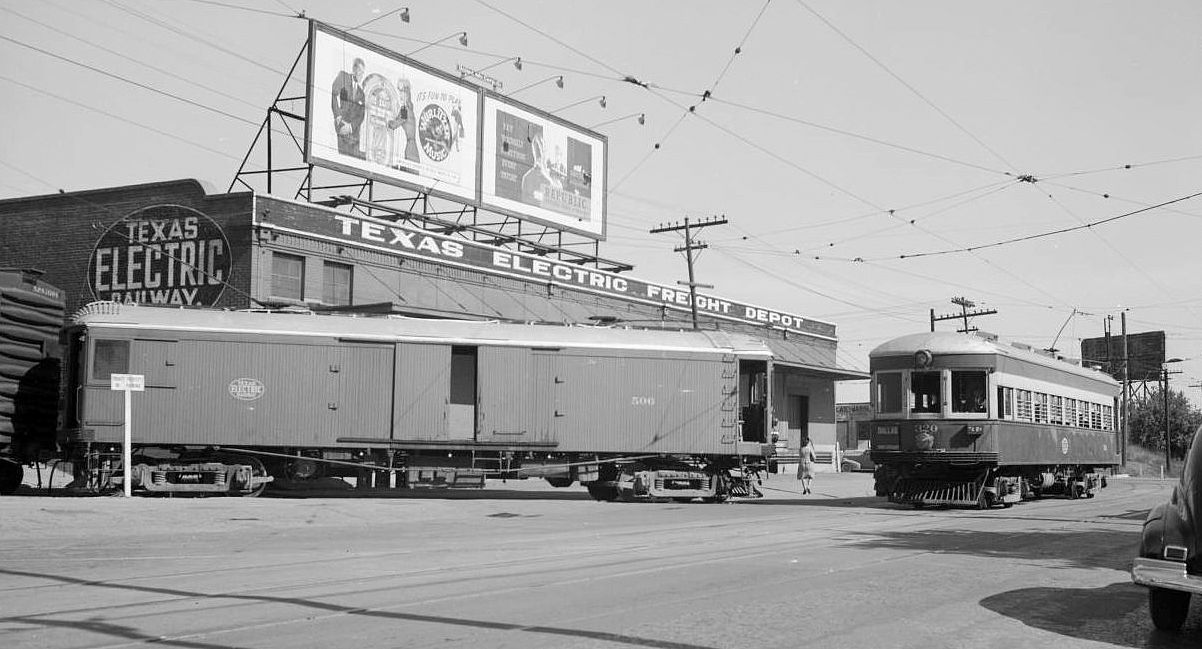
The interurban freight depot — seen below in 1946 — was located just east of Ferris Plaza. At the left, part of a railroad freight car is visible, in the middle, an interurban freight car, at the right, an interurban (passenger) streetcar, and at the far right, an automobile. And some crazy person walking.

freight_interurban_denver-pub-lib_1946

But the automobile eventually proved too popular, and more and more people began using trucks for hauling. After 40 years in business, the Texas Electric Railway interurban ceased operations in 1948.

*

When searching around for possible other images of engine 903 (as seen in the top photo), I found it hanging out over on eBay — described as being in the “Waco car house yards” in 1944. Small world.

engine-903_ebay

***

Sources & Notes

Top image found on Flickr.

Photo of the freight depot taken by Robert W. Richardson on April 27, 1946; from the Western History/Genealogy Dept., Denver Public Library.

Bottom photo (cropped) from eBay..

Interurban freight operation Wikipedia entry here.

Texas Electric Railway: Handbook of Texas entry here; Wikipedia entry here.

MANY photos of various Texas Electric Railway freight motors and locomotives, here.

And, lastly, great photos from around Dallas in CERA’s “Texas Electric and the Journey to DART,” here.

(Thanks to Bob J. and Robert P. for their helpful info!)

*

Copyright © 2014 Paula Bosse. All Rights Reserved.

Back When Bookstore Fixtures Were a Thing of Beauty! — 1940s

baptist-book-storeErvay & Pacific — “Book Corner” (click for larger image)

by Paula Bosse

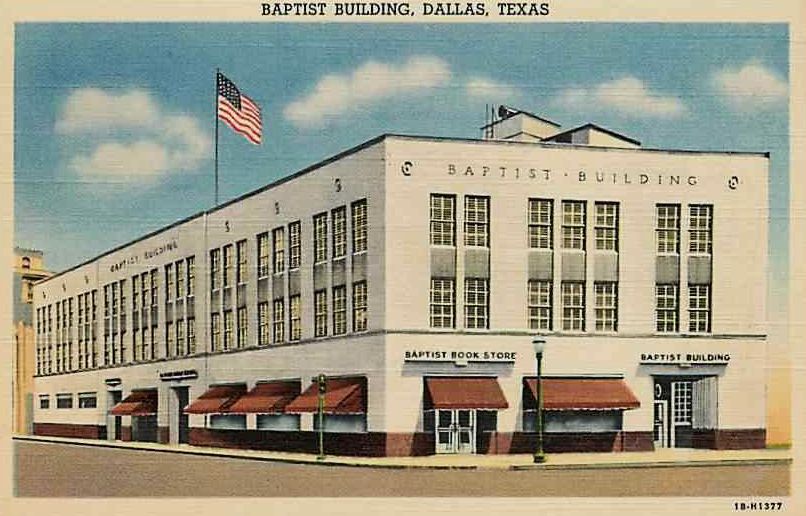
In July of 1941 the Baptist Building opened at Ervay and Pacific. Part of the ground floor (“the Book Corner”) was occupied by the Baptist Book Store, which sold mostly religious material, but which also stocked dictionaries (“and other items of similar nature”) and children’s books (“We have books for every type and age of juvenile from the Picture Books of Children from three to five to the vigorous youth wanting stories of the romantic west”). The ad below appeared in a booklet put together to welcome newcomers to the city, about 1946:

baptist-book-store_ca1946(click for larger image of bookstore interior)
*

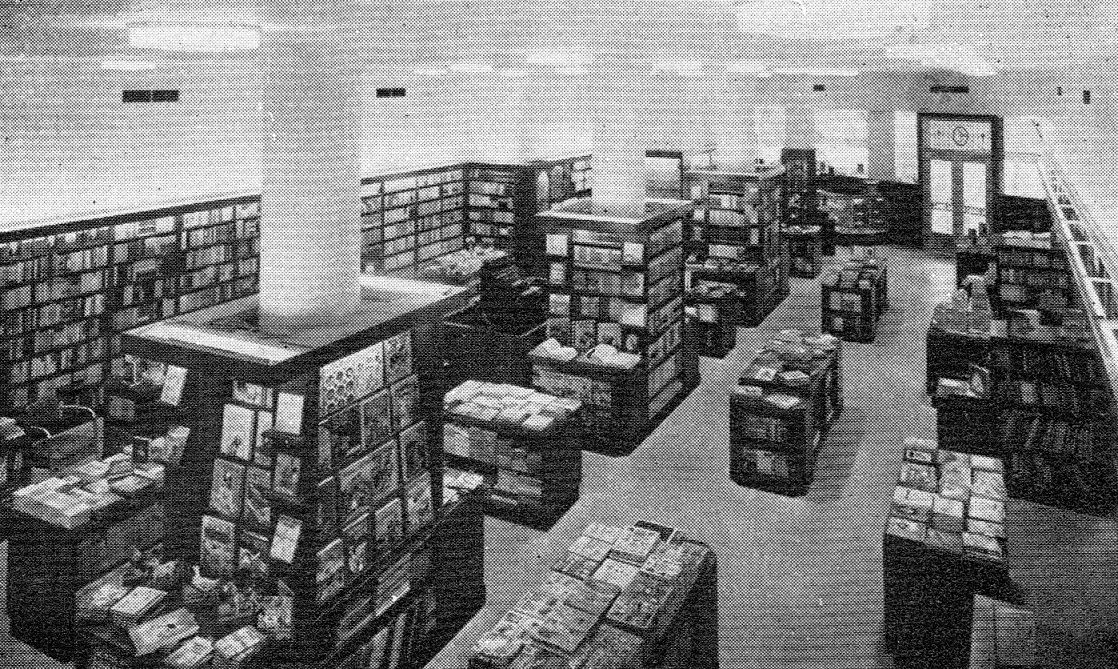
Having grown up in a family-run bookstore (and having worked in various other bookstores for a large chunk of my life), I’m always fascinated by old photos of bookstore interiors, and this one is just great. (Click the image above to see the photo of the store much larger.) I’m particularly fascinated by the fixtures encircling the pillars — I’m not sure I’ve ever seen the problem handled in such a sophisticated way. And is that recessed lighting shining down on the slatwalls? This is a really wonderful-looking bookstore. The only thing that looks out of place is what appears to be an old-fashioned chunky cash register, center left. Everything else in this photo makes the bookseller in me practically giddy with nostalgia.

baptist-book-store_dmn_092847-det

***

Ad is from a publication called “So This is Dallas” published by “The Welcome Wagon.” It is undated but is probably from immediately after the war. This slim booklet was printed for several years in slightly different editions for people who were considering a move to Dallas or for people who had just moved here. These booklets are wonderful snapshots of the time, with everything the prospective Dallasite would need: facts, photos, and ads.

Bottom image is a detail from a 1947 ad.

*

I am fascinated by photographs of vintage bookstore interiors — especially Dallas bookstore interiors, of which there are precious few to be found. I would love to see any photos of Dallas bookstores before, say, 1970. If you have any, please send them my way! My contact info is in the “About/Contact” tab at the top of the page. Thanks!

*

Copyright © 2014 Paula Bosse. All Rights Reserved.


Mercantile National Bank Ad — 1960

merc_ad_1960-det

by Paula Bosse

I love you, Merc! Why aren’t you in EVERY Dallas ad?

ad-mercanitle_city-directory-1960(click for larger image)

***

Ad from the 1960 city directory. I don’t know who did the artwork for this ad, but I love it.

*

Copyright © 2014 Paula Bosse. All Rights Reserved.

A Downtown Gas Station! — 1949

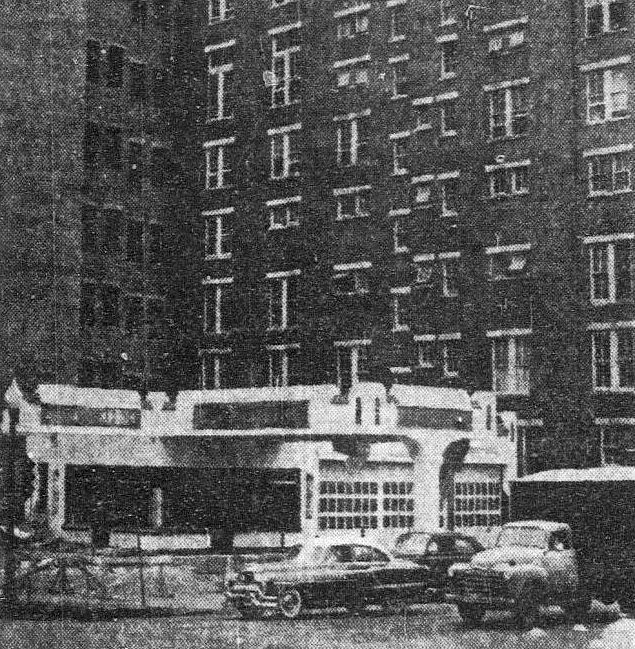
tyler-service-stn_degolyer_1949-det1Gas station at Elm & Houston! (click for larger image) (SMU Libraries)

by Paula Bosse

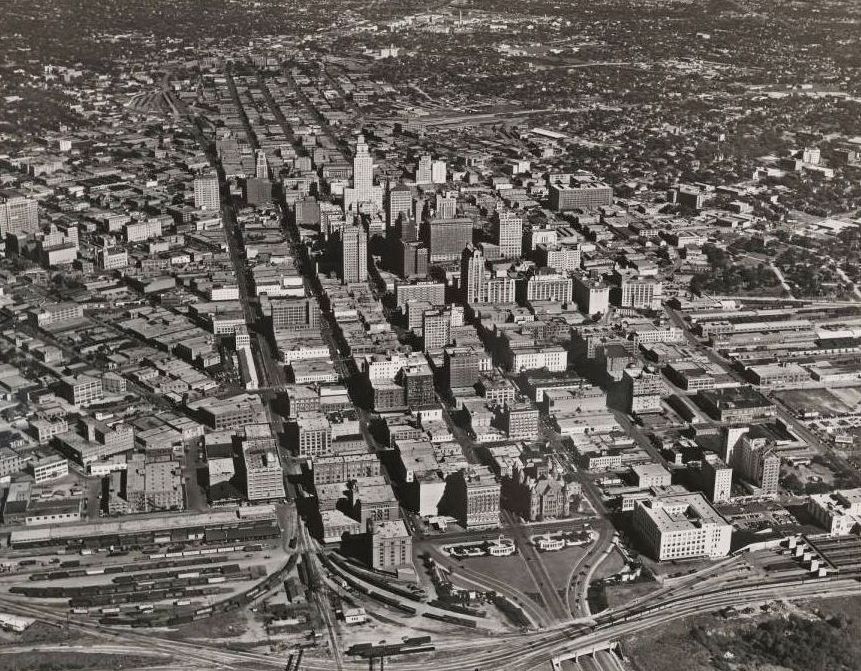
There was a time when gas stations populated the central business district in downtown Dallas. But now? I’m not sure I’ve ever seen a gas station in the heart of downtown. Which is probably why the station seen above (from a detail of a larger aerial view of downtown) stood out so much when I was looking at the photo. And it wasn’t located just anywhere downtown, but it was in the primo location opposite Dealey Plaza at the “gateway” to the city. It doesn’t fit in that space very well — it’s a corner crying out for a more substantial structure — but … wouldn’t it be nice to have an actual full-service gas station downtown again?

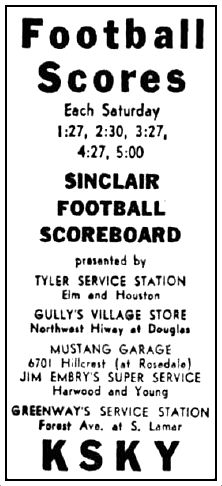
The Tyler Service Station (and before that the Longhorn Service Station) held down the corner at Elm and Houston streets in the 1940s but was demolished in 1953 to make way for the construction of the Records Building/Criminal Courts Building annex. And, hallelujah, I found a photo of the service station from ground-level — and it was pretty cool-looking!

gas-station_elm-and-houston_1950s

tyler-service-stn_dmn_100948Oct. 9, 1948

And, finally, here’s the original photo I saw in which that long-gone gas station jumped out at me, another wonderful photo by Lloyd M. Long, taken in May, 1949. You never know what odd things you’ll discover if you just take the time to explore.

downtown_degolyer_1949Aerial photo by Lloyd M. Long, 1949 (Foscue Map Library, SMU)

***

Sources & Notes

Lloyd M. Long photo (“Downtown Dallas, looking east”), from the Edwin J. Foscue Map Library, Central University Libraries, Southern Methodist University; it can be viewed here.

Click pictures for larger images.

*

Copyright © 2014 Paula Bosse. All Rights Reserved.


Cowboys and Indians on Elm Street — 1915

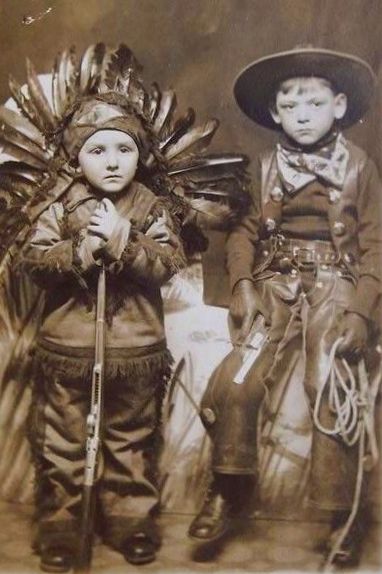
lawrence_kiddie-photoPhoto by Joe Lawrence, circa 1915

by Paula Bosse

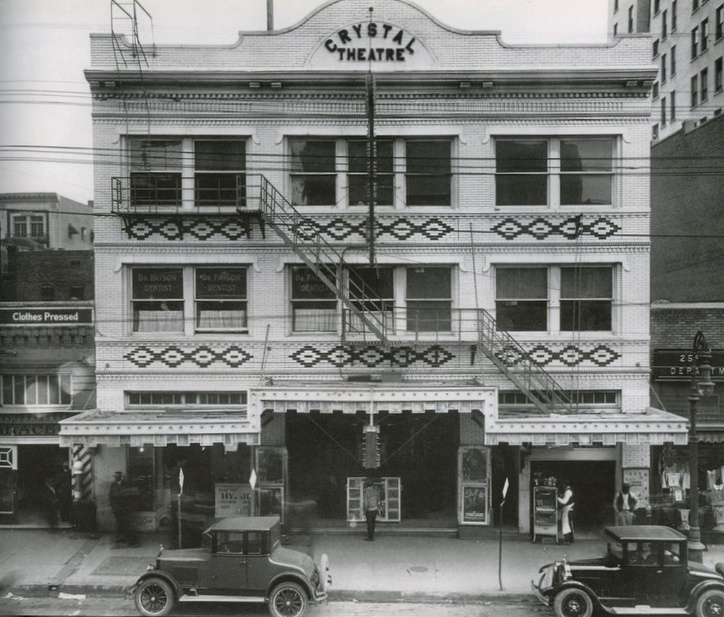
The photo above, showing two not-terribly-thrilled children dressed up in Old West costumes, was taken by Joe Lawrence in his “Crystal Electric Studio” at 1608 Elm Street, one of many small businesses located above the Crystal Theater.

crystal-theaterThe Crystal Theatre — with office space above (click for larger image)

Joseph Z. Lawrence (1884-1943) was born in Romania and settled in Dallas in 1909. In 1915 he was doing business as a photographer at 1608 Elm Street. Lawrence later owned the Lawrence Art Galleries on Pacific Avenue, and, along with his son Harry, was an early supporter of the Dallas Nine artists.

***

Sources & Notes

Top studio photo by Joe Lawrence, found on eBay.

Photo of the Crystal Theater found on Pinterest, here. A photo of the 101-year old building taken during the recent spate of downtown demolition — with the wrecking ball literally INCHES away from it — is here. The Dallas Morning News article it comes from is here.

At some point the address of the building (originally 1608-10) became 1610 Elm, perhaps when it was extensively remodeled in the late 1920s and became a retail store.

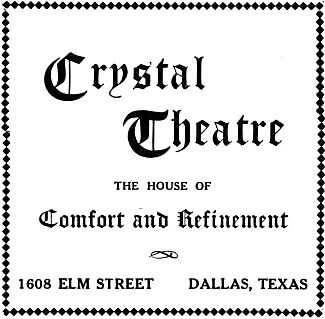
crystal-theater_building-code-bk_19141914 — “Comfort & Refinement”!

*

Copyright © 2014 Paula Bosse. All Rights Reserved.

Union Station’s Empty Backyard — ca. 1920

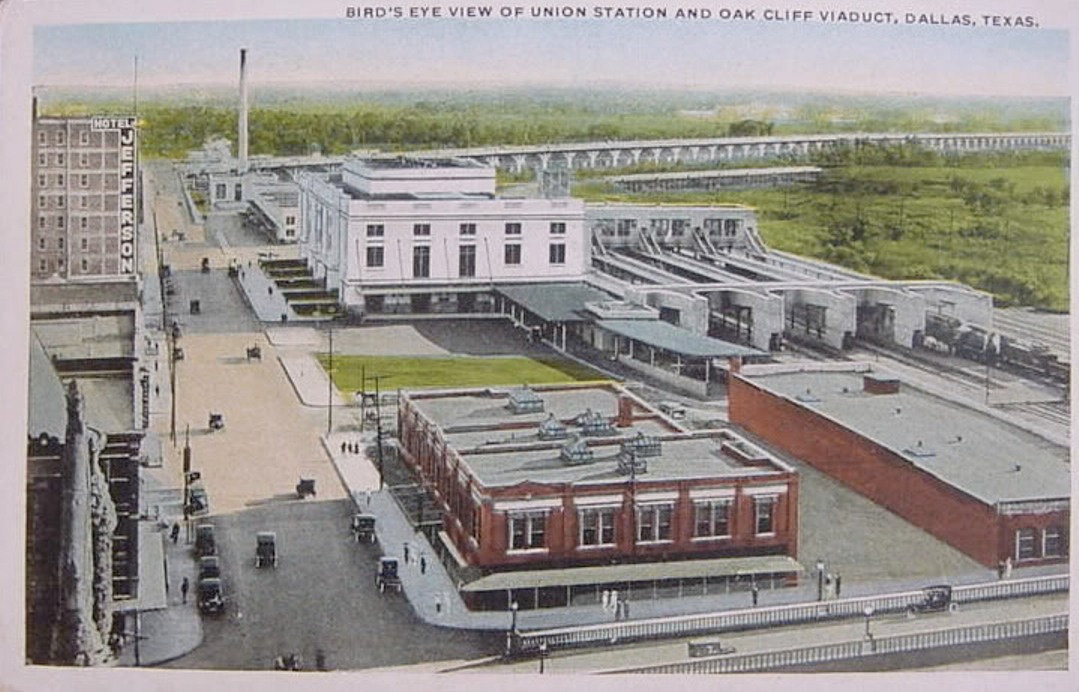
union-stn_ca1920The western edge of downtown, looking south (click for larger image)

by Paula Bosse

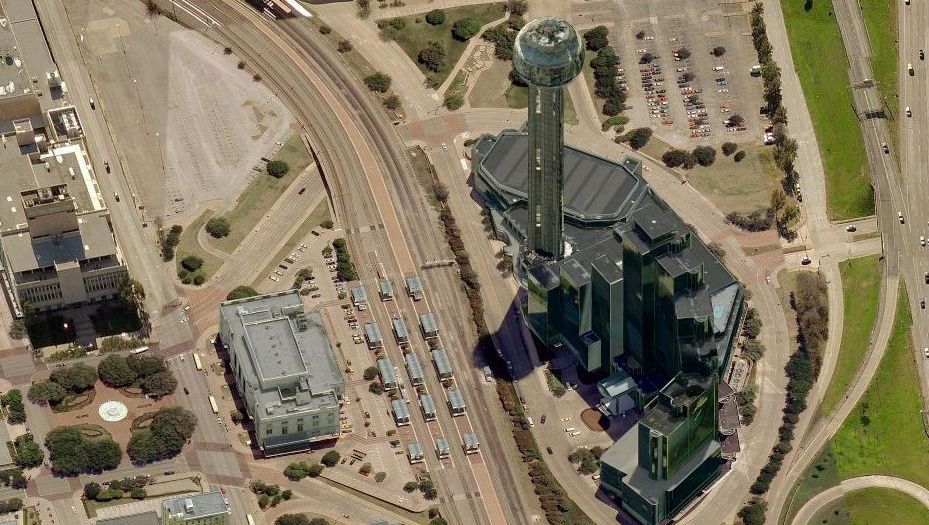
Here’s a postcard view you don’t see that often, Houston Street, looking south, with the Old Red Courthouse at the lower left, the gleaming white Union Station in the upper middle, and the fantastic Houston Street viaduct at the top. It’s a little hard to imagine that sixty-or-so years later, Reunion Tower would be plunked down at the far right of this picture, in that grassy field behind the tracks at Union Station.

union-stn_bing_20014

***

Postcard from the DallasMetropolis.com forum, here (see comment for the very interesting description of what’s what in this image).

Present-day bird’s-eye view from Bing (click for larger image).

*

Copyright © 2014 Paula Bosse. All Rights Reserved.


Theater Row Block Party! — 1948

theater-row-block-party_082648_preservation-dallasDallas premiere, “Red River” — Aug. 26, 1948 (click for larger image)

by Paula Bosse

On a rainy night in August, 1948, United Artists premiered the movie “Red River” in Dallas at the Majestic Theatre. The now-classic Western about a Chisholm Trail cattle drive, directed by Howard Hawks and starring John Wayne and newcomer Montgomery Clift, was actually “premiered” simultaneously on August 26, 1948 in 250 theaters in Texas, Oklahoma, Kansas, and New Mexico, the four southwestern states most closely associated with the Chisholm Trail.

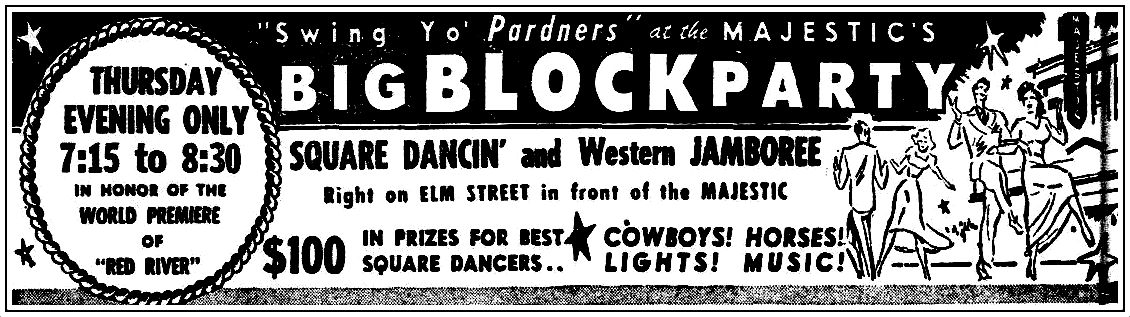
red-river_ad_dmn_082648(Aug. 26, 1948)

In Dallas, the publicity machine was seriously cranked up. The main attraction was a free-to-the-public street party in which the 1900 block of Elm Street was closed to traffic for a slate of western-themed festivities. The “jamboree” included square dancing, a musical set by cowboy singer Jim Boyd and his band, “cowboys and cowgirls from the Pleasant Mound Rodeo,” the Dallas Mounted Quadrille, and the Sheriff’s Posse. Or, as the ad said more succinctly, “Cowboys! Horses! Lights! Music!”

red-river_block-party_dmn_082648Great ad! Click to see it bigger! (Aug. 26, 1948)

No Hollywood celebrities were there, but the big Western Jamboree was apparently well-attended, even in the rain and despite rain, people gathered for square dancing.

(Wow. Square dancing in the rain. That’s dedication.)

The movie was a huge hit, so much so that the Majestic added showings, including one at 9:30 in the morning (!). It had a record week in Dallas, and, nationally, by the end of that first week it was reported to be the biggest-grossing picture in the history of United Artists.

The “world premiere” is interesting and all, but that photo of a brightly lit-up Theater Row is even better!

***

Sources & Notes

The original source of the photograph is not known, but I stumbled across it on a Preservation Dallas page, here.

“Red River” is a great movie. If you haven’t seen it, you need to. Even if you think you don’t like Westerns. Roger Ebert’s review/analysis is here.

*

Copyright © 2014 Paula Bosse. All Rights Reserved.