Flashback : Dallas

A Miscellany: History, Ads, Pop Culture

Category: Oak Lawn/Turtle Creek

Teatro Panamericano / Cine Festival — 1943-1981
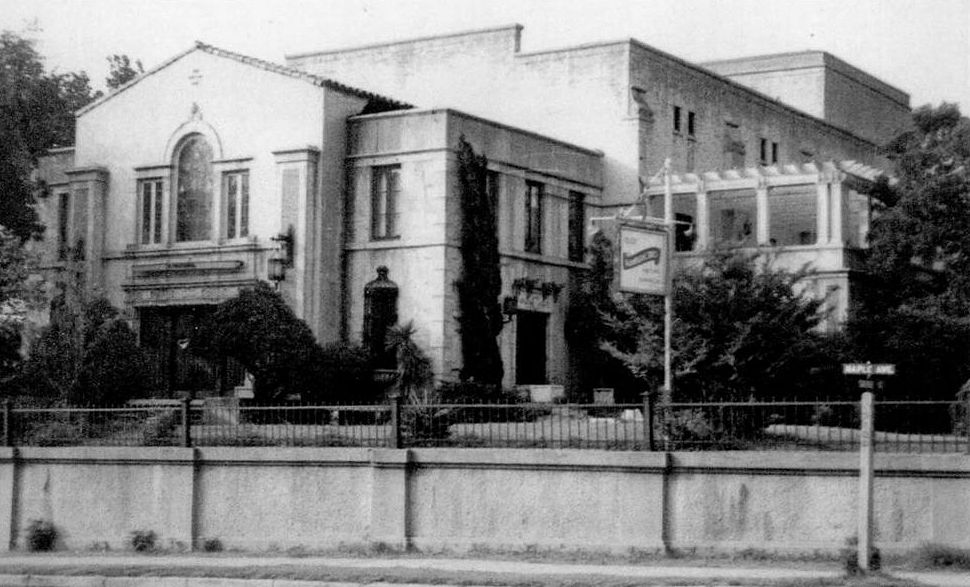
teatro_villasana_1950sEl Panamericano (click for larger image) (Villasana)

by Paula Bosse

In 1937, Joaquin José (J. J.) Rodriguez opened the first theater in Dallas to show Spanish-language movies. It was the Azteca, at 1501 McKinney Avenue, one block away from the still-there El Fenix. He soon changed the name to the Colonia and later to El Patio.

colonia_1938-directory1938 city directory

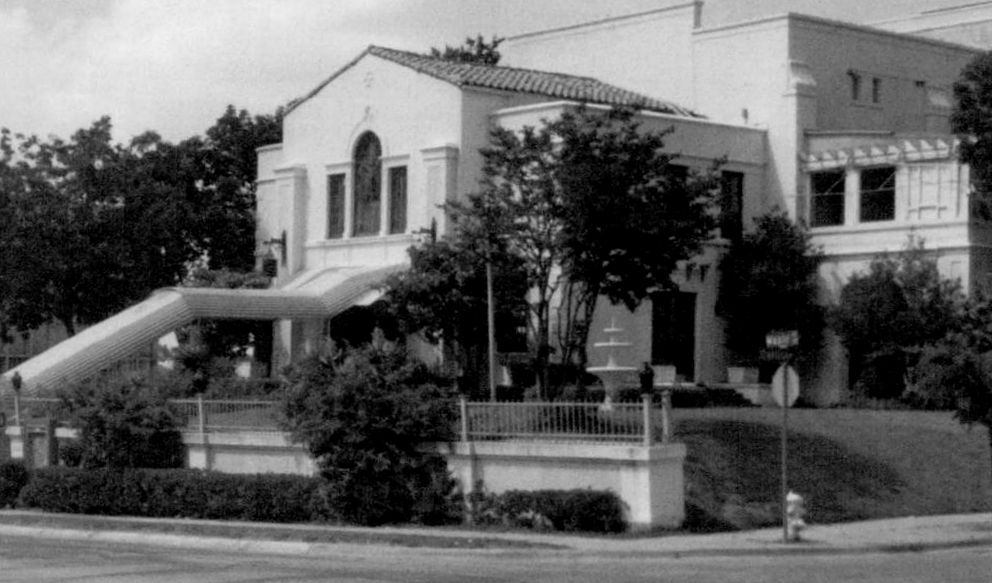
Even though a journalist later described this theater as being “dingy” and “unprepossessing” (DMN, July 31, 1944), the theater was quite successful, little surprise as the Hispanic community of the day was sorely underserved in almost every way. This endeavor was so successful that in the fall of 1943, the 36-year old entrepreneur made a big, BIG move: he bought the stunning and palatial Maple Avenue building that once housed the famed Dallas Little Theatre, an amateur theatrical group that had burst on the scene in 1927, but which had fallen on hard times in recent years.
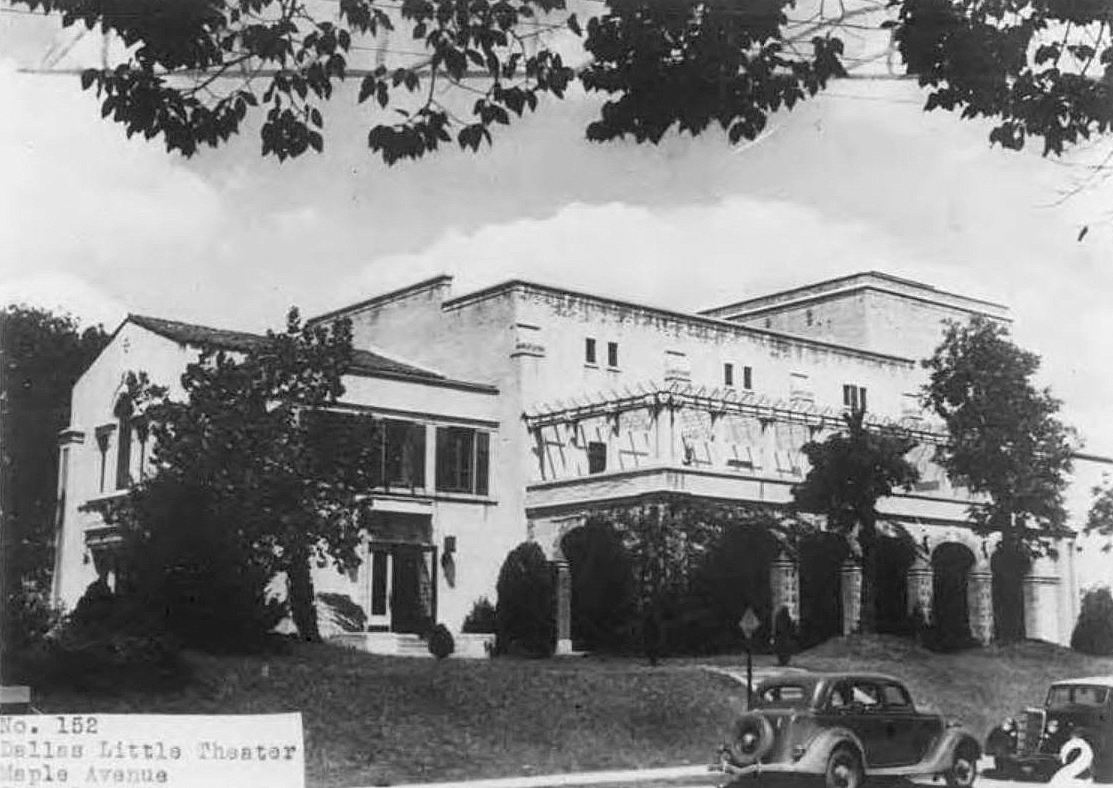
dallas-little-theater_degolyer-lib_SMU1930s

Rodriguez raised the necessary $35,000 (equivalent to almost half a million dollars in today’s money), bought the beautiful building at 3104 Maple, and renamed it Teatro Panamericano. The angle of the article that appeared in The Dallas Morning News on Sept. 22, 1943 announcing the new theater had the new moviehouse as being a boon to students and Anglo members of the community who might need to brush up on their Spanish rather than as a welcomed entertainment venue for the “Mexican colony” living and working in the adjacent Little Mexico neighborhood.

El Panamericano was an immediate success and soon became not only a place to see movies, but also a place for Dallas’ Spanish-speaking community to meet and mingle, with PLENTY of room for all sorts of events. (It was so big that Rodriguez and his family lived in back. He also had TWO offices and more storage space than he had things to store in it. No skimping on the parking lot either — one ad touted an acre of parking space.)

The theater’s importance to the Hispanic community of Dallas was both cultural and social:

For Mexican-Americans growing up in Dallas during the ’50s and ’60s, the films at El Panamericano, were a link with their historical and cultural heritage. For some, it would be their only exposure to cultural ties; for those whose families were stressing their Americanization by using only English in the home, it was a chance to practice their Spanish. (“Festival Fades, but Mexican Movies Thrive,” DMN, Aug. 9, 1981)

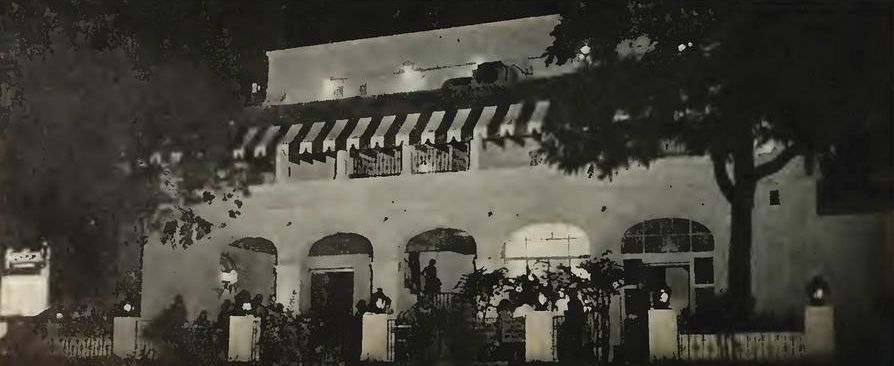
After more than 20 years of running a successful theater that catered to his core niche audience, Rodriguez was persuaded to change the theater’s focus. Mexican families had slowly moved out of the neighborhood, many to Oak Cliff where the Stevens Theater on Fort Worth Avenue had begun showing Spanish-language movies in the early ’60s and had siphoned off a large portion of Rodriguez’s audience. In 1965 the Panamericano became an arthouse cinema which showed mostly subtitled European films (and, later, underground and cult movies) — these were movie bills which were clearly aimed at college students and an upper-class Anglo audience. The Panamericano became the splashy Festival Theatre.
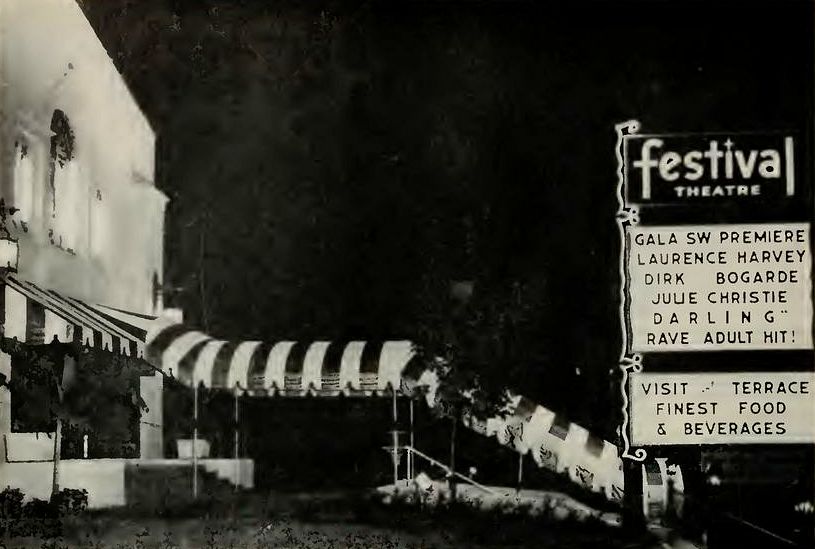
festival_box-office-mag_112265BoxOffice magazine, Nov. 22, 1965

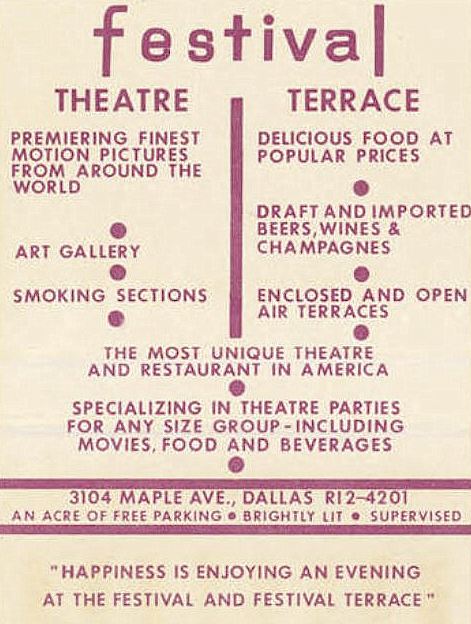
An indoor-outdoor restaurant — the Festival Terrace — was added, and it boasted of being “the only theater in the history of Texas with a wine and beer license.”
festival_box-office-mag_112265-restaurantBoxOffice magazine, Nov. 22, 1965

teatro_villasana_1960s1960s (Villasana)

As impressive as the Festival and its array of films were, the theater struggled, and Rodriguez later called this period a “big mistake.”

“As soon as I could, I changed it back to the way it was before. In fact, I lost money on that deal.” (DMN, Aug. 9, 1981)

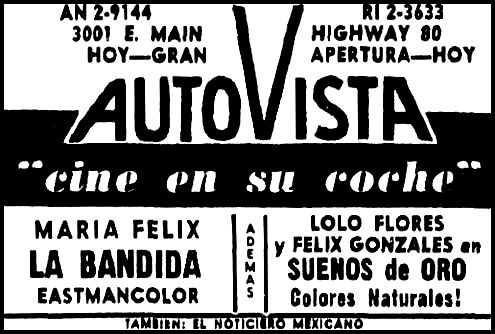
Another unusual misstep for Rodriguez at this time was his decision to open a drive-in that showed only Spanish-language films. What sounded like a great idea was another surprising failure for Rodriguez. Despite its non-stop advertising in the first half of 1965, the wonderfully-named Auto-Vista (located in Grand Prairie) lasted less than a year.
auto-vista_dmn_032565“Cine en su coche”! (March, 1965)

Rodriguez’s new-old Spanish-language theater — now the Cine Festival — was still popular, but it never regained its former glory. Rodriguez retired in 1981 and sold the property. Despite efforts by preservationists to save the beautiful Henry Coke Knight-designed building, it was demolished a few months later — in early January, 1982 — in the dead of night under cover of darkness (… that happens a lot in Dallas…). A nondescript office building was later built in its place.

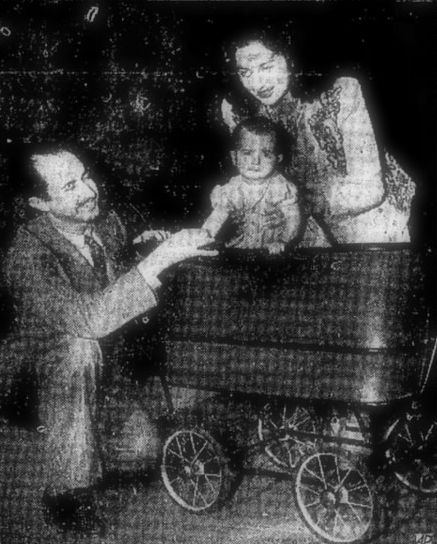
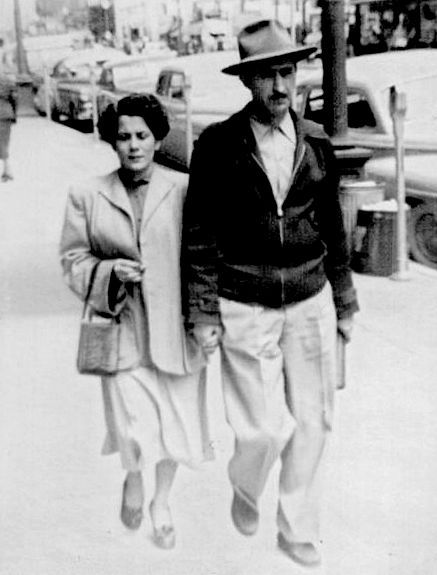
J. J. Rodriguez died in 1993 at the age of 86, almost exactly 50 years after opening one of the most important entertainment venues for Dallas’ Hispanic population. He was a respected leader in the community and was for many years president of the Federation of Mexican Organizations, an organization he helped found in the 1930s. His theater was both culturally important and beloved by its patrons.

*
pampa-news_AP-073044J. J. with daughter and wife (Pampa News, July 30, 1944) AP photo
rodriguez_villasana_downtown_1940sWith his wife, Maria, downtown 1940s (Villasana)
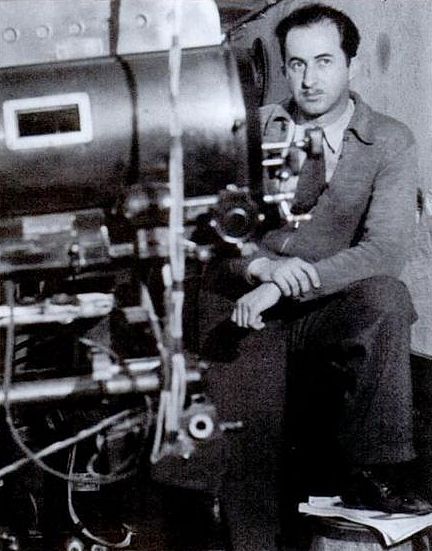
rodriguez_villasana_1950sIn the projection booth, 1950s (Villasana)

*

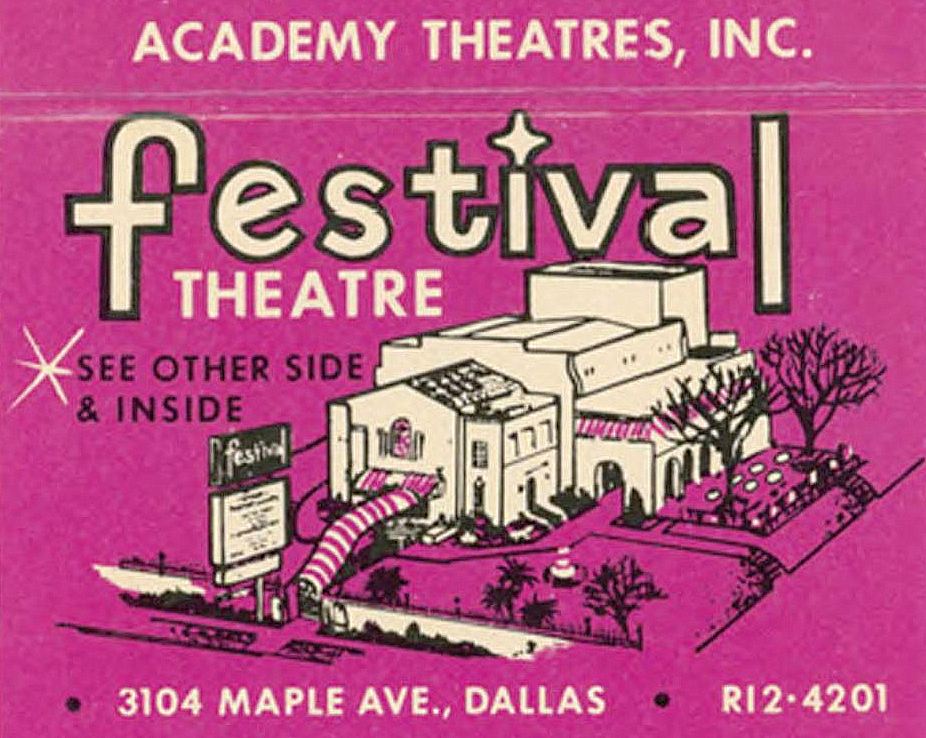
The matchbook cover image below gives an indication of how large the theater was. The building at 3401 Maple — at the corner of Carlisle, across Maple from the Maple Terrace — was gigantic.
festival-theatre_cook-collection_degolyer_smu_matchbook-cover

festival-theatre_cook-collection_degolyer_smu_matchbook-insideMatchbook via George W. Cook Collection, SMU

In a Dallas Phorum discussion (here), the space was described thusly:

It was an interesting building with an outdoor terrace restaurant, a full proscenium stage, rehearsal space downstairs below the stage, dressing rooms, shop/storage areas, and even a puppet theatre built into a wall in the balcony lobby area.

To see what the corner of Maple and Carlisle looks like now, click here (have a hanky ready). Can you imagine how wonderful it would be to still have that elegant building and still see it in use as a theater and restaurant?

**

In what may well be research overkill, I thought it was odd that there was an Azteca Theatre at 1501 McKinney a year before Rodriguez owned it. I wondered if, in fact, Rodriguez had owned the first Spanish-language movie theater in Dallas, or whether that distinction belonged to Ramiro Cortez (whose name is often misspelled as Ramiro Cortes). It seems that Cortez’s theater might have featured live performances rather than motion pictures. Like Rodriguez, Cortez had ties to Dallas entertainment — read about him here.

azteca_1937-directory1937 city directory

***

Sources & Notes

Photos with “Villasana” under them are from the book Dallas’s Little Mexico by Sol Villasana (Charleston, SC: Arcadia Publishing, 2011); all are from the personal collection of Mariangel Rodriguez. More photos of J. J. Rodriguez can be seen here (click “Next” on top yellow bar).

The full article from the Nov. 22, 1965 issue of the industry journal, BoxOffice, includes additional photos and information and can be seen here and here.

All other images and clippings as noted.

Articles on J. J. Rodriguez and his theaters which appeared in The Dallas Morning News:

  • “Pan-American Theater to Aid Spanish Study” (DMN, Sept. 22, 1943)
  • “Teatro Panamericano” by John Rosenfield (DMN, Oct. 12, 1943)– coverage of opening night festivities
  • “Maple Location Regains Swank” by John Rosenfield (DMN, Sept. 18, 1965) — about the change from El Panamericano to the arthouse Festival Theater
  • “Festival Fades, but Mexican Movies Thrive: Theater Owner Says Adios to Film Business” by Mercedes Olivera (DMN, Aug. 9, 1981) — about the closing of the Festival Theater
  • “Encore No More” (DMN, Jan. 4, 1982) — photo of the partially demolished theater
  • “Rites Set for Hispanic Leader J. J. Rodriguez — He Co-Founded Federation of Mexican Organizations” by Veronica Puente (DMN, Sept. 26, 1993) — Rodriguez’s obituary

“Dallas Theater Owner Is One-Man Pan-American Agency” — a syndicated Associated Press article by William C. Barnard — can be read here.

Read about Teatro Panamericano at Cinema Treasures, here.

Read about the competing Stevens Theater in Oak Cliff on Fort Worth Avenue, here.

*

Copyright © 2015 Paula Bosse. All Rights Reserved.

MORE Random Still-Standing Buildings Featured in Ads From 1929

ad-southern-fountain-fixture_directory_1929-detSoda fountains came from here…

by Paula Bosse

A few more photos of buildings that are still standing, from the ad-pages of the 1929 city directory.

First up is the Southern Fountain & Fixture Mfg. Co. at 1900 Cedar Springs.

ad-southern-fountain-fixture_directory_1929

The Southern Fountain & Fixture plant was built in 1925 at the corner of Cedar Springs and N. Akard. They manufactured and sold soda fountains, showcases, and fixtures.

A major new residential high-rise is going up in the 1900 block of Cedar Springs (or has gone up — it’s been a while since I’ve been over there), but I think it’s going up at the other end of the block. (But somehow its address is 1900 Cedar Springs….) So, I’m not absolutely sure this building IS still there. Here’s a 2014 image from Google Street View. It’s a cool building — hope you’re still there, cool building!

southern-fountain-fixture-now_googleGoogle Street View

*

Next, the Loudermilk-Sparkman Funeral Home at 2115 Ross Avenue.

ad-loudermilk-sparkman_belo_directory_1929(click for larger image of house)

The “home-like” Loudermilk-Sparkman funeral home moved into the former home of Col. A. H. Belo in June 1926 and settled in for a 50-year lease. (An article titled “Morticians In New Quarters” appeared on June 27, 1926 in The Dallas Morning News, complete with descriptions of interior decoration and architectural details.)

That place was a funeral home for 50 years — longer than it’s been anything else. That’s a lot of dearly departeds. (Clyde Barrow is probably the most famous cadaver to be wheeled through its portals.) In the ’70s, the granddaughter of Col. A. H. Belo sold the house — which was built in 1899/1900 — to the Dallas Bar Association, and today it is a swanky place to get married or eat canapés. And, thankfully, it’s still beautiful.

belo-today_googleGoogle Street View

*

 The Evangelical Theological College, 3909 Swiss Avenue, in Old East Dallas.

ad-evangelical-theological-college_directory_1929sm(click for larger image)

This “denominationally unrelated” seminary — where tuition and rooms were free, and board was at cost — was built in 1927 for $65,000. When the three-story-plus-basement building was finished, the college was in its fourth year, having moved from its previous location in The Cedars. “The college now has forty-five students representing fifteen states of the United States, three Canadian provinces and Ireland…. The faculty is composed of thirteen men…” (DMN, Dec. 25, 1927).

ad-evangelical-theological-college_directory_1929-det

The college has grown by leaps and bounds and is now the Dallas Theological Seminary, and the original building is still there.

dallas-theological-seminary_now_googleGoogle Street View

*

Lastly, the Melrose Court Apartments and Hotel, 3015 Oak Lawn.

ad-melrose_directory_1929

The Melrose, designed by architect C. D. Hill, was built in 1924, and as it was about to throw open the doors of its bachelor apartments to eager Dallas bachelors (and whomever), it advertised itself thusly: “Of palatial splendor, rivaling in dimensions the best appointed apartment hotel buildings of this modern day, it is equal to the best of any of America’s cities of a million.” (DMN, Aug. 31, 1924) Well, of course it is!

ad-melrose_directory_1929-det

It’s been a landmark in Oak Lawn for over 90 years. I know it’s officially now the Warwick Melrose Hotel, but I’ve never heard anyone call it anything but The Melrose.

melrose-today

***

Sources & Notes

All ads from the 1929 city directory.

My previous post “Random Still-Standing Buildings Featured in Ads From 1927” is here.

*

Copyright © 2015 Paula Bosse. All Rights Reserved.

Reverchon Park Flyover

reverchon_aerial_squire-haskins_portalReverchon Park — photo by Squire Haskins (click for VERY large image)

by Paula Bosse

Another of photographer Squire Haskins’ fantastic aerial shots, this one taken over Reverchon Park, looking northeasterly: the Katy tracks are running up and down on the right side, what is present-day Harry Hines is at the bottom, squiggly Turtle Creek Blvd. runs up the middle from the park, Fairmount and Maple run across the photo near the top, and Hood St. runs along the very far left edge. What looks like a date of “6-13-56” is on the back of the photo.

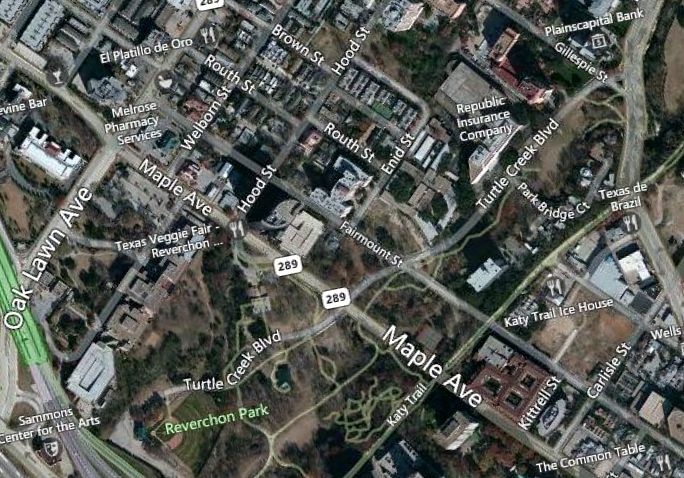
A present-day map of the area, looking north (to zoom out or in, click here):

bing_reverchon*

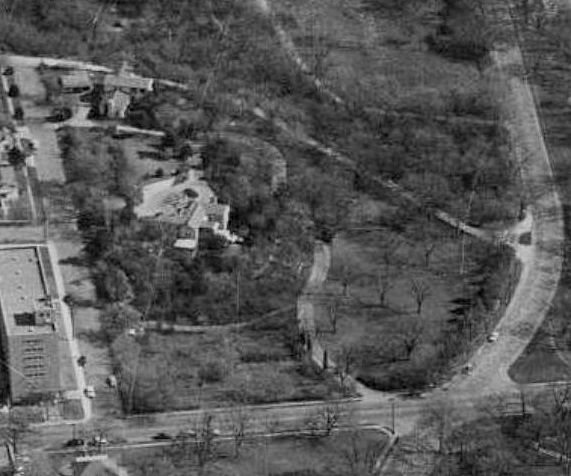
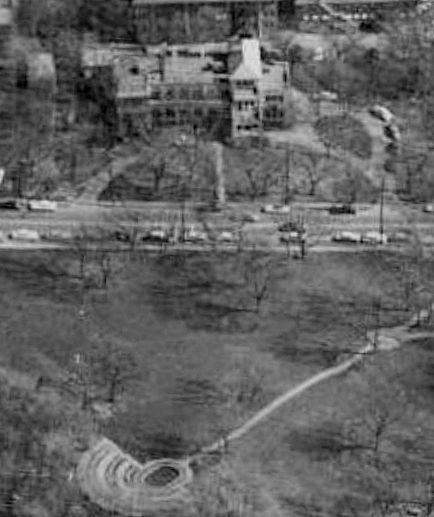
A couple of questions. What are the two large buildings in the crops below?

The first one is the large white building on property bounded by Fairmount, Enid, Turtle Creek and a street that no longer seems to exist (an extension of Brown?):

reverchon_det2*

The second is on Maple, near Hood — across from the amphitheater in the park, where the Heritage Auctions building is now:

reverchon_det1

The top one appears to be a (large!) home (I’d love to know who owned it), but I’m not sure what the one at the bottom is. Anyone know? (UPDATE: Thanks to my mother for informing me that the building immediately above is the Bradford Memorial Hospital for Babies, which you can see and read about here.)

***

Photo by Squire Haskins, via the Portal to Texas History, here. (Back of photo is here.)

Map from Bing.

Most images larger when clicked.

*

Copyright © 2015 Paula Bosse. All Rights Reserved.

No. 4 Hook and Ladder Company, Oak Lawn — 1909

fire-dept_no-4-hook-company_ebay
Oak Lawn Fire Station

by Paula Bosse

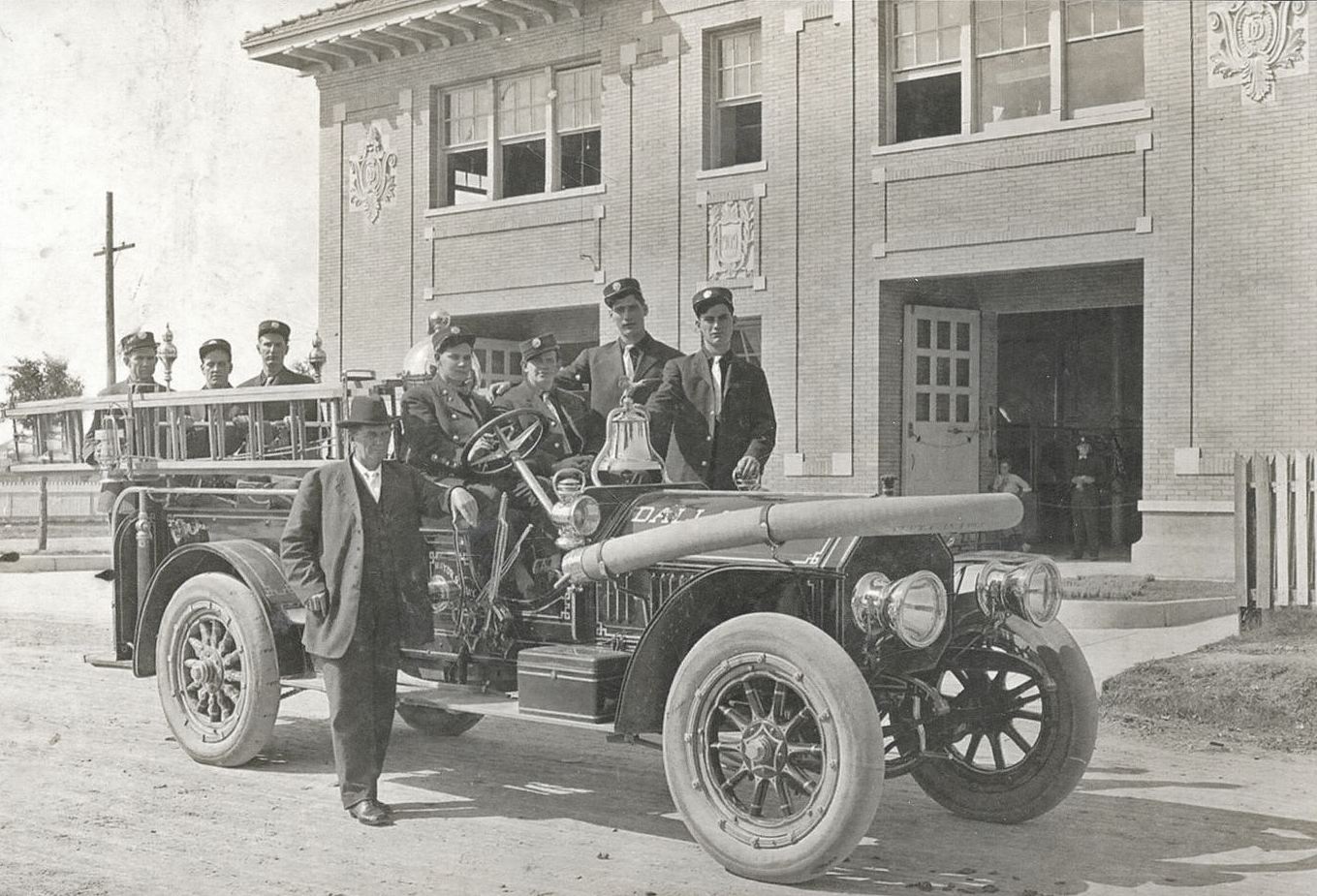
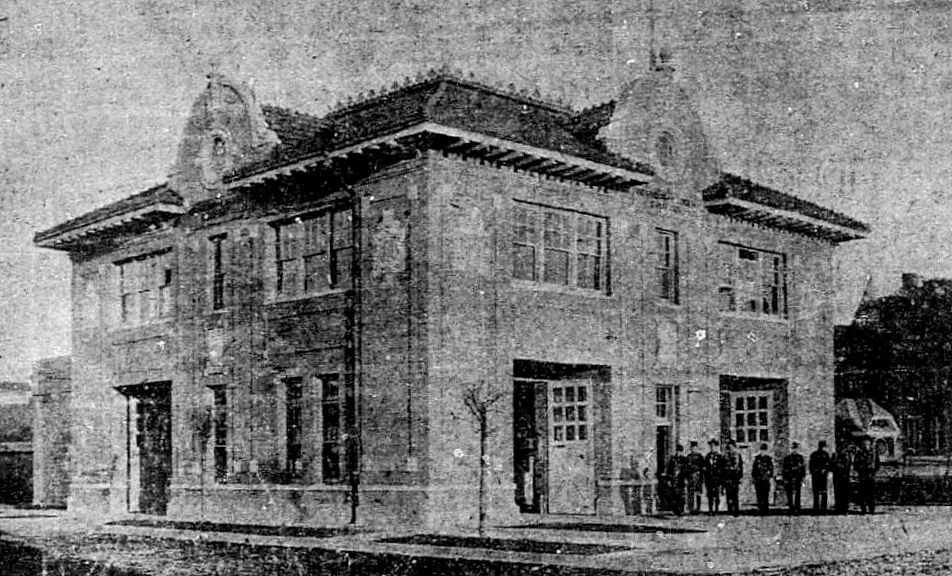
The photograph below appeared in The Dallas Morning News on December 5, 1909 under the headline, “Fire Station Lately Erected in the Oak Lawn District.”

fire-station_oak-lawn_clogenson_dmn_120509

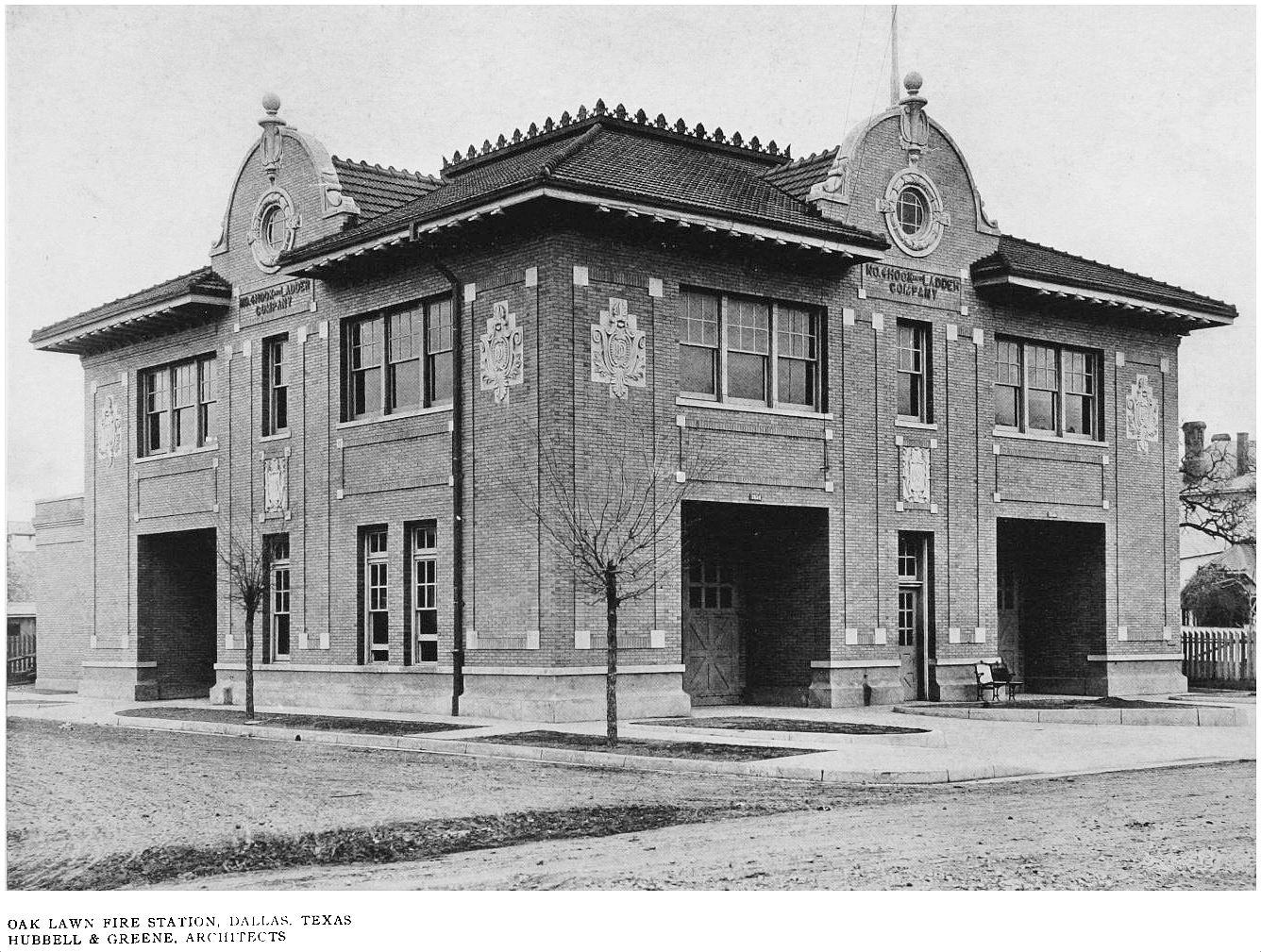
“Hook & Ladder Company No. 4” (now known as the more prosaic “Station No. 11”), was designed by noted architects Hubbell & Greene. It was built at Cedar Springs Road and Reagan Street in 1909 as the first “suburban” fire station in Dallas. Still a working firehouse, the Mission Revival building is a designated historic landmark and is listed in the National Register of Historic Places.

firehouse-oak-lawn_google

*

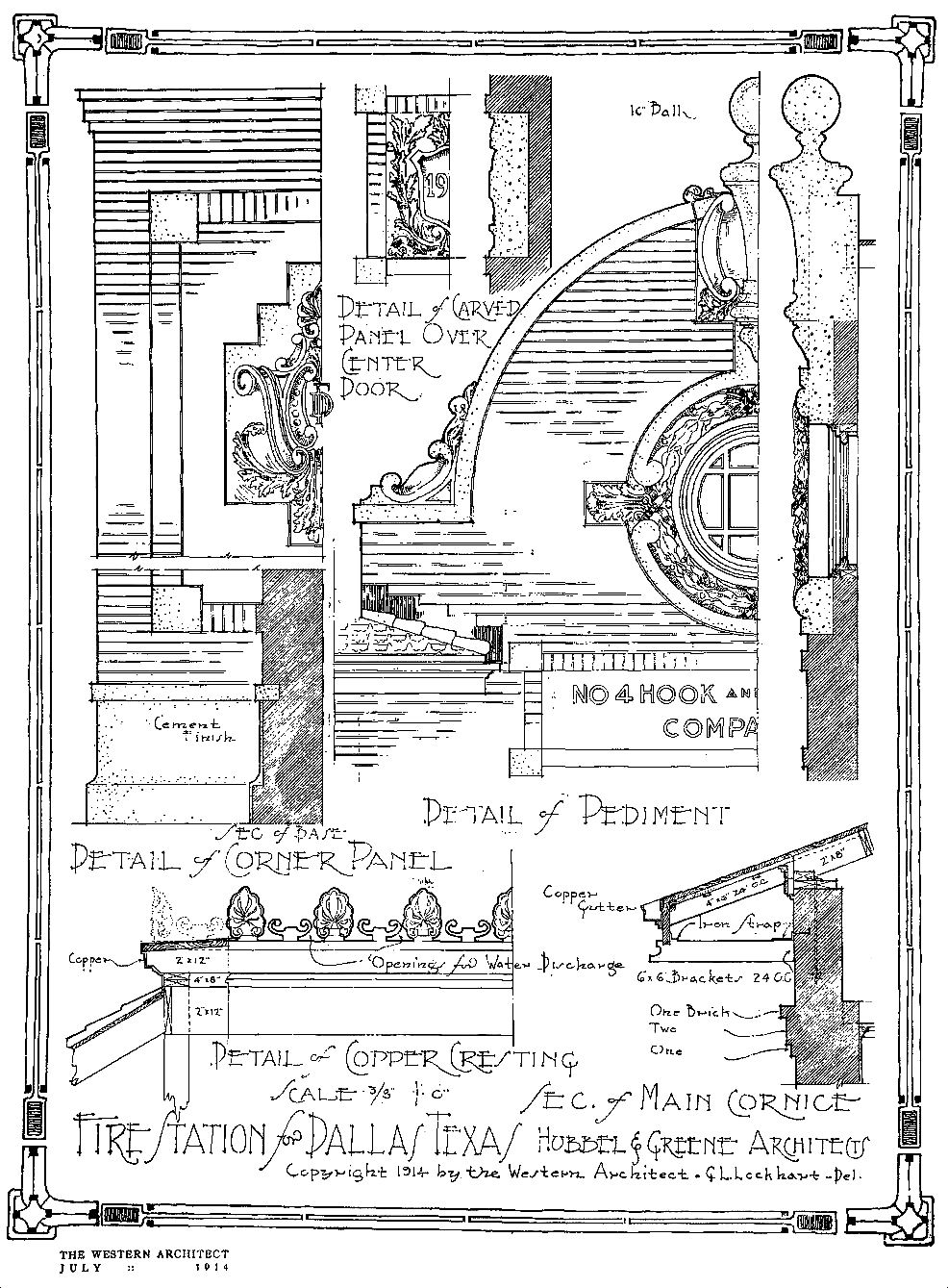
Below, a photo and architectural plan which appeared in the 1914 “Western Architect” journal (more about this here):

firehouse_oak-lawn_western-architect_july-1914

firehouse_oak-lawn_western-architect_july-1914_architectural-details_2

*

Another photo of the historic firehouse, from a 1931 publication, captioned “No. 11 Engine Co., Cedar Springs & Reagan”:

cedar-springs_fire-station_fire-dept-bk_1931_portal

***

Sources & Notes

Top photo found on eBay.

1909 Dallas Morning News photograph by Clogenson.

Color image of the station as it looks today from Google Street View.

Final photograph is from The Man in the Leather Helmet: A Souvenir Booklet of The Dallas Fire Department (1931), via the Portal to Texas History.

For more on the history of this historic fire station, see the page devoted to it on the Dallas Fire Rescue Department website, here. Also, see the City of Dallas Landmark Structures and Sites page here.

*

Copyright © 2014 Paula Bosse. All Rights Reserved.

World War II “Victory Huts” at Parkland

parkland-victory-huts_c1945-utswPhoto: UT Southwestern Library

by Paula Bosse

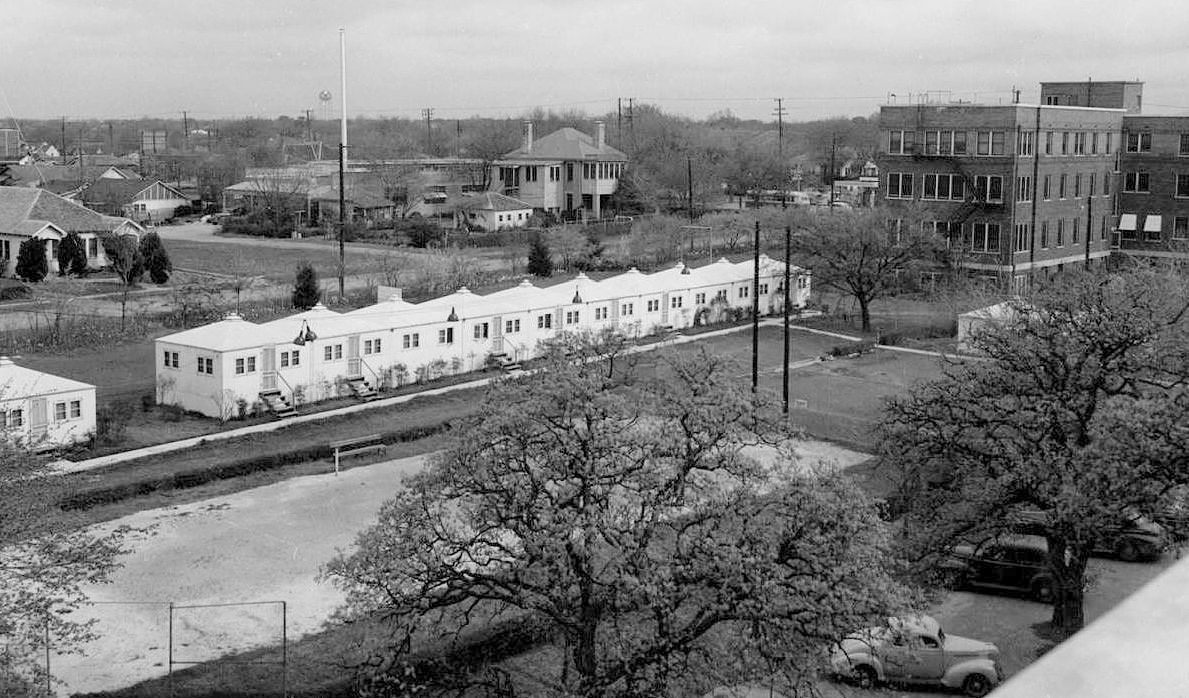
Above are a row of “Victory Huts,” behind the old Parkland Hospital at Maple & Oak Lawn, circa 1945. The description of the photo from the UTSW Library:

“Victory Huts” were prefabricated buildings developed during World War II as a method of providing quick housing for soldiers. The white “Victory Huts” behind the Parkland Nurses’ Home are believed to have been used first as housing for recovering servicemen during World War II, then after the war as housing for nursing students.

Victory Huts were the brainchild of builder H. F. Pettigrew and wealthy Dallas businessman Winfield Morten. Read about the beginnings of their wildly popular prefab buildings here.

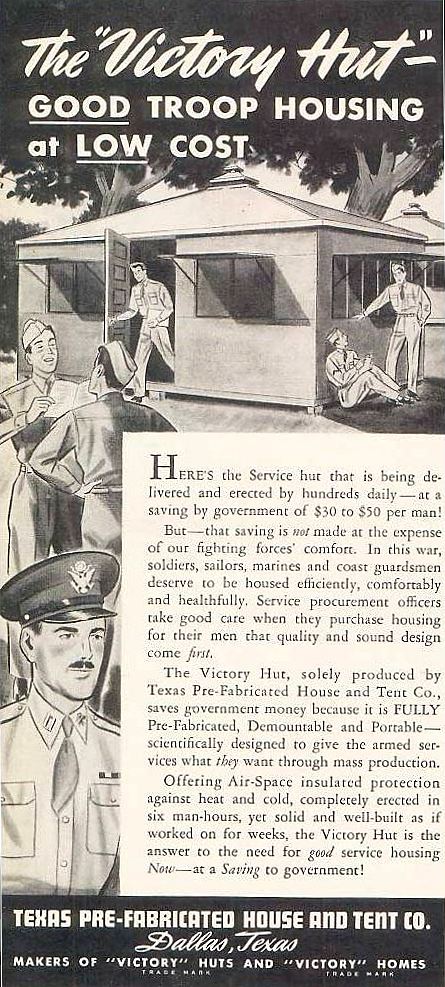
Below, an ad from the Dallas company that manufactured them, Texas Pre-Fabricated House and Tent Co.:

victory-huts_texas-historical-commission_flickr

And, after the war, just add some curtains, a few plants, and a white picket fence.

texas-pre-fabricated-housing-co_southwestern-medical-college_1944-yrbk-ad

***

Sources & Notes

Top photo and quote are from the Parkland Hospital Collection at the UT Southwestern Library, accessible here.

First advertisement from the Flickr stream of the Texas Historical Commission, here. Second ad from the 1944 Southwestern Medical College yearbook.

Victory Huts were widely used during World War II, as cheap housing for military personnel, military families, and as housing in internment camps. See the huts as they were used for Japanese/enemy alien internment camps in Texas, at Camp Kenedy, at Crystal City, and at Dodd Field/Fort Sam Houston.

*

Copyright © 2014 Paula Bosse. All Rights Reserved.

“Mars Needs Women” — The Dallas Locations

1-mars-oak-lawnOak Lawn & Lemmon, 1966

by Paula Bosse

Chances are, if you’re a native Dallasite and you’re a cult movie buff, you’ve heard of Dallas filmmaker Larry Buchanan (1923-2004), the self-described “schlockmeister” who made a ton of low-budget movies in Dallas, almost all of which are considered to fall in the “so-bad-they’re-good” category. I’ve made it through only three of them, and while they’re definitely not great (or even good, really), there were moments I enjoyed.

Buchanan’s most well-known movie — if only because the title has worked itself into the sci-fi vernacular — is Mars Needs Women, shot in Dallas in a couple of weeks in late 1966, starring former Disney child star Tommy Kirk and future star of “Batgirl,” Yvonne Craig. For me, the worst thing about the movie is its incredibly slow, molasses-like editing (courtesy of writer-director-editor Buchanan who was working on contract to churn out movies that had to be cut to a very specific running time, and he’s obviously padding here with interminably long scenes that drag and drag). And then there’s the dull stock footage and weird background music that I swear I’ve heard in every cheap Western ever made. Still … it has its charm.

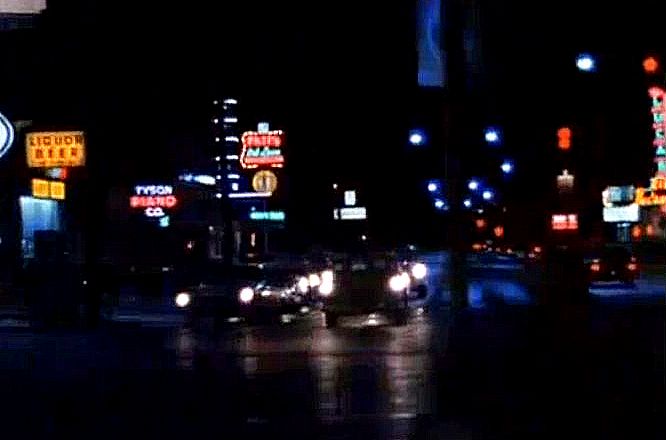
But the BEST thing about this movie (and, presumably, his others) is that it was shot entirely in Dallas, using a lot of instantly recognizable locations. (Every time I saw a place I knew, I perked up — it reminded me a bit of seeing Bottle Rocket for the first time — almost shocked to see common every-day places in an honest-to-god MOVIE!) So, if you don’t feel you can sit through the whole thing (available, by the way, in its entirety online — see link at bottom), I’ve watched it for you, with a whole bunch of screen shots. So feast your eyes on what Dallas looked like in November of 1966. (By the way, because the movie revolves around …. Mars needing women, the movie is actually set in Houston, home of the Johnson Space Center. Even though you see the very distinctive Dallas skyline — repeatedly. Houston! You wish, Houston!)

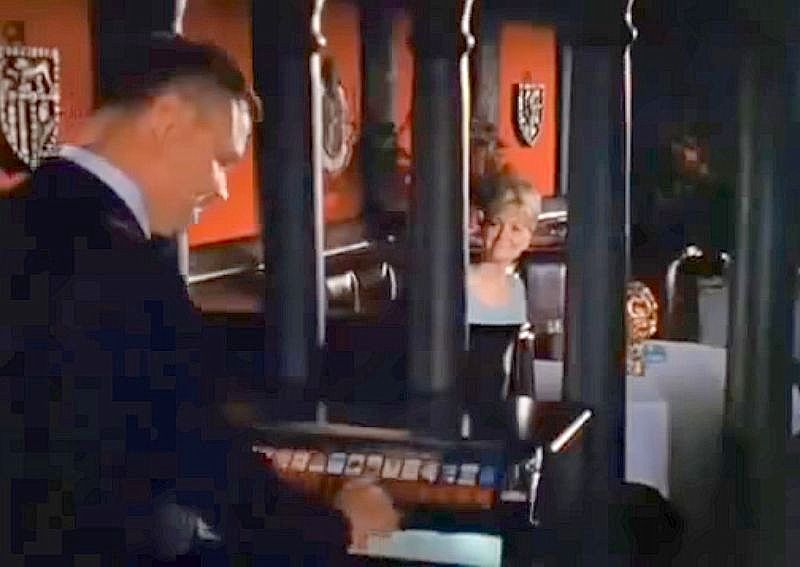
My favorite shot is the one at the top of this page and is seen in the first 90 seconds of the movie: Oak Lawn at Lemmon, with the familiar Lucas B & B sign at the right. This area was used a few more times. One character goes into the old Esquire theater, but, sadly, there was no establishing shot showing that great old neon sign. I think the first interior — showing a couple at a lounge — was shot in the swanky private club, Club Village, at 3211 Oak Lawn (at Hall), just a short hop from Oak Lawn and Lemmon.

1966_club-village_mars-needs-women

Next, we’re off to White Rock Lake.

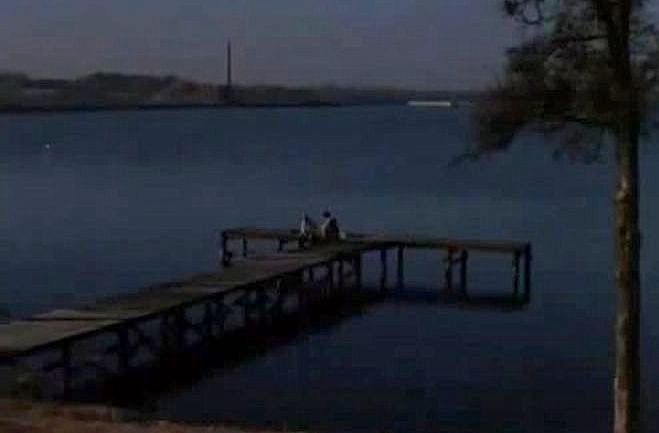
2-mars_pump1White Rock Lake. Shot day-for-night, with the pump station in the distance.

3-mars-pump2White Rock Lake pump station, where the Martians are headquartered as they search for healthy, single women to take back to Mars to help re-populate the planet.

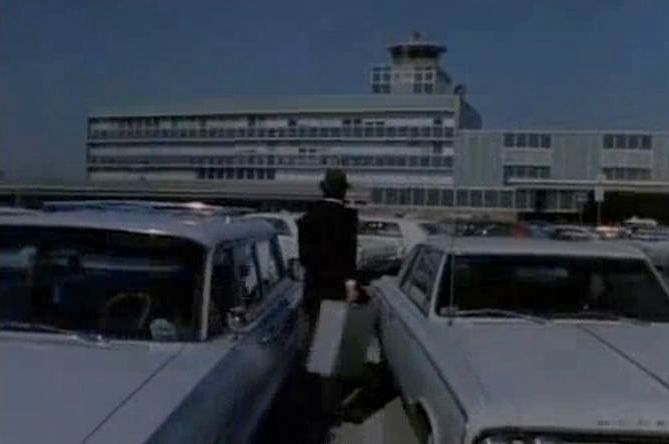
4-mars_love-field-extLove Field parking lot. Still shooting day-for-night. Badly.

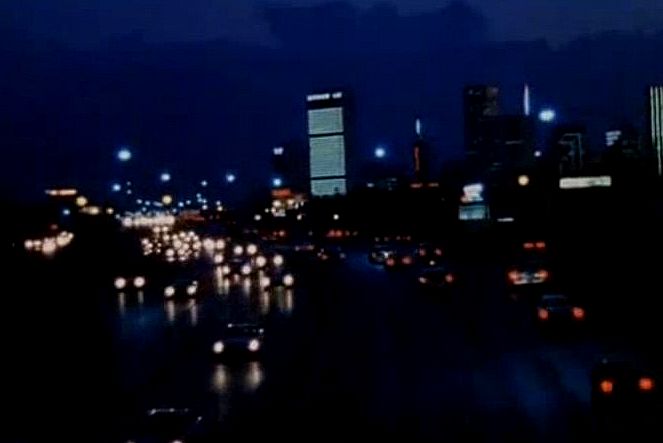
5- mars-southland-lifeThe Southland Life Building, etc., magically transported to Houston.

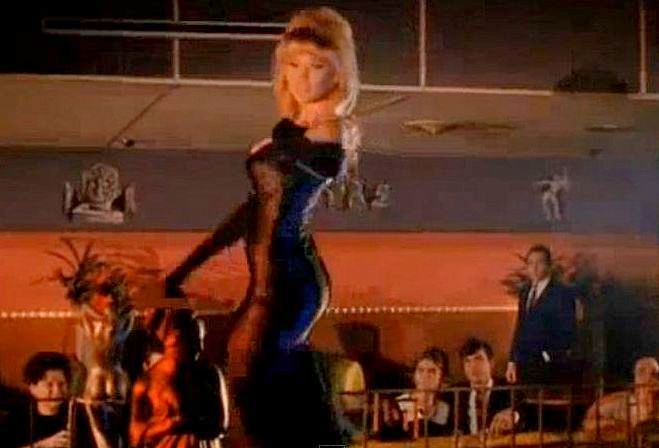
7-mars-athens-stripAthens Strip — a strip joint on Lower Greenville, one block north of the old Arcadia Theater. I’ve never heard of this place, but I came across the story of a guy who had visited the place back around this time and remembered one of the VERY unhappy dancers who hurled handfuls of the coins (!) that had been tossed onstage back into the audience, with such force that his face and chin sustained minor lacerations.

8-mars-needs-women_athens-strip_bubbles-cashLocal celebrity-stripper “Bubbles” Cash, inside Athens Strip. Plainclothes Martian (standing) ponders whether she has what it takes to birth a nation. (She does.)

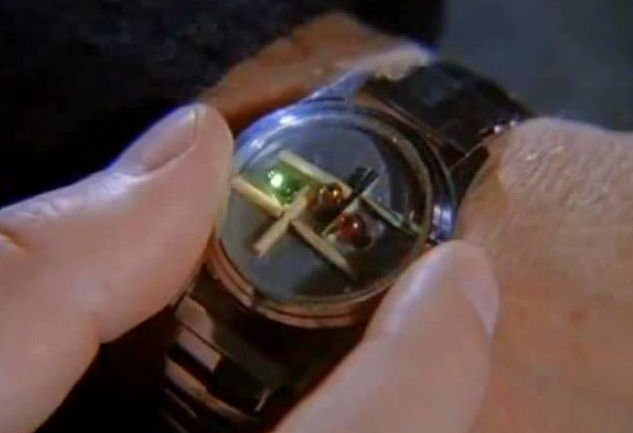
9-mars-watchMy favorite example of what a director is forced to resort to when there is no budget. This is some sort of sophisticated communication device. I think those are matchsticks.

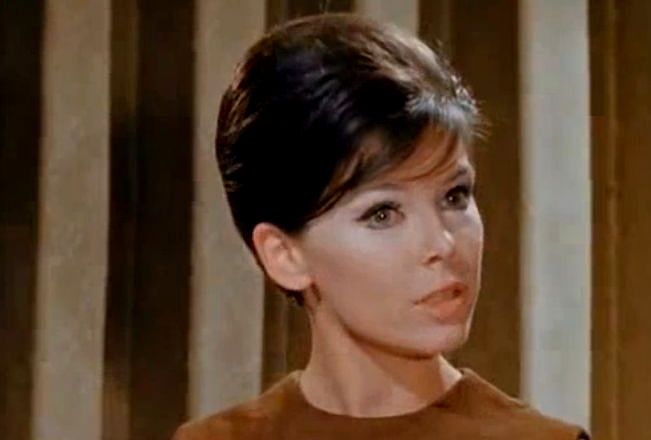
10-mars-yvonne-craigYvonne Craig, without a doubt the best actor in the movie. In fact, she’s really good. She had already made a few movies in Hollywood at this point, but the lure of a starring role brought her back to her hometown (where the newspapers reported she was happily staying with her parents during the two-week shoot).

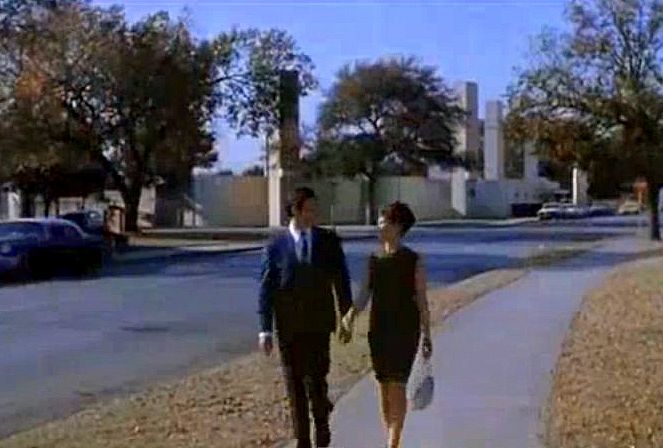
11- mars-band-shellMartian #1 and sexy space geneticist strolling through Fair Park — band shell behind them, to the left.

12-mars-planetariumThe Fair Park planetarium.

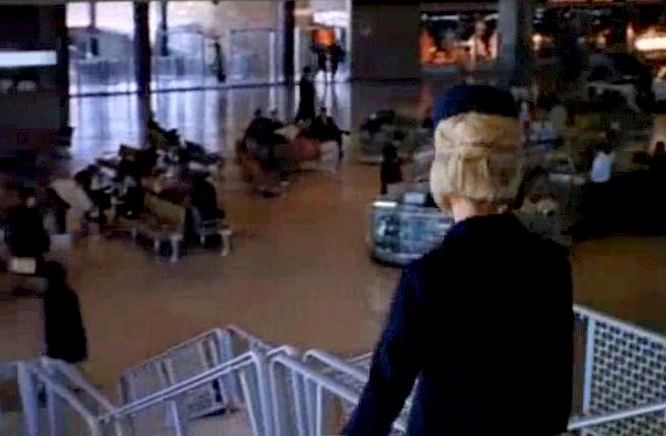
13-mars_love-fieldLove Field. I love the interior shots of the airport in this movie. (The stewardess walking down the stairs? Destined for Mars.)

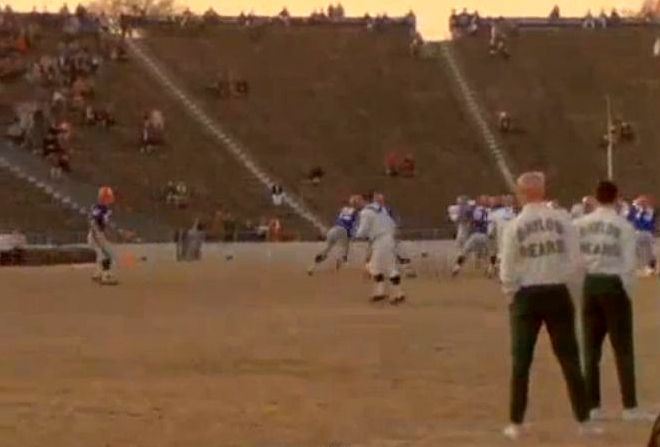
14-mars-cotton-bowlCotton Bowl, shot during a homecoming game between SMU and Baylor. Some shots show a packed stadium, some show this. Word of warning to the homecoming queen, Sherry Roberts: do NOT accept that flower delivery!

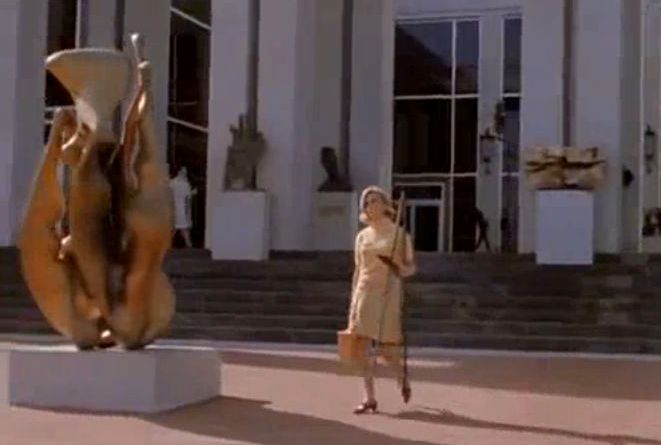
15-mars-meadowsSMU, Meadows School of the Arts. I love the pan across the front of the building. Mars Needs Co-Eds.

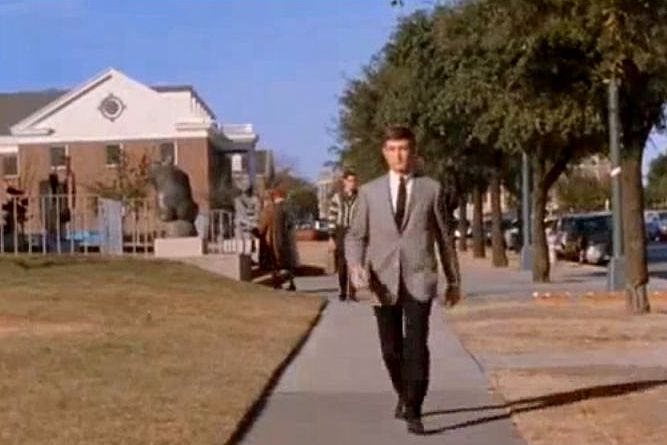
17-mars_BMOCSMU. BMOC (Big Martian On Campus).

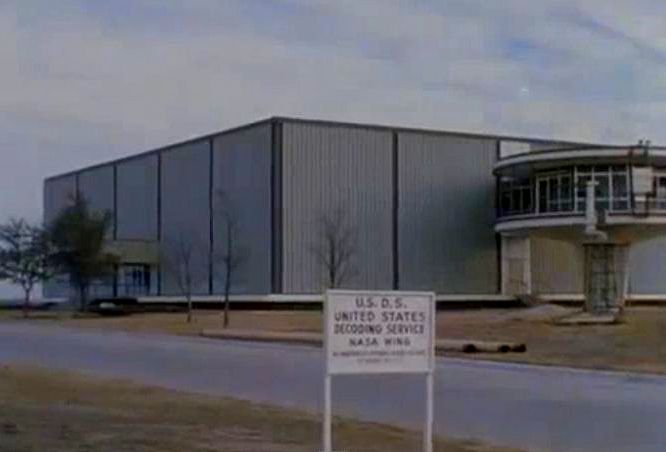
18-mars-collins-radioThe one location I couldn’t figure out. And it’s because it isn’t in Dallas. It’s the Collins Radio building in Richardson, a company that was absorbed by/bought out by/merged with Rockwell International. I think all the interior and exterior shots which are supposed to be NASA were shot here. How did a low-budget director like Larry Buchanan get into a place like that? According to a 1986 Texas Monthly article, Buchanan, in his day-job career as an ad-man, was hired by Collins Radio in 1961 to work in their “audio-visual” department” (the man who hired him was Harold Hoffman, whose later film work with Buchanan was done under the name Hal Dwain).

19-mars-collins-radioSo, yeah — COOL location.

20-mars_fair-parkMore Fair Park, more murky day-for-night.

21-mars_pump3White Rock Lake pump station, aka the Martian lair.

22-mars-saucerFANTASTIC flying saucer. Do the Martians get their five healthy, single women on board the ship and get them back home? You’ll have to watch it for yourself to find out.

23-mars-endYou tell ’em, Konnie.

mars-needs-women_VHS-box

Check back in a few days for more on Larry Buchanan (including a long-lost photo of him at work back in his advertising days in the 1950s).

UPDATE: Here it is — Larry Buchanan filming a Chrysler spot in the Katy railyard in 1955 for Dallas’ Jamieson Film Company, here.

***

Sources & Notes

The entire movie is on YouTube in a pretty good print. Watch it here.

Larry Buchanan Wikipedia page is here.

Mars Needs Women Wikipedia page is here.

Collins Radio/Rockwell Collins Wikipedia page is here.

Consult the Dallas Morning News archives to read a somewhat sarcastic Dallas Morning News article by Kent Biffle on the shooting of the Cotton Bowl sequence (I miss his Texana columns!): “That UFO Was a Field Goal” (Nov. 20, 1966).

*

Copyright © 2014 Paula Bosse. All Rights Reserved.

Reverchon Park, Site of a Hovel Town Once Known as “Woodchuck Hill”

reverchon_park_baseballAnyone for a little sport? Or a spell-checker?

by Paula Bosse

Before it became one of Dallas’ nicest parks, Reverchon (named for the French botanist Julien Reverchon who arrived in Dallas to join the La Réunion settlement) began life as a 36-acre plot of land called “Turtle Creek Park.” But before that, it was an open-air slum known as “Woodchuck Hill” — an eyesore of an area filled with tents and hovels where families lived in deplorable conditions. It was a pretty dangerous place — the only thing the violent “Squattertown” had going for it was that it was practically next door to Parkland Hospital at Maple and Oak Lawn. The injured and dying didn’t have far to go for medical attention. Or to breathe their last breaths. News reports such as the one below — from 1911 — were, sadly, fairly common (click for larger image):

woodchuck-hill_dmn_081711
Dallas Morning News, Aug. 17, 1911

In October, 1914 it was announced that the city had purchased this tract of land from the heirs of the pioneer Cole family in order to establish what would become Reverchon Park.

reverchon-park_dmn_101914
DMN, Oct. 19, 1914

A few months after the purchase of the land, the squatters were told to vacate the city’s new park property, and what had been a miserable slum was cleared away and transformed into one of the city’s prettiest “pleasure grounds.”

woodchuck-hill_dmn_031215
DMN, March 12, 1915

*

The following is from the Dallas Park Board’s 1915 report:

Pending suggestions for a more suitable one, Turtle Creek Park has been temporarily adopted as the name for this property. At the time of its purchase it corresponded in a measure to the slum districts of the great cities. It was known as “Woodchuck Hill,” and its inhabitants constituted a novel settlement for the city. They resided in make-shift houses and hovels built by the occupants who paid a small stipend each month in the shape of ground rent. The moral conditions of these people was bad, and they caused much concern to the Social Welfare Workers in particular.

In addition to an athletic field, this park is adaptable for an elaborate botanical garden. Being situated at the western base of the Turtle Creek Boulevard, which extends the entire length of the property, it will one day constitute one of the chief attractions of the city for visitors. It adjoins the water works property, comprising a total of 103 acres of city property, a large portion of which has already been beautified. The grounds surrounding the pumping station and the water purification plant have been laid out in lawns and flower beds. Near the center of this park and at the base of the hills on its northern boundaries is located Raccoon Springs. The springs flow a large volume of water to year round, and provide shady nooks with delightful surroundings.

*

Hovels below, in the “before” picture.

reverchon-park_before-1915

reverchon-park-1915

Turtle Creek Park
Located on Maple Avenue.
Area, 36 acres.
Acquired, 1915.
Cost of land, $40,000.

reverchon-plat_kessler_1915

***

Sources & Notes

Top postcard (with “Reverchon” misspelled — understandably so…), from somewhere in the wilds of the internet.

Quoted text and other images from Report for the Year 1914-1915 of the Park Board of the City of Dallas, With a Sketch of the Park System (Dallas: Park Board, 1915), which can be accessed as part of the Dallas Municipal Archives, here.

For more on the Dallas Parks System, the definitive source may well be Historic Dallas Parks by John Slate (Charleston: Arcadia Publishing, 2010); more info here.

Friends of Reverchon Park website here.

*

Copyright © 2014 Paula Bosse. All Rights Reserved.

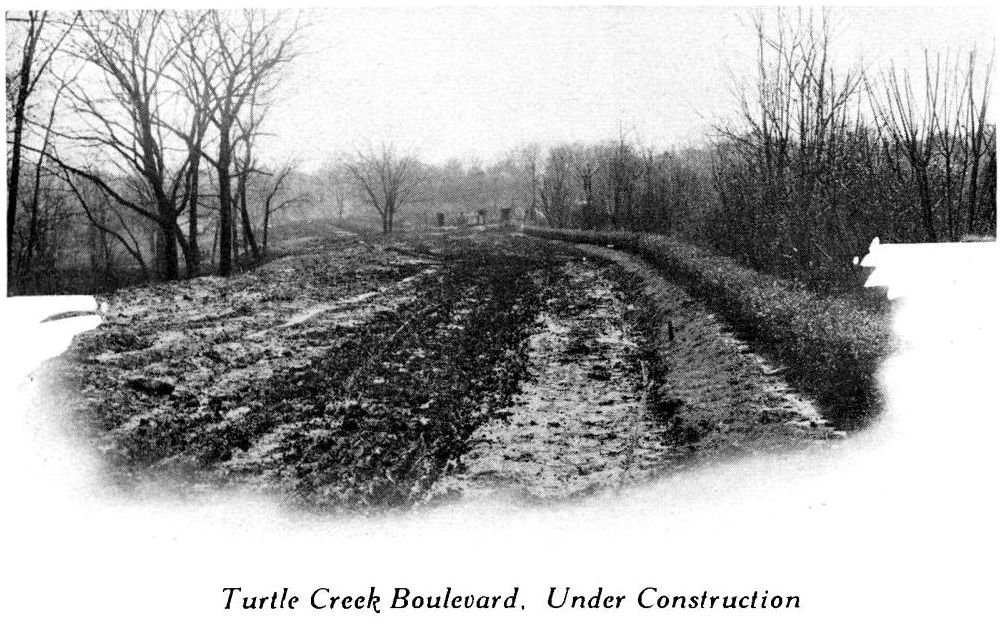
The Construction of Turtle Creek Boulevard: “Ascending & Descending Cliffs and Ravines” — 1915

turtle-creek-blvd-1

by Paula Bosse

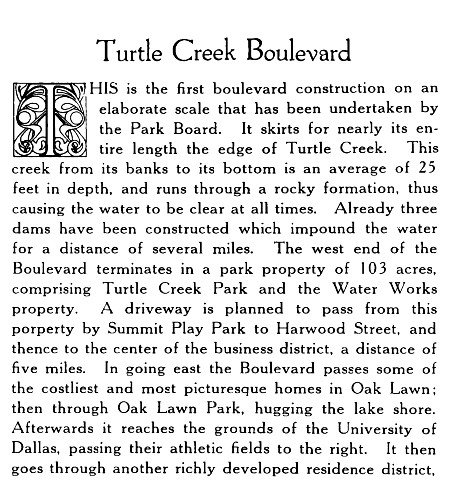
What was going on a hundred years ago in Oak Lawn? Turtle Creek Boulevard was being constructed! Construction was overseen by the Park Board, which probably explains why it is one of the most beautifully landscaped roadways in Dallas.

turtle-creek-blvd-2

turtle-creek-blvd-3

turtle-creek-blvd_text-1turtle-creek-blvd_text-2

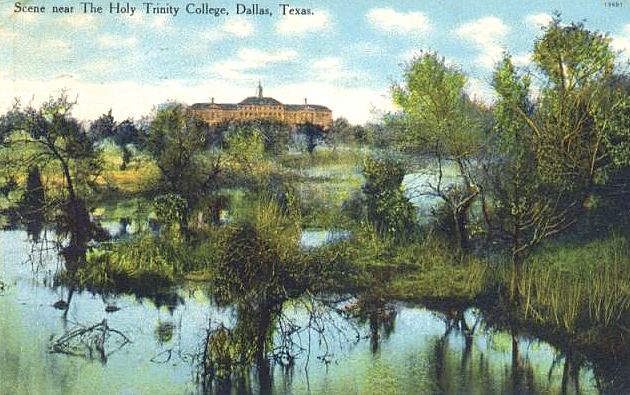
Incidentally, the “University of Dallas” mentioned above refers to the original location of the University of Dallas, first called Holy Trinity College. It moved northward in the 1940s, and Jesuit High School took over the building. I’m really surprised to learn that this huge building was located near Turtle Creek and Blackburn until Jesuit moved north to ITS new home in the early 1960s.

And here it is, snug on the banks of the turtle-infested creek, around 1909 (in a photograph that does not do the lushly beautiful area justice).

***

Sources & Notes

Photos and text from the Report for the Year 1914-15 of the Park Board of the City of Dallas (Dallas, 1915), pp. 63-64.

*

Copyright © 2014 Paula Bosse. All Rights Reserved.