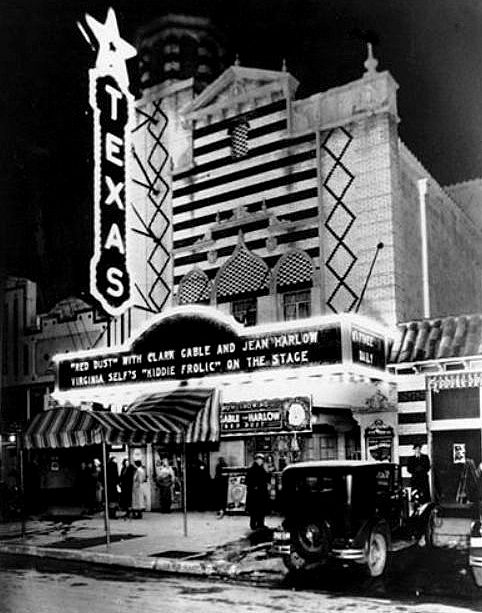
West Jefferson Blvd, 1932. All that’s missing from this photo is Edward G. Robinson and an arsenal of tommy-guns. This is the only theater in the world whose marquee showing the 1963 double feature of “Cry of Battle”/”War Is Hell” has become a part of history (the Texas Theatre, is of course, where Lee Harvey Oswald was captured on the afternoon of November 22, 1963). When the movie theater opened in 1931 — in the time of Prohibition and running boards — it was a much more elegant-looking picture palace. Had he not been in the Big House at the time, John Dillinger might have seen this very same Gable and Harlow movie at the Biograph (or what I call “Chicago’s Texas Theatre”). He probably wouldn’t have been sitting through something called “Kiddie Frolics,” featuring Oak Cliff’s own Virginia Self, a teenage dancer … frolicking.
***
After several changes in ownership and a few awkward renovations, the Texas Theatre seems to be back on track these days. The history page of their website is here (with interesting factoids such as: it opened on San Jacinto Day, it was the first theater in Dallas with air-conditioning, and it was briefly owned by Howard Hughes).
For photos of the theater’s interior, published in 1932 in the trade journal Motion Picture Herald, see my post “The Texas Theatre and Its Venetian-Inspired Decor,” here.
There’s a lot going on here (click for larger image) / Photo: SMU
by Paula Bosse
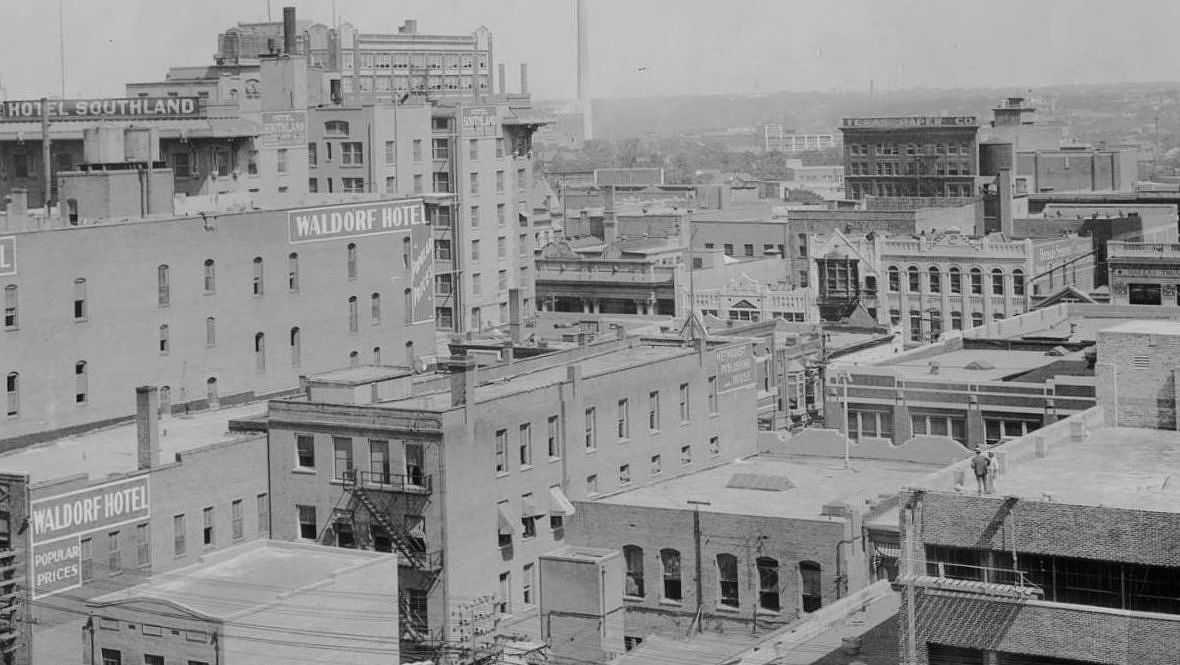
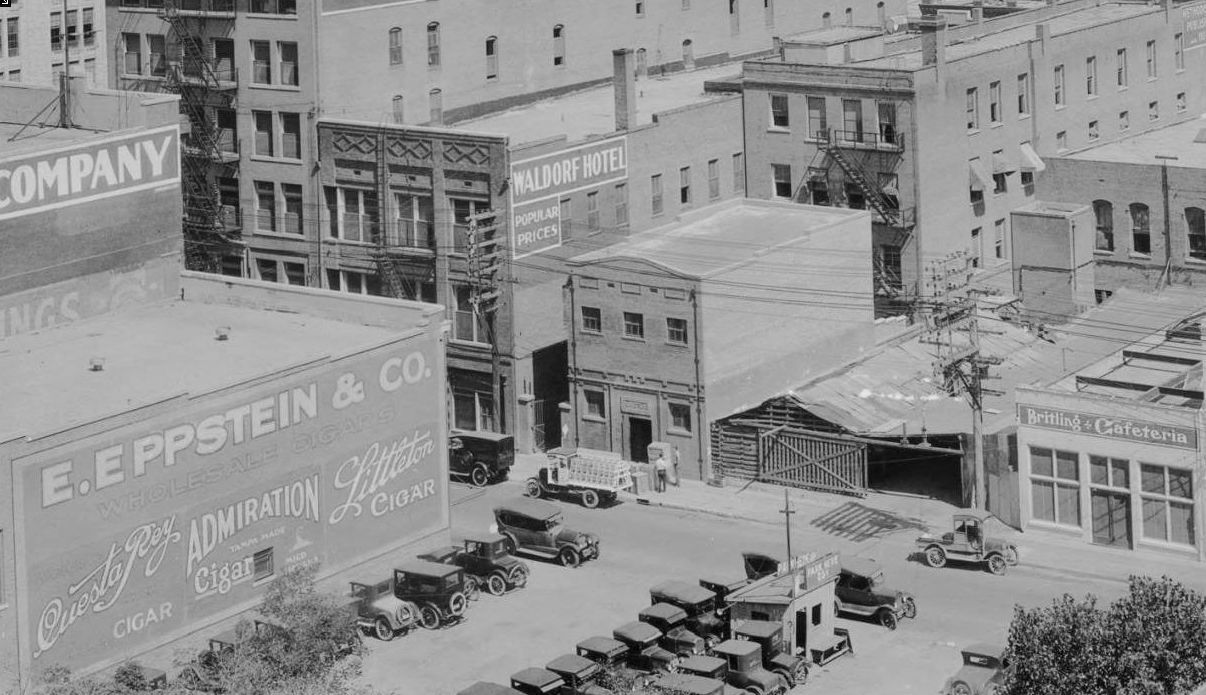
When I see photos like this I always want to zoom in as far as I can, to see the tiny details and everyday moments that might have been captured unwittingly by the photographer. Luckily, this photo has been scanned at such a high resolution (thank you, DeGolyer Library!) that it’s easy to zoom in and wander around it. (Click all of these pictures for much larger images.)
This particular photograph, from the DeGolyer Library at SMU, is attributed to Charles A. McAfee. The DeGolyer caption reads: “Downtown Dallas looking northwest at Santa Fe building complex (center left); Weyenberg Shoe Company at 1300-1302 Jackson; Waldorf Hotel, 1302 Commerce, and the Southland Hotel.” The Britling Cafeteria was at 1316 Commerce — its rear entrance on Jackson is visible in the photo. Here are a few more of the businesses in that 1300 block of Jackson Street, bounded by S. Field and S. Akard (from the 1923 city directory):
And it ALSO shows lots of signs and ads painted on the sides of buildings (some of which might still exist), two men standing on a roof surveying the skyline, a couple of guys talking on the sidewalk, a cafe next door to something that might be a crude garage, cars in a lot where it costs 25 cents to park, and a cool water tower on top of a shoe company. All of which add up to make this a much more interesting and lively photograph than originally presumed.
***
Photograph of downtown Dallas attributed to Charles A. McAfee; from the DeGolyer Library, Central University Libraries, Southern Methodist University; access it here. I’ve corrected the color.
Trying to pin a date down (SMU has it as “circa 1920”), I’m guessing the photograph might have been taken around 1923, as the Britling Cafeteria opened for business on November 28, 1922. (I was so interested in that cafeteria that I wrote about it: read the Flashback Dallas post “The Britling Cafeteria Serves Those Who Serve Themselves,” here.)
For other photos I’ve zoomed in on to see the details, see here.
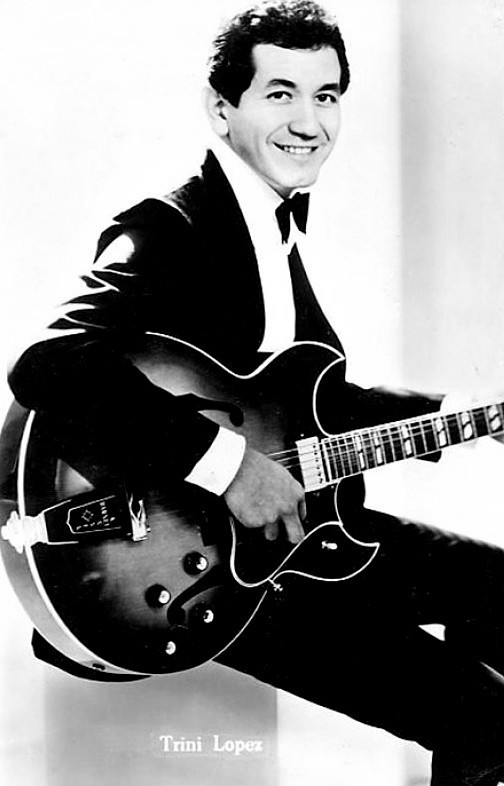
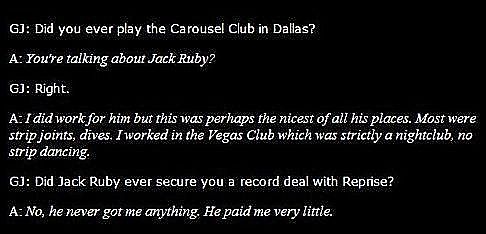
Trini Lopez has sold millions of records. MILLIONS. He was born in Dallas in 1937 and grew up in the Little Mexico area of town. He started his career when he was a teenager at Crozier Tech High School, singing and playing guitar in a popular combo. He played at dozens of school dances and parties, and, with a steady and faithful following, he was much in demand at countless venues around town, including a regular 2:30-6:30 p.m. Sunday matinee spot at Club Vegas (Oak Lawn & Lemmon), one of the many clubs in the city run by Jack Ruby.
Jack Ruby — the personable Latin from Manhattan, reports surprising success with his Sunday night Fiestas at Club Vegas….
“There is a wide demand for Latin music in Dallas,” said the Oak Lawn impresario…. He is opening at 2:30 p.m. Sundays for matinee dances featuring Trini Lopez and his orchestra. The versatile Lopez combo offers an occasional Yanqui tune in addition to the likes of the “Jack Ruby Mambo.” (Tony Zoppi’s column in The Dallas Morning News, Dec. 19, 1956)
(I really want to hear that “Jack Ruby Mambo”!)
Speaking of the “Latin from Manhattan” (?!):
Ha! (From Gary James’ really great interview w/ Trini — see link at end.)
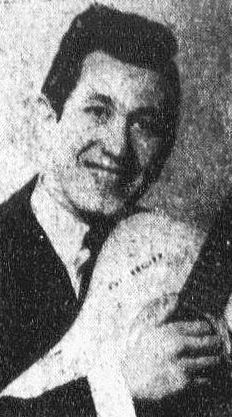
He also appeared on local TV, including Channel 8 shows hosted by a pre-Peppermint Jerry Haynes: “Jukebox” and “Top Ten Dancing Party.”
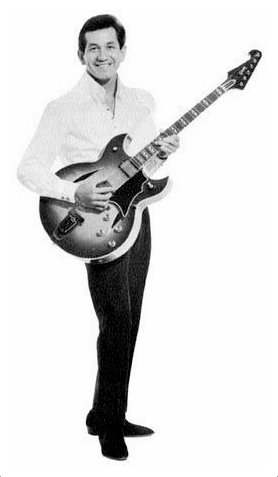
1958 publicity photo
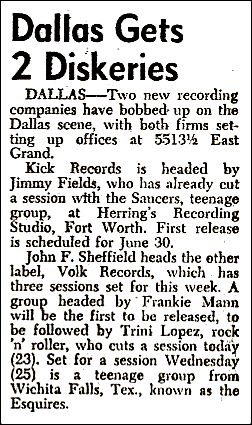
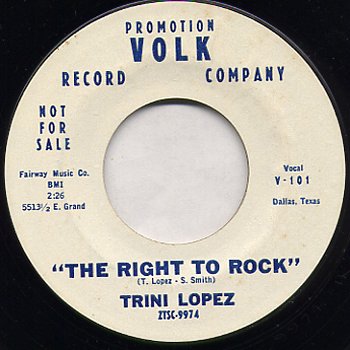
Trini’s first single was “The Right to Rock” — the first song he ever wrote — recorded in 1958 on a small Dallas label called Volk (did anyone else ever record for this label?).
Billboard, June 23, 1958
It’s a great little rockabilly number, but it didn’t really make any waves outside of Dallas (although it’s since found new life in the cult-y world of vintage rockabilly reissues).
∙
Trini then recorded a few singles for King, but those went nowhere as well, and Trini and his combo continued to play small clubs in and around DFW, wondering when the big break was going to come.
Jan., 1959
After a gig in Wichita Falls, Trini met fellow-Texan Buddy Holly who had been impressed by the young singer’s performance and encouraged him to contact his producer, Norman Petty, about recording some tracks at Petty’s studio in New Mexico. Trini jumped at the chance, but, unfortunately, the time in the studio at Clovis turned out to be a career low-point (see below for a link to the Gary James interview in which Trini gives a bitter and scathing account of that whole experience). Trini returned to Dallas and immediately fired his band and started a new one, determined that he would succeed, despite the prevailing (spoken and unspoken) racism he was continuing to run up against in the music business.
A few months after Buddy Holly’s death, the Crickets contacted Trini and asked him to travel to Los Angeles to discuss the possibility of becoming their new lead singer. Trini, seeing this as the big break he’d been waiting for, disbanded the combo and set out to the West Coast alone. The “audition” never really materialized, and Trini was stuck in California with no money and no prospects. He played a few small clubs and then settled into PJ’s for an extended and very successful engagement. It was there, in 1963, that the “big break” finally happened: he was discovered by producer Don Costa, who recommended that Frank Sinatra sign him to Reprise Records. Next thing you know, Trini had recorded his debut album, “Trini Lopez at PJ’s,” and the first single, “If I Had a Hammer,” was a huge smash hit, selling millions of copies and reaching #1 in 38 countries. Trini Lopez became an international star.
∙
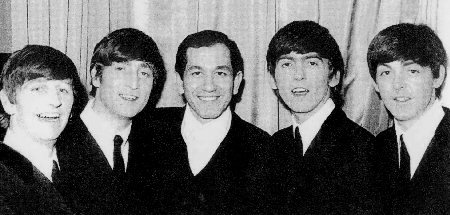
At the beginning of 1964, he was booked for a series of shows in Paris where he shared the bill with The Beatles, just as they were about to hit big in the US (their Ed Sullivan appearance was less than a month away). Beatlemania was in full force in Europe, but Trini was also getting his share of attention.
And, the rest, as they say, is history.
*
A couple of interesting things, Dallas-wise. My Trini Lopez knowledge is fairly scant, but having read a lot about him over the past couple of days, the one thing that keeps coming back when he talks about the Little Mexico section of town (invariably referred to by him as a “ghetto”) is how violent a place it was. He also recounts the deep and dehumanizing racial prejudice he and other Mexican-Americans experienced living in Dallas. When he left for Los Angeles in 1959/1960, he left for good. He came back regularly to visit his family (I remember having him pointed out to me by my parents in a restaurant once), but I’m not sure he would have ever wanted to live here again.
From an interview by Robert Wilonsky (Dallas Observer, May 29, 2006)
*
Below are a few random interviews and tidbits.
Trini developed his own beat, a Tex-Mex style of rock and roll now popularly known as “the Trini beat” and which Trini describes as “American music with a Mexican feeing.” (DMN, July 12, 1964)
And from the same article:
“People in Dallas told me I had the talent but suggested I change my name. I said ‘No.’ I told them Italians had made it as Italians, Jews as Jews, and Negroes as Negroes. I wanted to make it as a Mexican. No one of Mexican-American heritage had made it before in the entertainment world. I wanted to be the first.” (DMN, July 12, 1964)
(According to Trini, the person who suggested he change he name was John F. Sheffield who owned Volk Records. Sheffield was okay with “Trini,” but he insisted the “Lopez” had to go. He suggested “Roper.” Trini refused and threatened to walk. Sheffield relented.)
(Click for larger image – continues below.)
Earl Wilson’s syndicated column (July 1965)
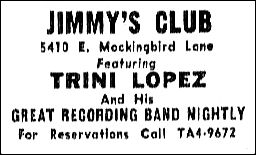
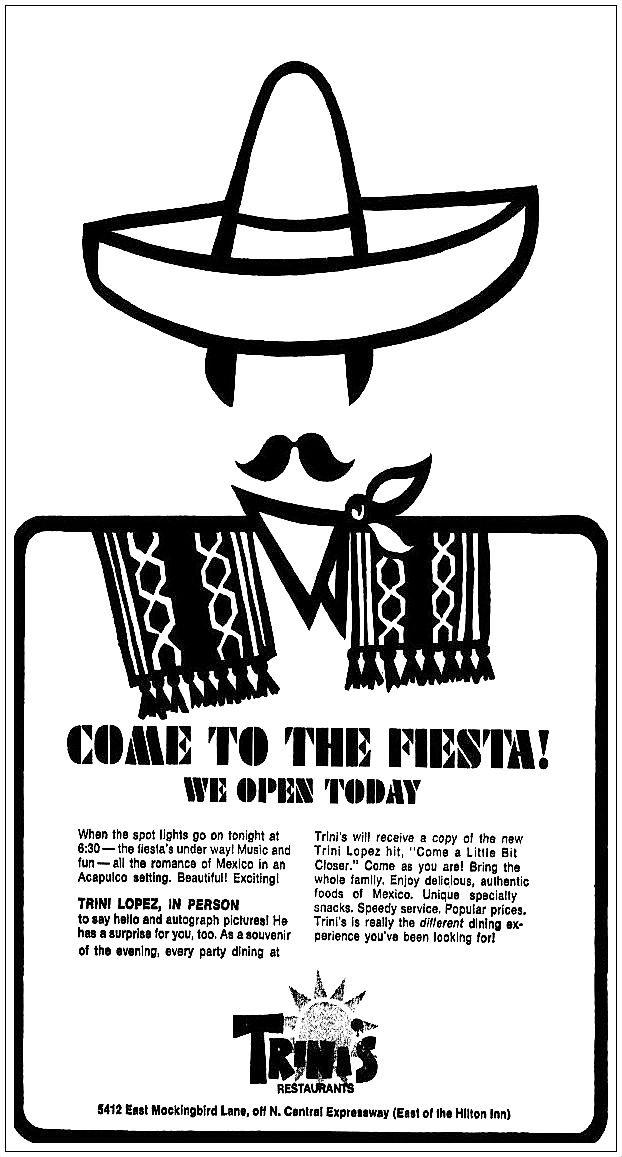
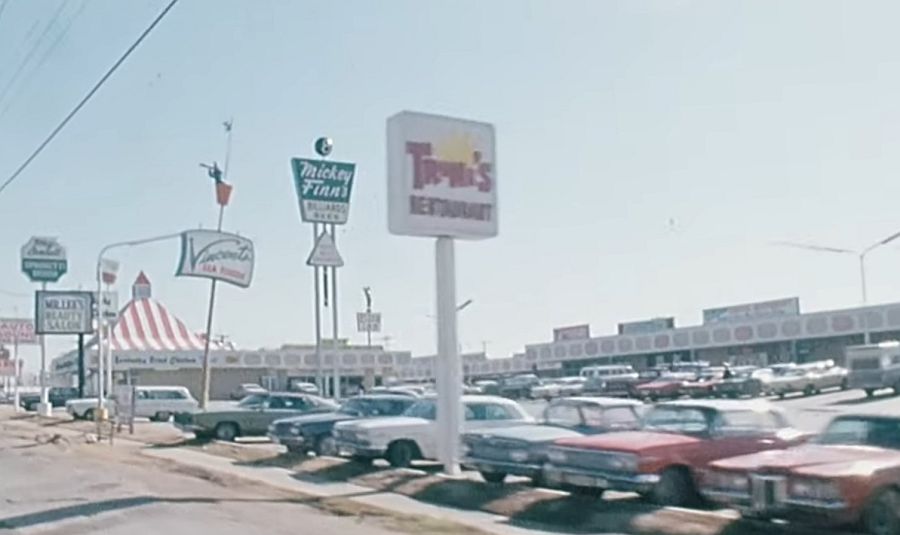
In 1969, Trini Lopez became a restaurateur and opened “Trini’s” at 5412 East Mockingbird, across from the old Dr Pepper plant (click for larger image):
UPDATE: Sadly, Trini Lopez died on April 11, 2020 from complications of COVID-19. He was 83. Read his obituary in Varietyhere.
***
Sources & Notes
Full Dallas Observer interview by Robert Wilonsky is here.
There are a lot of garbled accounts of Trini Lopez’s career scattered across the internet. One that seems mostly right is here.
The essential interview with Trini by Gary James I’ve mentioned a couple of times above, is here. I think the interview is from 2002. His memories of growing up in Dallas are interesting, unvarnished, and well worth reading. He also talks about the racial prejudice he met with when attempting to record with Norman Petty and the resulting mutiny of his band in Clovis which led to their being fired by Trini immediately upon their return to Dallas.
Read Trini’s tribute to his parents — an essay he wrote in the early 1980s — here.
Discovering Trini and his music has been surprisingly fun! Thanks, Trini! Check out this great, infectiously joyful performance of “La Bamba” with Jose Feliciano at a music festival in San Antonio in 1974. (Trini was performing “La Bamba” when he was still in Dallas, before Ritchie Valens had a hit with it — when Valens’ version hit the airwaves, Trini was crushed that someone had beaten him to recording it. He may not have recorded it first, but he had the bigger hit with it a few years later.)
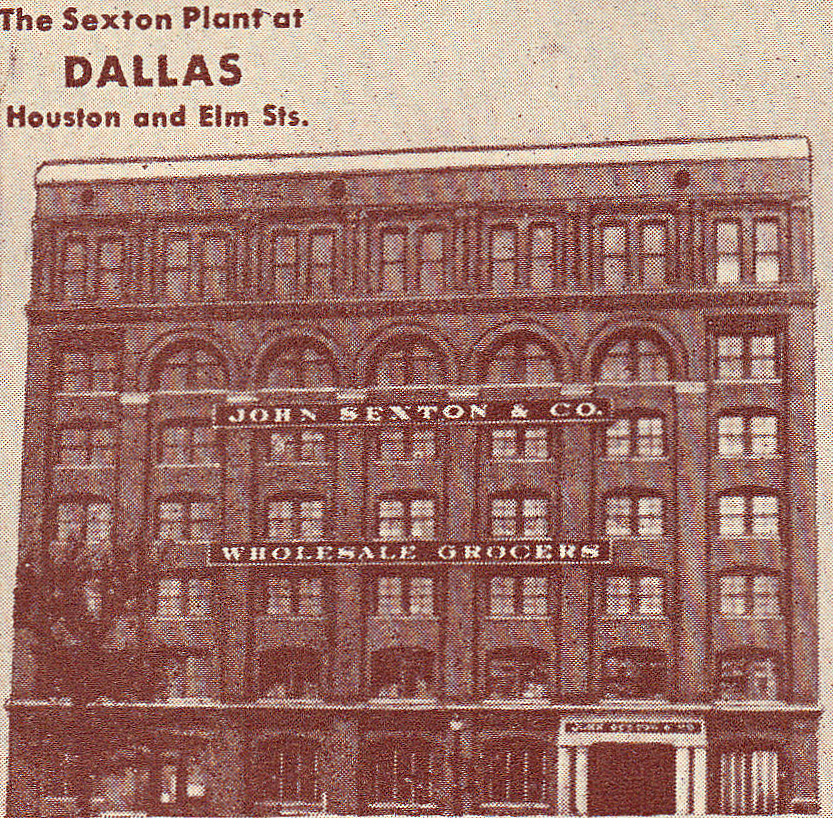
Look familiar? The building above would later become the Texas School Book Depository. But prior to that, the building housed Sexton Foods, a Chicago-based wholesale grocer which occupied the building for twenty years (1941-1961). The building was known commonly in town as “the Sexton building,” even after it was leased to the Texas School Book Depository in 1963, which explains why some people — citizens and police officers alike — were still referring to it by that name on the day of the Kennedy assassination (and this has apparently caused confusion amongst those wading deep into the “assassination literature”). The photo above is cropped from an ad I came across in The Dude Wrangler, a dude ranch quarterly (!), published in Bandera. The ad (which is reproduced in full down the page a bit) is from 1953, but the photo of the building appears to have been taken earlier.
The leasing of the building by D. Harold Byrd to the John Sexton Wholesale Grocery Company of Chicago (initially for only five years) was announced in The Dallas Morning News on Nov. 28, 1940 (“Wholesale Grocery Leases Building at Houston and Elm”). The Sexton Co. was scheduled to move in on Dec. 8 “following a general remodeling which will include installation of elevators, rearranging of partitions and painting.” They remained in the building until 1961.
1951
1953
In 1953 (before anyone from Hertz was planning on putting a billboard up there), the Ford people erected a giant neon sign on top of the building to commemorate the 50th anniversary of the founding of the Ford Motor Company. In fact, it was so big that it had half a mile of neon tubing in it and was touted as being the largest animated neon sign in the Southwest. Now there’s a sign that probably caused a few car accidents!
1953
*
Before the Sexton company moved in, the building housed the Perfection-Aire air-conditioning company. Newspaper articles announced the renovation of the building for the A/C people — the company went into receivership a couple of years later.
1937
*
Before that, it was the site of the Southern Rock Island Plow Co., which was the original owner of the property (1894) and which built the building in 1903 after the first building was destroyed in a fire after it was hit by lightning on May 4, 1901.
circa 1910
Above, the Southern Rock Island Plow Co. Building which still stands, famous as the “Texas School Book Depository”; below, the building originally built by the plow company which was destroyed by fire in May, 1901.
1901, Dallas city directory
***
Sources & Notes
Sexton Co. ad from a 1953 issue of The Dude Wrangler ; the top image is a detail from that ad.
More on the history of the building as it pertains to the Rock Island Plow Co. is here.
This fantastic photo — taken between about 1912 and 1915 — shows a horse-trading day, taking place around S. Houston and Jackson streets.
Chenoweth’s Feed Store and wagon yard at Houston and Commerce was the scene of monthly trades days or First Mondays from the 1880s into the twentieth century. The crowd spilled over into the streets, blocking passage but no one complained. The old red courthouse survived.
***
Photo from the UT Southwestern Library.
Caption by A. C. Greene from his book Dallas, The Deciding Years (Austin: Encino Press, 1973).
Even though it seems very late to see horses in downtown Dallas, this photo appears to have been taken between 1912 and 1915 when Charles B. Tatum owned a saloon at the corner of Commerce and S. Houston (his sign can be seen painted on the wall facing Houston Street at the left). The MKT Building can be seen at the top right of the photo, indicating that this photo was taken west of S. Houston, almost to Jackson (the old county jail would have been behind the photographer. The same view today can be seen here.
The wagon yard Greene mentions can be seen in the 1905 Sanborn map, here.
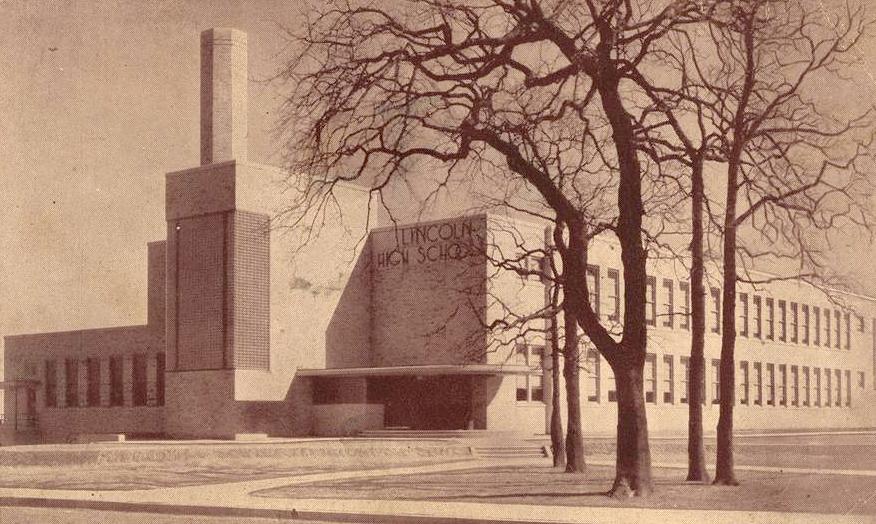
The cool deco design of Lincoln High School… (click for larger image)
by Paula Bosse
When it opened on eleven acres in South Dallas in January, 1939, Lincoln High School was one of the largest high schools in Dallas, and one of the largest African-American high schools in the entire South. Shockingly, in 1939 it was one of only TWO (!) high school for black students in Dallas. As one would expect, its opening was greeted with great enthusiasm, and students rushed to enroll, pushing its capacity to a maximum. At its height, it had over 3,000 students. The building was designed by architect Walter C. Sharp, who designed many schools in and around Dallas, and with those clean lines and glass bricks, it’s pretty cool.
***
Photo from the J. L. Patton Collection, Dallas Historical Society.
For more on the background of Lincoln High School, see the info from the “Open Plaques” project here.
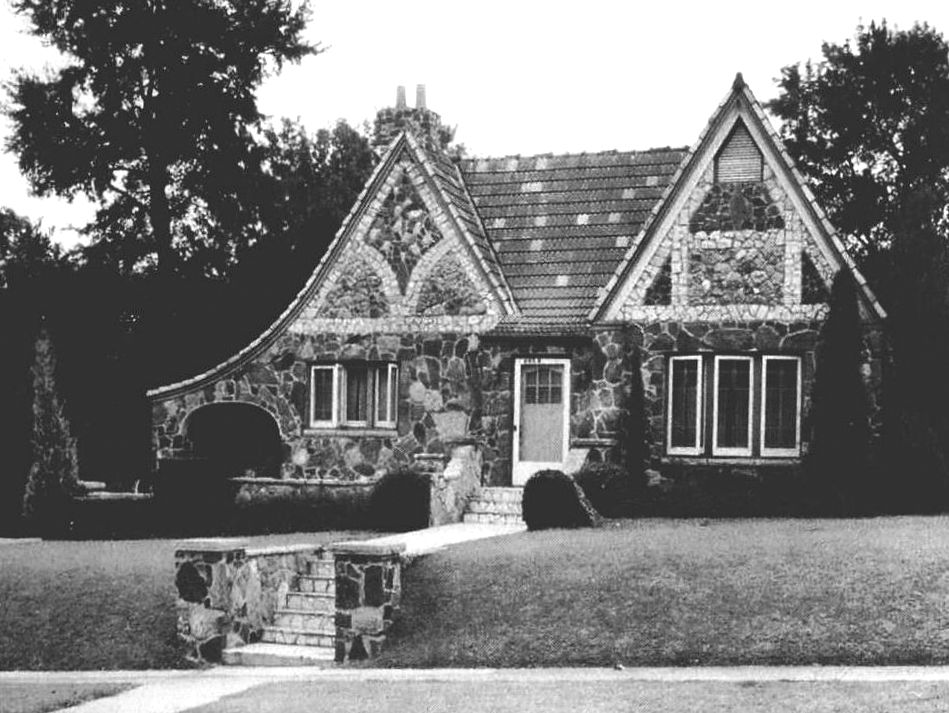
A few weeks ago, I wrote about the “Blandings Dream House” promotion in which the marketing department of the studio behind the Cary Grant movie “Mr. Blandings Builds His Dream House” built several houses around the country. The houses were built and furnished locally, with the contractors sharing in the (massive) advertising blitz. Once the home was completed, people toured the house, with a small admission going to charity. One of those houses was built in Dallas (in Preston Hollow). That was in 1948. Twenty-three years BEFORE that, the Dallas Times Herald sponsored something called “The Pasadena Perfect Home,” built and marketed in a similar manner.
In the early 1920s, land in the general area we now know as Lakewood was pretty much undeveloped. There was a lot of open space — some farmland, the occasional cotton patch. White Rock Lake was becoming a popular recreational destination, but it was still WAAAAY out beyond the center of Dallas. But by the mid-’20s, developers started developing. A few of the neighborhoods that sprang to life at this time were Lakewood, Hollywood Heights, and Santa Monica. In 1925 — in the part of town then being referred to as “New East Dallas” — a 40-acre parcel of land near the Hollywood/Santa Monica subdivisions began to be planned. The small tract of 130 lots was to be known as Pasadena, located just north of Gaston, comprised of Pasadena, Wildgrove, and Shook avenues, bordered by Auburn Ave. and White Rock Rd.
The developer came up with the brilliant idea of marketing his investment by building two “perfect homes” and, while they were under construction, to promote the bejabbers out of them in the pages of the Dallas Times Herald, the project’s sponsor (and namesake). Just like the Blandings builders did a couple of decades later, local construction crews, plumbers, electricians, stone masons, etc. were contracted to build the “Dallas Times Herald Pasadena Perfect Homes” in exchange for their businesses appearing in a veritable onslaught of advertising-slash-publicity (which soon became publicity-slash-advertising). Each step of progress in the months-long construction of the houses was breathlessly reported in the Times Herald in regular reports, and looky-loos (i.e. potential buyers) were heartily encouraged to drive out to watch the goings-on. Make a day of it! This pleasant hard-sell to “own a bit of paradise in the heart of New East Dallas” was covered more as a community event than as the clever marketing gimmick it was.
When the two homes were completed, there was an official opening on February 21, 1926. This boggles the mind, but apparently 20,000 people (TWENTY-THOUSAND PEOPLE!) showed up for this event. All that promotion worked. Lots in the little neighborhood sold quickly.
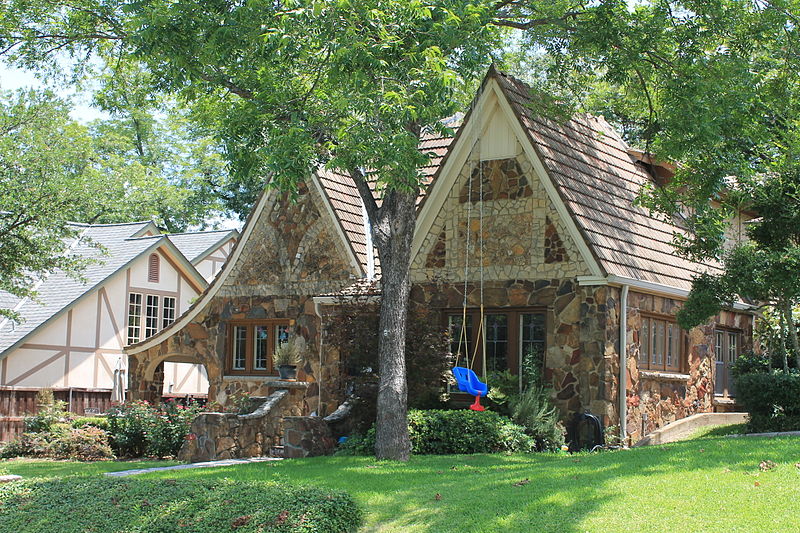
The original “perfect home” pictured above is still there, on Wildgrove. In fact, the house, designed by architect Arthur E. Thomas, was placed on the National Register of Historic Places in 2006 (listed as “The Dallas Times Herald Pasadena Perfect Home”). It’s well worth a nice Sunday drive to check out this home and the other homes in this lovely historic area. The Pasadena neighborhood remains unsullied by the McMansion-ization that has destroyed the charm of much of Dallas’ older neighborhoods, and driving down Pasadena’s tree-lined streets is an absolute joy.
Above, the house from a 2011 Google maps photo.
A photo I took at the end of February, 2014, Instagramized.
***
Sources & Notes
For more on the Dallas Times Herald Perfect Home(s) (and a couple of other photos, on pages 2 and 38), see the article by Sam Childers in the Fall, 2002 issue of Legacies, here. There is also some info here.
A little more info on this home (building materials, etc.) is here.
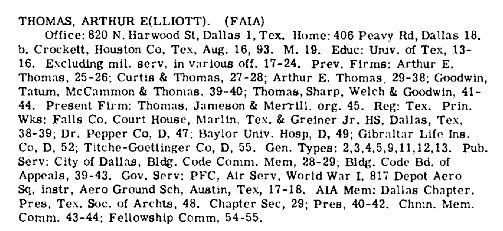
The architect of this house is Arthur E. Thomas, and he designed some pretty impressive buildings in Dallas, such as the Dr Pepper headquarters and Baylor Hospital, and, most impressively, he was one of the Centennial Architects who worked on the Centennial buildings in Fair Park in 1936. But I have found very little about him online. A brief bio is here. The following list of his projects is from a 1956 AIA directory.
I came across the above image and was enthralled. I’ve never heard of the Joe Yee Cafe, but this (granted) idealized picture is wonderful. The postcards above and below were from the early 1950s, and if you are familiar with the generally run-down neighborhood around Columbia and Fitzhugh these days, you may well shed a tear that something this charming and picturesque has been gone for many, many years.
I love the surprising color scheme of the restaurant’s interior — those fabulous purples and greens! (The colors are a bit unexpected because they so loudly clash with the bold tomato red of the exterior.)
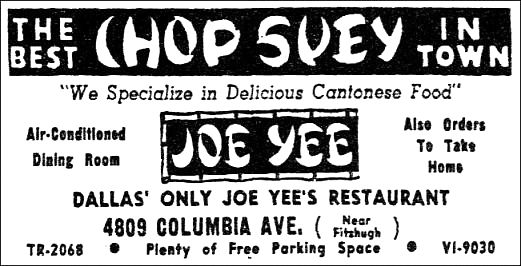
I did a little research to see what I could find out about Joe Yee’s Chinese restaurant. Seems that Mr. Yee’s cafe was in business by the 1930s, downtown, on Main Street near Field. It advertised steadily over the years, and its ads proudly proclaimed that the restaurant served “the best Chinese food you ever tasted” and was “completely air-conditioned.” Several newspaper accounts (particularly the society columns) mentioned it as a popular place for young people to grab a bite before and after dances at nearby downtown hotels. Business must have been pretty good for the place to have lasted so long at such a primo location. The cafe moved to the Columbia Street location in 1950 where it remained in business until at least late 1956 when a major fire struck.
1938
1943
1953
***
Sources & Notes
Top two early-’50s postcards are from the great Boston Public Library Tichnor Brothers Postcard Collection on Flickr, here.
In old photos of downtown Dallas one often sees “Chop Suey” signs along the streets. I’d love to know more about these restaurants in general, and about Chinese and Chinese-Americans in Dallas in the first half of the 20th century, if anyone can point me to a good source.
If background on Chop Suey is needed, might I point you to to the Wikipedia entry here, or the Snopes entry here.
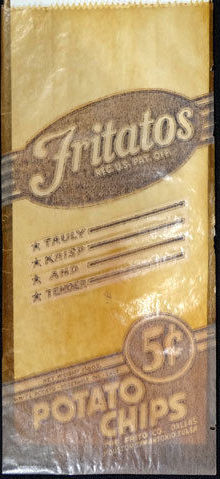
Hey! Did you know that the Frito Company also made potato chips for a while? They were called “Fritatos” and they were introduced in 1935. Here’s one of their snazzy-looking trucks making a much-appreciated snack delivery to Fair Park during the Centennial Exposition in 1936.
***
Sources & Notes
Photo of the “pampered potatoes” truck from Kaleta Doolin’s wonderful book about the family business, Fritos Pie: Stories, Recipes, and More (College Station: Texas A & M University Press, 2011).
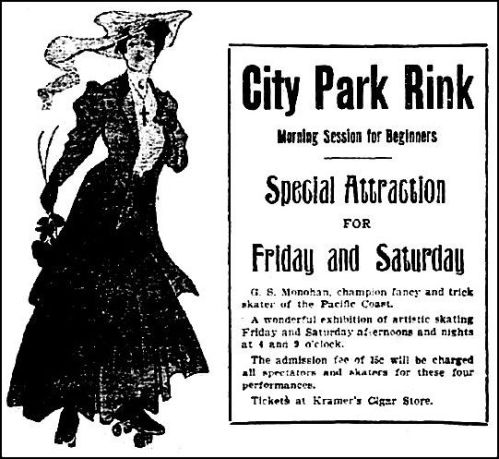
CITY PARK RINK Morning Session for Beginners.Special Attraction for Friday and Saturday G. S. Monohan, champion fancy and trick skater of the Pacific Coast. A wonderful exhibition of artistic skating Friday and Saturday afternoons and nights at 4 and 9 o’clock. The admission fee of 15¢ will be charged all spectators and skaters for these four performances. Tickets at Kramer’s Cigar Store.
***
Sources & Notes
Ad from the Dallas Morning News, March 14, 1906.
An article by Michael V. Hazel about the short-lived Old City Rink is here. (Legacies has covered absolutely EVERYTHING!)

 The “Texas”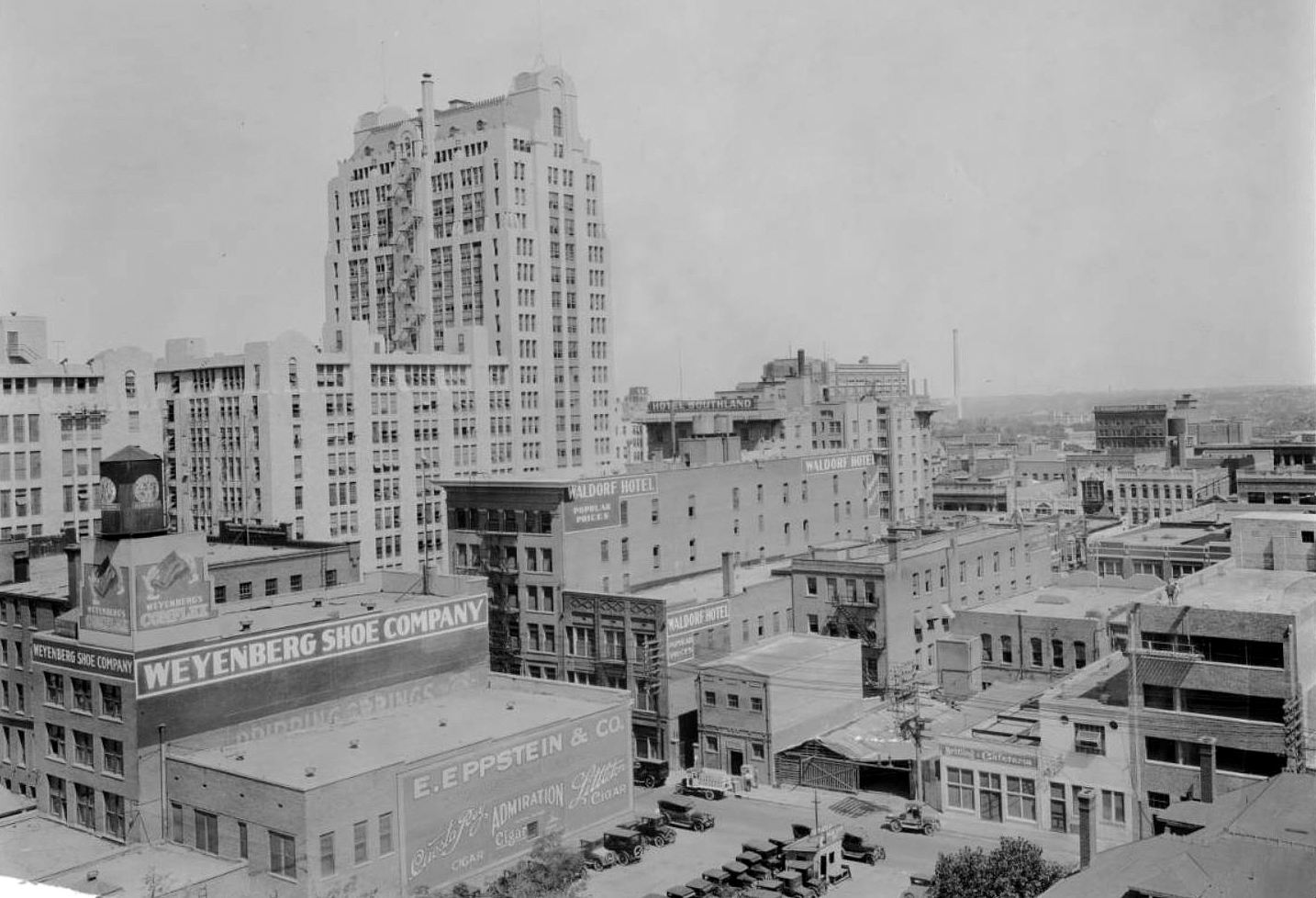






 1951
1951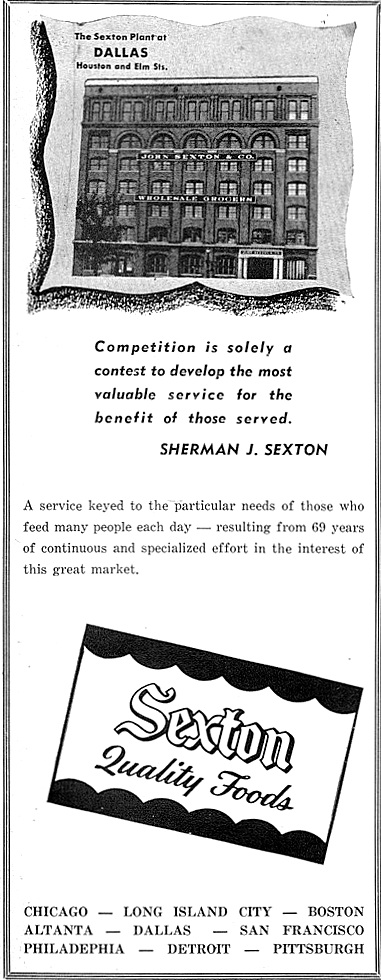 1953
1953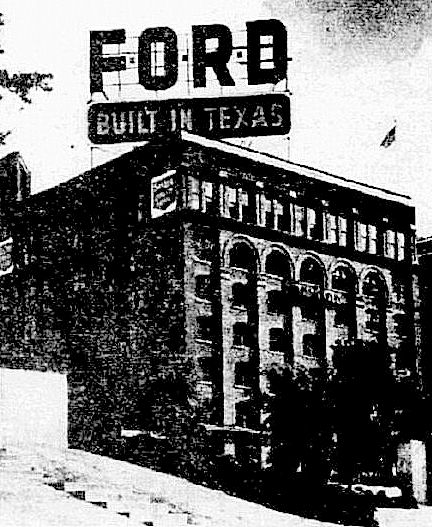
 1937
1937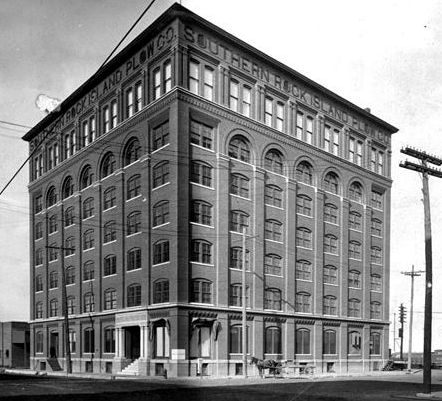 circa 1910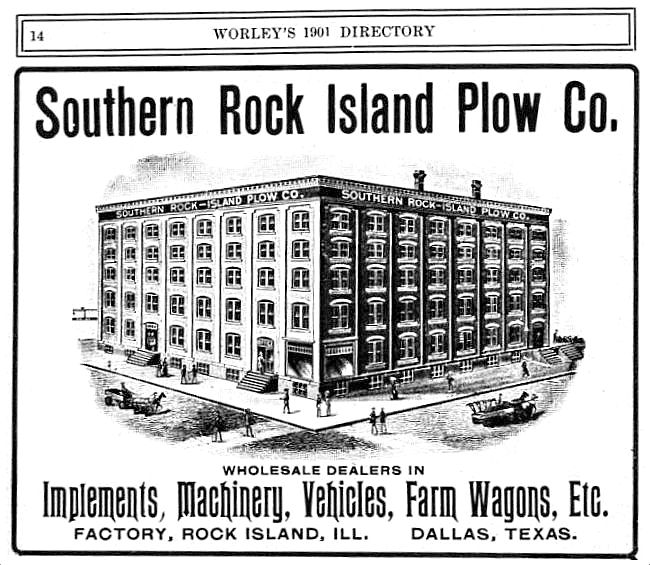





 Don’t miss the “artistic skating” exhibition…
 Flashback : Dallas