Flashback : Dallas

A Miscellany: History, Ads, Pop Culture

Category: Roads & Bridges

The Prelude to the Great Flood of 1908

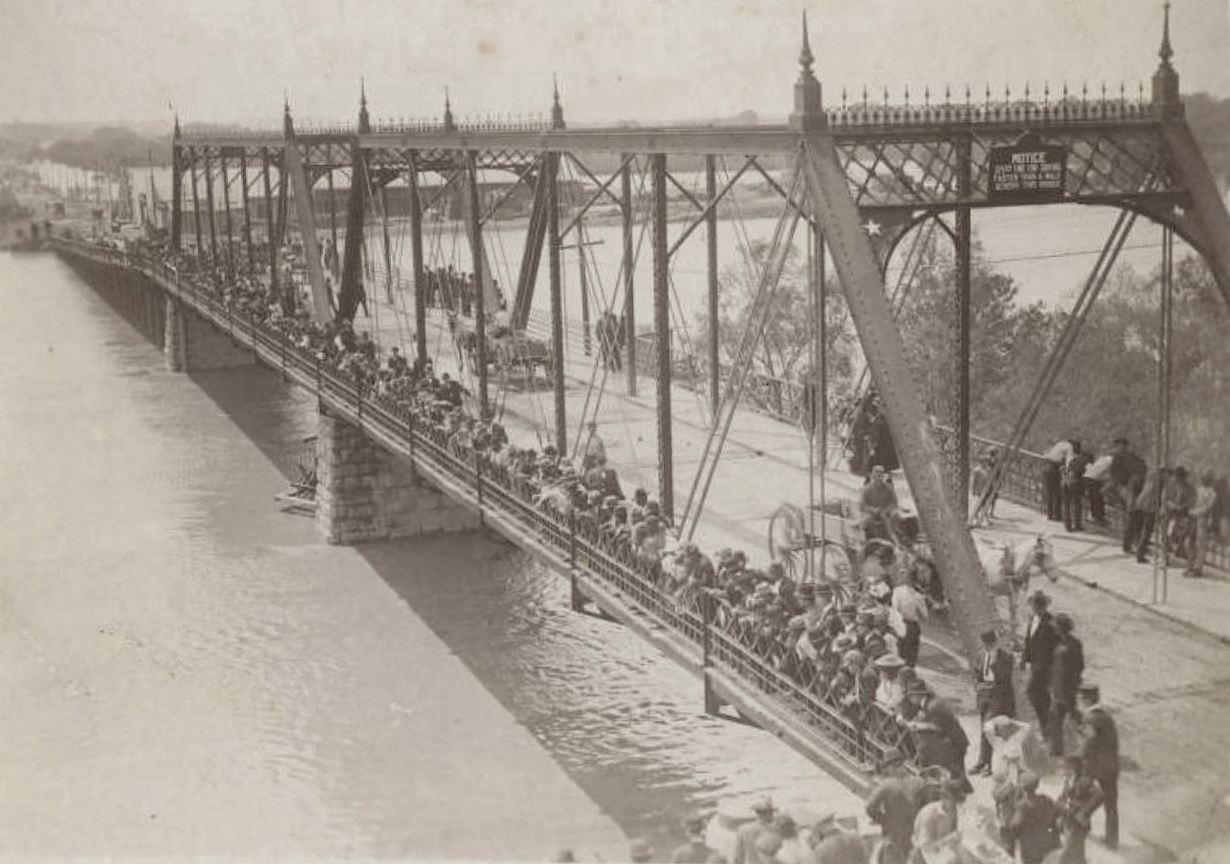
commerce-st-bridge_1908_cook-degolyerApril 20, 1908… (click for larger image) / SMU

by Paula Bosse

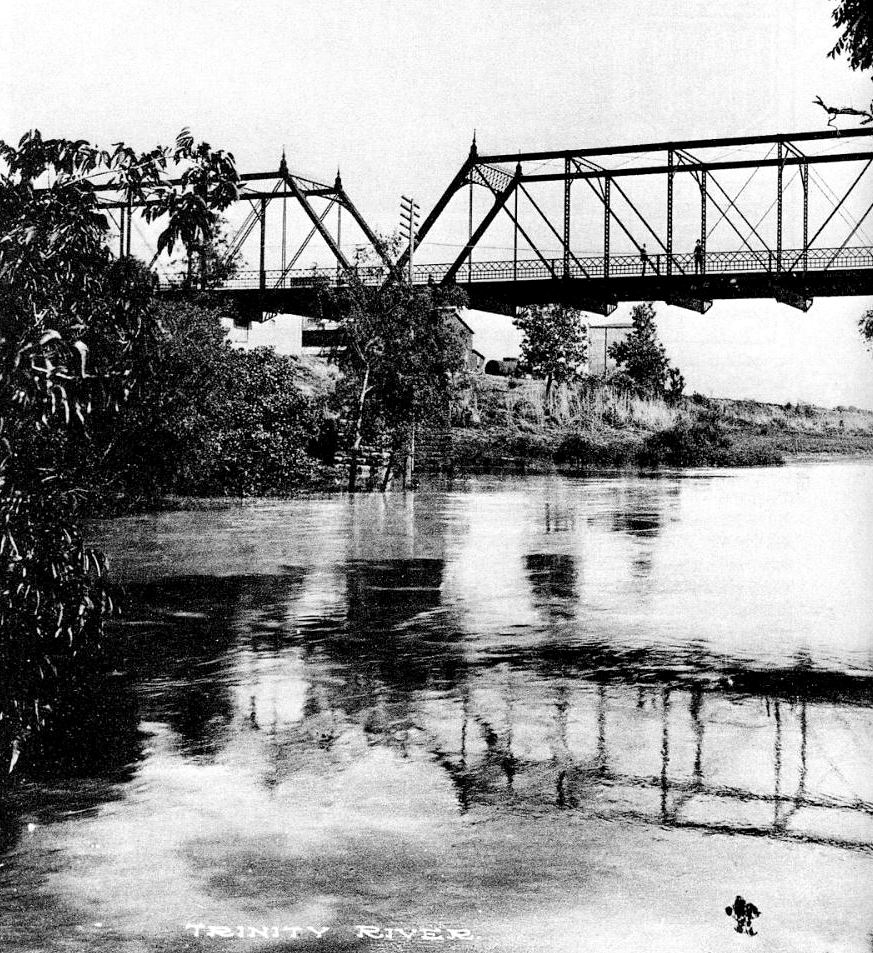
The greatest flood Dallas has ever known — the disastrous flood of 1908 (read about it here) — happened in the spring of 1908. The Trinity River reached its highest crest of more than 52 feet on May 26. The photo above was taken on April 20 — five weeks before that.

On April 20, 1908 — the day this photo was taken — The Dallas Morning News reported that after three weeks of rain the Trinity had finally crested at “nearly 39 feet.” This flooding was the worst in 20 years and the third worst on record.

In a mere five weeks, though, every record regarding the Trinity River and flooding in Dallas would be broken. Those people who had ventured out to survey the river from the Commerce Street Bridge that April day had no idea what was in store for them in just 35 days.

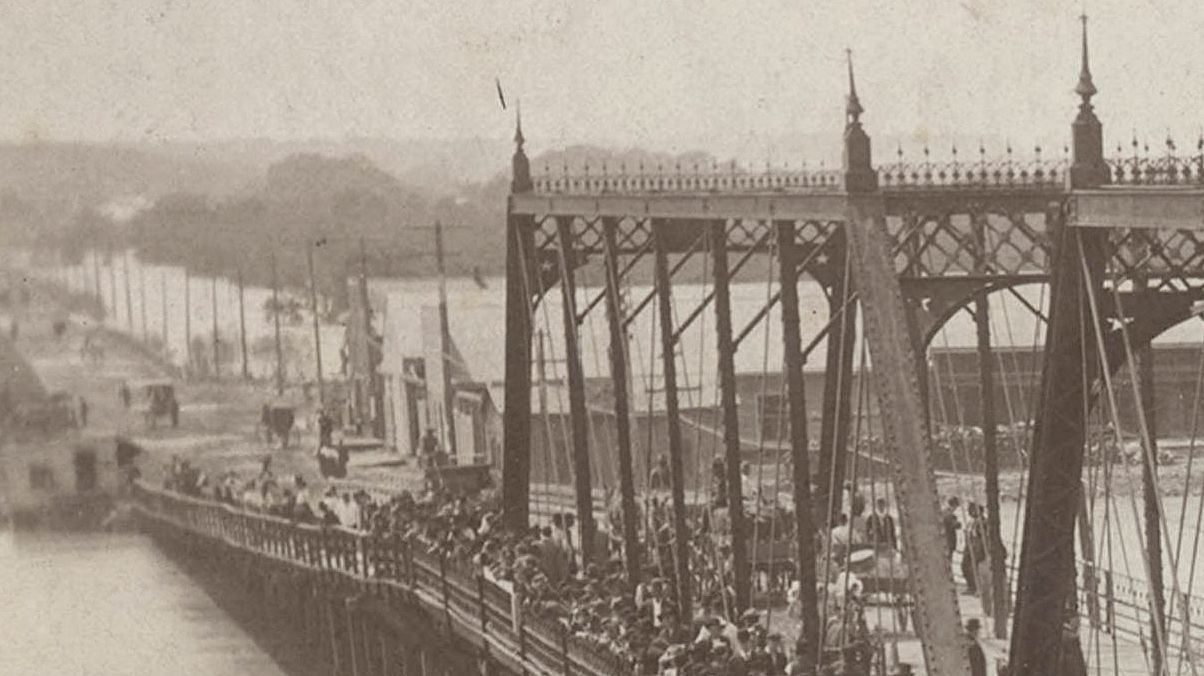
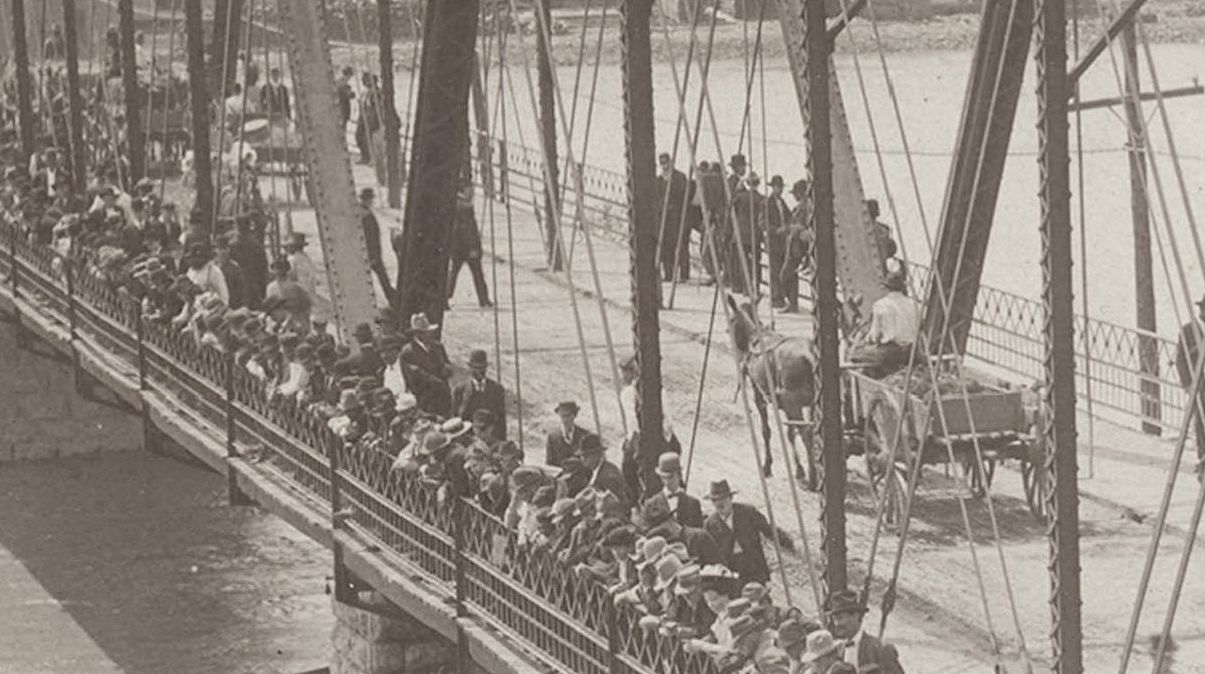
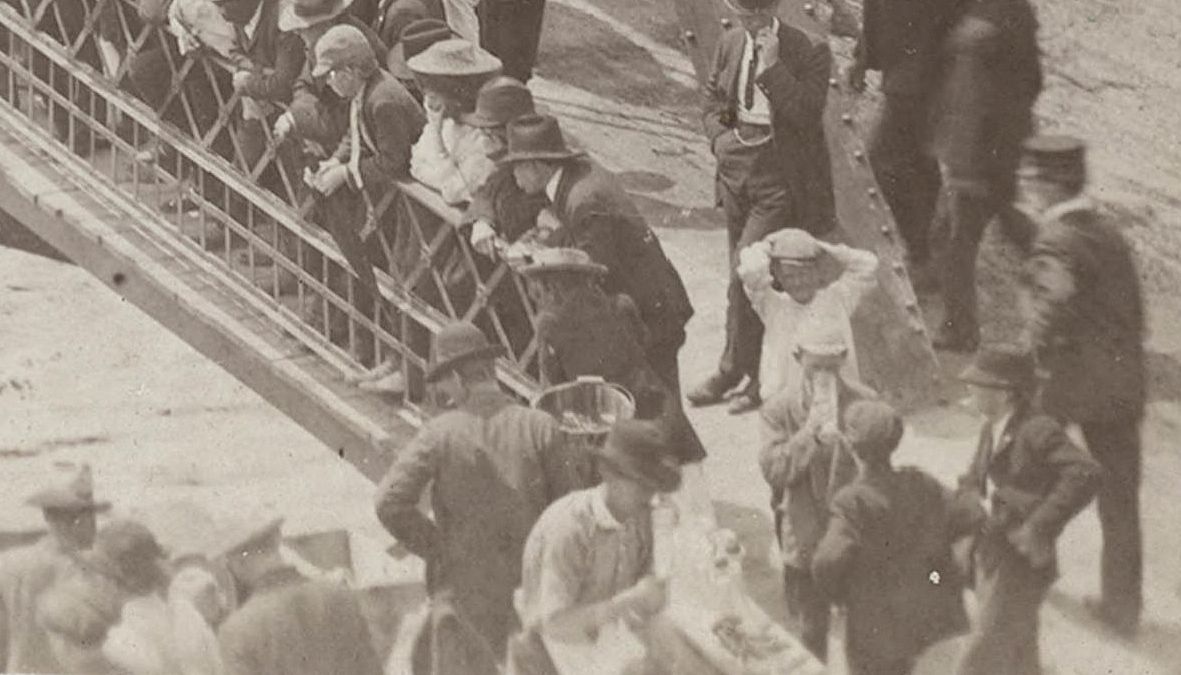
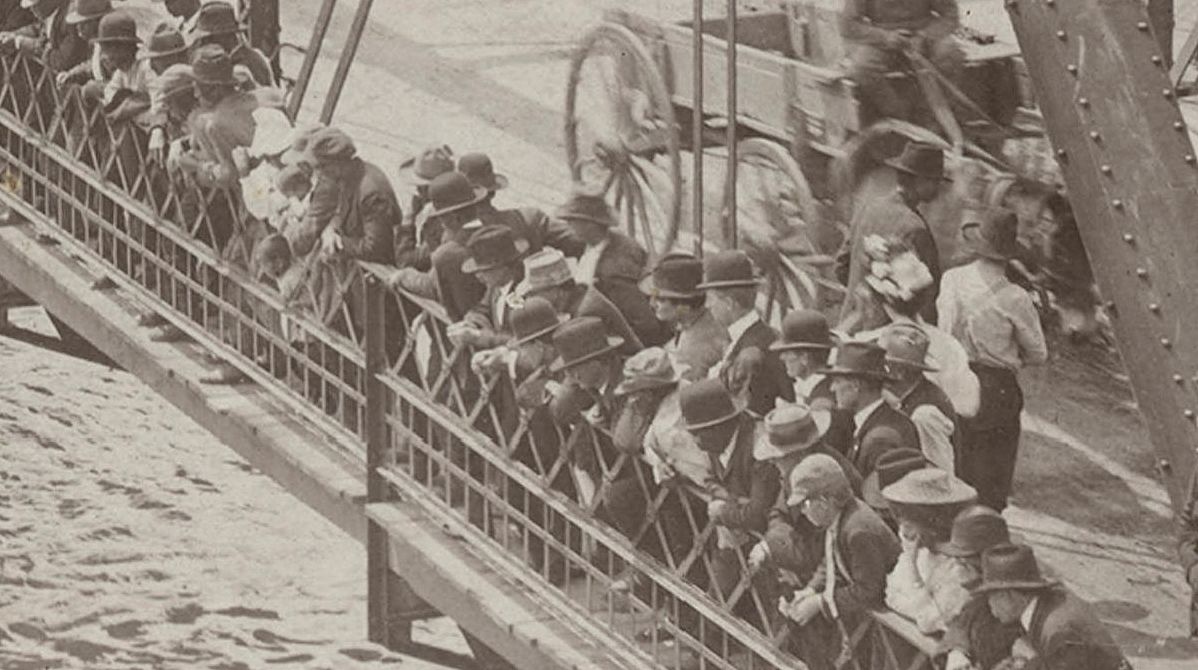
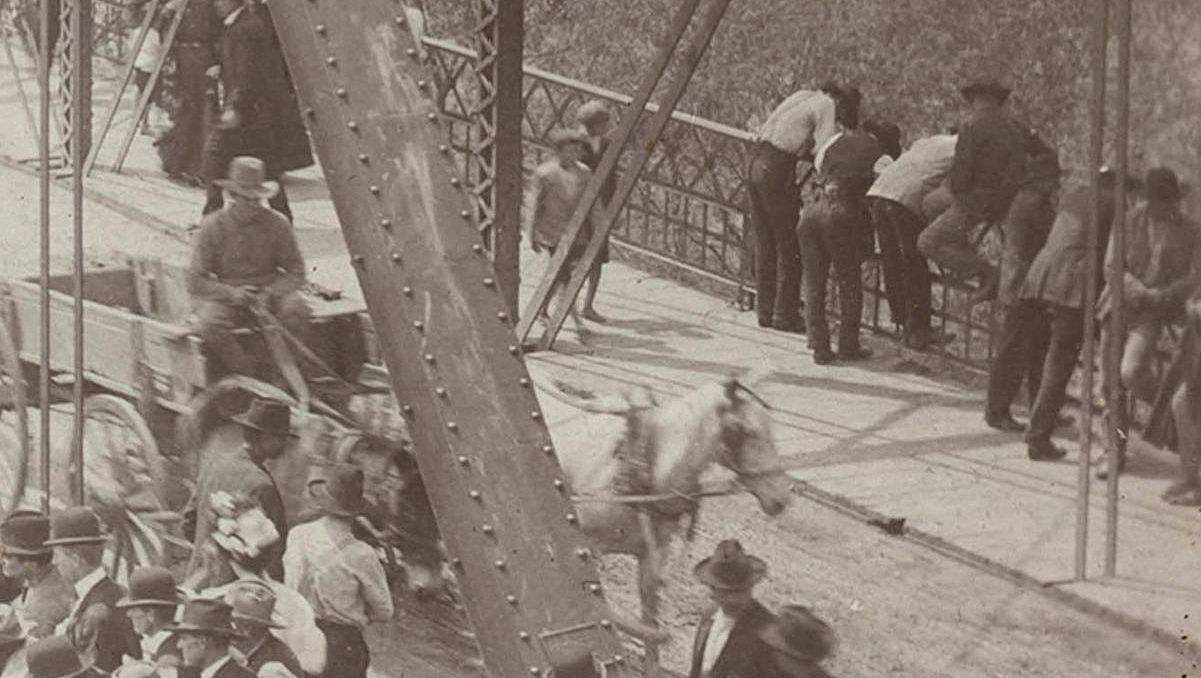
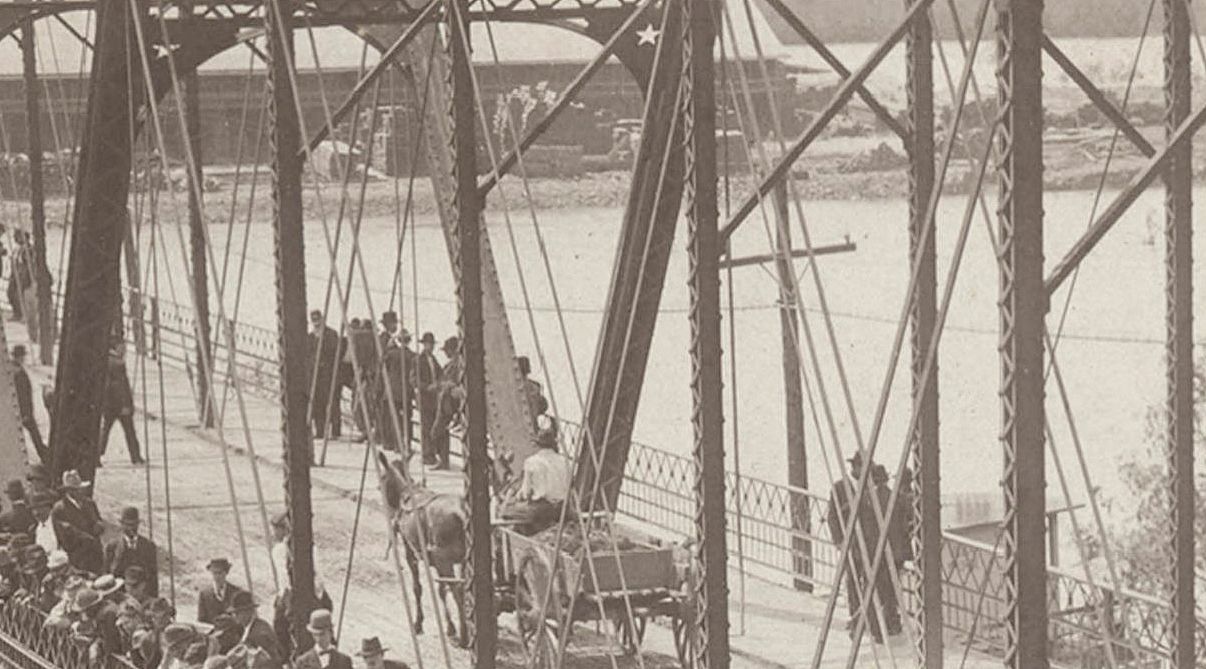
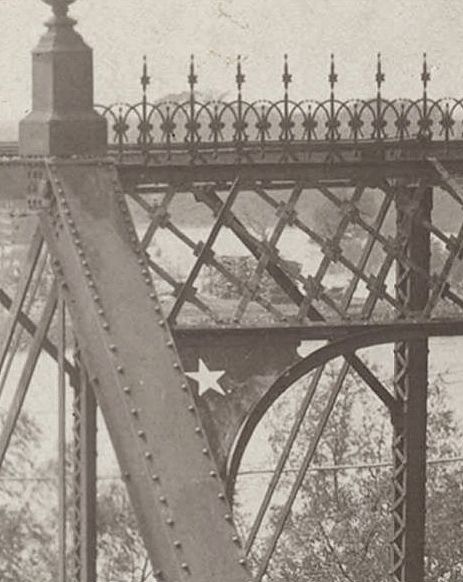
Let’s zoom in on this photo and look at some of the details of the crowd and the bridge (all images are larger when clicked).

commerce-st-bridge_1908_cook-degolyer-det1

commerce-st-bridge_1908_cook-degolyer-det2

commerce-st-bridge_1908_cook-degolyer-det3

Above: are refreshments being sold?

commerce-st-bridge_1908_cook-degolyer-det4

commerce-st-bridge_1908_cook-degolyer-det5

commerce-st-bridge_1908_cook-degolyer-det6

commerce-st-bridge_1908_cook-degolyer-det7

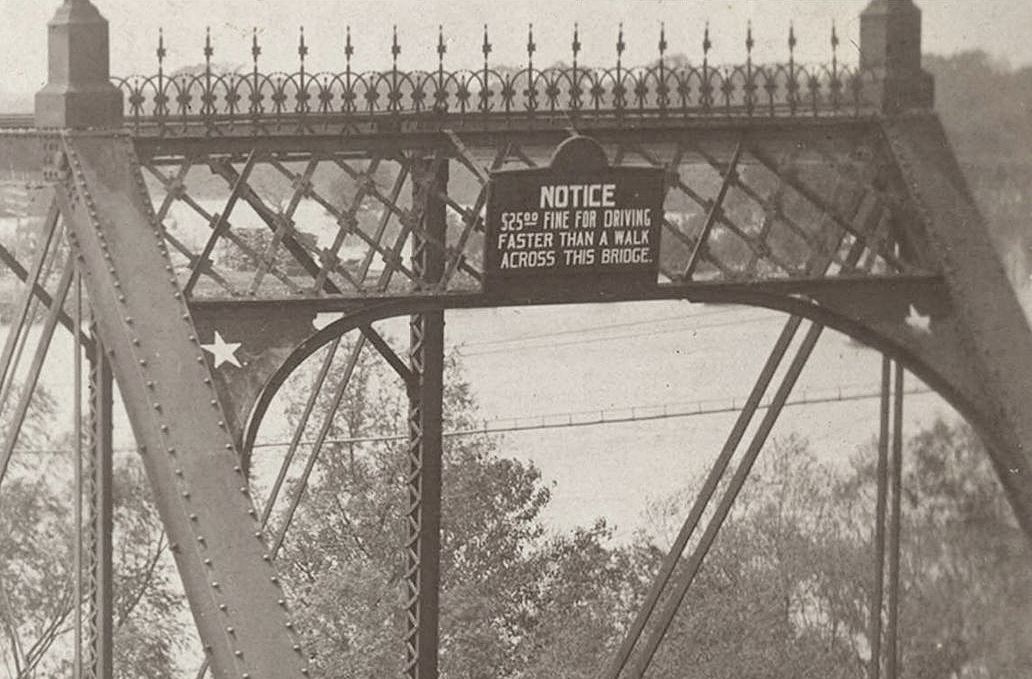
“NOTICE: $25.00 FINE FOR DRIVING FASTER THAN A WALK ACROSS THIS BRIDGE.”

commerce-st-bridge_1908_cook-degolyer-det8

**

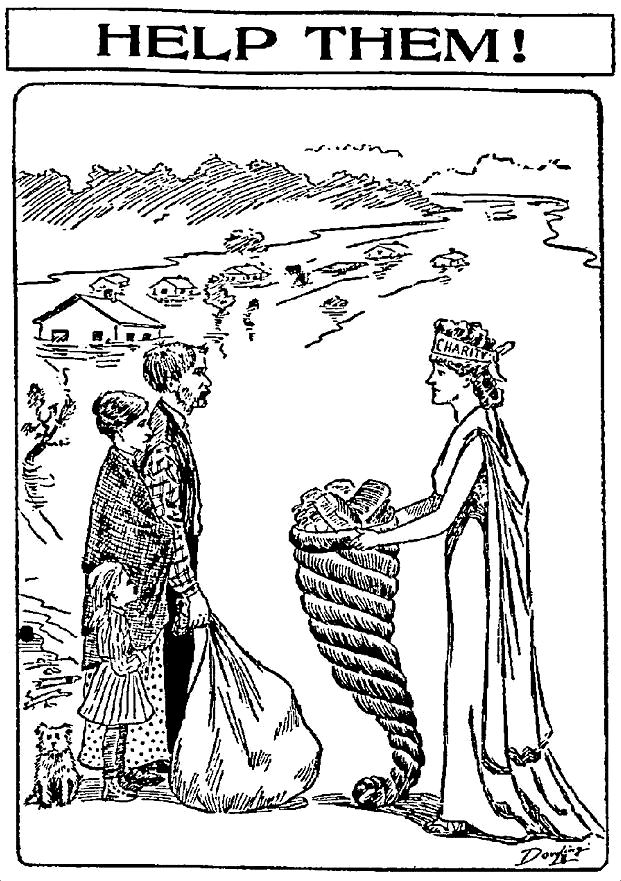
The editorial cartoon below appeared on the front page of The Fort Worth Telegram next to a story with the headline “Dallasites Flee Flooded Homes; River is Rising.”

flood_FWST_042008_help-them
FWT, April 20, 1908

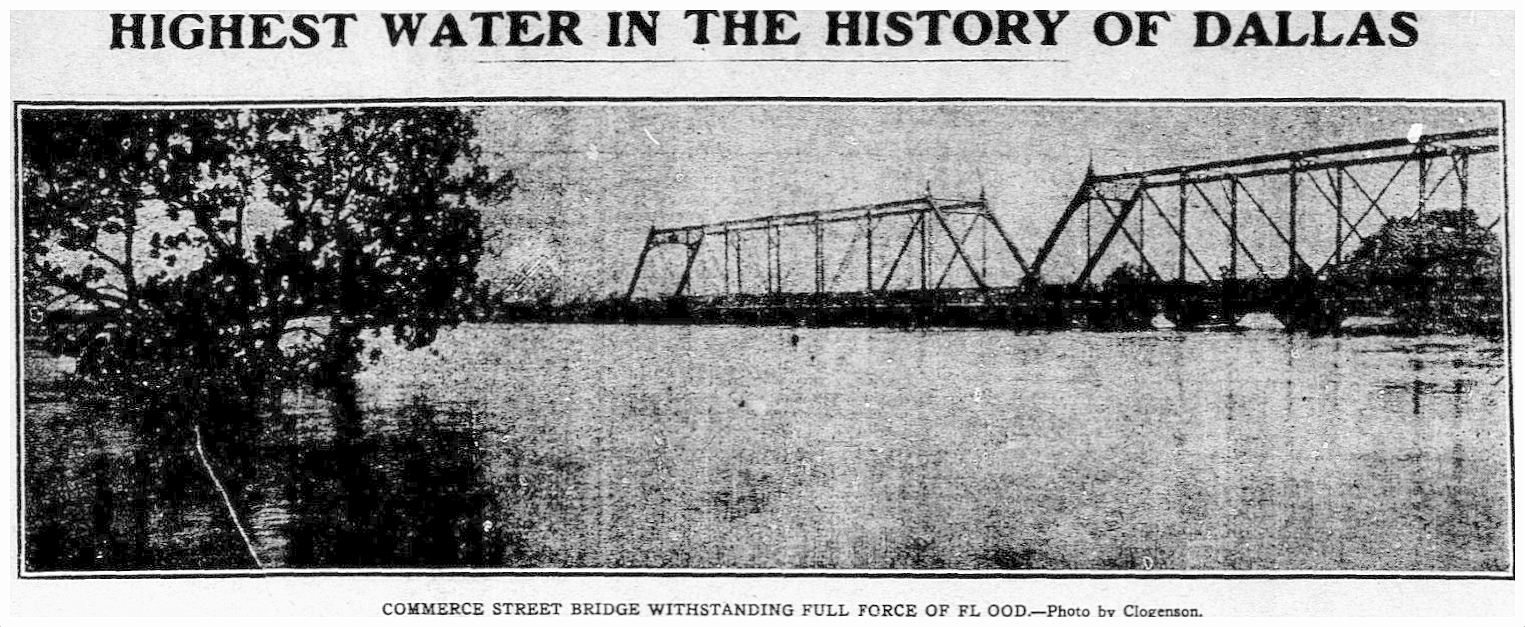
In May, this photo (by Henry Clogenson) showing “Highest Water in the History of Dallas” appeared in The Dallas Morning News:

flood_dmn_052608_clogenson_commerce-st-bridge
DMN, May 26, 1908

Another photo by Clogenson:

trinity-river_flood_1908_LOC-lg

For comparison, here’s the bridge at a calmer time:

commerce-street-bridge_legacies_fall-1995

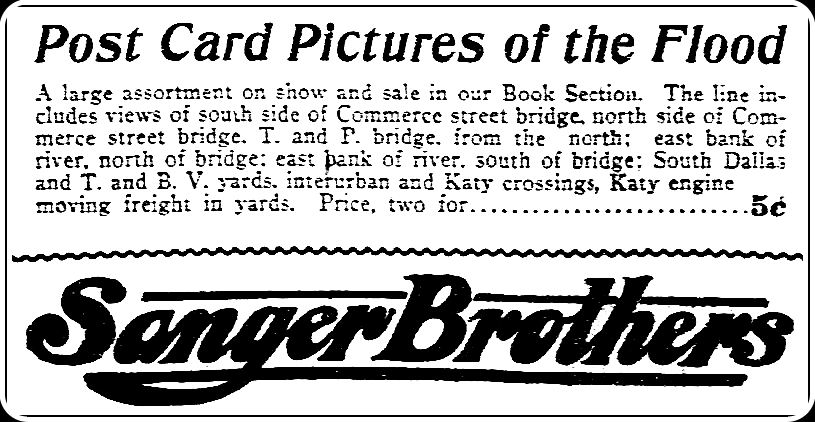
Flood memorabilia? Check out the book and stationery department at Sanger Bros.

flood_postcard-sales_dmn_060408_sangers-ad-detJune, 1908

***

Sources & Notes

Top photo titled “Commerce St. Bridge, Trinity River, Dallas, Tex., April 20, 1908” from the George W. Cook Dallas/Texas Image Collection, DeGolyer Library, Central University Libraries, Southern Methodist University; the photo and more information can be accessed here.

The wide-angle photo of the Commerce Street Bridge, taken by Henry Clogenson, is from the Library of Congress, here.

“Calmer” photo of the Commerce Street Bridge is from the Fall, 1995 issue of Legacies, from the article “Bridges Over the Trinity” by Mary Ellen Holt.

Read the Dallas Morning News article “Trinity Flood Crest Has Reached Dallas … Great Damage is Reported” (DMN, April 20, 1908) here.

*

Copyright © 2018 Paula Bosse. All Rights Reserved.

Forest Avenue-Area Flooding, South Dallas — 1935

flooding_forest-avenue_lloyd-long_052035_ebayBeyond the levees… (click for larger image)

by Paula Bosse

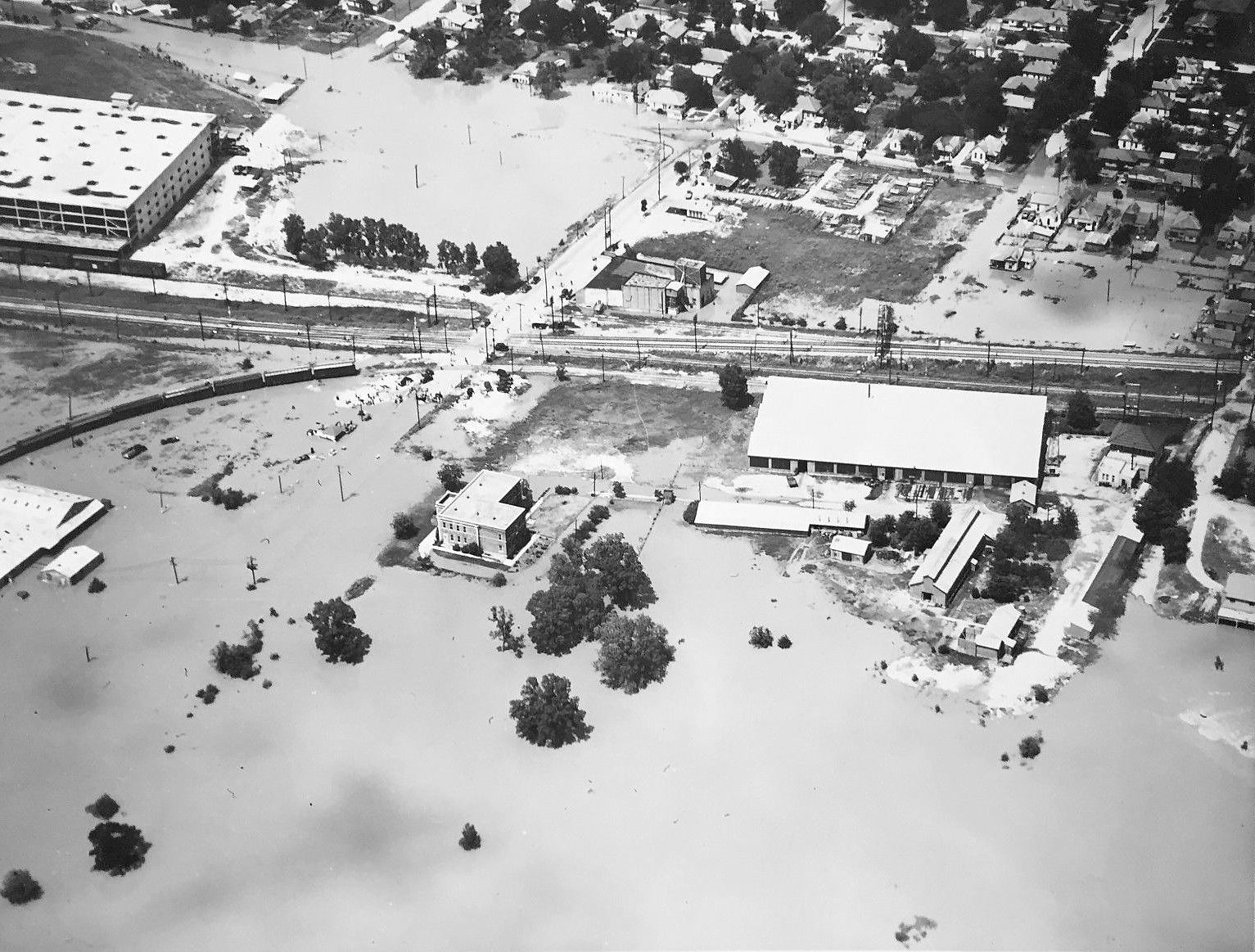
Sometimes the Trinity River is a puny little trickle, sometimes it’s a raging torrent. Here are aerial photos taken from around Forest Avenue (now MLK Blvd.) by Lloyd M. Long, showing the major flooding of May, 1935.

Here is the lead sentence from The Dallas Morning News, May 21, 1935 (the day after these photos were taken):

With sections of South Dallas inundated for the first time since the record 1908 flood, numerous bridges and highways and thousands of acres of lowlands hidden by its swirling, muddy currents, the roaring Trinity slowly was receding Monday night at Dallas after reaching a crest of 42.10 feet at 11 a.m. (DMN, May 21, 1935)

flooding-levee-district-from-forest-ave_lloyd-long_052035_ebay

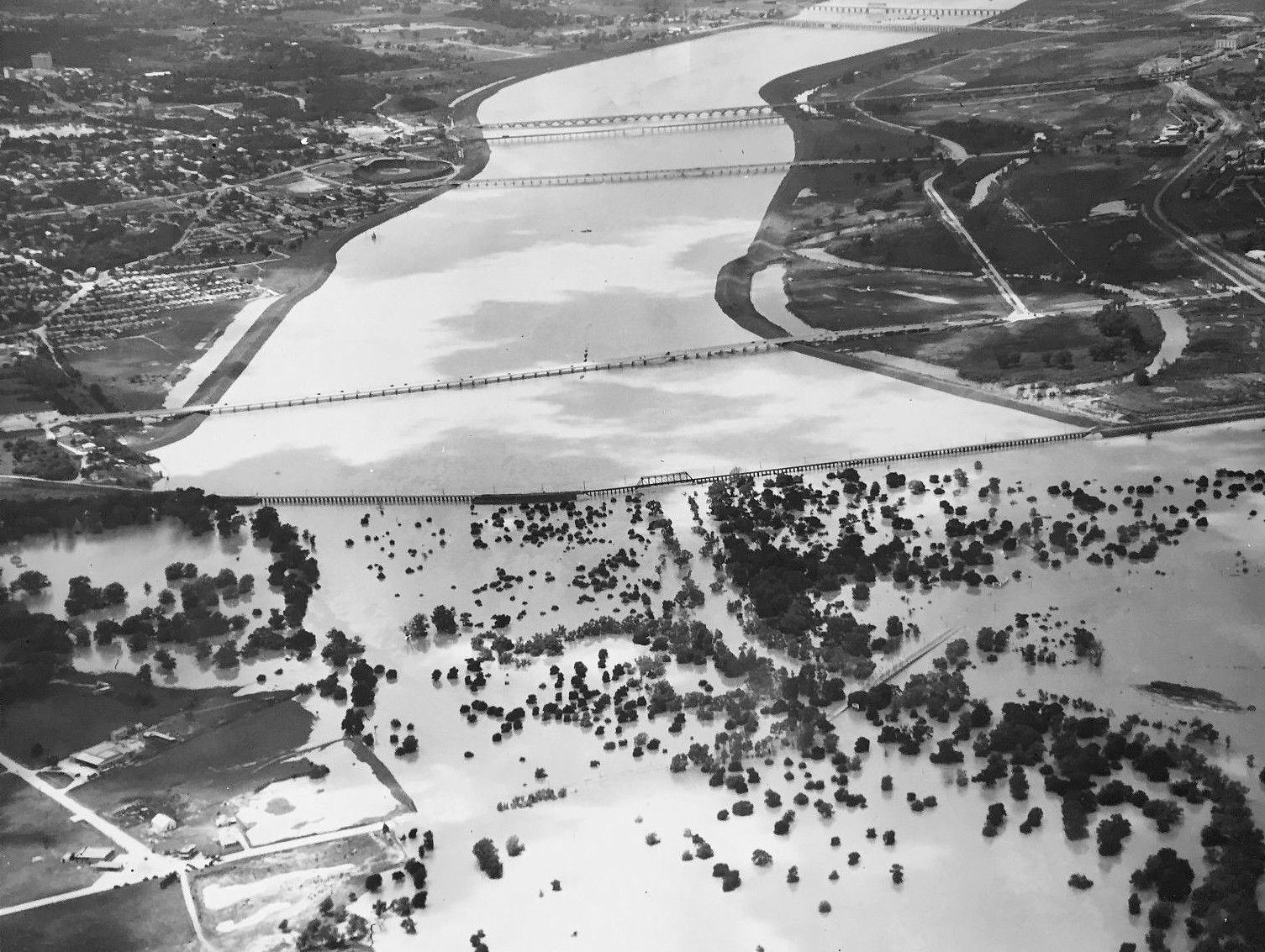
There was great rejoicing that that the new-ish levees had held the waters and prevented the wide-scale flooding seen in 1922. But once you got to the Forest Avenue bridge (which ran below the Corinth St. viaduct and the Santa Fe railroad trestle), things got real bad real fast. In the photo above, the levee protection ends exactly at the railroad trestle — the Forest Avenue bridge is mostly underwater. The river above the trestle: a beautiful feat of engineering; below: water, water everywhere.

Below the Forest Ave. bridge where the levee protection ended, flood conditions were far worse than those created by the 1922 inundation. (DMN, May 21, 1935)

Again, sometimes the Trinity is just a trickle….

***

Sources & Notes

Both photos (by Lloyd M. Long) are from 2017 eBay auctions: the top photo here, and the bottom photo here.

More on Dallas flooding can be found in these Flashback Dallas posts:

  • “The Nellie Maurine: When a Pleasure Boat Became a Rescue Craft During the Great Trinity River Flood of 1908,” here
  • “One of the Victims of the Great Trinity Flood: The T & P Railroad Trestle — 1908,” here
  • “The Trinity River at the City’s Doorstep,” here
  • “Cole Park Storm Water Detention Vault,” here

Maybe it’s just me, but I was really taken with that little L-shaped building in the top photo which was, briefly, its own island. What was it? It was part of the Guiberson Oil Well Specialty Corporation, founded in 1919 at 1000 Forest Avenue — the building seen in the photo was built in 1926. It’s still standing (here) and appears to be part of Faubion & Associates, a manufacturer of retail display cases and store fixtures.

Click photos to see larger images.

*

Copyright © 2018 Paula Bosse. All Rights Reserved.

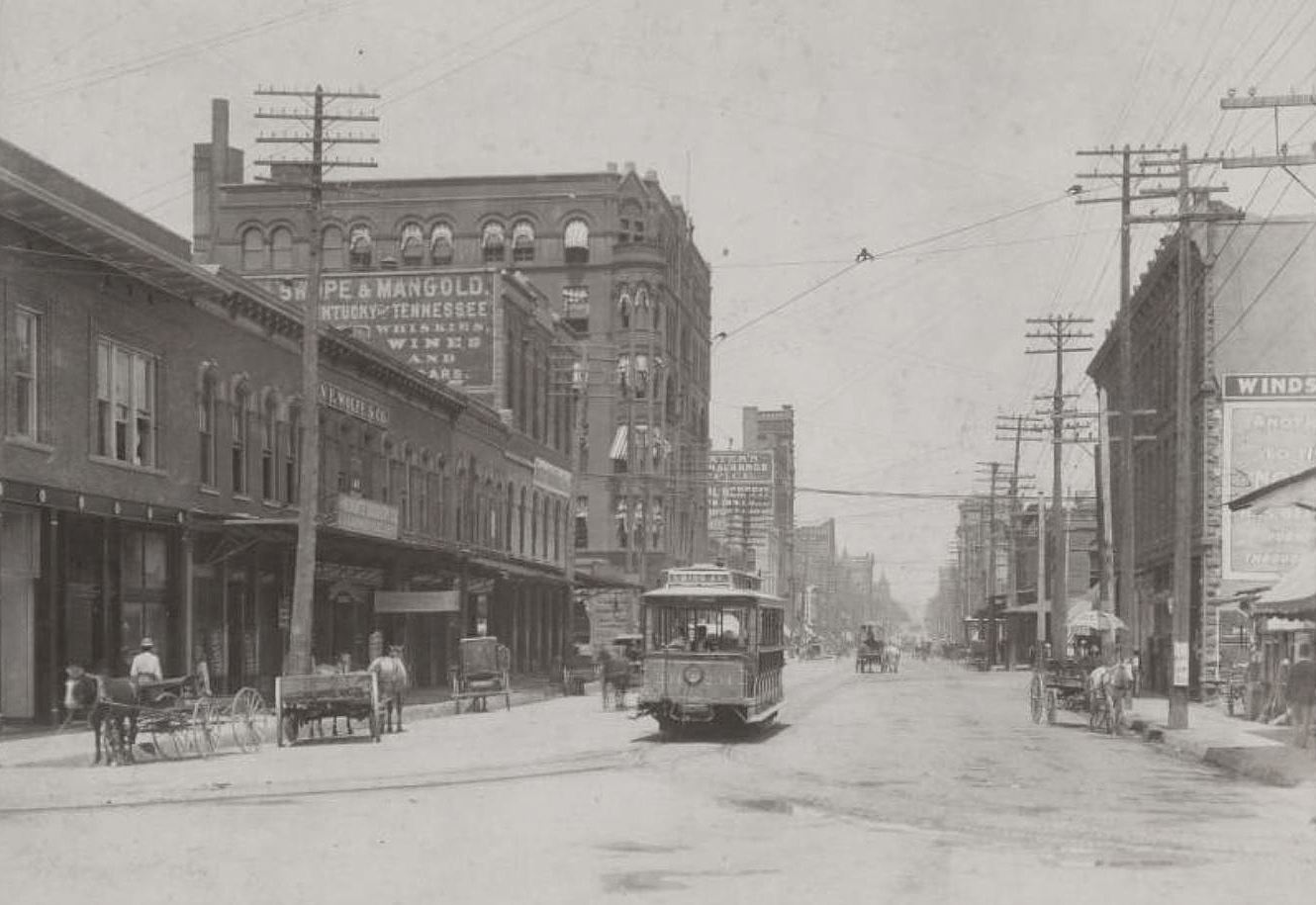
The Swiss Avenue Car on Main Street — ca. 1900

swiss-ave-streetcar_main-and-market_cook-degolyer_c1900Main and Market, looking east…

by Paula Bosse

Here’s another great photo from the George W. Cook collection at SMU. This one shows Main Street sometime between 1899 and 1902 (the year asphalt was laid on Main and the year that Sanger Bros. expanded their building from two stories to six); we’re looking east from Market Street. (The aesthetically challenging view as seen today on Google is here.)

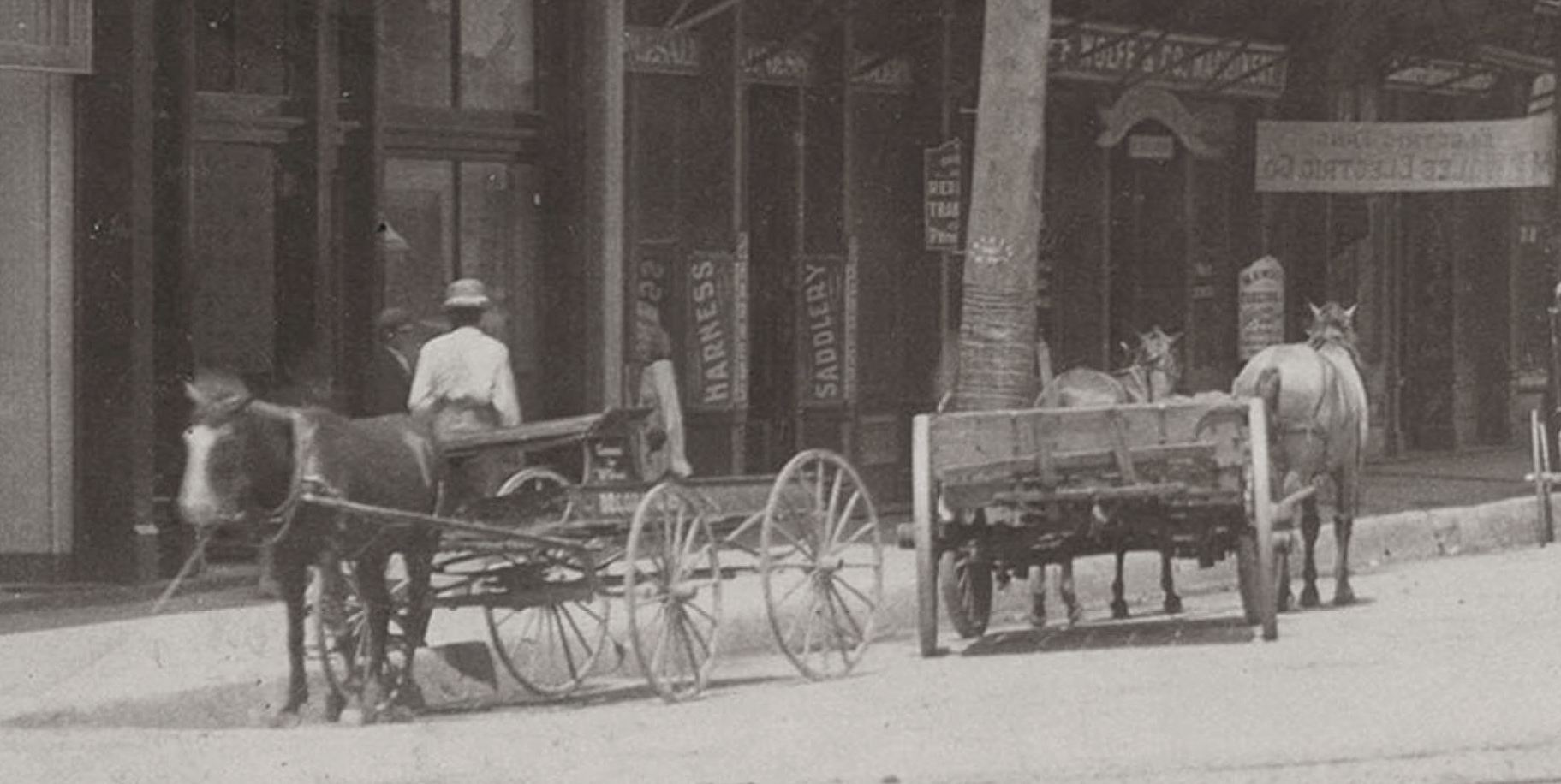
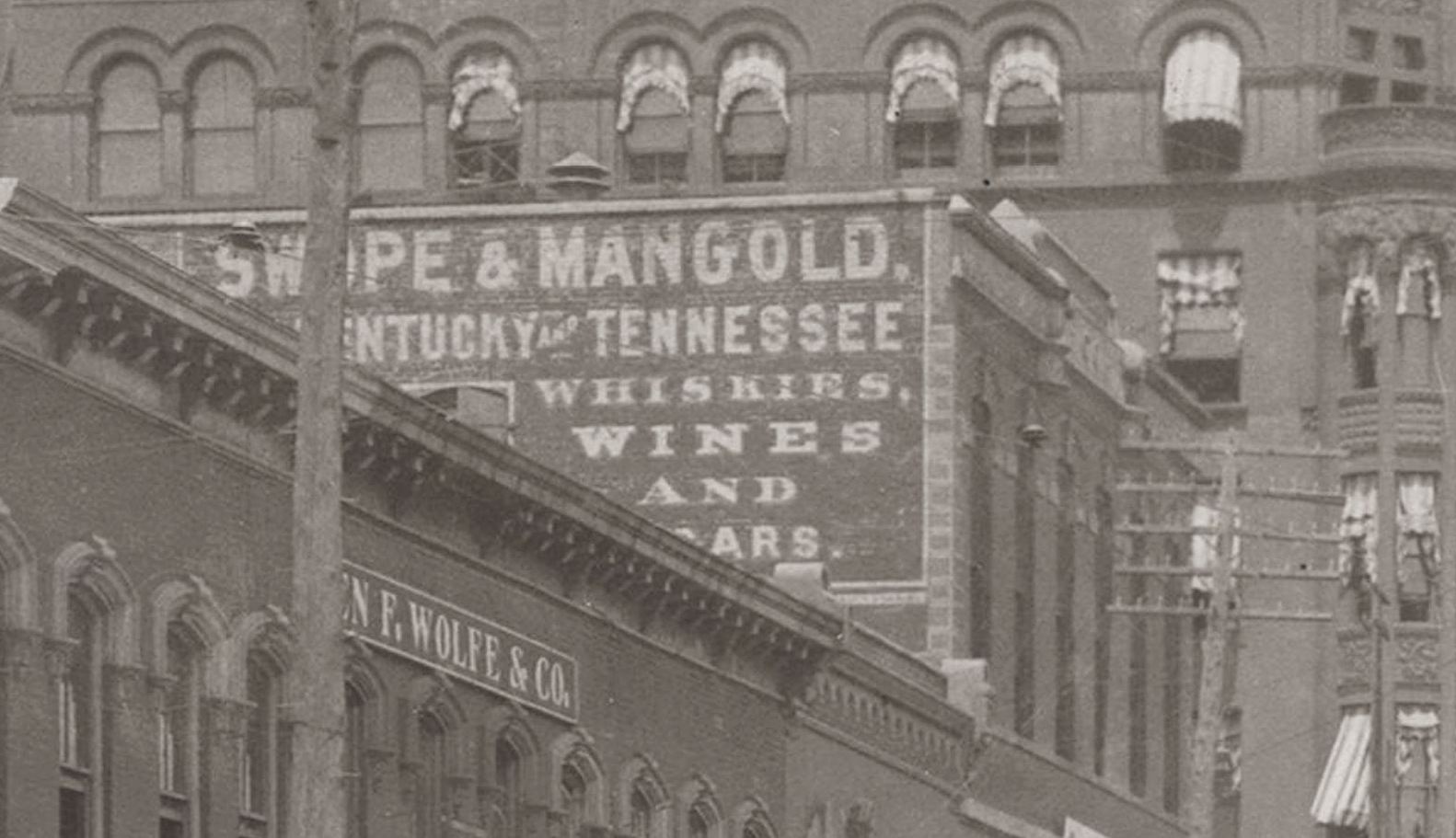
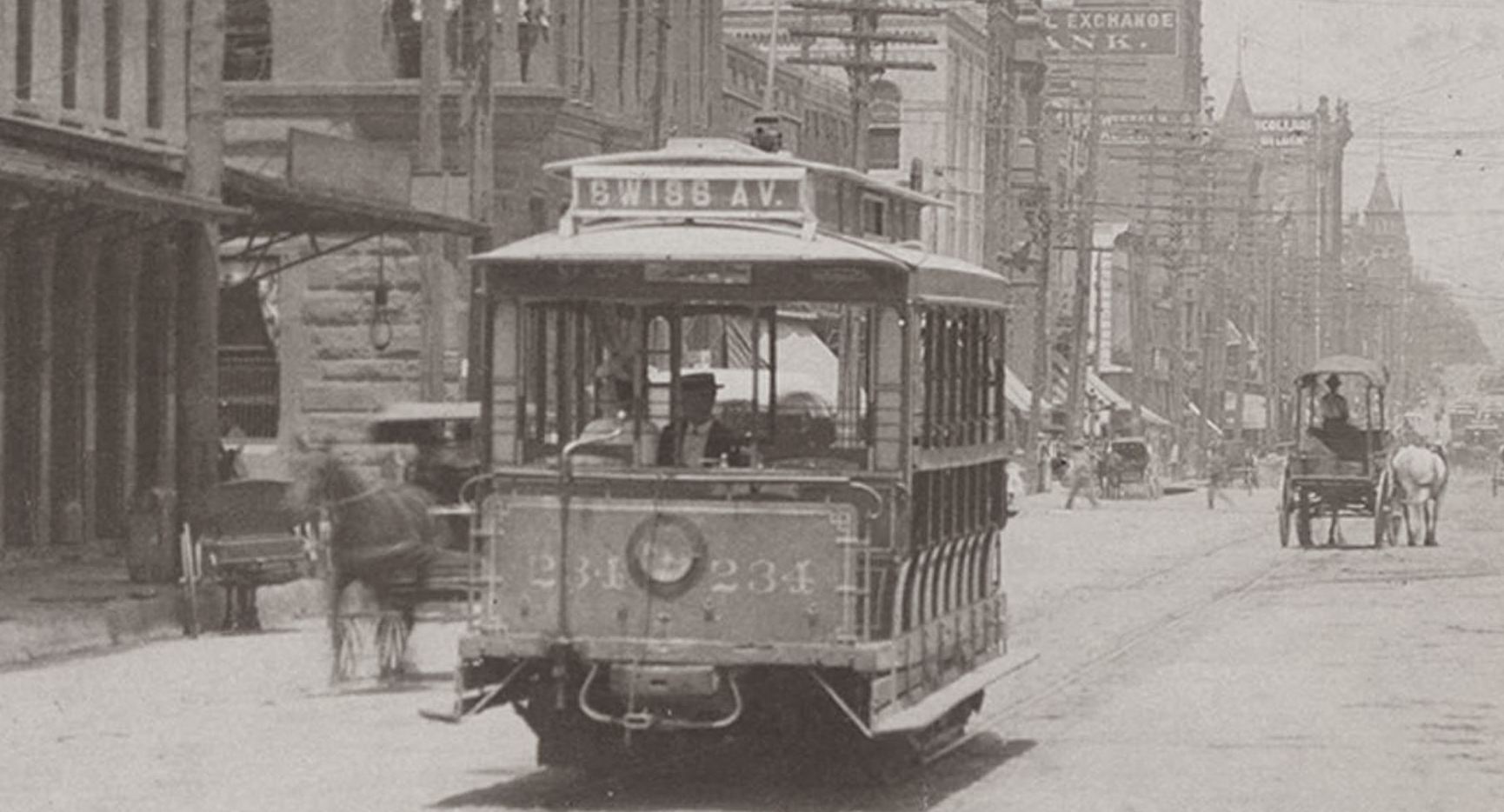
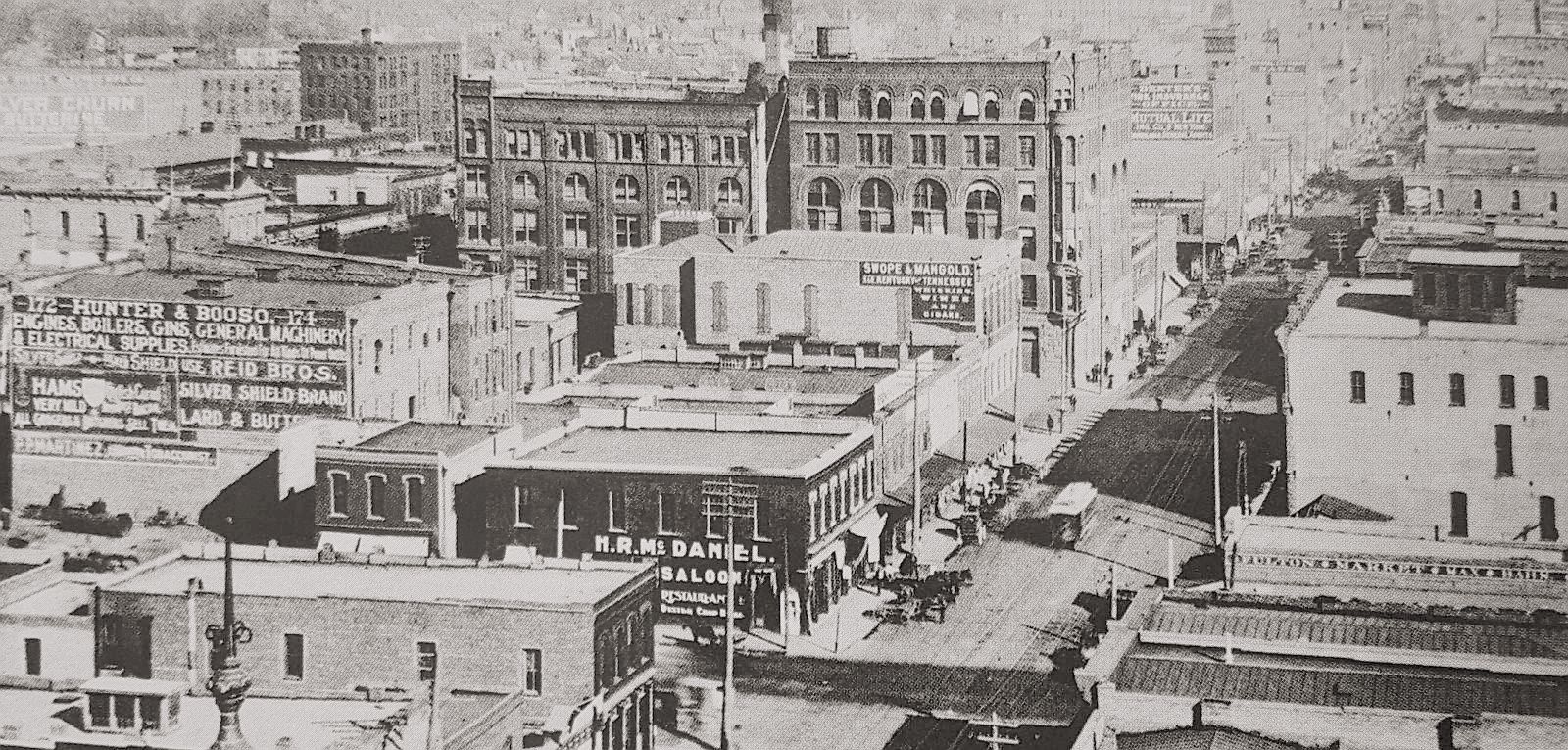
On the north side of Main (at the left), we can see horse-drawn wagons parked in front of a group of businesses including Konantz Saddlery Co., Ben F. Wolfe & Co. (machinery), a banner across the sidewalk for the Southwestern Electrical Engineering & Construction Co., Swope & Mangold wholesale and retail liquor company; then past Austin Street, on the corner, is the Trust Building, with the then-two-story Sanger Bros. building right next door (Sanger’s would build that up to six floors in 1902 and would eventually take over the Trust Building); across Lamar is the North Texas Building, with Charles L. Dexter’s insurance company advertised on the side; and, beyond, the Scollard Building, etc. The Windsor Hotel can be seen on the south side of the street in the foreground. And in the middle, an almost empty little streetcar with “Swiss Av.” on it, moving down Main underneath a canopy of hundreds of ugly electric wires zig-zagging overhead. Let’s zoom in around the photo to see a few closeups (all images are much larger when clicked).

Wagons parked at the curb:

swiss-car_1

*

Is that someone in the window looking down the street?

swiss-car_2

*

Swope & Mangold was one of the oldest “liquor concerns” in turn-of-the-century North Texas.

swiss-car_3

*

The electric streetcar shared the roadway with horses, buggies, and wagons.

swiss-car_4

*

I can’t quite make out the writing on the umbrella or on the sign posted on the pole. Part of the old Windsor Hotel can be seen at the right. At the bottom corner is a shop that sold “notions” and household goods, and just out of frame were a fish market and a meat market.

swiss-car_5

*

And the little Swiss Avenue car 234. Lotsa free seats.

swiss-car_4-a

*

Here’s another view of Main Street looking east, taken around the same time. There’s even a streetcar in about the same spot.

main-street-birdseye_ca-1900_dallas-rediscov_p42_DHS

*

See the 1899 Sanborn map for this general area here (note that Record Street was once Jefferson Street).

***

Sources & Notes

Top photo — titled “Main Street between Austin and Market Streets” — is from the George W. Cook Dallas/Texas Image Collection, DeGolyer Library, Central University Libraries, Southern Methodist University; more information on this photo is here.

The circa-1900 bird’s-eye view photo at the bottom is from the collection of the Dallas Historical Society, found in the book Dallas Rediscovered by William L. McDonald (p. 42).

*

Copyright © 2017 Paula Bosse. All Rights Reserved.

Zang and Beckley

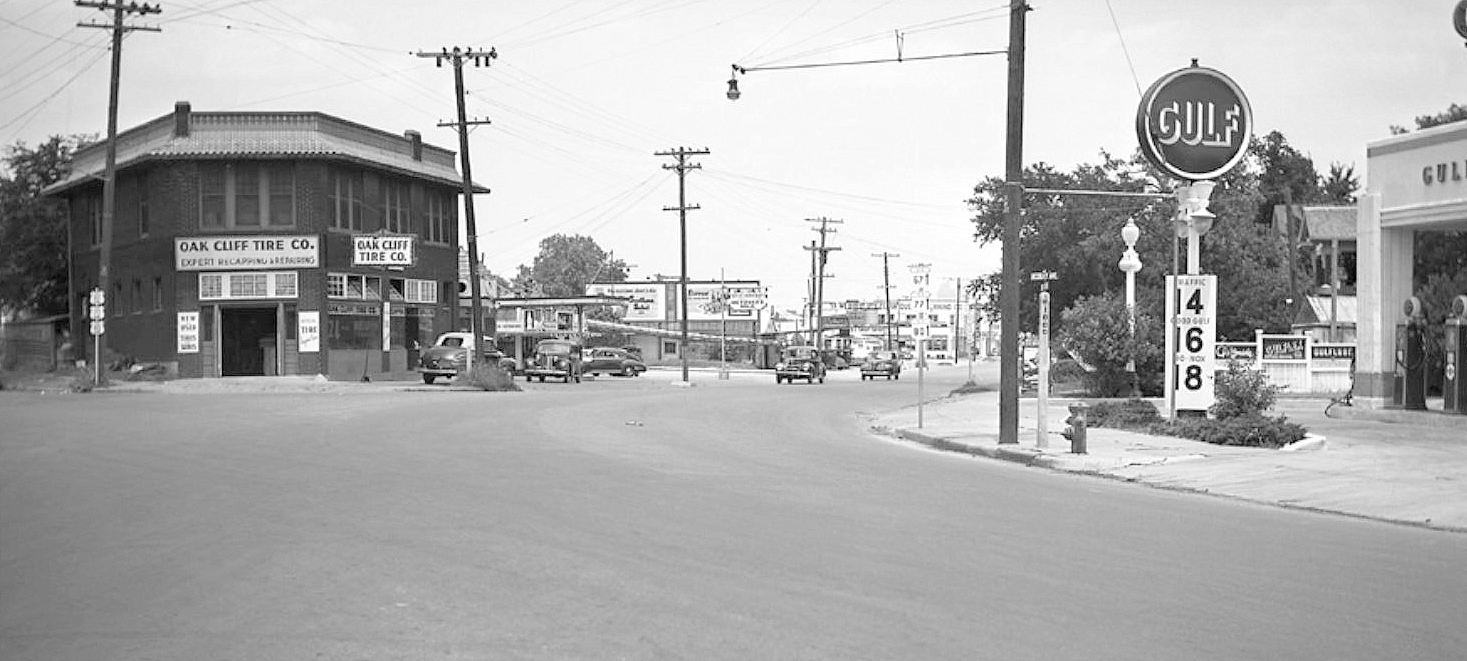
oak-cliff_zang-and-beckley_dfw-freewaysGulf’s “No-Nox” gas just 18¢/gallon…

by Paula Bosse

This photo shows the Oak Cliff intersection of N. Zang Blvd. and N. Beckley Ave. The 1953 Dallas directory shows L. B. Poche’s Oak Cliff Tire Co. at 1101 N. Zangs and K. R. Hollis’ Gulf service station at 1102 N. Zangs (this was before that “s” in the street name was eliminated).

The photo comes from the exhaustive tome Dallas-Fort Worth Highways, Texas-Sized Ambition by Oscar Slotboom. His caption for this photo (found on page 98 of the PDF here):

This undated view shows the predecessor of IH 35, US 67, aligned on Zang Boulevard through Oak Cliff just south of downtown at the intersection with Beckley Avenue. The three highway shields show that this alignment also served US 77 and US 80. The narrow streets leading into downtown were unable to handle increasing traffic after World War II, making freeway construction a top priority.

Zang Boulevard was originally called “Zang’s Boulevard” (later just “Zangs Boulevard”) after J. F. Zang. When it opened in 1900, it was the only direct road between Dallas and Oak Cliff. 

zangs-blvd_dmn_102600
Dallas Morning News, Oct. 26, 1900

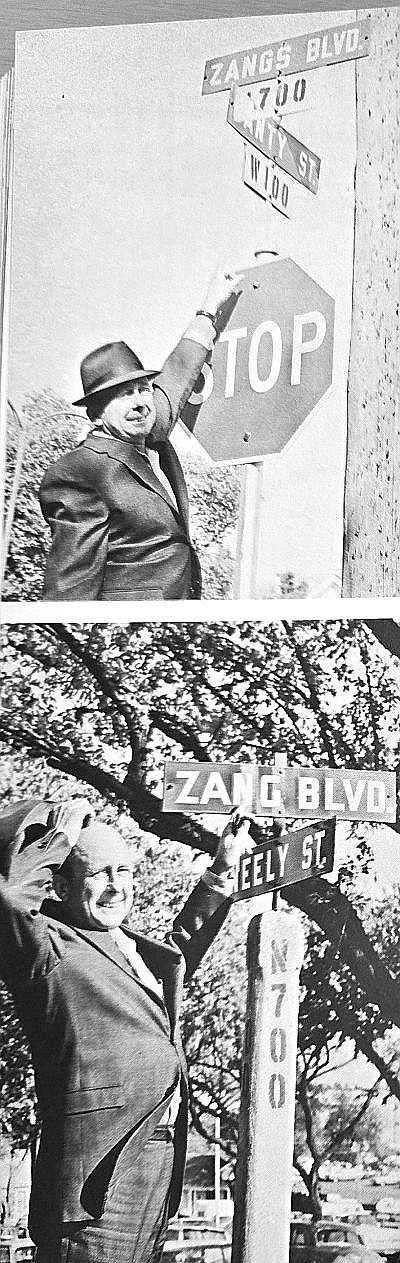
In 1967, it was beginning to be a problem, with mixed messages from the city on what the street was actually called, illustrated by the photos below, which ran with this caption: “Harry Gaston, Oak Cliff real estate and insurance man, points out the ZANGS street sign in the north 700 block of the boulevard at Canty Street. A look of bewilderment adorns his face, however, when he discovers the ZANG (no S) sign on the opposite end and other side of the same north 700 block. City records show ZANG as the correct spelling… a reorientation program for the public and some great big headaches for map makers.” (Oak Cliff magazine, Nov. 1967). In June 1968, the city officially dropped the “s,” and it became, simply, “Zang Boulevard.” (The full article about this is linked below in the Sources & Notes section.)

zang-zangs_oak-cliff-mag_nov-1967-a_DPL-photosNov. 1967

***

Sources & Notes

Top photo is from Oscar Slotboom’s Dallas-Fort Worth Freeways website, which is pretty amazing. If you’re interested in the evolution of Dallas’ highway system, you will be glued to this site which is full of incredibly detailed information.

Photos of the beleaguered Mr. Gaston wondering what the street was actually called is from Oak Cliff magazine, Nov. 1967, Periodicals Collection, Dallas History and Archives, Dallas Public Library. The article that ran with these photos — “Zang(s) Problem(s) Confuse(s) Chamber(s)” by Phyllis Dischman — is here.

*

Copyright © 2017 Paula Bosse. All Rights Reserved

The Wide Open Spaces Northeast of Central and Lovers — 1957

central_north-from-mockingbird_060657_squire-haskins_UTASquire Haskins, UTA Special Collections

by Paula Bosse

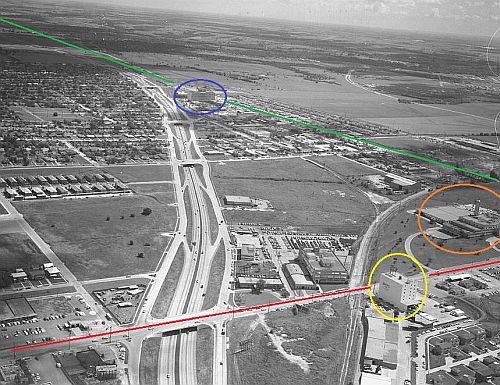
Here’s another great aerial photo by Squire Haskins, taken on June 6, 1957 — sixty years ago. The view is to the north, from a little south of Mockingbird. Mockingbird runs from left to right at the bottom of the photo; at the far right you can see the still much-missed Dr Pepper plant, which stood at the northwest corner of Mockingbird and Greenville Avenue. The only “tall” structure north of Mockingbird is the Meadows Building, at Greenville and Milton, just south of Lovers Lane. North and east of Lovers and Greenville is … pretty much nothing. The old Vickery community was north on Greenville, around what is now Park Lane. To the east? I don’t know … lots of open land and then … Garland? (See a huge image of this photo on the UTA website, here.)

If you need your bearings, here are a few of the landmarks (red, Mockingbird Lane; green, Greenville Ave.; yellow, Bekins Storage, orange, Dr Pepper plant; blue, Meadows Building):

meadows-bldg-from-mockingbird_squire-haskins-june-1957_UTA_annotated

Let’s turn it around and look south, toward downtown, from just north of Lovers Lane, with the Meadows Building in the foreground. Greenville is at the left, Central Expressway at the right. This photo, also by Squire Haskins, was taken on June 20, 1956. (See it on the UTA website, here.)

central_south-from-lovers_062056_squire-haskins_UTA_meadows

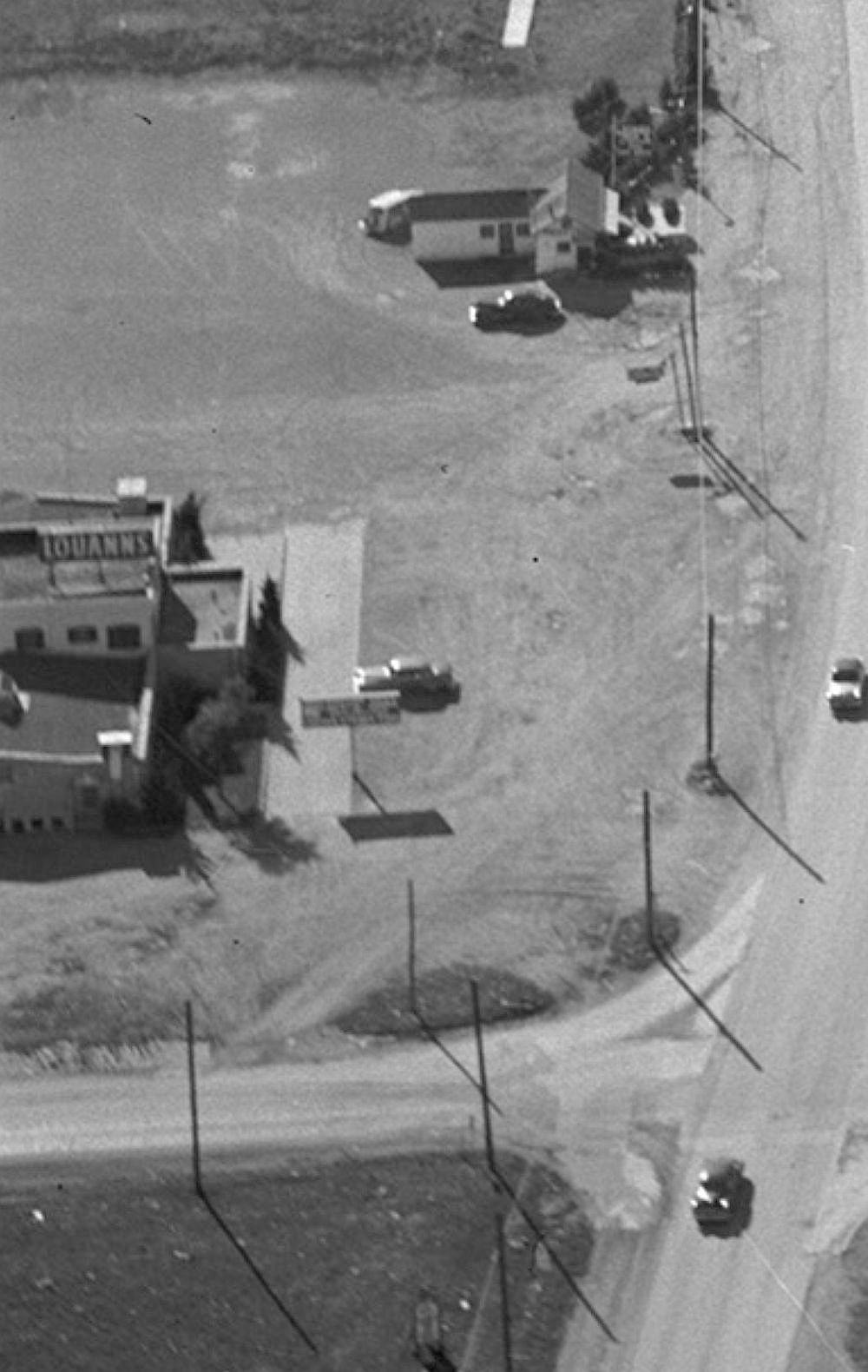
If, like me, you’ve always wondered where the legendary Louanns nightclub was, it was just out of frame at the bottom left of the photo above — at the southeast corner of Lovers and Greenville, where Central Market sits these days. You can see it below, in a detail of another great Squire Haskins photo (click on the thumbnail of the photo on this page to see the full photo — Louanns is at the bottom left) — it was taken on Dec. 4, 1953 and shows the Meadows Building under construction. In this detail you can see a slightly blurry Louanns, with what looks like an unpaved Lovers Lane at the bottom and Greenville Avenue at the right. I’d always  heard that Louanns was way out in the sticks in its heyday in the ’40s and ’50s. And looking at the top photo, I can see how true that was — especially before the arrival of the Meadows Building, which was, I believe, the largest “suburban” office building in Dallas beyond the downtown Central Business District. And for those who went out “parking” along the isolated Lovers Lane back then, you can see how the street got its name.

louanns_squire-haskins_UTA_det

louanns-postcard

Here is a clipping from the 1957 Dallas city directory showing the businesses along East Mockingbird — between Airline, west of Central, and Greenville Avenue.

mockingbird_central-to-greenville_1957-directory
1957 Dallas directory

See the Greenville Avenue businesses from the same 1957 directory here (the directory is scanned in its entirety on the Portal to Texas website here).

Here’s a map showing what this same area looked like a few years earlier, in 1952, when Mustang Airport was still out there (between Lovers and Northwest Highway, and between about where Skillman would later extend to and Abrams). (On the map below, Central Expressway is red, Greenville Avenue is blue, East Mockingbird Lane is purple, and Lovers Lane is green.)

map_north-from-mockingbird_1952-mapsco
1952 Mapsco

***

Sources & Notes

Top two photos by Squire Haskins, from the Squire Haskins Photography, Inc. Collection, UTA Libraries, Special Collections. Additional information on the first one (ID No. 10002957), looking north, is here; additional info on the second one (ID No. 10000568), looking south, is here. (To see HUGE images of both photos, click the thumbnails on these linked pages.)

*

Copyright © 2017 Paula Bosse. All Rights Reserved.

Preston and Valley View: The Calm Before the Storm — 1958

preston-lbj_122158_squire-haskins_utaLBJ Freeway, T-minus 6 years….

by Paula Bosse

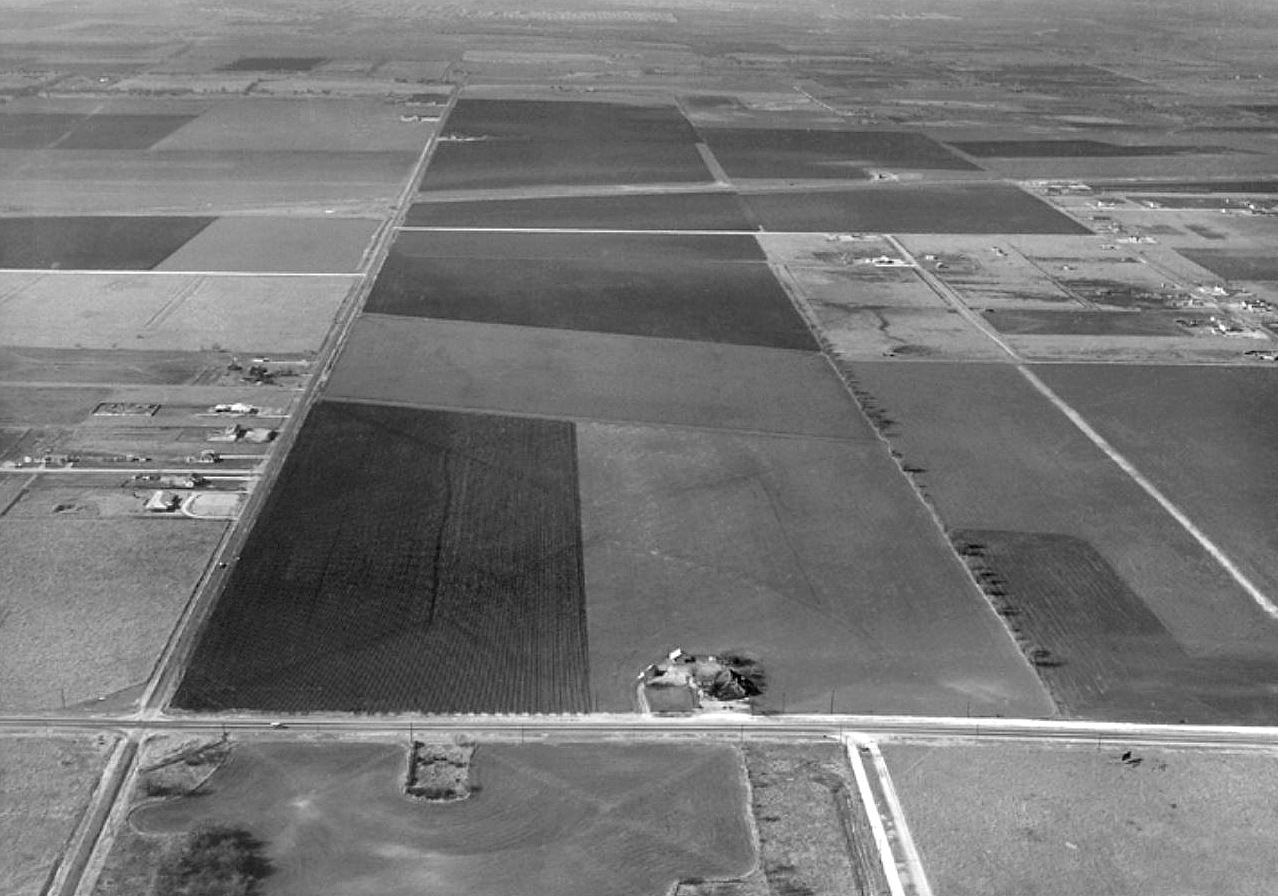
This photo makes my head hurt. The road crossing horizontally at the bottom is Preston. The vertical road at the left is Valley View Lane (the view is to the west). What we’re looking at is land soon to be eaten up by LBJ Freeway, which was built along Valley View.

This fantastic photo by aerial photographer Squire Haskins (which can be seen REALLY big at the UTA website here) is included in Oscar Slotboom’s book Dallas-Fort Worth Freeways. This is his caption to the above photo:

Preston at LBJ, 1958. This December 1958 view looks west along Valley View Lane with the Preston Road intersection at the lower left. LBJ Freeway was built along Valley View Lane with work underway in 1964. A Sears store opened in the foreground in 1965 and Valley View Mall opened in 1973. The corridor was fully urbanized by the 1980s.

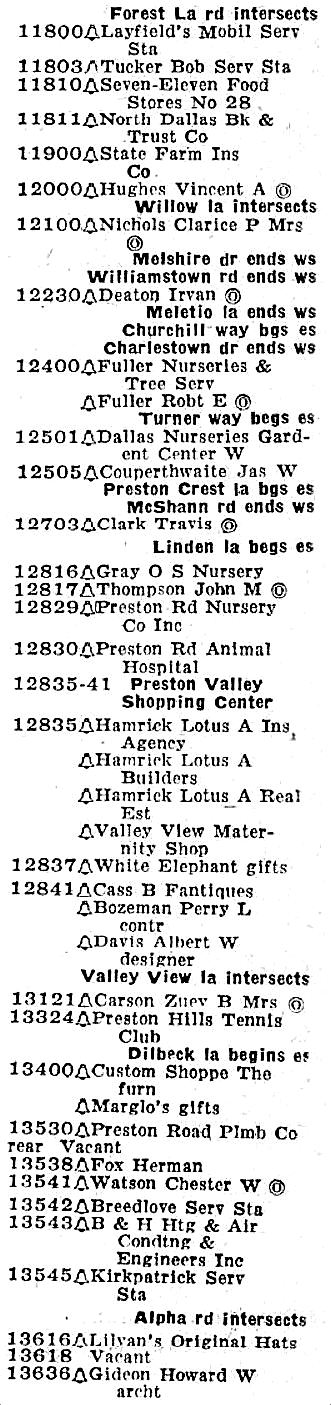
The only street directory I could find fairly close to the date of this photo was the one from 1961 — which already shows development not seen in the photograph. By this time, people knew the freeway was coming, but it was still fairly sparsely developed.

Here is the listing of addresses along Valley View Lane, stretching from Inwood, east past Central Expressway. (Click for larger image.)

valley-view_1961-directory
Valley View Lane, 1961 Dallas directory

And, below, addresses along Preston Road, moving north from Forest Lane. The thing that makes me lightheaded about this, is one particular business, way, WAY up north — out in the middle of nothing back in 1961: Lilyan’s Original Hats, at Preston and Alpha. That was my great-aunt’s hat shop. She owned that land. Imagine! She sold it, I think, in the ’70s. I can only hope she made a pretty penny!

preston-road_1961-directory
Preston Road, 1961 Dallas directory

**

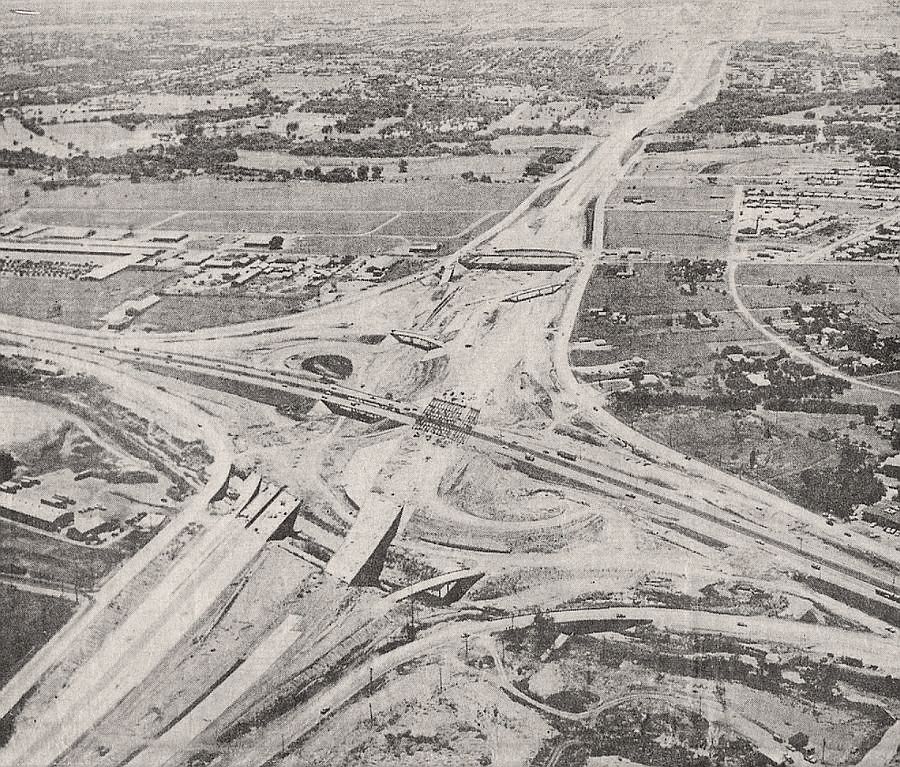
Here’s what construction of LBJ looked like in 1967 — the photo shows the intersection of Central Expressway and LBJ, with a view to the southwest).

lbj-looking-west_at-75_flickr_red-oak-kidFlickr, Red Oak Kid

***

Sources & Notes

Photo from the Squire Haskins Photography, Inc. Collection, UTA Libraries; more info here.

More on the construction of LBJ can be found in the chapter “Interstate 635, Lyndon B. Johnson Freeway” (from Oscar Slotboom’s amazingly researched book Dallas-Fort Worth Highways), here.

The 1957 map linked above is one of many scanned road maps which can be found on Slotboom’s site — the page “Old Highway Maps of Texas, 1917-1973) is here.

*

Copyright © 2016 Paula Bosse. All Rights Reserved.

Pacific Avenue: Watch for Trains! — ca. 1917

pacific-akard_park-cities-photohistory_frank-rogersToo close for comfort…

by Paula Bosse

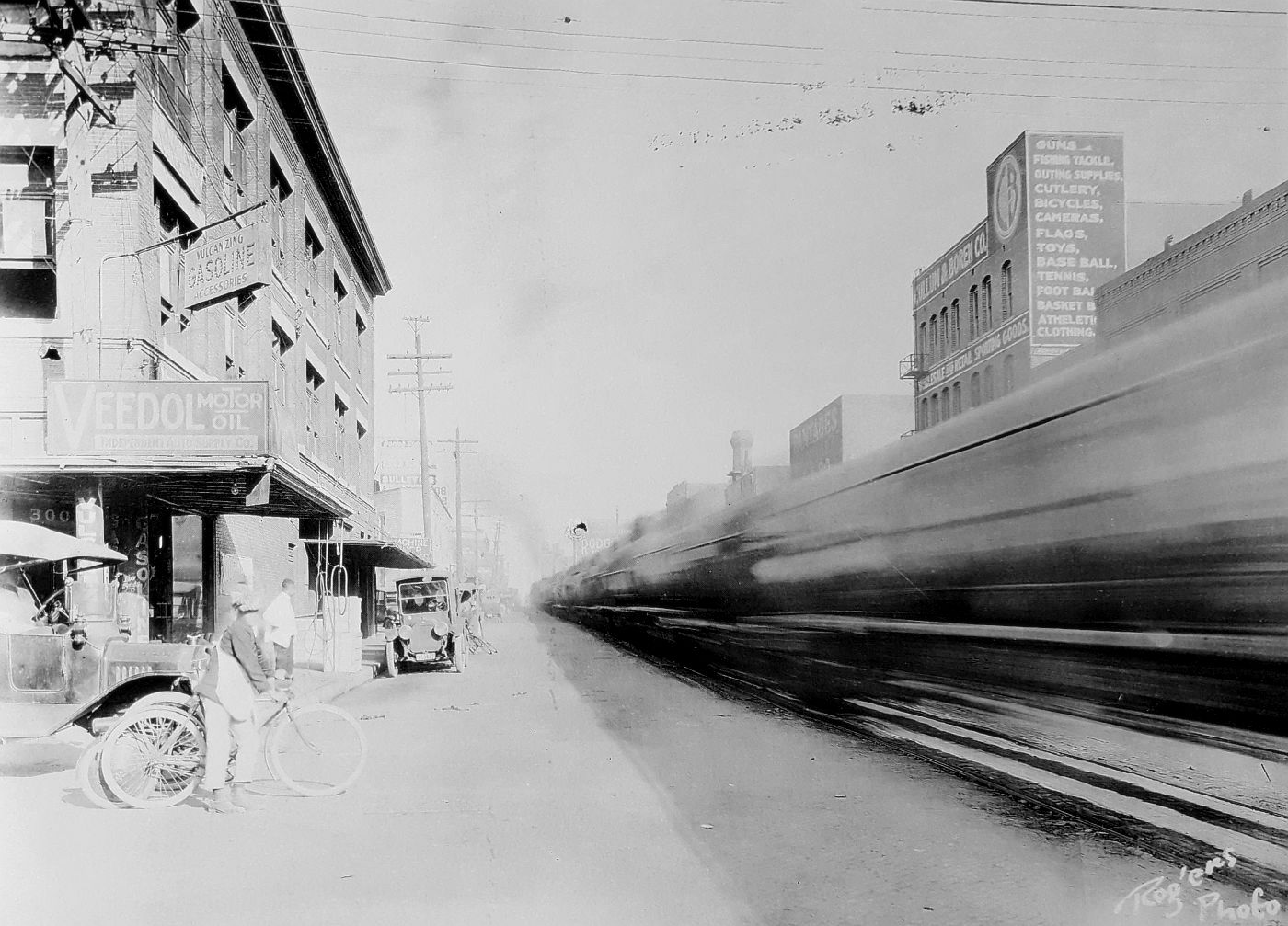
Some people don’t realize that Pacific Avenue used to be lined with the railroad tracks of the Texas & Pacific Railway (hence the name “Pacific”). When trains weren’t barreling down Pacific regularly, the thoroughfare was used by non-locomotive traffic like pedestrians, bicycles, horses, and automobiles. When a huge cinder-spewing train screamed through, everything came to a resigned halt until it passed by. I can’t even imagine what that was like. I wonder how many times people, horses, vehicles, etc. didn’t manage to get out of the way in time?

When Union Station opened in 1916, trains that had previously run through the central business district now went around it (which probably cut the number of people rushed to the hospital with train-related injuries substantially).

The photo above shows Pacific looking east from N. Akard, as a blur of a train whooshes by. The Independent Auto Supply Co. (300 N. Akard) is at the left, and, at the right, the back side of Elm Street businesses, including Cullum & Boren and, to its left, the Jefferson Theater, with “Pantages” painted on the side. (The Jefferson was the Dallas home of the Pantages Vaudeville Circuit from 1917 until 1920, the year the Pantages people bugged out for the greener pastures of the Hippodrome, leaving the Jefferson to start a new relationship with the Loew’s circuit people. At the end of 1925, the Jefferson Theater was actually renamed the Pantages Theater. …Kind of confusing.)

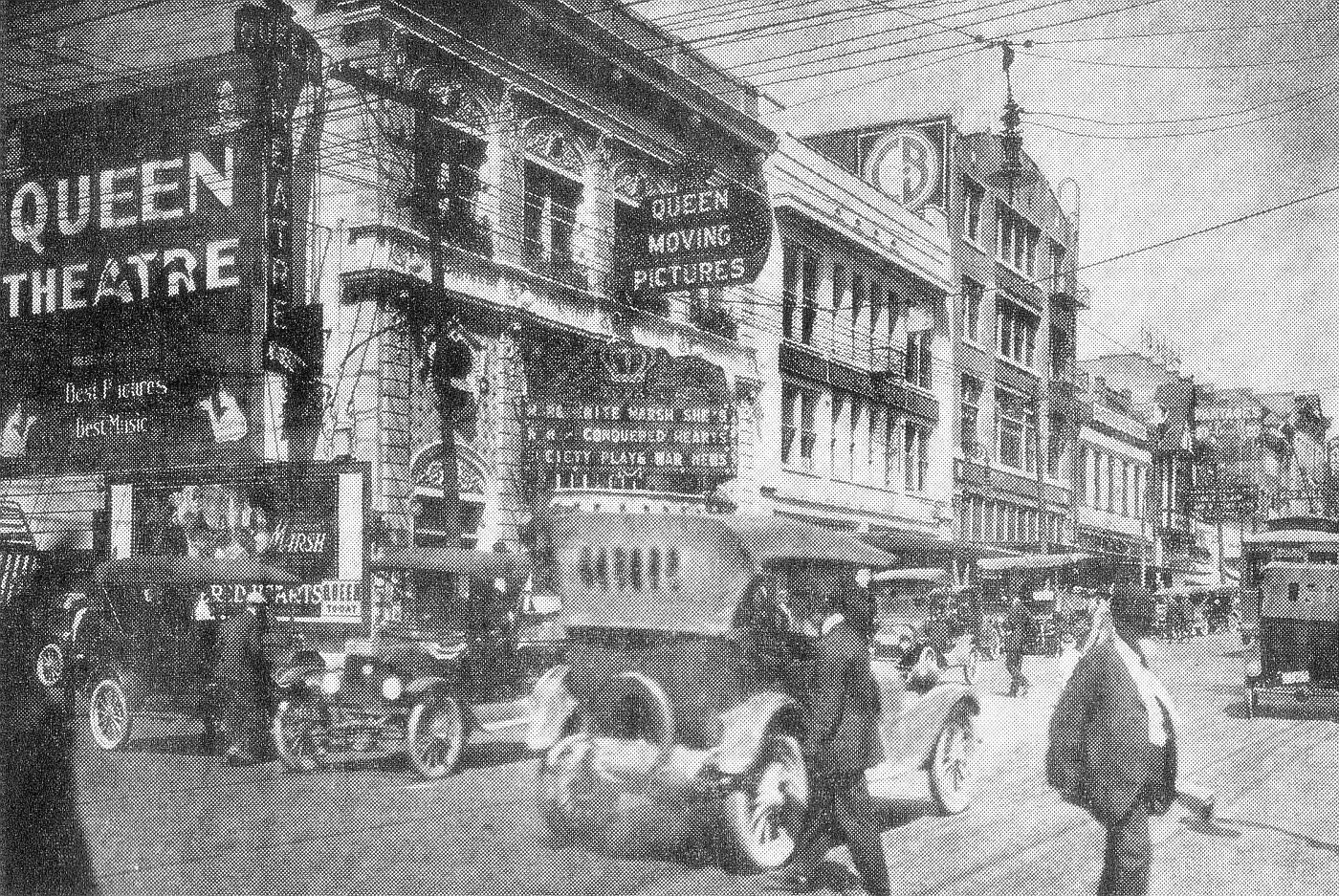
Below, Elm Street in 1918 — what the other side of those buildings looked like. Cullum & Boren’s “CB” logo can be seen painted on the side of its building. (Click photo for much larger image.)

dallas-movie-palaces_1918_dth_020556

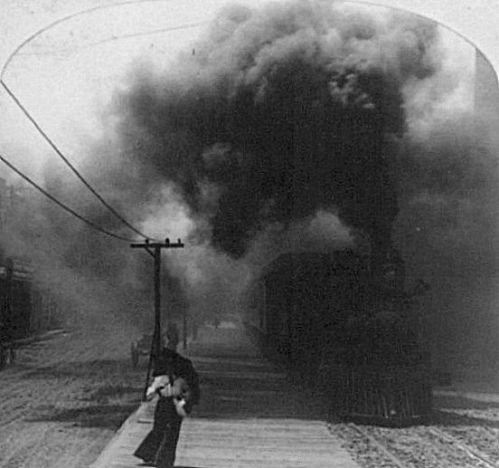
But back to Pacific in its scary, sooty, T&P-right-of-way days. This is what things looked like in 1909.

t-and-p-flier_1909_loc

Fast-forward to 1920 — the trains had long stopped running, but the tracks remained, an eyesore and an impediment to traffic. (Cullum & Boren, again, at the right.)

pacific-ave_showing-t-and-p-tracks_1920

And another one.

pacific_ave_ca-1920_legacies_fall-1990

Thanks to the Kessler Plan, those unsightly tracks were finally removed from Pacific in 1923. Below, a photo from 1925. Big difference. Thanks, George Kessler!

pacific_bryan_looking-east_lost-dallas_doty

***

Sources & Notes

Top photo (by Frank Rogers) from the book The Park Cities, A Photohistory by Diane Galloway (Dallas: Diane Galloway, 1989). The photo is credited to John Stull/R. L. Goodson, Jr., Inc./Consulting Engineers.

More info on the 1918 photo of Elm Street, which was featured in the post “Dallas’ Film Row — 1918,” here.

More info on the super-sooty Pacific Avenue photo, here.

More on the de-track-ified Pacific, here.

Not sure of the source of the first 1920 photo; the second 1920 photo is from Legacies, Fall 1990, here.

*

Copyright © 2016 Paula Bosse. All Rights Reserved.


South Central Expressway Under Construction — 1955

central-expwy_forest-ave_092955_squire-haskins_UTAComing soon to a neighborhood near you… (UTA Special Collections)

by Paula Bosse

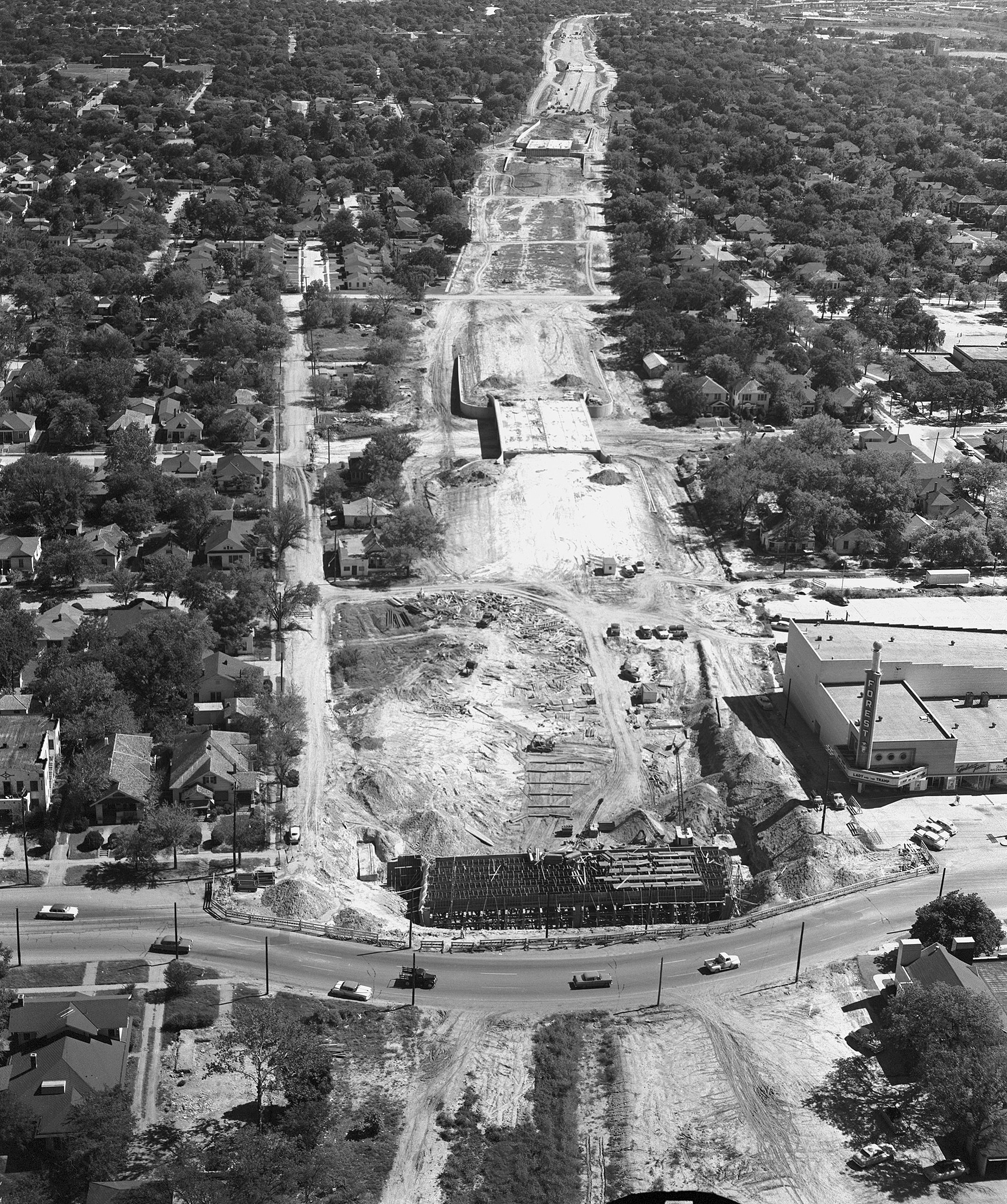
Behold, a photo of South Dallas on Sept. 29, 1955, showing a lengthy stretch of bulldozed land cleared for the imminent construction of South Central Expressway. We’re looking south, with Forest Avenue (now Martin Luther King Blvd.) running horizontally in the foreground. To the right is the Forest Theater (now playing: “Lady and the Tramp”). And if you zoom in, you can just see the post-Ross Avenue location of the famed Jim Beck recording studio to the right of the theater.

This great swath of land cut through an established tree-filled residential area — it ran alongside the once-swanky Colonial Hill neighborhood. Zoom in and take a last look at some of those straggler houses that haven’t yet met their maker. …But they will. …And they did.

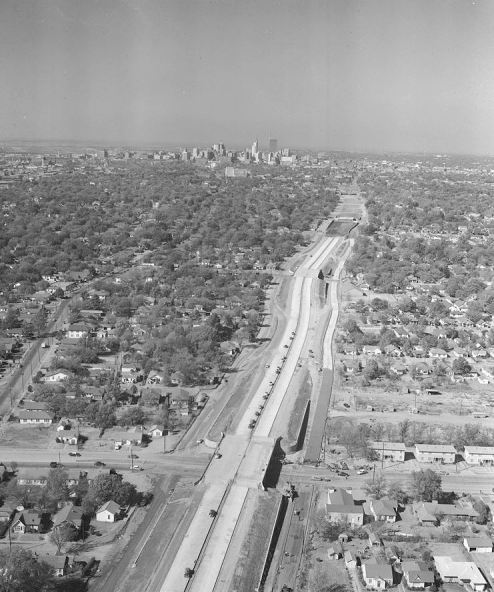
Below is another Squire Haskins aerial photo looking north, toward downtown, taken a few weeks later, on Nov. 11, 1955 (see a very large image of this photo on the UTA website here).

south-central-expwy_squire-haskins_nov-1955_UTASquire Haskins, Nov. 1955, UTA Special Collections

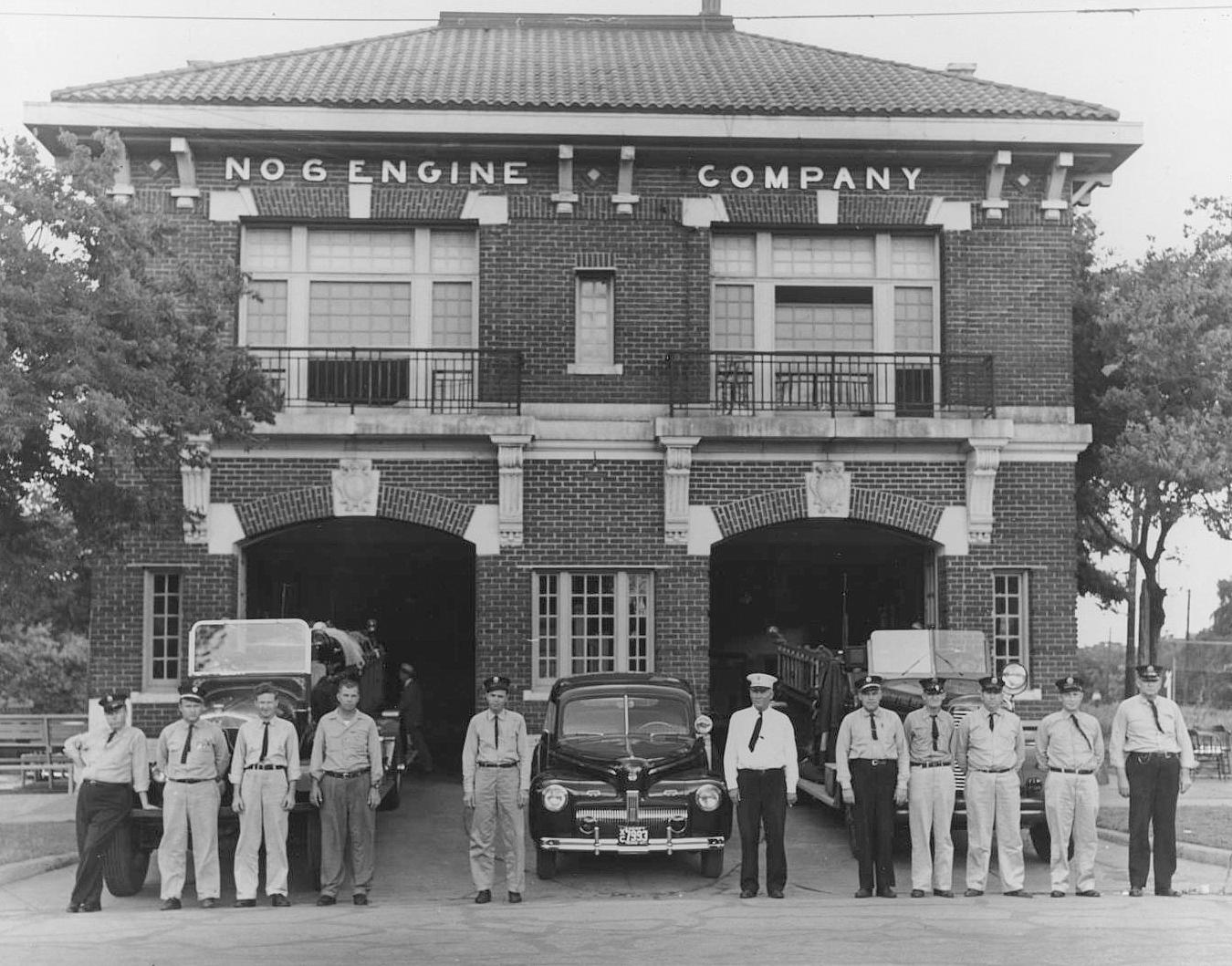
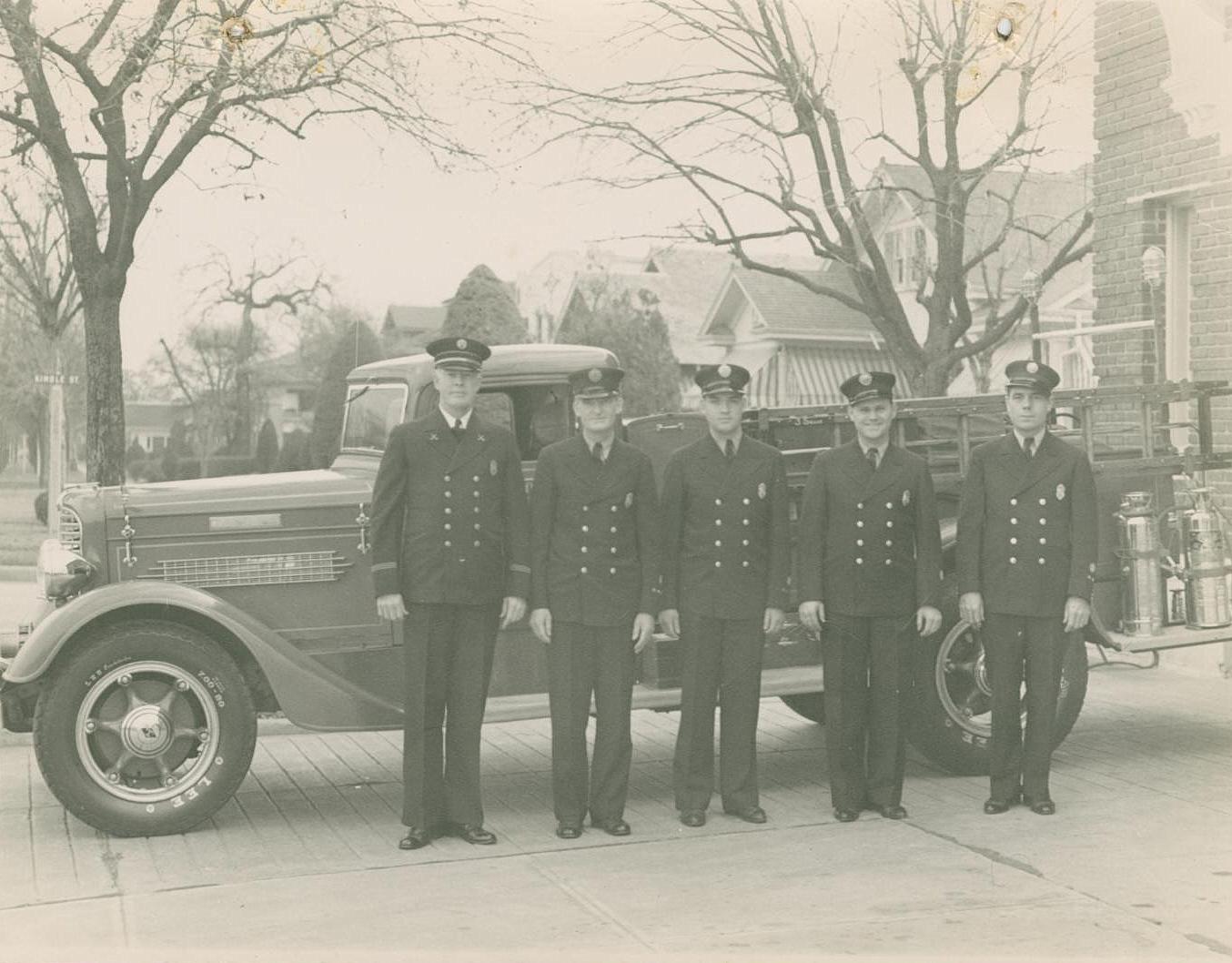
I wondered what had been demolished on Forest between the houses to the left and the theater to the right. It was Fire Station No. 6, at 2202 Forest Avenue. I looked in my bulging file of miscellaneous photos and was surprised to actually find a couple of photos of that No. 6 Engine Company, which was built in 1913.

fire-department_no. 6_forest-ave-mlk

The station was on the south side of Forest Avenue, alone in a very short block. As we look at the station in the photo above, the H&TC railroad runs just to the right of the station, and Kimble Street runs along the left. See a Sanborn map of this area in 1922, here.

The photo  below shows what Forest Avenue once looked like, from the front of the firehouse looking east (the intersection with Kimble is on the other side of the firetruck — you can see the street sign). These houses are still standing in the 1955 photo at the top.

forest-central_fire-station_portal

When you know what this intersection looks like today (see this same view today, here), it’s hard to believe it ever looked like a cozy neighborhood. Progress is a helluva thing, man.

**

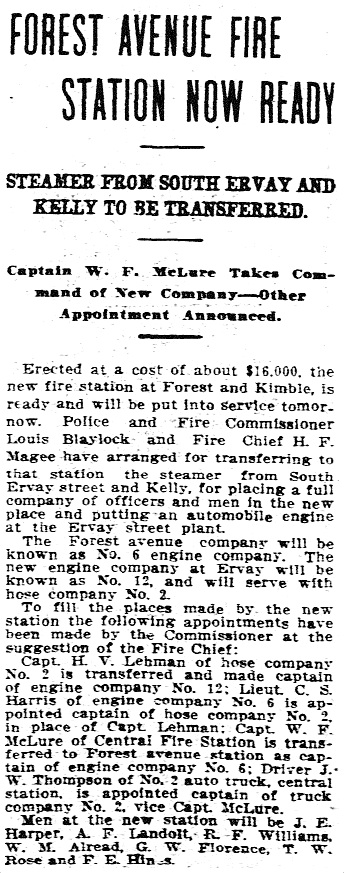
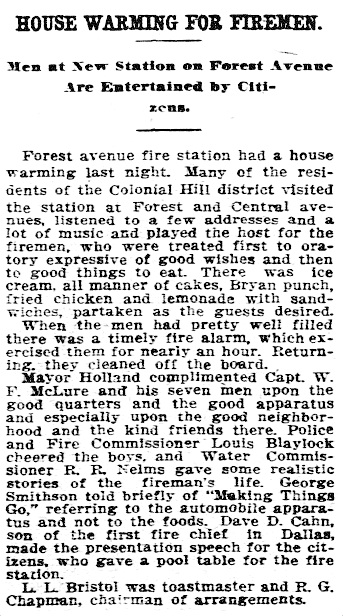
A couple of short articles for those who might want a little more info about the fire station, which was demolished sometime between April and September of 1955. (Click articles for larger images.)

forest-central_fire-station_dmn_070613
Dallas Morning News, July 6, 1913

forest-central_fire-station_dmn_072213
DMN, July 22, 1913

*

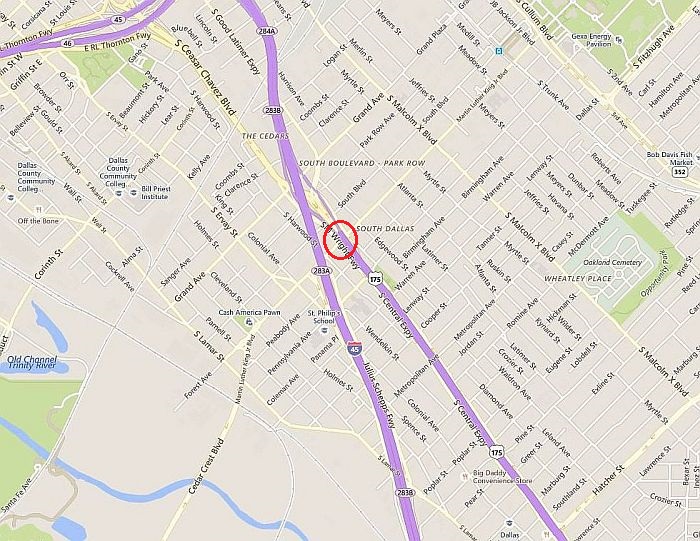
forest-ave-central_today_bing
Bing Maps

***

Sources & Notes

Top photo by Squire Haskins, from the Squire Haskins Photography, Inc. Collection, UTA Libraries, Special Collections, University of Texas at Arlington; it is accessible here.

Second photo by Squire Haskins, from the Squire Haskins Photography, Inc. Collection, UTA Libraries, Special Collections, University of Texas at Arlington; it is accessible here.

The two fire station photos are from the collection of the Dallas Firefighters Museum, via the Portal to Texas History, University of North Texas. The first photo can be viewed here, the second photo here.

*

Copyright © 2016 Paula Bosse. All Rights Reserved.

Woodall Rodgers Freeway Under Construction — 1966

woodall-rodgers_squire-haskins_uta_052466
Land cleared, May 1966 (click for gigantic image) (UTA Libraries)

by Paula Bosse

The photo above shows land partially cleared for the construction of Woodall Rodgers Freeway. The view is to the east, with Central Expressway at the top left and Stemmons Freeway at the bottom left. The land cleared was once part of what used to be called “North Dallas,” and before it was bulldozed away, it was a predominantly black residential neighborhood served by several African-American- and Hispanic-owned businesses. The photo above was taken on May 24, 1966. The photo below was taken on December 8, 1966. The freeway was already years behind schedule when these photos were taken, but nobody would ever have believed it would take until 1983 (!!) for Woodall Rodgers Freeway — a “cute” little highway, less than two miles long — to be completed. Oh, but it did.

woodall-rogers-squire-haskins-uta-120866Dec. 8, 1966 (photo by Squire Haskins; UTA Libraries)

In a Dallas Morning News article published on the May 27, 1983 opening of the freeway, Henry Tatum wrote the following:

Dwight Eisenhower was starting his second term as president of the United States. Elvis Presley had passed his physical examination and was headed for a stint in the Army. And Doris Day was singing up a storm on the screen in “Pajama Game.” The year was 1957 and Dallas city fathers decided it was time to build a downtown connection between Central Expressway and Stemmons Freeway. (“Freeway From the Past” by Henry Tatum, DMN, May 27, 1983)

1957!

When it was completed 26 years later — in 1983 — Ronald Reagan was president, Sally Ride was about to become the first woman to go into space, and Madonna was singing up a storm as her first album was being readied for release. That’s a looong time.

***

Sources & Notes

Both aerial photos by Squire Haskins, from the Squire Haskins Photography, Inc. Collection, UTA Libraries, University of Texas at Arlington. The photo from May can be accessed here, the one from December, here.

“Woodall Rodgers”? James Woodall Rodgers was mayor of Dallas from 1939 to 1947. It was announced that what would become a never-ending headache-of-a-highway-project bedeviled by funding squabbles and right-of-way issues would be named in his honor in 1960.

Those two photos are really, really big when you click them. …REALLY big.

*

Copyright © 2016 Paula Bosse. All Rights Reserved.


Collision on the Streetcar Viaduct — 1929

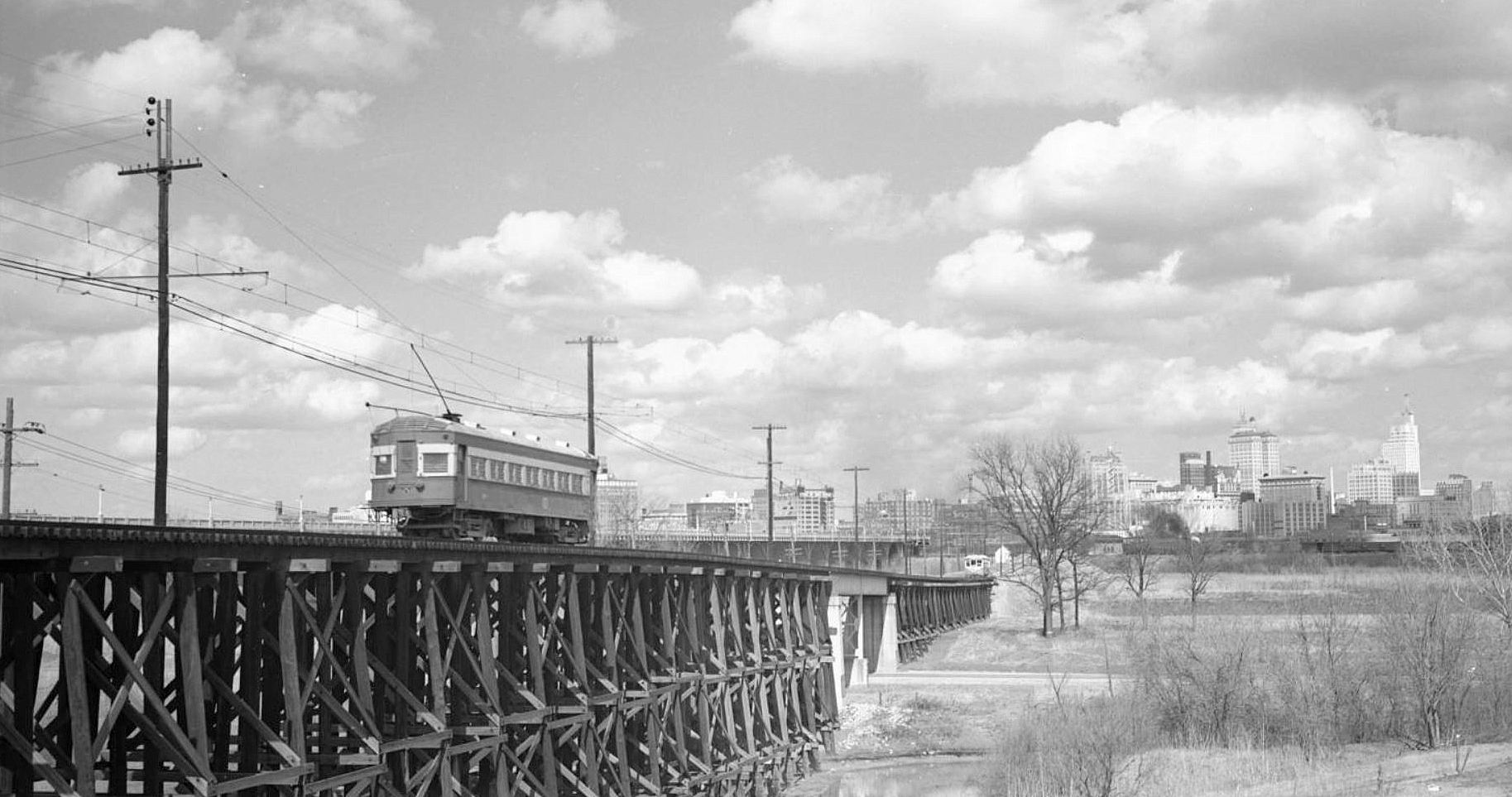
interurban_trestle_1946_denver-pub-lib_lgThe new streetcar viaduct, 1946

by Paula Bosse

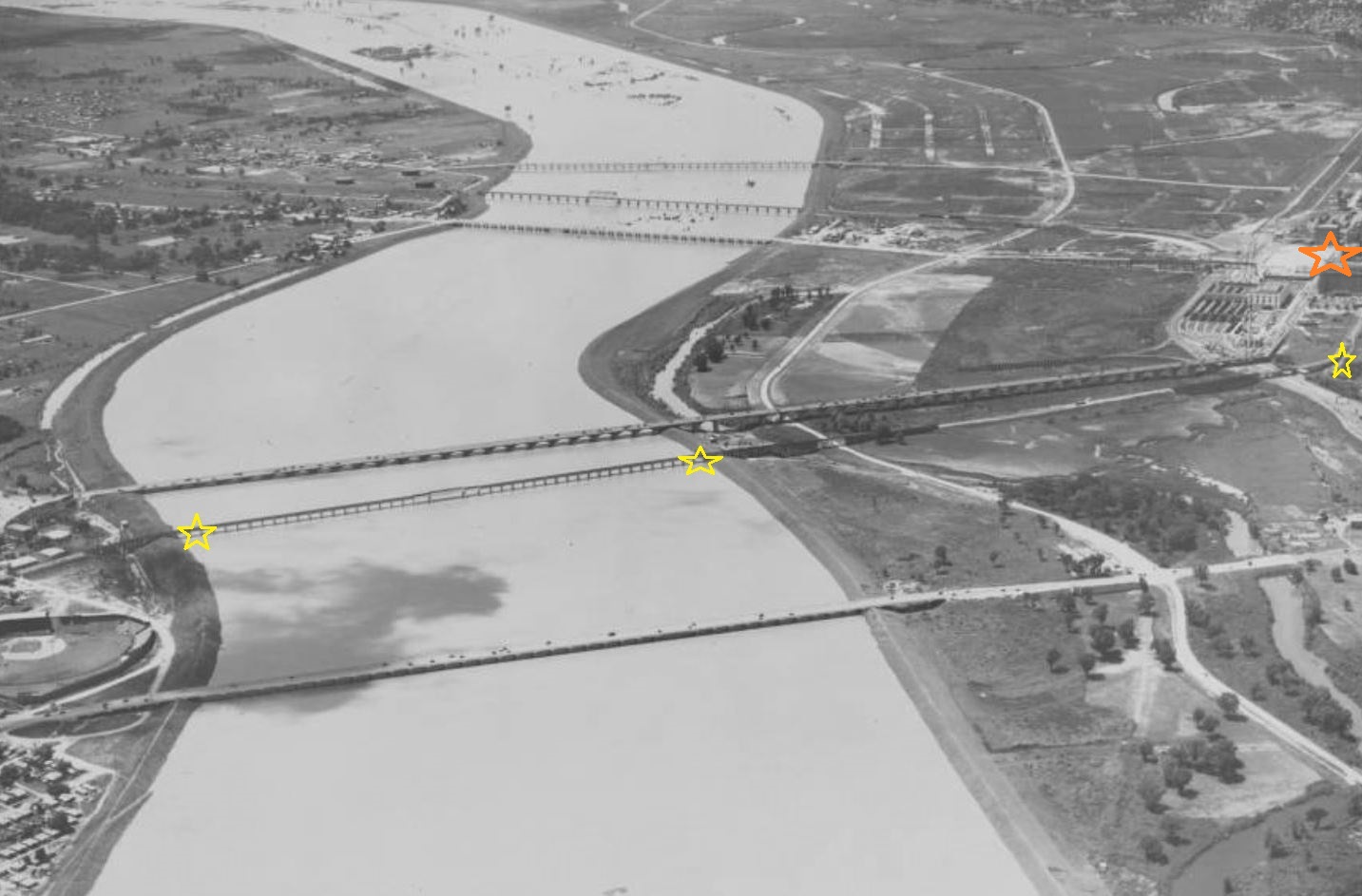
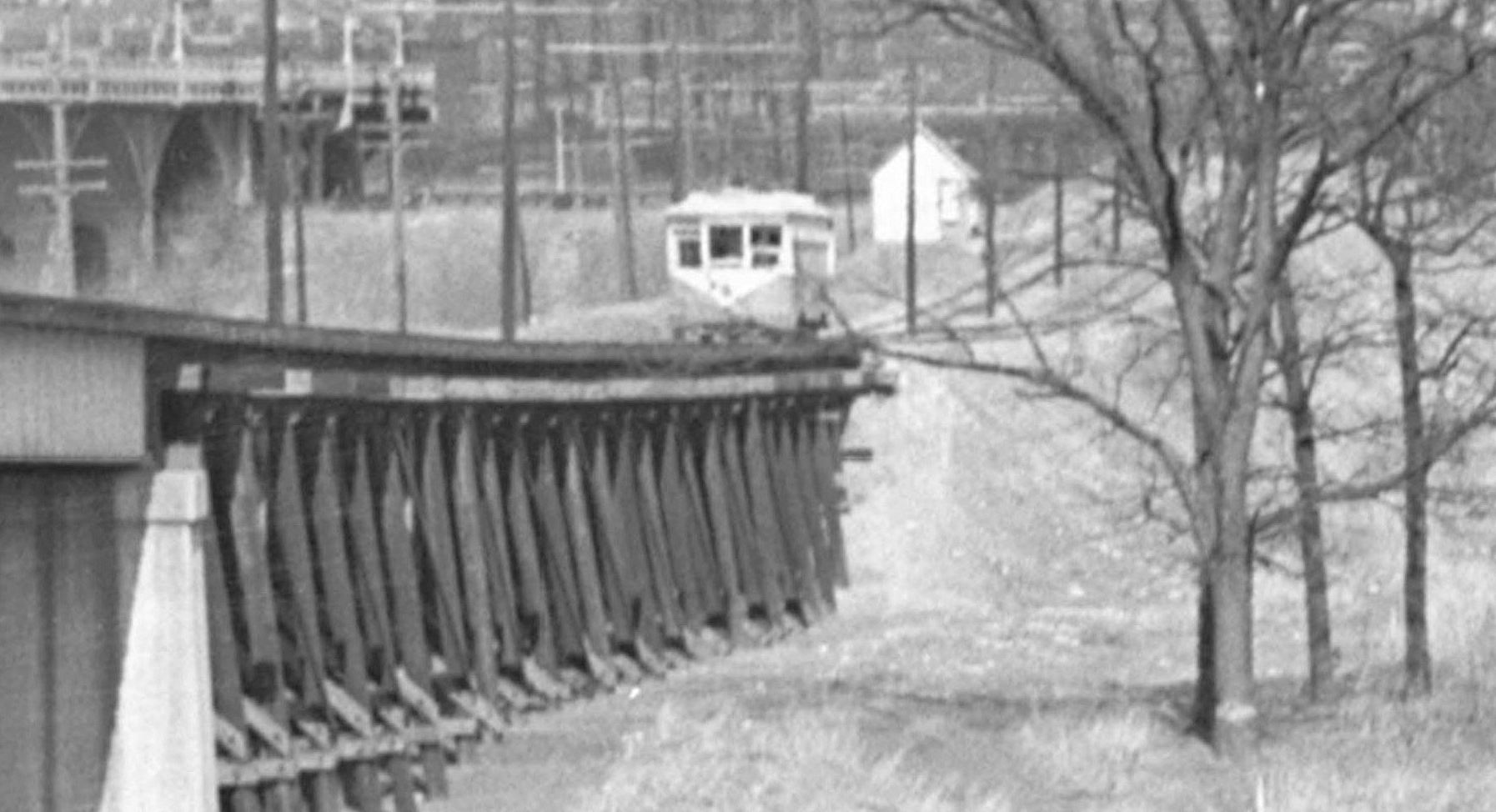
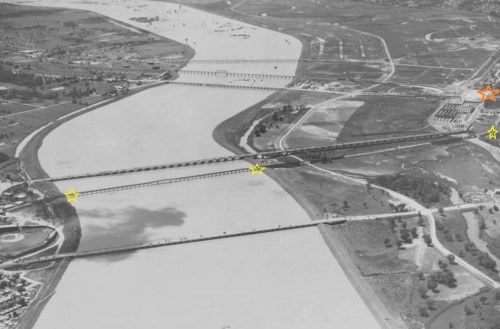
For many, many years there was a special trestle that spanned the Trinity River which was for the exclusive use of streetcars and Interurbans. There were also trestles and viaducts for the exclusive use of trains and automobiles. Below is a photo showing the  viaductal activity in 1935, with the streetcar trestle — sometimes called the “Street Car Viaduct” or the “Trinity River Viaduct” marked in yellow and the Old Red Courthouse and Dealey Plaza (then under construction) marked in orange.
viaducts_1935_foscue_smu

The viaduct immediately above it was the Houston Street viaduct, for automobiles.

For many, a streetcar ride across the viaduct seems to have been a little on the harrowing side. There were no guardrails to prevent a car from going over the side, and even when the original wooden trestle had been bolstered with stronger materials, it was still described by commuters as being rickety. I like this quote of a man remembering a typical ride in the 1950s:

I always enjoyed the slight tingle of fear I experienced on the trestle over the river, as one could not see the trestle itself from the car window. One had the feeling of being suspended with no support when looking out the window.

And these two memories:

The streetcar trestle ran parallel to the Houston St. Viaduct where the current newer bridge is to downtown. No railings and just depended on gravity to hold the cars on the rails. The cars would buck and sway as they crossed the river bottoms as the motormen made up time on their schedules. Seemed like they were really going fast to me at the time, but probably not in today’s terms.

*

The [newer streetcars] used to scare me to death rocketing across the Trinity River high in the air with no sidewalls except just over the river itself! You were able to look straight down from high above ground… those newer cars had softer springs and the faster they went, the more they rocked side to side over the less than flat tracks!

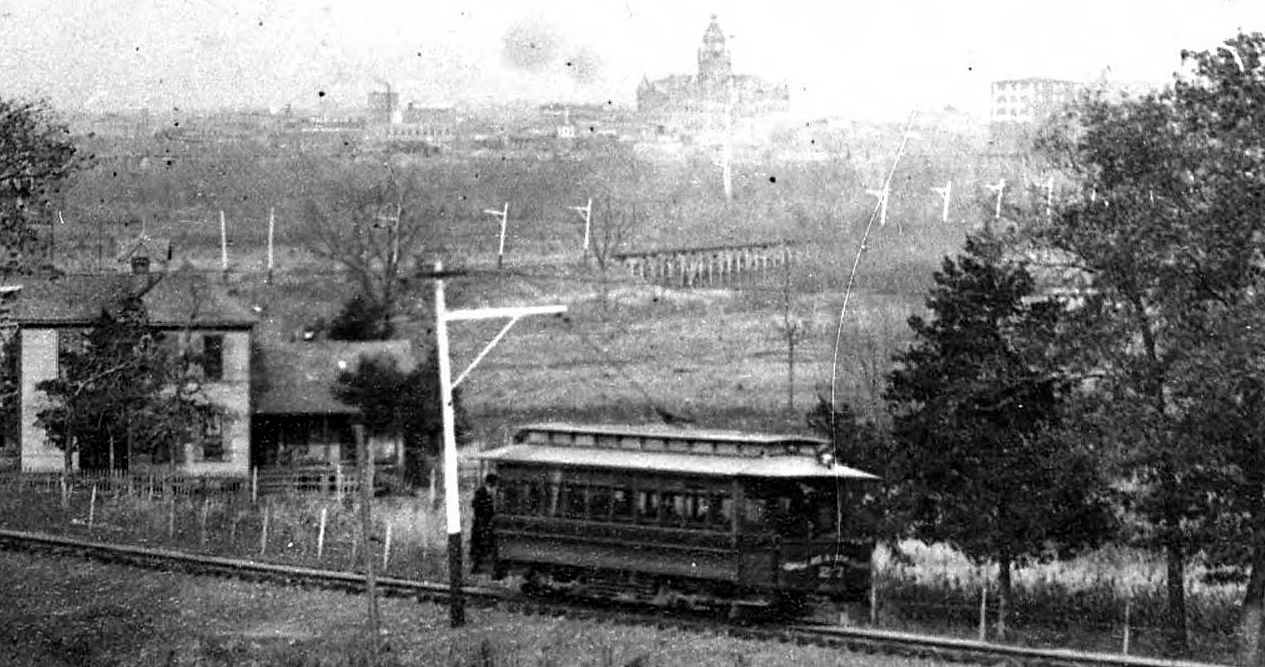
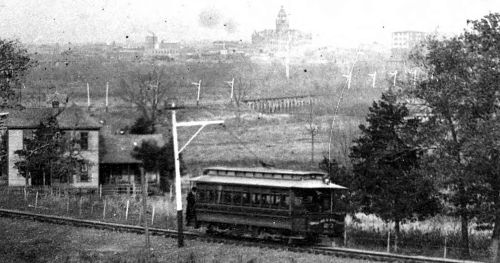
Here’s a photo when it was in its original rickety state, back in 1895 (this is a detail of a larger photo, taken on the Oak Cliff side of the river, with the trestle — and the not-yet-old Old Red Courthouse — visible in the background).
trolley_oak-cliff_det1

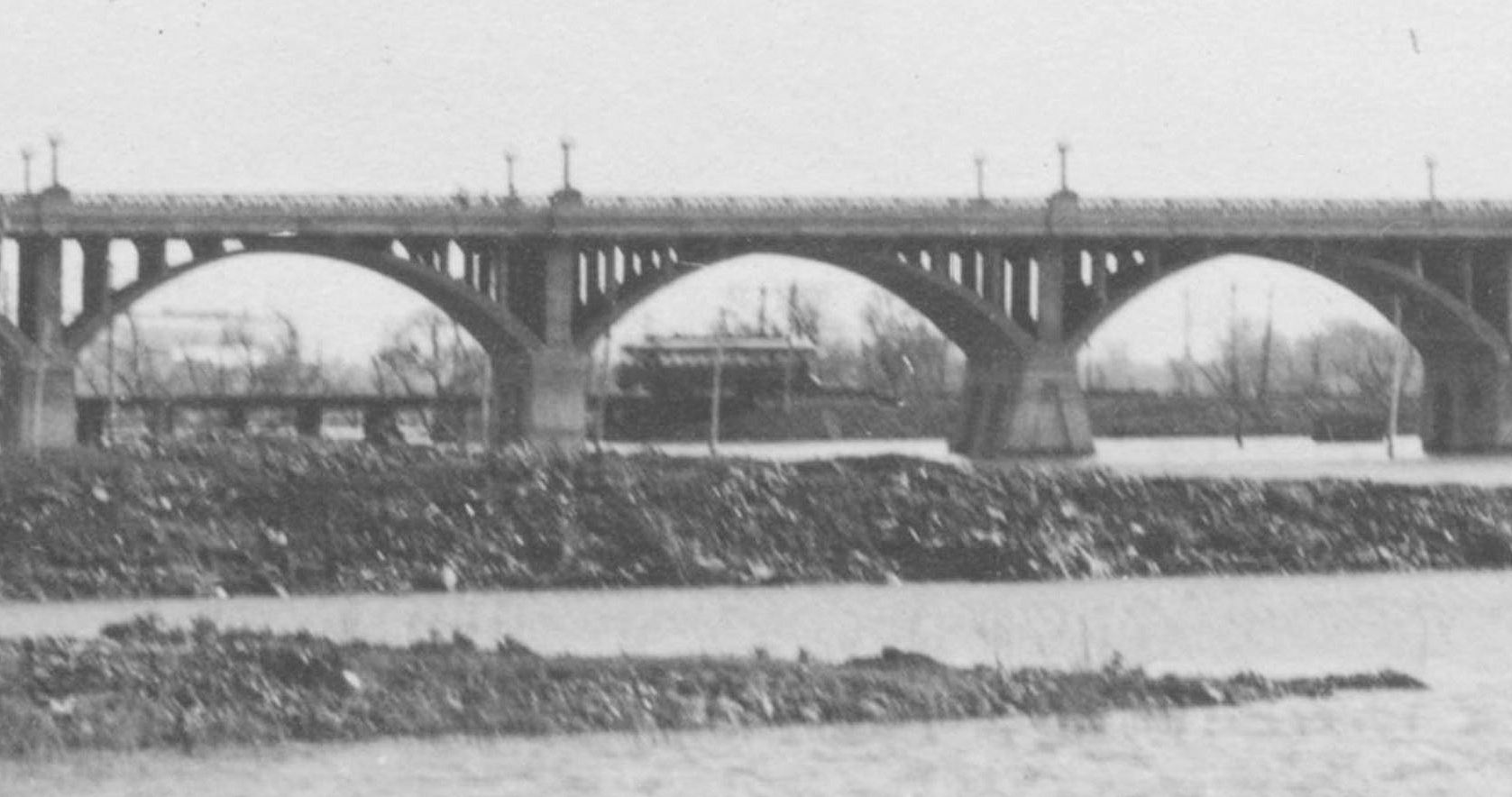
Here it is in 1914 at river-bottom level, with a happy little trolley chugging along with the Oak Cliff/Houston Street viaduct looming over and in front of it. (This is a detail of a larger photo in the George W. Cook Collection, DeGolyer Library, SMU — here).
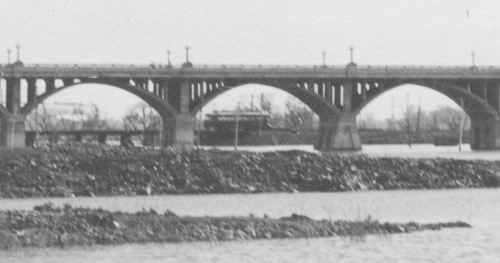
streetcar-trestle-cook-coll_smu_det_1914

And here’s a sturdier version of the viaduct, in 1946.

streetcar-crossing-trinity_1946-denverpublib

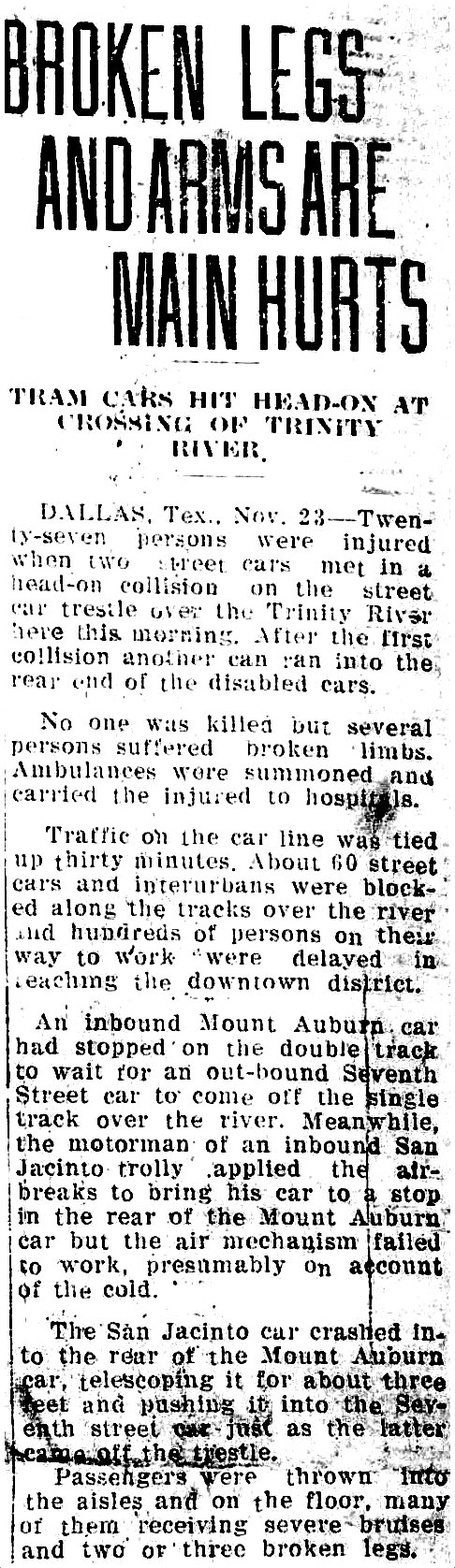
But now to the collision on the viaduct, which happened on the morning of November 23, 1929. Back then — at that iteration of the viaduct — the trestle had only a single track. While one streetcar or Interurban car crossed the bridge toward Oak Cliff, a car wanting to cross over from Oak Cliff had to wait until the westbound car had made its mile-long trip. That must have made for a lot of impatient riders. Even though the so-called “block signal” system worked well for the most part, there were the occasional accidents, including the one involving three cars on Nov. 23, 1929. Below, a front-page report of the collision(s) from The Waxahachie Daily Light (click for larger image).
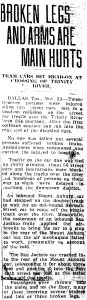
streetcar-trestle-collision_waxahachie-daily-light_112329Waxahachie Daily Light, Nov. 23, 1929

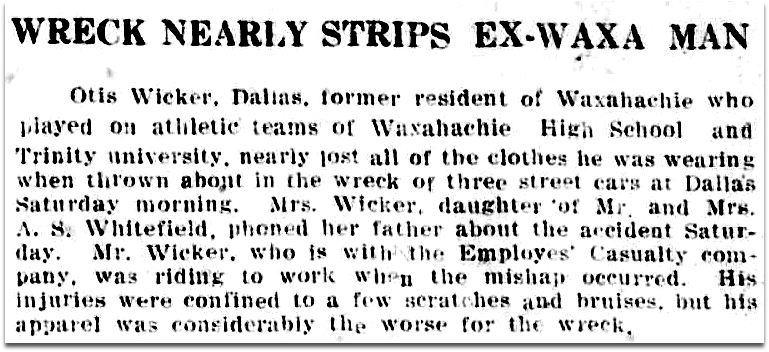
The Waxahachie paper even had a local angle (although it’s unclear just how this man “nearly lost all of the clothes he was wearing”).
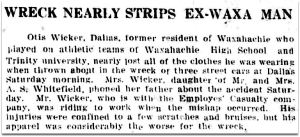
streetcar-trestle-collision_waxahachie-daily-light_112329-sidebarWaxahachie Daily Light, Nov. 23, 1929

Since it happened during the morning rush hour, just about every other newspaper in Texas scooped The Dallas Morning News, which wasn’t able to run its story until the next day (and its report was surprisingly dull).

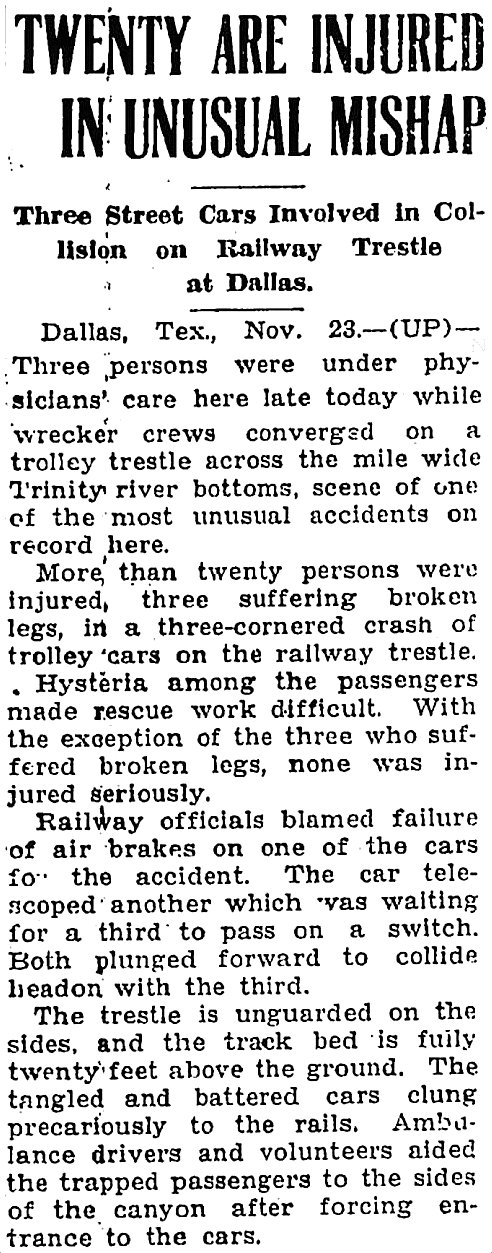
The UP wire story that ran in the Joplin, Missouri paper was far more exciting.

streetcar-trestle-collision_joplin-MO-globe_112429Joplin Globe, Nov. 24, 1929

Thankfully none of the streetcars fell off the trestle, but I’m sure that possibility was probably the daily fear/resigned expectation of generations of nervous travelers.

**

The most interesting thing in the DMN article is the last paragraph:

Plans in the making for the new street car crossing of the Trinity River call for a double track over the channel, eliminating the necessity of waiting on block signals.

In February 1931, that new double-track streetcar viaduct opened for business, and I’m sure there was a citywide sigh of relief.

 **

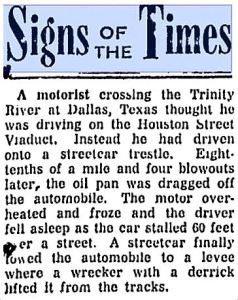
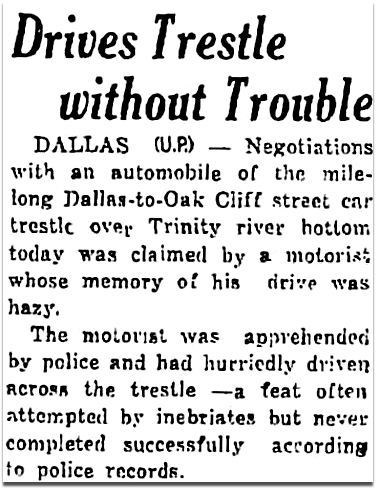
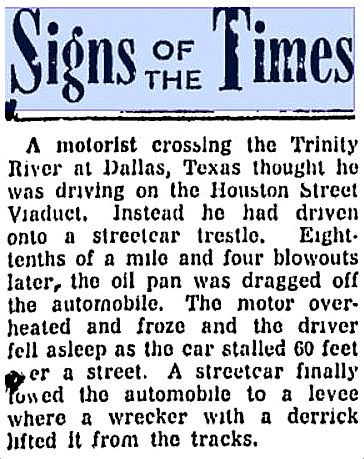
One last little amusing tidbit about this viaduct: it was not unheard of for those having indulged in excessive amounts of alcohol to try to drive their automobiles (either on purpose or by accident) over this already-kind-of-scary trestle intended for electric-powered railway use only.
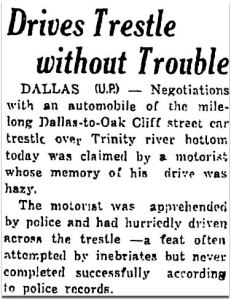
streetcar-trestle-mexia-weekly-herald_011333_drunk-motoristMexia Weekly Herald, Jan. 13, 1933

trestle_beaver-valley-PA-times_120852
Beaver Valley (Pennsylvania) Times, Dec. 8, 1952

***

Sources & Notes

Top photo titled “T. E. clouds, sky, city, from east levee close to wooden trestle 320 just passed, at rear, car 320 on Trinity River Bridge, Dallas, Tex.,” taken on Feb. 16, 1946 by Robert W. Richardson, is from the Western History/Genealogy Dept., Denver Public Library.

Photo showing the viaducts across the Trinity is titled “Central Levee District,” taken on May 20, 1935 by Lloyd M. Long, from the Edwin J. Foscue Map Library, Southern Methodist University; the labeled photo is here, the unlabeled photo is here.

Don’t know what “block signaling” is? Wikipedia to the recue.

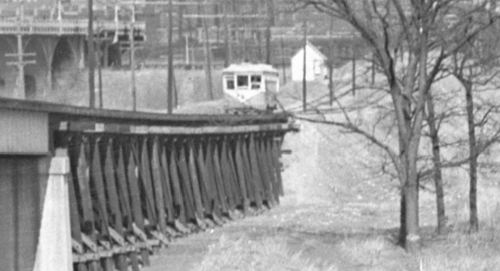
 Lastly, just because I like it, a magnified detail from the top 1946 photo, showing a streetcar at the downtown end of the viaduct.
interurban_trestle_1946_det-streetcar

*

Copyright © 2016 Paula Bosse. All Rights Reserved.