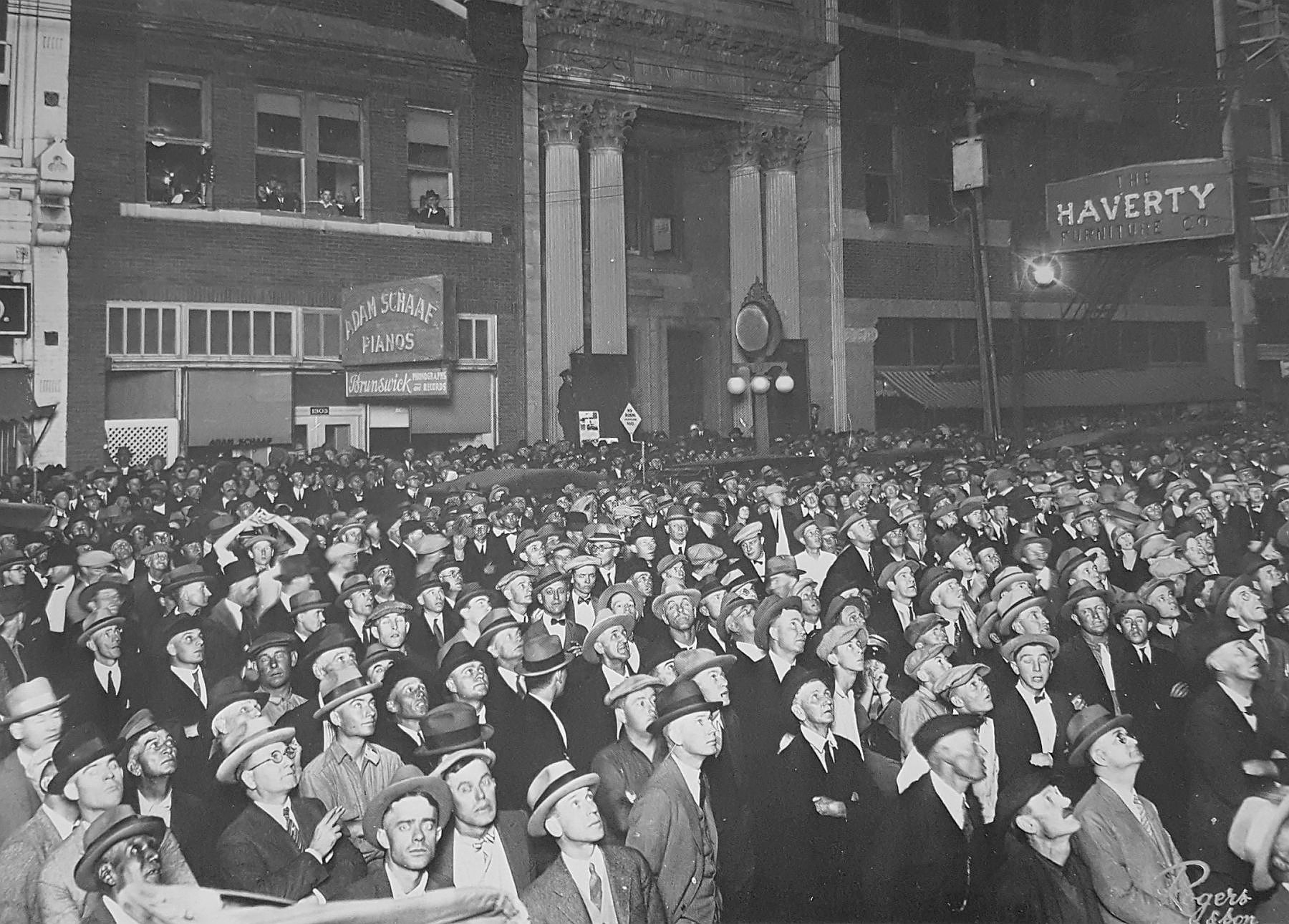
Watching returns on Elm St. (photo: Dallas Public Library)
by Paula Bosse
Today is Election Day! If you haven’t already gotten out to vote, today is your last chance. Do it!
One of my favorite “discoveries” I’ve stumbled across since doing this blog is learning how Dallasites (and other Americans across the country) once got continuously-updated news of election returns: crowds gathered to watch results which were projected onto the side of a building. The photo above shows people in the early 1920s standing in front of the Dallas Times Herald building (the one with the pillars, at 1305 Elm) watching returns projected from the newspaper offices onto a building across the street. Before TV and radio and 24-hour news coverage, this was the way many large cities kept their citizens informed on election night.
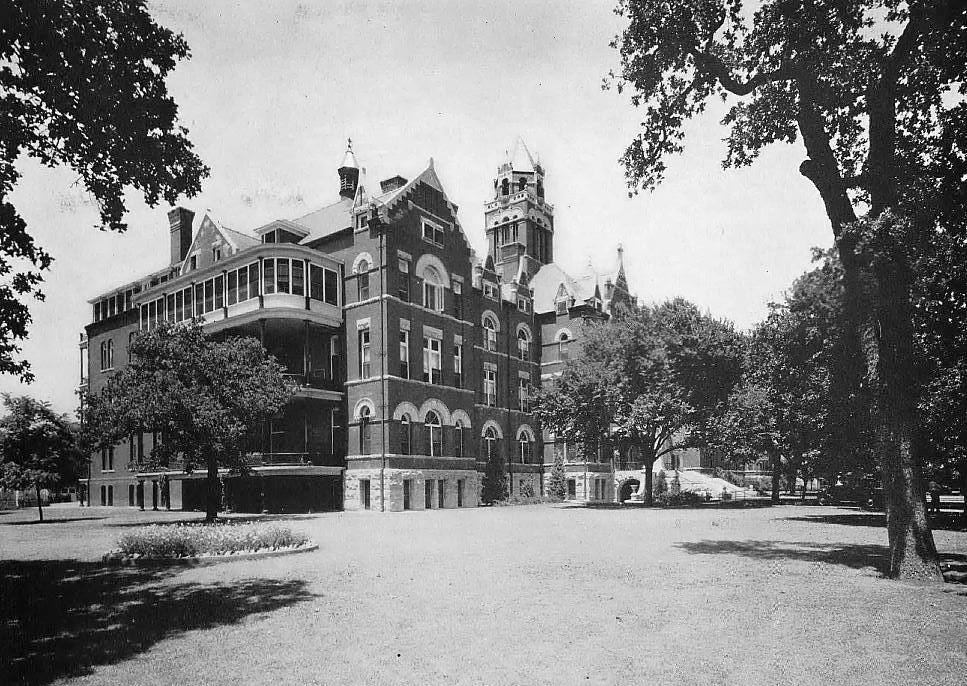
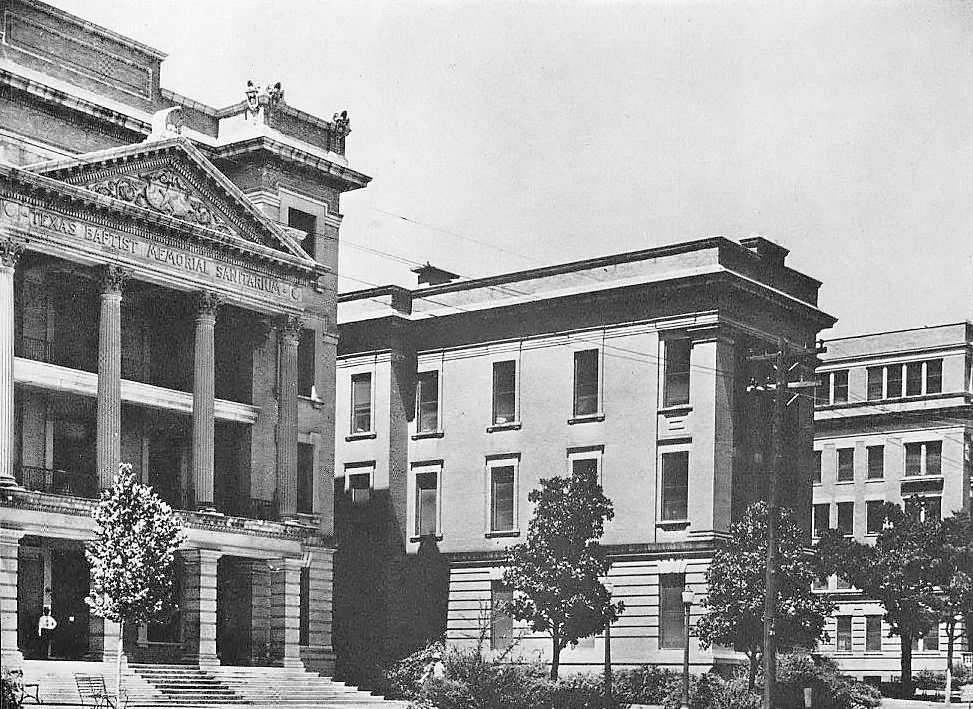
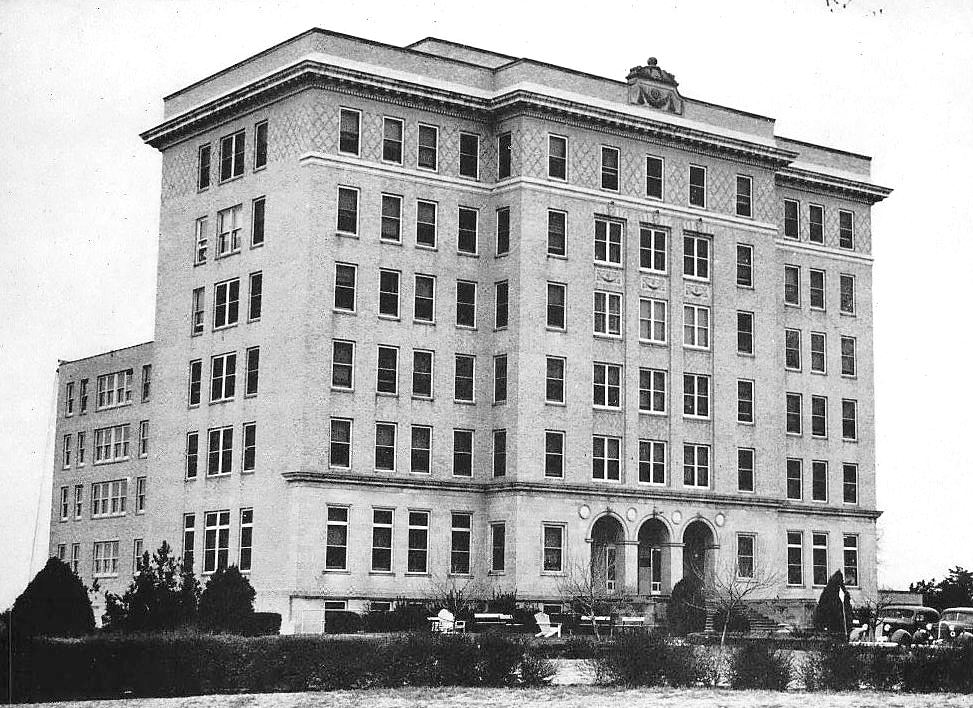
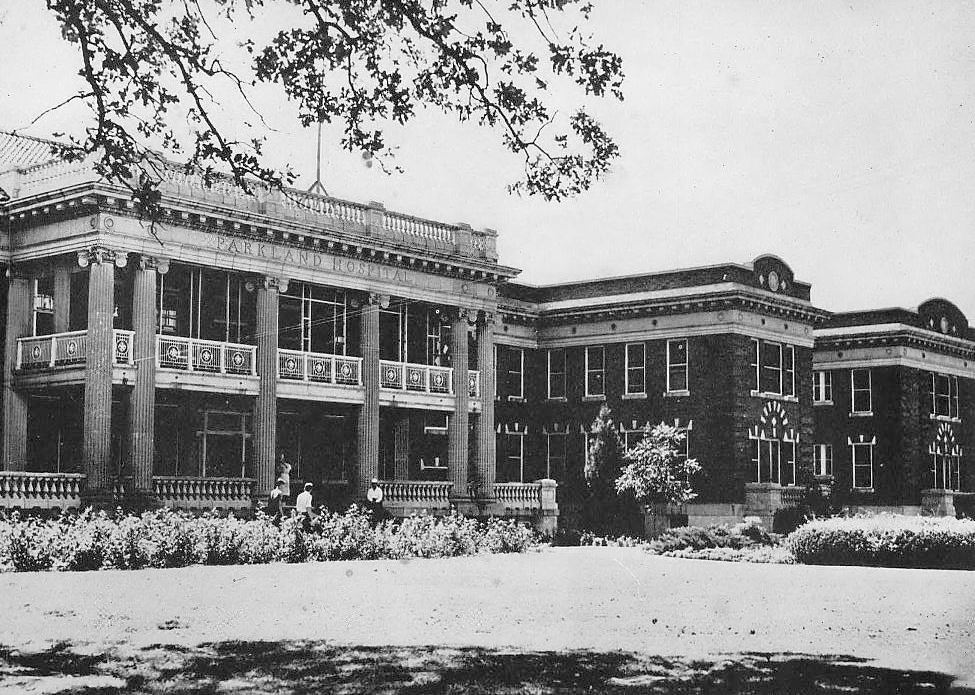
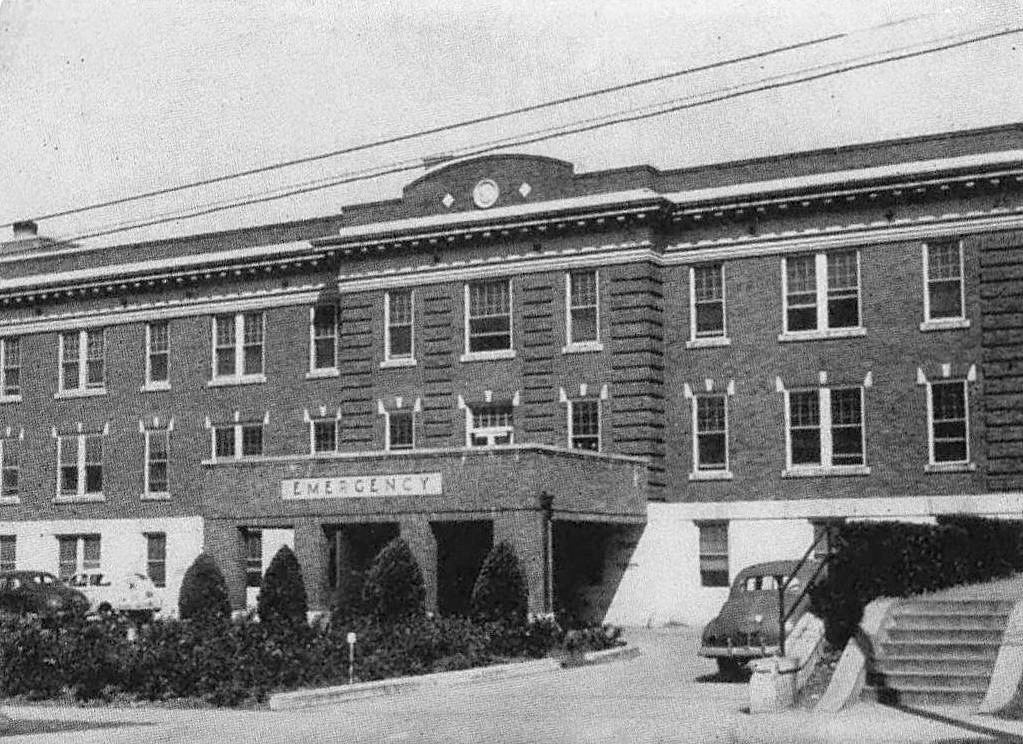
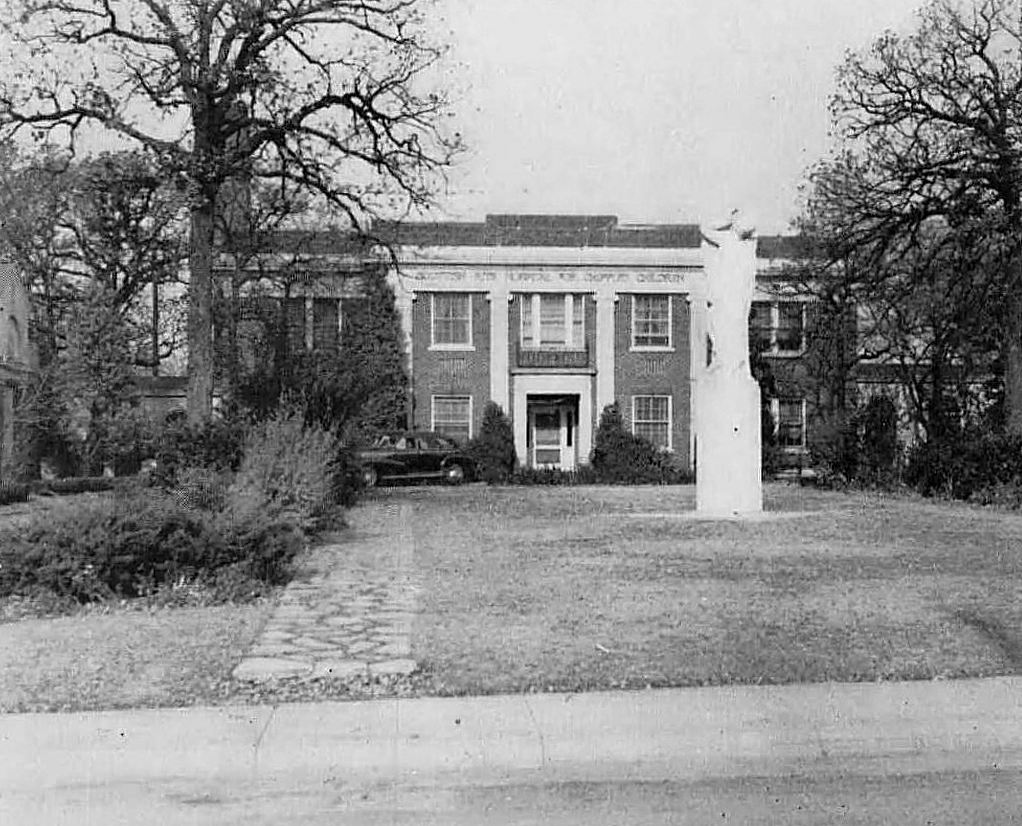
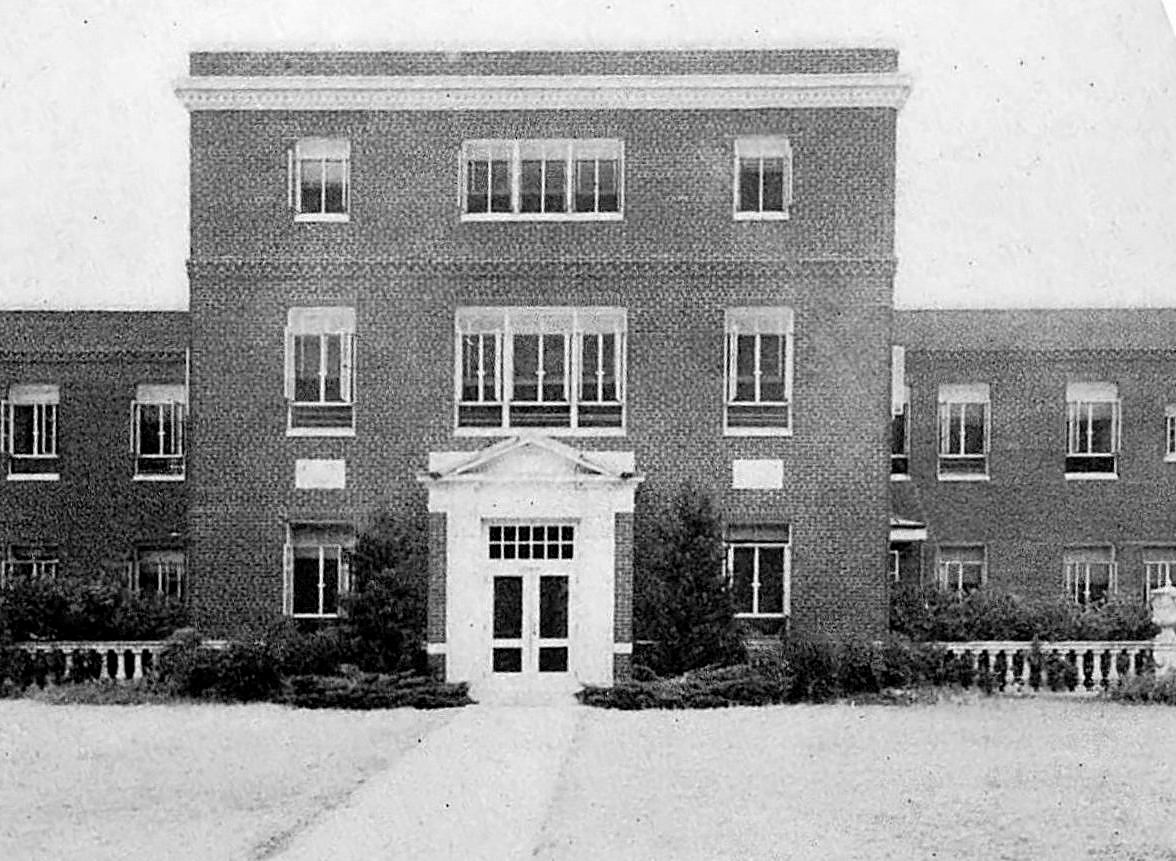
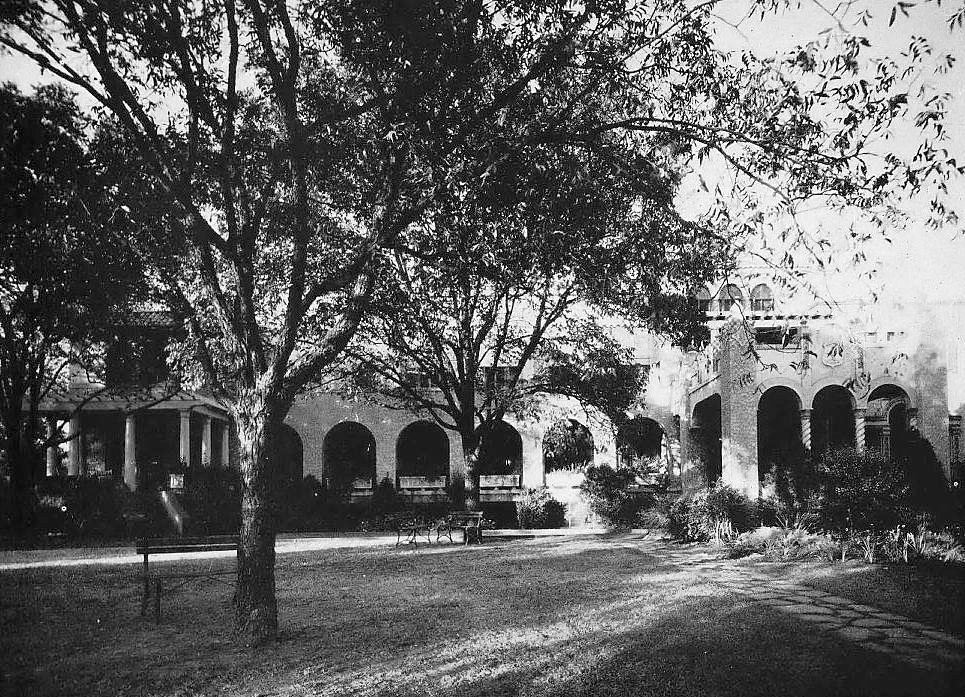
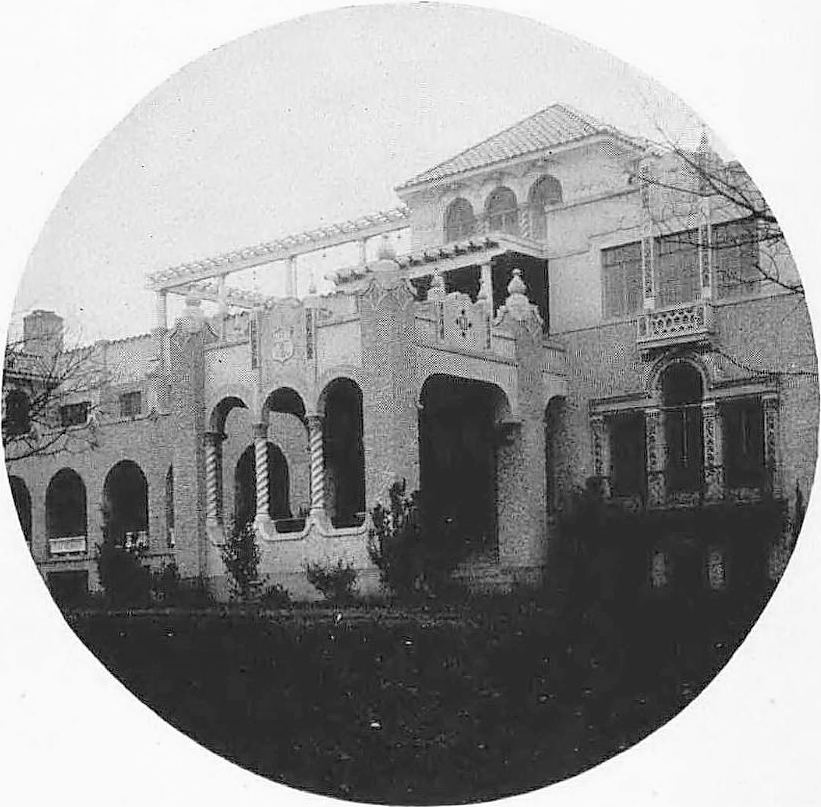
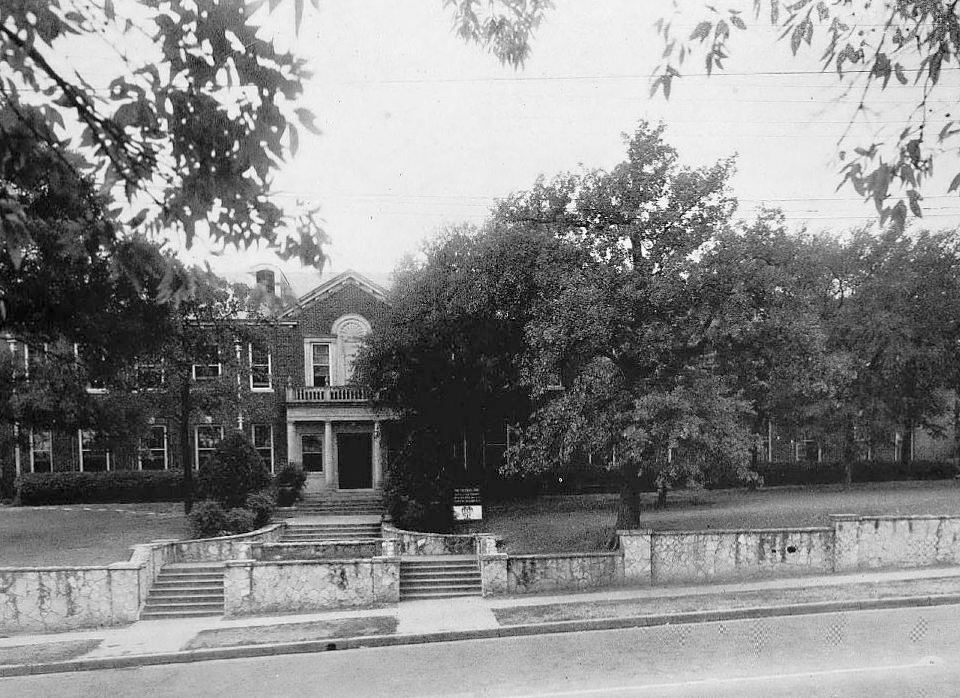
Here are photos of Dallas hospitals and clinics which appeared in the 1944 yearbook of Southwestern Medical College (I wrote about the then-new medical school here).
Above, St. Paul’s Hospital (3121 Bryan).
*
Below, Baylor University Hospital (3315 Junius):
*
Methodist Hospital of Dallas (301 W. Colorado):
*
Parkland Hospital (Maple Avenue and Oak Lawn Avenue, northwest corner):
*
Parkland emergency entrance:
*
Scottish Rite Hospital for Crippled Children (2201 Welborn), two views:
*
Children’s Hospital of Texas (2306 Welborn):
*
Bradford Memorial Hospital for Babies (3512 Maple Avenue), two views:
*
And the Richard Freeman Memorial Clinic (3617 Maple Avenue):
***
Sources & Notes
All photos from the 1943-1944 Caduceus, the yearbook of Southwestern Medical College, then in its first year.
Photos and postcards and other images related to things I’ve already written about have started to pile up again. These images are new to Flashback Dallas, but I’m adding them to old posts so I can keep everything in one place.
The one above, for instance, is being added to a post I wrote only last month for the 4th of July, “Independence Day at Shady View Park — 1880s.” I knew I had this photo of Shady View Park in Old East Dallas, but I couldn’t find it when I wrote the post. I found it by accident a couple of days ago, and I love it. I clipped the photo a few years ago, but I’m not sure where I found it. A caption identifies the people as “La Reunion Colony settlers” — Mrs. Louie Maas, Annie Gramatky, Paul Hartman, and Elizabeth (Lizzie) Gramatky. The photo was taken on May 12, 1896. (Source: Dallas Public Library)
*
Below, a photo which I’ve added to “The Cabana Motor Hotel of Dallas.” It shows the Cabana under construction, looking a bit like a correctional facility (which it was for a while…). (Source: photo by William Langley, from the collection of the Dallas Public Library)
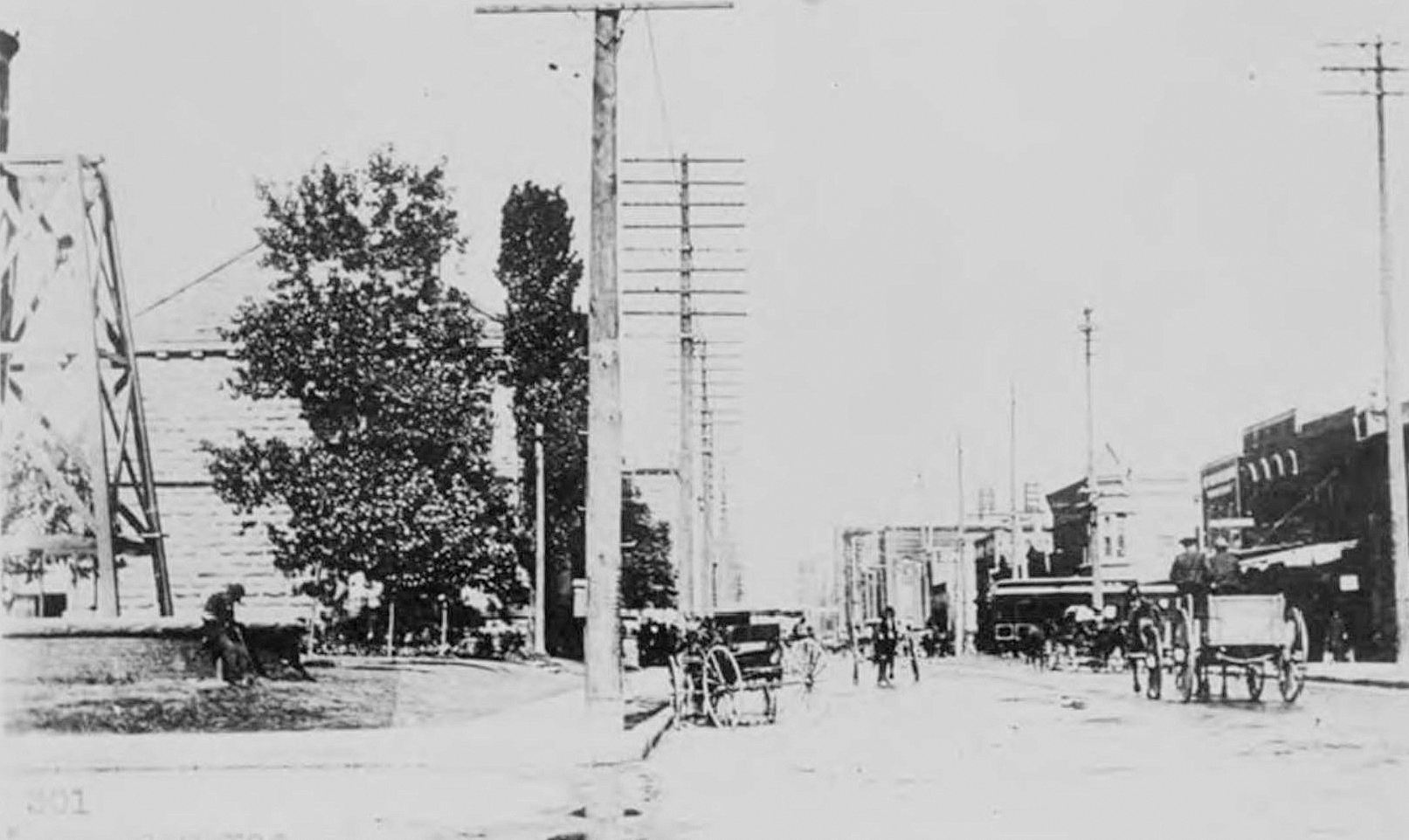
The photos below have been added to “Gusher at Old Red! — 1890.” The first photo is from about 1900 and is from a collection of Dallas Morning News “copy photos” at SMU’s DeGolyer Library (this copy photo and the one above showing the interior of a DMN office are, sadly, on the washed-out side, but they’re still cool and serve as helpful historical records). I became kind of obsessed with what I assume is a capped well on the grounds of the Old Red Courthouse — you can see the artesian well at the extreme left of this photo — the view is east on Commerce from Houston Street. (Source: DeGolyer Library, SMU)
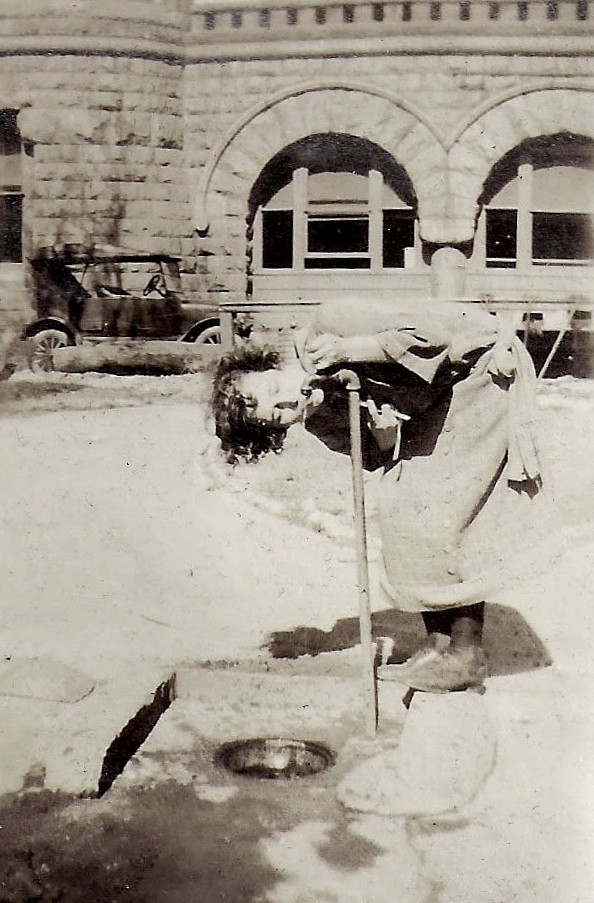
The second photo I’ve added to the “Gusher” post was sent to me by Ann Hoffman, showing a friend of her Great Aunt Nora stopping for a drink at Old Red sometime in the 1920s. (Source: Collection of Ann Hoffman — I love this! Thank you, Ann!)
*
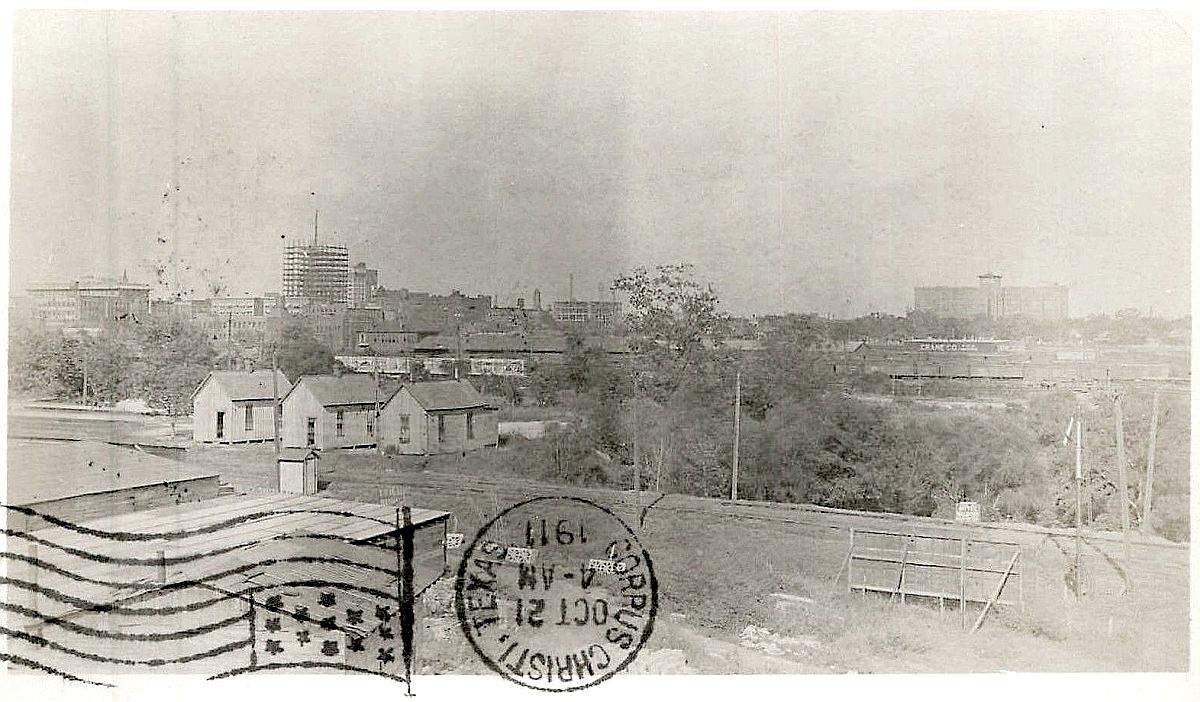
A photo by John Minor from a real photo postcard he sent to his mother in 1911, which shows Butler Brothers (and the Adolphus under construction), has been added to “Butler Brothers Building, As Seen From the Praetorian.” (Source: eBay)
*
Below are two images which are being added to “Elm & Akard, Photographer J. C. Deane, and The Crash at Crush.” They show a building at the southeast corner of Elm and Akard (which was referred to as “historic” in the 1930s) before and after it was remodeled into an incredibly fabulous Art Deco addition to Elm Street (click over to the link to see a photo of the finished building — I’d never have guessed it had been in Dallas). (Source: DeGolyer Library).
*
And, lastly, even though this isn’t a photo taken in or around Dallas (it was taken in Shannon, Texas — in Clay County, 20-or-so miles south of Henrietta), it does show Texans playing croquet, which was surprisingly popular here as early as the 1870s. I’ve added it to the post “Orphaned Factoids: Year-End Grab Bag, 2018,” beneath newspaper reports from 1873 which caused controversy when it was reported that an off-duty Dallas policeman was seen playing croquet in Main Street every day. (Source: they’re on a streak — the DeGolyer Library, SMU)
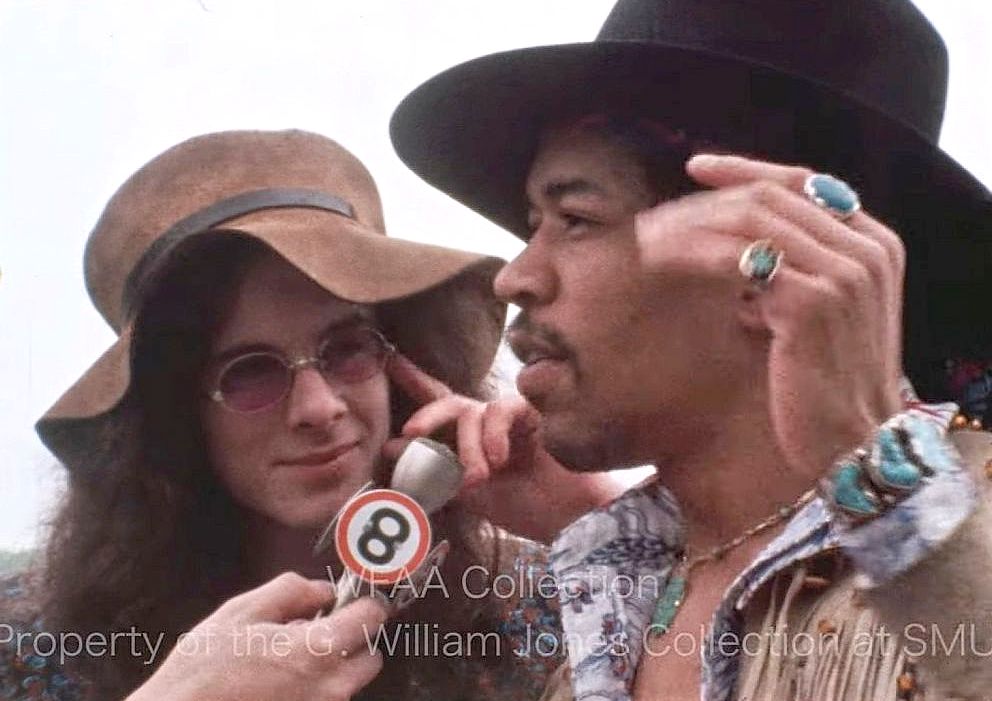
April 20, 1969/WFAA Collection, G. William Jones Collection, SMU (screenshot)
by Paula Bosse
If you haven’t delved into the vast collection of Dallas history contained in the WFAA Newsfilm Collection held by the G. William Jones Collection at SMU’s Hamon Arts Library (a collection I’m proud to be working on as a researcher), you are missing out. There are SO MANY clips of Channel 8 news footage from 1960 to 1973. Descriptions are ongoing, and new stuff is being uploaded all the time — check out the SMU Jones Film YouTube channel here.
One of my favorite WFAA clips from this collection is, without question, the short interview with Jimi Hendrix conducted at Love Field when he visited Dallas to play at Memorial Auditorium (April 20, 1969). Channel 8 reporter Doug Terry lucked out in getting one of the best interviews of Hendrix I’ve ever seen — he’s laid back and friendly, smiling and laughing. Watch it in my 2017 Flashback Dallas post “Jimi Hendrix, Glen Campbell, Tiny Tim — In Dallas (…Separately), 1969.”
And while I’m at it, a related post (which I really enjoyed writing) is “Tiny Tim Mobbed at the Melody Shop — 1969” — it also includes great WFAA footage (not, unfortunately, of the Melody Shop riot, but of his appearance at Sanger-Harris for a book-signing a few months later — he even sings).
The greatest, twangiest, seediest song set in Dallas (which you might never have heard) is Jeannie C. Riley’s Grammy-nominated “The Back Side of Dallas.”
One of the lines of the song is “Meet me in Dallas on June the 23rd, his letter read” — and today is June the 23rd. More about this song can be found in the 2017 Flashback Dallas post “Meet Me In Dallas, On June the 23rd.”
Time again for a round-up of photos and various images I’ve come across recently and have added to old posts.
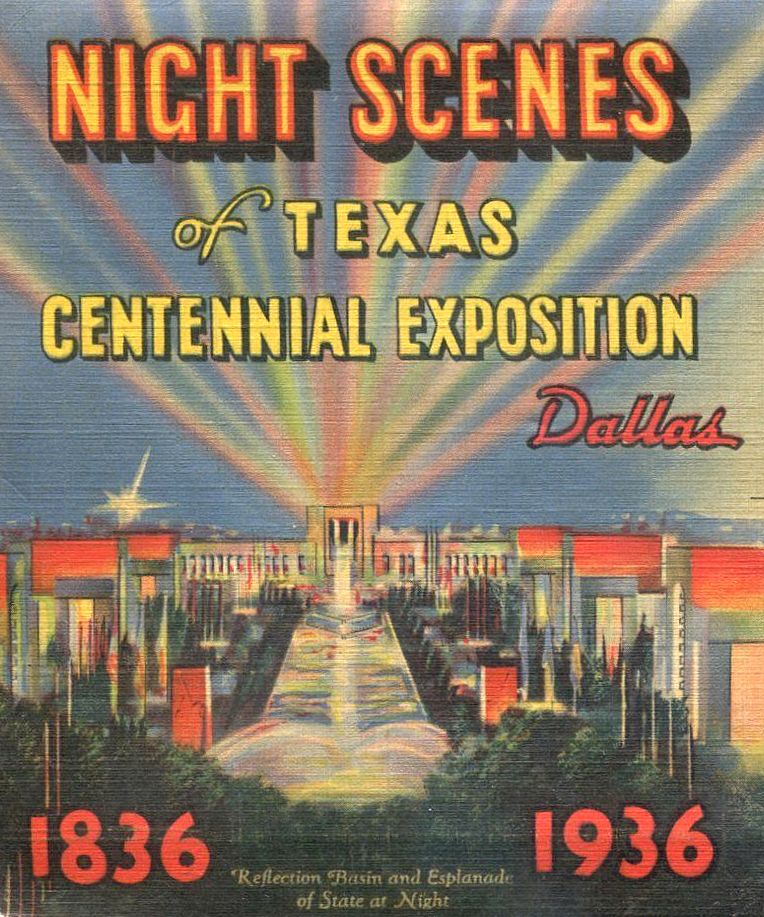
First, a photo I was really excited to stumble across — one I’ve never seen (above): a view of the blindingly bright bank of searchlights set up as part of the 1936 Texas Centennial celebration at Fair Park — this photo shows the lights (which were multi-colored and visible for at least 20 miles away) as seen from downtown Dallas. This is a fantastic photo, and one can understand why many visitors to the spectacular no-expense-spared Centennial cited the lights as the most impressive thing on display. I’ve added this photo (and the postcard image below) to a post all about electricity and the Pan-American Exposition (the extravaganza held the year following the Centennial, which used many of the same features): “Albert Einstein ‘Threw the Switch’ in New Jersey to Open the Pan-American Exposition in Dallas — 1937” (a post which features several other images of this amazing fan-shaped array of lights set up behind the Hall of State, as seen from the Esplanade and as seen from White Rock Lake). (Source of top photo, “New skyline at night, at Dallas, Texas,” from the GE Photo Collection, Museum of Innovation and Science — more information on this photo is here; color image found on eBay)
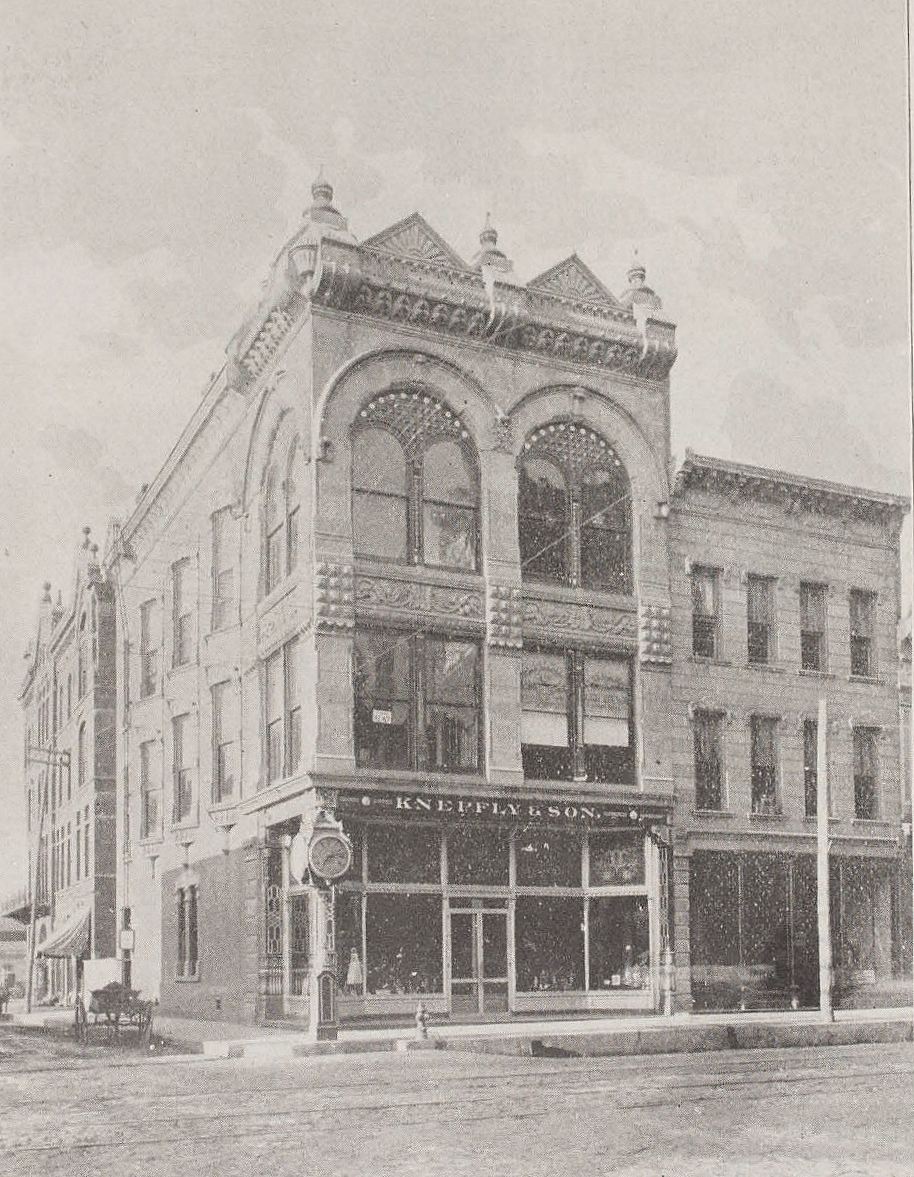
This photo of the Knepfly Building (Main and Poydras) has been added to the post “Labor Day Parade — 1911,” replacing a less interesting view of this building (in the post, I recount a story of young men jumping from the third floor to escape a fire — one of them survived, even though he landed on his feet!). (Source: DeGolyer Library, SMU)
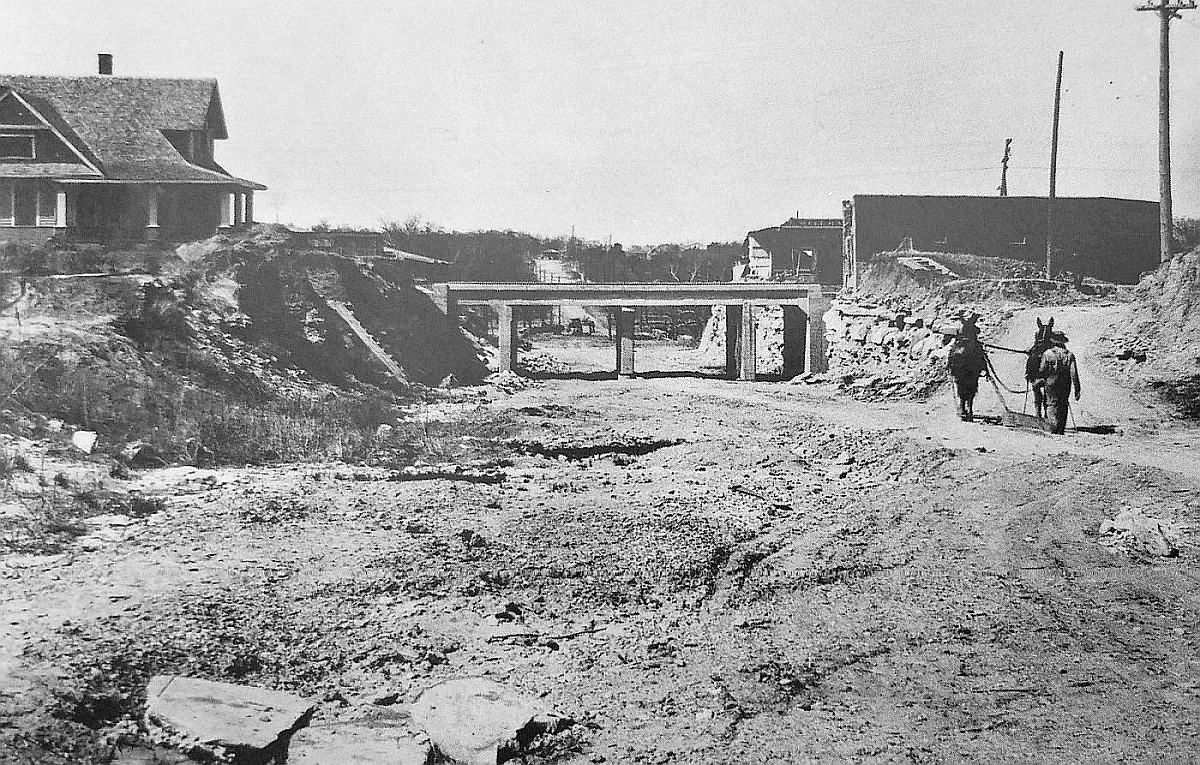
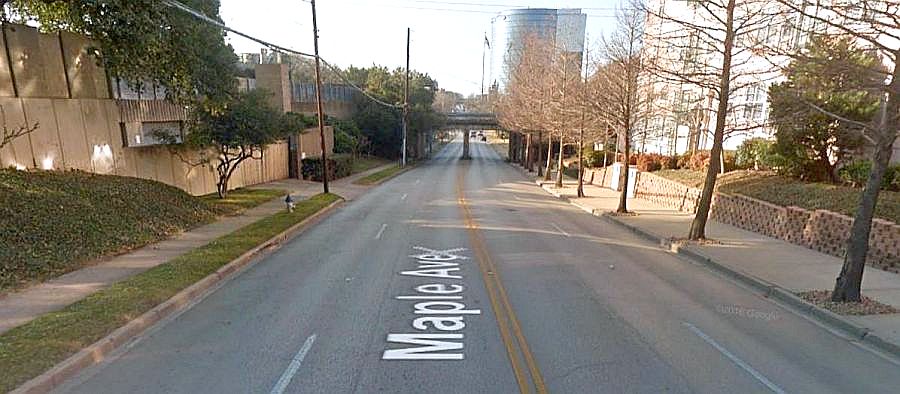
This circa-1920 photo (sadly, not the greatest resolution) shows road construction to straighten Maple Avenue (which immediately followed construction of the MKT bridge); that and a more recent view of the same spot have been added to the post “The Gill Well.” (Sources: Dallas Public Library, I think, and Google Street View, 2014)
*
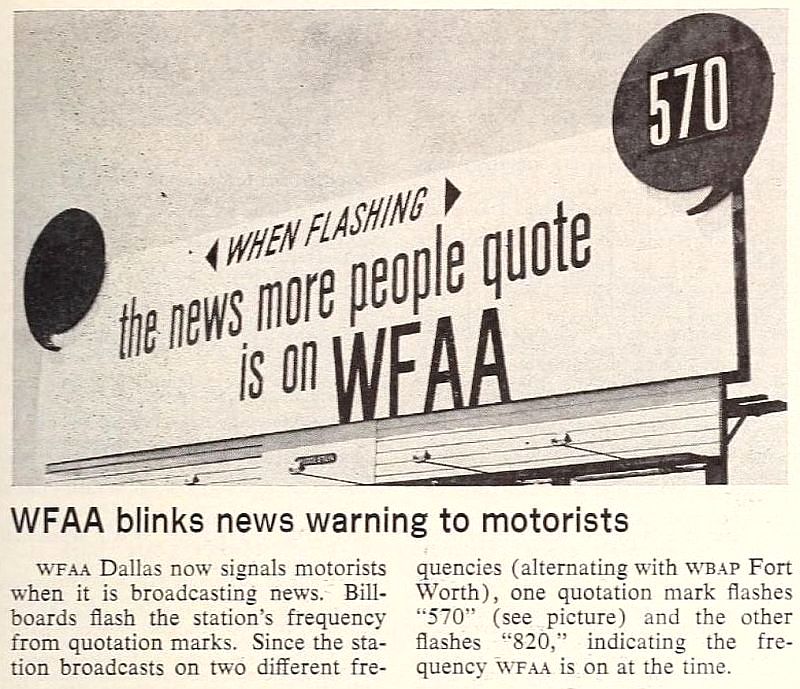
This 1963 photo of a billboard which instructed motorists which frequency WFAA was at that moment broadcasting on (it varied, depending on the time of day…) has been added to the post “WFAA & WBAP’s Unusual Broadcasting Alliance,” one of my favorite weird bits of trivia in Dallas radio history. (Source: Broadcasting magazine, April 22, 1963)
*
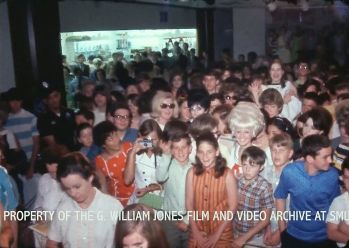
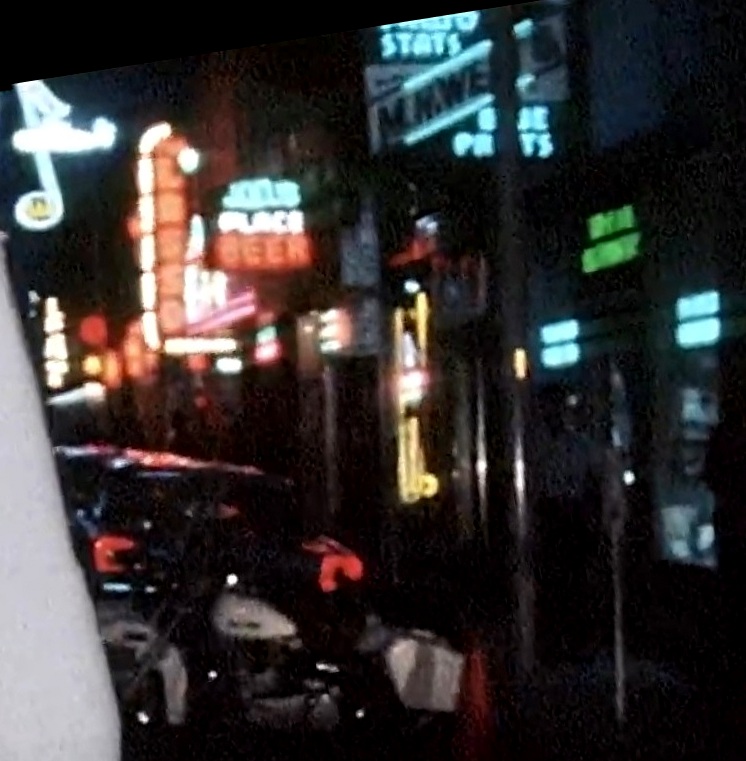
This super-blurry screenshot shows the hopping nightlife which was once a staple of the two blocks immediately south of the Adolphus Hotel on South Akard. Those two blocks were really interesting and a mecca for bars, seedy and otherwise. It’s been added to the post “Gene’s Music Bar, The Lasso Bar, and The Zoo Bar.” (Source: WFAA-Channel 8 coverage of the… um… boisterous activity downtown during the 1969 Texas-OU weekend, as seen at the 6:16 and 9:13 marks in the video here; from the WFAA Newsfilm Collection, G. William Jones Collection, Hamon Arts Library, SMU)
*
Another screenshot (watermarked, sadly) is this one, which show the wife of Santa Fe Railroad president Fred G. Gurley christening the new Texas Chief streamliner at Union Station — the train made its inaugural Dallas-to-Chicago run on Dec. 5, 1955. The reason I chose this screenshot (which I’m adding, along with the YouTube video below to the continually popular post“White Rock Station”) is because Mrs. Gurley is christening the engine with a bottle of — no, not champagne… — water from White Rock Lake. (Source: Huntley Film Archives, YouTube)
Check out the very short color film this comes from below, with footage of the new station along Jupiter Road near Kingsley, and ceremonies at Union Station (or for those who always write in to correct me, “Union Terminal“) — there might be some shots from ceremonies at Denton. The shot of the train passing in front of the Dallas skyline is pretty cool.
*
And, lastly, a 1963 photo of George Senator, a man often referred to as Jack Ruby’s roommate, but it seems he was more a sort of good-natured sponger, who was frequently out of money and frequently out of a job — Ruby helped him out with cash and let him stay at his apartment. I’m adding this photo (which has been cropped and flipped) to the post “Newly Discovered Footage of Jack Ruby — 1960,” in which a man who may be Senator is seen in B-roll film footage shot by Channel 8, showing Ruby standing in a crowd at a musical performance on Elm Street at Ervay. (Source: Photo titled “George Senator at Dallas police station at time of Jack Ruby arrest,” Nov. 24, 1963, Fort Worth Star-Telegram Collection, University of Texas at Arlington Libraries, UTA)
City Park’s lovely little “Iola” bridge paved the way (…as it were) for concrete to become the favored material in the construction of the city’s bridges, usurping wood. Built in 1905, “Iola” was the first such concrete structure in Dallas (or possibly the second…) — its legacy lives on in the Oak Cliff/Houston Street viaduct, which, when built, was the longest concrete bridge in the world. Read more about “Iola” (find out where the name came from) in the 2015 Flashback Dallas post “Iola Bridge.”
All I want for Christmas is a high school pennant…
by Paula Bosse
Time for another installment. I’ve added new photos/info to previously published posts. Click the title to see the original post.
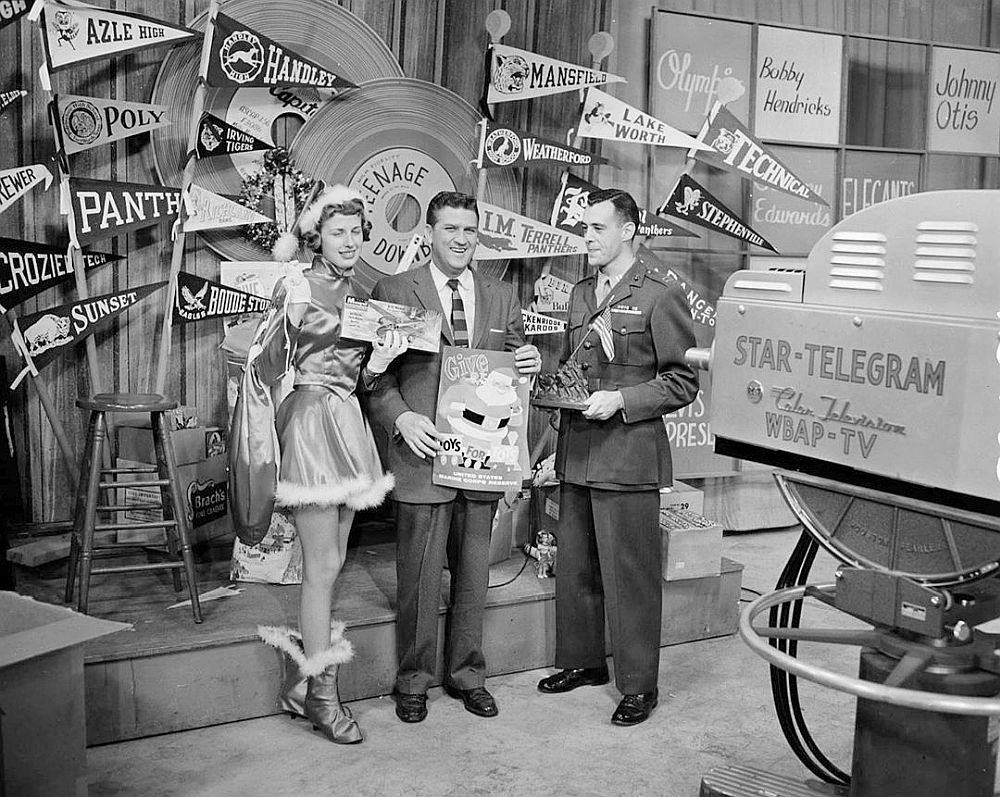
First, above, a cool — and seasonally appropriate! — photo I came across a couple of days ago on the Instagram feed of @fortworthhistorical (check ’em out here), taken on the set of the Fort Worth-produced TV teen dance show “Teen-Age Downbeat,” with a sexy Santa’s helper, host Tom Mularkey holding a “Toys For Tots” sign, a Marine Corps (Reserve?) officer holding a small replica of the Iwo Jima Memorial, and a TV camera emblazoned with the Fort Worth Star-Telegram and WBAP logos. The photo is from 1958. I’ve added it to the 2016 Flashback Dallas post “Teen-Age Downbeat.” (Source: Instagram; original source unknown)
*
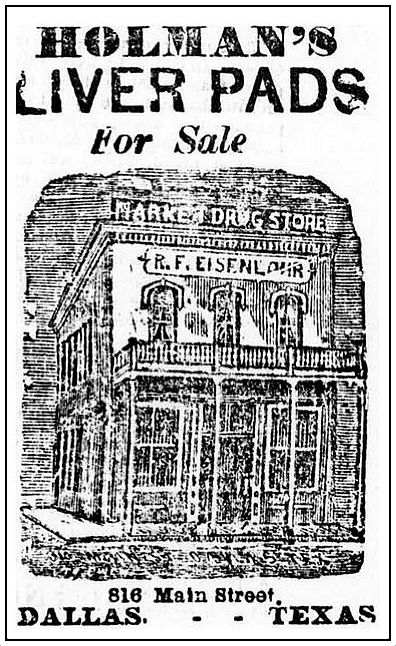
Speaking of seasonally appropriate, I’m adding a photo of Rudolph Eisenlohr and an ad from 1883 to the 2015 post “The Eisenlohr Family and Dallas’ First Christmas Tree — 1874.” (Source: unknown, and Norton’s Union Intelligencer via the Portal to Texas History)
*
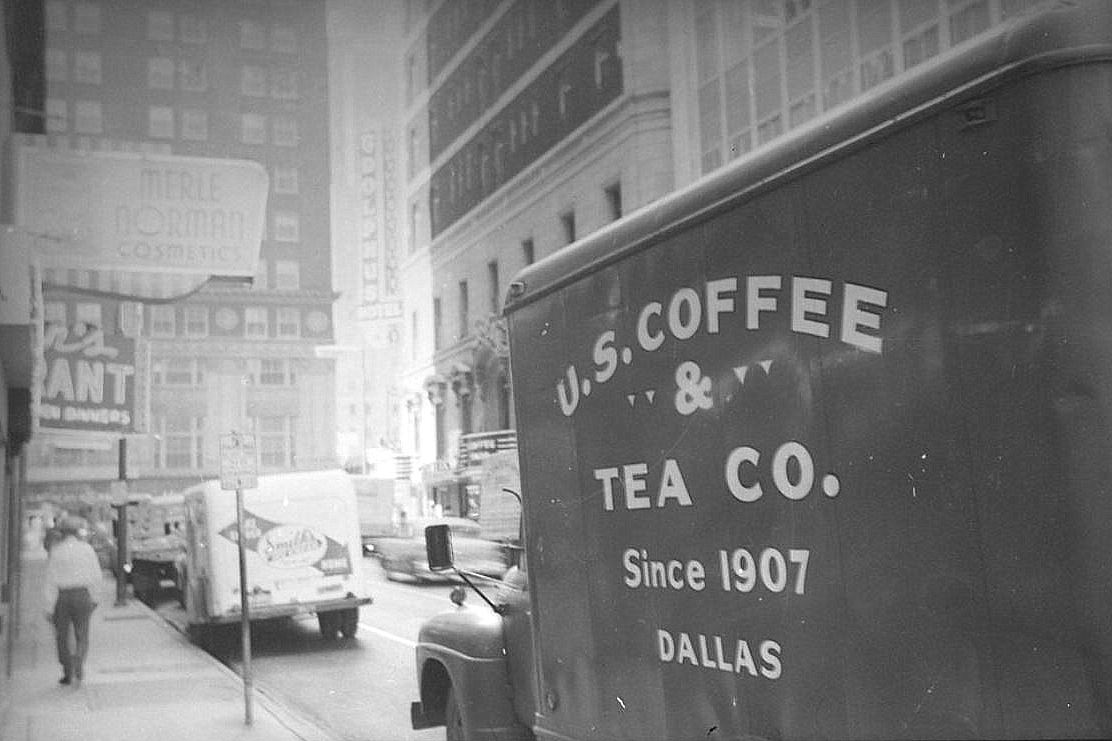
This photo of a U. S. Coffee & Tea Co. delivery van has been added to the 2018 post “The United States Coffee & Tea Co. — 1911.” (Source: City of Dallas’ Historic Preservation collection on Flickr, here)
*
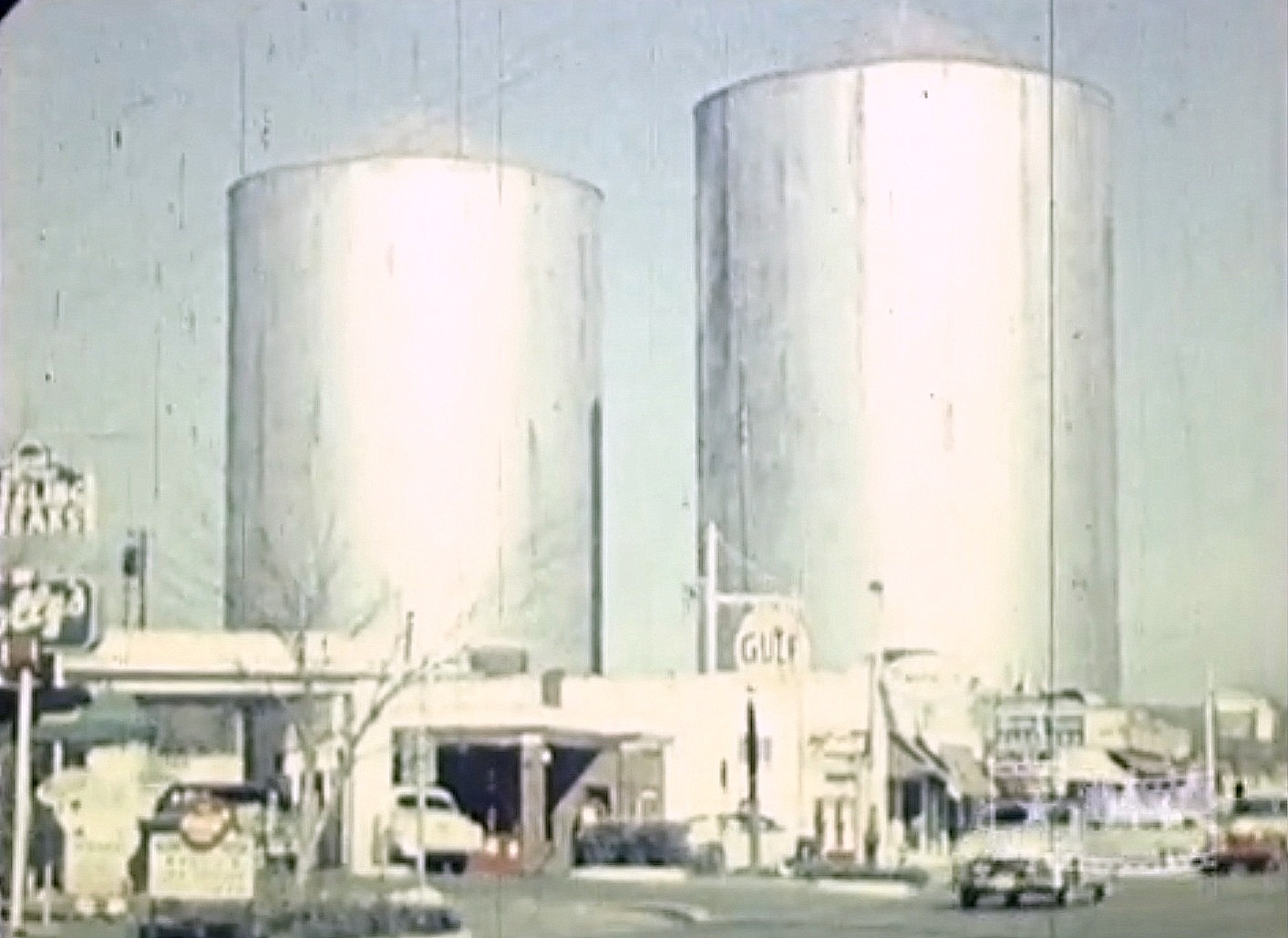
Ever since I discovered that these things used to loom over Lakewood at Goliad and Abrams, I’ve been preoccupied by these weird giant “standpipes” — so I was thrilled to see them pop up in a City of Dallas film made for the water department. I’ve added this grainy screenshot to the 2016 post “The Twin Standpipes of Lakewood Heights — 1923-1955.” (Source: Department of Waterworks silent film, via TAMI, here)
*
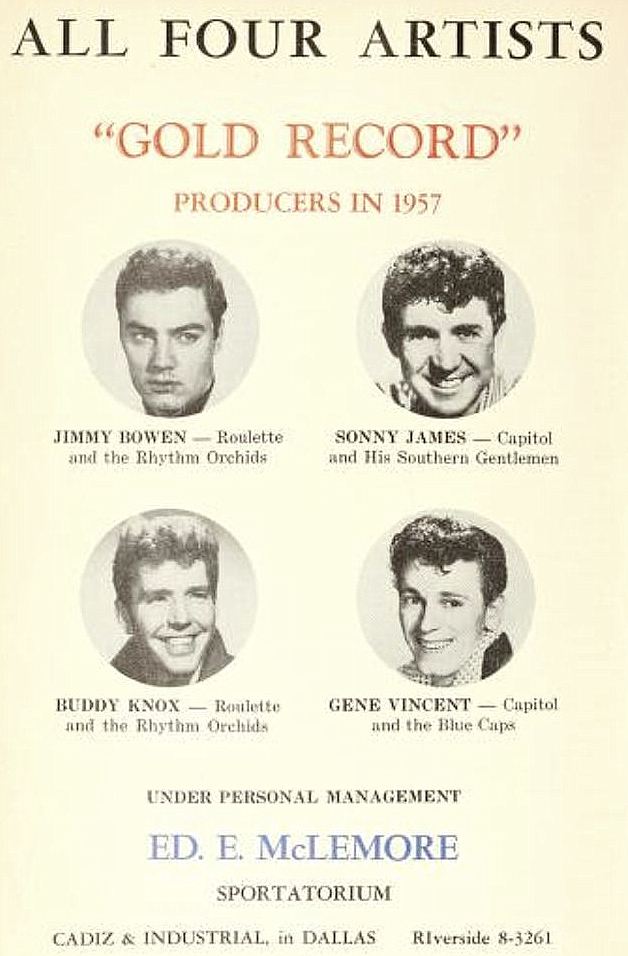
I love reading about Dallas’ entertainment history. I was surprised to learn that country music superstar Sonny James got his big start here, hosting a WFAA TV show called “Saturday Nite Shindig” and later appearing regularly on the Big D Jamboree (his manager was Jamboree/Sportatorium bigwig Ed McLemore). I’ve added these images to the 2016 post “Sonny James: The ‘Shindig Heartbreaker.” (Sources: eBay; Radio Annual and Television Yearbook, 1957; and Radio Annual and Television Yearbook, 1958)

 Watching returns on Elm St. (photo: Dallas Public Library)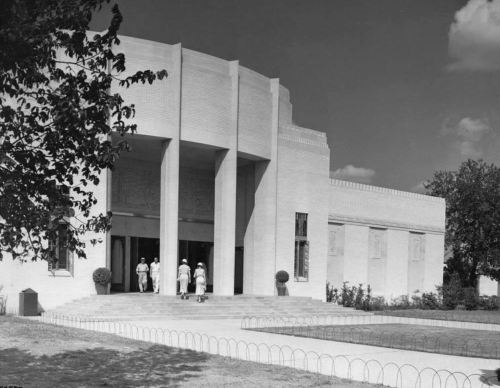
















 Flashback : Dallas