Flashback : Dallas

A Miscellany: History, Ads, Pop Culture

A Few Photo Additions to Past Posts — #19

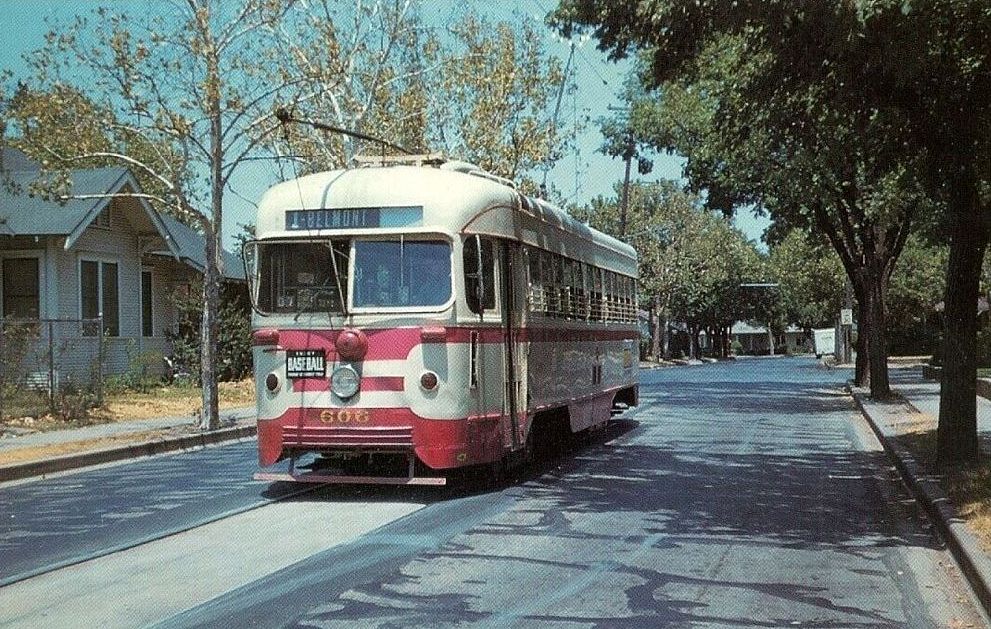
belmont-streetcar_1954_ebayOn the Belmont line…

by Paula Bosse

Time for another installment of this ongoing “series” in which I add newly found (to me) photos to old Flashback Dallas posts, in order to keep stuff together.

Above, this 1954 color photo of a Belmont streetcar trundling down an East Dallas street has been added to the 2018 post “Ghost Rails of the Belmont Streetcar Line.” Anyone recognize where this was taken? (Source: eBay)

*

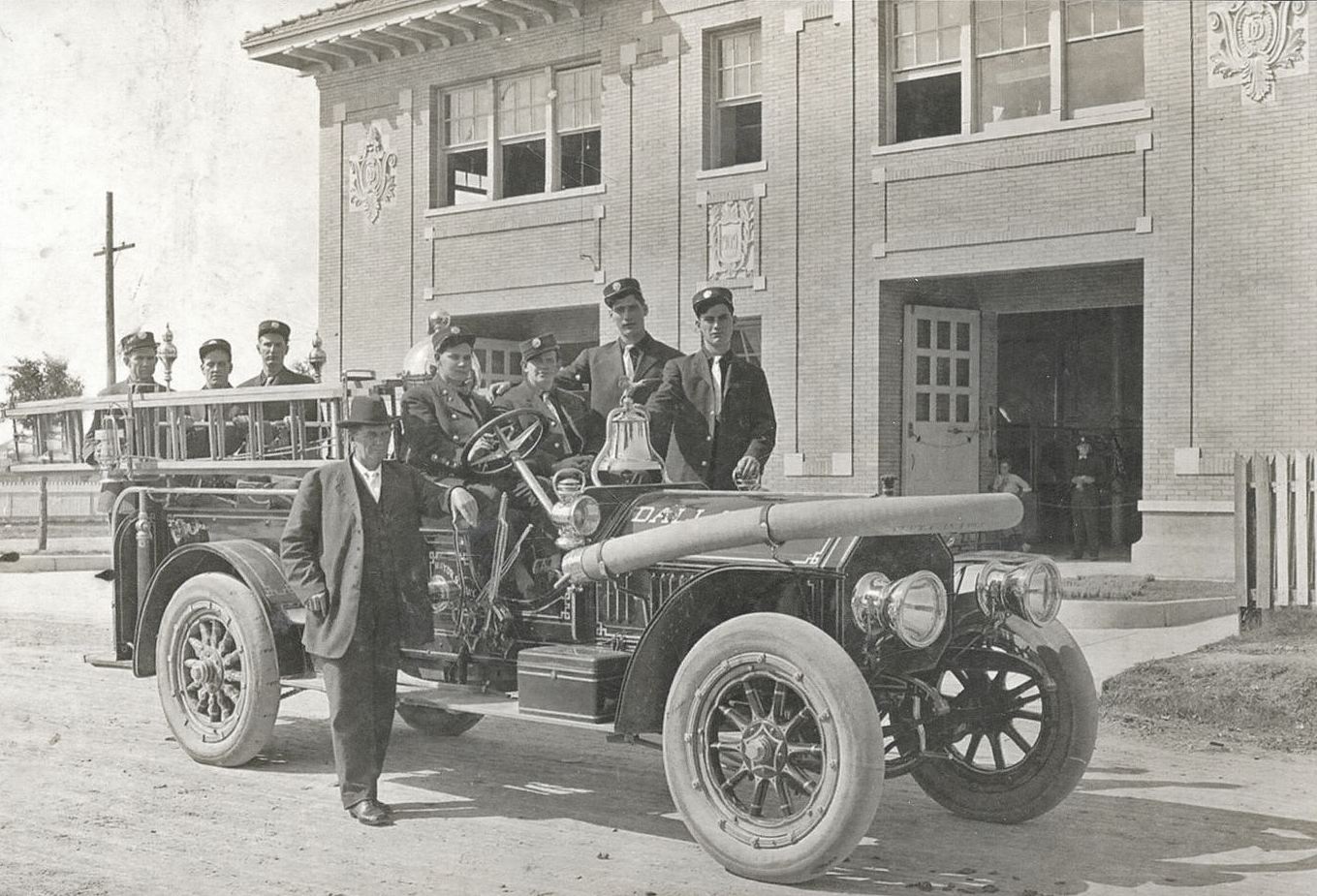
Below, a photo of a fire truck and firemen taken outside the still-standing fire station on Cedar Springs has been added to the 2014 post “No. 4 Hook and Ladder Company, Oak Lawn — 1909.” (Source: eBay)

fire-dept_no-4-hook-company_ebay

*

This photo of SMU’s Ownby Stadium has been added to the 2017 post “Ownby Stadium, With Room to Breathe.” (Source: Park Cities Bank postcard series)

smu_football_nov-25-1926_oliver-mowatt-dairy_ebay

*

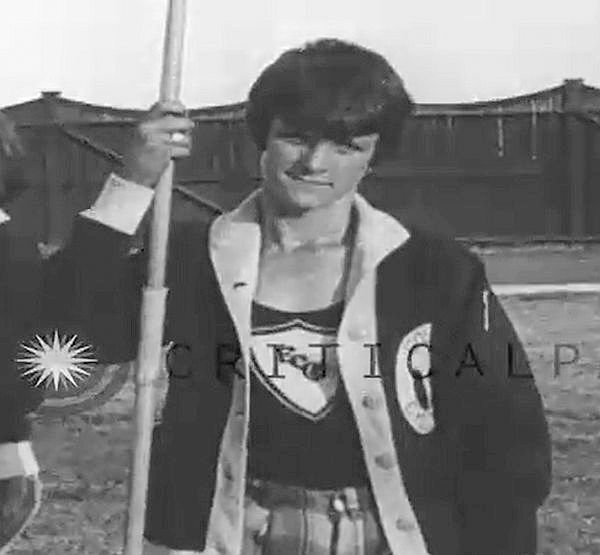
Speaking of Ownby Stadium and sports, this cropped screenshot shows Dallas resident and sports legend Babe Didrikson, after she’d competed in the Amateur Athletic Union (AAU) track and field championships at SMU in July 1930 (and set two world records, including one in the javelin throw). I’m adding this photo of a teenaged Babe to the 2014 post “Babe Didrikson, Oak Cliff Typist.” (Image source: newsreel footage on the Critical Past website, where you can watch the minute-and-a-half clip here — it doesn’t look a lot like Ownby Stadium, but that’s where the meet happened.)

didrikson-babe_070730_track-meet_SMU_javelin_critical-past_screenshot-crop

*

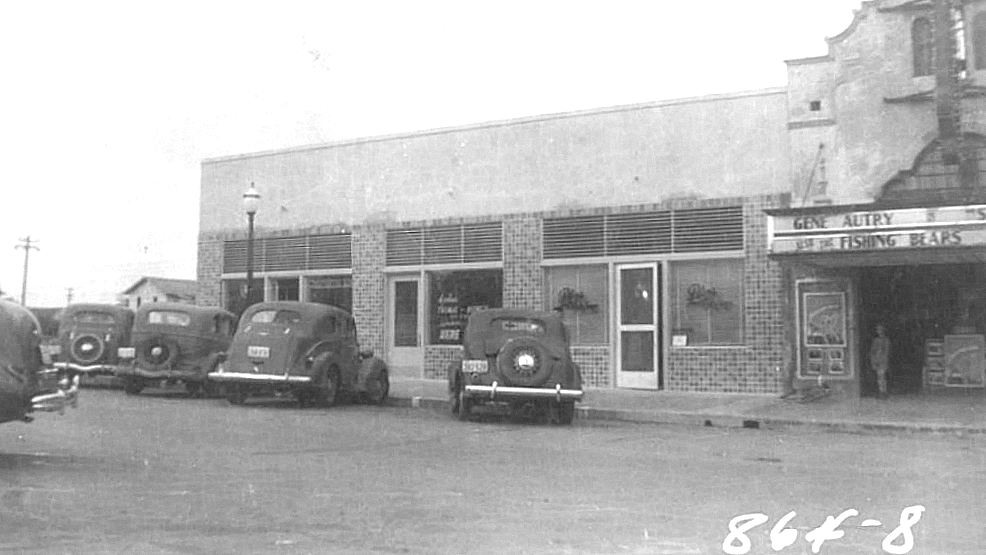
Just across from the SMU campus is Snider Plaza — here is a photo from 1940 showing part of the marquee of the Varsity Theater and adjoining businesses — I’ve added it to the 2021 post “Snider Plaza & The Varsity Theater — 1920s.” (Source: University Park Brown Books)

snider-plaza_brown-bks_university-park_varsity-theater_1940

*

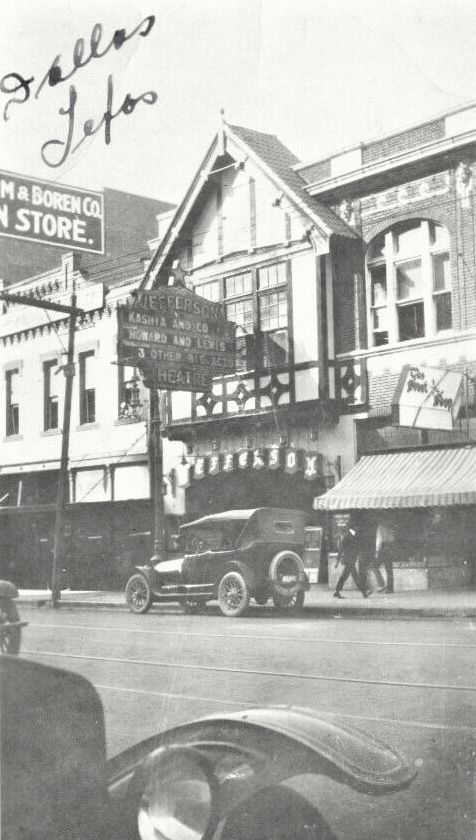
Another movie-house photo — this one of the Jefferson Theater — has been added to the 2019 post “Theaters at 1517 Elm: The Garden, The Jefferson, The Pantages, The Ritz, and The Mirror — 1912-1941.” What an unusual facade! I’m not sure how long that whimsical bit of design lasted (the Jefferson operated between 1915-1925). The marquee advertises appearances by Kasmir & Co. and vaudeville comedians Howard & Lewis. (Source: eBay)

theater_jefferson-theater_RPPC_ebay

*

I’ve added this 1964 United Press International photo showing the proposed site of the JFK Memorial to the 2014 post “Where to Put That JFK Memorial? — 1964” (where it joins a similarly interesting Associated Press version). (Source: eBay)

jfk-memorial_proposed_apr-1964_UPI_ebay

*

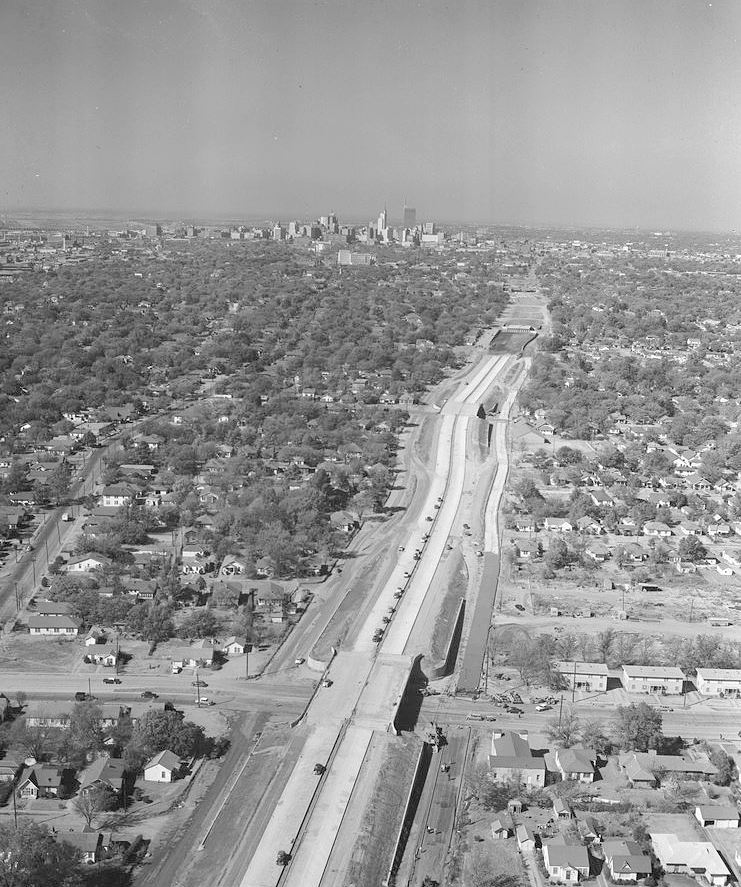
This Nov. 1955 aerial photo of the construction of South Central Expressway looking north toward downtown is joining a slightly earlier view looking toward the south in the 2016 post “South Central Expressway Under Construction — 1955.” (Source: Squire Haskins Photography, Inc. Collection, University of Texas at Arlington Libraries, Special Collections — ID No. 10002950)

south-central-expwy_squire-haskins_nov-1955_UTA

*

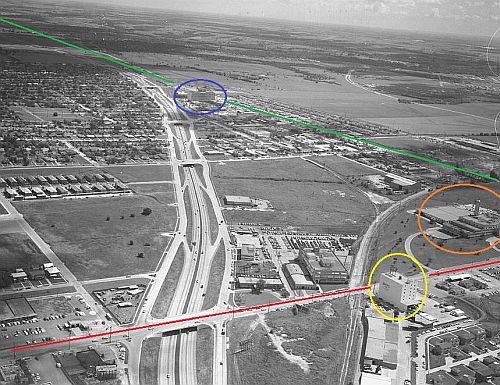
This “key” to identify landmarks (Dr Pepper plant in orange, Meadows Building in blue, etc.) in another Squire Haskins aerial photo has been added to the 2017 post “The Wide Open Spaces Northeast of Central and Lovers — 1957,” mainly because I was driving around there this afternoon and remembered this great photo — it’s one of my favorites, showing the general area I grew up in before it exploded with development. (Source: UTA Special Collections — ID No. 10002957)

meadows-bldg-from-mockingbird_squire-haskins-june-1957_UTA_annotated

*

I stumbled across a photo which was a bit better in quality that the one I had used previously, so I’ve added this photo to the 2022 post “19th-Century Sign-Painting and Real-Estating.” (Source: American Petroleum Institute Photograph and Film Collection, National Museum of American History, Archives Center, via the Smithsonian Institution Online Virtual Archives)

smithson-harris_amer-petroleum-inst_smithsonian

***

belmont-streetcar_1954_ebay_sm

*

Copyright © 2023 Paula Bosse. All Rights Reserved.
Dallas, The City of Splendid Realities — 1905

dallas_city-of-splendid-realities_texas-and-pacific-quarterly_1905_det_b

by Paula Bosse

In 1905, a group of jaycees-like Dallas businessmen formed the Hundred and Fifty Thousand Club — their aim was to promote the city in hopes that it would achieve a population of 150,000 by 1910. Below is one of their impressive ads, which, of course, includes the favorite insistent claim of Dallas boosters that the Trinity River will ANY DAY NOW become a bustling “direct water route to the Gulf and the Panama Canal, that will put it in closest touch with the markets of the entire world.” The entire world! (Still waiting for that “navigable Trinity,” guys….) (Transcription is below the ad.)

dallas_city-of-splendid-realities_texas-and-pacific-quarterly_1905

*

DALLAS: The City of Splendid Realities

  • Probably no community in the world offers larger opportunities for the investment of capital and intelligent effort than does the city of Dallas, Texas.
  • Dallas is the commercial and industrial center of the most rapidly developing state in the Union.
  • The country surrounding the City is wonderfully rich and fertile — the famous black waxy belt that has never known a crop failure.
  • Its railroad shipping facilities are unexcelled, and now that the improvement of the Trinity River is assured it will stand at the head of navigation with a direct water route to the Gulf and the Panama Canal, that will put it in closest touch with the markets of the entire world.
  • There are dozens of opportunities for money making right now in the supplying of distinctly felt needs.
  • Conservative investors who have capital to place safely and profitably in industrial or public service enterprises, wide-awake men who are looking for a profitable employment of personal effort and limited capital in fruit raising, truck farming, chicken raising or small canning industries, are invited to write for information that will be of distinct interest to them.

Hundred and Fifty Thousand Club
Dallas, Texas
Write for Booklet, Dallas 1905

*

dallas_city-of-splendid-realities_texas-and-pacific-quarterly_1905_det-2

*

When the results of the 1910 Census were revealed, Dallas hadn’t reached its goal of a population of 150,000. But it had grown an impressive 116% in a decade, and, according to The Dallas Morning News, this meant that Dallas had the largest population in all of Texas and about the 50th largest in the United States. (Click article for larger image.)

population_1910-census_dmn_091710Dallas Morning News, Sept. 14, 1910

***

Sources & Notes

Ad found in the pages of Texas and Pacific Quarterly, 1905.

dallas_city-of-splendid-realities_texas-and-pacific-quarterly_1905_det_b_sm

*

Copyright © 2023 Paula Bosse. All Rights Reserved.
The Mercantile Bank Building — 1951

mercantile_squire-haskins_dec-1951_UTASquire Haskins Collection, UTA Special Collections

by Paula Bosse

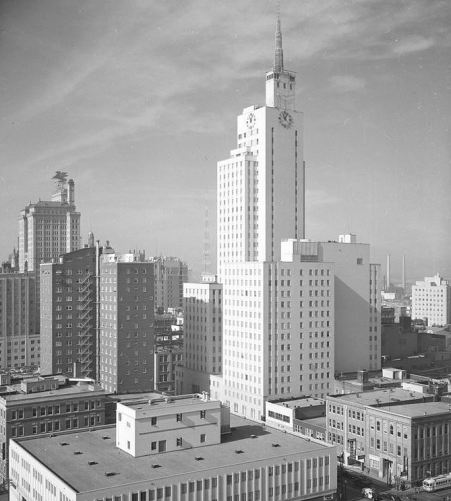
Photo of one of my favorite downtown buildings, the Mercantile, taken by ace photographer Squire Haskins in December 1951. See a very large image of this at the UTA website, here. Zoom in and take a look around. Check out all the landmarks. You’ll probably find Waldo while you’re at it.

***

Sources & Notes

“Downtown Dallas — Mercantile Building” by Squire Haskins, taken on Dec. 11, 1951; from the Squire Haskins Photography, Inc. Collection, University of Texas at Arlington Libraries, Special Collections — more information can be found here. (I have slightly cropped the image.)

mercantile_squire-haskins_dec-1951_UTA_sm

*

Copyright © 2023 Paula Bosse. All Rights Reserved.

Crescent Cafe: Warehouse District — 1944-1952

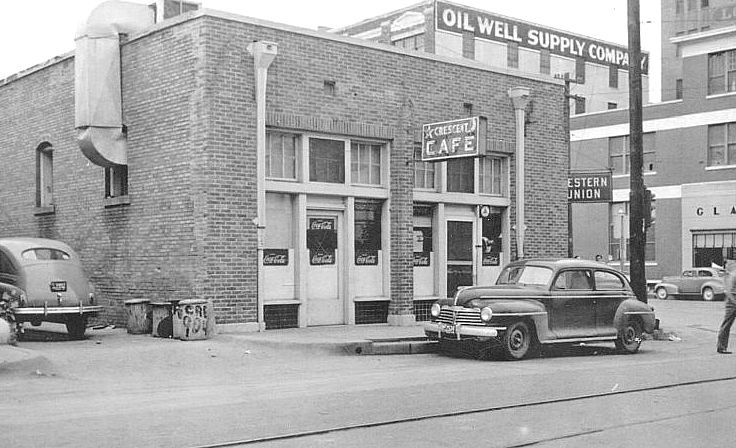
crescent-cafe_mckinney-and-lamar_ebay904 McKinney Avenue, at N. Lamar

by Paula Bosse

The Crescent Cafe once stood at 904 McKinney Avenue, at the corner of N. Lamar. Also seen in this photo is the national headquarters of the Oil Well Supply Company (2001 N. Lamar), a sign for Western Union (2026 N. Lamar), and part of the Binswanger glass company (2019-21 N. Lamar).

See this corner now, on Google Streete View, here.

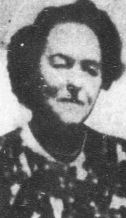
About all I can tell you about this place is that it was in operation from about 1944 to 1952 (in the 1950 city directory, Mrs. Olive West was listed as the owner — by 1952, Mrs. Josephine Cashlon had taken over).

Mrs. West ran the cafe (breakfast and lunch only, closed on Sundays) for several years, but on Sept. 23, 1950, an ad appeared in the classifieds which read:

CAFE — OWNER
Industrial.
Wonderful location.
Bargain.
904 McKinney

Olive was ready to move on.

A week and a half after the ad appeared, Olive died in a car accident on her way to a nephew’s funeral in Sherman (the nephew had also died in a car accident). No word on whether Mrs. Cashlon (a former waitress who had probably long dreamed of running her own restaurant) had purchased the Crescent Cafe before Mrs. West’s unfortunate demise. 

crescent-cafe_olive-westOlive West (1890-1950)

***

Sources & Notes

Photo found on eBay.

crescent-cafe_mckinney-and-lamar_ebay_sm

*

Copyright © 2023 Paula Bosse. All Rights Reserved.
John W. Smothers’ Tin Shop, Hall & Floyd

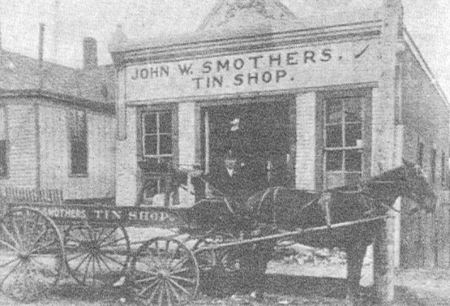
smothers-tin-shop_ebaySmothers (in car) and employees, ca. 1913

by Paula Bosse

John W. Smothers (1869-1925) came to Dallas from Huntsville, Missouri around 1890 to begin his career as a “tinner” working for a family friend/in-law, Frank T. Payne. By 1905, Smothers had married a girl from back home, had a child, and had apparently done well enough in the trade to buy a lot on College Ave. (now N. Hall St., in Old East Dallas) where he built his own tin-manufacturing shop, specializing in various sheet metal work. 

smothers_ad_1909-directory
1909 city directory ad

It looks like this business lasted until about 1918, when Smothers retired and sold the building to his old friend, F. T. Payne. It became a grocery store in 1919. Smothers died in 1925 at the age of 56 — his death certificate lists the cause of death, somewhat alarmingly, as “exhaustion and malnutrition” following a long illness — an extreme case of St. Vitus Dance

smothers_tin-shop_photo_ancestryvia Ancestry.com

Originally 212 N. College Ave., the address of Smothers’ tin shop became 912 N. College Ave. in 1911 when new addresses were assigned around the city. (See the location of the shop on a 1921 Sanborn map here.) It sat diagonally across the street from Engine Company No. 3, seen below in a photo from about 1901:

fire-dept_engine-co-3_gaston-and-college_1901Fire station, Gaston & College, ca. 1901

College Avenue was renamed and became Hall Street around 1946, and the address of the old tin shop building changed again, to 912 N. Hall Street, which is in the area now swallowed up by Baylor Hospital (see what 912 N. Hall looks like now on Google Street View, here).

***

Sources & Notes

Top photo found on eBay. A copy is also in the George W. Cook Dallas/Texas Image Collection, DeGolyer Library, Southern Methodist University — it can be accessed here. The SMU photo (apparently from the collection of Ralph Smothers, John’s son) has a notation on the back which reads “912 College Ave. <now Hall St.> about 1913 or 14? John Smothers [in car], [James E.] Curly Wilson left, Bob Critcher right.”

Photo of the fire station with the ghostly horse is by Clifton Church and is from the Dallas Fire Department Annual, 1901, which can be viewed in its entirety on the Portal to Texas History, here. (I used this image in my 2016 post “Dallas Fire Stations — 1901.”)

(“Tinner” was not an unusual word to have come across in the early part of the 20th century, but in the 1910 census, the enumerator was either confused or did not understand what was being said, because Smothers’ trade is listed as “tuner” — it looks like the enumerator then just made a weird leap to attempt to explain this and added “piano” under “General Nature of Business,” which Ancestry.com then repeats in its OCR-generated records. That “piano tuner” profession caused me a lot of confusion! To add insult to injury, OCR tells us that his occupation in 1900 was “turner,” and an illegible entry in the 1920 census transforms him into a “retired farmer”! Always approach census record information with a grain of salt — for many, many reasons!)

smothers-tin-shop_ebay_sm

*

Copyright © 2023 Paula Bosse. All Rights Reserved.
Pig Stand No. 2, Oak Cliff

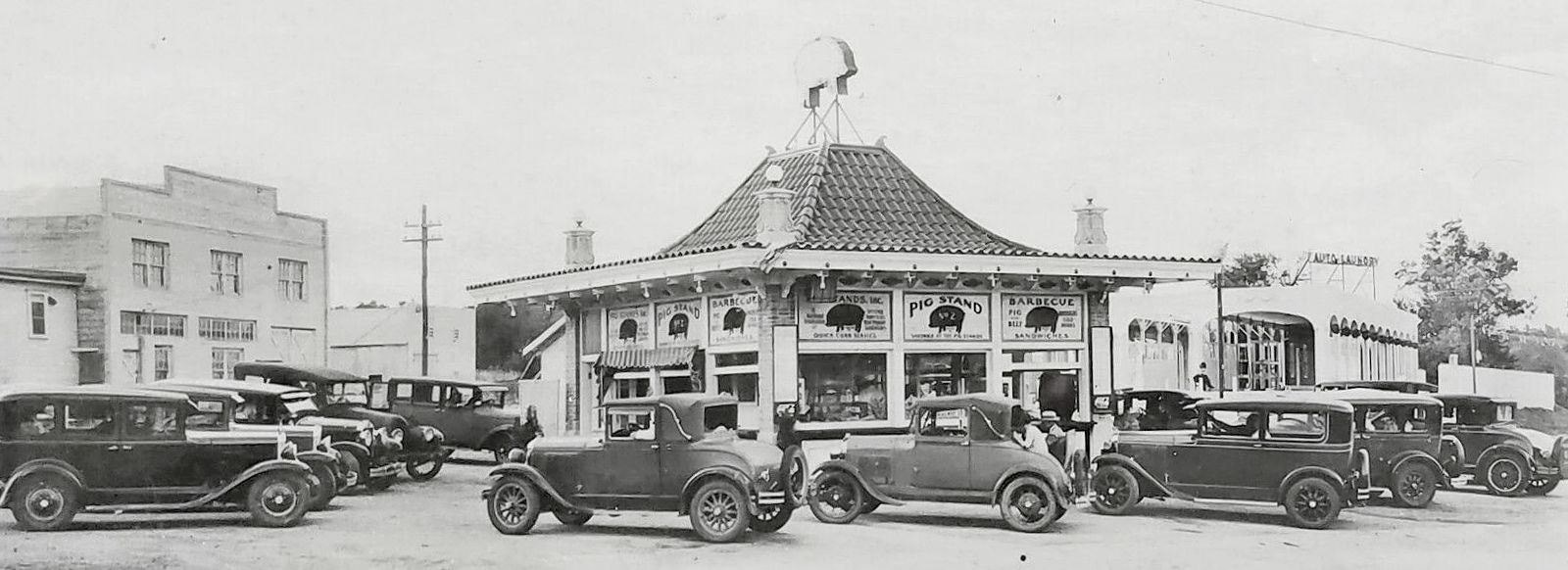
pig-stand-no-2_dallas_ebayWaiting in cars for pig sandwiches

by Paula Bosse

I’ve seen a cropped version of this photo, but not the full image. It’s great! I don’t mean to keep posting about restaurants, but seeing this photo was too good not to share. (As I type this, it’s available on eBay, here.)

It shows Pig Stand No. 2 at 1301 N. Zang in Oak Cliff, probably about 1928. It appears that this was the second “No. 2” — it was announced that this brand-new building had just begun construction in January 1928.

Work was started last week on the new Pig Stand, Zang’s Boulevard and Colorado Street, for the Pig Stands Company, a Dallas institution, now operating in 39 cities in 12 states. The ornamental building has been adopted as a standard design for the many future stands now contemplated over the country by this concern. In this building will be embodied modern sanitary features complying with all requirements and laws. It will be faced with brick and highly colored tile with ornamental stone trimmings and a clay tile sweeping roof in several shades. The exterior as well as the interior will be illuminated electrically with the cornice and ornaments decorated out in varied contrasting colors. The Pig Stands Co., starting less than five years ago with small capital, has developed into a national institution. Architects F. J. Woerner and Co. designed and will supervise this work, while M. W. McDade will have charge of the construction. (Dallas Morning News, Jan. 26, 1928)

At the right is the Oak Cliff/Tramway Auto Laundry at 1307 N. Zang.

pig-stand-no-2_dallas_ebay_det

I love the couple in the rumble seat!

***

Sources & Notes

Photo currently available for sale on eBay, here.

Read a history of Dallas’ Pig Stand empire — long considered to be the first-ever drive-in restaurants, a revolutionary contribution to American social culture — in the Texas Monthly article “The History of the Pig Stands” by Daniel Vaughn (Feb. 2015).

Architect Frank Woerner designed many notable commercial and residential buildings in Dallas, including the Stoneleigh Hotel, the Couch Building across from SMU, the old Union Depot in Deep Ellum, and the beautiful home of Max Rosenfield on South Boulevard.

pig-stand-no-2_dallas_ebay_det_sm

*

Copyright © 2023 Paula Bosse. All Rights Reserved.
Kimball High School, Off Campus — Ads, 1959-1961

priest-music_kimball-high-school_1959-yrbk
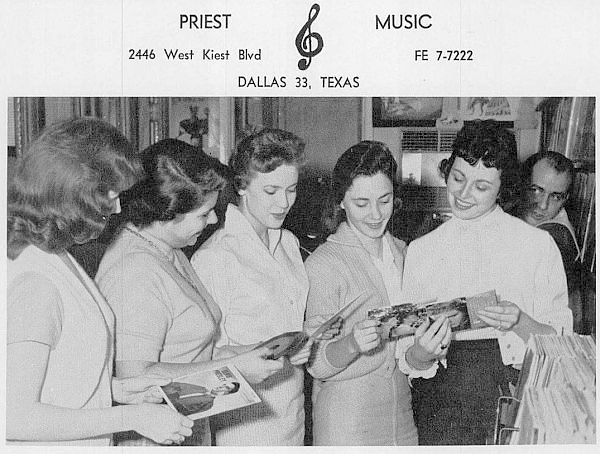
Browsing the Elvis releases, 1959

by Paula Bosse

A few years ago I posted several Oak Cliff-centric ads found in the 1963 and 1967 Kimball High School yearbooks (see those ads here). I’m back for another installment.

**

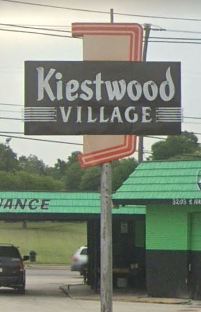
Above, a photo I really love, showing five Kimball girls checking out Elvis records at Priest Music (2447 W. Kiest Blvd). No, they don’t look like high school girls, and, yes, they are. The man at the right is, apparently, the owner, Frank M. Anderson (whom, I think, changed the name of the store to Music Hall the following year?). I posted this ad on my Facebook page last week, and one man wrote, about the owner: “Frank, the owner. His shop was known for its collection of Jazz and Classical albums. We became friends as I got into Jazz thanks to the Great Pete Fountain!” And because, why not, here’s a recent Google Street View of the Kiestwood Village sign which was probably there at that little shopping strip when Frank and the girls were photographed for this ad. 

kiestwood-village_2022

*

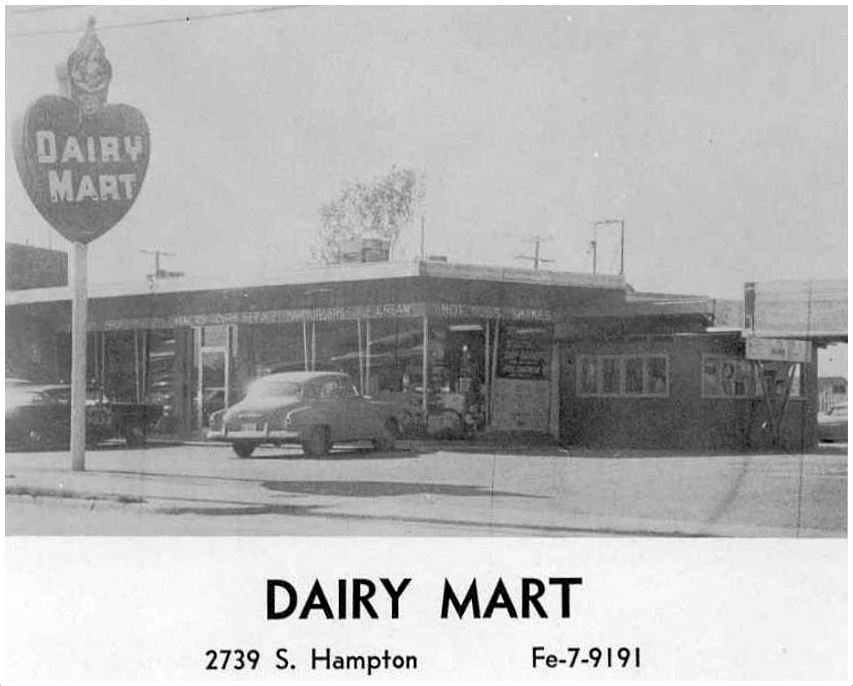
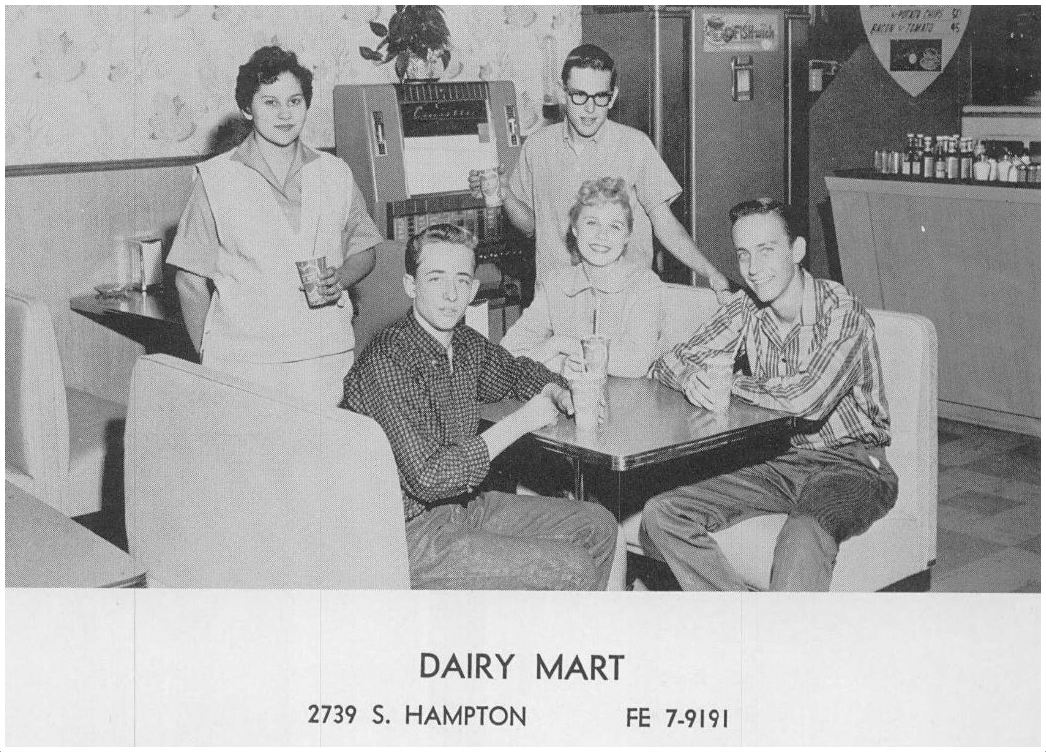
Dairy Mart (2739 S. Hampton):

kimball-high-school_1960-yrbk_dairy-mart1960

kimball-high-school_1959-yrbk_dairy-mart1959

*

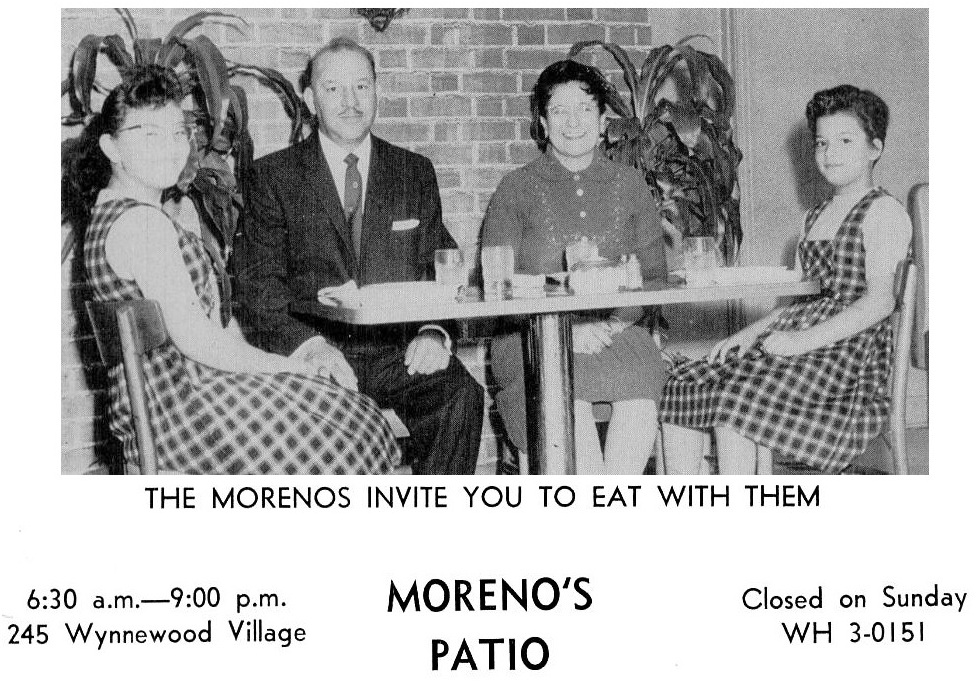
Moreno’s Patio (245 Wynnewood Village):

kimball-high-school_1961-yrbk_morenos-patio_restaurant1961

*

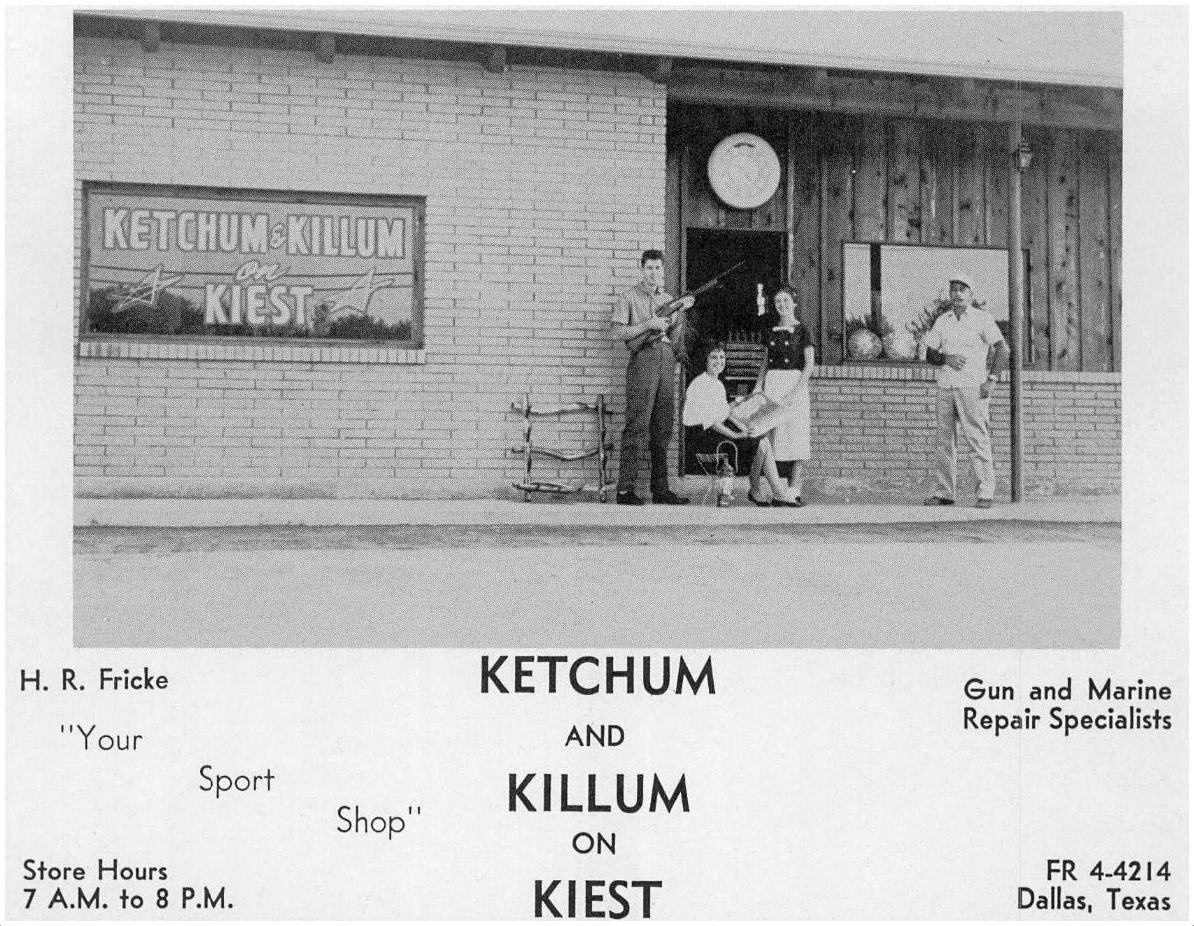
Ketchum & Killum (334 W. Kiest) — a sporting goods store with perhaps the best name ever (UPDATE: or not — see the comments below):

kimball-high-school_1961-yrbk_ketchum-and-killum1961

*

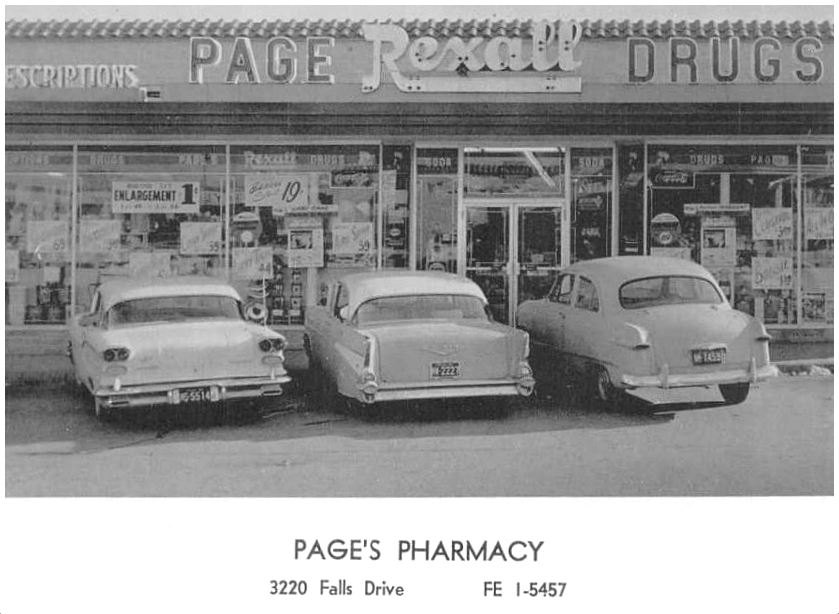
If you’re in need of some bandages or Mercurochrome after being a little too curious at Ketchum & Killum, head over to Page’s Pharmacy (3220 Falls Dr.):

kimball-high-school_1959-yrbk_page-drugs1959

*

For all things “fun,” Playland (3900 W. Illinois):

kimball-high-school_1959-yrbk_playland1959

***

Sources & Notes

All ads from the 1959, 1960, and 1961 yearbooks of Justin Kimball High School in Oak Cliff.

More Kimball yearbook ads can be found in the Flashback Dallas postA Few Ads From the Pages of the 1963 and 1967 Kimball High School Yearbooks.”

priest-music_kimball-high-school_1959-yrbk_sm

*

Copyright © 2023 Paula Bosse. All Rights Reserved.

Tex-Mex in a Can (with Bonus Chili-Burger Recipe) — 1953/1954

cuellar-recipe-bk_ebay_det

by Paula Bosse

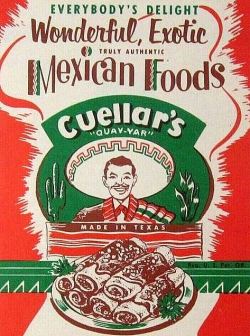
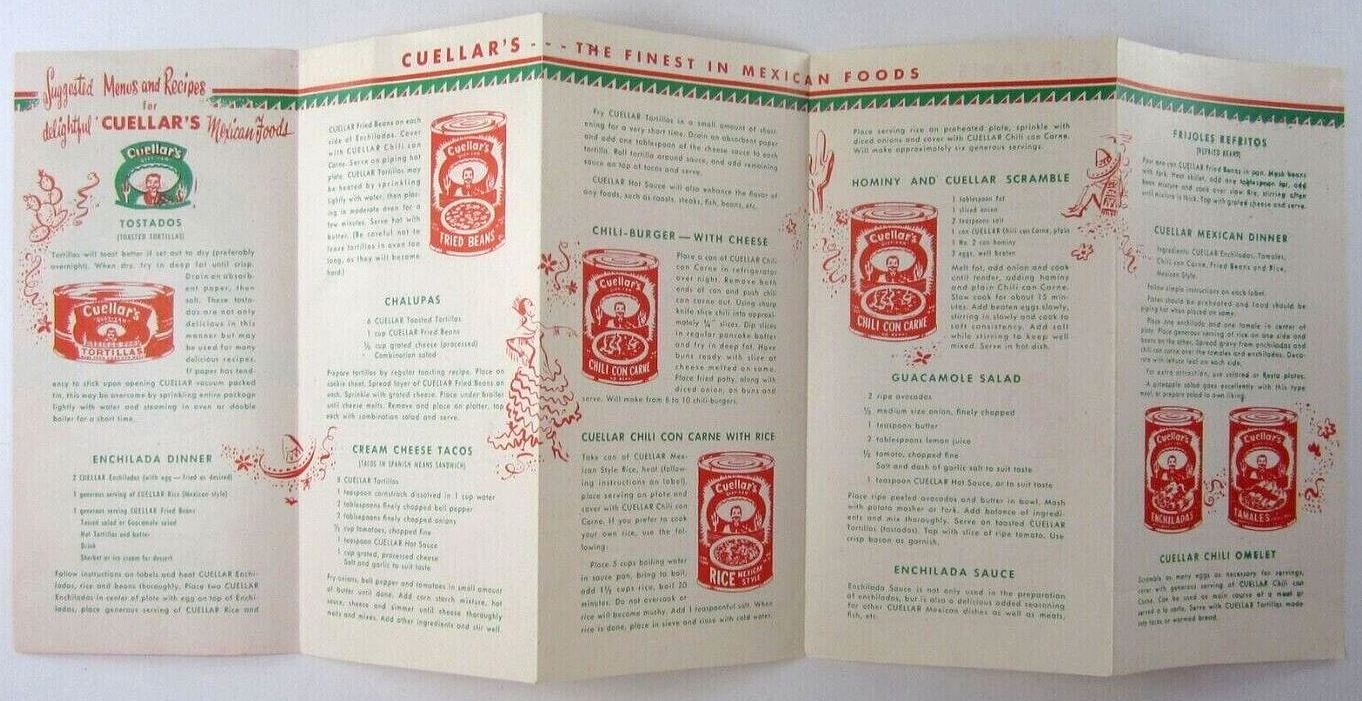
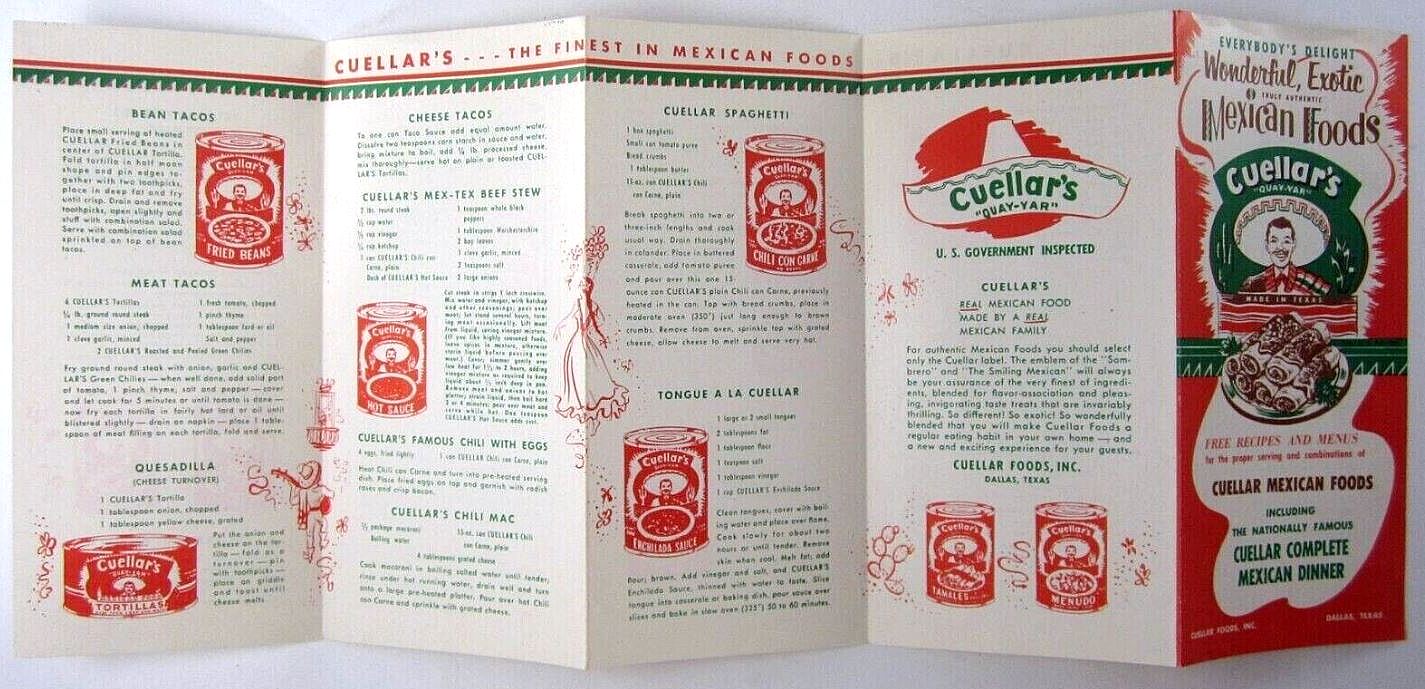
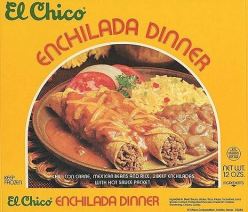
So the other day I was browsing through eBay, hoping to find something Dallas-related that I’d never seen before. And a Cuellar’s (“QUAY-YAR”) recipe pamphlet popped up. And it is fantástico! I remember El Chico frozen dinners, but I don’t remember El Chico canned foods, and that appears to be what the Cuellar family of Dallas started off with when they decided to branch off from their expanding Tex-Mex restaurant dynasty. The canned foods first appeared in late 1949 or early 1950 under the “El Chico” brand, and just as it was really starting to take off nationally, the company was forced to rename the line “Cuellar’s” in 1953 because of a copyright lawsuit; in 1954, after a year of court appeals, they were allowed to go back to using “El Chico.” (Read more about this manufacturing business in my previous post, “El Chico Foods/Cuellar Foods.”) Initially, the company produced only canned goods. Including, yes, tortillas in a can. TORTILLAS. IN. A. CAN. It appears this circular tin originally came with a dreaded key to open it, like Spam and canned hams. So if you wanted some tortillas, you really had to put the work in (and make sure you were current with your tetanus shots).

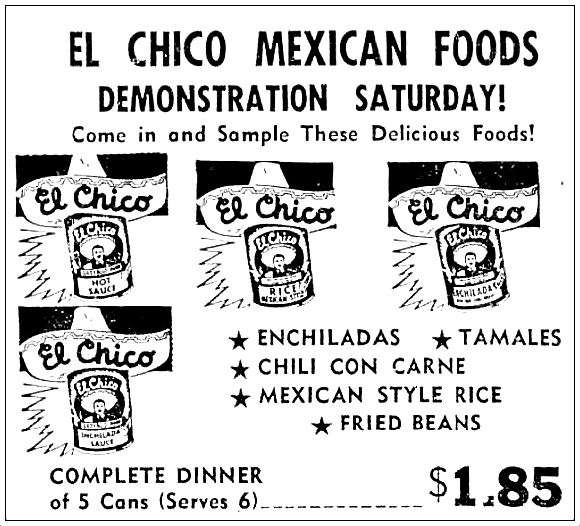
In addition to the tortillas (which I assume were flour tortillas, but I’m not entirely sure about this), the line of El Chico canned Tex-Mex foods included staples such as chili con carne (with beans and without), tamales (wrapped in corn shucks), enchiladas, beans (fried and not), enchilada sauce, tamale sauce, hot sauce, green chiles, jalapeños, menudo, “taco filler,” taco sauce, Mexican-style spaghetti (!), something called enchimales, and Mexican-style rice (I have never heard of cooked rice in a can). And, I’m sure, many more products. One newspaper ad touted the fact that you could concoct a full meal for a family of 6 using only 5 El Chico canned foods for $1.85 (which, somewhat shockingly, is the equivalent today of about $22.00).

el-chico_norman-OK-transcript_041251El Chico canned food ad, April 1951

But back to that recipe pamphlet I stumbled across on eBay, which would be from 1953/1954, the period when El Chico was forced to use the “Cuellar’s” name for their canned foods. The recipes are interesting — not only were these dishes unfamiliar and “exotic” to most people in the U.S. at the time (meaning that El Chico felt the need to inform readers that “‘tacos’ in Spanish means ‘sandwiches'” and that quesadillas were “cheese turnovers”), but the recipes also have occasional odd little flourishes which seem unusual and may indicate restaurant hacks or traditional preparation tips I am unaware of (guacamole salad calling for a teaspoon of butter, for example). You’ve got recipes for alarming dishes such as “Tongue a la Cuellar” (first ingredient: “one large or two small tongues”). not-alarming-but-unusual dishes such as scrambled eggs made with a can of chili and hominy, as well as the more mundane dishes like tacos (in which the cook is instructed to use toothpicks to keep the tortilla “closed” during deep frying).

But my very favorite recipe is something so spectacular that I can’t believe this hasn’t made its way to the State Fair of Texas food tents. Seriously, if any of you SFOT food vendors or maverick entrepreneurs decide to develop this dish, please remember you learned about it from me as you rake in the cash!

Okay. Take a deep breath, because this is just GREAT.

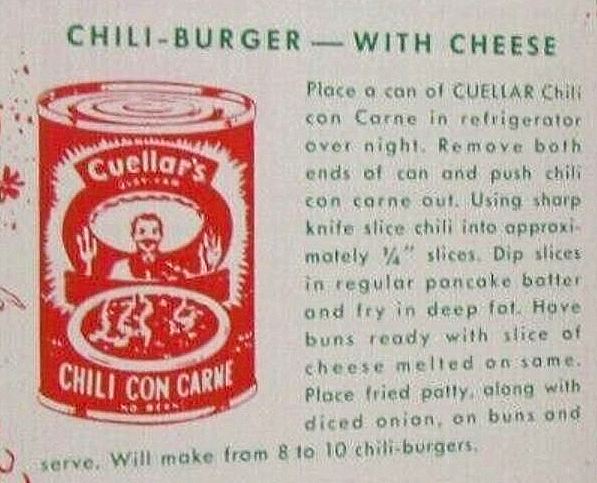
“CUELLAR CHILI-BURGER — WITH CHEESE”

  • Place a can of Cuellar Chili con Carne in refrigerator overnight.
  • Remove both ends of can and push chili con carne out
  • Using sharp knife slice chili into approximately 1/4” slices
  • Dip slices in regular pancake batter and fry in deep fat
  • Have buns ready with slices of cheese melted on same
  • Place fried patty, along with diced onion, on buns and serve — will make from 8 to 10 chili-burgers

Wow! It’s a chili-burger without a burger. How does this even work? Granted, this was back in the day when canned chili was very, very fatty — I remember opening cans of (delicious) Wolf Brand chili as a kid and marveling at the orange congealed grease (come to think of it, I’m pretty sure I probably used the open-can-at-both-ends-to-push-it-out technique, a la jellied cranberry sauce, and it retained its can-shape in a saucepan until heated). But wouldn’t these slices just disintegrate while deep frying, even if they were really cold (frozen even) and really congealed? My brother has suggested it might work along the lines of a Baked Alaska, in which the ice cream inside the dessert doesn’t melt as it bakes. Regardless. The joy I’ve gotten from reading this recipe and envisioning a bizarro dish made from deep-fried slices of canned chili dipped in pancake batter makes up for the fact that I will never attempt to make it (molten, melting “chili patties” on a hamburger bun would not only be unbelievably messy to eat but perhaps physically painful as well). But I fully endorse and applaud the concept of the Cuellar Chili-Burger — it’s brilliant! “Fair food” ahead of its time. Thank you, Cuellar test kitchen! (Dear readers: PLEASE MAKE THIS AND SEND ME PHOTOS!)

cuellar-recipe-bk__ebay_chili-burger

**

cuellar-recipe-bk_ebay

cuellar-recipe-bk_2

cuellar-recipe-bk_1

cuellar-recipe-bk_ebay_info

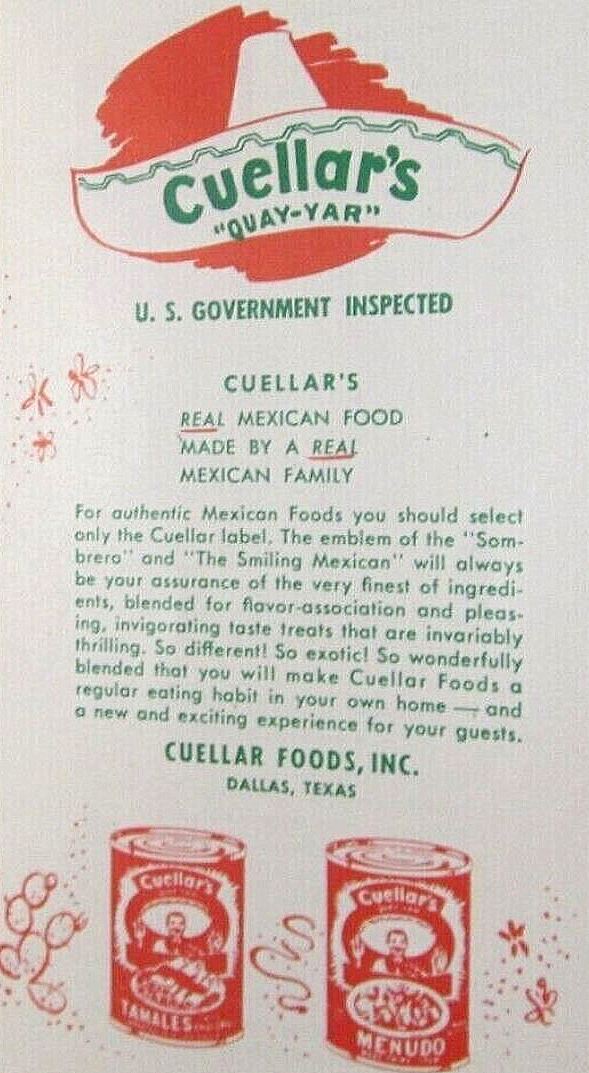
CUELLAR’S
REAL MEXICAN FOOD MADE BY A REAL MEXICAN FAMILY

For authentic Mexican Foods you should select only the Cuellar label. The emblem of the “Sombrero” and the “Smiling Mexican” will always be your assurance of the very finest of ingredients, blended for flavor-association and pleasing, invigorating taste treats that are invariably thrilling. So different! So exotic! So wonderfully blended that you will make Cuellar Foods a regular eating habit in your own home — and a new and exciting experience for your guests.

Cuellar Foods, Inc.
Dallas, Texas

*

el-chico-canning-co_tx-jewish-post_1220511951

el-chico_logo

***

Sources & Notes

Most images in this post are from the recently ended eBay sale, here (scroll down).

This pamphlet inspired my previous post, “El Chico Foods/Cuellar Foods,” which contains a history of El Chico’s food manufacturing business.

cuellar-recipe-bk_ebay_det_sm

*

Copyright © 2023 Paula Bosse. All Rights Reserved.
El Chico Foods/Cuellar Foods

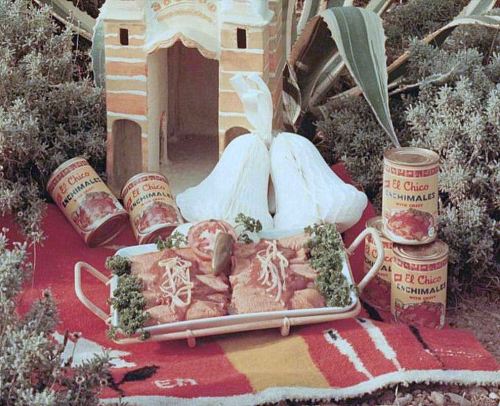
enchimales_canned_introduced-1968_portal_detEl Chico’s Enchimales with Gravy, ca. 1968

by Paula Bosse

I give you the “Enchimale,” a product introduced under the El Chico label in 1968. A news release described the delicacy thusly: “Wedding bells are ringing at El Chico for the marriage of the enchilada and the tamale, and the new product is called the Enchimale. […] This food is in the shape of a tamale, filled with fresh meat, with a mild enchilada sauce over it” (Dallas Morning News, Oct. 31, 1968). (So… a tamale?) I gather this was a short-lived product. (See the “Sources & Notes” section at the bottom of this page for an unusual and unrelated — I hope — recipe for enchimales which appeared in a newspaper in Spokane, Washington in 1950.)

This photo caught my eye while I was looking into the history of El Chico’s manufactured foods. Especially their canned foods, which I was unaware of. I’m not surprised they existed — I remember their frozen food line — I just have no memories of canned foods from El Chico.

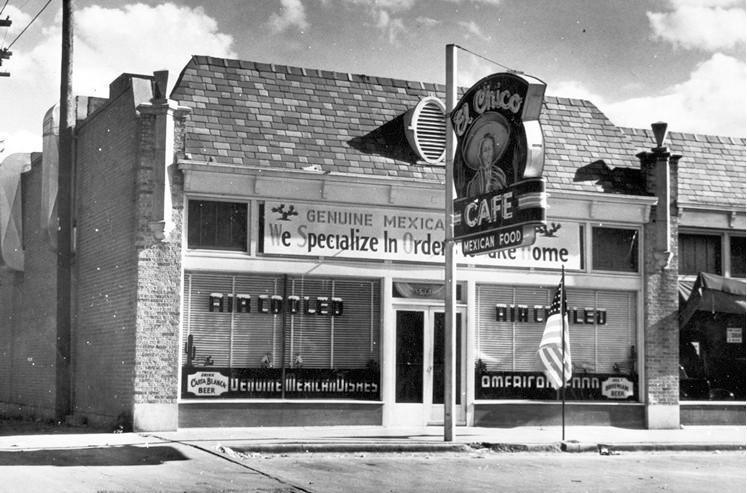
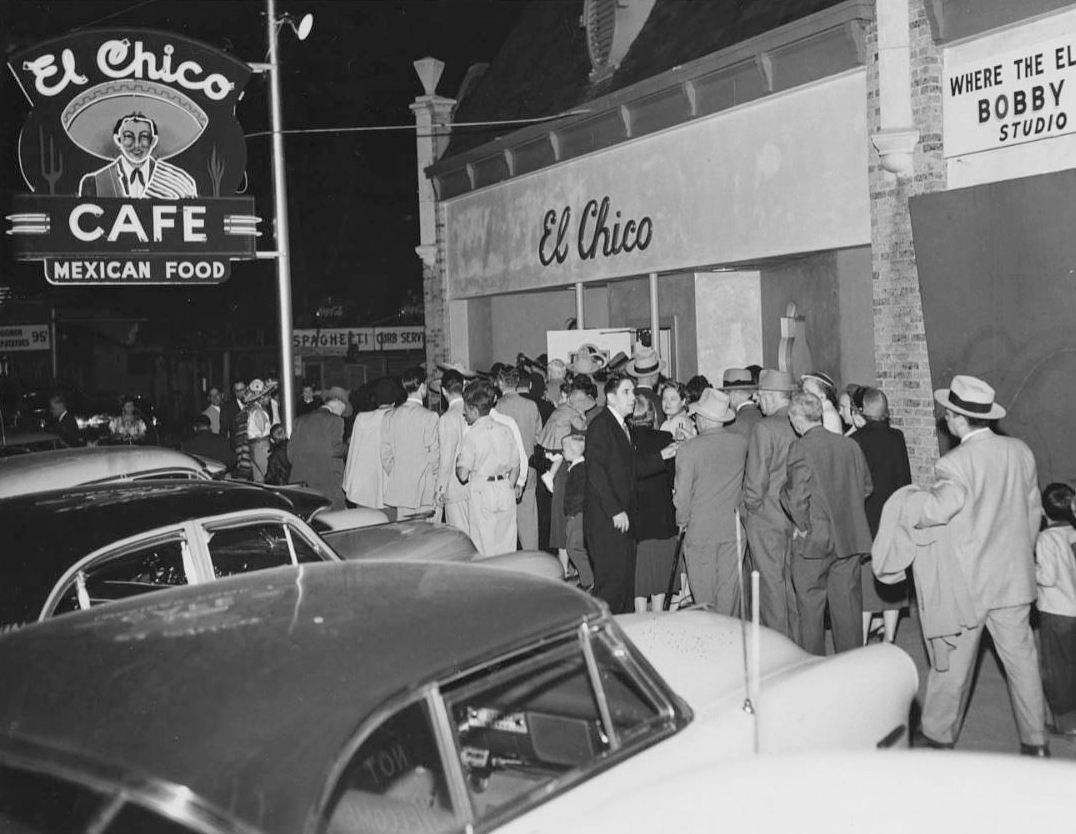
But I’m getting ahead of myself. You’ve probably heard the story of Mama Cuellar and the Cuellar brothers and their El Chico empire (if not, a good article is here). As far as their Dallas restaurants, the Cuellar brothers opened their first El Chico restaurant in 1940 at 3514 Oak Lawn (next door-ish to Lucas B & B, which opened in Oak Lawn in 1953). This location closed in either 1954 or 1955.

el-chico_oak-lawn_d-mag_nov-2013El Chico No. 1, Oak Lawn, via D Magazine

el-chico_oak-lawn_no-1_portalEl Chico No. 1, Oak Lawn, via Portal to Texas History

Six years later, they opened their second location in Lakewood at 2031 Abrams.

photo_el-chico-no-2_lakewood_portalEl Chico No. 2, Lakewood, via Portal to Texas History

Their third Dallas location opened near the Inwood Theater in 1949 at 5526 Lovers Lane.

el-chico_inwood-village_1953_inwood-village-websiteEl Chico No. 5, via Inwood Village website

When that location opened, the family was operating 11 restaurants in Texas, Oklahoma, Louisiana, and Kansas. Things were good in Cuellar-land.

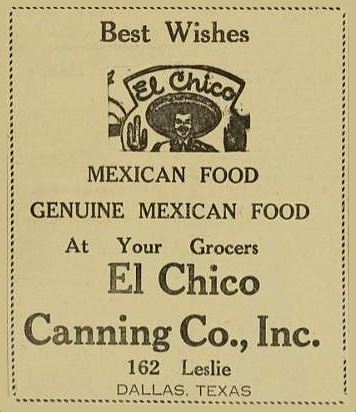
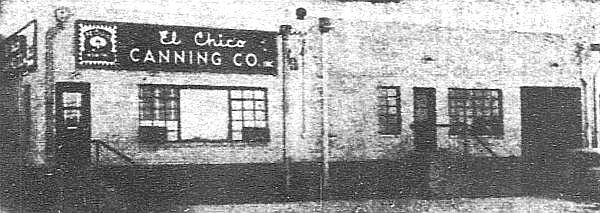
At the end of 1949, the Cuellars decided to begin manufacturing canned food products, with the aim to sell Tex-Mex staples nationally under the label “El Chico Foods.” The new factory was located at 162 Leslie St., in the then-pretty-new Trinity Industrial District. (They later moved waaaaaaaaaaay up north, to 1925 Valley View Lane.)

el-chico-canning-coEl Chico Canning Co., 162 Leslie St., Dallas

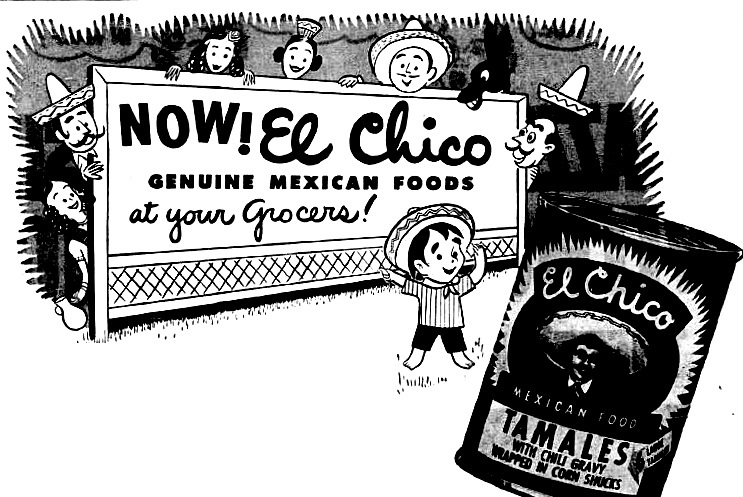
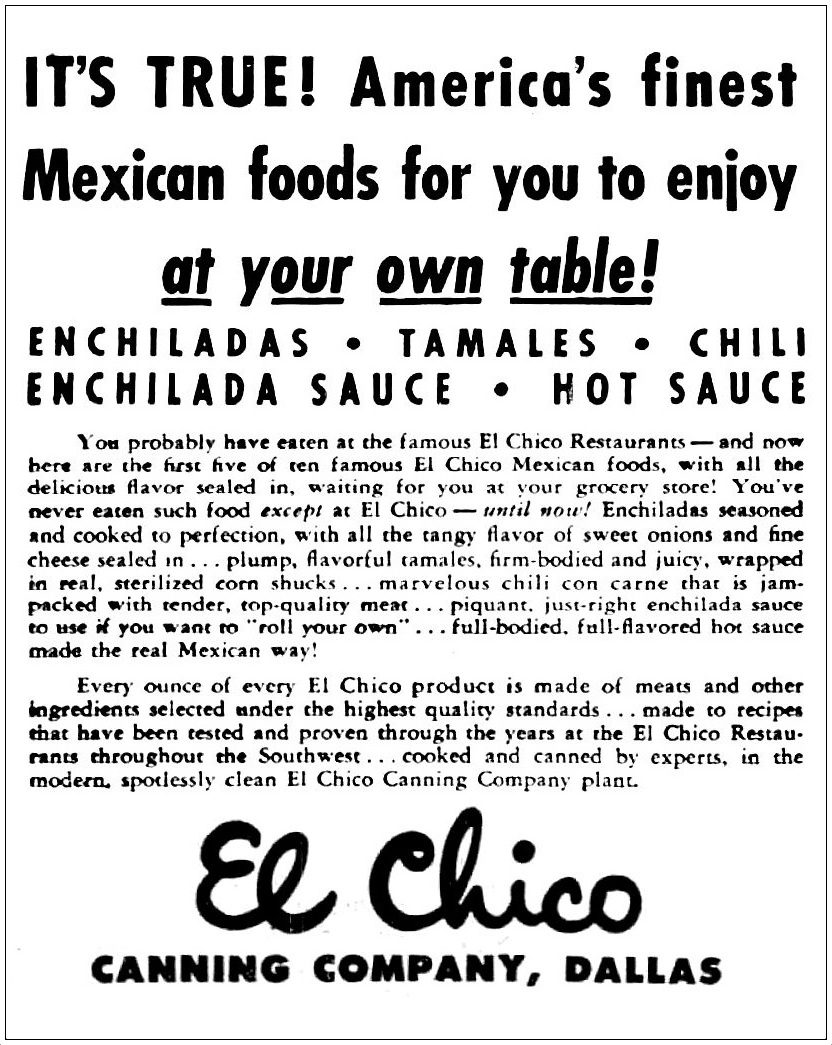
El Chico canned foods began to show up in DFW grocery stores in March 1950. Make way for canned chili, enchiladas, tamales (in corn husks), enchilada sauce, and hot sauce.

1950_canning-co_FWST_031750_det-1

1950_canning-co_FWST_031750-det-2Fort Worth Star-Telegram, Mar. 17, 1950

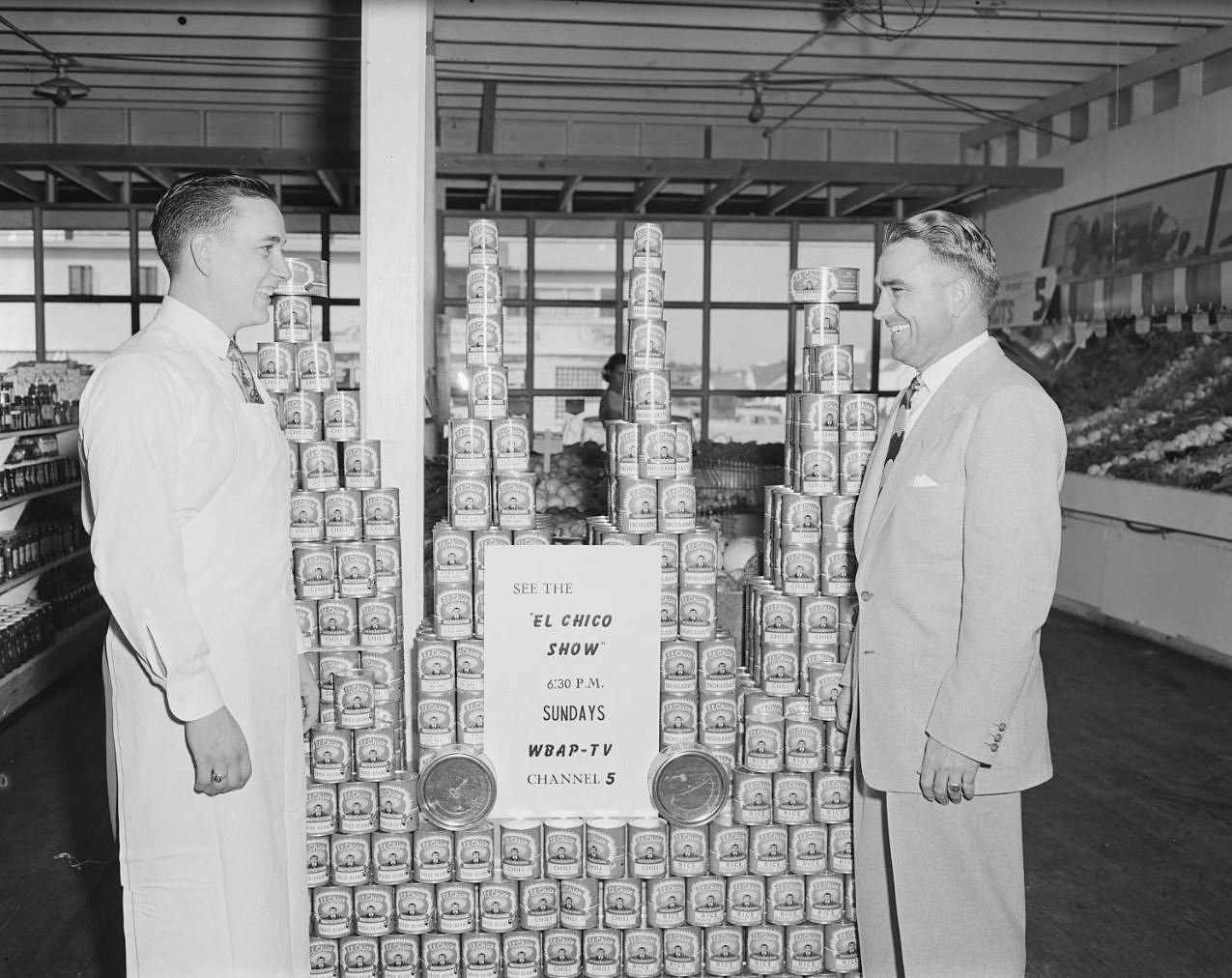
Soon to follow were other foods, including the mystifying canned tortillas — thanks to the photo below, I now know that it was possible to buy tortillas in a can, which was opened with a key. Just like Spam, or a canned ham. (Not sure what the “El Chico Show” was, but apparently it was broadcast on Channel 5 — at least in October 1950.)

el-chico_canned-products_KXAS-NBC-5-collection_102450_portalOctober 1950, via Portal to Texas History

Business boomed! After only 9 months, production tripled. After 2 years El Chico canned foods were in more than 30 states.

But in March 1953, the Cuellar family was sued in federal court for copyright infringement by a man named Benito Collada who owned a well-known nightclub in Greenwich Village called “El Chico,” a name he copyrighted in 1931. He demanded that the Cuellars change the name of their restaurants and their canned foods. The judge handed down an unusual verdict in which both sides were able to claim partial victory (or partial loss): the Cuellars were allowed to keep “El Chico” as the name of their restaurants, but they had to bid adios to the name on their canned foods.

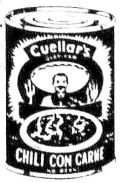
The company regrouped and rebranded. The name of their Tex-Mex products became “Cuellar’s,” and the label even came with a pronunciation guide: “QUAY-YAR.”

cuellar-chili

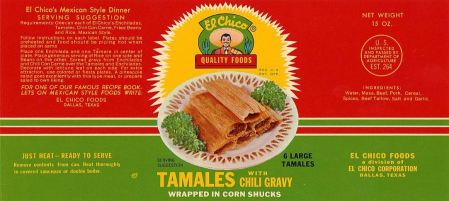
Apparently, sales dropped. Steeply. The Cuellars fought their way through the appeals process, determined to retain the “El Chico” name on their manufactured foods, and, in September 1954 they won the right to once again sell canned foods under the El Chico brand.

el-chico_canned-tamales_label_smithsonian

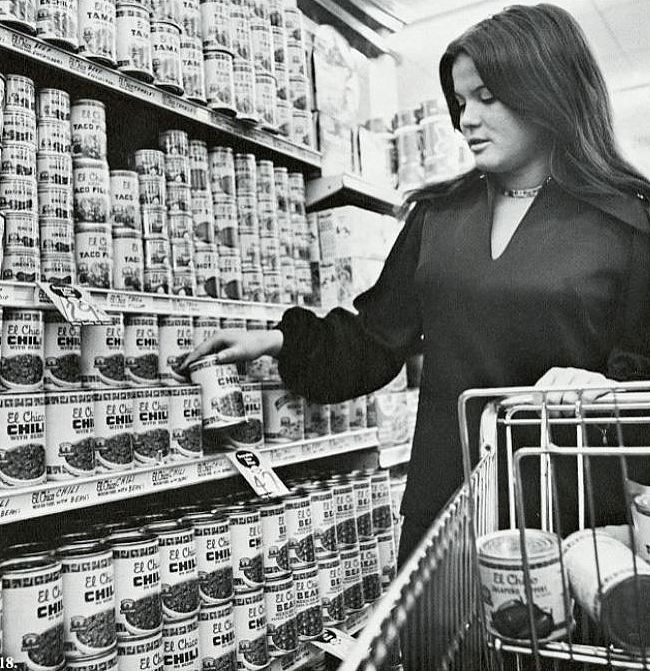
Sales really increased when they added frozen dinners to their line — their factory on Leslie Street installed a huge freezing system — they were able to freeze 6,000 frozen dinners at a time in 90 minutes.

el-chico_frozen_smithsonianvia Smithsonian Institution

el-chico_shopper_shelves_smithsonianvia Smithsonian Institution

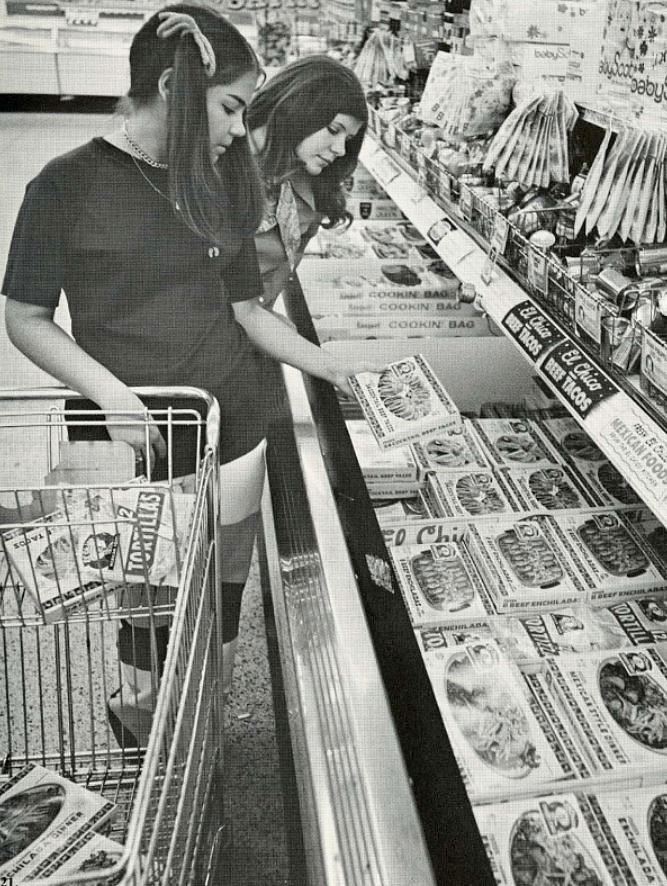
el-chico_shoppers_frozen_smithsonianvia Smithsonian Institution

Along with the typical frozen dinners you’d expect, El Chico also sold frozen tortillas. In the photo above, there is a box of frozen tortillas in the shopping cart and in the freezer case. As I recall, I think I liked the frozen Mexican dinners as a kid, but frozen tortillas and tortillas in a can sound equally unappealing.

The frozen dinners ultimately took over the manufacturing side of Cuellar foods, and at some point, the canned products eventually faded away. As I said, I remember the frozen dinners, but I don’t remember the canned foods at all. But I find them so interesting that that they are going to get their very own post — check out that post here.

***

Sources & Notes

Top (cropped) image is from the Frank Cuellar Sr. Collection, University of North Texas Special Libraries Collection, Portal of Texas History, and can be found here (the full collection may be browsed here).

Several images in this post are from the Smithsonian Institution’s “Guide to the El Chico Restaurants Collection.”

Read a good history of the Cuellar empire in “The Family Who Sold Tex-Mex to America” by Nancy Nichols, D Magazine (Nov. 2013).

So. “enchimales.” I did a quick search on the word and found mentions back to 1934 for a cafe selling something with this name in Shreveport. For all I know, this is a traditional Mexican dish which I’ve just never heard of. BUT, I wonder whether any actual Mexican-related dish would bear any resemblance to the enchimales recipe devised by Mrs. Vincent Katzenberger of Garfield, Washington which appeared in Spokane’s Spokesman-Review newspaper? It was the 14th-place (!) winner in the “Meltin’ Pot” international cooking competition. Here’s a short synopsis of Mrs. Katzenberger’s dish, which is made like enchiladas: in a tortilla, place a filling of onions, cheddar cheese, and a can of olives (all of which has been passed through a meat grinder) — on top of that filling, plop one canned tamale; roll up this filled tortilla and place it in a baking dish; repeat a dozen or so times; cover everything with tamale sauce; bake; when done, serve on a lettuce leaf and top with sprinkles of Parmesan cheese. The recipe is here. If you make this, please let me know how it came out.

enchimales_canned_introduced-1968_portal_det_sm

*

Copyright © 2023 Paula Bosse. All Rights Reserved.
From the Vault: Restaurant Week

coffee-room_adolphus_tea-and-coffee-trade-journal_march-1919_photoThe Adolphus lunch counter awaits…

by Paula Bosse

I’ve been a bit too busy to write anything recently, so I’ve taken the lazy way out and posted links to old posts on my Facebook and Twitter feeds. This week I’ve shared links of Flashback Dallas posts on a theme: restaurants (and a bar…). I enjoyed reading them again — you might, too. Here are they are.

*

“THE ADOLPHUS HOTEL’S ‘COFFEE ROOM’ — 1919” (from 2018)

Take a look at the Adolphus Lunch Room (and its cuspidor) in the photo above. This was at a time when the world was about to have to readjust to life during Prohibition — bars were out, coffee and tea rooms were in.

After sharing this photo on Facebook — a photo from 1919 — a reader commented that it pre-dated Prohibition (the national crackdown came in January 1920). But Dallas County had voted to go “dry” in October 1917, jumping the gun before most other places. But only Dallas County. In 1917, the surrounding counties were wide open, and bars just across the county line were more than eager to take gobs of money from the flood of Dallas’ beer- and whiskey-seekers, while prim and proper Dallas teetotalers (who apparently really knew how to get the vote out) sipped daintily on their tea and coffee. Before Prohibition went into effect in Dallas (Oct. 21, 1917) there were 183 bars listed in the city directory — the following year, there were none. I wrote about a poor guy who went into the bar business in Big D at exactly the wrong dang time.

“THE 101 BAR: PATRICK HANNON, PROP. — ca. 1917” (2016)

101-bar_ca-1917

*

“SCHOOL LUNCHES OF YESTERYEAR” (2015)

Lunch ladies, school menus, tongue salad. The school menu in the 1920s and ’30s was loaded with unusual and/or unappetizing “food.”

lunch-ladies_frontier-top-tier_dpl

*

“ROTH’S, FORT WORTH AVENUE” (2017)

Read about the long-lived Roth’s, which opened in Oak Cliff along Fort Worth Avenue around 1940 by a Hungarian immigrant who had a very, very interesting family.

roths_cook-collection_smu

*

“ROSS GRAVES’ CAFE: 1800 JACKSON — 1947” (2021)

Cafe owner Ross Graves was a busy, busy man. Check out this post about his active and “swellegant” career.

graves-cafe_marion-butts_dpl_1947_cashier

*

“‘CARHOPS’ — A SHORT DOCUMENTARY, ca. 1974” (2015)

You can’t have “Restaurant Week” without mentioning the fabulous drive-ins. I encourage everyone reading this to watch the short documentary linked in this post (it’s a mere 14 minutes long!). “Carhops” was filmed in the early 1970s and contains interviews with J. D. Sivils (Sivils), Jack Keller (Keller’s), and B. J. Kirby (owner of Kirby’s Steakhouse, and son of drive-in entrepreneur Jesse Kirby who founded what many consider the very first drive-in — with the very first carhops — the Pig Stand). Watching this wonderful piece of cultural history, I am reminded how much I continue to grieve the loss of the once-common, so-thick-it-hurts Dallas accent. RIP, twang.

carhops_title

***

Sources & Notes

See each original post for image credits.

If you would like to follow me on social media, I am on Facebook and Twitter and Instagram.

coffee-room_adolphus_tea-and-coffee-trade-journal_march-1919_photo_sm

*

Copyright © 2023 Paula Bosse. All Rights Reserved.