Flashback : Dallas

A Miscellany: History, Ads, Pop Culture

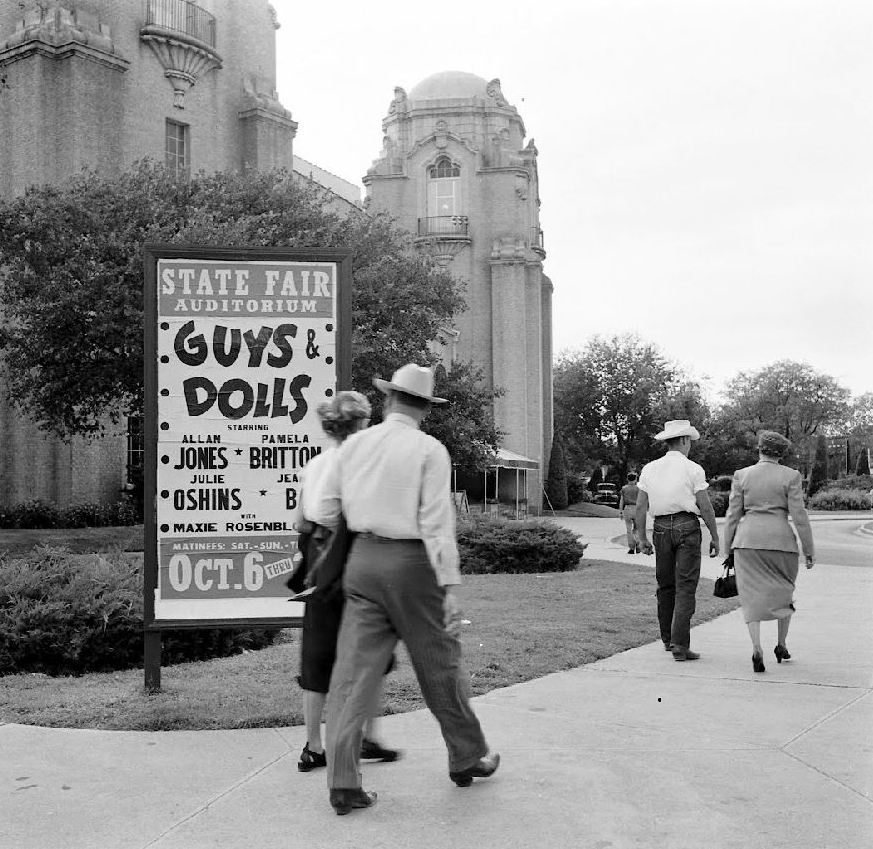
“Guys and Dolls” at the State Fair Music Hall — 1951

sfot_guys-and-dolls_music-hall_1951_john-dominis_life-mag
Wearing the *dress* boots… (photo: John Dominis, © Time, Inc.)

by Paula Bosse

This is the most Texans-going-to-the-theater photo I’ve ever seen.

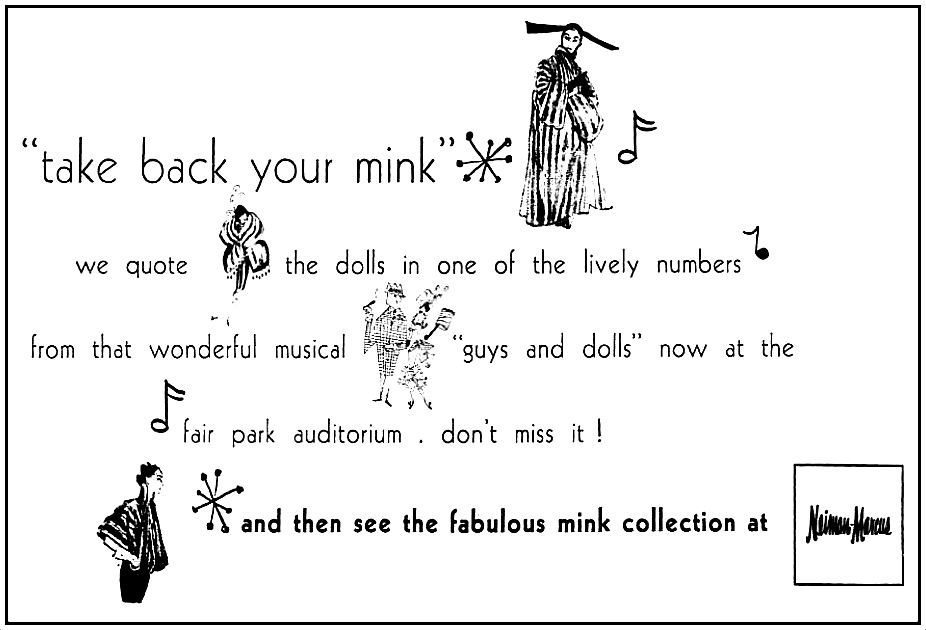
And this is the most Texans-selling-minks ad I’ve ever seen:

neiman-marcus_ad_guys-and-dolls_oct-1951

***

Sources and Notes

Photo by John Dominis, taken in October, 1951 on assignment for Life magazine, ©Time, Inc.; more info is here.

Neiman-Marcus ad is also from October, 1951.

“Take Back Your Mink” is a song from “Guys and Dolls” (hear it here), the musical that played during the 1951 State Fair of Texas, starring Pamela Britton, Allan Jones, Jeanne Ball, and Slapsie  Maxie Rosenbloom.

sfot_guys-and-dolls_music-hall_1951_john-dominis_life-mag_sm

*

Copyright © 2020 Paula Bosse. All Rights Reserved.

The Southland Center: Mid-Century Cool — 1959

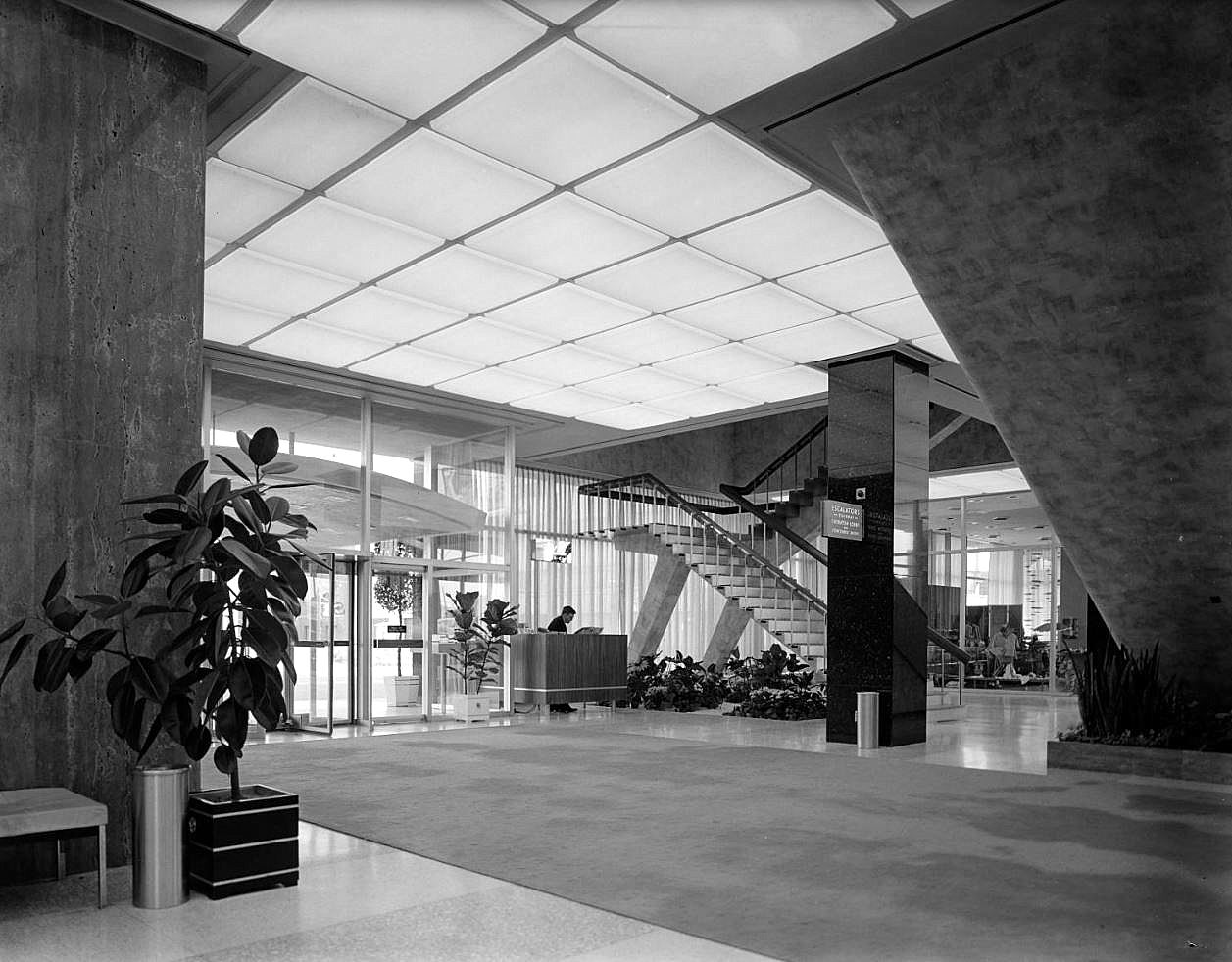
southland-ctr_john-rogers_1959-60_portal_interior-lobby_stairsWelcome.… (photo by John Rogers, via the Portal to Texas History)

by Paula Bosse

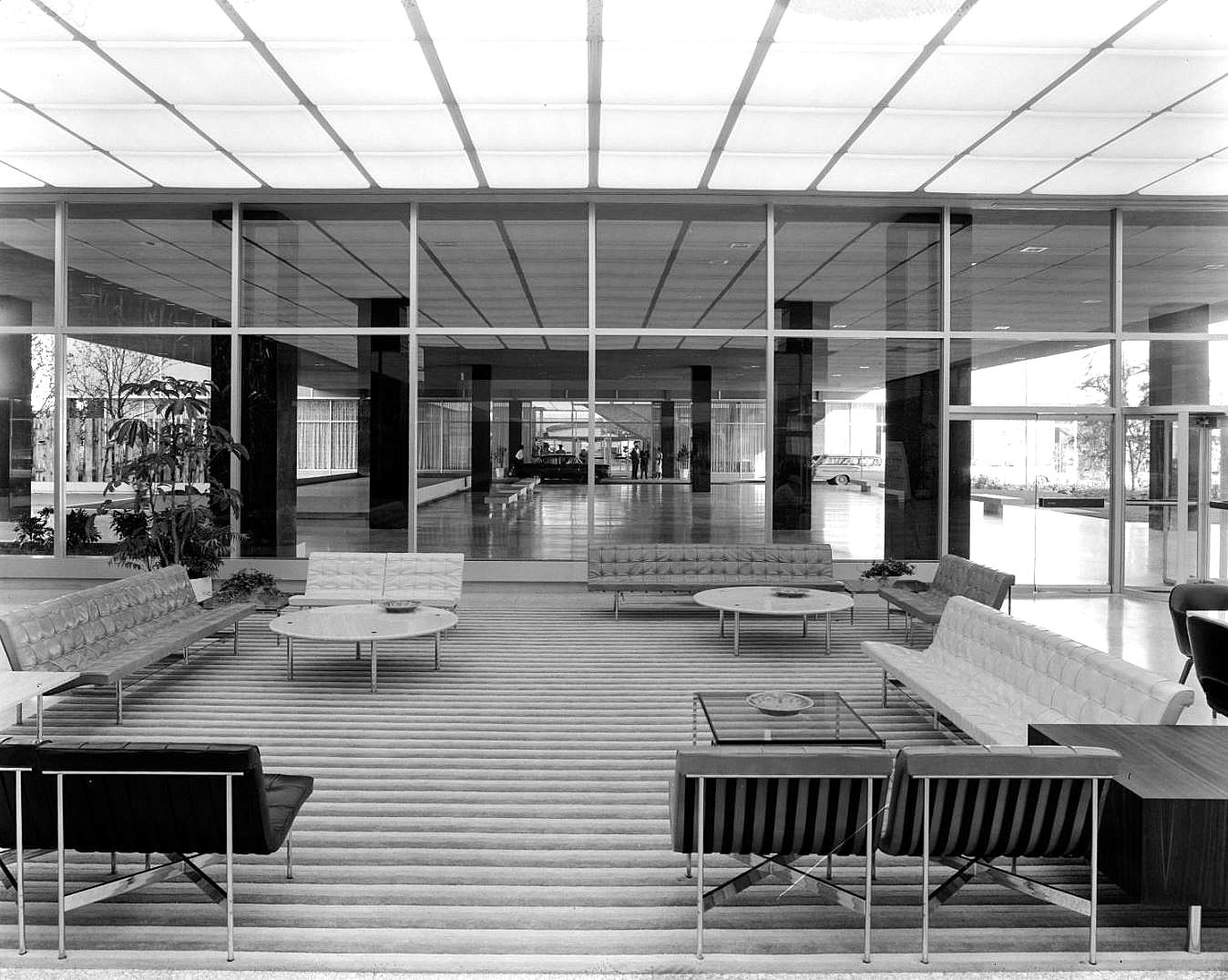
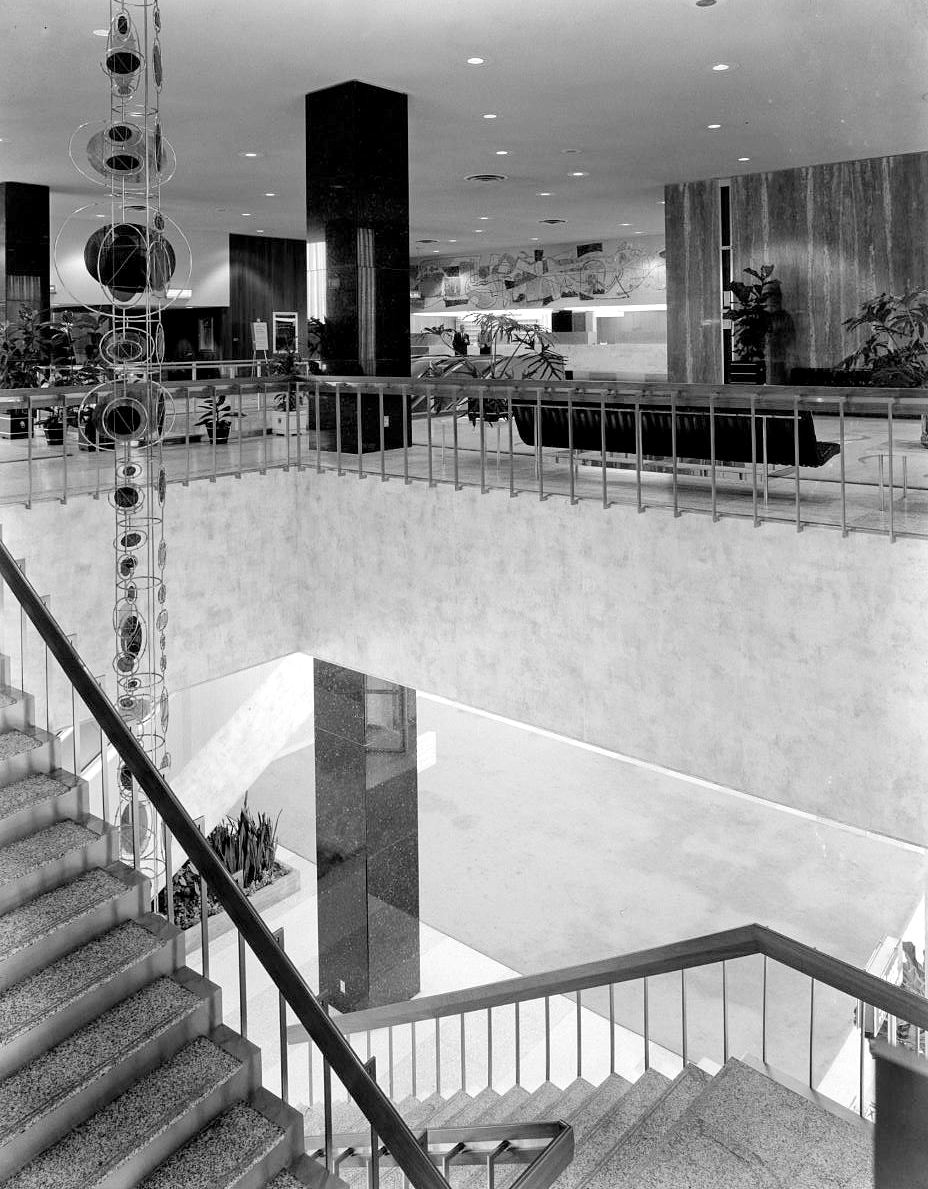
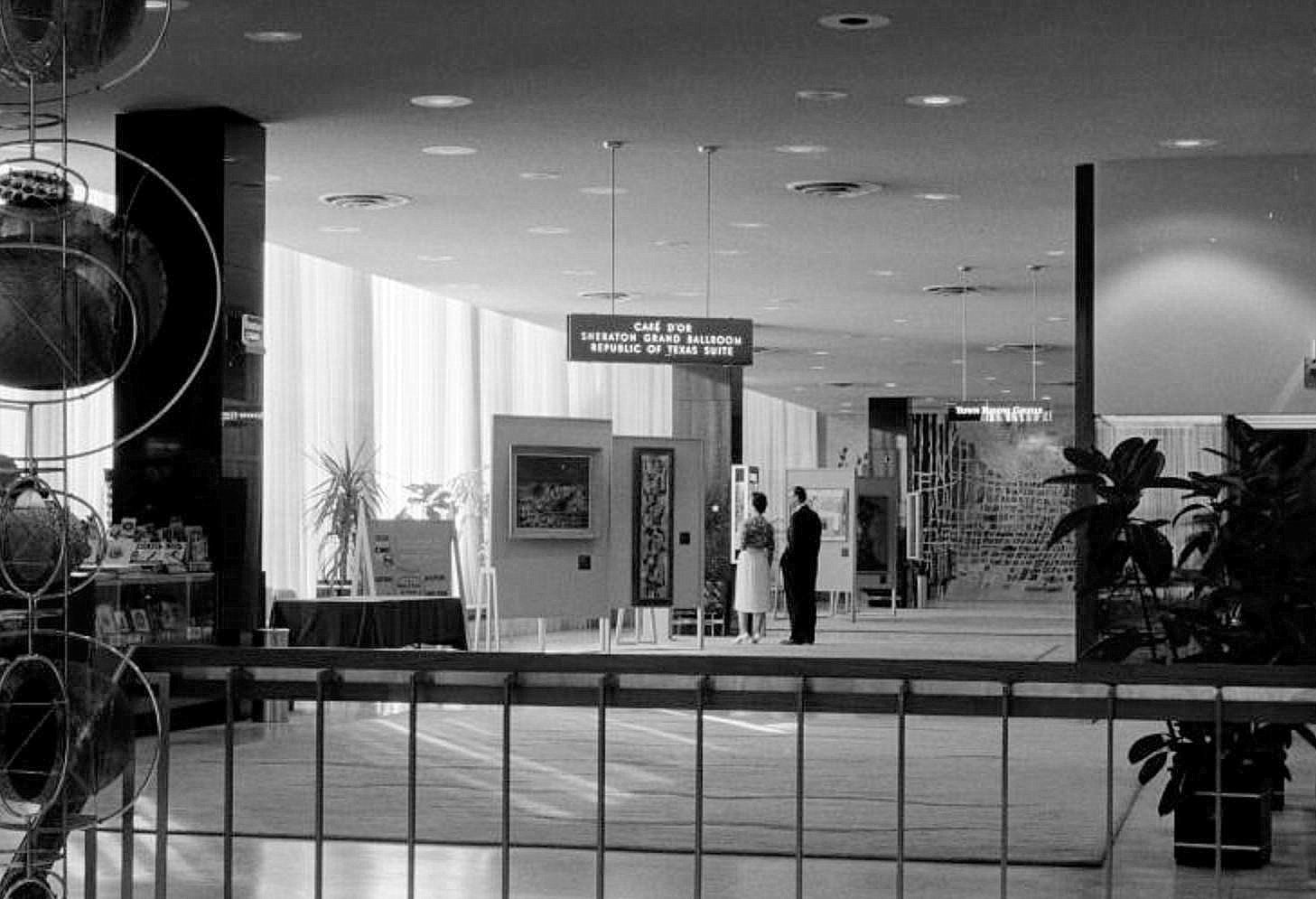
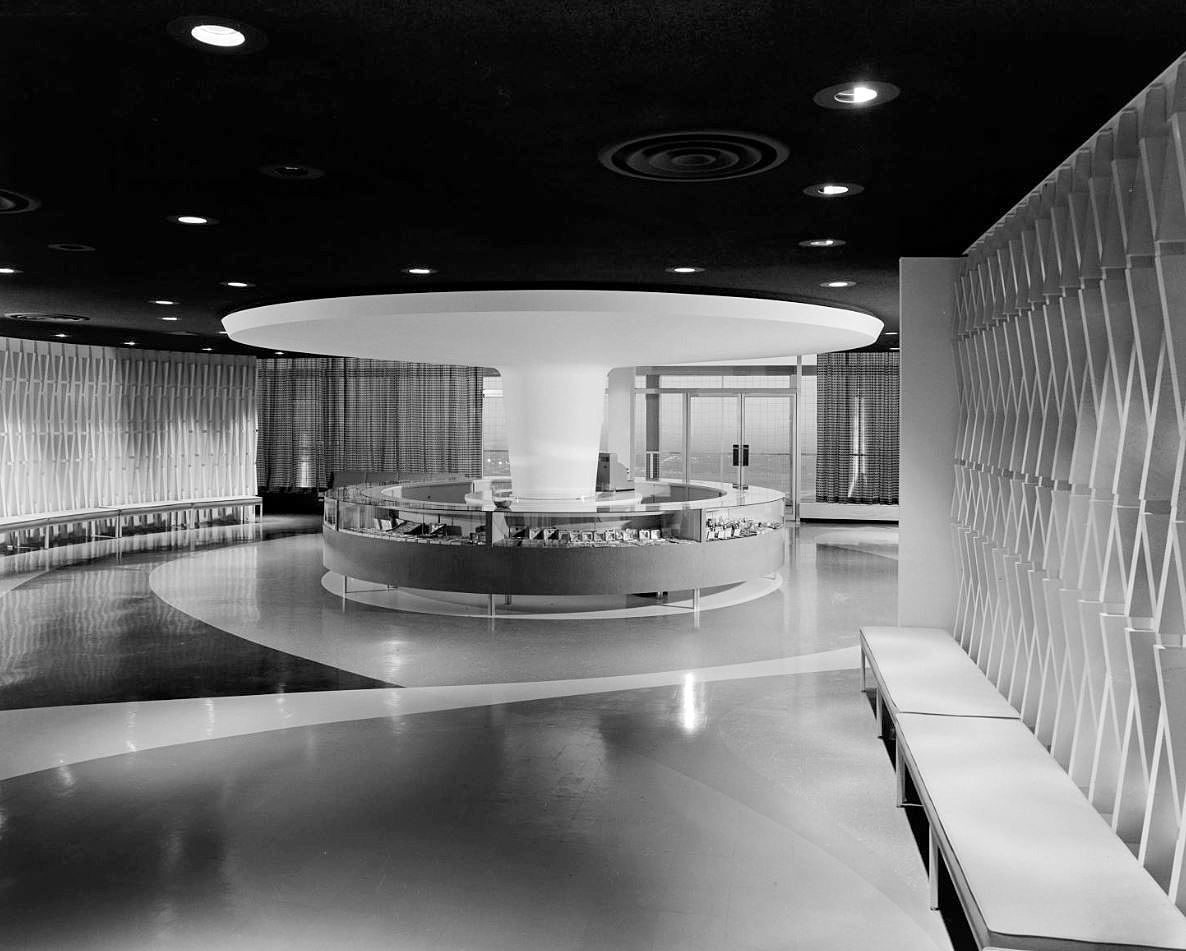
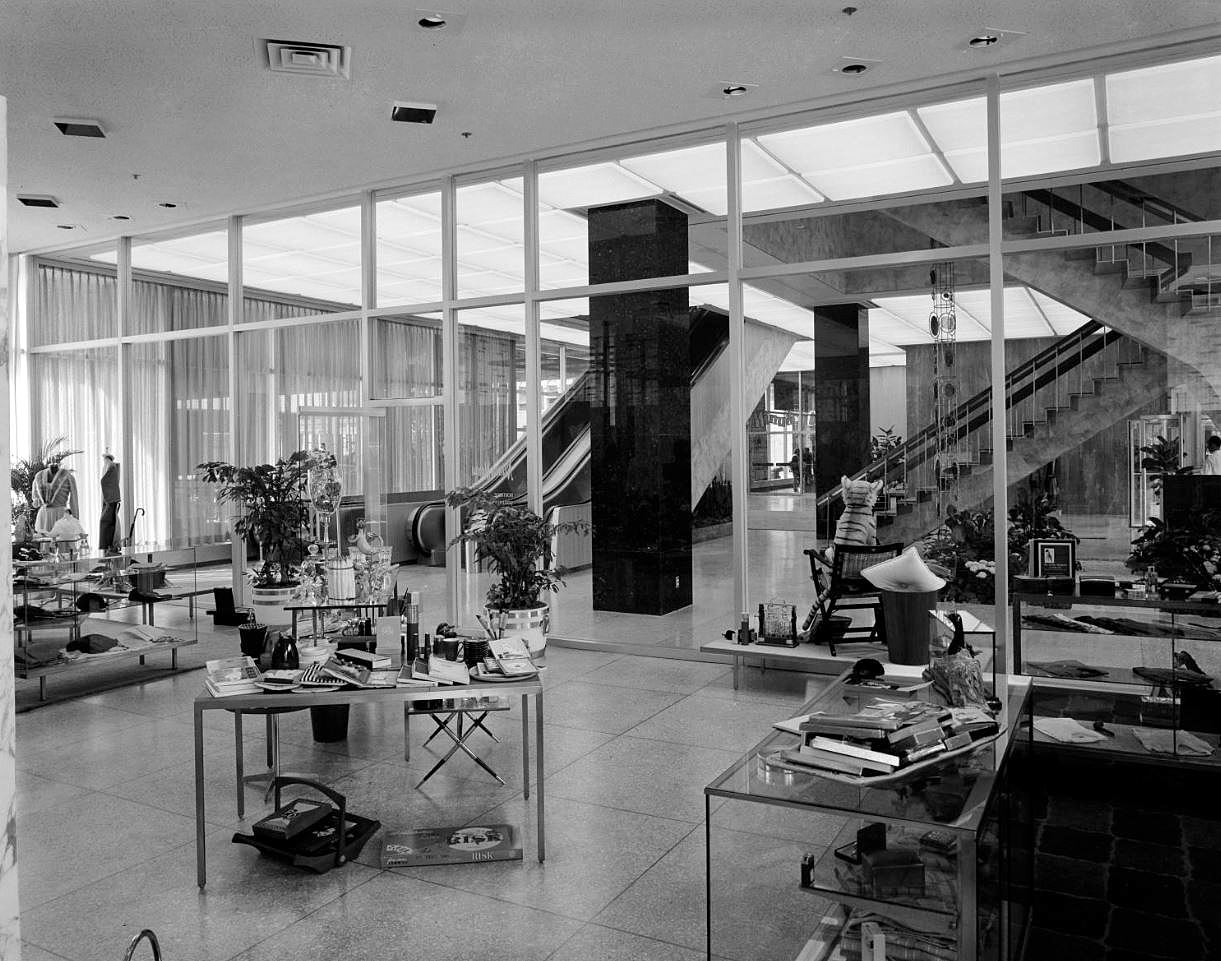
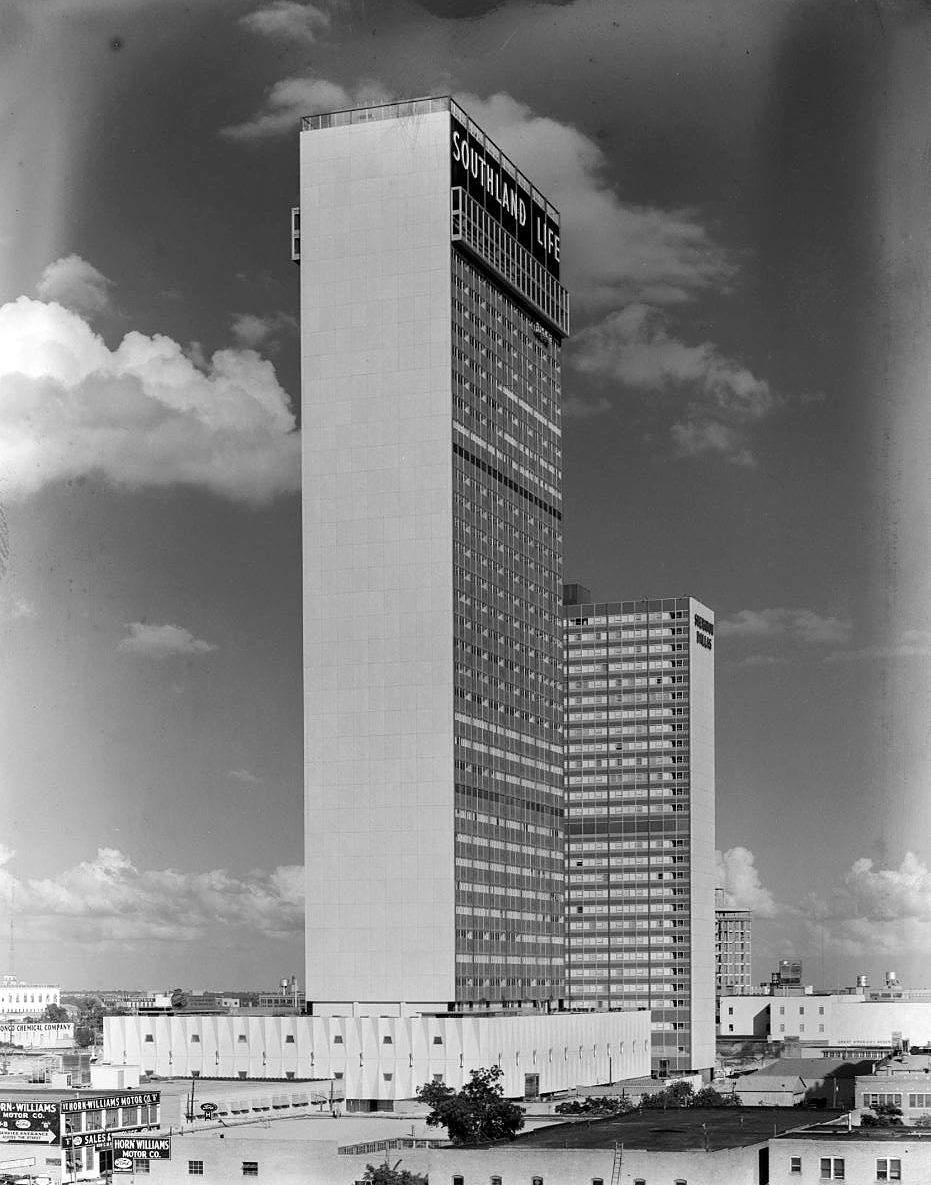
When it opened in 1959, the Southland Center (the Southland Life Building and the Sheraton Dallas hotel) boasted the tallest building west of the Mississippi. It was obviously a huge, multi-million-dollar construction project, but it was also a very costly decor project in which no expense was spared on the interior design of the buildings. An admirable amount of attention was paid to artistic elements such as site-specific commissioned artwork, and input from artists and designers was welcomed. It was an interior decorator’s dream job in which absolutely everything was NEW and modern. I love this period of design. Here are a few photos from the new Southland Center which I could look at all day.

I love all the glass and the sharp, crisp lines of the furniture. (All photos are by John Rogers — see the link below each photo to go to its Portal to Texas History page where you can zoom in and see details more clearly.)

southland-ctr_john-rogers_1959-60_portal_floor-lobbyvia Portal to Texas History

This is a fantastic shot  — you can see a couple of the commissioned artworks. At the left, extending from the ceiling of the second-floor lobby of the Sheraton to the ground floor is a “stamobile” kinetic sculpture titled “Totem” by Richard Filipowski. In the background at the top center of the photo, above the registration desk, is a Venetian-glass-and-broken-marble mural by Lumen Martin Winter.

southland-ctr_john-rogers_1959-60_portal_interior-with-stairsvia Portal to Texas History

Speaking of art, another commissioned work can be seen in this detail of a photo: at the back, barely seen, is “Texas Sunburst,” a glass-tile mosaic mural by Gyorgy Kepes with additional work by Robert Preusser, located on the second-floor lounge concourse. Kepes designed the vibrant tile mosaic on the St. Jude Chapel downtown (the recent restoration of which I wrote about here), and he was also a contributor another wonderful mid-century architectural landmark in Dallas, Temple Emanu-El. (I spotted a brief glimpse of a bit of this Sheraton mural in color in a WFAA clip from June, 1974 in a story about, of all things, an ESP convention.)

southland-ctr_john-rogers_1959-60_portal_stairs-escalators_kepes-detvia Portal to Texas History

Here’s a jewelry kiosk, which is sort of Deco-futuristic — like something you’d see in a 1930s movie set on a spaceship. (Is that the “rocket” of the Republic Bank Building seen outside the window at the right? It was practically right next door, as seen in this photo.)

southland-ctr_john-rogers_1959-60_portal_jewely-vendorvia Portal to Texas History

This shows a couple of ground-level retail shops, with more wonderful floor-to-ceiling glass “walls” (the glass-cleaning must have been an ongoing nightmare!). If you needed a stuffed tiger toy, a game of Risk, paint brushes, or stationery… this shop was made for you. (In the background is the entrance to the Minute Chef, an informal restaurant which also featured original artwork by Gyorgy Kepes.)

southland-ctr_john-rogers_1959-60_portal_ground-floor-stairs-shopvia Portal to Texas History

And, lastly, a shot of the neighboring Southland Center towers, high above everything else on the edge of downtown.

southland-ctr_john-rogers_1959-60_portal_southland-life-skyscraper-and-sheratonvia Portal to Texas History

***

Sources & Notes

All photos are by John Rogers, from the John Rogers and Georgette de Bruchard Collection, provided to the Portal to Texas History by the UNT Libraries Special Collections, University of North Texas; see all 25 of Rogers’ photos of the Southland Center, taken in 1959/1960, here.

See a list of the permanent art as well as exhibited art at the Southland Life Building/Sheraton Dallas in the scanned 1959 catalog “Made in Texas by Texans.”

See photos of the Southland Center under construction in the Flashback Dallas post “On Top of the World: The Southland Center.”

southland-ctr_john-rogers_1959-60_portal_interior-lobby_stairs_sm

*

Copyright © 2020 Paula Bosse. All Rights Reserved.

Lamar, South from Pacific — ca. 1902

lamar_south-from-pacific_katy-flyer_martinez-cigars_ca-1902_degolyer_SMUSaloons and cigars… (click for larger image)

by Paula Bosse

Above, Lamar Street, looking south from Pacific Avenue; a notation on the back of the photo reads “about 1902.” The intersection straight ahead is Elm Street, then a jog, before it continues south to Main and Commerce. (See what this view looks like today, here.)

The business seen at the left (northeast corner of Elm and Lamar) is P. P. Martinez (the popular cigar retailer, wholesaler, and, I think, manufacturer, whom I hope to write about someday); the business at the right (northwest corner of Elm and Lamar) is Sam Freshman, a liquor wholesaler (his store entrance was on Elm, and his saloon entrance was on Lamar). Across Elm (southeast corner,) at the left, is E. M. Kahn, men’s clothiers (“Kahn” rhymes with “can”). Sanger Bros. was at the southwest corner and is either obscured or not clearly visible. The old Dallas Morning News building can be seen further south, on the right, at the northwest corner of Commerce and Lamar.

A look at the 1902 Dallas directory shows these types of businesses with Lamar addresses, between Pacific and Elm:

4-Saloons
3-Restaurants
3-Barbers (one of which had a want-ad for a “good lady barber”)
1-Newsstand
1-Tailor
1-Shoemaker

A busy little block.

See this intersection in 1905 Sanborn maps here and here.

*

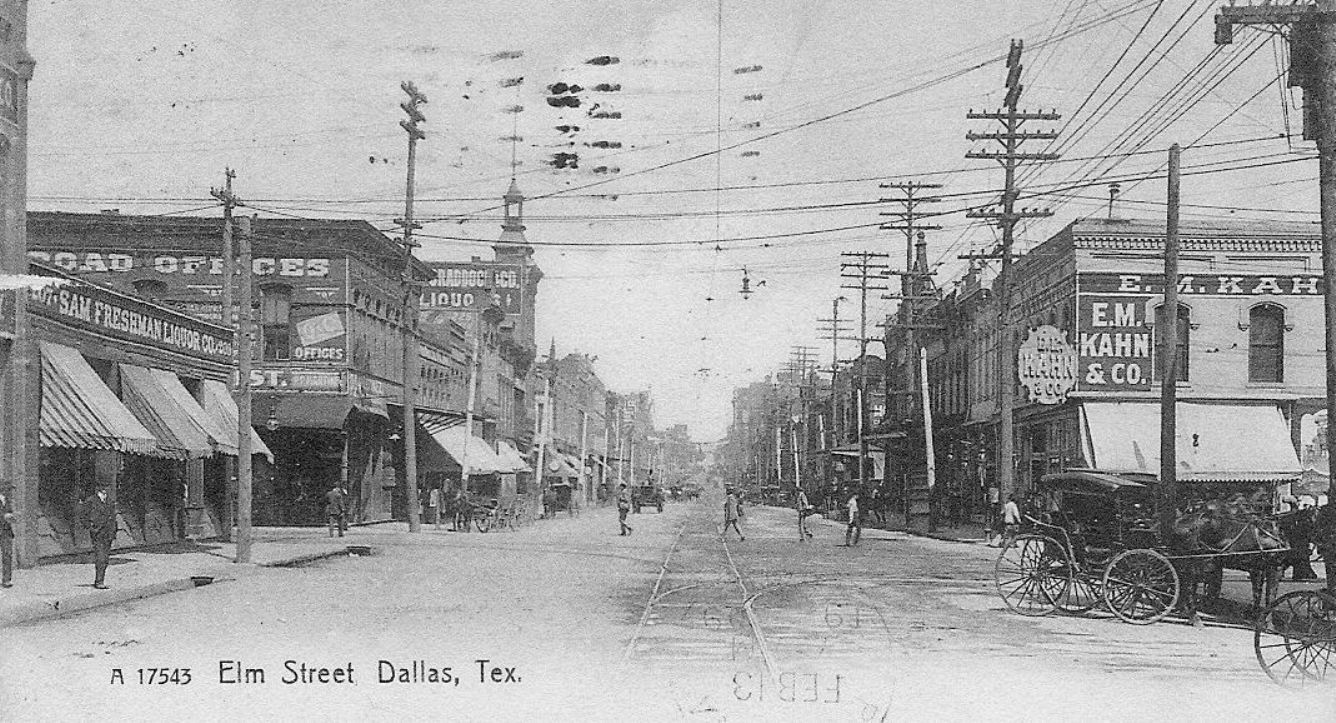
Below is a photo showing Elm Street looking east, with Sam Freshman’s store seen at the left and E. M. Kahn & Co. at the right (this postcard is postmarked 1909):

elm-street_postcard-1909-lg

***

Sources & Notes

Top photo — “[Looking South on Lamar at Pacific; E.M. Kahn & Company is Visible at Southeast Corner of Elm and Lamar]” — is from the George A. McAfee Photographs collection, DeGolyer Library, SMU Libraries, Southern Methodist University; more info is here. (Farris Rookstool III sent an enhanced image, here. Thanks, Farris!)

Second image is a postcard (found on eBay) from the Flashback Dallas post “Elm Street — 1909.”

lamar_south-from-pacific_katy-flyer_martinez-cigars_ca-1902_degolyer_SMU_sm

*

Copyright © 2020 Paula Bosse. All Rights Reserved.

Interurban Miscellany

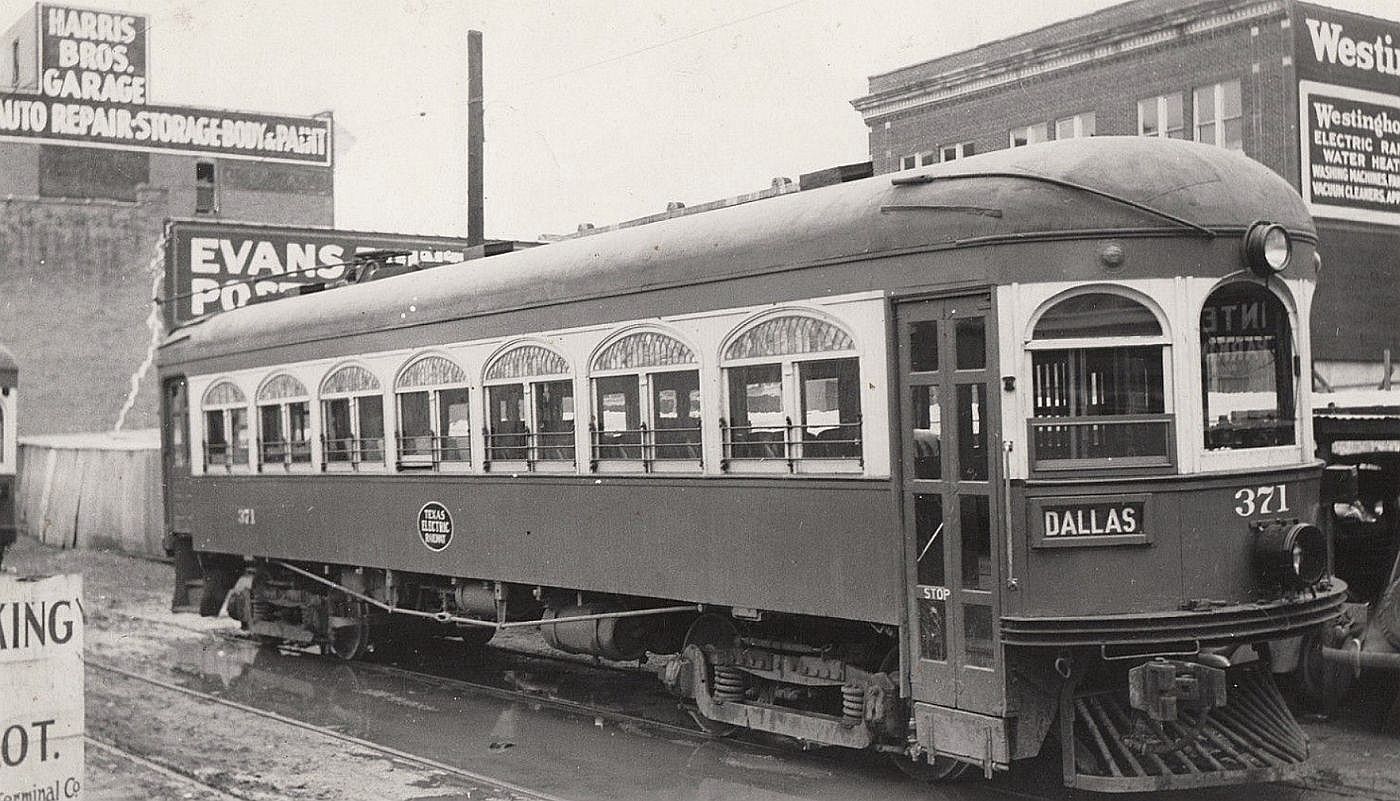
interurban_dallas_photo_ebay_redWooden, red… (click for larger image)

by Paula Bosse

Just a few miscellaneous photos from the days of the Interurban, the electric railway which ran through Dallas from 1908 to 1948.

The photograph above has the following written on the back: “The Texas Electric has a whole flock of fast interurbans. Most are steel and painted blue. This older wooden car is red and was used on the Dallas-Denison run. Dallas, Tex.”

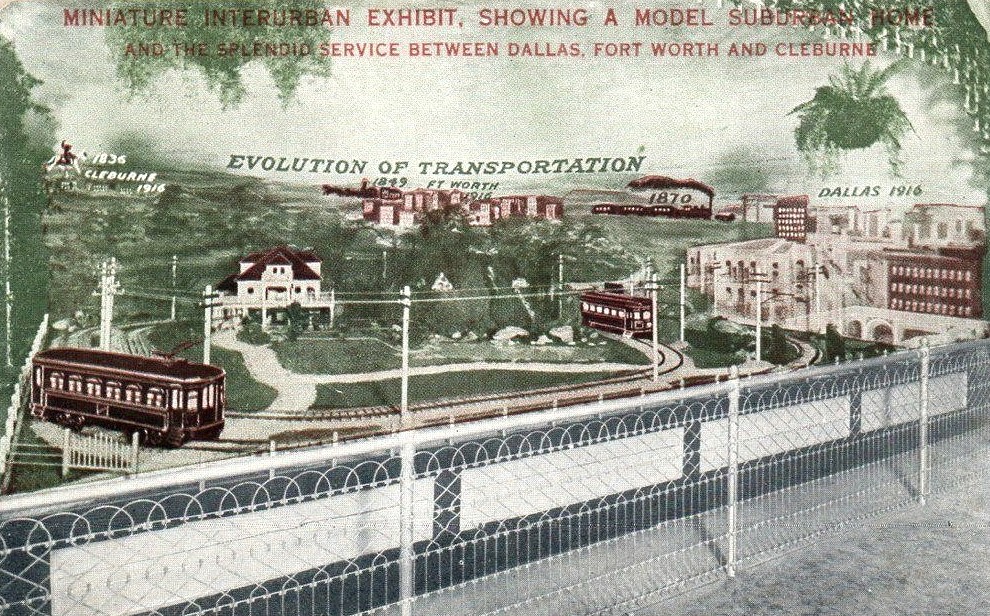
Below, “Evolution of Transportation,” a postcard featuring “Miniature Interurban Exhibit, Showing a Model Suburban Home and the Splendid Service Between Dallas, Fort Worth and Cleburne.”

interurban_evolution-of-transportation_postcard_ca-1916_ebayvia eBay

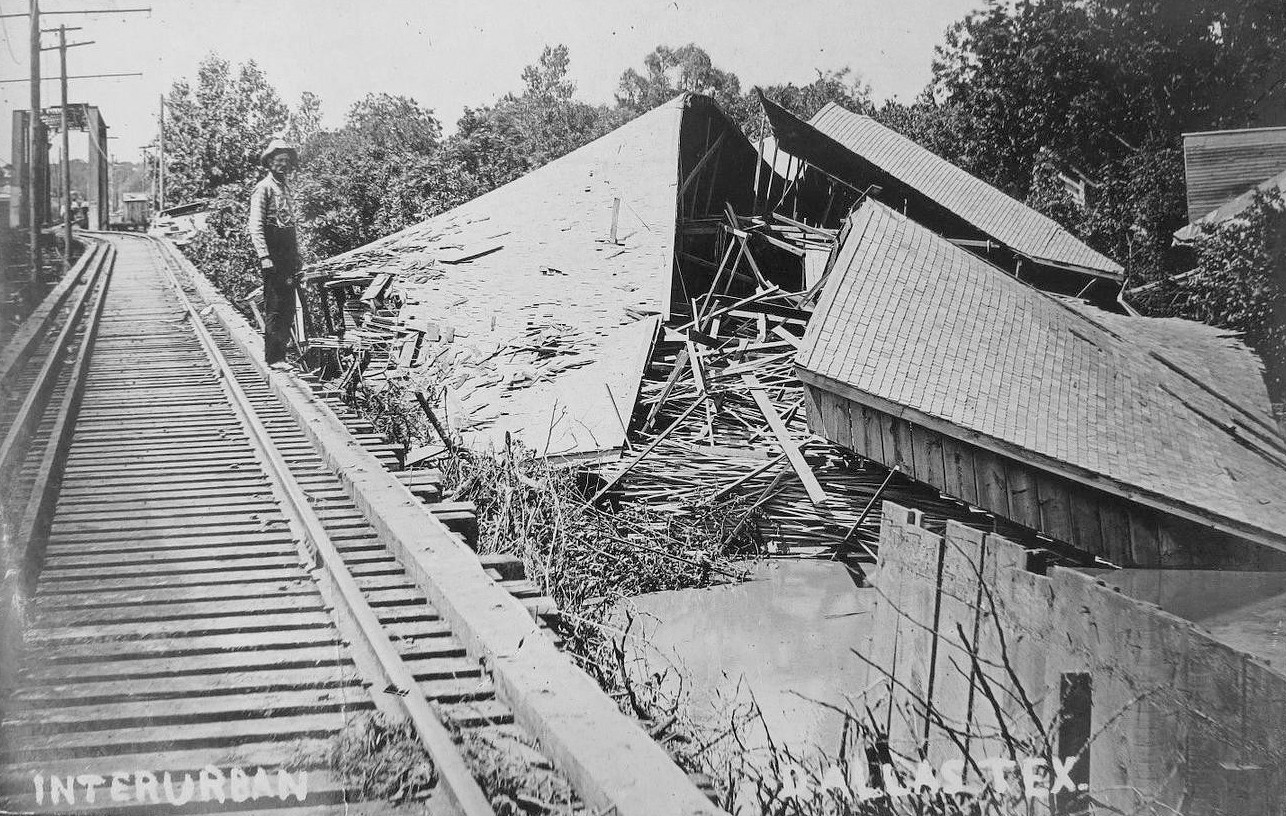
An Interurban mishap:

interurban_mishap_ebayvia eBay

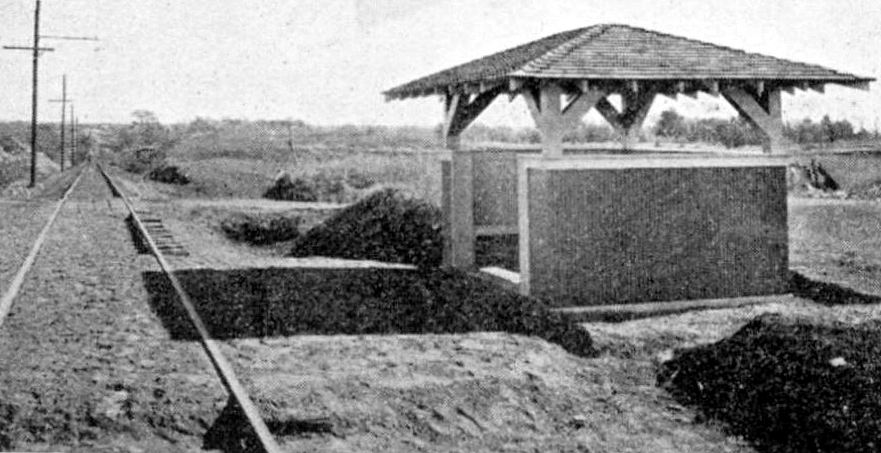
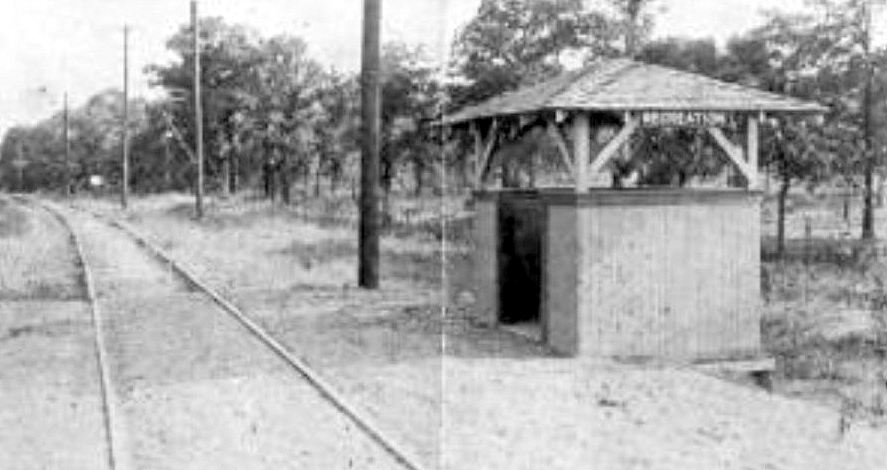
A couple of pleasant waiting-shelters, circa 1925:

interurban-stop_neighbors-pamphlet_portal_1925via Portal to Texas History

interurban-shelter_neighbors_1925via Portal to Texas History

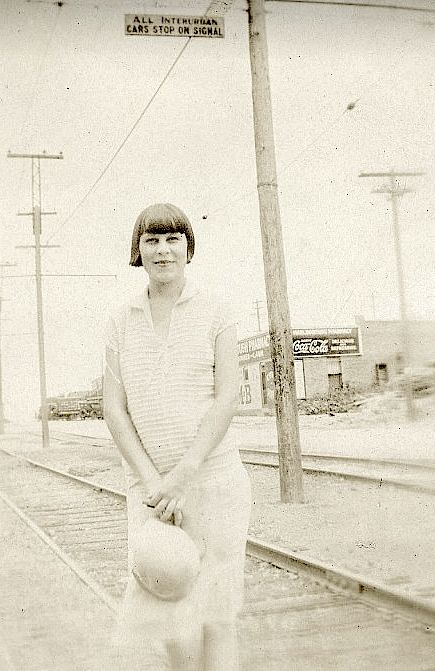
Another stop, with a sign (“ALL INTERURBAN CARS STOP ON SIGNAL”):

interurban-stop_flickr-lynneslensvia Lynne’s Lens Flickr photostream

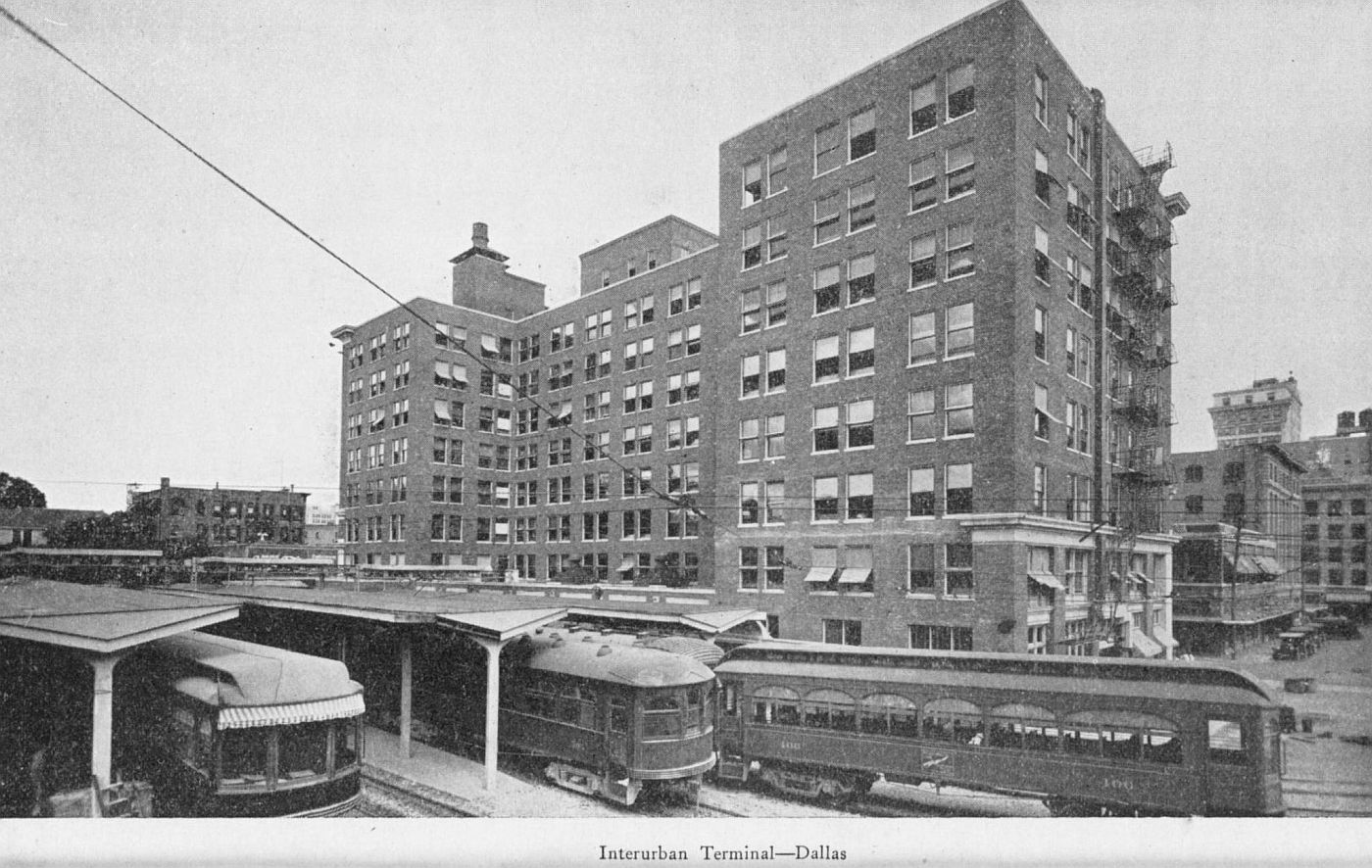
And the Interurban Terminal, downtown, ca. 1925 (located at 1500 Jackson St. at Browder, still standing, converted to residences):

interurban-terminal_1925_neighbors-pamphlet_portalvia Portal to Texas History

***

Sources & Notes

Top photo found on eBay. “Robert M. Hanft, Brainerd, Minn.” is printed on the back. Hanft (1914-2004) was a rail enthusiast and photographer — his obituary is here.

The Texas Interurban route connected with Dallas in 1908 and continued for 40 years until being discontinued in 1948. More at the Handbook of Texas here, and at Wikipedia here; a look at the stops can be seen in an illustration here.

Check out these two Interurban pamphlets with lots of great photographs, scanned in their entirety by UNT’s Portal to Texas History:

  • Making Neighbors of the People of Dallas and Kaufman Counties, and the Towns of Terrell, Forney, Mesquite and Dallas (20 pages, Texas Interurban Railway) — read it here.
  • Making Neighbors of the People of Dallas and Denton Counties, and the Towns of Denton, Garza, Lewisville, Carrollton, Farmers Branch and Dallas (24 pages, Texas Interurban Railway) — read it here.

More Flashback Dallas posts on the Interurban can be found here.

interurban_dallas_photo_ebay_red_sm

*

Copyright © 2020 Paula Bosse. All Rights Reserved.


A Few Photo Additions to Past Posts — #13

skyline_downtown-to-fair-park_1936_GE-colln_museum-of-innovation-and-scienceA blinding celebration of the Texas Centennial…

by Paula Bosse

Time again for a round-up of photos and various images I’ve come across recently and have added to old posts.

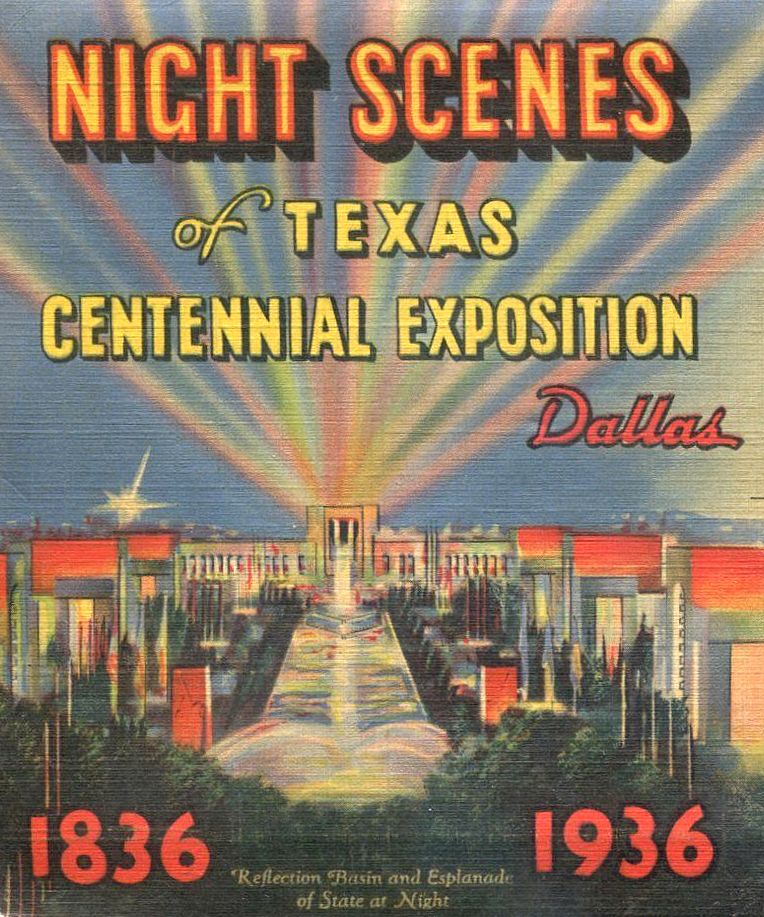
First, a photo I was really excited to stumble across — one I’ve never seen (above): a view of the blindingly bright bank of searchlights set up as part of the 1936 Texas Centennial celebration at Fair Park — this photo shows the lights (which were multi-colored and visible for at least 20 miles away) as seen from downtown Dallas. This is a fantastic photo, and one can understand why many visitors to the spectacular no-expense-spared Centennial cited the lights as the most impressive thing on display. I’ve added this photo (and the postcard image below) to a post all about electricity and the Pan-American Exposition (the extravaganza held the year following the Centennial, which used many of the same features): “Albert Einstein ‘Threw the Switch’ in New Jersey to Open the Pan-American Exposition in Dallas — 1937” (a post which features several other images of this amazing fan-shaped array of lights set up behind the Hall of State, as seen from the Esplanade and as seen from White Rock Lake). (Source of top photo, “New skyline at night, at Dallas, Texas,” from the GE Photo Collection, Museum of Innovation and Science — more information on this photo is here; color image found on eBay)

tx-centennial_night-scene_espalanade_hall-of-state_lights_ebay

*

This postcard of the Lake Cliff amusement park’s cafe and “circle swing” have been added to “Beautiful Lake Cliff — ca. 1906.” (Source: eBay)

*

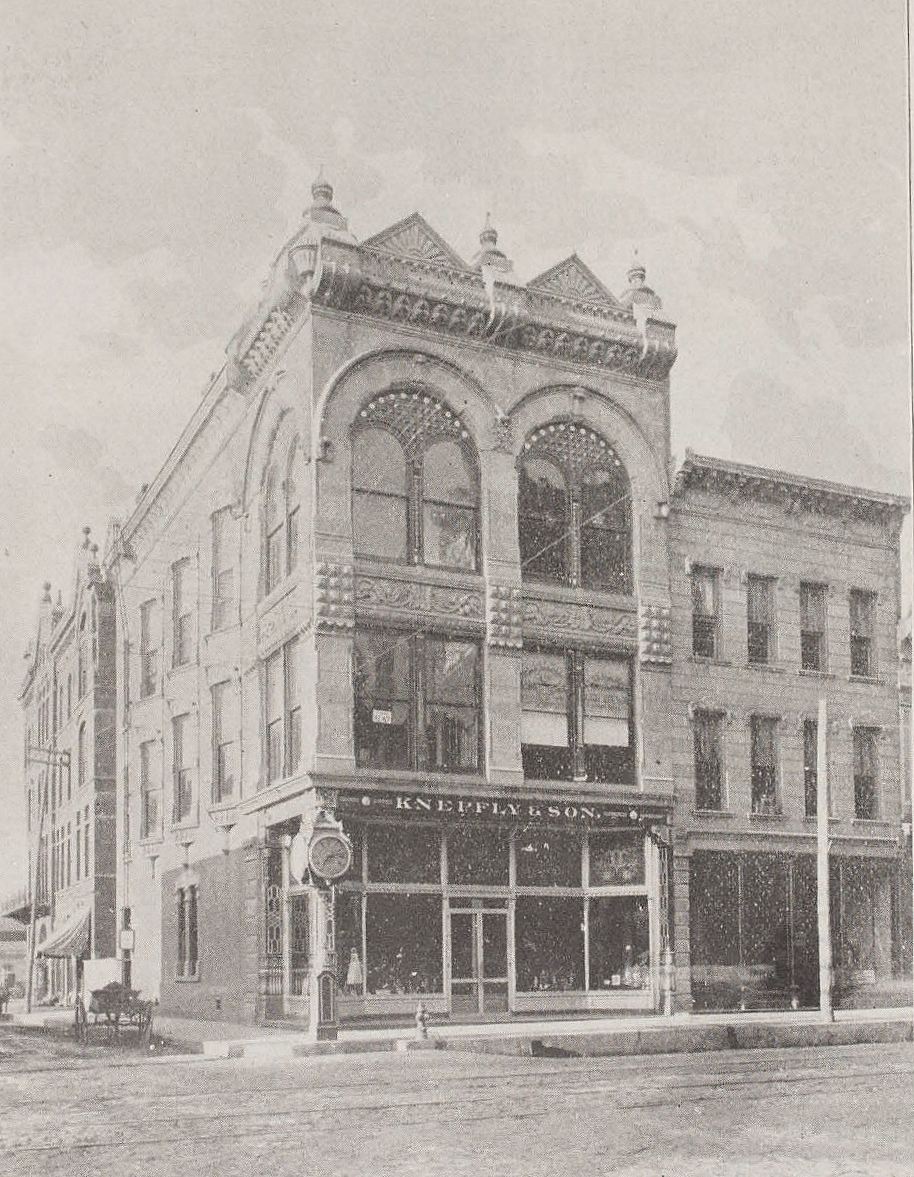
This photo of the Knepfly Building (Main and Poydras) has been added to the post “Labor Day Parade — 1911,” replacing a less interesting view of this building (in the post, I recount a story of young men jumping from the third floor to escape a fire — one of them survived, even though he landed on his feet!). (Source: DeGolyer Library, SMU)

knepfly-bldg_church_dallas-through-a-camera_ca-1894_SMU

*

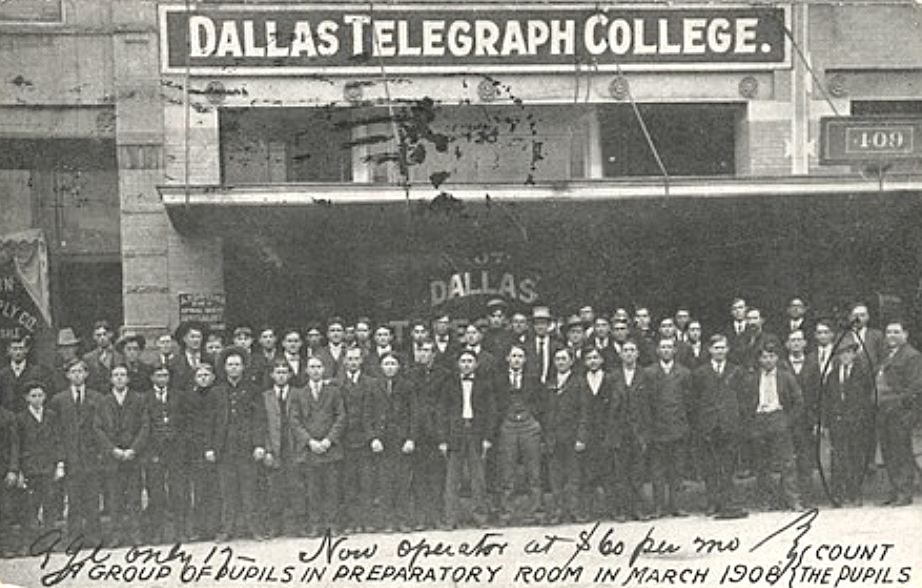
This 1908 photograph of a group of students standing outside the Dallas Telegraph College building has been added to the post “Start Your Brilliant Career at Dallas Telegraph College — c. 1900.” (Source: George W. Cook Dallas/Texas Image Collection, DeGolyer Library, SMU)

dallas-telegraph-college_1908_cook-coll_degolyer-lib_SMU

*

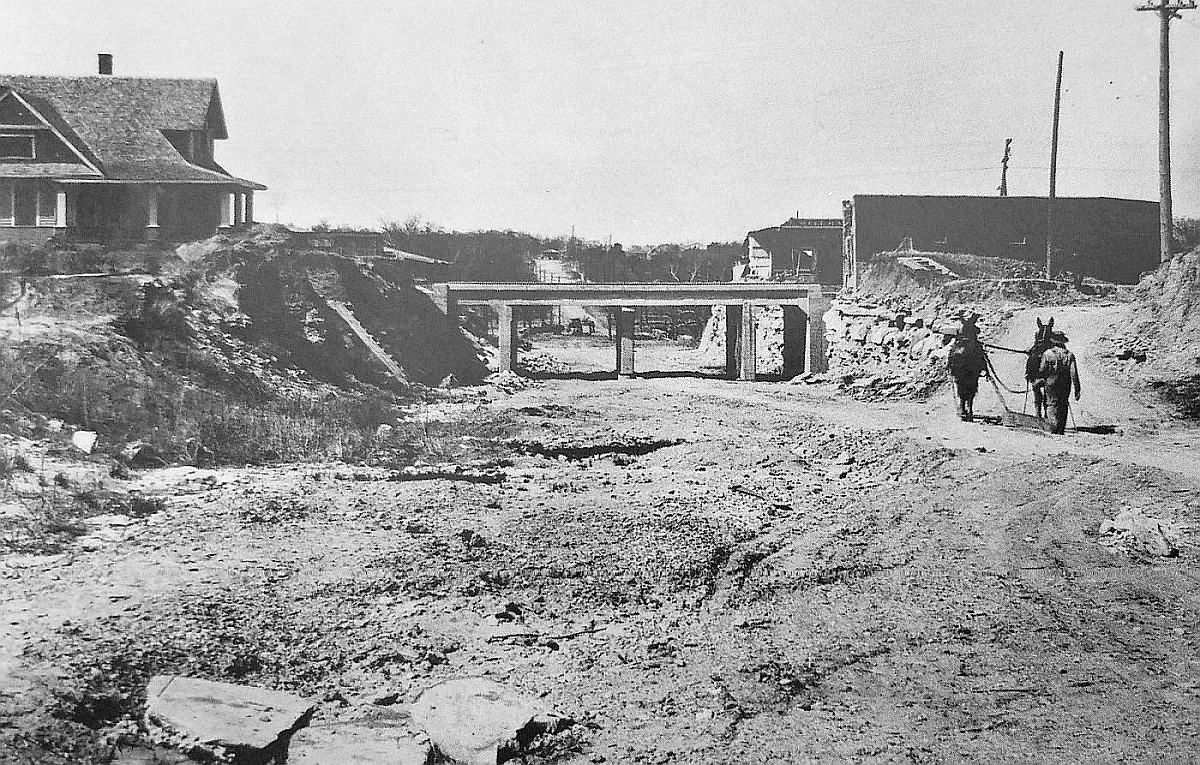
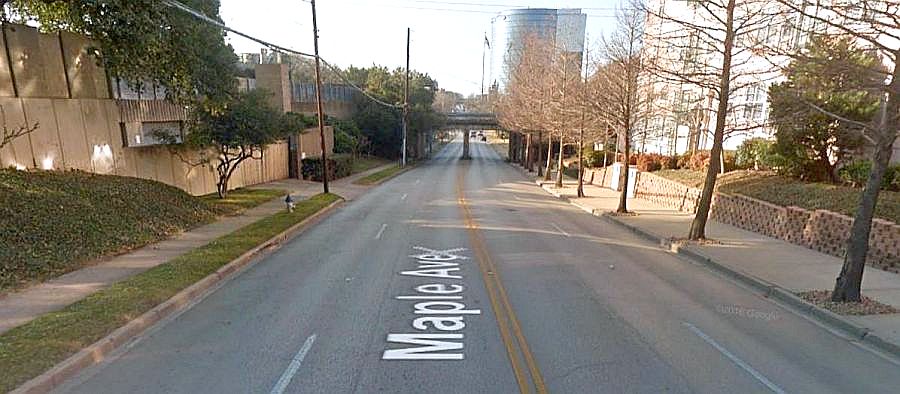
This circa-1920 photo (sadly, not the greatest resolution) shows road construction to straighten Maple Avenue (which immediately followed construction of the MKT bridge); that and a more recent view of the same spot have been added to the post “The Gill Well.” (Sources: Dallas Public Library, I think, and Google Street View, 2014)

maple-MKT_ca-1920_DPL

maple-MKT_google-street-view_2014

*

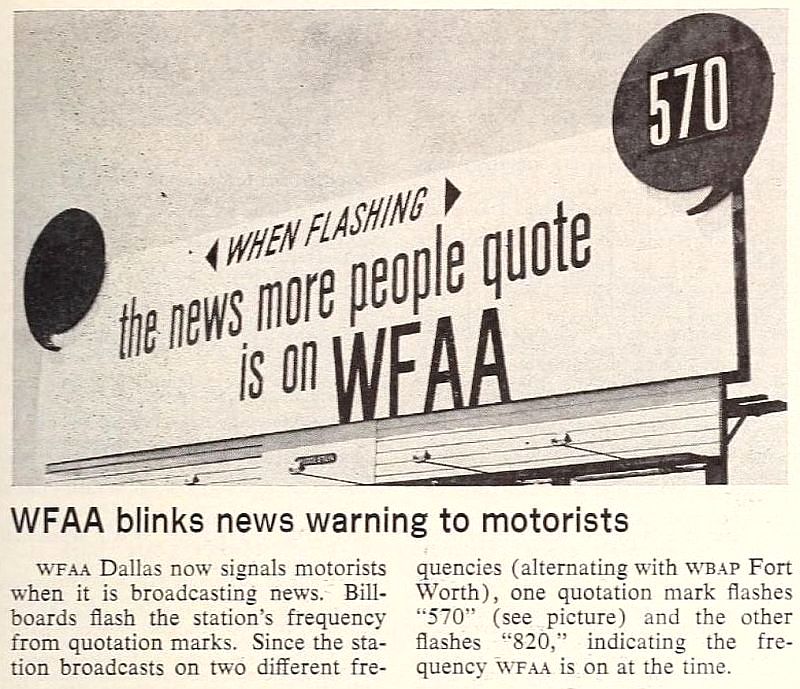
This 1963 photo of a billboard which instructed motorists which frequency WFAA was at that moment broadcasting on (it varied, depending on the time of day…) has been added to the post “WFAA & WBAP’s Unusual Broadcasting Alliance,” one of my favorite weird bits of trivia in Dallas radio history. (Source: Broadcasting magazine, April 22, 1963)

WFAA-WBAP_broadcasting_042263

*

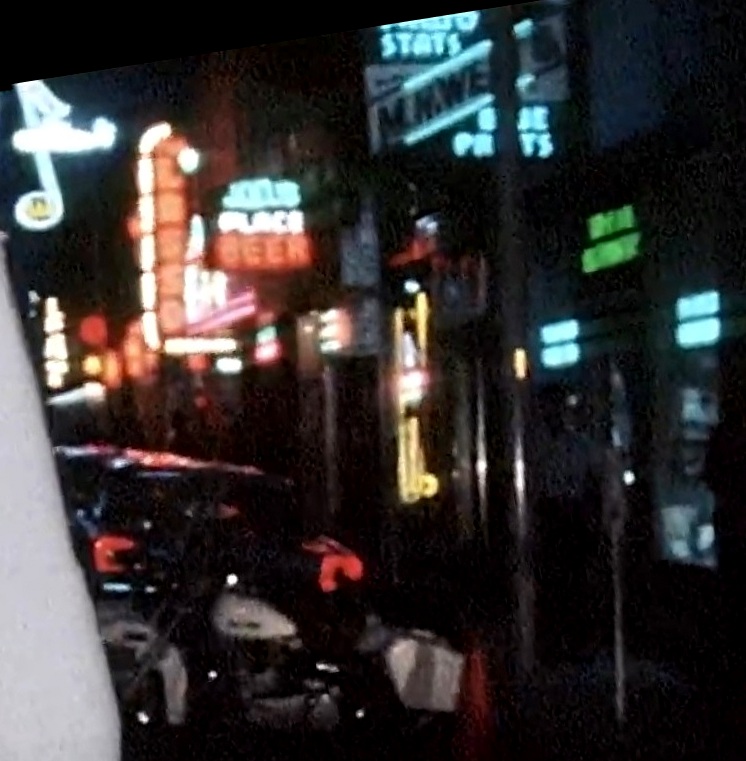
This super-blurry screenshot shows the hopping nightlife which was once a staple of the two blocks immediately south of the Adolphus Hotel on South Akard. Those two blocks were really interesting and a mecca for bars, seedy and otherwise. It’s been added to the post “Gene’s Music Bar, The Lasso Bar, and The Zoo Bar.” (Source: WFAA-Channel 8 coverage of the… um… boisterous activity downtown during the 1969 Texas-OU weekend, as seen at the 6:16 and 9:13 marks in the video here; from the WFAA Newsfilm Collection, G. William Jones Collection, Hamon Arts Library, SMU)

lasso-bar_jones-film_WFAA_101169

*

Another screenshot (watermarked, sadly) is this one, which show the wife of Santa Fe Railroad president Fred G. Gurley christening the new Texas Chief streamliner at Union Station — the train made its inaugural Dallas-to-Chicago run on Dec. 5, 1955. The reason I chose this screenshot (which I’m adding, along with the YouTube video below to the continually popular post “White Rock Station”) is because Mrs. Gurley is christening the engine with a bottle of — no, not champagne… — water from White Rock Lake. (Source: Huntley Film Archives, YouTube)

white-rock-station_christening_youtube

Check out the very short color film this comes from below, with footage of the new station along Jupiter Road near Kingsley, and ceremonies at Union Station (or for those who always write in to correct me, “Union Terminal“) — there might be some shots from ceremonies at Denton. The shot of the train passing in front of the Dallas skyline is pretty cool.

*

And, lastly, a 1963 photo of George Senator, a man often referred to as Jack Ruby’s roommate, but it seems he was more a sort of good-natured sponger, who was frequently out of money and frequently out of a job — Ruby helped him out with cash and let him stay at his apartment. I’m adding this photo (which has been cropped and flipped) to the post “Newly Discovered Footage of Jack Ruby — 1960,” in which a man who may be Senator is seen in B-roll film footage shot by Channel 8, showing Ruby standing in a crowd at a musical performance on Elm Street at Ervay. (Source: Photo titled “George Senator at Dallas police station at time of Jack Ruby arrest,” Nov. 24, 1963, Fort Worth Star-Telegram Collection, University of Texas at Arlington Libraries, UTA)

senator-george_FWST-collection_UTA_112463.det_flipped

*

Copyright © 2020 Paula Bosse. All Rights Reserved.

From the Vault: Dallas’ First Concrete Bridge?

iola-bridge_city-park_ca-1908

by Paula Bosse

City Park’s lovely little “Iola” bridge paved the way (…as it were) for concrete to become the favored material in the construction of the city’s bridges, usurping wood. Built in 1905, “Iola” was the first such concrete structure in Dallas (or possibly the second…) — its legacy lives on in the Oak Cliff/Houston Street viaduct, which, when built, was the longest concrete bridge in the world. Read more about “Iola” (find out where the name came from) in the 2015 Flashback Dallas post “Iola Bridge.”

*

Copyright © 2020 Paula Bosse. All Rights Reserved.

Architectural Crossroads: Commerce and Akard

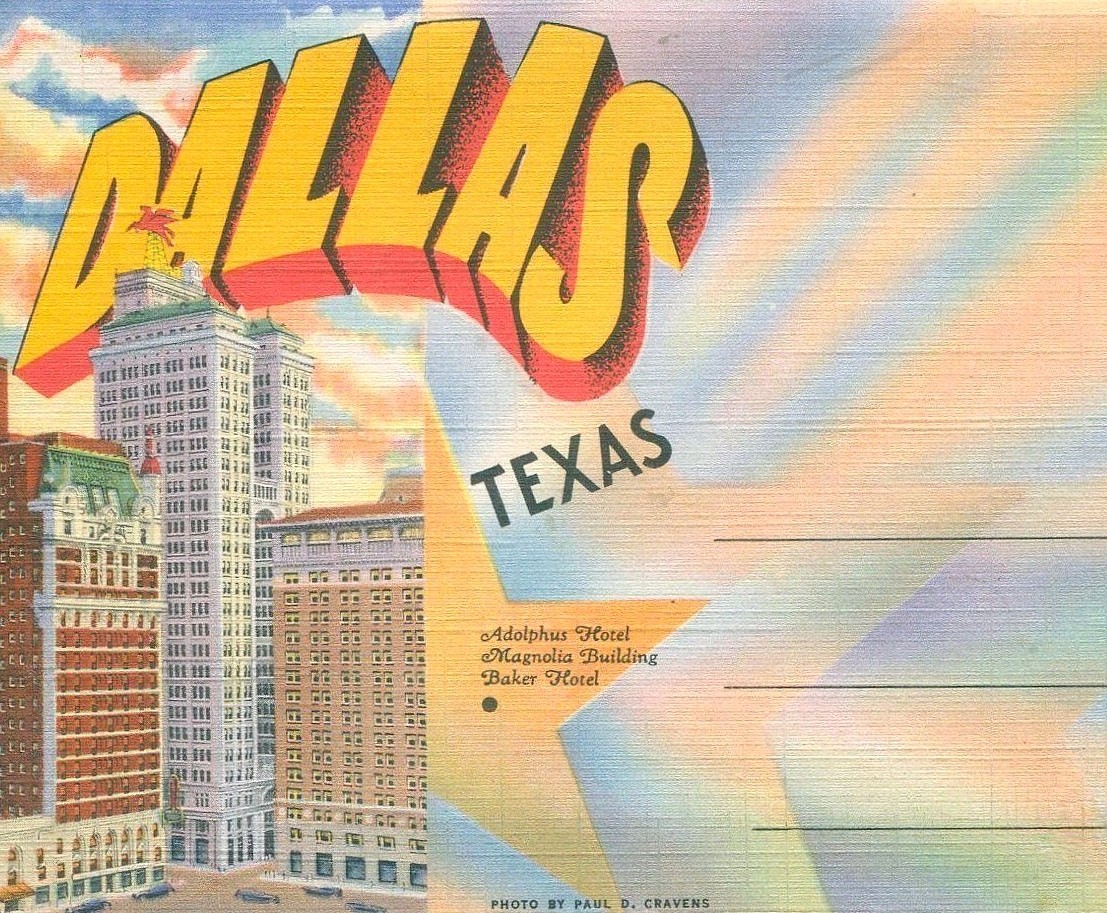
dallas-postcard_adolphus_magnolia_baker_ebay

by Paula Bosse

In Dallas’ early days, Commerce Street was once considered so far off the beaten path that major businesses did not build there. By 1925, though, the intersection of Commerce and Akard streets boasted three Dallas showplaces: the Adolphus Hotel (still standing), the Magnolia Building (still standing), and the Baker Hotel (not still standing). (Before that, it was the Adolphus, the Magnolia, and Busch’s other hotel, the swanky Oriental.)

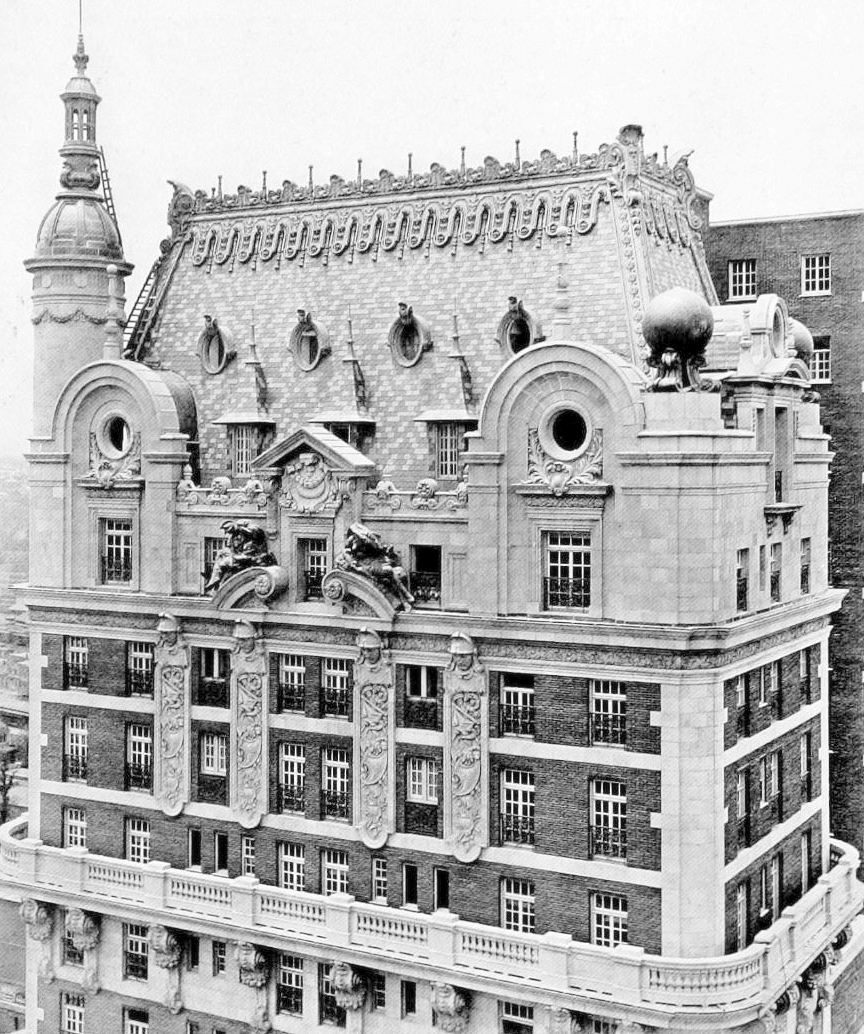
Ever noticed that the corner “turret” of the Adolphus looks like a traditional German beer stein? An ode to the source of namesake Adolphus Busch’s wealth? I certainly hope so!

adolphus_terracotta-detail_western-architect_july-1914

***

Sources & Notes

Top image is from a pack of postcards, found on eBay.

Detail of the Adolphus is from the Flashback Dallas post “Dallas in ‘The Western Architect,’ 1914: The Adolphus Hotel.”

dallas-postcard_adolphus_magnolia_baker_ebay_sm

*

Copyright © 2020 Paula Bosse. All Rights Reserved.

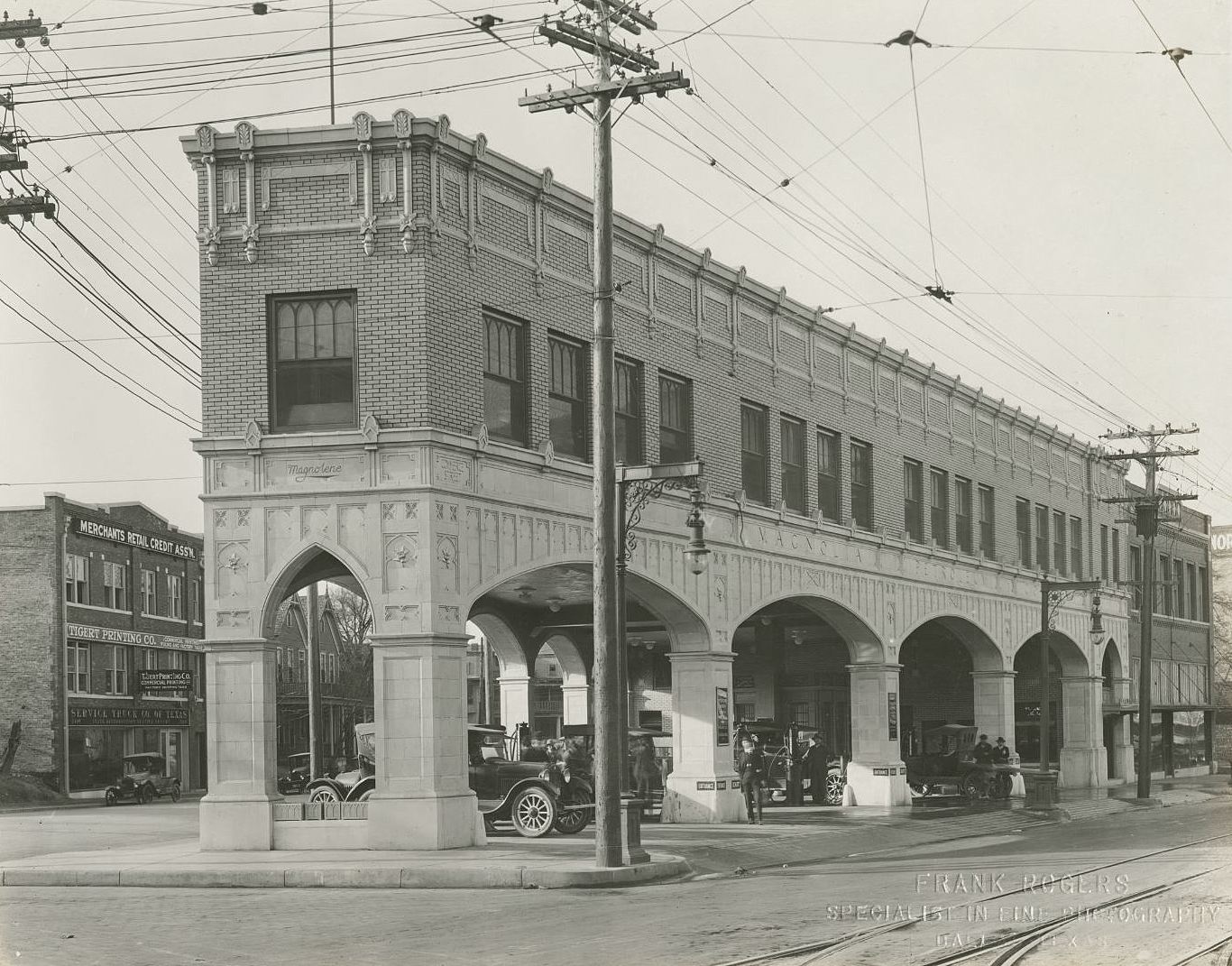
Magnolia Gas Station No. 110 — 1920

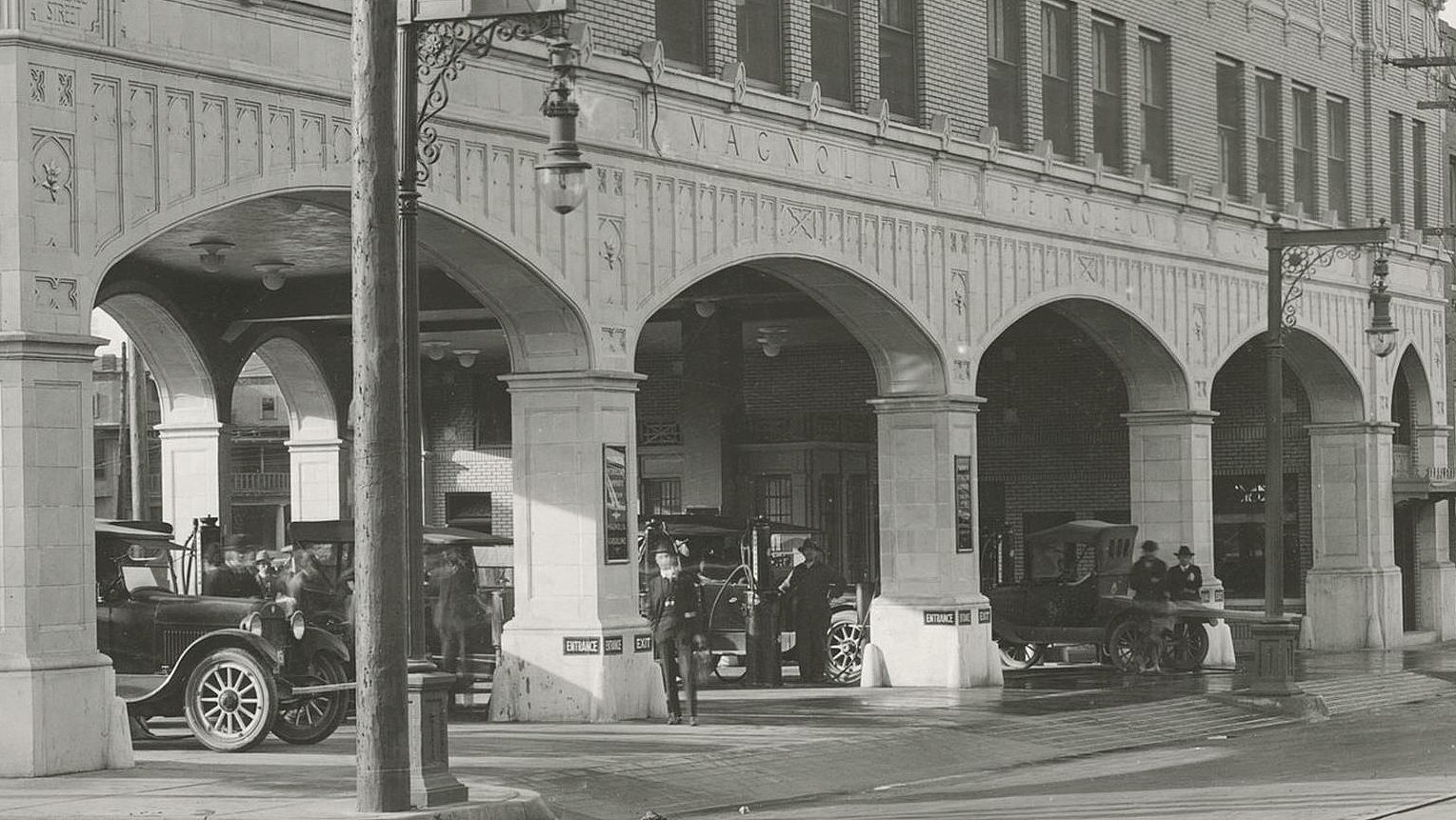
magnolia-gas-station_atlantic-terra-cotta-co-coll_UT_frank-rogersDallas’ finest filling station…

by Paula Bosse

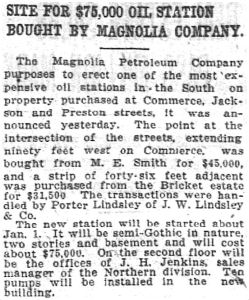
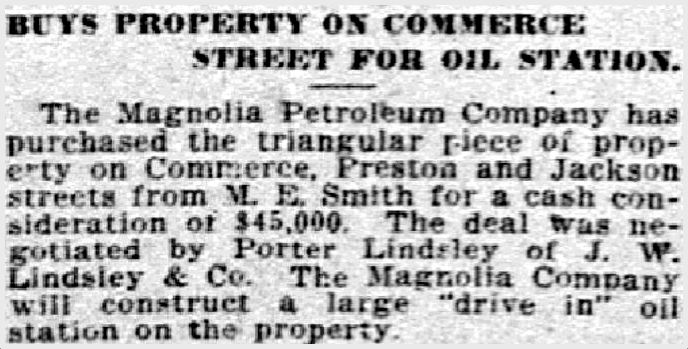
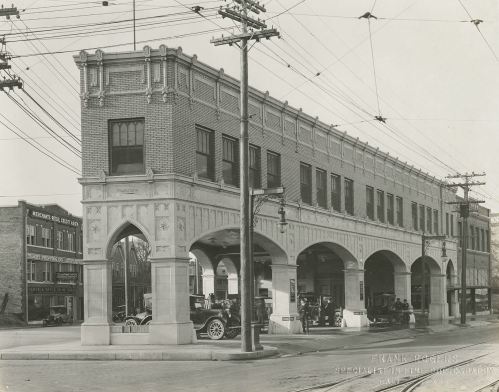
The building seen above turns 100 this year. You know it — you’ve probably said, “I love that building!” at some point in your life. It was built by the Magnolia Petroleum Co. on the triangular piece of land where Commerce Street, Jackson Street, and Cesar Chavez Blvd. meet (Cesar Chavez was originally Preston Street). Before the building’s construction, this intersection was known as “Five Points” — after its construction, it was known as “Pershing Square” (notable for its inconveniently placed middle-of-the-street horse- and dog-watering fountain, which I will write about in the future).

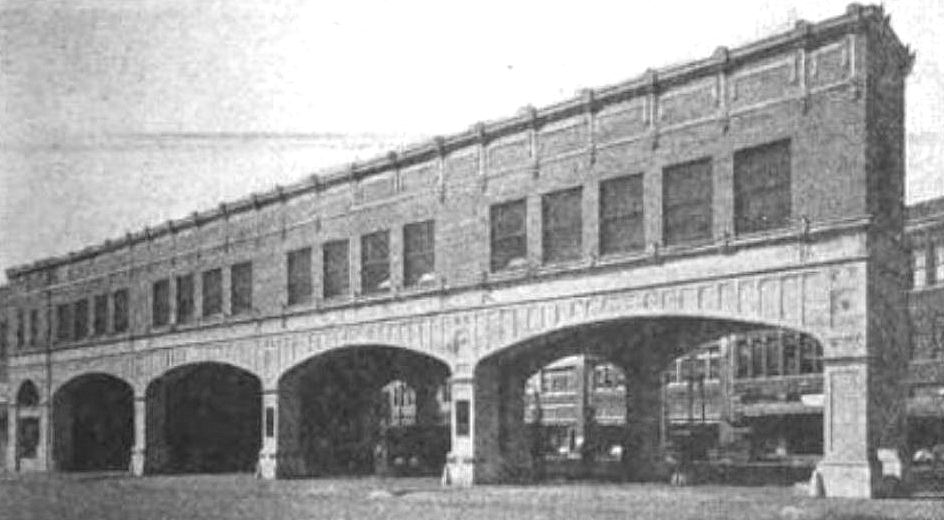
This distinctive brick and terra cotta “semi-Gothic” building was built in 1920, with two stories and a basement; Magnolia service station #110 was on the ground level, and regional offices of the company were above (the massive Pegasus-topped Magnolia Building had not yet been built). Lang & Witchell, Dallas’ premier architects, designed the building.
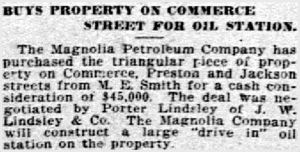
magnolia-petroleum-station_dmn_091919Dallas Morning News, Sept. 19, 1919

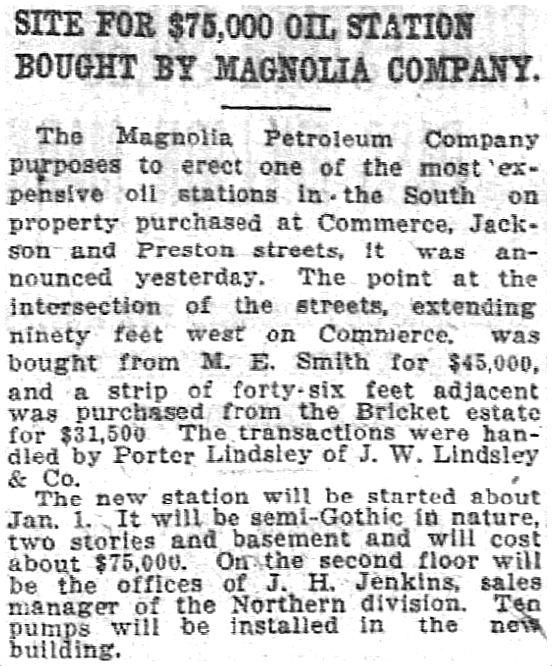
magnolia-petroleum-station_dmn_113019DMN, Nov. 30, 1919

After the 10-pump service station opened, The Dallas Morning News noted that there were 64 gas stations in Dallas (18 were Magnolia stations) — this station was the largest and most expensive to build. Cost of the land and construction was estimated at $175,00 — the equivalent today of about $2.5 million dollars.

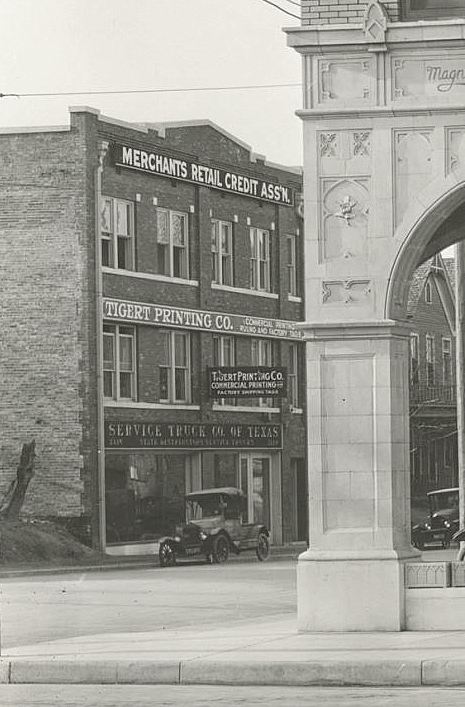
Businesses seen in the photo occupying the three-story building across the street at 2114-16 Jackson are Service Truck Co. of Texas, Tigert Printing Co., and Merchants Retail Credit Association. That building was sandwiched between residences (the house on the left is out of frame). All the way at the right of the photo is a glimpse of rooming houses. Across Commerce was an entire block of auto dealerships and auto supply houses (not seen in this photo). See the service station and environs on a 1921 Sanborn map here.

Let’s zoom in on this great Frank Rogers photo to see some of the details. First, a better look at that three-story office building on Jackson. (All photos are larger when clicked.)
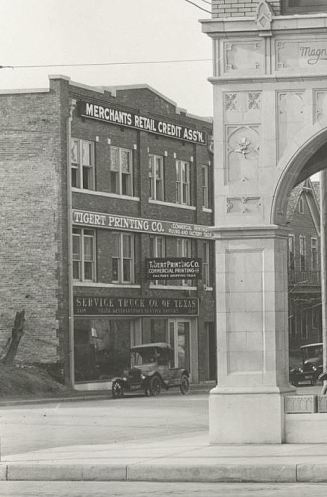
magnolia-gas-station_atlantic-terra-cotta-co-coll_UT_frank-rogers_det-1

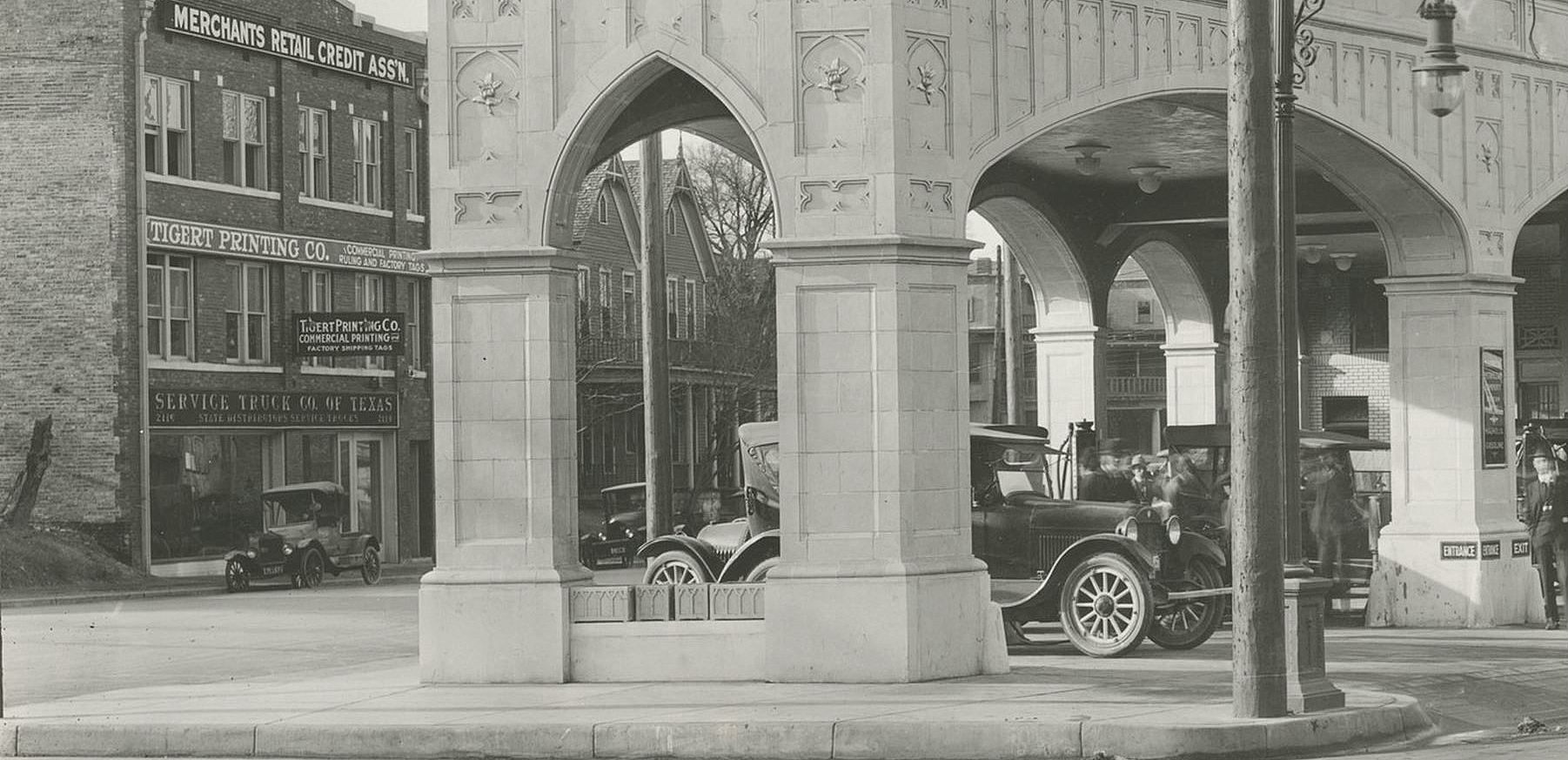
Pulling back a bit, you can see the rooming houses through the arches. You can also see details of the gas station as well as decorative elements of the exterior of the building, including sculptural depictions of magnolias. (I love this cropped detail. Taken out of context, you’d never guess you were looking at Dallas.)
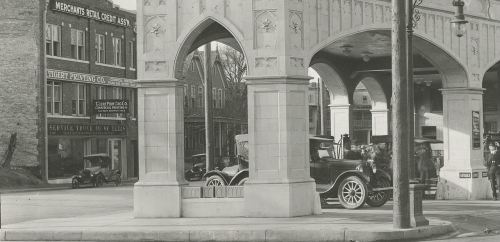
magnolia-gas-station_atlantic-terra-cotta-co-coll_UT_frank-rogers_det-5

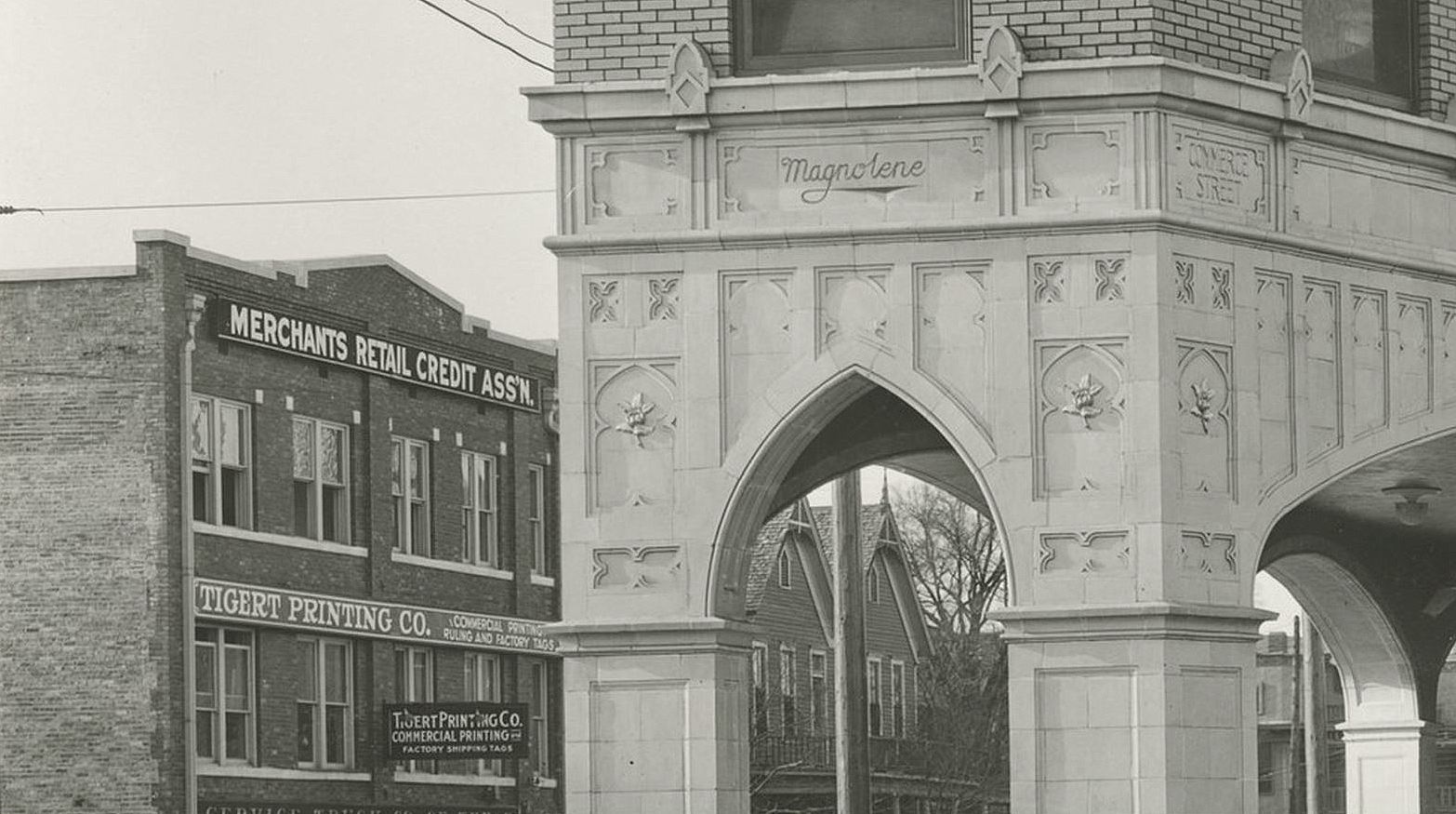
Moving up, you can see the word “Magnolene,” the Magnolia Petroleum Co.’s brand of motor oil; you can also see the words “Commerce Street” (“Jackson Street” is carved into the Jackson side of the building — see here).
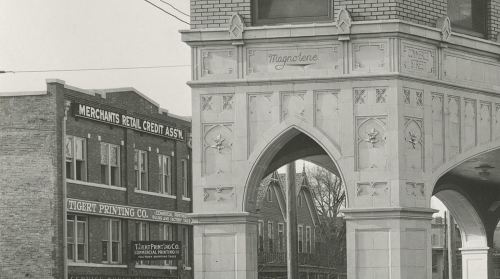
magnolia-gas-station_atlantic-terra-cotta-co-coll_UT_frank-rogers_det-2

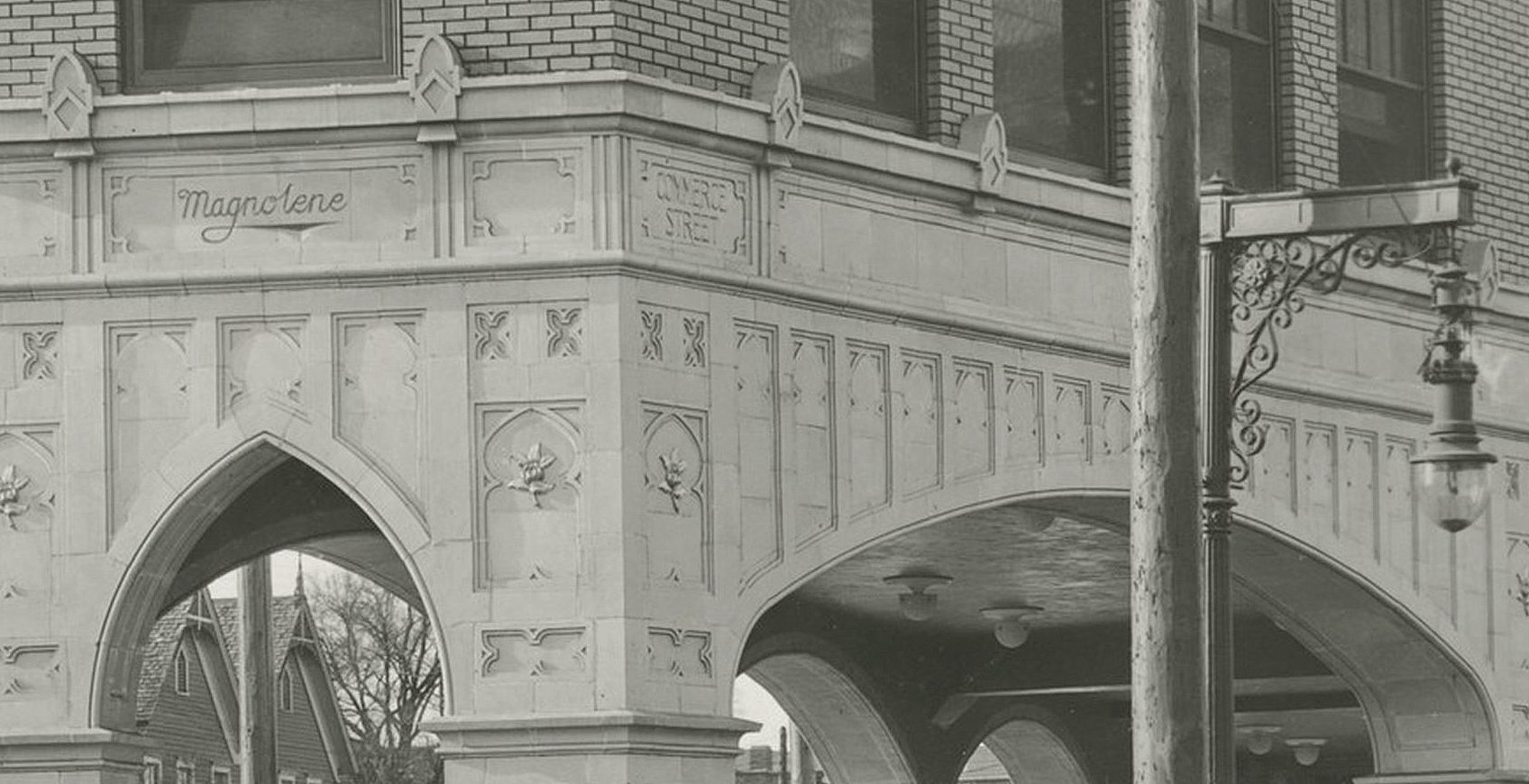
Here’s a closer look — “Magnolene” is, I think, long gone (as are those cool windows), but “Commerce Street” and “Jackson Street” live on today. Also, check out that very appealing street light. 
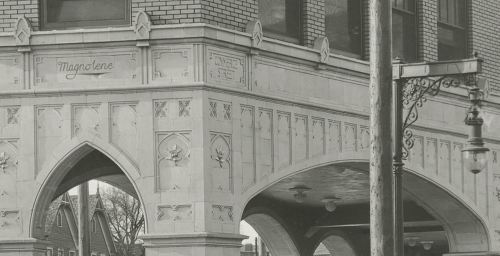
magnolia-gas-station_atlantic-terra-cotta-co-coll_UT_frank-rogers_det-3

And another, closer look at the gasoline pumps and customers. There is so much incredible detail in the design of this building — when was the last time you saw such an aesthetically appealing gas station?
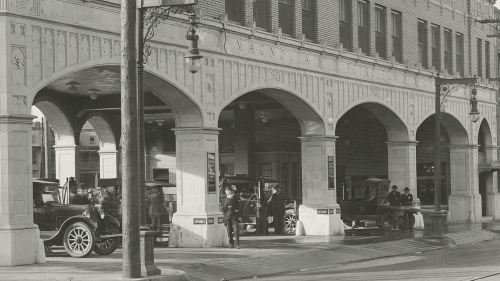
magnolia-gas-station_atlantic-terra-cotta-co-coll_UT_frank-rogers_det-6

Here’s a photo from a 1922 ad for Atlanta Terra Cotta Co., which supplied several Magnolia stations in Texas with building materials — this was taken from the Jackson Street side (see the full ad here).
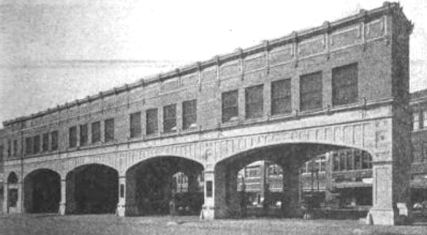
magnolia-petroleum-station_manufacturers-record_121422_ad-det

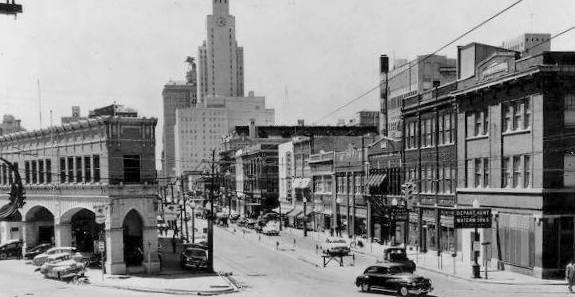
Here’s the building a couple of decades later:
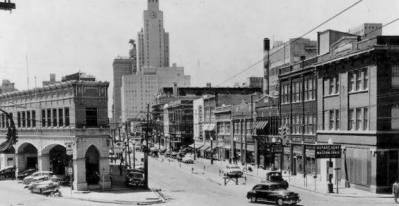
magnolia-petroleum-station_KLIF-bldg_dallas-public-library_crop

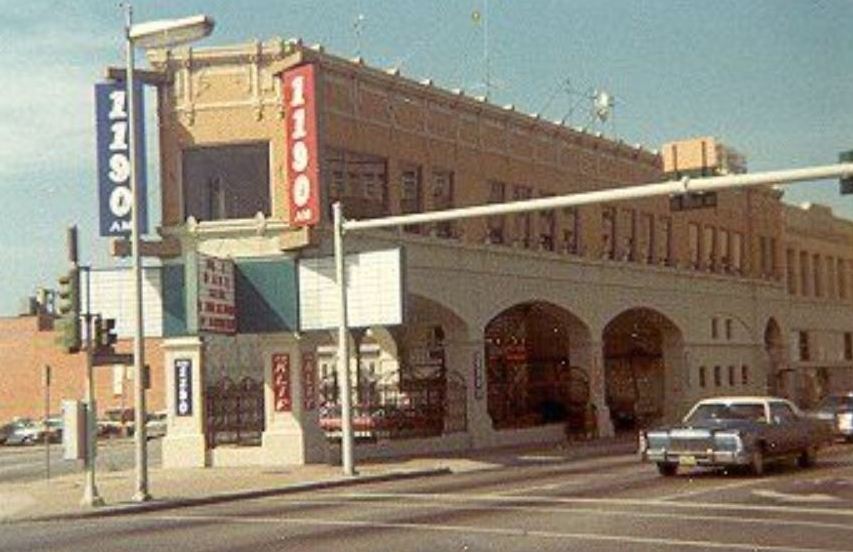
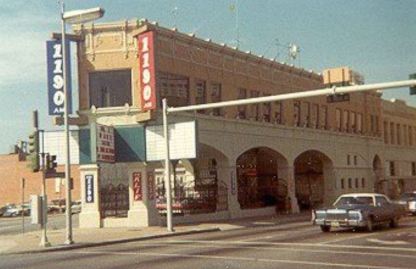
And here it is as many Dallasites remember it, as the studios of KLIF radio, “The Mighty 1190,” where the DJ’s booth was at the “point” and passersby could watch from the street. Later it was the home of the Dallas Observer for many years. (I’m not sure of the original source of this photo, but if anyone knows or has a better quality image, let me know!)
KLIF_color

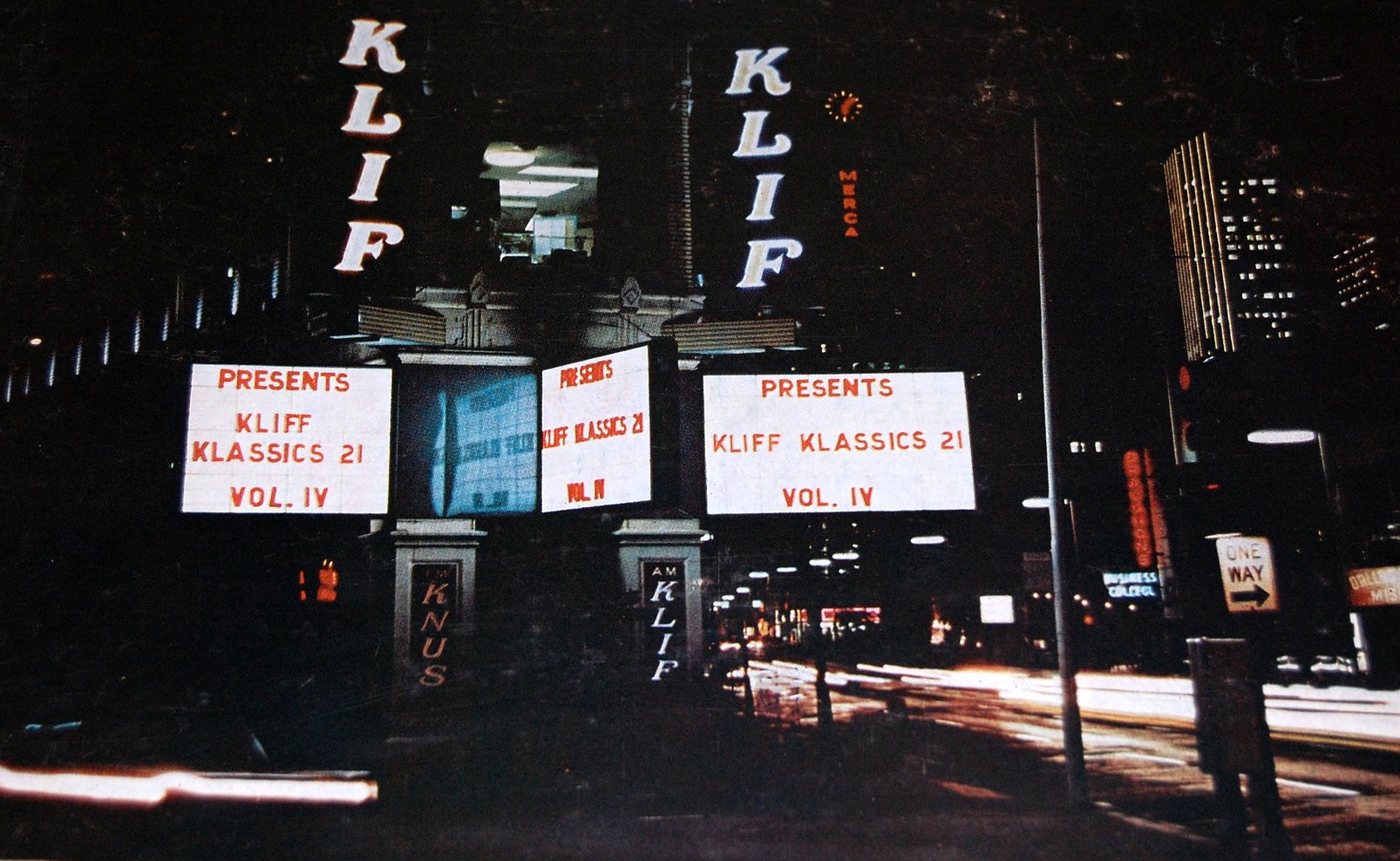
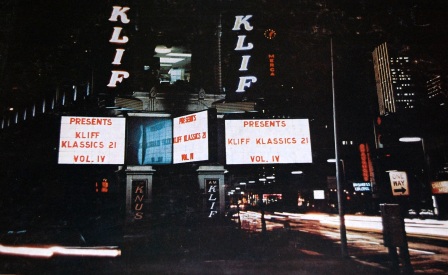
This shows the building a little earlier — it’s a cropped photo that appeared on the album cover “KLIF — KLIFF Klassics,” from about 1969 — you can see the DJ’s booth lit up.
klif_kliff-klassics_vol-iv_album-cover_ca-1969_flickr
via Flickr

Today the building is part of an “adaptive reuse” development called “East Quarter” — I read that the building was slated to house a restaurant (or two), but I don’t know what the current status of that project is.

It’s nice to know that a favorite building from my childhood is still around. Happy 100th!

***

Sources & Notes

Top photo is titled “Magnolia Filling Station, Pershing (Dallas, Tex.): exterior view of front entrance, corner perspective” by Dallas photographer Frank Rogers; it is from the Atlantic Terra Cotta Company Architectural records and photographs, 1914-1941, Architectural Terra Cotta, Alexander Architectural Archives, University of Texas Libraries, The University of Texas at Austin; more info can be found here.

The same photo appeared uncredited accompanying the Dallas Morning News article “Filling Stations of Dallas Are Finest” (DMN, April 10, 1921). 

The photo taken from the Jackson Street side is from an ad for the Atlanta Terra Cotta Co. which appeared in Manufacturers Record (Dec. 14, 1922). (The Atlanta Terra Cotta Co. of Georgia and the Atlantic Terra Cotta Co. of New York were separate companies but were under the same management.)

The photo from the 1940s/1950s is “[Pershing Square in downtown Dallas, Texas]” — I have cropped it; from the Ford Motor Company Building Collection, Dallas Public Library (call number: PA85-39/16).

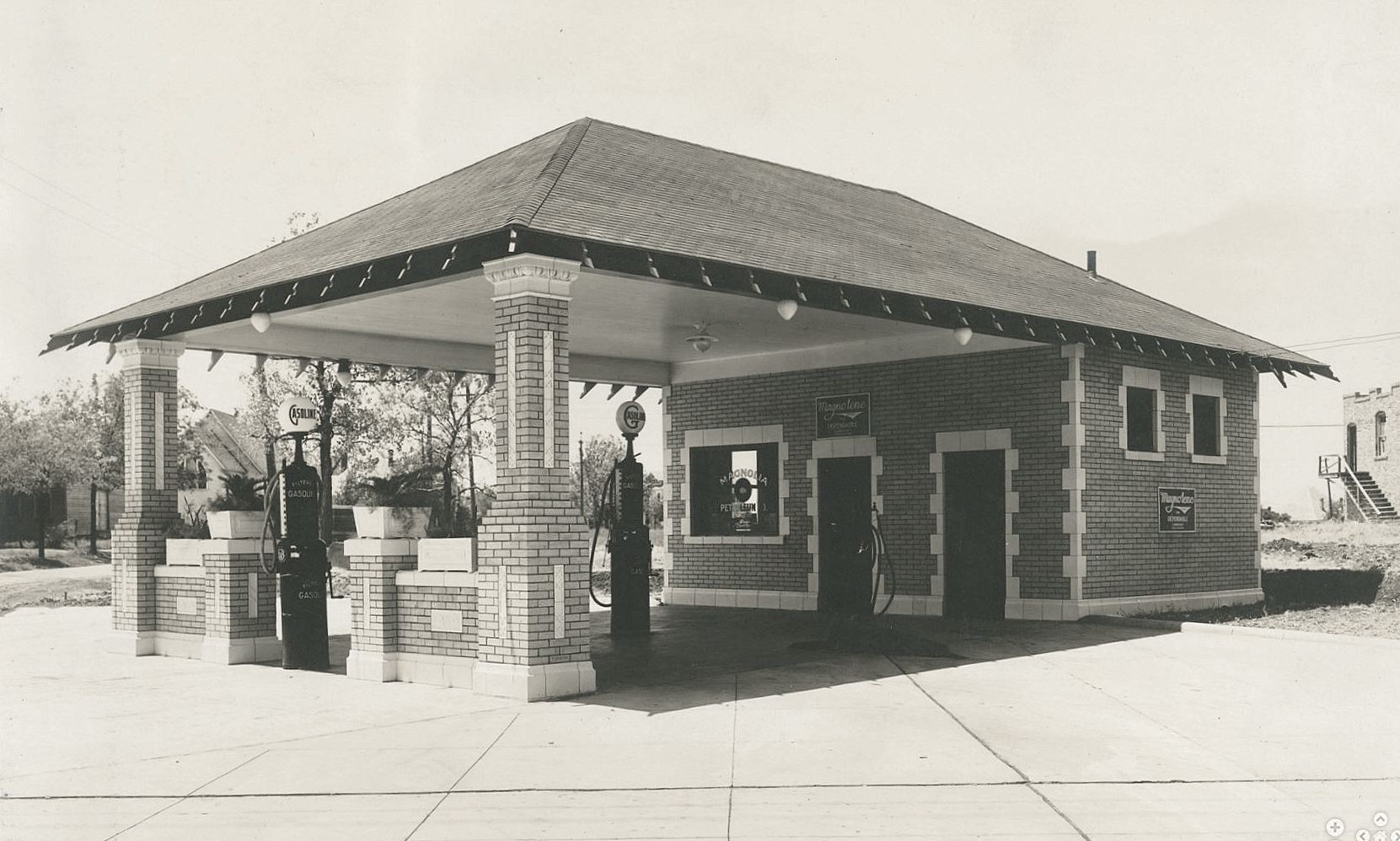
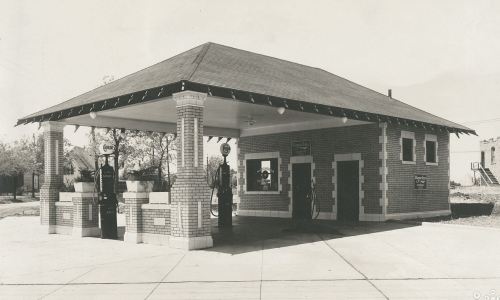
Here is another photo from the same collection as the main photo in this post — this shows another Magnolia filling station in Dallas, this one a smaller, more traditional station (more info here).
magnolia-filling-station_atlantic-terra-cotta-co-coll_UT

magnolia-gas-station_atlantic-terra-cotta-co-coll_UT_frank-rogers_sm

*

Copyright © 2020 Paula Bosse. All Rights Reserved.

West Jefferson Blvd. at Night

oak-cliff_jefferson-blvd_night_oldoakclifflodge_flickrW. Jefferson & S. Madison

by Paula Bosse

I love night-time views of a lit-up city, and this circa-1949 bird’s-eye view of West Jefferson Boulevard in Oak Cliff, looking east, is pretty cool. If this photo had a soundtrack, it would be moody and atmospheric saxophone music.

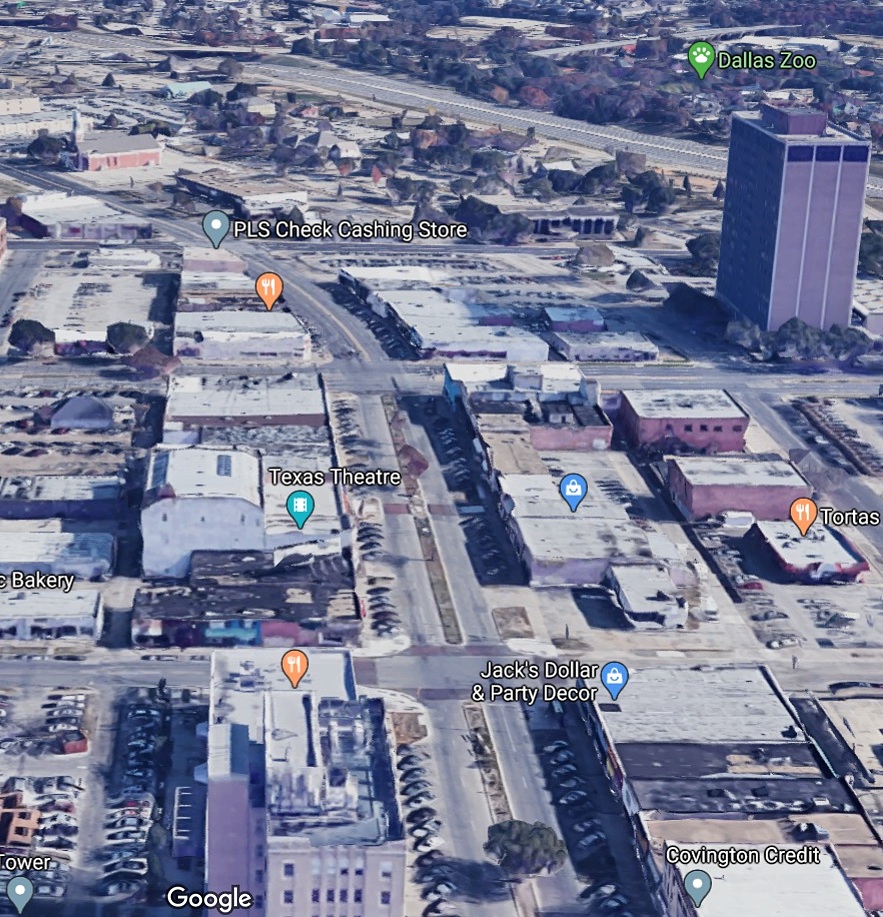
Hunt’s department store was at 303 W. Jefferson, and the Oak Cliff Bank & Trust Co. was at 250 W. Jefferson — S. Madison is the intersecting street in the center of the photo. At the upper left you can see the bright lights and triangular marquee of the Texas Theatre. Below is a view of the same street today, still recognizable.

oak-cliff_jefferson-blvd_google-aerialGoogle Maps

***

Sources & Notes

Top photo is from the Flickr photostream of OldOakCliffLodge, here.

oak-cliff_jefferson-blvd_night_oldoakclifflodge_flickr_sm

*

Copyright © 2020 Paula Bosse. All Rights Reserved.
Influenza Pandemic Arrives in Dallas — 1918

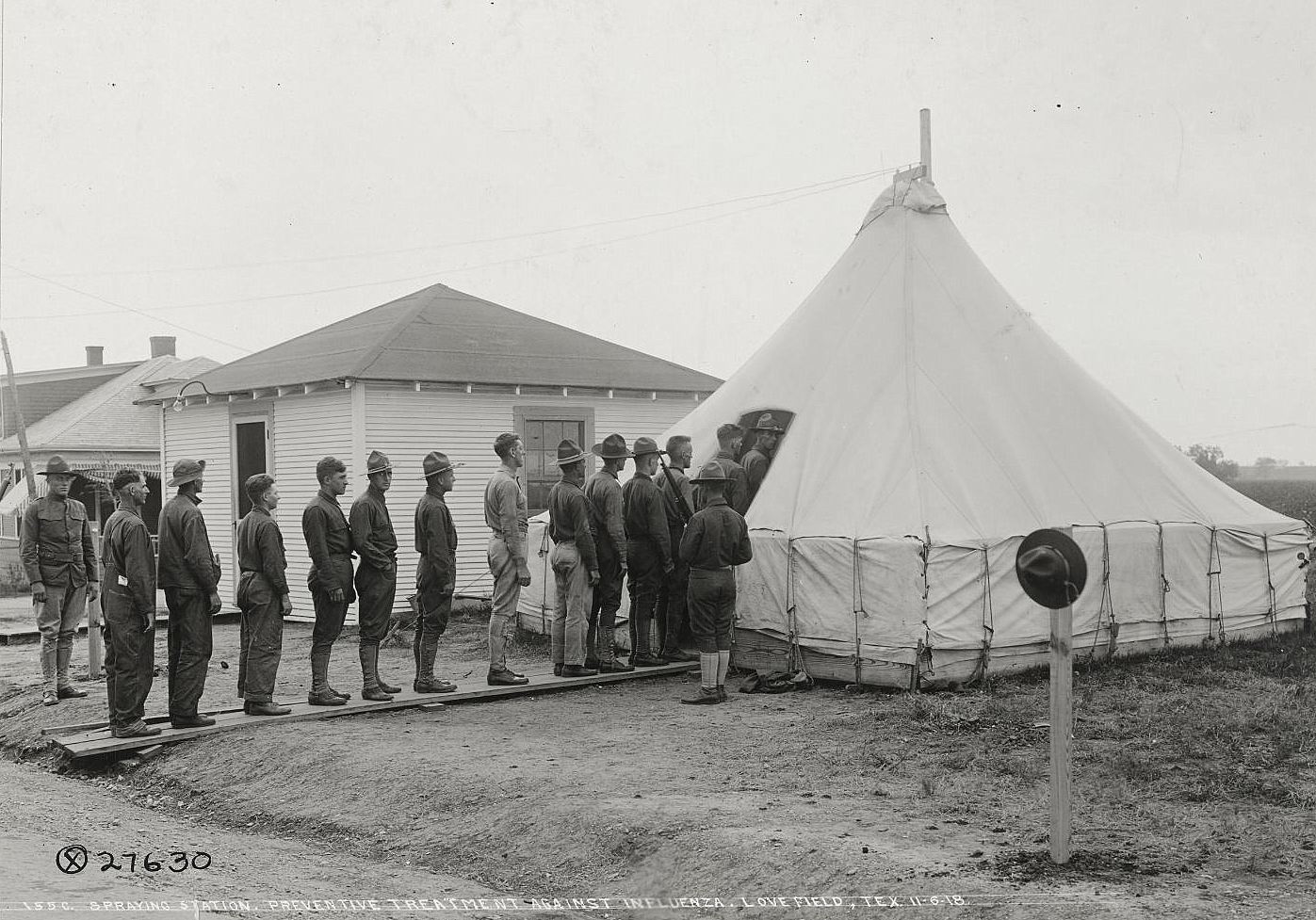
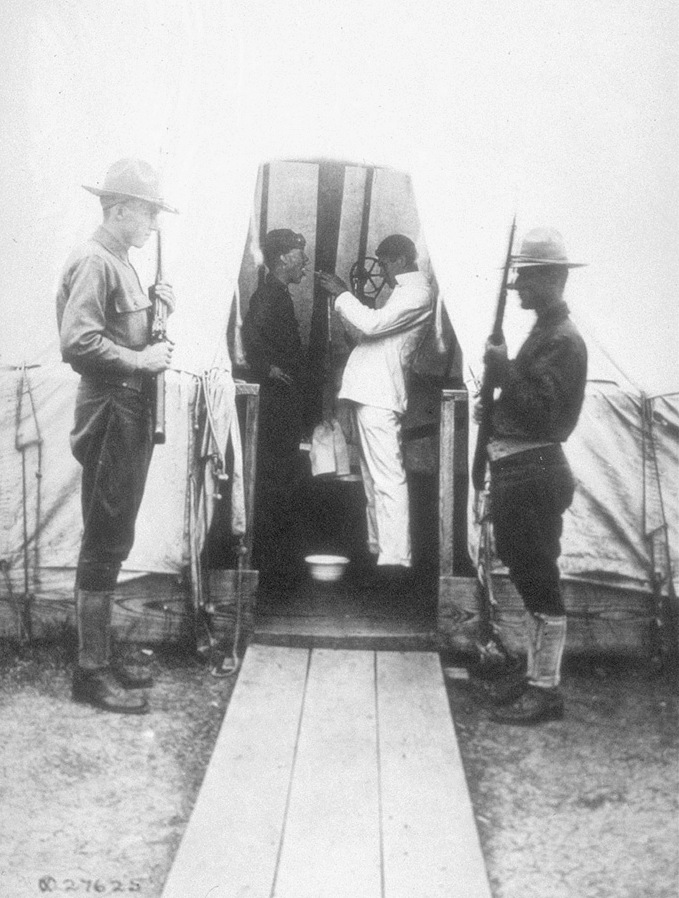
influenza-epidemic_love-field_1918_natl-archivesIn line at the Love Field “spraying station” (click for larger image)

by Paula Bosse

I write this as the U.S. is bracing for the spread of COVID-19, the novel coronavirus which has just been declared a world-wide pandemic by the World Health Organization — this inescapable news item reminds me of a previous post I wrote about the local response to another major epidemic. In 2014, Dallas (of all unlikely places) was ground-zero in the U.S. for a feared Ebola outbreak — back then I wondered how Dallas had handled health crises in the past, specifically the spectre of the Spanish Influenza, which, like the coronavirus, swept around the globe. So I wrote “When the Spanish Influenza Hit Dallas — 1918,” and I have to say, it was pretty interesting. The flu first hit the regional military bases during World War One: Love Field, Camp Dick at Fair Park, and Camp Bowie in Fort Worth. It wasn’t long before people beyond the WWI camps were contracting the Spanish Flu, and then it just spread and spread and spread.

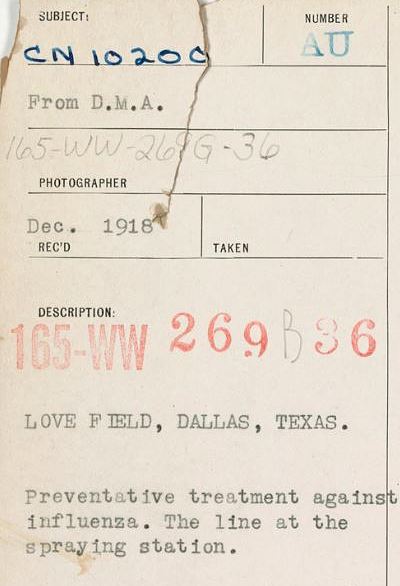
The photo above, from December, 1918, shows Love Field military personnel waiting in line to be “sprayed” — the caption reads:

Love Field, Dallas, Texas: Preventative Treatment against influenza.
The line at the spraying station.

influenza-epidemic_love-field_1918_natl-archives_INFO

Here’s the throat-sprayer waiting inside the tent:

spanish-influenza_love-field_otis-historical-archives_nmhm_110618Love Field, Nov. 6, 1918

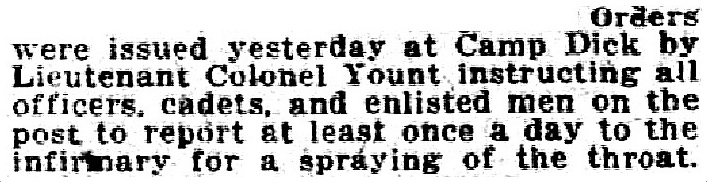
spanish-influenza_dmn_100118_sprayingDallas Morning News, Oct. 1, 1918

I’m not sure how effective this spraying was, but the advice given to Dallasites in 1918 is still good today: wash your hands, keep your surroundings clean, and do not spit in streetcars!

***

Sources & Notes

Top photo is from the National Archives at College Park; more info is here.

Second photo, showing the inside of the “spraying station,” is from the Otis Historical Archives, National Museum of Health and Medicine; more info is here

For a more detailed post about how Dallas dealt with the Spanish Influenza, read the 2014 Flashback Dallas post “When the Spanish Influenza Hit Dallas — 1918.”

influenza-epidemic_love-field_1918_natl-archives_sm

*

Copyright © 2020 Paula Bosse. All Rights Reserved.