Flashback : Dallas

A Miscellany: History, Ads, Pop Culture

Tag: Historic Dallas

Map of Downtown Dallas, For the Curious Conventioneer — 1962
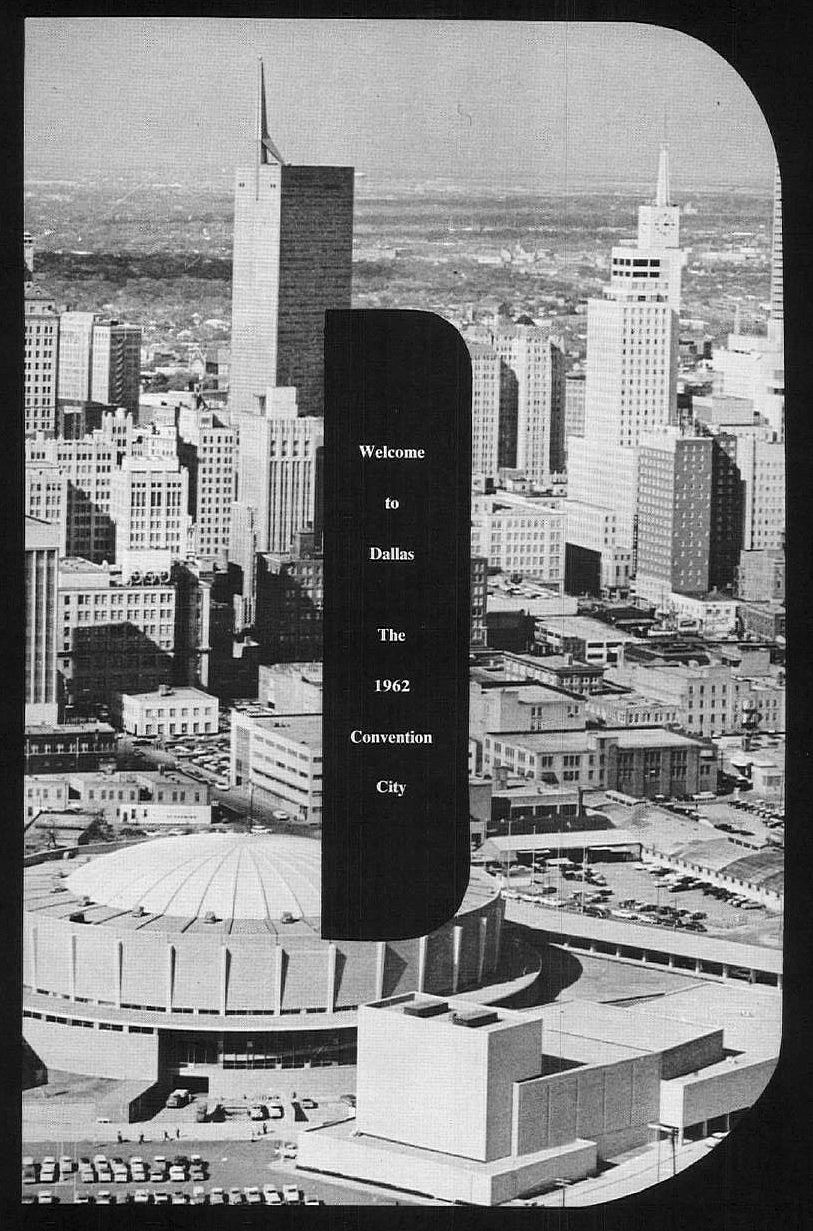
big-d_aia-convention_aia-journal_aprill-1962Welcome to Convention City!

by Paula Bosse

In May, 1962, the American Institute of Architects (AIA) had their national convention in Dallas. The April 1962 edition of the AIA Journal contained a boosterific article on Big D’s exciting architecture, a handy bibliography of previous Journal articles on specific Dallas projects and architects, a few photos, and a helpful map of downtown, containing, I suppose, the Big City sites that the visiting architect might find worth a look. In addition to your staples like Neiman-Marcus, the relatively new Statler Hilton, and the Republic Bank Building, it also contained a lot of … odd things. Like Magicland, M & M Leathercraft, and Ring and Brewer Western Wear. AND a lot of bars. A lot. Some of them pretty seedy. And several of which employed the talents of “exotic” dancers. (Hey, what happens in Dallas stays in Dallas.)

The map is actually pretty good — even though many of the simply-drawn buildings look absolutely nothing like their real counterparts (I mean … come on, architects!) — it’s helpful because it shows exactly where so many of these off-the-beaten-path bars and restaurants and shops were located. For instance, I’ve heard my aunt talk for years about her favorite Happy Hour destination back in the ’60s, but it wasn’t until I saw this map that I actually knew where Victor’s Lounge was: across Commerce from the Statler Hilton (right next to the architect’s favorite Dallas stop, Warehouse Cut-Rate Liquors).

Check it out. The alphabetical key is printed on the map, the numerical key is below. Click the map so you, too, can find out where exactly Sol’s Turf Bar was and which thoroughfare one needed to take to reach the Sportatorium (’cause if there’s anything architects love more than magic tricks, it’s professional wrestling!).

downtown-dallas-map_aia-journal_april-1962_convention

1. YMCA
2. Magicland; Phil’s Delicatessen
3. Rheinishcherhoff Restaurant
4. Cattlemen’s Restaurant
5. Majestic Theatre
6. Capri Theater
7. Tower Theater; Sigel’s Liquors
8. Corrigan Tower
9. Tower Petroleum Bldg.
10. Miller Bros. Jewelry
11. Ring & Brewer Western Wear
12. Filet Restaurant
13. Mexico City Restaurant
14. First National Motor Bank
15. Rio Grande Life Bldg.
16. National Bank of Commerce
17. E. M. Kahn Department Store
18. Texas Bank Bldg.
19. Wholesale Merchants Bldg.
20. James K. Wilson Co.
21. Santa Fe Bldg.
22. WFAA Radio Station
23. Oriental Cafe
24. Davis Bldg.
25. First National Bank
26. Cullum & Boren Sporting Goods
27. Palace Theater
28. 211 North Ervay Bldg.; Forget-Me-Not Gift Shop
29. Praetorian Bldg.; Shoe Center
30. Eatwell Cafe
31. Black Angus Restaurant
32. Mobil Bldg. (Magnolia Bldg.)
33. Golden Pheasant Restaurant; Hoffman’s Men’s Wear
34. Melody Shop; Shoe Center
35. Sol’s Turf Bar
36. Copper Cow Restaurant
37. Reynolds-Penland Department Store
38. E. M. Kahn Co.
39. Dreyfuss & Son
40. Volk’s Department Store; Rogers Factory Shoe Store
41. Mercantile Security Bldg.
42. Dallas Mercantile Bldg.; Tall Fashions
43. Victor’s Lounge
44. Warehouse Liquors
45. Town & Country Restaurant
46. Skeffington’s Men’s Wear
47. Lone Star Gas Co.
48. M & M Leathercraft
49. National Bankers Life Bldg.
50. Zoo Bar
51. Steak House Unique
52. Dallas Power and Light
53. 209 Browder Bldg.
54. Bell Telephone Co.
55. Federal Reserve Bank
56. Community Chest
57. Employers Insurance
58. Reserve Life Bldg.
59. Life Bldg.; Moore-DeGrazier Jewelry Co.
60. Theater Lounge (burlesque)
61. Horseshoe Lounge
62. Carousel Club (burlesque)
63. Colony Club (burlesque)
64. Brockles Restaurant

***

Sources & Notes

Photo and map from the April 1962 issue of AIA Journal. The entire issue is contained in a PDF, here. The Dallas content begins on page 39 of the PDF. The bibliography — which contains articles that I’d actually love to read! — can be found on page 83 of the PDF.

*

Copyright © 2017 Paula Bosse. All Rights Reserved.

The “Akard Street Canyon” — ca. 1962

downtown-dallas_aia-journal-april-1962Looking north toward Main, and beyond…

by Paula Bosse

A view of the dowtown “canyon” — looking north on Akard from just south of Main, published in 1962, but probably taken in 1961 — possibly from the Baker Hotel.

A few of the tall buildings which made up the walls of the “canyon“:

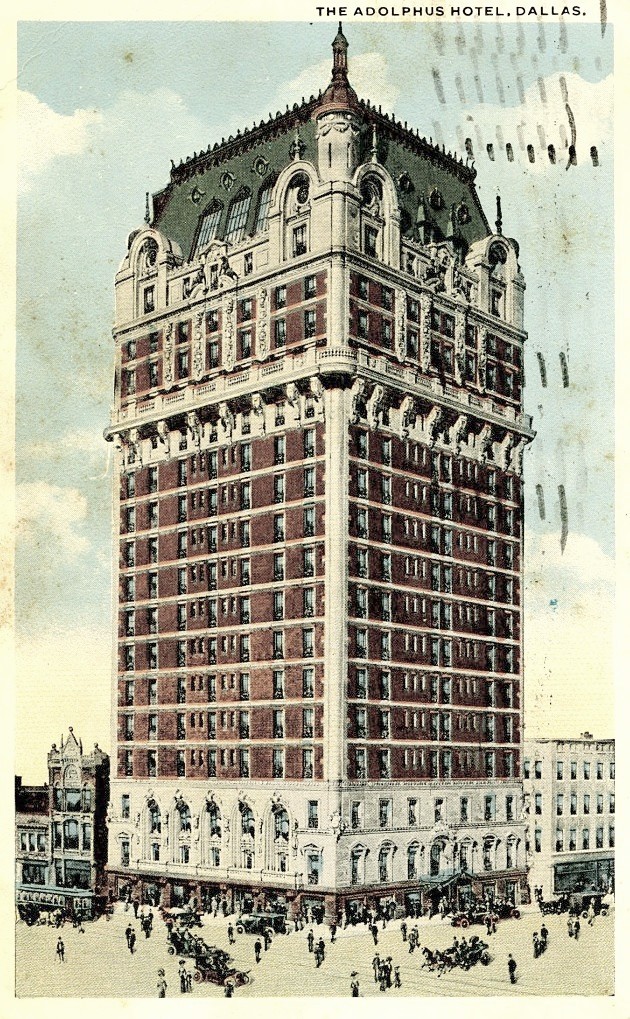
Adolphus Hotel — northwest corner of Commerce and Akard, built in 1911/12, designed by architects Barnett, Haynes & Barnett. The Adolphus — the oldest building in this group and the tallest building in the city when it was built — is definitely one the canyon’s anchors, but in the photo above it is mostly — if not entirely — out of frame at the left foreground.

adolphus_1910s_postcard

Magnolia Building — northeast corner of Commerce and Akard (seen at right foreground of photo); called the “Mobil Building” in the 1962 Dallas directory, built in 1922; Alfred C. Bossom, architect. Now the Magnolia Hotel.

magnolia-building_postcard_pre-pegasus

Adolphus Tower — southwest corner of Main and Akard, built in 1954; Wyatt Hedrick, architect (click pictures to see larger images). The building is currently being remodeled for office use.

adolphus-tower_jan-1955_ad-det_sm

Southwestern Life Building — southeast corner of Main and Akard, built in 1911/12; Otto H. Lang, architect. Bill Clements (before he became Governor of Texas) bought the building on spec in 1965, then had it demolished in 1972. It was a parking lot for many years. It is now Pegasus Plaza, an attractive open area.

southwestern-life-bldg_1913-directory

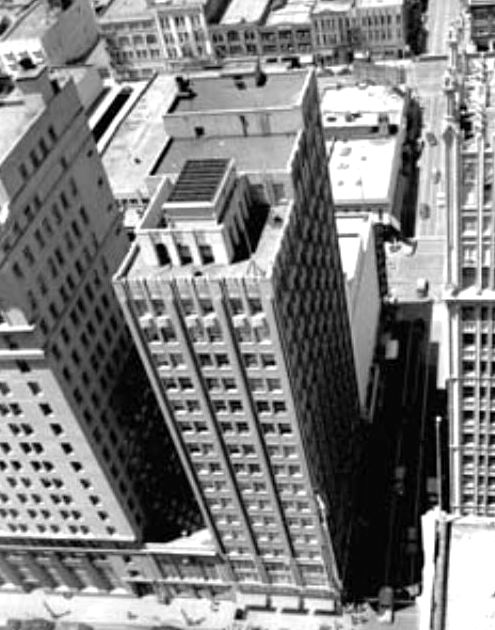
Gulf States Building — northwest corner of Main and Akard; originally known as the Marvin Building, built in 1927, with a later addition of upper stories designed by Lang and Witchell. Converted to lofts.

gulf-states-bldg_dpl

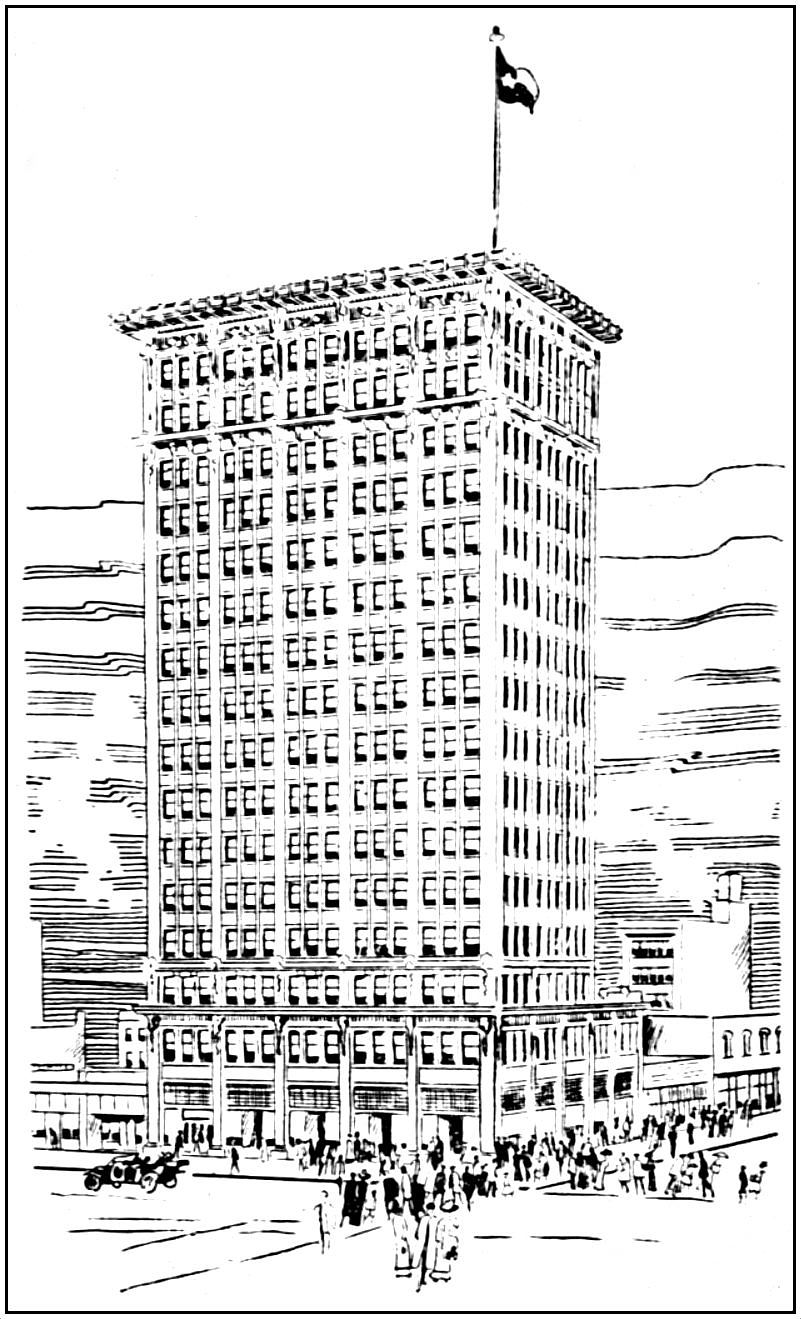
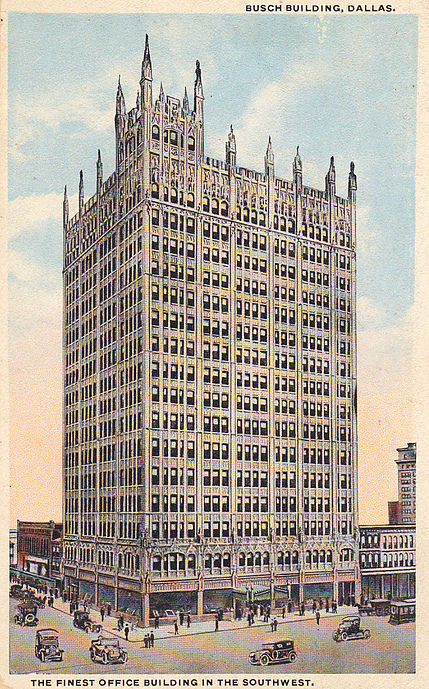
Kirby Building — northeast corner of Main and Akard. The Kirby Building — the beautiful white building at center right in the top photo — was designed by the same architects who designed the Adolphus Hotel, Barnett, Haynes & Barnett, with a 1924 annex designed by Lang and Witchell. When construction began in 1912, the building was originally called the Busch Building, named after Adolphus Busch, whose hotel was just a stone’s throw away (it was called the Great Southern Life Building from 1918 to 1922 and was renamed “Kirby” when it was purchased in 1922 by John H. Kirby). When the building opened in 1913, its most prominent tenant was the A. Harris department store, which occupied the first five floors and the basement. On December 31, 1960, it was announced that the parent company of pioneer Dallas department store Sanger’s (which, at the time of this announcement was part of the Federated Stores chain, but which had opened as Sanger Bros. in Dallas in 1872) had acquired another pioneer Dallas department store, A. Harris & Co. (established in 1892, though Adolph Harris had been in business in Dallas since 1887). The newly christened “Sanger-Harris” store settled into the old Harris space in the Kirby in 1961. It’s hard to tell, but it looks as if there is both an “S” on the corner of the building in this photo (for “Sanger’s”?) as well as the “A. Harris & Co.” sign affixed to the Akard side of the building. The A. Harris store had been a Dallas landmark at Main and Akard for almost 50 years, but it seems the sign would have come down by the time of the official change in name (which happened on July 10, 1961). So perhaps this photo was taken between January and July of 1961, when both stores were actually operating under the same roof and accepting either store’s credit card. The Kirby is now a snazzy apartment building.

busch_bldg_postcard

Mayfair Department Store — 1414 Elm, southwest corner of Elm and Akard. Built in 1946, this Dallas outpost of a department store chain was designed by George L. Dahl and has been converted to apartments.

mayfair-dept-store_dahl_feb-1947

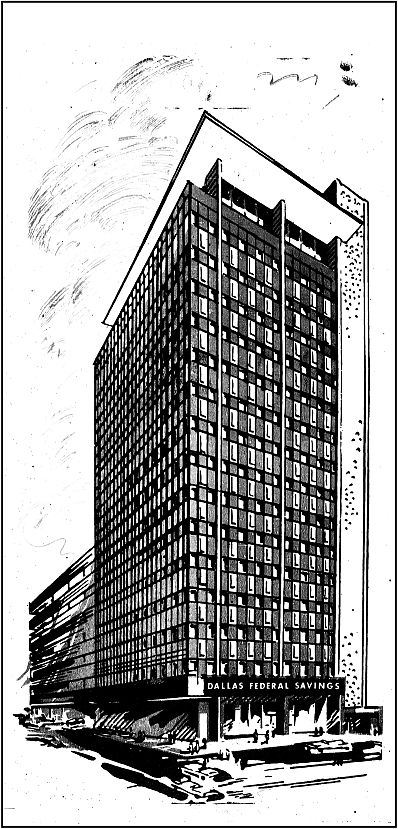
Dallas Federal Savings and Loan Building  —  1505 Elm, northeast corner of Elm and Akard. This blue, gray, and white building was built in 1956/57 and was designed by George Dahl. One of Dallas’ earliest movie theaters — the Queen Theater, built in 1912 — was demolished in 1955 to make way for the new office building. (A brand new parking garage was built at the same time.) Converted to condos and apartments.

dallas-federal-savings-and-loan_1505-elm_1957_sm     dallas-federal-savings_parking-garage_1957_ad-det

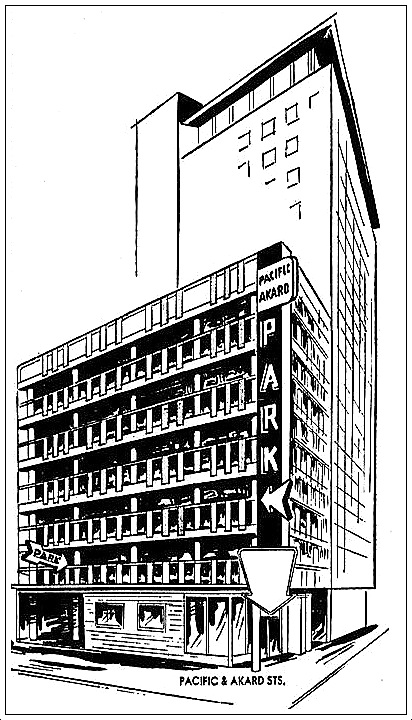
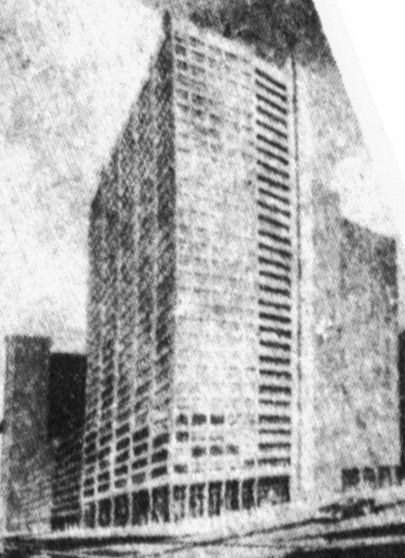
Fidelity Union Tower — northeast corner of Pacific and Akard, built in 1959/60, designed by Hedrick & Stanley; called the Mayflower Building for a short time. Now the Mosaic, converted to residences.

fidelity-union-tower-mayflower-bldg_hedrick-and-stanley_1958

511 North Akard — between Patterson and San Jacinto, built in 1958/59, designed for the Relief and Annuity Board of the Southern Baptist Convention by architects Thomas, Jameson & Merrill. Currently apartments, with a 7-Eleven at street-level.

511-akard_1958-rendering_advance-leasing_ad-det

All but one of these buildings are still standing, and most have been converted into apartments and condos. The view up Akard today (here) doesn’t look as much like a canyon as it did 55 years ago, due mainly to the loss of the Southwestern Life Building at Main and Akard.

Below is a photo looking south on Akard, with the Baker Hotel (on Commerce) straight ahead. That “third wall” formed by the Baker makes things a little more “canyon-esque.” (Note the Queen Theater at the left.)

akard_mayfair_pinterest

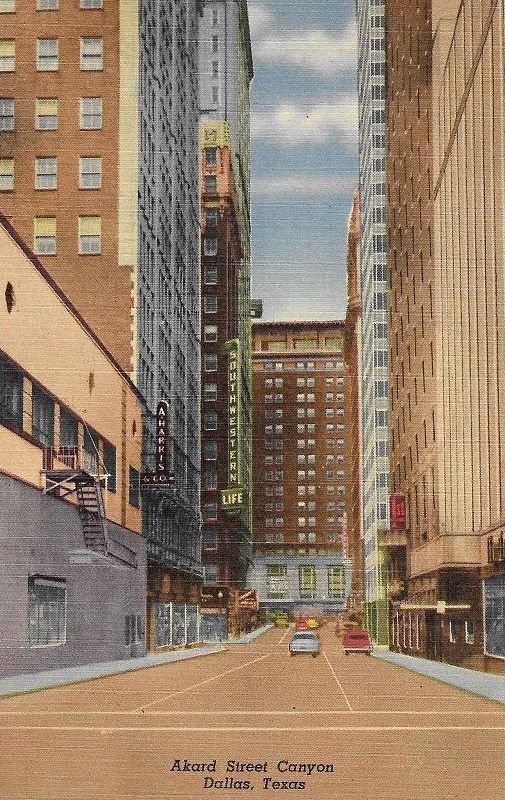
And, finally, a postcard of “The Akard Street Canyon” which tourists could share with the family back in Poughkeepsie.

akard-canyon_ebay

***

Sources & Notes

Top photo from the April, 1962 issue of AIA Journal (which is scanned in its entirety in a PDF, here).

Adolphus Hotel postcard from the Portal to Texas History.

Bird’s-eye view of the Gulf States Building from the collection of the Dallas Public Library.

Photo looking south on Akard from Pinterest.

Sketches and renderings of buildings mostly from ads, almost all of which appeared when the building in question opened.

For several photos showing the view south on Akard over the years, see the Flashback Dallas post “Akard Street Looking South, 1887-2015,” here.

*

Copyright © 2017 Paula Bosse. All Rights Reserved.
The WFAA Studios, Designed by George Dahl, Rendered by Ed Bearden — 1961

wfaa_george-dahl_ed-bearden_postcard“Communications Center”

by Paula Bosse

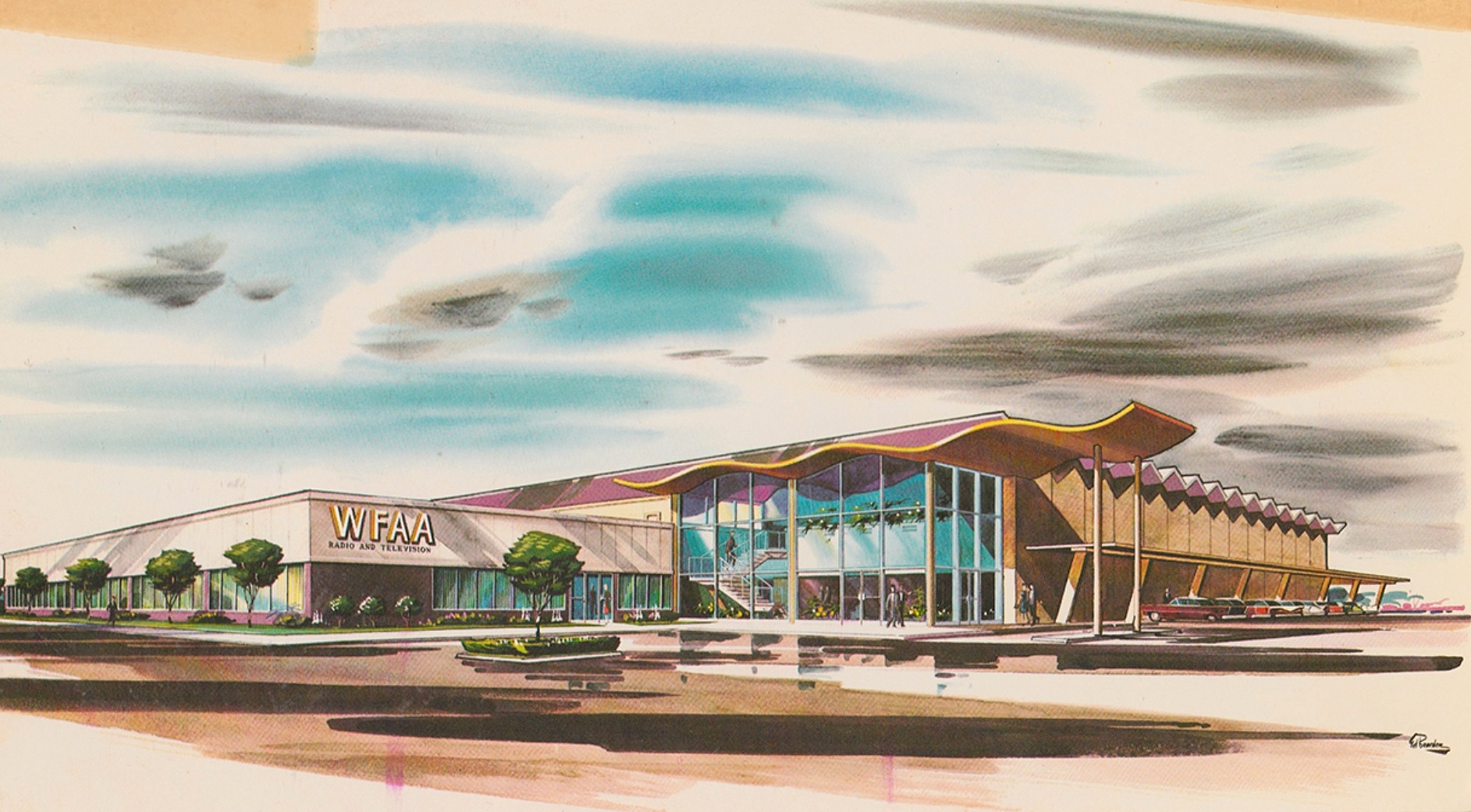
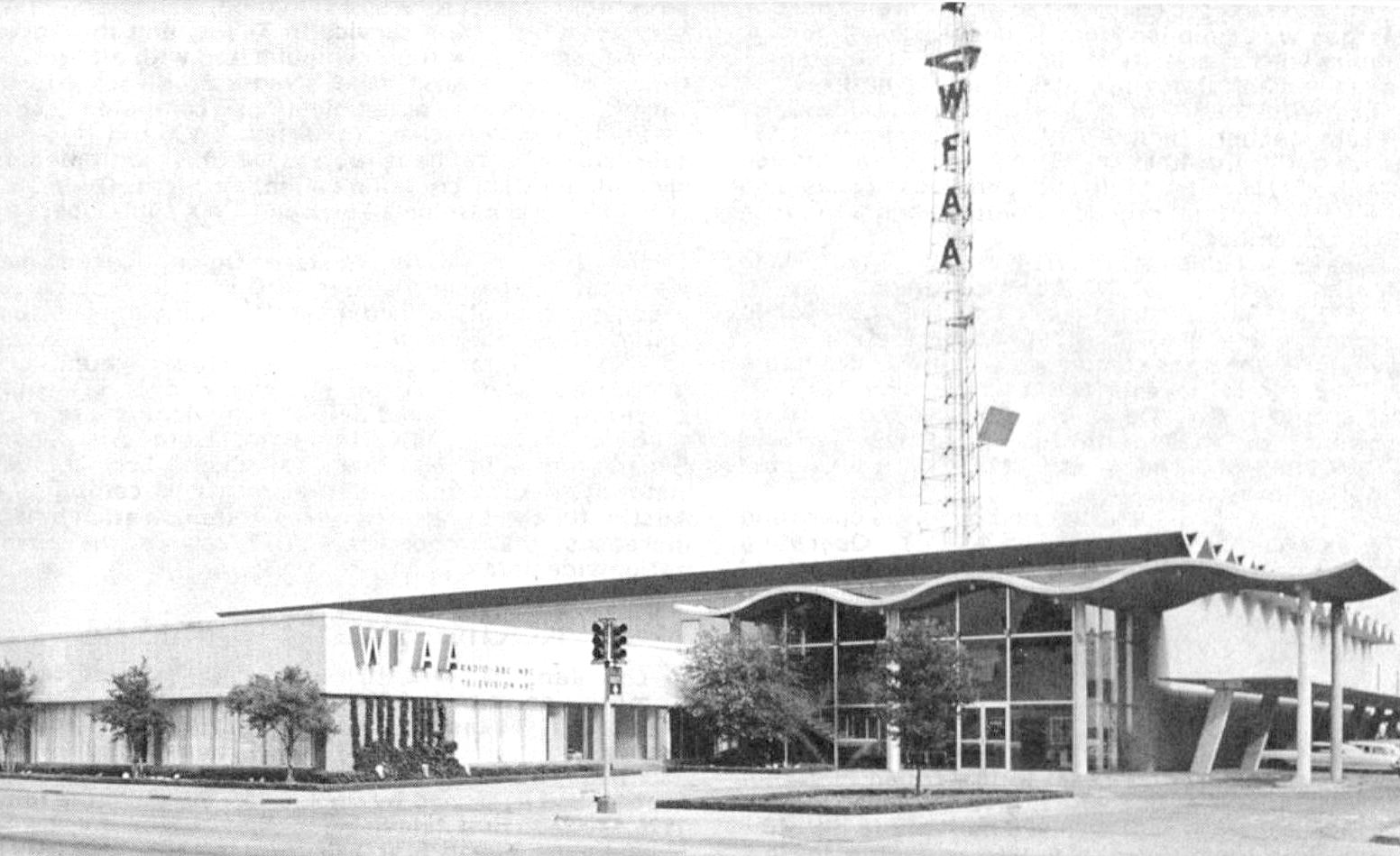
Above, the WFAA studios, seen in a wonderful painting by Dallas artist Ed Bearden. The image is from a postcard touting the brand new ultra-modern building designed by one of Dallas’ top architects, the prolific George L. Dahl. The building still stands at Young and Record streets, next to the home of its then-sister-company, The Dallas Morning News (appropriately, the News building was also designed by Dahl … as was the soon-to-be HQ of The News, the old Dallas Public Library at Commerce and Harwood).

The super-cool mid-century “WFAA AM-FM-TV broadcasting plant” was completed in 1961. It opened to much fanfare in April of that year, with star-studded festivities featuring personal appearances by a host of ABC stars such as Connie Stevens, Johnny Crawford, and Nick Adams. If catching a glimpse of “Cricket” or the Rifleman’s son didn’t wow you, the public was also invited to tour the building and gawk at its state-of-the-art radio and television studios. This large 68,000-square-foot building allowed WFAA radio and WFAA-TV to be housed under the same roof. Before this, the AM and FM radio stations were broadcasting from studios atop the Santa Fe Building, and Channel 8 was broadcasting from their television studios on Harry Hines, at Wolf (studios which they sold to KERA at the end of 1959).

Aside from the innovative “folded-plate” concrete roof, one of the first things I noticed about this building was the staircase behind a “wall” of plate glass — I was instantly reminded of the staircase from the old Rogers Electric building (now Steinway Hall) on the Central Expressway service road at McCommas — all it needed was a gigantic ficus tree. (Unsurprisingly, that building — built in 1959 — was also designed by the very, very busy George Dahl.)

Cool building, cool architectural design, cool artistic rendering.

**

Below is an early pre-construction rendering of the WFAA building, from 1959.

wfaa_bw_rendering_1959

*

And a photo from the early 1970s.

wfaa_texas-almanac_1974-75

*

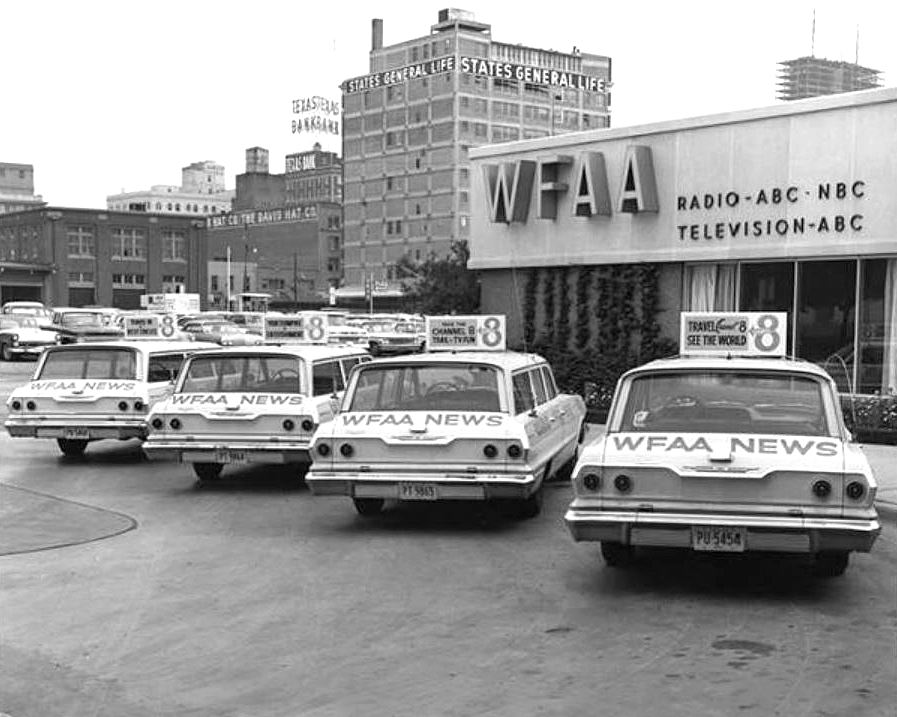
And here’s a view taken from the side of the building in 1963, looking toward Young Street.

wfaa_news-vehicles_belo-records_degolyer_smu_1963

*

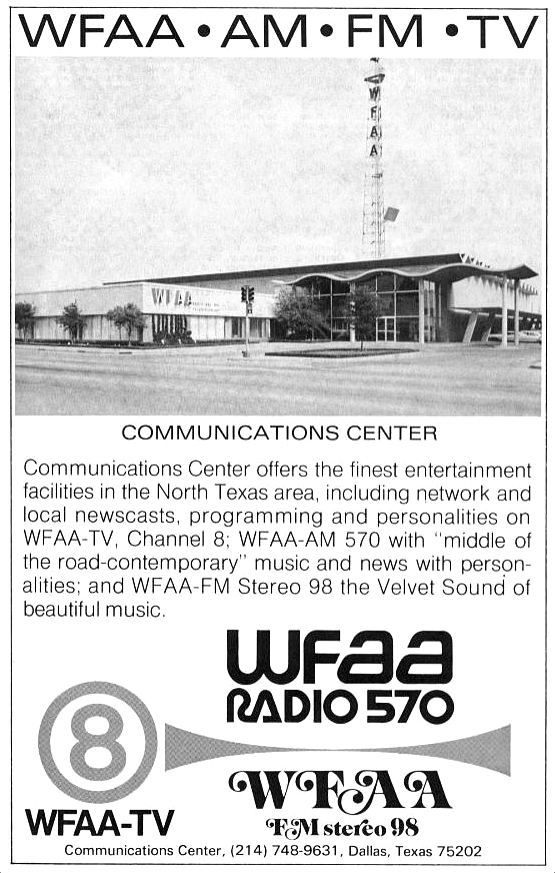
The early-’70s photo above was taken from this ad from the 1974-75 Texas Almanac. Ah, “Communications Center.” (I have to say, I’ve never heard of “WFAA-FM Stereo 98” nor their slogan “The Velvet Sound of Beautiful Music.” In fact, by the time this edition of the Almanac was published, WFAA-FM no longer existed — it had changed both its name — to KZEW — and its format — to rock.)

wfaa_texas-almanac_1974-75_portal

***

Sources & Notes

Color postcard found on the entertaining blog Texas Pop Culture; see the post — which includes scans of the reverse side of the card — here.

Bearden’s signature is a bit hard to make out — the slightly distorted magnified signature can be seen here.

The more I see of Ed Bearden’s work, the more I like it. See his Dallas skyline from 1958 here; see his Dallas skyline from 1959 here.

Photo of the Channel 8 news vehicles is from the Belo Records collection, DeGolyer Library, Central University Libraries, Southern Methodist University; more info on this photo is here.

More on architect George L. Dahl can be found at the Handbook of Texas, here, and at Wikipedia, here.

Read more about the history of FM radio in Dallas — including histories of WFAA-FM and KZEW — at the indispensable website of local broadcasting history — DFW Retroplex, here.

*

Copyright © 2017 Paula Bosse. All Rights Reserved.

From the Vault: The Dallas Skyline As Seen by Commercial Artist Lee Albertson — 1969

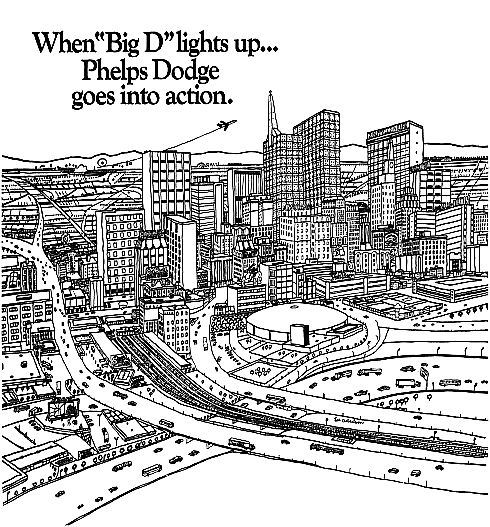
ad-phelps-dodge_1969_bw_small“When Big D lights up…”

by Paula Bosse

This is not one of the legendary phone book covers of Karl Hoefle, but the work of a commercial artist who produced several similar city-skyline ads for Phelps Dodge. This one is a lot of fun to zoom into and see in detail — see a much larger image here.

But it’s even better in color. See the color version in my original post — “When ‘Big D’ Lights Up — Phelps Dodge Ad (1969)” — here.

*

Copyright © 2017 Paula Bosse. All Rights Reserved.

“Meet Me in Dallas, On June the 23rd…”

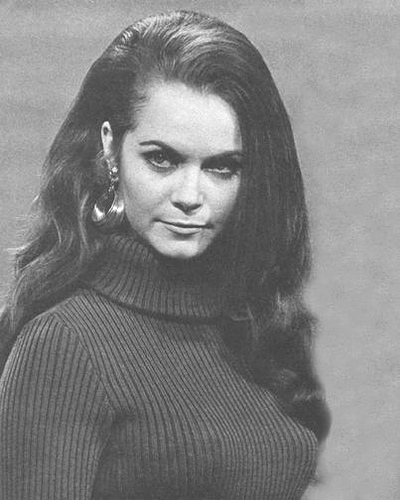
jeannie-c-riley_flickrJeannie C. Riley

by Paula Bosse

Until last week, I don’t think I’d ever heard the 1969 song “The Back Side of Dallas,” sung by Jeannie C. Riley, who had had the blockbuster hit “Harper Valley PTA” the previous year. How have I never heard this? I was going to post it last week until I realized that it would be better to wait until today, because of this line from the song: “Meet me in Dallas on June the 23rd, his letter read.” And here we are, June 23rd.

The song, written by Jerry Foster and Bill Rice, was released in October, 1969. It wasn’t the huge, crossover, multi-award-winning monster hit that “Harper Valley PTA” was, but it did earn Jeannie another Grammy nomination (she lost to Tammy Wynette’s “Stand By Your Man” — if you’re going to lose, that’s a pretty great performance to lose to!).

Like “Harper Valley PTA,” it was one of several songs of the era which brought country music into the somewhat seedy realm of 1960s American culture. “The Back Side of Dallas” is about a small-town girl who finds herself a lonesome “working girl” in Dallas, chain-smoking king-size cigarettes, drinking in dingy bars, and popping pills. This ain’t no Kitty Wells song, y’all. (I’d love to hear Miranda Lambert — who also has an incredible country voice — cover this.)

back-side-of-dallas_jeannie-c-riley_label

Jeannie C. Riley — born in Anson, Texas in 1945 — was one of the first certifiable sex symbols in country music, always gorgeous, outfitted in miniskirts and go-go boots, with sky-high hair teased to a fare-thee-well. AND she had an absolutely fantastic voice. Below is video of a 24-year-old Jeannie C. Riley singing “Back Side of Dallas” on Del Reeves’ Country Carnival in 1969 (Del Reeves had some great songs in the ’60s, but his TV persona was a little too Dean Martin-wannabe for my taste … and … oh dear … that set!):

*

I prefer the studio version, below. I’ve listened to this song dozens of times now, and I haven’t gotten tired of it yet!

*

And here’s Jeannie singing it in 2011, still sounding great! (Her thick Texas accent is the absolute best, and her laugh is fantastic.) She talks about the song a bit at the beginning with Jerry Foster, one of the writers of the song — the song itself starts at about the 3:10 mark.

*

And, to round out this “June the 23rd” post, a few photos of Jeannie C. — surely one of the most photogenic faces and bad-ass vocalists in the history of country music. As my father used to say, “hot damn.”

jeannie-c-riley_motorcycle

jeannie-c-riley_3

jeannie-c-riley

jeannie-c-riley_2

***

Sources & Notes

Most, if not all, photos of JCR from Pinterest.

Record label image found here.

A biography of Jeannie C. Riley is here.

“Harper Valley PTA” — you know you want to hear it. This is a great live version she did on, I think, the Wilburn Brothers Show, with Harold Morrison on dobro.

*

Not that anyone’s going to confuse the two songs, but this song has nothing to do with the 1915 song of the same name by Adolphus Hotel orchestra leader Jack Gardner (which you can read about here).

*

Copyright © 2017 Paula Bosse. All Rights Reserved.
Dallas History on “Jeopardy”

delta_jeopardy_061917“What is….”

by Paula Bosse

Yesterday an old Flashback Dallas post from 2014 got a TON of hits. As the hits continued to rack up all day, I thought, “This is really weird.” The reason? Jeopardy! Even better, FINAL Jeopardy! Do you know the answer (…phrased in the form of a question)? See if you do, here.

*

Copyright © 2017 Paula Bosse. All Rights Reserved.
Country Music — Every Saturday Night on Channel 11

country-music_saturday-night_channel-11_ktvt_1969The warm-up for wrestling…

by Paula Bosse

I have a surprisingly deep knowledge of classic country music. And it can all be traced back to sitting with my father every Saturday night as he watched the jam-packed lineup of country music TV shows on KTVT-Channel 11.

Followed by wrestling.

Which I also have a surprisingly deep knowledge of. If only by osmosis.

Thank you, Channel 11, for providing this bonding time with my father, which I didn’t really appreciate as a child, but I do now.

(And, yes, I’m happy that my antiquarian bookseller father and Comparative Literature-degree-holding mother often took our family to the Sportatorium to see both country music package-shows and wrestling matches. You can’t say our family wasn’t well-rounded.)

***

Sources & Notes

1969 ad from an odd little local publication (which probably used to belong to my father) called Country and Western — The Sound That Goes Around the World, published in DFW by PegAnn Production.

*

Copyright © 2017 Paula Bosse. All Rights Reserved.
From the Vault: “The Manure Problem”

akard-looking-north_cook-colln_degolyer_smu_ca-1906See all those horses?

by Paula Bosse

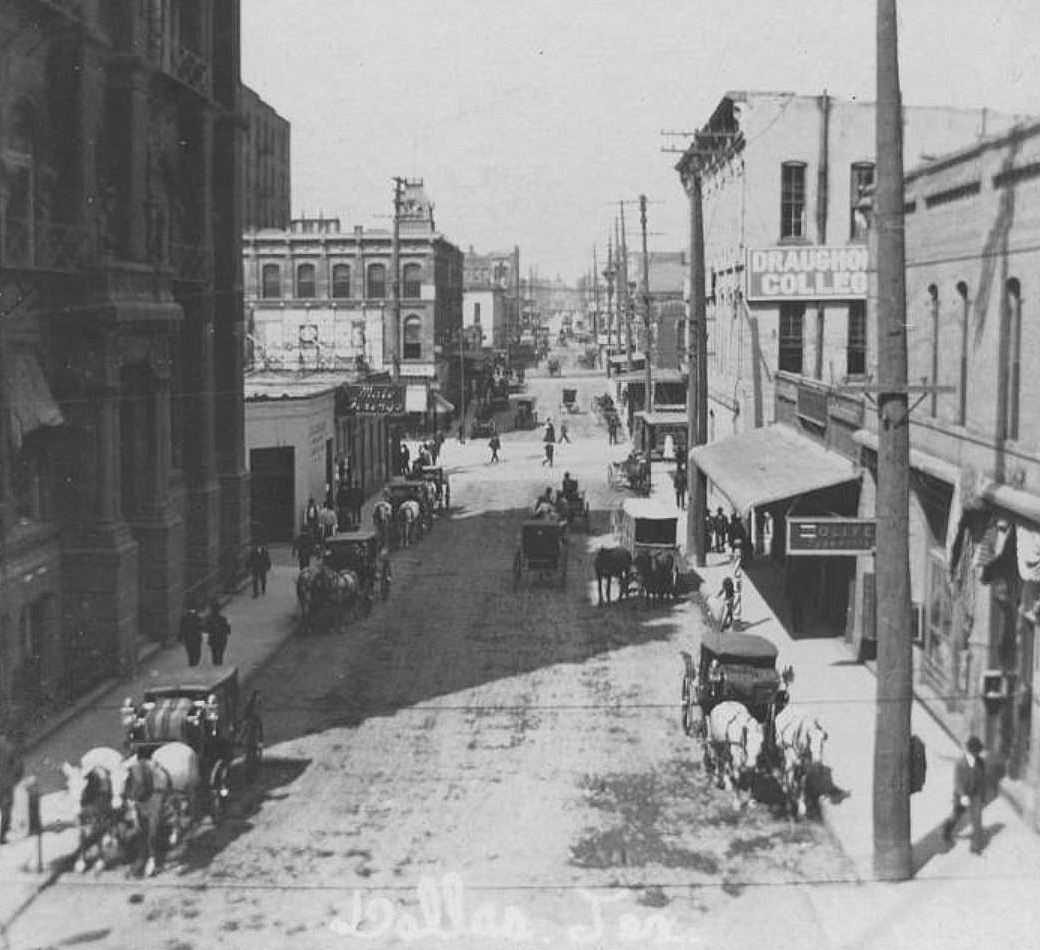
There’s a headline that’ll get attention. Check out the post “‘Male Fixings’ and Horse Manure Akard Street, ca. 1906″ in which I wonder how cities used to deal with all the horse manure in the streets. (Augusts must have been especially unpleasant back then.)

*

Copyright © 2017 Paula Bosse. All Rights Reserved.


Mosaic Restoration at Downtown’s St. Jude Chapel

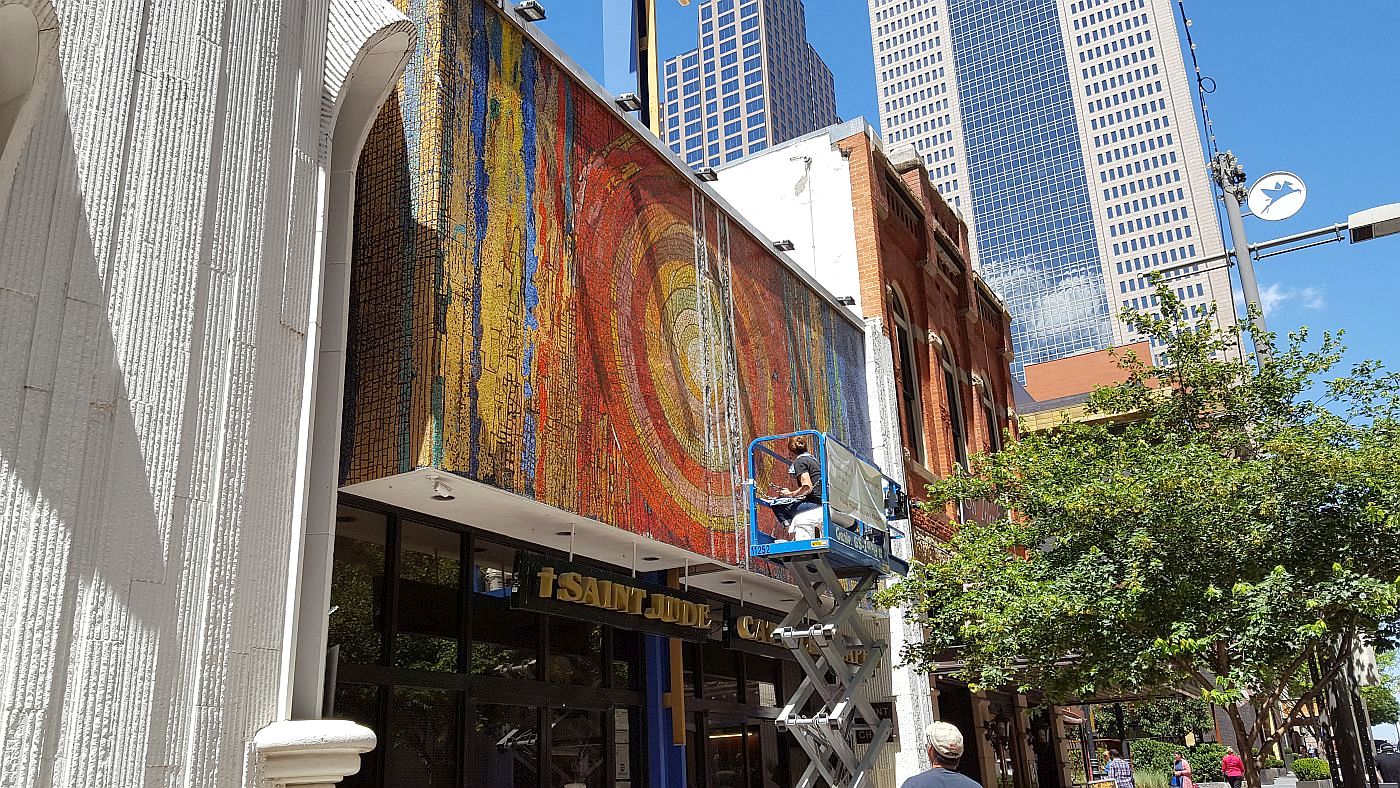
st-jude-chapel_scaffold_052417_bosse_bosseTile by tile by tile… (click for larger image)

by Paula Bosse

A couple of weeks ago I went downtown to check out the restoration of the large mosaic above the entrance to the St Jude Chapel on Main Street. The 1968 Gyorgy Kepes mosaic (which I wrote about here) is undergoing needed repair work, restoration, and cleaning, in preparation for next year’s 50th anniversary of the downtown chapel. The work on mosaics inside the chapel as well as the large one outside is being done by artist and preservationist Julie Richey of Julie Richey Mosaics in association with Art Restorations, Inc.

As you can imagine, the outdoor mosaic overlooking Main Street has, for 50 years, weathered everything from intense summer heat, freezing temperatures, automobile exhaust, slight shifting of the building’s structure, damage to individual tiles, mildew, grout decomposition, and a host of other factors, all of which led to the much-needed restoration work.

A couple of things that I found interesting, in talking with Julie Richey and Cher Goodson (of Art Restorations, Inc.) was that there are over 800,000 glass smalti tiles (or tesserae) forming the sunburst mosaic. 800,000! I had no idea it was so large until I was standing right below it. After missing or damaged tiles have been replaced, all 800,000-plus will be cleaned — by hand, I think — with, as Cher told me, Dawn dishwashing liquid (good for cleaning greasy dishes, oil-soaked waterfowl, and Venetian glass tiles). Speaking of those tiles, one of the most serendipitous moments in this project was when Julie was able to track down slabs of smalti in New York which were the very same smalti used in the original 1968 mosaic — they had been kept in storage for 50 years, and they look brand new. That means that the tesserae being used to replace the damaged or missing tiles are from the exact same batch as the originals, which means the vivid colors, the composition, the opacity, and the surface texture are the same. That is an incredible stroke of luck!

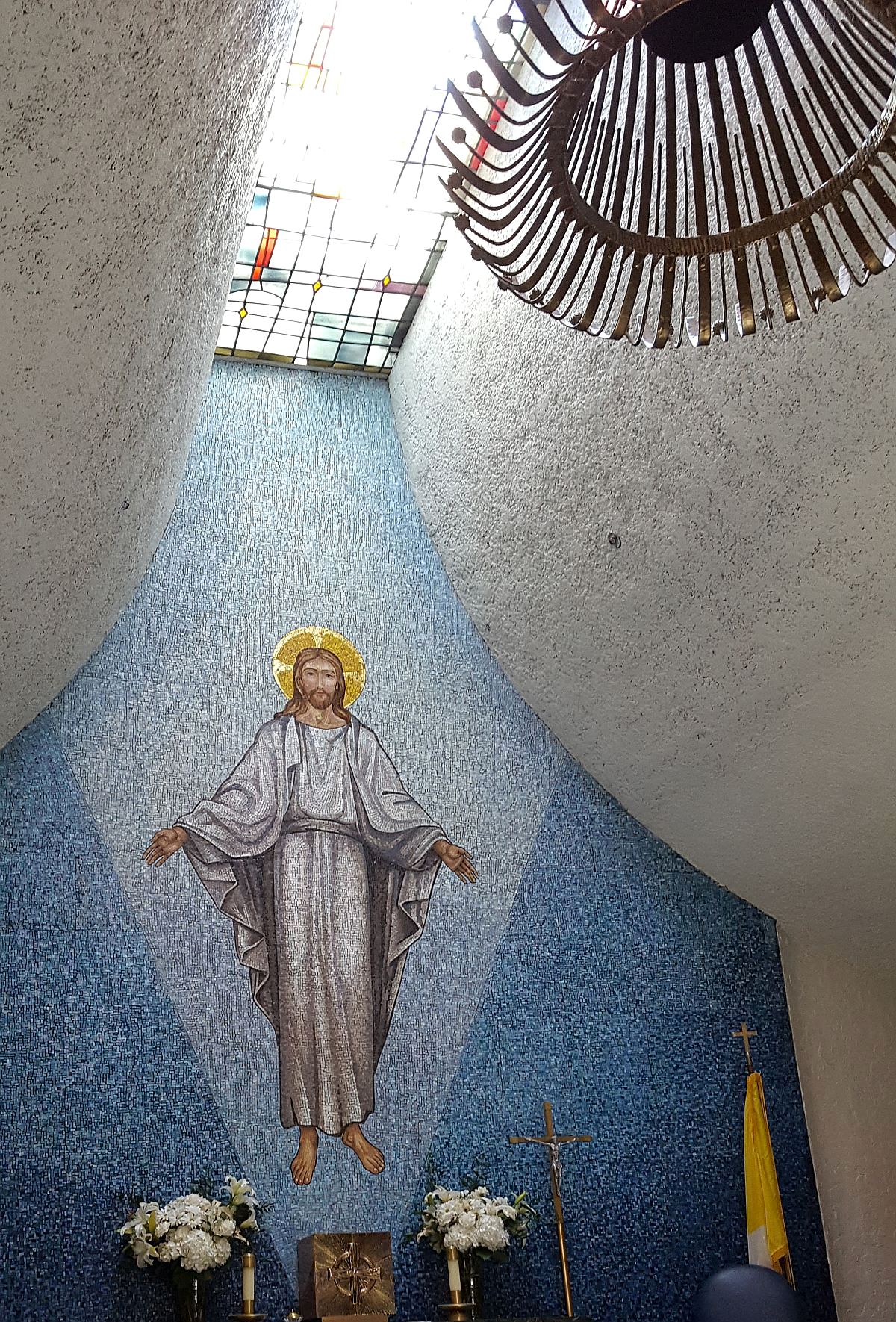
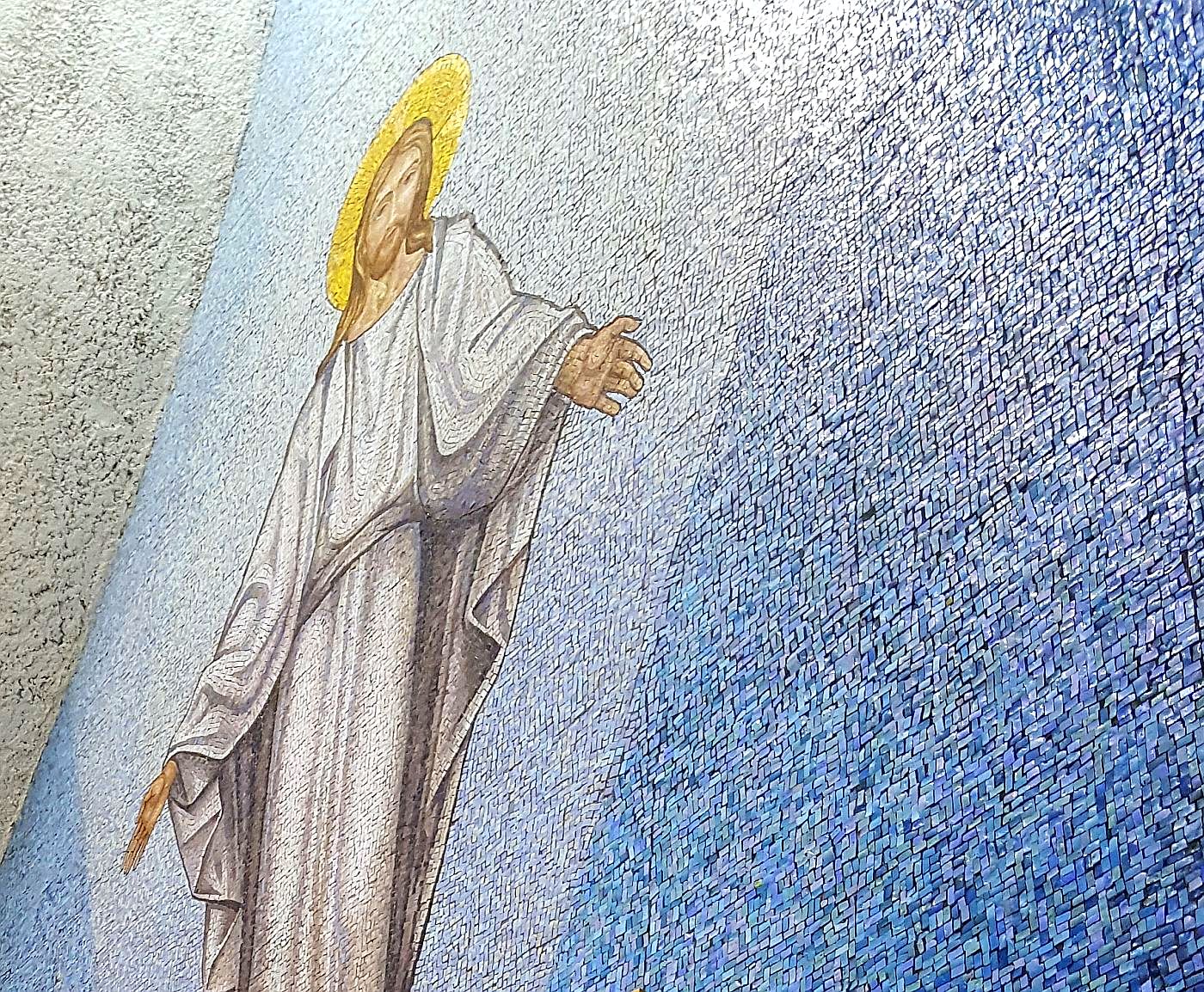
The work should be wrapping up soon — if you’d like to catch the last few days of this project, hop downtown and say hello to the women doing such great work! (UPDATE: The project actually ended Friday. But you should still go down and take a look at it!) While you’re there, you should step inside to see the little chapel, a calm and peaceful oasis in the heart of downtown. There are several other mosaics inside — Julie and company did work on some of those as well, most notably the very large, striking “Risen Christ” above the altar.

Below are some photos I took inside and outside the chapel on May 24, 2017 — most are larger when clicked.

**

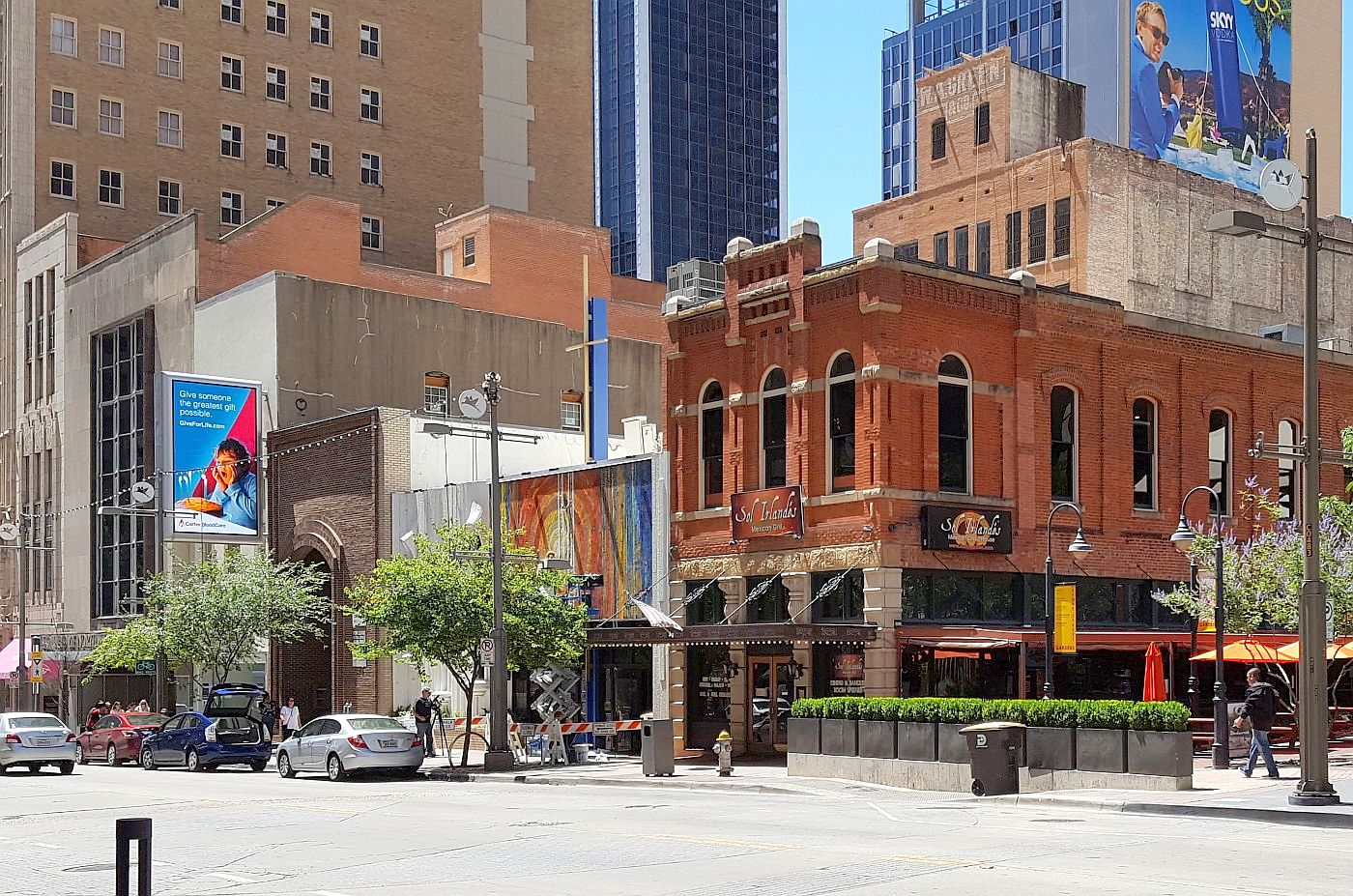
St. Jude Chapel is in the 1500 block of Main, between Ervay and Akard.

Here it is, seen from Neiman’s, across the street.

st-judes-chapel_sol-irlandes_052417_bosse

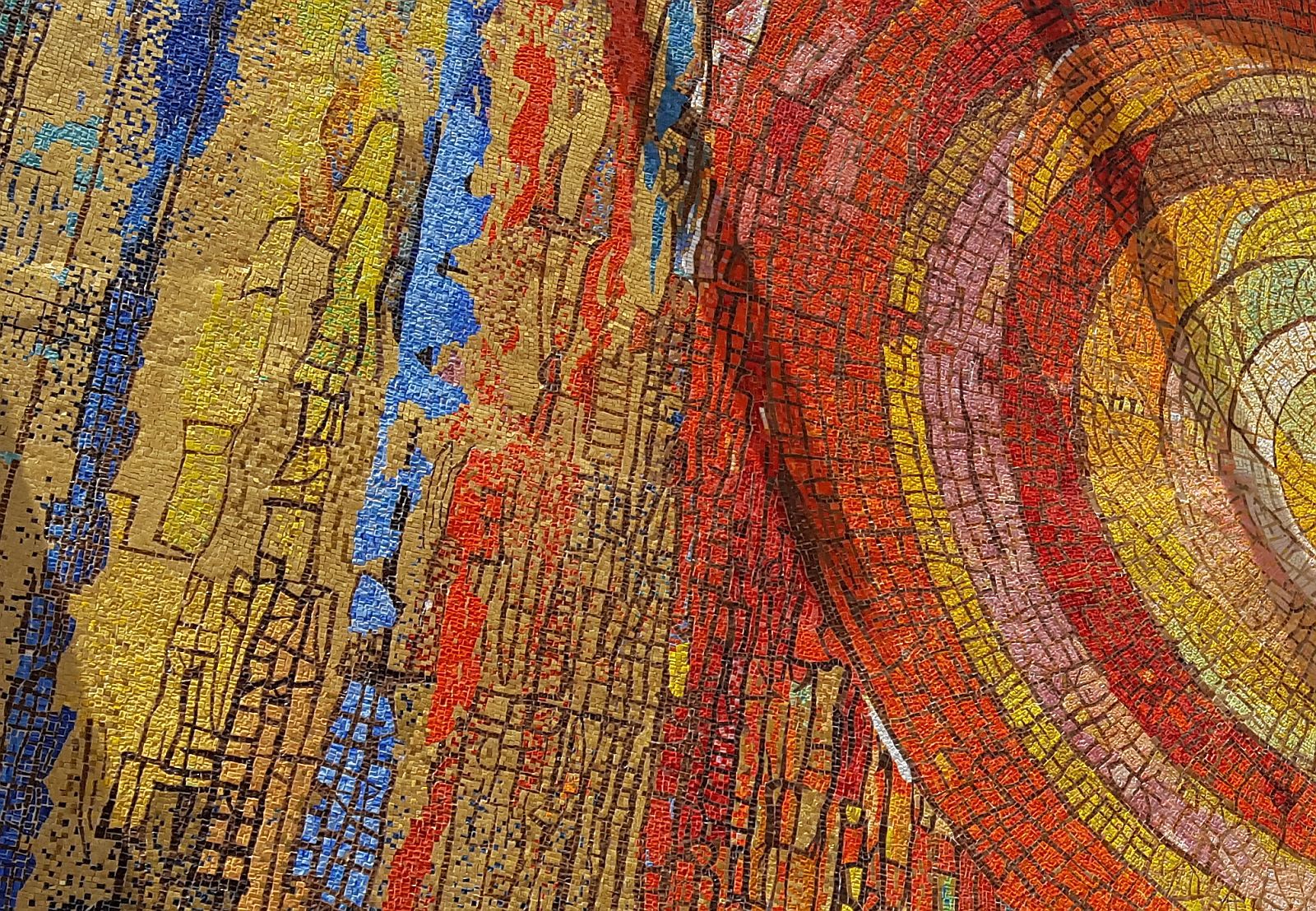
Below is part of the mosaic by Gyorgy Kepes — seeing it up close, you begin to realize that, yeah, there probably are more than 800,000 glass tiles up there. (Definitely click the photo to see a very large image.)

st-jude-chapel_mosaic_052417_det_bosse

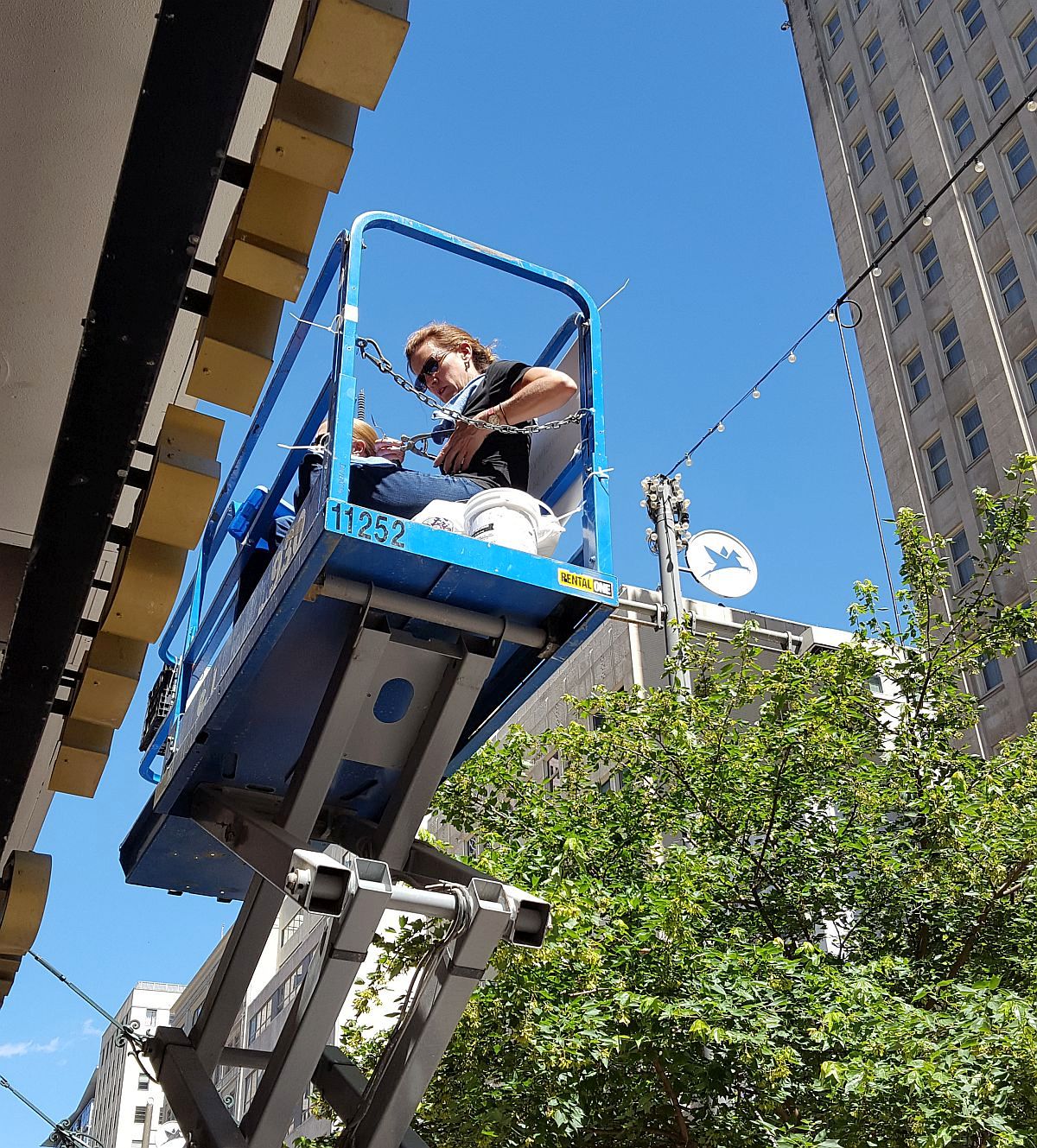
The photo at the top of the post shows the lift used to tackle the job; looking on is Dallas filmmaker Mark Birnbaum who is documenting the project. Below, Julie Richey and Lynne Chinn are raised up on the lift to do their torturously tedious and very, very detailed work (imagine working on this huge thing using tweezers!). Julie can be seen snipping “new” smalti to replace the damaged or missing tiles, working from photos, diagrams, grids, graphs, and guides to make sure the restoration is as close as possible to the original mosaic: the colors must match, the shapes must match, the placement must match.

st-jude-chapel_julie-richey_snipping_052417_bosse

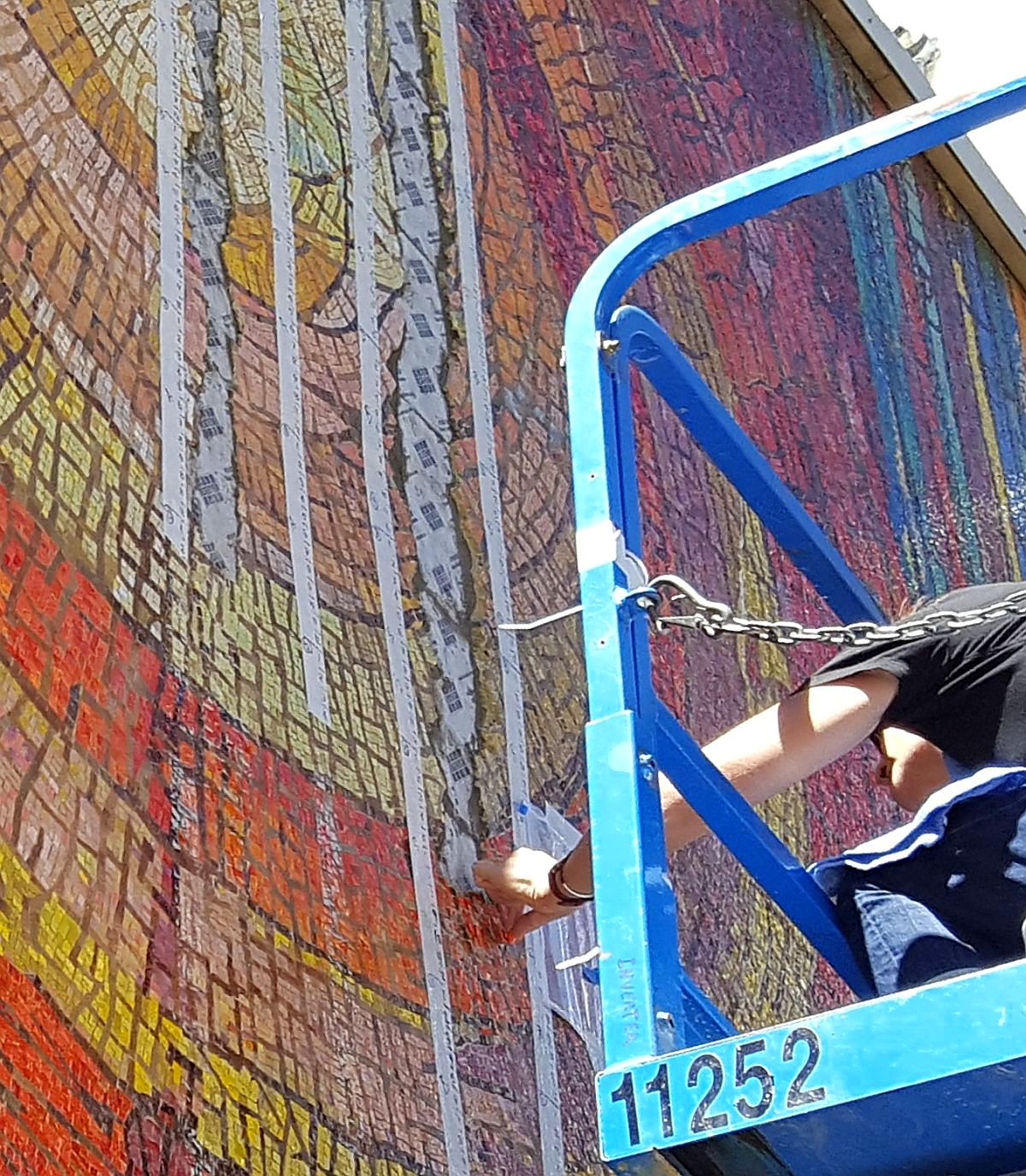
You really have to be focused to do work like this. Here, Julie is setting a tiny piece into that giant mosaic (the marked vertical strips of tape help map the mosaic and insure that everything goes back in exactly as it was originally placed in 1968.

st-jude-chapel_julie-richey-at-work_052417_det_bosse

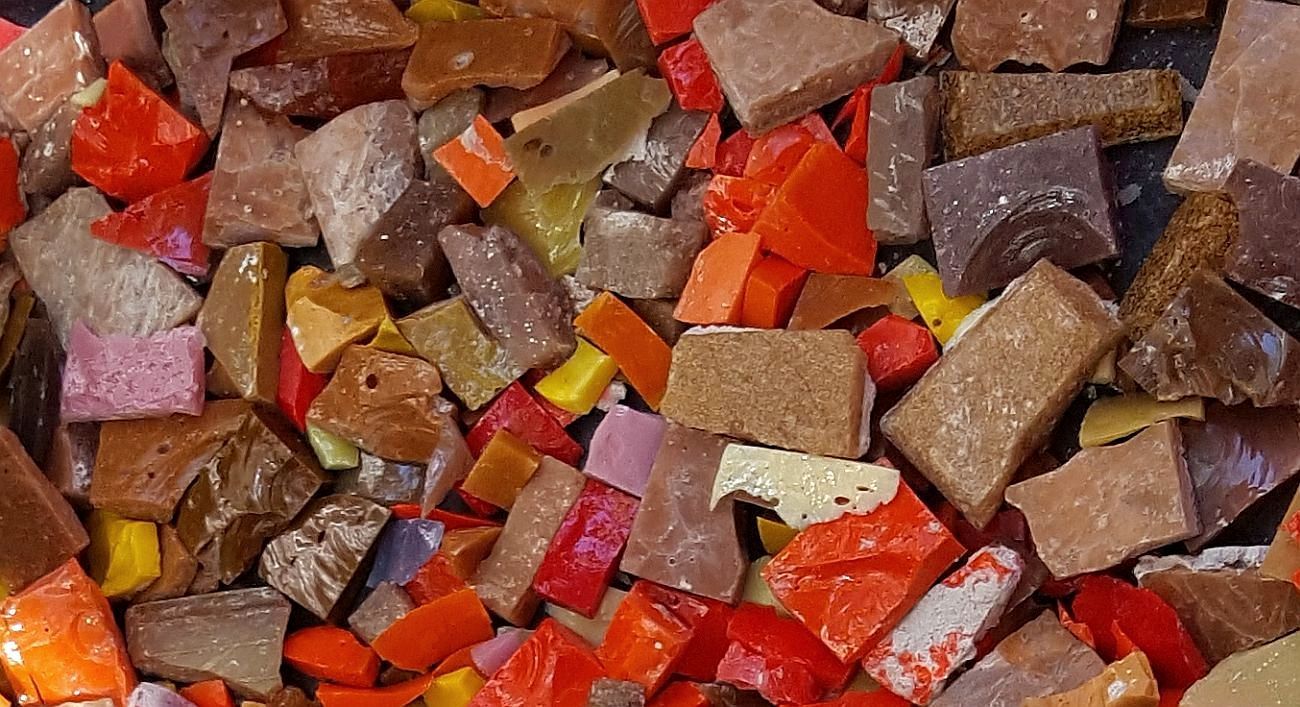
Speaking of snipping the smalti (which sounds like a naughty euphemism used amongst naughty mosaicists), here’s what’s left over, below. I talked to conservator Callie Heimburger, who gave me a lot of interesting information on how the whole intricate process worked — she was set up at a table on the sidewalk and had containers full of these beautiful discarded glass shards in front of her. I really wanted to scoop up a handful and sneak them into a pocket, but I managed to control myself.

st-jude-chapel_smalti-snippings_052417_bosse

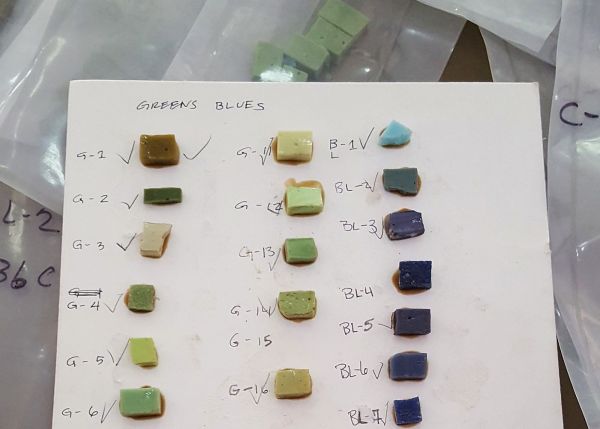
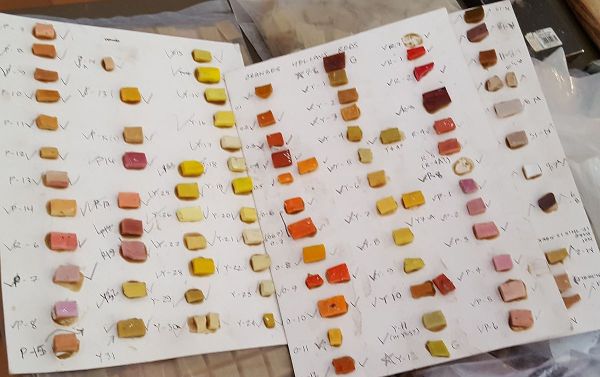
Everything is meticulously color-coded.

st-jude-chapel_greens-blues_052417_bossse

st-jude-chapel_oranges-yellows_052417_bosse

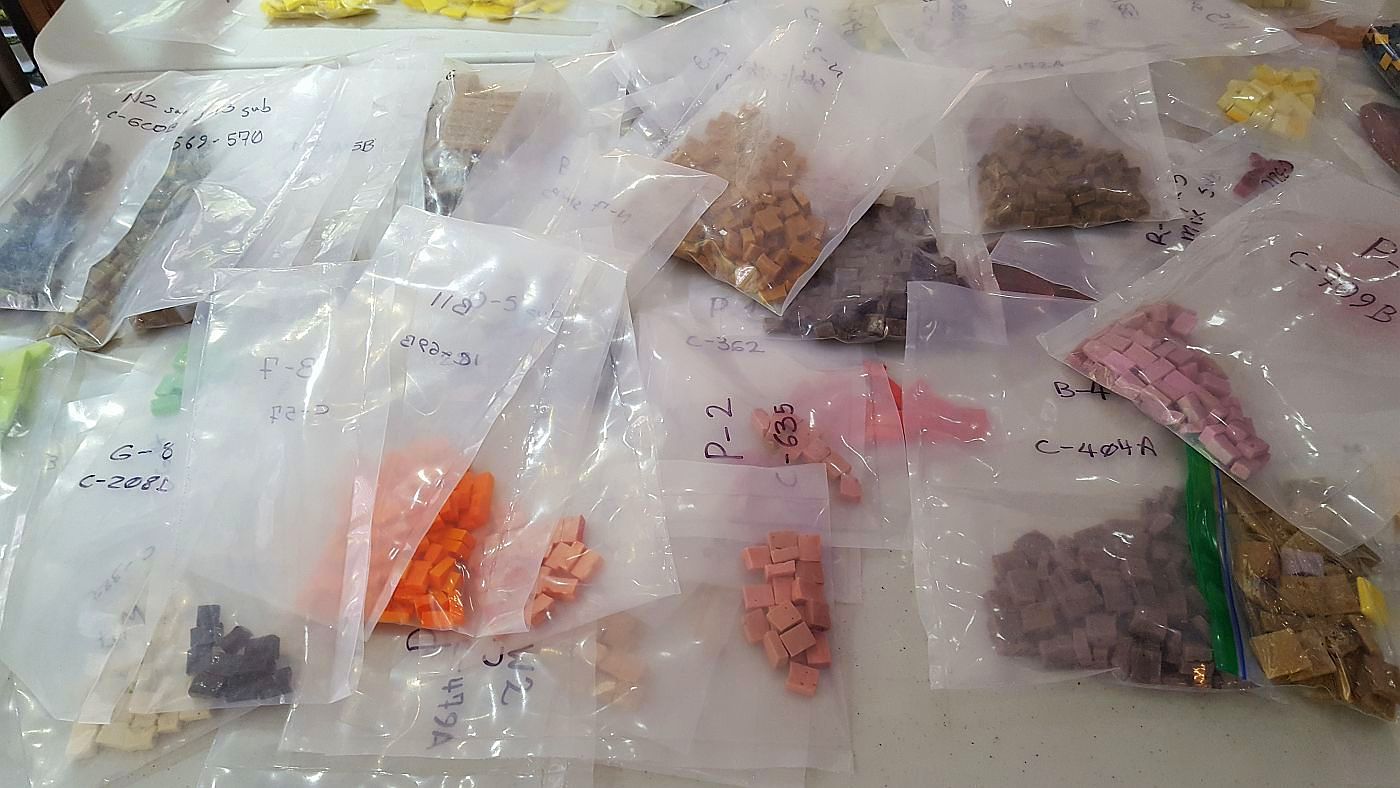
And smalti? Here are bags of “new” bagged tiles — not shown are the slabs or the larger pieces which look a little like brightly colored peanut brittle.

st-jude-chapel_bagged-tiles_052417_bosse

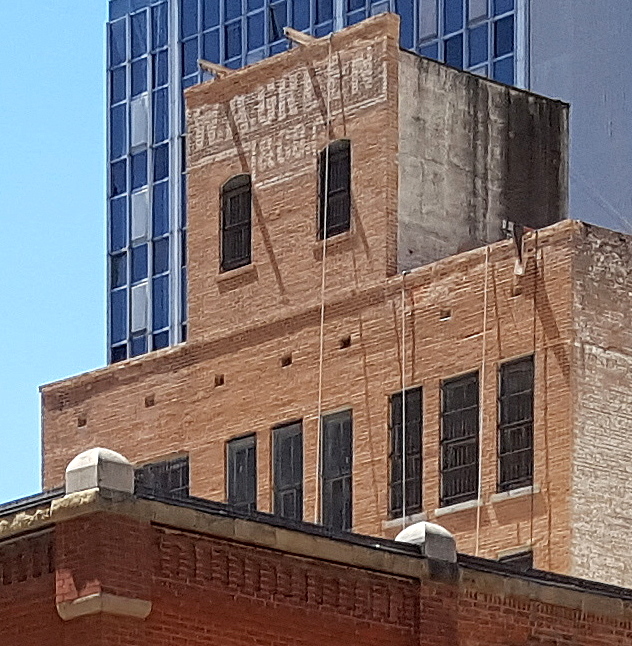
Julie asked if I wanted to go up on the lift and take a closer look. It was even more impressive (and a little overwhelming) to be right next to it. I also got to take a look over the top of the building. There Julie pointed out all that remains of one of downtown’s biggest and busiest retail stores, W. A. Green. I didn’t have the presence of mind to get a good photo up there, but here’s the “ghost sign,” seen from across the street.

w-a-green_ghost-sign_052417_bosse

**

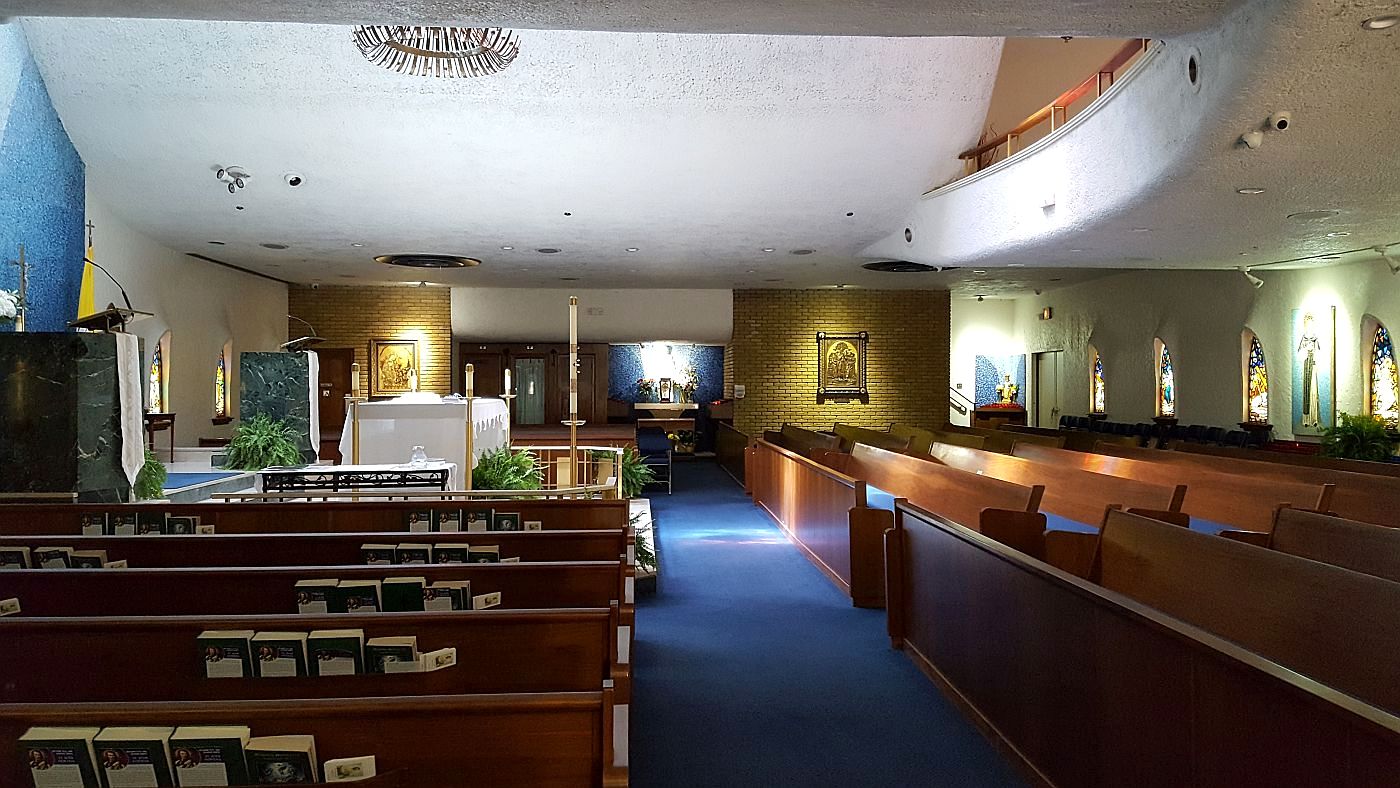
Since I was there, I had to step inside to see what the little chapel looked like. It’s very charming. And the mosaics inside are also impressive.

Here’s what you see as you step in.

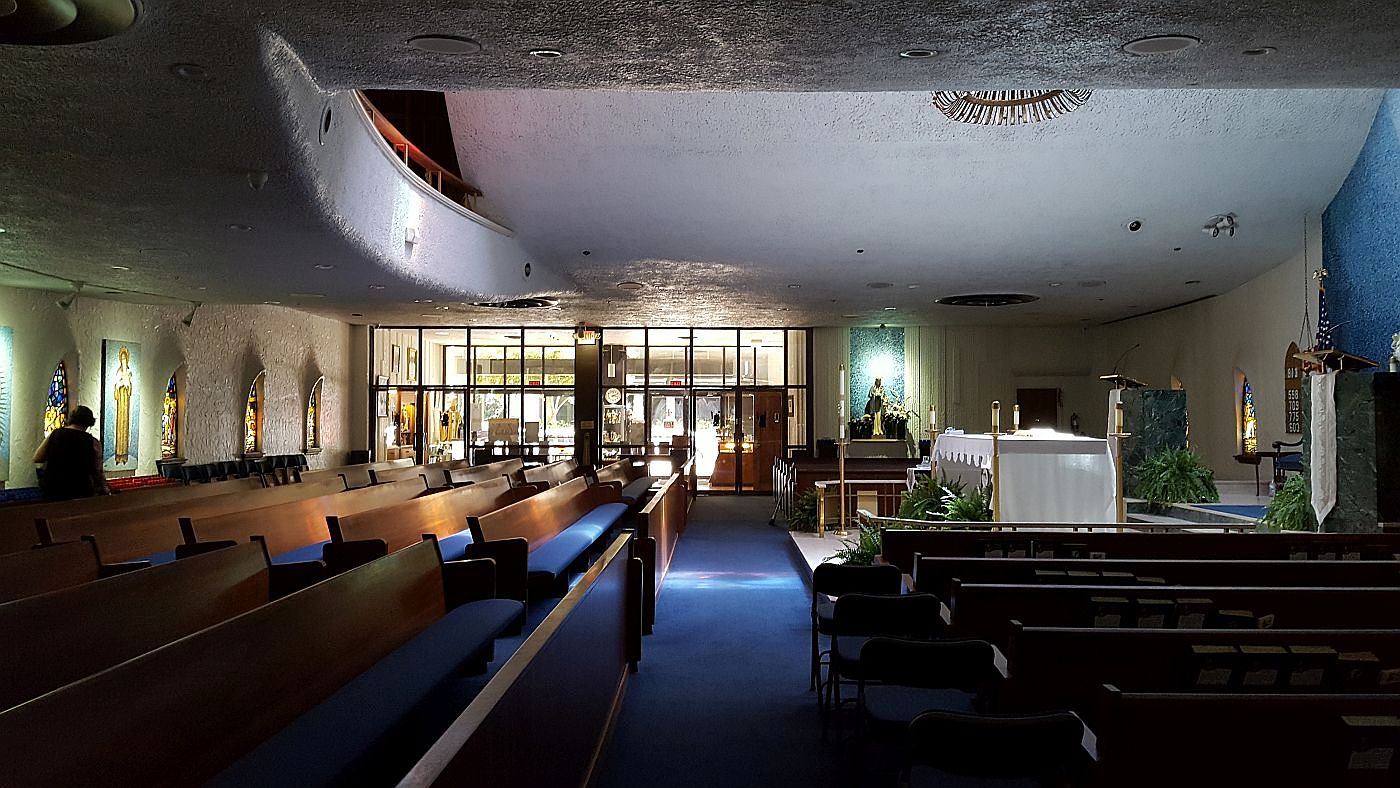
st-jude-chapel_toward-back-of-chapel_052417_bosse

To your left is the altar. This lovely mosaic was also restored and cleaned. Also: curved walls, a stained glass skylight, and a light fixture that is one of my very favorite decorative elements of this chapel.

st-jude-chapel_altar_stained-glass-skylight_052417_bosse

A closer look at “Risen Christ.”

st-jude-chapel_altar_det_052417_bosse

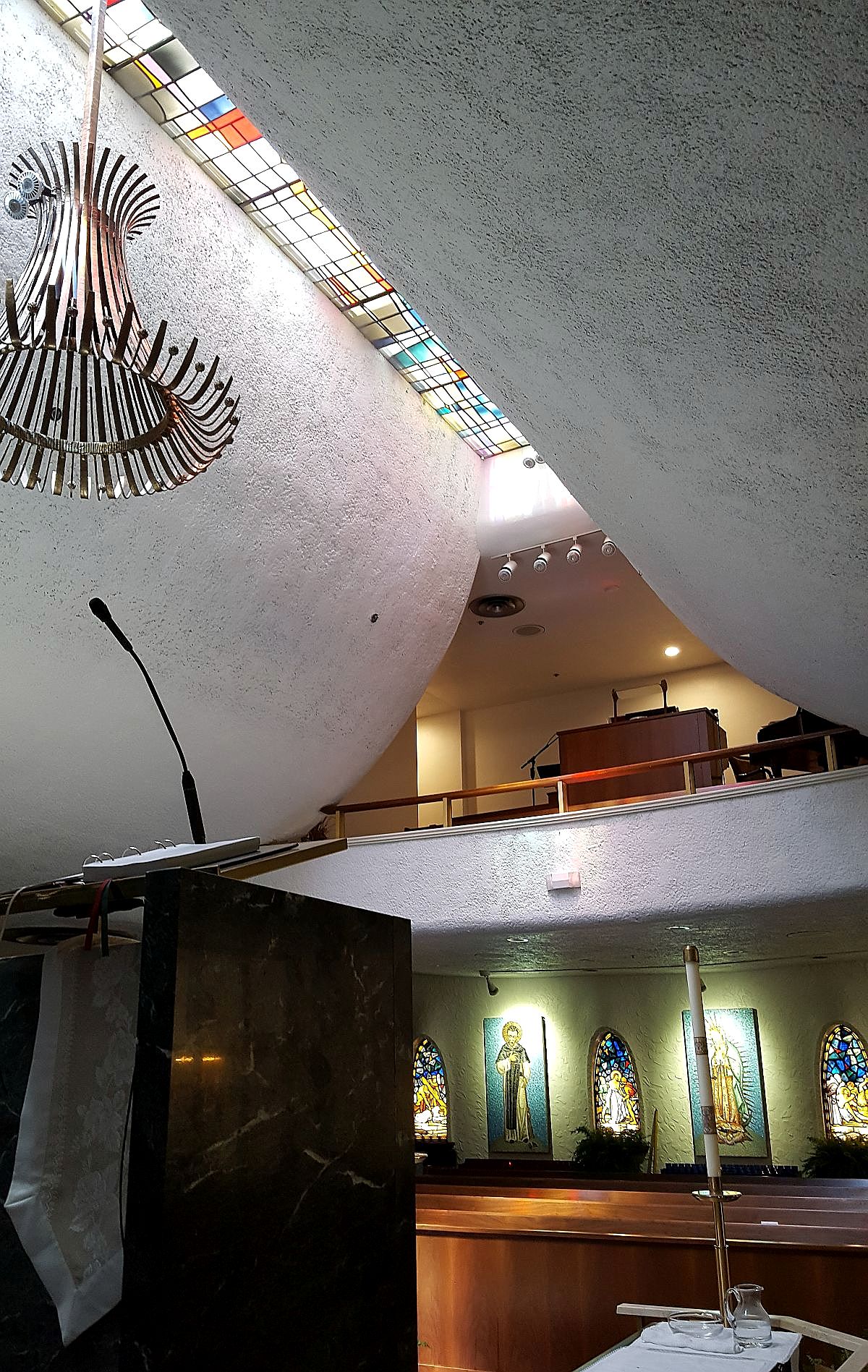
Turn around, and from the pulpit you can see the choir loft.

st-jude-chapel_choir-loft_052417_bosse

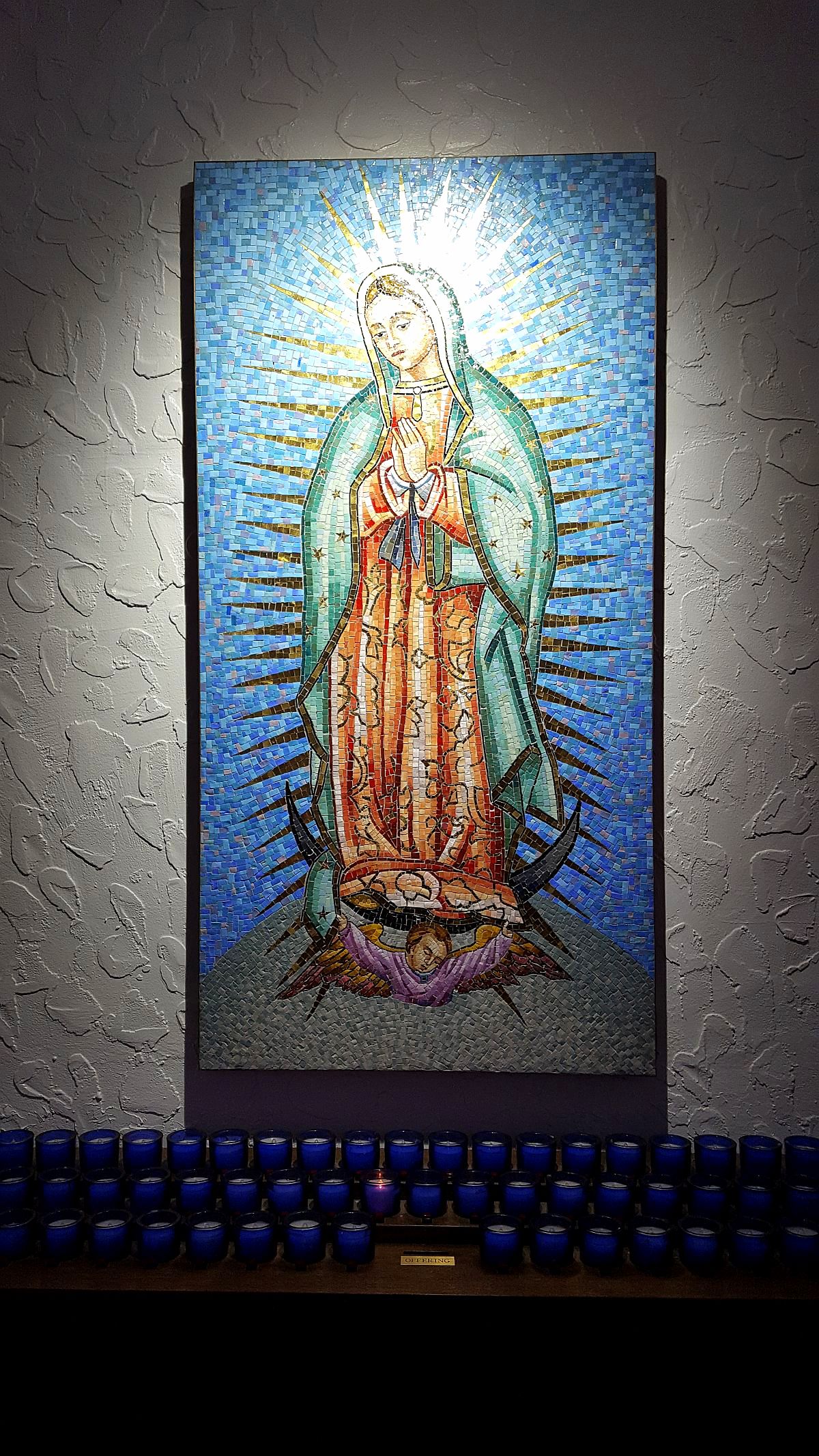
A wonderful depiction of Our Lady of Guadalupe.

st-jude-chapel_la-virgin_052417_bosse

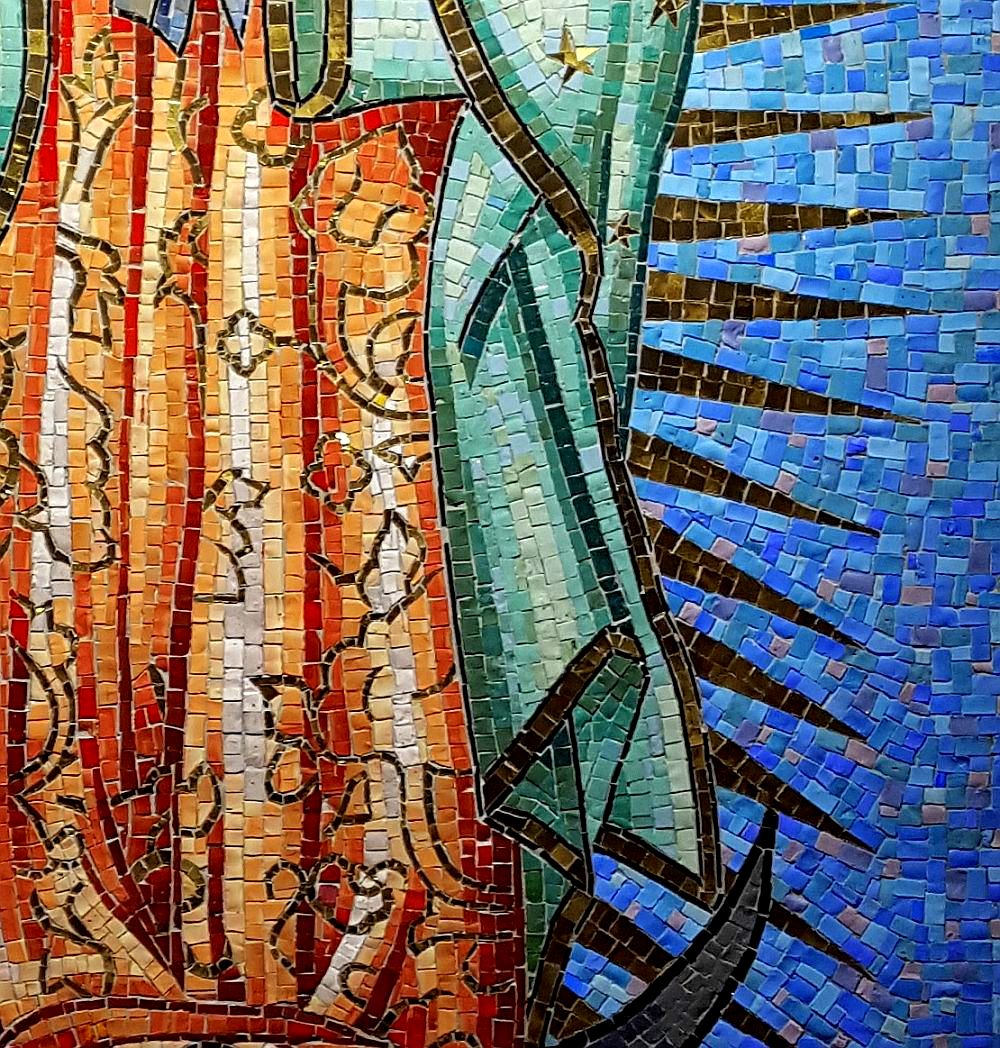
A detail.

st-jude-chapel_la-virgin_det_052417_bosse

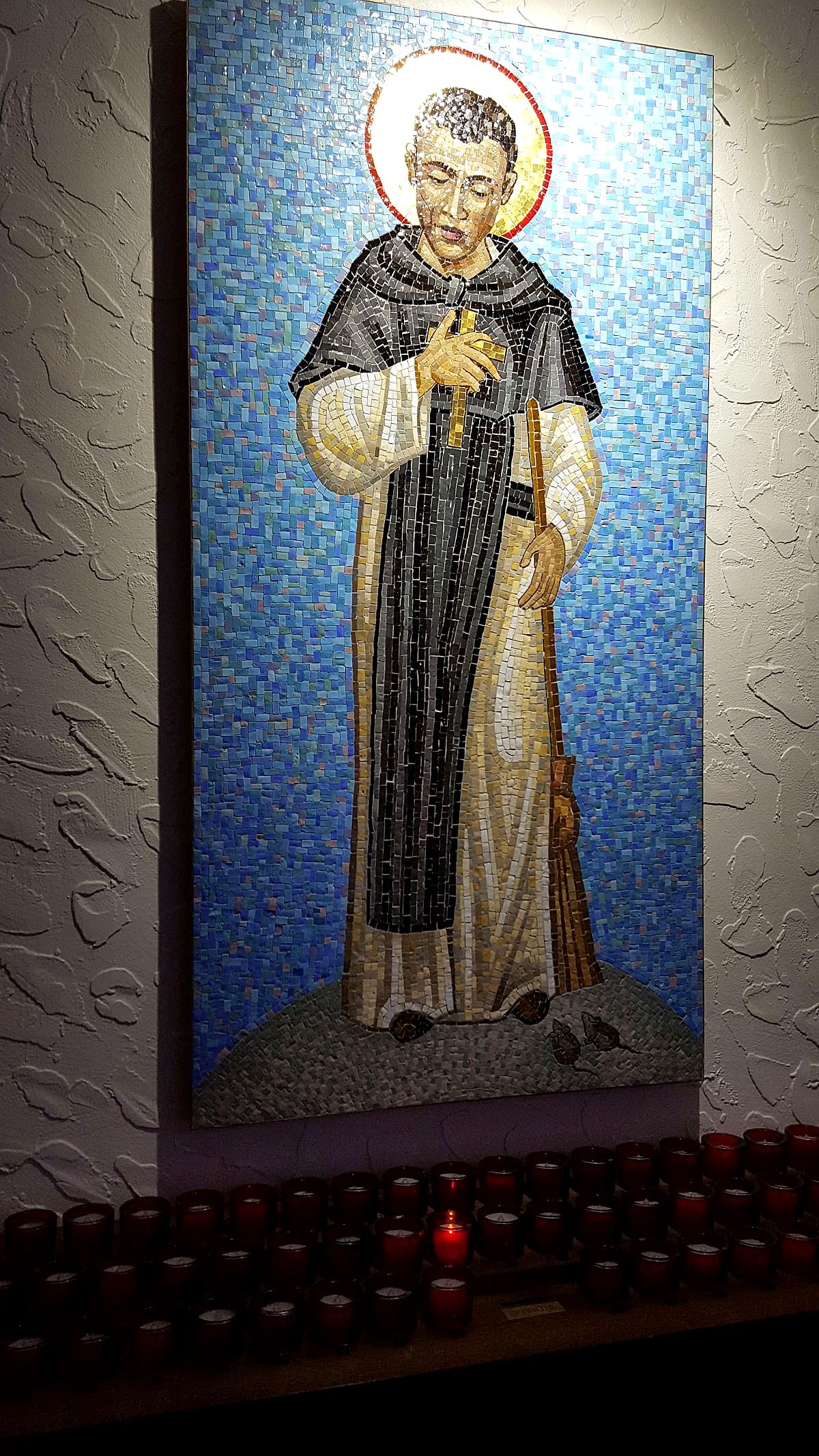
I’m afraid I’m not very well-versed on my saint iconography, but this might be St. Martin de Porres, with a broom, and mice at his feet.

st-jude-chapel_st-martin-de-porres_052417_bosse

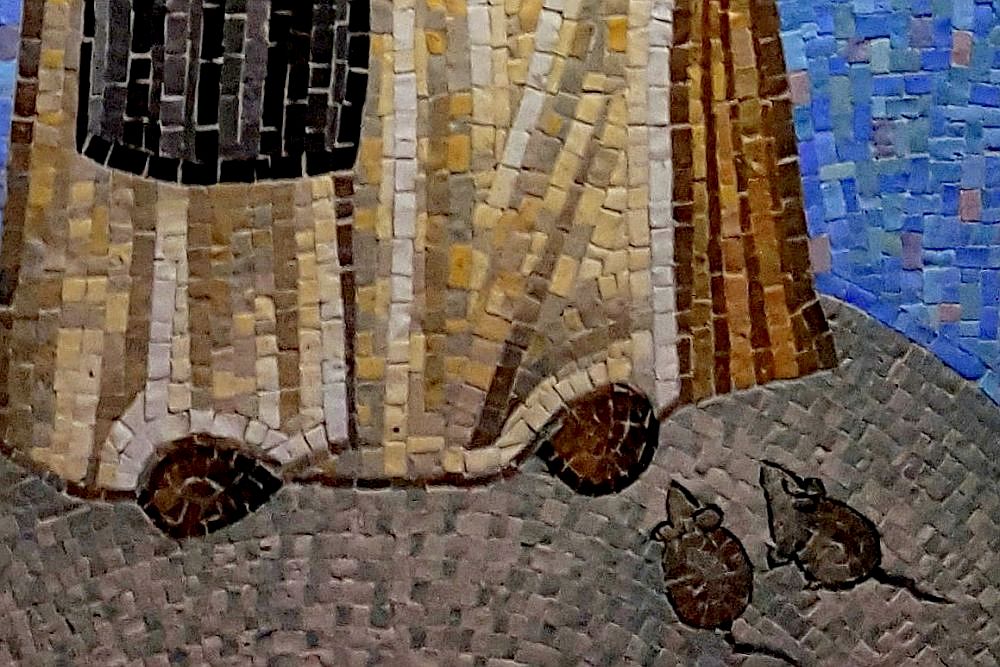
Leave it to me to find these little mosaic mice, my favorite tiny discovery of the day.

st-jude-chapel_st-martin-de-porres_mice-det_052417_bosse

And here’s the view from the chapel toward Main Street.

st-jude-chapel_interior-with-view-to-street_053417_bosse

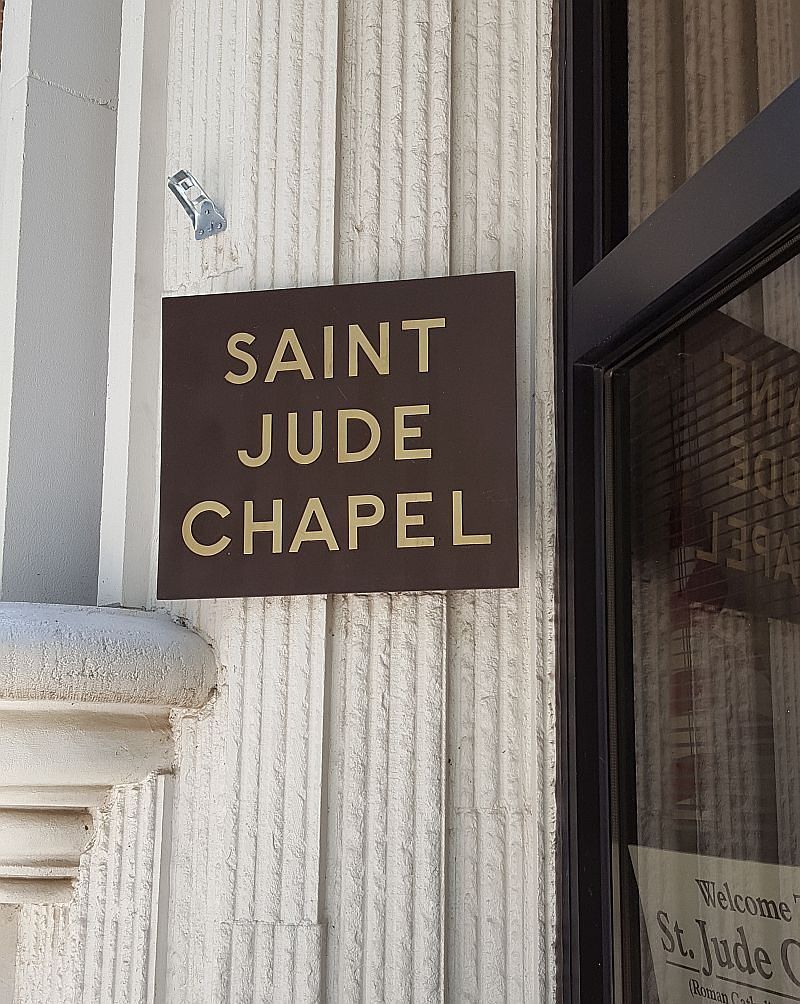
The St. Jude Chapel offers a nice, tranquil respite from a loud and busy downtown Dallas. You should visit sometime. All are welcome.

st-jude-chapel_sign_052417_bosse

**

UPDATE: Dallas filmmaker Mark Birnbaum was working on a short documentary of the project when I stopped by the site (you can see the back of his head in the top photo). His 10-minute film, “Genesis Mosaic,” can be viewed here.

***

Sources & Notes

Thanks so much to Julie Richey, Callie Heimburger, Cher Goodson, and Lynne Chinn for taking the time to chat with me. Julie Richey Mosaics website is here; Art Restorations, Inc. website is here.

You can see more on this project (including photos and video) on Julie’s Facebook page, here, and Art Restorations’ Facebook page, here; see photos from the Risen Christ restoration on Julie’s blog, here.

The St. Jude Chapel (Roman Catholic Diocese of Dallas) website is here; videos on the history of the downtown chapel are here.

All photos by Paula Bosse.

Images larger when clicked.

*

Copyright © 2017 Paula Bosse. All Rights Reserved.
 

From the Vault: High School Football, 1909

football-team-1909

by Paula Bosse

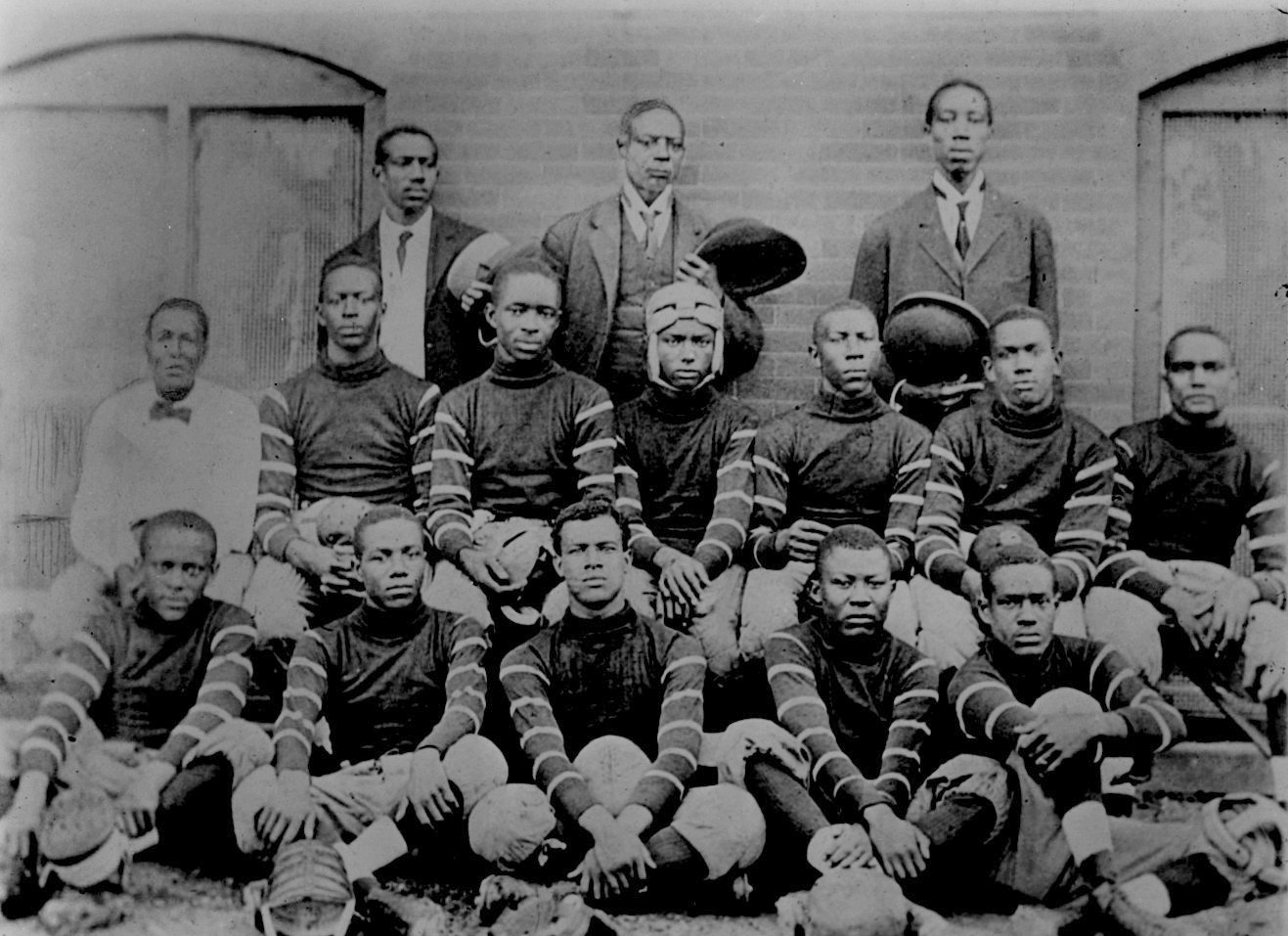
This is a great photo of intense facial expressions and odd photo manipulation from the J. L. Patton Collection of the Dallas Historical Society. A bit more about what appears to be the football team representing Dallas’ only black high school can be found in the original post “Dallas High School Football, 1909-Style,” here.

*

Copyright © 2017 Paula Bosse. All Rights Reserved.