Flashback : Dallas

A Miscellany: History, Ads, Pop Culture

Tag: Historic Dallas

Happy Mother’s Day from Mrs. Baird’s Bread — 1949

mothers-day_mrs-bairds_freshie_dmn_050649

by Paula Bosse

Sure hope Mom can handle all that gluten!

Happy Mother’s Day!

***

Sources & Notes

Newspaper ad from 1949. The “Freshie” ad campaign — featuring a Mrs.-Baird’s-Bread-obsessed kid — ran in Texas newspapers from about 1945 to 1953. More of the ads can be seen in the post “The ‘Freshie’ Ads for *-@!!@!* Delicious Mrs. Baird’s Bread — 1945-1953,” here.

*

Copyright © 2017 Paula Bosse. All Rights Reserved.


A Bird’s-Eye View of the Central Business District

skyline_aerial_flickr_colteraThe Statler Hilton and the Merc at dusk… (click for larger image)

by Paula Bosse

I’ve recently experienced a long, long involuntary separation from my beloved laptop (the welling anxiety! the withdrawal pangs!), but now it’s back home from the shop, resting comfortably and ready to go back to work.

Here is a “welcome back” shot of the Dallas skyline, with a view to the southwest: the neon begins to come on in the CBD as “magic hour” arrives.

***

Postcard image posted on Flickr by the ever-reliable Christian Spencer Anderson (aka Coltera), here.

*

Copyright © 2017 Paula Bosse. All Rights Reserved.

Roth’s, Fort Worth Avenue

roths_cook-collection_smuSign me up, Mr. Roth…

by Paula Bosse

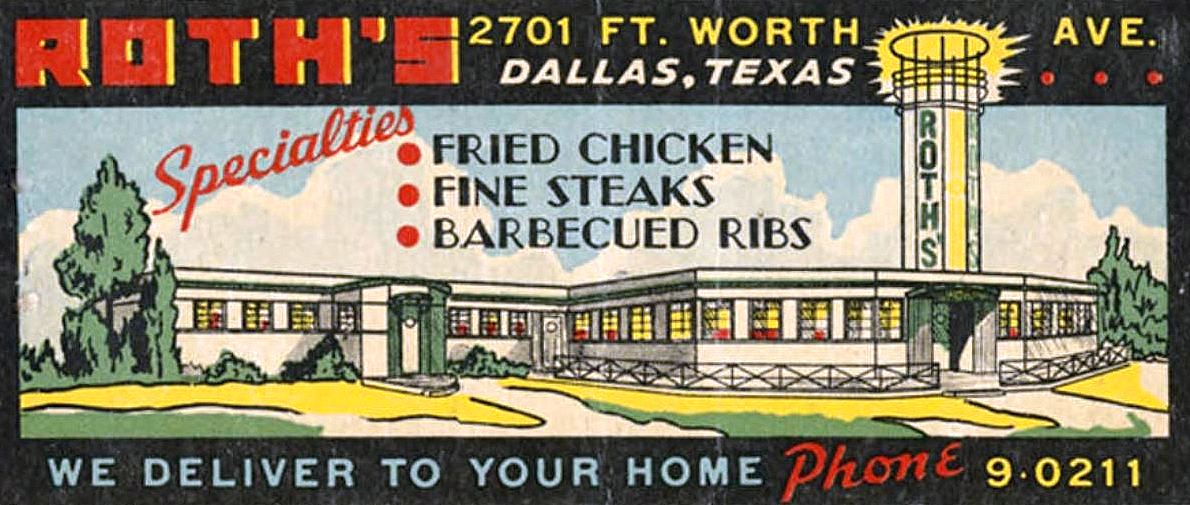
When I see a building like this, I always hope I can find a photo of it somewhere, but all I’ve been able to come up with is this energetic rendering from a 1940s matchbook cover. Roth’s (which was advertised variously as Roth’s Cafe, Roth’s Restaurant, and Roth’s Drive-In) was in Oak Cliff, on Fort Worth Avenue. It opened in about 1940 or ’41 and operated a surprisingly long time — until about 1967. When Roth’s opened, its address was 2701 Fort Worth Avenue, but around 1952 or ’53 the address became 2601. (I think the numbering might have changed rather than the business moving to a new location a block down the street.)

During World War II, Mustang Village — a large housing development originally built for wartime workers (and, later, for returning veterans and their families) — sprang up across Fort Worth Avenue from the restaurant. It was intended to be temporary housing only, but because Dallas suffered such a severe post-war housing shortage, Mustang Village (as well as its sister Oak Cliff “villages” La Reunion and Texan Courts) ended up being occupied into the ’50s. Suddenly there were a lot more people in that part of town, living, working, and, presumably, visiting restaurants.

As the 1960s dawned, Mustang Village was just a memory, and Roth’s new across-the-street neighbor was the enormous, brand new, headline-grabbing Bronco Bowl, which opened to much fanfare in September 1961. I don’t know whether such close proximity to that huge self-contained entertainment complex hurt or helped Roth’s business, but it certainly must have increased traffic along Fort Worth Avenue.

Roth’s continued operations until it closed in 1967, perhaps not so coincidentally, the same year that Oak Cliff’s beloved Sivils closed. Ernest Roth, like J. D. Sivils, most likely threw in the towel when a series of “wet” vs. “dry” votes in Oak Cliff continued to go against frustrated restaurant owners who insisted that their inability to sell beer and wine not only damaged their own businesses but also adversely affected the Oak Cliff economy. The last straw for Sivils and Roth may have been the unsuccessful petition drive in 1966/1967 to force a “beer election” (read about it here in a Morning News article from Aug. 17, 1966).

As far as that super-cool building seen at the top — I don’t know how long it remained standing, but when Roth’s closed, a mobile home dealer set up shop at 2601 Fort Worth Avenue, and mobile homes need a lot of parking space….

The building on the matchbook cover above is, unfortunately, long gone (as is the much-missed Bronco Bowl); the area today is occupied by asphalt, bland strip malls, and soulless corporate “architecture” (see what 2701 Fort Worth Avenue looks like today, here).

*

The man behind Roth’s was Ernest W. Roth, a Hungarian immigrant who had worked for many years as maître-d’ at the Adolphus Hotel’s tony Century Room. He decided to go out on his own, and around 1940, he and his business partner Joseph Weintraub (who was also his brother-in-law) opened the Oak Cliff restaurant which boasted two dining rooms (with a seating capacity of 350, suitable for parties and banquets), fine steaks, and, on the weekends, a live band and dancing. Ernest’s wife, Martha, and their son Milton were also part of the family business. When the restaurant opened, there wasn’t much more out there on the “Fort Worth cut-off,” but the place must have been doing something right, because Roth’s lasted for at least 27 years — an eternity in the restaurant business. It seems to have remained a popular Oak Cliff dining destination until it closed around 1967.

*

The real story, though, is the Roth family, especially Ernest’s mother, Johanna Roth, and even more especially, his older sister, Bertha Weintraub.

Johanna Rose Roth was born in 1863 in Budapest, where her father served as a member of the King’s Guard for Emperor Franz Josef. She and her husband and young children came to the United States about 1906 and, by 1913, eventually made their way to San Antonio. In the ’40s and ’50s she traveled by airplane back and forth between San Antonio and Dallas, visiting her five children and their families — she was known to the airlines as one of their most frequent customers (and one of their oldest). She died in Dallas in 1956 at the age of 92.

Johanna’s daughter Bertha Roth Weintraub had a very interesting life. She too was born in Hungary — in 1890. After her husband Joe’s death in the mid ’40s, a regular at her brother’s restaurant, Abe Weinstein — big-time entertainment promoter and burlesque club empresario — offered Bertha a job as cashier at the Colony Club, his “classy” burlesque nightclub located across from the Adolphus. She accepted and, amazingly, worked there for 28 years, retiring only when the club closed in 1972 — when she was 82 years old! It sounds like she led a full life, which took her from Budapest to New York to San Francisco to San Antonio to Austin and to Dallas; she bluffed her way into a job as a dress designer, ran a boarding house in a house once owned by former Texas governor James Hogg, hobnobbed with Zsa Zsa Gabor and Liberace, was a friend of Candy Barr, and, as a child, was consoled by the queen of Hungary. She died in Dallas in 1997, a week and a half before her 107th birthday. (The story Larry Powell wrote about her in The Dallas Morning News — “Aunt Bertha’s Book Filled With 97 Years of Memories” (DMN, Nov. 17, 1987) — is very entertaining and well worth tracking down in the News archives.)

weintraub-bertha-roth_texas-jewish-post_021590
Bertha Roth Weintraub

I feel certain that the extended Roth family found themselves entertained by quite a few unexpected stories around holiday dinner tables!

***

Sources & Notes

Matchbook cover (top image) is from the George W. Cook Dallas/Texas Image Collection, DeGolyer Library, Central University Libraries, Southern Methodist University; more info is here.

Photo of Bertha Weintraub is from The Texas Jewish Post (Feb. 15, 1990), via the Portal to Texas History, here.

*

Copyright © 2017 Paula Bosse. All Rights Reserved.

The G. B. Dealey Library and Reading Room at the Hall of State

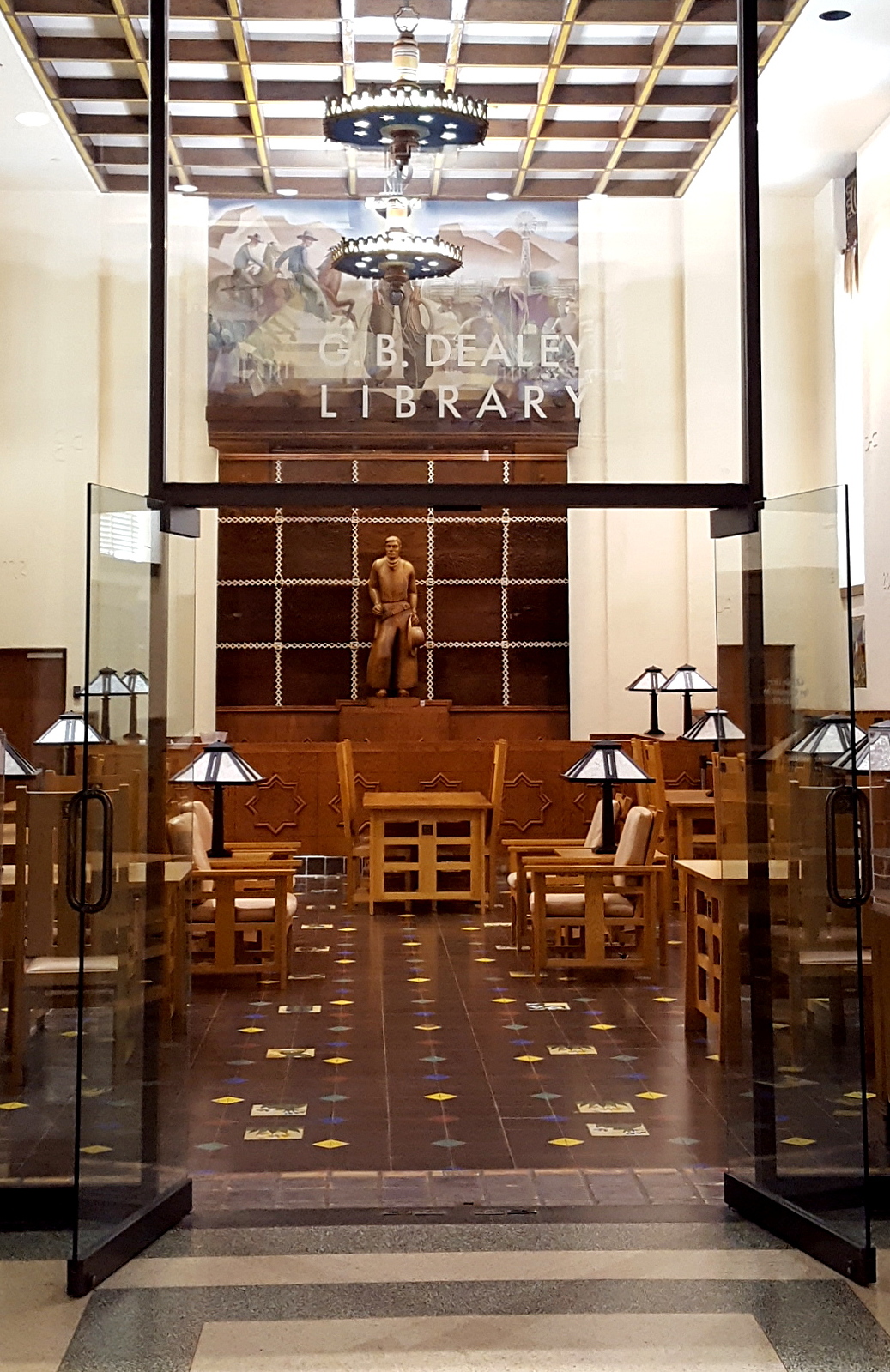
hall-of-state_dealey-library_entrance_042517A quiet place to read or study… (click for larger image)

by Paula Bosse

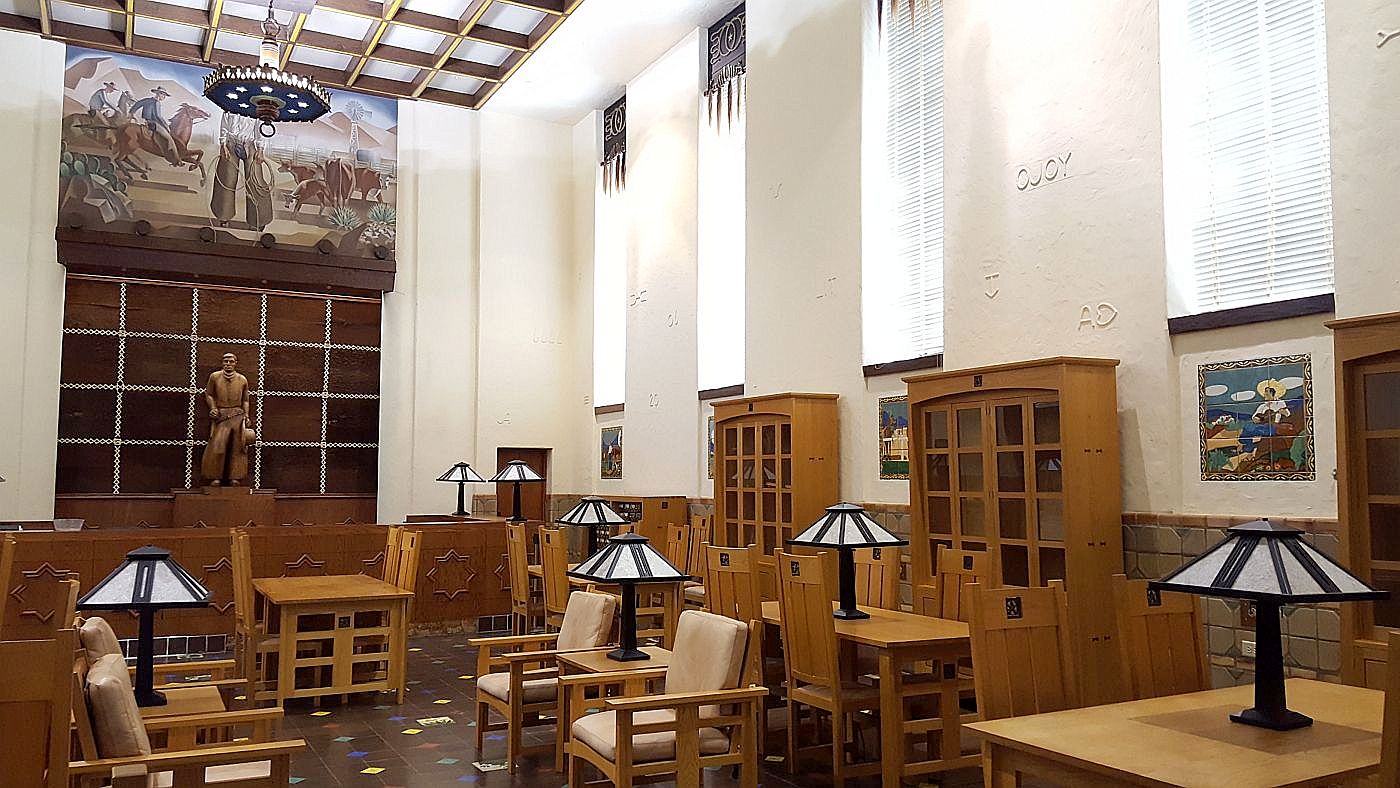
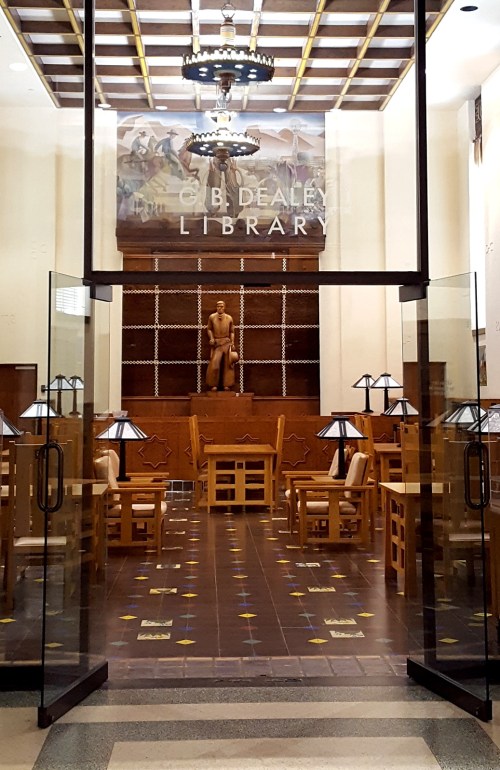
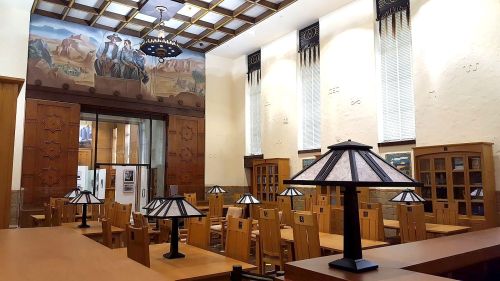
I spent time this week walking around the G. B. Dealey Library and Reading Room at the Hall of State in Fair Park. It is part of the Dallas Historical Society, and it is a quiet, high-ceilinged, airy-but-cozy Western-themed oasis filled with lots of warm wood and featuring two large murals by legendary El Paso artist Tom Lea. If you haven’t seen it, I highly encourage you to go take a look.

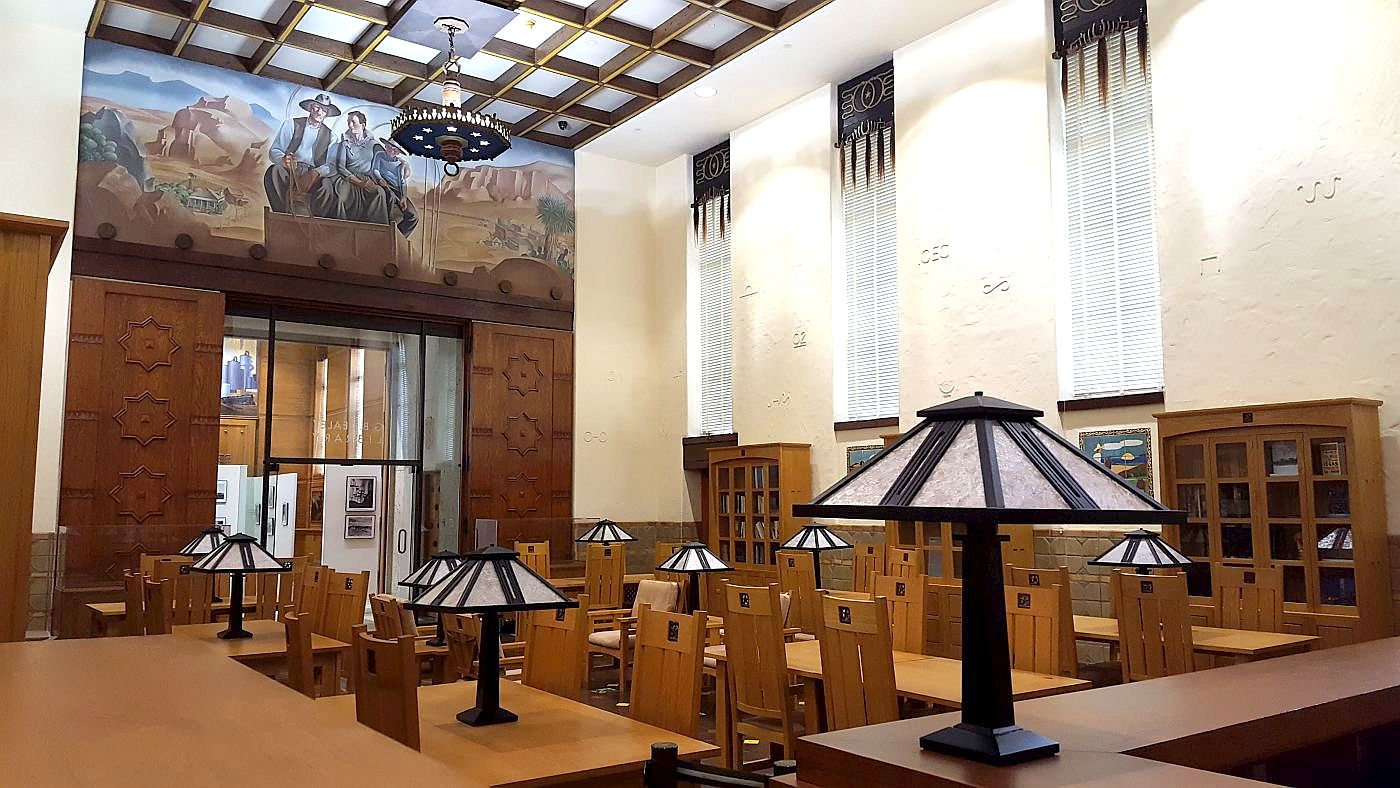
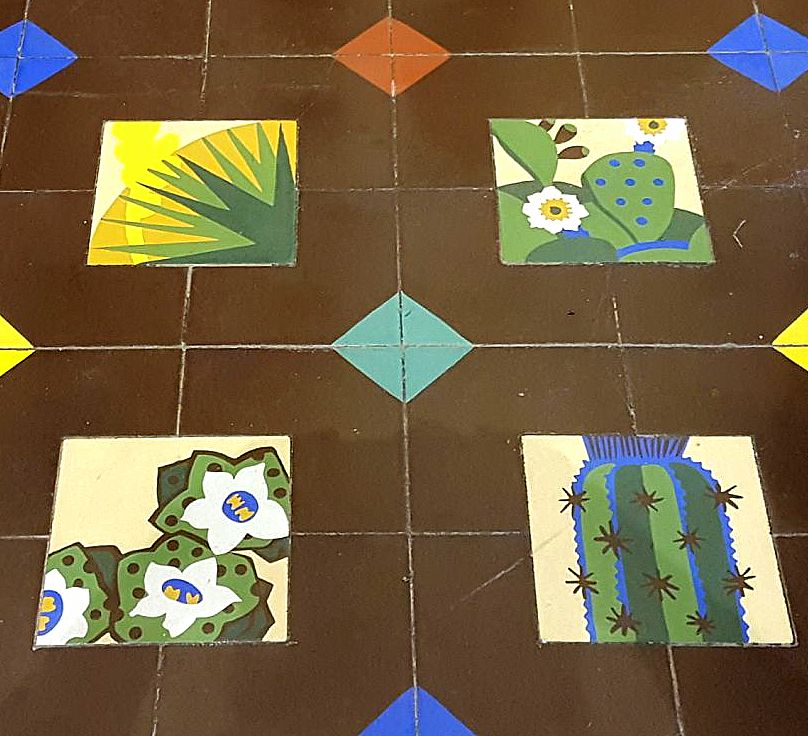
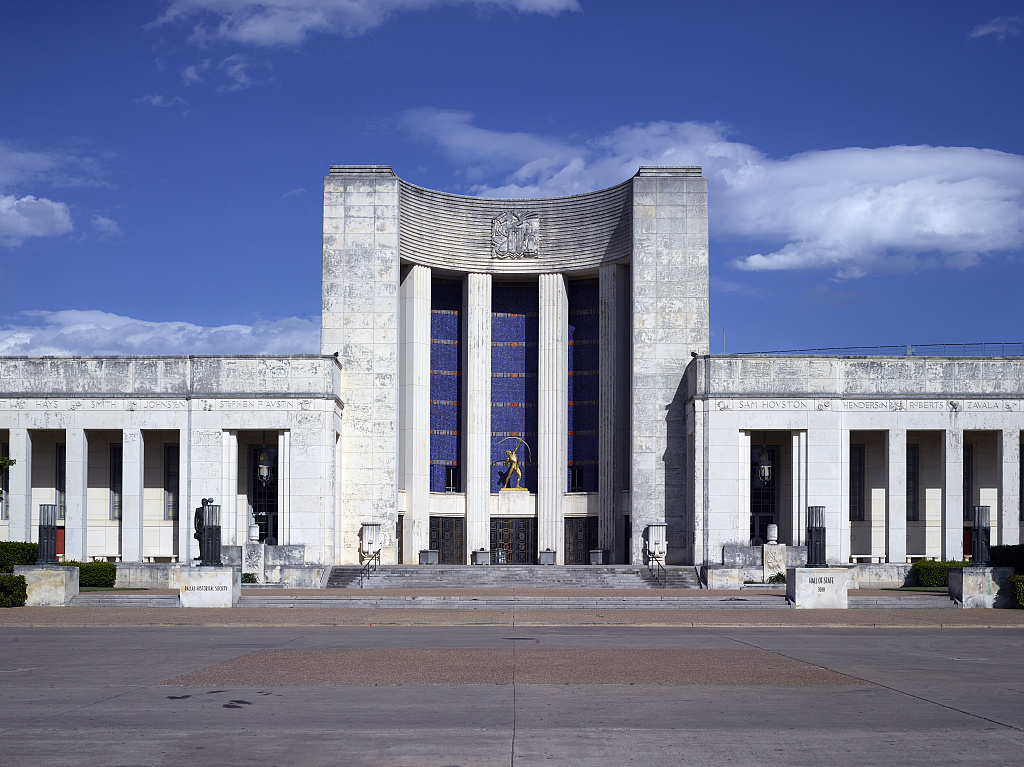
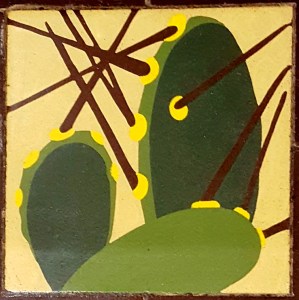
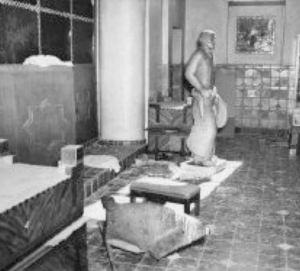
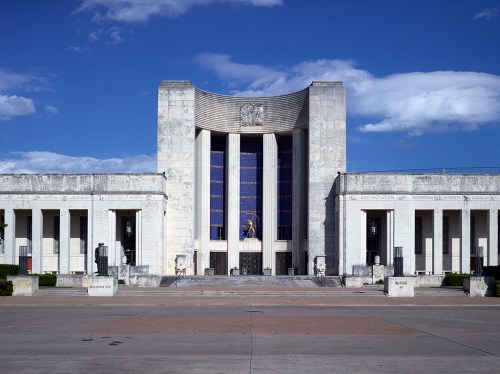
What we now call the Hall of State was the architectural jewel in the crown of the Art Deco splendor created throughout Fair Park for the Texas Centennial Exposition in 1936. The room now housing the Dealey Library was originally the West Texas Room — one of four geographically-specific rooms in the Hall of State. The two Tom Lea murals (one depicting a cowboy, the other, pioneers) are on opposite walls (walls finished with an adobe-like plaster, decorated with famous Texas brands, in relief). One wall is covered with cowhide. There are painted ceramic tiles set into both the walls and the floor (the ones on the floor decorated with images of cactus are great!). There is a wood sculpture of a cowboy, carved by Dallas artist Dorothy Austin, who was only 25 years old when the Centennial opened. And … well — like everything in the Hall of State — everywhere you look you see incredible attention to detail. Every fixture, grating, knob … everything is absolutely wonderful.

In 1989, after a two-and-a-half-year renovation, the West Texas Room became the home of the G. B. Dealey Library (named in honor of the former publisher of The Dallas Morning News). The project was headed by architect Downing Thomas who took great care in choosing the Arts and Crafts-style furniture (the chairs, tables, and bookcases were handmade by Thomas Moser in Portland, Maine, the chairs emblazoned with bronze Texas stars and upholstered in tanned leather), reading lamps with mica shades (made by Boyd Lighting of San Francisco), and a woven rug by Sally Vowell of Fort Worth (I don’t recall seeing a rug, but there’s a lot to take in and I might have missed it). I really love this room.

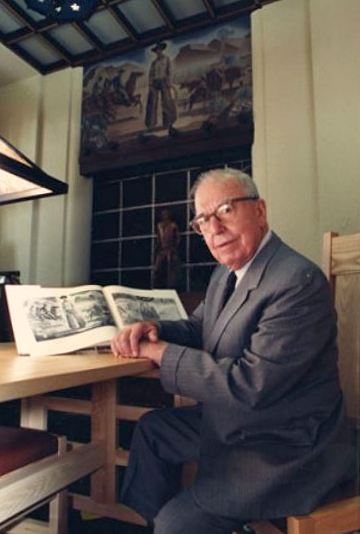
When the library opened in November, 1989, the first guest through the doors was Tom Lea who had been shocked to learn that his then-53-year-old murals were still in place. And they’re still there, 81 years after Lea created them. And you should go see them.

The library and reading room is open Tuesday-Sunday, same hours as the Hall of State. If you are interested in researching materials from the collection of the Dallas Historical Society, you are encouraged to contact the staff in advance of your visit and make an appointment; though the room is open to the public, research hours are limited. More about this and the hours of operation can be found here.

*

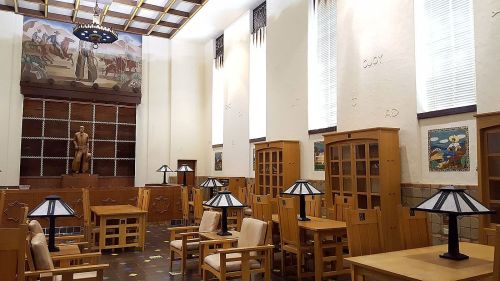
Below, one of the Tom Lea Murals can be (partially) seen above the cowhide wall-covering and above Dorothy Austin’s cowboy sculpture. (Click photo to see a larger image.) That light fixture is fantastic! (See the full Tom Lea mural here.)
hall-of-state_dealey-library_042517_inside-entrance

Here’s the view from the back corner looking toward the entrance, over which can be seen Lea’s second mural.
hall-of-state_dealey-library_042517_toward-entrance

In the photo at the very top, you can see the floor, which is studded with all sorts of cactus-themed tiles. Here are examples of four of them.

hall-of-state_dealey-library_042517_floor

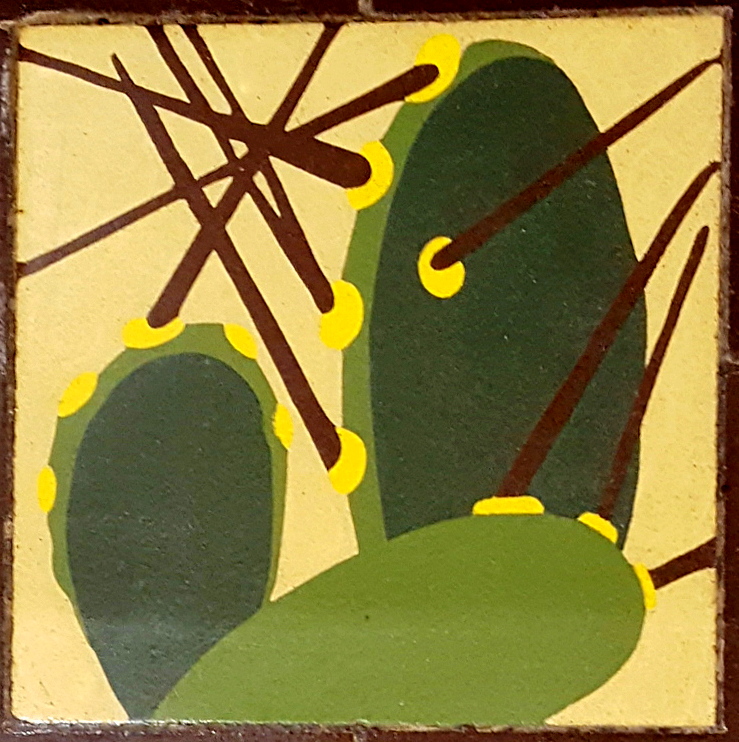
My absolute favorite of the cactus tiles is this one, in a very Japanese-like rendering.
hall-of-state_dealey-library_cactus-tile

*

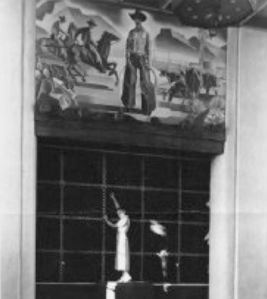
That’s what the room looks like today. Here are a few photos of the West Texas Room under construction in 1936 (photos from the Dallas Historical Society’s Centennial Visual Collection). The first one shows Dorothy Austin standing below the Tom Lea mural, about where her cowboy statue would be placed. Those ceilings are pretty high.
tom-lea_dorothy-austin_west-tx-room_DHS

And here’s the statue. (See Austin’s statue close up, here, in a 2014 photo by Carol M. Highsmith, from the Library of Congress.)
dorothy-austin_cowboy-sculpture_west-tx-room_DHS

And here is a look into the room from the entrance, showing a construction crew at work.

west-tx-room-construction_hall-of-state_DHS

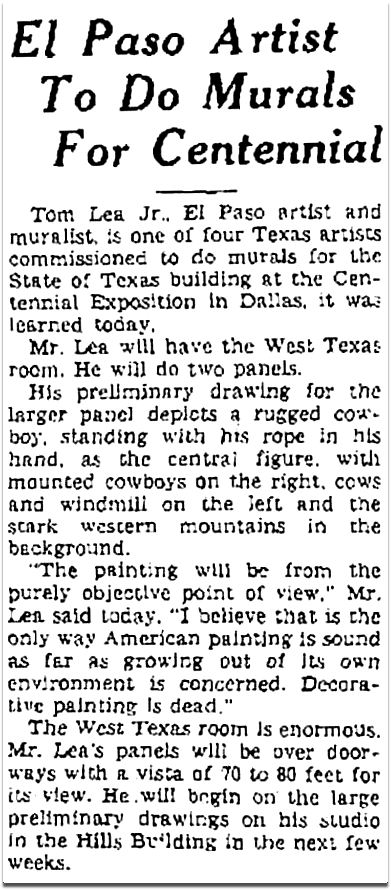
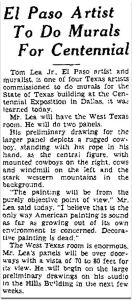
Below are 28-year-old Tom Lea’s thoughts on being informed of his important commission, from the El Paso Herald Post, March 24, 1936.  (Click to see larger image.)
tom-lea_west-tx-room-murals_el-paso-herald-post_032436

It seems strange that Lea was only in the preliminary-drawing stage of the murals’ creation in March — the Centennial was scheduled to open in June, less than three months away. (It’s worth noting that even though the Centennial — which ran for almost six months — opened in June, the Hall of State did not open to the public until September, three months behind schedule and the only Exposition building that did not meet its deadline. It was finally dedicated on September 5, 1936, the 100th anniversary of Sam Houston’s election as the first President of Texas.)

Below, a photo of Mr. Lea at the 1989 opening of the Dealey Library, with his 1936 mural behind him.
tom-lea_west-texas-room_1989_tom-lea-institute
via Tom Lea Institute

*

To read more details on the 1989 opening of the G. B. Library and the renovation of the West Texas Room, please check out these articles from The Dallas Morning News archives:

  • “A Rare Blend — Art Deco, Western and Shaker Unite for a Modern Adaptation at the Hall of State” by Mariana Greene (DMN, Nov. 12, 1989)
  • “G. B. Dealey Library Dedicated at Fair Park — Center Will House Texas Documents” by Todd Coplivetz (DMN, Nov. 13, 1989)
  • “How the West was East at the Hall of State Redo”  by Alan Peppard (DMN, Nov. 14, 1989)
  • “An Old Friend Triumphs Anew: The Hall of State Redo Affirms the Power of Great Architecture” by David Dillon (DMN, Nov. 14, 1989)
  • “Reviving a Cultural Paean to Dallas — Fair Park Changes Designed to Restore Centennial’s Glory” by David Dillon (DMN, April 9, 1986) (this article concerns Fair Park as a whole)

***

Sources & Notes

Photos of the Dealey Library and Hall of State door (below) are by me.

Photos of the West Texas Room from 1936 are from the collection of the Dallas Historical Society. You can search through low-res thumbnails of some of the images from their very large collection here.

As mentioned above, if you plan a trip to the Dealey Library in order to inspect or research items from the DHS collection, these materials must be requested in advance and an appointment must be scheduled (info here).

More on Tom Lea (1907-2001) can be found at the Tom Lea Institute website, here (with specific information on the Hall of State murals here); a profusely illustrated blog post with an emphasis on his time as a WWII artist-correspondent can be found here.

Obituary for Dorothy Austin Webberley (1911-2001) can be found on the Dallas Morning News site, here; family obituary is here.

Detailed info on the architecture and design of the Hall of State can be found in a Dallas Historical Society PDF, here. The Wikipedia entry is here (someone please correct the erroneous info that the Dealey Library is in the “East” Texas room!), and the always informative Watermelon Kid site has information on the East Texas and West Texas rooms here.

A series of photos of Fair Park, taken in 2014 by Carol M. Highsmith, can be found at the Library of Congress website, here. Her photo of the Hall of State is below.
hall-of-state_library-of-congress_carol-m-highsmith_2014

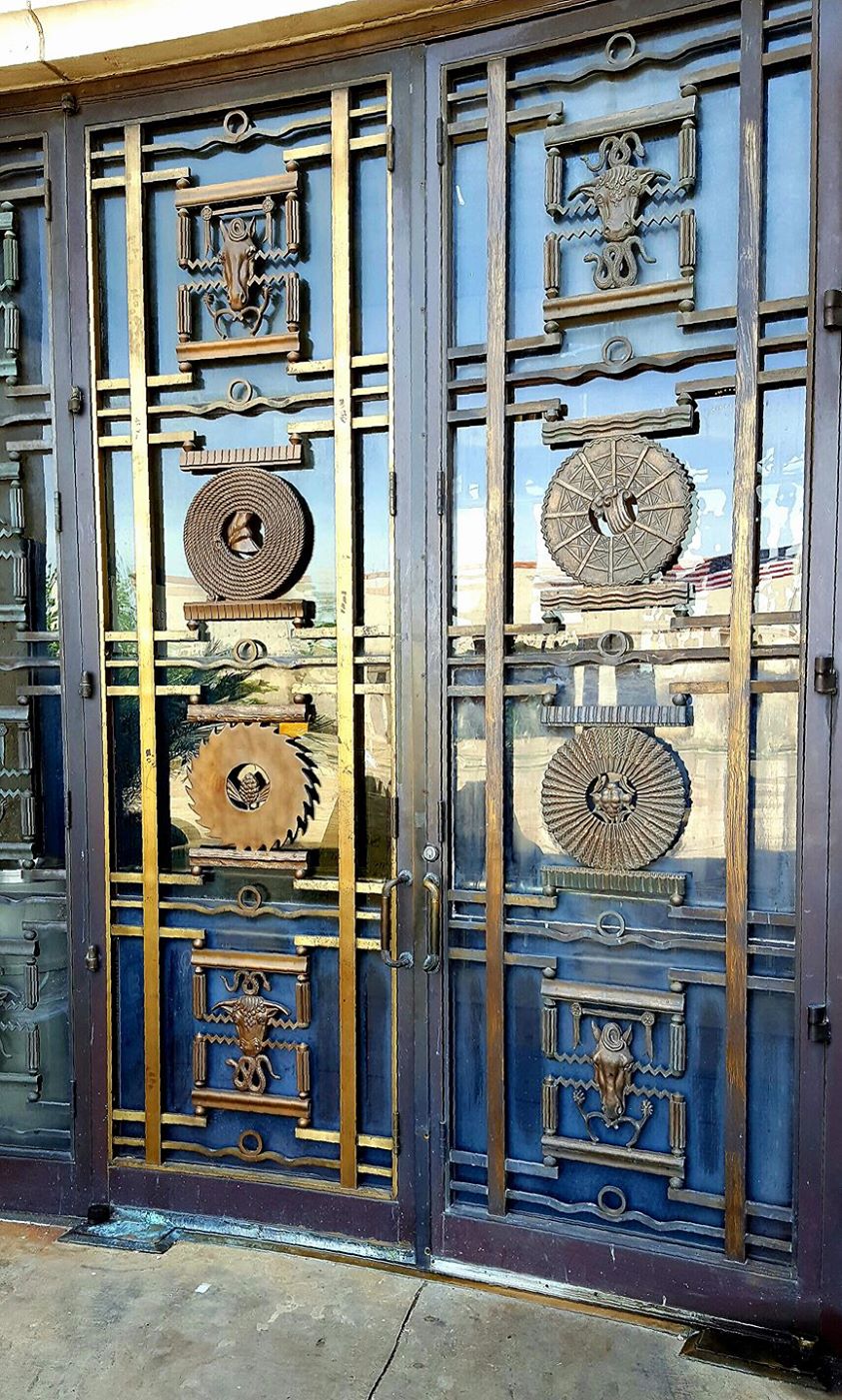
And, lastly,  a photo I took showing one of my favorite elements of a building packed with aesthetically pleasing details (seriously, everywhere you look): one of the doors of the main entrance to the Hall of State, designed by Houston architect Donald Barthelme, honoring Texas industry (ranching, timber, oil, agriculture, etc.). That sawmill blade gets me every time. And the aerial perspective of oil coming up through a derrick (middle right) is pretty cool, too. (Click to see a larger, more exciting image!)

hall-of-state-doors_042517_bosse

*

Copyright © 2017 Paula Bosse. All Rights Reserved.


A Few Photo Additions to Past Posts — #5

main-poydras_squire-haskins_utaThe Do-Nut Merchant, holding down the fort… (click for larger image)

by Paula Bosse

Another round of photos I’ve come across recently and have added to previous posts. (All are larger when clicked — to see original posts, click the titles linked in blue.)

Above, a great photo showing Main Street, looking east from Poydras toward Lamar. It’s been added to the post “900 Block of Main, South Side — 1950s” which already contained a head-on view of this block. (Source: Squire Haskins Collection, UTA Special Collections, here. I saw it when Peter Kurilecz posted it to the Dallas History Guild Facebook group and I recognized the block by the “Do-Nut Merchant” sign — because who can forget a business called the Do-Nut Merchant?)

*

Here’s an aesthetically pleasing (if crooked), quaintly drawn plan of Tietze Park; I’ve added it to the post titled, well, “Tietze Park.” (Source: This is a screenshot from my phone — I think it was posted somewhere on Facebook, and I swore I would remember the source, but, of course, I do NOT remember the source.)

tietze park_plan

*

This is a very similar photo of the Municipal Building I posted last year in “Home Sweet Home at Commerce & Harwood,” but this one shows more of Commerce Street (seen at the right) looking east — I don’t see a lot of photos from this period showing the blocks immediately east of Harwood. (Source: George W. Cook Collection, DeGolyer Library, SMU)

municipal-bldg_cook-coll_degolyer_SMU

*

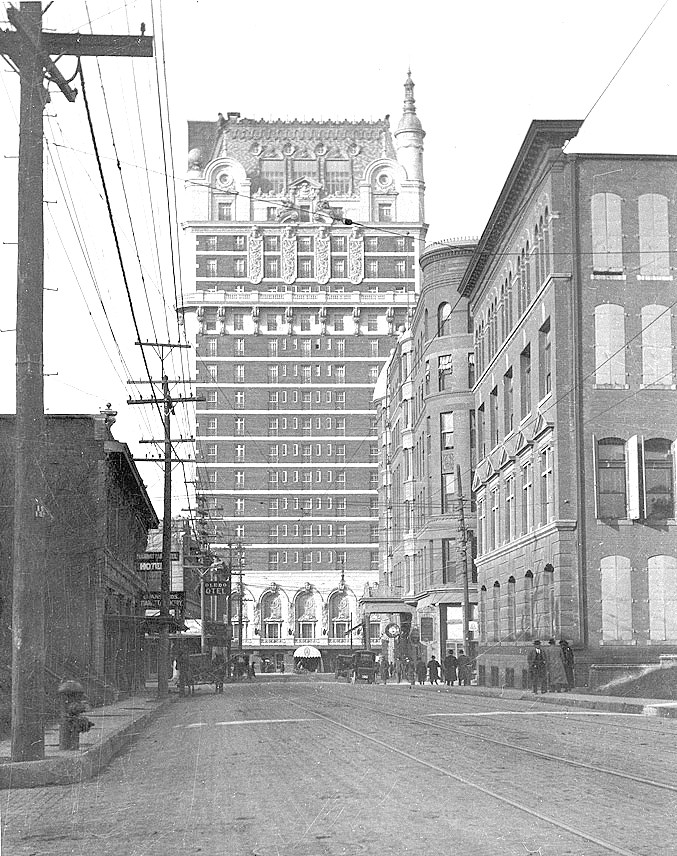
Six blocks west on Commerce is the Adolphus Hotel. This is another similar photo to one already posted, but different enough to be interesting. I’m adding this ca. 1913 view of the Adolphus (straight ahead) and the Oriental Hotel (at the right, middleground), seen looking north on Akard, to the post “The Adolphus, The Oriental, The Magnolia” — the only difference between the two is that this one was taken before the Magnolia Petroleum Building was built. (Source: Dallas Public Library, Texas/Dallas History Division, via D Magazine)

adolphus_1913_dpl_via-d-mag-online

*

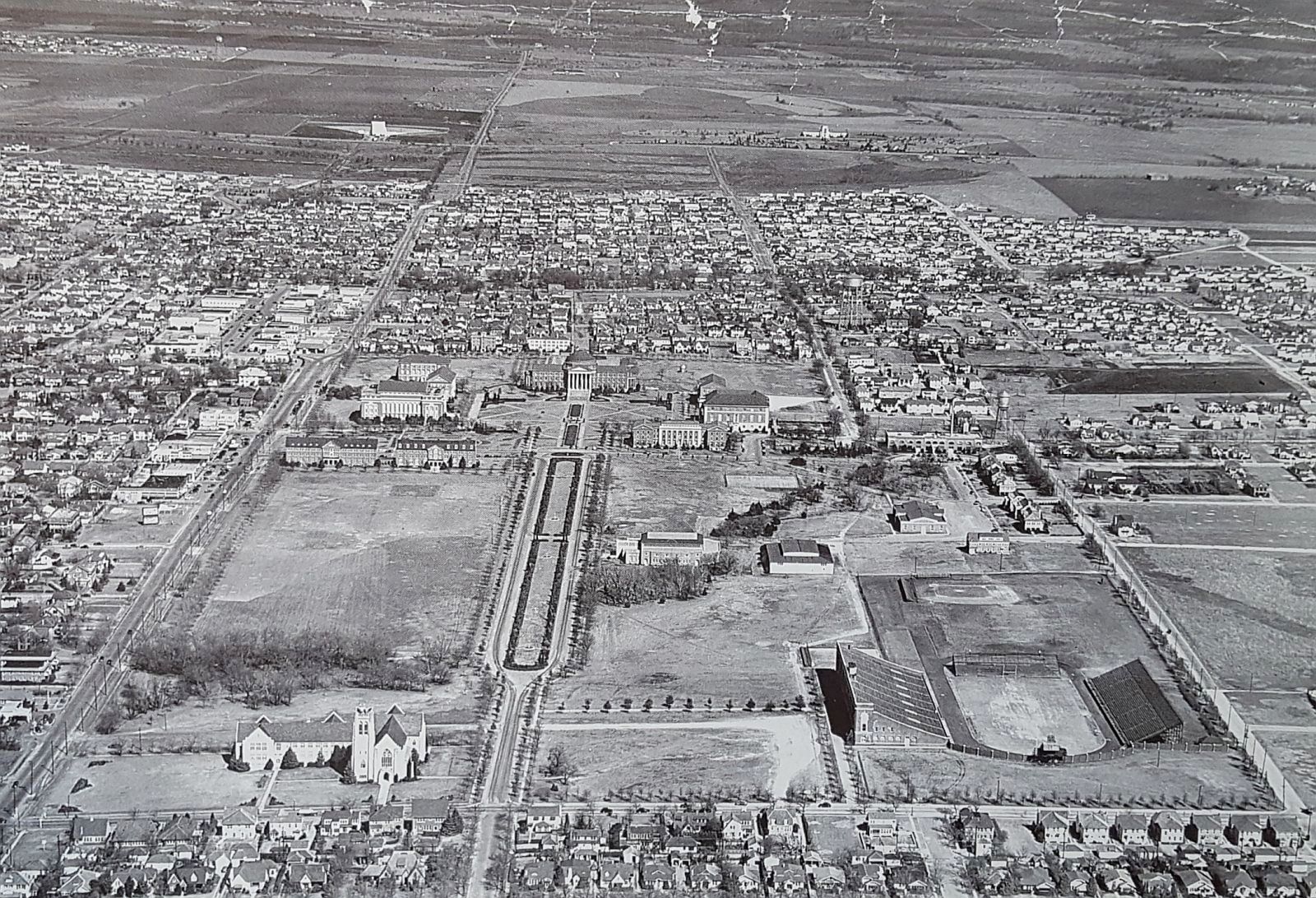
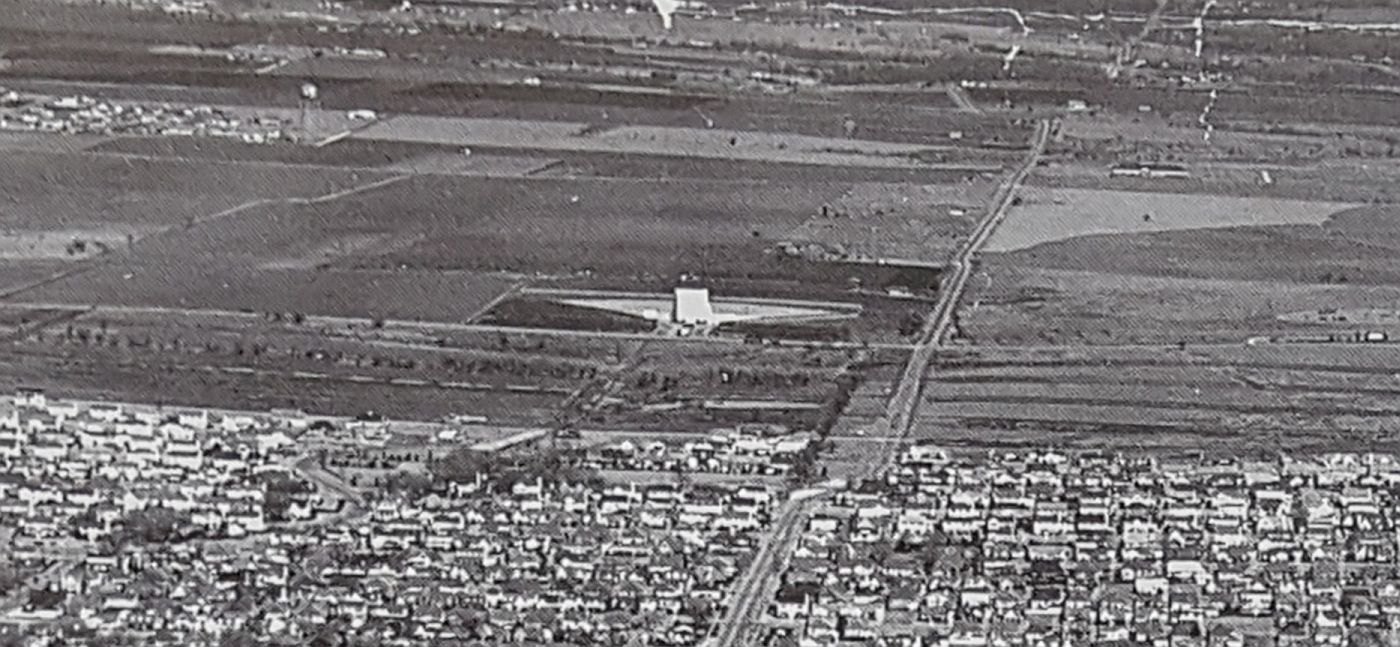
In what seems like another universe, this 1945 photo showing the SMU campus looking north shows mostly open Caruth farmland above Northwest Highway (the Caruth Homestead is at the far right). There are two non-farmland landmarks seen here: just right of the top middle is Hillcrest Mausoleum in Hillcrest Memorial Park (now Sparkman-Hillcrest Memorial Park); to the left of center (just west of Hillcrest) is the Northwest Hi-Way drive-in theater, which is why I’m adding this photo and detail to the post “Dallas’ First Two Drive-In Theaters — 1941.” (Source: Highland Park United Methodist Church Archives, reprinted in Diane Galloway’s book The Park Cities, A Photohistory)

nw-hway-drive-in_1945_galloway_park-cities-photohistory

nw-hway-drive-in_1945_galloway_park-cities-photohistory_det

*

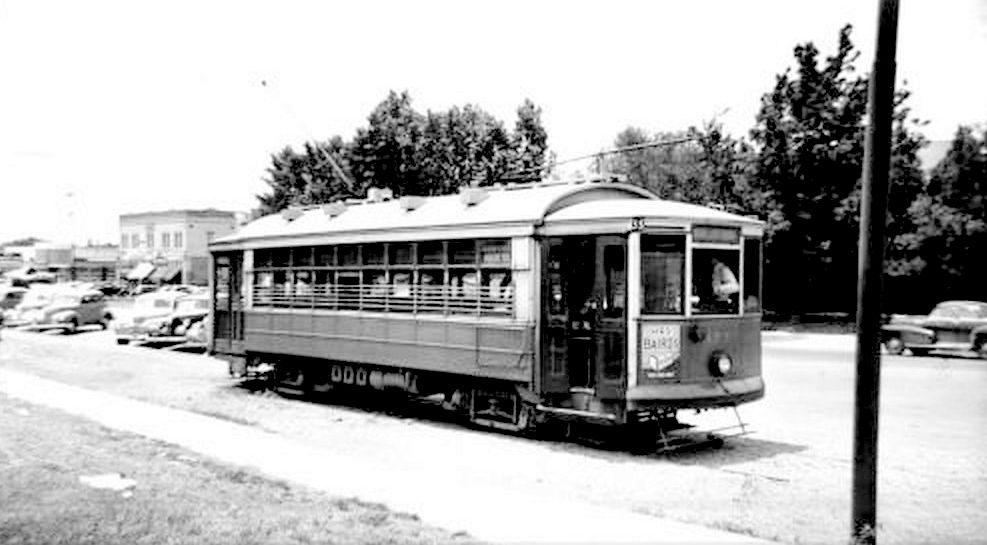
Last summer I wrote about the “Couch Building” — which most people remember as being the University Park home of Goff’s Hamburgers (which burned down last year) (and which can be seen in the aerial photo above if you whip out a magnifying glass). I was happy to see it in the 1947 photo below (behind and to the left of the “Highland Park/SMU” streetcar which is sitting at the end of the line, just south of Snider Plaza). I’ve added this to the post “University Park’s ‘Couch Building’ Goes Up In Flames (1929-2016.)” (Source: eBay photo, posted in the Retro Dallas, Texas Facebook group by Dallas historian Teresa Musgrove Gibson)

couch-bldg_061347_ebay

*

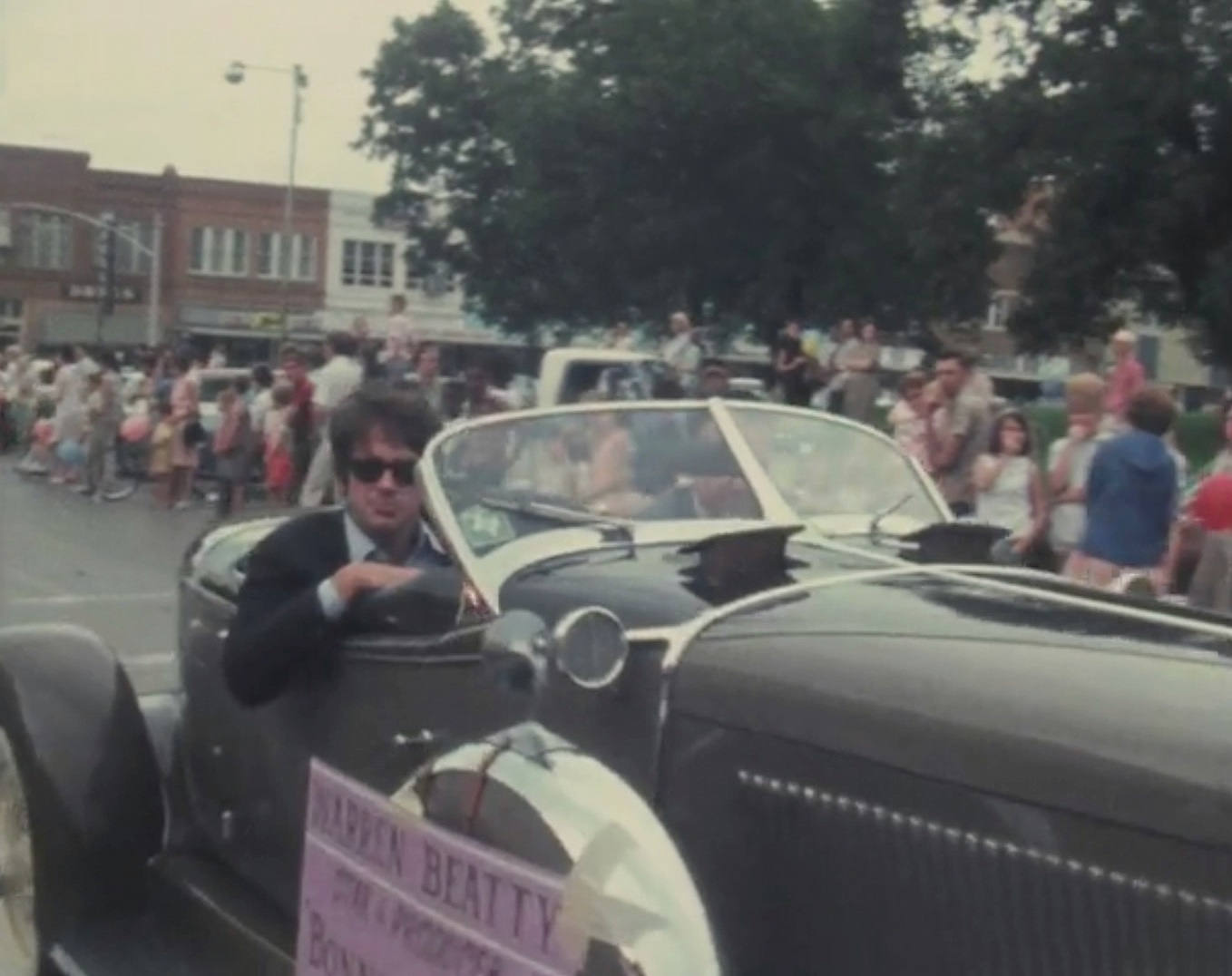
And, finally, I’m adding this link to the post “The Shooting of ‘Bonnie & Clyde’ — 1966.” It shows (silent) news footage from WBAP-TV (Ch. 5) of the Southwestern premiere of the movie Bonnie and Clyde at the Campus Theater in Denton, featuring stars of the movie Warren Beatty, Michael J. Pollard, and Estelle Parsons riding around the square in September, 1967. Below is a screen capture. The Bonnie and Clyde footage starts at about the 4:41 mark. (Source: KXAS-NBC 5 News Collection, UNT Special Libraries Collections, via the Portal to Texas History)

bonnie-and-clyde-movie_beatty_denton-premiere_wbap-tv_091367_portal

*

Copyright © 2017 Paula Bosse. All Rights Reserved.


Even Lower Than Lowest Greenville

greenville-ave_lindell_bryan-pkwy_sears-parking-lot_squire-haskins_UTAWhere Greenville begins to peter out… (click for larger image)

by Paula Bosse

The photo above shows the lowest part of Greenville Avenue, between Lindell and Bryan Parkway, almost down to where Greenville turns into Munger. It was taken from the parking lot of the Sears store at Ross and Henderson (a shopping center now anchored by a Fiesta grocery store), a place where I spent many hours as a child. I have vivid memories of that store, especially the intense smell of popcorn that hit you like a buttery thunderclap as you entered from the parking lot.

I love that fact that a couple of the buildings seen in this photo (including the Munger Place Church, seen partially at the far right) are still standing.

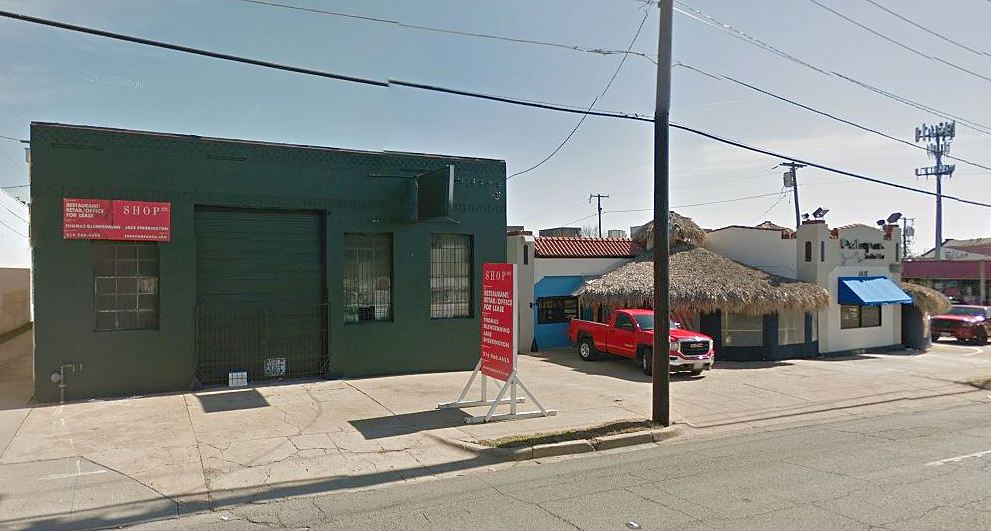
That cool Fina station seen in the top photo — at the corner of Greenville and Bryan Parkway — has been “modified” somewhat under the thatched hut roof of the Palapas Seafood Bar, but it’s definitely still recognizable. And Fina’s next-door neighbor, the Minute Service Garage, is still alive, too, looking a little less garage-y these days, but still looking pretty good.

greenville_google-street-view_feb-2017Google Street View, Feb. 2017

Then and now:

greenville-ave_from-sears_then-now

Keep on keeping on, Greenville Avenue!

***

Top photo by Squire Haskins from the Squire Haskins Photography, Inc. collection, University of Texas at Arlington Libraries, Special Collections; more info on the photo is here — click the thumbnail on that page to see a very large image.

More Squire Haskins photographs taken around the perimeter of this Sears store (which opened in September, 1947) are here, here, here, and here.

Click pictures to see larger images.

*

Copyright © 2017 Paula Bosse. All Rights Reserved.

From the Vault: The Early Days of the Police Crackdown on “Loco Weed” in Dallas

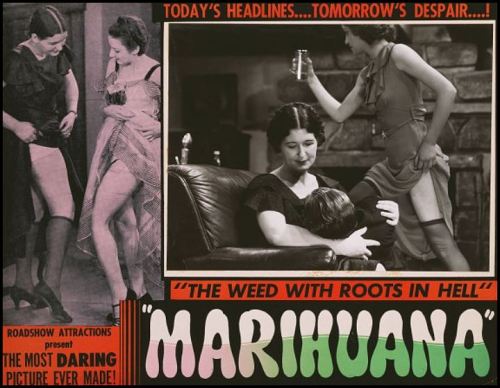
marihuana-film_poster“The weed with roots in hell…”

by Paula Bosse

Read about the demon weed when it first began making headlines in the Dallas papers in the 1920s and ’30s in my post from last year, “‘Delusions of Affability’ — Marijuana in 1930s Dallas,” here.

*

Copyright © 2017 Paula Bosse. All Rights Reserved.
1710 Hall: The Rose Room/The Empire Room/The Ascot Room — 1942-1975

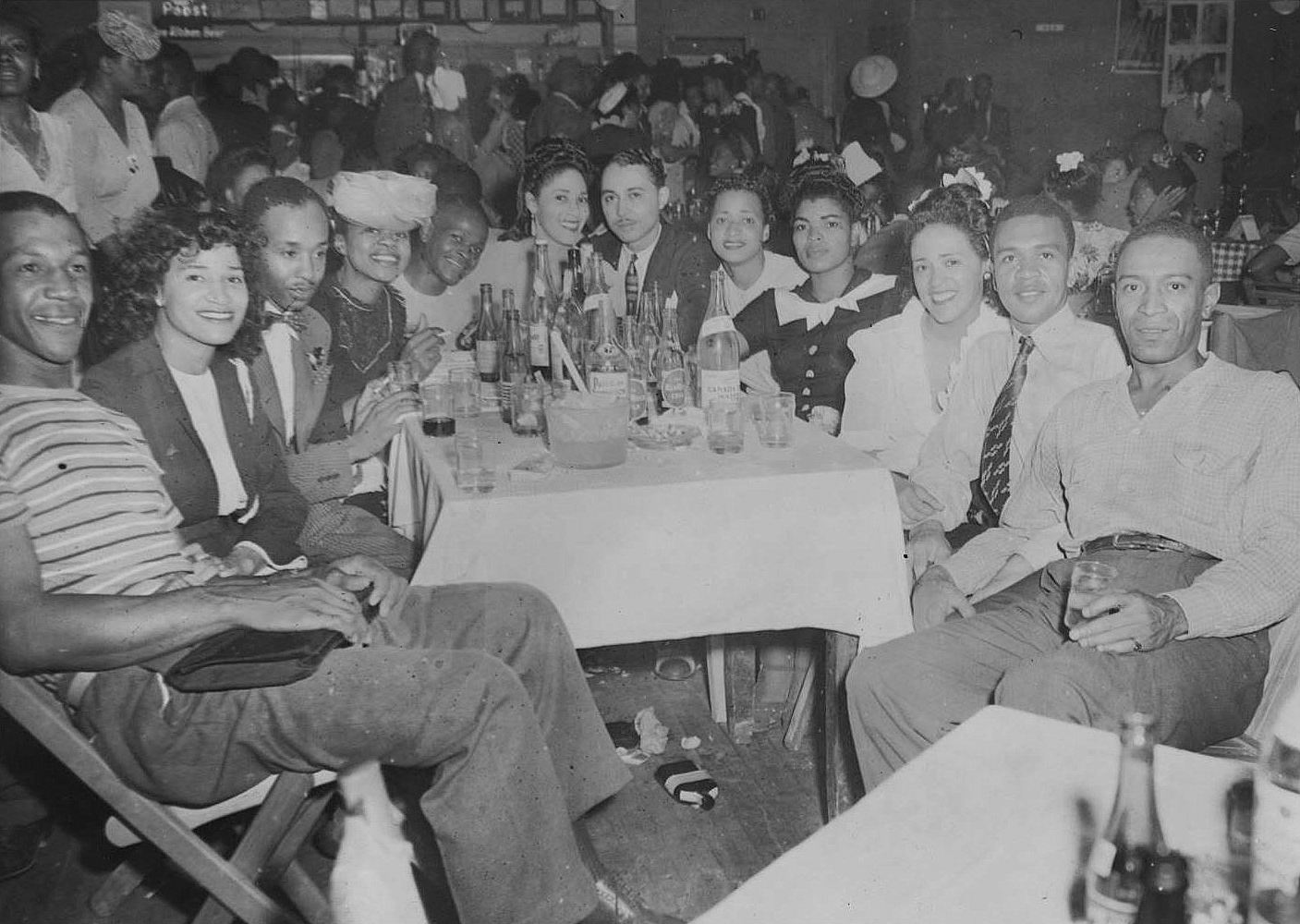
rose-ballroom_aug-1942_cook-collection_degolyer_smuThe Rose Ballroom, 1942

by Paula Bosse

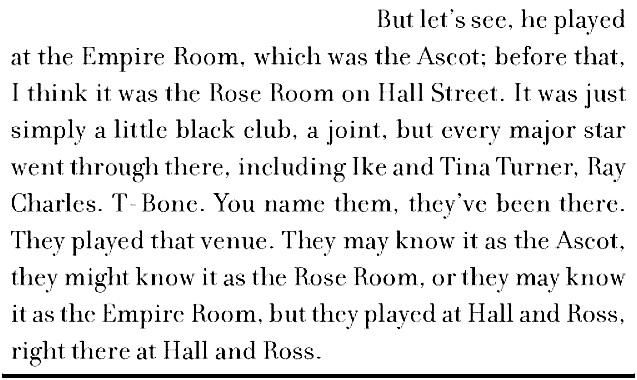
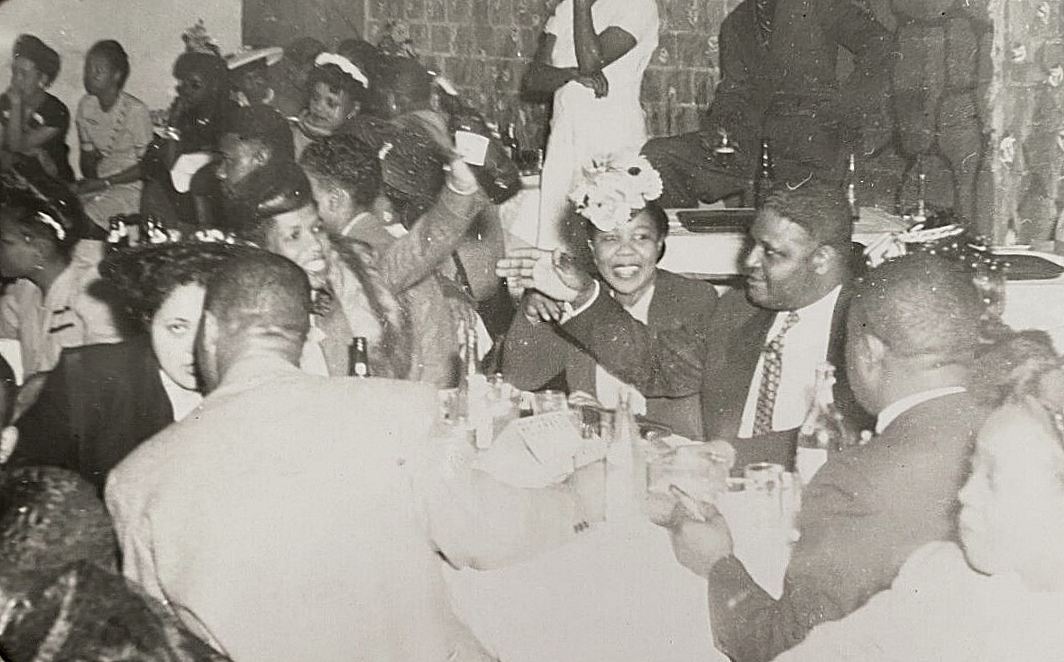
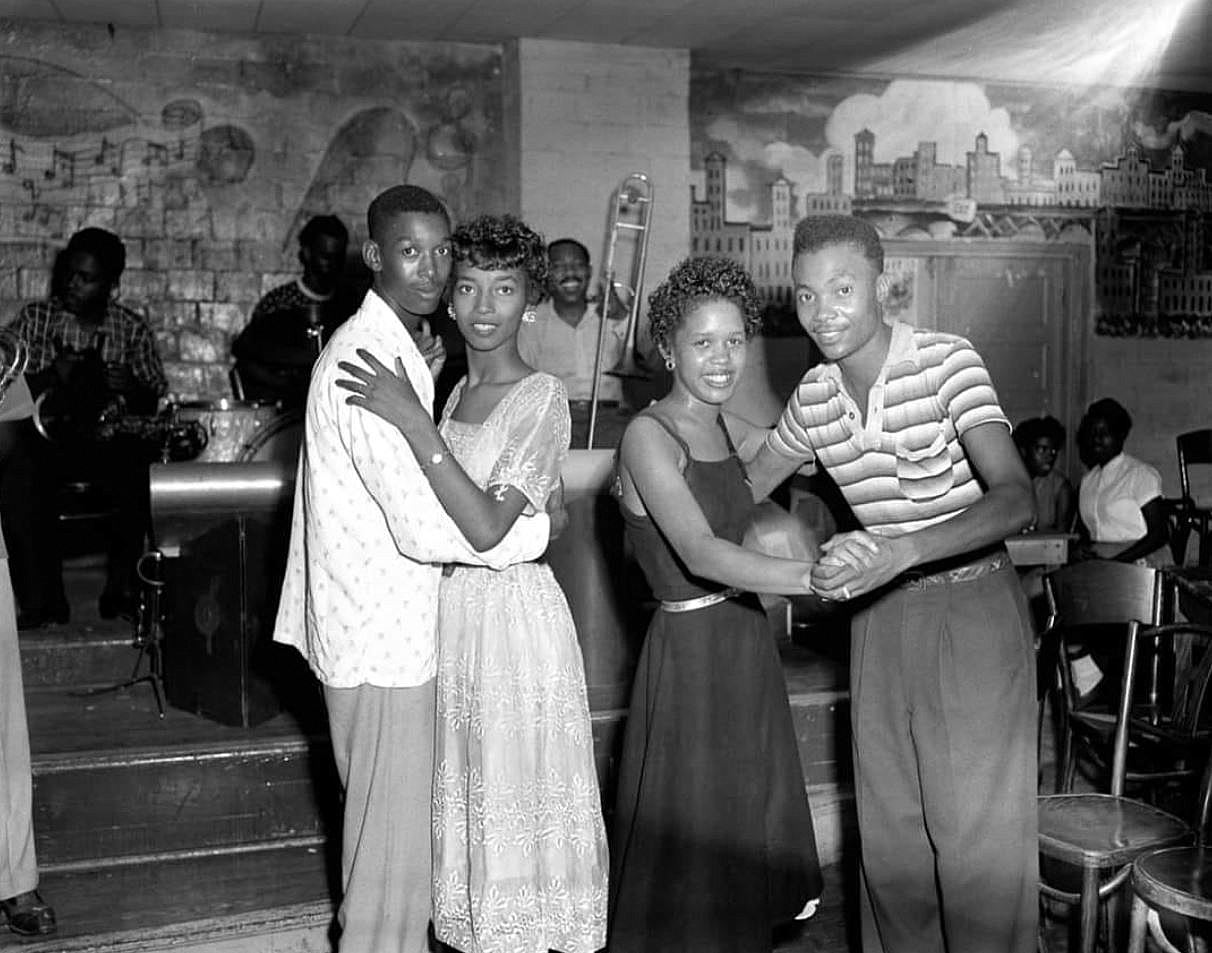
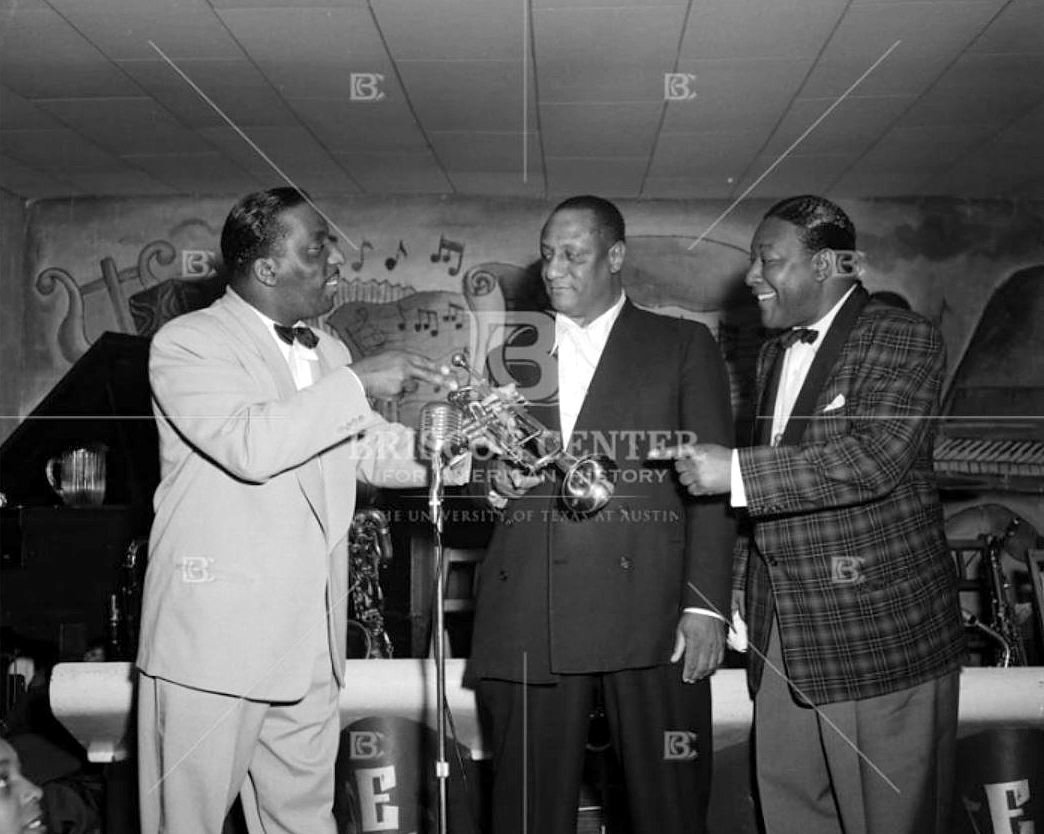
The photo above was taken at the Rose Ballroom at 1710 Hall Street (a few steps off Ross Avenue) in August, 1942. 1710 Hall was the home to a string of very popular black nightclubs: the Rose Ballroom (1942-1943), the Rose Room (1943-1951), the Empire Room (1951-1969) (not to be confused with the nightclub of the same name in the Statler Hilton), and the Ascot Room (1969-1975). There seems to have been some overlap of owners and/or managers and/or booking agents, but they all appear to have been very popular “joints” (as described by Freddie King’s daughter), where both big-name touring musicians as well as popular local acts played. Icons T-Bone Walker and Ray Charles were regulars (there are stories of Ray Charles sleeping on the Empire Room’s stage during the time he was living in Dallas in the ’50s). Everybody seems to have played there. Below, a quote from Wanda King, talking about her father, blues legend Freddie King — from the book Texas Blues: The Rise of a Contemporary Sound by Alan Govenar (all clippings and photos are larger when clicked):

rose-room_freddie-king_wanda-king_texas-blues_govenar

Some of the acts scheduled to appear in early 1946 at the Rose Room were Erskine Hawkins, Louis Armstrong, Lionel Hampton, Buddy Johnson, and Andy Kirk. …Wow.

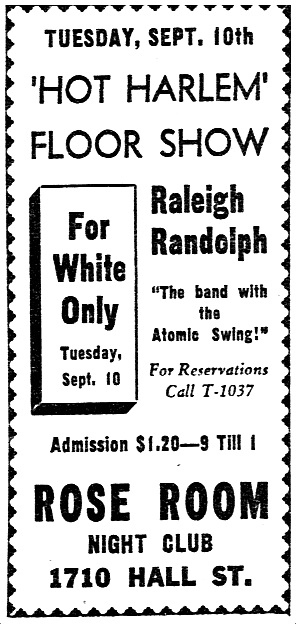
In the days of segregation, when Dallas police threatened to shut the club down if the owner allowed white patrons to mix with black patrons, the club scheduled “white only” nights where Caucasian audiences could see their favorite non-Caucasian performers. (Before these special club nights, which seem to have started in 1945, a revue would be taken “on the road” — over to the Majestic Theatre on Elm Street — to perform live onstage.)

rose-room_dmn_092945-ad
1945

rose-room_dmn_090846_ad
1946

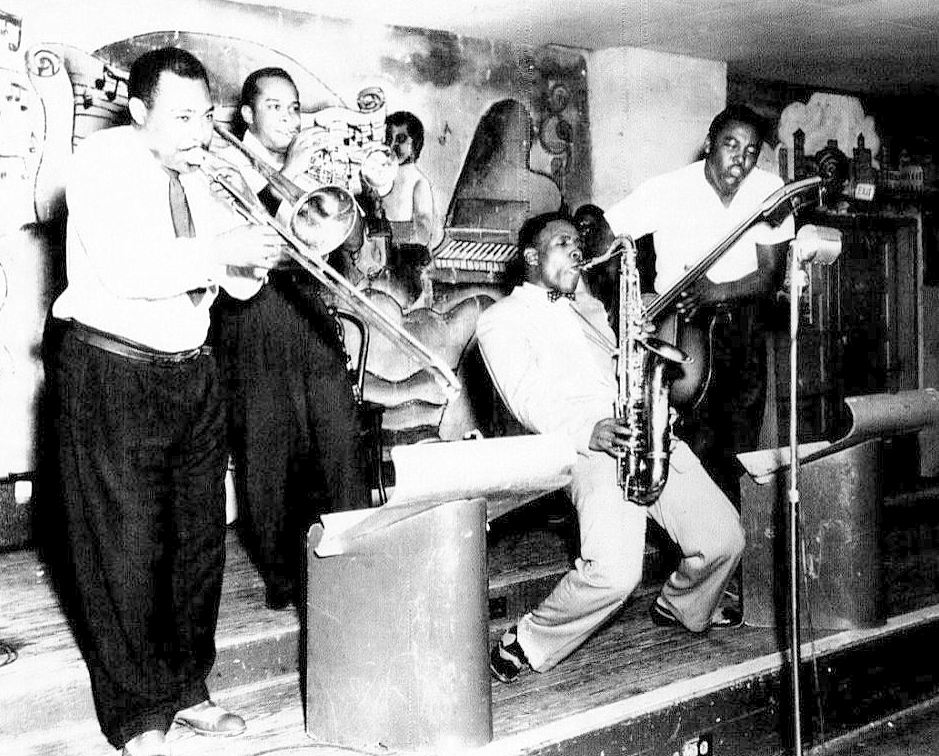
The photo up there at the top showed the audience — here’s the stage (1946 photo of the E F Band by Marion Butts, from the Marion Butts Collection, Dallas Public Library):

rose-room_the-e-f-band_marion-butts_dpl_1946

And here’s what the stage looked like when the club became the Empire Room (onstage is Joe Johnson in a 1954 photo by R. C. Hickman, taken from a great article about Hickman in Texas Highways, here):

empire-room_joe-johnson_1954_r-c-hickman_tx-highways_020299

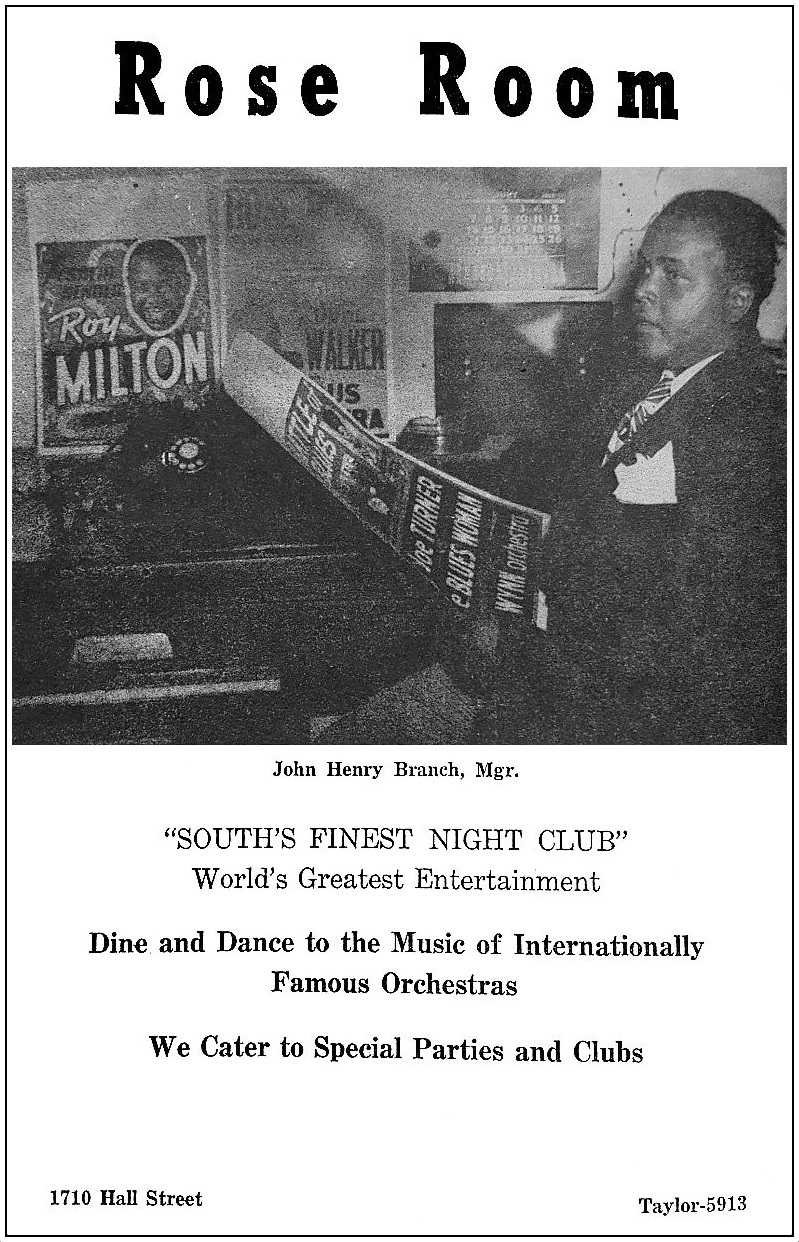
One thing that probably helped set the Rose Room/Empire Room apart from a lot of the other clubs in town at this time was the man who booked the shows — and who booked acts all over the area: John Henry Branch. The guy knew everyone. Here he is in an ad from 1947:

rose-room_1947-1948-negro-directory_dallas

Aside from booking acts and musicians for black clubs, he also booked acts for white clubs — including Jack Ruby’s Carousel and Vegas clubs. In fact, Branch chatted with Ruby at the Empire Room the night before Ruby shot Oswald — Ruby had come in to check on a piano player Branch was booking for a gig at the Vegas Club in Oak Lawn. Branch supplied testimony to the Warren Report, and while it’s not all that riveting (because there wasn’t that much to tell), it’s still interesting to hear how Branch describes his own club and Ruby’s personality (“You can’t never tell about him — he’s a weird person.”) — you can read his testimony here.

I have to admit, I’d never heard of the Rose Room or the Empire Room before I saw the photo at the top of this post. I really missed out. So much fantastic music! And I missed it. It’s just another reminder that Dallas has an incredible music history.

rose-room_texas-blues_govenar-brakefieldfrom the Texas African American Photography Archive

rose-room_1944-45-directory_hall-street
1700 block of Hall Street, 1944-45 city directory

What’s at 1710 Hall these days? A vacant lot — soon to be developed, no doubt. Ross Avenue ain’t what it used to be….

rose-room_photo_green-cover_ebayeBay

empire-room_teenage-dance_hickman_080656Teen dance, Aug. 6, 1956 (photo by R. C. Hickman)

empire-room_l-g-mccutcheon_hickman_042351_briscoe-center_watermarkApr. 23, 1951 (photo by R. C. Hickman, Briscoe Center, Univ. of TX)

**

UPDATE: After many fruitless attempts to find a photo of the exterior of this building, I stumbled across it in a 1973 filmed report from KERA, recently uploaded by the G. William Jones Film and Video Collection at SMU. Below is a screenshot showing the Ascot Room a couple of years before it finally closed, looking a little worse for wear. The 8-minute film (which you can watch here) shows tons of locations in the Black neighborhoods of South Dallas (along Forest Avenue/MLK Blvd.) and “North Dallas” (along Hall Street) — the Ascot Room can be seen briefly at the 1:46 mark. (More on this film can be found in the Flashback Dallas post “Black Dallas — 1973.”)

ascot-room_june-1973_kera-collection_jones-collection_SMUAscot Room, 1973 (screenshot, Jones Collection, SMU)

***

Sources & Notes

Top photo from the George W. Cook Dallas/Texas Image Collection, DeGolyer Library, Central University Libraries, Southern Methodist University; more info on this photo is here. Someone has written this on the photo: “Aug. 42, Dallas, Rose Room” — in August, 1942 the club was known as the Rose Ballroom; it changed its name to the Rose Room in early 1943.

1973 screenshot is from a 1973 film (my guess is that it was broadcast on Channel 13’s “Newsroom”) from the KERA Collection, G. William Jones Film and Video Collection, Hamon Arts Library, Southern Methodist University.

Wanda King quote is from the book Texas Blues: The Rise of a Contemporary Sound by Alan Govenar (College Station: Texas A & M University Press, 2008).

Rose Room ad featuring John Henry Branch is from the 1947-48 Dallas Negro City Directory (with thanks to Pat Lawrence!).

More about the hopping Hall Street area can be found in the Flashback Dallas post “Life on Hall Street — 1947,” here.

*

Copyright © 2017 Paula Bosse. All Rights Reserved.

Neiman-Marcus Toy Department — 1965

n-m_toys-northpark_1965_marcus-papers_degolyerThat kangaroo is fab… (click to see it bigger!)

by Paula Bosse

This photo shows the world’s least-cluttered toy department at the then-new Neiman’s store at the then-new NorthPark mall. What were the well-heeled tots of 1965 playing with? Model castles, stuffed tigers, dolls, robots, and kangaroo-shaped slides.

***

This photo — “Toy Department, Neiman Marcus, NorthPark”– is from the Stanley Marcus Papers, DeGolyer Library, Central University Libraries, Southern Methodist University; more info on the photo can be found here.

*

Copyright © 2017 Paula Bosse. All Rights Reserved.
Casa Linda Animal Clinic, Est. 1948

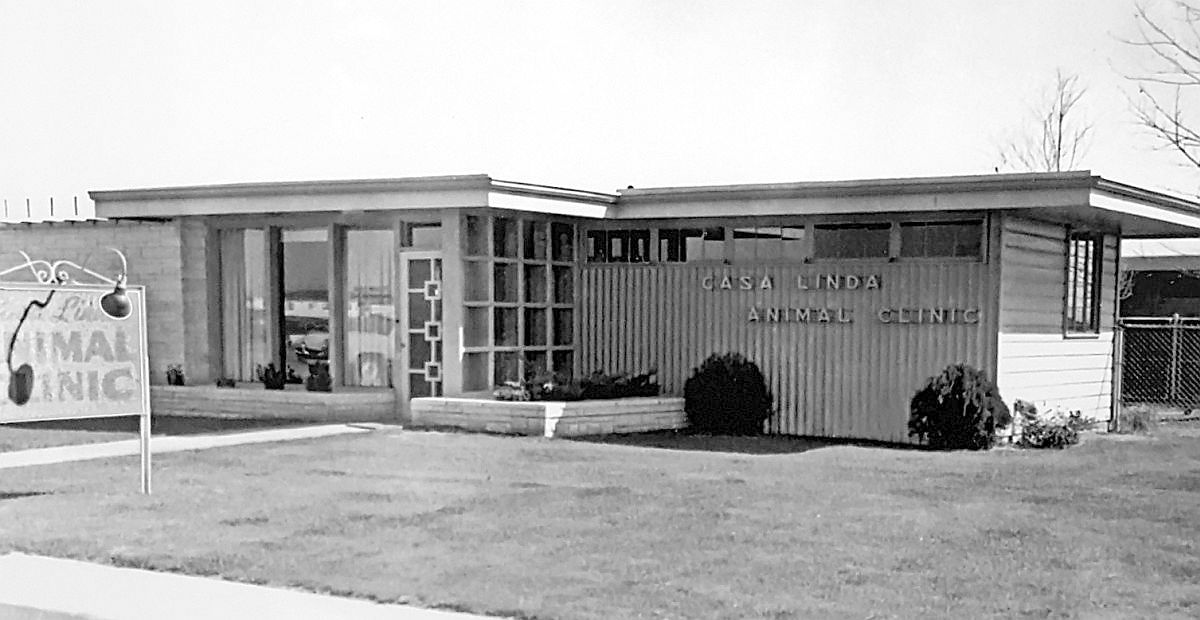
casa-linda-animal-clinic_bwIf only Garland Rd. & Jupiter still looked like this…

by Paula Bosse

Sometimes you can find interesting historical photos in the most unexpected places — like my mother’s veterinarian’s office. The photo above shows the cool mid-century design of the Casa Linda Animal Clinic, at 11434 Garland Road, just past the intersection with Jupiter.

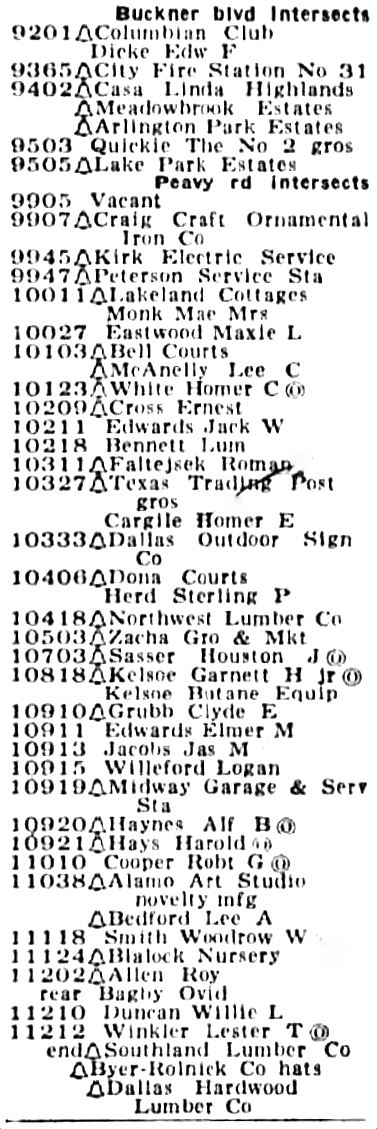
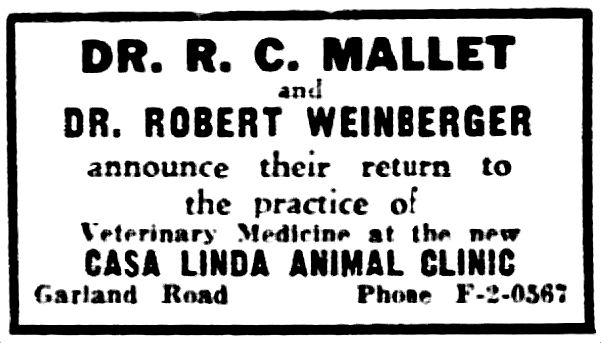
Two young veterinarians — Robert Weinberger and Roland Mallett — opened the animal clinic/hospital/boarding kennel in June, 1948, out in the boonies. I’m not actually sure that that stretch of Garland Road was even technically in Dallas in 1948. The 1948 city directory shows Garland Road ending at the 11200 block (with no cross-streets after Peavy). (Click to see a larger image.)

garland-road_1948-directory
1948 Dallas directory

When Weinberger and Mallett (whose name is often seen spelled as “Mallet”) opened their veterinary practice, theirs was the very last business (or residence) between the Dallas and Garland boundary. (To see how empty things were around there, check out a couple of pages from the 1952 Mapsco, here; the first one shows a developed area around White Rock Lake, Forest Hills, and Casa Linda, and the second one shows a much less developed area once you’ve passed Jupiter Road — and anything east of Shiloh is either a bleak no-man’s land or … Garland.) (I’ve never heard of Hudson Airport, seen on the second map — north of Northwest Highway, between Jupiter and Garland Road — so that’s cool to see.)

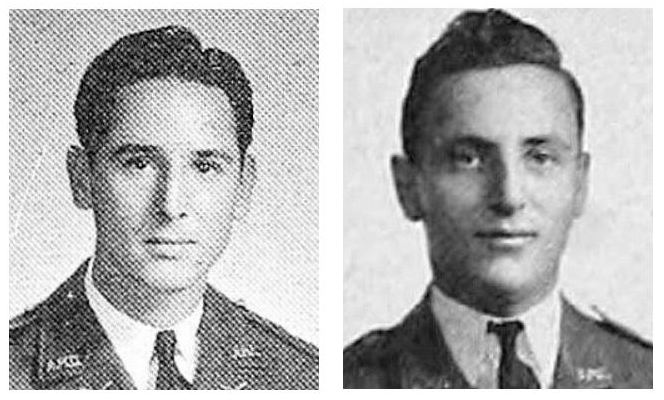
But back to the Casa Linda Animal Clinic (and it’s not really in Casa Linda, but I’m not sure what that area is). Being so far out in the sticks in 1948 probably explains how a couple of fairly recent Texas A&M veterinary school grads (and former WWII servicemen) who were still in their 20s were able to buy land for their first practice. The money they saved on real estate was apparently put into building a well-appointed clinic (according to Dr. Weinberger’s obituary, the clinic itself was “designed in collaboration with Texas A&M as sort of a showpiece of a modern, small-animal veterinary clinic”). Below, photos of Mallett, on the left, and Weinberger, from their vet school days at A&M — both were Class of ’44.

mallett-1943_weinberger-1942_texas-a-m-yearbooks

casa-linda-animal-clinic_dmn_060848
June 1948

The building today (seen here on Google Street View) looks nothing like it did in the photo at the top. It has been almost 70 years, but the building has either been drastically remodeled or is a new building. (Perhaps exterior work was done on it all the way back in 1951 when a car ran through the front wall.)

The clinic has gone through several partners and owners over the past 69 years, but it’s nice that it’s kept the same name all this time. I would assume that it has become something of a neighborhood fixture and has probably treated the pets of several generations of Casa Linda, Casa View, and Lochwood residents. …Maybe even some from Garland.

And now I know more about my mother’s veterinary clinic than she does!

***

Sources & Notes

Top photo is on the wall of the Casa Linda Animal Clinic. I wish more businesses would post old photos like this. If the (very nice) staff saw me taking this photo of a photo this morning, they probably wondered what I was doing. I’m afraid I didn’t ask permission to reproduce it, so it seems only right that I direct you to their website if you live in the area and are looking for a veterinarian.

Photo of Roland C. Mallett (1920-2010) is from the 1943 Texas A&M yearbook; photo of Robert Weinberger (1922-2009) is from the 1942 yearbook. Both graduated in 1944.

Read more at the Dallas Morning News archives:

  • “Dallas Veterinarians Open Casa Linda Animal Hospital” (DMN, June 20, 1948) — with photo of newly constructed building
  • “And the Wall Came Tumbling Down” (DMN, July 28, 1951) — photo shows Dr. Mallett looking at a car that had crashed into the animal hospital (no people — or animals — were injured)

Current boundary map of Garland can be found here.

*

Copyright © 2017 Paula Bosse. All Rights Reserved.