Flashback : Dallas

A Miscellany: History, Ads, Pop Culture

Category: 1920s

Pacific Avenue — 1925

pacific_bryan_looking-east_lost-dallas_dotyThe back side of Elm, looking east…

by Paula Bosse

Elm Street gets all the glory as Theater Row, but what about Pacific? It had those very same theaters. …Sort of. Pacific gets overlooked a lot. When I see photos like this one — which shows Pacific Avenue looking east from Bryan — I always think of it as a photo showing the back side of Elm rather than as a photo showing Pacific. Always a bridesmaid, never the bride.

This photo was taken only a few short years after the Texas & Pacific railroad tracks were removed from Pacific, making it into an automobile and pedestrian thoroughfare only — no more frightening, smoke-belching trains rumbling right down the middle of the street. The city was hoping that Pacific would become a heavily commercial area like Elm, Main, and Commerce, but it never really reached those lofty heights.

I’ve always wondered if the theaters that lined Elm ever considered having entrances/box offices on both Elm and Pacific. I think that they were really only willing to slap a few posters and paint their names on their back, Pacific-facing walls. Elm Street was glitzy and glamorous. Pacific was not. Back in those early days when people were still trying to get used to Pacific Avenue being newly liberated from its railroad tracks, it might have been seen as something of an afterthought — as more of a very wide alley with traffic than as a contender for one of Dallas’ major streets.

But back to the theaters. In the photo above, we see the Old Mill at 1525-27 Elm (where “The Snob” was playing, featuring John Gilbert and Norma Shearer), the Capitol at 1521-23 Elm (which had Alla Nazimova in “The Redeeming Sin”), and the Jefferson Theater at 1517 Elm (featuring Harley Sadler’s repertory company appearing in “Honest Hypocrites and Saintly Sinners” between vaudeville acts). All of these were playing in May, 1925.

It’s interesting that the only business seen here on the south side of Pacific that had an address on both Elm and Pacific was Van Winkle’s Book Store (before it moved a couple of doors up Elm, it was at 1603 Elm/1614 Pacific). Note the sign advising “Free Passage to Elm Street” — several businesses allowed people to cut through their stores to get to the next street over because the blocks were incredibly long and would sometimes have necessitated pedestrians going three blocks out of their way just to get to their destination.

Other notable landmarks in the photo above: the Medical Arts Building (on the left) and the Dallas Athletic Club.

Here’s a view of Pacific from around the same time, looking west, from about Harwood.
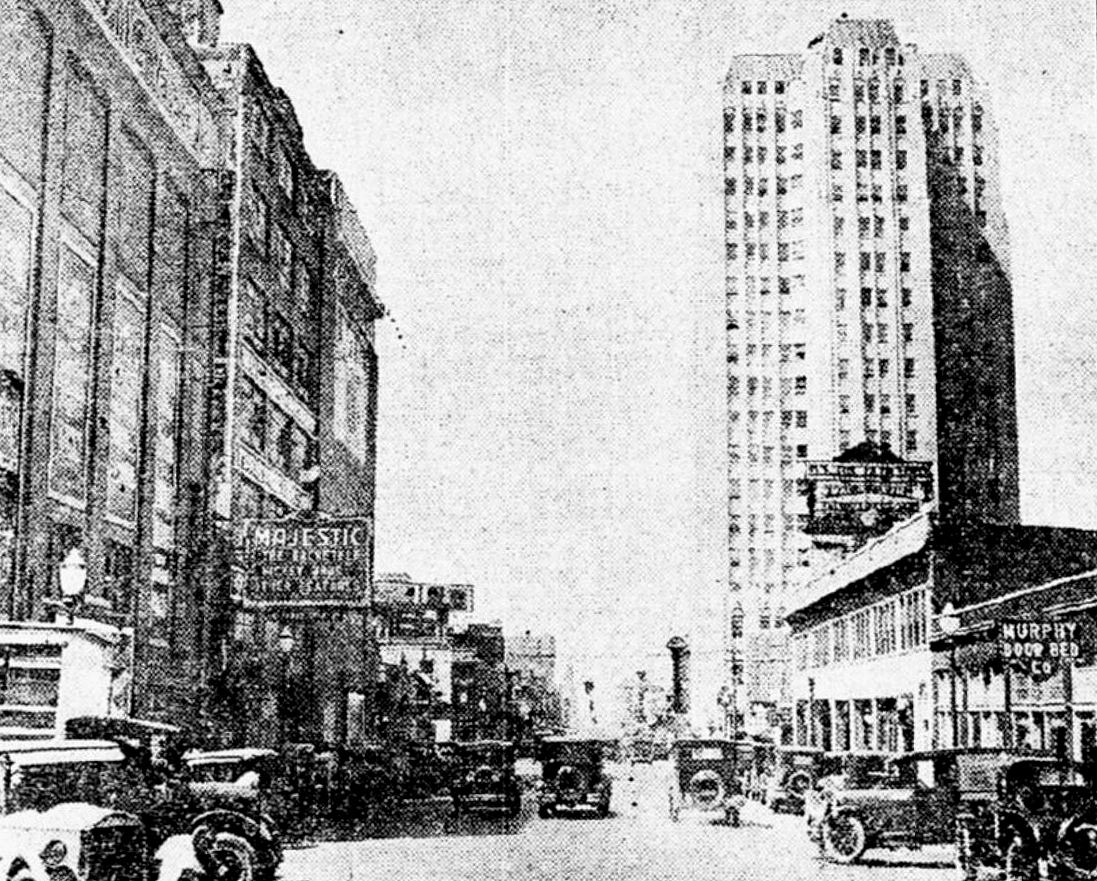
pacific-looking-west_dmn_041430
1930

Most interesting detail in this photo? That Murphy Door Bed Co. sign!

***

Sources & Notes

Top photo from Lost Dallas by Mark Doty (Charleston: Arcadia Publishing, 2012).

*

Copyright © 2015 Paula Bosse. All Rights Reserved.

The Beginning of the End for Ross Avenue’s Downtown Mansions — 1925

construction_jan-1925Mansions across from First United Methodist Church, Jan. 1925

by Paula Bosse

The First Methodist Episcopal Church, South (now First United Methodist Church of Dallas) was built in 1924 and 1925 at Ross and North Harwood. It was a large undertaking, and its construction meant that three of the four very large houses in the 1900 block of Ross Avenue, between North St. Paul and North Harwood, had to be demolished, including the house built by Mrs. Miranda Morrill in 1886 at the southwest corner of Ross and Harwood.

morrill-house_lost-dallas_doty_dmn

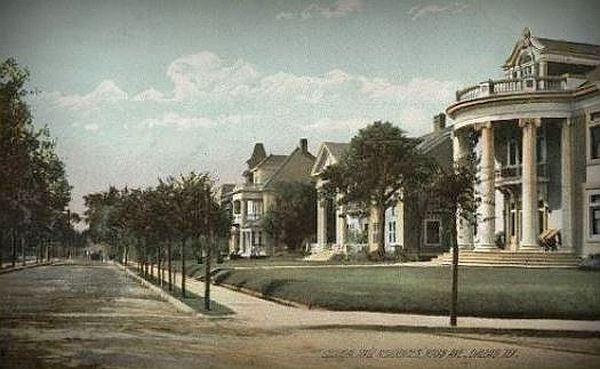
For many years, large houses like this — owned by the city’s wealthiest bankers, industrialists, and real estate men — lined Ross Avenue, just to the north of the central business district. But by the 1920s, more and more non-residential development began to encroach into this part of town.

The photograph at the top is pretty amazing, because it shows some of those grand houses in their last days. The north side of the 1900 block of Ross (the block now occupied by the Dallas Museum of Art) contained four lots. In the 1925 construction photo above, there are three houses and a business.

ross-houses_1925

In the detail above, at the far left we see the home of land baron William Caruth (in the book Dallas Rediscovered, William L. McDonald called this little pied-à-terre his “townhouse”) — for decades it sat at the northeast corner of Ross and St. Paul (which had previously been named Masten). Next to it is something that looks like scaffolding or a tower (what is that? — is it a photographer’s perch to document the construction?). Next to it is another grand house, home of several wealthy occupants over the years. And then … a car dealership and garage. How this happened is a mystery, but this 1921 building — which replaced a beautiful house and which sticks out like a sore thumb — belonged to the Flippen Auto Co., complete with showroom on the ground floor and garage and repair facilities on the second floor — it may have had one of the first car elevators in town.

Next to the Flippen Auto Co. was the grandiose Conway House, with its columns and portico; it was built around 1900 at the northwest corner of Ross and Harwood and was the childhood home of pioneer female fashion illustrator Gordon Conway. In 1921 — after a few years as a music conservatory — it became the home of the Knights of Columbus.

conway-house_ross-harwood_ca1902_mcdonaldConway House, about 1902

And here’s a photo showing both the Flippen Auto Co. and part of the former Conway House.

flippen-auto_park-cities-photohistory_galloway

On the northeast corner of Ross and Harwood, we can see a large house facing Harwood. Forget the house — on that corner was a tiny little gas station. And glory be, I stumbled across a great photo of the Acme Oil & Supply Co. complete with Texaco pump — probably from around 1919 or 1920.

ross-harwood_gas-station_greene

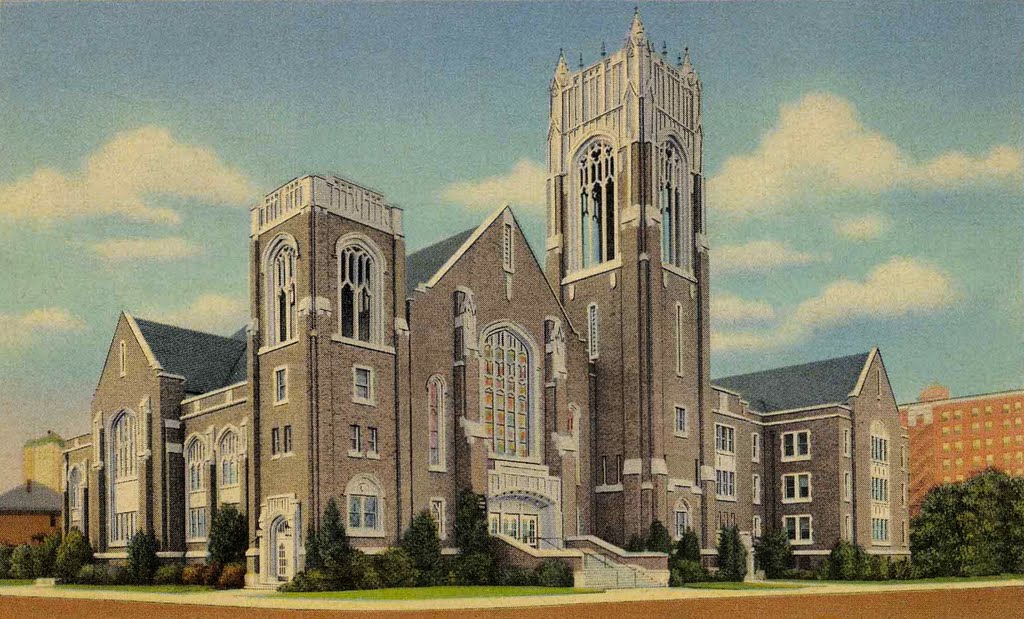
But back to the construction of what is now the First United Methodist Church of Dallas — a lovely building which still stands and faces the Dallas Museum of Art. Here’s a photograph of the construction from May, 1925.

construction_may-1925

And here is the postcard filled with an artist’s conception of people to-ing and fro-ing.

methodist-episcopal-church_ebay

methodist_postcard

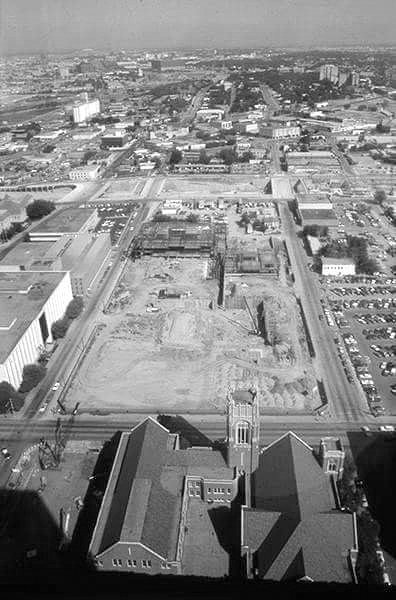
And, finally, an aerial view taken above the church in the early 1980s, looking north, showing the same block once bookended by the Caruth and Conway mansions, now leveled to make way for the Dallas Museum of Art.

dma-under-construction_1984

I think I prefer the view from 75 years earlier.

ross-avenue_ca1910

***

Sources & Notes

The two photos taken in 1925 during the construction of the church are from the book Church at the Crossroads, A History of First United Methodist Church, Dallas (Dallas: UMR Communications, 1997); the entire book has been scanned and may be viewed at Archive.org, here (all the photos are at the end).

The photo of the Morrill house is from Mark Doty’s book Lost Dallas (Charleston: Arcadia Publishing, 2012).

Photo of the Conway House is from Dallas Rediscovered by William L. McDonald (Dallas: Dallas Historical Society, 1978).

Photo showing the Flippen Auto Co. and the Conway house from Diane Galloway’s book The Park Cities, A Photohistory.

Photo of the Acme gas station is from Dallas: The Deciding Years by A. C. Greene (Austin: Encino Press, 1973).

The construction of the First Methodist Episcopal Church, South was announced in a Dallas Morning News article on Oct. 5, 1924.

methodist_dmn_100524

All that’s left of those grand homes is the Belo Mansion. It’s something!

Click pictures to see larger images.

*

Copyright © 2015 Paula Bosse. All Rights Reserved.
 

Waking Up Every Day To an Unimpeded View of Lake Cliff Park

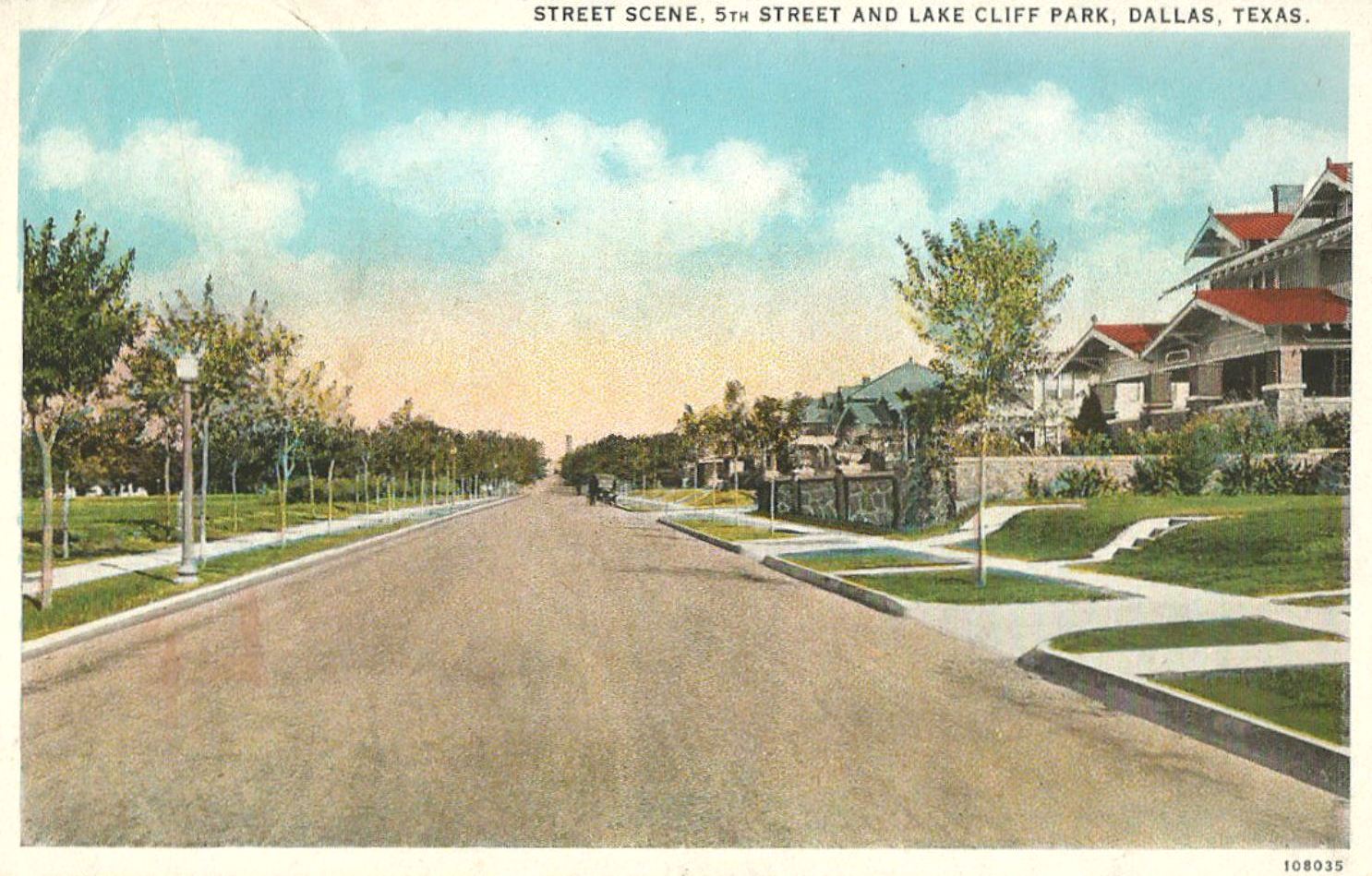
oak-cliff_5th-street_lake-cliff-park_ebayThe red-roofed Frank Rogers house, E. Fifth & N. Denver, Oak Cliff

by Paula Bosse

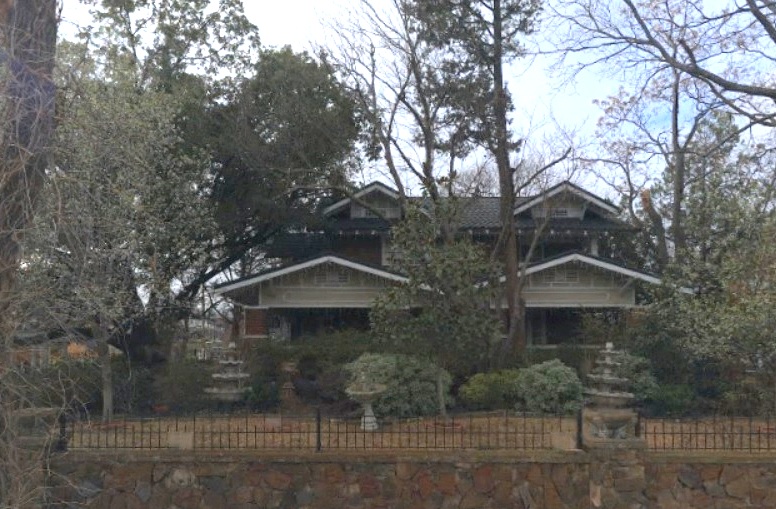
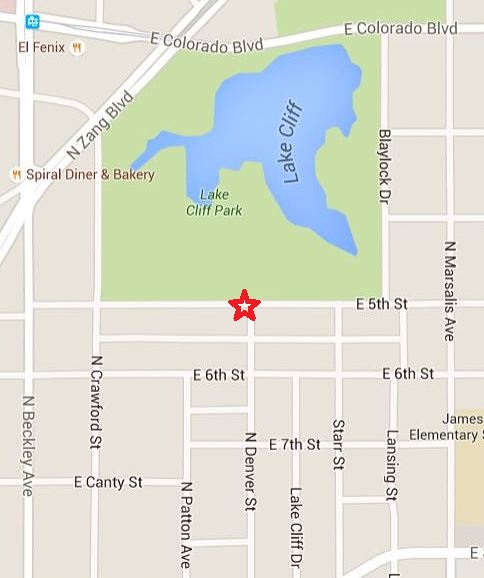
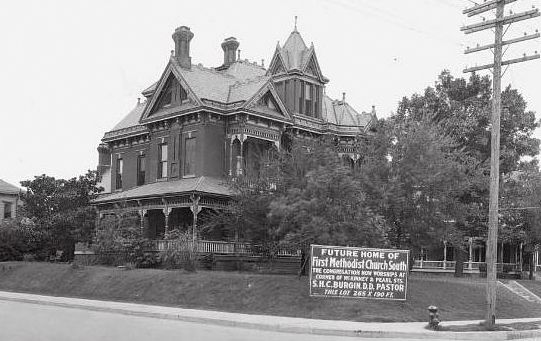
I saw this postcard of a row of houses on East Fifth Street in Oak Cliff and wondered if the house with the red roof and the low stone wall was still standing. Happily, it is. With a little digging, I discovered that the house at 320 E. Fifth Street was built in 1922 or very, very early 1923 for Frank Rogers, one of Dallas’ top photographers. A photographer would want to live with a beautiful view, and he certainly had it there — Lake Cliff Park was right across the street. (The artist Frank Reaugh also lived on East Fifth, a block or two to the west.) Frank Rogers (1878-1961) lived in the house he built at the corner of East Fifth and North Denver until his death at the age of 82.

It appears that Rogers bought the property in the survey area known as Robinson’s Park Place in December of 1920 for $8,000. The address does not exist until his house is built — it shows up for the first time in the 1923 city directory. The 1922 Sanborn map (see it here) shows the corner lot empty — as well as most of the rest of the lots along East Fifth between North Crawford and North Denver.

Here are a few bits and pieces of random information from a search on the address. In 1933, Rogers’ German Shepherd got loose. That park would have been an absolute paradise for a dog on the lam.

roger_dmn_090233Sept. 2, 1933

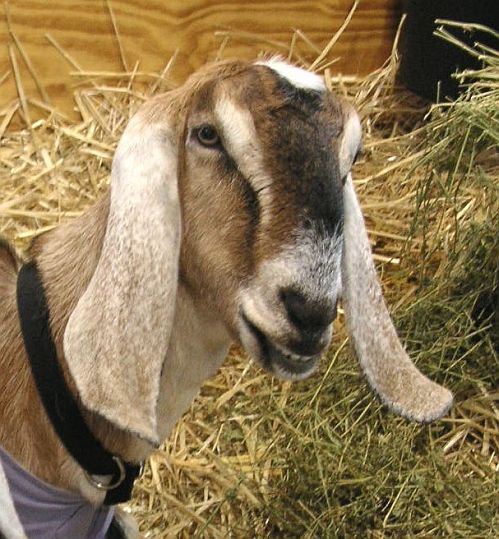
And in 1936, for some reason Rogers was selling a “Nubian milch goat,” a friendly source of milk which was, presumably, kept on the property. Was it being sold at the behest of neighbors? The publication Milch Goat Dairy (1917) informs us that “no member of the goat family is more peaceful or gentle than the Nubian, and while the bucks of this breed have the same odor that all goat bucks have, the odor is far less in this breed.” Still. The other well-heeled neighbors might have had a few goat-related issues.

320_dmn_111736-goatNov. 17, 1936

Nubian goat! (Wikipedia)

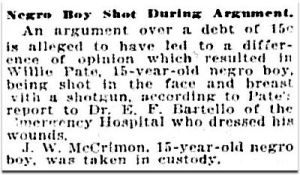
There was a room or small apartment at the rear of the house, and directories show that (at least through the ’20s) there was an ever-changing roster of lodgers who lived there — every year a different name was listed. They were most likely employees. In 1929, the occupant was J. W. McCrimon/McCrimmon, who may have been the same person who, as a minor in 1922, was accused of wounding another minor with a shotgun.

mccrimon_dmn_082922Dallas Morning News, Aug. 29, 1922

Frank Rogers began his career as a newspaper photographer who later ran his own photography studio with his son, Norman. He preferred commercial jobs to bread-and-butter studio portraiture, though he did both. Whatever kind of job he was doing, he preferred to use flash powder when he could, a practice which caused several injuries (and even fires!) over the years.

A news article in 1945 described one such incident: during a commissioned job in which he was taking hundreds of employee photographs for a large company, his flash-powder gun exploded and he was “seriously burned on the hands and face. His spectacles, physicians told him, probably saved his eyesight” (DMN, Feb. 10, 1945).

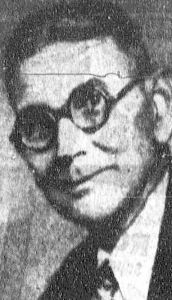
And here he is in those spectacles:

rogers-frank_portrait

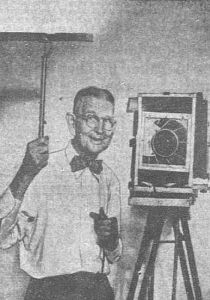
Here’s another photo of the happy-looking photographer, posing with his camera and the potentially incendiary accoutrement.

rogers-frank_at-work_ca-1950s

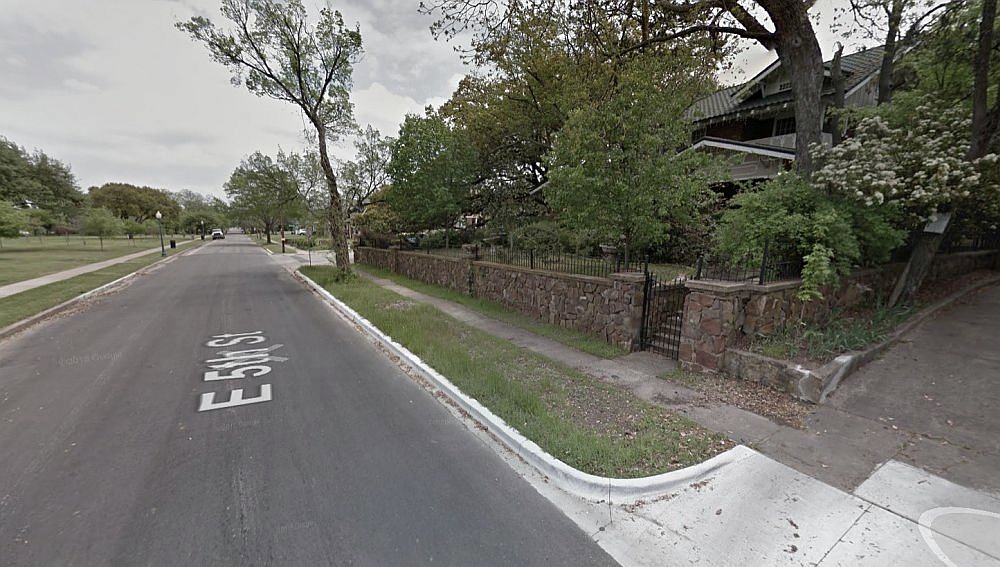
But back to the house. Here it is today.

rogers-house_googleGoogle Street View

And another view, this time with the front of the house visible.

rogers-house_bingBing StreetSide

If I had access to flash powder, I’d go out today and take an extremely well-lit photo of an old Dallas building (and hope I’d survive the experience) — as a nod to Frank Rogers, his cool house, and all the wonderful photos of Dallas he took in the first half of the 20th century. Thanks, Frank!

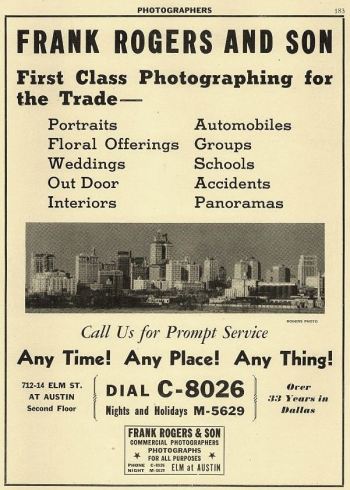
rogers-frank_ad_dallas-directory_1944-45
Frank Rogers and Son ad, 1944-45 Dallas directory

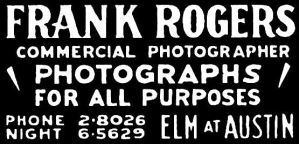
rogers-frank_1936-directory1936 Dallas directory

***

Sources & Notes

Postcard is from eBay.

Frank Rogers was a busy man. If you’re interested in Dallas history (and I’m guessing you are if you’re reading a Dallas history blog), you’ve probably seen dozens and dozens (and dozens) of his photos without even knowing it. The Frank Rogers Collection is housed at the Dallas Public Library. I’ve used a few of his photos in previous posts — one of my favorites is his view of the Akard Street Canyon, here.

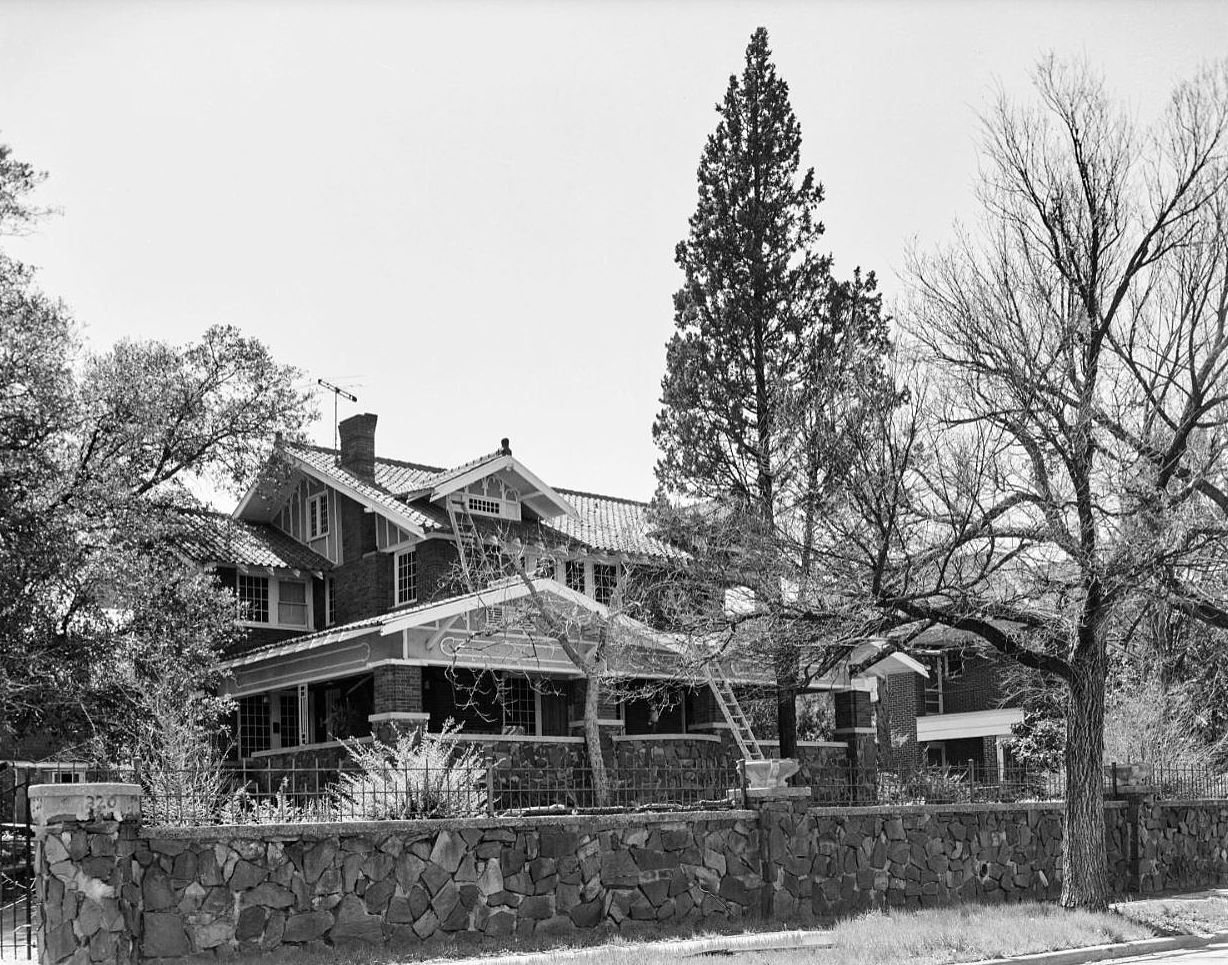
Another photo of the house can be seen in the 1980 photo below, from the Texas Historical Commission Historical Resources Survey, via the Portal to Texas History, here.

rogers-frank_home_320-east-fifth_oak-cliff_portal_1980

Take a tour of the Lake Cliff Park area via Google Street View, here.

And finally, here’s where Frank’s house is, marked in red.

rogers-house_googleGoogle Maps

*

Copyright © 2015 Paula Bosse. All Rights Reserved.

“The Fair Is In the Air — Let’s Go!”

state-fair_1923Look at this 1923 typeface!

by Paula Bosse

Here we are again in the final days of another State Fair of Texas. Why not take a look at a few random images of the fair over the years. (Click pictures for larger images.)

First, from 1900, the entrance to the fairgrounds. (It appears to be the same view as the top postcard seen in a previous post, here, just a few steps inside the archway.)

fairgrounds-main-entrance_bohemian_1900_fwplFort Worth Public Library

*

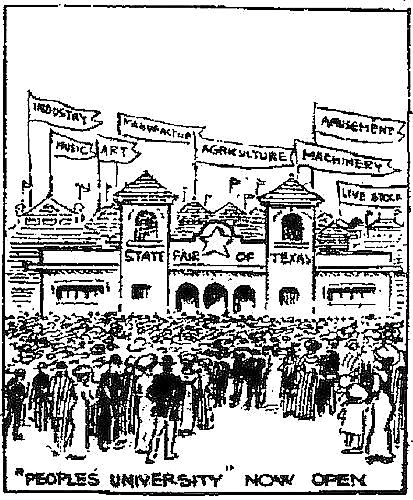
A cartoon from The Dallas Morning News in 1912 — “The People’s University.” Remember, it’s not just about Ferris wheels and candy apples.

state-fair_dmn_102012-cartoonDMN, Oct. 20, 1912

*

1921. Don’t miss The Whip.

state-fair_1921

*

From the Texas Centennial in 1936, a shot of a remarkably spotless Midway. (Am I the only one who would have paid to see the “28-Ft. Monster” do battle with whatever freakish specimens were ensconced within the walls of the Ripley’s Believe It Or Not building?)

tx-centennial-midway_1936_ebay

*

During World War II, no fair was held between 1942 and 1945. “Not until the boys come home, will there be another State Fair of Texas.”

state-fair_wwii_tx-almanac_1945-46

*

By the ’50s, everything was back to normal. Big Tex had arrived, and this ad promises “She’s a LULU in ’52.” Martin & Lewis and whatever a Thrillcade was!

state-fair_dmn_092552_lg

*

And, lastly, an aerial view of the Midway from 1966. Now this IS all Ferris wheels and candy apples. (To watch a short collection of color footage from the damp 1967 SFOT — including a sad, rainy parade downtown — click here.)

state-fair_1966_UNTUniversity of North Texas

***

Sources & Notes

1900 photo of the entrance to the fair is from The Bohemian magazine (1900) in the collection of the Fort Worth Public Library (those perforations in the photo are the FWPL’s).

1921 photo — I’m afraid I have no source on this one.

1936 postcard of the Centennial Midway is from eBay.

Patriotic WWII ad is from the 1945-1946 Texas Almanac.

Photo of the 1966 Midway is from the University of North Texas University Libraries blog, here.

My previous collection of SFOT photos over the decades appeared in the post “So Sorry Bill, But Albert Is Taking Me To The State Fair of Texas,” here.

Other Flashback Dallas posts on the State Fair of Texas are here; posts specifically on the Texas Centennial are here.

Again … some of these pictures are pretty dang big — when in doubt, click ’em!

*

Copyright © 2015 Paula Bosse. All Rights Reserved.


“A City Built On the Solid Rock of Service” — 1927

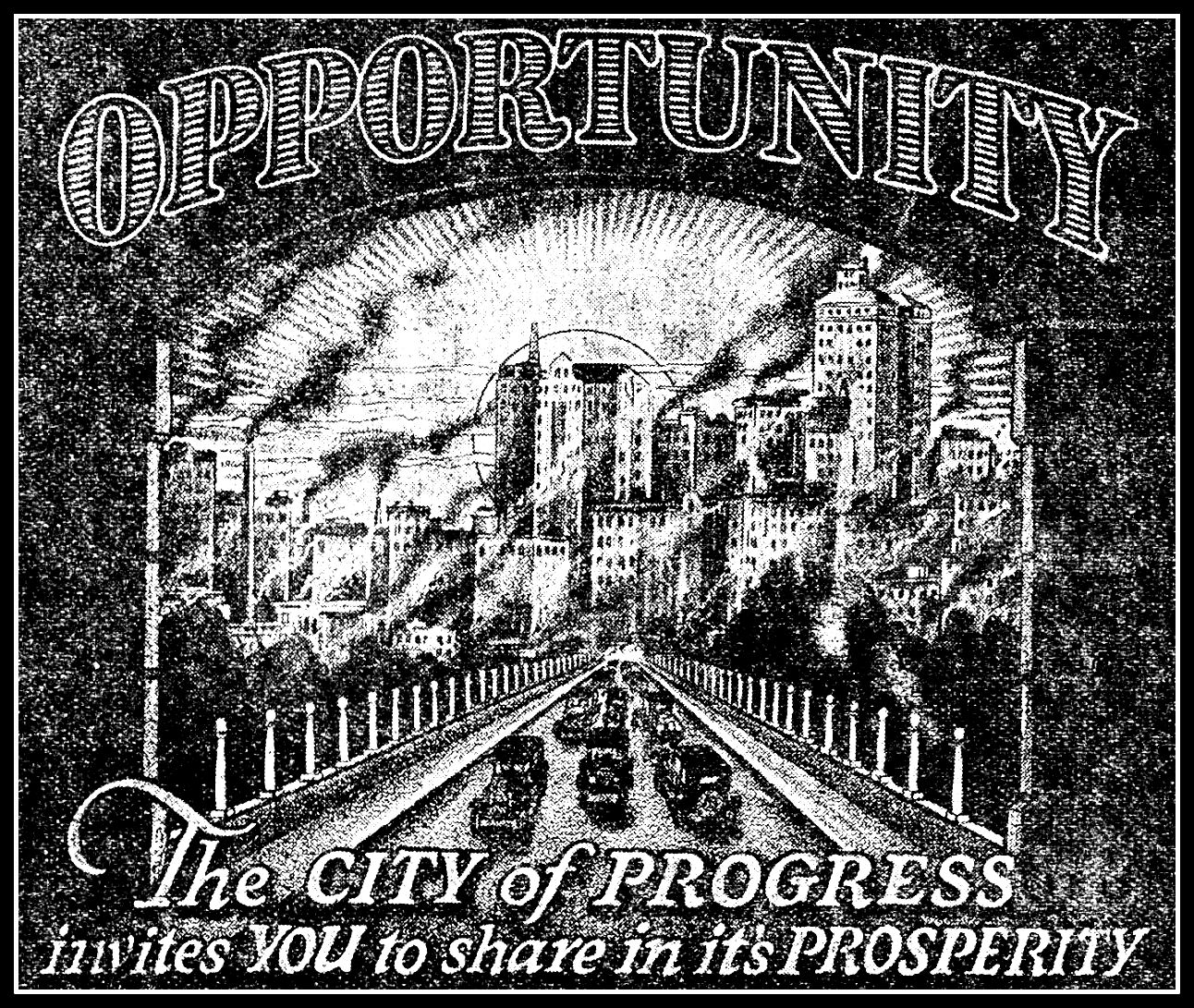
ad-dallas-chamber-of-commerce_tx-almanac_1927-det“Opportunity!”

by Paula Bosse

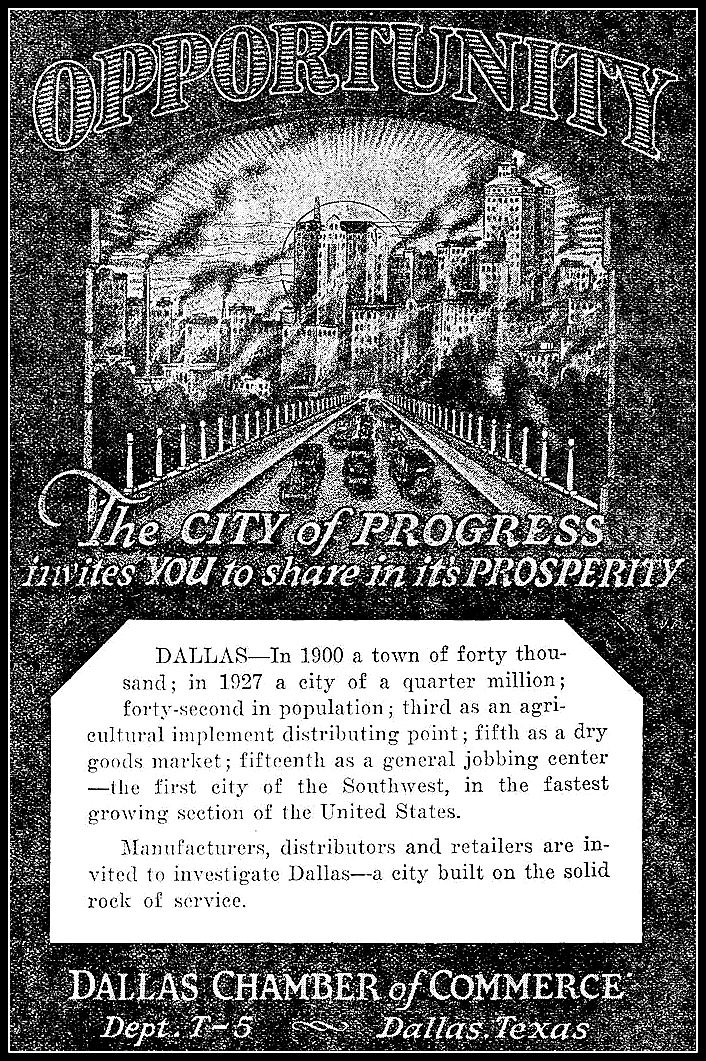
Below, a 1927 Dallas Chamber of Commerce ad with some interesting statistics.

ad-dallas-chamber-of-commerce_tx-almanac_1927

*

OPPORTUNITY

The CITY OF PROGRESS invites YOU to share in its PROSPERITY.

DALLAS–in 1900 a town of forty-thousand; in 1927 a city of a quarter million; forty-second in population; third as an agricultural implement distributing point; fifth as a dry goods market; fifteenth as a general jobbing center–the first city of the Southwest, in the fastest growing section of the United States.

Manufacturers, distributors and retailers are invited to investigate Dallas–a city built on the solid rock of service.

*

Pretty impressive. And the illustration of a dynamic city on the other side of that viaduct is all but throbbing with energy.

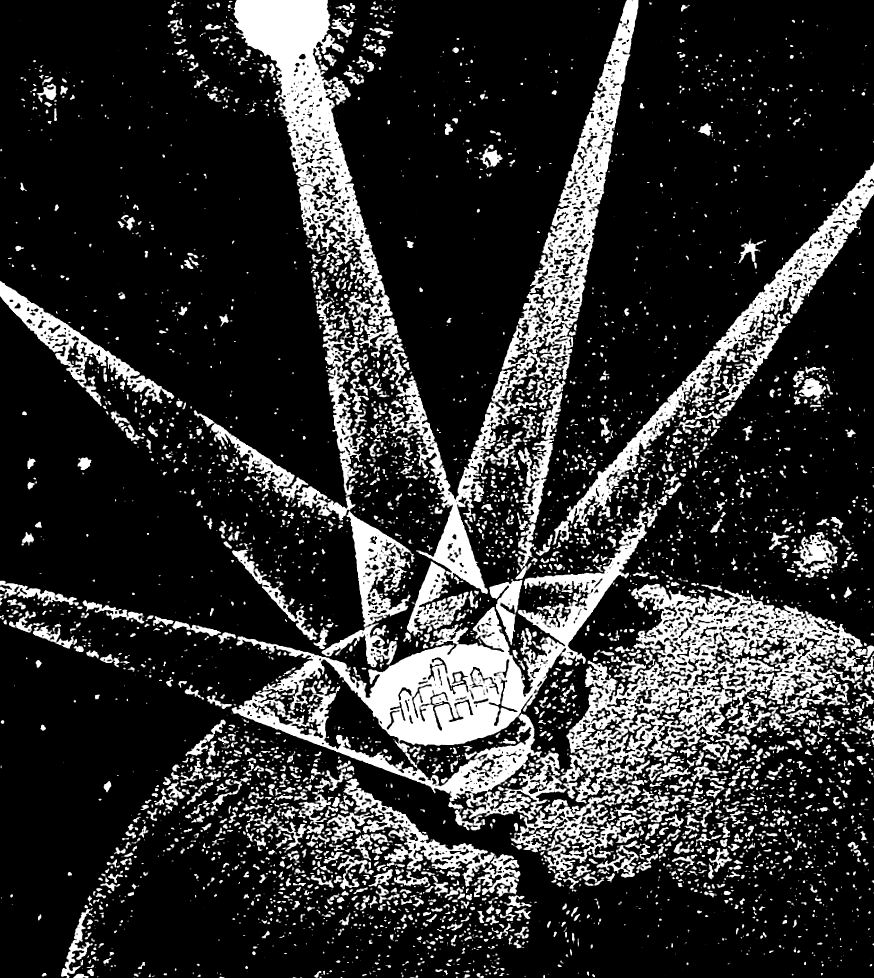
The illustration from a 1929 Chamber of Commerce ad is even less modest: it shows Dallas as the center of the universe, center stage on Planet Earth, lit up by the sun and the giant Klieg lights of space.

ad-dallas-chamber-of-commerce_tx-almanac_1929-det

I kind of think Dallas has pretty much always seen itself like this.

***

Sources & Notes

Ads from the 1927 and 1929 editions of The Texas Almanac and State Industrial Guide.

*

Copyright © 2015 Paula Bosse. All Rights Reserved.

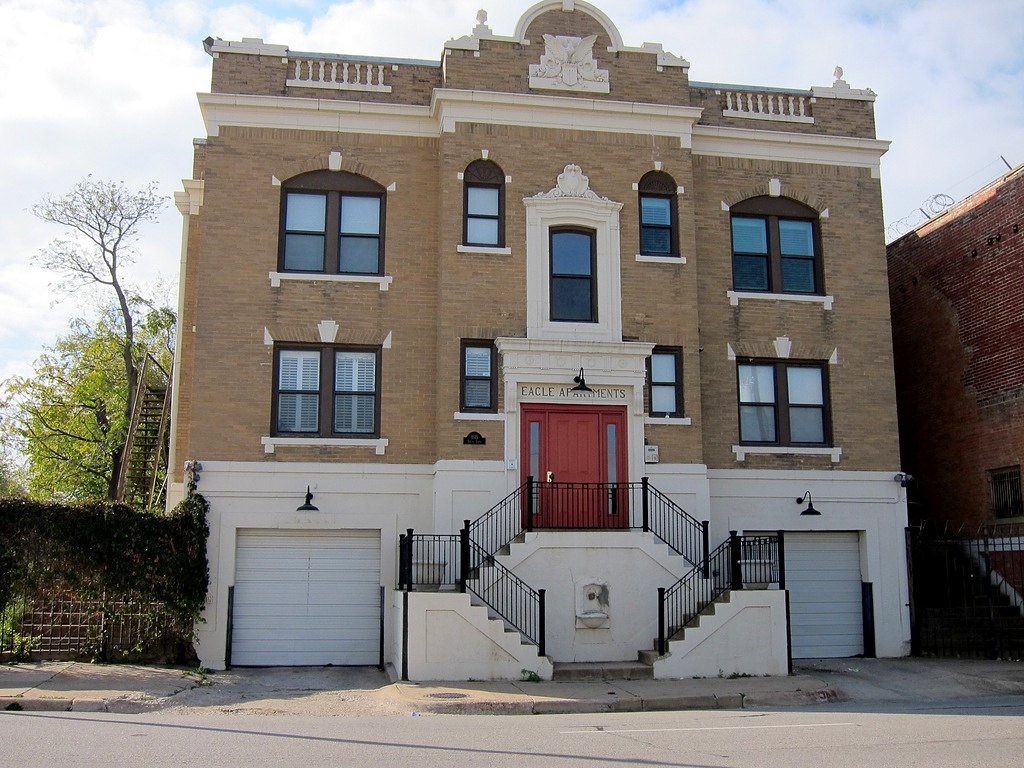
1615 South Ervay: The Eagle Apartment Building

1615-s-ervay_zillowThe Eagle, today (click for larger image) / Photo: Zillow

by Paula Bosse

Whenever I drive along South Ervay, I always slow down — or pull over — to take a look at this building. It doesn’t look like anything else around it, and I’ve wondered about it from the first time I saw it.

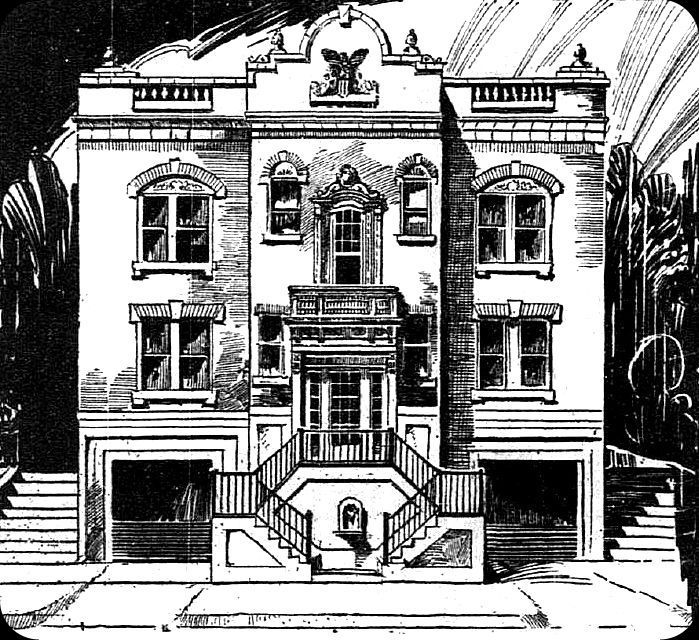
It was built in 1924 and was announced in a newspaper advertorial beneath the headline “New Apartment Building on South Ervay Street to Have Garage Space in Basement.” It was accompanied by a drawing of a fairly grand-looking building.

1615-s-ervay_dmn_0622241924

This new apartment building at 1615 South Ervay street, now being completed by George Kean, embodies many new and novel features in the construction of buildings of this character, one of these being provision of garage space for tenants in the basement. The building will contain eight four-room apartments and sixteen two-room efficiency apartments. J. W. Lindsley & Co. are leasing agents, and contract has been given to Sanger Bros. for furnishings of the building.

A basement garage for a small apartment building like this was pretty unusual for the time. And when they said Sanger’s was supplying the furnishings, they meant everything from furniture down to bed linens and kitchen utensils!

The first “for rent” ads began appearing a week after this announcement. Below, the photo and text of an ad from June 29, 1924.

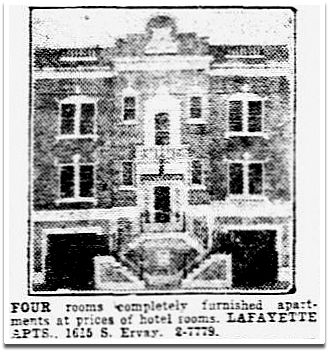
eagle-apts_dmn_062924-deteagle-apts_dmn_062924-textJune, 1924

Hey, I’d take a look!

But renting’s for chumps — how about owning the entire building? (“Can care for 50 cars”!)

eagle-apts_dmn_080324Aug., 1924

Below, an ad with rates and a bit more info (it sounds like all units had a Murphy bed — even the apartments with a bedroom):

eagle-apts_dmn_071225July, 1925

They were kind of pricey. According to the Inflation Calculator, prices in today’s money would be about $825-$900 for a 2-room efficiency, and about $1,225-$1,375 for a 4-room apartment.

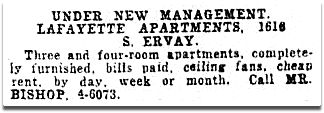
By the fall of 1931, the building had changed hands, was under new management, and had been re-named. It was now the Lafayette Apartments, and units were now being rented “by day, week or month.”

lafayette_dmn_100131Oct., 1931

lafayette-apartments_dmn_101532Oct., 1932

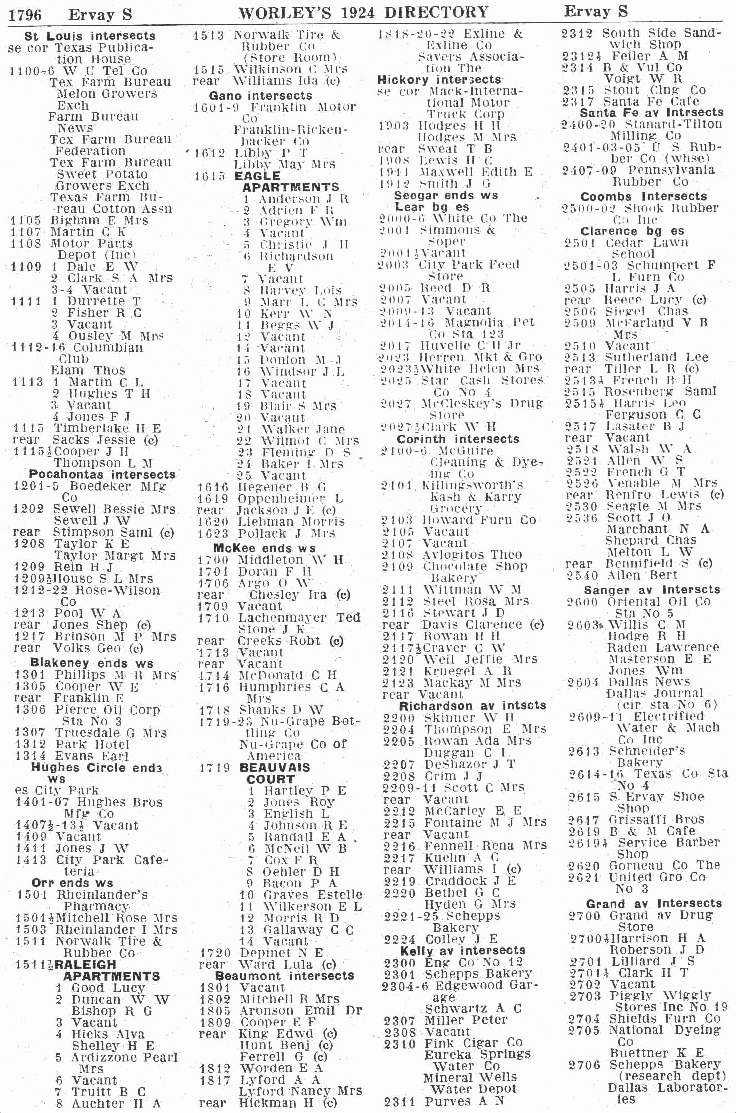
Today this stretch of South Ervay is not the crowded and busy thoroughfare it once was. Though there were several businesses and small industrial buildings, it was also a residential area, lined with houses, apartment buildings, and the large Park Residence Hotel (better known in recent years as the Ambassador Hotel). The Eagle apartment building is in the 1600 block of South Ervay — when it opened in 1924, there were also apartment buildings in the 1500 and 1700 blocks. It’s interesting to take a look at a page from the 1924 city directory to see who and what occupied this South Ervay neighborhood in 1924 (click for larger image):

south-ervay_1924-directory1924 Dallas directory

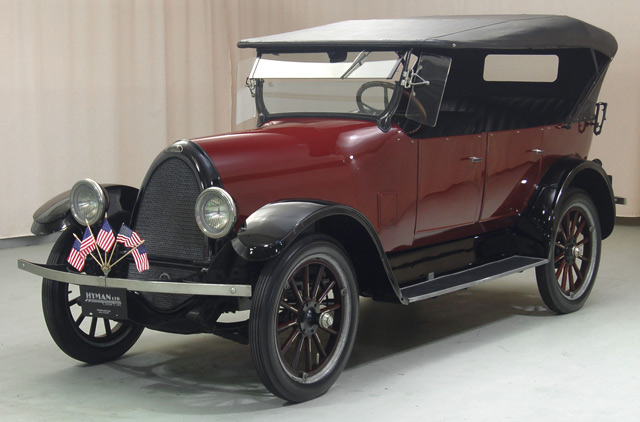
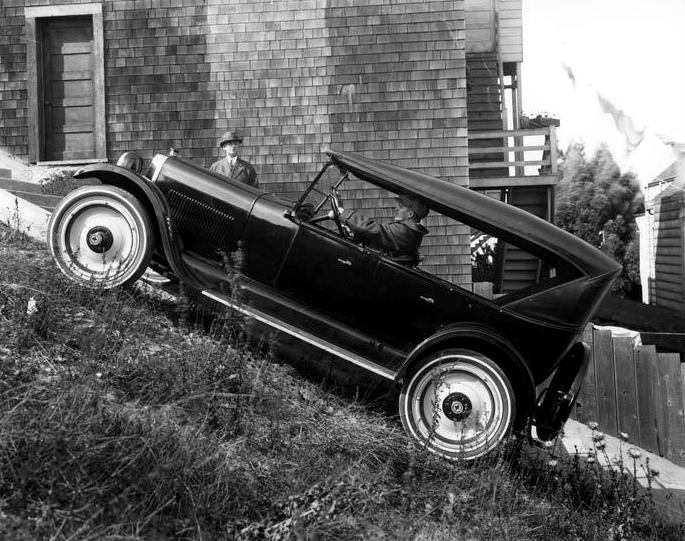
The building right next door to the Eagle Apartments was the Franklin-Rickenbacker Motor Co., a car dealership (part of the word “Franklin” can be seen painted on the brick wall in the 1924 photograph). For context, here are the automobiles that would have been for sale next door to the Eagle when it opened.

1924-franklin_secondchancegarage1924 Franklin

1924-rickenbacker1924 Rickenbacker

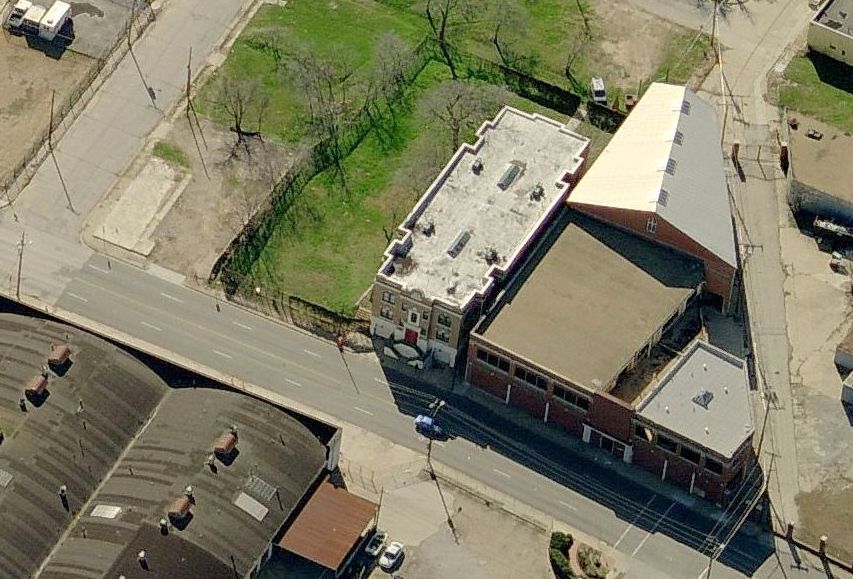
Today, people are still living in 1615 South Ervay. I’m not sure how many condominiums are in the building, but if you search around on the internet, you can find several real estate listings that show what various of the units look like inside. They’re very nice! It’s a much larger building than I realized, as can be seen in this aerial view.

south-ervay_bingBing

I love that red door. Here’s to the continued revitalization of South Dallas and The Cedars!

***

Sources & Notes

Top photo from Zillow.

Photo of the Franklin automobile from SecondChanceGarage.com, here. I found the Rickenbacker photo on a Rickenbacker guitar site which froze my computer and which shall remain unlinked; more photos of Rickenbacker cars (as well as a history of the company) can be found here (the car was named after WWI flying ace Eddie Rickenbacker, a cousin of the guitar maker).

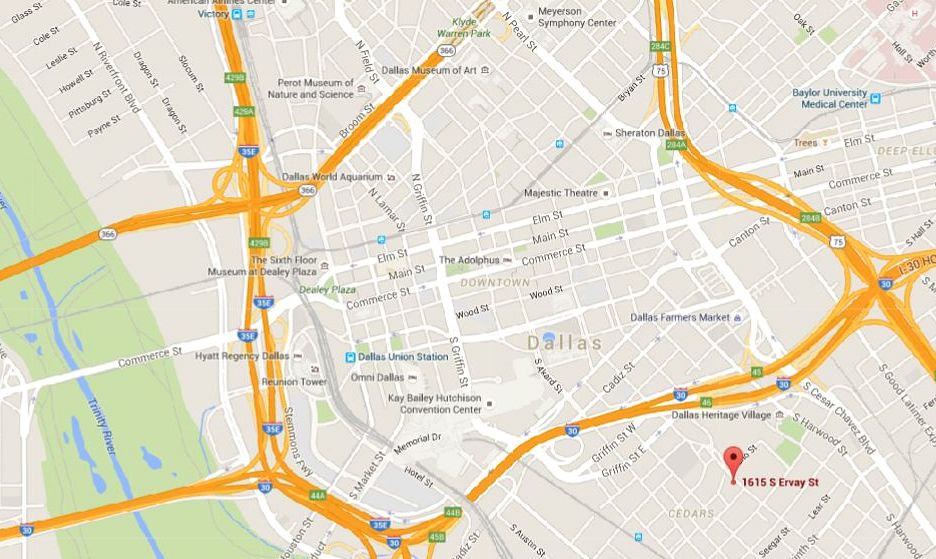
1615 S. Ervay is located catty-corner to Old City Park/Dallas Heritage Village, near the intersection of S. Ervay and Gano streets.

1615-s-ervay_googleGoogle

Street view of the building, looking north on Ervay toward downtown, here.

*

Copyright © 2015 Paula Bosse. All Rights Reserved.

White Mule, Red Whisky, & “Wicked Liquid” — Moonshining In, Around, & Under Dallas In the 1920s

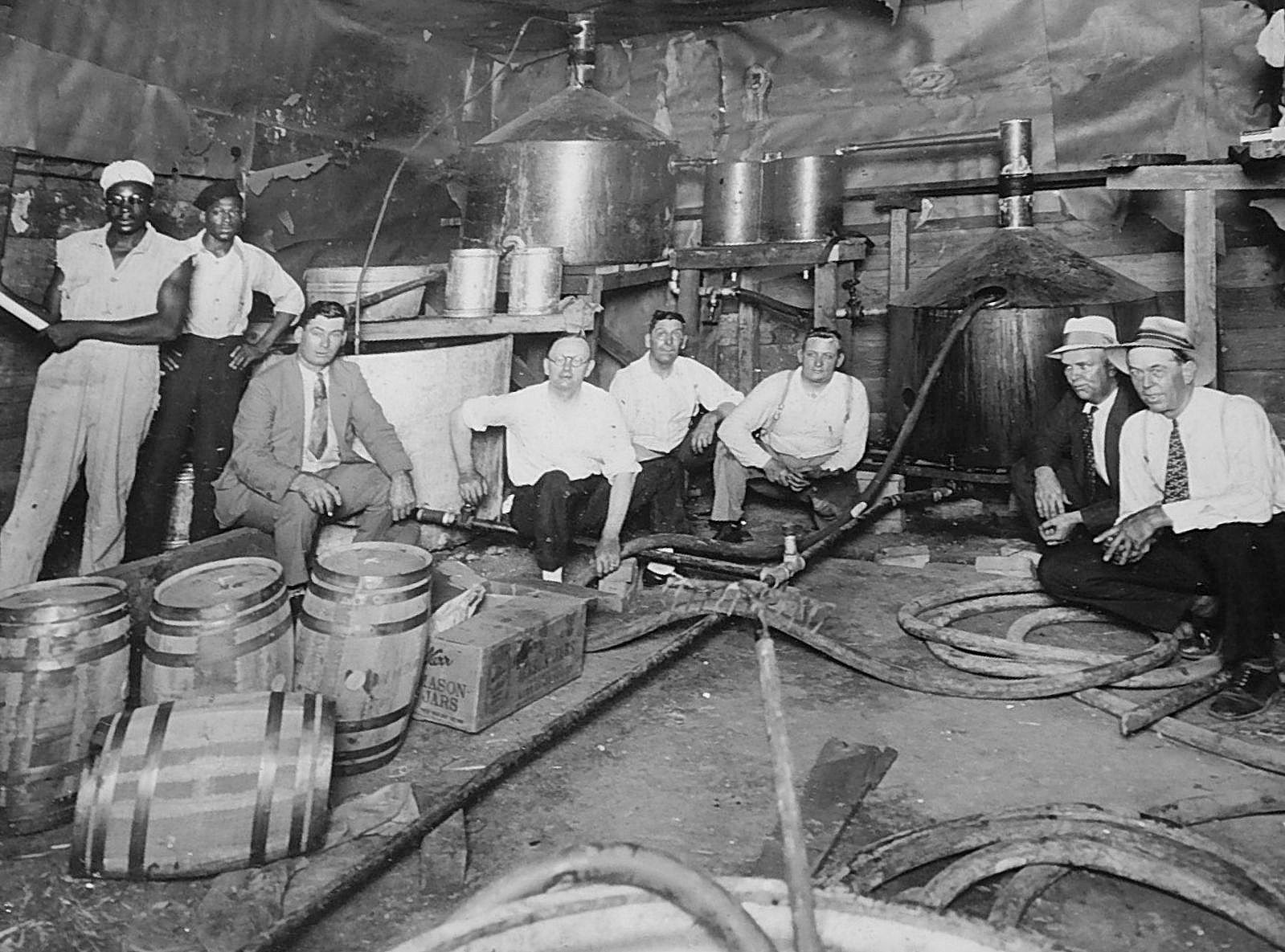
prohibition-stills_ebayBusted!

by Paula Bosse

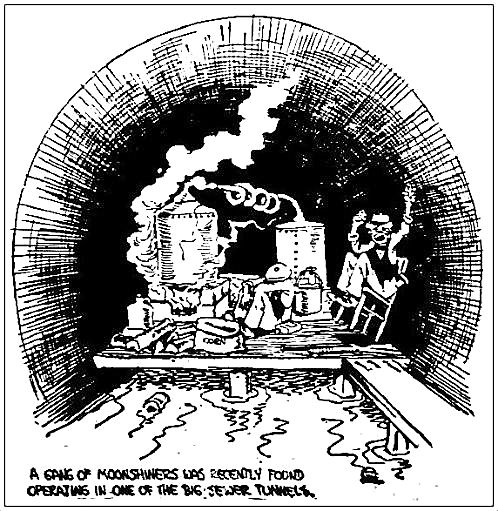
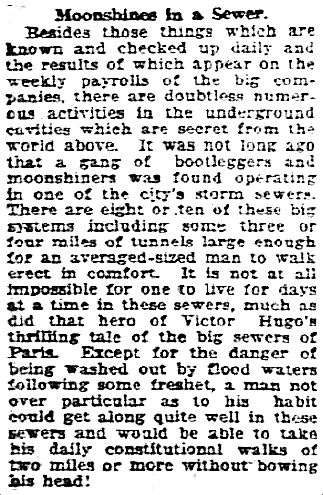
I recently came across an article from 1925 describing a whole world of hidden activity that went on beneath Dallas’ downtown streets. This cartoon and paragraph about moonshiners and bootleggers conducting business in underground storm sewers was particularly interesting:

moonshine_sewer_dmn_050325-cartoon

moonshine_sewer_dmn_050325-by-george-geeDallas Morning News, May 3, 1925

I searched and searched for news of this subterranean moonshining operation but was unable to find anything. I did, however, find some interesting stories from the ’20s, when it seems moonshining and bootlegging were going on absolutely everywhere.

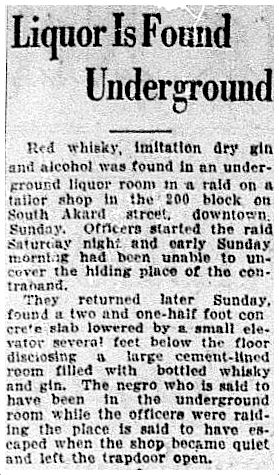
For example, one such operation was going on in a “large cement-lined room” underneath a tailor shop in the 200 block of South Akard, which was accessed by a small “elevator” through a trapdoor.

moonshine_akard_dmn_121425DMN, Dec. 14, 1925

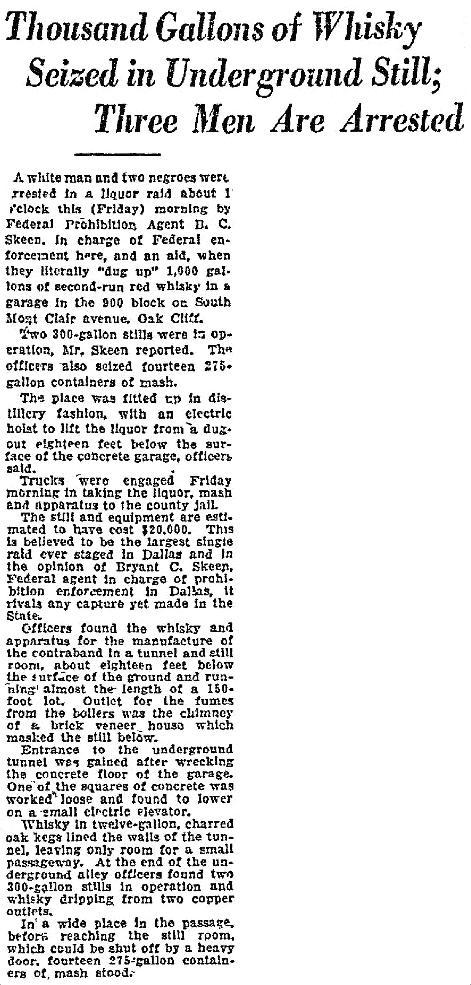
One was in operation underground in Oak Cliff in the 900 block of South Montclair (click to read).

moonshine_dmn_121125DMN, Dec. 11, 1924

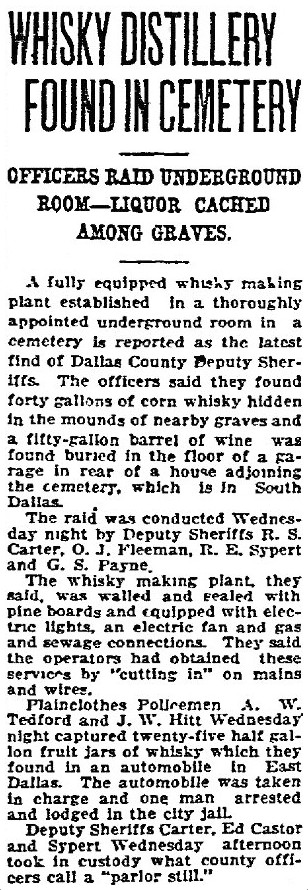
Then there was a still operating in a South Dallas cemetery.

moonshine_dmn_090424-cemeteryDMN, Sept. 4, 1924

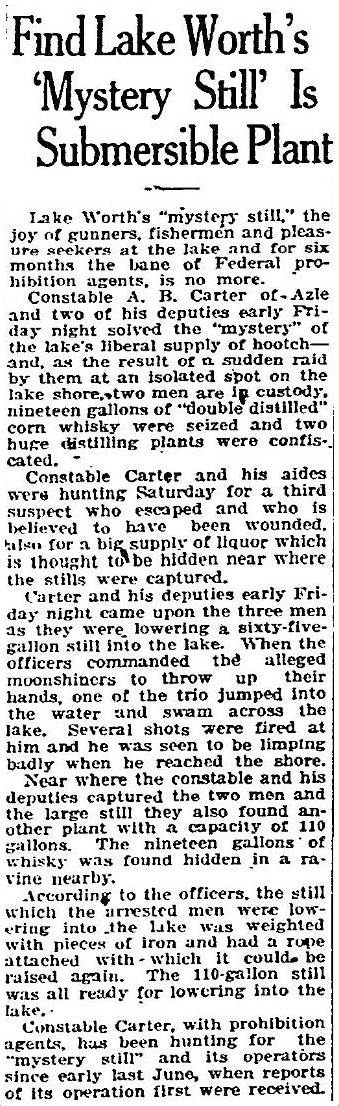
Over in Tarrant County — at Lake Worth — some outside-the-box-thinking moonshiners were hiding stills under the WATER.

moonshine_FWST_111921_lake-worthFort Worth Star-Telegram, Nov. 19, 1921

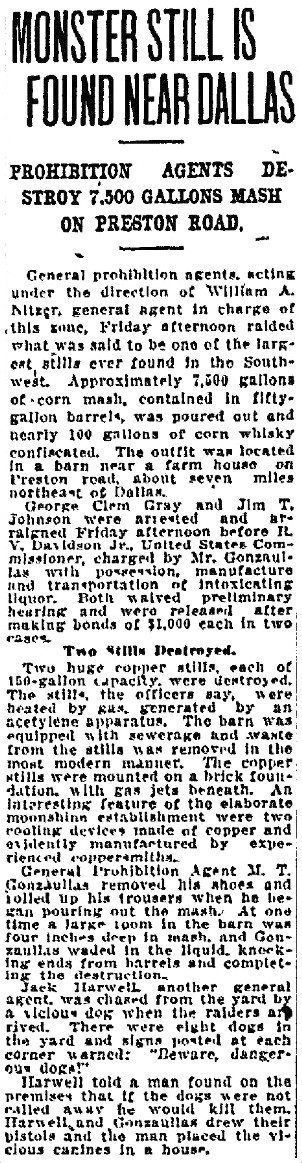
Up north on Preston Road, a massive still was discovered — one of the largest ever found in the Southwest. This operation was above ground, in a barn. 7,500 gallons of corn mash was emptied by legendary Texas Ranger M. T. “Lone Wolf” Gonzaullus, who “removed his shoes and rolled up his trousers when he began pouring out the mash. At one time a large room in the barn was four inches deep in mash, and Gonzaullus waded in the liquid” (DMN, Dec. 23, 1922).

moonshine_gonzaullas_dmn_122322DMN, Dec. 23, 1922

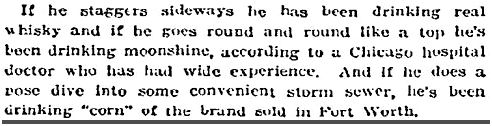
During this incredibly productive and creative period in DFW history, there were different levels of moonshining: there were people making small batches of so-called white lightning for “home use” (kind of like Mayberry’s Morrison sisters who provided small “medicinal quantities” of “elixir” to Otis Campbell), and then there were massive “distilleries” involving large networks of bootleggers and making big money. The former were usually “jest folks,” but the latter were generally professionals, often dangerous and armed-to-the-teeth. The quality of the product varied markedly. This was a handy primer:

moonshine_FWST_120420FWST, Dec. 4, 1920

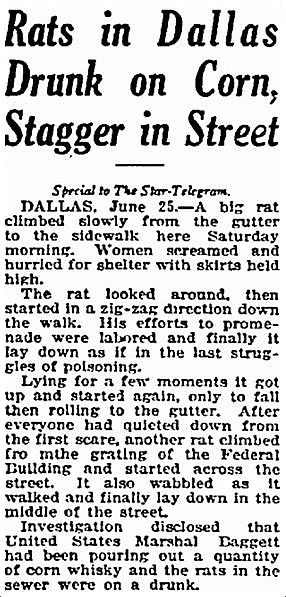
My favorite moonshine-related story appeared in The Fort Worth Star-Telegram. It was about drunken rats “staggering” in the streets of Dallas. Star-Telegram publisher (and famous Dallas-hater) Amon Carter must have cackled as he read this. I’m surprised the headline wasn’t bigger.

moonshine_rats_FWST_062621FWST, June 26, 1921

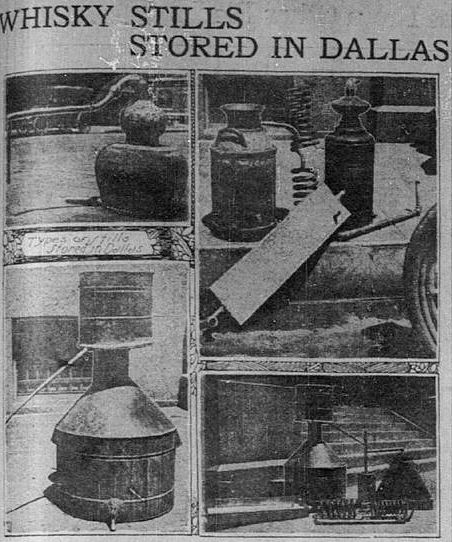
A whole passel of confiscated stills — having been emptied of their contents into nearby gutters (the cause of Big D’s apparent rampant rodental inebriation problem) — can be seen in the photos below, displayed for the media in 1921 by the sheriff’s office in a “perp walk” of inanimate objects. “Your tax dollars at wok.” It’s a good thing Prohibition would last only another … twelve long years.

stills_dmn_050821DMN, May 8, 1921

***

Sources & Notes

Top photo — taken by Frank Rogers — appeared on eBay a few months ago. It shows a moonshine operation somewhere in Dallas County, with Deputy Sheriff Ed Castor in there somewhere.

All other newspaper clippings as noted.

The initial Dallas Morning News story about the goings-on in the sewers and tunnels beneath downtown was “A Peep Into Dallas’ Real Underworld” by George Gee (a very entertaining writer who doesn’t seem to have been with the DMN long — I wonder if his name is a pseudonym?); it appeared on May 3, 1925 and can be read here.

A very informative article on local moonshining and bootlegging appeared in the DMN — “Now Bootleggers May Weep At Sight of Strange Display” (meaning those photos just above of confiscated stills); it was written by Ted Dealey and appeared on May 8, 1921 — it can be read here.

Prohibition wasn’t ever going to work. Read the Handbook of Texas entry about the movement in Texas, here.

Read an entertaining WFAA article about how openly Prohibition laws were flouted in Dallas, here.

You know what Wikipedia is good for? Reading about moonshine, more moonshine, and corn whiskey. If fails me, however, on Mason jars, so I went here and learned a few things about why moonshine was usually sold in these famous “fruit jars.”

Another photo of confiscated stills displayed on the steps of the old Municipal Building/City Hall can be found in my previous post “Prohibition Killjoys,” here.

Check out a photo of the booming business in a Dallas speakeasy in the post “Hoisting a Few in the Basement Speakeasy,” here.

Since you’re in the mood, why not settle back and watch a scene from the “Alcohol and Old Lace” episode of The Andy Griffith Show, here. Otis Campbell’s darkest day.

*

Copyright © 2015 Paula Bosse. All Rights Reserved.

The Stoneleigh Court Apartment Hotel — 1923/1924

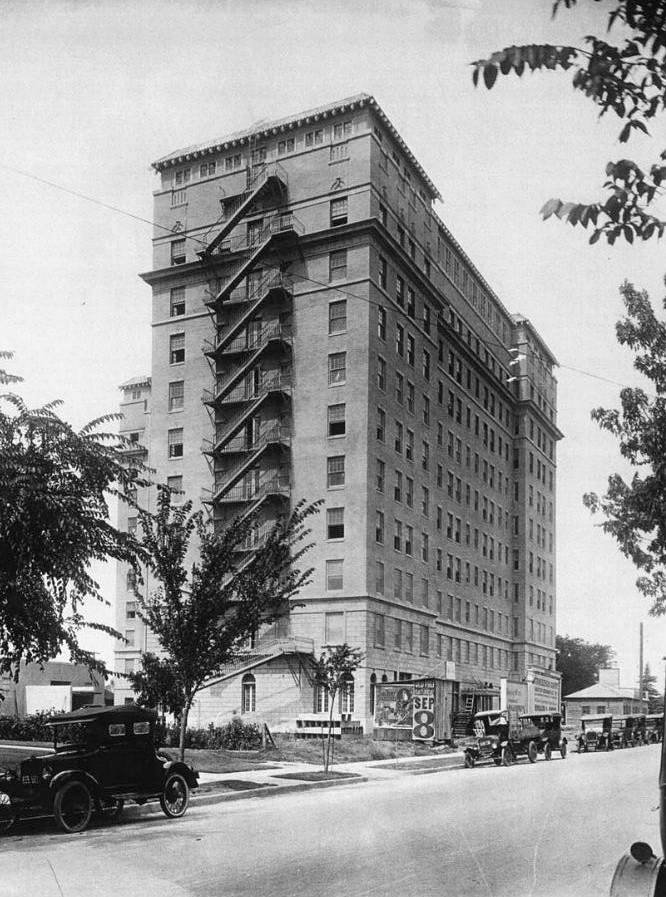
stoneleigh_1923_natl-reg-application
Still standing, still beautiful…

by Paula Bosse

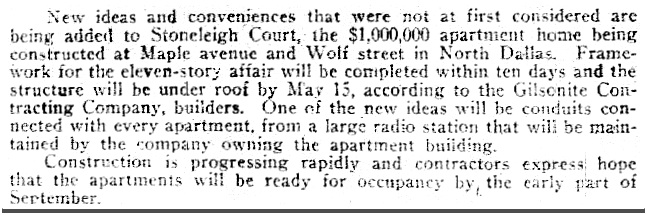
Above, the Stoneleigh Hotel (originally known as the Stoneleigh Court Apartment Hotel) in 1923, in its final weeks of construction. When the Stoneleigh opened in October, 1923 at the corner of Maple Avenue and Wolf Street, it was a swanky apartment house, with hotel amenities (a few rooms were set aside for “transient” travelers). Thankfully, the Frank J. Woerner-designed building still stands and remains a lovely hotel.

Originally there were 125 apartments (which ranged from 1-5 rooms each), all of which were fully furnished (linens, silver, kitchen utensils, dishes, telephones, etc.), and maid service was provided. There were also radios in every room (a pretty new-fangled thing at the time). Each apartment had a kitchenette and a private bath, and ice water was piped to all apartments. Another innovative feature was the Servidor delivery service which allowed residents and hotel staff to conduct transactions without ever having to look one another in the eye or exchange stilted chit-chat. There was a grocery store, a pharmacy, a beauty shop, and a barber shop on the premises. There were smoking rooms, billiards rooms, and lounges on the ground floor and a grand ballroom on the top floor. And apartments were “handsomely furnished, [with] a color scheme of taupe, blue and mulberry being observed alternately on the various floors.” Sign me up!

*

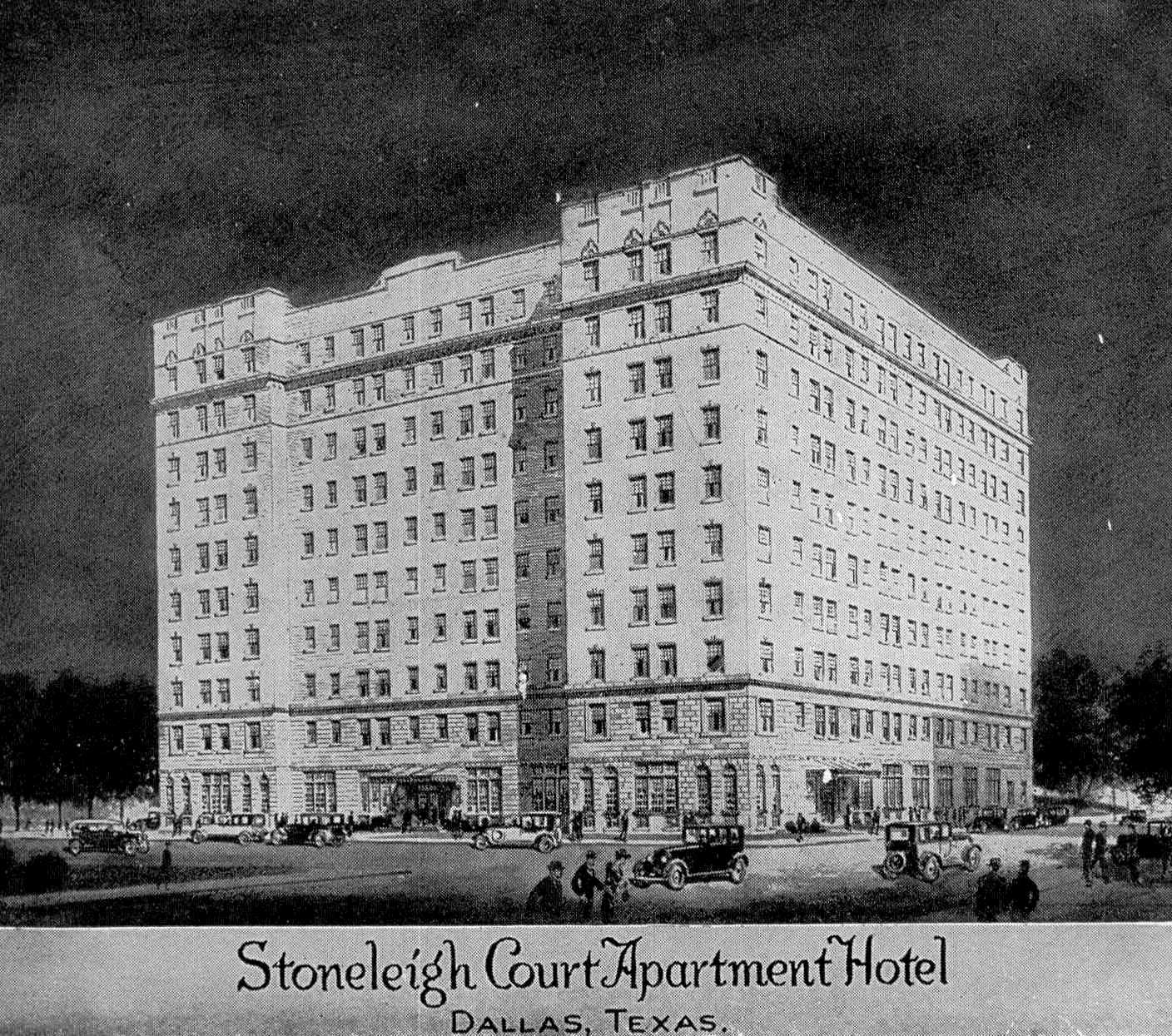
Below, an early ad (click to see a much larger image of the illustration on its own).

ad-stoneleigh_terrill-yrbk_1924

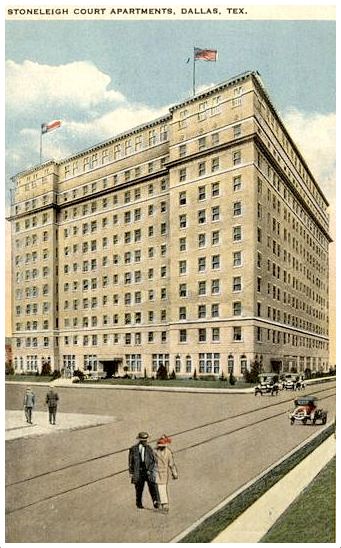
And, of course, the obligatory postcard in which the building looks familiar, but which its surroundings seem somewhat … romanticized.

stoneleigh_court_apartments

*

A grainy photo from the construction and its caption:

stoneleigh-hotel_dmn_042223_under-construction_photo

stoneleigh-hotel_dmn_042223_under-construction_captionDallas Morning News, April 22, 1923

***

Sources & Notes

Photo of the building nearing the end of its construction is from the application to the National Register of Historic Places, which can be found in a PDF, here. (Dallas Historical Society photo.)

Ad is from the 1924 Terrill School yearbook.

To read a lengthy article published a few days before the Stoneleigh officially opened — “Stoneleigh Court Most Pretentious Apartment Hotel in the Southwest” (Dallas Morning News, Oct. 14, 1923) (with “pretentious” used here in a good way!) — click here.

Not sure what an “apartment hotel” is? See Wikipedia, here.

The Stoneleigh is currently called “Le Méridien Dallas, The Stoneleigh,” and the official website is here.

*

Copyright © 2015 Paula Bosse. All Rights Reserved.

Fly United to Chicago in Only Eight Hours!

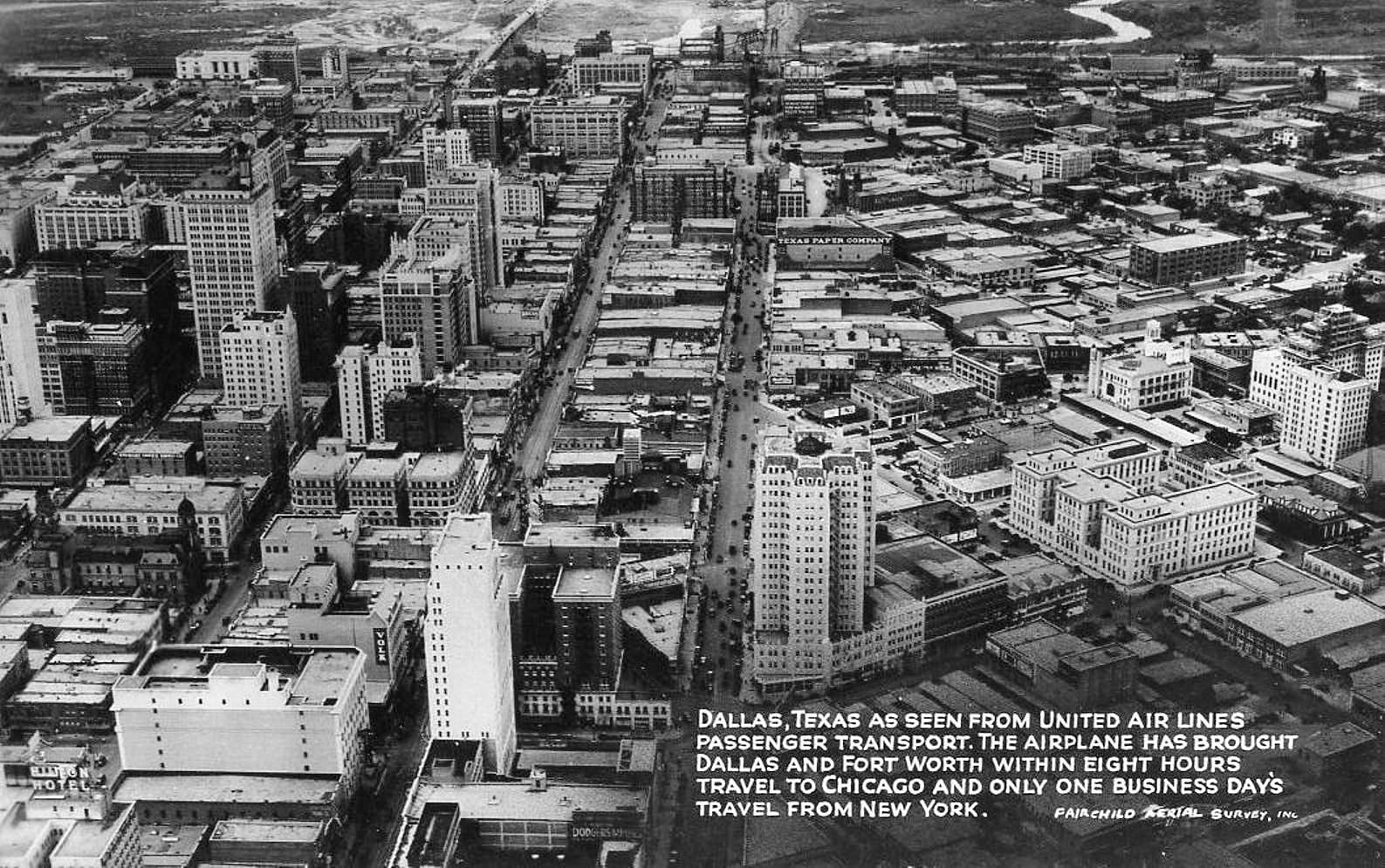
aeiral_united-air-lines_fairchild_ebay_rppcHow many buildings can you identify? (click for larger image)

by Paula Bosse

Dallas, Texas as seen from United Air Lines passenger transport. The airplane has brought Dallas and Forth Worth within eight hours travel to Chicago and only one business day’s travel from New York.

Back when it took all day to fly to New York from Dallas.

This is another great aerial photo by the Fairchild Aerial Survey company, probably taken by Lloyd M. Long. Date-wise? Late-1920s? Before the Trinity was straightened (beginning in 1928), with land being cleared in the area that would become Dealey Plaza? 1928-ish? Or could it have been the very early 1930s? The United Air Lines promotional postcard was issued around 1932 or 1933.

It wasn’t until 1933 that United introduced its new Boeing “twin motor airline transports” and boasted that they would finally “bring the city within eleven and a half hours of New York City” (Dallas Morning News, Aug, 16, 1933).

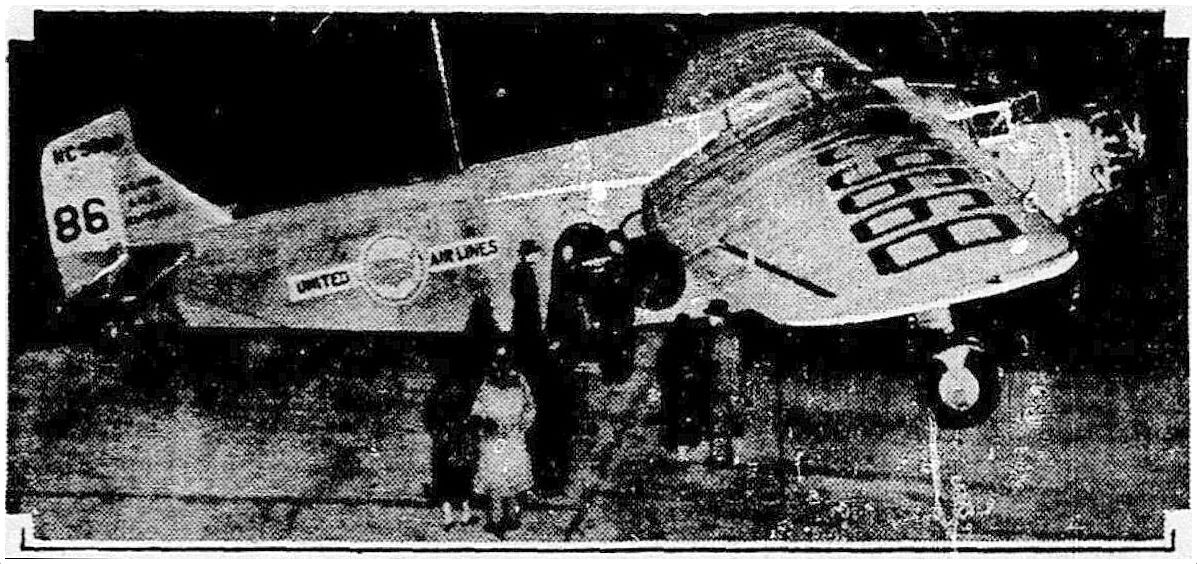
Below is a photo from a Dallas newspaper ad showing one of United’s planes from the earlier, more carefree days of 1932, when passengers were still trudging through the skies at a more leisurely pace.

united-air-lines_ad-det_dmn_110432United Air Lines ad, detail, 1932

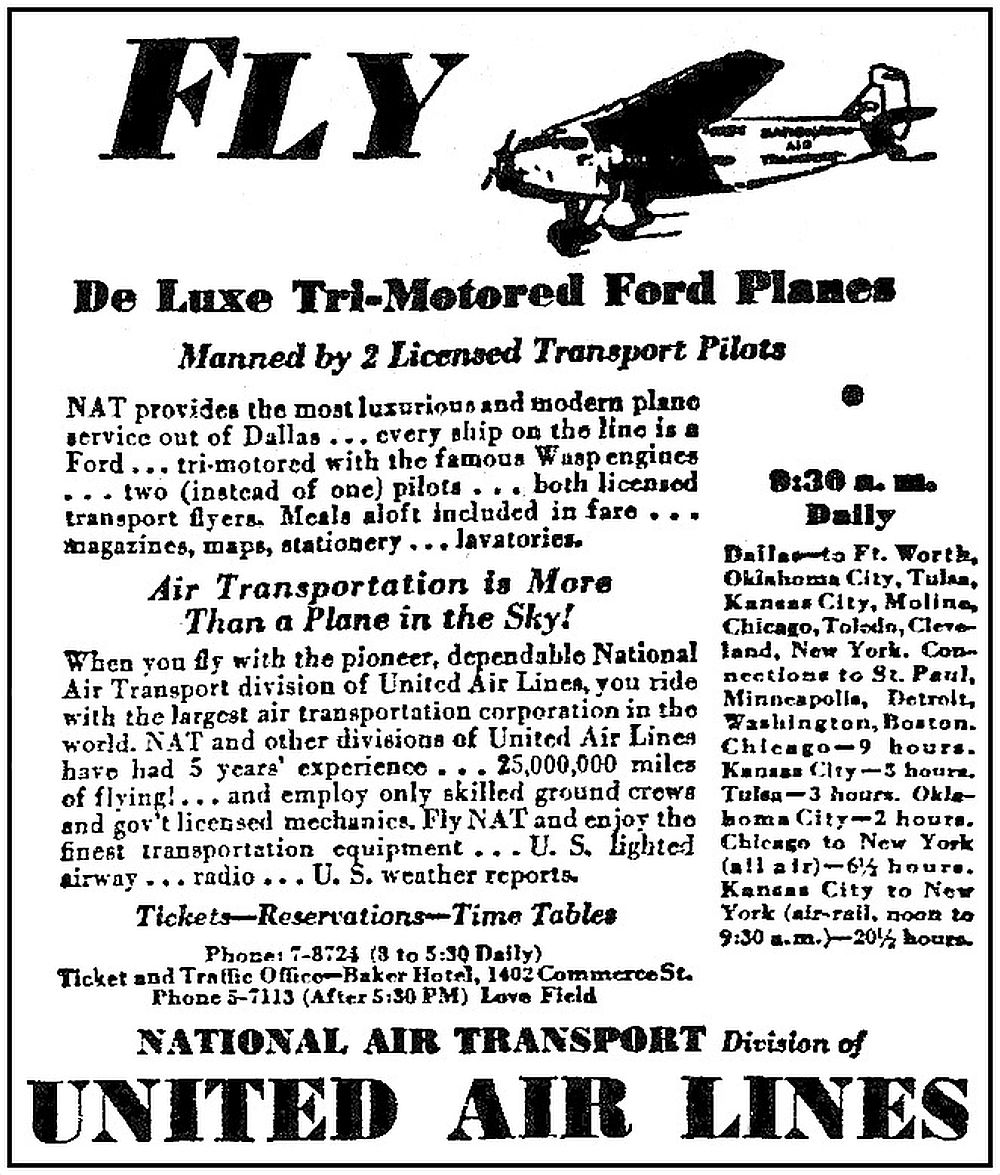
And an even earlier ad, from 1931, when a flight from Love Field to Chicago was nine hours long (today a direct flight from Love Field to Chicago takes about two hours and fifteen minutes). And if you wanted to continue to NYC, you had to board another plane and fly from Chicago to New York, adding another six and a half hours!

united-air-lines_dallas-to-nyc_1931
1931 ad

FLY

De Luxe Tri-Motored Ford Planes Manned by 2 Licensed Transport Pilots
 
NAT provides the most luxurious and modern plane service out of Dallas … every ship on the line is a Ford … tri-motored with the famous Wasp engines … two (instead of one) pilots … both licensed transport flyers. Meals aloft included in fare … magazines, maps, stationery … lavatories. 

Air Transportation is More Than a Plane in the Sky! 

When you fly with the pioneer, dependable National Air Transport division of United Air Lines, you ride with the largest air transportation corporation in the world. NAT and other divisions of United Air Lines have had 5 years’ experience … 25,000,000 miles of flying! … and employ only skilled ground crews and gov’t licensed mechanics. Fly NAT and enjoy the finest transportation equipment … U.S. lighted airway … radio … U.S. weather reports.

*

In an interesting side-note, the first pilot to fly a mail plane between Kansas City and Dallas (on May 12, 1926) was Richard Dobie, brother of Texas literary legend, J. Frank Dobie. In 1926 he flew a Curtiss Carrier Pigeon; in 1933, he’d worked his way up to the speedy and powerful Boeing. He flew for United for several years.

***

Sources & Notes

Top image is a promotional postcard, found on eBay.

Read more about the tri-motor airplane (manufactured by the Ford Motor Company and affectionately known as the “Tin Goose”) in the article “Ford’s Tri-Motor” by Edward J. Vinarcik (Advanced Materials and Processes, Oct. 2003) here.

All images larger when clicked.

*

Copyright © 2015 Paula Bosse. All Rights Reserved.
 

Akard Street Looking South, 1887-2015

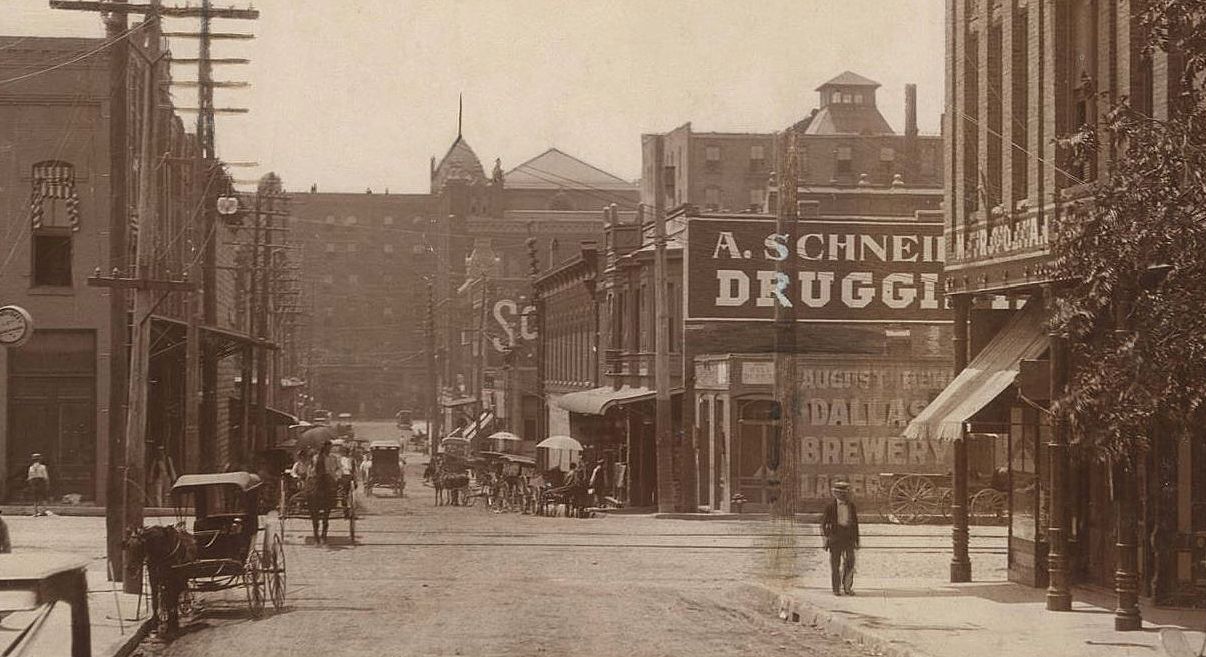
akard_from-pacific_cook_degolyer_smu_ca1898-detAkard Street from Pacific, ca. 1898, via Cook Collection, SMU

by Paula Bosse

I realized the other day that I have an inordinate number of photographs and postcards showing Akard Street looking south — usually taken from Pacific or Elm, so I thought I’d collect them all together. Some of these aren’t dated, so they’re not in strict chronological order, but I’ve made a half-hearted attempt to make sure horse-and-buggy photos are before the men-in-straw-hat-boaters, which are before the women-in-Miss-Crabtree-dresses, which are before the cars-with-rounded-bodies. It might be easiest to just assume they are not in chronological order. (All photos are larger when clicked — a couple are really  big.)

*

The oldest is from 1887, when North Akard was still called Sycamore Street, and before the Oriental Hotel was built at Commerce and Akard in 1895.

akard_south-from-elm_1887

*

Next up, an incredible photo, taken around 1898, a detail of which appears at the top of this post. The Oriental Hotel can now be seen at the end of Akard, at Commerce, where Akard used to make a dog-leg turn before continuing south, giving the appearance of a dead-end street.

akard_from-pacific_cook_de-golyer_smu-ca1898via George W. Cook Collection, DeGolyer Library, SMU

*

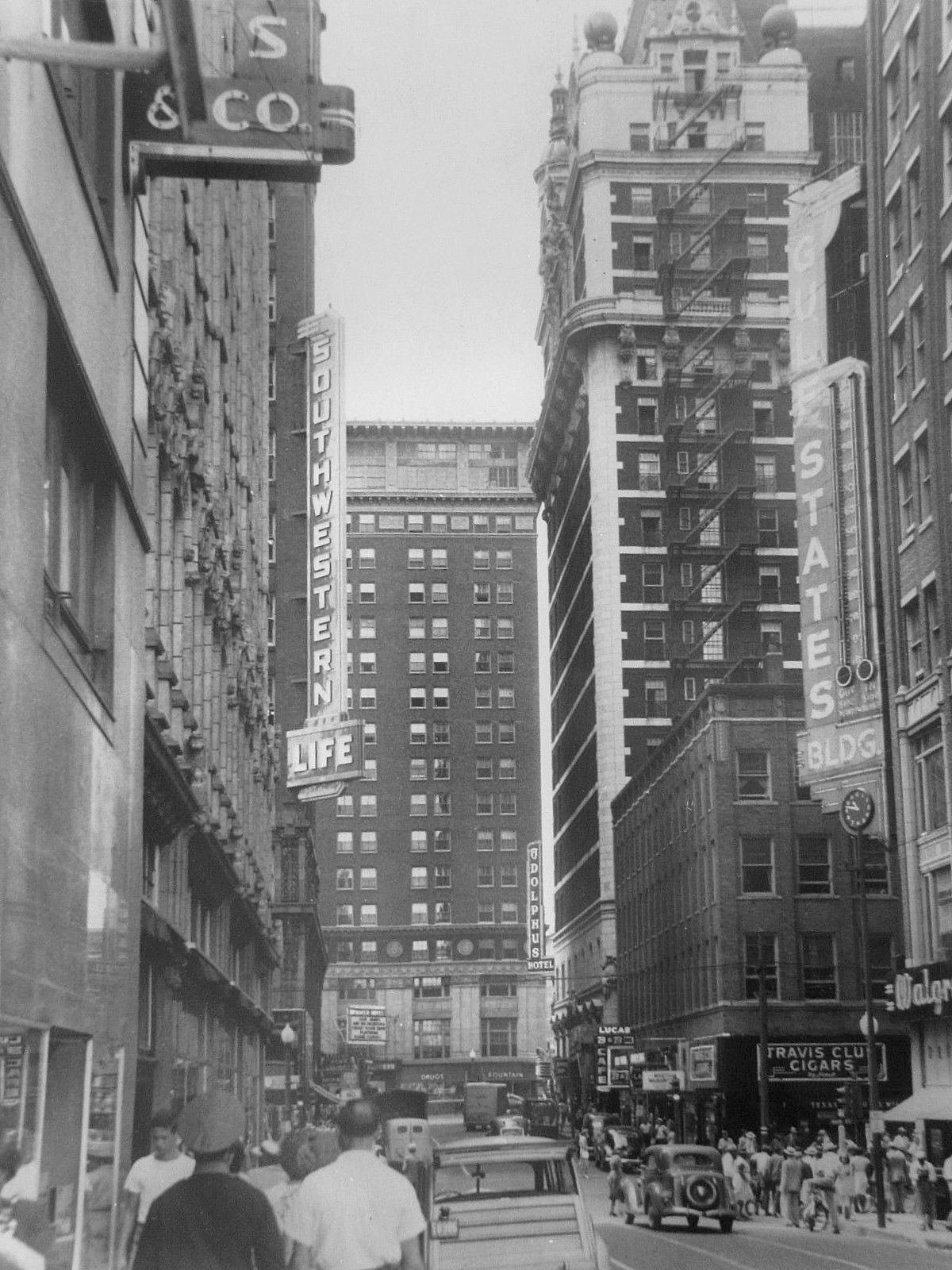
Another, with the Adolphus Hotel (built in 1912) now on the right, across Commerce from the Oriental. The tall building across Akard from the Adolphus is the Southwestern Life Building. The Gentry photography studio was at the southeast corner of Elm and Akard from 1912, which is probably the date of this postcard image. Construction of the Busch Building (now known as the Kirby Building) began in December, 1912.

akard-elm_postcard_ebay_ca-1912via eBay

*

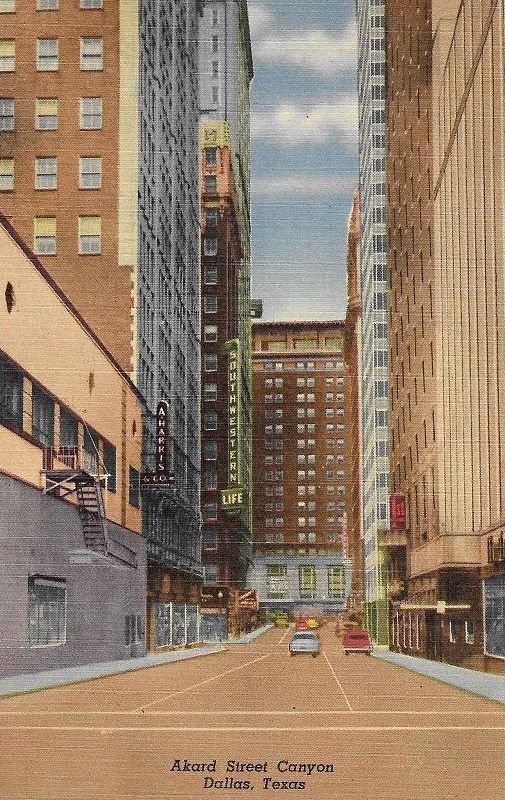
From 1925, with the new Baker Hotel having replaced the Oriental Hotel. This area was now being called “the canyon district” or “the canyon.”

akard_south-from-elm_1925

*

In this great Frank Rogers photo, the canyon walls are getting higher, with the Adolphus Hotel firmly anchoring the Commerce corner across from the Baker.

akard_baker-adolphus_postcard_rogers_ebayvia eBay

*

By the time this photo was taken in about 1936, Pegasus had become a part of the skyline, perched atop the Magnolia Petroleum Building. (Note the Queen Theater at the northeast corner of Elm and Akard.)

akard_pacific_1936_legacies-spring-1989via Legacies History Journal

*

This photo is from the early- or mid-1930s — LOOK AT ALL THOSE PEOPLE.

akard-canyon_municipal-archives_dma-uncratedvia the DMA’s Uncrated blog

*

As opposed to this one, which has NO people in it.

akard-canyon_ebayvia eBay

*

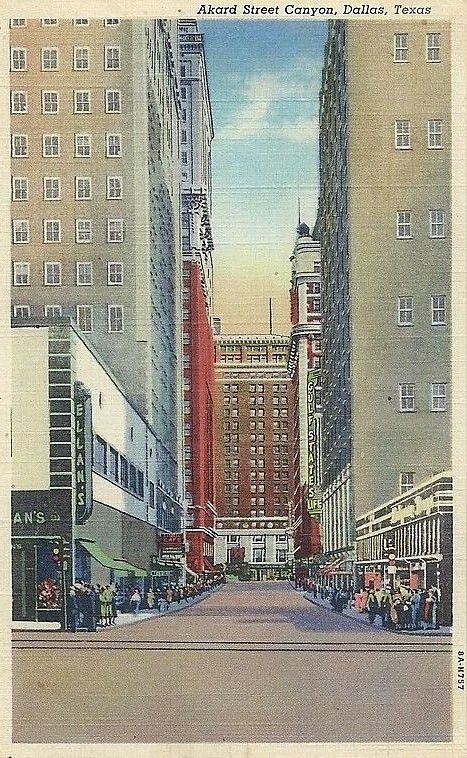
More canyon, this view showing the super-cool art-deco-y building at Elm and Akard with Ellan’s hat shop on the ground floor, late-1930s.

akard-st-canyon_ellans

*

This candid photograph, a little deeper into the canyon, is one of my favorites. (Click to see a gigantic image.)

akard-looking-south_ebayvia eBay

*

From 1951 — a bit grainy, but a slightly closer view of the side of the Queen Theater at the left and the Mayfair department store, built in 1946, at the right:

akard_dpl_1951via Dallas Public Library

*

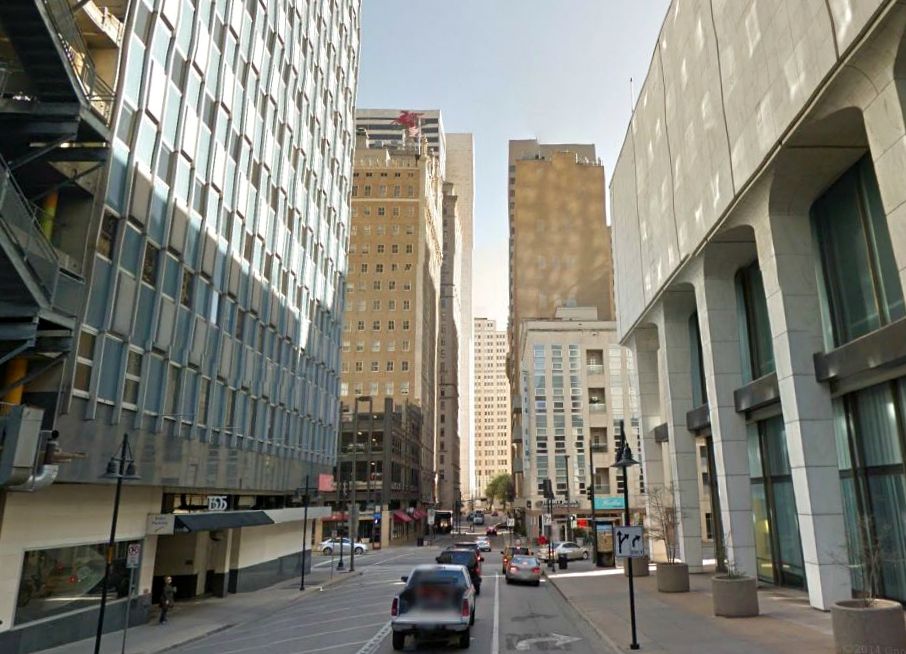
And, finally, today. Pegasus and the Adolphus are still there, but the Baker Hotel was demolished in 1980, replaced by the One AT&T Plaza/Whitacre Tower.

akard-looking-south_google_2015via Google Street View, 2014

***

Sources & Notes

The photo dated by SMU as “circa 1898” is titled “Akard Street from Akard and Pacific Avenue Intersection”; it is from the George W. Cook Dallas/Texas Image Collection, DeGolyer Library, Central University Libraries, Southern Methodist University, and it can be viewed here.

The circa 1936 photo showing Pegasus is from the Spring, 1989 issue of Legacieshere; it is from the Hayes Collection, Texas/Dallas Archives Division, Dallas Public Library, and is attributed to Denny Hayes.

The photo showing “ALL THOSE PEOPLE” is from the Dallas Museum of Art’s Uncrated blog — here — is from the Dallas Municipal Archives. They have the date as “1940,” but Liggett’s Drug Store was gone from Elm and Akard by 1936.

Other sources as noted.

Click pictures for larger images — sometimes MUCH larger images.

*

Copyright © 2015 Paula Bosse. All Rights Reserved.