Flashback : Dallas

A Miscellany: History, Ads, Pop Culture

Category: Historic Ads

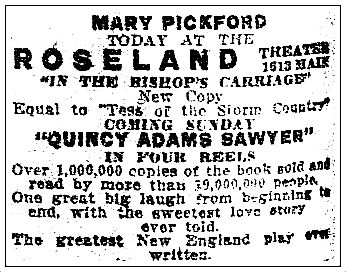
Roseland — 1916

roseland_terrill-yrbk_1916The Roseland Theater, 1613 Main St. (click for larger image)

by Paula Bosse

Despite its grainy quality, I really like this photo. It shows people walking past the Roseland Theater at 1613 Main Street, a theater I’d never heard of. I couldn’t find out much about it other than that it doesn’t seem to have lasted very long (from at least 1914 until at least 1916). It was owned/managed by P. G. Cameron, who ran several theaters and was in the general “amusements” business around town (he had run the Fair Grounds Skating Rink back in the aughts for a short while, until the place was shut down because of the discovery of a prostitution operation being conducted there … on city-owned property).

roseland_dmn_050914Dallas Morning News, May 9, 1914

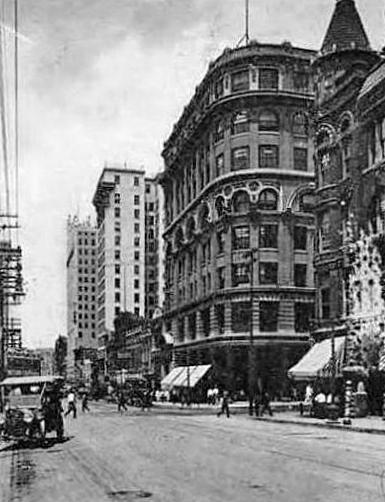
In 1916, the north side of Main Street contained three theaters: the Nickelodeon (1607 Main), the Roseland (1613 Main), and the Best (1615 Main). This is the much-beleaguered (and now mostly demolished) block of Main, which in 1916 was anchored by the dazzling Praetorian and Wilson buildings. The Roseland occupied part of what was once the Everts Jewelers building. Below, another view of this block in 1916, with the theater(s) on the right, about halfway between the tall white Praetorian Building and the stately rounded Wilson Building.

main-st_1916_smu-rotunda_sm Another grainy photo, Main looking west

I like this Roseland photo because it’s a candid shot taken by a teenager on the sidewalk of a lively downtown Dallas who had happened upon his teacher away from school. And the sign is cool. Too bad it’s so hard to see.

roseland_terrill-yrbk_1916_det

***

Sources & Notes

Photo from the 1916 Terrillian, the Terrill School yearbook. (The caption for the photo of one of the school’s teachers: “Passing by or coming out, Mr. F.?”)

Photo of Main Street, looking west, from the 1916 Rotunda, the yearbook of SMU.

See what the 1600 block of Main looked like in 1909, here. Much of the block has been demolished.

See the 1921 Sanborn map showing this block, here.

Below, a recent (2015) Google Street View of the building that housed the Roseland: the really lovely shorter white building. This building may already have been razed. What a shame. (UPDATE — 2018: Yep, demolished.) The current view (as I assume this block is ever-changing) can be seen on Google Street View here.

roseland_google2015, not long for this world….

*

Copyright © 2015 Paula Bosse. All Rights Reserved.


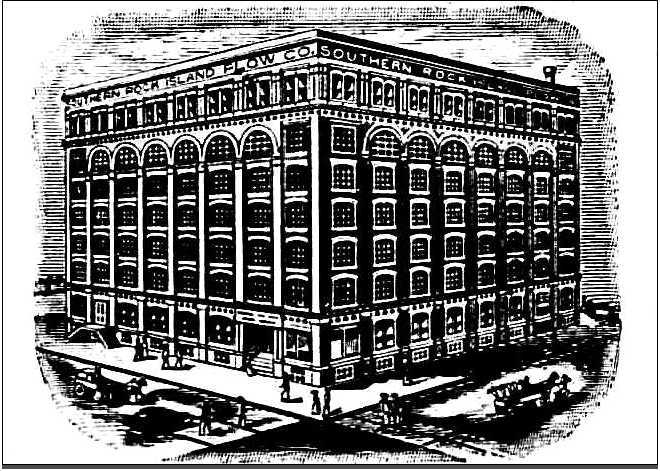
The Southern Rock Island Plow Company

southern-rock-island-plow_city-directory_1908-det_smFrom plow company to Dallas’ most famous building (click to enlarge)

by Paula Bosse

Behold, the Southern Rock Island Plow Company building. Looks familiar? Perhaps “Texas School Book Depository” is an easier hook to hang your hat on. When Dallas seemed to be farm implement-central, there were numerous plow companies in business here. This is the second Southern Rock Island Plow Co. building — the first one (built in the same location around 1898) burned down when it was struck by lighting. The building that still stands was built in 1903, and it is, without question, the most famous building in Dallas.And it’s probably not that far behind the Alamo.

southern-rock-island-plow_city-directory-19081908

southern-rock-island-plow_bldg-code_19141914

***

Sources & Notes

Ad from the 1908 city directory.

Photo from the Building, Plumbing, Gas & Electrical Laws of the City of Dallas (1914).

More on the history of the Dallas branch of the Southern Rock Island Plow Co. can be found here.

For more about what’s going on with the building these days, see the Dallas Morning News article “Dallas County May Move Offices Out of Historic School Book Depository” by Matthew Watkins, here.

For more on the various incarnations of the building (which, by the way, is officially called the County Administration Building and which now houses county offices as well as the Sixth Floor Museum), see my previous post, “The Sexton Foods Building and the Former Life of the School Book Depository,” here.

*

Copyright © 2015 Paula Bosse. All Rights Reserved.


F. J. Hengy: Junk Merchant, Litigant

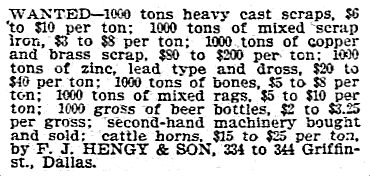
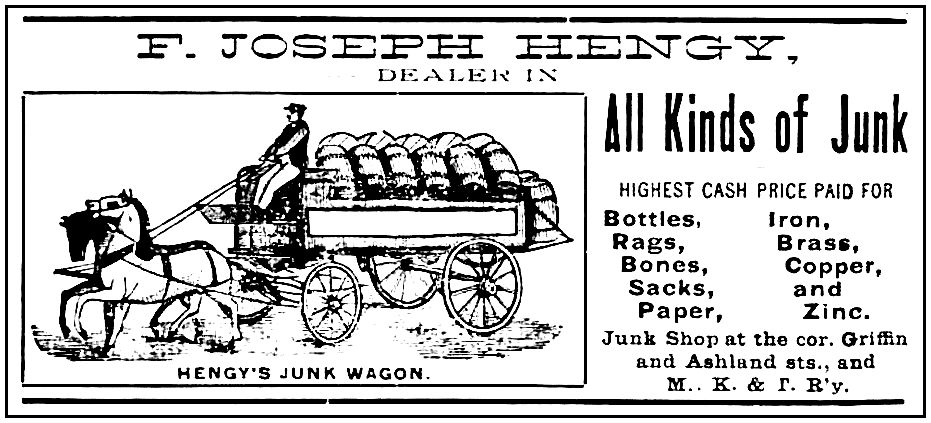
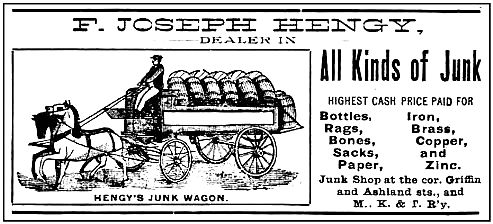
ad-hengy-junk_city-directory_1890-sm“All Kinds of Junk” — 1890 ad

by Paula Bosse

Frank Joseph Hengy was born in Germany in 1850. He immigrated to the United States in 1873, and in about 1880 he made his way to Dallas with a wife and children and established himself as a prosperous buyer and seller of scrap metal and other assorted “junk.” He also owned and operated a foundry, producing amongst other things, sash weights. In the 1894 city directory, there were exactly two “junk dealers” listed, which is surprising, seeing as Dallas was a sizable place in 1894 — there must have been a lot of bottles, rags, bones, sacks, paper, iron, brass, copper, and zinc lying around all over the place, just waiting to be hauled away.
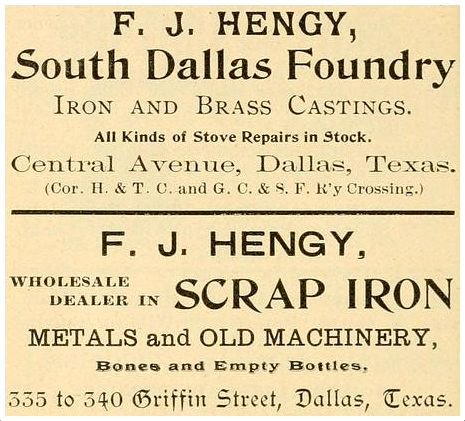
hengy_souv-gd_1984Souvenir Guide to Dallas, 1894

F. J. “Joe” Hengy’s junkyard (and adjacent residence) was at Griffin and Ashland, right next to the M K T Railway tracks. He advertised in the newspapers constantly and was apparently THE man to sell your junk to. His name even made its way into the minutes of an 1899 city council meeting, when, during the discussion on how the city was going to pay for the shipping of a Spanish cannon that had been captured in Cuba and had been given to the city as a war trophy, a councilman asked sarcastically, “What will Hengy give for it?” (Dallas Morning News, Aug. 5, 1899).

But, seriously, got junk? Call Hengy. Got tons of it? By god, he wants it. A couple of examples of the endless ads placed over the years — two ads, 12 years apart (the 1887 one getting his first initial wrong).
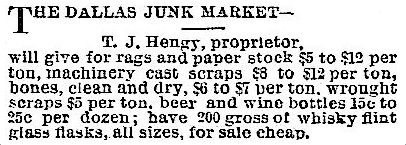
1887_hengy_dmn_082487DMN, Aug. 24, 1887

1899_hengy_dmn_102299DMN, Oct. 22, 1899

In the mid-1890s, Joe took his son Louis on as a partner, which, in retrospect, was probably not a good idea, because it wasn’t long before Joe found himself in the middle of years and years of lawsuits: father against son, son against father, father and associates against son, son and associates against father, etc. Not only was he constantly being sued by his son, he was also sued for divorce … twice … by the same woman. He turned around and sued her for custody of their youngest children (and won). She sued him for the business when he was threatening to sell it and retire. He sued her back for something or other. And on and on and on.

Not only was Joe spending all his non-junk-hauling time traipsing about courthouses, but he also found the time to suffer the occasional partial destruction of buildings on his property — twice by fire and once by the massive flood of 1908. The fires were suspicious (the flood was not).

Then there was the time he was charged with the crime of mailing an obscene letter (I’m gonna go out on a limb and guess that it was probably a letter sent to his wife — or maybe ex-wife by that point — who was in the midst of suing him and their son). Even though this was a potentially serious federal offense, he was ordered to pay only a small fine for “misuse of the mails.” He was also charged at one point with “receiving and concealing stolen property,” but I’m not sure that got past a grand jury investigation, and one might wonder if there wasn’t some sort of “set-up” by aggrieved relatives involved. It was something new anyway. Probably broke up the monotony a little bit.

But the thing that seems to have been Hengy’s biggest headache and was probably the root of most of the lawsuits filed BY him and AGAINST him concerned property he owned which had been condemned in the name of eminent domain by the M K T Railway. The condemnation was disputed, the appraisal of land value was disputed, the question of which Hengy actually owned the land was disputed, etc.

By the end of 1913, Joe Hengy had been engaged in at least 10 years of wall-to-wall litigation. He moved to Idaho at some point, remarried, started another business, and, finally, died there in 1930. Let’s hope his later years were lawsuit-free.

*
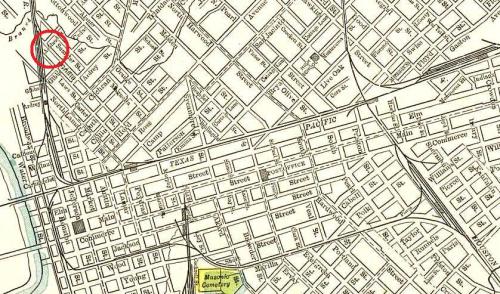
hengy_map_ca1900

Hengy’s business and residence (which was, surprisingly, right next door to his litigious son) was at 2317 Griffin, very close to the present-day site of the Perot Museum. (Full map circa 1900, here.) (Click for larger image.)

*

Lastly, two odd, interesting tidbits.

Joe Hengy took time out from junk and courtrooms to invent new and improved … suspenders! I’m not sure exactly what was so revolutionary about them, but a patent was granted in 1912 — you can read the abstract here, and see them in all their suspendery glory here. (With so much foundry and scrap metal know-how, you’d think he’d go in a more … I don’t know … anvil direction or something.)

And, then there’s this — a kind of sad ad for a tonic called “Sargon” with a testimonial from Mrs. Ollie Hengy, the no doubt long-suffering wife of perennial plaintiff/defendant Louis Hengy. “Was On Verge of Breakdown.” I don’t doubt it! (Incidentally, Ollie and Louis divorced the same year this advertisement appeared in Texas newspapers. Maybe that stuff did work.)
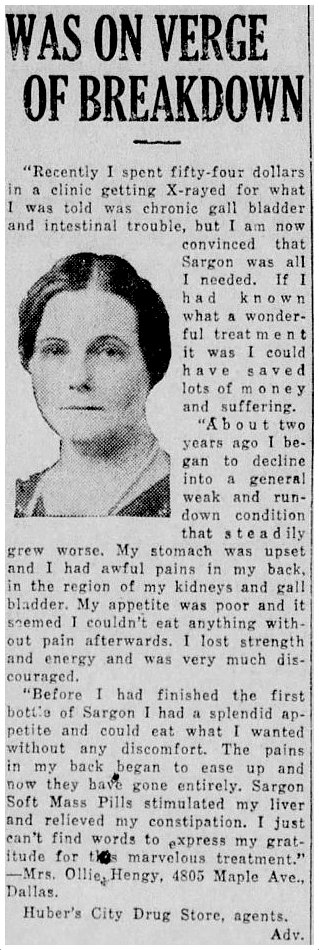
ollie-hengy_vernon-daily-record_0906291929

***

Sources & Notes

Top ad from Dallas’ 1890 city directory.

Sargon ad appeared in The Vernon Daily Record, Sept. 6, 1929. More on the quack tonic Sargon here.

Sources for other clippings and images as noted.

Lastly, an interesting article that answers the questions “Why was the scrap metal game profitable?” and “Just where did all that metal GO, anyway?” can be found in the article “Many Uses for Junk: How Wornout and Discarded Metal is Utilized,” originally published in The Brooklyn Citizen in 1899; it can be read here. I’m nothing if not exhaustive.

*

Copyright © 2015 Paula Bosse. All Rights Reserved.

Munger Place — 1908

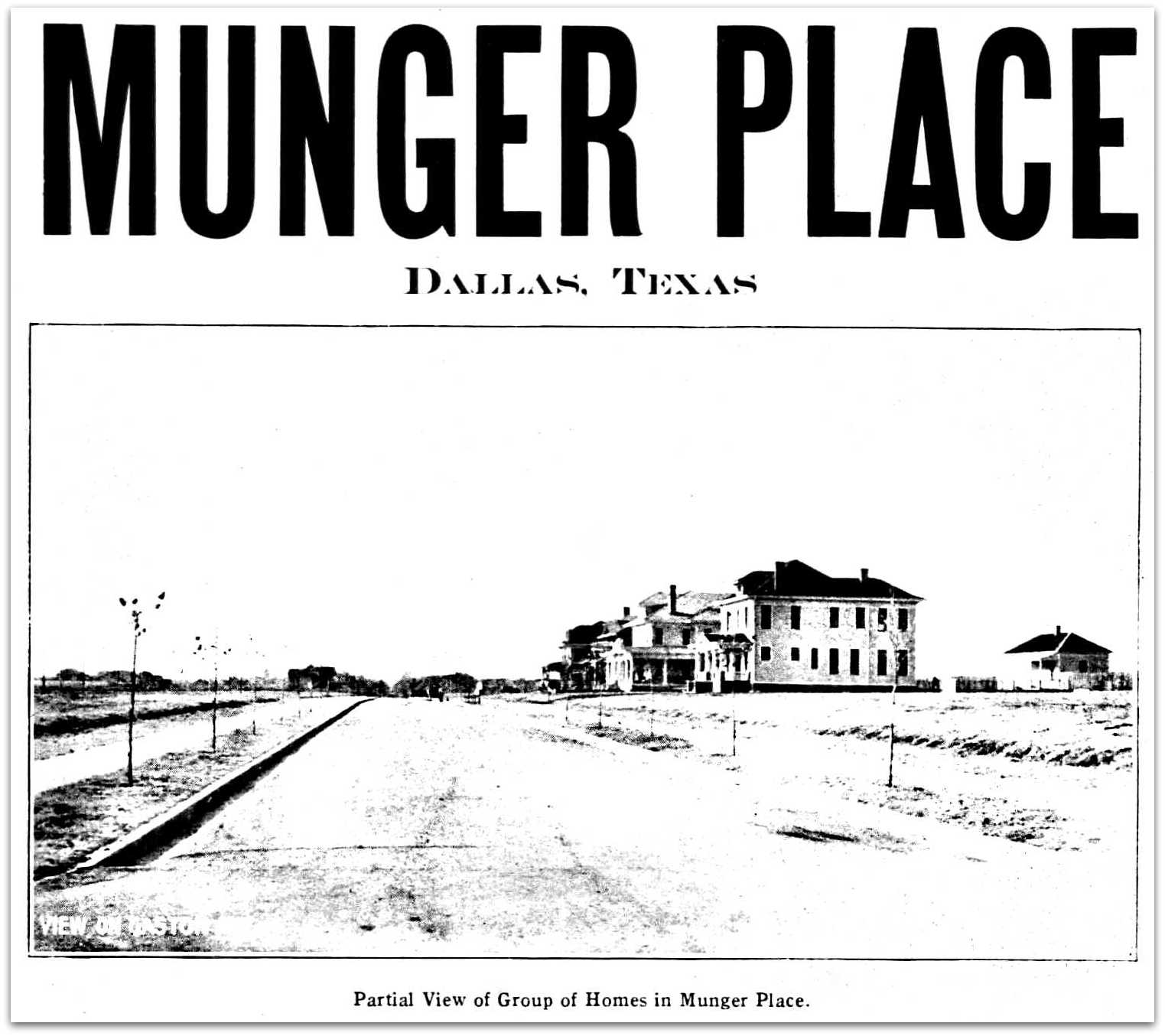
munger-place_city-directory_1908-detGaston Avenue in its salad days… (click for much larger image)

by Paula Bosse

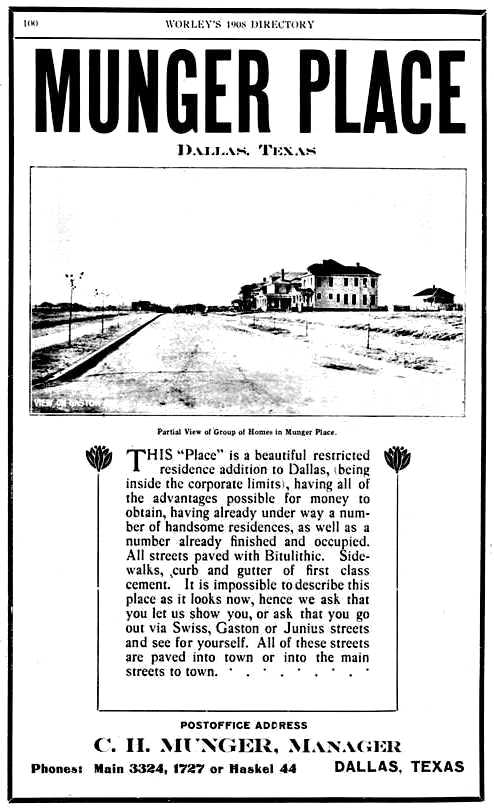
This ‘Place’ is a beautiful restricted residence addition to Dallas (being inside the corporate limits), having all of the advantages possible for money to obtain, having already under way a number of handsome residences, as well as a number already finished and occupied. All streets paved with Bitulithic. Sidewalks, curb and gutter of first class cement. It is impossible to describe this place as it looks now, hence we ask that you let us show you, or ask that you go out via Swiss, Gaston or Junius streets and see for yourself. All of these streets are paved into town or into the main streets to town.

It would have taken a great deal of creative vision to imagine what a beautiful neighborhood the one shown in that bleak photo would one day become. (Does anyone know where on Gaston this photo was taken? Are any of these houses still standing?)

munger-place_city-directory-1908

***

Ad from the 1908 city directory.

Info on the Munger Place Historic District on Wikipedia, here, and at MungerPlace.com, here.

Click top image for a much larger image.

*

Copyright © 2015 Paula Bosse. All Rights Reserved.


You Know What They Say: Big Feet, Big Cigars — 1877

ad-ben-loeb-cigars_dallas-herald_070777“Go to Ben Loeb’s” — 1877 advertisement

by Paula Bosse

Not your typical advertising cut. Wonder if ol’ Ben paid a local artist a handful of cigars in exchange for this great eye-catching art?

An early subliminal ad?

***

Ad from The Dallas Herald, July 7, 1877.

*

Copyright © 2015 Paula Bosse. All Rights Reserved.

New Year, New Teeth — 1877

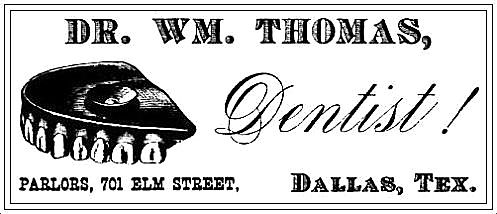
ad-dentist_1878-directoryThe exclamation mark is a nice touch — 1878
by Paula Bosse

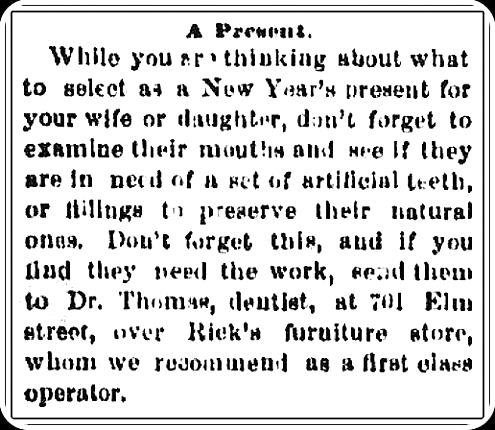
It’s a new year. Time again to check if the women-folk in your household need a new set of false teeth!

ad-dentist_new-year-gift_dal-herald-123077Dallas Herald, Dec. 30, 1877

A Present. While you are thinking about what to select as a New Year’s present for your wife or daughter, don’t forget to examine their mouths and see if they are in need of a set of artificial teeth, or fillings to preserve their natural ones. Don’t forget this, and if you find they need the work, send them to Dr. Thomas, dentist, at 701 Elm street, over Rick’s furniture store, whom we recommend as a first class operator.

(While you’re waiting for your wife’s new choppers to be installed in the doctor’s office upstairs, you can browse for a nice new stool for the spinet downstairs at Rick’s.)

*

But wait, there’s more. Dig a little deeper and you find this:

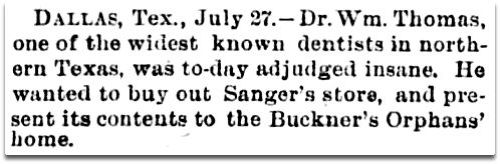
thomas-dentist_galveston-daily-news_072889Galveston Daily News, July 28, 1889

Whoa!

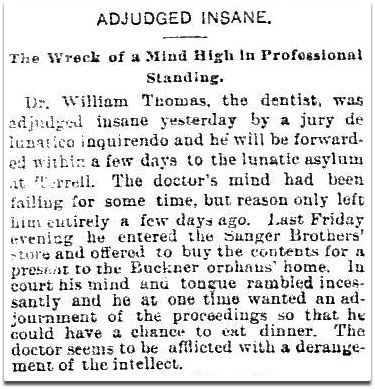
thomas-dentist_dmn_072889Dallas Morning News, July 28, 1889

ADJUDGED INSANE: The Wreck of a Mind High in Professional Standing.

Dr. William Thomas, the dentist, was adjudged insane yesterday by a jury de lunatico inquirendo and he will be forwarded within days to the lunatic asylum at Terrell. The doctor’s mind had been failing for some time, but reason only left him entirely a few days ago. Last Friday evening he entered the Sanger Brothers’ store and offered to buy the contents for a present to the Buckner orphans’ home. In court his mind and tongue rambled incessantly and he at one time wanted an adjournment of the proceedings so that he could have a chance to eat dinner. The doctor seems to be affected with a derangement of the intellect.

I’m not quite sure what all that was about, how much time he spent in the Terrell “lunatic asylum,” or how “insane” the good doctor really was (I suspect he was using a lot of cocaine — see below). The only other mention of Dr. Thomas I found was a mention in the Buckner orphanage’s annual report of 1898 in which his name appeared in a group of doctors who were thanked for their services rendered to the children free of cost.

***

Sources & Notes

Top ad from the 1878 Dallas city directory.

Dr. Thomas probably wasn’t actually “insane.” I wonder if perhaps he hadn’t been dipping into his own medicine chest and availing himself of the cocaine that most dentists of the time used as a painkiller during dental procedures? An interesting article on doctors of the period self-medicating is here.

Happy New Year! And don’t forget to floss!

*

Copyright © 2015 Paula Bosse. All Rights Reserved.

Year-End List! My Favorite Dallas Ads Posted in 2014

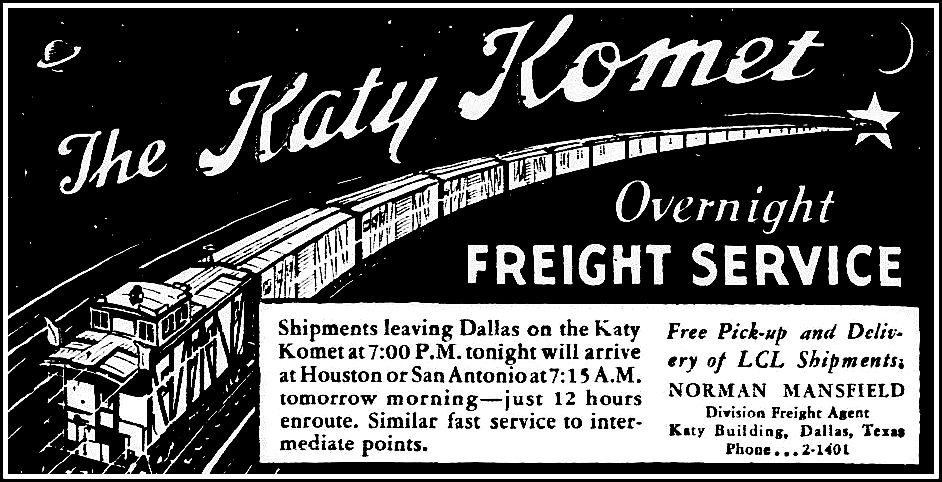
ad-katy-komet_dmn_031733The Katy Komet — 1933 (click for larger image)

by Paula Bosse

It’s the end of the year, the time when people do lists. I love lists. So I’m going to be doing some over the next few days. Today, a collection of my favorite Dallas-related advertisements that I’ve posted over the past year. To see the original post (which includes sources and no doubt pithy commentary), click the title of each ad. And, as always, thanks for taking the time to read Flashback Dallas this year! (Most images larger when clicked.)

*

1.  The Katy Komet (1933) — above. My favorite ad of the year!

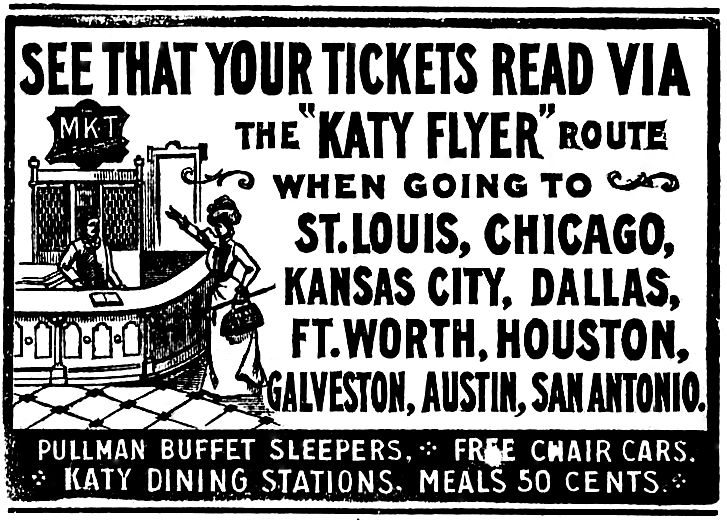
2.  M-K-T Railroad’s “Katy Flyer” Route (1902)

mkt_rail_1902_mercury

3.  Cokesbury Book Store (1959)

cokesbury_dallas_1959

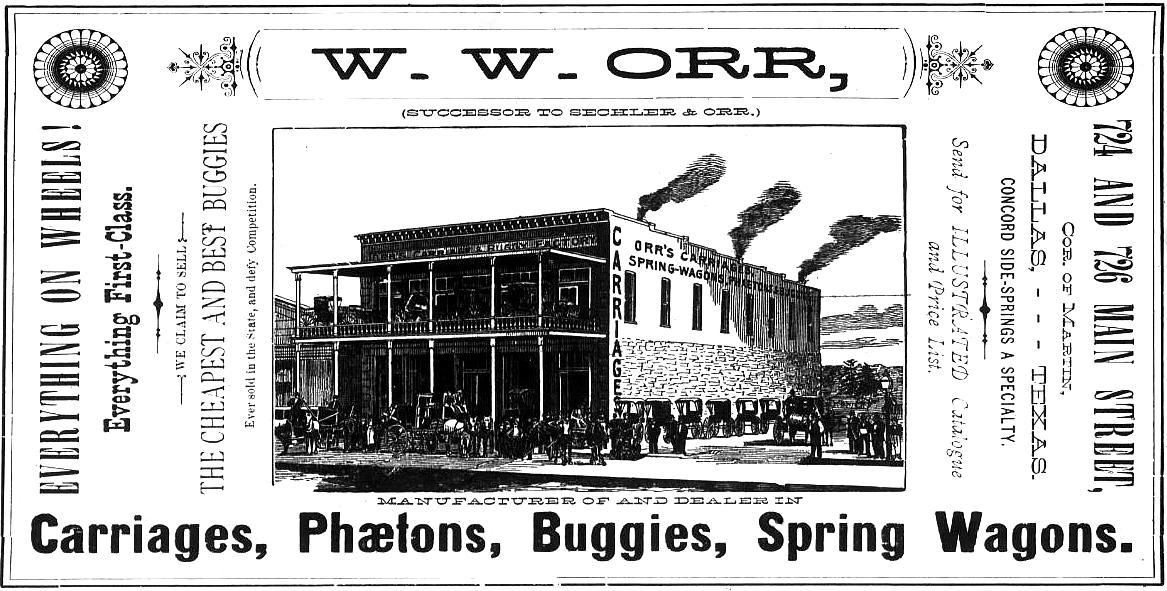
4.  W. W. Orr’s Carriages, Phaetons, Buggies, and Spring Wagons (1878)

ad-orr-carriages_directory_1878

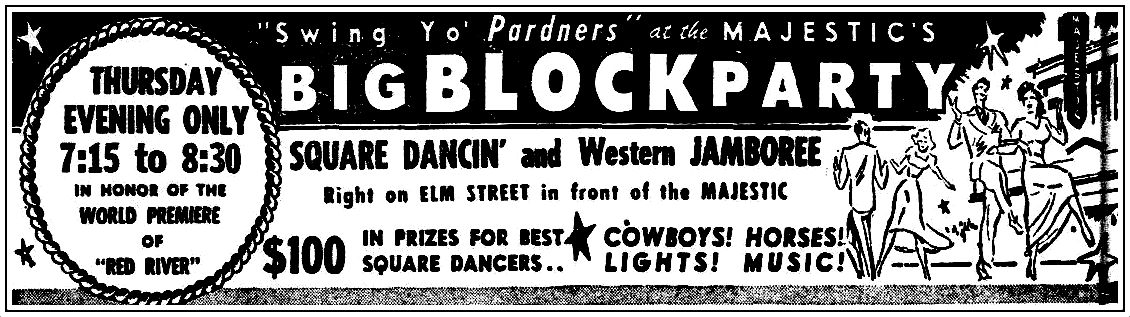
5.  Majestic Theatre’s “Red River” Block Party (1948)

red-river_block-party_dmn_082648

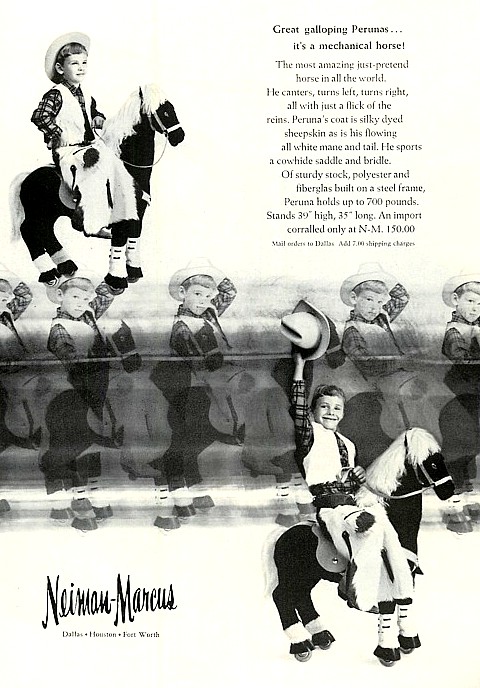
6.  Neiman-Marcus Mechanical Peruna Toy (1965)

n-m_peruna_1965

7.  Irby-Mayes ad featuring the Mercantile Building (1948)

ad-irby-mayes_dmn_040148

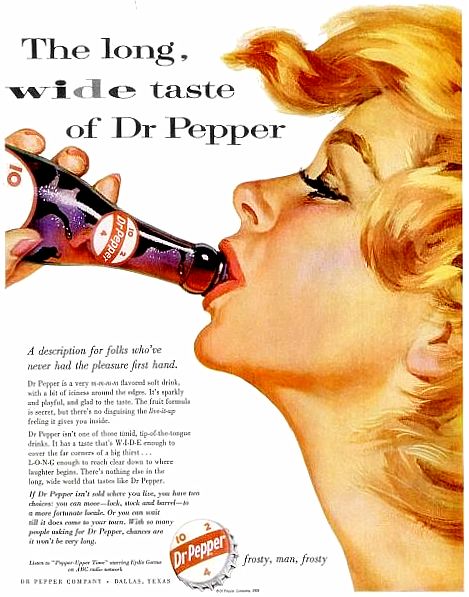
8.  Dr Pepper (1959)

dr-pepper-1959

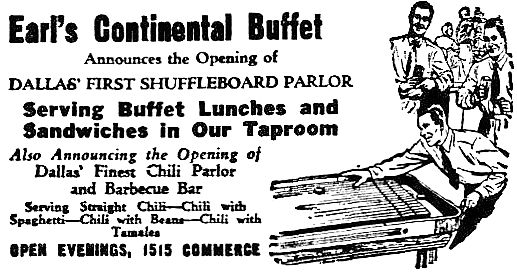
9.  Earl’s Continental Buffet (1947)

earls-continental-buffet_shuffleboard_dmn_1947

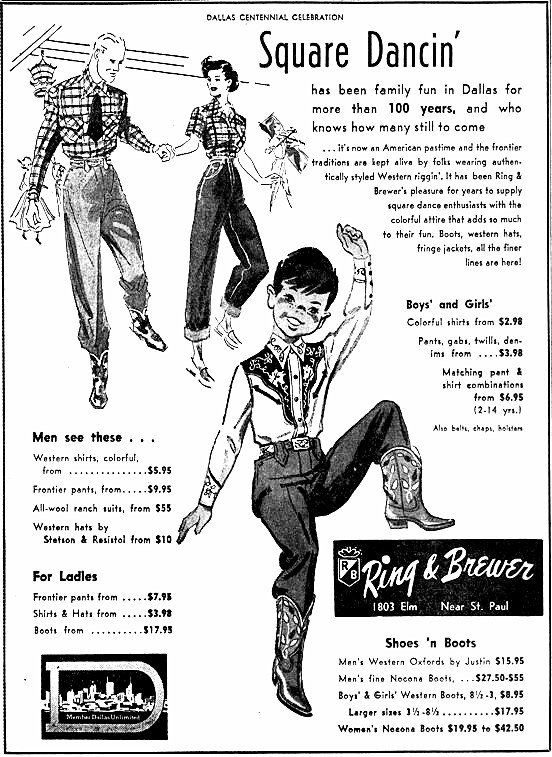
10. Ring & Brewer (1956)

dallas_ringandbrewer_1956

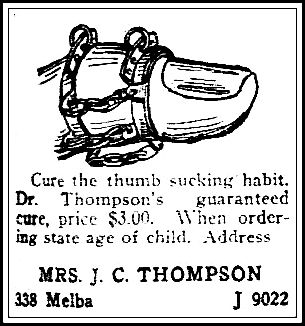
Runner-up: “Keep Oak Cliff Kinky” (1923)

thumb-sucking_dmn_111823
*

For all the “Year-End Best of 2014” lists, click here.

*

Copyright © 2014 Paula Bosse. All Rights Reserved.

The Roller Coaster on the Prairie — 1894

state-fair-grounds_souv-dallas_1894Texas State Fair & Dallas Exposition Fair Grounds, circa 1888

by Paula Bosse

Above, a wonderful view of the “State Fair Grounds and Dallas Exposition” from an 1894 advertisement. The Little Roller Coaster on the Prairie!

If you want to see this very large (and, trust me, you DO), click here (and then click again). It’s like wandering through those old phone book covers, but without the jokes and the dinosaurs.

*

UPDATE: The artwork was used in a previous ad that appeared in The Dallas Morning News in 1888, with the following text:

The coming Fair and Exposition will, beyond a doubt, excel in point of attractiveness, numbers and variety of exhibits any heretofore held.

The County Exhibit Department promises to be the most attractive feature, one never before attempted by any State. Over forty counties up to date have secured space, and more still to enter. The exhibits these counties will present will be something that will astonish visitors.

Every variety of attractions has been provided for, and the musical treat we have in store for visitors will be presided over by the world renowned Cornetist , Prof. A. Liberati.

The purses offered in the Race Department cover $20,000, and will be competed for by the best racers in the land. The management of this department propose to give during the Fair and Exposition the finest races ever given in the South.

We desire to call the attention of counties to the fact that now is the time to get up their exhibits, when grain, fruits, etc. are ripening, and not wait until it is too late.

Space in the County Exhibit Department is free, and no county of our State can afford to be not represented. There will be more people here than ever before, and we want them all to see the varied resources of our great State.

To exhibitors in general we can promise them the finest opportunity ever offered to make displays from which will return good results, and to visitors we can assure them of the grandest entertainment ever given in the Southwest.

dallas-fair_dmn_090588

*

The scene above looks idyllic (to me, anyway), but here is a description of what the land was like before anything was built on it, from a Dallas Morning News history of the SFOT (Oct. 2, 1960):

An 80-acre tract approximately in the center of the present-day State Fair Park was chosen as the site for the Fair. The location was termed by some to be “the worst kind of hog wallow,” and the question most frequently asked was “How are you going to hold a fair in all that mud?”

*

The Dallas State Fair and Exposition (which became the State Fair of Texas) was chartered in 1886, and unless that artist’s rendering is highly romanticized (which it probably is), it looks like the hog wallow was but a faint memory by the time that roller coaster was plopped down on top it.

***

Sources & Notes

Artwork by the Dallas Engraving and Manufacturing Company. Top ad appeared in the Souvenir Guide of Dallas (1894); bottom ad appeared in The Dallas Morning News, Sept. 5, 1888.

*

Copyright © 2014 Paula Bosse. All Rights Reserved.

When the Spanish Influenza Hit Dallas — 1918

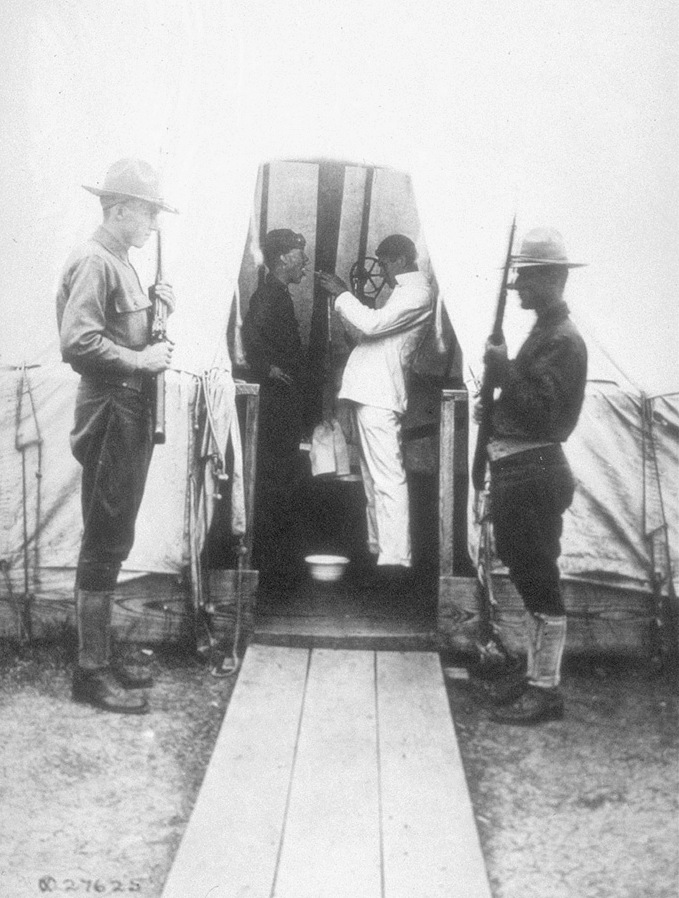
spanish-influenza_love-field_otis-historical-archives_nmhm_110618
American Red Cross at Love Field, spraying soldiers’ throats, Nov. 6, 1918

by Paula Bosse

The Spanish Influenza pandemic of 1918-1919 caused as many as 50 million deaths worldwide — about 600,000 of which were in the United States (11 times greater than the number of American casualties during World War I). Locally, the influenza first hit the soldiers at Camp Bowie in Fort Worth in September, 1918. The flu spread quickly, and on Sept. 27, it was reported that there were 81 cases in the camp. Well aware of the devastation the flu had wrought in other U.S. cities, most notably at military camps, Fort Worth was, understandably, taking the situation seriously. Dallas leaders, on the other hand, were all-but pooh-poohing the need for concern. On Sept. 29, The Dallas Morning News had a report titled “Influenza Scare is Rapidly Subsiding” — the upshot was that, yeah, 44 reported cases of “bad colds” had been reported in the city, but there’s nothing to worry about, people.

In the opinion of the military and civil doctors, the Spanish Influenza scare is unwarranted by local conditions. The few cases of grip, it is claimed, are to be expected as the result of the recent rainy weather.

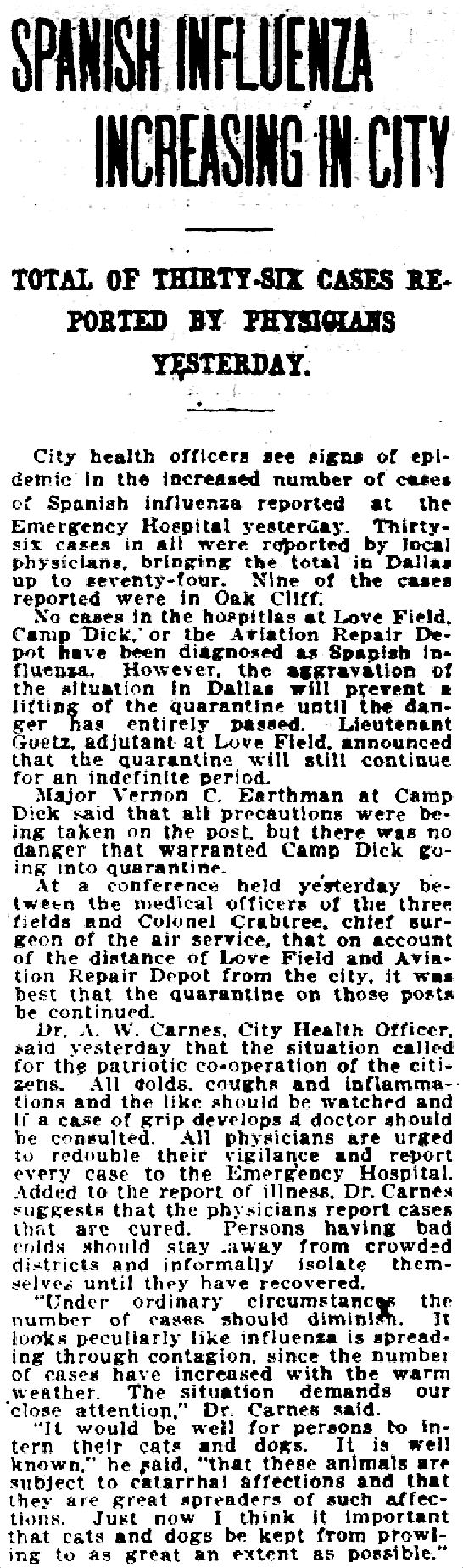
Just two days later, though, officials were jolted out of their complacency when the (reported) cases jumped to 74 (click for larger image):

spanish-influenza-dmn-100218DMN, Oct. 2, 1918 (click for larger image)

The months of October and November were just a blur: the city was plunged into an official epidemic. There was no known cure for the flu, so a somewhat ill-prepared health department preached prevention. People were encouraged to make sure their mouths were covered when they coughed or sneezed, and they were directed to not spit in the street, on streetcars (!), in movie theaters (!!), or, well, anywhere. (Handkerchief sales must have soared and spittoon sales must have plummeted.)

At one point or another, places where people gathered in large numbers — such as schools, churches, and theaters — were closed. Trains and streetcars were required to have a seat for every passenger (no standing, no crowding) (…no spitting). The number of mourners at funerals (of which there were many) was limited. And there was a major push for citizens to clean, clean, clean their surroundings in an attempt to make the city as sanitary as possible. Instructions appeared often in the newspapers.

spanish-influenza_dmn_101218_tipsDMN, Oct. 12, 1918

It was estimated that there were 9,000 cases of Spanish Influenza in Dallas in the first six weeks. By the middle of December, when the worst of the outbreak was over, it was reported that there had been over 400 deaths attributed to the Spanish Influenza and pneumonia in just two and a half months.

spanish-influenza_FWST_121118Fort Worth Star-Telegram, Dec. 11, 1918

As high as these numbers were, Dallas fared much, much better than many other parts of the United States.

spanish-influenza_ad_dmn_101818_pepto-manganAd, DMN, Oct. 18, 1918

***

Sources & Notes

Photo at top was taken on November 6, 1918 and shows American Red Cross Workers spraying throats of military personnel based at Love Field in hopes of preventing the spread of the influenza. The photo is from the Otis Historical Archives, National Museum of Health and Medicine; I found it on the NMHM site, here. (Click photo for larger image.)

Ad for Pepto-Mangan (“The Red Blood Builder”) was one of a flood of medicines and tonics claiming to be effective in the fight against Spanish Influenza (none were).

For a detailed and remarkably well-researched, comprehensive history of the Spanish Influenza in Dallas, see the article prepared by the University of Michigan Center for the History of Medicine, here. It’s pretty amazing.

To read about the history of pandemics (including several good links regarding the Spanish flu), see the Flu.Gov site, here.

And, NO, Ebola is not transmitted like the flu. But it’s still good practice to cover your mouth when you cough or sneeze,wash your hands frequently, and never EVER spit in the street, because that’s just disgusting. ((This post was originally written in 2014 while Dallas was the center of the Ebola universe.))

More on the Spanish Influenza pandemic can be found in the Flashback Dallas post “Influenza Pandemic Arrives in Dallas — 1918.”

*

Copyright © 2014 Paula Bosse. All Rights Reserved.


W. W. Orr: Buggies, Phaetons, Carriages — “Everything on Wheels!”

ad-orr-carriages_directory_1878-detW.W. Orr’s carriage business on Main St., 1878 (click for larger image)

by Paula Bosse

I came across the image above in the 1878 Dallas city directory, and my eye was immediately drawn to the novel open-air display of  buggies on the second floor of the building. I’ve never seen this before — the frontier version of the auto showroom!

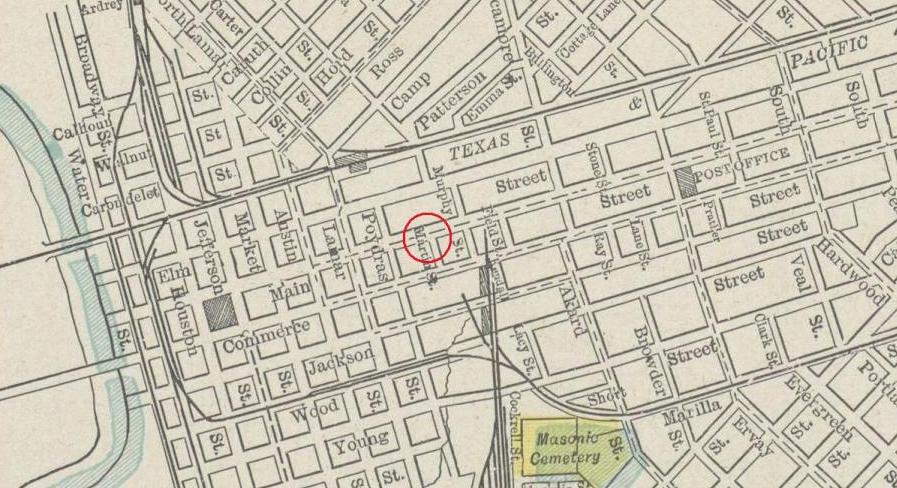
I hope this is a depiction of the actual shop owned by W. W. Orr at 724-726 Main Street (corner of Main and Martin — see map below) and not some sort of early augmented clip art. Orr ran a successful business selling buggies, phætons, and carriages, and he probably did have an imposing shop.

William Wallace Orr was born in Ohio, and after the Civil War he made his way to Texas, where he served for a short time as an East Texas postmaster before coming to Dallas where he and his wife, Amanda, operated a livery stable.

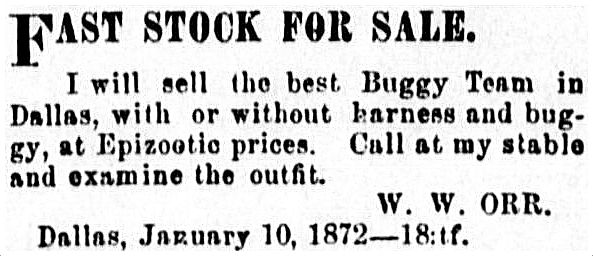
orr_dallas-herald_041973Dallas Herald, April 19, 1873

I’m not sure whether “epizootic” is used here as some sort of 19th-century tongue-in-cheek hard-sell advertising term (“His prices are INSANE!“) … or whether it means the horses have some sort of disease. I tend to think it’s the former.

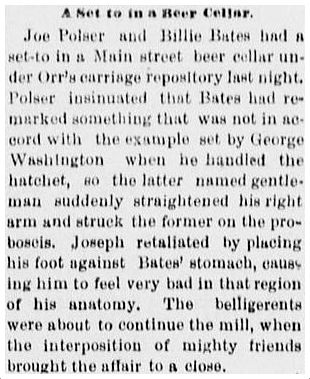
The carriage business, which had started by 1878, is notable (to me, anyway) because it was housed in a building with a basement — I wasn’t aware that basements really existed in Dallas at the time. Orr rented out the basement beneath his “carriage repository” as a beer cellar. If TV westerns are anything to go on, drunken brawls in most drinking establishments of the time were to be expected. What might not be expected is an account of a bar fight to be reported like this:

orr_cellar_dal-her_060278Dallas Herald, June 2, 1878

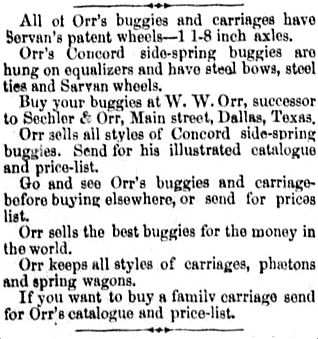
Regardless of what disreputable activities were going on in the cellar, it seems that Orr’s business of manufacturing and selling “everything on wheels” was a booming one.

orr_dal-her_060380Dallas Herald, June 3, 1880

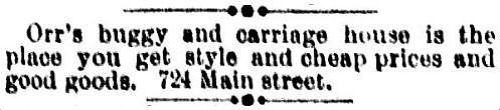
He had stylish conveyances, cheap prices, and good goods:

orr_dal-herald_081283Dallas Herald, Aug. 12, 1883

After the death of his wife in 1886 (she died of consumption at the early age of 42), Orr passed the business to his son. In poor health, he left Dallas for Mississippi, where he met a woman who nursed him back to health and whom he later married. After a few years of an apparently happy second marriage, W. W. Orr died in 1894. Cash savings, investments, and real estate holdings back in Dallas had left him a wealthy man, and, as might be expected, his family in Dallas was dismayed to learn that he had left his estate to his infant daughter in Mississippi. His three grown children from his first marriage were not happy, and they contested the will. (The case is covered exhaustively here. I think the baby daughter emerged victorious, but I’m not absolutely sure.)

It’s interesting that Orr and his first wife are buried side by side in Greenwood Cemetery. Amanda Melvine McQueen Orr has a large, ornate monument and headstone; W. W. has his name — and nothing else — carved into an unadorned marker. It would have been nice to have had a little a buggy in the corner. …Something.

orr-map_c1900

The location of Orr’s buggy and carriage house was at the corner of Main and Martin, shown above in a map from around 1900. (Click for larger image.)

And, below, is the full ad, with that incredible artwork! (Click it!)

ad-orr-carriages_directory_18781878

***

Sources & Notes

Illustrated ad from the 1878 Dallas city directory.

All other ads from The Dallas Herald, as noted.

Map is a detail from a map of Dallas, circa 1900, from the Portal to Texas History, here.

Amanda Orr’s headstone and memorial statuary can be seen in several photos here; W. W.’s sad unadorned slab can be seen here.

Phætons? They sound dangerous!

*

Copyright © 2014 Paula Bosse. All Rights Reserved.