Flashback : Dallas

A Miscellany: History, Ads, Pop Culture

Category: Modern Ads

Not Dead Yet at McKinney & Routh
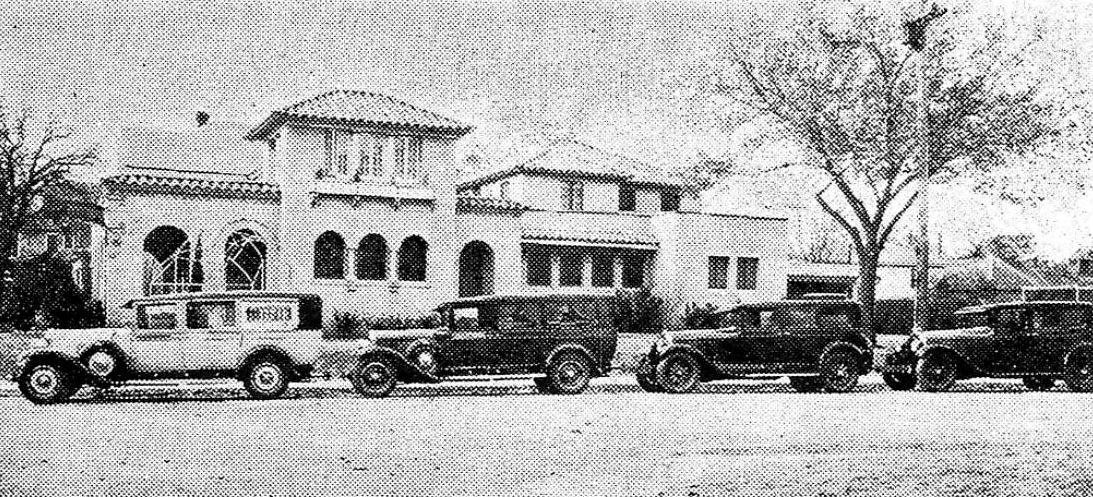
ad-funeral-home_mckinney-routh_directory-1929-detA fleet of Cadillacs in front of 2533 McKinney Ave.

by Paula Bosse

The photo above shows a truly beautiful, Spanish-style building that was built in 1927 at the northwest corner of McKinney Avenue and Routh Street. The view shows the Routh Street side. The person who took this photograph would have been standing across the street on the property of the dearly-departed McKinney Avenue Baptist Church (most recently transformed into the Hard Rock Cafe). You might be surprised to learn that the building in this photo still stands, and it’s mostly recognizable almost 90 years later.

The Community Chapel Funeral Home (yes, a funeral home!) was designed by noted architect Clarence C. Bulger (whose father, C. W. Bulger, designed, among other things, the Praetorian Building downtown AND the just-mentioned McKinney Avenue Baptist Church which was right across the street).
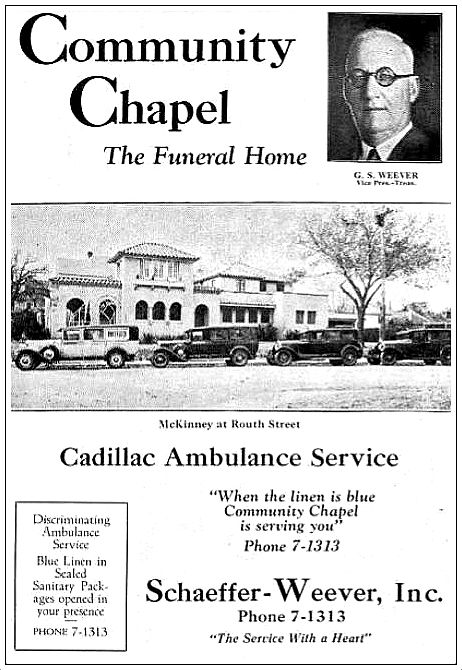
ad-funeral-home_mckinney-routh_directory-1929City directory, 1929

In addition to the funeral home portion (reception area, business office, show rooms, “operating room” (!), chapel with seating for 100, and the euphemistically named “slumber room”), the building also contained a residence for the chief mortician and his embalmer wife, an apartment for the ambulance/hearse drivers, and a “pavilion for recreation of employees.” The building and its beautifully-appointed interior cost in excess of $100,000 (which the Inflation Calculator estimates is the equivalent of more than $13 million today!).

Also, an “oxygen plant” was somewhere on the grounds. I’ve never heard of an oxygen plant, but they seem to be a mortuary thing. Let’s hope recently-bereaved smokers were kept at a safe distance from all that highly flammable oxygen, because the company had a bunch of promotional matchbooks printed up, and I can only imagine they were readily available in tastefully-arranged candy dishes of every room of the establishment. And in those days, one didn’t necessarily step outside to smoke one’s anxiety away.

weever-funeral-home_fkickr1

weever-funeral-home_fkickr2

weever-funeral-home_1937-city-directory_ad1937 Dallas directory

The funeral home at 2533 McKinney Avenue lasted almost thirty years. Sometime in the mid-’50s it was renovated into office and retail space (classified ads mentioned 2-, 3-, and 4-office suites). That lovely interior must have been hacked up pretty bad. An early tenant was the Bankers Securities Corporation, shown below in a newspaper ad from 1956 (someone made some poor choices on that renovation of the exterior). (This view shows an entrance from McKinney rather than Routh.)

bankers-securities_dmn_012256-photoAd detail, Jan., 1956

For the next 40-odd years, 2533 McKinney Avenue was home to a variety of insurance agents, a fur salon, several companies that advertised in the classifieds for vague “salesmen” positions (one company did specify that it was looking for encyclopedia salesmen in 1963), art galleries, architect/design businesses, offices of “El Sol de Texas” (“the only Spanish-language newspaper in North Texas”), and antique shops.

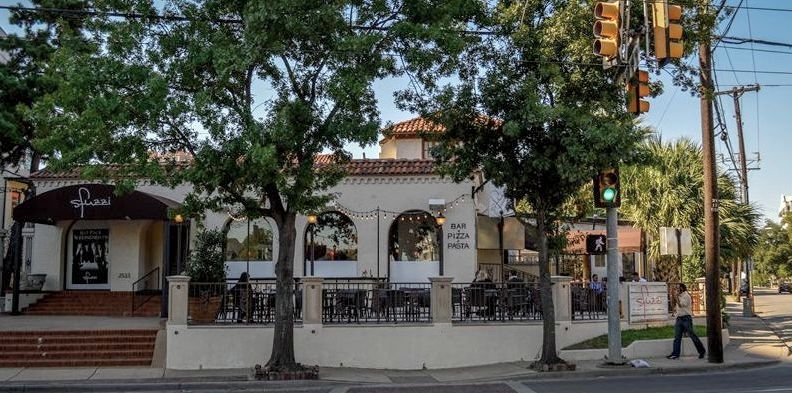
It all turned around, though, when the long-suffering building was re-renovated and became a restaurant space. Since at least 1999 when Uptown began to explode, it’s been home to bistros, cafes, and upscale eateries. The photos below show some of the restaurants that have set up shop there, and if you know what you’re looking at, the place really does look very similar to C. C. Bulger’s design from almost 90 years ago.

*
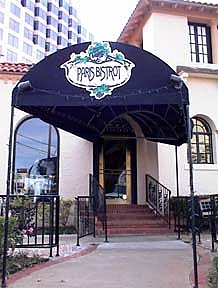
paris-bistrot_2001Le Paris Bistrot opened in 1999. The owner changed the name to Figaro Cafe in 2004 when the U.S. was going through an anti-French phase.
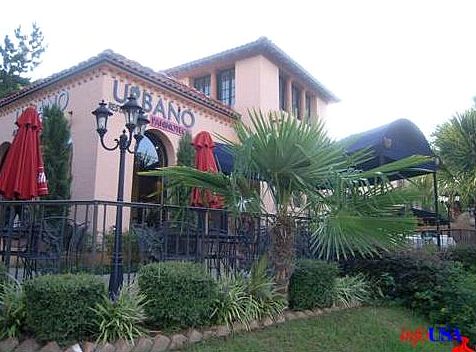
urbano_city-dataUrbano Paninoteca opened in 2007. Something called Split Peas Soup Cafe opened in 2009.

sfuzzi_scrumpliciousfood_sm

sfuzzi_yelpThen Sfuzzi opened with a big splash in 2010. (It had been a McKinney Avenue staple in the 1980s and ’90s, closed, and came back in 2010.) The first photo shows the Routh Street entrance, the second photo shows the McKinney entrance.
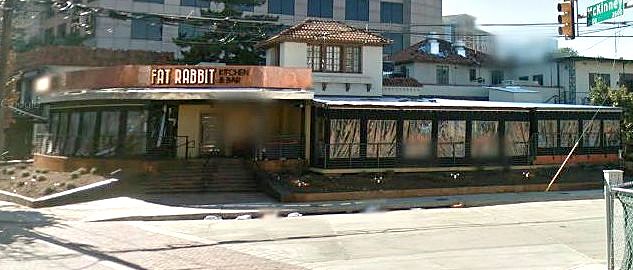
fat-rabbit_googleAnd now it’s the Fat Rabbit, which opened earlier this year. Let’s hope they get some landscaping in there STAT! (UPDATE: Fat Rabbit is now an ex-rabbit, and after spending some time of his own in the “slumber room,” he has joined the choir invisible. Next!)

And let’s hope that those tiled roofs and stuccoed walls remain a distinctive part of its future. I love the fact that it still looks a lot like it once did. And I actually like the fact that restaurants have been operating out of an old funeral home for over 15 years. Restaurateurs might be hesitant to publicize the building’s past (although I’m pretty sure most of them have been completely unaware of what the place used to be), but modern-day Harolds and Maudes might be giddy at the prospect of an unusual dining option and move this place right to the top of their date-night list. 

***

Sources & Notes

Top photo is a detail of the ad that appeared in the 1929 Dallas city directory. It shows four Cadillacs — a hearse, 5- and 7- passenger sedans, and an ambulance (“purchased from the Prather Cadillac Company”).

Matchbook artwork from Flickr, here.

The first Sfuzzi photo is from the food blog Scrumplicious Food, here. A GIGANTIC version of the photo can be seen here — you can look at all the details. Second photo of Sfuzzi from Yelp.

Fat Rabbit image from Google street view.

Sources of all other clippings and photos as noted.

Some images larger when clicked.

*

Copyright © 2015 Paula Bosse. All Rights Reserved.
Texas Independence Day: The Most Patriotic Bank Ad EVER — 1921

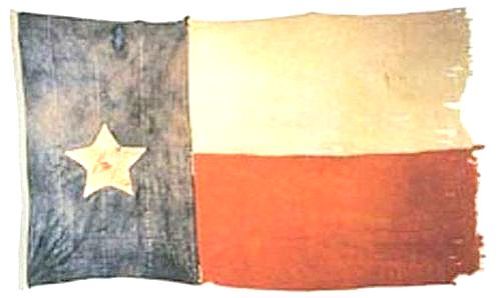
tx-flag

by Paula Bosse

Today is the anniversary of Texas Independence. Below, you will find the most heart-swellingly patriotic bank ad ever penned. Before you plunge in, you might want to get a hanky. (Transcription below.)

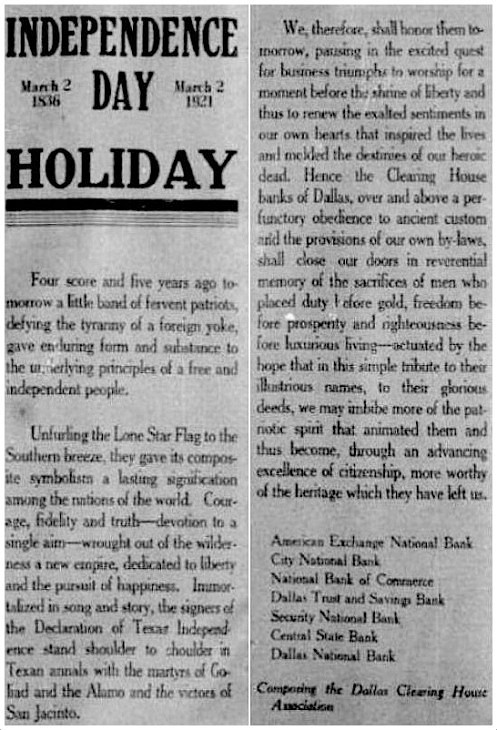
tx-independence_ad_dmn_030121Dallas Morning News, March 1, 1921

Four score and five years ago tomorrow a little band of fervent patriots, defying the tyranny of a foreign yoke, gave enduring form and substance to the underlying principles of a free and independent people.

Unfurling the Lone Star Flag to the Southern breeze, they gave its composite symbolism a lasting signification among the nations of the world. Courage, fidelity and truth — devotion to a single aim — wrought out of the wilderness a new empire, dedicated to liberty and the pursuit of happiness. Immortalized in song and story, the signers of the Declaration of Texas Independence stand shoulder to shoulder in Texan annals with the martyrs of Goliad and the Alamo and the victors of San Jacinto.

We, therefore, shall honor them tomorrow, pausing in the excited quest for business triumphs to worship for a moment before the shrine of liberty and thus to renew the exalted sentiments in our own hearts that inspired the lives and melded the destinies of our heroic dead. Hence the Clearing House banks of Dallas, over and above a perfunctory obedience to ancient custom and the provisions of our own by-laws, shall close our doors in reverential memory of the sacrifices of men who placed duty before gold, freedom before prosperity and righteousness before luxurious living — actuated by the hope that in this simple tribute to their illustrious names, to their glorious deeds, we may imbibe more of the patriotic spirit that animated them and thus become, through an advancing excellence of citizenship, more worthy of the heritage which they have left us.

American Exchange National Bank
City National Bank
National Bank of Commerce
Dallas Trust and Savings Bank
Security National Bank
Central State Bank
Dallas National Bank

Composing the Dallas Clearing House Association

*

Remember the Alamo! And remember the men who placed “righteousness before luxurious living”! (Even though that last part’s not exactly a sentiment that Dallas is typically known for….)

*

Copyright © 2015 Paula Bosse. All Rights Reserved.
Luncheon at The Zodiac Room, Darling

zodiac-room_smFood, fashion, & the unmistakable whiff of Old Money (click for larger image)

by Paula Bosse

Two cool and sophisticated postcards from the cool and sophisticated Neiman-Marcus (although it’s debatable whether the truly cool and sophisticated N-M shopper would, in fact, mail anyone something as bourgeois as a postcard of a department store, Neiman-Marcus or not). Perhaps these were done up for the sizable tourist trade. I love these cards. Commercial art of this period is wonderful.

The description on the back reads: “One of the great dining spots of the Southwest … N-M’s famed ZODIAC ROOM. The superlative food specialties of Director Helen Corbitt and her staff are enjoyed during modeling of fashions a la Neiman-Marcus at luncheon and dinner. Also, tea served daily.”

Below, the Carriage Entrance:

neimans_postcard_c1950s-carriage-entrance-sm(click for larger image)

The description: “‘The Carriage Entrance’ — famous passageway into one of the world’s great specialty stores.”

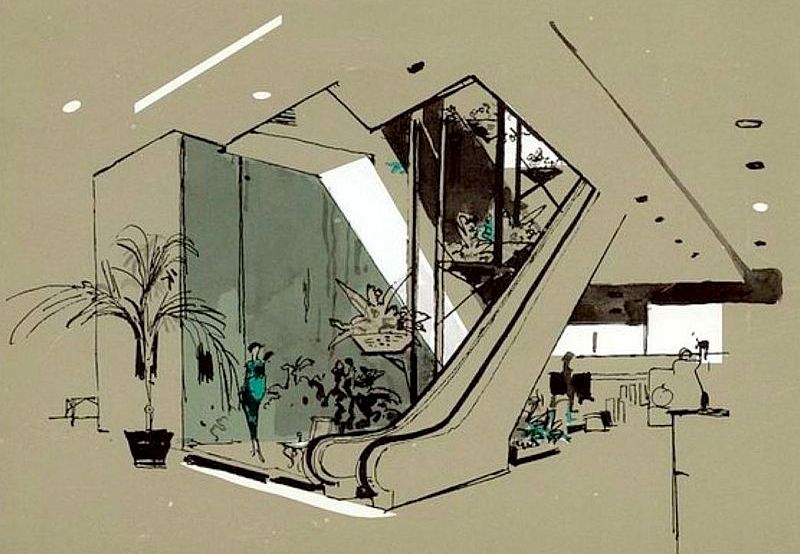
And another (I’d love to see the whole series of these postcards.) Sadly, no description on this one, featuring a fashionable escalator.

n-m_escalator_pinterest

I fear I shall never reach the level of swan-like sophistication needed to become an habitué of The Zodiac Room. Tant pis.

***

I have no idea where these postcards came from. I’m not sure of the date, either, but … “1950s”? Maybe very early 1960s? Let’s go with “Mid-Century” — everyone loves that! Whenever this was, this was a period when fashion was chic and fabulous. As was Neiman-Marcus. (I still miss that hypen!)

Need to make a reservation at The Zodiac? Info is here.

*

Copyright © 2015 Paula Bosse. All Rights Reserved.

The Marietta Mask

marietta-mask_doak_boys-life_oct55SMU football star Doak Walker in an ad from Boys’ Life, Oct. 1955

by Paula Bosse

Dr. Thomas M. Marietta (1910-1995), a Dallas dentist, devised a startlingly new invention in 1947: a specially-made facemask. Initially, the mask was created to protect the face of a Dallas hockey player who had recently sustained a broken nose and would have been unable to play without a mask for fear of further injury. Marietta’s creation was a success — not only did the player get back on the ice, but tentative inquiries from other sports teams began to trickle in. But what changed everything were the masks he made for TCU’s star quarterback Lindy Berry, who had suffered a broken jaw, and Texas A&M’s fullback Bob Smith, who had a badly broken nose. Without the odd-looking masks that protected their entire faces, they would not have been able to play out the seasons. The masks were an unqualified success, and the doc went commercial.

marietta-face-mask_marion-OH-star_112251_wireDr. Marietta (Marion Ohio Star, Nov. 22, 1951 — full article is here)

In 1951, football players did not generally wear facemasks. It was commonplace for players to rack up a dizzyingly large number of injuries such as broken and dislocated jaws and noses, knocked-out teeth, facial lacerations, major bruising, concussions, etc. An article appeared in The Dallas Morning News on Aug. 31, 1951 describing what this whole facemask thing was about and how the Texas Aggies were about to try a revolutionary experiment by equipping “possibly half of the A&M team” with Dr. Marietta’s newfangled masks. Coach Ray George approved a trial test of the masks, saying that his primary concerns were reduction of facial injuries, elimination of head injuries, and improvement of athletic performance. A&M’s trainer, Bill Dayton, predicted that the wearing of facemasks would become universal among players in the coming years.

Many head injuries happen as the result of a player ducking his head. We believe that by the use of this face gear we can eliminate head ducking, and our players will see where they are going. When they watch their opponents, they are able, by reflective action, to keep their heads out of the way. (A&M trainer Bill Dayton, DMN, Aug. 31, 1951)

The various incarnations of the Marietta Mask over the next couple of decades were used in various sports by children, by college athletes, and by professionals. Dr. Marietta patented several designs for masks and helmets and had a lucrative manufacturing business for many years. In 1977 the business was sold, and the Marietta Corp. became Maxpro, a respected name in helmets.

Football and hockey will always be extremely physical sports with the very real possibility of injury, and though there’s need for further improvement, Dr. Marietta’s invention helped lower the danger-level quite a bit. Thanks to a mild-mannered dentist from Dallas, a lot of athletes over the years managed to avoid all sorts of nasty head and facial injuries. Thanks, doc.

*

marietta-mask_corbis_oct1954Oct. 1954 (©Bettmann/CORBIS)
marietta_joe-perry

marietta-mask_envelope

***

Sources & Notes

Photo ©Bettmann/CORBIS; the original caption: “An outer-space look is given by this all-plastic mask lined with foam rubber. It was designed by Dr. M. T. Marietta, a Dallas, Texas dentist.”

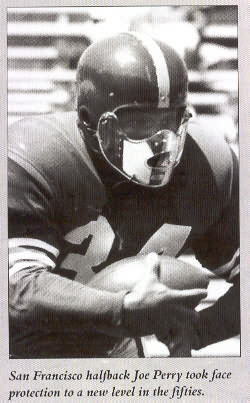
Joe Perry photo from HelmetHut. To see some pretty wacky versions of early masks from a Marietta catalog, see images from HelmetHut.com, here.

Read the following newspaper articles:

  • “Mask Maker: Dentist Helped Wolves Win Title (Abilene Reporter-News, Nov. 29, 1950) — regarding the Colorado City (TX) Wolves and their injured player, Gerald Brasuell, the team’s tackle who wore Dr. Marietta’s mask and was able to play despite having a triple-fracture to his jaw, here
  • “Broken Jaw Protection: Doctor’s Face Mask Enables Injured Gridders To Play” (Marion, Ohio Star, Nov. 22, 1951), here

To see several of Marietta’s patents (including abstracts and drawings), see them on Google Patents, here.

And to read an interesting and entertaining history of the football facemask (and I say that as someone who isn’t really a sports person), check out Paul Lukas’ GREAT piece “The Rich History of Helmets,” here. (If nothing else, it’s worth it to see the cool-but-kind-of-weird-and-scary, crudely-fashioned, one-of-a-kind facemask made out of barbed wire wrapped in electrical tape!)

And because a day without Wikipedia is like a day without sunshine, the facemask/face mask wiki is here.

*

Copyright © 2015 Paula Bosse. All Rights Reserved.

“With Modesty” — The Dallas Gas Company, 1927

ad-dallas-gas_terrill-yrbk_1927

by Paula Bosse

Speaking of Dallas and natural gas….

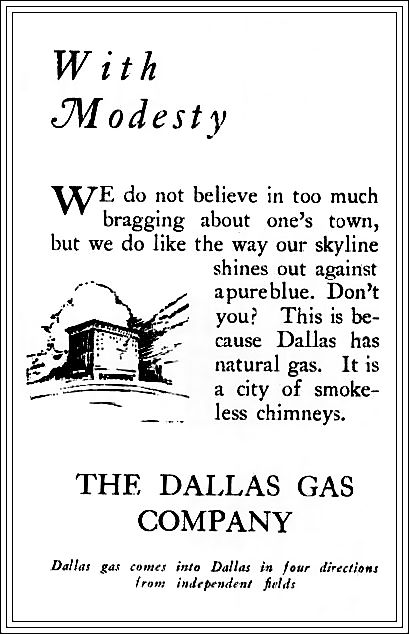
With Modesty

We do not believe in too much bragging about one’s own town, but we do like the way our skyline shines out against a pure blue. Don’t you? This is because Dallas has natural gas. It is a city of smokeless chimneys.

THE DALLAS GAS COMPANY

Dallas gas comes into Dallas in four directions from independent fields.

…At least four directions.

***

Ad appeared in the 1927 Terrill School for Boys yearbook.

*

Copyright © 2015 Paula Bosse. All Rights Reserved.


Elvis at the Big D Jamboree — 1955

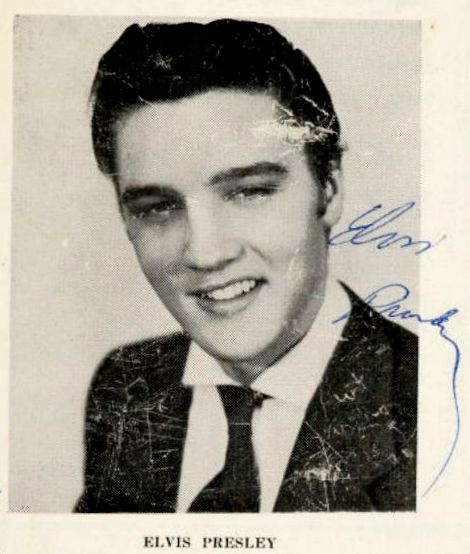
elvis_big-d-jamboree_program_090355-photo

by Paula Bosse

Today is Elvis Presley’s birthday — a perfect time to present a nostalgic look back at the early days of his fame, before he broke nationally and when it was still pretty easy to get a ticket to see him. Here are a few tidbits from his appearance on Sept. 3, 1955 at the legendary Big D Jamboree (held at the equally legendary Sportatorium). Happy Birthday, E!

*

elvis_big-d-jamboree-program-090355Big D Jamboree program, Sept. 3, 1955

*

elvis_big-d-jamboree_090355That night’s schedule — E’s all over it

*

elvis_big-d-jamboree-ad_dmn_090355Typos like this wouldn’t be a problem soon

***

Sources & Notes

Photo of Elvis and the two clippings from the Big D Jamboree program to that night’s show, Sept. 3, 1955 (which the ad is promoting).

*

Copyright © 2015 Paula Bosse. All Rights Reserved.

Year-End List! My Favorite Dallas Ads Posted in 2014

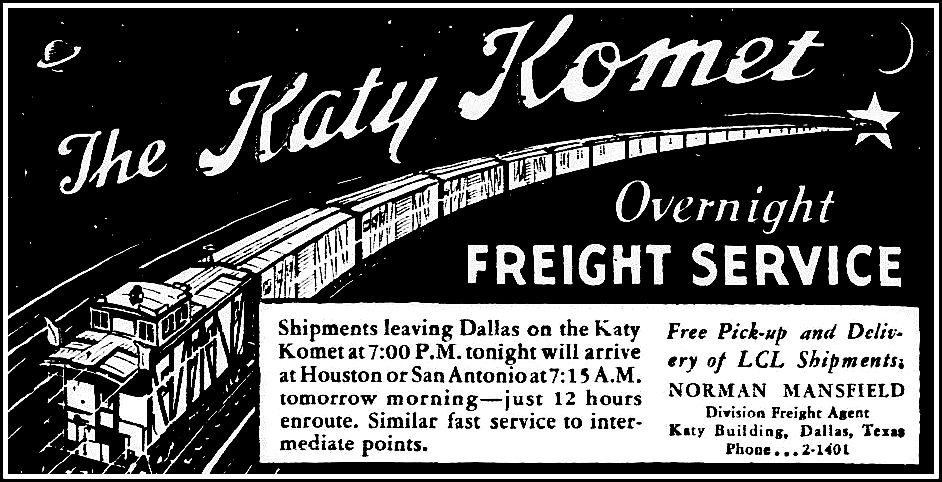
ad-katy-komet_dmn_031733The Katy Komet — 1933 (click for larger image)

by Paula Bosse

It’s the end of the year, the time when people do lists. I love lists. So I’m going to be doing some over the next few days. Today, a collection of my favorite Dallas-related advertisements that I’ve posted over the past year. To see the original post (which includes sources and no doubt pithy commentary), click the title of each ad. And, as always, thanks for taking the time to read Flashback Dallas this year! (Most images larger when clicked.)

*

1.  The Katy Komet (1933) — above. My favorite ad of the year!

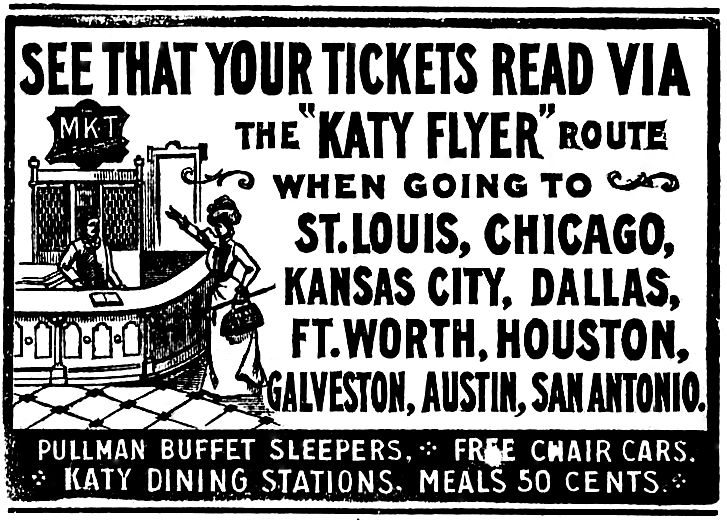
2.  M-K-T Railroad’s “Katy Flyer” Route (1902)

mkt_rail_1902_mercury

3.  Cokesbury Book Store (1959)

cokesbury_dallas_1959

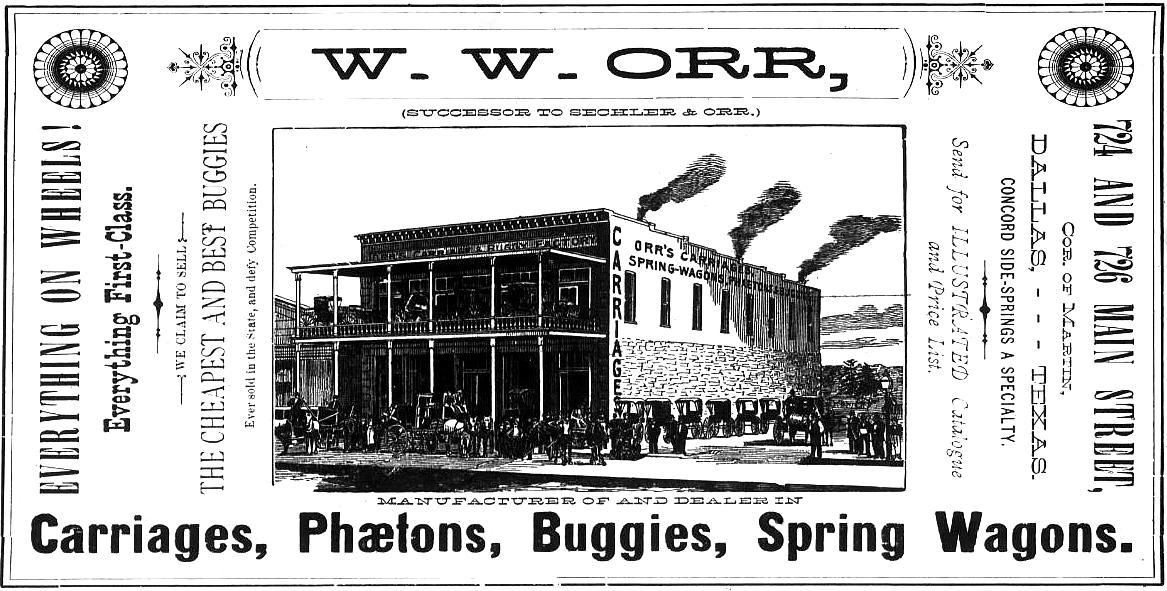
4.  W. W. Orr’s Carriages, Phaetons, Buggies, and Spring Wagons (1878)

ad-orr-carriages_directory_1878

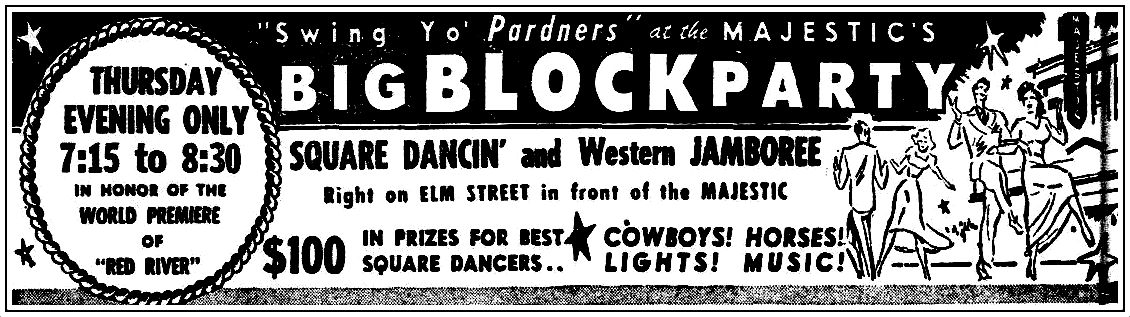
5.  Majestic Theatre’s “Red River” Block Party (1948)

red-river_block-party_dmn_082648

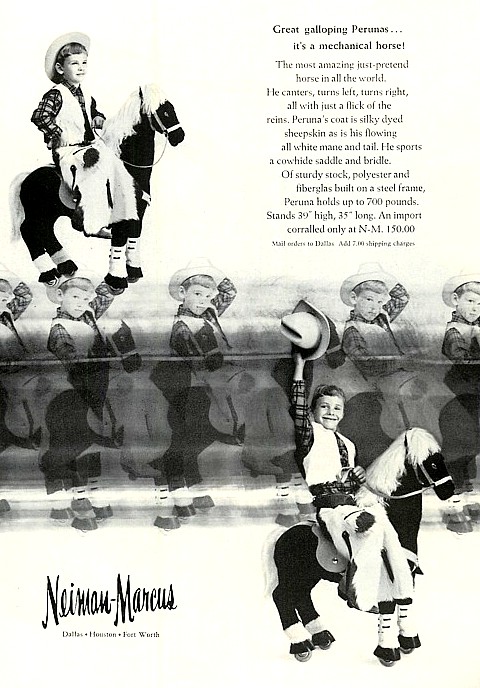
6.  Neiman-Marcus Mechanical Peruna Toy (1965)

n-m_peruna_1965

7.  Irby-Mayes ad featuring the Mercantile Building (1948)

ad-irby-mayes_dmn_040148

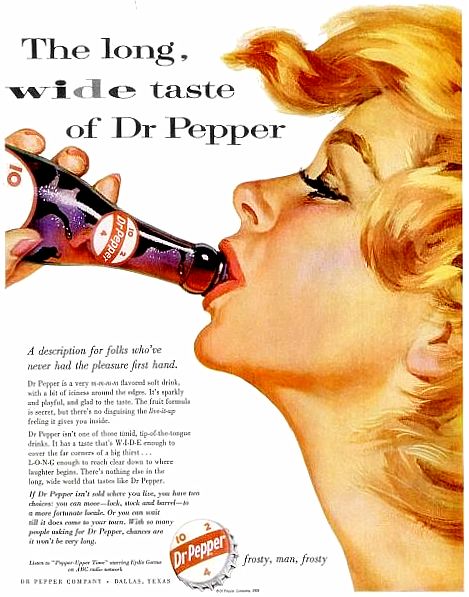
8.  Dr Pepper (1959)

dr-pepper-1959

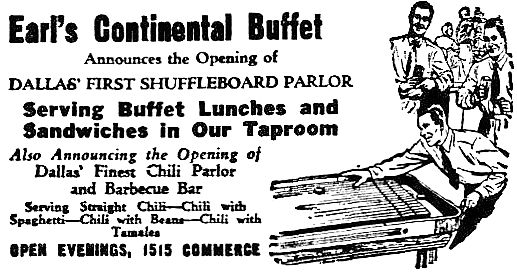
9.  Earl’s Continental Buffet (1947)

earls-continental-buffet_shuffleboard_dmn_1947

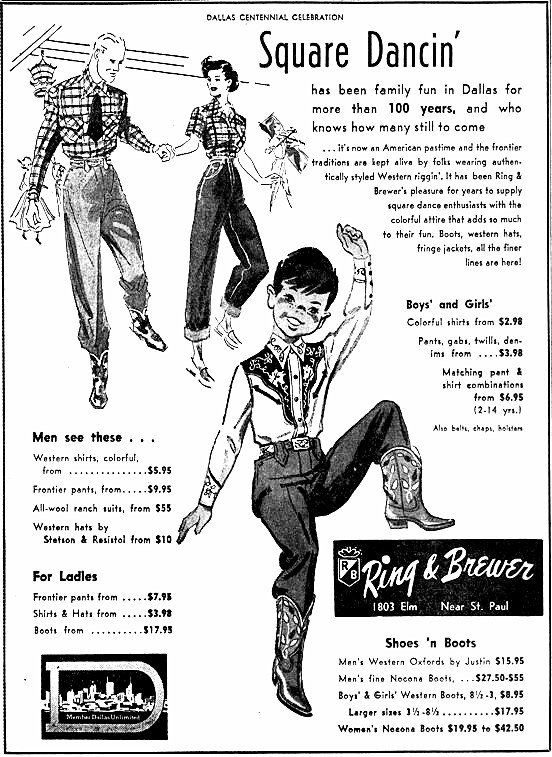
10. Ring & Brewer (1956)

dallas_ringandbrewer_1956

Runner-up: “Keep Oak Cliff Kinky” (1923)

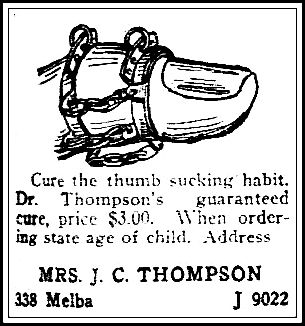
thumb-sucking_dmn_111823
*

For all the “Year-End Best of 2014” lists, click here.

*

Copyright © 2014 Paula Bosse. All Rights Reserved.

“Every Gypsy in the Nation Knows About This” — 1951

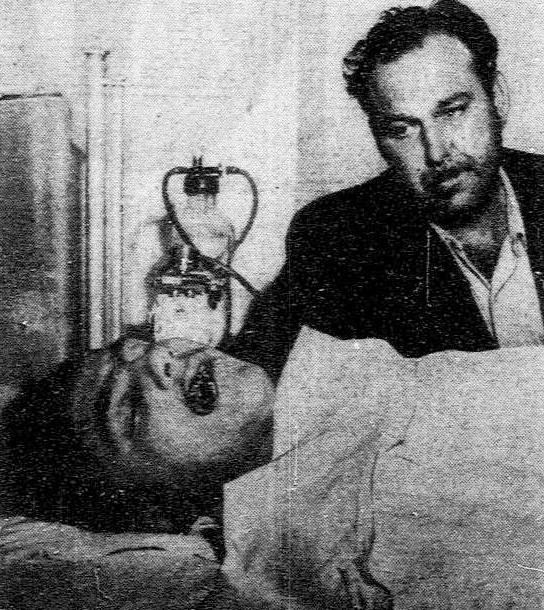
gypsy_lawrence-young_green-young_baylor_feb-1951
The “Gypsy youth” at the center of “tribal” unrest & his father, Baylor Hospital, 1951

by Paula Bosse

In the first few days of March, 1951, Dallas witnessed the influx of hundreds and hundreds of Gypsies into the city, all of whom had been summoned — from near and far — by a call put out over an effective and somewhat mysterious communications network. The reason? A teenage boy (referred to repeatedly as a “Gypsy youth”) had been shot in South Texas by a boy from another “tribe” (or clan, or family) — one family insisted the shooting was intentional, the other insisted it was an accident. This incident ballooned into a huge internecine feud. If the boy died, the “Green” tribe promised that there was “going to be a lot of shooting going on in Dallas” (Dallas Morning News, March 1, 1951). [Note: the word “Gypsy” is sometimes seen as a pejorative. I use it in this post purely in a historical context; it is not meant to be derogatory.]

In December of 1950, 14-year-old “Lawrence Young” (the anglicized name his family gave to authorities) had been walking along railroad tracks with other boys in Port Isabel, near Brownsville, when he was shot with a .22 caliber rifle by a 12-year-old, a Gypsy boy from another clan. The 12-year-old said the borrowed rifle had been malfunctioning and that, while hunting, the gun discharged unexpectedly, and a bullet hit Lawrence, whom the other boys thought was playing when he fell to the ground. Until they saw the blood. The bullet struck Lawrence in the back, near his left shoulder blade, and it lodged in his spine at the base of his skull. Police in Port Isabel determined that the shooting had been an accident. Lawrence’s family, however, said that the other boy had been jealous of Lawrence’s new car and had shot him on purpose. The boy was rushed to the hospital; his condition was not good.

After stays in hospitals in Galveston and Temple, Lawrence’s mother decided to move him to Dallas where she thought the medical care would be better. He was admitted to Baylor Hospital at the end of February. Relations had been tense between the two clans since the shooting, but the Evans clan (of which the 12-year-old boy was a member) had grudgingly agreed to pay for half of Lawrence’s medical bills. The decision by Lawrence’s family to move him to Dallas — where hospital care would be much more expensive — only made things worse between the two groups; the Green clan had heard that the Evans clan would not pay their share of what they felt would be an exorbitant bill. Tempers had been building and boiling for weeks, and by the time things moved to Dallas, things were about to explode.

Word of the increasingly volatile feud had spread, and Gypsies from several surrounding states began pouring into Dallas in a show of tribal support. The first reports estimated there might have been as many as 500 Gypsies in Dallas County, representing at least six different clans, each clan with strong loyalties to one of the two families. If the boy died, the Greens and their supporters promised that retaliation would be swift and deadly. The Evanses — and the clans friendly to them — were ready for whatever came their way. The threat of deadly violence in the streets of Dallas was a very real possibility (if a city could be an innocent bystander, that’s what Dallas was in this unusual situation).

The Dallas police were, understandably, worried. In an attempt to get the warring factions to leave town, homicide detective Captain Will Fritz was reduced to arresting several of the men on charges of vagrancy (“We can’t make them get out of Dallas, but we can keep arresting them for vagrancy until they move on,” Fritz said). Unfortunately, this was a pretty ineffective strategy.

Fifty or so “expensive automobiles” were parked outside Baylor as the time for Lawrence’s surgery approached. Men and women sat inside their cars waiting for a signal from a man they had placed inside the building who was to alert them from a window whether or not the boy had survived. If he died, things would get real bad, real fast. When police learned about the man inside the hospital, they arrested him. The boy was in critical condition prior to the surgery, and tensions among the factions continued to rise.

gypsy_lawrence-youngs-grandmother_baylor_feb-1951
Above, the boy’s grandmother, outside Baylor Hospital,
waiting for word on her grandson’s condition.

At some point, a man in Fort Worth who said he was a nephew of the King of the Gypsies in the United States intervened and worked as a sort of intermediary between the Gypsies and Fritz.

“I can’t promise there won’t be any shooting over there,” he told Fritz by telephone. “This thing has gone pretty far. But I will try to stop things where they are.”

“I don’t care how you settle this matter among yourselves,” Fritz replied, “Just do it out of Dallas County. We want no shooting here.”  (DMN, March 2, 1951)

Fritz agreed to release two men he had been holding (on non-vagrancy charges), hoping they would take word of the Fort Worth man’s “tribal council” involvement back to their people and calm the situation.

The surgery was, thankfully, successful. 

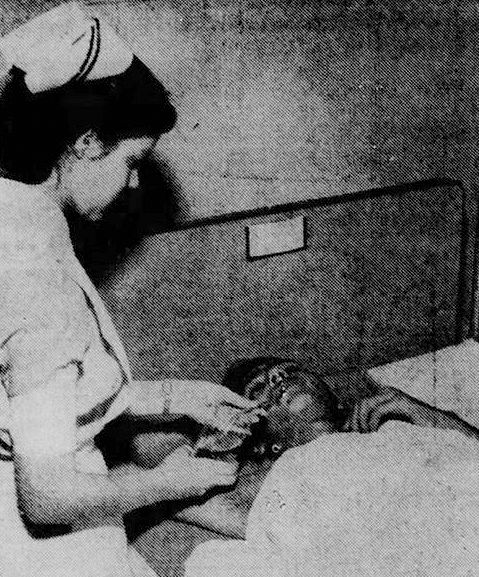
gypsy_mckinney-courier-gazette_030251Caption: “Gypsy Youth in Dallas Hospital — Lawrence Young, 14-year-old Gypsy youth gets a drink of water from a nurse at Dallas’ Baylor Hospital. Young was allegedly shot by another youthful Gypsy some two months ago near Brownsville, Texas. He was operated on at Baylor Hospital to have the bullet removed. Two Gypsy clans are reportedly watching with much interest to see that the youth recovers.” (NEA photo and wire report, from the McKinney Courier-Gazette, March 2, 1951)

*

To the relief of Dallas police, doctors said that Lawrence would recover — a major crisis had been averted, and the hundreds of Gypsies who had been camped around Dallas began to leave town. But just a few days later, a camp was discovered outside Garland, and twenty people were immediately arrested for vagrancy — they were photographed, fingerprinted, fined, and released, with the clear understanding that they needed to move on. ASAP. The next day, Sheriff Bill Decker announced they had packed up and left.:

“I don’t know where the road goes,” said Decker, “but it leads out of Dallas County.” (DMN, March 7, 1951)

*

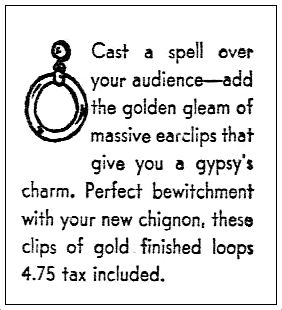
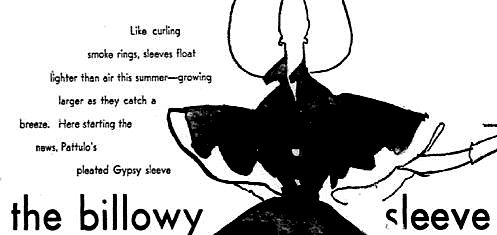
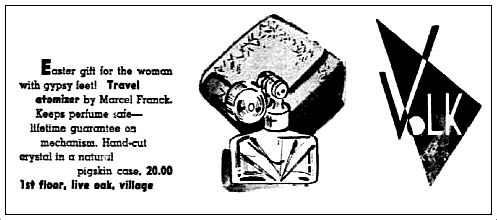
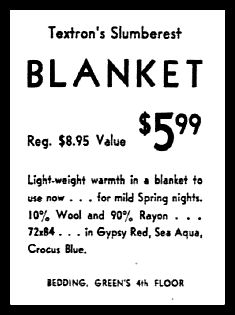
Gypsies were generally considered a menace by police departments around the country, as their arrival was usually accompanied by a rise in … questionable business practices. While these … business practices … were usually viewed negatively, it’s interesting to note that in 1950 and ’51 Gypsy “style” was everywhere. Ads for upscale department stores such as Neiman’s and A. Harris, for instance, were filled with Gypsy-inspired fashions — off-the-shoulder peasant blouses, scarves, gold bangles, dangly earrings, and exotic makeup. Cars and household items came in popular colors such as “Gypsy green,” “Gypsy red,” and even “Gypsy brown.” People might not have been excited by their … unorthodox business practices … but they sure loved the way they dressed and were attracted by the allure and romance of their rootless, “wandering” lifestyle.

gypsy_n-m_dmn_030551Neiman-Marcus ad — 1951

gypsy_n-m_dmn_041051Neiman-Marcus ad — 1951

gypsy_volk-ad_dmn_031051Volk ad — 1951

gypsy-green_w-a-green-ad_dmn_011851W. A. Green ad — 1951

***

For more on “Gypsy”/Romani/Romany/Roma culture and history, see the Wikipedia entry here; for issues concerning use of the word “Gypsy,” see here.

And for no other reason than to see how Gypsies were often stereotypically portrayed on pre-PC television, an episode of The Andy Griffith Show called “The Gypsies” can be watched on YouTube, here.

My favorite tidbit gleaned from this brief look into Gypsy culture was discovering that families and individuals with No Fixed Abode often communicated via the classifieds of, of all things, Billboard magazine.

*

Copyright © 2014 Paula Bosse. All Rights Reserved.


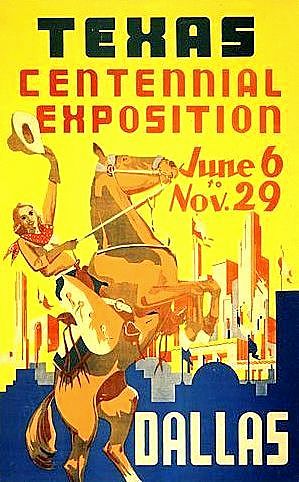
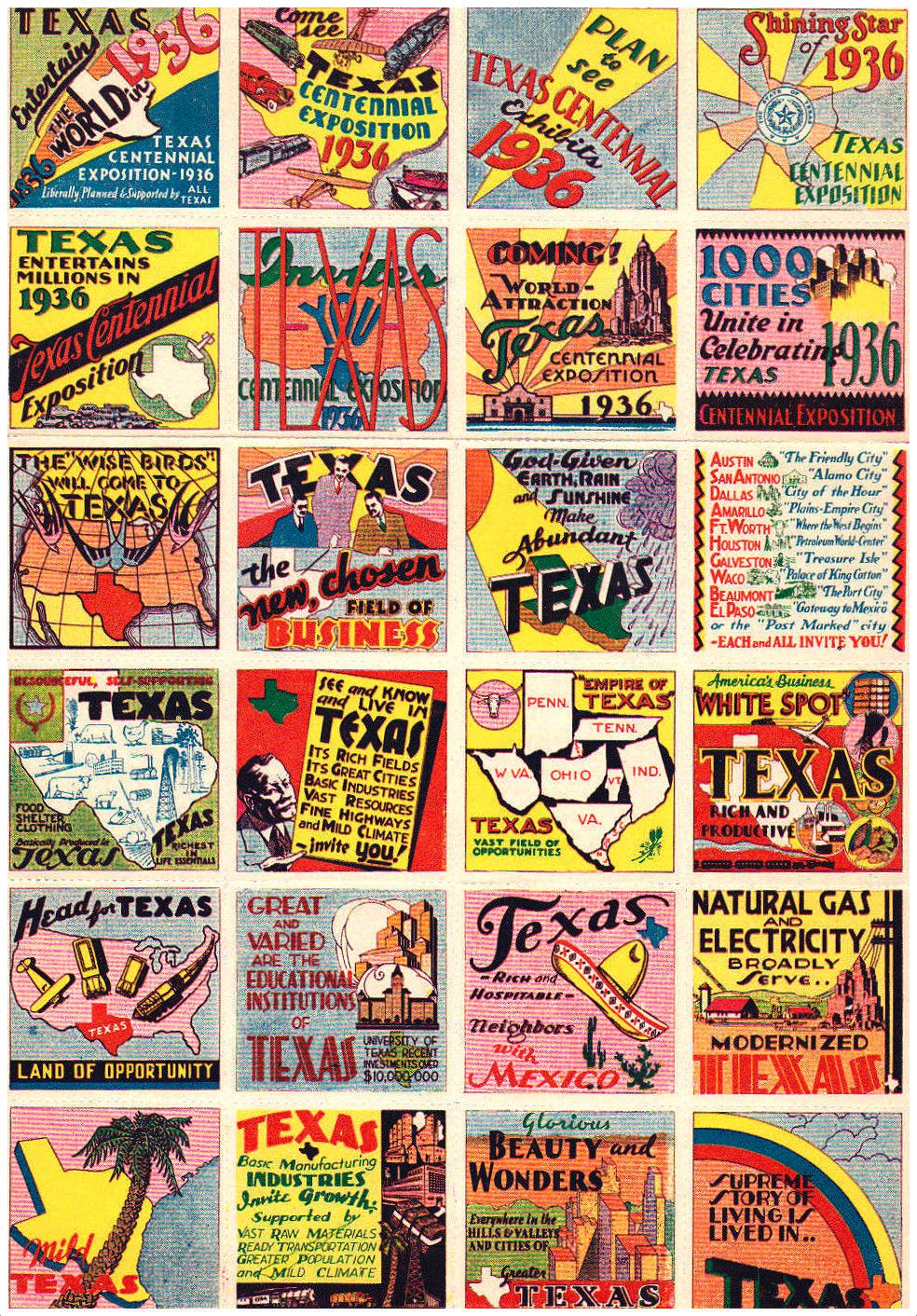
Texas Centennial Promotion on Hyper-Drive! — 1936

tx-centennial_poster_cowgirl_briscoe-ctr

by Paula Bosse

A bit of color and giddy enthusiasm on a gray day.

tx-centennial_promo_sheet(click for MUCH larger image)

***

Top image is a Texas Centennial poster from the Ephemera Collection of the Dolph Briscoe Center for American History. I would provide a link, but I am unable to find it now. It was online a few months ago!

Source of bottom image is unknown. Probably eBay. A long, long time ago.

*

Copyright © 2014 Paula Bosse. All Rights Reserved.

Back When Bookstore Fixtures Were a Thing of Beauty! — 1940s

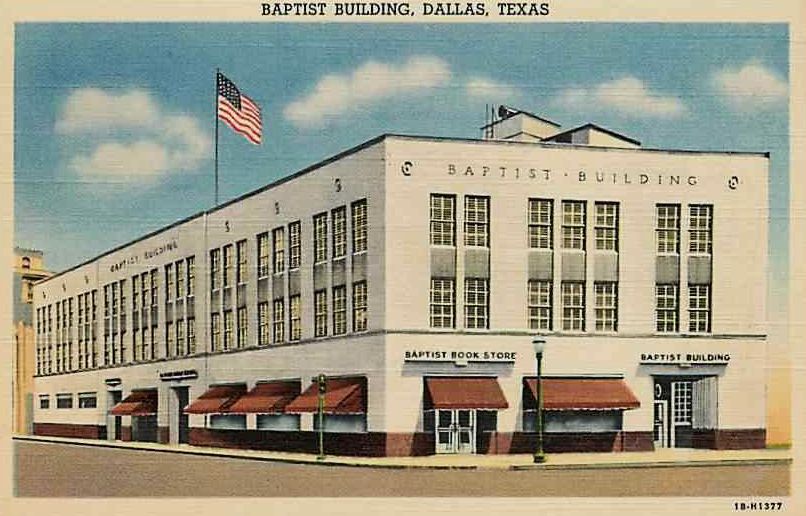
baptist-book-storeErvay & Pacific — “Book Corner” (click for larger image)

by Paula Bosse

In July of 1941 the Baptist Building opened at Ervay and Pacific. Part of the ground floor (“the Book Corner”) was occupied by the Baptist Book Store, which sold mostly religious material, but which also stocked dictionaries (“and other items of similar nature”) and children’s books (“We have books for every type and age of juvenile from the Picture Books of Children from three to five to the vigorous youth wanting stories of the romantic west”). The ad below appeared in a booklet put together to welcome newcomers to the city, about 1946:

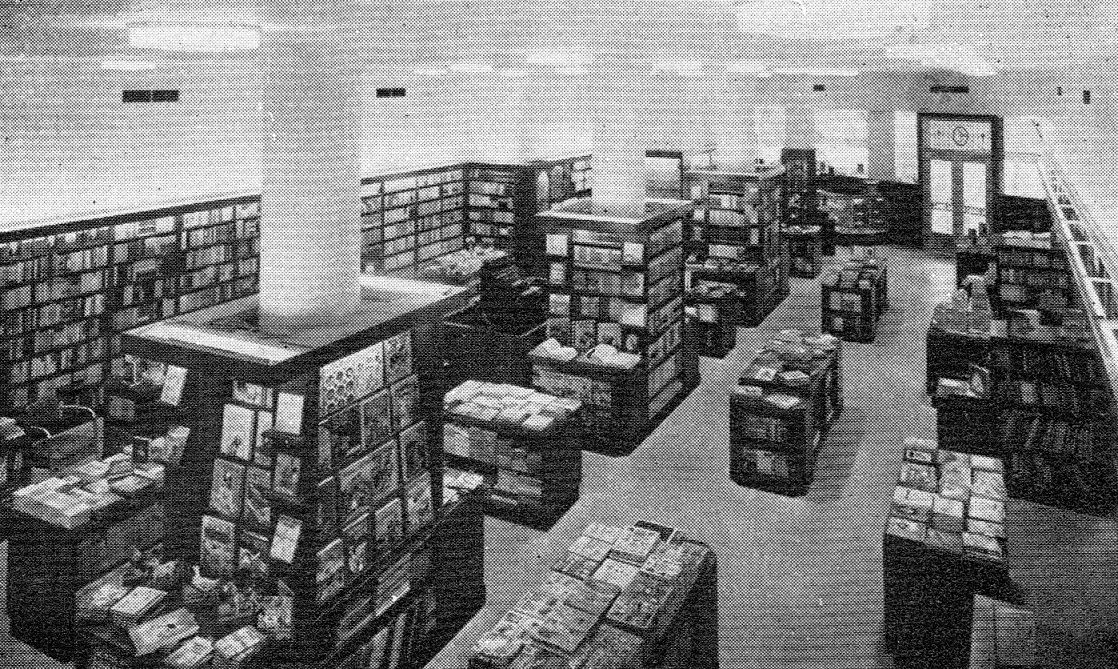
baptist-book-store_ca1946(click for larger image of bookstore interior)
*

Having grown up in a family-run bookstore (and having worked in various other bookstores for a large chunk of my life), I’m always fascinated by old photos of bookstore interiors, and this one is just great. (Click the image above to see the photo of the store much larger.) I’m particularly fascinated by the fixtures encircling the pillars — I’m not sure I’ve ever seen the problem handled in such a sophisticated way. And is that recessed lighting shining down on the slatwalls? This is a really wonderful-looking bookstore. The only thing that looks out of place is what appears to be an old-fashioned chunky cash register, center left. Everything else in this photo makes the bookseller in me practically giddy with nostalgia.

baptist-book-store_dmn_092847-det

***

Ad is from a publication called “So This is Dallas” published by “The Welcome Wagon.” It is undated but is probably from immediately after the war. This slim booklet was printed for several years in slightly different editions for people who were considering a move to Dallas or for people who had just moved here. These booklets are wonderful snapshots of the time, with everything the prospective Dallasite would need: facts, photos, and ads.

Bottom image is a detail from a 1947 ad.

*

I am fascinated by photographs of vintage bookstore interiors — especially Dallas bookstore interiors, of which there are precious few to be found. I would love to see any photos of Dallas bookstores before, say, 1970. If you have any, please send them my way! My contact info is in the “About/Contact” tab at the top of the page. Thanks!

*

Copyright © 2014 Paula Bosse. All Rights Reserved.