Flashback : Dallas

A Miscellany: History, Ads, Pop Culture

Category: Architecture/Significant Bldgs.

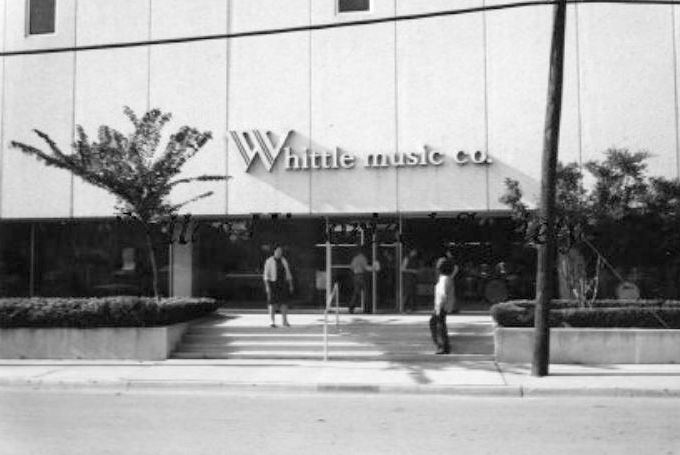
The Whittle Music Building — ca. 1956

whittle-music_elm-and-murphy_flickr_red-oak-kidSouthwest corner of Elm & Murphy…

by Paula Bosse

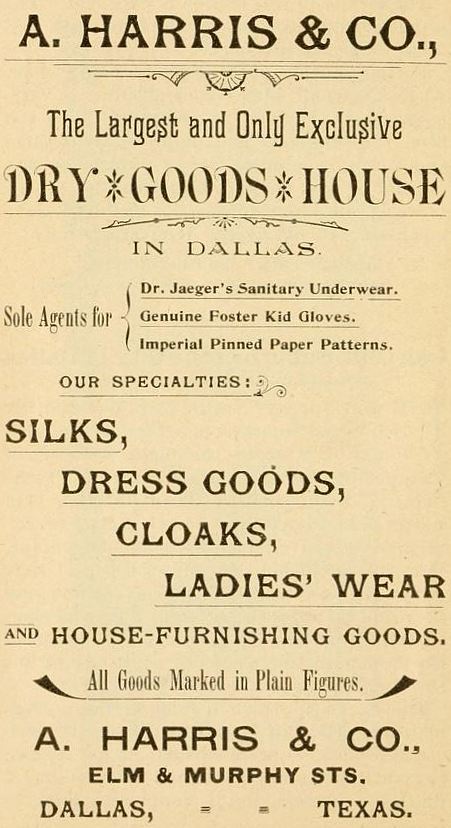
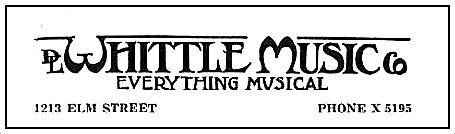
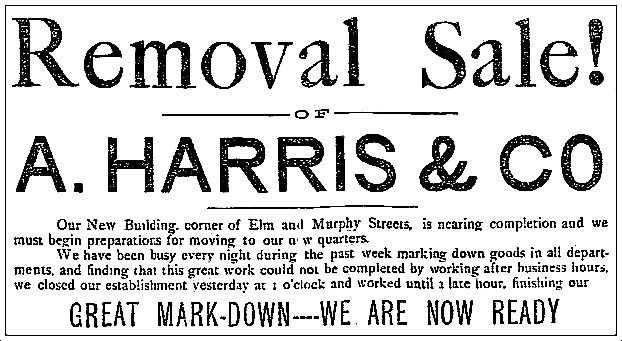
Above, the very attractive home of the Whittle Music Co., which sat at 1108 Elm Street on the southwest corner of Elm and Murphy. It was built as a two-story building in 1892 for the A. Harris Co., one of Dallas’ earliest department stores. A third floor was added in 1899. A. Harris Co. eventually outgrew the building, and, around 1914, it moved into several floors of the Kirby Building. In August, 1941, the Whittle Music Co. moved in from their previous nearby location. The company which sold “everything musical” (instruments, radios, phonographs, records, sheet music, etc.) was happy to move into the larger building, which included a basement, an auditorium for performances, meetings, and recitals, and several large display windows to better feature their large selection of pianos (the building was apparently the first store in Dallas designed to include large windows in which to prominently display merchandise to passersby).

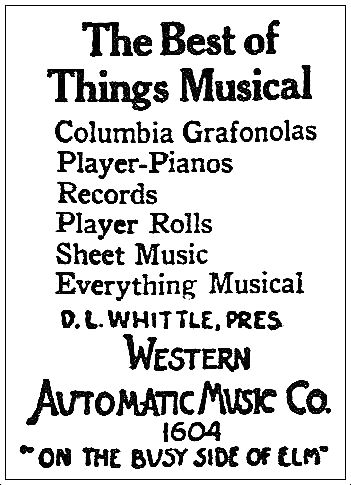
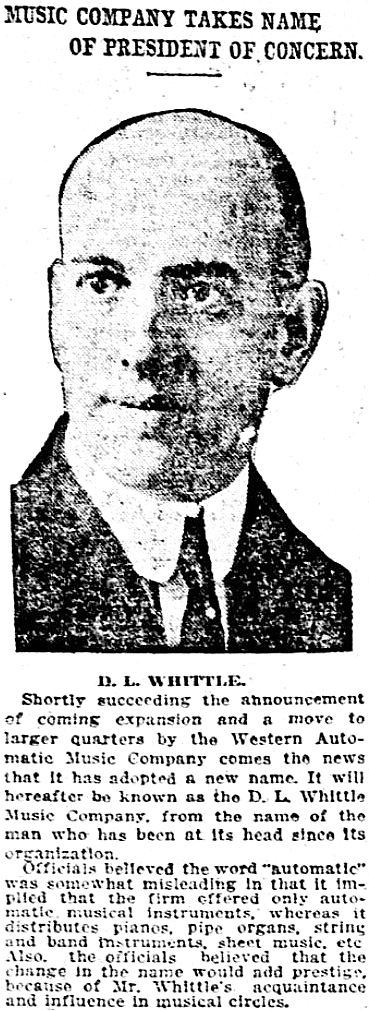
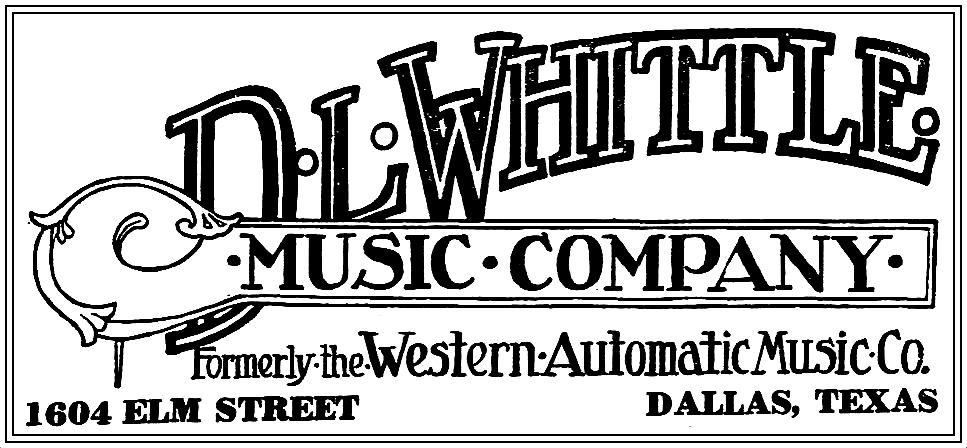
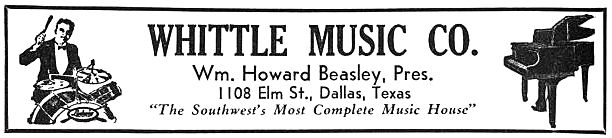
D. L. Whittle (1879-1970) came to Dallas in 1912 and was involved in several businesses (including selling Wurlitzer pipe organs and co-owning the Crystal Theater). He became president of Western Automatic Music Co. (which sold electric player pianos) and eventually changed the name to the D. L. Whittle Music Co. A few years later he sold the business to Howard Beasley who decided to keep the Whittle name. (See the 1968 Sam Acheson interview with Whittle at the bottom of this post for more information about Mr. Whittle and his memories of Dallas in the ‘teens.)

Whittle’s became one of Dallas’ premier music companies, selling instruments and recorded music, offering lessons, hosting performances, etc. According to a Dallas Morning News article by Kent Biffle, customers included Van Cliburn and Arthur Rubinstein, and “Al Jolson once sold tickets to one of his own shows” at the store’s ticket window (DMN, May 31, 1964).

Business was flourishing and all was going well, until the early 1960s when it was announced that the block the building was on (as well as other adjacent blocks) was set to be bulldozed to make way for the construction of One Main Place. Interestingly, Whittle’s and the Dallas, Texas Corp. (developers of One Main Place) agreed to a land swap: the music company would get land in Oak Lawn and a fancy new building built on it in exchange for the Elm Street property. Only after Whittle’s had taken occupancy of their new home would the 63-year-old building be demolished. (Seems like a pretty sweet deal for the Whittle company — perhaps the fact that D. L. Whittle was a major stockholder of the Texas Bank & Trust Co. — which had ties to the One Main Place project — was a factor.)

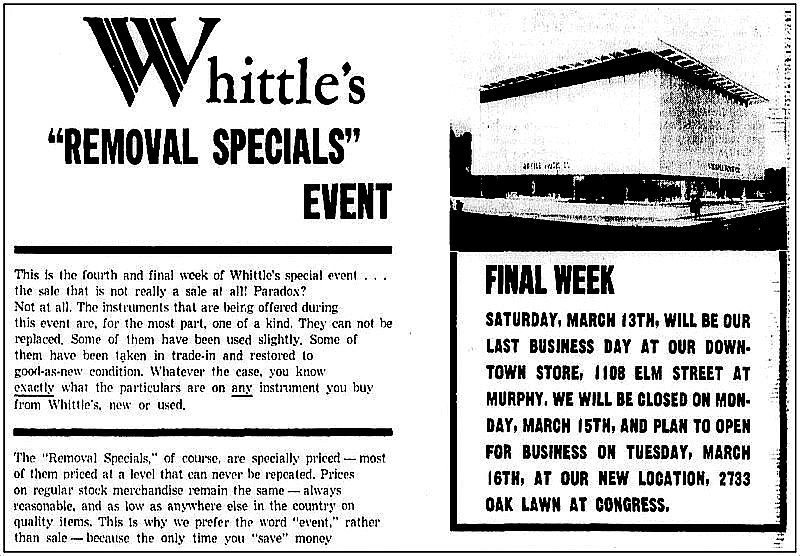
Whittle’s moved into its new location at 2733 Oak Lawn in March, 1965. Not only was it a nice new building, it also finally had “ample parking.” Whittle’s ceased operations sometime in … the ’80s? … but the George Dahl-designed building still stands, here.

I’ve never been a huge fan of One Main Place, but it was a VERY BIG DEAL in the late ’60s. It was envisioned as an entire complex — One Main Place, Two Main Place, and Three Main Place — but only one building was ever built. Yeah, we got another tall building out of the deal (the symbol of “dynamic growth!”), but the view of the attractive three-story building in the photo at the top of this post is, let’s face it, far more aesthetically pleasing than the same view today. Sorry, little building. I wish you’d survived.

*

Most images and clippings are larger when clicked.
harris_moving_dmn_112092Nov. 20, 1892

harris_souvenir-gd-dallas_1894
1894

harris_dmn_070299
1899

whittle_dmn_092318
1918

whittle_dmn_110219
1919

whittle-music-co_logo_dmn_110219
1919

ad-whittle-music_1922-directory1922

ad-whittle-music_bryan-street-high-school_1927-yrbk1927

ad-whittle-music_tx-almanac-1945-461945

whittle_dmn_030765_final-week-downtown
March, 1965

***

Sources & Notes

Original source of photo at top is unknown — I found it on Flickr, here. The Oliver Luggage Co. appears to have been a next-door neighbor for only a year or two, beginning in 1956.

I was one of thousands of school children who bought instruments and sheet music from Whittle’s on Oak Lawn. I always liked going into that cool building. I had no idea George Dahl designed it. It looks like the Dallas Historical Society has the Whittle Music Co. collection. You can see a ton of thumbnail images here. Here are a couple of those thumbnails blown up (apologies for the picture quality) — the Oak Lawn store:
whittles_sign-exterior_oak-lawn_dhs

whittles_parking-lot_dhs

whittle-music-co_ad

*

Copyright © 2017 Paula Bosse. All Rights Reserved.
West Jefferson and Tyler — 1913

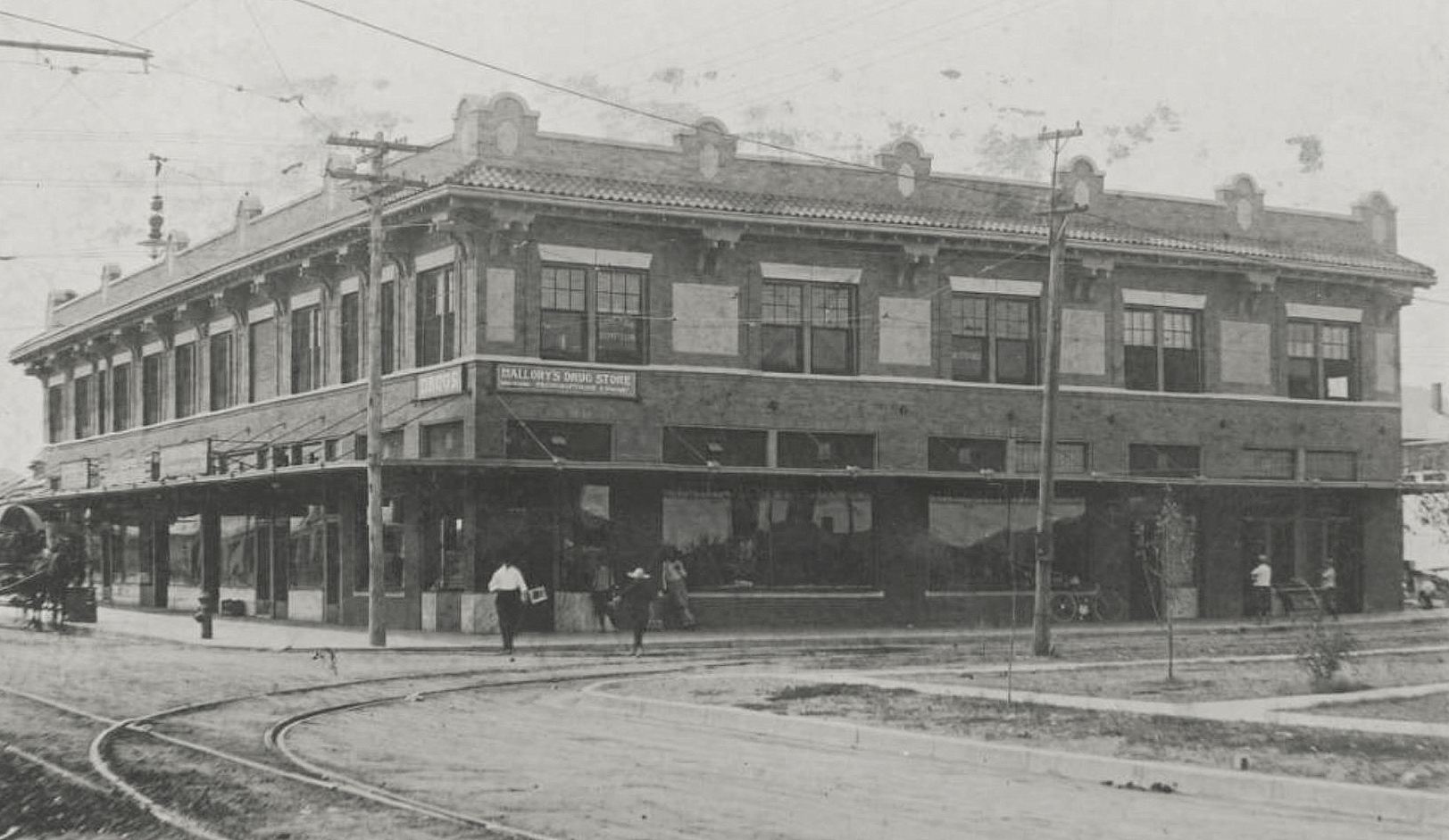
mallorys-drug-store_ca-1913_cook-collection_smuWhy, yes, we ARE accessible by streetcar… (click for larger image)

by Paula Bosse

Every time I pass the northwest corner of West Jefferson and Tyler in Oak Cliff, I admire this building. Actually, I love this building. And I’m always surprised it’s still there.

This photo shows Tyler St. to the right and Jefferson Blvd. heading off to the left. See what it looks like today on Google Street View, here.

It appears to have been built in 1911 or 1912. And it still looks pretty good.

Thank you, Oak Cliff!

***

Sources & Notes

Real photo postcard titled “Mallory’s Drug Store” from the George W. Cook Dallas/Texas Image Collection, DeGolyer Library, Central University Libraries, Southern Methodist University; see the card front and back and read more information here.

A couple of other photos can be found in the post “Dallas in ‘The Western Architect,’ 1914: Businesses,” here (scroll down to number 7). Seems the building was designed by architect C. A. Gill, the man behind the famed Gill Well.

*

Copyright © 2017 Paula Bosse. All Rights Reserved.


Commerce & Ervay, Looking East

commerce-ervay_east_flickr-colteraEven then a busy downtown intersection…

by Paula Bosse

Above, Commerce Street, looking east from Ervay, with the old Post Office/Federal Building on the northeast corner (replaced by the Mercantile Bank Building in the early 1940s). In the background, at the right side of the photo, the Metropolitan Business College, at Commerce and St. Paul.

See a view of Commerce looking west in 1913 — showing the Metropolitan Business College in the foreground and the new Adolphus Hotel a few blocks away, here.

Another eastward-looking view — from about 1895, when the post office was still pretty new — is here.

And the present-day Google Street View of Commerce and Ervay looks like this.

***

Sources & Notes

I’m not sure of the original source of this photograph, but I found it on Coltera’s Flickr stream (I didn’t save the link and I can’t find it again). If anyone knows of a sharper image of this photo, I’d love to see it!

*

Copyright © 2017 Paula Bosse. All Rights Reserved.

Sunset High School — 1929

sunset-high-school_1929_jan-gradsAbove-the-knee hemlines! (click to see larger image)

by Paula Bosse

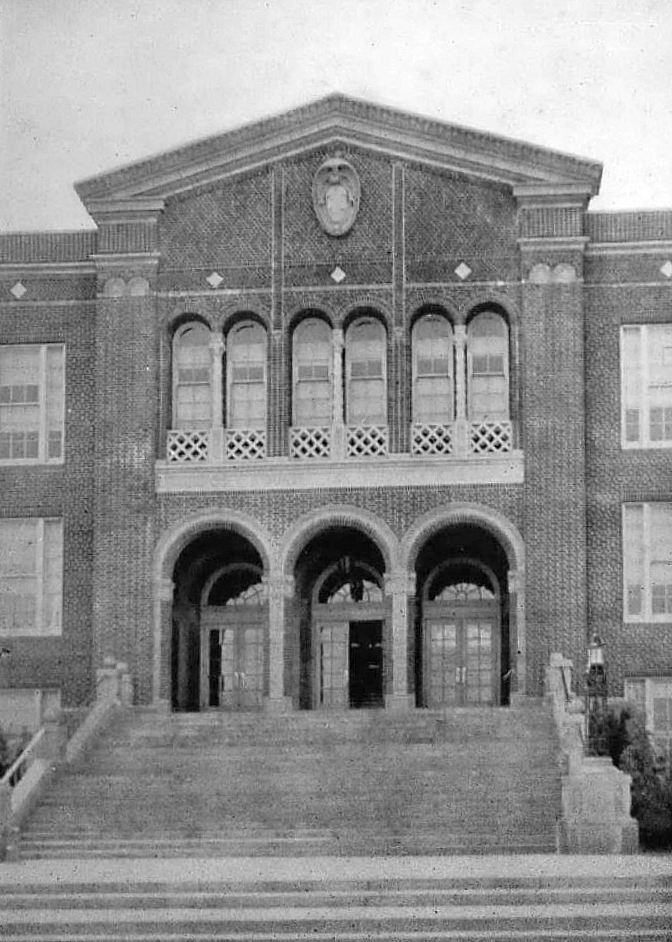
Two photos from Oak Cliff’s Sunset High School in 1929. Above, seniors who were to graduate early in January (those girls are wearing surprisingly short skirts!) and, below, the frumpier but generally pleasant-looking faculty.

sunset-high-school_1929_faculty

And the school itself — Oak Cliff’s second high school (Adamson was the first) — then only four years old.

sunset-high-school_1929_front

***

Photos from the 1929 Sunset High School yearbook.

Why, yes, Sunset does have a Wikipedia page, here.

To see what Sunset looks like these days, see it on Google Street View, here.

All photos larger when clicked.

*

Copyright © 2017 Paula Bosse. All Rights Reserved.

At the Palace: The Streets of Sin and The Mikado of Jazz — 1928

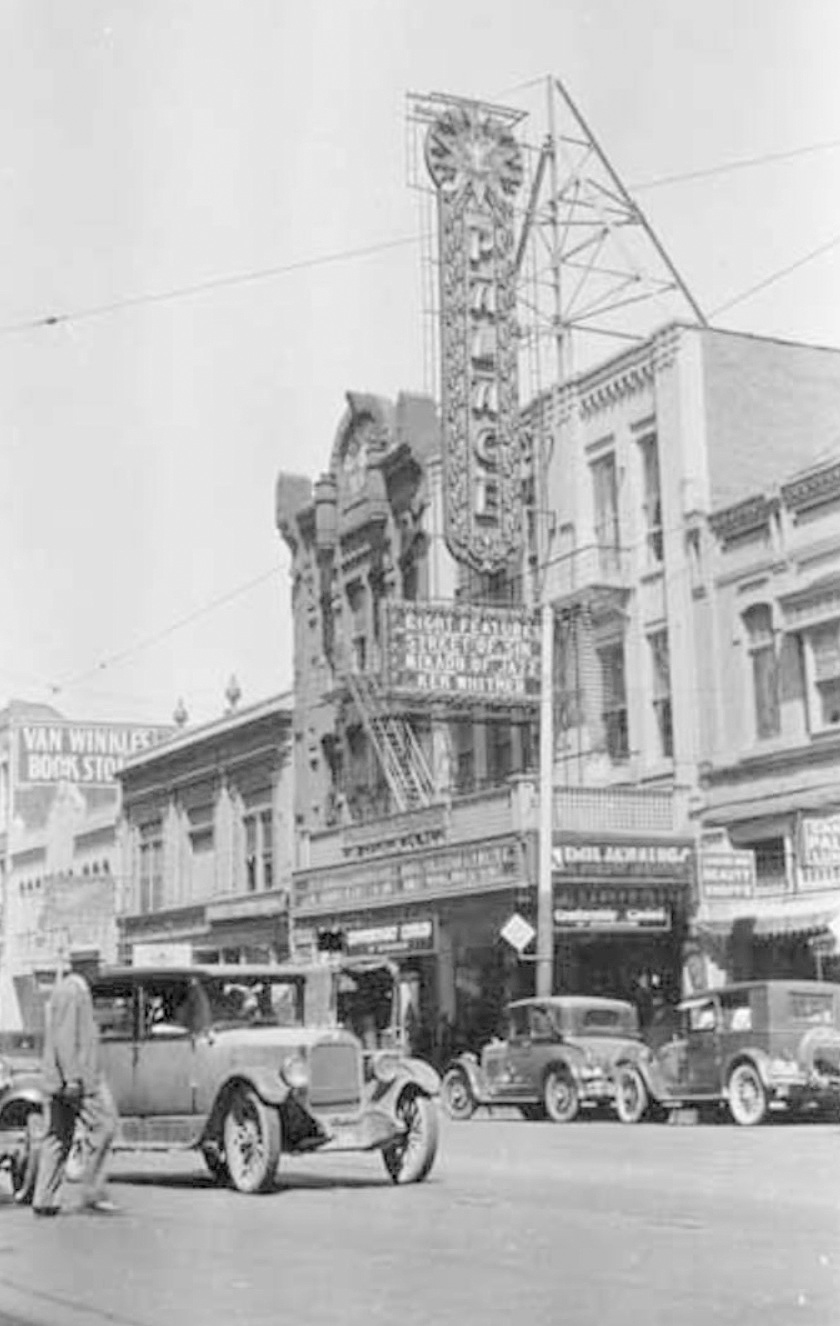
palace-theater_052628_univ-of-washington-librariesElm & Ervay, 89 years ago… (click for larger image)

by Paula Bosse

The photograph above is not the greatest quality, but it’s a photo I’ve never seen before. It shows the Palace Theatre in the 1600 block of Elm Street, just west of Ervay, with the well-known (and very large) Van Winkle’s Book Store in the background. One of the things that makes this photo so interesting is seeing the cumbersome support tower on top of the building holding up the ornate Palace sign. See what a slightly different Palace sign looked like the next year, lit up in neon, here.

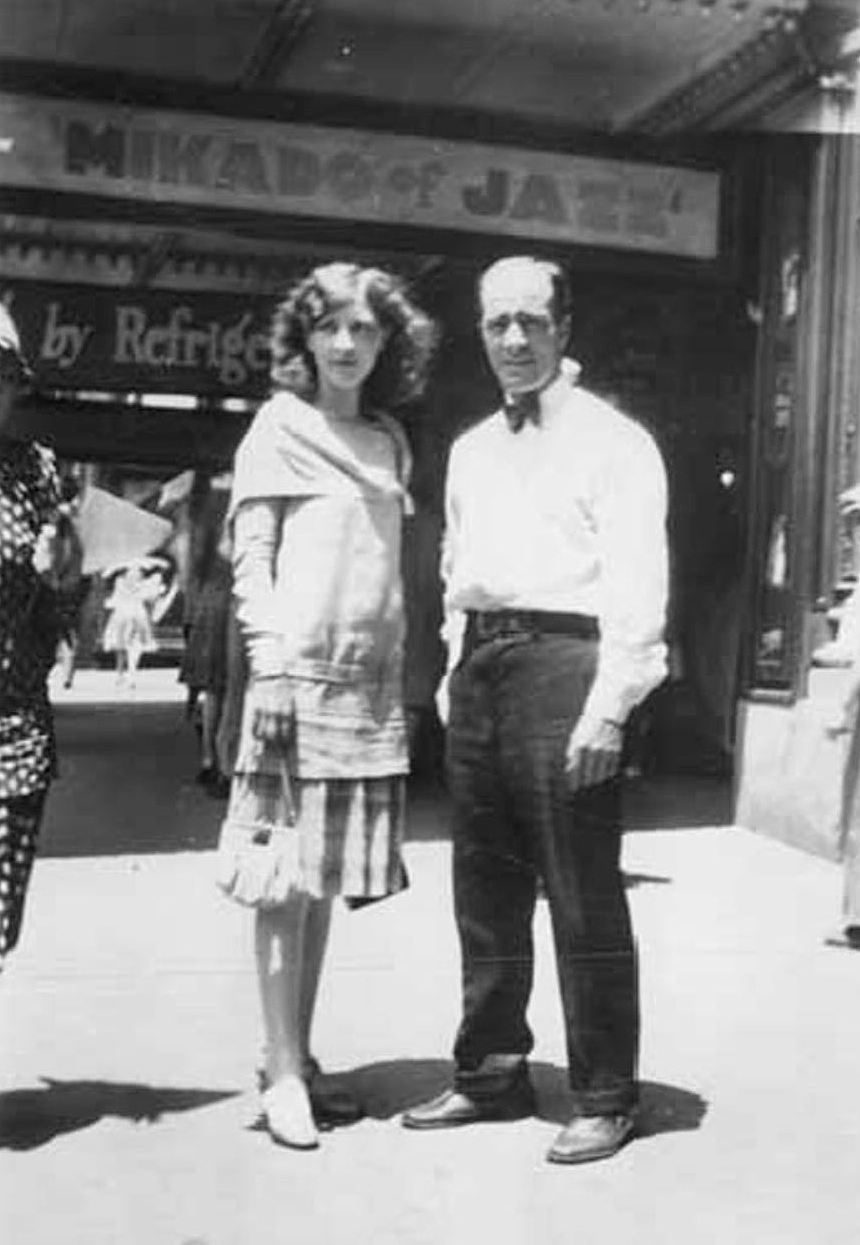
The photo above was an amateur snapshot, taken to document the tour of the traveling live stage revue The Mikado of Jazz which played the Palace in late May of 1928. The photo below — which shows the revue’s stage manager and his wife standing on the sidewalk in front of the Palace — was taken at the same time.

palace-theater_052628_univ-of-washington-libraries_sidewalk

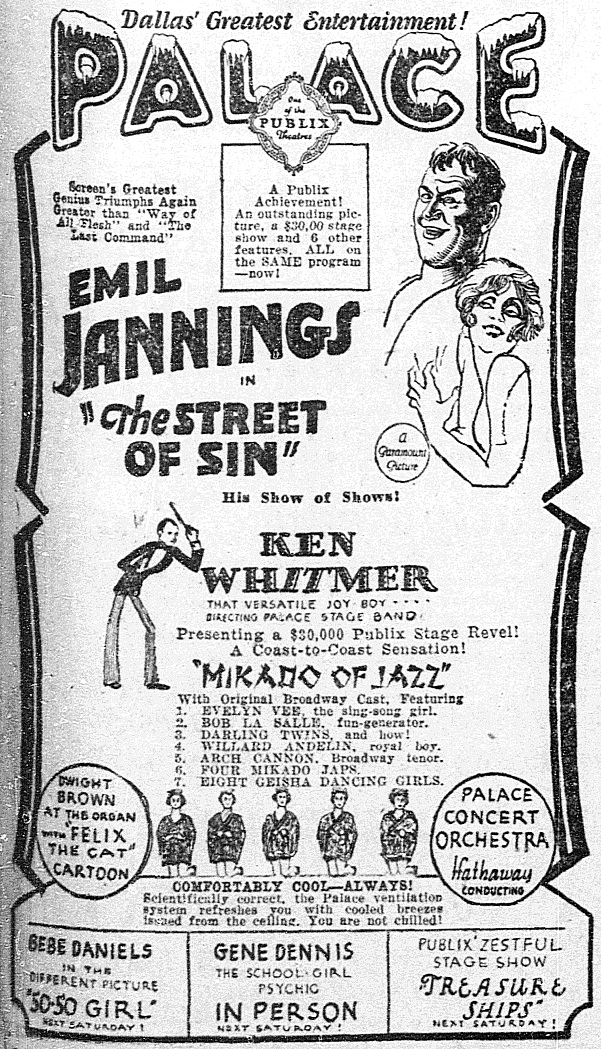
Part of a sign visible behind them was probably advertising that the theater was “cooled by refrigerated air.” The ad at the bottom of this post includes this informative little tidbit:

COMFORTABLY COOL — ALWAYS!

Scientifically correct the Palace ventilation system refreshes you with cooled breezes issued from the ceiling. You are not chilled!

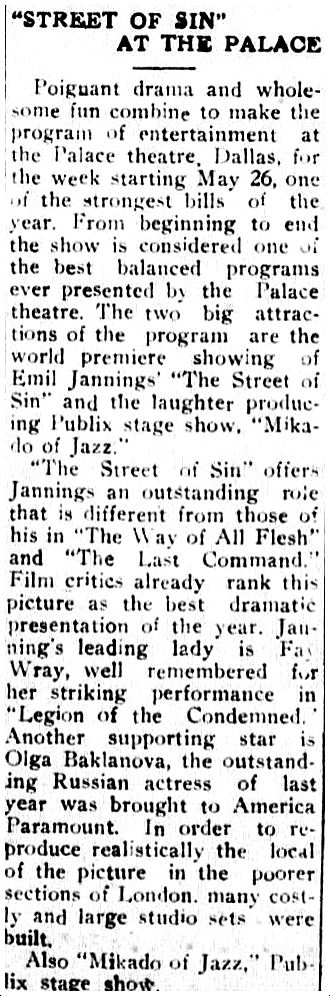
What was The Mikado of Jazz? It appears to have been a jazzed-up version of The Mikado — making Gilbert & Sullivan relevant to 1920s’ audiences — like Hamilton for the Jazz Age (“This is said to be the first time that any comic opera has been syncopated and presented with a stage band.”Dallas Morning News blurb, May 20, 1928)

Also on the bill was the “world premiere” (?) of the film The Street of Sin, starring Emil Jannings and Fay Wray, a live stage orchestra, an organ player, and a Felix the Cat cartoon.

mikado-of-jazz_texas-mesquiter_052528
Texas Mesquiter (Mesquite), May 25, 1928

All at the Palace — “Dallas’ Greatest Entertainment!” Enjoyed at a comfortable temperature.

palace_mikado-of-jazz_dmn_052728
May 27, 1928

***

Sources & Notes

Photographs (taken in May, 1928) are from the Rene Irene Grage Photograph and Ephemera Collection, 1921-1930s, University of Washington Libraries, Special Collections: more information on the first photo (the view of the theater from across the street) is here; more info on the second photo is here.

For other posts that show the Palace in this era, see these posts:

  • “Next-Door Neighbors: The Palace Theater and Lone Star Seed & Floral — 1926,” here 
  • “Dazzling Neon, Theater Row — 1929,” here

Click photos and clippings to see larger images.

*

Copyright © 2017 Paula Bosse. All Rights Reserved.
Let the McClure Electric Co. Solve Your “Current Problems” — 1952

mcclure-electric-company_flickr_colteraThe lightning bolt on the sign is a nice touch…

by Paula Bosse

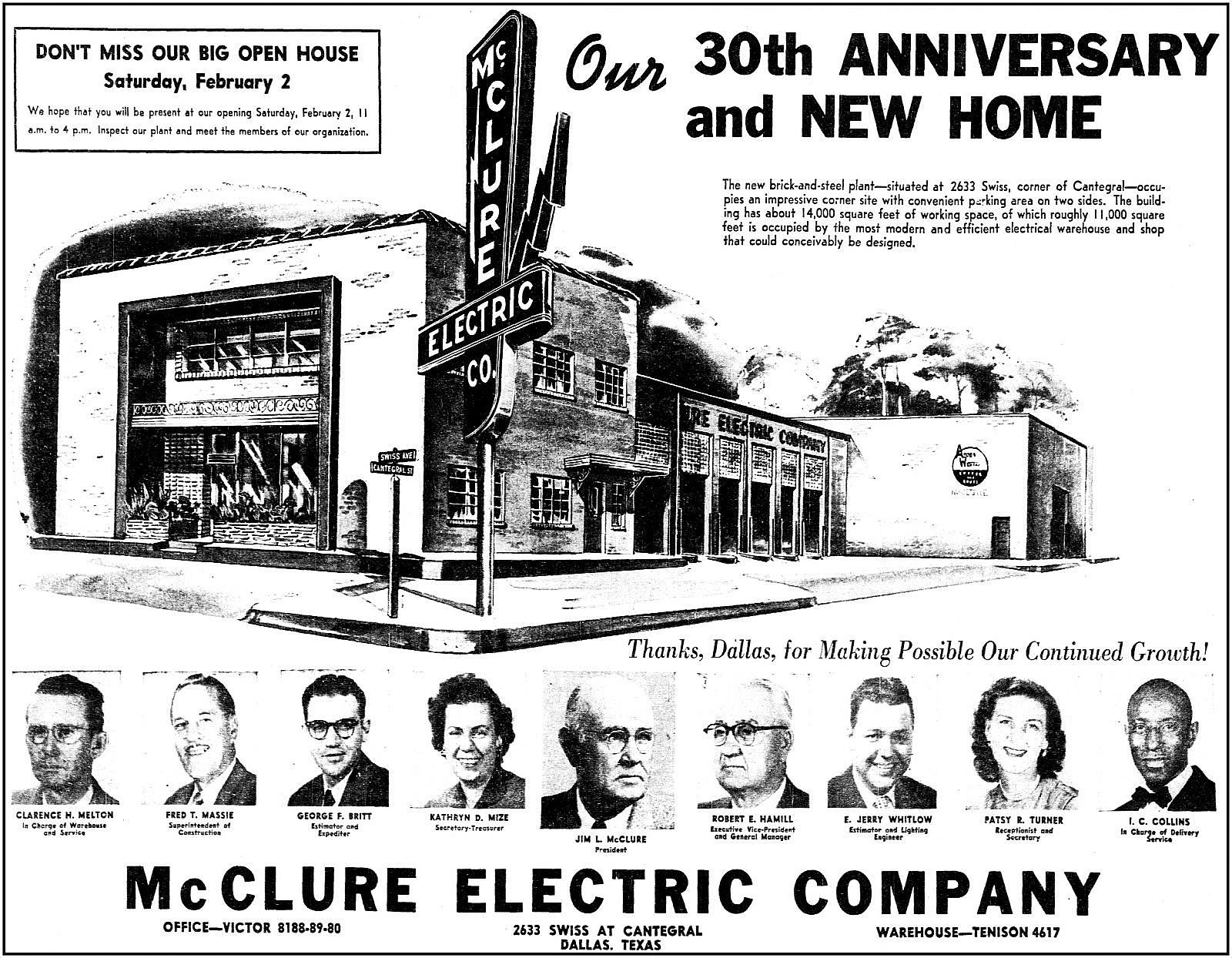
This is one of those idealized postcards from the ’40s and ’50s in which everything looks more pristine and perfect than was ever possible in real life. I love the postcard-version of this building, located at 2633 Swiss Avenue. And, glory be, it’s still standing — it just doesn’t look anywhere near as nice as it does in this postcard. (Why must people paint brick buildings? It looked so much better in 1952 when it was brand new. Today it looks like this.)

The McClure Electric Co. — which started life as the Emerson-McClure Electric Co. in 1922 — moved into their swanky new digs at Swiss and Cantegral in early 1952 and remained in business there until at least 1966. In the early ’70s, the building was home to Jim Dandy Fast Foods/Jim Dandy Fried Chicken for several years. Later, it appears that it might have been split up into office space. Currently it seems to be a fruit and vegetable produce company.

And that poor building has lost all its character.

*

mcclure-ad_dmn_0201521952 ad

swiss-cantegral_1952-mapsco
Swiss & Cantegral, 1952 Mapsco

***

Sources & Notes

Postcard found on Flickr.

More on the McClure company’s grand opening at this Swiss Avenue location can be found in the Dallas Morning News article “McClure Electric Company at Home in Modern Plant” (DMN, Feb. 1, 1952).

*

Copyright © 2017 Paula Bosse. All Rights Reserved.
“Dallas’ Dependable Business Climate” — 1959

ad-business-in-dallas_1959_photo-detThe “D” in “Big D” stands for “dinero”… (click for larger image)

by Paula Bosse

The booming Dallas skyline, captured by Squire Haskins on September 10, 1959, was used in a boosteriffic Chamber of Commerce-y statistics-filled ad.

“It’s exciting to live, do business, make money and grow in Dallas.”

ad-business-in-dallas_1959

***

This Industrial Dallas, Inc. ad appeared in the January, 1960 issue of Fortune magazine. I found it on eBay, here.

Images larger when clicked.

*

Copyright © 2017 Paula Bosse. All Rights Reserved.
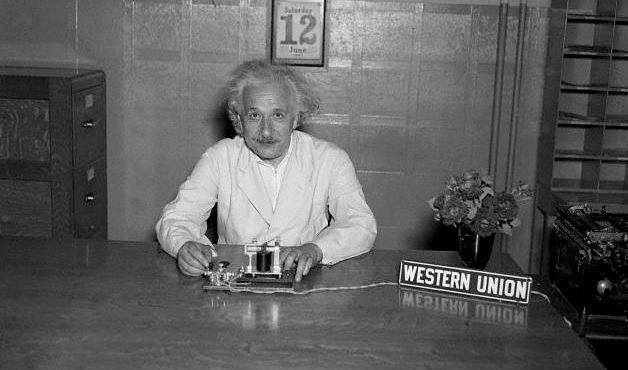
Albert Einstein “Threw the Switch” in New Jersey to Open the Pan-American Exposition in Dallas — 1937

pan-american-expo_einstein_061237Einstein at the switch, June 12, 1937…

by Paula Bosse

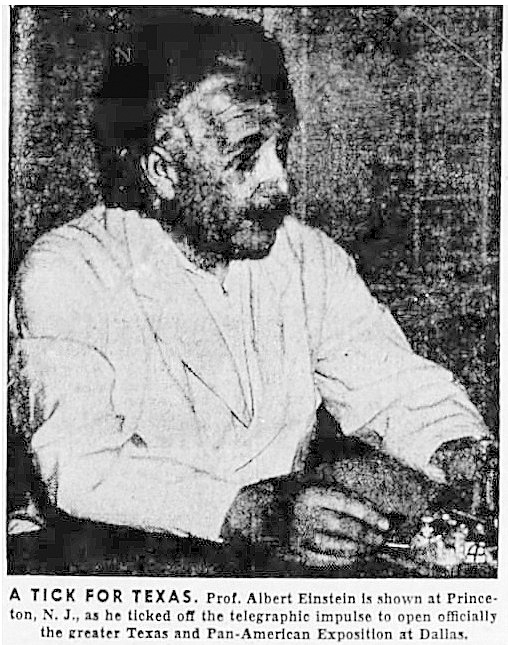
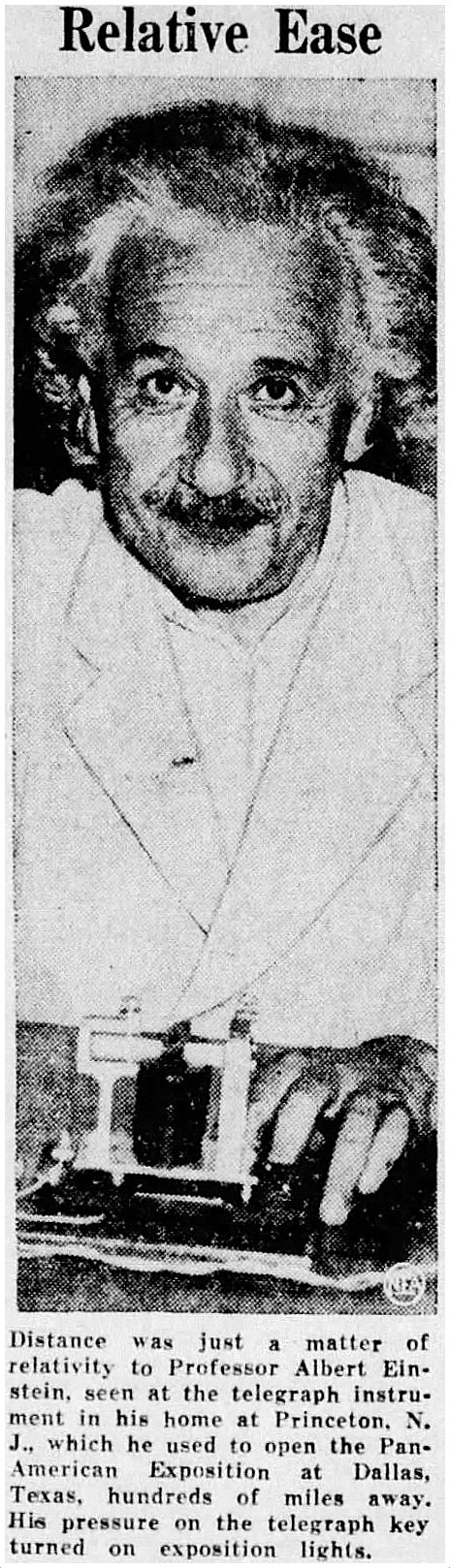
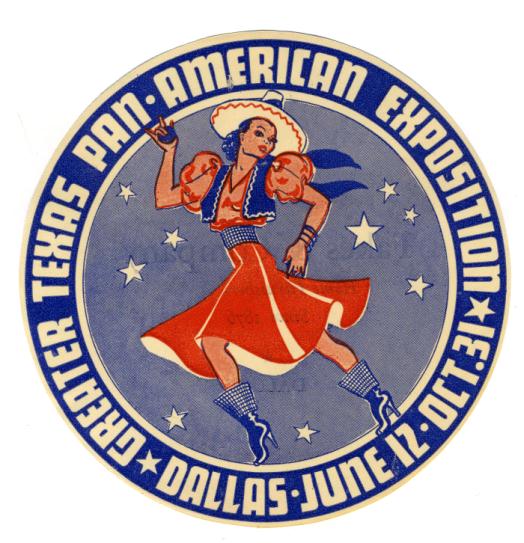
Who knew? Albert Einstein, the world’s most famous physicist, helped open the Greater Texas and Pan-American Exposition. The exposition was held at Fair Park for 20 weeks, from June 12, 1937 to October 31, 1937, as a follow-up of sorts to the Texas Centennial (the city had built all those new buildings — might as well get their money’s worth!). I’m not quite sure how Einstein got roped into this, but looking at the photo above, he seemed pretty happy about what was, basically, a long-distance ribbon-cutting. Via telegraph.

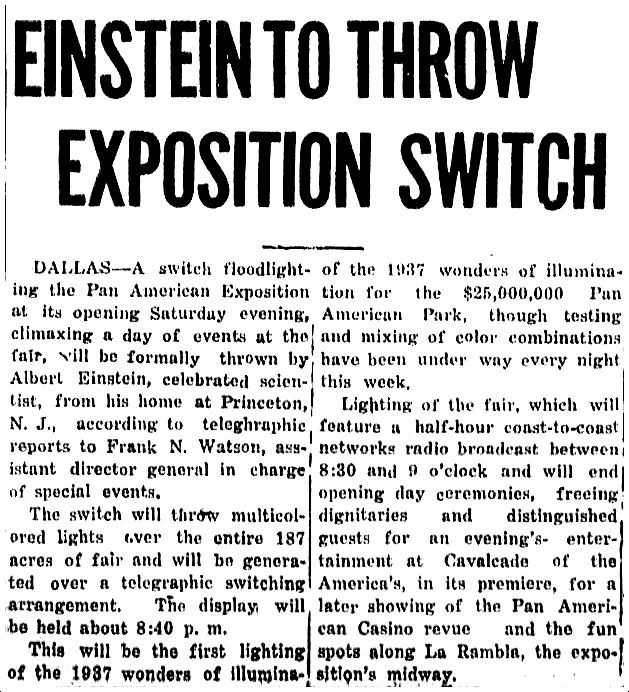
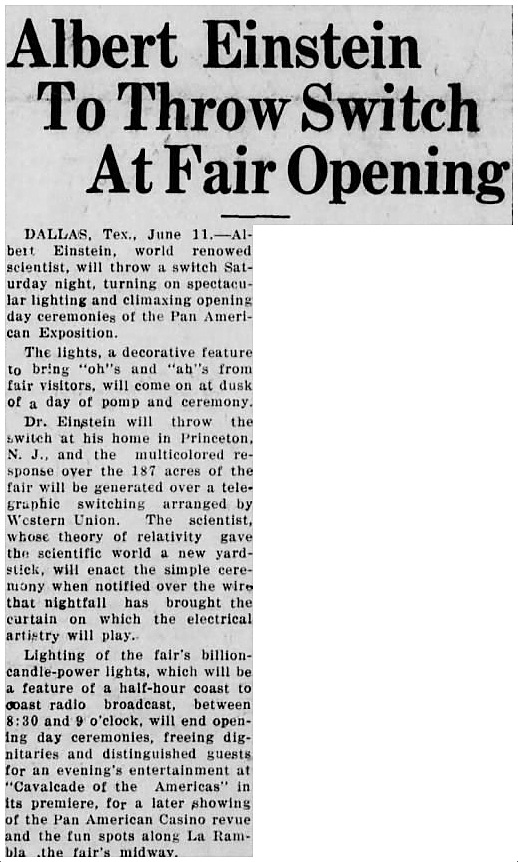
The plan was for Professor Einstein to officially open the Pan-American Exposition by “throwing the switch” which would turn on massive displays of lights around Fair Park. He would do this from Princeton, New Jersey, where he lived, by closing a telegraph circuit which would put the whole thing in motion. Newspaper reports varied on where exactly Herr Einstein was tapping his telegraph key — it was either the study in his home, in his office, in a Princeton University administration building, or in the Princeton offices of Western Union (the latter of which was mentioned in only one report I found, but it seems most likely).

Einstein was a bona fide celebrity, and this was national news — newspapers around the country ran stories about it, and the ceremony was carried live on coast-to-coast radio. Almost every report suggested that Einstein’s pressing of the key in New Jersey would be the trigger that lit up the park in Texas, 1,500 miles away — which was partly correct. According to The Dallas Morning News:

Lights on the grounds will be turned on officially at 8:40 p.m. when Dr. Albert Einstein, exponent of the theory of relativity, presses a key in his Princeton home to fire an army field gun. With the detonation of the shell, switches will be thrown to release the flood of colored lights throughout the grounds. (DMN, June 10, 1937)

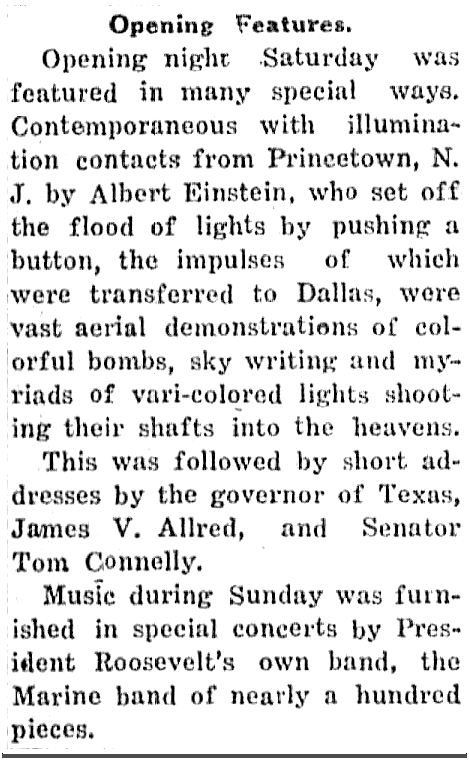
So on June 12, 1937 he pressed a telegraph key somewhere in Princeton, NJ, an alert was instantly wired to Dallas, an army field gun (in some reports a “cannon”) was fired, and that blast was the cue for electricians positioned around the park to throw switches to illuminate the spectacular displays of colored lights.

The Western Union tie-in gimmick was a success. Newspaper reports might have been a little purple in their descriptions, but from all accounts, those lights going on all at once was a pretty spectacular sight.

Dr. Albert Einstein, celebrated scientist, threw a switch that flashed a million lights over the 187-acre exposition park. The flash came at 8:40 o’clock and instantly the huge park became a city of a million wonders. Flags from a thousand staffs proclaimed their nationality [and] bands played the national airs of the nations of the Western Hemisphere as lusty cheers roared with thunderous approval. The Greater Texas and Pan-American Exposition was formally opened. It is on its way. (Abilene (TX) Reporter News, June 13, 1937)

The Dallas News describes the crowd as stunned into silence:

The waiting participants in the ceremonies at Dallas heard the results [of Einstein’s telegraph signal] when a cannon boomed. Electricians at switches around the grounds swung the blades into their niches and the flood of light awoke the colors of the rainbow to dance over the 187-acre park. Its breath taken by the spectacle, the crowd stood silent for a moment, and then broke into a cheer. (“Pan-American Fair Gets Off to Gay Start” by Robert Lunsford, DMN, June 13, 1937)

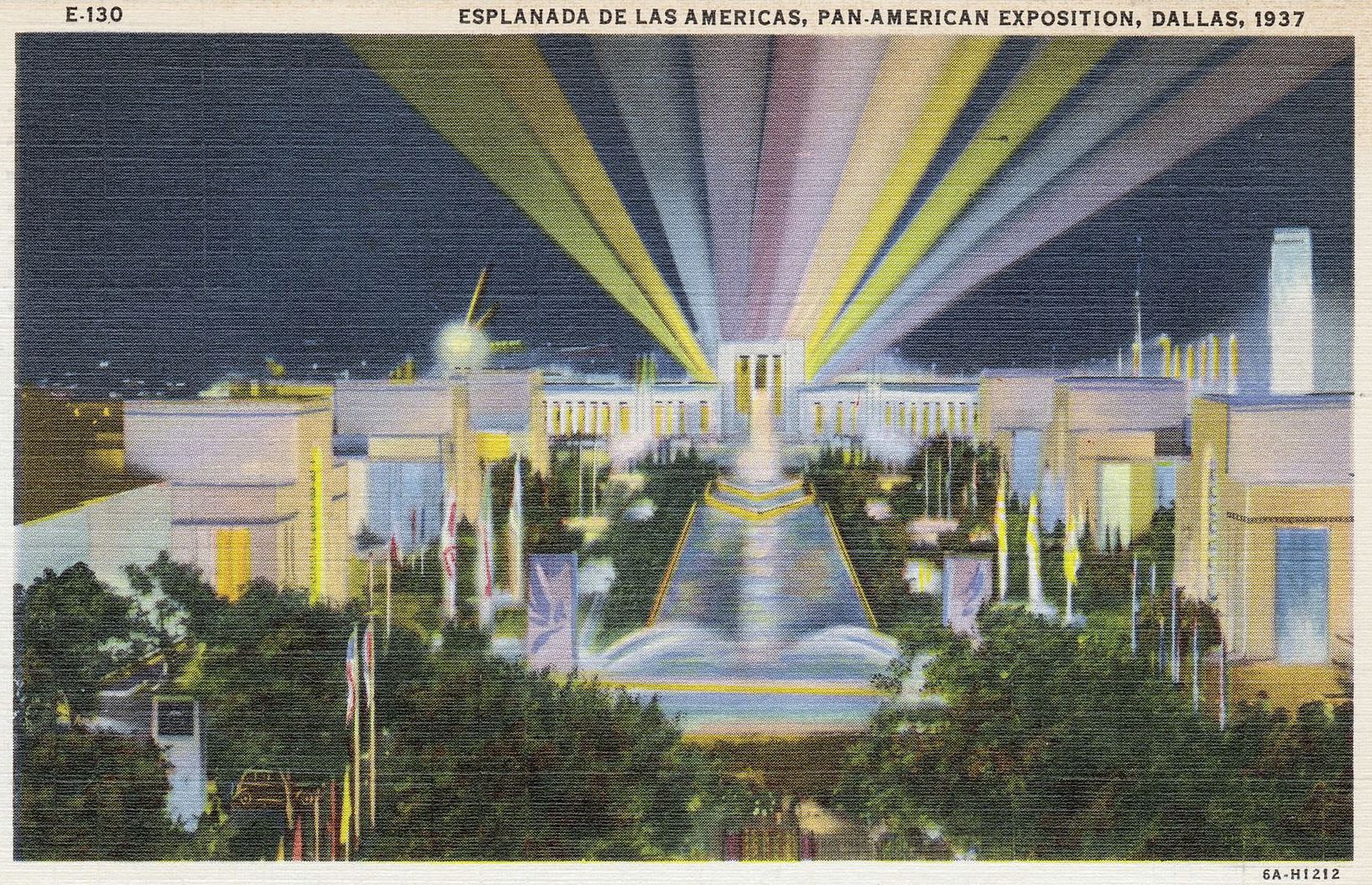
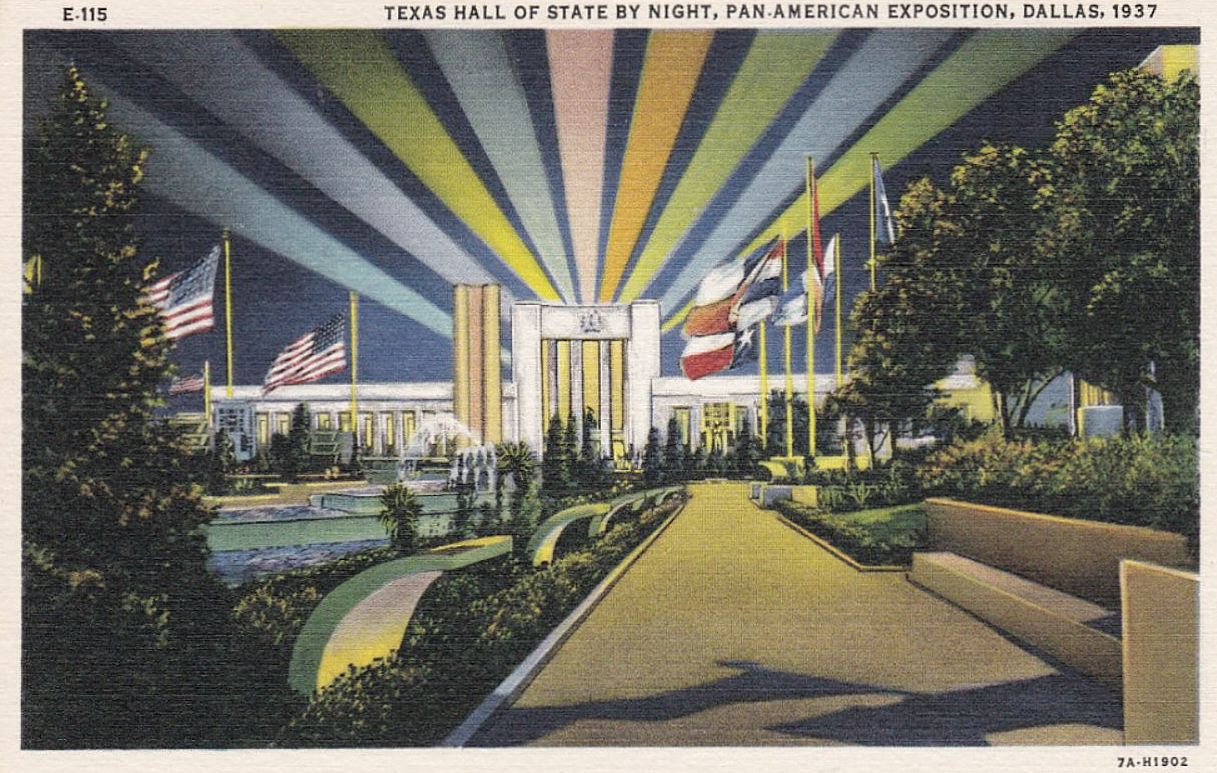
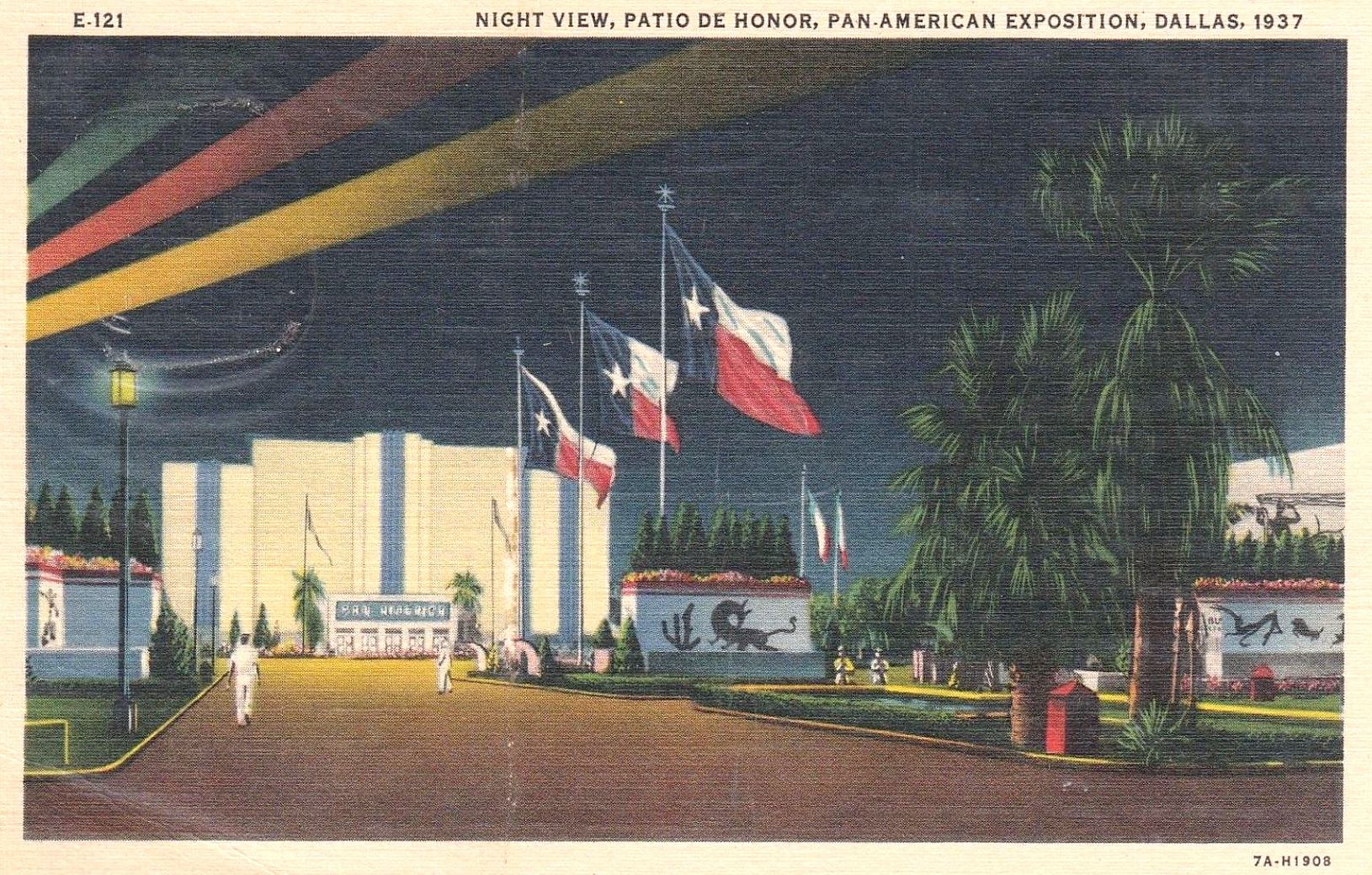
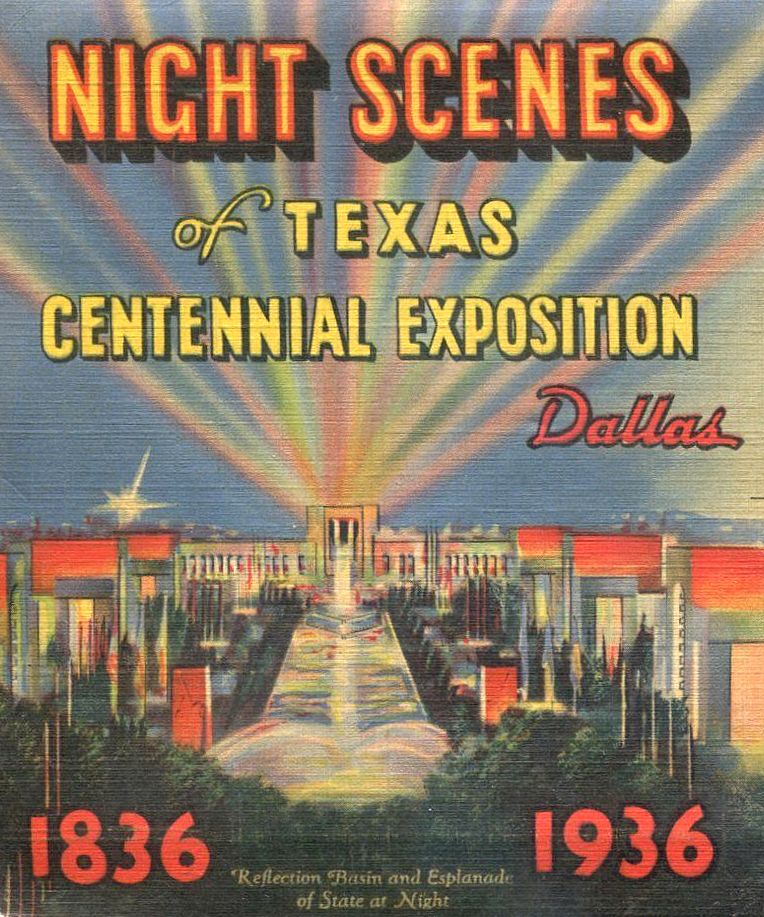
Many of the lighting designs and displays had been used the previous year during the Centennial, but, as with much of the attractions and appointments throughout the park, they were improved and spectacularized for the Pan-American Expo. And people loved what they saw.

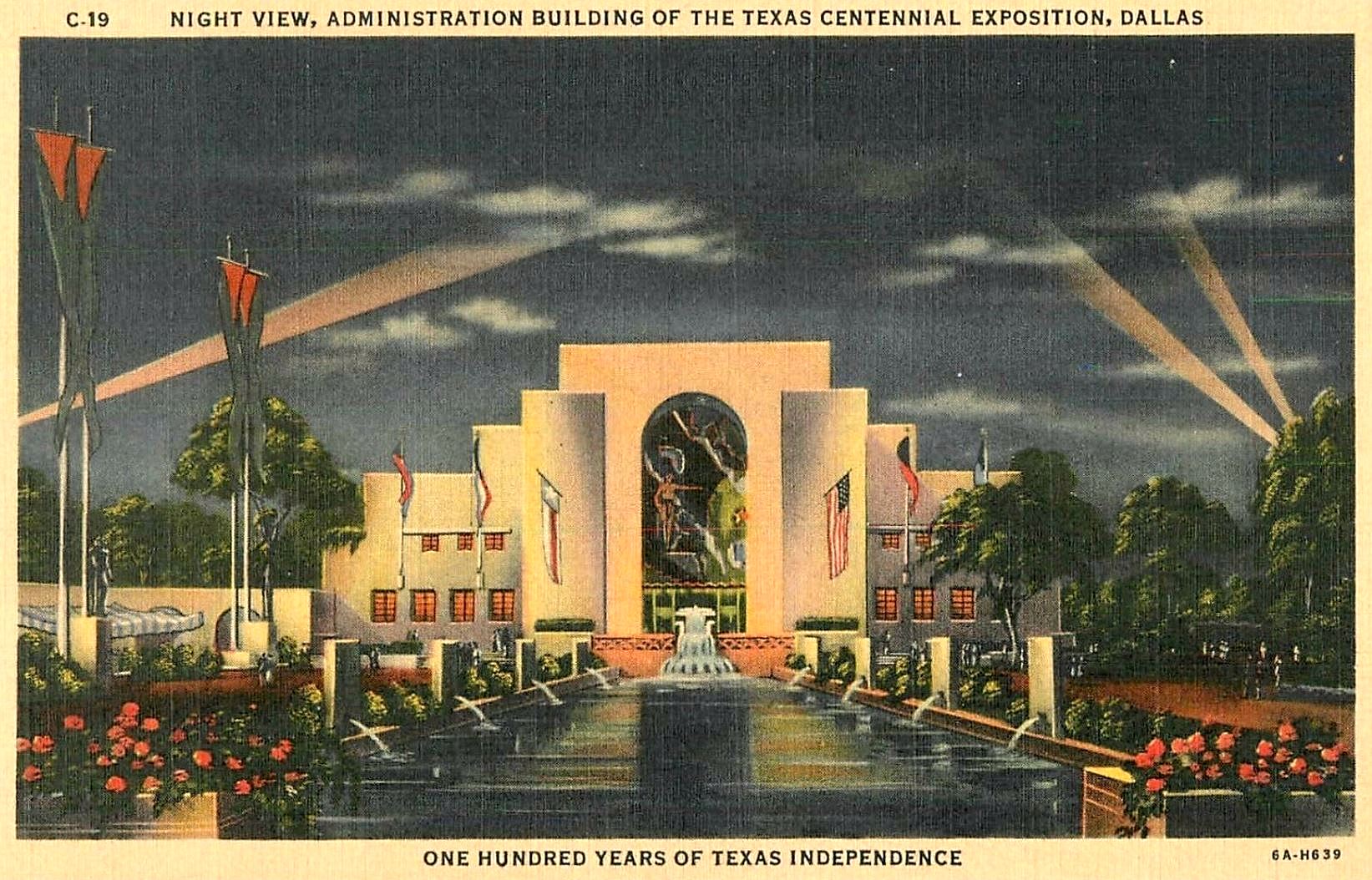
Despite the multi-million dollar structures, air conditioning demos, works of art and other newfangled additions to the space, when people left the Centennial Exposition one thing was on everyone’s tongues, according to historical pollsters: the lights.

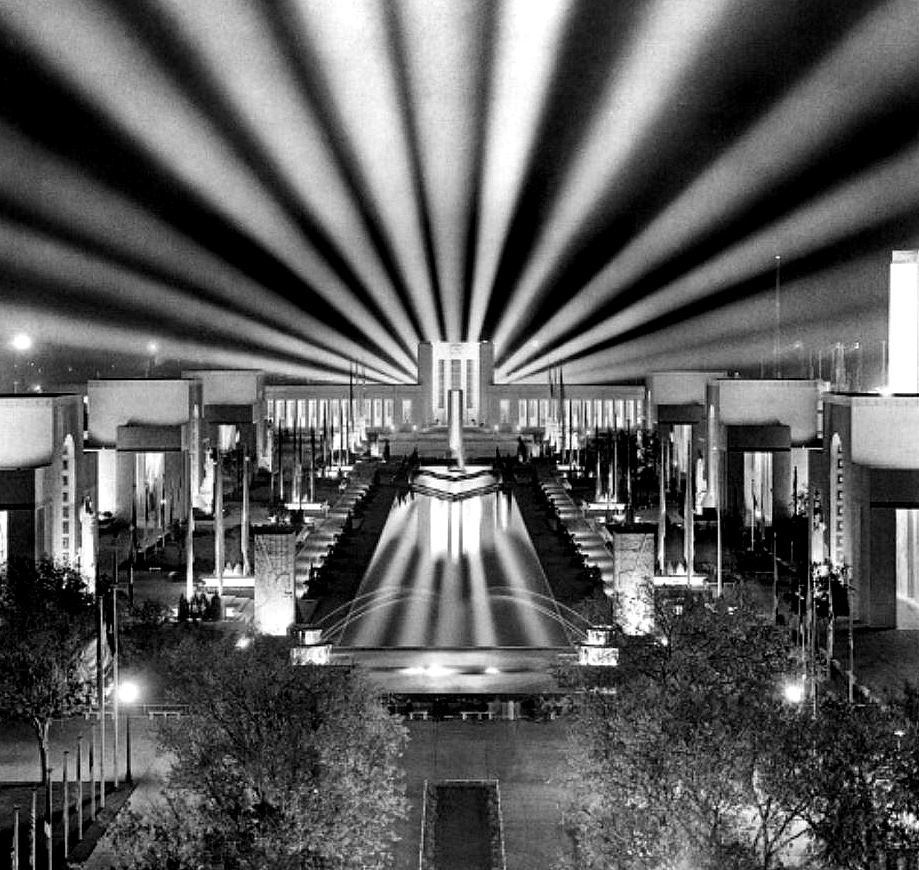
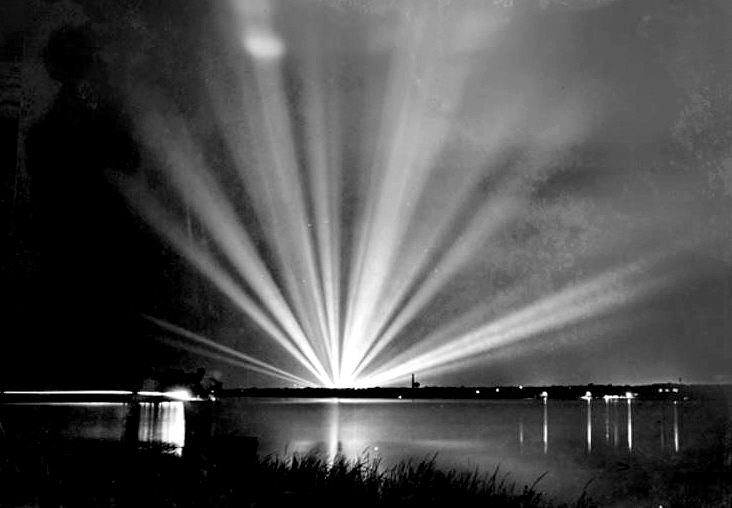
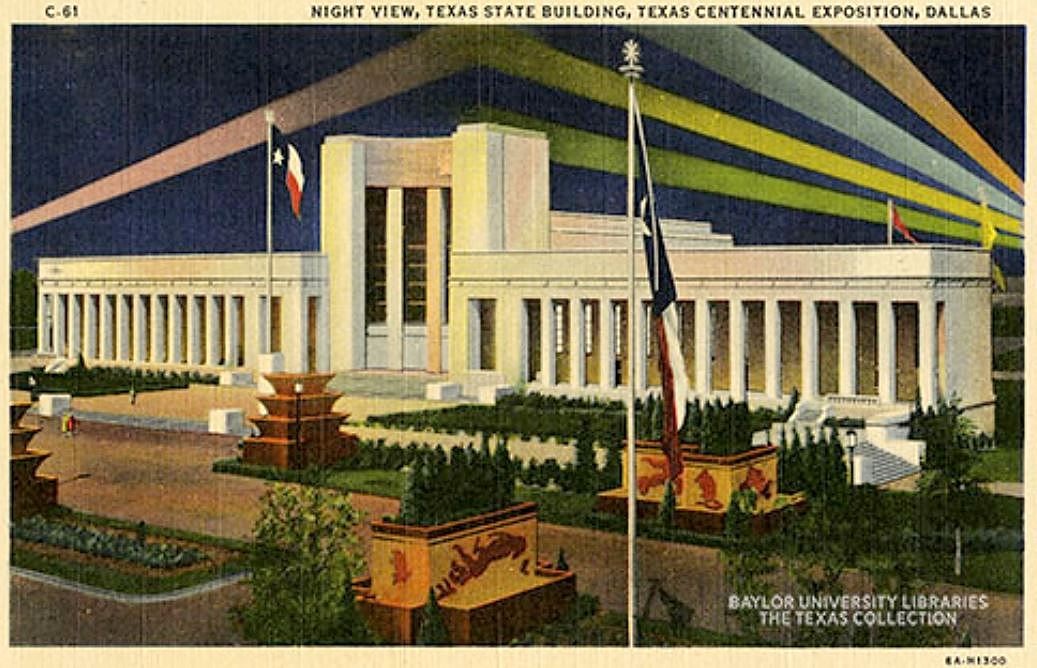
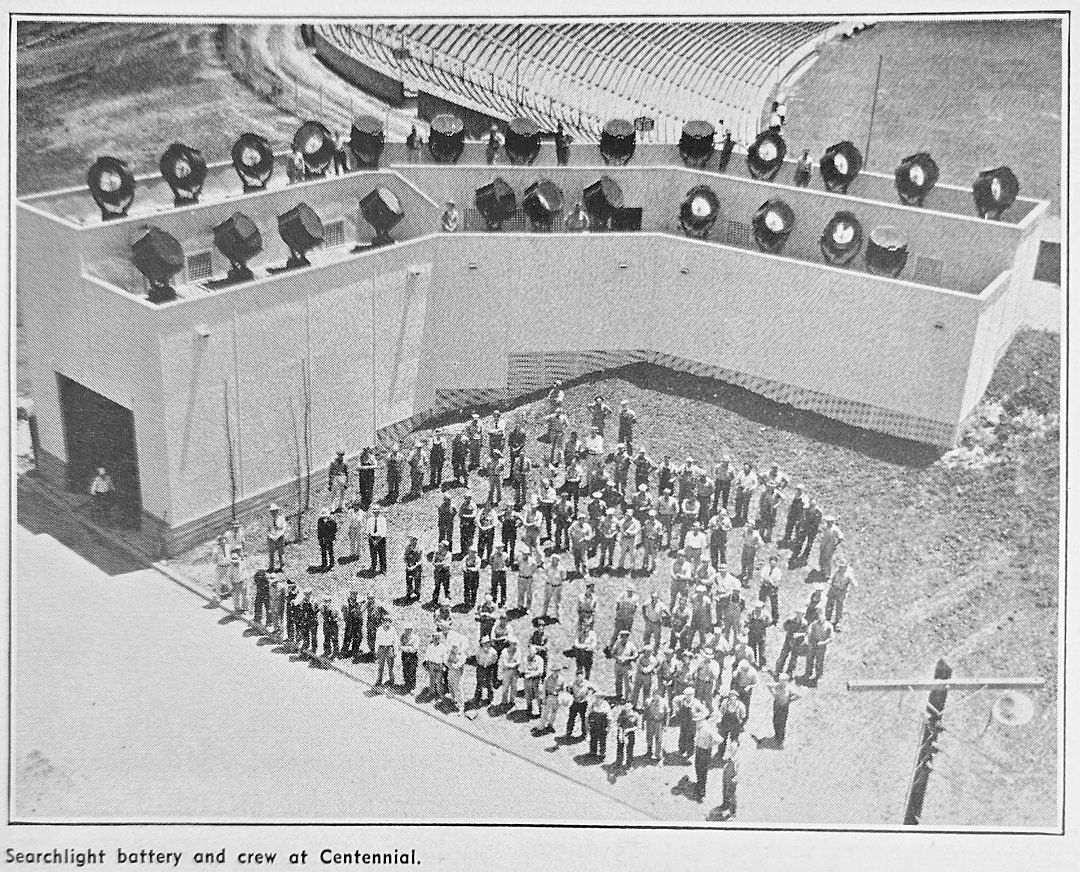
Positioned behind the Hall of State were 24 searchlights scaffolding into a crowned fan shape. “They all moved and were different colors,” says [Jim] Parsons [co-author of the book Fair Park Deco]. “It sounds gaudy, but people loved it.” The lights, he goes on to tell, were visible up to 20 miles away.

Considering most of the people who were visiting the fairgrounds were coming from rural farming communities with no electricity, the inspiring nature of those far-reaching beams makes a lot of sense. (Dallas Observer, Nov. 7, 2012)

Thanks for doing your part for Dallas history, Prof. Einstein!

pan-american-expo_esplanade_postcard

pan-american-expo_hall-of-state_postcard

pan-american-expo_patio-de-honor_ebay

Below, photos from the Texas Centennial, 1936. The multicolored lights could be seen from miles away — here’s what they looked like from downtown and from White Rock Lake.

centennial_pan-american_lights

skyline_downtown-to-fair-park_1936_GE-colln_museum-of-innovation-and-science

fair-park-lights_white-rock-lake

tx-centennial_night-scene_espalanade_hall-of-state_lights_ebay

tx-centennial_night_hall-of-state_lights_flickr_baylorvia Baylor University Flickr stream

tx-centennial_night_administration-bldg_lights_ebay

*

A look behind the scenes: “The general lighting effect is a battery of twenty-four 36-inch searchlights as powerful as the giants that flash from the dreadnoughts of Uncle Sam’s navy. Each searchlight will produce 60 million candlepower. Combined, the battery has a total candlepower of 1.5 billion. A 350,000-watt power generator will produce this colossal quantity of ‘juice.’” And the accompanying photo of the searchlight battery crew manning the candlepower:

tx-centennial_lights_southwest-business-mag_june-1936_photoSouthwest Business, June 1936

**

(All pictures and clippings are larger when clicked.)

einstein_pan-am-expo_denison-press_060937
Denison Press, June 9, 1937

*

einstein_pan-am-expo_waxahachie-daily-light_061137
Waxahachie Daily Light, June 11, 1937

*

einstein_pan-am-expo_denison-press_061437
Denison Press, June 14, 1937

*

einstein_pan-am-expo_medford-oregon-mail-tribune_062337
Medford (Oregon) Mail Tribune, June 23, 1937

*

einstein_pan-am-expo_vernon-daily-record_062437
Vernon Daily Record, June 24, 1937

*

pan-american-expo_drefuss-ad_dmn_061237
1937

pan-american-expo_sticker_1937_cowgirl

***

Sources & Notes

Top photo from the old Corbis site.

Black-and-white photos from the Centennial seen from Fair Park and White Rock Lake are from the Texas/Dallas History and Archives Division of the Dallas Public Library; the photo of the lights seen from downtown Dallas (titled “New skyline at night from Dallas, Texas”) is from the GE Photo Collection, Museum of Innovation and Science (more info on that photo is here).

Sources of other images and clippings cited, if known.

More on the Pan-American Exposition from Wikipedia, here, and from the fantastic Watermelon Kid site of all-things-Fair-Park, here.

*

Copyright © 2016 Paula Bosse. All Rights Reserved.
Traffic at Ross and Pearl — 1920s

ross-and-pearl_galloway_park-citiesLooking northeasterly on Ross from N. Pearl (click for larger image)

by Paula Bosse

The photo above shows the intersection of Ross and Pearl. The streetcar tracks ran along Pearl. We’re looking northeasterly on Ross. To the left, out of frame, would be the Sacred Heart Cathedral (renamed Cathedral Santuario de Guadalupe in 1977). The photo comes from Diane Galloway’s wonderful book The Park Cities, A Photohistory. Her caption:

Traffic jams such as this one at Ross and Pearl Streets during the twenties encouraged Dallasites to pack up and move to newer developments away from the city.

With the crowd of people at the left, I think the traffic in this photo might have been caused by church-going motorists. The license plates on the cars seem to match those from 1927 and 1928 (links to license-plate-dating sites at bottom of post).

That impressive house at the top left with the pointed turret? At the time of this photograph, it was the George A. Brewer Undertaking Company. Like the two-blocks-away Belo Mansion, which was converted into the Loudermilk-Sparkman funeral home in 1926 (seen here), this spectacular house was once a private residence. It was built by Charles F. Carter (1848-1912), a wealthy cotton merchant, sometime between 1892 and 1895. It took up a huge lot at what is now the northeast corner of Ross and Crockett (see it at the bottom left of the 1921 Sanborn map, here). Here’s what the house looked like, circa 1894. (All pictures are larger when clicked.)

carter-house_church_dallas-through-a-camera_ca-1894_SMU

And, below, you can just see part of the house in a 1910 photo of the new-ish Cathedral at the corner of Ross and Pearl.

 sacred-heart-cathedral_1910_dpl

In 1920 or ’21 the Brewer Undertaking Co. moved into this house at 2303 Ross Avenue and operated as one of the city’s most prominent funeral homes until 1931 when they moved into a new location farther down Ross. When Brewer moved out, the beautiful house was demolished. In its place … a used car lot. Argh. In 1940, Lone Star Olds (later Lone Star Cadillac) moved in, eventually bought up the whole block, and became one of Dallas’ legendary car dealerships. It moved from its Ross Avenue location in 1985.

lone-star-cadillac_ross-ave_squire-haskins_uta

*

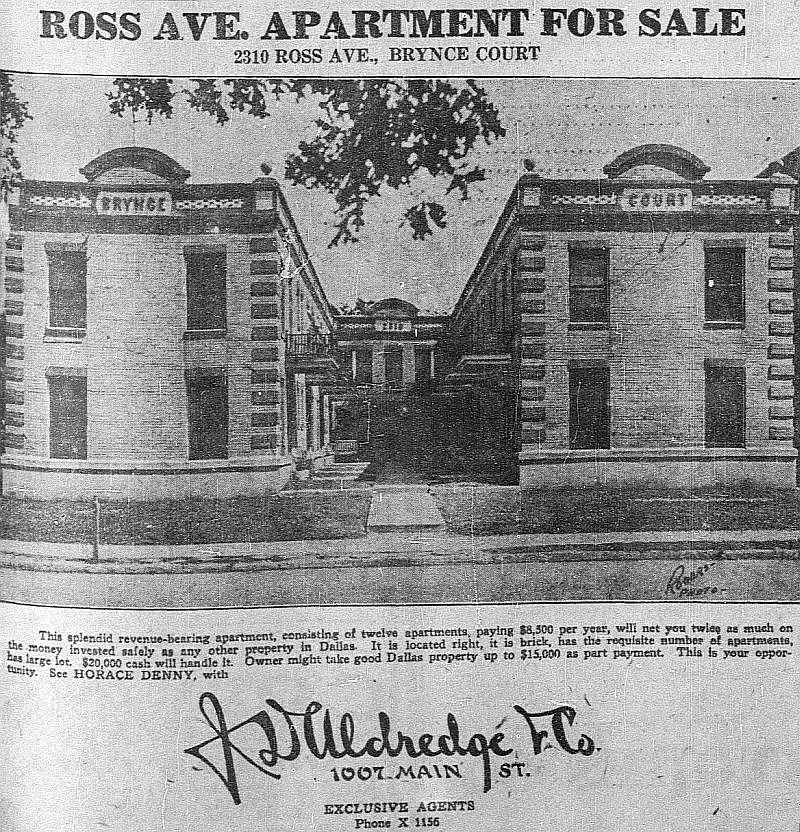
Also, even though it isn’t really visible in the top photo, across the street from the old Carter house — at 2310 Ross — was Brynce Court, a u-shaped apartment building. I haven’t been able to verify this, but The Dallas Morning News had a blurb about the “First Apartments” in the city which read as follows:

Dallas’ first apartment complex was a two-building development at 2310 Ross Ave. Built in 1919 [note: it appears to have been built in 1912], Brynce Court was the first set of apartments housed in more than one building.” (DMN, Jan. 7, 1984)

I mention this because it’s a cool little factoid, but also because I stumbled across a photo of it in an ad while looking for info on Lone Star Olds-Cadillac. So I have to show it. Surprisingly, this apartment block (which probably looked a lot less charming after fifty years) stood at that location until at least 1964.

brynce-court_dmn_051521
Dallas Morning News, May 15, 1921

brynce-court_dmn_042212
DMN, April 22, 1912

*

I always like to look at things in the background of old photos. Here’s an extremely blurry magnified detail from the top photo, showing a two-story building of shops and businesses at Ross and Leonard. Included in these businesses is the Imperial Drug Store — it’s a little hard to make out, but the vertical sign with white letters appears to read “DRUGS” (this building can be seen in the 1921 Sanborn map mentioned above).

ross-pearl_dallas-rediscovered_det

Below, the businesses and residences along Ross Avenue — between  N. Pearl and Leonard — from the 1927 Dallas directory.

ross-avenue_1927-directory

Ross and Pearl these days looks nothing like that top photo. See what the same view looks like today, via Google Street View, here. At least the Cathedral lives on.

***

Sources & Notes

Top photo from Diane Galloway’s book The Park Cities, A Photohistory (Dallas: privately published, 1989); from the collection of John Stull/R. L. Goodson, Jr., Inc., Consulting Engineers.

Photo of the C. F. Carter House is from the book Dallas, Texas Through a Camera, a collection of photos by Clifton Church.

Photo of the Cathedral of the Sacred Heart from the Dallas Public Library, taken in 1910.

(Cropped) photo of Lone Star Cadillac by Squire Haskins from the Squire Haskins Photography, Inc. Collection, University of Texas at Arlington Special Collections; more info is here (click thumbnail on UTA page to see much larger image).

Info on dating Texas license plates can be found here (PDF), here, and here. (If the first link doesn’t open, Google “The History of Texas License Plates.” It’s a report issued by the Texas Department of Transportation. It’s 255 pages long (!) and it’s exhaustive!)

Click pictures to see larger images.

*

Copyright © 2016 Paula Bosse. All Rights Reserved.
A Rainy Day at Main and Akard — 1932

main-akard_frank-rogers_011632_legacies_fall-2013Fedoras, cloches, umbrellas…

by Paula Bosse

A nice photo of a rainy day downtown, almost 85 years ago. The photo — taken on January 16, 1932 by Dallas photographer Frank Rogers — shows the intersection of Main and Akard (the people with umbrellas are crossing Akard Street, heading east). Marvin’s Drug Store (which occupied the ground floor of what was later known as the Gulf States Building) was on the northwest corner, and the A. Harris department store occupied the first five floors of the Kirby Building (originally the Busch Building) on the northeast corner — both buildings are still standing. See the view today, via Bing, here.

***

Sources & Notes

Photo from the Fall, 2013 issue of Legacies, viewable at the Portal to Texas History, here.

*

Copyright © 2016 Paula Bosse. All Rights Reserved.