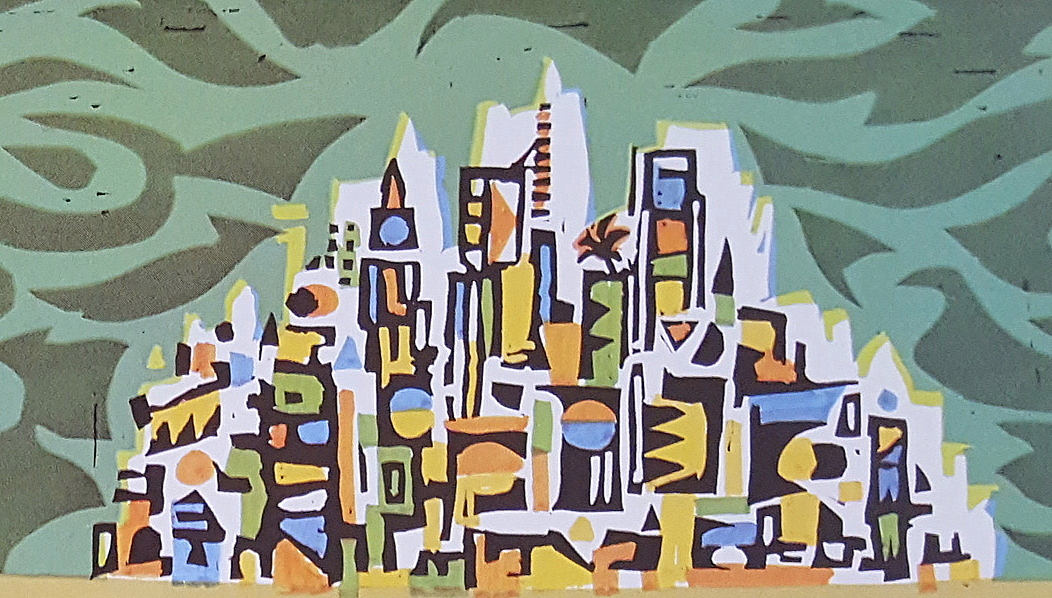
Flashback : Dallas

A Miscellany: History, Ads, Pop Culture

Category: HOF

Sam Ventura’s Italian Village, Oak Lawn
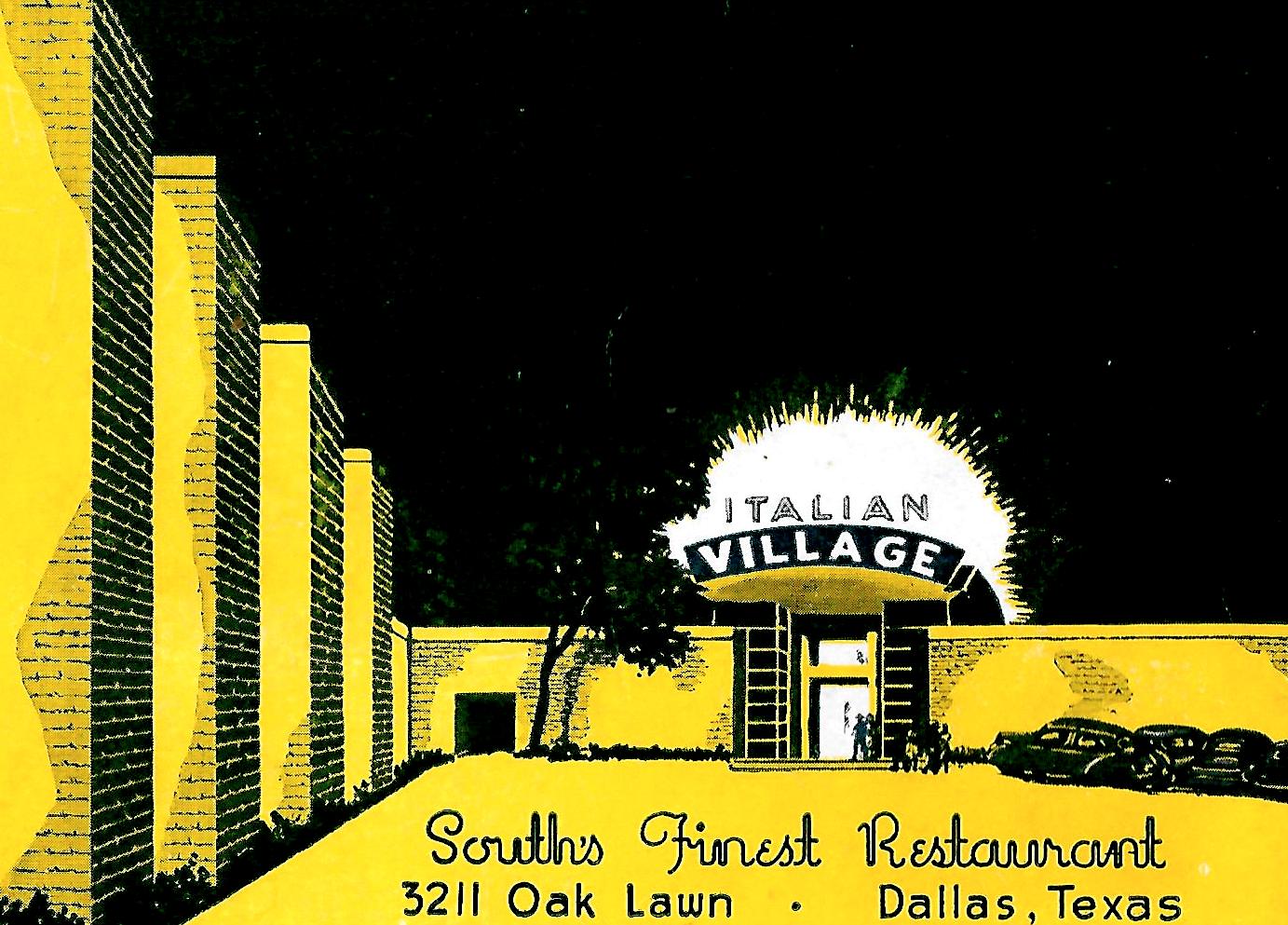
italian-village_photo-holder_PEB

by Paula Bosse

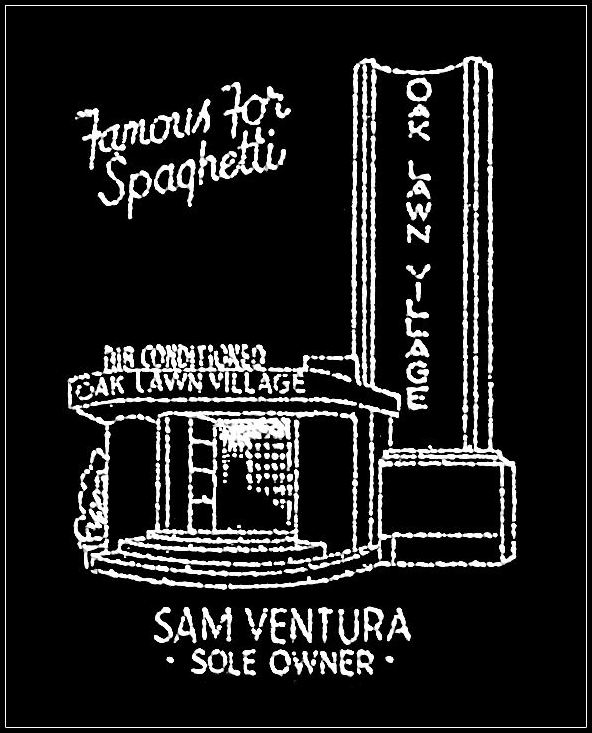
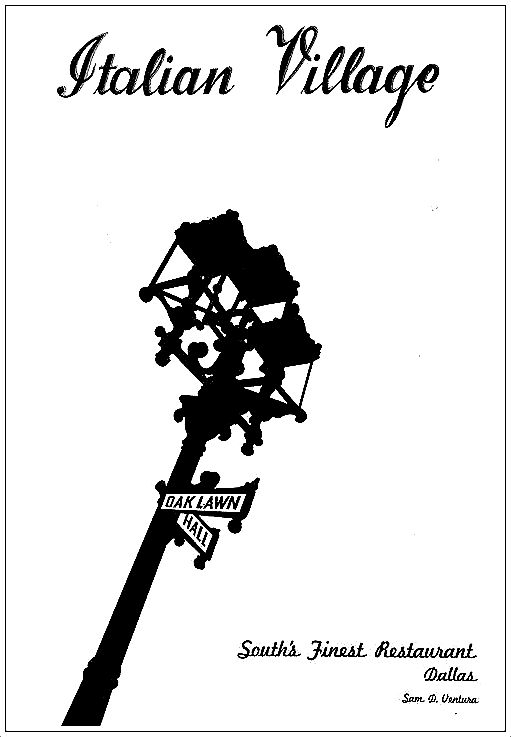
In amongst photos and belongings of my mother’s aunt, I recently came across this wonderful graphic of Oak Lawn’s Italian Village (3211 Oak Lawn, at Hall). It was on the cover of one of those cardboard photo holders which contained photos of diners and club-goers captured by photographers wanting to memorialize celebrants’ special occasions — they would take your photo and you would later purchase prints, which would be tucked inside the souvenir folder. (I don’t recognize any of the people in the photo which was  inside — the photo is here.)

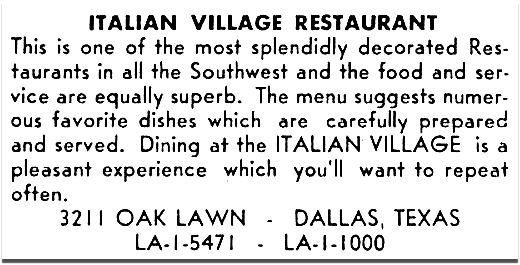
The Italian Village complex (which contained all its various tangential enterprises over he years) was an Oak Lawn fixture for over 45 years — it was apparently still around during my lifetime, but I have no memory of ever seeing it. But by the time I would have been aware of it, things had begun to get a little weird and its profile had definitely dipped. (More on that later.)

Italian Village began its life in 1934 when Sam Ventura (1907-1997) bought a popular drive-in restaurant in Oak Lawn from a man named Levi F. “Speck” Harper. In Ventura’s obituary in The Dallas Morning News, his wife said: “He bought it from a man named Speck Harper who told him, ‘Give me $250 and my hat, and you’ll never see me again.’ Sam had to go and borrow the money.” (DMN, June 1, 1997) ($250 in today’s money would be about $4,700.)
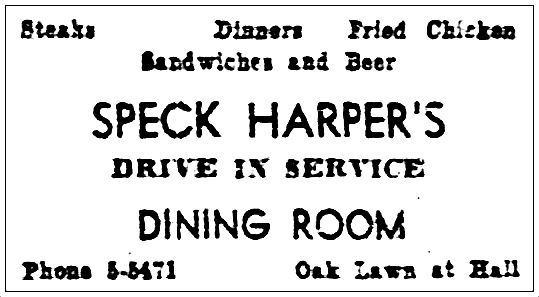
speck-harper_july-1934July, 1934

Not only did $250 start Ventura on a very successful career as a restaurateur, it also assured him ownership of what would quickly become a primo piece of real estate. (Ventura dabbled in real estate and, in 1937, along with fellow restaurant man Sam Lobello, he purchased land at Preston Road and Northwest Highway which would one day become Preston Center.) (It might be worth noting here that Sam Ventura was not affiliated with the very popular Sammy’s restaurants, run by Dallas’ Messina family.)
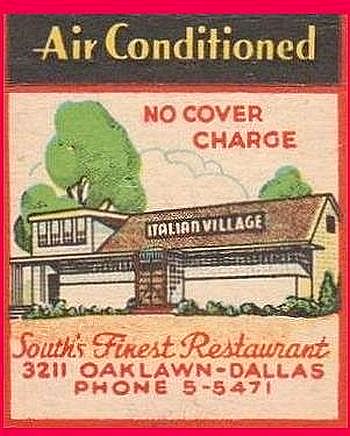
italian-village_matchbook_front_ebay        italian-village_matchbook_back_ebay
Matchbook, via eBay

Italian Village — a restaurant which operated for many years as a private club in order to sell liquor — was originally co-owned by brothers-in-law Sam Ventura and Nick DeGeorge (DeGeorge was later married to Ventura’s sister Lucille). By the time the ad below appeared in 1939, the place had been newly remodeled and was on its ninth (!) expansion. There were lots of new “rooms”: the Can-Can Room, the Plaid Room, the Hunter’s Room, the Gazelle Room, and the Marionette Room, the latter of which featured entertainment in the form of a marionette show with puppets made in likenesses of the owners. (All images are larger when clicked.)
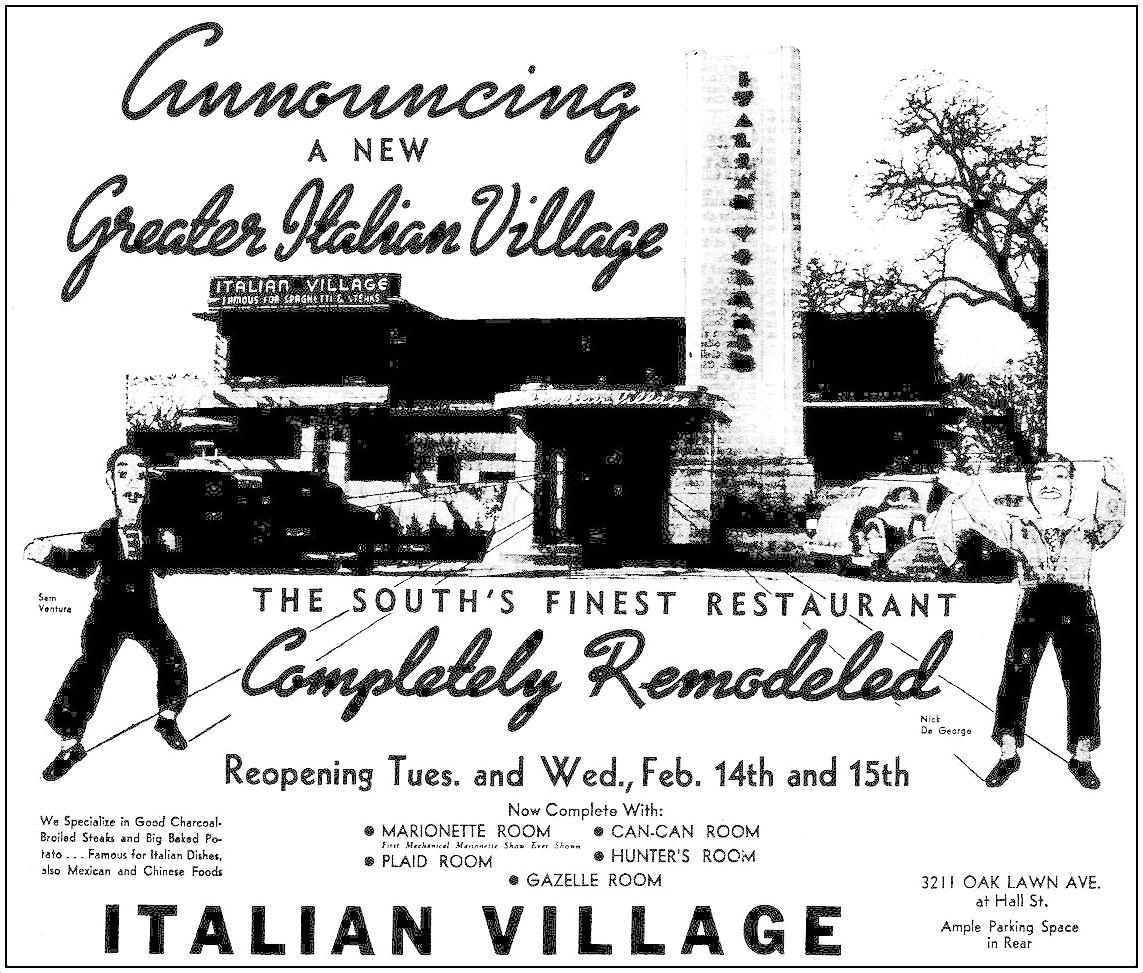
1939_italian-village_feb-1939Feb., 1939

In June, 1940, Italy entered the War in Europe as a member of the Axis forces. As a result, Ventura and DeGeorge immediately asserted their patriotism and their American-ness (both were born in the United States to Italian immigrants) by changing the name of their restaurant: arrivederci, Italian Village, hello, Oak Lawn Village. The owners placed an ad in Dallas newspapers explaining their decision (see ad below) — this made news across the country, garnering both positive national publicity as well as fervent local support.
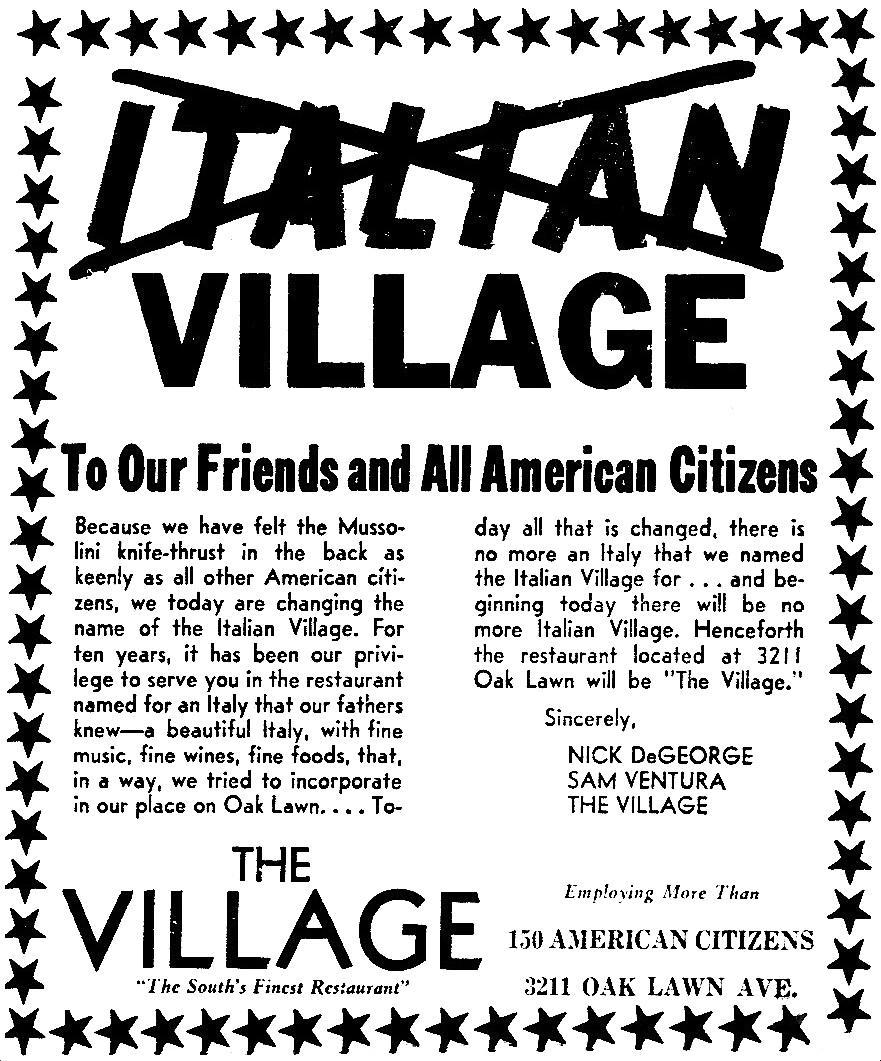
italian-village_ad_june-1940
June, 1940

Not only did the restaurant’s name change in 1940, so did its ownership. Nick DeGeorge and his wife (the sister of Sam Ventura) embarked on a very lengthy, very bitter divorce (newspapers reported that Nick and Lucille were each on their fourth marriages). The result of this marital split spilled over and also caused a business split: Ventura became the sole owner of Italian Oak Lawn Village, and DeGeorge left to start his own (very successful) restaurant career (DeGeorge’s, Town & Country, etc.). Sam announced that he was “sole owner” in a September, 1940 ad. (I hope Nick at least got custody of his mini-me marionette….)
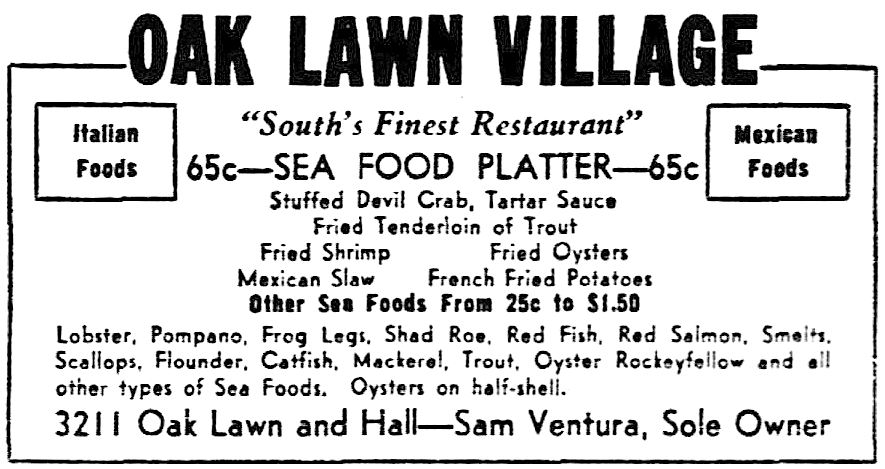
1940_oak-lawn-village-ad_sept-1950Sept., 1940

oak-lawn-village_matchbook_flickr-coltera
Oak Lawn Village matchbook cover, via Flickr

In June, 1941 yet another remodeling/expansion was announced, with architectural design by longtime friend of Ventura and DeGeorge, Charles Dilbeck, and murals by Russ Ellis. In addition to the Gazelle Room (“for comfort”) and the Hunter’s Room (“for private parties”), there was now the San Juan Capistrano Room (“follow the swallows”), the 42nd & Broadway Room (“for luxury”), the South American Room (“for romance”), the Dude Ranch Room (“where the west begins”), the Rain Room (“for private parties”), the Banquet Room (“seating capacity 150 guests”), and an outdoor Italian Garden Terrace (“beneath the stars”).
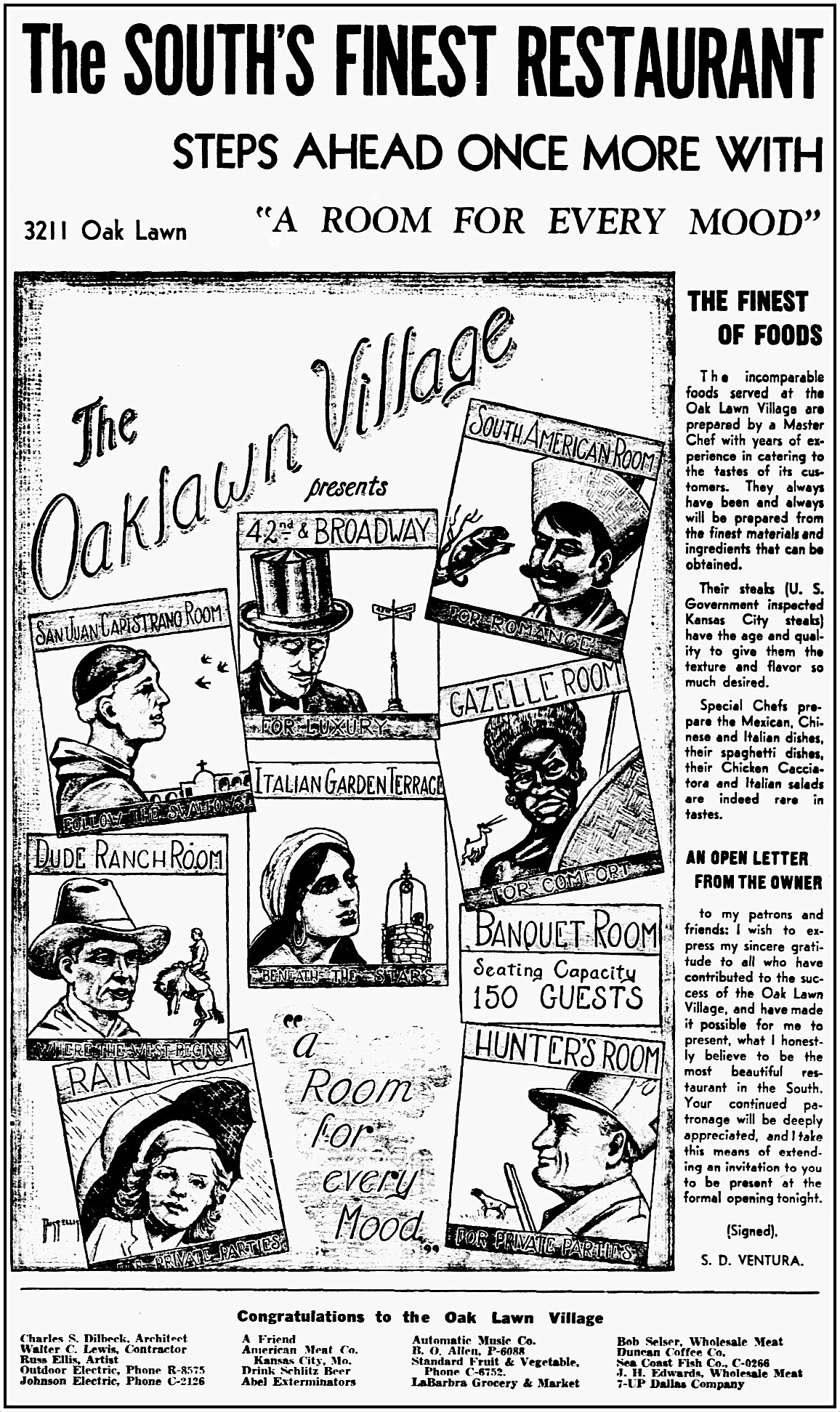
1941_oak-lawn-village_dmn_june-41June, 1941

That $20,000 remodel (which would have been equivalent to about $350,000 in today’s money) went up in smoke — literally — in April, 1944, when the restaurant was “virtually destroyed” by fire. Ventura said he would rebuild when war-time government regulations would permit him to do so. At the end of the year he announced that he would build a new restaurant, of shell stone and marble construction, lit in front by decorative tower lights. The new place was built and in full swing — and back with its original name — in the summer of 1945.
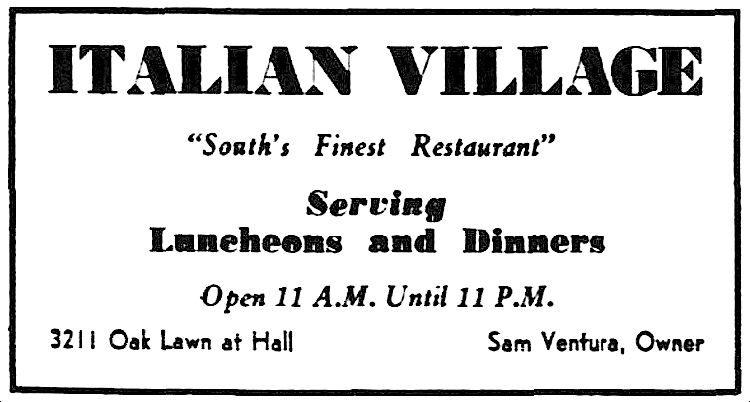
1945_italian-village_aug-1945Aug., 1945

An ad for Dallas’ S. H. Lynch & Co.’s Seeburg Scientific Sound Distribution system appeared in the Aug. 10, 1946 issue of Billboard magazine, showing photos of Sam Ventura, the exterior of the new building, and an interior shot showing a Seeburg jukebox. (See full ad here.)

1946_italian-village_billboard_081046_ad-det-1Sam D. Ventura, 1946 (ad detail, Billboard magazine)
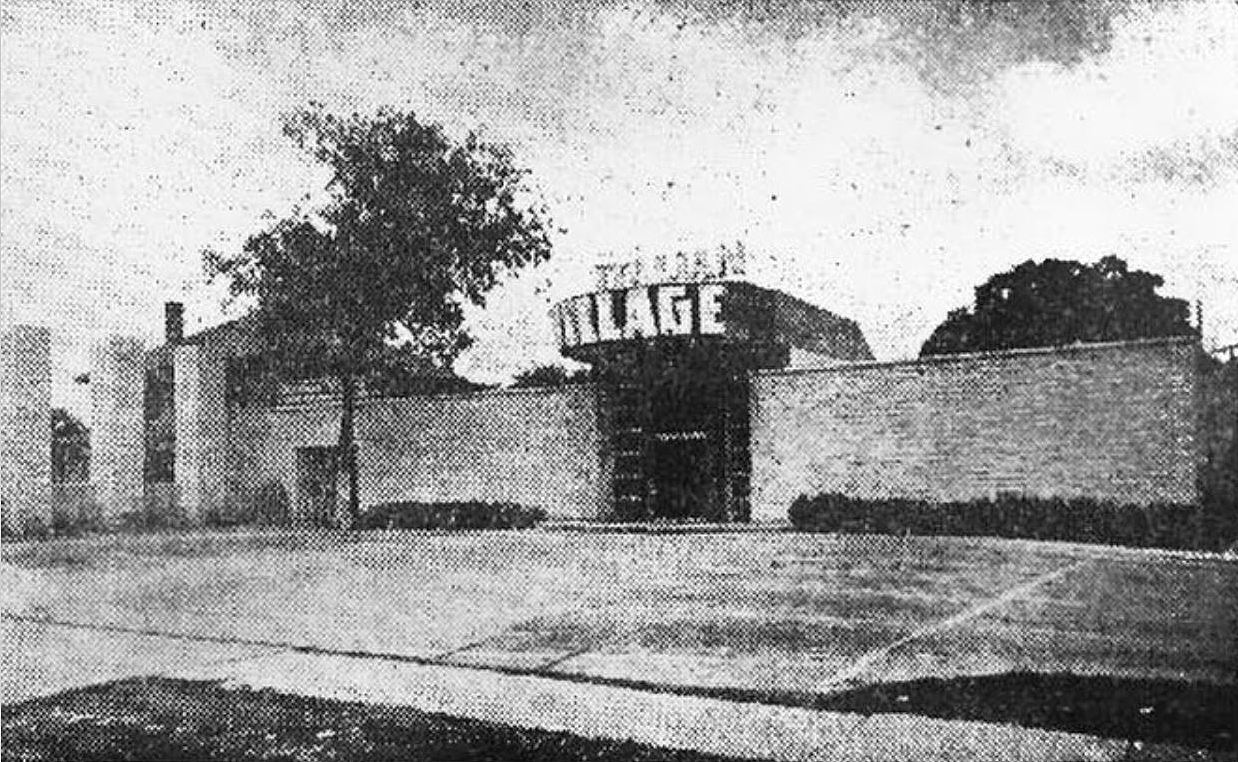
1946_italian-village_billboard_081046_ad-det-2

1946_italian-village_billboard_081046_ad-det-3Italian Village exterior and interior, 1946 (ad detail, Billboard magazine)
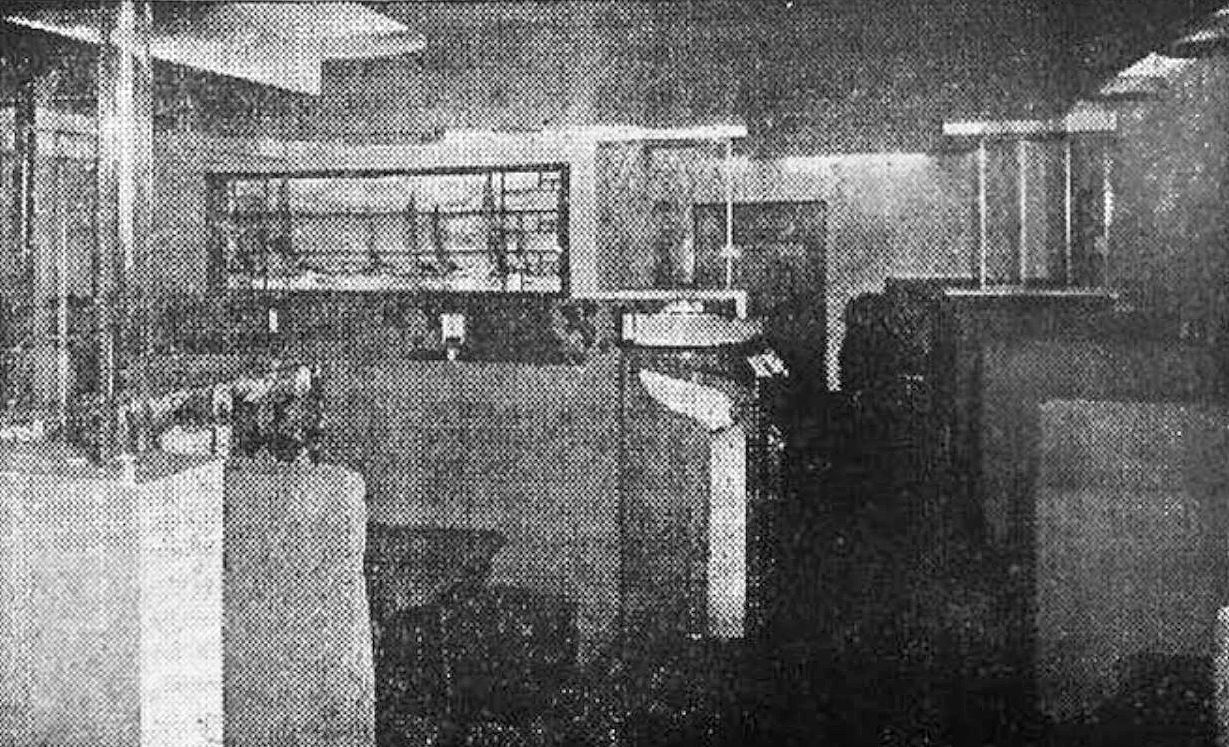
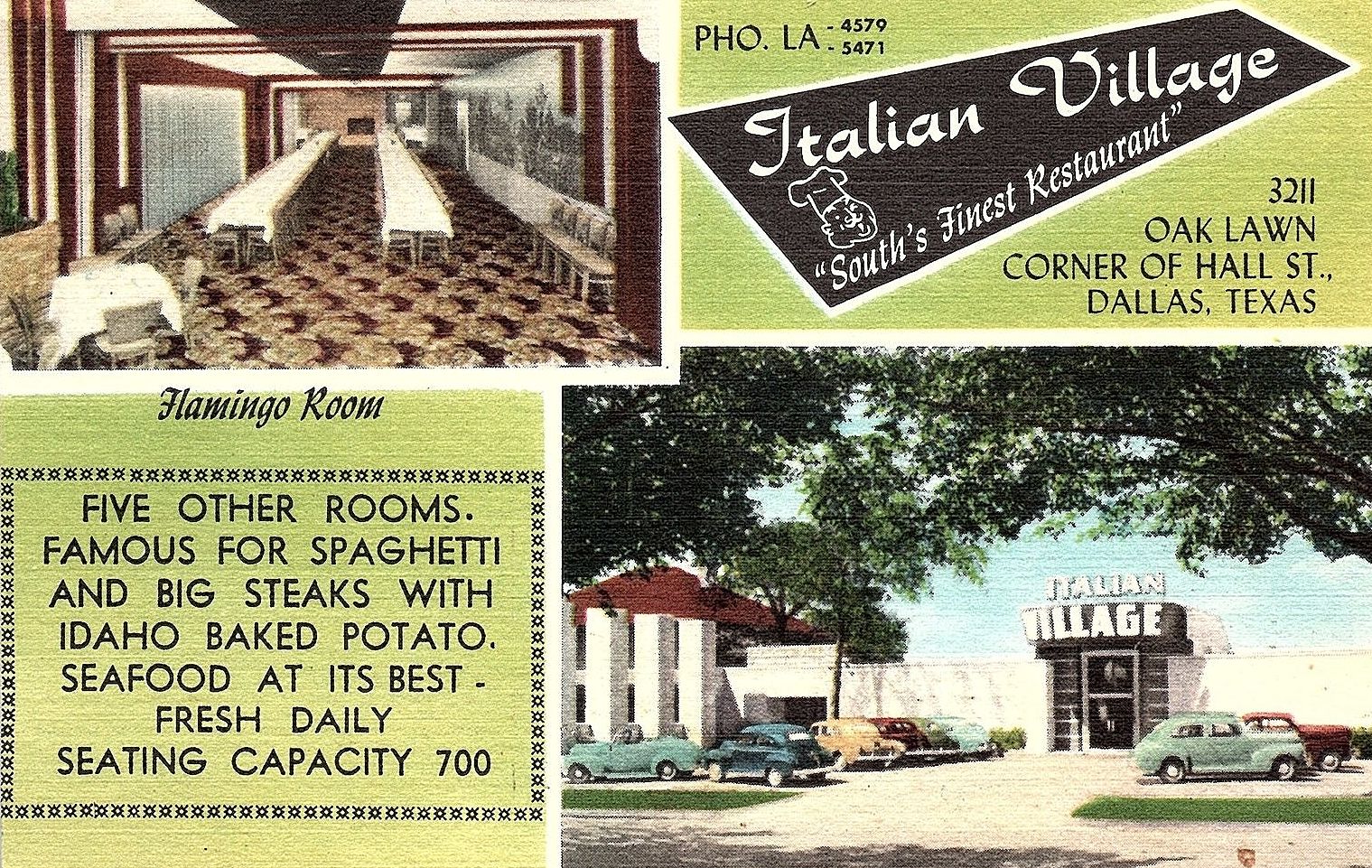
In January, 1951 another remodeling (to the tune of $75,000!) introduced the 300-seat Flamingo Room, which meant the entire Italian Village now had a seating capacity of more than 700 (Ventura had said that the original post-Speck’s restaurant seated only 40 or 50 people). The “modernistic styling” was the work of architect J. N. McCammon.
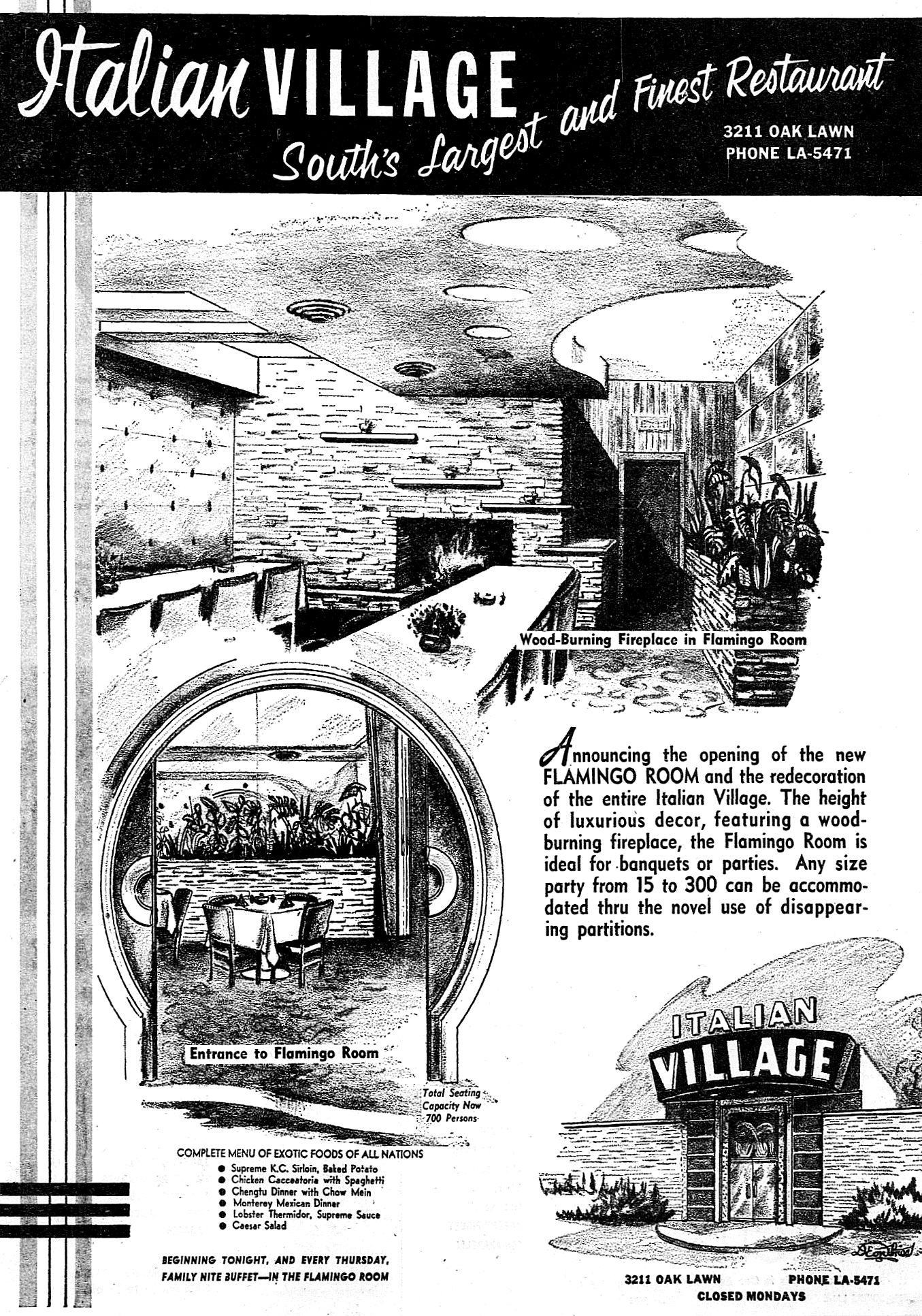
1951_italian-village_flamingo-room_jan-1951Jan., 1951

italian-village_postcard_flamingo-room_ebay

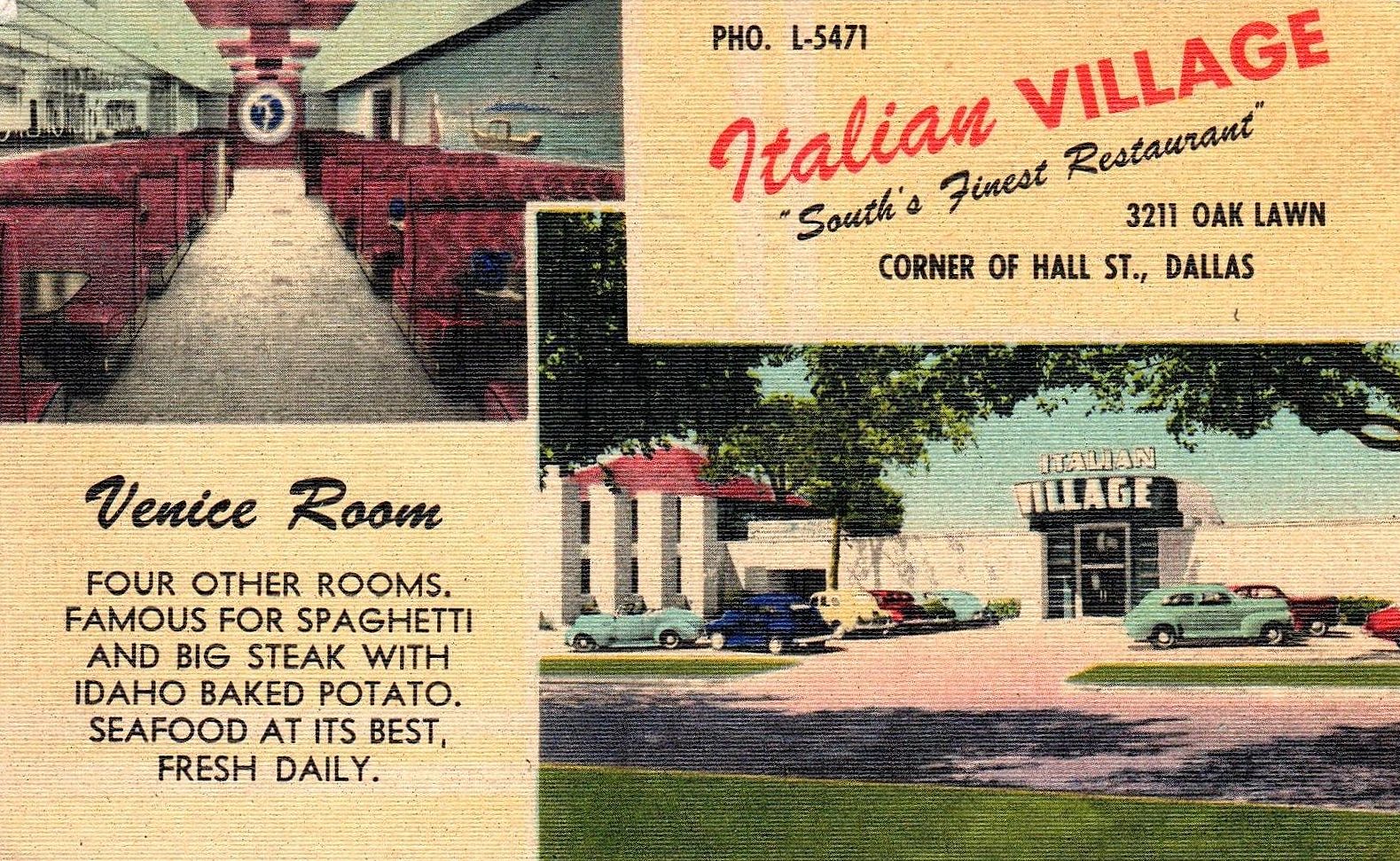
italian-village_postcard_yellow_ebay

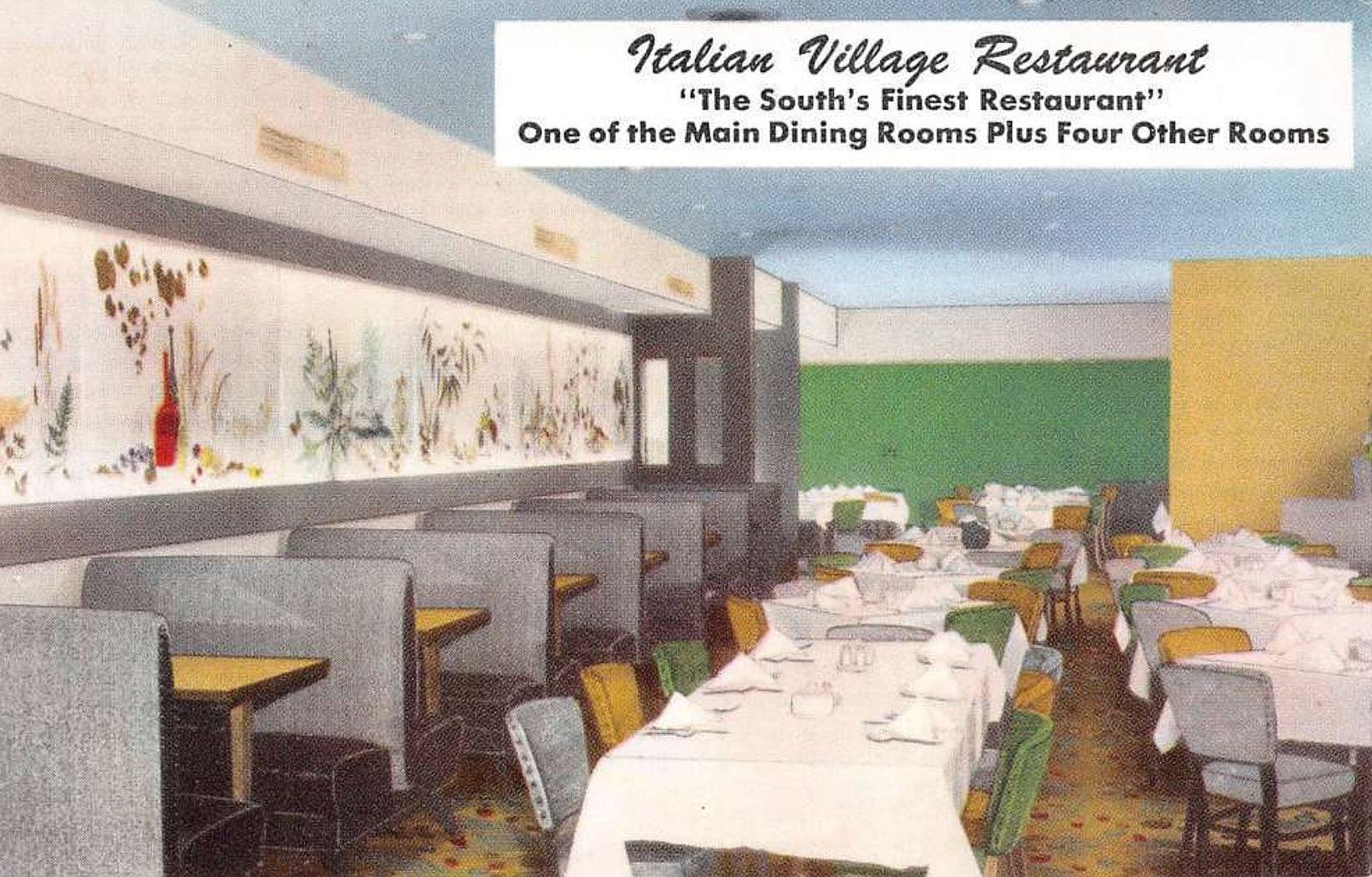
italian-village_postcard_interior_ebay

italian-village_postcard_interior_caption_ebay

italian-village_menu_ebay_1     italian-village_menu_ebay_4
Front and back of 1955 menu, via eBay

Below, a shot of the Italian Villa’s four odd brick structures seen from across the street (in a screen capture from unrelated January 1955 news footage).
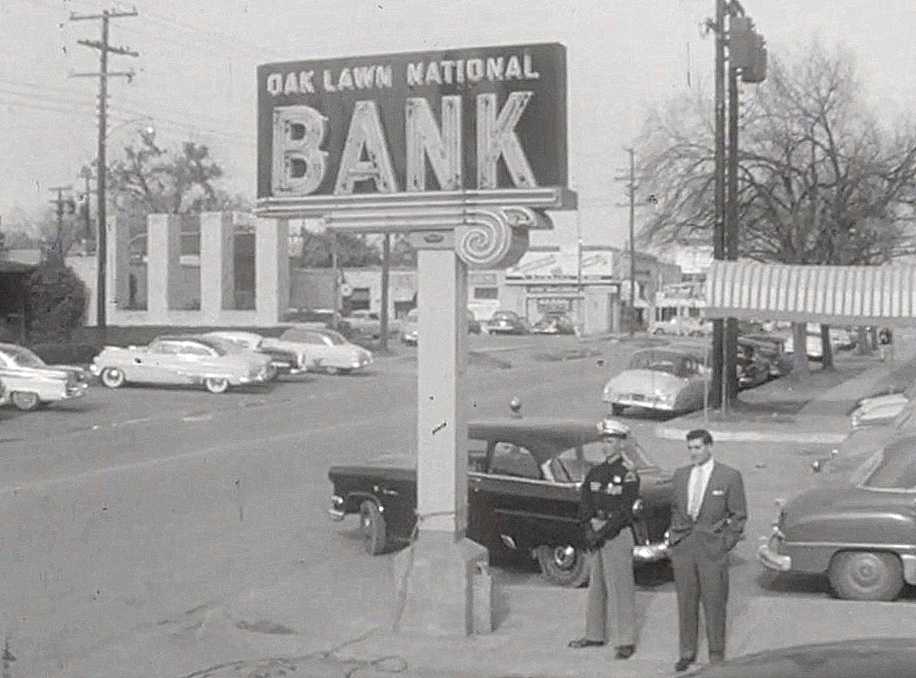
italian-village_oak-lawn-natl-bank_wbap-news_012355-portalKXAS-NBC 5 News Collection, UNT

Further changes came to 3211 Oak Lawn in the fall of 1954 with the arrival of the Village Club, which featured live entertainment (including a rotating piano) and shared a kitchen with Italian Village. It was also a “private locker club” with personal liquor lockers available to members to keep their bottles in at a time when it was not legal for restaurants in Dallas to sell liquor-by-the-drink — “set-ups” were sold and the demon alcohol was poured from the member’s stash (or, more likely, from the communal stash).

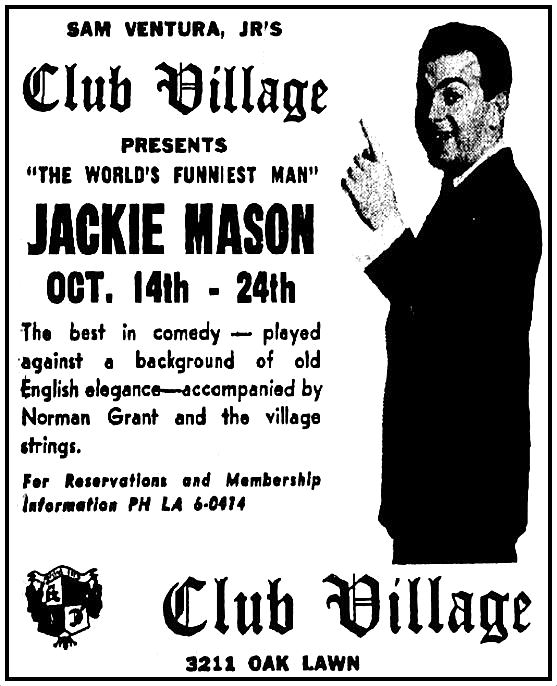
In 1961 there was yet another remodel, which enlarged the club — now called Club Village — and shrank the restaurant. The swanky new club was designed by Charles Dilbeck and had a sort of Olde English theme (and, for some reason, featured a waterfall, a glass cage behind the bar containing live monkeys, and two live flamingos named Lancelot and Guenevere).
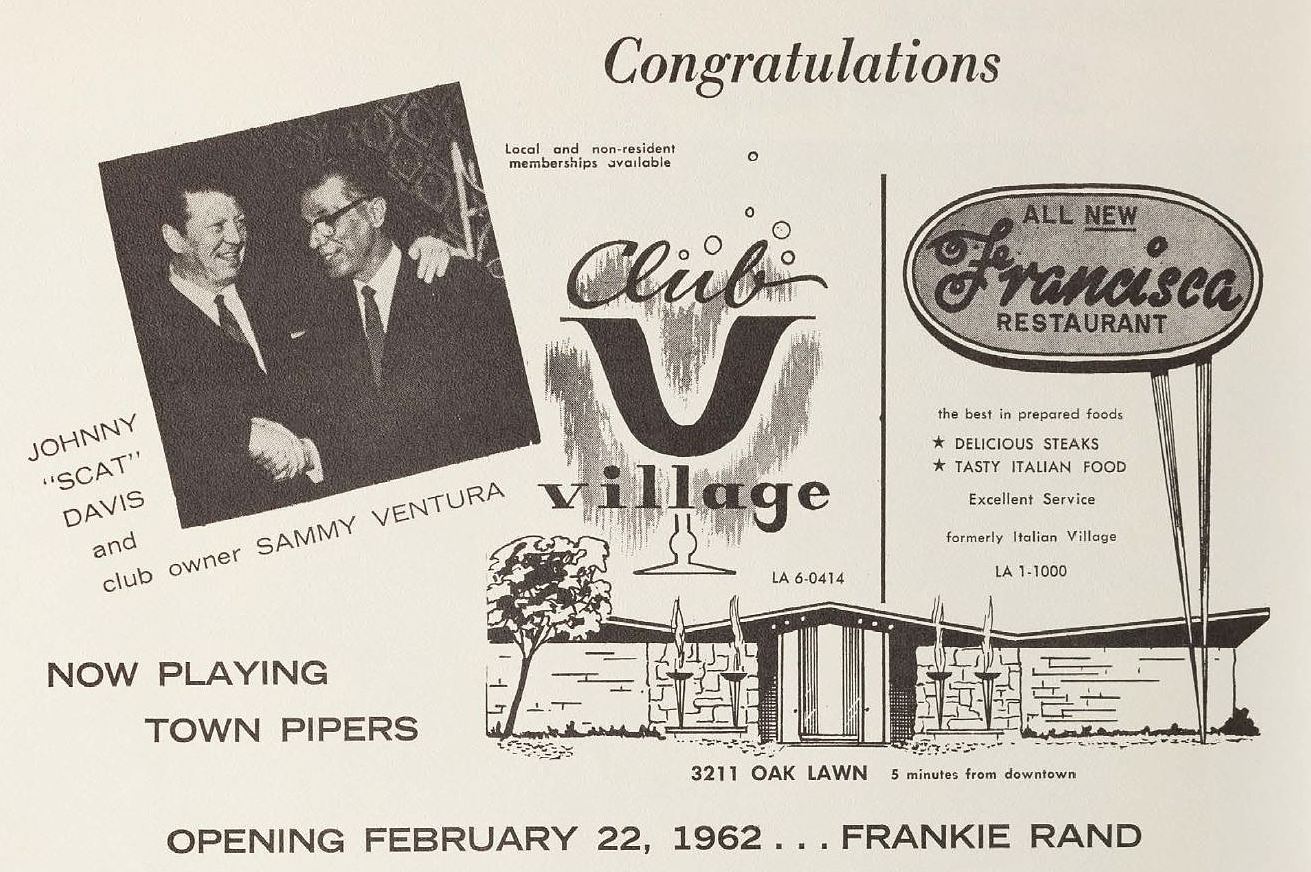
italian-village_dallas-entertainment-awards_1961_SMUvia DeGolyer Library, SMU

1965_club-village_oct-1965Oct., 1965

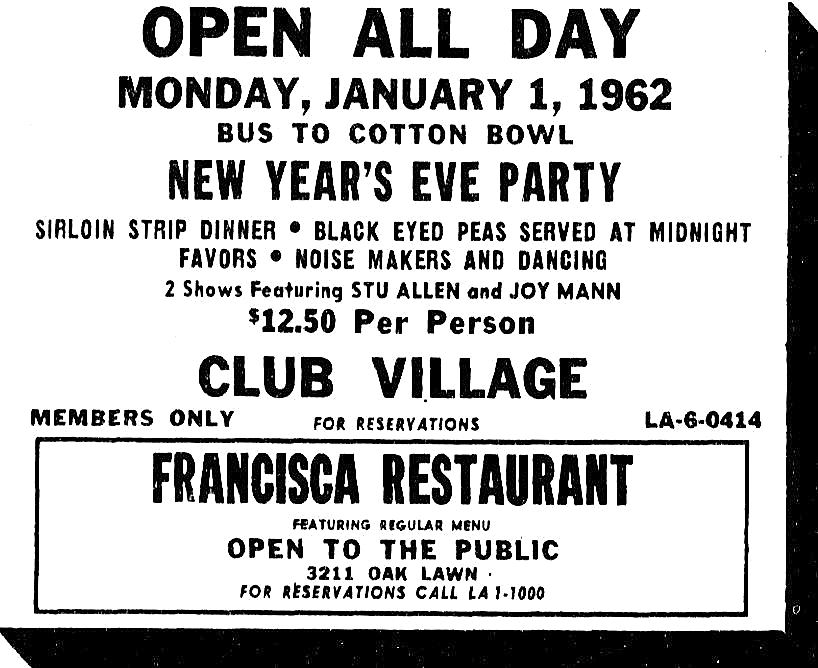
Around this time the (apparently short-lived) Francisca Restaurant appeared.
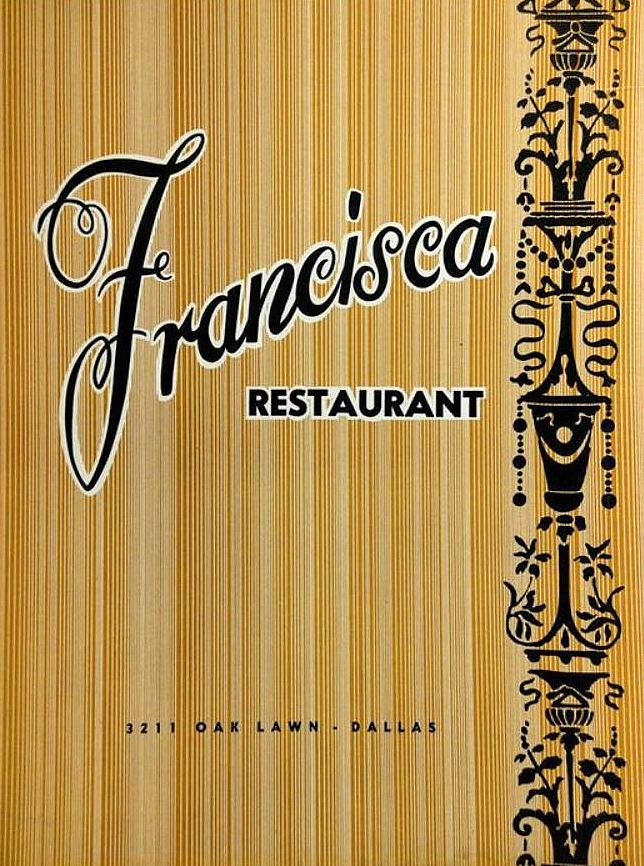
francisca-restaurant_menu_1961_ebayvia eBay

club-village_francisca_new-years-eve_dec-1961New Year’s Eve, Dec., 1961

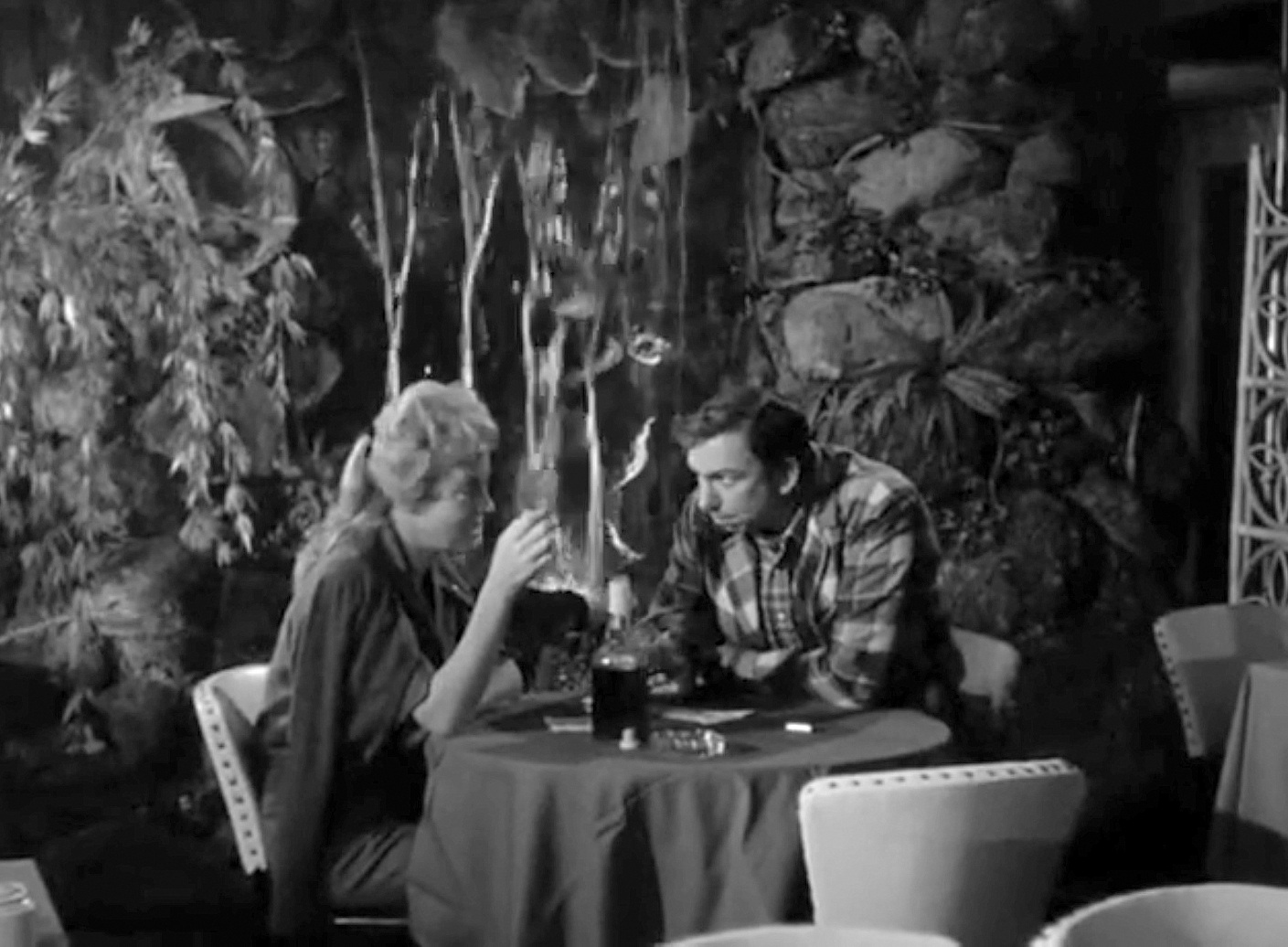
1961 also marked the club’s debut on national television, appearing in scenes of the hit show Route 66, which were filmed in November. Below is a screen-capture from the episode “A Long Piece of Mischief,” with the waterfall in the background. (The entire episode, shot around the Mesquite Rodeo, can be watched on YouTube here — the two Club Village scenes begin at the 26:42 and 38:15 marks.)
1961_club-village_route-66Route 66 (screen capture) — Nov., 1961

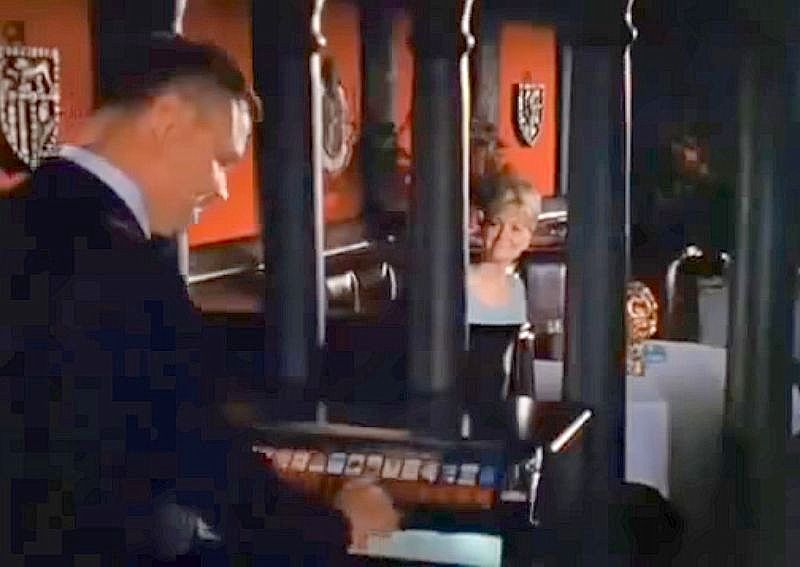
In late 1966, Dallas filmmaker Larry Buchanan shot his cult classic Mars Needs Women in various locations all over town. I’m pretty sure one of the very first scenes was shot inside the club, after yet another remodel. (Incidentally, see what the lively neon-ified corner of Oak Lawn and Lemmon, a couple of blocks away, looked like in Buchanan’s film, here.)
1966_club-village_mars-needs-women
Mars Needs Women (screen capture) — 1966

In August, 1964 a new club opened: Gringos (sometimes spelled Gringo’s). This public club, featuring mostly rock bands, was the brainchild of Sam Ventura, Jr. (who said in an interview that he had rather brazenly sprung the whole thing as a big surprise on his father, who had been out of town on a lengthy vacation — luckily, the club was a hit and Sam, Sr. was pleased). Club Village continued as a private club, but from newspaper accounts it seems that the new discotheque displaced the Italian Village and/or Francisca restaurant completely. So now on one side you had the long-running “sophisticated” private club, and on the other side, the “new concept in continuous entertainment,” with its Mexican-themed decor and Watusi-dancing waitresses (“Las Mata-Dollies…”), which catered to a younger set. The Fort Worth Star-Telegram described Gringos thusly:

Newest “port of call” for Dallas revelers on the bistro beat is the just-opened and lavishly-done Gringos Club on Oak Lawn Ave. near the Melrose Hotel and in the location formerly occupied by the Italian Village Restaurant and Village Club. Open to the public, this night time Camelot with Mexican decor features, among other flings, Jesse (brother of Trini) Lopez and his handful of musical consorts on the bandstand and a covey of revealing young handmaidens called “Las Matta-Dollies” [sic], sort of Spanish-type Playboy Bunnies who are worthy of your scrutiny. (Chris Hobson, FWST, Aug. 27, 1964)

1964_gringos_aug-1964Aug., 1964

In May, 1967, Sam Ventura, Jr. (“Sammy,” who had taken over the family business when Sam, Sr. retired in 1966) declared that Gringos was dead: “There will be absolutely no rock-and-roll in this room anymore. It’s dead. Our whole concept [now] is for sophistication, for adult entertainment” (DMN, May 24, 1967). So adios, Gringos, hello an even bigger Club Village. (In 1968 a club described as a “new” Gringos  opened a block away, at 3118 Oak Lawn — it’s unclear whether this was affiliated in any way with the Ventura family.)

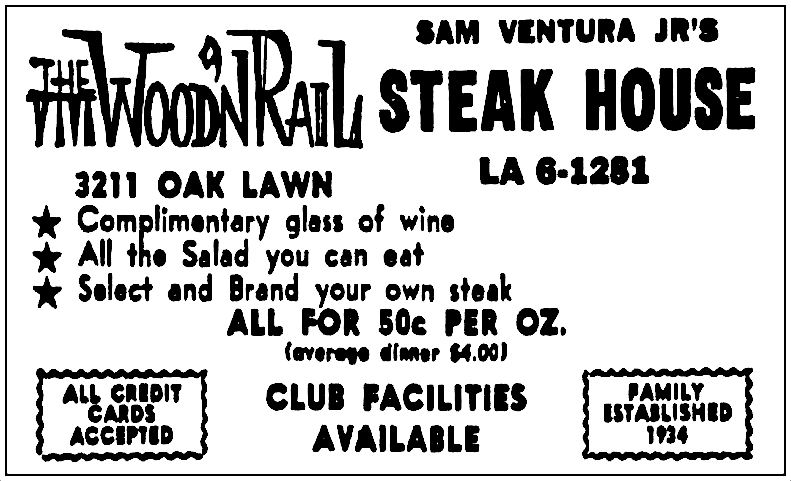
In June, 1968, the never-ending improvements, remodelings, and reconfigurings of 3211 Oak Lawn continued with Sammy’s announcement of a new (public) restaurant, the Wood ‘N Rail. This steakhouse featured a revolving “ice bar” (the old revolving piano bar, repurposed), which contained a display of raw meat — from this, customers would choose whichever cut of beef called to them, and before the meat was escorted into the kitchen, the patron would sear his or her initials into it with a “red-hot branding iron.” The restaurant’s slogan was “Personalized Beef.” The unstoppable Club Village continued as a private club and restaurant in the adjoining complex.
1968_wood-n-rail_oct-1968Oct., 1968

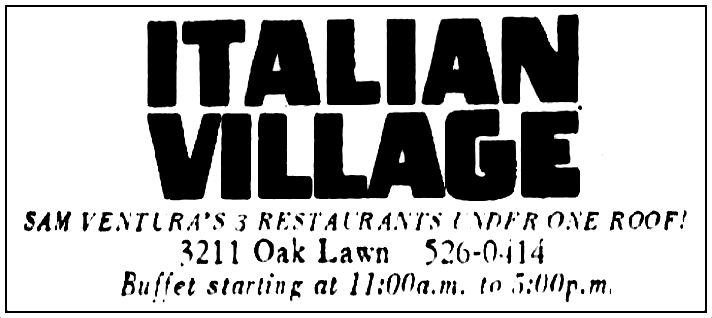
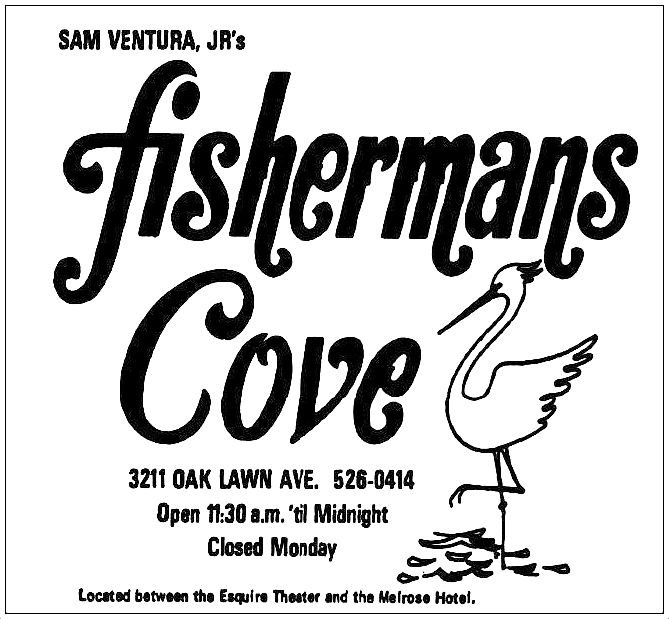
1971 began with a fire. The (once) unstoppable Club Village was destroyed. The adjacent Wood ‘N Rail emerged unscathed. So, yes, more remodeling! By 1972, 3211 Oak Lawn boasted three (three!) restaurants at one address: the continuing Wood ‘N Rail (steakhouse), Fisherman’s Cove (seafood), and — hey! — the return of Italian Village. As the ads said: “3 RESTAURANTS UNDER ONE ROOF!”
1972_fishermans-cove_march-1972March, 1972

1972_three-restaurants_may-1972May, 1972

Also big news in 1971: it finally became legal to order liquor and mixed drinks in bars and restaurants — the whole “private club-membership” thing in order to get around liquor laws was mostly a thing of the past (unless you lived in a dry area of the city…).

Then, in 1974, things really changed. After a “profound religious conversion,” Sammy Ventura stopped all sales of alcohol and told the TABC he didn’t need or want that ol’ liquor license. This made news around the country.
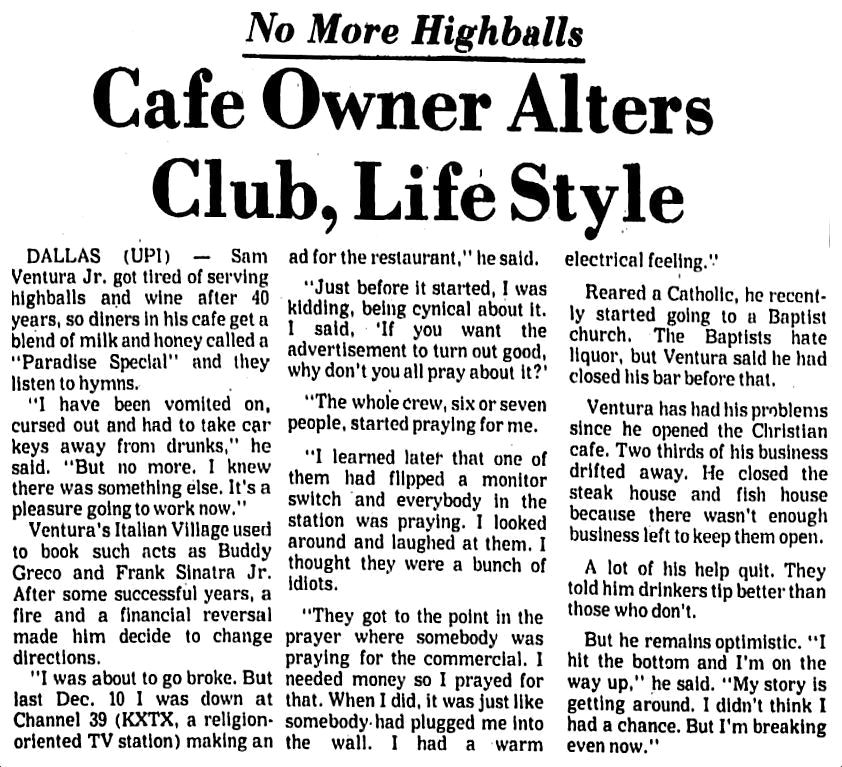
1974_kings-village_panama-city-FL-news-herald_081274UPI wire story, Panama City [FL] News Herald, Aug, 1974

Unsurprisingly, business plummeted. Two of the three restaurants closed. Italian Village continued to limp along, even weathering the introduction of the King’s Village, “Dallas’ first Christian dinner theater.”
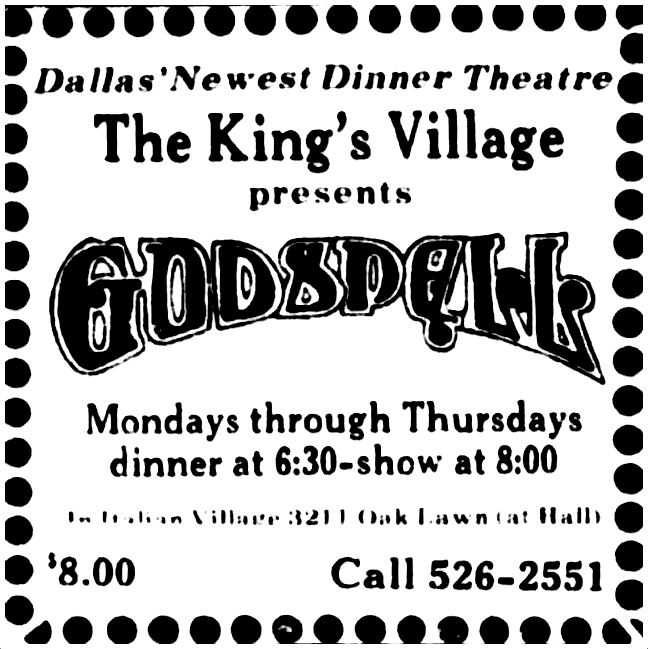
1976_kings-village_june-1976June, 1976

This change in direction of the the 40-plus-year-old family business caused a huge rift between Sammy and his father. Sam, Sr. put his foot down, and The King’s Village (“the nation’s first non-liquor, Christian nightclub”) closed in June, 1977.
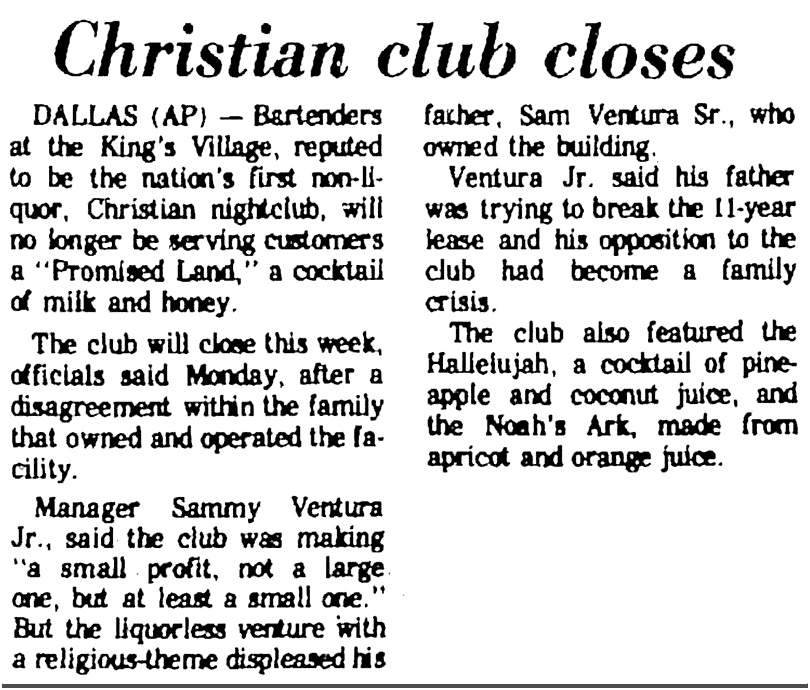
1977_kings-village_pampa-daily-news_062177
AP wire story, Pampa Daily News, June 21, 1977

Oak Lawn’s decades-old Italian Village was no more (although Sammy appears to have opened his own Italian Village restaurant in Richardson’s Spanish Village for a while). The last mention I found of Italian Village was in Feb., 1979:

After 45 years, the Italian Village restaurant has changed to another venture, the Crazy Crab. Sam Ventura opened the Italian Village in 1934 and the last event before the changeover was a surprise birthday party honoring Sam. (DMN, Feb. 23, 1979)

It’s a shame Italian Village’s last incarnation was a mere shadow of its former go-go glory, but it’s almost unbelievable that a restaurant in Dallas was in business for 45 years. Sam Ventura’s $250 gamble in 1934 paid off very, very well.

***

Sources & Notes

Top image is the front cover of a cardstock photo-holder (with linked photo by the Gilbert Studios, 4121 Gaston); collection of Paula Bosse.

All clippings and images are larger when clicked.

*

Copyright © 2018 Paula Bosse. All Rights Reserved.
“Dr. Dante” Dodges Bullets in Dallas — 1970

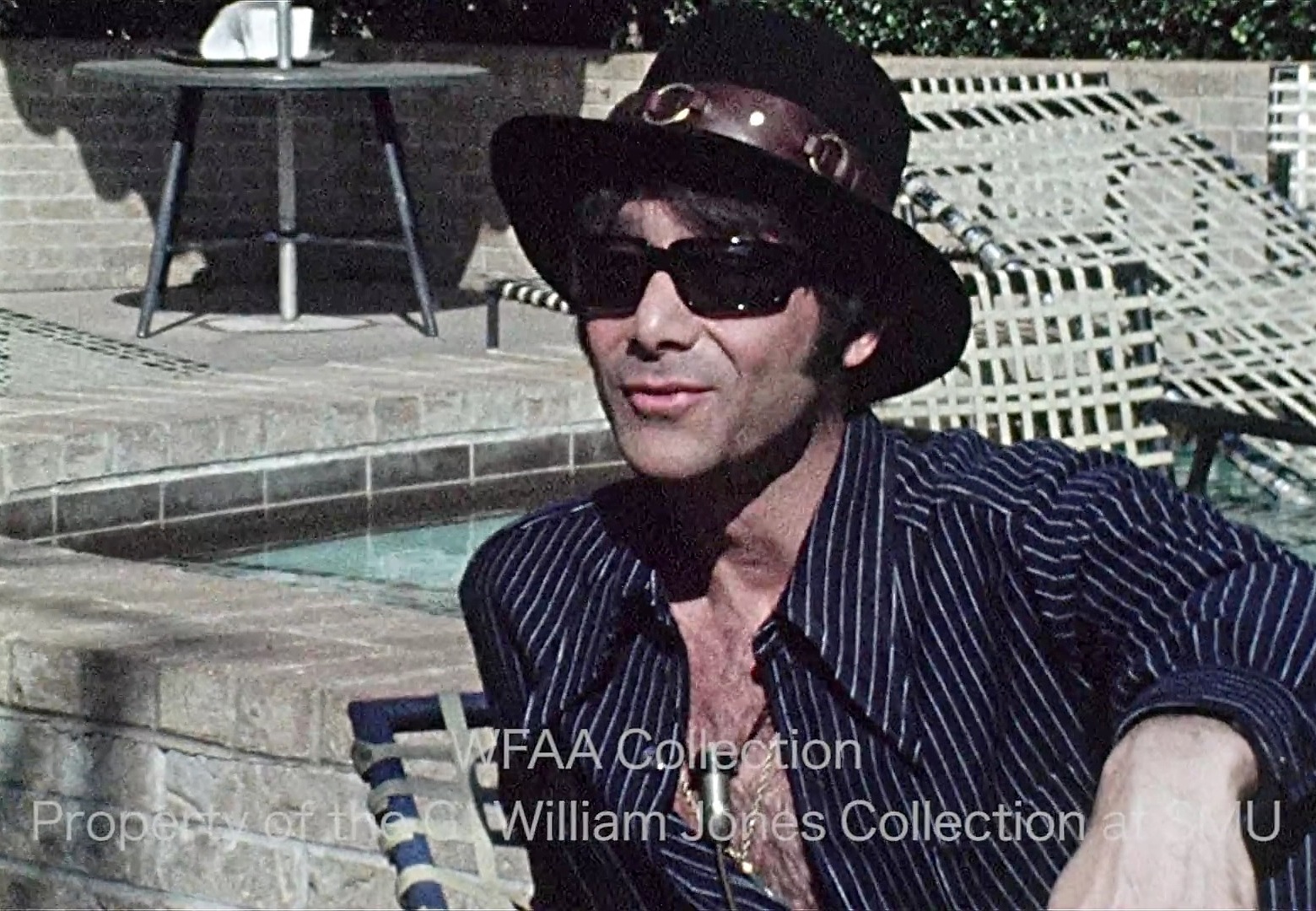
dante_wfaa_SMU_1The Dr. is in…

by Paula Bosse

I’ve written about the interesting old WFAA Channel 8 news footage which was either never aired or was aired decades ago and hasn’t been seen since (such as newly discovered Jack Ruby footage and a fantastic short interview with Jimi Hendrix at Love Field), which is part of an ongoing digitization project by SMU’s Hamon Arts Library as part of the G. William Jones Film and Video Collection. There are so many (SO MANY!) quirky clips that are being uploaded to the web almost daily that it’s easy to miss the super-quirky.

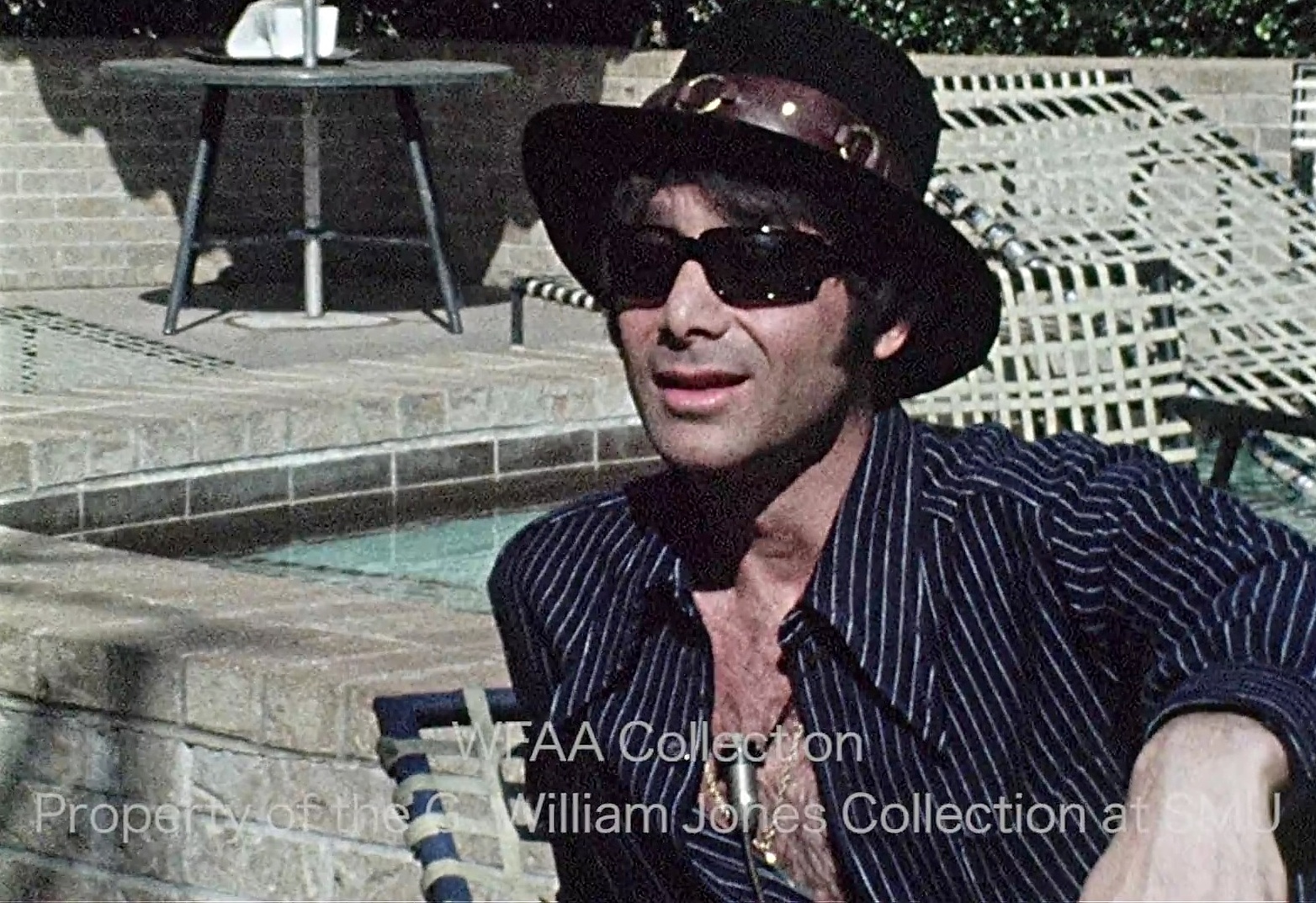
A week and a half ago the clip below was posted online, featuring an unidentified man who was much groovier-looking than one would normally have seen on the nightly Channel 8 newscast — he said that someone had shot at him from a car, just before dawn, near the Hilton Inn at Mockingbird and Central. He seemed pretty sure they were associates of Frank Sinatra, who was not at all happy that our mystery man had been fraternizing with his daughter, the singer Nancy Sinatra. Take a look at this short (1:43) footage from May, 1970.

*

Okay, that was weird. “I’ve been shot at *many* times — for one reason or another….” Add in an unexpected mention of Mrs. Baird’s bakery and, yeah, weird.

Who was that guy? The only information the SMU digitizers had on the out-of-context snippet was that it was filmed on May 21, 1970. It was obvious the guy was not local and, with that voice (and apparent ready access to Nancy Sinatra), he was most likely in the entertainment business. I could find no mention of this incident in The Dallas Morning News archives — I tried using every conceivable keyword I could think of. Nothing. So I checked Newspapers.com and found an AP story about this which had run all over the country — just not in the city where the incident had occurred.

The guy is Ronald Dante, who has gone by a variety of aliases but is generally known as “Dr. Dante,” the stage name he used for decades as a successful nightclub hypnotist. (According to a 1985 Dallas Morning News profile, he had legally changed his name from Ronald Hugh Pellar to “Dr. Dante” — with “Doctor” being his legal first name.) (This may not be true.) (Most of what Dr. Dante has said is not true.) At the time of the shooting described in the video above, he was performing at The Losers Club at 5438 E. Mockingbird, about 2 blocks from his hotel, the Hilton Inn.

To describe Ron Dante (who was born in Chicago on Feb. 5, 1930) (and is not to be confused with the Ron Dante who was the lead singer of The Archies) as “colorful” is an understatement. His extraordinarily … um … extreme life as a performer, con-man, fraudster, schemer, opportunist, convicted felon, etc., is too much to cover here, but there is a fantastic 2006 profile of him from the San Diego Union-Tribune here (seriously, READ THIS! — the part about him being orphaned in Kuala Lumpur when his family was attacked by Malaysian insurgents is great — in actuality, U.S. Census records from 1930 and 1940 show that he grew up in a nice Chicago neighborhood with his very-much-alive parents and brother).

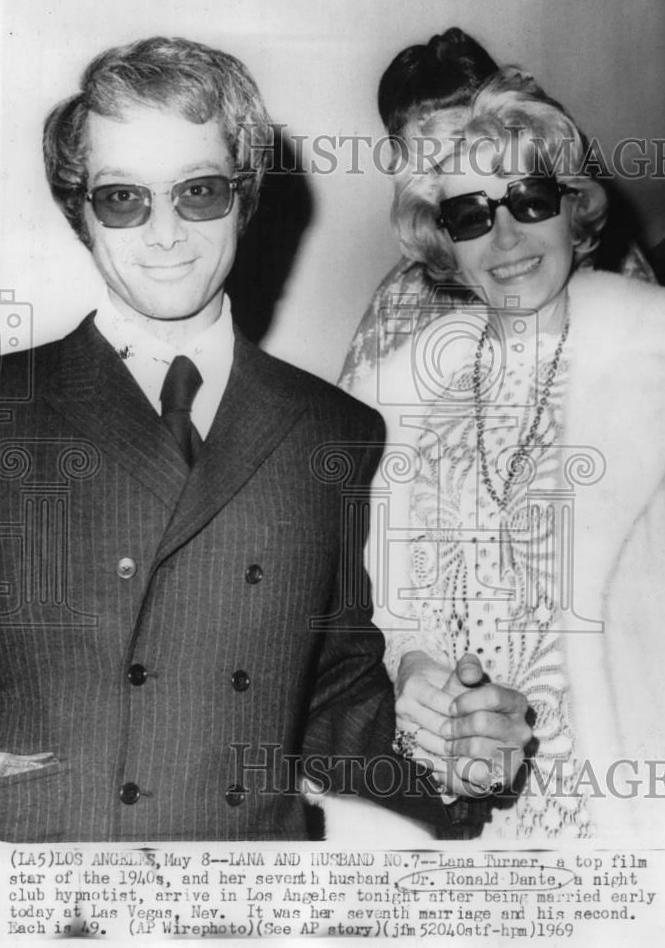
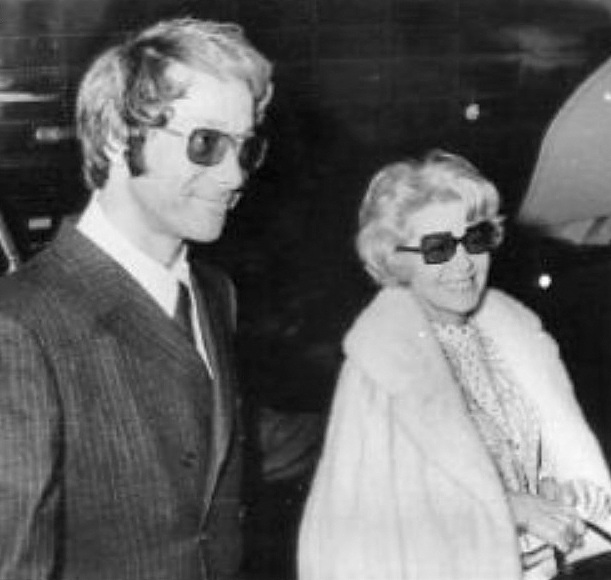
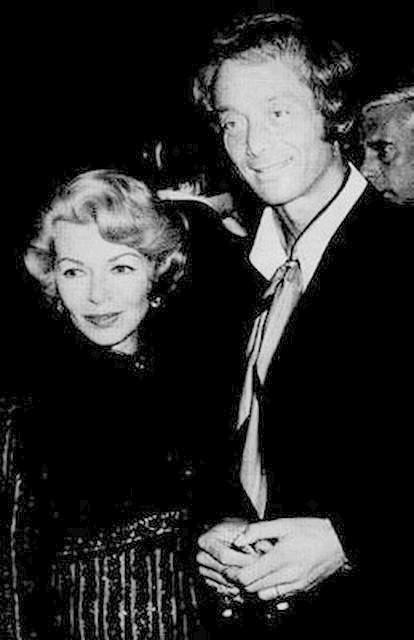
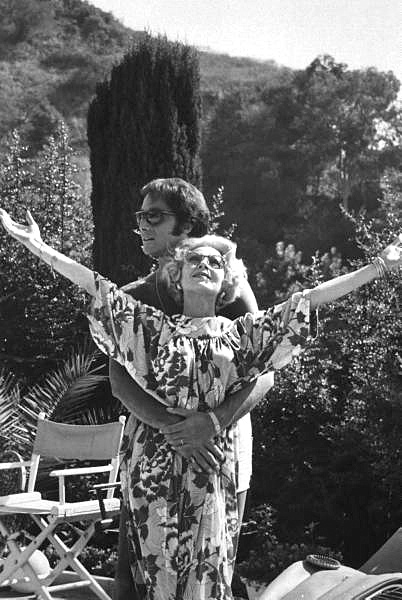
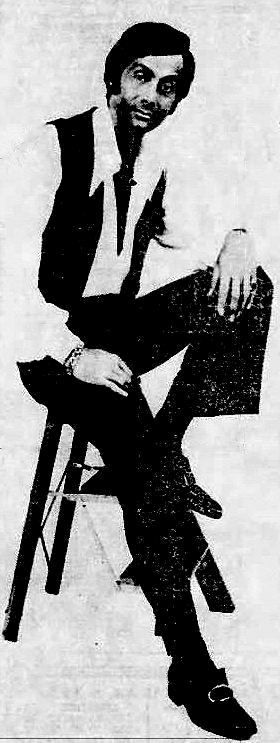
But back to Dallas in May, 1970. Dante was, at the time, the estranged husband of Hollywood icon Lana Turner. They had married in May, 1969; it was Lana’s seventh (and final) marriage. In news reports of the nuptials, Dante was reported to be the same age as his new bride, but he was actually almost 10 years younger. (In the Channel 8 video above he is 40.) Below are some photos of the happy couple before Lana began to realize what she’d gotten herself into.

dante-lana_just-married_1969_ebay    dante_lana_pinterest

lana_dante_pinterest    dante_turner_california_ua

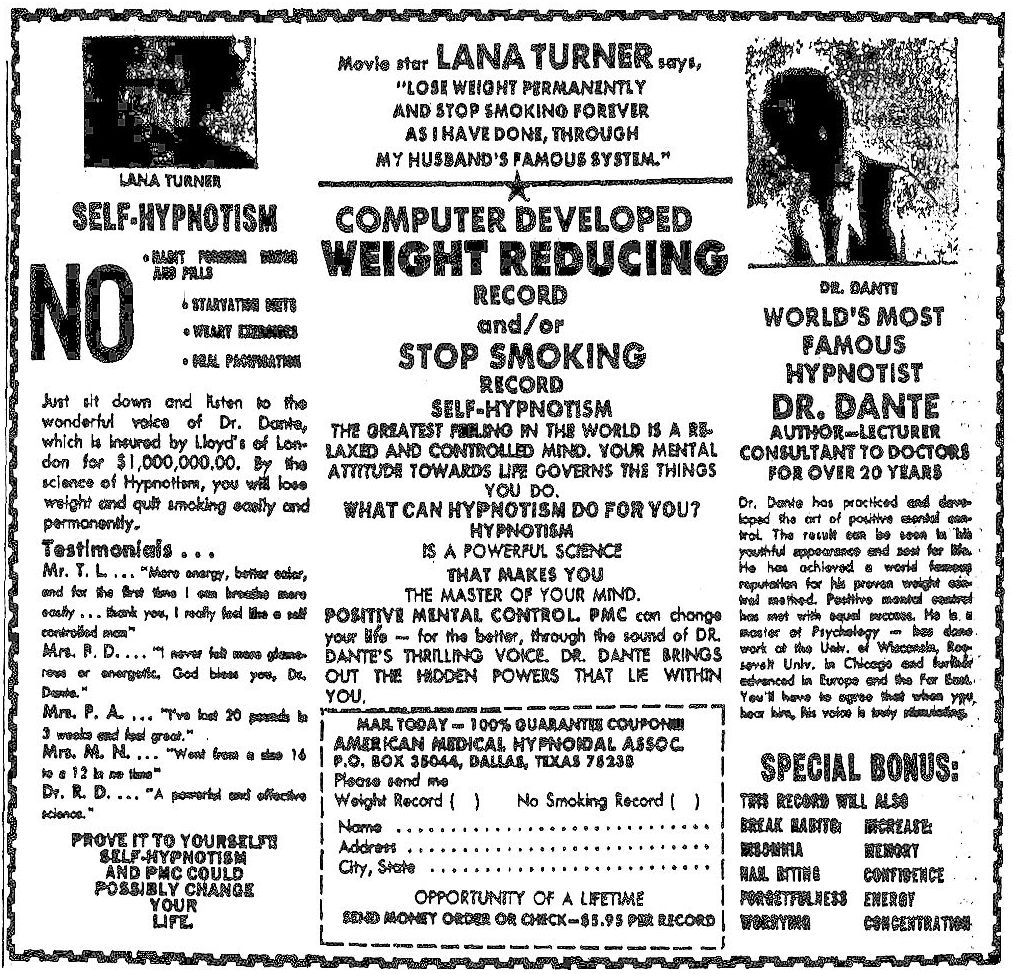
Their marriage hit the skids within 6 months, with Turner accusing Dante of misappropriating $35,000 of her money and, later, disappearing with many of her jewels, worth $100,000; on Nov. 14, 1969, Dante (not Lana!) filed for divorce on grounds of “extreme mental cruelty.” Two days later, the ad below touting a “computer-developed” self-hypnosis recording by Dante appeared in a Dallas paper, complete with a suspect thumbs-up testimonial attributed to estranged and recently-bilked Lana Turner (also worth a raised eyebrow was the inclusion of the even more suspect “American Medical Hypnoidal Assoc.” office which resided in a Dallas post office box) (click to see larger image):

dante_ad_nov-1969
Nov. 16, 1969

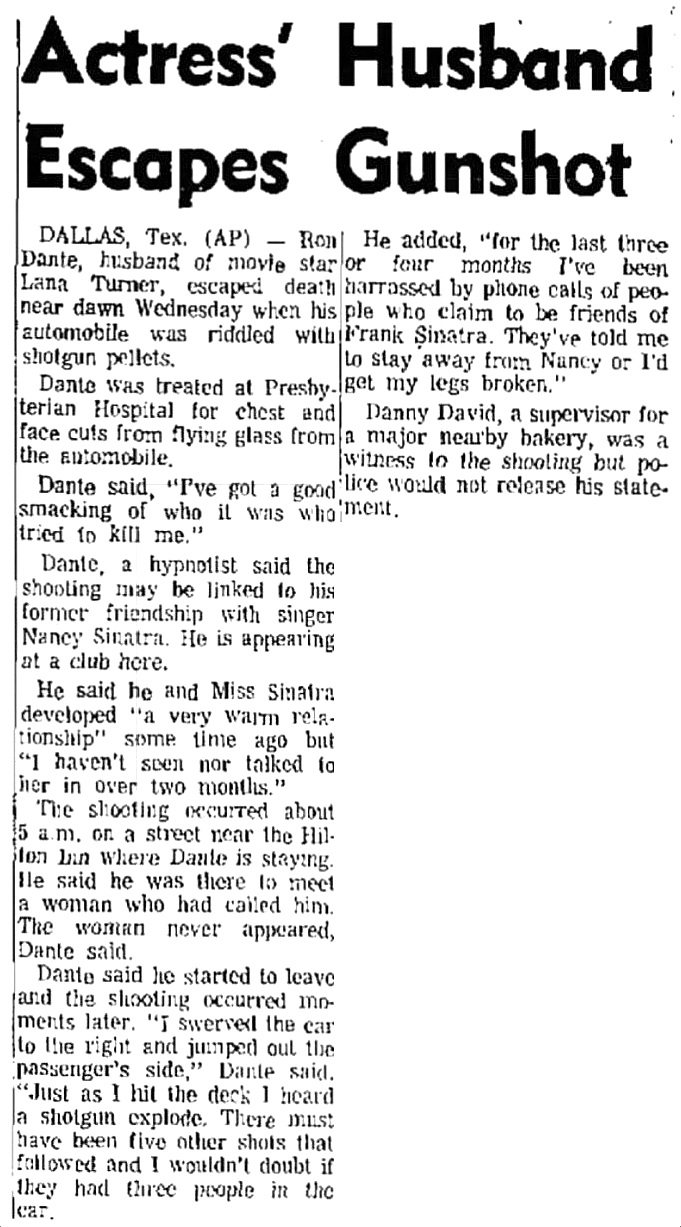
Six months later, Dante was in Dallas, claiming to have been shot at by men sent by Frank Sinatra to warn him to stop seeing his daughter Nancy. (A similar “being shot at” scenario was reported by Dante in Los Angeles in June, 1969 — photo here — Sinatra was not implicated by Dante in that shooting, but Lana Turner wondered about it in her 1982 autobiography: “Shortly after our wedding he was shot at, or so he said, in an underground garage, by a gunman wearing an Australian bush hat. It got a lot of attention in the papers — maybe that was what he wanted.”) One might reasonably wonder whether Dante was lying about the shooting in Dallas, but there seems to have been a witness: a Mrs. Baird’s employee, David Davis (whose name was misspelled in wire reports). Here’s the Associated Press report of the incident:

dante-ron_ap-wire_abilene-TX-reporter-news_052170AP wire story, May 21, 1970 (click to read)

Other reports noted that “a spokesman for Miss Sinatra said she did not know [Dante]” or had even ever heard of him; a spokesman for Miss Turner said they had been separated for several months and “she doesn’t even know where he is.” (It should be noted that Frank Sinatra had had a very steamy affair with Lana Turner in the 1940s — a tidbit which just adds all sorts of weird tangents to this story.)

I never saw a follow-up, but whether the story was true or not, it was pretty ballsy to accuse Frank Sinatra (a man of known “connections”) of being behind something like this. Someone should crack open this cold case!

dante_reno-gazette-journal_080770_groovy-hypnotist
“Groovy hypnotist,” Reno Gazette-Journal, Aug. 7, 1970

*

Ronald Dante’s first appearance in Dallas was at the Adolphus Hotel’s tony Century Room in January, 1963, back when he was known simply as “Dante.” Tony Zoppi, who covered the city’s nightclub scene for The News, wrote, “The handsome showman entertained his Century Room crowd with one of the most amazing hypnotic acts in the business” (DMN, Jan. 3, 1963). Back then his act looked something like this:

dante_on-stage_ua

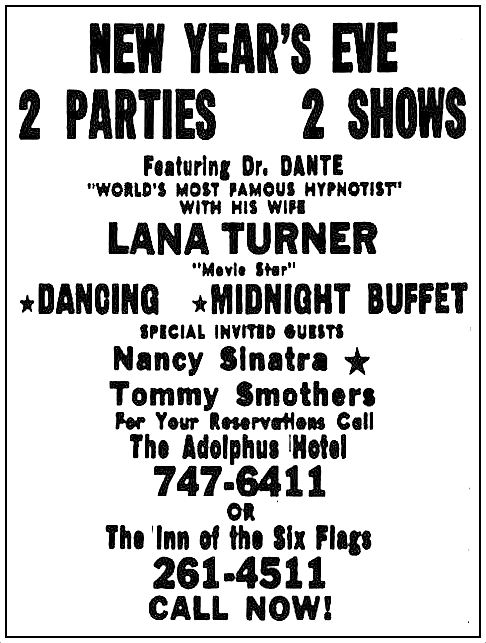
An interesting New Year’s Eve engagement at the Adolphus’ Rose Room was announced in The News in December, 1970 (same year as the shooting…): 

The Adolphus Hotel has lined up a star-studded evening for its New Year’s Eve celebration, including hypnotist Dr. Ronald Dante, reportedly to be accompanied by his wife, actress Lana Turner. (DMN, Dec. 17, 1970)

An appearance by Lana Turner seems … unlikely. Others rumored to be appearing on the star-studded bill? Actor Ralph Bellamy, comedian Tommy Smothers, and … singer Nancy Sinatra. Unsurprisingly, none of the special guests showed up.

dante_dallas-new-years-eve_dec-1970
Dec. 20, 1970

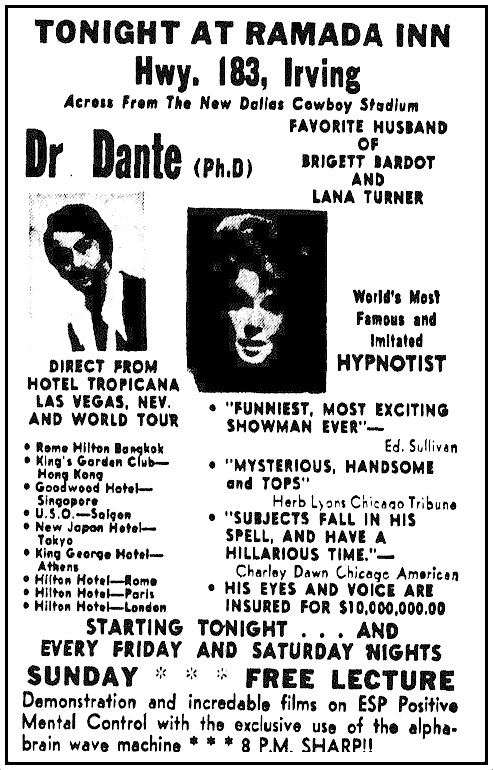
A couple of weeks after the New Year’s Eve engagement, an ad appeared in the paper filled with SO MUCH odd stuff in it: after a “world tour” which had him playing at swanky venues in Rome, Paris, London, Athens, Japan, and Bangkok, the next stop by Dr. Dante (“Ph.D.”) was none other than the somewhat less exotic Ramada Inn in the somewhat less exotic Irving, Texas; he billed himself as the “favorite husband” of both Lana Turner and “Brigett” [sic] Bardot (to whom he had never been married); and his eyes and voice were said to have been insured for 10 million dollars. Etc. In general, statements made by Dr. Dante were more likely than not to be absolutely untrue … untrue but usually pretty entertaining.

dante_ramada-inn_jan-1971
Jan. 15, 1971

A year later, Lana Turner and Ron Dante were divorced — the judge ruled that Dante had defrauded Turner, dissolved the marriage, and “postponed indefinitely a ruling on community property.” That was soon followed by a string of weirdness including the bizarre case of Dante’s being charged with soliciting an undercover cop to kill a rival stage hypnotist (!), creating a “school” to teach aspiring cosmeticians to administer permanent makeup (via tattoos), suing Johnny Carson for one billion dollars (“billion” with a “b”), and running an extremely lucrative diploma mill. (And that’s just the tip of the iceberg.) There were convictions and there was prison time.

Ron Dante appears to have died in 2013. (I believe nothing at this point.) A short documentary about him, “Mr. Hypnotism,” was shown at SXSW in 2009 (watch it here). It’s entertaining, but he really deserves a much longer documentary — and I really hope someone is working on a book. (PLEASE let someone be working on a book!)

In a lengthy Dallas Morning News profile/exposé of Dante (“Dr. Dante’s Traveling Hypnotherapy Show,” Feb. 24, 1985), reporter Glenna Whitley wrote:

Whatever else Dante is, he is likable. Even the most outrageous statements seem strangely plausible when coming from his lips. That may be the secret to his success, says [District Attorney] Gary Kniep, who was alternately amused and exasperated during Dante’s attempted-murder trial.

“Yeah, I kind of like him,” Kniep says. “He’s got some sort of magnetism that gets people into his confidence.” (DMN, Feb. 24, 1985)

I can see that.

dante_wfaa_SMU_3

*

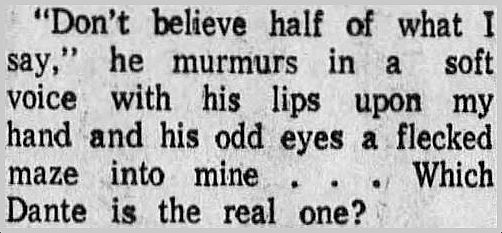
This was Dante’s closing statement to Muncie, Indiana reporter Betty Harris after a 1970 interview absolutely LOADED with whoppers. Can’t say she wasn’t warned!

dante_muncie-IN-evening-press_102370_reporter-betty-harris
Muncie Evening Press, Oct. 23, 1970

***

Sources & Notes

Screen captures at top and bottom are from the digitized WFAA Channel 8 News film footage from May 21, 1970; the video is from the WFAA Newsfilm Collection, held at the Hamon Arts Library, Southern Methodist University. The direct link to the Ron Dante clip on YouTube is here. Follow the WFAA clips as they are added by SMU digitizers to YouTube here, and on Facebook here. (Thanks for your tireless dedication, Jeremy and Scott!)

Photos of Lana Turner and Ron Dante are from Pinterest and eBay.

The photo of Dante performing in a nightclub was found on a page about Lana Turner on the University of Alabama site, here.

See Wikipedia for more on Dr. Dante and Lana Turner.

I HIGHLY recommend listening to Jennifer Sharpe’s 6-minute 2007 NPR story on Dr. Dante (“Lana Turner’s Ex Maintains Dreams of Grandeur”), here (click the “play” button in the blue circle at the top of the page). The short film “Mr. Hypnotism” was made by her and Austin-based director Bradley Beesley — the full film is here, the trailer is here.

UPDATE, 2023: Well, there is now an 8-episode podcast about the exploits of Dante: “Chameleon: Gallery of Lies, Dr. Dante.” He was weirder than I thought!

*

Copyright © 2018 Paula Bosse. All Rights Reserved.
State Fair Coliseum / Centennial Administration Building / Women’s Museum / Women’s Building

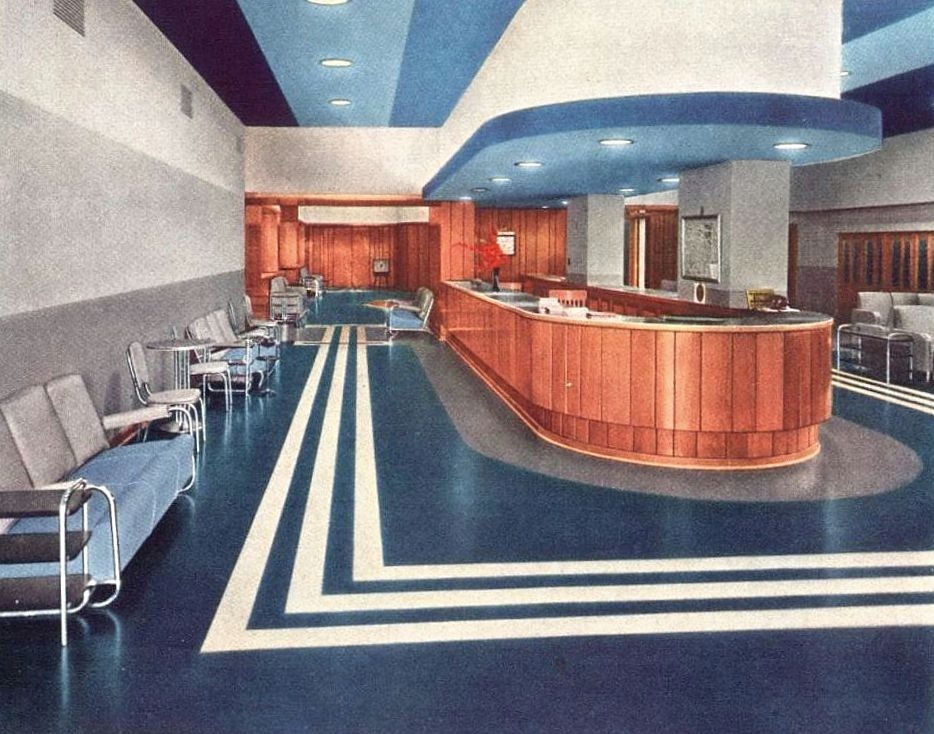
tx-centennial_armstrong-linoleum-ad_1936_detAdministration Building interior, 1936…

by Paula Bosse

Thursday night I attended a very entertaining Dallas Historical Society presentation at the Hall of State in Fair Park: “An Evening With Jim Parsons: Lost Fair Park,” in which the author of Fair Park Deco and DFW Deco talked about many of the buildings constructed for the Texas Centennial Exposition in 1936 which are no longer with us.

One of Jim’s asides was that there are very, very few color photos of the Centennial buildings and murals taken in 1936. If you’ve seen a Centennial view in color, it’s probably a colorized postcard. Kodachrome film was introduced in 1935 and was, sadly, not in wide use by visitors to Fair Park in 1936 (or by the Centennial organization).

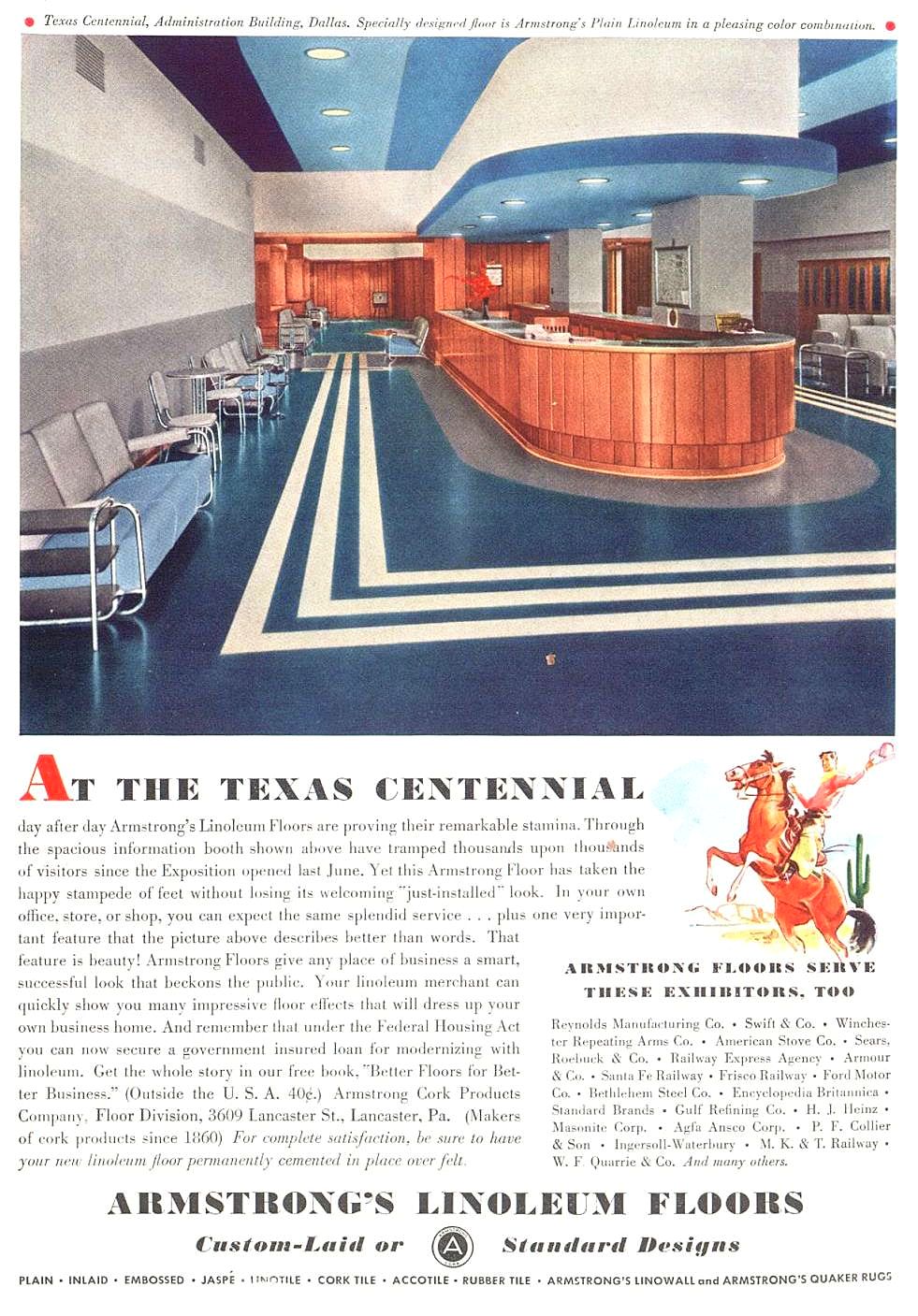
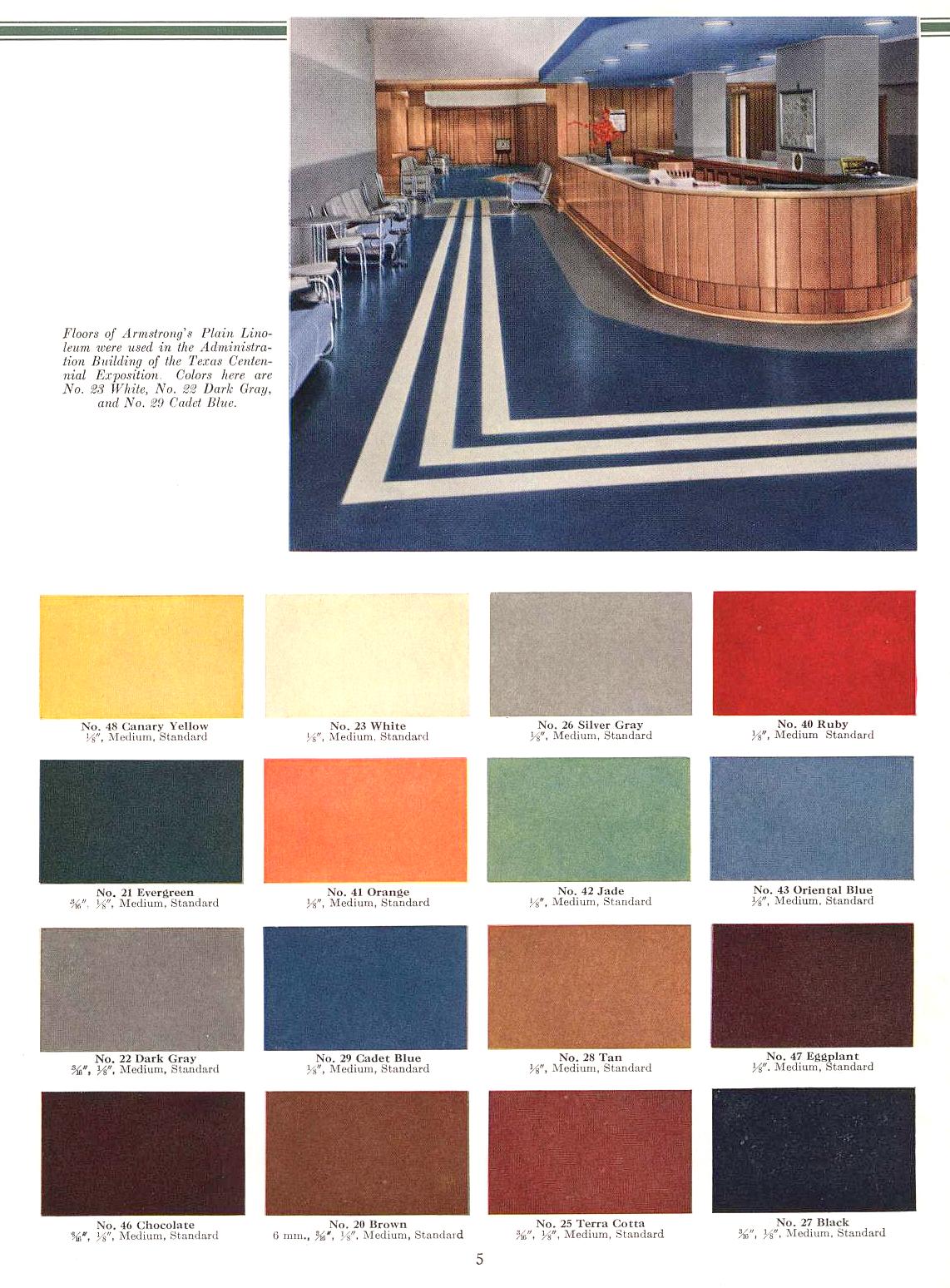
When he said that, though, I remembered an ad I had come across that I thought was pretty cool, simply because it shows the interior of one of the Centennial buildings when it was brand new (…well, it was sort of new — more on that below). The ad is for Armstrong Linoleum and it features a color photo showing one of their custom linoleum floors installed in the Centennial Administration Building, an interior I’d never seen. And it’s in color! (Check out the furniture and the recessed lighting!) Here’s the full ad, which appeared in national magazines in 1936 (click for larger image).

ad- tx-centennial_armstrong-linoleum_19361936 ad

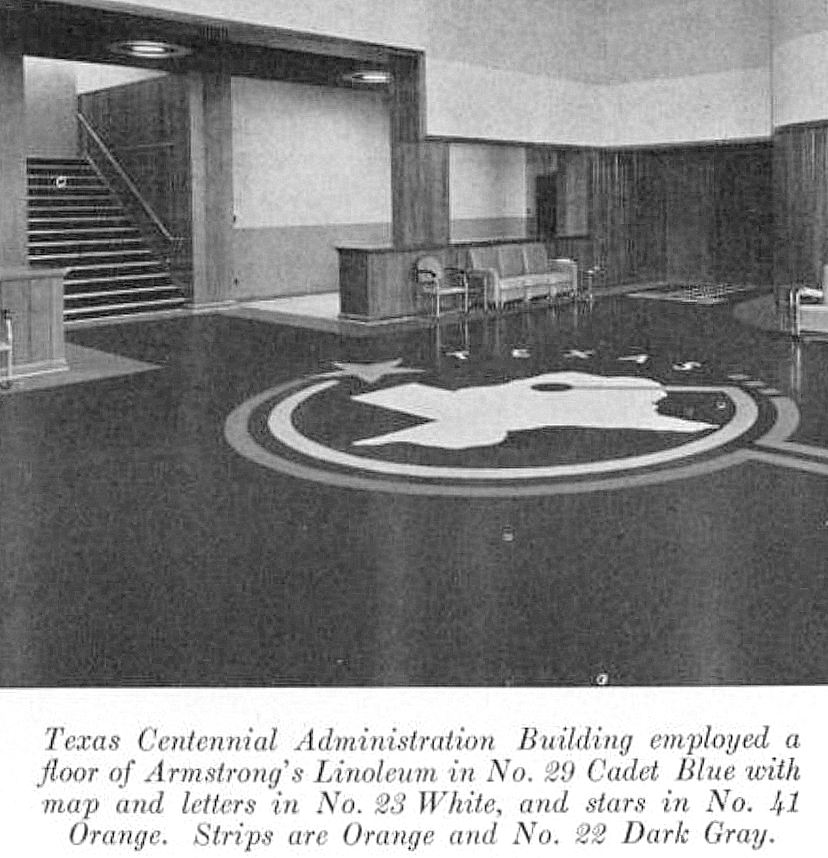
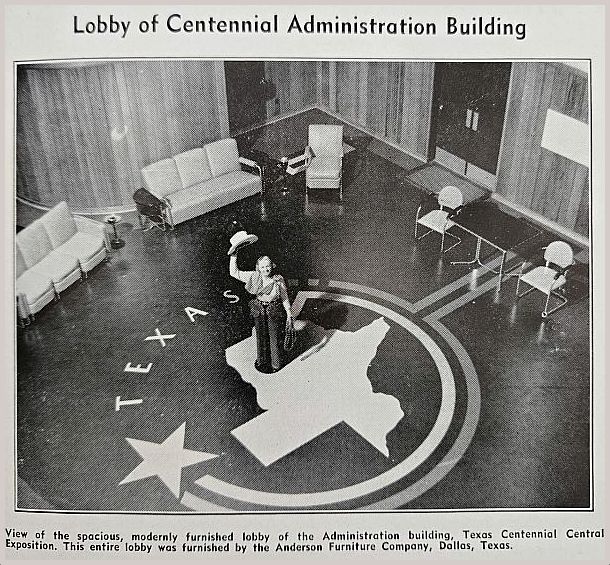
And — hallelujah — I found another photo of the interior — also from the helpful Armstrong people (I don’t know if they had the concession to outfit all the Centennial buildings, but, if so, I’d love to see all of their designs). Unfortunately this one is not in color, but it shows a fantastic Texas-centric custom design, laid down in fabulous linoleum.

tx-centennial_armstrong-linoleum_admin-bldg_texas-floor

And another one:

tx-centennial_administration-bldg-floor_southwest-business-mag_june-1936
Southwest Business, June 1936

Imagine that floor in Cadet Blue, White, Orange, and Dark Gray. This is from a trade publication called Armstrong’s Floors and Walls for Homes and Public Buildings, published around 1950 (and fully scanned here). A cropped version of the photo of the top is also included here (that floor, by the way, is in White, Dark Gray, and Cadet Blue), with handy swatches (which, reproduced below, lose some accuracy in color).

tx-centennial_armstrong-linoleum_admin-bldg_colors

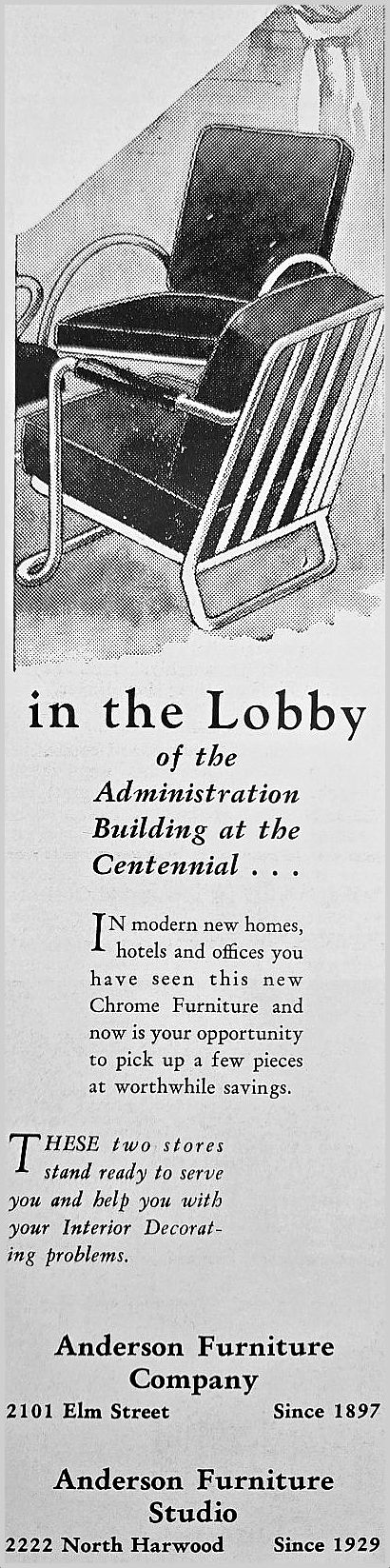
And just because I found an ad for those cool chairs:

tx-centennial_furniture_southwest-business-mag_oct-1936Southwest Business, Oct. 1936

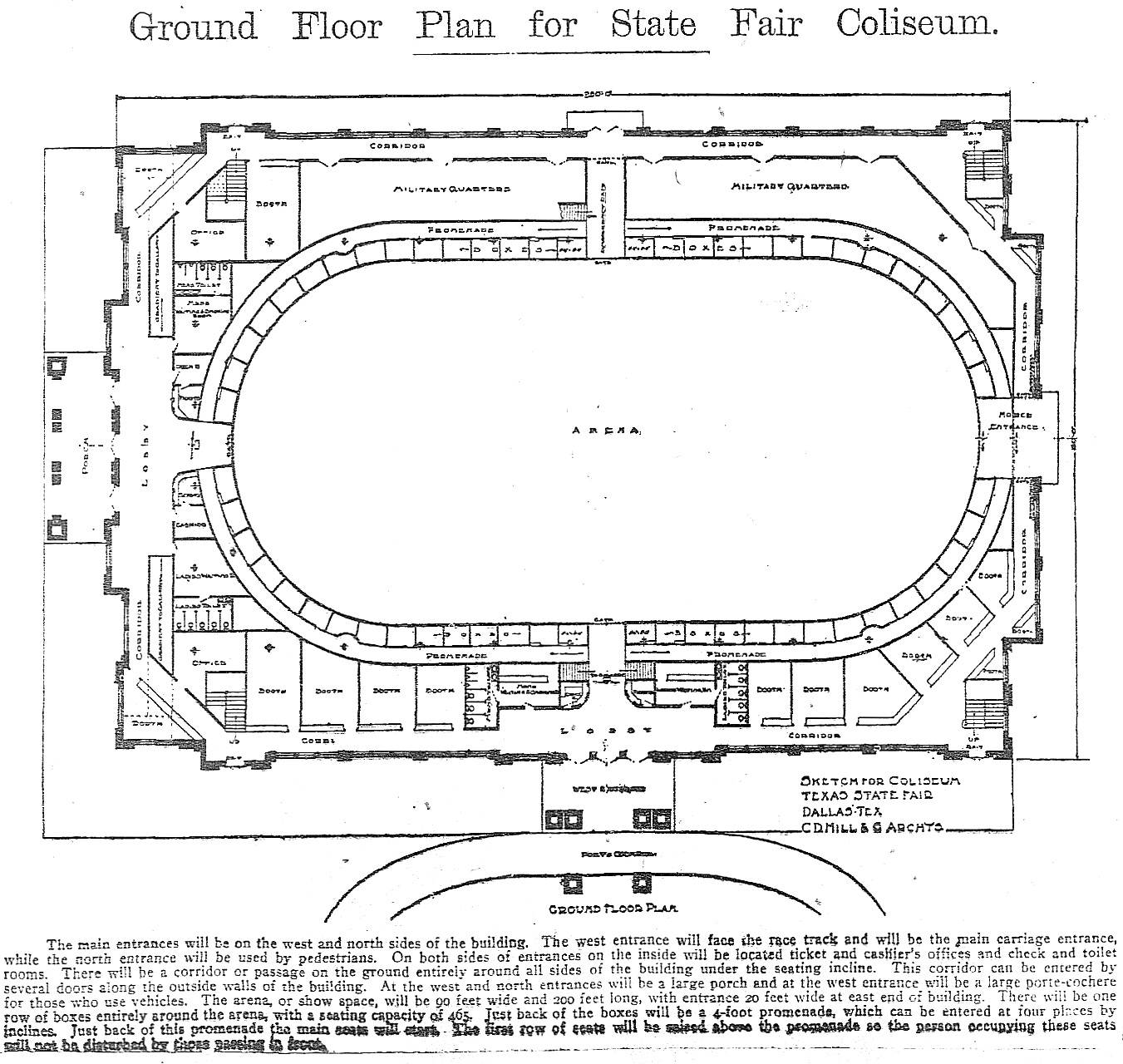
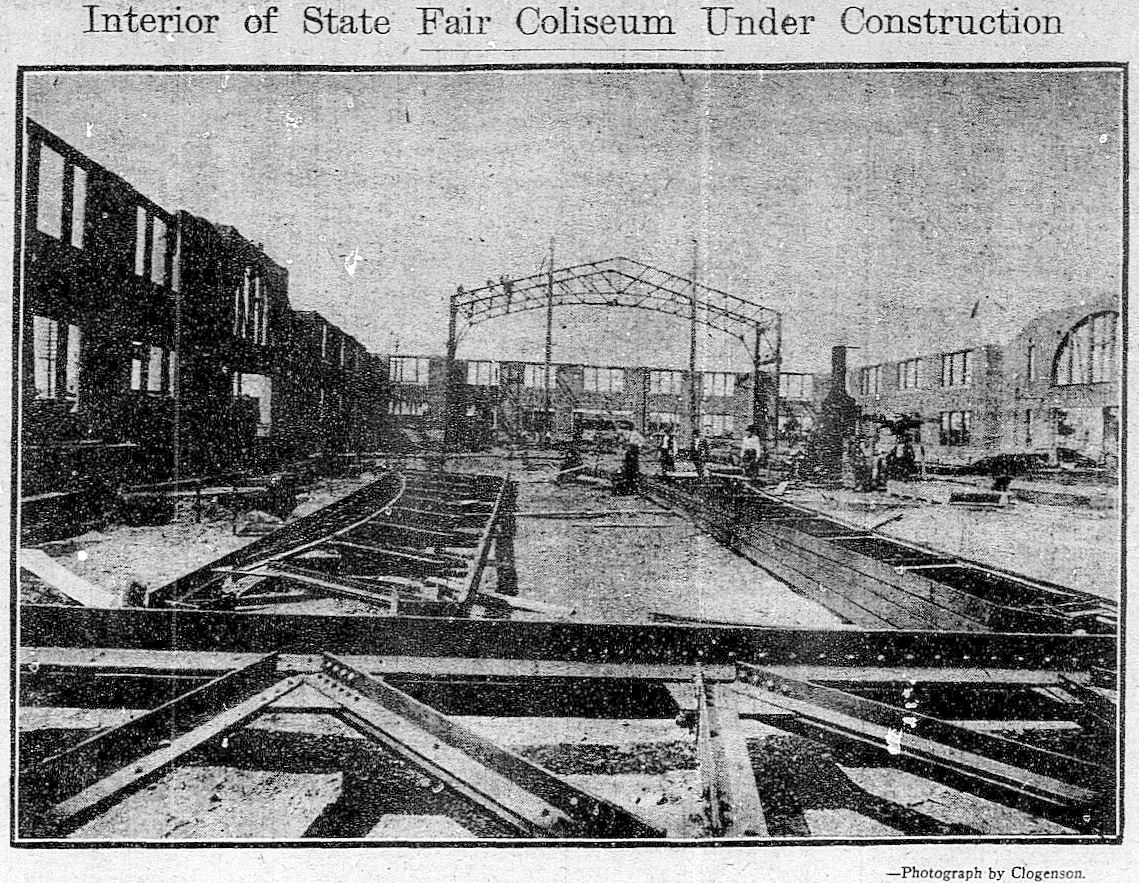
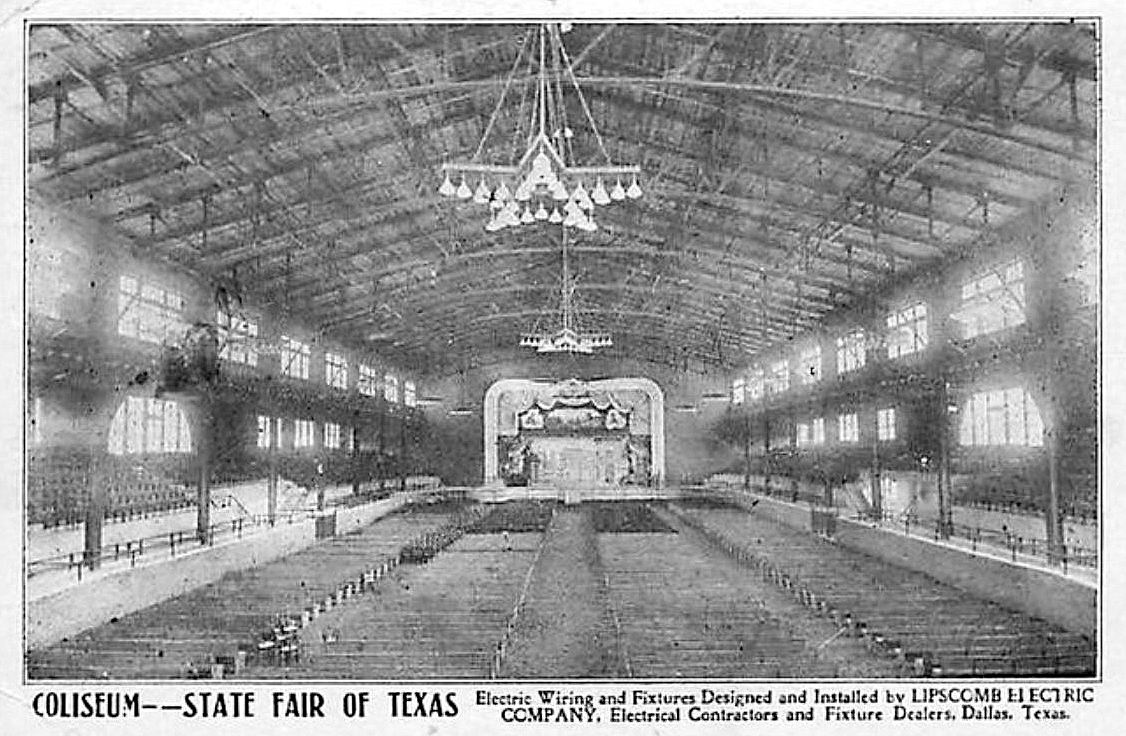
The Centennial Administration Building — which housed the hundreds of office workers and executives behind the running of the Texas Centennial Exposition — was actually the very first Centennial building completed (at the end of December 1935). Most of the Centennial buildings were newly built in 1936, but the Administration Building was actually an old building given a new stucco façade and completely remodeled — it even acquired a second floor inside the huge structure. This building was originally known as the State Fair Coliseum, built in 1910, designed by architect C. D. Hill (who designed many buildings in Dallas, including the still-standing Municipal Building downtown (built in 1914) and the Melrose Hotel (1924).

state-fair-coliseum_dmn_062009_drawingDallas Morning News, June 20, 1909

state-fair-coliseum_dmn_050710_constructionDMN, May 7, 1910

It was BIG. It had a seating capacity of 7,500.

state-fair-coliseum_flickr_coltera

state-fair-coliseum_dmn_030413DMN, March 4, 1913

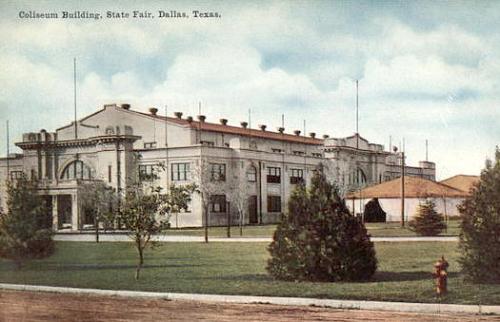
This was the first building you’d see as you entered Fair Park, as it was right inside the front entrance on Parry Avenue (after you entered, the building would be on your left).

Coliseum Building, State Fair Dallas, TX

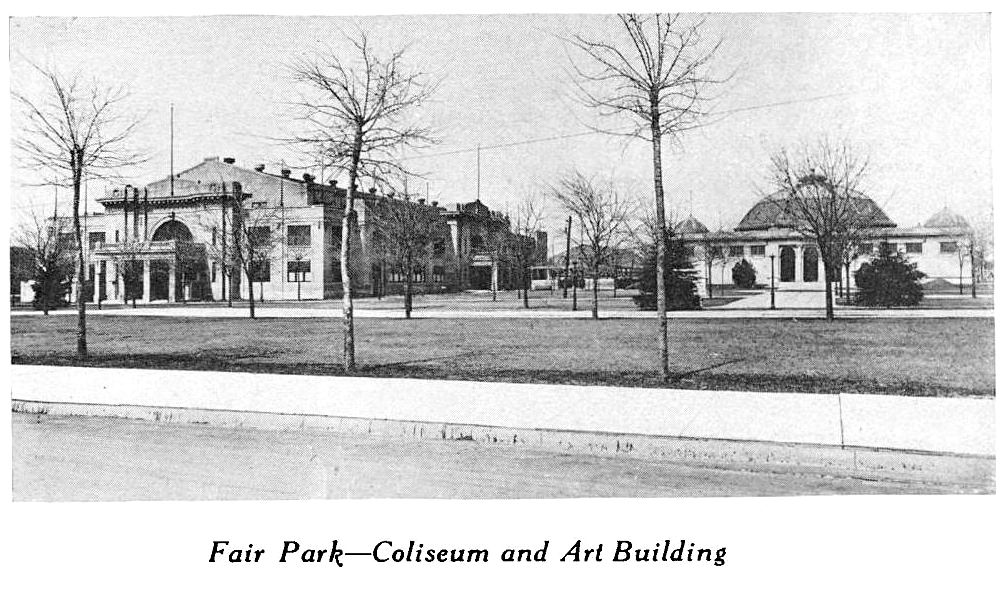
park-board-bk_fair-park-coliseum_1914

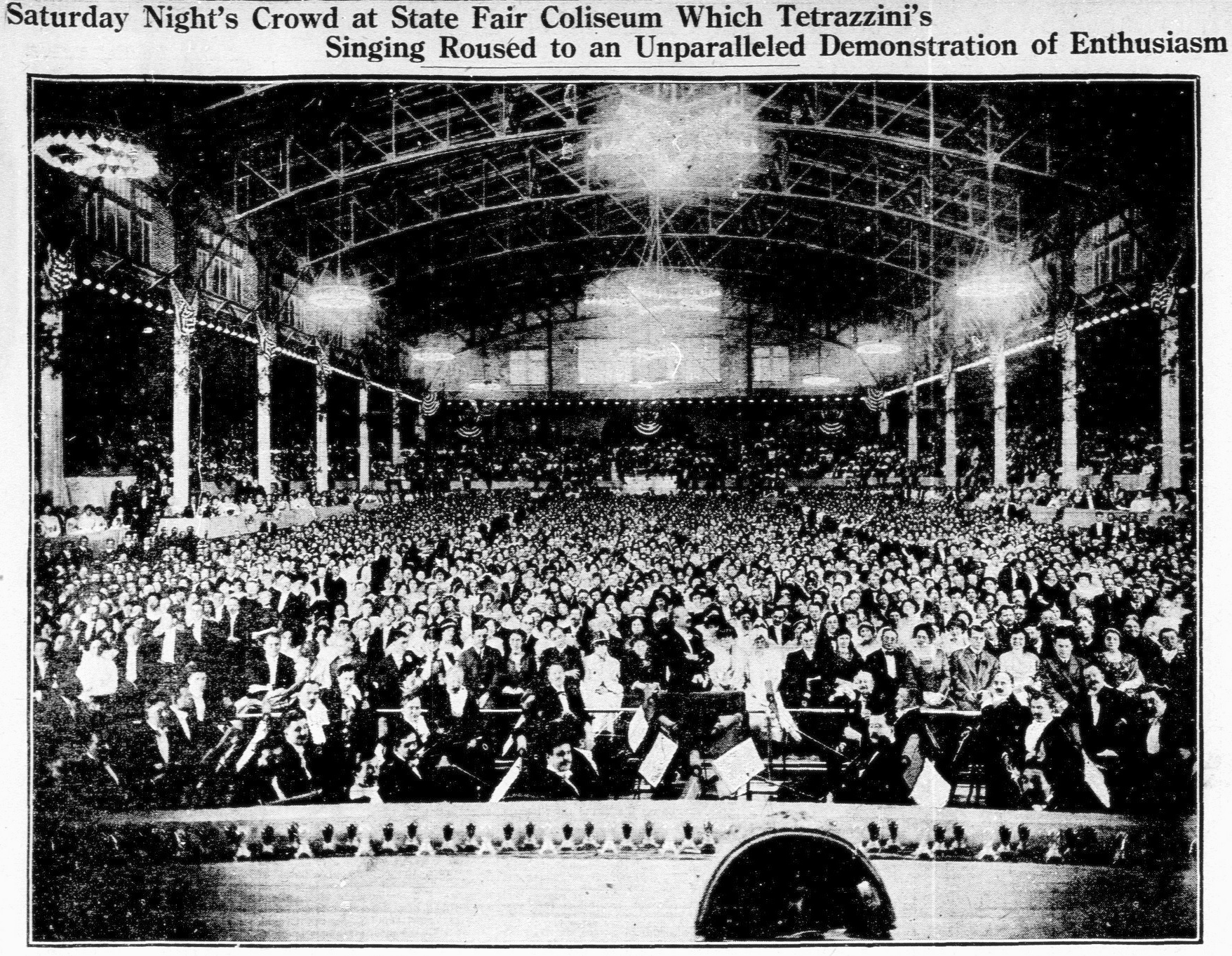
It was the city’s first official municipal auditorium, and it hosted everything from livestock shows, conventions, large civic gatherings, and the occasional opera.

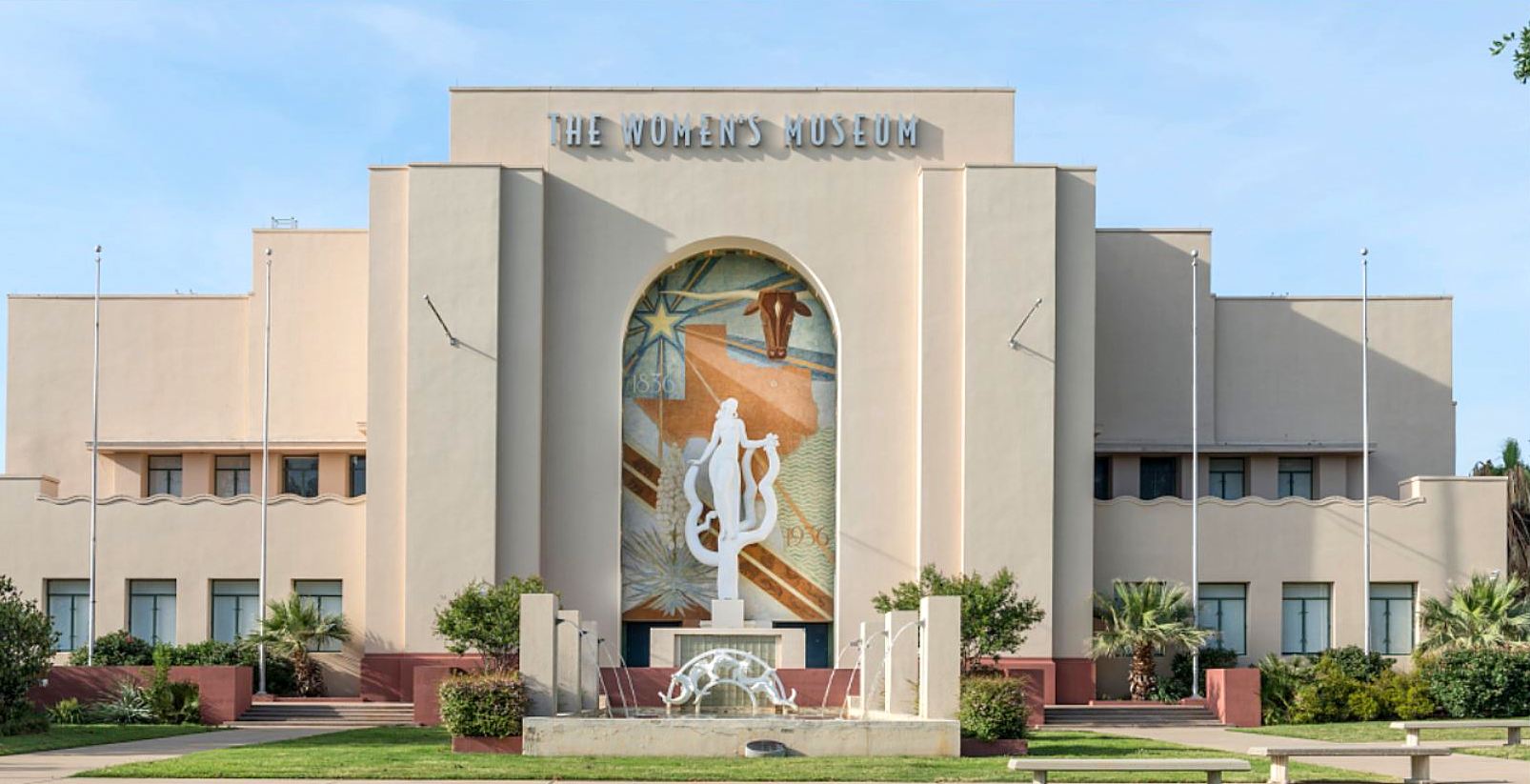
Fast-forward a few decades: in 2000 the building became the home of the Women’s Museum. The museum closed in 2011 and is now called the Women’s Building and is used for special events.

A photo of the building from 2014:

womens-museum_fair-park_2014_carol-highsmith_library-of-congressphoto: Carol Highsmith, Library of Congress

See a Wikimedia photo of this building in 2016 here — click it again (and again) to see it really big, and linger on the mural by Carlo Ciampaglia and the sculpture by Raoul Josset. See interior photos of the space in 2009 during its time as the Women’s Museum here and here. I’m not sure if the exposed brick and steel are from the original 1910 building, but I certainly hope so! And, lastly, exterior photos from 2009 showing the side of the building here, and here

***

Sources & Notes

This building can be seen on this aerial Google view, here. It is currently the Women’s Building, and it is available for special events — more about this building from the Friends of Fair Park, here.

Black-and-white postcard showing the interior of the Coliseum is from Flickr.

Black-and-white photo “Coliseum and Art Building” is from Report for the Year 1914-1915 of the Park Board of the City of Dallas, With a Sketch of the Park System (Dallas: Park Board, 1915), which can be accessed as part of the Dallas Municipal Archives via the Portal to Texas History, here.

And since this whole post was spurred by Jim Parsons’ talk the other night, here’s a link to the book he and David Bush wrote: Fair Park Deco: Art & Architecture of the Texas Centennial Exposition.

*

Copyright © 2018 Paula Bosse. All Rights Reserved.
Ghost Rails of the Belmont Streetcar Line

matilda-richmond_dan-parr-photo_FB-dallas-history-guild_april-2018Matilda & Richmond, April, 2018… (photo: Dan Parr)

by Paula Bosse

I grew up on Ellsworth, between Greenville Avenue and Matilda — just south of Mockingbird, just north of the M Streets. When I was a child, Matilda was only partially paved — in my neighborhood, maybe only from Mockingbird down to Kenwood? Otherwise, it was a dirt street (!) — and this was in the ’70s! Right around Kenwood was a weird mound which might not have looked like much to an adult, but to a child it was pretty strange. I can’t remember if the rails were visible — I’m pretty sure they were.

That line was the Belmont Line, which ended (began?) at Mockingbird (I think there was a later extension of sorts, but I think Mockingbird was the end of the line for streetcar passengers). As a kid, I knew that Matilda had been a long-gone streetcar line, but never having seen a streetcar outside of a movie, I couldn’t really imagine what it must have been like to have streetcars (and an interurban! — more on that below) moving up and down a street which was less than a block from my house.

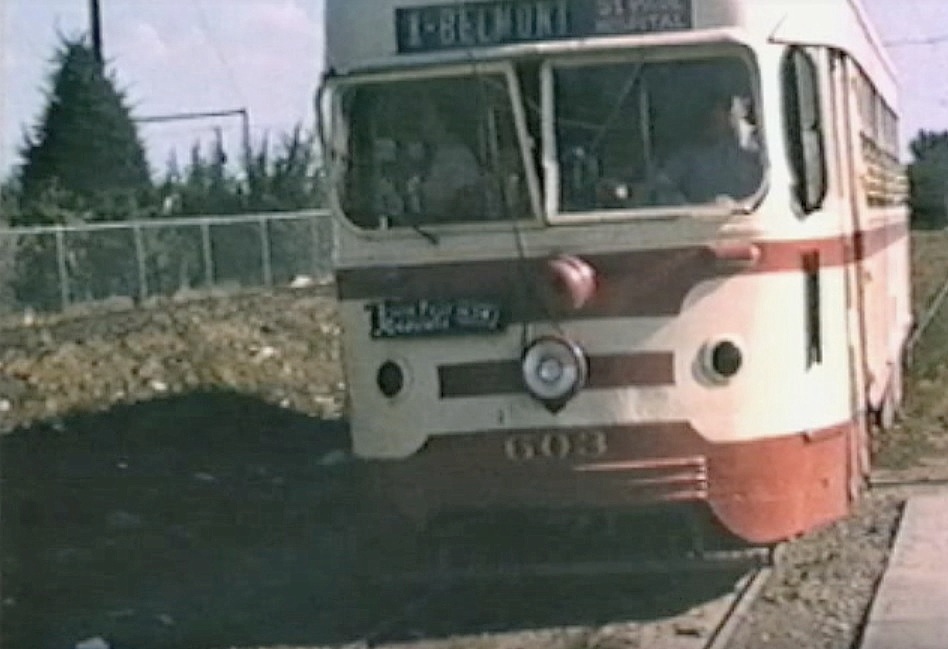
A few years ago I stumbled across the YouTube video below and was surprised to see actual footage of that streetcar rolling up Matilda. The first five minutes of the video contains 16mm footage (both black-and-white and color) shot around Dallas in 1953 and 1954 by Gene Schmidt. It’s GREAT! You’ll see streetcars-galore moving past all sorts of familiar and vaguely familiar sights around the city, from Oak Cliff to downtown to way out to Mockingbird and Matilda. It ends with the Belmont-Seventh car (car 603) pulling to the end of the line — the view is looking south down an unpaved Matilda Street from Mockingbird, with a glimpse of the Stonewall Jackson playing field at the left, on the other side of the fence. (The Matilda footage begins at 4:17.)

*

belmont-line_matilda-from-mockingbird_youtube-cap_ca1954Matilda, south from Mockingbird, ca. 1954 (Gene Schmidt)

Above, a screen capture from the video showing Matilda looking south from just south of Mockingbird. Stonewall Jackson Elementary School is at the left. Today the view looks like this.

*

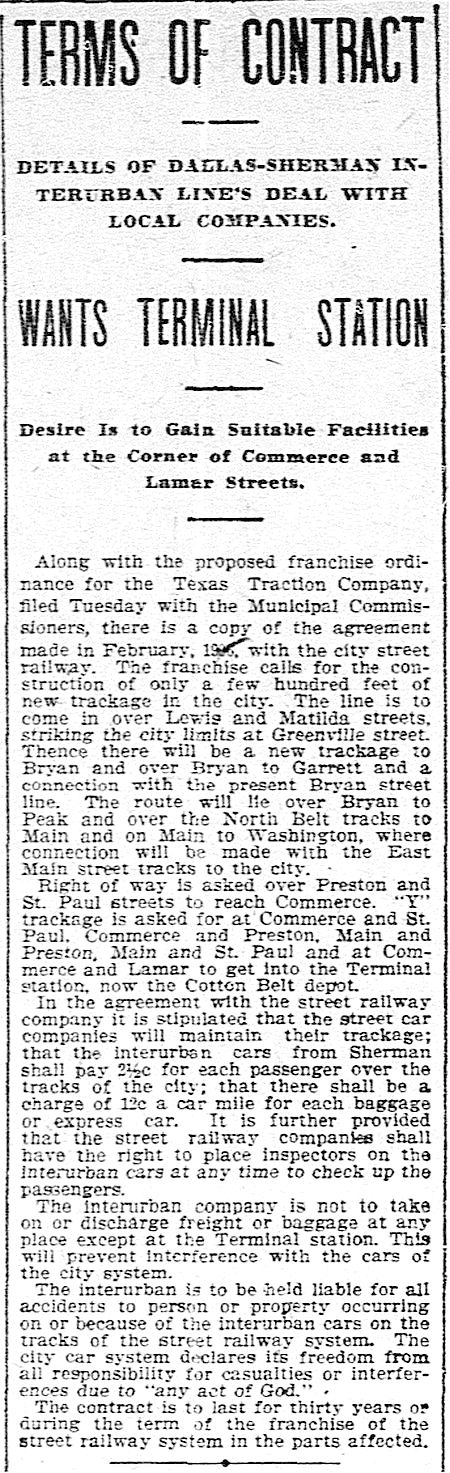
Before the streetcar arrived, Matilda was the artery that led the Texas Traction Company’s Sherman/Denison interurban into Dallas. This electric interurban service from the north, which closely followed the H&TC railroad line, arrived in Dallas in 1908, back when the official entry-point into the Dallas city limits was just off Matilda, near Greenville Avenue and Bryan Street.

1908_interurban_sherman-dallas_dmn_011608
DMN, Jan. 16, 1908 (click to read)

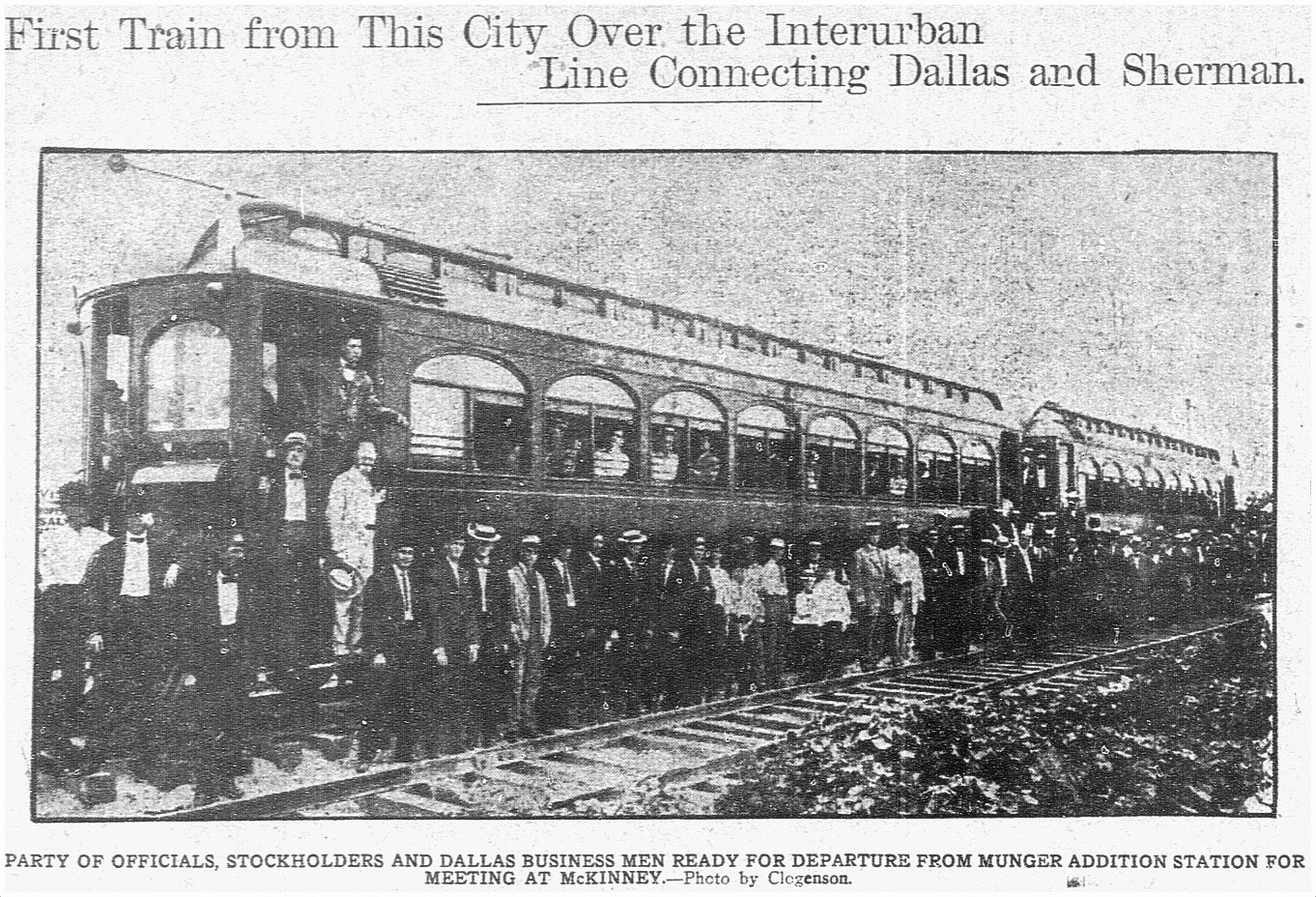
The interurban route connecting Sherman/Denison with Dallas opened on July 1, 1908 and lasted for 40 years, until its final run on December 31, 1948. (Read the Dallas Morning News article on the 1908 inaugural trip for big-wigs, “Many Make Trip Over Interurban,” July 1, 1908, here. Below is the accompanying photo. Image that running up and down Matilda — and, later, along other streets in Dallas — several times a day!)

interurban_sherman-dallas_dmn_070108
DMN, July 1, 1908

Dallas’ ever-increasing population began to move northward and eastward, necessitating public transportation which would connect these developing areas with the rest of the city. One of the early “suburban” lines was the Belmont Line, which branched off the Bryan Street line and served the Belmont Addition and beyond; it opened in 1913, but these early days appear to have been more of a private “dinky” service (see SMU’s dinky car on the beyond-the-city-limits tracks at Hillcrest and McFarlin, here). The Belmont line — as well as the Vickery Place and Mount Auburn lines — became part of the city’s official streetcar system in 1922.

Before the dinky service, riders were able to get on and off the large interurban cars at stops between Mockingbird and the area around Bryan and Greenville Ave. Even though interurbans and streetcars were able to travel on the same rails, it took years for dedicated streetcar tracks to be laid along Matilda.

This detail of a real estate ad shows that the Belmont line had reached at least as far as Richmond by 1914 (I felt I had to include this because the finger is pointing at the exact location of the exposed rails in the photo at the top!):

1914_matilda-richmond_lakewood-heights-ad_det_050314
May, 1914 (detail from Lakewood Heights real estate ad — see full ad here)

By 1922 the Belmont line had extended north to Velasco; by 1925 it had gotten to McCommas; by 1936 it had made it up to Penrose; and by 1939 it had finally reached Mockingbird (in time for the opening that year of Stonewall Jackson Elementary School, located at Mockingbird and Matilda).

Dallas streetcars began to be phased out in 1955, and the Belmont line was one of the first to go — its last run was March 6, 1955: “The Belmont-Seventh streetcar line will go out of existence Sunday to be replaced by service with new Diesel buses” (Dallas Morning News, March 6, 1955). The new bus route in the Lower Greenville area would, for the most part, be along Greenville Avenue, one block west of unpaved Matilda Street.

In March, 1955, it was reported that the abandoned Belmont-Seventh streetcar tracks were deeded to the city by the Dallas Railway and Terminal Co., with the understanding that they would eventually be paved over. The tracks were on Matilda, Bryan, Cantegral, Live Oak, St. Paul, King’s Highway, Edgefield, Seventh, Bishop, and Colorado. In April, 1956, it was reported that the City Council had approved the sale of the streetcar viaduct over the Trinity River and the Matilda street right-of-way.

But what about that paving of Matilda? Mrs. K. E. Slaughter had thoughts on the matter in a letter-to-the editor in April, 1955:

Since removal of the Belmont streetcar line in part — Matilda and Bryan streets — would it not be advantageous to develop this section into an important use to the heavy automobile traffic? Matilda now is no more than useless tracks built up between a cow path. (DMN, April 7, 1955)

“Cow path” — ha!

Another annoyed News reader wrote in 1963 — eight years after the tracks had been abandoned — about the useless unpaved thoroughfare:

The abandoned almost-private right of ways, such as Matilda, nearly two miles south from Mockingbird, received by the city in a deal to permit an all-bus operation, have not yet been paved or otherwise improved. (DMN, Oct. 21, 1963)

I’m not sure when that paving finally happened — early ’70s? — I think it must have been done in stages. I don’t remember a time when the stretch between Mockingbird and Kenwood wasn’t paved, but I do remember Matilda being a dirt road south of Kenwood. I don’t have a good recollection of the year, but kids remember all sorts of weird things, and those mysterious mounds were pretty memorable. (UPDATE: See photos of Matilda being paved at Goodwin in 1971 here.) I wish I’d known what an interurban was when I was a child. That would have made my neighborhood seem a whole lot more interesting! Heck, it used to the Gateway to Sherman!

I’ve long despaired of having missed the streetcar age. But it’s nice to know that one ran so close to the house I grew up in.

belmont-line_matilda-mockingbird_youtube-cap_ca1954End of the line, ca. 1954… (Gene Schmidt)

belmont-car_lakewood-heights-ad-det_050314

***

Sources & Notes

Top photo taken by Dan Parr on April 15, 2018; it was originally posted to the Facebook group Dallas History Guild and is used here with permission. (Thanks, Dan!) The photo was taken at Matilda and Richmond, looking south on Matilda. See it on Google Street View, here. (Roadwork along Matilda is awful at the moment, but much-needed. Apparently it is being reduced to three lanes for automobiles with two bike lanes being added — read about it in the Lakewood Advocate, here.)

YouTube video shot by Gene Schmidt in 1953 and 1954; the direct link is here.

Another interesting video on YouTube was made by the City of Allen and contains period footage of the interurban that served North Texas. It’s a breezy 6-and-a-half  minutes, and it includes some cool shots of Dallas.

If you want to see a whole bunch of North Texas interurban photos, check out this great 83-page PDF compiled by DART, “History of the Interurban Railway System and Monroe Shops,” here.

Speaking of DART, they posted a cool 1925 map of streetcar and interurban lines, here — click the map to see a larger image. (In 1925, the Belmont line ended on Matilda at McCommas).

ALSO extremely cool is a Google map showing Dallas’ Historical Streetcar (and Interurban) Lines laid over a present-day Google map, here. Zoom in and out. Very useful!

streetcar_belmont_color_ebayeBay

belmont-streetcar_new-moon_1940_palace_ebay1940, eBay

belmont-streetcar_1954_ebay1954, eBay

*

Copyright © 2018 Paula Bosse. All Rights Reserved.
Flashback Dallas in D Magazine: “The Trinity Bridge-Jumpers”

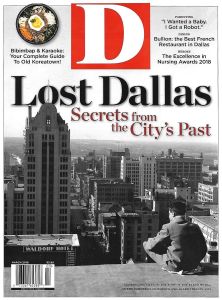
d-mag_lost-dallas-cover_mar-2018

by Paula Bosse

I was flattered to be asked to contribute something to the “Lost Dallas” issue of D Magazine (great stories and photos, by the way — it’s on newsstands now!). When asked for a topic that might be interesting or offbeat, I remembered a story I had come across a few years ago which I had always meant to write about: an 1897 event in which a professional diver and an amateur “jumper” crossed paths at the old Commerce Street Bridge in front of a crowd of several thousand. The thought of diving/jumping from a Dallas bridge into the Trinity River — unless it’s at flood-stage — is, frankly, something I would never have considered, but it happened. There is a short overview of the event in the print edition of the magazine, but my full version — “The 1897 Battle of the Trinity Bridge Jumpers” — is available to read online at D’s website, here.

I won’t repeat the story here, but for you faithful lovers of history who read the full story (and who sneer at the very concept of tl;dr), here are a few images and bits of background info to flesh out the story a bit.

WILSON & SEXTON

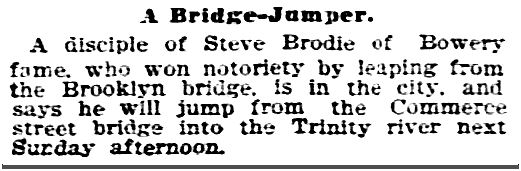
It all began with a small announcement in The Dallas Morning News:

bridge-jumper_wilson_dmn_031797DMN, March 17, 1897

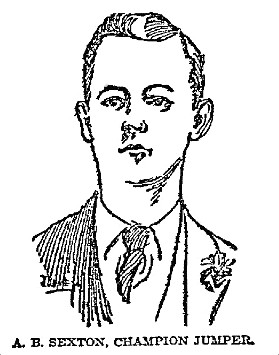
No photographs of the main characters are available, but drawings of the two men were featured in the pages of The News on March 22, 1897. First, J. B. Wilson, the “professional” bridge-diver who traveled from town to town plying his trade. As the drawing below shows, Wilson personally walked through the large crowd in his special diving costume, carrying a cigar box, soliciting “donations” from the crowd (one man attempted to slip in a live water snake he had in his pocket — Wilson was not amused).

trinity-bridge-jumper_wilson_drawing

Secondly, the unexpected hero of the day, young Arch Sexton: candy-maker, thrill-seeker. Sexton had this to say of the drawing: “That was an excellent picture of me in The News this morning. The artist knows a good-looking man when he sees him” (DMN, March 23, 1897).

trinity-bridge-jumper_sexton_drawing

THE COMMERCE STREET BRIDGE

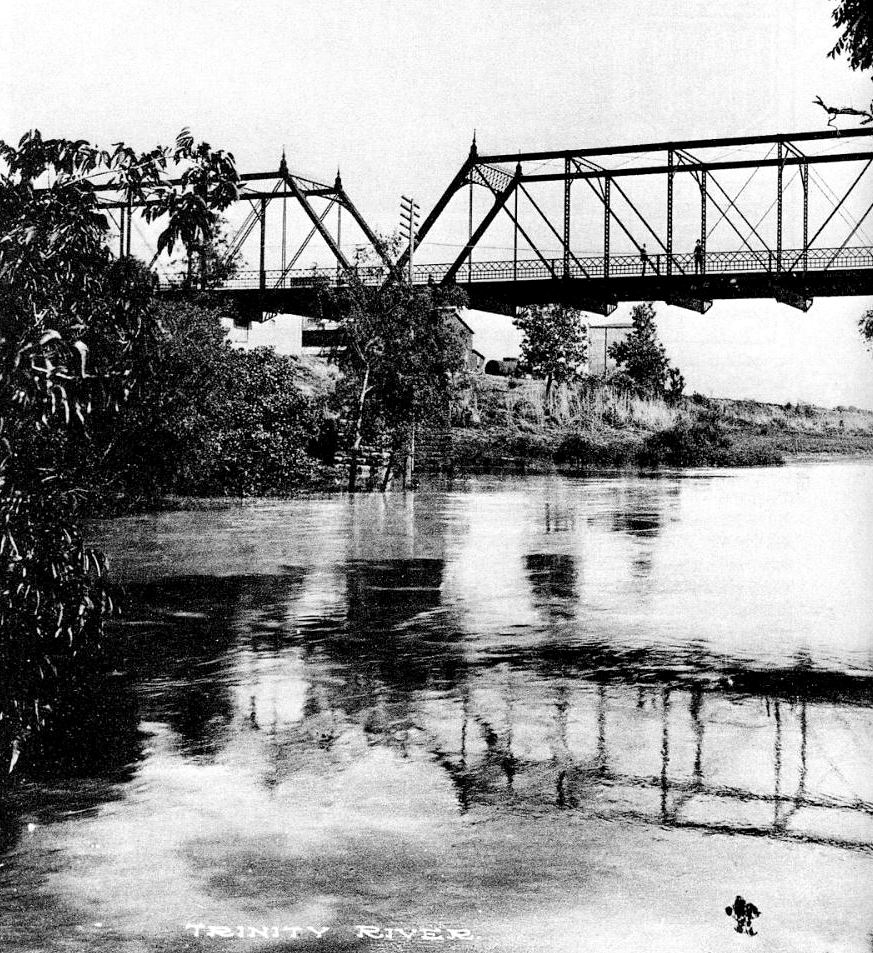
The centerpiece of this story is the old Commerce Street Bridge, built around 1890 (it weathered the great flood of 1908 and was eventually replaced by a new bridge in 1915). This was before the Trinity River had been straightened and moved. This is what the bridge looked like on a typical day:

commerce-street-bridge_legacies_fall-1995photo via Legacies

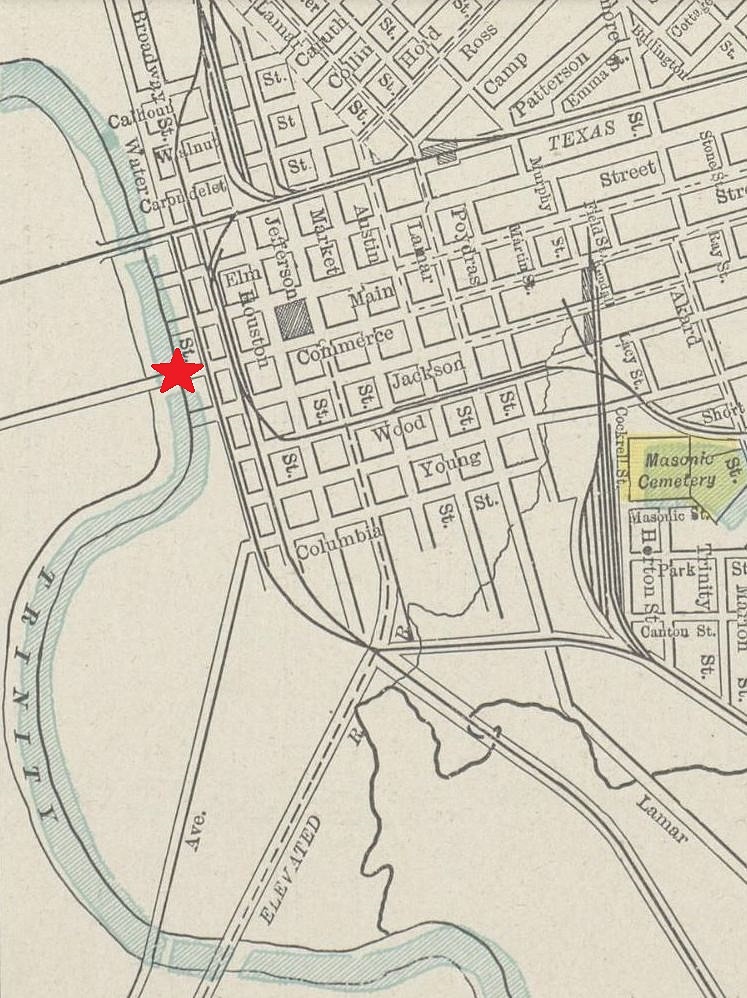
And, below, the course of the river in 1897. The jump would have happened only a couple of blocks from the Old Red Courthouse, very close to what is now the edge of Dealey Plaza.

map_1898_trinity-det_portal
1898 map detail, via Portal to Texas History

STEVE BRODIE

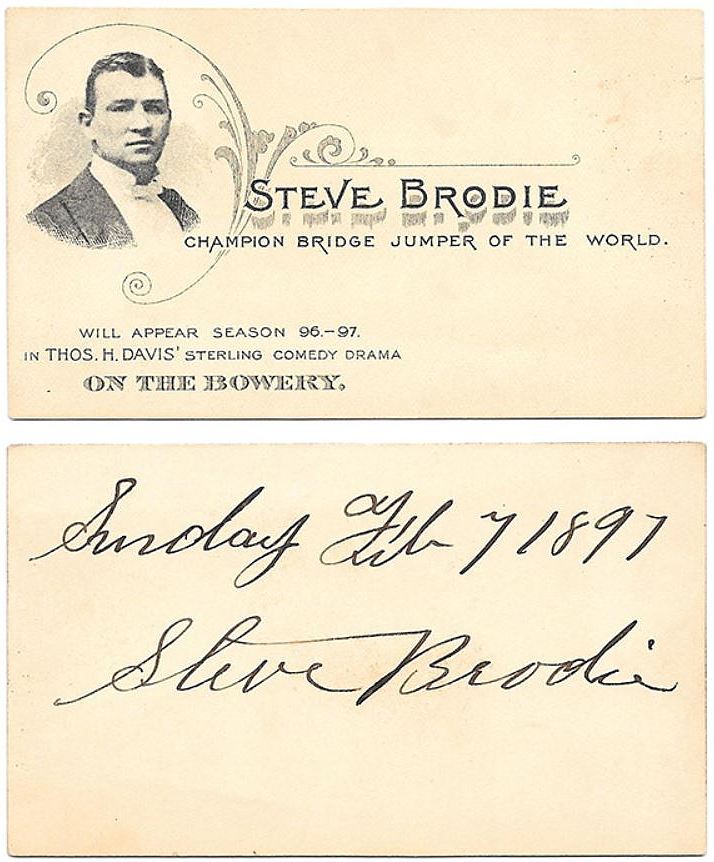
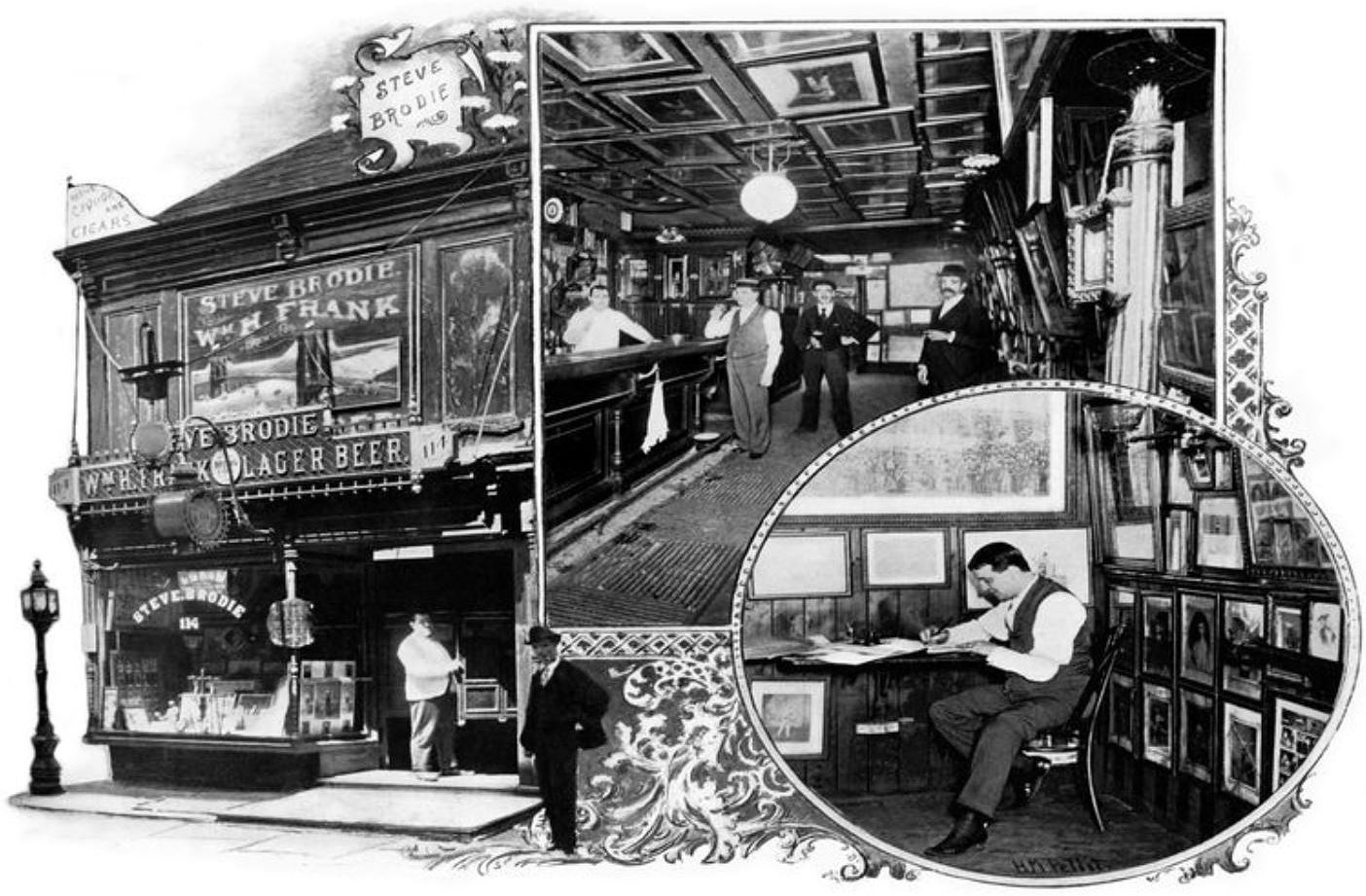
Lastly, because I started the D magazine article with a look at the idol of bridge-jumpers everywhere (and because of this guy bridge-jumping became a whole thing), I should mention Steve Brodie, the man who attained worldwide fame and became massively wealthy as a result of claiming to have jumped from the Brooklyn Bridge in 1886 (the first person to have done so and survived). His claim of having jumped from the Brooklyn Bridge was disputed from the very beginning, but charges of fakery did not affect his celebrity — in fact, it might even have sharpened his mastery of constant self-promotion (which, in turn, inspired thousands of copycat bridge-jumpers across the country who hoped to cash in on some of that sweet Brodie moolah). When he wasn’t entertaining legions of fans at his well-known Bowery saloon, he kept his name in the headlines by devising other (also disputed) feats of daredevilry, promoting prize fights, and even appearing onstage in a version of his life’s story (complete with a nightly reenactment of the famed bridge jump). Watch a short but informative video about him here.

brodie-business-card_1897

brodie-saloon_postcard

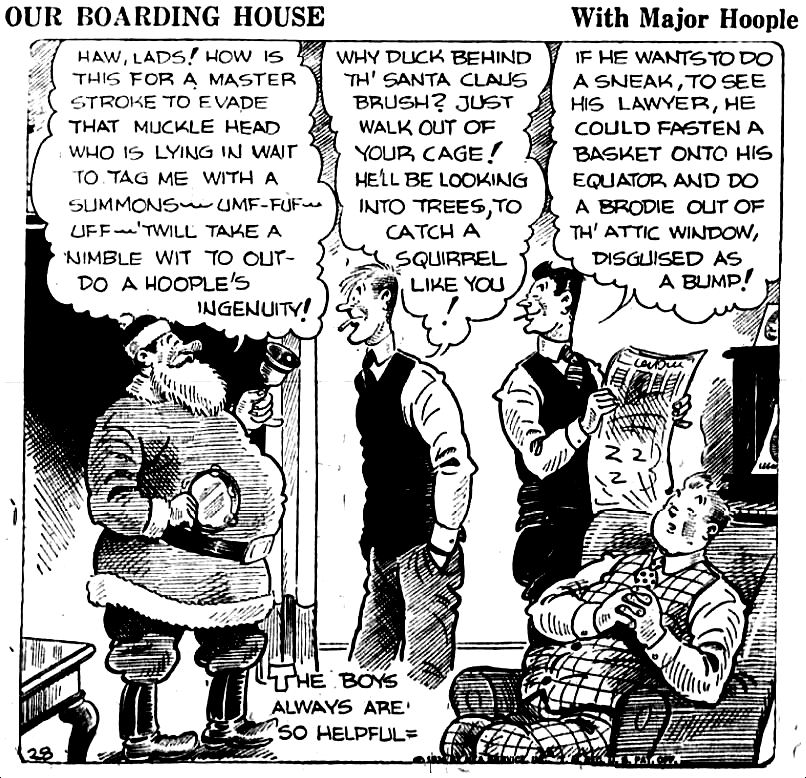
He was so famous that his name became a slang term: “took a Brodie” or “pulled a Brodie” meant “made a dangerous leap” or, more broadly, “took a chance.” Here’s a slang-filled cartoon from 1936 which featured the term fifty years after Brodie’s jump.

slang_do-a-brodie-1936-cartoon

*

That’s the background. If you haven’t already, please mosey on over to D Magazine to read the full-length article I wrote about the Dallas bridge-jumpers of 1897! (And try to work “Steve Brodie” into a conversation today….)

***

Sources & Notes

The main reason this story stuck with me was that the original Dallas Morning News report was so amusingly written. I have no idea who wrote it — he identified himself only as “the News’ marine reporter” — but I hope his literary talents led him to bigger and better gigs than an un-bylined newspaper writer scouring the Dallas docks for morsels of news. His sarcastically bemused reports on this long-forgotten exhibition of bridge-jumping (and the follow-ups) can be found in the following entertaining articles:

  • “A Tale of the Trinity: ‘High Diver’ Wilson and ‘High Jumper’ Sexton Split the River Wide Open; Steve Brodie Outdone” (DMN, March 22, 1897), here
  • “A Day With the Divers: The Marine Reporter of The News Passes a Few Hours In Haunts of Jolly Jack Tar” (DMN, March 23, 1897), here
  • “A Day With High Divers: A. B. Sexton and Nick M. Miller Created a Commotion In Marine Circles” (DMN, April 19, 1897), here

Thanks for the opportunity to share this odd tale, D Magazine! See all of the “Lost Dallas” articles (and photos) here.

All images are larger when clicked.

*

Copyright © 2018 Paula Bosse. All Rights Reserved.
 

Newly Discovered Footage of Jack Ruby — 1960

jack-ruby_WFAA-1960_jones-collection_SMU_det

by Paula Bosse

The WFAA Telefilm Collection — part of the G. William Jones Film and Video Collection, housed at the Hamon Library at Southern Methodist University — is an incredible assemblage of film footage shot by WFAA cameramen, some of which was never included in Channel 8’s televised news stories; a lot of it is silent, filmed mostly as B-roll material. It’s a fascinating historical treasure trove of local and national (and international) events filmed between 1960 and 1978. Jeremy Spracklen — the collection’s Moving Image Curator — and his assistant, Scott Martin, regularly post entertaining short clips from this vast resource to social media.

Which brings us to the clip posted yesterday — Dec. 6, 2017 — which featured footage of a 1960 parade held in downtown Dallas at Christmastime, with shots of festively decorated Main Street and Elm Street, including nice views of the old Palace Theater. Watch it here on Vimeo.

The clip was posted last night on the Jones Collection’s Facebook page — before I watched it, I read the comment by Bert Harris: “Did you notice Jack Ruby combing his hair right toward the end of the clip?? Wild!!

What?!

Yes, at the very end of the short clip you see Jack Ruby (!) standing in a crowd of people in front of the W. A. Green department store combing his hair and adjusting his famous fedora. It’s very short, but it’s unmistakably Jack Ruby. You never know who’s going to pop up in these snippets of everyday life in Dallas, captured decades ago by WFAA cameramen! So now SMU has a few frames of what has just become historic film footage — footage which has probably been unseen for 57 years — there’s a good chance this never even aired and was merely B-roll footage. I never imagined it would be an exciting event to watch Jack Ruby comb his hair.

I contacted curator Jeremy Spracklen at SMU, and he was pretty excited about the discovery. He even cut a brand new clip this afternoon, isolating the Ruby footage and slowing it down considerably. It’s COOL. Here it is:

Below are some screen captures. I’ve had to lighten them a bit — click pictures to see larger images. Ruby and a friend are in the center of the first frames, then as the clip ends, he’s in the lower left corner.

Who is the guy with Ruby, and what is he holding in his hand? UPDATE: My first thought was that it might be Ruby’s roommate George Senator (from all accounts a good-natured guy who was perpetually out of work and out of cash — Ruby often helped him out, including inviting him to stay for a while at his apartment in early 1962). I didn’t really think he looked like the scarce few photos of him I’d found, but others in the comments below seem to think it might be him. He’s holding a Minox “spy” camera, which was an expensive tiny camera which had been sold for years in several stores in Dallas (and which was offered used in classified ads in The News in 1960 for $75 — about $125 today). By the man’s look of utter fascination with it, it appears that it probably belonged to Ruby. The man can be seen looking through it in the longer clip at the :50 mark. (See one of the first Minox ads found in a Dallas paper — sold by Linz Jewelers in 1951 — here, and in the year of this footage, in 1960, in a Neiman-Marcus ad, here, priced at $139.50, about $1,200 today.)

jack-ruby_WFAA-1960_jones-collection_SMU_2

jack-ruby_WFAA-1960_jones-collection_SMU_3

jack-ruby_WFAA-1960_jones-collection_SMU_4

jack-ruby_WFAA-1960_jones-collection_SMU_5

jack-ruby_WFAA-1960_jones-collection_SMU_6

***

Sources & Notes

The clip is compiled from WFAA news footage shot on November 26, 1960; it is from the WFAA Newsfilm Collection, held at the Hamon Arts Library, Southern Methodist University. The original clip (1:22) showing a holiday parade in downtown Dallas can be watched on Vimeo here; the slowed-down clip showing only the Jack Ruby footage can be watched on Vimeo here.

According to coverage of the event in the Dallas Times Herald (“Mile of Dimes Parade Lures Great and Small,” Nov. 27, 1960), the parade was the “Mile of Dimes” parade sponsored by the Dallas Junior Chamber of Commerce and the Salvation Army. It took place on Saturday, Nov. 26, 1960. In addition to the parade, there was a “show” staged on Elm and Ervay which had bands performing on the back of a flatbed truck. Two of the acts performing that day were the Joe Johnson combo and singer Jewel Brown — both of whom were mainstays in Ruby’s clubs: at the time of the parade, Johnson’s band was booked into a long run at the Vegas Club/Club Vegas in Oak Lawn, and Brown was appearing seven nights a week (!) at the Sovereign Club on Commerce Street (which Ruby would later rename “the Carousel Club” around March, 1961). So that explains why he was there, nonchalantly combing his hair on the street as his “employees” perform in front of him.

Footage of the musical performers begins at the 1:00 mark in the longer clip. Houston-born Jewel Brown can be seen at 1:07. She was pretty much a smash in Dallas, getting loads of good press; she later hit it big appearing with Louis Armstrong in Las Vegas — you can watch a fantastic clip of her singing here. Read a March, 1967 interview with her in which she discusses her working relationship with Ruby here.

ruby_band_1.09_jones-collection_SMU

Ruby was standing outside the W. A. Green department store at 1616 Elm Street, which was next door to the Wilson Building; the Palace Theater was directly across the street.

elm-street_1600-block_1961 directory1961 Dallas directory

In addition to the musical performers mentioned above, other celebrities appearing in the parade footage that day were actresses/sexpots Sheree North and Lynne Forrester, who were appearing in Clare Boothe Luce’s play “The Women” at Casa Manana (:34), and orchestra leader Freddy Martin, who was appearing at the Statler’s Empire Room (:45). According to the Times Herald article, one celeb who was also there that day was recent Olympian Cassius Clay (later known as Muhammad Ali), fresh from his gold-medal performance at the Olympics. Though wearing his U.S. Olympic team jacket, the 18-year-old future-legend somehow went unnoticed in the crowd which was apparently quite wrapped up in the musical offerings that day.

Here is a photo of George Senator, possibly the man standing next to Ruby. This photo was taken on Nov. 24, 1963 at the Dallas Police Station; it is from the Fort Worth Star-Telegram Collection, University of Texas at Arlington Libraries, UTA — more info is here (I have cropped and flipped this detail). Another photo of Senator from the same night can be seen on the Portal to Texas History site, here.

senator-george_FWST-collection_UTA_112463.det_flipped

And these two Associated Press photos were taken on March 9, 1964, showing Senator at the Jack Ruby trial.

senator-george_at-jack-ruby-trial_associated-press-website_030964_1

senator-george_at-jack-ruby-trial_associated-press-website_030964_2

*

I’ve mentioned the WFAA Newsfilm Collection several times — it is an amazing collection of WFAA-Channel 8’s archival news footage, out-takes, and B-roll material. Curator Jeremy Spracklen has been uploading bite-size segments to Twitter and Facebook — it’s a lot of cool stuff you’re probably not going to be able to find anywhere else. They’re very entertaining. Follow them on social media!

*

Copyright © 2017 Paula Bosse. All Rights Reserved.
The Gill Well

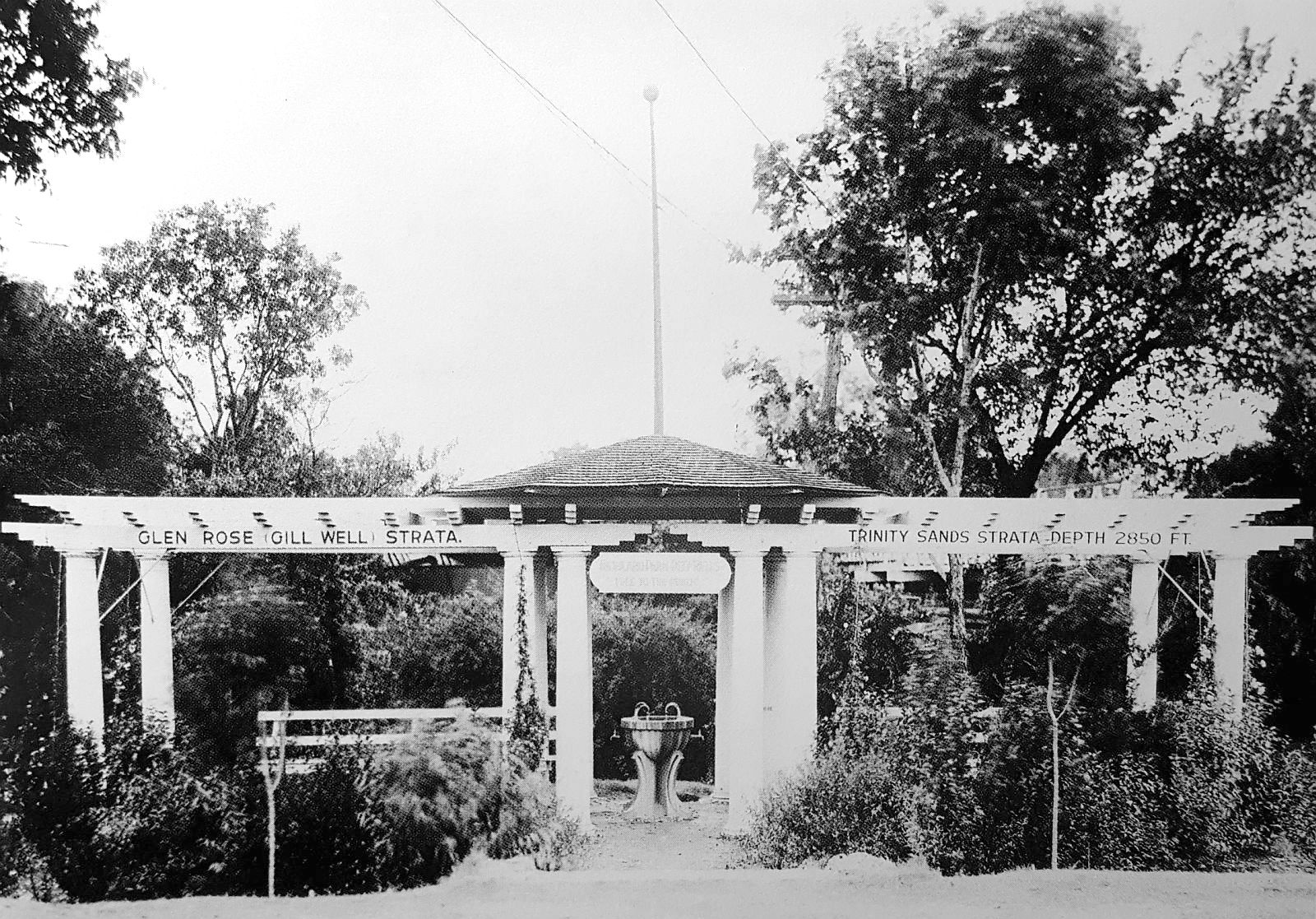
gill-well_highland-park_dallas-rediscoveredThe Highland Park pagoda… (click for larger image)

by Paula Bosse

I never heard of the Gill Well growing up — in fact, it wasn’t until around the time I started this blog — about three or four years ago — that I first became aware of it. Though largely forgotten today, the Gill Well used to be a pretty big deal in Dallas: for years, early-20th-century entrepreneurs tried valiantly and persistently to capitalize on the mineral-heavy artesian water from this well — the plan was to use this hot spring water in order to turn Dallas (or at least Oak Lawn) into, well, “the Hot Springs of Texas.” We came so close!

So — Gill Well? Who, what, when, where, why, and how?

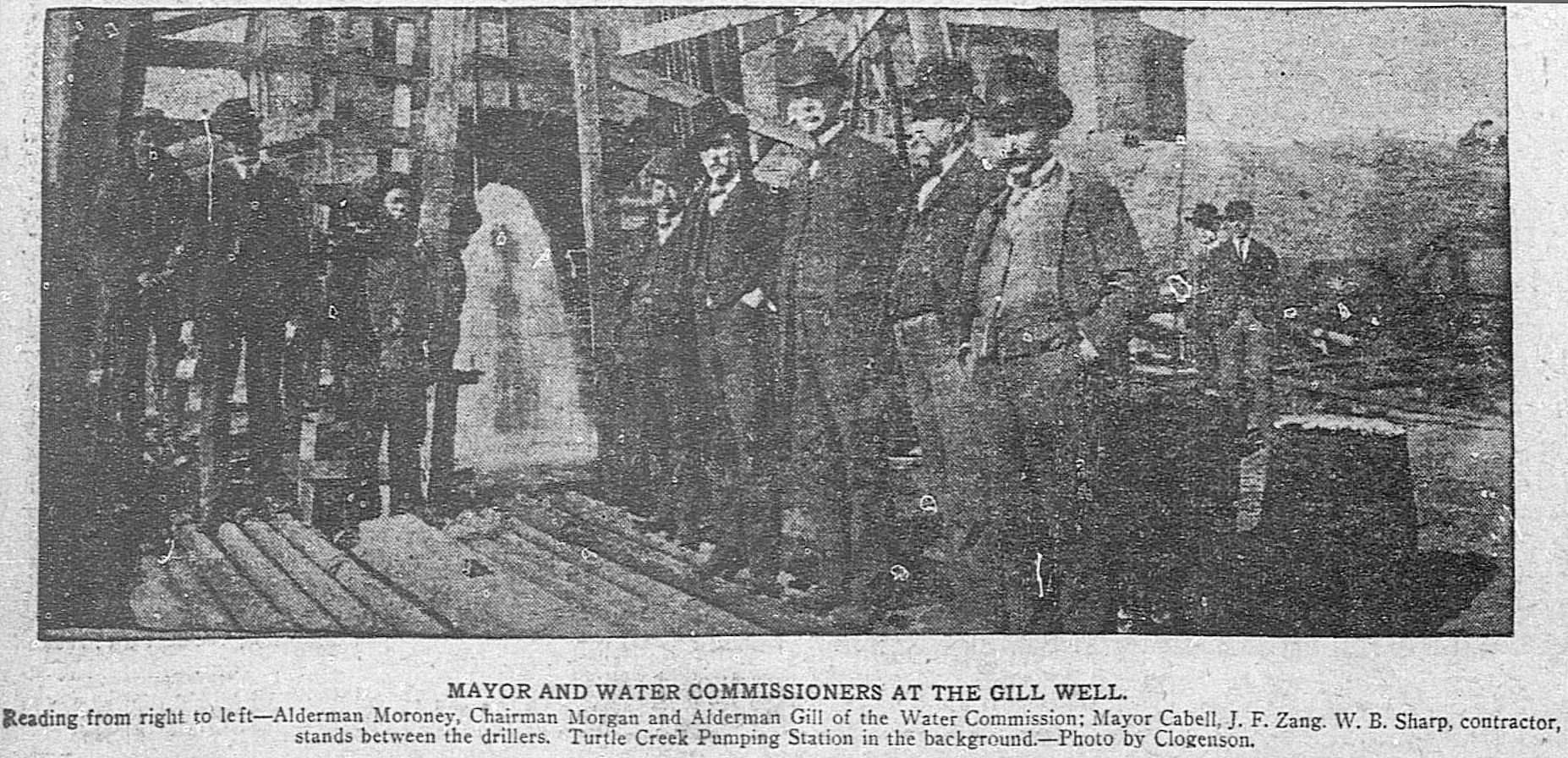
In 1902 city alderman and water commissioner C. A. Gill proposed sinking an artesian well near the Turtle Creek pumping station in order to determine if the flow of water in underground springs was sufficient to augment Dallas’ water supply (there was, at the time, another such test well being drilled in West Dallas). The City Council was on board and wanted this test well to be a deep well, “the deepest in the state — in order to settle once and for all the question as to whether or not there lies beneath the earth in this section a body of water, or ‘an underground sea,’ as some call it, of sufficient size to supply the needs of all the people” (Dallas Morning News, Aug. 6, 1902).

Fellow alderman Charles Morgan explained Gill’s proposition to the people of Dallas in a prepared statement to the Morning News:

By sinking artesian wells it is not intended to abandon the plans proposed to secure an adequate storage supply from surface drainage, but that the artesian wells shall augment the supply. We can not get too much water, but if we secure an ample artesian supply our storage basins will be reserve. There will be no conflict. We simply make success double sure. (Alderman Charles Morgan, DMN, Aug. 24, 1902)

The well was sunk in September or October of 1902 near the Turtle Creek pumphouse (which was adjacent to where a later station was built in 1913, the station which has been renovated and is now known as the Sammons Center for the Arts — more on the construction of that 1913 station and a photo of the older pumphouse can be found here); the drilling was slow-going and went on until at least 1904, reaching a depth of more than 2,500 feet. It’s a bit out of my area of expertise, but, basically, good, palatable artesian water from the Paluxy sands — water “free from mineral taint” — was found, but, deeper, a larger reservoir of highly mineralized “Gill water” — from the Glen Rose stratum — was found. That was good news and bad news.

gill-well_dmn_120103Dallas Morning News, Dec. 1, 1903

The “bad news” came from the fact that a part of a pipe casing became lodged in the well, causing an obstruction in the flow of the “good” water from the Paluxy formation. Again, it’s a bit confusing, but the heavy flow of 99-degree-fahrenheit mineral water (which was corrosive to pipes) threatened to contaminate the “good” Paluxy water … as well as the water from the Woodbine formation from which most (all?) of the private wells in Dallas secured their water. (Read detailed geological reports on the well in a PDF containing contemporaneous newspaper reports here — particular notice should be paid to the comprehensive overview of the well and its problems which was prepared for the Dallas Water Commission by Engineer Jay E. Bacon and published in the city’s newspapers on May 10, 1905).

So what the City of Dallas ended up with as a result of this Gill Well was a highly dependable source of hot mineral water. But what to do with it? Monetize it!

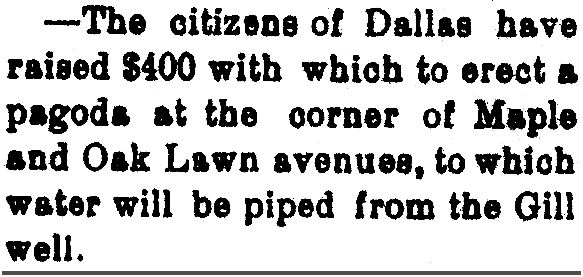
As part of the city’s water supply, the mineral water was made available to Dallas citizens free of charge: just show up at one of the handful of pagoda-covered dispensing stations with a jar, a bucket, or a flask, and fill up with as much of the rather unpleasant-smelling (and apparently quite powerful!) purgative as you could cart home with you. (For those who didn’t want to mingle with the hoi polloi, home delivery was available for a small fee.) One such “pagoda” was erected a short distance away, in front of the city hospital (Old Parkland) at Maple and Oak Lawn (the healthful water was also piped directly into the hospital for patient use).

gill-well-parkland-pagoda_brenham-weekly-banner_040605
Brenham Weekly Banner, April 6, 1905

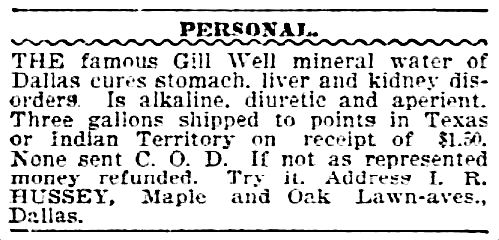
One man, however, began offering the water for sale beyond Dallas, hoping to cash in on the free-flowing tonic (see the mineral-content breakdown here), but the city clamped down on him pretty quickly as he was not an authorized agent. From his 1906 ad, one can see that the reputation of Gill water and its healing and restorative powers was already widely known.

gill-well-water_dmn_080206
DMN, Aug. 2, 1906

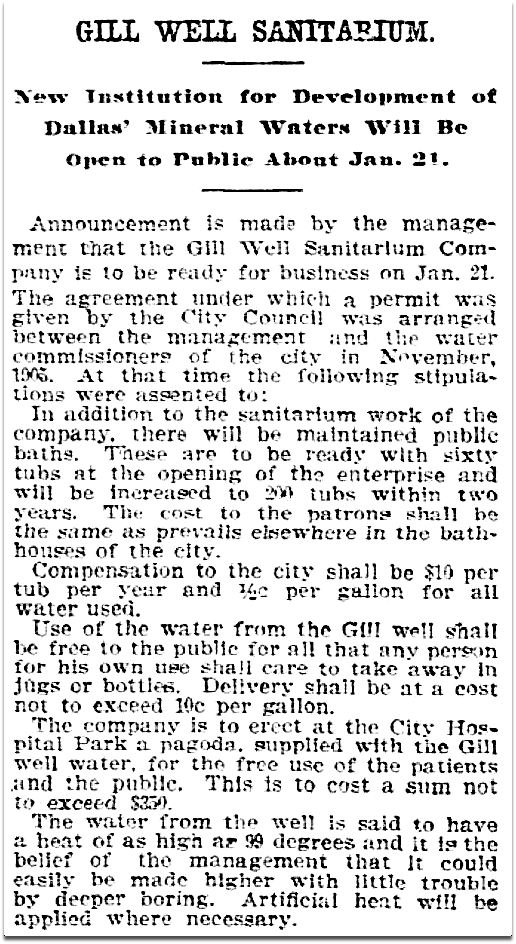
If the water was not to be sold, what was the City of Dallas going to do with it? It was decided to pipe the the water a short distance from the test well to nearby property adjacent to the land now occupied by Reverchon Park, then lease the access to the water to a capitalist who would build a sanitarium/spa where people could come to “take the waters” — to bathe in the naturally warm, mineral-heavy artesian water with mystical recuperative properties. The sanitarium would make money by charging its patrons for its services, and the city would collect a small annual income based on the number of the sanitarium’s bathing tubs and the amount of water used:

Compensation to the city shall be $10 per tub per year and one-half-cent per gallon for all water used. (DMN, Jan. 4, 1907)

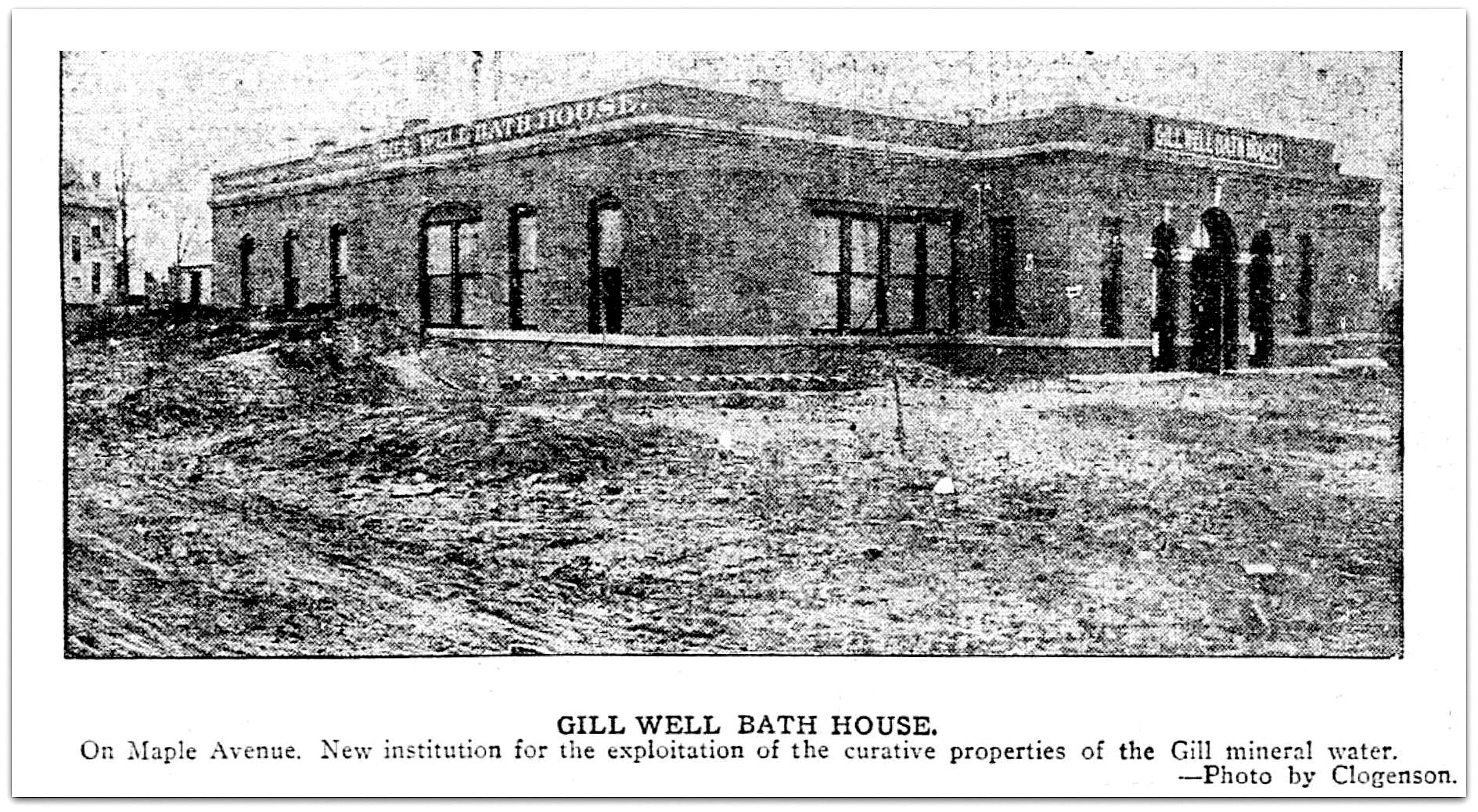
The Gill Well Sanitarium and bath house opened in January 1907, on Maple Avenue just north of the MKT Railroad (now the Katy Trail). (Most clippings and pictures in this post are larger when clicked.)

gill-well-sanitarium_dmn_010407DMN, Jan. 4, 1907

I searched and searched and searched for a picture of the building and, hallelujah, I finally found one, in the pages of The Dallas Morning News, taken by photographer Henry Clogenson. (This is the only picture I’ve been able to find of it, and, I have to say, it’s not at all what I expected the building to look like. It actually looks like something you’d see in a present-day strip mall.)

gill-well-sanitarium_dmn_011307_photoDMN, Jan. 13, 1907

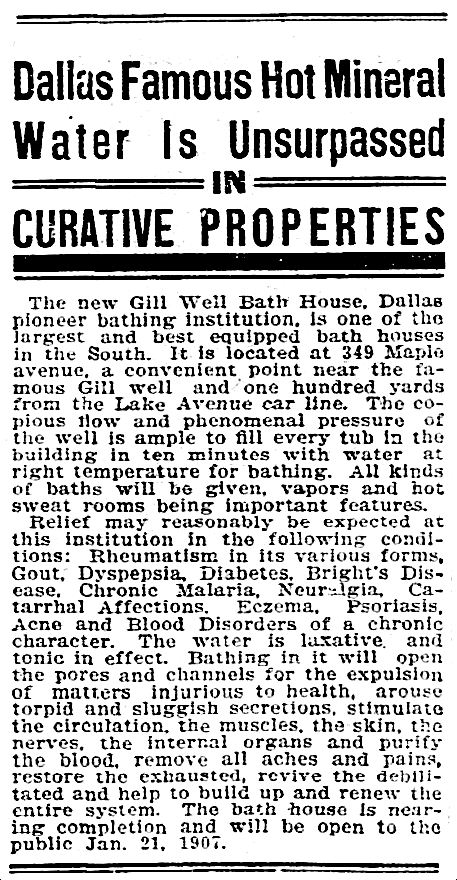
gill-well-sanitarium_dmn_010607_ad
Advertisement, DMN, Jan. 6, 1907

Business at the new sanitarium was very good, and the public fountains/spigots at both the sanitarium property and a block or so away at the city hospital continued to be popular with residents who needed a boost or a “cure” and stopped by regularly for a sip or a pail of the free mineral water.

gill-well_ad_dallas-police-dept-bk_1910_portal1910 ad

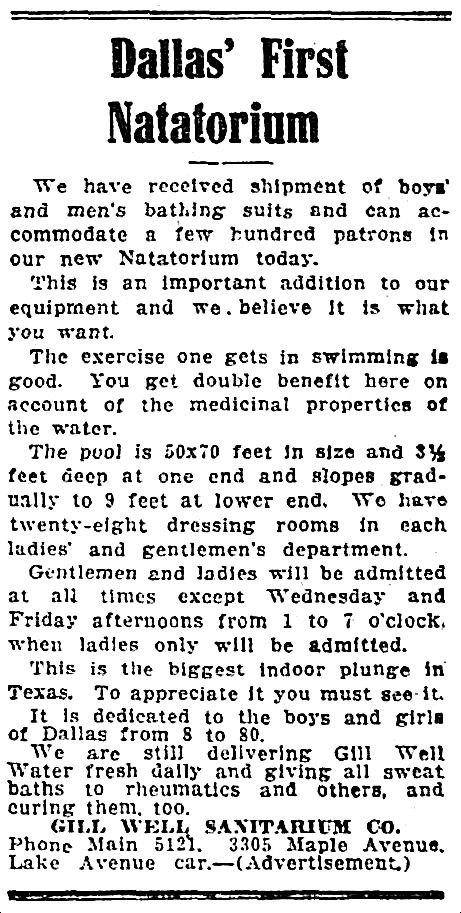
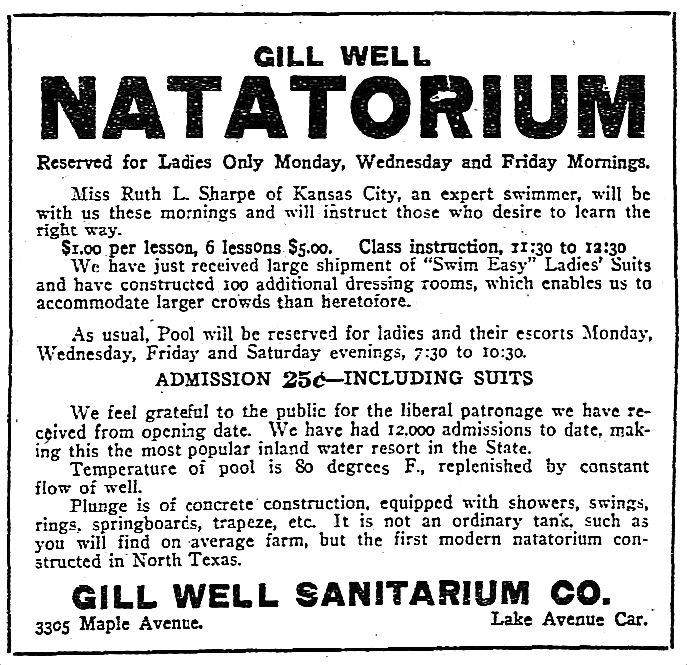
In 1912 a natatorium (an indoor swimming pool) was added and proved even more popular. It was open to men, women, and children; admittance and bathing suit rental was 25¢ (about $6.50 in today’s money). (Contrary to the headline of the ad below, it was not Dallas’ first natatorium — there was one near City Park on South Ervay by at least 1890 — but it was probably the first pool in the city filled with warm mineral water.)

gill-well_natatorium_dmn_041412
DMN, April 14, 1912

gill-well-natatorium_dmn_070712
DMN, July 7, 1912

gill-well-natatorium_texas-swimming-and-diving-hall-of-fameCourtesy of the Texas Swimming and Diving Hall of Fame

gill-well-natatorium_dmn_100612DMN, Oct. 6, 1912

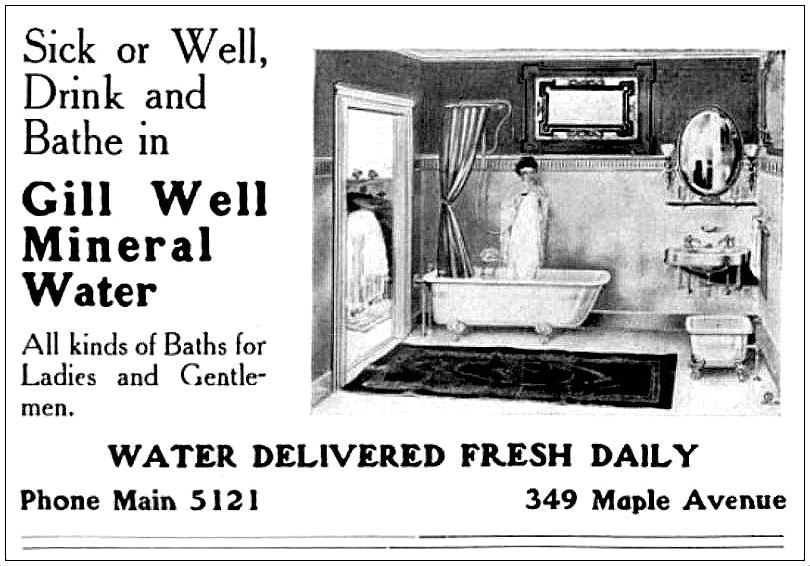
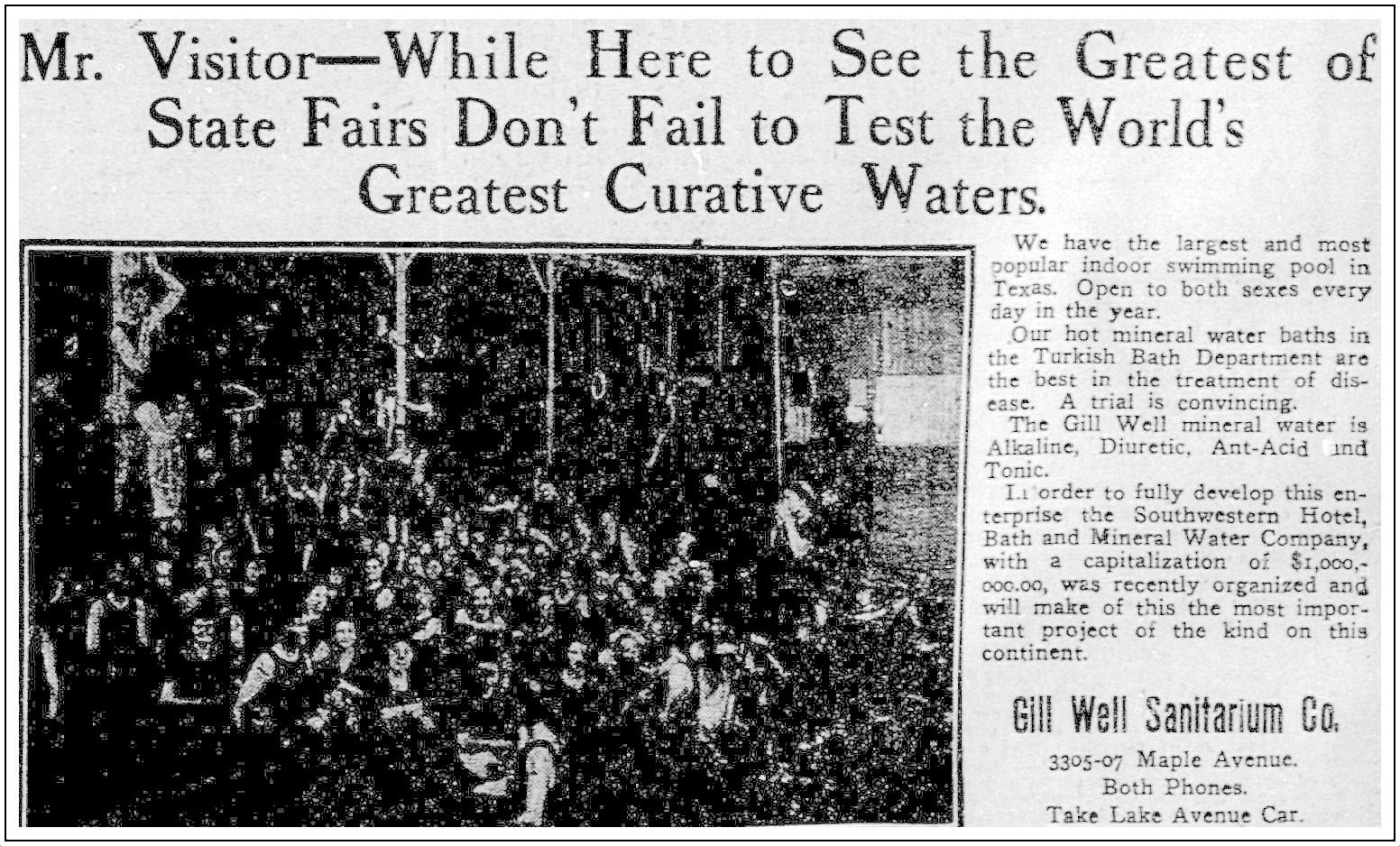
The last paragraph of the ad above mentions a plan to pipe Gill water to a hotel downtown — not only would the Gill Well Sanitarium Company’s services be offered in the heart of the city amidst lavish hotel surroundings (instead of in Oak Lawn, way on the edge of town), but the company would also be able to compete with Dallas’ other (non mineral-water) Turkish baths — then they’d really be rolling in the cash. As far as I can tell, nothing came of the plan, but the men behind it were pretty gung ho, as can be seen in this rather aggressive advertorial from the same year:

ad-sanitorium-baths_blue-bk_1912The Standard Blue Book of Texas, 1912

All seemed to be going well with the sanitarium until the city and the Missouri, Kansas & Texas Railroad (the MKT, or the Katy) decided to remove the railroad’s grade crossings through the Oak Lawn area (all work which was to be paid for by the railroad). Double tracks were to be added and crossings were either raised or the streets were lowered. The crossings affected were Lemmon, Cedar Springs and Fairmount (where street levels were cut down to go under the tracks) and Hall, Blackburn, and Bowen (where tracks would be elevated). Also affected: Maple Avenue. (Read more about the MKT plan in the Dallas Morning News article from Aug. 23, 1918 — “Dallas Is Eliminating Four Grade Crossings” — here.)

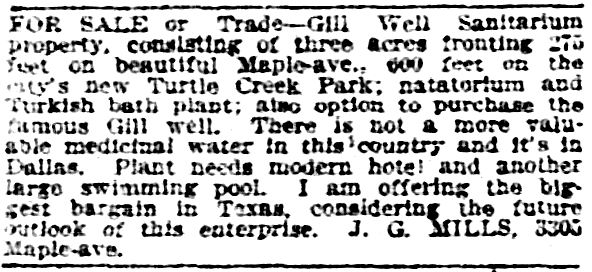
The Maple Avenue-Katy Railroad crossing had long been a dangerous area for wagons, buggies, and, later, automobiles. Not only was it at the top of a very steep hill (see what that general area north of that crossing looked like around 1900 here), but it also had two sharp curves. The decision was made to straighten Maple Avenue between the approach to the railroad crossing and Oak Lawn Avenue at the same time Maple was being lowered and the Katy track was being raised. (Read the announcement of this plan — “Straighten Maple Avenue Is Plan” — from the Nov. 29, 1917 edition of The Dallas Morning News, here.) The only problem — as far as the Gill Well Sanitarium was concerned — was that the straightened road would go directly through the sanitarium property. I don’t know if the long-time owner of the sanitarium, J. G. Mills, knew about this approaching dire situation, but in 1915 — just a few short months after boasting in advertisements that more than 50,000 patients had availed themselves of the sanitarium’s amenities in 1914 — he placed an ad seeking a buyer of the business (although, to be fair, he’d been trying to sell the company for years):

gill-well_dmn_080815_for-saleDMN, Aug. 8, 1915

(In the ad he states that the buyer had an option to purchase the actual well, but the city had never expressed any desire to sell either the well or the full rights to the water.)

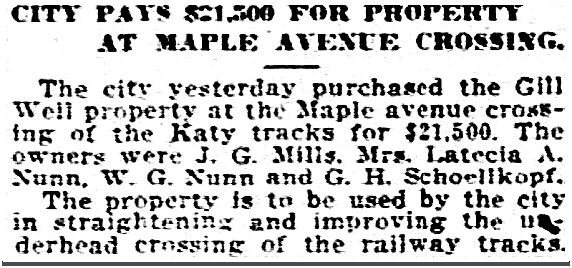
The Gill Well Sanitarium Co. appears to have been dissolved in 1916, but there was still hope that a sanitarium/hot springs resort could continue on the property. In 1917, interested parties petitioned the city to change its plans to straighten Maple, arguing that it would destroy any ability to do business on the site, but the city went forward with its plans, and in November 1919, the City of Dallas purchased the land from the group of partners for $21,500 (about $305,000 in today’s money).

gill-well_dmn_111319
DMN, Nov. 13, 1919

The monetization of water from Dallas’ fabled Gill Well ended after ten years.

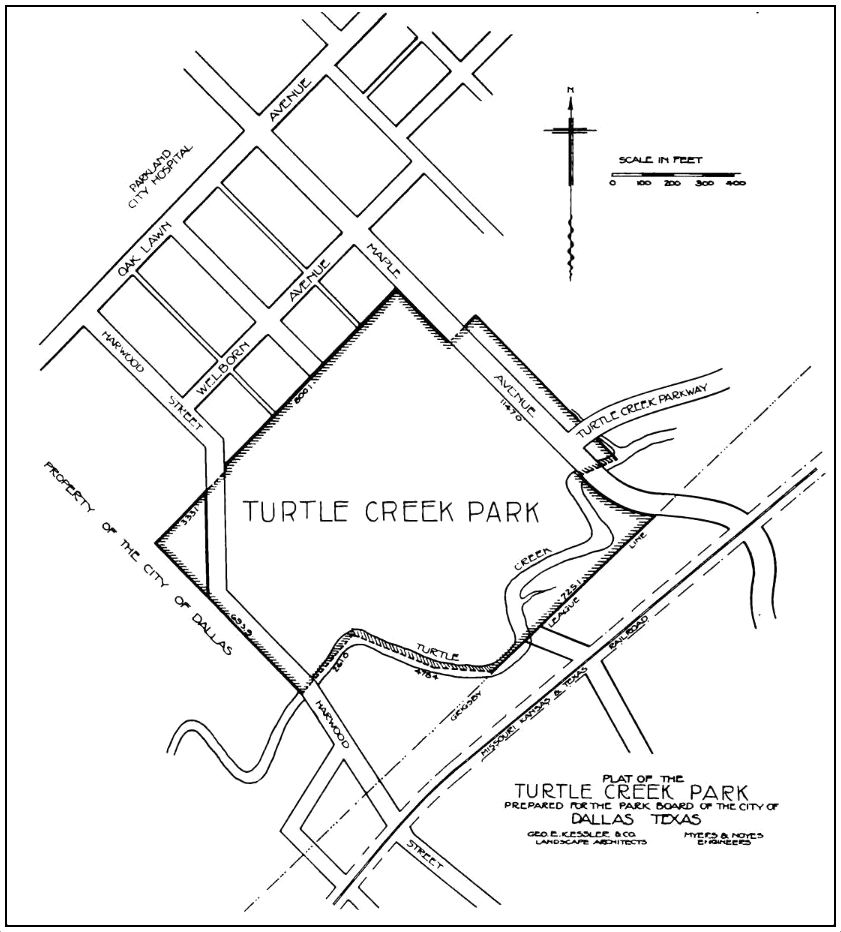
I had never heard of Maple Avenue being straightened. Below is a map of Turtle Creek Park (which became Reverchon Park in 1915), showing Maple’s route, pre-straightening — the main buildings of the sanitarium were in the bulge just west of Maple, between the Katy tracks and the boundary of the park.

reverchon-park_turtle-creek-park_map_1914-15
1915 map, via Portal to Texas History

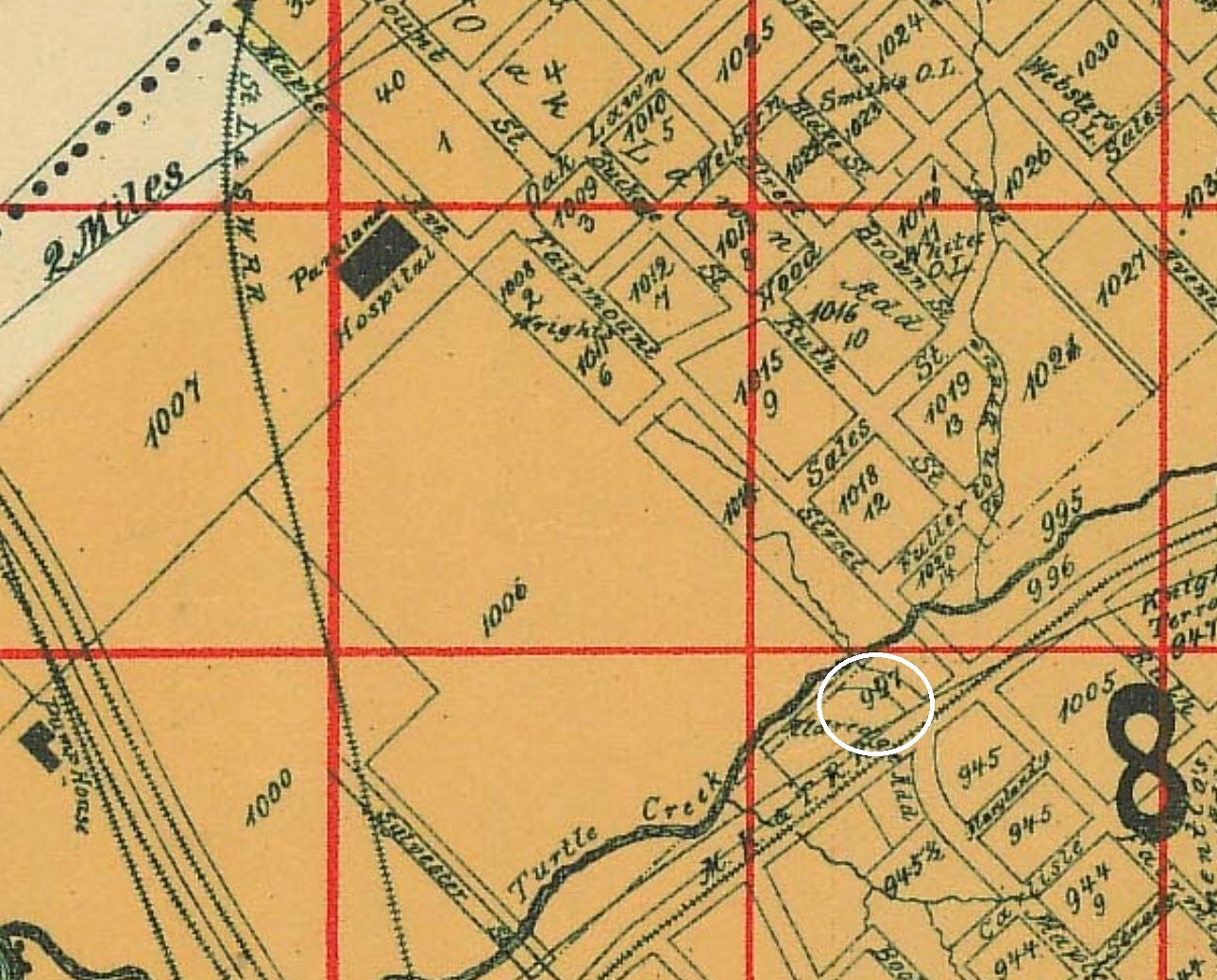
Another view can be seen in a detail from a (fantastic) 1905 map, with the approximate location of the Gill Well Sanitarium circled in white:

maple-ave_1905-map_portal_det_gill-wellWorley’s Map of Greater Dallas, 1905

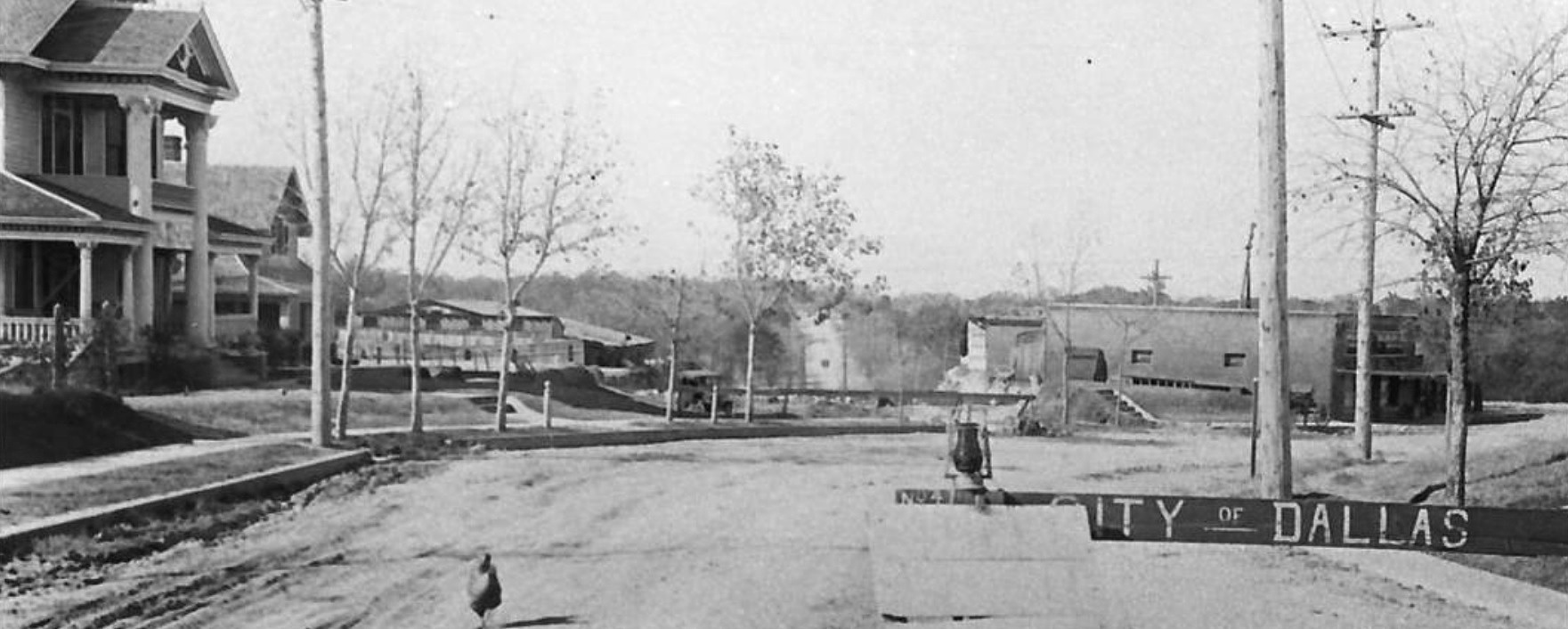
A year or more ago I saw the photo below on the Big D History Facebook page but had no idea at the time what I was looking at: it apparently shows Maple Avenue in 1918, taken from about Wolf Street (probably more like Kittrell Street), which was then near the city limits, looking north. You can see the curve Maple makes and the steep hill — that large building at the right must be the sanitarium and/or the later-built natatorium.

maple-ave_road-construction_from-wolf_1918_big-d-history-FB

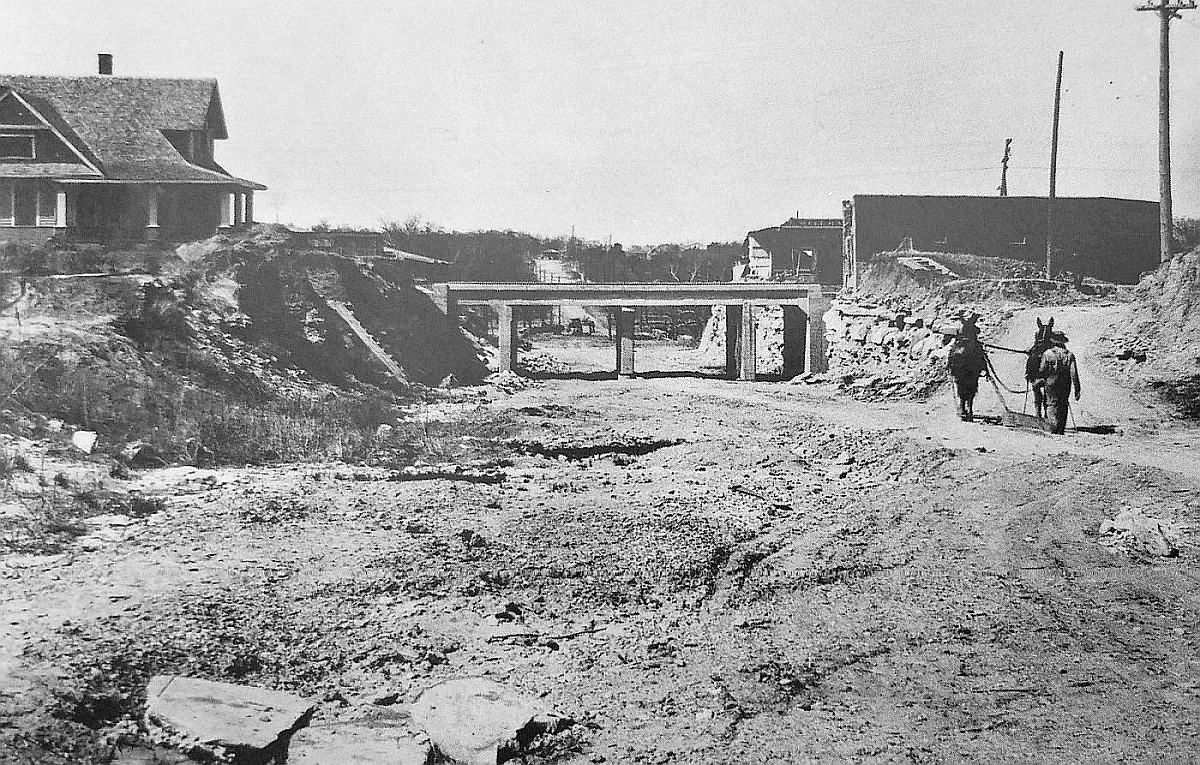
The photo below shows the road-straightening in progress, with the MKT bridge now spanning Maple Avenue.

maple-MKT_ca-1920_DPLDallas Public Library

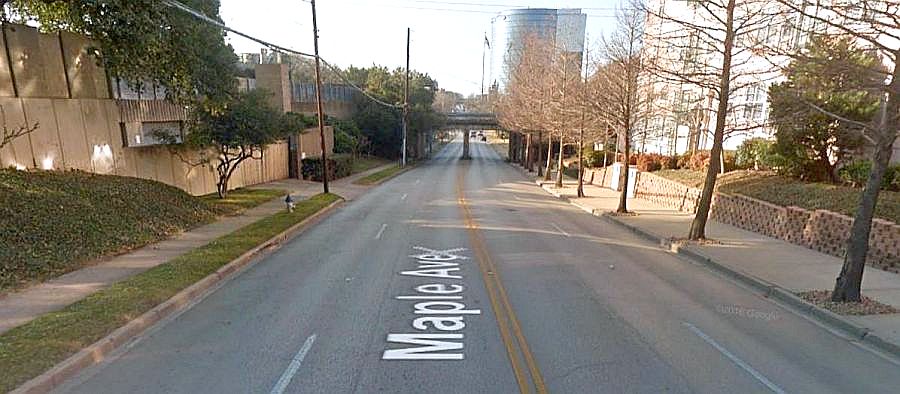
And here it is almost a hundred years later:

maple-MKT_google-street-view_2014Google Street View, 2014

So the Gill Well Sanitarium and Bath House was closed, the land was purchased by the City of Dallas, Maple Avenue was straightened, and, in the summer of 1923, the remaining abandoned buildings on the property were demolished. But that didn’t spell the end of the famous Gill Well water.

Highland Park’s “Gill Water” Pagoda

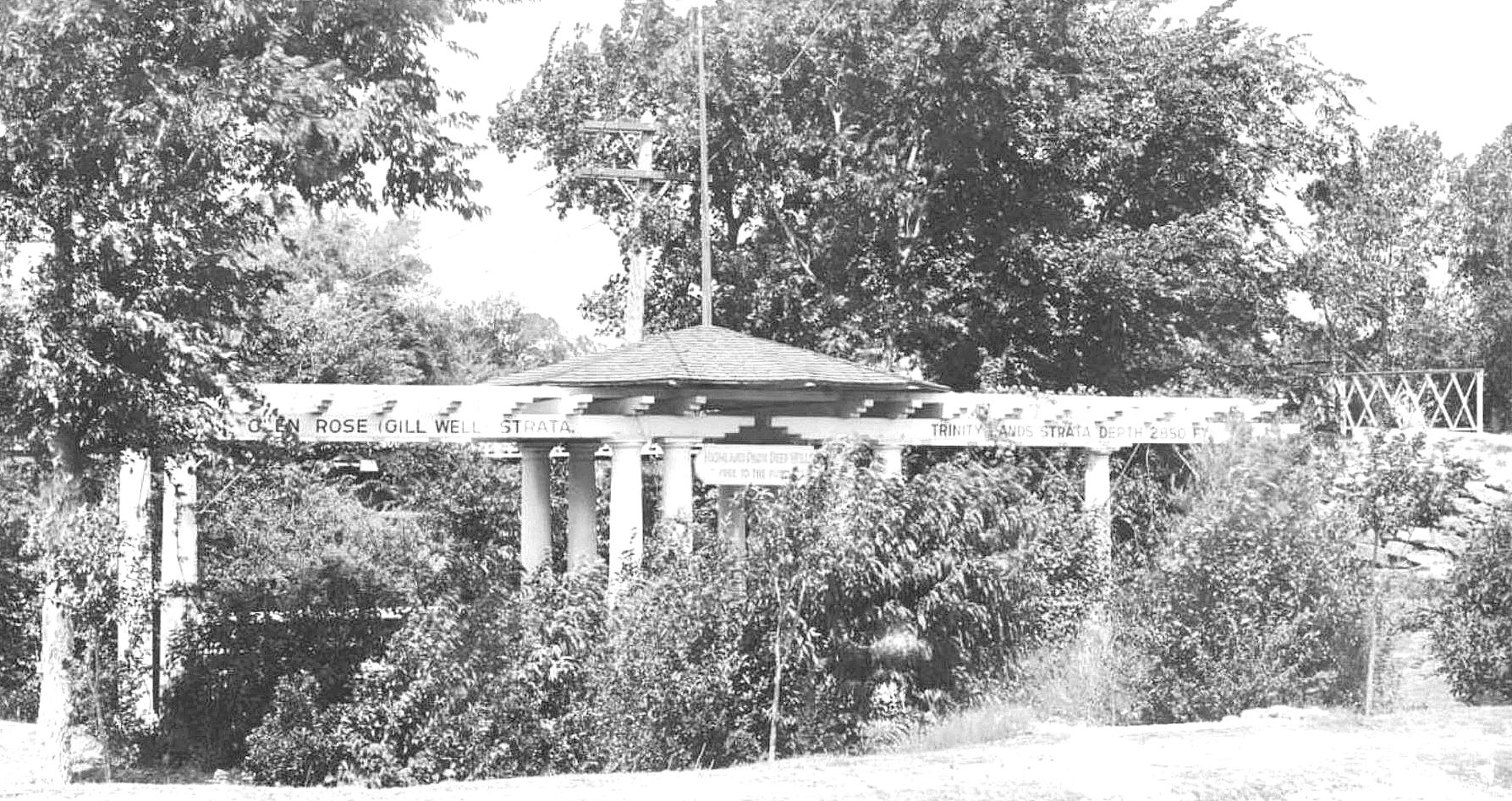
Around 1924, “Gill water” tapped from the Glen Rose Strata was made available to Highland Park, via a small “watering house” and drinking fountain on Lakeside Drive (at Lexington), a location which proved to be quite popular. The mineral water was a byproduct of Highland Park’s “deep well” which was drilled in 1924 to tap the pure artesian springs of the Trinity Sands Strata in order to augment the water supply of the City of Highland Park: in order to get down to the Trinity Sands, one had to pass through the Glen Rose Strata — I guess the HP powers-that-be figured they might as well tap the hot mineral water and offer their citizens access to it by building a small fountain and dispensing station. In 1928, the little “watering station” structure was spiffed up with the addition of a tile roof, attractive walkways, and drainage. The photo seen at the top of this post has frequently been misidentified as the Reverchon Park well, but it is actually the Highland Park “pagoda.” Here it is again:

gill-well_highland-park_dallas-rediscoveredfrom the book Dallas Rediscovered

It can be identified as the Highland Park location because of the photo below from the George W. Cook collection of historic Dallas photos from SMU’s DeGolyer Library — it shows what appears to be a later view of the same pagoda, now slightly overgrown. The steps to the bridge across Exall Lake and the bridge’s railing can be seen at the far right (the bridge led to the Highland Park pumping station, which can be seen on a pre-watering-station 1921 Sanborn map here).

gill-well_highland-park_cook-collection_degolyer_smuGeorge W. Cook Collection, SMU

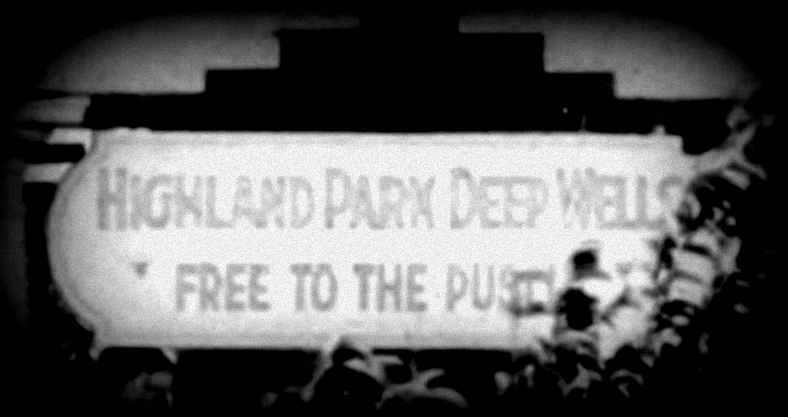
And, well, there’s the sign that reads “Highland Park Deep Wells — Free to the Public” — here’s a close-up:

gill-well_highland-park_cook-collection_degolyer_smu_det

(The same sign from the top photo can be seen in a high-contrast close-up here.)

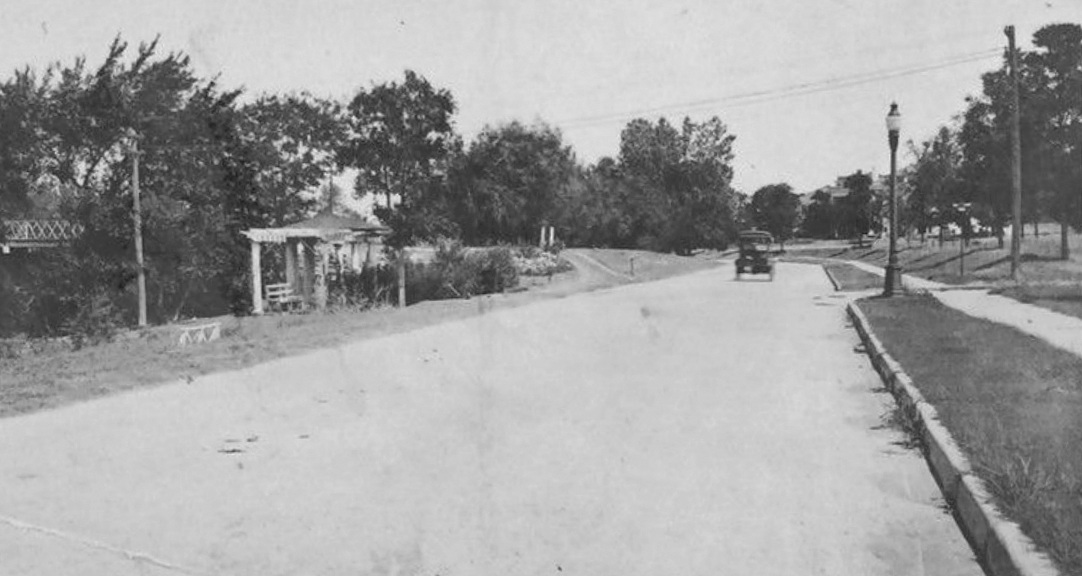
After seeing this photo, I realized that a photo I featured in a post from last year showed the pagoda in what looks like its earliest days, at Lakeside Drive and Lexington Avenue (the bridge can be seen at the left):

hp_lakeside-drive_rppc_ebayeBay

I was unable to find out when this HP pagoda bit the dust, but the location as seen today on Google Street View is here. (It’s pretty strange to think that a steady stream of people from all over Dallas drove to the Park Cities to fill up jugs with free mineral water; my guess is that the wealthy Lakeside Avenue residents weren’t completely enamored of the situation.)

Reverchon Park Pavilion

Even though the Gill Well Sanitarium Co. had dissolved in 1916, and the last traces of its buildings had been torn down in 1923, the famed well’s water didn’t disappear from the immediate Oak Lawn area. In February of 1925, the City of Dallas opened a $5,000 pavilion, “making up for twenty years indifference to what is said to be the finest medicinal water in the South” (DMN, Feb. 11, 1925). This pet project of Mayor Louis Blaylock seems to have continued to be a place for Dallasites to get their mineral water at least through the 1950s, according to online reminiscences. This 1925 “pavilion” is described thusly in the WPA Dallas Guide and History:

The water, which resembles in many respects the mineral waters of European resorts and is used in several county and city institutions, is carried to the surface in pipes and can be drawn from taps arranged around a semicircle of masonry near the entrance to the park. Here cars stop at all hours of the day and people alight to drink the water or to fill bottles and pails.

I have not been able to find a photograph of that post-sanitarium dispensing site. A 1956-ish aerial photo of Reverchon Park can be found here. I don’t see a “semicircle of masonry” in an area I assume would be located near Maple Avenue and the Katy tracks.

According to a comment on the DHS Archives Phorum discussion group, there was also a public spigot nearer to the original well, along Oak Lawn Avenue, across the street from Dal-Hi/P. C. Cobb stadium.

There is surprisingly little accurate information on the Gill Well online. I hope this overview helps correct some of the misinformation out there. If anyone knows of additional photos of the sanitarium and/or natatorium, please send them my way and I’ll add them to this post. If there are any photos of the Reverchon Park pavilion, I’d love to see those as well. There is a 1926 photo of the Highland Park location which shows two women and two girls filling receptacles — I am unable to post that here, but check the Dallas Morning News archives for the short article “Free Mineral Well Waters Popular” (DMN, May 29, 1926).

**

Incidentally, even though the wells have been capped, that hot mineral water is still there underground and could be tapped at any time. Dallas could still be the “Hot Springs of Texas”!

***

Sources & Notes

Top photo is from p. 199 of Dallas Rediscovered by William L. McDonald. The photo is incorrectly captioned as showing the location of the “Gill Well Bath House and Natatorium, c. 1904” — it is actually the Highland Park dispensing station at Lakeside Drive and Lexington Avenue in about 1928.

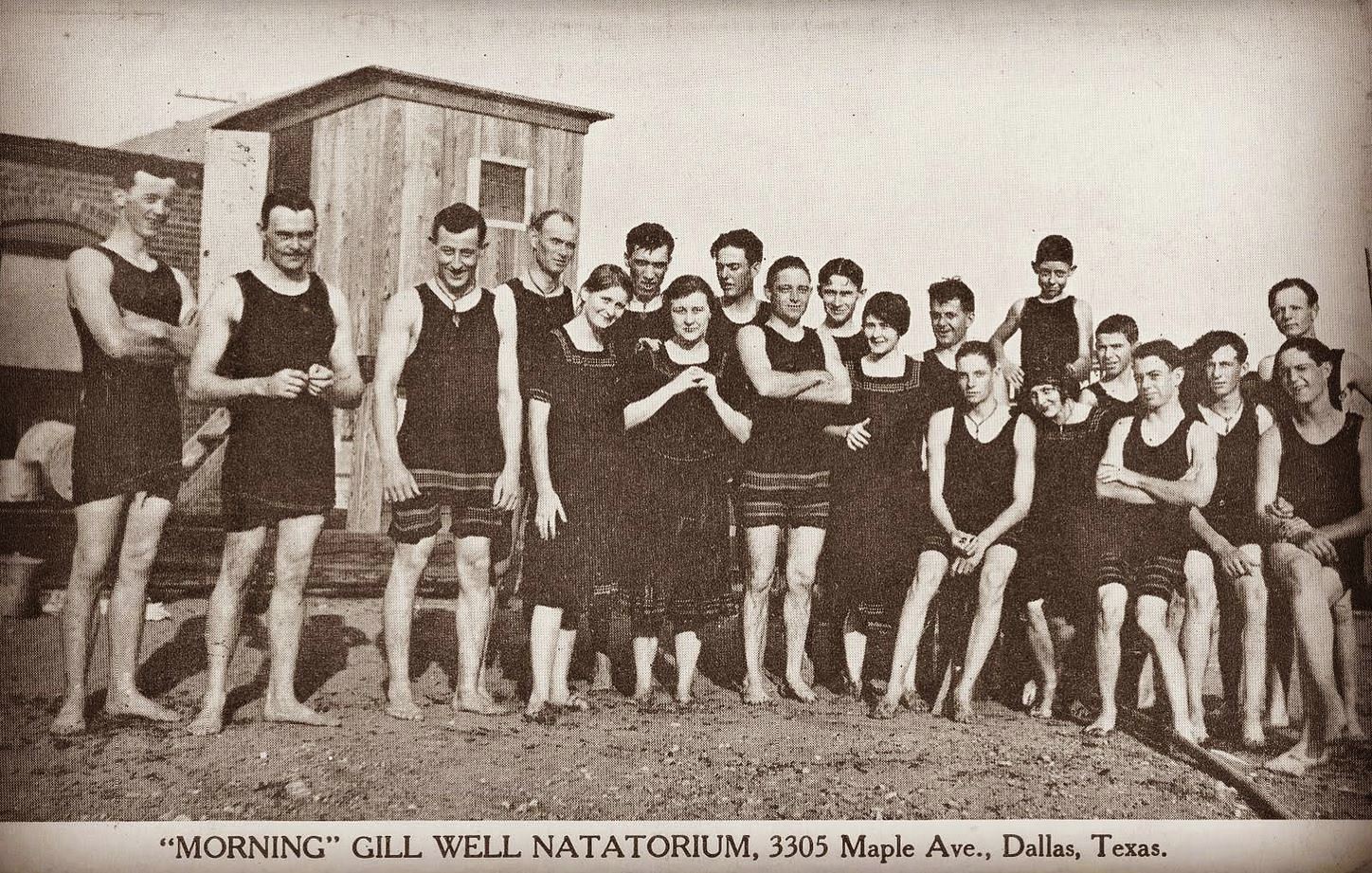
“Morning” postcard featuring healthy bathing patrons of the natatorium is from the collection of the Texas Swimming and Diving Hall of Fame and is used with permission.

Photo showing Maple Avenue, pre-straightening, is from the Big D History Facebook page; original source of photo is unknown.

Second photo of the Highland Park Gill Well location (with the vegetation looking a bit more overgrown) is from a postcard captioned “Drinking Bogoda [sic], deep mineral well in Highland Park, Dallas, Texas” — it is from the George W. Cook Dallas/Texas Image Collection, DeGolyer Library, Central University Libraries, Southern Methodist University; more information on this image is here.

Photo showing Lakeside Drive with the pagoda at the left is a real photo postcard captioned “Lake Side Drive in Highland Park” — it was offered last year on eBay.

Sources of all other clippings, ads, and maps as noted.

*

Copyright © 2017 Paula Bosse. All Rights Reserved.
Cowtown Extra: Fort Worth Zookeeper Ham Hittson and His Forest Park Friends

FW-zoo_hamilton-hittson_fawn_062937_UTAZookeeper Hittson and tiny friend…

by Paula Bosse

Today, Fort Worth. I was looking for photos of the old Forest Park in Oak Cliff (which was renamed Marsalis Park in 1925) and came across photos of the Forest Park Zoo. A search on the internet showed me that there was also a Forest Park Zoo in Fort Worth. I’ve never actually been a big fan of zoos, but I saw the photo above and was won over by its sheer cuteness. So let’s just take a little trip westward and enjoy some photos of cute animals, most of which feature zookeeper Henry Hamilton (“Ham”) Hittson.

Ham Hittson (1912-1966) began working as a zookeeper at the Forest Park Zoo in the early 1930s — if his obituary is correct, he became the zoo’s director in 1933 — at the age of only 21! During World War II he served for two years in the Coast Guard, assigned to work with sentry and attack dogs and with patrol horses. After the war he returned to the zoo (he was the director of the zoo for 21 years) and eventually became the director of the Fort Worth Park Department. His 1966 obituary (he was only 54 when he died) noted that he was instrumental in forming the Fort Worth Zoological Association. And, well, these photos are very sweet.

(All photos are from the University of Texas at Arlington Libraries. Click pictures to see larger images; click the link below each photo for more information.)

*

The photo at the top is my favorite — it shows Hittson with a tiny fawn born the previous day. The photo above and the one below were taken on June 29, 1937.

FW-zoo_hamilton-hittson_fawn_062937-b_UTAMore info here

Below, Hittson with a new baby lion cub named Will (June 29, 1939).

FW-zoo_hamilton-hittson_lion-cub_062939_UTAMore info here

Actor Jimmy Stewart stopped by the zoo on May 22, 1953 to check out the zoo’s new rhinoceros, Marilyn Monroe. F. Kirk Johnson, zoological board president, is at the left and Hittson, then park department director, is at the right.

FW-zoo_jimmy-stewart_052253_UTAMore info here

Back to Ham’s zookeeper days: in the photo below (taken on August 2, 1940), he’s standing with one of the zoo’s top attractions, an elephant named Queen Tut. He’s bidding her farewell as he is about to leave for New York where he will pick up a baby elephant to be her companion. (Hittson and the zoo’s veterinarian brought the one-year-old elephant back with them in a trailer — they must have attracted a lot of stunned looks along the highway as they drove back from New York.)

FW-zoo_hamilton-hittson_elephant_080240_UTAMore info here

The arrival of this new elephant was big news — there were almost daily updates in the pages of the Fort Worth Star-Telegram. In order to buy the elephant, the zoo had had to take out a loan from the bank, and in what was both a speedy way to pay off the debt and a clever way to garner publicity, there followed a successful drive to raise money to pay off the “mortgage”: countless school children happily did their parts by contributing pennies, nickels, and dimes in the fundraising effort and then flocked to the zoo to see the newest member of the zoo family and welcome her to Fort Worth.

And here’s Queen Tut with her new little pal, Penny, on September 10, 1940.

FW-zoo_queen-tut-and-penny_091040_UTAMore info here

Awww.

***

Sources & Notes

There are tons of photos of the Forest Park Zoo in the UTA Libraries Special Collections, here (20 pages’ worth!).

*

Copyright © 2017 Paula Bosse. All Rights Reserved.
The Neiman-Marcus Corporate Flag, Designed by Emilio Pucci — 1966

neiman-marcus-corporate-flag_emilio-pucci_1966_dallas-public-library“Emilio Pucci was our Betsy Ross…”

by Paula Bosse

While looking through the Neiman Marcus Collection at the downtown Dallas Public Library, I stumbled across this perhaps long-forgotten part of Neiman-Marcus history: the “corporate flag” designed by Italian fashion legend Emilio Pucci. The image was featured on a Neiman’s postcard; the text on the back of the card reads:

Flying high over the fashion land of Neiman-Marcus: our new corporate flag, the Lone-Star-and-Stripes. Emilio Pucci was our Betsy Ross.

Betsy Ross and Emilio Pucci mentioned in the same breath! An 18th-century American seamstress who became a patriotic icon, and an Italian fashion designer whose vividly colorful, boldly patterned designs came to symbolize the youth and energy of the 1960s… talk about your strange bedfellows!

The only thing I could find about this unusually colorful flag was a brief mention in a Dallas Morning News fashion article about Neiman’s 28th Neiman-Marcus Exposition Award in early February of 1966. Gay Simpson wrote in The News that the luncheon centerpieces “carried the colors of the new Neiman-Marcus house flag. The flag, designed by Emilio Pucci, Italian couturier, has the colors of a Texas sunset dramatized with the Lone Star and stripes” (DMN, Feb. 9, 1966).

Stanley Marcus wrote in his 1974 memoir Minding the Store that his business relationship with Pucci (“the most copied designer of our time, aside from Chanel”) began in Italy in 1948 when Marcus met with the struggling young designer and placed an order for several of his scarves. Though Neiman-Marcus had not yet expanded beyond their single department store in Dallas, the store’s reputation and influence were certainly known in fashionable circles around the world, and this N-M “stamp of approval” must have been immensely important to Pucci, whose name was not yet known. This friendship and business relationship blossomed into a mutually beneficial and very profitable partnership, and it seems perfectly reasonable that Pucci would design a flag for his friend and early supporter, Stanley Marcus. (Read more of Marcus’ thoughts on Pucci here.)

There you have it. Who knew?

**

As a postscript, any Dallas blog worth its salt cannot let a mention of Emilio Pucci go by without noting his main connection to the city: Pucci will forever be remembered as the man who brought outrageously colorful and super groovy mod designs to the stewardess uniforms of Dallas-based Braniff International Airways (designs so retinally exciting that they make that little Neiman’s flag look a little dowdy in comparison!).

***

Sources & Notes

The image of the corporate flag is from a Neiman’s postcard, which can be found in the extensive (!) Neiman Marcus Collection of the Dallas Public Library (the back of the card can be seen here); it is used with permission. Thanks to the incredibly helpful staff of the Dallas History & Archives division of the downtown Dallas Public Library. (Much thanks, particularly, to Digital Archivist Misty Maberry!)

*

Copyright © 2017 Paula Bosse. All Rights Reserved.
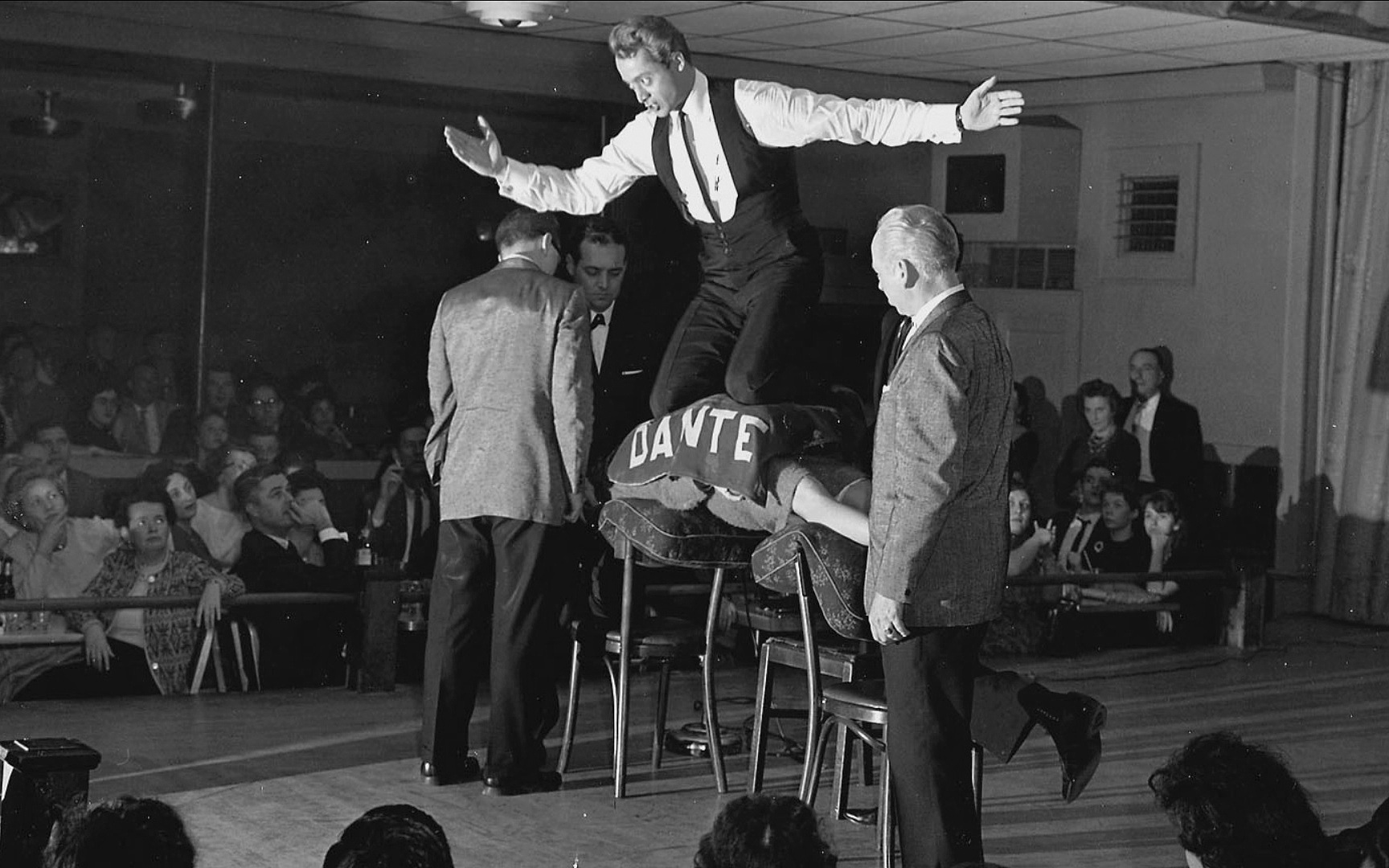
 

“Dallas/The Big D” by William E. Bond — ca. 1962
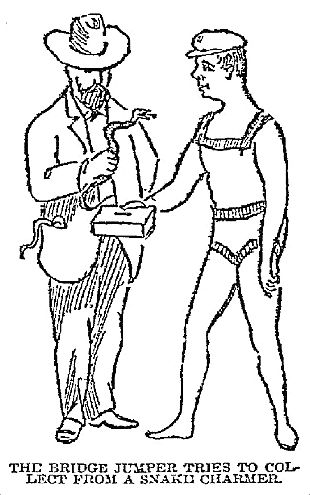
dallas-big-d_william-e-bond_business-week-collection_ca1962Yonder lies Big D…

by Paula Bosse

This print — titled “Dallas/The Big D” by native Texan William E. Bond (1923-2016) — is fantastic. I love everything about it. It was commissioned by Business Week magazine to be used as part of its “Business America” series, an advertising campaign showcasing fifteen American cities captured in woodcuts. Every element of this scene is great, but let’s look at a detail showing just the Dallas skyline, with a hard-to-miss Pegasus. I also see what looks to be the Mercantile Building and the Republic Bank Building in there. And … that sky!

bond_william-e_dallas-big-d_print_business-week_ca-1962_det

william-e-bond_sig

Bond’s homage to Dallas was reproduced in the 1963 book Woodcuts of Fifteen American Cities from the Business Week Collection. Below, text from the book (my assumption is that the first paragraph is the copy that appeared in a print advertisement for Business Week — it appears that the ad campaign used the artists’ works collected in this book to illustrate the ads, with each ad mentioning local companies with large BW subscribership).

Dallas … leapfrogging ahead commercially and culturally. Cotton, cattle, and oil put the Big D on the map. But aircraft, electronics and machinery keep it moving. Companies like Texas Instruments (682 Business Week subscribers), Ling-Temco-Vought (106), Collins Radio (135), Dresser Industries (123). In Dallas, and everywhere in business America, men who manage companies read Business Week. You advertise in Business Week when you want to inform management.

And this was Bond’s bio with a quote from him on “the Big D”:

“Dallas is a great many things. It is a giant of a city in the midst of a giant country – full of life and energy and the will to grow and keep growing. Anyone who knows Dallas feels this spirit. And it is this feeling that I have tried to capture.”

Born in 1923 in Crandall, Texas, Mr. Bond attended the Art Center School in Los Angeles. He has won many gold and silver awards in art director and illustrator shows, including a gold medal in the New York Illustrators Show in 1962. Mr. Bond uses a variety of media, including paper prints, sculpture, and painting. He has been an agency art director most of his career, and is now a free-lance designer.

**

Bill Bond was born in Crandall, Texas in 1923, studied art at the Art Center School in Los Angeles, and spent several years as an award-winning commercial artist in Dallas. He worked as an advertising art director for The Dallas Times Herald, the Sam Bloom Agency, and Tracey-Locke; during this time he frequently participated in group art shows around the city. When he retired, he focused his creative talents on sculpture, becoming known for his wildlife pieces and Western bronzes. He died in Kerrville in 2016 at the age of 92.

william-bond_obit-photo

***

Sources & Notes

The book that features a reproduction of this print is Woodcuts of Fifteen American Cities from the Business Week Collection (New York: McGraw-Hill Publishing Company, Inc., 1963). From the introduction:

One of the principal methods of communication in the 20th century, and one of the biggest businesses, is advertising. Here, too, industry has regularly and effectively used fine art – in the creation of some memorable advertising campaigns.

From 1960 to 1962 Business Week commissioned fourteen prominent woodcut artists to illustrate its “Business America” series. Reproductions of the fifteen woodcut illustrations which were produced appear on the following pages.

Bill Bonds’ obituary is here.

Thanks to Bob Dunn for posting an image of Bond’s print in the Retro Dallas Facebook group. I liked it so much I went out and bought a copy of the (large) book! A few copies are available online here.

*

Copyright © 2017 Paula Bosse. All Rights Reserved.