Flashback : Dallas

A Miscellany: History, Ads, Pop Culture

Category: Downtown

Titche-Goettinger, Fashions for the Chic Dallas Woman — 1940s

titches_newton-elkin-shoes_1944_my-vintage-vogue

by Paula Bosse

Just a few 1940s ads for fashions available at Titche-Goettinger, one of many of Dallas’ nicer department stores which made the city a fashion meccas for the chic Texas woman.

Above, a 1944 ad featuring the latest in shoes from Newton Elkin (“two new shoe shades: Tanbark — Cedar Green”): “the sling-back pump with perforated Cleopatra vamp” and “Vicki in brown lizard” (which I sincerely hope someone uses as a song title).

Below, a newspaper ad from 1945 featuring other Newton Elkin shoes, these dressier, with fancy paillettes (sparkly decorations). Perfect to wear with the matching black silk turban. (Click to see a larger image.)

titche-goettinger_nov-19451945

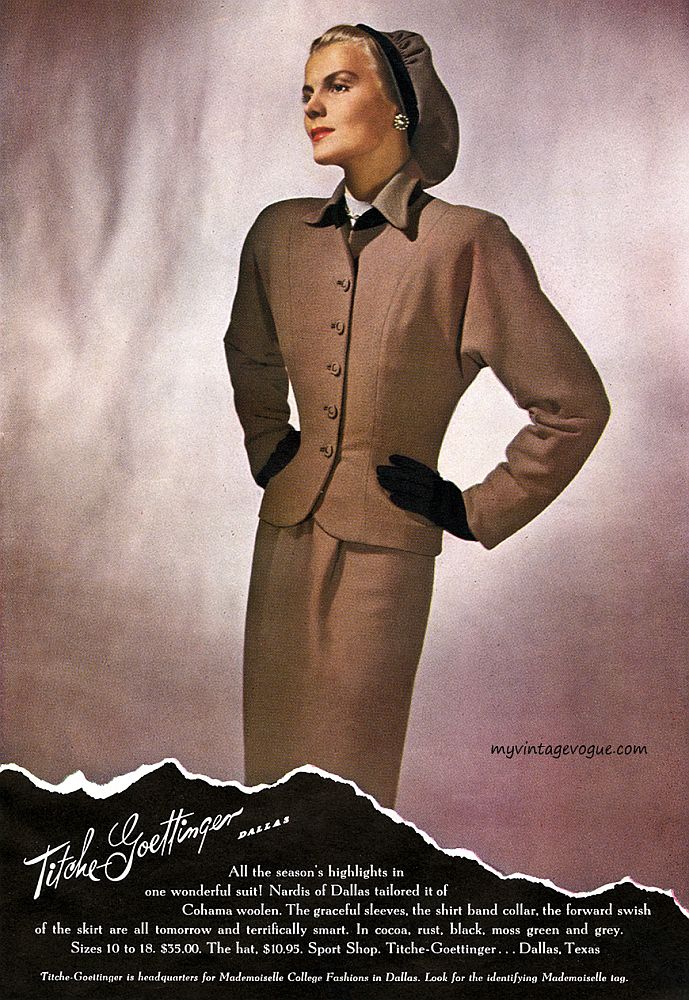
A “Nardis of Dallas” wool suit from 1945, “tomorrow and terrifically smart… in cocoa, rust, black, moss green, and grey.”

titches_nardis-of-dallas_suit_1945_my-vintage-vogue1945

Another “Nardis of Dallas” suit from 1945, this one in “superlative” gabardine: “a suit you’ll wear from swivel chair to swizzle stick… platinum, aqua, lime, red, brown.” Sold separately: a matching hat and slacks (!). “Men prefer it.”

titches_nardis-of-dallas_1945_my-vintage-vogue1945

Speaking of hats: “Sally Victor creates the ‘Big and Little Filly’ for Titche-Goettinger.” …There’s a lot going on up there. (1947)

titche-goettinger_1947_ebay_hats1947

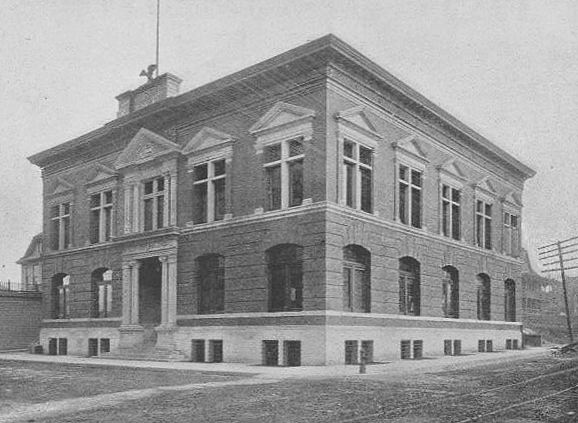
The still-standing Titche’s building at Main and St. Paul was designed by George Dahl in 1929 and was expanded in the 1950s. The women buying these clothes in the 1940s would have shopped at the smaller — though still elegant — store, which looked like this:

titches_unvisited-dallas_jeppsonNoah Jeppson/Unvisited Dallas

When shopping was more sophisticated.

titches-logo_1945

***

Sources & Notes

All color ads from the FABULOUS website My Vintage Vogue, here, here, and here.

Sally Victor ad found on eBay, here.

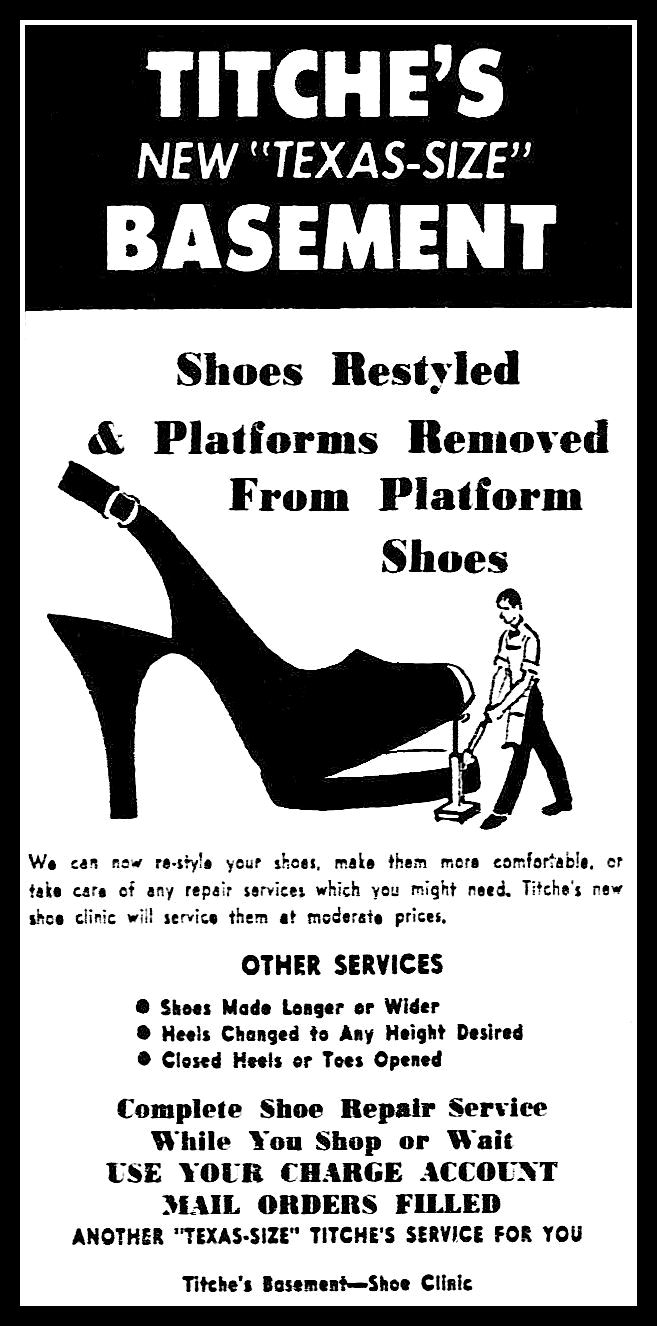
This doesn’t really fit into the 1940s, but I’ve had this 1955 ad for the Titche’s Shoe Clinic kicking around for a few years — this seems like a good place to slip it in. Platforms removed! Open toes closed! Closed toes opened! Pop down to the basement for all your shoe repair and restyling needs.

ad-titches_shoe-clinic_19551955

Check out other Flashback Dallas posts on Titche’s, here.

Flashback Dallas posts on Nardis of Dallas can be found here and here.

All images are larger when clicked.

*

Copyright © 2018 Paula Bosse. All Rights Reserved.

Downtown Dallas Through the Clouds — 1923

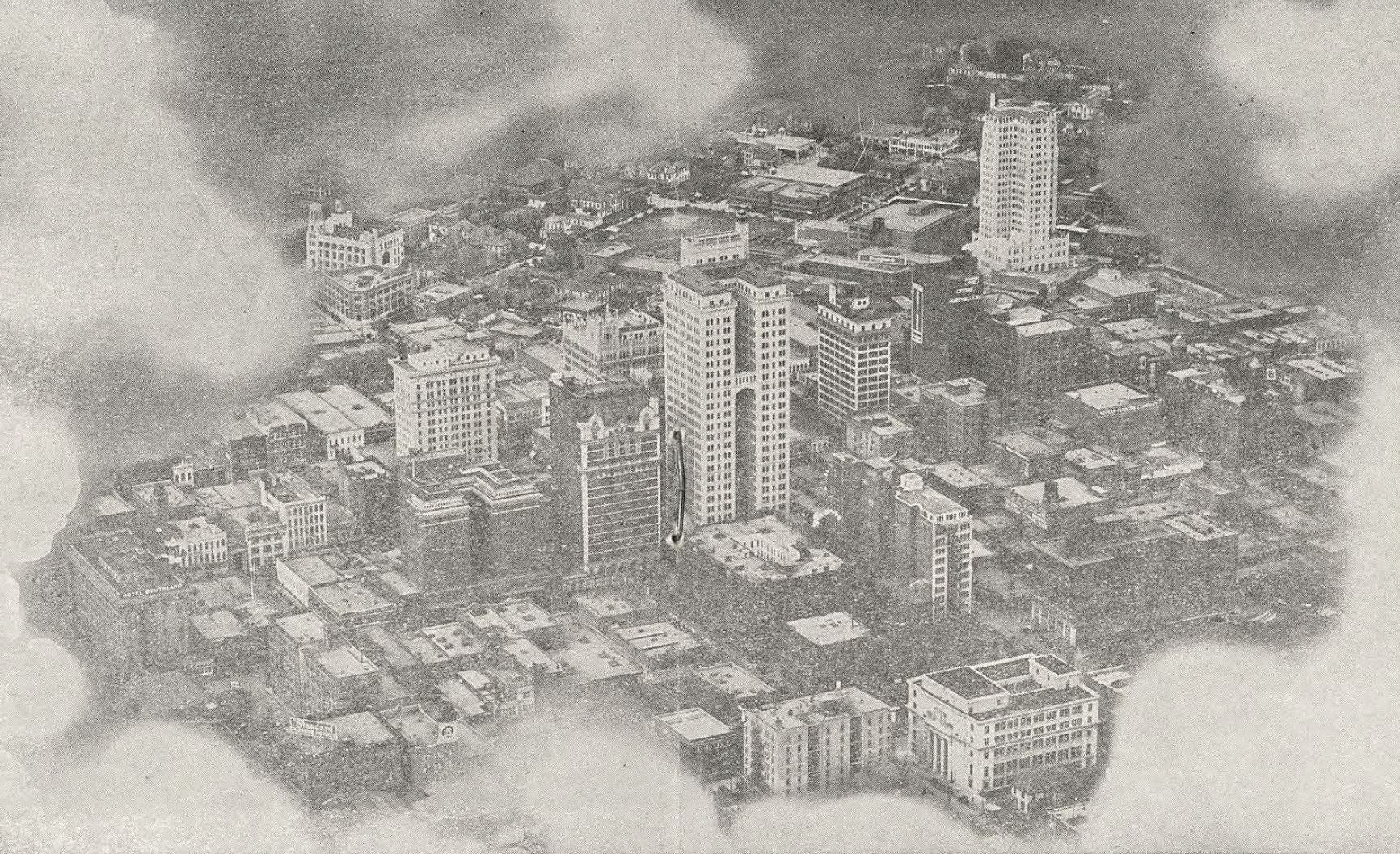
birds-eye_fairchild_dallas-a-z_degolyer_SMU_1923Big D from above…

by Paula Bosse

This wonderful, dream-like, “through the clouds” photo shows a growing, booming (pre-Pegasus) downtown Dallas.

***

Sources & Notes

Photo by the Fairchild Aerial Camera Corp., from the 1923 promotional brochure Dallas from A to Z (“Where Men Are Looking Forward”), published by the Dallas Chamber of Commerce (note the publication’s staple in the center of the photo). This brochure is in the collection of the DeGolyer Library, Southern Methodist University and can be viewed in its entirety here (click the “download” button to view or save the brochure).

*

Copyright © 2018 Paula Bosse. All Rights Reserved.

The Five & Dime at Elm & Stone

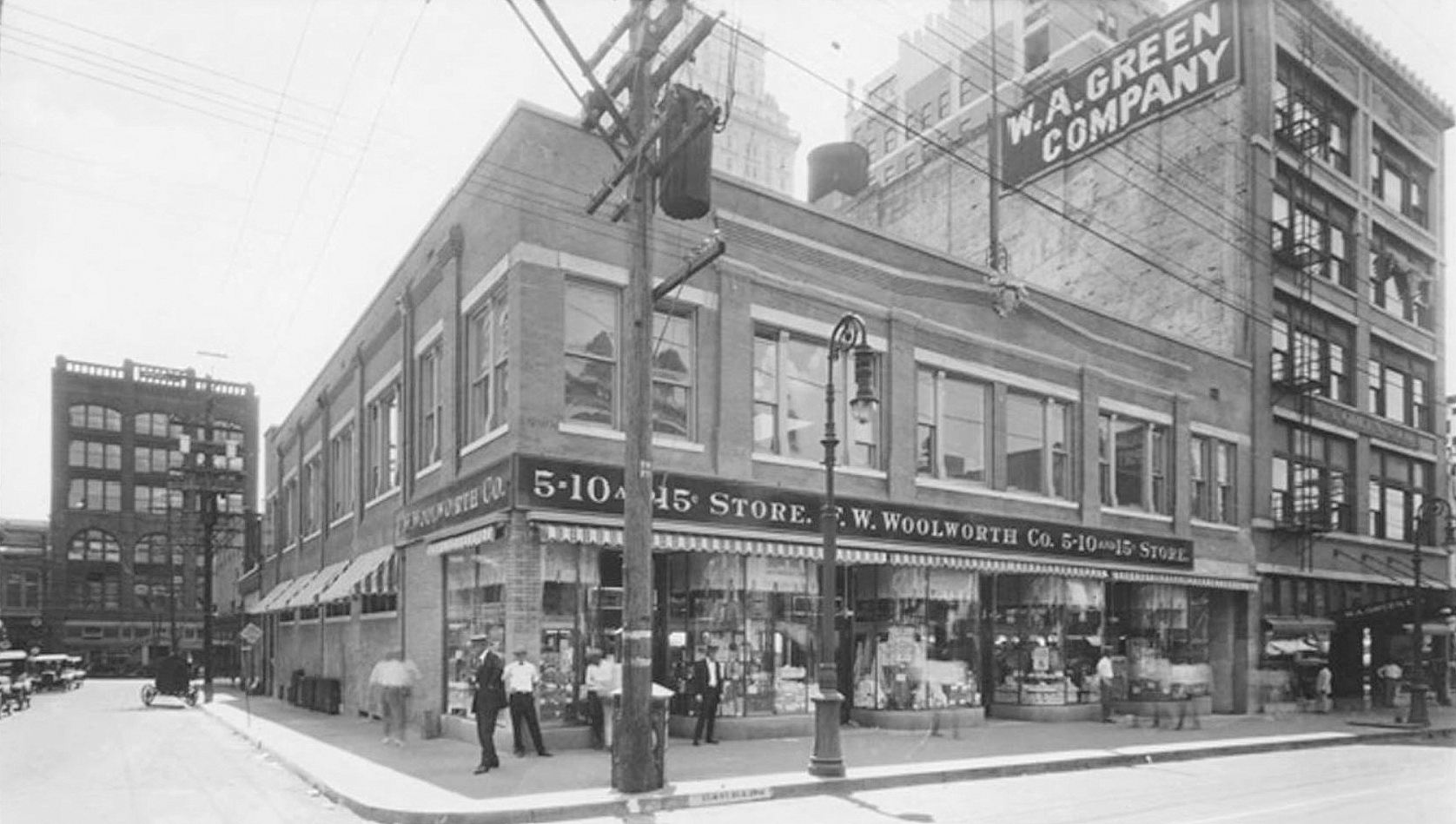
elm-stone_woolworths_mcafee_degolyer_SMU_ca-1920_croppedThe 5-10-15¢ store beckons…

by Paula Bosse

This pleasant photo was taken at Elm and Stone streets. On the left, straight ahead is the Juanita Building (later the Deere Building), on Main Street, and, on the right, the Woolworth and W. A. Green buildings (the latter two are still standing).

I’m quite taken with that lamp post. (See the same type of lamp post in two other photos of Elm Street here.)

The view today can be seen on Google here.

***

Sources & Notes

This photo is from the George Andrew McAfee Collection at the DeGolyer Library, Southern Methodist University; more information about the photo can be found here. SMU’s descriptive title is: “F. W. Woolworth Company Store, 1520-1524 Elm Street, W. A. Green Company, 1516-1518 Elm Street Looking South at Intersection of Elm and Stone, Praetorian Building at Far Left, Deere Building at 1528-1530 Main (Six-Story Building) Is Visible at South End of Stone Street, Deere Building (Formerly Juanita Building), circa 1920.” (I have inadvertently cropped off the very edge of the Praetorian Building.)

*

Copyright © 2018 Paula Bosse. All Rights Reserved.

Santos Rodriguez: The March of Justice — 1973

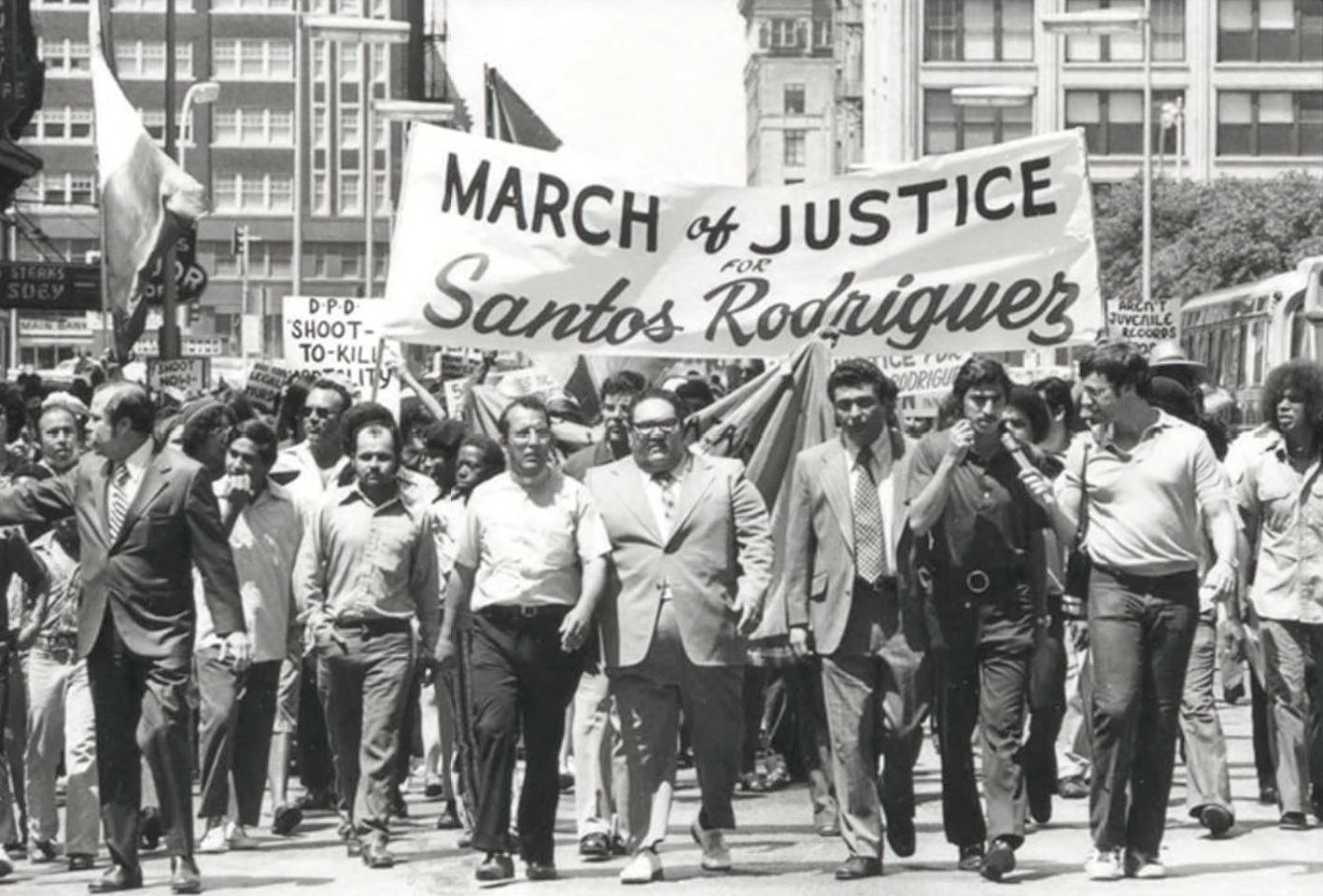
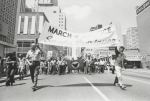
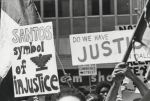
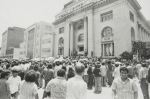
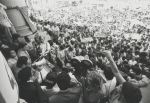
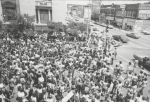
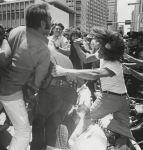
santos-rodriguez_march_contact-sheet-12_andy-hanson_degolyer_SMUThe March of Justice, July 28, 1973… (photo: Andy Hanson / SMU)

by Paula Bosse

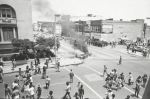
In the wee hours of the morning of Saturday, July 24, 1973, 12-year-old Santos Rodriguez — who was handcuffed in the front seat of a police car — was shot in the head by a Dallas police officer attempting to coerce a confession in a deadly game of Russian roulette. Santos died instantly, as his 13-year-old brother — also handcuffed — watched in horror from the back seat. The shooting (which I wrote about here) set off an explosion of outrage in Dallas, with the bitterest and angriest coming from the Mexican American community.

Four days after Santos was killed, a “March of Justice for Santos Rodriguez” was scheduled to be held in downtown Dallas, beginning at the Kennedy Memorial and ending at City Hall (the old Municipal Building, at Main and Harwood). The event was to be a peaceful march to show the solidarity of the Hispanic community and to protest what many felt was racial prejudice within the Dallas Police Department.

The march down Main Street to City Hall was earnest, and the speeches at City Hall by Dallas activists and concerned civic leaders were impassioned calls to action. After the speeches, many of the marchers headed back to the Kennedy Memorial. About halfway back, they encountered another group of marchers.

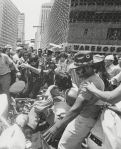
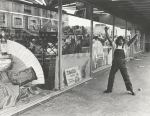
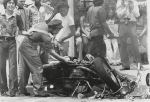
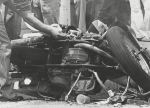
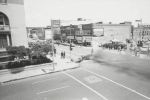
At some point, various groups described as “outside agitators” arrived. While the first crowd was listening to speeches at City Hall, a second (and perhaps later even a third) group of protestors assembled and began their own march to City Hall. These new arrivals (many said to be from Fort Worth and Waco) appear to have been the spark that set off what has been described as a “riot,” which erupted back at City Hall, with protesters attacking the police (who had been ordered to refrain from retaliation), breaking windows, and looting several downtown businesses. The image most emblematic of the day was a burning police motorcycle lying in the street just outside City Hall.

…[A]ll was havoc. A motorcycle was burning, a news vehicle was smashed, several officers injured and the sound of shattering glass filled the street… [T]he stench of burning rubber filled the air.” (“Police Taunted By Crowd” by Mitch Lobrovich, Dallas Morning News, July 29, 1973)

Luckily, there were few injuries, and the crowd dispersed after less than an hour.

A couple of days after the protest, the Rodriguez family issued this statement:

The Rodriguez family would only ask that when the people of Dallas hear the name Santos Rodriguez they think not of the unwanted violence that became associated with his name Saturday; but they think of the real Santos Rodriguez, a gentle and well-liked 12-year-old boy who had his life tragically taken from him.

*

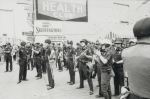
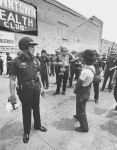
Below (and above), photos taken that day by Dallas Times Herald photographer Andy Hanson which were recently unearthed by curator Anne Peterson, from the collection of his photographs at SMU’s DeGolyer Library:

**

The only footage I’ve found of the actual march is this video, uploaded recently to YouTube by Mountain View College. It was apparently shot by a Dallas police officer. There is no sound. This is great. Thank you, Mountain View, for preserving this important historical moment.


*
***

Sources & Notes

Photos taken by Andy Hanson on July 28, 1973; from the Collection of Photographs by Andy Hanson, DeGolyer Library, Southern Methodist University. See the rest of the photos from this day, here. (Note: this does not appear to be the entirety of Hanson’s photos taken that day.) Read about the full Andy Hanson Collection at SMU, here

Read “Honoring Santos Rodriguez” by Anne E. Peterson, Curator of Photographs at the DeGolyer Library (and the person who unearthed these Andy Hanson photos), here.

The YouTube video is titled “Santos Rodriguez 1973 News Footage,” with the description “Rare news footage taken during the 1973 protests in downtown Dallas following the tragic shooting death of 12 year old Santos Rodriguez by a Dallas Police officer. No audio.” I’d like to know more about the story behind this footage.

The coverage of the march(es) and ensuing riot is confusing. A couple of months after the march, Jose Antonio Gonzales wrote a fascinating and (seemingly) comprehensive report for The Fort Worth Star-Telegram on how the events developed and unfolded, with an almost moment-by-moment timeline and insight into the individuals involved. Read his fantastic job of reporting in the (awkwardly-titled) article “Chicano Leadership Unity Faulted in Study of Boy’s Death” (FWST, Sept. 16, 1973): part one is here; part two is here.

My previous post on Santos Rodriguez — “Santos Rodriguez, 1960-1973” — is here.

Click pictures to see larger images.

*

Copyright © 2018 Paula Bosse. All Rights Reserved.

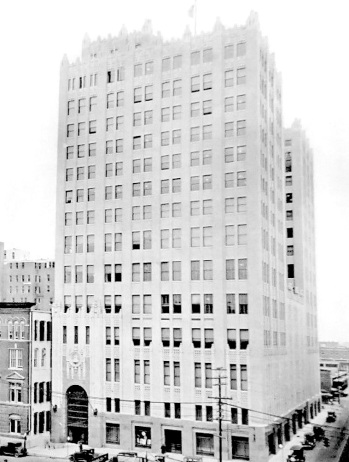
The New Southwestern Bell Telephone Co. Building — 1928

swb-bldg_atlantic-terra-cotta-booklet_1929Brand new, at S. Akard and Wood streets…

by Paula Bosse

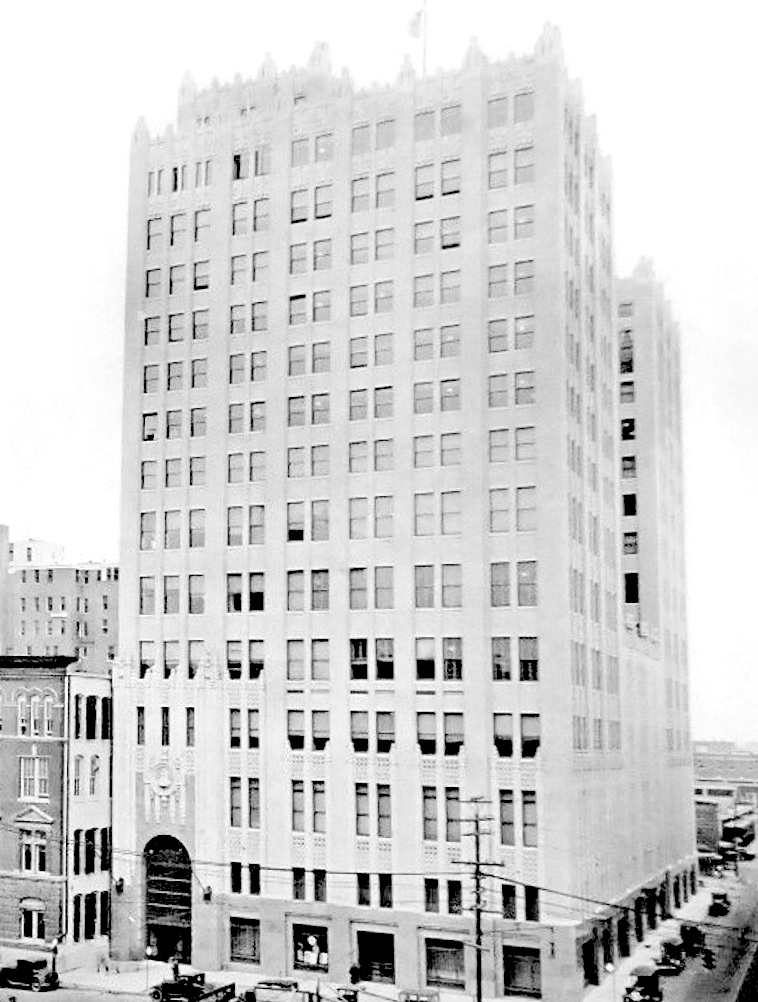
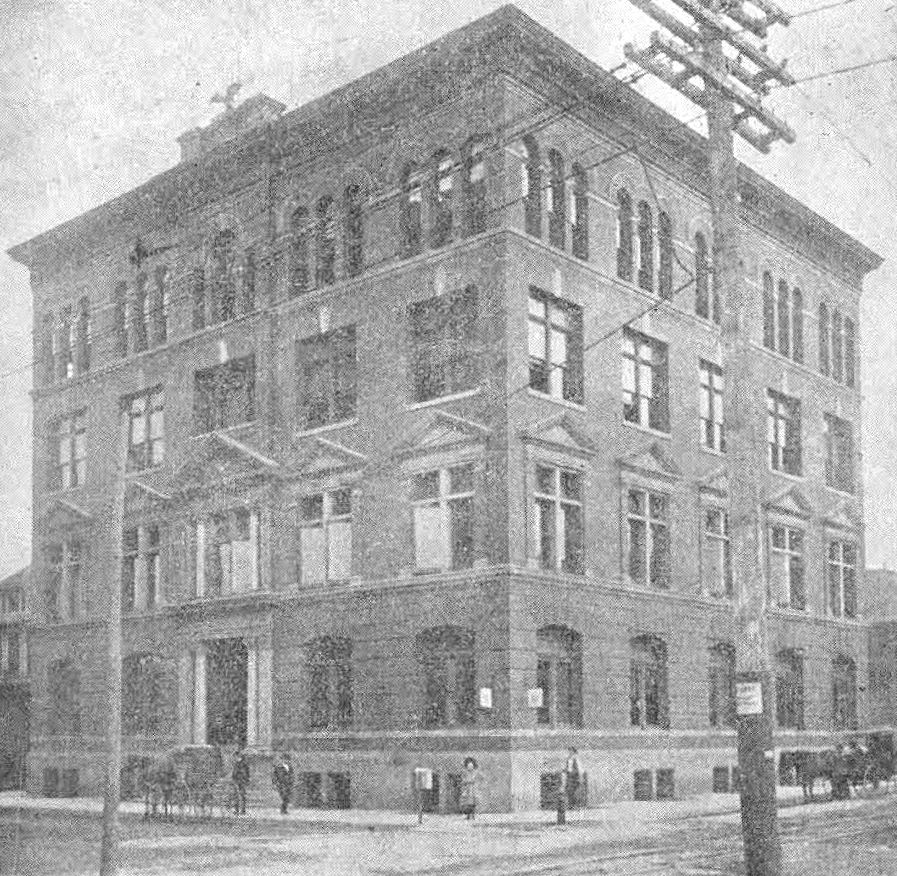
Above, the beautiful new Southwestern Bell Telephone Company building, photographed not long after its opening at the end of 1928. Designed by noted Dallas architects Lang & Witchell (in association with Southwestern Bell’s chief architect I. R. Timlin) the building took up almost an entire block on the east side of South Akard, between Jackson and Wood streets. Construction began in April 1927, and the building was finished and occupied in December 1928. It served as a regional hub, containing not only business offices, but also cumbersome telephone equipment which necessitated very high ceilings on some of the floors. (There were also downtown and suburban telephone exchanges which handled local calls, as well as the Haskell exchange which was handling long-distance traffic.)

The photo above is interesting because it shows part of the building which this new “skyscraper” replaced. Designed by H. A. Overbeck, the previous telephone HQ (seen below sometime before 1899) was built on the corner of Akard and Jackson in 1897.
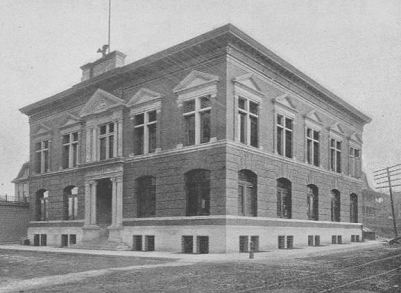
sw-bell-telegraph-and-telephne_dallas-fire-dept_1899_portal_det

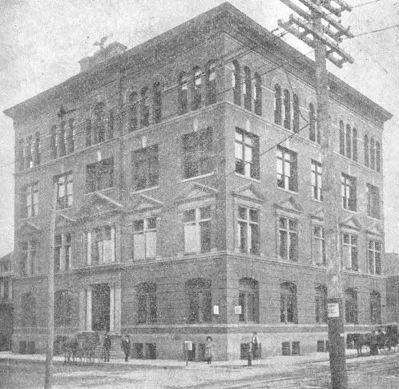
Here’s the same building in about 1905, with a couple of floors added:
southwestern-bell-bldg_come-to-dallas_degolyer_SMU_ca1905

The plan was to maintain the smaller building during the construction of the new building in order that operations would not be interrupted, then demolish it at a later date when expansion would take place. When construction of the new building was completed, the smaller building served primarily as the downtown exchange.

In 1929/1930, S. Akard was widened, which necessitated the condemnation or moving of several existing structures. Luckily, the new telephone building had been built far enough back from Akard to dodge any problems, but the smaller telephone building would have to be moved or demolished — it was moved: Southwestern Bell moved the 4-story, 4,200-ton building 18 feet eastward, at a cost of more than $75,000 (more than a million dollars in today’s money). The planning took six months, with elaborate schemes involving wooden cribbing, steel rods, jacks, rails, slackened power and telephone cables, and flexible joints for water mains. The actual move took 36 hours and was “so gradual that the workers inside [were] unaware of it” (Dallas Morning News, Aug. 18, 1929). There was no interruption of telephone service during this costly relocation. Quite a feat!

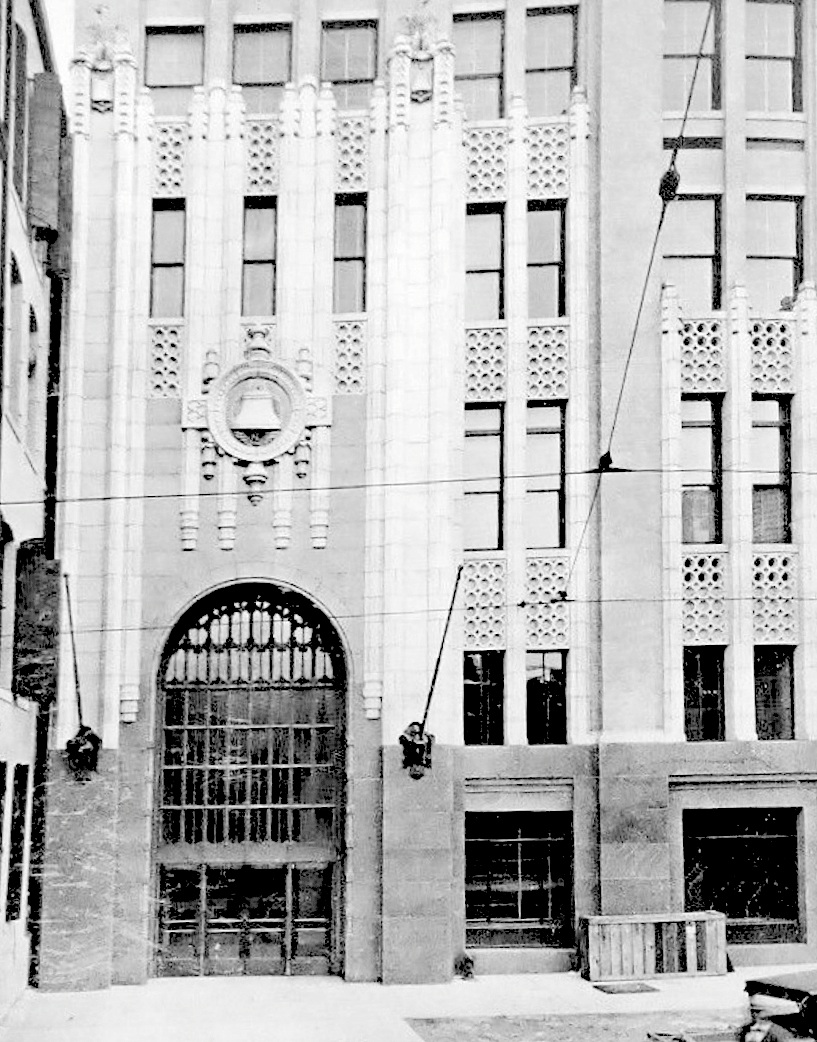
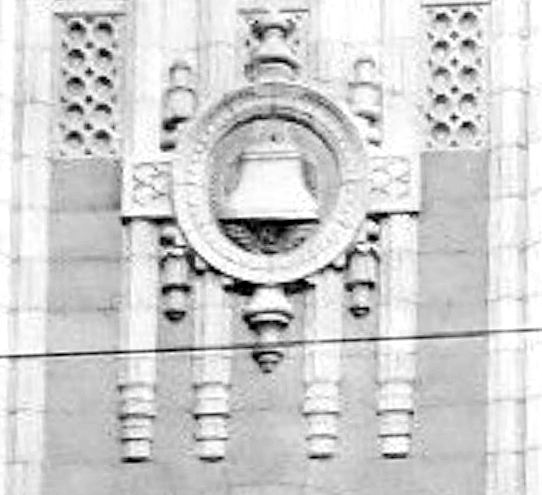
The building still stands — in amongst the humongous AT&T complex, but, sadly, one of the original features of the building is long gone: a large, ornate “bell” above the grand entrance (an entrance which is no longer quite so grand). Wonder what happened to it?

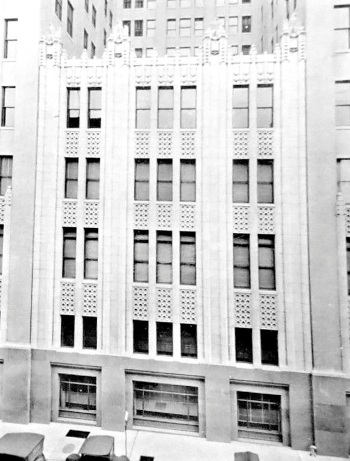
Below are a couple of other photos of the brand-new building, from a promotional booklet by the Atlantic Terra Cotta Co. The top photo had the following caption: “A most successful example of modern design in Atlantic Terra Cotta. The detail is carefully scaled and the design has the freshness of originality. Terra Cotta is light gray containing particles of mineral oxide and with an unglazed surface, a color and finish of particular character.”
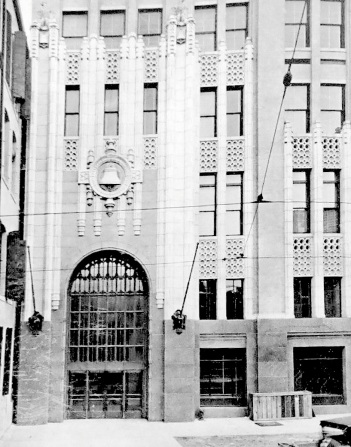
swb-bldg_atlantic-terra-cotta-booklet_1929_entrance“The main entrance shows an unusual and effective combination of Terra Cotta and granite. The bell design gives an appropriate and original touch.” (Click pictures to see larger images.)
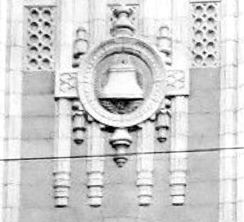
swb-bldg_atlantic-terra-cotta-booklet_1929_bell-det

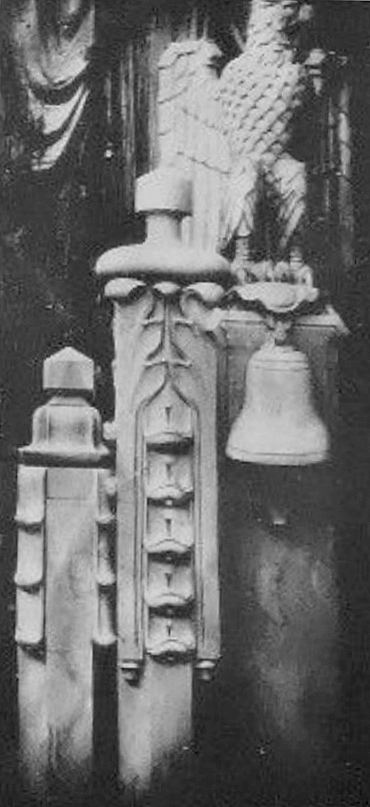
swb-bldg_atlantic-terra-cotta-booklet_1929_court“The court of the Telephone Building for four stories is faced entirely with Atlantic Terra Cotta. A bell, guarded by a strongly modeled eagle, tops each pier.” I believe this is the Wood Street side — after many expansions and renovations, these details no longer remain. The bells and eagles are difficult to make out in this photo — here is a photo of the terra cotta company’s “shop model”:
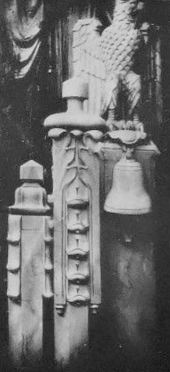
swb-bldg_atlantic-terra-cotta-booklet_1929_bells-eagles-det

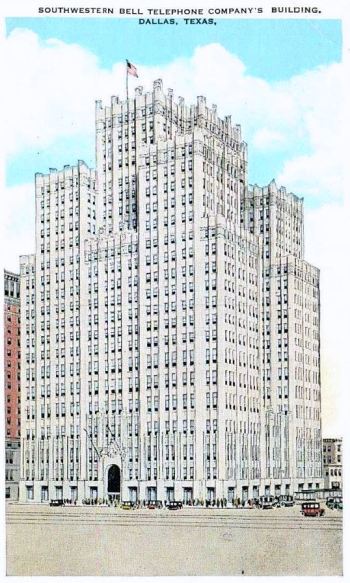
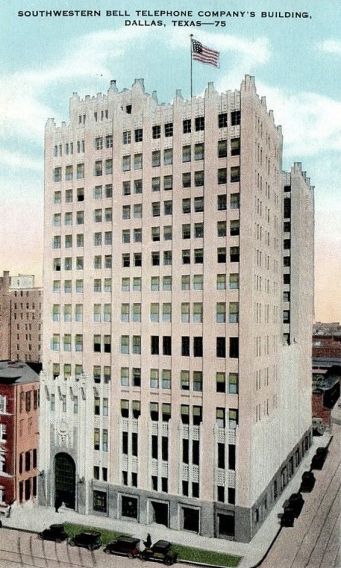
southwestern-bell-telephone-bldg_postcard

Above, a postcard showing the S. Akard entrance, with Wood Street on the right. The only things still immediately recognizable about Lang & Witchell’s beautiful building are the repeating circular elements, the “court” along Wood, and the granite facing that wraps around the exterior of the ground floor. So much of the decorative detail is gone. No more bells, no eagles, no flash, no filigree. I hope the building’s interior decor has fared a bit better.

**

Added: In response to the comment below by elmwoodhobo, I thought I should add a tiny bit about a pertinent later razing, addition, and expansion.

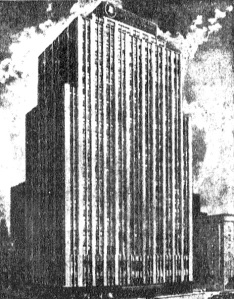
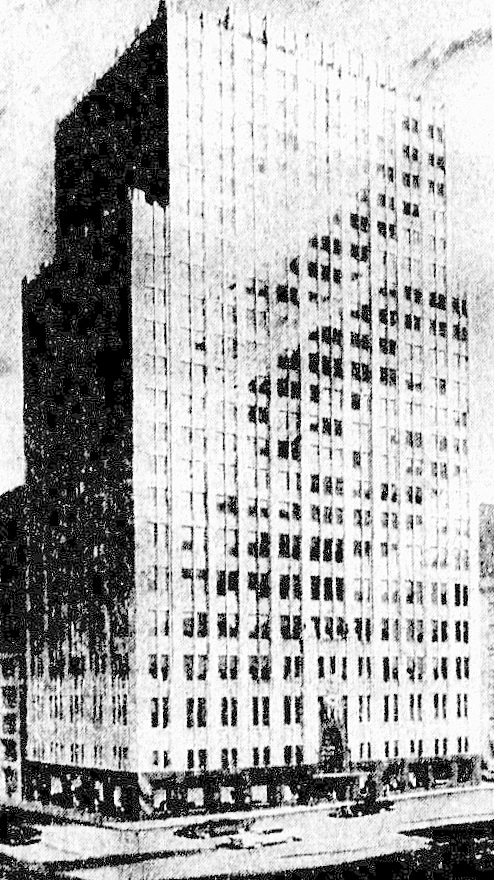
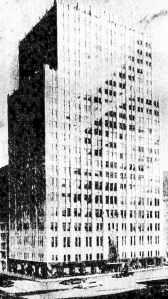
In May 1961 the old, 4-story telephone building, built in the 1890s at the corner of S. Akard and Jackson, was finally demolished to make way for a new 23-story addition to the SWB building. This addition was finished in 1963 (possibly 1964), substantially increasing the footprint of the Southwestern Bell headquarters. Square footage was further increased by the concurrent construction of eight new stories built atop the 1928 Lang & Witchell building. Below are drawings showing the original 1959 rendering by the architectural firm of Thomas, Jameson and Merrill, as well as an updated vision from January 1962, as construction was underway. A lot changed in those couple of years. (Click to see larger images.)
swb-addition-expansion_architects-orig-drawing_19591959

swb-addition-expansion_architects-updated-drawing_ad_jan-1962_det1962

swb-telephone-bldg_postcard

***

Sources & Notes

Top photos are from a promotional booklet titled Atlantic Terra Cotta (Vol. X, No. 3, June 1929), which features tons of cool photos of then-recent buildings constructed with that company’s product (including San Antonio’s stunning Smith-Young Tower — now the Tower Life Building — which I have to admit I’d never heard of). These photos were found on an eBay listing, and their quality is not the greatest, but I’ve never seen them, and this is just a small attempt to preserve them for posterity. 

Photo of the original Southwestern Bell Building (2 stories) is from an ad in the Dallas Fire Department (1899) book — see the full ad in the book, scanned at the Portal to Texas History, here.

Photo of the original Southwestern Bell Building (4 stories) is from a promotional booklet titled Come To Dallas (Dallas: Dorsey Printing Co., ca. 1905); more info on this booklet (held by the DeGolyer Library, Southern Methodist University), is here.

A Google Street View here shows the building these days. It’s still standing — which is great — but its entrance has definitely lost most of its original grandeur.

More Flashback Dallas posts on Southwestern Bell doings:

  • “The Haskell Exchange — ca. 1910,” here
  • “Southwestern Bell Telephone Goings-On, Circa 1928,” here
  • “Work and Play In Telephone Land,” here
  • “Telephone Operators Sweating at the Switchboard — 1951,” here

*

Copyright © 2018 Paula Bosse. All Rights Reserved.

The Wilson Building, Main and Ervay

wilson-bldg_dallas-illust-hist_payneLooking northwesterly… (click for larger image)

by Paula Bosse

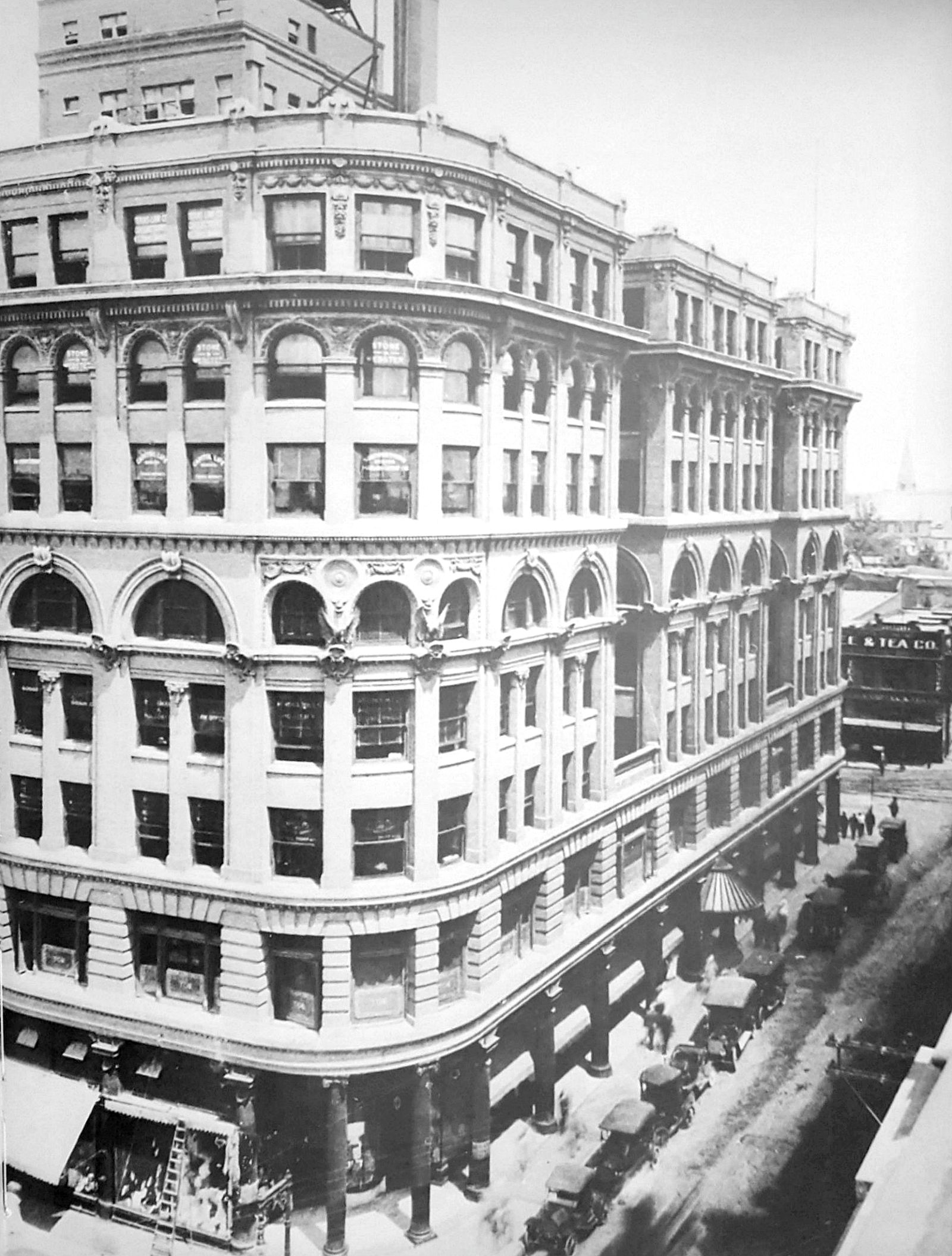
Another photo of the always impressive Wilson Building, this one showing the U. S. Coffee & Tea Co. (at the northwest corner of Elm and Ervay) in the background.

***

Sources & Notes

Photo from Dallas, An Illustrated History by Darwin Payne (Woodland Hills, CA: Windsor Publications, 1982; Sponsored by Dallas Historic Preservation League); original photo source is the Texas/Dallas History and Archives Division of the Dallas Public Library.

*

Copyright © 2018 Paula Bosse. All Rights Reserved

The Heart of Big “D”: Akard & Commerce

downtown_heart-of-big-d_postcard_akard-commerceLooking up the “canyon”… (click for larger image)

by Paula Bosse

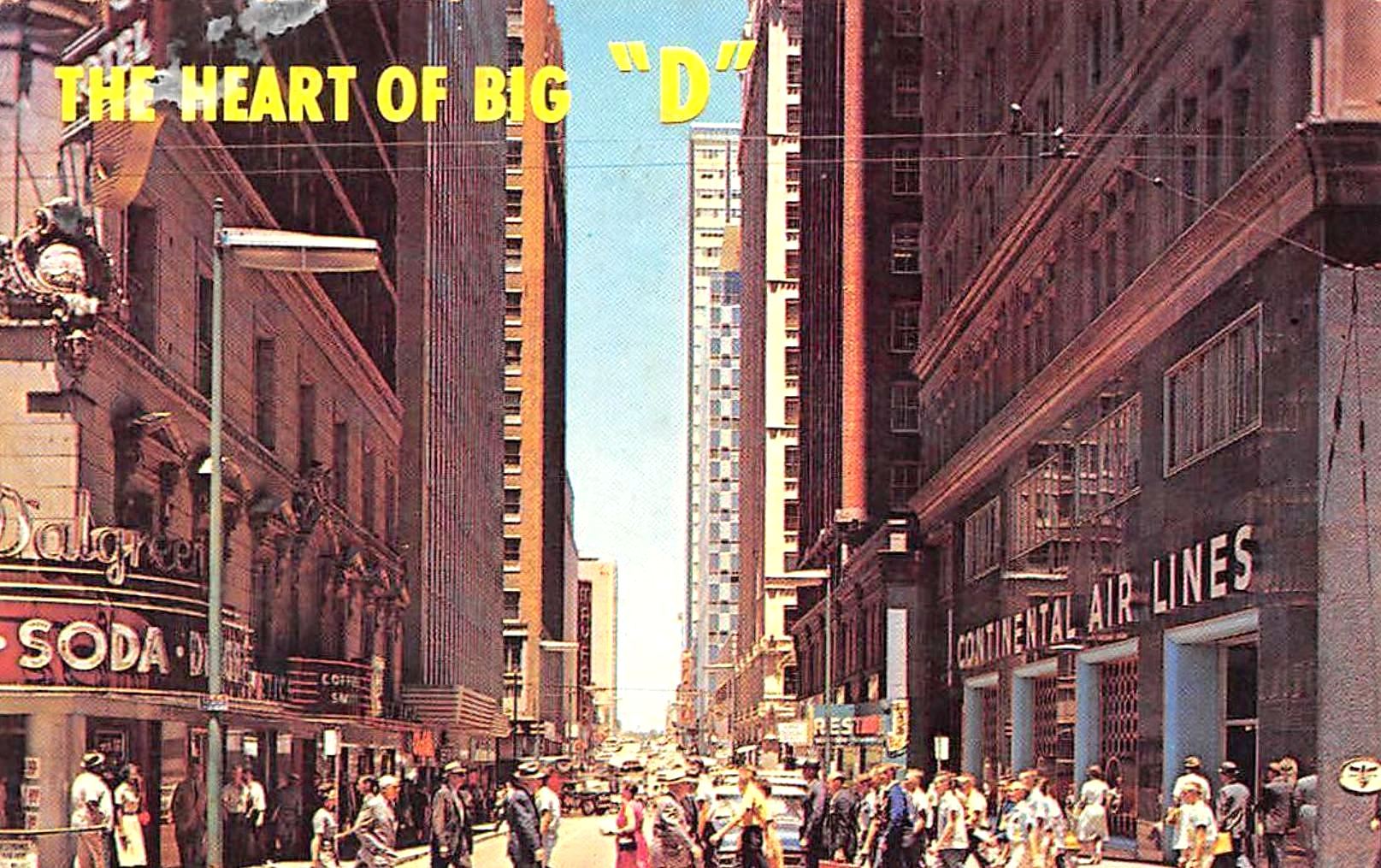
A postcard view of Akard, looking north from Commerce; the “canyon” is anchored at the south end by the Baker Hotel (behind the photographer), the Walgreens in the Adolphus Hotel building, and the Continental Air Lines ticket office in the Magnolia Building.

Looks like a hot, painfully sunny day in the canyon. Personally, I’d get out of the sun and hit that soda fountain….

***

Sources & Notes

This postcard is currently being offered on eBay, here. The seller is in Transylvania.

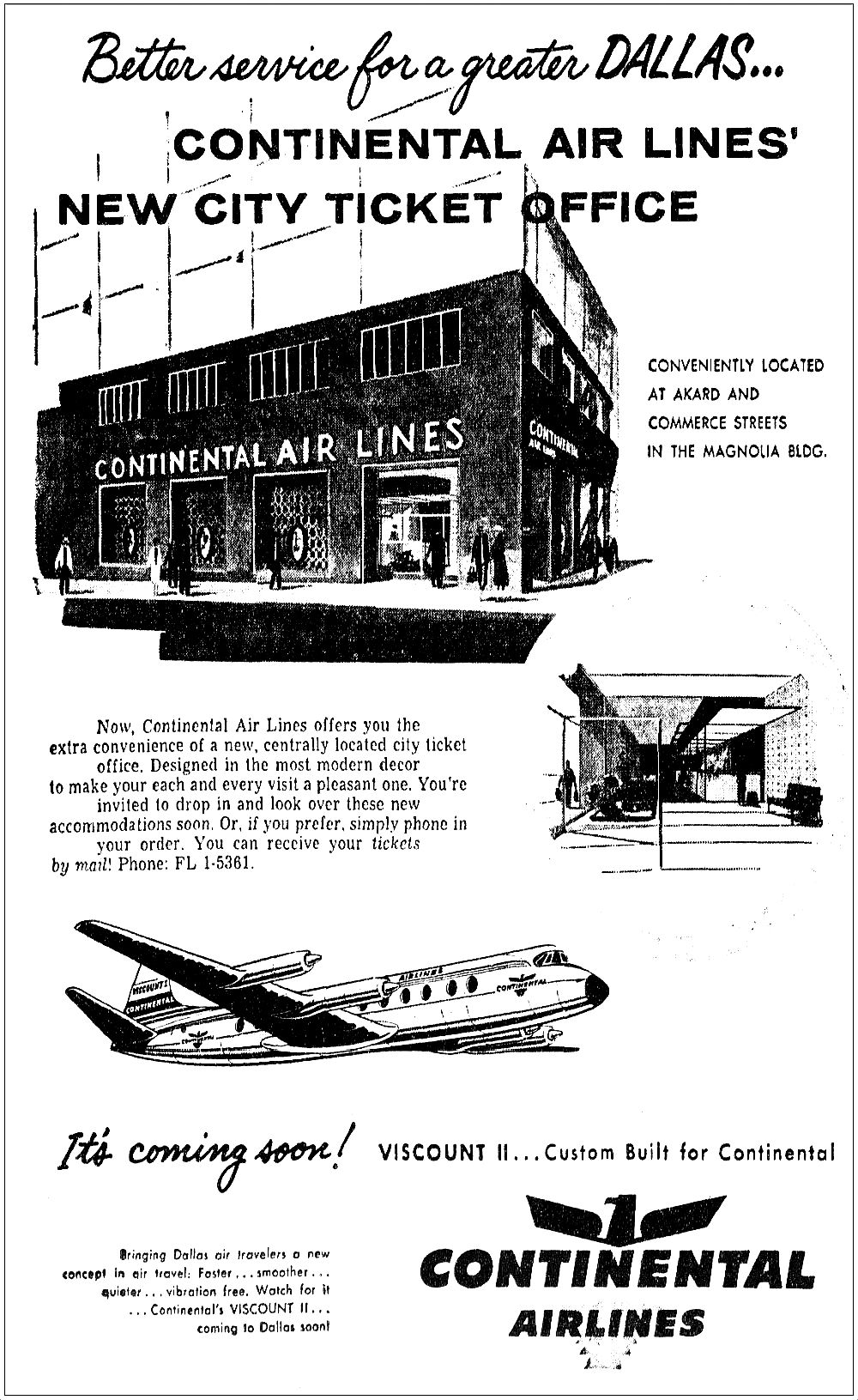
The Continental Air Lines ticket office opened in the Magnolia Building in early 1958 (click for larger image).

continental-air-lines_jan-1958
January, 1958

For more info on the buildings that lined the “canyon,” see the Flashback Dallas post “The ‘Akard Street Canyon’ — ca. 1962,” here.

*

Copyright © 2018 Paula Bosse. All Rights Reserved.


The Adolphus Hotel’s “Coffee Room” — 1919


coffee-room_adolphus_tea-and-coffee-trade-journal_march-1919_photo
Jonesing for some java? Belly on up…

by Paula Bosse

You know who was really, really happy about Prohibition? The coffee, tea, and soft drink industries. In fact, they were absolutely giddy. And, believe it or not, Dallas County prohibited the sale of alcohol even before much of the rest of the country — Dallas became officially “dry” in October 1917.

Have you ever wondered what happened to the nation’s thousands and thousands of bars when it became illegal in the United States to sell alcoholic beverages? What about all the hotel bars? Apparently, many hotels renovated their old bars into something new and novel called a “coffee shop” or a “coffee room.”

The photo above shows what the vested interests of The Tea & Coffee Trade Journal deemed “the coffee room” of the elegant Adolphus Hotel.

coffee-room_adolphus_tea-and-coffee-trade-journal_march-1919Tea & Coffee Trade Journal, March 1919

Yes, there were coffee urns, and coffee was certainly sold there, but it was actually the Adolphus Lunch Room. Though beverages are not mentioned in the menu seen below, it’s interesting to read what dishes were available to the Adolphus visitor in 1919 (of course the really well-heeled guests were not noshing in a lowly — though quite attractive — “lunch room”). The most expensive item on the menu is the Adolphus Special Sunday Chicken Dinner for 90¢ (which the Inflation Calculator tells us is the equivalent of about $13.00 today). (Click to see a larger image.)

adolphus_lunch-room_menu_dec-1919
Dec. 1919

And, yes, I believe that is a spittoon at the register.

**

I wonder if that “coffee room” later became the Adolphus barbershop (seen below)? Or maybe the barbershop became the coffee room?

adolphus-barber-shop_childers_adolphus-archives

***

Sources & Notes

Photo from the article “The Renaissance of Tea and Coffee” from The Tea & Coffee Trade Journal (March 1919). See other photos and read how Prohibition was spurring on this alcohol-free “renaissance” in the article, here.

Photo of the Adolphus barbershop appeared in the book Historic Dallas Hotels by Sam Childers, credited to the Adolphus Archives.

Many, many historical photos of spittoons can be found in this entertaining collection of the once-ubiquitous cuspidor. …Because when else will I be able to link to something like this?

As a sidenote, the Adolphus Hotel was, of course, built by and named for Adolphus Busch, the co-founder of Anheuser-Busch. Mercifully, the beer magnate died pre-Pro — before Prohibition.

*

Copyright © 2018 Paula Bosse. All Rights Reserved.

900 Block of Main, North Side — 1952

AR447-B1201Main Street, 1952… (Squire Haskins Collection, UTA)

by Paula Bosse

This 1952 photo by Squire Haskins shows the north side of Main Street, taken at the intersection with Poydras, looking west to the old Dallas County jail and criminal courts building seen at the far left. The Sanger’s building stands just west of Lamar, and across Lamar is the 900 block of Main, with the legendary E. M. Kahn men’s clothing store (one of Dallas’ first important retail stores, founded in 1872), the Maurice Hotel (in the old North Texas Building, built in 1888/1889), and the large Bogan’s grocery store at the northwest corner of Main and Poydras. The old jail and the Records Building (way in the distance) and the Sanger’s building are all that remain. See how this view looks today, here.

There is a flyer for “Porgy and Bess” on the lamppost in front of the Bogan market. “Porgy and Bess” opened the State Fair Summer Musicals series at the State Fair Auditorium (Music Hall) in June, 1952 (see an ad here).

But what about the south side of the 900 block of Main Street? Thankfully, photographer Squire Haskins  not only took the photo above, he also turned to face the other side of the street and snapped companion photos. I posted two of his photos of the south side of Main in a previous post, here. Here’s one of those photos, with Poydras at the left and Lamar on the right:

main-poydras_squire-haskins_uta

A listing of the businesses from the 1953 city directory — there’s a little bit of everything (click to see larger image):

900-block-main_1953-directory

***

Sources & Notes

Both photos by Squire Haskins, both from the Squire Haskins Photography, Inc. Collection, University of Texas at Arlington. More info on the top photo can be found here; more on the second photo, here.

More on the south side of Main Street can be found in the Flashback Dallas post “900 Block of Main Street, South Side — 1950s,” here.

All images larger when clicked.

*

Copyright © 2018 Paula Bosse. All Rights Reserved.

McKinney & Haskell, Circle “T” Frozen Foods, and VWs in Dallas

mckinney-and-haskell_NDHS_ebayFender-bender in front of NDHS… (click for larger image)

by Paula Bosse

Odd stuff shows up on eBay. This photo shows a damaged Circle T Brand frozen-food Volkswagen delivery van at the intersection of McKinney Avenue and North Haskell (with North Dallas High School making a partial cameo in the background). The view today? See it here.

Circle T was one of the many brainchilds of the Southland Corp.’s Thompson family: it manufactured and distributed frozen foods (initially meats and Mexican food) which were sold in the company’s 7-Eleven stores. The company began in 1954 and was located just a couple of blocks from this photo, at Haskell and Central. (In 1954 they announced one of their first specialty products: frozen queso. I’ve never even considered that frozen queso would exist, but 60-some-odd years ago it was flying off shelves at the neighborhood 7-Eleven.)

The Southland Corp. sold off Circle T in 1966.

Below, an ad for Circle T’s frozen steaks, from 1954 (click ad to see larger image).

cicle-t_FWST_062054June, 1954

circle-t-logo_1954

And because I’m nothing if not pedantic, here’s an ad for VW trucks and vans, from 1961 (which appears to be the date on the van’s license plate in the photo):

volkswagen_ad_fen-1961Feb., 1961

And speaking of Volkswagens, the first Dallas car dealer to import Volkswagens appears to be Clarence Talley — the first ads are from 1954. While I was searching for the link to the eBay listing of the above photo (which I could not find…), I serendipitously stumbled across this 1950s photo of Clarence Talley on N. Pearl, with appearances by the Medical Arts Building and the Republic Bank Building. Thank you, eBay.

talley-volkswagen_ebay

***

Sources & Notes

Photos from eBay: could not find the link to the first one, but the second one sold a couple of months ago, and the archived listing is here.

*

Copyright © 2018 Paula Bosse. All Rights Reserved.