Flashback : Dallas

A Miscellany: History, Ads, Pop Culture

Category: Transportation

The Dallas Police Department & Their Fleet of Harleys — 1951

ad-harley-davidson_dpd_19511951 ad

by Paula Bosse

Group photo day!

Like so many cities all over the country — whether large or small — the motorcycle division of the Dallas Police Department is equipped with Harley-Davidsons exclusively. Effective traffic regulation is assured through the use of 35 solo Harley-Davidsons and 29 Servi-Cars. Traffic experts recognize that no other method matches motorcycles for efficiently handling so many phases of traffic control work and accident prevention.

***

Sources & Notes

1951 Harley-Davidson ad from… somewhere — probably eBay.

Back in 1910, the DPD was perfectly happy with Indian motorcycles, as can be seen in a previous post, “Dallas Motor Cycle Cops — 1910.”

*

Copyright © 2014 Paula Bosse. All Rights Reserved.

“Life” at the State Fair of Texas — 1951

fair-park-midway_life_1951On top of the world, 1951

by Paula Bosse

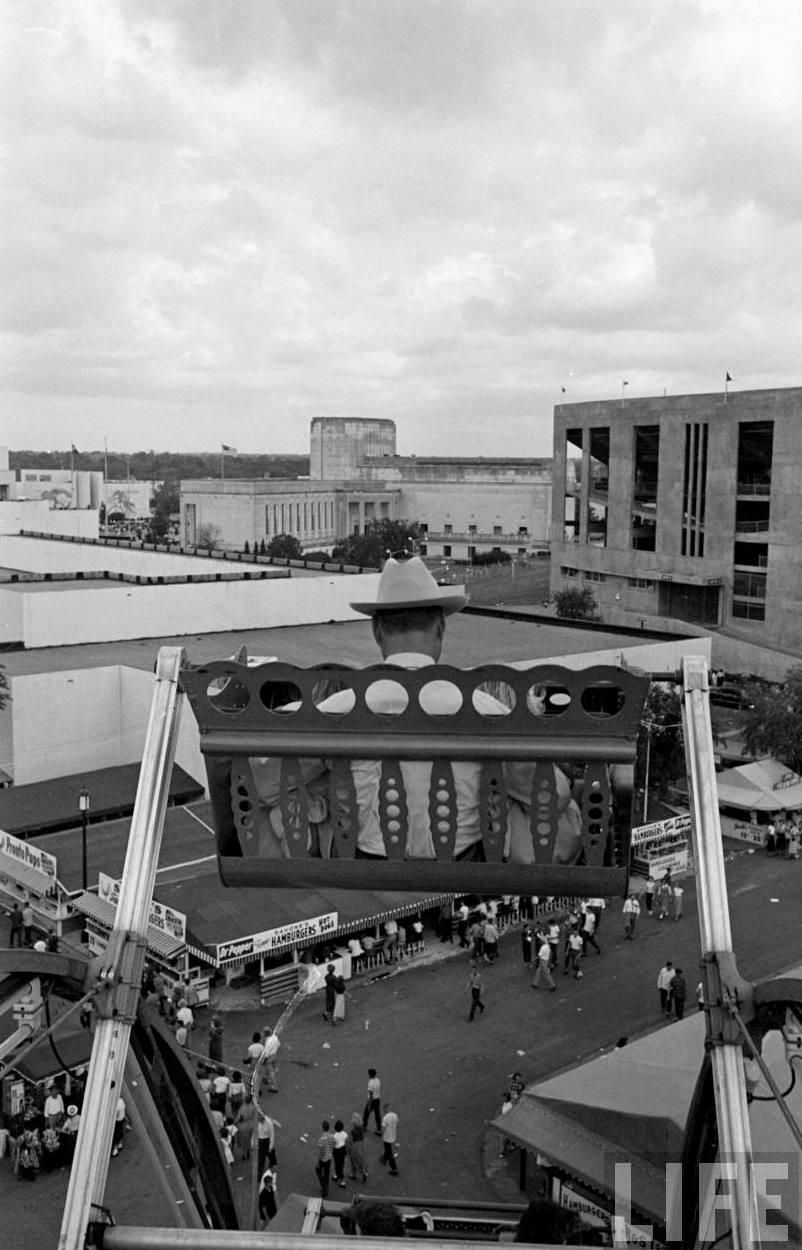
A Life magazine photographer moseyed down to Dallas in 1951 and captured a couple of cool shots of the State Fair. The photo above (so sweet, and one of my favorite Midway shots ever) was captioned:

In Dallas a rancher takes the kids for a ride in a 92-foot-high double Ferris wheel.

The photo below shows a tractor-pulled tram (fare: 15 cents) as it wheels past the Hall of State, full of well-dressed men and women. (That kid in the boots, cowboy hat, and letterman jacket … had I been around in 1951, I would have had a big ol’ crush on him.)

Click both of these wonderful photos to see larger images. You can practically smell the Brylcreem and cotton candy.

fair-park_tour_life_1951Life magazine, 1951

***

Sources & Notes

Both photos taken at the 1951 State Fair of Texas for Life magazine by an uncredited photographer. The top photo (cropped differently) ran in the Oct. 22, 1951 issue of Life as part of a feature titled “It’s a Bumper Year For Fairs” — it was the only photo that appeared in the magazine shot at the Texas fair. The bottom photo did not run in the magazine.

*

Copyright © 2014 Paula Bosse. All Rights Reserved.

“We Like to LIVE in Dallas!” — Chrysler Ad, 1939

ad-chrysler_1939sm

by Paula Bosse

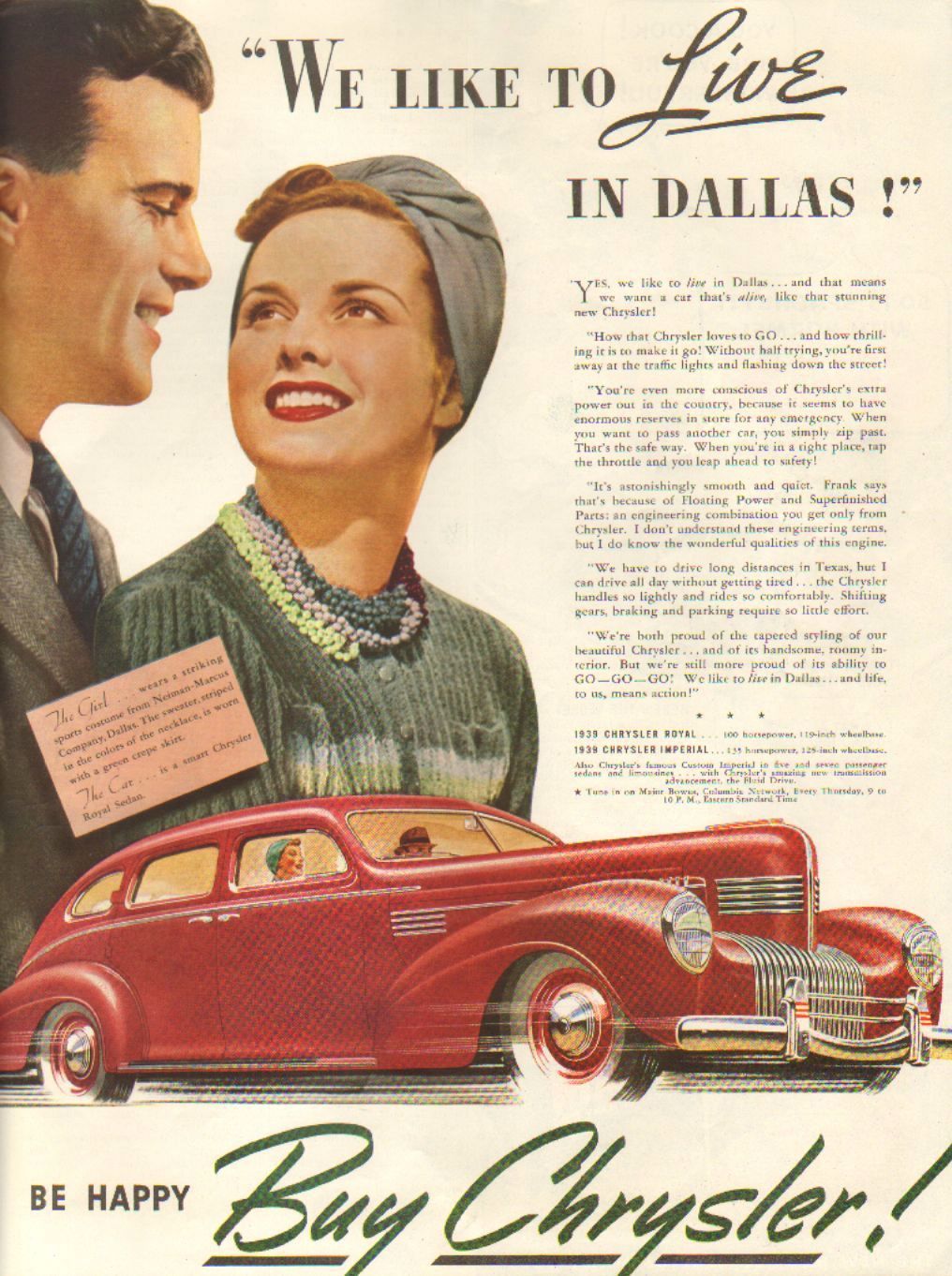
Madison Avenue knows a thing or two about who we Dallasites are, what we want, and — more importantly — what we need.

“We Like to LIVE in DALLAS!”

“Yes, we like to *live* in Dallas … and that means we want a car that’s *alive* like that stunning new Chrysler!

“How that Chrysler loves to GO … and how thrilling it is to make it go! Without half trying, you’re first away at the traffic lights and flashing down the street!

“You’re even more conscious of Chrysler’s extra power out in the country, because it seems to have enormous reserves in store for any emergency. When you want to pass another car, you simply zip past. That’s the safe way. When you’re in a tight place, tap the throttle and you leap ahead to safety!

“It’s astonishingly smooth and quiet. Frank says that’s because of Floating Power and Superfinished Parts; an engineering combination you get only from Chrysler. I don’t understand these engineering terms, but I do know the wonderful qualities of this engine.

“We have to drive long distances in Texas, but I can drive all day without getting tired … the Chrysler handles so lightly and rides so comfortably. Shifting gears, braking and parking require so little effort.

“We’re both proud of the tapered styling of our beautiful Chrysler … and of its handsome, roomy interior. But we’re still more proud of its ability to GO — GO — GO! We like to *live* in Dallas … and life, to us, means action!”

But wait … there’s more! The inset (the ad-within-the-ad):

THE GIRL … wears a striking sports costume from Neiman-Marcus Company, Dallas. The sweater, striped in the colors of the necklace, is worn with a green crepe skirt.

THE CAR … is a smart Chrysler Royal Sedan.

And now you know. (Unless you’re a woman, in which case you will need Frank to explain all of this to you. Ask him to speak slowly and use small words.)

“Be Happy, Buy Chrysler!”

***

Click ad for readable text and to get a closer look at that necklace and oddly hausfrau-ish turban.

*

Copyright © 2014 Paula Bosse. All Rights Reserved


Panoramic View of the Entrance to the State Fair of Texas — 1908

state-fair_clogenson_1908_LOC“Texas State Fair, Main Entrance” by Clogenson, 1908 (click for larger image)

by Paula Bosse

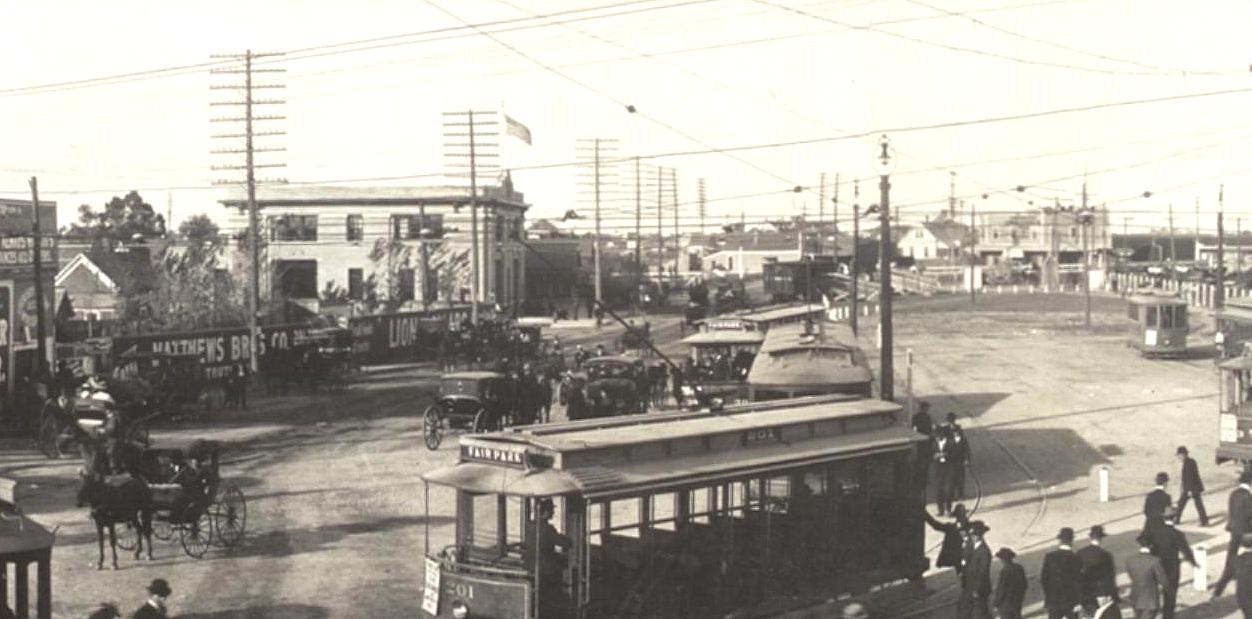
Today is opening day of the State Fair of Texas. Always an anticipated annual event, this is what the crowded entrance to Fair Park looked like over a century ago — still pretty recognizable, especially the firehouse at the top left. Below is a detail of the first third or so of this amazing panoramic photo. For a gigantic image of the top photo, click here (and then keep clicking until it’s gotten as big as it’s going to get — and don’t forget to use that horizontal scroll bar!).

Below is the detail I’ve cropped from the larger photo, showing the Parry Avenue portion, with the still-standing firehouse at the top left.

Have fun at the fair, y’all!

state-fair_1908-detDetail showing Parry Avenue, looking north (click for larger image)

***

Sources & Notes

Original image titled “Texas State Fair, Main Entrance” by Clogenson, 1908, from the Library of Congress. Photo and details can be viewed at the LOC website here.

In case you missed the link above — and because it’s so fantastic and filled with such incredible detail — you really must see the really big image of that really big panoramic photo, HERE.

For other Flashback Dallas posts on the State Fair of Texas, click here.

For Flashback Dallas posts on the Texas Centennial, click here.

*

Copyright © 2014 Paula Bosse. All Rights Reserved.

W. W. Orr: Buggies, Phaetons, Carriages — “Everything on Wheels!”

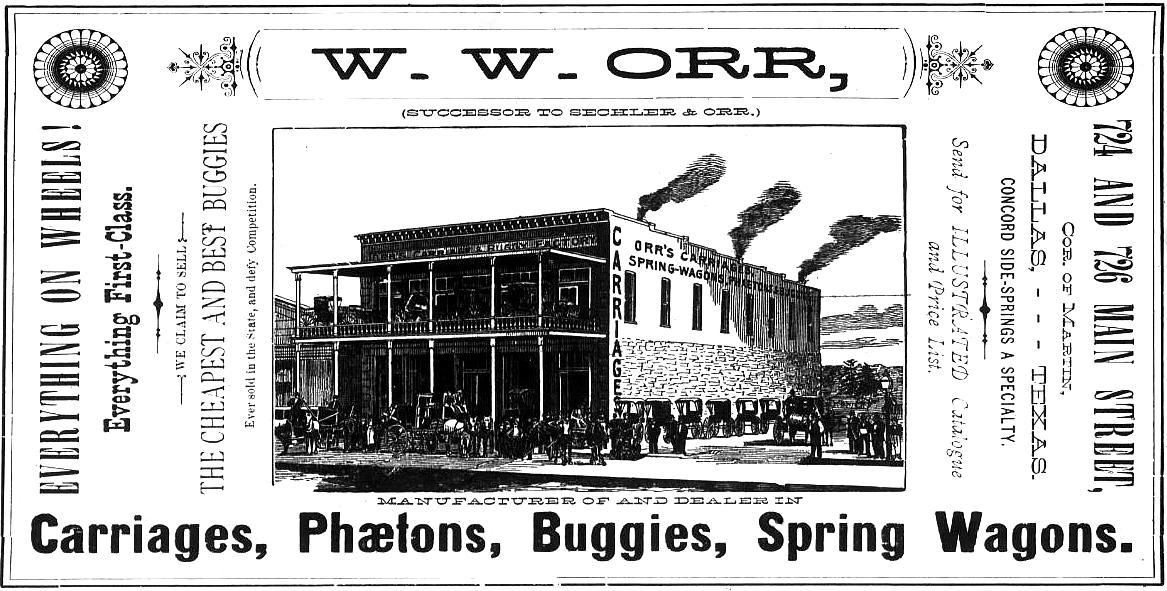
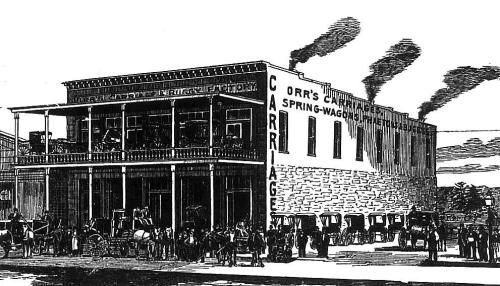
ad-orr-carriages_directory_1878-detW.W. Orr’s carriage business on Main St., 1878 (click for larger image)

by Paula Bosse

I came across the image above in the 1878 Dallas city directory, and my eye was immediately drawn to the novel open-air display of  buggies on the second floor of the building. I’ve never seen this before — the frontier version of the auto showroom!

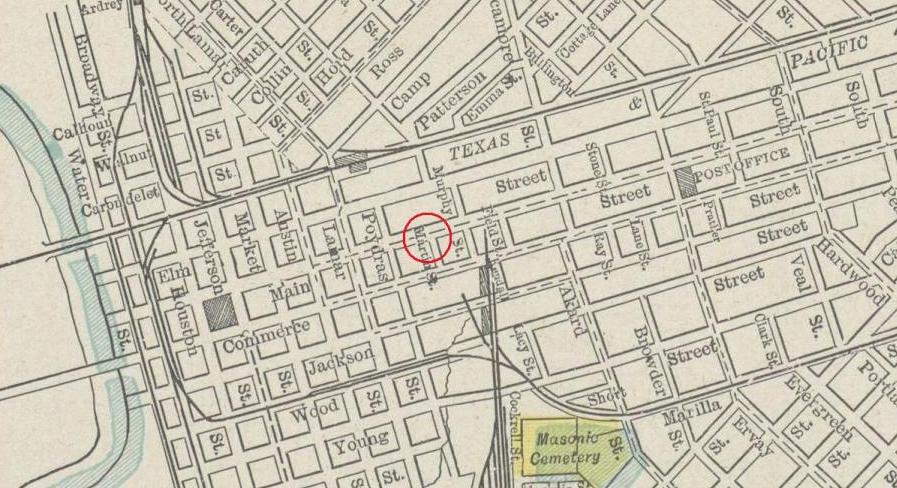
I hope this is a depiction of the actual shop owned by W. W. Orr at 724-726 Main Street (corner of Main and Martin — see map below) and not some sort of early augmented clip art. Orr ran a successful business selling buggies, phætons, and carriages, and he probably did have an imposing shop.

William Wallace Orr was born in Ohio, and after the Civil War he made his way to Texas, where he served for a short time as an East Texas postmaster before coming to Dallas where he and his wife, Amanda, operated a livery stable.
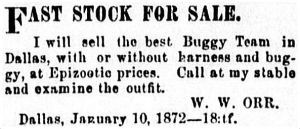
orr_dallas-herald_041973Dallas Herald, April 19, 1873

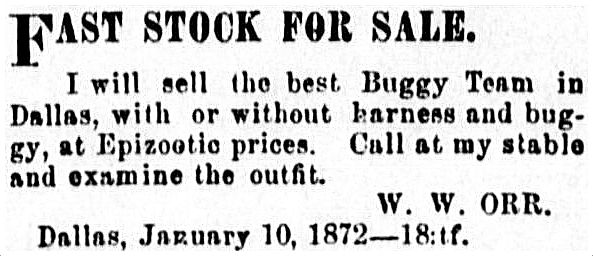
I’m not sure whether “epizootic” is used here as some sort of 19th-century tongue-in-cheek hard-sell advertising term (“His prices are INSANE!“) … or whether it means the horses have some sort of disease. I tend to think it’s the former.

The carriage business, which had started by 1878, is notable (to me, anyway) because it was housed in a building with a basement — I wasn’t aware that basements really existed in Dallas at the time. Orr rented out the basement beneath his “carriage repository” as a beer cellar. If TV westerns are anything to go on, drunken brawls in most drinking establishments of the time were to be expected. What might not be expected is an account of a bar fight to be reported like this:
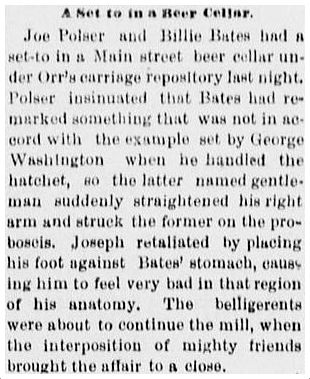
orr_cellar_dal-her_060278Dallas Herald, June 2, 1878

Regardless of what disreputable activities were going on in the cellar, it seems that Orr’s business of manufacturing and selling “everything on wheels” was a booming one.
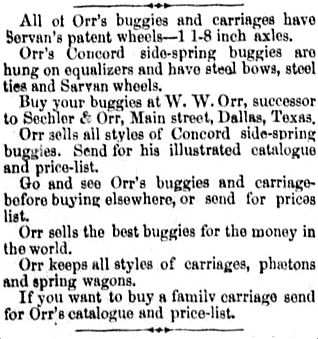
orr_dal-her_060380Dallas Herald, June 3, 1880

He had stylish conveyances, cheap prices, and good goods:
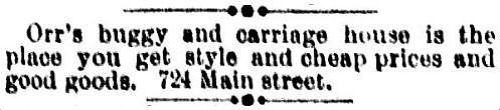
orr_dal-herald_081283Dallas Herald, Aug. 12, 1883

After the death of his wife in 1886 (she died of consumption at the early age of 42), Orr passed the business to his son. In poor health, he left Dallas for Mississippi, where he met a woman who nursed him back to health and whom he later married. After a few years of an apparently happy second marriage, W. W. Orr died in 1894. Cash savings, investments, and real estate holdings back in Dallas had left him a wealthy man, and, as might be expected, his family in Dallas was dismayed to learn that he had left his estate to his infant daughter in Mississippi. His three grown children from his first marriage were not happy, and they contested the will. (The case is covered exhaustively here. I think the baby daughter emerged victorious, but I’m not absolutely sure.)

It’s interesting that Orr and his first wife are buried side by side in Greenwood Cemetery. Amanda Melvine McQueen Orr has a large, ornate monument and headstone; W. W. has his name — and nothing else — carved into an unadorned marker. It would have been nice to have had a little a buggy in the corner. …Something.
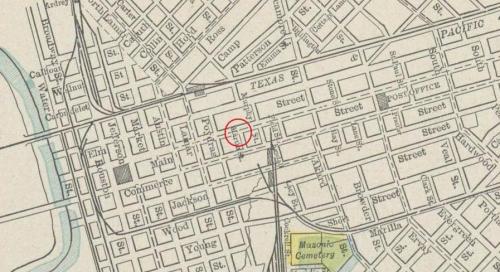
orr-map_c1900

The location of Orr’s buggy and carriage house was at the corner of Main and Martin, shown above in a map from around 1900. (Click for larger image.)

And, below, is the full ad, with that incredible artwork! (Click it!)
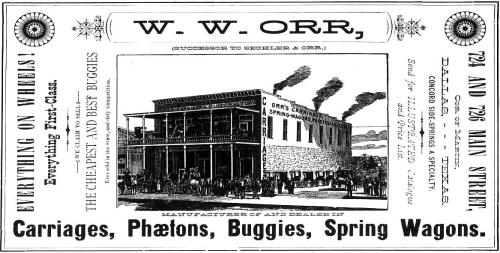
ad-orr-carriages_directory_18781878

***

Sources & Notes

Illustrated ad from the 1878 Dallas city directory.

All other ads from The Dallas Herald, as noted.

Map is a detail from a map of Dallas, circa 1900, from the Portal to Texas History, here.

Amanda Orr’s headstone and memorial statuary can be seen in several photos here; W. W.’s sad unadorned slab can be seen here.

Phætons? They sound dangerous!

*

Copyright © 2014 Paula Bosse. All Rights Reserved.


Oak Cliff Trolley — 1895

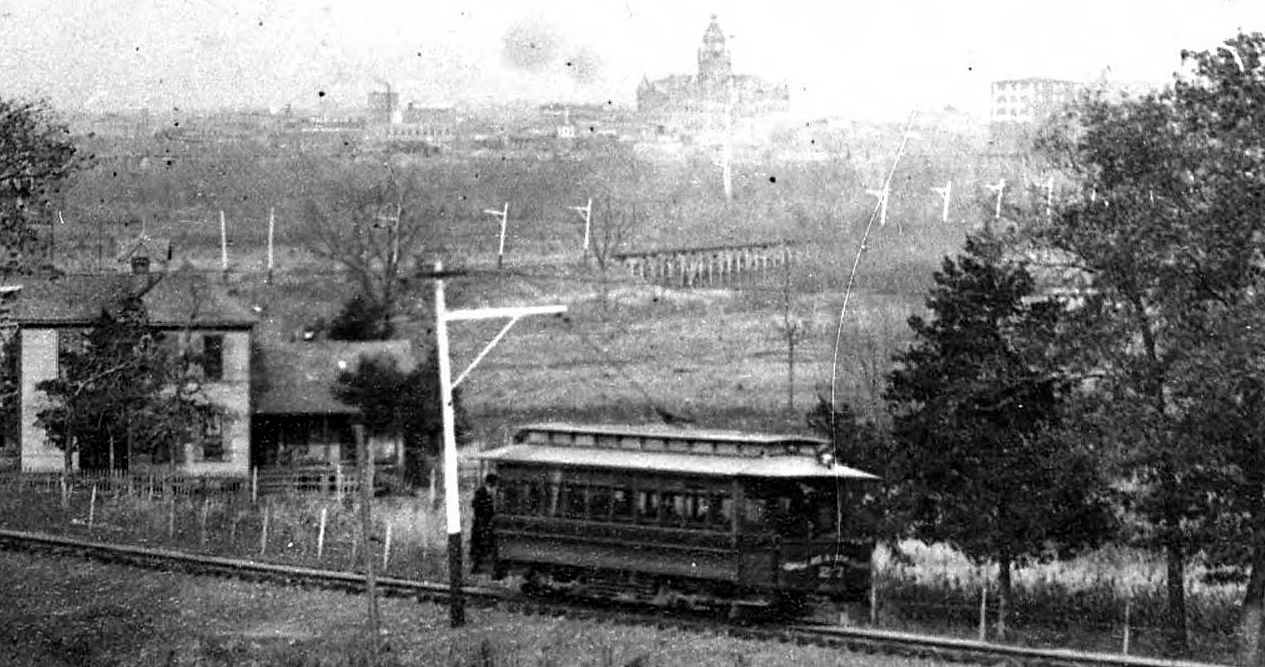
trolley_oak-cliff_stark_1895_hpl“Dallas from Oak Cliff” by Henry Stark, 1895/96 (click for larger image)

by Paula Bosse

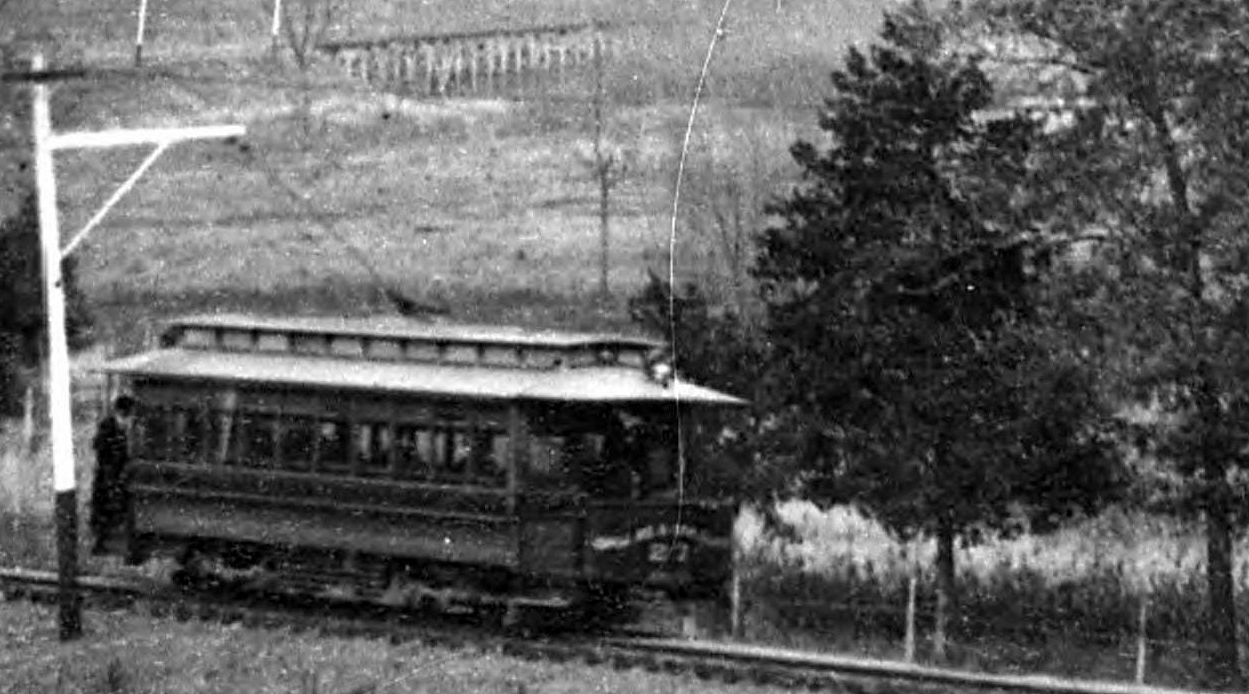
As present-day trolley service to Oak Cliff has been in the news in recent months, here’s a pastoral view of a little trolley chugging through the wilds of Oak Cliff in 1895. In the background, across the river, the still-fairly-new courthouse looms like a mirage. Below are a few details, magnified. (All images are much larger when clicked.) Enjoy!

trolley_oak-cliff_det1

trolley_oak-cliff_det2

trolley_oak-cliff_det3

trolley_oak-cliff_det4

***

Photo (labeled by the Houston Public Library as “Trolley moving through the woods”) is by Henry Stark, taken on a visit to Dallas in the winter of 1895/96; from the collection of the Houston Public Library — it can be viewed here.

For more on Henry Stark, see the previous post “Henry Stark’s ‘Bird’s Eye View of Dallas,'” here.

Other photos which I’ve “Zoomed In On the Details” can be seen here.

CLICK PHOTOS — REAL BIG.

*

Copyright © 2014 Paula Bosse. All Rights Reserved.

Lucy, Desi, Dallas — 1956

lucy-desi_fw_bellaircraftLucille Ball and Desi Arnaz and their loaner ‘copter from Bell Aircraft

by Paula Bosse

Lucille Ball and Desi Arnaz came to Dallas and Fort Worth in 1956 to promote their new movie, “Forever Darling.” Their arrival times were heavily publicized, and throngs of fans showed up to welcome them — in Dallas at Love Field, and in Fort Worth at the Western Hills Hotel. For those who might have missed their arrivals, they still had a chance to see the couple at one of the personal appearances scheduled at the theaters showing their movie (in Dallas at the Majestic on February 10th, and in Fort Worth at the Hollywood on the 11th). Crowds were large and enthusiastic, and everyone appears to have had a genuinely fun time, possibly even Lucy and Desi, whose relationship in those days was frequently a bit shaky.

Best of all was the tidbit about how the famous couple traveled from Dallas to Fort Worth: by helicopter.

Two television stars will be sailing around above Dallas skyscrapers Saturday. …Lucille Ball and Desi Arnaz will catch a helicopter ride from atop the Statler Hilton for a trip to Fort Worth. City Council officially sanctioned the ride at its Monday meeting. (Dallas Morning News, Feb. 7, 1956)

They left from the helipad atop the Statler Hilton and touched down at the helipad at the Western Hills Hotel in Fort Worth (hotels are nothing without helipads). There was some sort of cordial relationship between the Arnazes and the people at Bell Aircraft, because they availed themselves of this brand new deluxe chopper in New York as well as in DFW. When their promotional duties were finished, Lucy and Desi left Cowtown for California as guests of the president of the Santa Fe Railway — in his private car. Because that’s how you travel if you’re Hollywood royalty.

*

lucy-desi_dmn_020856-detFeb 8, 1956
*

lucy-desi_dmn_021156-photolucy-desi_dmn_021156-captionDMN, Feb. 11, 1956

(Leon Craker, I bet you had a great story about this for years after this momentous meeting.) 

*

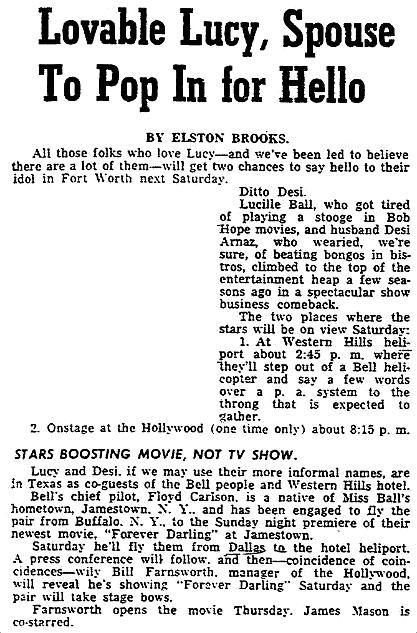
In Fort Worth, Elston Brooks (whose amusing articles I’ve really enjoyed discovering these past few months), seemed underwhelmed and a little annoyed at the prospect of  “lovable Lucy and spouse” invading the city (click articles to see larger images):

lucy-desi_FWST_020556Fort Worth Star-Telegram, Feb. 5, 1956
*

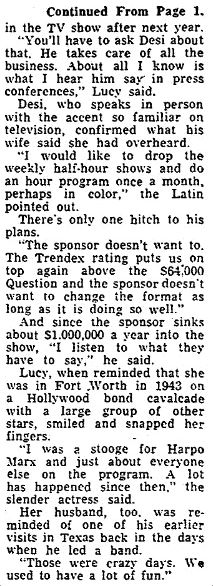
Elson Brooks may not have been very excited, but when Lucy and Desi stepped out of that helicopter, the Fort Worth crowd went wild (click text for larger image):

lucy-desi_FWST_021256-photo

lucy-desi_FWST_021256a

lucy-desi_FWST_021256bFWST, Feb. 12, 1956

*

And here they are back in Los Angeles, with Desi Jr., at the end of a busy promotional tour. Desi is proudly wearing the cowboy hat he’d been given in Fort Worth. And he looks damn good in it.

lucy-desi_dfw

***

Sources & Notes

Top photo of Lucy and Desi standing next to the 1956 Bell 47H-1 (“one of the world’s first executive helicopters”) is from the August 2012 issue of Vintage Aircraft Magazine; photo from Bell Aircraft. The article concerning this helicopter model is contained in a PDF here.

The bottom photo is from a Pinterest page, here.

UPDATE: I had originally identified the photo of Lucy and Desi with the train as having probably been taken in Fort Worth as they were about to depart for Hollywood, mainly because they’re wearing similar clothing from the FW appearance, but a rail historian noted that this photo was actually taken in California at the Los Angeles Union Passenger Terminal — he could tell because he recognized the part of the platform structure over their heads! (“I can name that song in TWO notes!”) The photo he directed me which shows the LAUPT platform (and, in fact, the same engine, two years earlier!), is here. They probably took the final photo for the Santa Fe company as thanks for providing them with transportation back home in the president’s private car. (Thanks, Skip!)

*

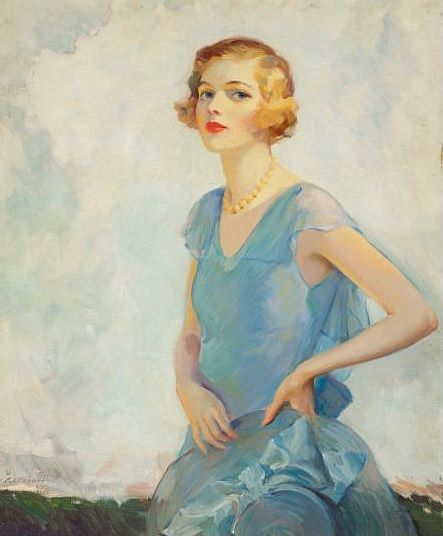
And because today is Lucille Ball’s birthday (which I know only because she shares a birthday with my aunt — happy birthday, Bettye Jo!), it seems like a good time to wheel out this strikingly beautiful portrait of Lucy, along with a wonderful photograph of her from about the same time (probably between 1928 and 1930).

lucilleballportrait

lucilleball-ca1930

*

Copyright © 2014 Paula Bosse. All Rights Reserved.


Interurban vs. Streetcar

interurban-vs-streetcarOh dear…

by Paula Bosse

I’m not sure what’s happened here, but it looks like the interurban has emerged victorious.

***

Sources & Notes

I don’t know the original source of this photo, but I came across it on the Northern Texas Traction History Group on Facebook. The electric-powered interurban car is the big red one on the left; the puny (but cute) electric-powered green streetcar is on the right. The view here is looking north on Record, from just south of Young Street, inside what would one day be called “Communications Center”: the Dallas Morning News Building is on the left, and the not-yet-built WFAA studios will later be to the immediate right (east). The long-gone Hotel Jefferson is north of Ferris Park (the hotel was catty-corner from Union Station, across Houston Street). In the distance you can see the tippy-top of the Old Red Courthouse, just above the green streetcar. Also, those now-gone smokestacks that were such a fixture on the skyline are straight ahead.

*

Copyright © 2014 Paula Bosse. All Rights Reserved.

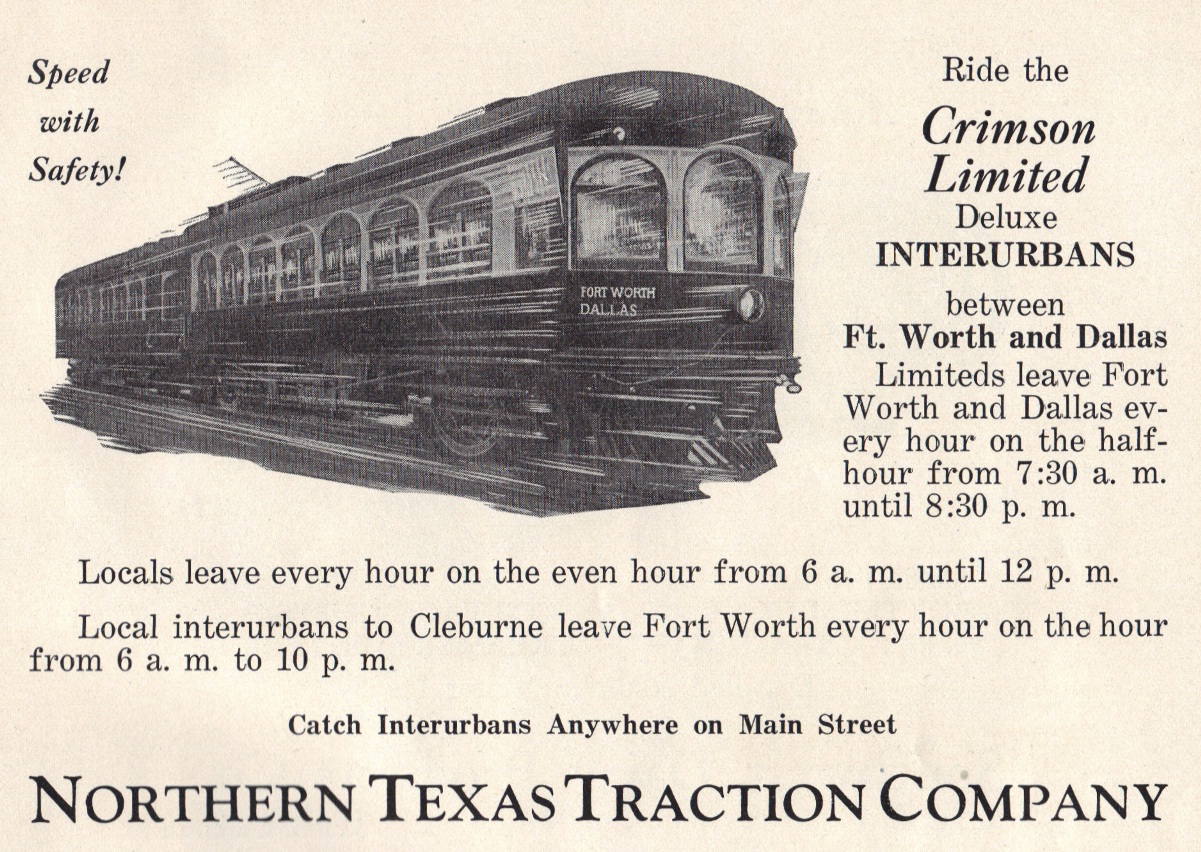
“Speed With Safety” on the Crimson Limited — 1930

crimson-ltd_interurban_1930

by Paula Bosse

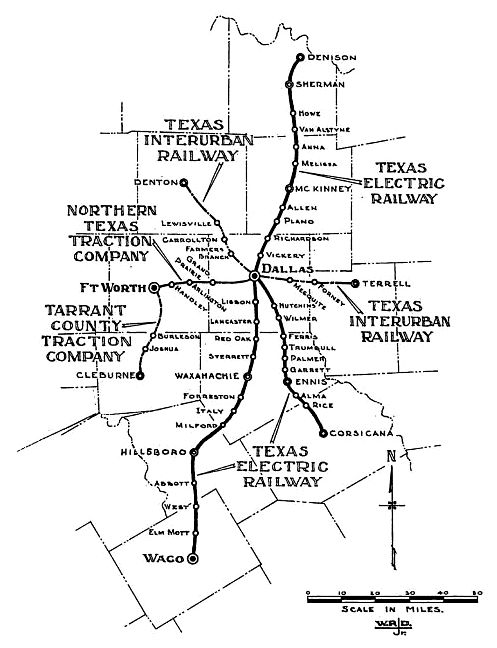
A 1930 ad for the Crimson Limited deluxe interurbans (electrified railway trains) that ran between Dallas and Fort Worth, a couple of years before the company went into receivership, put out of business by the rise of automobile culture. Even though the writing was pretty much on the walls, the Northern Texas Traction Company fought hard to reverse the decline in ridership by introducing these fancy Crimson Limited cars:

The most notable of their moves was the introduction of the Crimson Limited in October of 1924. The Crimson Limited was the name given to the upgraded interurban service to Dallas because the cars were painted bright red. The trailer car saw the most extensive upgrades. The bench seats in the rear half of the car were removed and replaced with wicker chairs. The rear doors were converted to windows giving the car a ‘parlor car’ appearance. Additional upgrades were implemented in 1927. Although the public approved of the new more luxurious trains and more modern streetcars, they continued to abandon mass transit for the automobile. (–North Texas Historic Transportation, Inc.)

Wicker chairs? Pure LUXURY!

interurban-map

***

Sources & Notes

The ad is from an old magazine I can’t cite because it’s stuck in a box in a closet somewhere.

The quote is from a page on the North Texas Historic Transportation site.

For more on this topic, check out the nice, meaty, image-filled post (which includes an ad touting the somewhat vague “Special Conveniences for Ladies”) on the Hometown by Handlebar blog, here. (Hometown by Handlebar is a really great Fort Worth history blog that might prove I was separated at birth from a twin sibling I knew nothing about!)

Not quite sure what an “interurban” is? Fret not. Wikipedia’s here to help, here.

*

Copyright © 2014 Paula Bosse. All Rights Reserved.

The Smith Brothers Can Set You Up With a Hearse … Or a Cab — 1888

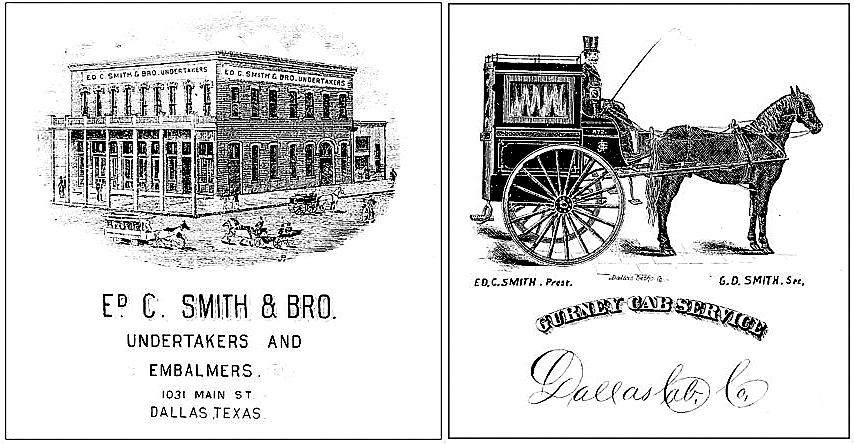
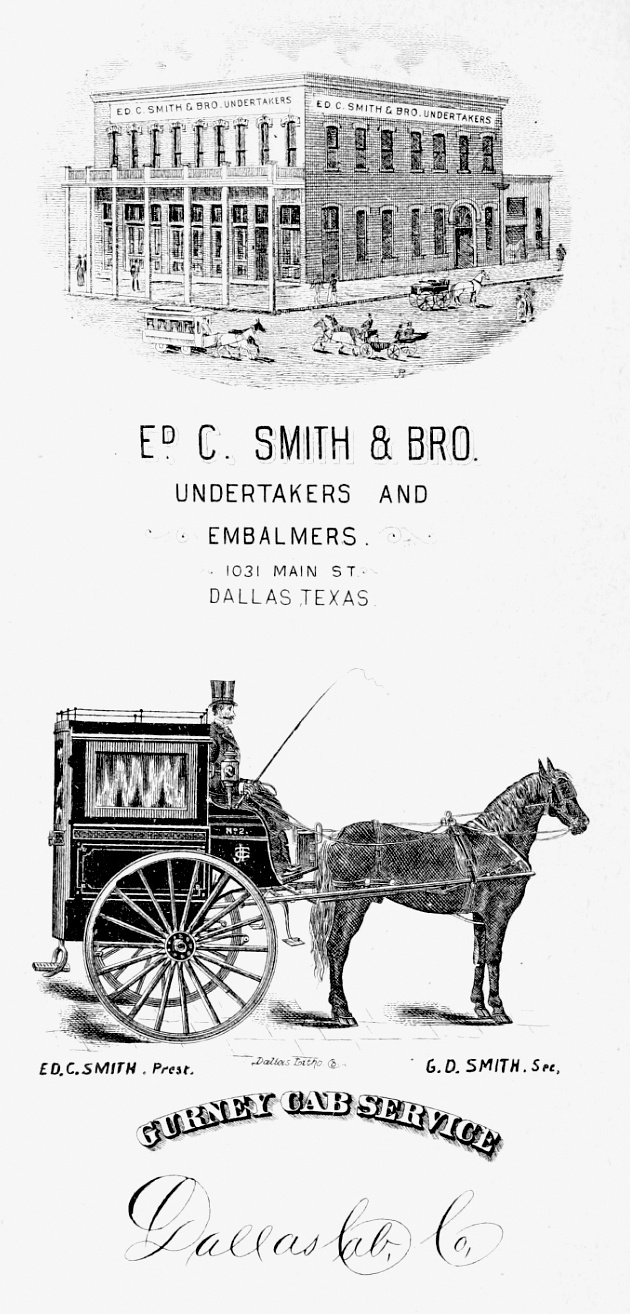
ad-dallas-cab-undertaker_imm-gd-1889Need a ride? (click for larger image)

by Paula Bosse

Need a hearse? No? Then how ’bout a cab?

Diversification is the key to success! Ed. C. and G. D. Smith — of the Ed. C. & Bro. Undertakers and Embalmers — branched out from the hum-drum world of mortuary science and entered the exciting world of transportation-for-hire (it really IS only a short jump from hearse to cab). Their Dallas Cab Co. provided the city with something brand new: Gurney cab service.

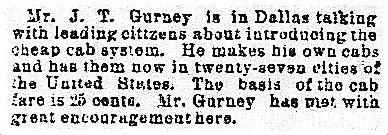
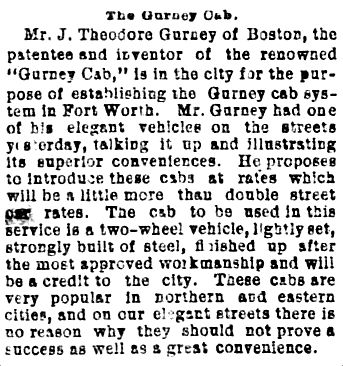
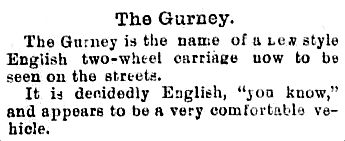
The “Gurney cab” was the invention of Bostonian J. Theodore Gurney — it was a two-wheeled, horse-drawn cab into which passengers entered through the back and, for a quarter, rode in sleek, well-appointed comfort. This new form of conveyance was an alternative to the larger, clunkier, slower “hacks.” Gurney patented his cab in 1883 and traveled around the country promoting his vehicle to large cities. He visited Dallas in March, 1888:

gurney_dmn_031888Dallas Morning News, March 18, 1888

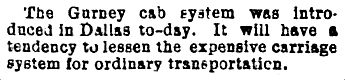
He must have been pretty persuasive, because the “Gurney cabs” went on the streets less than three weeks later:

gurney_fwdailygazette_040588Fort Worth Daily Gazette, April 5, 1888

Gurney worked his way around Texas. Next stop was Fort Worth:

gurney_fwdailygazette_041488FWDG, April 14, 1888

Then Austin:

gurney_austin-weekly-statesman_042688Austin Weekly Statesman, April 26, 1888

As to whether the more familiar hospital “gurney” (a wheeled stretcher) has any connections, some say yes and some say no (both arguments can be read here). Wouldn’t it be great if those Smith boys went into stretcher manufacturing a few years later? Cabs — stretchers — hearses: they’ve got you covered … coming and going.

***

Ads from The Immigrant’s Guide to Texas — City of Dallas, 1888. They did, in fact, appear on the same page.

ad-dallas-cab-undertaker_imm-gd_1889

An interesting article — “The Short, Contentious, History of the Gurney Cab Company in San Francisco” by Donald Anderson — can be read here.

The fare for hiring a Gurney cab was 25 cents, which according to the Inflation Calculator, was about $6.00 in today’s money.

Click top ad for larger image.

*

Copyright © 2014 Paula Bosse. All Rights Reserved.