Flashback : Dallas

A Miscellany: History, Ads, Pop Culture

Category: Vault

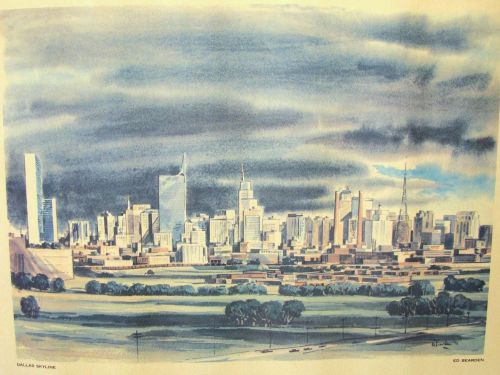
From the Vault: A Warm and Cozy Look at a 1950s Dallas Skyline

dallas-skyline_ed-bearden

by Paula Bosse

As Thanksgiving approaches, a nice cozy and nostalgic rendering of our city’s skyline seems to be in order. See this image much larger at my original post “‘Dallas Skyline’ by Ed Bearden — 1958” here.

Have a Happy Thanksgiving!

*

Copyright © 2016 Paula Bosse. All Rights Reserved.

From the Vault: Need a Cab? Hearse? — 1888

ad-dallas-cab-undertaker_imm-gd-1889

by Paula Bosse

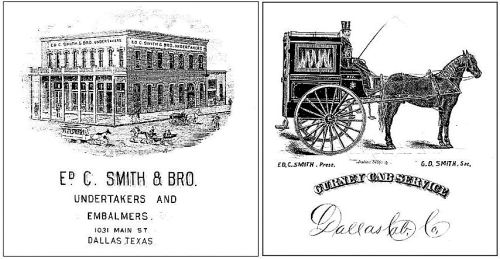
The Smith brothers knew how to diversify! They ran a Dallas undertaking firm and a cab service. More on this newfangled “gurney cab service” in the 2014 post “The Smith Brothers Can Set You Up With a Hearse … Or a Cab — 1888,” here.

*

Copyright © 2016 Paula Bosse. All Rights Reserved.

How Dallas Used to Get Election Returns

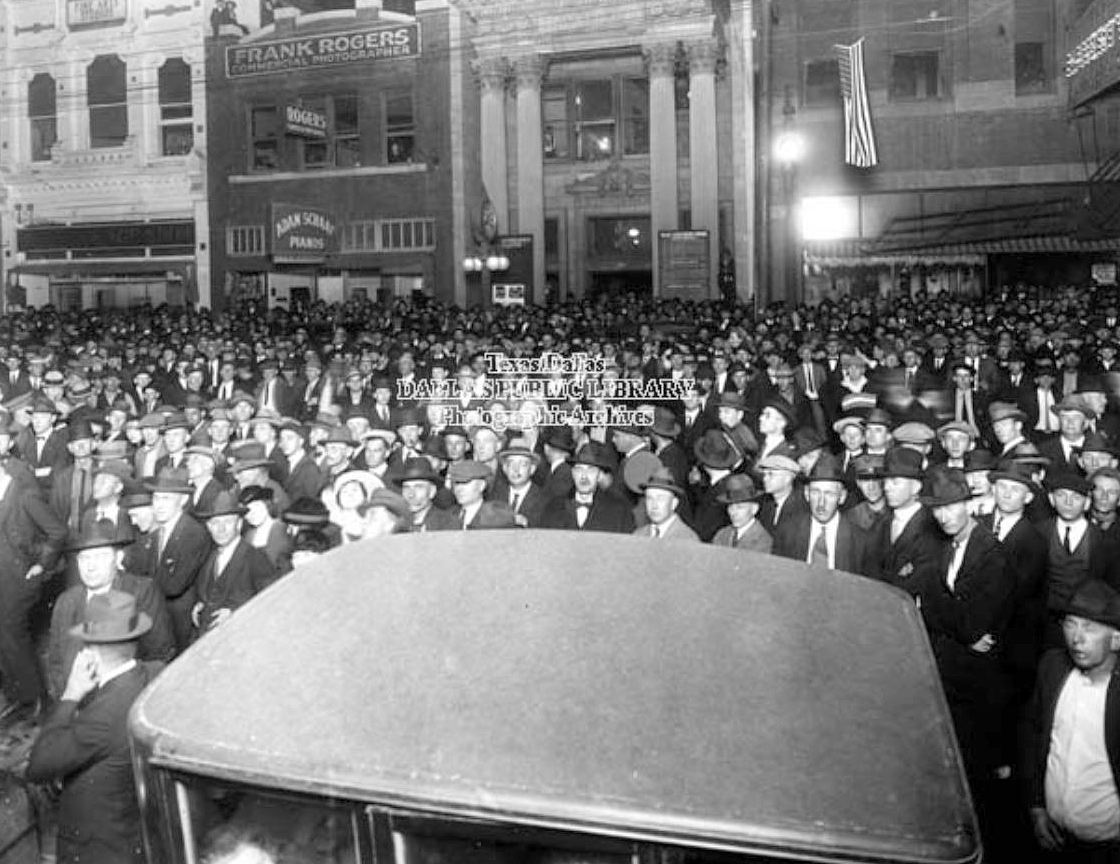
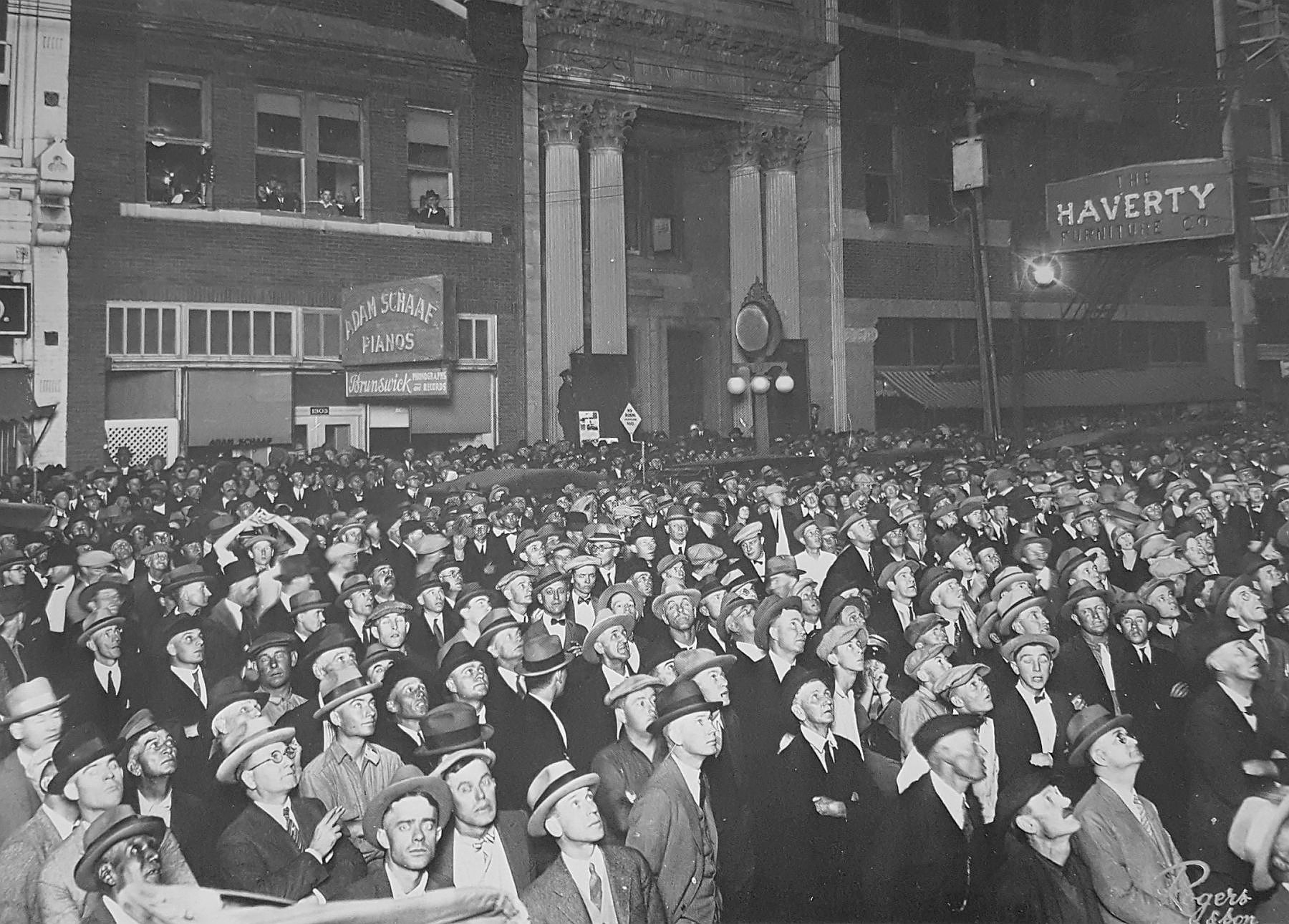
election-returns_1928_frank-rogers_dplA Dallas crowd waits for returns, in the middle of Elm Street…

by Paula Bosse

I think there’s some sort of political thing going on? Like most every other human being in the United States (…and beyond), I’m pretty sick of hearing about politics and politicians. Like nauseous sick. So why not write about elections! Below are some fun facts about how Dallasites used to get their election returns — share them with your fellow voters while standing in line at the polling station. They will think you are either very interesting or very annoying.

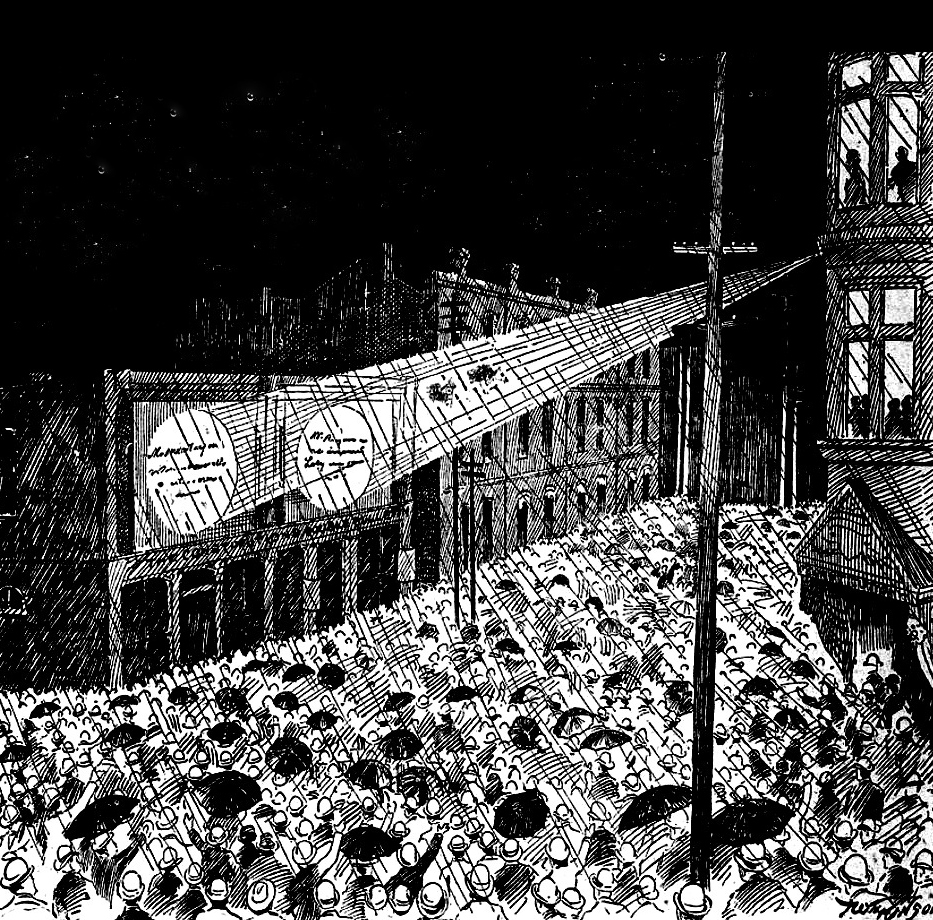
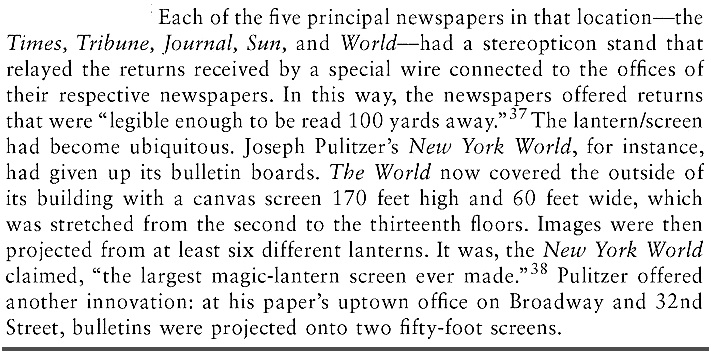
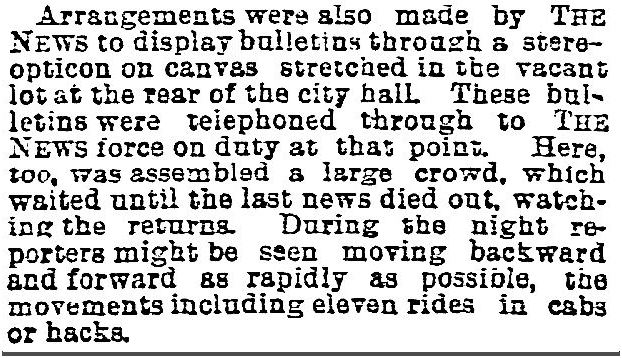
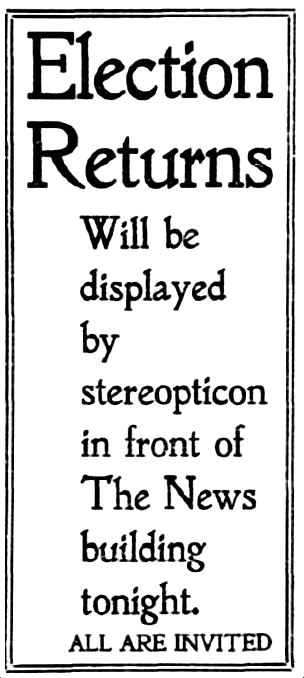
Forget the issues and the personalities, let’s look at election results: how were they passed along to the public in the days before radio and television? Other than newspapers (the primary source of all things informational), there was a time when results were “bulletined” by throwing images onto stretched canvases or even onto the sides of  buildings by a powerful stereopticon or “magic lantern.” These results were continuously updated as manual counts in local races were tabulated; farther-flung races were updated via tallies received by telegraph or telephone. Crowds gathered in front of buildings — usually newspaper offices — to watch the returns. Some accounts have this form of information dissemination beginning in the 1860s (see an illustration from 1872 here), with the practice becoming more widespread by the 1880s and more technologically advanced by the 1890s.

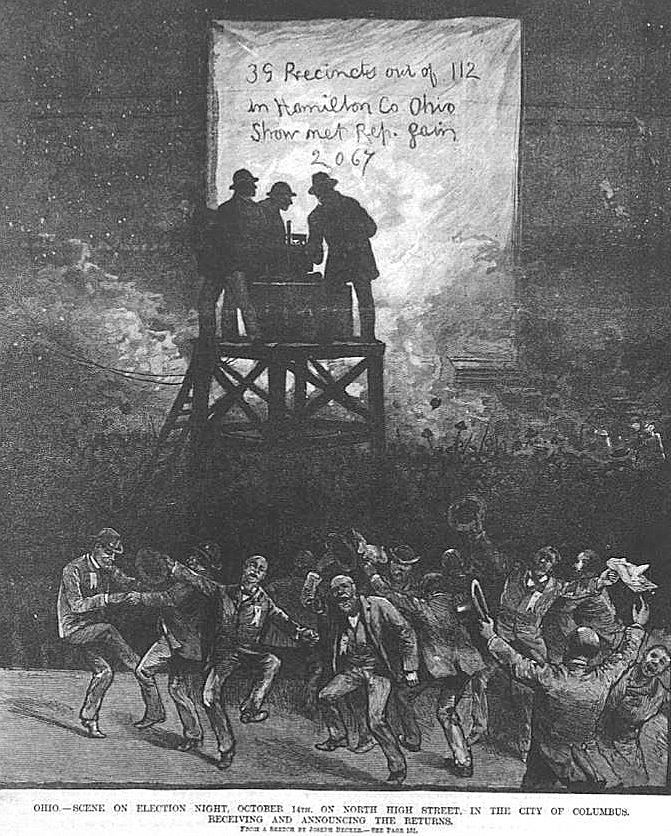
Below, an illustration showing jubilant crowds watching congressional returns in Columbus, Ohio in 1884.

ohio_election-results_1884
Columbus, Ohio, 1884

Things had been refined by 1896, as this illustration from the Atlanta Constitution shows. The caption: “Flashing out the returns in front of the Constitution office. Thousands of people gathered in front of the Constitution Building last night and watched the returns come in.” In the rain! That’s dedication.

atlanta-1896_twitter
Atlanta, Georgia, 1896

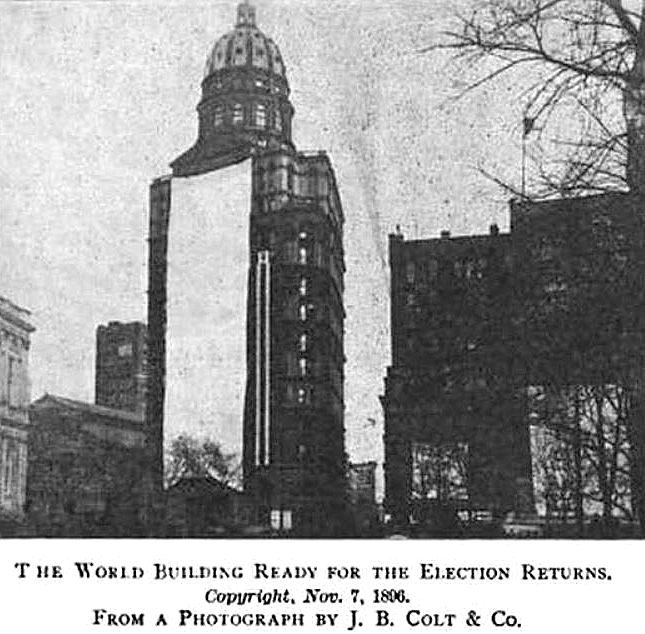
Also in 1896 — things got crazy in New York, with a ridiculously large “screen” hung from a very tall building.

projections_electrical-engineer_mag_111196_photo
NYC, 1896

magic-lantern_nyc_films-and-american-presidency
from “Film and the American Presidency”

The first mention I found in The Dallas Morning News about projecting election results before a large crowd was in 1891. Not only did the newspaper have a large bulletin board (maybe like a large chalk board?), they also used the stereopticon. (The full article about the results of the 1891 election can be read here.) (All pictures and clippings are larger when clicked.)

1891_election-returns_dmn_040891
Dallas Morning News, April 8, 1891

The magic lantern was called back into service the next year (read an entertaining DMN article about an 1892 election here in which the crowd huddled in front of the screen watching the returns despite rain and open saloons) — in fact, this “electric bulletin board” was so popular it was used for at least 40 more years.

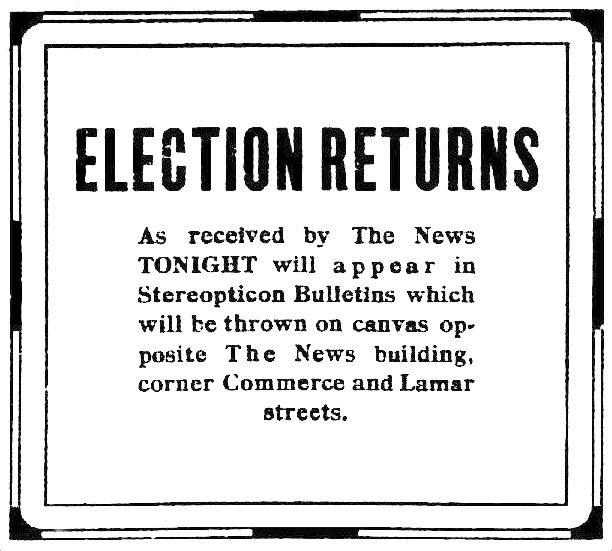
In 1896, interest was really intense — an unbelievable 94% of Dallas’ registered voters had turned out to cast ballots. (It took four days to tally the votes!) A huge crowd gathered around the News building at Commerce and Lamar to watch the bulletins which were “flashed by means of a powerful stereopticon on a large canvas screen stretched across the street” (“Republicans Doubled Votes in ’96” by Sam Acheson, DMN, Jan. 1, 1968).

By 1900 this stereopticon thing was getting to be standard operating procedure.

1900_election-result_dmn_110600
DMN, Nov. 6, 1900

1908_election-result_dmn_050208
DMN, May 2, 1908

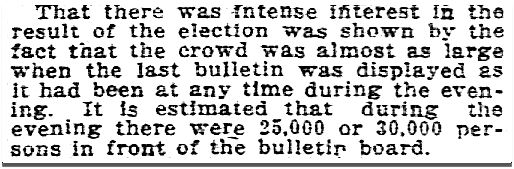
By 1911, “25,000 or 30,000 persons” were showing up to watch the returns.

1911_25-or30000-people_dmn_072311
DMN, July 23, 1911

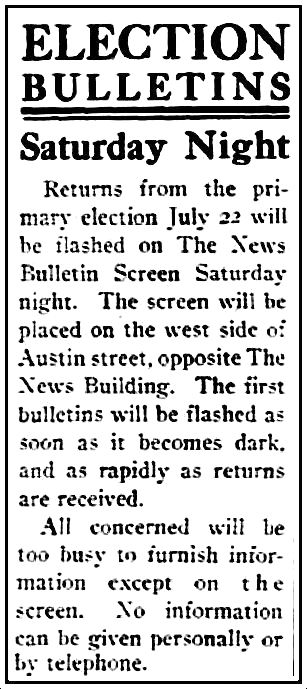
I guess people used to just phone the papers after elections to ask about the results. The News would rather you didn’t, thanks.

1916_election-result_dmn_072116
DMN, July 21, 1916

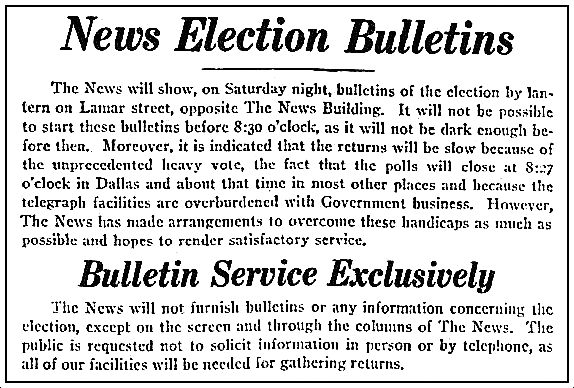
1918 was an interesting year for a few reasons: (1) WWI was underway, (2) the polls opened — for some reason — at 9:27 AM and closed at 8:27 PM (?), and … (3) it was the first election in Dallas in which women were allowed to vote. There was suddenly a huge number of registered voters to have to deal with. Newspaper reports showed registration of women outnumbering men in several precincts. The large number of new voters meant that votes began to be counted “one hour after the polls are opened and will continue until the work is concluded” (DMN, July 19, 1918). Which seems odd. Also, women were encouraged to vote early in the day so as to avoid long lines and men were instructed to watch their behavior if there were women present.

1918_election-result_dmn_072618
DMN, July 26, 1918

It’s surprising that the use of projectors to display election returns was used as late as 1930, well after the advent of radio. Apparently the Texas Election Bureau and Press Association had rules forbidding radio stations from announcing election results over the air until they had been printed in the newspaper — they were, however, allowed to give “relative standings” to their audiences at fifteen-minute intervals (DMN, July 27, 1930).

Seems like the newspapers held all the power (probably not a huge problem for radio stations since most of them were owned by the newspapers, and, of course, no problem at all for the papers who printed oodles of “extra” editions). By 1930, though, crowds had gotten so large downtown that they were diverting people to Fair Park where they could sit and enjoy the cool breezes as they listened to see if their candidates had won or lost. (“Sitting” seems to be the operative word here.) But soon radio would wrest the “instant news bulletin” power away from the newspapers, and these quaint magic lantern watching-parties would be unnecessary. Eventually people wouldn’t know they’d ever even existed.

Fast-forward to today. I can’t even imagine trekking downtown to watch election results come in at a snail’s pace, magic lantern or not. It’s the 21st century, man, and I’ll be plopped in front of my TV, channel-hopping, stress-eating and stress-drinking, and wondering what friendly country I might consider “visiting” for a while.

***

Sources & Notes

Top photo shows crowds of Dallasites watching election returns. This Frank Rogers photo — a Dallas Public Library photo reproduced in A. C. Greene’s book Dallas, The Deciding Years — shows a crowd (which seems to be devoid of women) watching election returns in the 1300 block of Elm Street. Below is another Rogers photo from the DPL, undated, but probably taken in 1922:

election-returns_elm-street_dpl_frank-rogers

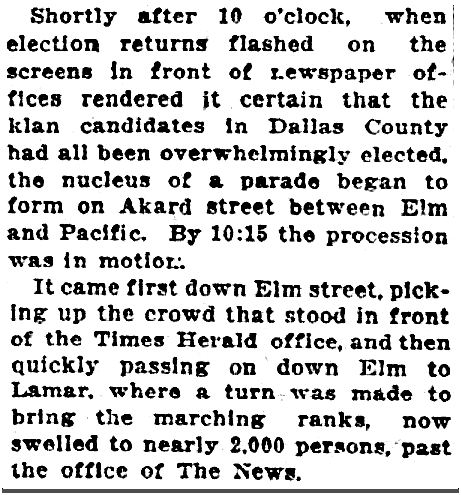
It’s convenient that Rogers was able to include his studio in the background! The photograph is undated, but Frank Rogers and the Adam Schaaf Piano Store shared a building at 1303 Elm only between 1922 and 1923 (the top photo is dated 1928 by the DPL, but neither Rogers nor the piano store were in that location after about 1925). The building to the right is the Dallas Times Herald Building (with the pillars, at 1305 Elm), and it would make sense that the crowd was looking toward the other side of the street as results were being updated and projected from the Times Herald. In fact, this may have been the night that the KKK famously marched through downtown, past the large crowds gathered in front of both the Dallas Times Herald and Dallas Morning News offices, to celebrate that their candidates had won … and had won big.

klan-march_dmn_082722
DMN, Aug. 27, 1922

The illustration showing Ohio returns in Columbus being projected on the night of Oct. 14, 1884 is from Frank Leslie’s Weekly (this illustration was featured in the book Politicking and Emergent Media: U.S. Presidential Elections of the 1890s by Charles Musser).

The 1896 illustration is from the Atlanta Constitution, found on Twitter.

The 1896 photograph of the World Building in New York is from the trade journal The Electrical Engineer, Nov. 11, 1896. The paragraph below it is from the book Film and the American Presidency by Jeff Menne and Christian B. Long.

Further reading from the archives of The Dallas Morning News (regarding the July 26, 1930 election):

  • “News and Journal To Give Two Election Count Parties” (DMN, July 25, 1930) — an announcement to voters where they could get the “flashed” returns of the next day’s voting (in front of the News building “as usual,” and at Fair Park “where results will also be thrown on a screen at the moving picture booth near the grand stand”
  • “Fates of Favorites Watched on News and Journal Screens” (DMN, July 27, 1930) — two photos showing crowds at Commerce and Lamar and at Fair Park watching the returns

Click pictures and clippings to see larger images.

*

Copyright © 2016 Paula Bosse. All Rights Reserved.

A Few Photo Additions to Past Posts — #3

union-depot_flickr_coltera

by Paula Bosse

Time once again to add photos I’ve recently come across to previous posts. Stuff’s starting to pile up!

*

Above, a postcard photo of the old Union Depot which once stood on the edge of Deep Ellum, at Pacific and Central. I’m adding it to “The Old Union Depot in East Dallas: 1897-1935.” (Source: Flickr, here.)

*

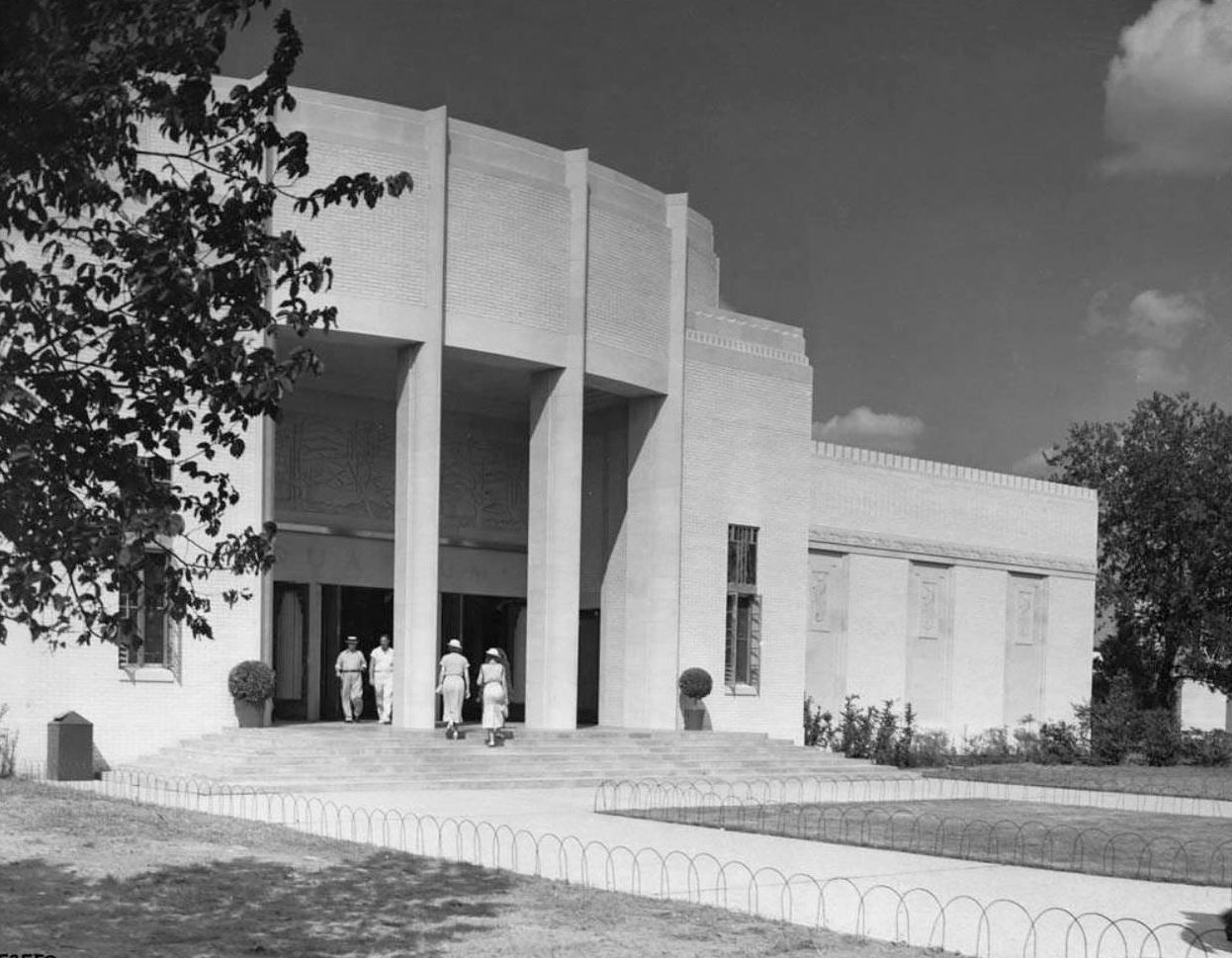
This 1936 photo of the new aquarium at the Texas Centennial has been added to a post I really enjoyed writing, “The Dallas Aquarium: The Building Emblazoned With Seahorses — 1936.” (Source: Ryerson & Burnham Archives, Art Institute of Chicago, here.)

aquarium_art-institute-of-chicago_1936

*

Another Centennial photo is this one, showing the second Alamo replica which stood in Fair Park from 1936 to 1951 (the first one lasted longer, from 1909 to 1935). Personally, I never knew about either replica until I wrote the post “Remember the Alamo! … In Fair Park?” (Source: Ryerson & Burnham Archives, Art Institute of Chicago, here.)

alamo_art-institute-of-chicago_1936

*

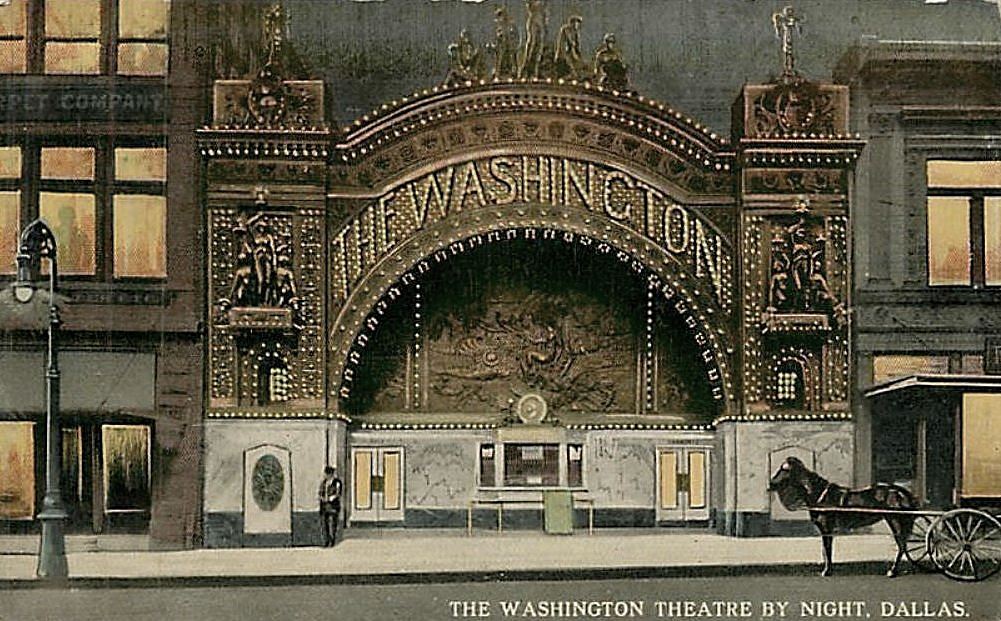
This great postcard of the Washington Theater (“at night”) has been added to “The Washington Theater — Dallas’ First Movie Palace.” (Source: eBay.)

washington-theatre_ebay

*

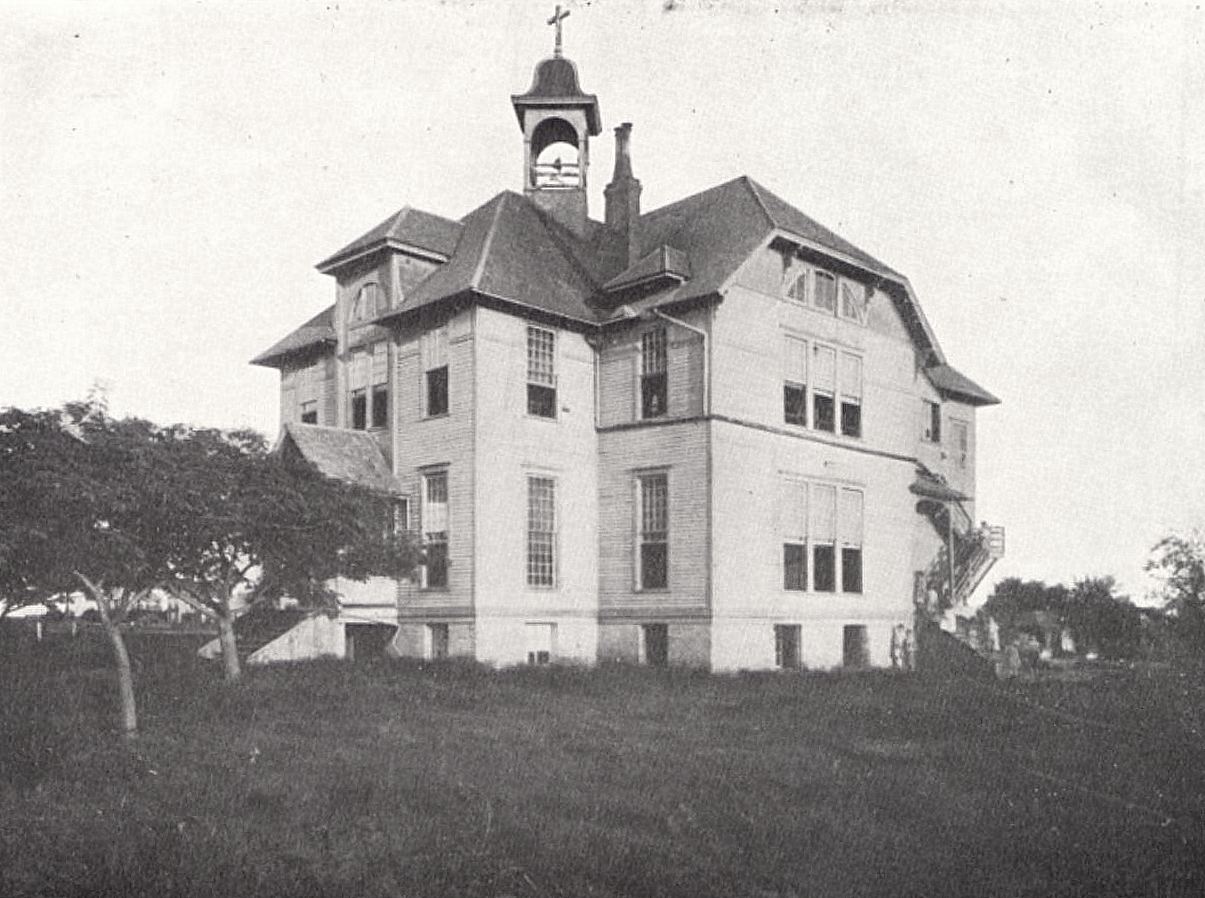
This undated photo of the St. Joseph orphanage in Oak Cliff has been added to “The St. Joseph Orphanage — 1891.” (Source: Catholic Diocese of Dallas.)

st-josephs-orphanage_catholic-charities-of-dallas

*

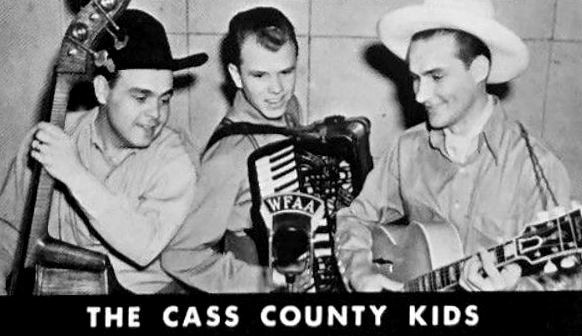
This photo of the Cass County Boys (featuring the ever-fetching Jerry Scoggins on the right) has been added to “Jerry Scoggins, From WFAA Staff Musician to Pop Culture Icon.” Scoggins is the man who sang the Beverly Hillbillies theme song (which might now be stuck in your head for the rest of the day…). (Source: eBay.)

cass-county-kids_wfaa-postcard_det_ebay

*

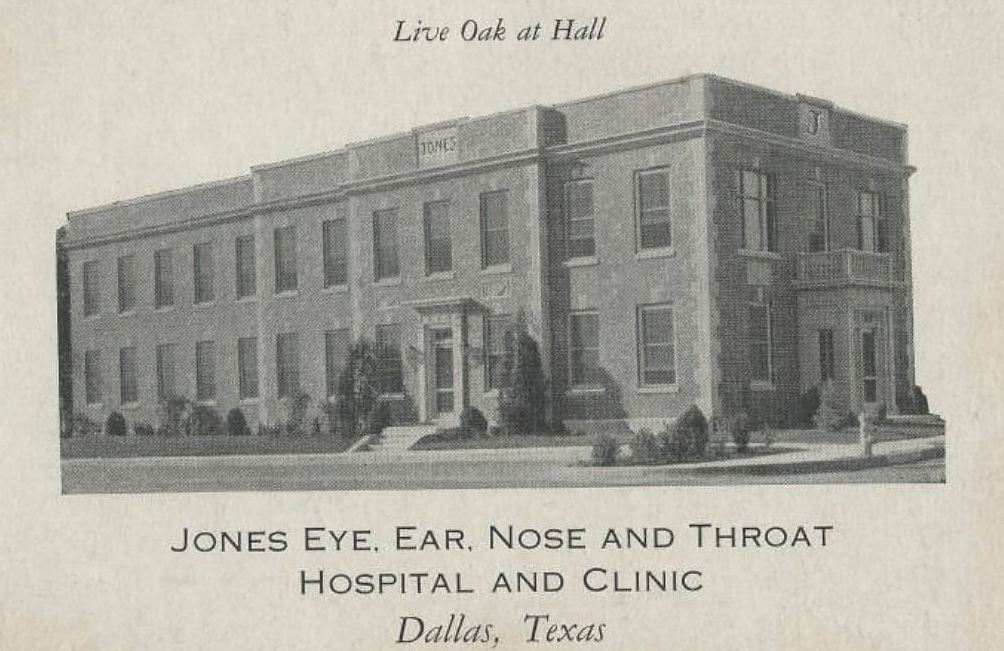
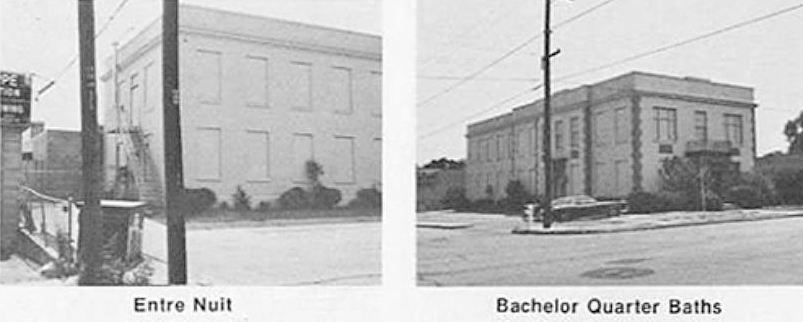
I saw this postcard for the Jones Eye, Ear, Nose and Throat Hospital and Clinic the other day. The only reason this jumped out at me was because I had researched the building a bit when I wrote about gay clubs in the ’70s for CentralTrack.com (Hidden in Plain Sight: A Photo History of Dallas’ Gay Bars of the 1970s”). This non-descript, institutional-looking building started out life in 1928 as a fancy clinic at Live Oak and Hall, then became a gay bathhouse and bar (Bachelors Quarters and Entre Nuit), and it is now home to a CPA firm. (If those walls could talk….) I can’t update the Central Track post, so I thought I’d update it here. (Source: top image from the always amazing “Coltera” on Flickr; bottom photos from a 1975 issue of the gay travel magazine Ciao! More of these photos can be seen at the bottom of the Central Track article linked above.)

jones-clinic_bachelor-quarters_gay-bath-house_flickr_coltera

jones-clinic_gay-bar-bathhouse_1975

*

And, lastly, not a photo update, but I’ve expanded the “All About Me, Me, Me” page, here. I’ve added more words. And a link to me talking with Justin Martin of KERA radio last year.

***

Those pictures are big. Click ’em!

*

Copyright © 2016 Paula Bosse. All Rights Reserved.


Zap Those Extra Pounds Away in Mrs. Rodgers’ Electric Chair — 1921

ergotherapy_jewish-monitor_090921_detThrowing the switch in 3-2-1… (click for larger image)

by Paula Bosse

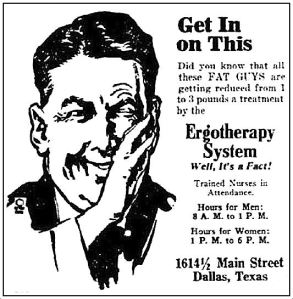
While looking for something completely unrelated (which is always the best way to find unexpected things), I came across this full-page ad which appeared in the Sept. 9, 1921 edition of The Jewish Monitor (click to see a larger image):
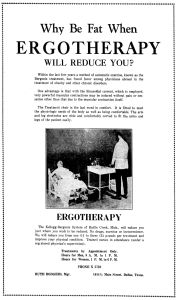
ergotherapy_jewish-monitor_090921

Why Be Fat When
E R G O T H E R A P Y
WILL REDUCE YOU?

Within the last few years a method of automatic exercise, known as the Bergonie treatment, has found favor among physicians abroad in the treatment of obesity and other chronic disorders.

One advantage is that with the Sinusoidal current, which is employed, very powerful muscular contractions may be induced without pain or sensation other than that due to the muscular contraction itself.

The Treatment chair is the last word in comfort. It is fitted to meet the physiologic needs of the body as well as being comfortable. The arm and leg electrodes are wide and comfortably curved to fit the arms and legs of the patient easily. 

ERGOTHERAPY

The Kellogg-Bergonie System of Battle Creek, Mich., will reduce you just where you wish to be reduced. No drugs, exercise or inconvenience. We will reduce you from one (1) to three (3) pounds per treatment and improve your physical condition. Trained nurses in attendance (under a registered physician’s supervision).

Treatments by Appointment Only

Hours for Men, 8 A.M. to 1 P.M.
Hours for Women, 1 P.M. to 6 P.M.
Phone X 5759
Ruth Rodgers, Mgr.
1614 1/2 Main Street, Dallas, Texas.

*

“The arm and leg electrodes are wide and comfortably curved” — there’s a line one doesn’t often encounter in an ad!

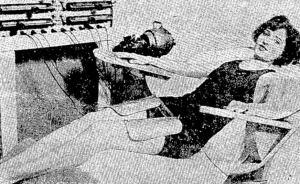
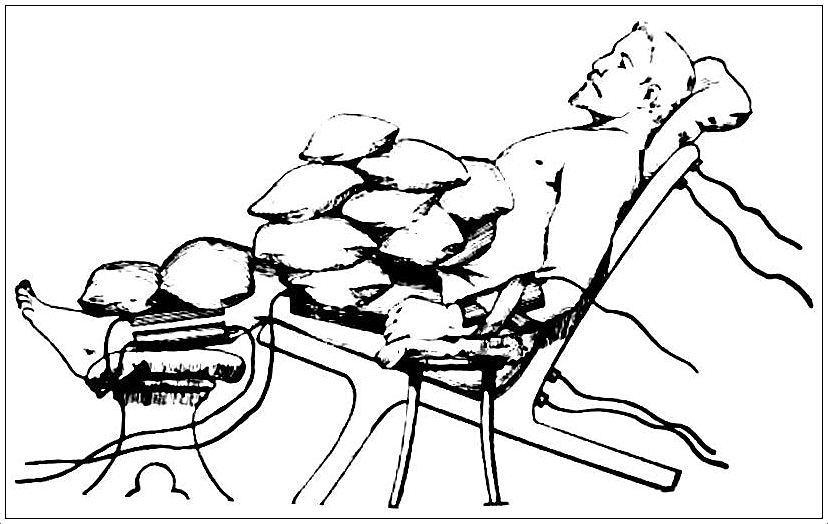
So what was this treatment of obesity that required “no drugs, exercise or inconvenience”? Well, basically, it was a low-voltage electric chair in which the naked, smock-draped “patient” reclined on wet towels and was covered with sandbags (which weighed up to 100 pounds). Electrodes were attached to the arms, legs, and abdomen. When the switch was flipped, electrically-provoked exercise began, and electric current caused muscular contractions (up to 100 a minute) without fatigue to the “exerciser.” All sorts of physiologic things were happening during these sessions, including a whole bunch of sweating. Patients would lose from 1 to 3 pounds during their time in the chair, hose themselves down and walk away refreshed.

Jean Albard Bergonié (1857-1925) was a French doctor/researcher/inventor who specialized in radiology in the treatment of cancer, and this odd electric chair was something of a departure from his oncology studies. It was used to treat a variety of ailments and conditions such as obesity, heart conditions, diabetes, “suppressed uric acid elimination,” and, later shell-shock. Professor Bergonié died in 1925 as the result of prolonged exposure to radium in his research to find a cure for cancer (in the years before his death, he had lost an arm and fingers to continual X-ray exposure). The Institut Bergonié continues in Bordeaux, France as a cancer research center.

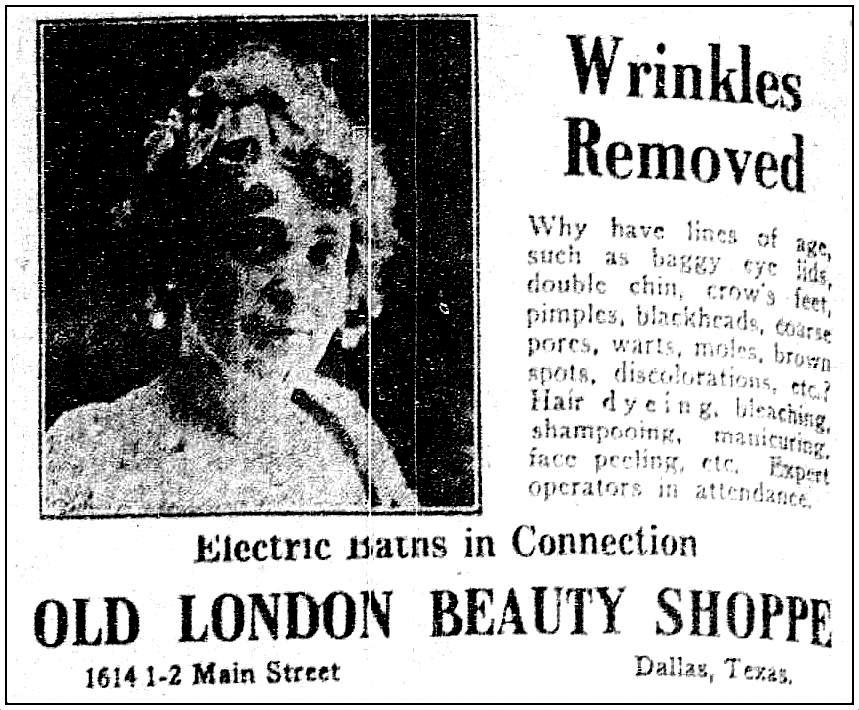
So back to the chair. By the time of the 1921 ad above, Bergonié’s “ergotherapy” had become a weight-loss feature in beauty spas and salons. The ads I found mentioning the electric chair as something corpulent men and women of means might have seen in Dallas newspapers appeared between July and October of 1921, touting the miracle chair at Mrs. Ruth Rodgers’ beauty salon, The Old London Beauty Shoppe at 1614 ½ Main Street, a couple of doors from Neiman-Marcus.
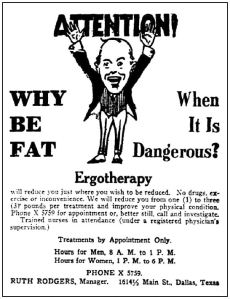
ergotherapy_071721
July, 1921

I don’t know if it didn’t catch on or whether it just wasn’t mentioned in ads, but the chair made its final appearance in an Old London Beauty Shoppe ad in early October of the same year.

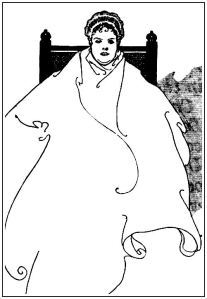
The splashiest news about Bergonié’s invention was a few months later, in early 1922, when it was revealed that the UK’s Queen Mary had availed herself of the chair in order to slim down in time for her daughter’s wedding, with Prof. Bergonié himself apparently operating the current flow. The best part of the lengthy and breathless article about the plump royal allowing herself to lie in this electric chair as she was rather unceremoniously weighted down with royal sandbags was this sentence:

[Mrs. David Lloyd George, the wife of the British prime minister] lost no time in telling Queen Mary all she knew about Professor Bergonie, the famous French ergotherapist, and his marvelous electric chair, which is said to jar fat from the human frame with the ease and almost the rapidity of a man peeling a tangerine.

Hey, I want that!

One would assume that sort of free publicity would be a boon to spas and salons offering State-side ergotherapy — I have a feeling Mrs. Rodgers had moved on by then and was probably kicking herself for concentrating on the more mundane treatment of wrinkles and sagging skin and the administering of marcel waves (her specialty).

Below, some views of The Chair over the years (all pictures larger when clicked).
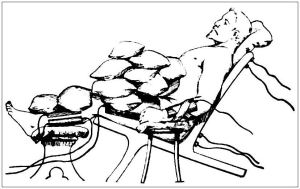
ergotherapy_1913-medical-bk_ebay

Above, a drawing from a 1913 medical book, found here.

*
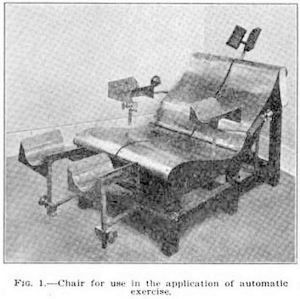
ergotherapy_medical-record_050115

From the journal Medical Record, May 1, 1915.

*
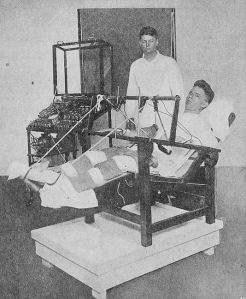
bergonie-chair_shell-shock_electrical-experimenter_feb-1919

A World War I soldier being treated for shell-shock, from The Electrical Experimenter (Feb. 1919), here (continued here).

*
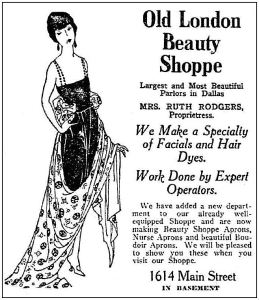
ergotherapy_012321
Jan., 1921

Ruth Rodgers was the proprietress of the Old London Beauty Shoppe (later the Old London School of Beauty Culture), which seems to have operated in Dallas from the ‘teens to at least the late-1930s. The location during the period of the ergotherapeutic chair was in the basement of 1614 Main Street.

*
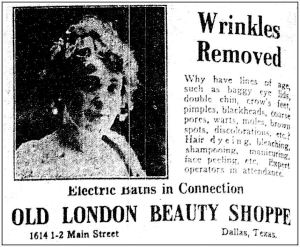
ergotherapy_dmn_081421
Aug., 1921

Mrs. Rodgers did it all. That might be her in the ad.

*
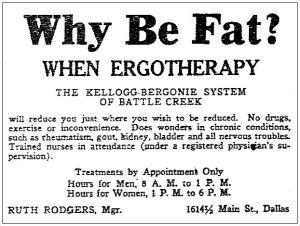
ergotherapy_081421
Aug., 1921

*

ergotherapy_082121
Aug., 1921

It’s a bit unusual seeing ads like this directed toward men.

*
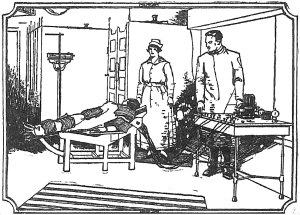
ergotherapy_san-francisco-chronicle_092521
San Francisco Chronicle, Sept. 25, 1925

*
queen-mary_1922

Above, a very Aubrey Beardsley-esque depiction of the “distressingly stout” Queen Mary, ready to undergo her course of treatments. Read the full, widely-circulated article from February, 1922, “Queen Mary’s Jarring Anti-Fat Ordeal; Yearning for a Girlish Figure to Grace Her Daughter’s Wedding, the Queen-Mother Got One by Sitting in an Electric Chair and Losing 3½ Pounds a Week,” here. (They don’t write headlines like that anymore….) The photo below, showing the control panel, was also part of the article.
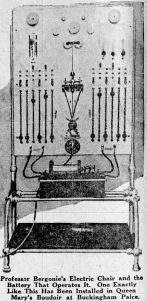
queen-mary_1922_battery

*

ergotherapy_ogden-standard-examiner_041826

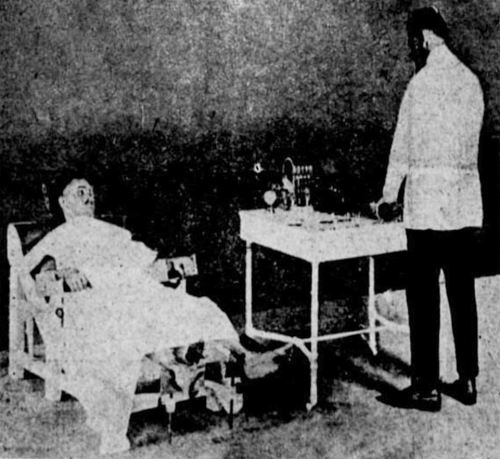
The caption for this photo (which appeared five years after the cutting-edge Ruth Rodgers was offering it to Dallas patrons): “The new French electric chair on which one reclines in comfort while form-fitting electroids [sic] direct the fat-melting current, as demonstrated by Alice Harris, a stage beauty who must keep thin.” (Ogden Standard-Examiner, April 18, 1926)

*

And, finally, to bring this back to Dallas, the location of Mrs. Rodgers’ Old London Beauty Shoppe in 1921 — 1614½ Main Street (basement) — is circled (this building was later the Everts Jewelry store before it moved across the street to the north side of Main). To the left is Neiman-Marcus, at the corner of Main and Ervay. (Full view of this postcard, from the collection of the DeGolyer Library, SMU, is here.)
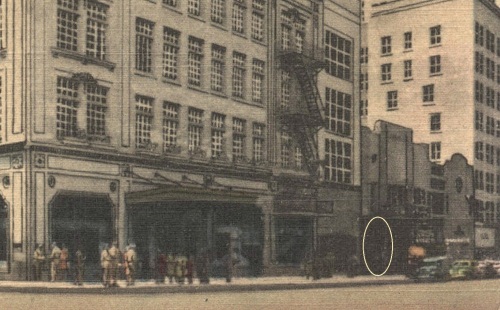
1614-main_n-m_degolyer_smu_det

***

Sources & Notes

Top photo is a detail from the ad below, which appeared in the Sept. 9, 1921 edition of The Jewish Monitor; it can be accessed via the Portal to Texas History, here.

Read a doctor’s account of just how Bergonie’s chair worked, in the article “Modern Treatment of Obesity” by Edward C. Titus (Medical Record, Jan. 24, 1920), here.

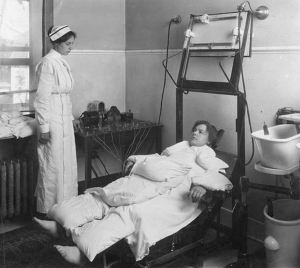
I’m not sure about the connection of this chair to J. H. Kellogg (the treatment in the ad was referred to as “The Kellogg-Bergonie System of Battle Creek, Mich.”). It appears that he and Bergonie might have developed similar chairs independently of one another and decided to form some sort of partnership — either by mutual agreement or court edict. Here is a photo of Kellogg’s “patented electrotherapy exercise bed” used in his Battle Creek sanitarium:
kellogg-chair
via Oobject (more Kellogg contraptions here)

And speaking of Mr. Kellogg, might I direct your attention to a previous Flashback Dallas post — “Electricity in Every Form — 1909” — here.

Click pictures for larger images

*

Copyright © 2016 Paula Bosse. All Rights Reserved.

Dallas Rapid Transit, Est. 1888

dallas-rapid-transit_cyclone_cook-coll_degolyer_smu-detRide the Cyclone to Fair Park… 

by Paula Bosse

The Dallas Rapid Transit Railway chugged into town in 1888, going from charter to operation in seven months. And that included laying their own track. The “dummy” steam engine (a locomotive designed to appear more like a friendly little streetcar and less like a hulking locomotive) seen above, carried passengers from the Windsor Hotel at Commerce and Austin through South Dallas (via S. Lamar and Forest Ave., now MLK Blvd.) to Fair Park. It started business just in time to ferry crowds to the State Fair. The fare was 20 cents, which seems pricey, but this might have been “surge” pricing charged only during the “Greatest Fair and Exposition in the World.” (According to the Inflation Calculator, 20¢ in 1888 would be the equivalent to more than $5 in today’s money.)

ad_dallas-rapid_dmn_101488
Dallas Morning News, Oct. 14, 1888

The new street railway was particularly appreciated by developers looking to sell land in southern Dallas, still considered a “suburb” in the 1880s. Residential streetcar service was essential to prospective builders and buyers, and as soon as the Rapid Transit line was up and running, its name was popping up in South Dallas real estate ads for additions with names like Chestnut Hill, Edgewood, and South Park.

chestnut-hill_edgewood_dmn_031689
DMN, March 16, 1889

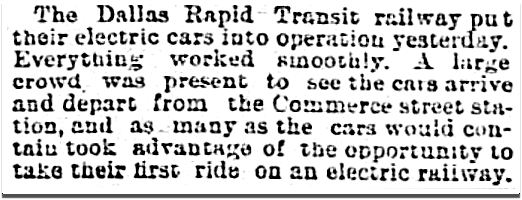
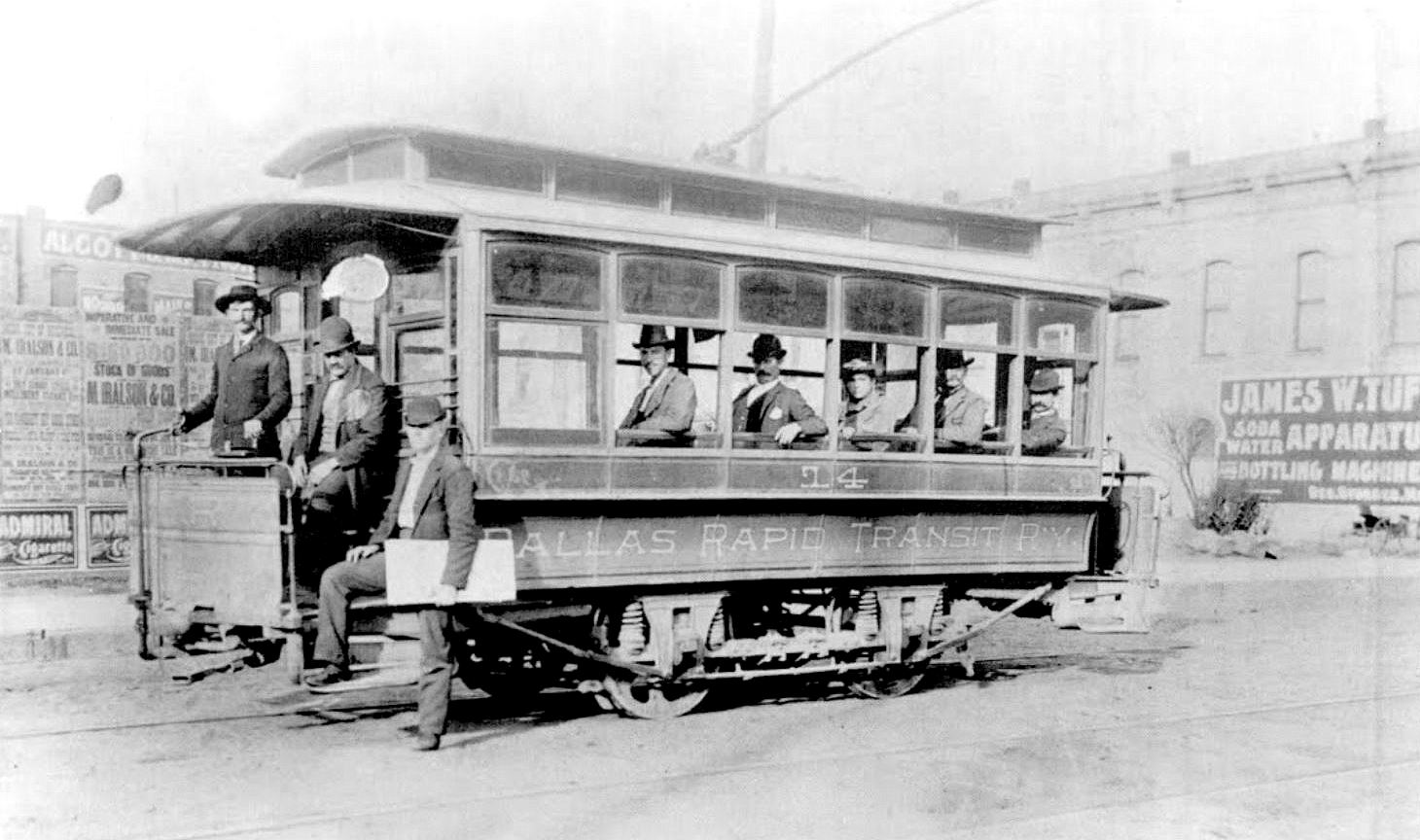
In March of 1890 — after a year and a half of steady growth — the Dallas Rapid Transit Railway went electric, tossing out their old steam-powered cars (not even 18 months old!) for brand new, ultra-modern cars powered by electricity. (For a bit of perspective, parts of the country were still relying on the really old-fashioned mule-drawn streetcars.) Dallas’ first electric-powered streetcar hit the rails on March 9, 1890.

dallas-rapid_dmn_031090_electric
DMN, March 10, 1890

Understandably, the sight of these newfangled streetcars was quite the topic of fascinated conversation. How exactly did they work, anyway? The Dallas Morning News published an article with helpful information for the Dallasites of 1890 (and 2016!). (Click to see larger image.)

dallas-rapid_dmn_032390_electric
DMN, March 23, 1890

The photo below (which appears in the great book McKinney Avenue Trolleys) is a staged publicity photo with a woman at the helm, showing that the new electric streetcar was so easy to operate that “even a woman” could do it. In tow behind the sparkling new electric streetcar was the old, past-it steam car, with its engineer racing to try to catch up with the new technology. Get with it, man, it’s 1890!

dallas-rapid-transit-railway_mckinney-ave-trolleys-bk_towing-dummySouthern Traction, April 10, 1973 (via McKinney Avenue Trolleys)

dallas-rapid-transit-railway_mckinney-ave-trolleys-bk_dplDallas Public Library photo (via McKinney Avenue Trolleys)

Initially, the track was only 4 miles long, but that had more than doubled soon after the switch to electric cars.

dallas-rapid-transit_dmn_100190
DMN, Oct. 1, 1890

Things seemed to be going well. The company was expanding, speeds were increasing, and … “No dust”!

dallas-rapid_dmn_102791
DMN, Oct. 27, 1891

But … in 1894 the company went into receivership and was sold in December of that year for $35,000.

dallas-rapid_dmn_120594
DMN, Dec. 5, 1894

It appears that the company struggled on under different owners and slightly different names through at least 1909, but instead of those twilight years being filled with reflective contemplation and bass fishing, they were spent mired in endless lawsuits.

But let’s not dwell on the sputtering end of a business — let’s look back to the beginning, when the H. K. Porter Co. of Pittsburgh, Pennsylvania was proud to show off its new light locomotive with the noiseless steam motor which was headed, full of hope and enthusiasm, for the little city that could, Dallas, Texas.

dallas-rapid-transit_cyclone_cook-coll_degolyer_smu

dallas-rapid_dmn_032288
DMN, March 22, 1888

dallas-rapid_dmn_091088
DMN, Sept. 10, 1888

**

The steam-powered Cyclone — seen at the top — went on an adventure through the streets of downtown in 1889 when, under a full head of steam, it jumped the tracks and kept on going down paved streets until it crashed into a curb on Main!

cyclone_dmn_043089
DMN, April 30, 1889

***

Sources & Notes

Image at the top (and bottom), “Dallas Rapid Transit, ‘Cyclone’ Locomotive No. 1,” from the George W. Cook Dallas/Texas Image Collection, DeGolyer Library, Southern Methodist University; more information here.

Read an interview with J. E. Henderson, president of the Dallas Transit Railway company, commenting on his new street railway (“The New Rapid Transit,” DMN, Oct. 14, 1884) here (yes, it IS difficult to read!).

The two photos of Dallas Rapid Transit electric streetcars are from the book McKinney Avenue Trolleys by Jim Cumbie, Judy Smith Hearst, and Phillip E. Cobb (Charleston: Arcadia Publishing, 2011). If you’re interested in this topic, this book seems pretty essential!

The history of early streetcars in Dallas can be read in the  pages of the WPA Dallas Guide and History here (scroll to the bottom of the page and continue to the following page).

*

Copyright © 2016 Paula Bosse. All Rights Reserved.
A Few Photo Additions to Past Posts — #2

flippen-auto_park-cities-photohistory_gallowayLooking west on Ross from Harwood (click for larger image)

by Paula Bosse

I have so much stuff crammed into overflowing digital files that it’s a bit overwhelming. Time to chip away at some of these odds and ends. Here are a few photographs that I am adding to previous posts.

The photo above shows Ross Avenue from N. Harwood. The Flippen Auto Co. and the former Conway house once stood on land now occupied by the Dallas Museum of Art. I’ve just added this to my post “The Beginning of the End of Ross Avenue’s Downtown Mansions — 1925.” (Photo from The Park Cities, A Photohistory by Diane Galloway.)

*

This view of Elm Street has been added to “Elm Street, Looking West From Griffin.” (Photo from the University of Texas at Arlington Special Collections; link here.)

elm-street_UTA

*

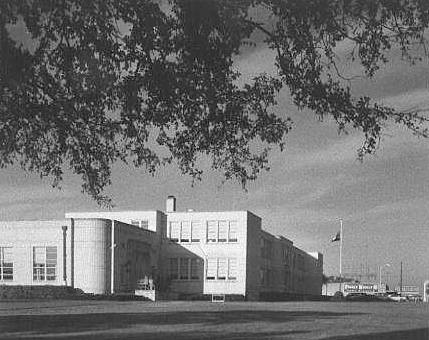
A Pinterest board maintained by the DISD allowed me to grab this not-great-but-still-better-than-I’ve-been-able-to-find-elsewhere photo of my grade school alma mater, Stonewall Jackson. My favorite hard-to-see detail is the Piggly Wiggly grocery store in the distance. This is where my family shopped. I can still remember the layout of the inside of that store at Mockingbird and Matilda. I’ve added this photo to my 2014 post “Happy 75th Anniversary, Stonewall!”

stonewall_DISD-pinterest

*

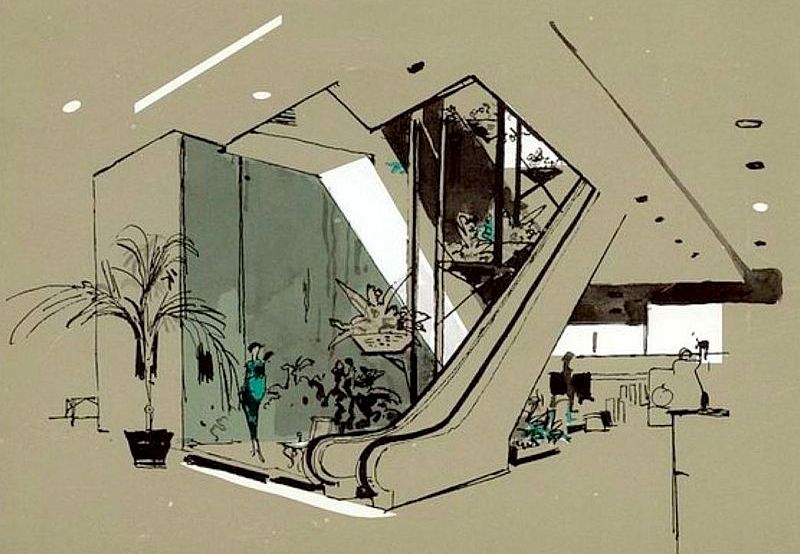
Another image I found on some random Pinterest page while looking for something else, is this Neiman-Marcus postcard, one of several promotional cards. I’ve added it to two others in the post “Luncheon at The Zodiac Room, Darling.”

n-m_escalator_pinterest

*

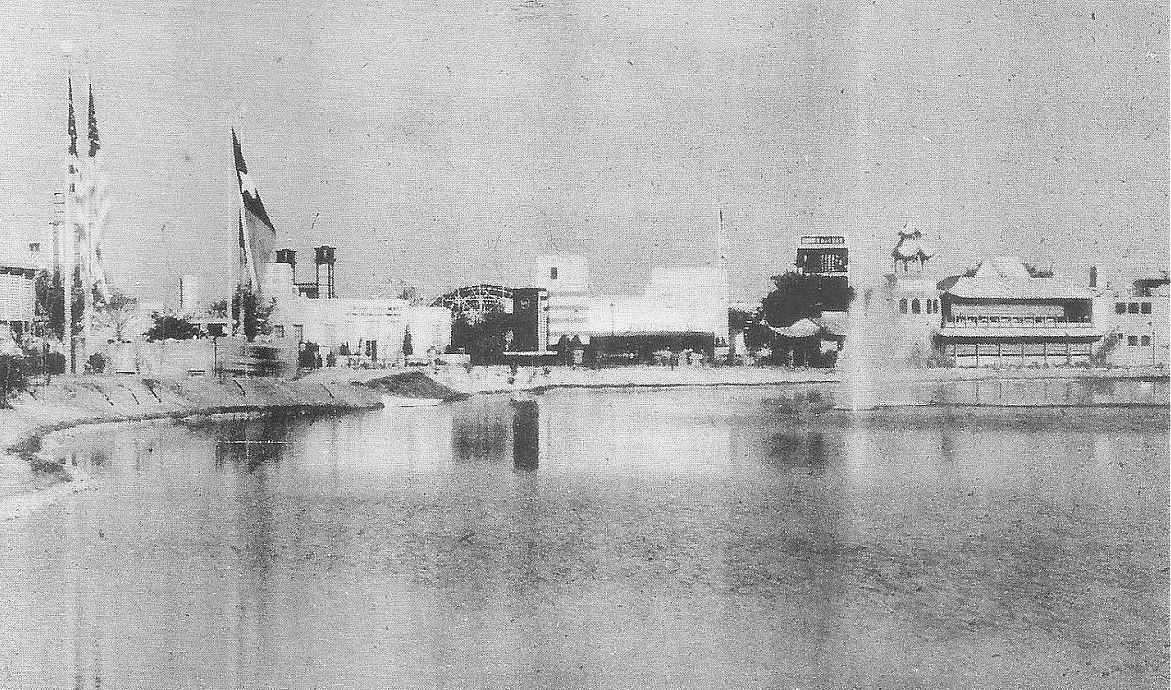
Not great resolution in this postcard photo of the huge NCR cash register at the Texas Centennial, but it’s a cool view, across the lagoon (the attendance-counting cash register is right of center, next to the pagoda). I’ve added it to “The Giant Cash Register at the Texas Centennial — 1936.”

tx-centennial_lagoon_cash-register_1936

*

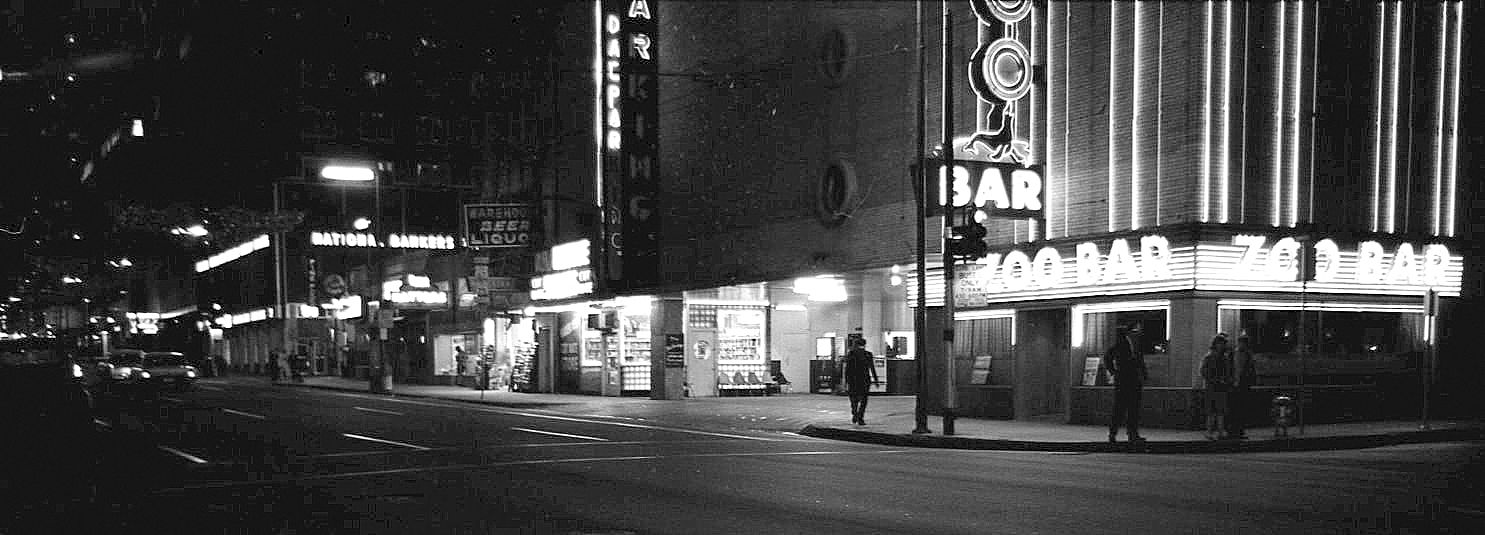
This is a fantastic photo of the somewhat notorious Zoo Bar on Commerce Street, taken by Dallas Times Herald photographer Bill Bell on November 22, 1963, at the end of an exhausting day following the Kennedy assassination (photo from the Sixth Floor Museum Collection, Portal to Texas History, here). I have added this photo to the post “Gene’s Music Bar, The Lasso Bar, and the Zoo Bar.”

zoo-bar_dth-photo_112263_sixth-floor-museum_portal_cropped

*

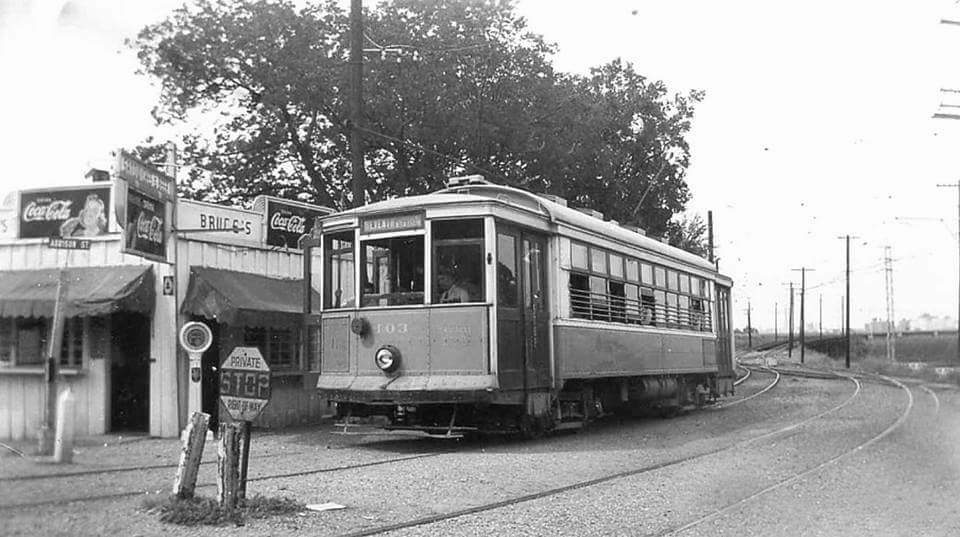
I’ve added this photo of the Oak Cliff streetcar stop at E. Jefferson Blvd. and Addison St. to the post “Waiting on a Streetcar on a Sunny Winter Day in Oak Cliff — 1946.”

oak-cliff-streetcar-stop_addison-jefferson

*

Here’s a charming little matchbook from the 1950s, advertising the Dallas Athletic Club’s golf club, which opened up near Mesquite in the ’50s (matchbook from the George W. Cook collection, DeGolyer Library, SMU, here). I’ve added it to the post “The Dallas Athletic Club Building, 1925-1981.”

dallas-athletic-club_matchbook_cook-collection_degolyer_smu_a

dallas-athletic-club_matchbook_cook-collection_degolyer_smu_b

*

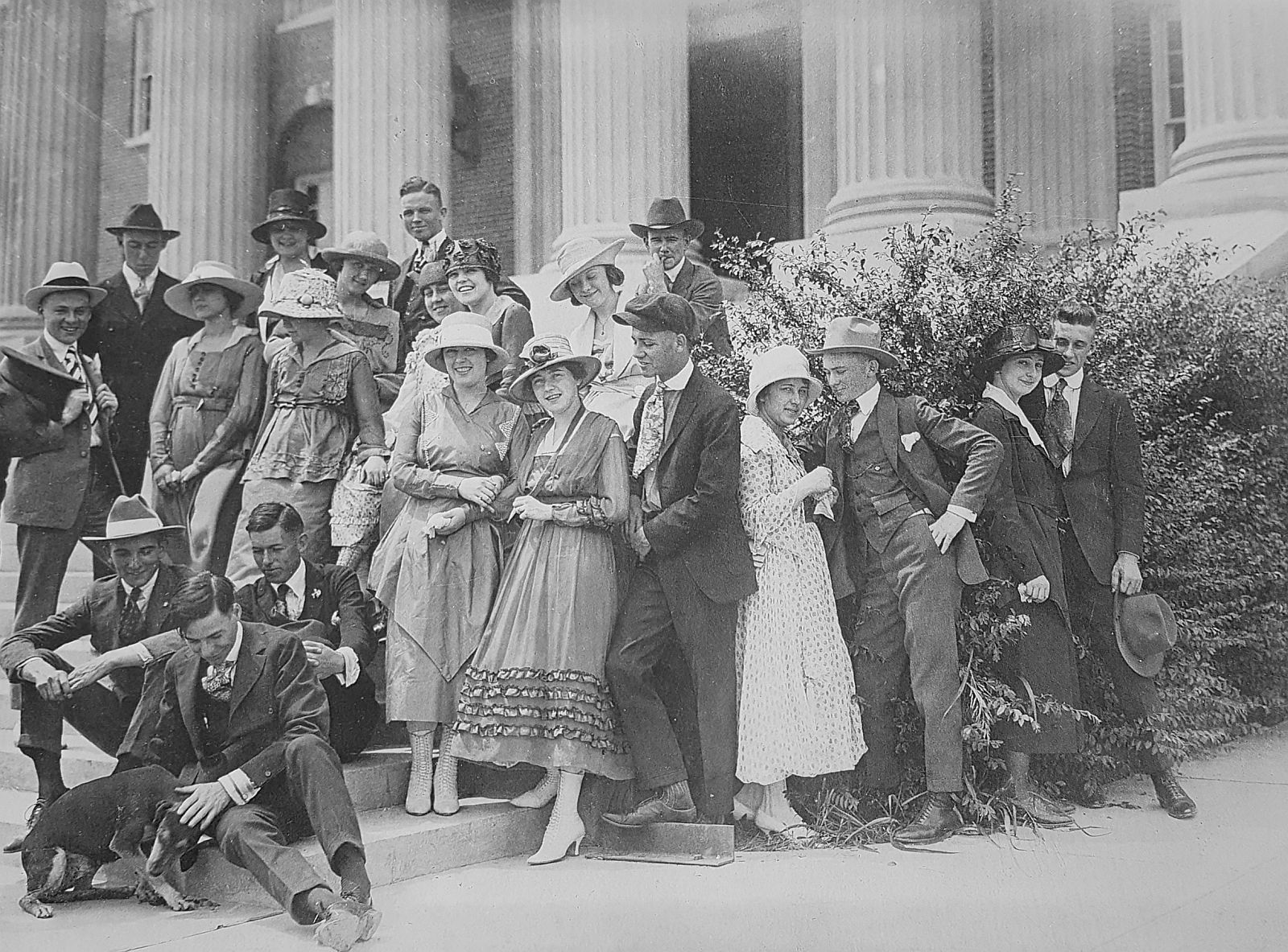
I’ve added the photo below (from Diane Galloway’s The Park Cities, A Photohistory) to the post “An Afternoon Outing with SMU Frat Boys and Their Dates — 1917.” I’m not sure why this group of young people was photographed so extensively that day, but I really love this series of photos.

smu_group-date_park-cities-photohistory_galloway

*

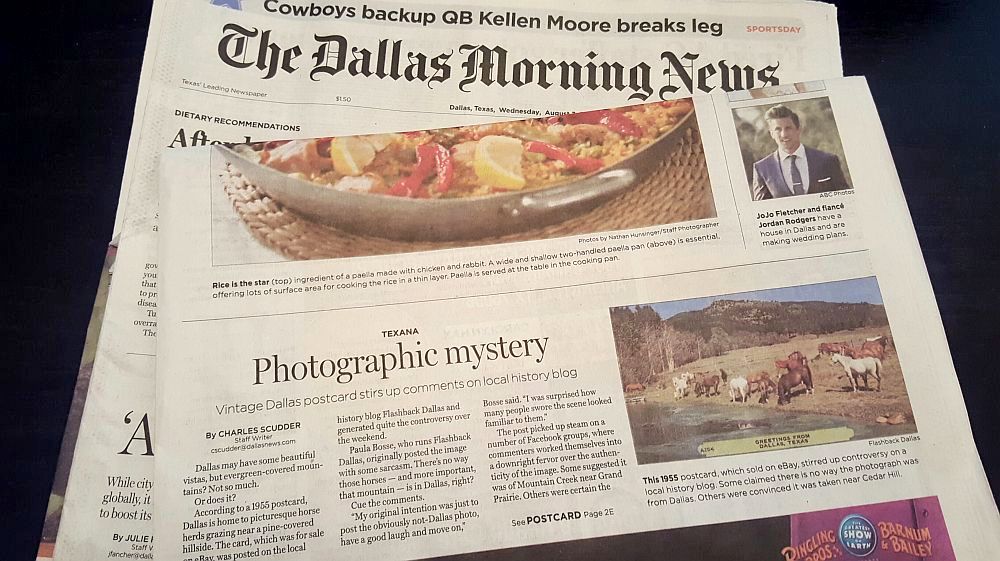
And, lastly, I’ve added this photo to a post from a just a few weeks ago — “‘Greetings From Dallas, Texas’ — 1955.”  This was one of those strange posts that ended up taking on a life of it own across the internet, with people arguing vehemently for and against whether the photograph on a postcard was actually taken anywhere near Dallas. Somehow The Dallas  Morning News got ahold of it and published an online article about it. That was weird enough, but then it actually appeared in the newspaper itself! Ha!

DMN_080316DMN, Aug. 3, 2016

***

All images larger when clicked.

*

Copyright © 2016 Paula Bosse. All Rights Reserved.
From the Vault: Babe Didrikson, Oak Cliff Typist

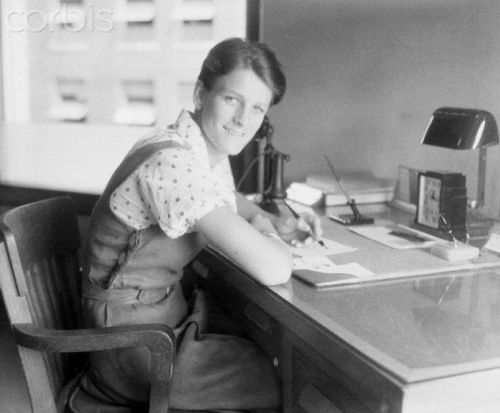
babe-corbis_102132
Babe at her desk in Dallas, 1932

by Paula Bosse

It’s Olympics time again, so why not look back at the career of a great Olympian — and one of the greatest athletes of all time — Babe Didrikson (later Babe Didrikson Zaharias). Babe came to Dallas as a teenager when she was recruited to play basketball for an insurance company. And the rest is history. Read about Babe in Big D here.

*

Copyright © 2016 Paula Bosse. All Rights Reserved.
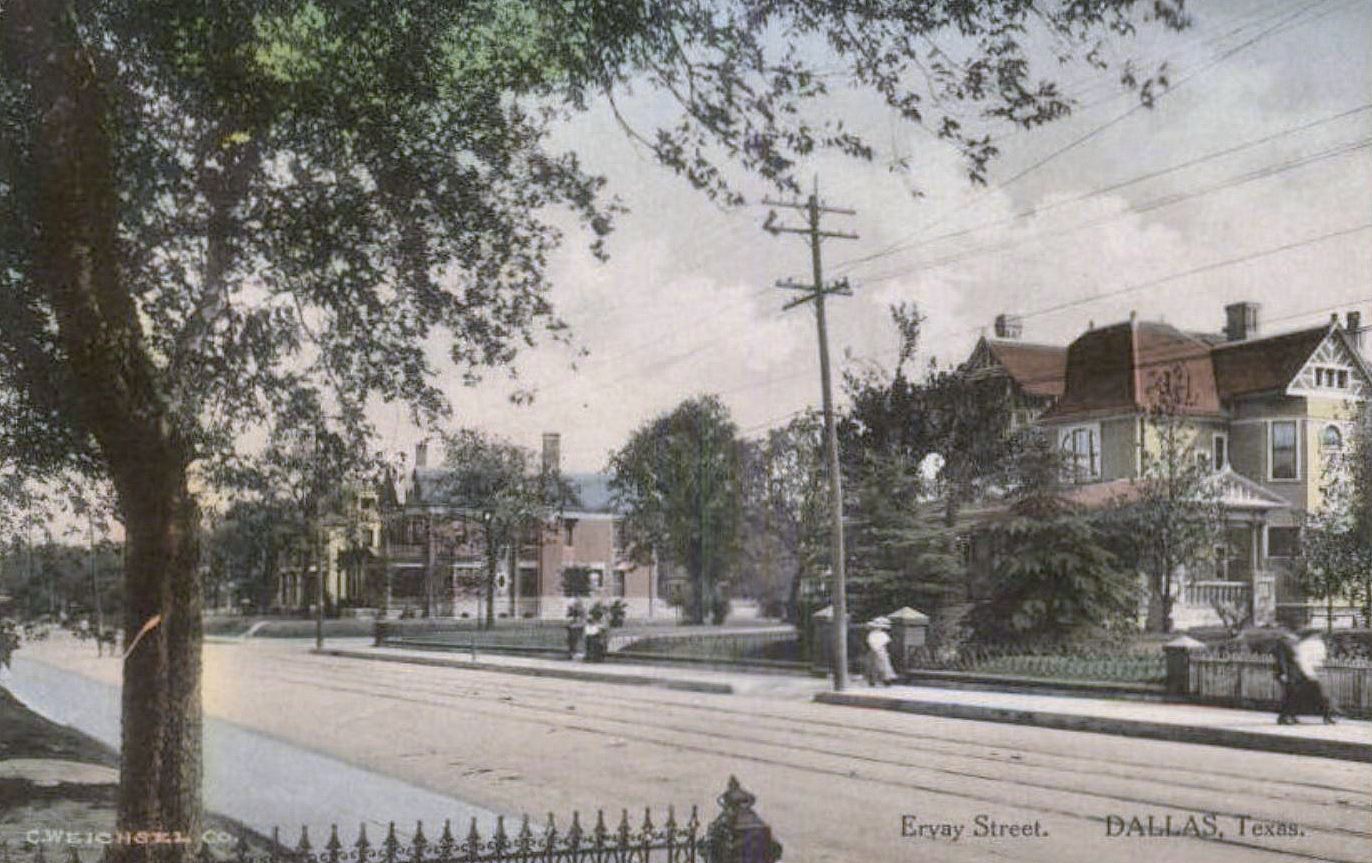
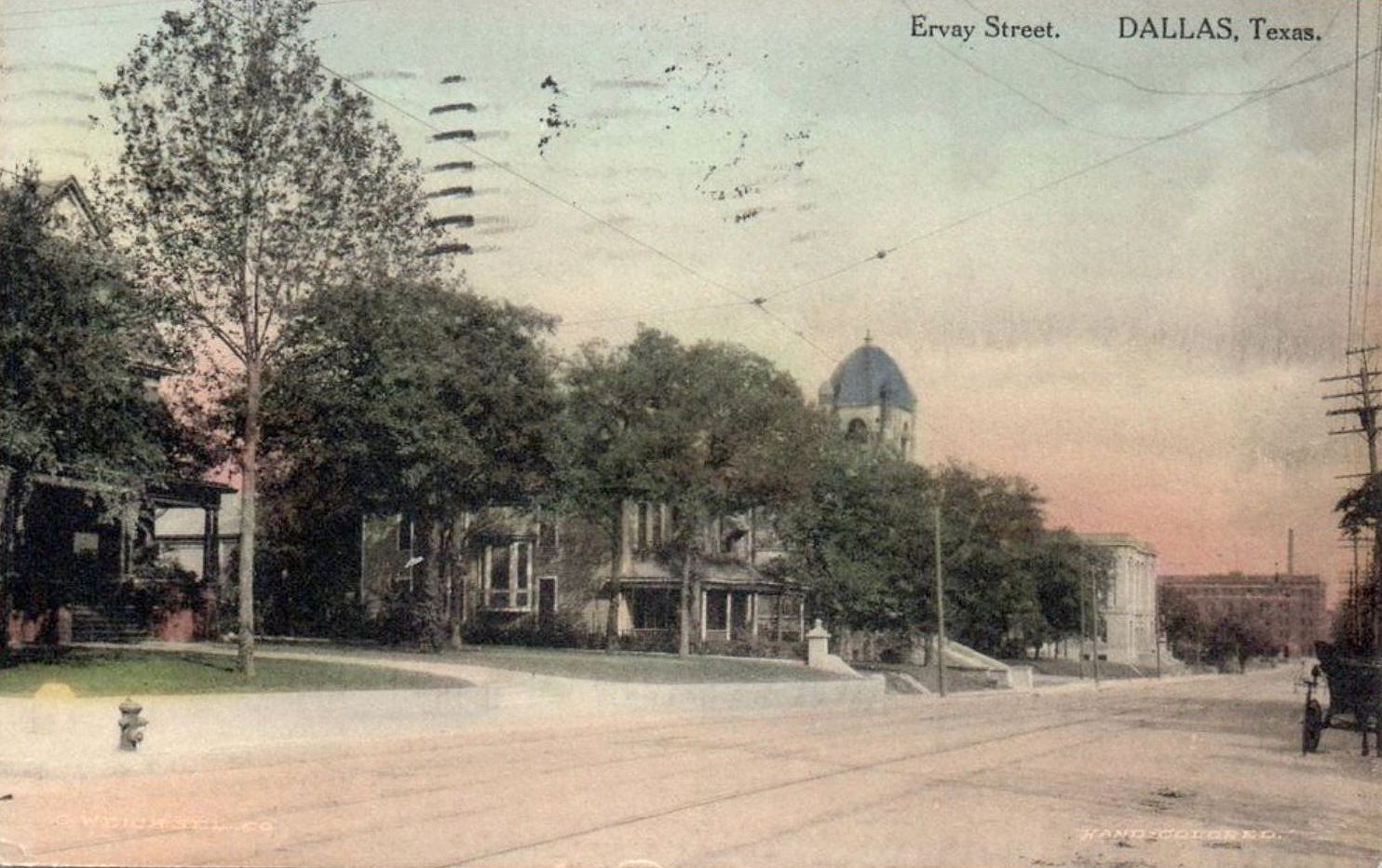
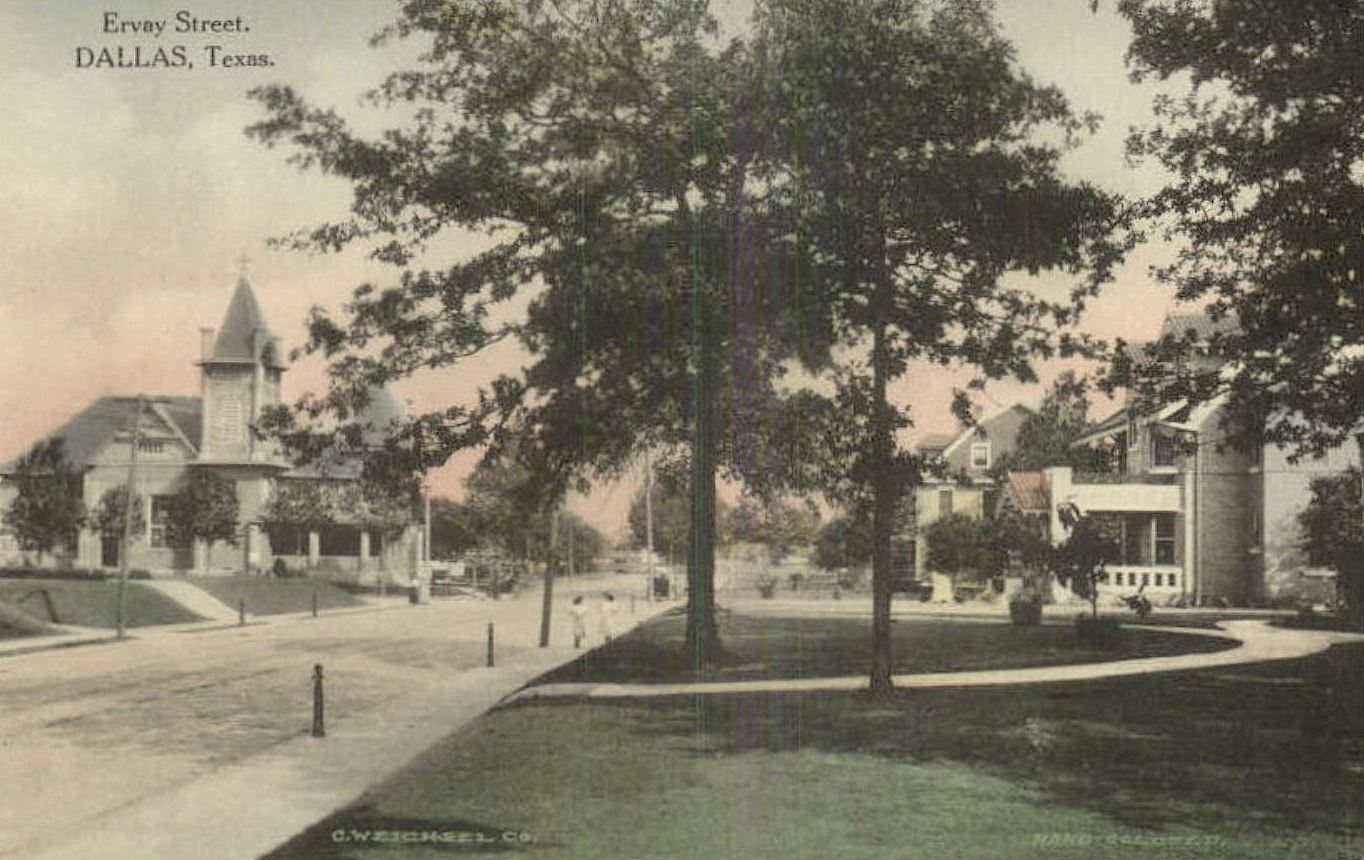
Beautiful South Ervay Street — ca. 1910

ervay_coltera_flickrStreet life in South Dallas

by Paula Bosse

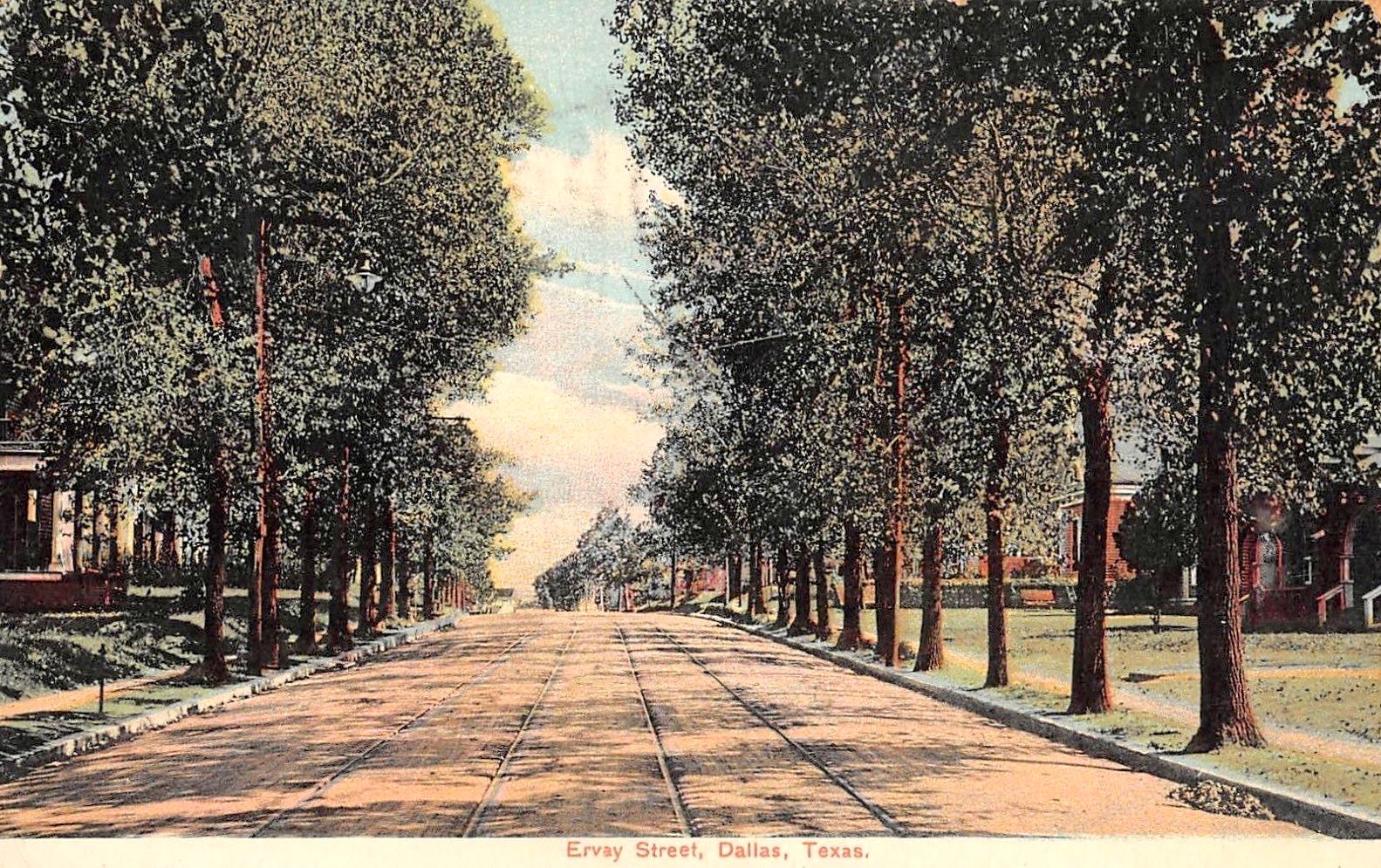
Today, a few hand-colored postcards from around 1910 showing the lovely houses that used to line Ervay Street in South Dallas. Hard as it is to believe today, the stretch of South Ervay from just outside the central business district down to its end at Forest Avenue (now Martin Luther King, Jr. Blvd.), was once a very nice area where many of the city’s most fashionable and well-to-do Jewish families (and, later, African American families) lived. The intervening century has not been kind to South Dallas. I’m not sure of the location in the postcard above, but it certainly looks like a very pleasant neighborhood — one that no longer exists in this mostly blighted area.

*

Below, S. Ervay looking south. The rounded top of Temple Emanu-El can be seen at the left. The light-colored building in the next block was the Columbian Club. The hotel most recently known as the Ambassador (which burned down three years after I originally wrote this post) is set back on a curve of the street and is hidden by the Columbian Club. The red building is the Hughes candy plant (still standing). A Google Street View of this area today can be seen here.

ervay-street_ebay

*

Below, we see a view still looking south, but now much farther down Ervay, almost to Forest Avenue (now MLK). The church on the left is the James Flanders-designed Ervay Street Methodist Episcopal Church (South), built in 1908 at the corner of corner of Ervay and South Boulevard — it’s interesting that a Methodist church was located in the center of Dallas’ largest Jewish residential neighborhood. (More on the church from a Dallas Morning News article from July 1, 1908, here. See this area on a 1922 Sanborn map here.)

ervay-residence_coltera

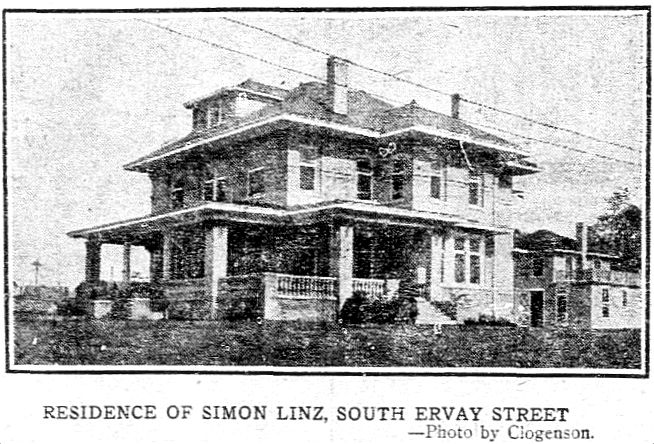
Not seen in the view above is one house worth mentioning. The house — just out of frame at the left, with the steps leading up to it, was the home of Simon Linz, of Linz Jewelers fame. Here is what the Linz house looked like in 1908:

linz-house_dmn_010108Dallas Morning News, Jan. 1, 1908

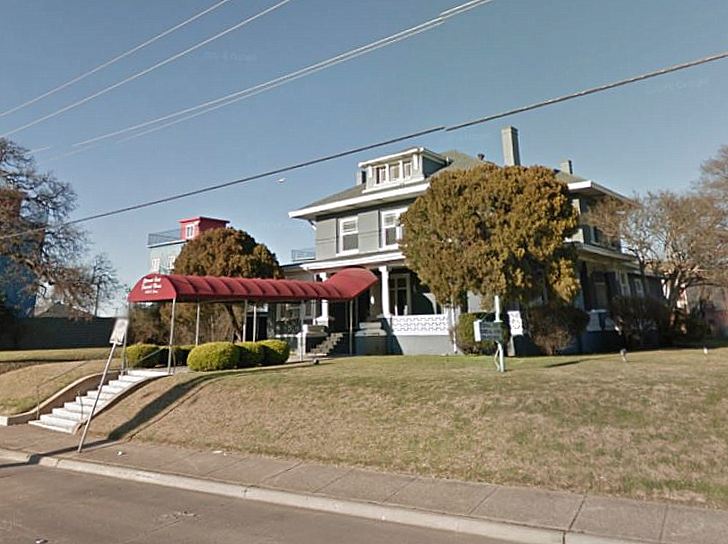
Remarkably, this house is still standing. It is currently a funeral home at 2830 S. Ervay. The present-day image below, showing the pretty house and the neatly landscaped yard, is a little deceptive; see what the Google Street View looks like just south — where the Flanders church once stood — here. (If you’re up to it, reverse the Google view and move back toward town.)

linz-house_2830-828-s-ervay_google
Google Street View

Hold on, little house!

This was once such a beautiful part of Dallas….

ervay_postcard_clogenson_postmark-1908

**

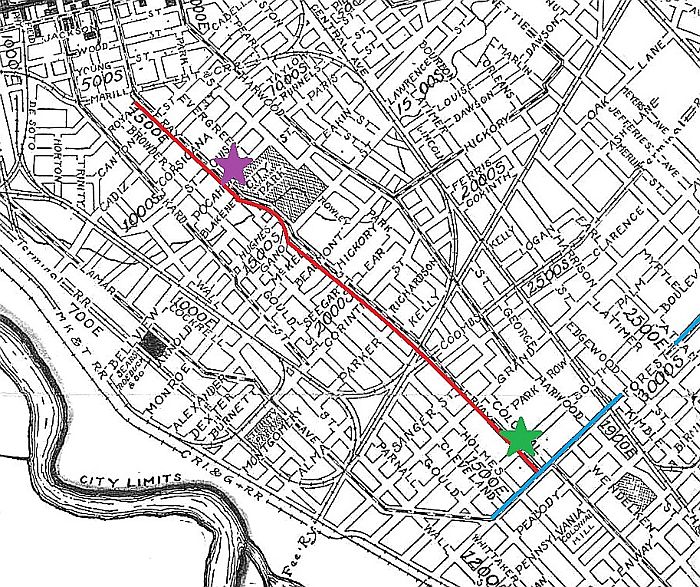
Below, a detail of a 1919 map showing S. Ervay down to Forest. The purple star shows the location of Temple Emanu-El and the Columbian Club. The green star shows the location of the Linz house and the Ervay St. Methodist Episcopal church. (Click for larger image.)

e-ervay_map_1918_portal
1919 map via Portal to Texas History

 ***

Sources & Notes

First and third postcards are from Flickr: here and here. Others found on eBay.

*

Copyright © 2016 Paula Bosse. All Rights Reserved.
Dallas Fire Stations — 1901

fire-dept_engine-co-3_gaston-and-college_1901Fire horse in Old East Dallas relaxing between calls (click for larger image)

by Paula Bosse

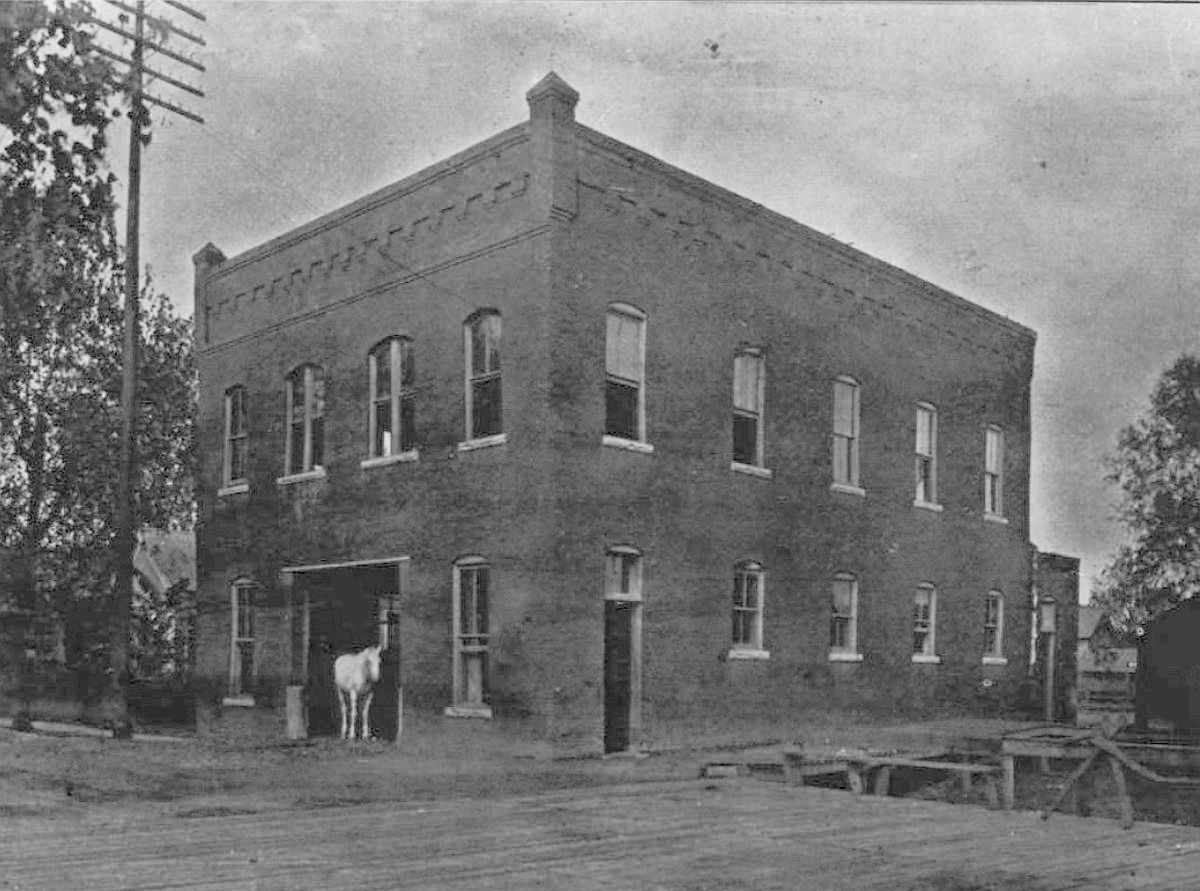
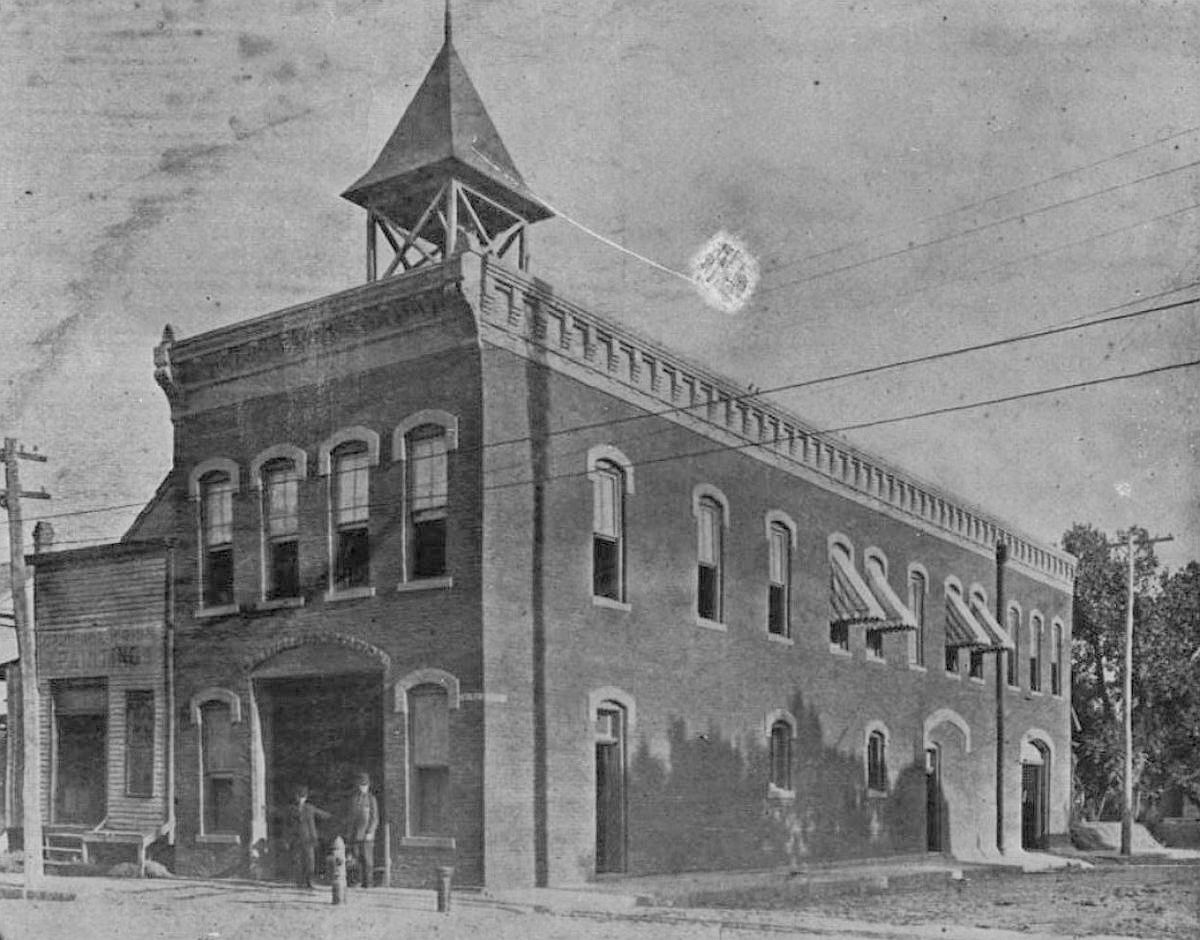
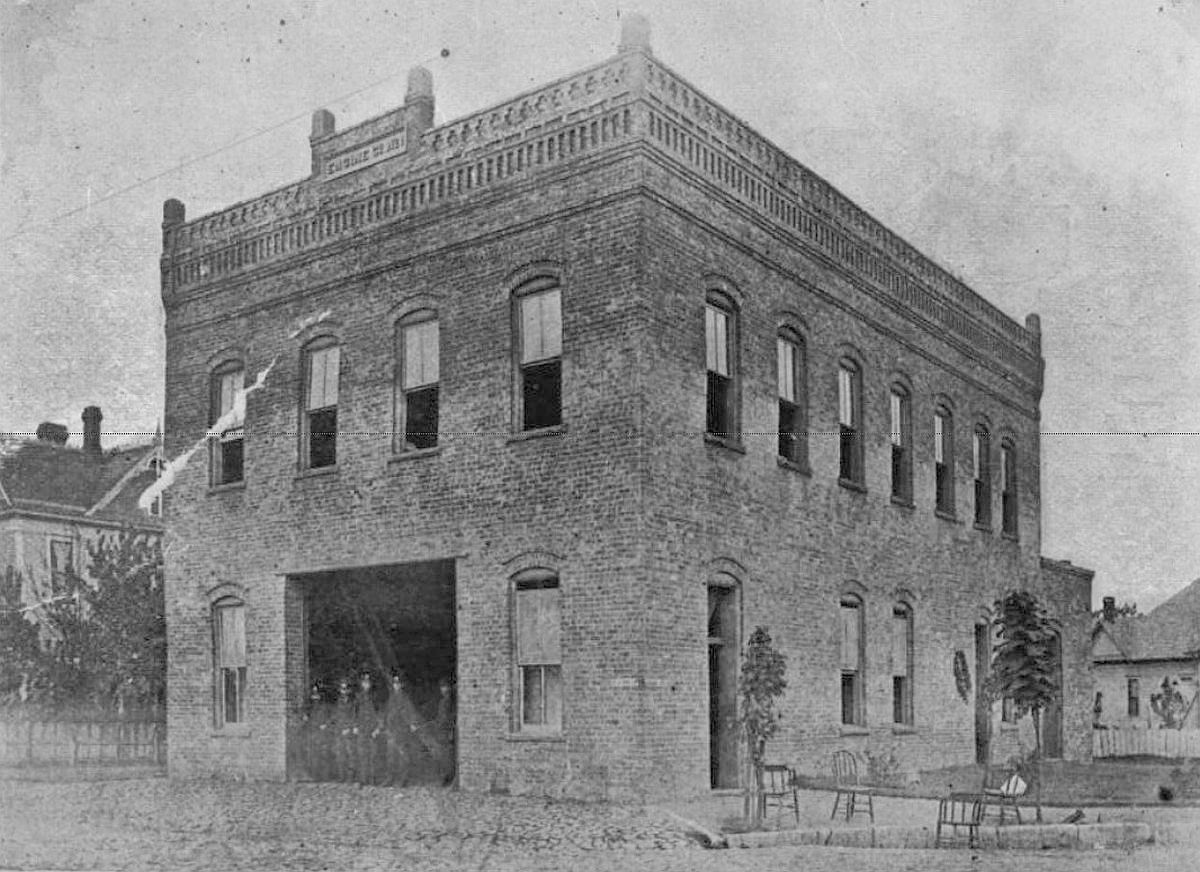
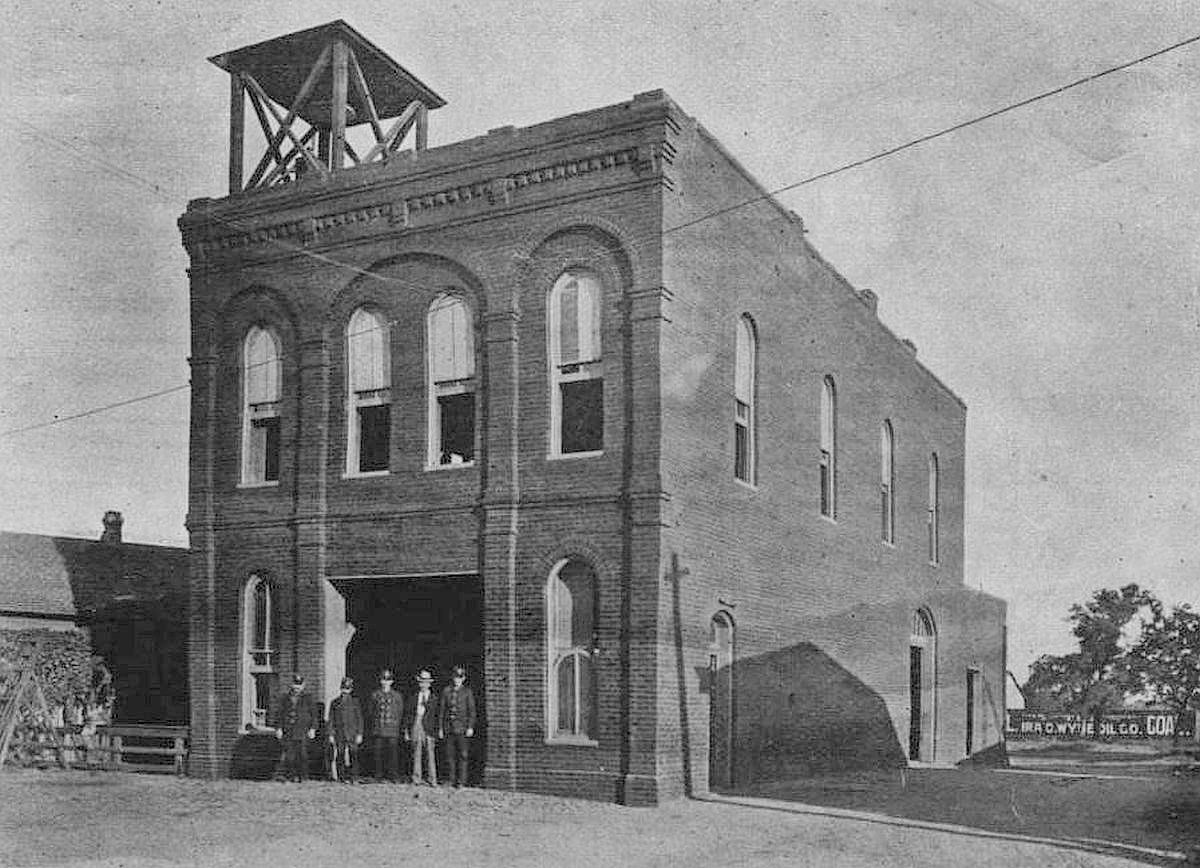
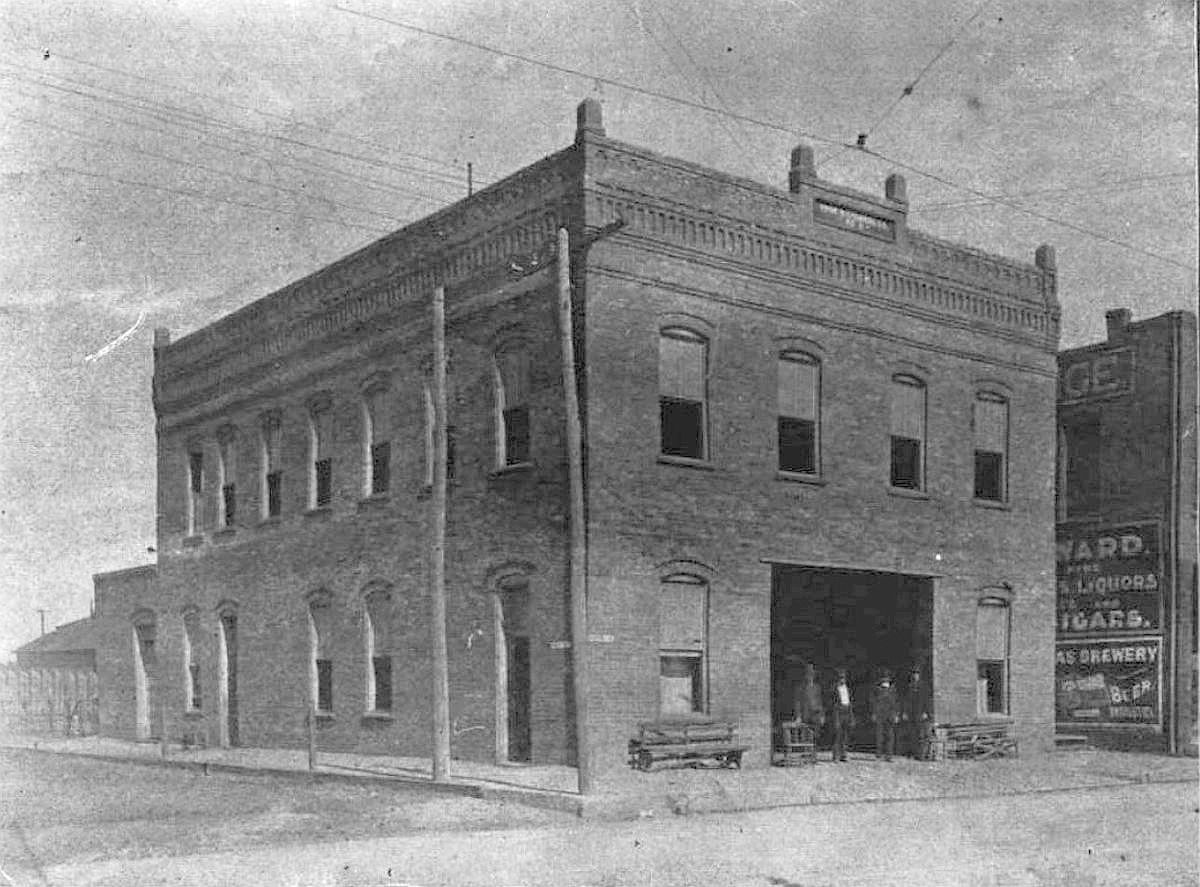
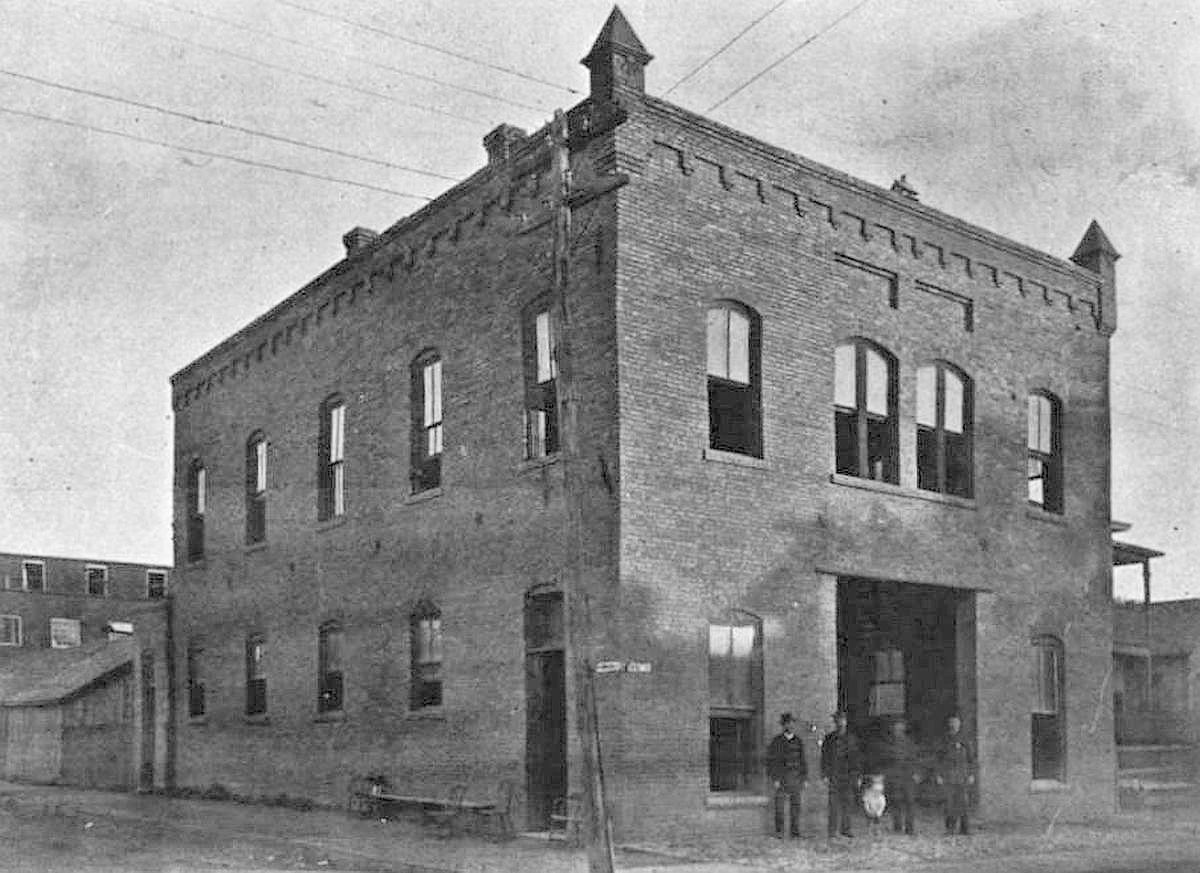
A few turn-of-the-century photos of Dallas’ fire stations, from a 1901 photographic annual. These seven firehouses were built between 1882 and 1894. One of these buildings is, miraculously, still standing on McKinney Avenue, in the heart of Uptown.

*

At the top, Engine Co. No. 3, at Gaston and College Avenues. In service: January, 1892. Equipment: an Ahrens Steamer, capacity 750 gallons per minute, and a Cooney Hose Carriage. See it on a 1905 Sanborn map here; see the present location (Gaston and Hall) here. (And since I just used it a few days ago, here’s a 1921 Sanborn map, showing Mill Creek running right through the property.)

*

fire-dept_central-station_main-harwood_1901

Above, Central Fire Station, Main and Harwood Streets. In service: October, 1887. Equipment: a double-sixty-gallon Champion Chemical Engine and a City Hook and Ladder Truck. See it on a 1905 Sanborn map here; see the present location here (the site of the old City Hall/Municipal Building).

*

fire-dept_mckinney-leonard_engine-co-1_1901

Engine Co. No. 1, McKinney Avenue and Leonard. Equipment: an Ahrens Steamer, 750 gallons per minute, and a Cooney Hose Carriage. In service: August, 1894. See it on a 1905 Sanborn map here; see the present location here. NOTE: This is the only one of these firehouses still standing. I wrote about it here.

UPDATE: Well, sort of. Thanks to a comment on Facebook, I researched this station a bit more and found that it was rebuilt and modernized at the end of 1909 — using materials from the original building seen above, built on the same plot of land. So instead of being 122 years old, the building on McKinney today is a mere 106 years old.

*

fire-dept_commerce-hawkins_engine-co-2_1901

Engine Co. No. 2, Commerce and Hawkins Streets. In service: January, 1882. Equipment: an Ahrens Steamer, capacity 750 gallons per minute, and a Cooney Hose Carriage. See it on a 1905 Sanborn map here; see a shot-in-the-dark guess at a present location here.

*

fire-dept_ervay-kelly_hose-co-2_1901

Hose Co. No. 2 and Chemical Co. No. 2, Ervay Street and Kelly Avenue. In service: September, 1894. Equipment: a Cooney Hose Carriage and double-sixty-gallon Champion Chemical Engine. See it on a 1905 Sanborn map here; see the present location here (right behind where the word “Cedars” is).

fire-dept_bryan-hawkins_hook-and-ladder-1_1901

Hose Co. No. 1 and Hook and Ladder Co. No. 1, Bryan and Hawkins Streets. In service: January, 1893. Equipment: Preston Aerial Truck with 75-foot extension ladder, and a Cooney Hose Carriage. See it on a 1905 Sanborn map here; see the approximate present location here.

*

fire-dept_commerce-akard_engine-co-4_1901

Engine Co. No. 4, Commerce and Akard Streets, next door to the City Hall. In service: August, 1894. Equipment: an Ahrens Steamer, capacity 1,100 gallons per minute, and a Cooney Hose Carriage. See it on a 1905 Sanborn map here; see the present location here (just out of frame at the right was the City Hall; the block is now the site of the Adolphus Hotel).

*

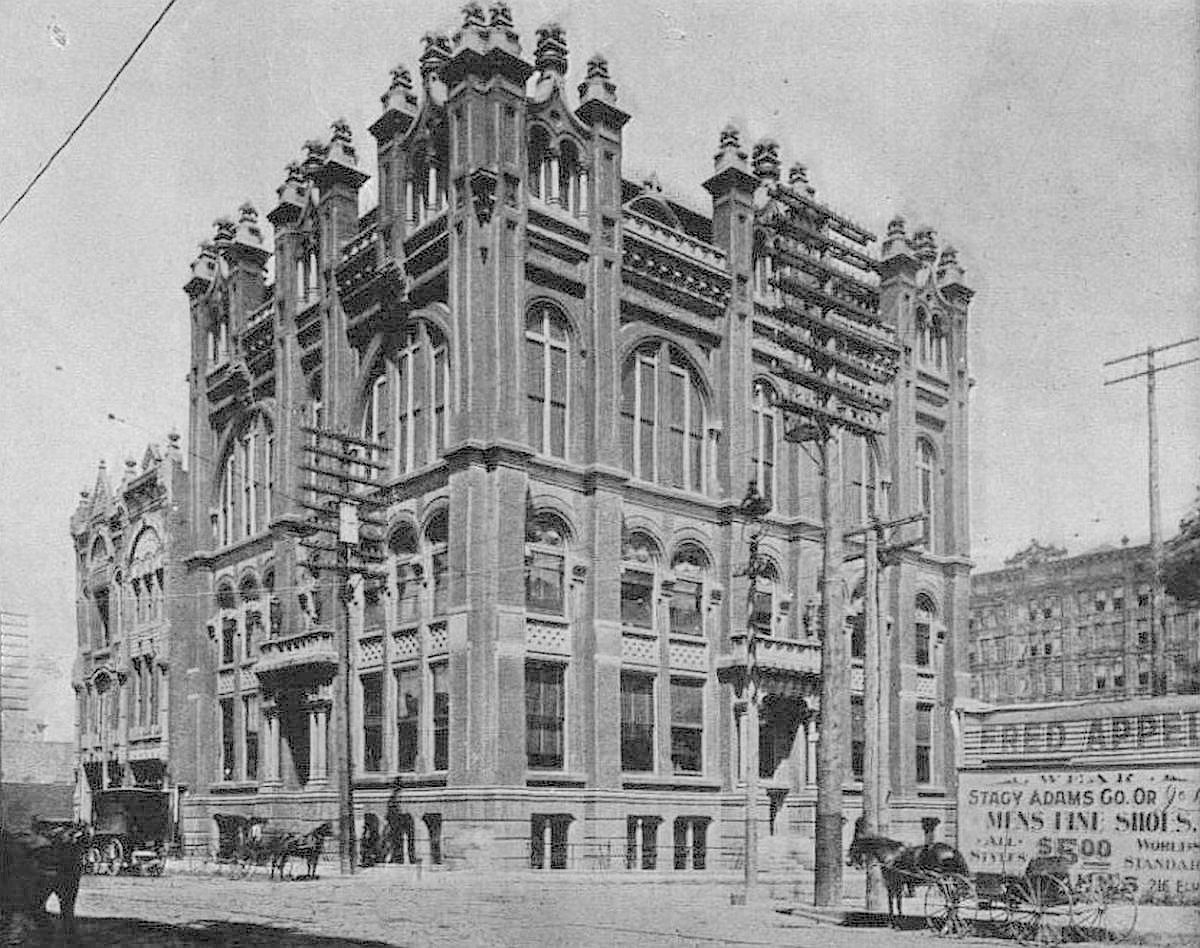
city-hall_1901_fire-dept-annual_portal

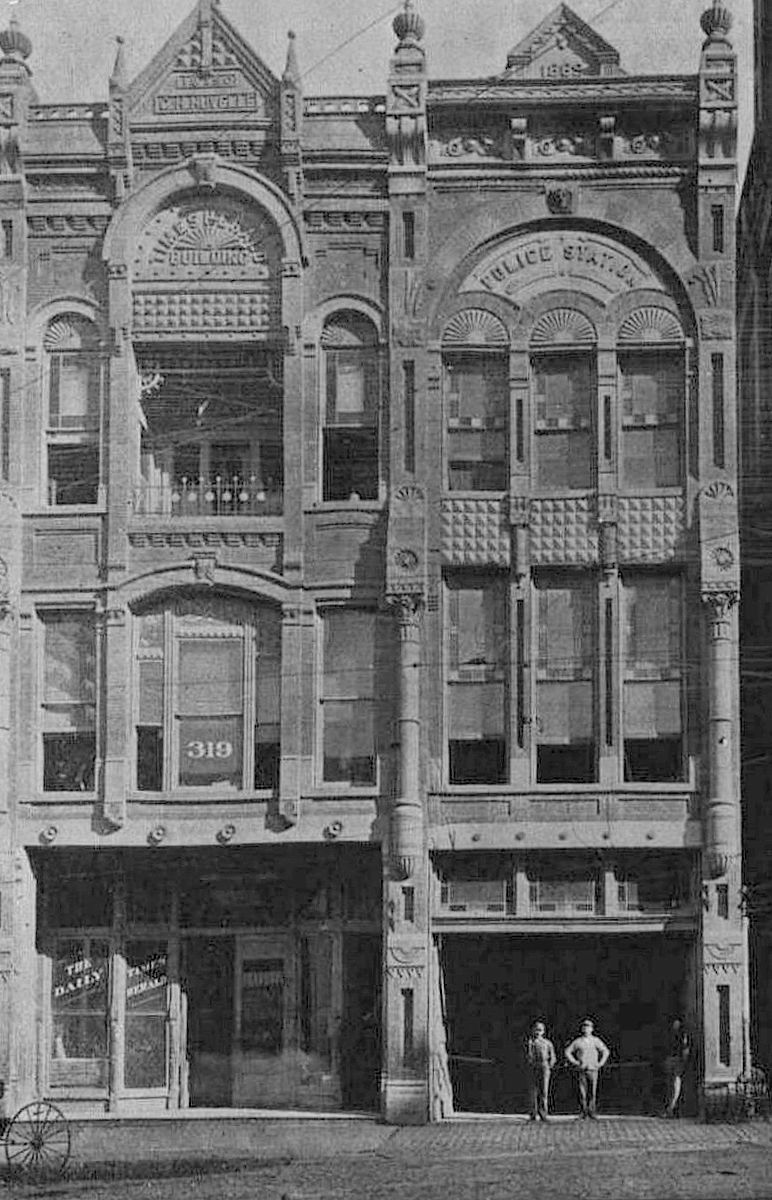
City Hall, Commerce and Akard Streets, now the location of the Adolphus Hotel. Half of the shorter building to the left housed the police department and Engine Co. No. 4.

*

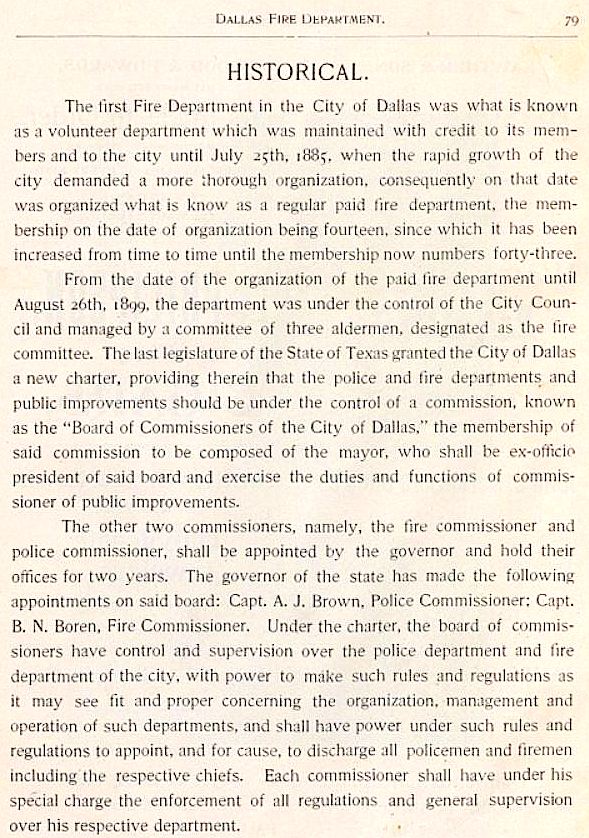
The “Historical” page from the book (click to read).

fire-dept-hist_dallas-fire-dept-annual_1901_portal

**

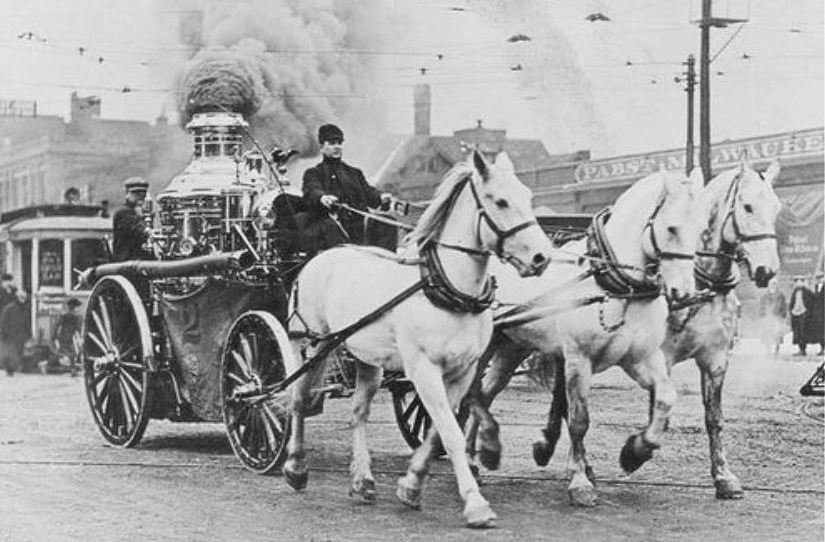
Since there is no sign of the actual equipment in these photos, here’s what horse-drawn steam engines (Ahrens steamers) looked like at this time. (Photo from the Wisconsin Historical Society).

fire-steam-engine_wisconsin-hist-soc

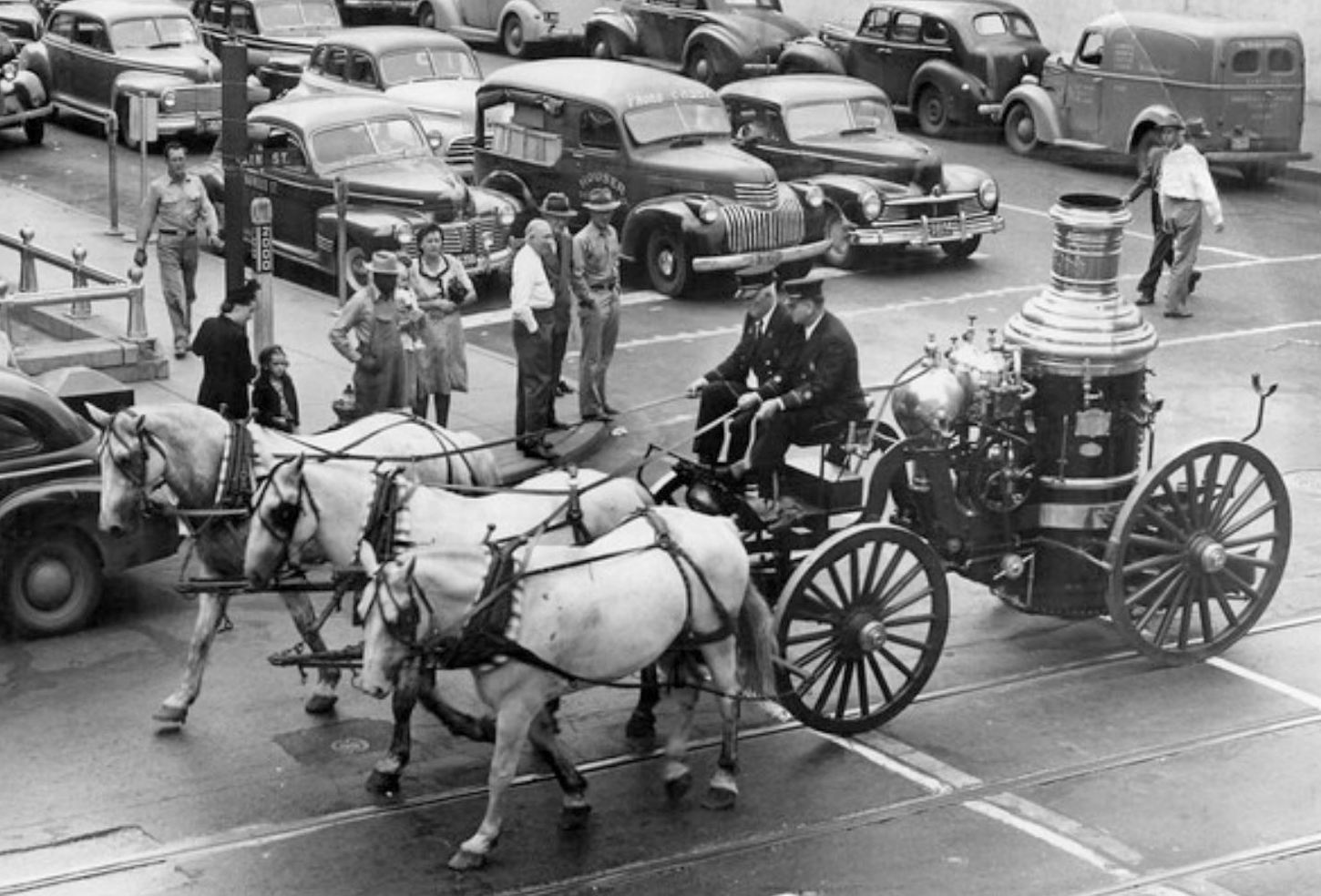
UPDATE: I found this photo on Flickr, showing equipment from those early days being driven through the streets of Dallas during a fire prevention parade.

fire-department_pumper_flickr_coltera

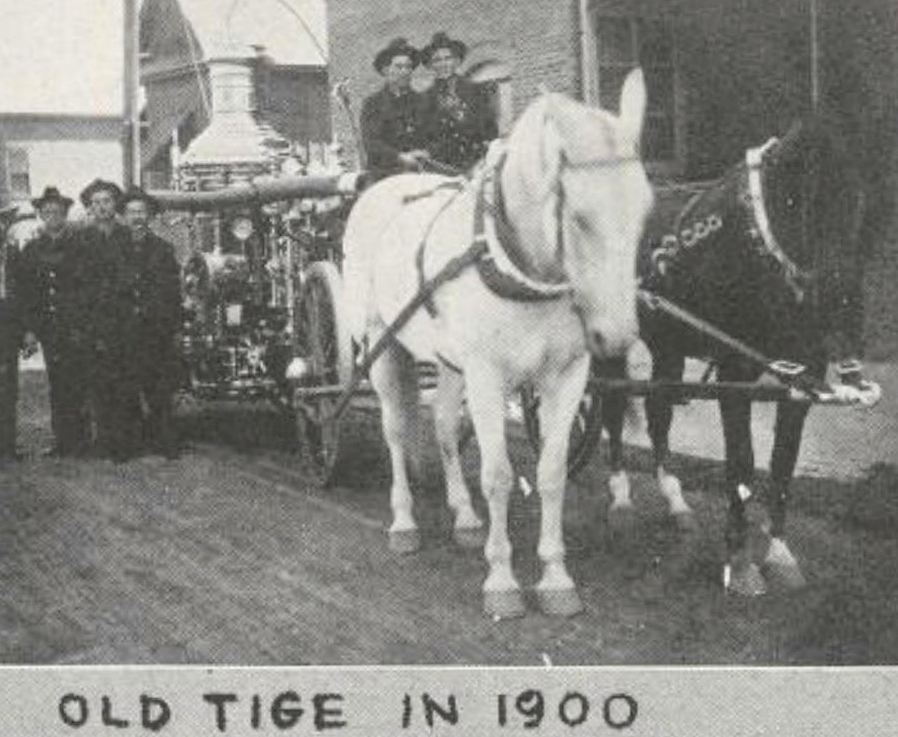
UPDATE: Lo and behold, a photo from 1900 of Old Tige, the 600 gallons-per-minute steam pumper, built in 1884, which was in service with the Dallas Fire Department until 1921. (Old Tige can be seen in the Firefighters Museum across from Fair Park.) Found at the Portal to Texas History.

old-tige_1900_fire-dept-bk_1931_portal

***

Sources & Notes

Photos by Clifton Church, from the Dallas Fire Department Annual, 1901, which can be viewed in its entirety on the Portal to Texas History, here.

A contemporary map of Dallas (ca. 1898) can be viewed on the Portal to Texas History site, here.

More Flashback Dallas posts on historic Dallas firehouses can be found here.

All photos larger when clicked.

*

Copyright © 2016 Paula Bosse. All Rights Reserved.