Flashback : Dallas

A Miscellany: History, Ads, Pop Culture

Category: Transportation

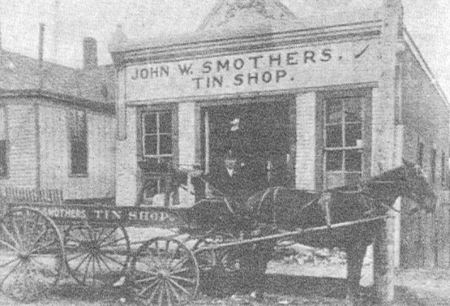
John W. Smothers’ Tin Shop, Hall & Floyd

smothers-tin-shop_ebaySmothers (in car) and employees, ca. 1913

by Paula Bosse

John W. Smothers (1869-1925) came to Dallas from Huntsville, Missouri around 1890 to begin his career as a “tinner” working for a family friend/in-law, Frank T. Payne. By 1905, Smothers had married a girl from back home, had a child, and had apparently done well enough in the trade to buy a lot on College Ave. (now N. Hall St., in Old East Dallas) where he built his own tin-manufacturing shop, specializing in various sheet metal work. 

smothers_ad_1909-directory
1909 city directory ad

It looks like this business lasted until about 1918, when Smothers retired and sold the building to his old friend, F. T. Payne. It became a grocery store in 1919. Smothers died in 1925 at the age of 56 — his death certificate lists the cause of death, somewhat alarmingly, as “exhaustion and malnutrition” following a long illness — an extreme case of St. Vitus Dance

smothers_tin-shop_photo_ancestryvia Ancestry.com

Originally 212 N. College Ave., the address of Smothers’ tin shop became 912 N. College Ave. in 1911 when new addresses were assigned around the city. (See the location of the shop on a 1921 Sanborn map here.) It sat diagonally across the street from Engine Company No. 3, seen below in a photo from about 1901:

fire-dept_engine-co-3_gaston-and-college_1901Fire station, Gaston & College, ca. 1901

College Avenue was renamed and became Hall Street around 1946, and the address of the old tin shop building changed again, to 912 N. Hall Street, which is in the area now swallowed up by Baylor Hospital (see what 912 N. Hall looks like now on Google Street View, here).

***

Sources & Notes

Top photo found on eBay. A copy is also in the George W. Cook Dallas/Texas Image Collection, DeGolyer Library, Southern Methodist University — it can be accessed here. The SMU photo (apparently from the collection of Ralph Smothers, John’s son) has a notation on the back which reads “912 College Ave. <now Hall St.> about 1913 or 14? John Smothers [in car], [James E.] Curly Wilson left, Bob Critcher right.”

Photo of the fire station with the ghostly horse is by Clifton Church and is from the Dallas Fire Department Annual, 1901, which can be viewed in its entirety on the Portal to Texas History, here. (I used this image in my 2016 post “Dallas Fire Stations — 1901.”)

(“Tinner” was not an unusual word to have come across in the early part of the 20th century, but in the 1910 census, the enumerator was either confused or did not understand what was being said, because Smothers’ trade is listed as “tuner” — it looks like the enumerator then just made a weird leap to attempt to explain this and added “piano” under “General Nature of Business,” which Ancestry.com then repeats in its OCR-generated records. That “piano tuner” profession caused me a lot of confusion! To add insult to injury, OCR tells us that his occupation in 1900 was “turner,” and an illegible entry in the 1920 census transforms him into a “retired farmer”! Always approach census record information with a grain of salt — for many, many reasons!)

smothers-tin-shop_ebay_sm

*

Copyright © 2023 Paula Bosse. All Rights Reserved.

Pig Stand No. 2, Oak Cliff

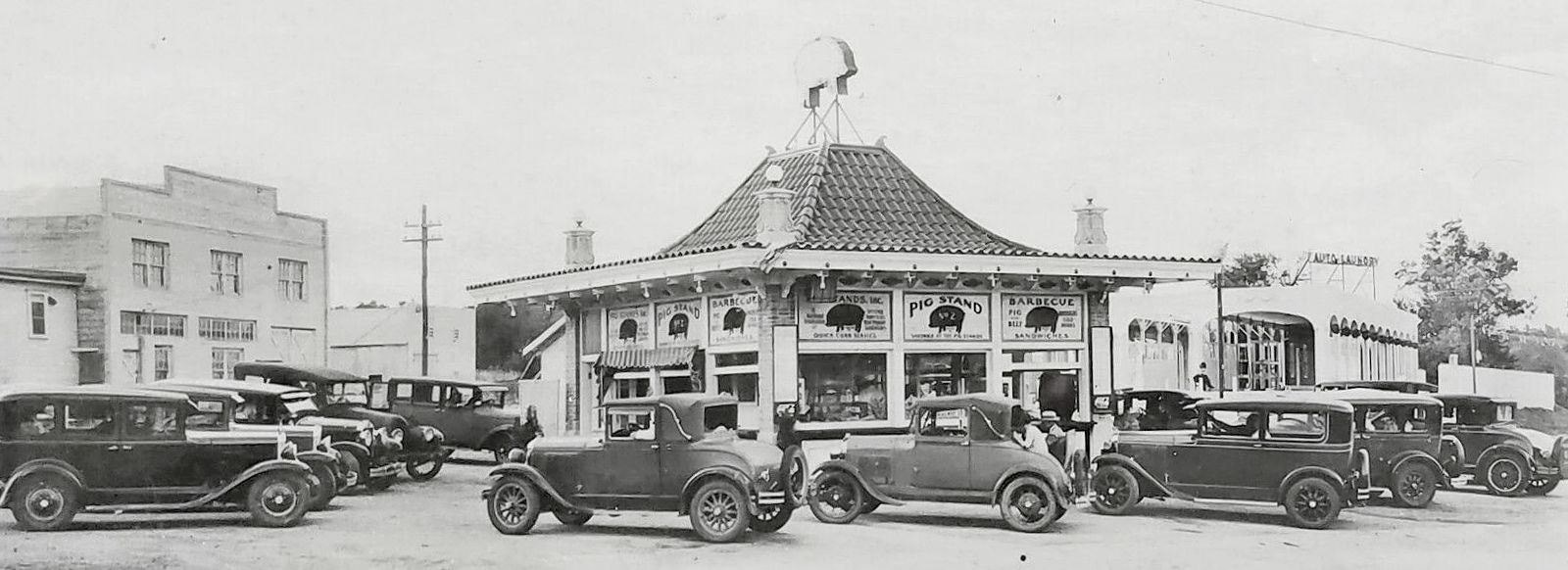
pig-stand-no-2_dallas_ebayWaiting in cars for pig sandwiches

by Paula Bosse

I’ve seen a cropped version of this photo, but not the full image. It’s great! I don’t mean to keep posting about restaurants, but seeing this photo was too good not to share. (As I type this, it’s available on eBay, here.)

It shows Pig Stand No. 2 at 1301 N. Zang in Oak Cliff, probably about 1928. It appears that this was the second “No. 2” — it was announced that this brand-new building had just begun construction in January 1928.

Work was started last week on the new Pig Stand, Zang’s Boulevard and Colorado Street, for the Pig Stands Company, a Dallas institution, now operating in 39 cities in 12 states. The ornamental building has been adopted as a standard design for the many future stands now contemplated over the country by this concern. In this building will be embodied modern sanitary features complying with all requirements and laws. It will be faced with brick and highly colored tile with ornamental stone trimmings and a clay tile sweeping roof in several shades. The exterior as well as the interior will be illuminated electrically with the cornice and ornaments decorated out in varied contrasting colors. The Pig Stands Co., starting less than five years ago with small capital, has developed into a national institution. Architects F. J. Woerner and Co. designed and will supervise this work, while M. W. McDade will have charge of the construction. (Dallas Morning News, Jan. 26, 1928)

At the right is the Oak Cliff/Tramway Auto Laundry at 1307 N. Zang.

pig-stand-no-2_dallas_ebay_det

I love the couple in the rumble seat!

***

Sources & Notes

Photo currently available for sale on eBay, here.

Read a history of Dallas’ Pig Stand empire — long considered to be the first-ever drive-in restaurants, a revolutionary contribution to American social culture — in the Texas Monthly article “The History of the Pig Stands” by Daniel Vaughn (Feb. 2015).

Architect Frank Woerner designed many notable commercial and residential buildings in Dallas, including the Stoneleigh Hotel, the Couch Building across from SMU, the old Union Depot in Deep Ellum, and the beautiful home of Max Rosenfield on South Boulevard.

pig-stand-no-2_dallas_ebay_det_sm

*

Copyright © 2023 Paula Bosse. All Rights Reserved.

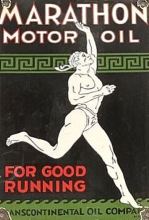
“You Can Get That Famous Marathon Gasoline in Oak Cliff” — 1930

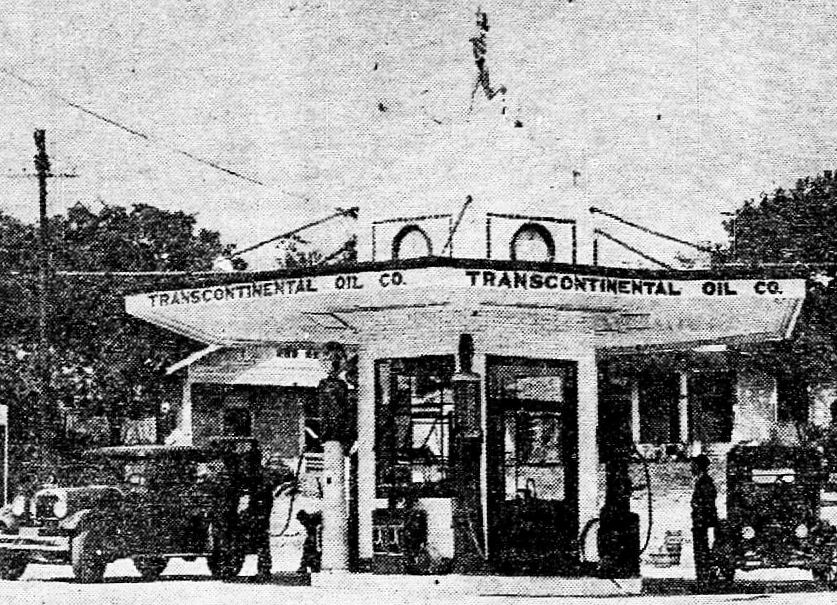
marathon_transcontinental-oil_gas-station_smithsonian_1930Somewhere in Oak Cliff, 1930, via Smithsonian Inst.

by Paula Bosse

Rejoice, Oak Cliff residents of 1930: you’re getting five Marathon gas stations! I’m not sure why these stations were only in Oak Cliff and no other part of Dallas, but they were (a sixth station joined this elite group a year or so later).

I have a fascination with old gas stations, but I have to admit I’m not familiar with Marathon Gasoline or Marathon Oil products or the Transcontinental Oil Co. (they  had a refinery in Fort Worth), but for whatever reason, the Marathon stations in Dallas — all emblazoned with an image of the Greek runner Pheidippides — appear to have faded away by about 1942 when I guess the last straggler finally crossed the finish lane, collapsed, and died. Farewell, Pheidippides.

The photo above shows one of those first 5 stations in Dallas. The location is not specified. 

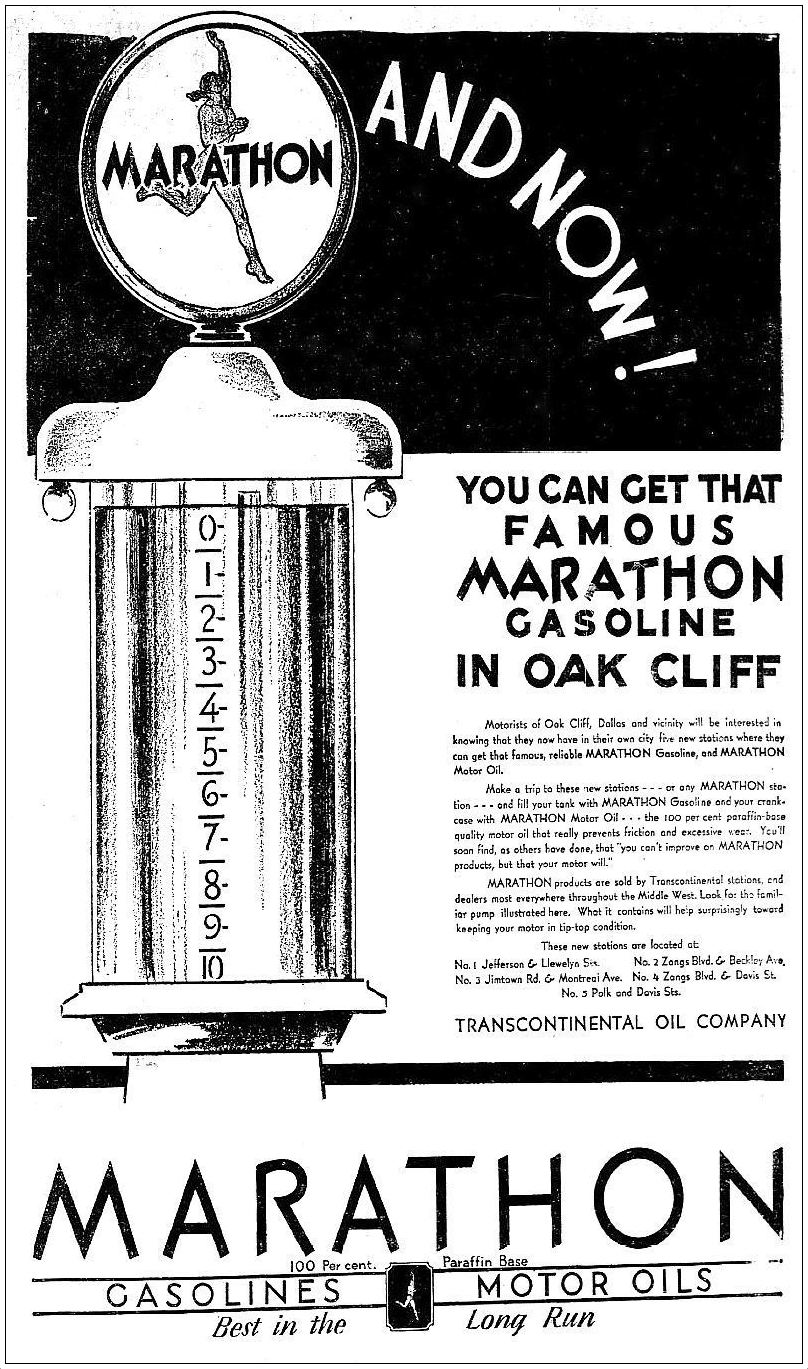
Marathon stations in the O.C. in 1930:

marathon_transcontinental-oil_gas-station_050430_ad_det

  • No. 1: Jefferson & Llewellyn Sts. (539 W. Jefferson)
  • No. 2: Zangs Blvd. & Beckley Ave. (1111 N. Zang)
  • No. 3 Jimtown Rd. & Montreal Ave. (2120 W. Clarendon Dr.) (in 1931, residents petitioned the city to change the name of the street to “Clarendon” because they thought “Jimtown” was too déclassé)
  • No. 4: Zangs Blvd. & Davis St. (137 W. Davis — this was the station that lasted the longest, appearing to have closed by the time the 1942 city directory was published)
  • No. 5: Polk & Davis Sts. (938 W. Davis)
  • (No. 6: 1804 W. Jefferson)

It doesn’t look like any of the old buildings are still standing, but there IS one of the exact same design still standing in Miami, Oklahoma — a group restored it and even added period gas pumps (which someone later stole) — see it below. 

marathon-station_miami-okla_google-street-view_2016Miami, OK, Google Street View July 2016

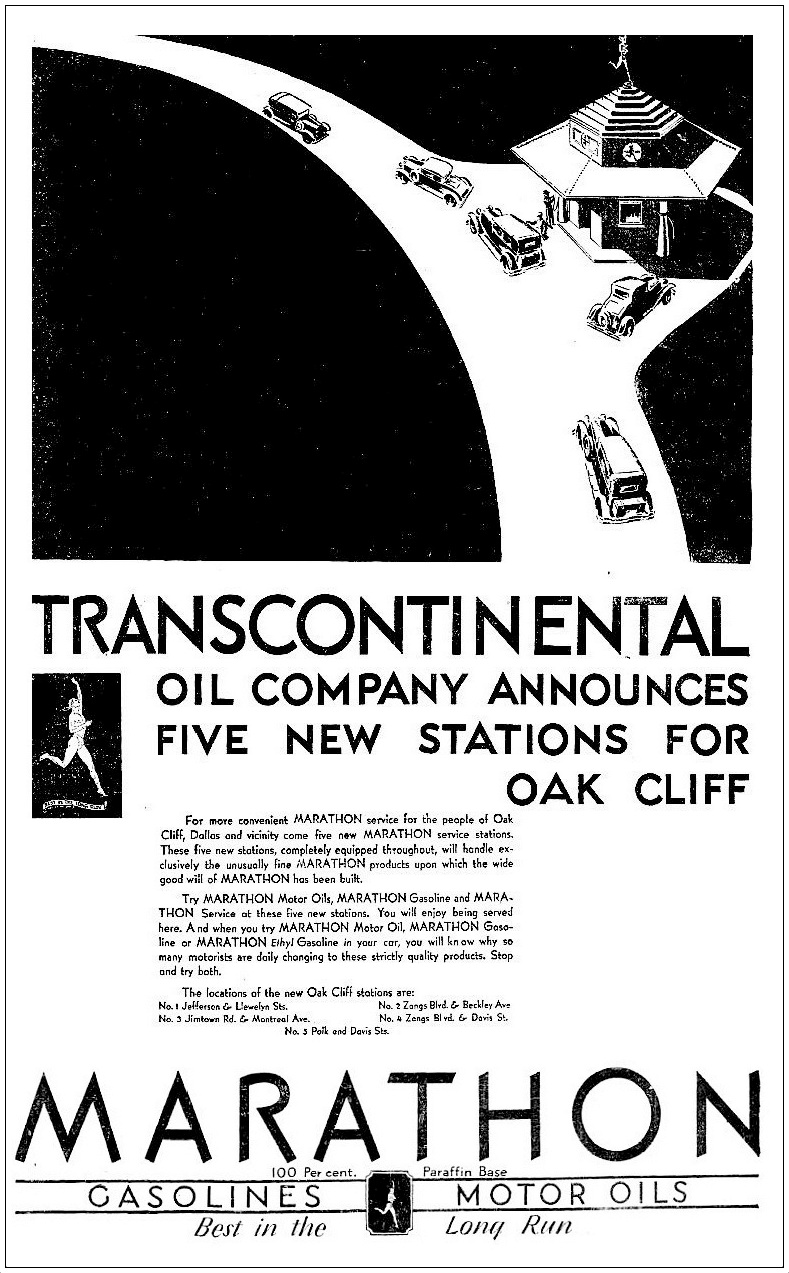
Not all of the Dallas stations had the same design — a press release describes the stations of possessing “distinctive architecture.” Another of the Oak Cliff locations looked very different (and certainly more distinctive):

marathon_station_oak-cliff_1930
Somewhere in Oak Cliff, 1930

The one above is the same design seen in this local ad:

marathon_transcontinental-oil_gas-station_042730-adApril 1930

marathon_transcontinental-oil_gas-station_050430_adMay 1930

marathon_rec_ebay

marathon_ebay

***

Sources & Notes

Top photo is from the American Petroleum Institute Photograph and Film Collection, National Museum of American History, Archives Center, Smithsonian Institution — more info can be found here.

I seem to post a lot about gas stations. Here are a few notable posts:

marathon_transcontinental-oil_gas-station_smithsonian_1930_sm

*

Copyright © 2023 Paula Bosse. All Rights Reserved.
Businessmen’s Lunchtime Mobilization Drills — 1917

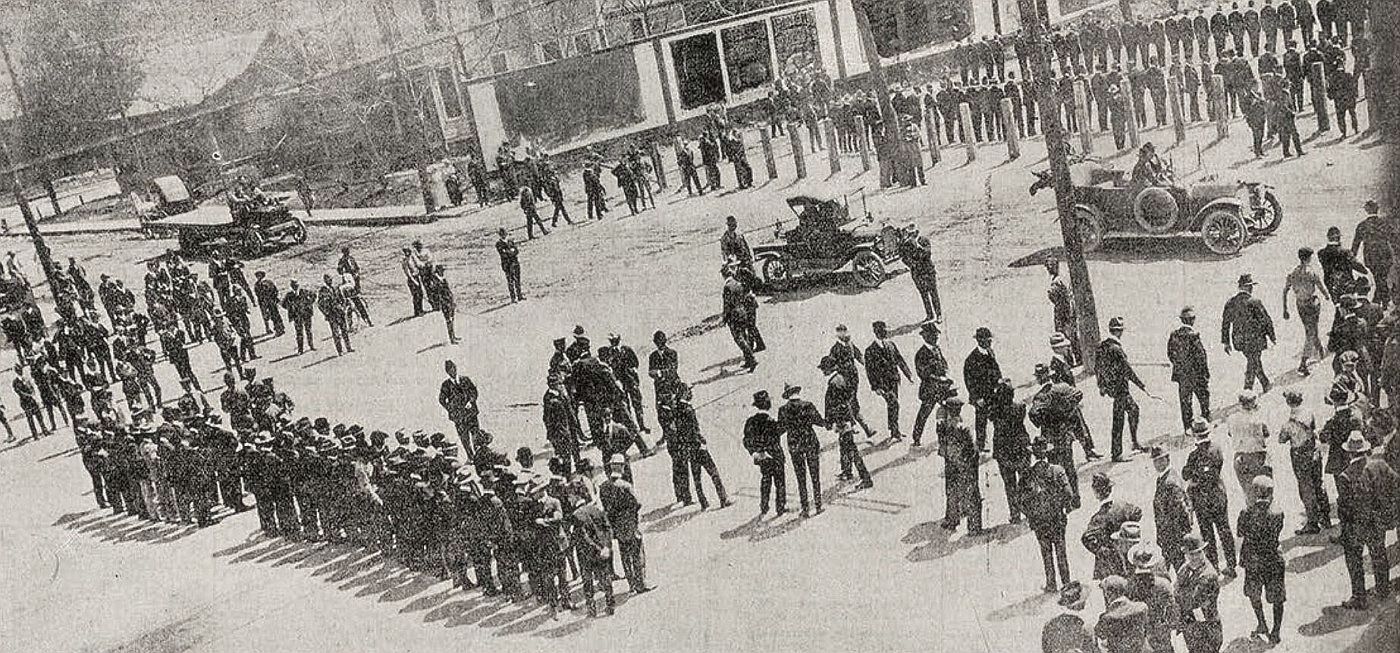
wwi_businessmen_noon-drills_dmn_040117_photoDrilling behind the depot, March 1917

by Paula Bosse

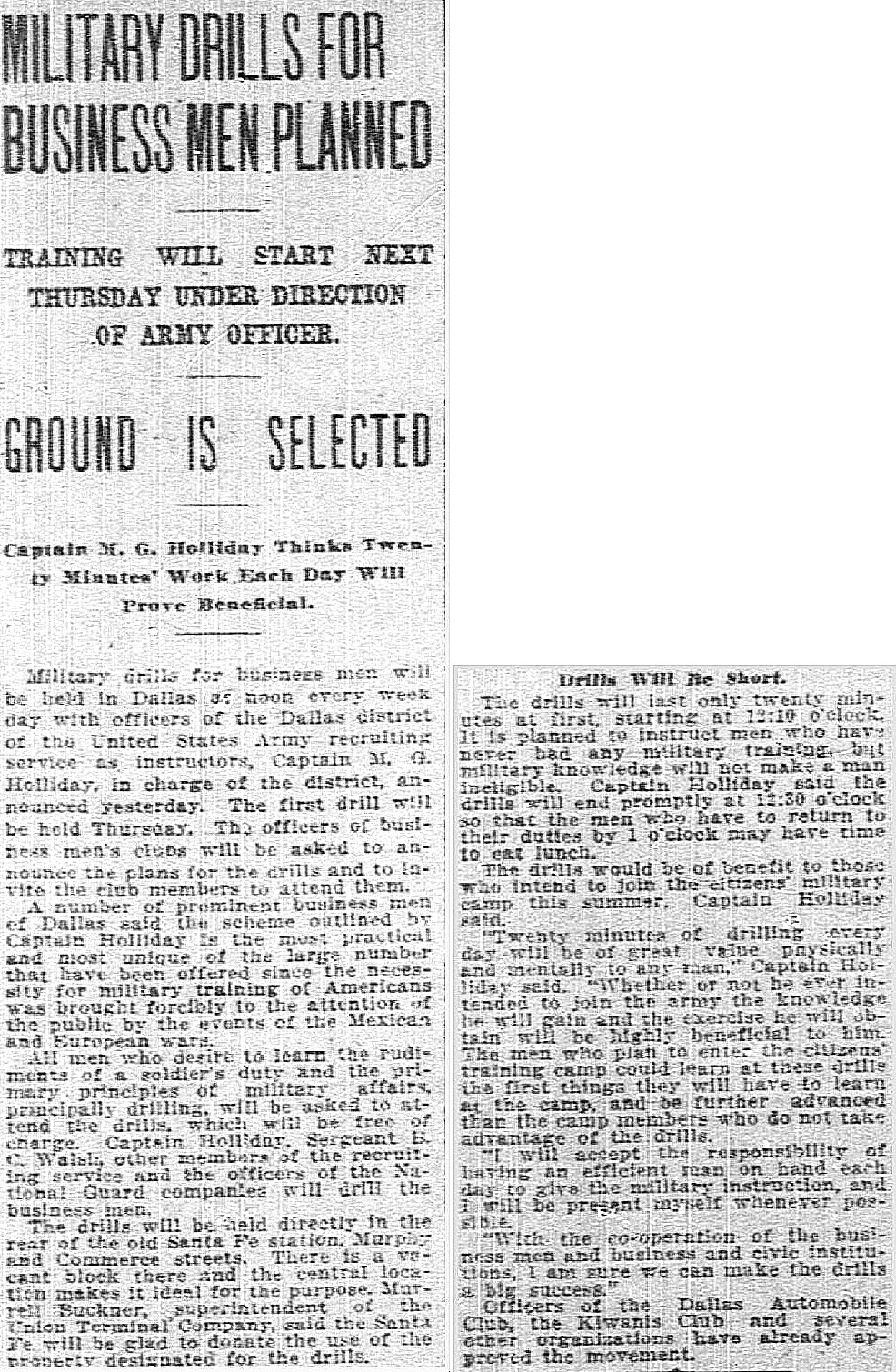
In March 1917, just days before the United States entered World War I, it was announced that there would be lunchtime military training drills in downtown Dallas for any man who wished to participate. This was part of the “Preparedness Movement” which was sweeping the country, in which citizens readied themselves for war. The idea for these drills came from Oswin K. King, a Dallas sportswriter, and they were organized and conducted by Capt. M. G. Holliday, with help from other officers of the Texas National Guard. The drills were held “in the rear of the old Santa Fe station, Murphy and Commerce streets. There is a vacant block there and the central location makes it ideal for the purpose” (“Military Drills for Business Men Planned,” Dallas Morning News, March 25, 1917). (See this location on a 1905 Sanborn map, here.)

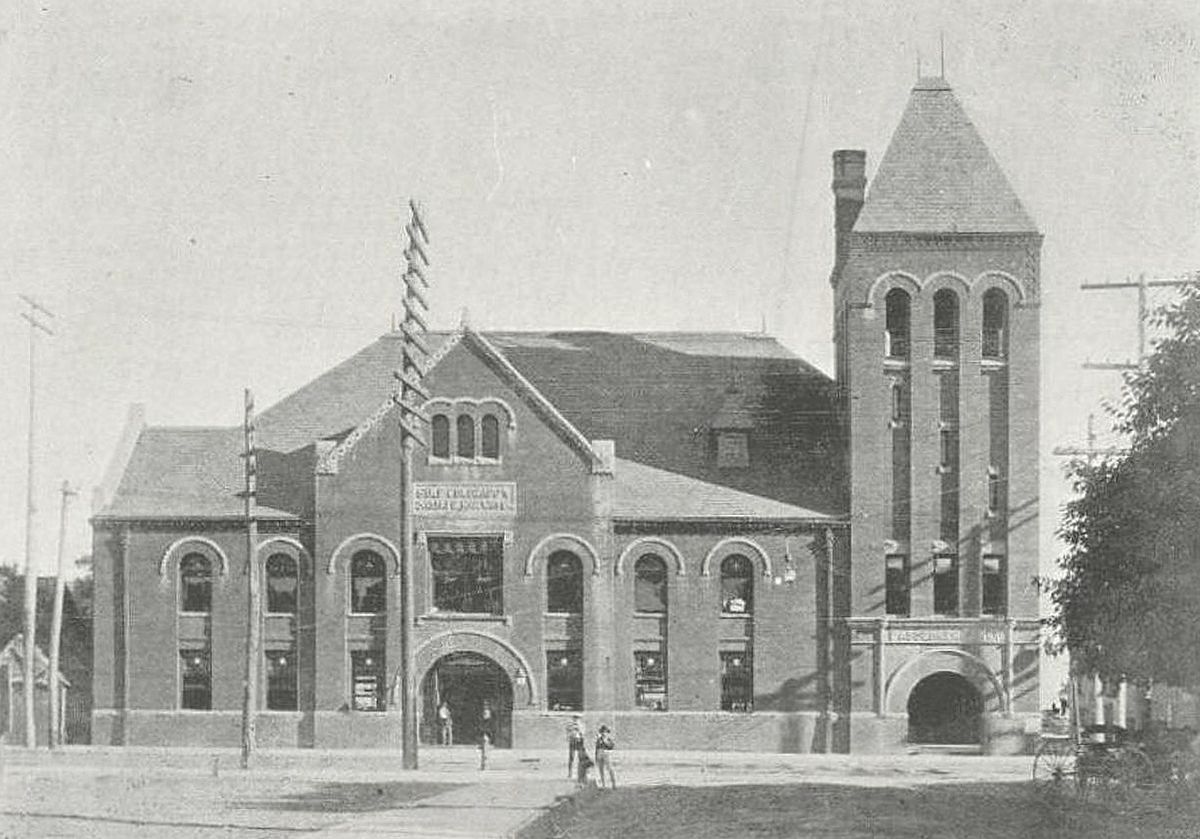
Seems like a good time to insert a photo of the Gulf, Colorado, and Santa Fe depot (when it was still in operation), behind which all this drilling activity was taking place:

santa-fe-depot_ca-1899_fire-dept-souvenir-bk_portalca. 1899, via Portal to Texas History

Military-style drills involving local civilians hadn’t really been done like this before, and news of this swept the country’s newspapers. It was a BIG story. Dallas became the city everyone copied. Cities all over the United States began their own drilling exercises, and Capt. Holliday was kept busy traveling around Texas to advise towns on how to establish such civilian units for themselves. There was a lot of marching in formation going on in April 1917.

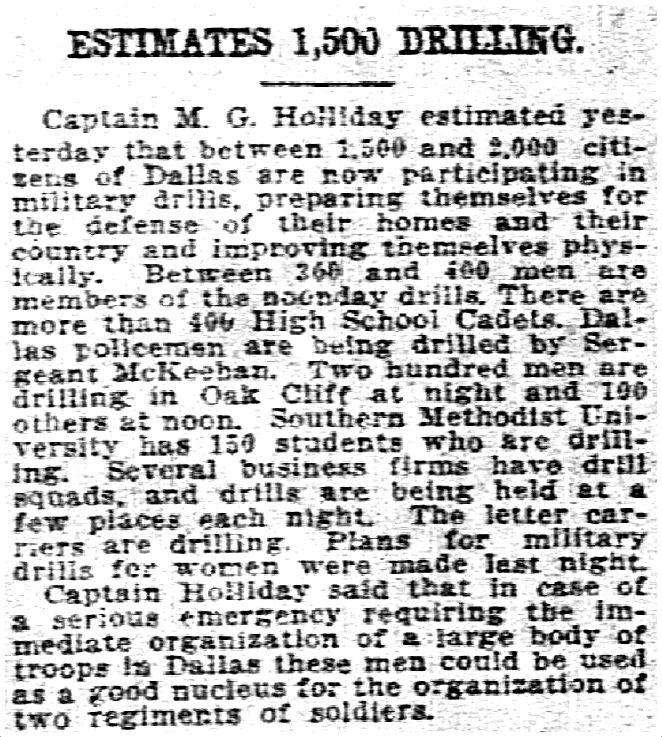
Two weeks in, drill-mania had taken over Dallas. It was estimated that 600 men were showing up daily for the downtown noon drills, and that many more — perhaps as many as 2,000 — had joined smaller groups and clubs which were drilling on their own all over town. There was a large contingent in Oak Cliff, lots of students in high schools and at SMU, policemen, letter carriers, businessmen, etc. There was even a suggestion that women should form their own groups. Any way you looked at it, the endeavor was a success (or at least fervently supported). Capt Holliday said that, should the need arise, a large body of troops could be immediately organized in Dallas — perhaps two regiments’ worth. 

This training lasted about a month, which seems like sufficient time for bank clerks and grocerymen and automobile mechanics and upholsterers to get the hang of doing whatever this was. By the spring of 1917, Dallas was prepared.

**

The April 1, 1917 Dallas Morning News article accompanying the photo above is transcribed here:

DALLAS BUSINESS MEN MOBILIZE FOR MILITARY TRAINING

First City in United States to Start New Drills in Rudiments of Soldier Knowledge

From Few Dozen the First Day to 600 or More Saturday, Shows Rapid Increase of Interest in the Noon Drills. Captain in U.S. Cavalry and Number of Non-Commissioned Officers Instructing Men and Rudiments of Knowledge of Soldier Life

Dallas enjoys the distinction of being the first city in the United States to inaugurate the new mobilization of business men for the purpose of learning the rudiments of military training. There were those who said it could not be done, but the movement has gotten under full swing and the attendance is increasing daily.

Oswin K. King, of the Evening Journal, originated the idea, and becoming enthused of the possibilities, Mr. King suggested the matter to Captain M. G. Holliday of the 12th United States Calvary. Captain Holliday at once took up the plan as suggested by Mr. King and agreed to supervise the work. 

For several days now, hundreds of Dallas business men have been in line on the spacious vacant property to the south of the Commerce Street station of the Santa Fe Railroad. The site is convenient to hundreds of business offices and not over five minutes’ walk from the skyscraper district.

That interest is increasing in the movement is evidenced by the number of business men who are enrolling. From a few dozen on Wednesday, last, to 400 on Thursday, and probably 200 more Friday and Saturday, shows that Dallas men are anxious to learn the rudiments of military training.

The idea is to teach the rudiments of close-order formation, including everything in what is known as the “Soldier’s School Without Arms.”

The instruction will continue indefinitely. Captain Holliday is assisted by several non-commissioned officers and civilian military experts.

*

WWI_noon-drills_dmn_032517DMN, Mar. 25, 1917 (click for larger image)

*

wwi_businessmen_noon-drills_dmn_041317DMN, Apr. 13, 1917

***

Sources & Notes

Top photo from The Dallas Morning News, April 1, 1917, sent to me by Julia Barton (thanks, JB!).

Photo of the Santa Fe depot is from a Dallas Fire Department publication from 1899, provided by the Dallas Firefighters’ Museum to the Portal to Texas History — more information is here.

More Flashback Dallas posts on the WWI era can be found here.

wwi_businessmen_noon-drills_dmn_040117_photo_sm

*

Copyright © 2023 Paula Bosse. All Rights Reserved.

East on Elm

elm-street_gentrys_city-of-dallas-websiteShouldn’t there be cars?

by Paula Bosse

There has been some heavy-duty editing to this post!

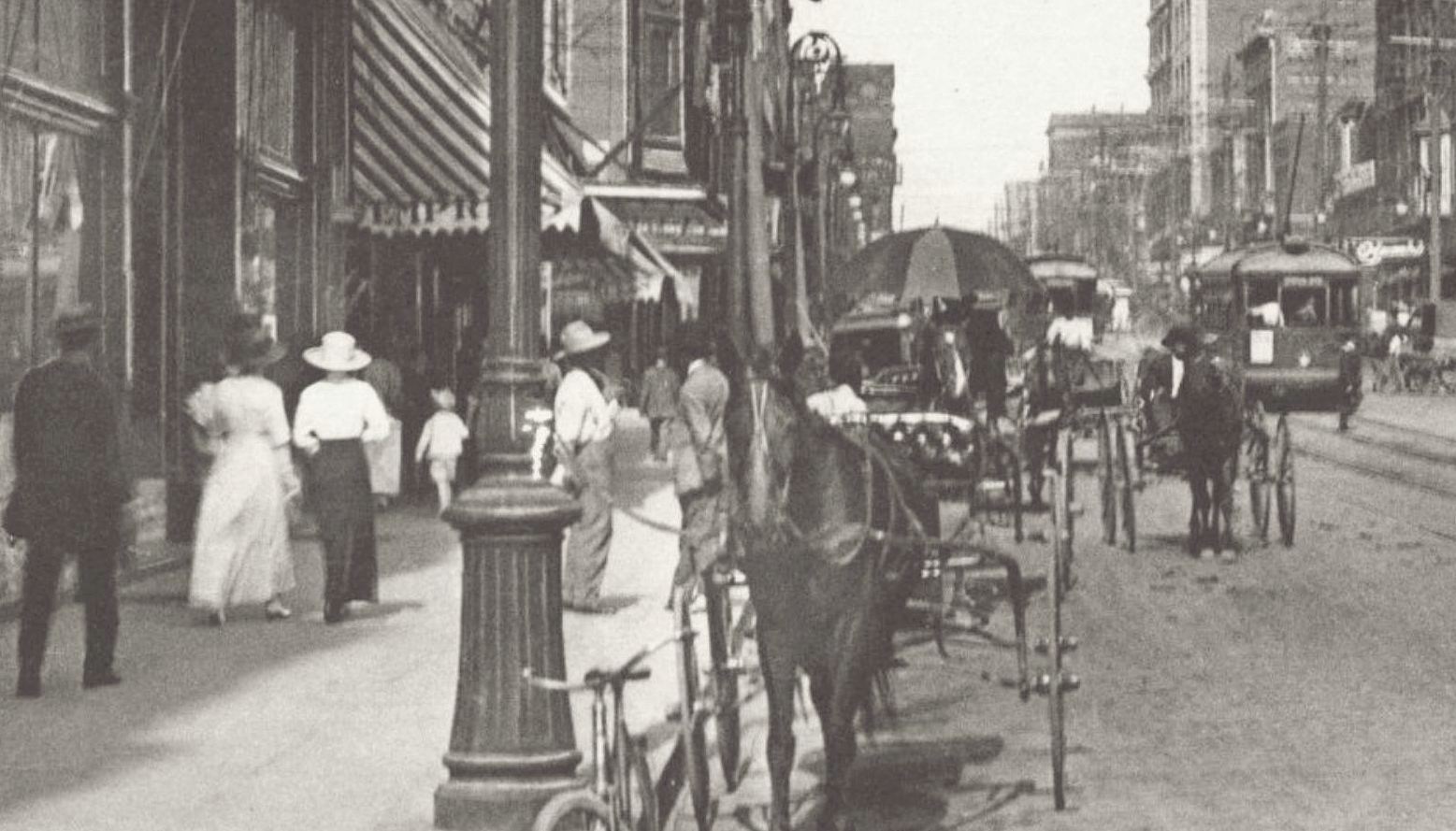
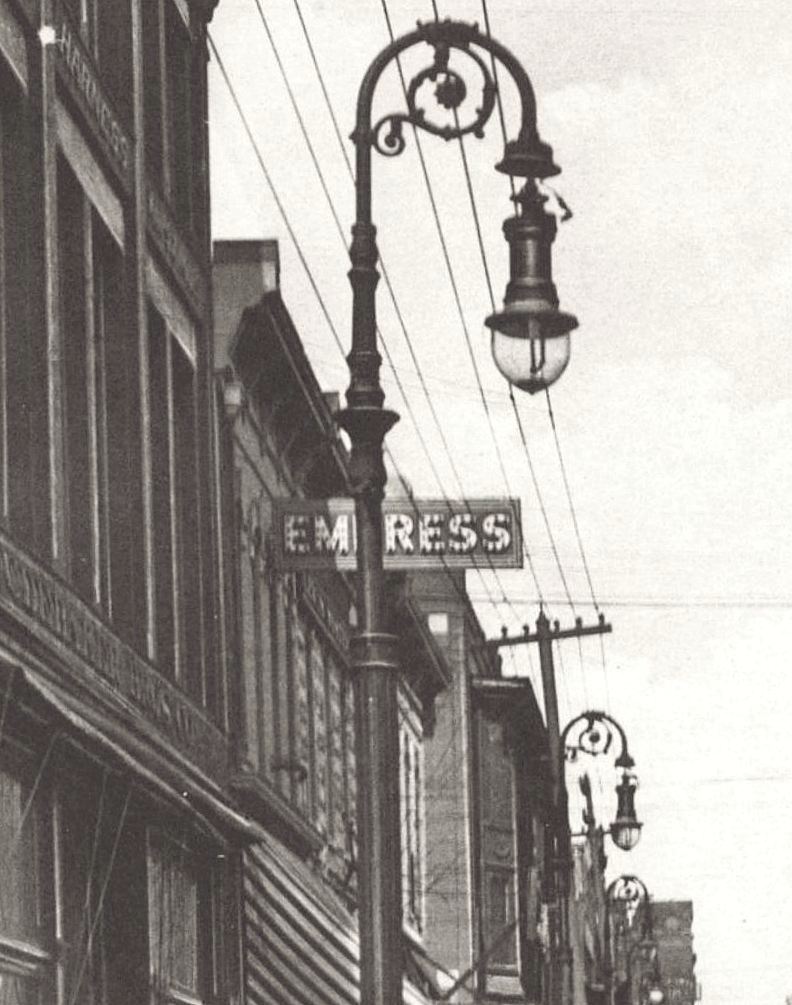
Here’s an interesting photo I stumbled across last night on the City of Dallas website. There wasn’t any information about it, but it appears to be a view to the east, taken from the 1400 block of Elm Street (where Exchange Place — originally Scollard Court — intersects). See what it looks like today on Google Street View here.

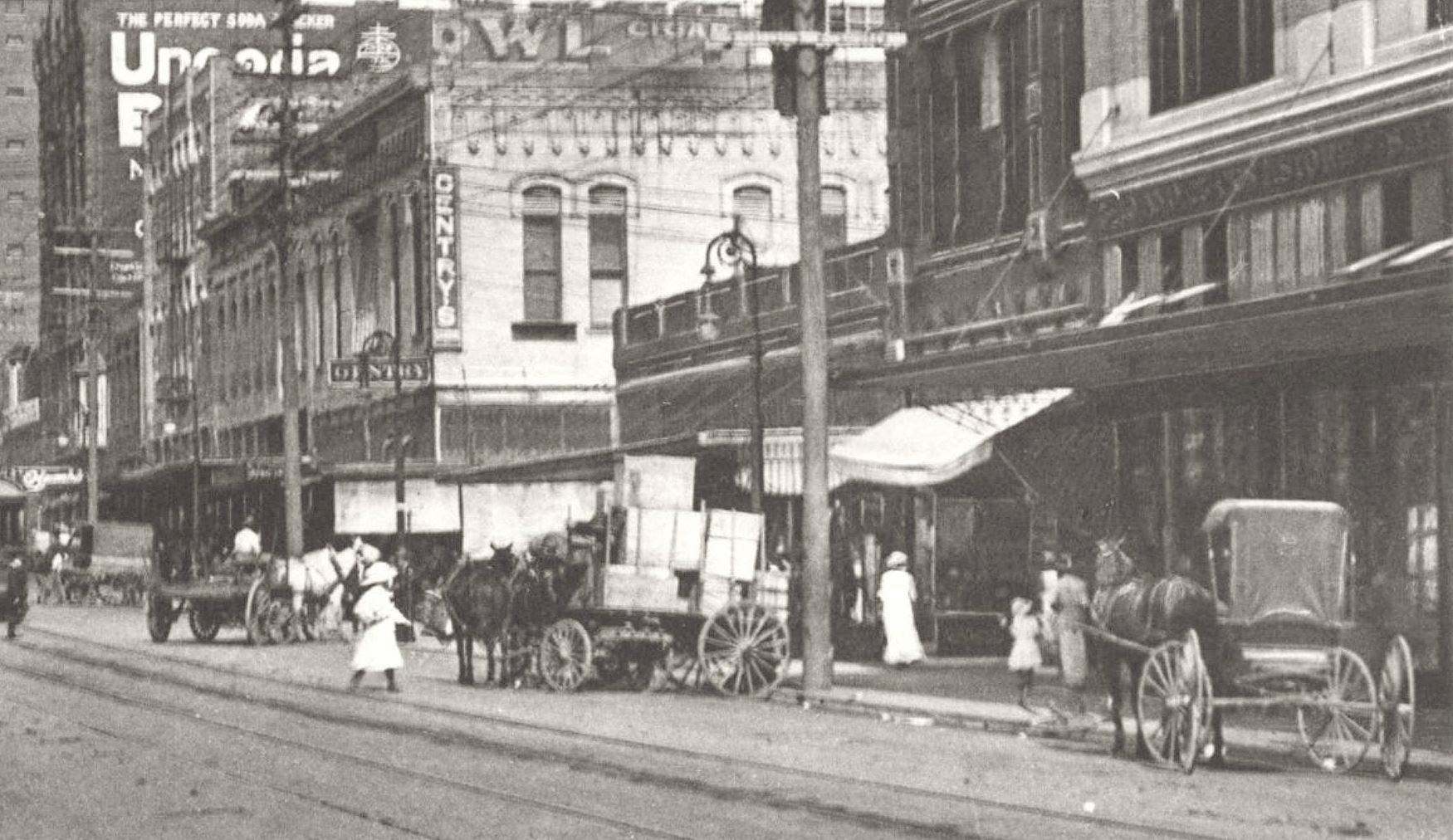
The main landmarks are what I call the Wilson Building Jr. (the tall dark building in the distance, located on Elm near Ervay), the Praetorian Building (the tall white building at the right, at Main and Stone), and L. W. Gentry’s photography studio in the middle of the photo at the right.

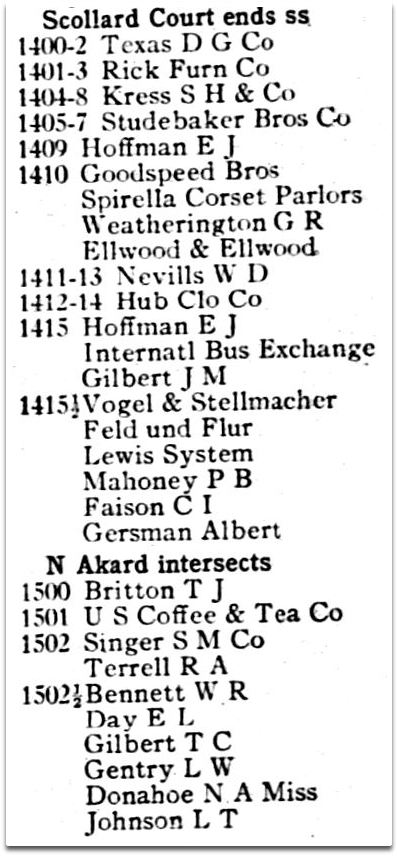
Gentry’s was upstairs at 1304 Elm from about 1904 until about 1911. In 1912, Gentry moved a block down the street to 1502 Elm, at Akard, where he took over the upstairs studio of photographer J. C. Deane. (I wrote about Deane and this building here.)

There is a sign reading “Empress” at the left. That was the Empress Theatre, which was at 1409 Elm from about 1912 to 1915. Directly across the street is a 3-story building with a sign for the Spirella Corset Parlors at 1410 Elm.

Back to the left, across the street, is the hard-to-read sign for Studebaker Bros. of Texas at 1405 Elm. Directly across the street is the new Kress Building (you can see part of the distinctive “K” from the company’s logo at the top right). Kress was at 1404-8 Elm — the building was erected in 1911 and opened that same year in November.

The “new Wilson Building” was also built in 1911, and Gentry’s took over the space above T. J. Britton’s store at Elm and Akard in 1912. And all these places appeared in the 1912 directory (except for the Empress, which was open in 1912 but might not have made the listing deadline). So I’m going to guess that this photo is from 1912 or 1913.

gentry_1912-directory_1502-ELM1912 Dallas directory, Elm Street

But this photo looks older than 1912. So many horses! The only vehicle not pulled by a horse in this photo is the streetcar. Where are the cars? In 1911, Dallas was pretty car-crazy — you’d expect to see at least ONE horseless carriage in there somewhere. It doesn’t sound like a lot, but in 1911, there were about one thousand automobiles registered in Dallas County, and the city was quickly becoming a major distribution hub for car companies (“Dallas Automobile Center of the Southwest,” Dallas Morning News, Dec. 31, 1911). (Check out this photo from 1911 taken a couple of blocks away. The only animals seen are actually riding IN an automobile!) Were cars banned from Elm Street? Seems unlikely. …I’m pretty sure I’m overthinking this.

(Ironically enough, the full entry for Studebaker Bros. which appears in the 1912 directory reads: “Carriages, wagons, buggies, street sprinklers, harness.” Nary a mention of an automobile. That arrived the following year.)

It might just be that I’ve had a very stressful couple of weeks, and it was really late when I originally wrote this. But I’ve had a refreshing night’s sleep, and I’m still fixating on this car thing. (Shouldn’t there be cars on Elm Street in 1912?) So I’m just going to stop looking at this photo, assume that it was snapped when all cars in the area were just out of frame, and wrap this thing up.

**

Here are a few zoomed-in details.

elm-street_gentrys_city-of-dallas-website_det1

elm-street_gentrys_city-of-dallas-website_det2

elm-street_gentrys_city-of-dallas-website_det3

I love these decorative lamp posts (more examples can be seen in a post I really enjoyed writing, “The Grand Elm Street Illumination — 1911”).

***

Sources & Notes

Photo found on the City of Dallas website, here (banner photo).

I have edited this after seeing the reader comment below. I realized that I was basing the original location on Lemuel W. Gentry’s first studio, which was a block or two west from the one seen in the photo. (I kept saying to myself, “That building looks so much like the one the Deane studio was in.” Because… it was the exact same building!) Thanks, NotBob.

Here’s a closer shot of Gentry’s studio around 1915 — on the southeast corner of Elm and Akard, right across the street from the new Queen Theatre. (This photo originally appeared in this post.)

queen_cinema-treasures

NOW we see cars!

elm-street_gentrys_city-of-dallas-website_sm

*

Copyright © 2022 Paula Bosse. All Rights Reserved.

Cedar Crest, L. O. Daniel’s Country Home

daniel-l-o_cedar-crest_flickr_coltera
Still standing on West Jefferson Blvd. in Oak Cliff

by Paula Bosse

While looking for something on W. Lee “Pappy” O’Daniel (former governor and U.S. senator), I came across the image above, which I had mistakenly labeled “O’Daniel” rather than “Daniel.” It had nothing at all to do with W. Lee O’Daniel but, instead, showed a house belonging to L. O. Daniel. Who was L. O. Daniel? I’d never heard of him.

Lark Owen Daniel Sr. (1866-1927) was a wealthy businessman who made big money from… hats! He sold a lot of hats through his wholesale millinery company, and he was also involved in some spectacular real estate dealings (a newspaper article in 1907 mentioned he had just sold a couple of lots on Elm Street for $30,000 — if you believe online inflation calculators, that would be the equivalent of almost a million dollars in today’s money!). As a proven earner of big bucks, he was also the first president of the Dallas Chamber of Commerce.

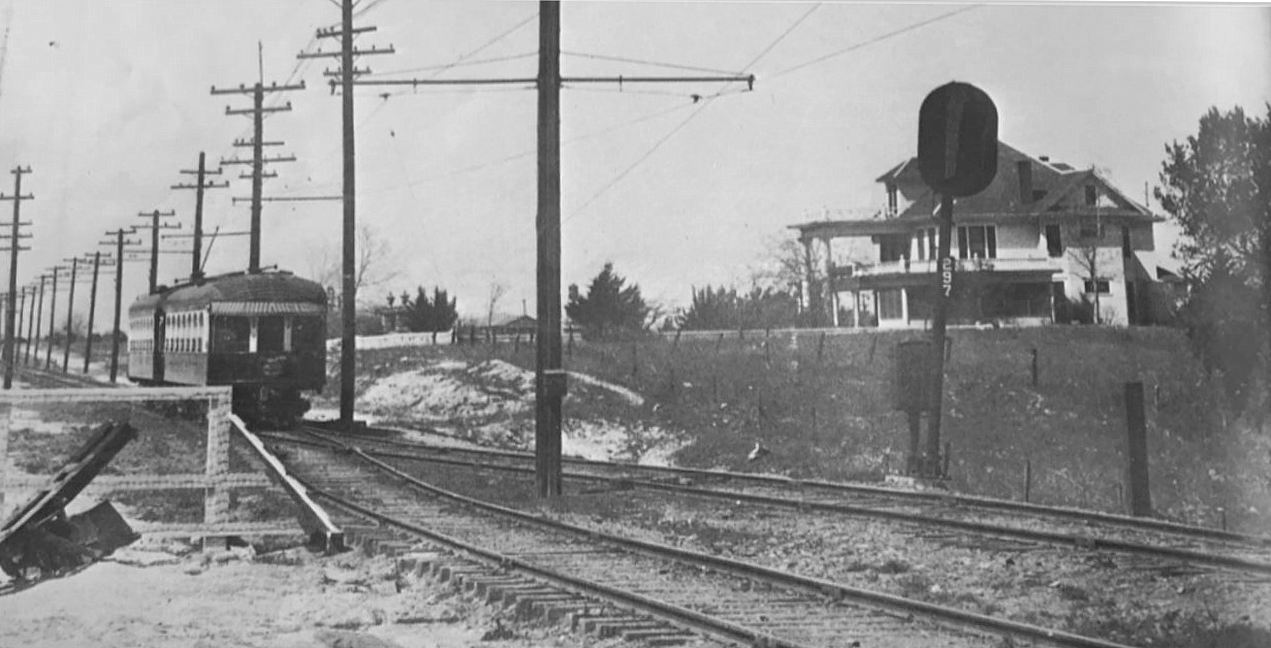
Even before that huge real estate sale, Daniel was swimming in hat-cash. In 1901 he bought 27 acres near the Fort Worth Interurban rail line and built a 5,000-square-foot, 3-story, 15-room Victorian mansion. He named the house “Cedar Crest.” I don’t know if it was technically in Oak Cliff at that point, but it was definitely outside the Dallas city limits. This is the way Daniel’s address appeared in the 1910 city directory:

daniel-l-o_directory_19101910 Dallas directory

And here’s a photo of an interurban trundling along, uncomfortably close to the house:

cedar-crest_interurban_oak-cliff-advocate

The luxurious splendor of the somewhat isolated Cedar Crest apparently emitted a high-pitched siren-call which was frequently heard by area bandits: it was burgled quite a few times (at least 3 times in one 12-month period). After one incident in which a burglar wandered through the house in the dead of night and woke Mrs. Daniel as he stood over her as she lay in bed, Oak Cliff police said that they found no trace of the trespasser but saw where he had hitched his horse and get-away buggy, out back in the orchard. In another incident a few months later, Mrs. Daniel — who had been alerted by an employee that the family car was about to be stolen from the “automobile house” — ran out to the garage armed with a revolver and fired three shots at the thieves, scaring them away (I don’t think she was attempting to fire warning shots — I think she fired AT them). This may seem extreme, but the newspaper noted that the value of the car (in 1915) was an eye-watering $4,000 (more than $110,000 in today’s money!). I don’t know where Mr. Daniel was during all this, but Mrs. Daniel was not about to let that car go anywhere!

One summer, the Daniels rented out Cedar Crest while they vacationed elsewhere. The ad in the paper specified that only “responsible parties without small children” were welcome. I hate to keep harping on about the money, but a two-month stay at L. O.’s “beautiful country home” would set some responsible childless person/s back a cool $300 (almost $9,000 in today’s money). (Who would pay such an exorbitant amount of money to stay in an un-airconditioned house in North Texas during the height of the summer?)

daniel_house-for-rent_summer-1912
Summer 1912

L. O. Daniel died in Feb. 1927. His business empire was closed down, and the large Cedar Crest swath of land he owned was put up for sale in 1929.

daniel_cedar-crest_april-1929April 1929

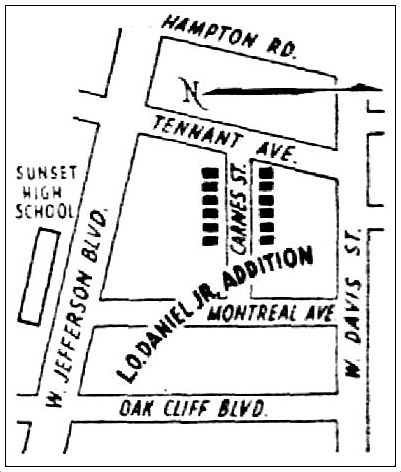
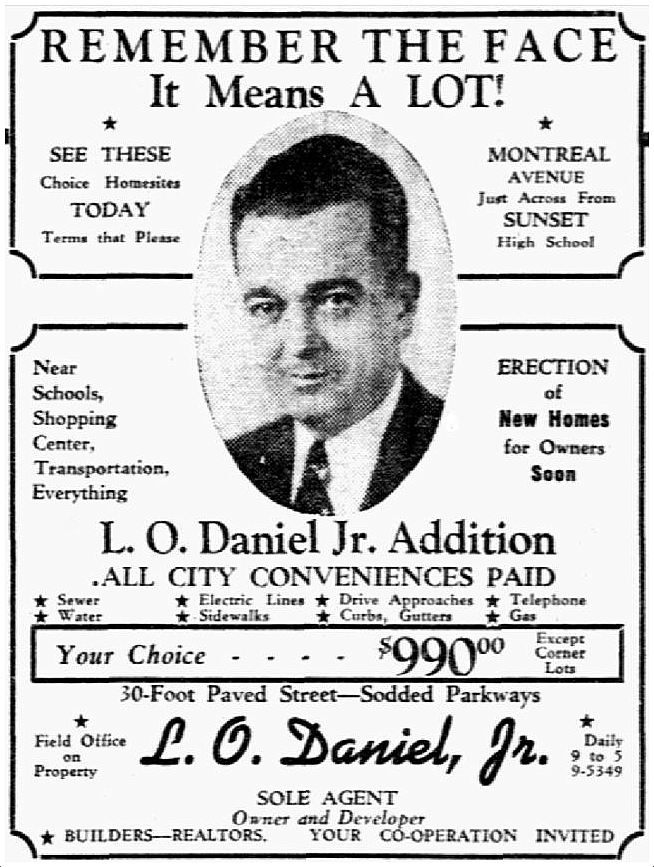
I’m not sure what happened with that specific transaction, but his son, L. O. Daniel Jr., ended up breaking that land up into parcels and selling residential lots as part of the “L. O. Daniel Jr. Addition,” beginning in about 1940.

daniel-addition_june-1940_mapJune 1940

daniel-addition_nov-1940November 1940

*

This beautiful house is — somehow — still standing. It is located at 2223 West Jefferson in Oak Cliff, facing Sunset High School (see it on Google Street View here). Over the years the mansion fell into disrepair, but in the early ’80s the house was restored by two men — Martin Rubin and Earl Remmel — and it received historical landmark status in 1984. Cedar Crest was purchased a few years ago and has gone through additional restoration/renovation — it currently serves as the impressive law offices for the firm of Durham, Pittard & Spalding.

There are lots of photos online. View some on the Zillow site — which show what it looked like before it was recently updated — here. See some really beautiful photos on CedarCrestOakCliff.com, here. I particularly love this one:

cedar-crest_entry_cedar-crest-oak-cliff-dot-com

**

It shouldn’t have been so hard to find a photo of L. O. — but this is about all I could find. Followed by a hats-hats-hats! ad.

daniel_l-o_photo

daniel_oct-1915_adOct. 1915

***

Sources & Notes

Postcard at top (circa 1909) found a few years ago on the Flickr stream of Coltera (not sure if he’s still posting there — if not, that’s a shame, because he had amazing things!).

Photo of the interurban from the 2017 Oak Cliff Advocate article “Law Firm Renovates Historic Mansion on Jefferson” by Rachel Stone (click the link at the bottom of the article to read a piece published in Texas Lawyer which includes information on specific restoration/renovation work done on the house).

There are so many great homes in the L. O. Daniel area — look at a whole bunch on the L. O. Daniel Neighborhood Association website here.

Also recommended is the 2019 Candy’s Dirt article “What’s in a Name For L. O. Daniel?” by Deb R. Brimer.

daniel-l-o_cedar-crest_flickr_coltera_sm

*

Copyright © 2022 Paula Bosse. All Rights Reserved.

Autos, Autos Everywhere, and Not a Place to Park — 1971

cabell-fed-bldg_flickr_wayne-hsieh
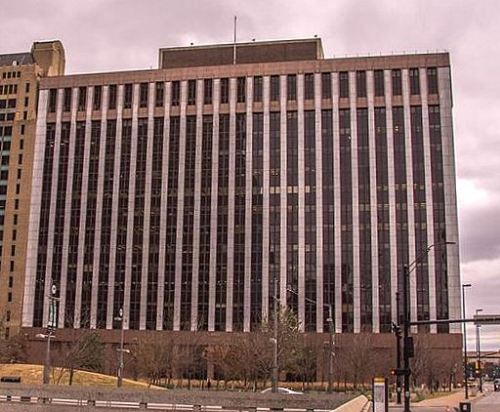
Earle Cabell Federal Bldg. / Wayne Hsieh, Flickr

by Paula Bosse

The other day I was looking for some information on the 1971 opening of the new 16-story Federal Center at 1100 Commerce Street (the name was changed to the Earle Cabell Federal Building in late 1973 to honor the former Dallas mayor and U.S. congressman). I came across the Dallas Morning News article “Center Augments Parking Woes” by Earl Golz (DMN, Jan. 12, 1971) which had a couple of surprising tidbits. The new federal building — which was expected to be occupied by more than 5,000 workers — had a grand total of 59 underground parking spaces. …Fifty-nine. FIVE-NINE. Let that sink in. This was a brand-new building. It’s not like they squeezed those pitifully few parking spaces under an existing building. This was in the plans. That’s a lot of car-pooling.

Three years earlier, in 1968, One Main Place opened at 1201 Main — it was more than twice as big as the Federal Building. When it opened, it was noted that there were 800 underground spaces (with a planned-but-never-realized massive underground parking garage for 4,000 cars, to go along with the never-realized Two Main Place and Three Main Place complex). But, somehow, by 1971, One Main Place’s parking had decreased to a mere 400 spaces, all of which were completely filled daily. I have images of panicky office workers constantly circling blocks in search of a place to park. Stories were rampant that parking-lot attendants were reserving weekly and monthly spaces in pay lots for exorbitant under-the-table cash transactions. 

How did this happen? Who would design such large modern buildings with such woefully inadequate parking? Were “interested parties” strong-arming architects or city planners to skimp on the parking? Is there such a thing as a big “parking-lot lobby”? (What am I saying? I’m sure there is.) Ever wonder why Dallas kept tearing buildings down in the early ’70s and replacing them with pay parking lots? I’m sure there were many reasons, but I saw more than one newspaper mention that parking lots (not garages, mind you — just lots) could be more profitable than aging buildings. It’s always seemed odd to me that there were (are) so many surface parking lots downtown, rather than multi-story garages. Imagine how much more money parking lot operators would be making with garages. Not that multi-story garages are in any way more desirable, aesthetically, but why didn’t land developers build garages which could accommodate so many more paying customers than these puny little lots? Some lot operators insisted that it benefitted everyone to have these lots — insisting that the buildings which once stood on the land were old and ugly eyesores which needed to be torn down, and that these lots were basically just placeholders until a fat-cat developer forked over multi-millions to build something tall and beautiful on it.

Was the lack of underground spaces in these two new buildings intentional? This would have been a weird way to force people to use public transportation. It might even have been a bit of strain on public transportation — the Dallas Transit System was already losing the fight against car-culture and downtown workers who lived in suburbia.

In the early ’70s, Dallas and Fort Worth were both experiencing a severe lack of downtown parking. In 1970 there had been a major excavation to build underground parking below the Old Red Courthouse — it was probably helpful, but it was just a band-aid on a much bigger problem.

A few of the city’s proposals to deal with these parking woes:

  • Dissuade people from bringing their cars downtown by significantly raising fees for parking lots and parking meters and to cut the time limit for parking (quickly approved by the City Council)
  • Build satellite lots outside the Central Business District where people could park and then bus into town (“Park and Ride” stations began, shakily, in 1973)
  • Investigate the use of “people-movers” in varying degrees of sci-fi futurism

As far as “people-movers,” there were several automated transportation systems on drawing boards around the country at the time, a couple of which were being developed in the Dallas-Fort Worth area. There was the electrically powered monorail-like AirTrans — a joint project of Vought Aeronautics of Dallas and Varo Inc. of Garland — and there was the similar but less well-known Sky-Kar of Fort Worth. AirTrans was very successful and was first adopted by DFW Airport, but Sky-Kar seems to have fizzled out after the death of the company’s president in the early ’70s. 

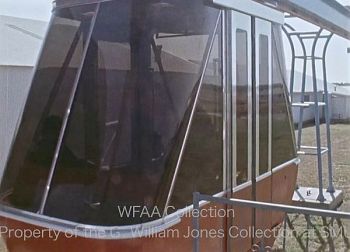
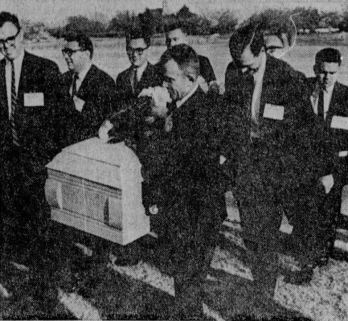
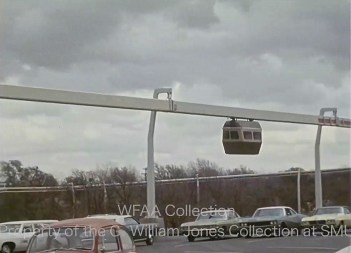
One of Sky-Kar’s salesmen was Paul Groody (he can be seen being interviewed in one of the kars in a WFAA clip from October 1970 here, with additional kar-footage here). Groody (who, in this interview, is a couple of months from full Asimov muttonchops) had, in the previous decade, gained some national notoriety as the funeral director who had been given the task of driving from Fort Worth to Dallas to pick up the body of Lee Harvey Oswald and “prepare” him for burial — because there were no pallbearers, he had to scrounge for volunteers among the reporters covering the interment. Because I may have no other opportunity to post this, below is the cute and compact Sky-Kar Transivator prototype from 1970. …Sky-Kar, we hardly knew ye.

sky-kar_wfaa_SMU_oct-1970WFAA Collection, Jones Collection, SMU
Below, Paul Groody, Sky-Kar rep (1970), and Paul Groody, funeral director for Lee Harvey Oswald’s burial (1963) (he is seen partially obscured, all the way at the back right, wearing glasses).

sky-kar_paul-groody_wfaa_SMU_oct-1970WFAA Collection, Jones Collection, SMU
oswald-funeral_FWST_1963
Fort Worth Star-Telegram

Equal time: see the Vought/Varo AirTrans prototype running on its test track in Garland in December 1970 here, along with interviews from company reps here.

airtrans-prototype_garland_wfaa_SMU_dec-1970WFAA Collection, Jones Collection, SMU
Hopes were that these people-mover systems would be used not only in airports but throughout the Central Business District and on sprawling college campuses, etc. Forget the flying cars. I’m waiting for my monorail. (And it’s probably still best to leave your automobile at home if you’re heading downtown.)

***

Sources & Notes

Top photo, “Earle Cabell Federal Building and Courthouse” (2019) by Wayne Hsieh — found on Flickr, here. (I have cropped it.)

Screenshots from Channel 8 news film posted on YouTube, from the WFAA Collection, G. William Jones Film and Video Collection, Hamon Arts Library, Southern Methodist University.

cabell-fed-bldg_flickr_wayne-hsieh_sm

*

Copyright © 2022 Paula Bosse. All Rights Reserved.

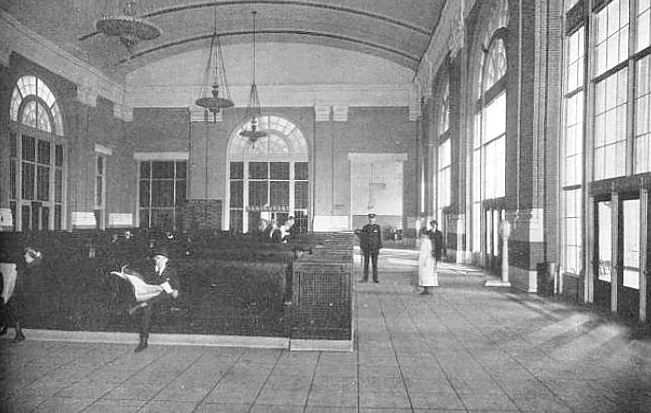
Union Station Interiors — 1916

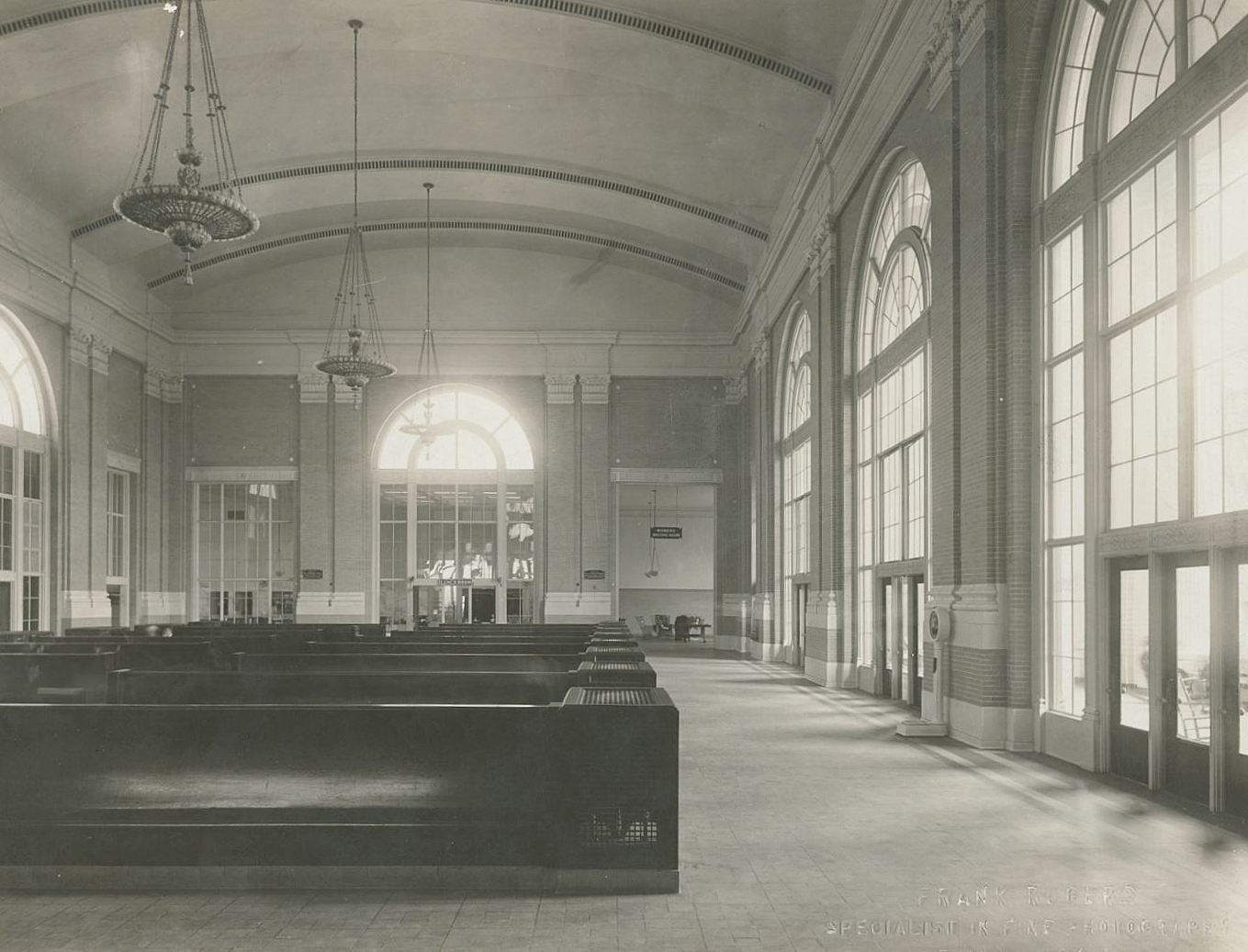
union-station_interior_atlantic-terra-cotta-co-coll_UT_frank-rogersA beautiful place to wait…

by Paula Bosse

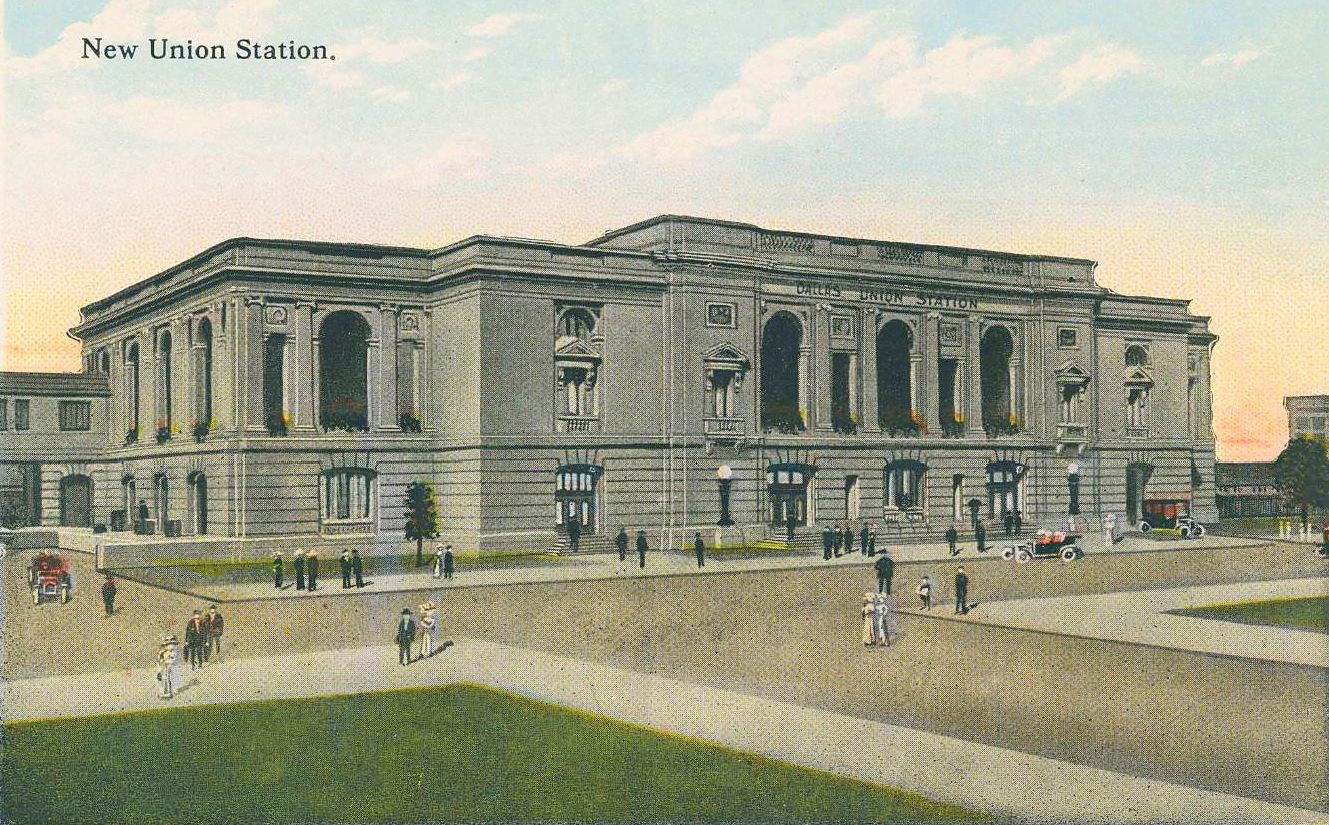
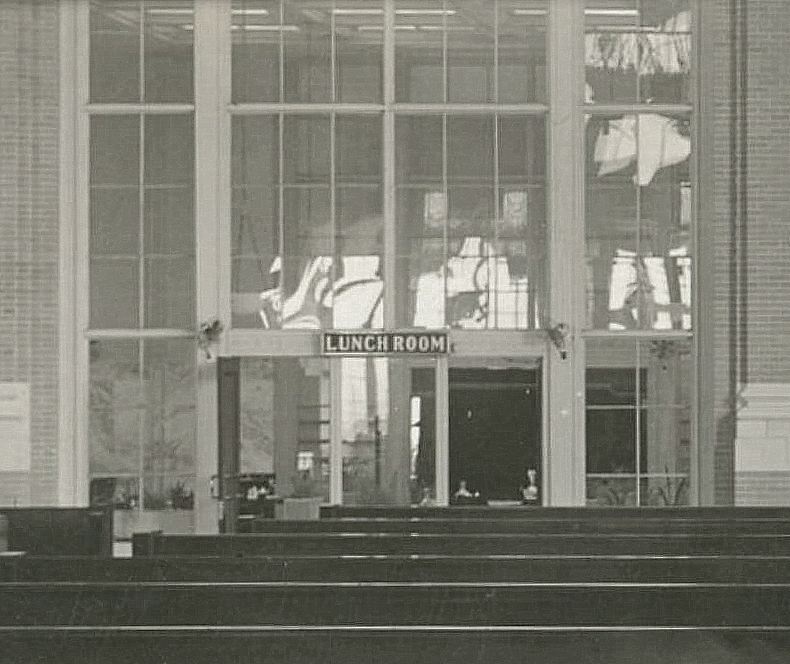
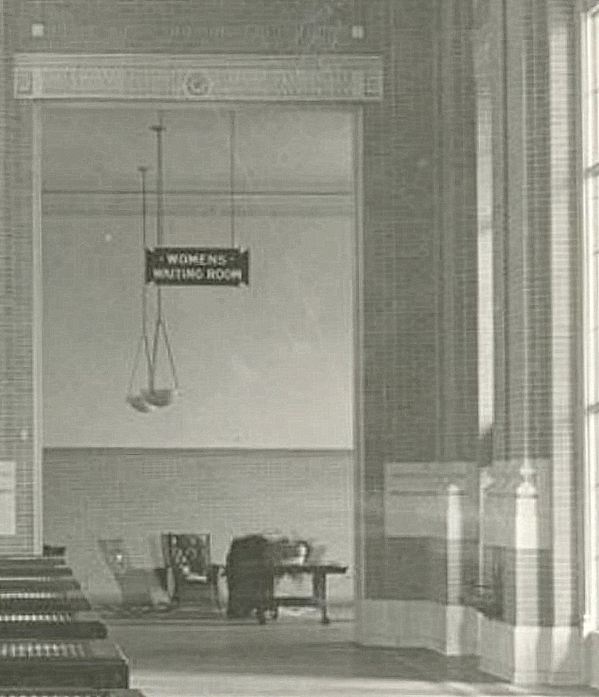
Above, a photo of the new “Union Depot,” completed in 1916 and, thankfully, still standing more than a century later. Below, a couple of details of the Lunch Room and the Women’s Waiting Room.

union-station_interior_atlantic-terra-cotta-co-coll_UT_frank-rogers_lunch-rm

union-station_interior_atlantic-terra-cotta-co-coll_UT_frank-rogers_womens-wtg-rm

The same view as the top photo, but from 1922:

union-station-interior_1922

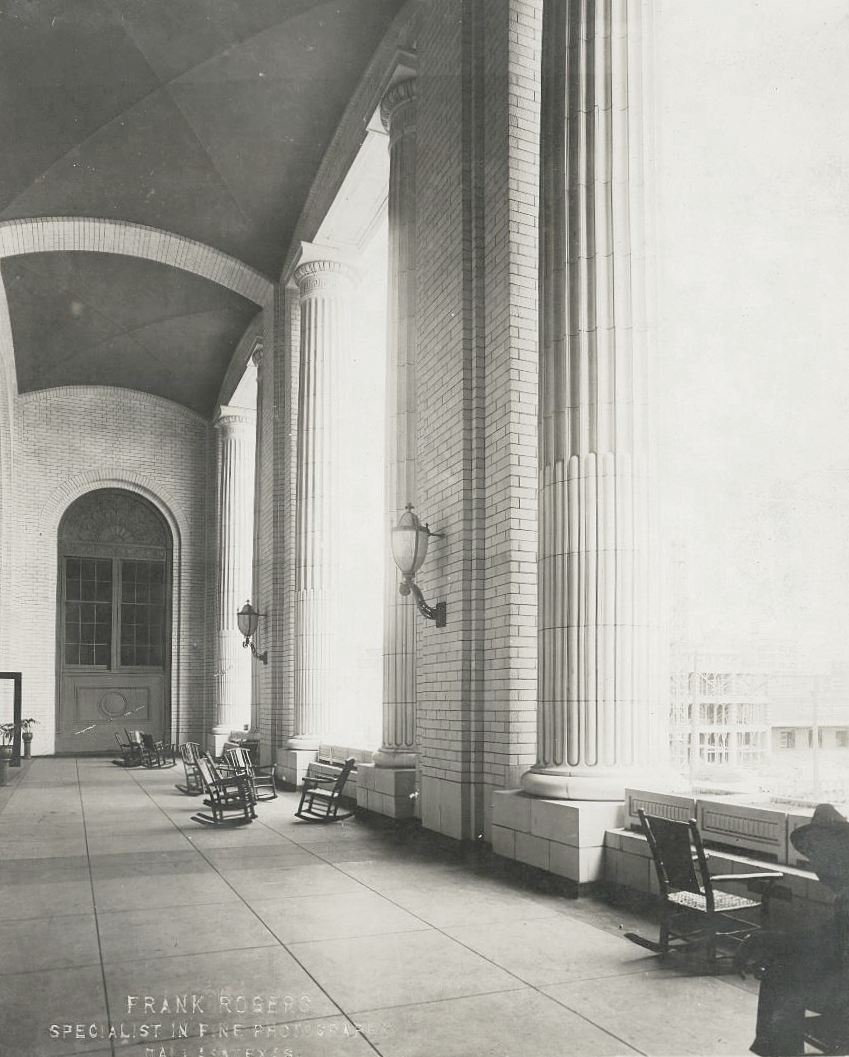
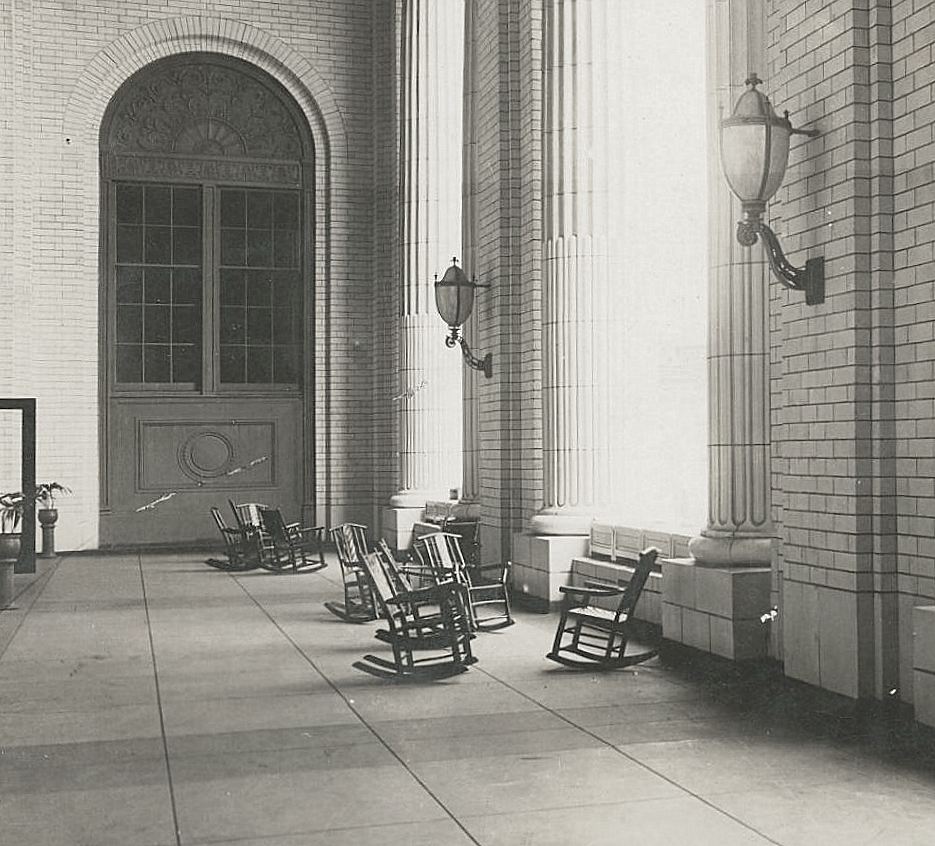
Back to 1916, in what I gather is a sort of interior/exterior shot showing another place to pass the time. What better, quaint way to wait for a train and take in a great, slightly elevated view, than in a rocking chair.

union-station_rocking-chairs_atlantic-terra-cotta-co-coll_UT_frank-rogers

And a slight zoom-in:

union-station_rocking-chairs_atlantic-terra-cotta-co-coll_UT_frank-rogers_det-1

Imagine those rocking chairs up there in those archways, between the columns.

union-station_dallas-city-of-the-hour_ca-1916_SMU

***

Sources & Notes

The two photos from 1916 (by Frank Rogers) are from the Atlantic Terra Cotta Company Architectural records and photographs, 1914-1941, Architectural Terra Cotta, Alexander Architectural Archives, University of Texas Libraries, The University of Texas at Austin — more info on these photos is here and here

A couple of other images of the new Union Station can be seen in these Flashback Dallas posts:

union-station_interior_atlantic-terra-cotta-co-coll_UT_frank-rogers_sm

*

Copyright © 2022 Paula Bosse. All Rights Reserved.

Valentine’s Day Wishes from Dallas Railway — 1949

valentiines-day_dallas-railway_dallas-mag_feb-1949

by Paula Bosse

Dear Mr. and Mrs. Dallas:

You ride with us the long year through,

You smile through rain or shine,

That is why we’re picking you

To be our Valentine!

Love and kisses, Dallas Railway & Terminal Company

***

Sources & Notes

Ad is from the February 1949 issue of Dallas magazine.

valentiines-day_dallas-railway_dallas-mag_feb-1949_sm

*

Copyright © 2022 Paula Bosse. All Rights Reserved.

Two Men, Two Steeds, Two Derbies: A Nice Ride Through City Park — 1907

city-park_horseback_postcard_1907_a

by Paula Bosse

Out for a leisurely ride through the park. Have derby, will travel. 

***

Sources & Notes

This real-photo postcard from January, 1907 was addressed to 19-year-old Gussie Holland, then studying in Maryland. Gussie was the daughter of the Dallas publisher and former mayor, Franklin Pierce Holland. Found on eBay.

city-park_horseback_postcard_1907_a_sm

*

Copyright © 2022 Paula Bosse. All Rights Reserved.