Flashback : Dallas

A Miscellany: History, Ads, Pop Culture

Category: 1940s

Oak Cliff’s Star Theatre — 1945-1959
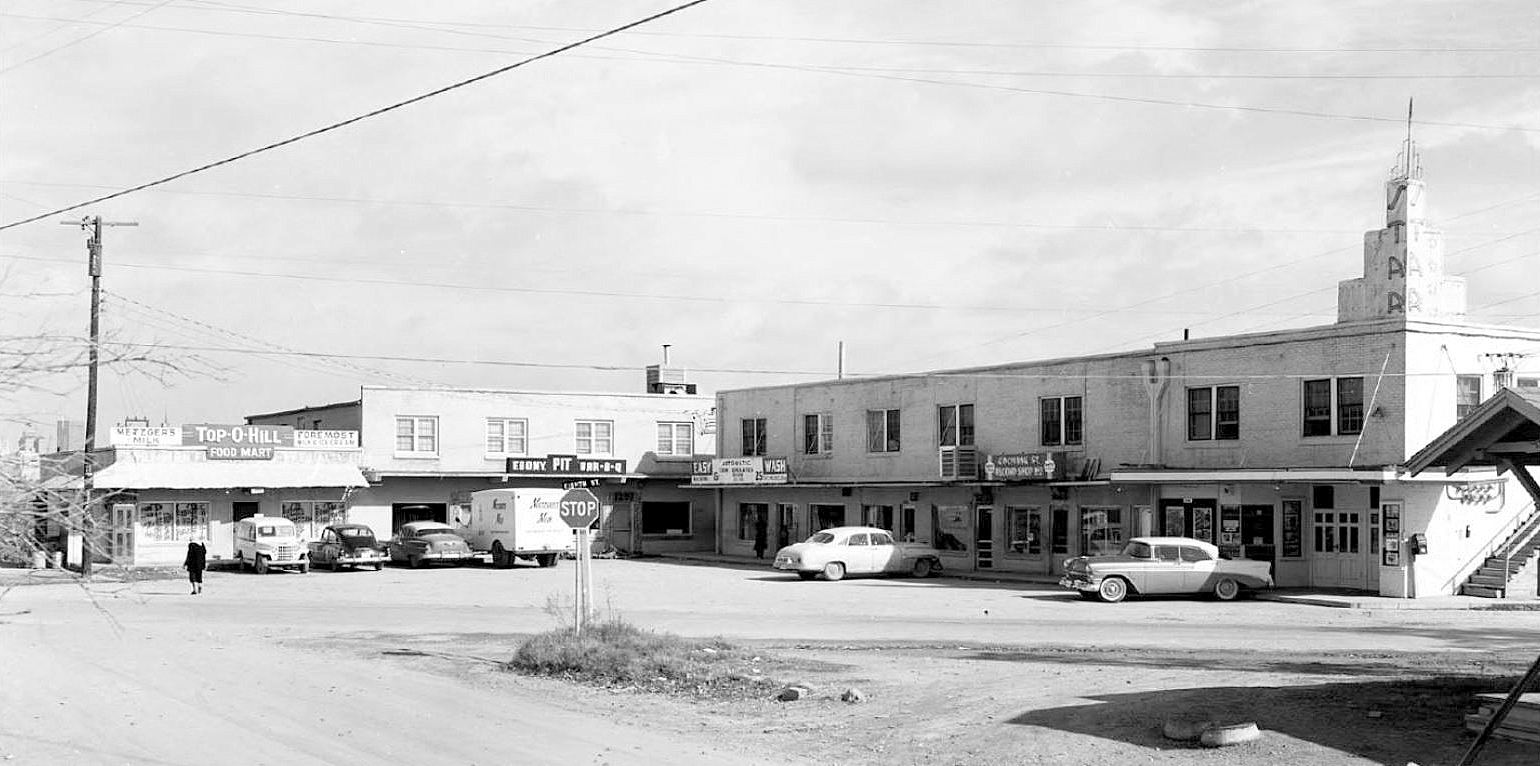
star-theatre_troy-sherrod-hist-dallas-theatres_DPLShow Hill, with the Star Theatre at right

by Paula Bosse

This is one of those photographs I could stare at all day long. It shows a shopping area in East Oak Cliff at the intersection of E. Eighth Street and N. Moore Street — this part of Oak Cliff was originally settled as a freedman’s town, and this photo shows an area between the Tenth Street Historic District and The Bottoms (or The Bottom) neighborhood (see a great map, here).

When these buildings were built in 1945 by I. B. Clark, it was an exclusively African-American part of Dallas. The anchor of this strip (which occupied what was described as both the 300 block of N. Moore and the 1400 block of E. Eighth) was the Star Theatre, which was, according to Mr. Clark, the only movie house for black customers in Oak Cliff.
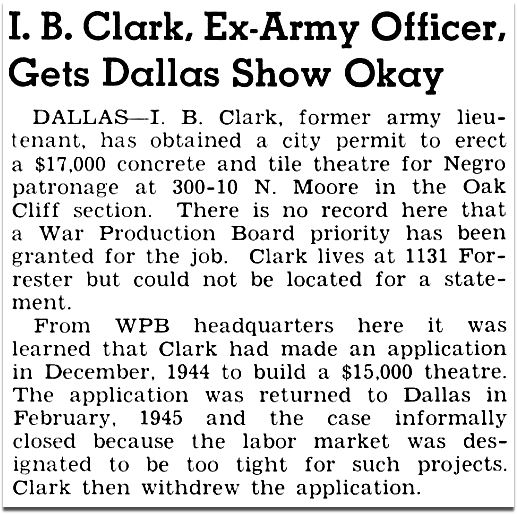
star-theatre_boxoffice_042845
Boxoffice, April 28, 1945

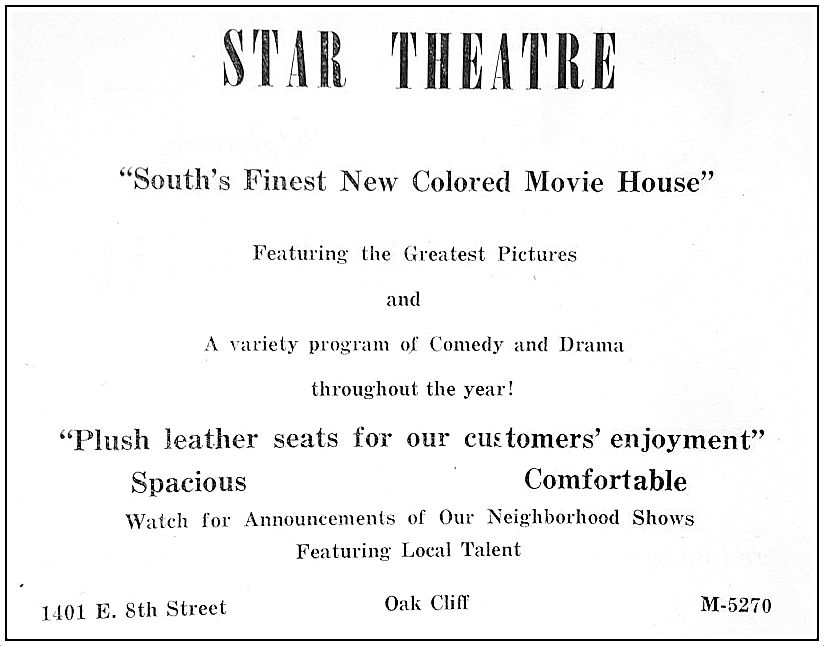
star-theatre_oak-cliff_negro-directory-1947-48_adDallas Negro Directory, 1947-48

I. B. Clark was a white businessman who lived on a ranch in Cedar Hill; he had owned the Southern Fireworks Company before the war and had frequently battled with Dallas lawmakers about the constitutionality of banning the selling and shooting of fireworks within the city limits.

In the undated photo above, businesses in the retail strip are the Top-O-Hill Food Mart, the Ebony Cafe (Pit Bar-B-Q), the Easy-Wash laundromat, the second location of the Cochran Street Record Shop, the Star Theatre, and hotel apartments.

This hub of businesses was popular with neighborhood residents, who referred to this area as “Show Hill” (for the picture show). I stumbled across a really wonderful 2018 oral history of Margaret Benson, who, in 1944, moved with her family to Dallas and attended N. W. Harllee Elementary School and both Lincoln High School and Madison High School. She describes these shops and says that whenever black entertainers such as Dinah Washington or Sister Rosetta Tharpe came to town, they frequently stayed in the apartments above these businesses, as hotel accommodations for African Americans were few and far between. (I loved the entire recording of Mrs. Benson reminiscing about living for most of her life in this area of Oak Cliff — the part where she specifically talks about “Show Hill” is at the 8:25 mark in the recording at the link above.)

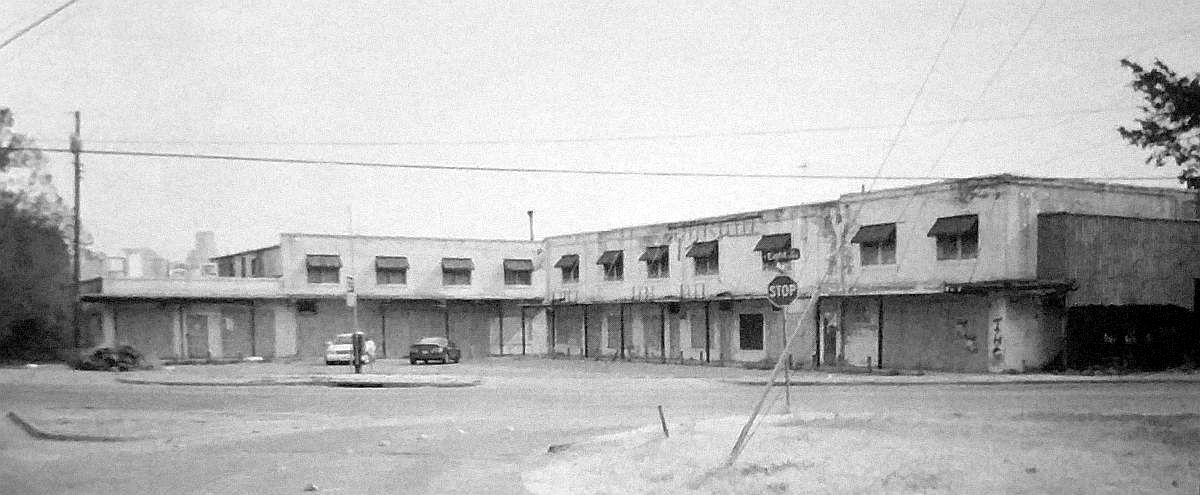
According to Dallas movie theater historian Troy Sherrod, the Star closed in 1959. Over time the area eventually declined and the remaining businesses closed. The strip, which was looking pretty down-at-its-heels in the 1990s, was demolished around 2000. The photo below shows the once-vibrant strip in its later days. (Three more photos, from 1999, can be found here — the addition of more apartments (the “Ebony Hotel Annex”) can be seen in the third one.)
star-theatre_mark-doty_lost-dallas
via Lost Dallas by Mark Doty

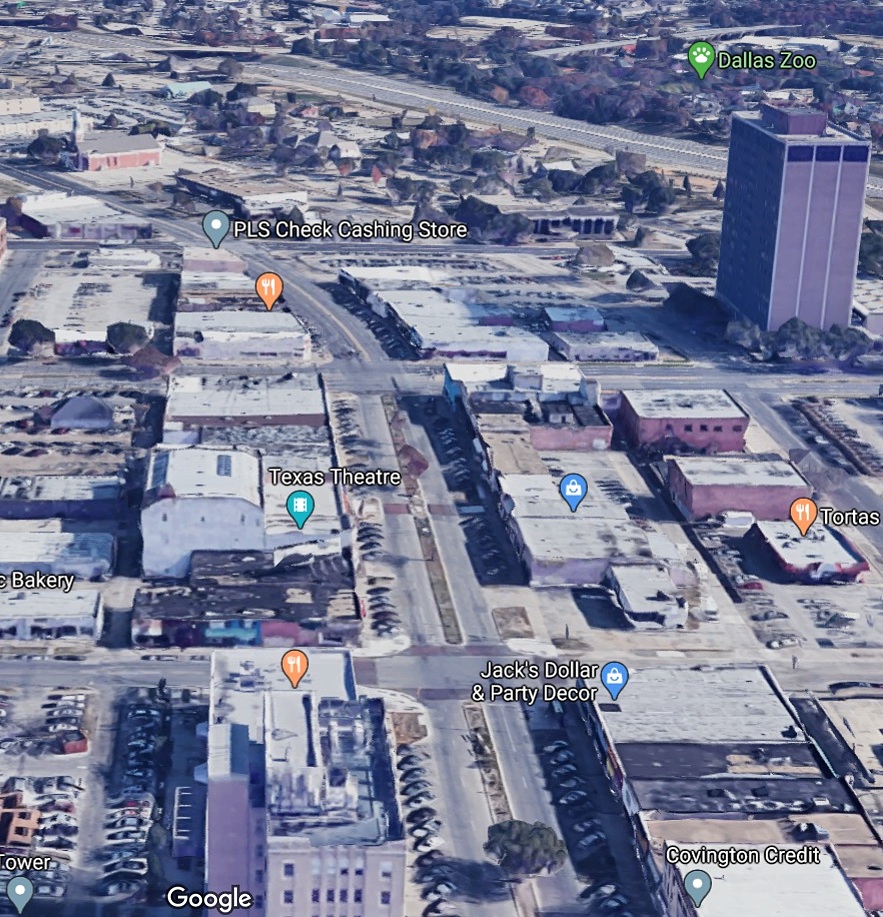
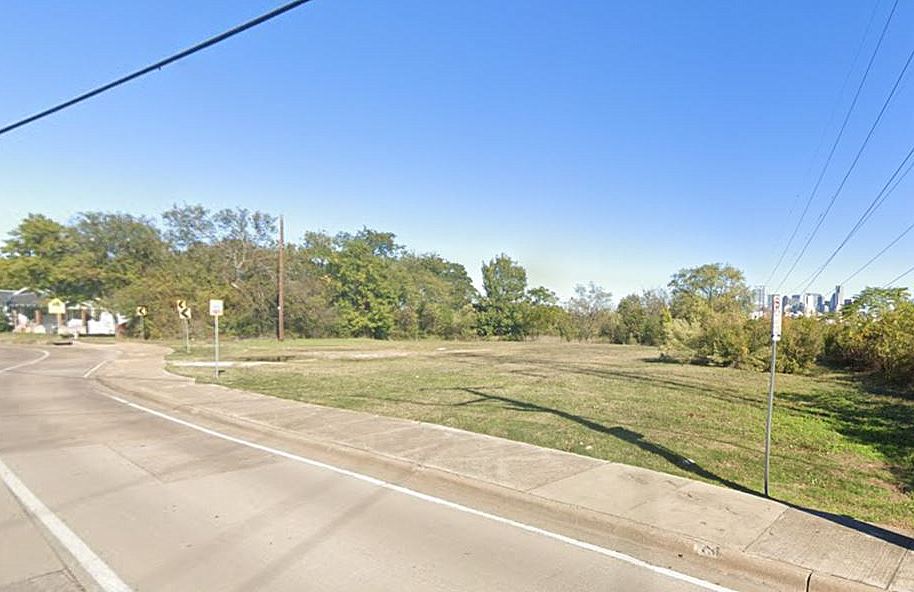
Here is what “Show Hill” vacant lot looks like today on Google Street View:
star-theatre_google-street-view-nov-2019Google Street View, 2019

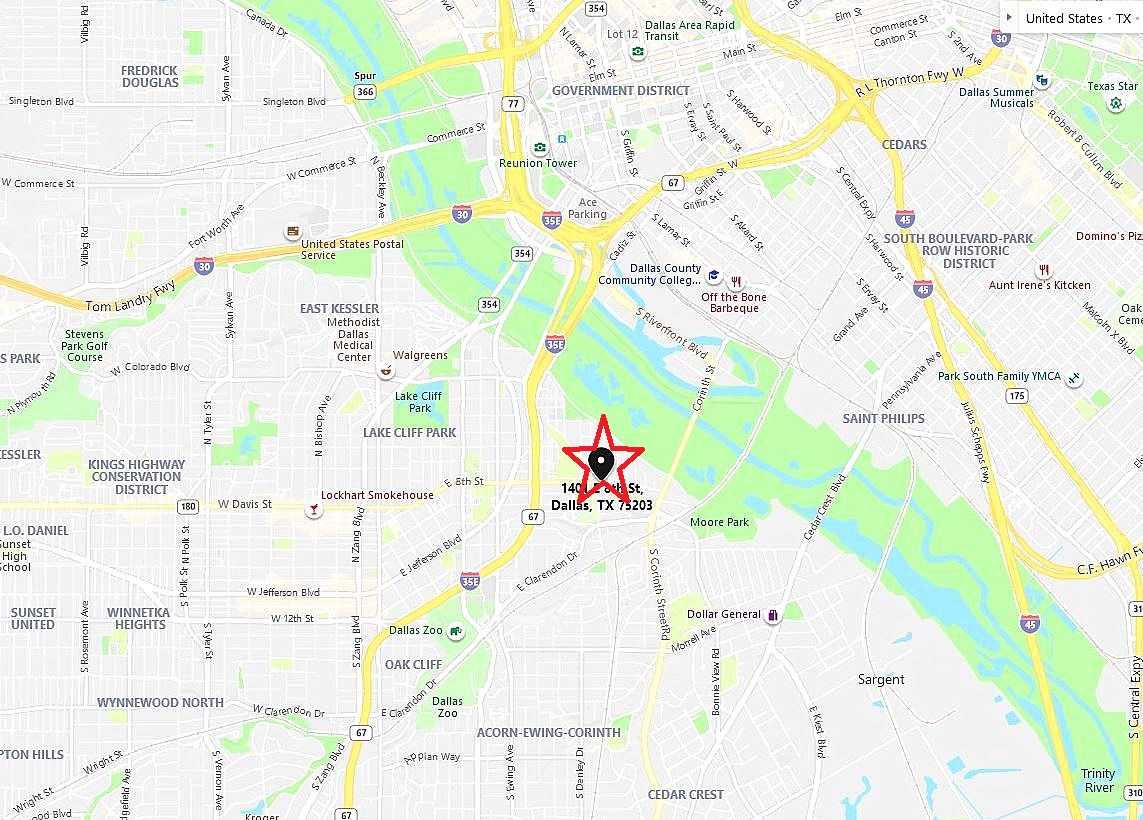
star-theatre_bing-mapsBing Maps

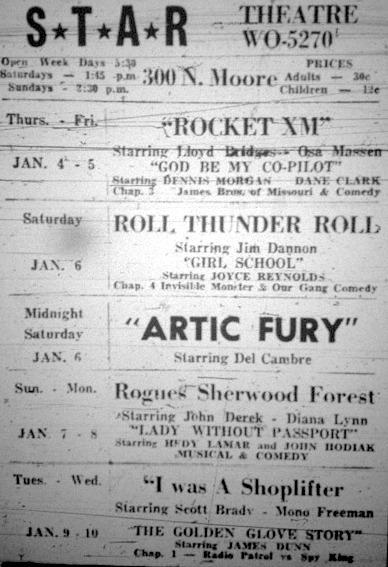
star-theatre_cinematreasures_advia Cinema Treasures

***

Sources & Notes

Top photo showing the Star Theatre is from the excellent book by D. Troy Sherrod, Historic Dallas Theatres (Arcadia Publishing, 2014); the photo is from the collection of the Dallas Public Library.

Second photo showing the dilapidated buildings is from another excellent book, Lost Dallas by Mark Doty (Arcadia Publishing, 2012).

The ad for the Star Theatre appeared in the Dallas, Texas Negro City Directory, 1947-1948 (many thanks to Pat Lawrence). The address for the theater was listed in various places as both 300 N. Moore and as 1401 E. Eighth.

If you have access to the archives of the Dallas Morning News, I encourage you to read “Inner-City Secret — The Bottoms Residents Say They Are Forgotten” by Bill Minutaglio (DMN, Aug. 28, 1994).

Also worth a read is Texas Tribune article “Dallas Neighborhood Established by Freed Slaves Fights to Keep Its History Alive” by Miguel Perez of KERA News.

More on the Tenth Street Historic District can be found on the City of Dallas website here.

Check out photos of a pop-up market on Show Hill in 2014 here.

Also, of related interest is the Flashback Dallas post “Movie Houses Serving Black Dallas — 1919-1922.”

Thank you to reader Jerry Richburg for contacting me with a question about this old strip shopping area — he remembered attending church services in one of the buildings and asked if I knew more about what had been there and if I might have a photo. Thanks, Jerry! You led me down the path to discovering a little pocket of Dallas history I was completely unaware of!

star-theatre_troy-sherrod-hist-dallas-theatres_DPL_sm

*

Copyright © 2020 Paula Bosse. All Rights Reserved.

August 20, 1945

langley_skyline-horseback_c1945_LOCAug. 20, 1945

by Paula Bosse

Back in 2014 when I started this blog, this is one of the first photos I posted. It is one of those Dallas photos that can actually be described as “iconic”: a cowboy on horseback watches over a herd of cattle grazing just beyond a vibrant mid-century skyline — old Texas meets new Texas. The photo is by Dallas photographer William Langley, and, according to the Library of Congress, it was taken on August 20, 1945. I am posting it again today, August 20, 2020 — 75 years to the day it was taken.

So what was happening 75 years ago today? Here are a few stories from the newspaper.

Gen. Douglas MacArthur was heading to Japan (Hiroshima and Nagasaki had been bombed within the past two weeks, effectively ending the war).

Wartime restrictions on the use of natural gas were lifted by the War Production Board.

Hollywood stars Dick Powell and June Allyson had gotten hitched.

LBJ was being touted as a possible candidate for Texas governor.

The average cost of a meal for a family of four before the war was $2.27 (or about $40 in today’s money); now, after the war, it had risen to $3.70 (about $50). Fruit preserves were almost impossible to find.

Dallasites were chomping at the bit to bid farewell to the war-ordered Daylight Savings Time and return to Standard Time — they wanted go to bed when it was dark outside. 

Annexation had meant that Dallas had increased in size over the past year from 51 square miles to 87 square miles.

Several Dallasites saw a “very large and very luminous” meteor.

Sgt. Jesse Curry, 31, of the Dallas Police Department, had been awarded a fellowship for an 18-week course in traffic administration at Northwestern University Traffic Institute in Chicago.

It was announced that improved trash pickup was on the horizon, as soon as new trucks became available.

War workers were being released from their war-work obligations, and the city’s businesses were beginning to hire, which was good news, except for many Dallas women who were still working but who were met with the announced closure of many “playschools” which were operated around the city on a 12-hour cycle to accommodate shift workers. 

The Texas League announced they would resume minor league play in the spring.

Hockaday would increase its staff from 83 members to 100 for the upcoming school year.

“The Three Musketeers” was opening at the Starlight Operetta in Fair Park. The State Fair of Texas would not resume until 1946.

“Thrill of a Romance” — with Van Jones and Esther Williams — was at the Majestic.

“Pillow to Post”  — with Ida Lupino and Sydney Greenstreet — was at the Palace.

“The Story of G.I. Joe” — with Burgess Meredith and Robert Mitchum — was at the Tower.

“Asi Se Quiere en Jalisco” — with Jorge Negrete — was at the Panamericano.

Interstate Theaters declined to respond to the rumor that a soon-to-be-built theater in Galveston was to be equipped to show television broadcasts. 

High temperature on the Monday Bill Langley took that photo was 92 degrees.          

***

Sources & Notes

Photo by William Langley — titled “Skyline, Dallas, Texas” — is from the collection of the Library of Congress. Langley appears to have been positioned somewhere around the present-day Stemmons Corridor.

*

Copyright © 2020 Paula Bosse. All Rights Reserved.
Lone Wolf Gonzaullas: Texas Ranger, Dallas Resident

gonzaullas_march-1970_WFAA_jones-collection_SMU-aWhere the bullet grazed him… (1970)

by Paula Bosse

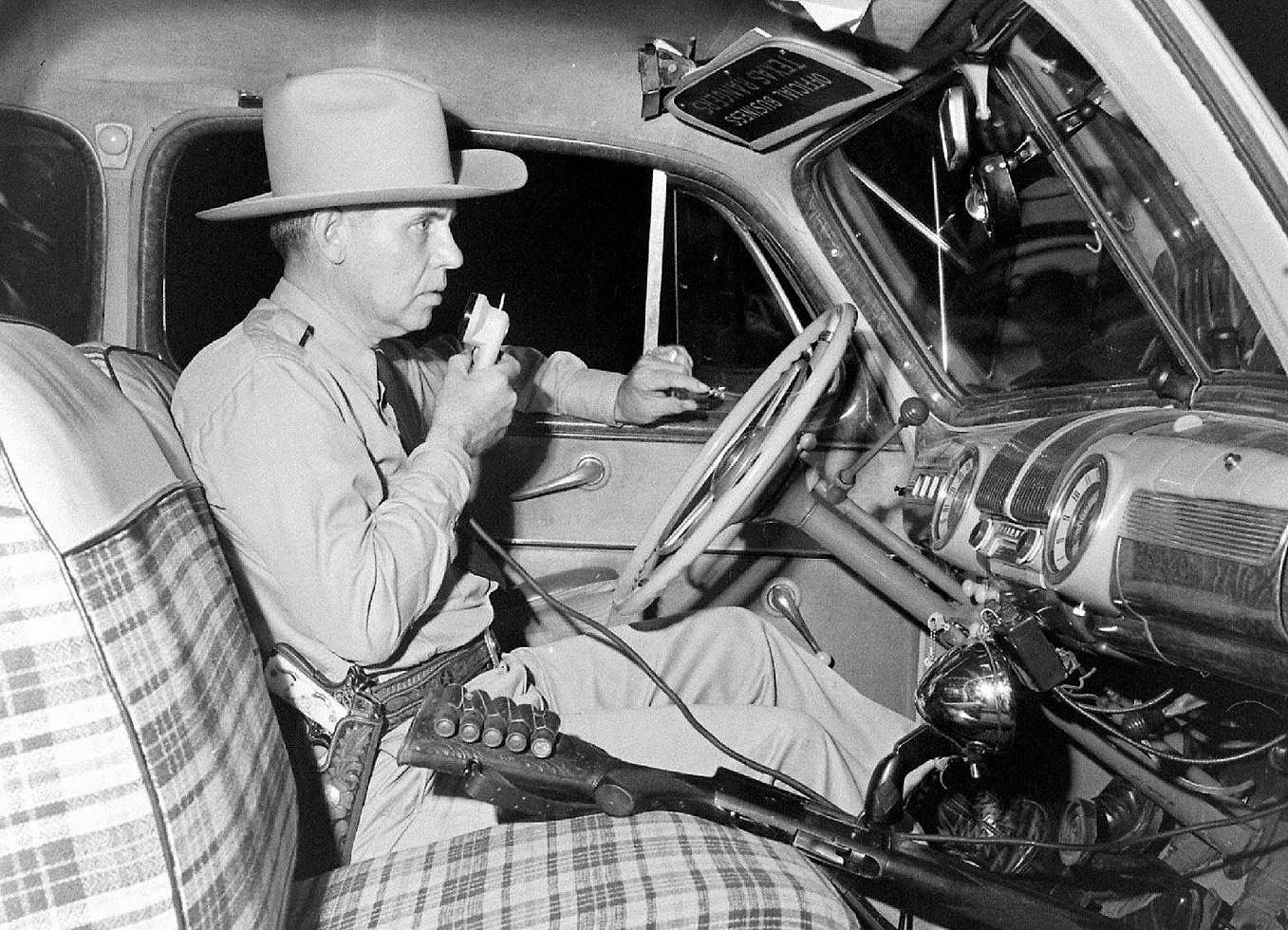
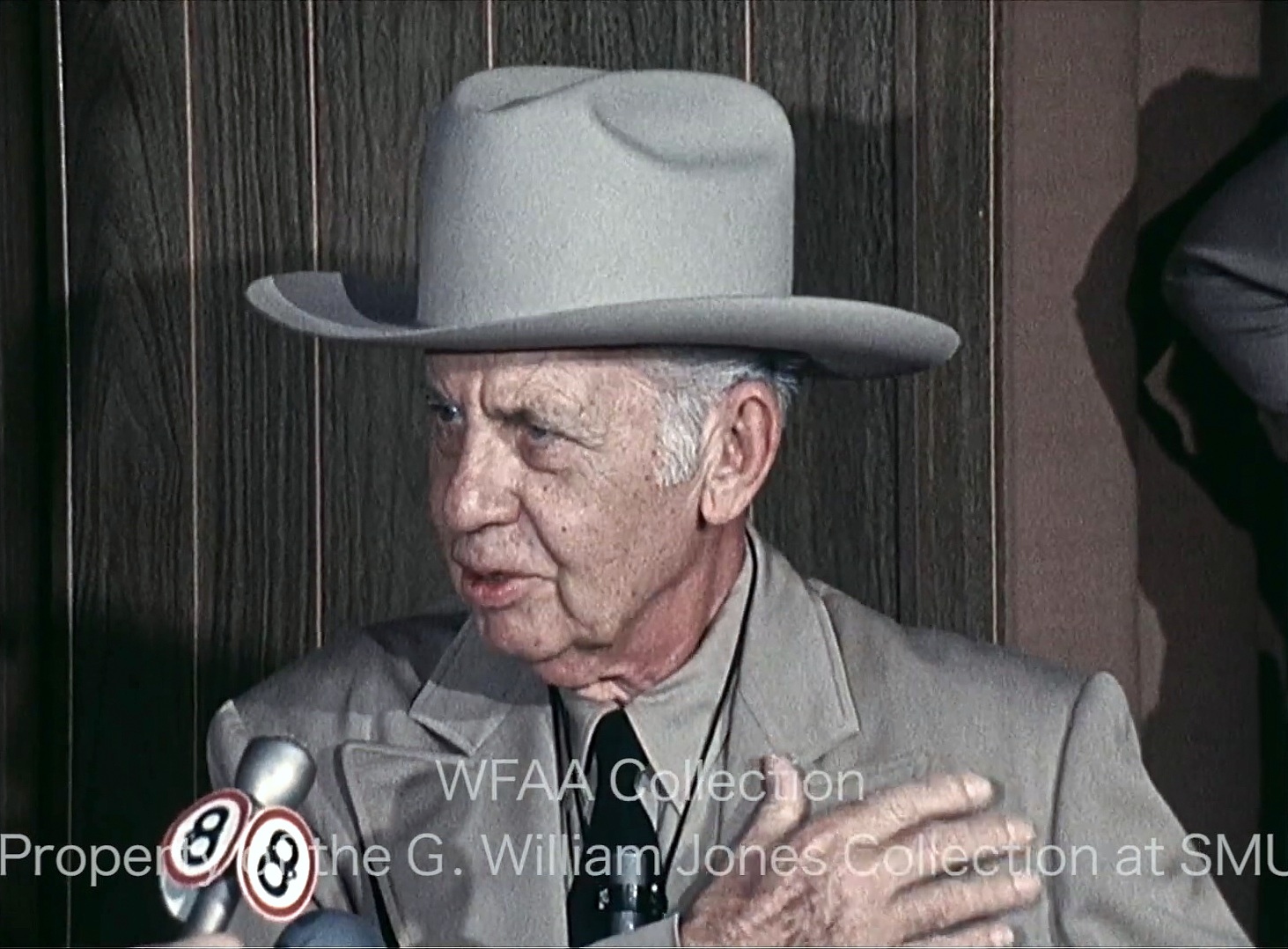
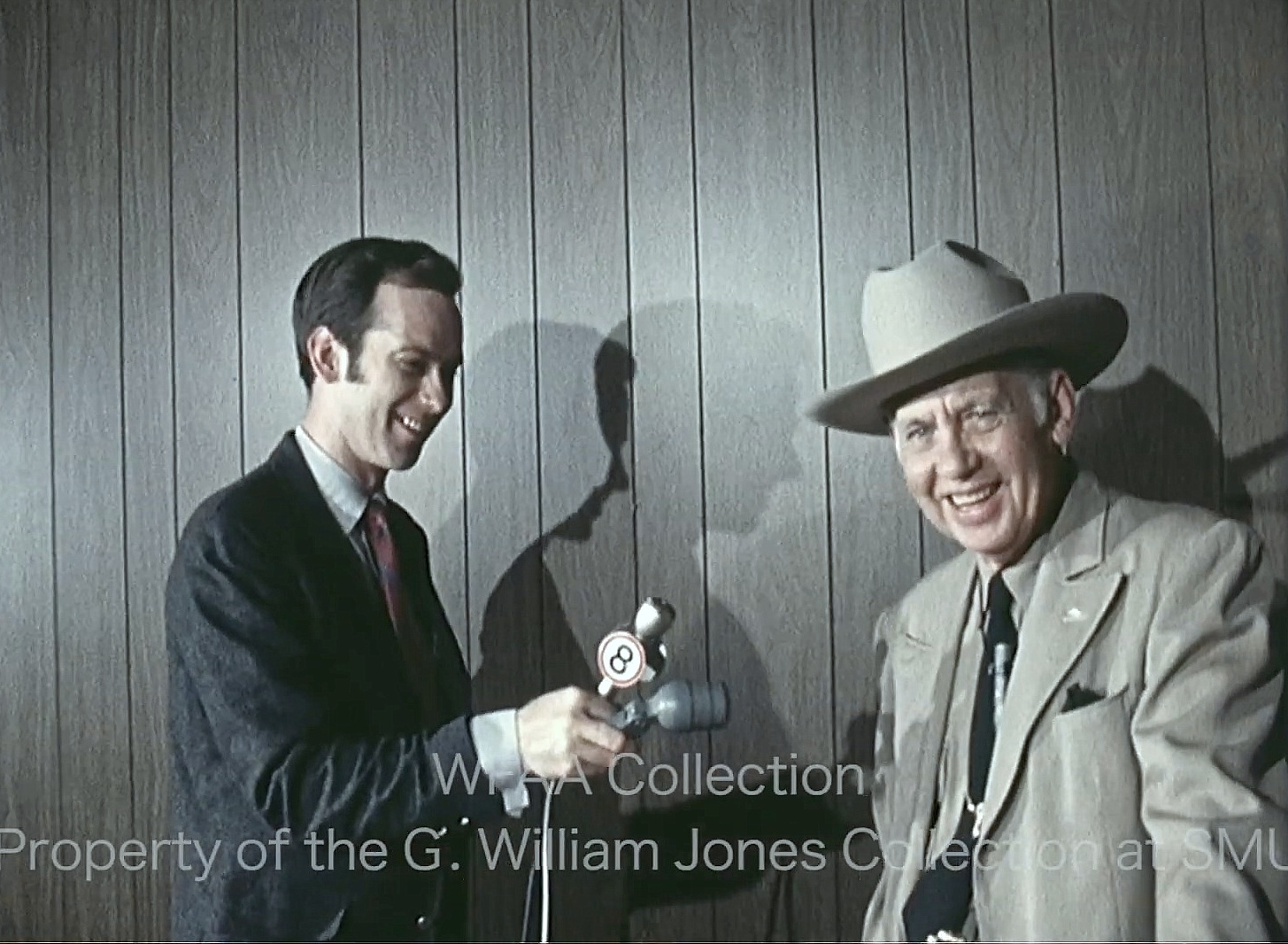
I had never seen footage of legendary Texas Ranger Manuel T. “Lone Wolf” Gonzaullas (1891-1977) until now. There is a short clip of him recounting a run-in with a man who shot him in WFAA-Channel 8 footage from March, 1970 (filmed at the Southwest Historical Wax Museum in Fair Park). Gonzaullas was a long-time resident of Dallas, from 1923 until his death in 1977, living for much of that time in Lakewood, in the 6900 block of Westlake.

*

Here are a couple of screenshots from the news footage. In the first he is seen standing in front of his wax figure.

gonzaullas_march-1970_WFAA_jones-collection_SMU-b

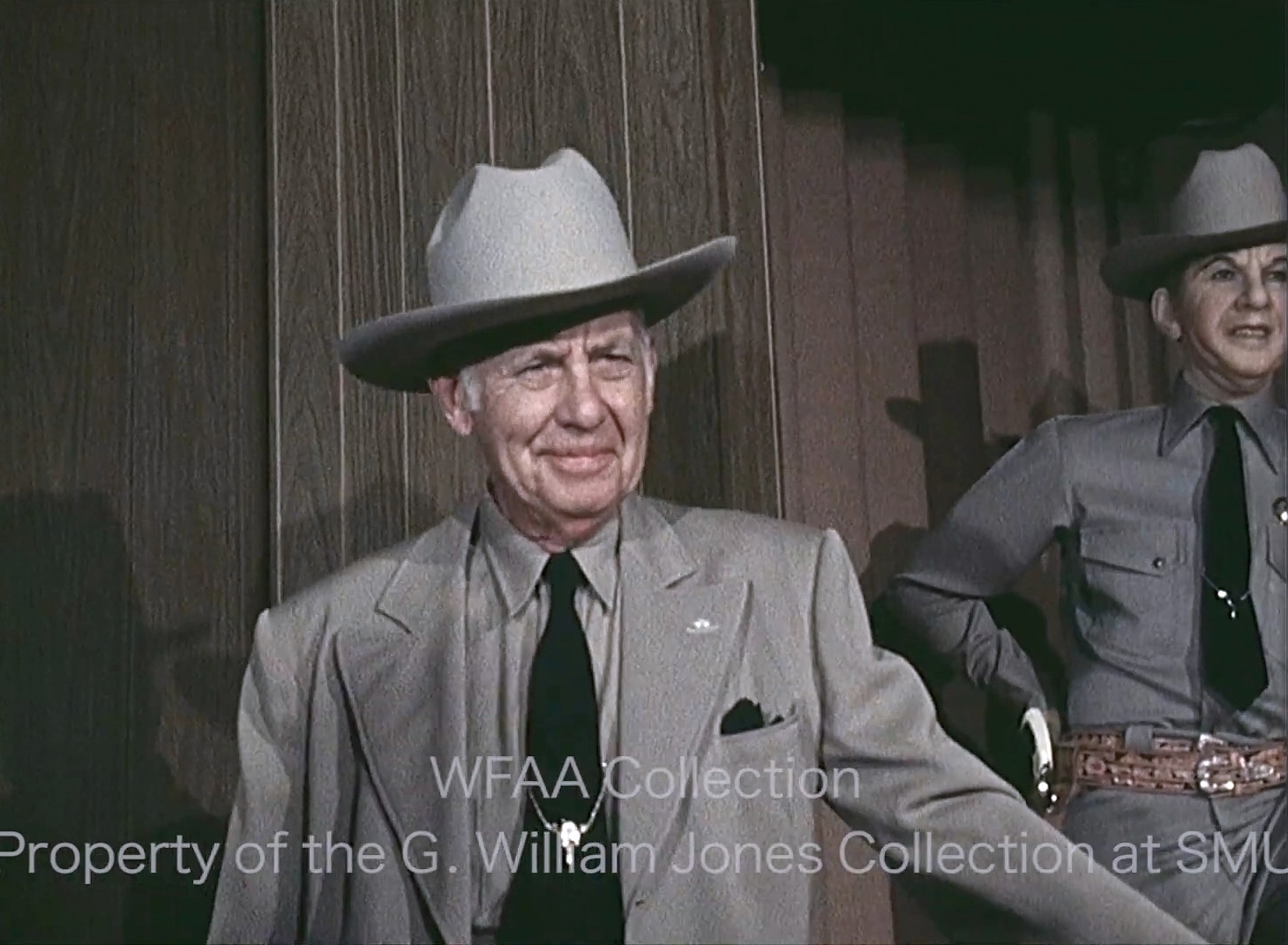
And in the second, he’s joking with WFAA-Channel 8 News reporter Phil Reynolds, who seems a little star-struck.

gonzaullas_march-1970_WFAA_jones-collection_SMU-c

*

Below are a few random Lone Wolf-related photos and articles. (There are tons of histories of Gonzaullas and the Texas Rangers out there — please hunt them down for specifics on his long and respected career in law enforcement. These are just a few things that I found interesting, some of which are of no historical importance!)

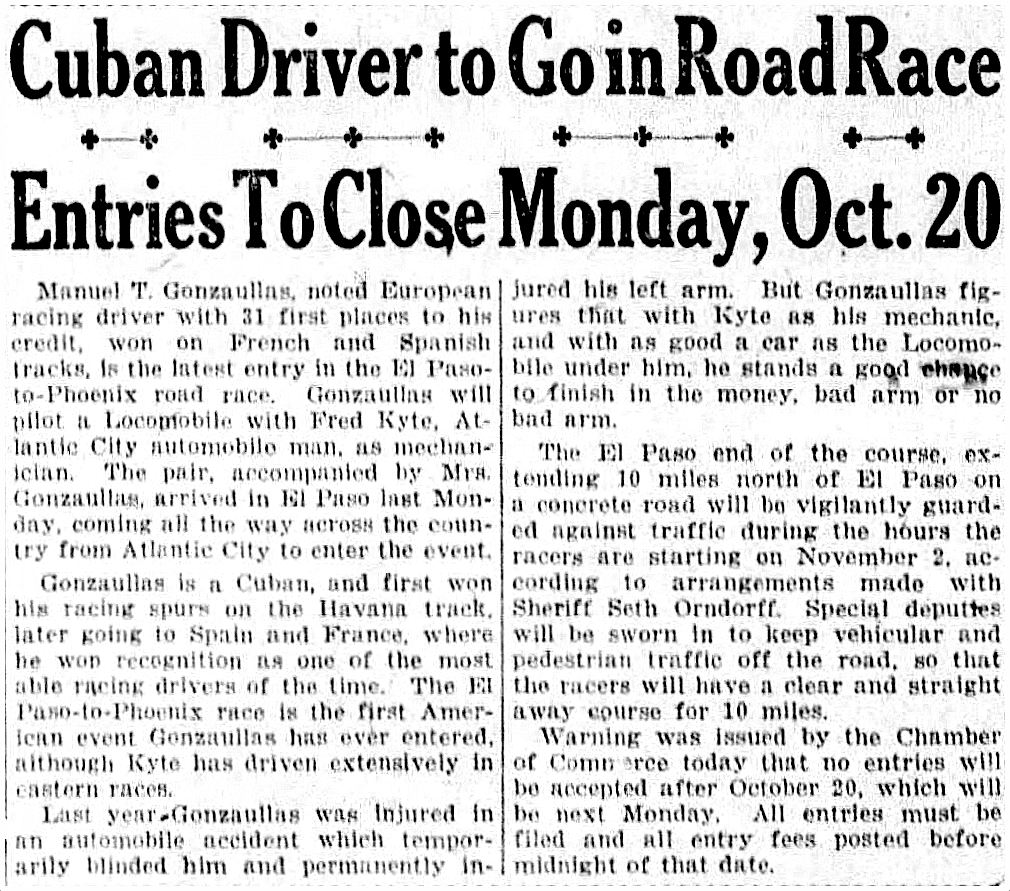
The earliest newspaper mention of Gonzaullas I could find was about his participation in an El Paso-to-Phoenix automobile road race in 1919. Biographers have noted that the colorful Gonzaullas sometimes embellished the truth, especially about his early days, and it’s interesting to note that in coverage of this race, Gonzaullas was described as being a “noted European racing driver” who had previously won 32 first-place finishes and 92 second-place finishes (!). The car he had entered in the race was a Locomobile, which he was reported to have driven to El Paso from Atlantic City. He was also identified as being “a Cuban […] who first won his spurs on the Havana track” (his birthplace is usually said to be Spain, where he was born to naturalized American citizens who were visiting that country at the time). He told the papers he had been left with temporary blindness and a permanently injured left arm in a previous auto accident — and another injury was about to come: he didn’t finish the El Paso-to-Phoenix race because his car suffered two debilitating mishaps, including one in which he was thrown from the car “and a blood vessel in his stomach was broken.” He was also said to be accompanied by “Mrs. Gonzaullas,” despite the fact that he did not marry Laura Scherer until April, 1920.

gonzaullas_road-race_el-paso-times_101619_cubanEl Paso Times, Oct. 16, 1919 (click for larger image)

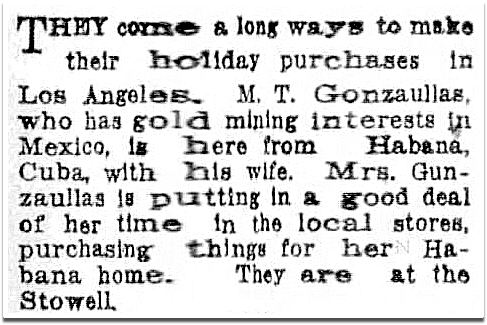
In December, 1919, Los Angeles newspapers reported that Mr. Gonzaullas, “who has gold mining interests in Mexico,” was in town, visiting from Havana. Accompanying him was “Mrs. Gonzaullas,” who was indulging in a shopping excursion. They were staying at the Hotel Stowell.

gonzaullas_los-angeles-evening-express_120319_cuba_mrs-gonzaullasLos Angeles Evening Express, Dec. 3, 1919

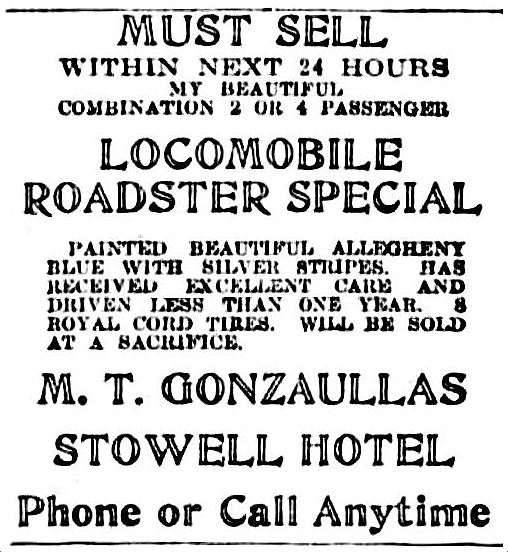
While at the Stowell (and about to return to Texas), Gonzaullas put a for-sale classified in the Los Angeles paper, saying that he “must sell within next 24 hours my beautiful combination 2 or 4 passenger Locomobile Roadster Special.” The Cuban’s racing days would seem to be ending.

gonzaullas_locomobile_los-angeles-evening-express_050820Los Angeles Evening Express, May 8, 1920

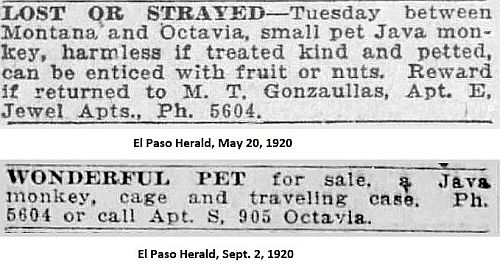
Less than two weeks later — and a month after finally marrying Laura in California — the newly wed Gonzaullas was back in El Paso, looking for a “lost or strayed” pet monkey. It appears the monkey was found (…or replaced…), but in September the Gonzaullases were selling their little “Java monkey,” along with its cage and traveling case. M. T. became “Lone Wolf” after he joined the Texas Rangers in 1920. Perhaps a monkey was not considered an appropriate pet for a lawman. (This is my favorite weird and obscure “Lone Wolf” tidbit.)

gonzaullas_el-paso-herald_1920-ads_monkey

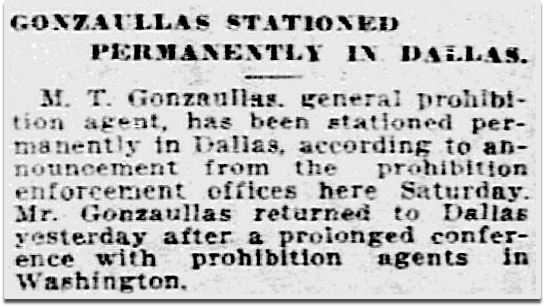
Gonzaullas was in and out of the Rangers throughout his career. In 1923, he moved to Dallas where he was stationed as a permanent prohibition agent (he busted a lot of booze-loving Dallasites).

gonzaullas_dmn_022523Dallas Morning News, Feb. 25, 1923

In 1929, Gonzaullas was a sergeant in the Texas Rangers, and the photo below captured the first time that the men of Company B had all been together at the same time in the same place — in Fort Worth. The caption for this photo: “Texas’ Guardians, United After 10 Years. Capt. Tom R. Hickman, Gainesville, brought Ranger Company B together Friday for the first time in more than 10 years. Here they are just before visiting the Southwestern Exposition and Fat Stock Show. Left to right, W. H. Kirby, Abilene; H. B. Purvis, Lufkin; Captain Hickman; Sergt. M. T. Gonzaullas, Dallas; Dott E. Smith, Abilene; and James P. Huddleston, Dallas.” (Fort Worth Record-Telegram, March 16, 1929) (Read the full story, “Ranger Company B Rides In to Stock Show” here.)

company-b_fw-record-telegram_031629Company B in Fort Worth, FW Record-Telegram, Mar. 16, 1929

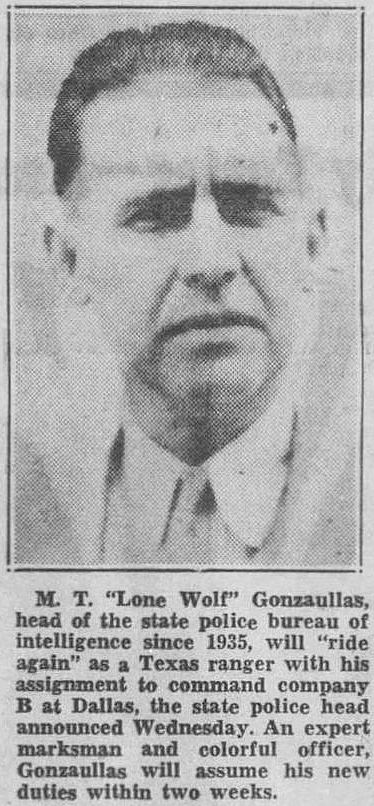
In 1933, the Texas Rangers were dissolved, later to re-emerge as part of the newly formed Department of Public Safety in 1935. Gonzaullas served for several years as the head of the DPS’s Bureau of Intelligence in Austin, a Texas version of the FBI. In 1940, he stepped down from that position to rejoin the Rangers. He took over command of his old Company B, which was stationed in Fair Park, and remained in that position for 11 years until his retirement.

gonzaullas_austin-statesman_021440_company-b_photoAustin Statesman, Feb. 14, 1940

gonzaullas_austin-american_021540_company-bAustin American, Feb. 15, 1940

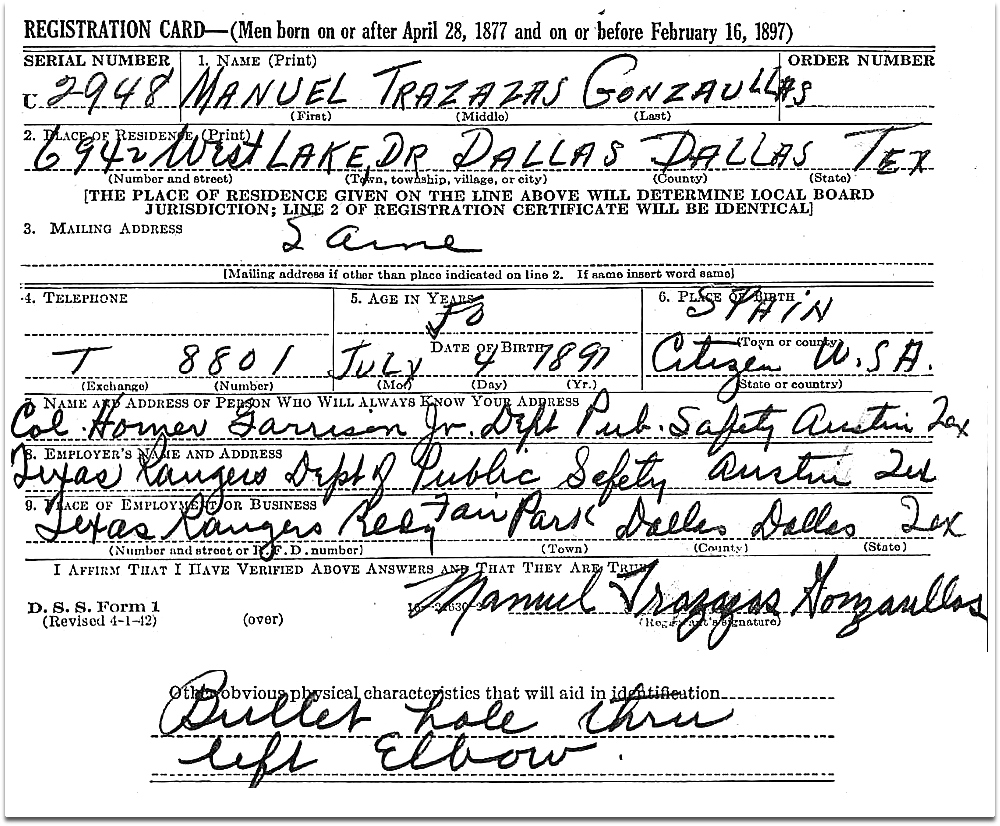
In 1942, at the age of 50, Gonzaullas filled out a registration card during World War II, as all men were required to do. (A distinguishing physical characteristic of a “bullet hole thru left elbow” was noted.) 

gonzaullas_ww2-registration-card-1942

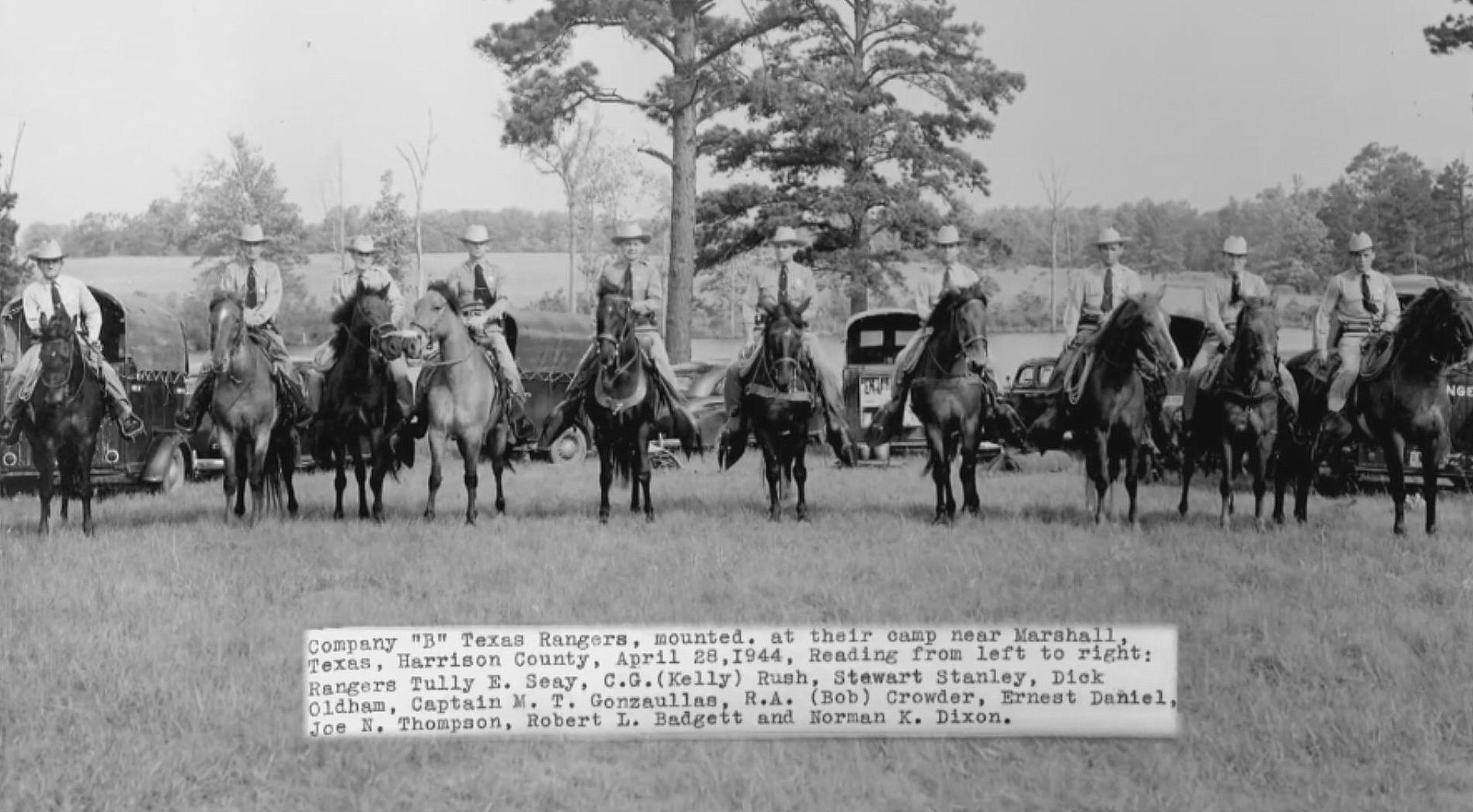
Below, a photo from 1944 showing mounted Texas Rangers of Company B in Marshall, Texas: (left to right) Tulley E. Seay, C. G. (Kelly) Rush, Stewart Stanley, Dick Oldham, Capt. M. T. Gonzaullas, R. A. (Bob) Crowder, Ernest Daniel, Joe N. Thompson, Robert L. Badgett, and Norman K. Dixon.

gonzaullas_texas-rangers_company-Bvia findagrave.com (same photo without text is at Portal to Texas History)

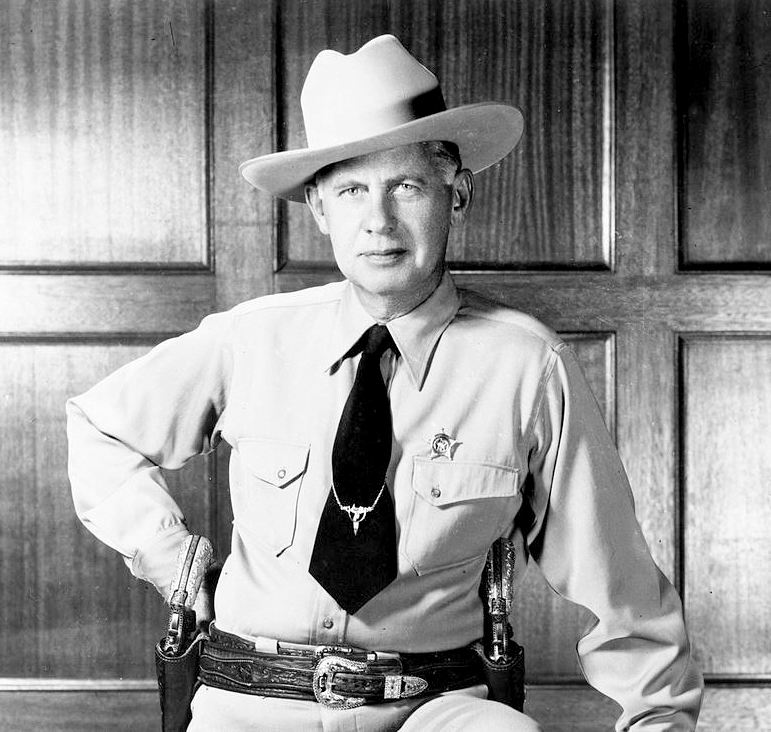
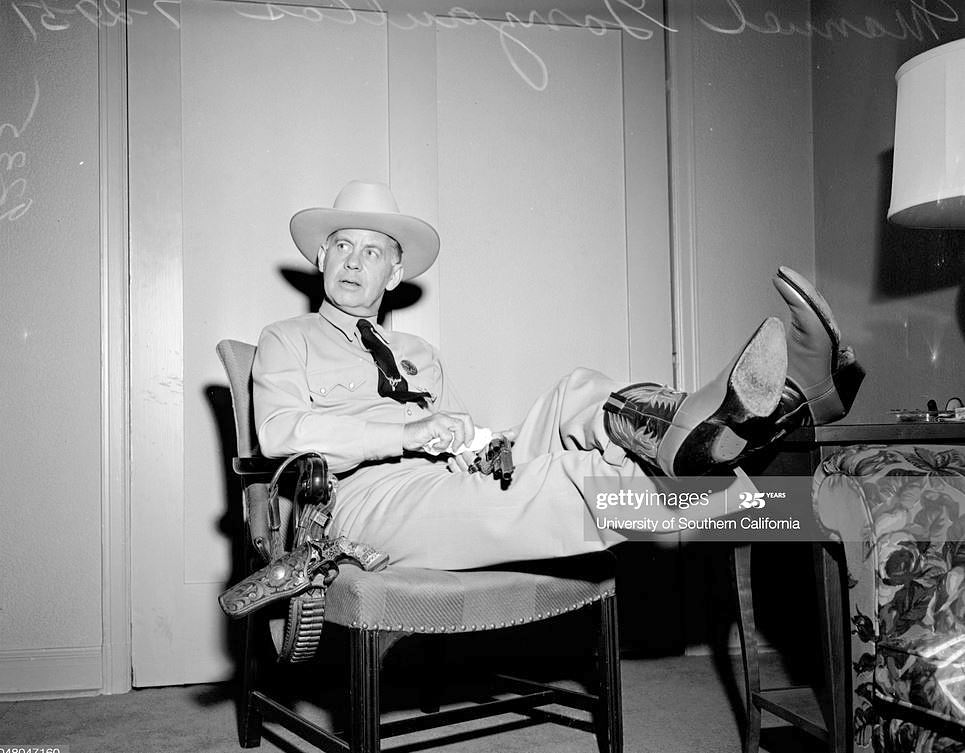
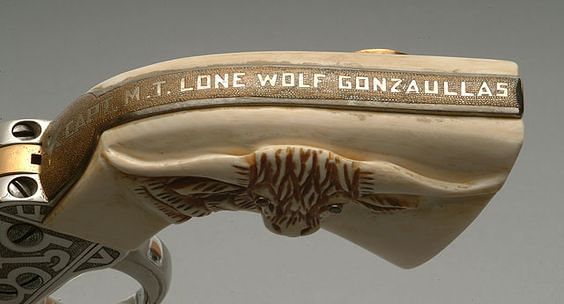
Capt. Manuel Trazazas Gonzaullas retired in July, 1951 and traveled between Dallas and Hollywood where he worked as a consultant on Western TV shows and films. He died in Dallas on Feb. 13, 1977 at the age of 85.

gonzaullas_manuel-t-lone-wolf

gonzaullas_find-a-gravevia findagrave.com

gonzaullas_getty-images_july-1951via Getty Images

gonazaullas_pistol-grip

***

Sources & Notes

The first three images are screenshots of WFAA-Channel 8 news film shot in March, 1970, from the WFAA Collection, G. William Jones Collection, Hamon Arts Library, Southern Methodist University; the footage can be viewed on YouTube here

A brief biography of M. T. Gonzaullas can be found at the Handbook of Texas, here.

There were several comprehensive and entertaining articles and interviews which appeared around the country about Gonezaullas’ career when he retired. If you have access to newspaper archives, I would recommend the article “The ‘Lone Wolf’ Lays Down His Guns” by Don Hinga which appeared in The St. Louis Post-Dispatch on July 22, 1951.

gonzaullas_march-1970_WFAA_jones-collection_SMU-a_sm

*

Copyright © 2020 Paula Bosse. All Rights Reserved.
Rev. W. W. Stogner: The Courthouse Preacher

stogner_WBAP_03311959_portalRev. Stogner, 1959

by Paula Bosse

The Reverend Mr. W. W. Stogner (1873-1966) was something of a permanent fixture around the Dallas County Courthouse for a good 30 years. He was known as “the marrying preacher” who was Johnny-on-the-spot to marry any couple who had just obtained a marriage license and was in need of a man of the cloth. According to his own  estimation, he had married some 20,000 couples (!) — including my parents.

William Washington Stogner was born in Mississippi in 1873 and arrived in Dallas in 1907. Although he had preached since he was a teenager, he wasn’t ordained until he was 38 years old. He worked as a minister in Collin County and in Oklahoma for several years before returning to Dallas in 1926. From various newspaper reports, he appears to have set up shop as a marriage-focused pastor around 1935, roaming the hallways of the courthouse looking for newly licensed couples. (Detractors occasionally referred to him as the “Marryin’ Sam” of the Dallas County Courthouse, in a reference to the opportunistic character in the L’il Abner comic strip.)

In a 1960 Frank X. Tolbert profile in The Dallas Morning News, Rev. Stogner’s average workday went something like this:

He arrives at the Records Building each morning around 8 a.m. carrying a shopping bag in which are a Bible and much other reading matter. He often stations himself near the elevators leading to the County Clerk’s office, a good place to spot happy couples equipped with a marriage license but in need of a preacher. (Tolbert’s Texas, DMN, May 12, 1960)

In that article, the 88-year-old retired Baptist minister estimated he had, thus far, married 18,000 couples. Some he had encouraged to wait, not feeling they were ready, but most of them he joined together in holy matrimony. He said he married people in empty rooms of the courthouse — or even in hallways. He also married couples in his home in Oak Cliff (my parents were married in his home, having contacted him from information on a business card given to them by the good reverend after they had received their marriage license at the courthouse).

As he spent so much time at the courthouse, it’s no surprise that he conducted several  marriages right across the street in the jail. Like the comedy-of-errors wedding described in the story below (click for larger image):

stogner_dayton-oh-daily-news_wire-story_070558AP wire story, Dayton (OH) Daily News, July 5, 1958

*

The Rev. Mr. Stogner can be seen in a WBAP-Ch. 5 news clip from March 31, 1959 testifying in the court of Justice of the Peace W. E. Richburg in the trial concerning the falsification of documents in the marriage of an 18-year-old man to a 12-year-old girl (watch the silent clip here). Rev. Stogner looks a bit shell-shocked and testified that he thought the affidavit asserting the girl was 14 (and of legal age, with permission of a parent) was valid. It was not, and the marriage  was annulled. (The news script about this case can be read here.) You can’t win ’em all. 

*

Rev. Stogner died in 1966, two days short of his 93rd birthday. Think about that for a second: he was born in Reconstruction Mississippi and died a year before “Sgt. Pepper’s Lonely Hearts Club Band.” It’s pretty amazing to realize that my parents were married by a man who could remember being alive in the 1870s! 

***

Sources & Notes

Top image is a screen shot from the WBAP-Ch. 5 new clip “Court of Inquiry” from the KXAS-NBC 5 News Collection, UNT Libraries Special Collections, via the Portal to Texas History.

There is no film of the story about Rev. Stogner’s 90th birthday celebration at the Dallas County Courthouse, but the Feb. 12, 1963 script can be read at the Portal to Texas History here

*

Copyright © 2020 Paula Bosse. All Rights Reserved.
Texlite, Borich, Pegasus

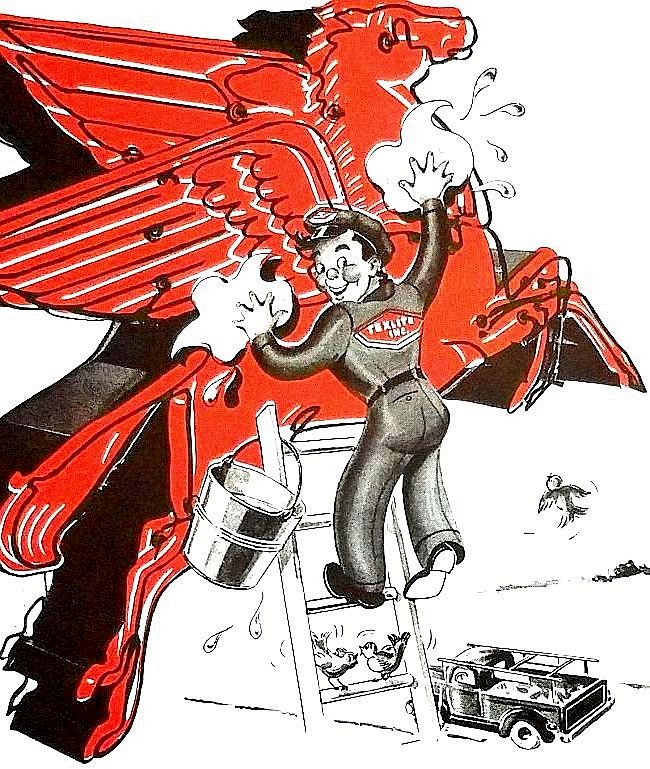
texlite_feb-1949_ad_pegasus-det

by Paula Bosse

Texlite. If you’re a lover of all-things-Dallas, you should know that name. Texlite made many, many, many, many, MANY enamel, electric, and neon signs, including, most famously, the rotating Flying Red Horse — Pegasus — which arrived in Dallas in 1934 to sit atop the city’s tallest building, the Magnolia Petroleum Building, serving as a beacon, a landmark, and as a sort of city mascot.

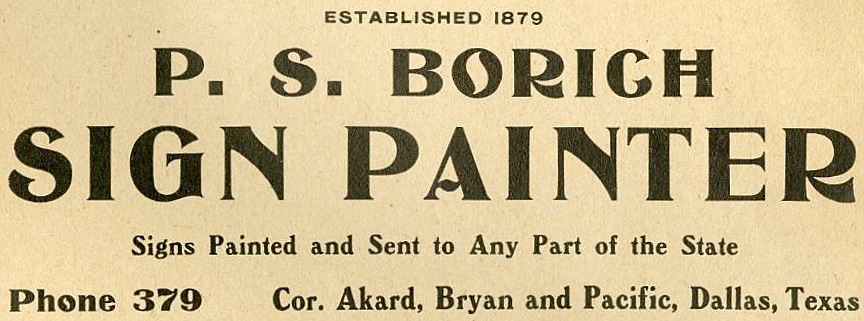
Texlite’s  roots went back to 1879 when Italian immigrant Peter Samuel Borich (1849-1932) arrived in Dallas. His obituary noted that he was a graduate of the Royal Italian Naval School and that he served in the Italian Merchant Marine before he arrived in Dallas, where he established the Borich Sign Co. A very early location of his shop is said to have been on the current site of the Magnolia Building (and Pegasus), on Sycamore Street (now Akard). (See the post “19th-Century Sign-Painting and Real-Estating” for more about this location.) He appears to have been the go-to sign-painter for decades and was a very successful businessman.

The Borich company eventually branched out (and eventually became Texlite, a separate entitity) to become a pioneer in electric and neon signs: in 1926 Texlite built and sold the first neon sign west of the Mississippi, in St. Louis (their first neon sign in Dallas was a sign for the Zinke shoe repair store (1809 Main) which depicted an animated hammer tapping on a shoe heel). 

The Borich sign company focused on painted or printed signs while Texlite handled the electric signs. P. S. Borich retired in the 1920s and moved to Los Angeles after the death of his wife. The last time the Borich company name appeared in the Dallas directory was 1930 (when it looks like it became United Advertising Corporation of Texas, owned by Harold H. Wineburgh, who was also a Texlite partner/owner). 

During World War II, Texlite, like many manufacturers, jumped into war-production work, making airplane and ship parts; during the Korean War they made bomber fuselages. 

I don’t know when Texlite went out of business (or was acquired and merged into another company). As successful as Texlite was (and it was incredibly successful), what more important achievement could it have had than to have been the maker of our iconic Pegasus? 

*

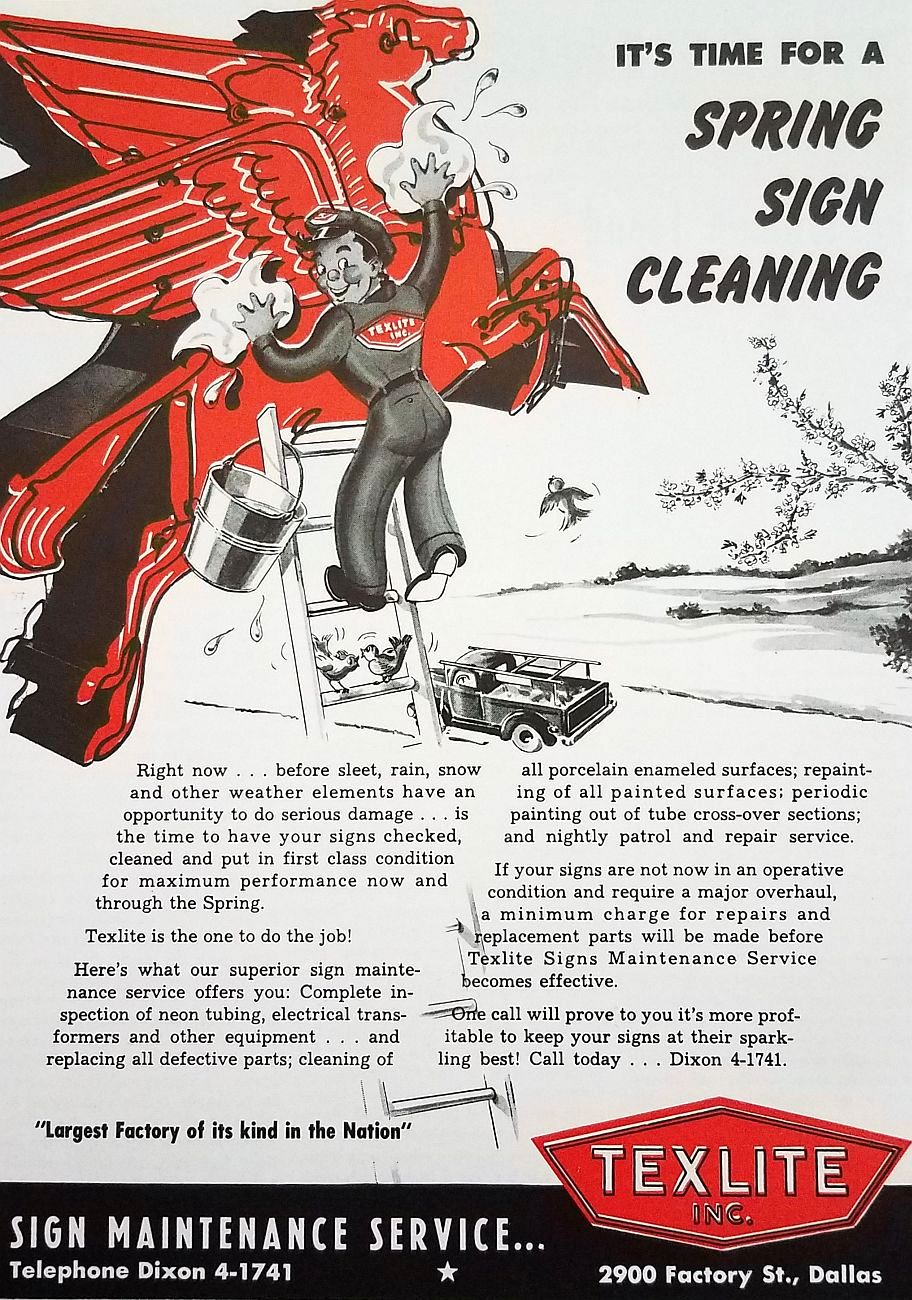
Here are a few random images from the Borich/Texlite history. First, a great ad from 1949, when Pegasus was a fresh 15-year-old. “It’s Time For a Spring Sign Cleaning.” (Click to see a larger image.)

texlite_feb-1949-ad1949 ad

And another ad, this one with a wonderful photo, from 1954.

texlite_pegasus_ad_ca-1954_heather-david_flickr1954 ad, via Flickr

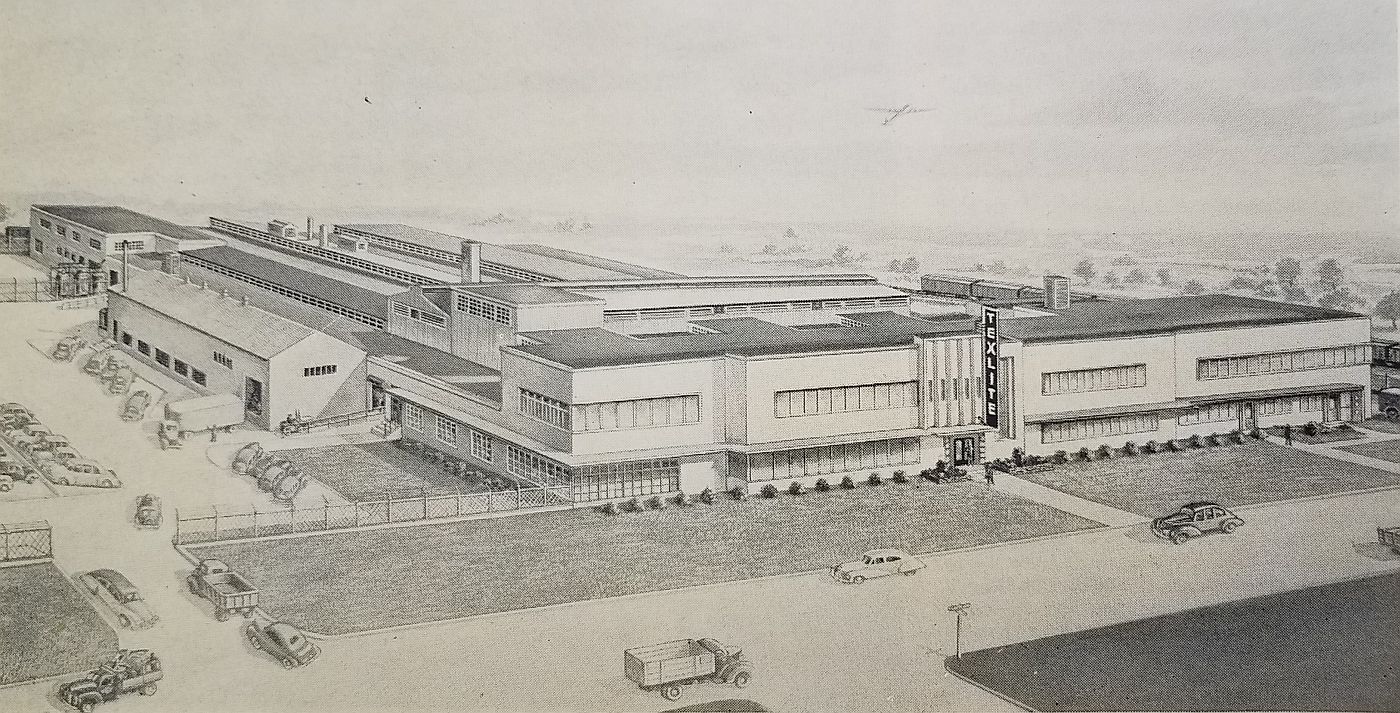
In 1949 Texlite built a huge new factory in an industrial area near Love Field, at 3305 Manor Way. Below is the architectural rendering. The caption: “New home of Texlite, Inc. is being completed at 3305 Manor Way at a total of $1,000,000. The new, two-story plant, providing 114,000 square feet of factory and office space, will provide facilities for trebling Texlite’s output. Grayson Gill is the architect, and O’Rourke Construction Company are the general contractors.” (Dallas magazine, Feb. 1949)

texlite-new-bldg_dallas-chamber-of-commerce-mag_feb-1949

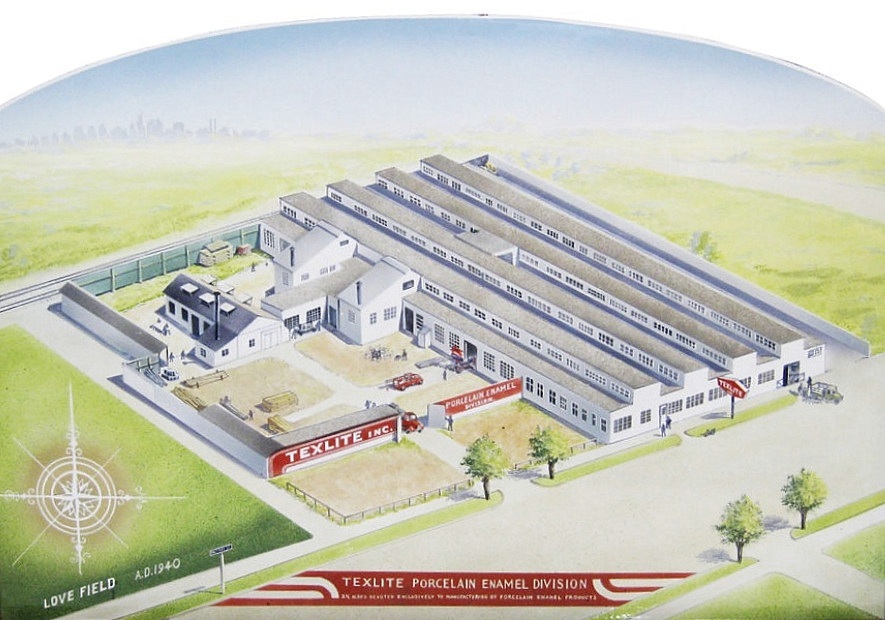
Below, the previous factory, located at 2900 Factory Street, also near Love Field:

texlite-sign_1940

I assume this 1940 sign was made by Texlite. Below are a couple of details, showing playful hints of Pegasus.

texlite-sign_1940_det-1

texlite-sign_1940_det-2via Mecum Auctions

I wondered where Factory Street was — here it is on a 1952 map — it looks like it was absorbed into a growing Love Field.

texlite_factory-st_mapsco-19521952 Mapsco

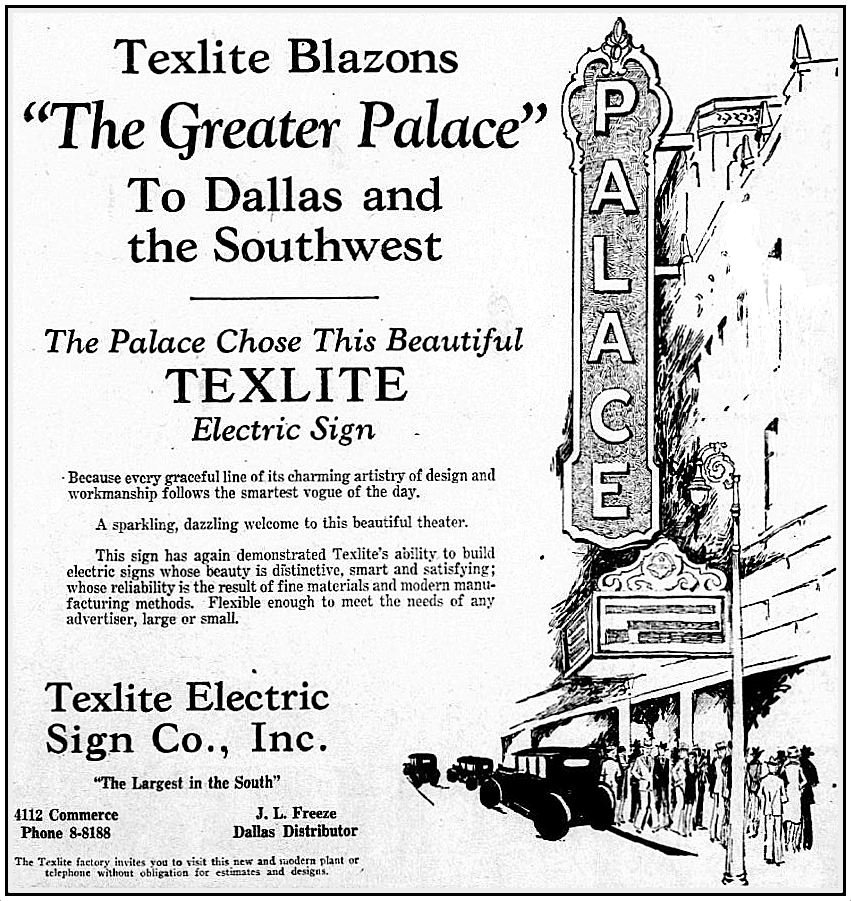
One of Texlite’s many theater clients was the Palace Theatre for whom they designed and installed a new electric sign in January, 1929 (at which time, by the way, the theater’s name was “officially” changed — however briefly — to the Greater Palace; the theater was renovated and enlarged, with a new emphasis on the Elm Street entrance rather than the entrance on Pacific). 

texlite_palace_jan-1929Jan., 1929

Going back a couple of years, with the separate companies sharing ad space in the 1927 city directory:

borich-texlite_dallas-directory_19271927 Dallas directory

And a photo of the Texlite building circa 1930:

texlite_DPL_ca-1930Dallas Public Library

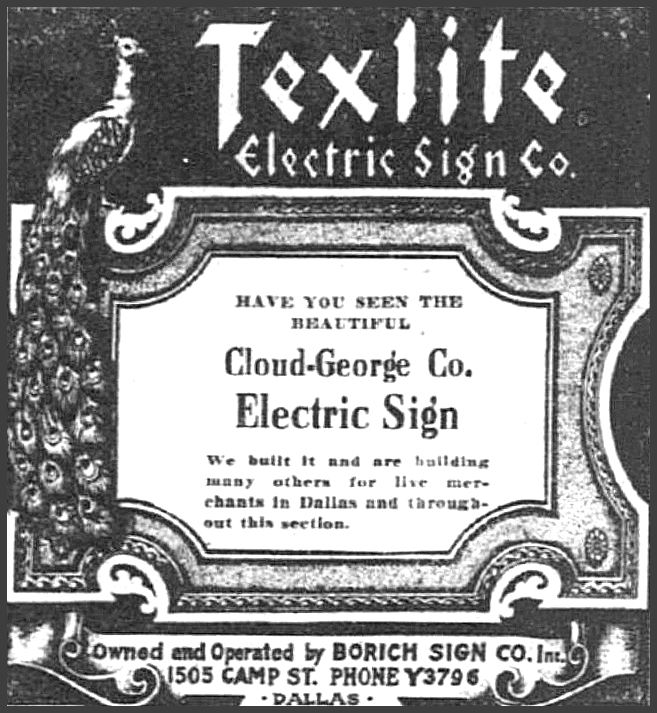
The first ad I found which had both the “Borich” and “Texlite” names together was this one from 1923 for the Cloud-George Co., a women’s clothing boutique (1705 Elm) run by the somewhat notorious Miss A. B. Cloud.

texlite_borich-sign_sept-1923Sept., 1923

The company occupied several locations over the years — the location in 1902 can be seen here, at the right, looking west on Pacific (from the Flashback Dallas post “Views from a Passing Train — 1902”).

edmunds_pacific-bryan_free-lib-phil_19021902, via Free Library of Philadelphia

borich_dallas-directory_1902Dallas directory, 1902

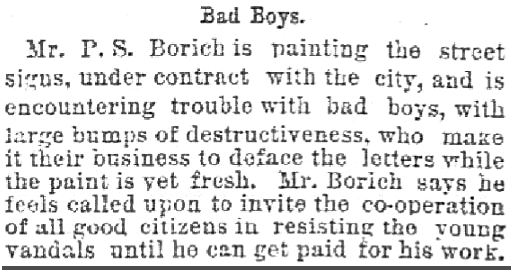
P. S. Borich’s sign-painting wasn’t restricted only to businesses — he was also regularly retained by the city to paint street signs.

borich_dmn_080686Dallas Herald, Aug. 6, 1886

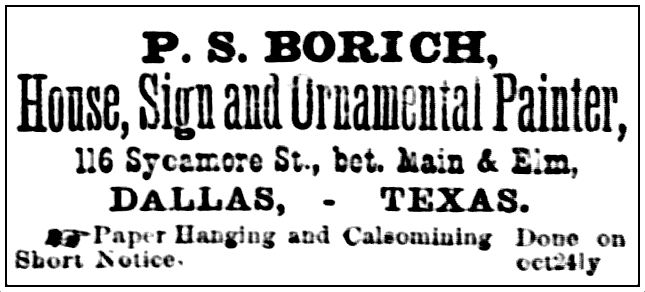
And, below, the earliest ad I could find — from 1879, the year Borich arrived in Dallas. (Thanks to this ad, I can now add “calsomining” to my vocabulary.)

borich_nortons-union-intelligencer_110179Norton’s Union Intelligencer, Nov. 1, 1879

**

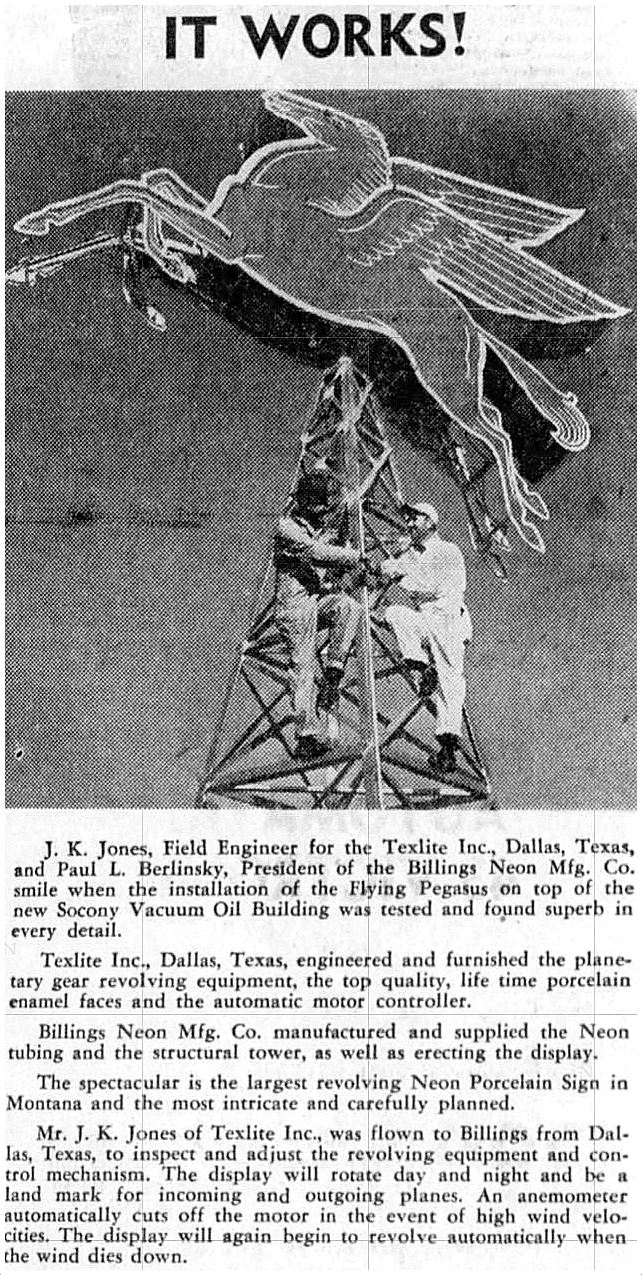
Here’s an interesting little bonus: a Pegasus “mini-me” in Billings, Montana, created with help from the Pegasus experts in Dallas (click for larger image).

texlite_pegasus-in-montana_billings-MT-gazette_052255Billings Gazette, May 22, 1955

***

Sources & Notes

Top image is a detail from a 1949 ad found in the Feb., 1949 issue of Dallas, the magazine published by the Dallas Chamber of Commerce.

Photo showing the exterior of the Texlite building circa 1930 is from the collection of the Dallas Public Library, Call Number PA87-1/19-59-36.

Check out another Texlite sign which I wrote about in the Flashback Dallas post “Neon Refreshment: The Giant Dr Pepper Sign.”

I’m always excited to see places I write about show up in old film footage. Watch a short (20-second) silent clip of Texlite workers striking in June, 1951 at the 3305 Manor Way location in WBAP-Channel 5 footage here (the workers were on strike in a wage dispute — more info is in the news script here); film and script from the KXAS-NBC 5 News Collection, University of North Texas, via the Portal to Texas History.

The company made tons of signs and exteriors for movie theaters around the country, including the Lakewood Theater (whose sign was recently re-neonized!).

Thank you, Signor Borich!

texlite_feb-1949_ad_pegasus-det-sm

*

Copyright © 2020 Paula Bosse. All Rights Reserved.
Interurban Miscellany

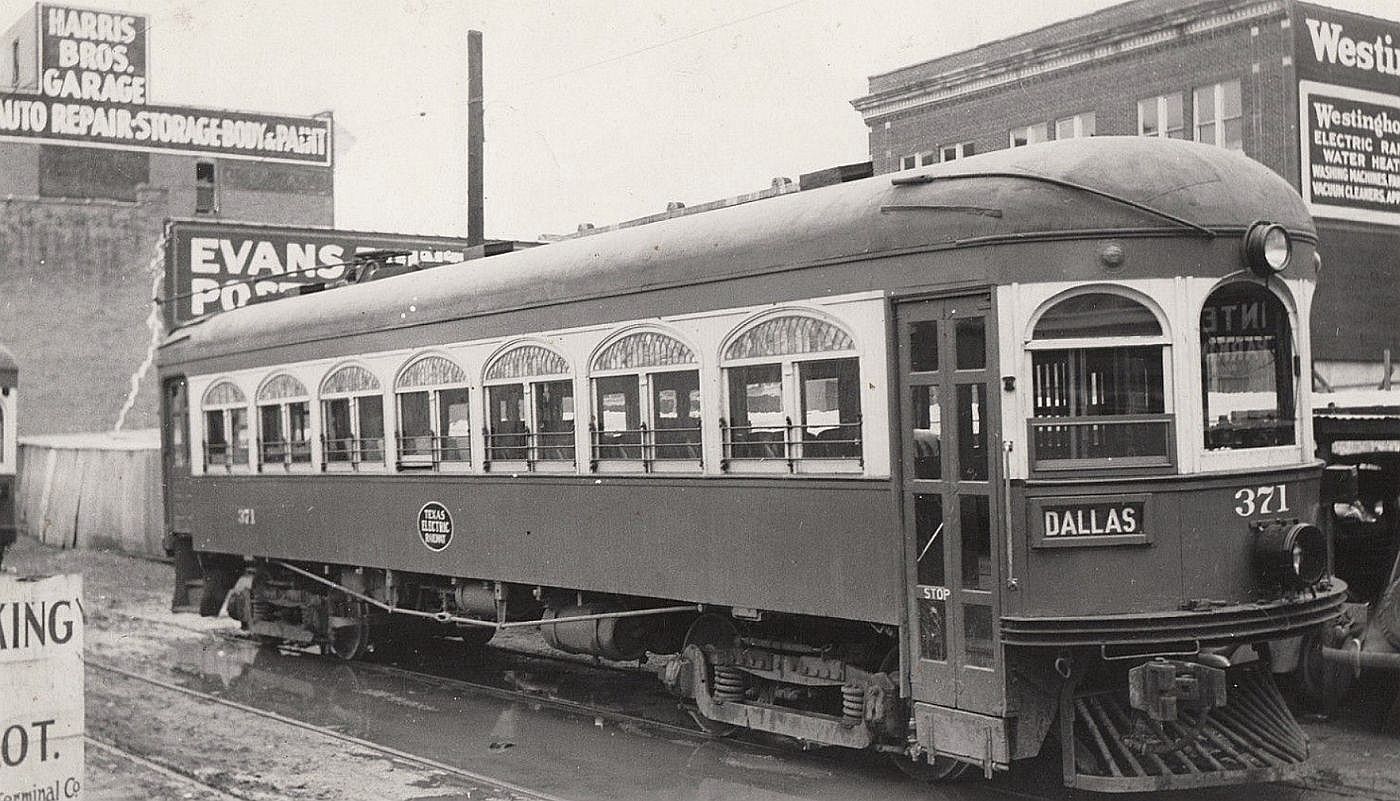
interurban_dallas_photo_ebay_redWooden, red… (click for larger image)

by Paula Bosse

Just a few miscellaneous photos from the days of the Interurban, the electric railway which ran through Dallas from 1908 to 1948.

The photograph above has the following written on the back: “The Texas Electric has a whole flock of fast interurbans. Most are steel and painted blue. This older wooden car is red and was used on the Dallas-Denison run. Dallas, Tex.”

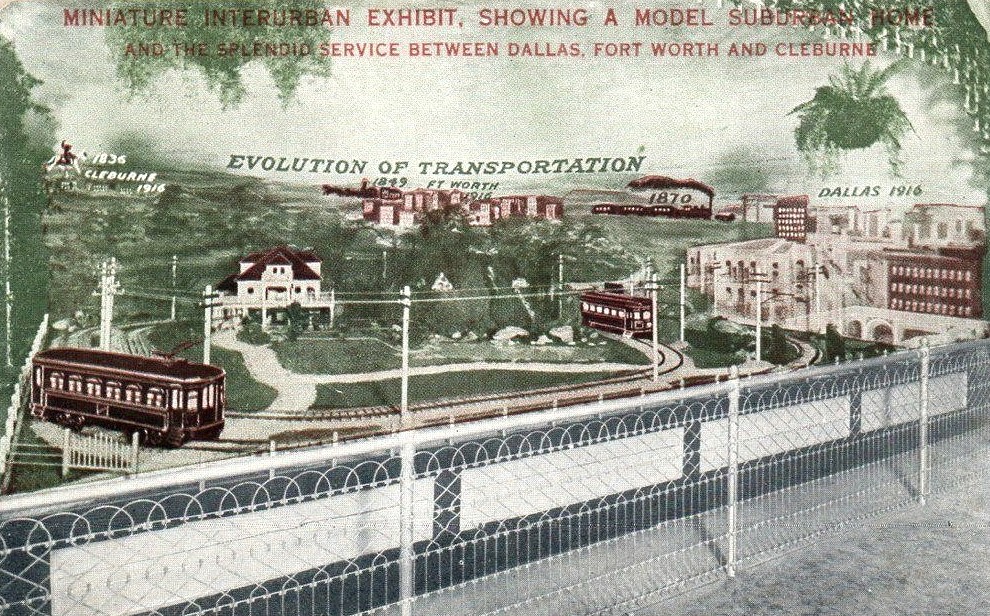
Below, “Evolution of Transportation,” a postcard featuring “Miniature Interurban Exhibit, Showing a Model Suburban Home and the Splendid Service Between Dallas, Fort Worth and Cleburne.”

interurban_evolution-of-transportation_postcard_ca-1916_ebayvia eBay

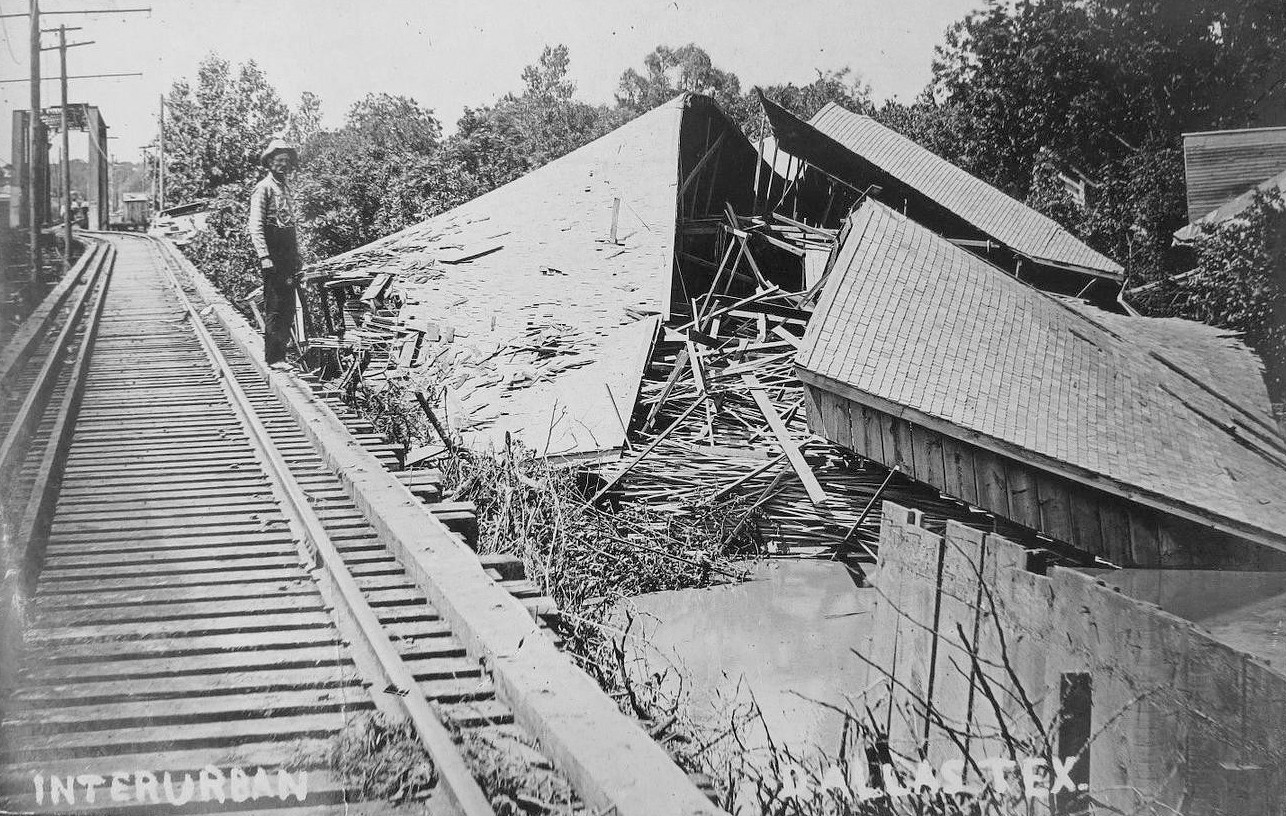
An Interurban mishap:

interurban_mishap_ebayvia eBay

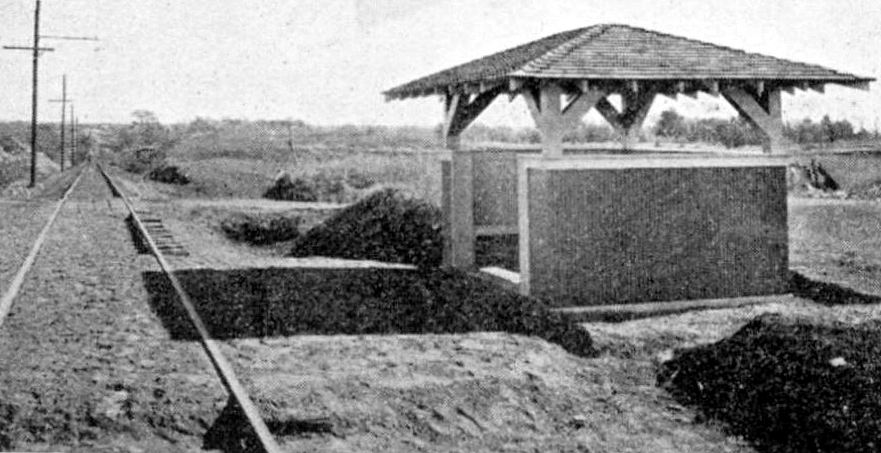
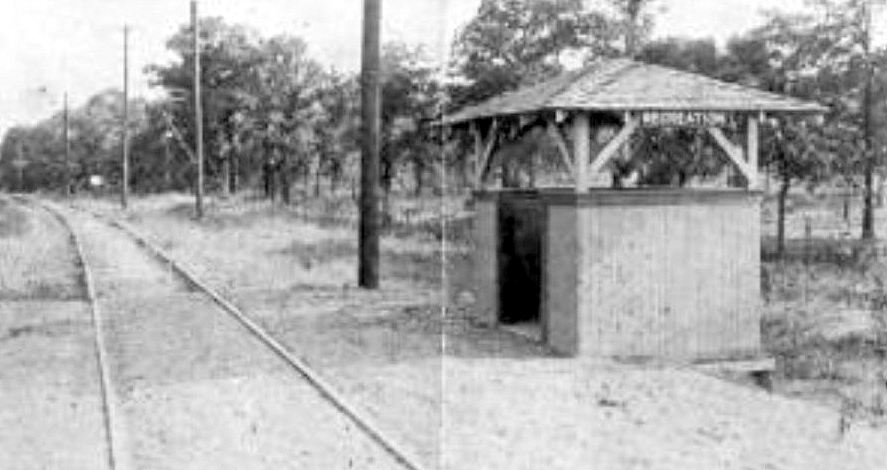
A couple of pleasant waiting-shelters, circa 1925:

interurban-stop_neighbors-pamphlet_portal_1925via Portal to Texas History

interurban-shelter_neighbors_1925via Portal to Texas History

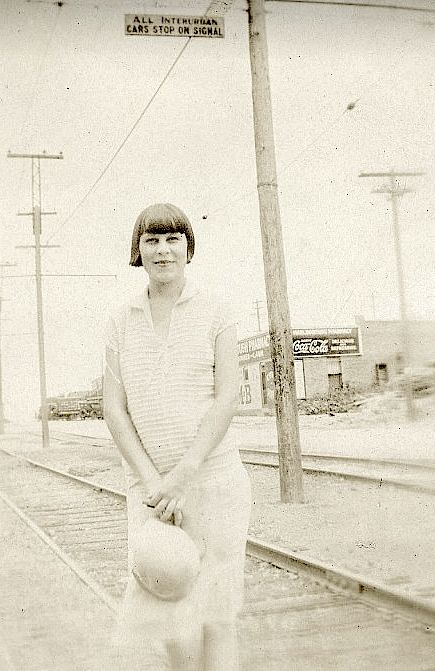
Another stop, with a sign (“ALL INTERURBAN CARS STOP ON SIGNAL”):

interurban-stop_flickr-lynneslensvia Lynne’s Lens Flickr photostream

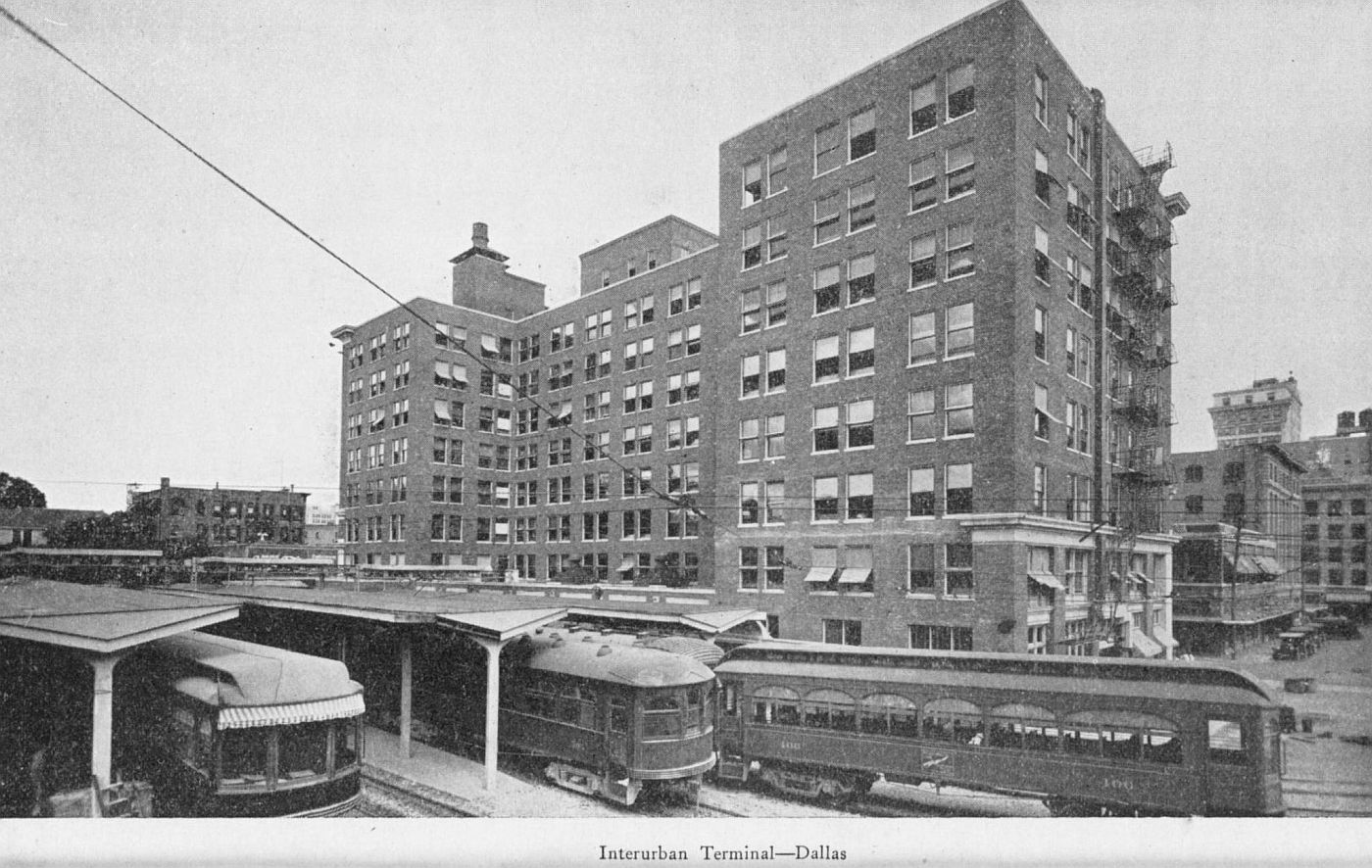
And the Interurban Terminal, downtown, ca. 1925 (located at 1500 Jackson St. at Browder, still standing, converted to residences):

interurban-terminal_1925_neighbors-pamphlet_portalvia Portal to Texas History

***

Sources & Notes

Top photo found on eBay. “Robert M. Hanft, Brainerd, Minn.” is printed on the back. Hanft (1914-2004) was a rail enthusiast and photographer — his obituary is here.

The Texas Interurban route connected with Dallas in 1908 and continued for 40 years until being discontinued in 1948. More at the Handbook of Texas here, and at Wikipedia here; a look at the stops can be seen in an illustration here.

Check out these two Interurban pamphlets with lots of great photographs, scanned in their entirety by UNT’s Portal to Texas History:

  • Making Neighbors of the People of Dallas and Kaufman Counties, and the Towns of Terrell, Forney, Mesquite and Dallas (20 pages, Texas Interurban Railway) — read it here.
  • Making Neighbors of the People of Dallas and Denton Counties, and the Towns of Denton, Garza, Lewisville, Carrollton, Farmers Branch and Dallas (24 pages, Texas Interurban Railway) — read it here.

More Flashback Dallas posts on the Interurban can be found here.

interurban_dallas_photo_ebay_red_sm

*

Copyright © 2020 Paula Bosse. All Rights Reserved.
 

West Jefferson Blvd. at Night

oak-cliff_jefferson-blvd_night_oldoakclifflodge_flickrW. Jefferson & S. Madison

by Paula Bosse

I love night-time views of a lit-up city, and this circa-1949 bird’s-eye view of West Jefferson Boulevard in Oak Cliff, looking east, is pretty cool. If this photo had a soundtrack, it would be moody and atmospheric saxophone music.

Hunt’s department store was at 303 W. Jefferson, and the Oak Cliff Bank & Trust Co. was at 250 W. Jefferson — S. Madison is the intersecting street in the center of the photo. At the upper left you can see the bright lights and triangular marquee of the Texas Theatre. Below is a view of the same street today, still recognizable.

oak-cliff_jefferson-blvd_google-aerialGoogle Maps

***

Sources & Notes

Top photo is from the Flickr photostream of OldOakCliffLodge, here.

oak-cliff_jefferson-blvd_night_oldoakclifflodge_flickr_sm

*

Copyright © 2020 Paula Bosse. All Rights Reserved.
Two Color Home Movies Featuring Downtown Dallas and Love Field — 1940s

love-field_dallas-aviation-school_perisccope_croppedDallas Aviation School, Love Field

by Paula Bosse

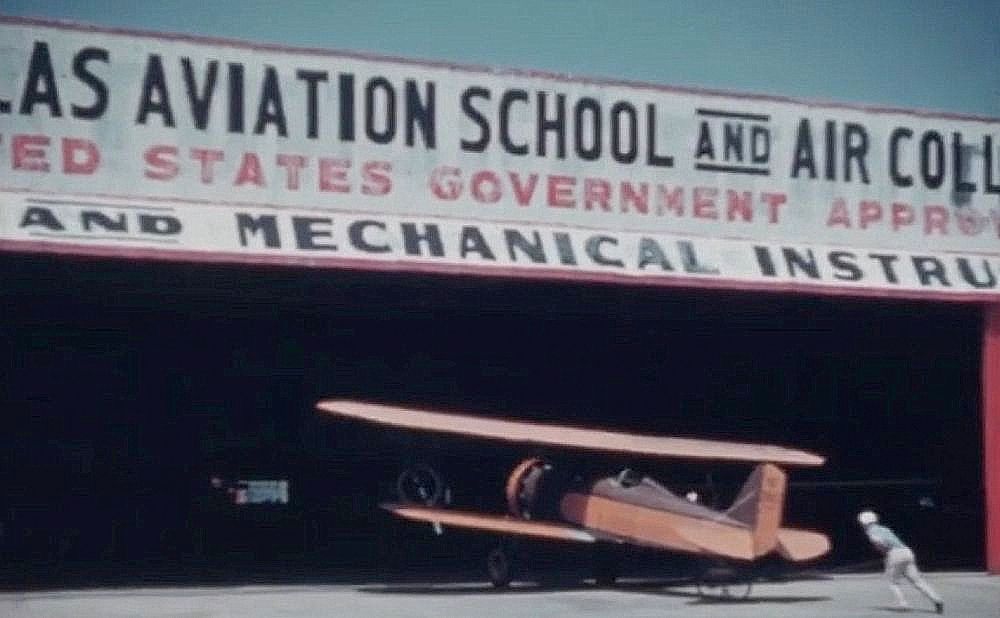
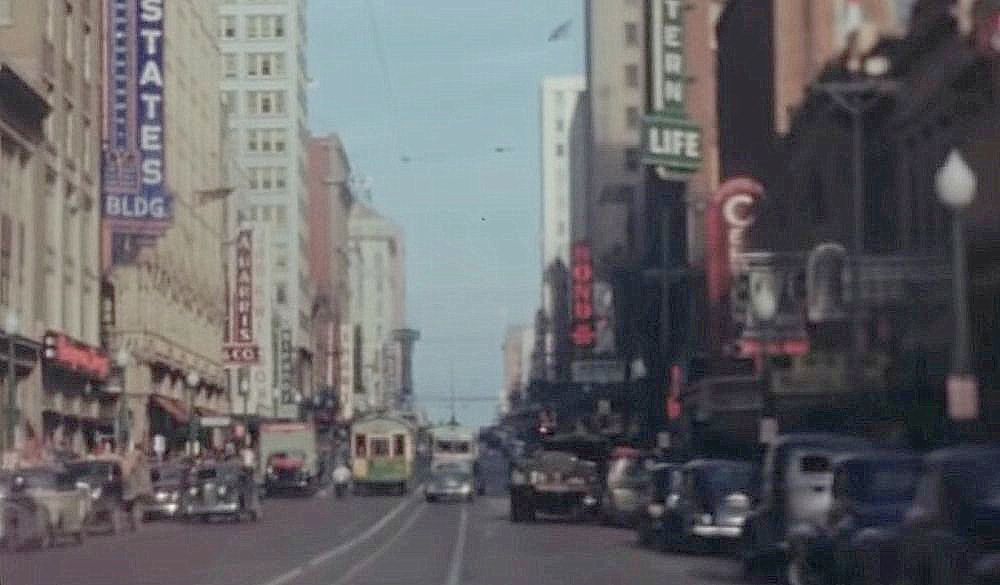
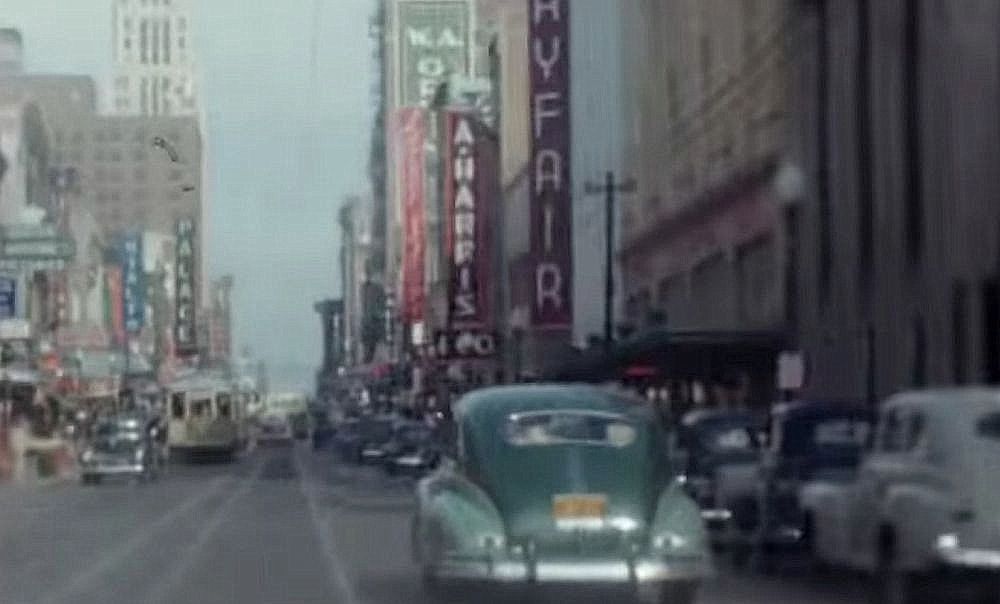
I’m a sucker for old home movies, and these two circa-1940s films are pretty cool — the first one has shots taken around Love Field and the second one has views of Main Street and Elm Street, full of traffic, pedestrians, and streetcars. Best of all, both are in color!

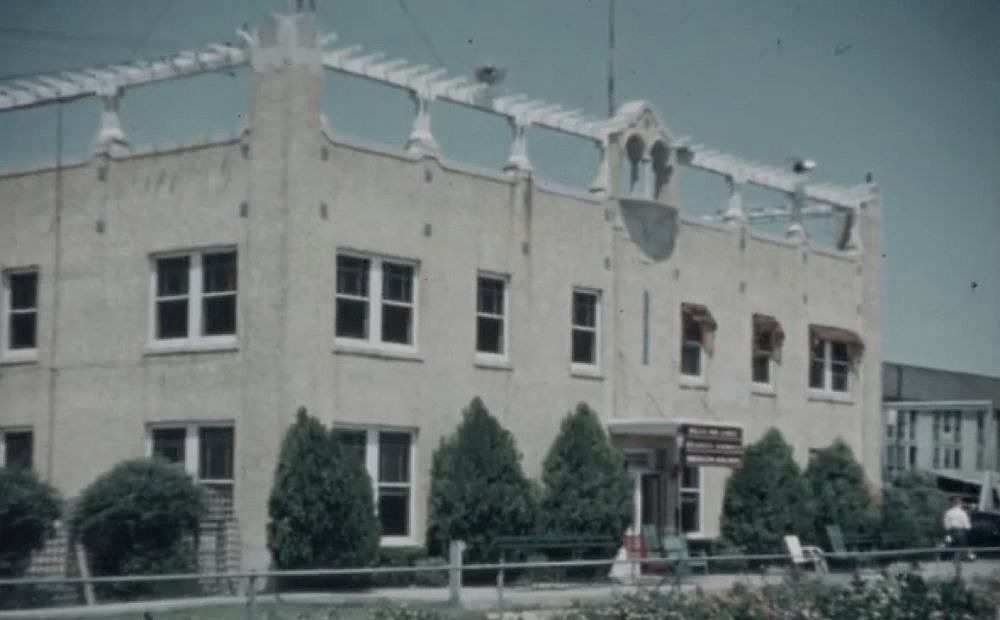
The Love Field film shows several of the businesses operating in Love Field, including the Dallas Aviation School, seen above in a screenshot from the film. Also seen is the building below, which appears to have housed offices for Delta Air Lines, Braniff Airways, and American Airlines. I’ve never seen this odd-looking building.

love-field_delta-braniff-american_periscope_ext_cropped

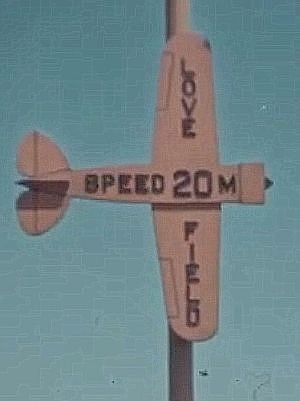
Also seen are these two signs:

love-field_periscope-screenshot_dallas-texas-terminal_cropped

love-field_sign_periscope_cropped

Below is the two-minute silent video:


*

The second video contains a lot of non-Dallas things (imagine!), but the first minute and a half were shot moving east down Main and Elm streets. (The Elm Street footage is, for some reason, really sped up — if you want to be able to focus on anything, I suggest fiddling with the YouTube settings and slowing the playback speed to .25.)

Here are a few screenshots — first, looking east down Main, approaching Akard:

downtown_main-street_periscope_cropped_a

And here’s a view of Elm Street, also shot from just west of Akard:

downtown_elm-street_periscope_cropped

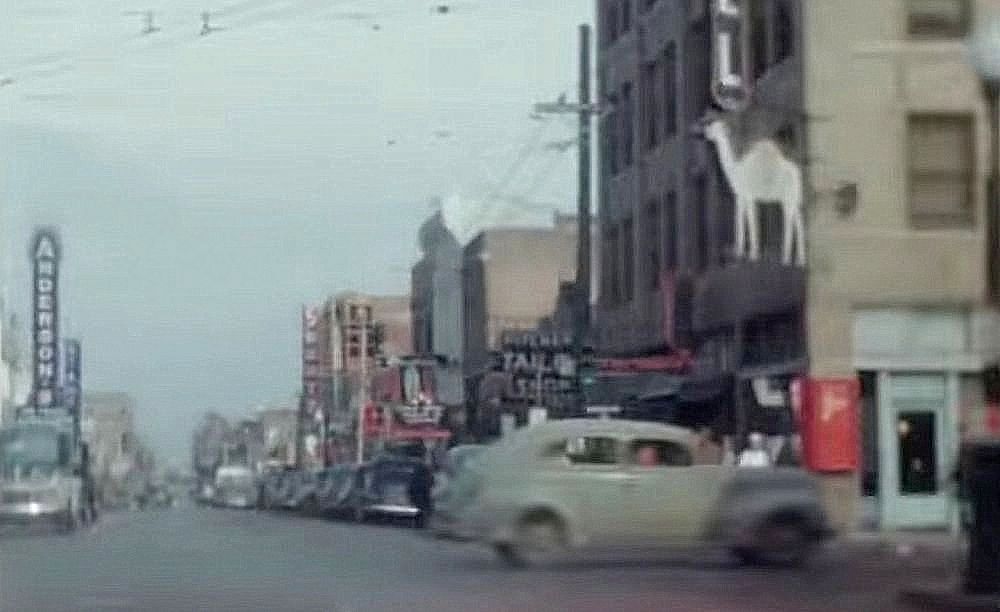
And here’s a stretch of Elm you don’t see all that often in historical shots of downtown — Elm east of Harwood (the “camel” sign is for the Campbell House hotel on the southeast corner of Elm and Harwood):

downtown_elm-street_periscope_campbell-house-cropped

The video is here, with the first minute and a half shot in Dallas (and, seriously, turn the playback speed down!):

***

Sources & Notes

All images are cropped screenshots from home movies from the Periscope Films archive — the Periscope page with more info on the Love Field film is here; the page with more info on the downtown Dallas film is here.

Thanks to Dallas author Rusty Williams for pointing me to the Periscope website! Check out Rusty’s history books here.

love-field_dallas-aviation-school_perisccope_cropped_sm

*

Copyright © 2020 Paula Bosse. All Rights Reserved.
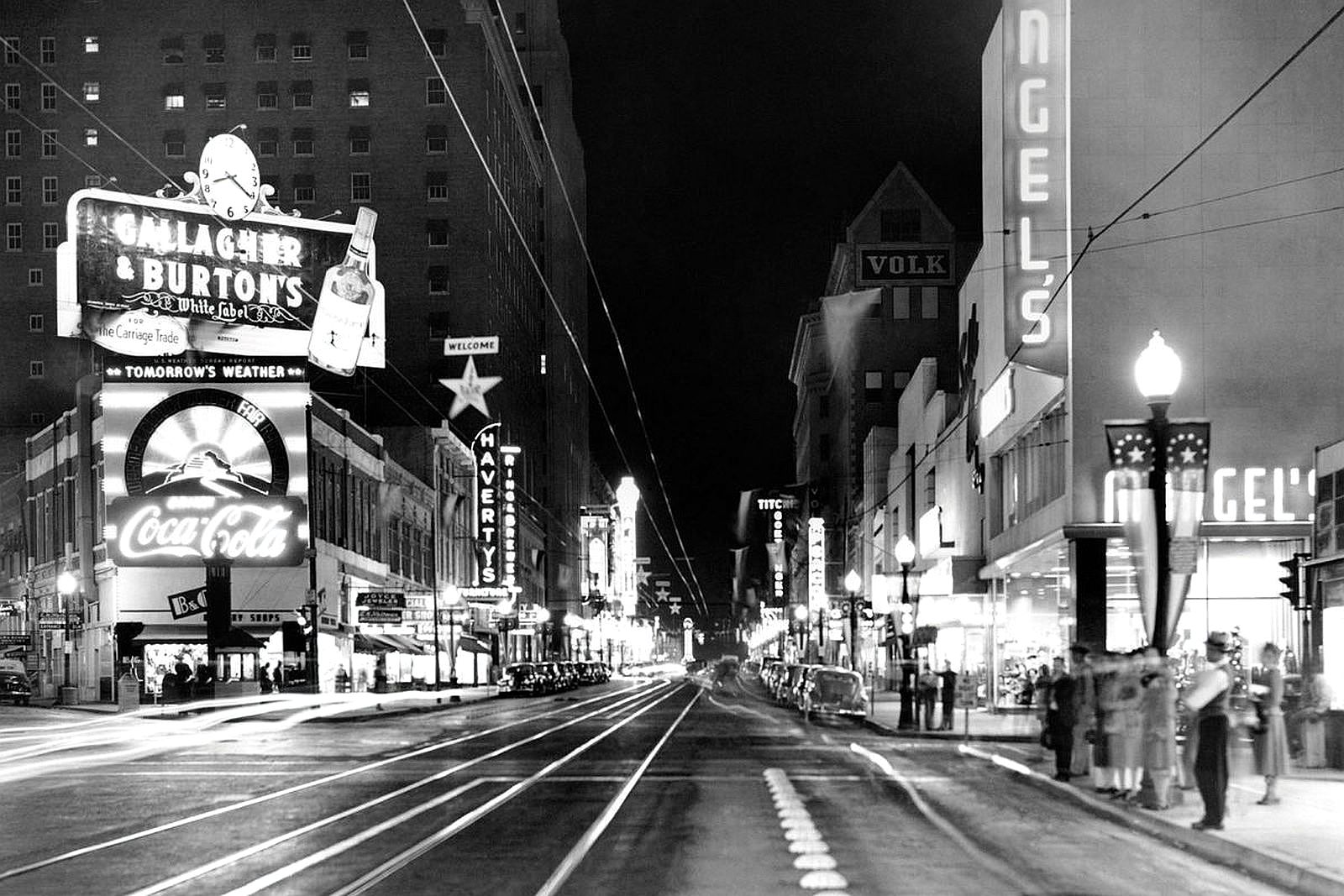
Bright Lights, Big City — ca. 1948

elm-ervay-live-oak_weather-sign_ca-1948“Forget all your troubles, forget all your cares…”

by Paula Bosse

I think present-day downtown Dallas looks really great at night. But it pales in comparison to what downtown Dallas — especially Elm Street — used to look like at night. It was bursting with lights and signs and people. The scene above shows Elm Street looking east from Ervay around 1948. The Coca-Cola weather-forecast sign at the left is one of my favorite by-gone downtown landmarks (other photos of the sign can be seen here and here).

I wouldn’t really encourage anyone to click the link to see what this part of Elm Street looks like today, but if you must, it’s here.

Whenever I imagine times in Dallas history that I’d like to time-travel to, for some reason I always wish I could walk around downtown Dallas in the 1940s. It must have been quite something to have seen this pulsating view in person. 

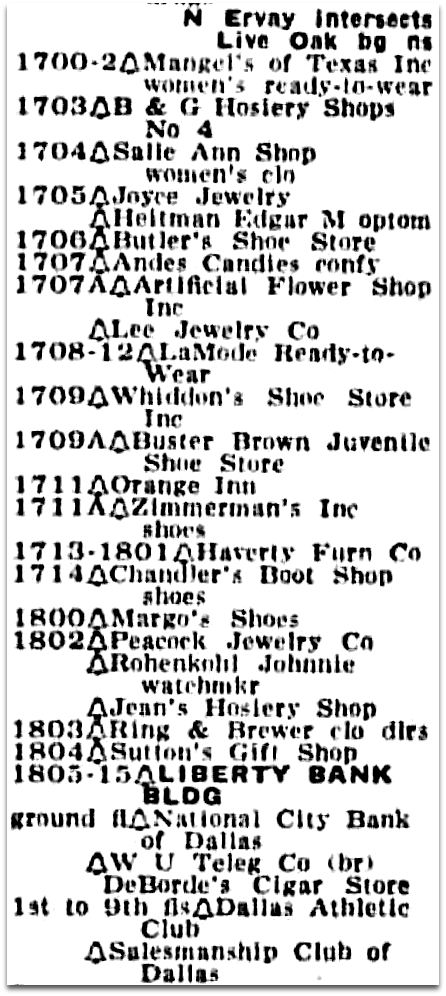
elm-street_from-ervay-live-oak_1948-directory
Elm Street, 1948 directory (click to see larger image)

***

Sources & Notes

I’m unsure of the source of this photo, but there is one almost identical to it in the collection of the Dallas Public Library, but the library’s copy is over-exposed and dated 1930 (it is titled “[Intersection of Elm, N. Ervay, and Live Oak streets]” and has the call number PA82-00324).

This photo was taken sometime between the end of 1947 and very early 1949. Mangel’s department store opened in its brand new building at 1700 Elm in September, 1947, and the Artificial Flower Shop (… “the artificial flower shop”?) lost its lease in early 1949. I can’t make out the lettering on the “Welcome” banners along the street, but there was a large hardware convention in Dallas in January, 1948.

elm-ervay-live-oak_weather-sign_ca-1948_sm

*

Copyright © 2020 Paula Bosse. All Rights Reserved.
 

Orphaned Factoids: Year-End Grab Bag, 2019

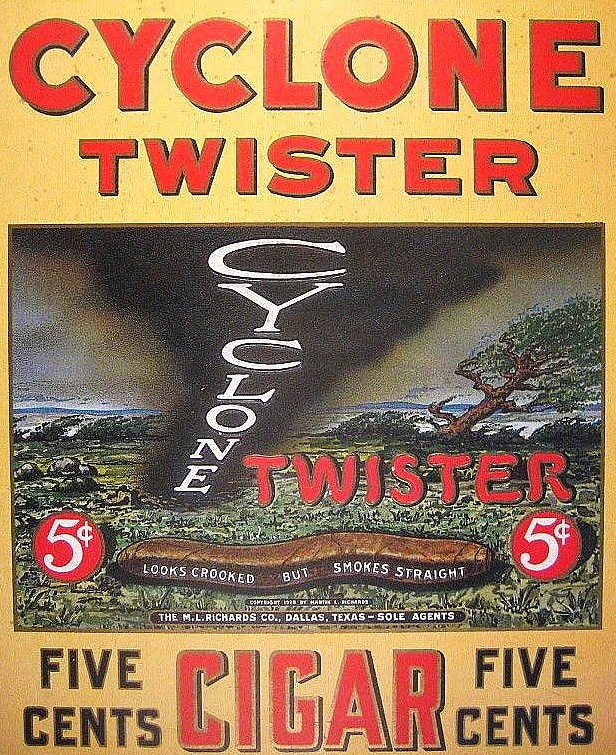
cyclone-twister_tornado_cigars_1928_ebay“Looks crooked but smokes straight…”

by Paula Bosse

As another year crawls to an end, it’s time to collect the odd bits and pieces that have  piled up over the past few months which struck me as interesting or funny or… whatever. I had nowhere else to put them, so they’re going here! (Most images are larger when clicked.)

**

First up, the ad above for the “Cyclone Twister” 5-cent cigar, distributed by Dallas wholesaler Martin L. Richards in 1928. Note the shape of the cigar. “Looks crooked but smokes straight.” Probably looked a little strange when smoked. I guess it might help break the ice at parties. Found on eBay.
*

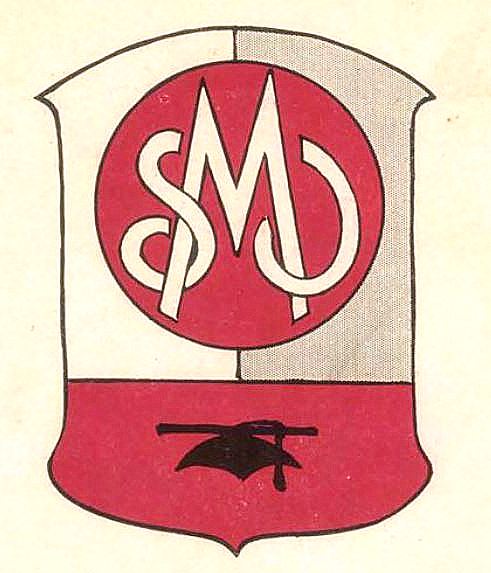
Here’s a nice little crest for SMU I’ve never seen — I’m not sure how long this lasted. From the 1916 Rotunda yearbook.
smu_crest_1916-rotunda

*

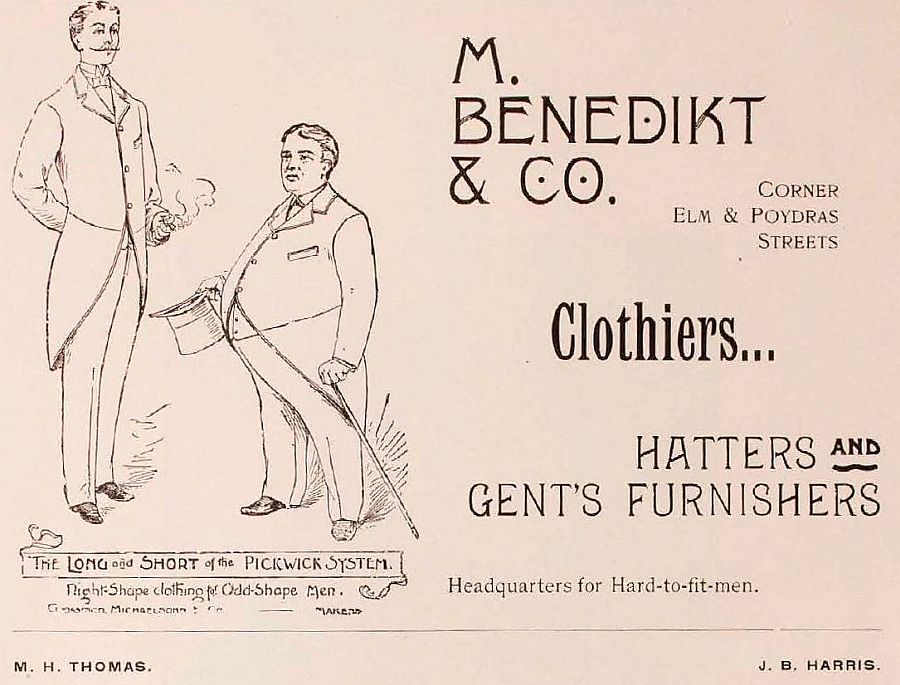
M. Benedikt & Co. was the “Headquarters for Hard-to-fit-men” — in other words, they specialized in “Right-Shape clothing for Odd-Shape Men.” Here are a couple of examples of what they might consider “odd-shape men” in an ad from 1899.

benedikt-clothiers_odd-shape-men_dallas-fire-dept-souvenir_1899_degolyer-lib_SMU

*

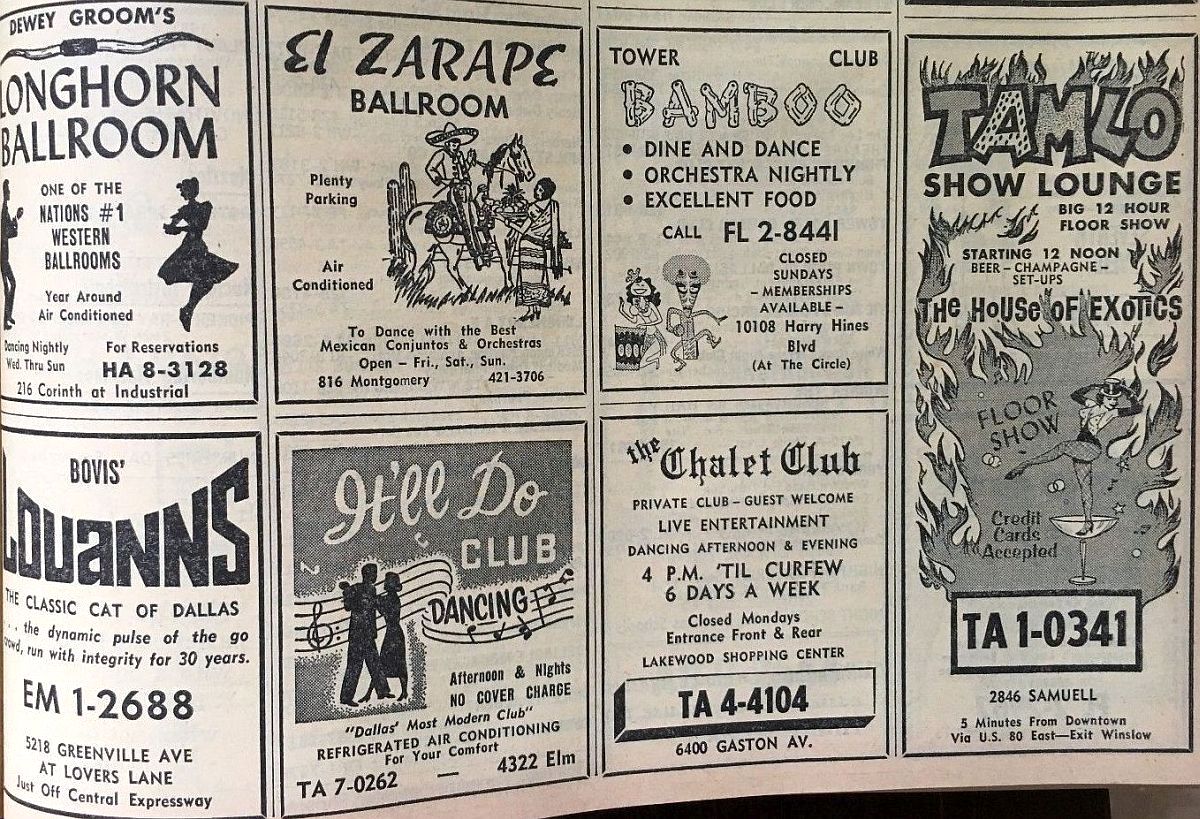
This is an interesting selection of ads from a 1968 edition of the Yellow Pages: Dewey Groom’s Longhorn Ballroom, Louanns, El Zarape Ballroom, the It’ll Do Club, the Bamboo Room at the Tower Hotel Courts, the Chalet Club, and the Tamlo Show Lounge (a couple of these show up in the…um… informative story “The Meanest Bars in Dallas” (D Magazine, July, 1975).

clubs_yellow-pages_1968_ebay

*

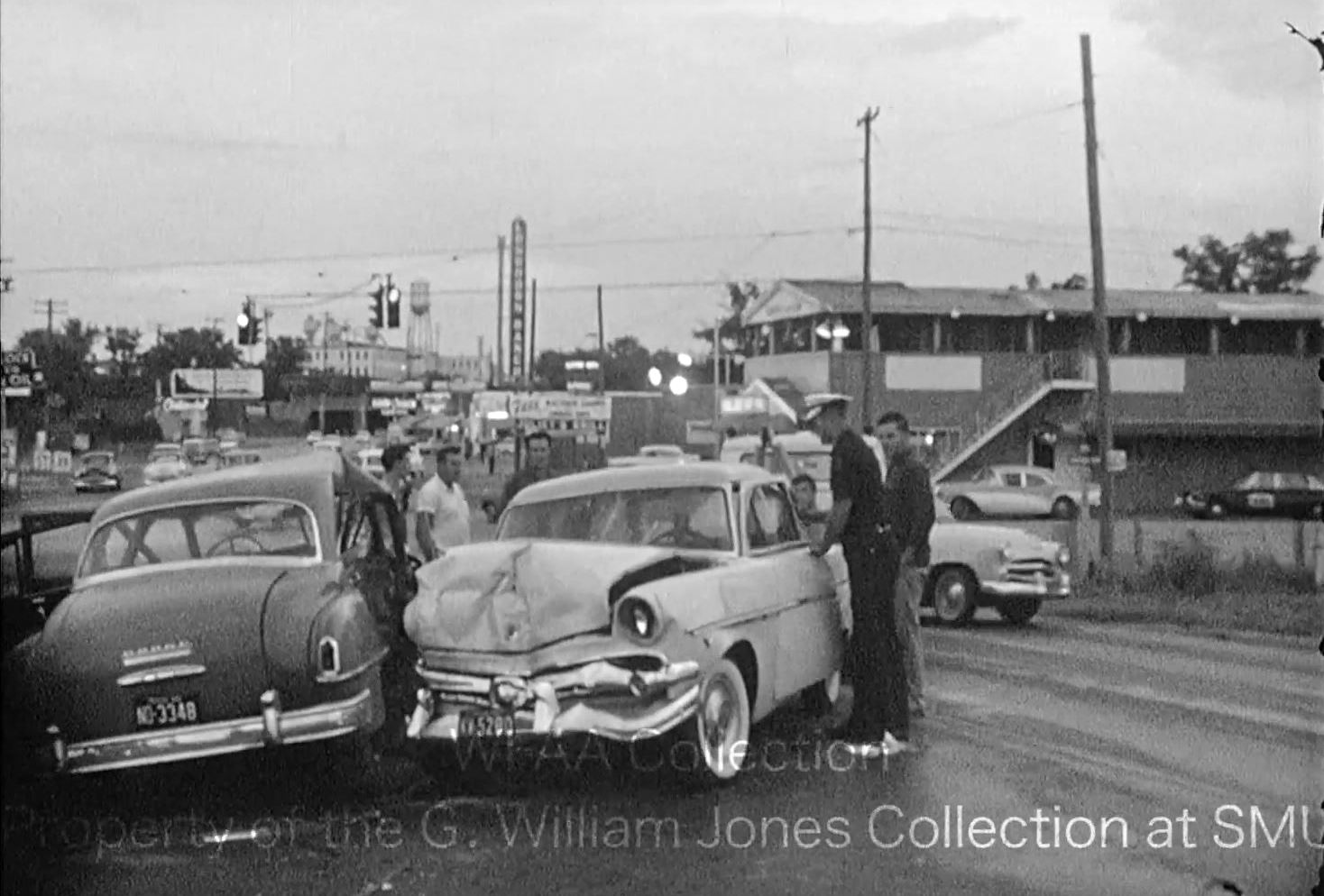
I’ve been working in the G. William Jones Film and Video Archives at SMU for the past few months, and this was something I came across while viewing a 1960 WFAA-Channel 8 News clip which made me really excited (it’s an awful screenshot, but, what the heck): while covering a car wreck at Corinth and Industrial, the Ch. 8 camera panned across the scene, and in the background, just left of center, was a very tall sign for the Longhorn Ranch, which I’d never seen before. Before it was the Longhorn Ranch it was Bob Wills’ Ranch House, and after it was the Longhorn Ranch it was the Longhorn Ballroom (more history of the legendary honky-tonk is in a Texas Monthly article here). So, anyway, it’s a fuzzy screenshot, but I think it’s cool. (The footage is from June, 1960 but the clip hasn’t yet been uploaded online.)

longhorn-ranch_wfaa-june-1960_jones-film_SMU

*

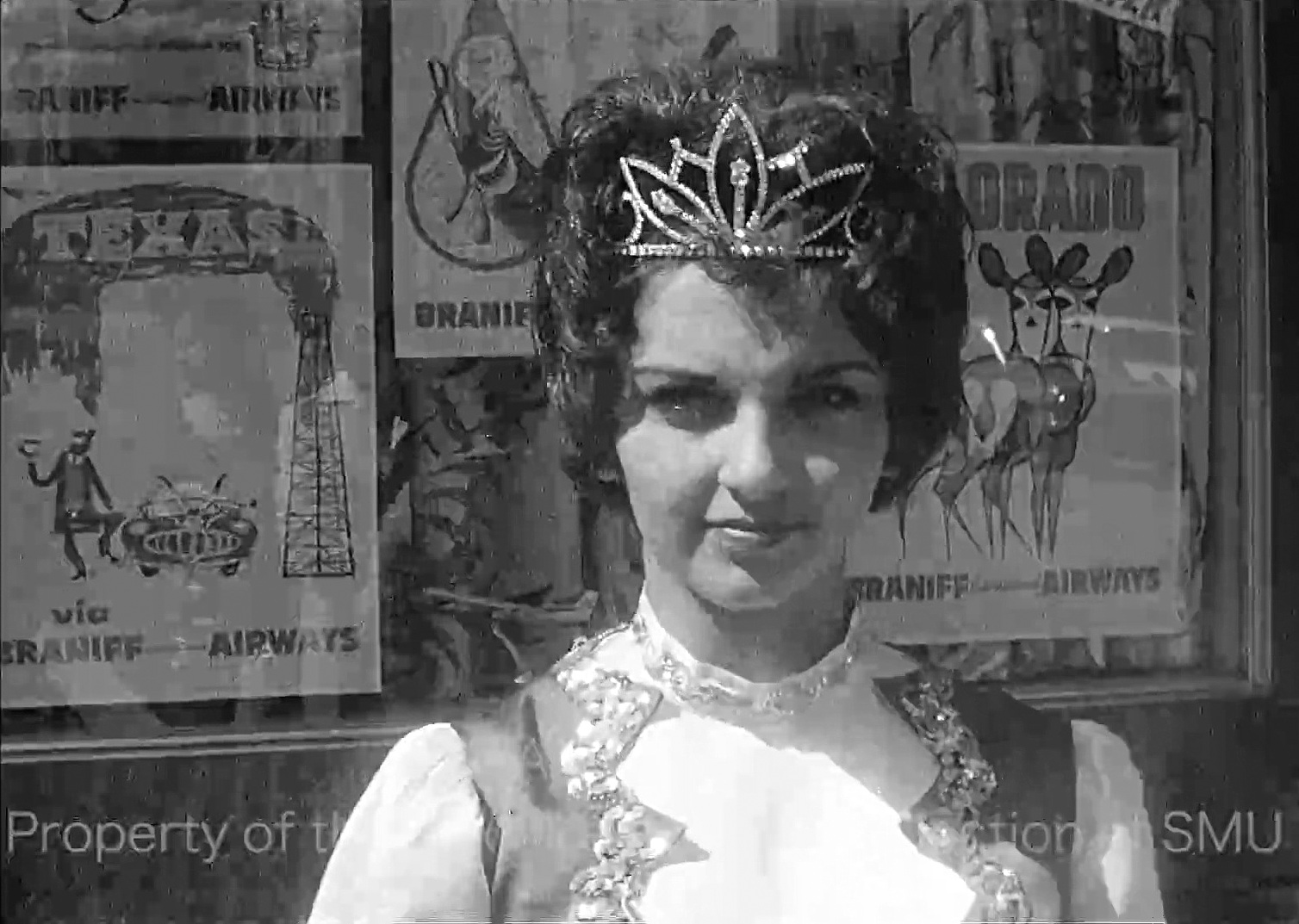
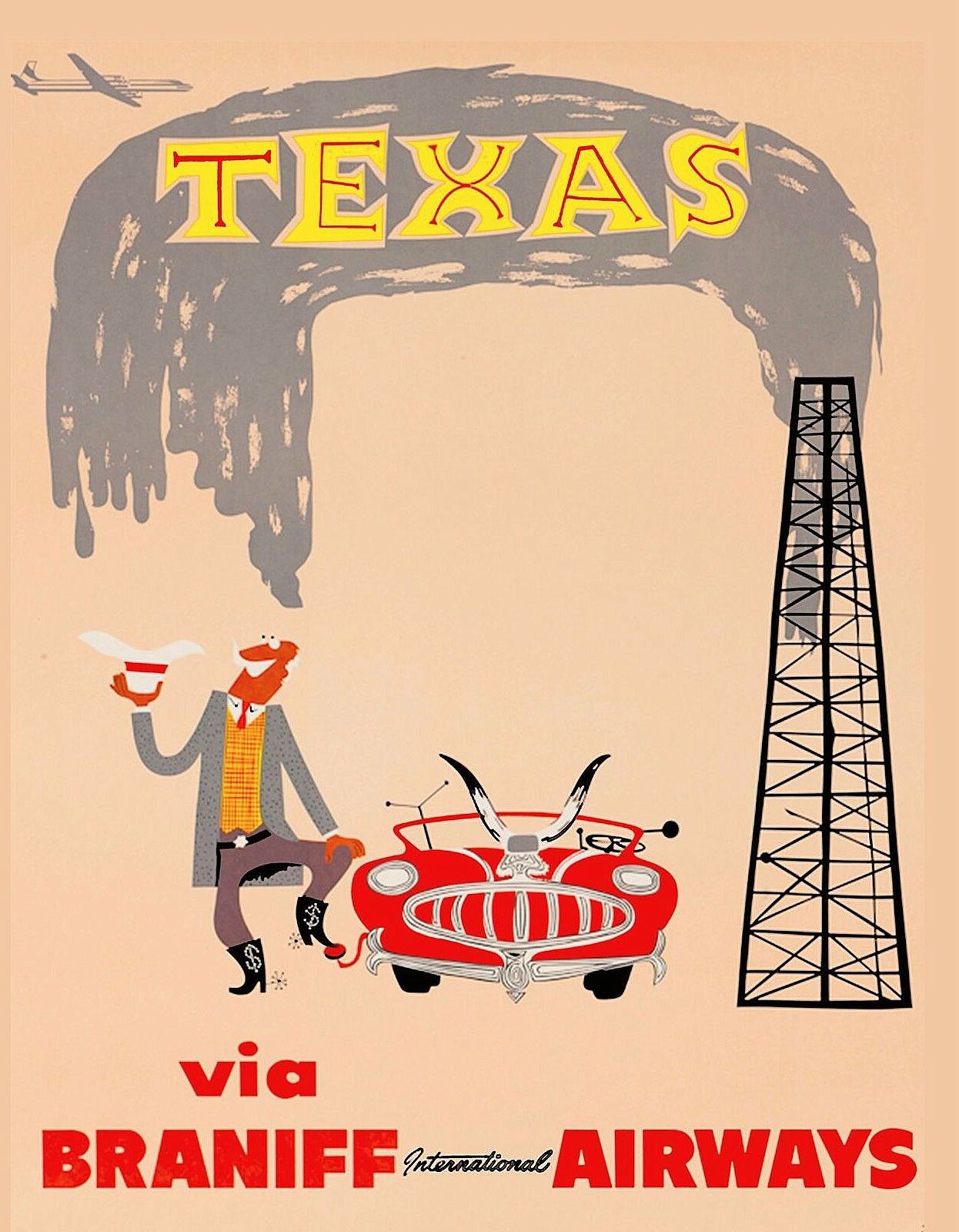
Speaking of WFAA footage in the Jones Film collection, there was some sort of story about comely young women in skimpy outfits handing out samples of some sort of food to passing pedestrians on Commerce Street (the one-minute clip is here). In addition to seeing sights associated with downtown streets in 1962 (including businesses such as Sigel’s and the Horseshoe Bar, as well as a large sign advertising the Theatre Lounge), I was really happy to see a few Braniff Airways posters in a window — I love those late-’50s/early-’60s Braniff travel posters! So here’s another screenshot and, below that, the Texas-kitsch poster I was so happy to see in color.

braniff-poser_oil-well_jones-film_SMU_041262

braniff-poser_oil-well_ebayBraniff Airways, Inc., Copyright 1926 2019

*

I don’t have an image for it, but I was amused to learn that in 1969 the powers-that-be at the Texas Turnpike Authority nixed the suggestion that the Dallas North Tollway be renamed in honor of president Dwight D. Eisenhower, who had recently died — the idea was turned down because 1) new signage would have been very expensive, and 2) officials were afraid that “irreverent motorists” would inevitably refer to the toll road as the “Ike Pike” (I know I would have!).

*

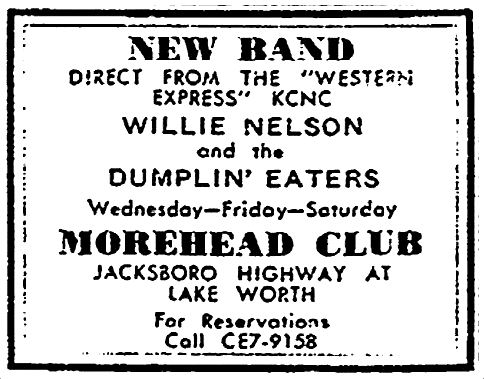
Not Dallas, but there’s always time for a little love for Fort Worth: here’s a nice ad from 1955 for a 22-year-old Fort Worth DJ named Willie Nelson, back when he was gigging out on the Jacksboro Highway with his band the Dumplin’ Eaters.

nelson-wilie_FWST_090955Fort Worth Star-Telegram, Sept. 9, 1955

*

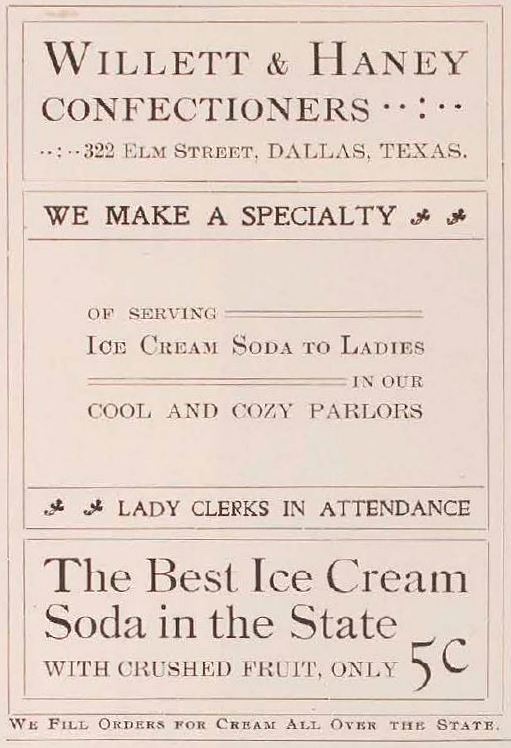
Apparently there was a time when ladies were uncomfortable patronizing an establishment in which m*n served them ice cream, so this ad from 1899 made sure to note that “lady clerks” were in attendance. (See the back side of the Willett & Haney Confectioners parlor a couple of years before this ad, when the “cool and cozy parlor” was located on Main Street — it’s at the far left in this circa-1895 photo detail from this post.) The parlor was owned by John B. Willett and John S. Haney, and in addition to ice cream and candy, their specialty was oysters, and I can only hope that there was some experimenting with new food combos involving mollusks, ice cream sodas, and crushed fruit.

willett-and-haney_ice-cream-parlor_dallas-fire-dept-souvenir_1899_degolyer-lib_SMU

*

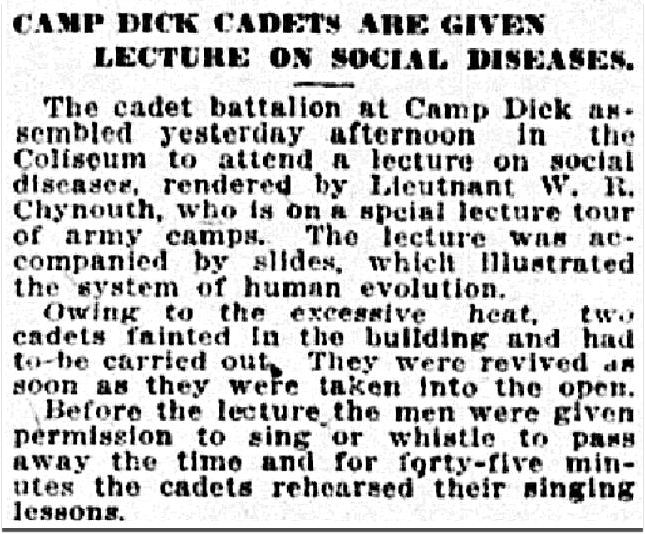
This is an odd little tidbit from The Dallas Morning News about a couple of cadets from Camp Dick (at Fair Park) and what happened to them when they attended a lecture on “social diseases.” (The jokes write themselves….) Who knew singing and whistling were so therapeutic”

camp-dick_dmn_081718DMN, Aug. 17, 1918

*

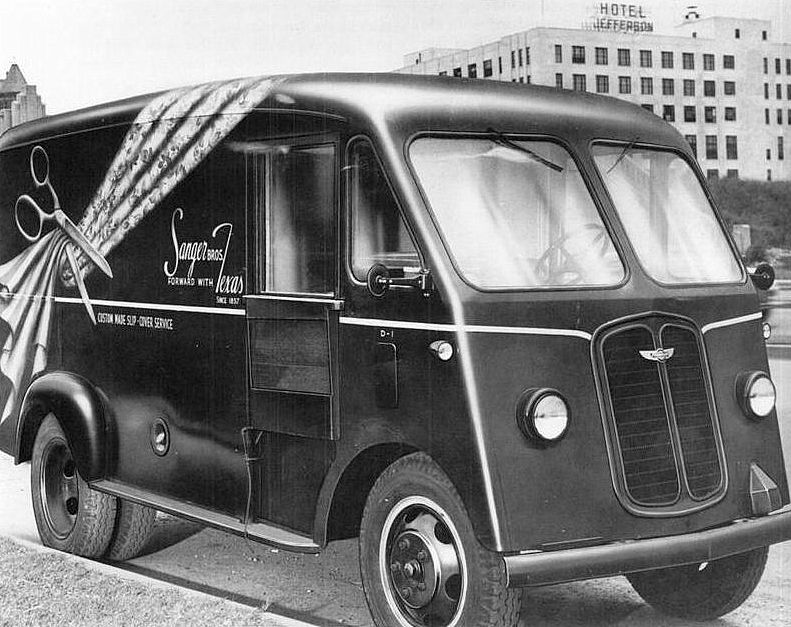
The caption for this photo (which appeared in the article “Going Downtown to Shop” by Jackie McElhaney, from the Spring, 2009 issue of Legacies): “In 1946, Sanger’s introduced a portable drapery shop. Two seamstresses sewed draperies in this truck while parked in the customer’s driveway.” Now that’s service!

sangers_drapes_legacies_2009

sangers_logo_1947_forward-with-tx
“Forward with Texas,” 1947 ad detail

*

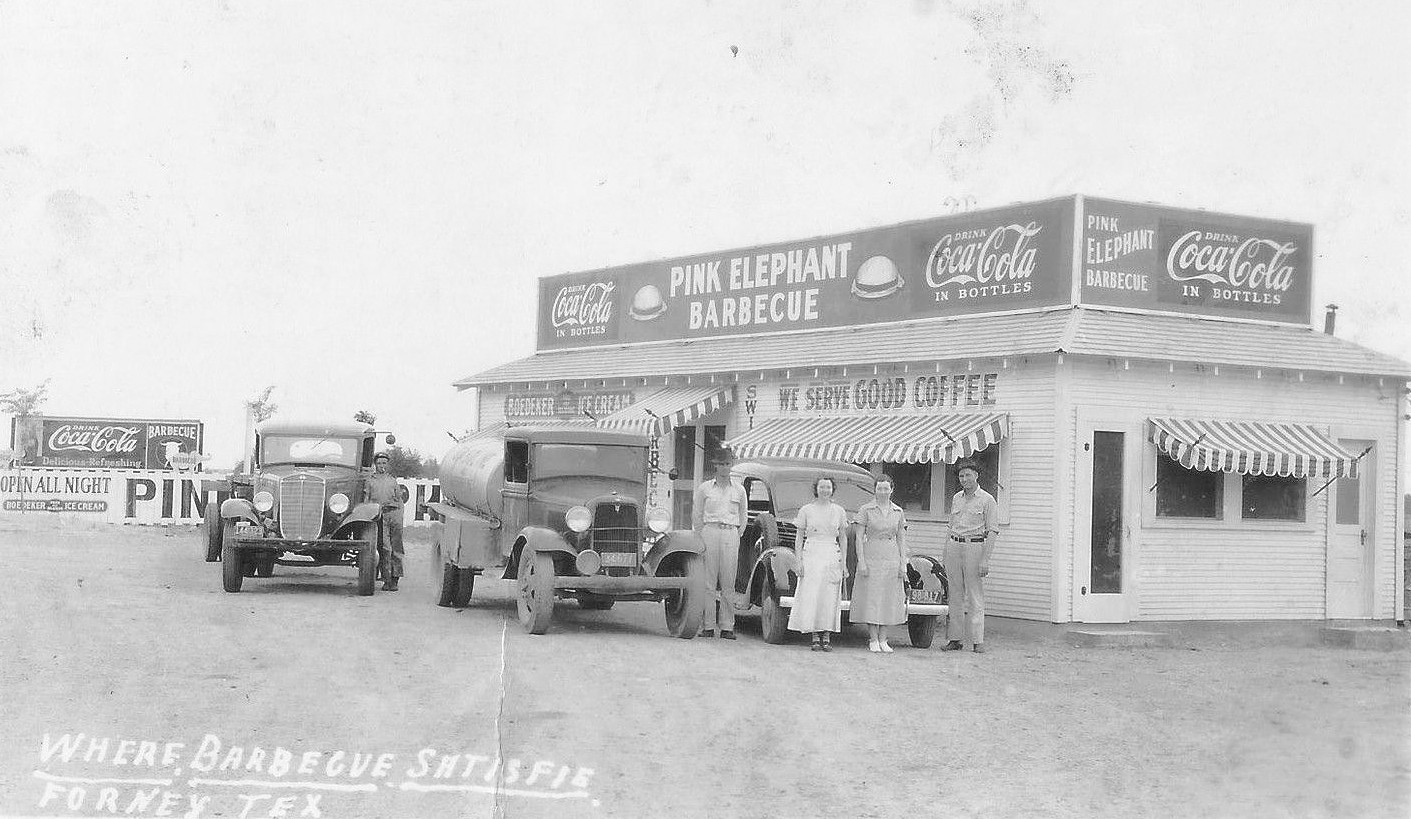
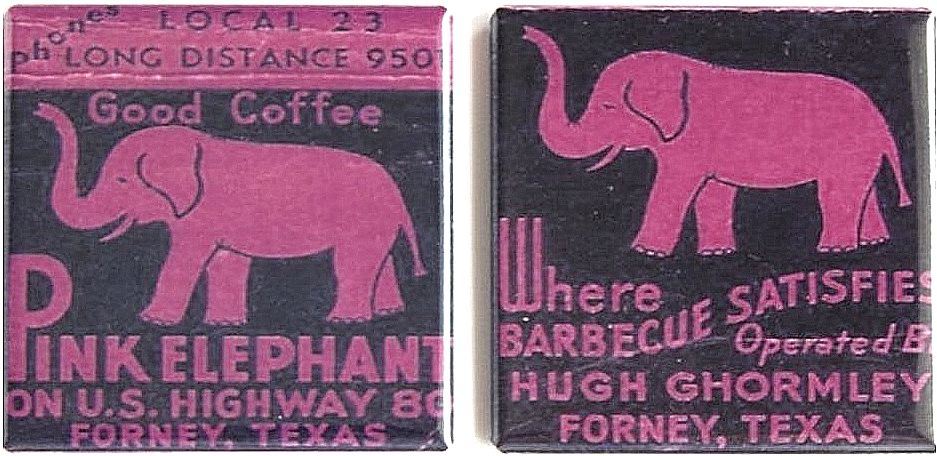
Two more. This first was a real-photo postcard I found on eBay. It shows the Pink Elephant cafe on Hwy. 80 in Forney (not Dallas, but pretty close!). I love the idea of Forney having a place called the Pink Elephant — it was quite popular and was in business from at least the 1930s to the 1950s. The card below was postmarked in 1936.

pink-elephant-bbq_forney_ebay_mailed-1936

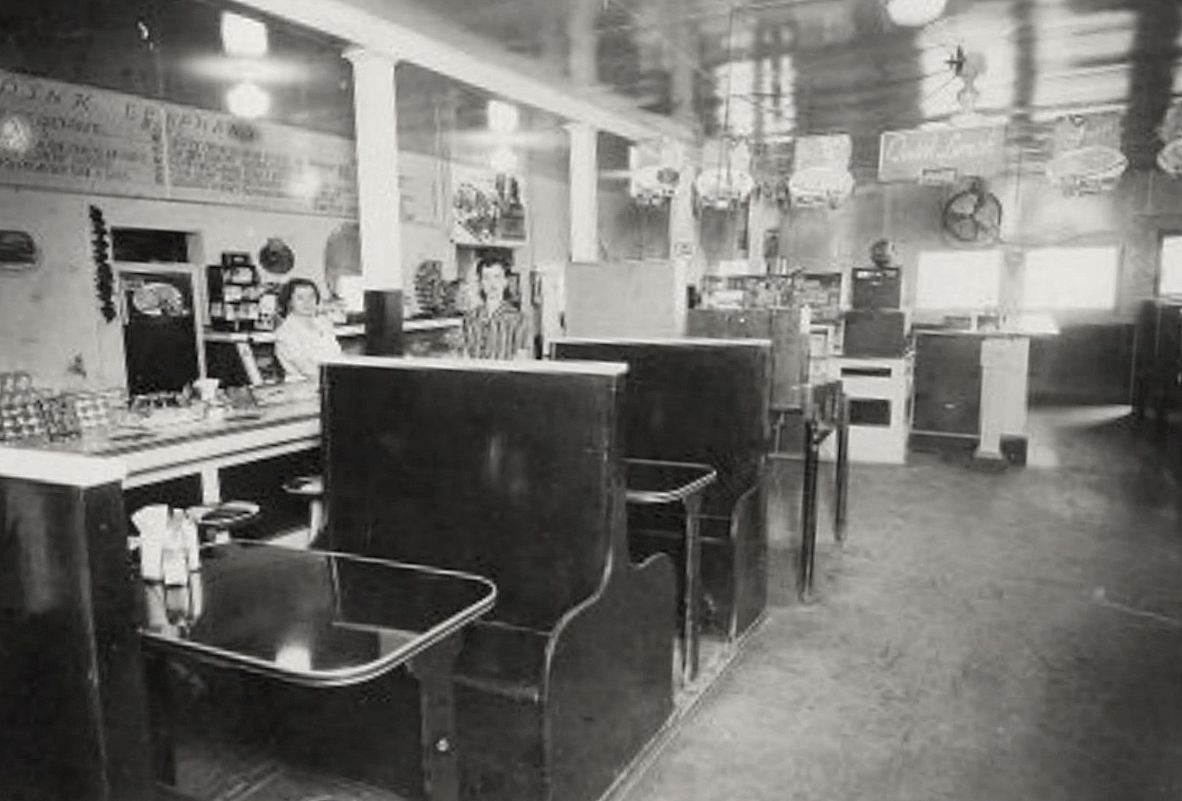
This photo of the interior is from the Spellman Museum of Forney Museum Facebook page.

pink-elephant-bbq_forney_FB_spellman-museum-forney-history

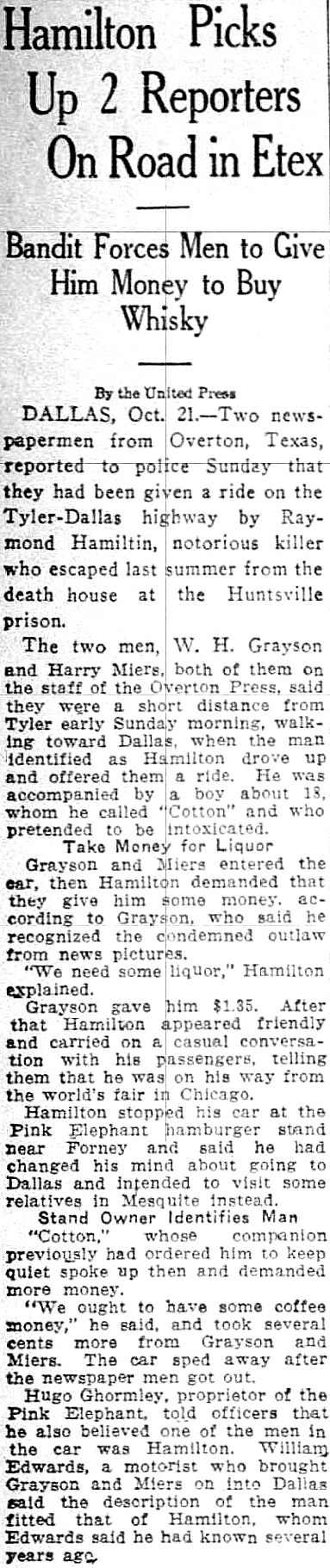
I wondered if the place was still around (sadly, it is not), and in looking for info about it found this interesting article from 1934 about outlaw Raymond Hamilton, the escaped killer who grew up in Dallas (…there’s the Dallas connection!) and was notorious for having been a member of Bonnie and Clyde’s “Barrow Gang.” (Click to read.)

pink-elephant-bbq_forney_austin-american_102234Austin American, Oct. 22, 1934

pink-elephant_forney_matchbook_pinterest

*

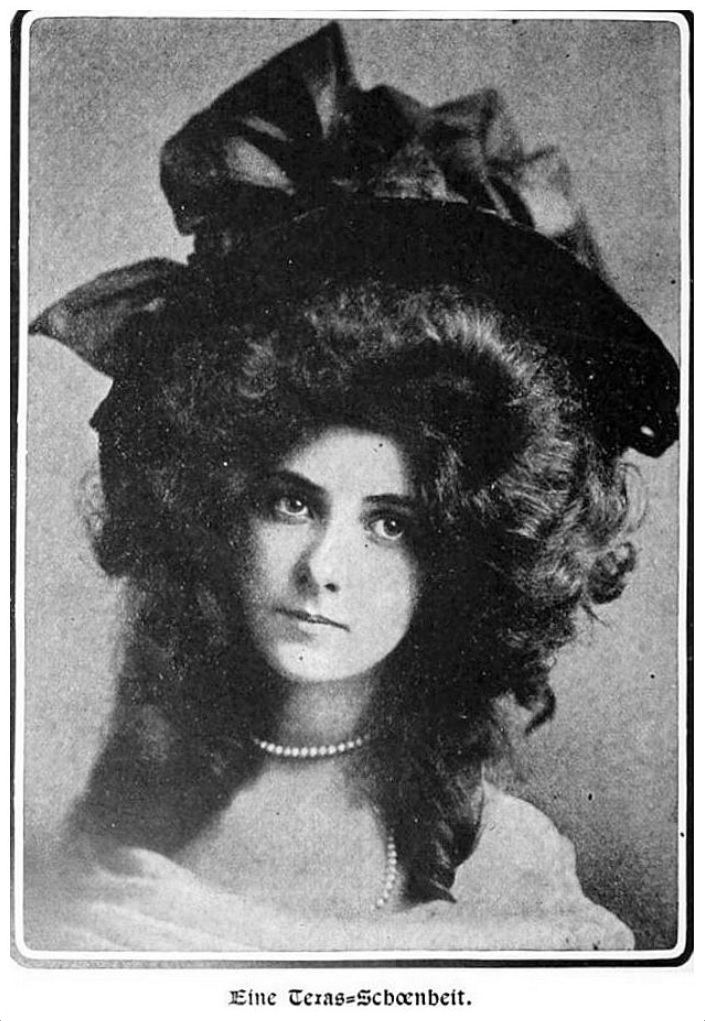
And, lastly, a photo of a young woman which appeared in a German-language magazine, captioned simply “Eine Texas Schönheit (A Texas Beauty).” Is the hair wearing the hat, or is the hat wearing the hair?

texas-beauty_1902

***

Previous installments of Flashback Dallas “Orphaned Factoids” can be found here.

Until next year!

cyclone-twister_tornado_cigars_1928_ebay_sm

*

Copyright © 2019 Paula Bosse. All Rights Reserved.