Flashback : Dallas

A Miscellany: History, Ads, Pop Culture

Year-End List! My Favorite (Non-Photo) Images Posted in 2014

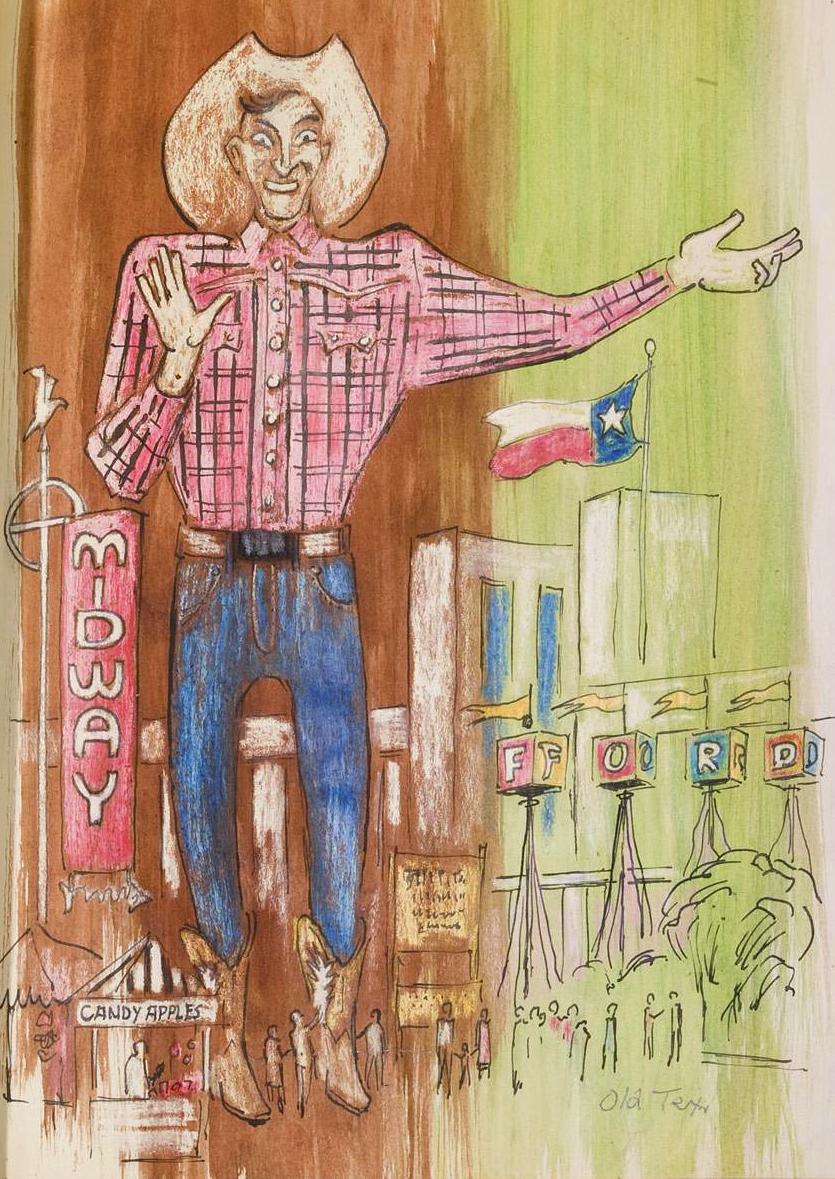
dozier_big-tex_sketchbook_1954_dma“Old Tex” sketch by Otis Dozier, 1954 — Dallas Museum of Art
© Marie Scott Miegel and Denni Davis Washburn

by Paula Bosse

It’s the end of the year, the traditional time for lists! Yesterday I compiled my favorite ads I’ve posted in 2014, today it’s my ten favorite images — either art or postcards (my favorite photographs of the year will be posted tomorrow). For more info on the images, click on the title of the post they originally came from. Most images are larger when clicked — some are quite a bit larger.

*

1. “Big Tex, Old Tex, Big Ol’ Tex — Whatever You Call Him, Otis Dozier Wins (1954)” (above)

2. “Alexandre Hogue’s ‘Calligraphic Tornado’ — 1970” (also, I want to mention the possibly previously unknown 1927 bookplate by Hogue that I discovered, here)

3. “Dallas’ Frank Lloyd Wright Skyscraper — 1946”

frank-lloyd-wright_rogers-lacy_1946-sm

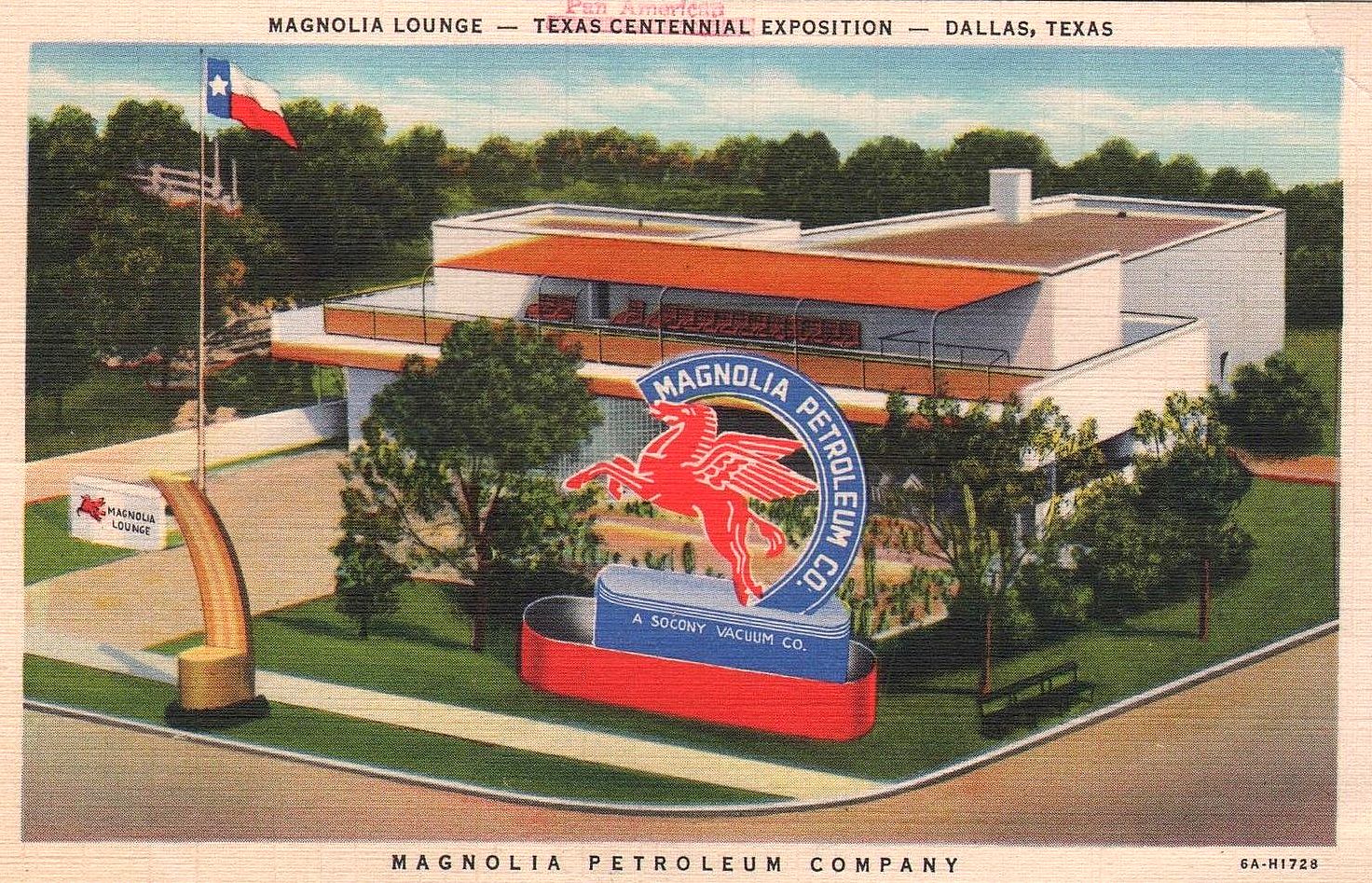
4. “William Lescaze’s Ultramodern Magnolia Lounge — 1936”

magnolia-lounge_tx-centennial

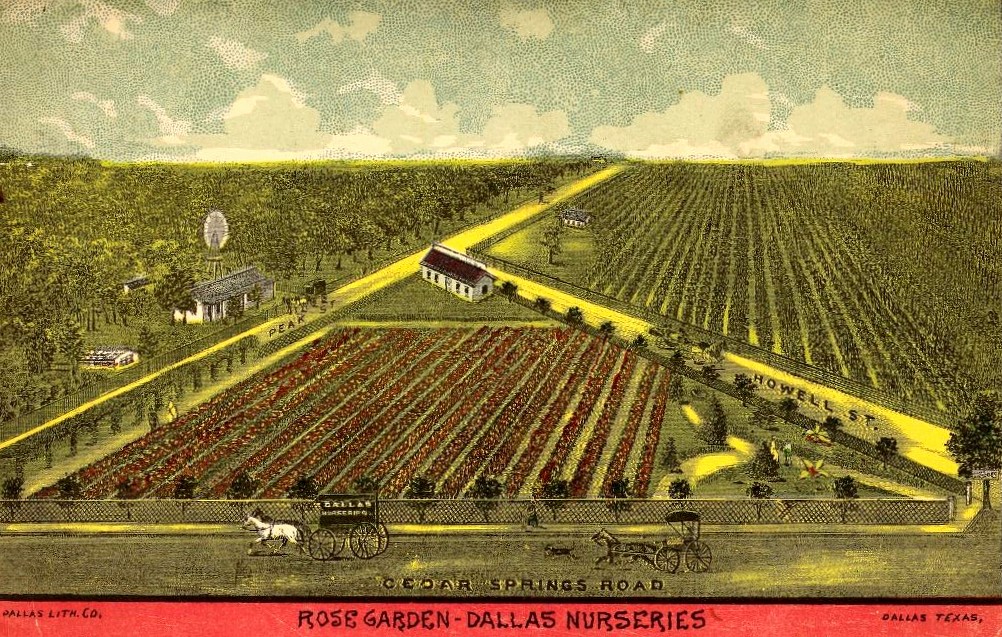
5. “J. M. Howell’s Dallas Nurseries — 1880s”

howell_rose-garden_1888

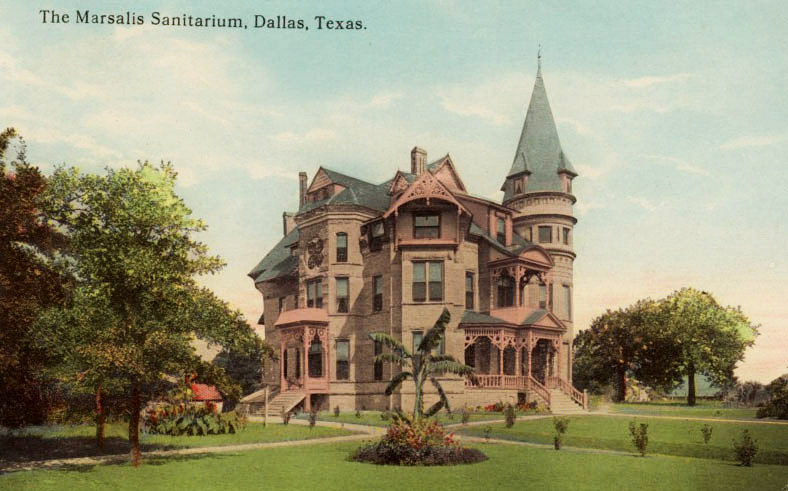
6. “The Marsalis House: One of Oak Cliff’s ‘Most Conspicuous Architectural Landmarks'”

marsalis_sanitarium_oak-cliff

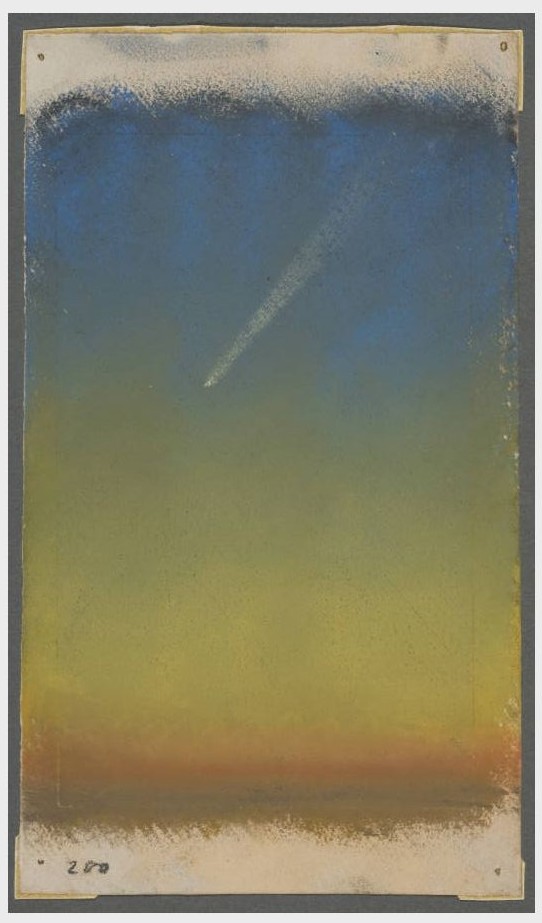
7. “Frank Reaugh or Mark Rothko?”

reaugh_meteor_nd_ransom-smu_2

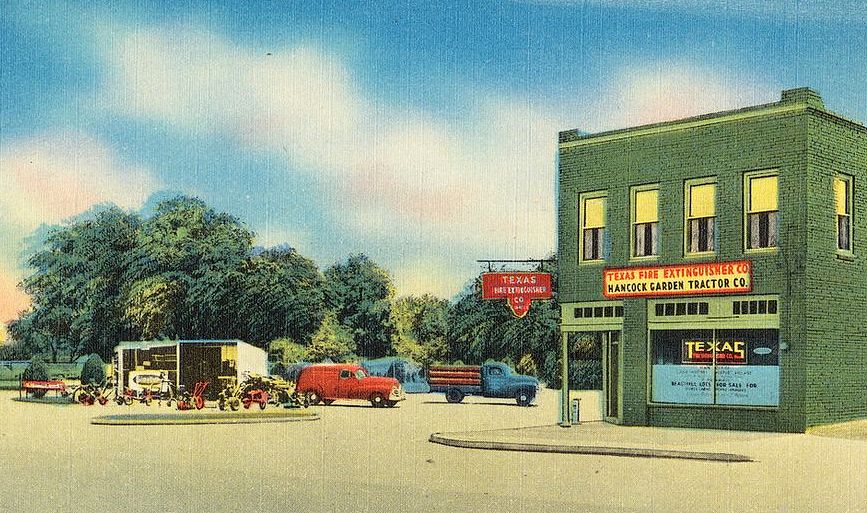
8. “The Texas Fire Extinguisher Co. and Hitler — 1942”

tx-fire-extinguisher-co

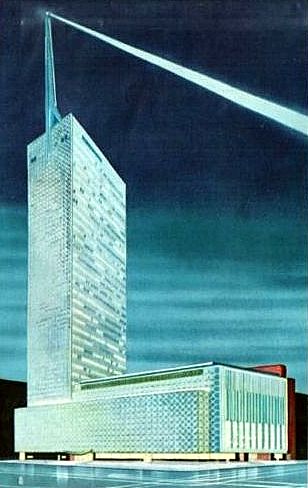
9. “The Republic National Bank Building: Miles of Aluminum, Gold Leaf, and a Rocket”

republic-national-bank_beacon_front

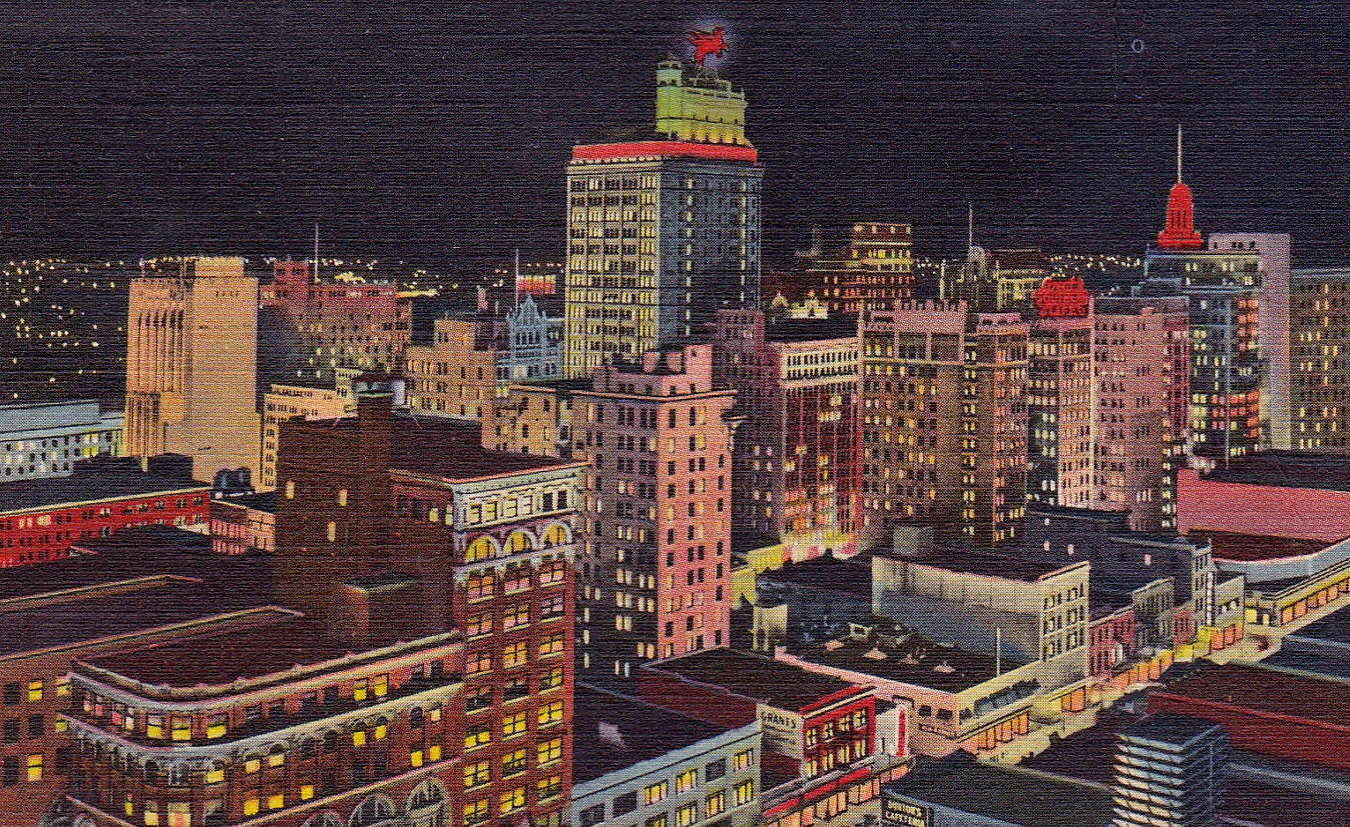
10. “When the Flying Red Horse Could be Seen From Miles Away”

birdseye_night_early1940s

*

Honorable Mention: A whole bunch of cool night-time postcards in “Theatre Row — A Stunning Elm Street at Night.”

*

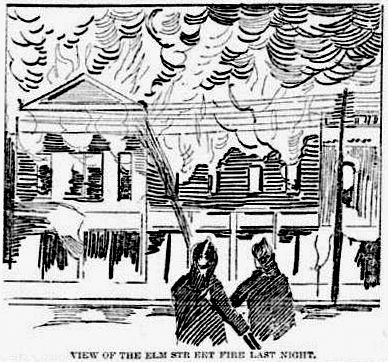
And, lastly, a runner-up, just because it’s so ridiculous it makes me chuckle every time I see it: a newspaper artist’s rendition of a massive fire that swept through downtown in 1896, from “Chas. Ott: One-Stop Shopping for Bicycles and Dynamite.”

ott-fire_pic_dmn_052696

*

For all the “Year-End Best of 2014” lists, click here.

*

Copyright © 2014 Paula Bosse. All Rights Reserved.

Year-End List! My Favorite Dallas Ads Posted in 2014

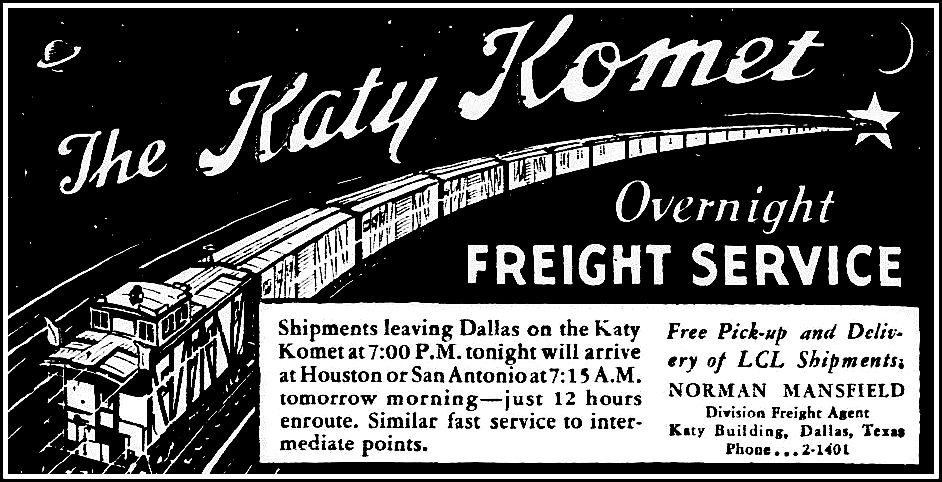
ad-katy-komet_dmn_031733The Katy Komet — 1933 (click for larger image)

by Paula Bosse

It’s the end of the year, the time when people do lists. I love lists. So I’m going to be doing some over the next few days. Today, a collection of my favorite Dallas-related advertisements that I’ve posted over the past year. To see the original post (which includes sources and no doubt pithy commentary), click the title of each ad. And, as always, thanks for taking the time to read Flashback Dallas this year! (Most images larger when clicked.)

*

1.  The Katy Komet (1933) — above. My favorite ad of the year!

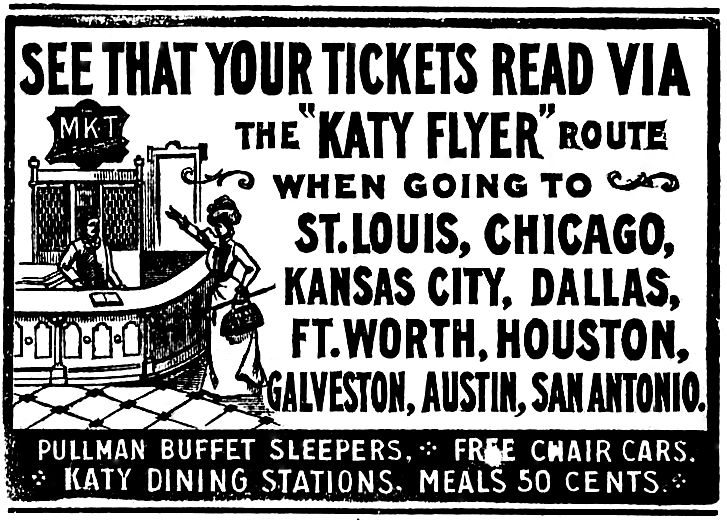
2.  M-K-T Railroad’s “Katy Flyer” Route (1902)

mkt_rail_1902_mercury

3.  Cokesbury Book Store (1959)

cokesbury_dallas_1959

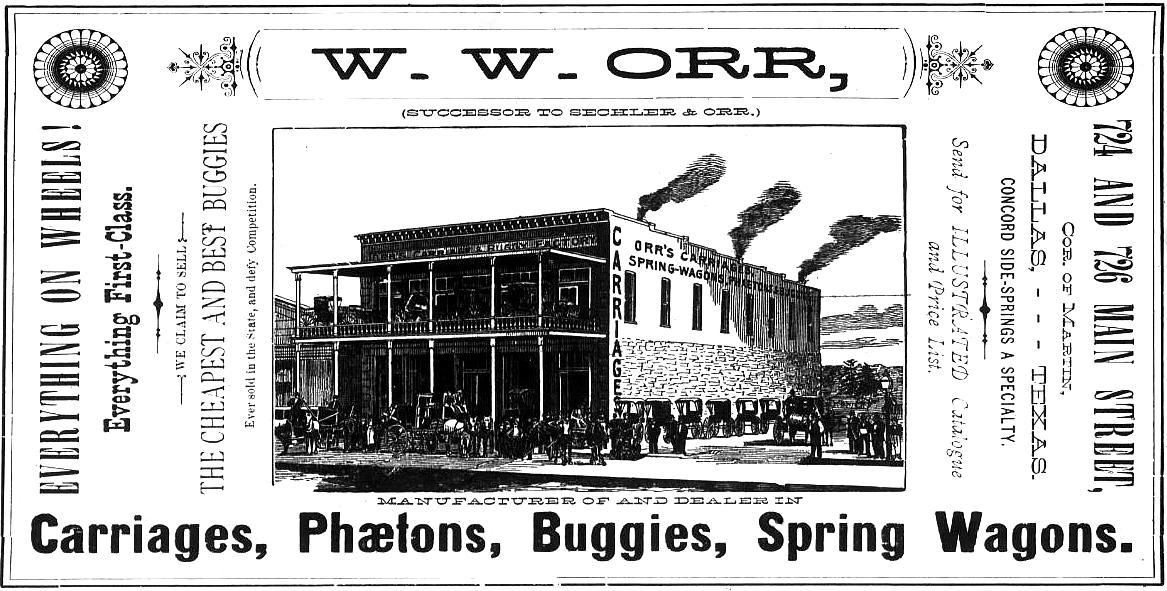
4.  W. W. Orr’s Carriages, Phaetons, Buggies, and Spring Wagons (1878)

ad-orr-carriages_directory_1878

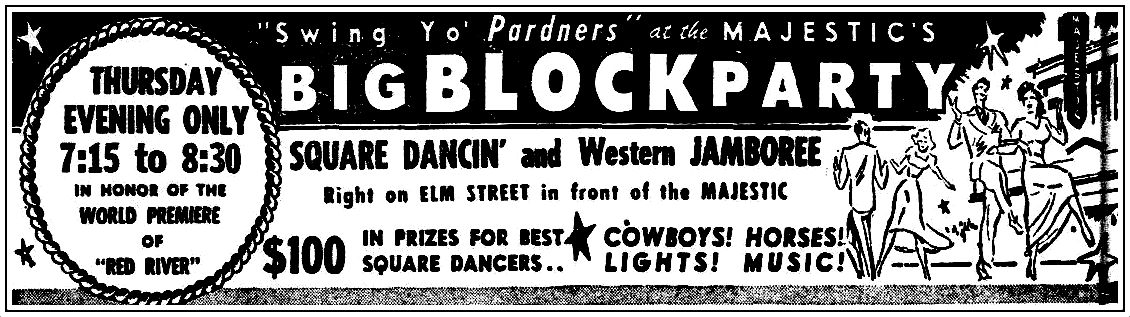
5.  Majestic Theatre’s “Red River” Block Party (1948)

red-river_block-party_dmn_082648

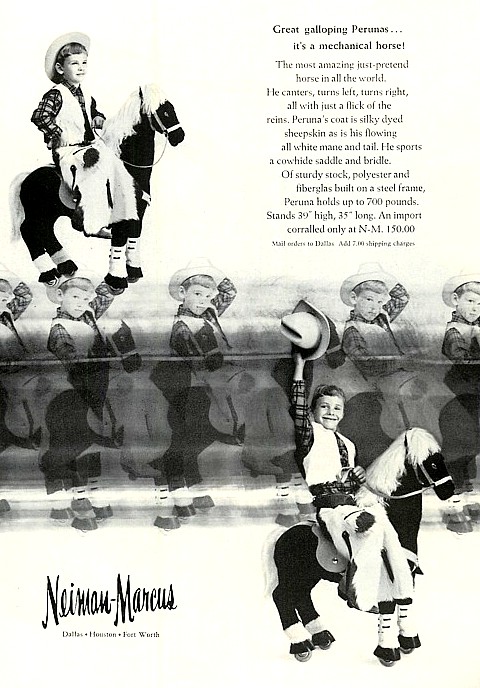
6.  Neiman-Marcus Mechanical Peruna Toy (1965)

n-m_peruna_1965

7.  Irby-Mayes ad featuring the Mercantile Building (1948)

ad-irby-mayes_dmn_040148

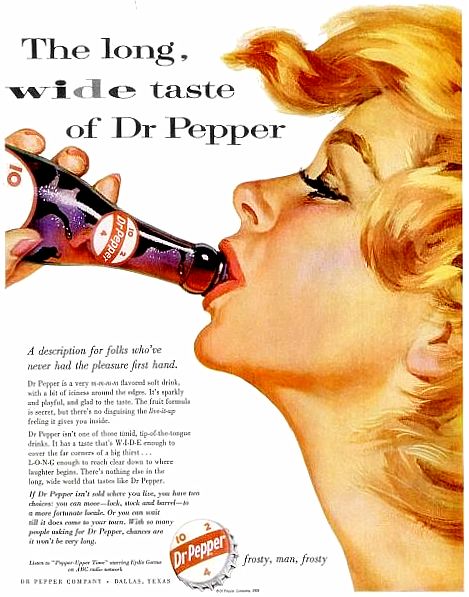
8.  Dr Pepper (1959)

dr-pepper-1959

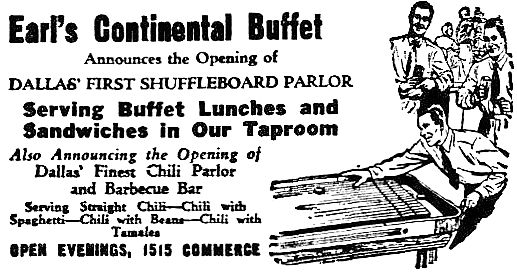
9.  Earl’s Continental Buffet (1947)

earls-continental-buffet_shuffleboard_dmn_1947

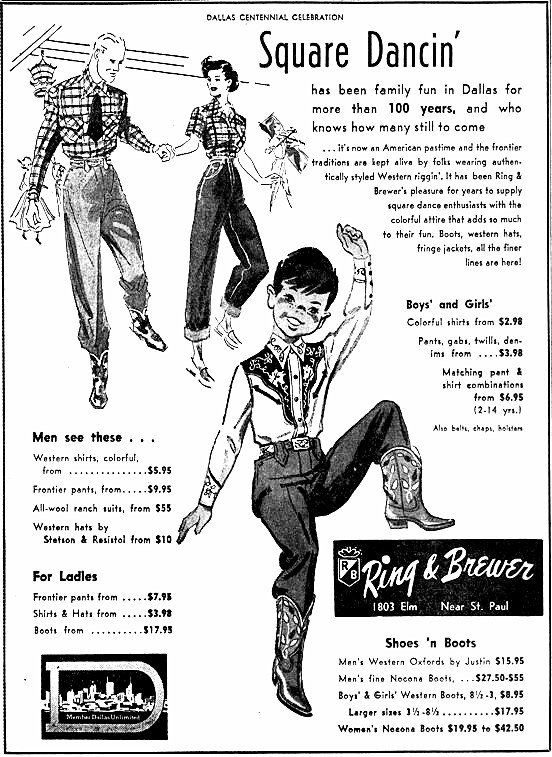
10. Ring & Brewer (1956)

dallas_ringandbrewer_1956

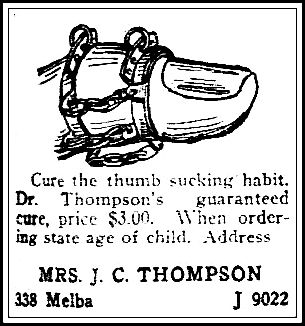
Runner-up: “Keep Oak Cliff Kinky” (1923)

thumb-sucking_dmn_111823
*

For all the “Year-End Best of 2014” lists, click here.

*

Copyright © 2014 Paula Bosse. All Rights Reserved.

Orphaned Ads and Factoids: End-of-Year Grab Bag

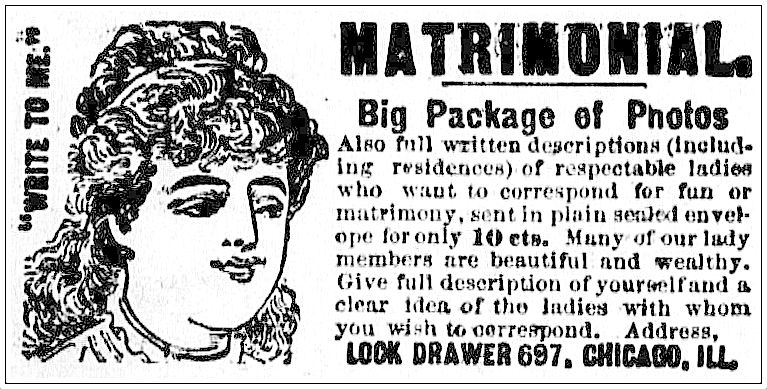
mail-order-brides_southern-mercury_060590Ad from front page of Dallas’ Southern Mercury newspaper, June 5, 1890

by Paula Bosse

Below are a bunch of things I’ve come across over the past few months that I found interesting or amusing but had no place to put them. So here they are, in an end-of-the-year collection of Dallas-related … stuff. Enjoy!

*

buffalo_memories_dmn_062224“Hunting has always been one of the chief sports of Texas. While buffaloes were once plentiful at certain seasons farther toward West Texas, I have known but one to be killed in Dallas County, which was on Mountain Creek during the Civil War, when game of all kinds became much more plentiful than it had ever been, partly on account of the scarcity of ammunition. Turkeys and deer abounded and were the chief articles of food for the settlers.” Memories of Thomas Park, son of Curtis Park, an early Dallas settler. (DMN, June 22, 1924)

*

“City Councilmen were the first night police squad in Dallas, each taking turns to see that law and order prevailed, according to the minutes of the council of Feb. 21, 1867. John Neely Bryan was an alderman and took his turn on the night patrol in this second year after the Civil War.” (DMN, Oct. 1, 1935)

*

“[An] important highway was old Kaufman Road, which eventually became Elm Street, and finally Dallas’ theater district. Another was Kent’s Ferry Road, which led past the site of today’s State Fairgrounds where there was once a swamp called Buzzard Springs. […] The early roads through Dallas led through lands of abundant game. A mile-wide salt-lick that began at Forest Avenue made the deer that gathered in the late afternoon easy marks for hunters.” (DMN, Oct. 2, 1960)

*

ad-children-wells_dal-herald_081283 Advertisement AND a public service announcement. (Dallas Herald, Aug. 12, 1883)

*

a-harris_anthony-trolloppe_dmn_100385A. Harris ad. If it’s good enough for Anthony Trollope…. (1885)

*

oak-cliff_dmn_110187“You will never regret making an investment in Oak Cliff.” Advertisement for the Next Big Thing, looming just across the river. (1887)

*

deane-photographer_dmn_121692Advertisement … or item from the police blotter.  (1892)

*

“The first motion pictures were shown in Dallas in February, 1897. An exhibition of Edison’s newest invention, the Vitascope, revealed a series of shorts — scenes of a Mexican duel, a hanging, a lynching, a fire rescue and Niagara Falls in action. A few weeks later The News noted editorially that Miss Frances Willard and other leaders in the Women’s Christian Temperance Union were conducting a crusade against the worst excesses of the new invention.” (DMN, Oct. 2, 1935)

*

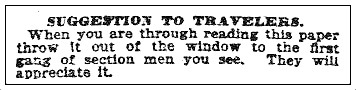
dmn_throw-out-window_063004Dallas Morning News ad — share the wealth.  (1904)

*

dmn-reward_121106The Inflation Calculator tells me that 10 bucks in 1906 would be the equivalent of $255 today (!!). Don’t mess with Belo. (1906)

*

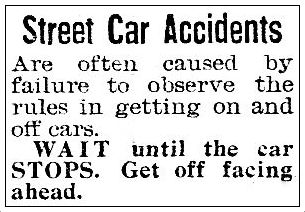
street-car-accidents_dmn_090107“Get off facing ahead.” (1907)

*

ad-fretz-parlor_1910Open all night! (1910)

*

fair-park_horse-show-arena_tx-trade-review_1917The Fair Park Horse Show Arena. I’m not sure I’ve seen this before. (Texas Trade Review, 1917 — click for larger image)

*

miniature-golf_wee-st-andrews_dmn_051042The Wee Saint Andrews Miniature Golf Course — America’s largest miniature golf course. (Kind of like “jumbo shrimp.”) (1942)

*

temp_policemen_dmn_040244Slim-pickings in the job pool during WWII — education requirements for “temporary policemen” in 1944: must have completed grade school. (1944)

*

chamber-of-commerce-ad_dmn_082648“Give yourself a holiday.” (1948)

*

“Current[ly] at Sky Club through Thursday night is Evelyn West, the divestmenteuse. To us her widely publicized $50,000 treasure chest is a big bust — for her prancings about the floor are vulgar and embarrassing. Even her midget partner, Esky, turns up red-cheeked.” Back when strippers (and their “midget partners”) were reviewed in the newspaper. (DMN, June 13, 1950)

*

“And a gypsy ‘palm woman’ made work during the day. A South Dallas woman had retained the gypsy at $5 a week to remove a witch from her sewing machine. Left the machine with  the ‘palm woman.’ Is no longer bothered by either a witch or a sewing machine. The palm woman is missing. Evidently dematerialized herself and the sewing machine, too.” From a regular feature in The Dallas Morning News by Lorrie Brooks called “Last 24 Hours in Dallas” — kind of a humorous police blotter. I don’t know who you were, Lorrie, but I love reading your columns! (DMN, Feb. 9, 1951)

*

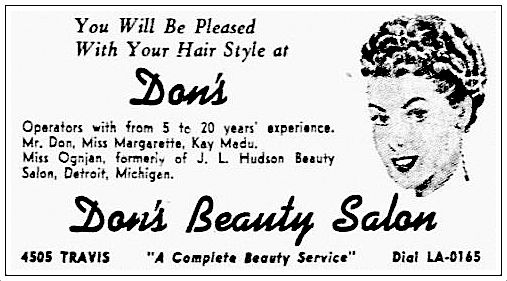
ad-dons-beauty-salon_dmn_030952Hair stylists don’t have names like “Mr. Don” anymore. Pity. (1952)

*

street-lights_lanterns_dallas-herald_021877“The numerous lanterns on our streets at night, borne by pedestrians picking their way through the slough, look like fire-flys in a marsh.” One of my favorite, lyrical descriptions of early Dallas. (Dallas Herald, Feb. 18, 1877)

*

Copyright © 2014 Paula Bosse. All Rights Reserved.

Merry Christmas!

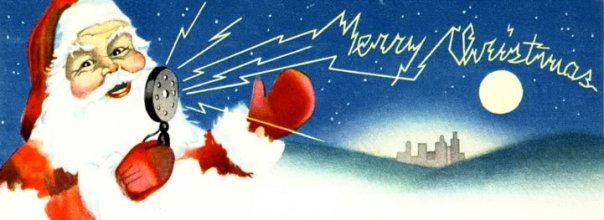
xmas_santa_lightcrust_1932

by Paula Bosse

Wishing you all a Merry Christmas — I only hope Santa brought you what YOU wanted!

xmas-santa-letters-dmn_122499-detDallas Morning News, Dec. 24, 1899

***

Top image from a WBAP Christmas mailing to radio fans of The Light Crust Doughboys of the Burrus Mill, 1932.

To read more letters from Dallas-area children printed in “Santa’s Letter Box” (Dallas Morning News, Dec. 24, 1899), click here.

*

Copyright © 2014 Paula Bosse. All Rights Reserved.

The World’s Largest Santa & The Christmas Tragedy — 1953

santa_chevrolet_color_observerSanta considers a test-drive, 1953 (photo: Roy Addis)

by Paula Bosse

Back in 2010, Robert Wilonsky (now a reporter for The Dallas Morning News, but back then a reporter for The Dallas Observer) posted a 1950s-era photo of a giant Santa Claus sitting on the roof of a Dallas car dealership. Robert had found the photo on eBay and wondered what the story behind the promotional stunt might have been. The thing that sparked my interest (other than it being a giant Santa Claus — holding a full-size car in his lap!) was the fact that the dealership, Porter Chevrolet (which I’d never heard of), had been just around the corner from where I grew up — it was in the 5500 block of E. Mockingbird, right across from the old Dr Pepper plant, about where the Campisi’s parking lot is now. I, too, really wanted to know more about that huge Santa Claus that had once been hanging out so ostentatiously in my neighborhood.

At about the time when Robert’s post appeared in 2010, I had only recently discovered that the Dallas Morning News archives were available online. For free. All the way back to 1885! (All you need is a current library card from the Dallas Public Library, and you’re on your way to losing absolute days while reading about one fascinating thing after another.) I had just begun to dabble with searches in the archives, so this seemed like a great opportunity to test my research skills and see if there was more to the story. And there was! I sent Robert what I’d found, and he wrote a great follow-up, here (which has yet another photo of the giant Santa). And a year later he did another follow-up, this one including the color photo seen above, sent in by a reader.

This is just such a great and weird holiday-related bit of Dallas’ past, that I thought I’d revisit the story, especially since some of the links in the original Observer posts no longer work.

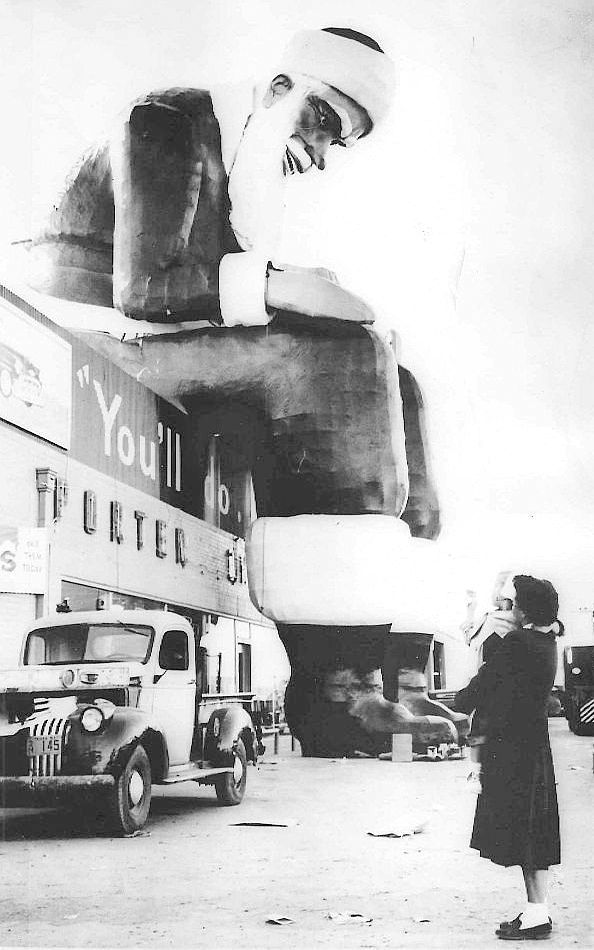
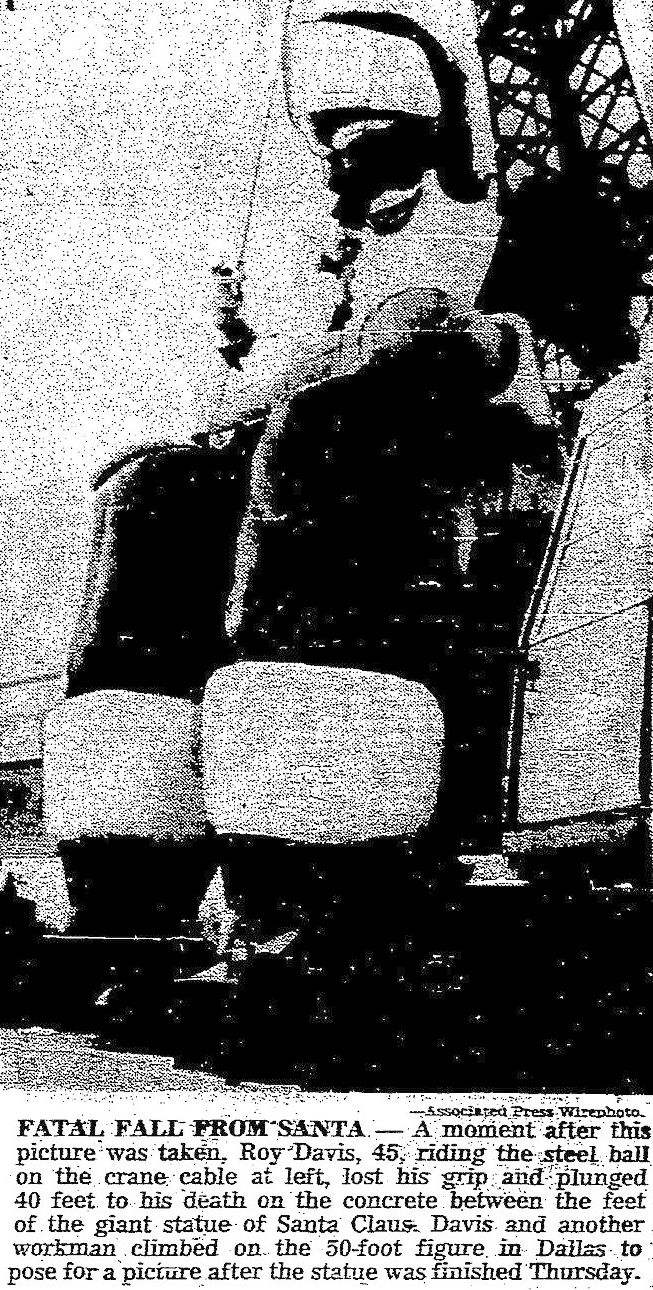
First, a quick re-cap (but, please, read Robert’s story, because you’ll enjoy  it, and it’s much more colorful than my quick overview here). During the 1953 Christmas season, Porter Chevrolet (5526 Mockingbird) commissioned Jack Bridges (the man who had previously made Big Tex (who was himself originally a giant Santa Claus)) to construct an 85-foot-tall steel-and-papier-mâché Santa Claus (he’d be that tall if he were standing) to sit on the dealership building and hold an actual 1954 Chevy in his lap. It was definitely a promotion that would grab people’s attention. The day the giant Santa was put in place, using a crane, a man whose company had done the installing (as they had with Big Tex), thought it would be a great opportunity to get a Christmas card photo of himself dangling from the crane next to Santa. The man, Roy V. Davis, was recovering from heart-related health problems, and, as it turned out, he experienced a “myocardial rupture” while hoisted 35 feet above the concrete parking lot. He lost his grip and fell to his death. This tragic news made the front page of local papers and was picked up by the Associated Press, but, oddly, it was never spoken of again. Giant Santa apparently remained at his perch throughout the holidays, but as far as I can tell, there was no further mention of Mr. Davis’ death — until Robert Wilonsky stumbled across the photo and wrote about it 57 years later.

Below is the AP photo and blurb which ran nationally, showing Mrs. John Ashmore and her 4-year old daughter Ruth Ann looking up at the towering Santa Claus. 

santa_porter-chevrolet_news-photo_1953_PEB
Photo: Collection of Paula Bosse

The caption (click for larger image):

santa-claus_porter-chevrolet_caption

**

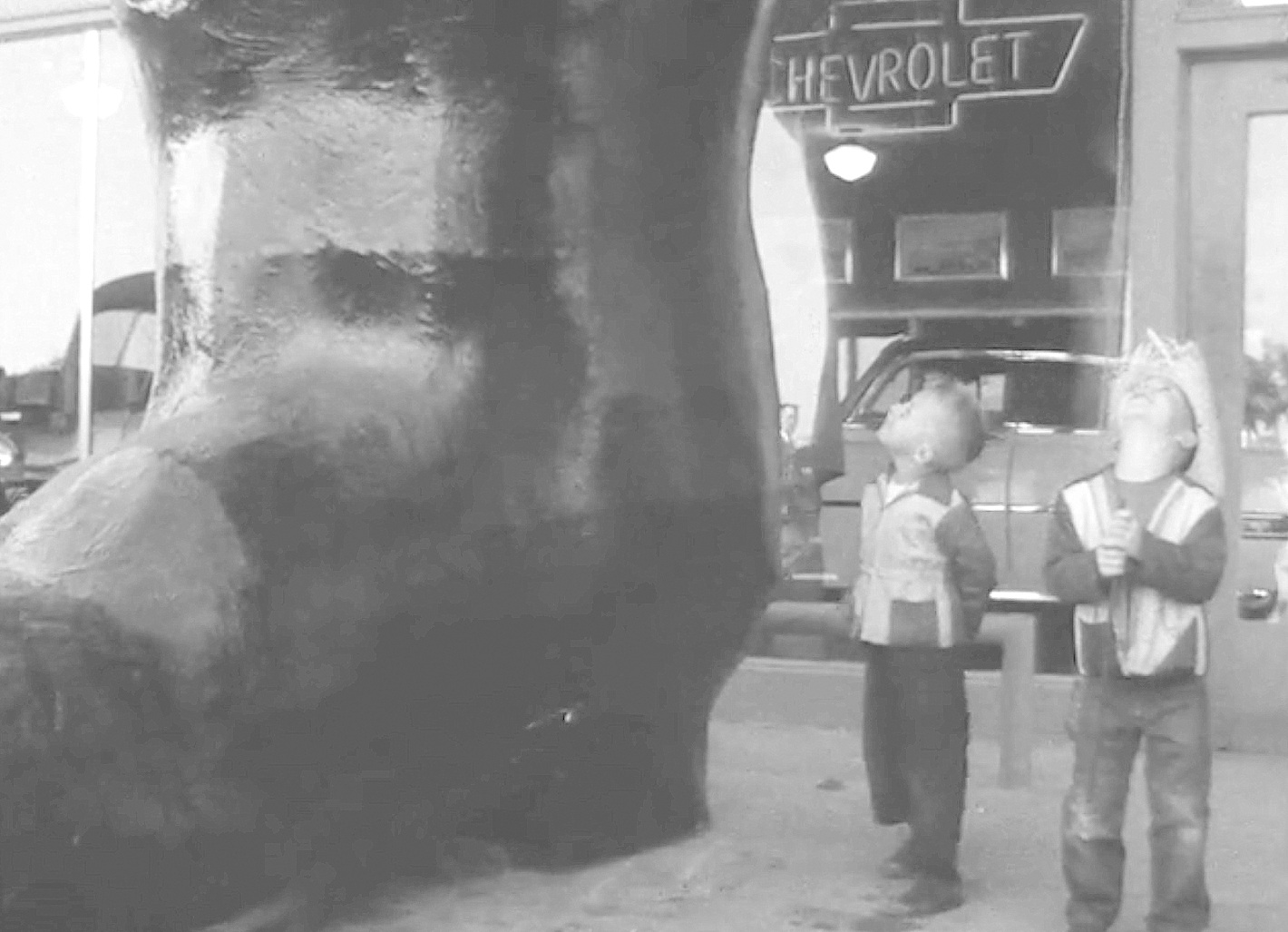
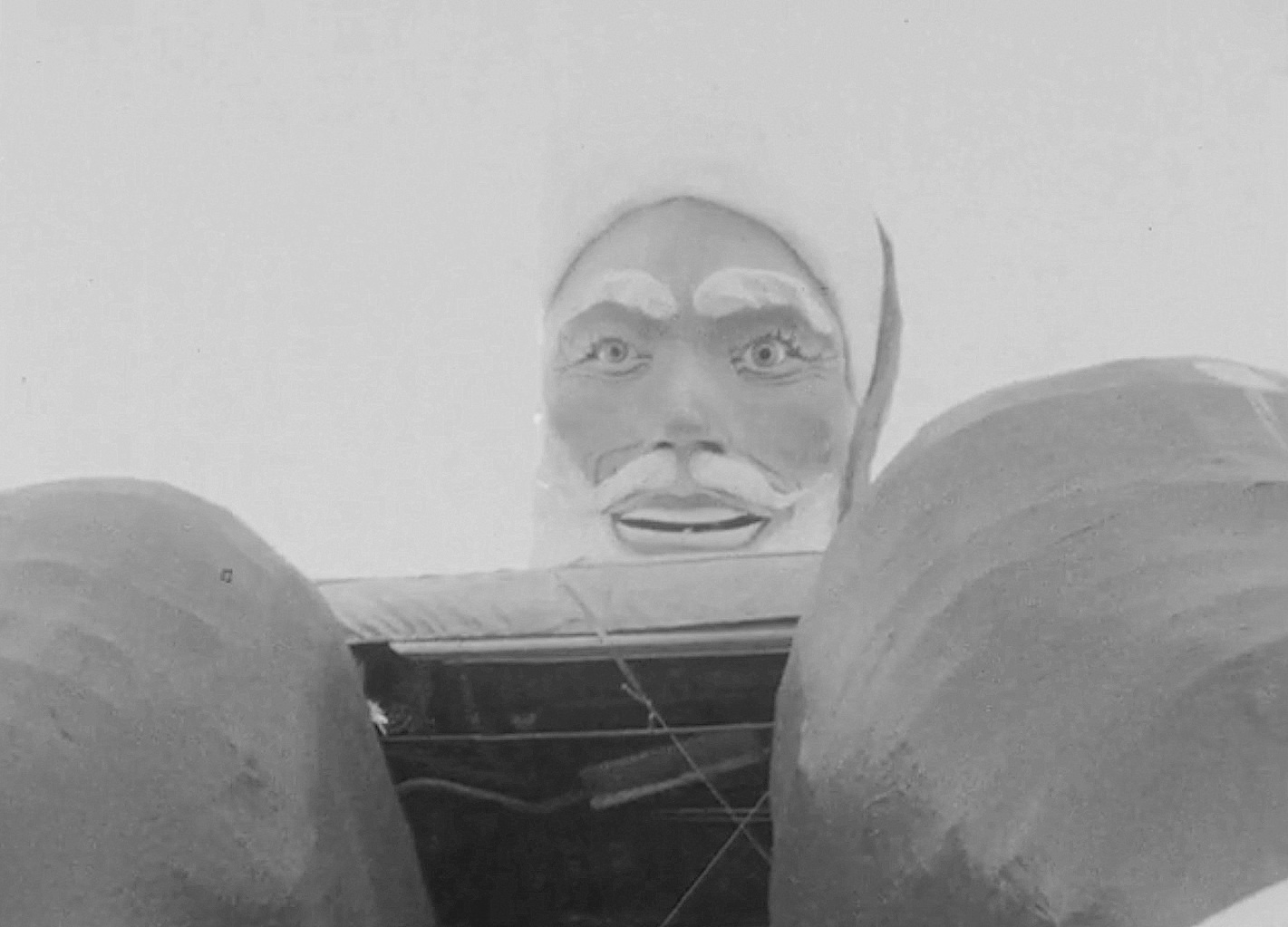
UPDATE: Okay this is VERY EXCITING — and also kind of chilling: there is WBAP-Channel 5 television news footage of the Giant Santa as well as the on-the-scene tragic aftermath of Mr. Davis’ accident. The Dec. 10, 1953 footage is without sound (the script the anchor read on the air as the film played during the newscast can be found here). The video starts off with children marveling at the giant Santa Claus but suddenly turns dark with shots of the bloody Mr. Davis being loaded onto a stretcher (helped by Jack Bridges, the man who built the giant Santa, seen wearing a beret and white coveralls). The one-minute clip titled “Worker Dies at Santa’s Statue” can be viewed on the Portal to Texas History site here.

Below are a few screen captures:

santa-kids_wbap-1_portal

santa-face_wbap-2_portal

santa-crane_wbap-3_portal

santa-dr-pepper-plant-ambulance_wbap-4_portal

**

santa_denison-press_122553Denison Press, Dec. 25, 1953

santa_FWST_121153_AP_photoFort Worth Star-Telegram, Dec. 11, 1953

santa_lubbock-avalanche_121153_APLubbock Avalanche, Dec. 11, 1953

***

Sources & Notes

Top color photo (which I’ve cropped) is by Roy Addis. It appeared in the Dallas Observer blog Unfair Park in Robert Wilonsky’s 2011 update to the previous year’s story — it was sent in by a reader who discovered it in his personal collection. To read that story, click here.

Wilonsky’s original Unfair Park post — which contained the photo he found on eBay — is here. And, again, his post containing “the rest of the story” is here. (Robert Wilonsky continues to write enthusiastically about Dallas — its past as well as its present — and his Dallas Morning News pieces are, quite frankly, where I get most of my news about what’s going on in the city. Thanks for the opportunity to be part of the unearthing of this story, Robert!)

The news photo of Mrs. Ashmore and her daughter is from the author’s personal collection.

The video is from the KXAS-NBC 5 News Collection, University of North Texas Libraries Special Collections, accessible on the Portal to Texas History site. The main page of the video is here (click picture to watch video in a new window).

Dallas Morning News articles on the giant Santa and the tragic accident:

  • “Santa Claus Turns Texan” (DMN, Sept. 23, 1953)
  • “Figure of Santa Claus Will Overshadow Tex” by Frank X. Tolbert, with photo of Jack Bridges (DMN, Nov. 18, 1953)
  • “Santa Claus Too Large For Trucks” (DMN, Nov. 29, 1953)
  • “Christmas Card Picture With Tragic Ending” (DMN, Dec. 11, 1953)
  • “Man Falls to Death Off Cable,” with photo of Roy V. Davis (DMN, Dec. 11, 1953)

UPDATE: Robert Wilonsky has written on the giant Santa in a new Dallas Morning News article, with some interesting new tidbits about Porter Chevrolet’s proposal to the City Council requesting permission to put this huge structure on top of the building. Read his 2017 update here. Robert keeps telling me we should write a book about this — or make a documentary. Which, of course, we should! After all these years now of visions of the giant Santa and sober thoughts of Roy Davis — more “real” now, having seen film footage of him bloody on that stretcher — I really do feel this is all part of some personal family Christmas lore, recounted every year around the table.

Pictures and clippings are larger when clicked.

*

Copyright © 2014 Paula Bosse. All Rights Reserved.


“Every Gypsy in the Nation Knows About This” — 1951

gypsy_lawrence-young_green-young_baylor_feb-1951
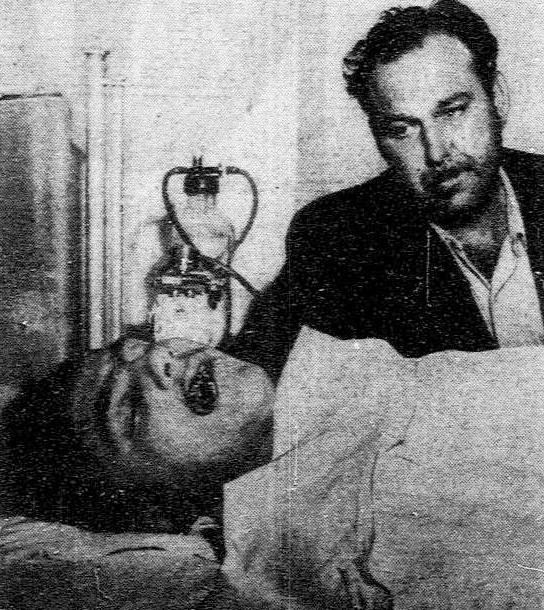
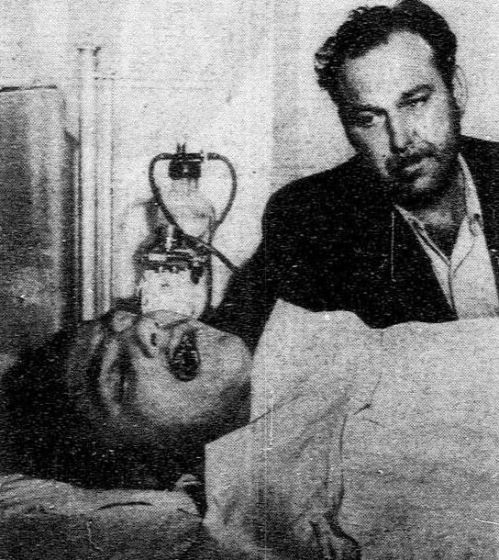
The “Gypsy youth” at the center of “tribal” unrest & his father, Baylor Hospital, 1951

by Paula Bosse

In the first few days of March, 1951, Dallas witnessed the influx of hundreds and hundreds of Gypsies into the city, all of whom had been summoned — from near and far — by a call put out over an effective and somewhat mysterious communications network. The reason? A teenage boy (referred to repeatedly as a “Gypsy youth”) had been shot in South Texas by a boy from another “tribe” (or clan, or family) — one family insisted the shooting was intentional, the other insisted it was an accident. This incident ballooned into a huge internecine feud. If the boy died, the “Green” tribe promised that there was “going to be a lot of shooting going on in Dallas” (Dallas Morning News, March 1, 1951). [Note: the word “Gypsy” is sometimes seen as a pejorative. I use it in this post purely in a historical context; it is not meant to be derogatory.]

In December of 1950, 14-year-old “Lawrence Young” (the anglicized name his family gave to authorities) had been walking along railroad tracks with other boys in Port Isabel, near Brownsville, when he was shot with a .22 caliber rifle by a 12-year-old, a Gypsy boy from another clan. The 12-year-old said the borrowed rifle had been malfunctioning and that, while hunting, the gun discharged unexpectedly, and a bullet hit Lawrence, whom the other boys thought was playing when he fell to the ground. Until they saw the blood. The bullet struck Lawrence in the back, near his left shoulder blade, and it lodged in his spine at the base of his skull. Police in Port Isabel determined that the shooting had been an accident. Lawrence’s family, however, said that the other boy had been jealous of Lawrence’s new car and had shot him on purpose. The boy was rushed to the hospital; his condition was not good.

After stays in hospitals in Galveston and Temple, Lawrence’s mother decided to move him to Dallas where she thought the medical care would be better. He was admitted to Baylor Hospital at the end of February. Relations had been tense between the two clans since the shooting, but the Evans clan (of which the 12-year-old boy was a member) had grudgingly agreed to pay for half of Lawrence’s medical bills. The decision by Lawrence’s family to move him to Dallas — where hospital care would be much more expensive — only made things worse between the two groups; the Green clan had heard that the Evans clan would not pay their share of what they felt would be an exorbitant bill. Tempers had been building and boiling for weeks, and by the time things moved to Dallas, things were about to explode.

Word of the increasingly volatile feud had spread, and Gypsies from several surrounding states began pouring into Dallas in a show of tribal support. The first reports estimated there might have been as many as 500 Gypsies in Dallas County, representing at least six different clans, each clan with strong loyalties to one of the two families. If the boy died, the Greens and their supporters promised that retaliation would be swift and deadly. The Evanses — and the clans friendly to them — were ready for whatever came their way. The threat of deadly violence in the streets of Dallas was a very real possibility (if a city could be an innocent bystander, that’s what Dallas was in this unusual situation).

The Dallas police were, understandably, worried. In an attempt to get the warring factions to leave town, homicide detective Captain Will Fritz was reduced to arresting several of the men on charges of vagrancy (“We can’t make them get out of Dallas, but we can keep arresting them for vagrancy until they move on,” Fritz said). Unfortunately, this was a pretty ineffective strategy.

Fifty or so “expensive automobiles” were parked outside Baylor as the time for Lawrence’s surgery approached. Men and women sat inside their cars waiting for a signal from a man they had placed inside the building who was to alert them from a window whether or not the boy had survived. If he died, things would get real bad, real fast. When police learned about the man inside the hospital, they arrested him. The boy was in critical condition prior to the surgery, and tensions among the factions continued to rise.
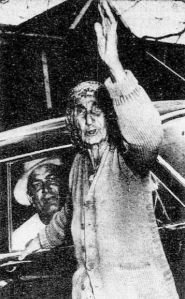
gypsy_lawrence-youngs-grandmother_baylor_feb-1951
Above, the boy’s grandmother, outside Baylor Hospital,
waiting for word on her grandson’s condition.

At some point, a man in Fort Worth who said he was a nephew of the King of the Gypsies in the United States intervened and worked as a sort of intermediary between the Gypsies and Fritz.

“I can’t promise there won’t be any shooting over there,” he told Fritz by telephone. “This thing has gone pretty far. But I will try to stop things where they are.”

“I don’t care how you settle this matter among yourselves,” Fritz replied, “Just do it out of Dallas County. We want no shooting here.”  (DMN, March 2, 1951)

Fritz agreed to release two men he had been holding (on non-vagrancy charges), hoping they would take word of the Fort Worth man’s “tribal council” involvement back to their people and calm the situation.

The surgery was, thankfully, successful. 
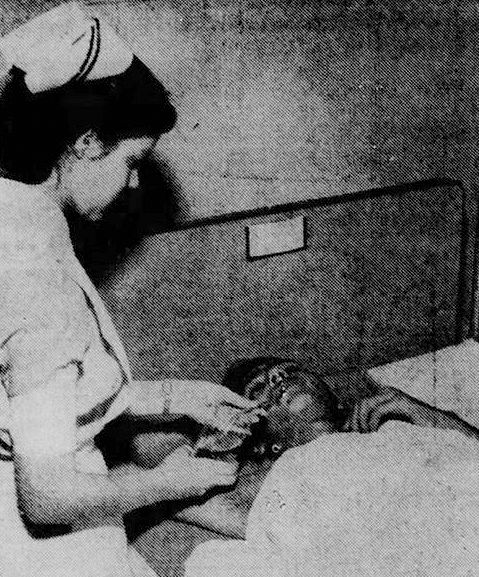
gypsy_mckinney-courier-gazette_030251Caption: “Gypsy Youth in Dallas Hospital — Lawrence Young, 14-year-old Gypsy youth gets a drink of water from a nurse at Dallas’ Baylor Hospital. Young was allegedly shot by another youthful Gypsy some two months ago near Brownsville, Texas. He was operated on at Baylor Hospital to have the bullet removed. Two Gypsy clans are reportedly watching with much interest to see that the youth recovers.” (NEA photo and wire report, from the McKinney Courier-Gazette, March 2, 1951)

*

To the relief of Dallas police, doctors said that Lawrence would recover — a major crisis had been averted, and the hundreds of Gypsies who had been camped around Dallas began to leave town. But just a few days later, a camp was discovered outside Garland, and twenty people were immediately arrested for vagrancy — they were photographed, fingerprinted, fined, and released, with the clear understanding that they needed to move on. ASAP. The next day, Sheriff Bill Decker announced they had packed up and left.:

“I don’t know where the road goes,” said Decker, “but it leads out of Dallas County.” (DMN, March 7, 1951)

*

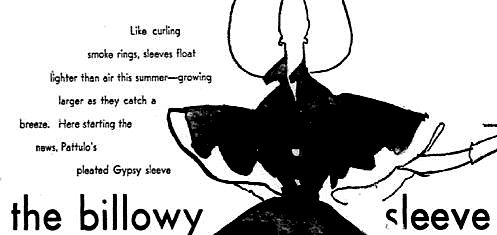
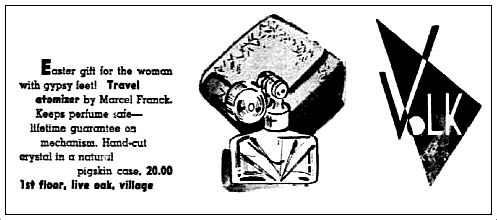
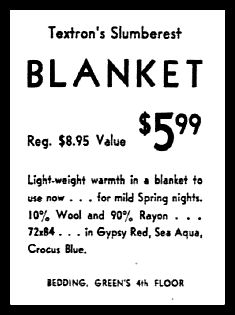
Gypsies were generally considered a menace by police departments around the country, as their arrival was usually accompanied by a rise in … questionable business practices. While these … business practices … were usually viewed negatively, it’s interesting to note that in 1950 and ’51 Gypsy “style” was everywhere. Ads for upscale department stores such as Neiman’s and A. Harris, for instance, were filled with Gypsy-inspired fashions — off-the-shoulder peasant blouses, scarves, gold bangles, dangly earrings, and exotic makeup. Cars and household items came in popular colors such as “Gypsy green,” “Gypsy red,” and even “Gypsy brown.” People might not have been excited by their … unorthodox business practices … but they sure loved the way they dressed and were attracted by the allure and romance of their rootless, “wandering” lifestyle.
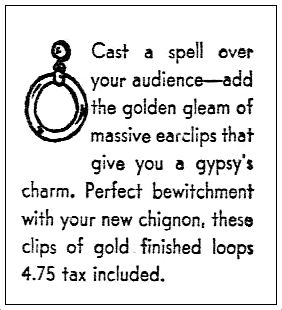
gypsy_n-m_dmn_030551Neiman-Marcus ad — 1951

gypsy_n-m_dmn_041051Neiman-Marcus ad — 1951

gypsy_volk-ad_dmn_031051Volk ad — 1951

gypsy-green_w-a-green-ad_dmn_011851W. A. Green ad — 1951

***

For more on “Gypsy”/Romani/Romany/Roma culture and history, see the Wikipedia entry here; for issues concerning use of the word “Gypsy,” see here.

And for no other reason than to see how Gypsies were often stereotypically portrayed on pre-PC television, an episode of The Andy Griffith Show called “The Gypsies” can be watched on YouTube, here.

My favorite tidbit gleaned from this brief look into Gypsy culture was discovering that families and individuals with No Fixed Abode often communicated via the classifieds of, of all things, Billboard magazine.

*

Copyright © 2014 Paula Bosse. All Rights Reserved.


Texas Centennial Promotion on Hyper-Drive! — 1936

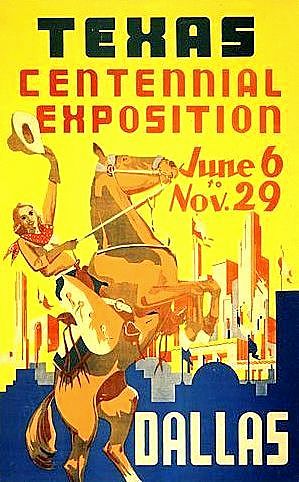
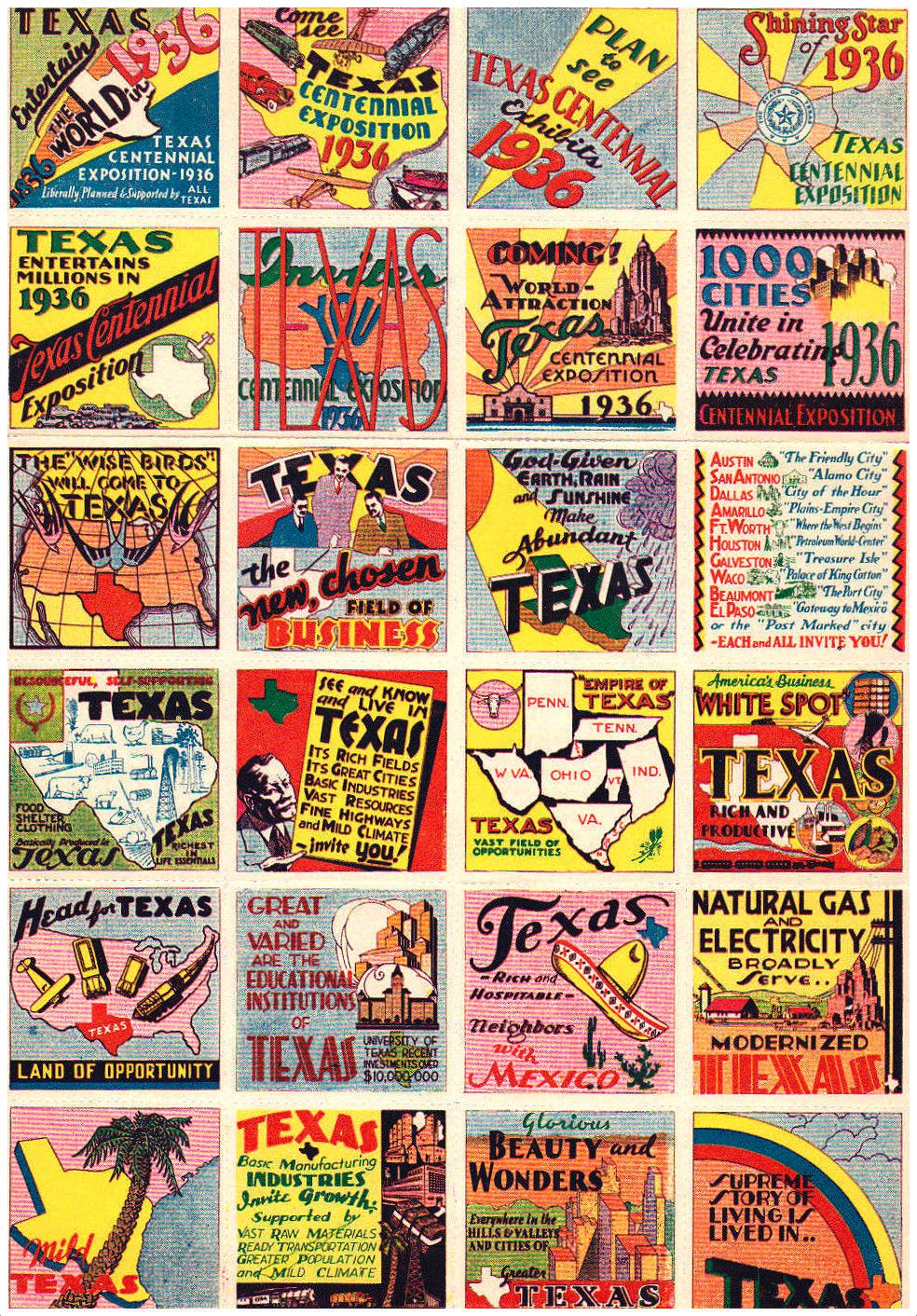
tx-centennial_poster_cowgirl_briscoe-ctr

by Paula Bosse

A bit of color and giddy enthusiasm on a gray day.

tx-centennial_promo_sheet(click for MUCH larger image)

***

Top image is a Texas Centennial poster from the Ephemera Collection of the Dolph Briscoe Center for American History. I would provide a link, but I am unable to find it now. It was online a few months ago!

Source of bottom image is unknown. Probably eBay. A long, long time ago.

*

Copyright © 2014 Paula Bosse. All Rights Reserved.
Old Red Goes Hollywood (sort of…) — 1964

buchanan_trial-oswald_1964Old Red’s star turn in The Trial of Lee Harvey Oswald (click for larger image)

by Paula Bosse

An interesting (if a bit fuzzy) screenshot of the Old Red Courthouse from one of Larry Buchanan’s Dallas-made films, “The Trial of Lee Harvey Oswald” (1964), about what might have happened had LHO lived to face trial. As with most of Buchanan’s extremely low-budget films, it drags and has clunky acting (…I have to admit that I didn’t watch the whole thing), but it’s interesting to fast-forward through to see the bits shot out on the streets of downtown. I really like this view of the courthouse. It seems familiar and unfamiliar at the same time.

***

Yes, you can watch the whole film on YouTube — free! Mosey on over here. The movie’s tagline: “Not a Newsreel … A Full-Length Motion Picture Filmed Secretly in Dallas.” Uh-huh. And as far as the movie having been “suppressed” (as is mentioned at the  beginning of the film) … well, let’s just say Larry worked in advertising for many years and knew a thing or two about marketing.

For other posts I’ve written about Larry Buchanan (I kind of feel I know him now — he would have been a lot of fun to shoot a movie with!), click here.

*

Copyright © 2014 Paula Bosse. All Rights Reserved.

Interurbans: Freight Movers?

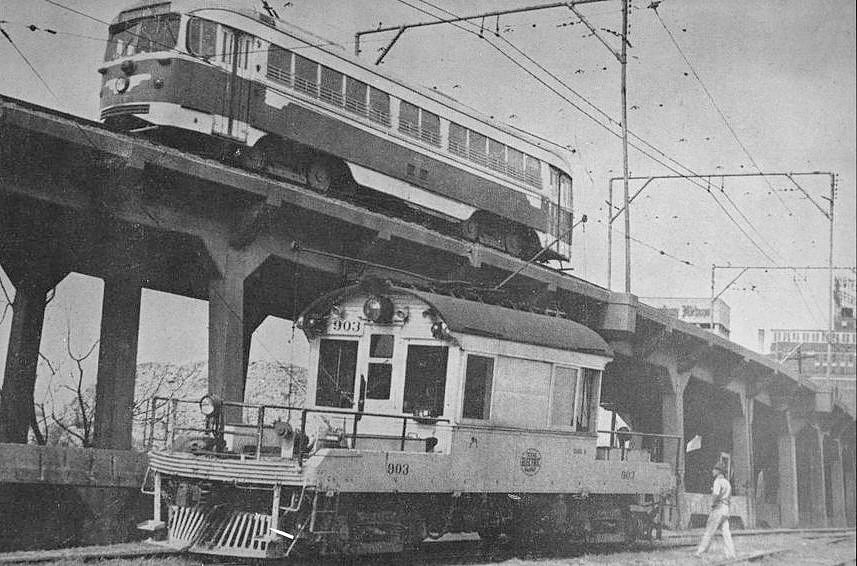
People-mover, above; freight-mover, below…

by Paula Bosse

When I saw this photo, I had no idea what I was looking at — what was that odd-looking thing in the foreground? A couple of rail enthusiasts informed me that it was an interurban freight engine on rail tracks beneath the old elevated interurban/streetcar trestle that spanned the Trinity. This is the Dallas side, with the Dallas Morning News building and the Hotel Jefferson in the background, to the north. (You can see the tracks running right next to the DMN in a photo in a previous post, here.) According to one of the experts:

The interurban did some exchange of freight cars with the regular railroads and the exchange tracks were under the streetcar/interurban viaduct. This track merged with the streetcar tracks at the foot of the viaduct right next to the DMN.

The interurban, though primarily a mover of people, also hauled freight. With more than 200 miles of track across North Texas, the Texas Electric Railway was the largest interurban railway operator in the South. But its glory days were starting to wane as the popularity of automobiles increased. By the ’20s, freight-moving was added to the company’s services, generating welcomed revenue.

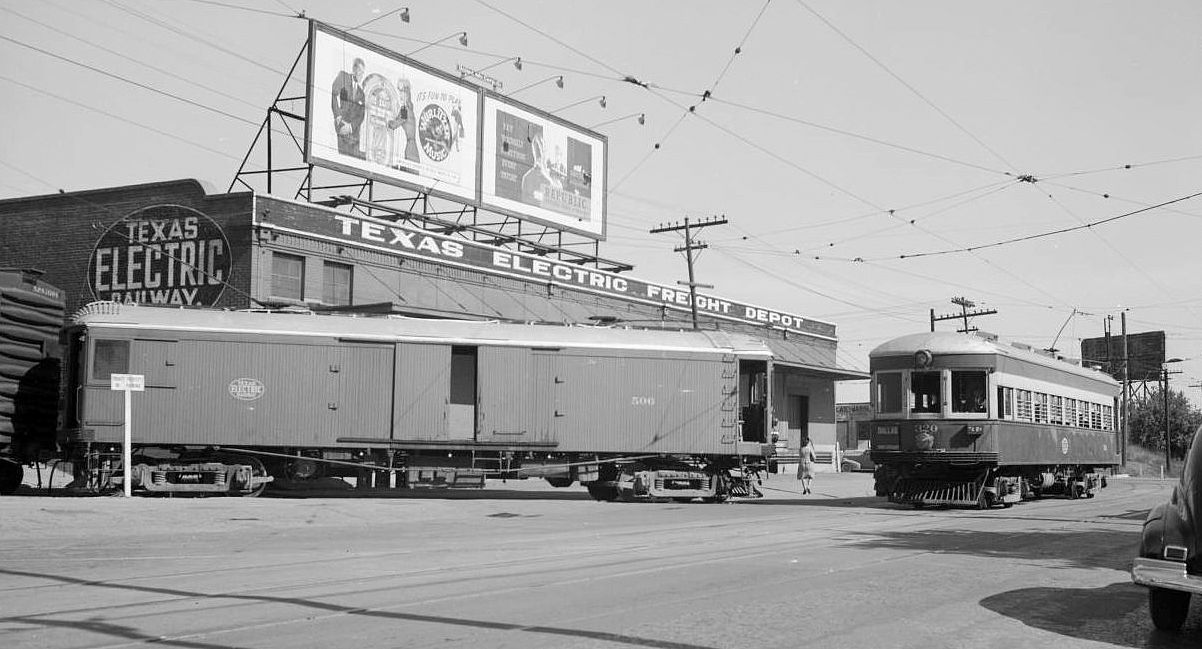
The interurban freight depot — seen below in 1946 — was located just east of Ferris Plaza. At the left, part of a railroad freight car is visible, in the middle, an interurban freight car, at the right, an interurban (passenger) streetcar, and at the far right, an automobile. And some crazy person walking.

freight_interurban_denver-pub-lib_1946

But the automobile eventually proved too popular, and more and more people began using trucks for hauling. After 40 years in business, the Texas Electric Railway interurban ceased operations in 1948.

*

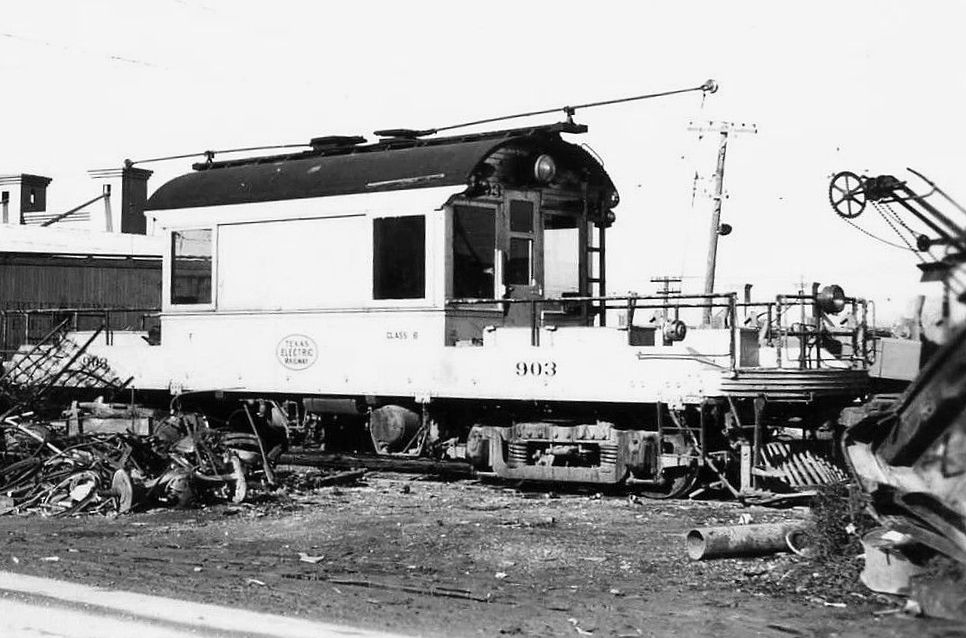
When searching around for possible other images of engine 903 (as seen in the top photo), I found it hanging out over on eBay — described as being in the “Waco car house yards” in 1944. Small world.

engine-903_ebay

***

Sources & Notes

Top image found on Flickr.

Photo of the freight depot taken by Robert W. Richardson on April 27, 1946; from the Western History/Genealogy Dept., Denver Public Library.

Bottom photo (cropped) from eBay..

Interurban freight operation Wikipedia entry here.

Texas Electric Railway: Handbook of Texas entry here; Wikipedia entry here.

MANY photos of various Texas Electric Railway freight motors and locomotives, here.

And, lastly, great photos from around Dallas in CERA’s “Texas Electric and the Journey to DART,” here.

(Thanks to Bob J. and Robert P. for their helpful info!)

*

Copyright © 2014 Paula Bosse. All Rights Reserved.

Baylor Hospital — 1909-1921

baylor_postcardClassic cars on Junius Street… (click for larger image)

by Paula Bosse

I originally thought the street in front of Baylor Hospital in this postcard was Gaston. But Baylor originally faced Junius Street (see it on a 1921 Sanborn map here), and, in fact, its address was 3315 Junius for many years. I had no idea.

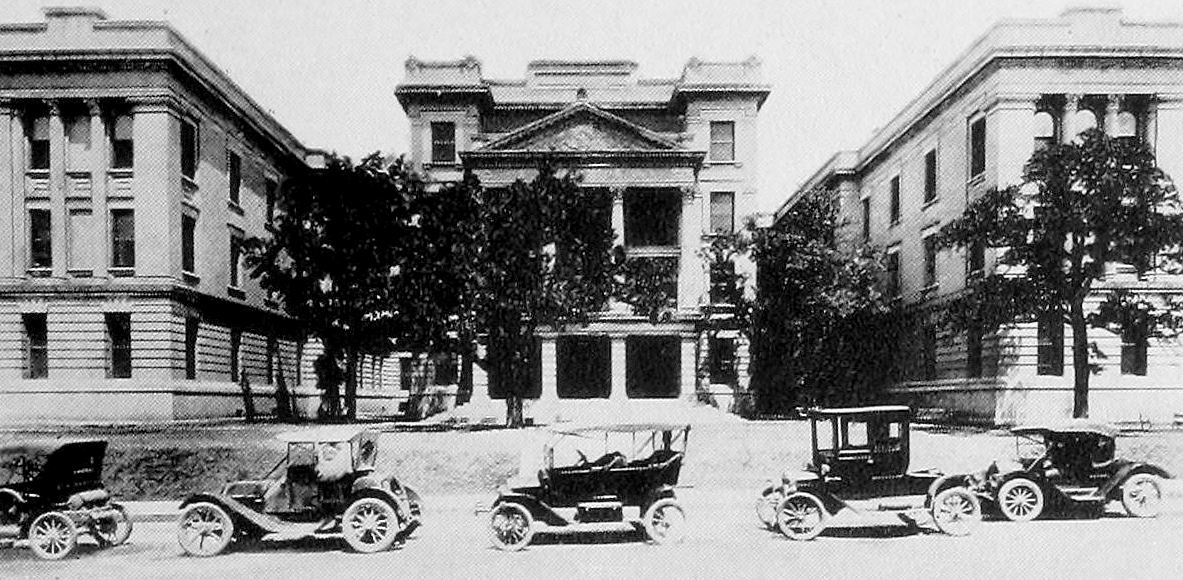
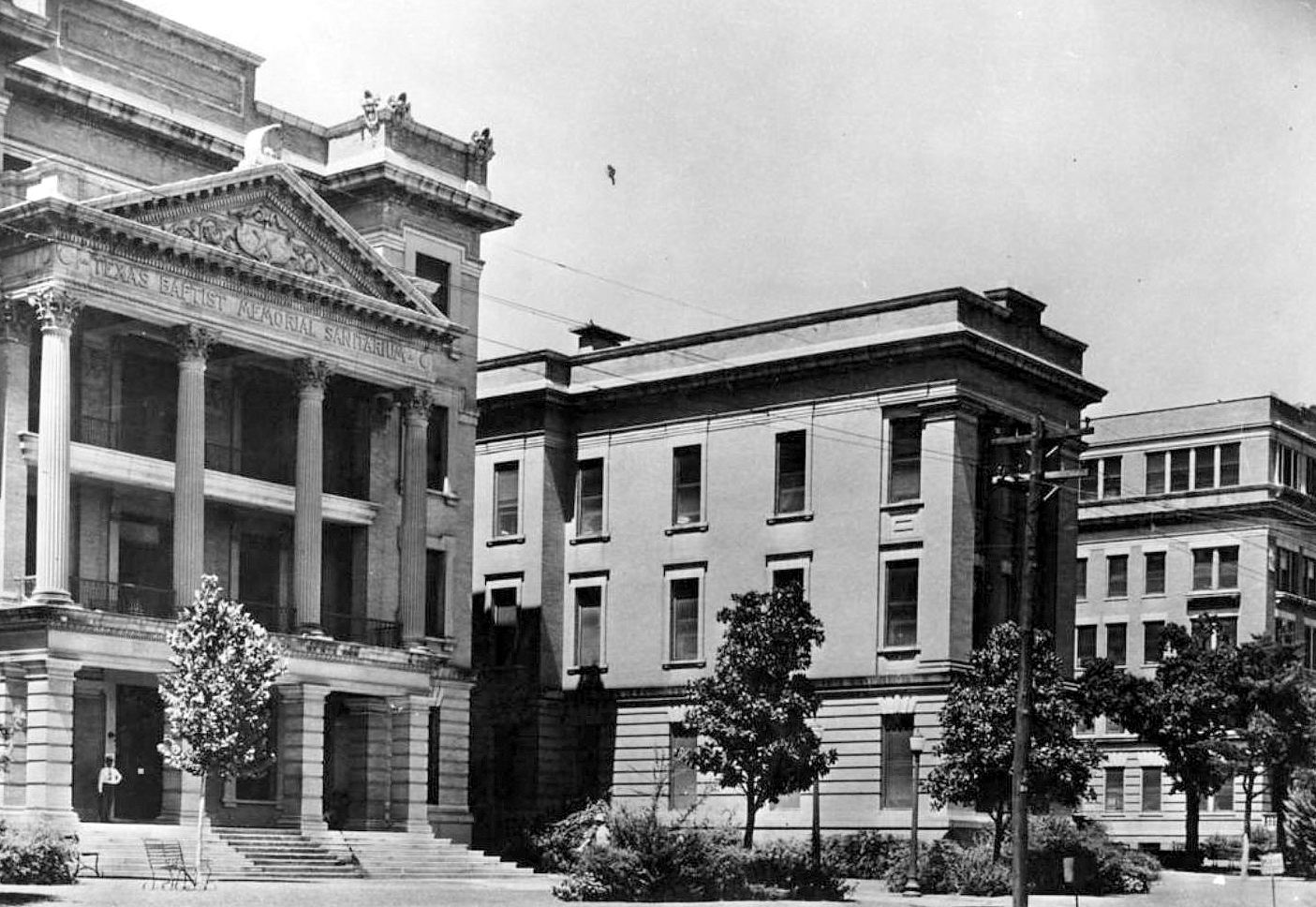
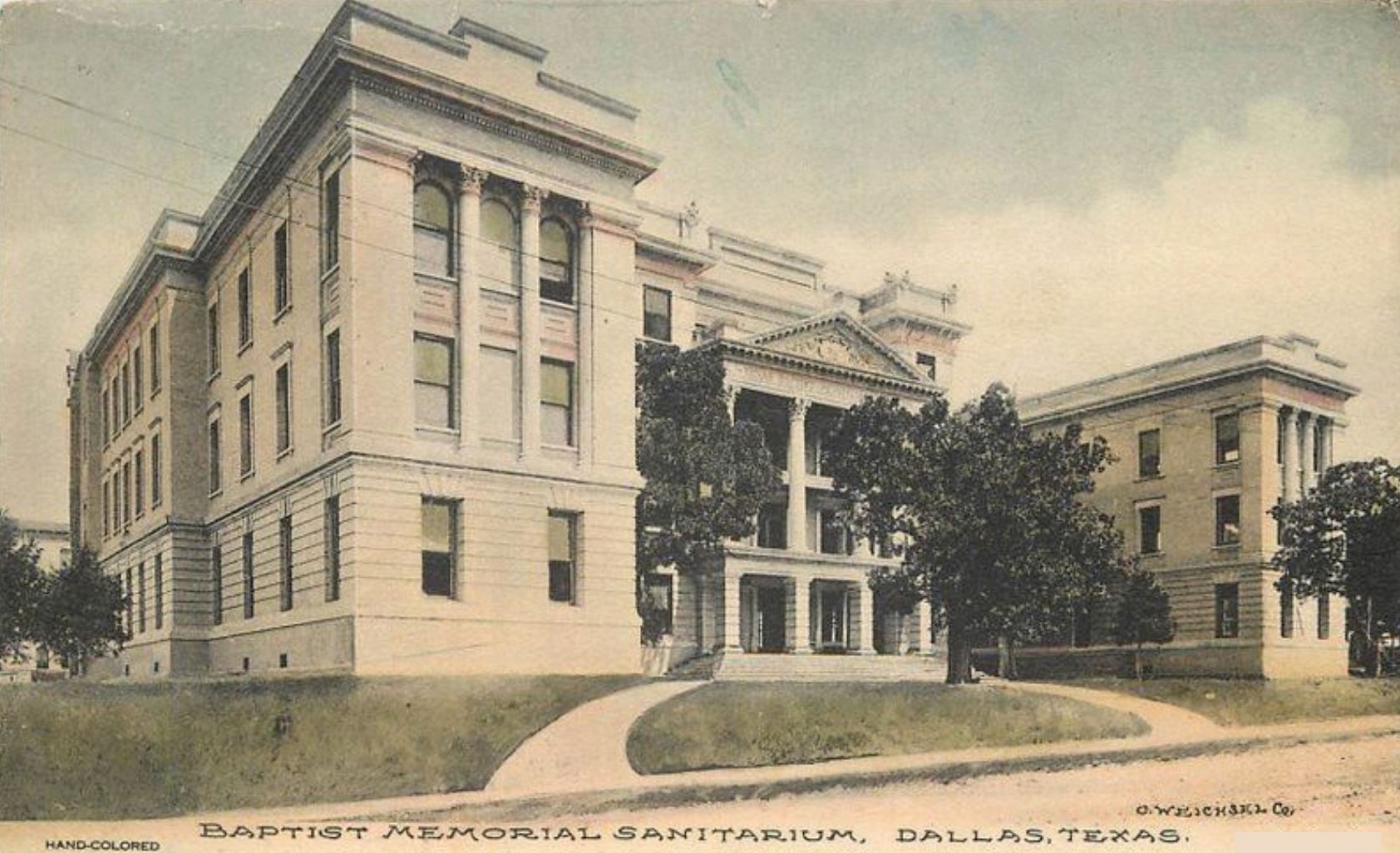
Below are a few more photos and postcards of the medical facility which eventually grew into Baylor Hospital (its Dallas roots go back to 1903, but the buildings seen in these images — buildings designed by noted Dallas architect C. W. Bulger & Co. — were built around 1909). Originally known as the “Texas Baptist Memorial Sanitarium,” it changed its name to the more familiar “Baylor Hospital” in 1920/1921 (and later became “Baylor University Hospital” in 1936). (More on the timeline of Baylor Hospital can be found here and here.)

baylor_postmarked-1919_ebaypostmarked 1919

Dig those cars.

baylor_baylor-univ-waco-yrbk_the-round-up_19171915

baylor-hospital_baptist-sanitarium_postcard

baylor_tx-baptist-memorial-sanitarium_ca-1912_UTSW-libraryca. 1912 (photo: UT Southwestern Library)

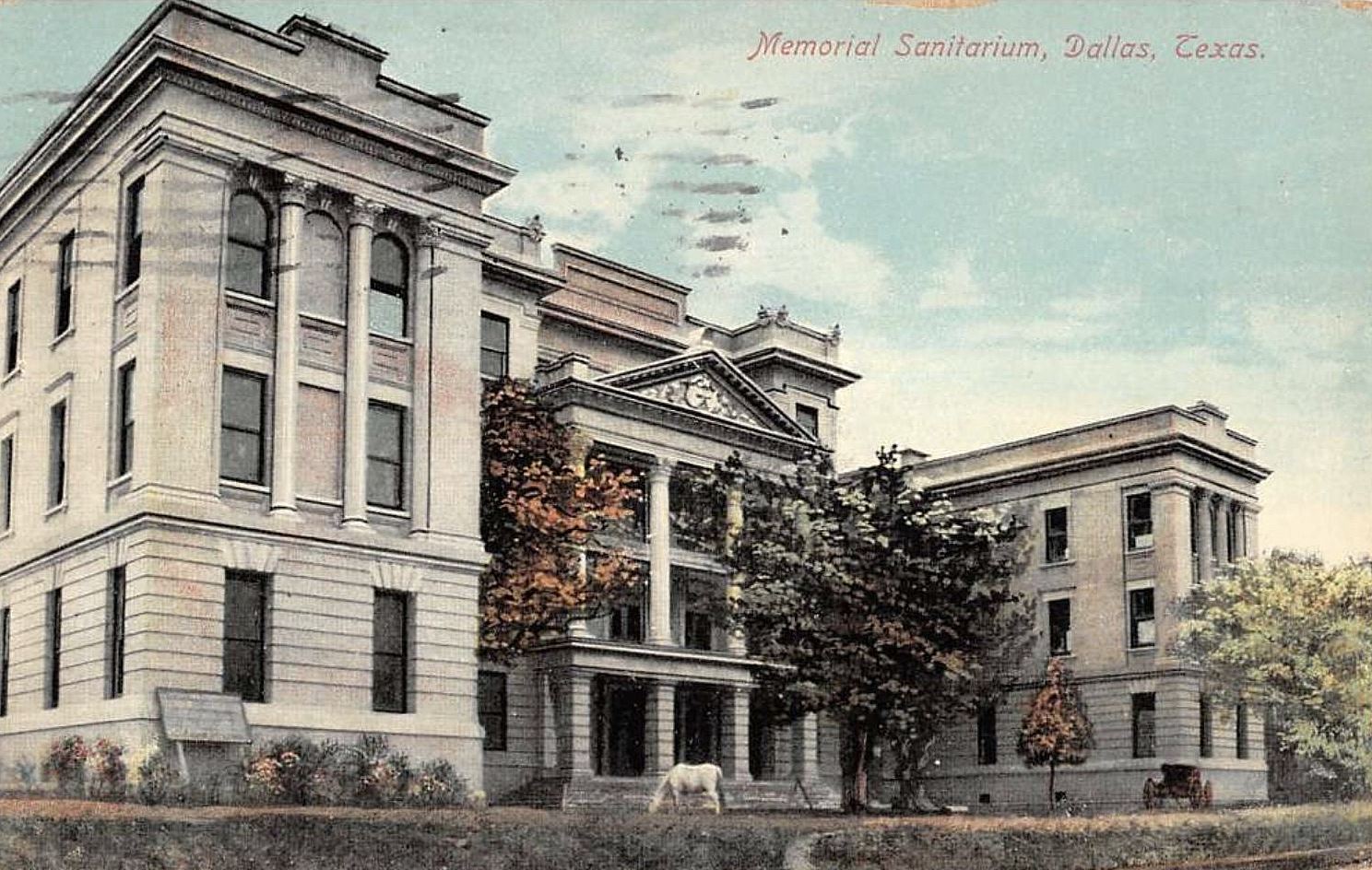
This is my favorite one: no cars, but there’s a horse grazing at the entrance!

baylor_horse_postmarked-1911_ebaypostmarked 1911

The postcard below was postmarked 1909, the year these new buildings opened. No cars, no horse, no people. 

baylor_postmarked-1909_ebay1909

And here is the brand new sanitarium, in a photograph that appeared in The Dallas Morning News less than a month after its official opening.

baylor-hospital_exterior_dmn_111009_clogensonDMN, Nov. 10, 1909

***

Sources & Notes

Postcards found on eBay.

The first black-and-white photo is from the 1917 Round-Up, the yearbook of Baylor University in Waco; the same image (uncolorized) appears in the digital archives of UT Southwestern, here, with the date 1915.

The second black-and-white photo is from the UT Southwestern Library archives, here.

The name-change of the Texas Baptist Memorial Sanitarium to Baylor Hospital was proposed in Nov. of 1920 and formally approved by the Board of Trustees of Baylor University in Waco on January 16, 1921. More about the major changes happening to the medical facility/facilities affected can be found in the article “Medical Center For Dallas Is Authorized by Texas Baptists” by Silliman Evans (Fort Worth Star-Telegram, Nov. 13, 1920), here.

Read a detailed description of the Texas Baptist Memorial Sanitarium in the Dallas Morning News article “Baptist Memorial Sanitarium, Just Completed at Dallas, Represents an Investment of More Than Four Hundred Thousand Dollars” (DMN, Nov. 10, 1909), here and here. There are several photographs taken inside and outside (and on top of) the brand new buildings.

*

Copyright © 2014 Paula Bosse. All Rights Reserved.