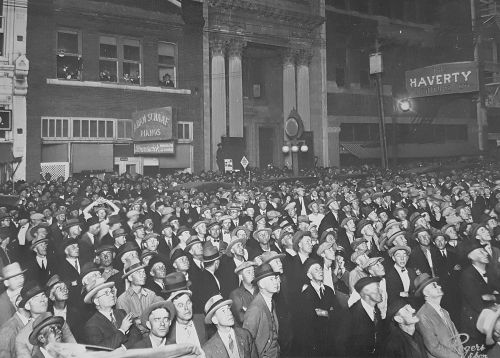
It’s election time again. A post I wrote a couple of years ago on how people followed an evening’s election returns in the years before radio was a lot of fun to research. I bet you’ll learn some things you never even considered in the Flashback Dallas post from 2016, “How Dallas Used to Get Election Returns,” here.
Tuesday, Nov. 6, 2018 is election day across the country. Please VOTE!
Time for another installment of me-adding-new-stuff-to-old-stuff.
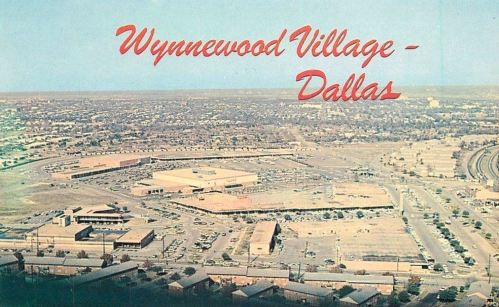
First up: this cool postcard of Wynnewood Village has been added to the post “Wynnewood.” (Source: the endless, depthless “internet”)
*
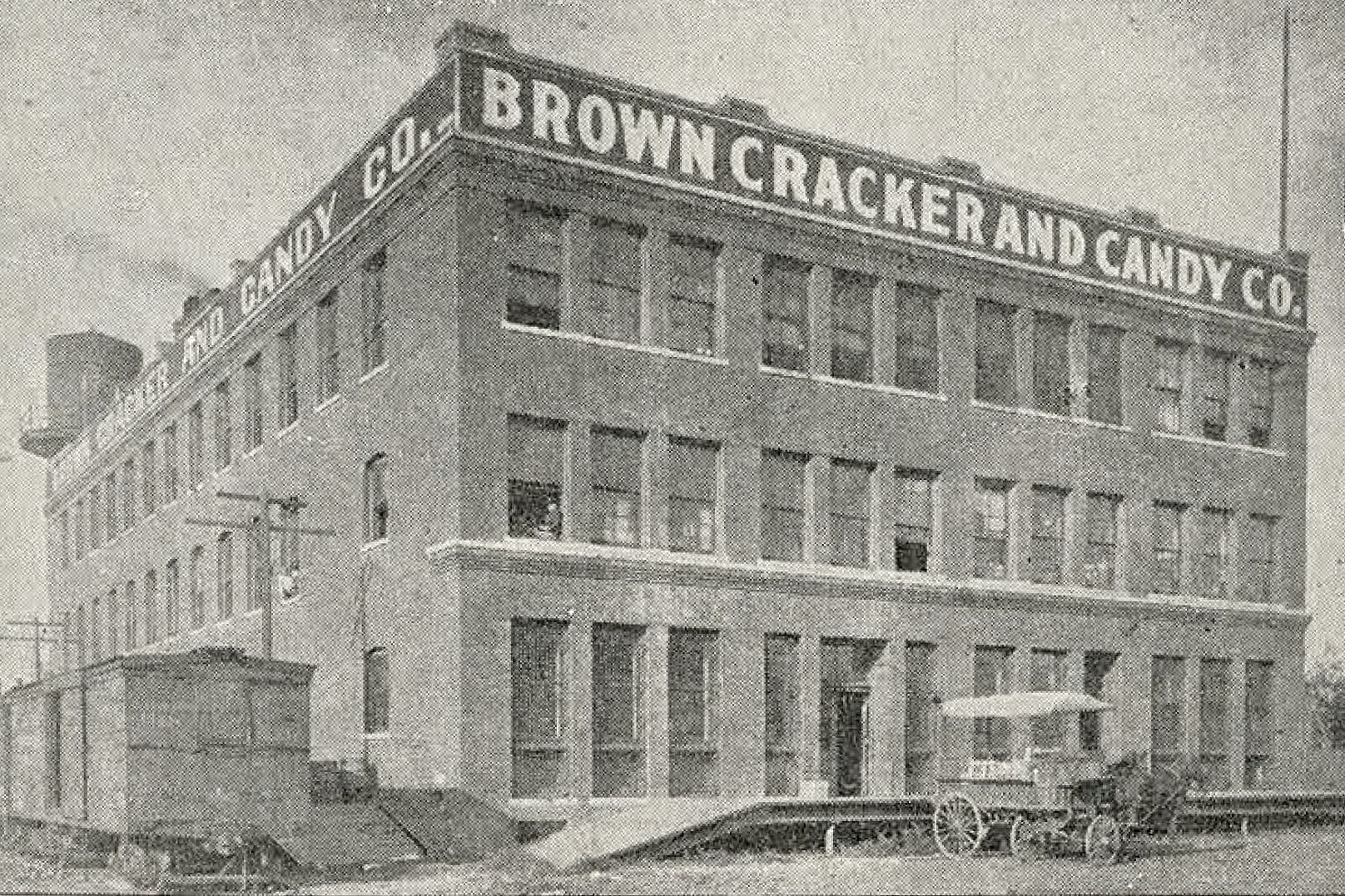
Below, this circa-1905 photo of the ever-popular, still-standing-in-the-West-End Brown Cracker Co. Building has been added to the liltingly-titled “Brown Cracker Co. Cracker Wrappers.” (Source: a promotional brochure titled “Come To Dallas,” DeGolyer Library, Southern Methodist University, here)
*
This proposed design for the Texas Centennial’s Hall of Negro Life is pretty cool and is interesting to compare to the building eventually constructed. It’s been added to “Juneteenth at the Texas Centennial — 1936.” (Source: An Historical and Pictorial Souvenir of the Negro In Texas History, written by J. Mason Brewer, 1935)
*
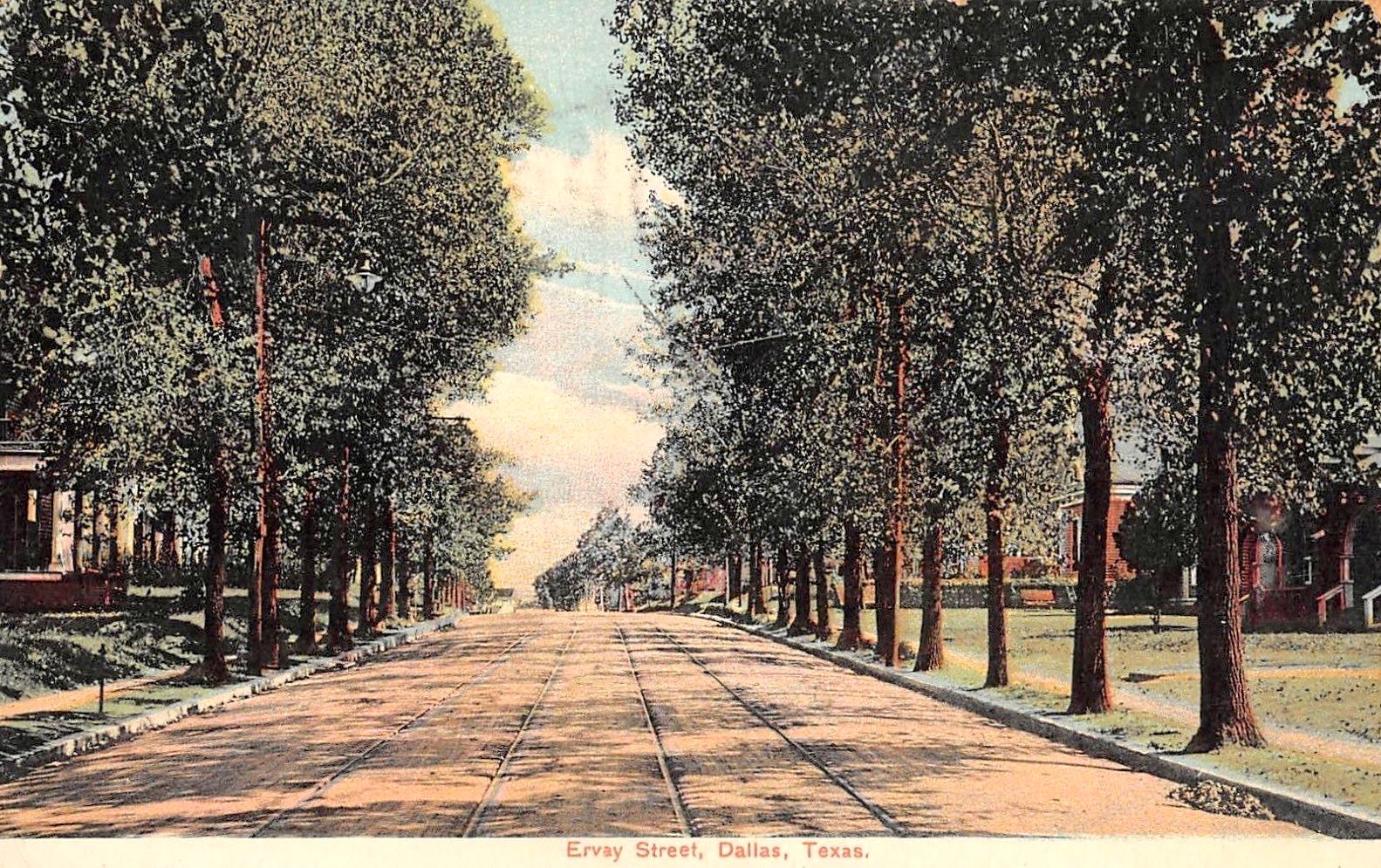
Another lovely postcard image of the formerly lovely South Ervay Street has been added to “Beautiful South Ervay Street — ca. 1910.” (Source: the aforementioned “internet”)
*
This 1887 photo of the Dallas Morning News’ special train which made morning delivery possible to far-flung-ish locales has been added to one of my personal favorite posts, “The Dallas News Special: Fast Train to Denison — 1887.” (Source: the George A. McAfee photographs collection, DeGolyer Library, SMU, here)
*
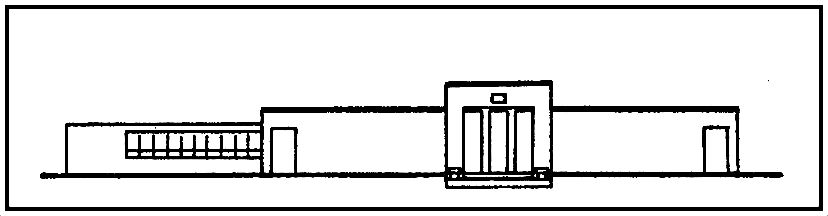
I love graphics like this simple line drawing of the 1936 Fair Park building which once housed the Dallas Museum of Fine Arts (now the Dallas Museum of Art). It adorned letterhead and DMFA publications. and has been added to the post “Summers and Lagoons — 1940s.”
*
This photo of the Adolphus Hotel’s barbershop has been added to the post“The Adolphus Hotel’s ‘Coffee Room’ — 1919.” I think that the barbershop and the “coffee room” might have occupied the same space — at different times. (Source: the Adolphus Archives; found in Historic Dallas Hotels by Sam Childers)
*
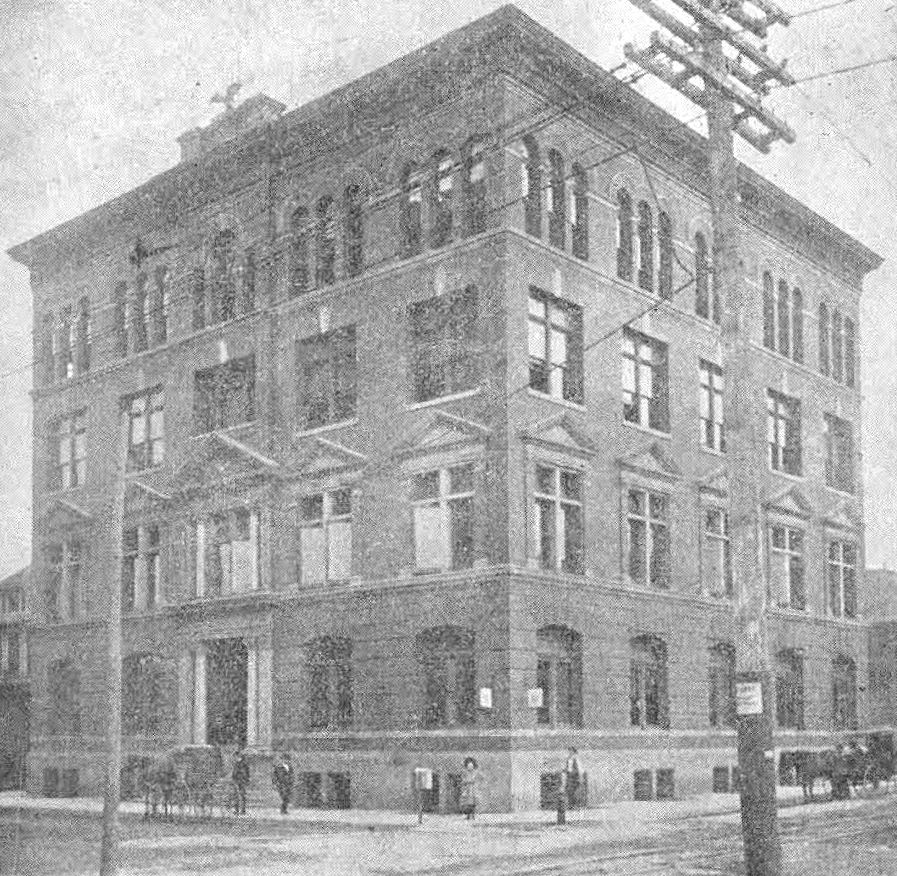
I just wrote about the 1928 Southwestern Bell Telephone Building — and I *just* ran across a photo of the original 1890s SWB building, which stood next to the newer building for many years. This circa-1905 photo has been added to “The New Southwestern Bell Telephone Co. Building — 1928.” (Source: “Come To Dallas,” DeGolyer Library, SMU, here)
Lordy, it was hot today. At one point I looked at my phone and it told me it was 112° (but thanks to the chill factor, it felt like a refreshing 110°). It’s 10:00 p.m. and it’s 100°. That’s too many degrees.
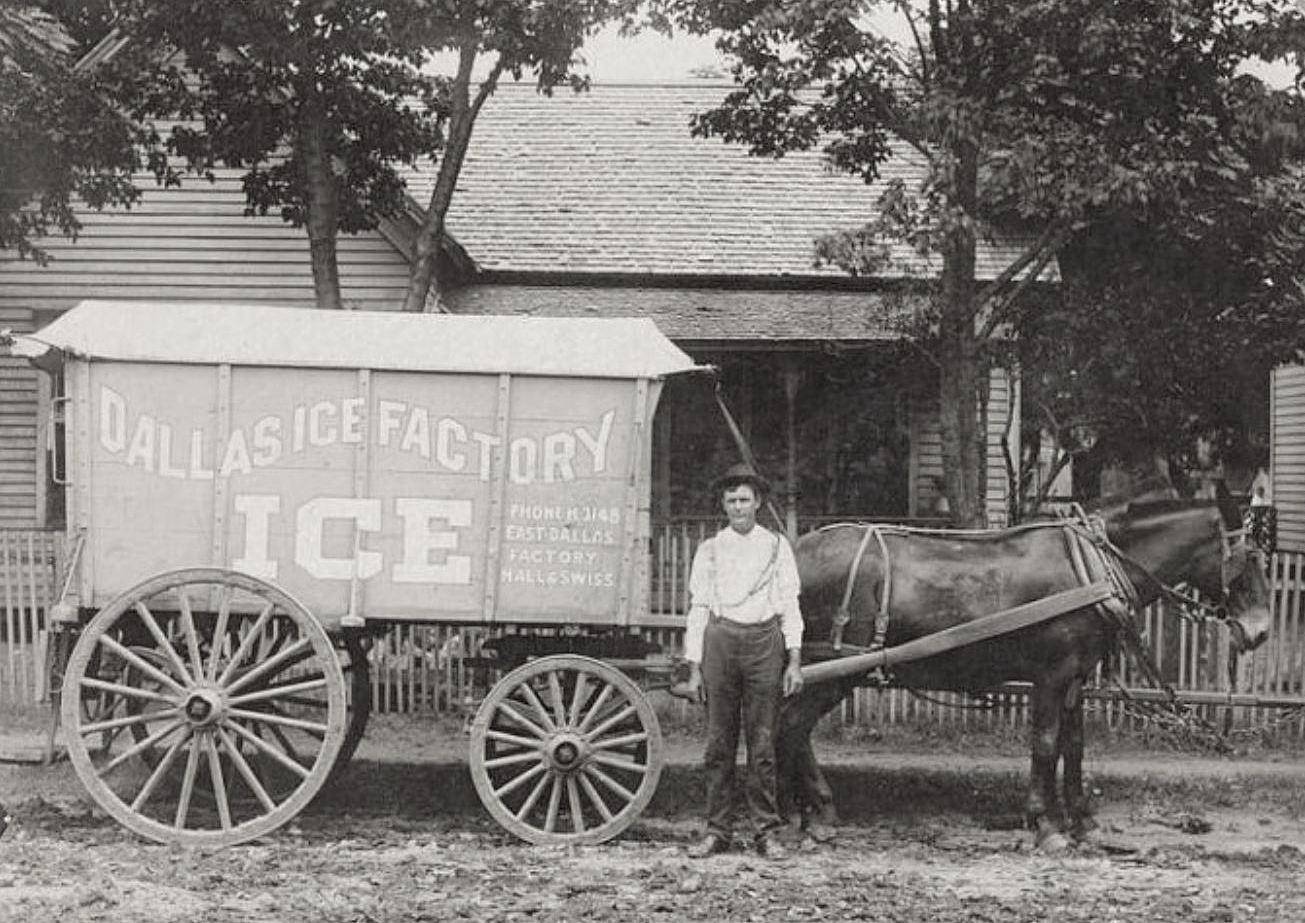
Above is a photo of a horse-drawn Dallas Ice Factory wagon and its driver. There was probably ice in there.
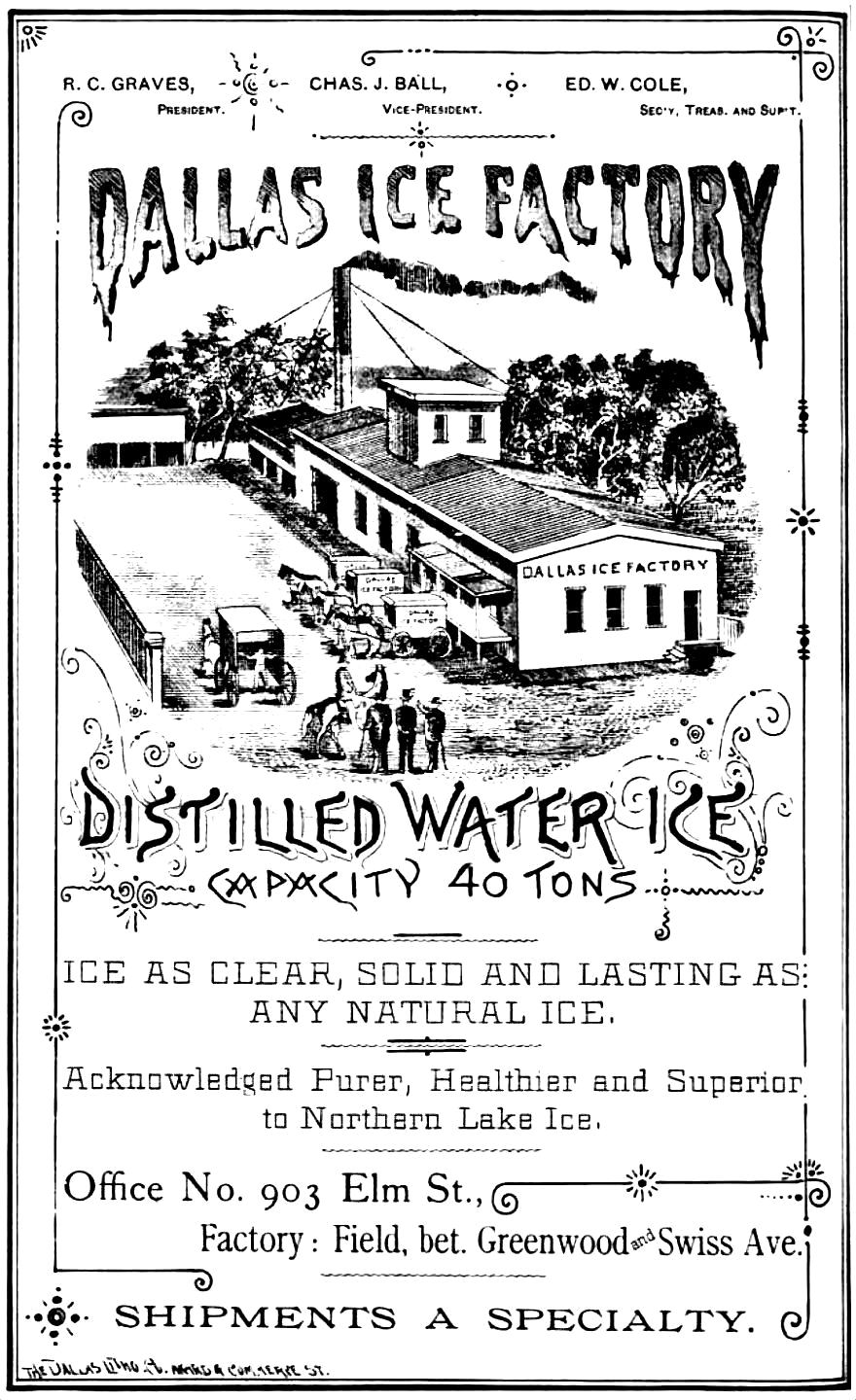
Here’s an ad from 1888 showing the factory:
1888 Dallas directory
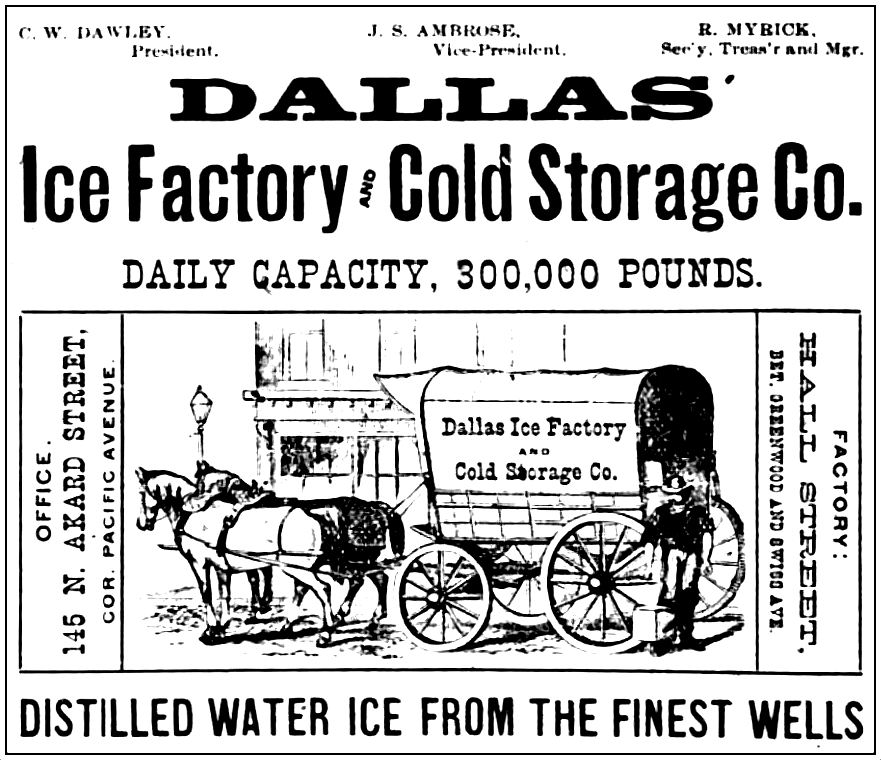
Here’s an ad from 1894 not showing the factory:
1894 Dallas directory
Here’s a link to an 1899 Sanborn map showing you where the Dallas Ice Factory was located (in Old East Dallas, at Swiss and Hall): link.
That’s about all I can muster. It’s too dang hot.
***
Sources & Notes
Photo from a 2011 eBay listing, reproduced in The Dallas Observer by Robert Wilonsky; now owned by Peter Kurilecz.
Ads from Dallas directories.
Heat from the sun.
And here’s an ice-factory-related post I actually did some work on, when I wasn’t feeling like a sweaty, limp dishrag (…a long, long time ago…): “Oak Lawn Ice & Fuel Co.”
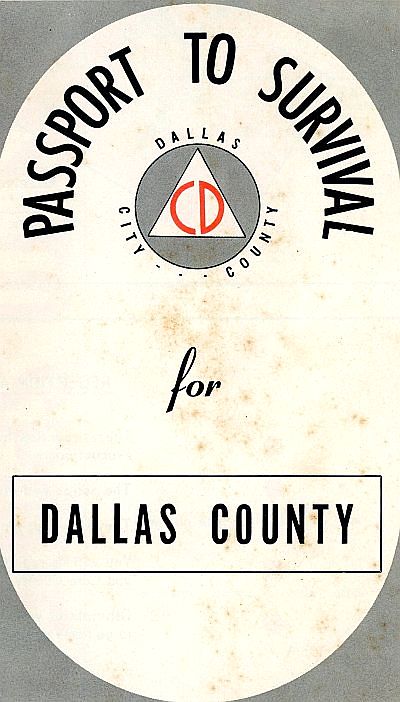
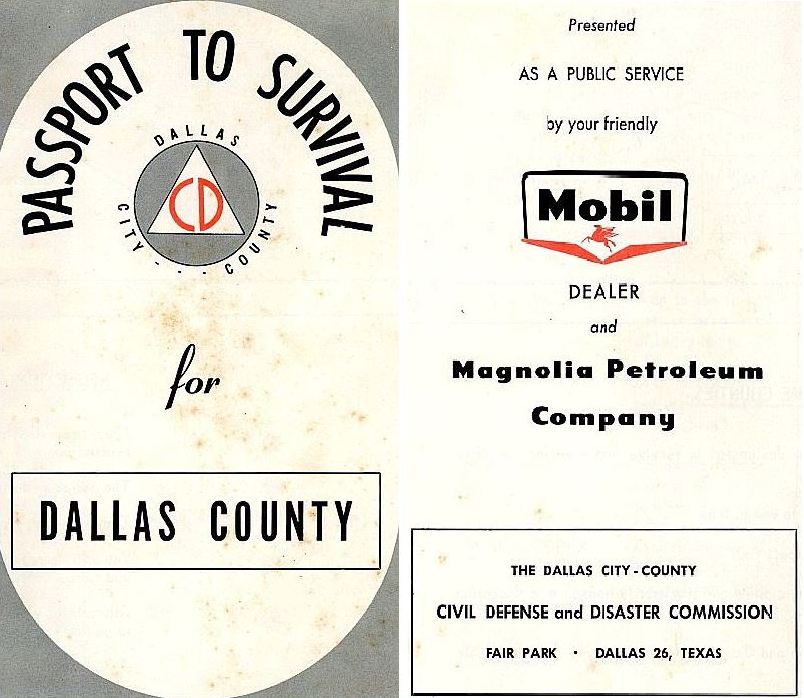
During the Cold War, the fear of nuclear attack was very real in the United States, reaching its peak of anxiety in the late 1950s and early 1960s. In 1958, the Dallas City-County Civil Defense Commission published a free informational pamphlet titled Passport to Survival, which contained evacuation maps for Dallas County, preparation tips, an emergency supply checklist, etc. Though the information contained in this publication could be applied to any disaster or emergency (nuclear-based or otherwise), it was printed a time when visions of Soviet atomic bombs were dancing in the heads of many concerned Americans. And this mild-mannered-looking pamphlet made sure you, Mr. and Mrs. Dallas County, knew that it was talking about a potential direct strike by nuclear missiles: “DALLAS IS A MAJOR TARGET AREA!” (See images from this pamphlet at the end of this post.)
The arrival of Passport to Survival (“presented as a public service by your friendly Mobil dealer and Magnolia Petroleum Company”) was heralded by a newspaper ad in November, 1958 (its eye-catching “DISASTER CAN HIT DALLAS!” artwork is seen above). (The full ad — with an exhortative letter by Commission chairman John W. Mayo, addressed to the people of Dallas — can be seen here.) I’m not sure how much “survival” there would be in case of a nuclear attack, but, like a good Boy Scout, one should at least be prepared.
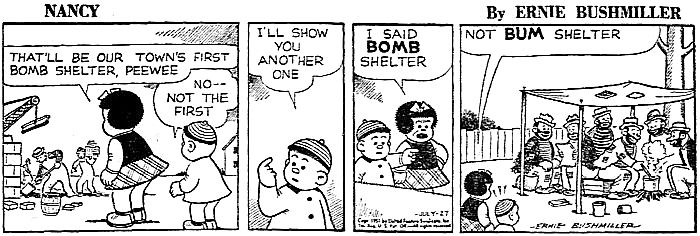
Backyard bomb shelters were necessary in Britain during World War II and saved countless lives during the almost nightly German air raids (I wrote about these shelters on another blog, here), but it was a new concept to post-war America. It wasn’t long, though, before bomb shelters became all the rage in the early ’50s as the Cold War heated up. If it’s becoming a common reference-point on the country’s funny-pages, it’s hit mainstream acceptance.
“Nancy” by Ernie Bushmiller, July 27, 1951
I’m not sure how many people were building these shelters, but they were certainly talking about them. When Highland Park Village announced their new underground parking garage in 1953, owners Flippen-Prather made sure to note that the two subterranean parking levels (the lowest of which was 20 feet below street level) would not only accommodate 300 vehicles, but, if needed, it could serve as a bomb shelter for 3,500 very well-dressed Park Cities residents seeking refuge.
But what really caused the mania for nuclear fallout shelters to reach its zenith was the Bay of Pigs Invasion in April of 1961. In May, 1961, ground was broken for construction of the $180,000 Civil Defense Emergency Operating Center at Fair Park (the first such center in Texas), adjacent to the Health and Science Museum. The underground bunker was to serve as a government operating and communications center for Dallas County in the event of a nuclear attack or natural disaster. It would house about 30 people (which would include the mayor and other city officials) and would be stocked with provisions for 14 days. It had its own water supply, electric generators, radios, and telephones. It was built to withstand a 20-megaton nuclear blast three miles away (i.e. downtown, where, presumably, the mayor and other city officials would be working when the 20-megaton bomb lit up Big D). When not in use as a shelter, it was to be maintained by the Health and Science Museum staff, and operated as a center for survival training. For many years it was open to the public, seven days a week. (It’s worth noting that the Civil Defense headquarters in Dallas was also located in Fair Park, at the building housing radio station WRR.)
The man behind the everything-you-need-to-know-about-Civil-Defense website CivilDefenseMuseum.com did a really interesting video walk-through of the surprisingly large decommissioned (if that’s the correct word to use here) Fair Park shelter in 2013:
*
1961 was THE year if you wanted to get into the bomb-shelter business. There was even a three-day “Fallout Survival Show” at Market Hall. You couldn’t open the pages of a magazine or newspaper without seeing ads for personal bomb shelters.
Some of the ads were kind of cozy:
Sept., 1961
Some were not:
Sept., 1961
Again, not all that many people were actually building them, but everyone was certainly talking about them. But in just a few short months … no one cared anymore. The ads disappeared. A lot of people who had been trying to sell them went broke. Those who survived (as it were) repurposed their products as “storm shelters” — turns out tornadoes were more of a pressing threat to Dallasites than Russian A-bombs.
Public shelters, however, didn’t disappear. In September, 1962, the very first public fallout shelter in Dallas was officially designated: the Southland Life Insurance Building could accommodate a staggering 30,000 people in the event of disaster. (The plan for this shelter was actually announced in 1954, and the Southland Center opened in 1959, but the official designation was not made until 1962.)
In 1966, Dallas had more than 300 official shelters, able to house 971,000 people:
…323 buildings in the city have been approved as shelters. The owners and managers of 204 of them have entered into agreements with the federal government and with the city to permit their use in emergencies as public shelters…. Shelters in Dallas can house 971,000 persons. Many of the buildings are permanently stocked with water, food supplies and medical supplies sufficient to sustain about 300,000 people for approximately two weeks. (“Maps at Fire Stations To Pinpoint Shelters,” Dallas Morning News, March 9, 1966)
Some of the permanent provisions kept in these places were water, food, “fortified crackers,” hard candy, bandages, iodine, and Geiger counters.
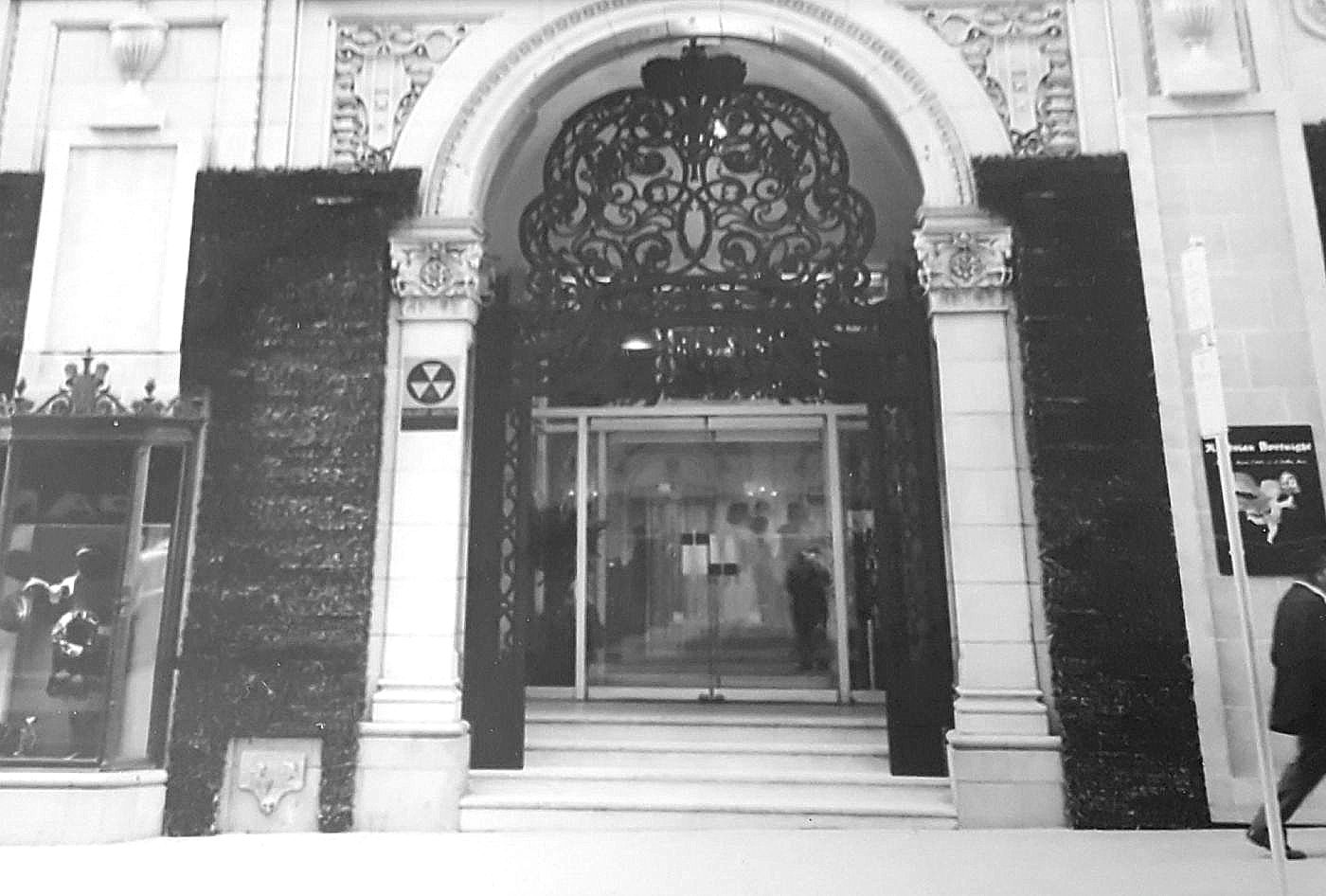
As one might expect, many of the city’s fallout shelters were in downtown buildings, their exteriors adorned with official Civil Defense signage. My favorite? Neiman-Marcus, of course, seen below in 1965, decorated for the Austrian Fortnight.
Neiman-Marcus, the most elegant bomb shelter in town…
If I were able to choose where to huddle during a nuclear attack, I think I’d choose Neiman’s. I’m sure Mr. Stanley made sure his basement was comfortable, tasteful, and well-appointed. …And one would have to expect he wouldn’t have had his guests living off hard candy and fortified crackers.
**
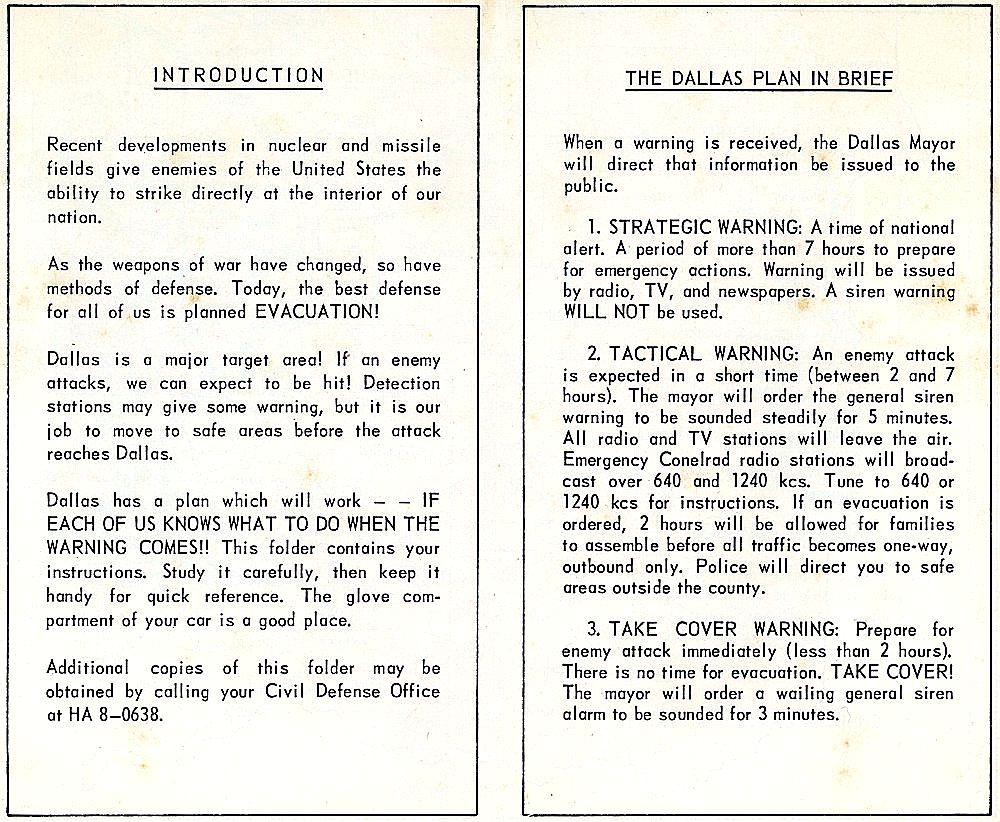
Below are images from the 1958 publication Passport to Survival (thanks to Jeff Hanning for his original scans, which precipitated this post) — all images are larger when clicked.
“Introduction” / “The Dallas Plan in Brief” (more information of CONELRAD is in this YouTube video):
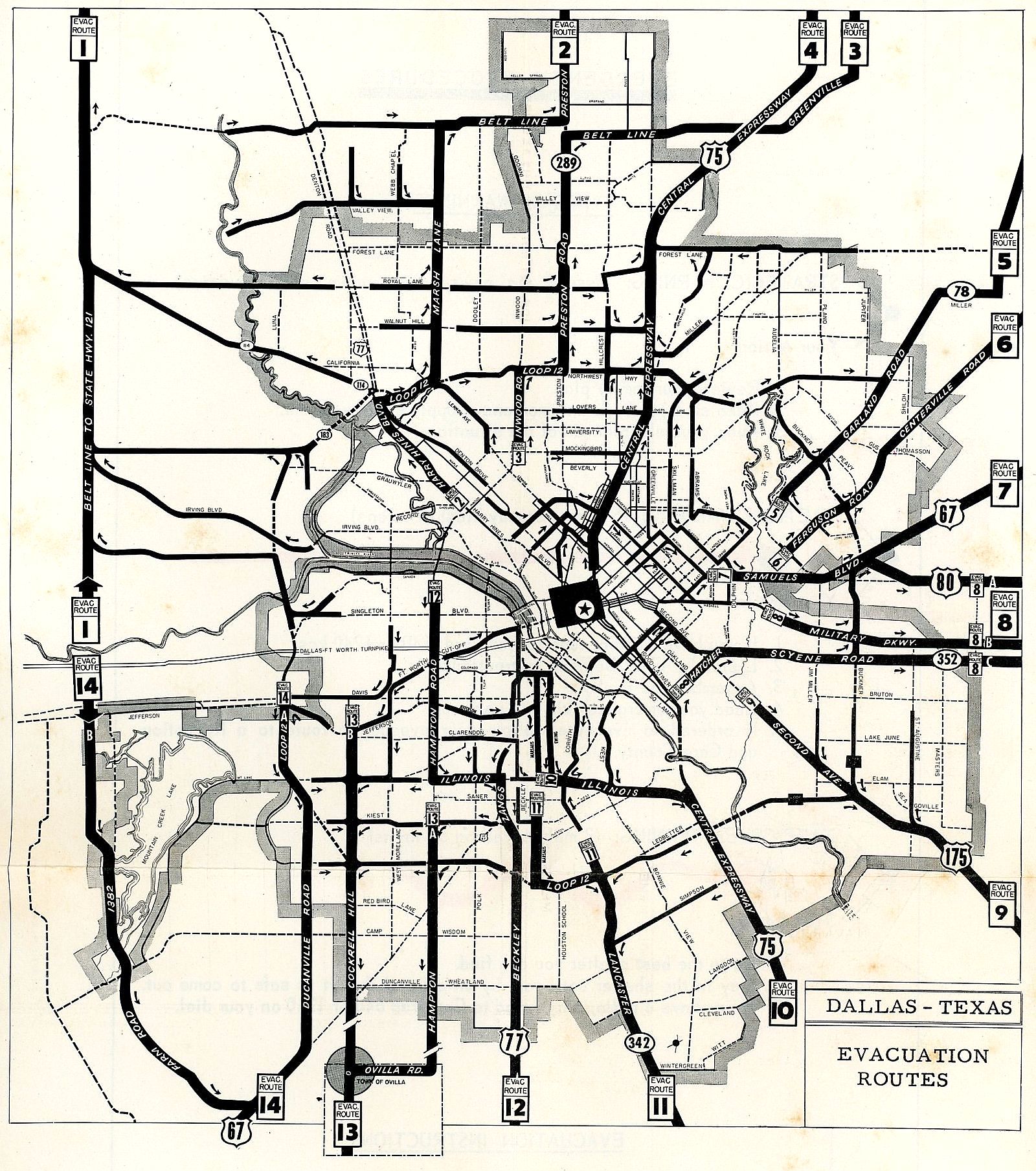
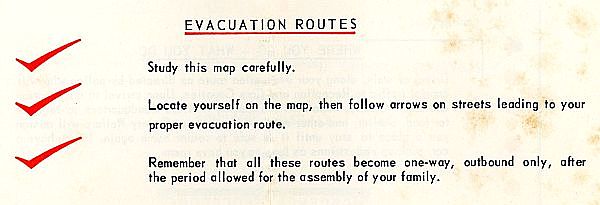
“Evacuation Routes.” (This plan did not sit well with the citizens of Grand Prairie as they were not included in the evacuation plans of either Dallas County or Tarrant County — this seems to have been a particularly odd oversight, seeing as Grand Prairie was a military aviation hub — home to Hensley Field and Chance Vought — and a likely target if DFW were attacked. As an editorial in the Grand Prairie Daily News-Texan stated somewhat bitterly: “Dallas seems to have it all sewed up.”) (Also interesting in these evacuation plans was that the county was divided into four divisions, the boundaries of which corresponded to school districts: District I covered the Dallas Independent School District, Division III covered the Highland Park Independent School District, District IV covered the “Negro Unit,” and District II covered every other school district in Dallas County not covered in the other divisions.)
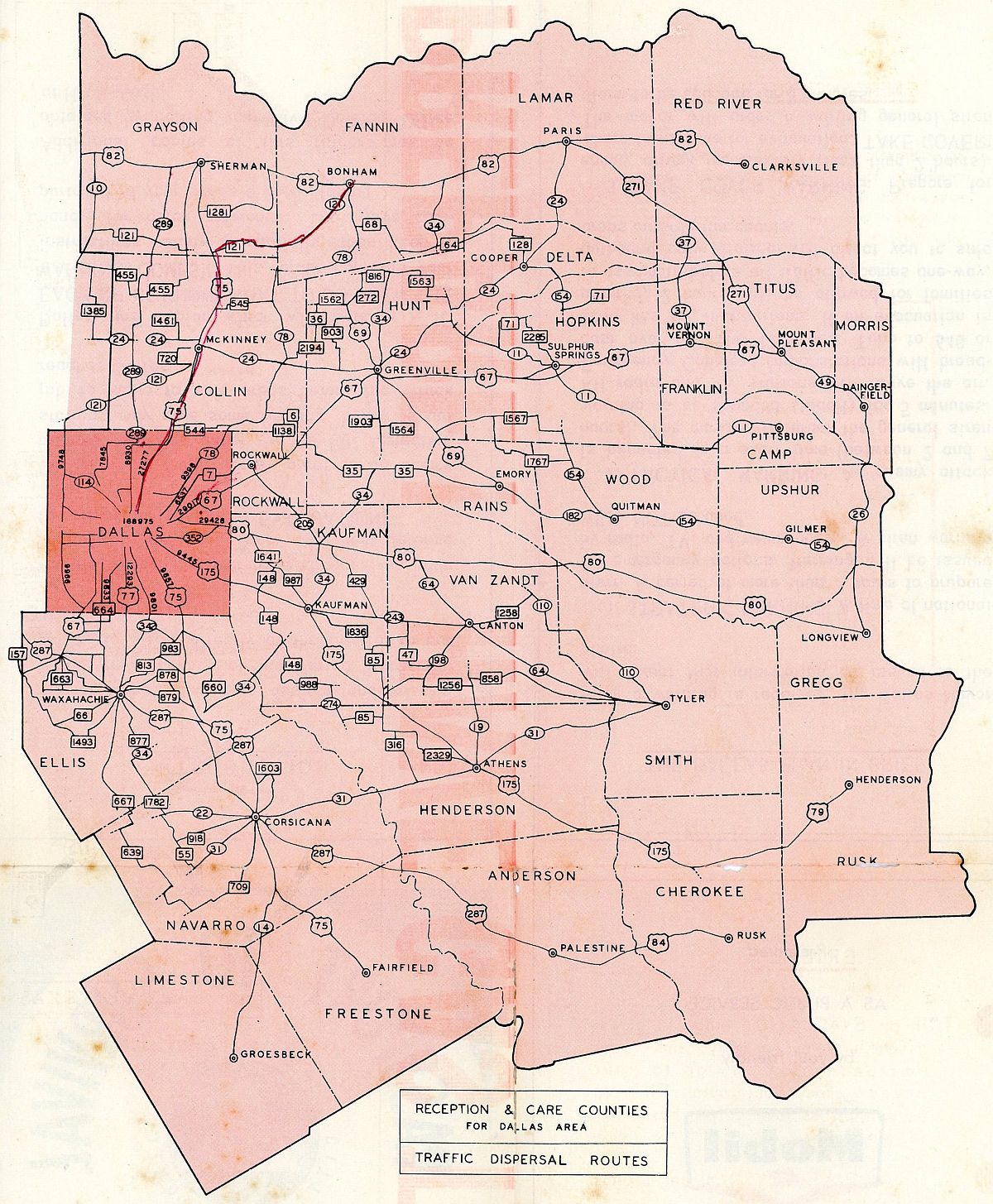
“Reception & Care Counties For Dallas Area Traffic Dispersal Routes” (the person who owned this pamphlet was planning to hightail it to Bonham):
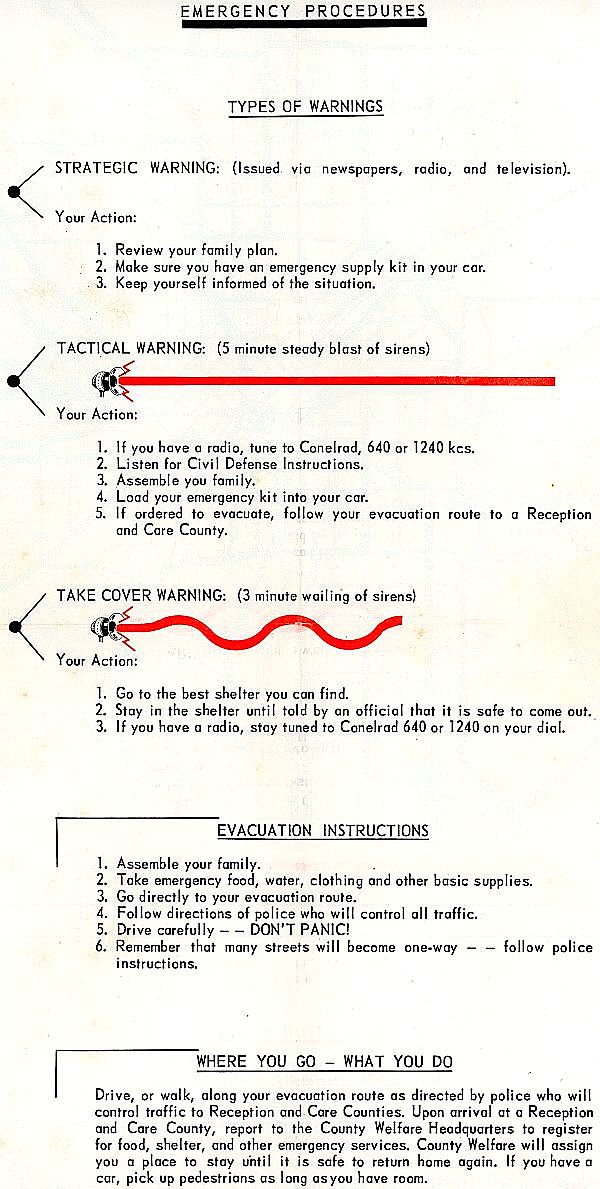
“Emergency Procedures”:
“Emergency Supply Kit” (do NOT forget the can opener!) / “Taking Cover”:
***
Sources & Notes
Thanks again to Jeff Hanning for sending me scans of his Passport to Survival, Dallas County pamphlet.
The photo of Neiman-Marcus is from the DeGolyer Library at SMU. The above image is a really bad photo I took as a reference photo for a project I was working on at SMU last year. The actual photograph in the DeGolyer collection is, of course, much better! Apologies to the DeGolyer Library! I would link to the photo in SMU’s online database, but a scan of that particular photo is not available.
As mentioned above, if you’re interested in Civil Defense in Dallas, the CivilDefenseMuseum.com site is where you need to be. There’s TONS of stuff there. In addition to the great video walk-though of the old Fair Park shelter, there are also several pages of photos here (click through all the pages by following the links at the bottom of each page).
More on the history of United States Civil Defense, here.
And two stories from the Lakewood Advocate on Dallas’ Civil Defense shelters and preparedness can be found here and here.
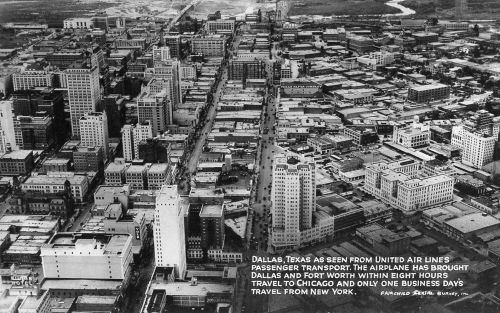
See a large image of this great aerial view of downtown and appreciate how much flight times have been pared down over the past 85 years or so in the 2015 Flashback Dallas post “Fly United to Chicago in Only Eight Hours!,” here.
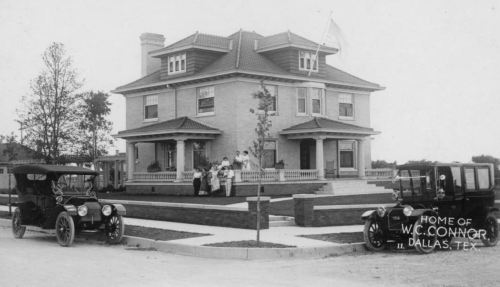
W. C. Connor house, Highland Park (source: DeGolyer Library, SMU)
by Paula Bosse
When I saw this photograph, I fell in love with this beautiful house, which was built around 1910 and is still standing in Highland Park. Read more about it in the Flashback Dallas post from 2016, “The House at Crescent & Byron, Highland Park,” here.
The next several weeks will be spent immersed in the gargantuan task of helping my mother sell her house and move, so new posts might be a bit sporadic for a while, and I might be relying on older posts to fill the gaps.
Time for a few more newly-stumbled-across bits and pieces to add to old posts.
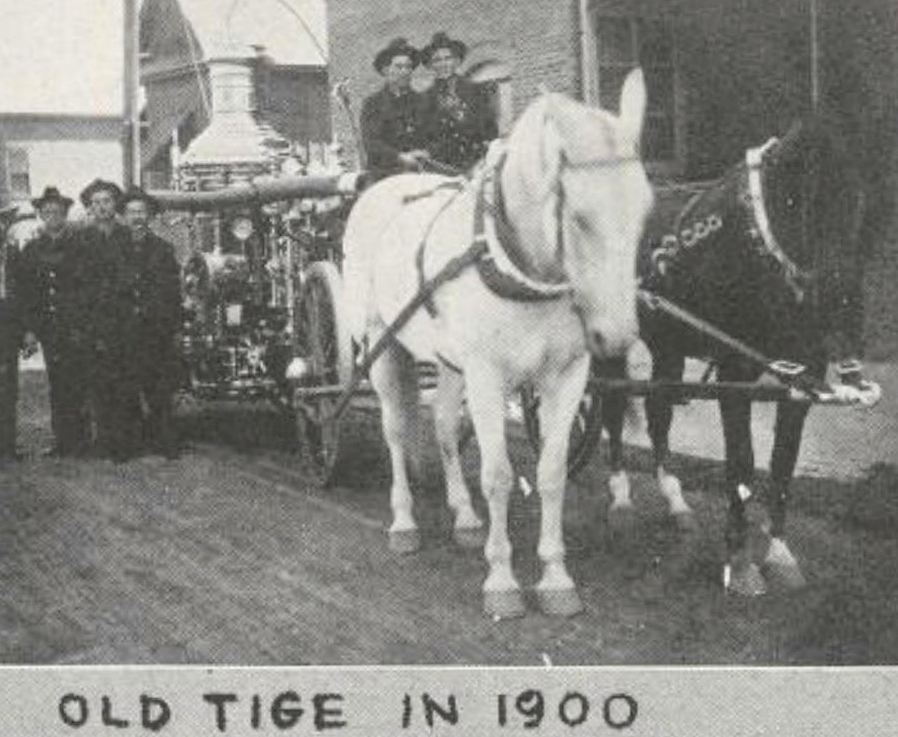
The photo above shows “Old Tige,” the 600 gallons-per-minute steam pumper, built in 1884, which was in service with the Dallas Fire Department until 1921 (it can be seen today at the Dallas Firefighters Museum). I’ve added this photo to the post “Dallas Fire Stations — 1901.” (Source: The Man in the Leather Helmet, A Souvenir Booklet of The Dallas Fire Department, 1931, via the Portal to Texas History, here.)
*
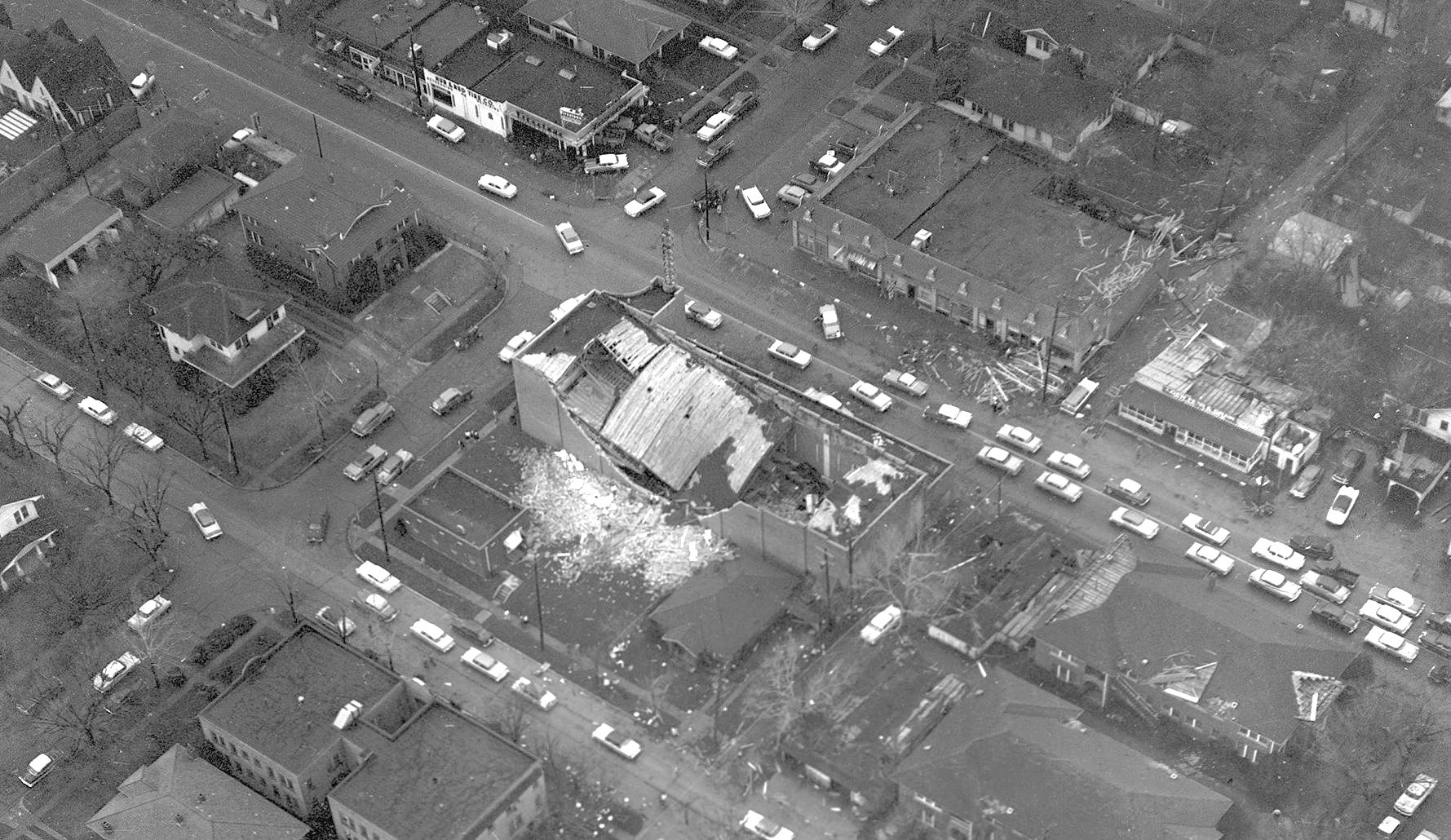
Below, the aftermath of the 1957 tornado that hit Oak Cliff, with the damaged Kessler Theater in the center. This detail of a larger photo has been added to “Back When the Kessler Couldn’t Catch a Break — 1957.” (Source: Squire Haskins photograph, from the University of Texas at Arlington Libraries — the full very large photo can be seen by clicking the thumbnail image here.)
*
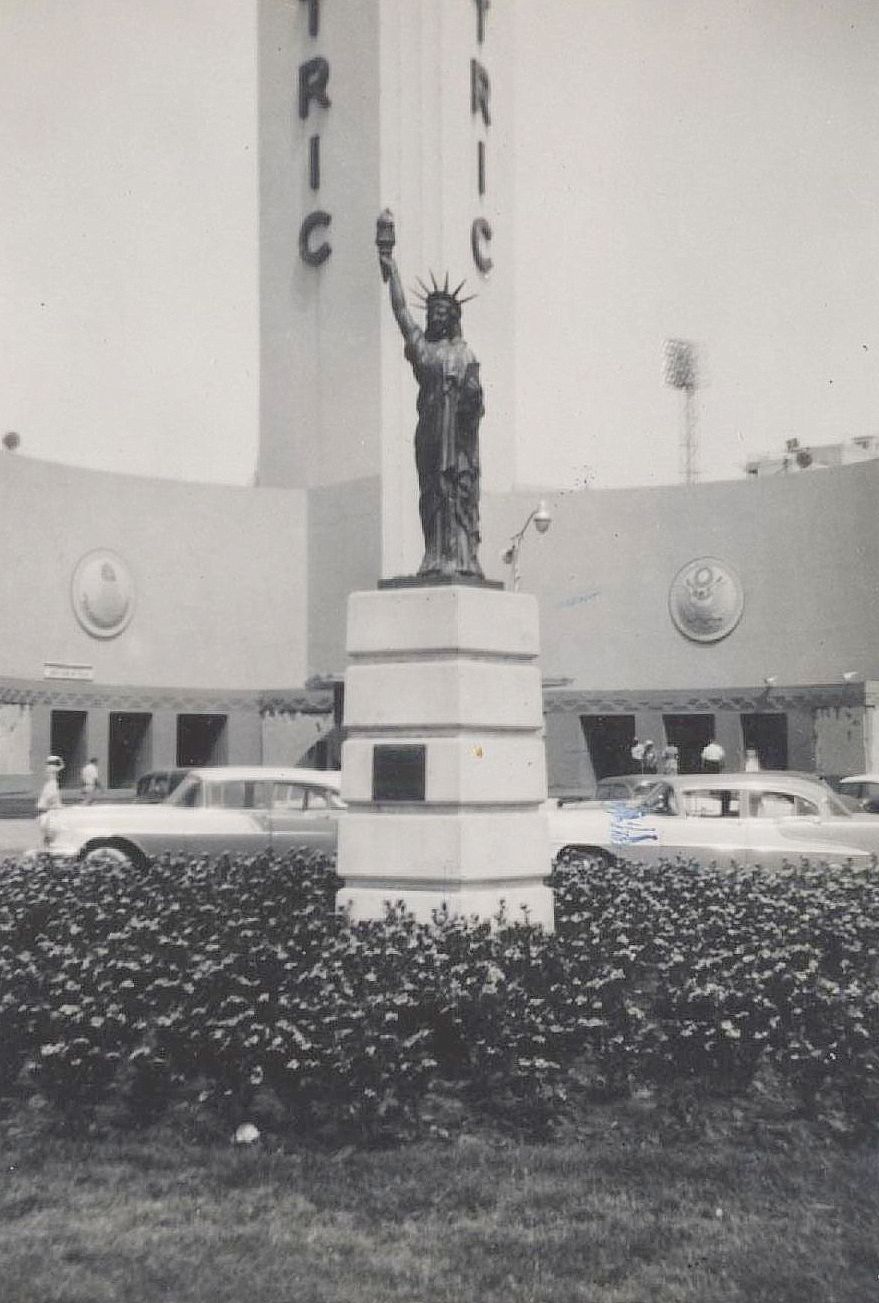
This 1956 photo of the small Statue of Liberty replica presented to the State Fair of Texas by the Boy Scouts of Circle Ten Council on July 4, 1950 has been added to “Fair Park’s Statue of Liberty.” (Source: eBay)
This photo of Station No. 11 at Cedar Springs and Reagan (which opened in 1909 and is still in operation!) has been added to “No. 4 Hook and Ladder Company, Oak Lawn — 1909.” (Source: The Man in the Leather Helmet, A Souvenir Booklet of The Dallas Fire Department, 1931, via the Portal to Texas History)
*
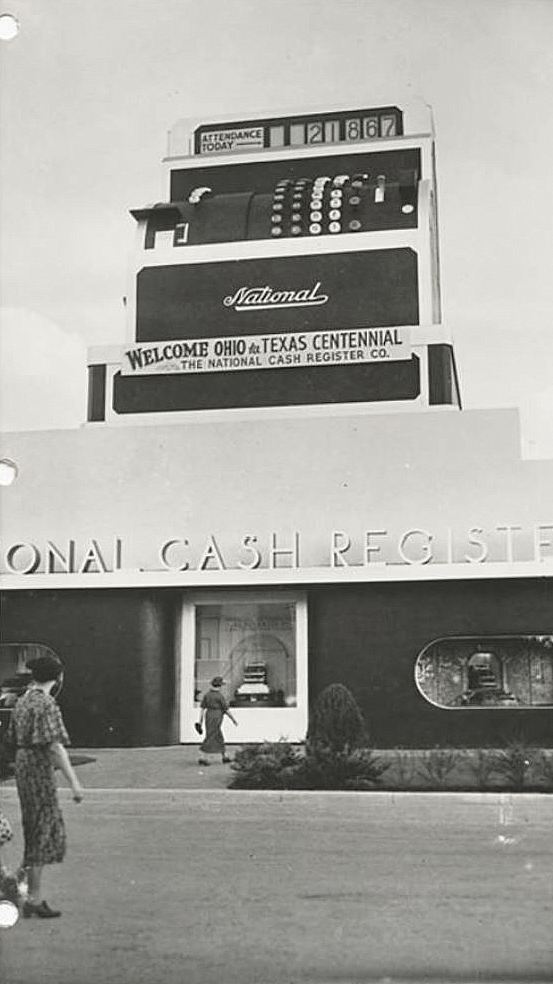
I keep coming across photos of the huge NCR cash register which kept track of attendance at the Texas Centennial. Who doesn’t love a kooky giant cash register? I’ve added these two photos to “The Giant Cash Register at the Texas Centennial — 1936.” (Source: George W. Cook Dallas/Texas Image Collection, DeGolyer Library, SMU: here and here)
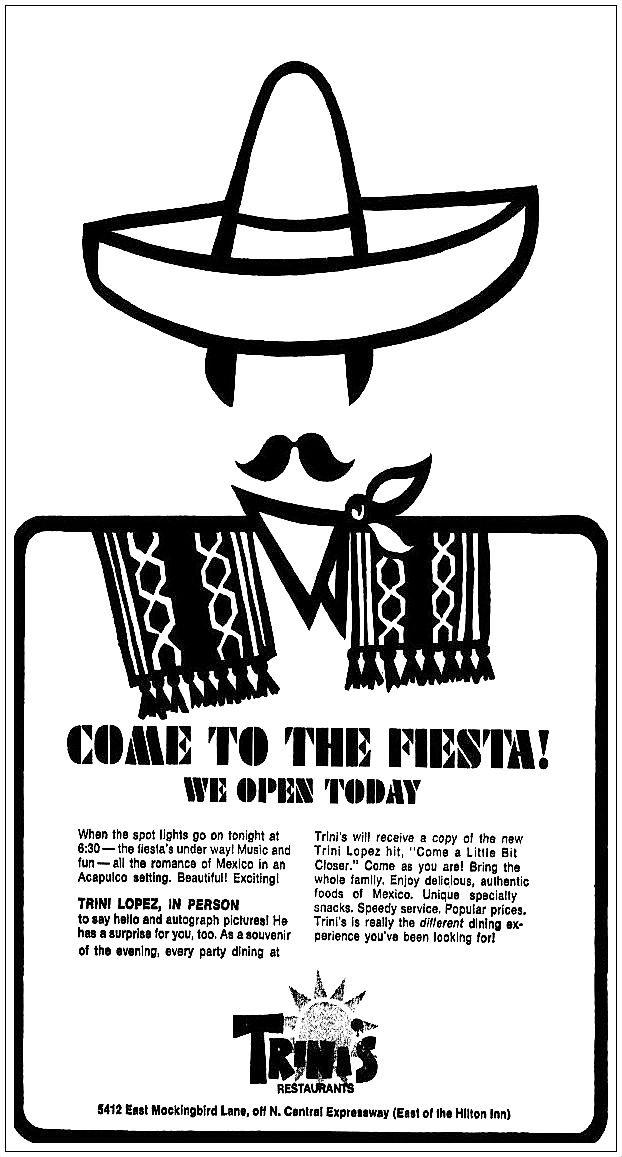
This 1969 ad for the “casual dining” Tex-Mex restaurant opened by singer Trini Lopez on Mockingbird Lane (across from the old Dr Pepper plant and a couple of doors down from Roscoe White’s Corral) has been added to “Trini Lopez: Little Mexico’s Greatest Export.”
*
And, lastly, it’s just a tiny addition, but I really like the logo featuring a football helmet; I’ve added it to the post about the Dallas company behind the development of the athletic face mask, “The Marietta Mask.”
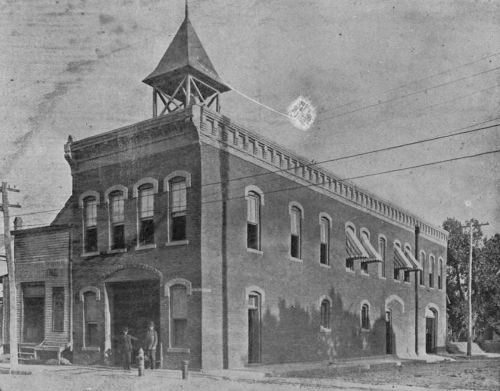
Above, the Central Fire Station at Main and Harwood, photographed by Clifton Church and printed in the Dallas Fire Department Annual, 1901. Photos of the other stations — as well as a link to the scanned publication — can be found in the Flashback Dallas post “Dallas Fire Stations — 1901.”

















 Flashback : Dallas