Flashback : Dallas

A Miscellany: History, Ads, Pop Culture

Category: HOF

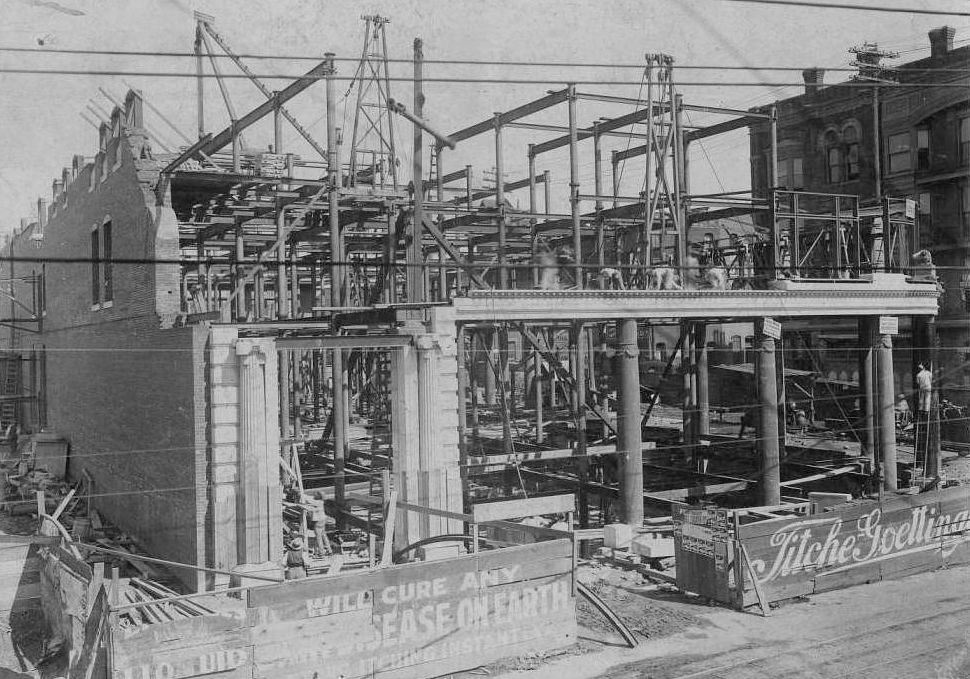
The Wilson Building Under Construction — 1902

wilson-bldg-construction_cook_degolyer_smu_1902_bwSlowly but surely…. (DeGolyer Library/SMU)

by Paula Bosse

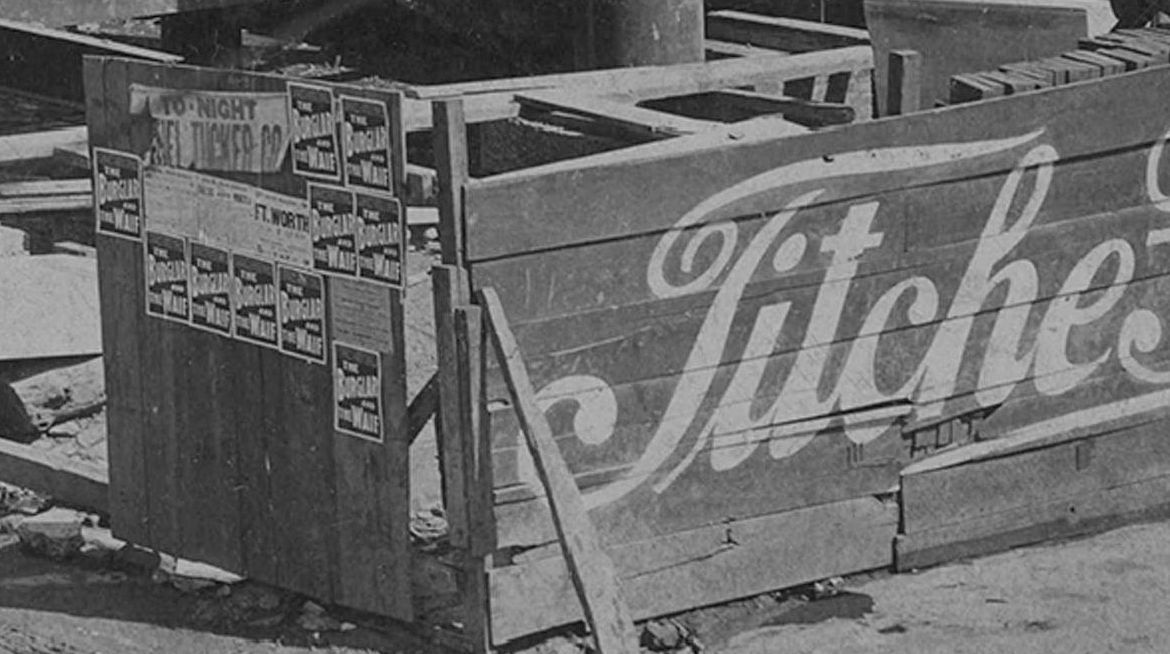
The Wilson Building is one of Dallas’ most beautiful buildings. Designed by the immensely influential Fort Worth firm of Sanguinet & Staats, the building opened in 1904, with its most notable tenant being the Titche-Goettinger department store, which occupied the basement and first two floors.

From the Dallas Public Library’s website:

“J. B, Wilson, a wealthy Dallas cattleman, built this French Renaissance/Second Empire (Beaux Arts) style building, modeled after the Paris Grand Opera House. Craftsman from all over the country came to contribute to the building finish, exterior and interior, with a mahogany and marble interior finish. It was the first eight-story building in Texas. The building originally housed the Titche-Goettinger department store on the bottom floor, with the upper floors used as office space. In 1911, Sanguinet & Staats built a twelve-story annex to the building, which was raised five floors in 1957.”

It was listed in the National Register of Historic Places in 1979.

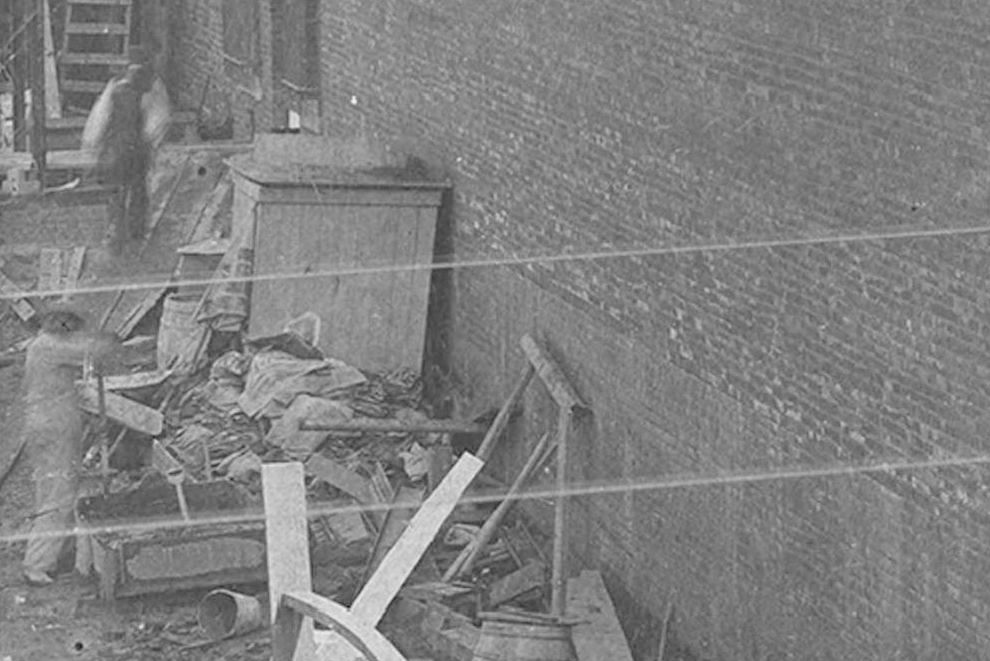
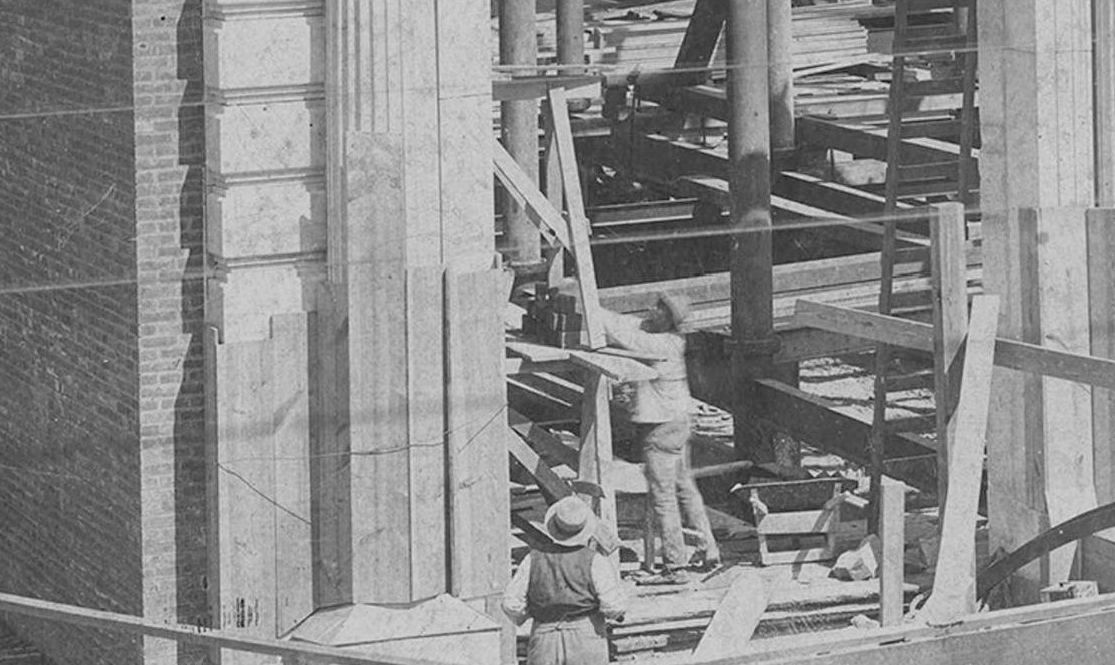
The photo above is part of the incredible George W. Cook Dallas/Texas Image Collection at SMU’s wonderful DeGolyer Library (see note below). Below are a few enlargements of parts of the original photo to see more details. (Click for larger images.)

wilson-bldg-constuction_cook_degolyer_smu_1902-det7_bw

wilson-bldg-construction_cook_degolyer_smu_1902-det4_bw

wilson-bldg-construction_cook_degolyer_smu_1902-det5_bw

wilson-bldg-construction_cook_degolyer_smu_1902-det3_bw

wilson-bldg-constuction_cook_degolyer_smu_1902-det6_bw

wilson-bldg-construction_cook_degolyer_smu_1902-det2_bw

wilsonbldg-det

wilsonbldgHere it is today. Beautiful. Click photo for an image so colossally large that you can easily check out all the fabulous intricate architectural details. (Photo by Joe Mabel.)

***

Sources & Notes

This photo (titled “Building Construction at the Intersection of North Ervay and Elm Street”) is from the incredible George W. Cook Dallas/Texas Image Collection, housed at the DeGolyer Library, Central University Libraries, Southern Methodist University; it can be viewed here. It is not currently identified as being the Wilson Building. (UPDATE: The photo is now titled “Wilson Building Construction, Intersection of North Ervay and Elm Street.” And this post is actually cited in the description! Thank you, DeGolyer Library!) (I have altered the color of these images as they were appearing harshly yellow in my photo editor — please see DeGolyer page for correct color of the original gelatin silver photograph.)

The DeGolyer Library is one of Dallas’ very best repositories of important historical images and papers, and just knowing that they are scanning this fantastic collection of Dallas ephemera is making me a little dizzy. So many incredible images!! An exhibit of selected items from the collection opens TOMORROW (Jan. 30, 2015) — details are here.

Credit and photo info for the gigantic present-day photo by Joe Mabel is here.

Read about Sanguinet & Staats here.

More on the Wilson Building from the Dallas Public Library, here. Check out the photo of the excavation of the site before construction began at the top of the page.

And what does Wikipedia say? See here.

*

Copyright © 2015 Paula Bosse. All Rights Reserved.

The Dallas Aquarium: The Building Emblazoned With Seahorses — 1936

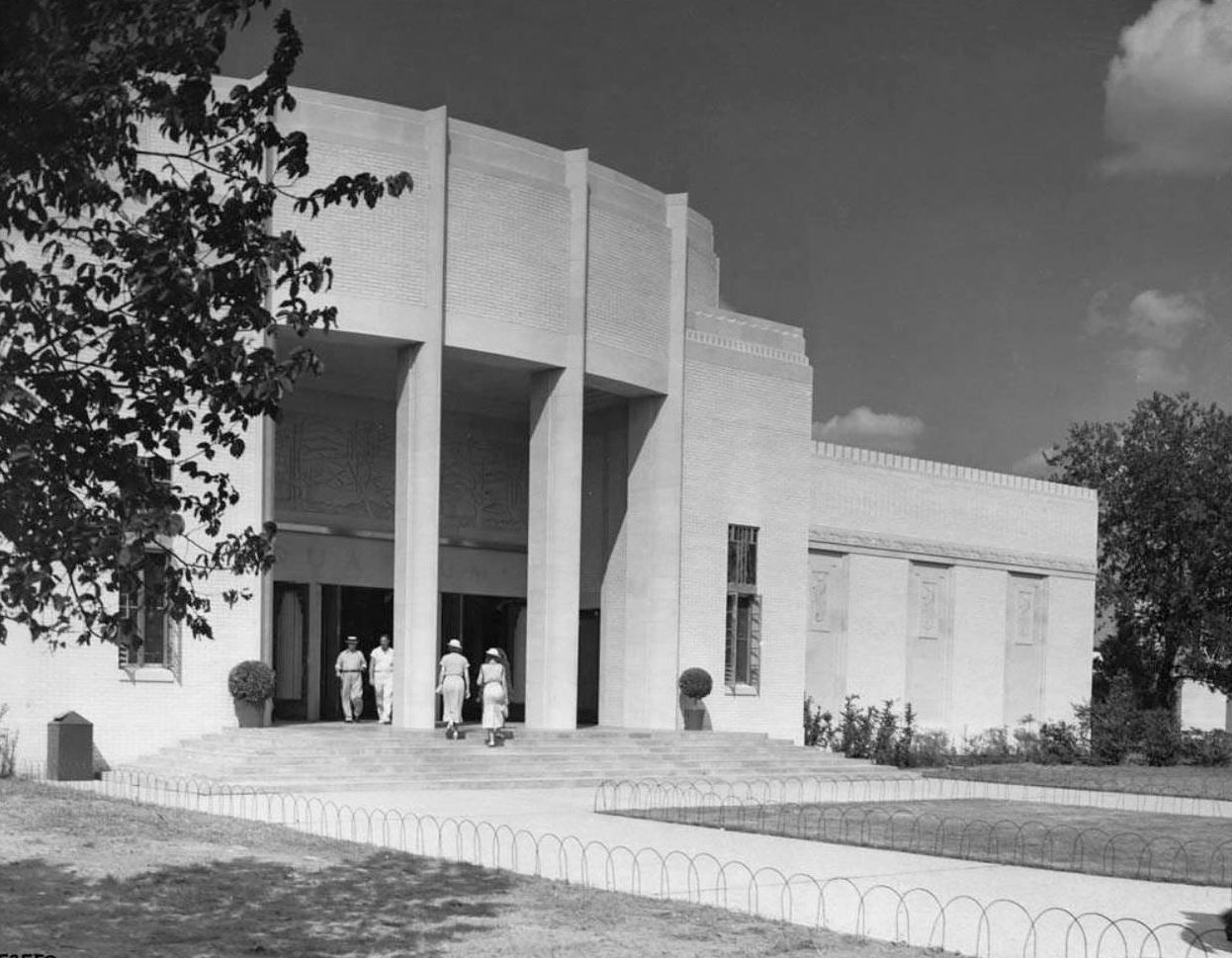
tx-centennial_aquariumThe Dallas Aquarium at Fair Park, 1936… (click for larger image)

by Paula Bosse

Out of all the buildings at Fair Park, the one I have the fondest memories of is the Dallas Aquarium, one of the buildings built in 1936 for the Texas Centennial Exposition which was specifically intended to be a permanent structure which would be available year-round to the citizens of Dallas, well after the Centennial had ended (some of these other “civic buildings” included the Museum of Fine Arts, the Museum of Natural History, the Hall of State, the bandshell, etc.). The Centennial buildings were designed by different architects, usually working in teams — the aquarium was designed by Fooshee & Cheek (best known for their previous triumph, Highland Park Village), Hal B. Thomson, and Flint & Broad. It ended up costing the city about $200,000 ($50,000 over the initial budget), and tussles with the Park Department and the City Council over its budget and space requirements meant that at various times it was suggested that the aquarium find a home at the Marsalis Park Zoo in Oak Cliff rather than at Fair Park, or that it just be shelved altogether.

fair-park-aquarium_1936

But everything worked itself out in the end, and its popularity at the Centennial was huge. HUGE. Most people in our part of the country had never been to an aquarium and had never seen fish outside of a lake or river or hatchery. According to reports in the newspapers during its construction in early 1936, not only was the Dallas Aquarium the first aquarium in Texas, it was also only the 12th aquarium in the entire United States — and it was the only one in the country in a “strictly inland city.” So unless visitors to the Centennial that year had traveled extensively, chances were slim that they’d ever seen anything like this.

fair-park_aquarium_postcard

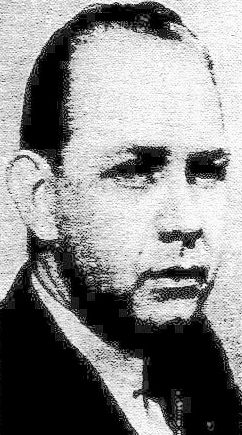
At the time that plans were being discussed for the Fair Park facility, there was something of a tropical fish fad going on around the country. The Dallas Aquarium Society — a small group of “tropical fish fanciers” — was organized in June, 1935, and in September of that year, they had enough pull to put on an exhibition of their personal collections in small tanks on an upper floor of the Dallas Gas Company. People who had never before seen anything but a goldfish in a fish bowl were fascinated, and there were several “gee-whiz” articles in the papers describing the fishy wonders that could be found that fall at the gas company. The president of the Dallas Aquarium Society was Pierre Fontaine — an advertising man and “authority on marine life” — and he must have made quite an impression with the Centennial board, because in February of 1936, he was chosen to be the head of the already-under-construction Dallas Aquarium. (Though apparently a hobbyist when appointed, Fontaine served for decades as the respected director of the Dallas Aquarium — and later the Dallas Zoo.)

aquarium_fontaine_1936
Pierre Fontaine, 1936

The fish on display during the Centennial were almost exclusively freshwater fish. Not only would it have been prohibitively expensive to ship the thousands and thousands of gallons of salt water that would have been needed, it would also have been extremely costly to purchase and maintain the special non-corroding equipment necessary to equip such tanks. But Fontaine must have pushed, because the city gave the go-ahead for a paltry 500 gallons of salt water from the Gulf to be shipped up for the opening of the Exposition, so at least a few exotic saltwater-dwelling creatures and plants were able to share their DeMille-moment in the Centennial spotlight with their freshwater brethren. (At the time, “artificial” salt water was not yet an option as it now is, and only natural salt water could be used.)

aquarium_art-institute-of-chicago_1936Art Institute of Chicago Collection

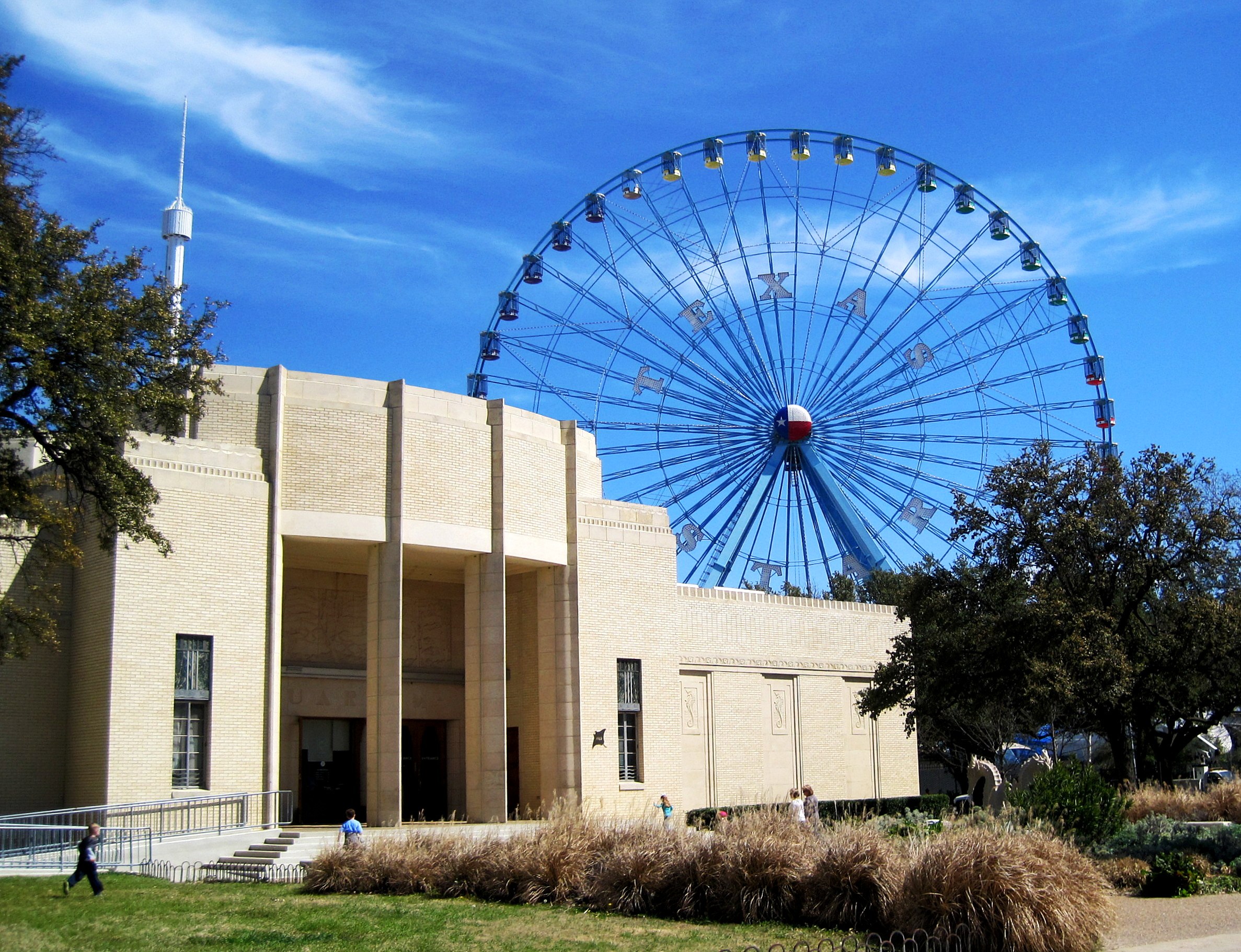
The 1936 Centennial aquarium building still stands. After extensive renovation, it now houses the “Children’s Aquarium,” which I haven’t visited, but which I’m confident is entertaining and educational. I’m pretty sure, though, that it is a completely different aquarium from the one of my childhood memories (when museums were basically designed for adults and were rarely “interactive”). I loved going to the aquarium. I remember it being dark and cool and kind of dreamy inside. Mysterious and exotic. I loved the little neon fish that playfully (or nervously) darted all around the tanks, the big, slow-moving fish that looked back at me like nonchalant cud-chewing cows in a field, the tiny skittering crabs, the turtles, the undulating plants … I loved all of it.

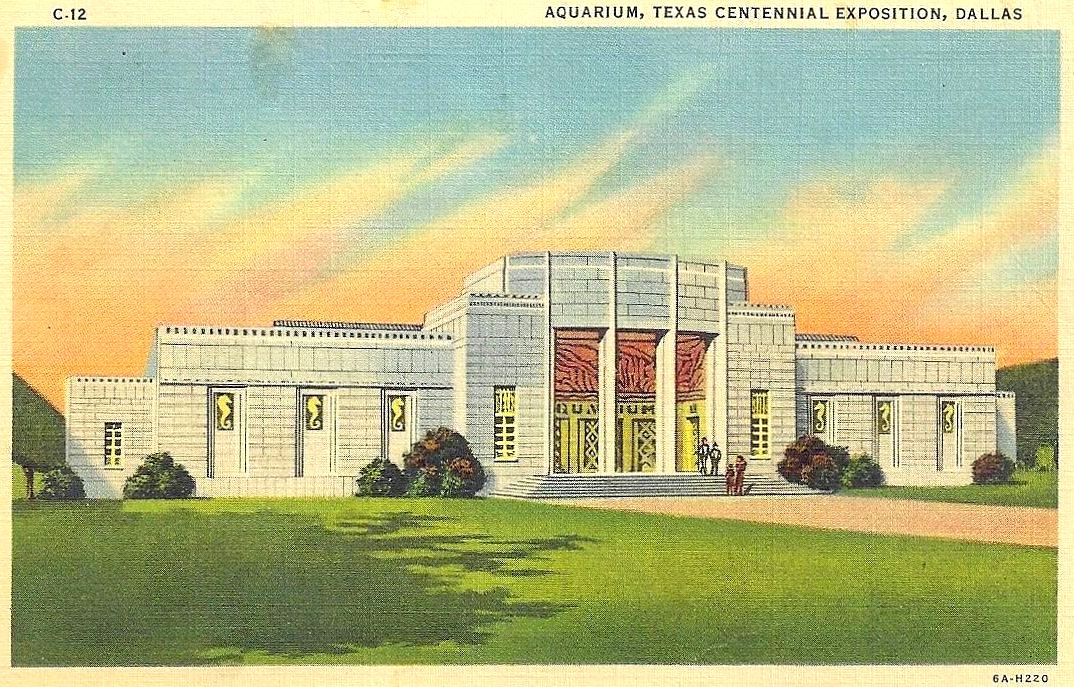
But what I really remember are the seahorses on the side of the building — whichever architect came up with that perfect little detail deserves a special place in heaven. I loved them as a child, and I love them now. The acres and acres of art deco fabulousness created for the Texas Centennial are absolutely thrilling, but those solemn and quietly elegant seahorses all in a row on the side of the Dallas Aquarium will always be my personal favorite little nostalgic detail in the whole of beautiful, beautiful Fair Park.

seahorses_pb-det

The Aquarium today (click to enlarge) / photo: Paula Bosse

*

UPDATE — Oct. 2020: It has been announced that the Children’s Aquarium will be closing permanently. This news is almost as upsetting as seeing Big Tex in flames.

UPDATE — Sept. 2021: Good news! It looks like the aquarium will be reopening in time for the 2021 State Fair of Texas. Read about it here.

***

Sources & Notes

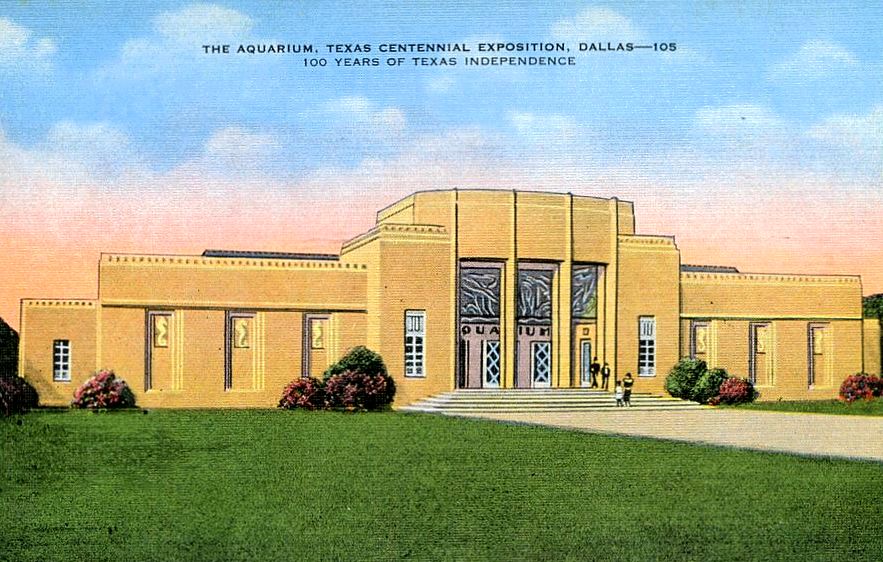
Top two images are postcards based on the original architectural drawings, issued before the aquarium was built, found somewhere on the internet.

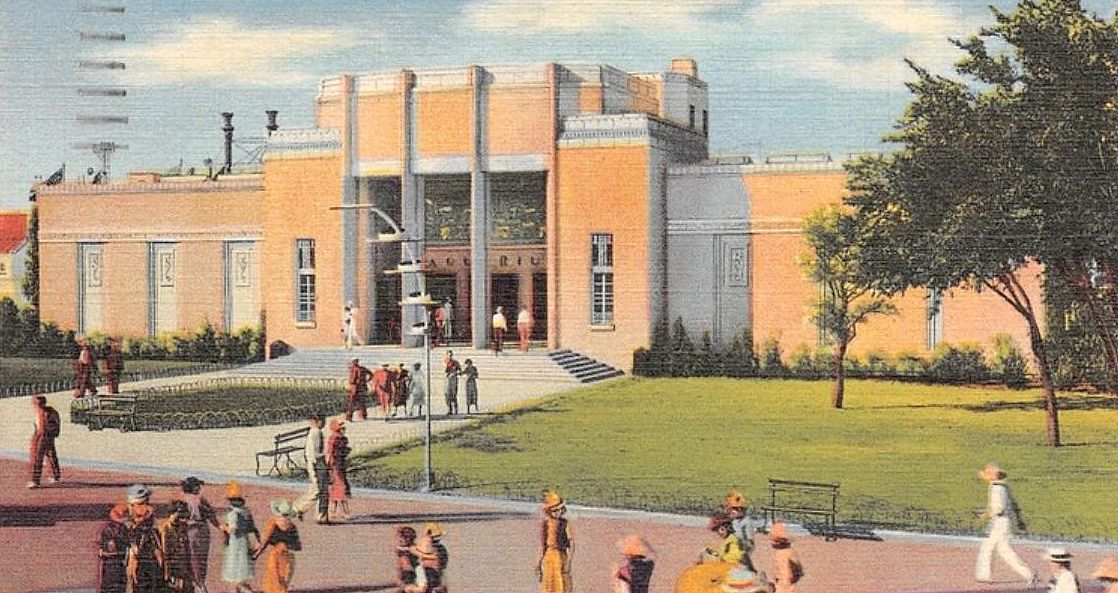
The third color image is a postcard from a photograph taken after the Centennial was underway.

Photo of the exterior of the present-day aquarium was taken by me in 2013.

The website for the Children’s Aquarium at Fair Park is here.

For an absolutely FANTASTIC well-illustrated article titled “The Metamorphosis of the Dallas Aquarium at Fair Park Into the Children’s Aquarium at Fair Park, With Historical Annotations” by Barrett L. Christie, Aquarium Supervisor, see p. 5 of the “Drum & Croaker” PDF, here. I really loved this article — especially the “Annotations of Historical Interest” at the end (p. 14). Seriously — this is a great read. I’m as layman as you’re gonna get regarding this topic, and I was fascinated by all of this. I’m going to have to write about that mysterious severed human leg found on the roof in 1954!

*

Copyright © 2015 Paula Bosse. All Rights Reserved.

George Cacas, The Terrill School’s Greek Ice Cream Man — 1916

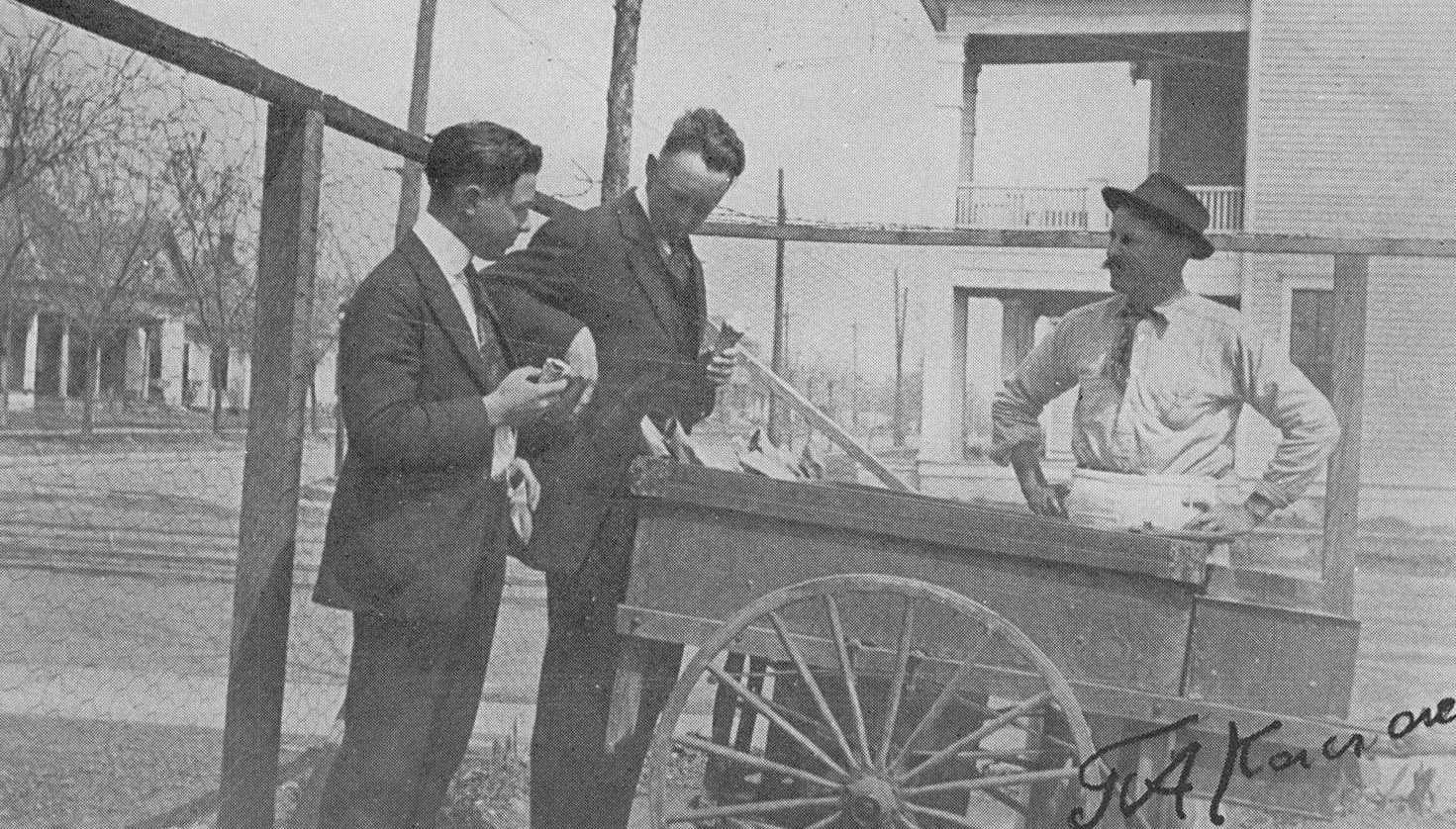
terrill_ice-cream_yrbk_1916-cacasPrep-school boys & the ice cream man, 1916

by Paula Bosse

I love this photo. It shows two students from the Terrill School for Boys, buying ice cream from George Cacas, a Greek immigrant. I’m not sure of the exact location of the photo, but I would assume it is either in front of, next to, or very nearby the Terrill School, which was located at Swiss and Peak. It appeared in the school’s 1916 yearbook accompanying an “interview” with Mr. Cacas, whom the boys apparently (and one hopes affectionately) called “Spaghetti” (click for larger image):

terrill_ice-cream_cacas_1916-yrbk_text

Another photo of Mr. Cacas, from the previous year’s yearbook (click for larger image):

spaghetti_terrillian_1915

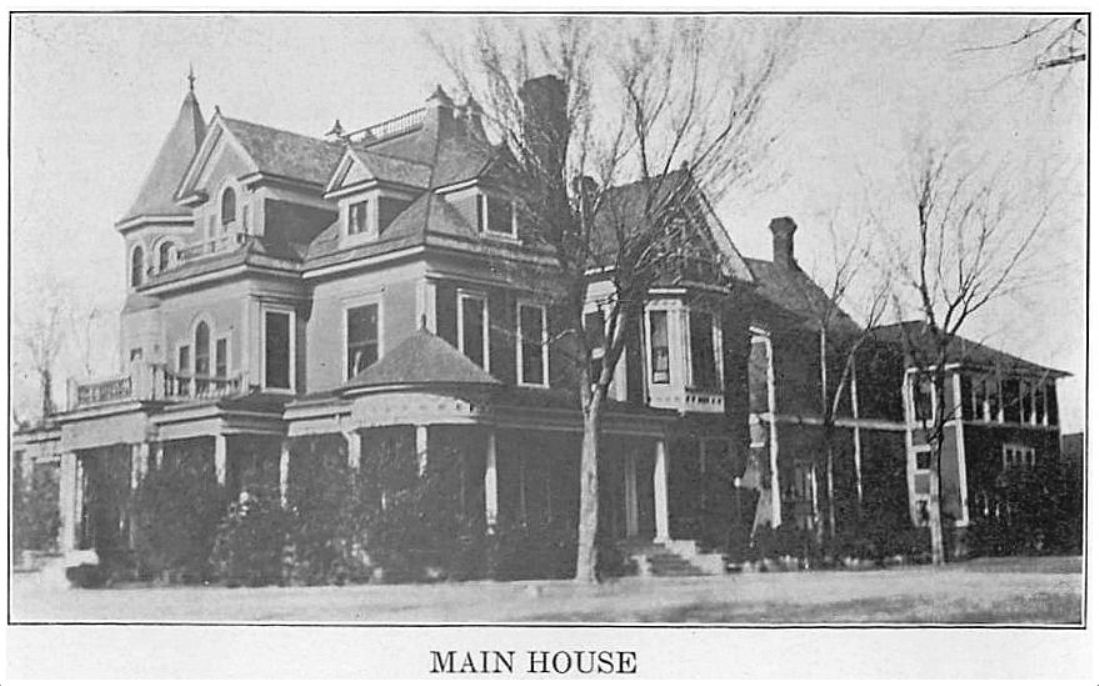
The Terrill School was established in 1906 and was one of the city’s early important prep schools for boys. (Incidentally, the Terrill School shared a fenceline with the prestigious Miss Hockaday’s School for Girls for many years — I’ll be writing more on this convenient arrangement in the future!) Below, two photos showing three of the campus’ many buildings, from about the same time as the one featuring Mr. Cacas.

terrill-school_main-house_yrbk_1919_lg

terrill-school_recitation-hall_phelps-hall_yrbk_1919Recitation Hall on the left; Phelps Hall, right — 1919

terrill-yrbk_19281928

***

Sources & Notes

Top photo and interview from the 1915-1916 Terrillian, the Terrill School yearbook; photos of the “Main House” and two campus buildings from the 1918-1919 Terrillian.

The Terrill School for Boys was located in Old East Dallas at 4217 Swiss Avenue, from 1906 to about 1930. It then moved to Ross Avenue for a few years and was eventually merged with a couple of other schools to form St. Mark’s School of Texas — more on that from the St. Mark’s website, here.

terrrill_school_bingLocation on present-day map (Bing)

The name “Cacas” didn’t seem right for a Greek surname — and the signature at the bottom of the photo looks like it might have been George’s, with his last name beginning with a “K.” But George’s family’s name was, in fact, spelled “Cacas,” as seen here in the city directory from 1915. I wonder if they spelled it “Cacas” back in Sparta?

cacas_directory_1915

*

Copyright © 2015 Paula Bosse. All Rights Reserved.

Oak Downs: Dallas’ Brief Flirtation with Greyhound Racing

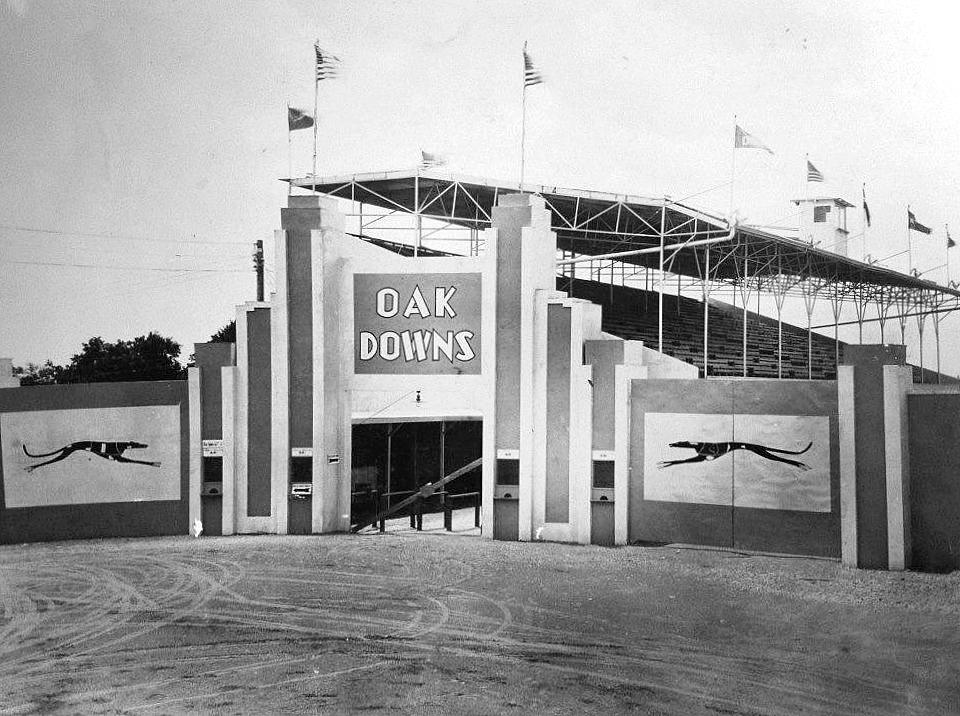
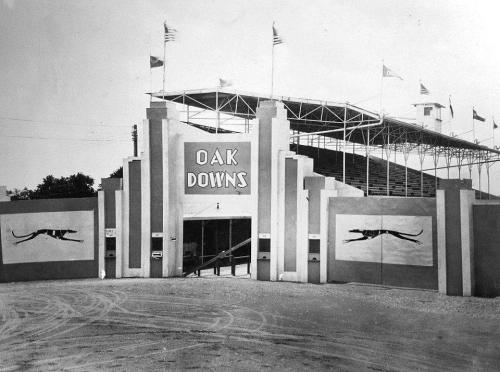
oak-downs_hurst_bwOak Downs greyhound track, ca. 1935 (photo courtesy Robert Hurst)

by Paula Bosse

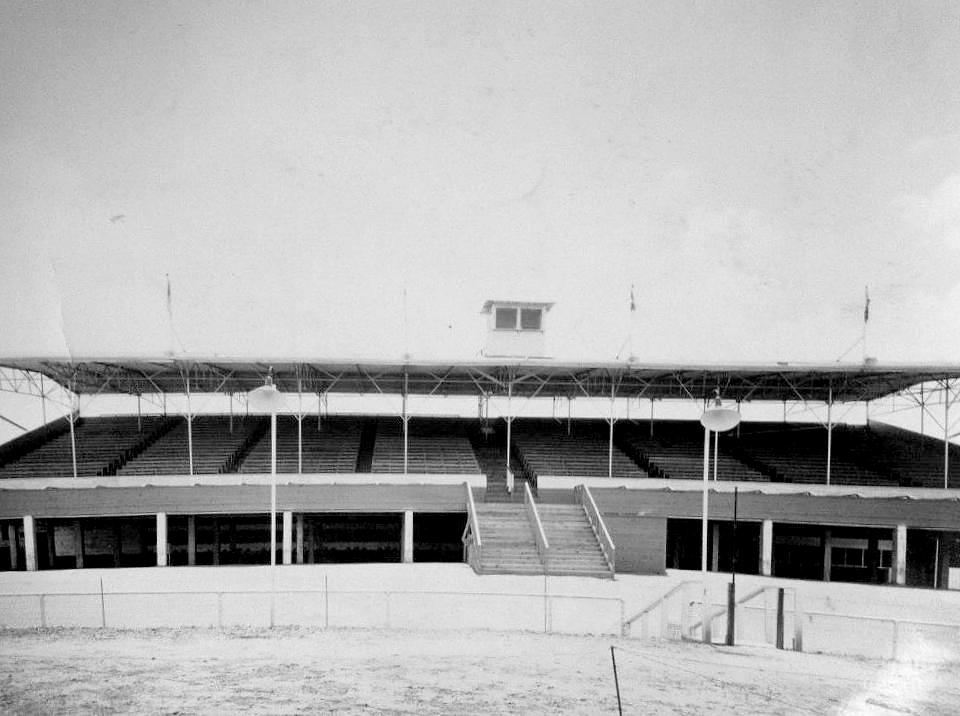
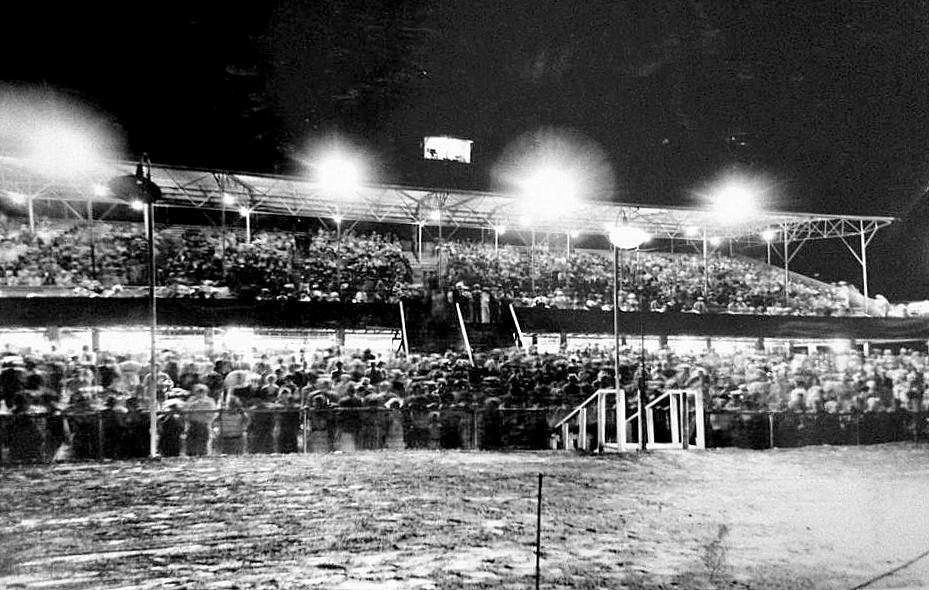
Robert Hurst has shared three great photos with me: the one above, and the two below. They show Oak Downs, a greyhound racing track that he thought might have been in Oak Cliff. A dog track? In Dallas? That was news to me. Mr. Hurst came across the photos a few years ago when going through the belongings of his grandparents, Lt. Col. and Mrs. C. W. Newman. As far as he knew, they had no particular interest in dog racing, and he wasn’t sure why they would have been in possession of photos of a greyhound track. I was a little hesitant to delve into anything having to do with dog racing, but these wonderful photographs piqued my interest. (For the faint of heart, this post focuses almost exclusively on the somewhat vague and constantly changing laws on parimutuel betting in Texas, with very little on the troubling aspects of greyhound racing.)
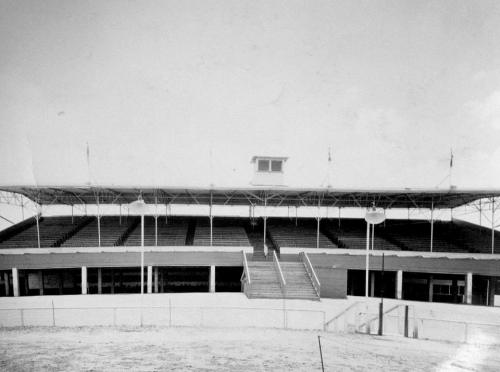
oak-downs_grandstand_day_hurst_bwGrandstand, daytime (click for larger image) (courtesy Robert Hurst)
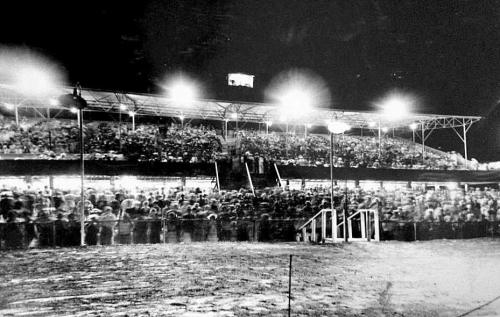
oak-downs_grandstand_night_hurst_bwGrandstand, nighttime (courtesy Robert Hurst)

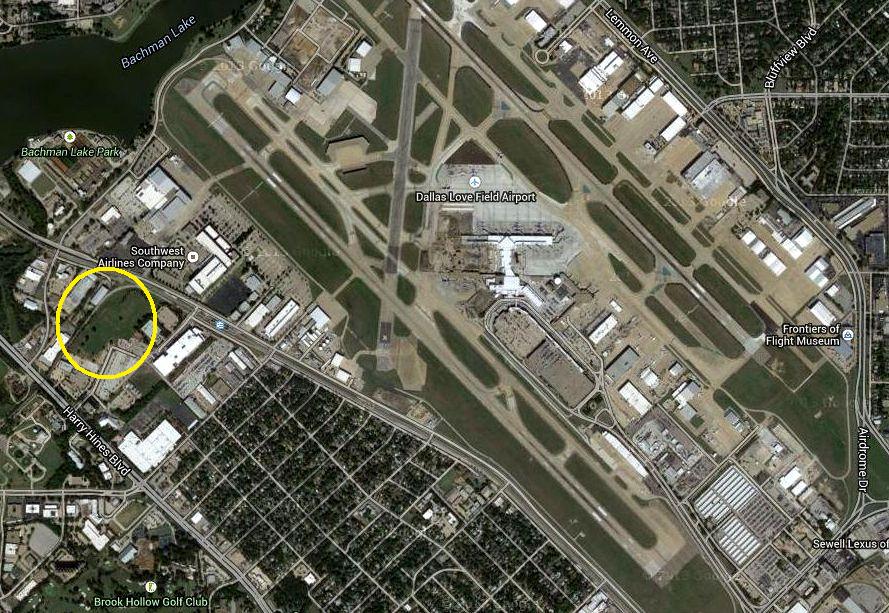
The track was located not in Oak Cliff, but right across the street from Love Field — an area that was “north of the city” in the 1930s. It was to the west of the airfield, with the address listed, popularly, as Maple Avenue, but officially as Denton Drive (just north of Burbank Road).
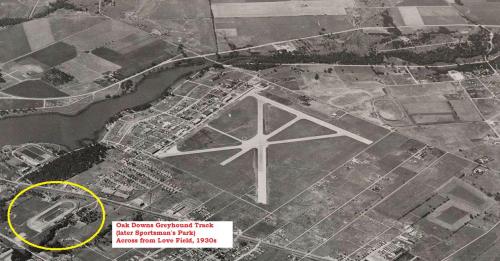
aerial_oak-downs_smu-foscue_1930s1930s (Edwin J. Foscue Map Library, SMU)
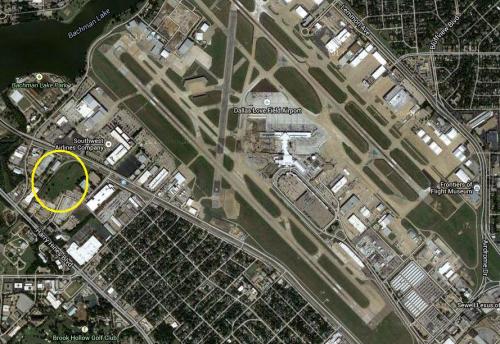
aerial_oak-downs_google2014 (Google Maps)

*

The first mention I can find of greyhound racing in Dallas was in 1898 at events held at the Fair Park horse racing track — the “sport” then was “coursing.” I don’t want to go into it, but live hares and jackrabbits were used, and it didn’t end well for them. (Competitive coursing is, I believe, now illegal in Texas, but open-field coursing is considered hunting and is legal.)

The first professional greyhound racing track to take the “blood” out of “blood sport” by utilizing an electric rabbit lure, was in California in 1919. The first track in the Dallas area to use an electric rabbit seems to have been one that opened near Grand Prairie in 1928; the news stories made sure to mention that there would be no wagering going on because, unlike other states where dog racing had been going on for some time and was quite popular as a gambling sport, parimutuel betting was not legal in Texas. Racing at that early track doesn’t seem to have lasted very long — probably because the spectators were not allowed to wager on the contests. Another track opened just outside Fort Worth at Deer Creek in 1934 (right after Texas had legalized betting on horse races in 1933), but, again, it doesn’t seem to have lasted long.

So, in the early ’30s, Texas was not really a hot-bed of dog racing enthusiasts. What was popular was horse racing — the two most popular tracks in the area were the Fair Park track in Dallas, and Arlington Downs in Arlington. The state legislature had voted in 1933 to allow parimutuel betting on horse races, hoping to raise revenue in the dark days of the Depression. People might not have been able to afford a new pair of shoes, but they managed to scrounge up money to bet with. Gambling on horse races was big business. But betting on dog races? Was it legal, too? It sounds like the law was surprisingly vague. Dog racing was not expressly written into law as being illegal — but people just seemed to understand it to be illegal. Proponents of greyhound racing — the so-called “Sport of Queens” — were adamant that they would force the state to address the issue and clarify the law — they would sue if they had to. A track in San Antonio had taken its case to a State Court of Appeals (after having been shut down by local authorities), and the court ruled that parimutuel wagering at dog tracks in Texas was not illegal. A precedent had bet set, and a few dog racing tracks began to open around the state, their owners and operators feeling they were relatively safe from prosecution.

In early 1935, 31-year old Winfield Morten, a “wealthy sportsman” who owned several businesses and a lot of Dallas real estate, decided he’d open a greyhound track on his 40 acres of land along Maple Ave./Denton Dr., just west of Love Field. He received his state business charter in May, 1935 (just days after the San Antonio ruling), and he made plans to open his dog racing “plant” — Oak Downs — in June. As they said back then, “pari-mutuel betting would be fully in vogue.”

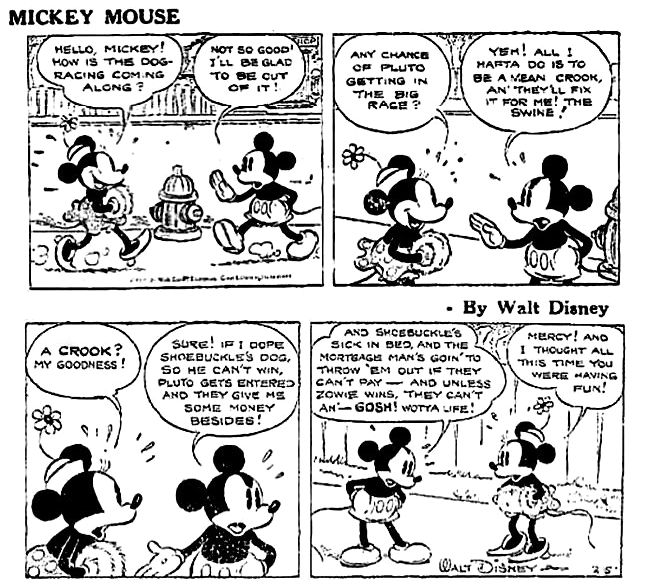
Many people did not want a dog racing track in Dallas (or anywhere in Texas, really). Owners of horse tracks (and the powerful people who were in bed with them) feared that they’d lose some of that sweet gambling moolah to the upstart “dogmen.” Outside the racing world, there was the fear/expectation that with dog tracks would come the inevitable gambling and sleazy criminal element. (Dog racing was generally seen as somehow more unsavory and déclassé than horse racing, which is odd, because the horse racing industry has never been known as a squeaky-clean one.) Also, apart from the gambling-related issues, many people were probably aware of (and disturbed by) persistent accusations of animal mistreatment. Interestingly, at this same time — during the first few months of 1935 — none other than Mickey Mouse was involved in a comic strip story arc that lasted several weeks in which he was hanging out at a dog track training his dog Pluto for a race. It wasn’t long before the comic strip (which was usually full of typical comic strip silliness and gentle humor) turned surprisingly dark, and Mickey found himself involved in a world of doping, gambling, extortion, and threatened violence (!). If Walt and Mickey were against the evils of dog racing, shouldn’t everybody be? I wonder if the strip was reflecting public opinion or shaping public opinion?
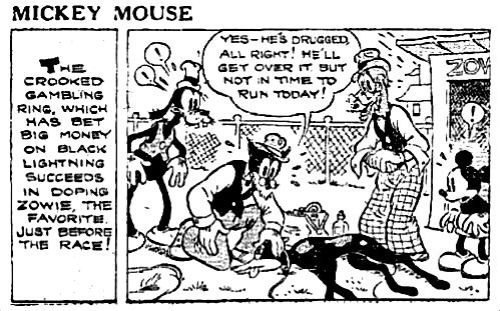
mickey_021935Poor Zowie! (Originally run Feb. 19, 1935)
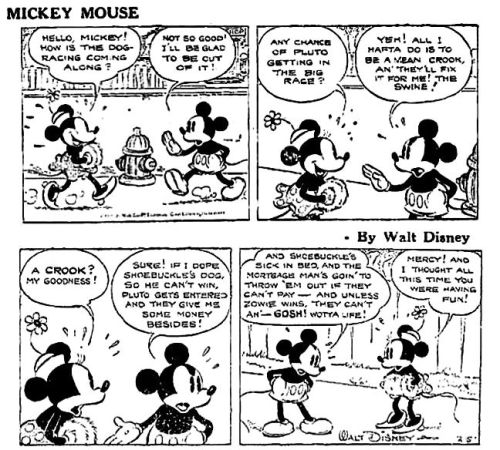
mickey_020535Mickey’s in a tough spot (click to enlarge) (Feb. 5, 1935)

Not only was the prospect of a “seedy” dog track unpalatable for many in an image-conscious city gearing up for its upcoming Centennial-Exposition-moment in the national spotlight, but there were those who were still convinced that gambling on anything but horse races in Texas was illegal — despite what the appeals court had ruled in the San Antonio case. Several interested district attorneys from around the state petitioned the State Supreme Court for a definite ruling. In the meantime, Dallas D.A. Robert L. Hurt and Dallas County Sheriff Smoot Schmid (greatest name in law enforcement EVER) threatened to shut down the not-yet-opened Oak Downs if it allowed wagering. Battle lines were drawn, and both sides believed they were in the right.

Track manager Jack Thurman said the city’s threats didn’t scare him. He’d open as scheduled, with plans for a full season of 48 days of racing (every day but Sunday), sleek hounds, an electric rabbit, and full-tilt betting. The day before Oak Downs was scheduled to open, its operators wisely obtained an injunction against Hurt (and, basically, the Sheriff’s Department and the Texas Rangers), which prevented the track from being shut down — they would open without fear of incident, under full legal protection of a court order. Not a happy guy, Hurt said he would file a motion to dissolve the injunction … immediately!

Oak Downs opened on June 18, 1935 to a large crowd of curious spectators, most of whom had never seen a dog race. The betting windows were open, but there was little betting. There were problems with the electricity in the stadium on opening day — the electric-powered rabbit that the greyhounds chased was not running on full power, and it moved so slowly that it was caught in two separate races by the probably confused dogs. (The second night there was too much juice, and the rabbit shot away from the pack so quickly that the dogs lost sight of it and just stopped running altogether. Hard to have a race if the dogs don’t actually run.) But the crowd seemed happy, and they weren’t overly concerned by the glitches happening there at the track or by the political and legal wranglings that were swirling downtown.

The crowds and the betting increased over the next few days, hinting at a rosy future for the track’s operators. But the races and the attendant wagering continued for only eleven days. The United States Fifth Circuit Court of Appeals refused to interfere with the wishes of State law enforcement — and State law enforcement wanted Oak Downs to cease with the gambling. So there was no more parimutuel betting at Oak Downs. After trying to struggle by without the sexy allure of betting — left with nothing but exhibition races and weird novelty events involving dog-riding monkeys — Oak Downs was forced to close its season prematurely on June 29.

Bye-bye, abbreviated inaugural season. No more betting on Doctor Snow, or Dixie Lad, or Rowdy Gloom, or Miss Cutlet, or Pampa Flash, or Billie Hobo, or Blond Hazard, or Mellow Man. Oh, Mellow Man, we hardly knew ye.

In February, 1936, Morten applied to the Texas Racing Commission for permission to race horses at his track, but the idea was quickly shot down by the Dallas City Council. The very profitable horse track at Fair Park was out of commission for 1936 as it was being used as part of the Centennial Exposition. Privately owned at the time, the track was leased to the Centennial Corporation, and the City Council — the members of which were no doubt on very friendly terms with the Fair Park track owner — felt it would be “unfair” to allow a competitor to horn in on the massive profits to be had. So … no dice (…as it were).

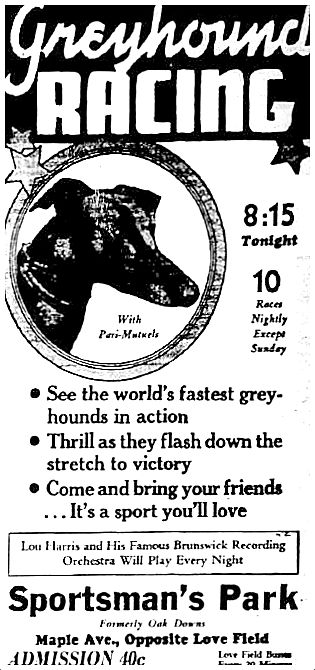
By September of 1936, Morten changed Oak Downs’ name to Sportsman’s Park and brought in new operators (including a former Texas Ranger). Oak Downs had joined other dog tracks in a new round of legal action which was slowly working its way through the courts. Without any ruling yet from the Supreme Court, they ignored an injunction that had been filed against them and defiantly opened up their betting windows again. Four of the men were fined and jailed briefly for contempt of court. But after months of mixed messages and conflicting rulings from various judges around the state, confused and fed-up lawmen were unsure of the actual legality of dog track betting, and, grudgingly, they allowed the wagering at Oak Downs to continue as they, too, awaited a high court decision.

As reported in Texas newspapers, on Oct. 28, 1936 the Texas Supreme Court finally ruled on the matter of whether or not dog racing could be wagered on legally in the state of Texas:

We do not find any provision in the penal code defining gaming which can be construed to include dog racing or betting on dog racing. It is not a game prohibited by law. […] This court is fully conscious of the pernicious and unwholesome effects upon society of betting on dog races and keeping premises for dog racing where betting is allowed, but the proper agency for the suppression of those wrongs is the Legislature, and until it sees proper to further legislate in the matter, the courts are without power to suppress these evils by injunction.

In other words, the Texas House and Senate were going to have to take up the issue if they really wanted to do away with legalized betting on dog races (which they did), because it was their fault that they hadn’t been specific enough when they wrote their original law.

So betting was back “in vogue” once again. And now with absolutely no threat of arrest. The remainder of the 1936 season continued without problems, and when the 1937 season opened in April, it was “the first greyhound meet in Dallas free of danger of being interfered with by law enforcement agencies” (DMN, April 22, 1937), but … as there were bills to outlaw betting on dog racing AND horse racing percolating through the current Texas legislature, it was thought that the 1937 season might also be the last season of racing in Texas.

In May, 1937, Governor James V. Allred addressed the Texas Congress, urging them to repeal the current law allowing parimutuel gambling on horse racing (with the knowledge that this would almost certainly also apply to the outlawing of dog racing, as that bill had just passed the House and was headed to the Senate). Here are a couple of passages from his speech, a transcription of which appeared in newspapers throughout the state on May 28, 1937:

I do not know how to state in words a stronger case for repeal of the race track gambling law than I have already given to this Legislature from time to time. I have quoted Washington, Franklin, Blackstone, Shakespeare, Brisbane, McIntyre and the Holy Bible. I have pointed out the living evidence of undesirables, of doping, of thuggery, of embezzlement, of bank failures, of suicides, and narcotic rings. Each month of the life of this law sees addition to the numbers of these human tragedies….

And, finally, a mention of the evils of racing with regard to the animals themselves:

There is no record of a horse ever being doped except to run a race. All the races ever run are not worth the agony and cruelty dealt even one of these poor, helpless beasts! I appeal to all who love good horses, I appeal to all who believe in preventing cruelty to animals to join with me in demanding that this law be repealed.

Allred’s lengthy and impassioned speech — which addressed every argument the pro-gambling forces were wont to … trot out … must have touched a few nerves (with both the public and the politicians), because in June, both bills passed with huge margins. (The bill outlawing the betting on dog racing passed in the Senate 22-1 and in the House 109-12. With passage of the new law, betting on dog races could now incur a fine of up to $500 and a jail term of up to ninety days; the penalty of “keeping a place of betting on dogs” was two to four years in the state penitentiary.)

So no more parimutuel betting in Texas. No more dog racing. No more horse racing.

And that was that for the state’s dog tracks. What was next for Oak Downs … er, Sportsman’s Park? Three words: “midget auto racing” (i.e. the racing of very small cars, not the racing of cars operated by very small drivers).

Besides the regular auto races, two added events give promise of furnishing fans with a few thrills as well as a laugh or two. Fast cowponies will be featured in a half-mile sprint with a race for roosters rounding out the show. Winner of the cowpony race will receive $15, while the winning rooster will be rewarded with $5. Entries are open to any and all owners of ponies or roosters. (Dallas Morning News, Aug. 27, 1937)

Somehow I don’t think five-buck-purse rooster races figured into Mr. Morten’s big dreams back at the beginning of 1935.
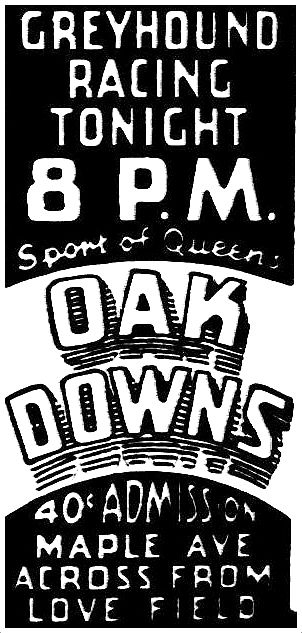
ad_oak-downs_0622351935

*

ad-dmn_0422371937

***

Sources & Notes

Top three photos of Oak Downs greyhound racing track used by kind permission of Robert Hurst. He came across them several years ago in the belongings of his grandparents, Lt. Col. Campbell Wallace (C. W. “Bub”) Newman and Martha Price Newman. Col. Newman was a cavalry officer who served in WWI, WWII, and Korea; between WWI and WWII, he worked in Dallas as a contractor and was employed for a time at Oak Downs where he worked in track operations. (That’s why he had these photos!) [And by no means do I mean to imply that this career military man was involved in any sort of shady goings-on. In fact, from what I can tell, Oak Downs seems to have been run by a fairly “clean” group of people. The perception/reputation of dog racing at the time wasn’t great, but nothing I’ve read about this track suggests that anything unscrupulous was going at the track, behind the scenes, or amongst the personnel who worked there.] He was also an avid polo player and was a good friend (and polo teammate) of Winfield Morten who owned the track. Many thanks, Mr. Hurst, for the use of these wonderful photos!

Black and white aerial view of the Love Field/Bachman Lake area was taken by Lloyd M. Long in the 1930s; photo is from the Edwin J. Foscue Map Library, Southern Methodist University. The unlabeled photo (a detail of which is used above) can be accessed here; a labeled version of this photo (with some streets and buildings identified) can be accessed here.

I highly encourage people to see out the transcript of Governor James V. Allred’s FANTASTIC impassioned speech before members of the Texas House and Senate, which appeared in newspapers around Texas on or around May 28, 1937. As far as politics is concerned, I’m the most cynical person in the world, but this is an incredible speech.

More on the history of parimutuel gambling in Texas from Wikipedia, here.

An explanation of just what parimutuel betting is, is here.

Parimutuel racing was legalized again in Texas in 1987. The current state of racing in Texas can be read about in the Dallas Morning News article “A Last Hurrah for Texas Horse Racing” (May 3, 2014) by Gary Jacobson, here.

I’m quite honestly shocked to learn that greyhound racing is legal in the state of Texas. There seems to be really only one active track with live racing in the state (in South Texas), and the only upside to this appalling fact is that attendance has been in steep decline for years.

*

Copyright © 2015 Paula Bosse. All Rights Reserved.

New Year, New Teeth — 1877

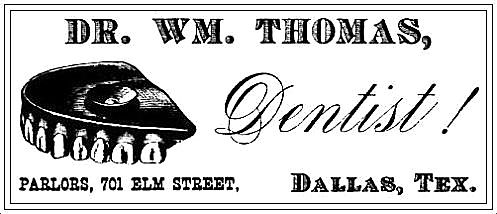
ad-dentist_1878-directoryThe exclamation mark is a nice touch — 1878

by Paula Bosse

It’s a new year. Time again to check if the women-folk in your household need a new set of false teeth!

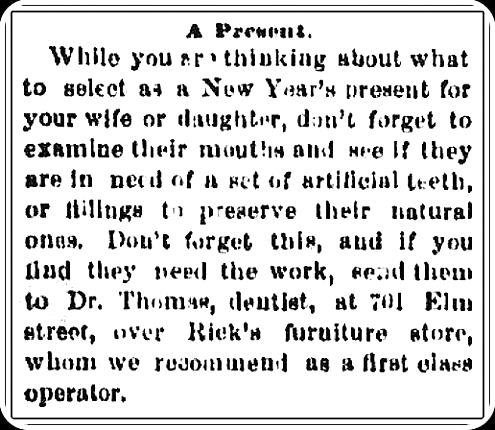
ad-dentist_new-year-gift_dal-herald-123077Dallas Herald, Dec. 30, 1877

A Present. While you are thinking about what to select as a New Year’s present for your wife or daughter, don’t forget to examine their mouths and see if they are in need of a set of artificial teeth, or fillings to preserve their natural ones. Don’t forget this, and if you find they need the work, send them to Dr. Thomas, dentist, at 701 Elm street, over Rick’s furniture store, whom we recommend as a first class operator.

(While you’re waiting for your wife’s new choppers to be installed in the doctor’s office upstairs, you can browse for a nice new stool for the spinet downstairs at Rick’s.)

*

But wait, there’s more. Dig a little deeper and you find this:

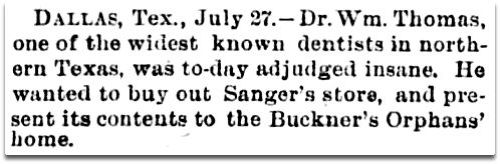
thomas-dentist_galveston-daily-news_072889Galveston Daily News, July 28, 1889

Whoa!

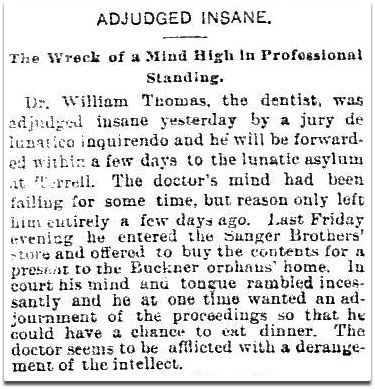
thomas-dentist_dmn_072889Dallas Morning News, July 28, 1889

ADJUDGED INSANE: The Wreck of a Mind High in Professional Standing.

Dr. William Thomas, the dentist, was adjudged insane yesterday by a jury de lunatico inquirendo and he will be forwarded within days to the lunatic asylum at Terrell. The doctor’s mind had been failing for some time, but reason only left him entirely a few days ago. Last Friday evening he entered the Sanger Brothers’ store and offered to buy the contents for a present to the Buckner orphans’ home. In court his mind and tongue rambled incessantly and he at one time wanted an adjournment of the proceedings so that he could have a chance to eat dinner. The doctor seems to be affected with a derangement of the intellect.

I’m not quite sure what all that was about, how much time he spent in the Terrell “lunatic asylum,” or how “insane” the good doctor really was (I suspect he was using a lot of cocaine — see below). The only other mention of Dr. Thomas I found was a mention in the Buckner orphanage’s annual report of 1898 in which his name appeared in a group of doctors who were thanked for their services rendered to the children free of cost.

***

Sources & Notes

Top ad from the 1878 Dallas city directory.

Dr. Thomas probably wasn’t actually “insane.” I wonder if perhaps he hadn’t been dipping into his own medicine chest and availing himself of the cocaine that most dentists of the time used as a painkiller during dental procedures? An interesting article on doctors of the period self-medicating is here.

Happy New Year! And don’t forget to floss!

*

Copyright © 2015 Paula Bosse. All Rights Reserved.
Year-End List! Most Popular Posts of 2014

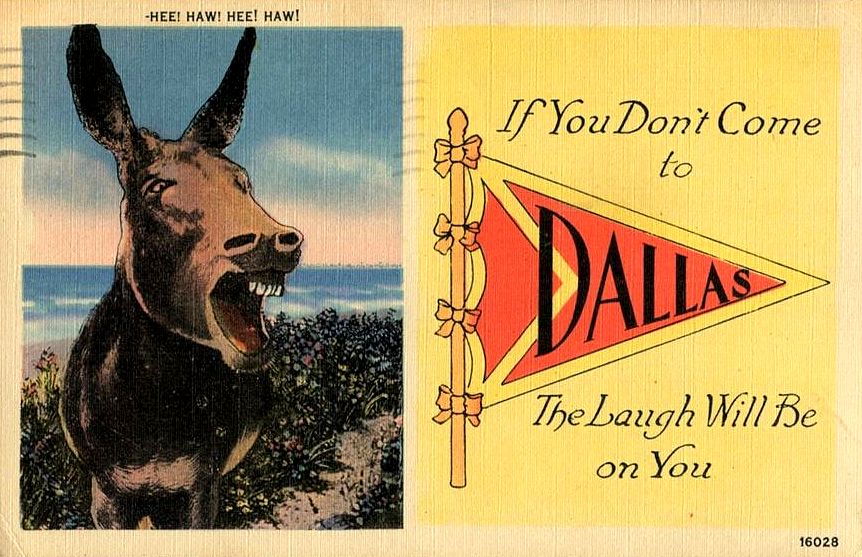
dallas_postcard_hee-haw

by Paula Bosse

I’m so happy that so many people have found their way to Flashback Dallas in its first year! I knew that Dallasites were interested in the history of their city, but I had no idea how many were! Thank you!

These are the posts that you, the readers, clicked on, shared, and “liked” the most in 2014. To see the original posts, click the titles.

***

Top 10 Most Popular Photo-Based Posts of 2014

1. “Henry Stark’s ‘Bird’s Eye View of Dallas’ — 1895/97.” This one was so far ahead of the other posts that there’s no contest in its being the #1 post of the year. Thousands and thousands of people have clicked on and shared this post — in one day alone, it was viewed over 3,000 times! Thanks, Houston Public Library, for scanning this photo at such a high resolution — that was what made it possible for me to zoom in on the otherwise easily-overlooked details contained in this great photo!

2. “‘A Cavalcade of Texas’ — Dallas, Filmed in Technicolor, 1938.” Another post that got a HUGE number of hits. “A Cavalcade of Texas” was a feature-length, full color documentary filmed around Texas in 1938, with two scenes filmed in Dallas. When I wrote this post at the end of September, the YouTube video had about 1,000 views — today it has almost 4,500 views. It’s pretty amazing (and pretty weird…) seeing Dallas from this period in color.

3. “I-35E Looking South: A Landscape Blissfully Free of Cars and Strip Malls — 1964.” The popularity of this one comes almost entirely from a mention on Reddit. If I could harness the power of the Redditor army, I could — dare I say — rule the world! (Even though one of them snippily dismissed the post’s title as “Luddite nostalgia.” What can I say? I love the surreal sight of empty highways.) This is one of those incredibly large photos I try to post whenever I can — this one is almost alarming in its enormity!

4. “The Dallas Morning News Building, Inside and Out — ca. 1900.” I love these photos. I have a particular fondness for office furnishings of this period. And that mail chute is COOL.

5. “Highland Park Methodist Church — 1927.” This one kind of surprised me. I’d never seen the main photo before and thought it was interesting, but I had no idea it would be so popular. Redditors may be a powerful bloc, but never underestimate the Methodists!

6. “Waiting on a Streetcar on a Sunny Winter Day in Oak Cliff — 1946.” I love this one, too. Especially since it contains my favorite photo of the year.

7. “Captain Marvel Fights the Mole Men in Dallas! — 1944.” Dallas gets the comic book treatment with all sorts of odd cameos by famous buildings and local celebs. This is GREAT. Shazam!

8. “University Park, Academic Metropolis — ca. 1915.” An almost-deserted Park Cities landscape, showing what the intersection of Hillcrest and University looked like in 1915 — the year that SMU opened. Scroll down the post to the link to another super-gigantic image that’s so big you can almost read the letters in the mailbox.

9. “The Oak Cliff Viaduct & The Weird Composite Photo — 1912.” Fun in the darkroom, or, early photo-shop. It takes a while to realize that what you’re looking at doesn’t exist. Check out all three cool photos — two are real, one is not.

10. “The Trinity River at the City’s Doorstep.” The second photo is fantastic. Go look at it NOW!

*

Top 10 Research-Based Posts of 2014

1. “The World’s Largest Santa & The Christmas Tragedy — 1953.” Very popular. I just posted this last week and it’s already jumped up to the fifth overall most popular post of the year!

2. “The Old Union Depot in East Dallas: 1897-1935.” I kind of slaved over this one, so I’m happy it was so popular.

3. “The Elm Street Cave — 1967.” It’s hard to believe the city took so long to fix this giant hole in the middle of downtown. It became quite the running joke, sort of like the notorious “Hole on Cole.”

4. “Happy 75th Anniversary, Stonewall!” I actually went to Stonewall Jackson Elementary School, so the popularity of this post makes me very happy. I learned lots of things about a school I thought I already knew.

5. “Start Your Brilliant Career at Dallas Telegraph College — ca. 1900.” Forget “plastics.” Telegraphy is the future, young people.

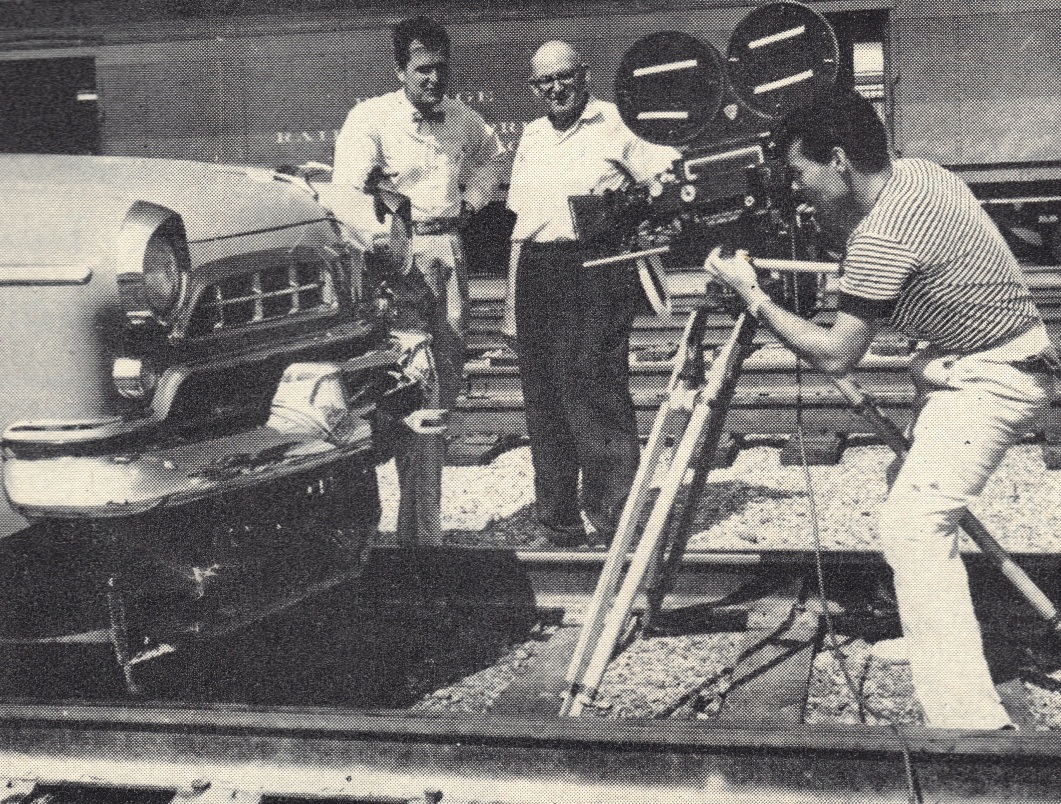
6. “Send Your Kids to Prep School ‘Under the Shadow of SMU’ — 1915.” The Powell University Training School opened the same year as SMU, right across the street. The building is still there. The fields where the cash-strapped headmaster had his students harvesting wheat and vegetables to make ends meet are not. (Read the PDF linked at the bottom of the post to read about this unorthodox trading of farm labor for tuition.)

7. “The Marsalis House: One of Oak Cliff’s ‘Most Conspicuous Architectural Landmarks.'” A beautiful house built by (and abandoned by) the developer of Oak Cliff became a medical sanitarium and, later, a girl’s seminary before it unceremoniously burned to the ground.

8. “Little Peruna: He Died With His Mustang Bridle On — 1934.” The story of the sudden death of SMU’s first miniature horse mascot is not one I would have thought I’d enjoy writing, but the discovery of the wonderfully overwrought obituary penned by an unnamed Dallas Morning News writer (…who might have been imbibing at the time…) made this post one of my favorites of the year.

9. Dewey Groom and The Longhorn Ballroom.” The man who made the Longhorn Ballroom one of the premiere country dancehalls in the nation deserves more recognition than he gets. (Still hoping that “Dewey” makes its way back into the baby-name pool.)

10. “Wanted in Dallas: Refugee Children — 1940.” There was a movement during World War II to bring child refugees from Europe to Dallas where they could live in safety for the duration of the war.

***

Thanks again for reading, and I wish everyone a Happy 2015!

*

For all the “Year-End Best of 2014” lists, click here.

*

Copyright © 2014 Paula Bosse. All Rights Reserved.

Year-End List! My Favorite Posts of 2014

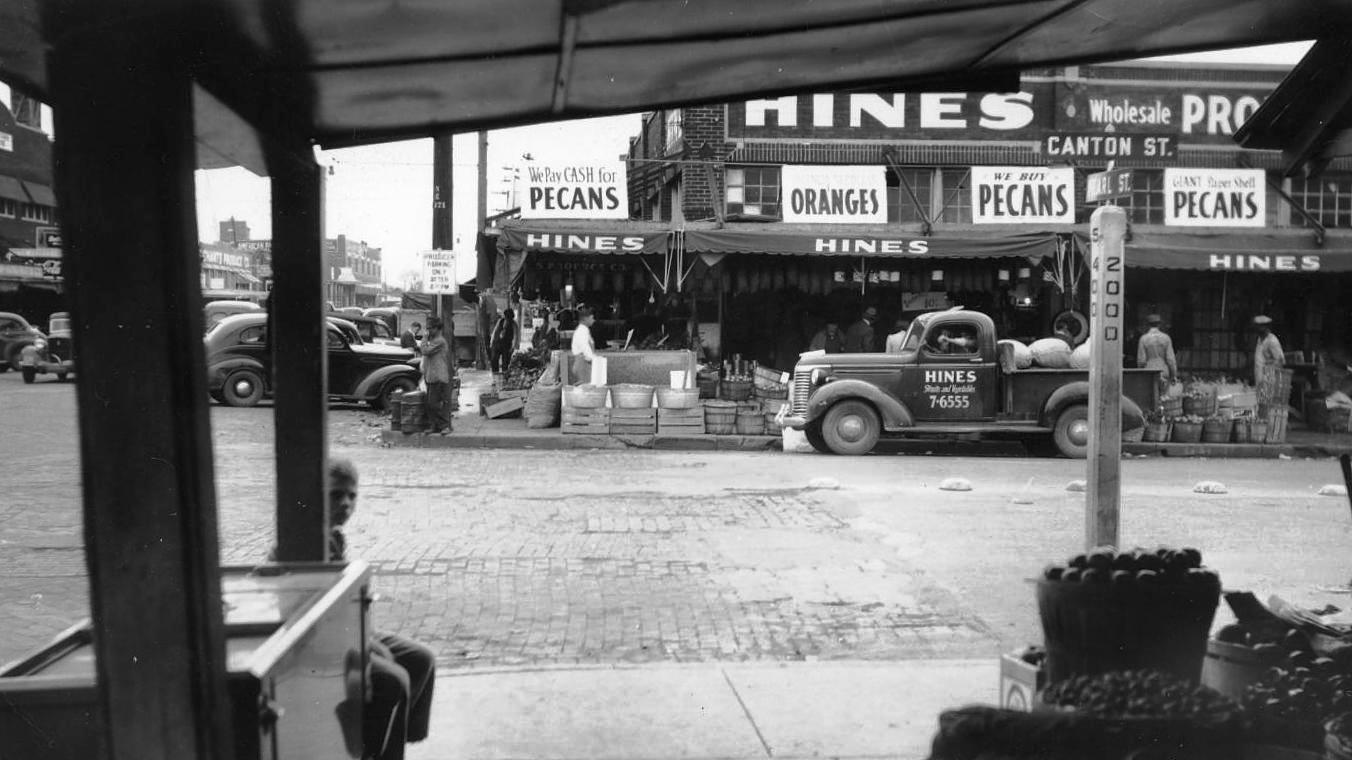
hines_canton-pearlFrom my favorite post of the year, a look at Canton & Pearl (click for larger image)

by Paula Bosse

As 2014 draws to a close, one feels compelled to make a list of accomplishments. And this year I’ve actually accomplished something! I started Flashback Dallas back in February, and according to the stats, I’ve written over 350 posts in 2014! That’s pretty shocking. I’ve compiled a list of my favorites, which was difficult, because, honestly, I like them all. There wasn’t a single thing I wrote about this year that I didn’t find interesting or entertaining in some way. Thank you to everyone who checks in occasionally — this has been the most enjoyable thing I’ve ever done! Who says history has to be dull! (To read the full posts described in the list below, click the titles.)

***

“The Runyonesque Pearl Street Market, Full of Colorful Characters and an Army of Rats.” This was, by far, my favorite post of the year — to read about, to research, and to write. Before we had a Farmers Market, we had the wonderfully seedy Pearl Street Market. If the length of this post frightens you, might I direct you to the shorter, weirder collection of police blotter reports about the area I compiled, here. How can you resist a headline like “$1,500 Dope Cache Found Under Pile of Pineapples”?

“When Halloween in Dallas Was Mostly ‘Trick’ and Very Little ‘Treat.'” Back when everyone became a juvenile delinquent on Halloween.

“The Ladies’ Reading Circle: An Influential Women’s Club Organized by Black Teachers in 1892.” This was an incredible group of women who have been sadly overlooked.

“The Old Union Depot in East Dallas: 1897-1935.” I know nothing about trains, but I found all of this fascinating. The most-researched subject I wrote about all year.

“That Time When Dallas Changed the Number of Every Single Street in Town — 1911.” I loved writing this. And the only reason I did was because I couldn’t find out why the city had changed street addresses all at once — so I researched it, just to find out for myself. Now I know.

“Gusher at Old Red! — 1890.” How had I never heard about this incredibly important discovery of water from an artesian well sunk on the grounds of the Old Red Courthouse?

“Dallas in 1879 — Not a Good Time To Be Mayor.” Shoot-out in the courtroom. (The best thing about this post was reading the startlingly gruesome contemporary coverage of the incident in the newspaper — the link to the newspaper article is at the bottom of the post.)

 “Mr. Blandings Builds His Dream House … In Preston Hollow — 1948.” If you love the Cary Grant-Myrna Loy movie, you’ll enjoy this. My favorite thing here is the recording of a promo that actor Melvyn Douglas did for a Dallas radio station when he was in town. It’s at the end of the post. It’s great.

“Jordan Moore.” I really loved trying to piece together the life of a man who left behind only a handful of photographs.

“Oriental Oil Company: Fill ‘er Up Right There at the Curb.” Who would have guessed that reading about early gas pumps could be so interesting? Like many of the things I’ve written about, this post was sparked by something I stumbled across completely by accident.

“Jerry Scoggins, From WFAA Staff Musician to Pop Culture Icon.” I love this. You may think you don’t know who Jerry Scoggins is. You would be wrong.

“Mme. Koneman, High-Class Milliner.” From giant-plumed hats to a scandalous shooting!

“US Revenue Cutter ‘Carrie Nation’ Successfully Navigates the Trinity In Valiant Effort to Keep Dallas Dry! — 1931.” An extremely clever April Fool’s Day prank pulled by The Dallas Morning News, suggested by the notorious Bonehead Club of Dallas. There are so many great elements to the story, including a pretty funny photo manipulation.

“Jim Conner, Not-So-Mild-Mannered RFD Mail Carrier.” What started out as an interesting look at early mail delivery in Dallas took a very unexpected twist when I decided to find out more about Jim Conner, one of the very first rural postal carriers in Dallas.

“Ted Hinton’s Motor Lodge — From Bonnie & Clyde to Motel Heliport.” What does a man who ambushed and killed Bonnie & Clyde do once he’s retired from law enforcement? He opens a motor lodge, of course!

“Babe Didrikson — Oak Cliff Typist.” I knew nothing about Babe before I wrote this. Now I feel I know EVERYTHING! I still can’t believe how much I enjoyed writing about the woman considered by many to be the greatest all-around athlete of all time.

Runner-Up #1: “How Lincoln’s Assassination Was Reported in Dallas — 1865.” Not Dallas, per se, but … wow. This was shocking.

Runner-Up #2: “Not Every ‘Good Luck Trailer Park’ Story Has a Happy Ending — 1964.” Included just because it’s something you don’t come across every day: a newspaper account of a nightclub entertainer, his wife, and their monkey, found dead in a West Dallas trailer park. Yep.

*

For all the “Year-End Best of 2014” lists, click here.

*

Copyright © 2014 Paula Bosse. All Rights Reserved.

Year-End List! My Favorite Photos Posted in 2014

jefferson-addison-det1Waiting for a streetcar in Oak Cliff, 1946 (detail) (click for larger image)

by Paula Bosse

Another list! Here are my favorite photographs that I’ve posted over the past year. I’ve looked at and searched for more photos of Dallas in the past year than I have in all the other years of my life combined. Looking at historic images has always fascinated me, but when you’re looking at historic images of your hometown, it’s kind of thrilling (and it can also be depressing to see the things we’ve lost). For photo sources and credits — and to read the posts these photos originally appeared in (which are chock-full of interesting things, I promise!) — click the titles in the list below. (Most of the photos I post are usually much larger when clicked — some are gigantic!) Enjoy!

***

1. “Waiting For a Streetcar on a Sunny Winter Day in Oak Cliff — 1946.” My favorite photo of the year is the one posted above. It is a cropped image from a larger photo (which I also love) which was included in the post linked above. I’ve stared at this photo for so long that I feel I was there. I love everything about this photo.

***

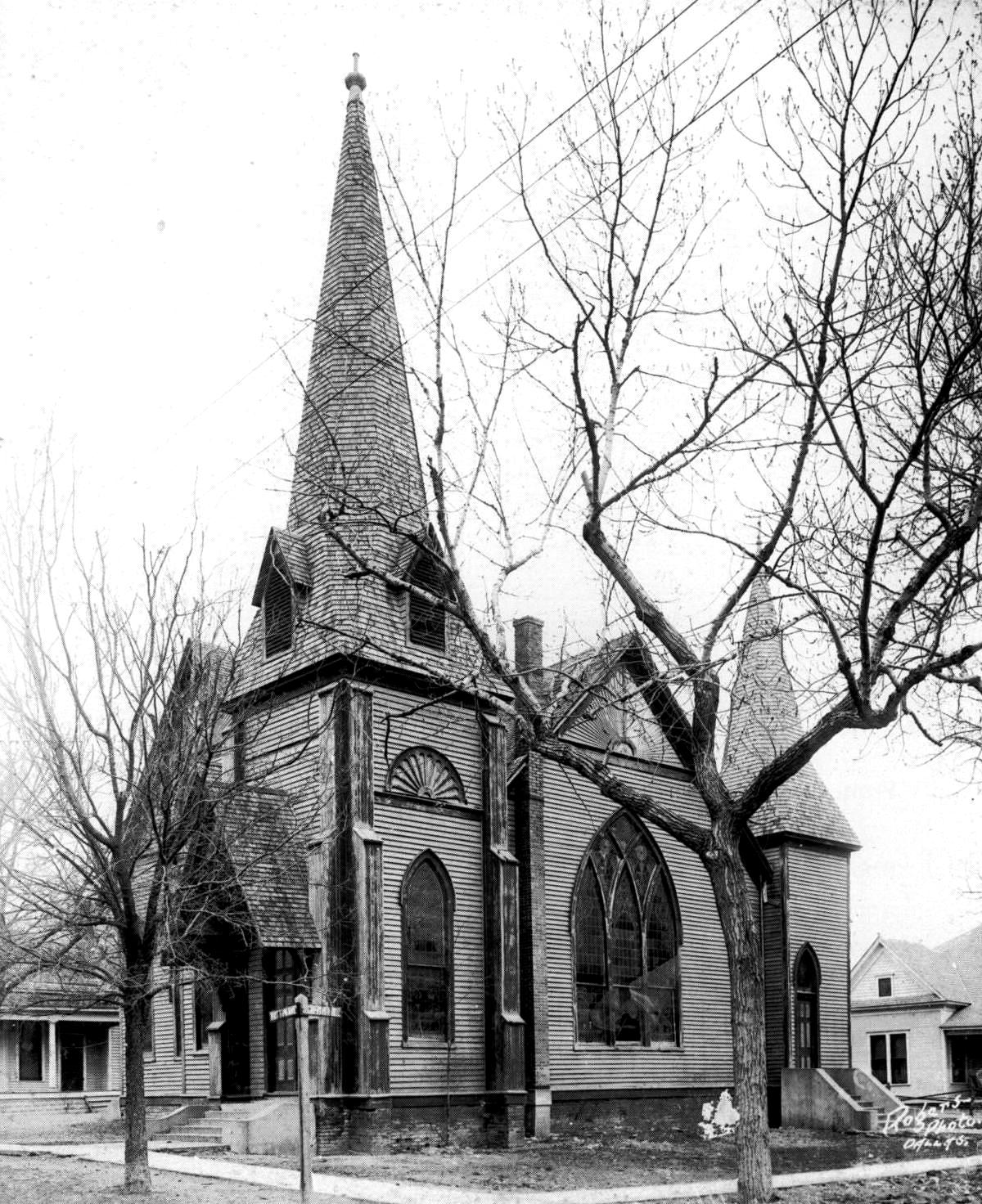
2. “Oak Cliff Presbyterian Church, Organized 1890.” I’ve come back to linger over this photo time and time again. It’s perfect.

oak-cliff-presbyterian_sm***

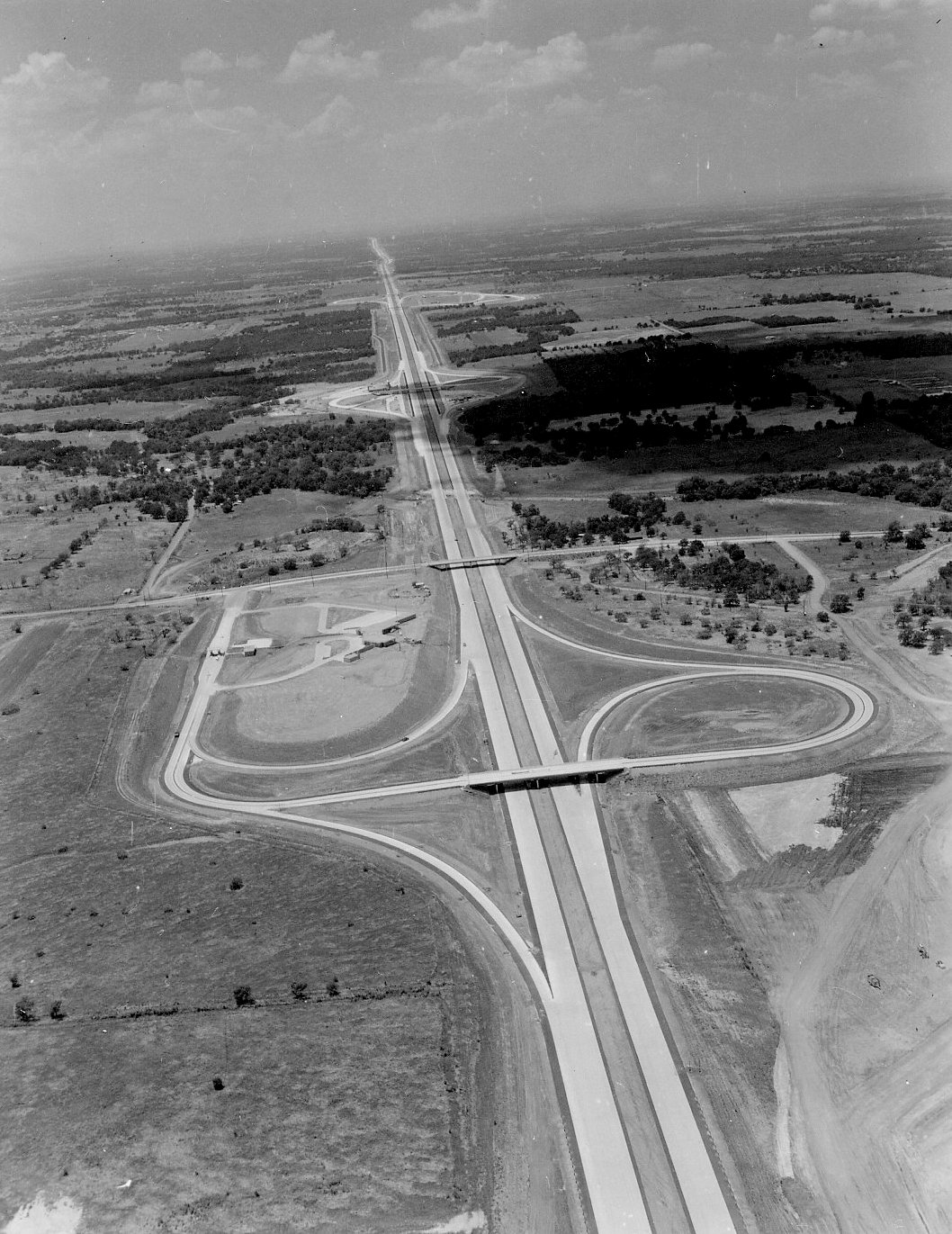
3. “The DFW Turnpike, Unsullied by Traffic, Billboards, or Urban Sprawl — 1957.” Just a fantastic, dreamy shot. I love the way the highway disappears into the distance. Imagine driving from Dallas to Fort Worth in 1957 on a road where billboards were not allowed and along which there were exactly two restaurants (for travelers who couldn’t make the full 30-minute drive without needing to stop for a meal). This shot, looking west, shows Arlington, right where Six Flags is today. Times change, man.

turnpike_west-from-360_1957***

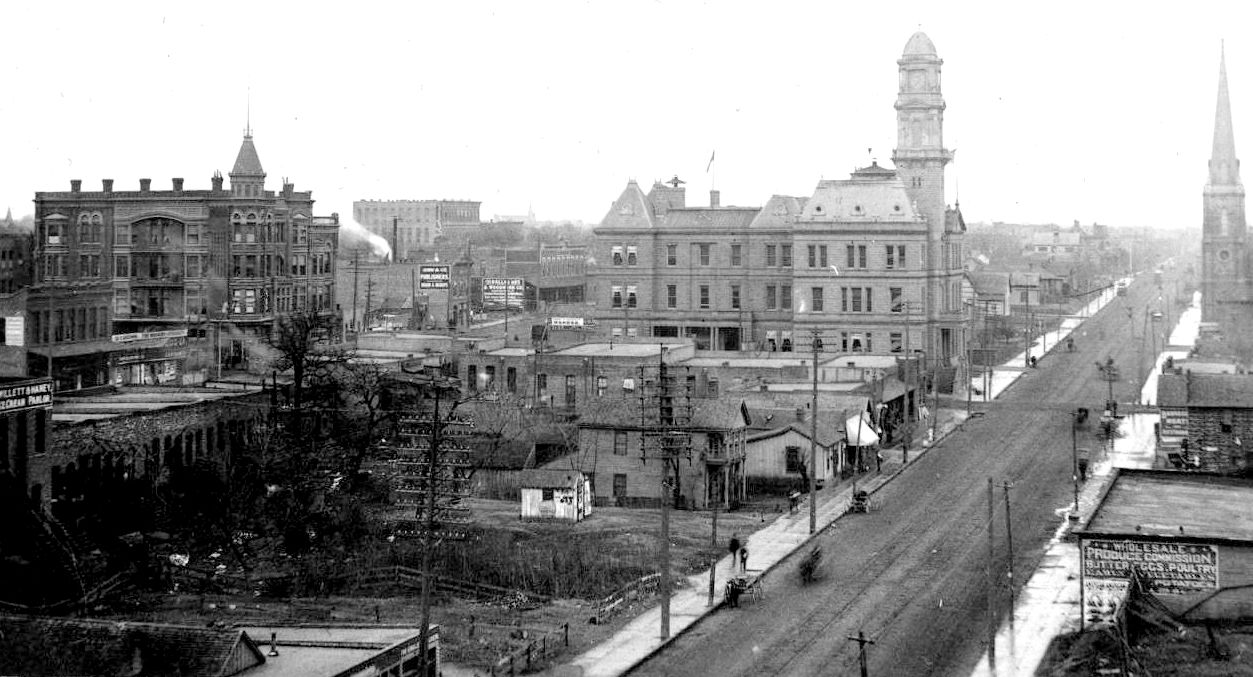
4. “Henry Stark’s ‘Bird’s Eye View of Dallas’ — 1895/96.” Without question, this is the most popular thing I’ve posted this year. I love this photo. It’s even better zoomed in on. Check out the original post to see this photo broken into four magnified crops — that’s when this photo goes from being merely “interesting” to being “incredibly interesting”!

stark_downtown_1895-96_hpl***

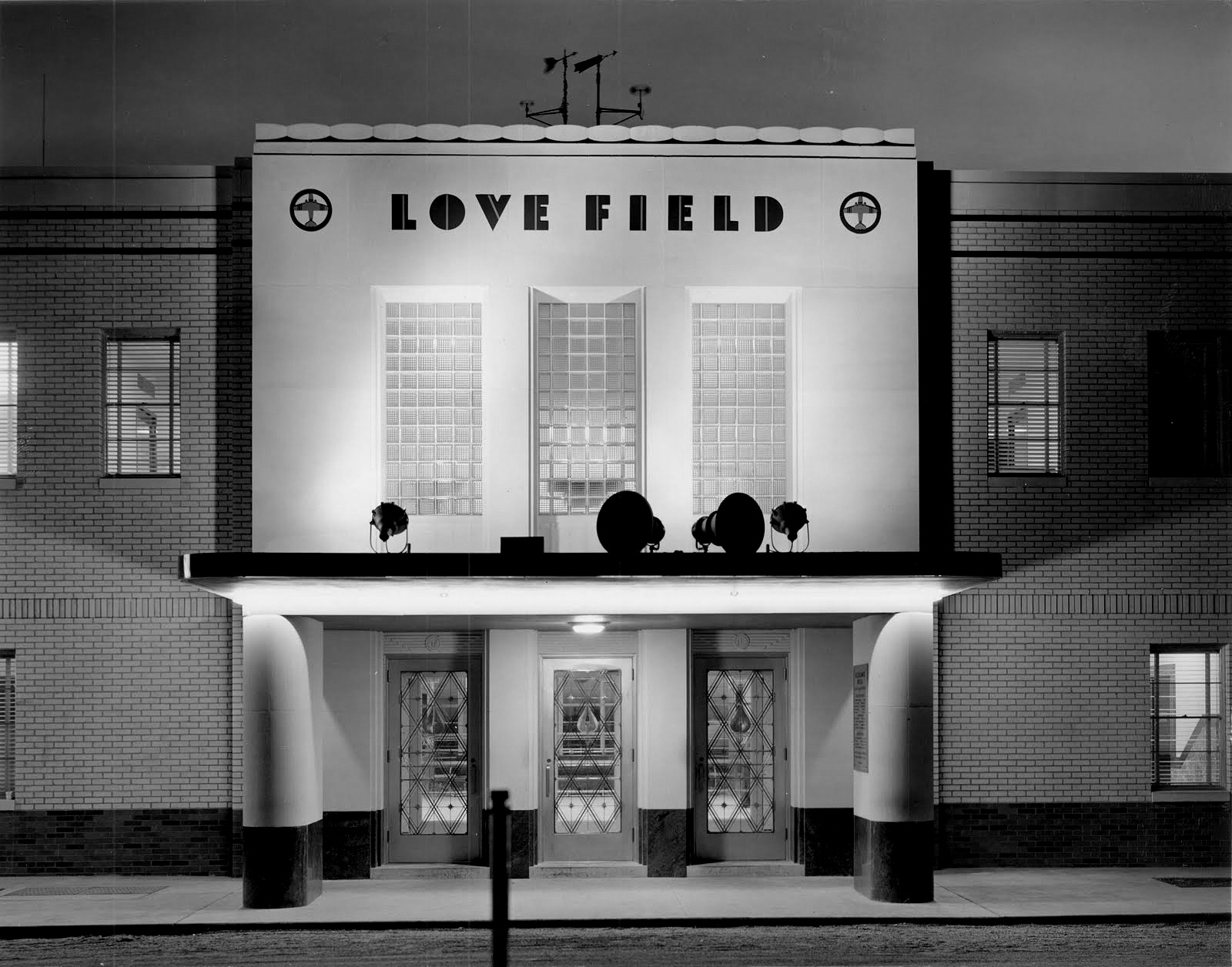
5. “Swooning Over Love Field — 1940.” Be still, my heart!

love-field_1940***

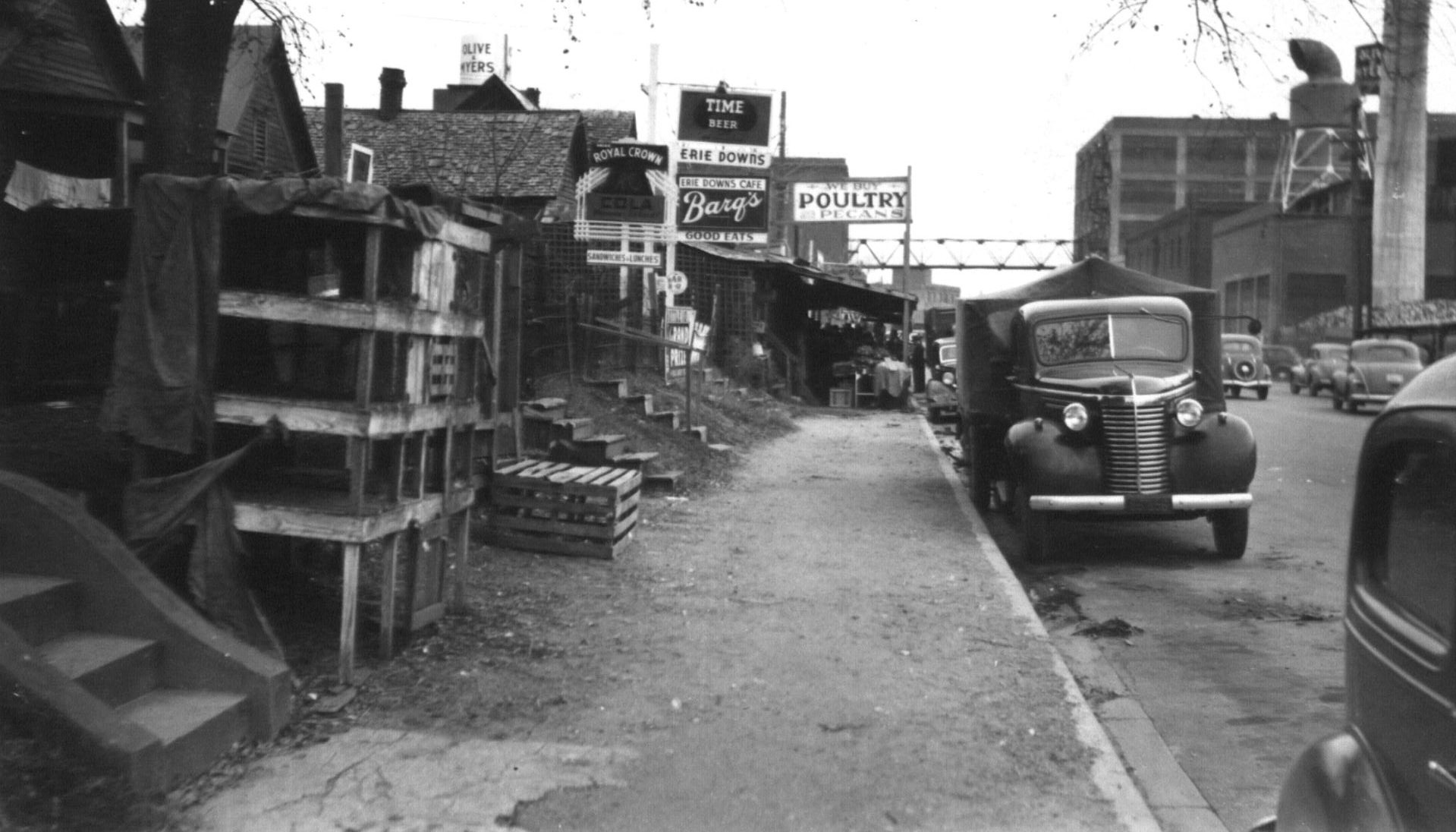
6. “Canton Street: Poultry, Pecans, and Future Luxury Lofts.” I LOVE this photo. I had no idea the Farmers Market area ever looked like this. See post for what this same view looks like today.

2200-canton_farmers-mkt_portal***

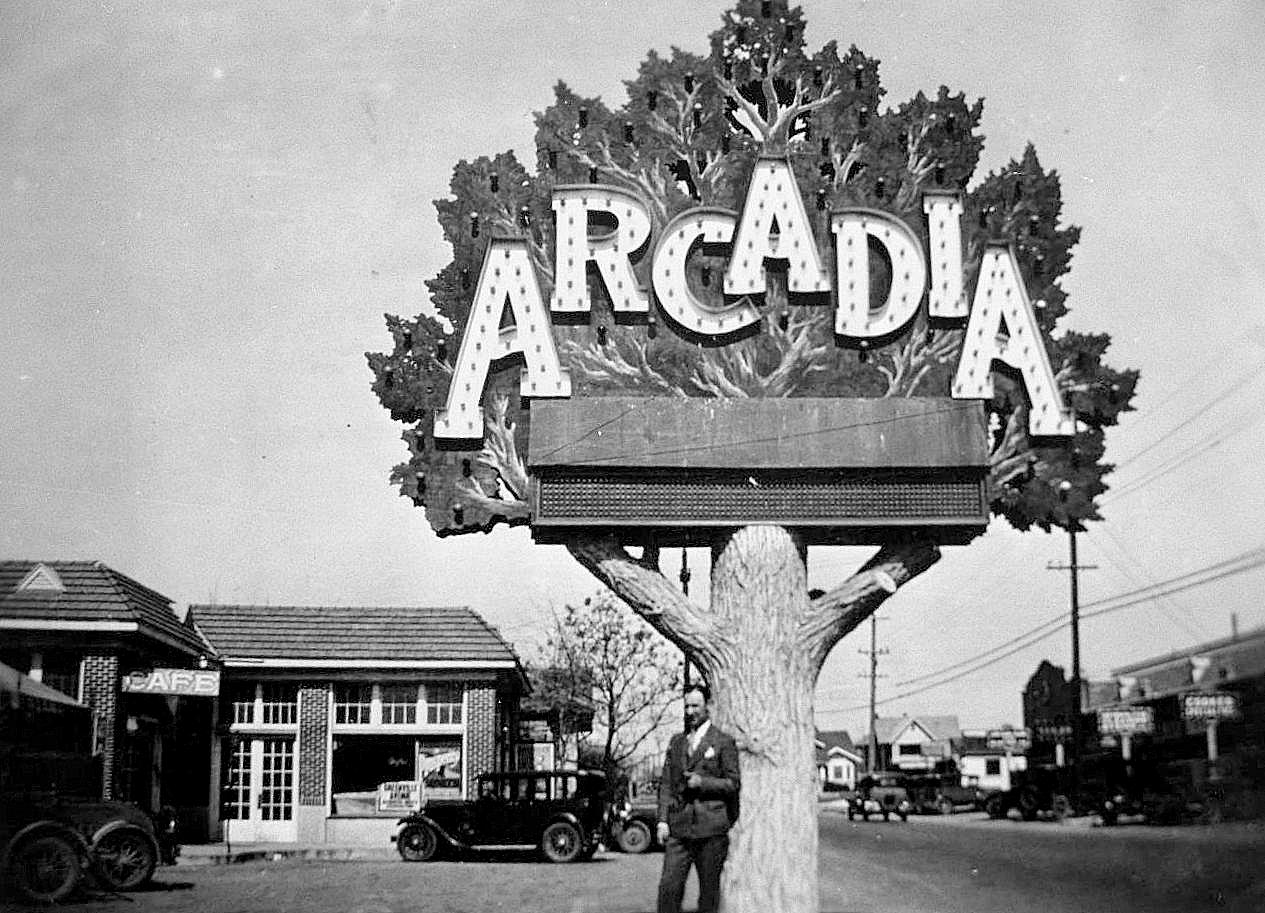
7. “The Arcadia Theater Sign You’ve Never Seen.” This is especially wonderful to me because it shows Lower Greenville (the area I grew up in) back in the late ’20s/early ’30s — and it’s still recognizable today. This “tree” was a movie marquee that lit up at night, and it must have been quite a sight 85-or-so years ago.

***

8. “The Oak Cliff Viaduct & The Weird Composite Photo –1912.” My favorite component is the panoramic view of the city, but click the link to see what weird Franken-photo this (along with an incredible shot of the viaduct) got turned into!

dallas-panorama-skyline_1912_LOC***

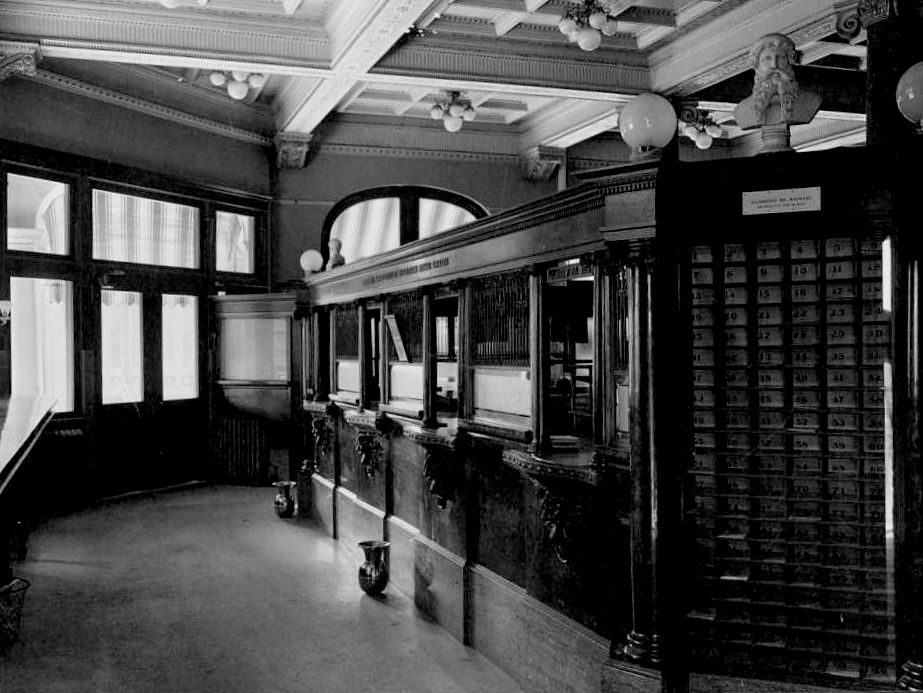
9. “The Dallas Morning News Lobby — 1904.” Other than the spittoons, I wish places still looked like this. Read about those special mail boxes at the link.

dmn-lobby_c1903_degolyer***

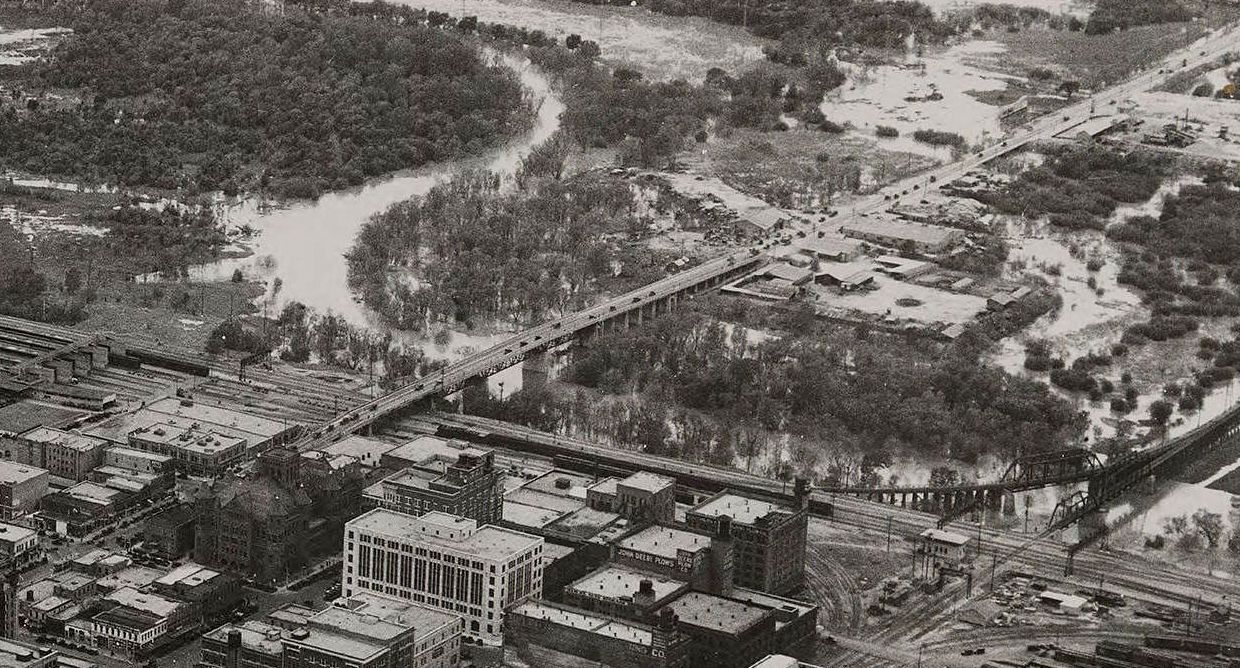
10. “The Trinity River at the City’s Doorstep.” I was born and raised in Dallas, but I was only vaguely aware that the Trinity River had been “straightened,” which is one of the reasons this is such an amazing image for me (see the original post to see the larger photo this has been cropped from).

downtown_trinity_ca1920s_smu_foscue-det***

11. “A Lost Photo of Director Larry Buchanan, Celebrated ‘Schlockmeister’ — 1955.” One of my “discoveries” that got me all excited when I found it but which only a handful of other people will appreciate. If you know who Larry Buchanan is, you’ll probably smile at this. If you don’t know who he is, you should! Hie yourself over to this post and read why he’s important to the history of Dallas!

buchanan-katy-camera_1955***

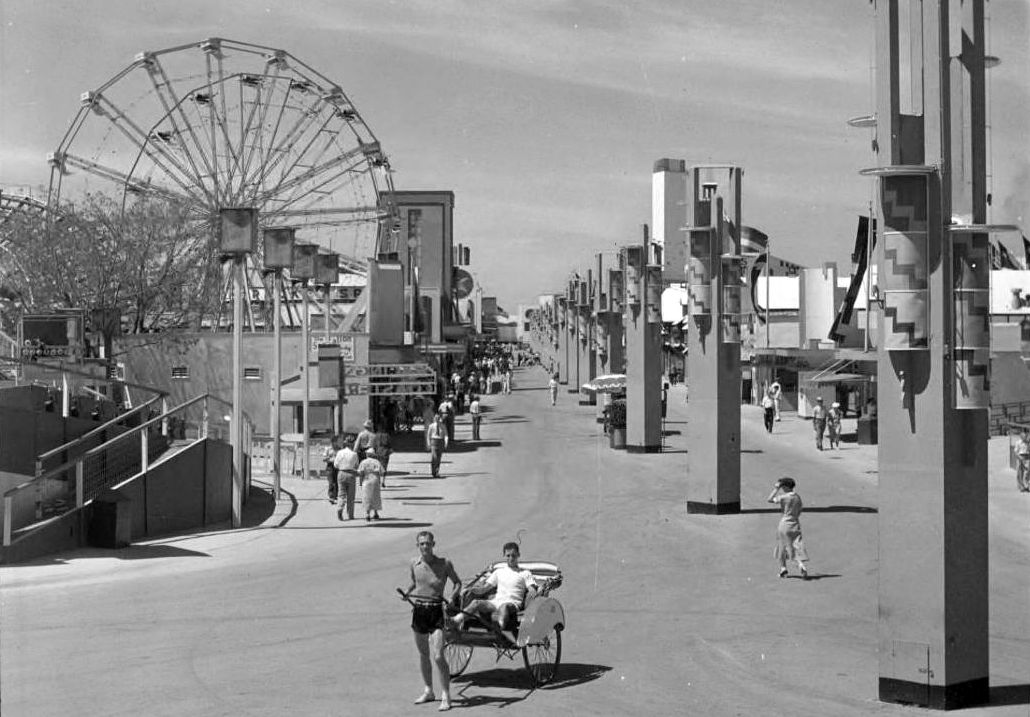
12. “Forget the Ferris Wheel, Take a Ride in a Centennial Rickshaw — 1936.” Yeah, seeing a rickshaw at the State Fair midway is kind of weird, but it’s not nearly as weird as this photo feels. I always think of “The Prisoner” when I see this. Bleak. And … odd.

tx-centennial-midway_1936_ucr***

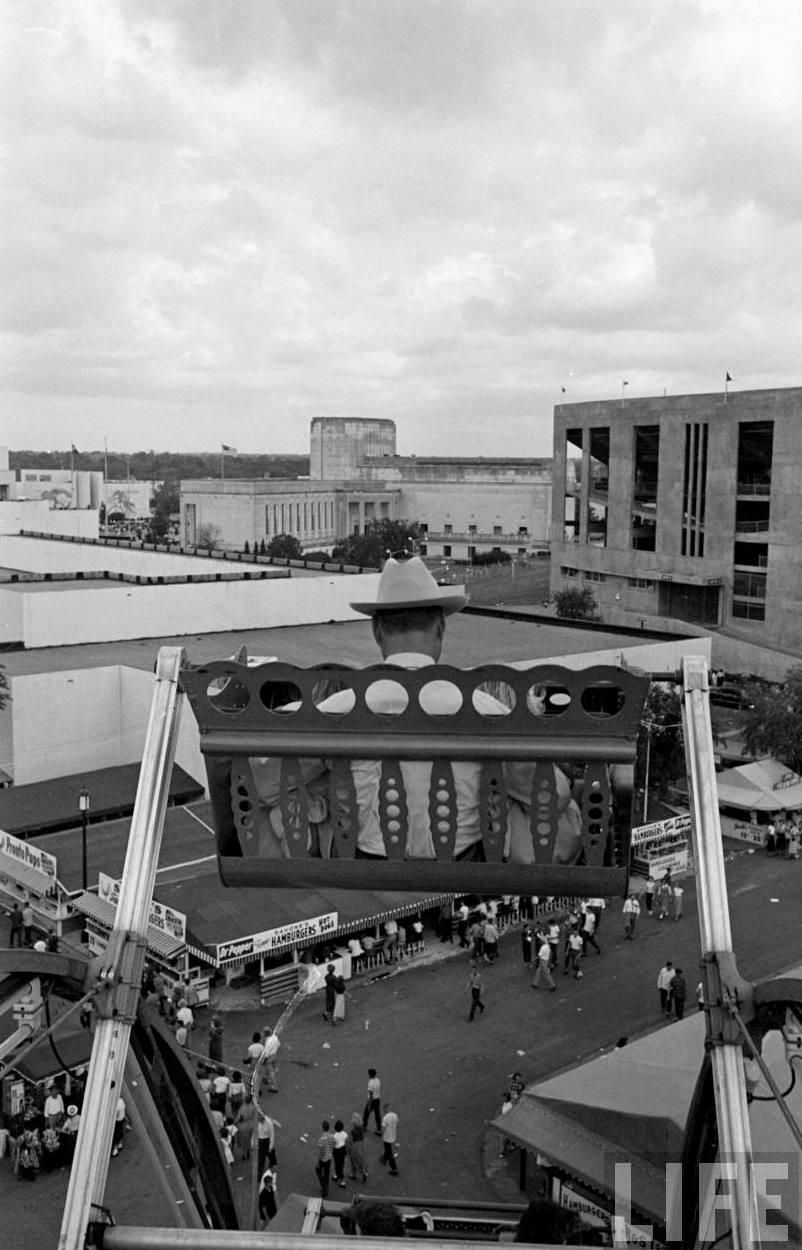
13. “‘Life’ at the State Fair of Texas — 1951.” And speaking of Ferris wheels, this may be my favorite photo ever of the State Fair of Texas.

fair-park-midway_life_1951***

Runner-Up: ALL of the photos I’ve “zoomed in on” — I love the surprising vignettes hidden in photos. I love them all, but I’m particularly fond of one that shows Ervay & Main (“There are Eight Million Stories in the Naked City… — ca. 1920”). This is one of 14 (!) parts of the photo I zoomed in on, this one showing a woman sitting at a window in the Neiman’s building, watching the hustle and bustle below on Ervay. Click on the link above to see the original photo (and all the “vignettes”). For other photos I’ve “zoomed in on,” see them here.

5-ervay

*

For all the “Year-End Best of 2014” lists, click here.

*

Copyright © 2014 Paula Bosse. All Rights Reserved.


Year-End List! My Favorite (Non-Photo) Images Posted in 2014

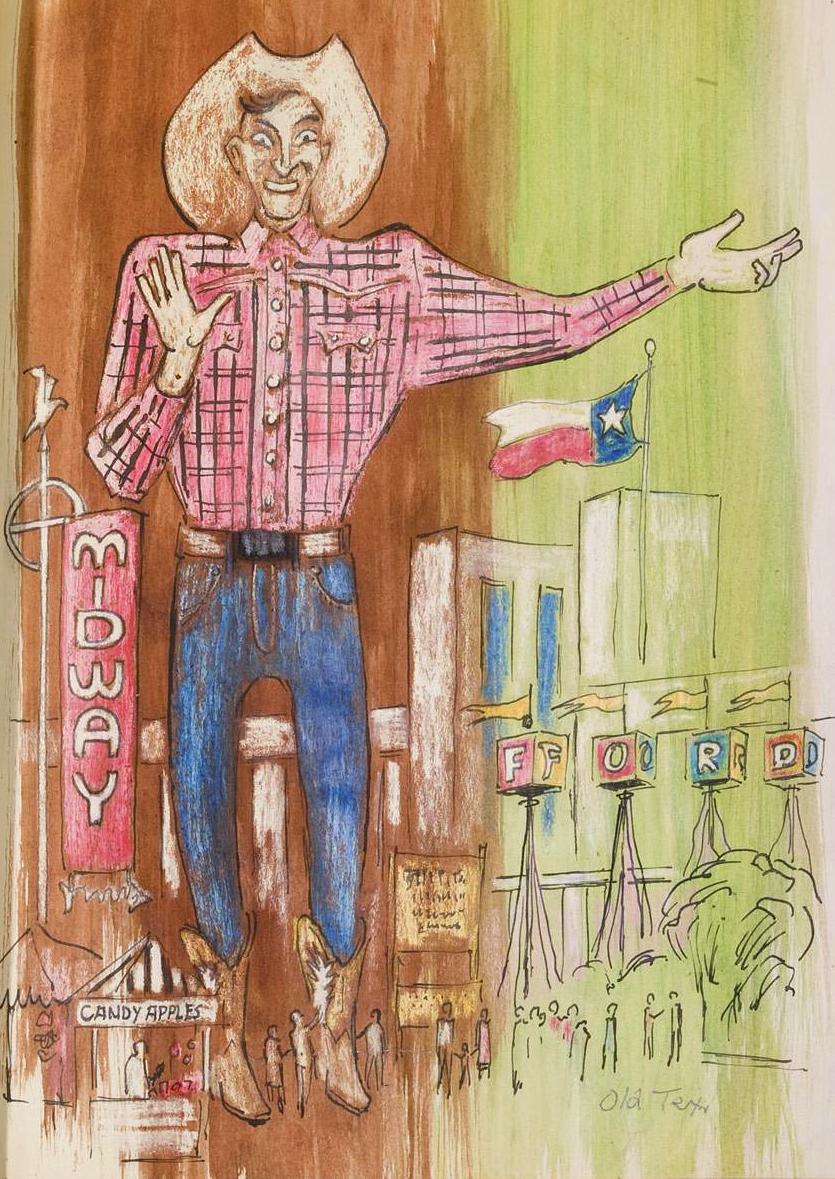
dozier_big-tex_sketchbook_1954_dma“Old Tex” sketch by Otis Dozier, 1954 — Dallas Museum of Art
© Marie Scott Miegel and Denni Davis Washburn

by Paula Bosse

It’s the end of the year, the traditional time for lists! Yesterday I compiled my favorite ads I’ve posted in 2014, today it’s my ten favorite images — either art or postcards (my favorite photographs of the year will be posted tomorrow). For more info on the images, click on the title of the post they originally came from. Most images are larger when clicked — some are quite a bit larger.

*

1. “Big Tex, Old Tex, Big Ol’ Tex — Whatever You Call Him, Otis Dozier Wins (1954)” (above)

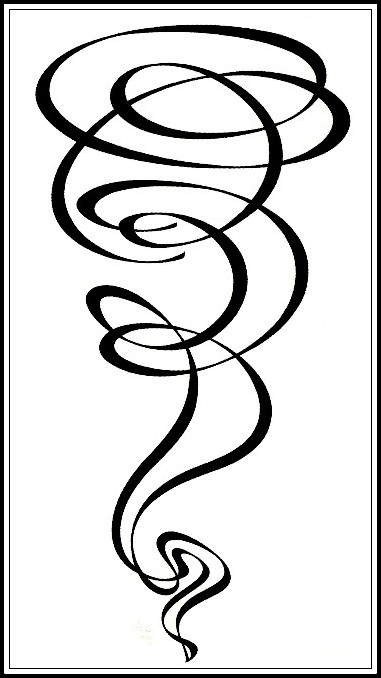
2. “Alexandre Hogue’s ‘Calligraphic Tornado’ — 1970” (also, I want to mention the possibly previously unknown 1927 bookplate by Hogue that I discovered, here)

3. “Dallas’ Frank Lloyd Wright Skyscraper — 1946”

frank-lloyd-wright_rogers-lacy_1946-sm

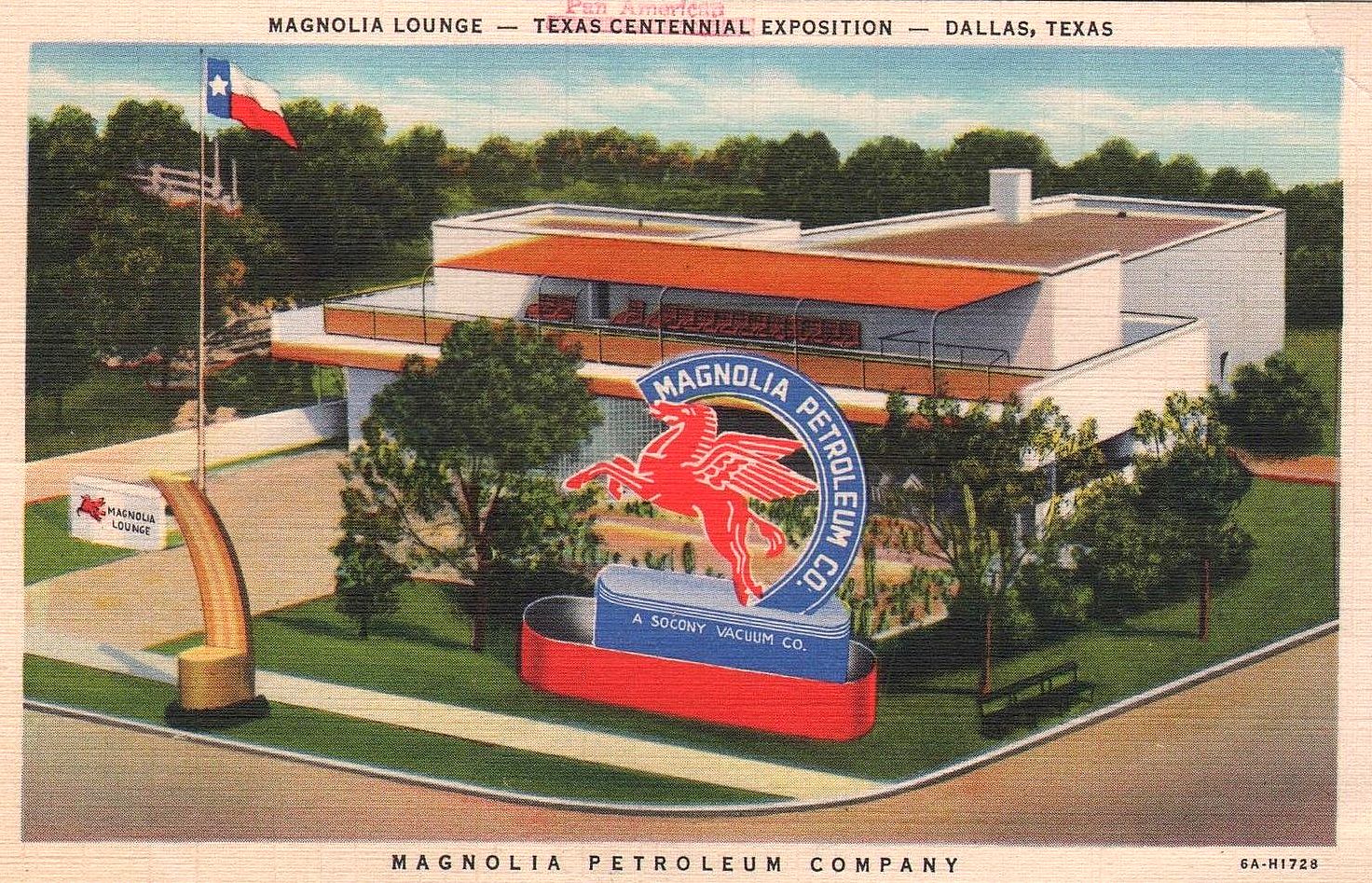
4. “William Lescaze’s Ultramodern Magnolia Lounge — 1936”

magnolia-lounge_tx-centennial

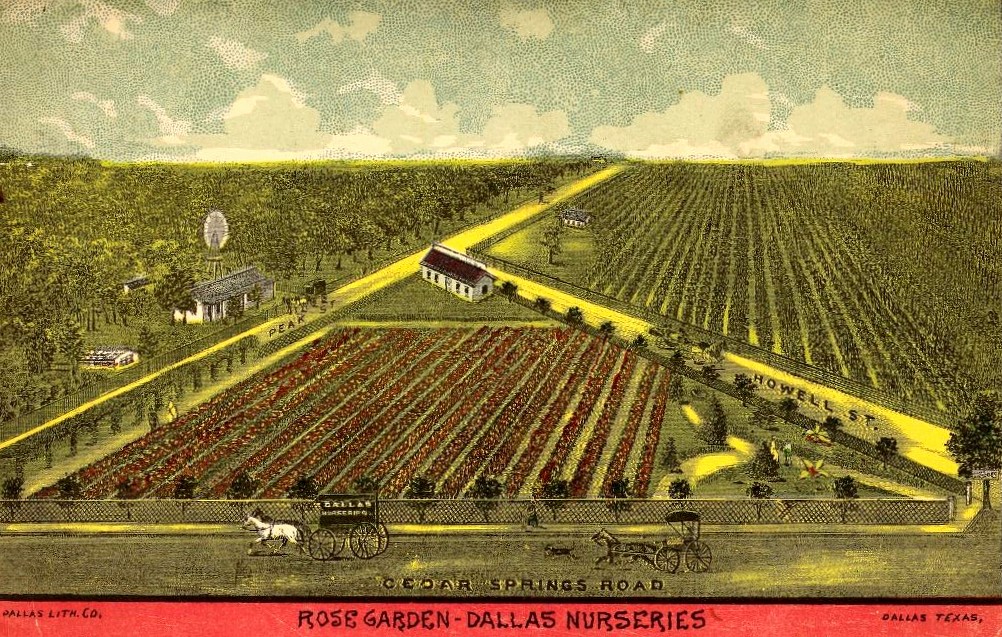
5. “J. M. Howell’s Dallas Nurseries — 1880s”

howell_rose-garden_1888

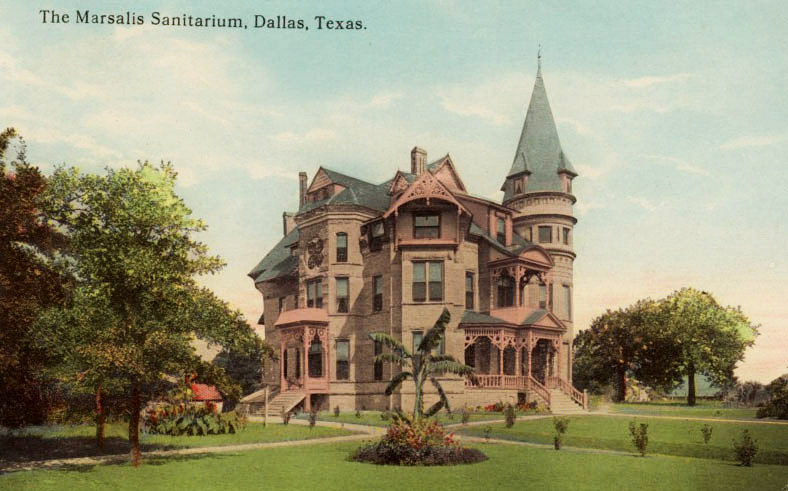
6. “The Marsalis House: One of Oak Cliff’s ‘Most Conspicuous Architectural Landmarks'”

marsalis_sanitarium_oak-cliff

7. “Frank Reaugh or Mark Rothko?”

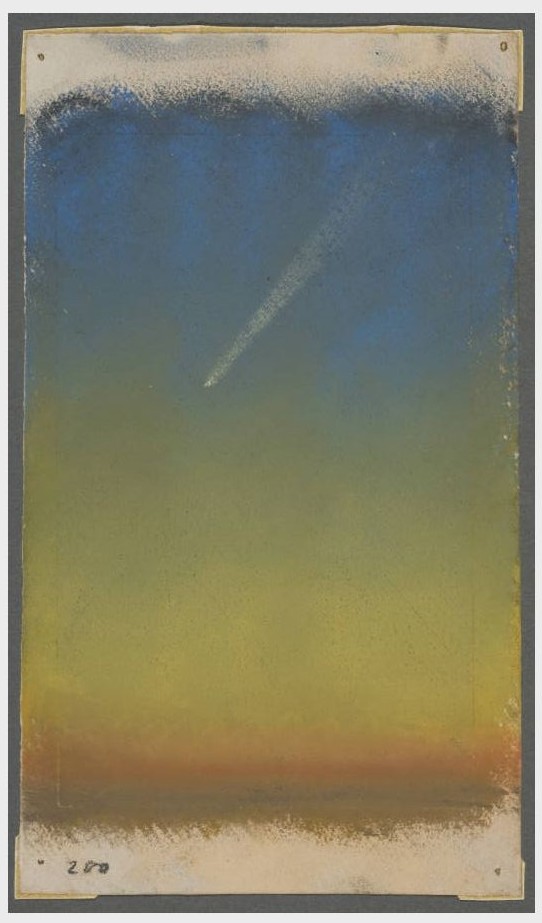
reaugh_meteor_nd_ransom-smu_2

8. “The Texas Fire Extinguisher Co. and Hitler — 1942”

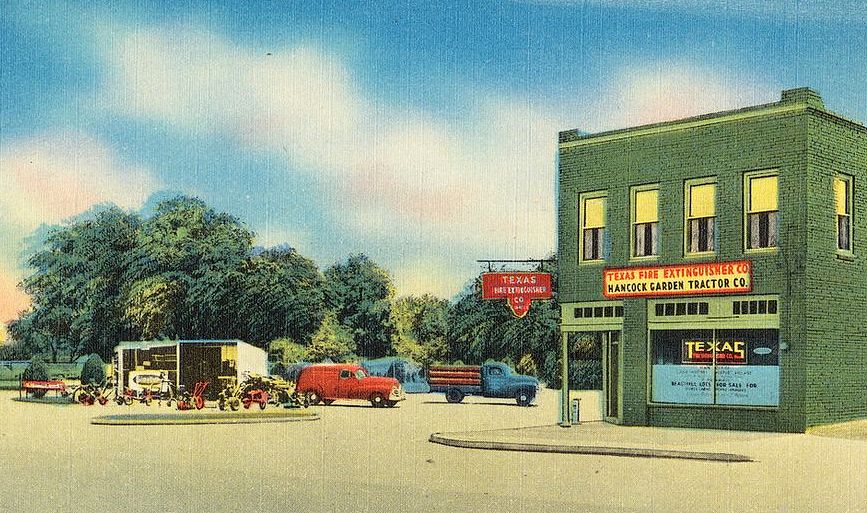
tx-fire-extinguisher-co

9. “The Republic National Bank Building: Miles of Aluminum, Gold Leaf, and a Rocket”

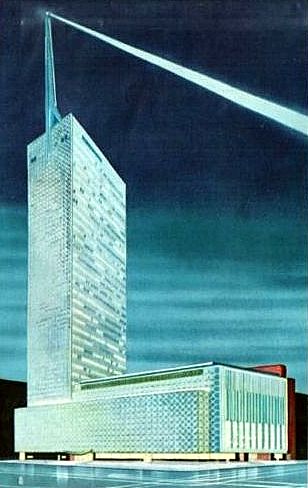
republic-national-bank_beacon_front

10. “When the Flying Red Horse Could be Seen From Miles Away”

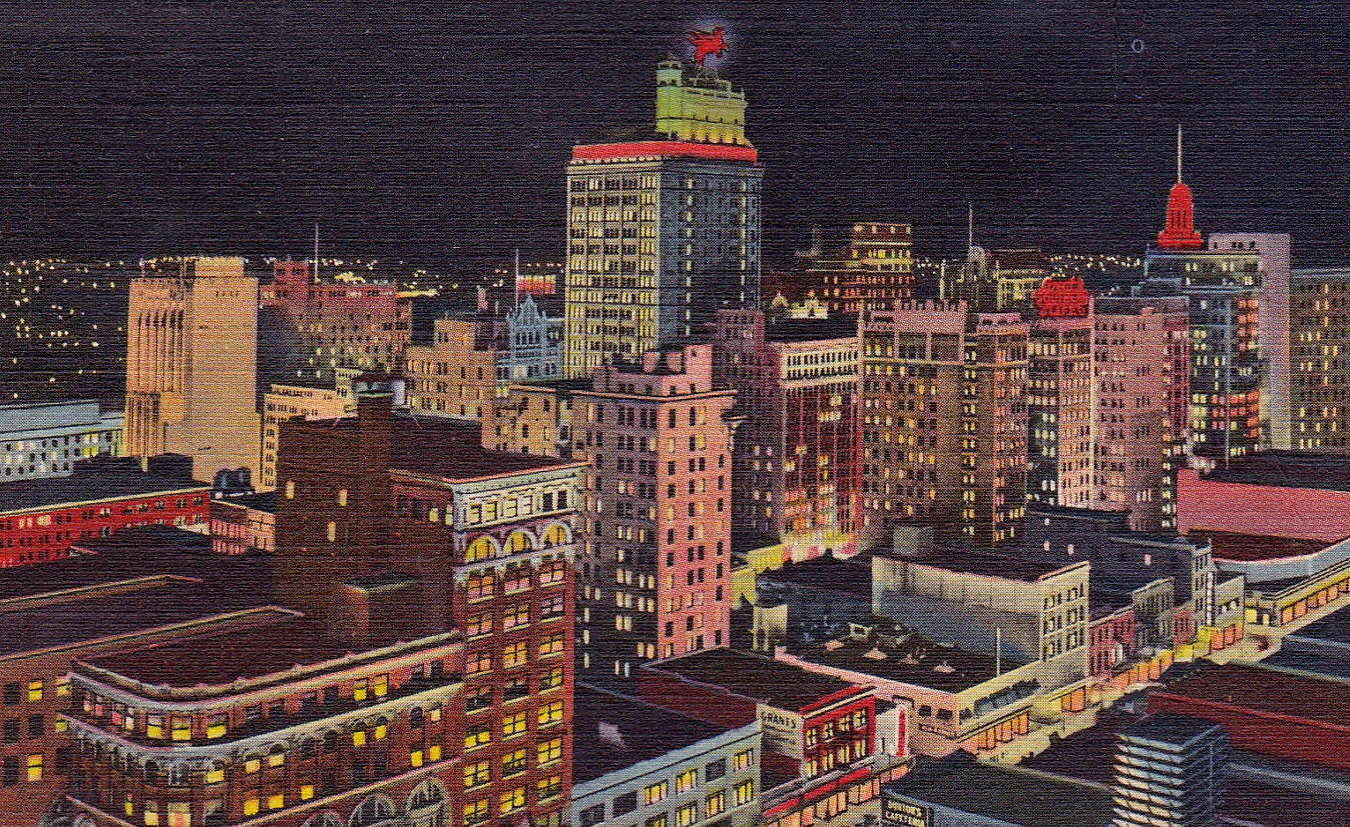
birdseye_night_early1940s

*

Honorable Mention: A whole bunch of cool night-time postcards in “Theatre Row — A Stunning Elm Street at Night.”

*

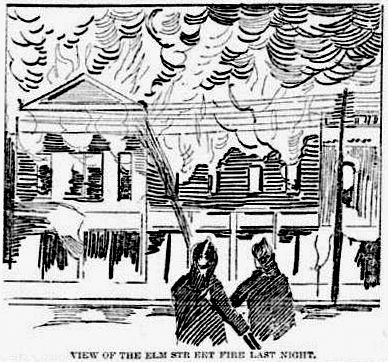
And, lastly, a runner-up, just because it’s so ridiculous it makes me chuckle every time I see it: a newspaper artist’s rendition of a massive fire that swept through downtown in 1896, from “Chas. Ott: One-Stop Shopping for Bicycles and Dynamite.”

ott-fire_pic_dmn_052696

*

For all the “Year-End Best of 2014” lists, click here.

*

Copyright © 2014 Paula Bosse. All Rights Reserved.

Year-End List! My Favorite Dallas Ads Posted in 2014

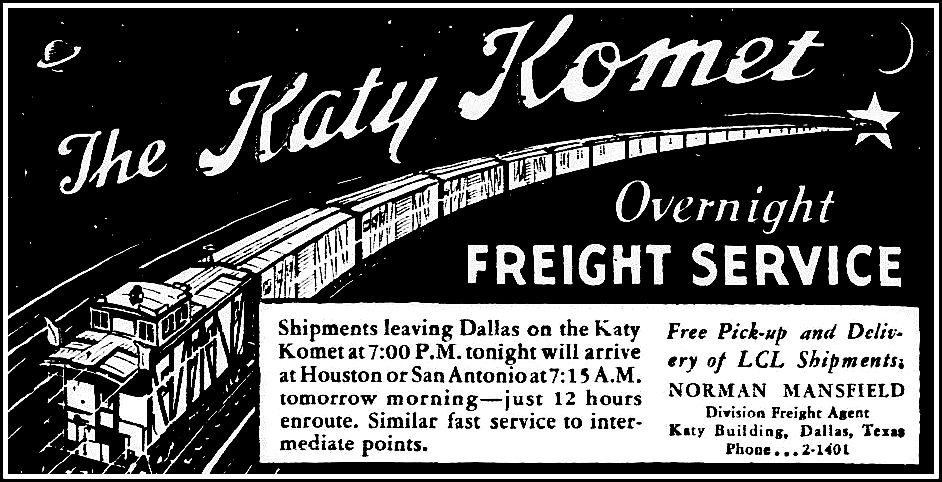
ad-katy-komet_dmn_031733The Katy Komet — 1933 (click for larger image)

by Paula Bosse

It’s the end of the year, the time when people do lists. I love lists. So I’m going to be doing some over the next few days. Today, a collection of my favorite Dallas-related advertisements that I’ve posted over the past year. To see the original post (which includes sources and no doubt pithy commentary), click the title of each ad. And, as always, thanks for taking the time to read Flashback Dallas this year! (Most images larger when clicked.)

*

1.  The Katy Komet (1933) — above. My favorite ad of the year!

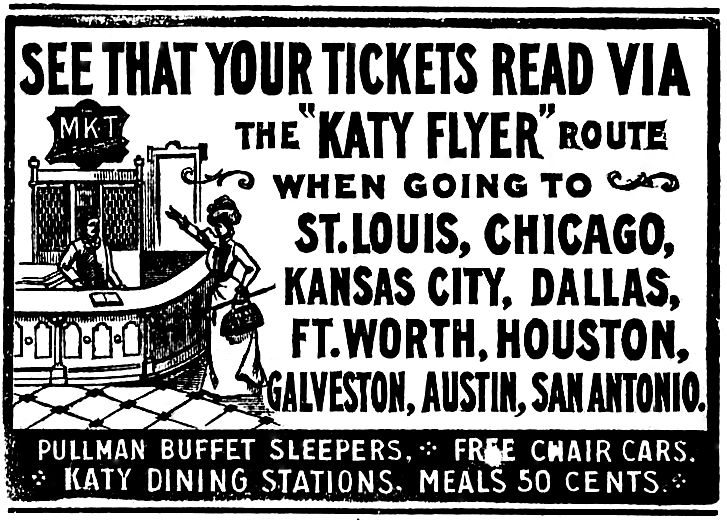
2.  M-K-T Railroad’s “Katy Flyer” Route (1902)

mkt_rail_1902_mercury

3.  Cokesbury Book Store (1959)

cokesbury_dallas_1959

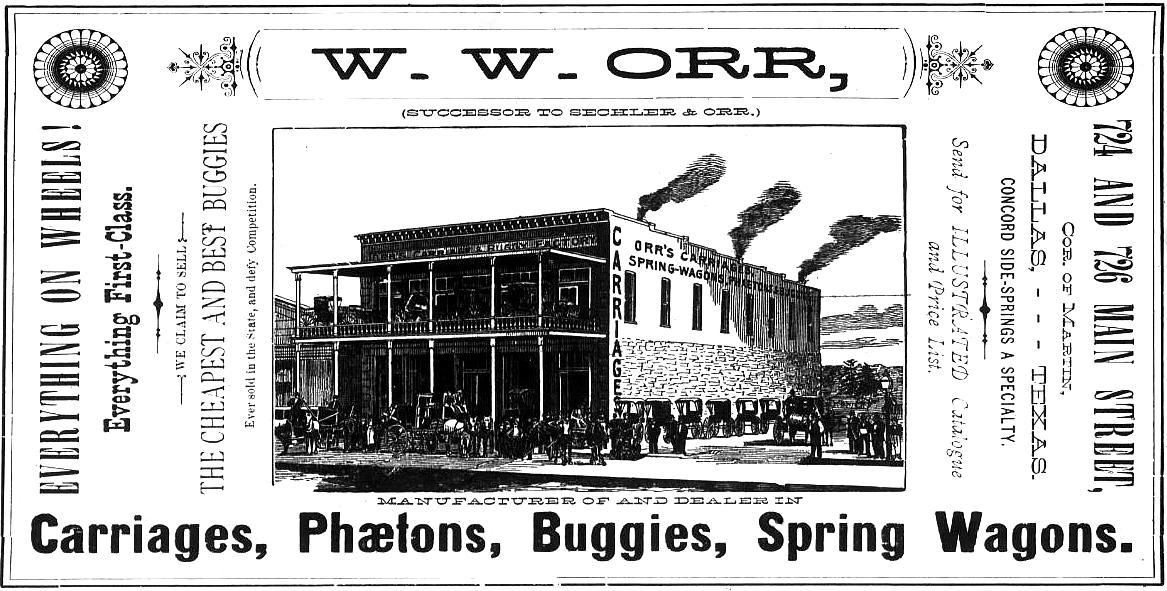
4.  W. W. Orr’s Carriages, Phaetons, Buggies, and Spring Wagons (1878)

ad-orr-carriages_directory_1878

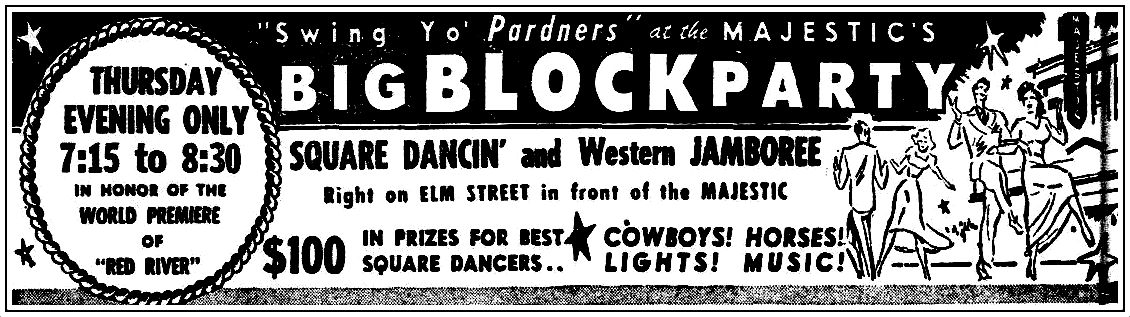
5.  Majestic Theatre’s “Red River” Block Party (1948)

red-river_block-party_dmn_082648

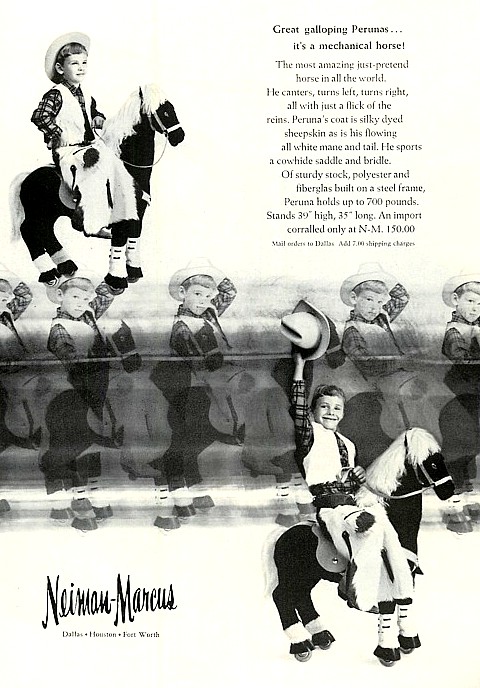
6.  Neiman-Marcus Mechanical Peruna Toy (1965)

n-m_peruna_1965

7.  Irby-Mayes ad featuring the Mercantile Building (1948)

ad-irby-mayes_dmn_040148

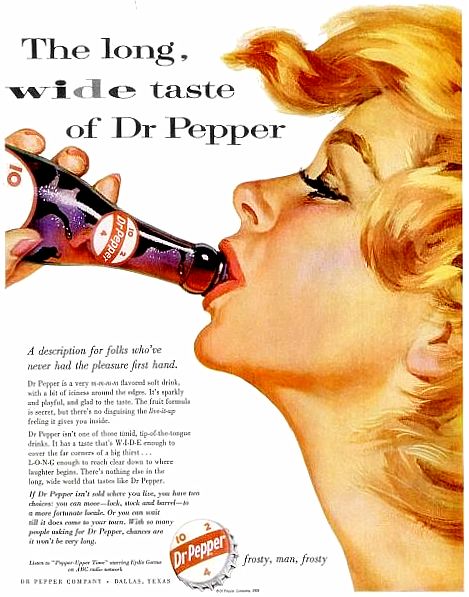
8.  Dr Pepper (1959)

dr-pepper-1959

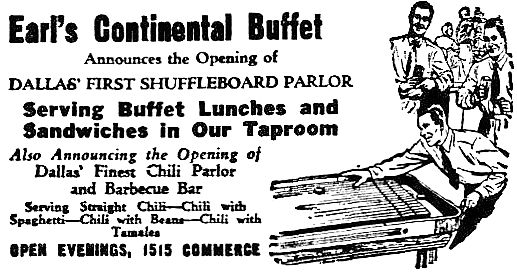
9.  Earl’s Continental Buffet (1947)

earls-continental-buffet_shuffleboard_dmn_1947

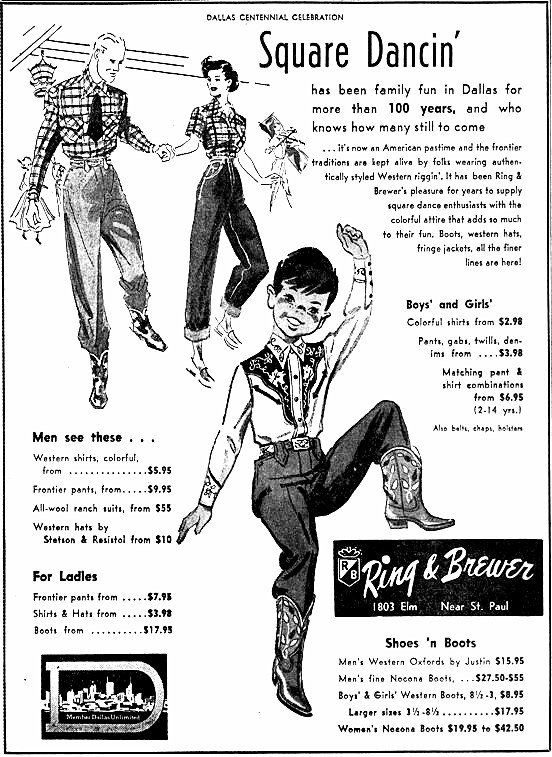
10. Ring & Brewer (1956)

dallas_ringandbrewer_1956

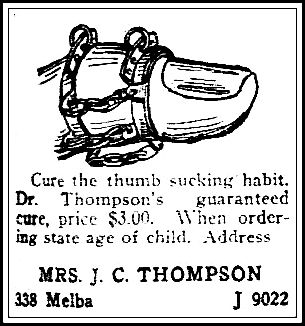
Runner-up: “Keep Oak Cliff Kinky” (1923)

thumb-sucking_dmn_111823
*

For all the “Year-End Best of 2014” lists, click here.

*

Copyright © 2014 Paula Bosse. All Rights Reserved.