Flashback : Dallas

A Miscellany: History, Ads, Pop Culture

New Year, New Teeth — 1877

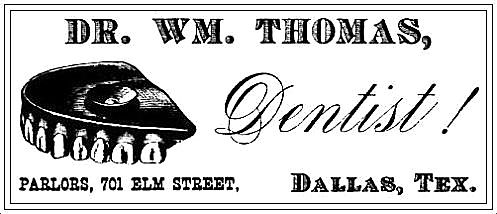
ad-dentist_1878-directoryThe exclamation mark is a nice touch — 1878

by Paula Bosse

It’s a new year. Time again to check if the women-folk in your household need a new set of false teeth!

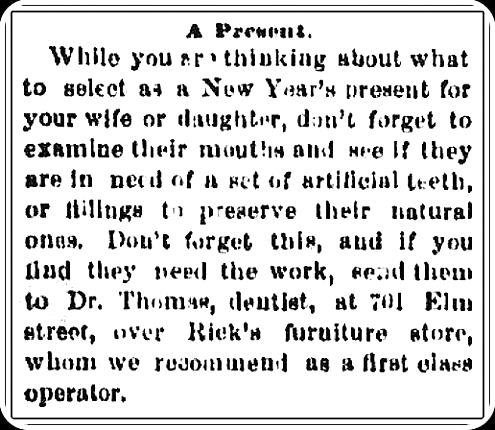
ad-dentist_new-year-gift_dal-herald-123077Dallas Herald, Dec. 30, 1877

A Present. While you are thinking about what to select as a New Year’s present for your wife or daughter, don’t forget to examine their mouths and see if they are in need of a set of artificial teeth, or fillings to preserve their natural ones. Don’t forget this, and if you find they need the work, send them to Dr. Thomas, dentist, at 701 Elm street, over Rick’s furniture store, whom we recommend as a first class operator.

(While you’re waiting for your wife’s new choppers to be installed in the doctor’s office upstairs, you can browse for a nice new stool for the spinet downstairs at Rick’s.)

*

But wait, there’s more. Dig a little deeper and you find this:

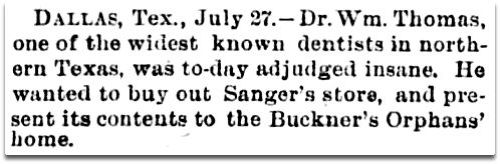
thomas-dentist_galveston-daily-news_072889Galveston Daily News, July 28, 1889

Whoa!

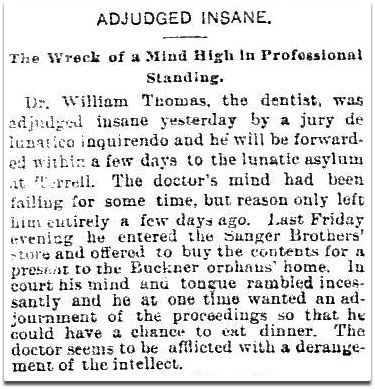
thomas-dentist_dmn_072889Dallas Morning News, July 28, 1889

ADJUDGED INSANE: The Wreck of a Mind High in Professional Standing.

Dr. William Thomas, the dentist, was adjudged insane yesterday by a jury de lunatico inquirendo and he will be forwarded within days to the lunatic asylum at Terrell. The doctor’s mind had been failing for some time, but reason only left him entirely a few days ago. Last Friday evening he entered the Sanger Brothers’ store and offered to buy the contents for a present to the Buckner orphans’ home. In court his mind and tongue rambled incessantly and he at one time wanted an adjournment of the proceedings so that he could have a chance to eat dinner. The doctor seems to be affected with a derangement of the intellect.

I’m not quite sure what all that was about, how much time he spent in the Terrell “lunatic asylum,” or how “insane” the good doctor really was (I suspect he was using a lot of cocaine — see below). The only other mention of Dr. Thomas I found was a mention in the Buckner orphanage’s annual report of 1898 in which his name appeared in a group of doctors who were thanked for their services rendered to the children free of cost.

***

Sources & Notes

Top ad from the 1878 Dallas city directory.

Dr. Thomas probably wasn’t actually “insane.” I wonder if perhaps he hadn’t been dipping into his own medicine chest and availing himself of the cocaine that most dentists of the time used as a painkiller during dental procedures? An interesting article on doctors of the period self-medicating is here.

Happy New Year! And don’t forget to floss!

*

Copyright © 2015 Paula Bosse. All Rights Reserved.

Year-End List! Most Popular Posts of 2014

dallas_postcard_hee-haw

by Paula Bosse

I’m so happy that so many people have found their way to Flashback Dallas in its first year! I knew that Dallasites were interested in the history of their city, but I had no idea how many were! Thank you!

These are the posts that you, the readers, clicked on, shared, and “liked” the most in 2014. To see the original posts, click the titles.

***

Top 10 Most Popular Photo-Based Posts of 2014

1. “Henry Stark’s ‘Bird’s Eye View of Dallas’ — 1895/97.” This one was so far ahead of the other posts that there’s no contest in its being the #1 post of the year. Thousands and thousands of people have clicked on and shared this post — in one day alone, it was viewed over 3,000 times! Thanks, Houston Public Library, for scanning this photo at such a high resolution — that was what made it possible for me to zoom in on the otherwise easily-overlooked details contained in this great photo!

2. “‘A Cavalcade of Texas’ — Dallas, Filmed in Technicolor, 1938.” Another post that got a HUGE number of hits. “A Cavalcade of Texas” was a feature-length, full color documentary filmed around Texas in 1938, with two scenes filmed in Dallas. When I wrote this post at the end of September, the YouTube video had about 1,000 views — today it has almost 4,500 views. It’s pretty amazing (and pretty weird…) seeing Dallas from this period in color.

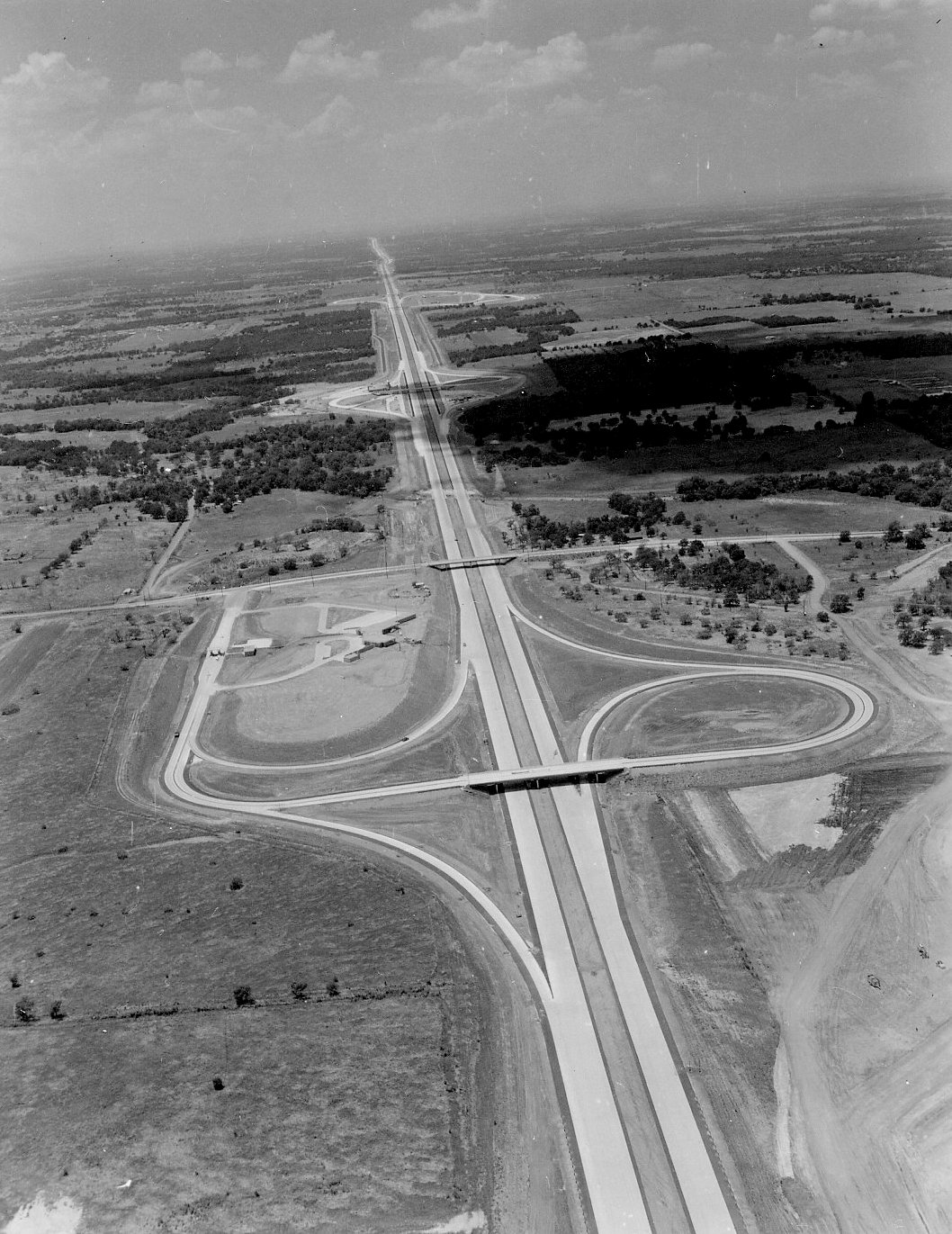
3. “I-35E Looking South: A Landscape Blissfully Free of Cars and Strip Malls — 1964.” The popularity of this one comes almost entirely from a mention on Reddit. If I could harness the power of the Redditor army, I could — dare I say — rule the world! (Even though one of them snippily dismissed the post’s title as “Luddite nostalgia.” What can I say? I love the surreal sight of empty highways.) This is one of those incredibly large photos I try to post whenever I can — this one is almost alarming in its enormity!

4. “The Dallas Morning News Building, Inside and Out — ca. 1900.” I love these photos. I have a particular fondness for office furnishings of this period. And that mail chute is COOL.

5. “Highland Park Methodist Church — 1927.” This one kind of surprised me. I’d never seen the main photo before and thought it was interesting, but I had no idea it would be so popular. Redditors may be a powerful bloc, but never underestimate the Methodists!

6. “Waiting on a Streetcar on a Sunny Winter Day in Oak Cliff — 1946.” I love this one, too. Especially since it contains my favorite photo of the year.

7. “Captain Marvel Fights the Mole Men in Dallas! — 1944.” Dallas gets the comic book treatment with all sorts of odd cameos by famous buildings and local celebs. This is GREAT. Shazam!

8. “University Park, Academic Metropolis — ca. 1915.” An almost-deserted Park Cities landscape, showing what the intersection of Hillcrest and University looked like in 1915 — the year that SMU opened. Scroll down the post to the link to another super-gigantic image that’s so big you can almost read the letters in the mailbox.

9. “The Oak Cliff Viaduct & The Weird Composite Photo — 1912.” Fun in the darkroom, or, early photo-shop. It takes a while to realize that what you’re looking at doesn’t exist. Check out all three cool photos — two are real, one is not.

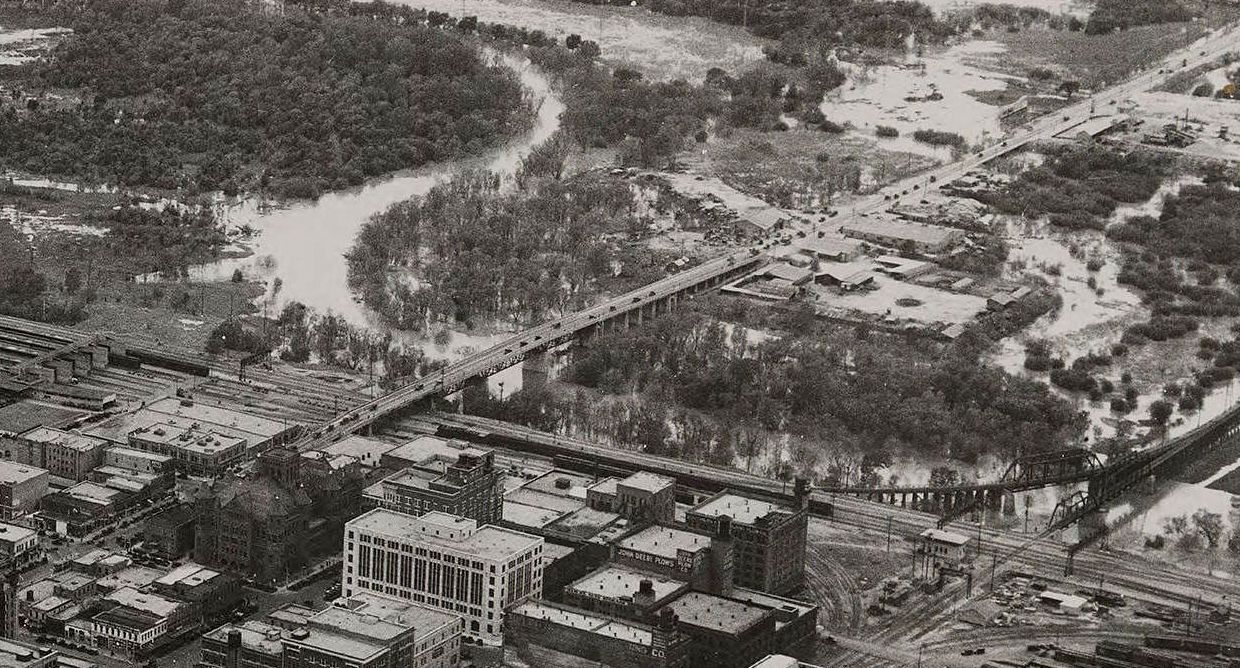
10. “The Trinity River at the City’s Doorstep.” The second photo is fantastic. Go look at it NOW!

*

Top 10 Research-Based Posts of 2014

1. “The World’s Largest Santa & The Christmas Tragedy — 1953.” Very popular. I just posted this last week and it’s already jumped up to the fifth overall most popular post of the year!

2. “The Old Union Depot in East Dallas: 1897-1935.” I kind of slaved over this one, so I’m happy it was so popular.

3. “The Elm Street Cave — 1967.” It’s hard to believe the city took so long to fix this giant hole in the middle of downtown. It became quite the running joke, sort of like the notorious “Hole on Cole.”

4. “Happy 75th Anniversary, Stonewall!” I actually went to Stonewall Jackson Elementary School, so the popularity of this post makes me very happy. I learned lots of things about a school I thought I already knew.

5. “Start Your Brilliant Career at Dallas Telegraph College — ca. 1900.” Forget “plastics.” Telegraphy is the future, young people.

6. “Send Your Kids to Prep School ‘Under the Shadow of SMU’ — 1915.” The Powell University Training School opened the same year as SMU, right across the street. The building is still there. The fields where the cash-strapped headmaster had his students harvesting wheat and vegetables to make ends meet are not. (Read the PDF linked at the bottom of the post to read about this unorthodox trading of farm labor for tuition.)

7. “The Marsalis House: One of Oak Cliff’s ‘Most Conspicuous Architectural Landmarks.'” A beautiful house built by (and abandoned by) the developer of Oak Cliff became a medical sanitarium and, later, a girl’s seminary before it unceremoniously burned to the ground.

8. “Little Peruna: He Died With His Mustang Bridle On — 1934.” The story of the sudden death of SMU’s first miniature horse mascot is not one I would have thought I’d enjoy writing, but the discovery of the wonderfully overwrought obituary penned by an unnamed Dallas Morning News writer (…who might have been imbibing at the time…) made this post one of my favorites of the year.

9. Dewey Groom and The Longhorn Ballroom.” The man who made the Longhorn Ballroom one of the premiere country dancehalls in the nation deserves more recognition than he gets. (Still hoping that “Dewey” makes its way back into the baby-name pool.)

10. “Wanted in Dallas: Refugee Children — 1940.” There was a movement during World War II to bring child refugees from Europe to Dallas where they could live in safety for the duration of the war.

***

Thanks again for reading, and I wish everyone a Happy 2015!

*

For all the “Year-End Best of 2014” lists, click here.

*

Copyright © 2014 Paula Bosse. All Rights Reserved.

Year-End List! My Favorite Posts of 2014

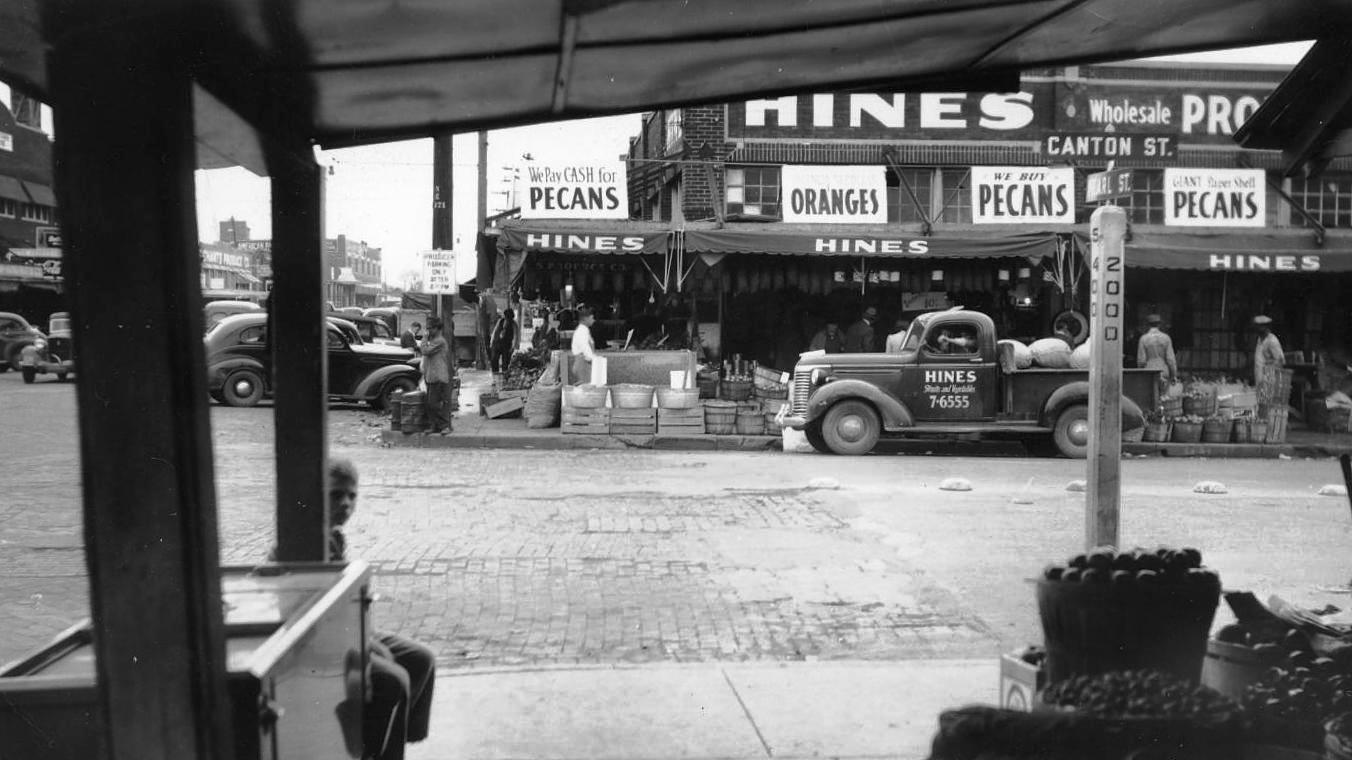
hines_canton-pearlFrom my favorite post of the year, a look at Canton & Pearl (click for larger image)

by Paula Bosse

As 2014 draws to a close, one feels compelled to make a list of accomplishments. And this year I’ve actually accomplished something! I started Flashback Dallas back in February, and according to the stats, I’ve written over 350 posts in 2014! That’s pretty shocking. I’ve compiled a list of my favorites, which was difficult, because, honestly, I like them all. There wasn’t a single thing I wrote about this year that I didn’t find interesting or entertaining in some way. Thank you to everyone who checks in occasionally — this has been the most enjoyable thing I’ve ever done! Who says history has to be dull! (To read the full posts described in the list below, click the titles.)

***

“The Runyonesque Pearl Street Market, Full of Colorful Characters and an Army of Rats.” This was, by far, my favorite post of the year — to read about, to research, and to write. Before we had a Farmers Market, we had the wonderfully seedy Pearl Street Market. If the length of this post frightens you, might I direct you to the shorter, weirder collection of police blotter reports about the area I compiled, here. How can you resist a headline like “$1,500 Dope Cache Found Under Pile of Pineapples”?

“When Halloween in Dallas Was Mostly ‘Trick’ and Very Little ‘Treat.'” Back when everyone became a juvenile delinquent on Halloween.

“The Ladies’ Reading Circle: An Influential Women’s Club Organized by Black Teachers in 1892.” This was an incredible group of women who have been sadly overlooked.

“The Old Union Depot in East Dallas: 1897-1935.” I know nothing about trains, but I found all of this fascinating. The most-researched subject I wrote about all year.

“That Time When Dallas Changed the Number of Every Single Street in Town — 1911.” I loved writing this. And the only reason I did was because I couldn’t find out why the city had changed street addresses all at once — so I researched it, just to find out for myself. Now I know.

“Gusher at Old Red! — 1890.” How had I never heard about this incredibly important discovery of water from an artesian well sunk on the grounds of the Old Red Courthouse?

“Dallas in 1879 — Not a Good Time To Be Mayor.” Shoot-out in the courtroom. (The best thing about this post was reading the startlingly gruesome contemporary coverage of the incident in the newspaper — the link to the newspaper article is at the bottom of the post.)

 “Mr. Blandings Builds His Dream House … In Preston Hollow — 1948.” If you love the Cary Grant-Myrna Loy movie, you’ll enjoy this. My favorite thing here is the recording of a promo that actor Melvyn Douglas did for a Dallas radio station when he was in town. It’s at the end of the post. It’s great.

“Jordan Moore.” I really loved trying to piece together the life of a man who left behind only a handful of photographs.

“Oriental Oil Company: Fill ‘er Up Right There at the Curb.” Who would have guessed that reading about early gas pumps could be so interesting? Like many of the things I’ve written about, this post was sparked by something I stumbled across completely by accident.

“Jerry Scoggins, From WFAA Staff Musician to Pop Culture Icon.” I love this. You may think you don’t know who Jerry Scoggins is. You would be wrong.

“Mme. Koneman, High-Class Milliner.” From giant-plumed hats to a scandalous shooting!

“US Revenue Cutter ‘Carrie Nation’ Successfully Navigates the Trinity In Valiant Effort to Keep Dallas Dry! — 1931.” An extremely clever April Fool’s Day prank pulled by The Dallas Morning News, suggested by the notorious Bonehead Club of Dallas. There are so many great elements to the story, including a pretty funny photo manipulation.

“Jim Conner, Not-So-Mild-Mannered RFD Mail Carrier.” What started out as an interesting look at early mail delivery in Dallas took a very unexpected twist when I decided to find out more about Jim Conner, one of the very first rural postal carriers in Dallas.

“Ted Hinton’s Motor Lodge — From Bonnie & Clyde to Motel Heliport.” What does a man who ambushed and killed Bonnie & Clyde do once he’s retired from law enforcement? He opens a motor lodge, of course!

“Babe Didrikson — Oak Cliff Typist.” I knew nothing about Babe before I wrote this. Now I feel I know EVERYTHING! I still can’t believe how much I enjoyed writing about the woman considered by many to be the greatest all-around athlete of all time.

Runner-Up #1: “How Lincoln’s Assassination Was Reported in Dallas — 1865.” Not Dallas, per se, but … wow. This was shocking.

Runner-Up #2: “Not Every ‘Good Luck Trailer Park’ Story Has a Happy Ending — 1964.” Included just because it’s something you don’t come across every day: a newspaper account of a nightclub entertainer, his wife, and their monkey, found dead in a West Dallas trailer park. Yep.

*

For all the “Year-End Best of 2014” lists, click here.

*

Copyright © 2014 Paula Bosse. All Rights Reserved.

Year-End List! My Favorite Photos Posted in 2014

jefferson-addison-det1Waiting for a streetcar in Oak Cliff, 1946 (detail) (click for larger image)

by Paula Bosse

Another list! Here are my favorite photographs that I’ve posted over the past year. I’ve looked at and searched for more photos of Dallas in the past year than I have in all the other years of my life combined. Looking at historic images has always fascinated me, but when you’re looking at historic images of your hometown, it’s kind of thrilling (and it can also be depressing to see the things we’ve lost). For photo sources and credits — and to read the posts these photos originally appeared in (which are chock-full of interesting things, I promise!) — click the titles in the list below. (Most of the photos I post are usually much larger when clicked — some are gigantic!) Enjoy!

***

1. “Waiting For a Streetcar on a Sunny Winter Day in Oak Cliff — 1946.” My favorite photo of the year is the one posted above. It is a cropped image from a larger photo (which I also love) which was included in the post linked above. I’ve stared at this photo for so long that I feel I was there. I love everything about this photo.

***

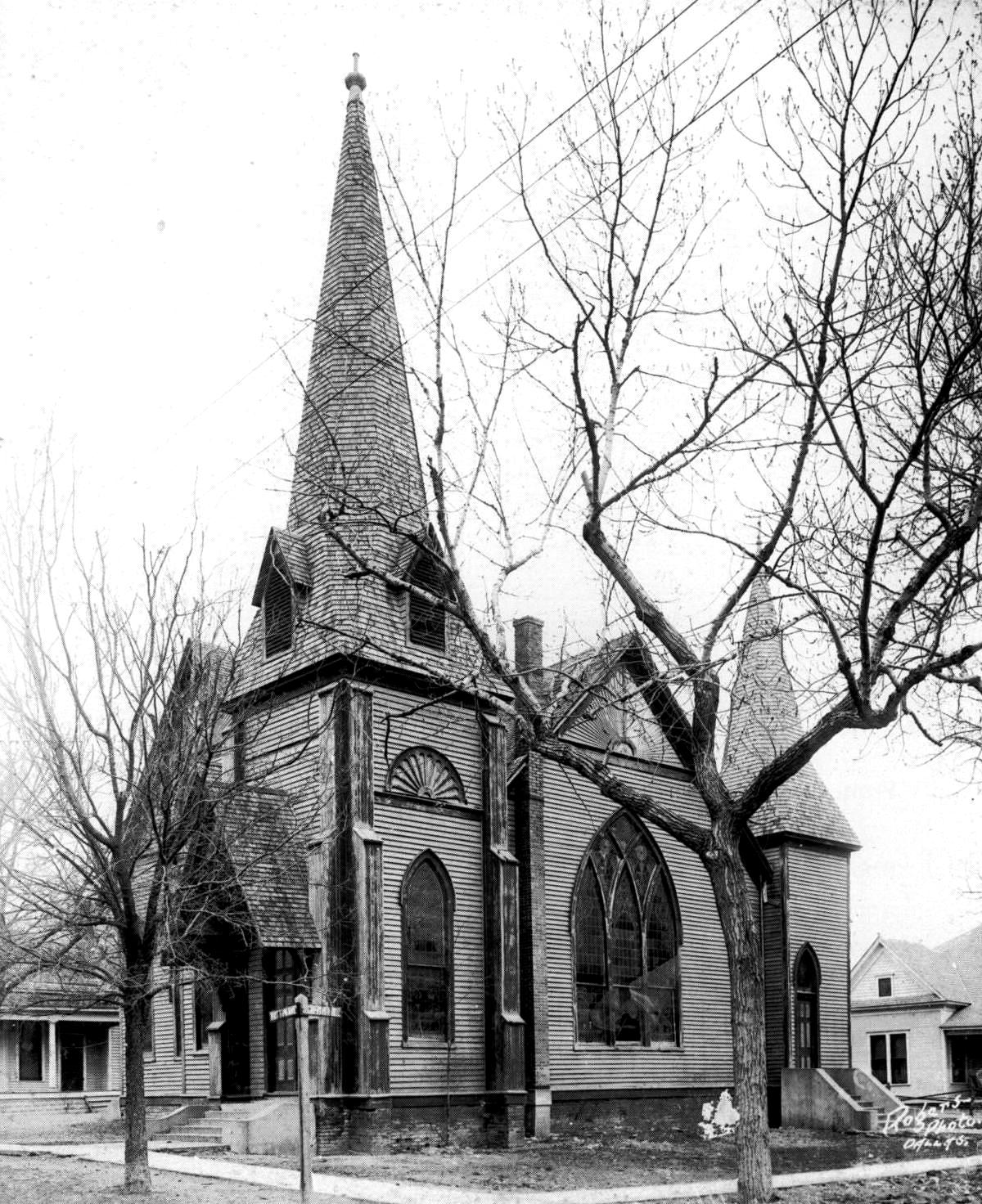
2. “Oak Cliff Presbyterian Church, Organized 1890.” I’ve come back to linger over this photo time and time again. It’s perfect.

oak-cliff-presbyterian_sm***

3. “The DFW Turnpike, Unsullied by Traffic, Billboards, or Urban Sprawl — 1957.” Just a fantastic, dreamy shot. I love the way the highway disappears into the distance. Imagine driving from Dallas to Fort Worth in 1957 on a road where billboards were not allowed and along which there were exactly two restaurants (for travelers who couldn’t make the full 30-minute drive without needing to stop for a meal). This shot, looking west, shows Arlington, right where Six Flags is today. Times change, man.

turnpike_west-from-360_1957***

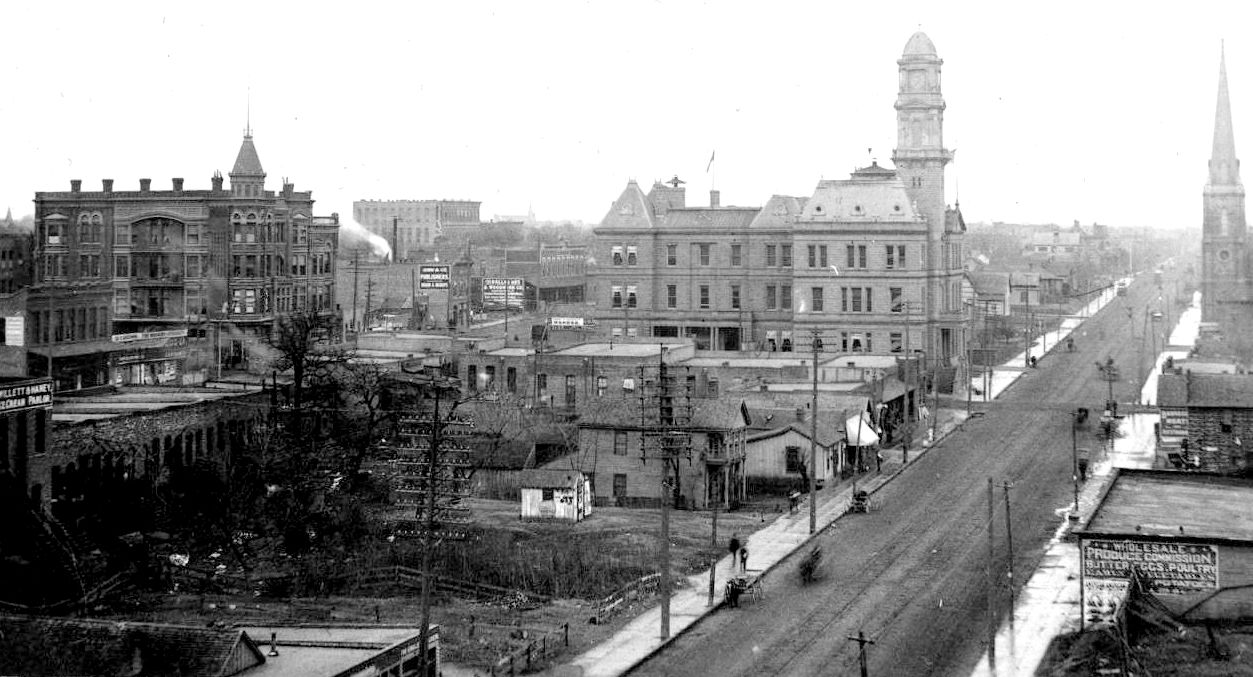
4. “Henry Stark’s ‘Bird’s Eye View of Dallas’ — 1895/96.” Without question, this is the most popular thing I’ve posted this year. I love this photo. It’s even better zoomed in on. Check out the original post to see this photo broken into four magnified crops — that’s when this photo goes from being merely “interesting” to being “incredibly interesting”!

stark_downtown_1895-96_hpl***

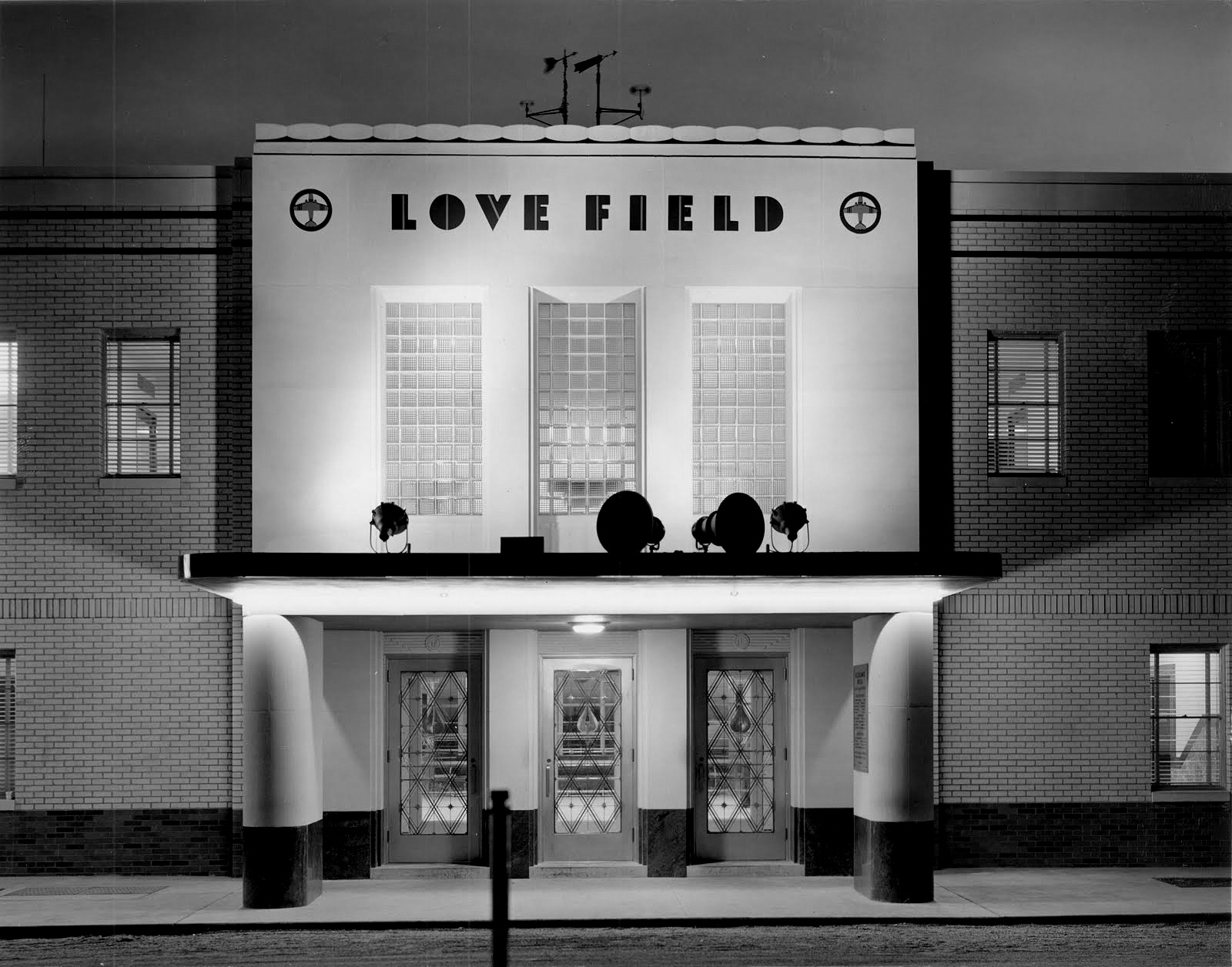
5. “Swooning Over Love Field — 1940.” Be still, my heart!

love-field_1940***

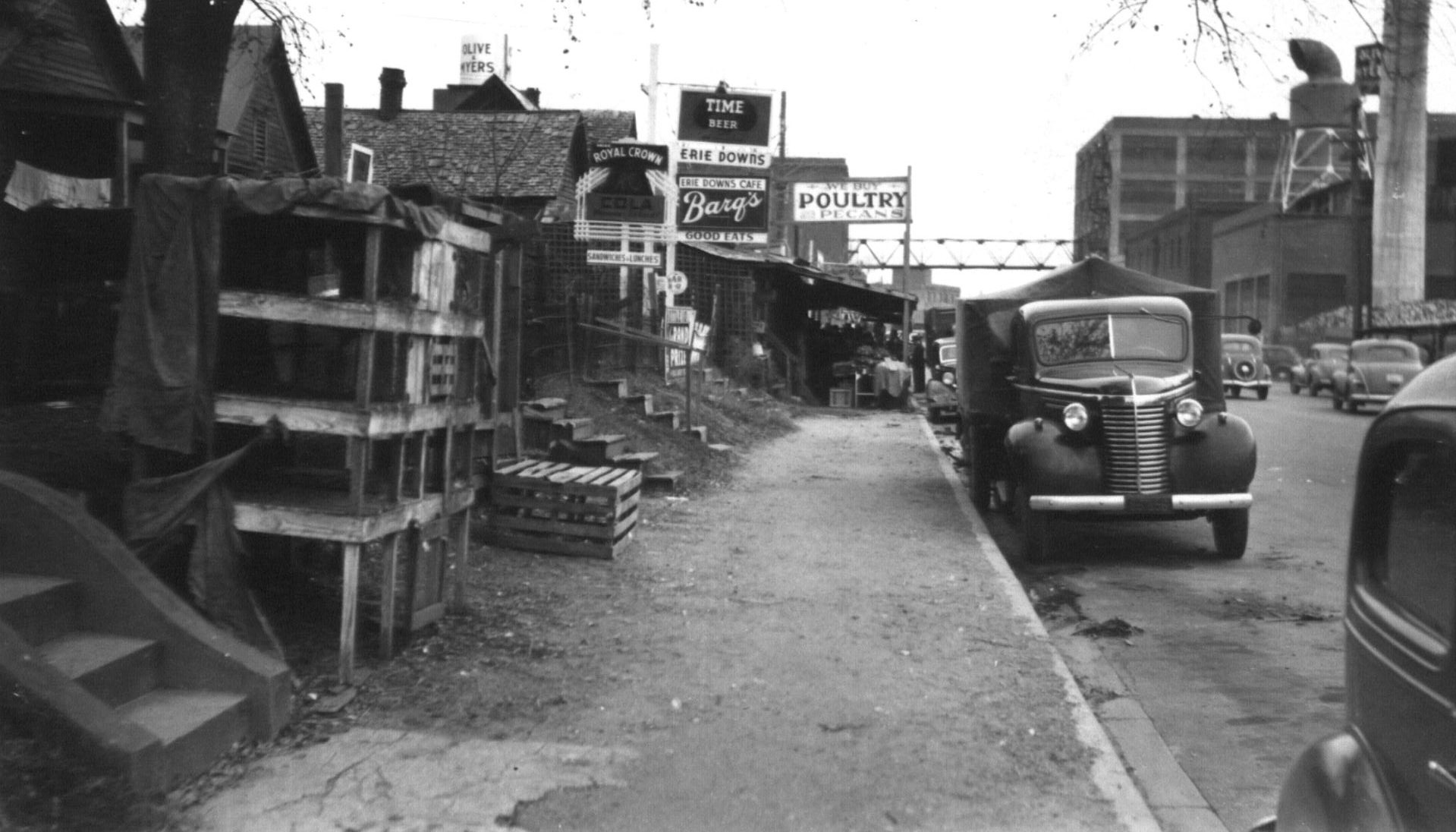
6. “Canton Street: Poultry, Pecans, and Future Luxury Lofts.” I LOVE this photo. I had no idea the Farmers Market area ever looked like this. See post for what this same view looks like today.

2200-canton_farmers-mkt_portal***

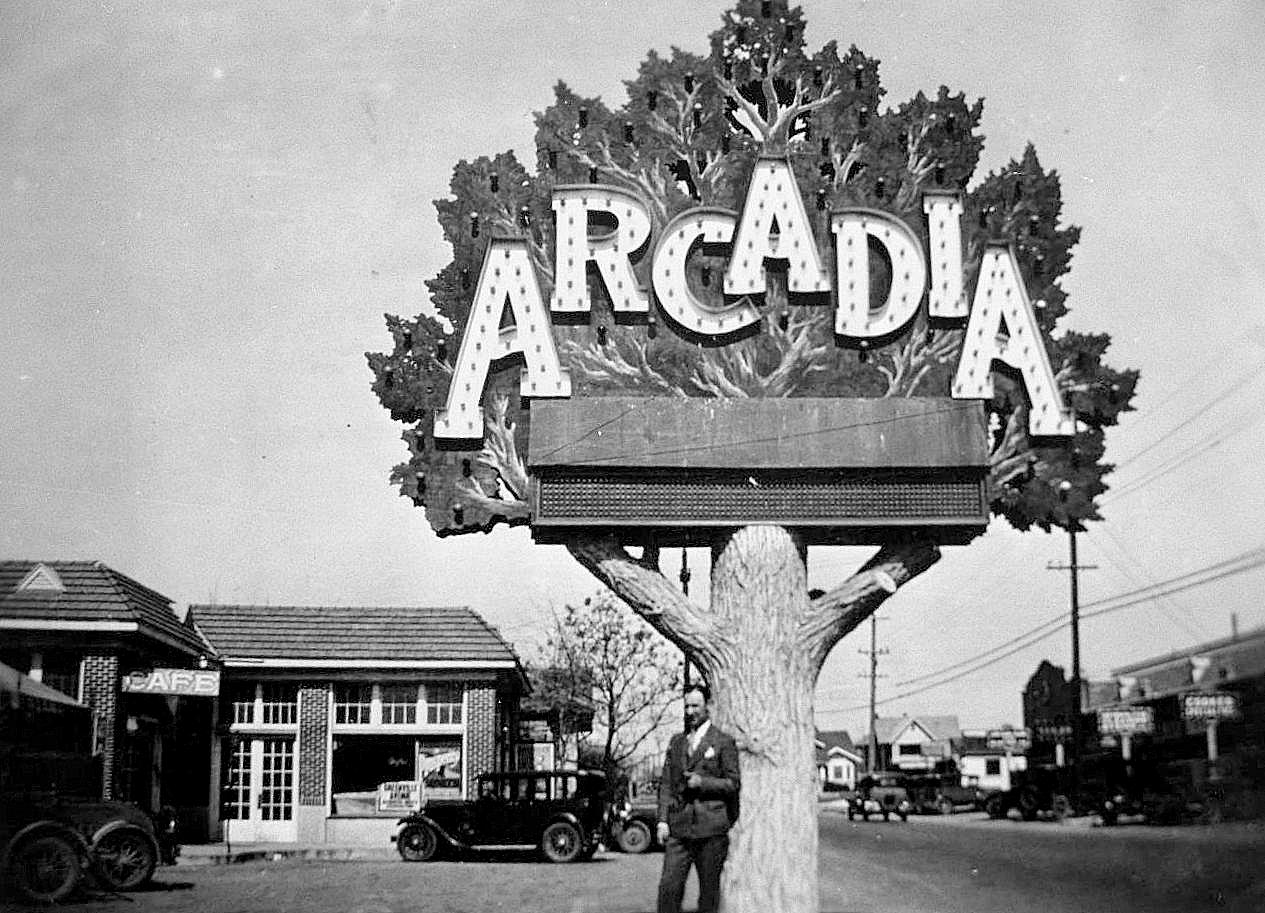
7. “The Arcadia Theater Sign You’ve Never Seen.” This is especially wonderful to me because it shows Lower Greenville (the area I grew up in) back in the late ’20s/early ’30s — and it’s still recognizable today. This “tree” was a movie marquee that lit up at night, and it must have been quite a sight 85-or-so years ago.

***

8. “The Oak Cliff Viaduct & The Weird Composite Photo –1912.” My favorite component is the panoramic view of the city, but click the link to see what weird Franken-photo this (along with an incredible shot of the viaduct) got turned into!

dallas-panorama-skyline_1912_LOC***

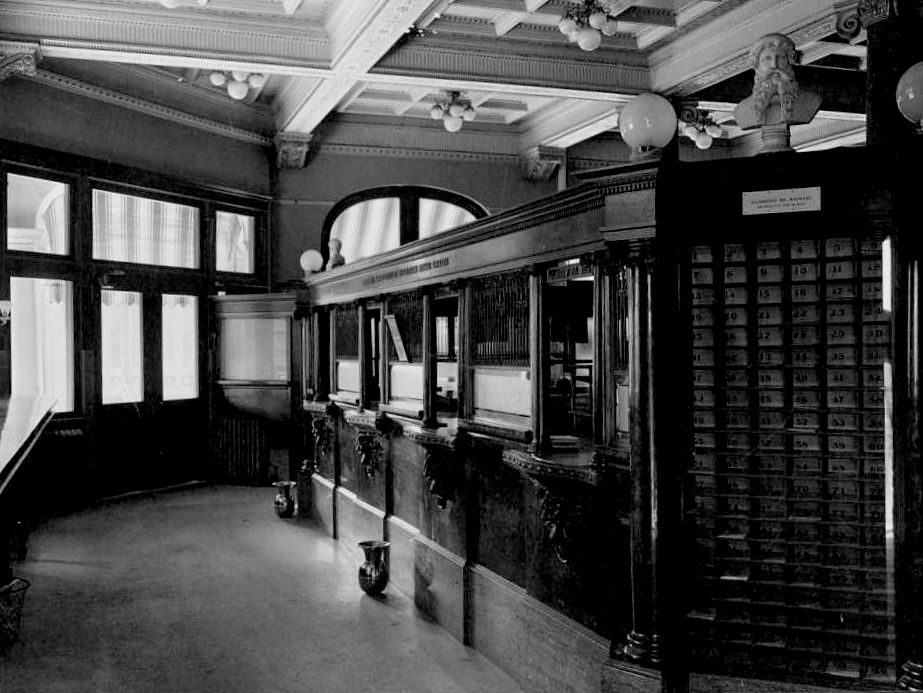
9. “The Dallas Morning News Lobby — 1904.” Other than the spittoons, I wish places still looked like this. Read about those special mail boxes at the link.

dmn-lobby_c1903_degolyer***

10. “The Trinity River at the City’s Doorstep.” I was born and raised in Dallas, but I was only vaguely aware that the Trinity River had been “straightened,” which is one of the reasons this is such an amazing image for me (see the original post to see the larger photo this has been cropped from).

downtown_trinity_ca1920s_smu_foscue-det***

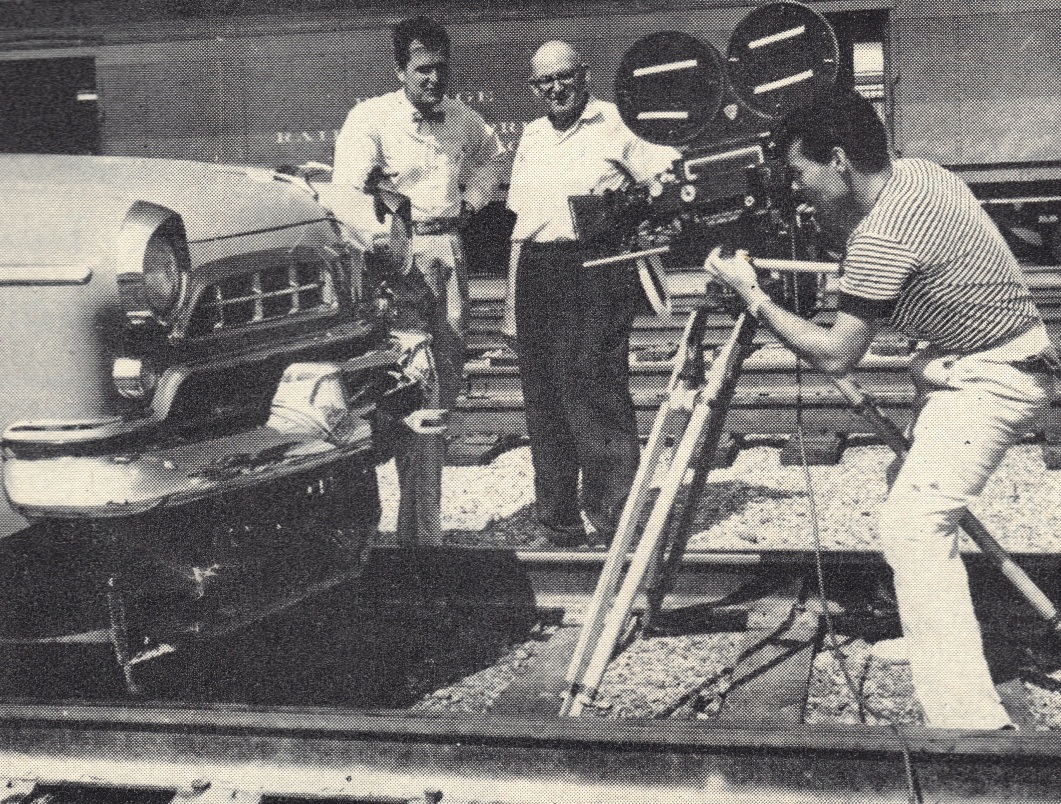
11. “A Lost Photo of Director Larry Buchanan, Celebrated ‘Schlockmeister’ — 1955.” One of my “discoveries” that got me all excited when I found it but which only a handful of other people will appreciate. If you know who Larry Buchanan is, you’ll probably smile at this. If you don’t know who he is, you should! Hie yourself over to this post and read why he’s important to the history of Dallas!

buchanan-katy-camera_1955***

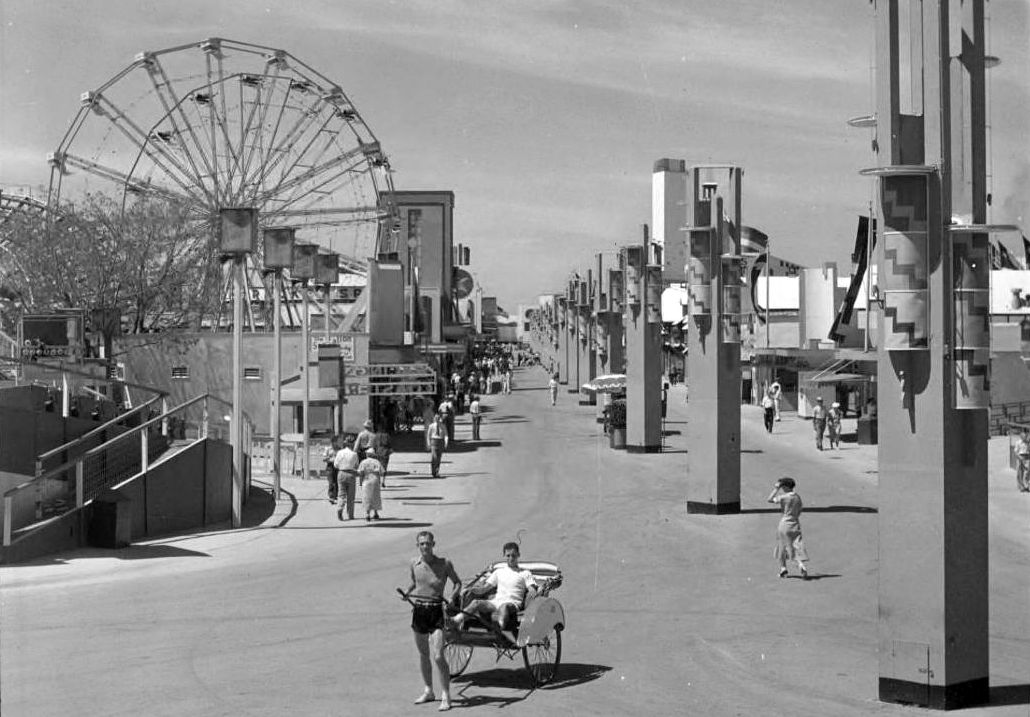
12. “Forget the Ferris Wheel, Take a Ride in a Centennial Rickshaw — 1936.” Yeah, seeing a rickshaw at the State Fair midway is kind of weird, but it’s not nearly as weird as this photo feels. I always think of “The Prisoner” when I see this. Bleak. And … odd.

tx-centennial-midway_1936_ucr***

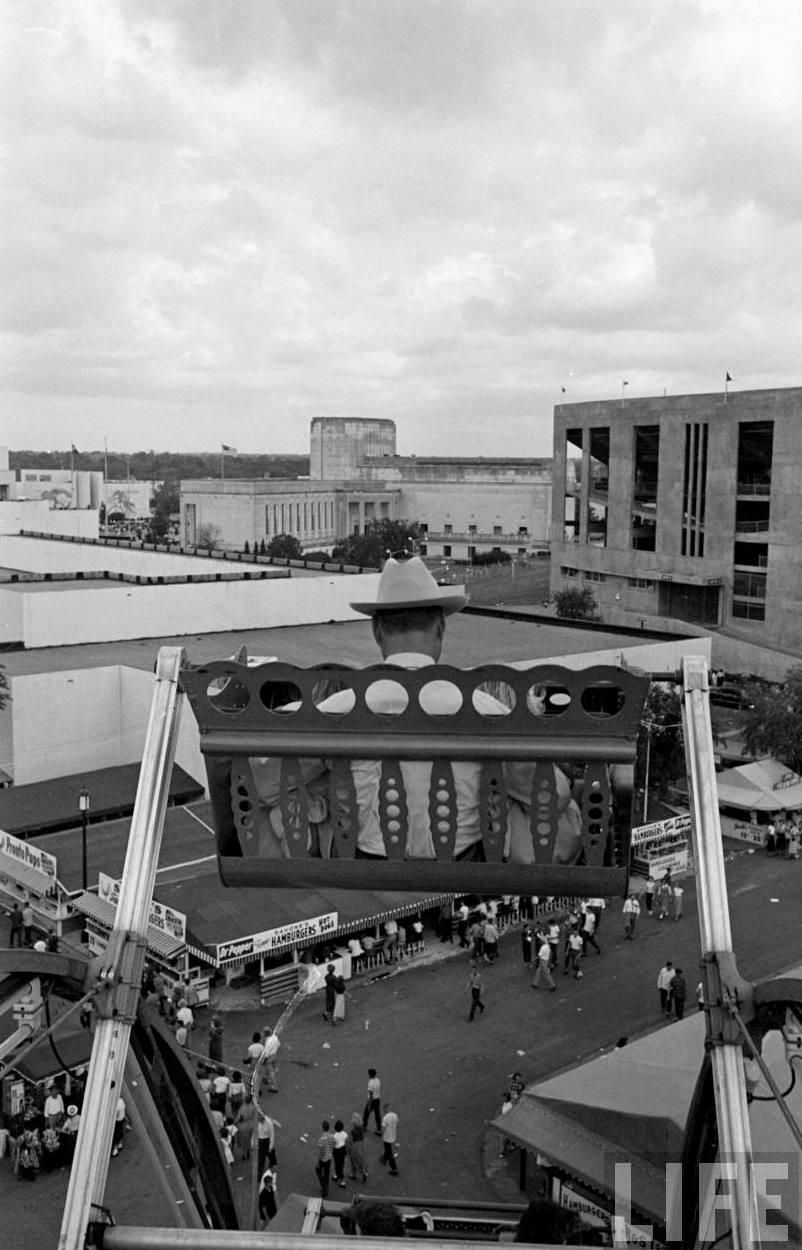
13. “‘Life’ at the State Fair of Texas — 1951.” And speaking of Ferris wheels, this may be my favorite photo ever of the State Fair of Texas.

fair-park-midway_life_1951***

Runner-Up: ALL of the photos I’ve “zoomed in on” — I love the surprising vignettes hidden in photos. I love them all, but I’m particularly fond of one that shows Ervay & Main (“There are Eight Million Stories in the Naked City… — ca. 1920”). This is one of 14 (!) parts of the photo I zoomed in on, this one showing a woman sitting at a window in the Neiman’s building, watching the hustle and bustle below on Ervay. Click on the link above to see the original photo (and all the “vignettes”). For other photos I’ve “zoomed in on,” see them here.

5-ervay

*

For all the “Year-End Best of 2014” lists, click here.

*

Copyright © 2014 Paula Bosse. All Rights Reserved.


Year-End List! My Favorite (Non-Photo) Images Posted in 2014

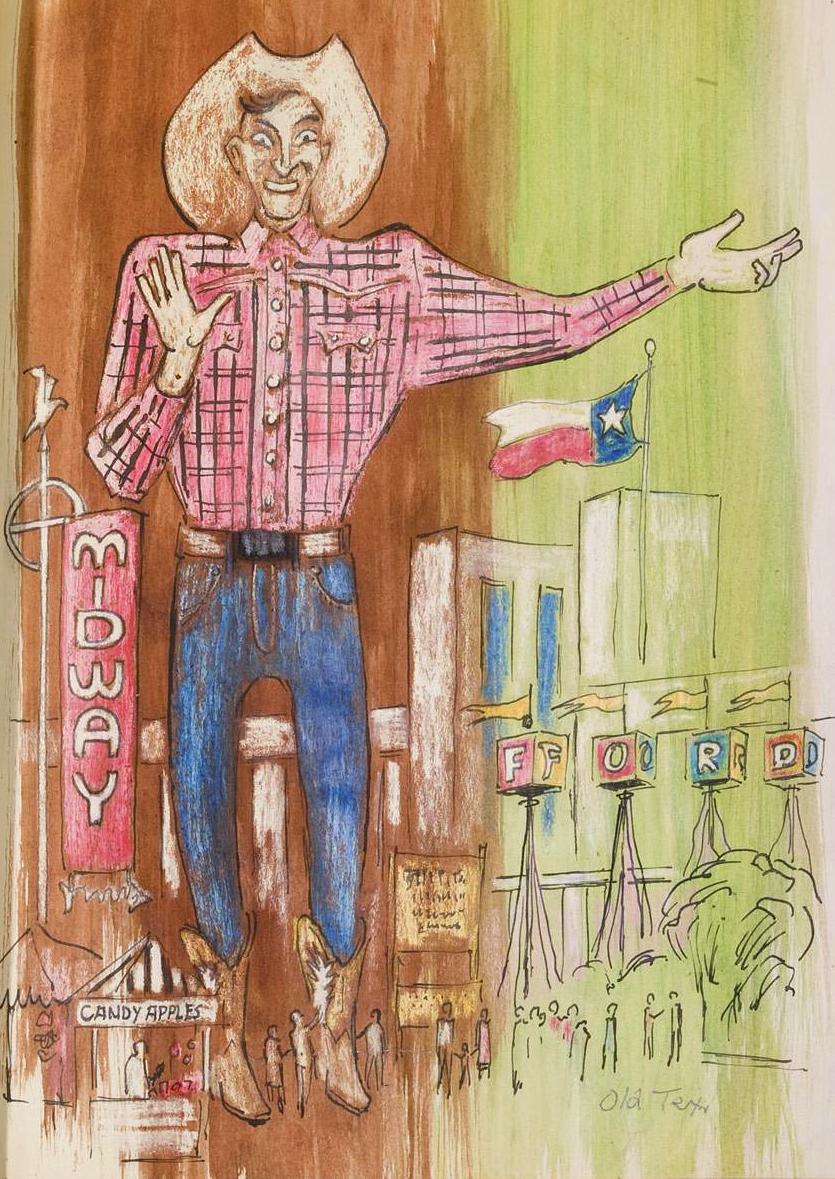
dozier_big-tex_sketchbook_1954_dma“Old Tex” sketch by Otis Dozier, 1954 — Dallas Museum of Art
© Marie Scott Miegel and Denni Davis Washburn

by Paula Bosse

It’s the end of the year, the traditional time for lists! Yesterday I compiled my favorite ads I’ve posted in 2014, today it’s my ten favorite images — either art or postcards (my favorite photographs of the year will be posted tomorrow). For more info on the images, click on the title of the post they originally came from. Most images are larger when clicked — some are quite a bit larger.

*

1. “Big Tex, Old Tex, Big Ol’ Tex — Whatever You Call Him, Otis Dozier Wins (1954)” (above)

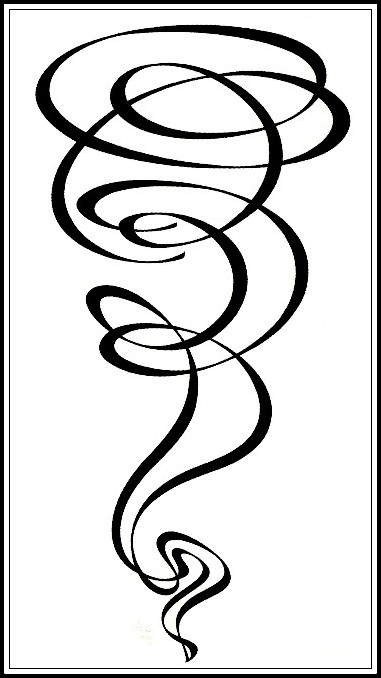
2. “Alexandre Hogue’s ‘Calligraphic Tornado’ — 1970” (also, I want to mention the possibly previously unknown 1927 bookplate by Hogue that I discovered, here)

3. “Dallas’ Frank Lloyd Wright Skyscraper — 1946”

frank-lloyd-wright_rogers-lacy_1946-sm

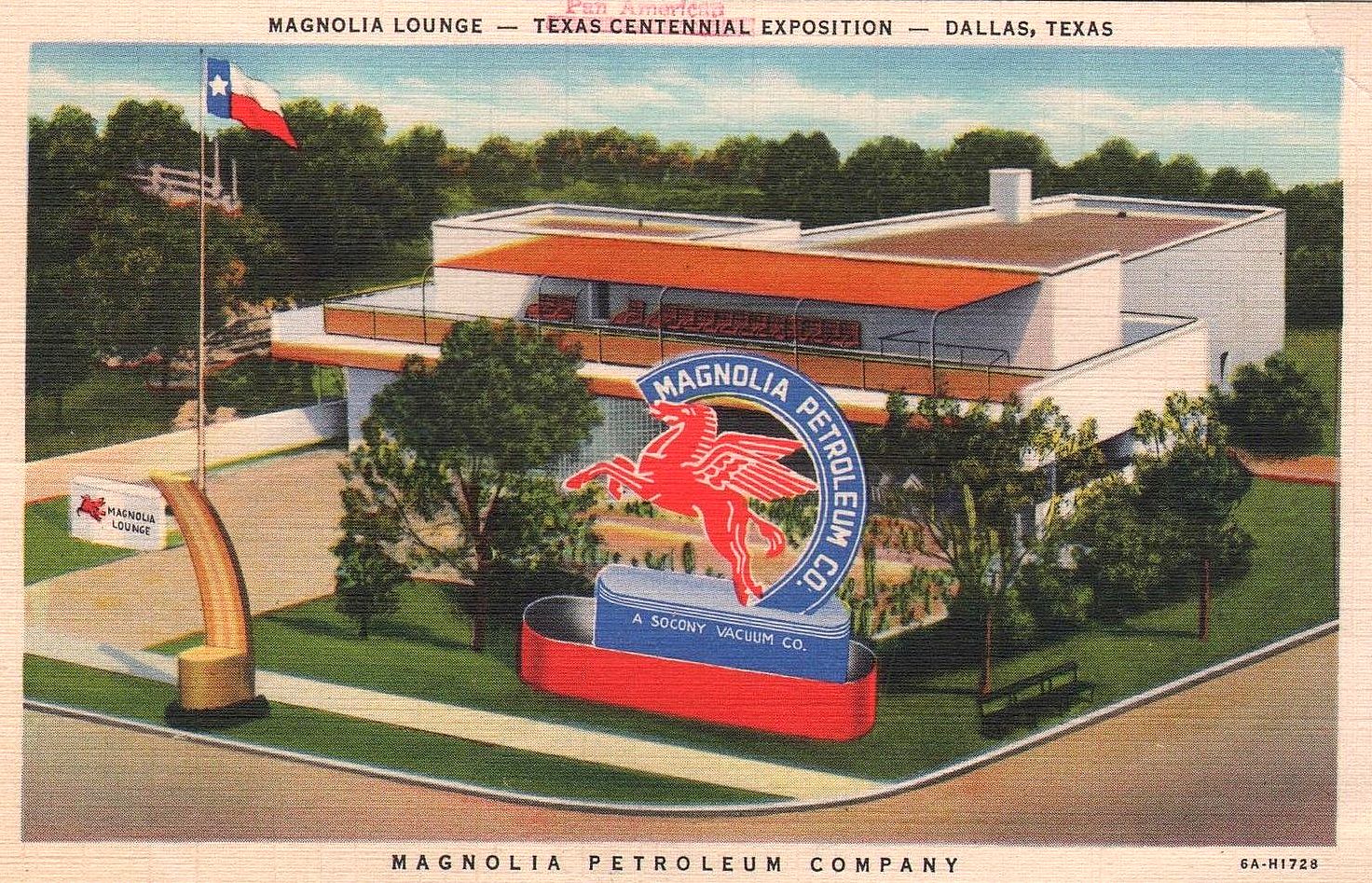
4. “William Lescaze’s Ultramodern Magnolia Lounge — 1936”

magnolia-lounge_tx-centennial

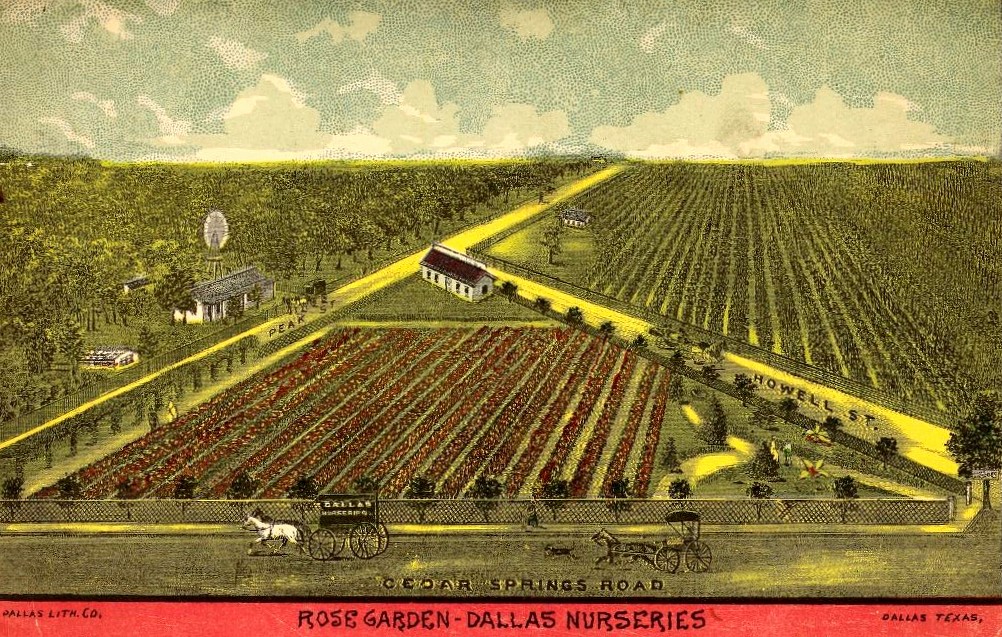
5. “J. M. Howell’s Dallas Nurseries — 1880s”

howell_rose-garden_1888

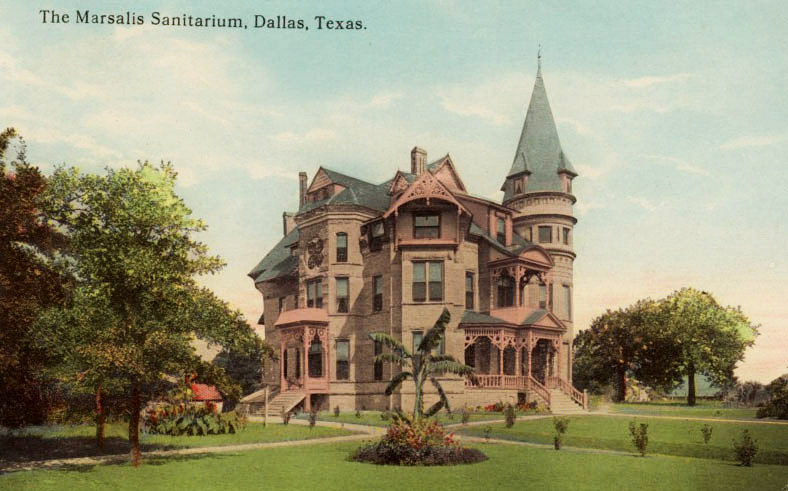
6. “The Marsalis House: One of Oak Cliff’s ‘Most Conspicuous Architectural Landmarks'”

marsalis_sanitarium_oak-cliff

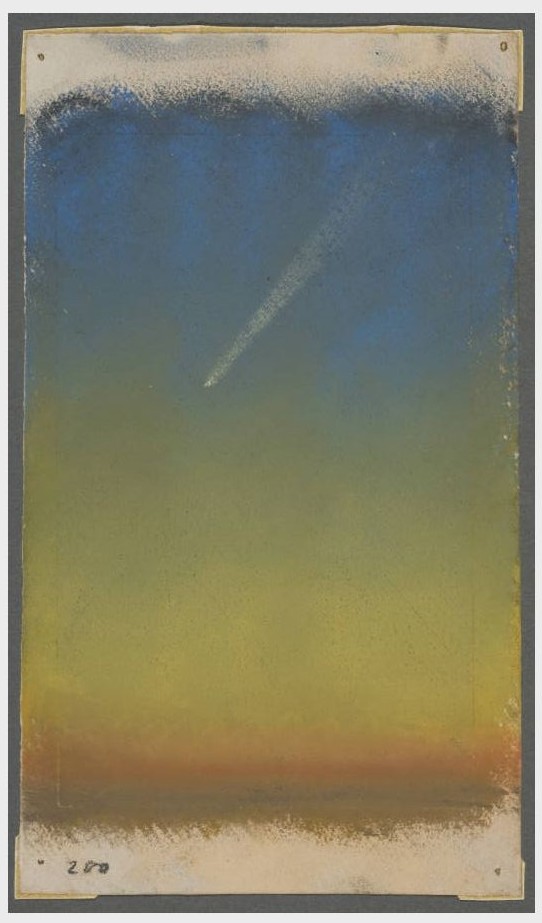
7. “Frank Reaugh or Mark Rothko?”

reaugh_meteor_nd_ransom-smu_2

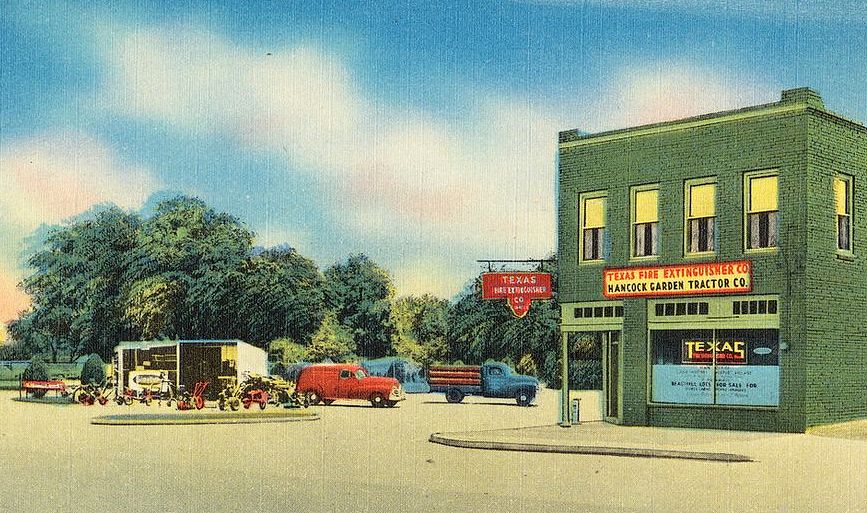
8. “The Texas Fire Extinguisher Co. and Hitler — 1942”

tx-fire-extinguisher-co

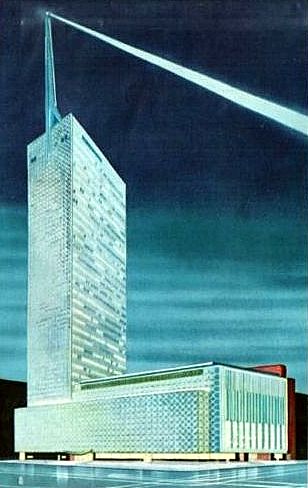
9. “The Republic National Bank Building: Miles of Aluminum, Gold Leaf, and a Rocket”

republic-national-bank_beacon_front

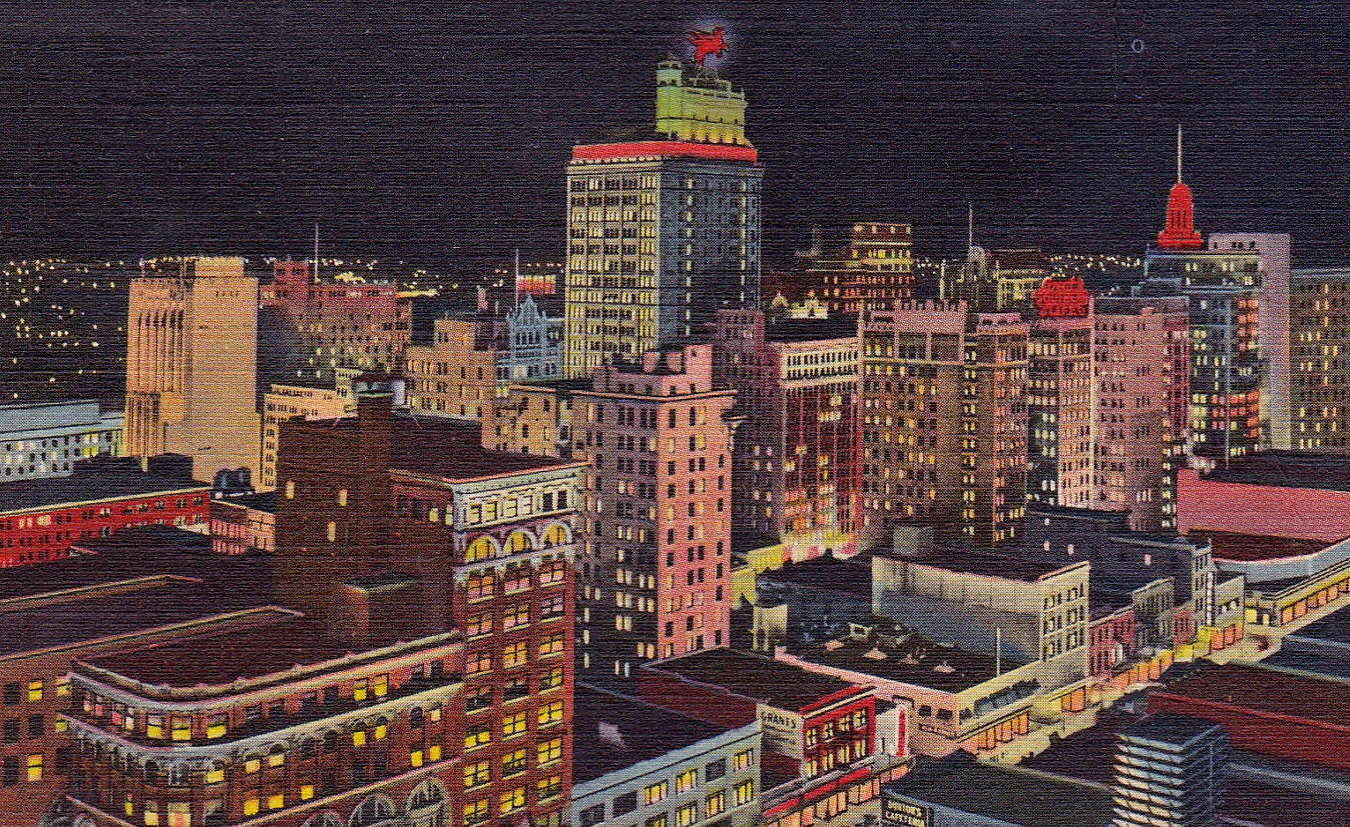
10. “When the Flying Red Horse Could be Seen From Miles Away”

birdseye_night_early1940s

*

Honorable Mention: A whole bunch of cool night-time postcards in “Theatre Row — A Stunning Elm Street at Night.”

*

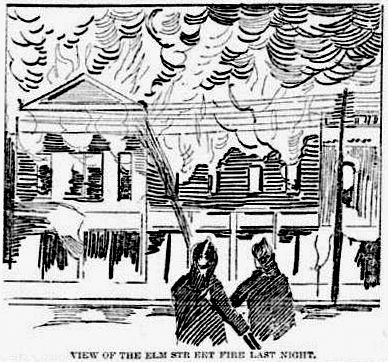
And, lastly, a runner-up, just because it’s so ridiculous it makes me chuckle every time I see it: a newspaper artist’s rendition of a massive fire that swept through downtown in 1896, from “Chas. Ott: One-Stop Shopping for Bicycles and Dynamite.”

ott-fire_pic_dmn_052696

*

For all the “Year-End Best of 2014” lists, click here.

*

Copyright © 2014 Paula Bosse. All Rights Reserved.

Year-End List! My Favorite Dallas Ads Posted in 2014

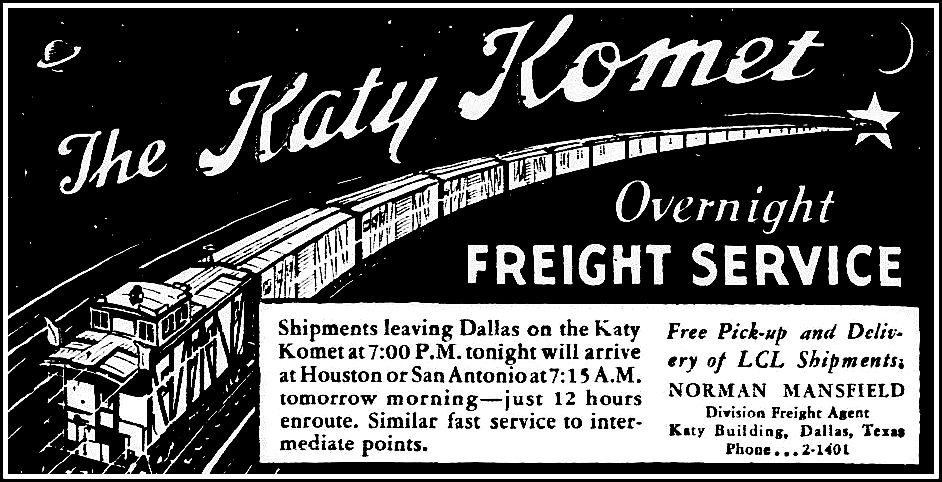
ad-katy-komet_dmn_031733The Katy Komet — 1933 (click for larger image)

by Paula Bosse

It’s the end of the year, the time when people do lists. I love lists. So I’m going to be doing some over the next few days. Today, a collection of my favorite Dallas-related advertisements that I’ve posted over the past year. To see the original post (which includes sources and no doubt pithy commentary), click the title of each ad. And, as always, thanks for taking the time to read Flashback Dallas this year! (Most images larger when clicked.)

*

1.  The Katy Komet (1933) — above. My favorite ad of the year!

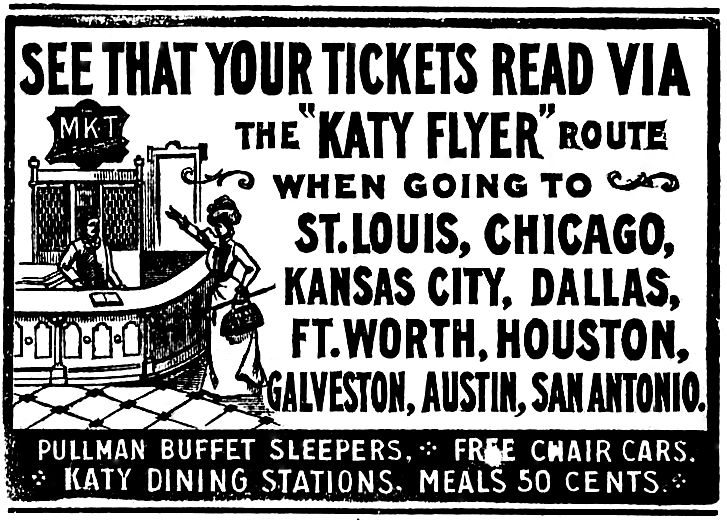
2.  M-K-T Railroad’s “Katy Flyer” Route (1902)

mkt_rail_1902_mercury

3.  Cokesbury Book Store (1959)

cokesbury_dallas_1959

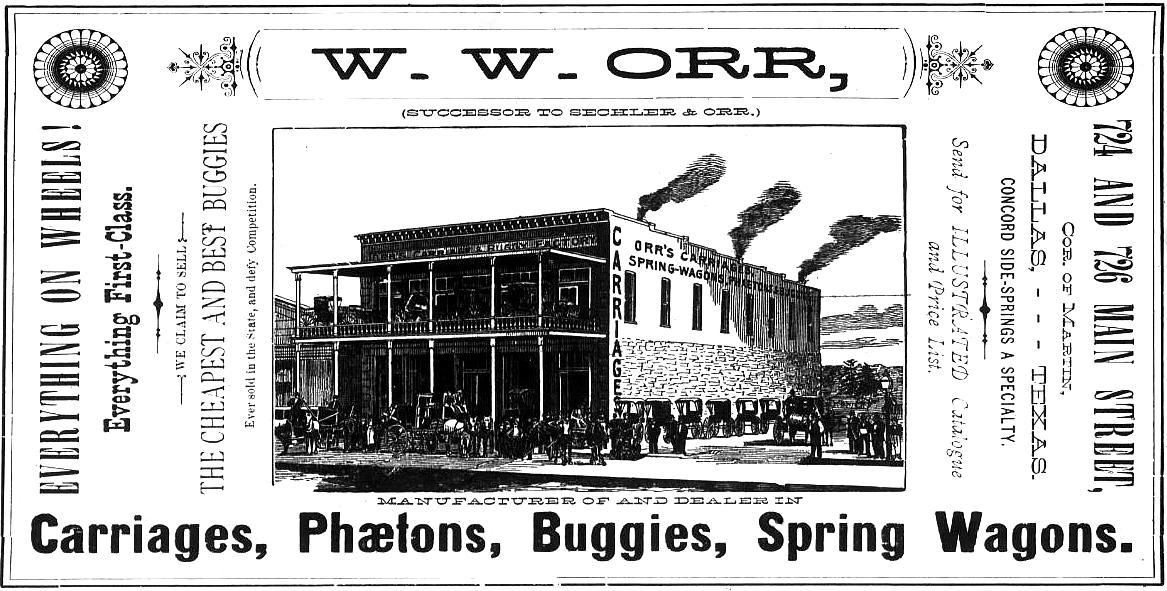
4.  W. W. Orr’s Carriages, Phaetons, Buggies, and Spring Wagons (1878)

ad-orr-carriages_directory_1878

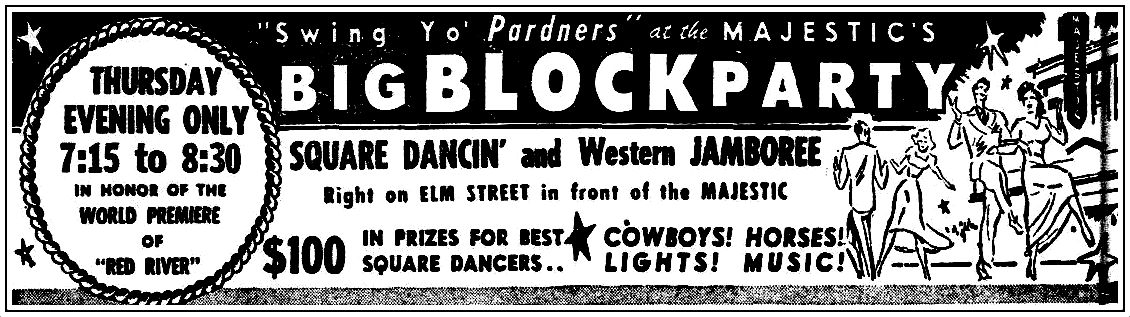
5.  Majestic Theatre’s “Red River” Block Party (1948)

red-river_block-party_dmn_082648

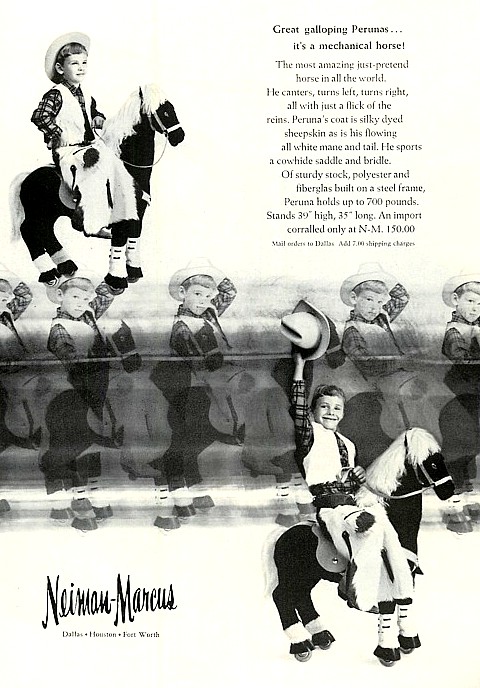
6.  Neiman-Marcus Mechanical Peruna Toy (1965)

n-m_peruna_1965

7.  Irby-Mayes ad featuring the Mercantile Building (1948)

ad-irby-mayes_dmn_040148

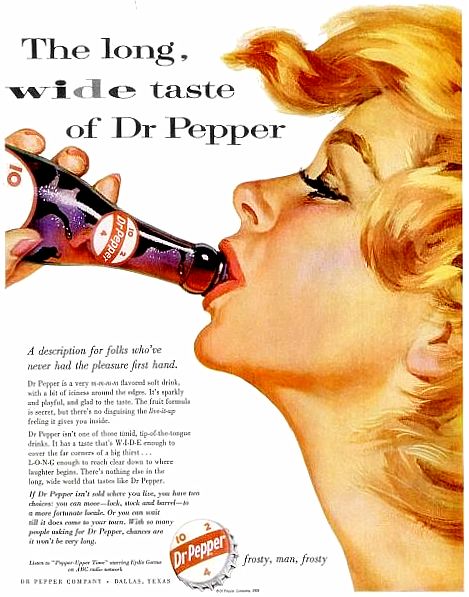
8.  Dr Pepper (1959)

dr-pepper-1959

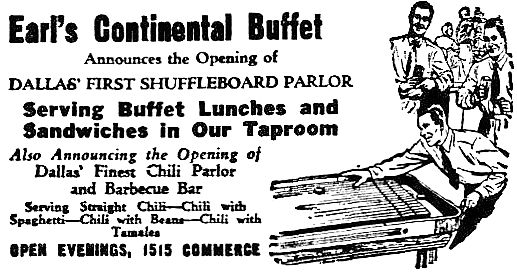
9.  Earl’s Continental Buffet (1947)

earls-continental-buffet_shuffleboard_dmn_1947

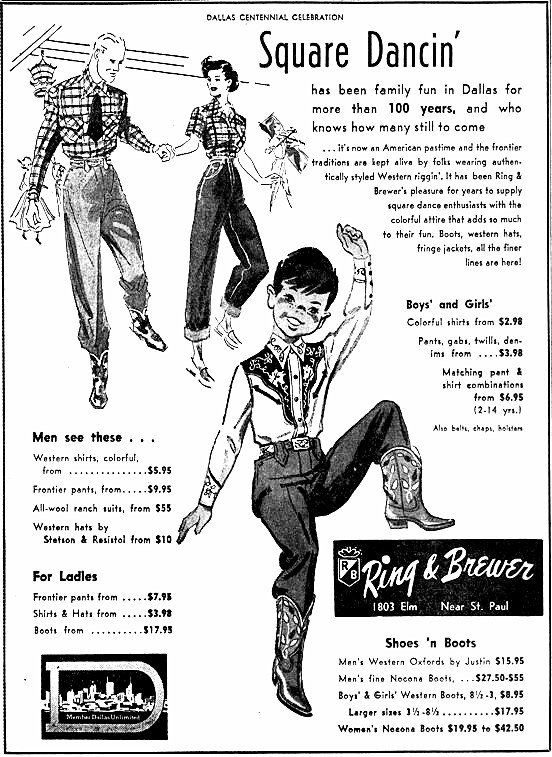
10. Ring & Brewer (1956)

dallas_ringandbrewer_1956

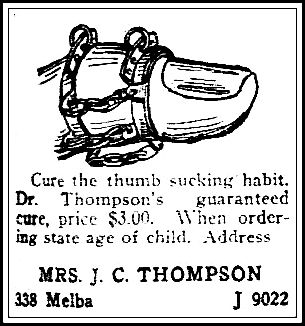
Runner-up: “Keep Oak Cliff Kinky” (1923)

thumb-sucking_dmn_111823
*

For all the “Year-End Best of 2014” lists, click here.

*

Copyright © 2014 Paula Bosse. All Rights Reserved.

Orphaned Ads and Factoids: End-of-Year Grab Bag

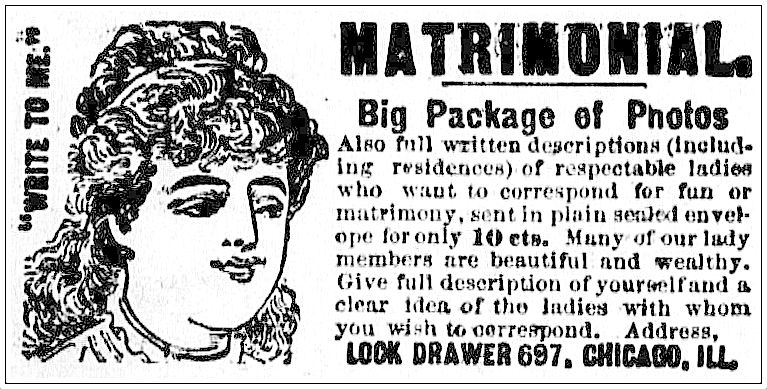
mail-order-brides_southern-mercury_060590Ad from front page of Dallas’ Southern Mercury newspaper, June 5, 1890

by Paula Bosse

Below are a bunch of things I’ve come across over the past few months that I found interesting or amusing but had no place to put them. So here they are, in an end-of-the-year collection of Dallas-related … stuff. Enjoy!

*

buffalo_memories_dmn_062224“Hunting has always been one of the chief sports of Texas. While buffaloes were once plentiful at certain seasons farther toward West Texas, I have known but one to be killed in Dallas County, which was on Mountain Creek during the Civil War, when game of all kinds became much more plentiful than it had ever been, partly on account of the scarcity of ammunition. Turkeys and deer abounded and were the chief articles of food for the settlers.” Memories of Thomas Park, son of Curtis Park, an early Dallas settler. (DMN, June 22, 1924)

*

“City Councilmen were the first night police squad in Dallas, each taking turns to see that law and order prevailed, according to the minutes of the council of Feb. 21, 1867. John Neely Bryan was an alderman and took his turn on the night patrol in this second year after the Civil War.” (DMN, Oct. 1, 1935)

*

“[An] important highway was old Kaufman Road, which eventually became Elm Street, and finally Dallas’ theater district. Another was Kent’s Ferry Road, which led past the site of today’s State Fairgrounds where there was once a swamp called Buzzard Springs. […] The early roads through Dallas led through lands of abundant game. A mile-wide salt-lick that began at Forest Avenue made the deer that gathered in the late afternoon easy marks for hunters.” (DMN, Oct. 2, 1960)

*

ad-children-wells_dal-herald_081283 Advertisement AND a public service announcement. (Dallas Herald, Aug. 12, 1883)

*

a-harris_anthony-trolloppe_dmn_100385A. Harris ad. If it’s good enough for Anthony Trollope…. (1885)

*

oak-cliff_dmn_110187“You will never regret making an investment in Oak Cliff.” Advertisement for the Next Big Thing, looming just across the river. (1887)

*

deane-photographer_dmn_121692Advertisement … or item from the police blotter.  (1892)

*

“The first motion pictures were shown in Dallas in February, 1897. An exhibition of Edison’s newest invention, the Vitascope, revealed a series of shorts — scenes of a Mexican duel, a hanging, a lynching, a fire rescue and Niagara Falls in action. A few weeks later The News noted editorially that Miss Frances Willard and other leaders in the Women’s Christian Temperance Union were conducting a crusade against the worst excesses of the new invention.” (DMN, Oct. 2, 1935)

*

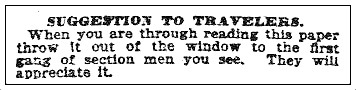
dmn_throw-out-window_063004Dallas Morning News ad — share the wealth.  (1904)

*

dmn-reward_121106The Inflation Calculator tells me that 10 bucks in 1906 would be the equivalent of $255 today (!!). Don’t mess with Belo. (1906)

*

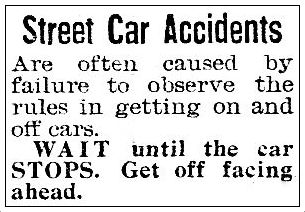
street-car-accidents_dmn_090107“Get off facing ahead.” (1907)

*

ad-fretz-parlor_1910Open all night! (1910)

*

fair-park_horse-show-arena_tx-trade-review_1917The Fair Park Horse Show Arena. I’m not sure I’ve seen this before. (Texas Trade Review, 1917 — click for larger image)

*

miniature-golf_wee-st-andrews_dmn_051042The Wee Saint Andrews Miniature Golf Course — America’s largest miniature golf course. (Kind of like “jumbo shrimp.”) (1942)

*

temp_policemen_dmn_040244Slim-pickings in the job pool during WWII — education requirements for “temporary policemen” in 1944: must have completed grade school. (1944)

*

chamber-of-commerce-ad_dmn_082648“Give yourself a holiday.” (1948)

*

“Current[ly] at Sky Club through Thursday night is Evelyn West, the divestmenteuse. To us her widely publicized $50,000 treasure chest is a big bust — for her prancings about the floor are vulgar and embarrassing. Even her midget partner, Esky, turns up red-cheeked.” Back when strippers (and their “midget partners”) were reviewed in the newspaper. (DMN, June 13, 1950)

*

“And a gypsy ‘palm woman’ made work during the day. A South Dallas woman had retained the gypsy at $5 a week to remove a witch from her sewing machine. Left the machine with  the ‘palm woman.’ Is no longer bothered by either a witch or a sewing machine. The palm woman is missing. Evidently dematerialized herself and the sewing machine, too.” From a regular feature in The Dallas Morning News by Lorrie Brooks called “Last 24 Hours in Dallas” — kind of a humorous police blotter. I don’t know who you were, Lorrie, but I love reading your columns! (DMN, Feb. 9, 1951)

*

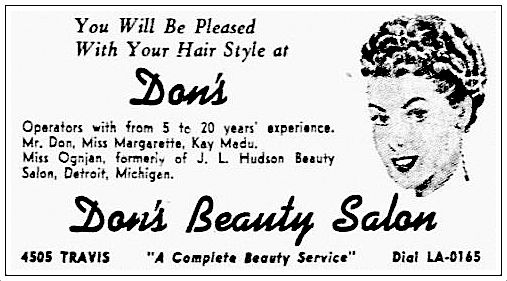
ad-dons-beauty-salon_dmn_030952Hair stylists don’t have names like “Mr. Don” anymore. Pity. (1952)

*

street-lights_lanterns_dallas-herald_021877“The numerous lanterns on our streets at night, borne by pedestrians picking their way through the slough, look like fire-flys in a marsh.” One of my favorite, lyrical descriptions of early Dallas. (Dallas Herald, Feb. 18, 1877)

*

Copyright © 2014 Paula Bosse. All Rights Reserved.

Merry Christmas!

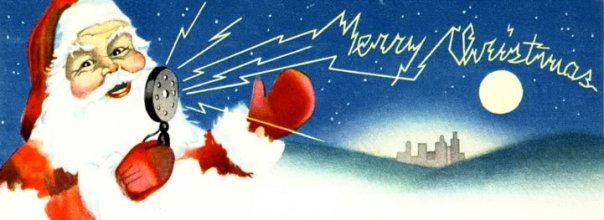
xmas_santa_lightcrust_1932

by Paula Bosse

Wishing you all a Merry Christmas — I only hope Santa brought you what YOU wanted!

xmas-santa-letters-dmn_122499-detDallas Morning News, Dec. 24, 1899

***

Top image from a WBAP Christmas mailing to radio fans of The Light Crust Doughboys of the Burrus Mill, 1932.

To read more letters from Dallas-area children printed in “Santa’s Letter Box” (Dallas Morning News, Dec. 24, 1899), click here.

*

Copyright © 2014 Paula Bosse. All Rights Reserved.

The World’s Largest Santa & The Christmas Tragedy — 1953

santa_chevrolet_color_observerSanta considers a test-drive, 1953 (photo: Roy Addis)

by Paula Bosse

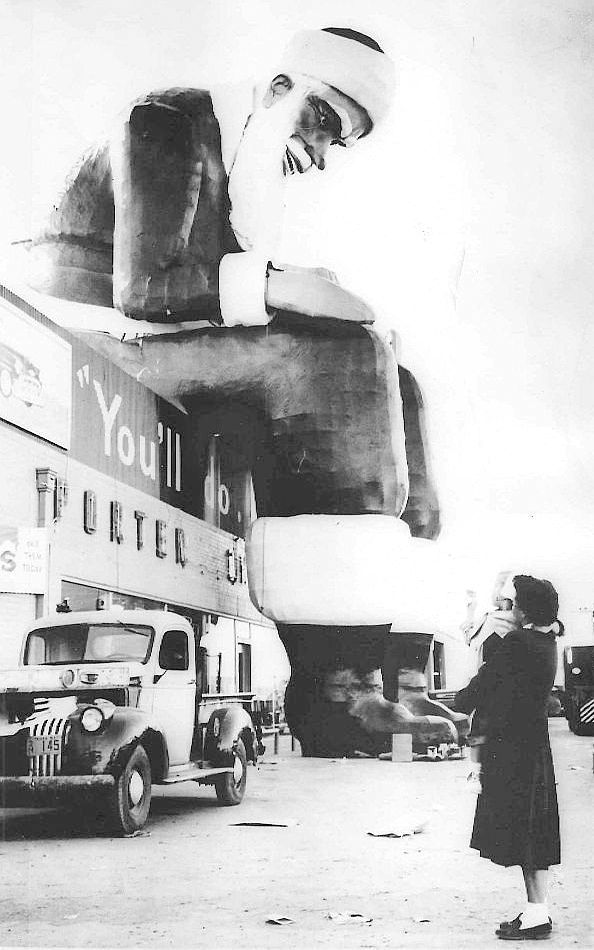
Back in 2010, Robert Wilonsky (now a reporter for The Dallas Morning News, but back then a reporter for The Dallas Observer) posted a 1950s-era photo of a giant Santa Claus sitting on the roof of a Dallas car dealership. Robert had found the photo on eBay and wondered what the story behind the promotional stunt might have been. The thing that sparked my interest (other than it being a giant Santa Claus — holding a full-size car in his lap!) was the fact that the dealership, Porter Chevrolet (which I’d never heard of), had been just around the corner from where I grew up — it was in the 5500 block of E. Mockingbird, right across from the old Dr Pepper plant, about where the Campisi’s parking lot is now. I, too, really wanted to know more about that huge Santa Claus that had once been hanging out so ostentatiously in my neighborhood.

At about the time when Robert’s post appeared in 2010, I had only recently discovered that the Dallas Morning News archives were available online. For free. All the way back to 1885! (All you need is a current library card from the Dallas Public Library, and you’re on your way to losing absolute days while reading about one fascinating thing after another.) I had just begun to dabble with searches in the archives, so this seemed like a great opportunity to test my research skills and see if there was more to the story. And there was! I sent Robert what I’d found, and he wrote a great follow-up, here (which has yet another photo of the giant Santa). And a year later he did another follow-up, this one including the color photo seen above, sent in by a reader.

This is just such a great and weird holiday-related bit of Dallas’ past, that I thought I’d revisit the story, especially since some of the links in the original Observer posts no longer work.

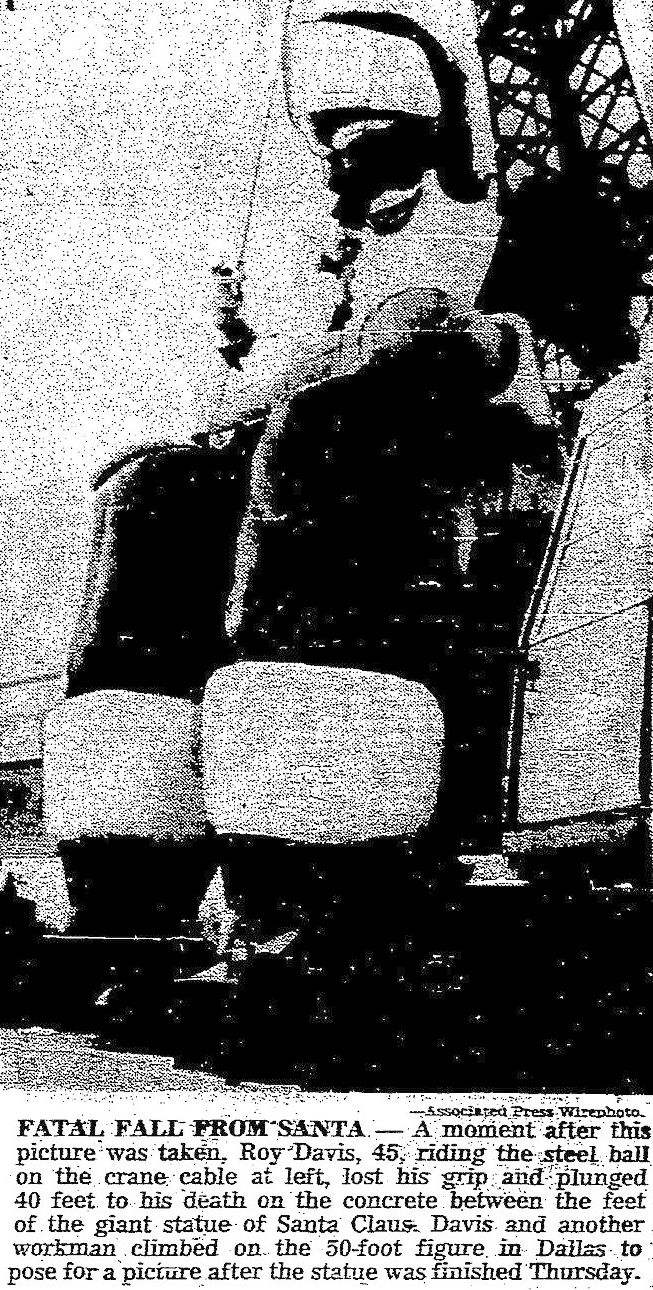
First, a quick re-cap (but, please, read Robert’s story, because you’ll enjoy  it, and it’s much more colorful than my quick overview here). During the 1953 Christmas season, Porter Chevrolet (5526 Mockingbird) commissioned Jack Bridges (the man who had previously made Big Tex (who was himself originally a giant Santa Claus)) to construct an 85-foot-tall steel-and-papier-mâché Santa Claus (he’d be that tall if he were standing) to sit on the dealership building and hold an actual 1954 Chevy in his lap. It was definitely a promotion that would grab people’s attention. The day the giant Santa was put in place, using a crane, a man whose company had done the installing (as they had with Big Tex), thought it would be a great opportunity to get a Christmas card photo of himself dangling from the crane next to Santa. The man, Roy V. Davis, was recovering from heart-related health problems, and, as it turned out, he experienced a “myocardial rupture” while hoisted 35 feet above the concrete parking lot. He lost his grip and fell to his death. This tragic news made the front page of local papers and was picked up by the Associated Press, but, oddly, it was never spoken of again. Giant Santa apparently remained at his perch throughout the holidays, but as far as I can tell, there was no further mention of Mr. Davis’ death — until Robert Wilonsky stumbled across the photo and wrote about it 57 years later.

Below is the AP photo and blurb which ran nationally, showing Mrs. John Ashmore and her 4-year old daughter Ruth Ann looking up at the towering Santa Claus. 

santa_porter-chevrolet_news-photo_1953_PEB
Photo: Collection of Paula Bosse

The caption (click for larger image):

santa-claus_porter-chevrolet_caption

**

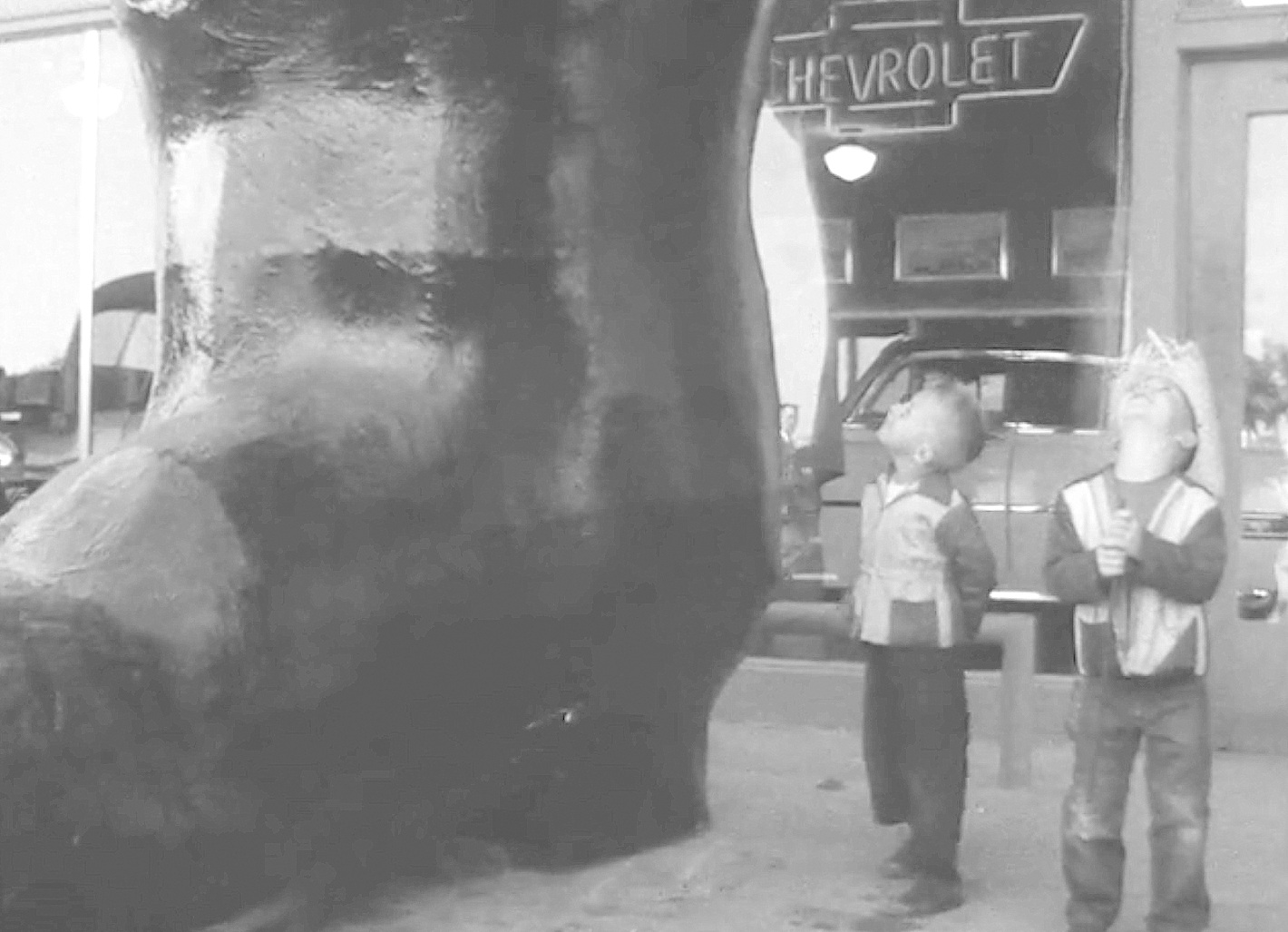
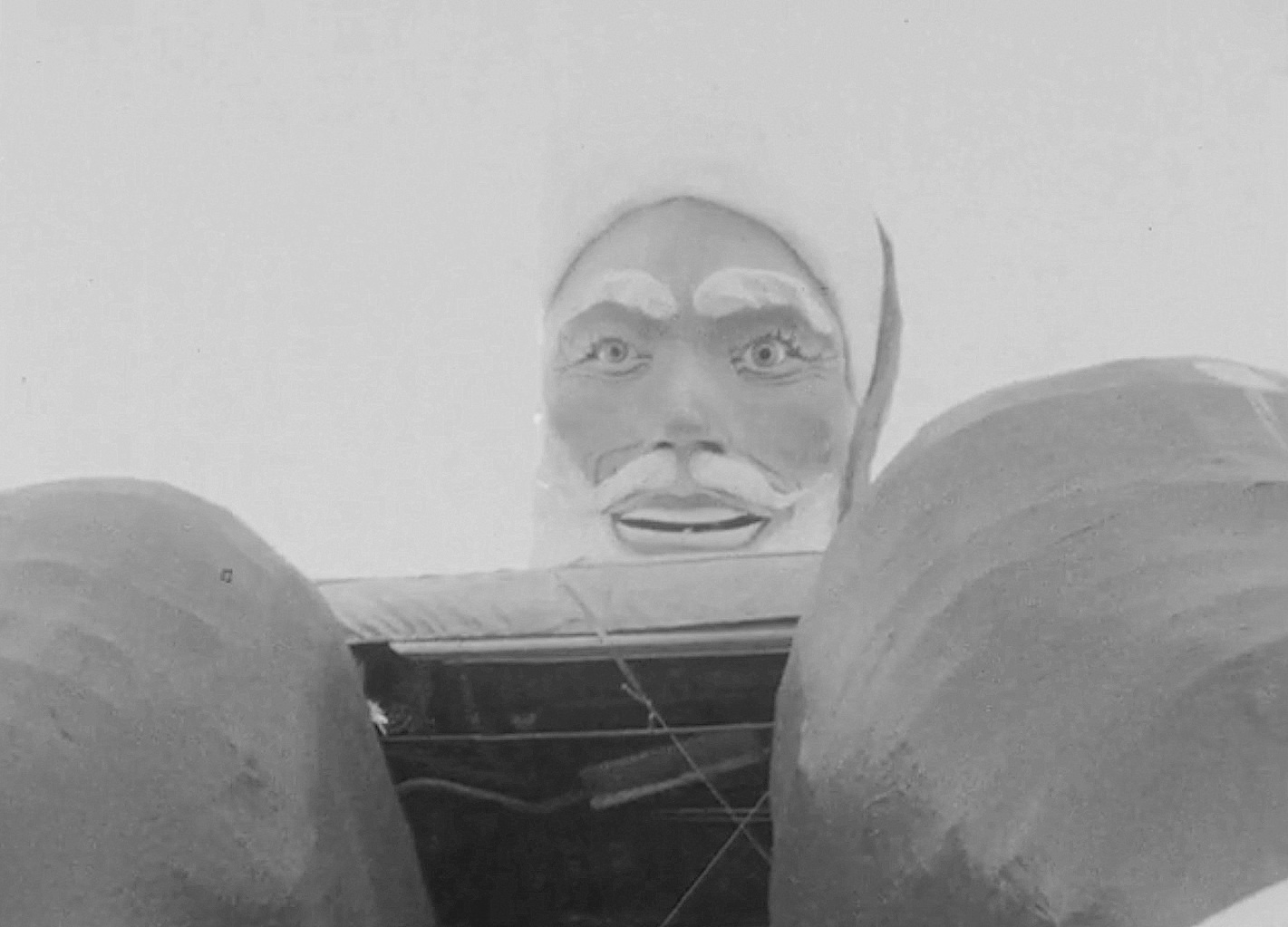
UPDATE: Okay this is VERY EXCITING — and also kind of chilling: there is WBAP-Channel 5 television news footage of the Giant Santa as well as the on-the-scene tragic aftermath of Mr. Davis’ accident. The Dec. 10, 1953 footage is without sound (the script the anchor read on the air as the film played during the newscast can be found here). The video starts off with children marveling at the giant Santa Claus but suddenly turns dark with shots of the bloody Mr. Davis being loaded onto a stretcher (helped by Jack Bridges, the man who built the giant Santa, seen wearing a beret and white coveralls). The one-minute clip titled “Worker Dies at Santa’s Statue” can be viewed on the Portal to Texas History site here.

Below are a few screen captures:

santa-kids_wbap-1_portal

santa-face_wbap-2_portal

santa-crane_wbap-3_portal

santa-dr-pepper-plant-ambulance_wbap-4_portal

**

santa_denison-press_122553Denison Press, Dec. 25, 1953

santa_FWST_121153_AP_photoFort Worth Star-Telegram, Dec. 11, 1953

santa_lubbock-avalanche_121153_APLubbock Avalanche, Dec. 11, 1953

***

Sources & Notes

Top color photo (which I’ve cropped) is by Roy Addis. It appeared in the Dallas Observer blog Unfair Park in Robert Wilonsky’s 2011 update to the previous year’s story — it was sent in by a reader who discovered it in his personal collection. To read that story, click here.

Wilonsky’s original Unfair Park post — which contained the photo he found on eBay — is here. And, again, his post containing “the rest of the story” is here. (Robert Wilonsky continues to write enthusiastically about Dallas — its past as well as its present — and his Dallas Morning News pieces are, quite frankly, where I get most of my news about what’s going on in the city. Thanks for the opportunity to be part of the unearthing of this story, Robert!)

The news photo of Mrs. Ashmore and her daughter is from the author’s personal collection.

The video is from the KXAS-NBC 5 News Collection, University of North Texas Libraries Special Collections, accessible on the Portal to Texas History site. The main page of the video is here (click picture to watch video in a new window).

Dallas Morning News articles on the giant Santa and the tragic accident:

  • “Santa Claus Turns Texan” (DMN, Sept. 23, 1953)
  • “Figure of Santa Claus Will Overshadow Tex” by Frank X. Tolbert, with photo of Jack Bridges (DMN, Nov. 18, 1953)
  • “Santa Claus Too Large For Trucks” (DMN, Nov. 29, 1953)
  • “Christmas Card Picture With Tragic Ending” (DMN, Dec. 11, 1953)
  • “Man Falls to Death Off Cable,” with photo of Roy V. Davis (DMN, Dec. 11, 1953)

UPDATE: Robert Wilonsky has written on the giant Santa in a new Dallas Morning News article, with some interesting new tidbits about Porter Chevrolet’s proposal to the City Council requesting permission to put this huge structure on top of the building. Read his 2017 update here. Robert keeps telling me we should write a book about this — or make a documentary. Which, of course, we should! After all these years now of visions of the giant Santa and sober thoughts of Roy Davis — more “real” now, having seen film footage of him bloody on that stretcher — I really do feel this is all part of some personal family Christmas lore, recounted every year around the table.

Pictures and clippings are larger when clicked.

*

Copyright © 2014 Paula Bosse. All Rights Reserved.


“Every Gypsy in the Nation Knows About This” — 1951

gypsy_lawrence-young_green-young_baylor_feb-1951
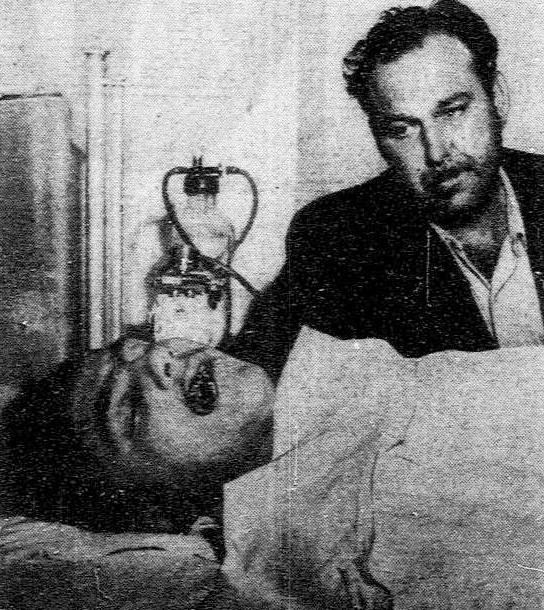
The “Gypsy youth” at the center of “tribal” unrest & his father, Baylor Hospital, 1951

by Paula Bosse

In the first few days of March, 1951, Dallas witnessed the influx of hundreds and hundreds of Gypsies into the city, all of whom had been summoned — from near and far — by a call put out over an effective and somewhat mysterious communications network. The reason? A teenage boy (referred to repeatedly as a “Gypsy youth”) had been shot in South Texas by a boy from another “tribe” (or clan, or family) — one family insisted the shooting was intentional, the other insisted it was an accident. This incident ballooned into a huge internecine feud. If the boy died, the “Green” tribe promised that there was “going to be a lot of shooting going on in Dallas” (Dallas Morning News, March 1, 1951). [Note: the word “Gypsy” is sometimes seen as a pejorative. I use it in this post purely in a historical context; it is not meant to be derogatory.]

In December of 1950, 14-year-old “Lawrence Young” (the anglicized name his family gave to authorities) had been walking along railroad tracks with other boys in Port Isabel, near Brownsville, when he was shot with a .22 caliber rifle by a 12-year-old, a Gypsy boy from another clan. The 12-year-old said the borrowed rifle had been malfunctioning and that, while hunting, the gun discharged unexpectedly, and a bullet hit Lawrence, whom the other boys thought was playing when he fell to the ground. Until they saw the blood. The bullet struck Lawrence in the back, near his left shoulder blade, and it lodged in his spine at the base of his skull. Police in Port Isabel determined that the shooting had been an accident. Lawrence’s family, however, said that the other boy had been jealous of Lawrence’s new car and had shot him on purpose. The boy was rushed to the hospital; his condition was not good.

After stays in hospitals in Galveston and Temple, Lawrence’s mother decided to move him to Dallas where she thought the medical care would be better. He was admitted to Baylor Hospital at the end of February. Relations had been tense between the two clans since the shooting, but the Evans clan (of which the 12-year-old boy was a member) had grudgingly agreed to pay for half of Lawrence’s medical bills. The decision by Lawrence’s family to move him to Dallas — where hospital care would be much more expensive — only made things worse between the two groups; the Green clan had heard that the Evans clan would not pay their share of what they felt would be an exorbitant bill. Tempers had been building and boiling for weeks, and by the time things moved to Dallas, things were about to explode.

Word of the increasingly volatile feud had spread, and Gypsies from several surrounding states began pouring into Dallas in a show of tribal support. The first reports estimated there might have been as many as 500 Gypsies in Dallas County, representing at least six different clans, each clan with strong loyalties to one of the two families. If the boy died, the Greens and their supporters promised that retaliation would be swift and deadly. The Evanses — and the clans friendly to them — were ready for whatever came their way. The threat of deadly violence in the streets of Dallas was a very real possibility (if a city could be an innocent bystander, that’s what Dallas was in this unusual situation).

The Dallas police were, understandably, worried. In an attempt to get the warring factions to leave town, homicide detective Captain Will Fritz was reduced to arresting several of the men on charges of vagrancy (“We can’t make them get out of Dallas, but we can keep arresting them for vagrancy until they move on,” Fritz said). Unfortunately, this was a pretty ineffective strategy.

Fifty or so “expensive automobiles” were parked outside Baylor as the time for Lawrence’s surgery approached. Men and women sat inside their cars waiting for a signal from a man they had placed inside the building who was to alert them from a window whether or not the boy had survived. If he died, things would get real bad, real fast. When police learned about the man inside the hospital, they arrested him. The boy was in critical condition prior to the surgery, and tensions among the factions continued to rise.
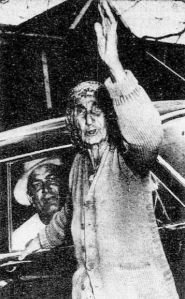
gypsy_lawrence-youngs-grandmother_baylor_feb-1951
Above, the boy’s grandmother, outside Baylor Hospital,
waiting for word on her grandson’s condition.

At some point, a man in Fort Worth who said he was a nephew of the King of the Gypsies in the United States intervened and worked as a sort of intermediary between the Gypsies and Fritz.

“I can’t promise there won’t be any shooting over there,” he told Fritz by telephone. “This thing has gone pretty far. But I will try to stop things where they are.”

“I don’t care how you settle this matter among yourselves,” Fritz replied, “Just do it out of Dallas County. We want no shooting here.”  (DMN, March 2, 1951)

Fritz agreed to release two men he had been holding (on non-vagrancy charges), hoping they would take word of the Fort Worth man’s “tribal council” involvement back to their people and calm the situation.

The surgery was, thankfully, successful. 
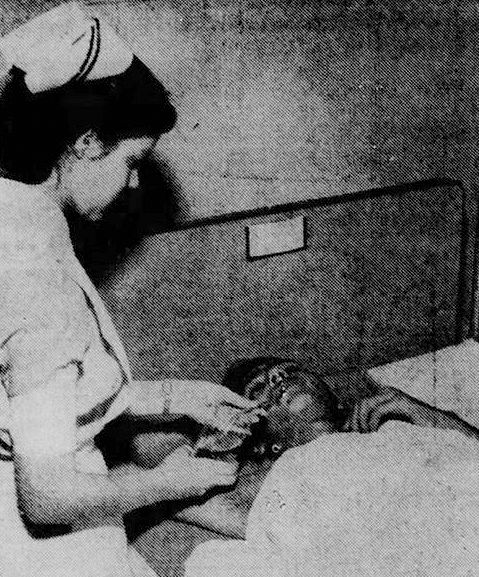
gypsy_mckinney-courier-gazette_030251Caption: “Gypsy Youth in Dallas Hospital — Lawrence Young, 14-year-old Gypsy youth gets a drink of water from a nurse at Dallas’ Baylor Hospital. Young was allegedly shot by another youthful Gypsy some two months ago near Brownsville, Texas. He was operated on at Baylor Hospital to have the bullet removed. Two Gypsy clans are reportedly watching with much interest to see that the youth recovers.” (NEA photo and wire report, from the McKinney Courier-Gazette, March 2, 1951)

*

To the relief of Dallas police, doctors said that Lawrence would recover — a major crisis had been averted, and the hundreds of Gypsies who had been camped around Dallas began to leave town. But just a few days later, a camp was discovered outside Garland, and twenty people were immediately arrested for vagrancy — they were photographed, fingerprinted, fined, and released, with the clear understanding that they needed to move on. ASAP. The next day, Sheriff Bill Decker announced they had packed up and left.:

“I don’t know where the road goes,” said Decker, “but it leads out of Dallas County.” (DMN, March 7, 1951)

*

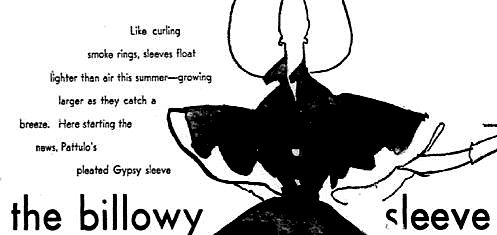
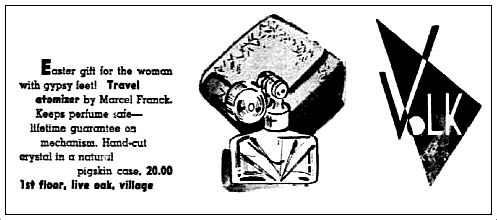
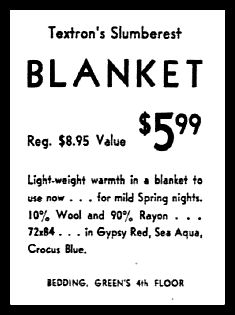
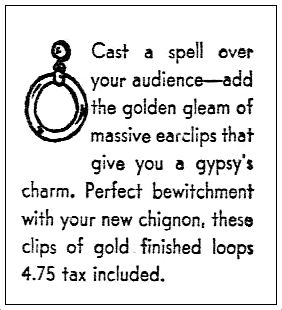
Gypsies were generally considered a menace by police departments around the country, as their arrival was usually accompanied by a rise in … questionable business practices. While these … business practices … were usually viewed negatively, it’s interesting to note that in 1950 and ’51 Gypsy “style” was everywhere. Ads for upscale department stores such as Neiman’s and A. Harris, for instance, were filled with Gypsy-inspired fashions — off-the-shoulder peasant blouses, scarves, gold bangles, dangly earrings, and exotic makeup. Cars and household items came in popular colors such as “Gypsy green,” “Gypsy red,” and even “Gypsy brown.” People might not have been excited by their … unorthodox business practices … but they sure loved the way they dressed and were attracted by the allure and romance of their rootless, “wandering” lifestyle.
gypsy_n-m_dmn_030551Neiman-Marcus ad — 1951

gypsy_n-m_dmn_041051Neiman-Marcus ad — 1951

gypsy_volk-ad_dmn_031051Volk ad — 1951

gypsy-green_w-a-green-ad_dmn_011851W. A. Green ad — 1951

***

For more on “Gypsy”/Romani/Romany/Roma culture and history, see the Wikipedia entry here; for issues concerning use of the word “Gypsy,” see here.

And for no other reason than to see how Gypsies were often stereotypically portrayed on pre-PC television, an episode of The Andy Griffith Show called “The Gypsies” can be watched on YouTube, here.

My favorite tidbit gleaned from this brief look into Gypsy culture was discovering that families and individuals with No Fixed Abode often communicated via the classifieds of, of all things, Billboard magazine.

*

Copyright © 2014 Paula Bosse. All Rights Reserved.